Archive for February, 2011

Evergreen Ferns for Shade & Stylish Blogger Award

Posted in evergreen, Shade Gardening, Shade Perennials with tags , , , , , , , , , , on February 24, 2011 by Carolyn @ Carolyns Shade Gardens

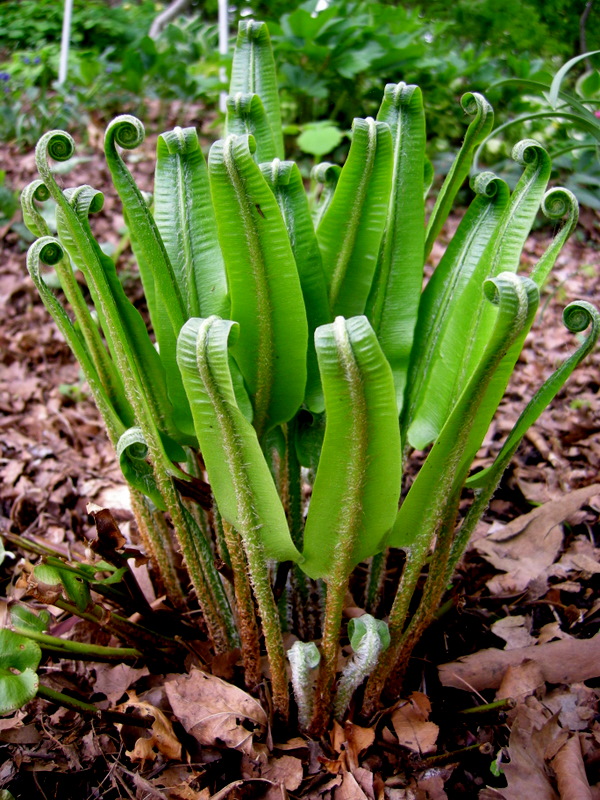
US. native hart’s-tongue fern, Phyllitis scolopendrium, is especially beautiful in my garden in the spring as it unfurls, April 2010

Spring is in the wind here today with unseasonably warm temperatures of almost 70 degrees F (21 C).  The ten day forecast shows more seasonable temperatures with highs in the mid-forties.  Although spring is definitely on the way (it snowed and went down to 10 degrees since I wrote this!), the beauty of snow has been replaced with the grays and browns of late winter, not a look I treasure.  That makes any plants that liven up the gardens very important at this time of year, and evergreen ferns do just that.  Five of my favorites are profiled below.

Hart’s-tongue fern is also very beautiful in the fall, mid-November 2010 with Christmas rose and pulmonaria

Hart’s-tongue fern, Phyllitis scolopendrium (zones 5 to 9), may be my favorite all time fern (today anyway).  It has a very unique look that is absolutely magical when it unfurls in the spring (photo at top), and it maintains its good looks until it disappears under the snow (photo above).  Even now it is quite presentable after our snowy and icy winter with only slight browning.

Although I call it a US native, hart’s tongue fern is actually indigenous to Europe, Asia, and North America, including the mid-Atlantic.  However, according to John Mickel in Ferns for American Gardens, the US variety does poorly in cultivation, and all cultivated material is from the European variety.  It is a clump-forming fern, growing 8 to 16″ tall with shiny, leathery fronds.  It is easy to grow but suffers if over-watered and must be well-drained.  I grow mine in part shade on a slope with plenty of organic matter.  In the wild it is limestone-loving, but I haven’t found this to be necessary in my garden.


Japanese holly fern, Cyrtomium falcatum, makes quite a statement in my mid-November garden

Japanese holly fern, Cyrtomium falcatum (zones 6 to 10), is another favorite of mine.  Individual plants grown as a specimen can be up to 2 feet tall and 3 feet across making quite a bold statement in the garden.  It grows well in the deep shade of my woodland garden where there is more construction rubble than soil as well as on my partly shaded but very open back slope.  Right now it is serving as a backdrop for the giant snowdrops, Galanthus elwesii, that are emerging between its fronds, which have been flattened by snow.

Japanese holly fern is native to Hawaii (do we call it a US native?), southern Africa, and across southern Asia.  Although it is uncommon in the mid-Atlantic, it is quite commonly grown in the southern parts of the US and has naturalized in some areas.  It is clump-forming with an elegant, vase-like habit and 4 to 7″ wide, glossy dark green fronds with toothed pinnae that resemble holly leaves.  It prefers good drainage and organic soil in part to full shade.


U.S. native deer fern, Blechnum spicant, also shines in my mid-November garden

Deer fern, Blechnum spicant (zones 5 to 8), was new to my garden in spring of 2010 so, despite its moist native habitat, it survived  this summer’s record-breaking heat and drought.  The unusual texture provided by its linear segments is a great addition to the border in front of my fall-blooming camellias.  It is in an eastern-facing location with high shade.  Right now, though flattened by the snow and ice, the fronds look almost the same as in the photo above despite our hard winter.

Deer fern is native to moist coniferous forests in the US Pacific Northwest and Europe.  Its two types of fronds are very distinct.  The sterile fronds (pictured above) are 8 to 20″ long, evergreen, and prostrate, while the fountain-like fertile fronds, which emerge in the spring, are 16 to 24″ long,  deciduous, and erect.  It puts on quite a show in the spring.  Deer fern grows in part to full shade in acid soil enriched with organic matter and spreads slowly by short creeping rhizomes.
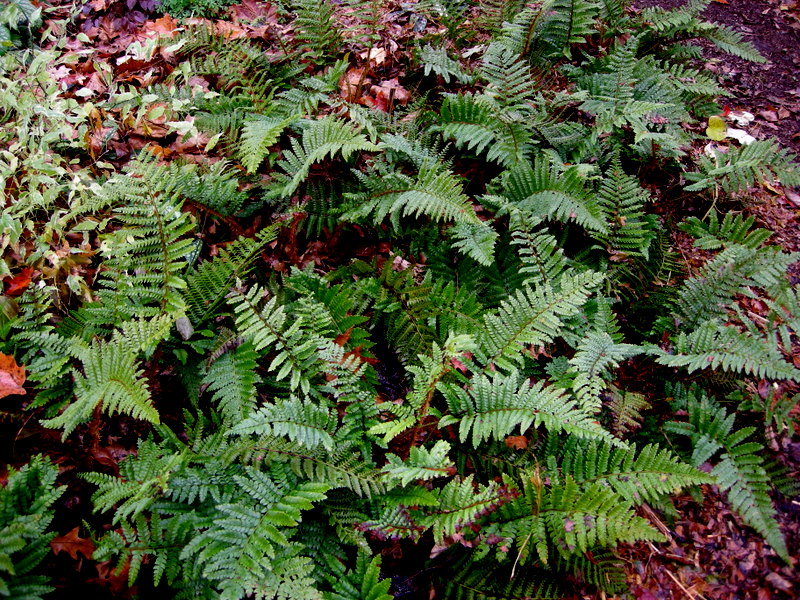

Tassel fern, Polystichum polyblepharum, growing in dry shade at the base of my Kentucky coffee tree in mid-November

Tassel fern, Polystichum polyblepharum (zones 5 to 8), is a very trouble-free, evergreen fern that I have grown for years.  I found that it does not do well in full shade, but thrives in high shade with dappled light.  It is absolutely gorgeous in the spring, when the reddish, hairy new fronds unfurl  (photo below) and still looks spectacular at the end of a hot dry summer (photo above).  Right now it is flat to the ground exposing its fleecy stems even more.

The bristly new fronds of tassel fern unfurl, photo courtesy of the Missouri Botanical Garden PlantFinder

Tassel fern is native to Japan and southern Korea.  According to Mickel, its species name means “many eyelashes” referring to its bristly, pubescent stems, which are really quite eye-catching even when fully emerged.  Its lustrous dark green fronds form an elegant, vase-like crown 2 feet tall and 2 feet wide.  It makes an excellent specimen.  Grow it in part shade in a well-drained, humus-rich site.
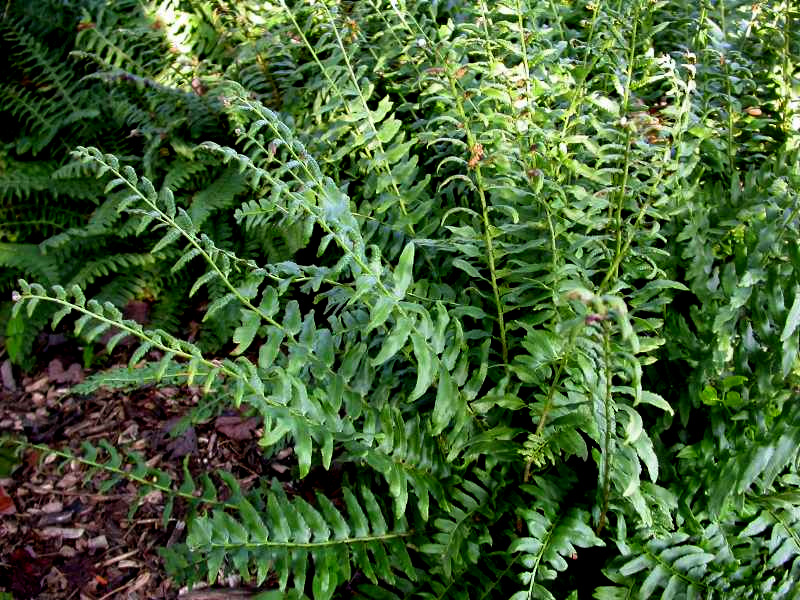

U.S. native Christmas fern, Polystichum acrostichoides, is ornamental 365 days a year in my garden, photo courtesy of the Missouri Botanical Garden PlantFinder

Christmas fern, Polystichum acrostichoides (zones 3 to 9), is without a doubt the best evergreen fern for mid-Atlantic US gardens.  It grows well everywhere in my garden from my deeply shaded woodland to more sunny, rocky slopes.  Right now, although not as upright as the photo above, it is the most presentable evergreen fern after our long, hard winter.

Christmas fern growing an a rocky outcropping in Great Smoky Mountain National Park, Tennessee

Christmas fern is native to the whole eastern half of North America, including all of Pennsylvania.  According to Mickel, its common name arose because it was used by early settlers as Christmas decorations.  The lance-shaped, dark green, leathery fronds provide excellent winter interest.  The two foot tall, fountain-like clumps increase in size over time, forming multiple crowns and making it easy to divide.  Christmas fern is very easy to grow in part shade to full shade and in moist to dry soil and can be used on slopes to prevent erosion.

I hope I have convinced you to go outside and investigate where you can add some evergreen ferns for year round interest.

Please let me know in a comment/reply what evergreen ferns you grow in your garden.

Carolyn


Notes: John Mickel is Curator of Ferns for the New York Botanical Gardens.  His book, Ferns for American Gardens, is an excellent resource discussing over 400 ferns with hundreds of photos.  I have added it to my sidebar under Books so you can always find it.

Every word that appears in orange on my blog is a link that you can click for more information.  If you want to return to my blog’s homepage to access the sidebar information (catalogues, previous articles, etc.), just click here.

Nursery Happenings: I am currently accepting orders for snowdrops, including  mail orders.  For the catalogue and order information, click here.  I am taking reservations for my Hellebore Seminars for the Totally Obsessed.  For the brochure and registration information, click here.  I have three spaces left for the March 6 session of Charles Cresson’s Snowdrops and Other Winter Interest Plants Seminar.  For the brochure and registration information, click here.

I have recently been honored with the Stylish Blogger Award by six different blogs, and I want to thank them for the accolade.  My friends would really laugh to hear the word stylish applied to me as a person, but I am glad I am making up for that with my blog.  I am not following the award rules, but instead letting you know who gave me the award in hopes that you will visit their blogs.  Here are the links and some information to entice you to visit them:

Deb’s Garden: Deb shares her gardening experiences on 3.5 partially wooded acres in Helena, Alabama.

Island Threads: Frances battles the elements on the northern tip of an island off the northwest coast of Scotland.

Orchid de Dangau: Makirimi collects and grows orchids in Malaysia.

Southern Meadows: Karin writes about nature and gardening in northeastern Georgia.

Sweet Bean Gardening: Hanni is developing a cottage garden in Indiana with her two young daughters.

The Suburban Gardener: Lily specializes in lilies and hostas in her shady suburban Chicago, Illinois, garden.


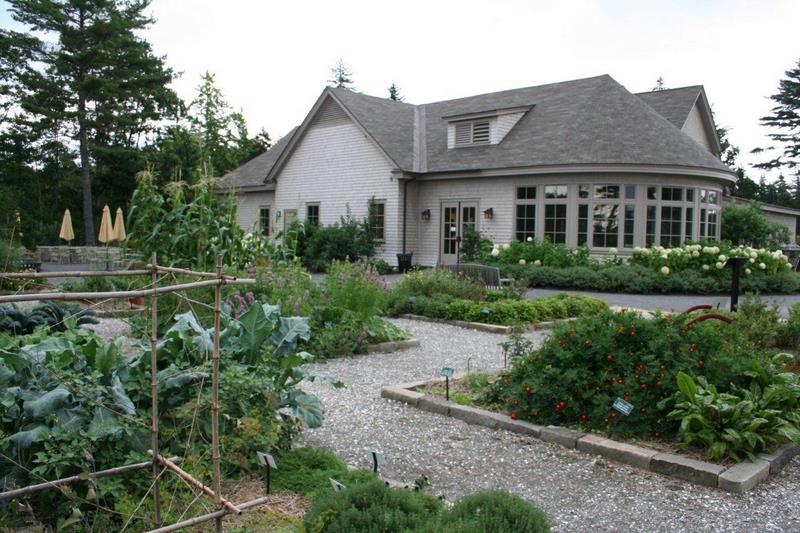
Coastal Maine Botanical Gardens

Posted in garden to visit with tags on February 18, 2011 by Carolyn @ Carolyns Shade Gardens

Visitor Center, photo Barbara Freeman, Coastal Maine Botanical Gardens

As the grays and browns of late winter replace the snow, it is uplifting to look back on the amazing botanical garden I visited in September.  I was in Maine for my birthday and, if that wasn’t present enough, my husband and son took me garden visiting to Coastal Maine Botanical Gardens in Boothbay, Maine, US.  Even though I come from the mid-Atlantic, home to many of the best public gardens in the US, and have visited gardens all over the world, I was wowed by this new but impeccably executed garden by the sea.

Children’s Garden, photo William Cullina, Coastal Maine Botanical Gardens

Coastal Maine Botanical Gardens opened officially in June of 2007 after 16 years of meticulous planning by an incredibly dedicated group of Maine residents and the talented experts they hired.  After searching since 1991, this intrepid group purchased 128 acres of pristine land with 3800 feet of tidal shore frontage in 1996, using their own homes as collateral.  An additional gift in 2005 brought the total to 248 acres and almost a mile of shoreline, saving it all from development.

Planting began in 2001 and the impressive Maine cottage style visitor center (photo at top) opened in 2007.  This summer saw the opening of the magical children’s garden (photo above) themed to highlight children’s literature with a Maine connection.

Kitchen Garden, photo Barbara Freeman, Coastal Maine Botanical Gardens

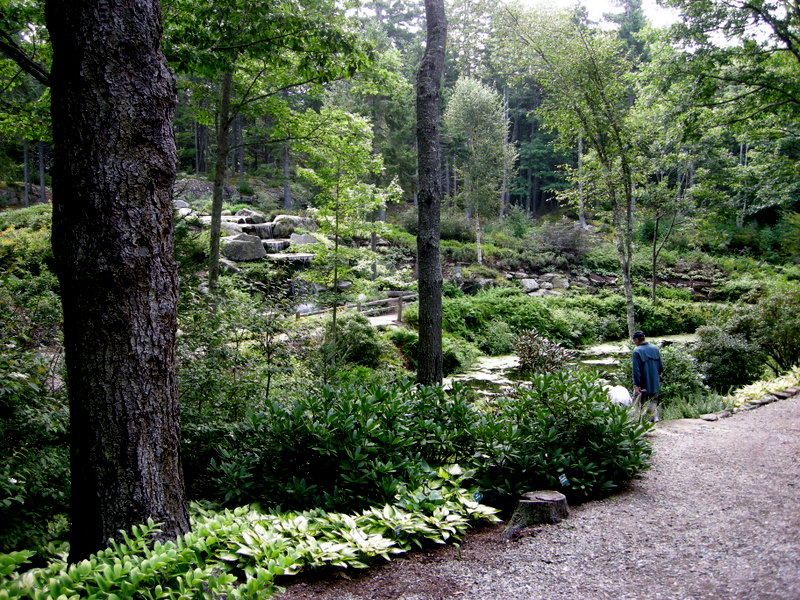
Walking around the designed portions of the gardens was such a pleasure because both the overall design of each area and also the attention to individual details is exceptional.  The light and airy cafe opens onto an elegant kitchen garden (photo above) planted with herbs, vegetables, edible flowers, berries, and an orchard of hardy heirloom apple and pear trees.  Creative and beautiful stonework graces every area of the 15 acres of ornamental gardens (see photos below).

Rose and Perennial Garden, photo William Cullina, Coastal Maine Botanical Gardens

Each area of the landscape from the cottage style rose garden (photo above) to the more naturalistic rhododendron garden (photo below) was a treat for the eyes.  And each individual plant within these gardens was impeccably grown (collage below).

Obviously I focused on shade plants!

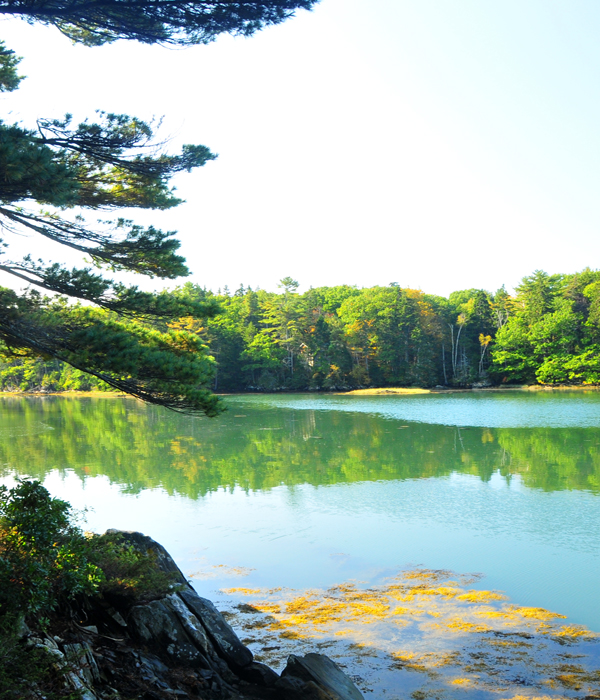
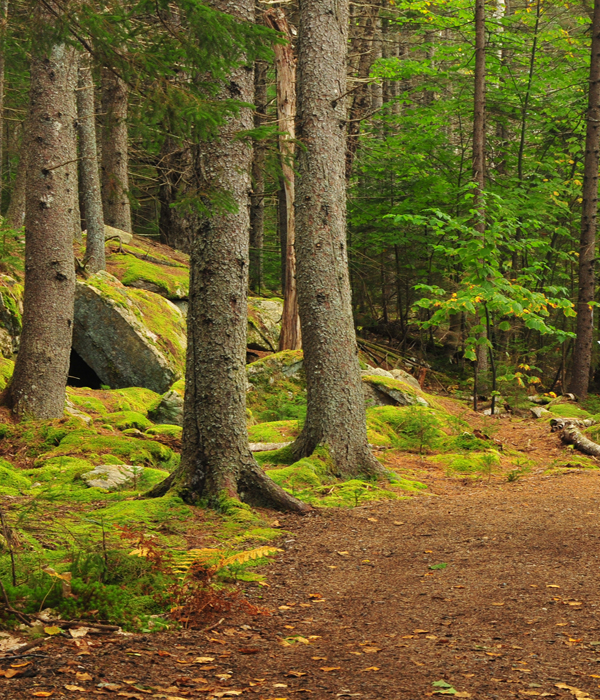
If that description isn’t effusive enough, what I treasured the most was my walk along the miles of trails showcasing the untouched waterfront and woodlands that are quintessentially Maine.  The views of the tidal inlet are spectacular (photo of cove below).  The pristine woodlands are something rarely found in the rest of the continental US (photo of trail below).

Huckleberry Cove, photo William Cullina, Coastal Maine Botanical Gardens

Huckleberry Cove Trail, photo William Cullina, Coastal Maine Botanical Gardens

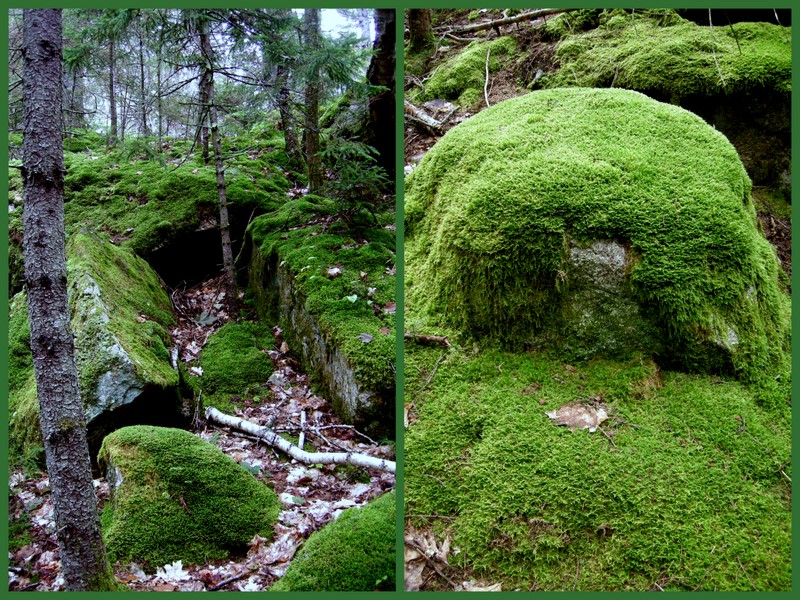
It is hard to imagine if you haven’t seen it, but every inch of the trails, woodlands, and especially the rocks is covered with moss (photo below).  As you look closer, you realize that every rock holds a garden of its own more beautiful than any human, no matter how talented, could create (see collage below).  I would visit Coastal Maine Botanical Gardens just to see the magnificence of nature untouched.

What Coastal Maine Botanical Gardens has accomplished in the short period of time it has been in existence is nothing short of remarkable.  A beautifully designed and executed ornamental garden set like a jewel in a spectacular natural setting: it doesn’t get much better than that.

Carolyn


Notes: If you want to know more about Coastal Maine Botanical Gardens and see more beautiful photos, click here.  I have also added Coastal Maine Botanical Gardens to my sidebar under Places to Visit so you will always be able to find it.   International visitors to the US should consider adding the State of Maine to your itinerary—one of the most beautiful places on earth.

Every word that appears in orange on my blog is a link that you can click for more information.  If you want to return to my blog’s homepage to access the sidebar information (catalogues, previous articles, etc.), just click here.

Nursery Happenings: I am currently accepting orders for snowdrops, including  mail orders.  For the catalogue and order information, click here.  I am taking reservations for my Hellebore Seminars for the Totally Obsessed.  For the brochure and registration information, click here.  I have four spaces left for Charles Cresson’s Snowdrops and Other Winter Interest Plants Seminar.  For the brochure and registration information, click here.

February GBBD: Add to Your Spring Shopping List

Posted in Garden Blogger's Bloom Day, garden to visit, hellebores, snowdrops, winter, winter interest with tags , , , , , , , , , , on February 14, 2011 by Carolyn @ Carolyns Shade Gardens

“Spring-blooming” hardy cyclamen, Cyclamen coum, sends out its first bud

It is time to walk around your garden again and assess what you need to add to make the end of winter an exciting time in your landscape.  Do you need more early-blooming hellebores to give you a reason to go outside?  Could your garden benefit from flowers that bloom in January and February like hardy cyclamen, snow crocus, or snowdrops to relieve the gray?  Make a list and take photographs so that when you are shopping this spring you know what you need and where it should go.  I know it’s icy outside, but you never know what you might find to end the winter doldrums like the hardy cyclamen (pictured above), which I discovered during my own chilly inventory.

Snowdrops and winter aconite on Winterthur’s March Bank, photo courtesy of Winterthur

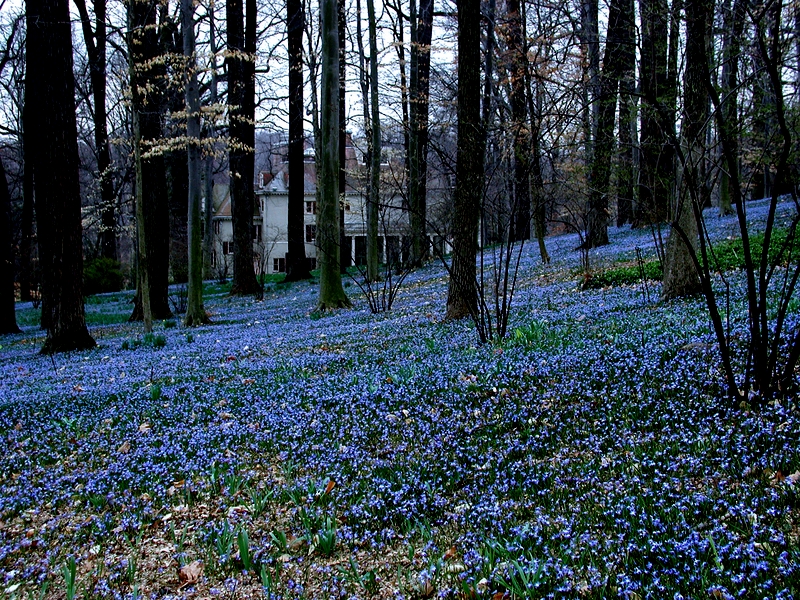
If you need ideas, visit local arboretums and gardens.  I always find a trip to Winterthur, an elegant and intimate public garden in Delaware, highly inspirational and informative.  Starting March 1 when Winterthur opens for spring, the area of the gardens known as the March Bank erupts into bloom with tens of thousands of snowdrops, adonis, winter aconite, snow crocus, early scillas, glory-of-the-snow, spring snowflake, and early daffodils.

Snowdrops and winter aconite on Winterthur’s March Bank in early March, photo courtesy of Winterthur

Later in March, glory-of-the-snow, Chionodoxa, takes over, photo courtesy of Winterthur

Today is Garden Blogger’s Bloom Day for February when gardeners around the world show photos of what’s blooming in their gardens (follow the link to see  photographs from other garden bloggers assembled by Carol at May Dreams Gardens).  Here are a few more highlights from my mid-February stroll through Carolyn’s Shade Gardens:

Very early-blooming double white hellebore, Helleborus x hybridus ‘Mrs. Betty Ranicar’

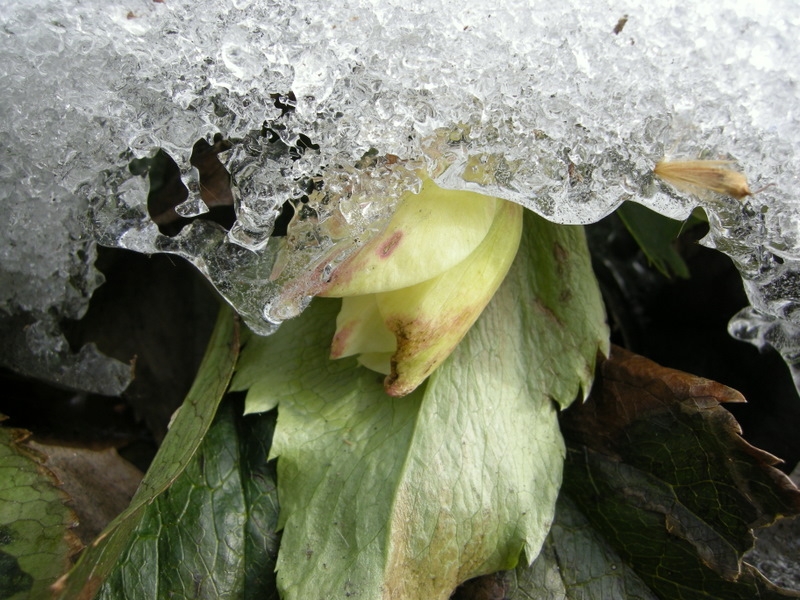
Bearsfoot hellebore, Helleborus foetidus, was waiting under the ice

Sweetbox, Sarcococca hookeriena var. humilis, prepares to perfume the garden

‘Jacob’ Christmas rose, Helleborus niger ‘Jacob’, began blooming in October and has waited patiently under the snow and ice for a chance to show its flowers again

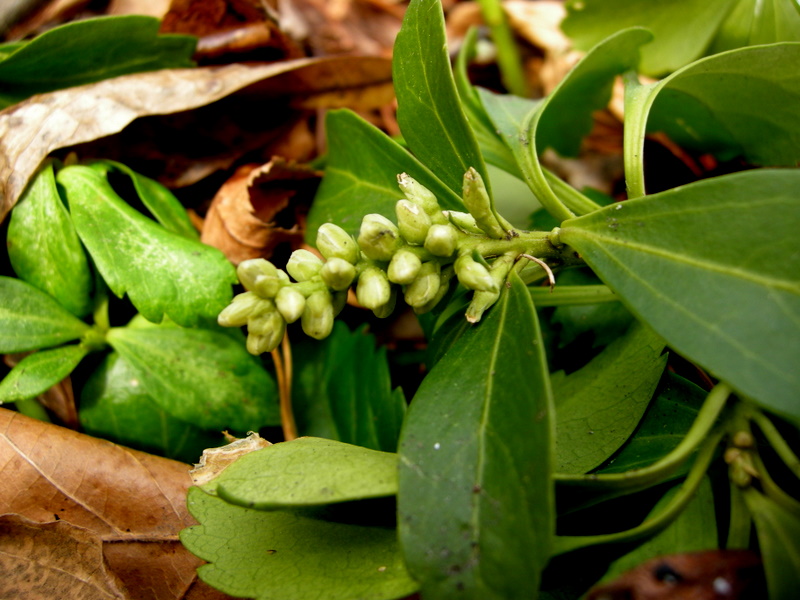
The lowly Japanese pachysandra, P. terminalis, forms its flowers the previous season adding winter interest to its evergreen leaves

The flower buds of hybrid hellebores, Helleborus x hybridus, wait for the hard-packed snow to melt, in warmer years they would be in bloom now

Some hybrid hellebores are farther along than others

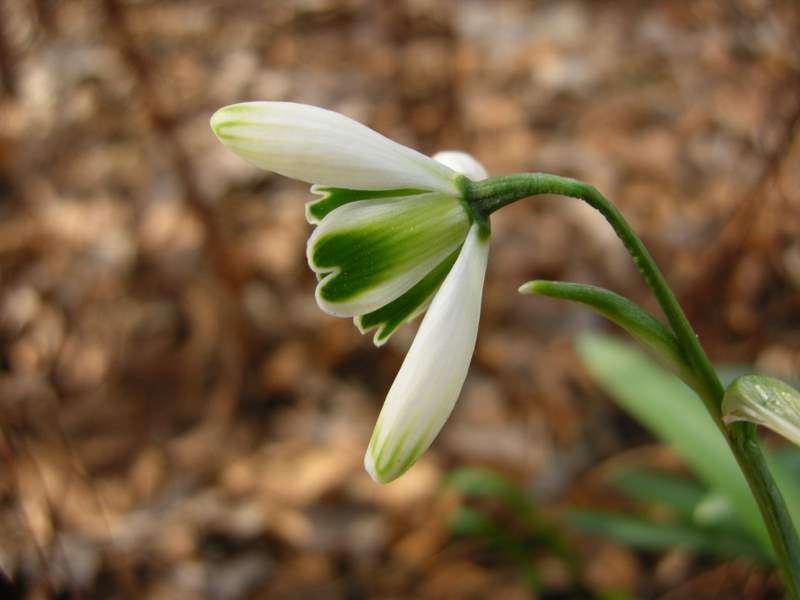
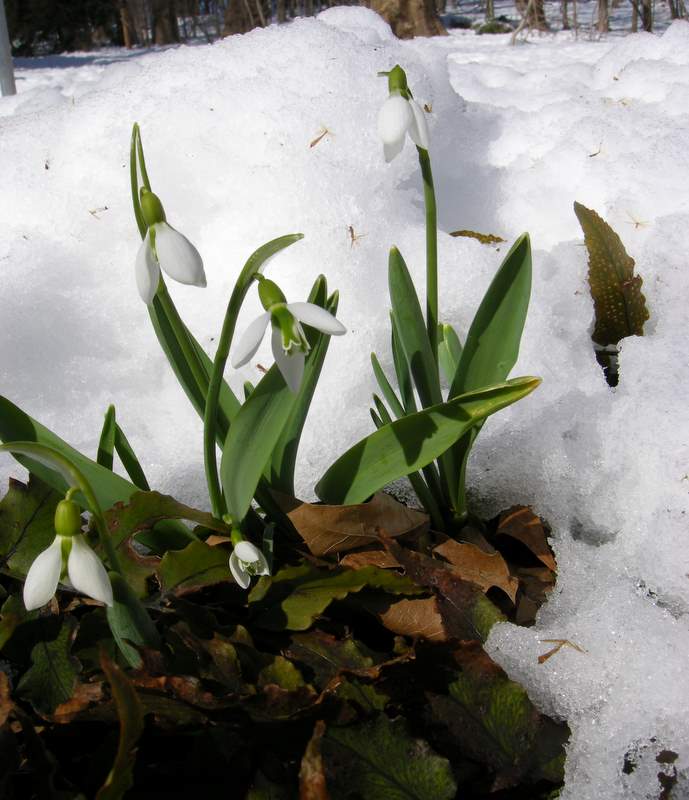
Giant snowdrop, Galanthus elwesii, was the first flower through the snow in 2011 (see Are Snowdrops Thermogenic?) and was also blooming in December

With our near record-breaking snowfall accompanied by generous doses of ice (see The Joys and Sorrows of Snow), I wasn’t planning on participating in February’s Garden Blogger’s Bloom Day.  But when I grabbed my camera and walked around, there was much to be seen.   In addition to the flowers, there was more than enough views of the destruction of the winter by nature and otherwise.

Remnants of the white pine and coral bark maple branches lost this winter

The signs marking my epimedium collection after the ravages of my three snowboarding teenage sons.

Please let me know in a comment/reply what flowers are blooming in your winter garden.  If you participated in GBBD, please provide a link so my nursery customers can read your post.

Carolyn


Notes: Every word that appears in orange on my blog is a link that you can click for more information.  If you want to return to my blog’s homepage to access the sidebar information (catalogues, previous articles, etc.), just click here.

Nursery Happenings: I am currently accepting orders for snowdrops, including  mail orders.  For the catalogue and order information, click here.  I am also taking reservations for Charles Cresson’s Snowdrops and Other Winter Interest Plants Seminar.  For the brochure and registration information, click here.

Are Snowdrops Thermogenic?

Posted in bulbs for shade, snowdrops, winter with tags , , , , , , on February 9, 2011 by Carolyn @ Carolyns Shade Gardens

Galanthus ‘Dionysus’, a Greatorex double

Snowdrops are some of the earliest blooming flowers in my garden, often popping up through the snow, hence their name.  We all love them for that, but how do they do it?  I have been told several times that they are thermogenic, that is,  that they produce their own heat, and decided to do some scientific research to find out (it can’t all be about pretty photos).

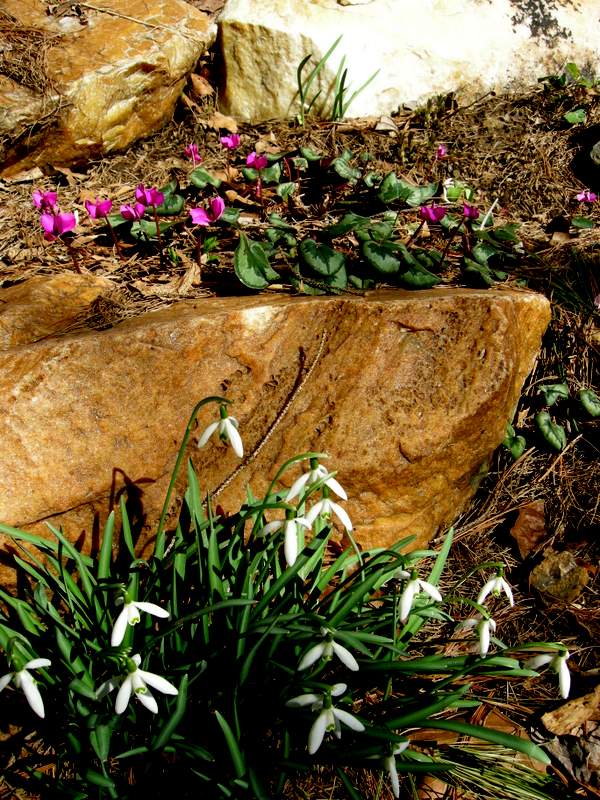
Common snowdrop, Galanthus nivalis, and “spring-blooming” hardy cyclamen ‘Rose’, Cyclamen coum ‘Rose’, in my rock garden

Over 200 years ago, French biologist, Jean-Baptiste de Lamarck, noticed that some flowers produce their own heat.  Since then, scientists have confirmed that some plants can, in fact, generate their own heat, a process known as thermogenesis, previously thought to be limited to mammals, birds, and some flying insects.  These plants are “warm-blooded”.

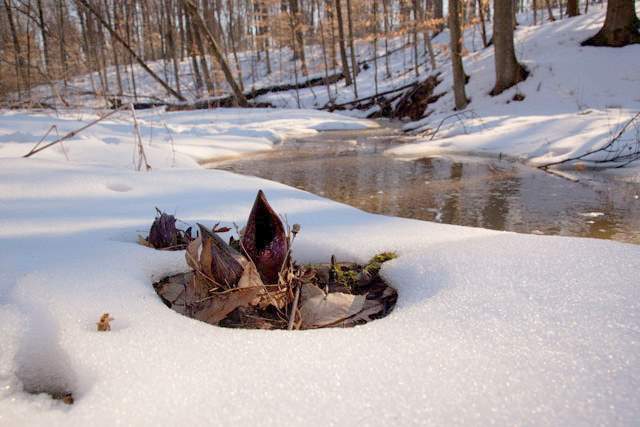
Holes in the snow produced by eastern skunk cabbage, Symplocarpus foetidus, performing thermogenesis, photo Robert Klips

The poster child for thermogenesis is the eastern skunk cabbage, Symplocarpus foetidus, which is native to most of eastern North America.  Its flower, pictured below (courtesy of Robert Klips, Ohioense: Bob’s Brain on Botany, March 8, 2010), heats up to melt the snow producing little circles all over the woods in late winter.  It does this primarily to generate and disperse its floral scent to attract pollinators.  In this case, the scent is rotten meat and the pollinators are flies and beetles.  Secondarily, it rewards the insects by providing them with energy directly as heat rather than indirectly as nectar and pollen.
Eastern skunk cabbage blooming through the snow, photo Robert Klips

This is no small feat.  Skunk cabbage flowers can heat up to 59 degrees F (15 degrees C) when the ambient temperature is 5 degrees F (-15 degrees C).  They can also thermoregulate, adjust their temperature, to maintain a constant setting as the ambient temperature changes.  If the outside temperature gets too low, they will switch off their heat entirely until things warm up.  They also switch off the heat once they have been pollinated.

Eastern skunk cabbage peeking out of its snow cave, photo Robert Klips

To perform thermogenesis, skunk cabbage uses as much metabolic energy as a small rodent or a hummingbird and employs a unique respiratory process, which is more similar to animal metabolism than plant metabolism though biochemical rather than nervous system based.   The exact nature of this process is unknown.  For those of you with a scientific bent, I have included a graph below taken from  a scholarly treatise on the subject, Temperature Regulation by Thermogenic Flowers (Plant Physiology Online, Sept. 2006).

Graph of oxygen consumption and heat production by skunk cabbage in various ambient temperatures

But, now that you understand thermogenesis, back to the question at hand: are snowdrops thermogenic?  The short answer is I don’t know.  Various sources say that they are, but the statements seem to be based on hearsay.  I could find no scientific studies backing them up.  I posted the question on the Pacific Bulb Society forum, the Scottish Rock Garden Club forum, and to friends at Longwood Gardens, and no one could confirm that snowdrops are thermogenic.  So I present my own “scientific study” of the process.

February 21, 2010, at Carolyn’s Shade Gardens, three tiny islands are appearing in the snow

As you know from my previous post, The Joys and Sorrows of Snow, we had record snowfall during the winter of 2009-2010.  By February, my whole garden was covered by a deep, thick, hard layer of snow.  Looking out on the landscape in the photo above, there was absolutely no melting going on except in three small areas.  What is happening in those little circles?  Let’s look closer:

Giant snowdrop, Galanthus elwesii, melting through the snow


And even closer:


Giant snowdrop blooming in February after melting through the snow pack

My observations prove nothing scientific, but they do indicate that something is going on.  And I like to think that one of my favorite plants, snowdrops, which inspire such intense interest in many gardeners, also produce their own internal excitement.

For my previous articles on snowdrops, click here and here.


Please let me know in a comment/reply if you have any knowledge or personal experience with snowdrops being thermogenic.

Carolyn


Notes: Every word that appears in orange on my blog is a link that you can click for more information.  If you want to return to my blog’s homepage to access the sidebar information (catalogues, previous articles, etc.), click here.

Nursery Happenings: I am currently accepting orders for snowdrops, including  mail orders.  For the 2011 Snowdrop Catalogue and order information, click here.  I am also taking reservations for Charles Cresson’s Snowdrops and Other Winter Interest Plants Seminars.  For the brochure and registration information, click here.

The Joys and Sorrows of Snow

Posted in garden essay, Gardening Gone Wild Photo Contest, winter with tags , , , , on February 3, 2011 by Carolyn @ Carolyns Shade Gardens

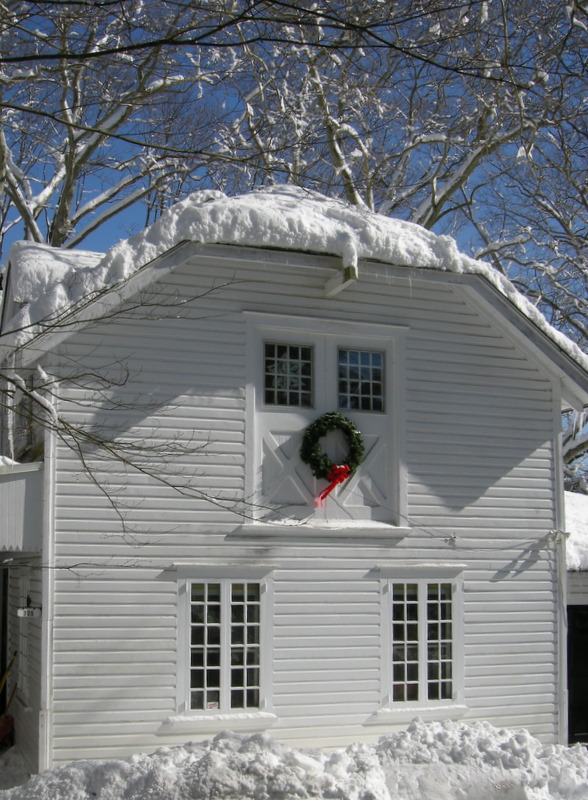
My office, an historic carriage house, in winter

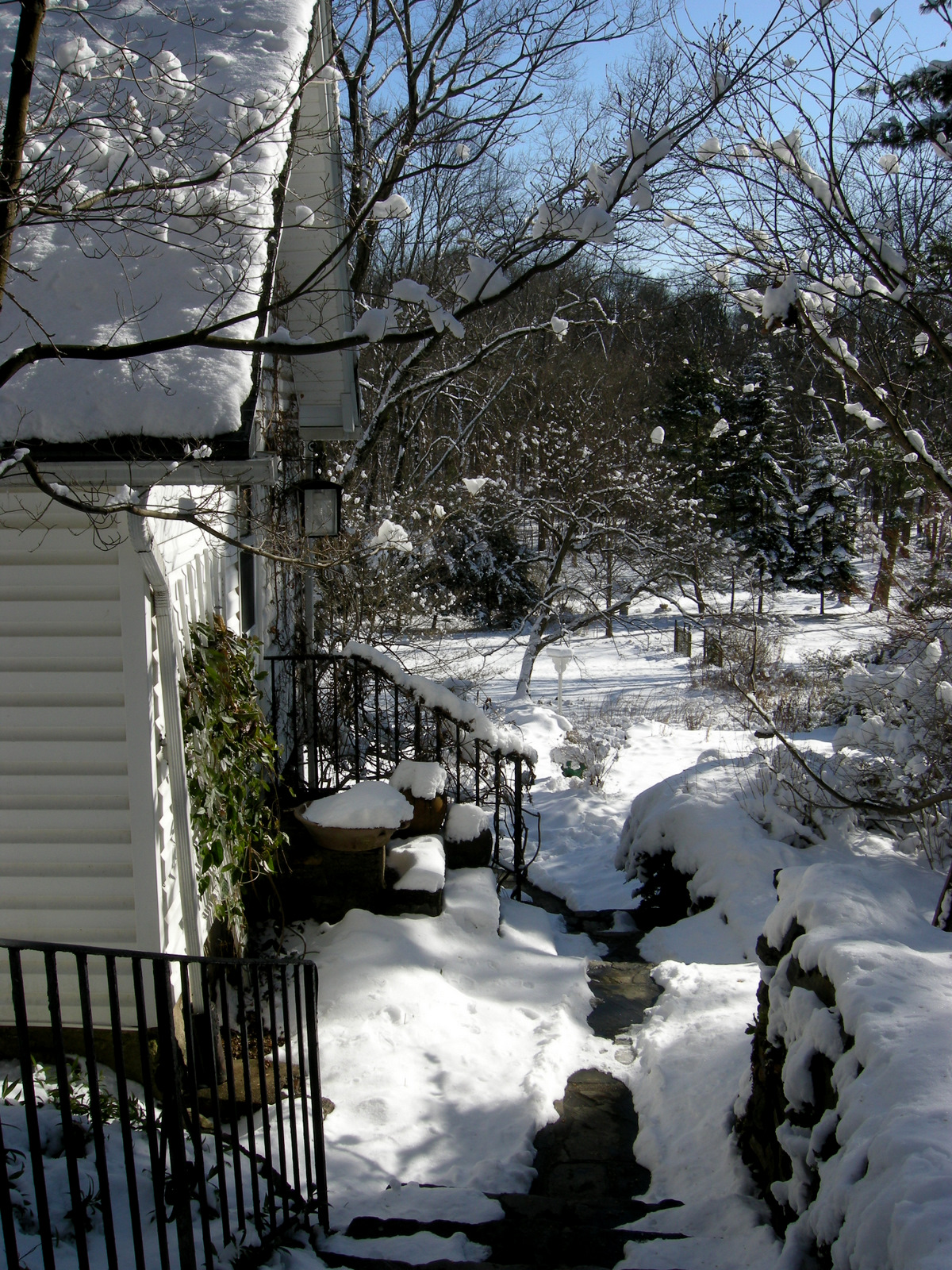
I love snow.  I am not sure that my garden is ever more beautiful than with a dusting of snow highlighting every branch and stem.  And to me there is really nothing uglier, in the garden anyway, than snowless frozen soil or mulch surrounded by the fences and houses that I can’t see when the leaves are on.

Snow on the branches of my 150-year-old London plane trees

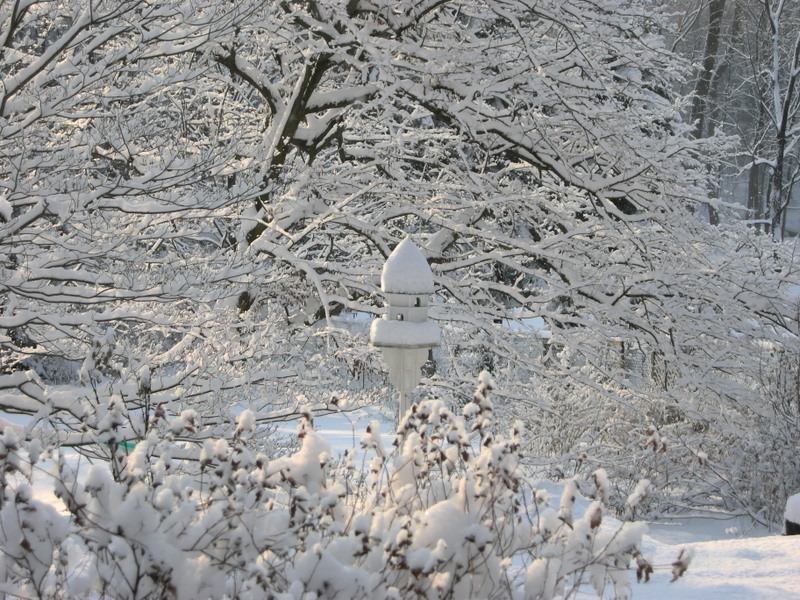
My “signature” bird house in winter

Ice is very beautiful too (I can hear the groans, but if you can ignore the sounds of branches breaking and just stare at the ice, it is lovely.  On second thought, maybe you should only view ice from inside the house.)

My upright coral bark maple, Acer palmatum ‘Sango-kaku’: more vertical Japanese maples fare better in  snow and ice than weeping forms

White pine, Pinus strobus, is not suitable for ornamental landscapes as explained below

Winterberry holly, Ilex verticillata ‘Red Sprite’, looks beautiful encased in ice

Here in southeastern Pennsylvania, we had record snowfall during the winter of 2009-2010 with 70 inches.  The previous record was 1995-1996 with 66 inches, but over three feet came in one blizzard so there wasn’t consistent cover.  Before that you have to go back to 1898-1899 with 55″ inches.

My house, Wayside Cottage, the old estate gardener’s dwelling.

As the snow melts and temperatures warm, we get fog

During 2009-2010, the ground was covered with snow almost the whole winter, which hasn’t happened in quite a while here.  Snow cover is very important for plants, especially when the temperatures dip down into the single digits.  We are in USDA hardiness zone 6b with an average annual minimum temperature of 0 to -5 degrees F (-18 to -21 degrees C).  Snow insulates plant roots and keeps them at an even temperature, preventing the freezing and thawing that heaves them out of the ground.  Snow also provides much needed moisture over the winter and especially in the spring as it melts slowly and waters the emerging perennials.

My clump of yellow trillium doubled in size after a snowy winter

Cobra lily, Arisaema urashima, reached new heights

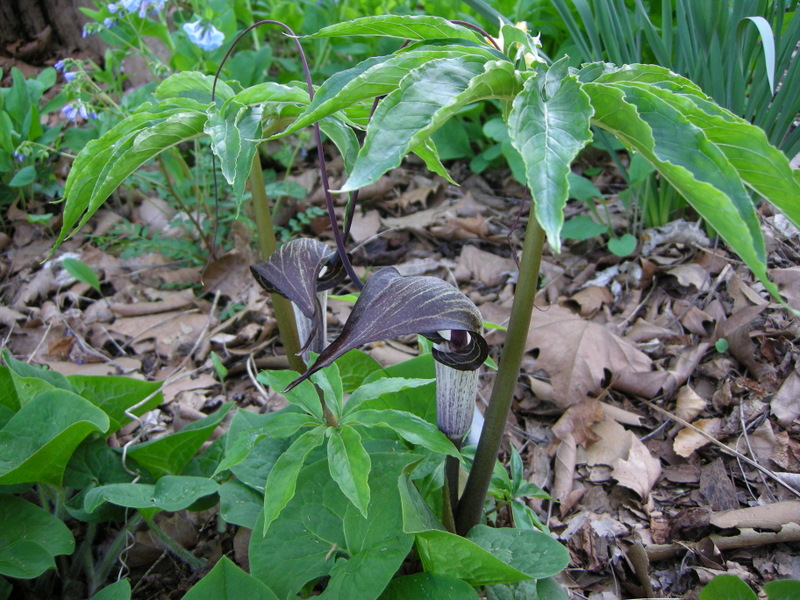
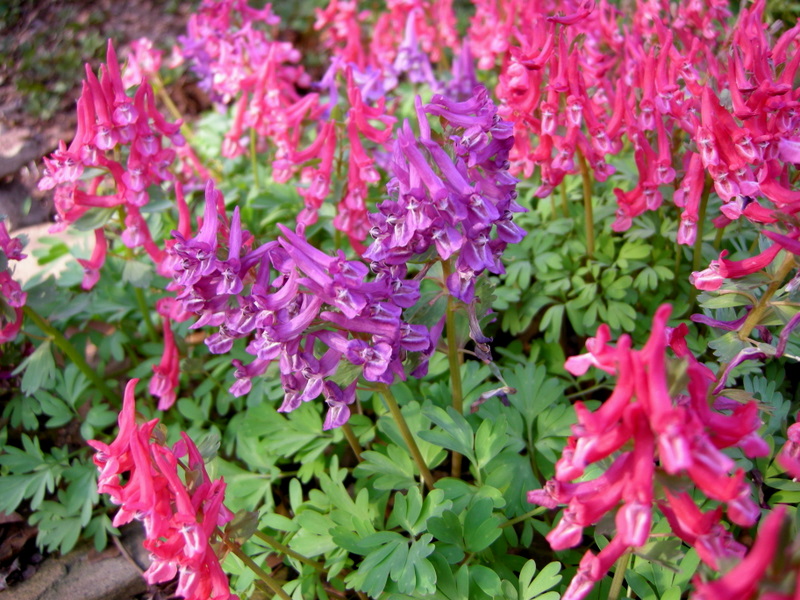
When my perennials came up in the spring of 2010 after the snowy winter, they were spectacular.  Struggling plants were suddenly big and glorious.  Newly planted areas looked well established.  Patches of slow growing woodland ephemerals doubled and tripled in size.  Asian jack-in-the-pulpits that hadn’t come up in years burst out of the ground and were twice their normal height.  I had given them up for dead.  Seeds of rare plants germinated and thrived in my woodland unaided.  I suddenly had a small hillside of the snow white jack-in-the-pulpit Arisaema sikokianum.  Trilliums, dogtooth-violets (Erythronium), and fumewort (Corydalis solida) proliferated in new combinations and colors.  The snow was very good to my perennials.

Serendipitous shades of self-sown fumewort, Corydalis solida

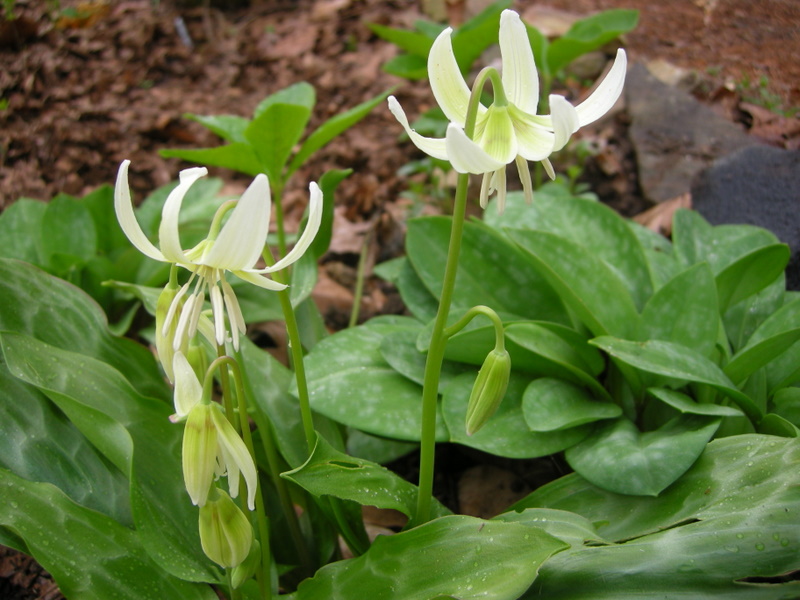
A new color form of dogtooth-violet, Erythronium, appeared in my woodland

I wish I could say the same for my shrubs and trees.  My very well established winter daphnes, Daphne odora, and my February daphne, Daphne mezereum, were bent to the ground by snow and falling limbs.  Although I righted them, they all suddenly wilted and died in the spring.  I think once the roots are damaged or disturbed, they are not resistant to pathogens and quickly succumb.  That may be the origin of what is known as sudden-daphne-dieback.

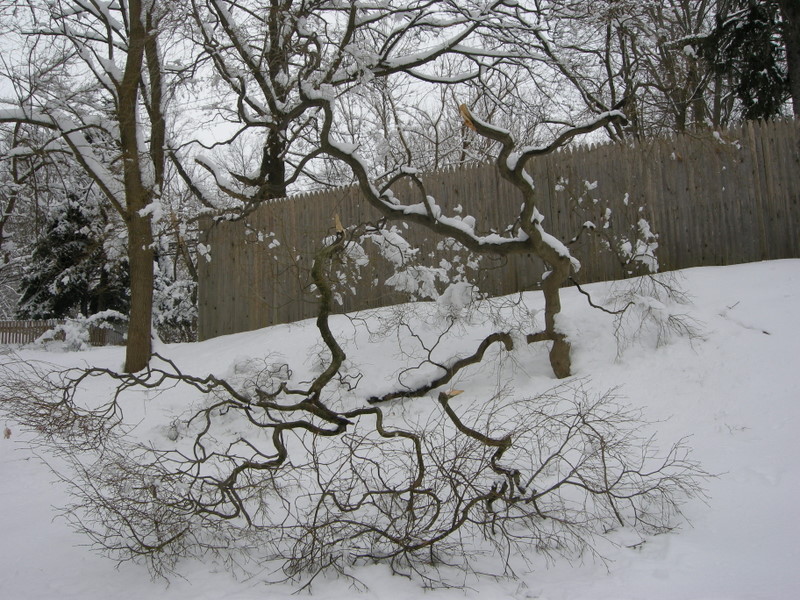
Damaged weeping Japanese maple, Acer palmatum dissectum: upright forms of Japanese maple fared better, they just bent to the ground and sprang back up

Voles, protected from my cats by the snow, ate my rare tree peony purchased from the old Heronswood many years ago.  I also lost my Chinese redbud, Cercis chinensis, both my white and my gold variegated Kousa dowoods, Cornus kousa ‘Wolf’s Eye’ and ‘Sunsplash’, my yellow rugosa rose, Rosa rugosa ‘Topaz Jewel’, and an old native rhododendron that came with the property in 1983.  My woody plants did not like the snow.

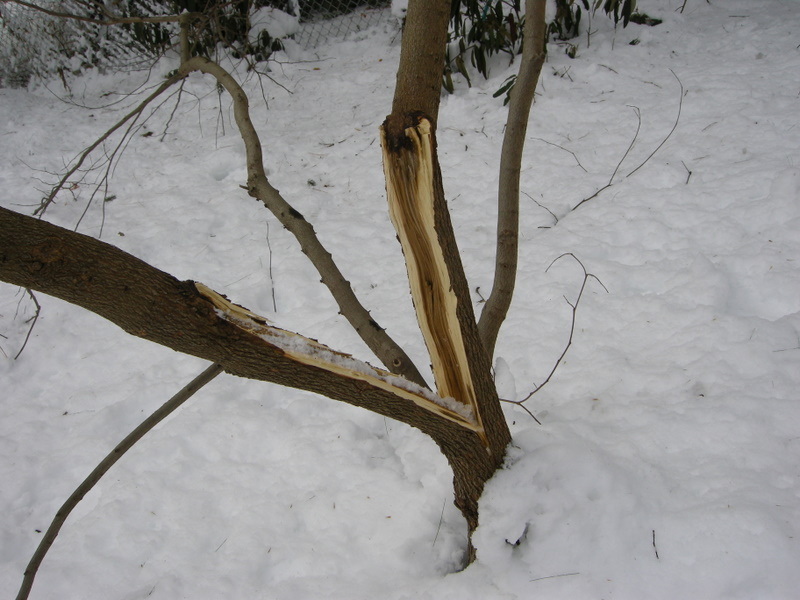
Split native ‘Forest Pansy’ redbud, Cercis canadensis ‘Forest Pansy’: it should probably be grown as a single trunk

You may be saying, wow she really should be growing native trees and shrubs, and she wouldn’t be having all these problems, but you would be wrong.  The winter of 2010-2011 is gearing up to exceed last year in snowfall with 50 inches already and more storms in the forecast.  During last week’s 18 inch storm, which included sleet, I lost a large specimen ‘Forest Pansy’ redbud, Cercis canadensis ‘Forest Pansy’ (photo above), an old flowering dogwood, Cornus florida, a red spruce, Picea rubens (photo below),  and a lot of my large white pine, Pinus strobus (photo below), all native plants.  Apple trees, a very old specimen weeping Japanese maple, Acer palmatum dissectum (photo above), and my Chinese wax shrub, Sinoclaycanthus chinensis, were also severely damaged.  Last night’s ice storm is only adding to the wreckage.

My red pine, Picea rubens, just snapped off

Branches rained down from my white pine, Pinus strobus: white pine is not a good tree for ornamental landscapes because it sheds its lower branches freely, damaging the understory plants

Once I would have mourned the loss of my prize plants.  Now I choose to be more philosophical, learn the lessons inherent in the process (which I have tried to pass on above), and look forward to what new miracles my perennials will present to me this spring—my jack-in-the-pulpits have already risen from the dead.  The glass will be determinedly half full.  As my good friend Kim remarked when I told her about the specimen redbud’s demise: “Think of the opportunities it has opened up for you in the garden!”  I don’t think I can go that far.  I intend to plant another redbud in the exact same spot.

Please tell me in a comment/reply what lessons you have learned from snowy winters.

Carolyn

Notes: Every word that appears in orange on my blog is a link that you can click for more information.  If you want to return to my blog’s homepage to access the sidebar information (catalogues, previous articles, etc.), just click here.

Nursery Happenings: I am currently accepting orders for snowdrops, including  mail orders.  For the catalogue and order information, click here.  I am also taking reservations for Charles Cresson’s Snowdrops and Other Winter Interest Plants Seminar.  For the brochure and registration information, click here.

Follow

Get every new post delivered to your Inbox.

Join 997 other followers