Archive for October, 2011

More Flowering Wintergreen Ground Covers for Shade

Posted in evergreen, Fall, groundcover, Shade Perennials, winter interest with tags , , , , , , , , , , , , on October 27, 2011 by Carolyn @ Carolyns Shade Gardens

Carolyn’s Shade Gardens is a retail nursery located in Bryn Mawr, PA, specializing in showy, colorful, and unusual plants for shade.  The only plants that we ship are snowdrops within the US.  For catalogues and announcements of local events, please send your full name, mailing address, and cell number to carolyn@carolynsshadegardens.com and indicate whether you are interested in snowdrops, hellebores, and/or hostas.  Click here to get to the home page of our website for catalogues and information about our nursery and to subscribe to our blog.

‘Album’ fall blooming hardy cyclamen, C. hederifolium ‘Album’, has white flowers, shown here blooming before the leaves on September 28, 2011, and spreads to form a ground cover that stays green through the winter.

In my article Flowering Wintergreen Ground Covers for Shade, I explained that I treasure evergreen ground covers that are presentable through winter because, here in the mid-Atlantic (US), we go through long periods of winter weather that are just plain cold without the compensation or covering of snow when any patch of green is prized.  Ground covers, especially those that maintain a presence through winter, make a garden look mature and cut down on the labor of weeding and the expense of mulch. Yes, you can plant the evergreen  triumvirate of vinca, ivy, and pachysandra.  But I want more: beautiful flowers and foliage too.  Just like the four in my original article, all four of the shady ground covers described below have prominent places at Carolyn’s Shade Gardens.

‘Shell Pink’ spotted dead nettle (I prefer to call it lamium), Lamium maculatum ‘Shell Pink’, still blooming at the end of November 2010.

Lamium ‘Shell Pink’ is a versatile wintergreen ground cover with gorgeous flowers from April to November.  It is the only lamium cultivar that blooms this long–all the others have a season of bloom in the spring.  I grow mine under the shade of a white pine (photo above and below) and also in a sunny area in front of my peonies.  ‘Shell Pink’s’ leaves stay neat and tidy all winter.
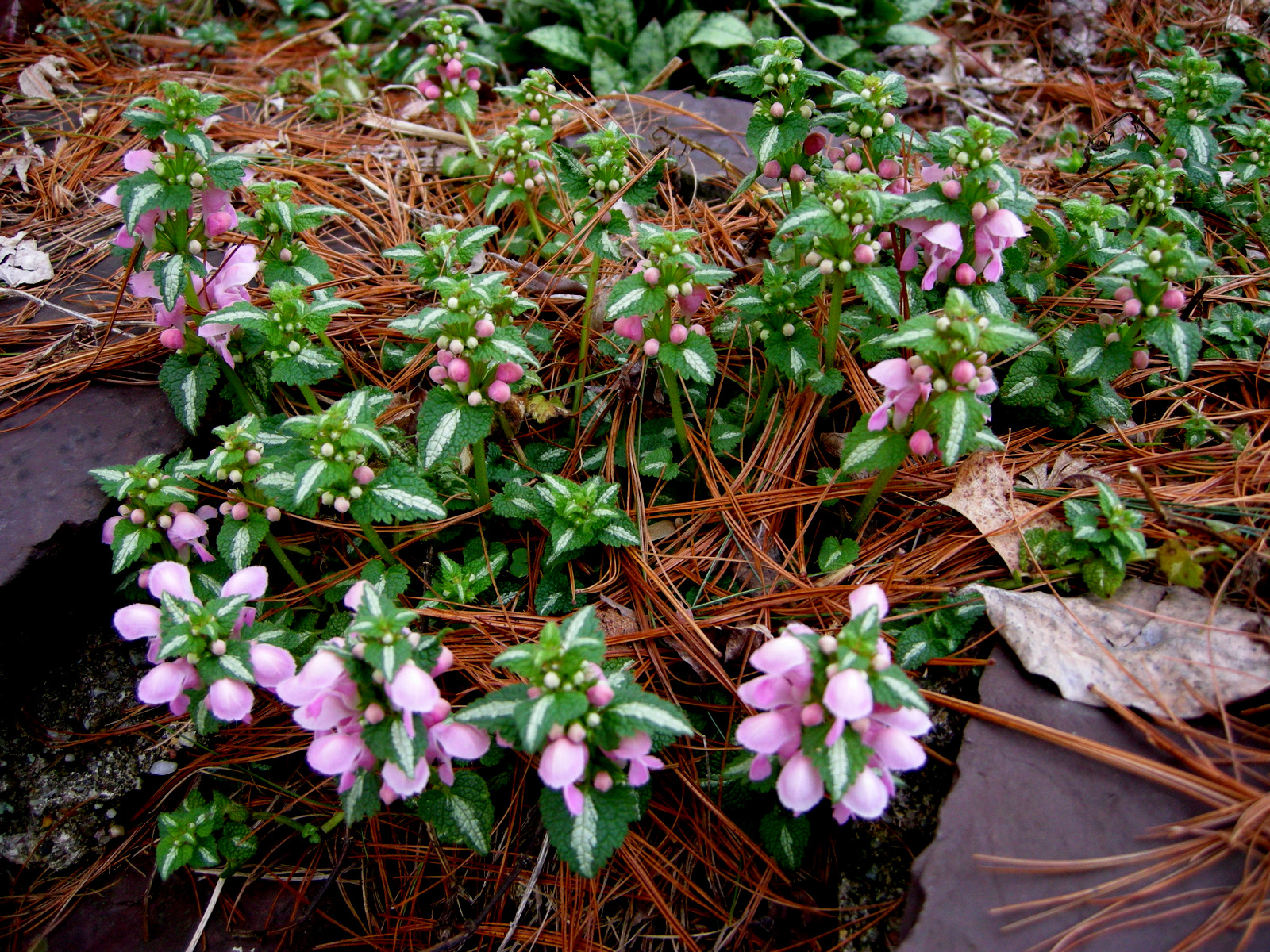
The first flush of blooms on ‘Shell Pink’ lamium in early April 2011.

Lamium maculatum is native to Europe and temperate Asia.  It quickly creeps to form 4 to 8″ tall patches of wintergreen leaves even in open full shade in zones 3 to 8.  It doesn’t seem to care if the soil is moist or dry but likes to be well-drained.  On ‘Shell Pink’, the first flush of flower buds emerges in early April to be followed by successive waves of blooms into November.  It fills in around surrounding plants without overwhelming them.  My deer have never touched it.  Lamium also makes a great container plant and overwinters outside in pots.  The only other cultivar I recommend is ‘Purple Dragon’ with bright purple flowers and solid silver leaves (photo below).
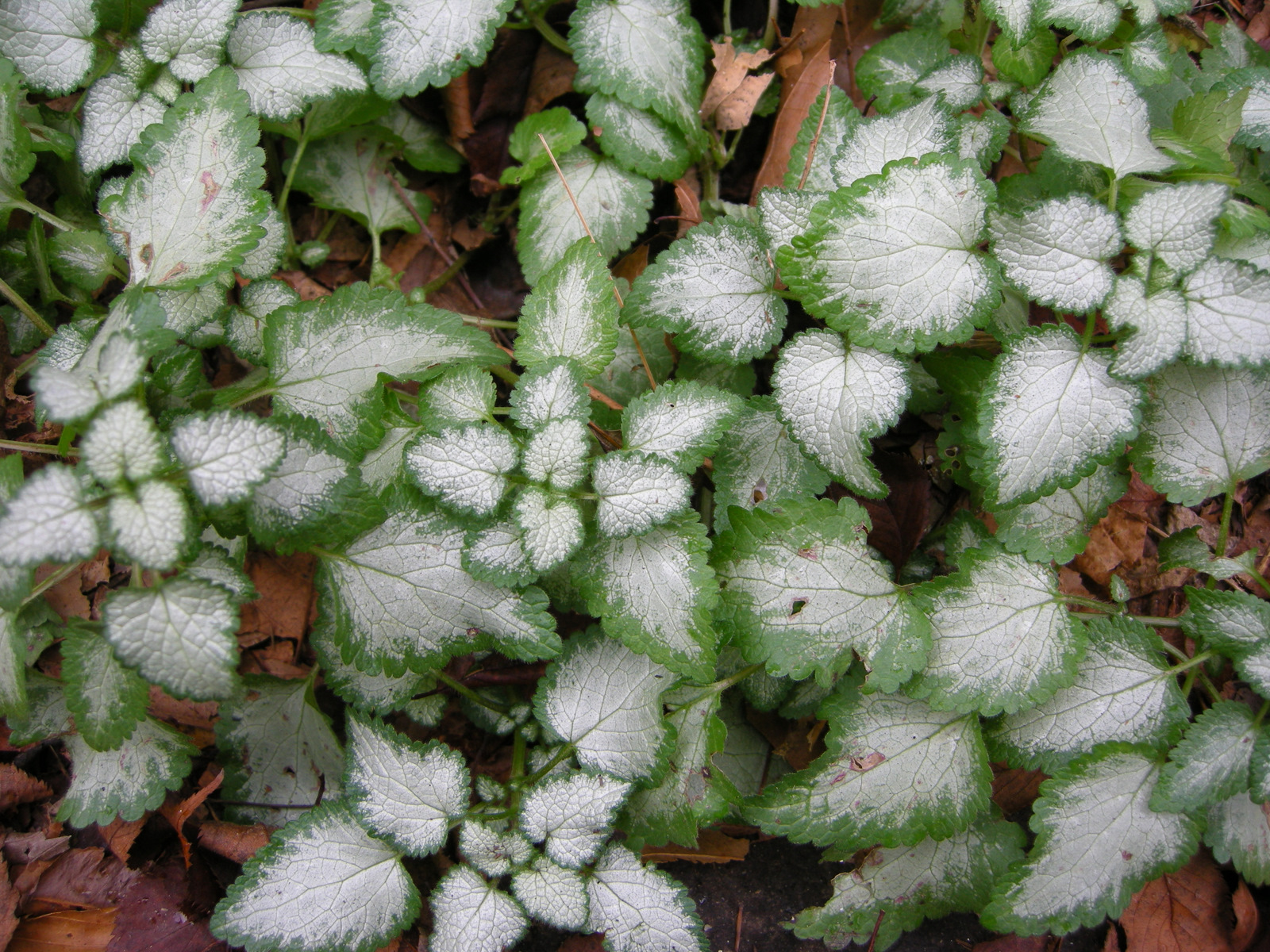
Although ‘Purple Dragon’ lamium only blooms in the spring, it’s silver leaves are quite ornamental in their own right.  Photo December 2010.

In anticipation of comments telling me that lamium is “invasive”, let me say three things.  First, it is a ground cover so it is supposed to spread and cover large areas.  A plant isn’t invasive because it spreads too much—the gardener has just planted it in the wrong place.  To me, it’s invasive if you can’t remove it when you want to either because you can never get it all (goutweed, lesser celandine) or it seeds so prolifically that you can’t remove all the seedlings (garlic mustard).  Second, the straight species, Lamium maculatum, may be invasive so don’t plant it.  Third, many times when gardeners say this they are talking about yellow archangel, Lamiastrum galeobdolon, a plant with yellow flowers and silver leaves that is invasive.  Lamiums don’t have yellow flowers.  Thanks for listening!
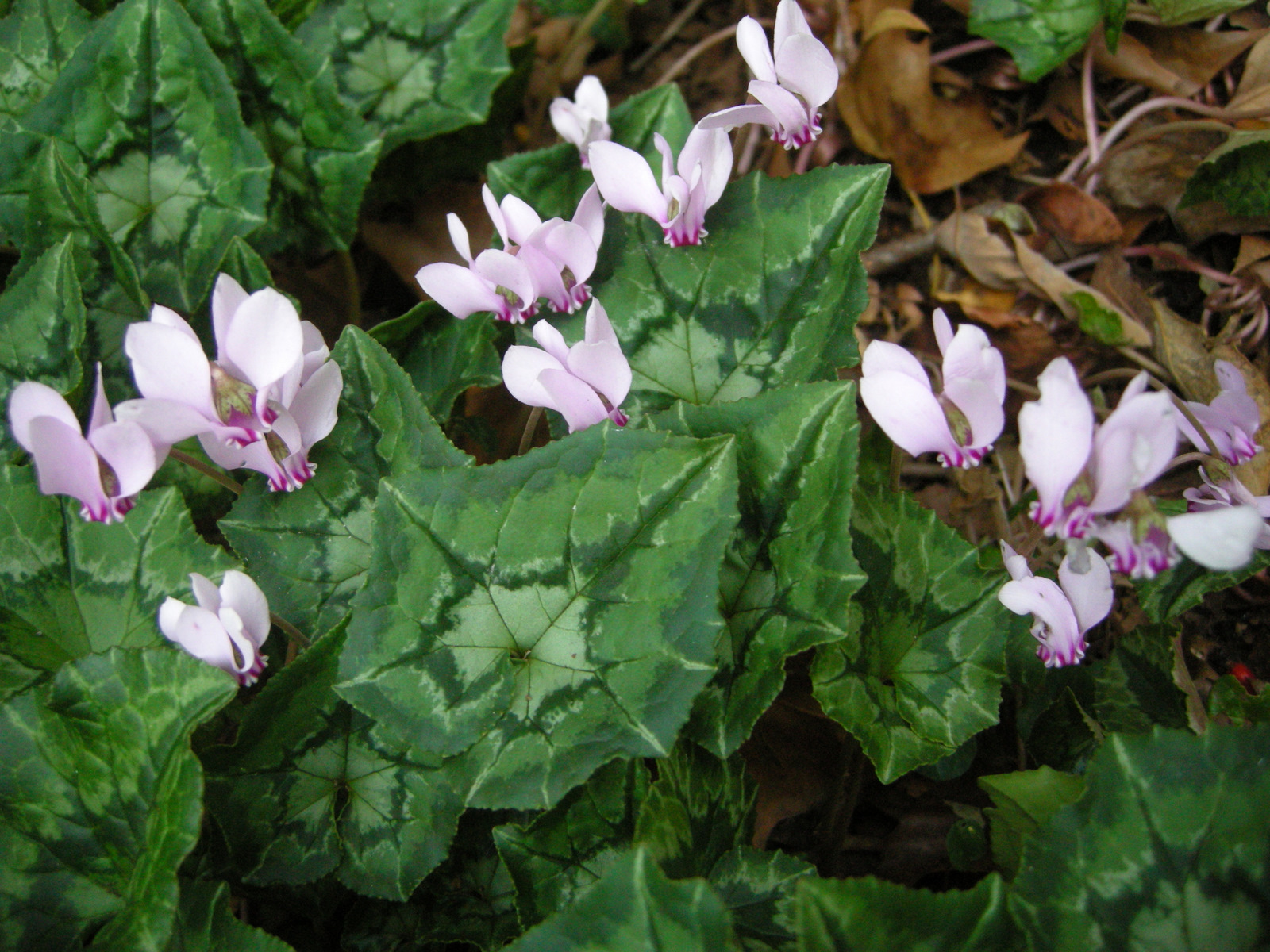
Fall-blooming hardy cyclamen, C. hederifolium, in full bloom in late October 2010.

Although spring-blooming hardy cyclamen, C. coum, is finicky and hard to grow, fall-blooming hardy cyclamen will thrive in most shady locations as long as it is well-drained.  The flowers start to bloom in September and October before the leaves break dormancy.  Then its gorgeous, intricately patterned wintergreen leaves emerge and remain pristine all winter until they go dormant in early summer.  Mine happily naturalize in east-facing shady locations.

Cyclamen hederifoliumImagine large patches of this fall-blooming hardy cyclamen foliage all through winter–absolutely stunning!  Photo in late November 2010.

Hardy cyclamen is native to wooded areas and rocky hillsides of southern Europe and Turkey.  It forms 4 to 6″ tall mats of leaves, which remain highly ornamental through winter in zones 5 to 9.  It is very tolerant of soil conditions as long as it is well-drained and, once established,  grows well in full dry shade.  My deer leave it alone.


‘Pictum’ Italian arum, Arum italicum ‘Pictum’, used as a ground cover around hellebores and hostas along my front walk so I can admire it all winter.  Photo October 20, 2011.
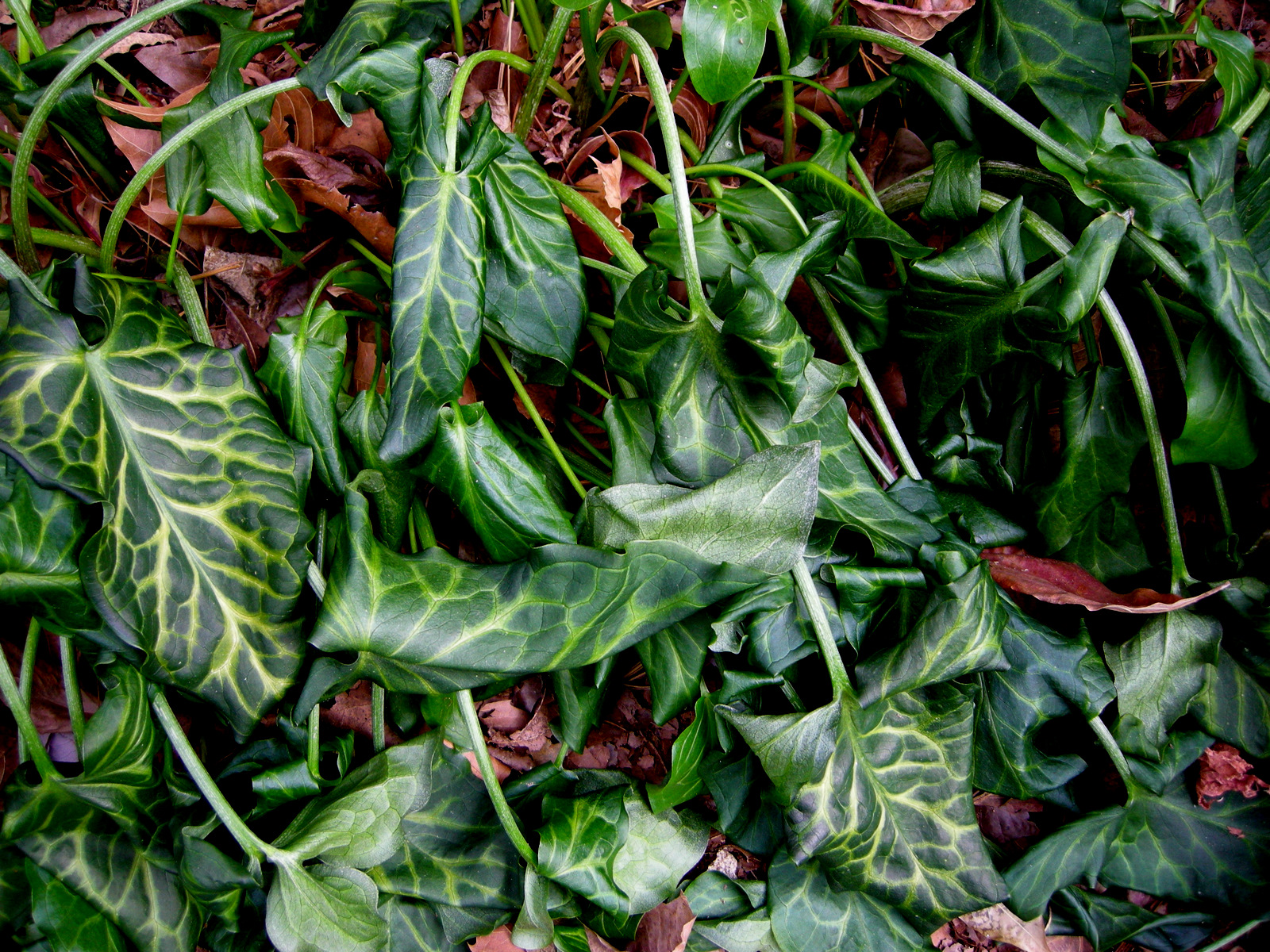
 

This is what happens to Italian arum during really cold weather.  No matter how many times I have witnessed it, I am always amazed when it stands back up and looks as if nothing has happened.  Photo December 2010.

I have featured Italian arum photos on my blog many times but that’s because I think it is such a great plant.  The leaves emerge in September and remain immaculate through the winter.  If the weather is really cold, it wilts to the ground (see photo above), only to perk up again as soon as temperatures recover.  I have it planted by my front walk so I can enjoy its spotless, highly ornamental leaves all winter.  I also use it to cover areas where I cut back ratty hostas in the fall (see my article Hostas for Fall).  In May and June, it blooms with a pale green hood-like spathe covering a yellow spadix like our native jack-in-the-pulpit.  Bright orange berries appear in summer.  Several wonderful cultivars are available, including ‘Gold Rush’, which emerges in the spring with golden venation, and ‘Tiny Tot’, a miniature.

‘Gold Rush’ Italian arum in November 2010.  Italian arum cultivars have superior markings.

Arum italicum 'Tiny Tot'/'Tiny Tot' Italian Arum‘Tiny Tot’ Italian arum in February of 2009.

Italian arum is native to Europe.  It grows 12 to 18″ tall in zones 6 to 9.  It thrives in any soil in almost full sun to full shade and is tolerant of drought.  Deer do not bother it.  In the 20 years that I have been growing it, it has spread politely to other areas of my garden, but occasionally I have heard that it can become an aggressive spreader.  Lyn from The Amateur Weeder reports that it is invasive in Australia.  Please consult local experts to see if there is a problem where you garden.


‘Sulphureum’ epimedium, E. x versicolor ‘Sulphureum’, used as a ground cover in front of hardy begonia, B. grandis.  Photo October 20, 2011.

I love epimediums.  In fact, I love them so much that they are one of the few plants I allow myself to collect with 30 varieties in my garden.  Their small but copious spring flowers are beautiful and unusual coming in white, pink, yellow, orange, red,  purple, and bicolors.  I also prize their leaves which are often shiny and wing-shaped, sporting spiky edges or colored splotches or lovely venation.  Many epimediums are deciduous and clump-forming.  In this article, I want to profile a few that have wintergreen leaves and spread to make a ground cover.

The fastest growing epimedium by far is ‘Sulphureum’.  It spreads at a medium rate to form a large patch (see photo above).  Its two-tone yellow flowers  look like miniature daffodils in early April.

E. x rubrum is the second fastest spreader.  It’s leaves are similar to ‘Sulphureum’.  If you can find the cultivar ‘Sweetheart’, pictured above, it has gorgeous flowers.  I sell a good selection of epimediums at my nursery, but I get my unusual epimediums from the Massachusetts nursery, Garden Vision Epimediums (email epimediums@earthlink.net).  They have hundreds of varieties.
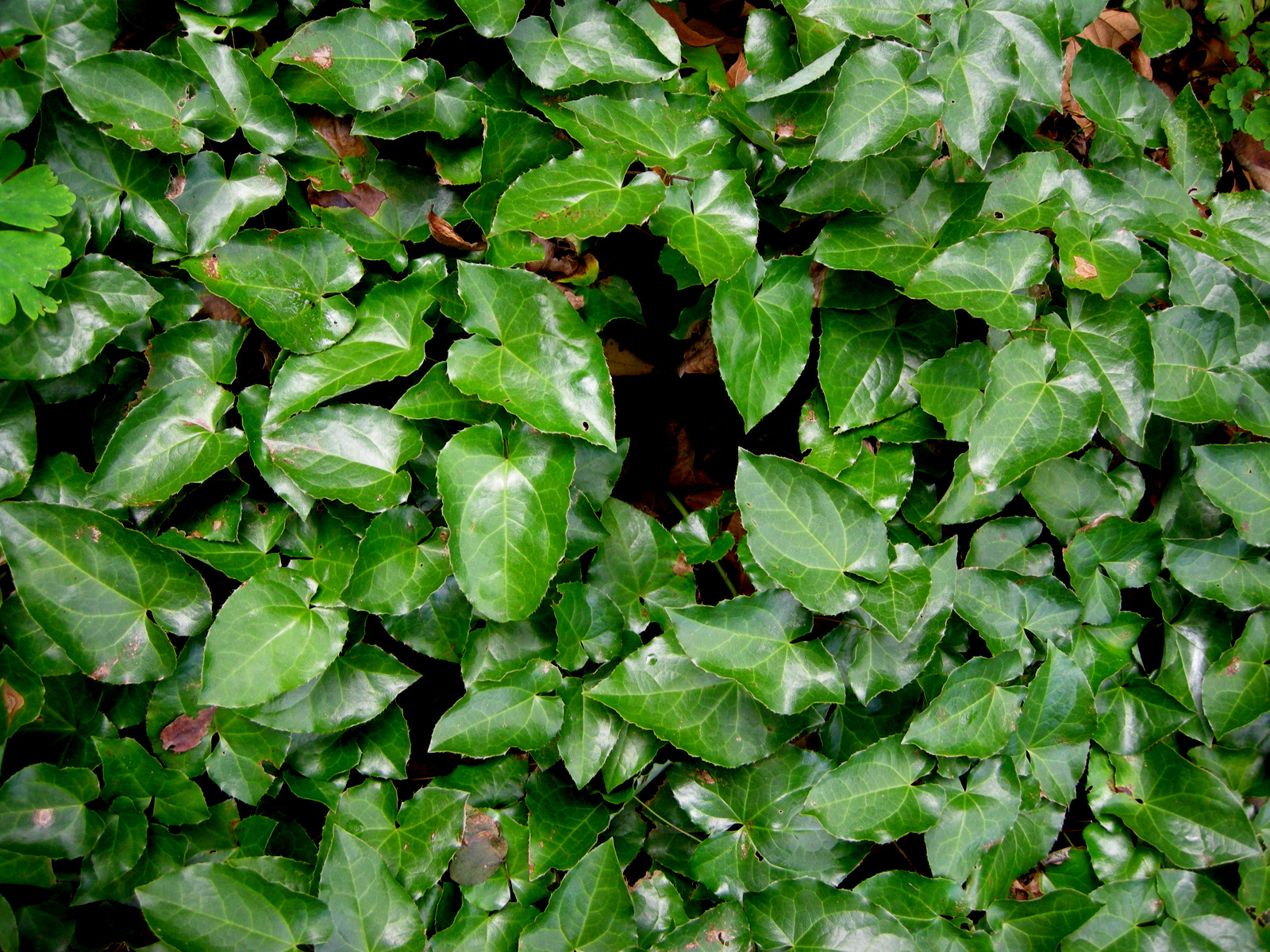
‘Frohnleiten’ epimedium, E. x perralchicum ‘Frohnleiten’, is also a fairly quick spreader .  It has gorgeous shiny leaves with an intricate vein pattern and produces bright, sulfur yellow flowers in the spring.

‘Shrimp Girl’ epimedium, E. alpinum ‘Shrimp Girl’, is also a good spreader in my garden, here used as a ground cover in front of ferns and hostas.
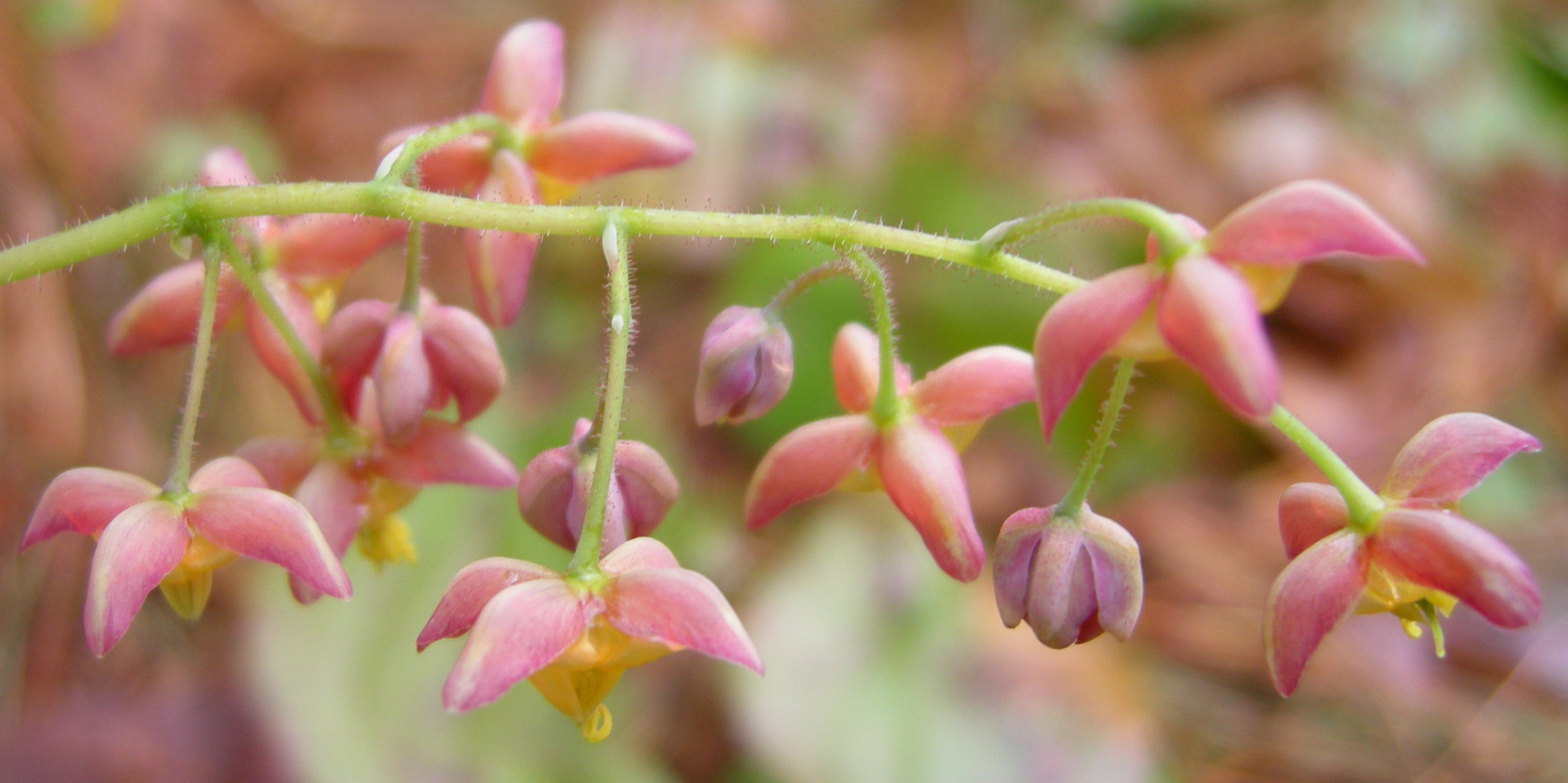
The lovely two-tone flowers of ‘Shrimp Girl’ in spring.


I am including ‘Kaguyahime’ epimedium even though it spreads fairly slowly so that you can see how beautiful and unusual the leaves of wintergreen epimediums can be.

Epimediums are native to Europe, Asia, and North Africa.  They reach 6 to 12″ tall, depending on the cultivar, and flower in April.  They grow in part to full shade and can take dry soil once established.  Their creeping roots are impenetrable to weeds.  I cut back all the remaining old foliage in March once I see the new flowers and leaves starting to emerge.  When choosing an epimedium for ground cover, select spreading varieties that have evergreen or semi-evergreen leaves.


Next spring when you are looking for ground covers, I hope you will consider one of the four described above.  In the meantime, leave a comment with the name of your favorite wintergreen ground cover for shade.  In my first article, I profiled golden groundsel, creeping phlox, dwarf sweetbox, and hybrid hellebores as ground covers.  If you want to read about them, click here.

Carolyn

Notes: Every word that appears in orange on my blog is a link that you can click for more information.  If you want to return to my blog’s homepage to access the sidebar information (catalogues, previous articles, etc.) or to subscribe to my blog, just click here

Hostas for Fall

Posted in Fall, Fall Color, hosta, landscape design with tags , , , , , , , on October 17, 2011 by Carolyn @ Carolyns Shade Gardens

Carolyn’s Shade Gardens is a retail nursery located in Bryn Mawr, PA, specializing in showy, colorful, and unusual plants for shade.  The only plants that we ship are snowdrops within the US.  For catalogues and announcements of local events, please send your full name, mailing address, and cell number to carolyn@carolynsshadegardens.com and indicate whether you are interested in snowdrops, hellebores, and/or hostas.  Click here to get to the home page of our website for catalogues and information about our nursery and to subscribe to our blog.

.

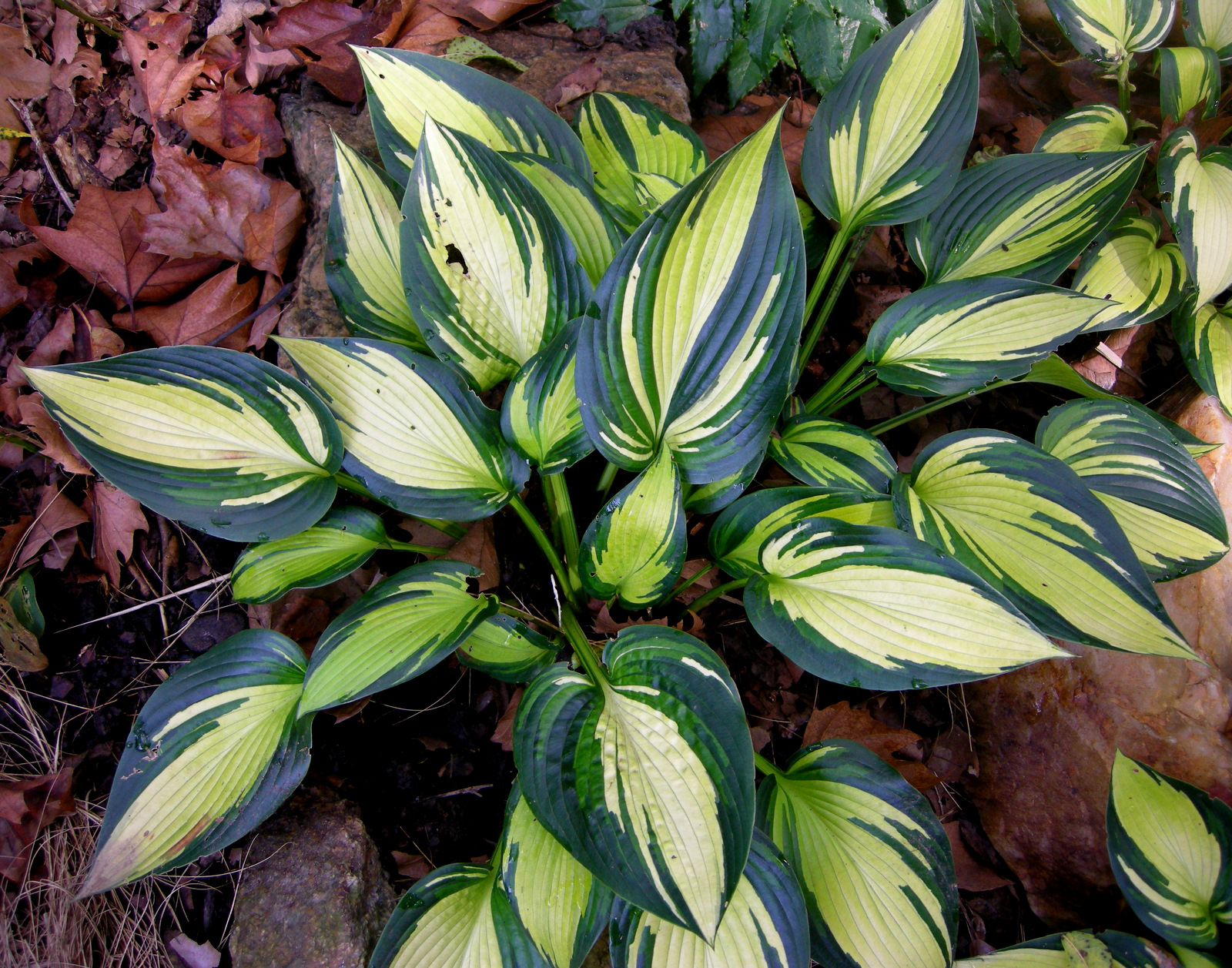
Hosta 'Remember Me'Hosta ‘Remember Me’ looks absolutely spectacular in the fall when its colors deepen and its pristine leaves shine.  All photos were taken at Carolyn’s Shade Gardens this fall.  Click any photo to enlarge.

In my last two articles, A Few Fall Favorites for Foliage and Fruit and A Few Fall Favorites for Flowers, I explained that, inspired by an article about dressing up your fall garden with mums because everything else is finished, I grabbed my camera and headed outside to prove them wrong.  There was so much going on that I divided the plants into three posts: foliage and fruit, flowers, and hostas.  This is part three highlighting hostas.

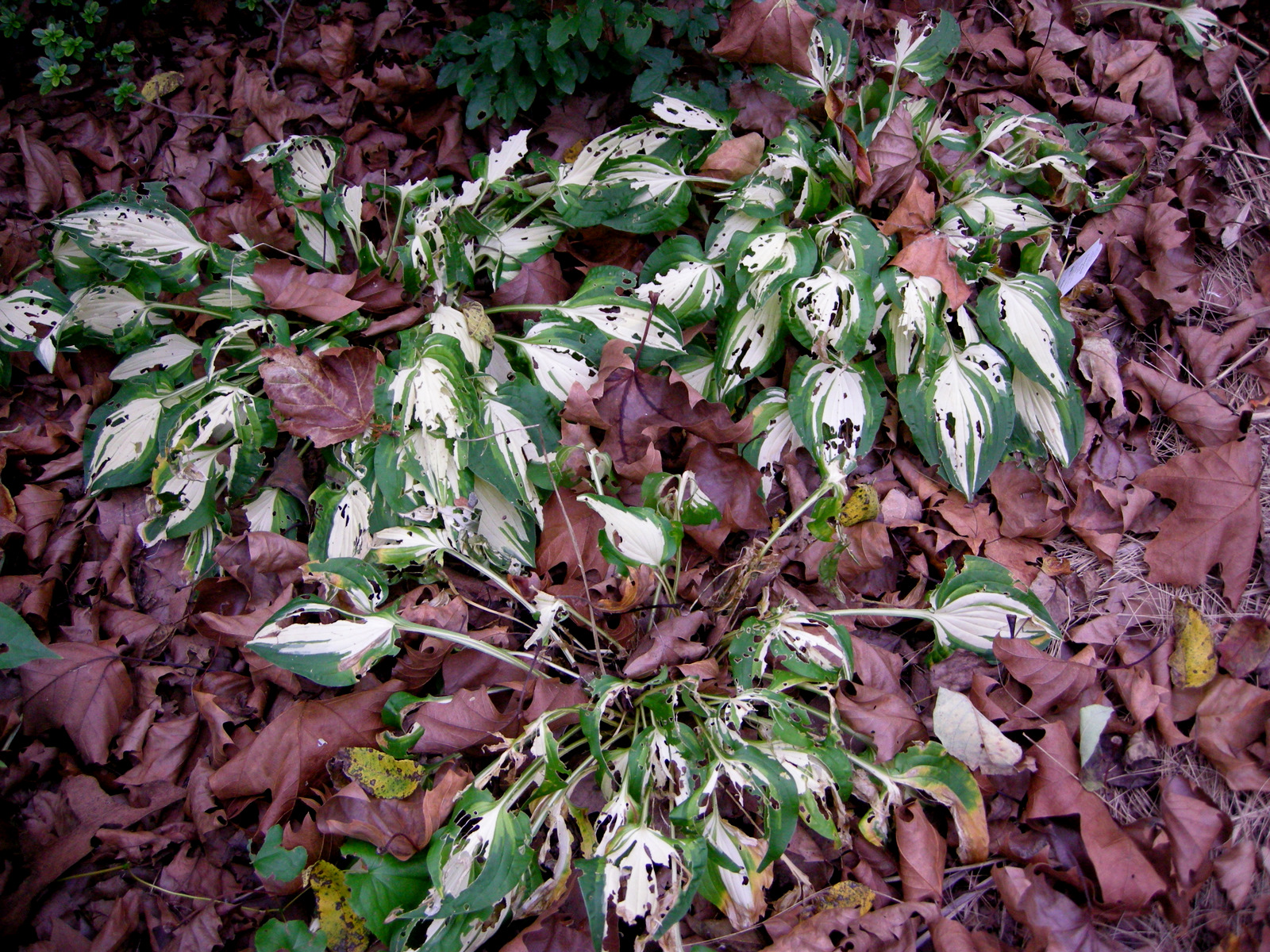
When you choose a hosta for your garden, I am guessing you are not going for this look in fall.

One reason I started what I like to call my free, on line, shade gardening magazine (AKA blog) was to force myself to document my gardening knowledge in photographs and print.  This article is a perfect example.  Every fall I walk around my gardens saying: “I really should photograph the hostas that still look good in the fall,” but I never do it.  This information is very important when choosing hostas especially if you have a small garden and can’t afford to allocate space to a plant that provides no ornamental value for one third of the season like the specimens in the photo above.  So, for the record, here are some of the hostas dressing up my shady gardens right now:

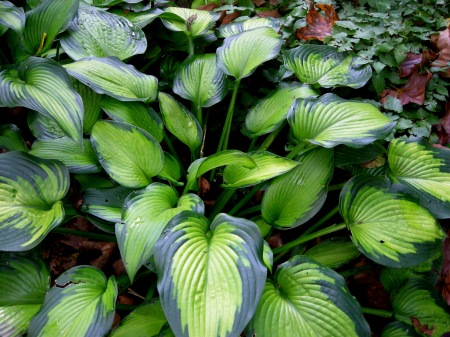
I don’t expect my hostas to look perfect in the fall, although some do.  Even though ‘Frances Williams’ is slightly tattered, its bold colors and stately habit make it a winner in my fall garden.

There is another very important point I would like to make about hostas.  New is not the equivalent of better or even good.  Gardeners will often remark about a hosta like ‘Frances Williams’, which was first registered in 1986, that it is an old hosta with the implication that we should have all moved on by now.  If I had to, I would gladly trade in many of my newer hostas for a plant as unique in habit, leaf shape, and color as ‘Frances Williams’ (even with its tendency to brown slightly at the edges).  The breeders have yet to come up with a new hosta this beautiful and tough.


Like all blue-leaved hostas, Hosta ‘Blue Umbrellas’ turns greener in the fall, but who cares when it looks like this?

Thanks to my commenter Louise Thompson for mentioning slug resistance.  One of the primary reasons that these hostas look so good in the fall is that they are resistant to slugs.  Most of them tend to have thicker leaves that just hold up better to whatever nature throws at them.  Please read my reply to Louise for information about controlling slugs.  I don’t do anything to control slugs except plant resistant hostas. 

Talk about perfect, Hosta ‘Paradise Joyce’.

Hosta ‘El Nino’ in my silver and blue garden.  If you want to see what it looks like in June, click here.

Hosta ‘Stained Glass’, which was the Hosta of the Year for 2006, just glows in the fall.  One way to choose really good hostas is to select cultivars chosen as hosta of the year by the American Hosta Growers Association.  There are over 6,000 (some say 10,000) hosta cultivars out there, and only 17 have received this honor.  I grow 13 of the winners, and they certainly deserved to be chosen.  To see all the winners, click here.

Another “old” hosta, ‘Blue Angel’ was registered in 1986 and, in my opinion, is the best large blue cultivar–outstanding habit, leaves, and white flowers.  It is the parent of ‘Earth Angel’, the 2009 Hosta of the Year.

The long-lasting gold leaves of Hosta ‘Sum and Substance’, the 2004 Hosta of the Year, can reach 2 feet across while the clump can exceed 6 feet in width.

Hosta ‘June’ was the 2001 Hosta of the Year and is the favorite hosta of my nursery customers.  ‘Remember Me’ in the top photo is one of its “children”.

Hosta ‘Halcyon’ registered in 1988, is a beautiful medium-sized blue hosta (aging to green in the fall), but it is also important as the parent of ‘June’, ‘El Nino’, and ‘Paradise Joyce’, among other wonderful cultivars.

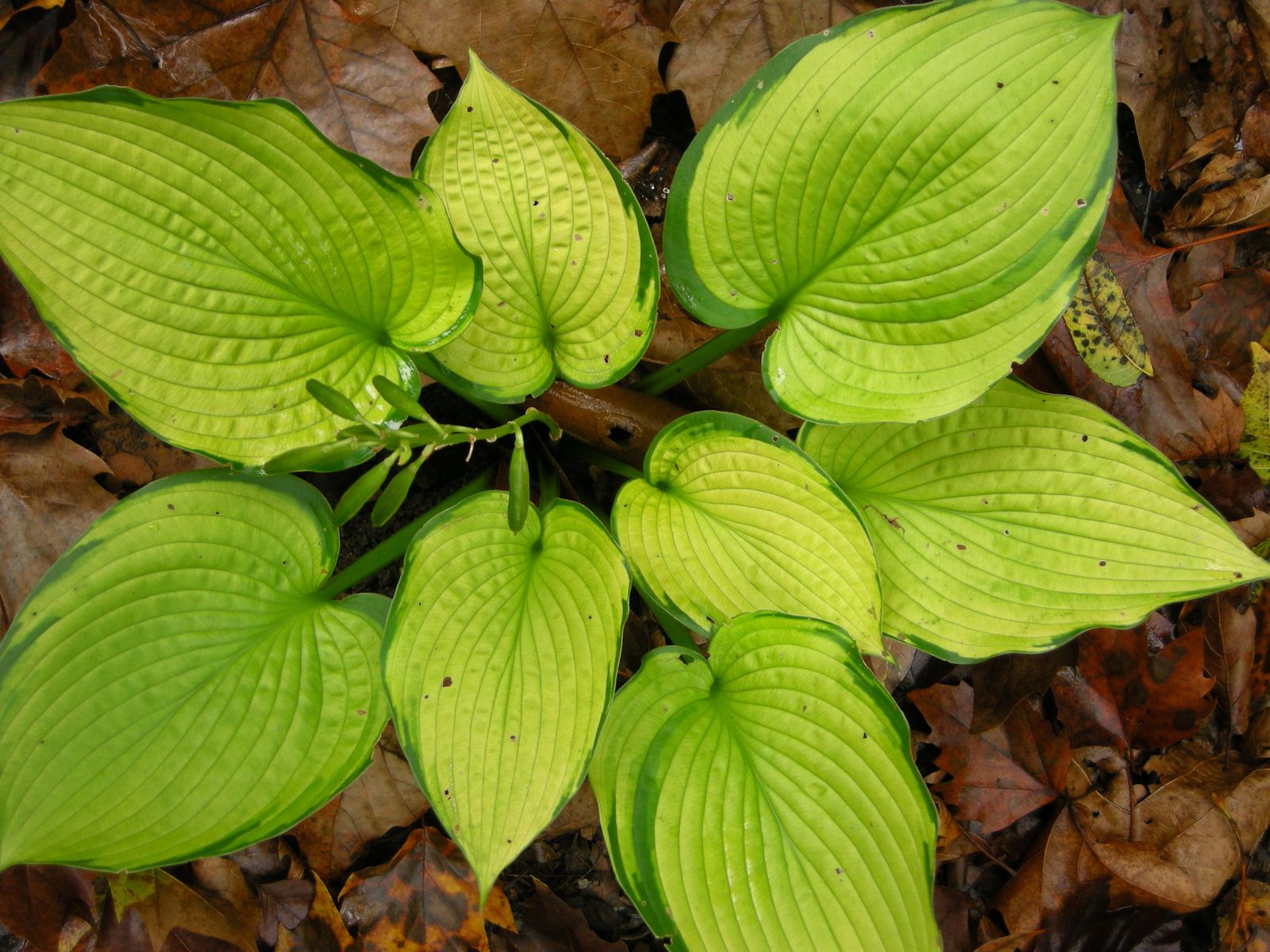
Most gold-leaved hostas turn green in the fall, but not ‘Jimmy Crack Corn’.

Hosta ‘Praying Hands’, the 2011 Hosta of the Year, will stay outside in this ceramic container all winter.  I find that ‘Praying Hands’ multiplies much faster in a container than in the ground.


Hosta ‘Paul’s Glory’, the 1999 Hosta of the Year, also looks best in the fall when its bright colors light up the shade.

Hosta ‘Inniswood’ is a 1993 gold-leafed introduction that puts many newer cultivars to shame.

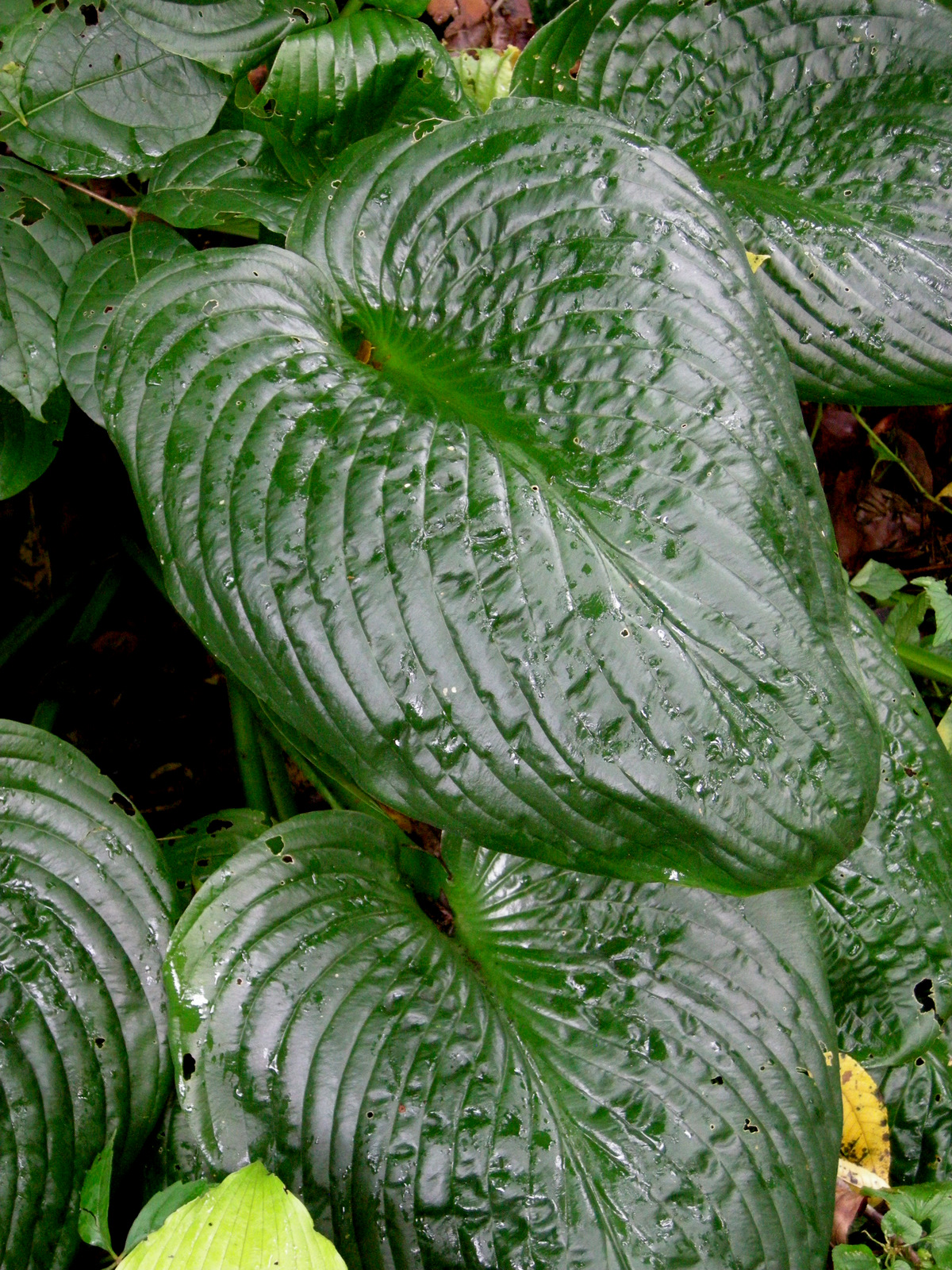
There are many more medium and large hostas that I could have featured as ornamental in the fall including my favorite, Hosta tokudama and all its cultivars.  For more information on larger hostas and how to use them, click here.

Now for some fall stars among the miniatures, my current hosta passion.  For more information on miniature hostas and how to incorporate them into your garden, click here.

If you have read my article on Miniature Hostas, you know I am a sucker for the Mouse Ears series, here Hosta ‘Mighty Mouse’.

Hosta ‘Blue Mouse Ears’ is the 2008 Hosta of the Year.

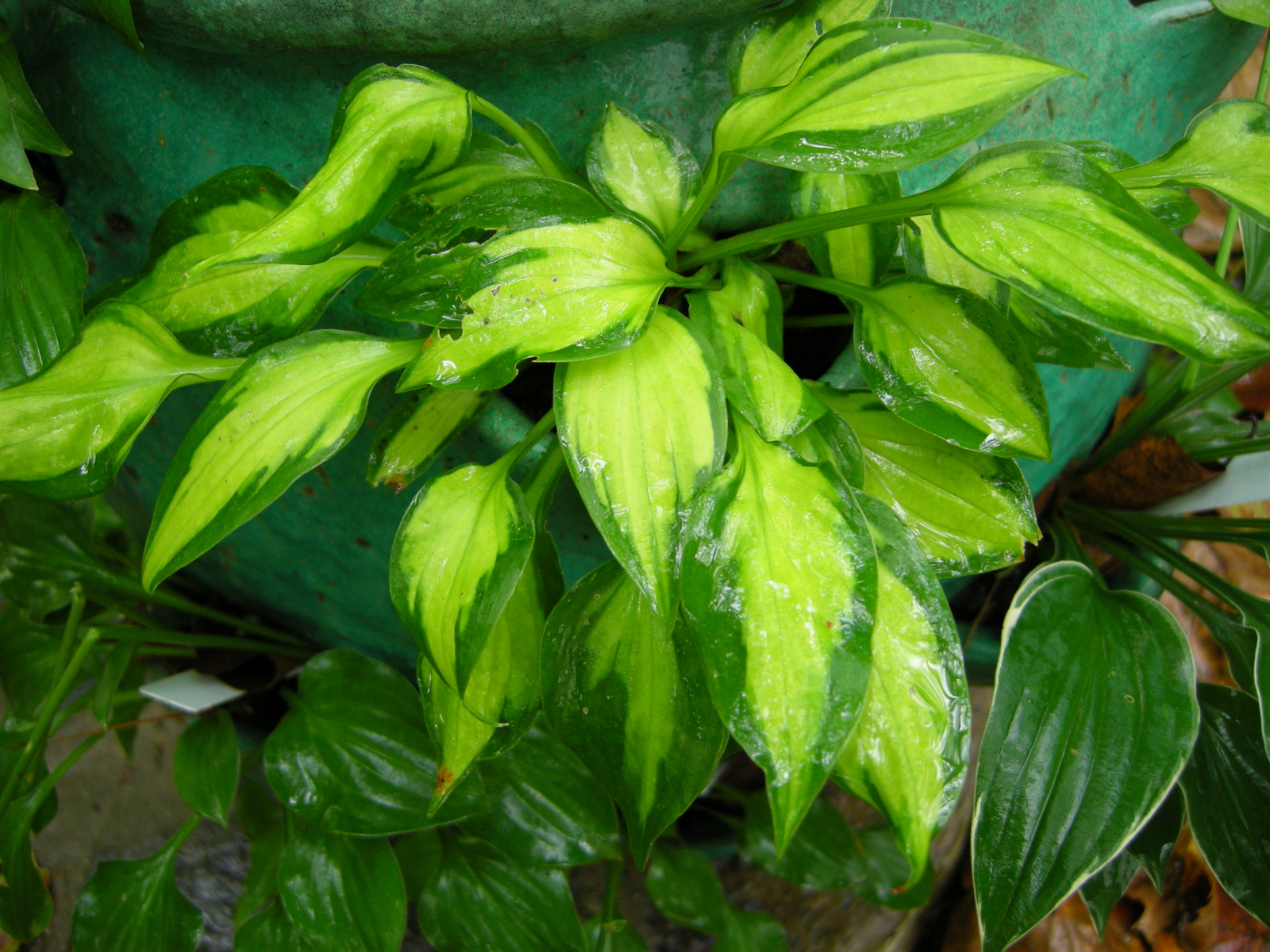
Hosta ‘Little Sunspot’ is growing in one of the 16 pouches in my strawberry jar.  One look at this collection will show you that all miniatures are not created equal in terms of their fall appearance.

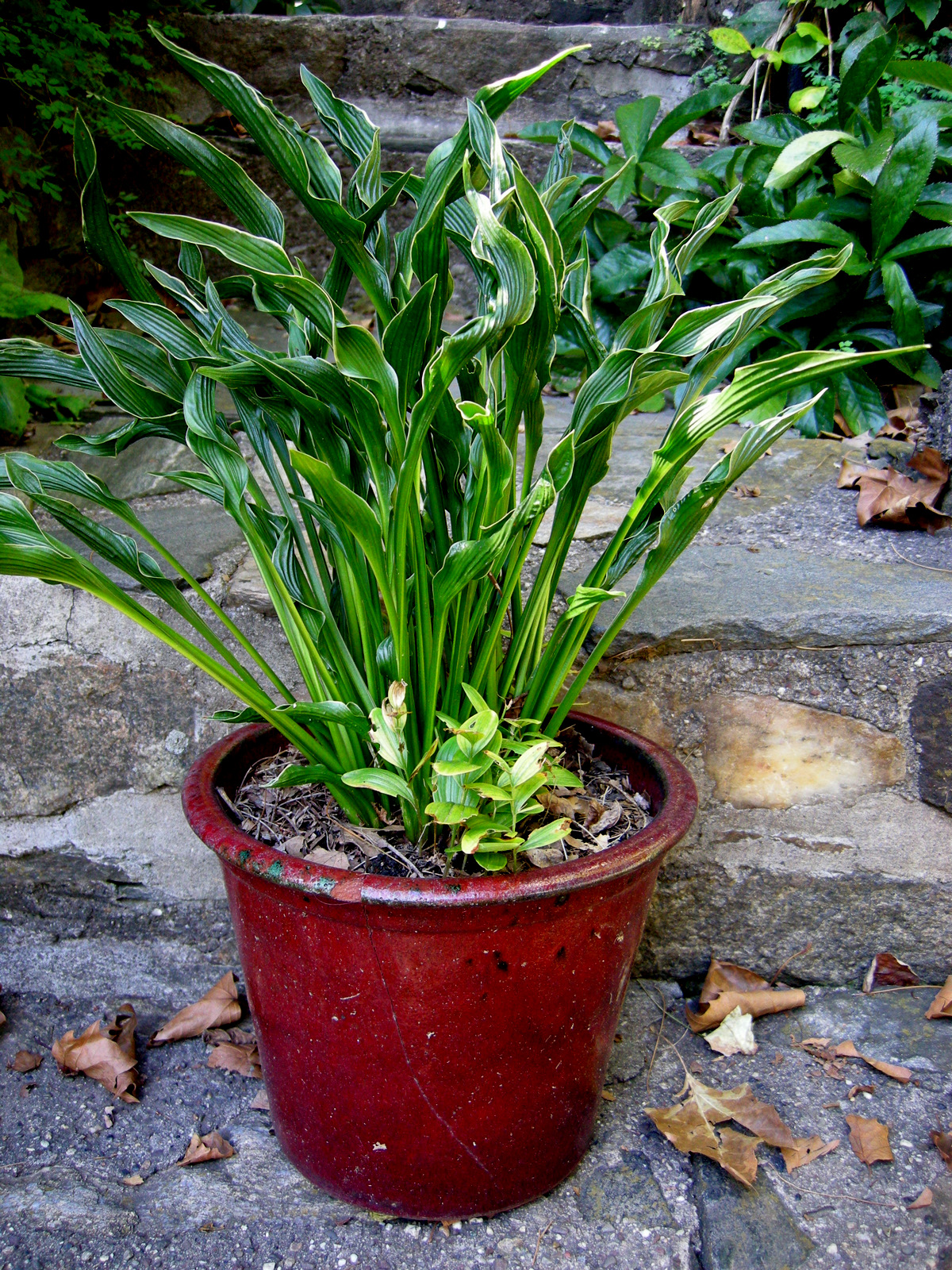
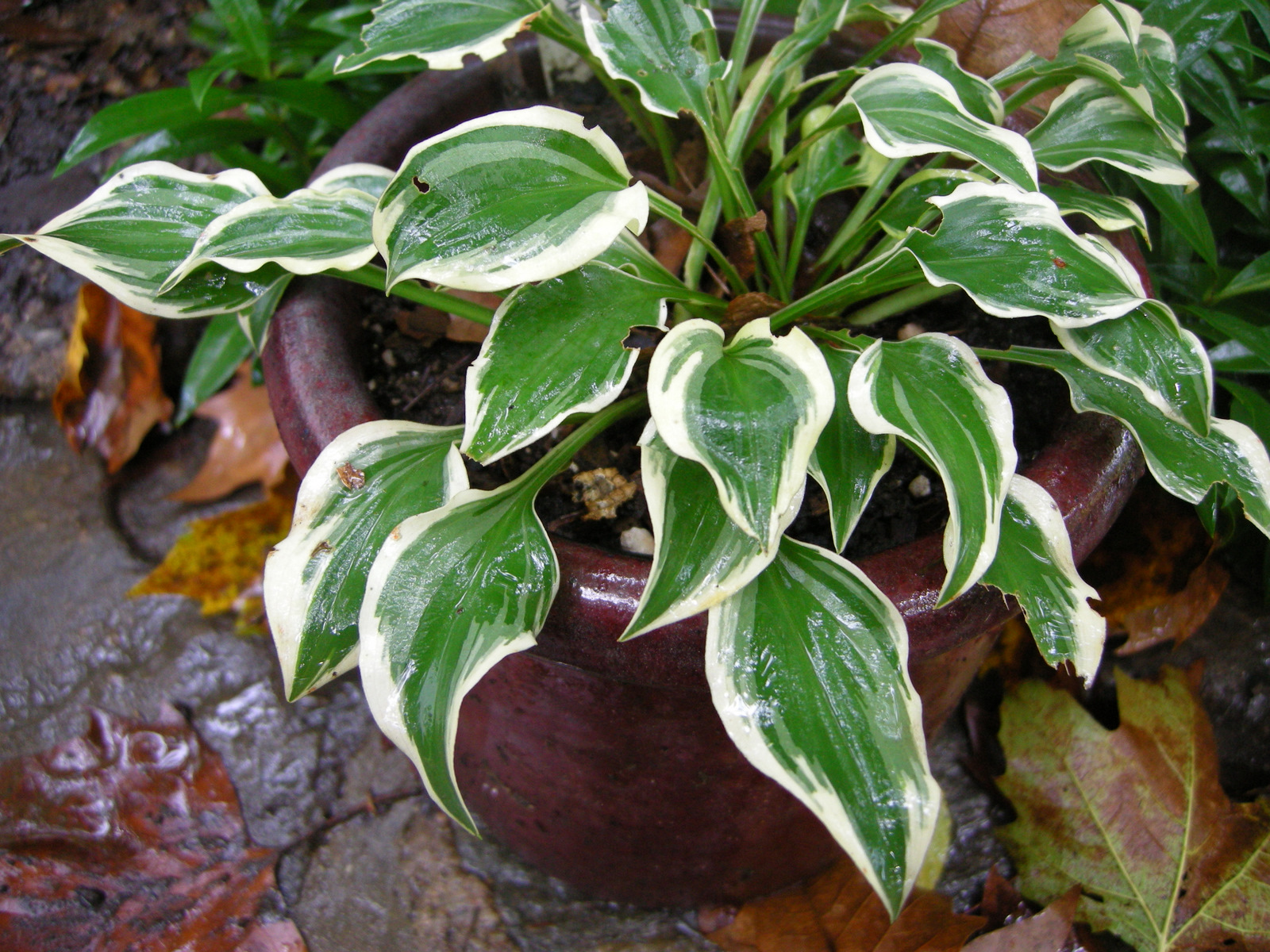
All my hosta containers, including this pot of Hosta ‘Pixie Vamp’, will stay out all winter.

Like all plants, hostas should be chosen to provide ornamental value from the time they come up in the spring until frost.  You can choose any of the hostas above for your garden and be confident of a long season of interest.

Carolyn

This is the third article I have written on hostas.  The first two are:

Miniature (& Small) Hostas

Larger Hostas

Notes: Every word that appears in orange on my blog is a link that you can click for more information.  If you want to return to my blog’s homepage to access the sidebar information (catalogues, previous articles, etc.) or to subscribe to my blog, just click here.
October GBBD: A Few Fall Favorites for Flowers

Posted in Fall, Fall Color, Garden Blogger's Bloom Day, landscape design, native plants, Shade Gardening, Shade Perennials with tags , , , , , , , , , , , , , , on October 10, 2011 by Carolyn @ Carolyns Shade Gardens

Carolyn’s Shade Gardens is a retail nursery located in Bryn Mawr, PA, specializing in showy, colorful, and unusual plants for shade.  The only plants that we ship are snowdrops within the US.  For catalogues and announcements of local events, please send your full name, mailing address, and cell number to carolyn@carolynsshadegardens.com and indicate whether you are interested in snowdrops, hellebores, and/or hostas.  Click here to get to the home page of our website for catalogues and information about our nursery and to subscribe to our blog.

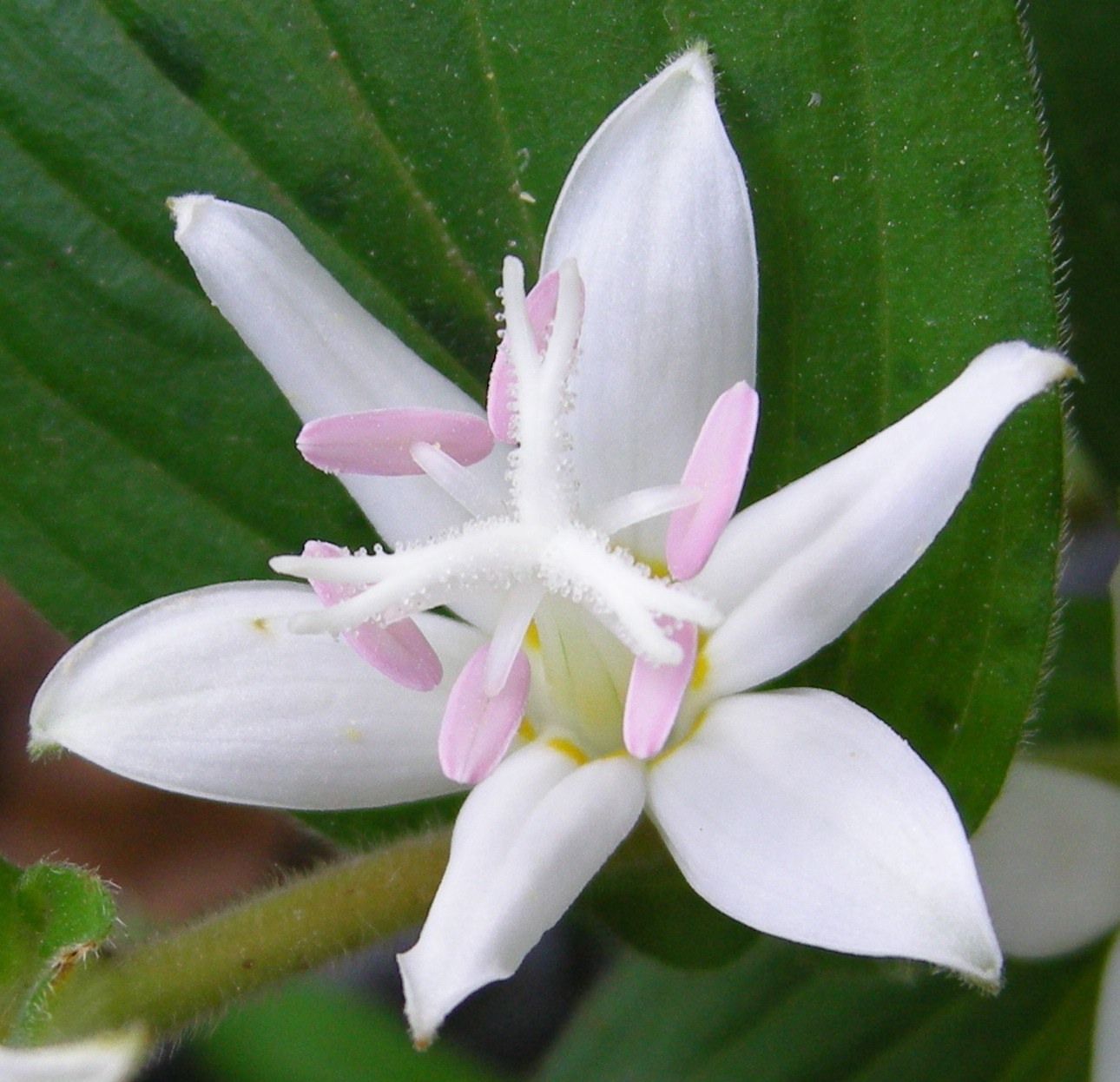
The subtle coloring of ‘White Towers’ toad-lily, Tricyrtis latifolia ‘White Towers’, is magical in the fall.  Every photo was taken at Carolyn’s Shade Gardens this fall.

I am linking this post to Garden Blogger’s Bloom Day for October when gardeners around the world show photos of what’s blooming in their gardens (follow the link to see  photographs from other garden bloggers assembled by Carol at May Dreams Gardens).  I am also linking to Gesine’s Bloom Day at Seepferds Garten.  I am located in Bryn Mawr (outside Philadelphia), Pennsylvania, U.S., and zone 6b.

In my last post, A Few Fall Favorites for Foliage and Fruit,  I explained that, inspired by an article about dressing up your fall garden with mums because everything else is finished, I grabbed my camera and headed outside to prove them wrong.  There was so much going on that I divided the plants into three posts: foliage and fruit, flowers, and hostas for fall.  This is part two highlighting flowers.  So here are some of the flowers dressing up my shady gardens right now:

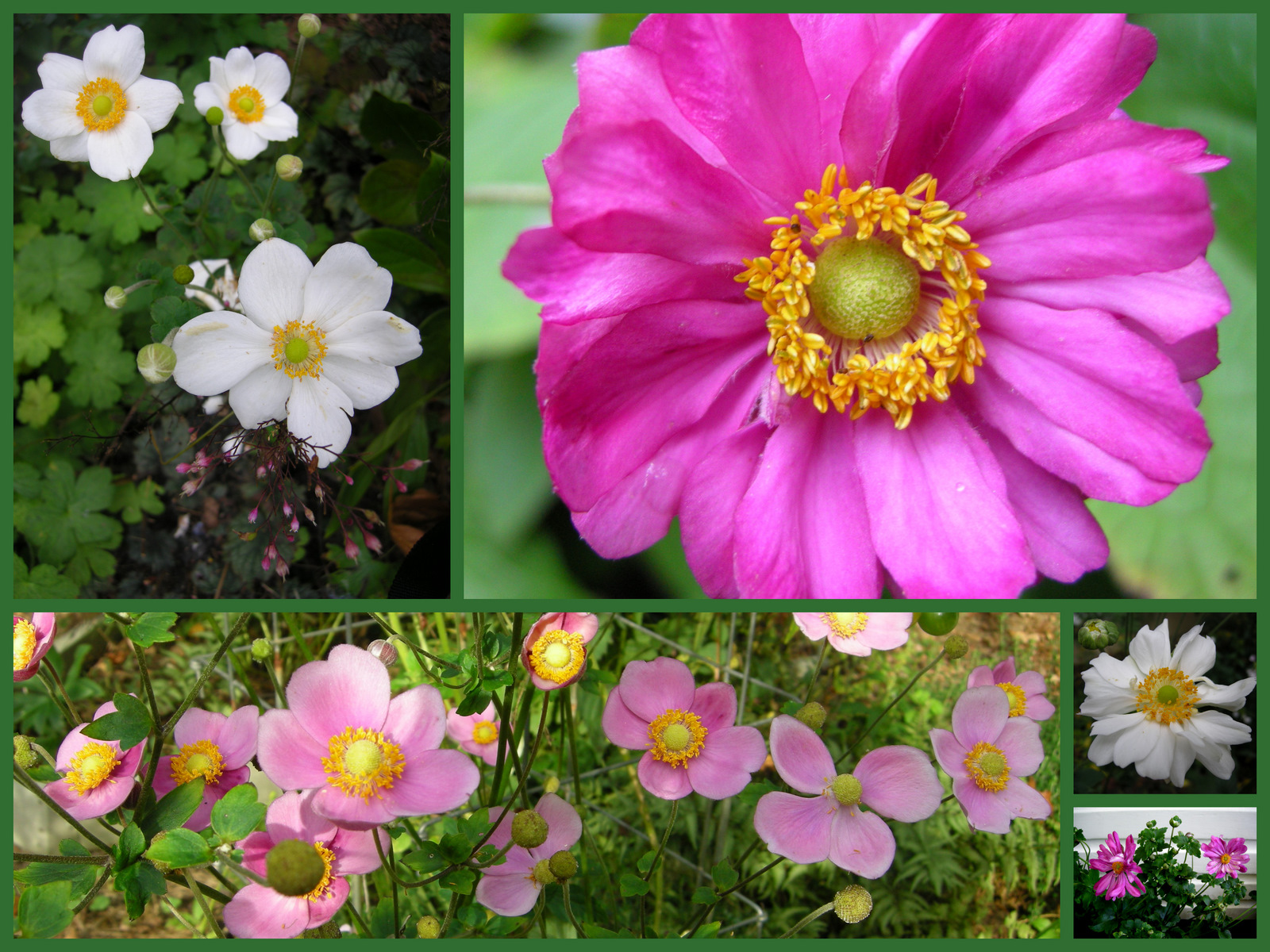
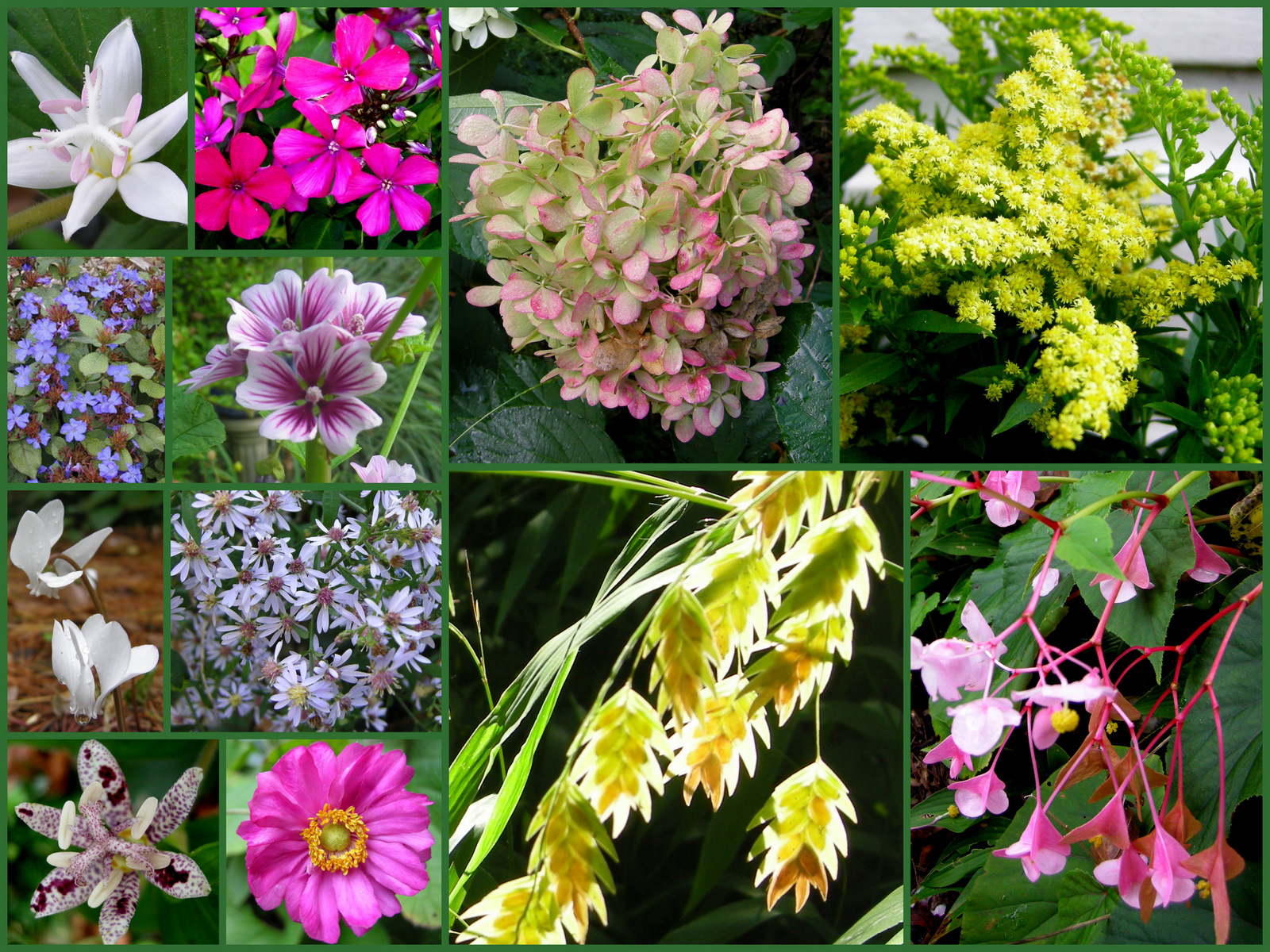
Japanese anemones, Anemone x hybrida, are one of the undisputed stars of my fall garden, growing anywhere from full sun to almost full shade and thriving no matter what the weather.  Clockwise from upper left: ‘Honorine Joubert’, ‘Margarete’, ‘Whirlwind’, ‘Bodnant Burgundy’, ‘September Charm’.

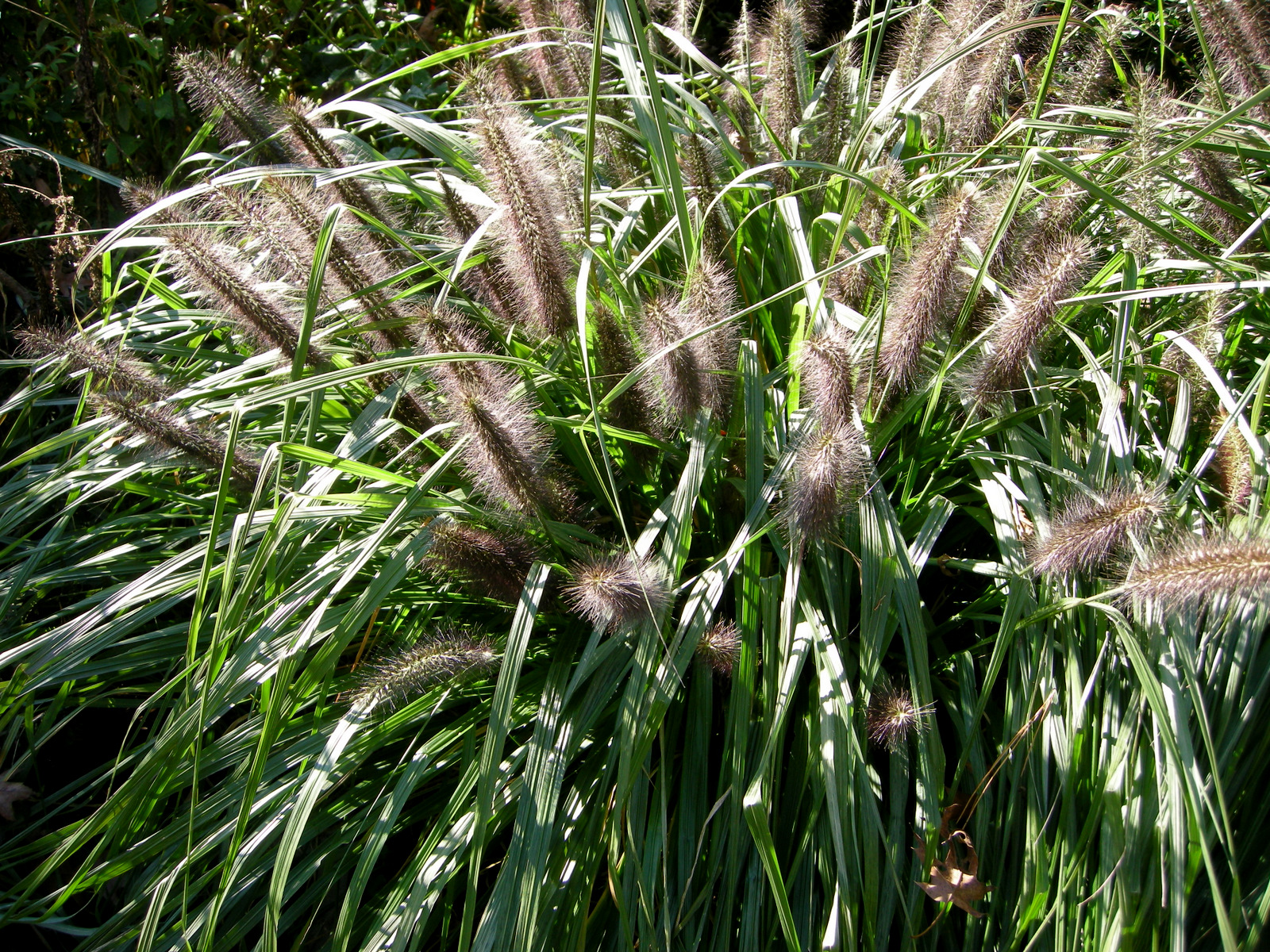
The black plumes of ‘Moudry’ fountain grass, Pennisetum alopecuroides ‘Moudry’, glow in the low-angled fall light.  ‘Moudry’ does well in the shade, flowering later and remaining more compact.

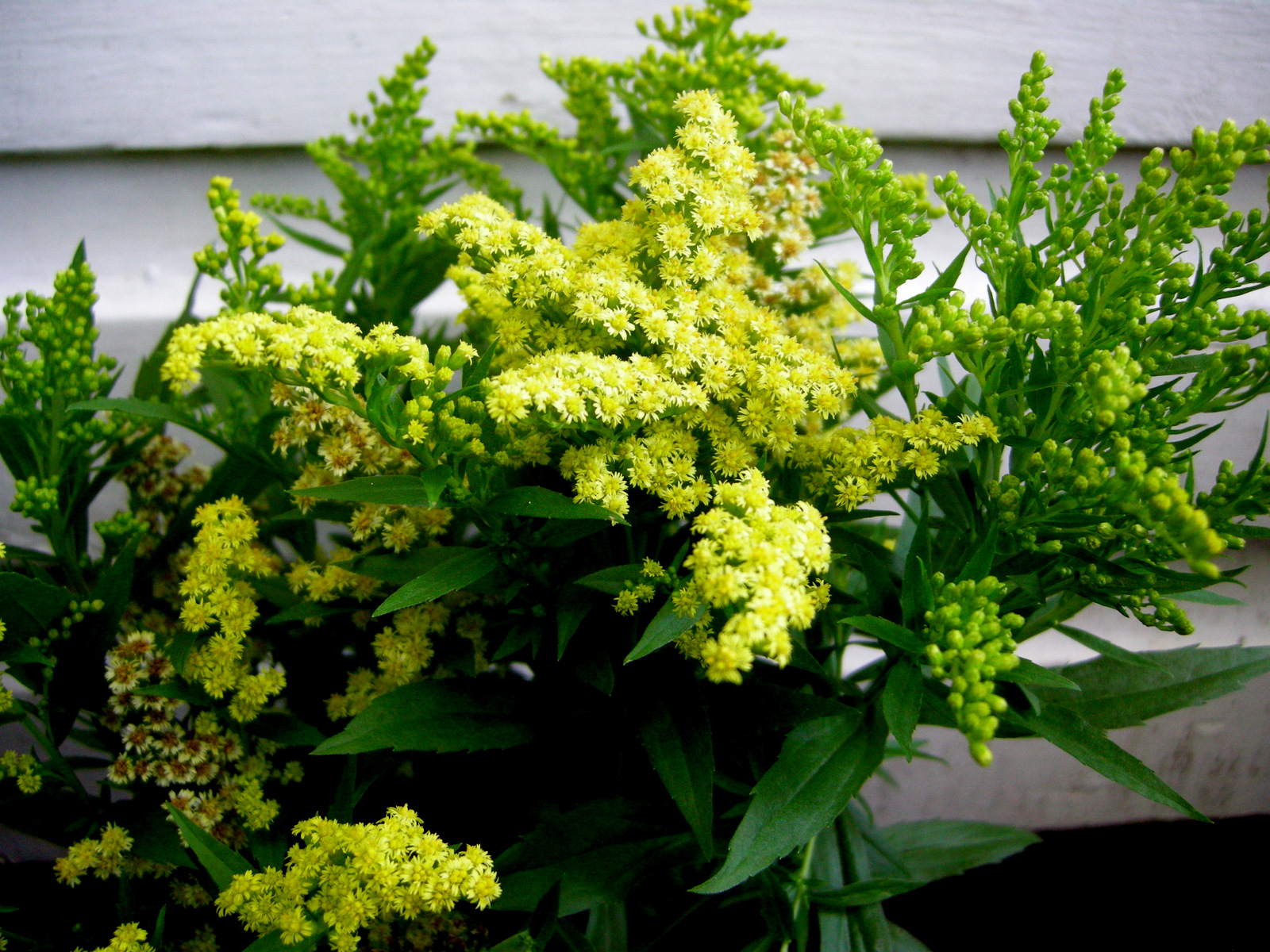
I grow about five different varieties of native golden rod, Solidago,  with my current favorite ‘Little Lemon’, growing only 12 to 18″ high.  Contrary to popular belief, goldenrod does not cause allergies as it is pollinated by insects.  Wind pollinated ragweed, which blooms at the same time, is the culprit.

Toad-lilies, Tricyrtis, bloom throughout the fall in full shade with ‘Sinonome’ just getting started now and continuing into November.  Clockwise from upper left: ‘Sinonome’, ‘White Towers’, ‘Miyazaki’, ‘Empress’.

Another plant that is just warming up is Pennsylvania native northern sea oats, Chasmanthium latifolium.  Its foliage will turn orange later in the fall and then dry to a beautiful khaki for the winter.  Be forewarned, however, when this plant reaches critical mass, it starts spreading, and its wiry roots are very difficult to remove.  Give it room and then triple the space you think you need.

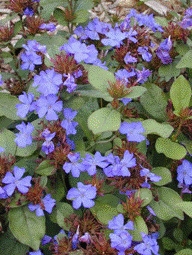
Autumn leadwort, Ceratostigma plumbaginoides, is one of my favorite groundcovers.  Its true blue flowers start blooming in June and continue through October when its leaves turn bright red.

Pennsylvania native ‘Bluebird’ smooth aster, A. laevis ‘Bluebird’, seeds all around my garden in full sun to part shade.  Butterflies and bees love it.  Please click here to find out why most native cultivars are just as friendly to native fauna as the species.

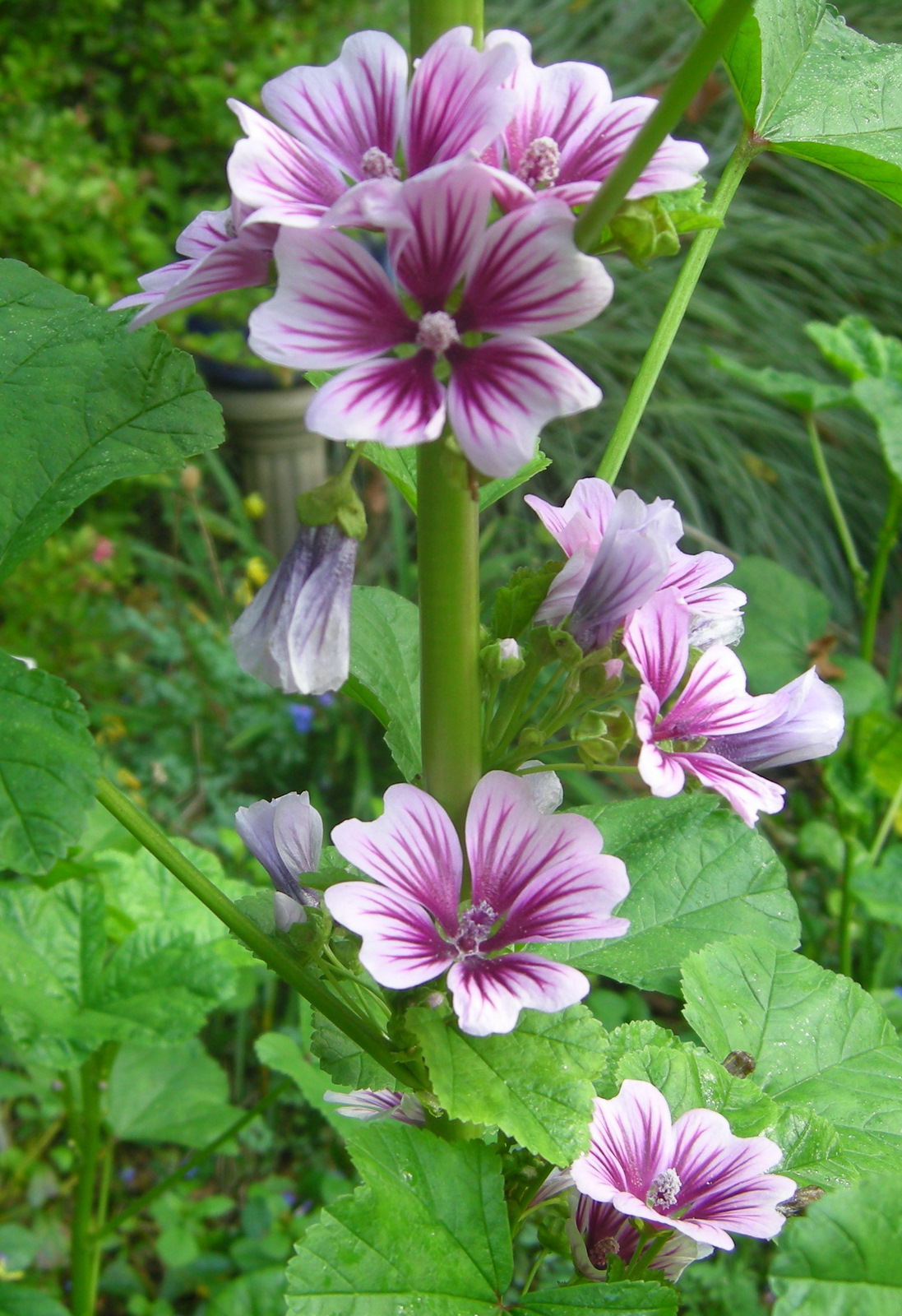
‘Zebrina’ hollyhock mallow, Malva sylvestris ‘Zebrina’, seems to move around my garden at will, but it never fails to steal the show with its 3 to 4′ stalks loaded with showy flowers.  It grows best in full to part sun.

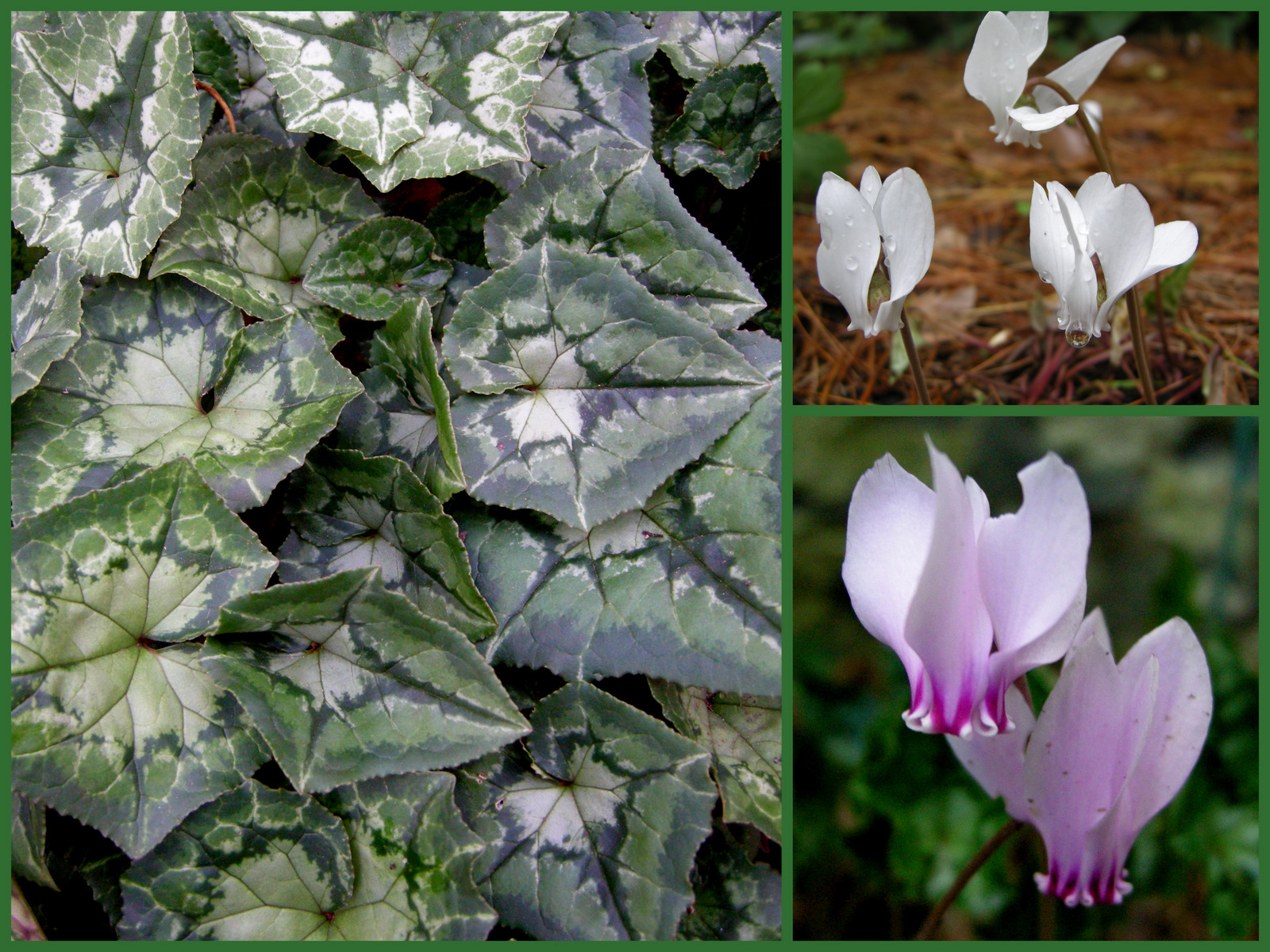
Fall-blooming hardy cyclamen, Cyclamen hederifolium, is one of the plants I would take to my shady “desert island”.  Right now its pink or white flowers are floating all around my shady gardens.  Later its evergreen leaves will emerge from summer dormancy and look like the photo on the left all winter long.

I am always raving about the foliage of the coral bell cultivars derived from our Pennsylvania native Heuchera villosa.  Well this is the plant that started it all, Heuchera villosa ‘Autumn Bride’.  It has very large and attractive fuzzy green leaves and beautiful flowers that bloom right now–this is the only cultivar I would grow for its flowers (the rest I grow for the leaves).

The cultivar ‘Cory’ of Pennsylvania native hardy ageratum, Eupatorium coelestinum, is far superior to the straight species.  It has more abundant and showier flowers, ornamental purple stems, interesting crinkled leaves, and a much better upright habit.  ‘Cory’ is also a good spreader in sun to part shade so give it room.  Pictured above with another of my favorite Pennsylvania natives, wrinkleleaf goldenrod, Solidago rugosa ‘Fireworks’.

Hardy begonias, Begonia grandis, have spread all over my garden in full shade, and I have yet to find a place that I don’t want them.  Because they come up very late in May and really just get going in the fall, I use them to fill in between my hostas on my back hill.  

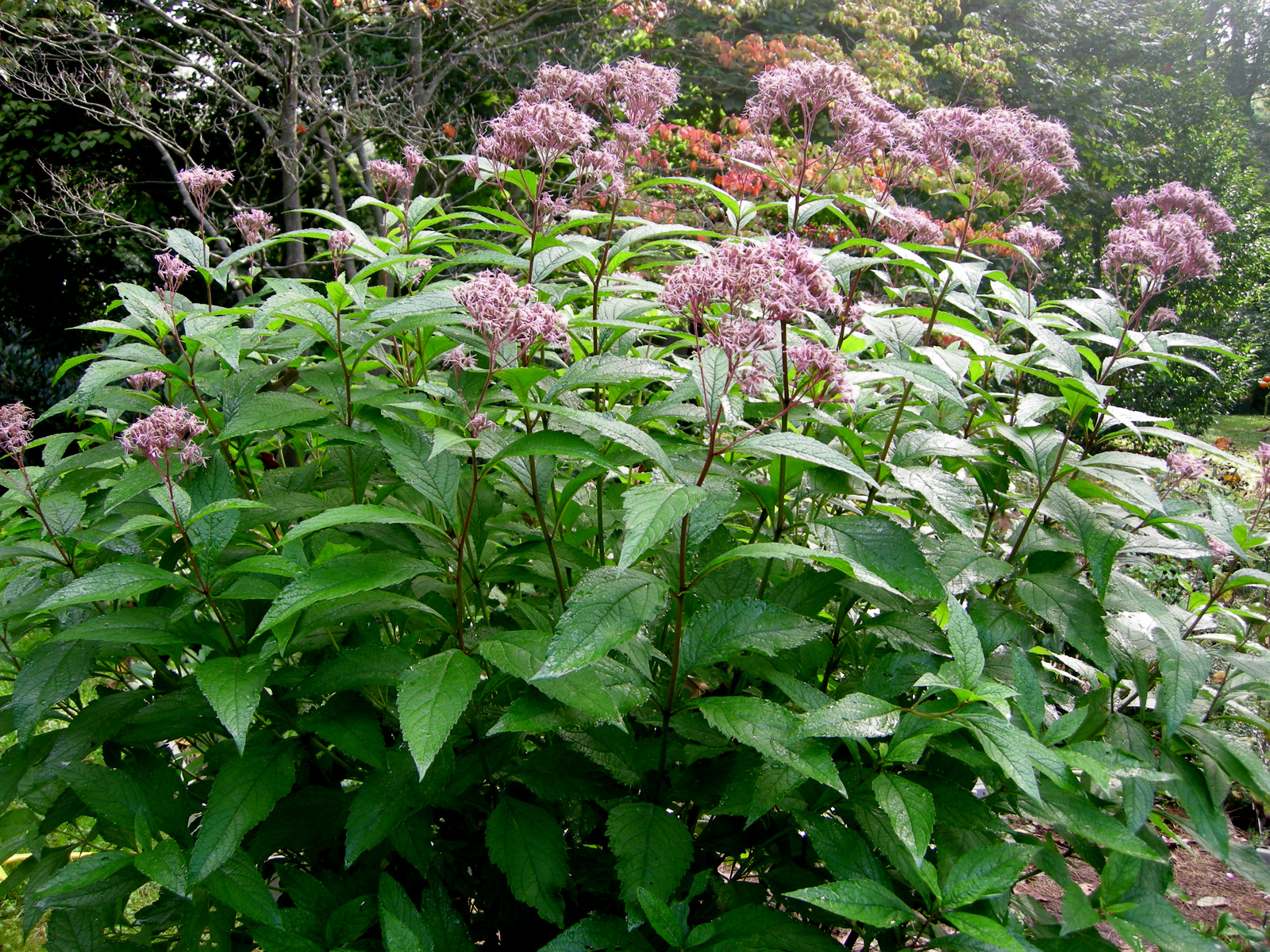
Pennsylvania native Joe Pye weed, Eupatorium dubium, reaches 10′ tall in my garden and flops over in our torrential rains.  The “dwarf” version called ‘Little Joe’ grows to a diminutive 5′ tall and has remained erect through the 30″ of rain we had in August and September to bloom now with its large purple flowers–a magnet for butterflies and bees.

In the spring, a gardener I very much admire brought over this plant, telling me it was a salvia with yellow flowers that grows in full shade and blooms in the fall.  I duly planted it in my shady “yellow garden” and it thrived through heat, drought, and rain with no attention.  It is called woodland sage, Salvia koyamae.

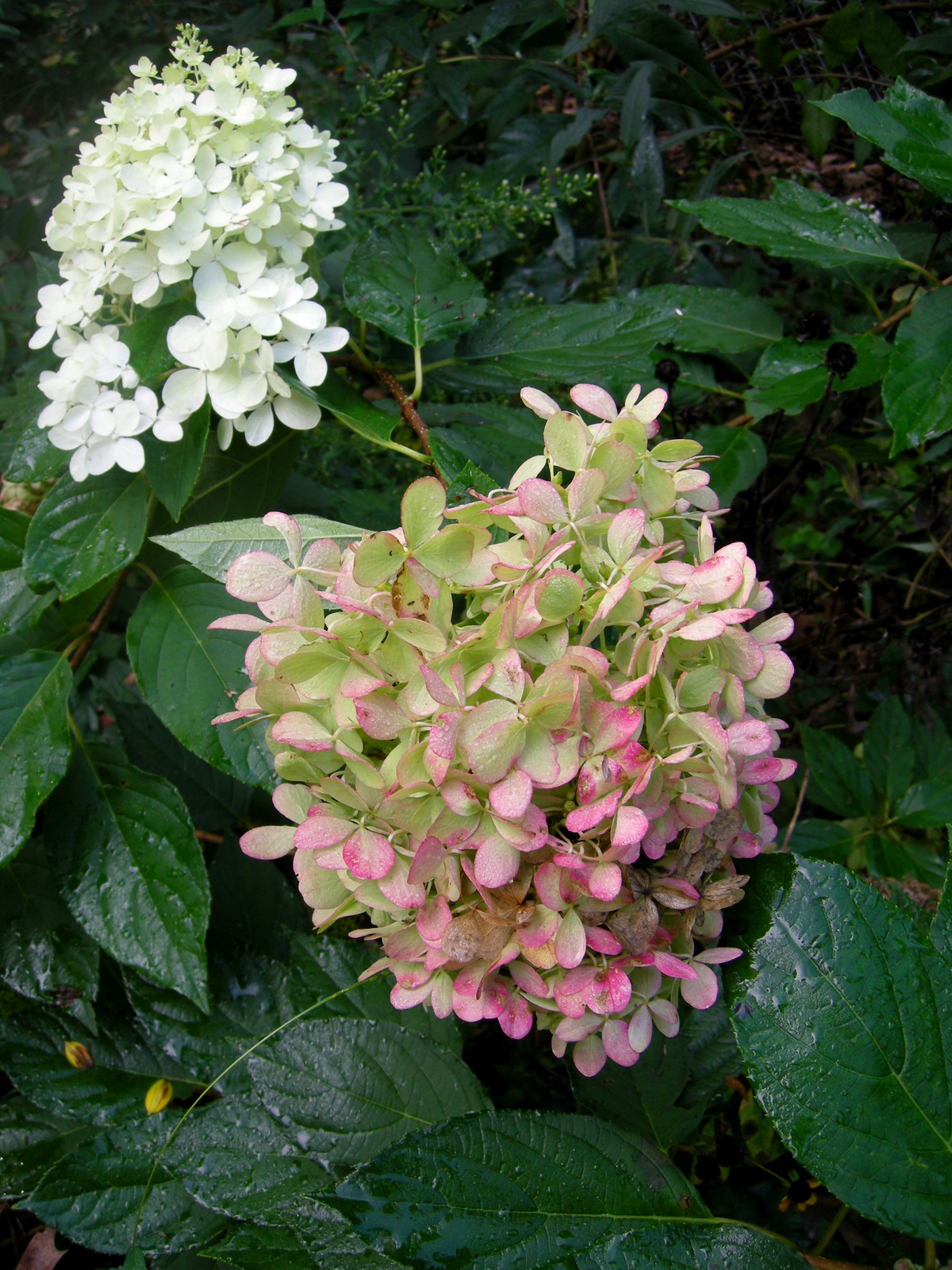
I am just beginning to learn about hydrangeas because until last year there was no point in planting them because of the deer.  One of my first acquisitions after the netting went up was ‘Limelight’, Hydrangea paniculata ‘Limelight’.  The large white flowers aging to pink have been blooming all summer in part shade, and there are still buds coming—very impressive.

If you want a multitude of fall flowers in dry, full shade, you can’t find a better plant than Pennsylvania native blue wood aster, Aster cordifolius.  It fills in all the difficult sites in my woodland and produces a glorious blue haze in the fall.

It is fitting that I should end with my favorite Pennsylvania native perennial for fall, garden phlox, Phlox paniculata.  I love everything about garden phlox: its heavenly fragrance, its long bloom time from early summer through fall, the wealth of colors available, its polite self-sowing, and its attraction to butterflies.  I dream of installing a meadow area and collecting dozens of plants of every phlox cultivar out there!

Of the 17 photos above, 8 picture plants that are native to Pennsylvania and eastern North America.  I believe that planting native plants is crucial to our survival.  Please take the time to read this short essay explaining why.  And Pennsylvania’s native plants really come into their own in the fall eliminating the need for dressing with mums!


Click to enlarge

Carolyn

To read Part 1, A Few Fall Favorites for Foliage and Fruit, click here.  Stay tuned for Part 3, Hostas for Fall.  In the interest of full disclosure, I must confess that sadistic botanists have recently changed the botanical names of many of the native plants that I highlighted to completely unpronounceable and unspellable but “botanically proper” names.  At this point, I refuse to follow.


Notes:
Every word that appears in orange on my blog is a link that you can click for more information.  If you want to return to my blog’s homepage to access the sidebar information (catalogues, previous articles, etc.), just click here.

A Few Fall Favorites for Foliage and Fruit

Posted in evergreen, Fall, Fall Color, landscape design, Shade Gardening with tags , , , , , , , , , , , on October 3, 2011 by Carolyn @ Carolyns Shade Gardens

Carolyn’s Shade Gardens is a retail nursery located in Bryn Mawr, PA, specializing in showy, colorful, and unusual plants for shade.  The only plants that we ship are snowdrops within the US.  For catalogues and announcements of local events, please send your full name, mailing address, and cell number to carolyn@carolynsshadegardens.com and indicate whether you are interested in snowdrops, hellebores, and/or hostas.  Click here to get to the home page of our website for catalogues and information about our nursery and to subscribe to our blog.

Italian arum, Arum italicum, goes dormant during the summer and comes up again in September so it is pristine in the fall and through the winter.  All photos were taken at Carolyn’s Shade Gardens this week.

“A Few Fall Favorites for Foliage and Fruit” was inspired by an article in a gardening magazine talking about dressing up your fall garden with mums because everything else is finished and the garden is looking tired.  Reading this sent me rushing for my camera and out the door to prove them wrong (I have a similar response to shade gardening articles that start: “Now you can’t have color in the shade, but….”).  In fact, my indignation has inspired a three-part post, the other two will cover flowers and hostas that look good in fall.  And none of the plants I am highlighting are relying on fall leaf color yet.  So here is some of what is fresh and beautiful in my shady gardens right now:

‘Brigadoon’ St. John’s Wort, Hypericum calycinum ‘Brigadoon’, has gorgeous gold foliage all season.  With the onset of cold weather, it will take on peachy hues.

‘Caramel’ coral bells, Heuchera villosa ‘Caramel’, displays its lovely colors 365 days a year.  The native Heuchera villosa cultivars, including ‘Caramel’, ‘Citronelle’, ‘Bronze Wave’, and ‘Frosted Violet’, are the best coral bells for our area and remain colorful through winter.

‘Aureola’ Japanese forest grass, Hakonechloa macra ‘Aureola’, really comes into its own in the fall when its cascading yellow-variegated foliage shines in full shade.
The foliage palette for shade has been enlarged by the recent introduction of foamy bells, x Heucherella, which is a cross between native foamflower, Tiarella, and native coral bells, Heuchera.  This is ‘Solar Power’.

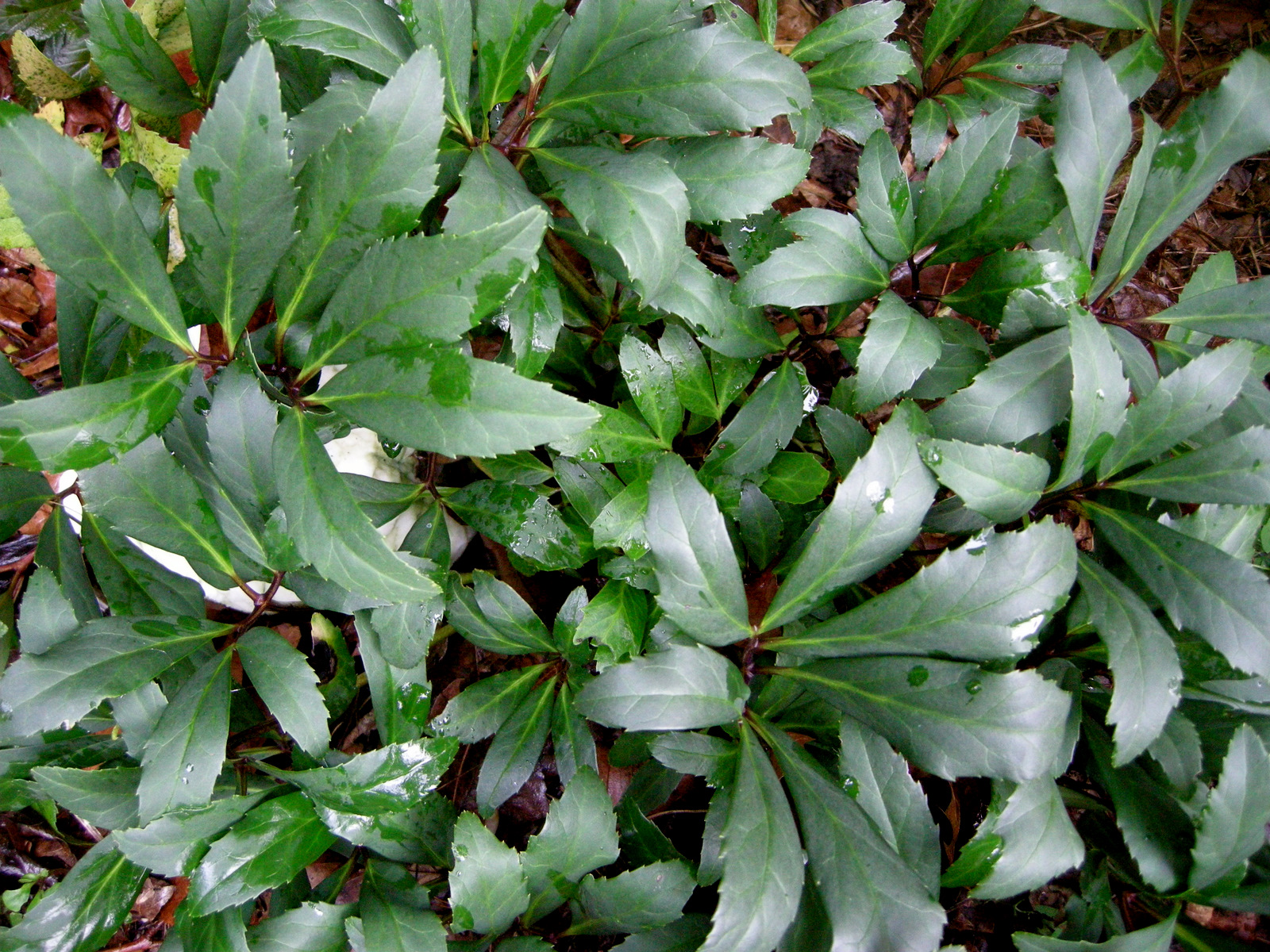
One of the many things I like about hybrid hellebores, Helleborus x hybridus, is that their evergreen leaves stay pristine through whatever summer throws at them.

The evergreen leaves of Christmas rose hellebore, Helleborus niger, are also lovely in the fall.

The leaves of ‘Black Scallop’ ajuga, A. reptans ‘Black Scallop, become darker and darker as fall progresses, ending up a deep mahogany.

‘Diana Clare’ lungwort, Pulmonaria ‘Diana Clare’, is another plant that can take whatever nature dishes out—it shines in full shade.

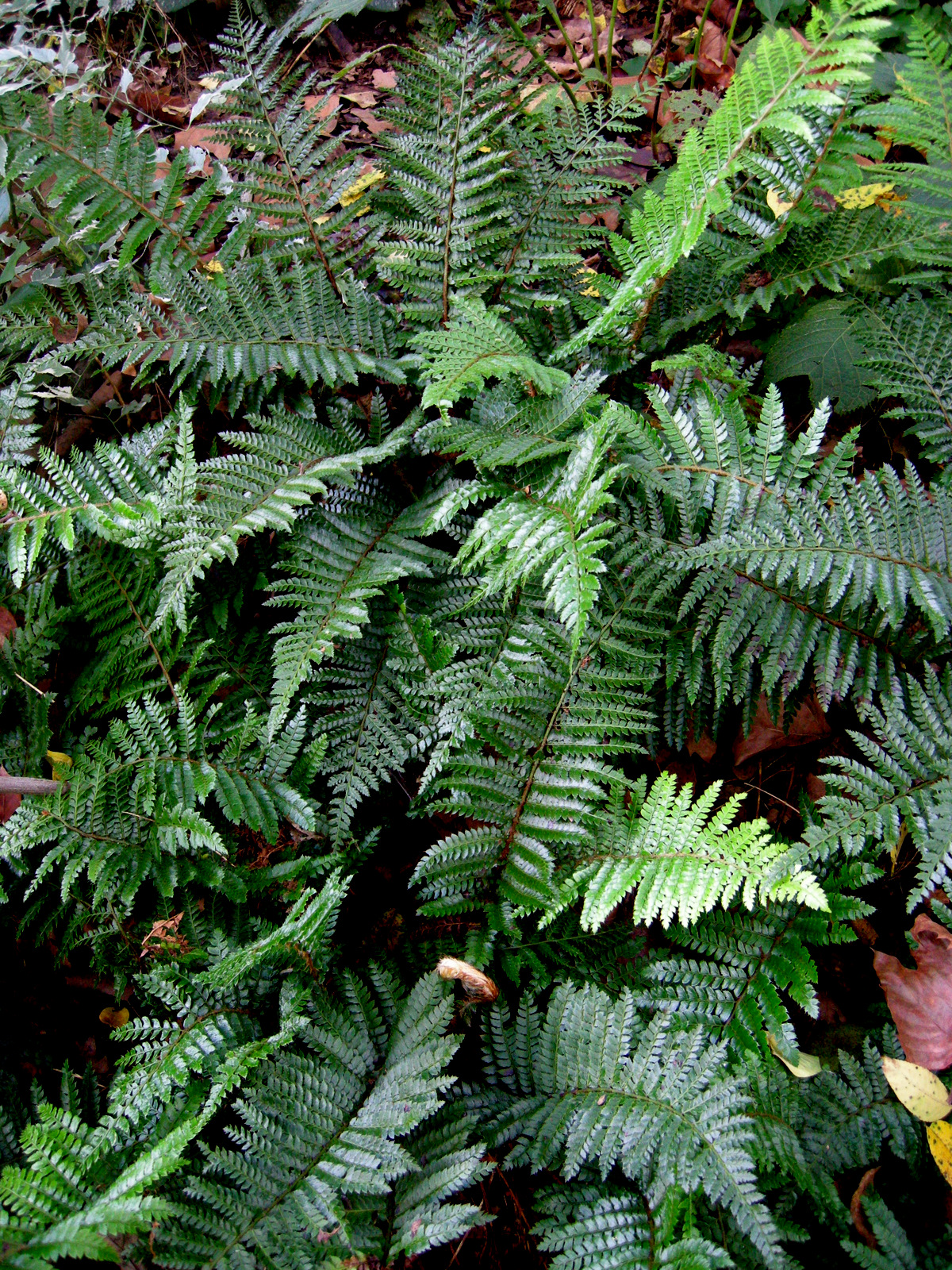
Unlike deciduous ferns that hit the decks in September, evergreen ferns are just getting going, here tassel fern, Polystichum polyblepharum.  To read my article on evergreen ferns for shade, click here.

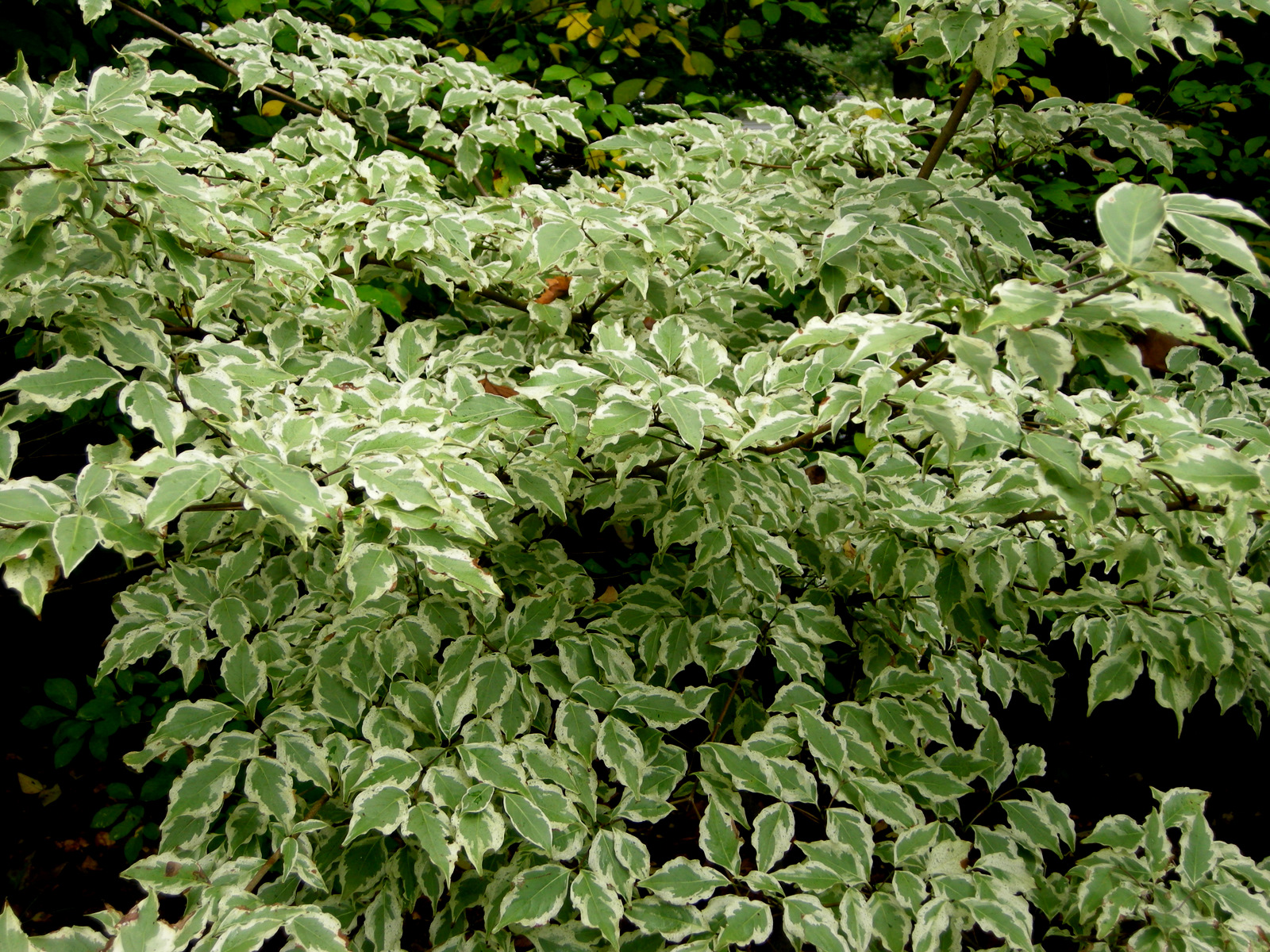
The foliage of ‘Wolf Eyes’ kousa dogwood, Cornus kousa ‘Wolf Eyes’, is beautiful all season, but I especially appreciate it in the fall when other leaves are tattered.


‘Red Sprite’ winterberry holly, Ilex verticillata ‘Red Sprite’, is my favorite of all the native winterberry cultivars because it has a compact habit and produces copious amounts of very large berries.  For more information on this great shrub, click here.

Our native flowering dogwood, Cornus florida, is in full fruit right now.

The striking bright purple berries of ‘Early Amethyst’ beautyberry, Callicarpa dichotoma ‘Early Amethyst’, march evenly down the stems of its beautifully cascading branches.  For more information and a close up photo, click here.

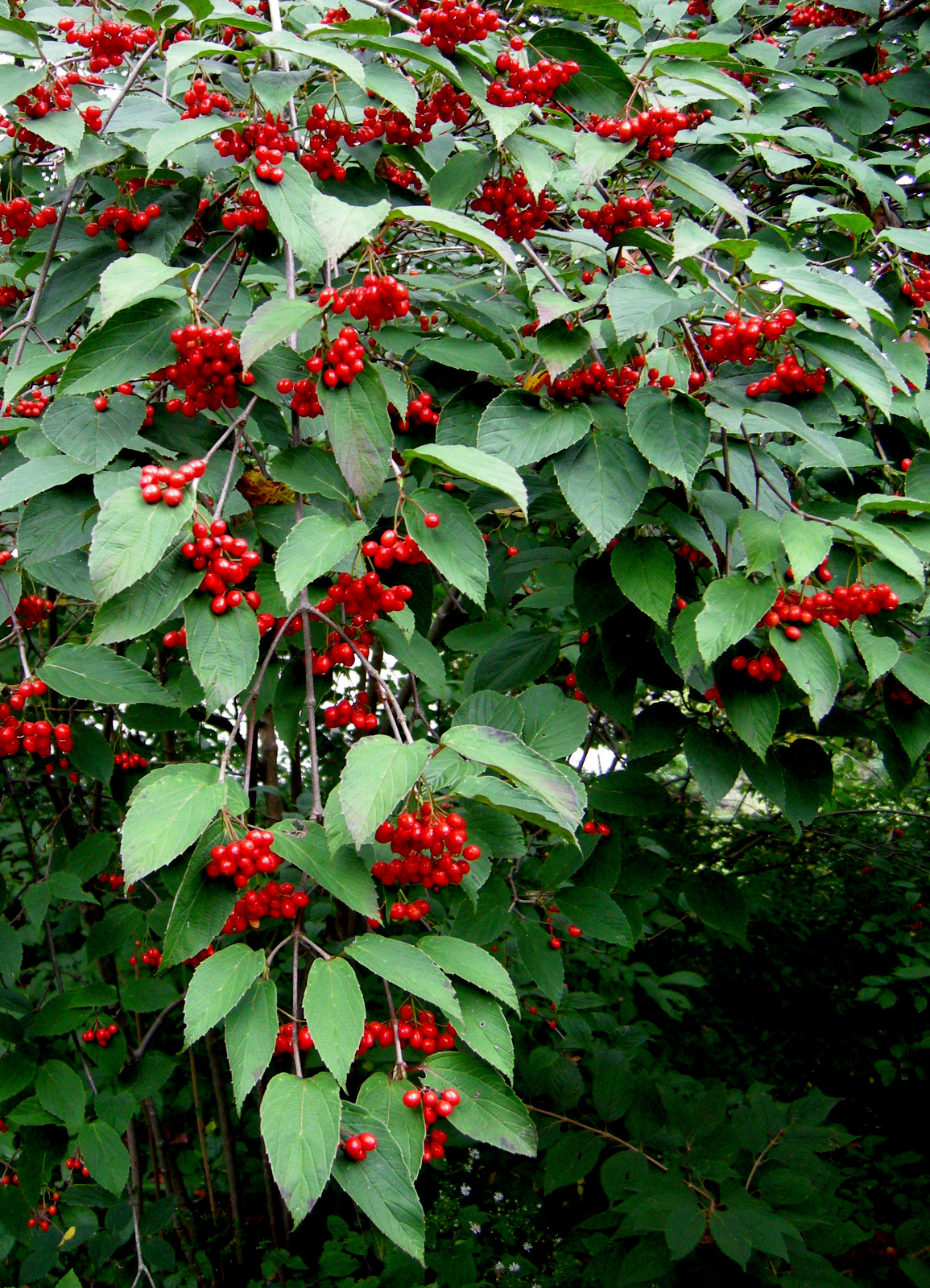
I grow my tea viburnums, Viburnum setigerum, in the shade of massive 150-year-old London plane trees, but it doesn’t stop them from producing their spectacular bunches of shiny red fruit.

The foliage and berries highlighted above, along with many I did not include, make my fall gardens a showplace for my customers and a relaxing retreat for me.  They do not require any dressing up for fall because they are already fully clothed.

Carolyn

Stay tuned for Part 2, A Few Fall Favorites for Flowers, and Part 3, Hostas for Fall.

Notes: Every word that appears in orange on my blog is a link that you can click for more information.  If you want to return to my blog’s homepage to access the sidebar information (catalogues, previous articles, etc.), just click here.