Archive for December, 2011

Friends, Food, Flowers, and Fun

Posted in garden to visit with tags , , , , on December 28, 2011 by Carolyn @ Carolyns Shade Gardens

Carolyn’s Shade Gardens is a retail nursery located in Bryn Mawr, PA, specializing in showy, colorful, and unusual plants for shade.  The only plants that we ship are snowdrops within the US.  For catalogues and announcements of local events, please send your full name, mailing address, and cell number to carolyn@carolynsshadegardens.com and indicate whether you are interested in snowdrops, hellebores, and/or hostas.  Click here to get to the home page of our website for catalogues and information about our nursery and to subscribe to our blog.

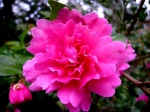
‘Heavenly Blue’ morning glory (in the garden at Pineland Farms), a plant Jean has often featured on her blog.

In considering several subjects for a holiday week post, I decided that there couldn’t be anything more appropriate than describing a summer day spent with a new friend visiting gardens, eating, and shopping for plants—sounds like heaven, doesn’t it?  You may recall that in April, Jean Potuchek from the blog Jean’s Garden (and Jan from Thanks for Today) visited my nursery and gardens and toured Chanticleer with me.  When I was in Maine in early July, Jean invited me to visit her, and this post describes our day.
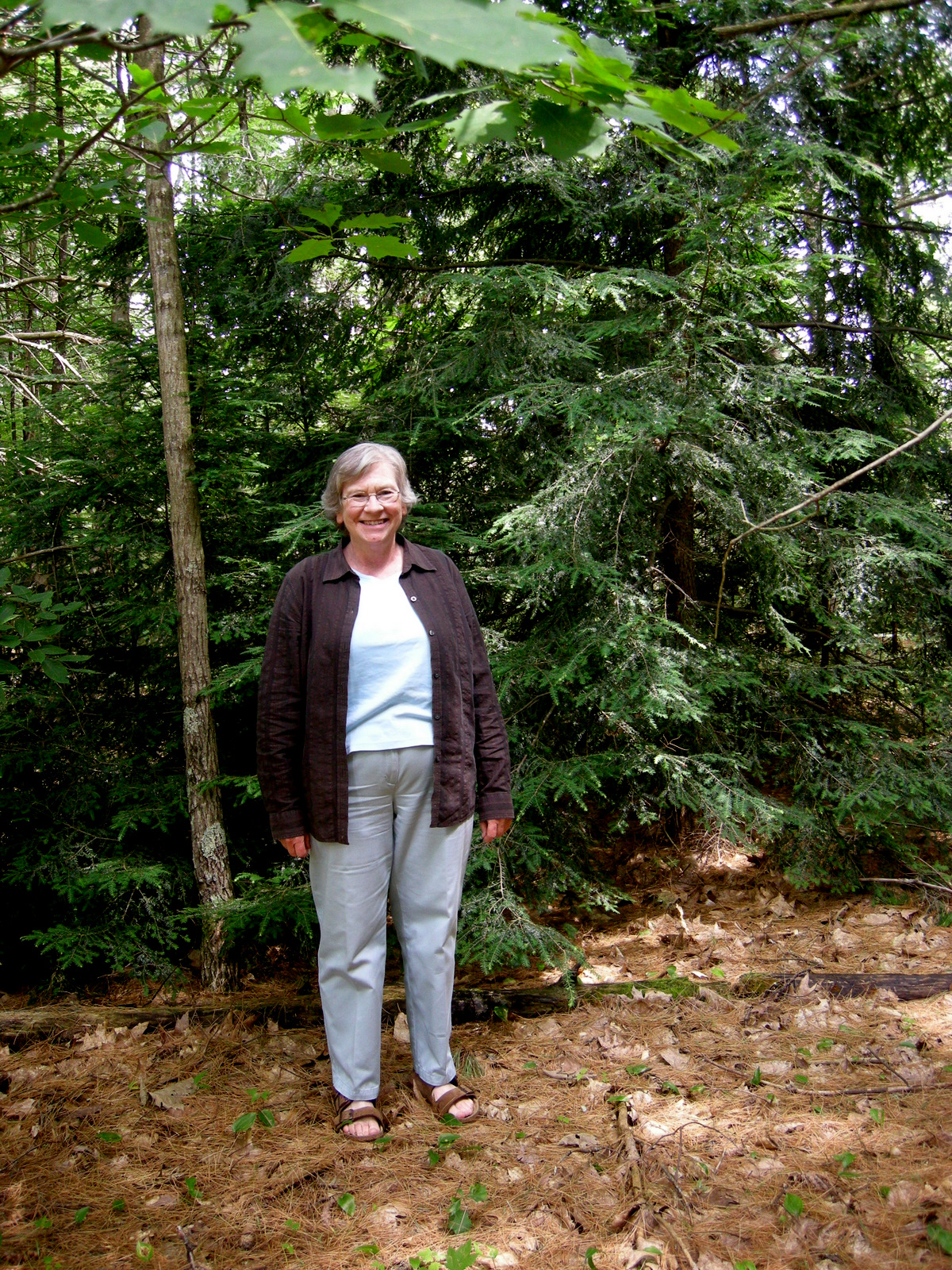

Jean standing in the future site of her Serenity Garden, often discussed on her blog and now a reality.

Before I get to photos of our day, I want to recount a little side story that illustrates how our minds can go down weird paths (at least mine can).  In a total role reversal, my children always give me  a concerned look when I refer to any garden blogger as a friend, saying: “You can’t be friends with someone you haven’t met in person.”  And I ask you, what would you say to your driving age daughter if she said to you: “Mom, I’ve met this really nice person on the internet,  and she has invited me to visit her at her home in remote rural Maine.” 

As I was driving to Jean’s house, I thought of this as the road twisted and turned deeper and deeper into the countryside, went from asphalt to gravel to dirt, and finally ended in about the most remote dead end I could think of with no neighbors in sight.  No one knew I had gone there, and no one would know whether I returned home because all my family had left Maine for Pennsylvania that week.
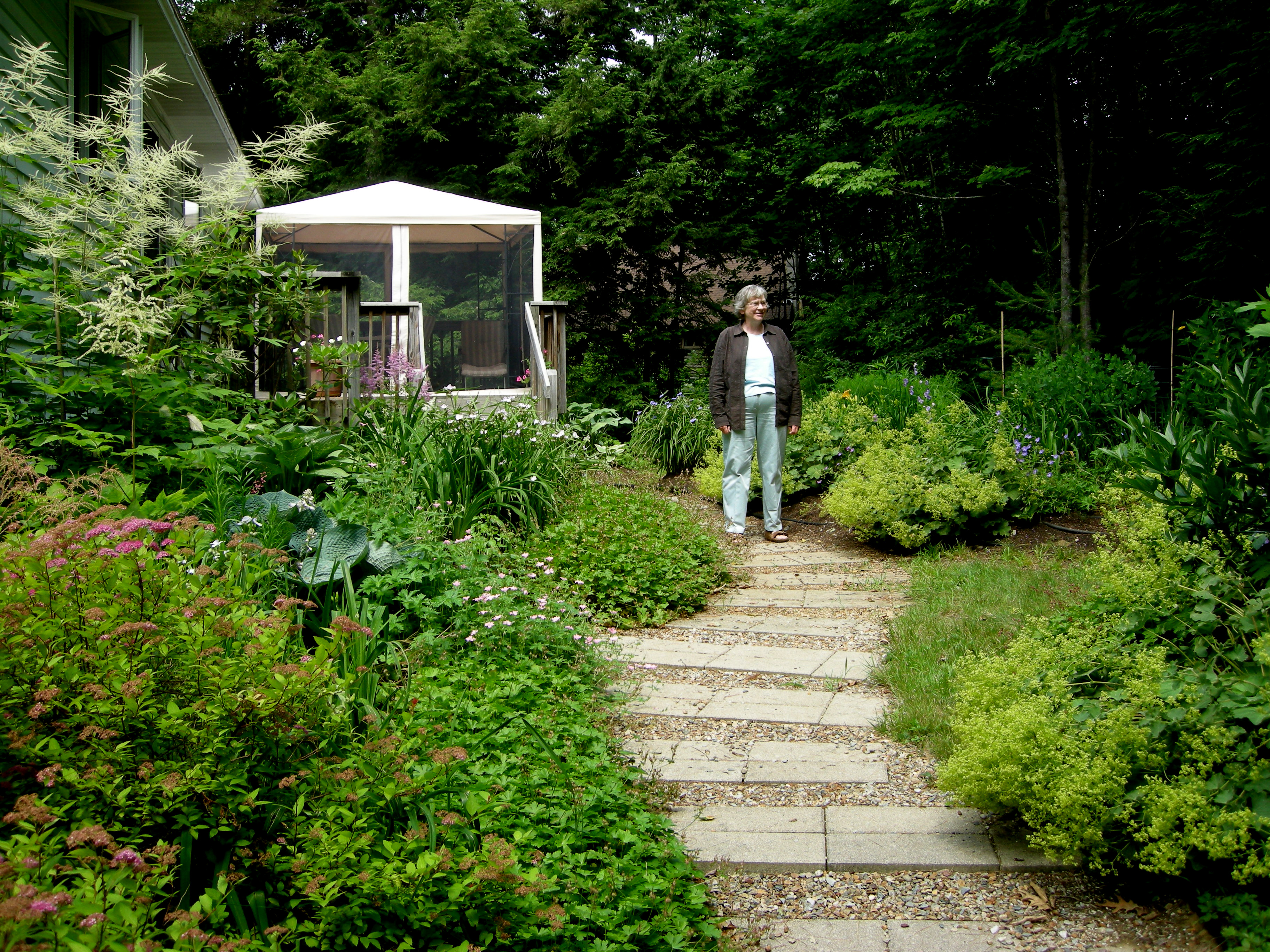
Jean in her beautiful and remote garden in East Poland, Maine.

Of course, I had met Jean before, but that was in a public place, and she could have been softening me up, right?  My worst fears were confirmed when, shortly after I arrived, she offered me poisoned strawberries from her lawn (well, they could have been) and invited me inside her home.  You will be relieved to know that all my fears proved groundless.  The garden blogging world is such a unique community, and I consider many garden bloggers friends, I just don’t say it aloud in front of my children.
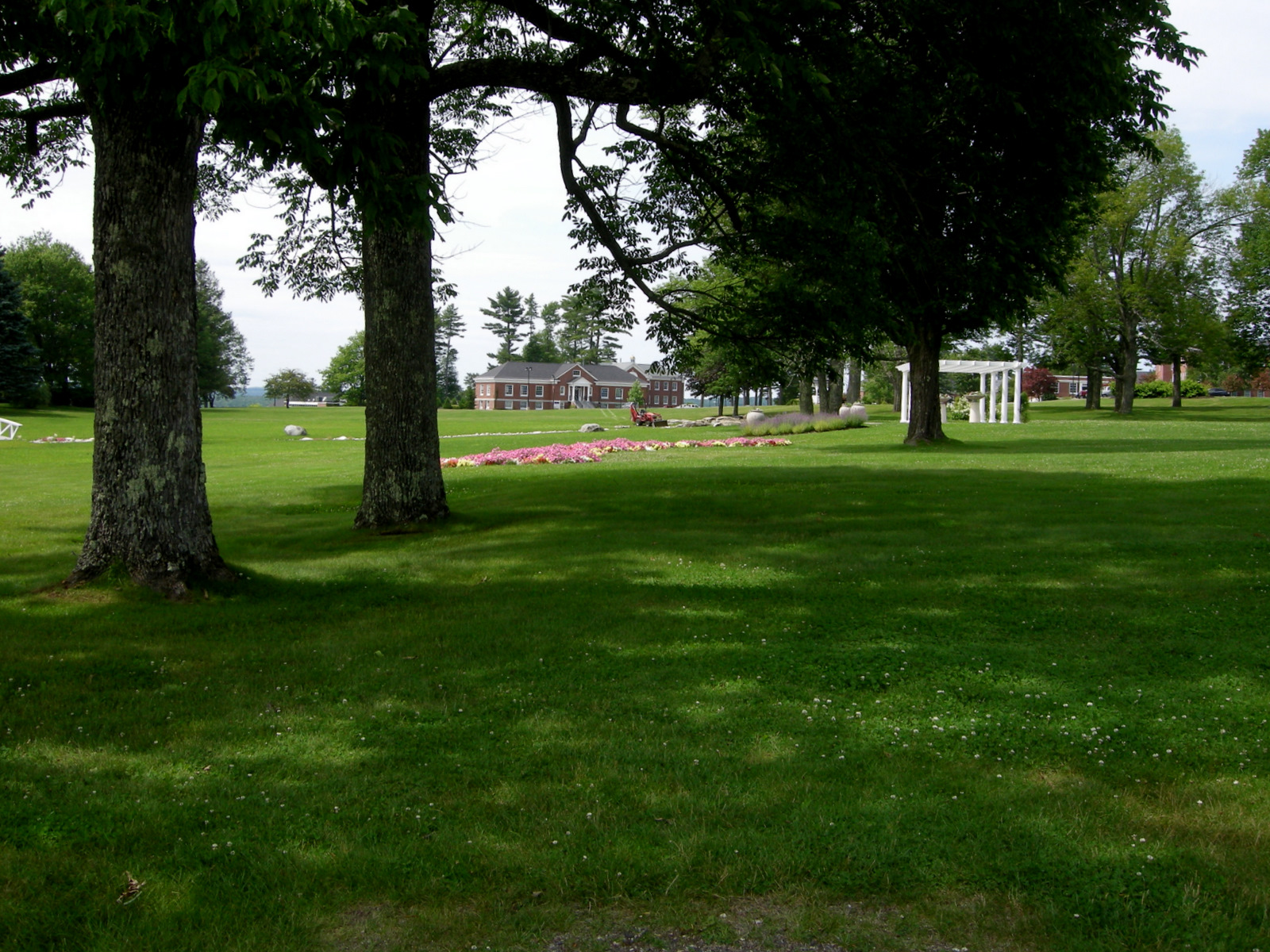
The Pineland Farms business campus, which includes the market and cafe, is well designed and maintained.  I wish I had been able to get better photos, but the day was very bright and sunny.

The only good shot I got of Jean’s lovely garden appears above, but it was so fun to see all the plants I had been reading about on her blog.  After the tour, we drove to Pineland Farms in New Gloucester, Maine.  The 5,000 acre Pineland Farms property encompasses a working farm, artisan dairy, hydroponic greenhouses, business campus, equestrian facility, farm market, cafe, recreational facilities, including hiking, biking, and skiing, and even guest houses.  For more on Pineland Farms, read Jean’s post.  After eating a delicious lunch made from the farm’s own products at the cafe and purchasing vegetables and farm made cheese at the market, we headed to the ornamental garden for a look around.

Views of the exterior enclosure of the Garden at Pineland Farms.  It feels like you are walking into a secret garden.

I was very charmed by what we found.  The garden encompasses one acre with 1/4 mile of paved paths.  It is mostly filled with perennials interspersed with trees and shrubs, but there is also an extensive vegetable garden.  Although the layout is formal and the maintenance is meticulous, it has a very accessible feel—like anything you saw there could be attempted successfully at home.  And I saw many plant combinations and design ideas there that I would love to try in my own gardens.

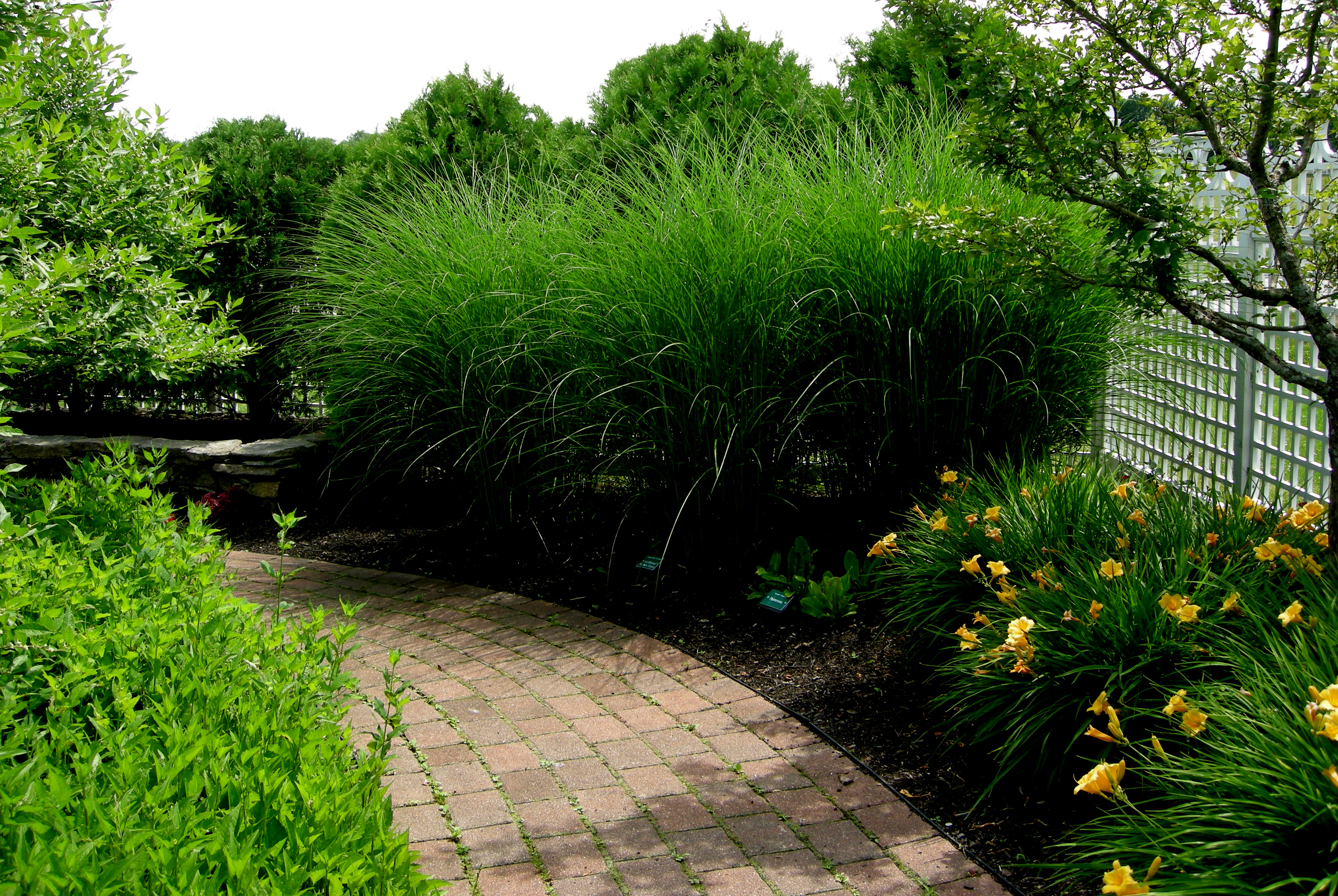
The formal brick paths, which are very easy to navigate, wind themselves around the exterior of the garden (top two photos) and across the center (bottom photo).  Although the site is flat, the curved paths and carefully places trees and shrubs create garden rooms and a sense of discovery.

The side paths are gravel and include some shade gardens.

A key element that holds this garden together is the repetition of large groupings of a limited palette of perennials appropriate to the season.  In early July, it was meadowsweet, Japanese iris, astilbe, and daylilies, among others.  These groupings unite all the small gardens and the large selection of perennials displayed.  If you scroll back through the photos above, I hope you can see what I mean.  Here are photos of some of these key plants:

Double meadowsweet, Filipendula ulmaria ‘Flore Pleno’
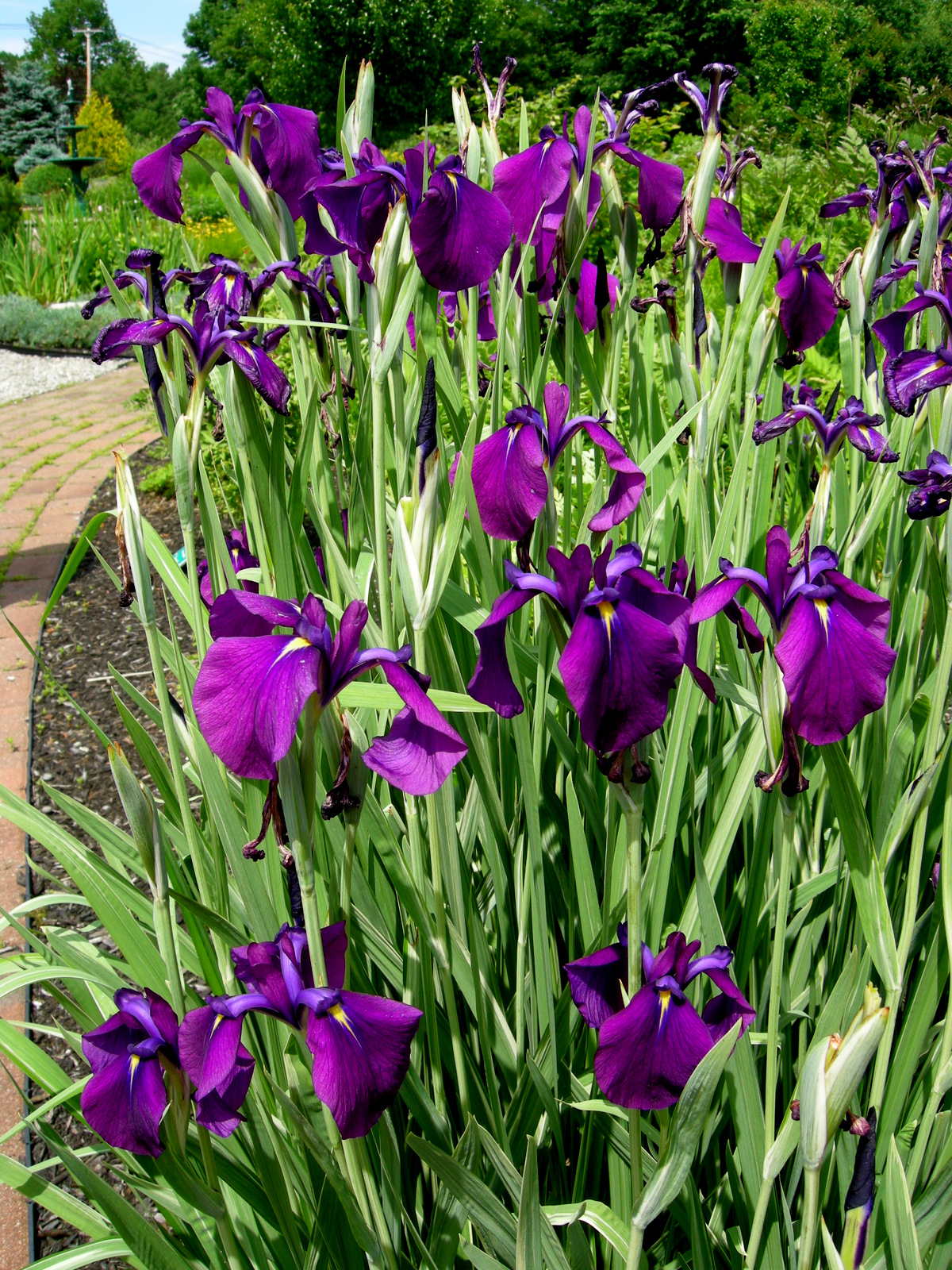
Japanese iris, Iris ensata ‘Shakkyo’
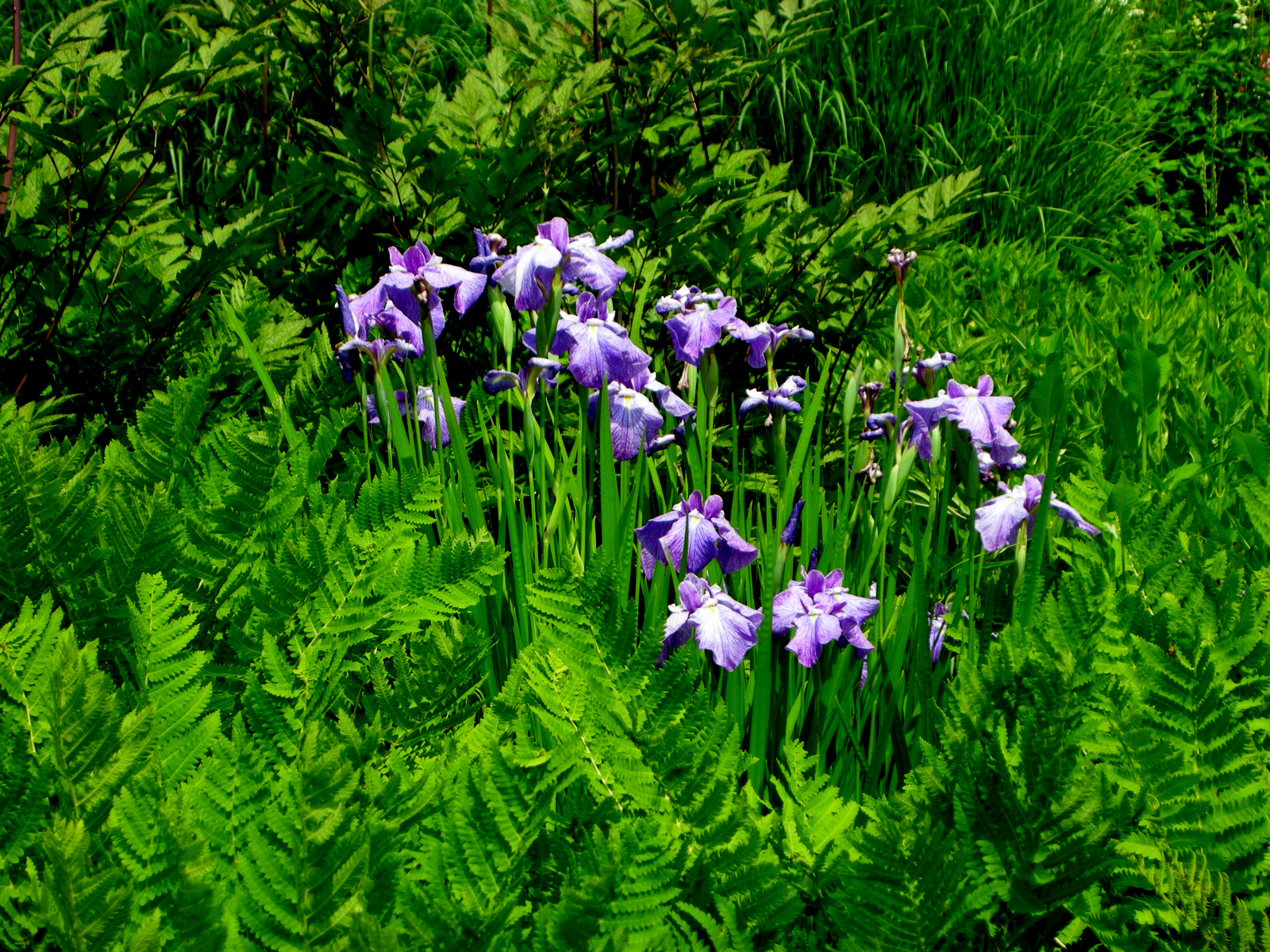
Japanese iris and ferns

The large plantings of dwarf Chinese astilbe, Astilbe chinensis ‘Pumila’, looked gorgeous with the brick paths.

Daylilies, I think Hemerocallis ‘Stella de Oro’.

In addition to the ornamental gardens, there is a very pretty herb garden and an extensive vegetable garden:
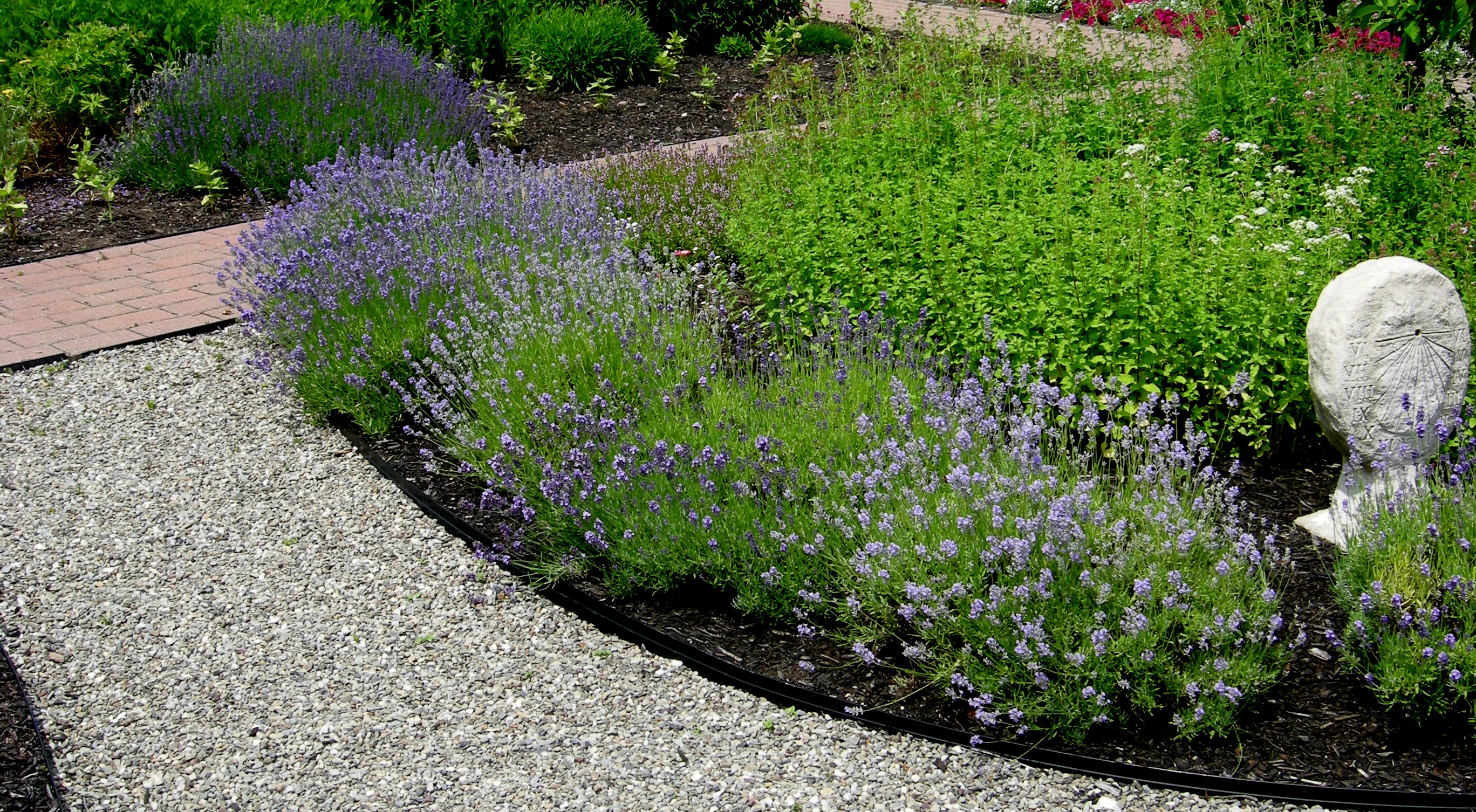
Various lavenders in the herb garden.

Produce from the vegetable garden is sold in the market.

As we left the formal garden, we had a panoramic view of the Pineland Farms dairy operation.  The bucolic beauty is typical of this part of rural Maine.

Plainview Farm plant nursery in North Yarmouth, Maine

After looking at all those gorgeous plants, it was time to buy some.  Jean took me to one of her favorite nurseries, Plainview Farm in North Yarmouth, Maine.  Not only do they have a great selection of enticing perennials, but they also have extensive display gardens.  Well worth the visit if you are in the area.  I’ll end the post with photos of two plants that intrigued me:

Yes, I am a sucker for Japanese iris: Iris ensata ‘Temple Bells’
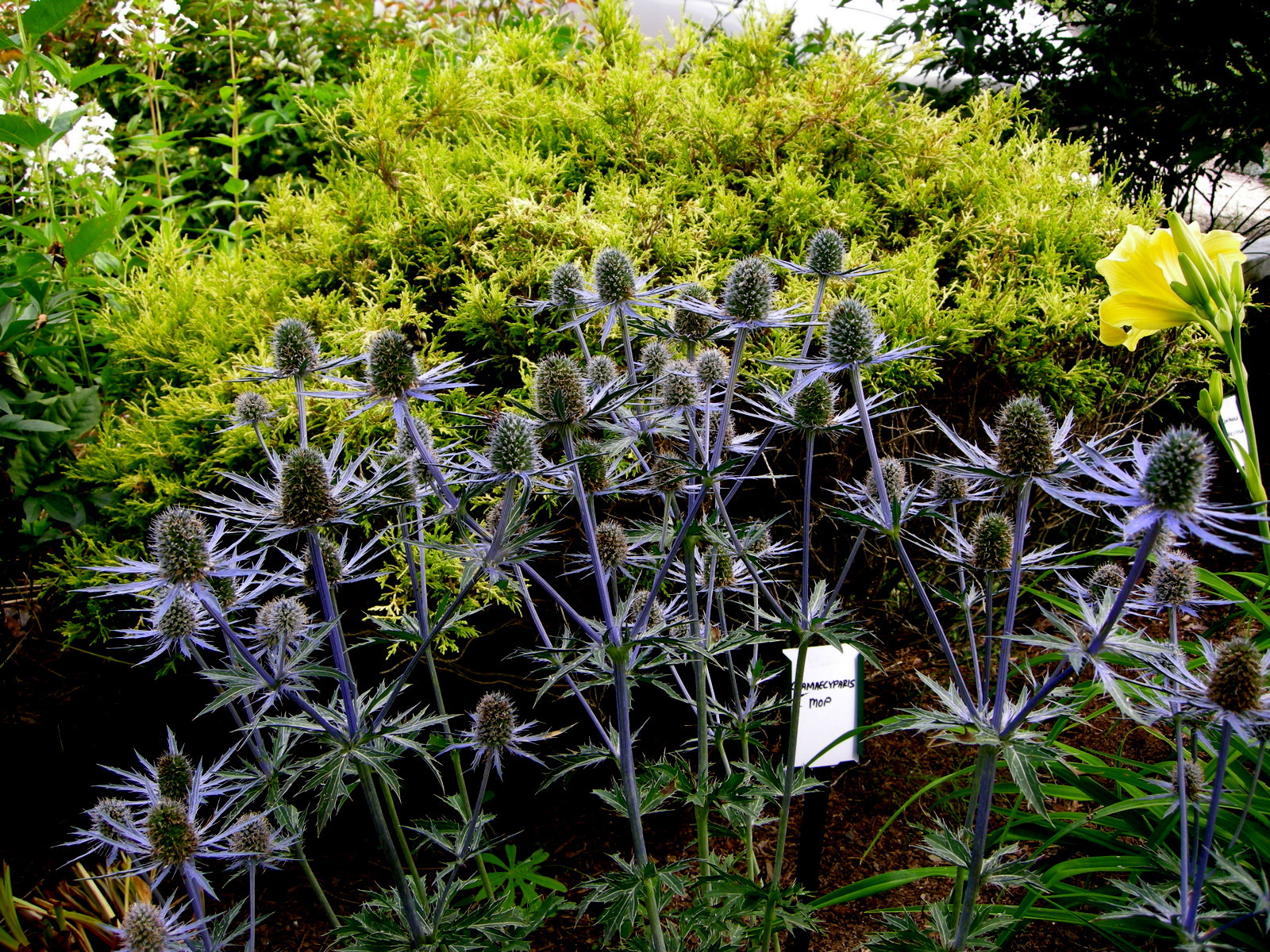
I have never seen a sea holly this blue: Eryngium ‘Big Blue’.


Happy New Year to my nursery customers, my blog readers,  Jean, and garden bloggers everywhere,  Carolyn

Notes: Every word that appears in orange on my blog is a link that you can click for more information.  If you want to return to my blog’s homepage to access the sidebar information (catalogues, previous articles, etc.) or to subscribe to my blog, just click here.

Havahart® This Holiday Season

Posted in How to, organic gardening, product review, sustainable living with tags , , , , , on December 21, 2011 by Carolyn @ Carolyns Shade Gardens

Carolyn’s Shade Gardens is a retail nursery located in Bryn Mawr, PA, specializing in showy, colorful, and unusual plants for shade.  The only plants that we ship are snowdrops within the US.  For catalogues and announcements of local events, please send your full name, mailing address, and cell number to carolyn@carolynsshadegardens.com and indicate whether you are interested in snowdrops, hellebores, and/or hostas.  Click here to get to the home page of our website for catalogues and information about our nursery and to subscribe to our blog.

The woodchuck we caught was a lot cuter than I expected.  He looked and acted like he was trying out for a part in Wind in the Willows.

Last spring Havahart®, the manufacturer of live animal traps, contacted me regarding a potential product review.  Their representative expressed an interest in having a review appear on my blog because I advocate gardening  organically.  He thought my customers would be interested in their humane traps and other products.  Havahart® would send me any of their products for free, and I could try it out and say anything I wanted about it.


Never one to go half way, my husband baited the trap with a whole cabbage.

We had previously used small Havahart® traps to catch and release chipmunks, which were tearing down our 10 foot stone walls with their tunnels.  We were very pleased with the results, but our current cat has the chipmunk problem well under control.  Now we were being plagued by a woodchuck (AKA groundhog)—the most persistent animal pest I know.  For the review, we chose the Havahart® One-Door Groundhog & Raccoon Trap.

The trap is set with the door open and the cabbage behind the trigger pad.

Our current woodchuck was living under our deck so we placed the trap near his entrance and exit hole.  The trap door is held open by a trigger rod attached to a trigger pad and snaps shut when the woodchuck presses the tilted trigger pad on his way to the bait.  We didn’t have to wait long—two days later a sad little face greeted me when I checked the trap.  I expected a vicious varmint, and what I got was Beatrix Potter’s Mrs. Tiggy-Winkle.  You will notice that he ate the whole cabbage.

Success occurred immediately.

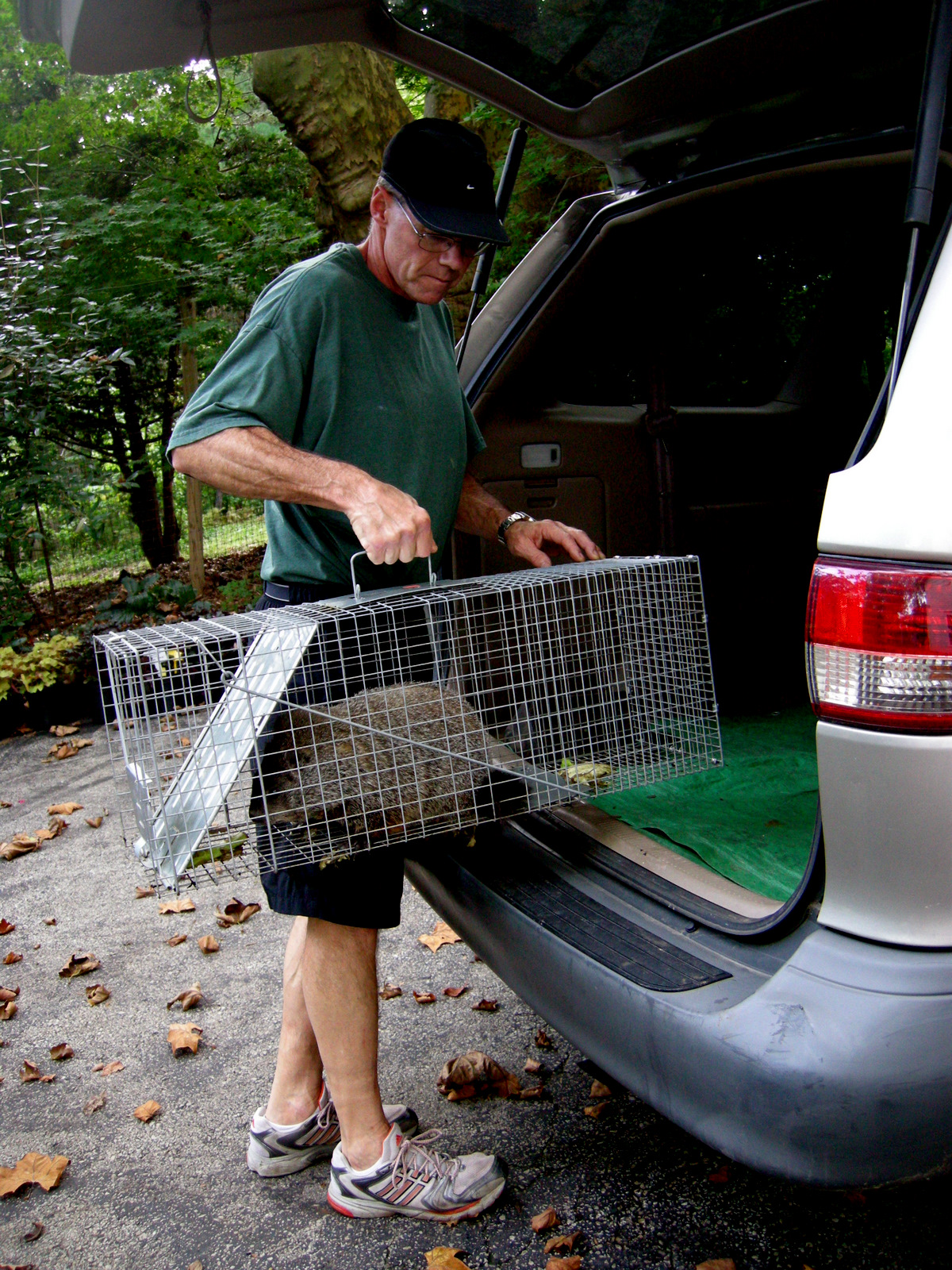
I felt so sorry for the little guy that we decided an immediate transport and release was necessary.  It was easy to carry the cage to our van and place it on a tarp in the back.  The woodchuck remained passive during this ordeal.

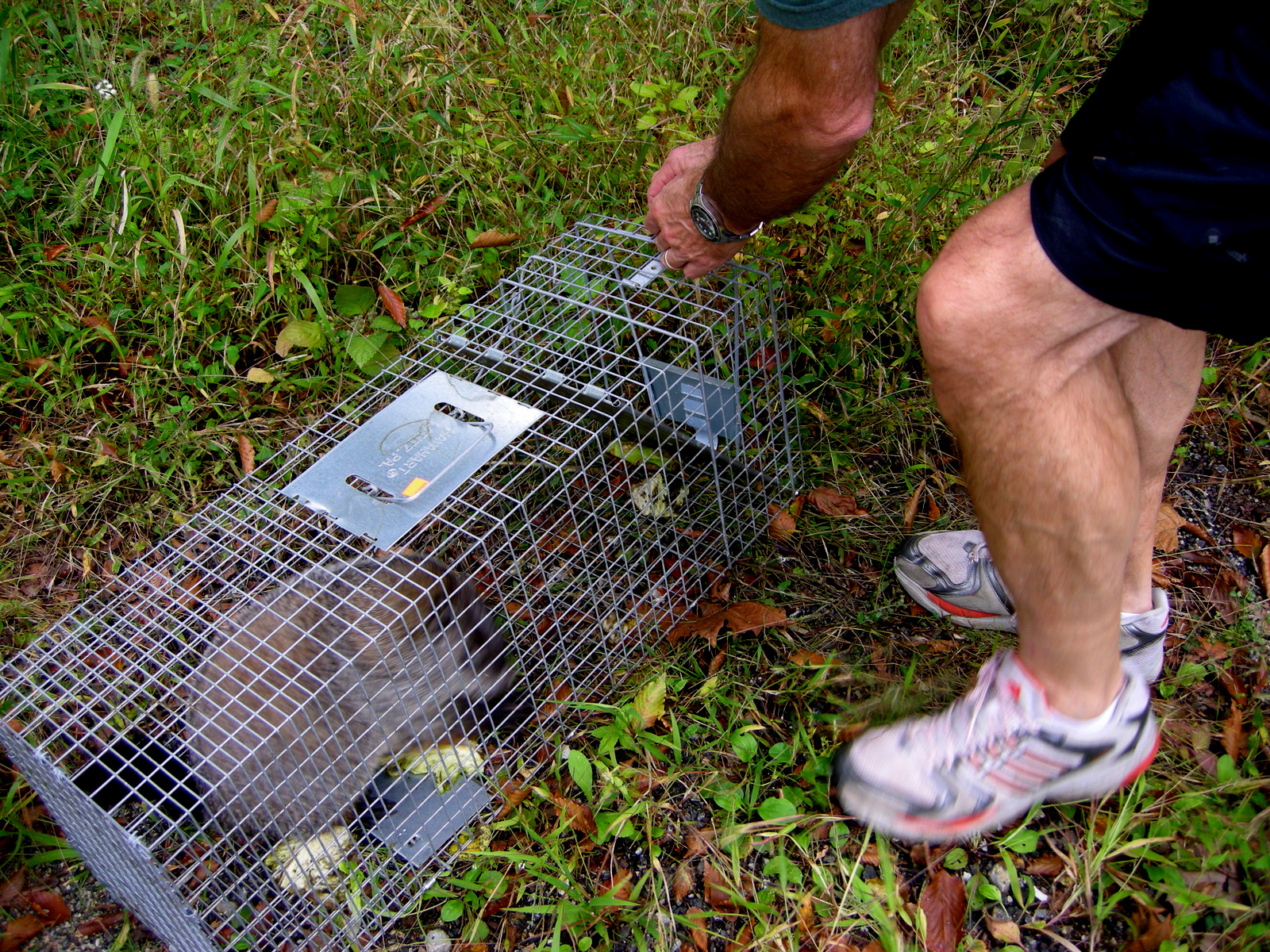
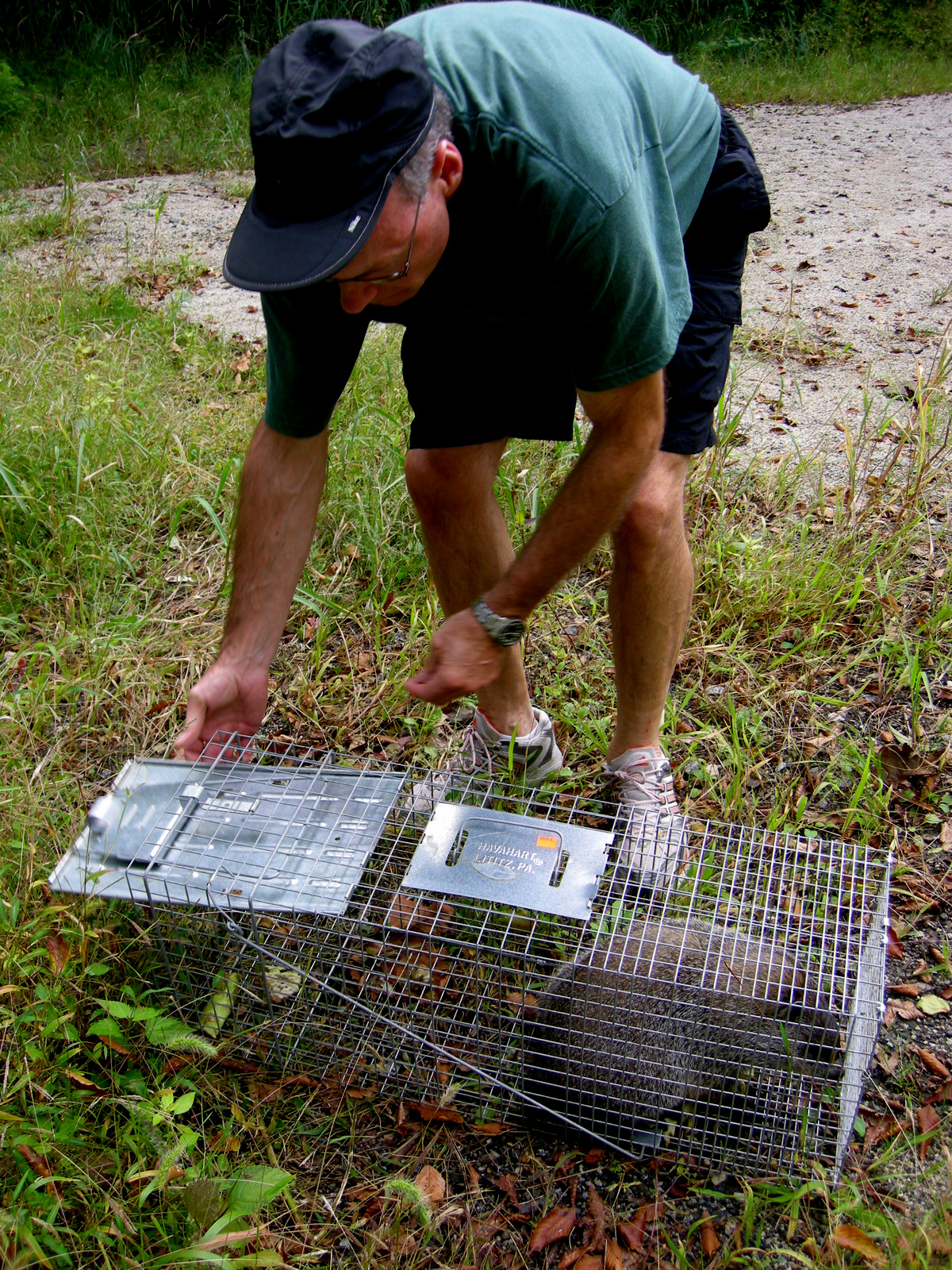
As recommended by Havahart®, we drove to “an isolated location five to ten miles away,” insuring that the woodchuck would not return to our property.  We stopped the car, unloaded the trap, and prepared to release our little friend—that was when the fun began.  The fat little woodchuck sat firmly on the trigger pad preventing the door from being released into the open position.  Even when my husband manually opened the door and held it open, the woodchuck would not leave the trap.

While my husband holds the trap open, the woodchuck resolutely faces the back of the cage refusing to vacate his new found home.  Thanks to my customer, Ben Hayward, for pointing out that my husband should not have had his fingers near the cage opening without wearing protective gloves.  See my reply to Ben’s comment about why the gloves didn’t make the trip.

I wish I had a video of what happened next because it would be hysterical.  Without warning me, my husband picked up the whole trap, tipped it perpendicular to the ground, and shook the woodchuck out right at my feet.  If only I could say that I stood my ground like a brave photographer, risking an angry woodchuck to get THE photo.  But instead I turned and ran for the car as fast as I could, convinced that the woodchuck would climb the nearest upright object, which was me.  I regained my senses just in time to get this photo of the little woodchuck fleeing for the hinterlands.

Overall I think Havahart® traps are very useful for humanely removing unwanted animals from your property.  And upon reading the manual to write this article, it does recommend inserting a stick through the cage to prop the door open.  That would have solved the problem with our unusually passive and docile woodchuck who seemed happy to live in the trap indefinitely as long as we fed him cabbage.  However, I do not think I would want to get my hands that close to the cage (see photos above) with a more aggressive animal inside it.

Happy Holidays,  Carolyn

Notes: Every word that appears in orange on my blog is a link that you can click for more information.  If you want to return to my blog’s homepage to access the sidebar information (catalogues, previous articles, etc.) or to subscribe to my blog, just click here.

December GBBD: Past Prime

Posted in Camellias, Fall Color, Garden Blogger's Bloom Day, hellebores, Shade Perennials, Shade Shrubs, snowdrops, winter interest with tags , , , , , , , , , , , on December 13, 2011 by Carolyn @ Carolyns Shade Gardens

Carolyn’s Shade Gardens is a retail nursery located in Bryn Mawr, PA, specializing in showy, colorful, and unusual plants for shade.  The only plants that we ship are snowdrops within the US.  For catalogues and announcements of local events, please send your full name, mailing address, and cell number to carolyn@carolynsshadegardens.com and indicate whether you are interested in snowdrops, hellebores, and/or hostas.  Click here to get to the home page of our website for catalogues and information about our nursery and to subscribe to our blog.

Every year I make a Christmas wreath using all natural materials from my property.

It is the middle of the month and time to participate in Garden Blogger’s Bloom Day hosted by May Dreams Gardens where gardeners from all over the world publish photos of what’s blooming in their gardens.  I participate because it is fun and educational for me to identify what plants make my gardens shine at different times of the year.  I also hope that my customers will get some ideas for plants to add to their own gardens to extend their season well into late fall.

My garden is located in Bryn Mawr (outside Philadelphia), Pennsylvania, U.S., in zone 6B.


I used berries from this native winterberry holly, Ilex verticillata ‘Red Sprite’, to make the wreath.  On December 7, the robins came and cleaned off all the berries.

Last month was still prime time in my gardens, but now with hard frosts and generally colder weather, my gardens are past their prime.  The show goes on though with the focus shifted from the garden as a whole to individual plants peaking between November 15 and December 15 (I do not take all my photos on December 15).  This means that they bloom now (or are still blooming), have ornamental fruit, or feature exceptional foliage or fall color during this period.

Let’s start with flowers:

The large and vigorous fall-blooming snowdrop ‘Potter’s Prelude’ is in full bloom through this entire period.  Mine is surrounded by the marbled purple foliage of ‘Frosted Violet’ coralbells, Heuchera villosa ‘Frosted Violet’.  For more on fall-blooming snowdrops, click here.

Over the years, I have planted hundreds of giant snowdrops, Galanthus elwesii, and in the process have acquired plants that bloom in the fall instead of January when this species normally blooms.

I am always raving about the long bloom time of  ‘Shell Pink’ lamium so I thought you might like to see a photo of it in full bloom in December.  For more on lamium as a wintergreen groundcover, click here.

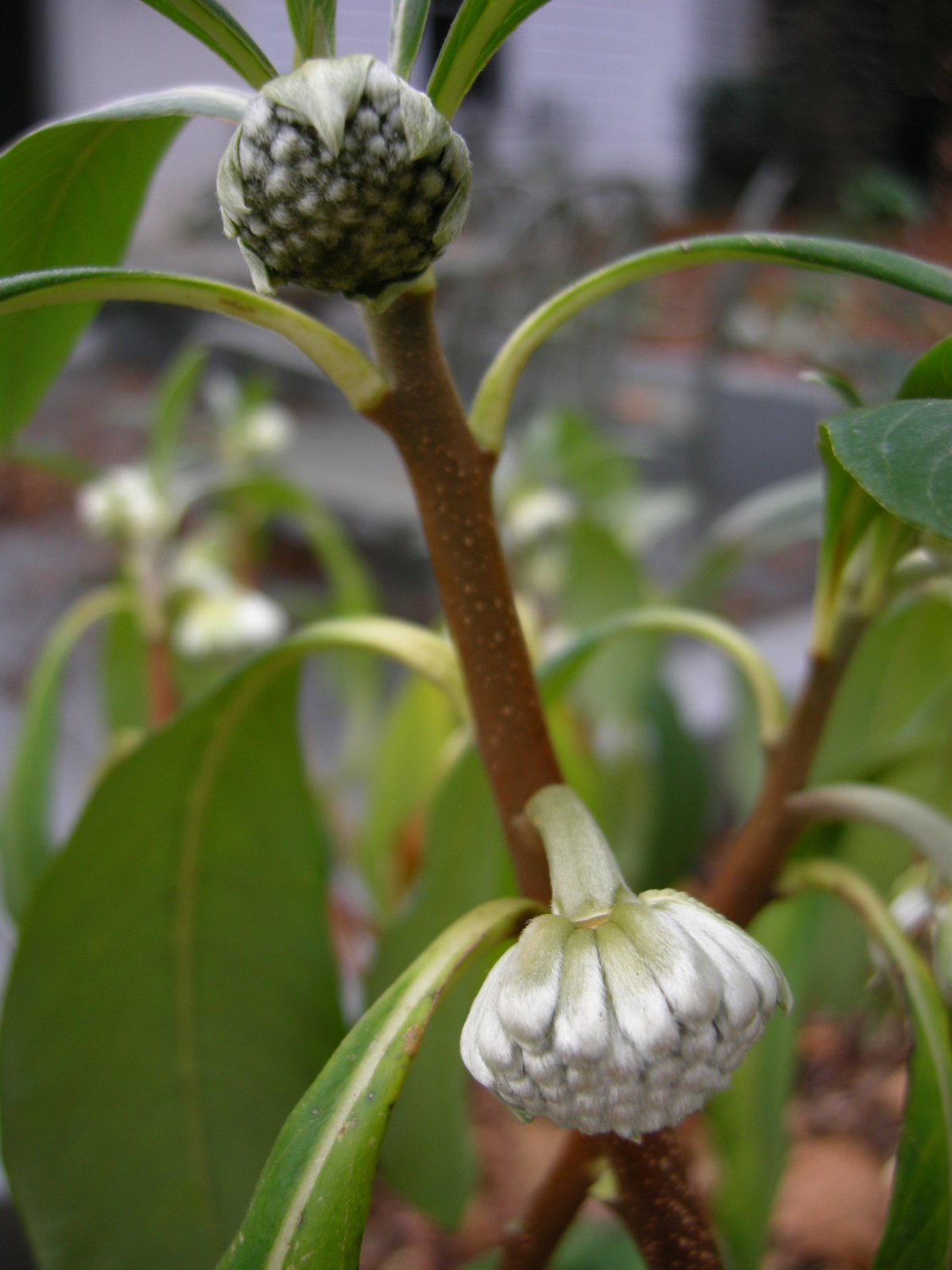
The buds on my paperbush, Edgeworthia chrysantha, have gotten large enough to show their beautiful silvery color and will remain ornamental until they start to open in March.

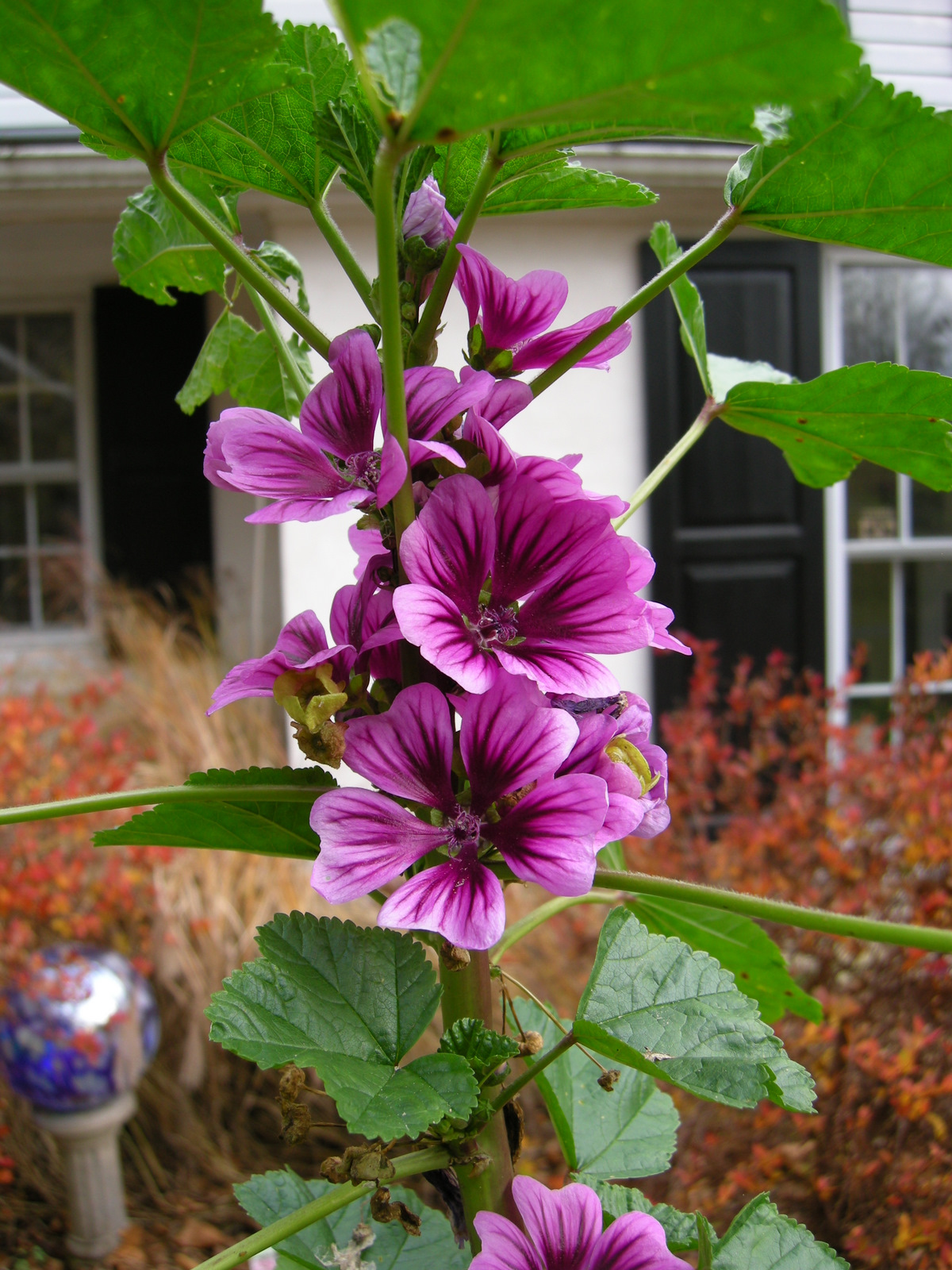
‘Zebrina’ hollyhock mallow, Malva sylvestris ‘Zebrina’, does not seem to be bothered by hard frosts.

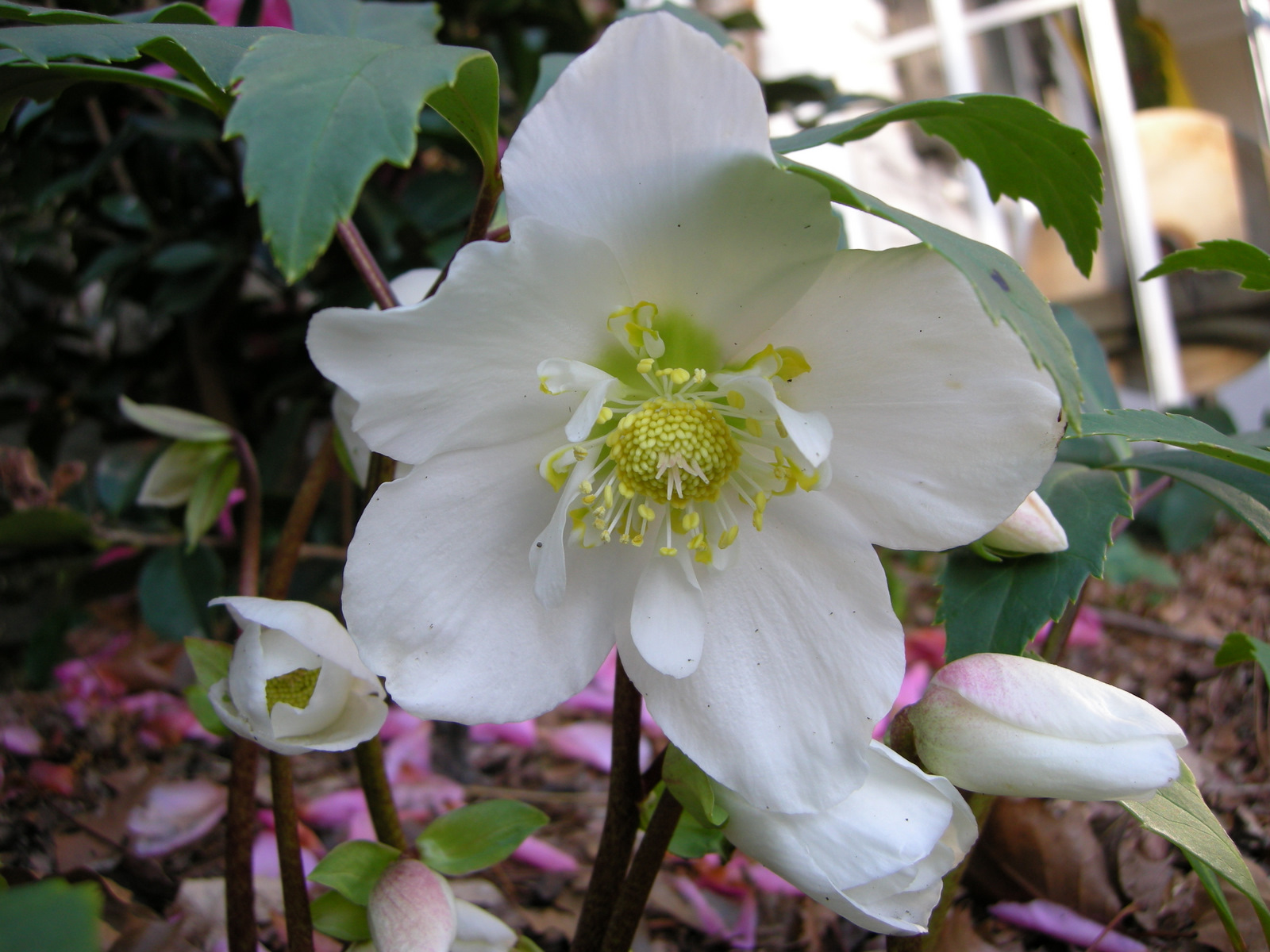
Hellebores are one of the primary contributors to flowers during the winter months:

The spent flower heads of ‘Josef Lemper’ Christmas rose, Helleborus niger ‘Josef Lemper’, which has been blooming since early October, seem more ornamental when everything else has gone by.  Buds are forming at the base for the next wave of bloom.

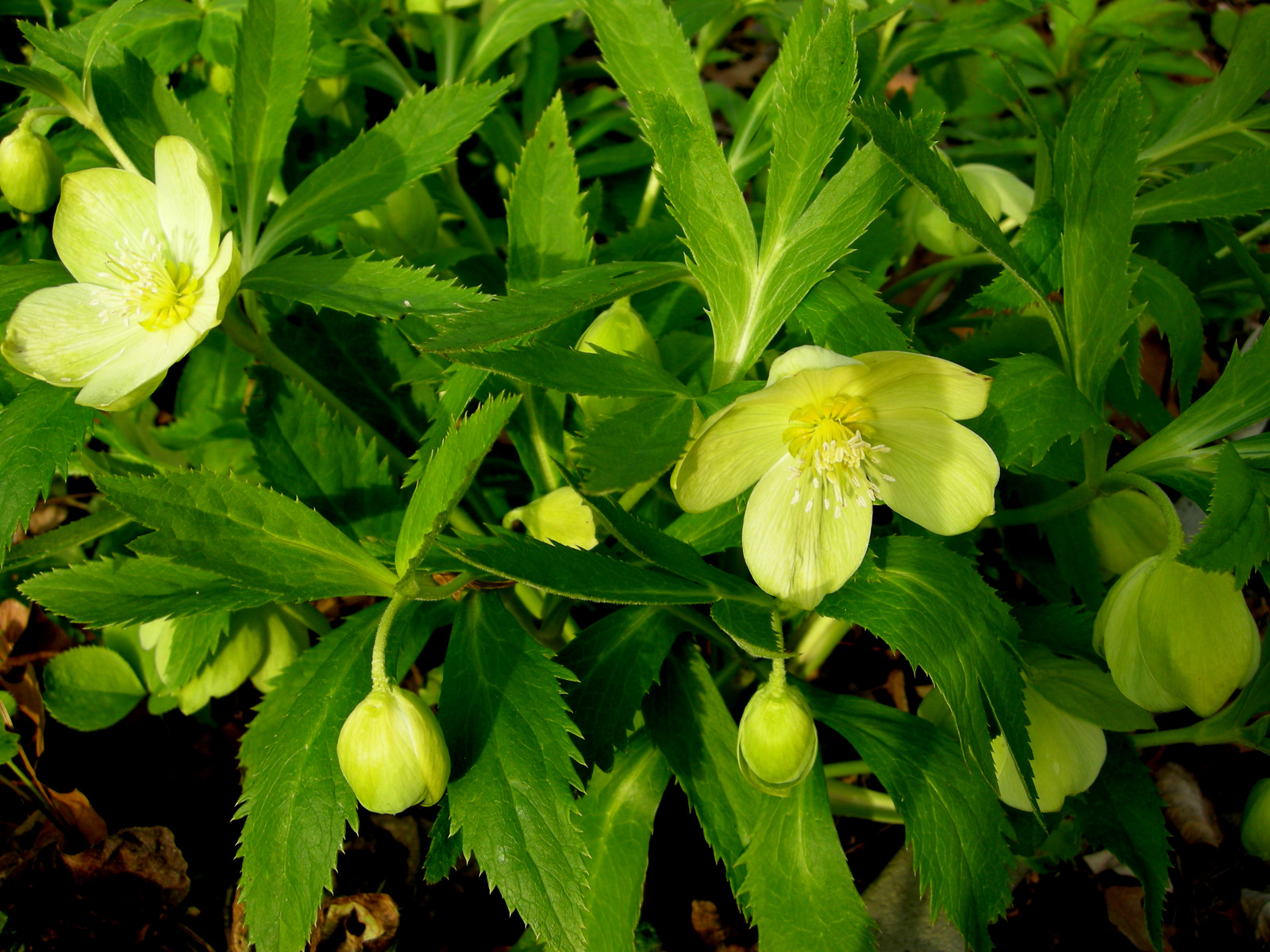
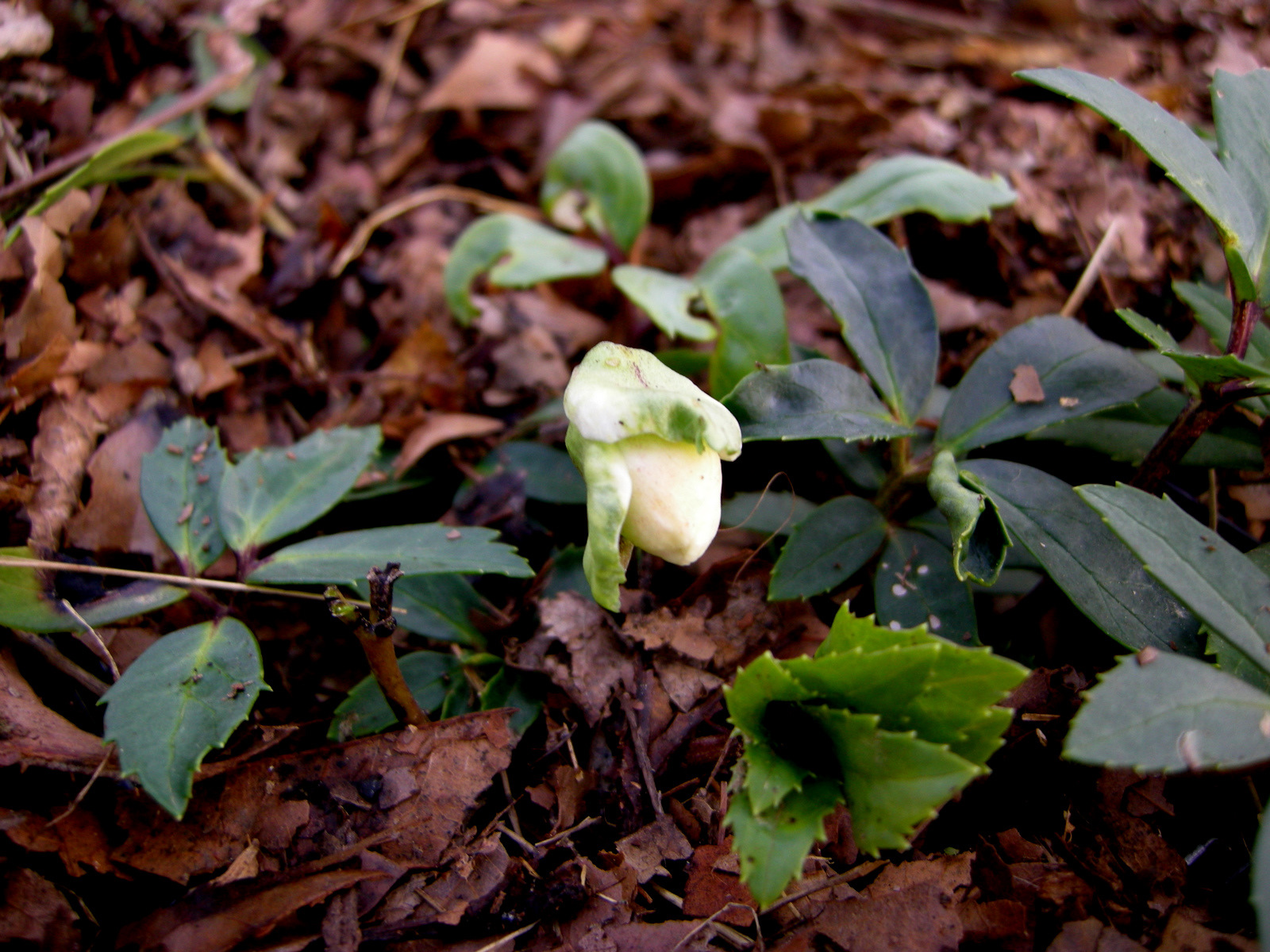
Since November 15, another Helleborus dumetorum (no common name) has put out fresh foliage and covered itself in flowers.

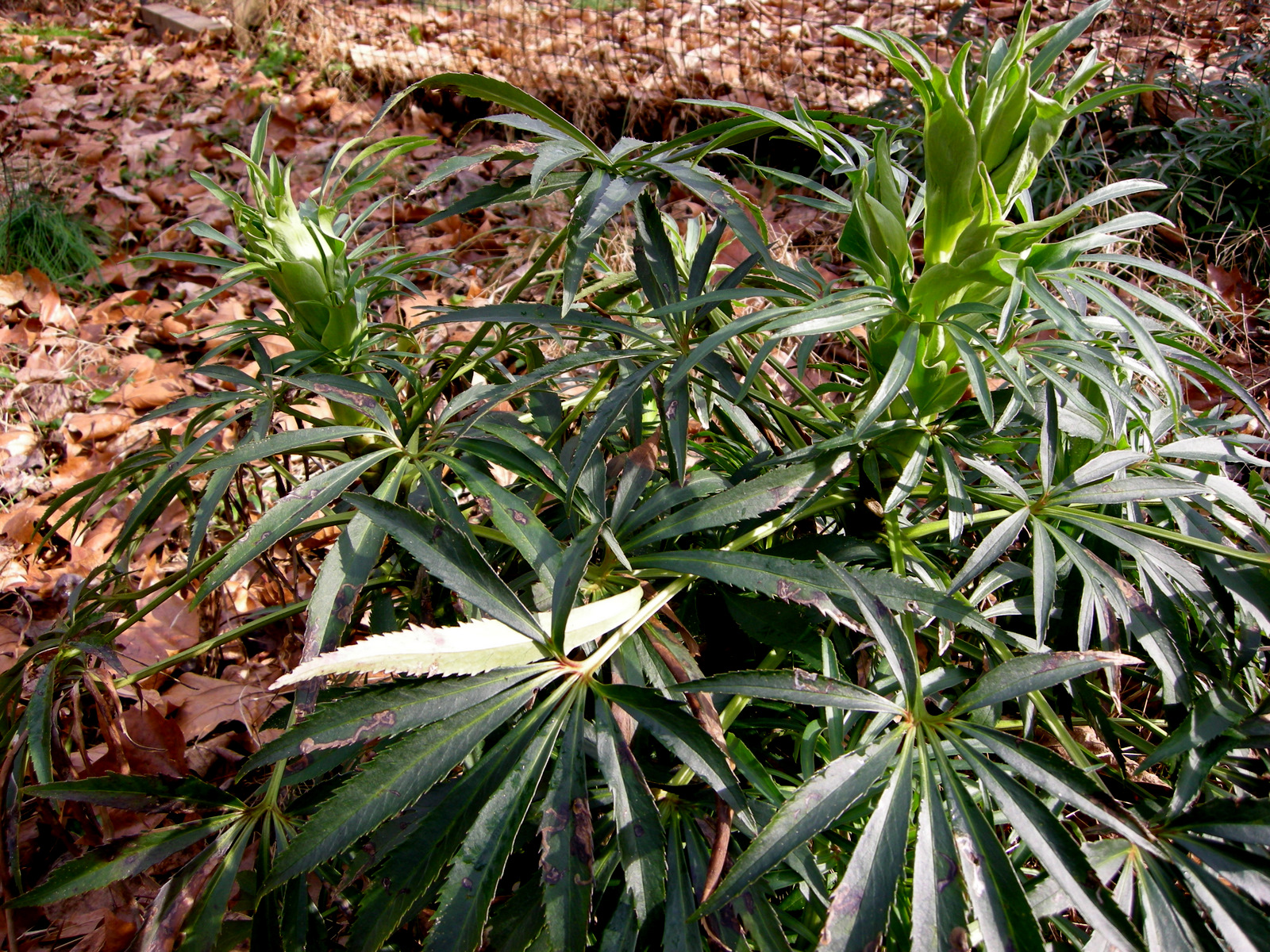
The lighter chartreuse buds are forming on bearsfoot hellebore, H. foetidus, which will remain ornamental through May.

‘Jacob’ Christmas rose, Helleborus niger ‘Jacob’, is covered with buds just starting to open.

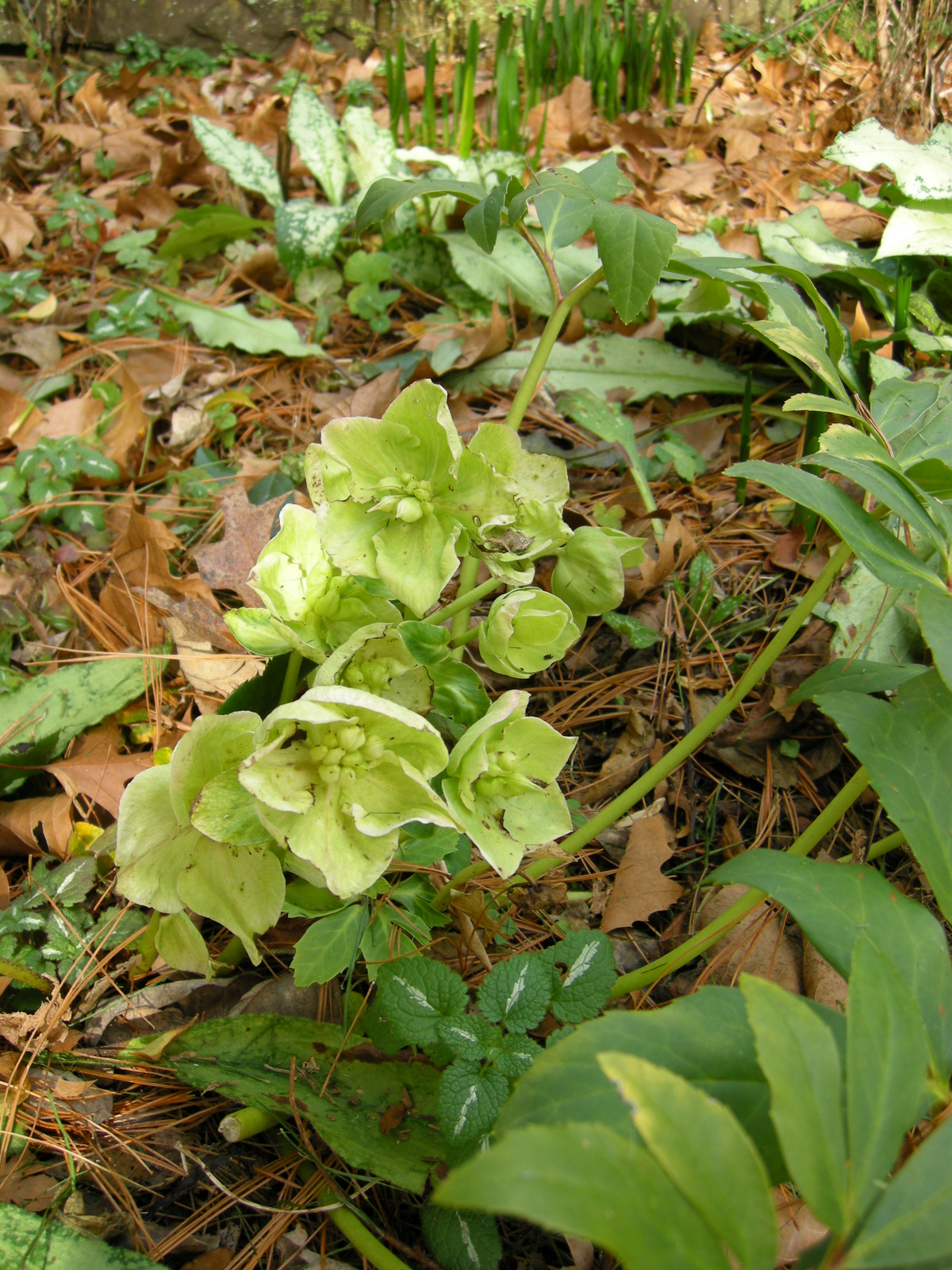
This photo might not look very exciting, but I am thrilled to see buds on my rare double Christmas rose, Helleborus niger ‘Double Fantasy’.  In all my years of collecting hellebores, I have only seen a double Christmas rose once in a garden.  Now I will be offering blooming plants to my customers in my 2012 snowdrop catalogue.

This is what ‘Double Fantasy’ will look like when it’s open.

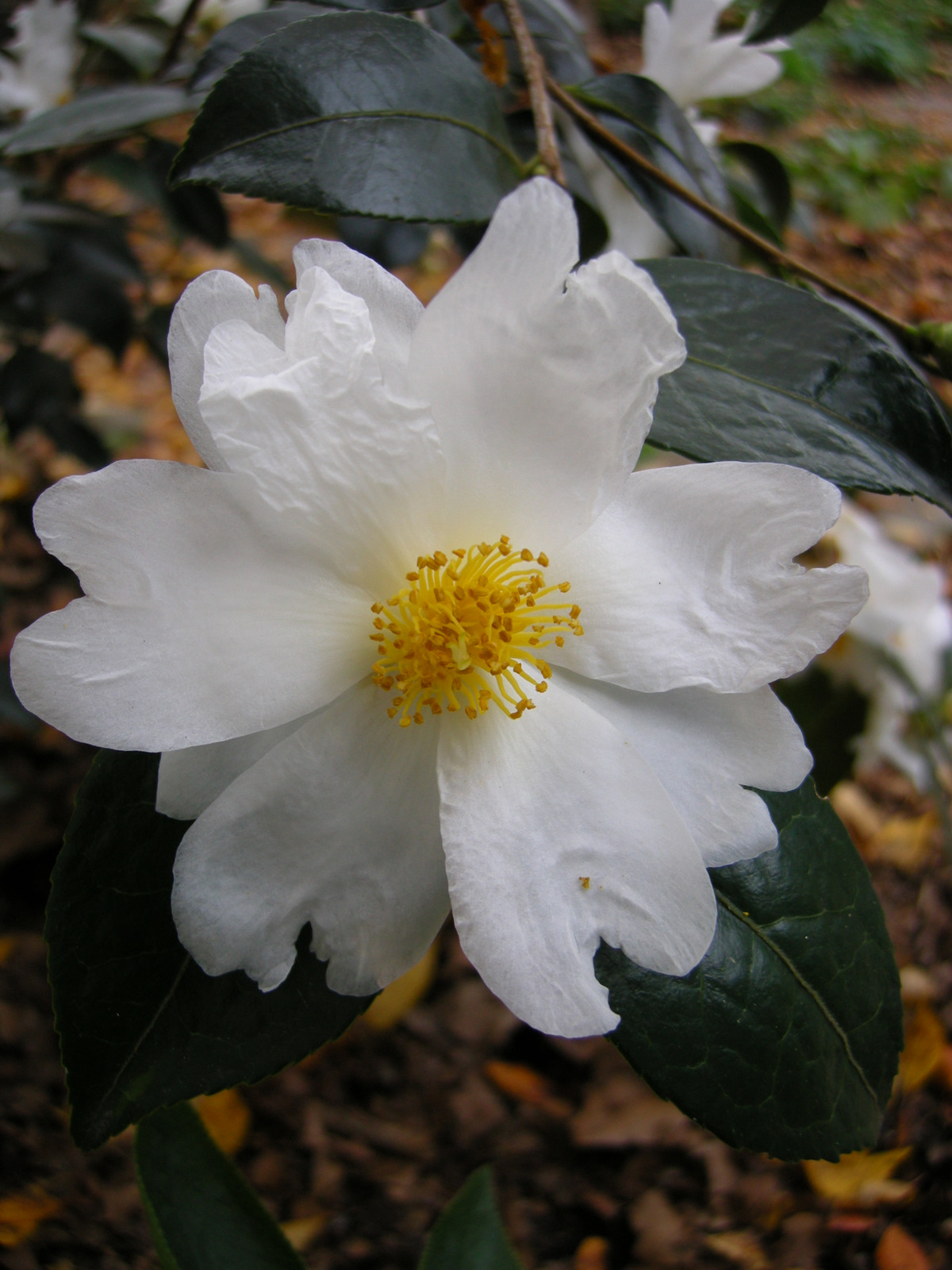
My fall-blooming camellias are a mainstay of my garden right now.  The first three pictured below are Ackerman hybrids, which I profiled in Fall-Blooming Camellias Part 1:

This is the last flower on Camellia x ‘Winter’s Darling’.

Camellia x ‘Elaine Lee’ still has a few buds left .

Camellia x ‘Winter’s Joy’ has been flowering since October and is still covered with buds.

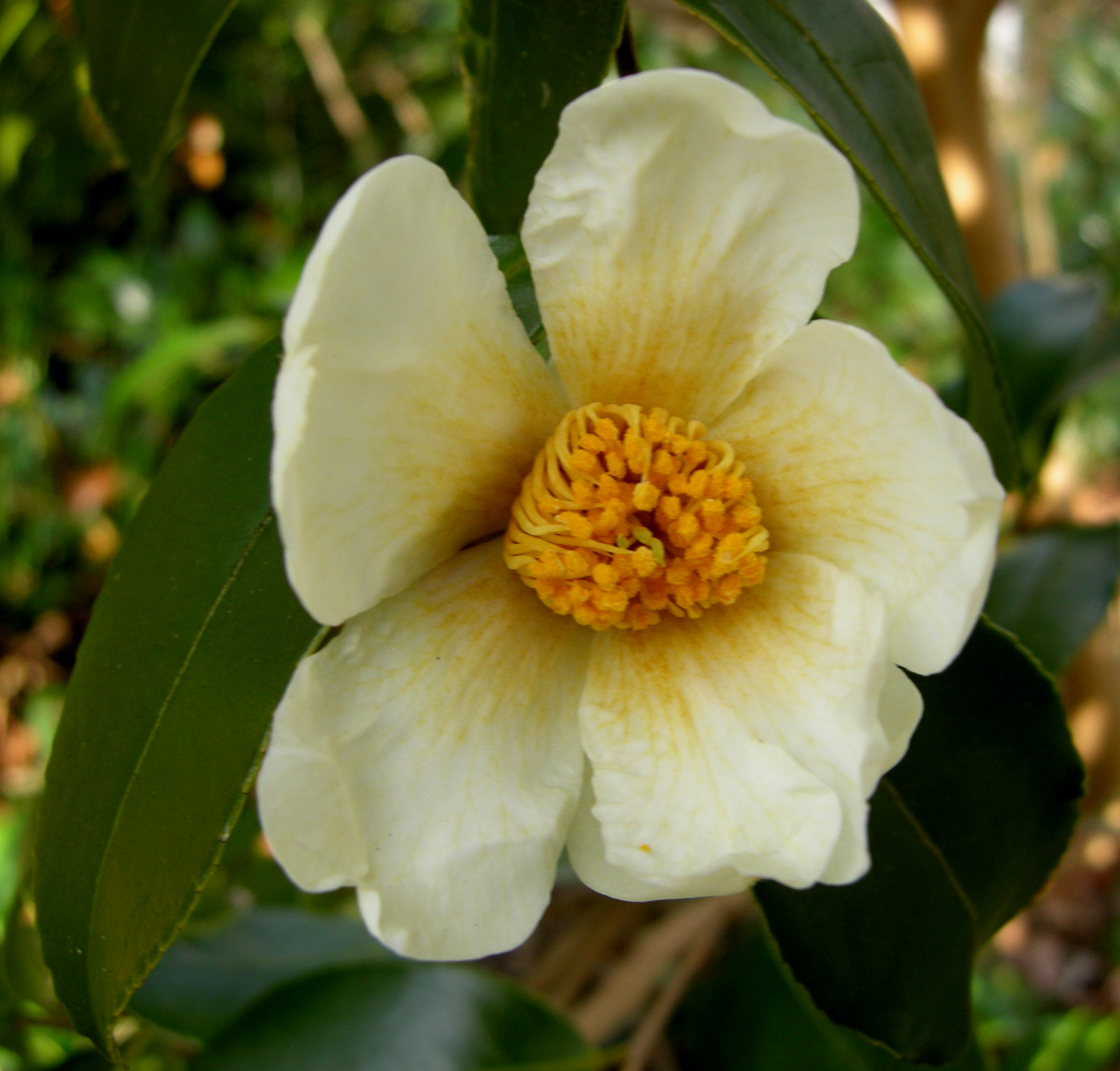
Fall-blooming Camellia oleifera is no longer covered with flowers but still continues to produce blooms when the weather warms up.

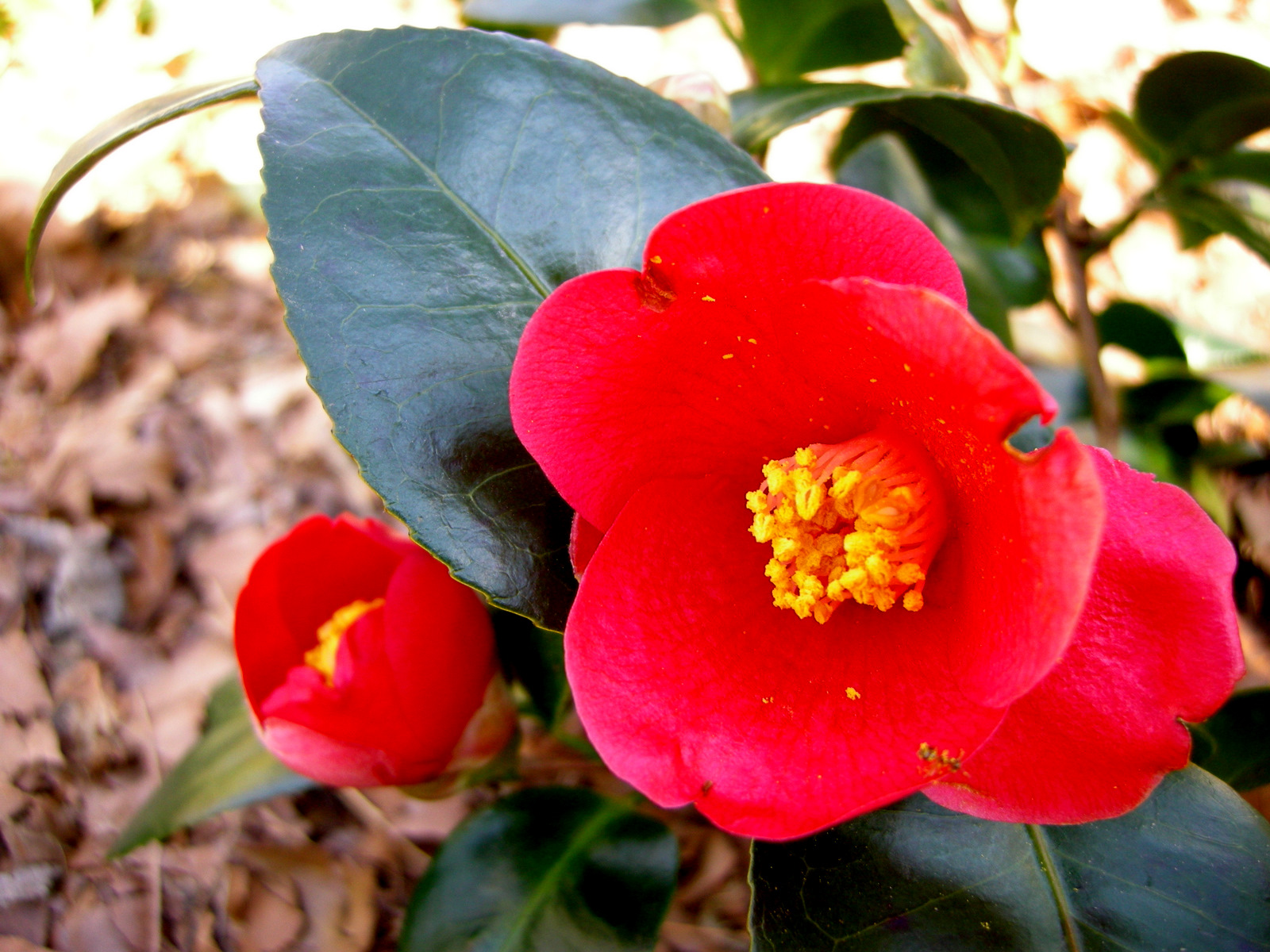
I was very lucky to receive as a gift this fully hardy, red-flowered Camellia japonica from Korea.  It has not yet been introduced for sale.  For more information on and photos of camellias, including this one, click here and here.

If you are just in it for flowers, then you can stop here because the last few plants rely on leaves to make their contribution.  However, foliage is very important for filling out the late fall garden, and I wanted to give you a few ideas:

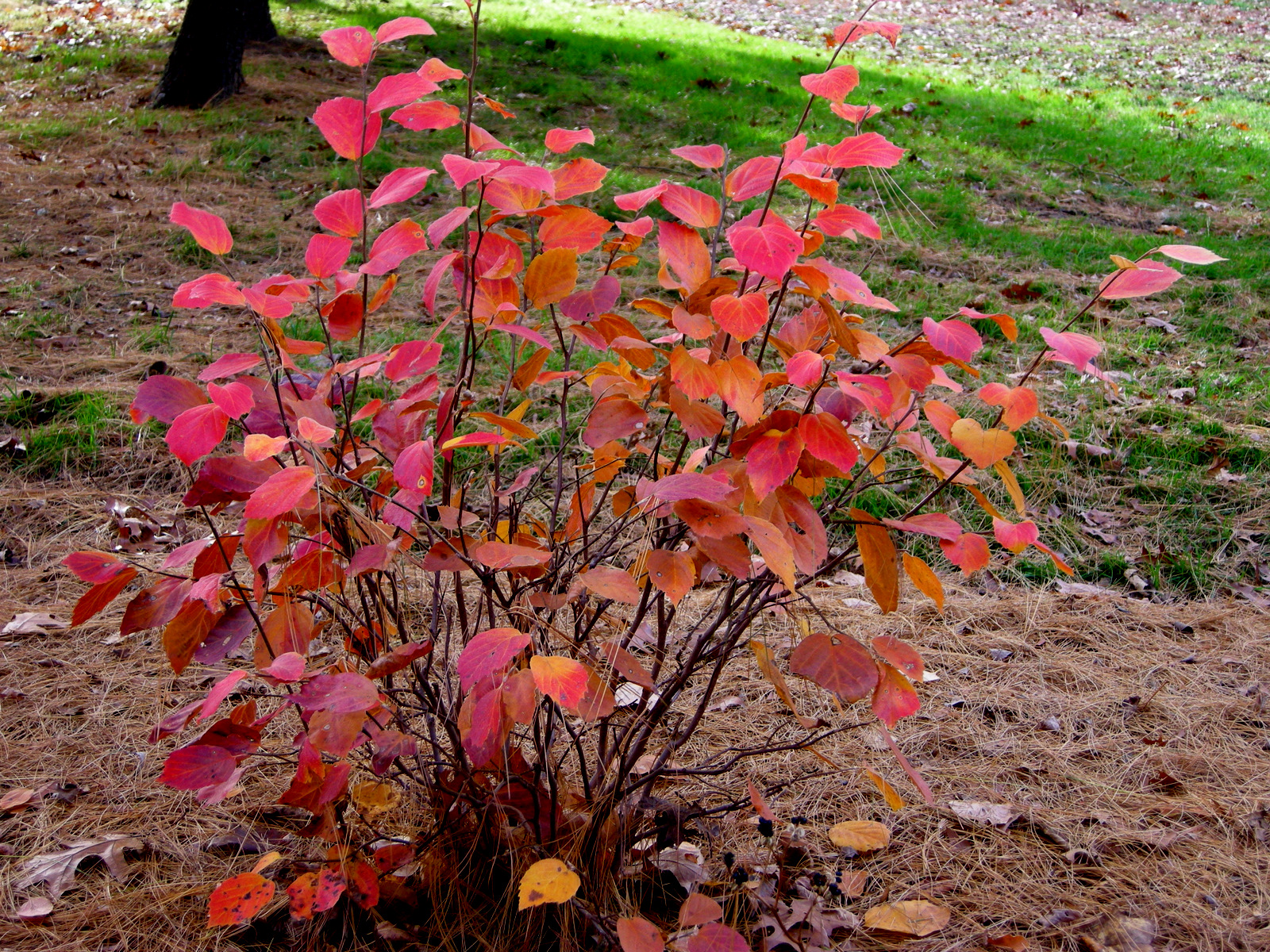
Although they have dropped now, dwarf fothergilla, F. gardenii, holds its gorgeous fall leaves way beyond November 15.  For more information on this outstanding native shrub, click here.

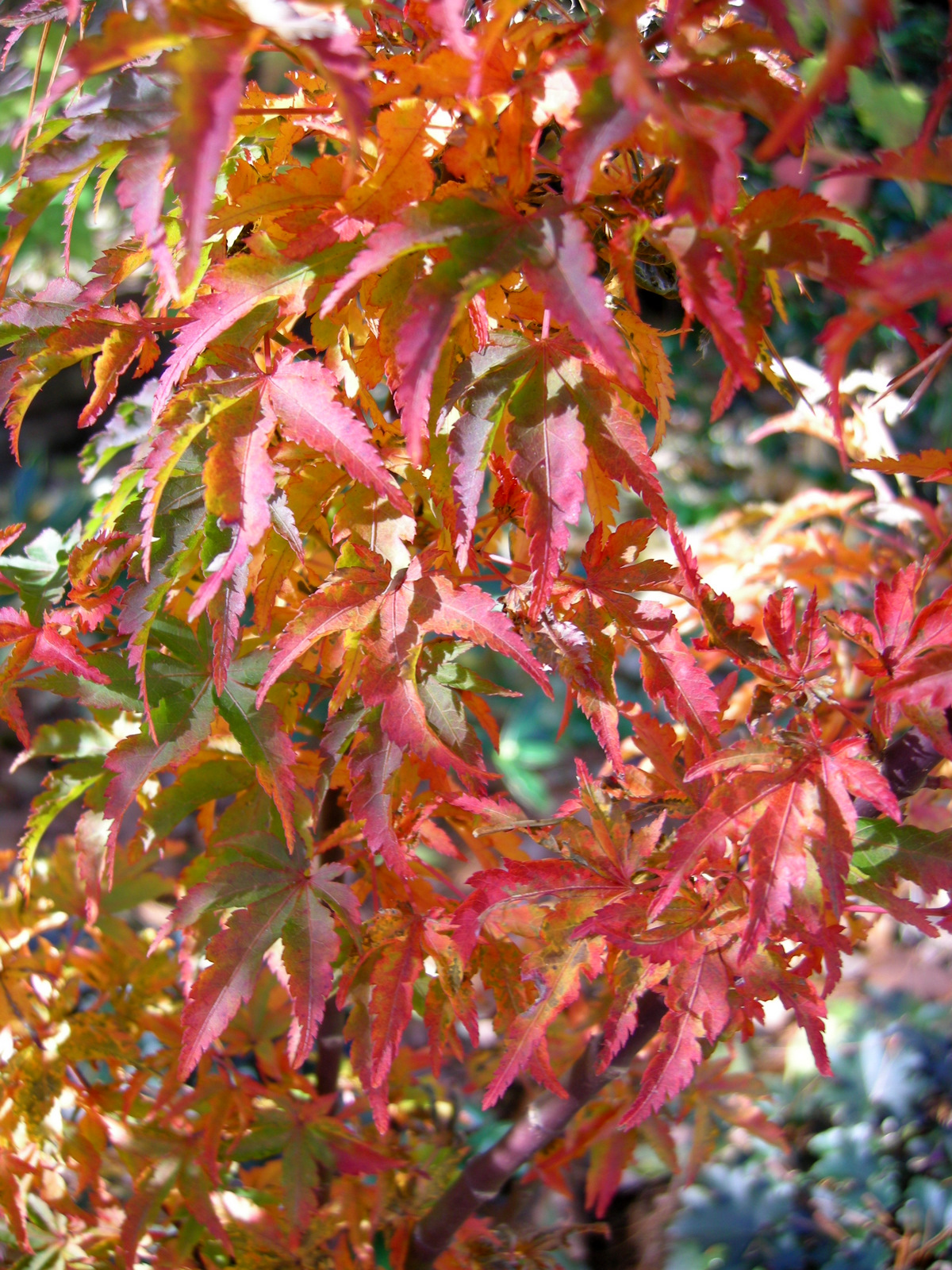
Another woody with late fall color is ‘Shishigashira’ Japanese maple, Acer palmatum ‘Shishigashira’.

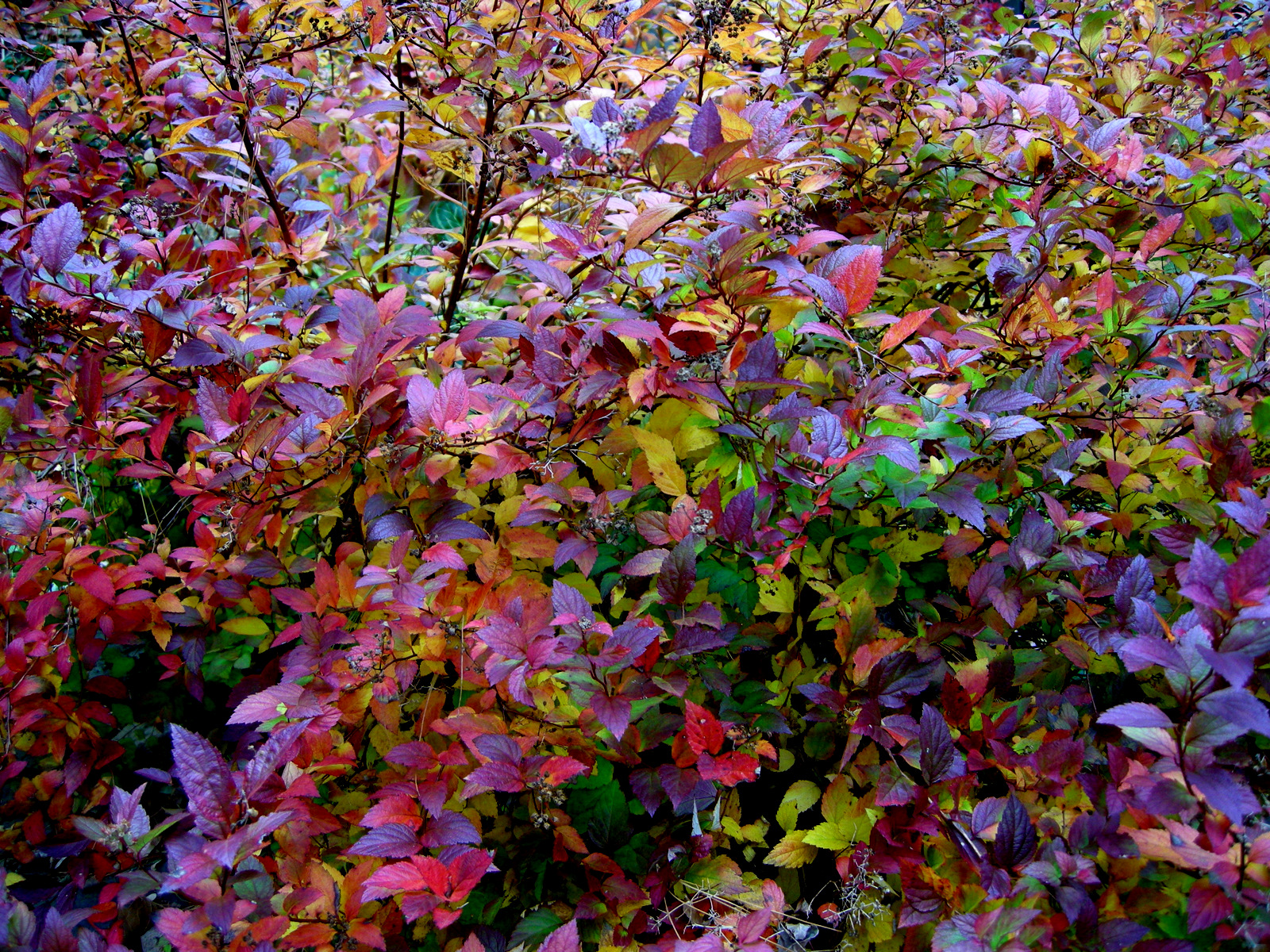
‘Magic Carpet’ spiraea, S. japonica ‘Magic Carpet’, is still displaying some of its gorgeous fall color right now.

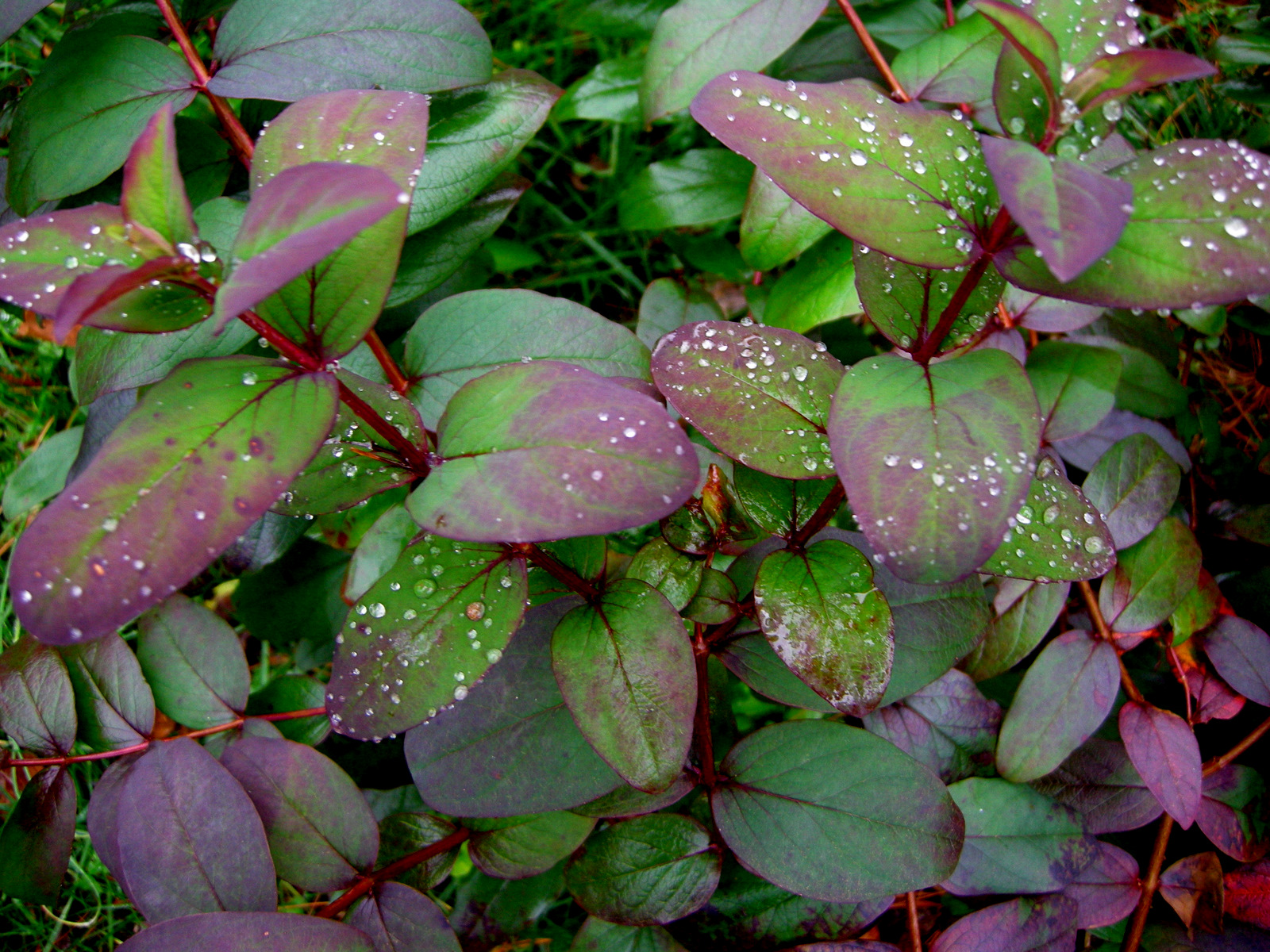
‘Albury Purple’ St. John’s wort, Hypericum androsaemum ‘Albury Purple’, remains fully clothed in plum-colored foliage.

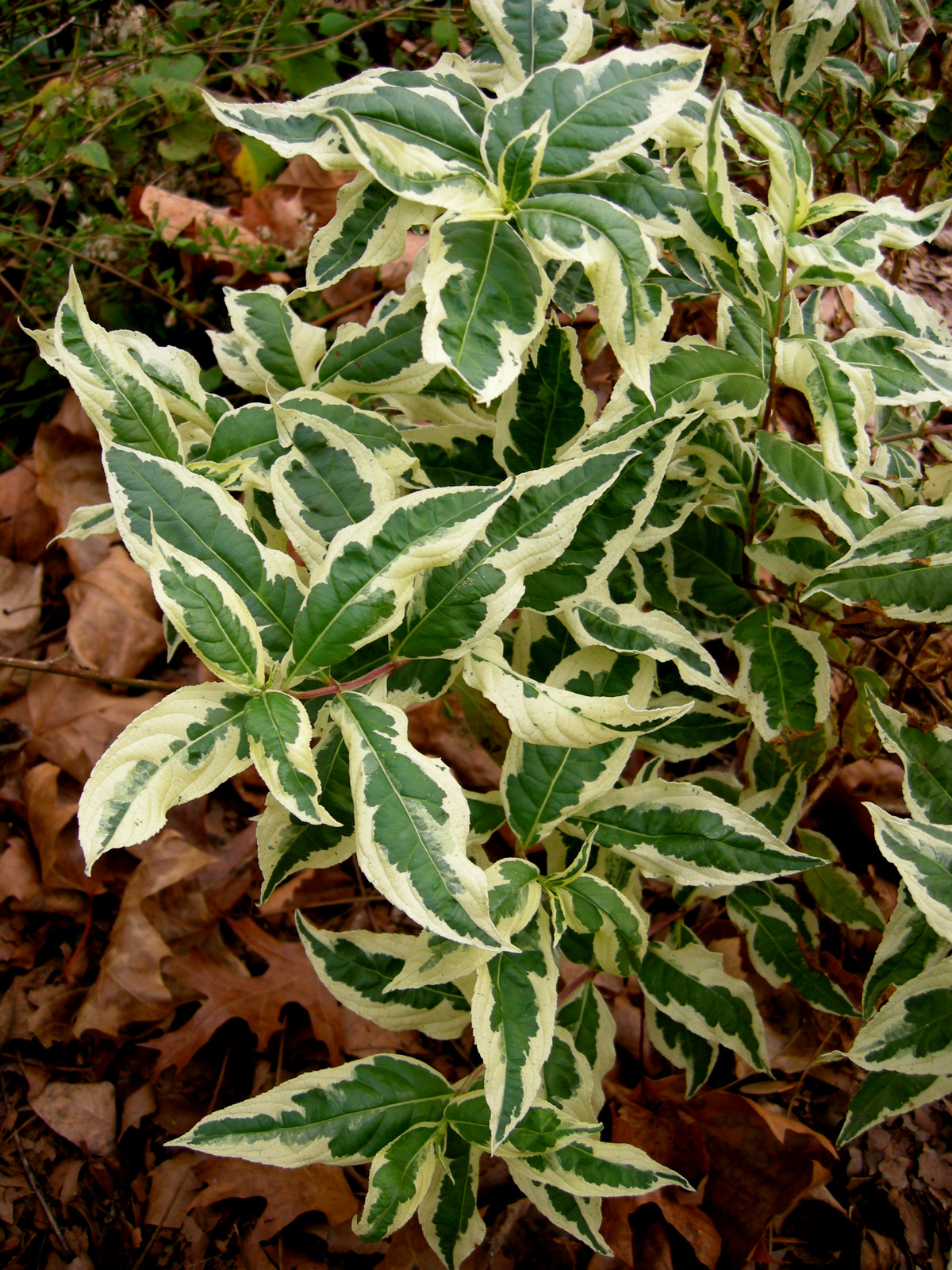
This is the first year that I have grown ‘Cool Splash’ southern bush honeysuckle, Lonicera sessifolia ‘Cool Splash’, but I am amazed to find that it looks like this right now.  For more information on this great native shrub, click here.

I have over 20 kinds of pulmonaria or lungwort in my garden providing me with beautiful flowers from February to April, but I appreciate them almost as much for their pristine foliage through early winter.

‘Diana Clare’ lungwort, Pulmonaria ‘Diana Clare’

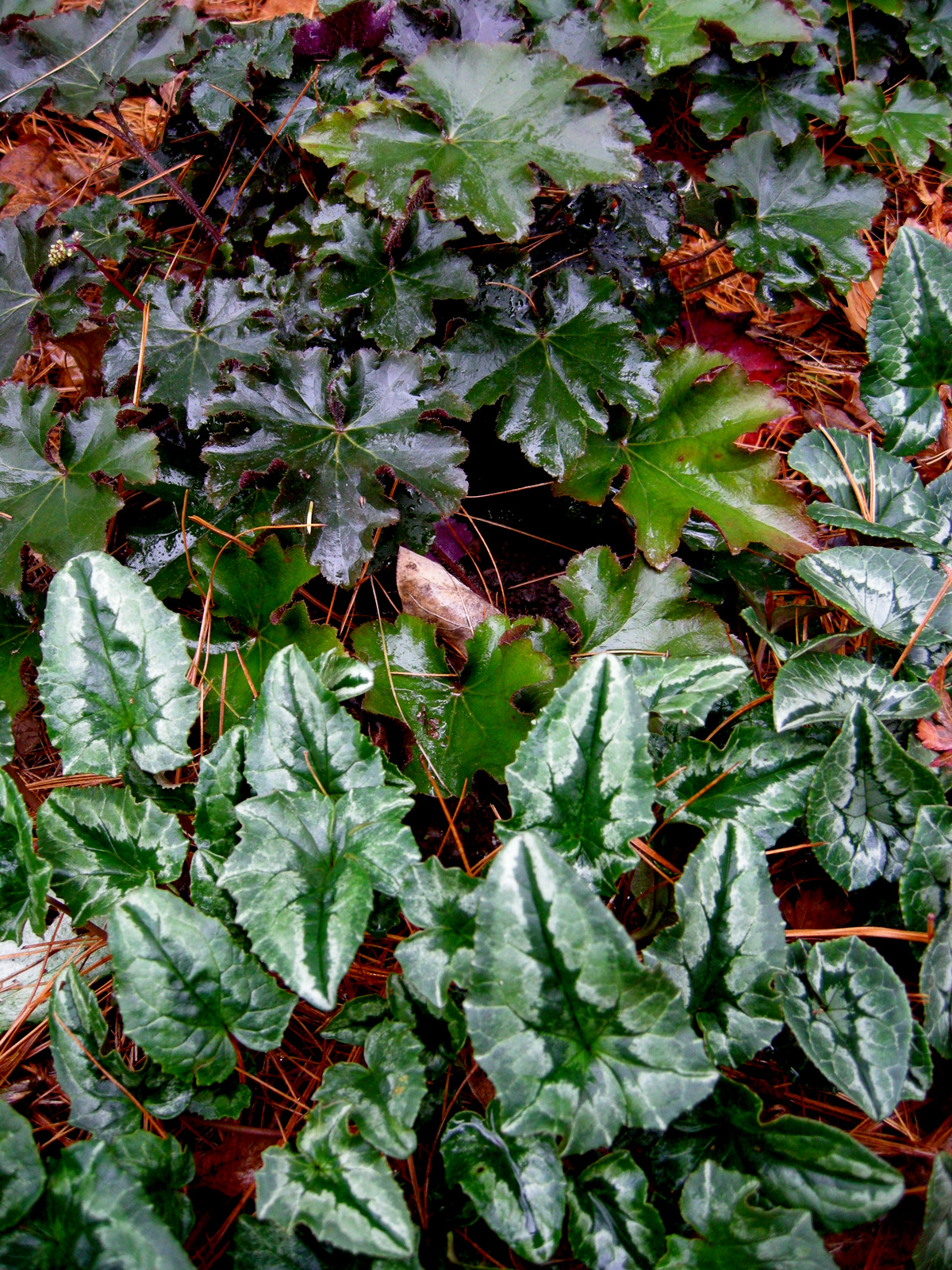
Both native ‘Bronze Wave’ coralbells, Heuchera villosa ‘Bronze Wave’, and fall-blooming hardy cyclamen, C. herifolium, will look like this all winter.

My post, More Flowering Wintergreen Ground Covers of Shade, included several photos of Italian arum cultivars, which are great winter interest plants.  I won’t repeat those plants here but show you a seedling that appeared among my arum.  The leaves are more pointy and narrow than the species and the markings go beyond veining to cover the leaf.

Enjoy the last few days of fall,  Carolyn

Notes: Every word that appears in orange on my blog is a link that you can click for more information.  If you want to return to my blog’s homepage to access the sidebar information (catalogues, previous articles, etc.) or to subscribe to my blog, just click here.

Carolyn’s Shade Gardens 2012 Calendar

Posted in calendar with tags , , on December 4, 2011 by Carolyn @ Carolyns Shade Gardens

Carolyn’s Shade Gardens is a retail nursery located in Bryn Mawr, PA, specializing in showy, colorful, and unusual plants for shade.  The only plants that we ship are snowdrops within the US.  For catalogues and announcements of local events, please send your full name, mailing address, and cell number to carolyn@carolynsshadegardens.com and indicate whether you are interested in snowdrops, hellebores, and/or hostas.  Click here to get to the home page of our website for catalogues and information about our nursery and to subscribe to our blog.

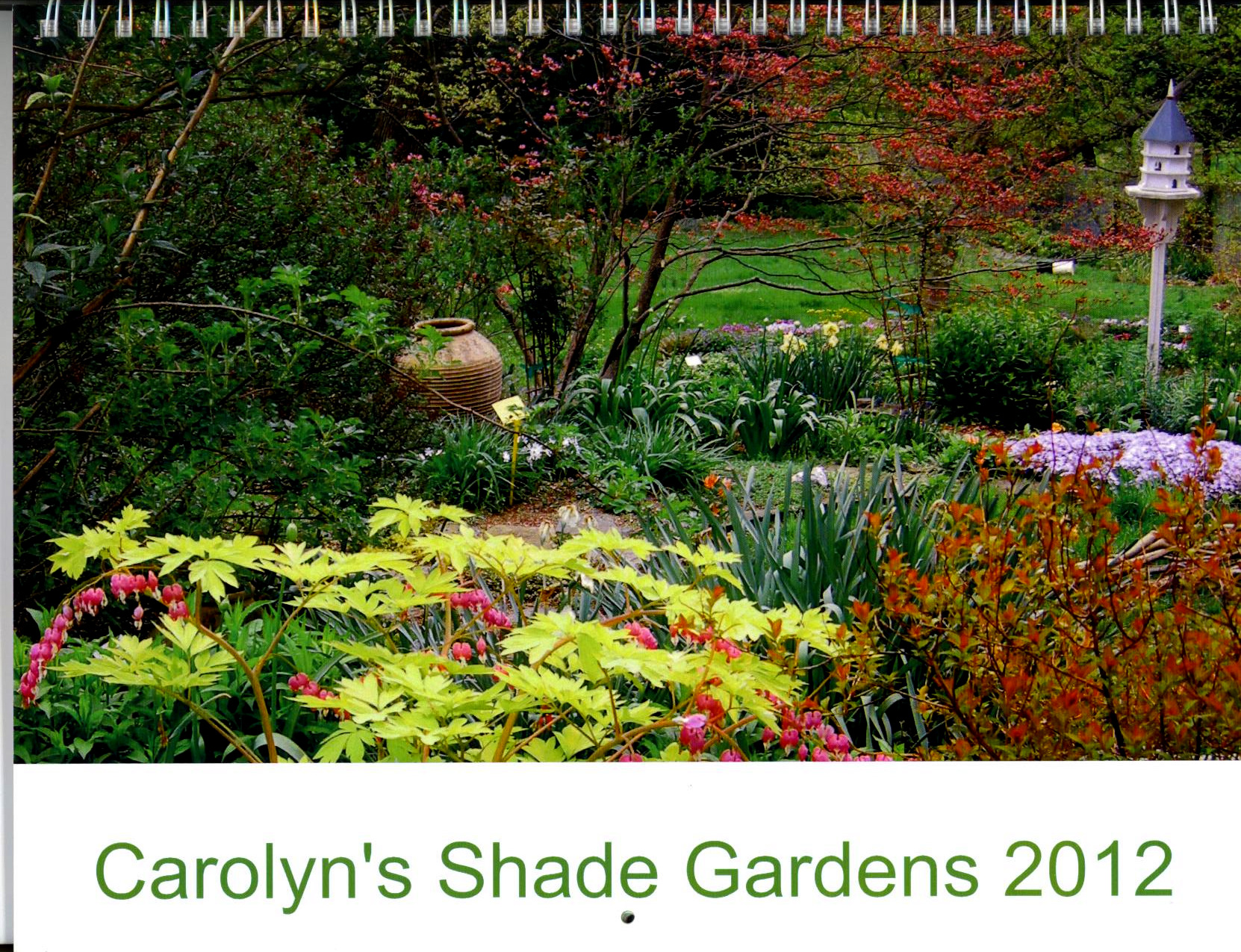
Calendar Cover

Carolyn’s Shade Gardens 2012 Calendar $21.95

11” x 17”, ships in 3 to 5 business days, available worldwide

To read reviews and to order, click here.
20% off through 2/5/12 with code SHADOWHOG

Just in time for the holidays, I have created the first ever Carolyn’s Shade Gardens Calendar.  Using all my own photographs, each month is illustrated with a single photo or a collage that is seasonally appropriate.  All your favorites are there: snowdrops, hellebores, primroses, hostas, native plants, and much more.  Many of the photos have appeared on my blog and received numerous compliments.  Now they are gathered together in a beautifully printed calendar. 

February

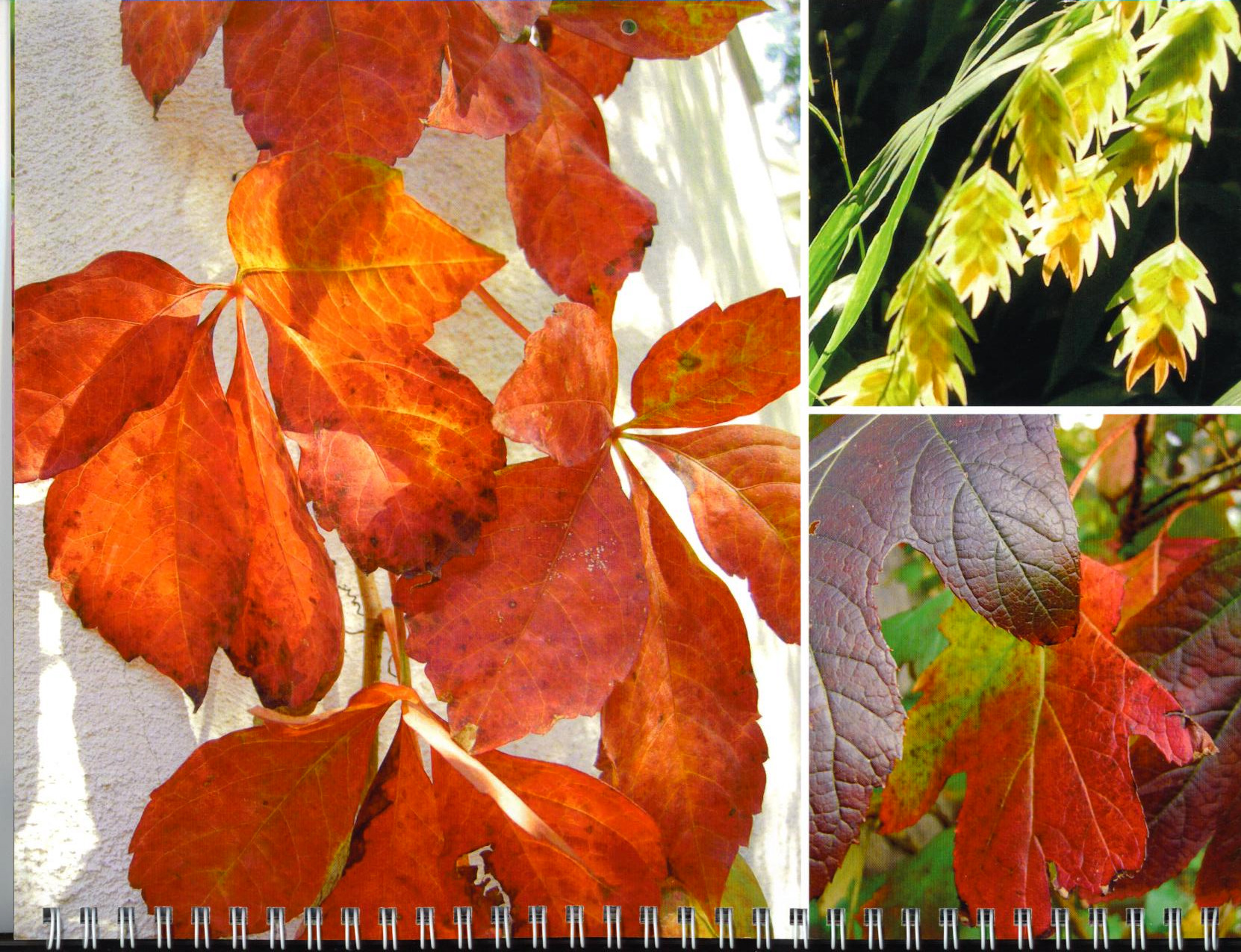
Having seen self-published calendars before, I was stunned by the excellent quality of the printing.  The printer uses high quality, heavy stock, semi-gloss paper.  The photos are so clear that they look better in print than on my computer.  I scanned the cover and the February and October collages for this post to give you an idea of what to expect, but I don’t want to ruin the surprise of turning each page.  I am forever indebted to Clare at Curbstone Valley Farm for recommending the publisher and helping me through the process.

October

I hope you will want to order the calendar for yourself, but it would also make a great holiday gift for friends and family, hostess present, or gift for that someone who has everything.  Please send a link to this post to anyone who might be interested in an easy holiday present.  Let me know what you think of the calendar when you receive it or better yet write a review on the calendar site.  Your feedback is always important to me.

This is a print-to-order calendar so you must place your order directly with the publisher by clicking here.

For aesthetic reasons, I didn’t put captions in, but here is a list for everyone who has asked for them:

Cover: Carolyn’s Shade Gardens main terrace
January: snowdrops ‘Potter’s Prelude’ (Galanthus elwesii var. monstictus ‘Potter’s Prelude’)
February: un-named hybrid hellebores (Helleborus x hybridus)
March: checkered-lily (Fritillaria meleagris); white checkered lily (F. m. ‘Alba’); fumewort (Corydalis solida)
April: glory-of-the-snow (Chionodoxa forbesii) with ‘Caramel’ coralbells (Heuchera x villosa ‘Carmel’) left; ‘Little Princess’ tulip with white stonecrop (Sedum album) right
May: cinnamon fern (Osmunda cinnamomea) left; Virginia bluebells (Mertensia virginica) and Celandine poppy (Stylophorum diphyllum) right
June: primrose ‘Cherry Pinwheels’ (Primula x polyantha ‘Cherry Pinwheels’)
July: ‘Teeny-weeny Bikini’ hosta left, ‘Holy Mouse Ears’ hosta top, Hosta tokudama species bottom
August: stone chair at Chanticleer with climbing hydrangea (H. anomala subsp. petiolaris)
September: ‘Early Amethyst’ beautyberry (Callicarpa dichotoma ‘Early Amethyst)
October: Virginia creeper (Parthenocissus quenquefolia) left, northern sea oats (Chasmanthium latifolium) top, oakleaf hydrangea (H. quercifolia) bottom
November: ‘Blue Angel’ hosta with fall-blooming hardy cyclamen (C. hederifolium)
December: tea viburnum (V. setigerum) bottom, my gargoyle mascot left, Carolyn’s Shade Gardens carriage house top

Thanks, Carolyn

Notes: Every word that appears in orange on my blog is a link that you can click for more information.  If you want to return to my blog’s homepage to access the sidebar information (catalogues, previous articles, etc.) or to subscribe to my blog, just click here.