Archive for April, 2012

I LOVE Mice

Posted in container gardening, containers for shade, hosta, miniature hosta, Shade Gardening, Shade Perennials with tags , , , , , , , , , on April 25, 2012 by Carolyn @ Carolyns Shade Gardens

Carolyn’s Shade Gardens is a retail nursery located in Bryn Mawr, PA, specializing in showy, colorful, and unusual plants for shade.  The only plants that we ship are snowdrops and miniature hostas.  For catalogues and announcements of events, please send your full name, location, and phone number (for back up use only) to carolyn@carolynsshadegardens.com.  Click here to get to the home page of our website for catalogues and information about our nursery and to subscribe to our blog.

.

'Holy Mouse Ears'It is very hard for me to pick a favorite mouse ears hosta, but I think ‘Holy Mouse Ears’ is it.  The colors in the leaves are magical.

My post Miniature (& Small) Hostas is the most popular article I have ever written for my blog.  In that post, I described how, when I discovered miniature hostas, I reached a new level of hosta addiction.  I try not to purchase (five of) every new miniature hosta I can get my hands on, but it’s a struggle.  Luckily my nursery allows me to mask this addiction as “business development”.  Now I specialize in miniature hostas, and mail order them all over the US.


Hosta ‘Blue Mouse Ears’ is the parent of all the miniature hostas in the mouse ears clan.  It is so special that in 2008, the American Hosta Growers Association named it the Hosta of the Year.

The miniature hosta that really took me over the edge was ‘Blue Mouse Ears’.  It was definitely love at first sight.  I fell for the very blue, very round, very rubbery leaves and the perfectly symmetrical habit.  When ‘Blue Mouse Ears’ emerges from the ground, it is in a cluster so tight it looks like a rose.  It reaches about 6″ in height and scoffs at the idea of slugs as do all the mouse ears hostas.  Most days I stop on my garden ramble to touch its thick leaves.  To me they feel like mouse ears, not that I have ever felt one.

‘Blue Mouse Ears’ emerging in the spring.


‘Blue Mouse Ears’ is a descendant of ‘Blue Cadet’, which is a beautiful small blue hosta with very clean leaves and an elegant habit.  Boy was I in trouble though, because ‘Blue Mouse Ears’ was only the beginning.    As is the nature of hostas, ‘Blue Mouse Ears’ has given rise to a whole family of little mice.  All of them are between 5 and 8″ tall and form a clump about 12″ wide.  Technically, some of them get slightly larger than what the “authorities” consider mini.  Their unique characteristics are their very round rubbery leaves and their symmetrical habits.  However, I may be prejudiced by my love of mice, but I think these little gems have some of the best leaf colors of any hostas on the market.

‘Mouse Trap’ is one of the newer mice to hit the market.  Its bright white leaves with a blue-green border are striking.

Naturally I had to have all the mouse ears hostas in my collection, and my quest began.  I now have seven mice and have located a source for two more, ‘Royal Mouse Ears’ and ‘Calico Mouse Ears’, which I will be ordering shortly.  While researching this post, I found a Rutgers University site with the hysterical name of Hosta Garden Mouse Index.  The photos are not very good, but it seems to list all the mouse ears hostas available.  Apparently my quest will last a while longer.

Photos of three of my mice appear above, and here are the remaining four:

I think ‘Mighty Mouse’ has the cutest name in the mouse ears series.


This early spring photo of ‘Frosted Mouse Ears’ does not do it justice.  It matures to a dark green leaf with a wide white margin.


‘Green Mouse Ears’ is the smallest in the family with very shiny, thick bright green leaves.  Don’t you want to touch it?


‘Mouse Tracks’ is my latest acquisition, and I love its tie dye swirls of yellow, green, and blue.  It is a child of ‘Mighty Mouse’ and very rare.

I haven’t mentioned one of the wonderful features of the mouse ears hostas, their flowers.  Instead of having the long, dangly, out-of-proportion flowers that are produced by some miniatures, the mice have short, fat flowers in proportion to their size as illustrated by the photo below.  I grow them for their flowers too, which is something I can’t say about most hostas.

.

‘Holy Mouse Ears’ in bloom

Of course my mice deserved a special place in the garden where touring customers could view them up close and admire their cuteness (is that a word?).  What better place than the trough that my husband gave me for our anniversary.  My mice nest happily there:

‘Green Mouse Ears’ upper left, ‘Blue Mouse Ears’ middle, ‘Mighty Mouse’ middle right, ‘Mouse Trap’ lower left, ‘Frosted Mouse Ears’ lower right.  The companion plants are dwarf Solomon’s seal and miniature lady fern.


The whole mouse ears family.

It is easy to add mice to your garden, and they will bring a smile to your face for the whole season.

Carolyn’s Shade Gardens specializes in miniature hostas.  I have 25 varieties available at my nursery right now.  I am thinking of starting a mail order business for miniatures.  If you would like to mail order some this year and help me test out my plan, click here (US only).

Carolyn

Nursery Happenings:  If you are interested in receiving miniature hostas mail order, click here.

If you are within visiting distance and would like to receive catalogues and information about customer events, please send your full name and phone number to carolynsshadegardens@verizon.net.  Subscribing to my blog does not sign you up to receive this information.

Facebook:  Carolyn’s Shade Gardens has a Facebook page where I post single photos, garden tips, and other information that doesn’t fit into a blog post.  You can look at my Facebook page here or click the Like button on my right sidebar here.

Notes: Every word that appears in orange on my blog is a link that you can click for more information.  If you want to return to my blog’s homepage to access the sidebar information (catalogues, previous articles, etc.) or to subscribe to my blog, just click here.

Specimen Natives for Your Woodland

Posted in bulbs for shade, green gardening, groundcover, landscape design, native plants, Shade Perennials with tags , , , , , , , , , , , , , , , , , , , , , , , , , , , , , , , on April 18, 2012 by Carolyn @ Carolyns Shade Gardens

Carolyn’s Shade Gardens is a retail nursery located in Bryn Mawr, PA, specializing in showy, colorful, and unusual plants for shade.  The only plants that we ship are snowdrops and miniature hostas.  For catalogues and announcements of events, please send your full name, location, and phone number (for back up use only) to carolyn@carolynsshadegardens.com.  Click here to get to the home page of our website for catalogues and information about our nursery and to subscribe to our blog.

Who says our native mayapple, Podophyllum peltatum, is not as ornamental as the Asian versions?

This is the last in a three-part series of posts dealing with native plants for mid-Atlantic U.S. gardens.  In the first, Your Native Woodland, I explained how easy it is to create your own native woodland garden by choosing plants that spread aggressively.  In the second, Native Phlox for Your Garden, I profiled some of the wonderful members of the genus Phlox, all native to eastern North America and Pennsylvania in particular.  Here I am going to suggest some superstar native plants to place between the spreaders recommended in the first post.


Double bloodroot, Sanguinaria canadensis ‘Multiplex’, just might be my all time favorite flower, and it thrives in my woodland.

Let’s face it: none of us avid gardeners (and collectors) are going to be happy limiting ourselves to the seven spreading  plants that I recommended in my previous post for colonizing a woodland.  Although the gardening books seem to think we have moist, loamy soil in our woods, we don’t (where do these people garden anyway?).  So what other plants can stand up to the root-filled, dry, rocky, clay soil prevalent in the woods of the mid-Atlantic?  You will be happy to know there are many, and the plants shown below just scratch the surface.  I have personally tested each one, and killed many others, so I know they work.

White trillium, T. grandiflorum, is one of the many native trilliums that thrive in my woodland.


Sweet Betsy, Trillium cuneatum, also does well as do prairie trillium, T. recurvatum, and yellow trillium, T. luteum.  Although I usually do not water my woodland, I find that trilliums benefit from watering in drought conditions.


Dogtooth violet, Erythronium ‘Pagoda’, is a hybrid of two North American species.  ‘Pagoda’ seeds around my woodland, and this is one of its seedlings.


The single-flowered bloodroot, Sanguinaria canadensis, is quite lovely too.  Both it and ‘Multiplex’, pictured above, have spread into large patches.


Large-flowered bellwort, Uvularia grandiflora, has very unusual yellow flowers.  Shown here with British Columbia wild-ginger, Asarum caudatum, native to the U.S. west coast.


My woodland wouldn’t be complete without mayapples with their beautifully patterned, umbrella-like leaves, incredibly fragrant flowers, and “apples” in May.  However, they do spread quite quickly and are better used as one of the colonizing plants in my first post—give them room.


Every woodland needs lots of ferns!  Pictured here is cinnamon fern, Osmunda cinnamomea, but I also have Christmas, royal, and ostrich ferns in my woods, among others.  In the flood plain down by my creek, ostrich fern has successfully out competed my nemesis, the incredibly invasive, non-native Japanese knotweed.  In drier woods, ostrich fern’s spreading tendencies are kept in check.


Yellow violet, Viola pubescens, spreads almost as well in my woods as the white violet recommended in my woodland post, and you can’t beat the crayon yellow flowers.


Dutchman’s breeches, Dicentra cucullaria, never fails to bring out the child in me with its little pairs of pants swinging in the breeze.


Large camas, Camassis leichtlinii ‘Caerulea’, is native to western North America not the mid-Atlantic, but it does so well in my woodland that I have included it here.  The large clumps of tall blue flowers line the back of the beds.

Foamflower, Tiarella cordifolia, is a star of my woodland garden with its wonderful fragrance, interesting leaves, and red fall color.  There are many cultivars available, and I recommend choosing a spreading form: cultivars in the “River Series” are particularly vigorous.

One of the loveliest native flowers in my woods is rue-anemone, Anemonella thalictroides (photo used with the permission of Arrowhead Alpines).  It looks so dainty, but it is tough as nails and seeds around freely.

There are many forms of rue-anemone, but my favorite is this luminescent single pink.

You can’t go wrong when you add any of these wonderful native plants to your woodland.  They are ‘tried and true’ in mine!

Carolyn

Commenters have asked for photos showing ” sweeping vistas” of my woods.  It is impossible to take this kind of photo in my woodland and capture the effect of the masses of plants because of the trees.  My woods are filled with 10 to 12′ diameter trees—no panoramic views are possible.  The best I could do was go up on the roof and shoot down, but individual plants are not visible, and I am not happy with the result:

Nursery Happenings: The third annual Great Hosta Blowout where you can order beautiful hostas for a bargain basement price is going on now until April 25.  To see the catalogue, click here.  My third Open House Sale, featuring hostas, ferns, and hardy geraniums, will take place on Saturday, May 12, from 10 am to 3 pm

If you are within visiting distance and would like to receive catalogues and information about customer events, please send your full name and phone number to carolynsshadegardens@verizon.net.  Subscribing to my blog does not sign you up to receive this information.

Facebook:  Carolyn’s Shade Gardens has a Facebook page where I post single photos, garden tips, and other information that doesn’t fit into a blog post.  You can look at my Facebook page here or click the Like button on my right sidebar here.

Notes: Every word that appears in orange on my blog is a link that you can click for more information.  If you want to return to my blog’s homepage to access the sidebar information (catalogues, previous articles, etc.) or to subscribe to my blog, just click here.

April GBBD: Native Phlox for Your Garden

Posted in Garden Blogger's Bloom Day, green gardening, groundcover, landscape design, native plants, Shade Perennials with tags , , , , , , , , , , , , on April 10, 2012 by Carolyn @ Carolyns Shade Gardens

Carolyn’s Shade Gardens is a retail nursery located in Bryn Mawr, PA, specializing in showy, colorful, and unusual plants for shade.  The only plants that we ship are snowdrops and miniature hostas.  For catalogues and announcements of events, please send your full name, location, and phone number (for back up use only) to carolyn@carolynsshadegardens.com.  Click here to get to the home page of our website for catalogues and information about our nursery and to subscribe to our blog.

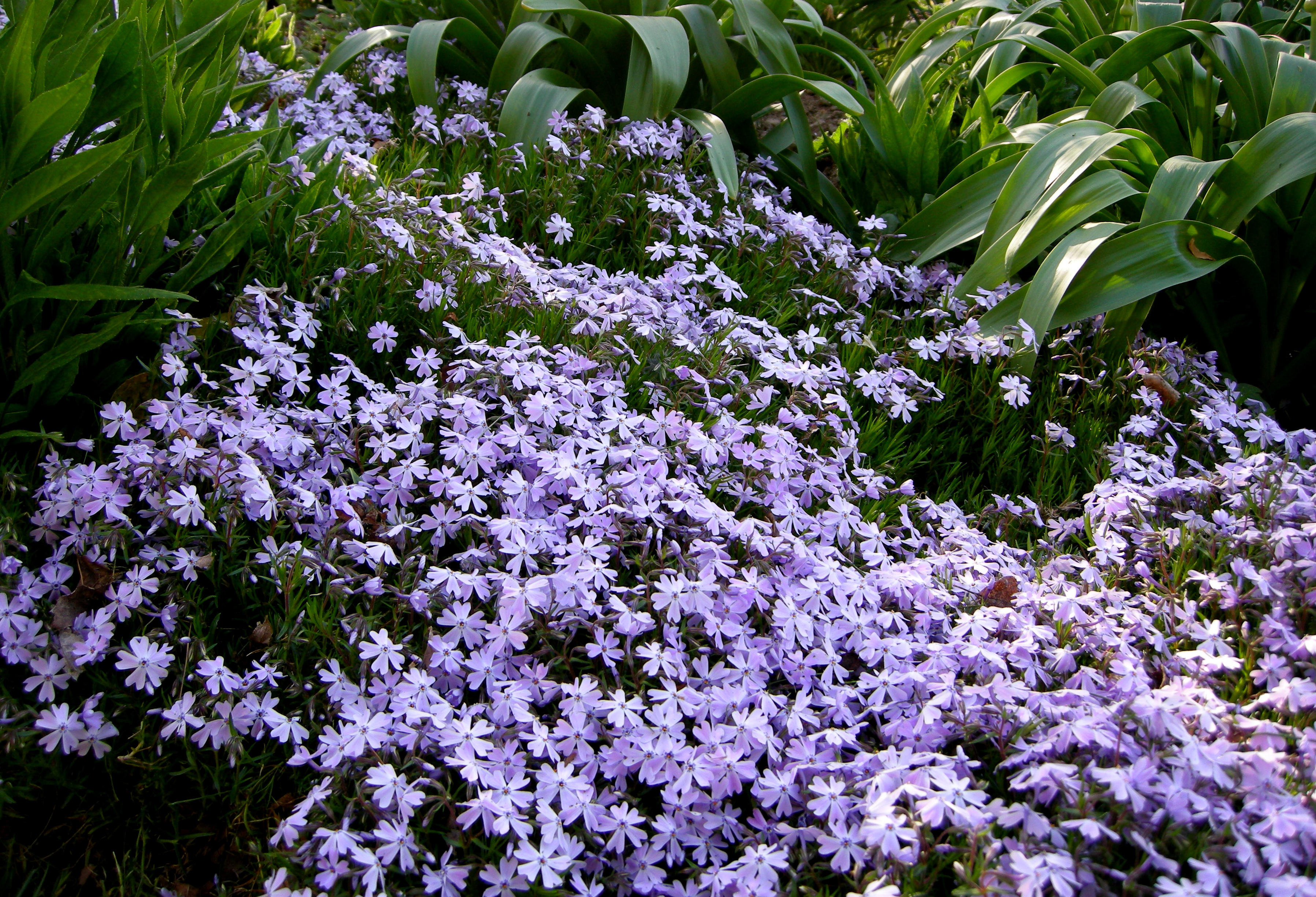
‘Emerald Blue’ moss phlox in my garden

In my last post, Your Native Woodland, I explained how to create your own native woodland garden.  Here I am going to profile some of the wonderful members of the genus Phlox, all native to eastern North America and Pennsylvania in particular.

All the plants except smooth and garden phlox are pictured blooming in my garden right now so I am linking to Garden Blogger’s Bloom Day (“GBBD”) hosted by May Dreams Gardens (link available on April 15) where gardeners from all over the world publish photos of what’s blooming in their gardens.

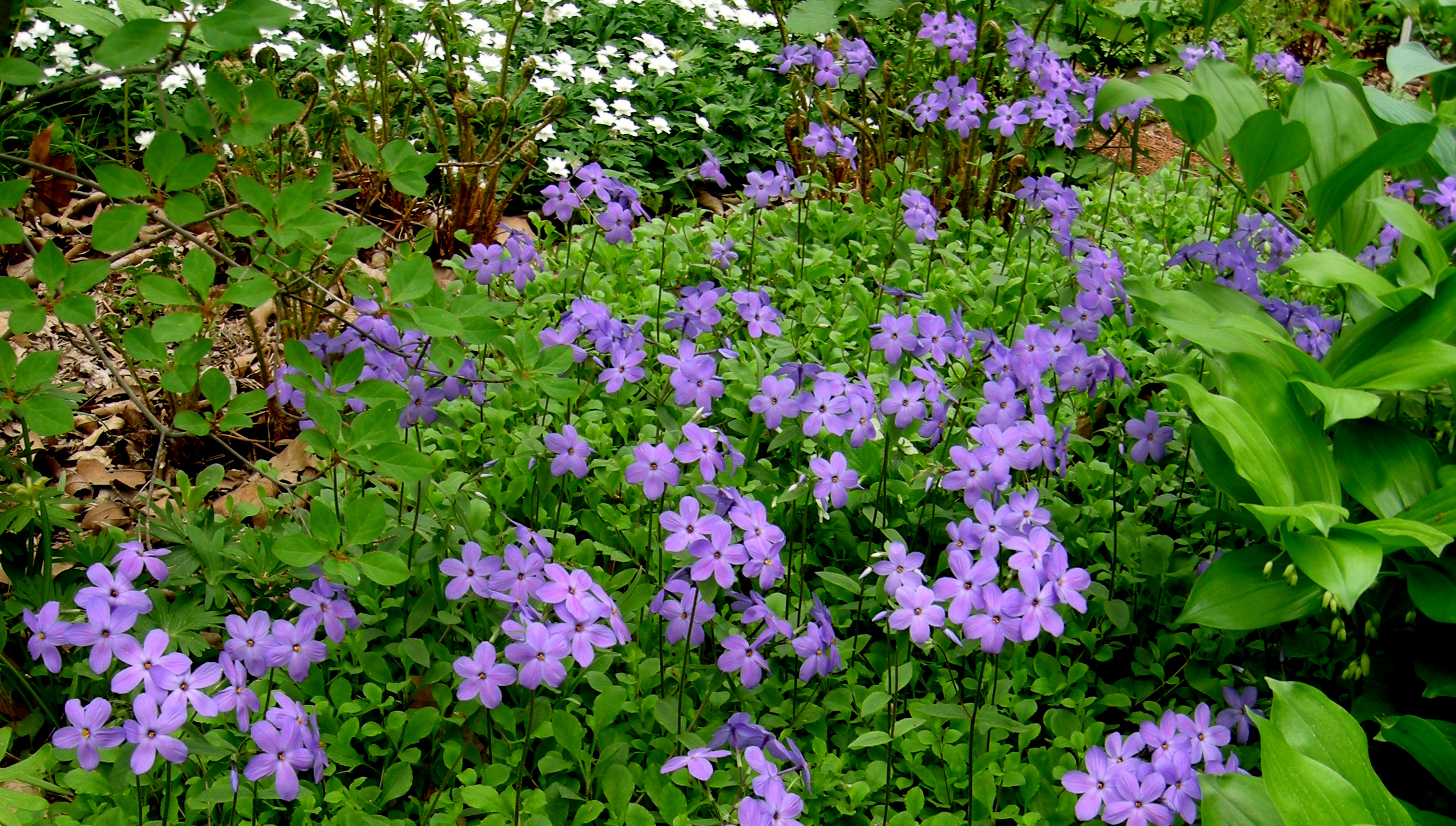
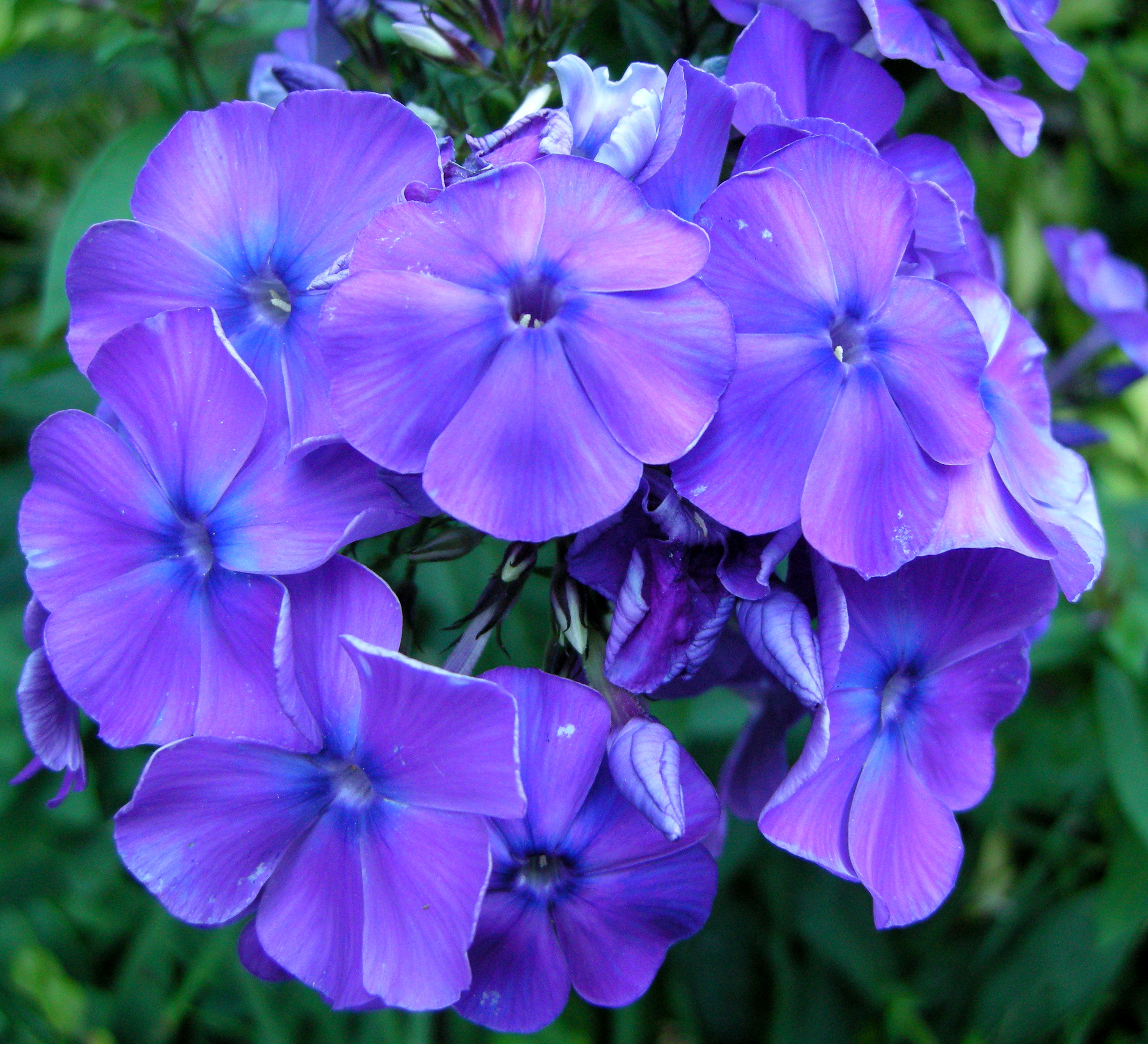
‘Sherwood Purple’ creeping phlox in my woodland

Phlox are very satisfying native plants to add to all areas of your garden.  They are easy to grow and spread rapidly but not aggressively.  All species that I am profiling are fragrant, some amazingly so, and attract butterflies and hummingbirds.  They are also disease-free except garden phlox, which gets powdery mildew.  And, most importantly, they have copious amounts of gorgeous flowers in purple, blue, pink, and white.  Did I mention that they are native to Pennsylvania and all of eastern North America?!?  What more could you want.

Wild sweet William ‘Blue Moon’, Phlox divaricata


Wild sweet William is the most fragrant of the phlox described here.  Its heavenly scent perfumes the whole garden when it is in bloom from April to June.  It is 8 to 10″ tall and spreading with semi-wintergreen leaves.  Although I have seen it growing in the wild in full shade, I have better success with it in sun to part shade.  Cut it back after flowering to maintain an attractive habit.  My favorite cultivars are ‘Blue Moon’ (photo above), ‘May Breeze’ with steely white flowers, and ‘Blue Elf’, a compact form.

‘Morris Berd’ smooth phlox, Phlox glabberima

Smooth phlox is a taller clump-forming plant, although the clumps expand rapidly when it is happy.  It is 18 to 24″ tall and grows in full sun to part shade in average to moist soil.  Flowers appear from late spring to early summer, a time when not much else is blooming.  The only smooth phlox I have ever seen for sale is ‘Morris Berd’ (photo above).  Its velvety pink flowers with silver highlights are breathtaking.


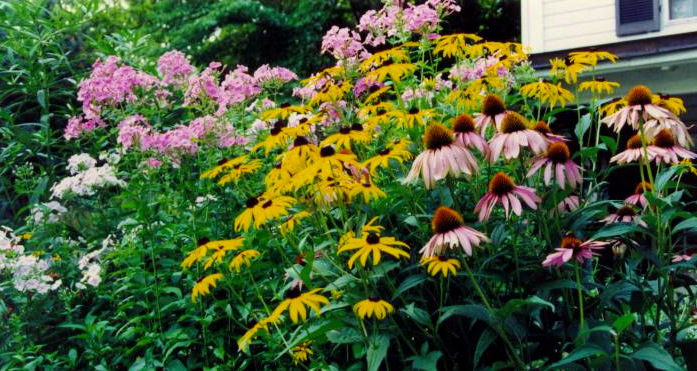
Garden phlox, P. paniculata, left with purple coneflower and ‘Goldsturm’ rudbeckia in my front border in 1993.

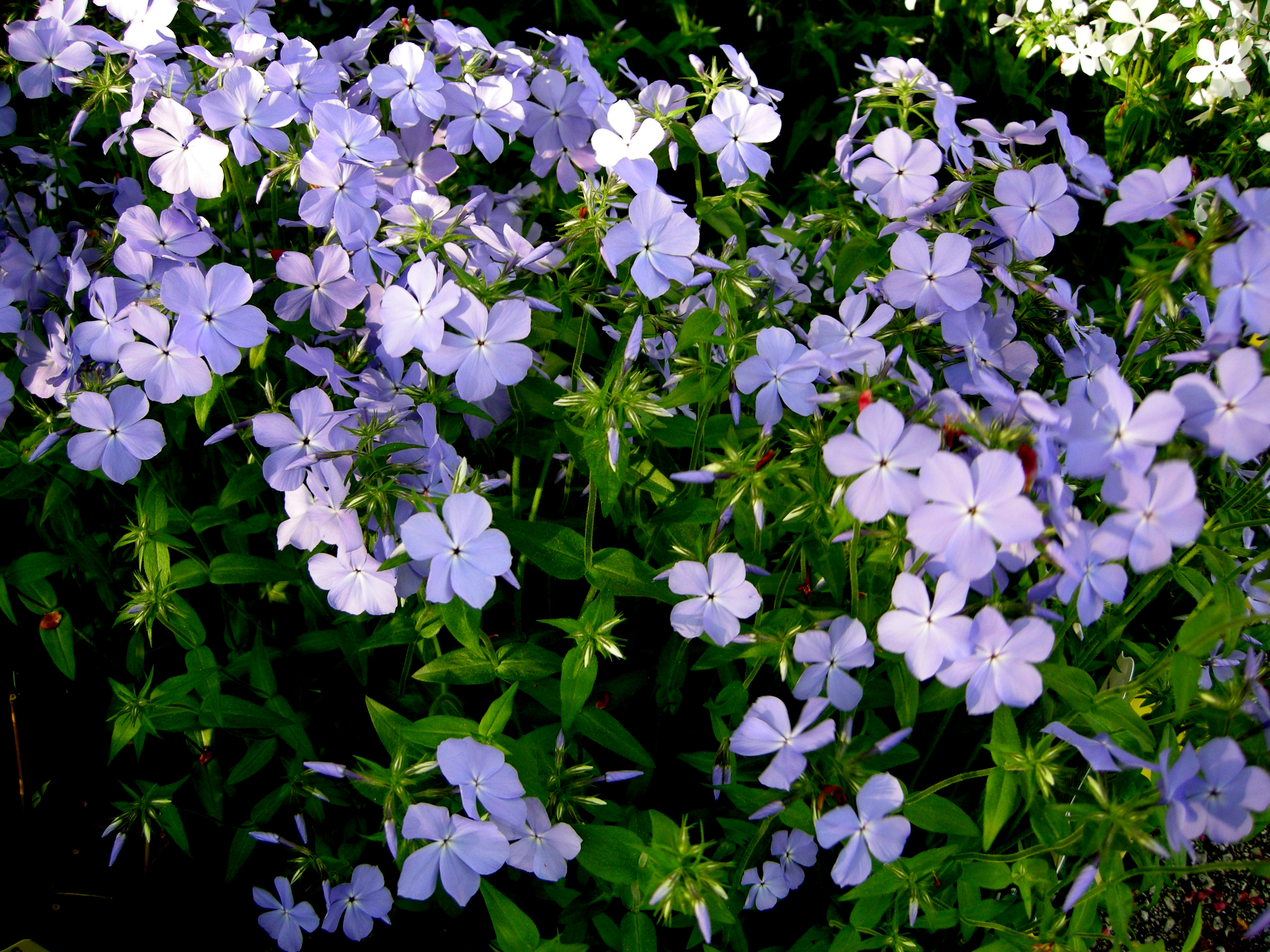
I dream of the day that I can plant a field of every cultivar of garden phlox on the market.  The fragrance of the flowers, second only to wild sweet William, the long bloom period, and the colors available make this a very desirable plant.  It grows anywhere in full sun to a good bit of shade (but not full shade).  It reaches 2 to 4′, and I have cultivars blooming from June to October.  My favorites are very early-blooming ‘Blue Paradise’ (photo below), compact ‘Pixie Miracle Grace’, pure white ‘David’, and ‘David’s Lavender’ with huge flower heads.  Unfortunately, I have failed to photograph these plants in past years, but I hope to remedy that this summer.

‘Blue Paradise’ garden phlox

I get questions all the time about powdery mildew on phlox.  The only phlox that gets powdery mildew in my garden is garden phlox.  The best way to avoid this is to buy mildew resistant varieties but in bad years even these cultivars get mildew.  You can also prevent mildew organically by spraying the leaves with a baking soda and oil formula before mildew strikes.  However, my approach is to ignore it because it doesn’t hurt the plants, it just looks ugly some years.  Focus on the flowers instead and plant plants in front of the phlox that hide the leaves.  Your garden does not have to look perfect.


Creeping phlox ‘Blue Ridge’, P. stolonifera, in my woodland.

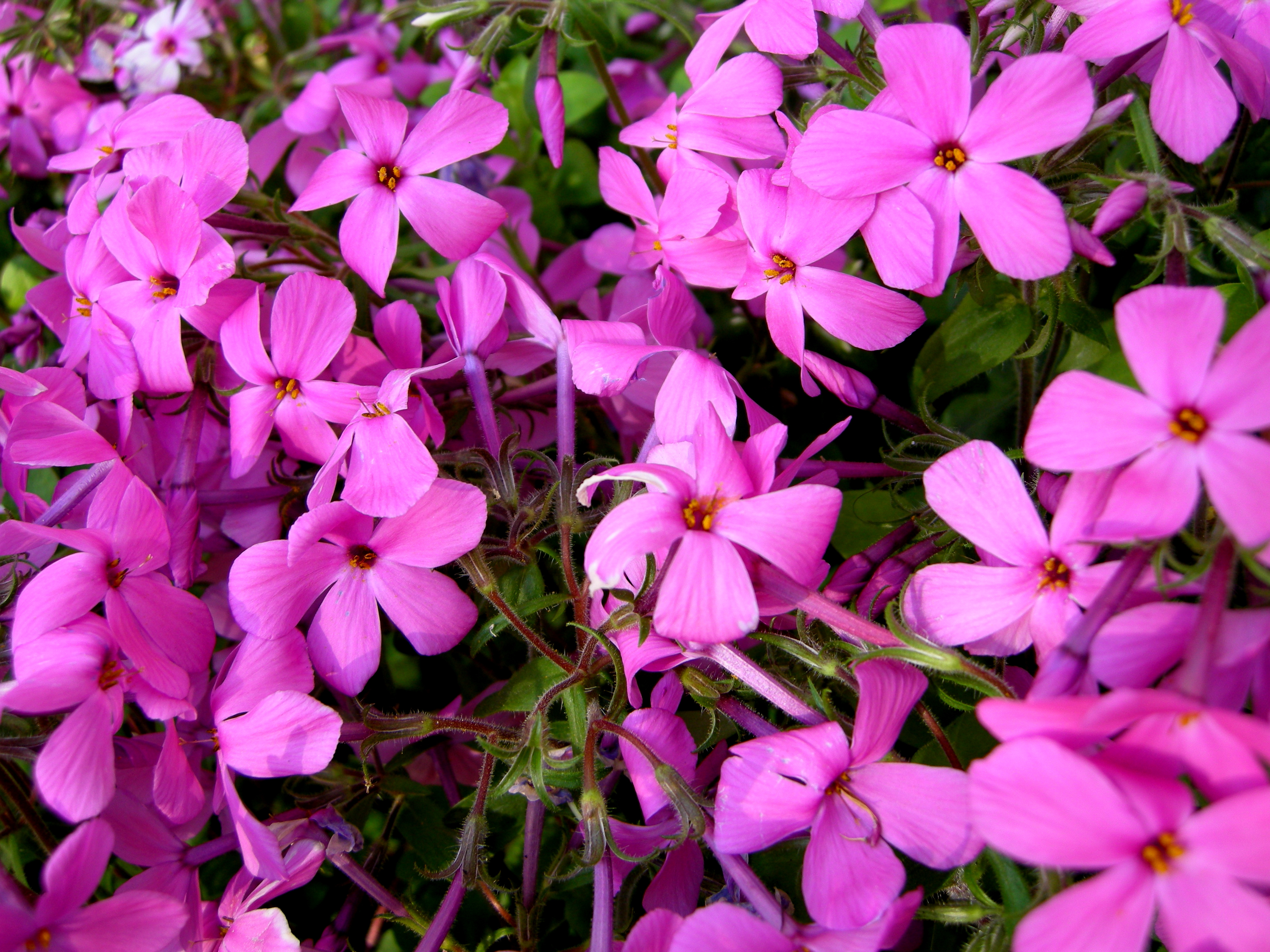
If I had to pick one phlox that is my favorite, it would be creeping phlox (not to be confused with P. subulata whose correct common name is moss phlox not creeping phlox).  It has beautiful and plentiful fragrant flowers attractive to butterflies like all the native phlox here.  But in addition, it grows in full, dry shade and makes an excellent 3 to 6″ mat-like groundcover that remains green through winter.  It flowers from March to May.  My favorite cultivars are ‘Sherwood Purple’ (photo at the beginning), which is the most vigorous, ‘Blue Ridge’ (photo above), ‘Home Fires’ (photo below), and ‘Pink Ridge’, which is a slightly different pink and blooms later than ‘Home Fires’.

.

‘Home Fires’ creeping phlox


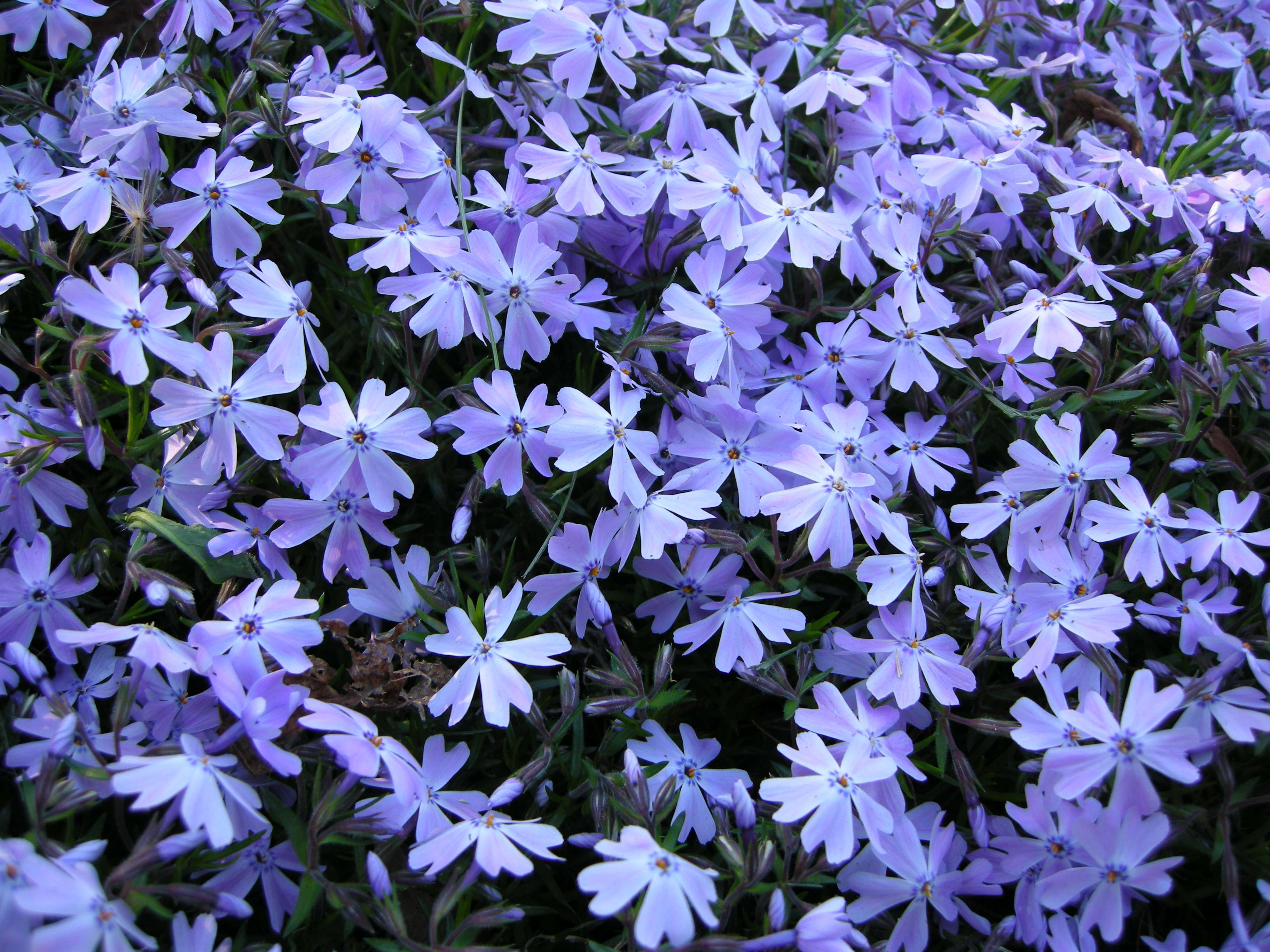
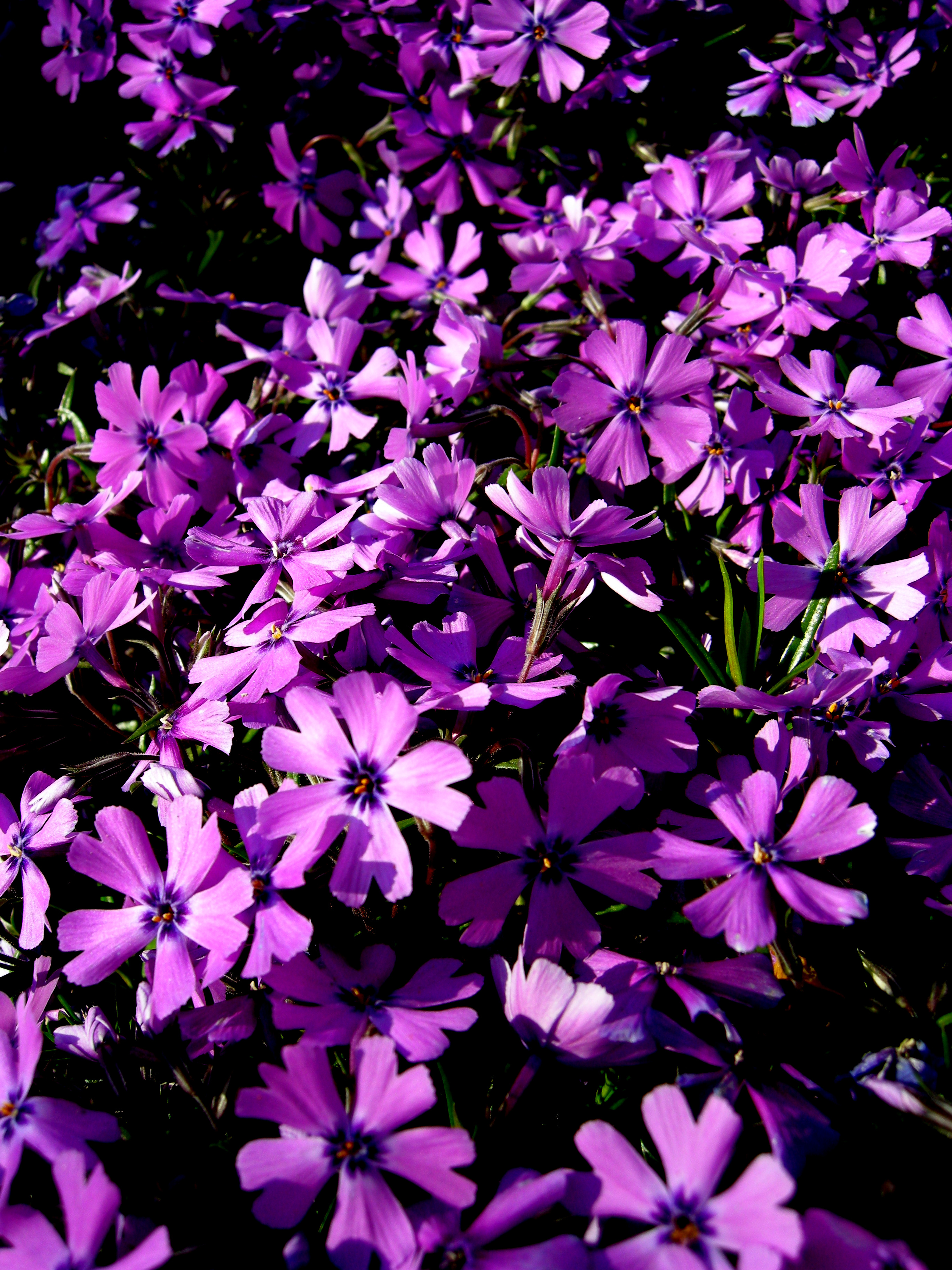
‘Emerald Blue’ moss phlox, P. subulata, in my garden


For abundance of flowers, you can’t beat moss phlox: you can’t even see the leaves when it is in bloom in April and May.  It grows in full sun to part shade and forms a wintergreen mat that solidly blocks out weeds.  The needle-like leaves provide an attractive texture year round.  A great plant for dry sites with thin soil because it has a shallow root system and likes to be well-drained.  An annual shearing is recommended although I don’t do this.

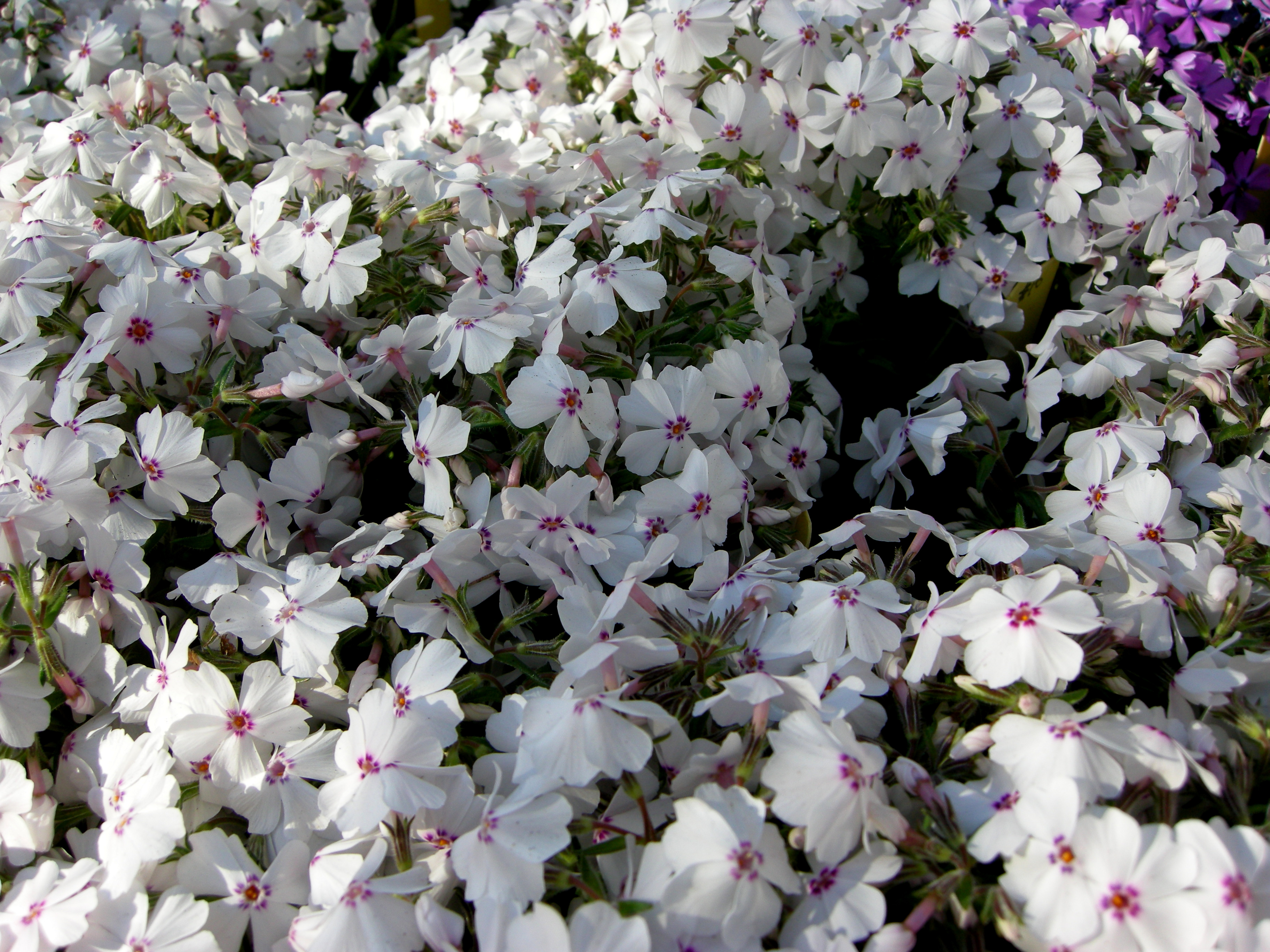
‘Amazing Grace’ moss phlox

A lot of breeding has been done with moss phlox to produce a plethora of beautiful flower colors.  They are all good plants, and I don’t have a favorite, but I like ‘Emerald Blue’ (photo at beginning and above), pink ‘Fort Hill’, white with a red eye ‘Amazing Grace’ (photo above), and ‘Purple Beauty’ (photo below).

‘Purple Beauty’ moss phlox

You can’t go wrong when you add any of these wonderful native phlox to your garden.  Enjoy the flowers!

Carolyn

Nursery Happenings: My second Open House Sale, featuring spring-blooming plants for shade, will take place on Saturday, April 14, from 10 am to 3 pm.  Look for an email listing the plants available if you are on my customer email list.

If you are within visiting distance and would like to receive catalogues and information about customer events, please send your full name and phone number to carolynsshadegardens@verizon.net.  Subscribing to my blog does not sign you up to receive this information.

Facebook:  Carolyn’s Shade Gardens has a Facebook page where I post single photos, garden tips, and other information that doesn’t fit into a blog post.  You can look at my Facebook page here or click the Like button on my right sidebar here.

Notes: Every word that appears in orange on my blog is a link that you can click for more information.  If you want to return to my blog’s homepage to access the sidebar information (catalogues, previous articles, etc.) or to subscribe to my blog, just click here.

Your Native Woodland: If You Build It They Will Come

Posted in Fall Color, groundcover, landscape design, native plants with tags , , , , , , , , , , , , , , , , , , , , , , on April 2, 2012 by Carolyn @ Carolyns Shade Gardens

Carolyn’s Shade Gardens is a retail nursery located in Bryn Mawr, PA, specializing in showy, colorful, and unusual plants for shade.  The only plants that we ship are snowdrops within the US.  For catalogues and announcements of local events, please send your full name, mailing address, and cell number to carolyn@carolynsshadegardens.com and indicate whether you are interested in snowdrops, hellebores, and/or hostas.  Click here to get to the home page of our website for catalogues and information about our nursery and to subscribe to our blog.

Virginia bluebells and Celandine poppy in my woodland

Well you might have to plant a few first.  What am I talking about?  How to create your very own woodland filled with native plants.  I have written before about how important native plants are to our survival.  To read about it, click here.  Now I am going to tell you how to create a shade garden in which mid-Atlantic native plants thrive and multiply with abandon.

Note: There is a Part 2 with more suggestions, click here.
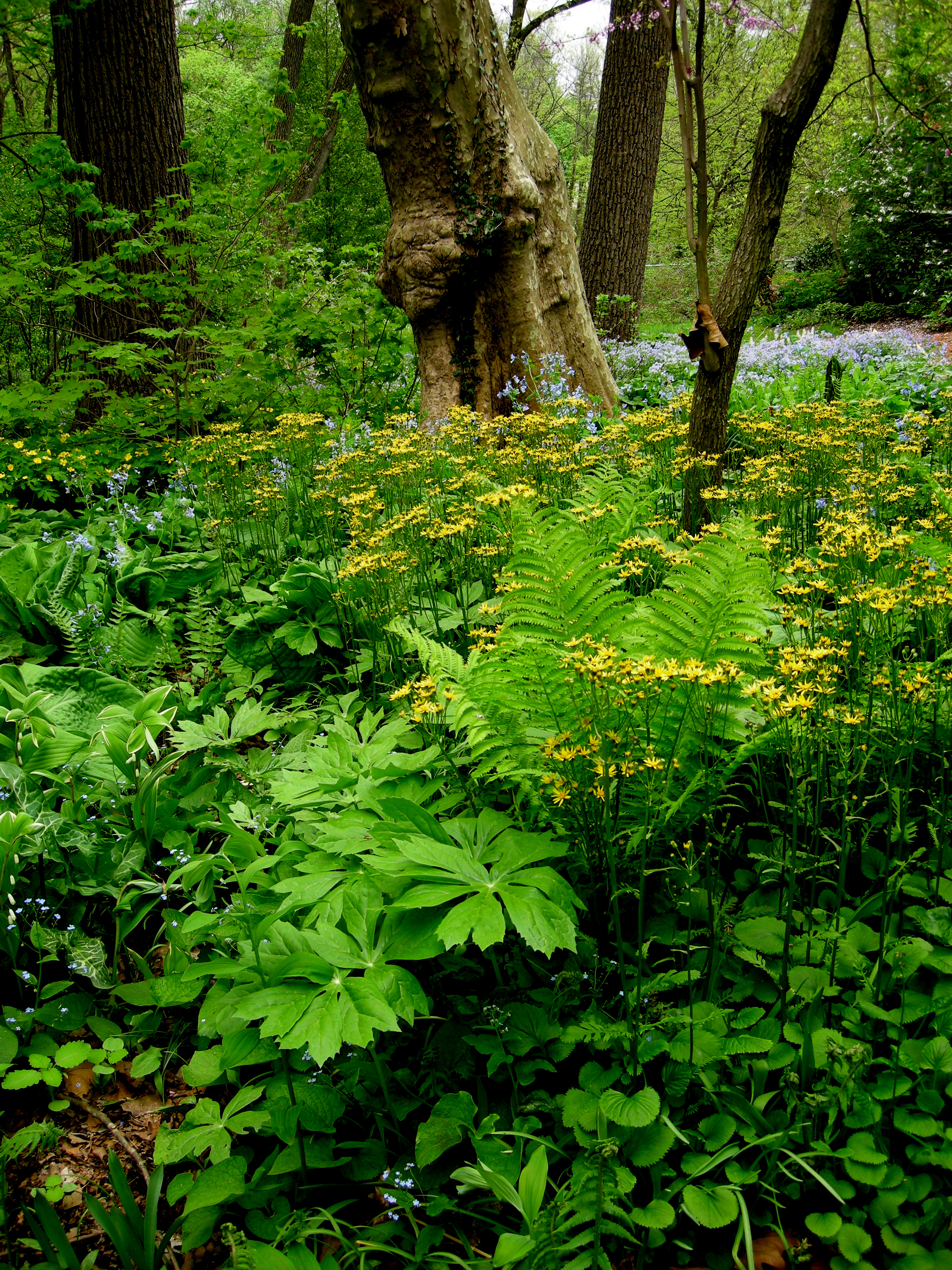
my native woods

It is really quite simple.  All you do is take one woodland area, mix with generous amounts of compost, add the appropriate native plants, and wait a few years.  The key is knowing which plants to use.


I started with the worst possible soil in the worst possible conditions.  Not only were the beds composed of the hard baked clay and rocks prevalent in our area, but they were filled with roots from 100-year-old London plane and—hold onto your hats—black walnut trees.  Add to that, years of trash, including roofing slate and coal furnace shovelings, dumped in the woods before municipal collection came along and construction debris from the 1960s.


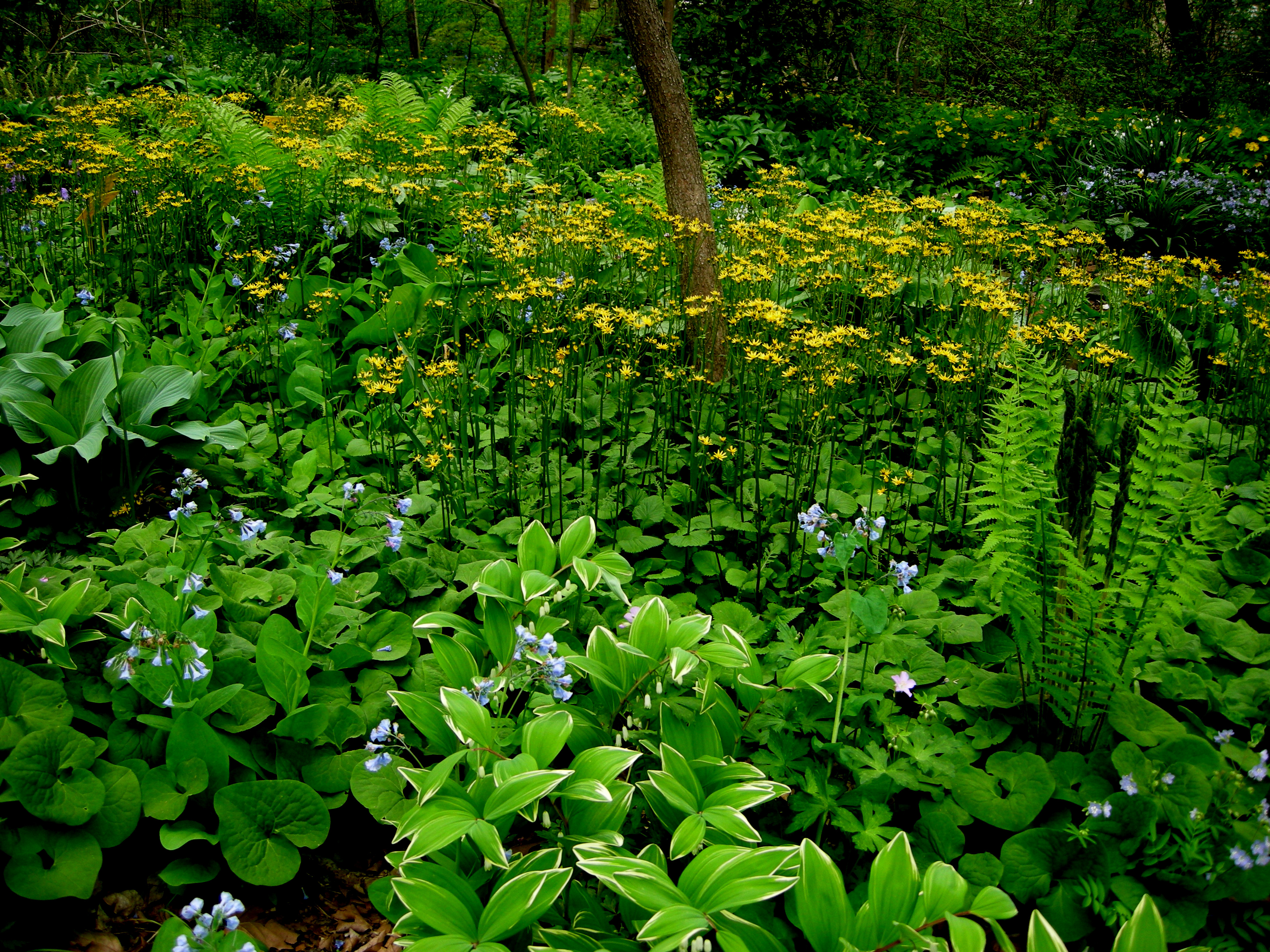
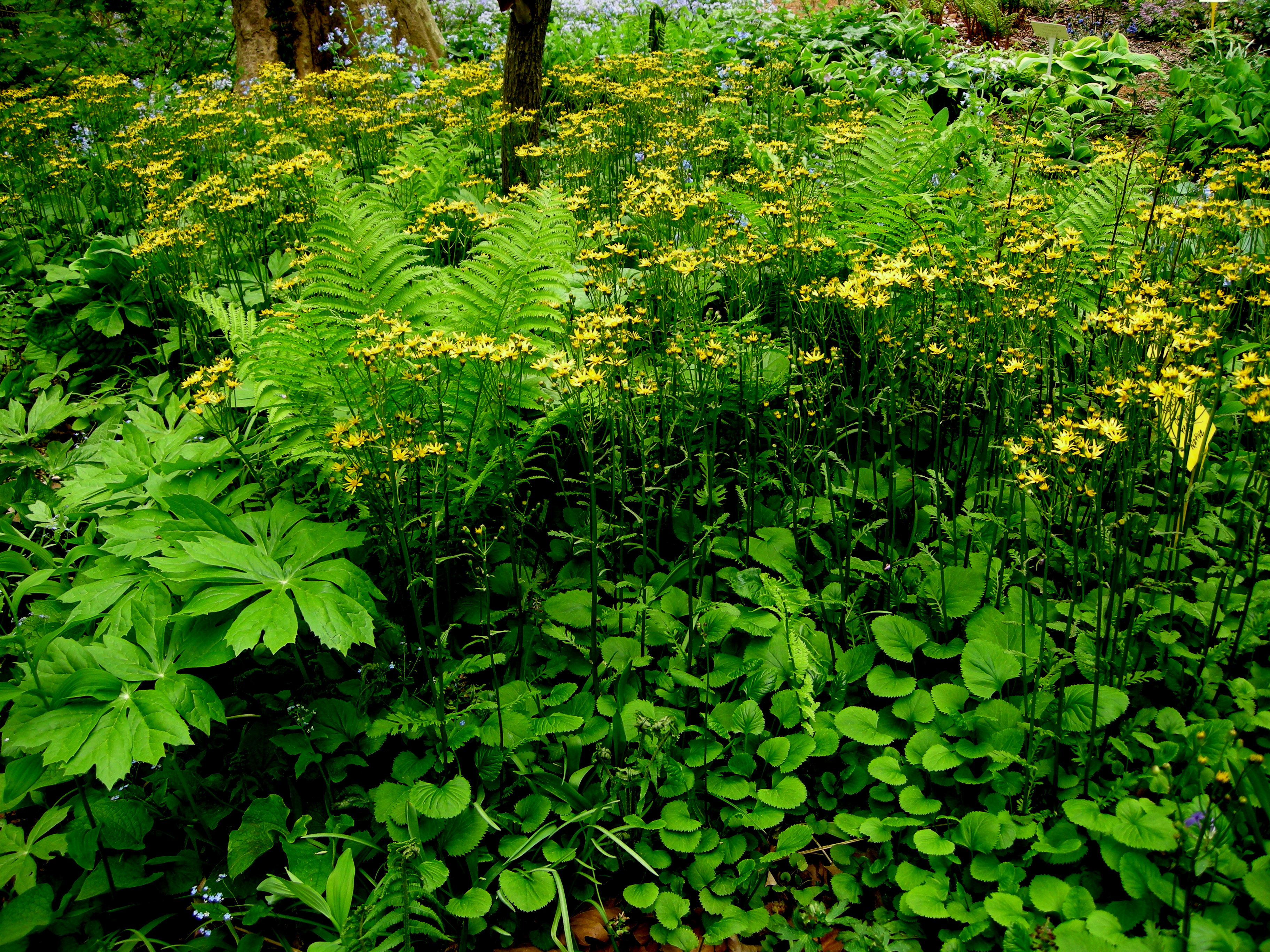
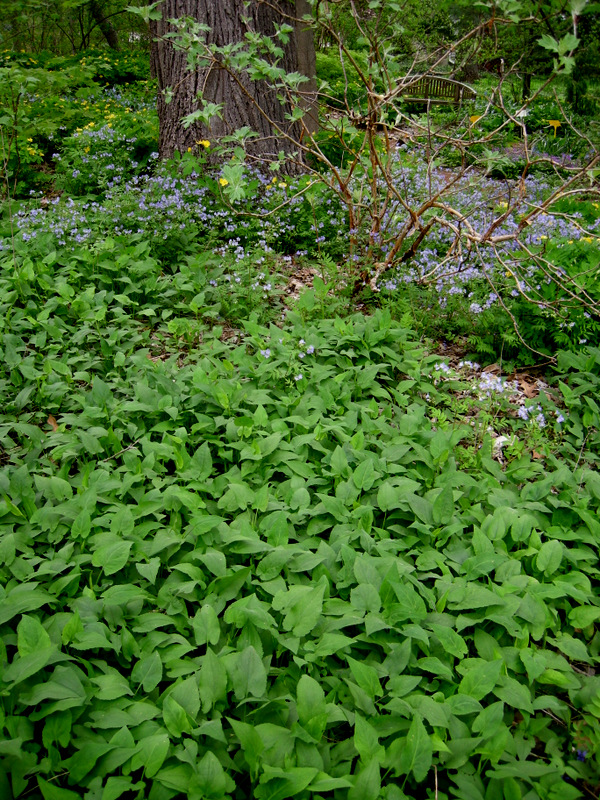
Nature does not dot the landscape with precious collectibles but  “designs” with large sweeps of single types of plants, and that is what I have done in my woods  To create a woodland like mine, all you do is plant at least five but preferably seven and ideally nine of the plants profiled below in beds amended with generous amounts of compost, mulch heavily with ground leaves, and stand back and wait.  Really….that’s what you do….it works.


I wanted to recommend six plants, but when it came down to slimming the competition, I had to go with nine: seven spring-blooming and two fall-blooming.  All are native to the mid-Atlantic and Pennsylvania and all seed freely in a woodland setting once they get going.  And the winners are:

Virginia bluebells, Mertensia virginica: porcelain blue flowers top blue-green leaves in March and April, goes dormant when hot.  All my plants came from one plant given to me by a friend.


Celandine poppy, Stylophorum diphyllum: lovely filigreed leaves are covered with large bright yellow flowers in April and May.  Again, all my plants came from one plant given to me by a friend.

Dwarf Jacob’s ladder, Polemonium reptans: wintergreen fern-like leaves are followed in April and May by copious blue bell-shaped flowers replaced by ornamental chartreuse seedpods.

.

White violets, Viola striata: white flowers in April and May.  All my plants came from one clump dug from my woods.


Blue creeping phlox, Phlox stolonifera ‘Blue Ridge’: wintergreen mat of foliage is topped with blue flowers in April and May.


Creeping phlox, Phlox stolonifera ‘Sherwood Purple’: creeping phlox comes in blue, purple, white, and pink.  The purple is the most vigorous.


Native ginger, Asarum canadense: the reddish purple flowers appear below the leaves.


Golden groundsel, Senecio aureus: the wintergreen leaves are topped by attractive purple buds in March followed by fragrant yellow flowers in April and May.  This vigorous spreader is a great native substitute for vinca, pachysandra, and ivy.

Blue wood aster, Aster cordifolius: the leaves of blue wood aster completely cover the ground in the spring.


Blue wood aster is covered with flowers in October and November.

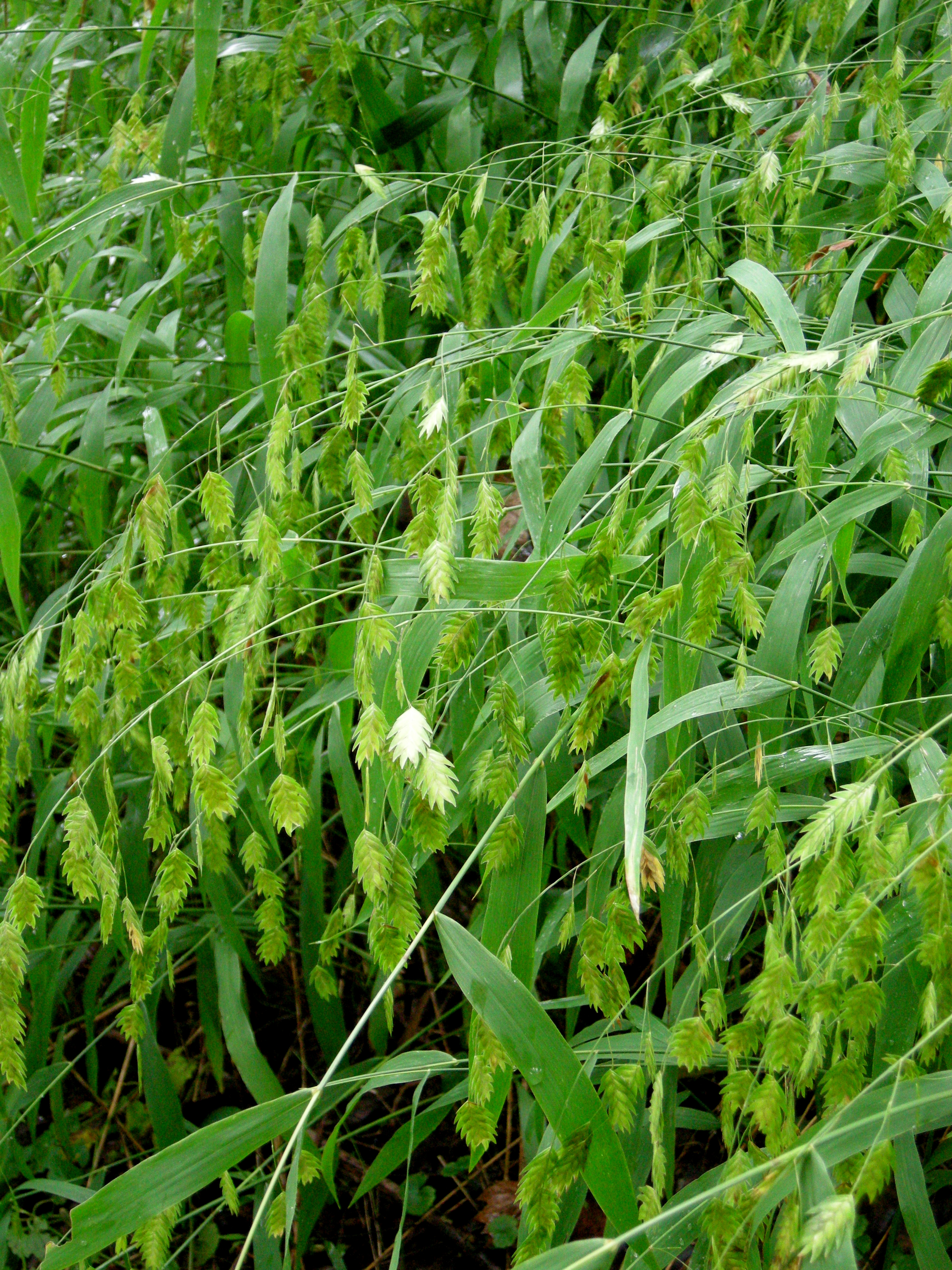
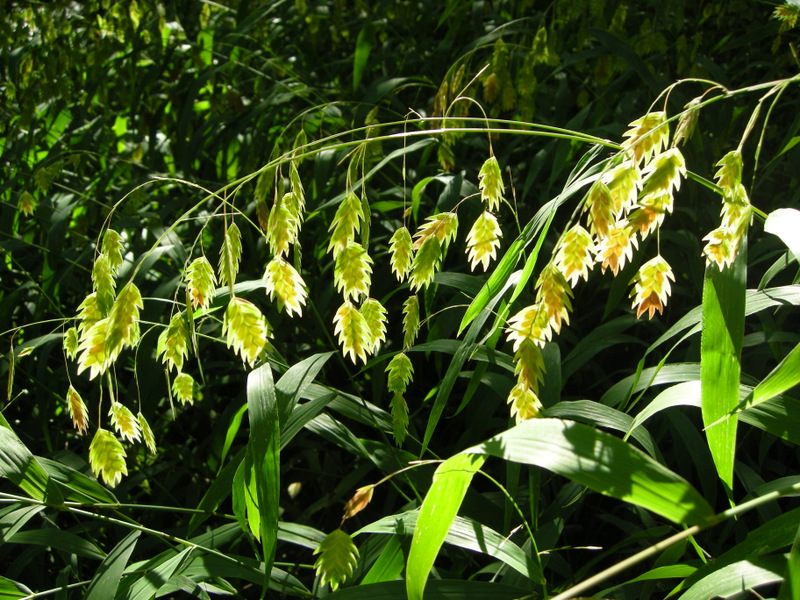
Northern sea oats, Chasmanthium latifolium: pendulous oat-like flowers grace this native shade grass in October and November.  The foliage ages to a lovely khaki color that remains ornamental through winter.

The flowers of northern sea oats in the slanted light of fall.


As the spreading, woodland plants profiled above establish themselves, you can add pockets of other special natives like trilliums, jack-in-the-pulpits, mayapples, bloodroot, and ferns.  The result is magical.

Carolyn

Notes: Every word that appears in orange on my blog is a link that you can click for more information.  If you want to return to my blog’s homepage to access the sidebar information (catalogues, previous articles, etc.) or to subscribe to my blog, just click here.