Archive for June, 2012

Longwood Gardens Part 2: At Night

Posted in garden to visit with tags , , , on June 27, 2012 by Carolyn @ Carolyns Shade Gardens

Carolyn’s Shade Gardens is a retail nursery located in Bryn Mawr, PA, specializing in showy, colorful, and unusual plants for shade.  The only plants that we ship are snowdrops and miniature hostas.  For catalogues and announcements of events, please send your full name, location, and phone number (for back up use only) to carolyn@carolynsshadegardens.com.  Click here to get to the home page of our website for catalogues and information about our nursery and to subscribe to our blog.

One of the light installations by Bruce Munro.

In 2011-2012, I did a series of four posts on Chanticleer, a pleasure garden in Wayne, Pennsylvania, US.  These were very popular, and the second, Chanticleer Part 2: Garden Seating, is my most popular post ever by a large margin.  I intended to profile another local garden this year but have been slow to choose one.  My two recent trips to Longwood Gardens in Kennett Square, Pennsylvania, US, reminded me how much it has to offer so I will be profiling Longwood this year.
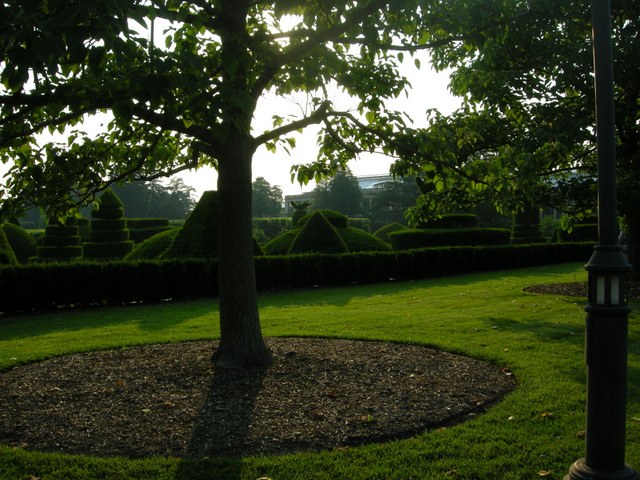
The sun was getting lower behind the conservatory as we arrived.

Longwood Gardens is a 1,077 acre public garden with a four-acre indoor conservatory.  The property was originally purchased by the Peirce family from William Penn in 1700 to establish a farm.  In 1906, the farm was purchased by Pierre du Pont, the industrialist and driving force behind the E. I. du Pont de Nemours and Company, primarily to preserve the spectacular trees.  From then into the 1930s, Pierre du Pont created most of what is there today before turning Longwood over to a foundation in 1946.  Almost anything horticultural that you would want to see is found at Longwood: extensive native woodlands, a rose garden, elaborate French inspired fountains with shows set to music, comprehensive teaching gardens, majestic conservatories, an Italian water garden, treehouses—I can’t even list everything.

The topiary gardens looked quite elegant with the sun at this angle.

In my first post, Groundcovers, Thinking Outside the Box, I focused on the unusual plants that Longwood masses as groundcovers.  On my second visit, I took my family to see the amazing light displays created at Longwood by British lighting designer and installation artist, Bruce Munro.  We arrived around 7 pm, ate dinner at their lovely cafe with outdoor seating, and toured the gardens as the sun set and it became dark enough to see the Munro installations.

The bridge from the cafe to the conservatories.

I am not going to say much about the Munro installation except that it is fantastic.  It was so much more than I expected, including an entire woodland turned into a painter’s canvas, and I am so glad that I didn’t miss this unique experience.  I apologize to my non-local readers but the only good photos I got were of the small entry installations, and they are included at the beginning and end of this post.
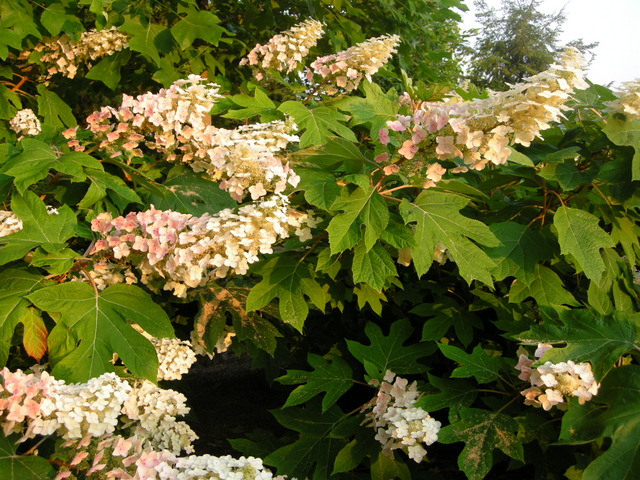
The slanting light of the setting sun on the gorgeous plantings was beautiful: here oakleaf hydrangea.

What I am going to say is that the light exhibit gives visitors a great reason to see Longwood as the sun sets and after dark.  The gardens are open until 11 pm from Wednesday through Saturday during the exhibit. The purchase of special timed entry tickets is required, although the entry fee is unchanged.  This is a magical time in any garden, but it is especially wonderful in a place as expansive as Longwood.  We wandered from one end to the other after dinner as we waited for dark on the longest day of the year.  Here is more of what we saw:

A newly built grass amphitheater.

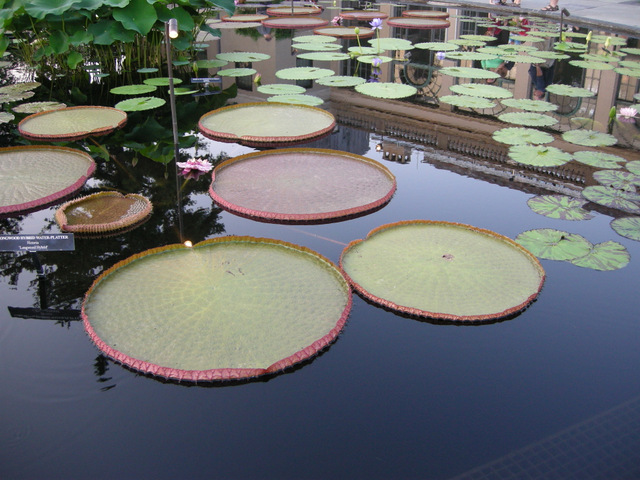
Longwood has elaborate water lily ponds in an outdoor courtyard at the heart of the conservatories.  I think they are best viewed at dusk and we spent a lot of time there.

Another view of the water lily ponds

Victoria water platters have always fascinated my husband and children.  I don’t condone this, but if you lift them up they are covered with spikes on the bottom.

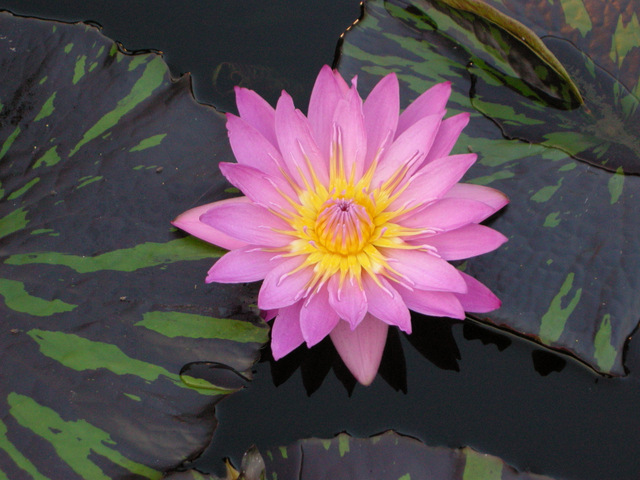
Night-blooming water lily

A different species of water platter.

My favorite water lily—look at those leaves.

Sunset over the water lilies

From the water lily pools, we headed to the Idea Gardens which contain large individual areas displaying sun and shade perennials (photo above), annuals, vegetables and fruit, roses, vines, grasses, and groundcovers as well as a charming outdoor children’s garden (there is an amazing indoor children’s garden in the conservatories which should not be missed by children of all ages).

In the evening light, this red hot poker looked like it would burn you if you touched it.
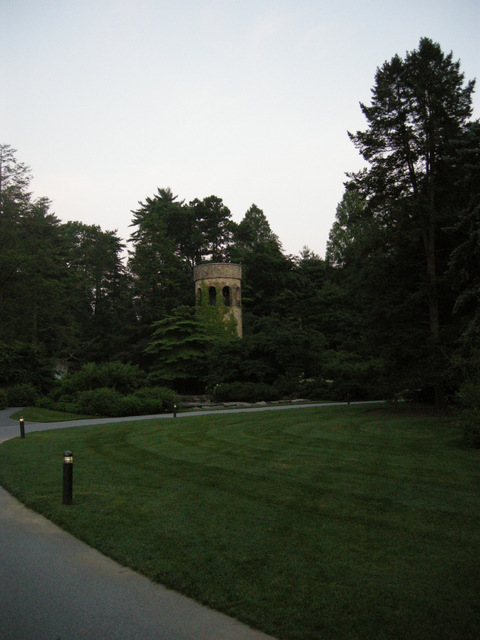
The Chimes Tower which is surrounded by shady woodland plantings and the unusual waterfall called the Eye of Water.
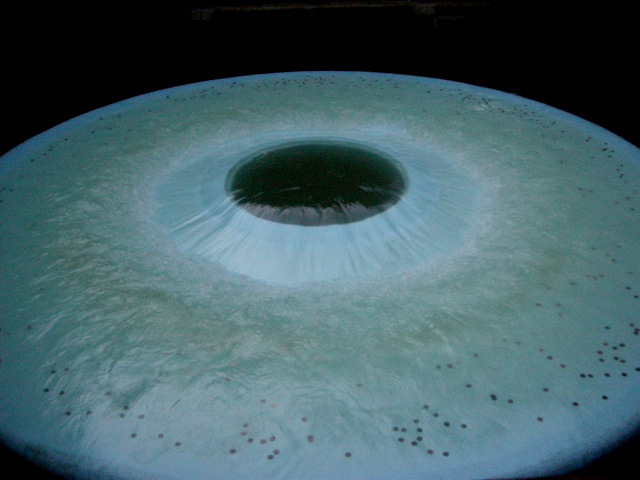
The Eye of Water, the source of the Chimes Tower waterfall, glows at night—no additional lighting required.

A view of the conservatories from a spot near the Eye of Water

It’s almost time to view the light display: the purple martins are returning home for the evening.
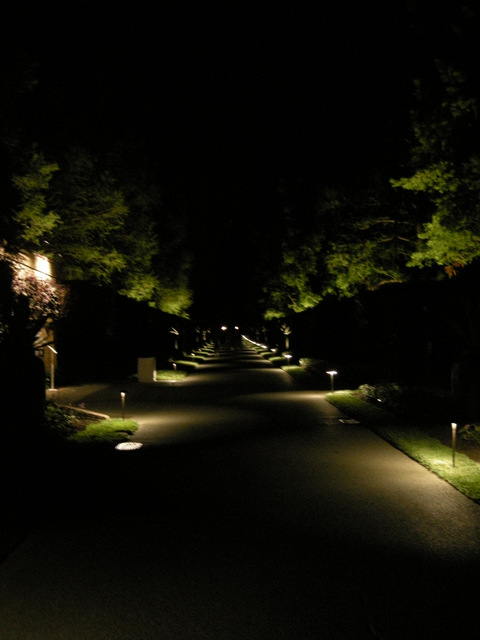
Longwood in the dark

This is my only other photo of the Bruce Munro lighting, and it is of the relatively small but quite lovely sculptural installations by the front entrance.  Some of the other installations cover acres and need to be seen to be believed. 

Although you can see a small part of Longwood at night if you attend a musical event or a fireworks and fountains show, both of which I highly recommend, the Munro exhibition invites you to wander over a major portion of the garden at night.  If you are anywhere near Longwood, you shouldn’t miss it—now until  September 29.


Carolyn

Nursery Happenings:  The nursery is closed until the fall.  Thanks for a great spring season!

If you are within visiting distance and would like to receive catalogues and information about customer events, please send your full name and phone number to carolynsshadegardens@verizon.net.  Subscribing to my blog does not sign you up to receive this information.

Facebook:  Carolyn’s Shade Gardens has a Facebook page where I post single photos, garden tips, and other information that doesn’t fit into a blog post.  You can look at my Facebook page here or click the Like button on my right sidebar here.

Notes: Every word that appears in orange on my blog is a link that you can click for more information.  If you want to return to my blog’s homepage to access the sidebar information (catalogues, previous articles, etc.) or to subscribe to my blog, just click here.
You Asked for the Long View Part 2

Posted in landscape design, my garden, Shade Gardening with tags , , , , , on June 20, 2012 by Carolyn @ Carolyns Shade Gardens

Carolyn’s Shade Gardens is a retail nursery located in Bryn Mawr, PA, specializing in showy, colorful, and unusual plants for shade.  The only plants that we ship are snowdrops and miniature hostas.  For catalogues and announcements of events, please send your full name, location, and phone number (for back up use only) to carolyn@carolynsshadegardens.com.  Click here to get to the home page of our website for catalogues and information about our nursery and to subscribe to our blog.

Looking down the hill through the gardens on the back side of the house.  The ‘Butterfly’ Japanese maple is like a torch.

This is the sequel to the post You Asked for the Long View Part 1 in which I showed you all the gardens along the front side of the house.  I wrote that post to satisfy all my readers who have been asking to see the big picture of my garden.  I took the photos for both posts using my recently purchased “new iPad”, which has a highly acclaimed camera function.  After experimenting with it, I have concluded that the iPad does take decent photos but a lot of the reason they look so good is because the screen resolution on the new iPad is amazing.  Once I downloaded the photos to my PC, they didn’t look so fabulous.  The new iPad will not be replacing my camera anytime soon.

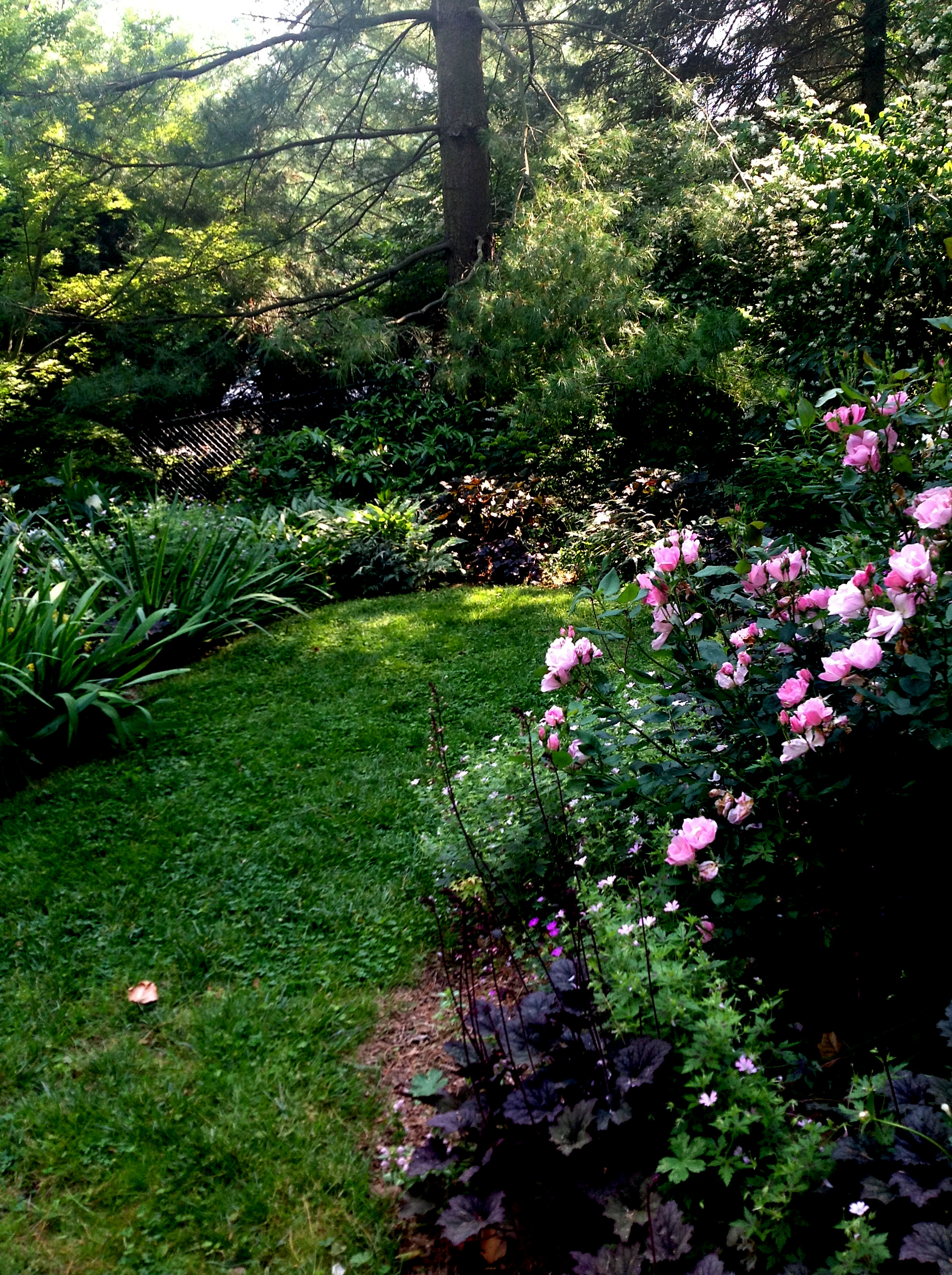
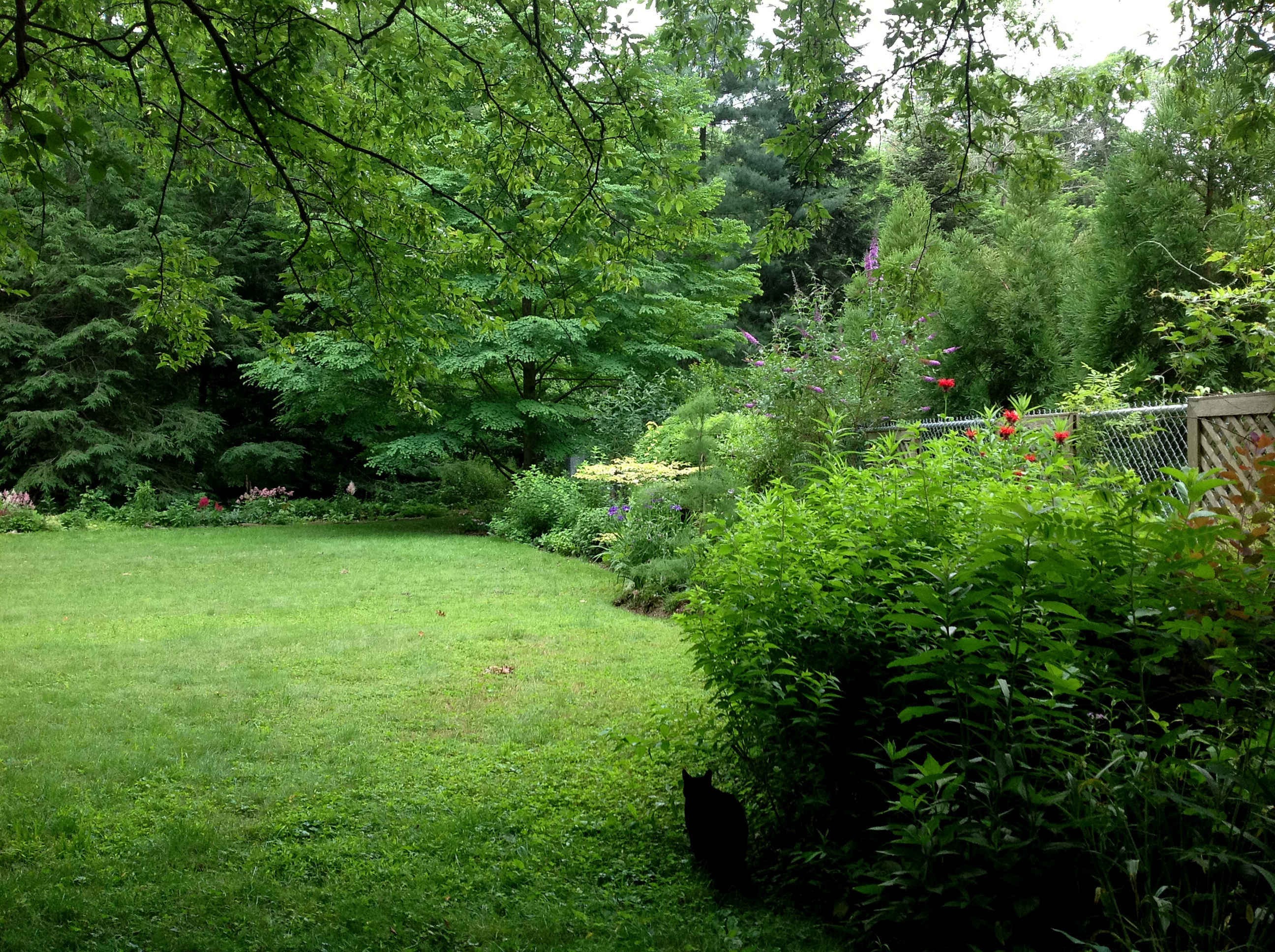
The view from my dry shade garden across the lawn to my production beds.  The gardens on the right were planted in the last two years to hide the neighbor’s hideous chain link fence.

Before we begin the second half of the tour, I want to comment on the odd gardening season.  Because the ground never froze this winter and March was so warm, everything started blooming a month early.  I kept wondering when this was going to catch up with us, and the answer is now.  There is not much blooming in my garden because it all bloomed early and later-flowering plants have gone back to their regular schedule.  If you want to see what the gardens looked like when everything bloomed together, view the amazing photographs in Julie’s Carolyn’s Shade Gardens post on her blog Wife, Mother, Gardener.

The production beds at the bottom of the lawn where I grow plants to sell at my nursery, mostly primroses, pulmonarias, and hellebores.


The tour starts at my dry shade garden where we left off in the last post and continues down the hill to my production beds (see two photos above).  From there, we turn to the left and loop up behind the house.  One route branches off to the right to meander through the woodland garden and the other goes straight up the hill past our deck.  It is hard to explain how it all fits together, but I will do my best.

The production beds are behind us, to the left is the water garden, which stays moist most of the year, and ahead is the back side of the house and the deck.  The lower entrance to the woodland garden is hidden just ahead on the right.

A closer view walking towards the deck.

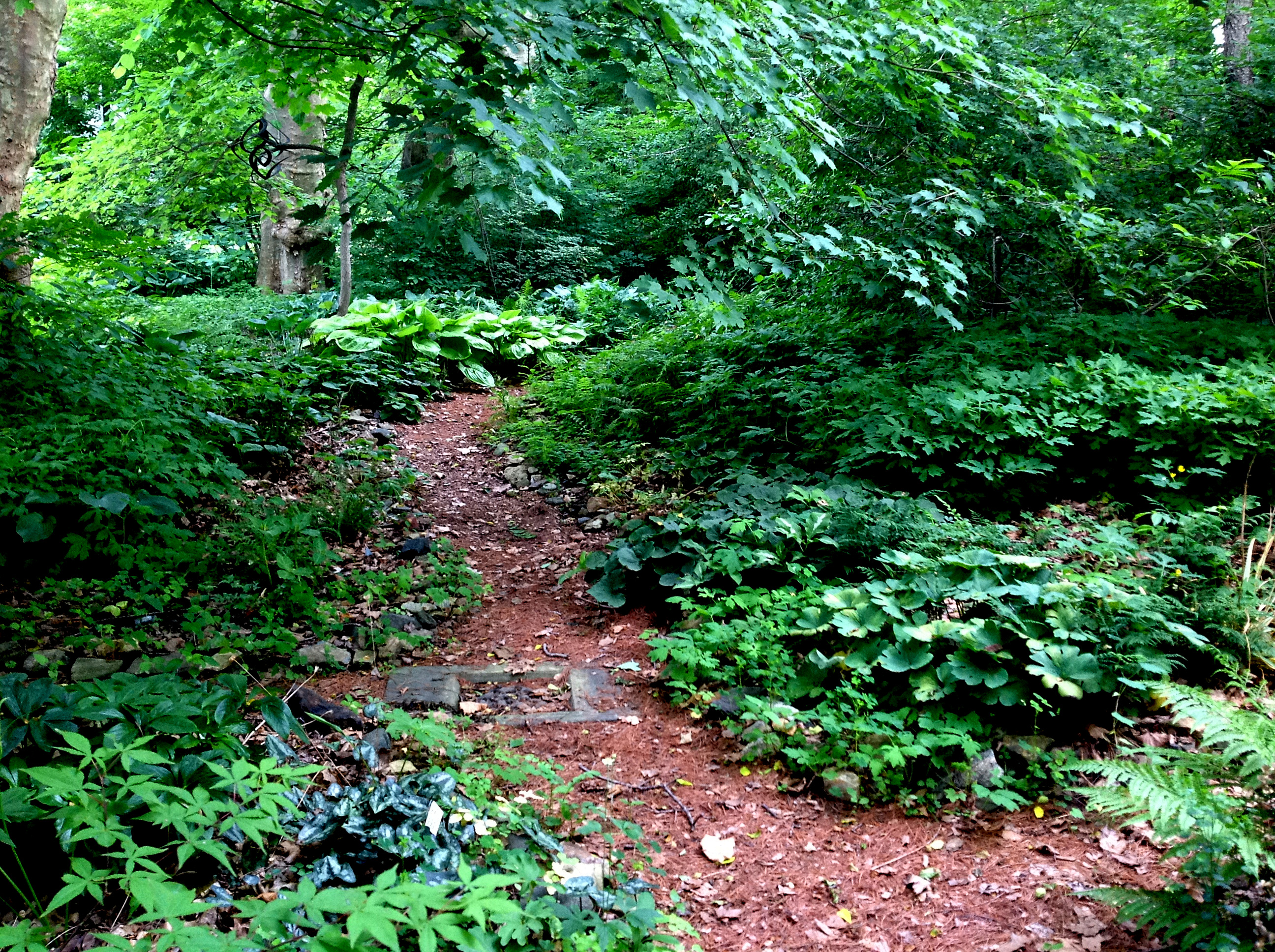
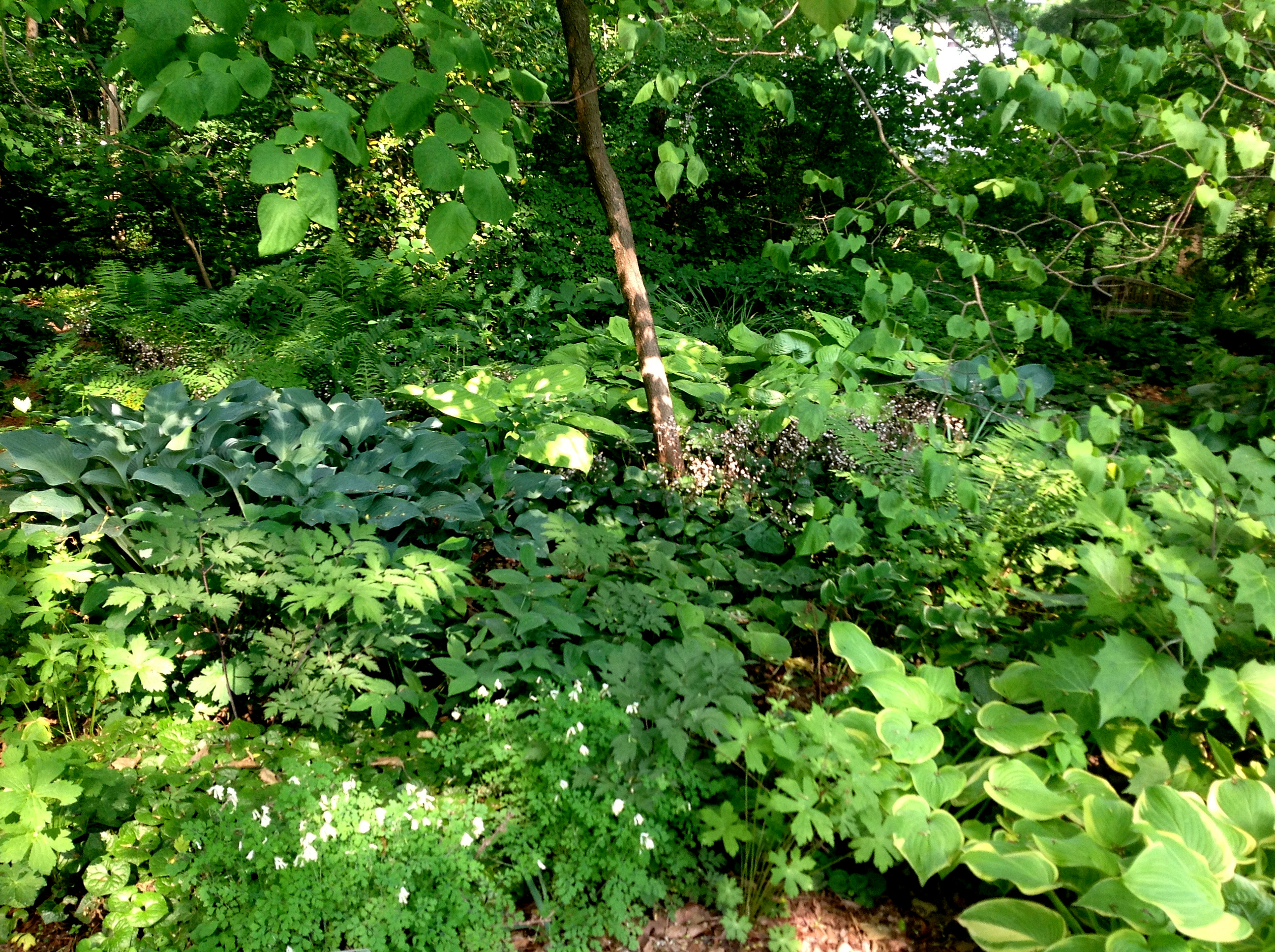
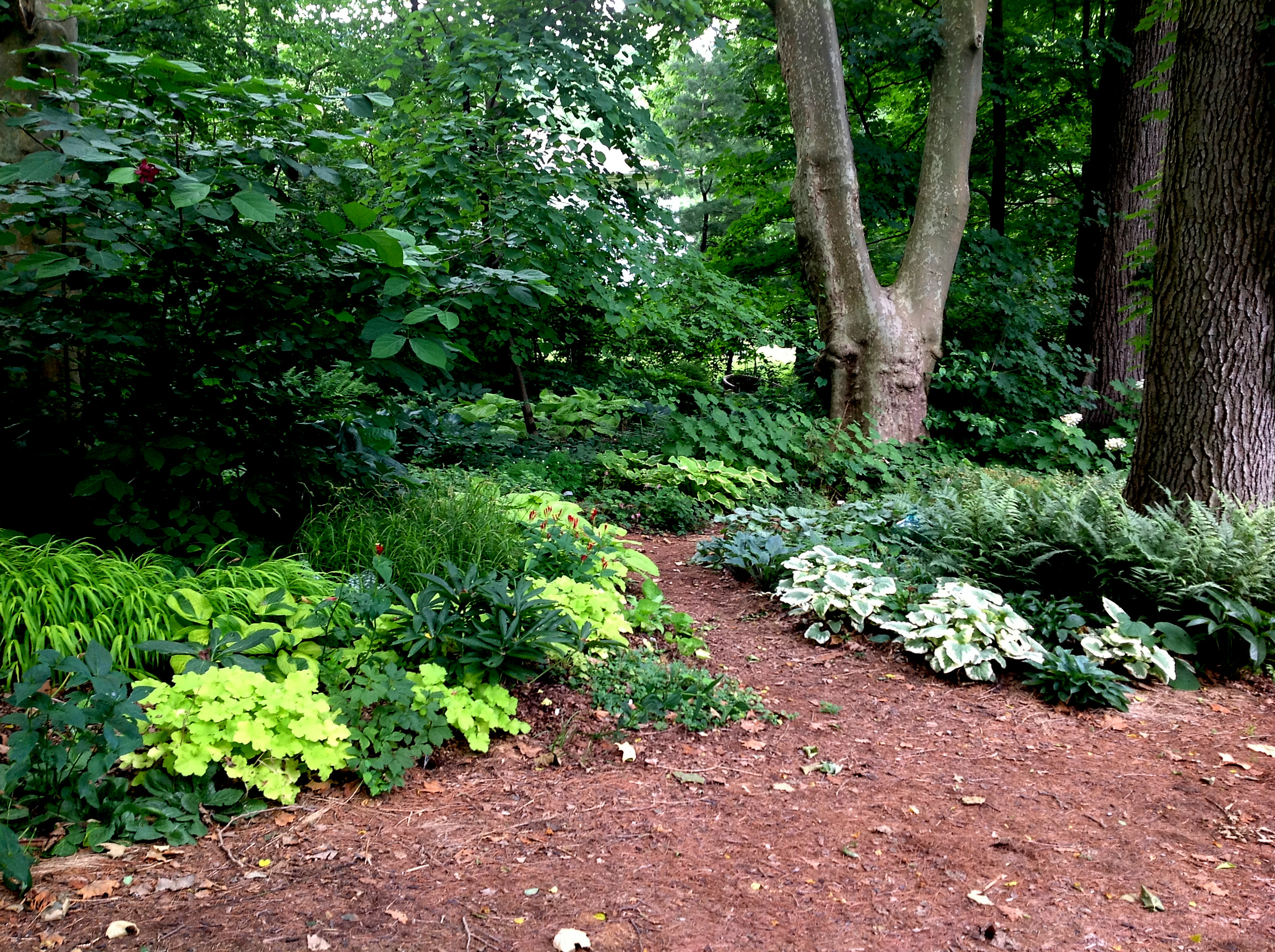
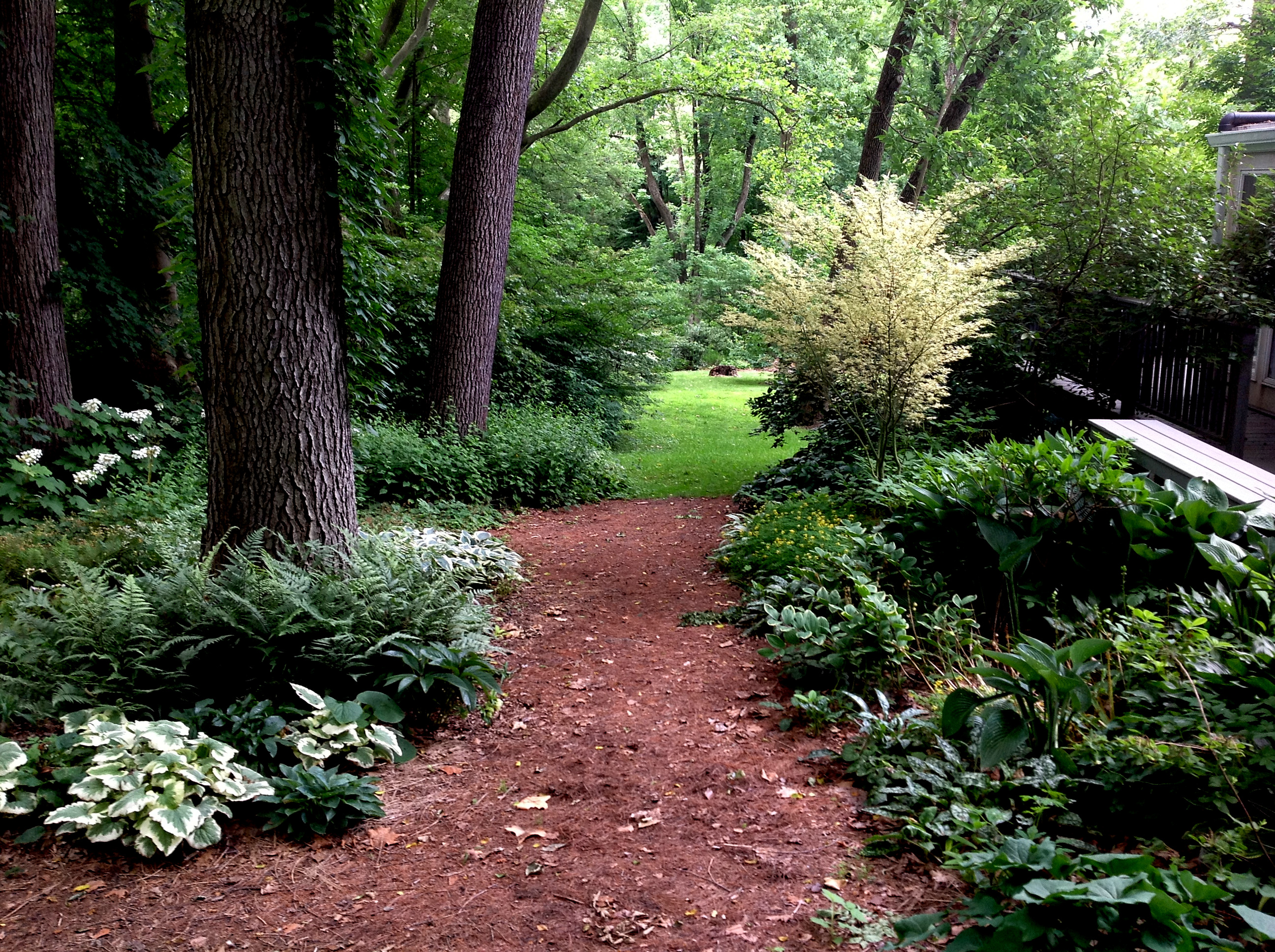
We headed off into the woods.  This is the upper half of the fully shaded woodland garden.  All the paths are covered in white pine needles.

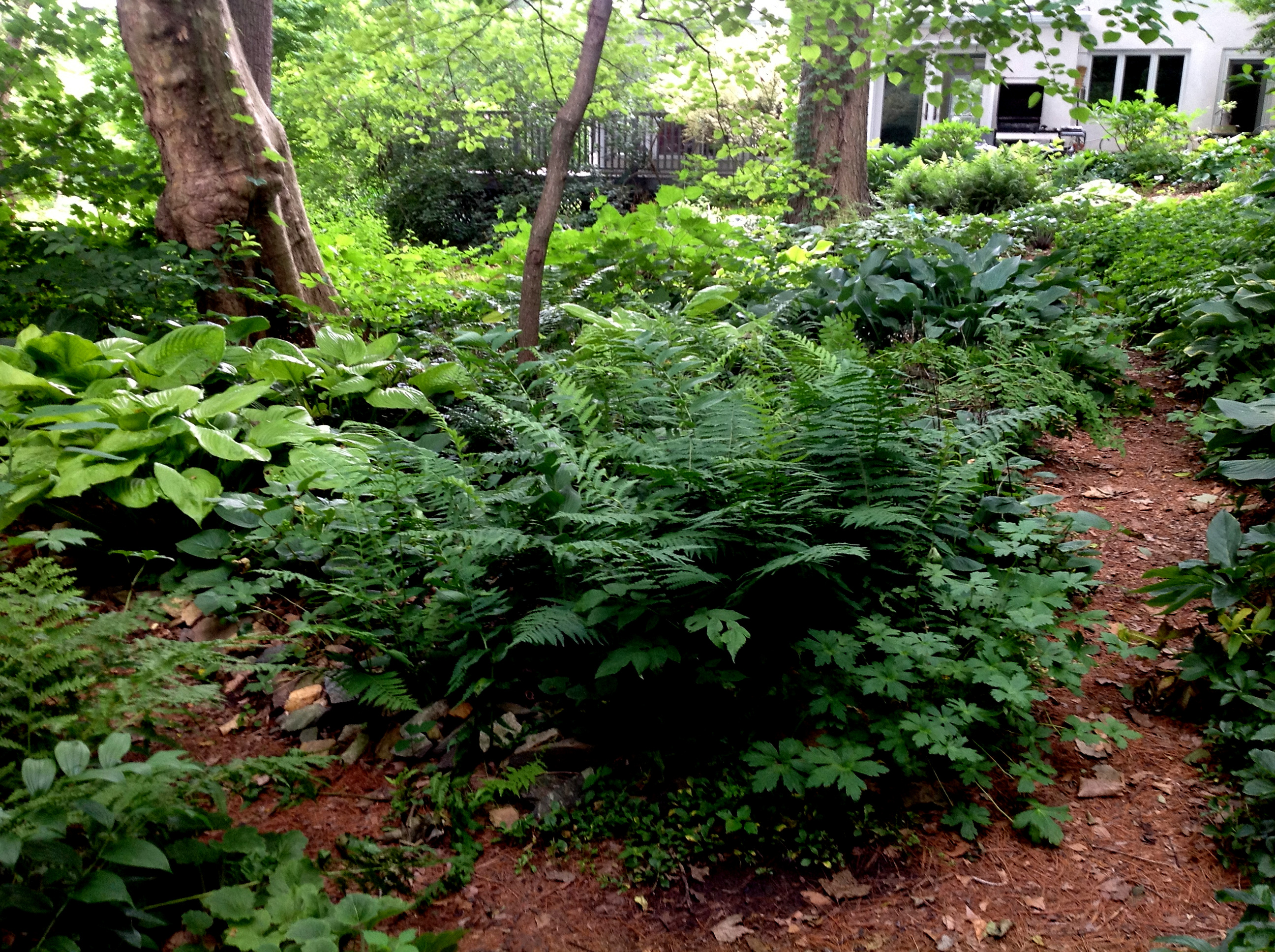
A closer view of the woodland garden: it peaks in early spring but Hosta ‘Sum and Substance’ is making a splash right now.

Still in the woodland but turning the corner to exit out the top entrance.

Standing outside the top entrance and looking back into the woodland.

Looking back from the patio towards the top entrance of the woodland with the yellow and gold garden on the left and the silver and blue garden on the right.

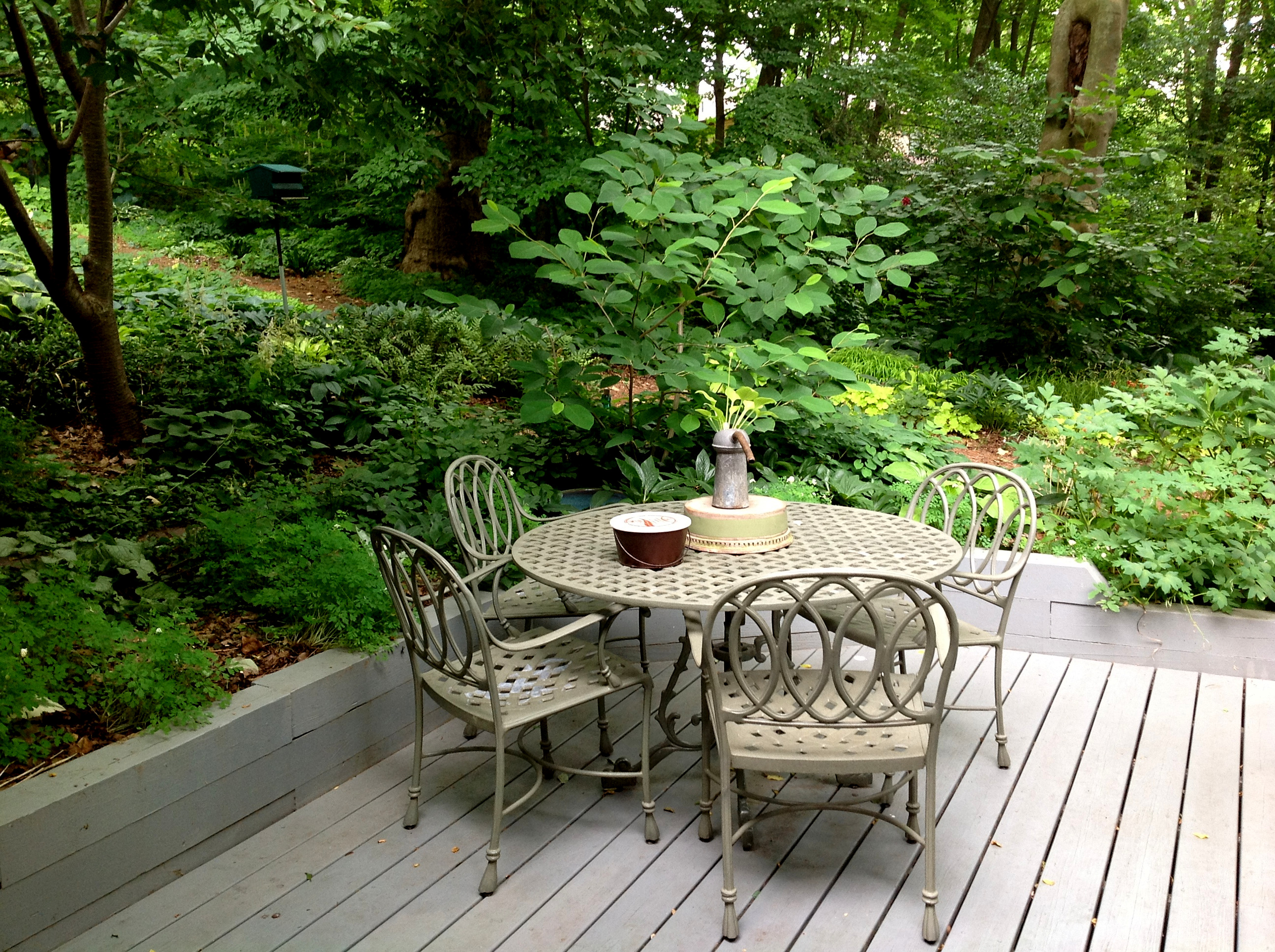
A slight detour to show you the patio.  You can see the yellow and gold garden behind the magnolia.

Looking from the patio towards the stone room where we make compost and store firewood.  Our garage was the carriage house for an estate, and the compost area was the manure pit for the stables .

We have backtracked to walk up the hill by the deck without detouring into the woodland.  The silver and blue garden is on the right and the deck/patio is on the left.

Passing the upper entrance to the woodland.

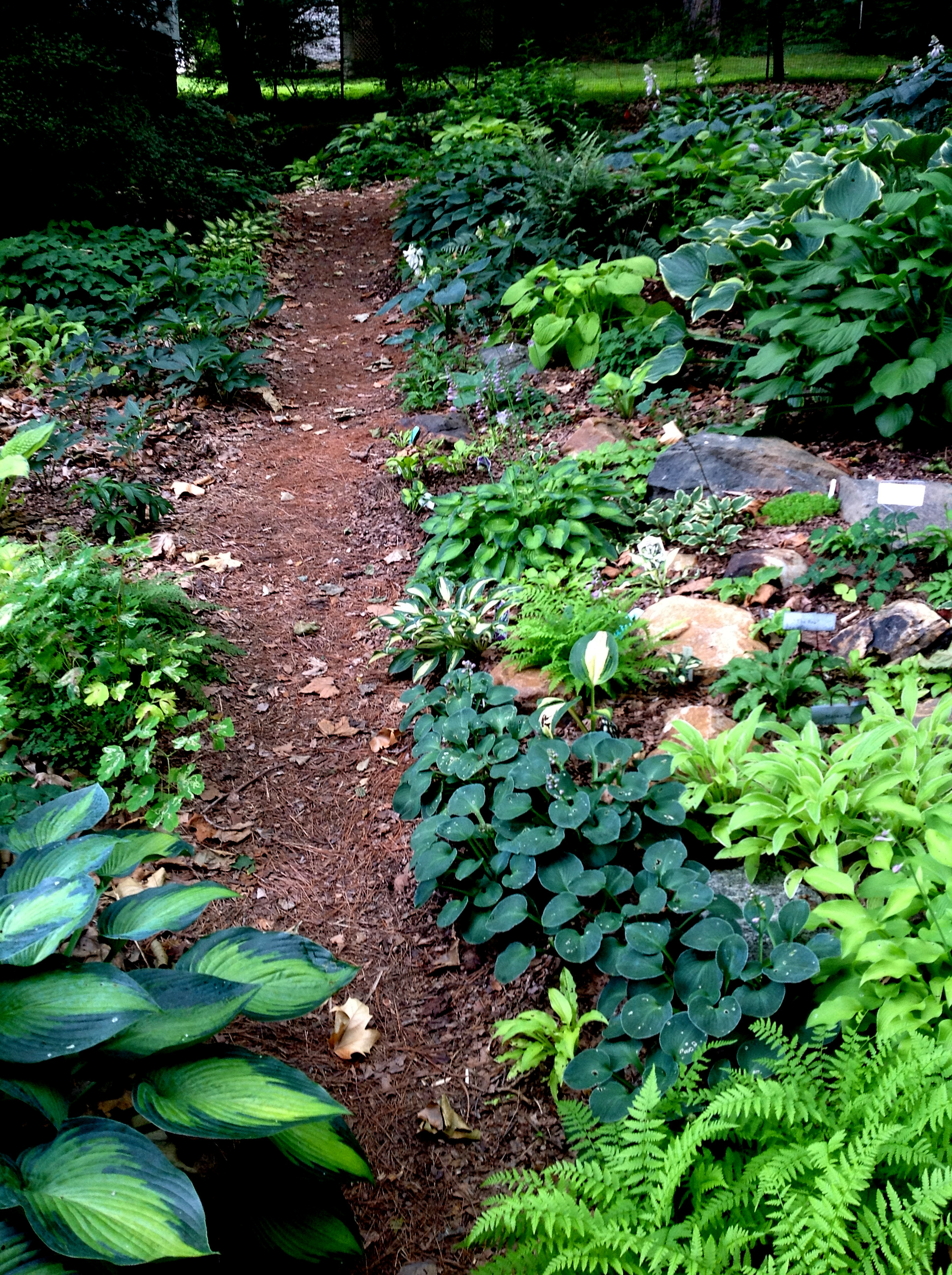
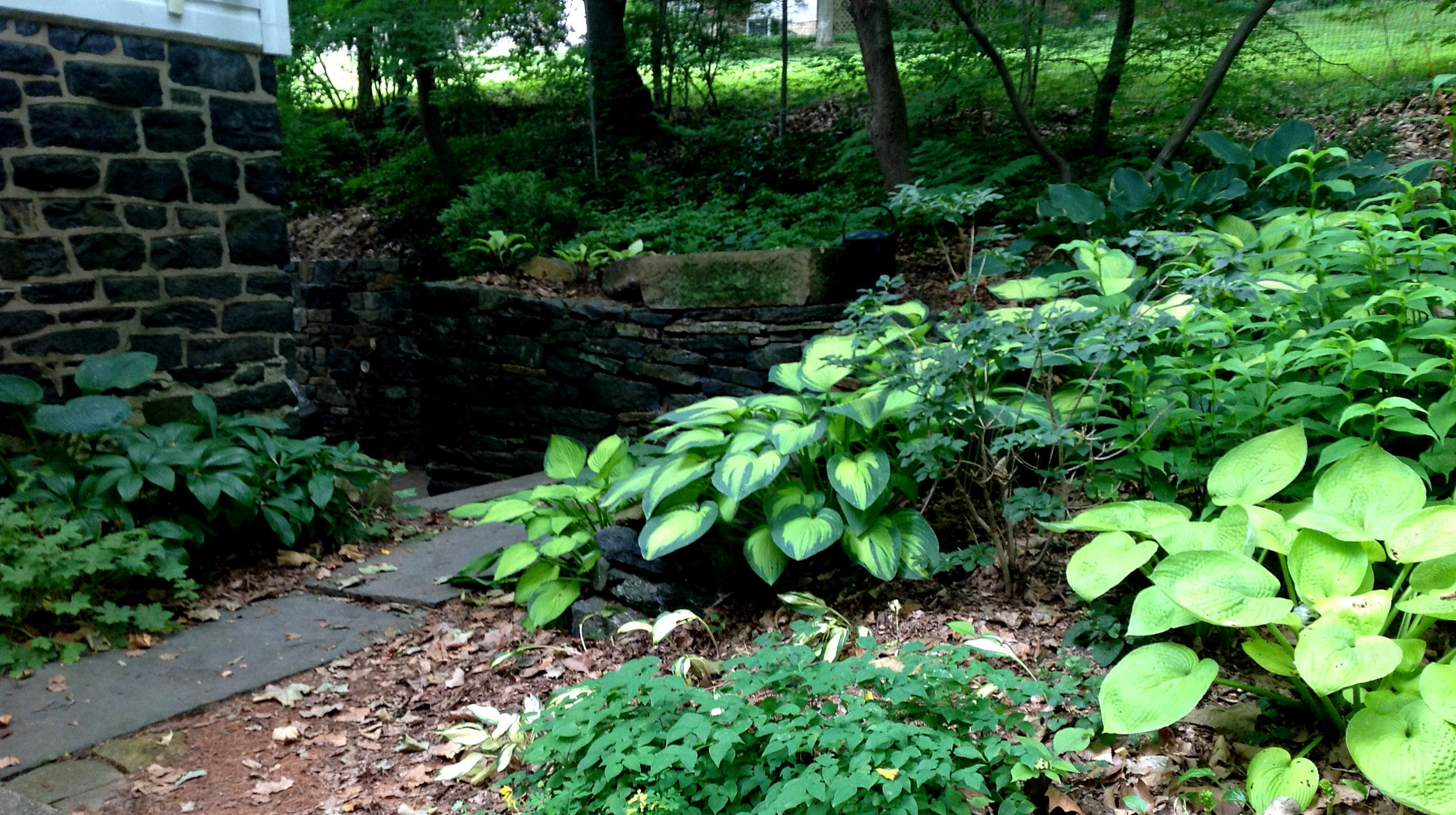
We call this hosta hill because we used hostas to colonize the eroded slope and get rid of the grass.

The upper half of hosta hill.

Passing the miniature hosta rock garden.

Looking down hosta hill from the top.

Turning towards the carriage house at the top of hosta hill.

Heading back out to the driveway where we started in the  first post.

I hope you have enjoyed the “big picture” tour of the gardens on the east side of the house.  Stay tuned for a series of posts on all the wonderful gardens I have visited in the last few months.

Carolyn

Nursery Happenings:  The nursery is closed until the fall.  Thanks for a great spring season!

If you are within visiting distance and would like to receive catalogues and information about customer events, please send your full name and phone number to carolynsshadegardens@verizon.net.  Subscribing to my blog does not sign you up to receive this information.

Facebook:  Carolyn’s Shade Gardens has a Facebook page where I post single photos, garden tips, and other information that doesn’t fit into a blog post.  You can look at my Facebook page here or click the Like button on my right sidebar here.

Notes: Every word that appears in orange on my blog is a link that you can click for more information.  If you want to return to my blog’s homepage to access the sidebar information (catalogues, previous articles, etc.) or to subscribe to my blog, just click here.

Groundcovers, Thinking Outside the Box

Posted in garden to visit, groundcover, How to, landscape design, native plants, Shade Gardening, Shade Perennials, Shade Shrubs with tags , , , , , , , , , , , , , , , , , , , , , , , , , , , , , , , on June 11, 2012 by Carolyn @ Carolyns Shade Gardens

Carolyn’s Shade Gardens is a retail nursery located in Bryn Mawr, PA, specializing in showy, colorful, and unusual plants for shade.  The only plants that we ship are snowdrops and miniature hostas.  For catalogues and announcements of events, please send your full name, location, and phone number (for back up use only) to carolyn@carolynsshadegardens.com.  Click here to get to the home page of our website for catalogues and information about our nursery and to subscribe to our blog.

Part of the Idea Garden at Longwood Gardens

I recently visited Longwood Gardens in Kennett Square, Pennsylvania.  I have no hesitancy in saying that Longwood is one of the premier gardens in the world and should be on everyone’s life list.  However, there is so much there that it is difficult to post about it.  Also, “familiarity breeds contempt.”  I hold two Certificates in Ornamental Horticulture from Longwood and have taken a total of 18 courses to earn them.  Each course involved a minimum of 8 visits to the gardens so you can see that I have spent a lot of time there.  If you are local, these courses are the absolute best plant education available.

Italian Water Garden, viewed while resting in the shade.

Because I have spent so much time at Longwood, I didn’t photograph the usual sights or even visit the fabulous four acre indoor conservatory (with one exception mentioned below).  As a shade gardener I headed straight for Peirce’s Woods, which is seven acres devoted to shady plants native to the eastern U.S. deciduous forest.  I hoped to augment my library of photographs and get some ideas of plants to sell at the nursery and add to my own gardens.  I wasn’t disappointed.

The straight species of smooth hydrangea, H. arborescens, lined the very shady paths by the lake.  I think it is more appropriate to a woodland garden than the cultivated forms like ‘Annabelle’.

Smooth hydrangea has a lovely flower whose size is in keeping with other native woodland plants.

While walking through Peirce’s Woods, I returned to the thoughts I have been having lately about groundcovers.  This time of year, with the weeds running rampant, my customers are more interested in groundcovers.  But it is clear from their questions that they mean plants that form runners to creep and cover the ground.  The classic examples are vinca, ivy, and pachysandra.  However, my definition of groundcover is much broader than this and includes any plant massed to effectively choke out weeds.

Native maidenhair fern, Adiantum pedatum


When you look at the masses of native maidenhair fern above, you are probably thinking that’s all very nice that Longwood uses masses of these fairly pricey, non-creeping plants as groundcover, but I could never afford that quantity of plants.  However, think of the alternative: weeds and the hours if not days it takes to remove them, not to mention how their presence detracts from the look of your garden as well as your satisfaction with it.  Your time is valuable, and you wouldn’t be reading my blog if the look of your garden wasn’t important to you.

Native semi-evergreen coralbells, Heuchera villosa, often sold as the cultivar ‘Autumn Bride’, has gorgeous white flowers in the fall.

Yes, you can use mulch to keep down the weeds.  However, commercial shredded hardwood mulch is not attractive, is generally not produced sustainably, and requires a significant time investment to apply it.  Most importantly, it requires a monetary outlay every year because it must be re-applied every spring.  Perennial plants are initially more expensive to buy and plant but once they are there, you never have to do anything again.  It is kind of like buying a compact fluorescent light bulb versus the bulbs we grew up with.

Here are some more plants that Longwood uses in masses to make effective groundcovers:

Mexican feather grass, Nassella tenuissima


Native evergreen Christmas fern, Polystichum acrostichoides

Native semi-evergreen coralbells, Heuchera villosa purple form.

Shredded umbrella-plant, Syneilesis aconitifolia: I can only dream of achieving this in my garden, and, yes, it is very expensive.

Native hay-scented fern, Dennstaedtia punctiloba, creeps to fill in large areas.

This bellflower, Campanula takesimana, was growing and apparently self-sowing in dense shade on the hillside near the Chimes Tower.

Fall-blooming yellow waxbells, Kirengoshoma palmata, is more like a shrub than a perennial but it dies to the ground ever year.

Native coralbells, Heuchera villosa ‘Caramel’, is my favorite heuchera and retains its lovely color 365 days a year.

Giant butterbur, Petasites japonicus, grows in dense shade and covers a lot of ground.

Lavender mist meadow-rue, Thalictrum rochebrunianum

Native sensitive fern, Onoclea sensibilis, does creep.

Shrubs can be used as groundcover also, two examples from Longwood:

The straight species of oakleaf hydrangea, H. quecifolia, gets quite large and spreading.

Native southern bush honeysuckle, Diervilla sessifolia, suckers to form a colony.

Lastly, I want to show you why I briefly visited the conservatories:  groundcover for walls, the new fern wall at Longwood.  It is worth a visit just to see it:

This is a beautiful hallway containing individual restrooms, and the walls are totally covered in ferns.

Some of the ferns are quite large, and all are healthy and beautiful.

I hope I have convinced you to think outside the box and mass all kinds of unusual plants as groundcovers.  You will have more time to enjoy a better looking garden and save money in the long run.

Carolyn

Nursery Happenings:  This coming weekend we will have our final open hours at the nursery on Saturday, June 16, from 9 am to 2 pm, and Sunday, June 17, from 11 am to 1 pm.  We close on June 17 until September.  Customers on my email list will receive an email with details.

If you are within visiting distance and would like to receive catalogues and information about customer events, please send your full name and phone number to carolynsshadegardens@verizon.net.  Subscribing to my blog does not sign you up to receive this information.

Facebook:  Carolyn’s Shade Gardens has a Facebook page where I post single photos, garden tips, and other information that doesn’t fit into a blog post.  You can look at my Facebook page here or click the Like button on my right sidebar here.

Notes: Every word that appears in orange on my blog is a link that you can click for more information.  If you want to return to my blog’s homepage to access the sidebar information (catalogues, previous articles, etc.) or to subscribe to my blog, just click here.

You Asked for the Long View Part 1

Posted in landscape design, my garden, Shade Gardening with tags , , , , , on June 4, 2012 by Carolyn @ Carolyns Shade Gardens

Carolyn’s Shade Gardens is a retail nursery located in Bryn Mawr, PA, specializing in showy, colorful, and unusual plants for shade.  The only plants that we ship are snowdrops and miniature hostas.  For catalogues and announcements of events, please send your full name, location, and phone number (for back up use only) to carolyn@carolynsshadegardens.com.  Click here to get to the home page of our website for catalogues and information about our nursery and to subscribe to our blog.

The entrance to the gardens from the nursery is down these stone stairs because a lot of the property is on the side of a south-facing hill.

I haven’t posted in a while due to technical difficulties.  I recently bought a “new iPad” and was very excited about using it to compose a post with long shots of my garden.  My current camera is great for macro shots but not very good for landscape photos.  The new iPad reportedly has a very good camera so I thought I would take a lot of long shots to satisfy all my readers who have been asking to see the big picture of my garden.  Unfortunately I have found the WordPress app that is supposed to coordinate the iPad with WordPress to be challenging—at least for this technologically unsavvy blogger.

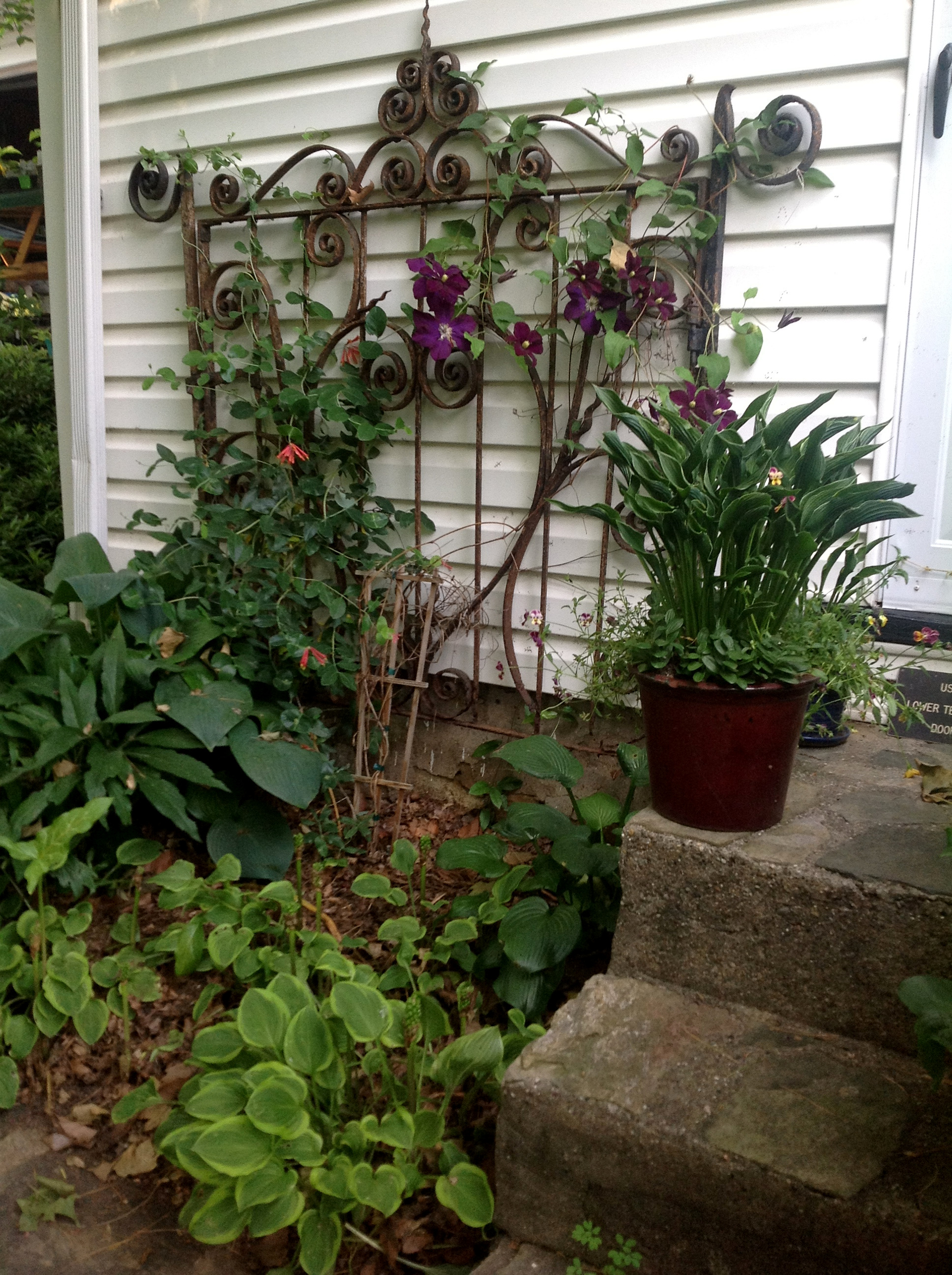
A view of the bed along the steps from the nursery to the main terrace.

Giving up on the idea of actually posting from the iPad, I downloaded the iPad photos to my PC.  Another touted feature of the new iPad is even higher quality screen resolution.  That means, as I discovered, that the photos look fabulous on my iPad but pretty ordinary on my PC.  But having come this far, I am going ahead with the long view garden tour.  I hope you are all viewing it on an iPad and will think I am an incredible photographer.  For those of you on a “normal” computer, please don’t tell.

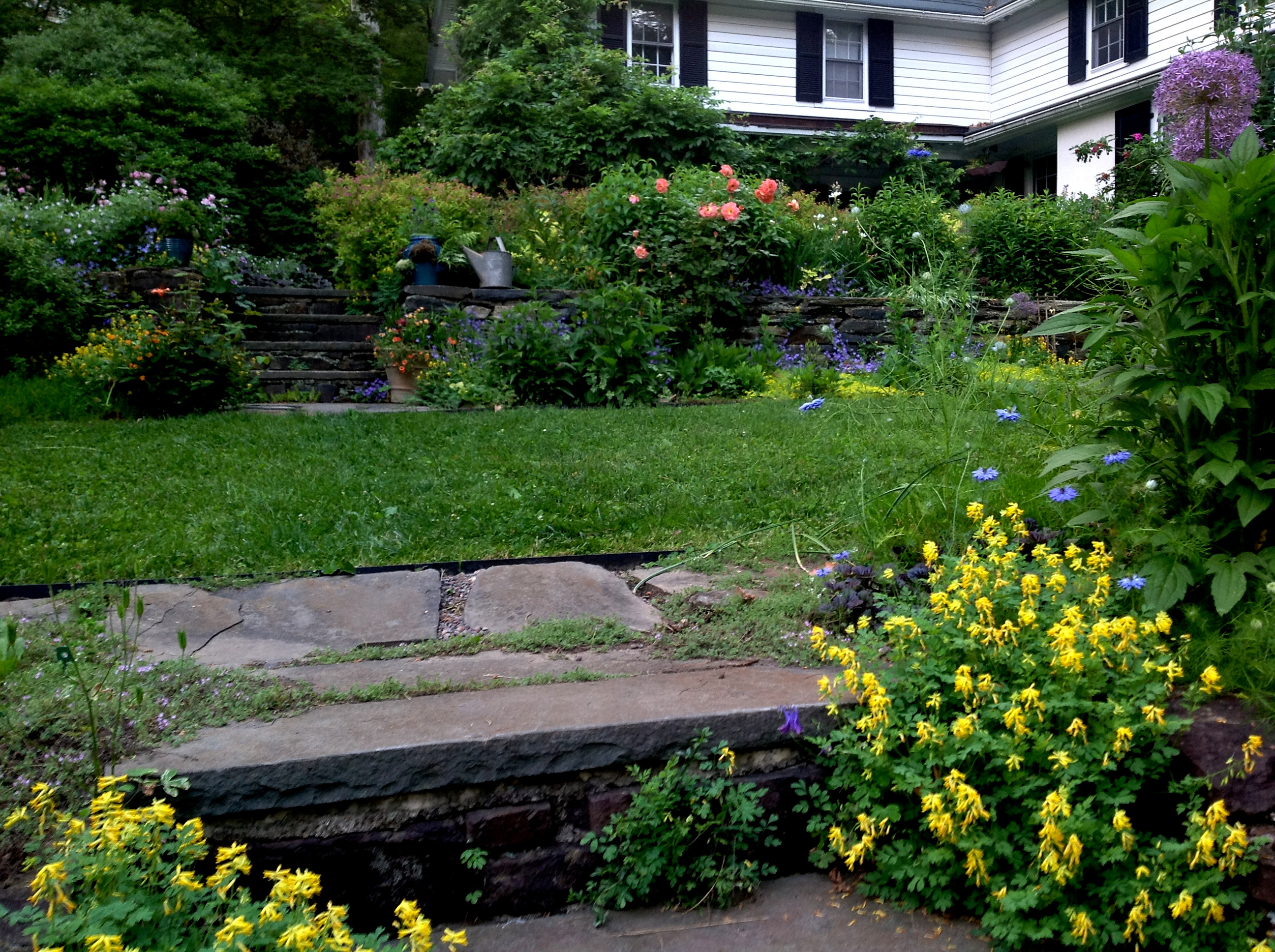
On the way down the stairs, we passed by the rock garden terrace and landed on the main terrace by the front door.  You are looking to the left towards the door.

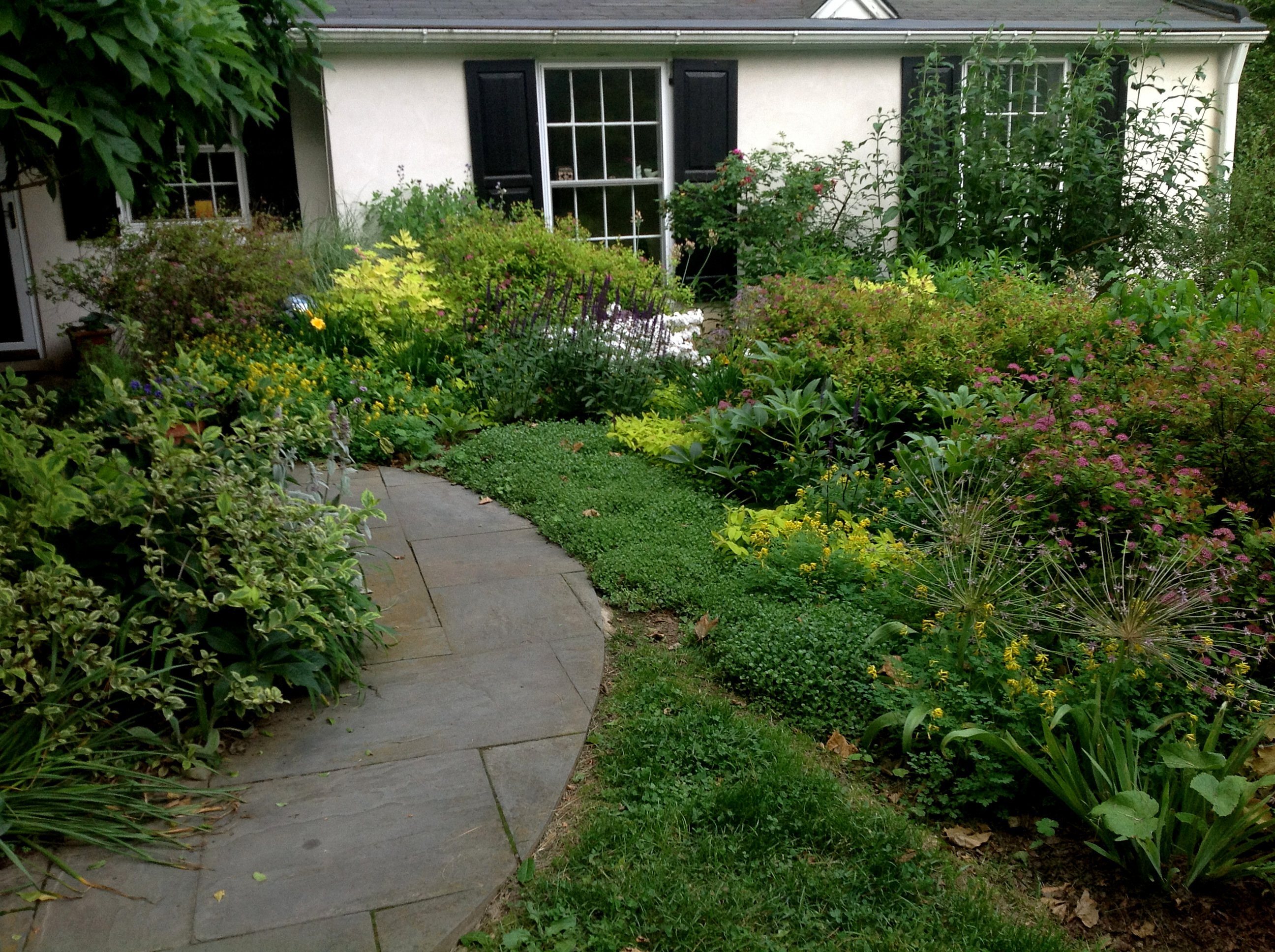
Looking from the front door out towards the same beds.

Looking to the right towards the other end of the main terrace.

A wider view of the right end of the main terrace by the front door.

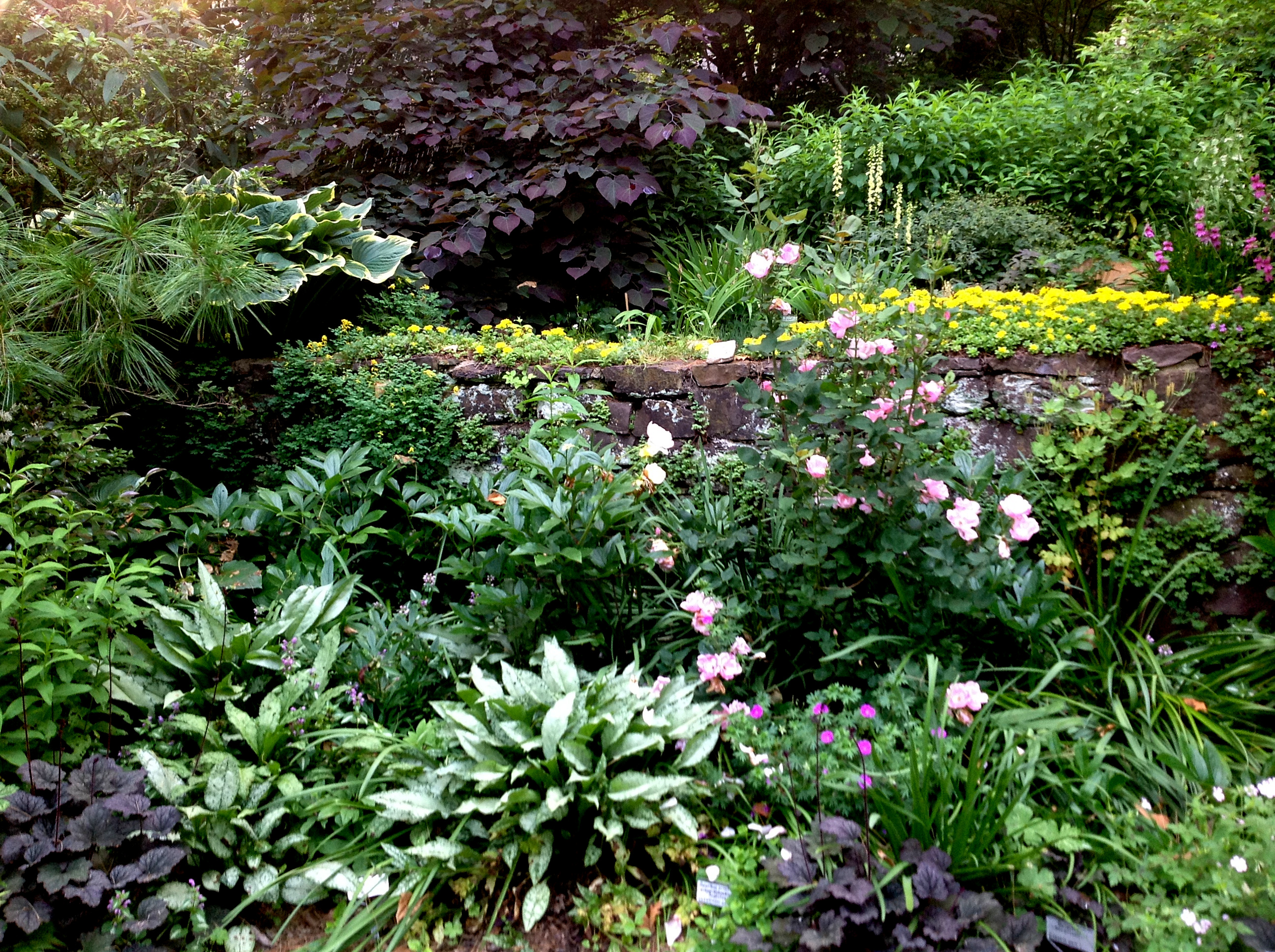
Looking from the main terrace back up the hill towards the rock garden terrace, which really shines in early spring but still looks nice now.

The view from the main terrace down to the bottom terrace and beyond.

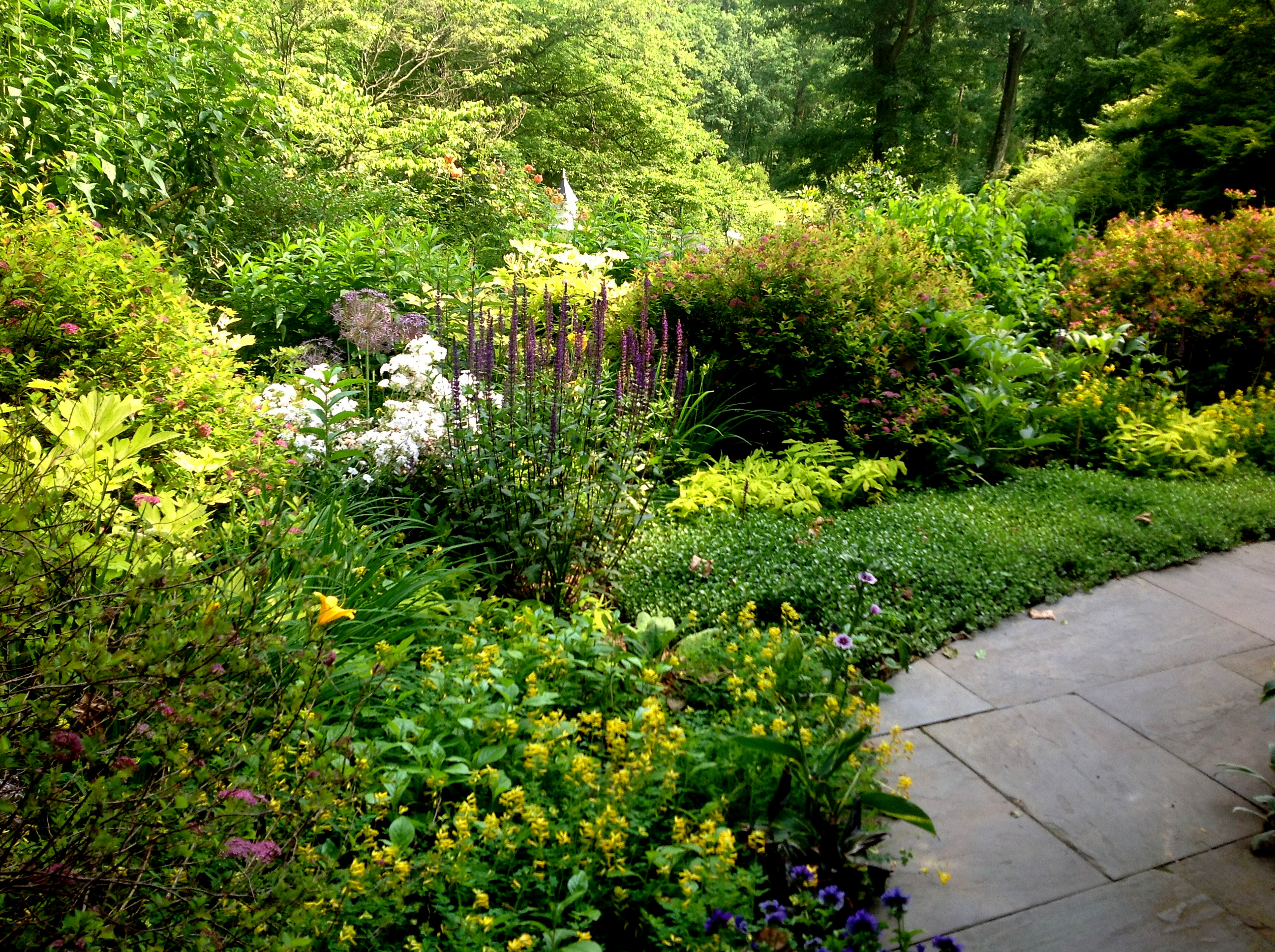
The stairs from the main terrace to the bottom terrace.  Most of the flowers on this level are orange and purple.

The left side of the bottom terrace.

The right side of the bottom terrace.

Another view of the right side of the bottom terrace.

A closer view

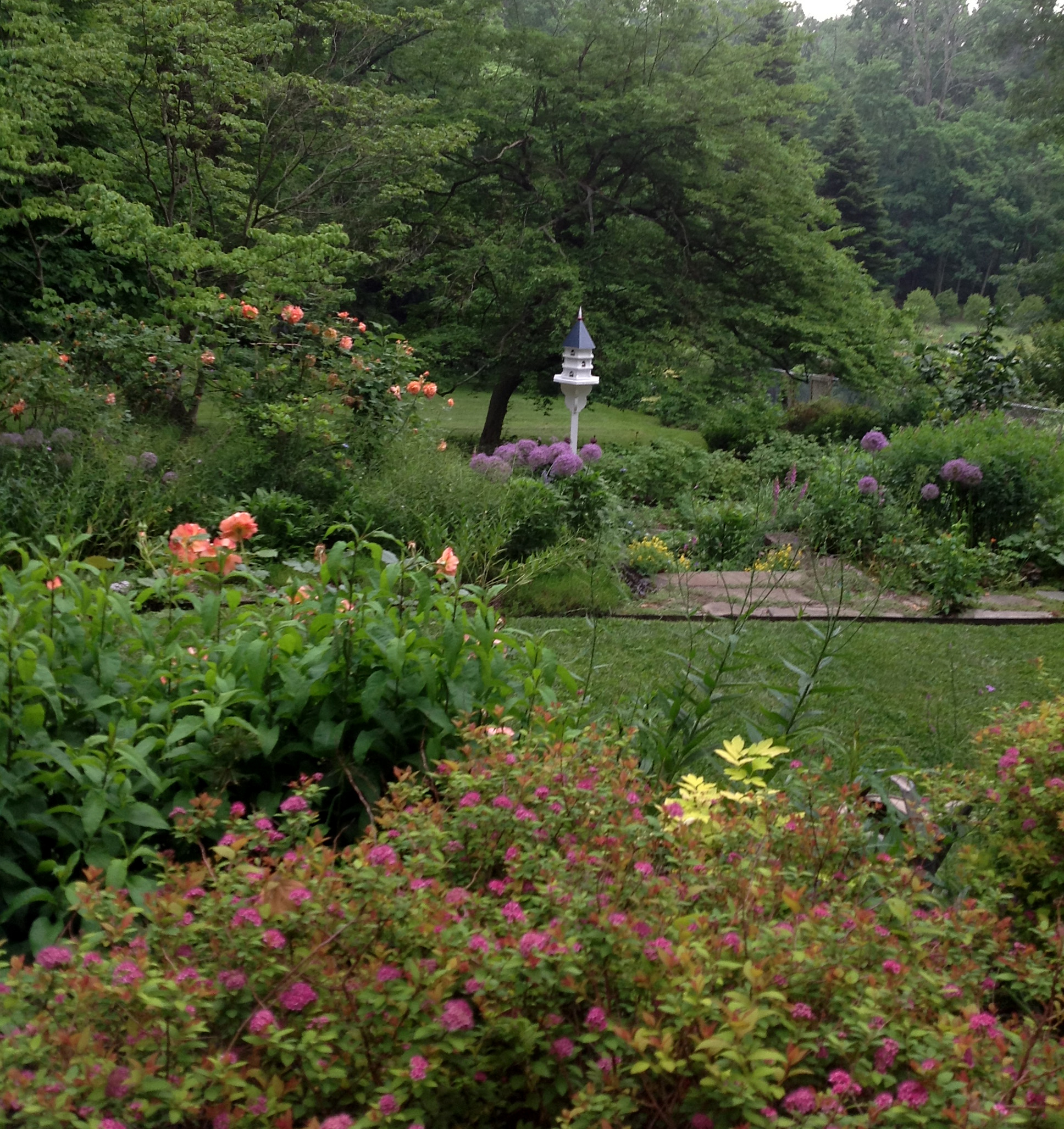
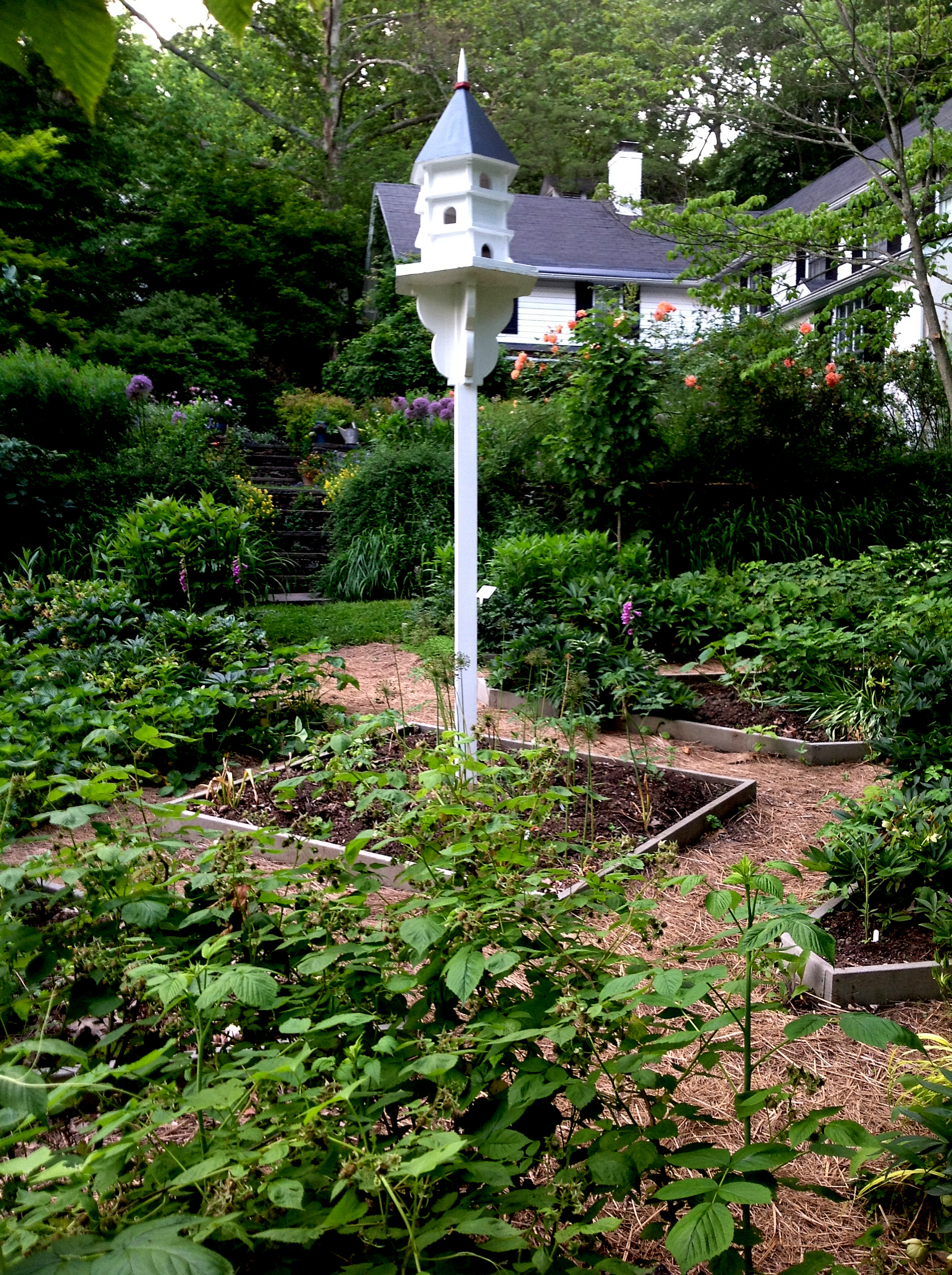
The view from the bottom terrace down to the raised bed area where the birdhouse resides.

The stairs down to the next level.

The raised bed area was built as a vegetable garden but converted to hellebore beds when deer overran our property.  It is currently being reclaimed for fruit and vegetables now that we have a deer fence.

Below the raised beds is what we call the dry shade garden under an American hornbeam.  It is filled with roots and not much rain gets through the leaves.  Beyond this garden is lawn until you get to my production beds where I grow plants to sell at the nursery.

A close up of the dry shade garden.

Looking from the dry shade garden back up the hill.

That’s the tour of the gardens going down the hill on the west side of the house.  It is the sunniest area of my property—the real shade gardens are in the back.  You will have to wait for part two to see those.

Carolyn

Nursery Happenings:  We will be at the Bryn Mawr Farmer’s Market this Saturday, June 9, from 9 am to 1 pm.  The following weekend we will have our final open hours at the nursery.  We close on June 17 until September.  Customers on my email list will receive an email with details.  If you are interested in receiving miniature hostas mail order, click here.

If you are within visiting distance and would like to receive catalogues and information about customer events, please send your full name and phone number to carolynsshadegardens@verizon.net.  Subscribing to my blog does not sign you up to receive this information.

Facebook:  Carolyn’s Shade Gardens has a Facebook page where I post single photos, garden tips, and other information that doesn’t fit into a blog post.  You can look at my Facebook page here or click the Like button on my right sidebar here.

Notes: Every word that appears in orange on my blog is a link that you can click for more information.  If you want to return to my blog’s homepage to access the sidebar information (catalogues, previous articles, etc.) or to subscribe to my blog, just click here.