Carolyn’s Shade Gardens is a retail nursery located in Bryn Mawr, PA, specializing in showy, colorful, and unusual plants for shade. The only plants that we ship are snowdrops and miniature hostas. For catalogues and announcements of events, please send your full name, location, and phone number (for back up use only) to carolyn@carolynsshadegardens.com. Click here to get to the home page of our website for catalogues and information about our nursery and to subscribe to our blog.
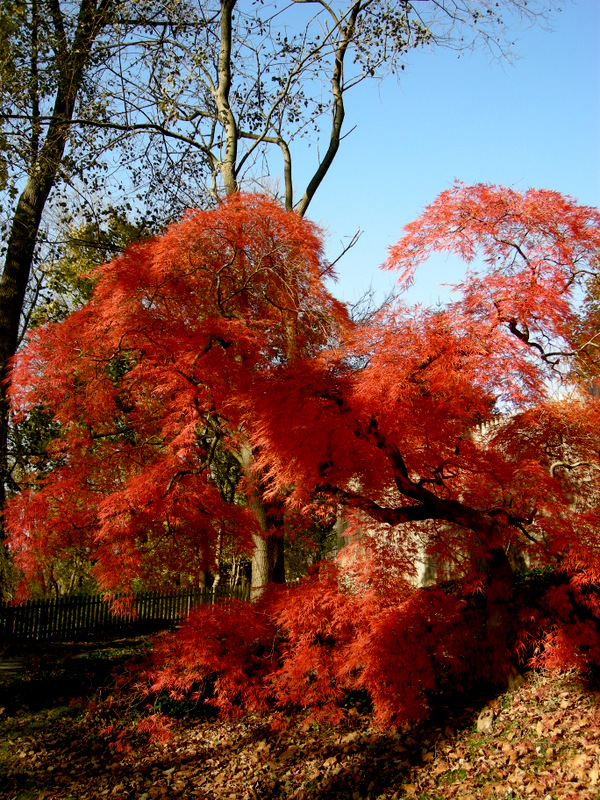
 This Japanese maple, Acer palmatum, of unknown origin broke off in the ice and snow in January 2011. For a photo of it then, click here. It has recovered beautifully with an even more interesting habit.
I have said before that no matter how much I try to enjoy it, November is not my favorite month. As I wander around, all I see are plants dying back, work to be done, and time running out. Last year wasn’t too bad because we had a long warm fall with beautiful weather and plenty going on through the middle of November. I even called my Garden Bloggers Bloom Day post “Prime Time” (click here to see the show). This year most gardeners in the mid-Atlantic US agree that fall colors on many plants have been muted and gardens have gone by early. Even September and October contained few of the clear, crisp, and sunny days we look forward to, and then along came Sandy.
 A seedling Japanese maple along my front walk.
Despite the bad fall, there are plants in my garden right now that make a stroll outside worthwhile. What is it about them that so attracts me? It is that these plants are reaching their ornamental height right now. They are not just re-blooming or showing a few flowers on a plant that really peaked earlier like asters or phlox, and they are not producing lovely fall color on a woody that I grow just as much for its flowers like hydrangea or viburnum. November is the month when they reach the top.
 The Japanese maples that seeded around this London plane tree produce a variety of fall colors from yellow to orange to red.
In this post I re-introduce you to some of the plants that show their best side in November and December. I have written about many of them before, and I will provide links to those posts. However, I wanted to gather these plants together here to provide a complete reference of fall stars to use during your spring shopping trips.
 ‘Shishigashira’ is a gorgeous Japanese maple that just starts to turn in mid-November. It will eventually become a solid orangey red.
When all the other trees have shown their colors and lost their leaves, Japanese maples are just starting to turn. Every time I go outside I grab my camera to take one more shot of their eye-catching color. I think it is their prime ornamental characteristic, especially because of its timing, even though I also appreciate their fine branching structure, delicate leaves, and variety of habits.
 Fall-blooming hardy cyclamen, C. hederifolium.
 The white and pink flowers of hardy cyclamen.
Fall-blooming hardy cyclamen is dormant in the summer and re-emerges in the fall. To get all the details, click here to read my recent post on this unusual but easy to grow plant. For the purposes of this post, what makes it so desirable is that November is its peak when its leaves are fully emerged and provide a stunning backdrop for the flowers.
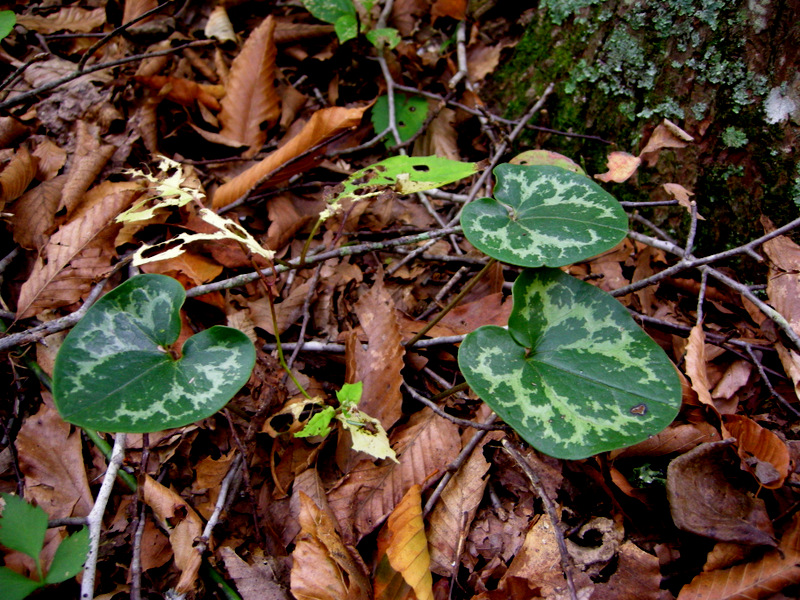
 The basic Italian arum, A. italicum, sometimes called ‘Pictum’.
–
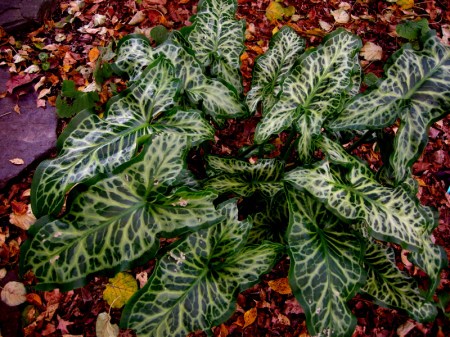 ‘Gold Dust’ Italian arum has much more distinct markings with gold veins.
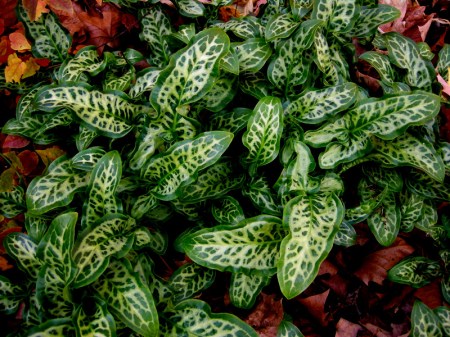 The leaves of ‘Tiny Tot’ Italian arum are about one-third the size (or less) of the species and very finely marked.
Italian arum’s life cycle is very similar to hardy cyclamen: it goes dormant in the summer and comes up fresh and beautiful to peak in the fall and through the winter. It makes a great groundcover, and you can read more about it by clicking here.
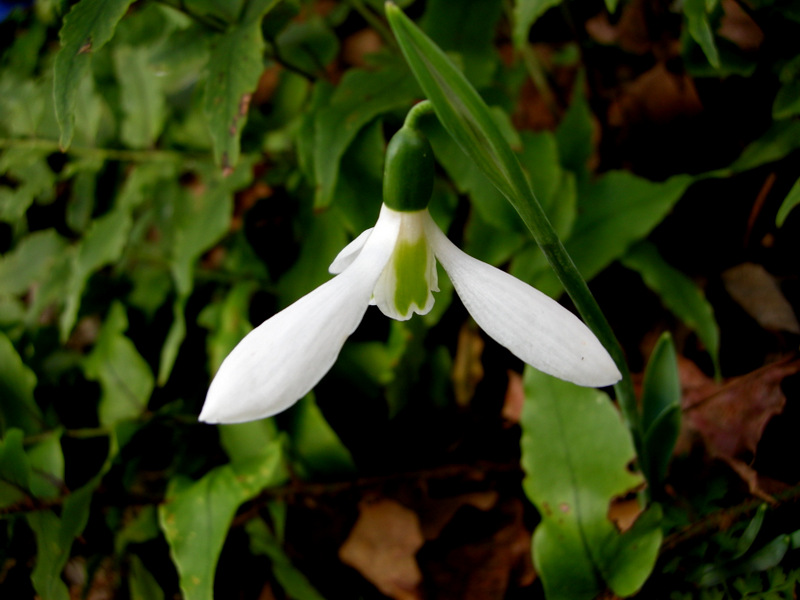
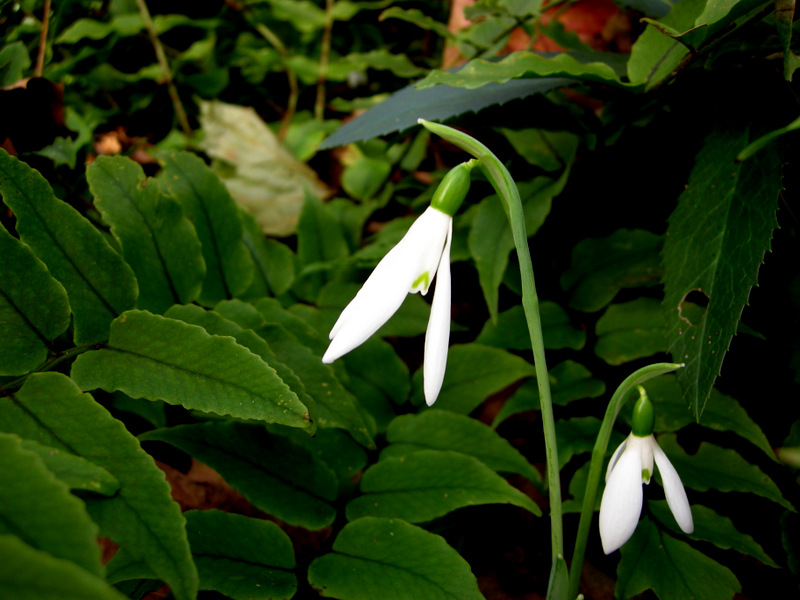
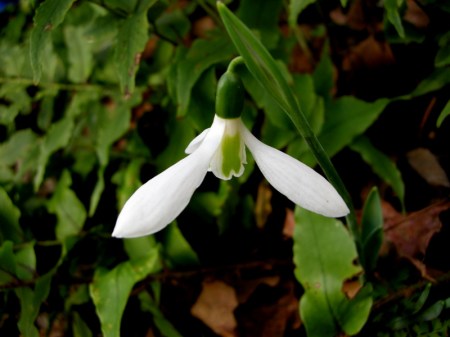 Giant snowdrop, Galanthus elwesii.
–
 A giant snowdrop with unusually long outer segments (petals).
–
 ‘Potter’s Prelude’ giant snowdrop, G. elwesii var. monostichus, is just starting to open in mid-November.
I couldn’t write a post this time of year without mentioning fall-blooming snowdrops. Although we think of snowdrops as blooming in March, there are several species that bloom in the fall, including G. reginae-olgae, which blooms in October and is done now. Also the giant snowdrop, whose flowers are quite variable, blooms for a long period from November to February so I have included some photos above. But the king of fall is ‘Potter’s Prelude’, a very robust and vigorous snowdrop that blooms reliably in November. For more information, click here to read my post on fall-blooming snowdrops.
–
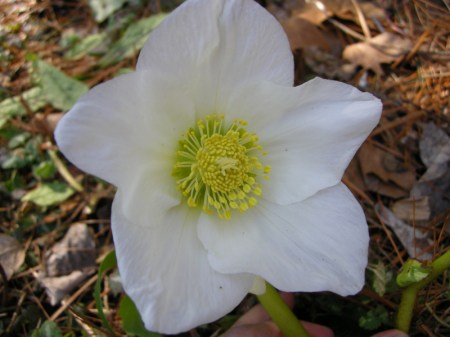 Christmas rose ‘Josef Lemper’, Helleborus niger
–
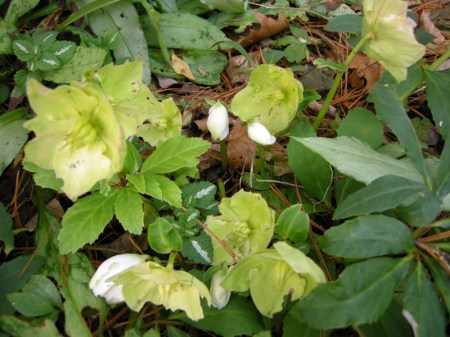 This photo was taken today—as you can see ‘Josef’ Lemper’s’ October flowers have gone by, but a whole new crop of buds are preparing for November.
 The Christmas rose ‘Jacob’ begins a month later that ‘Josef Lemper’. Its buds are just beginning to reach up beyond the leaves.
‘Josef Lemper’ and ‘Jacob’ Christmas roses are also stars in my November garden, producing pure white 3 to 4″ wide flowers set off by smooth evergreen leaves. Fall is their season, and they produce copious amounts of flowers to cheer up dreary November days. For more information on fall-blooming hellebores, click here.
–
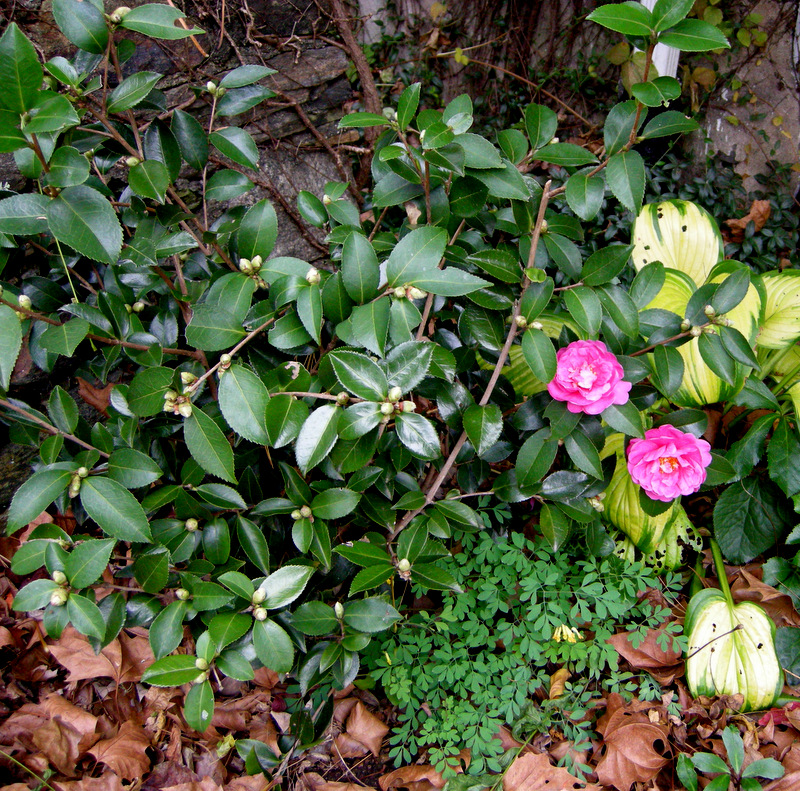
 Fall-blooming camellia ‘Winter’s Joy’ produces its first two flowers but look at all the buds to come.
The last photo is a teaser because of course fall-blooming camellias play a huge part in my November garden. As with the other plants profiled, they are not just hanging on into November but instead come into their own then. Look for an upcoming post featuring my camellias and my recent visit to the garden of a customer who also loves camellias.
All these plants (except the single flower of ‘Josef Lemper’ Christmas rose) are pictured blooming in my garden right now so I am linking to Garden Blogger’s Bloom Day (“GBBD”) hosted by May Dreams Gardens where gardeners from all over the world publish photos of what’s blooming in their gardens.
Carolyn
Nursery Happenings: Carolyn’s Shade Gardens is done for the fall. Thanks for a great year. See you in spring 2013.
If you are within visiting distance and would like to receive catalogues and information about customer events, please send your full name and phone number to carolynsshadegardens@verizon.net. Subscribing to my blog does not sign you up to receive this information.
Facebook: Carolyn’s Shade Gardens has a Facebook page where I post single photos, garden tips, and other information that doesn’t fit into a blog post. You can look at my Facebook page here or click the Like button on my right sidebar here.
Notes: Every word that appears in orange on my blog is a link that you can click for more information. If you want to return to my blog’s homepage to access the sidebar information (catalogues, previous articles, etc.) or to subscribe to my blog, just click here.
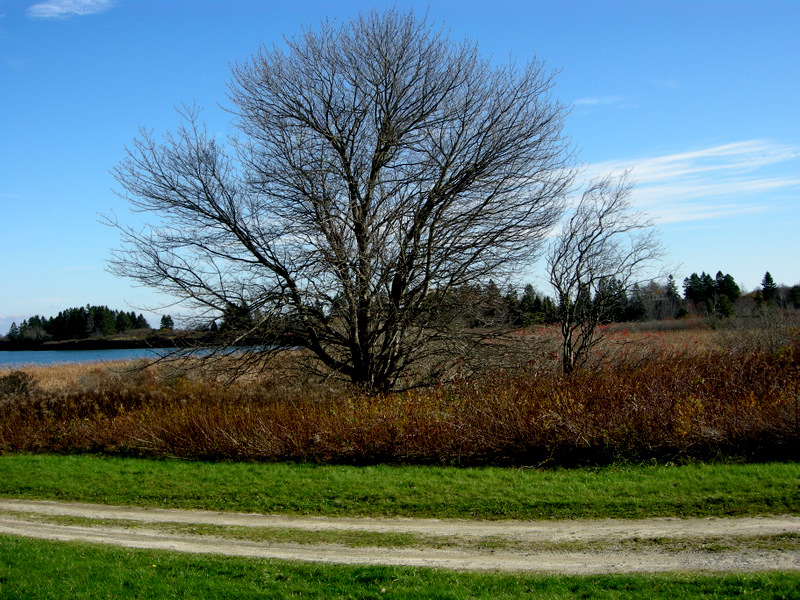
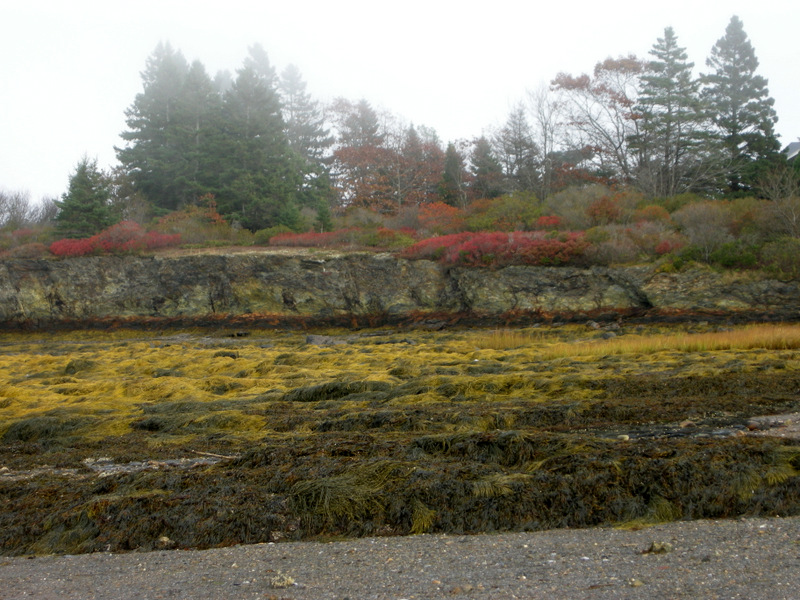
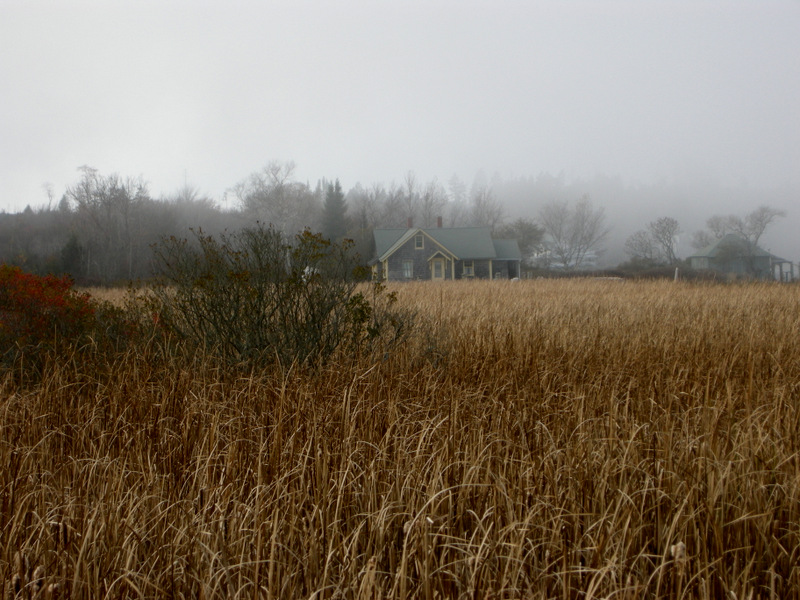
 The dramatic fall color of red maples has been replaced with the more subtle color of American beech. All the photos in this post were taken in and around Cliff Island, Maine, US, located off the coast of Portland in Casco Bay.
 The bay is empty of boats.
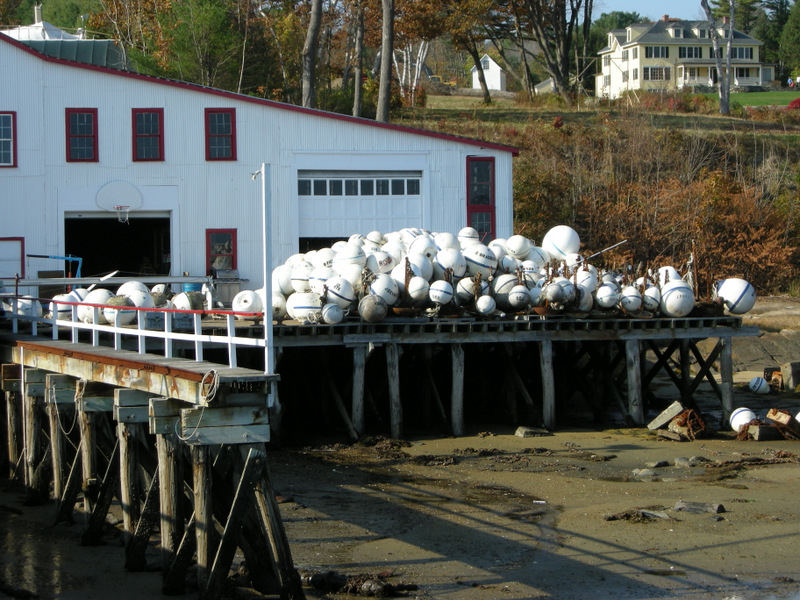 The mooring buoys are stacked on the shore.
 The summer cottages are closed.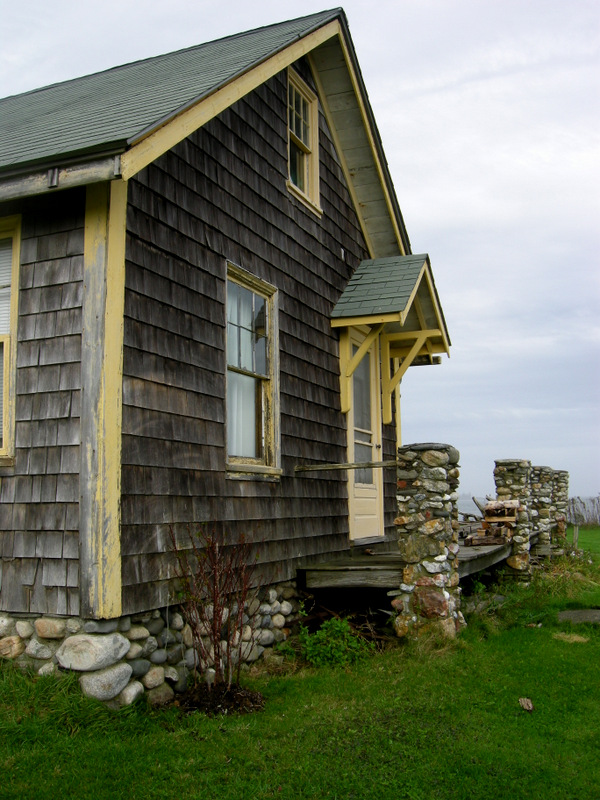
 This is the house where the movie The Whales of August with Betty Davis, Lillian Gish, and Vincent Price was filmed.
 The ocean loses its benign summer look.
 The cliffs for which Cliff Island was named.
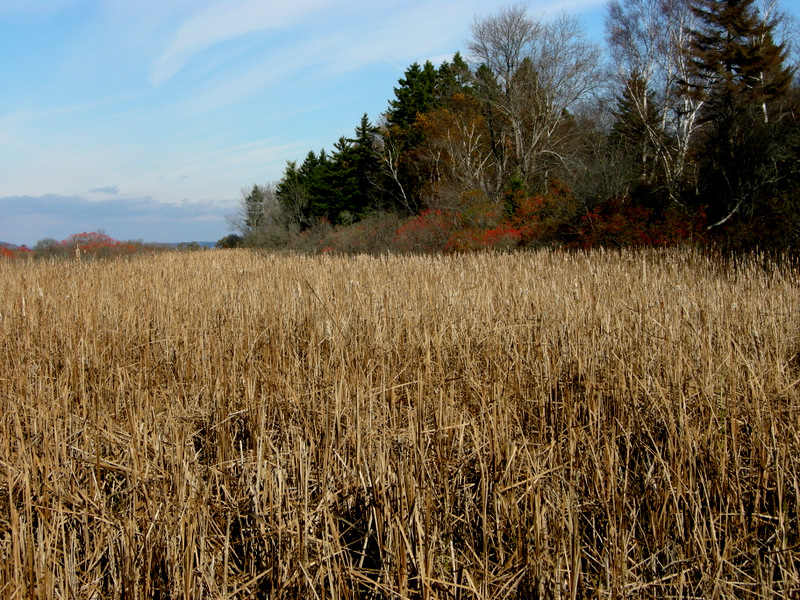
 Cattails and winterberry holly
 winterberry holly
 .
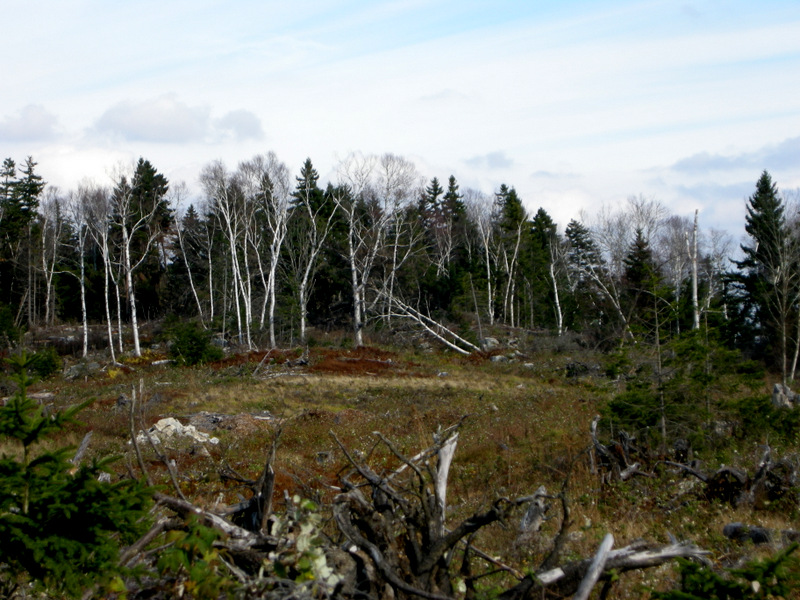
.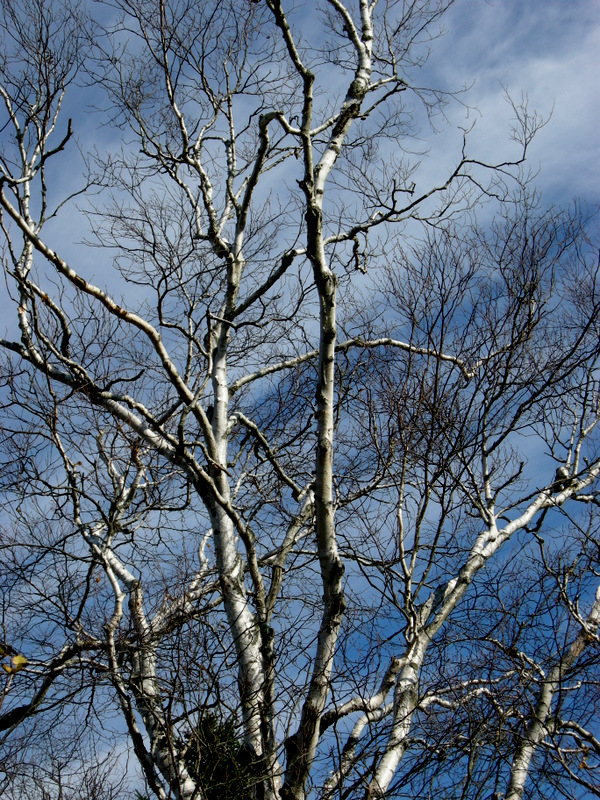 The paper birches glow against the clear blue sky.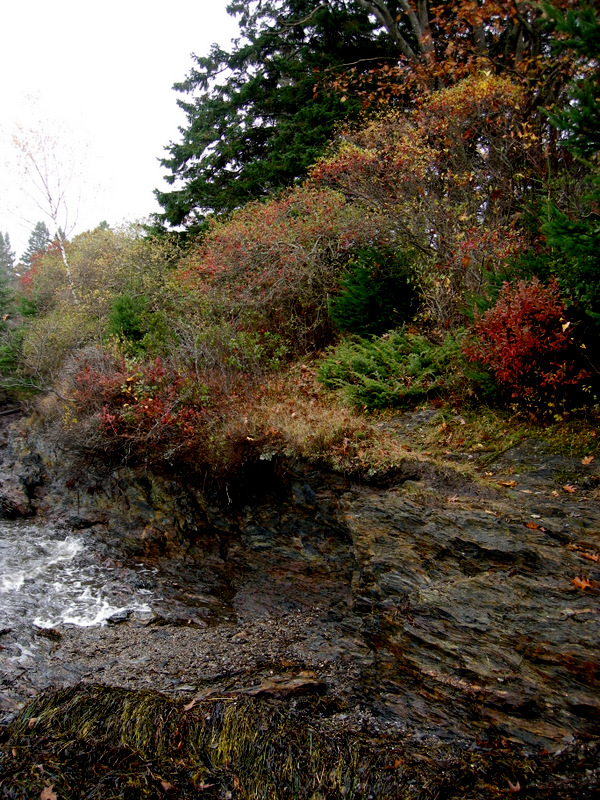
 .
. .
. .
.
 .
. .
. .
.