Archive for April, 2013

European Wood Anemone, My Collection

Posted in bulbs for shade, groundcover, Shade Gardening, Shade Perennials with tags , , , , , , , , , , , , , , , , , , , , on April 26, 2013 by Carolyn @ Carolyns Shade Gardens

Carolyn’s Shade Gardens is a retail nursery located in Bryn Mawr, PA, specializing in showy, colorful, and unusual plants for shade.  The only plants that we ship are snowdrops and miniature hostas.  For catalogues and announcements of events, please send your full name, location, and phone number (for back up use only) to carolyn@carolynsshadegardens.com.  Click here to get to the home page of our website for catalogues and information about our nursery and to subscribe to our blog.

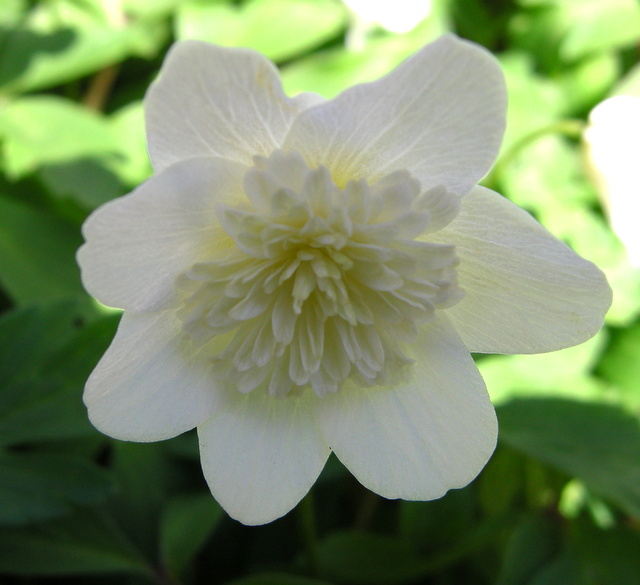
. Anemone nemorosa 'Vestal'European wood anemone ‘Vestal’, Anemone nemorosa
.

My last post highlighting my epimedium collection was very popular.  It set a new record for views in a single day.  It was also quite helpful in allowing me to document the collection in photographs.  That has inspired me to do a similar post introducing another relatively obscure group of plants blooming right now, European wood anemones or Anemone nemorosa.  I first saw them in Charles Cresson’s garden in 1995, and he gave me five cultivars to take home.  I have since increased that number to 13 (15 if you count the two that died).  I want to share this special plant with you and discuss its culture and garden uses.

.

Anemone nemorosa 'Vestal'‘Vestal’ is a moderate spreader.

European wood anemone is what is often called a bulb ally.  It springs from skinny, stick-like rhizomes that spread through  leaf litter to form patches of beautiful flowers and leaves.  You can buy the dried rhizomes in the fall like other bulbs or you can buy growing plants in the spring from Carolyn’s Shade Gardens or other specialty nurseries.  Wood anemones grow in part to full shade and like woodland soil with lots of organic matter. I have never watered them, but I do mulch them with a covering of ground leaves in the fall.  The various cultivars spread at different rates in my woods from slow to fast.  I will indicate what type of spreader each one is in my garden, but it may depend entirely on my conditions and where each variety is planted

.

A. nemorosa 'Robinsoniana'‘Robinsoniana’ is a gorgeous blue but a slow grower in my garden.

European wood anemones are a spring ephemeral.  They take advantage of the sunlight before the woody plants leaf out and then go dormant when it gets hot and shade prevails.  Although they disappear, they are still a good groundcover because the rhizomes are so thickly matted that no weeds can grow.  Just plant later emerging plants like ferns or hostas around them if the hole will bother you after they disappear.

.

Anemone nemorosa 'Leeds Variety'‘Leed’s Variety’ spreads moderately.

.

Anemone nemorosa 'Leed's Variety'‘Leed’s Variety’ has the biggest flowers, about 2″ wide, of any of my cultivars.

.

European wood anemones bloom in the mid-Atlantic for the whole month of April and sometimes into May, depending on the weather.  Their plentiful flowers are 1 to 2″ wide and generally white, blue, and pink and can be double or semi-double.  Many of the cultivars are very similar in appearance.  The Royal Horticultural Society’s plant finder lists almost 100 varieties.  There are some closely related yellow-flowered forms as well as some weird green-flowered varieties, ‘Virescens’ and ‘Green Fingers’, both of which I have killed.  Wood anemones’ leaves are an attractive dark green with three deeply incised segments.  They form compact mounds about 6 to 8″ tall.

.
Anemone nemorosa 'Wyatt's Pink'‘Wyatt’s Pink‘ is a moderate grower.

.

Anemone nemorosa 'Wyatt's Pink'‘Wyatt’s Pink’

.

A patch of wood anemones really lights up a woodland opening, and I like to let mine develop as big a swathe as they can manage.  They are native to the woodlands and shady banks of western Asia and the northern temperate zones of central Europe, including England where many cultivars have been selected.  According to the RHS, they are hardy to zone 5 and another source says zones 5 to 9, but you should do your own research before planting them if you are not in the mid-Atlantic.

.

Anemone nemorosa 'Bractiata'‘Bracteata’ is a fast grower.

.

Anemone nemorosa 'Bractiata'‘Bracteata’ is an unusual and very elegant form with the white flower color extending into the leafy bracts.

.

European wood anemones are quite easy to grow and well worth adding to your garden if you can find them.  Here are some of my other cultivars:

.

Anemone ranunculoidesYellow wood anemone, A. ranunculoides, is closely related to A. nemorosa.  It is the first to come into bloom and spreads quickly but not aggressively, even self-sowing.

.

Anemone ranunculoidesYellow wood anemone

.

Anemone nemorosa 'Lychette' ‘Lychette’ is a moderate spreader.

.

Anemone nemorosa 'Allenii' ‘Allenii’ is similar to ‘Robinsoniana’ but more silvery blue in color.  It is a moderate spreader.

.

Anemone nemorosa 'Alba' ‘Alba’ spreads slowly for me.

.

Anemone nemorosa pink formI acquired this Anemone nemorosa from the old Heronswood Nursery in Washington with the name “pink form”.  It is a moderate grower.

.

Anemone nemorosa 'Alba Plena'‘Alba Plena’ is very similar to ‘Vestal’ but it is a faster spreader.

.

Anemone nemorosa 'Alba Plena'‘Alba Plena’

.

Anemone x seemaniiAnemone x seemanii is a cross between A. ranunculoides and A. nemorosa, producing this lovely pale yellow flower.  It is a moderate grower.

.

Anemone x seemaniiAnemone x seemanii

.

Anemone nemorosa 'Blue Eye'I will end the profiles of my cultivars with this photo of the absolutely exquisite ‘Blue Eyes’, which I also got from Heronswood.

.

Most of the plants in my woodland are allowed to form large patches for a natural look, and European wood anemone fits right in.  Here are some photos of how I use it:

.

Anemone ranunculoidesYellow wood anemone filling a large area in front of Virginia bluebells and Celandine poppy.

.

Anemone nemorosa 'Bracteata'‘Bracteata’ edging a path with hellebores and checkered lily, Fritillaria meleagris, another self-seeder in my woods.

.

Anemone nemorosa 'Lychette'‘Lychette’ on a shady slope with Celandine poppy.

.

Anemone nemorrosa 'Vestal' and Anemone ranunculoides‘Vestal’ and Anemone ranunculoides edge a woodland path with ‘Alba’ across the way to the right of the Virginia bluebells.

.

European wood anemones are for sale at Carolyn’s Shade Gardens.  If you are not local or you want some of the really special cultivars,  you can order them from Arrowhead Alpines in Michigan, a great mail order nursery for unusual woodland plants.

Carolyn

.

Carolyn’s Shade Gardens is a retail nursery located in Bryn Mawr, Pennsylvania, US, zone 6b.  The only plants that we mail order are snowdrops and miniature hostas and only within the US.

If you are within visiting distance and would like to receive catalogues and information about customer events, please send your full name and phone number to carolynsshadegardens@verizon.net.  Subscribing to my blog does not sign you up to receive this information.

Nursery Happenings:  The 2013 Miniature Hosta Mail Order Catalogue, containing choice selections of miniatures for shipping all over the US, is now on the right sidebar here, and we are ready to ship. Next up locally is our hosta, fern, and hardy geranium open house sale on May 11—look for an email if you are on my customer email list (different than a blog subscription).

Facebook:  Carolyn’s Shade Gardens has a Facebook Page where I post single photos, garden tips, and other information that doesn’t fit into a blog post.  You can look at my Facebook page here or click the Like button on my right sidebar here.

Notes: Every word that appears in orange on my blog is a link that you can click for more information.  If you want to return to my blog’s homepage to access the sidebar information (catalogues, previous articles, etc.) or to subscribe to my blog, just click here.

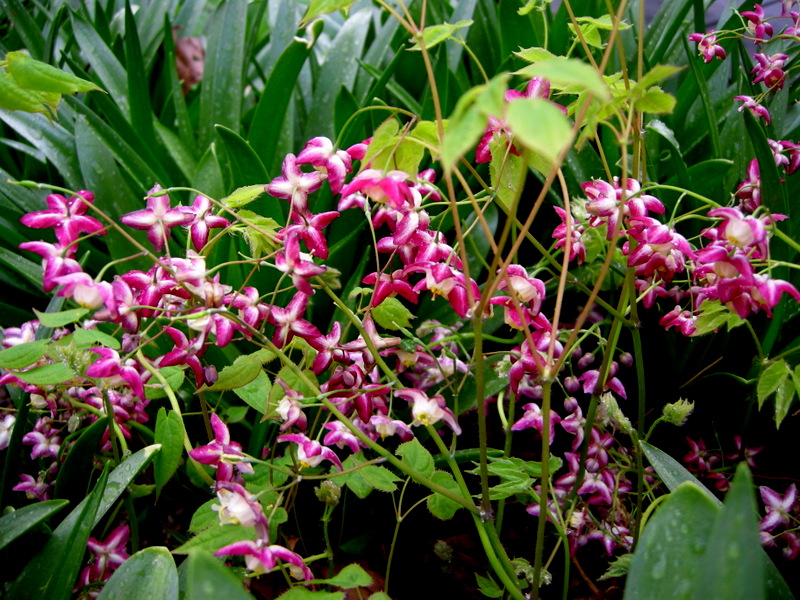
Epimediums, My Collection

Posted in evergreen, groundcover, Shade Gardening, Shade Perennials with tags , , , , , , , , , , , , , , , , , , , , , , , , , on April 18, 2013 by Carolyn @ Carolyns Shade Gardens

Carolyn’s Shade Gardens is a retail nursery located in Bryn Mawr, PA, specializing in showy, colorful, and unusual plants for shade.  The only plants that we ship are snowdrops and miniature hostas.  For catalogues and announcements of events, please send your full name, location, and phone number (for back up use only) to carolyn@carolynsshadegardens.com.  Click here to get to the home page of our website for catalogues and information about our nursery and to subscribe to our blog.

. Epimedium pinnatum subsp. colchicumEpimedium pinnatum subsp. colchicum, evergreen.

.

Nan Ondra at the fabulous blog Hayfield recently praised my blog saying: “If you want to see how beautiful a spring garden can look here in southeastern Pennsylvania, I highly recommend popping over to Carolyn Walker’s blog, Carolyn’s Shade Gardens. It’s where I go when I need a good dose of primroses, spring phlox, and other early-blooming beauties.”   A lot of Nan’s readers took her advice and visited my blog.  I have been trying to think of what I could do to thank Nan, not just for the recommendation, but for her advice when I started my blog and numerous consultations on selling my photos.  I decided that if she needs a dose of spring flowers, then epimediums are what she should have.  Nan, this post is for you!

.

Epimedium x rubrumEpimedium x rubrum spreads at a moderate pace and can be used as a groundcover, leaves flushed red in the spring.

I try not to let myself collect too many types of plants because it can interfere with good garden design.  But epimediums, also known as barrenwort, bishop’s hat, fairy wings, horny goat weed, and rowdy lamb herb, are a plant I love so much that I collect them.  According to my records, I have almost 30 varieties.  That might seem like a lot, but there are actually hundreds of types of epimediums.

.

Epimedium x versicolor 'Sulphureum'Epimedium x versicolor ‘Sulphureum’ is the fastest spreading epimedium I have and makes an excellent groundcover, semi-evergreen.

Epimediums are native to Asia, Europe, and North Africa.  They are long-lived and easy to grow in part to full shade and are a great plant for dry shade.  Some of the more available varieties like ‘Sulphureum’, E. x rubrum, E. x warleyense, and ‘Frohnleiten’ spread readily but not quickly to form an attractive groundcover.  I grow mine all over my garden but mostly as specimens on the steep hill  in back between all my hostas (yes, I collect those too).  Their flowers are small but quite beautiful, elegant, and abundant.  Epimediums are a plant that needs to be viewed close up.  This time of year I walk around mesmerized by their beauty.

.

Epimedium cantabrigienseEpimedium x cantabrigiense, semi-evergreen.

Epimediums bloom in April and May, and their flowers are breathtaking as you can see from the photos.  However, their leaves are just as beautiful with their elegant, unusual shapes.  They often come out flushed with bright colors in the spring, and many varieties have great fall color too.  Some are semi-evergreen to evergreen.  Epimediums range in height from 8 to 16″.

.
Epimedium pubigerumEpimedium pubigerum, semi-evergreen.

Epimediums are perfectly suited to our mid-Atlantic climate, especially our new hotter, drier, drought prone climate.  A quick survey of the epimediums listed in the Missouri Botanical Garden Plant Finder indicates that they are hardy from zones 4 or 5 to 8 or 9, but you should do your own research if you are not in the mid-Atlantic.  I usually choose a well-drained location because like hellebores they don’t tolerate poor drainage, and add compost at planting.  They are great under shallow-rooted trees and are deer resistant.

.

Epimedium x warleyenseEpimedium x warleyense, spreading, from Miss Wilmott’s garden Warley Place, England, evergreen.

I sell up to 10 different types of epimediums at Carolyn’s Shade Gardens depending on the year.  There are seven for sale right now and now is the best time to view them in my garden.  But if you get hooked, then you need to know about Garden Vision Epimediums in Templeton, Massachusetts, 978-249-3863, epimediums@earhtlink.net.  Their catalogue lists at least a 150 epimediums and is encyclopedic with comprehensive descriptions and color photos plus zone information for each variety.  A visit to their Open Nursery Weekends, this year May 3 to 5 and 10 to 12, from 10 am to 4 pm, is a magical experience.

.

Epimedium x perralchicum 'Frohnleiten'Epimedium x perralchicum ‘Frohnleiten’, tough and shiny evergreen leaves.

All the photos in this post were taken in my garden today.  I hope that you too will come to love this wonderful genus:

.

Epimdium x versicolor 'Cupreum'Epimedium x versicolor ‘Cupreum, look at those gorgeous leaves, semi-evergreen.

.

Epimedium x 'Kaguyahime'Epimedium x ‘Kaguyahime’, probably my favorite epimedium for its lovely two-tone purple flowers and dagger-like, purple-mottled leaves, evergreen.

.

Epimedium grandiflorum 'Yubae'Epimedium grandiflorum ‘Yubae’, produces a second flush of leaves and flowers.

.

Epimedium stellultum "Long Leaf Form"Epimedium stellulatum “Narrow Leaf Forms”, the first to bloom in my garden like a “flurry of small stars suspended above the spiny evergreen foliage”, Garden Vision catalogue.

.

Epimedium x rubrum 'Sweetheart'Epimedium x rubrum ‘Sweetheart’, later-blooming, notice the red rim around the semi-evergreen leaves.

.

Epimedium grandiflorum 'Tama No Genpei'Epimedium grandiflorum ‘Tama No Genpei’, I love this one too, re-blooming.

.

Epimedium x versicolor 'Cherry Tart'Epimedium x versicolor ‘Cherry Tart’, semi-evergreen.

.

Epimedium grandiflorum var. violaceumEpimedium grandiflorum var. violaceum, chocolate leaves in the spring.

.

Epimedium grandiflorum 'Album'Epimedium grandiflorum ‘Album’, large pristine white flowers.

.

Epimdium grandiflorum var. higoense 'Bandit'Epimedium grandiflorum var. higoense ‘Bandit’, later blooming but I had to show it, white flowers and tiny leaves rimmed with a dark purple band.

.

Epimedium alpinum 'Shrimp Girl'Epimedium alpinum ‘Shrimp Girl’, I love the name and the coral-orange color on this diminutive but spreading cultivar, semi-evergreen.

.

Epimedium x warleyense 'Orange Queen'Epimedium x warleyense ‘Orange Queen’, evergreen, here with Pulmonaria ‘Benediction’.

Here are some shots of mature patches of epimediums so you can get an idea of what they look like in the landscape:

Epimedium x versicolor 'Sulphureum'‘Sulphureum’ just coming into bloom.  The leaves are just emerging too and will get much larger.

.

Epimdium x rubrumEpimedium x rubrum with Spanish bluebells and early emerging Hosta lancifolia.

.

Seven varieties of epimediums will be for sale at Carolyn’s Shade Gardens’ open hours this weekend: Friday, April 19, 10 am to 4 pm, and Saturday, April 20, from 10 am to 2 pm.  If you are not local or you want some of the really special cultivars,  you can order them from Garden Vision Epimediums.

Carolyn

.

Carolyn’s Shade Gardens is a retail nursery located in Bryn Mawr, Pennsylvania, US, zone 6b.  The only plants that we mail order are snowdrops and miniature hostas and only within the US.

If you are within visiting distance and would like to receive catalogues and information about customer events, please send your full name and phone number to carolynsshadegardens@verizon.net.  Subscribing to my blog does not sign you up to receive this information.

Nursery Happenings:  The Miniature Hosta Mail Order Catalogue, containing choice selections of miniatures for shipping all over the US, is now on my right sidebar here, and we are ready to ship. Next up locally is our hosta, fern, and hardy geranium open house sale on May 11—look for an email if you are on my customer email list (different than a blog subscription).

Facebook:  Carolyn’s Shade Gardens has a Facebook Page where I post single photos, garden tips, and other information that doesn’t fit into a blog post.  You can look at my Facebook page here or click the Like button on my right sidebar here.

Notes: Every word that appears in orange on my blog is a link that you can click for more information.  If you want to return to my blog’s homepage to access the sidebar information (catalogues, previous articles, etc.) or to subscribe to my blog, just click here.

Primroses That Live

Posted in Shade Gardening, Shade Perennials with tags , , , , , , , , , , , , , , , , , , , , on April 10, 2013 by Carolyn @ Carolyns Shade Gardens

Carolyn’s Shade Gardens is a retail nursery located in Bryn Mawr, PA, specializing in showy, colorful, and unusual plants for shade.  The only plants that we ship are snowdrops and miniature hostas.  For catalogues and announcements of events, please send your full name, location, and phone number (for back up use only) to carolyn@carolynsshadegardens.com.  Click here to get to the home page of our website for catalogues and information about our nursery and to subscribe to our blog.

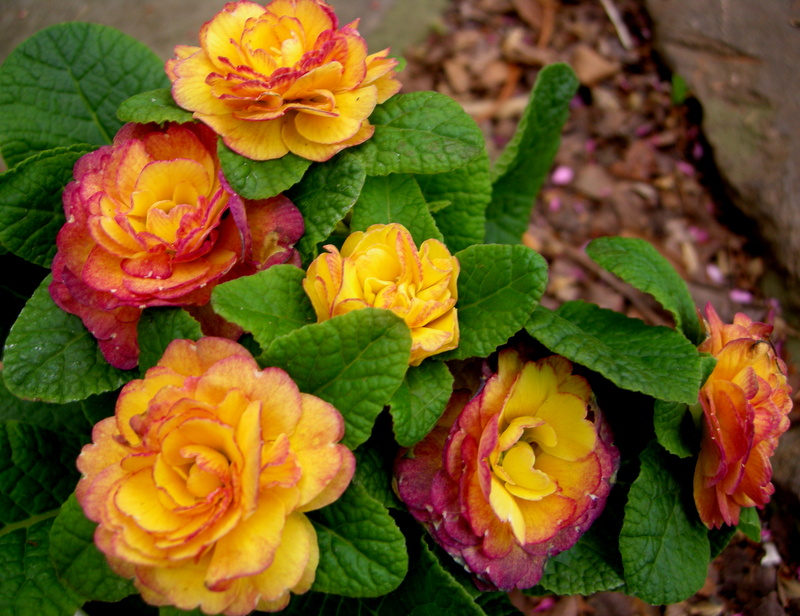
Primula 'Belarina Nectarine'‘Belarina Nectarine’ double primrose

.

This weekend Carolyn’s Shade Gardens is holding its second open house sale of the season, and one of the featured plants is primroses.  Primroses are a hard sell to gardeners because, as my customers always tell me, they’ve tried primroses and they don’t come back.  I usually begin my defense of the hardiness of primroses by asking if they bought the brightly colored varieties often sold in supermarkets and other big box type stores in early spring.  We have all done it, who can resist?  Unfortunately, those primroses are not suited to our climate and really shouldn’t be marketed as perennials.  There are, however, many lovely primroses that come back every year.  Here are just a few:

.

Primula verisCowslip primroses are very easily grown in part shade and average soil without supplemental watering.  They produce a 6 to 12″ stem topped by nodding, fragrant, lemon-yellow flowers in midspring.

.

Ipheion uniflorum, Primula veris, Brunnera macrophylla at Carolyn's Shade GardensCowslip primrose, Primula veris, with spring starflower and perennial forget-me-not.

.

Primula x polyantha 'Old Brick Reds', Corydalis cheilanthifloia at Carolyn's Shade GardensEnglish primrose ‘Old Brick Reds’, P. x polyantha, is very easy to grow in average soil and part shade, multiplying rapidly.  The scarlet red flowers with a yellow eye can appear as early as the end of March and last into May.  The rosette of wintergreen leaves is bright green. ‘Old Brick Reds’ is a 17th century heirloom primrose given to me by one of my classmates at the Barnes Arboretum.  Paired here with fern-leafed corydalis, C. cheilanthifolia.

.
Primula kisoanaPrimula kisoana is so rare that it does not appear to have a common name, but that doesn’t mean it is hard to grow.  It spreads by underground runners to form patches of velvety, unusually shaped leaves topped by many bright pink flowers in April and May.  It doesn’t mind dry soil and has creeped out of the amended beds where I planted it to colonize the edges of the rocks along my woodland path.

.

Primula kisoana 'Alba'Even rarer is the white-flowered form, P. kisoana ‘Alba’.

.

Primula japonicaJapanese primroses, P. japonica, come in many different shades from pure white to dark magenta held on 20″ stems and set off beautifully by their 10″ long bright green leaves.  The flowers are candelabra form which means that they bloom successively in tiers one over the other for a long period of time in May and June.  They are very easy to grow and self-sow readily as long as you plant them in a moist or wet area.  They will grow in average soil but will die as soon as you have a drought.  I am not sure where I got this photo or I would give proper credit.

.

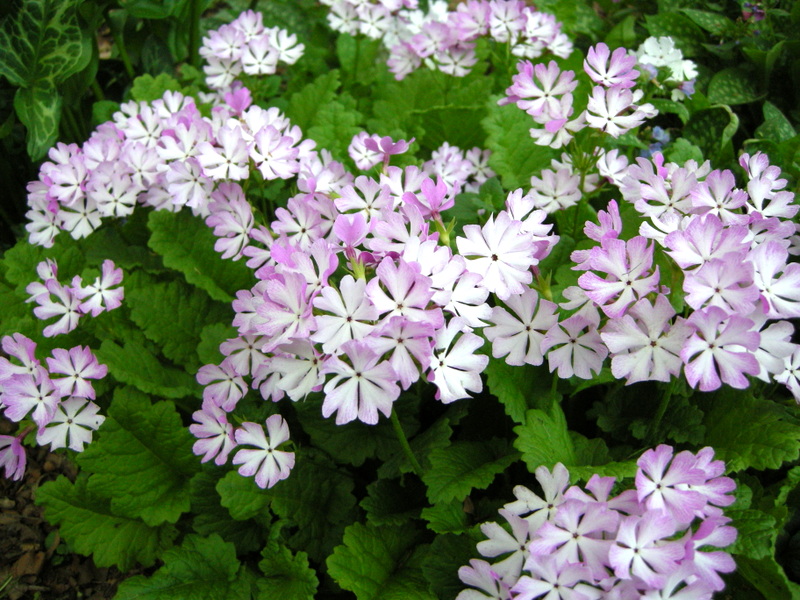
Primula sieboldiiOne of the many forms of Japanese woodland primroses, P. sieboldii, that I have collected over the years.

Japanese woodland primroses (not to be confused with the Japanese primroses described above) are a wonderful addition to the garden because they grow in full dry shade but also thrive in average or even moist soil.  They are from Asia and have been cultivated in Japan since the 16th century but are rare in the US.  Reportedly over 500 cultivars have been named, and I see how they can become addictive because I keep adding new forms to my garden.  They bloom in April and May in colors from white to pink to purple and everything in between.  The crinkly green leaves form large patches and effectively block weeds even though they go dormant when it gets hot out.

.

Primula sieboldiiThe flowers of Japanese woodland primrose often have a different color “reverse” (back), here white with lavender pink.

.

Primula sieboldiiThey also can have filigreed edges kind of like a doily for a lovely dainty effect.

.

Primula sieboldii 'Snowflake'The earliest to bloom in my garden is pure white ‘Snowflake’.

.

Primula sieboldiiThis is the straight species and is one of my favorites.  Local readers should make an effort to see Japanese woodland primrose blooming in my garden because the photos don’t do justice to their beauty.  They are located under the tree below the birdhouse.

.

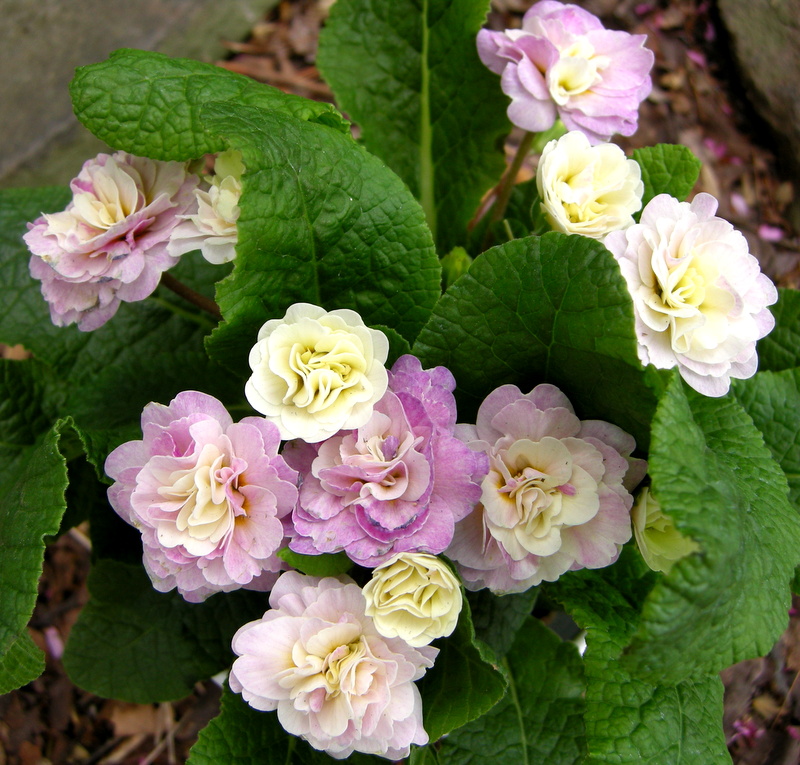
Primula 'Belarina Valentine'‘Belarina Valentine’ double primrose

Even though they look delicate, the Belarina Series of double primroses has proven to be reliably perennial in my garden.  They bloom in late April and May, and the leaves are just emerging right now.  I have sited them in an east-facing location between stepping stones under a Japanese maple.  The soil probably does not dry out because of the stones and the heavy mulch of leaves and pine needles.  If you are looking for a colorful primrose like the non-hardy grocery store varieties, these showy double primroses are just what you want.

.

Primula 'Belarina Pink Ice'‘Belarina Pink Ice’ double primrose

.

Primula 'Belarina Cobalt Blue'‘Belarina Cobalt Blue’ double primrose

.

Primula 'Belarina Nectarine'‘Belarina Nectarine’ double primrose

.

Many of these primroses will be available at the open house sale at Carolyn’s Shade Gardens this Saturday, April 13, from 10 am to 3 pm.  The rest will be for sale as they come up because I grow most of them myself.  Readers who are not local now know which reliably perennial primroses to ask for at their local nursery.

Carolyn

.

Carolyn’s Shade Gardens is a retail nursery located in Bryn Mawr, Pennsylvania, US, zone 6b.  The only plants that we mail order are snowdrops and miniature hostas and only within the US.

If you are within visiting distance and would like to receive catalogues and information about customer events, please send your full name and phone number to carolynsshadegardens@verizon.net.  Subscribing to my blog does not sign you up to receive this information.

Nursery Happenings:  Our open house sale featuring early spring-blooming shade plants takes place this Saturday, April 13, from 10 am to 3 pm.  If you are a customer, you should have gotten an email with all the details. If you can’t come to an event, just email to schedule an appointment to shop.  Coming up next is our Great Hosta Blowout where we sell desirable hostas at bargain prices—look for an email.

Facebook:  Carolyn’s Shade Gardens has a Facebook Page where I post single photos, garden tips, and other information that doesn’t fit into a blog post.  You can look at my Facebook page here or click the Like button on my right sidebar here.

Notes: Every word that appears in orange on my blog is a link that you can click for more information.  If you want to return to my blog’s homepage to access the sidebar information (catalogues, previous articles, etc.) or to subscribe to my blog, just click here.

Native Plants 2013

Posted in groundcover, native plants, Shade Gardening, Shade Perennials with tags , , , , , , , , , , , , , , , , , , , , , , , , , , , , , , , , , , , , , , , , , , , , , , on April 3, 2013 by Carolyn @ Carolyns Shade Gardens

Carolyn’s Shade Gardens is a retail nursery located in Bryn Mawr, PA, specializing in showy, colorful, and unusual plants for shade.  The only plants that we ship are snowdrops and miniature hostas.  For catalogues and announcements of events, please send your full name, location, and phone number (for back up use only) to carolyn@carolynsshadegardens.com.  Click here to get to the home page of our website for catalogues and information about our nursery and to subscribe to our blog.

Stylophorum diphyllum & Mertensia virginicaThis photo is one of my favorite shots of my native woodland which has huge swathes of some of the native plants that are particularly good spreaders, including Virginia bluebells, Mertensia virginica, and Celandine poppy, Stylophorum diphyllum.  For more photos of my woods and information on the natives I grow there click here.
.

This weekend Carolyn’s Shade Gardens is holding its second annual Native Wildflower Weekend on Friday from 10 am to 4 pm and Saturday from 10 am to 2 pm.  This event is my seventh annual native plant event and is timed to coincide with my native woodland coming into bloom.  However, this is the coldest spring that I have experienced since starting Carolyn’s Shade Gardens 21 years ago.  The timetable for my events is the same but the plants in the ground and in the pots are on a totally different schedule—they didn’t get the memo, they think it’s early March.

.

Polemonium reptansAnother shot of what my woods should look like with dwarf Jacob’s ladder, Polemonium reptans, in the foreground and native wild-ginger, Asarum canadense, in the background.  The Jacob’s ladder is visible right now, but the ginger has not even emerged from the mulch of ground leaves.

Normally I write a blog post around this time featuring native plants. That process usually involves heading out to the garden to take a lot of photos of my native plants to use in the article.  However, the only plants blooming right now are hellebores, pulmonarias, and many beautiful non-native bulbs—all my winter-blooming shade plants.  So I thought I would use some of my existing photos to show you what spring usually looks like and to highlight some native favorites.

.

Senecio aureusThe woodland with golden groundsel, Senecio aureus, and Virginia bluebells.  Golden grounsel is a wonderful native plant with fragrant yellow flowers and wintergreen leaves.  It spreads aggressively to form an impermeable groundcover and should only be planted in places where its habit can be accommodated.  It is a wonderful replacement for pachysandra, vinca, or ivy.

.
Phlox stolonifera 'Home Fires'‘Home Fires’ creeping phlox, P. stolonifera, is actually blooming in the pots for sale at my nursery.  You have to admire its courage!

.

Phlox stolonifera 'Sherwood Purple'‘Sherwood Purple’ creeping phlox is the best spreader for use in a shady woodland.  Creeping phlox should not be confused with moss phlox, P. subulata, which is also native but prefers part shade.

.

Heuchera villosa 'Citronelle'Lemon coral bells, Heuchera villosa ‘Citronelle’, keep their color all winter as do all the coral bells native to our area.  They are also tough as nails compared to the coral bells derived from western natives that don’t work here.

.

Heuchera 'Green Spice' Terra Nova photo‘Green Spice’ coral bells have beautifully patterned leaves all winter.

.

Spigelia marilandicaIndian pink, Spigelia marilandica, is a very flashy native that blooms in May and June and attracts hummingbirds.  It is dormant in the garden and in the pots right now.

.

Phlox divaricata 'Blue Moon'The lovely fragrant flowers of ‘Blue Moon’ wild sweet William, Phlox divaricata, are a great spreading addition to the woodland edge.

.

Phlox divaricata 'May Breeze'‘May Breeze’ wild sweet William is a steely white.

.

Lobelia cardinalisOne of my all time favorite native plants, cardinal flower, Lobelia cardinalis, blooms in the fall and is a hummingbird magnet.

.

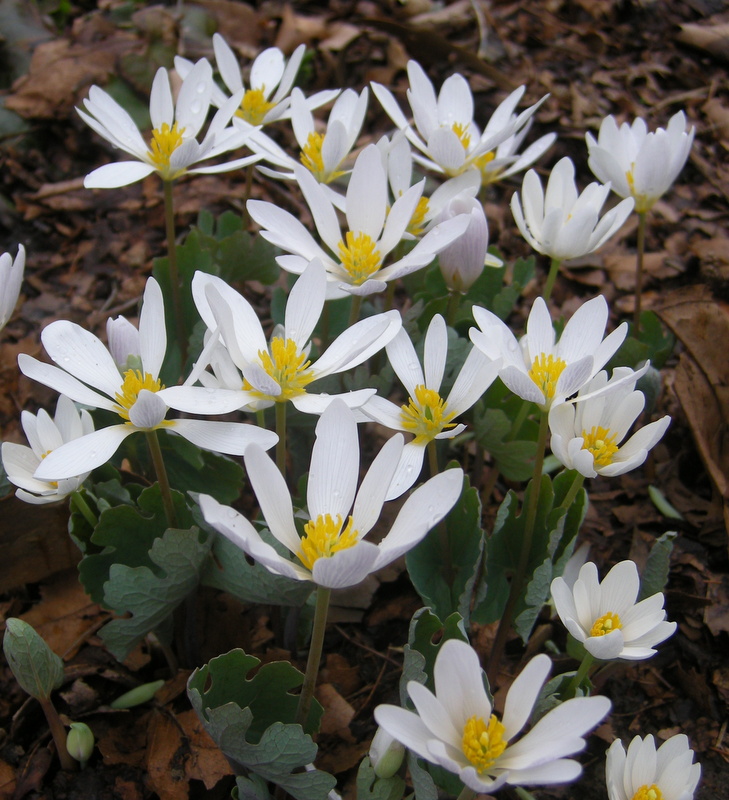
Sanguinaria canadensisNo garden should be without bloodroot, Sanguinaria canadensis.

.

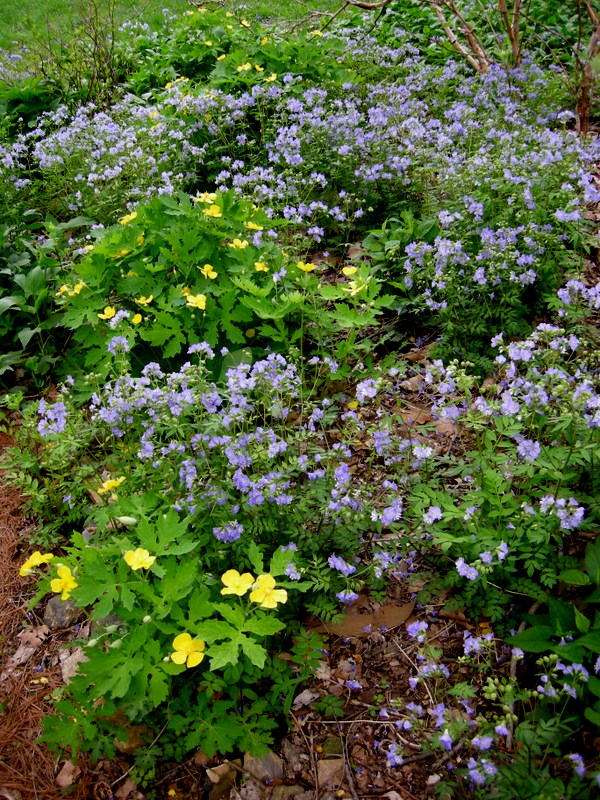
Polemonium reptansDwarf Jacob’s ladder and Celandine poppy are equally vigorous and combine well.

.

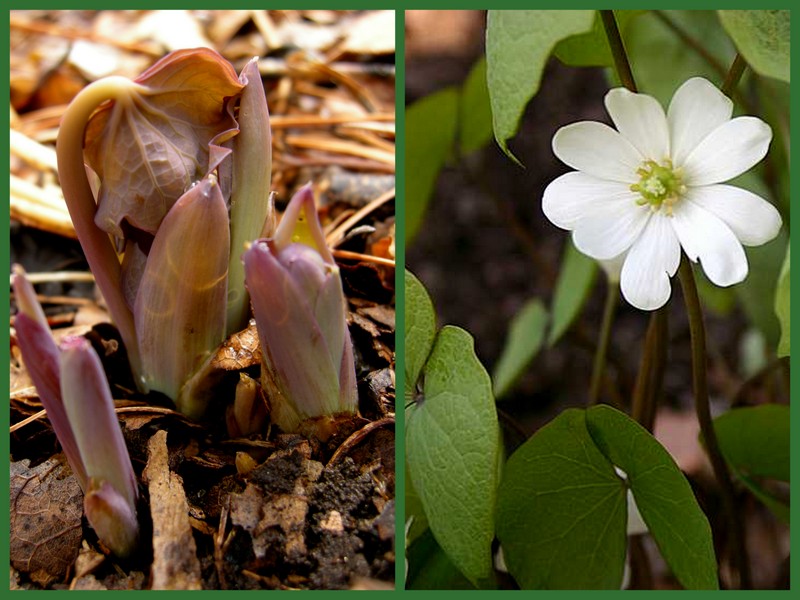
Podophyllum peltatumThe elegant leaf pattern of our native mayapple, Podophyllum peltatum, is under-appreciated.

.

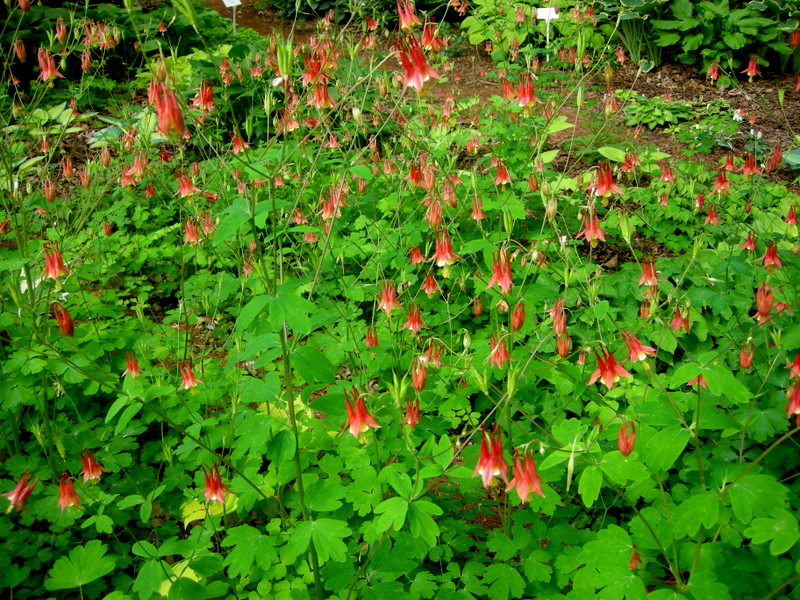
Aquilegia canadensisAnother hummingbird attractor, wild columbine, Aquilegia canadensis, needs very good drainage.

.

Asarum caudatumIf you like the shiny leaf of European ginger, the native long-tailed ginger, Asarum caudatum, from the west coast is a nice alternative.  It grows faster and is less picky about siting.
.

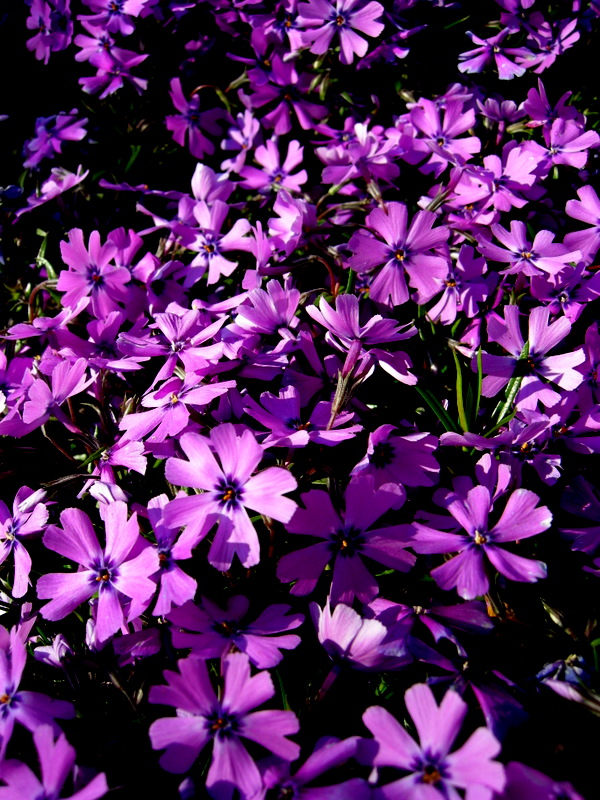
Phlox subulata 'Purple Beauty'‘Purple Beauty’ moss phlox, P. subulata, is one of seven different colors that I will be selling this season.  Moss phlox is often seen in quite a bit of sun but it also thrives in part shade locations.  It likes to be well-drained.

.

Jeffersonia diphyllaA treasured native, twin-leaf, Jeffersonia diphylla, has not even started to emerge yet.

.

Camassia leichtlinii 'Coerulea'Another native of western US, ‘Caerulea’ camassia, C. leichtlinii, grows in the full shade of my woodland and in the sunny areas beside my lawn.

.

Erythronium 'Pagoda'‘Pagoda’ dogtooth violets, Erythronium ‘Pagoda’, are so happy in my woods that they have self-sowed all over.

.

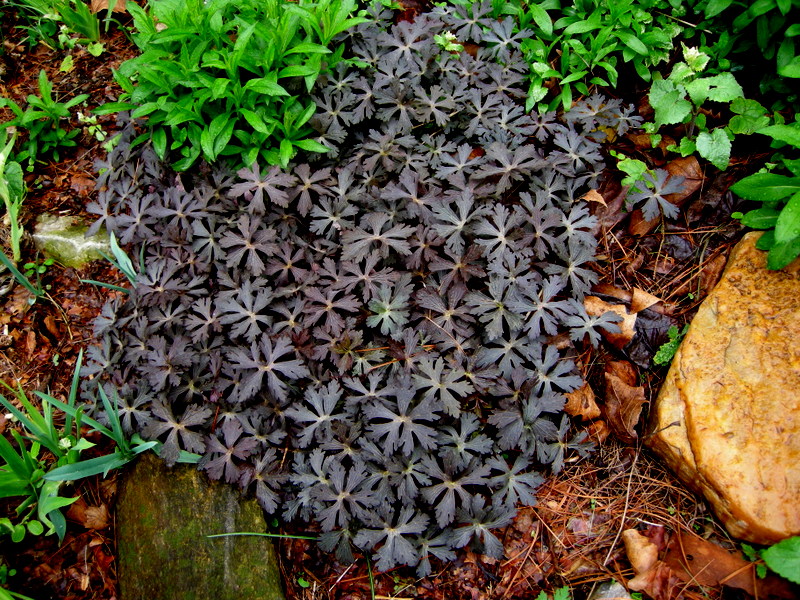
Geranium maculatum 'Espresso'My favorite time of year for the purple-leafed native geranium ‘Espresso’, G. maculatum, is when it first emerges in the spring.

.

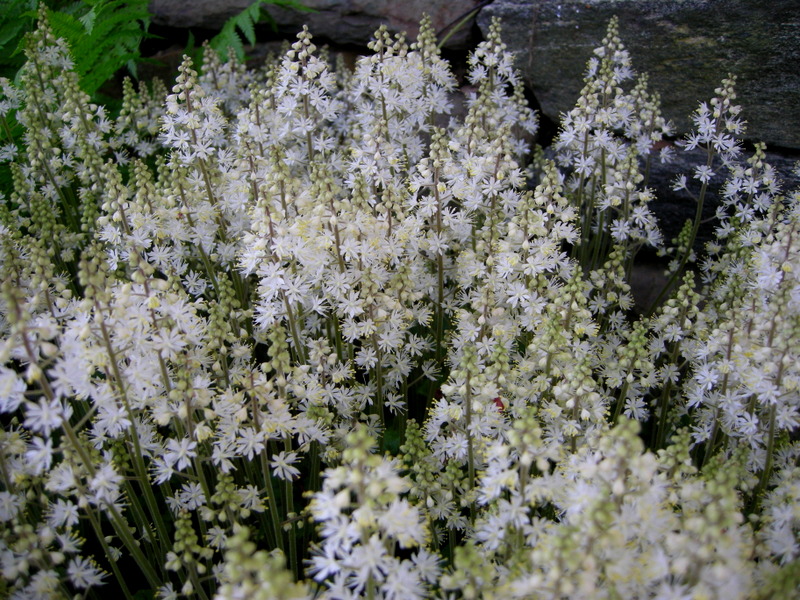
Tiarella cordifolia 'Brandywine'Foamflowers, Tiarella cordifolia, are a wonderful Pennsylvania native.  This is the spreading form ‘Brandywine’.

.

Iris cristataIn well-drained locations, blue dwarf crested iris, I. cristata, spreads to make large colonies.

.

Every photo in this post was taken in my garden.  If you live in the area, I hope you can visit when the plants are in bloom.  Meanwhile, if you want them in your garden, this weekend is your chance to acquire them.

Carolyn

.

Carolyn’s Shade Gardens is a retail nursery located in Bryn Mawr, Pennsylvania, US, zone 6b.  The only plants that we mail order are snowdrops and miniature hostas and only within the US.

If you are within visiting distance and would like to receive catalogues and information about customer events, please send your full name and phone number to carolynsshadegardens@verizon.net.  Subscribing to my blog does not sign you up to receive this information.

Nursery Happenings:  Our Native Wildflower Weekend takes place this Friday, April 5, from 10 am to 4 pm, and Saturday, April 6, from 10 am to 2 pm.  If you are a customer, you should have gotten an email with all the details. If you can’t come to an event, just email to schedule an appointment to shop.  If you wish to order shrubs, I will be doing a second order within the next week for customers who missed the deadline. 

Facebook:  Carolyn’s Shade Gardens has a Facebook Page where I post single photos, garden tips, and other information that doesn’t fit into a blog post.  You can look at my Facebook page here or click the Like button on my right sidebar here.

Notes: Every word that appears in orange on my blog is a link that you can click for more information.  If you want to return to my blog’s homepage to access the sidebar information (catalogues, previous articles, etc.) or to subscribe to my blog, just click here.