December GBBD: Add to Your Spring Shopping List

Posted in Fall, Fall Color, Garden Blogger's Bloom Day on December 15, 2010 by Carolyn @ Carolyns Shade Gardens

Carolyn’s Shade Gardens is a retail nursery located in Bryn Mawr, PA, specializing in showy, colorful, and unusual plants for shade.  The only plants that we ship are snowdrops and miniature hostas.  For catalogues and announcements of events, please send your full name, location, and phone number (for back up use only) to carolyn@carolynsshadegardens.com.  Click here to get to the home page of our website for catalogues and information about our nursery and to subscribe to our blog.

native oakleaf hydrangea ‘Snow Queen’

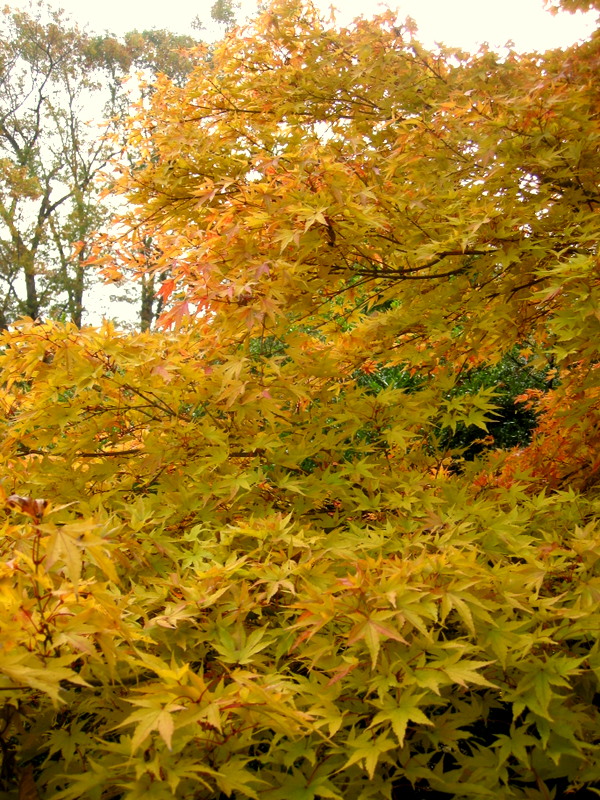
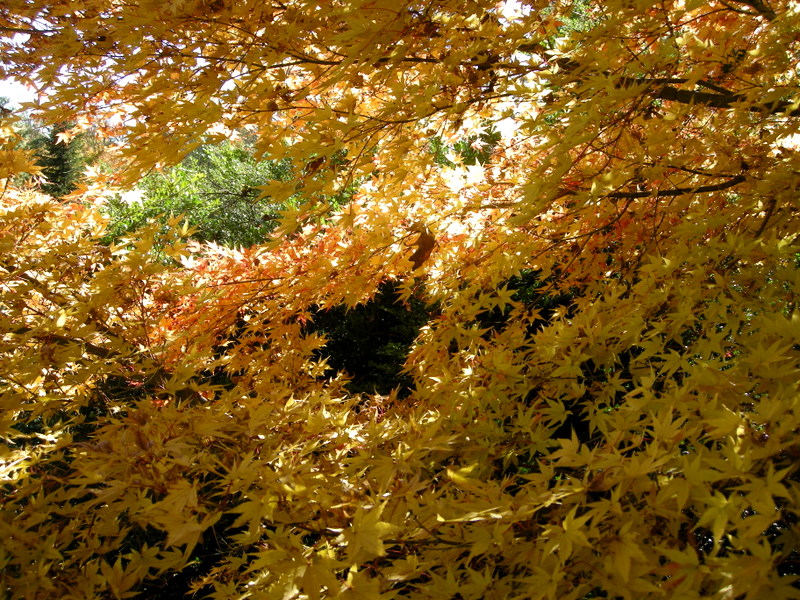
It is time to walk around your garden again and assess what you need to add to make the end of fall an exciting time in your landscape.  Do you need more late fall-blooming evergreen shrubs like camellias to give you a reason to go outside?  Could your garden benefit from flowers that bloom in December like hellebores or snowdrops to relieve the gray?  Make a list and take photographs so that when you are shopping next spring you know what you need and where it should go.  I know it’s cold outside, but you never know what you might find to raise your chilly spirits like nature’s own dried arrangements (pictured above and first below), which I discovered during my own monthly inventory.


Longwood Gardens conservatory decorated for Christmas

If you need ideas, visit local arboretums and gardens.  I always find a trip to Longwood Gardens in Kennett Square, PA, highly inspirational and informative.  This time of year you can see the fabulous holiday display, A Longwood Christmas, with half a million lights and 39 miles of cords lighting 75′ trees plus a 4.5 acre indoor conservatory themed for the holidays.  I know I am prejudiced, but I think it is the best in the world.


Today is Garden Blogger’s Bloom Day for December when gardeners around the world show photos of what’s blooming in their gardens (follow the link to see  photographs from other garden bloggers assembled by Carol at May Dreams Gardens).  Here are a few more highlights from my mid-December stroll through Carolyn’s Shade Gardens:

Japanese silver grass with ‘Magic Carpet’ spiraea


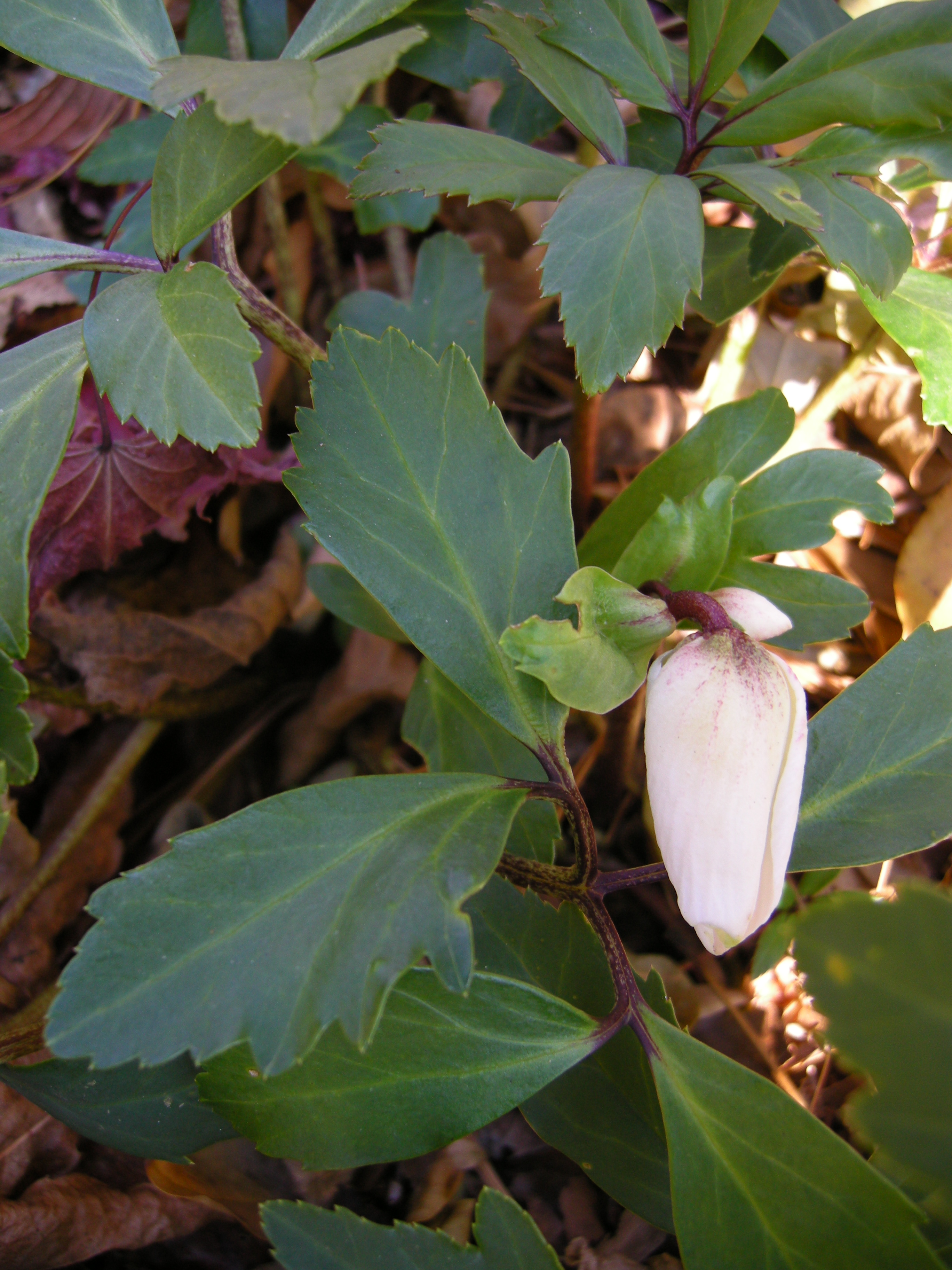
fall-blooming Christmas rose ‘Jacob’
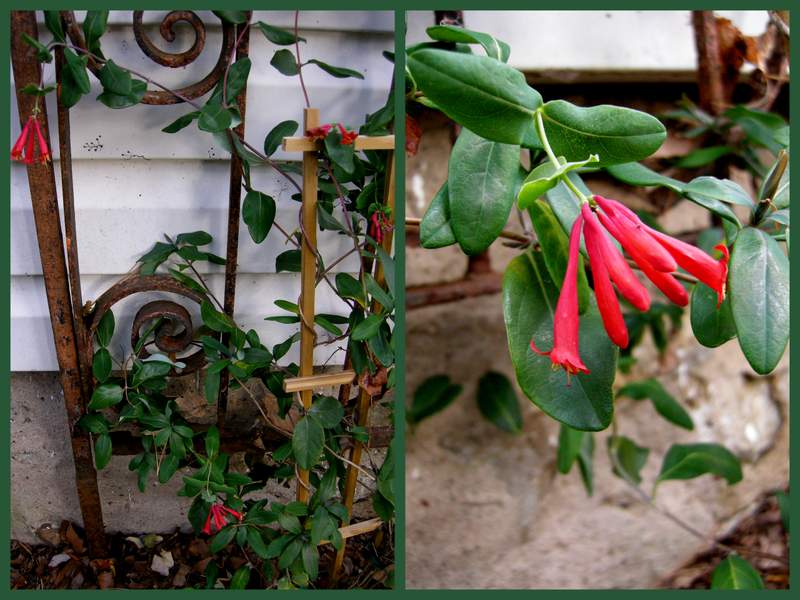
native honeysuckle ‘Crimson Cascade’

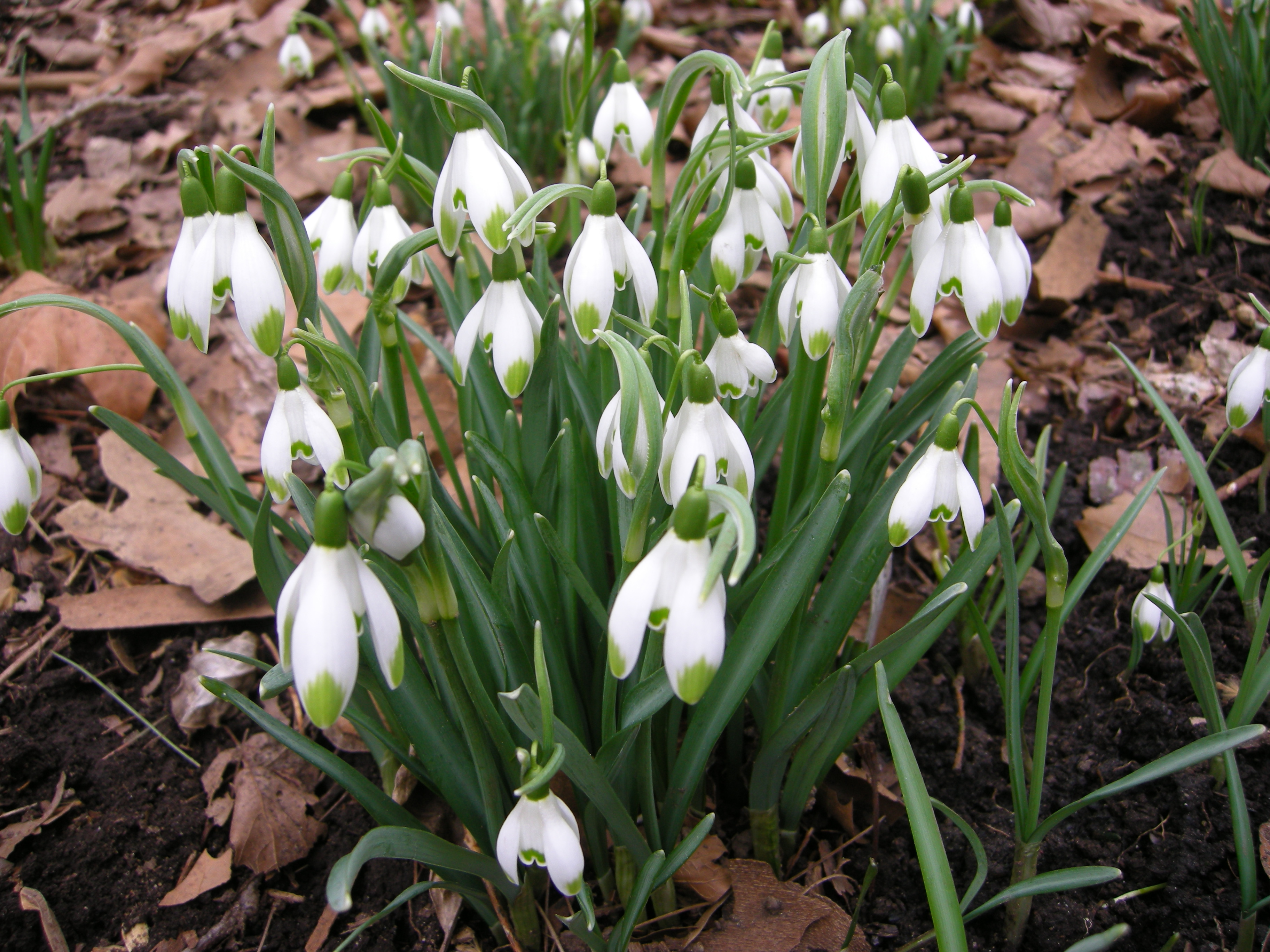
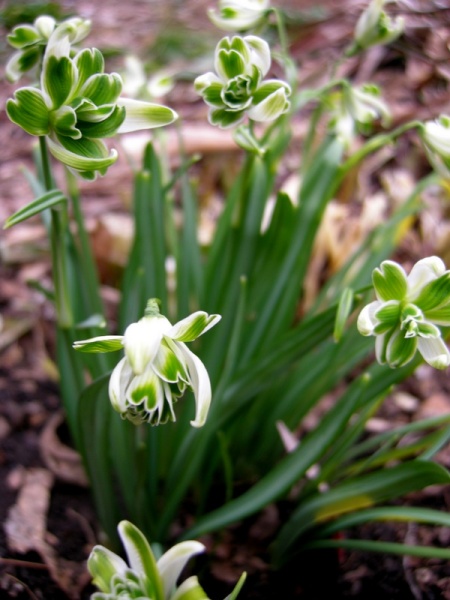
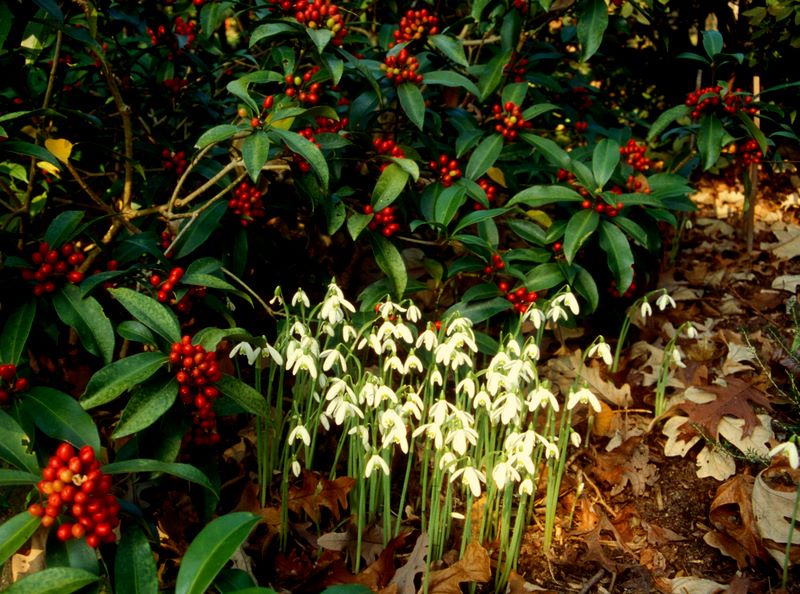
fall-blooming snowdrop ‘Potter’s Prelude’
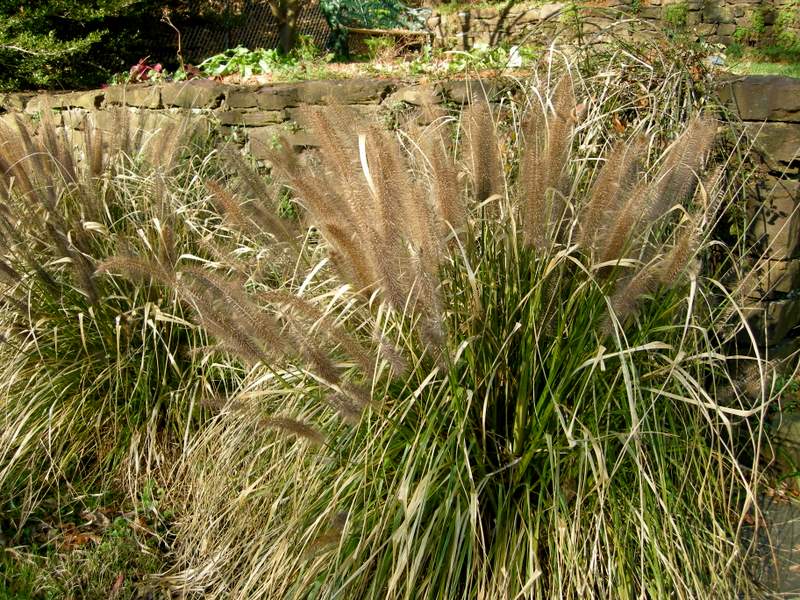
black fountain grass ‘Moudry’

purple offshoot of ‘Shell Pink’ lamium

leatherleaf viburnum

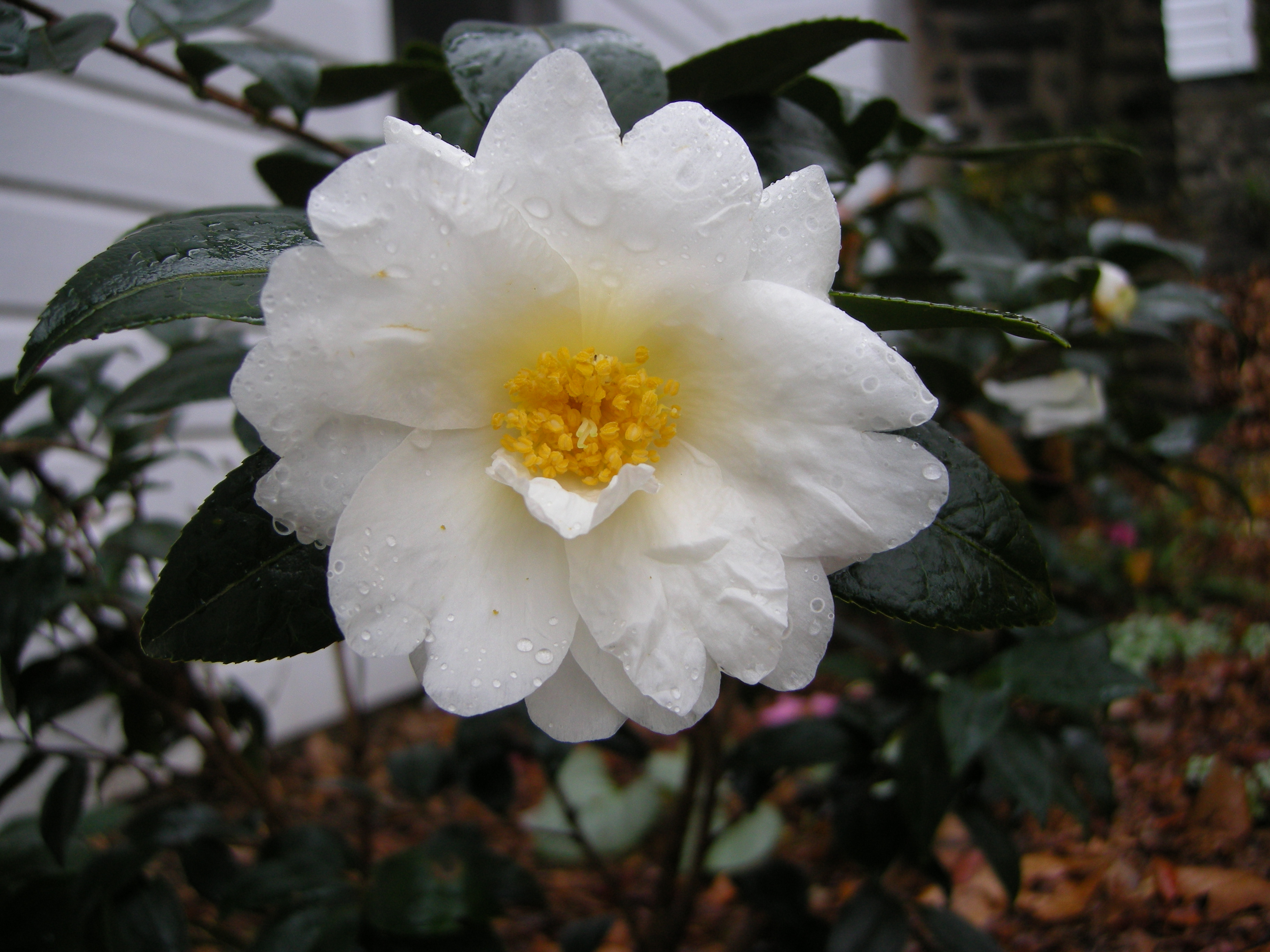
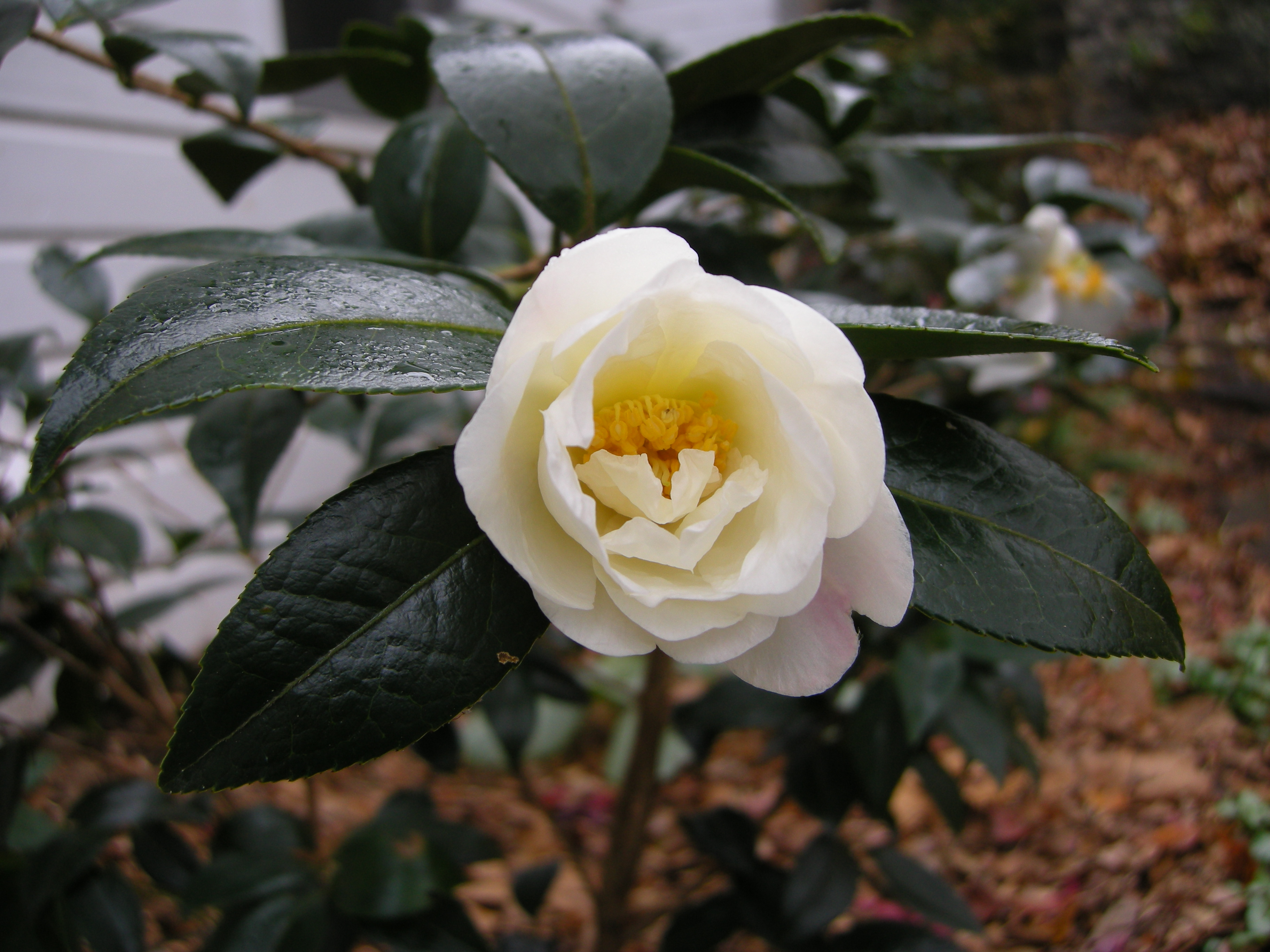
fall-blooming species Camellia oleifera


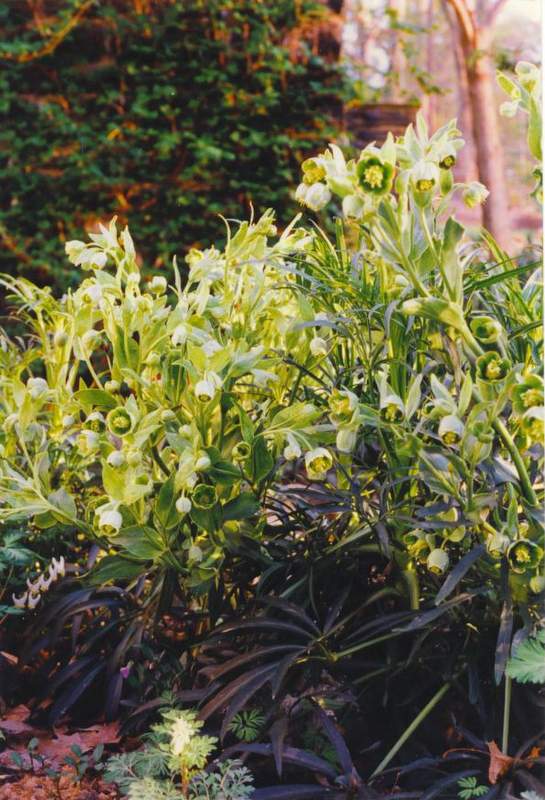
bearsfoot hellebore coming into bloom

fall-blooming hybrid Camellia x  ‘Winter’s Darling’

Japanese silver grass ‘Morning Light’

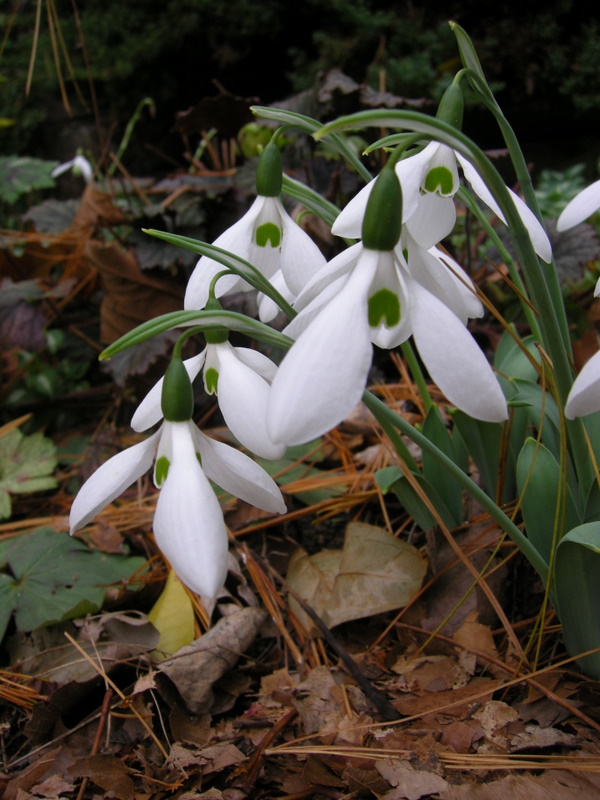
giant snowdrop (G. elwesii) blooming early

native purple coneflower soldiering on

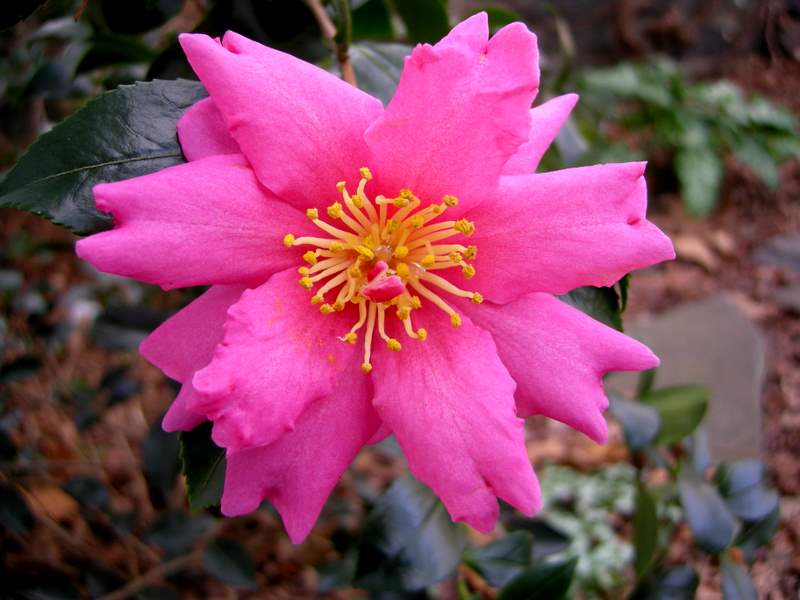
fall-blooming Ackerman hybrid camellia

re-blooming tall bearded iris ‘Immortality’

My re-blooming iris ‘Immortality’ re-bloomed in early fall and then decided to do it again in late November.  I could bring the flowers stalks inside and force them.  But the fat buds hold such a promise of spring and they make me feel so hopeful every time I walk by them that I can’t bring myself to cut them.  May you find many  treasures on your mid-December ramble.

Carolyn

Note: Every word that appears in orange on my blog is a link that you can click for more information.  It went down to 15 degrees last night so the camellias are brownish, but they still have buds coming.  I covered the iris, and all the other plants mentioned are fine!
Fall-blooming Camellias Part 1

Posted in evergreen, Fall, Fall Color, Shade Shrubs with tags , , , , on December 8, 2010 by Carolyn @ Carolyns Shade Gardens

Carolyn’s Shade Gardens is a retail nursery located in Bryn Mawr, PA, specializing in showy, colorful, and unusual plants for shade.  The only plants that we ship are snowdrops and miniature hostas.  For catalogues and announcements of events, please send your full name, location, and phone number (for back up use only) to carolyn@carolynsshadegardens.com.  Click here to get to the home page of our website for catalogues and information about our nursery and to subscribe to our blog.

Camellia x (Unknown Ackerman Hybrid)

From 1992 to 1997, I earned two Certificates in Ornamental Plants from Longwood Gardens.  Of all the horticultural classes I have taken, these are the best, and I still use the course books as my primary plant reference.  As I worked my way through the 18 required courses from bulbs to perennials to shrubs to vines, I made a mental life list of the plants I wanted in my garden.  Some I added immediately, but others were stored away to be added in the future as I discovered them randomly at the nurseries I visited.  This year, fall-blooming hardy camellias rose to the top of the list.

Camellia oleifera at Carolyn's Shade GardensCamellia oleifera

Bark on Camellia oleifera grown as tree (Cresson garden)

Actually, my flirtation with fall-blooming camellias began about 10 years ago during a tour of the Morris Arboretum when I was given a tiny seedling of their Camellia oleifera (two photos above), which was a cutting of the original and famous ‘Lu Shan Snow’ at the U.S. National Arboretum.  It has grown into quite a large shrub with beautiful cinnamon-colored bark, glossy dark evergreen leaves, and copious single white flowers from late October into December.  It is also completely cold hardy, but not resistant to deer who dined on it voraciously.  There were to be no more camellias in my future until I freed up a space for them inside my deer fence.

fall-blooming camellia 'Winter's Darling' at Carolyn's Shade GardensCamellia x (Unknown Ackerman Hybrid)

This spring I removed several large and ailing boxwoods from a sheltered spot by my patio and simultaneously found a source for specimen camellias—it was a “perfect storm” for my venture into the fall-blooming camellia world.

fall-blooming camellia 'Elaine Lee' at Carolyn's Shade GardensCamellia x ‘Elaine Lee’

I purchased three gorgeous plants.  The first, Camellia x ‘Elaine Lee’ (photos above and bottom), has semi-double white flowers that bloom from November sporadically through January.  It has an upright form with an average growth rate to 5 feet.  The second, Camellia x ‘Winter’s Darling’ (photo below), has miniature, anemone-form deep cerise pink flowers that start at the end of October and continue through December.  It has a moderately upright habit and grows slowly to 3 to 5 feet.  The third is an Ackerman hybrid camellia (photos top, above, and bottom), but I am not sure which cultivar.  It has semi-double deep pink flowers.  All three have beautiful glossy dark evergreen leaves.

Camellia x ‘Winter’s Darling’

These hardy fall-blooming camellias, along with many others, were developed by Dr. William Ackerman at the U.S. National Arboretum by crossing C. oleifera with more ornamental forms to produce superior plants.  They are truly hardy in the mid-Atlantic, but should be sited to protect them from winter sun and our winter winds, which come from the northwest, and mulched in winter.  They prefer a well-drained site in part shade.

fall-blooming camellia 'Elaine Lee' at Carolyn's Shade GardensCamellia x ‘Elaine Lee’

For more information on Dr. Ackerman’s hybrids, read his article “Camellias for Cold Climates”.  For more information on camellias, go to the International Camellia Society’s website.  Stay tuned for my next camellia post which will highlight photographs from my recent visit to a private collection of over 60 camellias.

fall-blooming camellia 'Winter's Darling' at Carolyn's Shade GardensCamellia x (Unknown Ackerman Hybrid)

The U.S. National Arboretum, which is part of the USDA, is the source for many of the best plant breeding programs in the U.S.  It also maintains national collections of plants.  The arboretum is currently planning to deaccession its Azalea and Boxwood Collections as well as part of the Perennial Collection.  In the case of the Azalea Collection, although budget concerns were mentioned, one of the reasons given was that it attracted too many visitors. I may be wrong, but I can’t imagine this happening in the U.K.  If you would like to find out more about this amazing azalea collection and the efforts to save it, go to the Save the Azaleas website.

Carolyn

Note: Every word that appears in orange on my blog is a link that you can click for more information.

Hellebores for Fall

Posted in Fall, Fall Color, hellebores, Shade Perennials with tags , , , , , , , , on December 4, 2010 by Carolyn @ Carolyns Shade Gardens

Carolyn’s Shade Gardens is a retail nursery located in Bryn Mawr, PA, specializing in showy, colorful, and unusual plants for shade.  The only plants that we ship are snowdrops and miniature hostas.  For catalogues and announcements of events, please send your full name, location, and phone number (for back up use only) to carolyn@carolynsshadegardens.com.  Click here to get to the home page of our website for catalogues and information about our nursery and to subscribe to our blog.

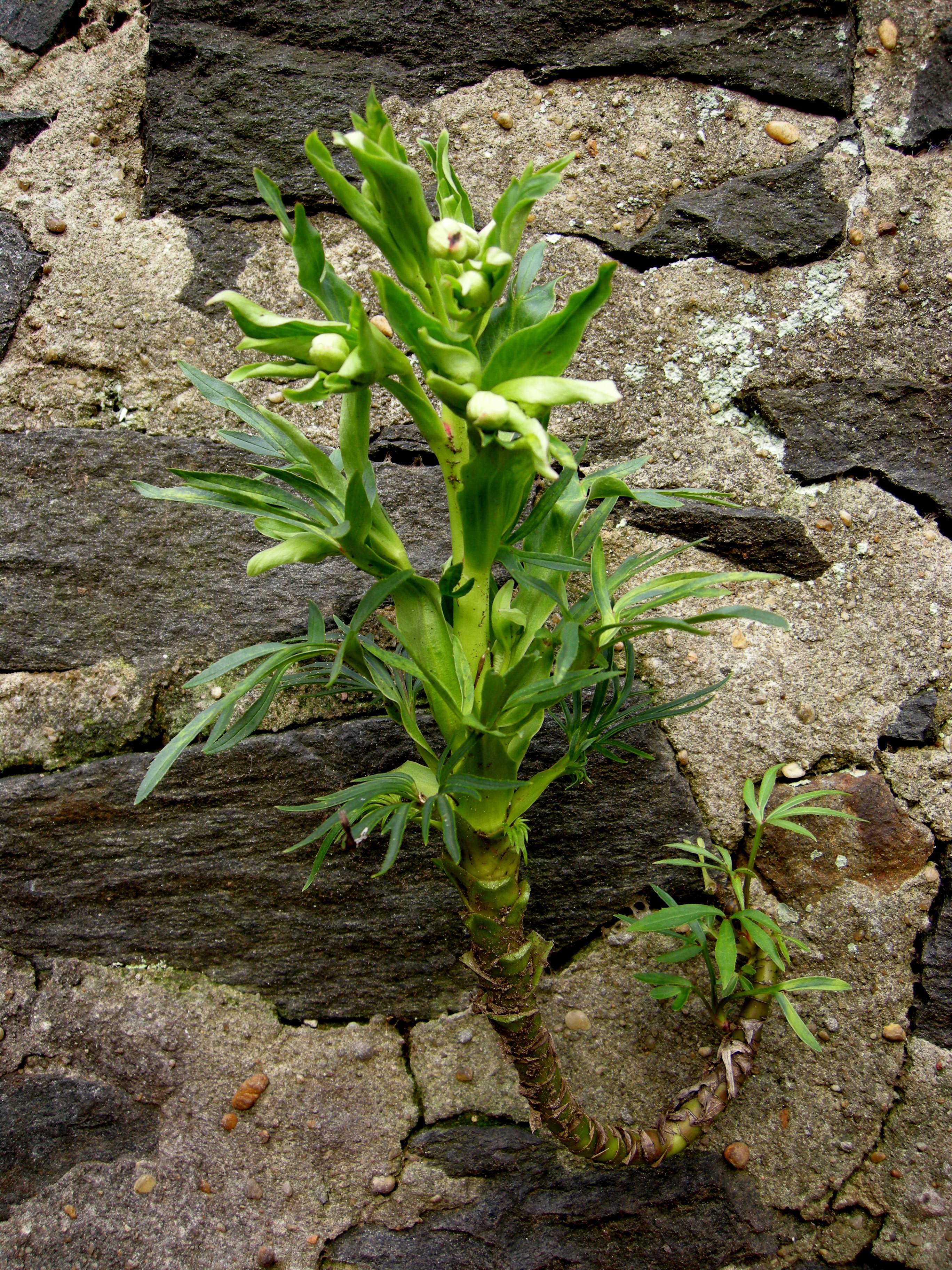
bearsfoot hellebore at Carolyn's Shade GardensBearsfoot hellebore growing in my manure pit wall

Hybrid hellebores, the variety of hellebore that most gardeners grow with the big, nodding, showy flowers in beautiful colors, are generally not fall-blooming plants.  They give depth to the fall garden through their evergreen foliage, but they are not thought of for flowers (except a rogue hybrid bloom now and then).  In the mid-Atlantic, they bloom as early as January, but generally start to flower in February.  But there are a few species (as opposed to hybrid) hellebores that flower in fall, and my late fall garden has been much enhanced by their addition.

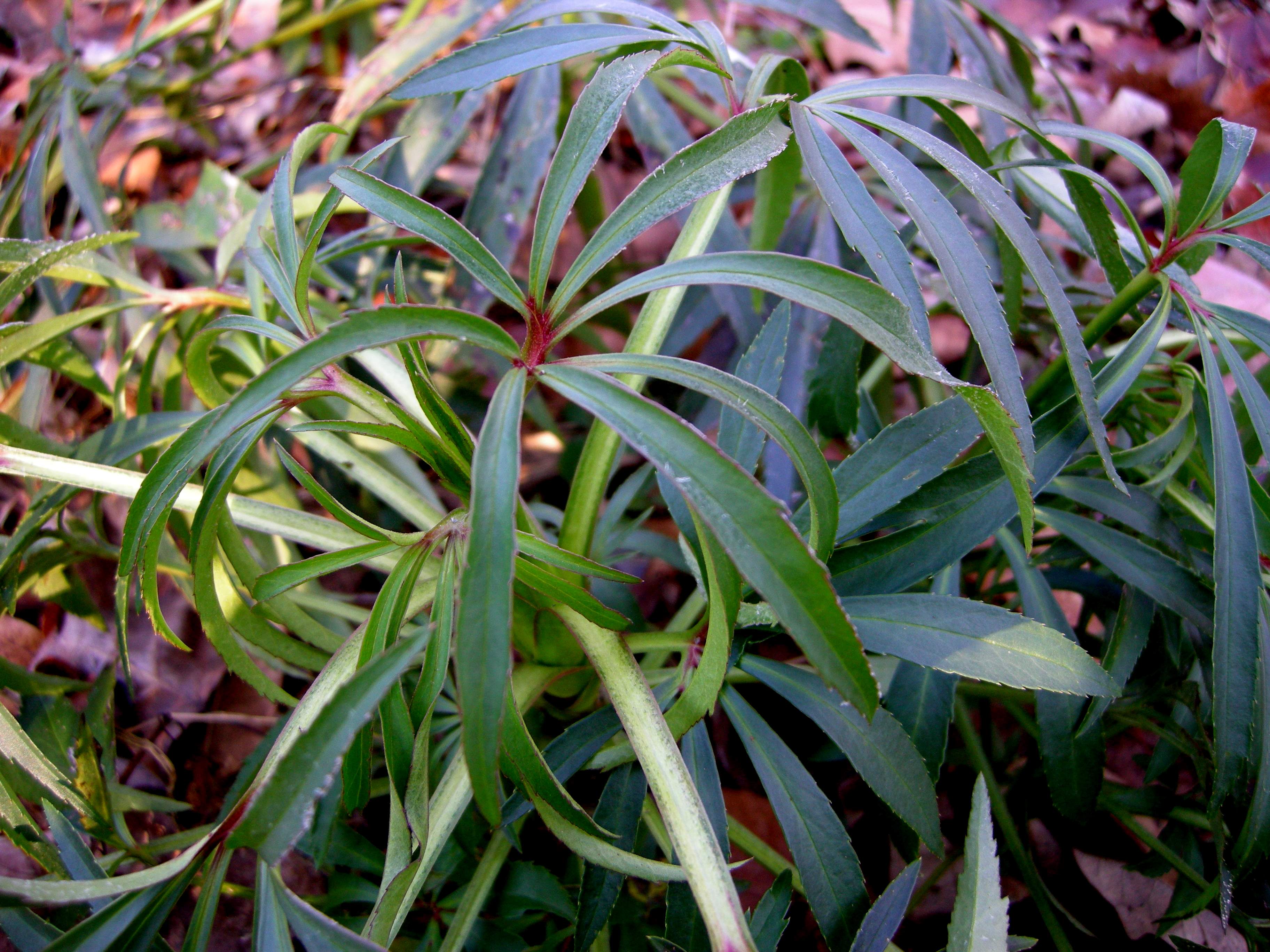
foliage of bearsfoot hellebore at Carolyn's Shade GardensWinter foliage of bearsfoot hellebore

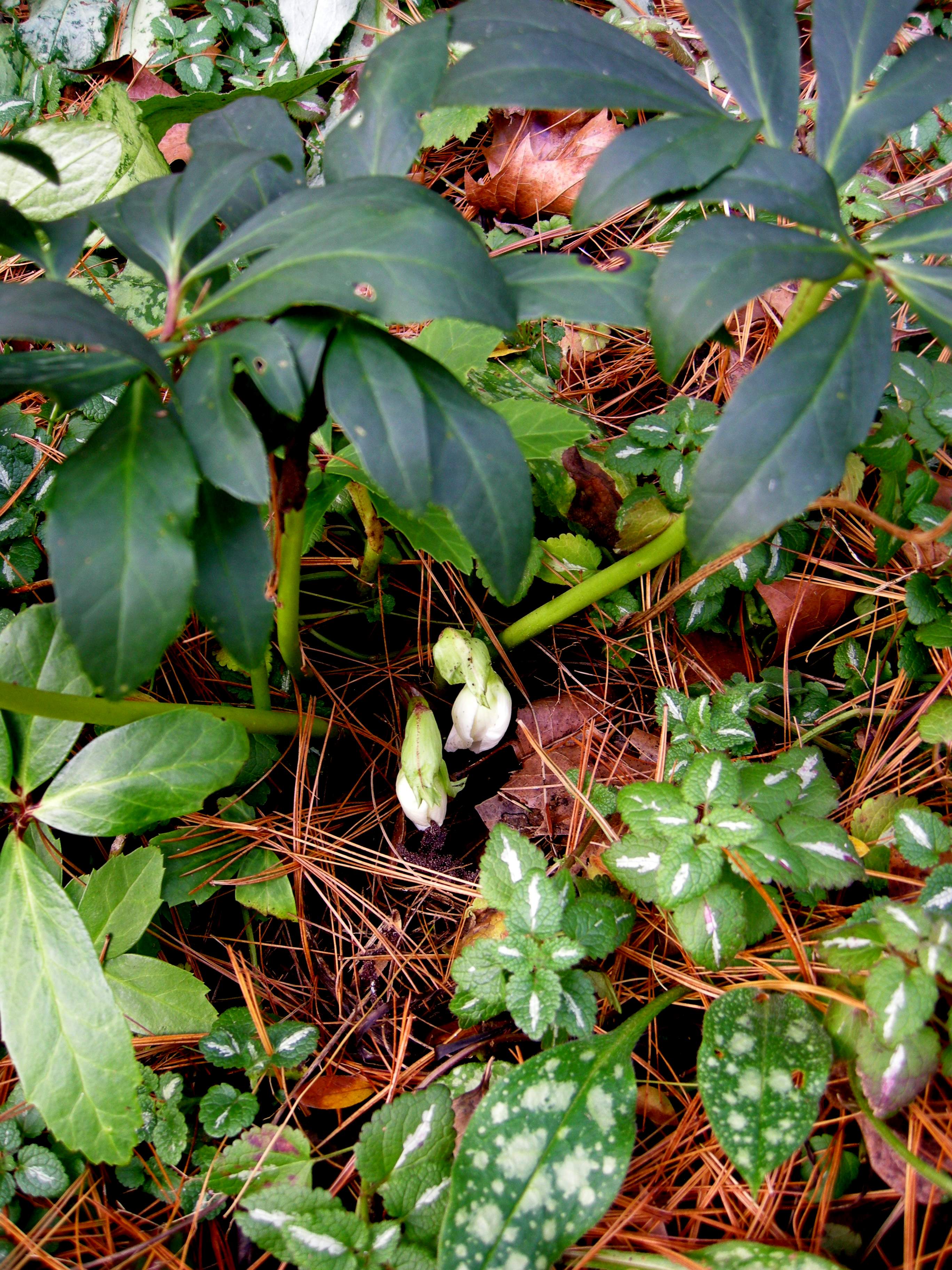
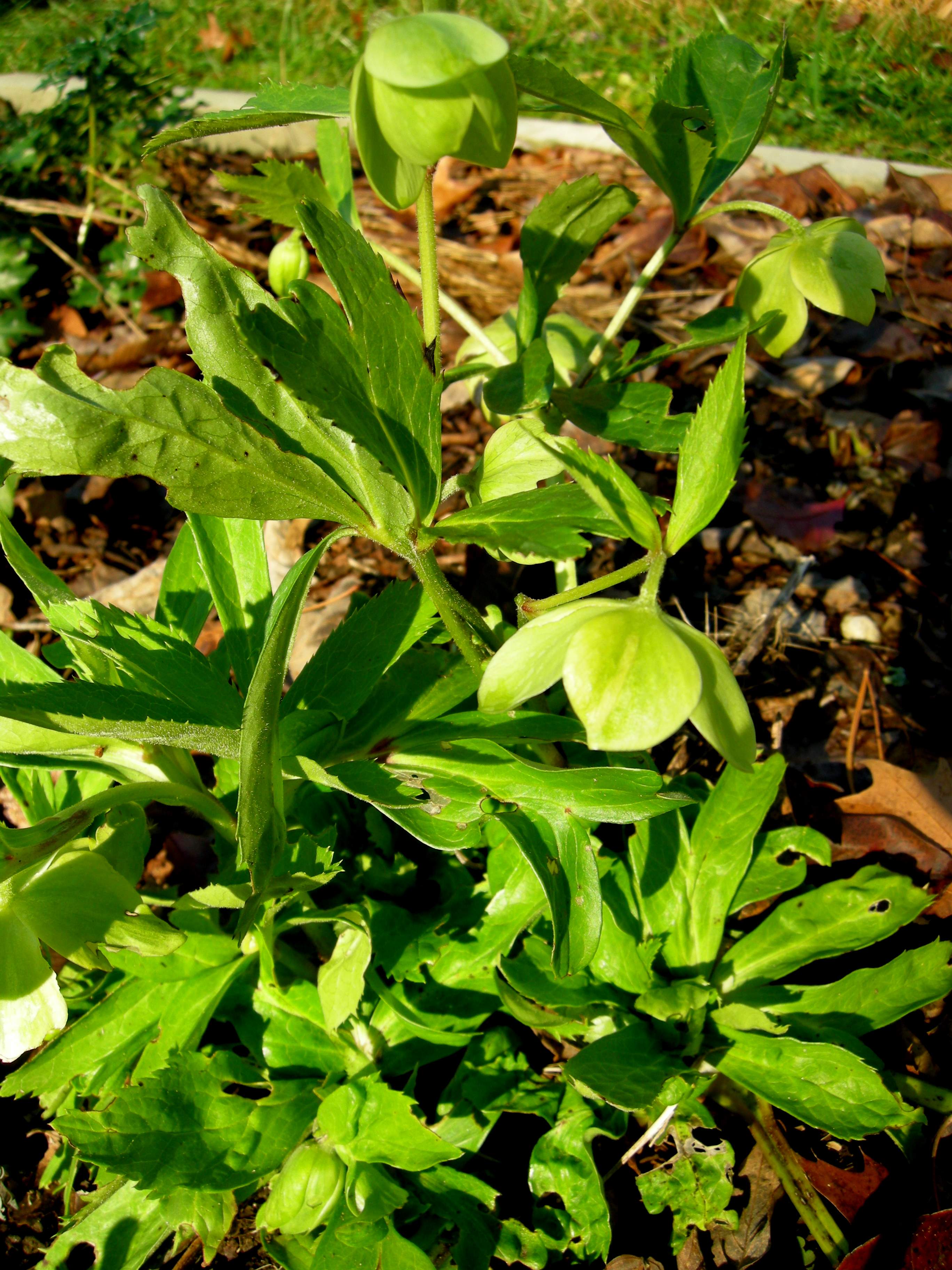
If I had to choose a favorite hellebore, and I have almost every species and hundreds of hybrids, I would pick the bearsfoot hellebore, Helleborus foetidus.  It wouldn’t be for its charming Latin name: foetidus speaks for itself.  And not for its alternate common name, stinking hellebore, though it doesn’t deserve that name when you have to mangle the leaves to elicit a smell.  Rather I would choose it for its substantial 2′ evergreen presence, like a miniature rhododendron in the garden.  And for the interesting spidery texture of its always pristine dark green leaves.  But mostly for how its chartreuse bell-like buds and flowers perch atop its beautiful foliage from November into May.

buds emerging from bearsfoot hellebore at Carolyn's Shade GardensFall buds emerging from bearsfoot hellebore

Bearsfoot hellebore grows in part to full shade and is the only hellebore that I am aware of that likes slightly moist soil.  That being said, my grove—if they are happy, they spread—received no additional water for the entire summer of 2010 when we had the worst heat and drought I have ever experienced.  Bearsfoot and all my other hellebores came through with flying colors.  I grow all my hellebores with plenty of compost.

buds of bearsfoot hellebore at Carolyn's Shade GardensFall buds of bearsfoot hellebore

Bearsfoot hellebore in full bloom

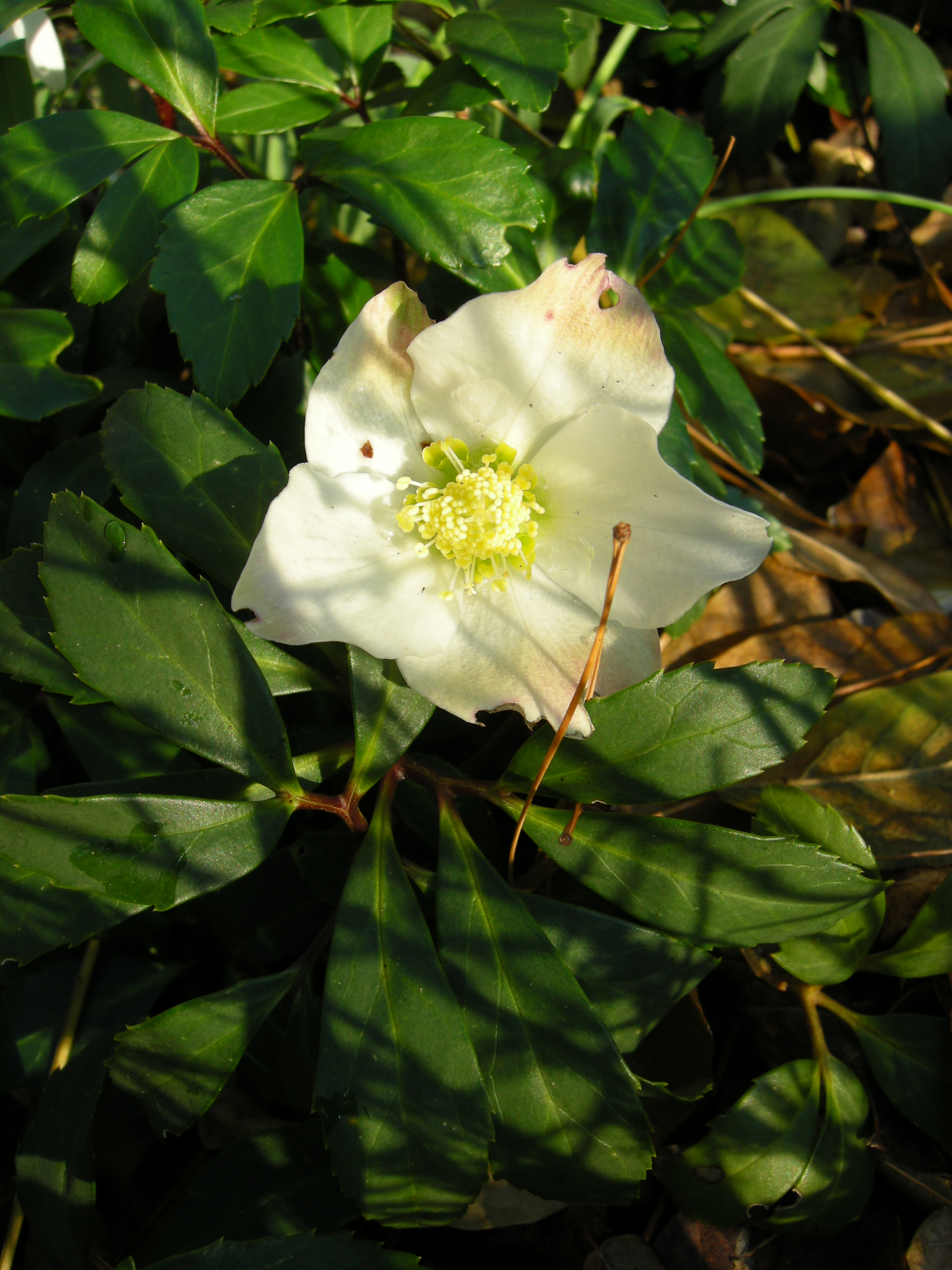
Two other fall-blooming hellebores are superior selections from the true Christmas rose, the species Helleborus niger.  Christmas roses are beautiful plants and well worth growing for their outward-facing, starry, pure white flowers and elegant blue-green leaves.  But the straight species is sadly mis-named.  In the mid-Atlantic, it blooms in March  at the earliest when Christmas has long past.  However, the amazing plant breeders at Heuger in Germany who have produced the superior Helleborus Gold Collection have developed two Christmas roses that bloom from November into May.

Christmas rose 'Jacob' at Carolyn's Shade GardensChristmas rose ‘Jacob’

The first, HGC ‘Jacob’, is a compact and refined plant 6 to 8″ tall with graceful, smooth dark green leaves.  It starts blooming in mid-November (it was a little late this year) with copious 2 to 3″ white flowers maturing to rose, and continues to produce buds into May.  The second is HGC ‘Josef Lemper’, a 10″ plant with 3 to 3 1/2″ flowers and larger, lighter green leaves.  It  comes into bloom about two weeks later than ‘Jacob’ and also continues to May.

Christmas rose 'Jacob' at Carolyn's Shade GardensChristmas rose ‘Jacob’ coming into bloom in November

Christmas rose 'Josef Lemper' at Carolyn's Shade GardensEmerging buds of Christmas rose ‘Josef Lemper’

Christmas roses are a little more finicky than hybrids.  Like most hellebores, they prefer well-drained sites with plenty of organic matter.  But they have a definite preference for the edges of beds in part shade as opposed to sunnier or shadier spots.  My best stand is in an open area shaded by 100′ trees on a steep slope.  I have never found that they needed supplemental lime as the books suggest.

Helleborus dumetorum at Carolyn's Shade GardensHelleborus dumetorum

I am throwing in the final fall-blooming hellebore more for curiosity sake than for its ornamental value.  Over the years, I have collected most of the hellebore species.  I have tried  to get them from more than one source so I could compare them.  The variation is amazing, but no more than hellebore aficionados like Graham Rice will tell you to expect.  One plant I have collected is H. dumetorum—it’s so obscure it doesn’t have a common name.  Its small green flowers and ordinary leaves do not endear it to gardeners.  However, I am including a photograph of one of my plants here because every year it blooms in late October and continues to spring.

For more information on hellebores, I highly recommend noted hellebore expert Graham Rice’s website.  The book The Gardener’s Guide to Growing Hellebores by Graham Rice and Elizabeth Strangman is excellent.  It includes amazing pictures showing the variation within the different species.  I will add both sources permanently to my sidebar so you can always find them.  If you really want all the details about hellebores, try Hellebores by Brian Mathew (Alpine Garden Society).  It is out-of-print but available at horticultural libraries, including the Pennsylvania Horticultural Society.

Carolyn

This is part one in a series of articles on hellebores, one of the specialties of my nursery.  Here are links to all six articles:

Part One        Hellebores for Fall

Part Two       An Ode to Seed Strain Hellebores

Part Three   Christmas Rose: The Perfect Hellebore

Part Four      Dividing Hybrid Hellebores

Part Five       The Sex Lives of Hellebores

Part Six          Double Hellebores

Part Seven   Cutting Back Hellebores

Note: Every word that appears in orange on my blog is a link that you can click for more information.

Keeping the Shade Garden Going in Late Fall

Posted in Fall, Fall Color, landscape design with tags , , , , , , , on December 1, 2010 by Carolyn @ Carolyns Shade Gardens

Carolyn’s Shade Gardens is a retail nursery located in Bryn Mawr, PA, specializing in showy, colorful, and unusual plants for shade.  The only plants that we ship are snowdrops and miniature hostas.  For catalogues and announcements of events, please send your full name, location, and phone number (for back up use only) to carolyn@carolynsshadegardens.com.  Click here to get to the home page of our website for catalogues and information about our nursery and to subscribe to our blog.

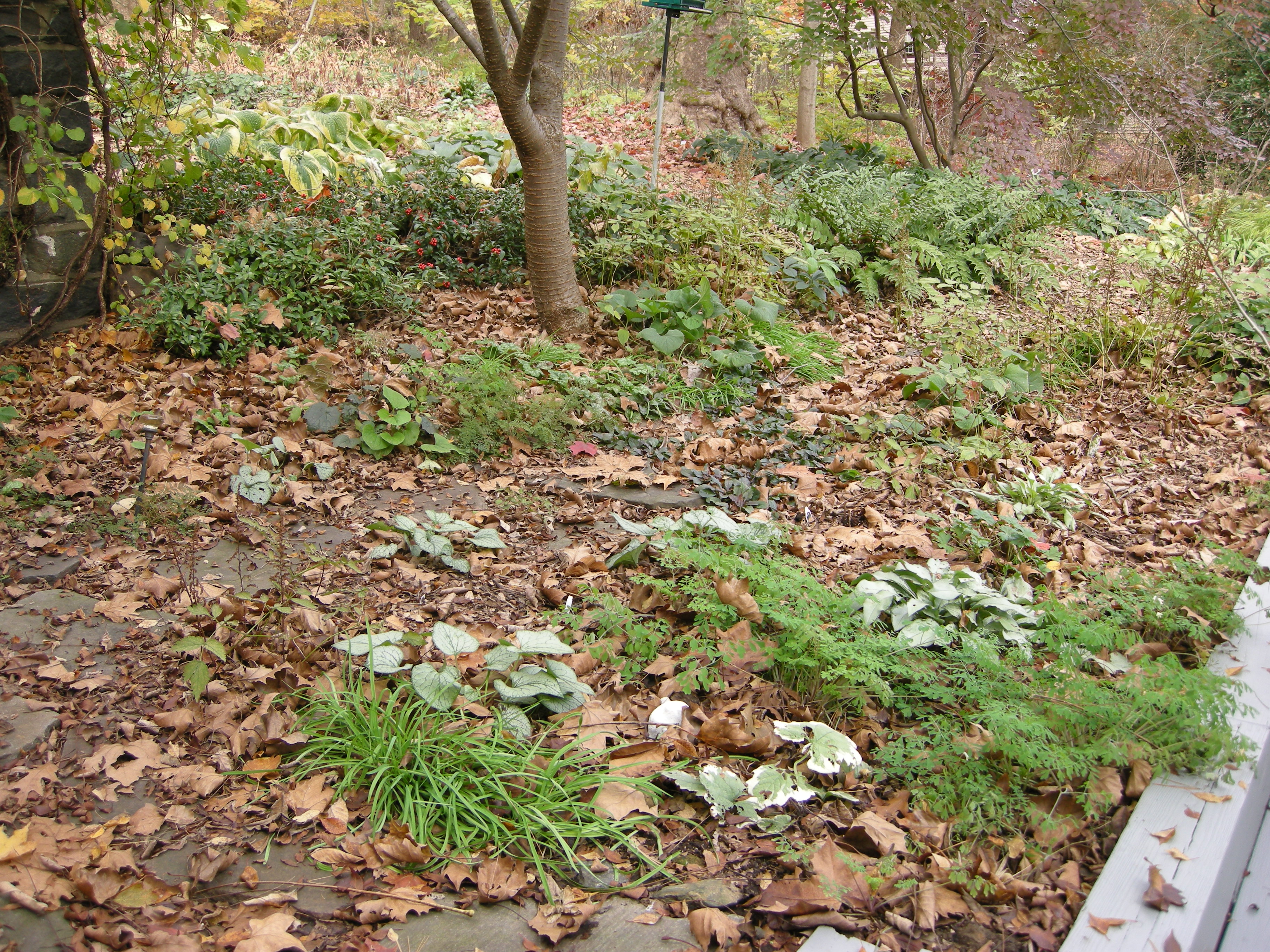
main terrace at Carolyn's Shade Gardens in late fall

Articles on landscape design advocate creating beds that flower through out the gardening season.  This is a lofty goal, and one that is not always worth achieving.  Beds that are designed to accomplish it often look spotty and unfocused because there is no theory behind the design besides bloom time, and the bed never truly peaks.  My woodland gardens, which contain mostly spring ephemerals and are done by June, provide immense satisfaction to me and are thoroughly enjoyed by my customers, even though their ornamental season is limited.  Most of my other gardens also have their season of splendor and then step aside to let other areas shine.

On the other hand, it is important to me that I have at least one prominent garden that is ornamentally interesting all year.  And I realize that most gardeners don’t have the space that I have to indulge in the luxury of letting a garden go by in June.  So, the question is, how do you keep a garden going in late fall before the winter-blooming plants get started?  What plants can you use to create the sense of a garden still growing: a feeling of plant combinations not individual plants?

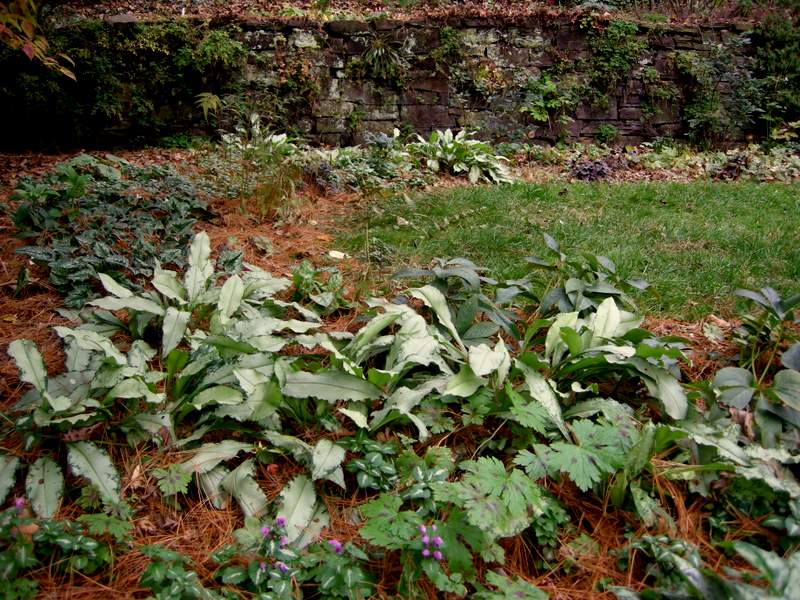
I want to tell you about the area where I have done this most successfully: the shady end of the terrace outside my front door.  Through silver, purple, pink, and dark green groundcovers, leaves, and flowers, this terrace still has the feeling of a garden in its prime right now in early December.

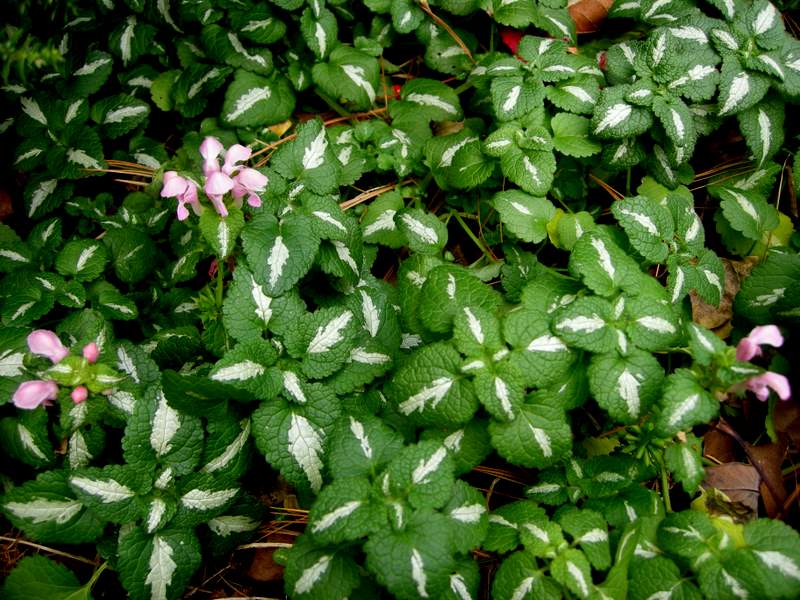
'Shell Pink' lamium at Carolyn's Shade Gardens‘Shell Pink’ Lamium in early December

I think the most important element of a late season border is a flowering evergreen groundcover.  In this bed, I use ‘Shell Pink’ lamium (photo above) because it blooms from April to December (at some times more prolifically than others) and remains evergreen all year.  I have also planted the fall-blooming hardy cyclamen, Cyclamen hederifolium (photo below).  Its pink flowers appear from September into November.  Although dormant for a short time in summer, once its leaves come back in late August, it maintains a fresh pristine appearance through the following June.  It spreads to form a very attractive groundcover and is not picky about the site like the spring-blooming cyclamen.

fall-blooming cyclamen at Carolyn's Shade GardensFall-blooming Hardy Cyclamen

'Diana Clare' pulmonaria at Carolyn's Shade Gardens‘Diana Clare’ Pulmonaria

Foliage is important this time of year.  I chose pulmonarias to fill a big space because their leaves remain ornamental almost until new leaves appear in February.  The solid silver foliage of  ‘Diana Clare’ (photo above) is one of my favorites in my pulmonaria collection.  Equally as important are the dark evergreen leaves of several hellebores: Christmas roses, hybrid hellebores, the H. x ericsmithii cultivars ‘Silvermoon’ and ‘Ivory Prince’ with their silver marbling, and the golden-veined leaves of H. x nigercors ‘Green Corsican’.  Finally, I treasure the almost year round interest of the new cultivars of our native coralbell, Heuchera villosa.  Here I used ‘Frosted Violet’ (photo below), which is deep burgundy-purple with lighter highlights.

'Frosted Violet' native coralbells at Carolyn's Shade GardensNative Coralbell ‘Frosted Violet’

Christmas Rose 'Jacob' at Carolyn's Shade GardensFall-blooming Christmas rose ‘Jacob’

For the final element of flowers, in addition to the pink blooms of the lamium, I added the fall-blooming Christmas roses, Helleborus niger ‘Jacob’ (photo above) and ‘Josef Lemper’.  ‘Jacob’, the shorter and more compact of the two, is sending up buds now.  ‘Josef’ will begin flowering in a few weeks.  Both cultivars continue to produce new blossoms into May.  I have also added lots of the fall-blooming snowdrop ‘Potter’s Prelude’ (photo below).  This exceedingly robust snowdrop will produce its lovely white flowers for the next month.

fall-blooming snowdrop 'Potter's Prelude' at Carolyn's Shade GardensFall-blooming Snowdrop ‘Potter’s Prelude’

Main terrace at Carolyn's Shade GardensTerrace in late November

So that’s it: groundcover, foliage, and flowers through mid-January when the winter-blooming perennials and bulbs take over.  Not the abundance of late spring, but certainly ornamental.

Carolyn

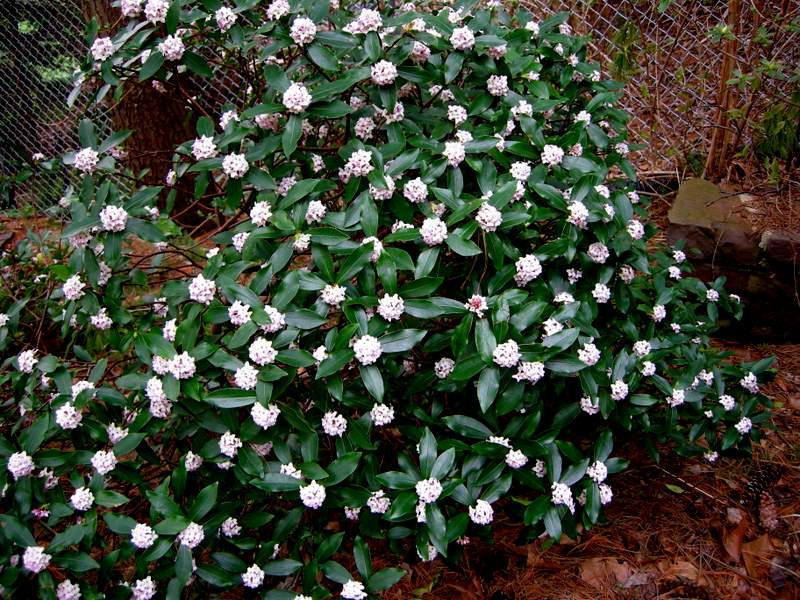
Notes:  All photos in this post were taken at Carolyn’s Shade Gardens in late November. Flowering evergreen shrubs are an important part of any late fall garden.  For all of you who have been to Carolyn’s Shade Gardens, you may wonder why I didn’t mention the semi-circle of large fragrant daphnes (Daphne odora) that lined this bed.  Unfortunately, they were killed last winter by falling white pine branches.  I hope to replace them.

fragrant daphne odora at Carolyn's Shade GardensFragrant Daphne, gone but not forgotten!

My Thanksgiving Oak Forest

Posted in books, green gardening, native plants with tags , on November 26, 2010 by Carolyn @ Carolyns Shade Gardens

Carolyn’s Shade Gardens is a retail nursery located in Bryn Mawr, PA, specializing in showy, colorful, and unusual plants for shade.  The only plants that we ship are snowdrops within the US.  For catalogues and announcements of local events, please send your full name, mailing address, and cell number to carolyn@carolynsshadegardens.com and indicate whether you are interested in snowdrops, hellebores, and/or hostas.  Click here to get to the home page of our website for catalogues and information about our nursery and to subscribe to our blog.

You are probably wondering why I posted this picture of a red oak seedling that looks like Charlie Brown’s Christmas tree.  It’s because this tree is the beginning of the oak forest that we are planting after reading Doug Tallamy’s book Bringing Nature Home.  In fact, I think we will name this new area of our gardens the Tallamy Copse in honor of the person who is doing the most to alert this country to the silent crisis facing our native plants and animals, and us.

Doug Tallamy, Chair of Entomology and Wildlife Ecology at the University of Delaware, finally made me understand why native plants are crucial to our survival on this planet.  Yes, being a somewhat evolved horticulturalist, I knew native plants were desirable.  But I thought it was just because they were native and better adapted.  And the native plant movement really turned me off with its insistence on exclusively native plantings, not even approving of native cultivars.  But it was Tallamy’s simple and insightful analysis that brought the whole problem into focus.

Tallamy calls our home gardens “the last chance we have for sustaining plants and animals that were once common throughout the US.”  Biodiversity is no longer out there in undeveloped areas of the country, because out there no longer exists.  He gives these sobering statistics about the US:

  • as our population soars, 2 million acres of land are developed every year
  • we have paved 4 million miles of roads
  • we have planted 40 million acres of lawn, a non-native monoculture
  • 3,400 species of alien plants have invaded 100 million acres: this will double in five years
  • 54% of the continental US is cities or suburbs and 41% is agricultural, making 95% of US land unable to support native plants and animals

According to Tallamy, research shows that removing 95% of our land from nature will result in the extinction of 95% of the species that live there.  The result for Pennsylvania right now is dire: 800 plant and animal species listed as rare, threatened, or endangered, and 150 gone for good.  And, in case there were any doubts, biodiversity is what keeps us humans alive by generating oxygen, cleaning water, buffering extreme weather, recycling our garbage, etc.

What to do?  Tallamy identifies the answer as planting native plants to support native insects and allow them to pass biomass up the food chain.  The plants must be native because of their shared evolutionary history with native animals.  Native insects do not eat non-native plants.  For example, Kousa dogwood supports no native insects, while our native dogwood supports 117 species of moths and butterflies alone.

That’s where my red oak grove comes into play.  At a lecture I attended, Tallamy stated that if you were only going to do one thing, then plant an oak.  Native oak trees support 534 species of butterflies and moths.  For Thanksgiving, my husband cleared out an area at the bottom of our property that was filled with Japanese knotweed,  goutweed, lesser celandine, privet, bittersweet, multiflora rose, Norway maples, and burning bush—none of it planted by us—and moved five oak seedlings there.  It is the beginning of a native forest, and the only way I can deal with the enormity of what Tallamy has so eloquently described.  I hope you will join me by planting your own oak.

The statistics above are mostly paraphrased from a September 2007 article written by Tallamy for the Hardy Plant Society: Mid Atlantic Group (a great group of people who love plants—check out their website).  His book Bringing Nature Home is a must read, and his website has great information too.  If you ever get a chance to hear him lecture, take it—he’s excellent.

Carolyn

red oak seedling at Carolyn's Shade Gardens

This collage pictures the five native red oak trees my husband planted plus the mother oak.  December 30, 2010.

Snowdrops or the Confessions of a Galanthophile

Posted in bulbs for shade, Fall Color, Shade Gardening, snowdrops with tags , , , , , , , , , , , , , , , , , on November 22, 2010 by Carolyn @ Carolyns Shade Gardens

Carolyn’s Shade Gardens is a retail nursery located in Bryn Mawr, PA, specializing in showy, colorful, and unusual plants for shade.  The only plants that we ship are snowdrops within the US.  For catalogues and announcements of local events, please send your full name, mailing address, and cell number to carolyn@carolynsshadegardens.com and indicate whether you are interested in snowdrops, hellebores, and/or hostas.  Click here to get to the home page of our website for catalogues and information about our nursery and to subscribe to our blog.

Common Snowdrop at Carolyn's Shade GardensCommon Snowdrop, Galanthus nivalis

Our current snowdrop catalogue is on line here, and we are currently taking orders.

I have always loved snowdrops. I loved them so much that I set my seasonal clock by them.  When they bloomed, it was spring no matter what the calendar said. When we purchased our property in 1983, it came with thousands of common snowdrops, Galanthus nivalis. Many of my original snowdrops are on an open south-facing hill and often start to bloom at the beginning of February.  That’s when spring began for me.  When they bloomed, I would put on my warmest set of work clothes, head out to the garden, and leave the winter doldrums behind.

'Viridi-apice' snowdrops at Carolyn's Shade GardensGreen-tipped Snowdrop, Galanthus nivalis ‘Viridi-apice’

That was before I became a galanthophile, a British word describing gardeners obsessed with snowdrops.  In my pre-galanthophile days, I thought (and I shudder to put this in writing) that once you had the double ‘Flore Pleno’, and the giant G.  elwesii, and the green-tipped ‘Viridi-apice’, and the glossy green-leafed G. woronowii, you pretty much had the snowdrop field covered.  The rest all looked the same, didn’t they?  What were all those collectors getting so excited about?

But one day, I realized the error of my ways and was seized by the galanthophile obsession to collect every snowdrop cultivar I could get my hands on.  Actually, it didn’t really happen in a day—more like years.  It started with reading the snowdrop sections in the (old) Heronswood catalogues.  Dan Hinkley was a master at plant descriptions, and I ordered a few new cultivars each year.  However, my fate as a galanthophile was sealed when I visited the garden of  famous regional plantsman Charles Cresson during snowdrop season.  Charles can make you see and appreciate the finest distinctions in plants, and he is so generous with his treasures.

Galanthus nivalis 'Blewbury Tart' at Carolyn's Shade GardensGalanthus ‘Blewbury Tart’

Now I had the wild up-facing double ‘Blewbury Tart’, and ‘Magnet’ with the fishing line stem, and the drop-pearl earring shaped ‘Atkinsii’, and  the classic ‘S. Arnott’, and the rabbit-eared ‘Sharlockii’, and …. they all looked different to me.  I only have 25 varieties though, hardly qualifying me to join the International Galanthophile Society if there is one.  Luckily (or unluckily) unusual snowdrops are rarely offered for sale in the U.S. saving me from creating a system to keep track of hundreds of snowdrop cultivars in my garden.  The British snowdrop “bible”, Snowdrops: A Monograph of Cultivated Galanthus by Matt Bishop, et al., describes 500 cultivars and is sadly out-of-date number-wise.

snowdrop 'Magnet' at Carolyn's Shade GardensGalanthus ‘Magnet’

But why am I talking about snowdrops in fall?  Because two of the unusual varieties I have been able to collect bloom in fall.  This wreaked havoc with my “start of spring” clock, which I had to reset to recognize the wonderful fragrance of sweet box as the beginning of spring.  But this inconvenience has been more than outweighed by allowing me to start my snowdrop season in early October with the blooming of Galanthus reginae-olgae.

October blooming Galanthus reginae-olgae, photo Charles Cresson

Galanthus reginae-olgae, a species snowdrop which has no handy common name, starts blooming in my garden in early to mid-October and continues for about four weeks.  It looks very much like the common snowdrop, G. nivalis, with a single green spot on its inner petals.  Its most significant identifying feature is its bloom time as it is the first species to flower in the garden.   It is not particularly robust in my garden, but I love it in October.

fall-blooming snowdrop 'Potter's Prelude' at Carolyn's Shade GardensNovember blooming Galanthus ‘Potter’s Prelude’

Just as G. reginae-olgae is winding down, the first blooms of Galanthus elwesii var. monostichus ‘Potter’s Prelude’ are opening in early November.  It continues to flower, sometimes into January, when the straight species, G. elwesii, takes over.  ‘Potter’s Prelude’ is a free-flowering and vigorous snowdrop in my garden with wide recurving blue-green leaves.  It has large blossoms equal in size to the best cultivars of the giant snowdrop, G. elwesii.

fall-blooming snowdrop 'Potter's Prelude' at Carolyn's Shade GardensNovember blooming Galanthus ‘Potter’s Prelude’

‘Potter’s Prelude’ was selected by Jack Potter, former curator of the Scott Arboretum, and named and registered by Charles Cresson.  Charles has generously allowed me to include ‘Potter’s Prelude’ for sale in my February snowdrop catalogue and given me enough plants to enjoy good-sized clumps in late fall in my own garden.

Carolyn

Shade Gardening in Fall: Leaves on the Lawn

Posted in Fall, How to, organic gardening with tags , , on November 18, 2010 by Carolyn @ Carolyns Shade Gardens

Carolyn’s Shade Gardens is a retail nursery located in Bryn Mawr, PA, specializing in showy, colorful, and unusual plants for shade.  The only plants that we ship are snowdrops within the US.  For catalogues and announcements of local events, please send your full name, mailing address, and cell number to carolyn@carolynsshadegardens.com and indicate whether you are interested in snowdrops, hellebores, and/or hostas.  Click here to get to the home page of our website for catalogues and information about our nursery and to subscribe to our blog.

leaves after storm at Carolyn's Shade Gardens

The wind blew so hard here the other night that I felt like Dorothy whirling towards Oz.  All the remaining leaves came down and covered the gardens in a blanket of fall colors. The lawn is especially thick with leaves because it surrounds a huge red oak, which always holds its foliage to the end. In my recent article on fall clean-up, my fourth clean-up priority was grinding the leaves on the lawn with the mower and leaving them in place.  I want to elaborate on that in response to readers’ questions.

I subscribe to a blog by TheGardenLady, where I often find practical advice I can apply in my own gardens.  According to a video by Scotts Lawn Care  posted on TheGardenLady blog, a recent Michigan State University study has shown that grinding up to 18″ of leaves on your lawn and leaving them there is beneficial to your lawn.  I have been doing this for years, but now this practice has an official stamp of approval and scientific research behind it.  However, I garden completely organically and do not put chemicals on my lawn.  The compost produced by the leaves as they break down is enough, no further fertilizer is required.

I hope you will try this new method of fall leaf clean up this weekend when you are dealing with the results of our storm.

Carolyn

November GBBD: Make a Spring Shopping List Now

Posted in Fall, Fall Color, Garden Blogger's Bloom Day, How to with tags , , , , , , , , , , , , , , , on November 15, 2010 by Carolyn @ Carolyns Shade Gardens

Carolyn’s Shade Gardens is a retail nursery located in Bryn Mawr, PA, specializing in showy, colorful, and unusual plants for shade.  The only plants that we ship are snowdrops within the US.  For catalogues and announcements of local events, please send your full name, mailing address, and cell number to carolyn@carolynsshadegardens.com and indicate whether you are interested in snowdrops, hellebores, and/or hostas.  Click here to get to the home page of our website for catalogues and information about our nursery and to subscribe to our blog.

'Warsaw Nike' clematis at Carolyn's Shade GardensThis Clematis ‘Warsaw Nike’ decided to produce one final flower in mid-November

Now is the time to walk around your garden and assess what you need to add to make late fall a peak time in your landscape.  Do you need more trees and shrubs with brilliant fall color?  Could your garden benefit from more plants that bloom later in fall?  Make a list and take photographs so that when you are shopping next spring you know what you need and where it should go.  As an added benefit, you can enjoy each miraculous discovery like the Clematis ‘Warsaw Nike’ pictured above, which I found during my own fall inventory.

If you need ideas, visit local arboretums and gardens.  I always find a trip to the Morris Arboretum near Chestnut Hill, PA, highly inspirational and informative.  I have added a permanent category to my sidebar for places to visit and get ideas.

Today is Garden Blogger’s Bloom Day for November (follow the link to see fall  photographs from other garden bloggers).  Here are a few more highlights from my mid-November stroll through Carolyn’s Shade Gardens:

'Potter's Prelude' snowdrops at Carolyn's Shade GardensFall-blooming Snowdrops ‘Potter’s Prelude’

Disanthus at Carolyn's Shade GardensDisanthus cercidifolius

fall-blooming hardy cyclamen at Carolyn's Shade GardensFall-blooming Hardy Cyclamen

fall-blooming camellia 'Elaine Lee' at Carolyn's Shade GardensFall-blooming Camellia ‘Elaine Lee’

fall-blooming camellia 'Winter's Darling' at Carolyn's Shade GardensAckerman Hybrid Fall-blooming Camellia

'Rozanne' hardy geranium at Carolyn's Shade GardensHardy Geranium ‘Rozanne’

Kousa dogwood at Carolyn's Shade GardensKousa Dogwood

holly osmanthus at Carolyn's Shade GardensHolly Osmanthus ‘Sasaba’

black fountain grass at Carolyn's Shade Gardens‘Moudry’ Black Fountain Grass

'Magic Carpet' spiraea at Carolyn's Shade Gardens‘Magic Carpet’ Spiraea

toad-lily 'Sinonome' at Carolyn's Shade GardensToad-lily ‘Sinonome’

'Gold Rush' Italian arum at Carolyn's Shade Gardens‘Gold Rush’ Italian Arum

Carolyn

Shade Gardening in Fall: Fall Clean-up

Posted in Fall, How to, Shade Gardening with tags , , , on November 13, 2010 by Carolyn @ Carolyns Shade Gardens

Carolyn’s Shade Gardens is a retail nursery located in Bryn Mawr, PA, specializing in showy, colorful, and unusual plants for shade.  The only plants that we ship are snowdrops and miniature hostas.  For catalogues and announcements of events, please send your full name, location, and phone number (for back up use only) to carolyn@carolynsshadegardens.com.  Click here to get to the home page of our website for catalogues and information about our nursery and to subscribe to our blog.

fern bench at Carolyn's Shade GardensI always feel a tension around the time of the first expected killing frost.  Everything in the garden is at its fall peak so I don’t want a frost to ruin it.  But I have a lot of work to do outside before it gets truly cold so I want a killing frost to take it all down.  First thing every morning I look out my bedroom window to see if the much dreaded, much desired frost has occurred.

I clean all my beds out in fall because I am too busy with nursery business to do it in spring.  Just like all my gardening, my fall clean-up has evolved from intensive interference to minimal maintenance.  There have been many epiphanies on this journey, but one of two quintessential ah-ha moments occurred during a 1995 visit to Montrose Nursery in NC (now closed).  They were raking the leaves out of their beds, grinding them up, and throwing them back in, even over the crowns of the perennials.

unground leaves at Carolyn's Shade GardensLeaves on my driveway awaiting grinding

ground leaves at Carolyn's Shade GardensLeaves after grinding with lawn mower

I always knew that my leaves were one of my most valuable garden assets.  I never put them out for the township to collect (I grew up in a family where my father collected other people’s leaves to use in his garden).  However, from 1995 on, I have ground my leaves and used them for mulch as nature intended.  The soil in my beds is incredible because of this practice.

I should mention that it’s actually my husband who grinds the leaves so my other great epiphany occurred last fall when he had shoulder surgery and only ground a small amount of leaves for mulch.  Where to use this precious commodity?

In solving this problem, I developed a priority list for fall clean-up. I no longer hand-clean and mulch all my beds, and my workload has been reduced by about 75%.

First Priority: Only the formal beds on the terraces outside my front door and around the back patio need intensive hand-cleaning and my precious mulch in fall.  Those are the beds closest to the house and the parts of the garden I view all winter from inside.

Patio beds at Carolyn's Shade GardensPatio beds before fall clean-up

patio bed at Carolyn's Shade GardensPatio beds after fall clean-up

Patio Area Carolyn's Shade Gardens Early SpringPatio beds in very early spring

Second priority: Beds near the formal areas are cleaned and mulched along the front only.  I remove old plants from the whole bed but no leaves, which are left to act as mulch and break down on their own.

Third priority: The majority of my garden (my woodland gardens, hosta and epimedium hillside, meadow, and the production beds where I grow plants to sell) receive little to no attention.  I merely rake the paths and cut back very noticeable plants like hostas.  The leaves in the beds are left as mulch.  In spring, I remove any still visible dead plants.

hosta hill at Carolyn's Shade GardensHosta Hill before fall clean-up

Hosta Hill at Carolyn's Shade GardensHosta Hill after fall clean-up

Hosta Hill in spring

Fourth and final priority:  Leaves on the lawn are ground up by the lawn mower and left in place.

Carolyn's Shade Gardens Fall 2010Tree cover at Carolyn’s Shade Gardens

Lest you think this works because my leaf cover is light, you should know that I have 15 one-hundred-year-old London plane trees and many full-grown native black walnuts, ash,  sugar maples, tulip poplars, and oaks—just to mention the most numerous large trees (photo above).  The leaf drop is stupendous, but this system works.  Not only is it less labor intensive, but it’s better for the garden and it’s beautiful.

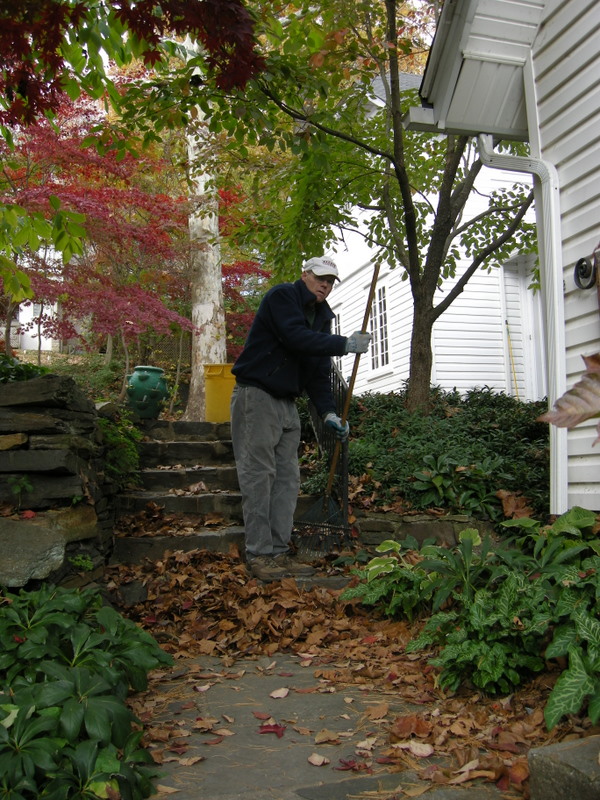
My favorite labor-saving device, my husband, Michael:

Fall at Carolyn's Shade Gardens

Carolyn

Shade Gardening in Fall: Coral Bark Maple

Posted in Fall, Fall Color, Shade Gardening with tags , , , , on November 10, 2010 by Carolyn @ Carolyns Shade Gardens

Carolyn’s Shade Gardens is a retail nursery located in Bryn Mawr, PA, specializing in showy, colorful, and unusual plants for shade.  The only plants that we ship are snowdrops within the US.  For catalogues and announcements of local events, please send your full name, mailing address, and cell number to carolyn@carolynsshadegardens.com and indicate whether you are interested in snowdrops, hellebores, and/or hostas.  Click here to get to the home page of our website for catalogues and information about our nursery and to subscribe to our blog.

Sugar Maple

I have a love/ hate relationship with fall.  I try to take joy in the fall colors and the plants that come into their own in fall.  But I can’t quite ignore the feeling, even though it’s wrong, that the garden is dying.  And, I have to admit that, although I like snow, I don’t like cold and that’s what fall is heading towards.

I think that is why plants that turn beautiful fall colors like the sugar maple pictured above and those that bloom in winter have always been a priority for me.  The riot of color distracts me.  I can rearrange my mental state by viewing winter blooms as the start of  spring (more about that in a later post).  So, to improve my mental state right now, I want to mention a shade tree that has outstanding fall color as well as year round interest.


The four photographs above are of coral bark Japanese maple (Acer palmatum ‘Sango-kaku’).  Once you have your splashy sugar maple, you should make room for this elegant tree.  Although rightfully famous for its dazzling  coral-red bark in late winter and spring, I think it should be equally prized for its long-lasting apricot-gold fall color.  I can’t take my eyes off it this time of year especially when the sun shines through it—it’s magical!

Culturally it is a 20-25′ understory tree with an elegant, spreading vase shaped habit.  Easy to grow in part to more shade.  It is also readily available in nurseries around the mid-Atlantic area.

Some other trees at Carolyn’s Shade Gardens with amazing fall color:  flowering dogwood (native), kousa dogwood, Rutger’s hybrid dogwoods (native hybrid), pagoda dogwood (native), other Japanese maple species and cultivars, American hornbeam (native), red maple (native), ‘Okame’ cherry, Yoshino cherry, and Katsura.

Please send me a comment/leave a reply with the names of your favorite trees for fall color.

For more information on the coral bark maple and any other plant you want to know about, I highly recommend the Plant Finder provided by the Missouri Botanical Garden‘s Kemper Center for Home Gardening.  I have added this site to my favorites and use it frequently to get information on plants I am researching.  I have provided a permanent link to this wonderful site under Plant Information on my sidebar so you will always be able to find it.

Carolyn