Archive for December, 2010

New Year’s Resolution to Edit the Garden

Posted in landscape design on December 26, 2010 by Carolyn @ Carolyns Shade Gardens

Carolyn’s Shade Gardens is a retail nursery located in Bryn Mawr, PA, specializing in showy, colorful, and unusual plants for shade.  The only plants that we ship are snowdrops and miniature hostas.  For catalogues and announcements of events, please send your full name, location, and phone number (for back up use only) to carolyn@carolynsshadegardens.com.  Click here to get to the home page of our website for catalogues and information about our nursery and to subscribe to our blog.

Winter at Carolyn’s Shade Gardens

Kartik, my friend and computer wizard extraordinaire, went to India last year with his wife and children to visit his family for three weeks.  When he returned, I was curious to know how he felt about the trip.  He told me he was happy to be home, meaning literally back in his home and also that the trip confirmed that the US is his home.  He then went on to explain how the trip had changed him in basic and important ways.

Although he does not view India through rose-colored glasses, Kartik marveled at the simplicity of life there and how that simplicity allows a truer appreciation of and sharper focus on “the important things”.  With few possessions, little access to travel, and monetary restrictions, his Indian acquaintances focus on their community, their friends, their family, and especially their children.  Food, conversation, time together is more important there without all the distractions of a consumer society.  Although on balance he would rather live in the US, he missed the simplicity of India.

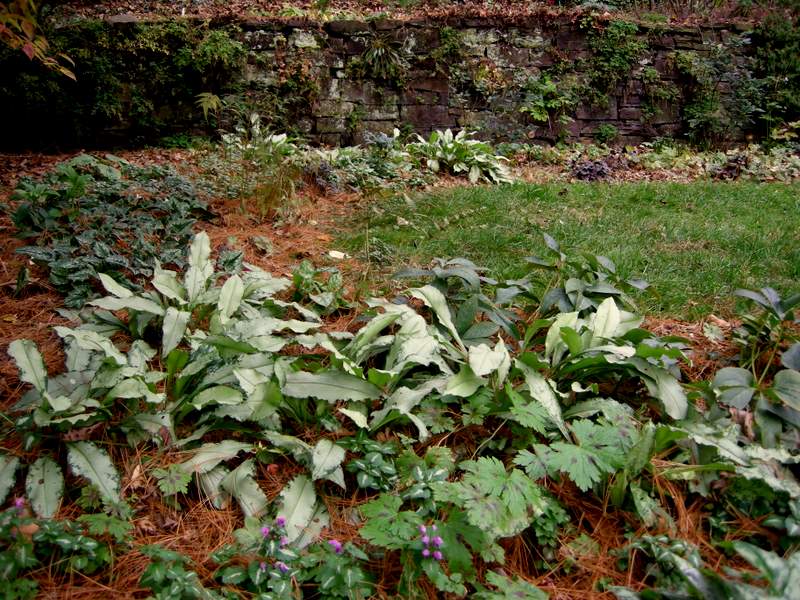
Carolyn’s Shade Gardens Winter 1994

Not one to waste an important lesson, when Kartik returned home, he immediately began paring down his own possessions and lifestyle, ruthlessly eliminating what his family didn’t use or need.  He said it gave him a great feeling of power over our endlessly consumer driven society.  And, as he fixed my computer recently, he pointed out all the technological paraphernalia in my closet that I could do without: keyboards, mice, cables, adapters, manuals, disks, etc., that I was saving “in case I needed them”.  At the end there was an almost empty closet.

After Kartik left, I started to relate his experience in India to my own at my family’s small summer cottage in Maine.  With one big room downstairs and one partitioned room upstairs and no closets, our family is always together and there is no space for “stuff”.  When I return to my much larger, closet-endowed home in PA, I feel overwhelmed by the clutter and more isolated as everyone disperses to the many rooms of our house.
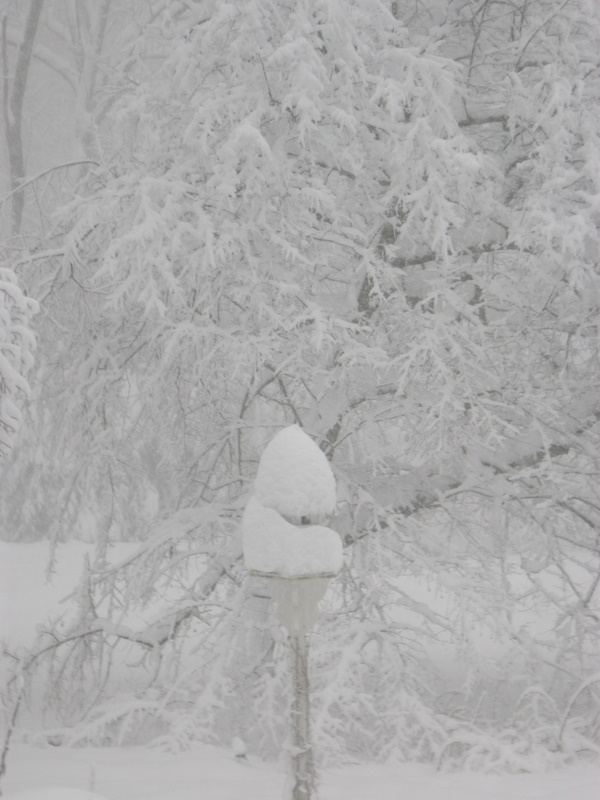
my signature dovecote (see header)

Taking a page from Kartik’s book, I attacked our “stuff’ with a vengeance dispersing mountains of un-needed clutter to the thrift shop, my children’s school, and the local 7-11 parking lot where every item disappeared within a few hours.  I too felt empowered by the process.  Life really is simpler and more enjoyable with less things.

Then I started to think about the garden and how similar principles apply.  I have the same reluctance to edit plants as I have to edit my belongings.  There’s always hope for that half dead shrub, for that ground cover that didn’t fill in, for that perennial that clearly needs more sun.  When the real answer is to move on.  So in 2010 I resolved to tear out all non-performing plants, and the result was a huge improvement.
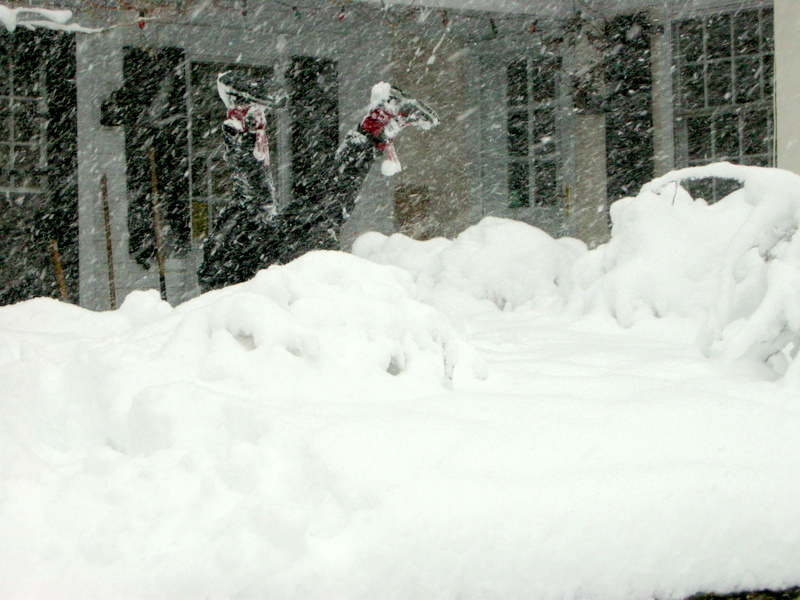
my son Nicky stuck in a snowbank

A row of boxwoods riddled with phytophthora made way for some beautiful fall-blooming camellias.  Large patches of old hostas were removed to make room for new improved cultivars.  A tangle of privet and wisteria was replaced by a magnificent view of the neighbor’s rose bushes.  And, in many cases, struggling plants made room for more of what was already thriving at the site, adding to the overall impact of the garden.

For New Years, I highly recommend a resolution to edit your garden.  The results will produce satisfaction for all of 2011.

Happy New Year,

Carolyn

Note: Every word that appears in orange on my blog is a link that you can click for more information.  For non-performing trees, I use intimidation before removing them.  I threatened a 15-year-old yellowwood that if it didn’t bloom this year, I would cut it down.  Naturally it was covered with flowers this spring.  I know it doesn’t make sense, but it has worked numerous times for me.
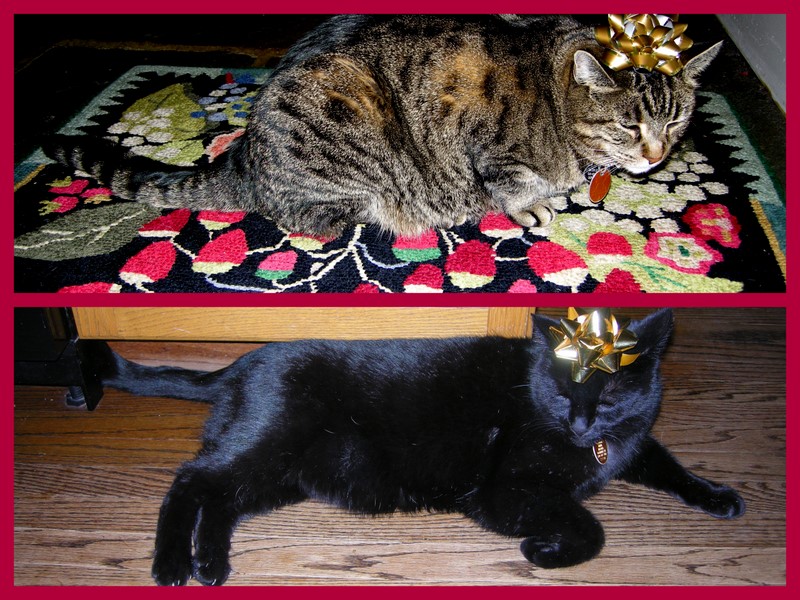
My cats, Otto and Olivia, on Christmas

This collage shows “six closets de-cluttered to help me feel more free.”   December 31, 2010.
Fall-blooming Camellias Part 2

Posted in Fall Color, Shade Shrubs with tags , , , , , , , , , on December 17, 2010 by Carolyn @ Carolyns Shade Gardens

Carolyn’s Shade Gardens is a retail nursery located in Bryn Mawr, PA, specializing in showy, colorful, and unusual plants for shade.  The only plants that we ship are snowdrops and miniature hostas.  For catalogues and announcements of events, please send your full name, location, and phone number (for back up use only) to carolyn@carolynsshadegardens.com.  Click here to get to the home page of our website for catalogues and information about our nursery and to subscribe to our blog.

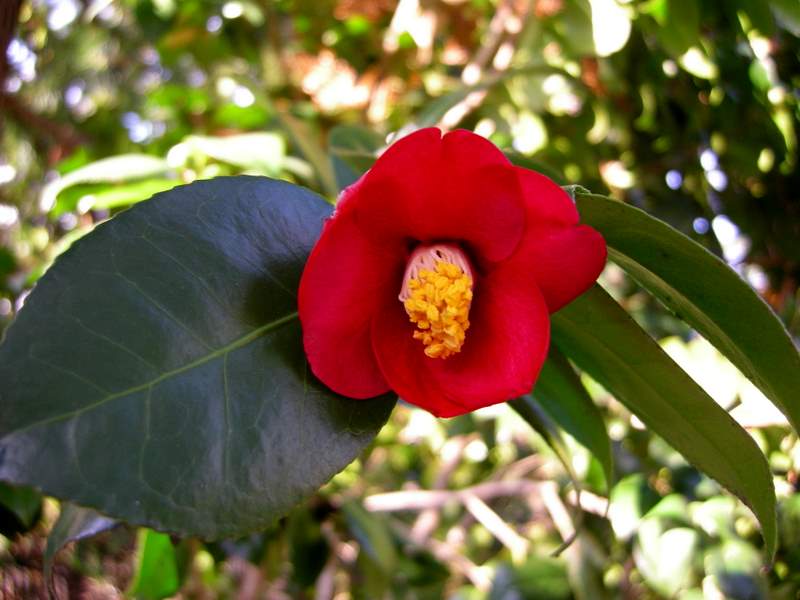
Red-flowered Camellia japonica (introduction in process)

In my previous article, Fall-blooming Camellias Part 1, I showed you my camellias and provided some background on the development of these remarkable plants.   Here I want to convey the astonishing variety of cultivars available for your fall  garden.

On December 2 (before the freeze), I was privileged to visit the camellia collection of Swarthmore, PA, horticulturalist Charles Cresson who grows over 60 varieties.  Charles not only showed me around his gardens, but helped me stage the photographs—thanks Charles.  Here are some of the incredible specimens I saw.

fall-blooming camellia 'Snow Flurry'Camellia x ‘Snow Flurry’ (Ackerman Hybrid)

fall-blooming camellia 'Winter's Dream'Camellia x ‘Winter’s Dream’ (Ackerman Hybrid)


fall-blooming camellia 'Autumn Spirit'Camellia x ‘Autumn Spirit’ (Camellia Forest Introduction)

fall-blooming camellia 'Winter's Snowman'Camellia x ‘Winter’s Snowman’ (Ackerman Hybrid)


fall-blooming camellia 'Winter's Charm'Camellia x ‘Winter’s Charm’ (Ackerman Hybrid)

fall-blooming camellia 'Scented Snow'Camellia x ‘Scented Snow’ (Camellia Forest Introduction)

fall-blooming camellia 'Winter's Beauty'Camellia x ‘Winter’s Beauty’ (Ackerman Hybrid)

fall-blooming camellia 'Cranberry Ice'Cranberry-flowered Camellia (not introduced)

fall-blooming camellia Ackerman seedlingWhite-flowered Camellia (not introduced)

The two photos above are of  cold hardy camellias that have never been offered  for sale.

fall-blooming camellia "Wax Lips"

fall-blooming camellia "Wax Lips"

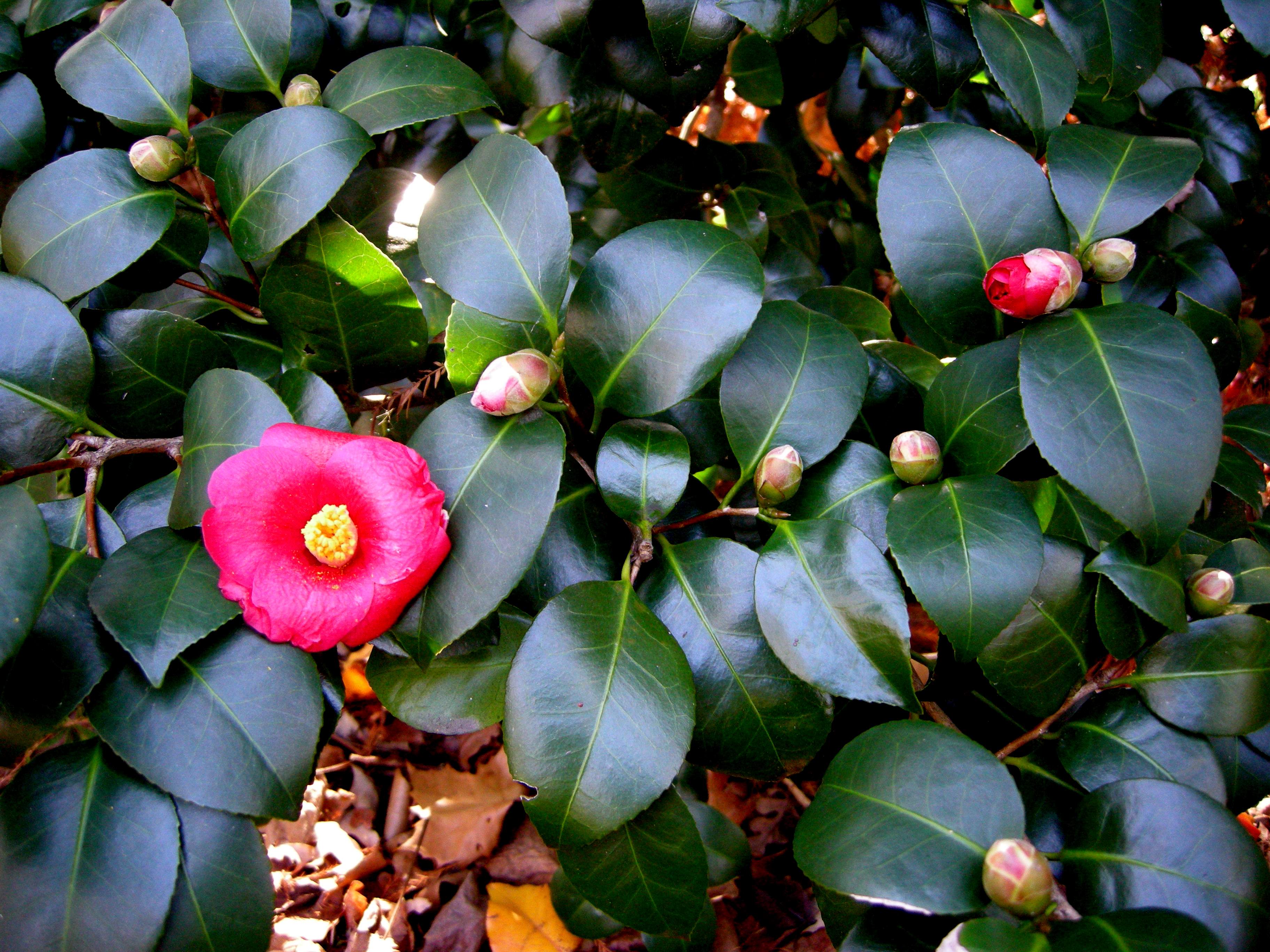
Red-flowered Camellia japonica (introduction in process)

Of all the camellias I saw during my visit, and there were many more than appear here, you can probably tell that the red-flowered camellia in the photographs above and at the top was my favorite.  From its plentiful plump buds to its robust red flowers with bright yellow stamens to its dazzling dark evergreen leaves to its lush and  luxurious habit, it is outstanding.  It is a straight C. japonica  species collected by the Morris Arboretum in 1984 on an island in Korea.   The island is the most northern range of this species. Although technically a spring bloomer, it also flowers in fall.  Charles hopes to introduce it for sale soon.

For more information on Ackerman  hybrid camellias, read William Ackerman’s article “Camellias for Cold Climates”.  For a wonderful selection of camellias from a nursery that hybridizes them, visit the Camellia Forest Nursery website.  Camellia Forest is located in Chapel Hill, NC.

Carolyn

Note: Every word that appears in orange on my blog is a link that you can click for more information.

December GBBD: Add to Your Spring Shopping List

Posted in Fall, Fall Color, Garden Blogger's Bloom Day on December 15, 2010 by Carolyn @ Carolyns Shade Gardens

Carolyn’s Shade Gardens is a retail nursery located in Bryn Mawr, PA, specializing in showy, colorful, and unusual plants for shade.  The only plants that we ship are snowdrops and miniature hostas.  For catalogues and announcements of events, please send your full name, location, and phone number (for back up use only) to carolyn@carolynsshadegardens.com.  Click here to get to the home page of our website for catalogues and information about our nursery and to subscribe to our blog.

native oakleaf hydrangea ‘Snow Queen’

It is time to walk around your garden again and assess what you need to add to make the end of fall an exciting time in your landscape.  Do you need more late fall-blooming evergreen shrubs like camellias to give you a reason to go outside?  Could your garden benefit from flowers that bloom in December like hellebores or snowdrops to relieve the gray?  Make a list and take photographs so that when you are shopping next spring you know what you need and where it should go.  I know it’s cold outside, but you never know what you might find to raise your chilly spirits like nature’s own dried arrangements (pictured above and first below), which I discovered during my own monthly inventory.


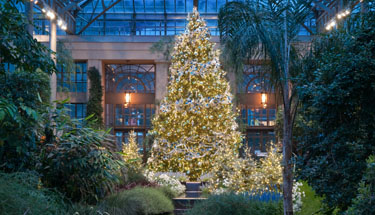
Longwood Gardens conservatory decorated for Christmas

If you need ideas, visit local arboretums and gardens.  I always find a trip to Longwood Gardens in Kennett Square, PA, highly inspirational and informative.  This time of year you can see the fabulous holiday display, A Longwood Christmas, with half a million lights and 39 miles of cords lighting 75′ trees plus a 4.5 acre indoor conservatory themed for the holidays.  I know I am prejudiced, but I think it is the best in the world.


Today is Garden Blogger’s Bloom Day for December when gardeners around the world show photos of what’s blooming in their gardens (follow the link to see  photographs from other garden bloggers assembled by Carol at May Dreams Gardens).  Here are a few more highlights from my mid-December stroll through Carolyn’s Shade Gardens:

Japanese silver grass with ‘Magic Carpet’ spiraea


fall-blooming Christmas rose ‘Jacob’

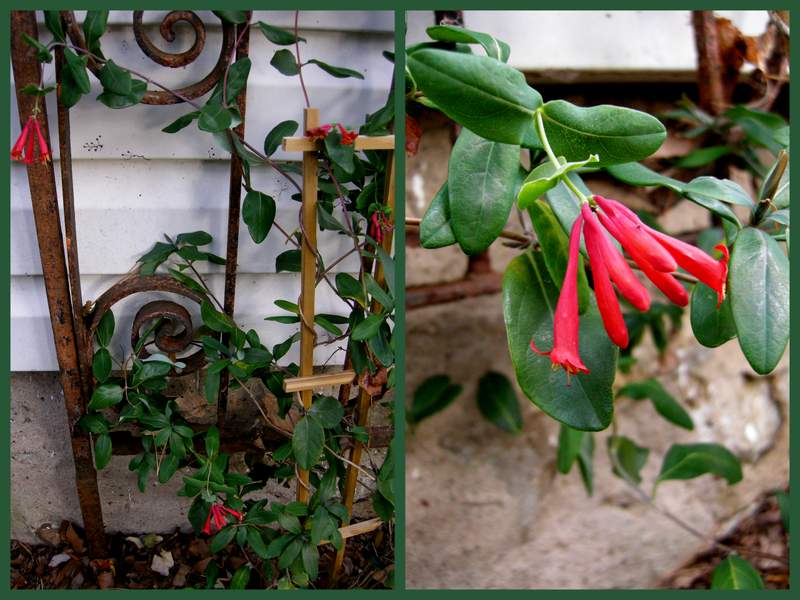
native honeysuckle ‘Crimson Cascade’

fall-blooming snowdrop ‘Potter’s Prelude’

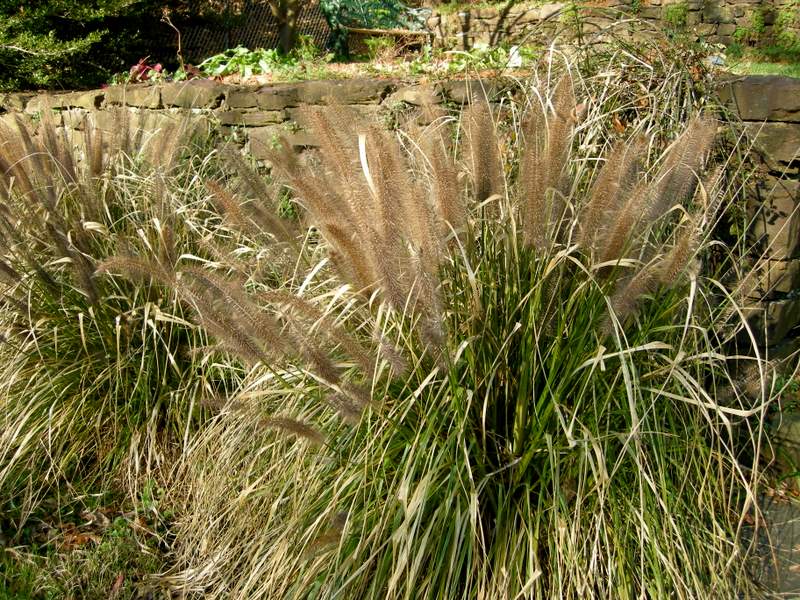
black fountain grass ‘Moudry’

purple offshoot of ‘Shell Pink’ lamium

leatherleaf viburnum

fall-blooming species Camellia oleifera


bearsfoot hellebore coming into bloom

fall-blooming hybrid Camellia x  ‘Winter’s Darling’

Japanese silver grass ‘Morning Light’

giant snowdrop (G. elwesii) blooming early

native purple coneflower soldiering on

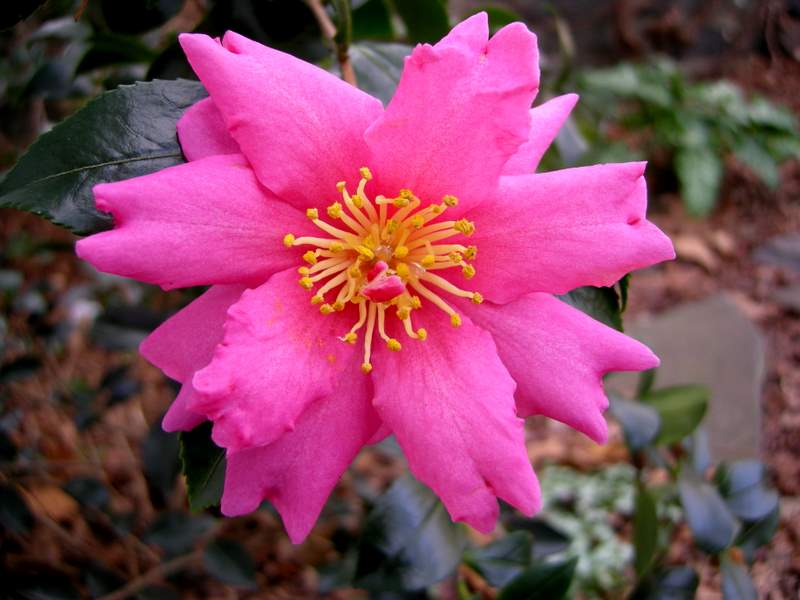
fall-blooming Ackerman hybrid camellia

re-blooming tall bearded iris ‘Immortality’

My re-blooming iris ‘Immortality’ re-bloomed in early fall and then decided to do it again in late November.  I could bring the flowers stalks inside and force them.  But the fat buds hold such a promise of spring and they make me feel so hopeful every time I walk by them that I can’t bring myself to cut them.  May you find many  treasures on your mid-December ramble.

Carolyn

Note: Every word that appears in orange on my blog is a link that you can click for more information.  It went down to 15 degrees last night so the camellias are brownish, but they still have buds coming.  I covered the iris, and all the other plants mentioned are fine!

Fall-blooming Camellias Part 1

Posted in evergreen, Fall, Fall Color, Shade Shrubs with tags , , , , on December 8, 2010 by Carolyn @ Carolyns Shade Gardens

Carolyn’s Shade Gardens is a retail nursery located in Bryn Mawr, PA, specializing in showy, colorful, and unusual plants for shade.  The only plants that we ship are snowdrops and miniature hostas.  For catalogues and announcements of events, please send your full name, location, and phone number (for back up use only) to carolyn@carolynsshadegardens.com.  Click here to get to the home page of our website for catalogues and information about our nursery and to subscribe to our blog.

Camellia x (Unknown Ackerman Hybrid)

From 1992 to 1997, I earned two Certificates in Ornamental Plants from Longwood Gardens.  Of all the horticultural classes I have taken, these are the best, and I still use the course books as my primary plant reference.  As I worked my way through the 18 required courses from bulbs to perennials to shrubs to vines, I made a mental life list of the plants I wanted in my garden.  Some I added immediately, but others were stored away to be added in the future as I discovered them randomly at the nurseries I visited.  This year, fall-blooming hardy camellias rose to the top of the list.

Camellia oleifera at Carolyn's Shade GardensCamellia oleifera

Bark on Camellia oleifera grown as tree (Cresson garden)

Actually, my flirtation with fall-blooming camellias began about 10 years ago during a tour of the Morris Arboretum when I was given a tiny seedling of their Camellia oleifera (two photos above), which was a cutting of the original and famous ‘Lu Shan Snow’ at the U.S. National Arboretum.  It has grown into quite a large shrub with beautiful cinnamon-colored bark, glossy dark evergreen leaves, and copious single white flowers from late October into December.  It is also completely cold hardy, but not resistant to deer who dined on it voraciously.  There were to be no more camellias in my future until I freed up a space for them inside my deer fence.

fall-blooming camellia 'Winter's Darling' at Carolyn's Shade GardensCamellia x (Unknown Ackerman Hybrid)

This spring I removed several large and ailing boxwoods from a sheltered spot by my patio and simultaneously found a source for specimen camellias—it was a “perfect storm” for my venture into the fall-blooming camellia world.

fall-blooming camellia 'Elaine Lee' at Carolyn's Shade GardensCamellia x ‘Elaine Lee’

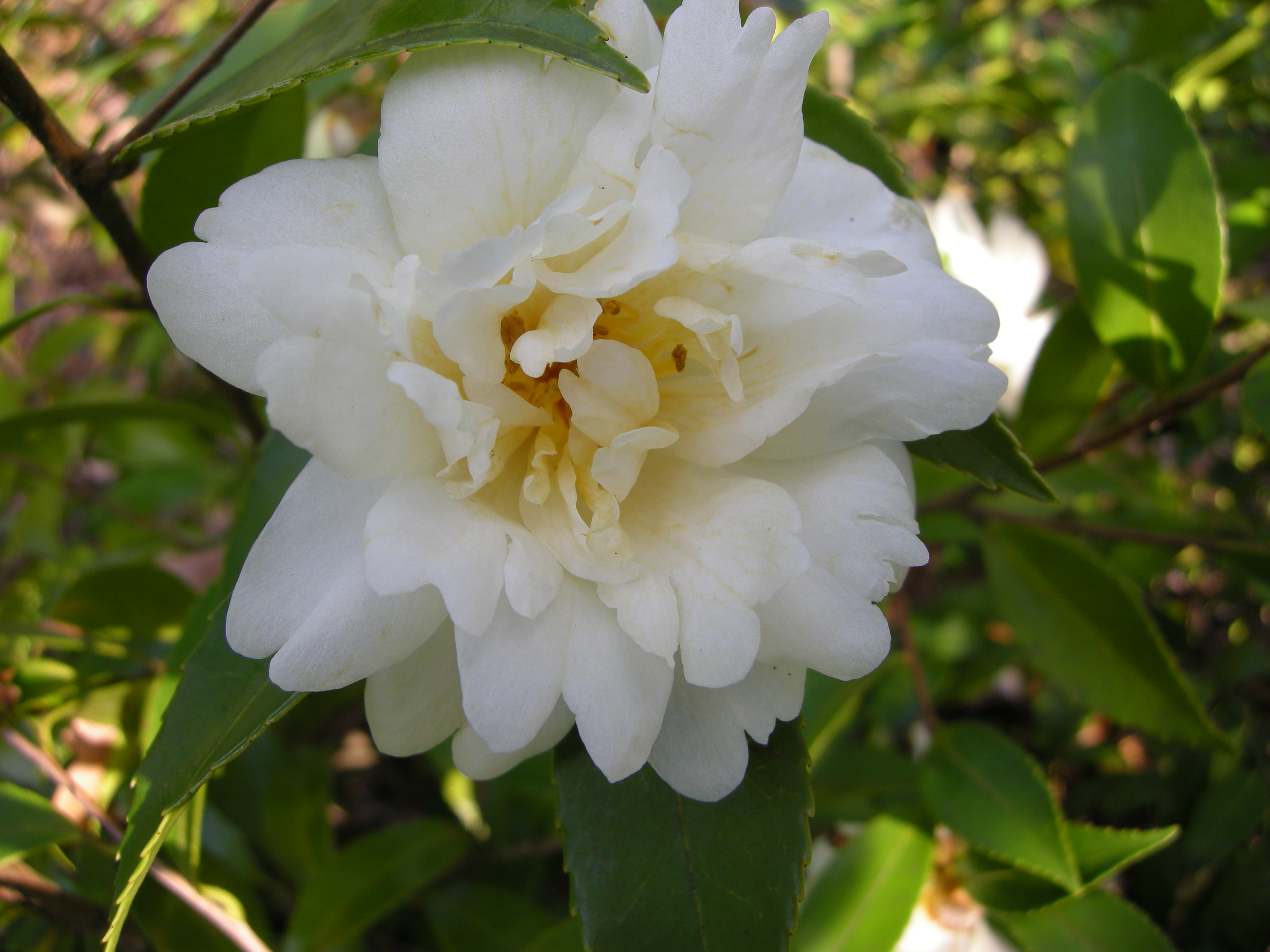
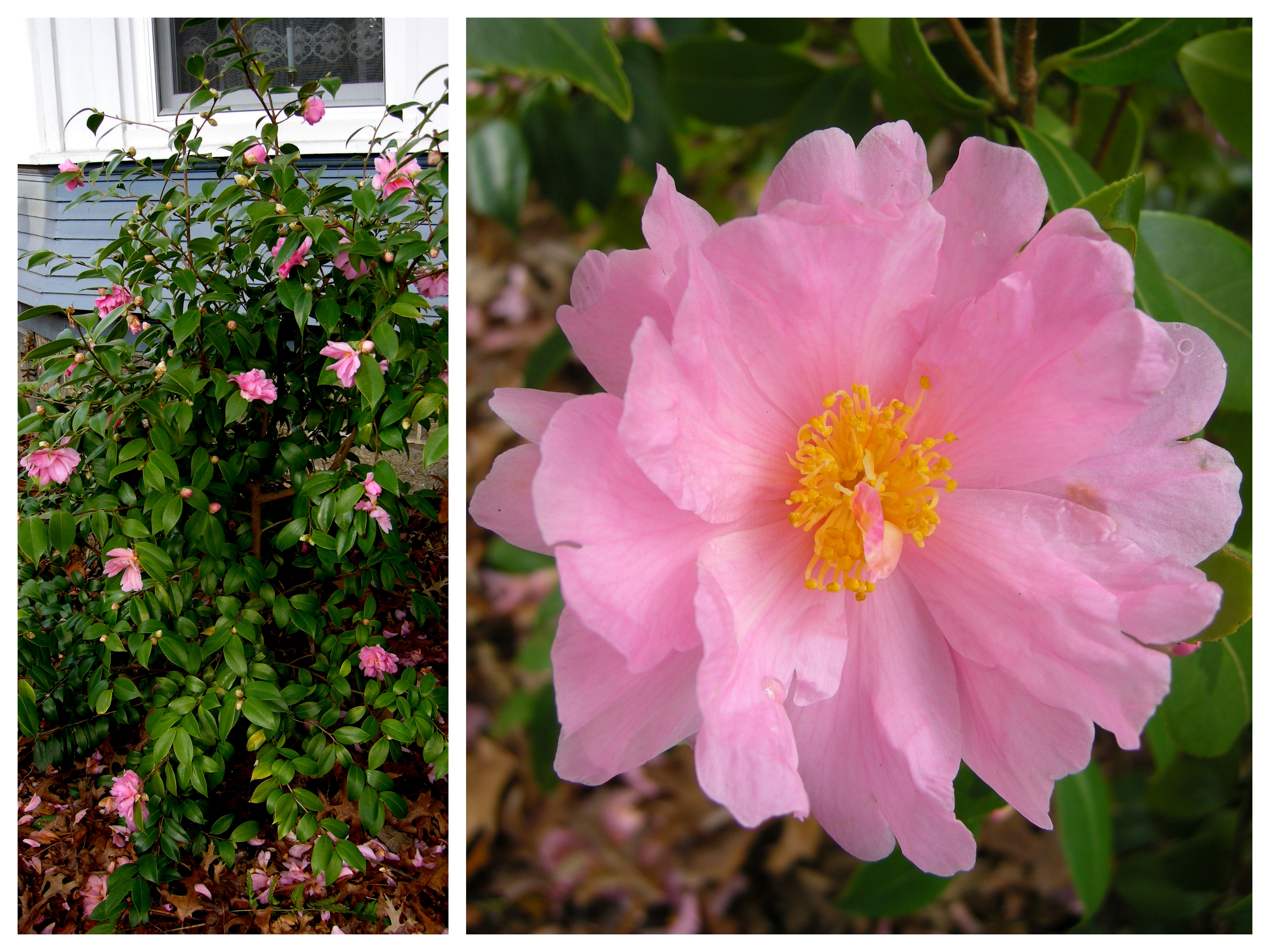
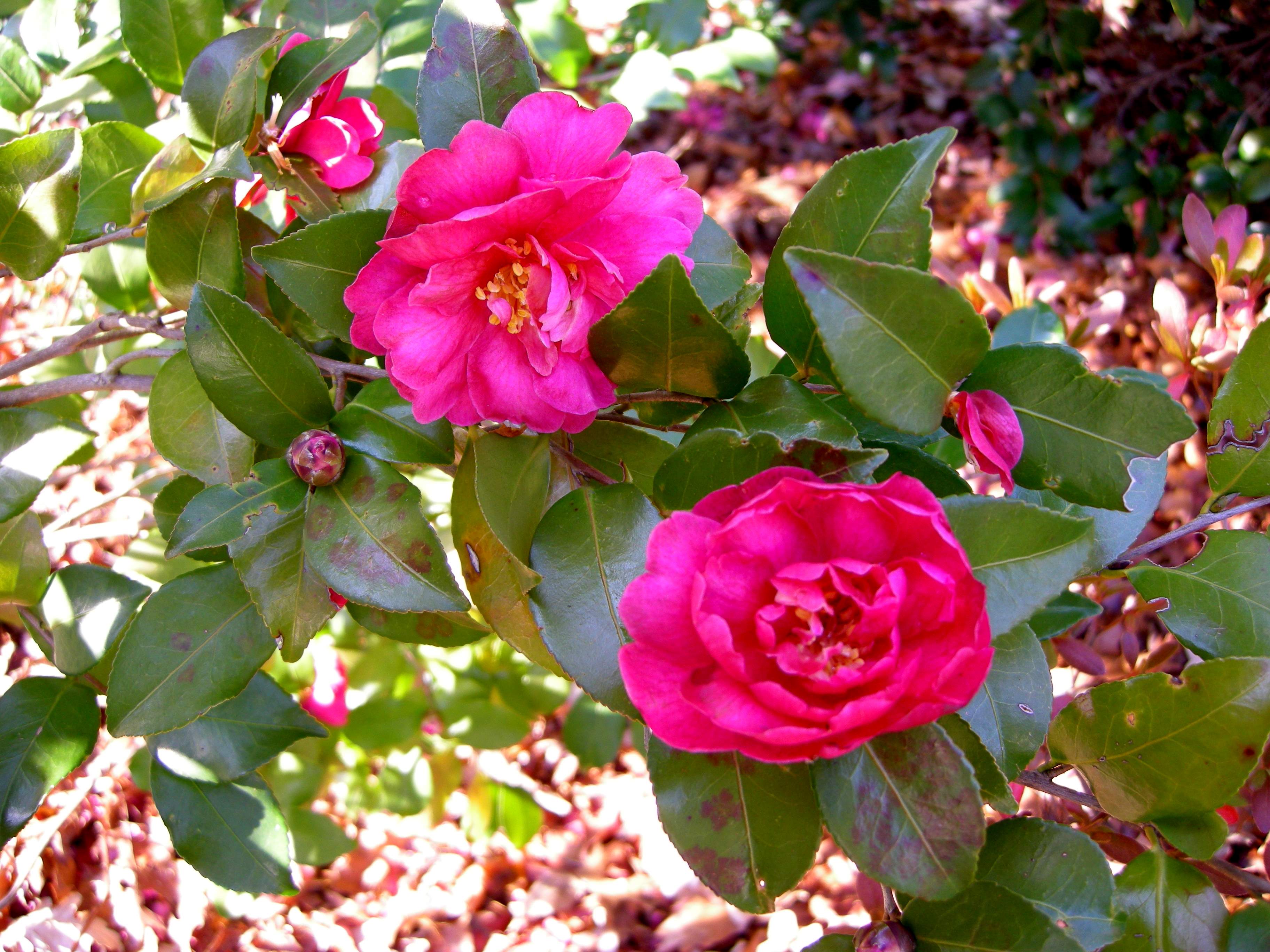
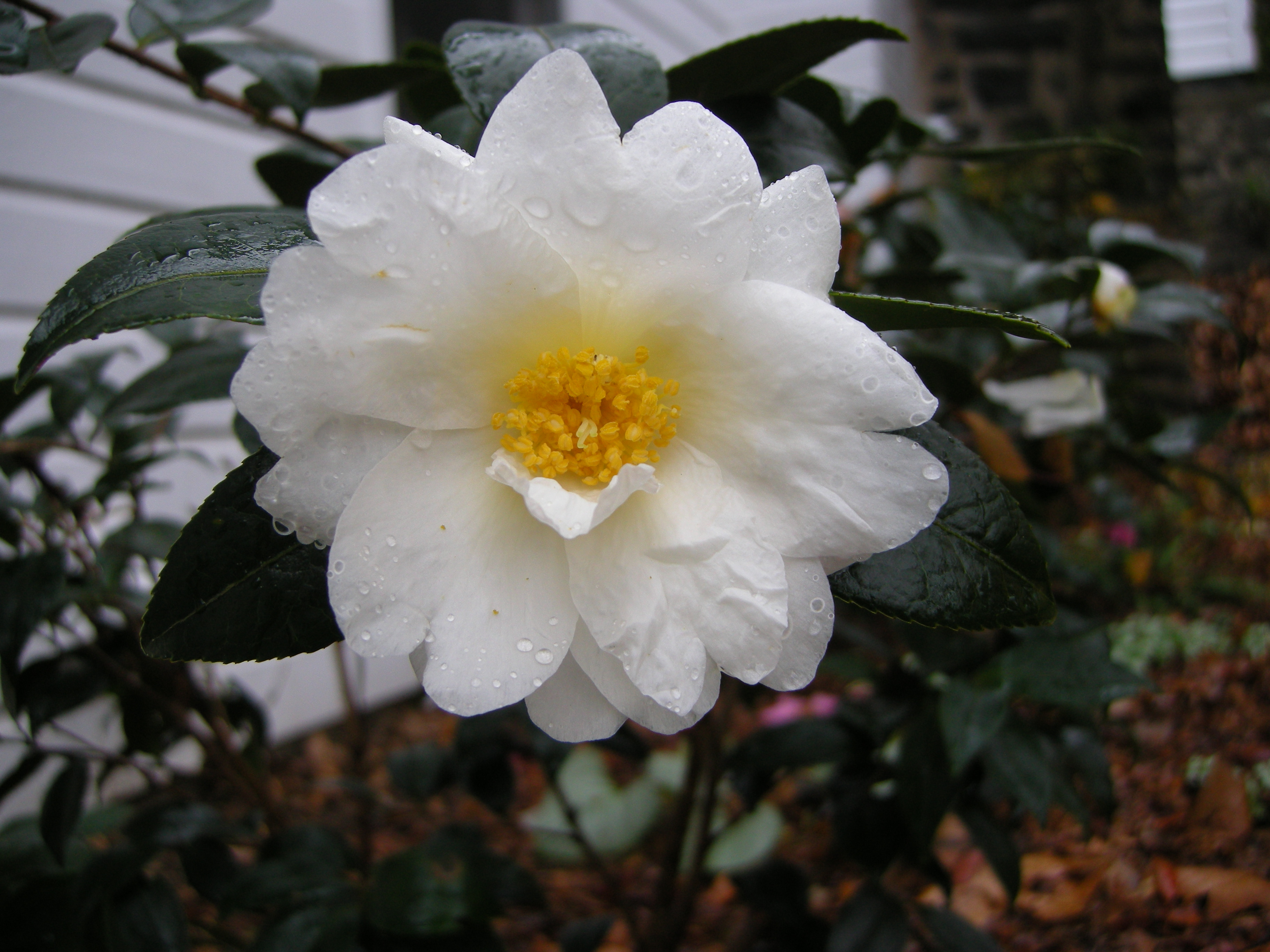
I purchased three gorgeous plants.  The first, Camellia x ‘Elaine Lee’ (photos above and bottom), has semi-double white flowers that bloom from November sporadically through January.  It has an upright form with an average growth rate to 5 feet.  The second, Camellia x ‘Winter’s Darling’ (photo below), has miniature, anemone-form deep cerise pink flowers that start at the end of October and continue through December.  It has a moderately upright habit and grows slowly to 3 to 5 feet.  The third is an Ackerman hybrid camellia (photos top, above, and bottom), but I am not sure which cultivar.  It has semi-double deep pink flowers.  All three have beautiful glossy dark evergreen leaves.

Camellia x ‘Winter’s Darling’

These hardy fall-blooming camellias, along with many others, were developed by Dr. William Ackerman at the U.S. National Arboretum by crossing C. oleifera with more ornamental forms to produce superior plants.  They are truly hardy in the mid-Atlantic, but should be sited to protect them from winter sun and our winter winds, which come from the northwest, and mulched in winter.  They prefer a well-drained site in part shade.

fall-blooming camellia 'Elaine Lee' at Carolyn's Shade GardensCamellia x ‘Elaine Lee’

For more information on Dr. Ackerman’s hybrids, read his article “Camellias for Cold Climates”.  For more information on camellias, go to the International Camellia Society’s website.  Stay tuned for my next camellia post which will highlight photographs from my recent visit to a private collection of over 60 camellias.

fall-blooming camellia 'Winter's Darling' at Carolyn's Shade GardensCamellia x (Unknown Ackerman Hybrid)

The U.S. National Arboretum, which is part of the USDA, is the source for many of the best plant breeding programs in the U.S.  It also maintains national collections of plants.  The arboretum is currently planning to deaccession its Azalea and Boxwood Collections as well as part of the Perennial Collection.  In the case of the Azalea Collection, although budget concerns were mentioned, one of the reasons given was that it attracted too many visitors. I may be wrong, but I can’t imagine this happening in the U.K.  If you would like to find out more about this amazing azalea collection and the efforts to save it, go to the Save the Azaleas website.

Carolyn

Note: Every word that appears in orange on my blog is a link that you can click for more information.

Hellebores for Fall

Posted in Fall, Fall Color, hellebores, Shade Perennials with tags , , , , , , , , on December 4, 2010 by Carolyn @ Carolyns Shade Gardens

Carolyn’s Shade Gardens is a retail nursery located in Bryn Mawr, PA, specializing in showy, colorful, and unusual plants for shade.  The only plants that we ship are snowdrops and miniature hostas.  For catalogues and announcements of events, please send your full name, location, and phone number (for back up use only) to carolyn@carolynsshadegardens.com.  Click here to get to the home page of our website for catalogues and information about our nursery and to subscribe to our blog.

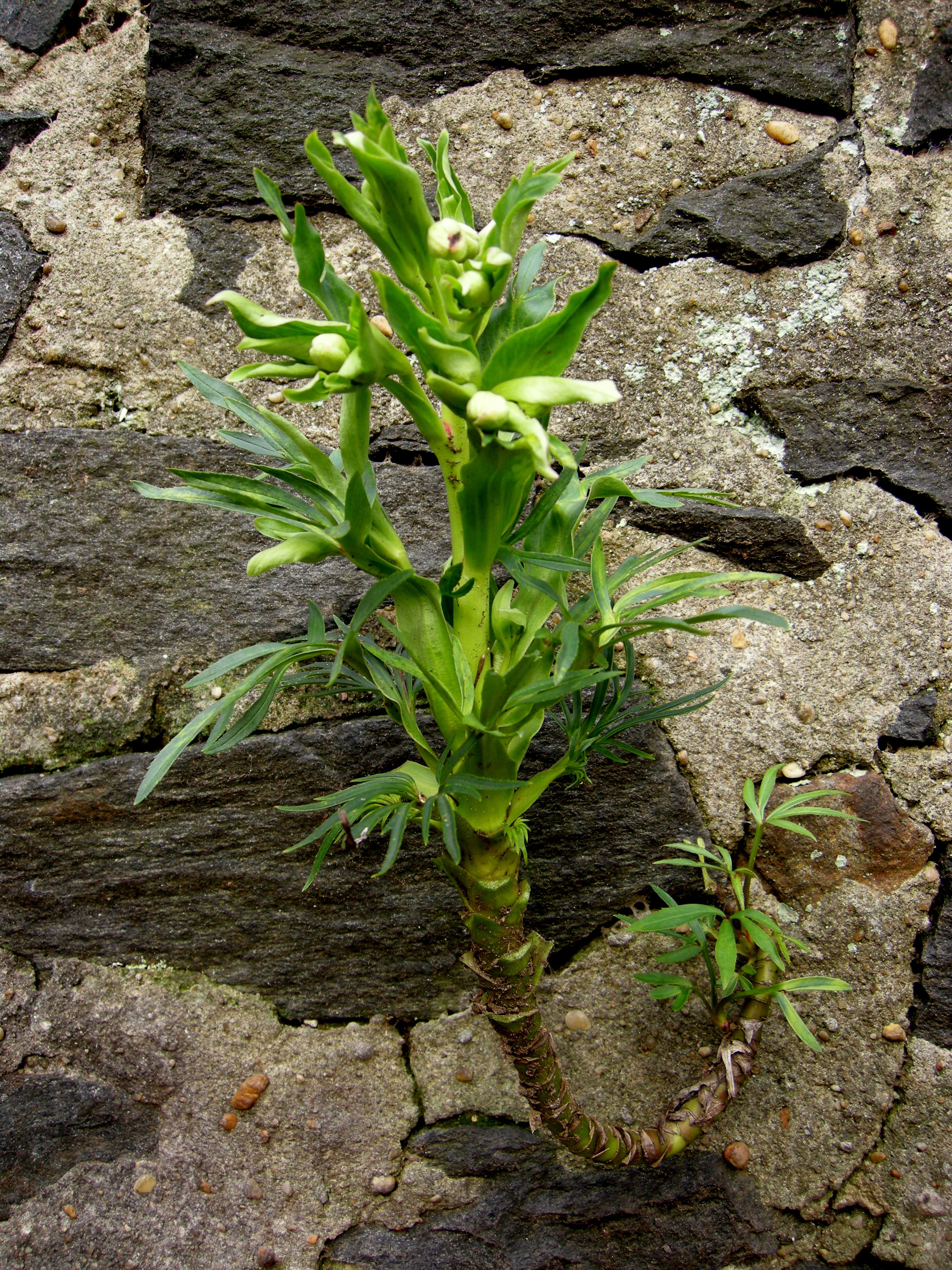
bearsfoot hellebore at Carolyn's Shade GardensBearsfoot hellebore growing in my manure pit wall

Hybrid hellebores, the variety of hellebore that most gardeners grow with the big, nodding, showy flowers in beautiful colors, are generally not fall-blooming plants.  They give depth to the fall garden through their evergreen foliage, but they are not thought of for flowers (except a rogue hybrid bloom now and then).  In the mid-Atlantic, they bloom as early as January, but generally start to flower in February.  But there are a few species (as opposed to hybrid) hellebores that flower in fall, and my late fall garden has been much enhanced by their addition.

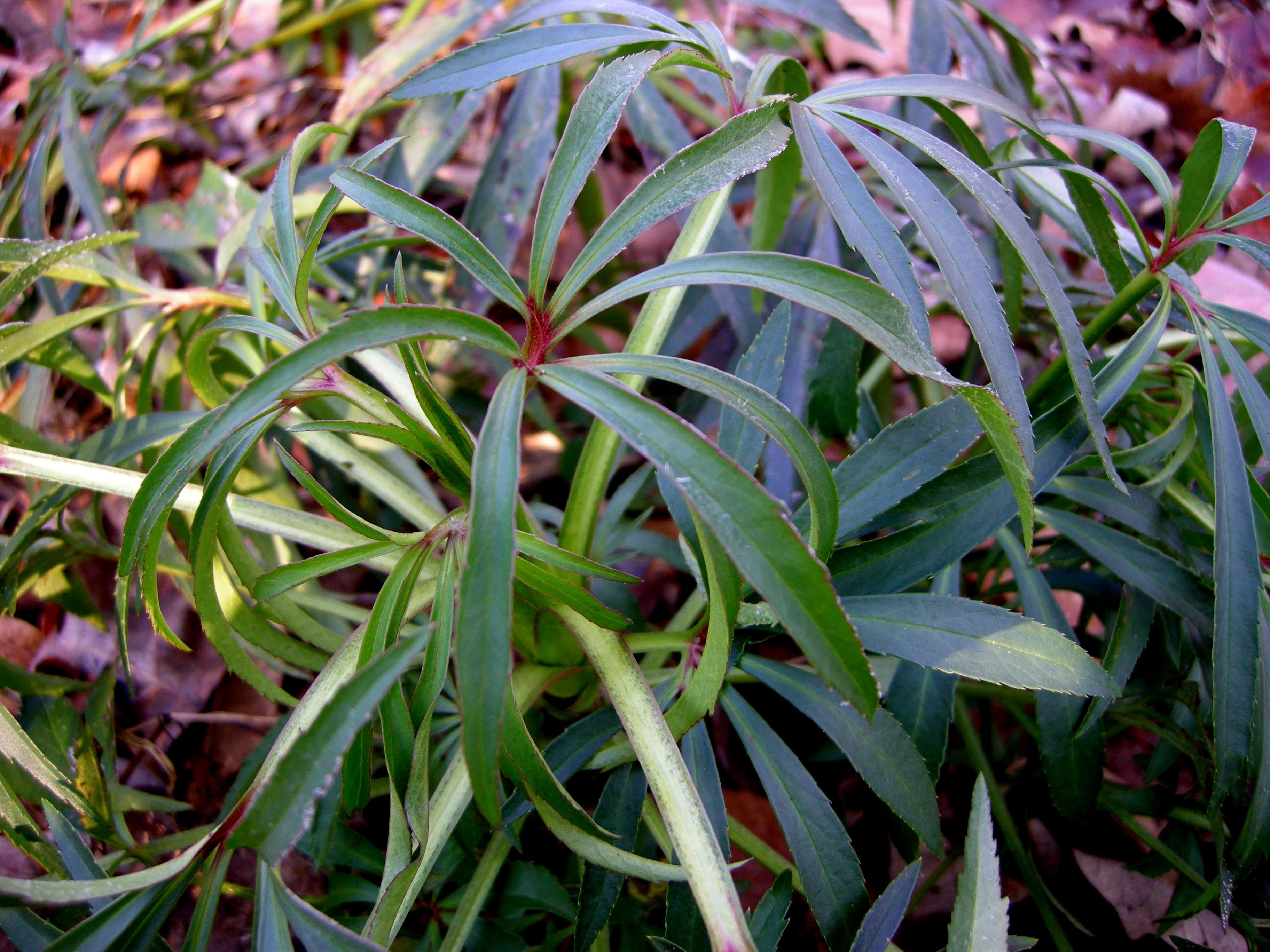
foliage of bearsfoot hellebore at Carolyn's Shade GardensWinter foliage of bearsfoot hellebore

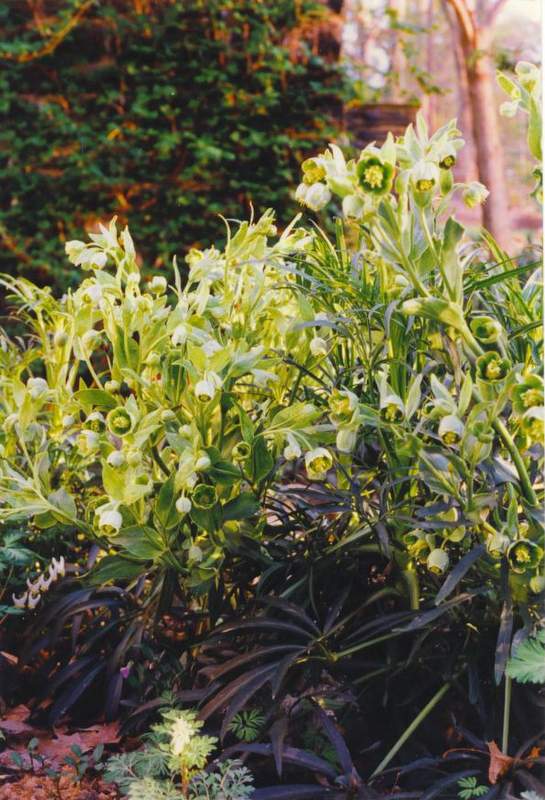
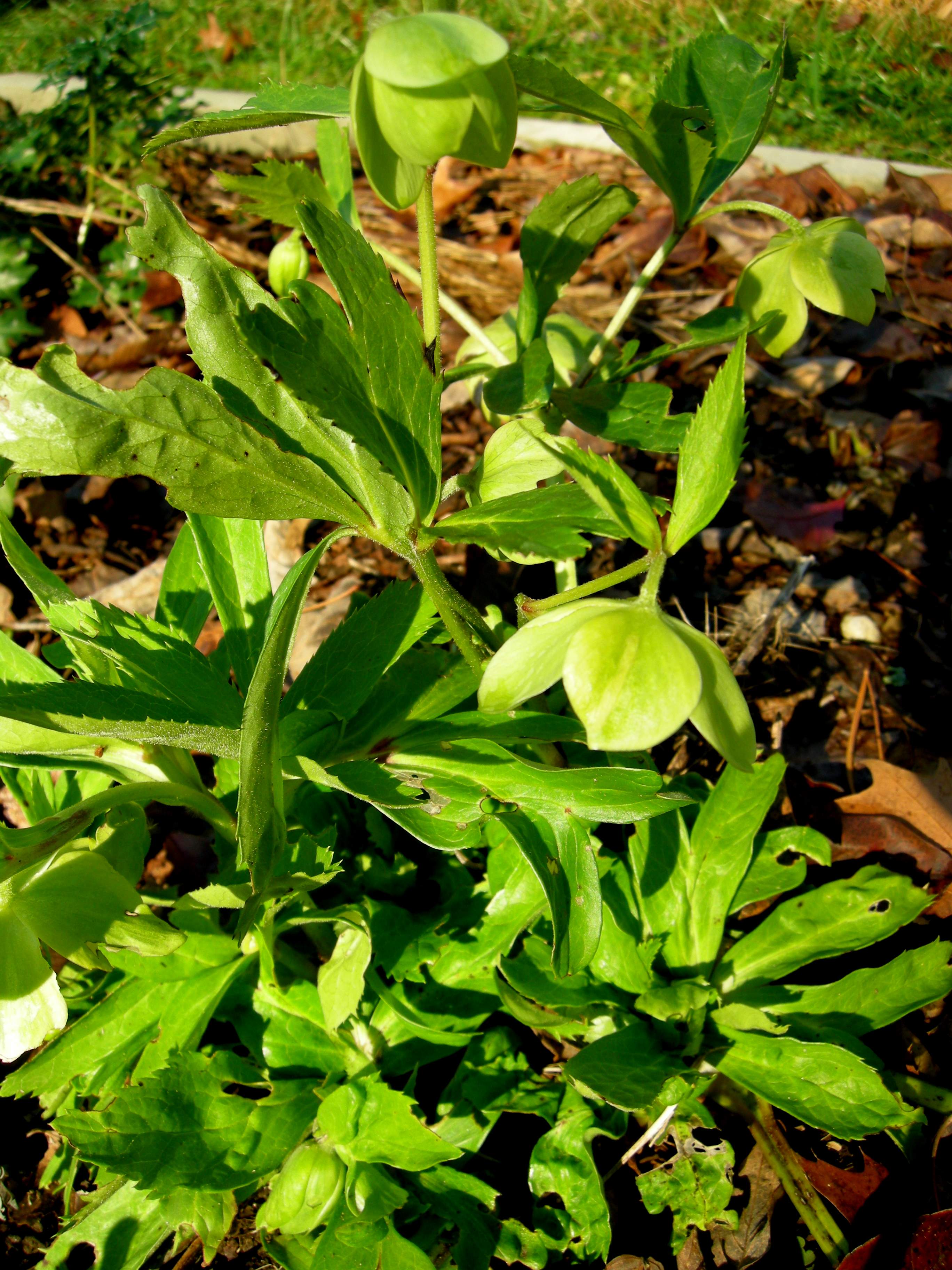
If I had to choose a favorite hellebore, and I have almost every species and hundreds of hybrids, I would pick the bearsfoot hellebore, Helleborus foetidus.  It wouldn’t be for its charming Latin name: foetidus speaks for itself.  And not for its alternate common name, stinking hellebore, though it doesn’t deserve that name when you have to mangle the leaves to elicit a smell.  Rather I would choose it for its substantial 2′ evergreen presence, like a miniature rhododendron in the garden.  And for the interesting spidery texture of its always pristine dark green leaves.  But mostly for how its chartreuse bell-like buds and flowers perch atop its beautiful foliage from November into May.

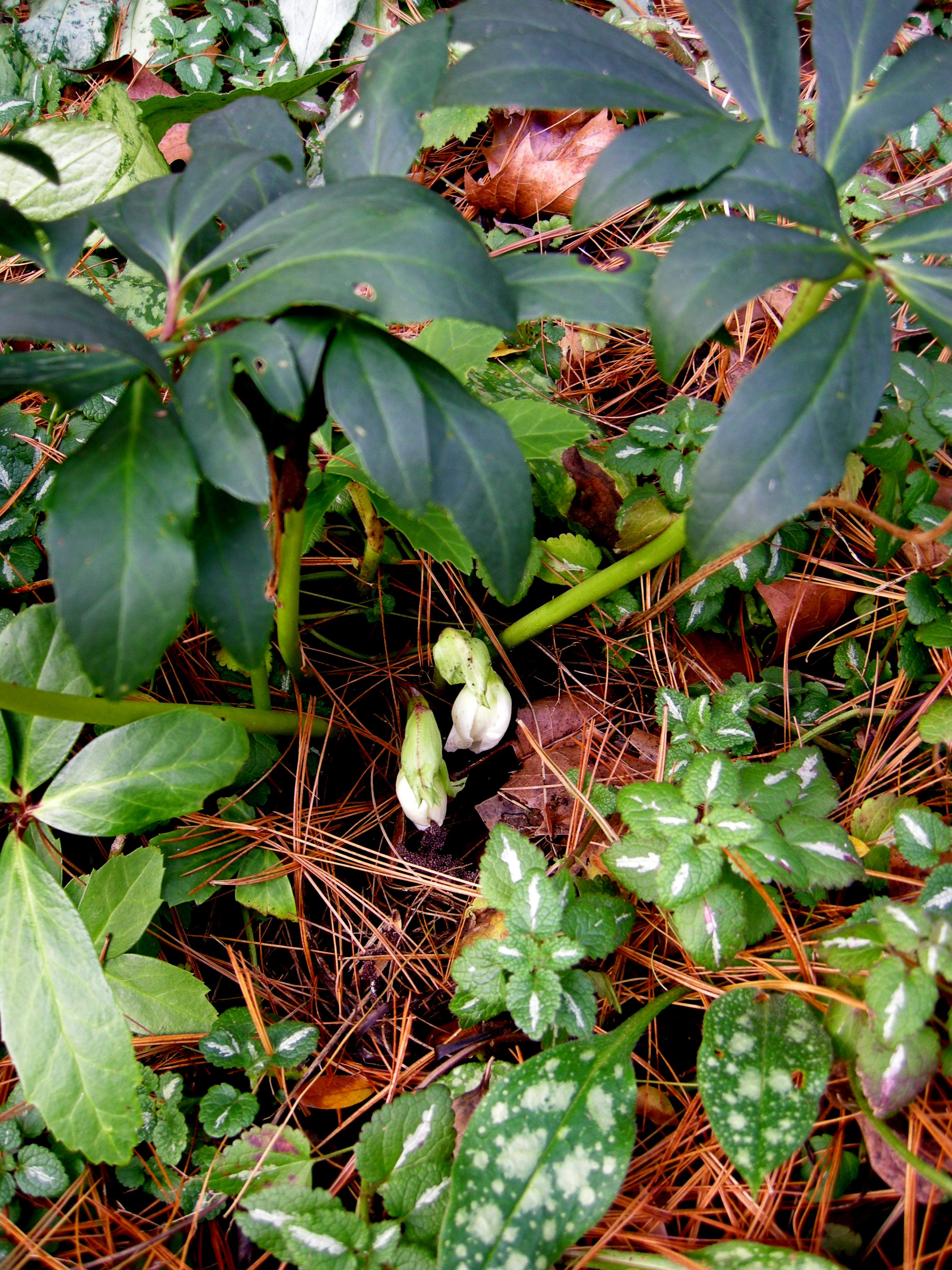
buds emerging from bearsfoot hellebore at Carolyn's Shade GardensFall buds emerging from bearsfoot hellebore

Bearsfoot hellebore grows in part to full shade and is the only hellebore that I am aware of that likes slightly moist soil.  That being said, my grove—if they are happy, they spread—received no additional water for the entire summer of 2010 when we had the worst heat and drought I have ever experienced.  Bearsfoot and all my other hellebores came through with flying colors.  I grow all my hellebores with plenty of compost.

buds of bearsfoot hellebore at Carolyn's Shade GardensFall buds of bearsfoot hellebore

Bearsfoot hellebore in full bloom

Two other fall-blooming hellebores are superior selections from the true Christmas rose, the species Helleborus niger.  Christmas roses are beautiful plants and well worth growing for their outward-facing, starry, pure white flowers and elegant blue-green leaves.  But the straight species is sadly mis-named.  In the mid-Atlantic, it blooms in March  at the earliest when Christmas has long past.  However, the amazing plant breeders at Heuger in Germany who have produced the superior Helleborus Gold Collection have developed two Christmas roses that bloom from November into May.

Christmas rose 'Jacob' at Carolyn's Shade GardensChristmas rose ‘Jacob’

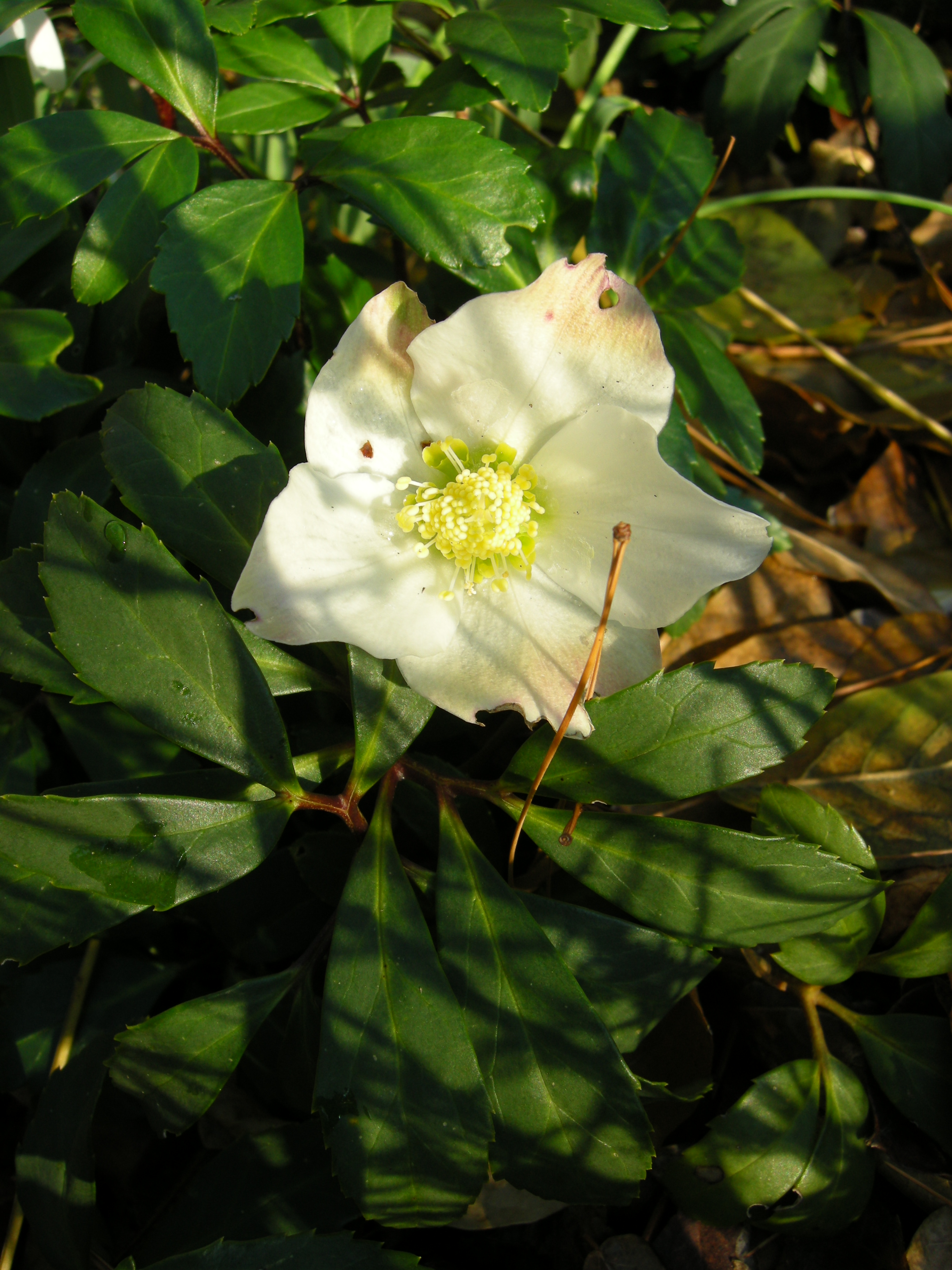
The first, HGC ‘Jacob’, is a compact and refined plant 6 to 8″ tall with graceful, smooth dark green leaves.  It starts blooming in mid-November (it was a little late this year) with copious 2 to 3″ white flowers maturing to rose, and continues to produce buds into May.  The second is HGC ‘Josef Lemper’, a 10″ plant with 3 to 3 1/2″ flowers and larger, lighter green leaves.  It  comes into bloom about two weeks later than ‘Jacob’ and also continues to May.

Christmas rose 'Jacob' at Carolyn's Shade GardensChristmas rose ‘Jacob’ coming into bloom in November

Christmas rose 'Josef Lemper' at Carolyn's Shade GardensEmerging buds of Christmas rose ‘Josef Lemper’

Christmas roses are a little more finicky than hybrids.  Like most hellebores, they prefer well-drained sites with plenty of organic matter.  But they have a definite preference for the edges of beds in part shade as opposed to sunnier or shadier spots.  My best stand is in an open area shaded by 100′ trees on a steep slope.  I have never found that they needed supplemental lime as the books suggest.

Helleborus dumetorum at Carolyn's Shade GardensHelleborus dumetorum

I am throwing in the final fall-blooming hellebore more for curiosity sake than for its ornamental value.  Over the years, I have collected most of the hellebore species.  I have tried  to get them from more than one source so I could compare them.  The variation is amazing, but no more than hellebore aficionados like Graham Rice will tell you to expect.  One plant I have collected is H. dumetorum—it’s so obscure it doesn’t have a common name.  Its small green flowers and ordinary leaves do not endear it to gardeners.  However, I am including a photograph of one of my plants here because every year it blooms in late October and continues to spring.

For more information on hellebores, I highly recommend noted hellebore expert Graham Rice’s website.  The book The Gardener’s Guide to Growing Hellebores by Graham Rice and Elizabeth Strangman is excellent.  It includes amazing pictures showing the variation within the different species.  I will add both sources permanently to my sidebar so you can always find them.  If you really want all the details about hellebores, try Hellebores by Brian Mathew (Alpine Garden Society).  It is out-of-print but available at horticultural libraries, including the Pennsylvania Horticultural Society.

Carolyn

This is part one in a series of articles on hellebores, one of the specialties of my nursery.  Here are links to all six articles:

Part One        Hellebores for Fall

Part Two       An Ode to Seed Strain Hellebores

Part Three   Christmas Rose: The Perfect Hellebore

Part Four      Dividing Hybrid Hellebores

Part Five       The Sex Lives of Hellebores

Part Six          Double Hellebores

Part Seven   Cutting Back Hellebores

Note: Every word that appears in orange on my blog is a link that you can click for more information.

Keeping the Shade Garden Going in Late Fall

Posted in Fall, Fall Color, landscape design with tags , , , , , , , on December 1, 2010 by Carolyn @ Carolyns Shade Gardens

Carolyn’s Shade Gardens is a retail nursery located in Bryn Mawr, PA, specializing in showy, colorful, and unusual plants for shade.  The only plants that we ship are snowdrops and miniature hostas.  For catalogues and announcements of events, please send your full name, location, and phone number (for back up use only) to carolyn@carolynsshadegardens.com.  Click here to get to the home page of our website for catalogues and information about our nursery and to subscribe to our blog.

main terrace at Carolyn's Shade Gardens in late fall

Articles on landscape design advocate creating beds that flower through out the gardening season.  This is a lofty goal, and one that is not always worth achieving.  Beds that are designed to accomplish it often look spotty and unfocused because there is no theory behind the design besides bloom time, and the bed never truly peaks.  My woodland gardens, which contain mostly spring ephemerals and are done by June, provide immense satisfaction to me and are thoroughly enjoyed by my customers, even though their ornamental season is limited.  Most of my other gardens also have their season of splendor and then step aside to let other areas shine.

On the other hand, it is important to me that I have at least one prominent garden that is ornamentally interesting all year.  And I realize that most gardeners don’t have the space that I have to indulge in the luxury of letting a garden go by in June.  So, the question is, how do you keep a garden going in late fall before the winter-blooming plants get started?  What plants can you use to create the sense of a garden still growing: a feeling of plant combinations not individual plants?

I want to tell you about the area where I have done this most successfully: the shady end of the terrace outside my front door.  Through silver, purple, pink, and dark green groundcovers, leaves, and flowers, this terrace still has the feeling of a garden in its prime right now in early December.

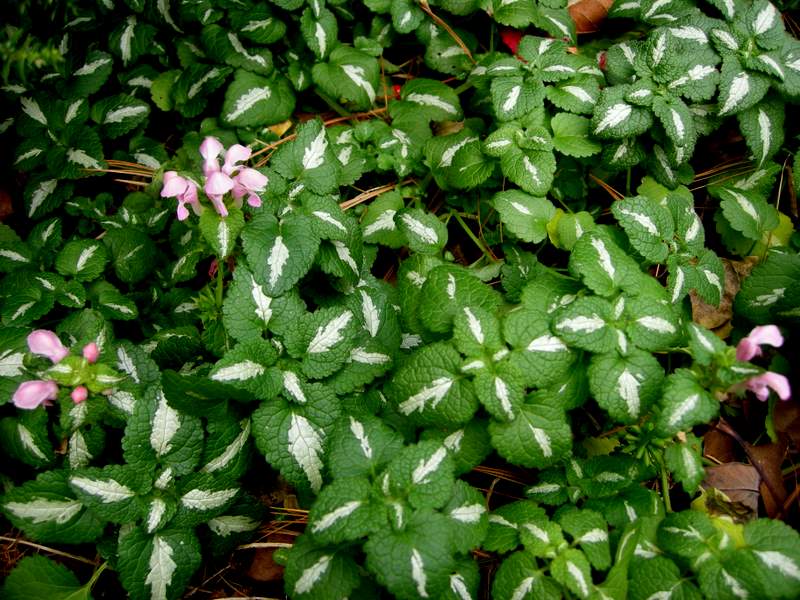
'Shell Pink' lamium at Carolyn's Shade Gardens‘Shell Pink’ Lamium in early December

I think the most important element of a late season border is a flowering evergreen groundcover.  In this bed, I use ‘Shell Pink’ lamium (photo above) because it blooms from April to December (at some times more prolifically than others) and remains evergreen all year.  I have also planted the fall-blooming hardy cyclamen, Cyclamen hederifolium (photo below).  Its pink flowers appear from September into November.  Although dormant for a short time in summer, once its leaves come back in late August, it maintains a fresh pristine appearance through the following June.  It spreads to form a very attractive groundcover and is not picky about the site like the spring-blooming cyclamen.

fall-blooming cyclamen at Carolyn's Shade GardensFall-blooming Hardy Cyclamen

'Diana Clare' pulmonaria at Carolyn's Shade Gardens‘Diana Clare’ Pulmonaria

Foliage is important this time of year.  I chose pulmonarias to fill a big space because their leaves remain ornamental almost until new leaves appear in February.  The solid silver foliage of  ‘Diana Clare’ (photo above) is one of my favorites in my pulmonaria collection.  Equally as important are the dark evergreen leaves of several hellebores: Christmas roses, hybrid hellebores, the H. x ericsmithii cultivars ‘Silvermoon’ and ‘Ivory Prince’ with their silver marbling, and the golden-veined leaves of H. x nigercors ‘Green Corsican’.  Finally, I treasure the almost year round interest of the new cultivars of our native coralbell, Heuchera villosa.  Here I used ‘Frosted Violet’ (photo below), which is deep burgundy-purple with lighter highlights.

'Frosted Violet' native coralbells at Carolyn's Shade GardensNative Coralbell ‘Frosted Violet’

Christmas Rose 'Jacob' at Carolyn's Shade GardensFall-blooming Christmas rose ‘Jacob’

For the final element of flowers, in addition to the pink blooms of the lamium, I added the fall-blooming Christmas roses, Helleborus niger ‘Jacob’ (photo above) and ‘Josef Lemper’.  ‘Jacob’, the shorter and more compact of the two, is sending up buds now.  ‘Josef’ will begin flowering in a few weeks.  Both cultivars continue to produce new blossoms into May.  I have also added lots of the fall-blooming snowdrop ‘Potter’s Prelude’ (photo below).  This exceedingly robust snowdrop will produce its lovely white flowers for the next month.

fall-blooming snowdrop 'Potter's Prelude' at Carolyn's Shade GardensFall-blooming Snowdrop ‘Potter’s Prelude’

Main terrace at Carolyn's Shade GardensTerrace in late November

So that’s it: groundcover, foliage, and flowers through mid-January when the winter-blooming perennials and bulbs take over.  Not the abundance of late spring, but certainly ornamental.

Carolyn

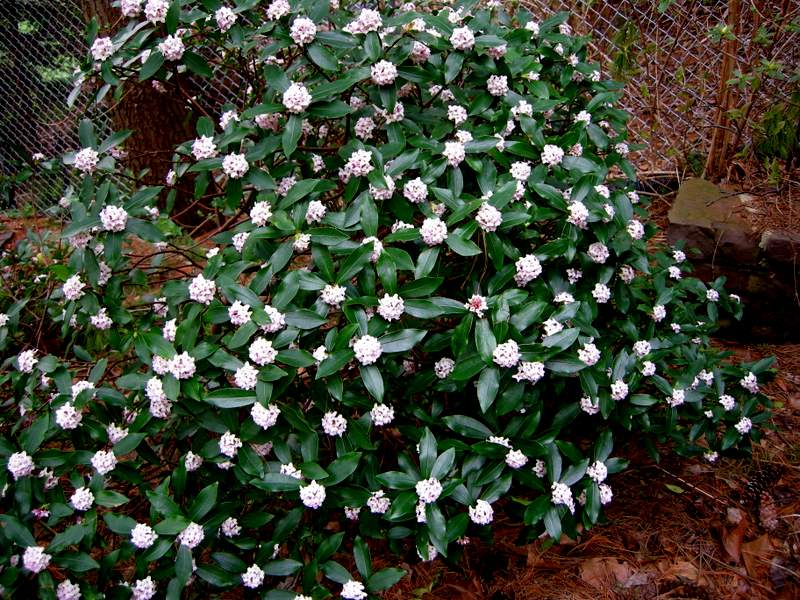
Notes:  All photos in this post were taken at Carolyn’s Shade Gardens in late November. Flowering evergreen shrubs are an important part of any late fall garden.  For all of you who have been to Carolyn’s Shade Gardens, you may wonder why I didn’t mention the semi-circle of large fragrant daphnes (Daphne odora) that lined this bed.  Unfortunately, they were killed last winter by falling white pine branches.  I hope to replace them.

fragrant daphne odora at Carolyn's Shade GardensFragrant Daphne, gone but not forgotten!