Archive for May, 2012

Large Hostas Get the Spotlight

Posted in hosta, hosta, landscape design, Shade Gardening, Shade Perennials with tags , , , , , , , , , , , , , on May 25, 2012 by Carolyn @ Carolyns Shade Gardens

Carolyn’s Shade Gardens is a retail nursery located in Bryn Mawr, PA, specializing in showy, colorful, and unusual plants for shade.  The only plants that we ship are snowdrops and miniature hostas.  For catalogues and announcements of events, please send your full name, location, and phone number (for back up use only) to carolyn@carolynsshadegardens.com.  Click here to get to the home page of our website for catalogues and information about our nursery and to subscribe to our blog.

.
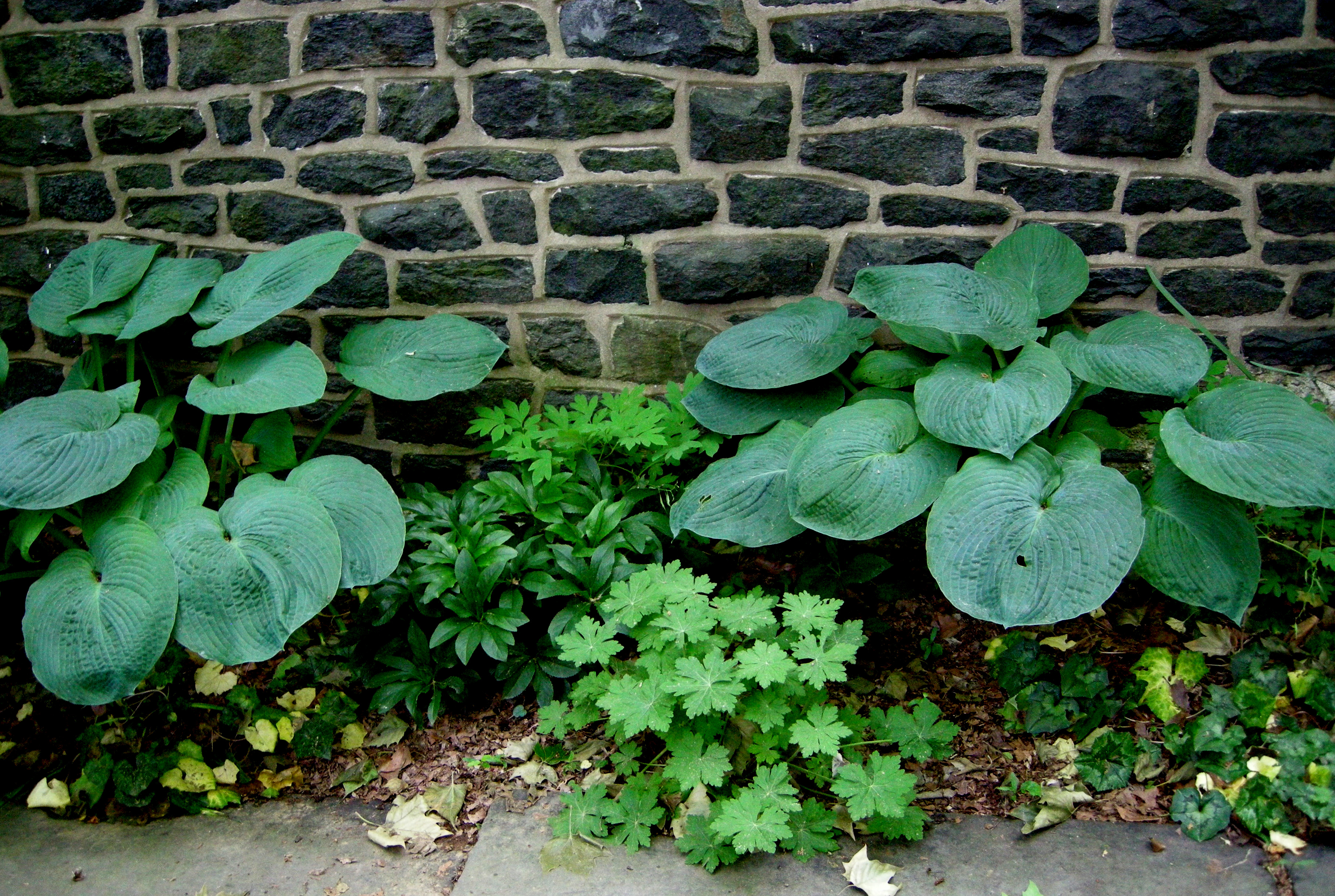
Hosta 'Blue Angel'Hosta ‘Blue Angel’ used as a shrub.

After writing three posts on miniature and small hostas, I thought large hostas deserved their place in the sun (or shade).  Although I love miniature hostas, large hostas are also dear to my heart and plentiful in my landscape.  I use them both as specimen plants and also for massing with other hostas to fill shady areas.  There are so many hosta cultivars out there, over 8,000,  that I thought I would share some of my favorites with you.  I have included some close ups of their beautiful leaves as well as photos of how I use them in the garden.

My Hosta ‘Liberty’ was planted last year so it has not reached its true size and coloring, but its leaves are still gorgeous.
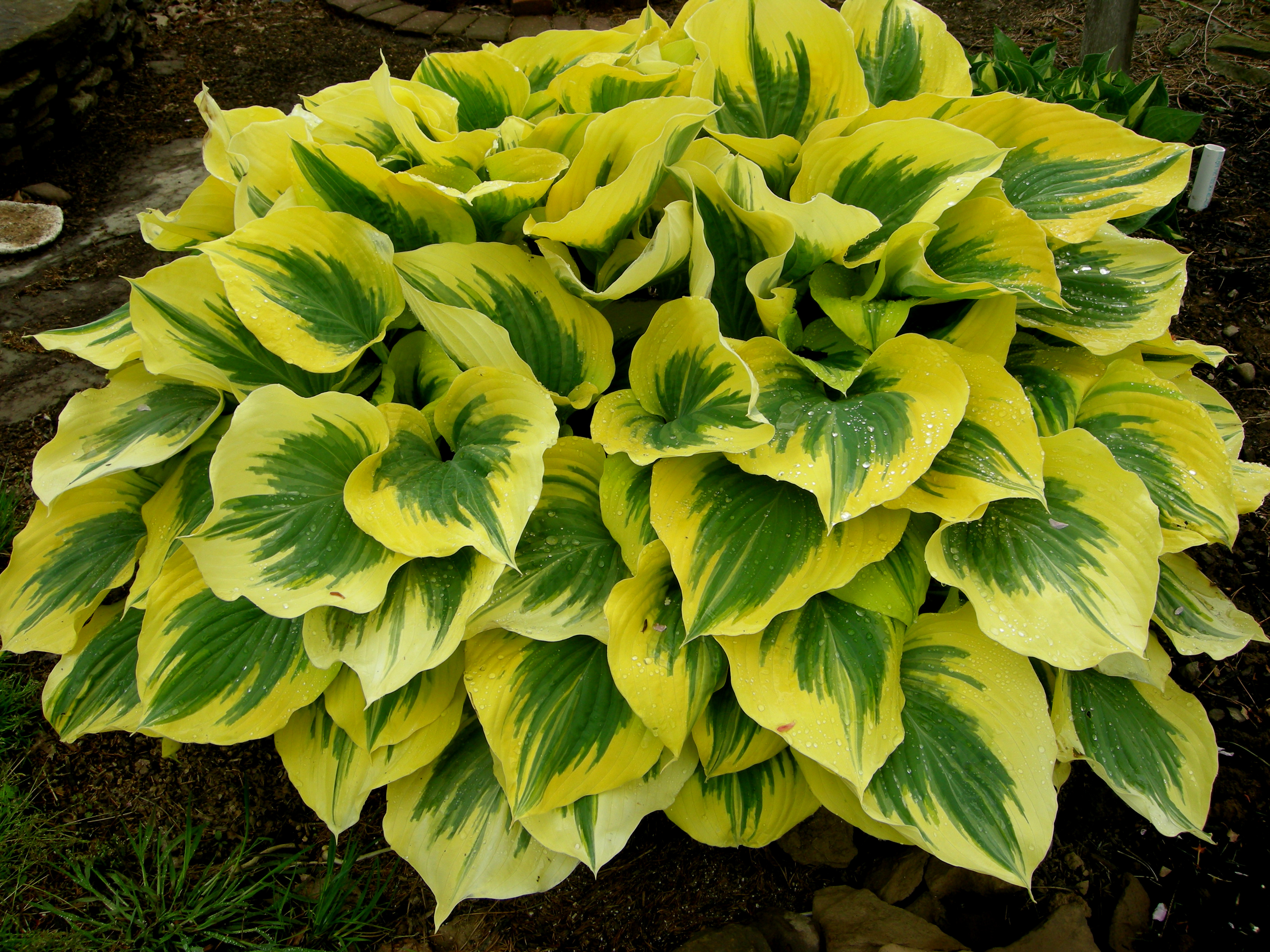
A full grown ‘Liberty’ in a local garden.

‘Liberty’ with my husband Michael for scale.

I wanted to start with ‘Liberty’ because it was chosen by the American Hosta Grower’s Association as the 2012 Hosta of the Year.  This is a great honor bestowed on only 18 of the over 8,000 hosta cultivars (to see other winners, click here), and I make a point of selling them and growing them in my garden.  ‘Liberty’ is a sport (off shoot) of  ‘Sagae’ with the same vase-shaped habit but much wider creamy yellow margins.  It reaches 2′ tall and 5′ wide with 10″ leaves.


A close up of a leaf of Hosta ‘Striptease’ shows the very unusual “lightening strike” of white running around and through the lime green center.
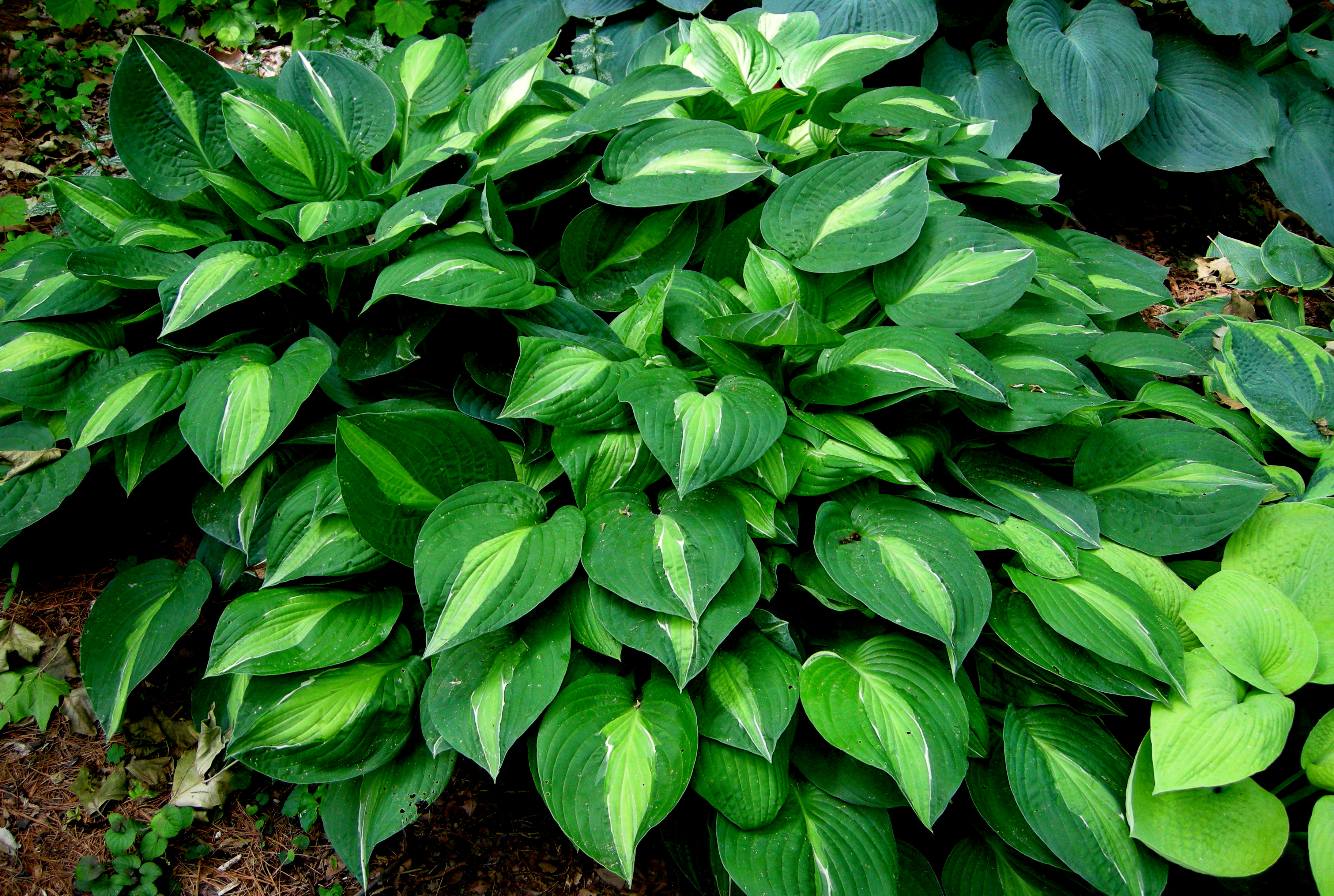
Three ‘Striptease’ plants make a sizable clump.

‘Striptease’ massed with ‘Blue Angel’ above and H. tokudama ‘Gold Bullion’ and ‘Flavocircinalis’ right.

‘Striptease’ was the Hosta of the Year for 2005.  The white streaks on its leaves really make it stand out—the pattern is rare in the hosta world where many plants look alike.  It is a sport of the old favorite ‘Gold Standard’.  At maturity, it is 20″ high and 4′ wide with 8″ leaves.
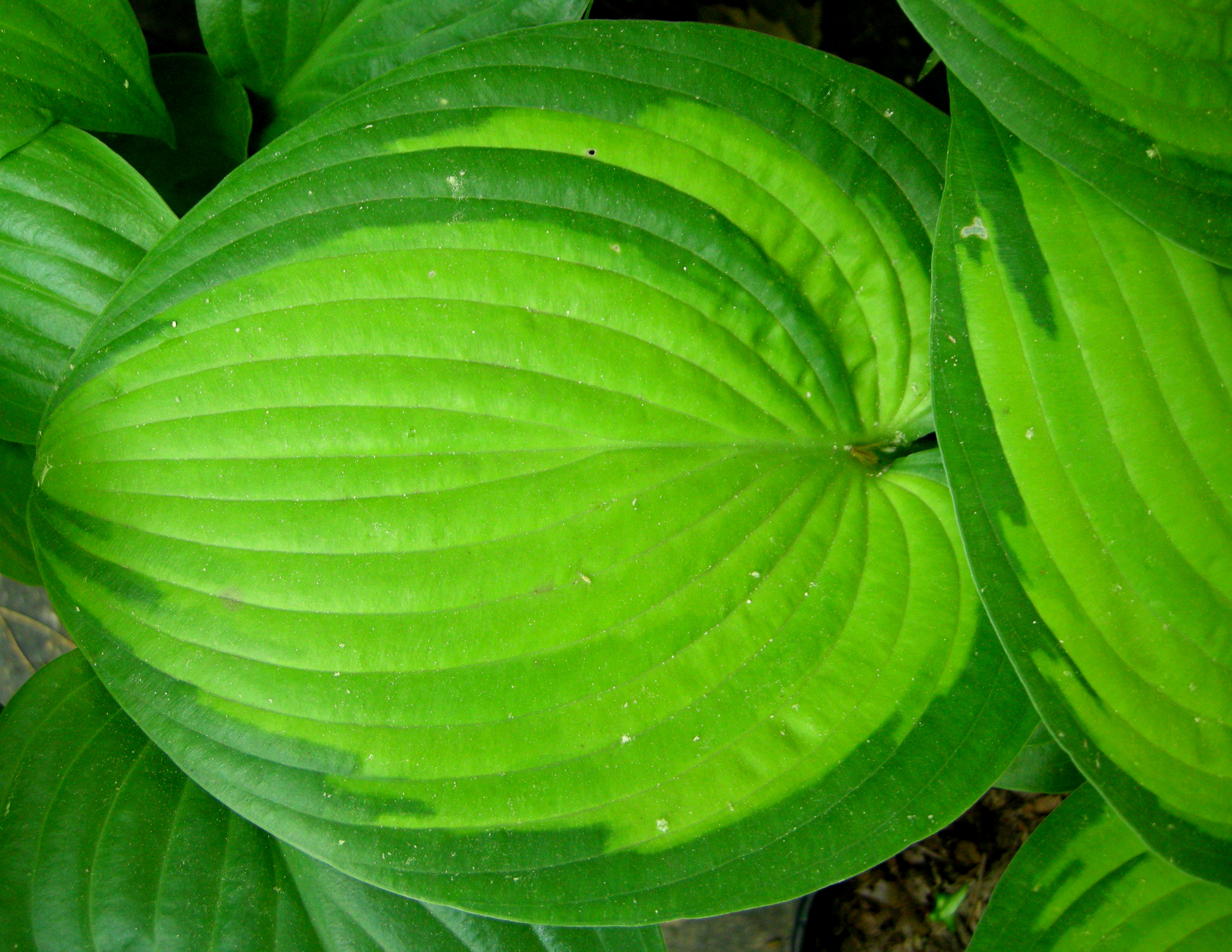
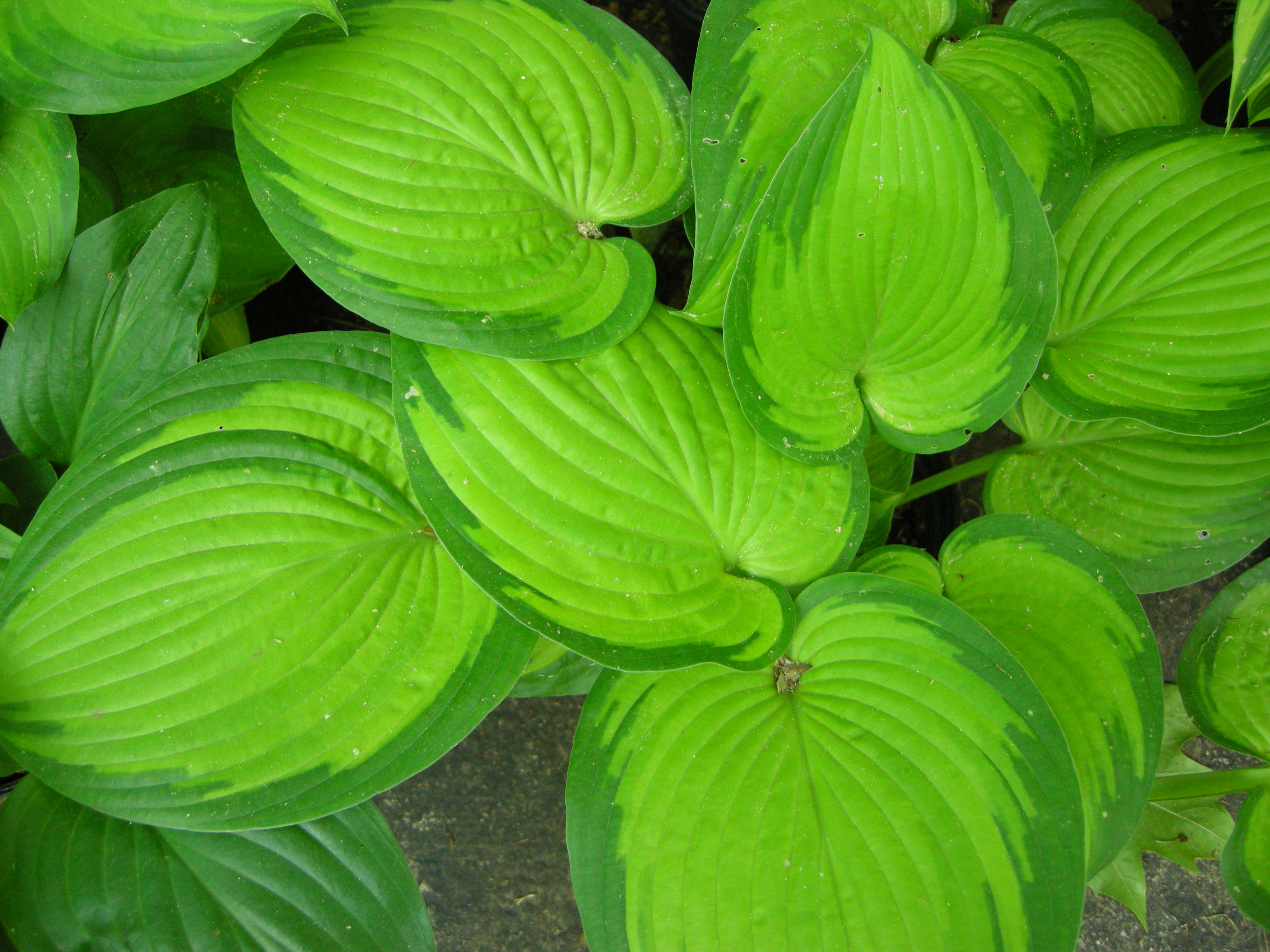
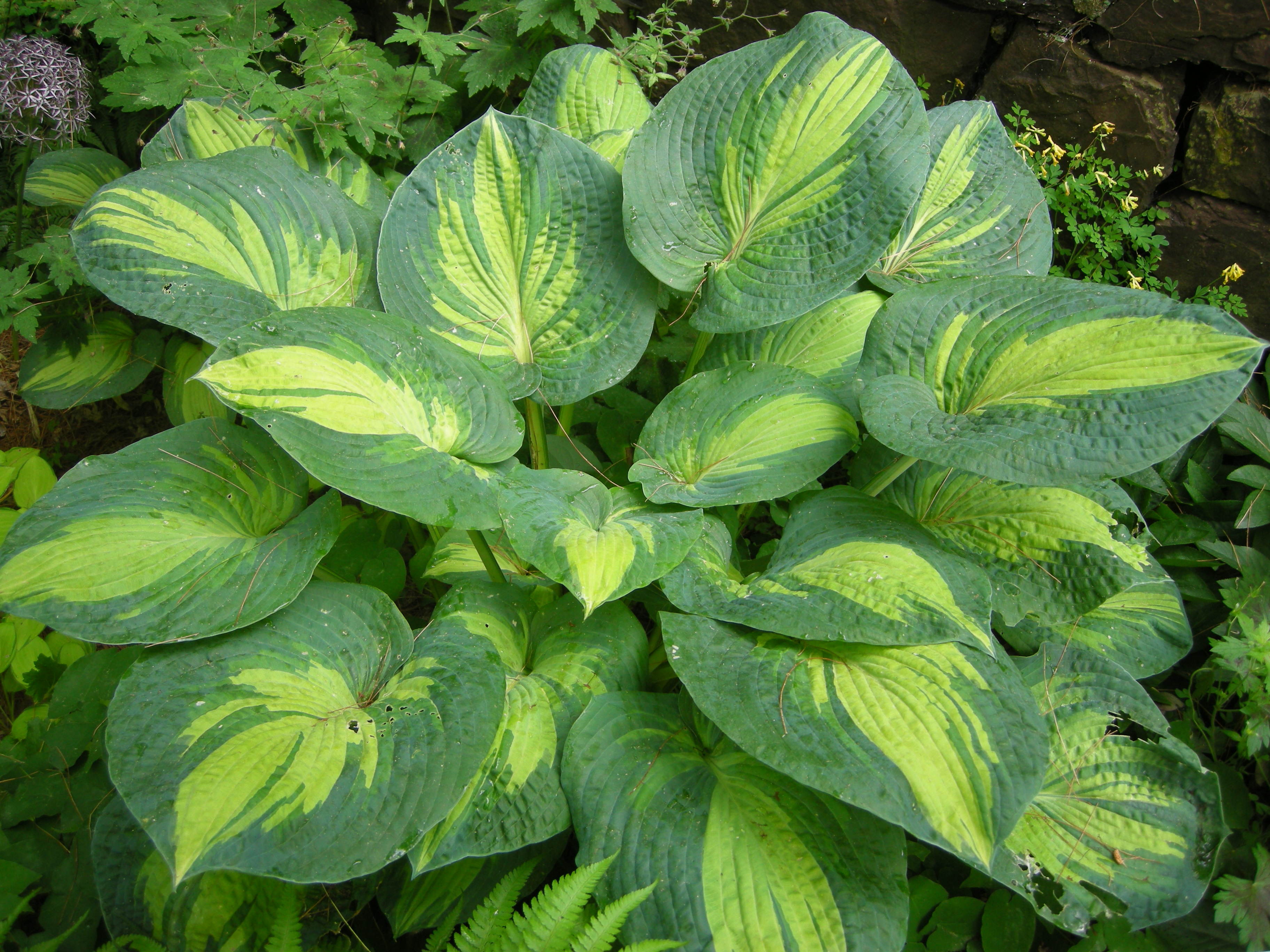
leaf of Hosta ‘Paradigm’

Again my ‘Paradigm’ is not mature and does not display its true beauty but when I saw a mature plant I had to have one.

Yes, ‘Paradigm’ is another Hosta of the Year, this time for 2007.  Its leaves are gold-centered and heavily corrugated (textured), a quality I love in the hostas that display it.  Its near white flowers are also quite lovely.  At maturity, it is 2′ high by 4′ wide with almost 12″ leaves.  I can’t wait.
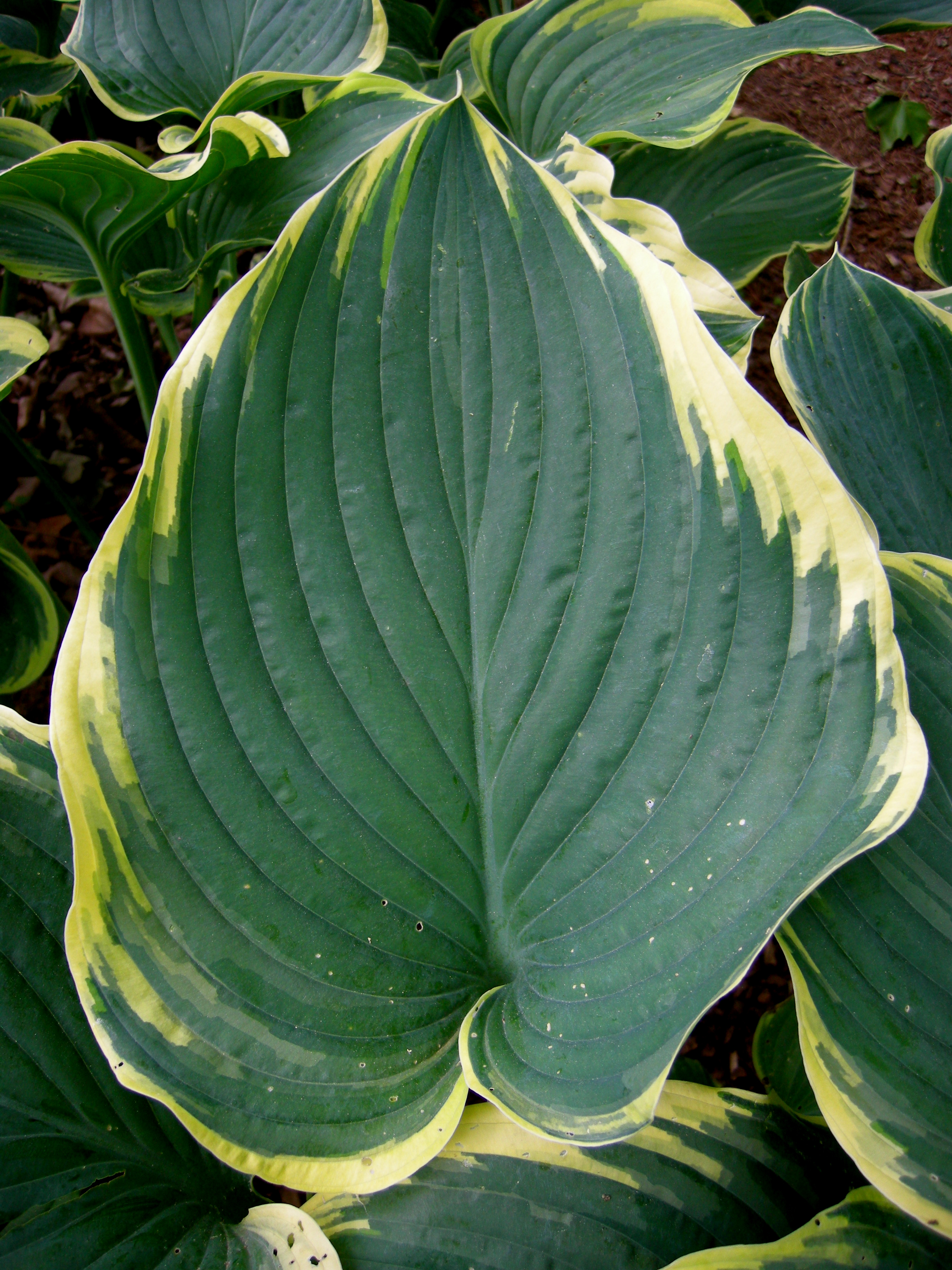

 leaf of Hosta ‘Sagae’

A close up of the vase-shaped (upright) habit of ‘Sagae’

‘Sagae’ planted at the top of a wall to show off its gorgeous habit, with native ‘Forest Pansy’ redbud

I first fell in love with this hosta at Longwood gardens, and it was labeled H. fluctuans ‘Variegata’.  I wrote down the name and searched for it for years before I figured out its name was changed to ‘Sagae’.  Of course, ‘Sagae’ was chosen to be a Hosta of the Year for 2000.  Its upright mounding habit makes it a perfect specimen.  At maturity, it reaches 31″ high by 70″ wide with 13″ leaves.
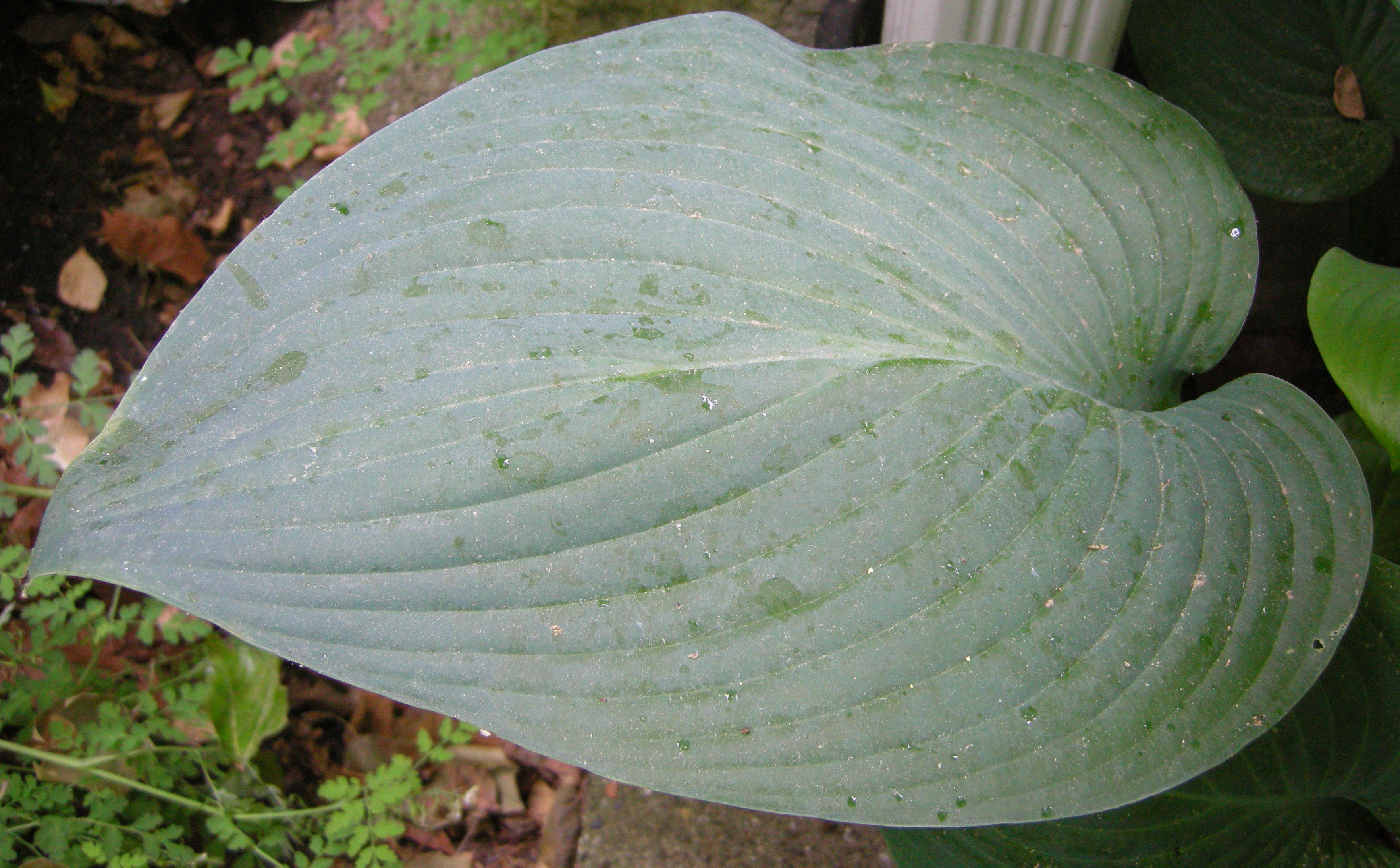
pollen-covered leaf of Hosta ‘Fried Green Tomatoes’
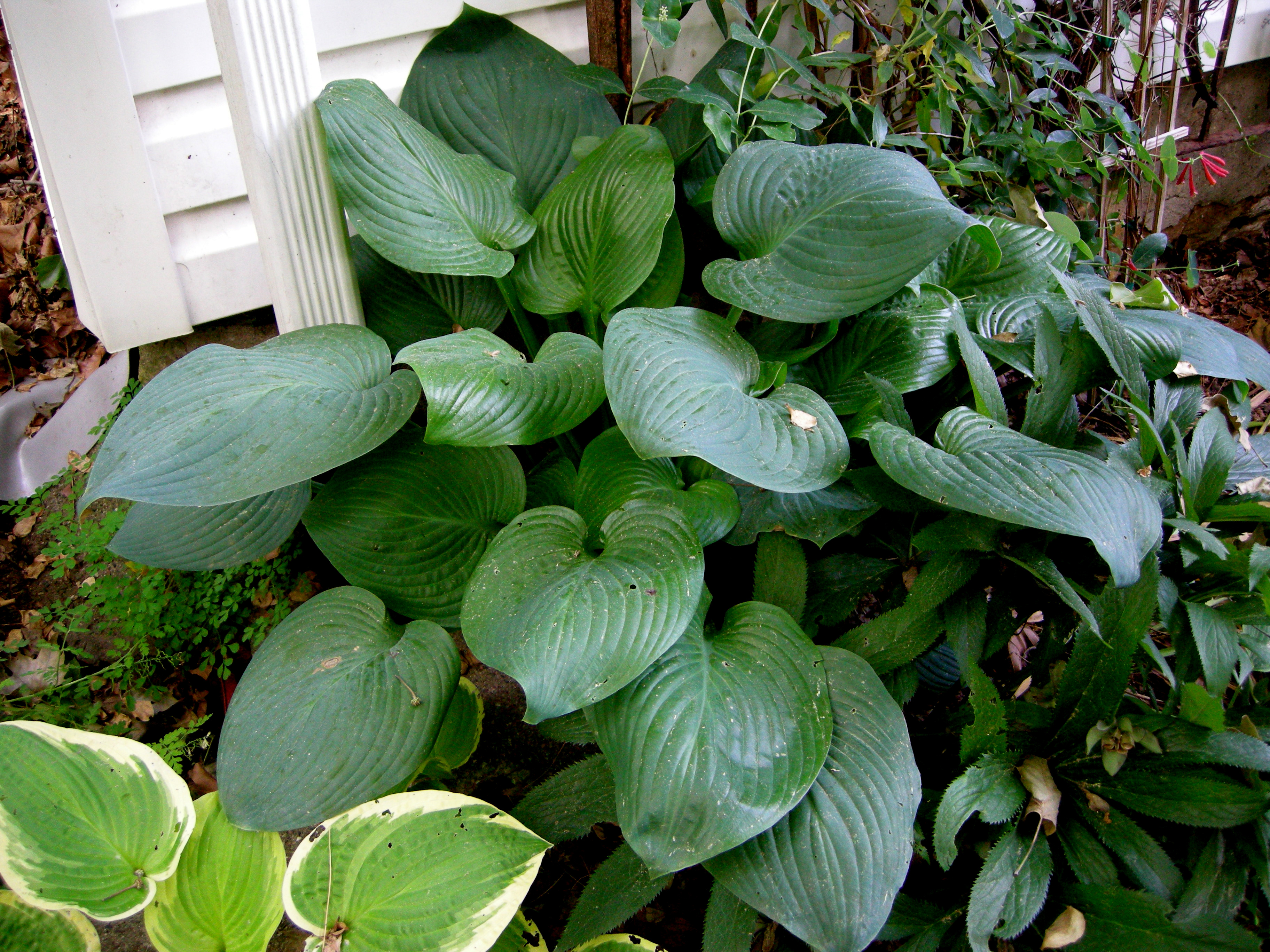
 mature clump of ‘Fried Green Tomatoes’
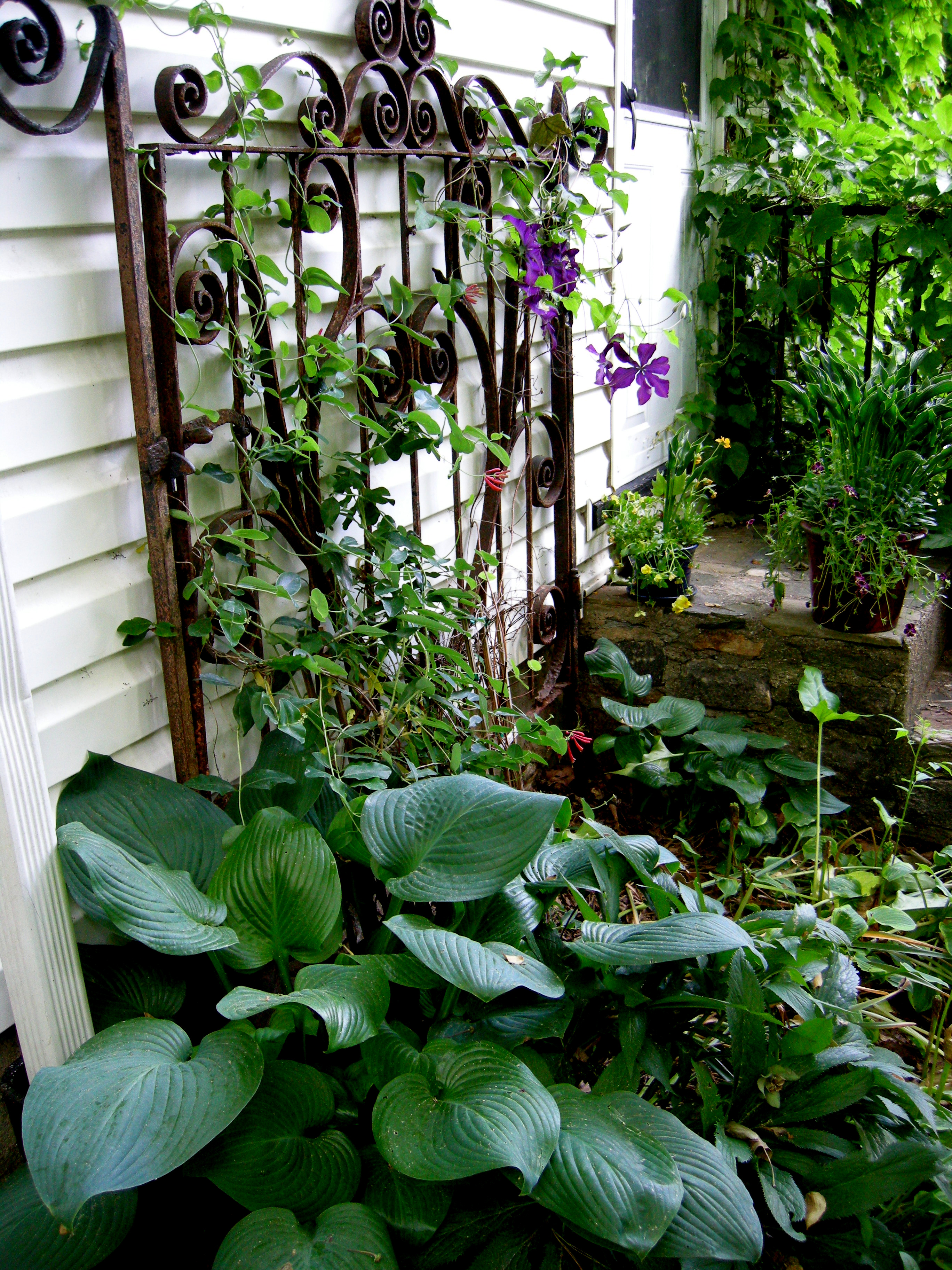
‘Fried Green Tomatoes’ in front of an antique church gate covered with clematis and native honeysuckle.

It is hard to explain why I like ‘Fried Green Tomatoes’ so much.  Perhaps it is the substantial blue-green leaves or the neat and even habit or the lovely fragrant flowers or just its clever name.  ‘Fried Green Tomatoes’ is not a hosta of the year, but it is the sport of one, ‘Guacamole’, the 2002 Hosta of the Year, and it is considered an exceptional cultivar.  It reaches 2′ high by 5′ wide with 11″ leaves.

leaf of Hosta ‘Great Expectations’

   ‘Great Expectations’ makes a gorgeous clump.
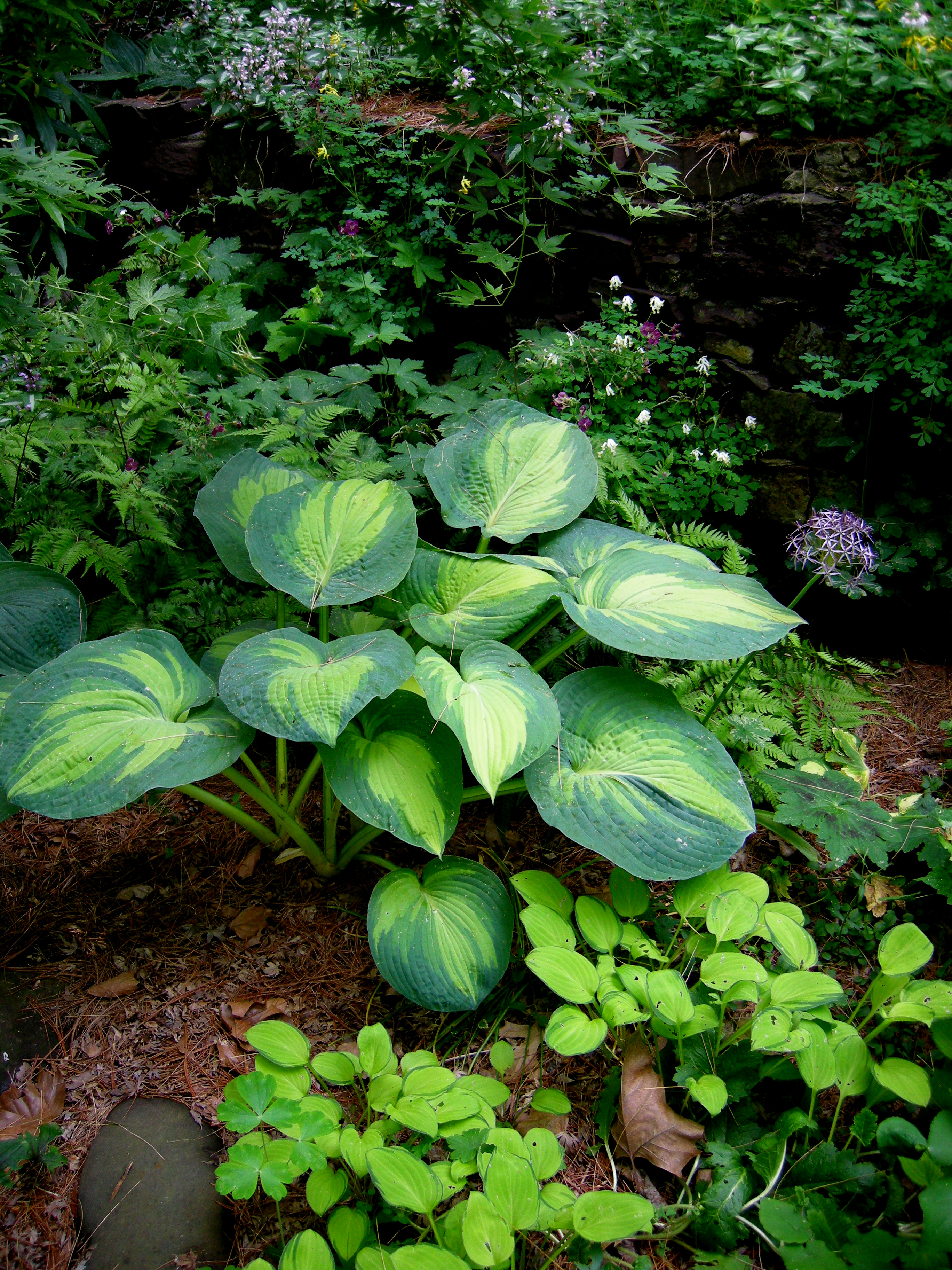
‘Great Expectations’ in a very shady area under a Japanese maple with ‘Emerald Tiara’ hosta.

Finally, a hosta that is not a hosta of the year (or a relative of one), but, as far as I’m concerned, it should be.  One of my favorites and a bestseller at my nursery, ‘Great Expectations’ forms a large but not overwhelming mound of heavily corrugated, creamy yellow-centered leaves with wide blue-green margins.  Its near white flowers in June and July are beautiful.  A mutation of ‘Elegans’, it reaches 2′ high by 4′ wide at maturity with 12″ leaves.


leaf of Hosta ‘Fragrant Bouquet’


‘Fragrant Bouquet’ makes a nice mound.
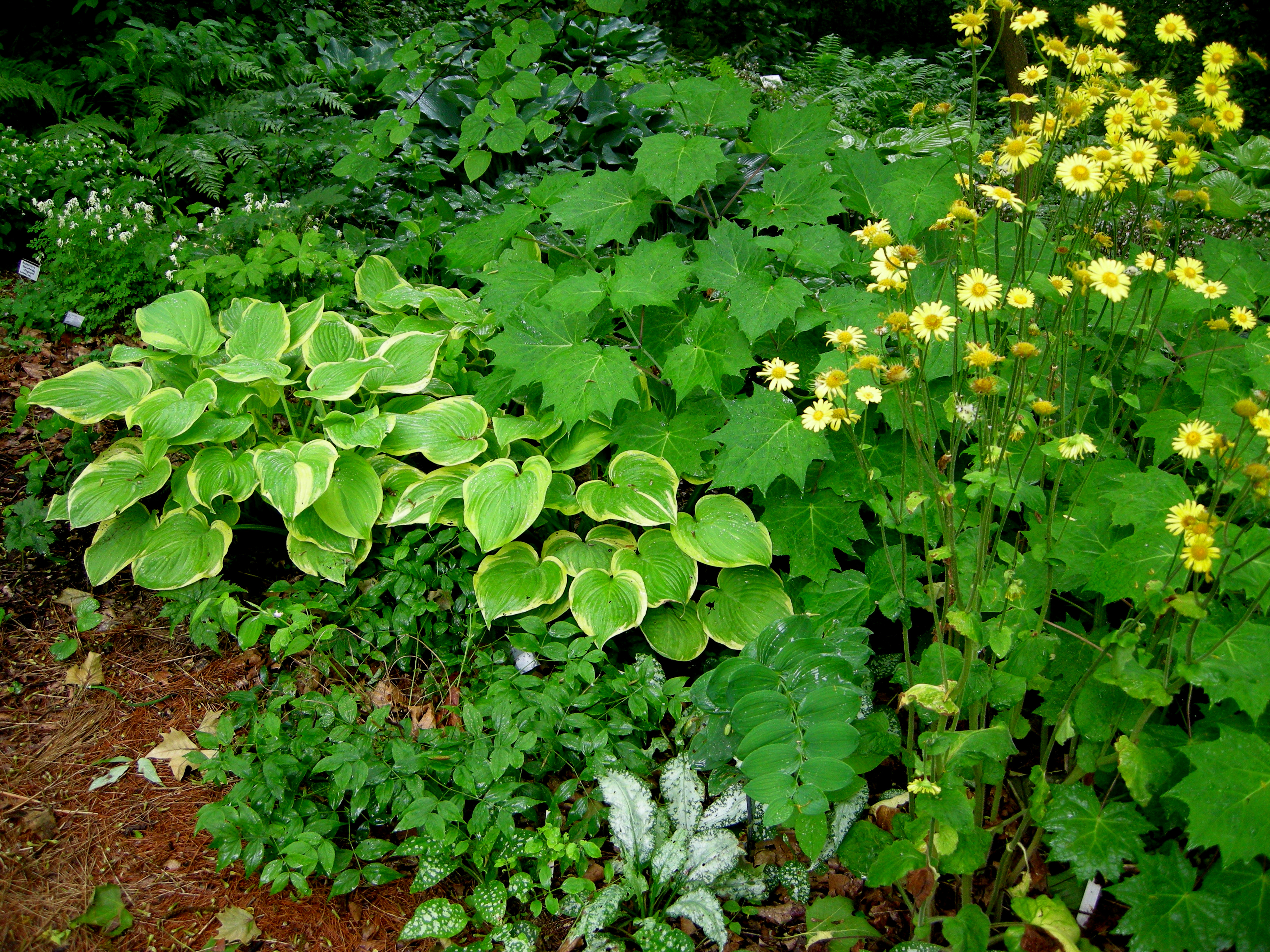
‘Fragrant Bouquet’ with yellow waxbells, leopard’s bane, and pulmonaria.

It is not surprising that ‘Fragrant Bouquet’ was the 1998 Hosta of the Year.  It is a very useful hosta in the shady landscape because of its overall light-colored leaves, which are pale chartreuse with creamy yellow edges—it looks great with yellow flowers.  I also love its fragrant blooms and manageable size.  At maturity it is supposed to reach 22″ high by 4′ wide with 10″ leaves but mine are not that big.


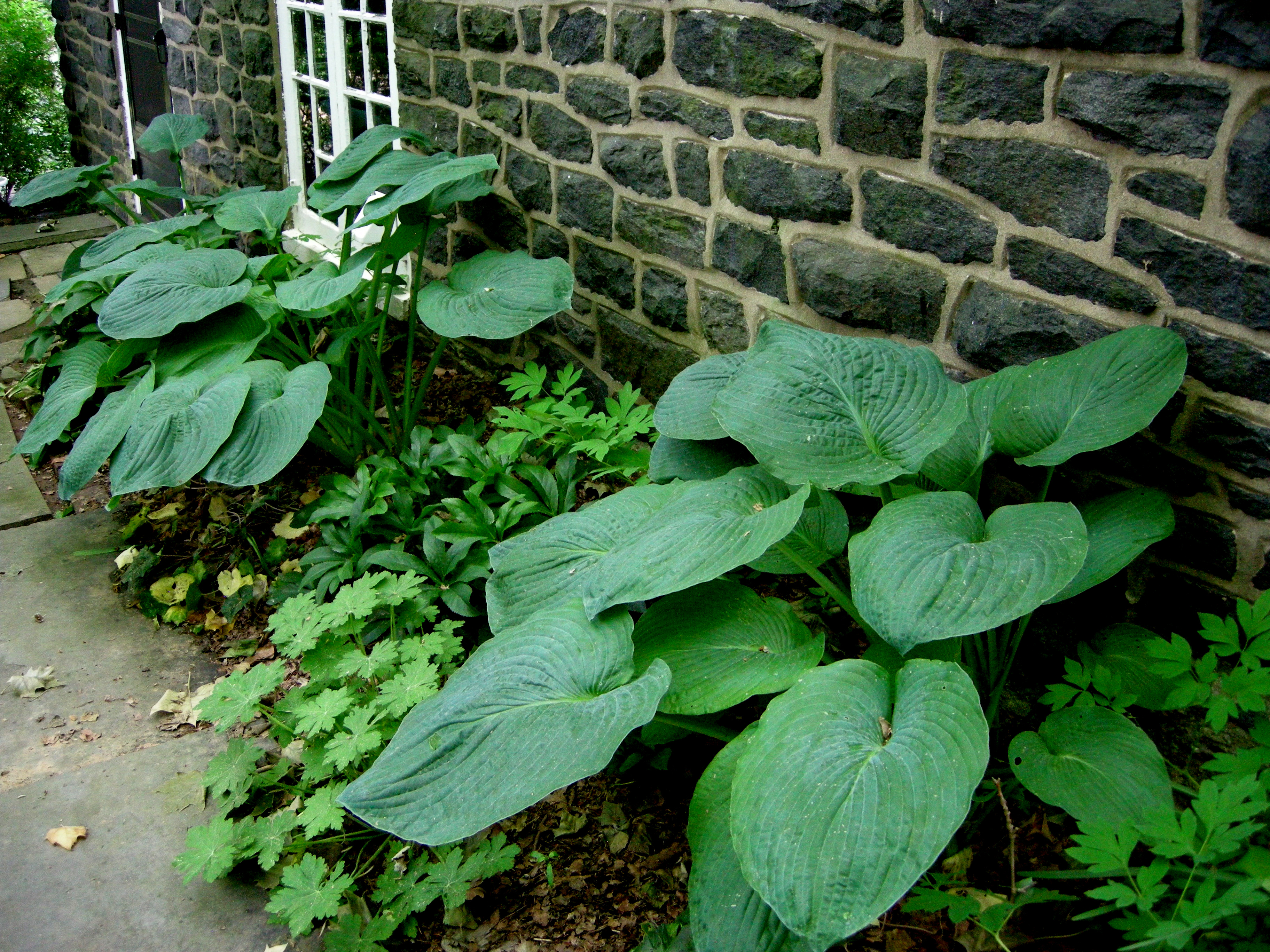
 leaf of Hosta ‘Blue Angel’


‘Blue Angel’ used as a specimen shrub with hellebores, hardy geranium, and old-fashioned bleeding-heart (see the photo at the very top too).
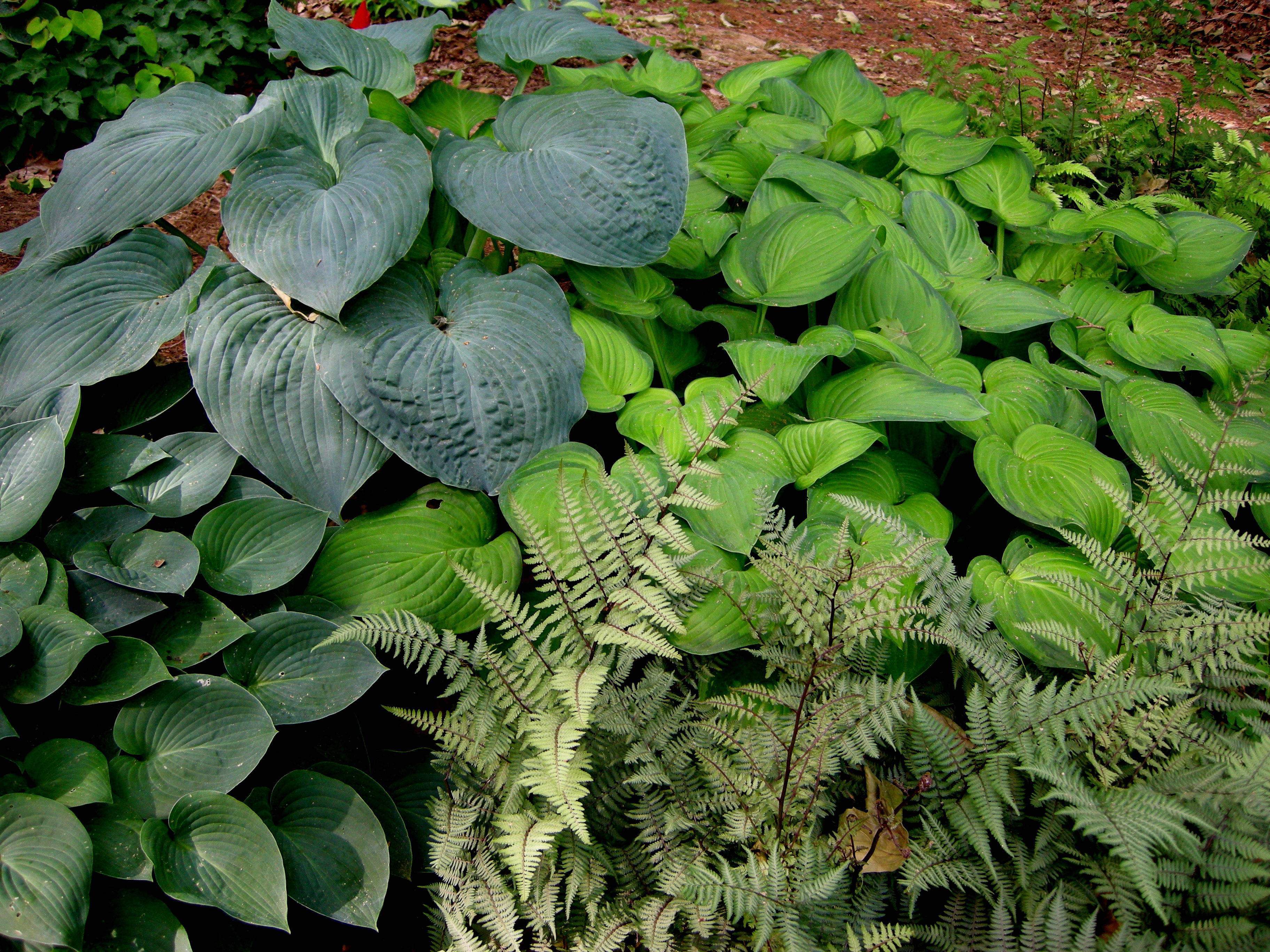
 

 ‘Blue Angel’ massed with ‘Blue Cadet’ and ‘Guacamole’ hostas and ‘Ghost’ fern  (see also the photo with ‘Striptease’).

‘Blue Angel’ is not a hosta of the year, but it would be the absolute top of the list of my choices.  Hostas of the year should be tried and true and the best in their class and that is what ‘Blue Angel’ is.  Do you hear me AHGA?  It is simply the premier large blue hosta in existence, excellent as a specimen and in masses with other hostas.  It is stunning in June and July when topped by its near white flowers and gorgeous throughout the fall with its heavily corrugated, substantial blue leaves.  At maturity, ‘Blue Angel’ reaches 32″ high by 70″ wide with 16″ leaves.
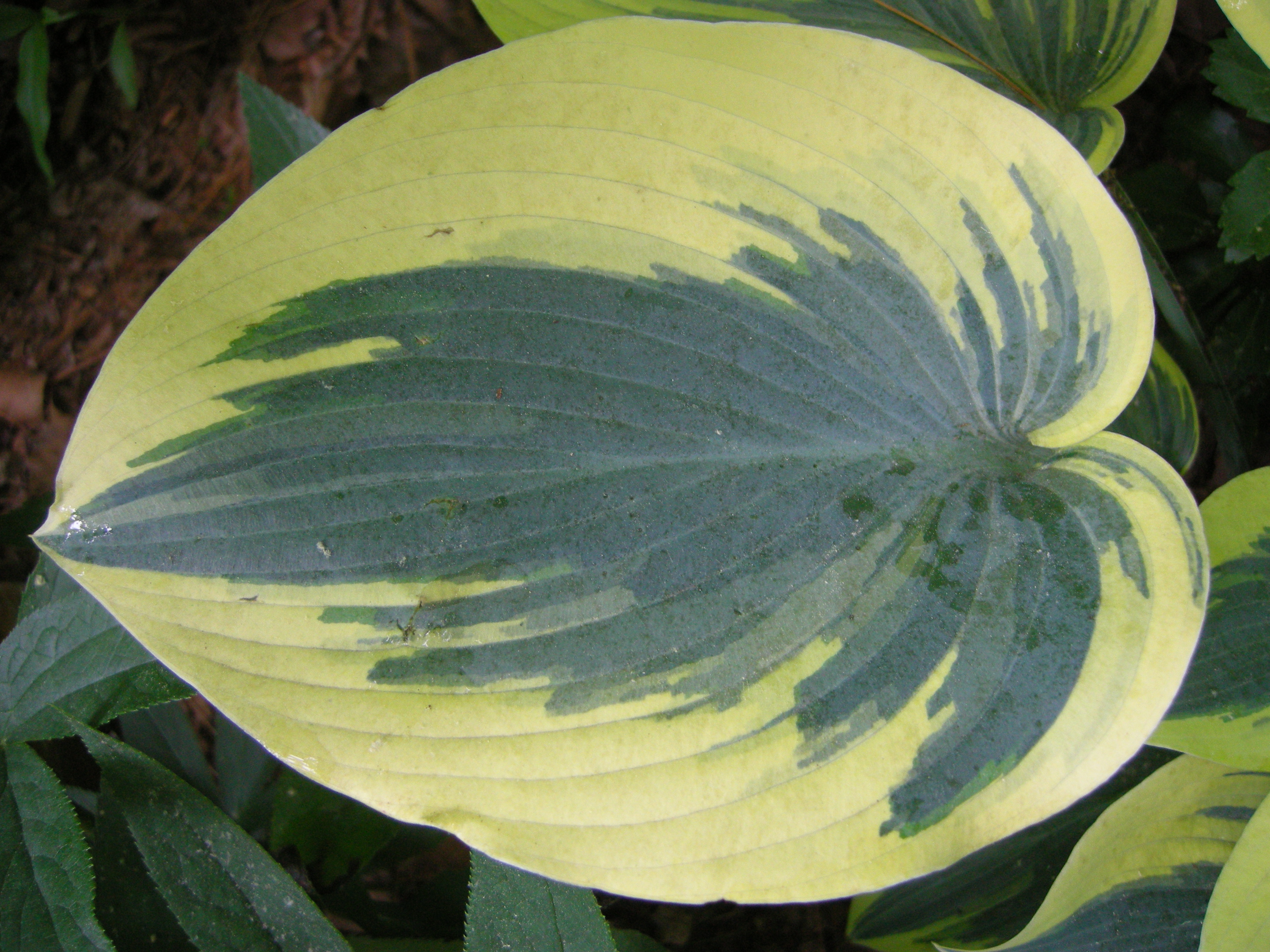

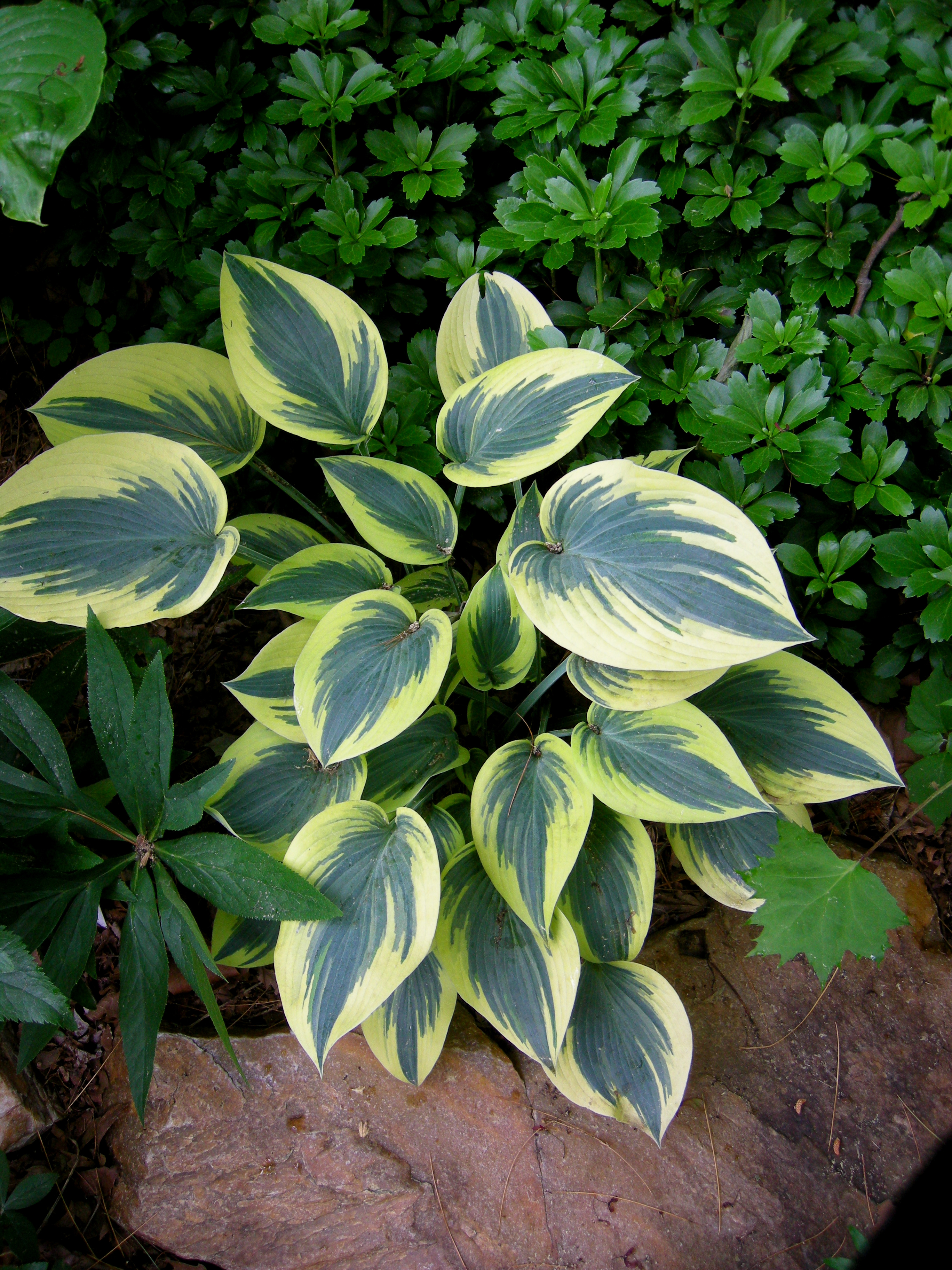
leaf of Hosta ‘First Frost’

‘First Frost’ in my rock garden

I will close with the 2010 Hosta of the Year ‘First Frost’.  When it comes out in the spring, the combination of the very blue leaves with the decidedly yellow and very wide margins is unusual and elegant.  The leaves have thick substance and turn dark green with a cream edge in summer.  ‘First Frost’ is also a “smaller” large hosta and easy to use in the landscape.  It is a sport of the wonderful ‘Halycon’.  At maturity, it reaches 14″ high by 3′ wide with 7″ leaves.

Carolyn

Nursery Happenings:  Our final open house sale of the spring will be a two-day event on Friday, June 1, from 10 am to 4 pm, and Saturday, June 2, from 10 am to 2 pm.  Customers on my email list should have received an email with details.  We are getting more woody plants so if you missed the deadline send me an email with your order.  If you are interested in receiving miniature hostas mail order, click here.

If you are within visiting distance and would like to receive catalogues and information about customer events, please send your full name and phone number to carolynsshadegardens@verizon.net.  Subscribing to my blog does not sign you up to receive this information.

Facebook:  Carolyn’s Shade Gardens has a Facebook page where I post single photos, garden tips, and other information that doesn’t fit into a blog post.  You can look at my Facebook page here or click the Like button on my right sidebar here.

Notes: Every word that appears in orange on my blog is a link that you can click for more information.  If you want to return to my blog’s homepage to access the sidebar information (catalogues, previous articles, etc.) or to subscribe to my blog, just click here.

Woody Plants for Shade Part 5

Posted in Fall Color, landscape design, native plants, Shade Gardening, Shade Shrubs, shade vines, winter interest with tags , , , , , , , , , , , , , , , , , , , , on May 17, 2012 by Carolyn @ Carolyns Shade Gardens

Carolyn’s Shade Gardens is a retail nursery located in Bryn Mawr, PA, specializing in showy, colorful, and unusual plants for shade.  The only plants that we ship are snowdrops and miniature hostas.  For catalogues and announcements of events, please send your full name, location, and phone number (for back up use only) to carolyn@carolynsshadegardens.com.  Click here to get to the home page of our website for catalogues and information about our nursery and to subscribe to our blog.

The bright rose flowers of ‘Wine & Roses’ old-fashioned weigela.

Shade gardens are not composed solely of perennials so two years ago I branched out to offer high quality shrubs, vines, and trees to my customers.  In my second Spring 2012 Woody Plant Offer, details here,  I have focused on plants that are late spring or summer blooming and native to our area.  I thought my blog readers who are not customers might be interested in learning about the plants that I would recommend they add to their shade gardens.  And doing an article allows me to add more information and explain why I chose the plants I included so customers might be interested also.

When it blooms in late spring, our native fringe tree is covered with elegant, fragrant flowers.

Fringe tree is a lovely small flowering tree or a large shrub.

I saw native fringe tree, Chionanthus virginicus, in full bloom in the shady woods of Bartram’s Garden in Philadelphia recently, and it reminded me of how gorgeous this native tree is.   It is loaded with generous amounts of creamy white, fragrant flowers in May and June.  Its medium green leaves turn a good yellow in the fall.  It may produce showy grape-like fruit attractive to birds.  Fringe tree grows to 12 to 20’ tall and 12 to 20’ wide in sun to part shade, although the tree in Bartram’s Garden was in a very shady site.  It is wet site tolerant, hardy to zone 4, and native to the eastern US, including PA.  It is a  Missouri Botanical Garden Plant of Merit (photos courtesy of MOBOT).


 Our native dwarf summersweet is loaded with fragrant white flowers in summer.

I have seen stands of summersweet growing wild in New England, and it is a beautiful sight.  However, the species gets quite large and suckers into colonies so the native dwarf summersweet ‘Hummingbird’Clethra alnifolia ‘Hummingbird’, is better for most home gardens.  It has very fragrant, bottlebrush, white flowers in June and July that attract butterflies.  Its  lustrous bright green leaves turn a clear yellow in the fall.  It has an excellent compact habit and produces more flowers than the species.

Dwarf summersweet’s habit is much more compact and attractive than the species, and it produces more flowers.

Dwarf summersweet grows to 2 to 4’ tall and 3’ wide in sun to full shade.  It is hardy to zone 4, deer resistant, wet site and salt tolerant, and native to the eastern US, including PA.  It is a Pennsylvania Horticultural Society Gold Medal Plant,  click here for details (photos courtesy of the MOBOT Plant Finder, for more information click here).


 ‘Nikko’ dwarf slender deutzia is loaded with white flowers in late spring.

‘Nikko’ lining my rock garden path in full shade.

I have offered ‘Nikko’ dwarf slender deutzia, D. gracilis ‘Nikko’, before, but it is such a useful plant that I couldn’t help including it again.  It is covered with delicate white flowers in April and May.  Its fine-textured and neat green leaves turn an attractive burgundy in the fall.  It is an excellent specimen or flowering groundcover for shade.  I grow it in full shade as a groundcover to edge the path at the base of my winterberry hollies.  ‘Nikko’ grows to 1 to 2’ tall and 2 to 5’ wide in full sun to full shade.  It is hardy to zone 4 and deer resistant.  It is a PHS Gold Medal Plant (for more information click here).


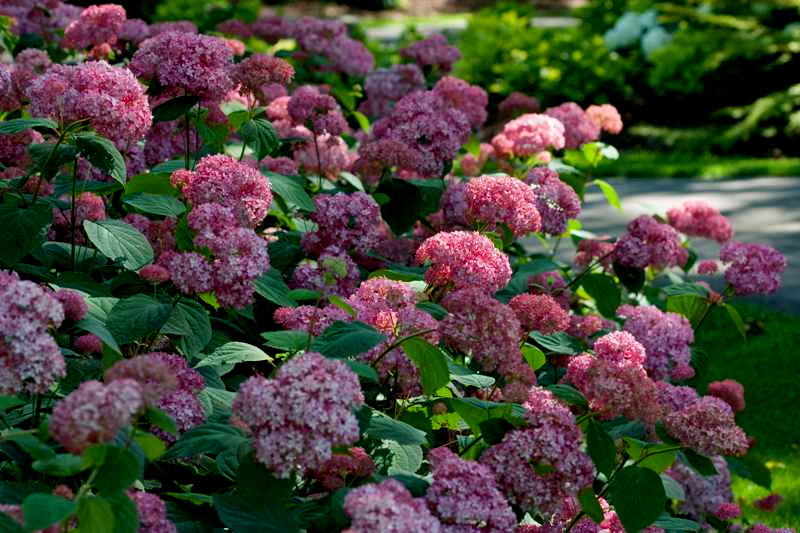
 ‘Invincibelle Spirit’ is a color breakthrough for our native smooth hydrangea.

Native ‘Invincibelle Spirit’ smooth hydrangea, H. arborescens ‘Invincibelle Spirit’, is  a pink-flowered version of the wonderful ‘Annabelle’.  It has very showy large pink snowball flowers that continue to bloom from June into the fall.  ‘Invincibelle Spirit’ grows to 3 to 4’ tall by 3 to 4’ wide in part to full shade.  It is hardy to zone 4, tolerant of a wide range of soil conditions, deer resistant, and native to the eastern US, including PA.  It should be gently pruned in late spring for optimum growth (photo courtesy of the MOBOT Plant Finder, for more information click here).                    

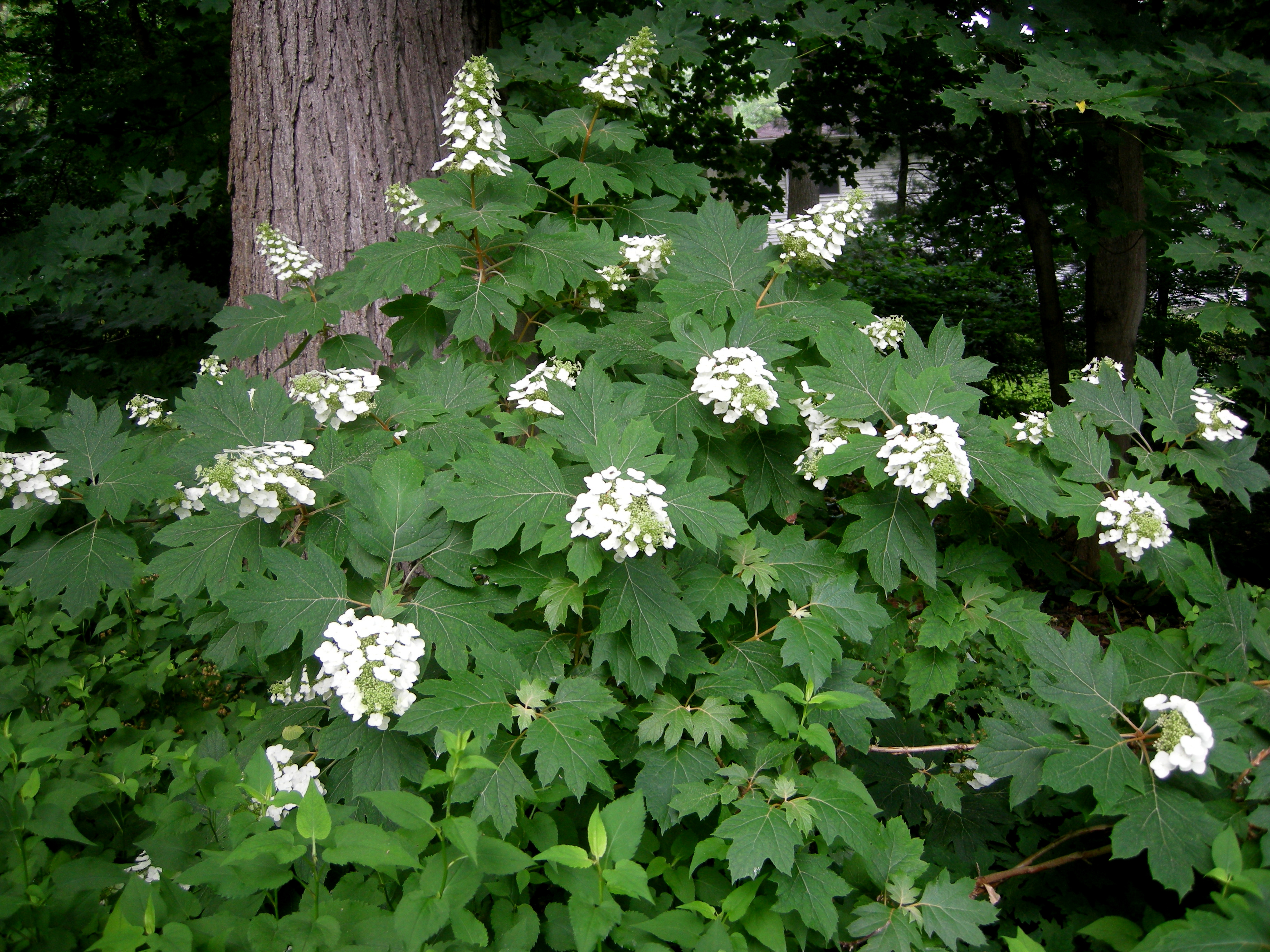
A close up of the large and beautiful flowers and leaves of oakleaf hydrangea.

   Native oakleaf hydrangea in my woodland garden at the base of a black walnut.

The fall color of oakleaf hydrangea.

Our native oakleaf hydrangea, H. quercifolia, is the best all round shrub for shade—everyone should have at least one!  Huge, long-lasting, upright pyramids of white flowers bloom from May through July and change to pink for even longer interest.  It has bold-textured leaves with heart-stopping burgundy-red fall color, and cinnamon-colored exfoliating bark—a true four season plant.  I am offering ‘Alice’ native oakleaf hydrangea, a superior form that has larger flowers, better fall color, and very disease resistant leaves.  It grows to 5 to 8’ tall and 5 to 8’ wide in sun to full shade.  It is hardy to zone 5, walnut and drought tolerant, and native to the southeastern US.  For more information, click here.


The pink mophead flowers of ‘Preziosa’ age to a dark maroon.

‘Preziosa’s’ leaves are gorgeous, here they are starting to turn burgundy in the fall.

‘Preziosa’ sawtooth hydrangea, H. serrata ‘Preziosa’, is now my favorite “fancy” hydrangea for full shade so I am offering it again.  I planted mine in the shade of a white pine under a cherry laurel behind a Japanese maple, and it is thriving and loaded with buds right now.  This wonderful hydrangea produces lovely pink mophead flowers from June to August, which darken with age to a gorgeous maroon.  But I may like the elegant leaves more, especially their beautiful burgundy fall color.   The leaves, deep red stems, flowers, and habit of ‘Preziosa’ are all superior to most other hydrangeas.  ‘Preziosa’ grows to 3 to 4’ tall and 3 to 4’ wide in part to full shade.  It is very tolerant of cold temperatures and hardy to zone 5.  For more information, click here.


 The elegant leaves and flowers of native ‘Blue Muffin’ arrowwood viburnum.

Native ‘Blue Muffin’ arrowwood viburnum, V. dentatum ‘Blue Muffin’,  has lovely flat-topped white flowers in May and June that attract butterflies.  Lots of pea-sized very blue berries appear in late summer and attract birds.  The shiny dark green leaves are beautiful all season and turn attractive shades of orange to burgundy in the fall.  ‘Blue Muffin’ has an excellent and useful narrow, upright habit.  The branches are so straight that the Native Americans used them for arrows. 

‘Blue Muffin’s’ blueberry-like fruit.

‘Blue Muffin’ grows to 5 to 8’ tall and 3 to 4’ wide in sun to part shade.  It is deer resistant and grows in a wide range of soils.  It tolerates salt, drought, and walnuts.  ‘Blue Muffin’ is hardy to zone 3 and native to the eastern US, including PA (fruit photo courtesy of MOBOT, for more information click here).

 The flowers of ‘Wine & Roses’ weigela.

‘Wine & Roses’ old-fashioned weigela, W. florida ‘Wine & Roses’, has copious amounts of eye-catching rose-red flowers in May and June that attract hummingbirds.   The flowers are set off to perfection by the glossy deep burgundy leaves whose color intensifies in the fall.  ‘Wine & Roses’ has an excellent habit—you can prune it immediately after flowering to fit any location.  It grows to 4 to 5’ tall and 4 to 5’ wide in sun to part shade.  Although I recommend some direct sun for better flowers, I have seen weigela blooming in full shade.  It is hardy to zone 4, deer resistant, and tolerant of a wide range of soils.  ‘Wine & Roses’ is a PHS Gold Medal Plant, for details click here.


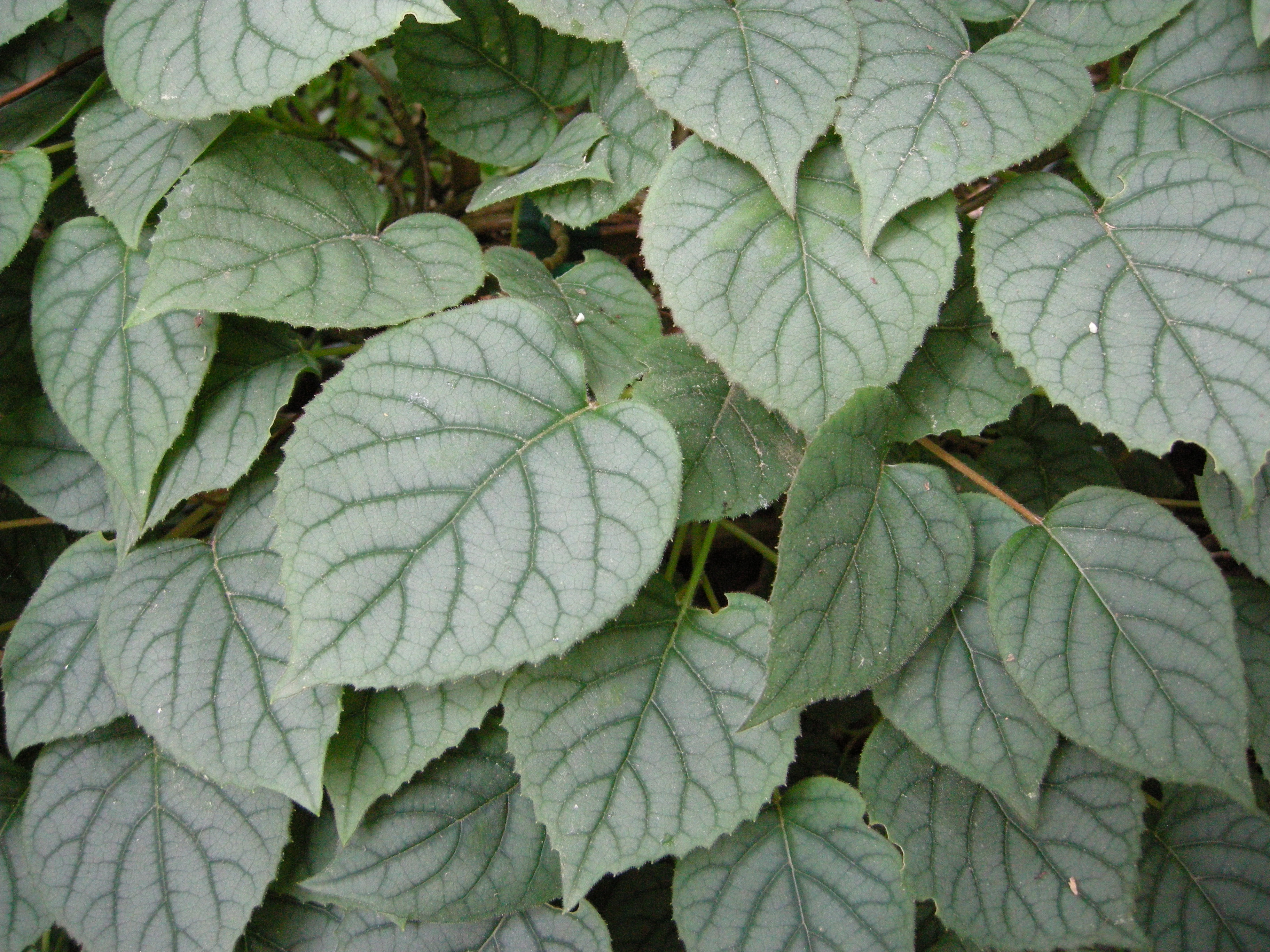
The silver leaves of ‘Moonlight’ Japanese climbing hydrangea.

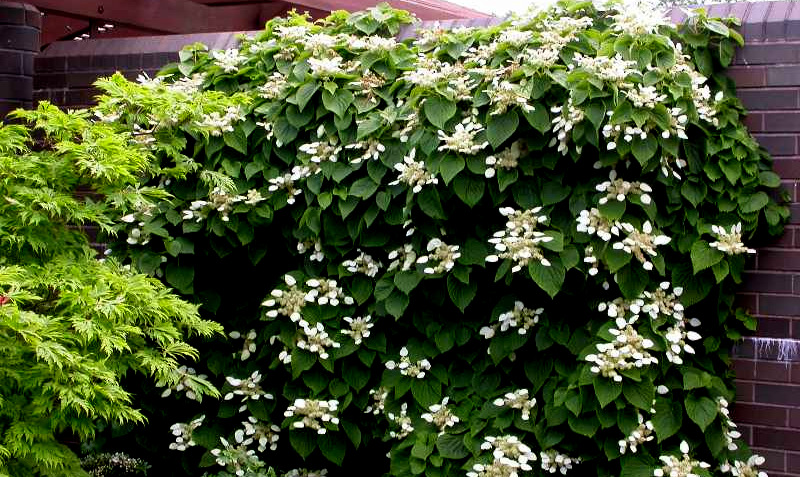
The flowers of Japanese climbing hydrangea—here the straight species.

‘Moonlight’ Japanese hydrangea vine, Schizophragma hydrangeoides ‘Moonlight’, has very showy 8 to 10” wide white lacecap flowers  in midsummer.  But I really grow it for its elegant silver-painted dark green leaves, which turn yellow in the fall.  ‘Moonlight’ is a self-attaching vine that covers the surface it grows on with silvery leaves.  It reaches 20 to 30’ at maturity in part to full shade—mine is in deep shade.  It is a PHS Gold Medal Plant, for details click here (photo of flowers courtesy of the MOBOT Plant Finder click here).

I hope I have inspired you to order some of these wonderful plants in my offer or search them out at your local independent nursery.  To read the previous posts on woody plants for shade, click one, two, three, and four.

Carolyn

Nursery Happenings: Customers can pre-order woody plants through noon on May 22.  Click here for details.  We have added a third session of our seminar, The Secrets of a Low Maintenance Garden, on Sunday, May 20.  Click here for details. If you are interested in receiving miniature hostas mail order, click here.

If you are within visiting distance and would like to receive catalogues and information about customer events, please send your full name and phone number to carolynsshadegardens@verizon.net.  Subscribing to my blog does not sign you up to receive this information.

Facebook:  Carolyn’s Shade Gardens has a Facebook page where I post single photos, garden tips, and other information that doesn’t fit into a blog post.  You can look at my Facebook page here or click the Like button on my right sidebar here.

Notes: Every word that appears in orange on my blog is a link that you can click for more information.  If you want to return to my blog’s homepage to access the sidebar information (catalogues, previous articles, etc.) or to subscribe to my blog, just click here.

Hosta Containers and Companions

Posted in container gardening, containers for shade, hosta, miniature hosta, Shade Gardening, Shade Perennials with tags , , , , , , , , , , , , , , , , , , , , , , on May 10, 2012 by Carolyn @ Carolyns Shade Gardens

Carolyn’s Shade Gardens is a retail nursery located in Bryn Mawr, PA, specializing in showy, colorful, and unusual plants for shade.  The only plants that we ship are snowdrops and miniature hostas.  For catalogues and announcements of events, please send your full name, location, and phone number (for back up use only) to carolyn@carolynsshadegardens.com.  Click here to get to the home page of our website for catalogues and information about our nursery and to subscribe to our blog.

.

Hosta When finding containers for your hostas you have to think outside the box: “Carolyn’s Gold” hosta in an antique kerosene can.

This is the third post in a three-part series on small hostas.  My nursery specializes in miniature hostas, and I have over 30 varieties available right now, both at the nursery and mail orderIn I LOVE Mice, I raved about the mouse ears series of hostas.  In Beyond Mice, I highlighted some of my favorite non-mouse ears hostas.  My 2011 post Miniature (& Small) Hostas also gives an overview of little hostas and how to use them in the garden.  Now I want to focus on the containers you might use to hold your hostas and the plants that will keep them company.


Probably my favorite medium sized hosta, the straight species Hosta tokudama.

Why would you want to grow hostas in a container?  One reason I do it is to highlight a hosta’s very special ornamental attributes.  I think Hosta tokudama (photo above) is gorgeous so I grow it in a pot outside my front door.  Here are some other hostas that I think merit their own container (read my previous hosta posts for photos of other single hosta containers):


Hosta ‘Little Miss Sunshine’ has bright gold leaves and deep red stems that look like rhubarb.  I placed its pot on a wall by my front walk so I can admire the stems up close.


The elegant hosta ‘Hanky Panky’ grows in an old dogwood stump, also along my front walk.

I love the very unusual hosta ‘Praying Hands’ and have it in three different containers, here with violas.


There is no other miniature hosta that looks like ‘Sparkler’ so I gave it its own spot in an antique metal pitcher salvaged from the dump.

Small hostas can get lost when planted in perennial borders unless they are massed.  Growing special miniature hostas in containers brings them up to eye level.  Here are 16 miniatures in my strawberry pot:

It also allows you to pair them with other miniature plants to create a tiny garden.  My previous posts contain many photos of my containers of little hostas.  However, I thought I would show you some of the planters I have recently created to give my customers ideas and to sell at my upcoming hosta open house:


All these containers were purchased inexpensively at flea markets and antique stores or were salvaged from the dump at the bottom of our property.  You probably have a suitable pot, pan, or other hosta garden holder gathering dust in your attic right now.


Hosta gardens waiting at Carolyn’s Shade Gardens for a new home.

Choosing tiny companion plants to go with your miniature hostas is another fun part of growing them in containers or in a rock garden.  Plant collecting urges are satisfied by all the plants that can be crammed into a small area.  In the planters above, I used violas, sedums, hens and chicks, ‘Heartthrob’ violet, ‘Tiny Rubies’ dianthus, and pasque flower (Pulsatilla).  Here are some more combinations:

Hostas ‘Shiny Penny’, ‘Green Eyes’, and ‘Itsy Bitsy Spider’ paired with sedum, hens and chicks, and rosularia in my dish garden.

Mouse ears hostas with dwarf Solomon’s seal, Polygonatum humile, in my stone trough.

Hostas ‘Blue Mouse Ears’ and ‘Blonde Elf’ with miniature lady fern, Athyrium filix-femina ‘Minutissimum’, in the rock garden.

Hostas ‘Little Blue’, ‘Blonde Elf’, and ‘Little Wonder’ with a small epimedium in the rock garden.


Gardening with tiny plants and salvaged containers is so much fun.  I hope you will give it a try.

Carolyn

Nursery Happenings:  If you are interested in receiving miniature hostas mail order, click here.

If you are within visiting distance and would like to receive catalogues and information about customer events, please send your full name and phone number to carolynsshadegardens@verizon.net.  Subscribing to my blog does not sign you up to receive this information.

Facebook:  Carolyn’s Shade Gardens has a Facebook page where I post single photos, garden tips, and other information that doesn’t fit into a blog post.  You can look at my Facebook page here or click the Like button on my right sidebar here.

Notes: Every word that appears in orange on my blog is a link that you can click for more information.  If you want to return to my blog’s homepage to access the sidebar information (catalogues, previous articles, etc.) or to subscribe to my blog, just click here.

Beyond Mice

Posted in container gardening, containers for shade, hosta, miniature hosta, Shade Gardening, Shade Perennials with tags , , , , , , , , , , , , on May 3, 2012 by Carolyn @ Carolyns Shade Gardens

Carolyn’s Shade Gardens is a retail nursery located in Bryn Mawr, PA, specializing in showy, colorful, and unusual plants for shade.  The only plants that we ship are snowdrops and miniature hostas.  For catalogues and announcements of events, please send your full name, location, and phone number (for back up use only) to carolyn@carolynsshadegardens.com.  Click here to get to the home page of our website for catalogues and information about our nursery and to subscribe to our blog.

.

Hosta 'Crumb Cake'I have used this photo of hosta ‘Crumb Cake’ emerging in spring before, but to me it epitomizes the beauty of a miniature hosta in a container.

My nursery specializes in miniature hostas, and I have over 25 varieties available right now, both at the nursery and mail order.  My 2011 post Miniature (& Small) Hostas gives an overview of little hostas and how to use them in the garden.  In my most recent post, I LOVE Mice, I raved about the mouse ears series of hostas.  But there are many desirable miniature hostas “beyond mice” so I thought I would highlight some special favorites.


‘Cracker Crumbs’ is pictured here in my dish garden (full photo below) surrounded by a tiny gray-blue sedum.  It is a miniature hosta 5” tall by 19” wide with leaves 2 1/2” long by 1 1/2” wide.  ‘Cracker Crumbs’ has shiny gold leaves with a bright green wavy margin and pale purple flowers in July.  It quickly forms a dense and rounded mound and makes a great trough or rock garden plant.


‘Itsy Bitsy Spider’ is also pictured in my dish garden (full photo below) with the same sedum and some hens and chickens.  It is a miniature hosta 2 ½” tall by 6” wide with leaves 1 ¾” long by 1 1/4″ wide.  ‘Itsy Bitsy Spider’ has narrow leaves with thick substance and a distinct blue-gray color, and pale lavender flowers in July.  It forms a tight low mound.  This adorable and rare plant is the smallest hosta in my collection.


‘Pixie Vamp’ in my rock garden—what a great name!

‘Pixie Vamp’ is pictured here in a container with violas.  It is a miniature hosta 7” tall by 16” wide with leaves 3 ½” long by 2 ½” wide.  ‘Pixie Vamp’ has bright green heart-shaped leaves bordered by gold in the spring changing to creamy white.  Its gorgeous mahogany colored stems hold purple flowers in July.  It is excellent in containers.


The very unusual hosta ‘Crumb Cake’ in my rock garden.


‘Crumb Cake’ is pictured here fully emerged in the same container featured in the first photo in this post.  It is a miniature hosta 5” high by 14” wide with leaves 3” long by 3” wide.  ‘Crumb Cake’ is a recent introduction with very bright honey-gold leaves, which are round with wavy margins.  It is a very unusual looking hosta forming a flat, dense, brightly colored mound.  It has elegant mahogany-colored leaf and flower stems and lavender flowers in July.  It makes an excellent container plant.


‘Alakazaam’ in my rock garden.


‘Alakazaam’ is pictured here in a container made for me by my son.  It is a miniature hosta 5″ tall by 10″ wide with leaves 6 1/2″ long and 3/4″ wide.  ‘Alakazaam’ has bright green leaves with gold ruffled margins changing to creamy white, and lavender flowers in late summer.  Its unusual spiky habit makes it stand out from the crowd no matter where you place it.


‘Surfer Girl’ is pictured here in my rock garden.  It is a miniature hosta 6” tall by 18” wide with leaves 2” long by 1” wide.  ‘Surfer Girl’ has dark green, sharply pointed, deeply rippled leaves reminiscent of ocean waves, and purple flowers in July.  It creeps to fill in a wide area and is excellent for edging the front of a border.  I use it in containers to contrast with gold-leafed minis.


‘Little Sunspot’ in my rock garden. 

‘Little Sunspot’ is pictured here in my strawberry pot.  It is a small hosta 12″ tall by 12″ wide with leaves 3″ long and 2″ wide.  It has sharply contrasting variegated gold leaves with a wide  dark green margin and purple-striped white flowers in summer.  ‘Little Sunspot’ is great for a rock garden, border, or a container.


‘Twist of Lime’ in my rock garden.

‘Twist of Lime’ is pictured here massed in front of epimediums.  It is a miniature hosta 6” tall by 10” wide with leaves 3” long by 1” wide.  ‘Twist of Lime’ has bright gold leaves with a narrow, dark blue-green wavy margin and many deep violet-striped flowers in July.  It has a beautiful upright habit and is a very fast grower—a favorite of my customers.

‘Praying Hands’ is pictured here in a container with violas and dwarf Solomon’s seal.  It is a small hosta 16″ tall by 30″ wide with leaves 7″ long and 2″ wide.  ‘Praying Hands’ has waxy and prominently ridged dark emerald green leaves with a narrow gold edge.  It is the most unusual hosta on the market with its folded leaves and vertical, twisty habit reminiscent of a pitcher plant.  It thrives in containers with my plant doubling in size each year.  ‘Praying Hands’ received the prestigious Hosta of the Year Award in 2011.

‘Praying Hands’ provides a vertical accent in my dish garden with miniature hostas ‘Shiny Penny’, ‘Itsy Bitsy Spider’, ‘Cracker Crumbs’, and ‘Shining Tot’ and various companion plants.

Miniature hostas are so much fun.  My next post will be on my new miniature hosta rock garden and feature companion plants to use in containers with your little hostas.

Carolyn

Nursery Happenings: If you are interested in receiving miniature hostas mail order, click here.

If you are within visiting distance and would like to receive catalogues and information about customer events, please send your full name and phone number to carolynsshadegardens@verizon.net.  Subscribing to my blog does not sign you up to receive this information.

Facebook:  Carolyn’s Shade Gardens has a Facebook page where I post single photos, garden tips, and other information that doesn’t fit into a blog post.  You can look at my Facebook page here or click the Like button on my right sidebar here.

Notes: Every word that appears in orange on my blog is a link that you can click for more information.  If you want to return to my blog’s homepage to access the sidebar information (catalogues, previous articles, etc.) or to subscribe to my blog, just click here.