Archive for the bulbs for shade Category

Carolyn’s Shade Gardens Goes International

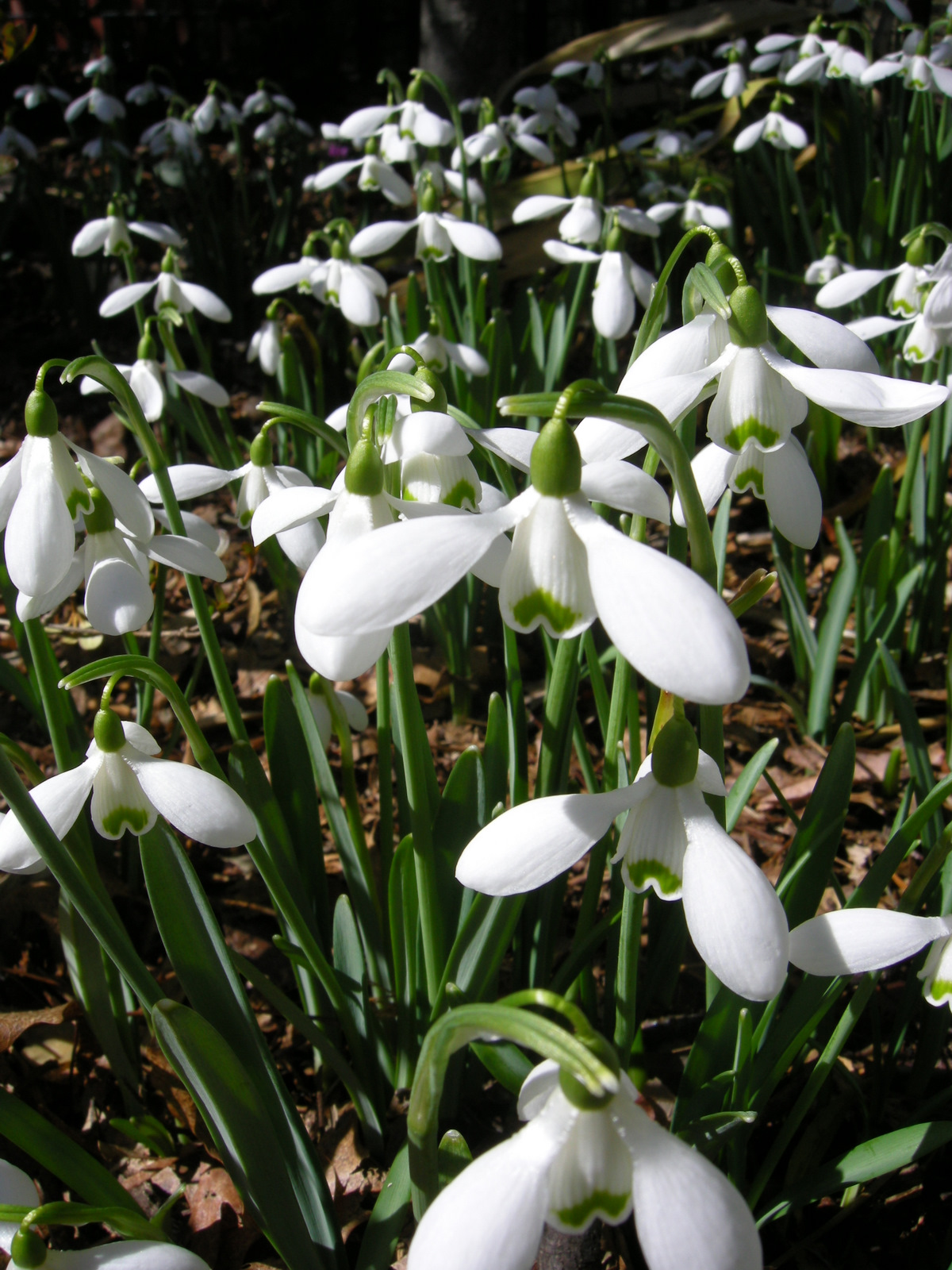
Posted in bulbs for shade, snowdrops, winter, winter interest with tags , , , , , , , , , , , , on February 3, 2012 by Carolyn @ Carolyns Shade Gardens

Carolyn’s Shade Gardens is a retail nursery located in Bryn Mawr, PA, specializing in showy, colorful, and unusual plants for shade.  The only plants that we ship are snowdrops within the US.  For catalogues and announcements of local events, please send your full name, mailing address, and cell number to carolyn@carolynsshadegardens.com and indicate whether you are interested in snowdrops, hellebores, and/or hostas.  Click here to get to the home page of our website for catalogues and information about our nursery and to subscribe to our blog.

The BBC News Magazine was hours away from publication when they emailed to request a photo of me with snowdrops.  My husband and I had a quick photo shoot and this is what we came up with.

We interrupt the regularly scheduled flow of posts on this blog with breaking news.  The owner of Carolyn’s Shade Gardens is prominently featured in the BBC News Magazine lead article for February 2 entitled “Snowdrop Fanciers and Their Mania”. 

All kidding aside, I couldn’t be more thrilled.  I am in the company of Matt Bishop and John Grimshaw, two of the authors of the “snowdrop bible” Snowdrops: A Monograph of Cultivated Galanthus, and Chris Ireland-Jones, the owner of the famous English snowdrop nursery Avon Bulbs.  You know what a snowdrop fanatic I am so this is the ultimate compliment.  To read the article (I am in the second half), click here.

Second Annual Snowdrops & Other Winter Interest Plant Seminars

Charles Cresson pointing out some of his very unusual snowdrop cultivars to last year’s seminar attendees.

I am very excited that winter interest plant expert and gardener extraordinaire Charles Cresson has agreed once again to give seminars on Snowdrops and Other Winter Interest Plants just for my customers.  The seminars will be limited to 20 people each and will take place in his amazing Swarthmore garden, Hedgleigh Spring.  The brochure telling you the details and how to sign up is here.  If you are a local gardener and interested in attending, I encourage you to email immediately because I expect these seminars to sell out.  For a complete description of the 2011 seminars with many photos, click here.


Since this post is about all things snowdrop, I thought I would show you the first snowdrops to bloom in my garden in 2012:
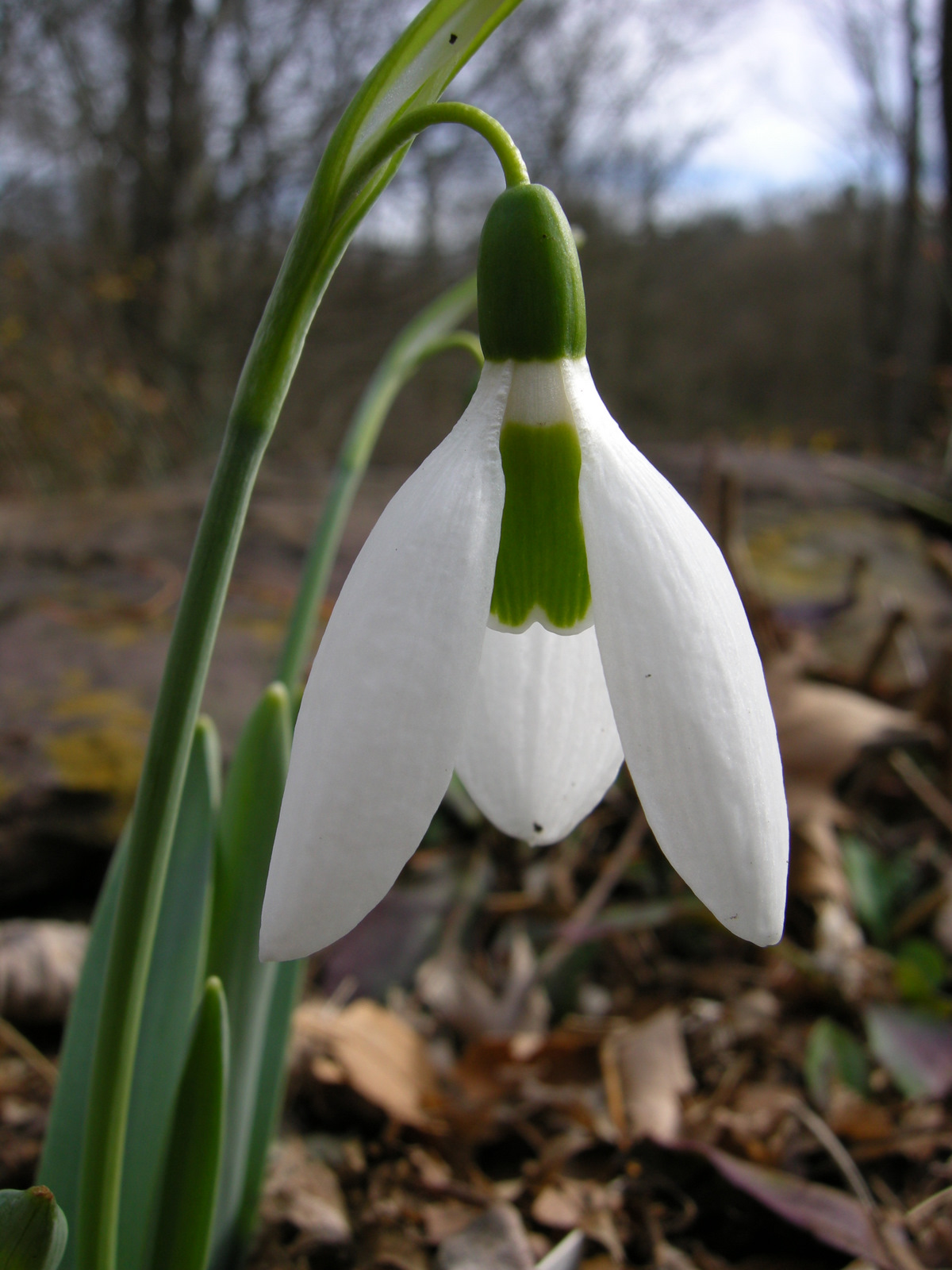
The very first snowdrop cultivar to open in my garden in 2012: ‘Kite’.  Notice the very long outer segments (petals).


Second to open was Galanthus plicatus ‘Augustus’ with its striking puffy rounded and quilted outer segments.

‘Magnet’ is open and swaying in the breeze on its unusually long and thin flower stems (pedicels).

The double common snowdrop ‘Flore Pleno’ is blooming even though it is usually one of the last snowdrops to open in the middle to end of March.

The aristocratic snowdrop ‘Atkinsii’, said to resemble the pearl drop earrings of Elizabeth I, is also flowering.
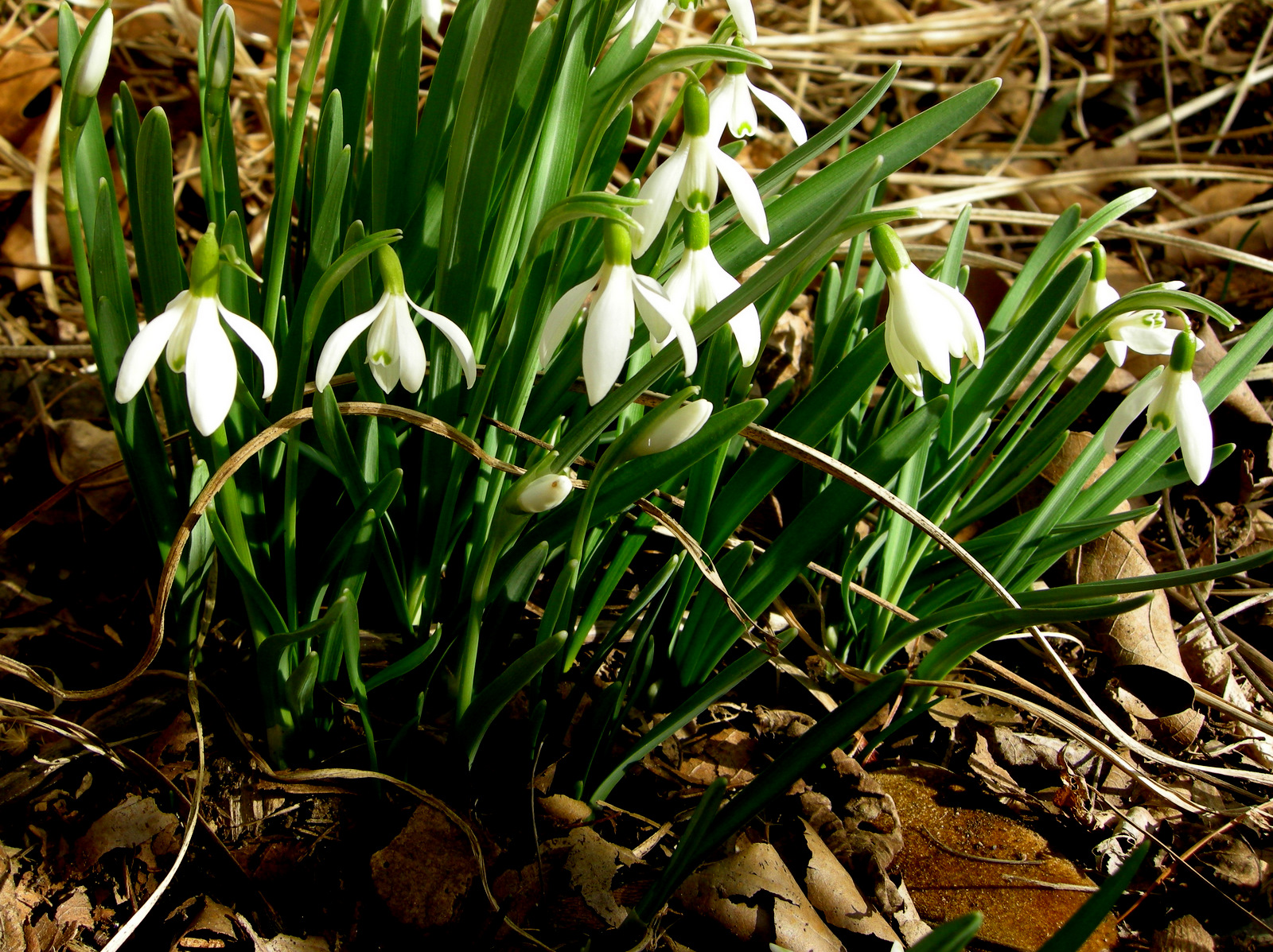
The common snowdrop, G. nivalis, is blooming a few weeks early.  I shot this picture to document the date they opened and had a funny feeling that something wasn’t right.  When I uploaded the photos to the computer I realized the plants in the front have four outer segments instead of three—very interesting.

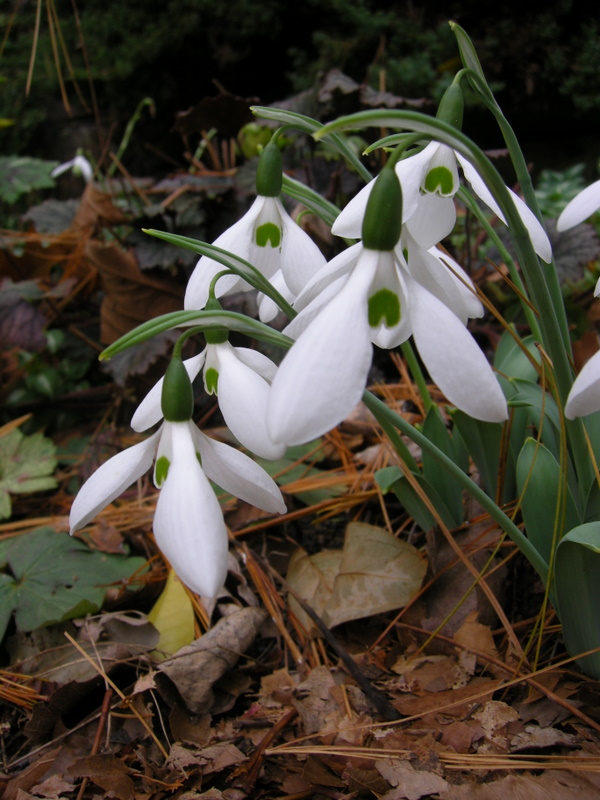
The giant snowdrop, G. elwesii, has been flowering on and off since November, but this patch just opened this week.

I avidly read the Galanthus threads on the Scottish Rock Garden Club forum where galanthophiles from all over the world meet to obsess about snowdrops.  I highly recommend this forum if you are interested in snowdrops and want to learn more.  The forumists are some of the most knowledgeable galanthophiles around but very welcoming and eager to share their passion.  Several of them commented on the varied markings on the giant snowdrops pictured above which got me outside with my camera to record the marks.  Here is what I found:
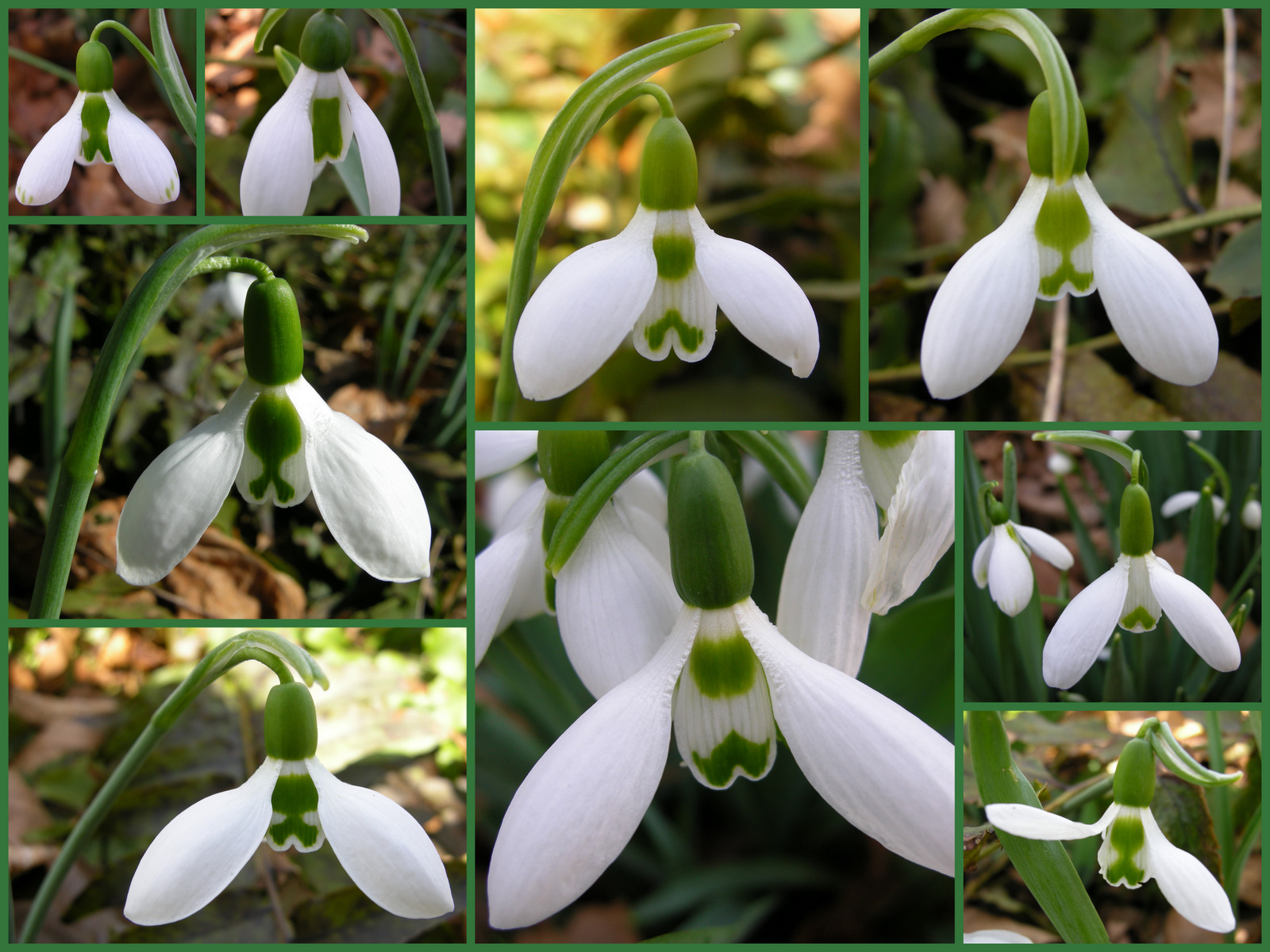
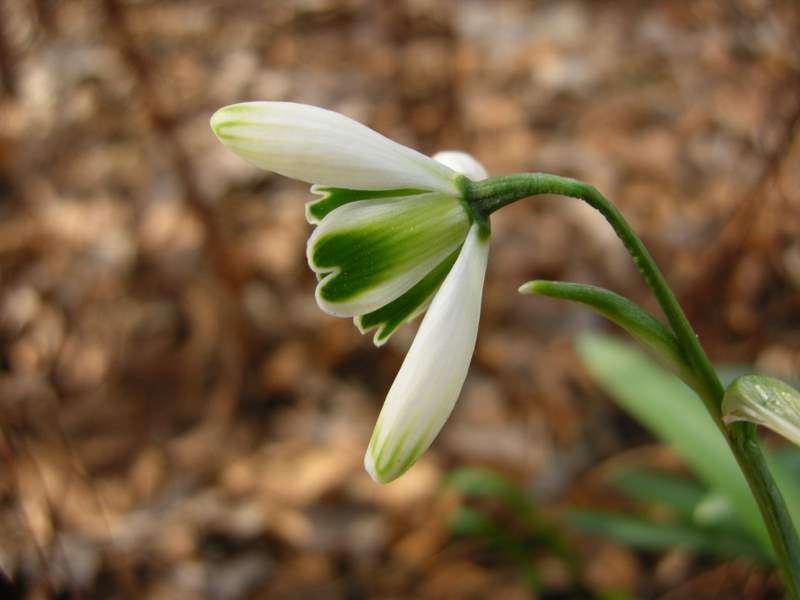
Every flower in this collage is the same species, G. elwesii, and yet the green marks on the inner segments are all different, from the small single green mark on the middle  right flower to the mark that looks like a mustache and eyes in the middle of the bottom row.  Although I realize this will not excite most gardeners, at least everyone can see the amazing variety.  And variety is the spice of life.


I have recently been honored with the Versatile Blogger Award by four different blogs, and I want to thank them for the accolade.  I try to make my blog posts varied and yes versatile (able or meant to be used in many different ways), and I am glad that my efforts are appreciated.  I am not following the award rules, but instead letting you know who gave me the award in hopes that you will visit their blogs.  Here are the links and some information to entice you to visit them:

Graphicality–UK:  Helene is a very accomplished author.  You might want to check out her recent post on the book she published with her lovely photos of Kew Gardens.  Her current post talks about US grey squirrels invading Britain.

Green Place:  Sheila is in Chapel Hill, NC, and reflects on spirituality, nature and gardening.  She and I also share a love of Maine islands.

The Amateur Weeder:  For a very different perspective, Lyn gardens in Australia and her blog produces “seedlings from the mind of an inconstant gardener.”  I particularly liked her recent post called Designed by Nature.

Women and the Garden:  Patty writes about “the history of the garden and the various roles women played in that history,” and it is  all absolutely fascinating.  She doesn’t post often, but when she does you don’t want to miss it.  Her latest post is on Pomona, the roman goddess of fruiting trees and orchards.

Carolyn

Notes: Every word that appears in orange on my blog is a link that you can click for more information.  If you want to return to my blog’s homepage to access the sidebar information (catalogues, previous articles, etc.) or to subscribe to my blog, just click here.

April GBBD: How to Choose

Posted in bulbs for shade, Garden Blogger's Bloom Day, hellebores, native plants, Shade Perennials, Uncategorized with tags , , , , , , , , , , , on April 14, 2011 by Carolyn @ Carolyns Shade Gardens

Carolyn’s Shade Gardens is a retail nursery located in Bryn Mawr, PA, specializing in showy, colorful, and unusual plants for shade.  The only plants that we ship are snowdrops and miniature hostas.  For catalogues and announcements of events, please send your full name, location, and phone number (for back up use only) to carolyn@carolynsshadegardens.com.  Click here to get to the home page of our website for catalogues and information about our nursery and to subscribe to our blog.

Time is just flying by, and we have reached the middle of the month when I encourage each of you to walk around your garden and assess what you need to add to make early spring an exciting time in your landscape.  Do you need more early flowering trees like magnolias and cherries to give you a reason to stroll in your garden?  Could your garden benefit from flowers that bloom in early April like native spring ephemerals, bulbs, pulmonarias, and hellebores?

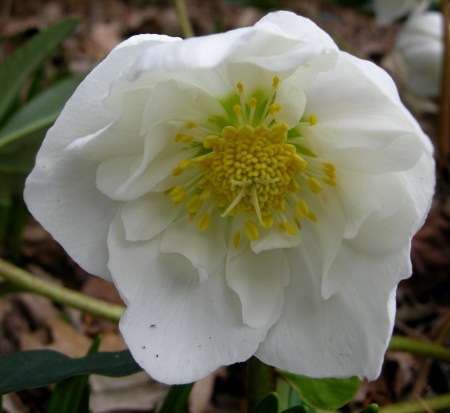
Make a list and take photographs so that when you are shopping this spring you know what you need and where it should go.  It’s beautiful outside, and you never know what you might find hiding in your garden like this ethereal double-flowered hellebore (pictured above), which I discovered during my own  inventory.  Usually I recommend a local garden to visit for inspiration, but I have to say Carolyn’s Shade Gardens is pretty inspiring right now!

Flowering quince, Chaenomeles x superba ‘Texas Scarlet’, with ‘White Lady’ hybrid hellebore

Today is Garden Blogger’s Bloom Day for April when gardeners around the world show photos of what’s blooming in their gardens (follow the link to see  photographs from other garden bloggers assembled by Carol at May Dreams Gardens).  Here are  some more highlights from my mid-April stroll through Carolyn’s Shade Gardens, but to see it all you will have to visit as Jean from Jean’s Garden and Jan from Thanks for Today are doing this Sunday.

My early magnolias are in full bloom.  Magnolias are my favorite flowering trees, and I want to share these early-blooming varieties with you:

Northern Japanese Magnolia, Magnolia kobus ‘Wada’s Memory’, has the most beautiful form of any magnolia.  The branches curve upwards to form an elongated pyramid, which is maintained even on mature plants.

‘Wada’s Memory’ flower

Star magnolia, Magnolia stellata, blooms so early that it often gets damaged by frost, but amazingly the flowers are magnificent this year.

Star magnolia flowers

I have waited over 15 years for my Yulan magnolia, Magnolia denudata, to bloom, but once I saw mature trees at Longwood Gardens, I had to have one!  It was worth the wait.

My ingenious 13-year-old son used a grappling hook to pull a branch down and clip a Yulan magnolia flower for me to photograph.

There are so many beautiful hellebores in bloom that I made collages of my favorite flowers so that this whole post wasn’t dedicated to hellebores:

Clockwise from upper left: seedling double hybrid hellebore, ‘Mrs. Betty Ranicar’, ‘Velvet Lips’ (don’t you love that name?), ‘Painted Bunting’

Clockwise from upper left: seedling petaloid hybrid hellebore, ‘Blue Lady’, Helleborus x nigercors ‘Green Corsican’ (cross between Corsican hellebore and Christmas rose), seedling in ‘Double Melody’ strain

Clockwise from upper left: double from ‘Golden Lotus’ seed strain, ‘Raspberry Mousse’, ‘Goldfinch’, seedling petaloid hybrid hellebore

I could dedicate the whole post to epimediums too so here are more collages:

Clockwise from upper left: ‘Yubae’, Epimedium x rubra, ‘Cherry Tart’, ‘Sweetheart’

Clockwise from upper left: ‘Shrimp Girl’, ‘Orange Queen’, Epimedium x warleyense, ‘Cupreum’

I have a collection of about 15 varieties of European wood anemones, and April is their time to shine.  They are very easy to grow in shaded woodland conditions:

Left to right from upper left: Anemone nemorosa pink form; Anemone x seemanii; ‘Alba Plena’; ‘Leed’s Variety’; ‘Bractiata’; ‘Allenii’; ‘Vestal’; Anemone ranunculoides; ‘Wyatt’s Pink’

European wood anemones spread to form a sizable and eye-catching patch even in dry shade, photo above of the yellow flowers of Anemone ranunculoides.

I want to share so many exciting blooming plants with you that I don’t know how to choose the photographs to include, hence the title of this post.  Here are other plants that made the cut:

Red lungwort, Pulmonaria rubra ‘Redstart’, is a very unusual pulmonaria with green fuzzy leaves.

Winterhazel, Corylopsis species, unfortunately for the first time ever our late freezes damaged most of the flowers.

Obviously not a bloom, but I wanted to show you the early color of native variegated dwarf Jacob’s ladder, Polemonium reptans ‘Stairway to Heaven’.

Native rue anemone, Anemonella thalictroides double pink form

I planted a mixture of daffodils in the middle of my raised beds, and this lovely seedling appeared in the path.

Native cinnamon fern, Osmunda cinnamomea, is gorgeous as it unfurls.

A seedling Helleborus multifidus underplanted with the spring ephemeral  Cardamine quinquefolia.

The many colors of Corydalis solida when allowed to seed.  I am planning an article on this plant in the future.

Who could have planned this combination?  Native coral bells, Heuchera villosa ‘Caramel’, with a seedling glory-of-the-snow, Chionodoxa forbesii.

The new leaves and flowers of Japanese coral bark maple, Acer palmatum ‘Sango-kaku’, are breathtaking in early spring.  For the full story on this four season tree, read my article Coral Bark Maple.

My latest spring-blooming camellia addition, Camellia x ‘April Rose’, a formal double.


For breath-taking beauty in early spring you can’t beat cherry trees:

A very mature Yoshino cherry, Prunus x yedoensis, that came with our property.  I love the fleeting nature of the flowers and look forward to the day every spring when it rains petals in my nursery.  Its orange fall color is spectacular.

My favorite cherry (at least for today), Prunus x incam ‘Okame’, dominates my courtyard garden in early spring.


I will end with a heart full of cherry blossoms because I love early spring!

Please let me know in a comment/reply what flowers are blooming in your early spring garden.  If you participated in GBBD, please provide a link so my nursery customers can read your post.

Carolyn


Notes: Every word that appears in orange on my blog is a link that you can click for more information.  If you want to return to my blog’s homepage to access the sidebar information (catalogues, previous articles, etc.), just click here.

Nursery Happenings: My second open house sale is this Saturday, April 16, from 10 am to 3 pm, featuring early spring-blooming plants for shade.

2011 Winter Interest Plants

Posted in bulbs for shade, garden to visit, landscape design, Shade Shrubs, snowdrops, winter interest with tags , , , , , , , , , , , , on March 20, 2011 by Carolyn @ Carolyns Shade Gardens

Carolyn’s Shade Gardens is a retail nursery located in Bryn Mawr, PA, specializing in showy, colorful, and unusual plants for shade.  The only plants that we ship are snowdrops and miniature hostas.  For catalogues and announcements of events, please send your full name, location, and phone number (for back up use only) to carolyn@carolynsshadegardens.com.  Click here to get to the home page of our website for catalogues and information about our nursery and to subscribe to our blog.

Japanese flowering apricot, Prunus mume

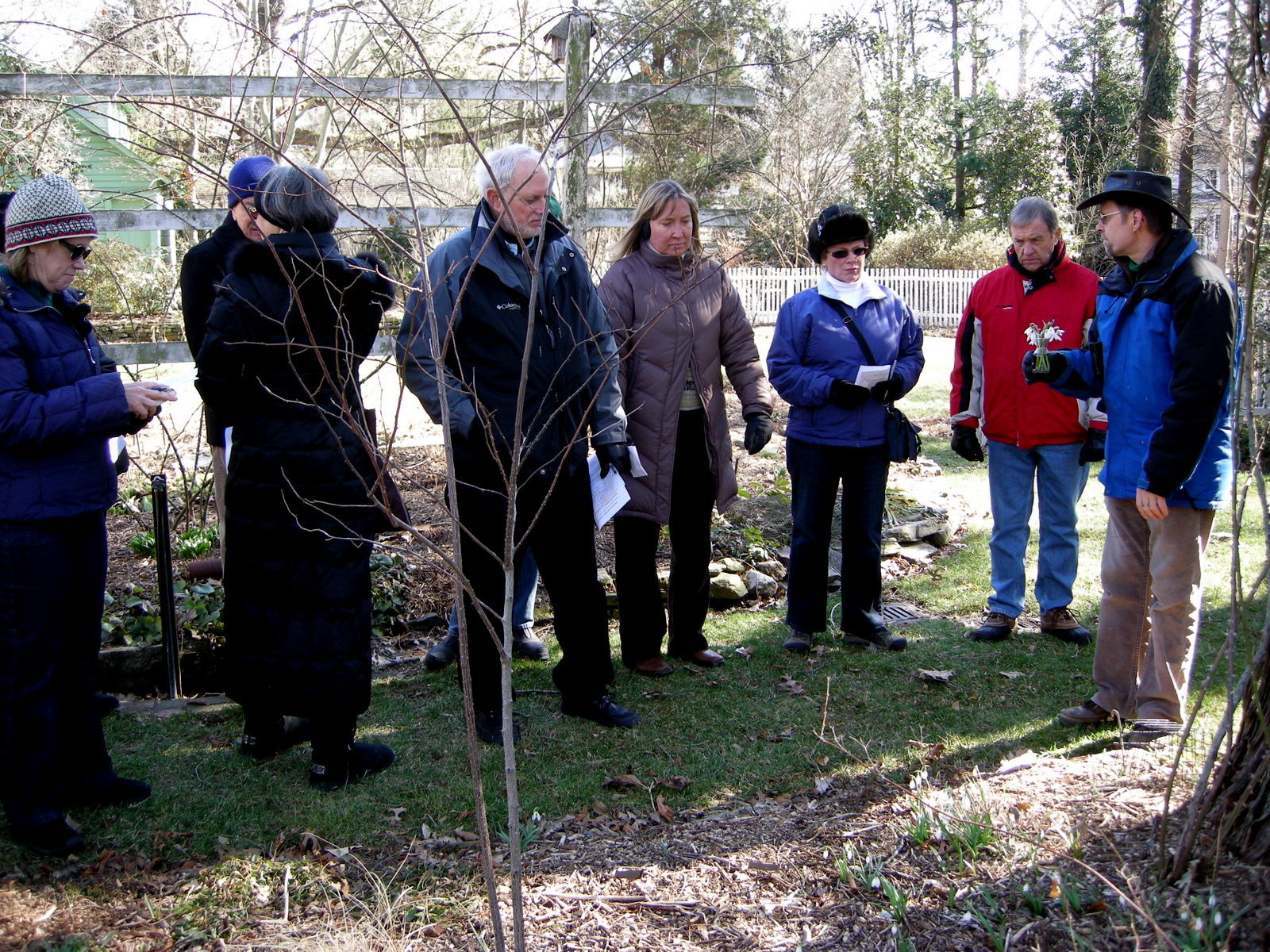
On March 3, 7, and 13, my customers and I attended seminars on Snowdrops and Other Winter Interest Plants given by Charles Cresson at his garden, Hedgleigh Spring in Swarthmore, Pennsylvania (US).  Charles is the instructor for the Longwood Gardens certificate course “Hardy Spring and Fall Bulbs” as well as the author of several gardening books.  He is also a frequent lecturer, most recently at the Planting Fields Arboretum on Long Island and Rare Find Nursery in New Jersey for presentations on “Choosing Hardy Camellias for Spring and Fall”.

Charles Cresson, kneeling to point out plicate leaves on a snowdrop, to seminar attendees.

Charles trained at the Royal Horticultural Society, Wisley, in England and the Kalmthout Arboretum in Belgium, best known for its witch hazel introductions.    He has worked at Meadowbrook Farm, Winterthur, Nemours, and Chanticleer.  His grandfather built the house at Hedgleigh Spring in 1911 and created the garden over the course of 50 years.  Charles has gardened there for  more than 40 years.

Every time we viewed a new snowdrop, no matter how rare, Charles picked two flowers and passed them around so that we could closely examine the markings and experience the fragrance.  He then collected the flowers in a little vase for later comparison.

What a treat Charles’s seminars were.  Even though I attended all three sessions, I learned something new each time and came away with a deep admiration for Charles’s encyclopedic knowledge of plants and the depth of his plant collection, not to mention a wish list of plants for my own gardens.  I also appreciated how each plant was not just deposited in the garden but was carefully incorporated into the overall design.

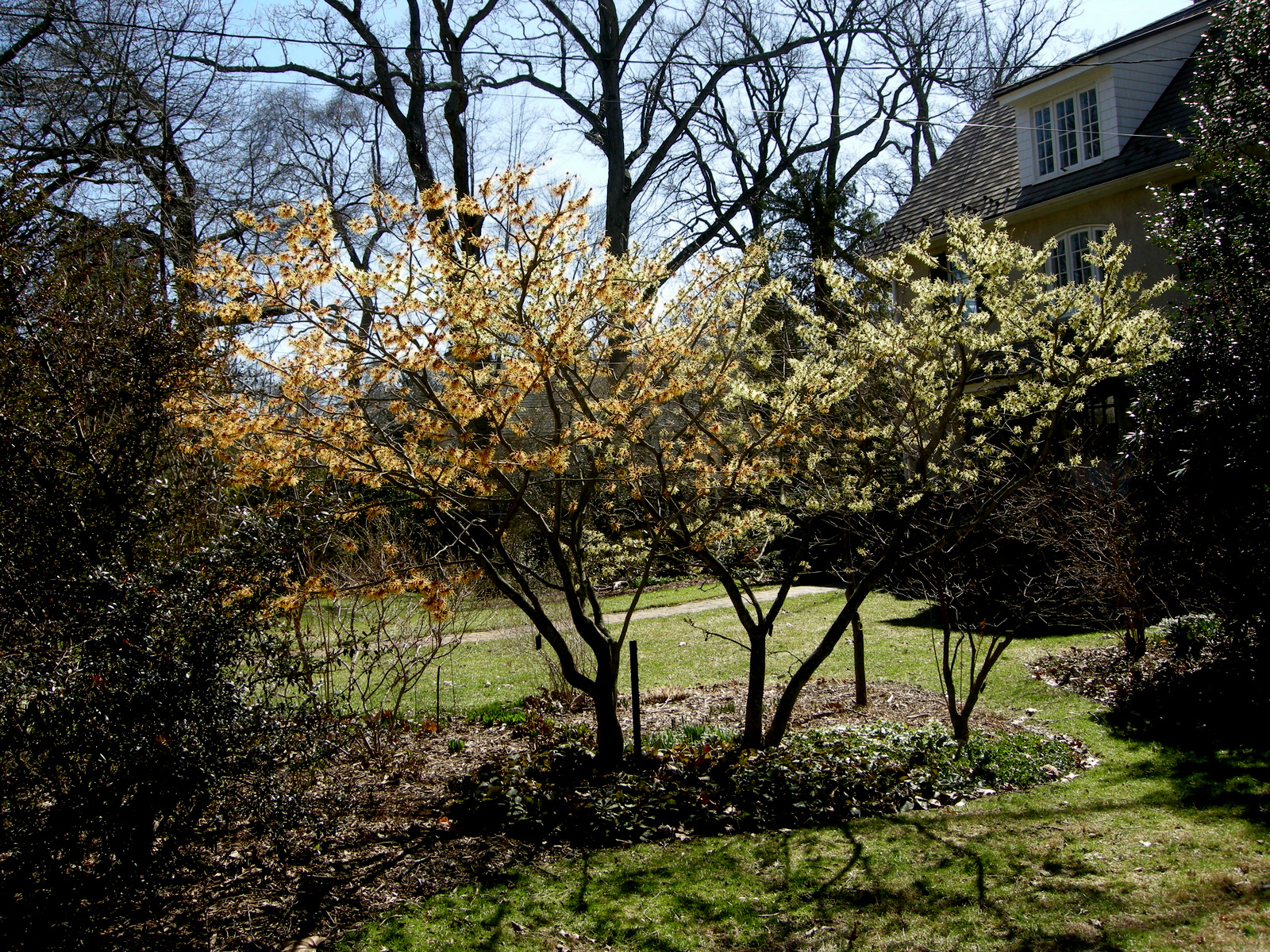
The seminars began in the front garden viewing the hybrid witch hazel cultivars Hamamelis x intermedia ‘Jelena’ (dark orange) and ‘Moonlight’ (pale yellow) underplanted with snowdrops, winter aconite, and various perennials. Charles does not recommend ‘Moonlight’ because it holds its dead leaves.

It would be hard to name another garden with the wealth of unusual plants that Charles has found and nurtured to perfection over the years.  That being said I thought my customers who were unable to attend the seminars and my worldwide blog readers might like to see what we saw.  I have organized the plants by category below with commentary in the caption where relevant.

We crossed a stone bridge to view the meadow where snow crocus and common and giant snowdrops were massed to be succeeded by daffodils, camassia, and then summer and fall blooming flowers.

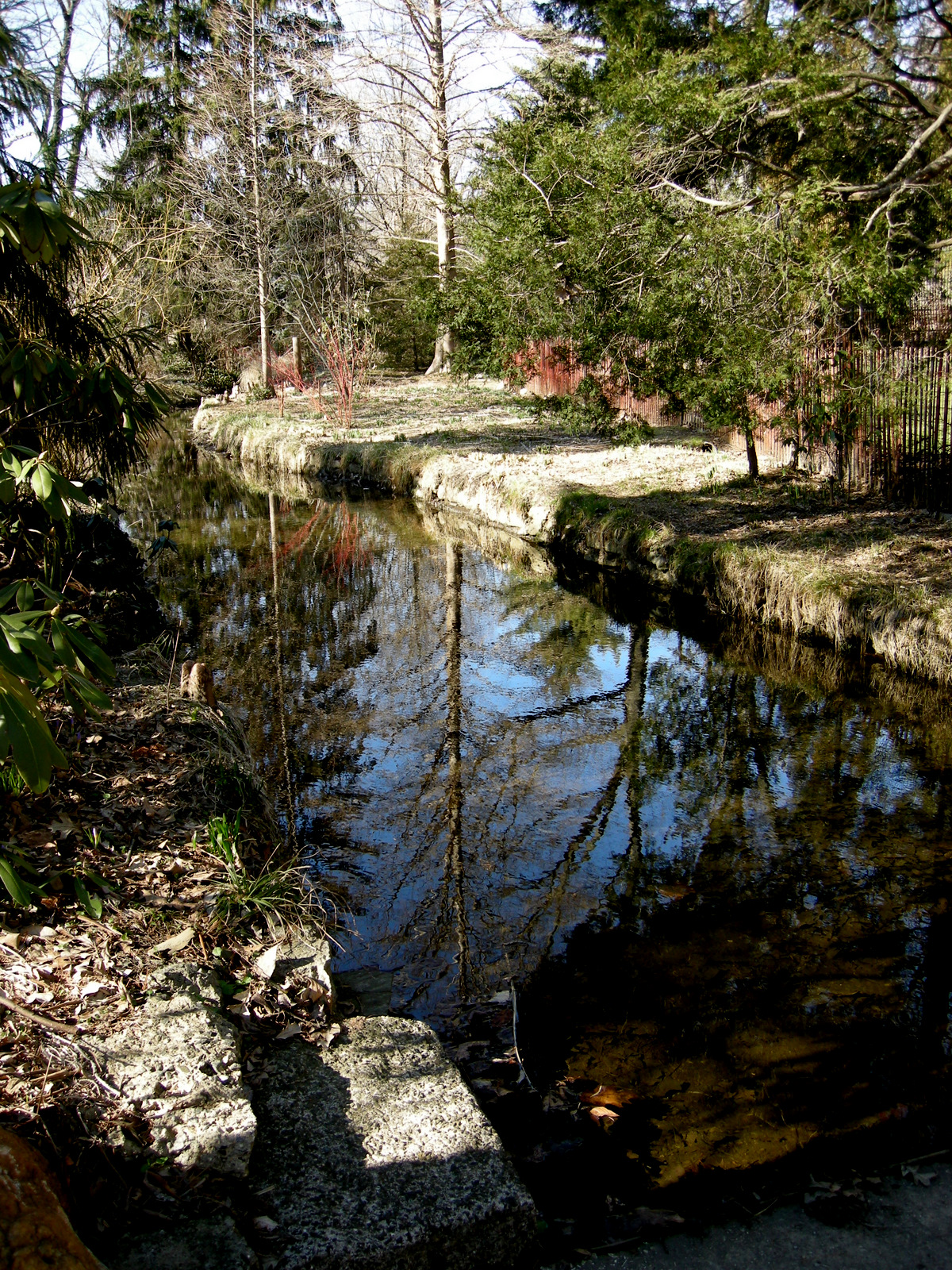
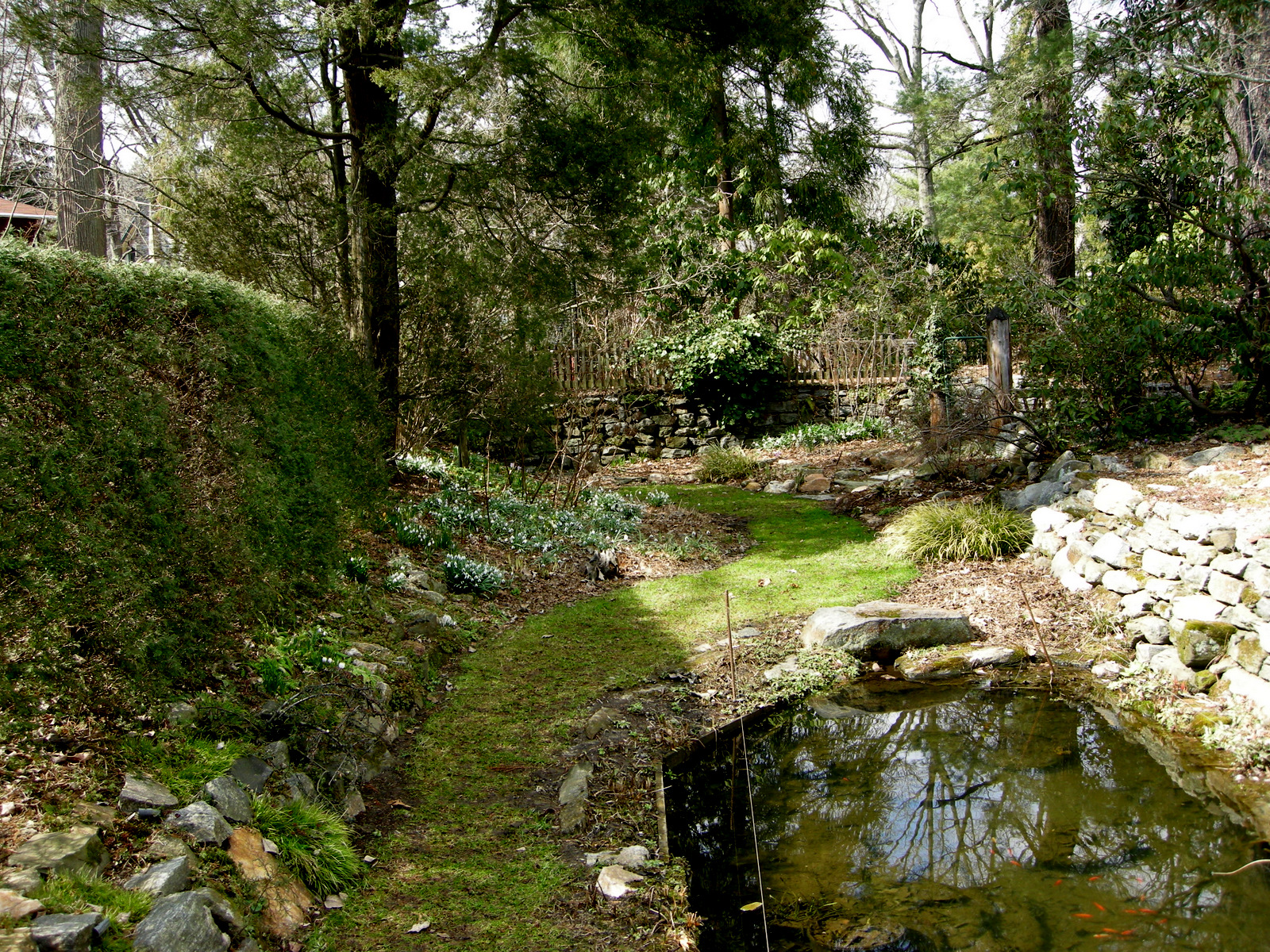
A narrow path skirts the pond, which is surrounded on all sides by rock gardens full of unusual plants.

The Bulbs

We saw so many rare and unusual bulbs that I can only include a sampling here.

A rare pale yellow form of winter aconite, Eranthis hyemalis

The exquisite buds of the species crocus C. imperati ‘De Jager’

Masses of the rodent resistant and very early blooming snow crocus, Crocus tommasinianus ‘Whitewell Purple’, shadowed by a magnificent Japanese maple.

The very early blooming daffodil Narcissus ‘Rijnveld’s Early Sensation’

A very good form of winter blooming hardy cyclamen, Cyclamen coum

The reticulate iris I. histrioides ‘George’

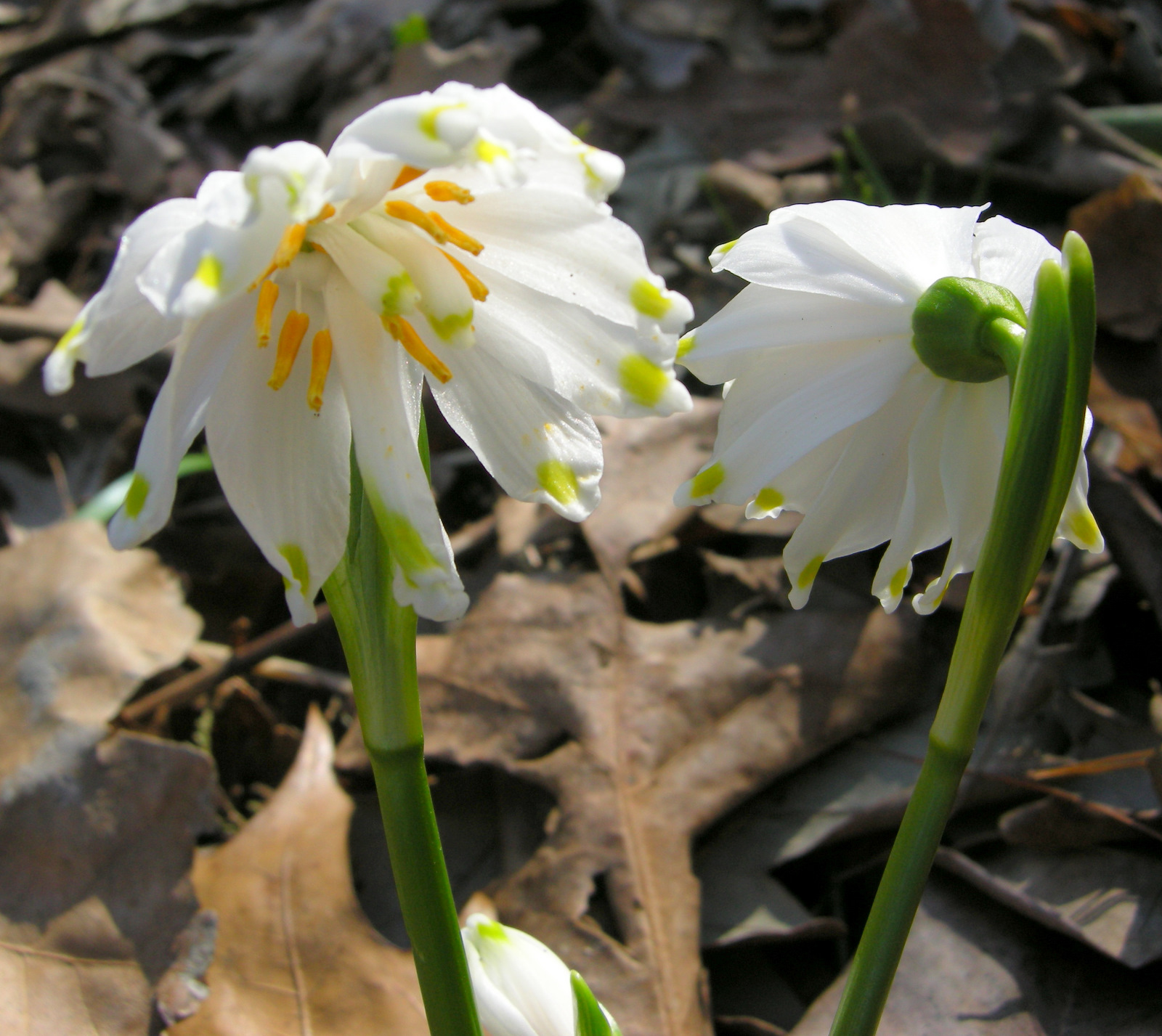
There were large patches of spring snowflake, Leucojum vernum, throughout the garden.

The flower of spring snowflake, Leucojum vernum

We were privileged to see this semi-double form of spring snowflake,  which Charles has named  Leucojum vernum ‘Gertrude Wister’ and registered with the Dutch bulb authority.

The Snowdrops

If you read my blog, you know what a galanthophile I am so with supreme effort I have limited myself to just a few of the many snowdrops we saw.

Clockwise from upper left: G. elwesii var. monostichus, G. ikariae, ‘Jaquenetta’, ‘Straffan’, G. plicatus subsp. byzantinus, ‘Dionysus’

Galanthus ‘Brenda Troyle’, confused in the trade but still quite lovely

Galanthus plicatus subsp. byzantinus Cresson GardenThe elegant pleated leaves and plump flowers of Galanthus plicatus subsp. byzantinus

The beautiful shiny green leaves of Galanthus woronowii

There were drifts of Galanthus ‘S. Arnott’, called the ‘desert island snowdrop’ because it is the one cultivar many galanthophiles would choose if they were limited to one.

The Perennials

A very rare perennial for shade Amur adonis, A. amurensis ‘Fukuju Kai’

Helleborus niger double form Cresson gardenA semi-double form of Christmas rose, Helleborus niger, which I have only seen at Hedgleigh Spring

The Algerian iris, I. unguicularis, blooming in early March with a beautiful fragrance

The Shrubs

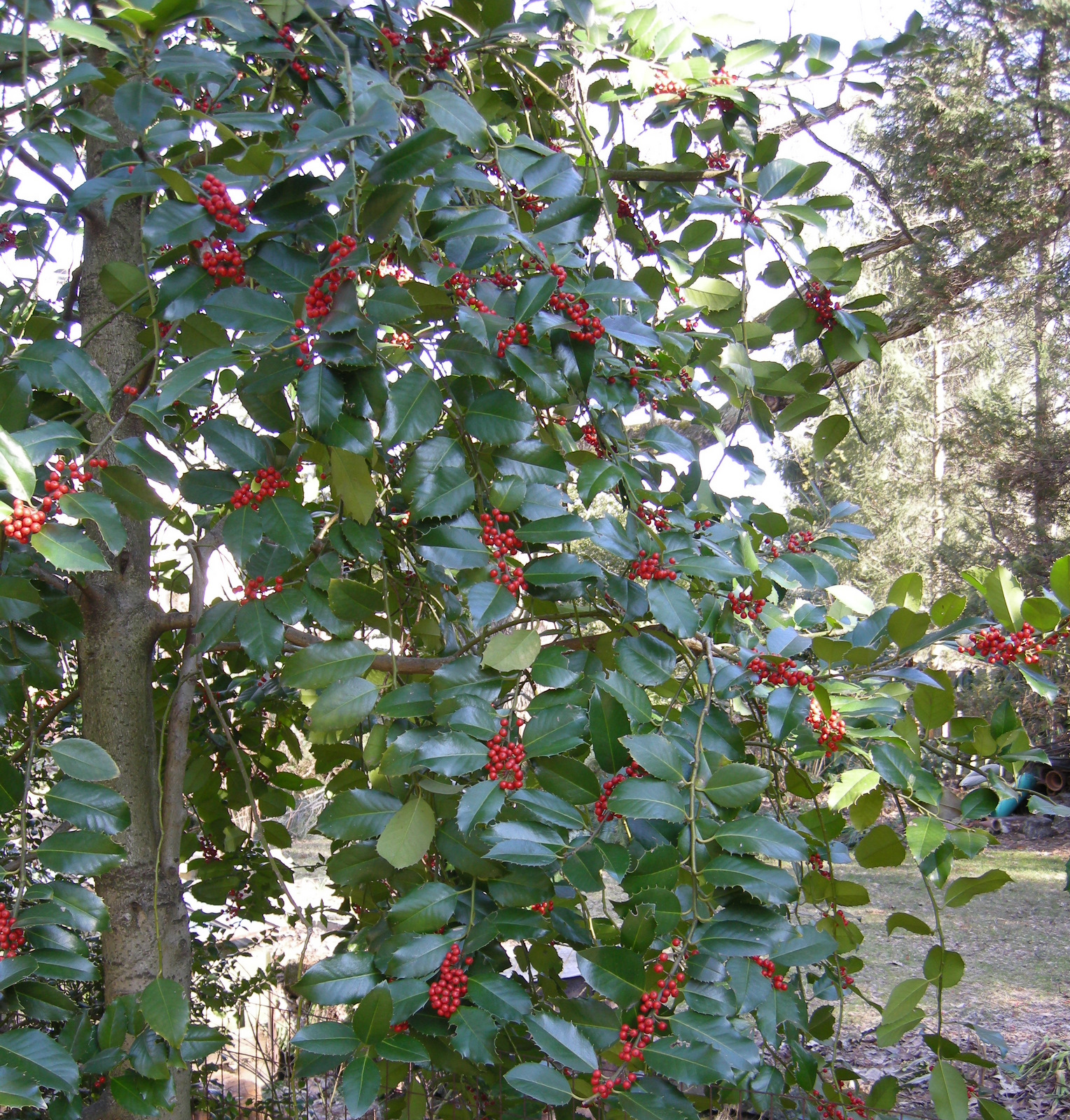
Koehne holly, Ilex x koehneana, looking as fresh and beautiful as it did in the fall

Camellia japonica ‘Spring’s Promise’ was one of several very early spring-blooming camellias that we saw.

Grape holly, Mahonia x media ‘Arthur Menzies’

A highlight for me were the buds on this paperbush, Edgeworthia chrysantha ‘Snow Cream’, which look like the tassels on Victorian cushions

Hybrid witch hazels, Hamamelis x intermedia ‘Jelena’ and ‘Moonlight’

I hope you have enjoyed your virtual seminar.  Please let me know in a comment/reply what your favorite winter interest plant is.

Carolyn

Notes: Every word that appears in orange on my blog is a link that you can click for more information.  If you want to return to my blog’s homepage to access the sidebar information (catalogues, previous articles, etc.), just click here.

Nursery Happenings: My first open house sale is Saturday, March 26, from 10 am to 3 pm, featuring hellebores and other winter and early spring blooming plants for shade (checks and cash only).  For directions and parking information, click here.

Are Snowdrops Thermogenic?

Posted in bulbs for shade, snowdrops, winter with tags , , , , , , , , , , , on February 9, 2011 by Carolyn @ Carolyns Shade Gardens

Carolyn’s Shade Gardens is a retail nursery located in Bryn Mawr, PA, specializing in showy, colorful, and unusual plants for shade.  The only plants that we ship are snowdrops to the US only.  For catalogues and announcements of local events, please send your full name, mailing address, and cell number to carolyn@carolynsshadegardens.com and indicate whether you are mail order only.  Click here to get to the home page of our website for catalogues and information about our nursery and to subscribe to our blog.

Galanthus ‘Dionysus’, a Greatorex double

.

Our current snowdrop catalogue is on line here.

.

Snowdrops are some of the earliest blooming flowers in my garden, often popping up through the snow, hence their name.  We all love them for that, but how do they do it?  I have been told several times that they are thermogenic, that is,  that they produce their own heat, and decided to do some scientific research to find out (it can’t all be about pretty photos).

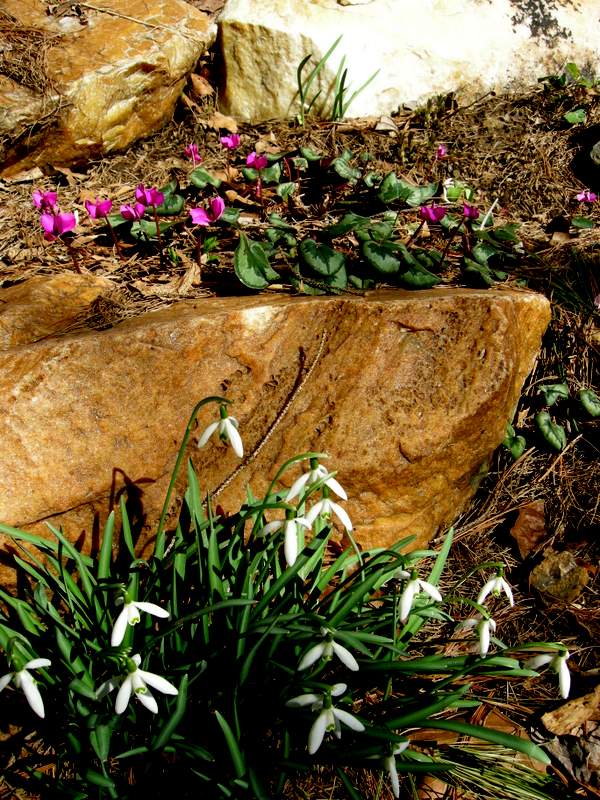
Common snowdrop, Galanthus nivalis, and “spring-blooming” hardy cyclamen ‘Rose’, Cyclamen coum ‘Rose’, in my rock garden

Over 200 years ago, French biologist, Jean-Baptiste de Lamarck, noticed that some flowers produce their own heat.  Since then, scientists have confirmed that some plants can, in fact, generate their own heat, a process known as thermogenesis, previously thought to be limited to mammals, birds, and some flying insects.  These plants are “warm-blooded”.

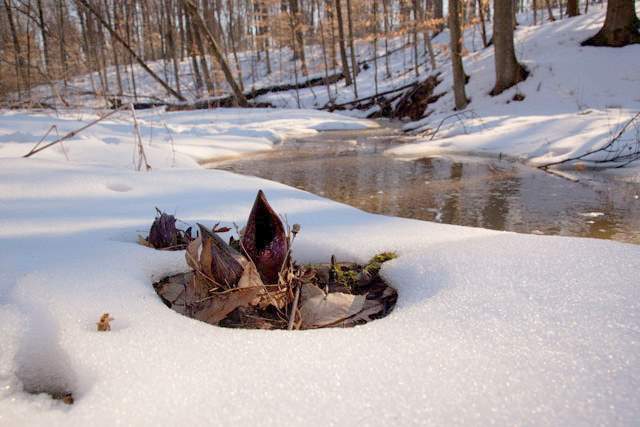
Holes in the snow produced by eastern skunk cabbage, Symplocarpus foetidus, performing thermogenesis, photo Robert Klips

The poster child for thermogenesis is the eastern skunk cabbage, Symplocarpus foetidus, which is native to most of eastern North America.  Its flower, pictured below (courtesy of Robert Klips, Ohioense: Bob’s Brain on Botany, March 8, 2010), heats up to melt the snow producing little circles all over the woods in late winter.  It does this primarily to generate and disperse its floral scent to attract pollinators.  In this case, the scent is rotten meat and the pollinators are flies and beetles.  Secondarily, it rewards the insects by providing them with energy directly as heat rather than indirectly as nectar and pollen.

Eastern skunk cabbage blooming through the snow, photo Robert Klips

This is no small feat.  Skunk cabbage flowers can heat up to 59 degrees F (15 degrees C) when the ambient temperature is 5 degrees F (-15 degrees C).  They can also thermoregulate, adjust their temperature, to maintain a constant setting as the ambient temperature changes.  If the outside temperature gets too low, they will switch off their heat entirely until things warm up.  They also switch off the heat once they have been pollinated.

Eastern skunk cabbage peeking out of its snow cave, photo Robert Klips

To perform thermogenesis, skunk cabbage uses as much metabolic energy as a small rodent or a hummingbird and employs a unique respiratory process, which is more similar to animal metabolism than plant metabolism though biochemical rather than nervous system based.   The exact nature of this process is unknown.  For those of you with a scientific bent, I have included a graph below taken from  a scholarly treatise on the subject, Temperature Regulation by Thermogenic Flowers (Plant Physiology Online, Sept. 2006).

Graph of oxygen consumption and heat production by skunk cabbage in various ambient temperatures

But, now that you understand thermogenesis, back to the question at hand: are snowdrops thermogenic?  The short answer is I don’t know.  Various sources say that they are, but the statements seem to be based on hearsay.  I could find no scientific studies backing them up.  I posted the question on the Pacific Bulb Society forum, the Scottish Rock Garden Club forum, and to friends at Longwood Gardens, and no one could confirm that snowdrops are thermogenic.  So I present my own “scientific study” of the process.

February 21, 2010, at Carolyn’s Shade Gardens, three tiny islands are appearing in the snow

As you know from my previous post, The Joys and Sorrows of Snow, we had record snowfall during the winter of 2009-2010.  By February, my whole garden was covered by a deep, thick, hard layer of snow.  Looking out on the landscape in the photo above, there was absolutely no melting going on except in three small areas.  What is happening in those little circles?  Let’s look closer:

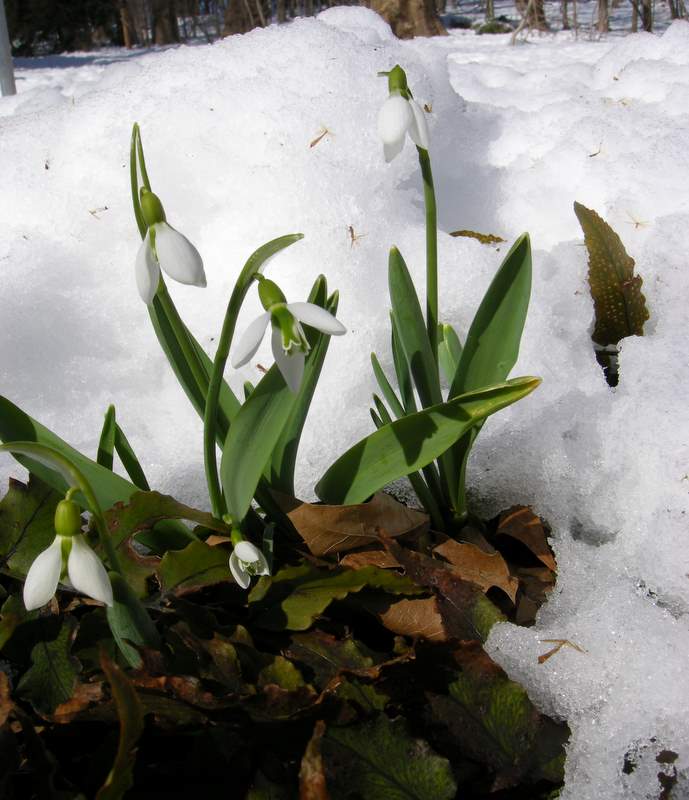
Giant snowdrop, Galanthus elwesii, melting through the snow


And even closer:

Giant snowdrop blooming in February after melting through the snow pack

My observations prove nothing scientific, but they do indicate that something is going on.  And I like to think that one of my favorite plants, snowdrops, which inspire such intense interest in many gardeners, also produce their own internal excitement.

For my previous articles on snowdrops, click here and here.


Please let me know in a comment/reply if you have any knowledge or personal experience with snowdrops being thermogenic.

Carolyn


Notes: Every word that appears in orange on my blog is a link that you can click for more information.  If you want to return to my blog’s homepage to access the sidebar information (catalogues, previous articles, etc.), click here.


Snowdrops: Further Confessions of a Galanthophile

Posted in bulbs for shade, New Plants, snowdrops with tags , , , , , , , , , , , , , , , , , , , , , , , , , , on January 22, 2011 by Carolyn @ Carolyns Shade Gardens

Carolyn’s Shade Gardens is a retail nursery located in Bryn Mawr, PA, specializing in showy, colorful, and unusual plants for shade.  The only plants that we ship are snowdrops to the US only.  For catalogues and announcements of local events, please send your full name, mailing address, and cell number to carolyn@carolynsshadegardens.com and indicate whether you are mail order only.  Click here to get to the home page of our website for catalogues and information about our nursery and to subscribe to our blog.

Galanthus ‘Atkinsii’ described in Snowdrops as having “elegant elongated flowers that suggest the drop-pearl earrings of Elizabeth I,”  I can’t improve on that

.

Our current snowdrop catalogue is on line here.

.

This article includes photographs and colorful descriptions of the 15 snowdrops I am offering for sale in my 2011 Snowdrop Catalogue.


In my garden, I have many forms of Galanthus elwesii, which was named for Henry John Elwes (1846-1922), described as a “true energetic Victorian” combing the world for big game, fine trees, insects, birds, and snowdrops


In my article Snowdrops or the Confessions of a Galanthophile, I revealed that I am obsessed with snowdrops.  I described my evolution from a gardener growing a few distinct varieties to a galanthophile collecting every cultivated snowdrop I could get my hands on.  I explained that I could now see the often subtle differences between flowers that others might unknowingly (shall we say ignorantly) dismiss as ridiculous.  To understand how far I have gone down this road, know that I recently found myself describing a snowdrop as having “a bold inner marking with a basal blotch narrowly joined to an apical round-armed V.”  There is no turning back.


Galanthus nivalis ‘Flore Pleno’, probably the oldest snowdrop cultivar  in existence with records as early as 1703


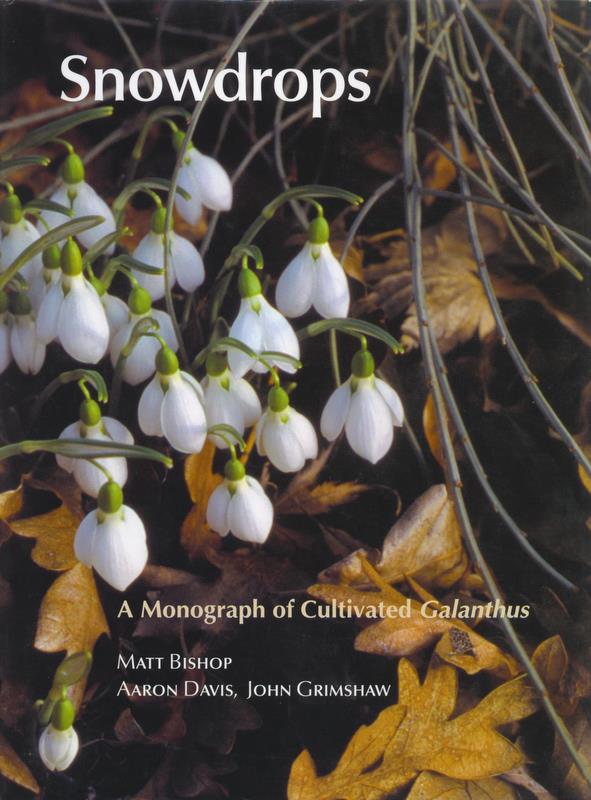
But I didn’t talk about one of the things I find most fascinating about snowdrops.  They are the only plant that I would purchase as much for their colorful history as for their ornamental characteristics.  And how do I find out about their captivating  lineage: I consult Snowdrops: A Monograph of Cultivated Galanthus by Matt Bishop, Aaron Davis, and John Grimshaw (Griffin Press 2006).  This book, always referred to as the snowdrop bible, has all the information anyone could want about the 500 “commonly” cultivated snowdrops.


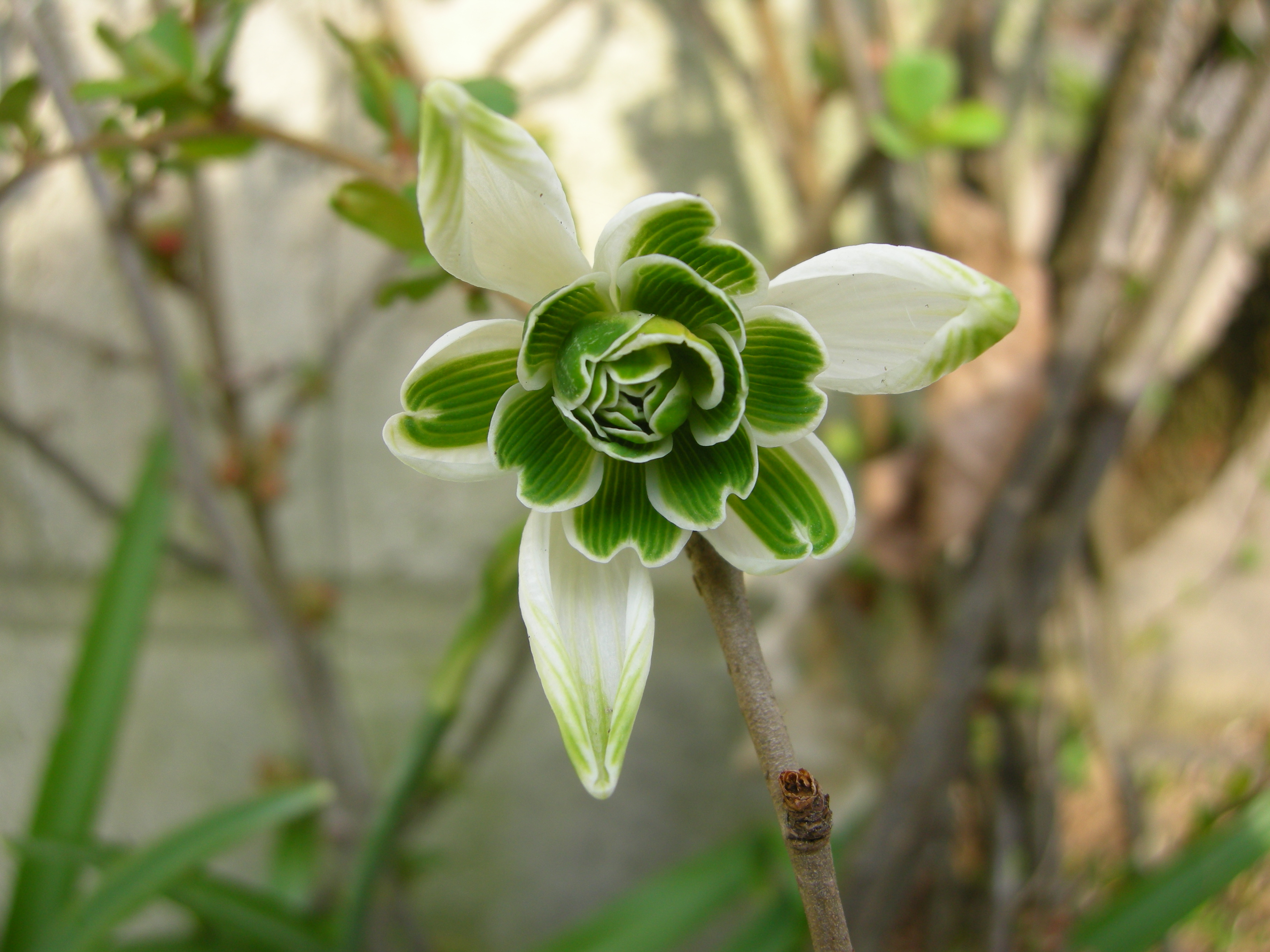
The Greatorex Double, Galanthus ‘Ophelia’

After reading Snowdrops, who would not want Galanthus ‘Ophelia’, a beautiful double snowdrop, when it was originated by Heyrick Greatorex of Brundall, Norfolk, England, a man who lived “an unconventional lifestyle” in a wooden garden shed that might have been a railway carriage?  Or a snowdrop like Galanthus ‘Magnet’ that has reached its centenary [a word not used commonly in the US so I had to look it up] and was probably named for “the old-fashioned child’s game in which magnets are attached to miniature fishing rods for the purpose of picking up painted metal fish, the point being to win the game by catching the most?”  I played that game.


Galanthus ‘Magnet’, can you can see the miniature fishing rod?

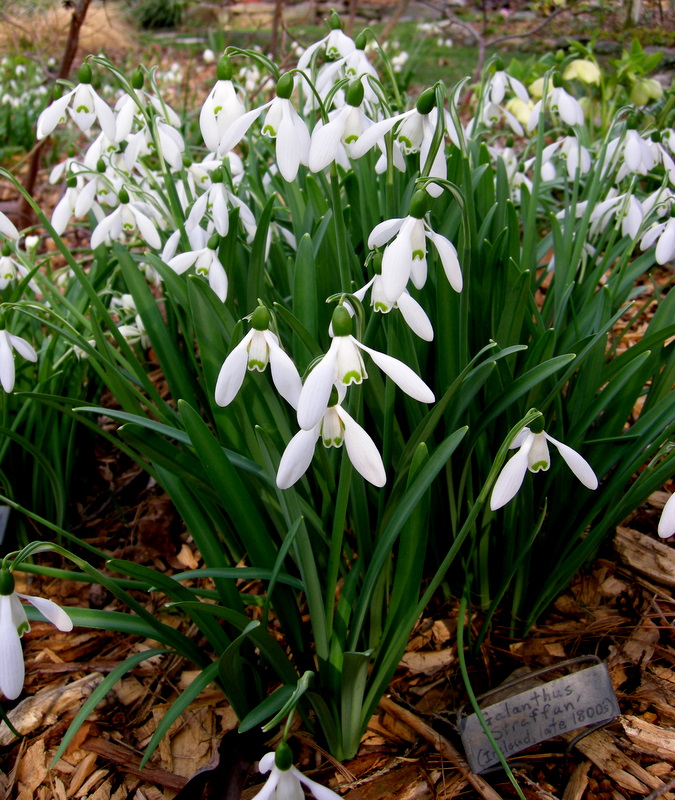
Galanthus ‘Straffan’, Baron Clarina of Ireland’s souvenir of the Crimean War

Who can resist the indestructible Galanthus ‘Straffan’, the third oldest snowdrop cultivar still in existence, discovered in the later 1800s by the head gardener for Straffan House in County Kildare, Ireland, in a clump of G. plicatus brought back from the Crimean War by the owner, the fourth Baron Clarina?  Or October-flowering Galanthus reginae-olgae, named in 1876 in honor of Queen Olga of Greece, the grandmother of  the current Duke of Edinburgh?  [In the US, we would say grandmother of Prince Philip, Queen Elizabeth’s husband.]


The October-flowering Galanthus reginae-olgae, named for Prince Philip’s grandmother, photo Charles Cresson

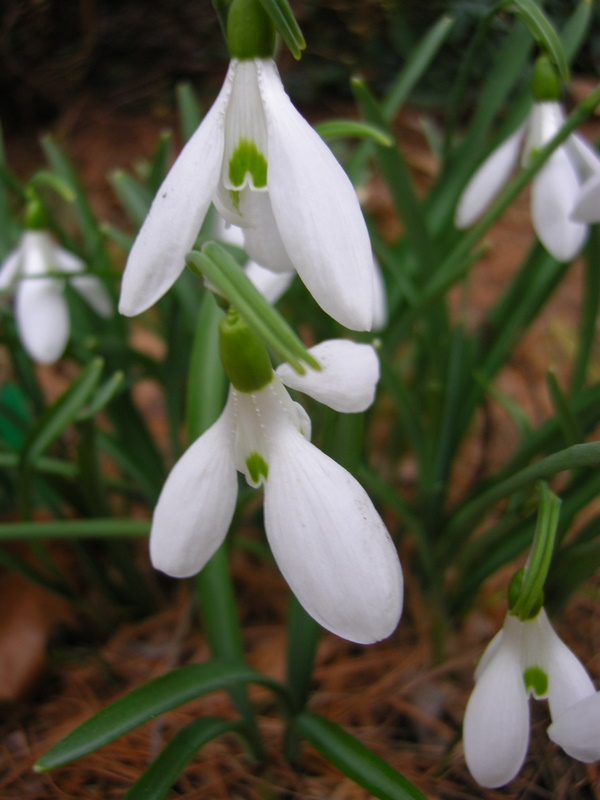
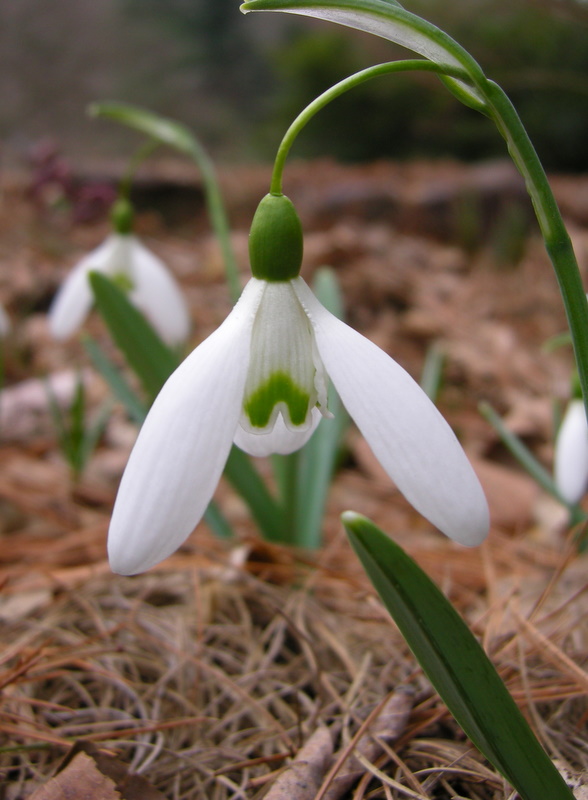
Galanthus nivalis/Common SnowdropGalanthus nivalis, the common snowdrop, has a 500-year lineage to brag about


Even the plain old common snowdrop, Galanthus nivalis, an imminently garden-worthy plant, has been cultivated as an ornamental in England since the 16th century.  There are written records.  The species snowdrop, Galanthus woronowii, was collected on the eastern shores of the Black Sea and named by a Russian botanist for Russian plant collector Georg Jurii Nikolaewitch Woronow (1874-1931).

The shiny green leaves of Galanthus woronowii named for plant collector Georg Jurii Nikolaewitch Woronow, photo Charles Cresson


Galanthus ‘Blewbury Tart’ found by Alan Street in Blewbury, Oxfordshire, England

Even more modern snowdrops have name-dropping heritages.  Snowdrops tells us that when noted horticulturist Alan Street of the well known English bulb house, Avon Bulbs, and the discoverer of Galanthus ‘Blewbury Tart’, gave three bulbs instead of one to quirky English gardener, Primrose Warburg (1920-1996), she “characteristically complained” and called it ‘Blewbury Muffin’.  This is the same Primrose Warburg who we are told cautioned visitors navigating her treacherous garden slope to be careful, not because they might hurt themselves, but because the snowdrops were irreplaceable. Galanthus ‘Beth Chatto’ was, of course, discovered in the gardens of the internationally famous gardener and writer, Beth Chatto, OBE [Order of the British Empire].


Galanthus ‘Beth Chatto’ from the internationally famous Beth Chatto Gardens


Snowdrops describes Galanthus ‘S. Arnott’ as the “classic snowdrop….a first-class garden plant with an unquestionable constitution, admired by everyone,” photo Charles Cresson

Other cultivars have discussions of their origins so complicated as to rival the US Tax Code, something I am familiar with from my former career. Galanthus ‘S. Arnott’ is in danger of losing its name to ‘Arnott’s Seedling’, the name under which it was given the Royal Horticultural Society’s Award of Garden Merit, but a name deemed unsuitable because E.A. Bowles, “one of the most revered plantsman of all times,” later called it ‘S. Arnott’.  The  International Cultivar Registration Society in the Netherlands has been so advised. Galanthus nivalis ‘Viridapice’ has evidently had many imitators since it was discovered prior to 1922 near an old farmhouse in northern Holland, and confusion is rampant.


Galanthus nivalis ‘Viridapice’, hopefully not an impostor

Please do not think I am in any way making fun of this book.  I love it, and I wish all plant genera had books this information-packed and well written dedicated to them.  I list Snowdrops on my Blotanical profile as the garden book I am currently reading because I am always reading it.  Rumor has it that a new edition is in the works (for an update from John Grimshaw, click here), and I will buy it.  If you like snowdrops, you should own it too.

Well, based on the tales found in the snowdrop bible, what cultivars are in my future?  I am intrigued by ‘Lady Beatrix Stanley’, a vigorous double, whose namesake (1877-1944) struggled to create an English garden in India when her husband was Governor of Madras.  I have my eye on ‘Merlin’ with its solid green blotch, whose stock was maintained by Amy Doncaster (1894-1995), “a greatly admired, no-nonsense plantswoman” who collected my favorite plants, snowdrops, hellebores and epimediums, in her woodland garden.  Finally, I would like to grow ‘Primrose Warburg’, a rare yellow snowdrop, because I think I might be just like her when I grow up.

Galanthus ‘Merlin’ whose stock was maintained by no-nonsense plantswoman Amy Doncaster


Carolyn

Notes: Every word that appears in orange on my blog is a link that you can click for more information.  If you want to return to my blog’s homepage to access the sidebar information (catalogues, previous articles, etc.), click here.

The view from my office this morning:

Snowdrops or the Confessions of a Galanthophile

Posted in bulbs for shade, Fall Color, Shade Gardening, snowdrops with tags , , , , , , , , , , , , , , , , , on November 22, 2010 by Carolyn @ Carolyns Shade Gardens

Carolyn’s Shade Gardens is a retail nursery located in Bryn Mawr, PA, specializing in showy, colorful, and unusual plants for shade.  The only plants that we ship are snowdrops within the US.  For catalogues and announcements of local events, please send your full name, mailing address, and cell number to carolyn@carolynsshadegardens.com and indicate whether you are interested in snowdrops, hellebores, and/or hostas.  Click here to get to the home page of our website for catalogues and information about our nursery and to subscribe to our blog.

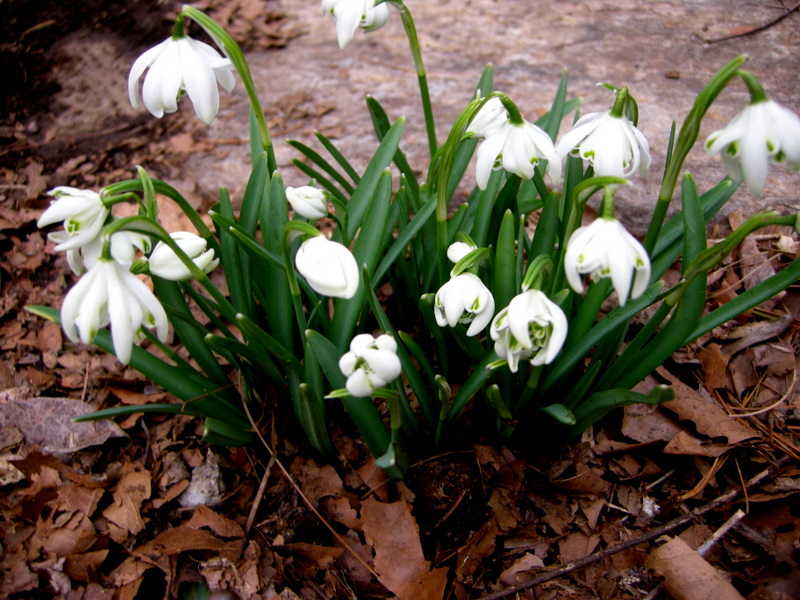
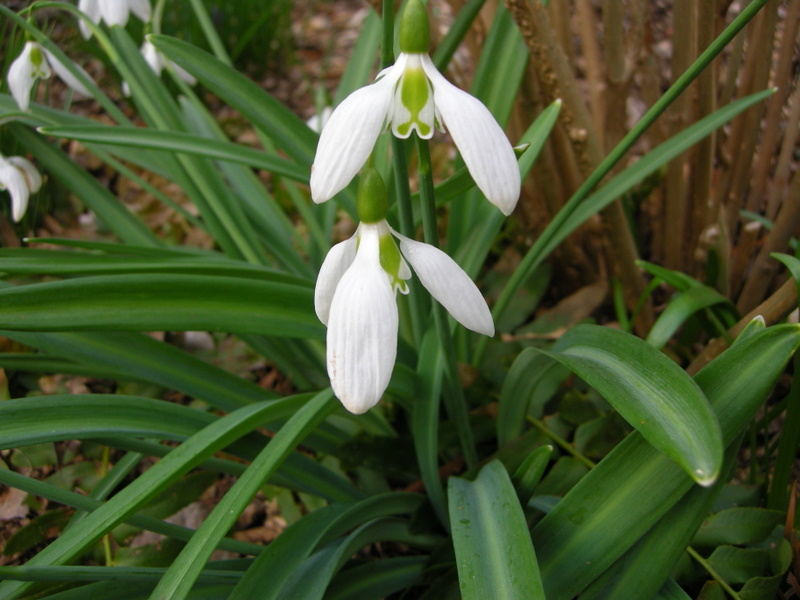
Common Snowdrop at Carolyn's Shade GardensCommon Snowdrop, Galanthus nivalis

Our current snowdrop catalogue is on line here, and we are currently taking orders.

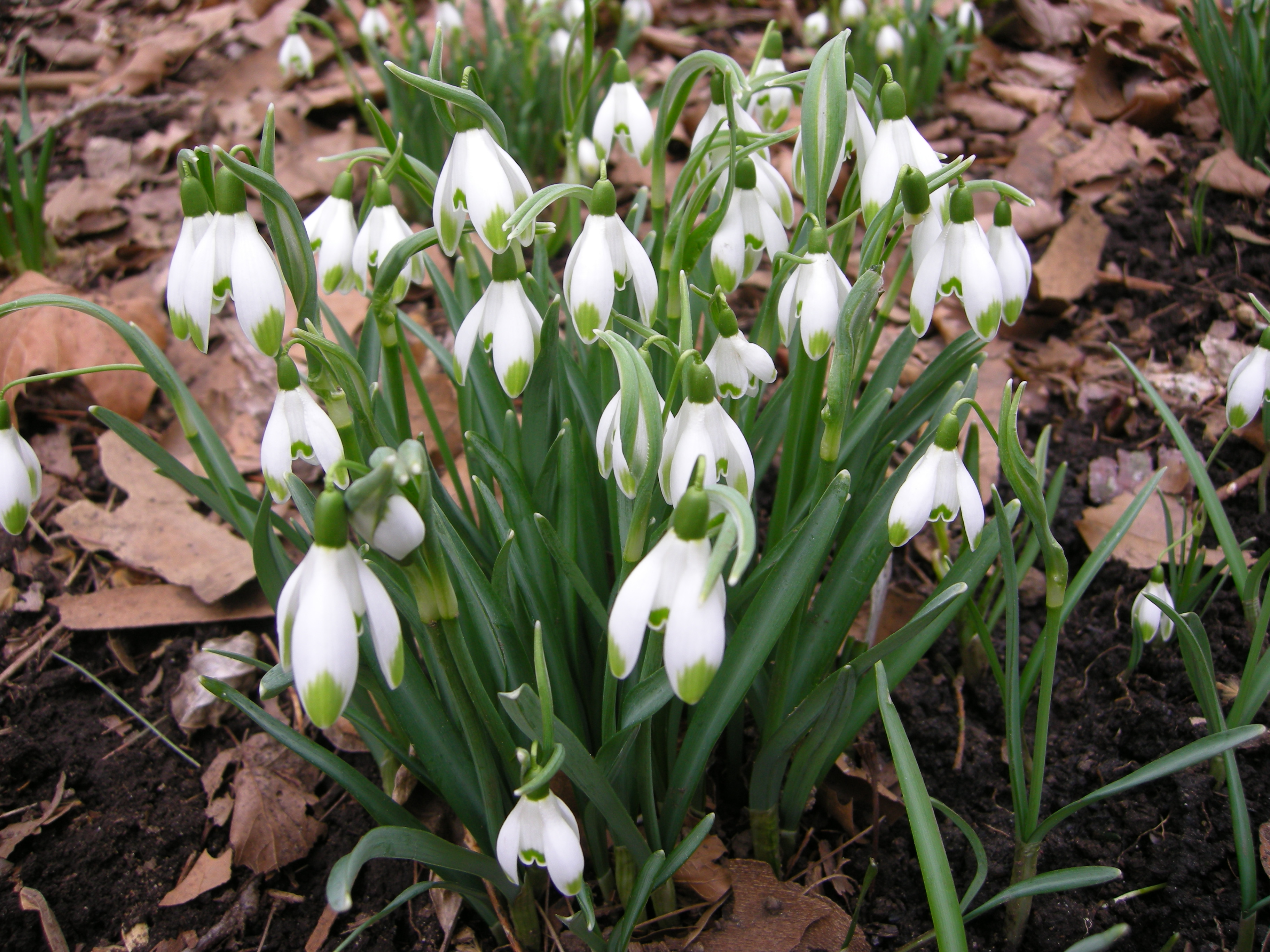
I have always loved snowdrops. I loved them so much that I set my seasonal clock by them.  When they bloomed, it was spring no matter what the calendar said. When we purchased our property in 1983, it came with thousands of common snowdrops, Galanthus nivalis. Many of my original snowdrops are on an open south-facing hill and often start to bloom at the beginning of February.  That’s when spring began for me.  When they bloomed, I would put on my warmest set of work clothes, head out to the garden, and leave the winter doldrums behind.

'Viridi-apice' snowdrops at Carolyn's Shade GardensGreen-tipped Snowdrop, Galanthus nivalis ‘Viridi-apice’

That was before I became a galanthophile, a British word describing gardeners obsessed with snowdrops.  In my pre-galanthophile days, I thought (and I shudder to put this in writing) that once you had the double ‘Flore Pleno’, and the giant G.  elwesii, and the green-tipped ‘Viridi-apice’, and the glossy green-leafed G. woronowii, you pretty much had the snowdrop field covered.  The rest all looked the same, didn’t they?  What were all those collectors getting so excited about?

But one day, I realized the error of my ways and was seized by the galanthophile obsession to collect every snowdrop cultivar I could get my hands on.  Actually, it didn’t really happen in a day—more like years.  It started with reading the snowdrop sections in the (old) Heronswood catalogues.  Dan Hinkley was a master at plant descriptions, and I ordered a few new cultivars each year.  However, my fate as a galanthophile was sealed when I visited the garden of  famous regional plantsman Charles Cresson during snowdrop season.  Charles can make you see and appreciate the finest distinctions in plants, and he is so generous with his treasures.

Galanthus nivalis 'Blewbury Tart' at Carolyn's Shade GardensGalanthus ‘Blewbury Tart’

Now I had the wild up-facing double ‘Blewbury Tart’, and ‘Magnet’ with the fishing line stem, and the drop-pearl earring shaped ‘Atkinsii’, and  the classic ‘S. Arnott’, and the rabbit-eared ‘Sharlockii’, and …. they all looked different to me.  I only have 25 varieties though, hardly qualifying me to join the International Galanthophile Society if there is one.  Luckily (or unluckily) unusual snowdrops are rarely offered for sale in the U.S. saving me from creating a system to keep track of hundreds of snowdrop cultivars in my garden.  The British snowdrop “bible”, Snowdrops: A Monograph of Cultivated Galanthus by Matt Bishop, et al., describes 500 cultivars and is sadly out-of-date number-wise.

snowdrop 'Magnet' at Carolyn's Shade GardensGalanthus ‘Magnet’

But why am I talking about snowdrops in fall?  Because two of the unusual varieties I have been able to collect bloom in fall.  This wreaked havoc with my “start of spring” clock, which I had to reset to recognize the wonderful fragrance of sweet box as the beginning of spring.  But this inconvenience has been more than outweighed by allowing me to start my snowdrop season in early October with the blooming of Galanthus reginae-olgae.

October blooming Galanthus reginae-olgae, photo Charles Cresson

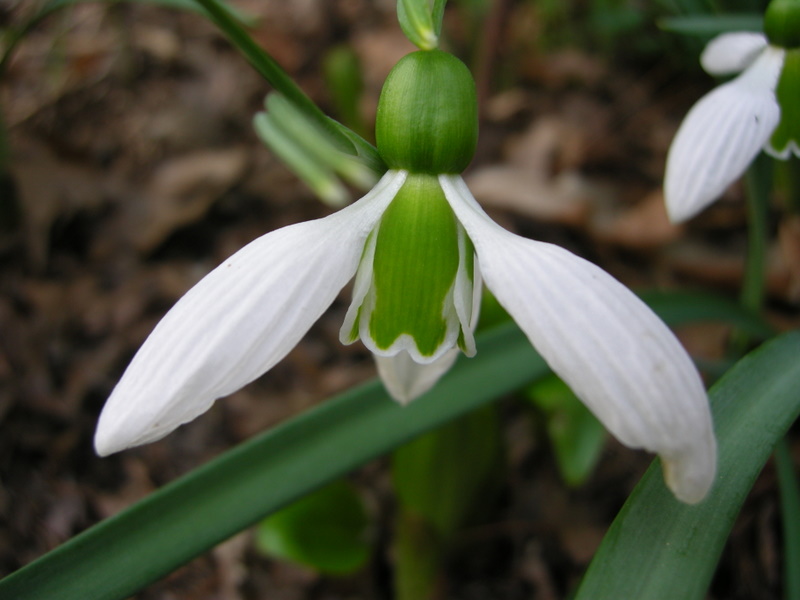
Galanthus reginae-olgae, a species snowdrop which has no handy common name, starts blooming in my garden in early to mid-October and continues for about four weeks.  It looks very much like the common snowdrop, G. nivalis, with a single green spot on its inner petals.  Its most significant identifying feature is its bloom time as it is the first species to flower in the garden.   It is not particularly robust in my garden, but I love it in October.

fall-blooming snowdrop 'Potter's Prelude' at Carolyn's Shade GardensNovember blooming Galanthus ‘Potter’s Prelude’

Just as G. reginae-olgae is winding down, the first blooms of Galanthus elwesii var. monostichus ‘Potter’s Prelude’ are opening in early November.  It continues to flower, sometimes into January, when the straight species, G. elwesii, takes over.  ‘Potter’s Prelude’ is a free-flowering and vigorous snowdrop in my garden with wide recurving blue-green leaves.  It has large blossoms equal in size to the best cultivars of the giant snowdrop, G. elwesii.

fall-blooming snowdrop 'Potter's Prelude' at Carolyn's Shade GardensNovember blooming Galanthus ‘Potter’s Prelude’

‘Potter’s Prelude’ was selected by Jack Potter, former curator of the Scott Arboretum, and named and registered by Charles Cresson.  Charles has generously allowed me to include ‘Potter’s Prelude’ for sale in my February snowdrop catalogue and given me enough plants to enjoy good-sized clumps in late fall in my own garden.

Carolyn