Archive for the native plants Category

Pleasurable Pairings for Early Summer Part 2

Posted in hosta, miniature hosta, my garden, native plants, Shade Gardening, Shade Perennials with tags , , , , , , , , , , , , , , , , , , , , , , , , , , , , , , on June 14, 2013 by Carolyn @ Carolyns Shade Gardens

Carolyn’s Shade Gardens is a retail nursery located in Bryn Mawr, PA, specializing in showy, colorful, and unusual plants for shade.  The only plants that we ship are snowdrops and miniature hostas.  For catalogues and announcements of events, please send your full name, location, and phone number (for back up use only) to carolyn@carolynsshadegardens.com.  Click here to get to the home page of our website for catalogues and information about our nursery and to subscribe to our blog.

Spigelia marilandica Indian pink, Spigelia marilandica, is one of the highlights of my garden in June.  I would like to have a field of this wonderful, hummingbird-attracting native.

.

My post Pleasurable Pairings for Spring profiles plant combinations in my garden in April 2011.  To read it, click here.  I am continuing this theme with two posts on pleasing plant pairs for early summer.  My house is on a south-facing slope, and the first post showed the gardens on the west side of the house.  To read it, click here.  Combinations from the east side of the house are in this post.

.
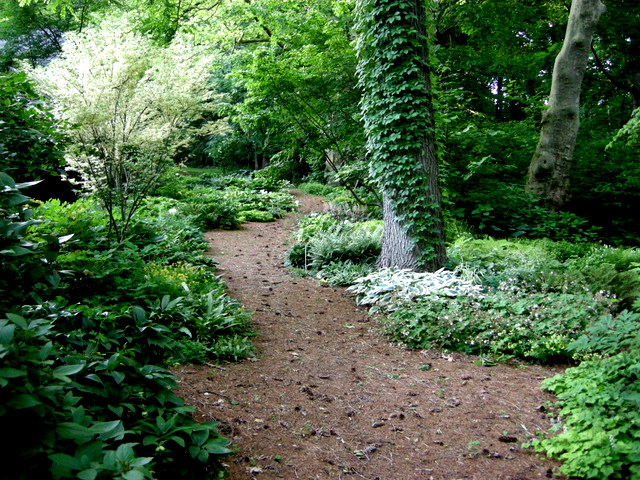
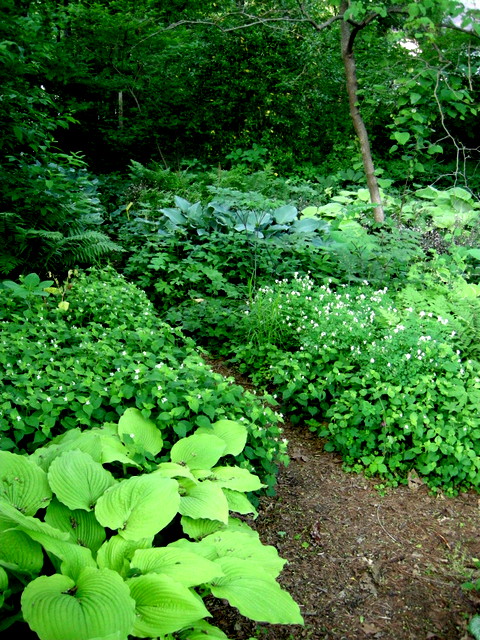
Carolyn's Shade GardensThe view up the slope on the east side of the house.  All the grass has been removed and replaced by garden beds and pine needle paths.

The gardens on the east side are fairly colorful when all the hellebores, snowdrops, primroses, pulmonarias, and other early perennials are blooming.  However, by late spring, they become a much more subtle tapestry composed mainly of the leaves of hostas, epimediums, hellebores, and ferns.  I love it, but it is more difficult to capture in photos than the colorful flowers on the west side.  I wish you could all see it in person, but here is my best shot.

.
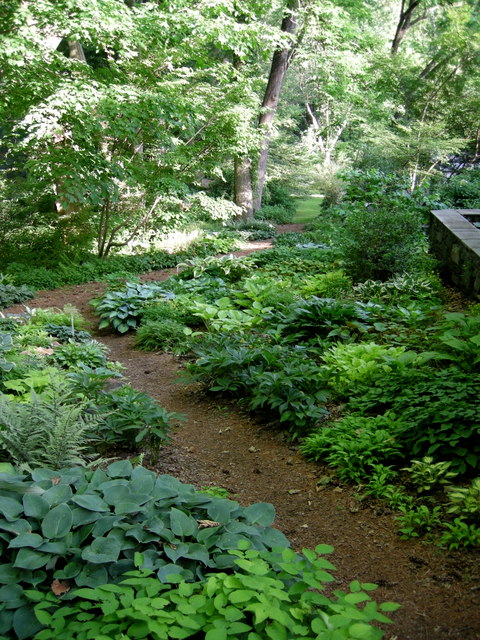
Carolyn's Shade GardensThe view down the slope.

.

Carolyn's Shade GardensLooking into the woods through the upper entrance with ‘Jimmy Crack Corn’ hosta on the left.

.

Hosta El NinoIvory and blue ‘El Nino’ hosta really brightens up the shade, here with white bigleaf hardy geranium.

.

Brunnera 'Dawson's White', Heuchera 'Green Spice', Hosta TopazMore plants in my silver and blue garden, clockwise from upper left: hellebores, ‘Topaz’ hosta, native ‘Green Spice’ coralbells, and ‘Dawson’s White’ brunnera.

.
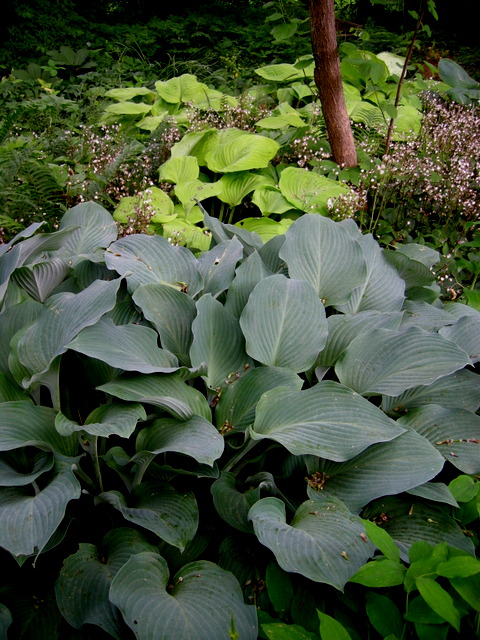
Hosta 'Krossa Regal'‘Krossa Regal’ hosta’s frosty blue leaves and vase-shaped habit set it apart from other hostas.

.

Hosta 'Sum and Substance', Podophyllum peltatum‘Sum and Substance’ hosta in the woodland with mayapples and golden groundsel.

.
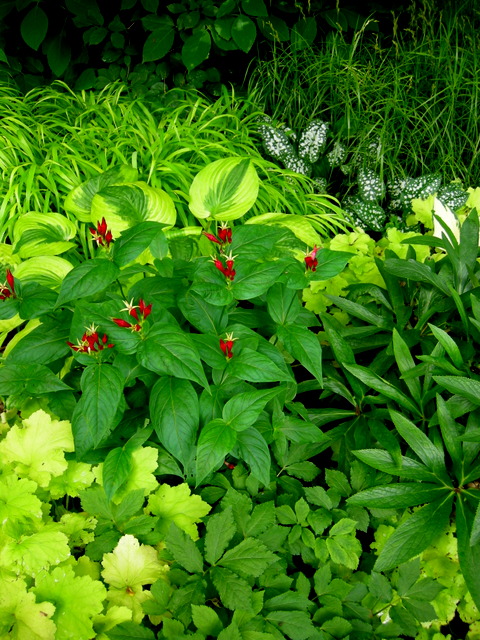
Spigelia marilandica, Hosta Summer Lovin', Haknoechloa 'All Gold'This shows how I use the native Indian pink featured at the start of the post.  Clockwise from upper left: ‘All Gold’ Japanese hakone grass, ‘Little Blue’ pulmonaria, native sedge, hellebores, Hylomecon japonicum (no common name), ‘Citronelle’ coralbells, Indian pink, and ‘Summer Lovin’ hosta.

.

Hosta 'summer Lovin', Hakonechloa 'All Gold'‘Summer Lovin’ hosta and ‘All Gold’ Japanese hakone grass make a great pair.

.

Hosta 'Eye Declare', Heuchera 'Stained Glass'Hosta ‘Eye Declare’ and ‘Stainless Steel’ coralbells, one of the brighter combinations on the east side of the house at this time of year.

.

Aruncus aethusifolius, Hosta JuneFerny-leafed dwarf goatsbeard with ‘June’ hosta

.
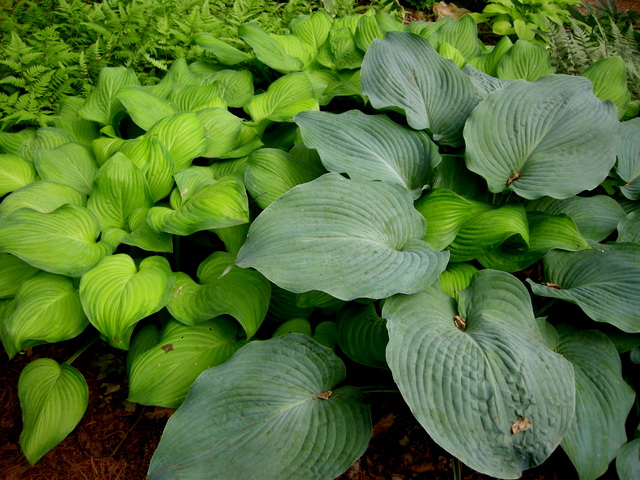
Hosta 'Guacamole', Hosta 'Blue Angel'Customers often ask me which hostas go together, and my answer is they all do: ‘Guacamole’ and ‘Blue Angel’.

.
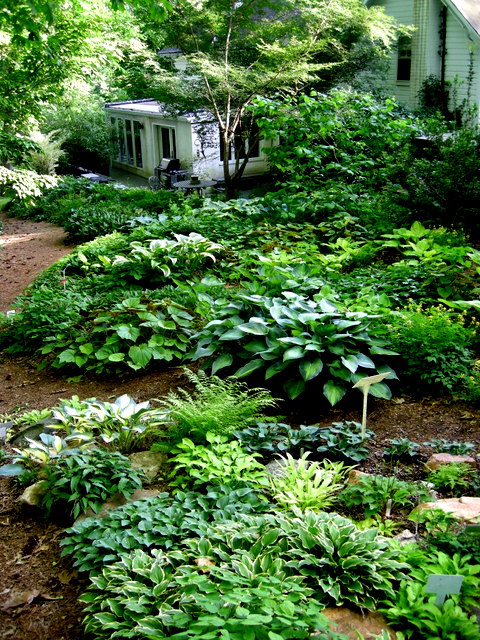
miniature hosta rock gardenLooking down the hill over my newest installation, a miniature hosta rock garden.  I needed a dedicated area to display my collection.

.

miniature hosta rock gardenA view of the miniature hosta rock garden from below.

.

lady fern, Hosta 'Teaspoon', Hosta 'Remember Me'Dwarf lady fern, ‘Teaspoon’ hosta, and ‘Remember Me’ hosta on the right.

.

DSCN0404‘Pixie Vamp’ hosta with Sedum lydium and ‘Rock Prince’ hosta.

.

Hosta 'Blonde Elf', lady fern, Hosta 'Blue Mouse Ears'‘Blonde Elf’ hosta, dwarf lady fern, and ‘Blue Mouse Ears’ hosta

.

I hope you enjoyed Part 2.

Carolyn

.

Carolyn’s Shade Gardens is a retail nursery located in Bryn Mawr, Pennsylvania, U.S., zone 6b.  The only plants that we mail order are snowdrops and miniature hostas and only within the US.

If you are within visiting distance and would like to receive catalogues and information about customer events, please send your full name and phone number to carolynsshadegardens@verizon.net.  Subscribing to my blog does not sign you up to receive this information.

Nursery Happenings:  The nursery closes for the summer on June 15 and will reopen in the fall around September 15.  Have a great summer.

Facebook:  Carolyn’s Shade Gardens has a Facebook Page where I post single photos, garden tips, and other information that doesn’t fit into a blog post.  You can look at my Facebook page here or click the Like button on my right sidebar here.

Notes: Every word that appears in orange on my blog is a link that you can click for more information.  If you want to return to my blog’s homepage to access the sidebar information (catalogues, previous articles, etc.) or to subscribe to my blog, just click here.

Woody Plants for Shade Part 8

Posted in Camellias, evergreen, native plants, Shade Shrubs, shade vines with tags , , , , , , , , , , , , , , , , , , , , , , , , on May 14, 2013 by Carolyn @ Carolyns Shade Gardens

Carolyn’s Shade Gardens is a retail nursery located in Bryn Mawr, PA, specializing in showy, colorful, and unusual plants for shade.  The only plants that we ship are snowdrops and miniature hostas.  For catalogues and announcements of events, please send your full name, location, and phone number (for back up use only) to carolyn@carolynsshadegardens.com.  Click here to get to the home page of our website for catalogues and information about our nursery and to subscribe to our blog.

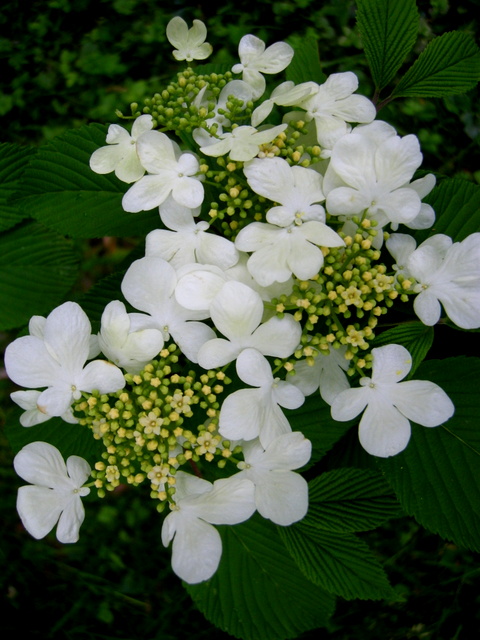
Viburnum plicatum var. tomentosum 5-7-2011 7-14-31 PM 5-11-2011 8-29-02 AMMy garden reaches one of its peaks when the doublefile viburnum, V. plicatum var. tomentosum, is blooming.  It has such a beautiful habit and way of holding its flowers.  I am offering the award-winning cultivar ‘Shasta’.

.

My nursery, Carolyn’s Shade Gardens, specializes in perennials for shade with an emphasis on hellebores, unusual bulbs especially snowdrops, hostas particularly miniature hostas, native plants, and ferns.  However, a satisfying shade garden does not consist of just perennials but includes trees, shrubs, and vines.  I provide a quality source for these plants by doing a special offer three times a year. 

I have just sent my second 2013 list to my customers.  To view the catalogue, click here.   However, I always do a post on the plants offered so that my blog readers who are not customers can learn about the woody plants that I would recommend they add to their shade gardens.  And doing an article allows me to add more information and explain why I chose the plants I included so customers might be interested also.

.

Camellia x 'Winter's Darling'‘Winter’s Darling’ fall-blooming camellia with ‘Moudry’ black fountain grass.

This offer focuses on plants that are late spring-, summer-, or fall- blooming, evergreen, and/or native..  Included are two camellias, two additional evergreen shrubs, four deciduous shrubs, and three vines.  Four of the plants I have chosen are evergreen, and five bloom off season, in summer or fall.   This reflects  my desire to see gardeners expand their gardens’ season beyond spring to become a year round paradise for them to enjoy.  With that introduction, here are the plants I am highlighting:

Camellia x 'Winter's Darling'‘Winter’s Darling’


I have included two fall-blooming hardy camellias for their spectacular late season flowers and elegant evergreen leaves. These camellias, along with many other cultivars, have been selected to be fully cold hardy in the mid-Atlantic U.S., zones 6B and 7A.  Nevertheless all camellias benefit from being sited to shelter them from winter wind, which comes from the northwest.  They also maintain their lustrous dark green leaves in better shape if they are sheltered from winter sun.

‘Winter’s Darling’ is a camellia cultivar suitable for our area because it was selected for its cold hardiness by Dr. William Ackerman at the U.S. National Arboretum.  It has very showy deep cerise pink anemone form flowers in November and December and glossy dark evergreen leaves.  It grows slowly to 6′ tall and 5′ wide in part to full shade.  In my garden, it has a  shorter and more relaxed habit than my other camellias.

.

Camellia Northern Exposure Monrovia‘Northern Exposure’ fall-blooming camellia.  Thanks to Monrovia for allowing me to use their photo.

I don’t currently grow the fall-blooming camellia ‘Northern Exposure’, but I am ordering one now to add to my garden.  It has gorgeous pale pink plump buds that open to very large, single white flowers with bright yellow stamens over a long period of time in fall and winter and glossy dark evergreen leaves.  It is 6’ tall and 5′ wide, growing in part to full shade.

.

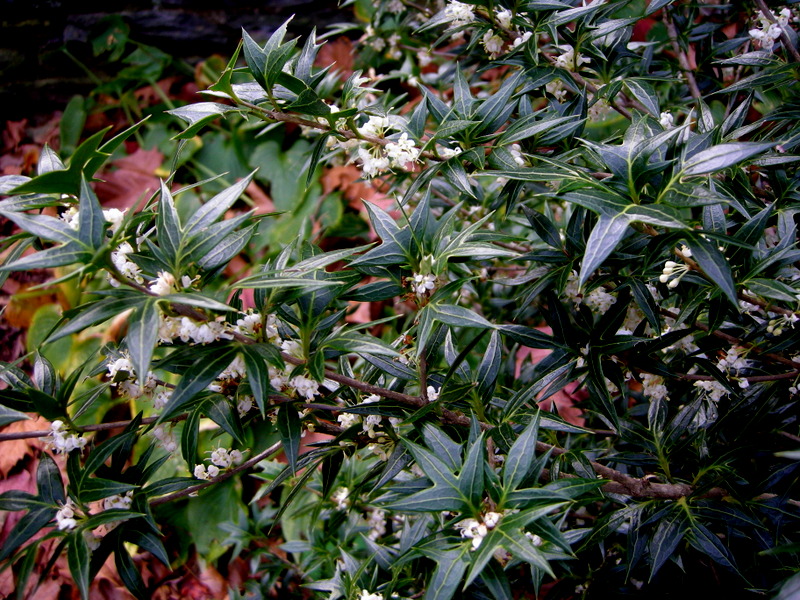
Osmanthus heterophyllus Gulftide PRN‘Gulftide’ holly osmanthus (also known as holly tea olive or false holly), O. heterophyllus, blooms in the fall and is fragrant.

Fall-blooming holly osmanthus ‘Gulftide’  is one of two additional evergreens in the offer, and I would grow it just for its dramatic, stiff and pointy, lustrous dark leaves.  Its small fragrant flowers perfume the garden in fall and the prickly foliage repels deer.  It grows slowly up to 8 to 10’ tall and 4’ wide in part to full shade.  It has a dense and compact habit and is very adaptable as to soil type  It is the most cold hardy of the osmanthus, suitable for zones 6 and higher.  For some reason it is hard to find and sells out immediately so if you want one, send me an email right away.  The nursery just notified me that they also have available a very limited number of the cultivar ‘Sasaba’ which sold out in my last offer.

.

Viburnum x rhytidoppylloides 'Dart's Duke'I have offered the hybrid leatherleaf viburnum ‘Dart’s Duke’, V. x rhytidophylloides, before, and it is profiled in Woody Plants for Shade Part 3.  I am including it again because it is such a versatile evergreen, deer resistant plant, growing in sun or shade and making an excellent screen or hedge with gorgeous flowers.  A Pennsylvania Horticultural Society Gold Medal Plant in 2012.

.

There are four deciduous shrubs in the offer:

Calycanthus x 'Hartlage Wine'Native hybrid ‘Hartlage Wine’ sweetshrub, Calycanthus raulstonii, is another repeat and was profiled in Woody Plants for Shade Part 1.  This shrub is in its glory right now with its gorgeous wine-red flowers set off beautifully by the smooth bright green leaves, one of my favorites.

.

Hydrangea macrophylla Tokyo Delight PRNThe lovely flowers of ‘Tokyo Delight’ bigleaf hydrangea have an outer rim of white with a deep sky blue center.

.

Hydrangea macrophylla Tokyo Delight 2 PRN‘Tokyo Delight’ has an excellent habit and produces copious amounts of blooms.

.

‘Tokyo Delight’ bigleaf hydrangea,  H. macrophylla, is a wonderful compact hydrangea that produces beautiful lacecap flowers with large white outer blooms and sky blue inner blooms for an extended period in summer.  The flowers age to a lovely, long-lasting rose color.  It is very cold hardy and blooms reliably every year.  It grows to 4’ tall and 3’ wide in part to full shade in zones 5 to 9. 

.

Rhododendron prunifolium PRNPlum leaf azalea is one of our wonderful deciduous U.S. native rhododendrons.

.

Native plum leaf azalea’s, Rhododenron prunifolium, striking 2″ orange to red flowers from June into August make this deciduous rhododendron a wonderful addition to the summer shade garden.  The flowers attract hummingbirds.  Plum leaf azalea has delicate, bright green leaves and a lovely upright habit with tiered branching.  It grows up to 8’ tall and 4’ wide in full sun to almost full shade in zones 5 to 9.

.

Viburnum plicatum var. tomentosumThe elegant flowers and pleated leaves of doublefile viburnum.

.

‘Shasta’ doublefile viburnum, V. plicatum var. tomentosum, was introduced by the U.S. National Arboretum as a cultivar with extra large flowers and a shorter more horizontal habit.  It produces its showy lacecap flowers in May and June, and they are displayed in a unique “doublefile” along the stems.  Its has pretty pleated medium green leaves and produces bright red berries in late July, which the birds love.  It grows quickly to 7’ tall and 10’ wide in part to full shade in zones 5 to 8.  ‘Shasta’ is deer resistant and is a PHS Gold Medal Plant.  I treasure my doublefile for its elegant “wedding cake” habit (see the first photo in the post)—one of the most noticed plants in my garden.

.

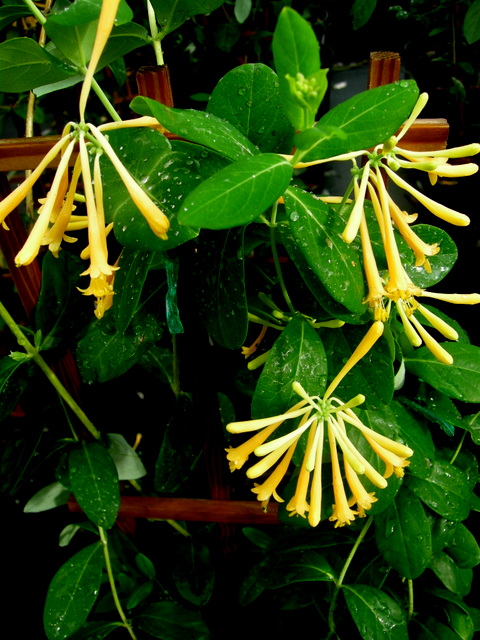
Lonicera sempervirens 'John Clayton'‘John Clayton’ is the most vigorous and produces the most flowers of any of the native honeysuckle vines.

.

Lonicera sempervirens 'John Clayton'‘John Clayton’ native trumpet honeysuckle, Lonicera sempervirens, was featured previously in Woody Plants for Shade Part 3, but I am offering it again because it is such a carefree vine for part shade.

.

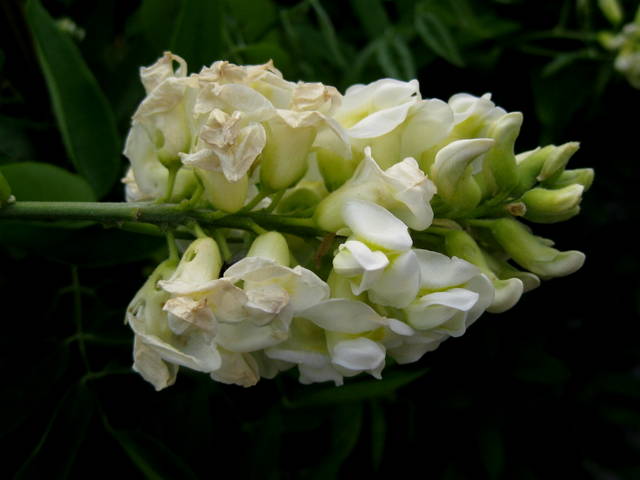
Wisteria frutescens 'Amethyst Falls'Native ‘Amethyst Falls’  American wisteria, W. frutescens, was profiled previously in Woody Plants for Shade Part 2, but again it is such a wonderful vine as shown by its PHS Gold Medal Plant status that I am including it in this offer.

.

Wisteria frutescens Nivea PRN‘Nivea’ American wisteria

.

Native ‘Nivea’ American wisteria, the white-flowered form of W. frutescens, is the final plant in the offer.  It is identical to ‘Amethyst Falls’ and produces copious amounts of fragrant white flowers from June to August.  It has fine-textured, attractive foliage and is less rampant than the Asian species of wisteria.  It grows to 20′ in full to part sun (it is not technically a shade plant) in zones 5 to 9.  It attracts butterflies and hummingbirds and is deer resistant.

.

I grow most of these plants in my garden so I know you can’t go wrong by adding them to yours!  If you are a customer, click here for details on how to order these wonderful shade plants by noon on May 18.  If not, now you have some plants to ask for at your local independent nursery.  If you want to read about all the woodies I have profiled, here are the links:

Part 1,   Part 2,   Part 3,   Part 4,   Part 5Part 6Part 7Part 8

Carolyn

.

Carolyn’s Shade Gardens is a retail nursery located in Bryn Mawr, Pennsylvania, US, zone 6b.  The only plants that we mail order are snowdrops and miniature hostas and only within the US.

If you are within visiting distance and would like to receive catalogues and information about customer events, please send your full name and phone number to carolynsshadegardens@verizon.net.  Subscribing to my blog does not sign you up to receive this information.

Nursery Happenings:  The 2013 Spring Shrub Offer is now in full swing and orders are due May 18.  To read about the plants available and place an order, click here.  The 2013 Miniature Hosta Mail Order Catalogue, containing 34 choice selections of miniatures for shipping all over the US, is now on the right sidebar here, and we are ready to ship.  If you are local, you can use the catalogue to see what miniatures are available at the nursery.  Next up is open hours over Memorial Day Weekend.  If you are a customer, expect an email shortly with all the details.

Facebook:  Carolyn’s Shade Gardens has a Facebook Page where I post single photos, garden tips, and other information that doesn’t fit into a blog post.  You can look at my Facebook page here or click the Like button on my right sidebar here.

Notes: Every word that appears in orange on my blog is a link that you can click for more information.  If you want to return to my blog’s homepage to access the sidebar information (catalogues, previous articles, etc.) or to subscribe to my blog, just click here.

Longwood Gardens Part 5: Tulips and Natives

Posted in bulbs for shade, garden to visit, groundcover, native plants, Shade Gardening, Shade Perennials with tags , , , , , , , , , , , , , , , , , , , , , , , , , , , , , , , , , , , , , , , , , , , , , , , , , , on May 2, 2013 by Carolyn @ Carolyns Shade Gardens

Carolyn’s Shade Gardens is a retail nursery located in Bryn Mawr, PA, specializing in showy, colorful, and unusual plants for shade.  The only plants that we ship are snowdrops and miniature hostas.  For catalogues and announcements of events, please send your full name, location, and phone number (for back up use only) to carolyn@carolynsshadegardens.com.  Click here to get to the home page of our website for catalogues and information about our nursery and to subscribe to our blog.

. Tulips at LongwoodThis color combination is magnificent for spring.

.

During 2012 to 2013, I have been visiting Longwood Gardens in Kennett Square, Pennsylvania, U.S., every few months and highlighting some aspect of this amazing place (last year I focused on Chanticleer).  Links to my previous four posts are at the end.  There is much to see there with 325 acres open to the public and 20 outdoor gardens. 

On April 18, Michael and I headed out to Longwood with the specific objective of photographing the plants in the native woodland, Peirce’s Woods.  Of course, on the way to the woods, we got sidetracked by the bulb displays out front and along the Flower Garden Walk.  Although masses of tulips and other bulbs are just about polar opposite to native plants naturalized in a woodland, they are still gorgeous so I will show you a few photos as I explain the history of the woodland.

.

Leucojum aestivumSummer snowflake, Leucojum aestivum, is a great plant for massing.  Mine grow and self-sow quite readily in both south-facing and east-facing locations as well as in full deciduous shade in my woodland.

In 1700, a Quaker family named Peirce purchased the area that is now Peirce’s Woods from William Penn to establish a working farm.  In 1798, the Peirces began planting trees to establish an arboretum on the property.  Eventually the area became known as one of the finest collections of trees in the country.  The great industrialist Pierre DuPont (1870 to 1954) purchased the property in 1906 with the specific purpose of preserving the magnificent trees.

.

container at LongwoodYou will find fabulous container gardens throughout Longwood, including this one outside the Visitor’s Center with a large native dogwood underplanted with daffodils.

Peirce’s Woods comprises seven acres planted to showcase the ornamental characteristics of native plants from the eastern U.S. deciduous forest.  The shade trees  are mostly oak, ash, maple, and tulip trees, some over 200 years old.  The understory is native flowering trees and shrubs underplanted with native groundcovers.  All the plants are labeled so it is a great place to visit to get ideas for your own woodland garden.  Before I highlight the plants there, a few more bulb photos:

.

Narcissus Tahiti and Flower DriftNarcissus ‘Tahiti’ and ‘Flower Drift’

.

tulips at Longwood

.

tulips at Longwood.

tulips at Longwood

.

Tulipa 'Yellow Wave'‘Yellow Wave’ tulip

.

Tulipa 'Rococo'‘Rococo’ tulip

.

Tulipa 'Rococo'I think this tulip should be called the Little Shop of Horrors tulip—you definitely would not want to stick your finger inside of it.

.

Flower Garden Walk at LongwoodAs we neared the end of the Flower Garden Walk, we were greeted by this magnificent vista.

We came to Longwood with the objective of viewing and photographing Peirce’s Woods.  I fully intended to show scenes of the woods as a whole and close ups of individual native wildflowers.  However, I didn’t realize that because the weather has been so cold this spring, many of the flowers would not be blooming yet.  My own garden is always ahead because it is on a south-facing slope and the soil warms up early.  Also, as soon as we got there and typical for this spring, the sun went in, the wind picked up, it started to rain, and the temperature plummeted.

.

Matteuchia pennsylvanica The only other landscape shot that I got: ostrich ferns by the shore of the lake.  These ferns can be quite tall, 3 to 5′, spread aggressively by runners, and are the source of edible fiddleheads.

Michael and I were both under-dressed with no raincoats so I decided to take photos of the plants that were blooming and come back the following week for the landscape shots and later-blooming plants.  As usual, work at the nursery got in the way, but I wanted to show you the beautiful native plants that I was able to capture on film.  Just picture me kneeling patiently by each plant and snapping the photo in between gusts of wind and bouts of rain:

.

Heuchera villosa 'Miracle' ‘Miracle’ coralbells, Heuchera villosa, is one of my favorite cultivars of this tough eastern native.  The only coralbells I sell at my nursery are offspring of eastern natives H. villosa and H. americana because I find the other types not hardy.

.

Anemonella thalictroides Rue-anemone, Anemonella thalictroides, is so delicate looking but  thrives and self-sows in dry shade.

.

Trillium grandiflorum‘Quicksilver’ large-flowered trillium, T. grandiflorum, was selected as a rapidly multiplying form of the species by Dr. Richard Lighty, at the Mt. Cuba Center in Delaware.

.

Trillium grandiflorum 'Quicksilver' and Anemonella thalictroides‘Quicksilver’ surrounded by rue-anemone.

.

Trillium luteum, yellow toad trilliumI find yellow toad trillium, T. luteum, quite easy to grow.

.

Trillium erectum, purple trilliumpurple trillium, T. erectum

.

Trillium erectum, purple trilliumThe two-tone flowers of purple trillium are gorgeous.

.

Dicentra cucullaria, squirrel cornsquirrel-corn, Dicentra canadensis

.

Caulophyllum thalictroides, blue cohoshBlue cohosh, Caulophyllum thalictroides, has these unprepossessing flowers in the spring followed by bright blue berries.  I love its leaf and stem structure and elegant overall habit.

.

Caulophyllum thalictroides and Dicentra canadensisBlue cohosh can act like a small shrub, here with an underplanting of squirrel-corn.

.

Mertensia virginicaVirginia bluebells, Mertensia virginica, were everywhere just like they are in my own garden where they seed prolifically.

.

Enemion biternatum, eastern false rue-anemoneEastern false rue-anemone, Enemion biternatum, is a new plant to me.  I am going to look for it though because its flowers were lovely perched on reddish stems and it evidently spreads to make an eye-catching patch.

.

stump in Peirce's WoodsI thought what Longwood had done to the stump of a tree that came down was very interesting and actually quite attractive.

.

Erythronium americanum, adder's tongueAdder’s tongue or what I call trout lily, Erythronium americanum, usually produces hundreds of leaves and a few flowers in my garden, but this year it is blooming well everywhere.

.

Polstichum acrostichoidesThe emerging fronds of Christmas fern, Polystichum acrostichoides, look like fairies should be dancing among them.

.

Onoclea sensibilisSensitive fern, Onoclea sensibilis, is a great native fern that is underused in gardens.

.

Onoclea sensibilisSensitive fern looks great in a mass planting.

.

Claytonia virginica, spring-beautyThe wind was roaring when I tried to photograph these spring-beauties, Claytonia virginica, so they are out of focus, but I didn’t want you to miss them.

.

Claytonia virginicaSpring-beauty really has an amazing flower even when blurry.

.

Hydrophyllum macrophyllum, large-leaf waterleafLarge -leaf waterleaf, Hydrophyllum macrophyllum, has very pretty foliage.

.

Cardamine concatenata, cutleaf toothwortCutleaf toothwort, Cardamine concatenata, is a spring ephemeral that naturalizes slowly to form a colony in the shade.

.

Uvularia grandifloraLarge-flowered bellwort, Uvularia grandiflora, is one of my favorites.  It grows 1 to 2 feet tall, has unusual and elegant yellow flowers, and grows in full, dry shade.  I don’t know why this plant isn’t more popular, but it doesn’t sell well at my nursery even though I have big stands of it in my display gardens.

All the plants profiled are native to Pennsylvania and the East Coast.  If you would like to see if a plant is native to your state, the best place to look is the USDA Natural Resources Conservation Service Plants Database.  All you do is put in the name of the plant and you will be shown a map of where it is native in the U.S.  I also have all these plants in my garden except toothwort and false meadow-rue, and I highly recommend them.

To read more about Longwood Gardens, follow these links:

Groundcovers, Thinking Outside the Box

Longwood Gardens Part 2: At Night

A Longwood New Year’s Eve

Cold Weather Antidote: Longwood’s Orchids

Carolyn

.

Carolyn’s Shade Gardens is a retail nursery located in Bryn Mawr, Pennsylvania, US, zone 6b.  The only plants that we mail order are snowdrops and miniature hostas and only within the US.

If you are within visiting distance and would like to receive catalogues and information about customer events, please send your full name and phone number to carolynsshadegardens@verizon.net.  Subscribing to my blog does not sign you up to receive this information.

Nursery Happenings:  The 2013 Spring Shrub Offer is now in full swing and orders are due May 18.  To read about the plants available and place an order, click here.  The 2013 Miniature Hosta Mail Order Catalogue, containing choice selections of miniatures for shipping all over the US, is now on the right sidebar here, and we are ready to ship.  If you are local, you can use the catalogue to see what miniatures are available at the nursery.

Facebook:  Carolyn’s Shade Gardens has a Facebook Page where I post single photos, garden tips, and other information that doesn’t fit into a blog post.  You can look at my Facebook page here or click the Like button on my right sidebar here.

Notes: Every word that appears in orange on my blog is a link that you can click for more information.  If you want to return to my blog’s homepage to access the sidebar information (catalogues, previous articles, etc.) or to subscribe to my blog, just click here.

Native Plants 2013

Posted in groundcover, native plants, Shade Gardening, Shade Perennials with tags , , , , , , , , , , , , , , , , , , , , , , , , , , , , , , , , , , , , , , , , , , , , , , on April 3, 2013 by Carolyn @ Carolyns Shade Gardens

Carolyn’s Shade Gardens is a retail nursery located in Bryn Mawr, PA, specializing in showy, colorful, and unusual plants for shade.  The only plants that we ship are snowdrops and miniature hostas.  For catalogues and announcements of events, please send your full name, location, and phone number (for back up use only) to carolyn@carolynsshadegardens.com.  Click here to get to the home page of our website for catalogues and information about our nursery and to subscribe to our blog.

Stylophorum diphyllum & Mertensia virginicaThis photo is one of my favorite shots of my native woodland which has huge swathes of some of the native plants that are particularly good spreaders, including Virginia bluebells, Mertensia virginica, and Celandine poppy, Stylophorum diphyllum.  For more photos of my woods and information on the natives I grow there click here.

.

This weekend Carolyn’s Shade Gardens is holding its second annual Native Wildflower Weekend on Friday from 10 am to 4 pm and Saturday from 10 am to 2 pm.  This event is my seventh annual native plant event and is timed to coincide with my native woodland coming into bloom.  However, this is the coldest spring that I have experienced since starting Carolyn’s Shade Gardens 21 years ago.  The timetable for my events is the same but the plants in the ground and in the pots are on a totally different schedule—they didn’t get the memo, they think it’s early March.

.

Polemonium reptansAnother shot of what my woods should look like with dwarf Jacob’s ladder, Polemonium reptans, in the foreground and native wild-ginger, Asarum canadense, in the background.  The Jacob’s ladder is visible right now, but the ginger has not even emerged from the mulch of ground leaves.

Normally I write a blog post around this time featuring native plants. That process usually involves heading out to the garden to take a lot of photos of my native plants to use in the article.  However, the only plants blooming right now are hellebores, pulmonarias, and many beautiful non-native bulbs—all my winter-blooming shade plants.  So I thought I would use some of my existing photos to show you what spring usually looks like and to highlight some native favorites.

.

Senecio aureusThe woodland with golden groundsel, Senecio aureus, and Virginia bluebells.  Golden grounsel is a wonderful native plant with fragrant yellow flowers and wintergreen leaves.  It spreads aggressively to form an impermeable groundcover and should only be planted in places where its habit can be accommodated.  It is a wonderful replacement for pachysandra, vinca, or ivy.

.
Phlox stolonifera 'Home Fires'‘Home Fires’ creeping phlox, P. stolonifera, is actually blooming in the pots for sale at my nursery.  You have to admire its courage!

.

Phlox stolonifera 'Sherwood Purple'‘Sherwood Purple’ creeping phlox is the best spreader for use in a shady woodland.  Creeping phlox should not be confused with moss phlox, P. subulata, which is also native but prefers part shade.

.

Heuchera villosa 'Citronelle'Lemon coral bells, Heuchera villosa ‘Citronelle’, keep their color all winter as do all the coral bells native to our area.  They are also tough as nails compared to the coral bells derived from western natives that don’t work here.

.

Heuchera 'Green Spice' Terra Nova photo‘Green Spice’ coral bells have beautifully patterned leaves all winter.

.

Spigelia marilandicaIndian pink, Spigelia marilandica, is a very flashy native that blooms in May and June and attracts hummingbirds.  It is dormant in the garden and in the pots right now.

.

Phlox divaricata 'Blue Moon'The lovely fragrant flowers of ‘Blue Moon’ wild sweet William, Phlox divaricata, are a great spreading addition to the woodland edge.

.

Phlox divaricata 'May Breeze'‘May Breeze’ wild sweet William is a steely white.

.

Lobelia cardinalisOne of my all time favorite native plants, cardinal flower, Lobelia cardinalis, blooms in the fall and is a hummingbird magnet.

.

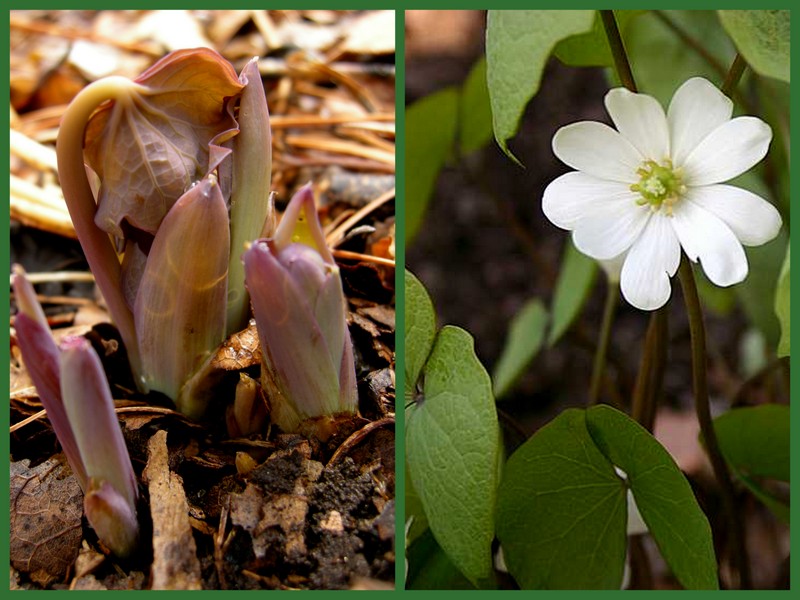
Sanguinaria canadensisNo garden should be without bloodroot, Sanguinaria canadensis.

.

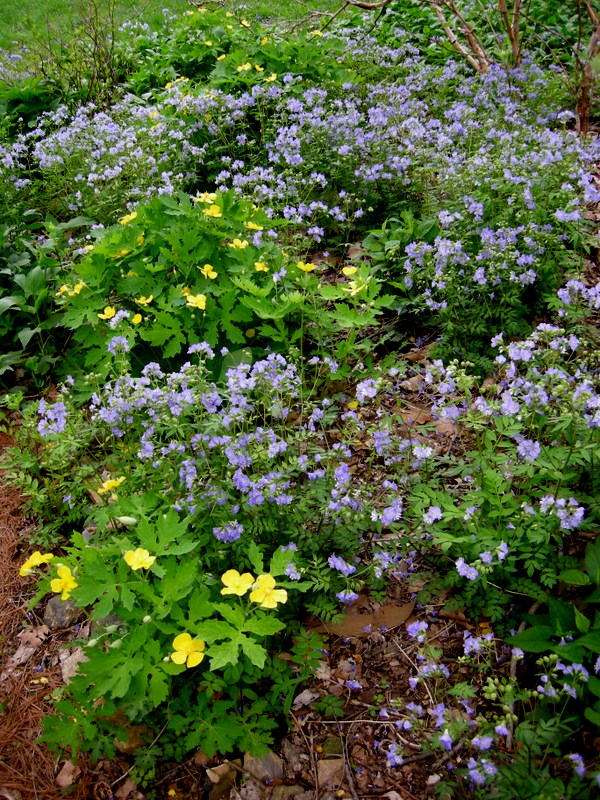
Polemonium reptansDwarf Jacob’s ladder and Celandine poppy are equally vigorous and combine well.

.

Podophyllum peltatumThe elegant leaf pattern of our native mayapple, Podophyllum peltatum, is under-appreciated.

.

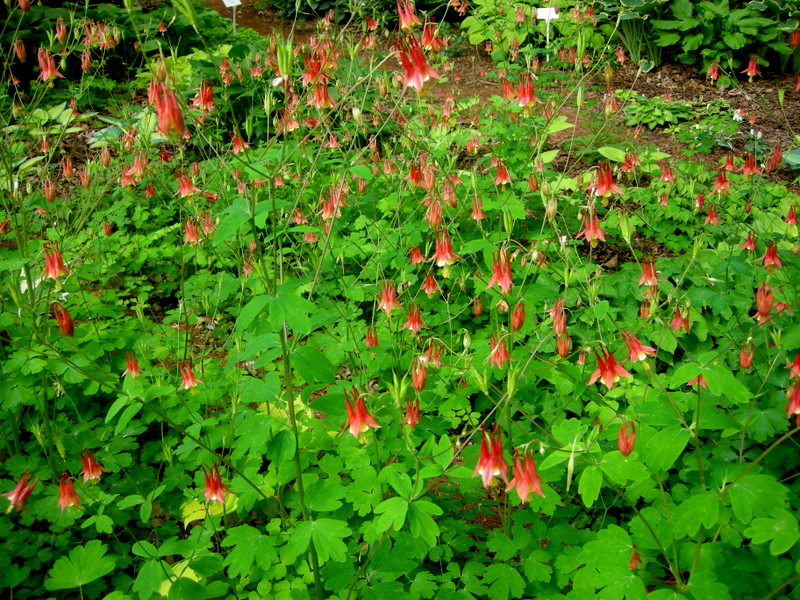
Aquilegia canadensisAnother hummingbird attractor, wild columbine, Aquilegia canadensis, needs very good drainage.

.

Asarum caudatumIf you like the shiny leaf of European ginger, the native long-tailed ginger, Asarum caudatum, from the west coast is a nice alternative.  It grows faster and is less picky about siting.
.

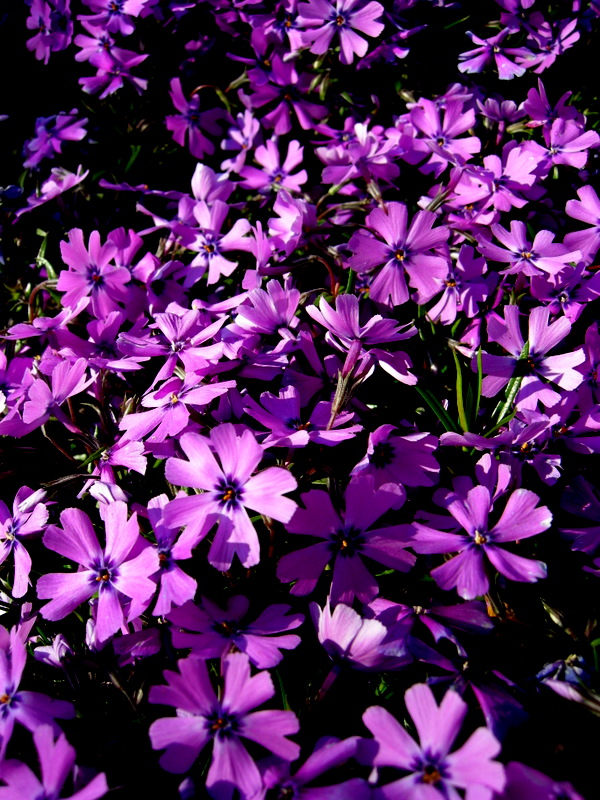
Phlox subulata 'Purple Beauty'‘Purple Beauty’ moss phlox, P. subulata, is one of seven different colors that I will be selling this season.  Moss phlox is often seen in quite a bit of sun but it also thrives in part shade locations.  It likes to be well-drained.

.

Jeffersonia diphyllaA treasured native, twin-leaf, Jeffersonia diphylla, has not even started to emerge yet.

.

Camassia leichtlinii 'Coerulea'Another native of western US, ‘Caerulea’ camassia, C. leichtlinii, grows in the full shade of my woodland and in the sunny areas beside my lawn.

.

Erythronium 'Pagoda'‘Pagoda’ dogtooth violets, Erythronium ‘Pagoda’, are so happy in my woods that they have self-sowed all over.

.

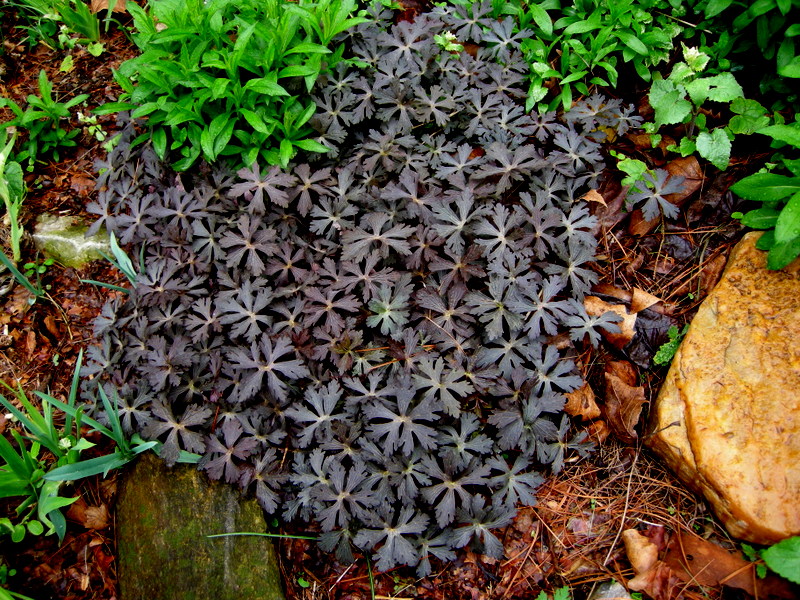
Geranium maculatum 'Espresso'My favorite time of year for the purple-leafed native geranium ‘Espresso’, G. maculatum, is when it first emerges in the spring.

.

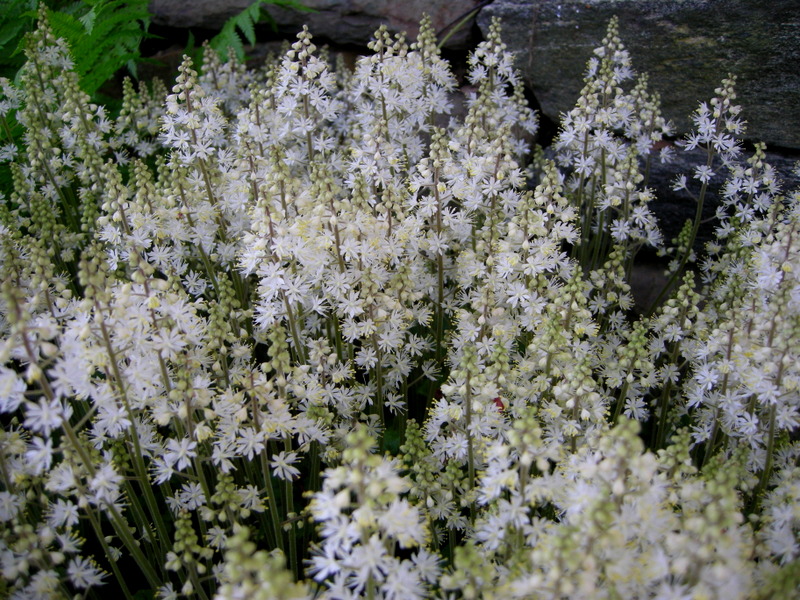
Tiarella cordifolia 'Brandywine'Foamflowers, Tiarella cordifolia, are a wonderful Pennsylvania native.  This is the spreading form ‘Brandywine’.

.

Iris cristataIn well-drained locations, blue dwarf crested iris, I. cristata, spreads to make large colonies.

.

Every photo in this post was taken in my garden.  If you live in the area, I hope you can visit when the plants are in bloom.  Meanwhile, if you want them in your garden, this weekend is your chance to acquire them.

Carolyn

.

Carolyn’s Shade Gardens is a retail nursery located in Bryn Mawr, Pennsylvania, US, zone 6b.  The only plants that we mail order are snowdrops and miniature hostas and only within the US.

If you are within visiting distance and would like to receive catalogues and information about customer events, please send your full name and phone number to carolynsshadegardens@verizon.net.  Subscribing to my blog does not sign you up to receive this information.

Nursery Happenings:  Our Native Wildflower Weekend takes place this Friday, April 5, from 10 am to 4 pm, and Saturday, April 6, from 10 am to 2 pm.  If you are a customer, you should have gotten an email with all the details. If you can’t come to an event, just email to schedule an appointment to shop.  If you wish to order shrubs, I will be doing a second order within the next week for customers who missed the deadline. 

Facebook:  Carolyn’s Shade Gardens has a Facebook Page where I post single photos, garden tips, and other information that doesn’t fit into a blog post.  You can look at my Facebook page here or click the Like button on my right sidebar here.

Notes: Every word that appears in orange on my blog is a link that you can click for more information.  If you want to return to my blog’s homepage to access the sidebar information (catalogues, previous articles, etc.) or to subscribe to my blog, just click here.

Woody Plants for Shade Part 7

Posted in Camellias, evergreen, Fall Color, native plants, Shade Shrubs, shade vines, winter interest with tags , , , , , , , , , , , , , , , , , , , , , , on March 25, 2013 by Carolyn @ Carolyns Shade Gardens

Carolyn’s Shade Gardens is a retail nursery located in Bryn Mawr, PA, specializing in showy, colorful, and unusual plants for shade.  The only plants that we ship are snowdrops and miniature hostas.  For catalogues and announcements of events, please send your full name, location, and phone number (for back up use only) to carolyn@carolynsshadegardens.com.  Click here to get to the home page of our website for catalogues and information about our nursery and to subscribe to our blog.

Camellia x 'Spring's Promise'Spring-blooming camellia ‘Spring’s Promise’ is available in the current offer but was profiled in a previous woody plant post so I am not describing it here.  However, it is a favorite of mine, and I wanted to include a photo.  For a full write up of this plant,  go to Woody Plants for Shade Part 1.

.

My nursery, Carolyn’s Shade Gardens, specializes in perennials for shade with an emphasis on hellebores, unusual bulbs especially snowdrops, hostas particularly miniature hostas, native plants, and ferns.  However, a satisfying shade garden does not consist of just perennials but includes trees, shrubs, and vines.  I provide a quality source for these plants by doing a special offer three times a year. 

I have just sent my first 2013 list to my customers.  To view the catalogue, click here.   However, I thought my blog readers who are not customers might be interested in learning about the woody plants that I would recommend they add to their shade gardens.  And doing an article allows me to add more information and explain why I chose the plants I included so customers might be interested also.

.

Camellia japonica 'Korean Fire'Spring-blooming camellia ‘Korean Fire’ has the most beautiful leaves of any camellia.

The offer focuses on winter- and early spring-blooming plants, evergreens and winter interest, native plants, and fragrance.  Included are four camellias, six other shrubs, and one vine.  Six of the plants I have chosen are evergreen, and seven bloom off season, in fall or late winter/early spring.   This reflects  my desire to see gardeners expand their gardens’ season beyond spring and summer to become a year round paradise for them to enjoy.  With that introduction, here are the plants I am highlighting:

Camellia japonica 'Korean Fire'‘Korean Fire’


I included four hardy camellias for their spectacular early (or late) season flowers and elegant evergreen leaves. These camellias, along with many other cultivars, have been selected to be fully cold hardy in the mid-Atlantic U.S, zones 6B and 7A.  Nevertheless all camellias benefit from being sited to shelter them from winter wind, which comes from the northwest.  They also maintain their lustrous dark green leaves in better shape if they are sheltered from winter sun.

‘Korean Fire’ is a Camellia japonica cultivar hardy in our area because it was selected from the most northern range of the species.  It has very showy bright red single flowers in April and May and glossy dark evergreen leaves.  It grows to 10′ tall and 6′ wide in part to full shade.  It was introduced by Barry Yinger of Asiatica Nursery from plants collected in Korea in 1984 and has received the Pennsylvania Horticultural Society Gold Medal Award for outstanding plants for our area.

.

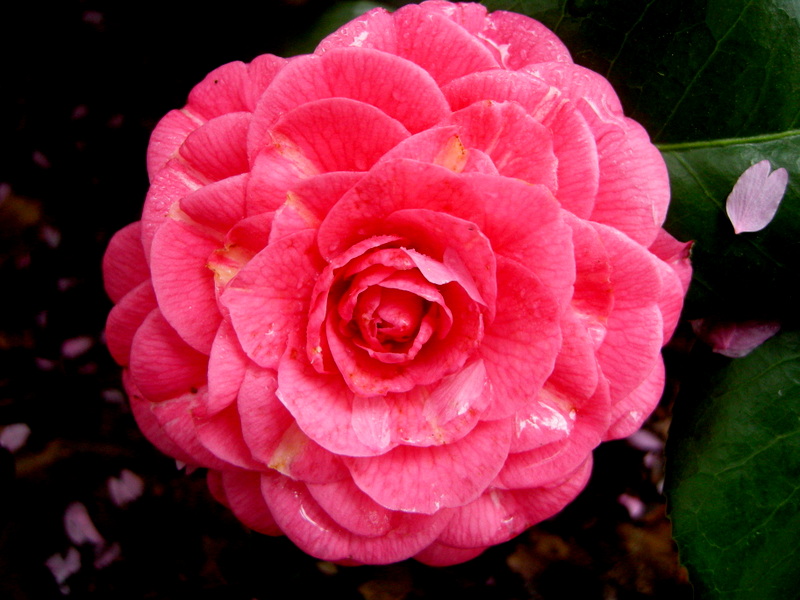
Camellia x 'April Rose'‘April Rose’ spring-blooming camellia

Camellia x ‘April Rose’ is a spring-blooming hardy camellia with gorgeous plump buds opening to formal double rose-pink flowers in April and May.  It has large glossy dark evergreen leaves.  It is 5’ tall and 4′ wide, growing in part to full shade.  It is part of the April series of exceptionally cold hardy camellias developed by Dr. Clifford Parks of North Carolina.

.

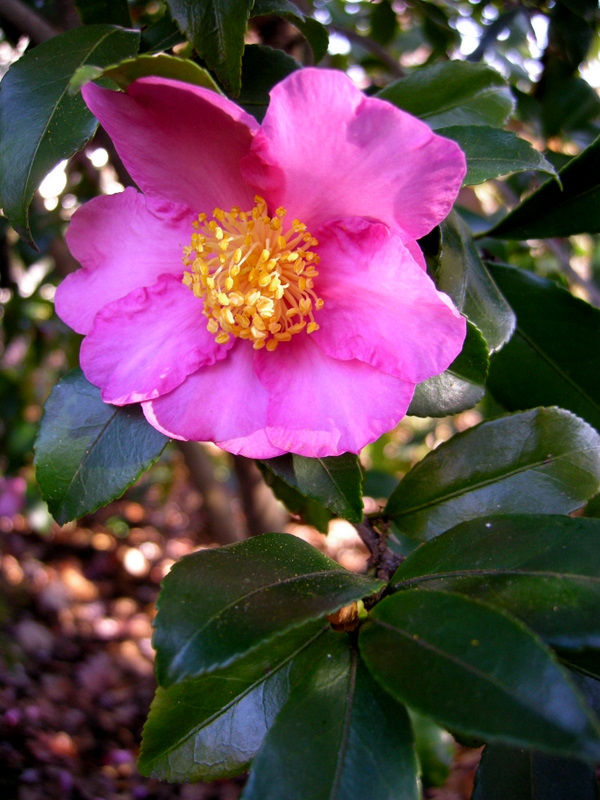
Camellia x 'Winter's Star'Fall-blooming camellia ‘Winter’s Star’

‘Winter’s Star’ is a fall-blooming, cold hardy camellia with single pink flowers in October and November and glossy evergreen leaves.  It is a vigorous plant with an upright habit, reaching 6′ tall and 5′ wide at maturity and sporting lustrous dark evergreen leaves in part to full shade.  It was selected for cold hardiness by Dr. William Ackerman at the U.S. National Arboretum in Washington, DC.

.

Osmanthus heterophyllus 'Sasaba'‘Sasaba’ holly osmanthus (also known as holly tree olive), O. heterophyllus, blooms in the fall and is beautifully fragrant.

Fall-blooming holly osmanthus‘Sasaba’  is the fifth evergreen in the offer, and I would grow it just for its dramatic, deeply incised dark evergreen leaves.  Its delicious fragrance perfumes my whole hillside in November when it blooms: if you are visiting you can see it on the back hill.  Its prickly foliage repels deer.  It grows 6’ tall and 4’ wide in full sun to full shade.

.

Japanese mahonia, Mahonia japonica, is the sixth evergreen in the offer.  It was previously profiled here, but I am including it again because I think it is the most fragrant and best all round mahonia species.

.

There are four deciduous shrubs in the offer:

Chaenomeles speciosa 'Texas Scarlet'‘Texas Scarlet’ flowering quince, Chaenomeles x superba, is another repeat.  This compact selection gives you the wonderful early flowers of quince without the lethal thorns and out-of-control growth habit of normal quinces.  For a complete profile, click here.

.

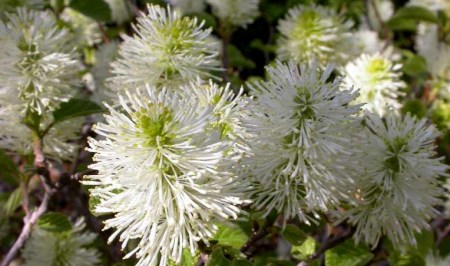
Fothergilla MOBOTThe lovely fragrant flowers of fothergilla.

.

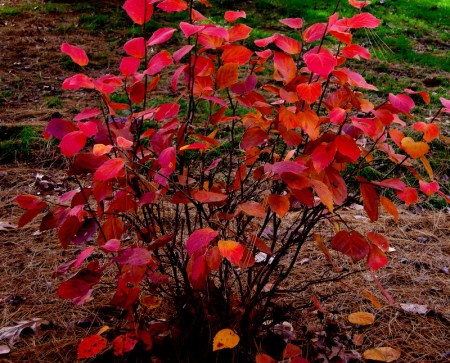
Fothergilla gardeniiThis is a photo of my unselected fothergilla so I can only imagine what ‘Red Licorice’ must look like in the fall.

.

Native ‘Red Licorice’ fothergilla has honey-scented, white bottlebrush flowers in April and May.  It is a new fothergilla cultivar selected for its spectacular cherry red fall color.  It grows to 6’ tall and 5’ wide in full sun to full shade.  It is wet site tolerant,  deer resistant, and attracts butterflies.  It is native to the southeastern US.

.

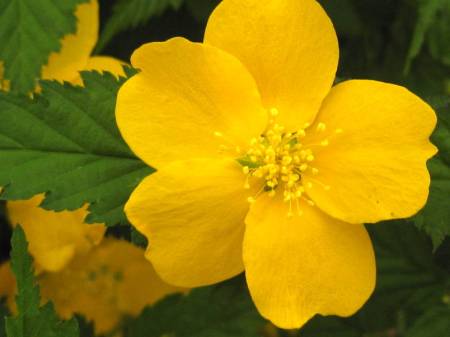
Kerria japonica Golden Guinea_DK‘Golden Guinea’ Japanese kerria, Kerria japonica, produces copious amounts of large, bright gold flowers.

.

Kerria japonica Golden Guinea2 apr_LS (1)A close up of ‘Golden Guinea’

.

‘Golden Guinea’ Japanese kerria is covered with 2 ½” yellow flowers  in April and May and then reblooms sporadically.  It has delicate, bright green pointed leaves, and its graceful stems are a vibrant green providing great winter interest.  It grows to 5’ tall and 4’ wide in part sun to almost full shade (full sun bleaches the flowers).  Kerria grows in average garden soils, is tough and adaptable, and resists deer.

.

Rhododendron arborescens 1-15-13_LS (1)The lovely buds of native sweet azalea, Rhododendron arborescens.

.

Rhododendron arborescens 4-27-12_LS (2)The fragrant flowers of sweet azalea.

.

Native sweet azalea’s very attractive buds, which are on the plant right now, produce light pink to white very fragrant flowers with showy red stamens from May to June.  Its lustrous green leaves turn a stunning orange to red in fall.  It can grow to 10’ tall and 7’ wide in full sun to almost full shade but is usually smaller.  Sweet azalea is wet site tolerant and is one of Pennsylvania’s hardiest native deciduous azaleas.  It was first described by John Bartram in 1814.

.

Gelsemium sempervirens 'Margarita'Carolina jessamine ‘Margarita’, Gelsemium sempervirens, is a vine that I have offered before but its many fragrant, bright yellow flowers, semi-evergreen leaves, and the fact that it is native to the southeastern US make it a very desirable plant.  For a complete profile, click herePhoto courtesy of the Missouri Botanical Garden PlantFinder.

.

I grow most of these plants in my gardens so I know you can’t go wrong by adding them to yours!  If you are a customer, see Nursery Happenings below for details on how to order these wonderful shade plants by noon on March 30.  If not, now you have some plants to ask for at your local independent nursery.

Carolyn

.

Carolyn’s Shade Gardens is a retail nursery located in Bryn Mawr, Pennsylvania, US, zone 6b.  The only plants that we mail order are snowdrops and miniature hostas and only within the US.

If you are within visiting distance and would like to receive catalogues and information about customer events, please send your full name and phone number to carolynsshadegardens@verizon.net.  Subscribing to my blog does not sign you up to receive this information.

Nursery Happenings:  The nursery is open and fully stocked.  If you can’t come to an event, just email to schedule an appointment to shop.  If you wish to order shrubs, everything you need to know is in the catalogue, which can be accessed here.   The deadline for shrub orders is noon on March 30.  Our Native Wildflower Weekend takes place on Friday, April 5, from 10 am to 4 pm, and Saturday, April 6, from 10 am to 2 pm.  If you are a customer, expect an email shortly with all the details.

Facebook:  Carolyn’s Shade Gardens has a Facebook Page where I post single photos, garden tips, and other information that doesn’t fit into a blog post.  You can look at my Facebook page here or click the Like button on my right sidebar here.

Notes: Every word that appears in orange on my blog is a link that you can click for more information.  If you want to return to my blog’s homepage to access the sidebar information (catalogues, previous articles, etc.) or to subscribe to my blog, just click here.
Natural Bridge, Virginia

Posted in garden to visit, native plants with tags , , on November 4, 2012 by Carolyn @ Carolyns Shade Gardens

Carolyn’s Shade Gardens is a retail nursery located in Bryn Mawr, PA, specializing in showy, colorful, and unusual plants for shade.  The only plants that we ship are snowdrops and miniature hostas.  For catalogues and announcements of events, please send your full name, location, and phone number (for back up use only) to carolyn@carolynsshadegardens.com.  Click here to get to the home page of our website for catalogues and information about our nursery and to subscribe to our blog.

Natural Bridge in Virginia

My son Alex is a senior at Roanoke College in Salem, Virginia.  In early October, when we attended parents weekend, we decided to take in some of the local sites.  We had a wonderful visit to the Natural Bridge and the Natural Bridge Caverns just off Interstate 81 about an hour north of Roanoke in the heart of the gorgeous Blue Ridge Mountains.  I highly recommend a stop if you are in the area.

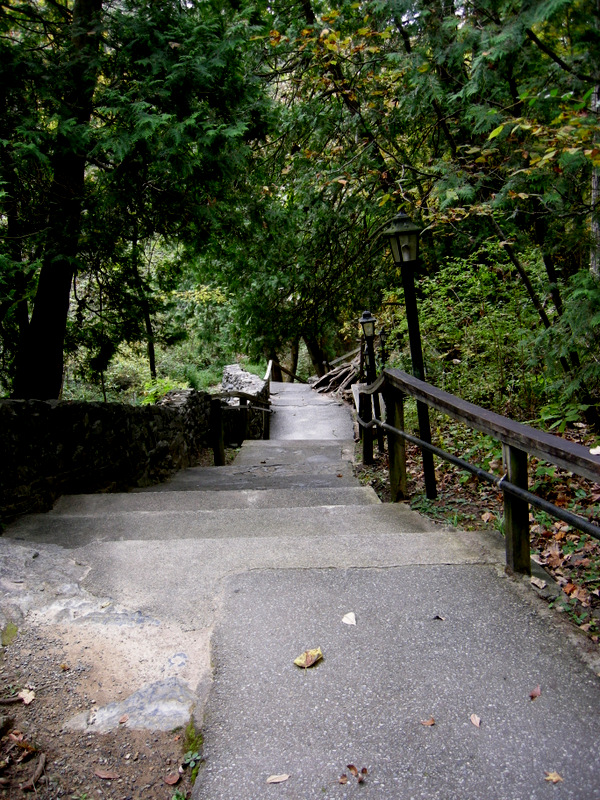
You enter the gorge where the bridge is located down this steep stairway through the woods (or you can take a shuttle bus).

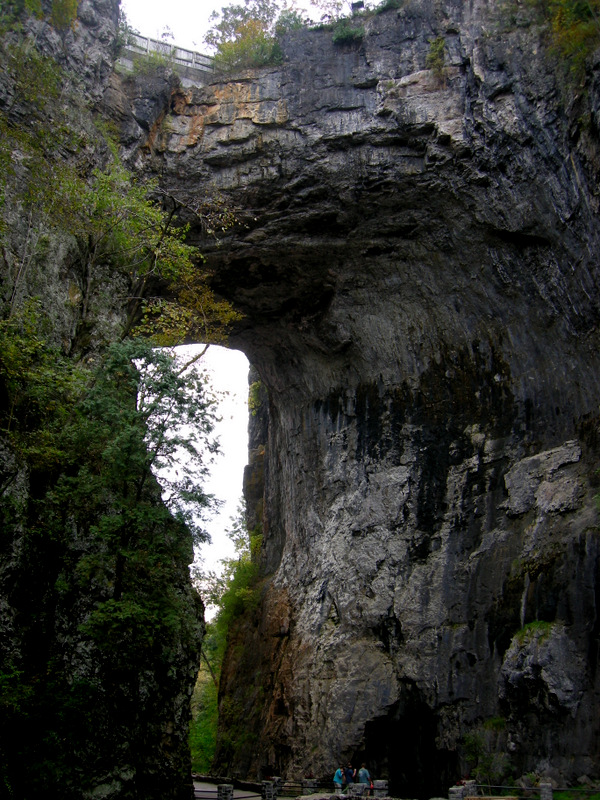
The Natural Bridge was created when an underground cavern, carved by Cedar Creek, a tributary of the James River, collapsed and left behind a span of its rock roof 215 feet high and 90 feet wide.  It is the kind of mammoth natural site that we normally only find in the western US.  The bridge is so big and substantial that Route 11, the state highway, runs across the top of it, and you don’t even notice the road.

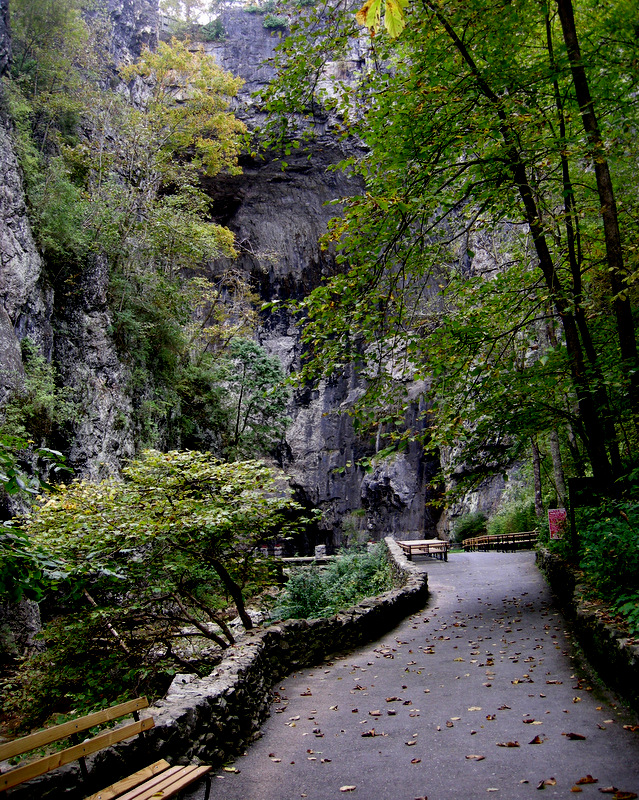
The trail to the bridge is lovely and runs along Cedar Creek, a tributary of the James River.

The Natural Bridge is not only a natural wonder, but it is also a very significant  historic site. It is on the National Register of Historic Places and has been selected from that list of 65,000 to be one of only 2,430 National Historic Landmarks. The Natural Bridge was a sacred site of the Monacan Indians.  In 1750, it was surveyed by George Washington for Lord Fairfax, the owner of the original Virginia land grant of 1649.  In 1774, it was purchased by Thomas Jefferson as part of a 157 acre parcel acquired from King George III for 20 shillings.  Jefferson built a log cabin retreat there and entertained many famous guests.

When you see the Natural Bridge with people in front of it (bottom middle), you get an idea of how gigantic it is.

Like Niagara Falls, the Natural Bridge has been a tourist site since the late 18th century.  An inn was built in 1833, and today there is an on site hotel.  The property has always been privately owned and remains so today.  With tourist dollars a motivation for private owners, the surrounding area is somewhat degraded by unrelated attractions, including a wax museum, live butterfly exhibit, toy museum, and an extensive gift shop.  However the bridge area remains pristine, and the bridge itself is spectacular.  My photos taken on an overcast and dreary day do not do it justice.

Route 11 runs along the top.

The rock walls that line the gorge are very beautiful.

Along the trail we saw a lot of mostly native flora and fauna (I don’t know the exact IDs so no labels except the bird is a great blue heron):


When we were there, we also toured the Natural Bridge Caverns, the deepest caverns on the East Coast.  I didn’t take any photos, but the caverns were as spectacular as the bridge and well worth a visit.

Carolyn


Nursery Happenings:  Carolyn’s Shade Gardens is done for the fall.  Thanks for a great year.  See you in spring 2013.

If you are within visiting distance and would like to receive catalogues and information about customer events, please send your full name and phone number to carolynsshadegardens@verizon.net.  Subscribing to my blog does not sign you up to receive this information.

Facebook:  Carolyn’s Shade Gardens has a Facebook page where I post single photos, garden tips, and other information that doesn’t fit into a blog post.  You can look at my Facebook page here or click the Like button on my right sidebar here.

Notes: Every word that appears in orange on my blog is a link that you can click for more information.  If you want to return to my blog’s homepage to access the sidebar information (catalogues, previous articles, etc.) or to subscribe to my blog, just click here.


Landscape Problem Solved

Posted in How to, landscape design, native plants, Shade Shrubs with tags , , , , , on July 25, 2012 by Carolyn @ Carolyns Shade Gardens

Carolyn’s Shade Gardens is a retail nursery located in Bryn Mawr, PA, specializing in showy, colorful, and unusual plants for shade.  The only plants that we ship are snowdrops and miniature hostas.  For catalogues and announcements of events, please send your full name, location, and phone number (for back up use only) to carolyn@carolynsshadegardens.com.  Click here to get to the home page of our website for catalogues and information about our nursery and to subscribe to our blog.

20120724-154006.jpg‘Invincibelle Spirit’ and ‘Incrediball’ smooth hydrangeas massed at the Coastal Maine Botanical Gardens.

Three things came together recently to help me solve a landscaping problem that had bothered me for years. First, I was reading one of my favorite blogs called Conrad Art & Glass Gardens authored by Larry Conrad. In a recent post he talked about his favorite combinations including one achieved by massing white and pink smooth hydrangeas. I have been interested in smooth hydrangea, H. arborescens, because it is very shade tolerant. I also like it because it is a native plant found through out much of the eastern United States, including Pennsylvania. The well known cultivar ‘Annabelle’ with very large white mophead flowers was discovered in the wild in the 1960s. It grows well in Maine and has proven to be quite deer resistant on the island where my family vacations.

20120724-185734.jpgWhite and pink smooth hydrangeas massed in Larry Conrad’s Wisconsin garden.

The second thing that brought me to this post was a landscaping dilemma at my family’s house in Maine. There is a perennial garden planted by the previous owners next to the front door. However, no one who uses the house wants to garden there. The native landscape is so beautiful we don’t need any added ornamentals. I had been wondering where to try Larry’s beautiful combination, and this neglected garden seemed the perfect place. I bought three pink and two white smooth hydrangea with the intention of emptying the bed and letting them fill it in.

20120724-195423.jpgSmooth hydrangeas at the entrance to the children’s garden at the Coastal Maine Botanical Gardens.

The third contributor to this post was a visit to the Coastal Maine Botanical Gardens in Boothbay Harbor, Maine. Donna from Garden Walk Garden Talk came to visit me in Maine, and I had to show her this gorgeous garden (among other Maine delights). In the fall of 2010 I wrote about my first visit to CMBG, and I will write a longer post about my recent visit later but right now we are discussing hydrangeas. Imagine my delight when we approached the CMBG children’s garden and found the hydrangea combination I intended to use lining the entrance. My project now had a professional seal of approval, and I couldn’t wait to get home and start digging.

20120725-113605.jpgInvincibelle Spirit’ smooth hydrangea at CMBG

There was a choice of which smooth hydrangea cultivars to use. The biggest determining factor was which plants looked the healthiest at the nursery where I bought them. Although smooth hydrangeas are extremely tough, taking both dry and wet soils, clay, drought, heat, shade, rocky soil, and almost anything else you can throw at them, I have found them difficult to establish if you don’t start with vigorous specimens. There are two pink-flowered cultivars: ‘Bella Anna’ and ‘Invincibelle Spirit’, which has been on the market longer. I have been told that ‘Belle Anna’ is an improvement on ‘Invicibelle Spirtit’, but the plants looked weaker and I don’t think you can improve on the ‘Invincibelle Spirit’ specimens at CMBG in the photo above.

20120725-113851.jpg‘Incrediball’ smooth hydrangea at CMBG

For the white smooth hydrangeas, I had a choice of tried-and-true ‘Annabelle’ and an improved version called ‘Incrediball’, which has even larger, to 12″, globular flowers. Although I wasn’t after larger flowers, I chose ‘Incrediball’ because the flowers are whiter than ‘Annabelle’, which has some lime in it, and because ‘Incrediball’s’ stems have been selected for thickness to avoid flopping when it rains.

20120725-120518.jpg‘Invincibelle Spirit’ and ‘Incrediball’ at CMBG

All the smooth hydrangea cultivars grow to around 3 to 5′ wide and 3 to 5′ tall in zones 3 to 9. They flower from June to September, but the dried flowers heads are quite beautiful through fall. They perform best in part shade, but will grow in full sun with consistent moisture. The straight species grows in full shade. They bloom on new wood so pruning in late winter is recommended to encourage vigorous new stem growth.

20120725-122157.jpg

20120725-122305.jpgMy newly planted smooth hydrangeas

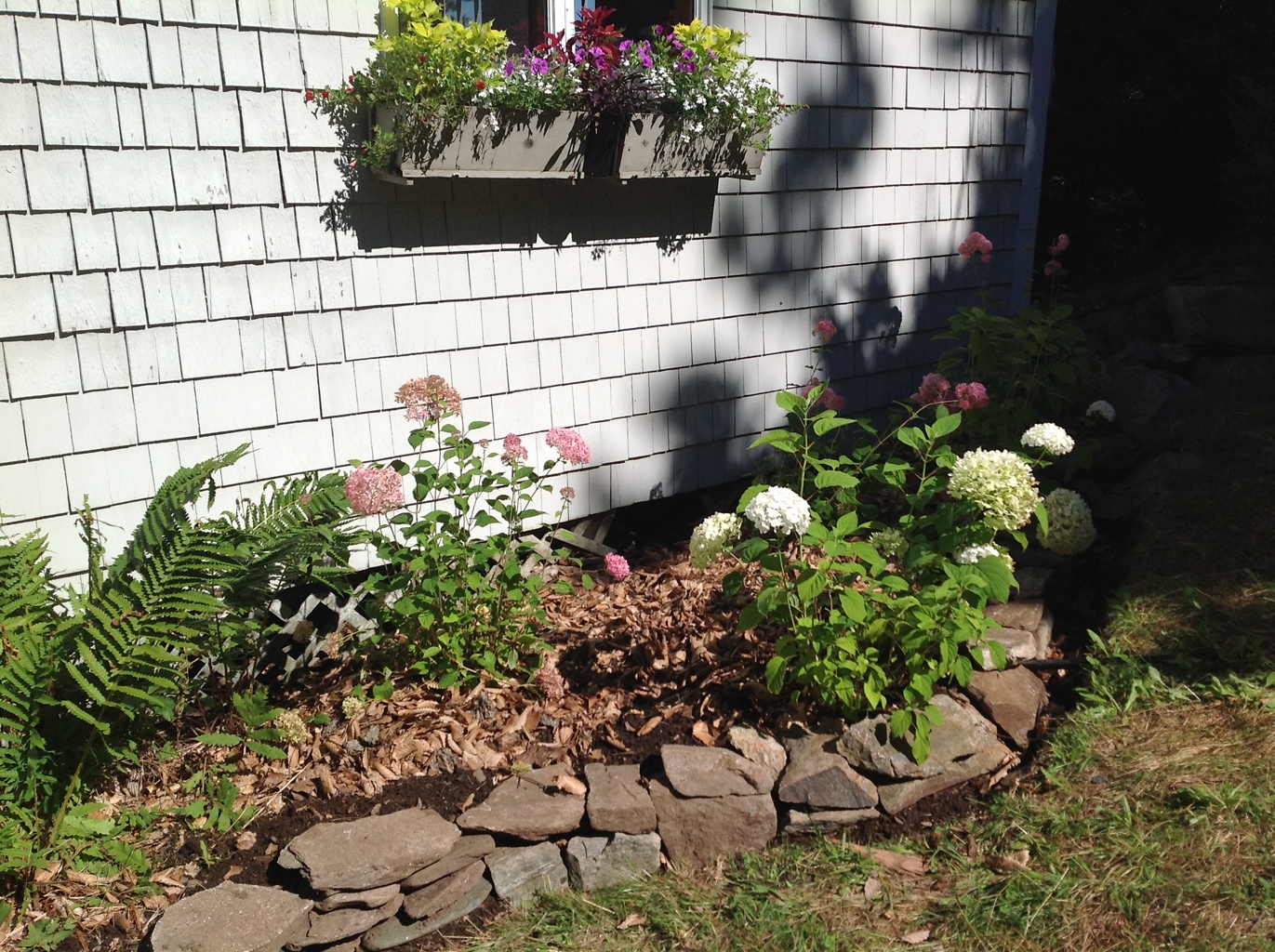
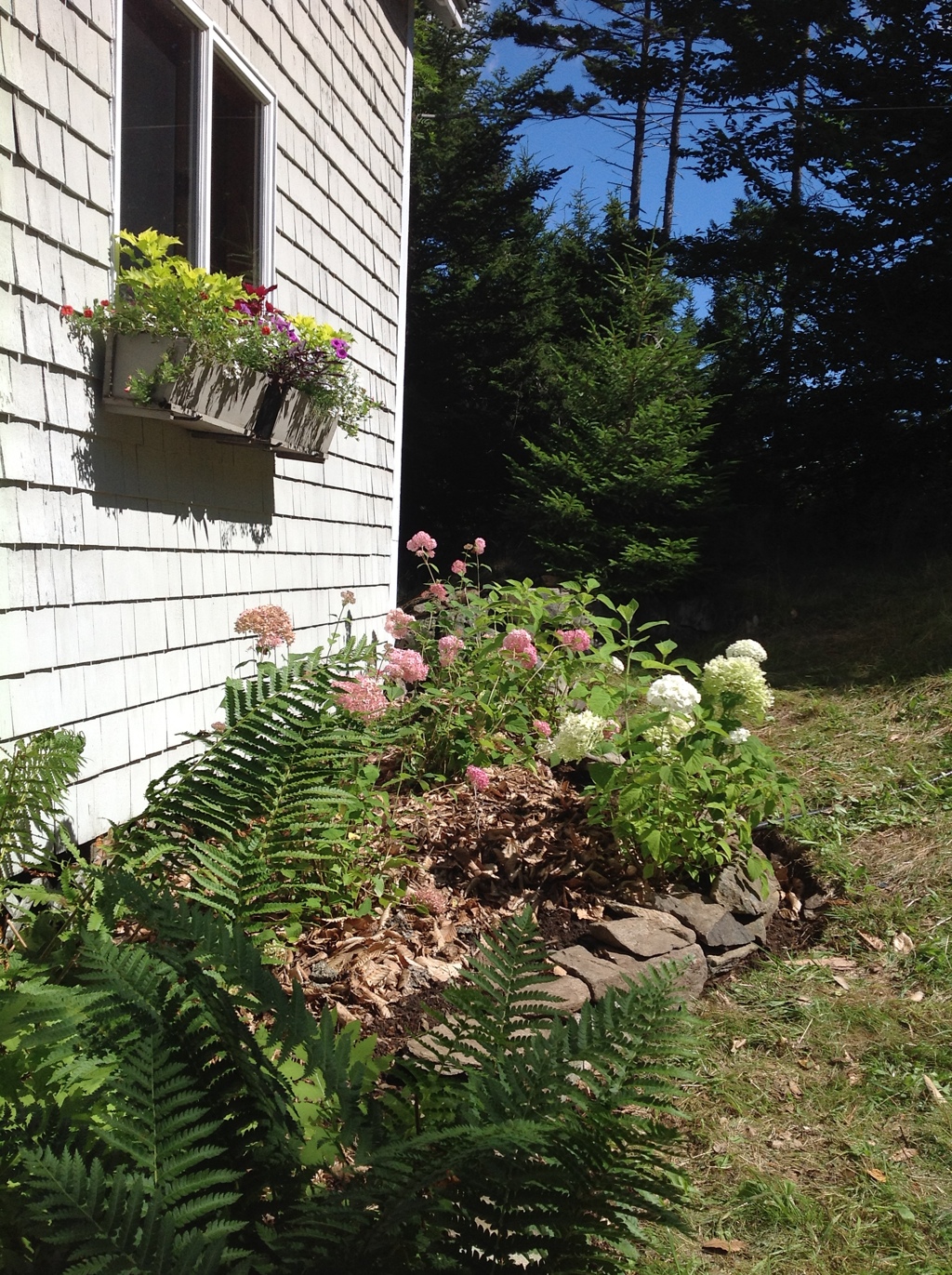
As you can see from the two photos above, my new hydrangeas have been planted. I anticipate that they will fill in the whole bed and crowd out weeds. I am still working on the wall but am quite happy with it so far. I hope the trench along the front will allow us to keep the nasty, tenacious grass out of the bed. If I get really ambitious, I am going to fill the trench with mussel shells from the beach.

* * * * *

This post is my second experiment with publishing a post directly from my recently acquired “new” iPad. Although it was a little easier this time and I mastered bold captions and links, I still had to call Donna in Niagara Falls to help me. I also took the final two photos with the iPad, and I think they turned out quite well. I am very impressed with the camera function on the new iPad, but you can’t truly appreciate the incredible resolution unless you have a very good screen on your computer, which I don’t. I think I would recommend an iPad just for looking at photos, that is if you can afford it. We don’t have internet access at the house in Maine so portability was a big factor for me. But the major reason I got it, 3G/4G capability is a huge disappointment, which I will explain at a later date.

Carolyn

Nursery Happenings: The nursery is closed until the fall. Thanks for a great spring season!

If you are within visiting distance and would like to receive catalogues and information about customer events, please send your full name and phone number to carolynsshadegardens@verizon.net. Subscribing to my blog does not sign you up to receive this information.

Facebook: Carolyn’s Shade Gardens has a Facebook page where I post single photos, garden tips, and other information that doesn’t fit into a blog post. You can look at my Facebook page here or click the Like button on my right sidebar here.

Notes: Every word that appears in orange on my blog is a link that you can click for more information. If you want to return to my blog’s homepage to access the sidebar information (catalogues, previous articles, etc.) or to subscribe to my blog, just click here.

Historic Bartram’s Garden

Posted in garden to visit, native plants, Uncategorized with tags , , , , , , , , , , , , , , , , , on July 6, 2012 by Carolyn @ Carolyns Shade Gardens

Carolyn’s Shade Gardens is a retail nursery located in Bryn Mawr, PA, specializing in showy, colorful, and unusual plants for shade.  The only plants that we ship are snowdrops and miniature hostas.  For catalogues and announcements of events, please send your full name, location, and phone number (for back up use only) to carolyn@carolynsshadegardens.com.  Click here to get to the home page of our website for catalogues and information about our nursery and to subscribe to our blog.

John Bartram House, Philadephia, Pennsylvania, US


“Whatsoever whether great or small ugly or handsom sweet or stinking…every thing in the universe in their own nature appears beautifull to mee.”

John Bartram 1740


For Mother’s Day this May, I was surprised with a picnic and visit to Bartram’s Garden in Philadelphia, Pennsylvania, US, the oldest surviving botanic garden in North America.  Prominent Philadelphia Quakers, John Bartram (1699-1777) and his son William (1739-1823) were the most important American plant explorers of the 18th century, traveling south to Florida, west to the Mississippi, and north to Lake Ontario.  They introduced more than 200 native plants into cultivation.  By mid-century, their 102 acre garden (now 45 acres) contained the most extensive collection of North American plants in the world.

Native Bartram oak, Quercus x heterphylla, a rare hybrid between red oak, Quercus rubra, and willow oak, Quercus phellos, discovered by John Bartram.

…the Botanick fire set me in such A flame as is not to be quenched until death or I explore most of the…vegitative treasures in No. America.”

John Bartram 1761


The intrepid Bartrams shared their discoveries with scientists throughout America and Europe, especially England.  John Bartram’s discoveries were considered so important that he was appointed Royal Botanist by King George III.  Bartram founded the American Philosophical Society in Philadelphia with his friend and colleague Benjamin Franklin.  In addition, he started a thriving seed and plant business with his lists appearing in London publications as early as the 1750s.  In 1783, Bartram published the first American nursery catalogue.  [Historical information and quotes courtesy of Bartram’s Garden.]

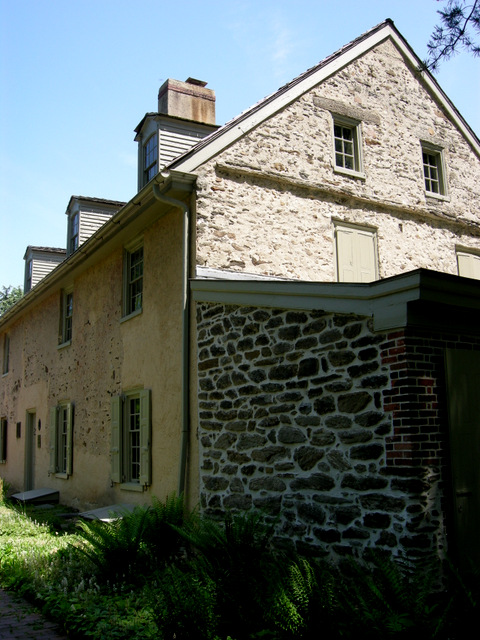
John Bartram purchased his farm in 1728 and completed this portion of the stone house in 1731.


The house and gardens are a National Historic Landmark and have been well preserved despite their location in a very developed part of Philadelphia. Fortunately, they were acquired by the city in 1891 and became part of the public park system.  The property is on the banks of the Schuylkill River and is a joy to visit both to see the historic buildings and to wander through the peaceful gardens.  I would visit Bartram’s Garden just to see the specimen trees.   I am going to take you on a short photographic tour below, but I highly recommend an actual visit.

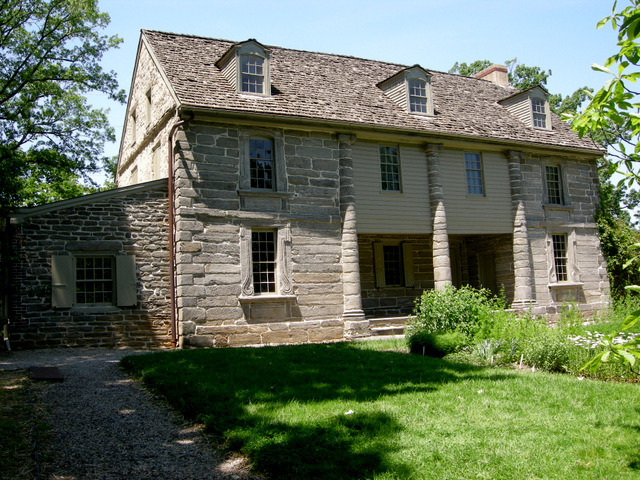
This formal façade, which faces the gardens, was added between 1758 and 1770.


Close up of the façade


Carved stone window in the facade


This pristine example of a two-level Pennsylvania bank barn was built in 1775.


Stone watering trough


John Bartram’s first experimental garden


Looking from the house towards the kitchen and stables


Walking along the wooden boardwalk by the river


The foundation of this simple mill based on an ancient European design was carved from the bedrock next to the river.


Apples were crushed in the circular trench by a wooden wheel.


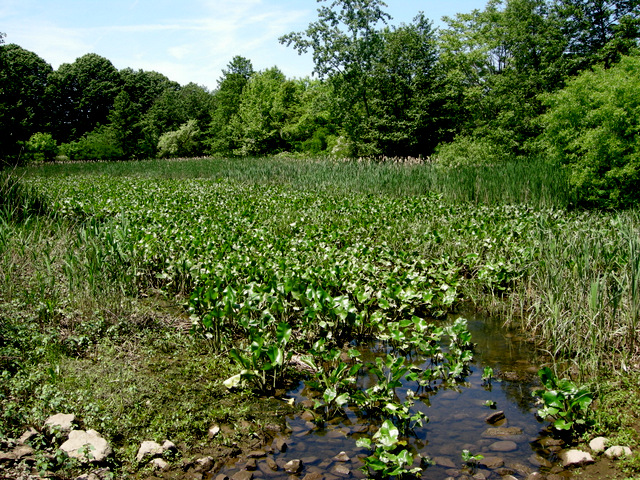
There are some very beautiful wetlands on the shores of the river.


If you love trees, and especially specimen trees as I do, you don’t want to miss seeing the huge mostly native trees at Bartram’s Garden.  I include photos of some of them below, but they are so large that it is hard to get a good photograph.  You have to see them in person to truly appreciate their magnificence.


The oldest ginkgo tree, G. biloba, in North America planted by William Bartram in 1785.


Luckily there was a field below this amazing American yellowwood, Cladrastis kentukea, so I could get a photo of the whole tree.


The house next to the yellowwood gives it some scale.  We were fortunate to catch it in full bloom.


Yellowwood flowers


Under the yellowwood tree


American beech, Fagus grandifolia


Native willow oak, Quercus phellos


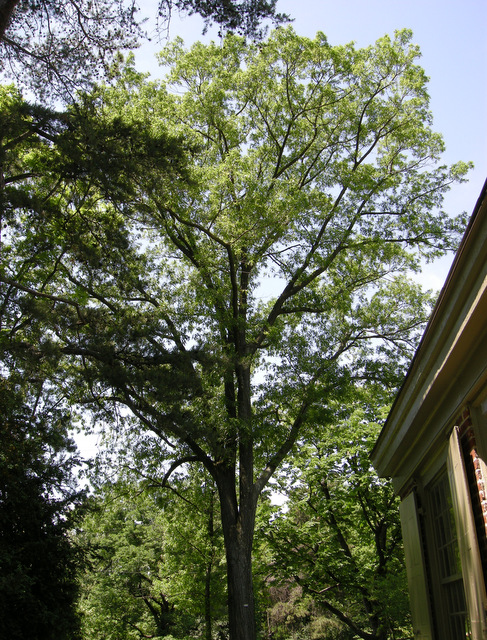
Native common hackberry, Celtis occidentalis


Bartram’s Garden is a public park and is open all year for self-guided tours except city-observed holidays.  I hope you have the chance to visit.


Carolyn

Nursery Happenings:  The nursery is closed until the fall.  Thanks for a great spring season!

If you are within visiting distance and would like to receive catalogues and information about customer events, please send your full name and phone number to carolynsshadegardens@verizon.net.  Subscribing to my blog does not sign you up to receive this information.

Facebook:  Carolyn’s Shade Gardens has a Facebook page where I post single photos, garden tips, and other information that doesn’t fit into a blog post.  You can look at my Facebook page here or click the Like button on my right sidebar here.

Notes: Every word that appears in orange on my blog is a link that you can click for more information.  If you want to return to my blog’s homepage to access the sidebar information (catalogues, previous articles, etc.) or to subscribe to my blog, just click here.


Groundcovers, Thinking Outside the Box

Posted in garden to visit, groundcover, How to, landscape design, native plants, Shade Gardening, Shade Perennials, Shade Shrubs with tags , , , , , , , , , , , , , , , , , , , , , , , , , , , , , , , on June 11, 2012 by Carolyn @ Carolyns Shade Gardens

Carolyn’s Shade Gardens is a retail nursery located in Bryn Mawr, PA, specializing in showy, colorful, and unusual plants for shade.  The only plants that we ship are snowdrops and miniature hostas.  For catalogues and announcements of events, please send your full name, location, and phone number (for back up use only) to carolyn@carolynsshadegardens.com.  Click here to get to the home page of our website for catalogues and information about our nursery and to subscribe to our blog.

Part of the Idea Garden at Longwood Gardens

I recently visited Longwood Gardens in Kennett Square, Pennsylvania.  I have no hesitancy in saying that Longwood is one of the premier gardens in the world and should be on everyone’s life list.  However, there is so much there that it is difficult to post about it.  Also, “familiarity breeds contempt.”  I hold two Certificates in Ornamental Horticulture from Longwood and have taken a total of 18 courses to earn them.  Each course involved a minimum of 8 visits to the gardens so you can see that I have spent a lot of time there.  If you are local, these courses are the absolute best plant education available.

Italian Water Garden, viewed while resting in the shade.

Because I have spent so much time at Longwood, I didn’t photograph the usual sights or even visit the fabulous four acre indoor conservatory (with one exception mentioned below).  As a shade gardener I headed straight for Peirce’s Woods, which is seven acres devoted to shady plants native to the eastern U.S. deciduous forest.  I hoped to augment my library of photographs and get some ideas of plants to sell at the nursery and add to my own gardens.  I wasn’t disappointed.

The straight species of smooth hydrangea, H. arborescens, lined the very shady paths by the lake.  I think it is more appropriate to a woodland garden than the cultivated forms like ‘Annabelle’.

Smooth hydrangea has a lovely flower whose size is in keeping with other native woodland plants.

While walking through Peirce’s Woods, I returned to the thoughts I have been having lately about groundcovers.  This time of year, with the weeds running rampant, my customers are more interested in groundcovers.  But it is clear from their questions that they mean plants that form runners to creep and cover the ground.  The classic examples are vinca, ivy, and pachysandra.  However, my definition of groundcover is much broader than this and includes any plant massed to effectively choke out weeds.

Native maidenhair fern, Adiantum pedatum


When you look at the masses of native maidenhair fern above, you are probably thinking that’s all very nice that Longwood uses masses of these fairly pricey, non-creeping plants as groundcover, but I could never afford that quantity of plants.  However, think of the alternative: weeds and the hours if not days it takes to remove them, not to mention how their presence detracts from the look of your garden as well as your satisfaction with it.  Your time is valuable, and you wouldn’t be reading my blog if the look of your garden wasn’t important to you.

Native semi-evergreen coralbells, Heuchera villosa, often sold as the cultivar ‘Autumn Bride’, has gorgeous white flowers in the fall.

Yes, you can use mulch to keep down the weeds.  However, commercial shredded hardwood mulch is not attractive, is generally not produced sustainably, and requires a significant time investment to apply it.  Most importantly, it requires a monetary outlay every year because it must be re-applied every spring.  Perennial plants are initially more expensive to buy and plant but once they are there, you never have to do anything again.  It is kind of like buying a compact fluorescent light bulb versus the bulbs we grew up with.

Here are some more plants that Longwood uses in masses to make effective groundcovers:

Mexican feather grass, Nassella tenuissima


Native evergreen Christmas fern, Polystichum acrostichoides

Native semi-evergreen coralbells, Heuchera villosa purple form.

Shredded umbrella-plant, Syneilesis aconitifolia: I can only dream of achieving this in my garden, and, yes, it is very expensive.

Native hay-scented fern, Dennstaedtia punctiloba, creeps to fill in large areas.

This bellflower, Campanula takesimana, was growing and apparently self-sowing in dense shade on the hillside near the Chimes Tower.

Fall-blooming yellow waxbells, Kirengoshoma palmata, is more like a shrub than a perennial but it dies to the ground ever year.

Native coralbells, Heuchera villosa ‘Caramel’, is my favorite heuchera and retains its lovely color 365 days a year.

Giant butterbur, Petasites japonicus, grows in dense shade and covers a lot of ground.

Lavender mist meadow-rue, Thalictrum rochebrunianum

Native sensitive fern, Onoclea sensibilis, does creep.

Shrubs can be used as groundcover also, two examples from Longwood:

The straight species of oakleaf hydrangea, H. quecifolia, gets quite large and spreading.

Native southern bush honeysuckle, Diervilla sessifolia, suckers to form a colony.

Lastly, I want to show you why I briefly visited the conservatories:  groundcover for walls, the new fern wall at Longwood.  It is worth a visit just to see it:

This is a beautiful hallway containing individual restrooms, and the walls are totally covered in ferns.

Some of the ferns are quite large, and all are healthy and beautiful.

I hope I have convinced you to think outside the box and mass all kinds of unusual plants as groundcovers.  You will have more time to enjoy a better looking garden and save money in the long run.

Carolyn

Nursery Happenings:  This coming weekend we will have our final open hours at the nursery on Saturday, June 16, from 9 am to 2 pm, and Sunday, June 17, from 11 am to 1 pm.  We close on June 17 until September.  Customers on my email list will receive an email with details.

If you are within visiting distance and would like to receive catalogues and information about customer events, please send your full name and phone number to carolynsshadegardens@verizon.net.  Subscribing to my blog does not sign you up to receive this information.

Facebook:  Carolyn’s Shade Gardens has a Facebook page where I post single photos, garden tips, and other information that doesn’t fit into a blog post.  You can look at my Facebook page here or click the Like button on my right sidebar here.

Notes: Every word that appears in orange on my blog is a link that you can click for more information.  If you want to return to my blog’s homepage to access the sidebar information (catalogues, previous articles, etc.) or to subscribe to my blog, just click here.

Woody Plants for Shade Part 5

Posted in Fall Color, landscape design, native plants, Shade Gardening, Shade Shrubs, shade vines, winter interest with tags , , , , , , , , , , , , , , , , , , , , on May 17, 2012 by Carolyn @ Carolyns Shade Gardens

Carolyn’s Shade Gardens is a retail nursery located in Bryn Mawr, PA, specializing in showy, colorful, and unusual plants for shade.  The only plants that we ship are snowdrops and miniature hostas.  For catalogues and announcements of events, please send your full name, location, and phone number (for back up use only) to carolyn@carolynsshadegardens.com.  Click here to get to the home page of our website for catalogues and information about our nursery and to subscribe to our blog.

The bright rose flowers of ‘Wine & Roses’ old-fashioned weigela.

Shade gardens are not composed solely of perennials so two years ago I branched out to offer high quality shrubs, vines, and trees to my customers.  In my second Spring 2012 Woody Plant Offer, details here,  I have focused on plants that are late spring or summer blooming and native to our area.  I thought my blog readers who are not customers might be interested in learning about the plants that I would recommend they add to their shade gardens.  And doing an article allows me to add more information and explain why I chose the plants I included so customers might be interested also.

When it blooms in late spring, our native fringe tree is covered with elegant, fragrant flowers.

Fringe tree is a lovely small flowering tree or a large shrub.

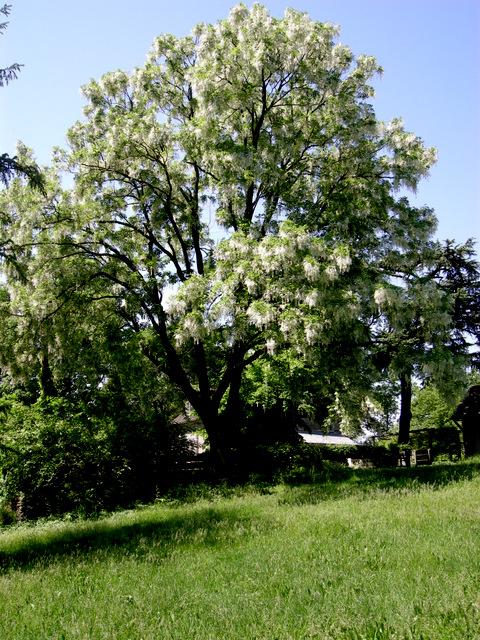
I saw native fringe tree, Chionanthus virginicus, in full bloom in the shady woods of Bartram’s Garden in Philadelphia recently, and it reminded me of how gorgeous this native tree is.   It is loaded with generous amounts of creamy white, fragrant flowers in May and June.  Its medium green leaves turn a good yellow in the fall.  It may produce showy grape-like fruit attractive to birds.  Fringe tree grows to 12 to 20’ tall and 12 to 20’ wide in sun to part shade, although the tree in Bartram’s Garden was in a very shady site.  It is wet site tolerant, hardy to zone 4, and native to the eastern US, including PA.  It is a  Missouri Botanical Garden Plant of Merit (photos courtesy of MOBOT).


 Our native dwarf summersweet is loaded with fragrant white flowers in summer.

I have seen stands of summersweet growing wild in New England, and it is a beautiful sight.  However, the species gets quite large and suckers into colonies so the native dwarf summersweet ‘Hummingbird’Clethra alnifolia ‘Hummingbird’, is better for most home gardens.  It has very fragrant, bottlebrush, white flowers in June and July that attract butterflies.  Its  lustrous bright green leaves turn a clear yellow in the fall.  It has an excellent compact habit and produces more flowers than the species.

Dwarf summersweet’s habit is much more compact and attractive than the species, and it produces more flowers.

Dwarf summersweet grows to 2 to 4’ tall and 3’ wide in sun to full shade.  It is hardy to zone 4, deer resistant, wet site and salt tolerant, and native to the eastern US, including PA.  It is a Pennsylvania Horticultural Society Gold Medal Plant,  click here for details (photos courtesy of the MOBOT Plant Finder, for more information click here).


 ‘Nikko’ dwarf slender deutzia is loaded with white flowers in late spring.

‘Nikko’ lining my rock garden path in full shade.

I have offered ‘Nikko’ dwarf slender deutzia, D. gracilis ‘Nikko’, before, but it is such a useful plant that I couldn’t help including it again.  It is covered with delicate white flowers in April and May.  Its fine-textured and neat green leaves turn an attractive burgundy in the fall.  It is an excellent specimen or flowering groundcover for shade.  I grow it in full shade as a groundcover to edge the path at the base of my winterberry hollies.  ‘Nikko’ grows to 1 to 2’ tall and 2 to 5’ wide in full sun to full shade.  It is hardy to zone 4 and deer resistant.  It is a PHS Gold Medal Plant (for more information click here).


 ‘Invincibelle Spirit’ is a color breakthrough for our native smooth hydrangea.

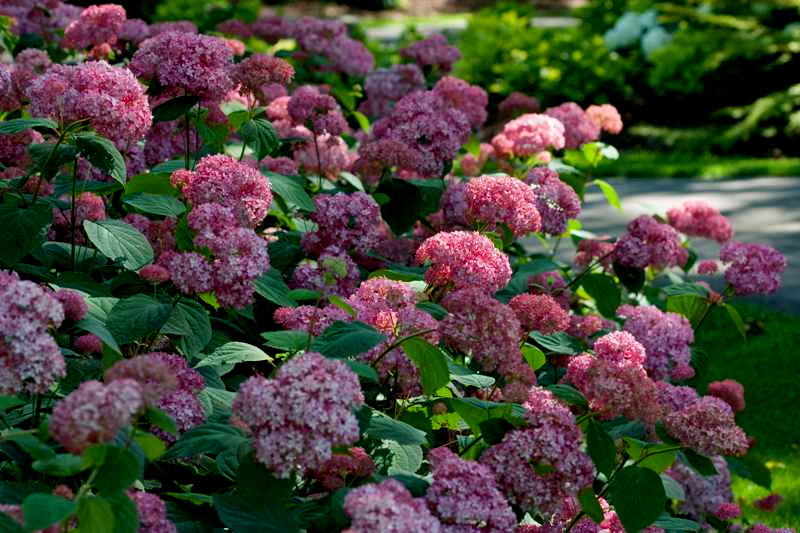
Native ‘Invincibelle Spirit’ smooth hydrangea, H. arborescens ‘Invincibelle Spirit’, is  a pink-flowered version of the wonderful ‘Annabelle’.  It has very showy large pink snowball flowers that continue to bloom from June into the fall.  ‘Invincibelle Spirit’ grows to 3 to 4’ tall by 3 to 4’ wide in part to full shade.  It is hardy to zone 4, tolerant of a wide range of soil conditions, deer resistant, and native to the eastern US, including PA.  It should be gently pruned in late spring for optimum growth (photo courtesy of the MOBOT Plant Finder, for more information click here).                    

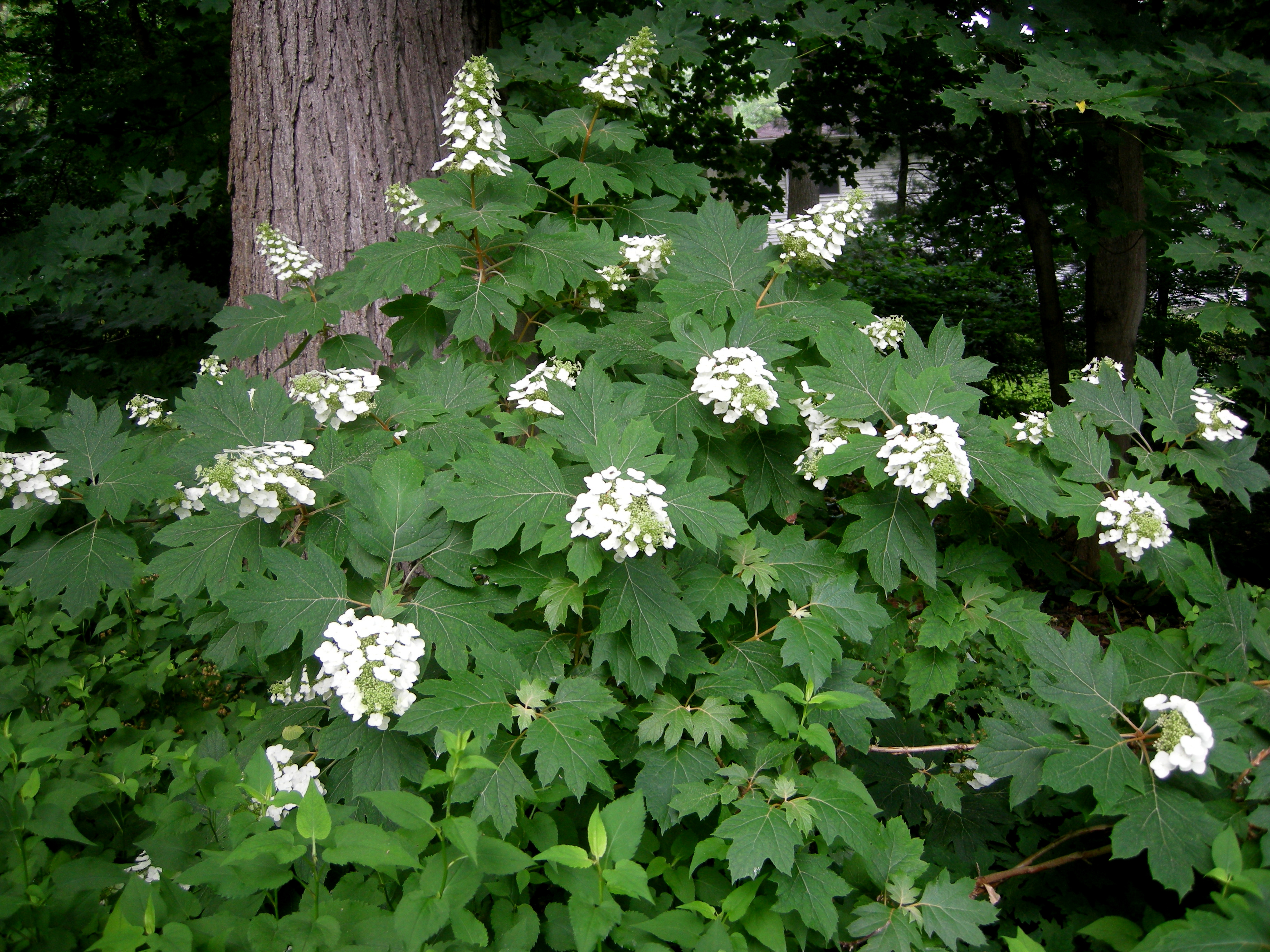
A close up of the large and beautiful flowers and leaves of oakleaf hydrangea.

   Native oakleaf hydrangea in my woodland garden at the base of a black walnut.

The fall color of oakleaf hydrangea.

Our native oakleaf hydrangea, H. quercifolia, is the best all round shrub for shade—everyone should have at least one!  Huge, long-lasting, upright pyramids of white flowers bloom from May through July and change to pink for even longer interest.  It has bold-textured leaves with heart-stopping burgundy-red fall color, and cinnamon-colored exfoliating bark—a true four season plant.  I am offering ‘Alice’ native oakleaf hydrangea, a superior form that has larger flowers, better fall color, and very disease resistant leaves.  It grows to 5 to 8’ tall and 5 to 8’ wide in sun to full shade.  It is hardy to zone 5, walnut and drought tolerant, and native to the southeastern US.  For more information, click here.


The pink mophead flowers of ‘Preziosa’ age to a dark maroon.

‘Preziosa’s’ leaves are gorgeous, here they are starting to turn burgundy in the fall.

‘Preziosa’ sawtooth hydrangea, H. serrata ‘Preziosa’, is now my favorite “fancy” hydrangea for full shade so I am offering it again.  I planted mine in the shade of a white pine under a cherry laurel behind a Japanese maple, and it is thriving and loaded with buds right now.  This wonderful hydrangea produces lovely pink mophead flowers from June to August, which darken with age to a gorgeous maroon.  But I may like the elegant leaves more, especially their beautiful burgundy fall color.   The leaves, deep red stems, flowers, and habit of ‘Preziosa’ are all superior to most other hydrangeas.  ‘Preziosa’ grows to 3 to 4’ tall and 3 to 4’ wide in part to full shade.  It is very tolerant of cold temperatures and hardy to zone 5.  For more information, click here.


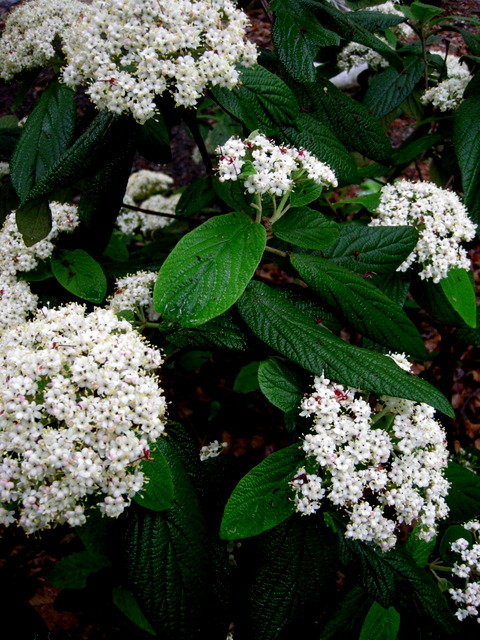
 The elegant leaves and flowers of native ‘Blue Muffin’ arrowwood viburnum.

Native ‘Blue Muffin’ arrowwood viburnum, V. dentatum ‘Blue Muffin’,  has lovely flat-topped white flowers in May and June that attract butterflies.  Lots of pea-sized very blue berries appear in late summer and attract birds.  The shiny dark green leaves are beautiful all season and turn attractive shades of orange to burgundy in the fall.  ‘Blue Muffin’ has an excellent and useful narrow, upright habit.  The branches are so straight that the Native Americans used them for arrows. 

‘Blue Muffin’s’ blueberry-like fruit.

‘Blue Muffin’ grows to 5 to 8’ tall and 3 to 4’ wide in sun to part shade.  It is deer resistant and grows in a wide range of soils.  It tolerates salt, drought, and walnuts.  ‘Blue Muffin’ is hardy to zone 3 and native to the eastern US, including PA (fruit photo courtesy of MOBOT, for more information click here).

 The flowers of ‘Wine & Roses’ weigela.

‘Wine & Roses’ old-fashioned weigela, W. florida ‘Wine & Roses’, has copious amounts of eye-catching rose-red flowers in May and June that attract hummingbirds.   The flowers are set off to perfection by the glossy deep burgundy leaves whose color intensifies in the fall.  ‘Wine & Roses’ has an excellent habit—you can prune it immediately after flowering to fit any location.  It grows to 4 to 5’ tall and 4 to 5’ wide in sun to part shade.  Although I recommend some direct sun for better flowers, I have seen weigela blooming in full shade.  It is hardy to zone 4, deer resistant, and tolerant of a wide range of soils.  ‘Wine & Roses’ is a PHS Gold Medal Plant, for details click here.


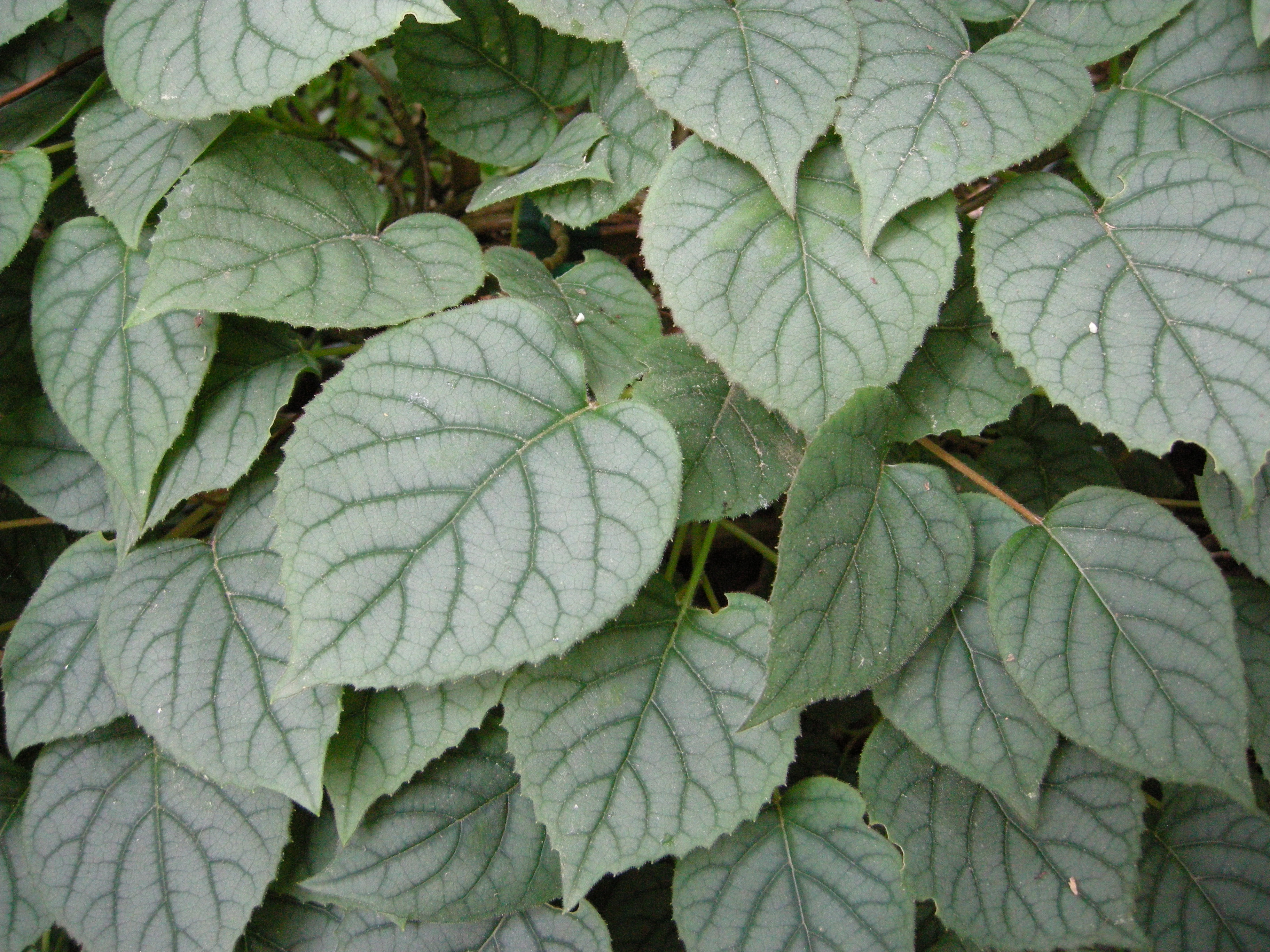
The silver leaves of ‘Moonlight’ Japanese climbing hydrangea.

The flowers of Japanese climbing hydrangea—here the straight species.

‘Moonlight’ Japanese hydrangea vine, Schizophragma hydrangeoides ‘Moonlight’, has very showy 8 to 10” wide white lacecap flowers  in midsummer.  But I really grow it for its elegant silver-painted dark green leaves, which turn yellow in the fall.  ‘Moonlight’ is a self-attaching vine that covers the surface it grows on with silvery leaves.  It reaches 20 to 30’ at maturity in part to full shade—mine is in deep shade.  It is a PHS Gold Medal Plant, for details click here (photo of flowers courtesy of the MOBOT Plant Finder click here).

I hope I have inspired you to order some of these wonderful plants in my offer or search them out at your local independent nursery.  To read the previous posts on woody plants for shade, click one, two, three, and four.

Carolyn

Nursery Happenings: Customers can pre-order woody plants through noon on May 22.  Click here for details.  We have added a third session of our seminar, The Secrets of a Low Maintenance Garden, on Sunday, May 20.  Click here for details. If you are interested in receiving miniature hostas mail order, click here.

If you are within visiting distance and would like to receive catalogues and information about customer events, please send your full name and phone number to carolynsshadegardens@verizon.net.  Subscribing to my blog does not sign you up to receive this information.

Facebook:  Carolyn’s Shade Gardens has a Facebook page where I post single photos, garden tips, and other information that doesn’t fit into a blog post.  You can look at my Facebook page here or click the Like button on my right sidebar here.
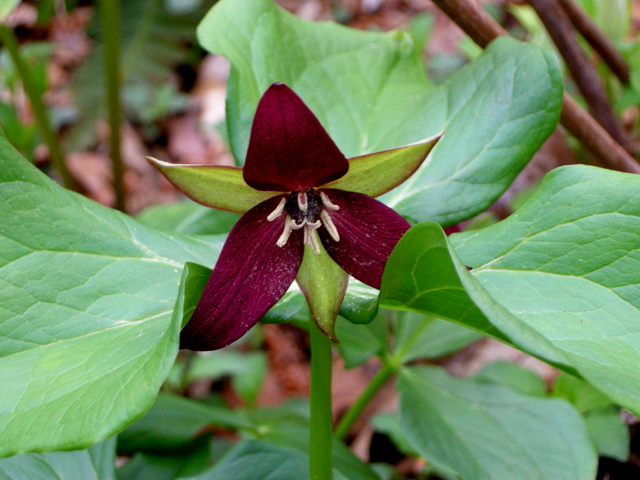
Notes: Every word that appears in orange on my blog is a link that you can click for more information.  If you want to return to my blog’s homepage to access the sidebar information (catalogues, previous articles, etc.) or to subscribe to my blog, just click here.