Archive for the native plants Category

Specimen Natives for Your Woodland

Posted in bulbs for shade, green gardening, groundcover, landscape design, native plants, Shade Perennials with tags , , , , , , , , , , , , , , , , , , , , , , , , , , , , , , , on April 18, 2012 by Carolyn @ Carolyns Shade Gardens

Carolyn’s Shade Gardens is a retail nursery located in Bryn Mawr, PA, specializing in showy, colorful, and unusual plants for shade.  The only plants that we ship are snowdrops and miniature hostas.  For catalogues and announcements of events, please send your full name, location, and phone number (for back up use only) to carolyn@carolynsshadegardens.com.  Click here to get to the home page of our website for catalogues and information about our nursery and to subscribe to our blog.

Who says our native mayapple, Podophyllum peltatum, is not as ornamental as the Asian versions?

This is the last in a three-part series of posts dealing with native plants for mid-Atlantic U.S. gardens.  In the first, Your Native Woodland, I explained how easy it is to create your own native woodland garden by choosing plants that spread aggressively.  In the second, Native Phlox for Your Garden, I profiled some of the wonderful members of the genus Phlox, all native to eastern North America and Pennsylvania in particular.  Here I am going to suggest some superstar native plants to place between the spreaders recommended in the first post.


Double bloodroot, Sanguinaria canadensis ‘Multiplex’, just might be my all time favorite flower, and it thrives in my woodland.

Let’s face it: none of us avid gardeners (and collectors) are going to be happy limiting ourselves to the seven spreading  plants that I recommended in my previous post for colonizing a woodland.  Although the gardening books seem to think we have moist, loamy soil in our woods, we don’t (where do these people garden anyway?).  So what other plants can stand up to the root-filled, dry, rocky, clay soil prevalent in the woods of the mid-Atlantic?  You will be happy to know there are many, and the plants shown below just scratch the surface.  I have personally tested each one, and killed many others, so I know they work.

White trillium, T. grandiflorum, is one of the many native trilliums that thrive in my woodland.


Sweet Betsy, Trillium cuneatum, also does well as do prairie trillium, T. recurvatum, and yellow trillium, T. luteum.  Although I usually do not water my woodland, I find that trilliums benefit from watering in drought conditions.


Dogtooth violet, Erythronium ‘Pagoda’, is a hybrid of two North American species.  ‘Pagoda’ seeds around my woodland, and this is one of its seedlings.


The single-flowered bloodroot, Sanguinaria canadensis, is quite lovely too.  Both it and ‘Multiplex’, pictured above, have spread into large patches.


Large-flowered bellwort, Uvularia grandiflora, has very unusual yellow flowers.  Shown here with British Columbia wild-ginger, Asarum caudatum, native to the U.S. west coast.


My woodland wouldn’t be complete without mayapples with their beautifully patterned, umbrella-like leaves, incredibly fragrant flowers, and “apples” in May.  However, they do spread quite quickly and are better used as one of the colonizing plants in my first post—give them room.


Every woodland needs lots of ferns!  Pictured here is cinnamon fern, Osmunda cinnamomea, but I also have Christmas, royal, and ostrich ferns in my woods, among others.  In the flood plain down by my creek, ostrich fern has successfully out competed my nemesis, the incredibly invasive, non-native Japanese knotweed.  In drier woods, ostrich fern’s spreading tendencies are kept in check.


Yellow violet, Viola pubescens, spreads almost as well in my woods as the white violet recommended in my woodland post, and you can’t beat the crayon yellow flowers.


Dutchman’s breeches, Dicentra cucullaria, never fails to bring out the child in me with its little pairs of pants swinging in the breeze.


Large camas, Camassis leichtlinii ‘Caerulea’, is native to western North America not the mid-Atlantic, but it does so well in my woodland that I have included it here.  The large clumps of tall blue flowers line the back of the beds.

Foamflower, Tiarella cordifolia, is a star of my woodland garden with its wonderful fragrance, interesting leaves, and red fall color.  There are many cultivars available, and I recommend choosing a spreading form: cultivars in the “River Series” are particularly vigorous.

One of the loveliest native flowers in my woods is rue-anemone, Anemonella thalictroides (photo used with the permission of Arrowhead Alpines).  It looks so dainty, but it is tough as nails and seeds around freely.

There are many forms of rue-anemone, but my favorite is this luminescent single pink.

You can’t go wrong when you add any of these wonderful native plants to your woodland.  They are ‘tried and true’ in mine!

Carolyn

Commenters have asked for photos showing ” sweeping vistas” of my woods.  It is impossible to take this kind of photo in my woodland and capture the effect of the masses of plants because of the trees.  My woods are filled with 10 to 12′ diameter trees—no panoramic views are possible.  The best I could do was go up on the roof and shoot down, but individual plants are not visible, and I am not happy with the result:

Nursery Happenings: The third annual Great Hosta Blowout where you can order beautiful hostas for a bargain basement price is going on now until April 25.  To see the catalogue, click here.  My third Open House Sale, featuring hostas, ferns, and hardy geraniums, will take place on Saturday, May 12, from 10 am to 3 pm

If you are within visiting distance and would like to receive catalogues and information about customer events, please send your full name and phone number to carolynsshadegardens@verizon.net.  Subscribing to my blog does not sign you up to receive this information.

Facebook:  Carolyn’s Shade Gardens has a Facebook page where I post single photos, garden tips, and other information that doesn’t fit into a blog post.  You can look at my Facebook page here or click the Like button on my right sidebar here.

Notes: Every word that appears in orange on my blog is a link that you can click for more information.  If you want to return to my blog’s homepage to access the sidebar information (catalogues, previous articles, etc.) or to subscribe to my blog, just click here.
April GBBD: Native Phlox for Your Garden

Posted in Garden Blogger's Bloom Day, green gardening, groundcover, landscape design, native plants, Shade Perennials with tags , , , , , , , , , , , , on April 10, 2012 by Carolyn @ Carolyns Shade Gardens

Carolyn’s Shade Gardens is a retail nursery located in Bryn Mawr, PA, specializing in showy, colorful, and unusual plants for shade.  The only plants that we ship are snowdrops and miniature hostas.  For catalogues and announcements of events, please send your full name, location, and phone number (for back up use only) to carolyn@carolynsshadegardens.com.  Click here to get to the home page of our website for catalogues and information about our nursery and to subscribe to our blog.

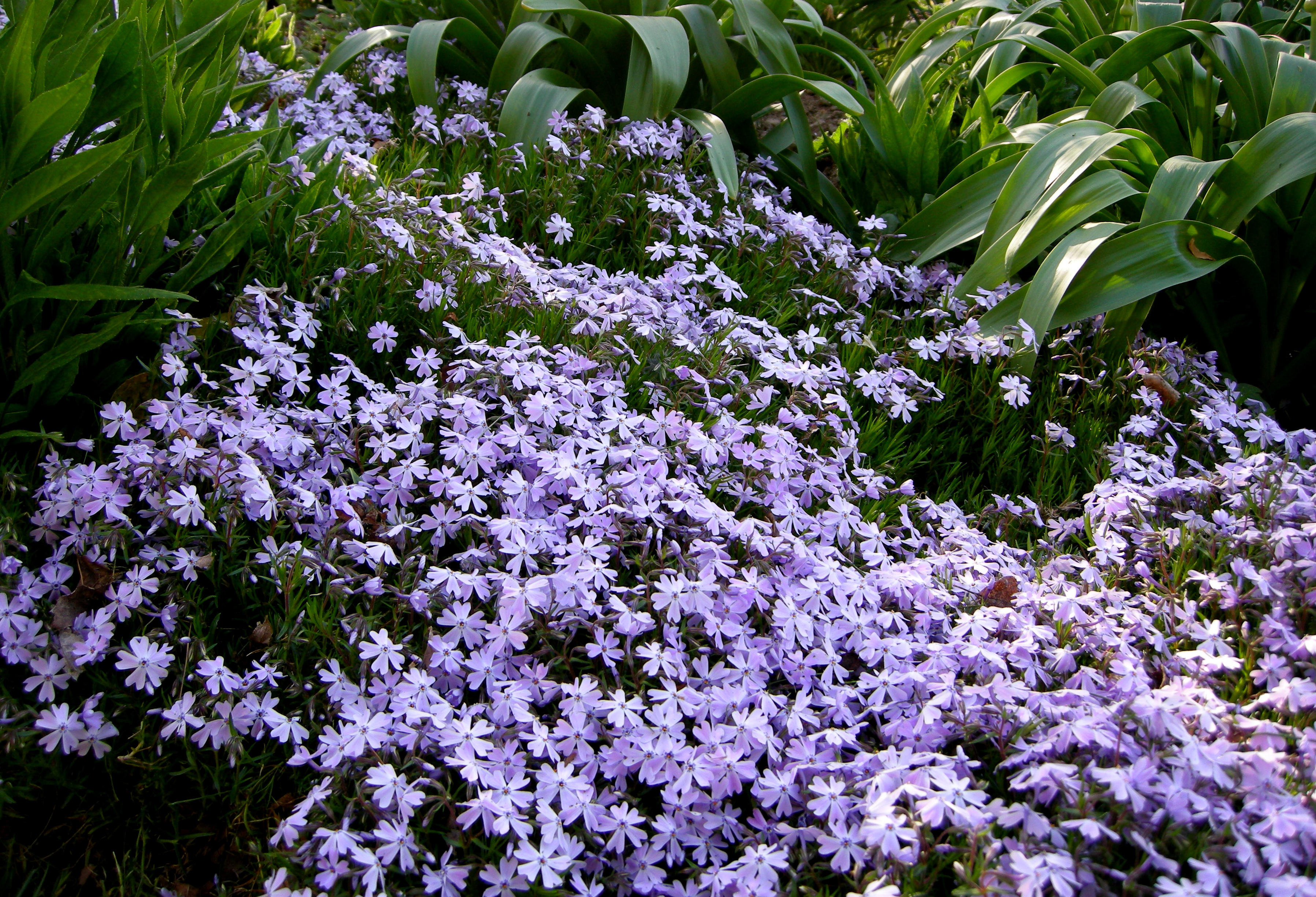
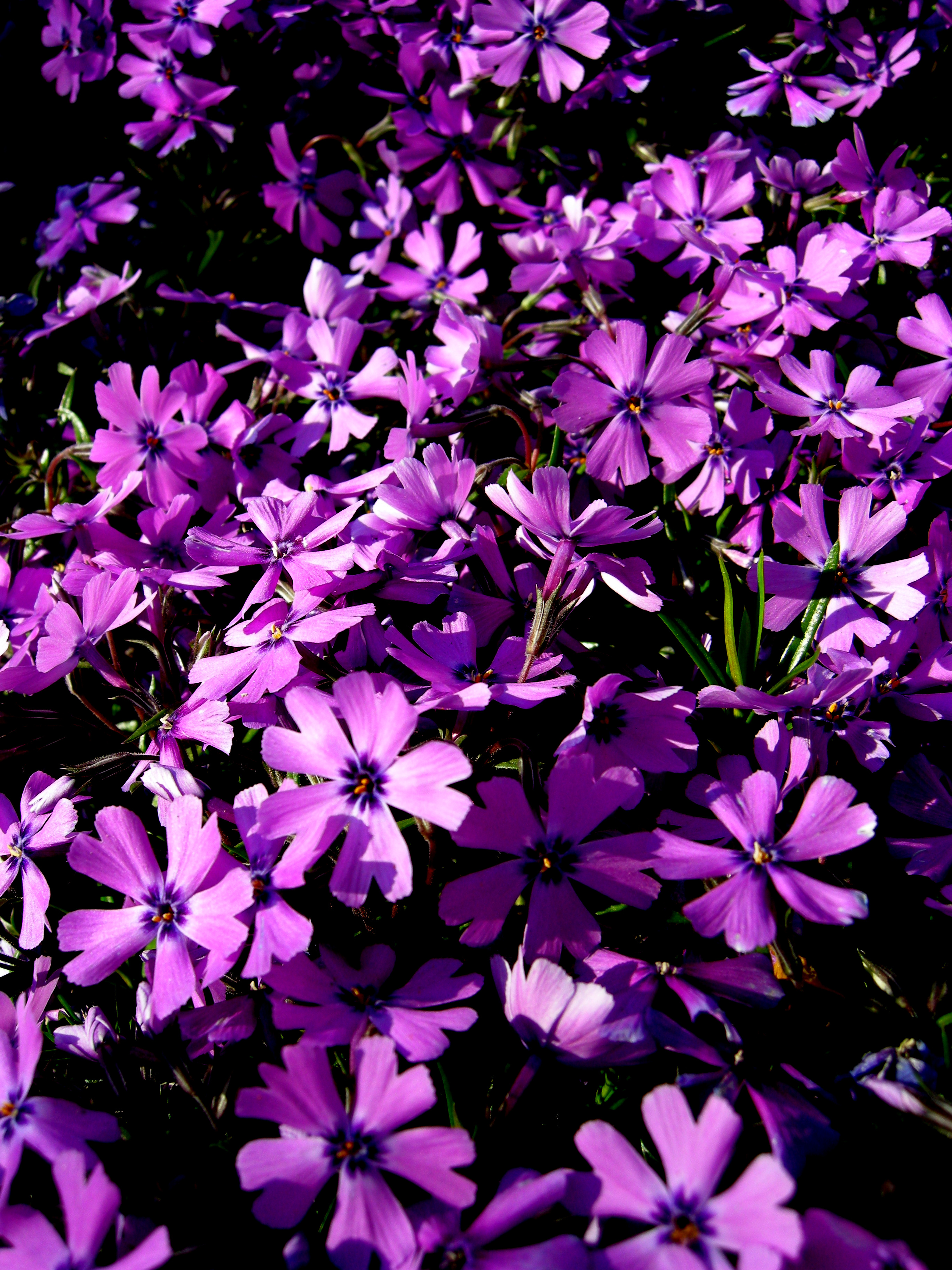
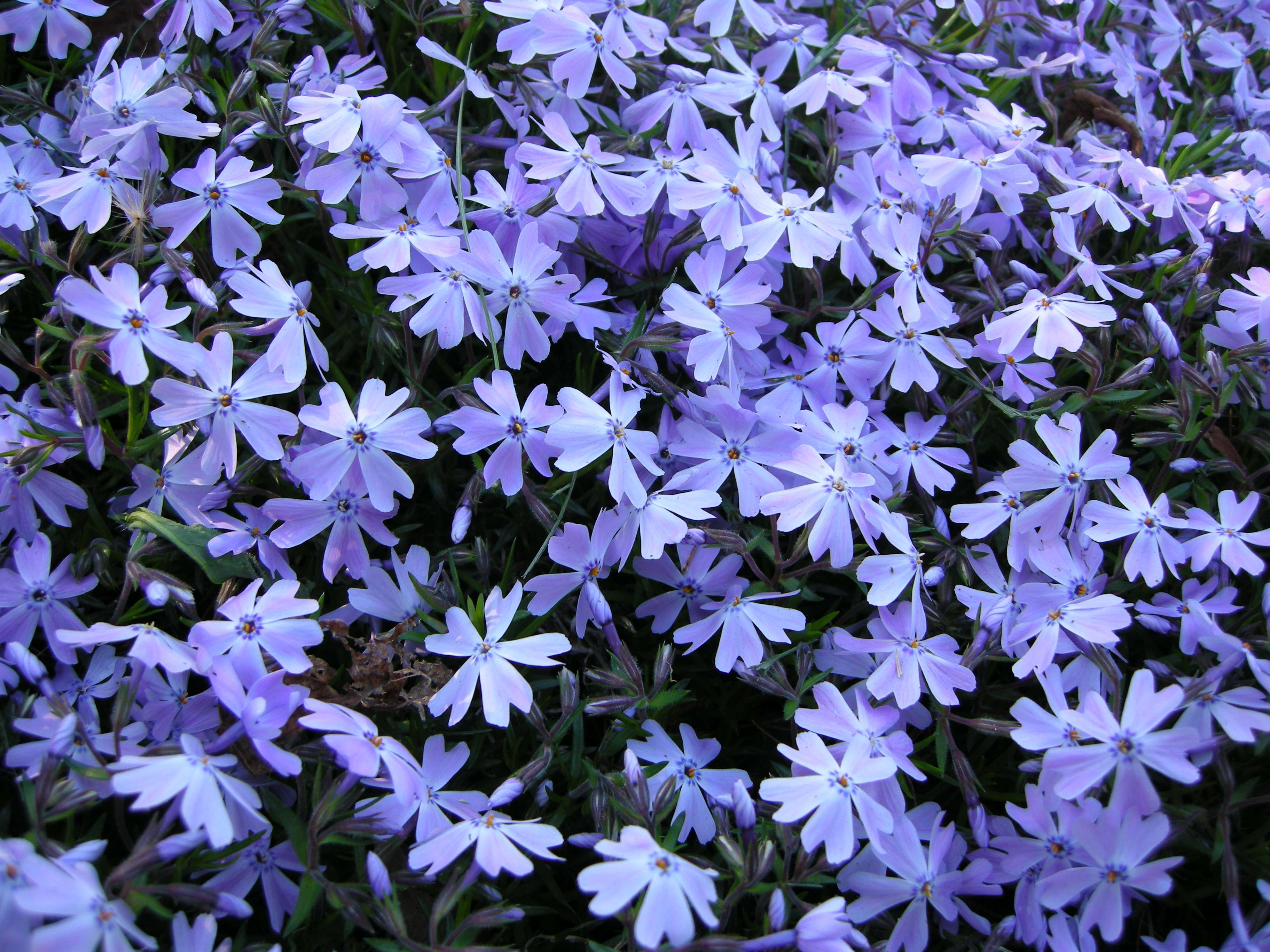
‘Emerald Blue’ moss phlox in my garden

In my last post, Your Native Woodland, I explained how to create your own native woodland garden.  Here I am going to profile some of the wonderful members of the genus Phlox, all native to eastern North America and Pennsylvania in particular.

All the plants except smooth and garden phlox are pictured blooming in my garden right now so I am linking to Garden Blogger’s Bloom Day (“GBBD”) hosted by May Dreams Gardens (link available on April 15) where gardeners from all over the world publish photos of what’s blooming in their gardens.

‘Sherwood Purple’ creeping phlox in my woodland

Phlox are very satisfying native plants to add to all areas of your garden.  They are easy to grow and spread rapidly but not aggressively.  All species that I am profiling are fragrant, some amazingly so, and attract butterflies and hummingbirds.  They are also disease-free except garden phlox, which gets powdery mildew.  And, most importantly, they have copious amounts of gorgeous flowers in purple, blue, pink, and white.  Did I mention that they are native to Pennsylvania and all of eastern North America?!?  What more could you want.

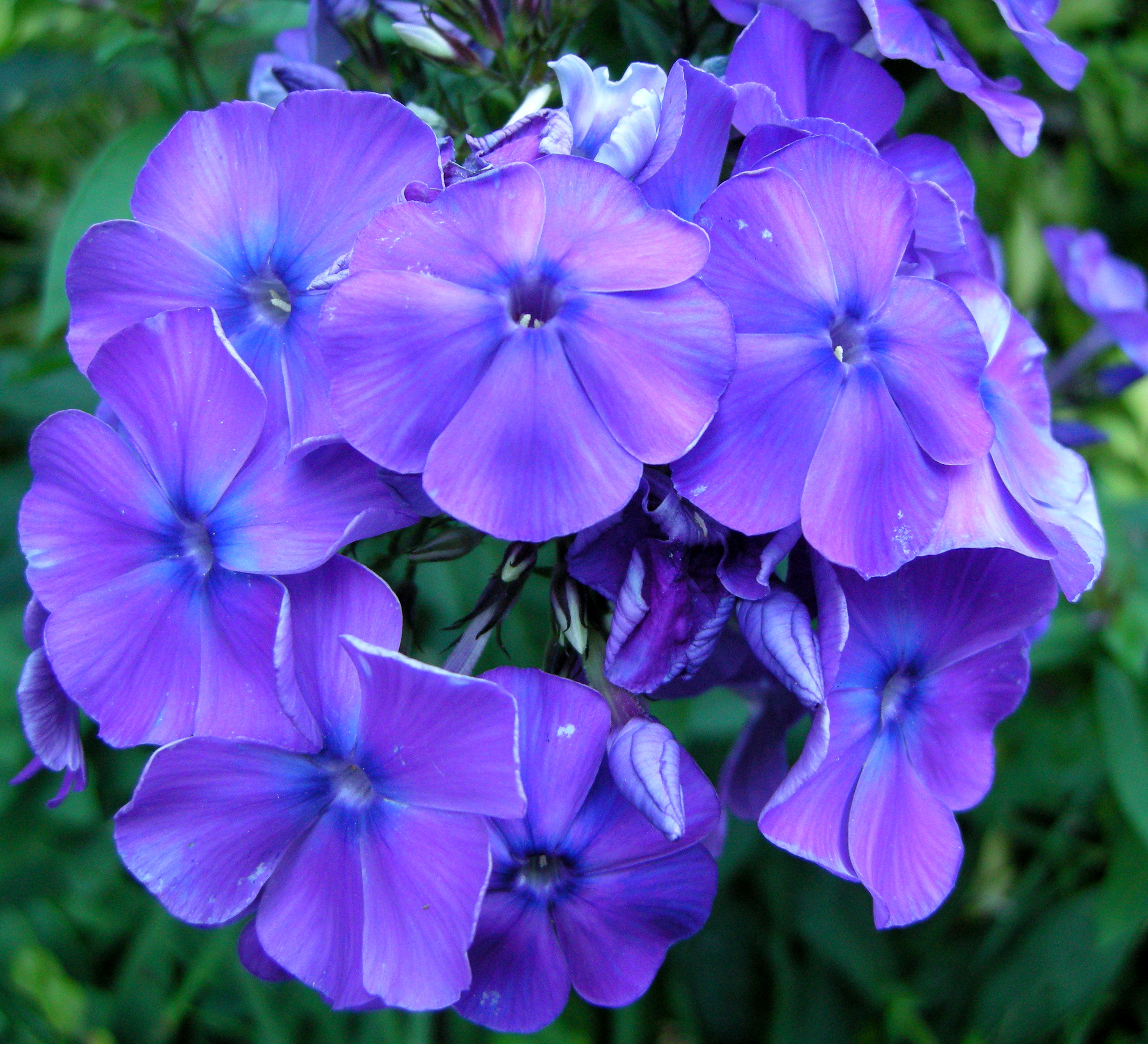
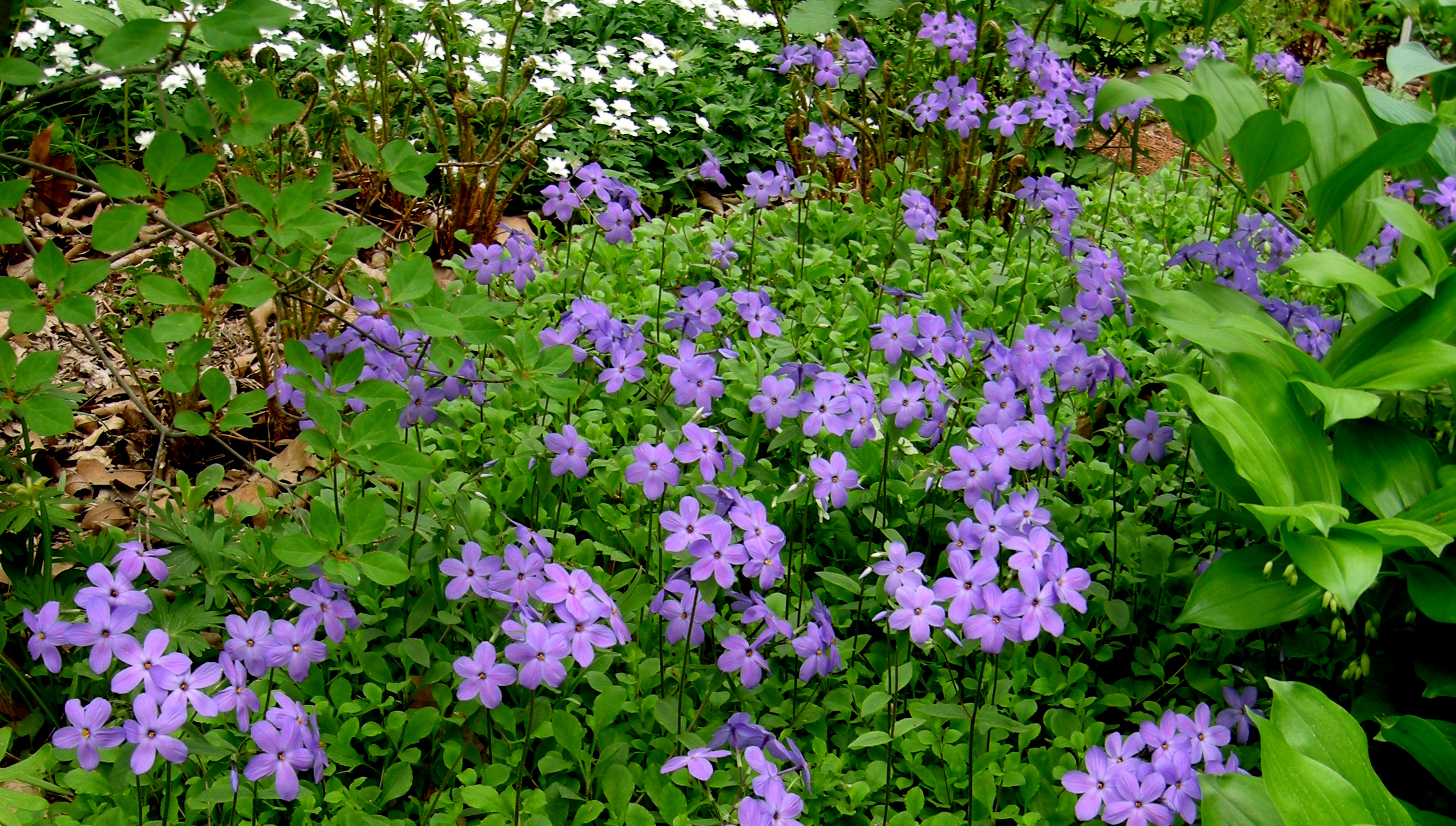
Wild sweet William ‘Blue Moon’, Phlox divaricata


Wild sweet William is the most fragrant of the phlox described here.  Its heavenly scent perfumes the whole garden when it is in bloom from April to June.  It is 8 to 10″ tall and spreading with semi-wintergreen leaves.  Although I have seen it growing in the wild in full shade, I have better success with it in sun to part shade.  Cut it back after flowering to maintain an attractive habit.  My favorite cultivars are ‘Blue Moon’ (photo above), ‘May Breeze’ with steely white flowers, and ‘Blue Elf’, a compact form.

‘Morris Berd’ smooth phlox, Phlox glabberima

Smooth phlox is a taller clump-forming plant, although the clumps expand rapidly when it is happy.  It is 18 to 24″ tall and grows in full sun to part shade in average to moist soil.  Flowers appear from late spring to early summer, a time when not much else is blooming.  The only smooth phlox I have ever seen for sale is ‘Morris Berd’ (photo above).  Its velvety pink flowers with silver highlights are breathtaking.


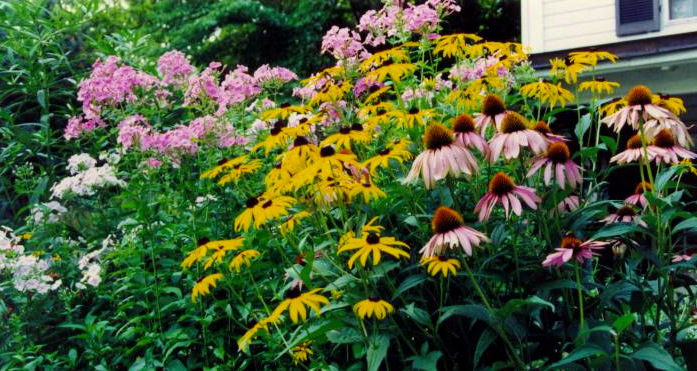
Garden phlox, P. paniculata, left with purple coneflower and ‘Goldsturm’ rudbeckia in my front border in 1993.

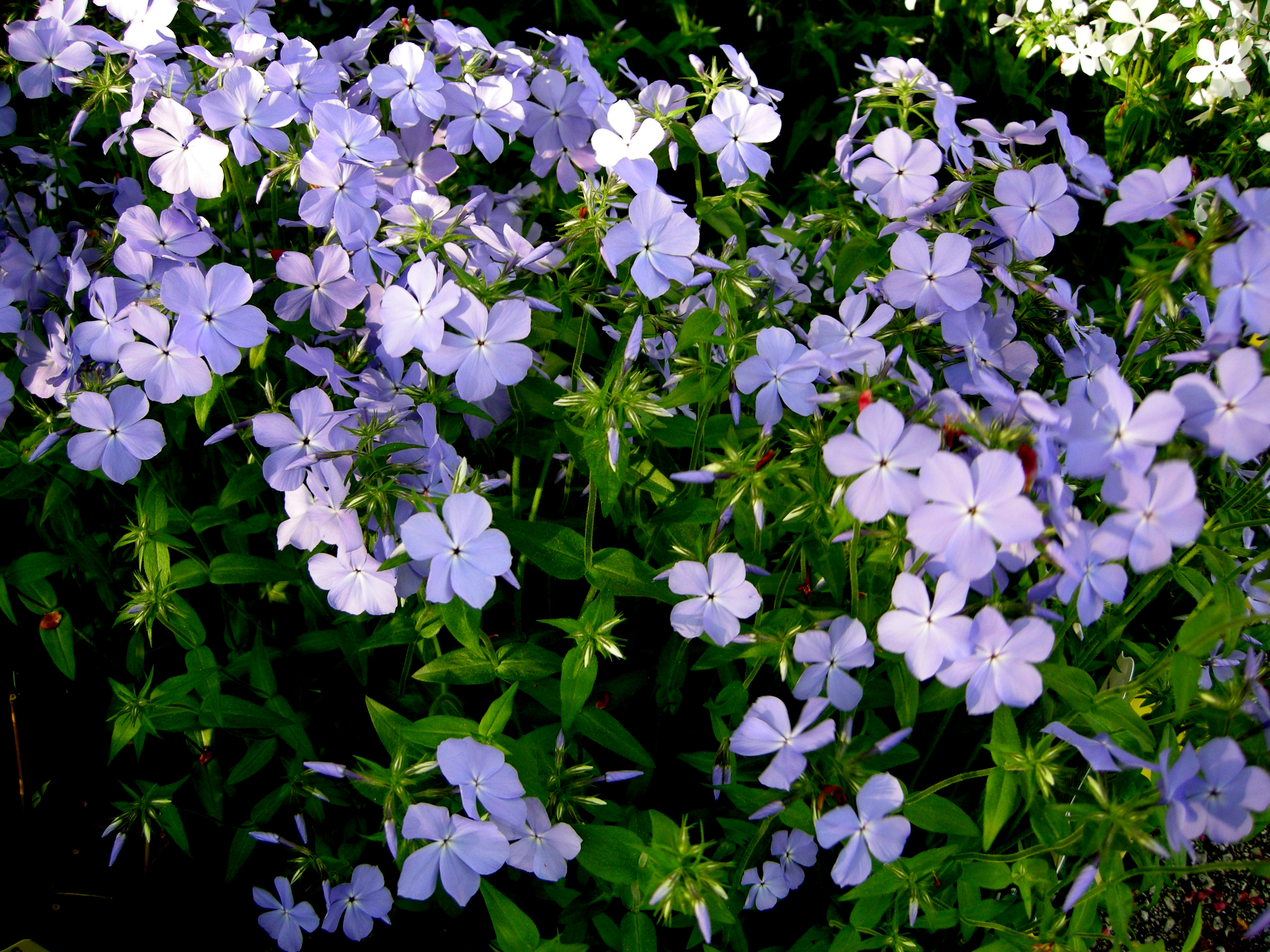
I dream of the day that I can plant a field of every cultivar of garden phlox on the market.  The fragrance of the flowers, second only to wild sweet William, the long bloom period, and the colors available make this a very desirable plant.  It grows anywhere in full sun to a good bit of shade (but not full shade).  It reaches 2 to 4′, and I have cultivars blooming from June to October.  My favorites are very early-blooming ‘Blue Paradise’ (photo below), compact ‘Pixie Miracle Grace’, pure white ‘David’, and ‘David’s Lavender’ with huge flower heads.  Unfortunately, I have failed to photograph these plants in past years, but I hope to remedy that this summer.

‘Blue Paradise’ garden phlox

I get questions all the time about powdery mildew on phlox.  The only phlox that gets powdery mildew in my garden is garden phlox.  The best way to avoid this is to buy mildew resistant varieties but in bad years even these cultivars get mildew.  You can also prevent mildew organically by spraying the leaves with a baking soda and oil formula before mildew strikes.  However, my approach is to ignore it because it doesn’t hurt the plants, it just looks ugly some years.  Focus on the flowers instead and plant plants in front of the phlox that hide the leaves.  Your garden does not have to look perfect.


Creeping phlox ‘Blue Ridge’, P. stolonifera, in my woodland.

If I had to pick one phlox that is my favorite, it would be creeping phlox (not to be confused with P. subulata whose correct common name is moss phlox not creeping phlox).  It has beautiful and plentiful fragrant flowers attractive to butterflies like all the native phlox here.  But in addition, it grows in full, dry shade and makes an excellent 3 to 6″ mat-like groundcover that remains green through winter.  It flowers from March to May.  My favorite cultivars are ‘Sherwood Purple’ (photo at the beginning), which is the most vigorous, ‘Blue Ridge’ (photo above), ‘Home Fires’ (photo below), and ‘Pink Ridge’, which is a slightly different pink and blooms later than ‘Home Fires’.

.

‘Home Fires’ creeping phlox


‘Emerald Blue’ moss phlox, P. subulata, in my garden


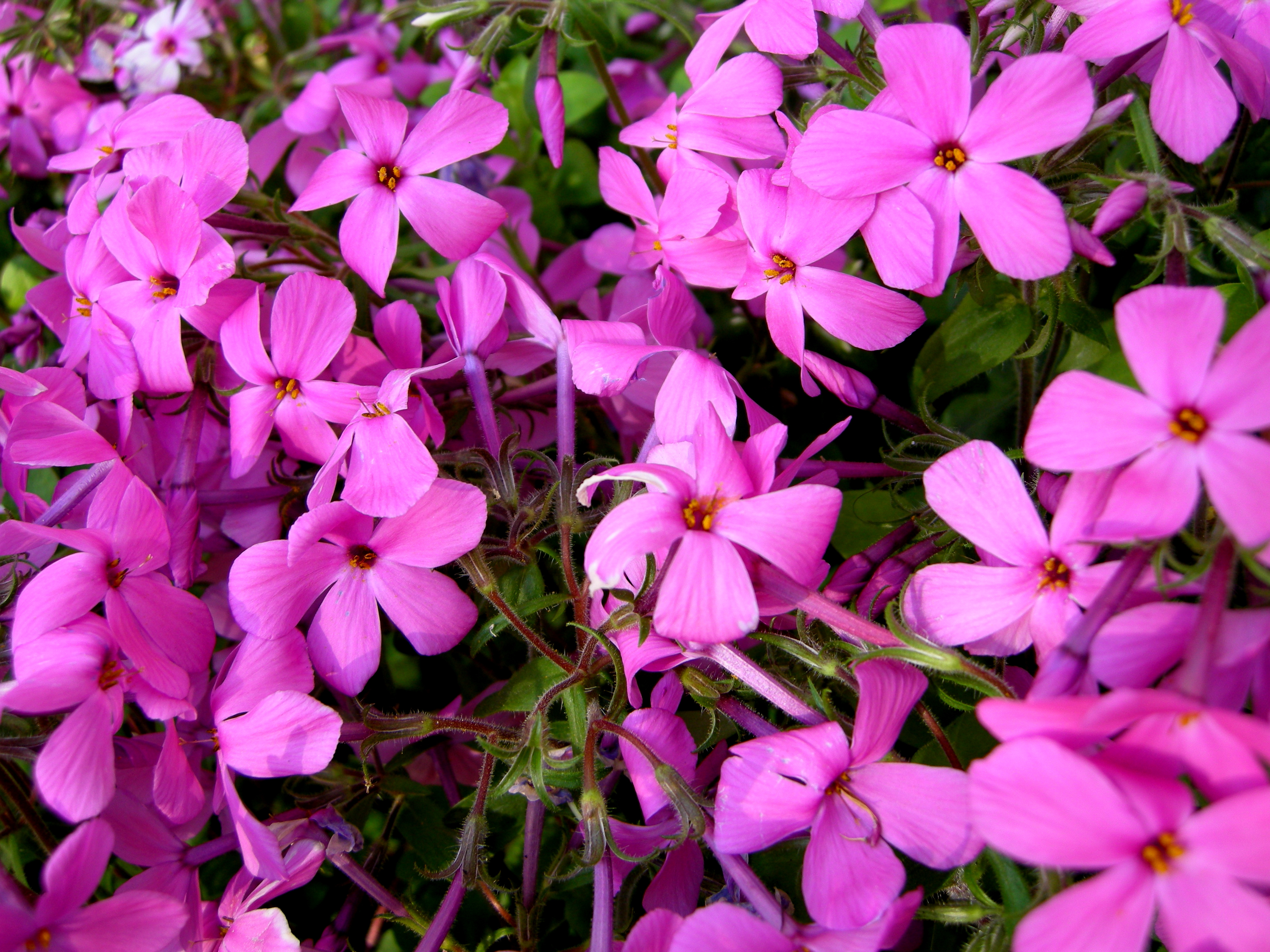
For abundance of flowers, you can’t beat moss phlox: you can’t even see the leaves when it is in bloom in April and May.  It grows in full sun to part shade and forms a wintergreen mat that solidly blocks out weeds.  The needle-like leaves provide an attractive texture year round.  A great plant for dry sites with thin soil because it has a shallow root system and likes to be well-drained.  An annual shearing is recommended although I don’t do this.

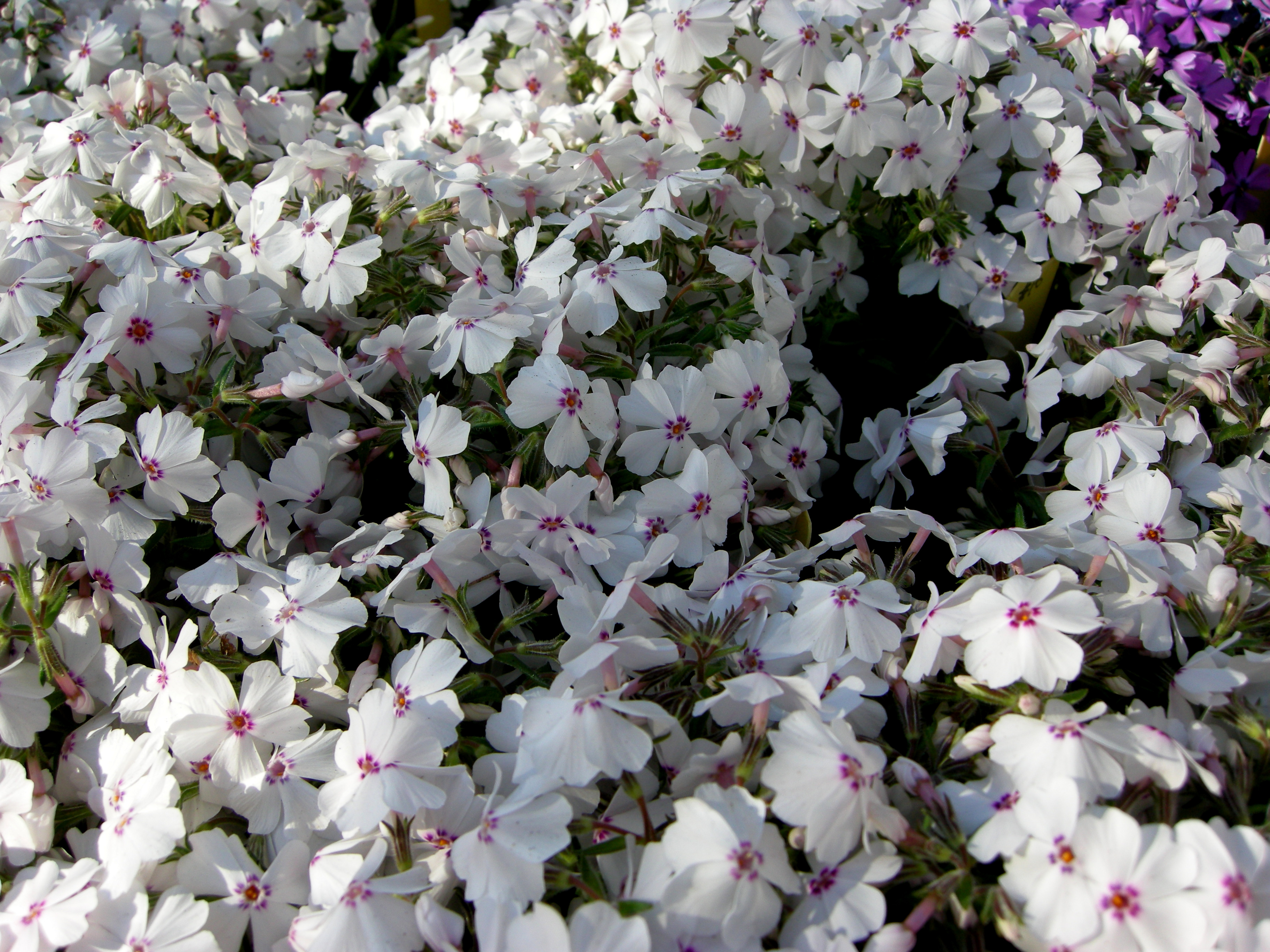
‘Amazing Grace’ moss phlox

A lot of breeding has been done with moss phlox to produce a plethora of beautiful flower colors.  They are all good plants, and I don’t have a favorite, but I like ‘Emerald Blue’ (photo at beginning and above), pink ‘Fort Hill’, white with a red eye ‘Amazing Grace’ (photo above), and ‘Purple Beauty’ (photo below).

‘Purple Beauty’ moss phlox

You can’t go wrong when you add any of these wonderful native phlox to your garden.  Enjoy the flowers!

Carolyn

Nursery Happenings: My second Open House Sale, featuring spring-blooming plants for shade, will take place on Saturday, April 14, from 10 am to 3 pm.  Look for an email listing the plants available if you are on my customer email list.

If you are within visiting distance and would like to receive catalogues and information about customer events, please send your full name and phone number to carolynsshadegardens@verizon.net.  Subscribing to my blog does not sign you up to receive this information.

Facebook:  Carolyn’s Shade Gardens has a Facebook page where I post single photos, garden tips, and other information that doesn’t fit into a blog post.  You can look at my Facebook page here or click the Like button on my right sidebar here.

Notes: Every word that appears in orange on my blog is a link that you can click for more information.  If you want to return to my blog’s homepage to access the sidebar information (catalogues, previous articles, etc.) or to subscribe to my blog, just click here.
Your Native Woodland: If You Build It They Will Come

Posted in Fall Color, groundcover, landscape design, native plants with tags , , , , , , , , , , , , , , , , , , , , , , on April 2, 2012 by Carolyn @ Carolyns Shade Gardens

Carolyn’s Shade Gardens is a retail nursery located in Bryn Mawr, PA, specializing in showy, colorful, and unusual plants for shade.  The only plants that we ship are snowdrops within the US.  For catalogues and announcements of local events, please send your full name, mailing address, and cell number to carolyn@carolynsshadegardens.com and indicate whether you are interested in snowdrops, hellebores, and/or hostas.  Click here to get to the home page of our website for catalogues and information about our nursery and to subscribe to our blog.

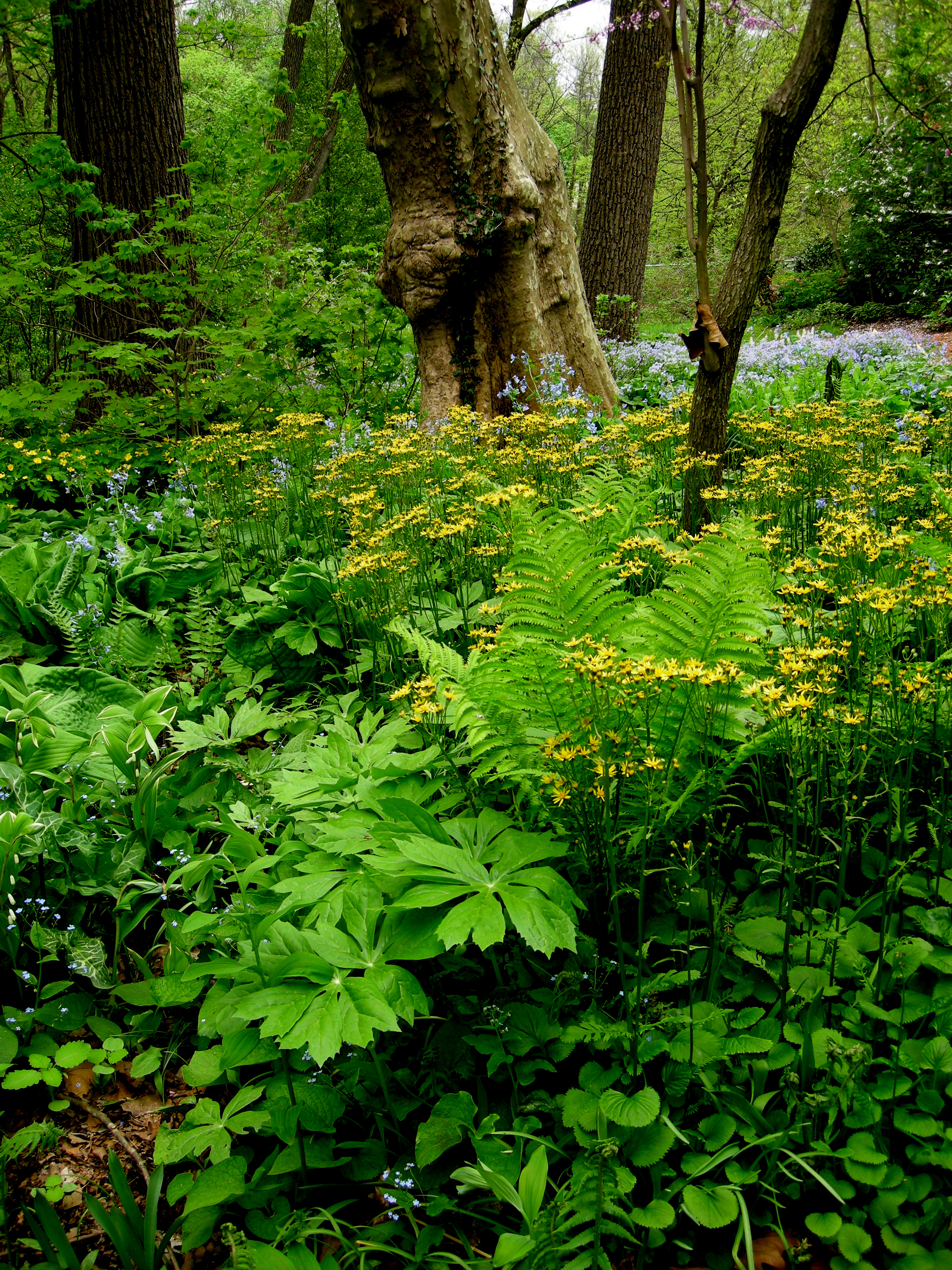
Virginia bluebells and Celandine poppy in my woodland

Well you might have to plant a few first.  What am I talking about?  How to create your very own woodland filled with native plants.  I have written before about how important native plants are to our survival.  To read about it, click here.  Now I am going to tell you how to create a shade garden in which mid-Atlantic native plants thrive and multiply with abandon.

Note: There is a Part 2 with more suggestions, click here.

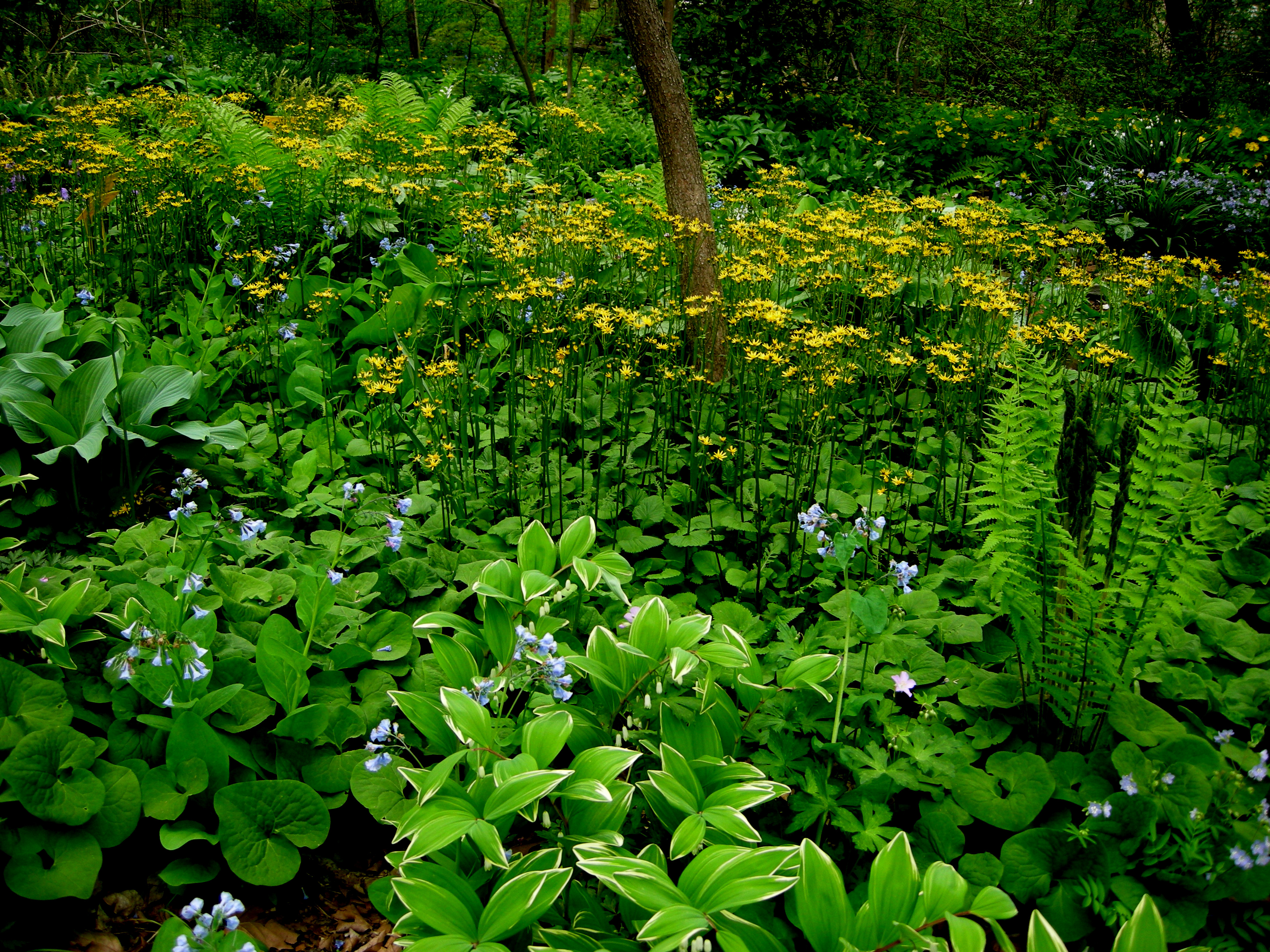
my native woods

It is really quite simple.  All you do is take one woodland area, mix with generous amounts of compost, add the appropriate native plants, and wait a few years.  The key is knowing which plants to use.


I started with the worst possible soil in the worst possible conditions.  Not only were the beds composed of the hard baked clay and rocks prevalent in our area, but they were filled with roots from 100-year-old London plane and—hold onto your hats—black walnut trees.  Add to that, years of trash, including roofing slate and coal furnace shovelings, dumped in the woods before municipal collection came along and construction debris from the 1960s.


Nature does not dot the landscape with precious collectibles but  “designs” with large sweeps of single types of plants, and that is what I have done in my woods  To create a woodland like mine, all you do is plant at least five but preferably seven and ideally nine of the plants profiled below in beds amended with generous amounts of compost, mulch heavily with ground leaves, and stand back and wait.  Really….that’s what you do….it works.


I wanted to recommend six plants, but when it came down to slimming the competition, I had to go with nine: seven spring-blooming and two fall-blooming.  All are native to the mid-Atlantic and Pennsylvania and all seed freely in a woodland setting once they get going.  And the winners are:

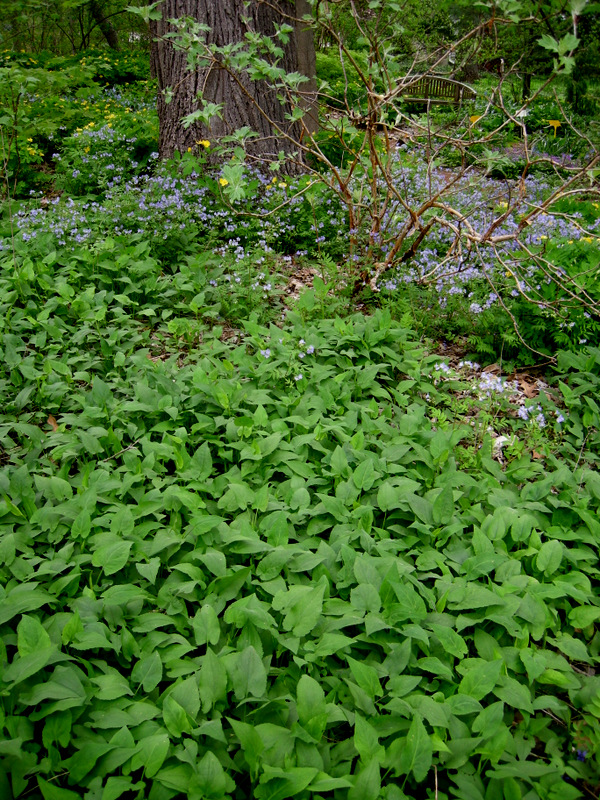
Virginia bluebells, Mertensia virginica: porcelain blue flowers top blue-green leaves in March and April, goes dormant when hot.  All my plants came from one plant given to me by a friend.


Celandine poppy, Stylophorum diphyllum: lovely filigreed leaves are covered with large bright yellow flowers in April and May.  Again, all my plants came from one plant given to me by a friend.

Dwarf Jacob’s ladder, Polemonium reptans: wintergreen fern-like leaves are followed in April and May by copious blue bell-shaped flowers replaced by ornamental chartreuse seedpods.

.

White violets, Viola striata: white flowers in April and May.  All my plants came from one clump dug from my woods.


Blue creeping phlox, Phlox stolonifera ‘Blue Ridge’: wintergreen mat of foliage is topped with blue flowers in April and May.


Creeping phlox, Phlox stolonifera ‘Sherwood Purple’: creeping phlox comes in blue, purple, white, and pink.  The purple is the most vigorous.


Native ginger, Asarum canadense: the reddish purple flowers appear below the leaves.


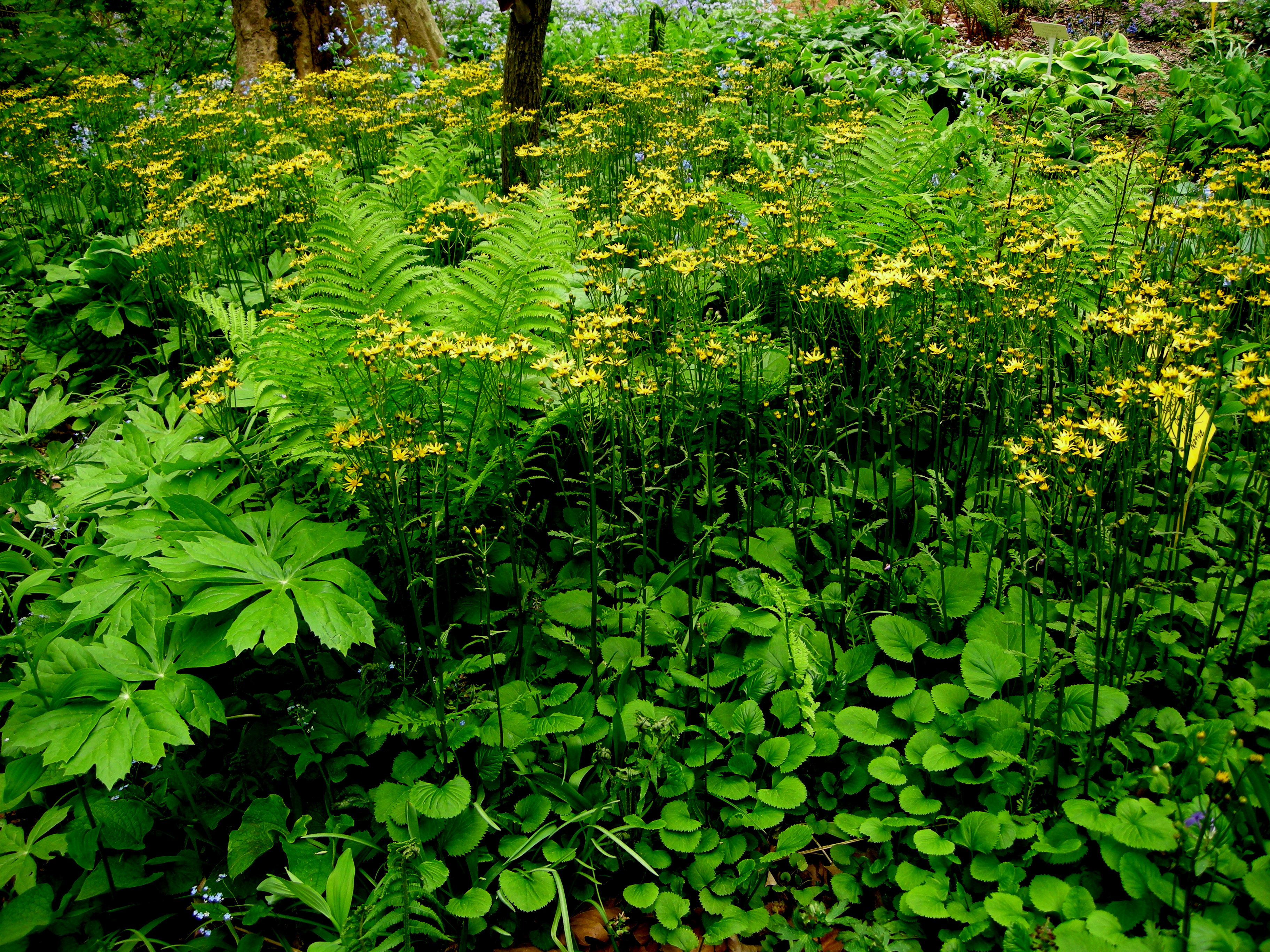
Golden groundsel, Senecio aureus: the wintergreen leaves are topped by attractive purple buds in March followed by fragrant yellow flowers in April and May.  This vigorous spreader is a great native substitute for vinca, pachysandra, and ivy.

Blue wood aster, Aster cordifolius: the leaves of blue wood aster completely cover the ground in the spring.


Blue wood aster is covered with flowers in October and November.

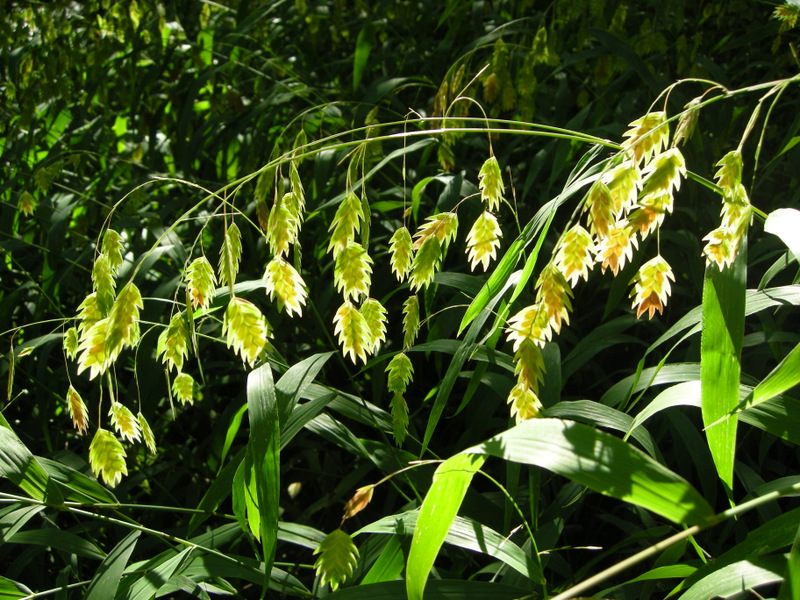
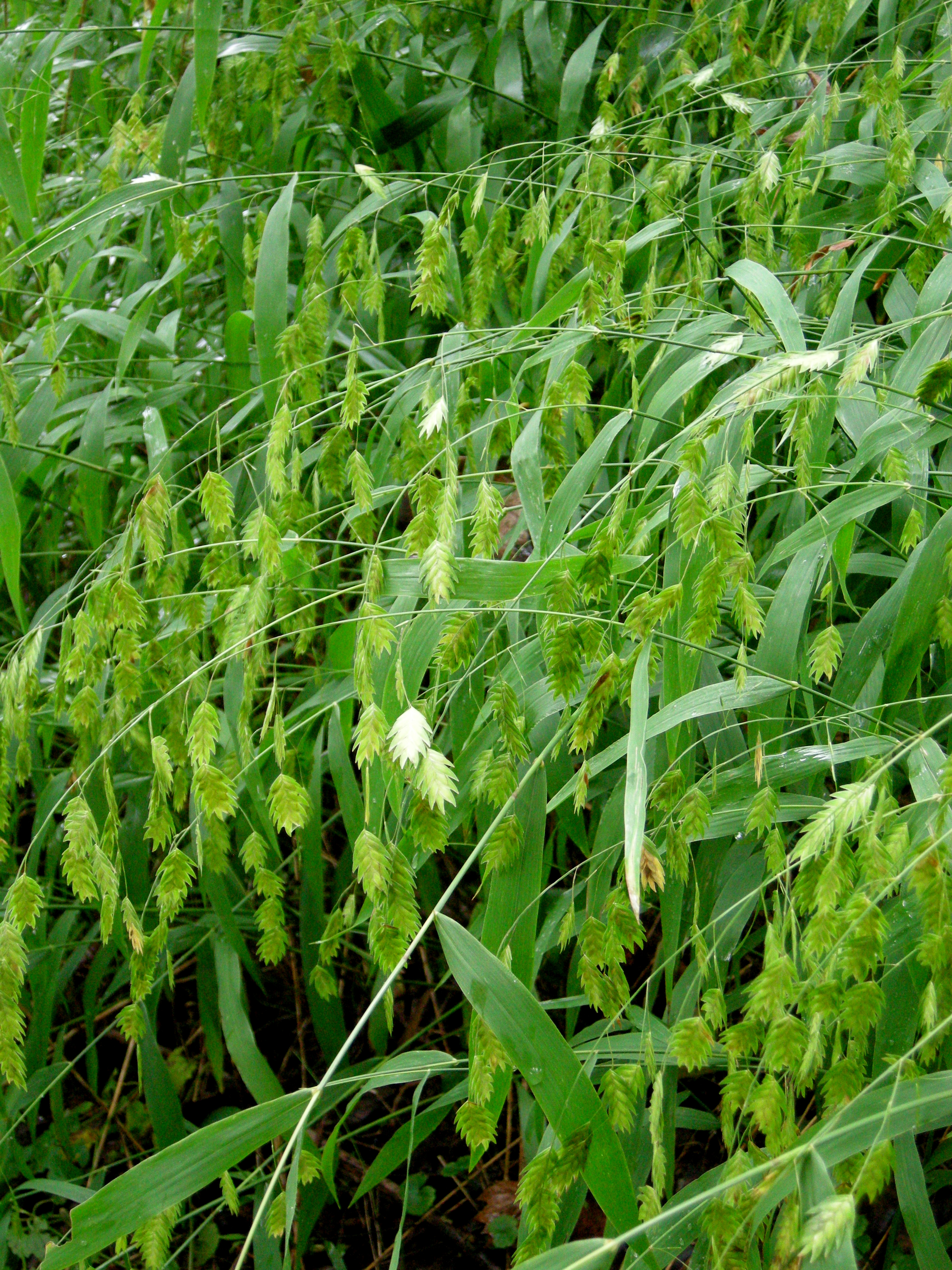
Northern sea oats, Chasmanthium latifolium: pendulous oat-like flowers grace this native shade grass in October and November.  The foliage ages to a lovely khaki color that remains ornamental through winter.

The flowers of northern sea oats in the slanted light of fall.


As the spreading, woodland plants profiled above establish themselves, you can add pockets of other special natives like trilliums, jack-in-the-pulpits, mayapples, bloodroot, and ferns.  The result is magical.

Carolyn

Notes: Every word that appears in orange on my blog is a link that you can click for more information.  If you want to return to my blog’s homepage to access the sidebar information (catalogues, previous articles, etc.) or to subscribe to my blog, just click here.

In Which I Decide To Be Thankful

Posted in garden essay, green gardening, native plants, Uncategorized with tags , , on November 22, 2011 by Carolyn @ Carolyns Shade Gardens

Carolyn’s Shade Gardens is a retail nursery located in Bryn Mawr, PA, specializing in showy, colorful, and unusual plants for shade.  The only plants that we ship are snowdrops within the US.  For catalogues and announcements of local events, please send your full name, mailing address, and cell number to carolyn@carolynsshadegardens.com and indicate whether you are interested in snowdrops, hellebores, and/or hostas.  Click here to get to the home page of our website for catalogues and information about our nursery and to subscribe to our blog.

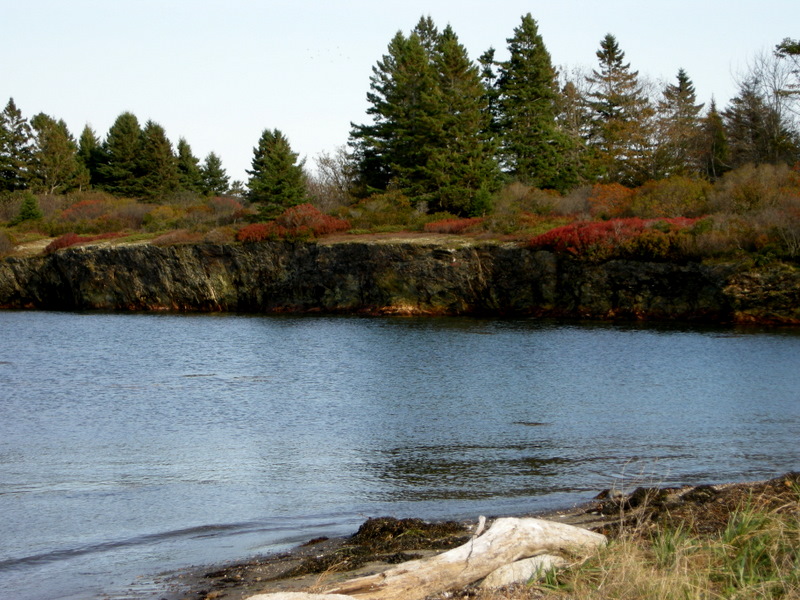
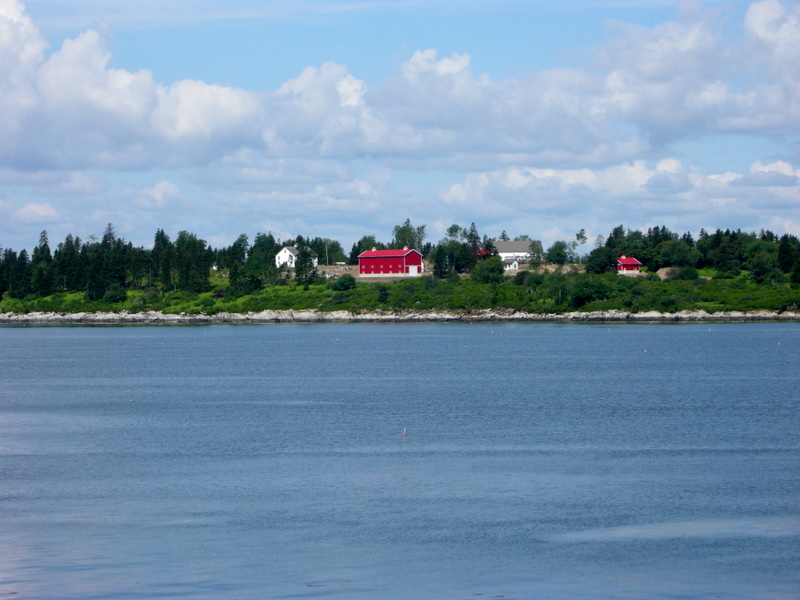
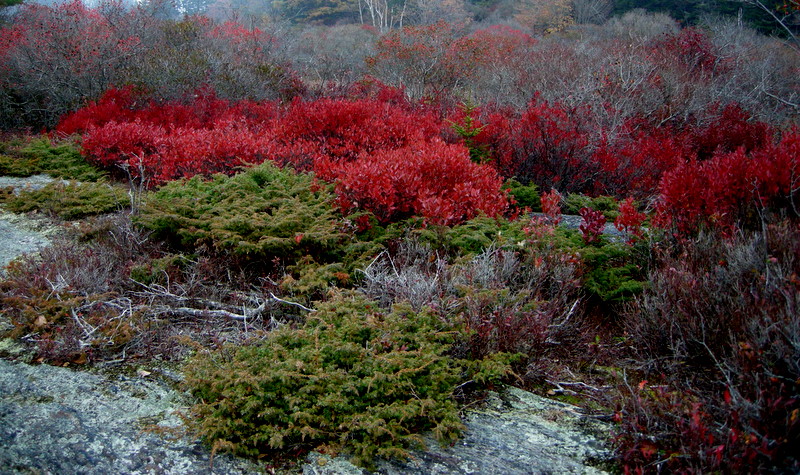
All photos in this post were taken in and around Cliff Island, Maine, U.S., in summer or fall.  Click on any photo to enlarge.

This is my 2011 Thanksgiving essay.  Last year in My Thanksgiving Oak Forest, I described why my husband and I decided to transplant native red oak seedlings to a waste area filled with invasive plants.  If you haven’t had a chance to read it, I hope you will click here because I think it is my most important post. This year’s essay is a glass-half-empty, glass-half-full kind of story, which ends with me deciding to be thankful, always a good result at any time of year.

Frequent readers of this blog will know that I spend a lot of time on a small island seven miles off the coast of Maine called Cliff Island.  The island is a very special place for many reasons.  Physically, it is achingly beautiful, surrounded by rocky shores and ocean and with acres of woods, marshes, and beaches created by nature and for the most part preserved that way, although it is all private land. 

Our family has no vehicle so I walk three to four miles every day often to get places but predominantly for pleasure.  And while I walk I think.  In the midst of all this beauty I am often sad.  Aside from public land, few places remain in the eastern U.S. like Cliff Island where the ecology is not rapidly changing for the worse.

Surrounded by a close to pristine landscape, I mourn for what southeastern Pennsylvania, where I live, must have been like and how it has been changed beyond recognition and probably beyond redemption.  As Heather from Restoring the Landscape with Native Plants says: “Although many of our woodland landscapes have been invaded with invasive species and altered by humans, diminished representations of the former plant community still exist and provide us with a window of what the woodland used to be [emphasis added].”

I think about how most people don’t know, and many of them don’t care, what a real native landscape looks and feels like.  How will we preserve the precious areas that remain if people have no context within which to appreciate them?  Jill on Landscape Lover’s Blog describes a noted French landscape architect as pointing out that “most people prefer highly-managed places – pleasurable gardens and efficient landscapes – over raw nature, which is increasingly perceived as distant, unpleasant, almost repellent, with its insects, bacteria, and disorder [emphasis added].”  Is that true?  I am afraid so.

Even Cliff Island is under attack with invasive non-native plants making their way out from the mainland and displacing the island’s delicate native ecology.  We currently have a full scale battle going on with Japanese knotweed, purple loosestrife, oriental bittersweet, multiflora rose, Japanese barberry, burning bush euonymus, and Norway maple.  These plants have only started multiplying invasively on Cliff Island in the last 20 years or so and yet the rate of increase is exponential.

On better days, when my half-full attitude takes over, I am deliriously thankful that I get to spend time on Cliff Island.  I stare at the landscape trying to burn it into my memory for viewing during the rest of the year.  I find it so beautiful that it seems unreal, like a movie set.  I never get tired of it.  No designed garden can compare with what nature has created.

I am also eternally thankful that I am able to appreciate this natural beauty.  That I don’t prefer highly managed landscapes and that I love being outside.  I am grateful that my training enables me to understand how the plant communities on the island work and to appreciate the ornamental characteristics of the native plants.

I am thankful that Cliff Island’s balance has not been destroyed.  In Pennsylvania, any unplanted area is soon filled with invasives.  On the island, the regenerative power of the native plants remains in tact.  An area of abandoned lawn will quickly be re-colonized by blueberries, goldenrod, bayberry, asters, and other natives.

I am also thankful that, four years ago, I was able to launch a non-native invasive plant removal program on Cliff Island.  Volunteers from the community are working hard to remove invasives before they become established like they are on the mainland.  I am happy to report that the program is a huge success.  If you would like to know more about the program, please feel free to email me at carolynsshadegardens@verizon.net.  Nothing would make me happier than to help others preserve their native landscape.

Readers of my 2010 Thanksgiving post will be pleased to know that we are continuing what will now be our Thanksgiving tradition and have planted three more native red oaks at the bottom of our property.

Happy Thanksgiving, Carolyn

Notes: Every word that appears in orange on my blog is a link that you can click for more information.  If you want to return to my blog’s homepage to access the sidebar information (catalogues, previous articles, etc.) or to subscribe to my blog, just click here.
October GBBD: A Few Fall Favorites for Flowers

Posted in Fall, Fall Color, Garden Blogger's Bloom Day, landscape design, native plants, Shade Gardening, Shade Perennials with tags , , , , , , , , , , , , , , on October 10, 2011 by Carolyn @ Carolyns Shade Gardens

Carolyn’s Shade Gardens is a retail nursery located in Bryn Mawr, PA, specializing in showy, colorful, and unusual plants for shade.  The only plants that we ship are snowdrops within the US.  For catalogues and announcements of local events, please send your full name, mailing address, and cell number to carolyn@carolynsshadegardens.com and indicate whether you are interested in snowdrops, hellebores, and/or hostas.  Click here to get to the home page of our website for catalogues and information about our nursery and to subscribe to our blog.

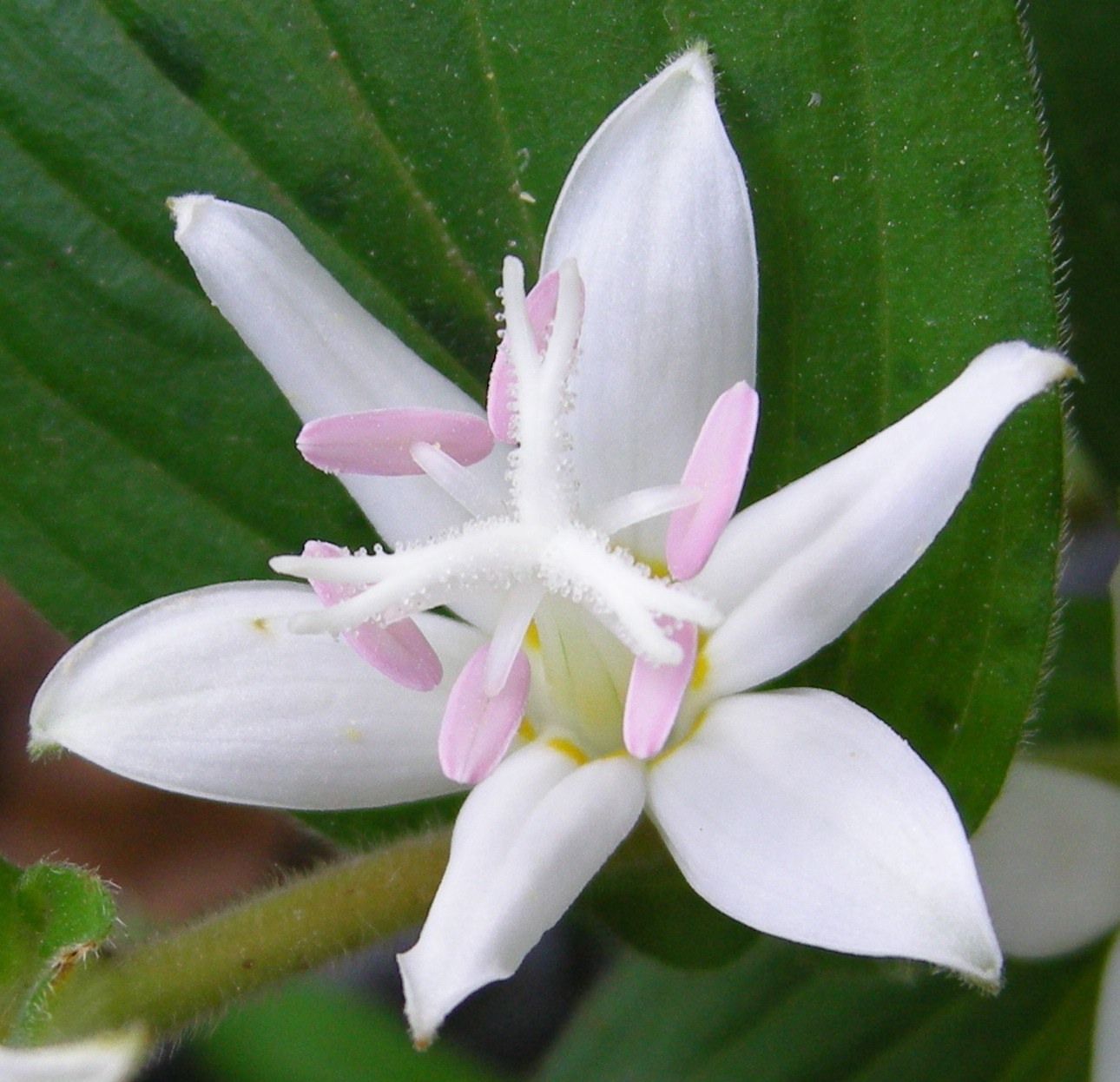
The subtle coloring of ‘White Towers’ toad-lily, Tricyrtis latifolia ‘White Towers’, is magical in the fall.  Every photo was taken at Carolyn’s Shade Gardens this fall.

I am linking this post to Garden Blogger’s Bloom Day for October when gardeners around the world show photos of what’s blooming in their gardens (follow the link to see  photographs from other garden bloggers assembled by Carol at May Dreams Gardens).  I am also linking to Gesine’s Bloom Day at Seepferds Garten.  I am located in Bryn Mawr (outside Philadelphia), Pennsylvania, U.S., and zone 6b.

In my last post, A Few Fall Favorites for Foliage and Fruit,  I explained that, inspired by an article about dressing up your fall garden with mums because everything else is finished, I grabbed my camera and headed outside to prove them wrong.  There was so much going on that I divided the plants into three posts: foliage and fruit, flowers, and hostas for fall.  This is part two highlighting flowers.  So here are some of the flowers dressing up my shady gardens right now:

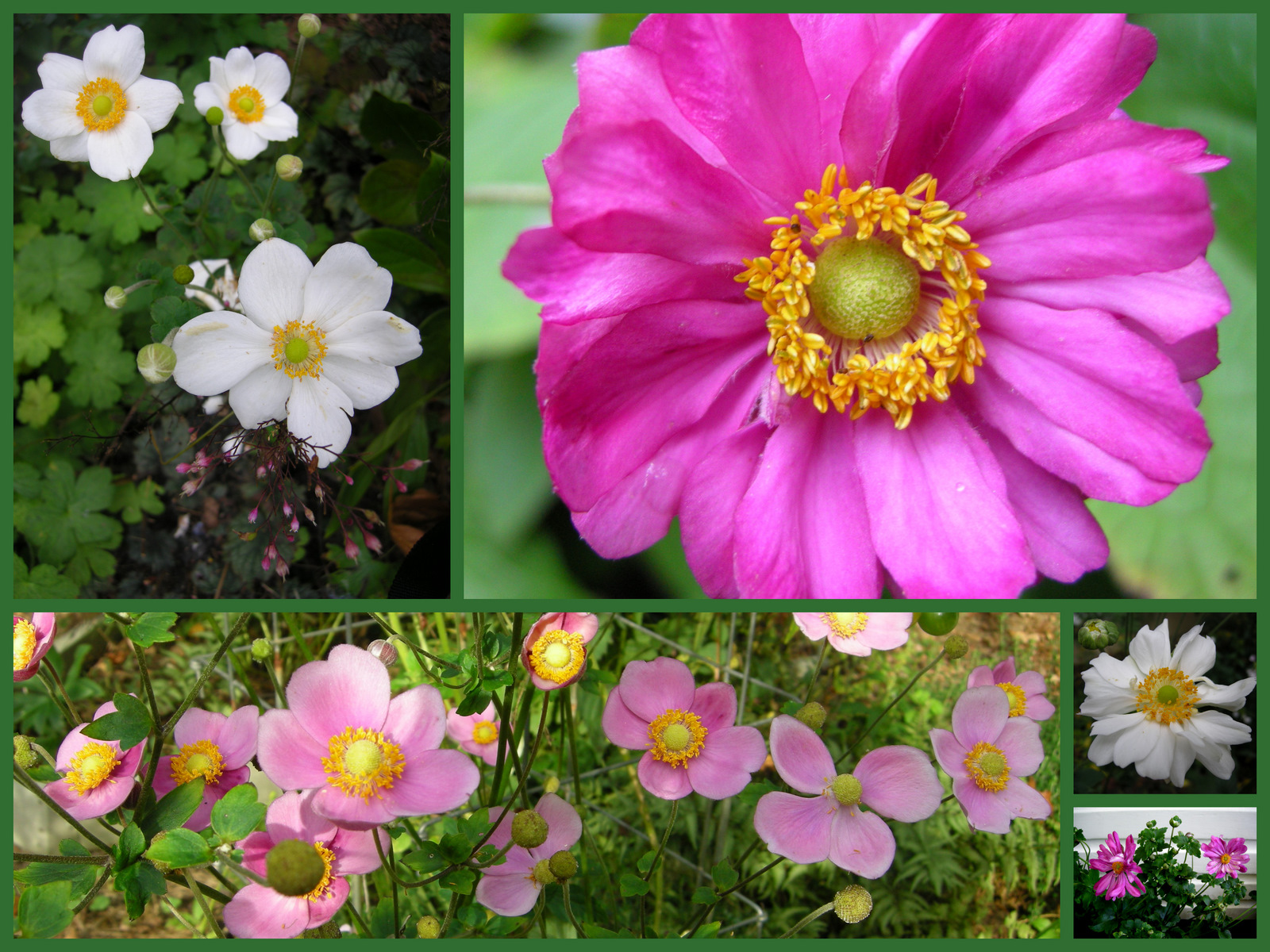
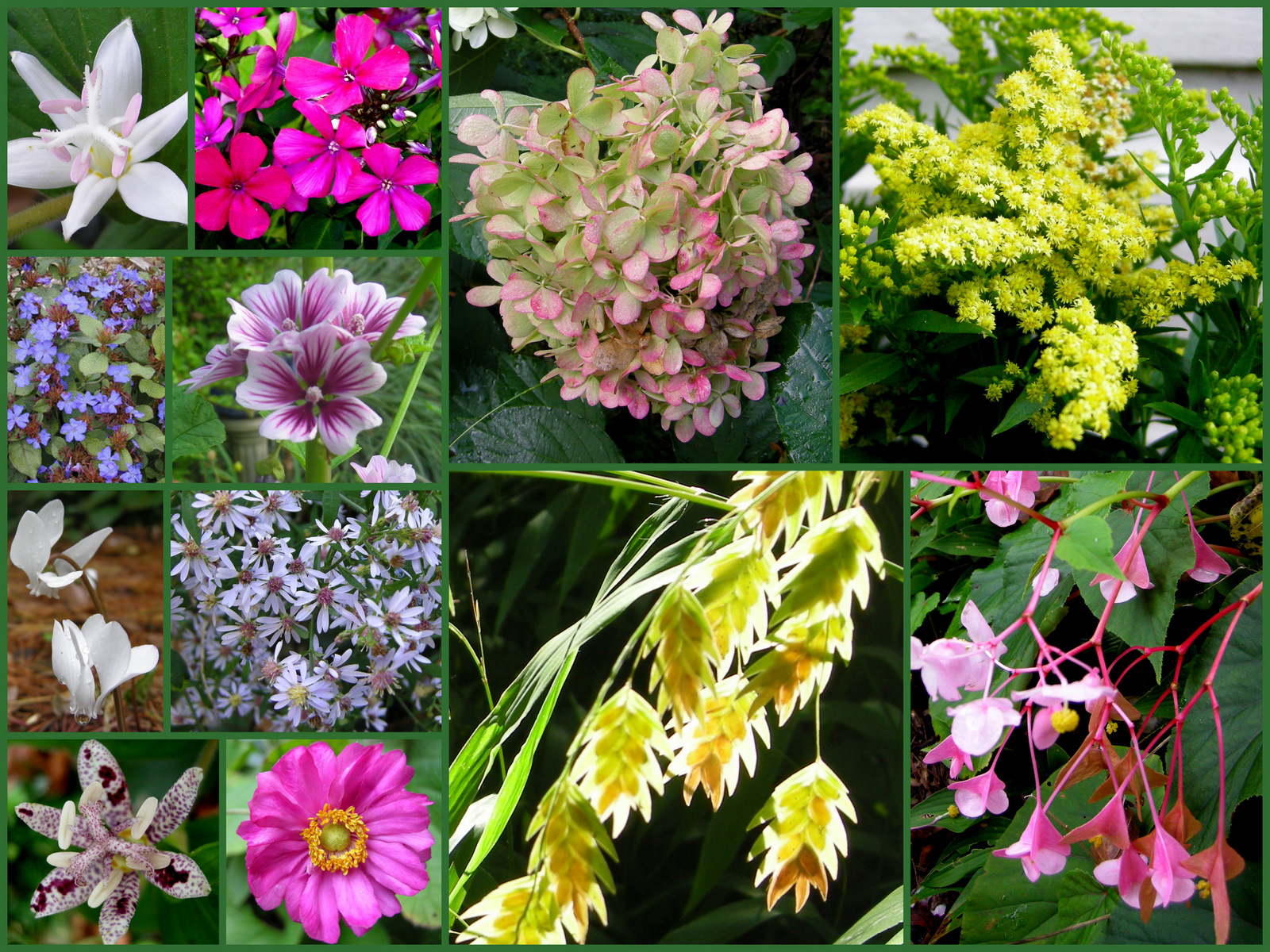
Japanese anemones, Anemone x hybrida, are one of the undisputed stars of my fall garden, growing anywhere from full sun to almost full shade and thriving no matter what the weather.  Clockwise from upper left: ‘Honorine Joubert’, ‘Margarete’, ‘Whirlwind’, ‘Bodnant Burgundy’, ‘September Charm’.

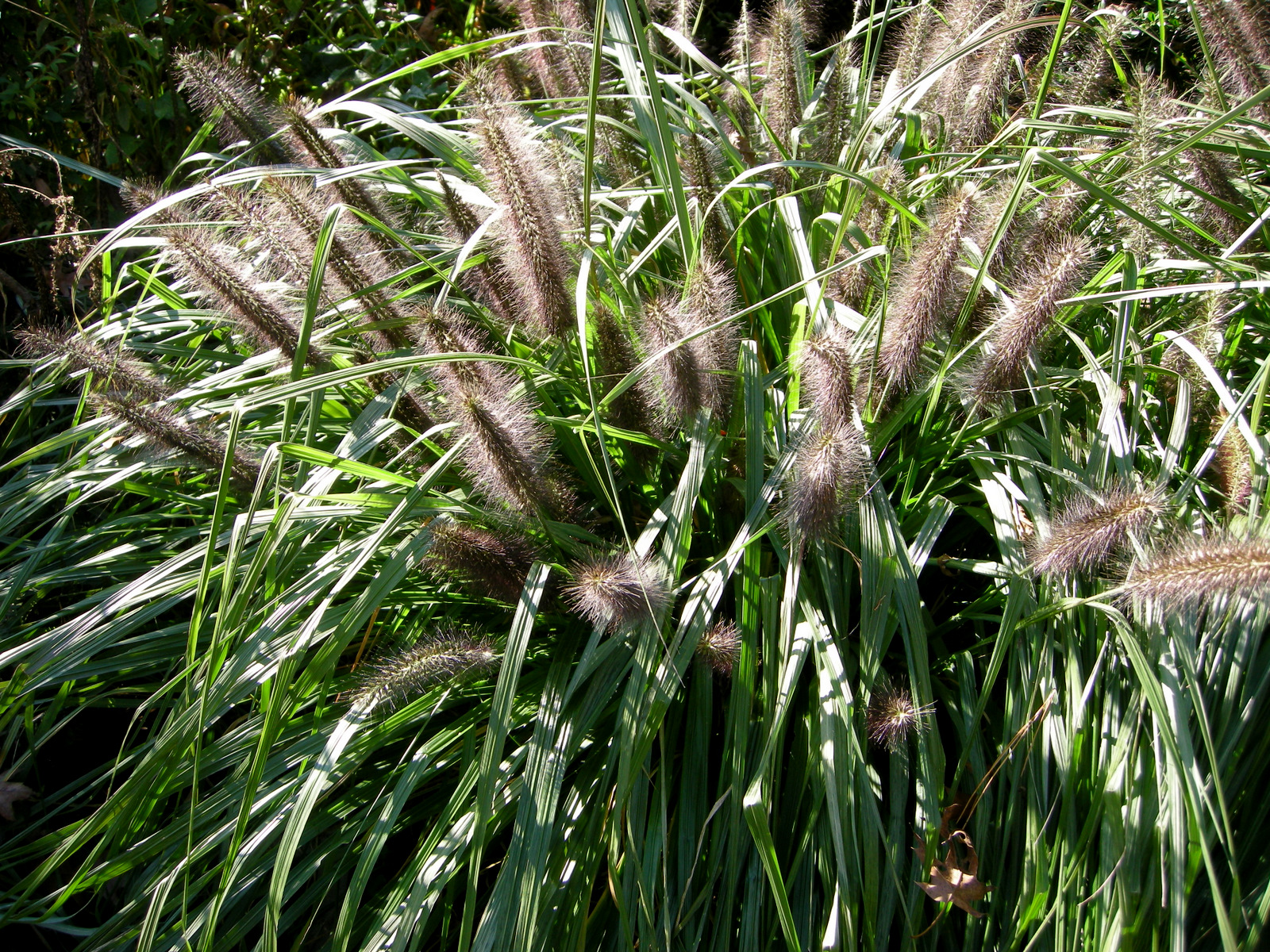
The black plumes of ‘Moudry’ fountain grass, Pennisetum alopecuroides ‘Moudry’, glow in the low-angled fall light.  ‘Moudry’ does well in the shade, flowering later and remaining more compact.

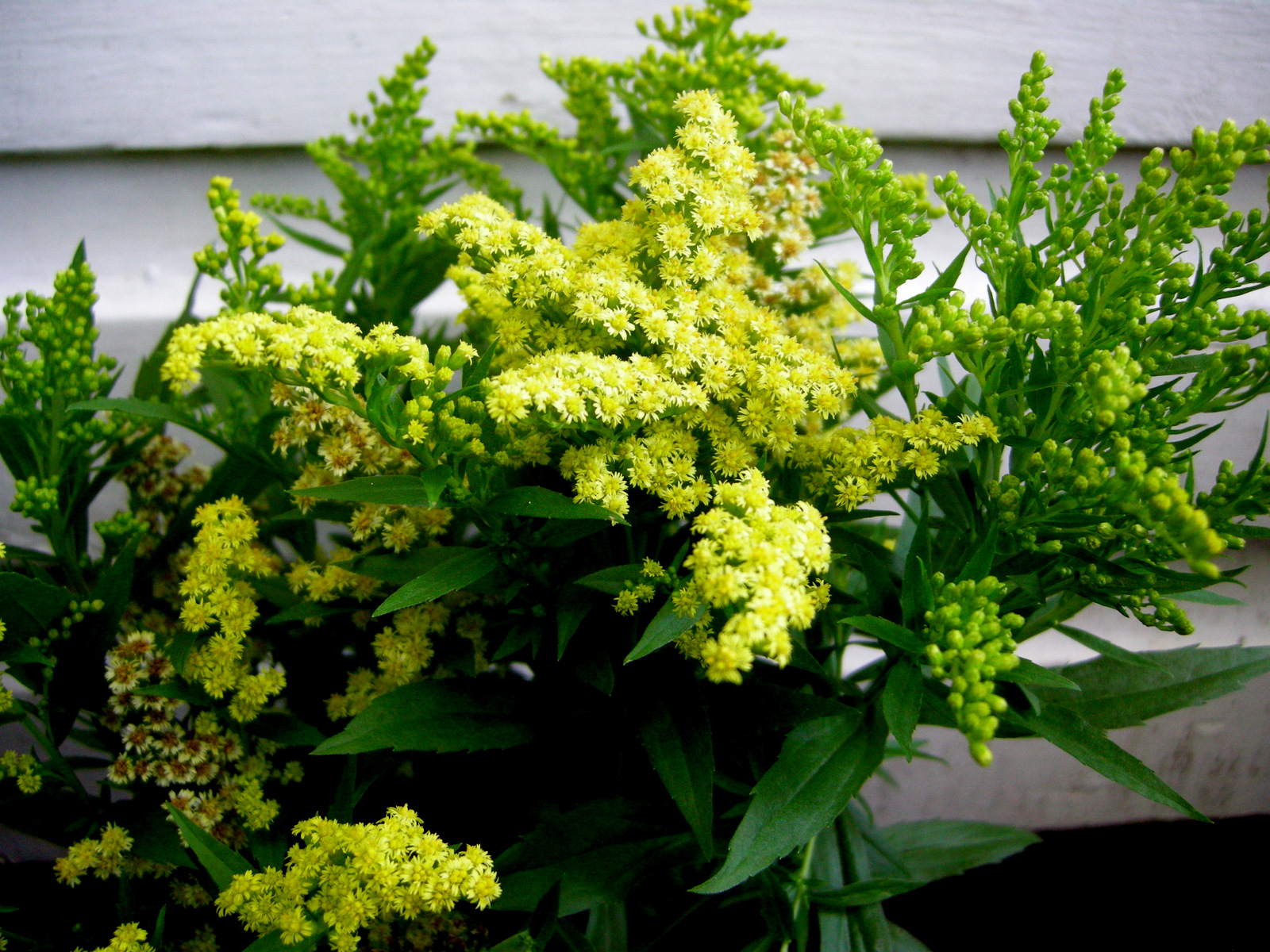
I grow about five different varieties of native golden rod, Solidago,  with my current favorite ‘Little Lemon’, growing only 12 to 18″ high.  Contrary to popular belief, goldenrod does not cause allergies as it is pollinated by insects.  Wind pollinated ragweed, which blooms at the same time, is the culprit.

Toad-lilies, Tricyrtis, bloom throughout the fall in full shade with ‘Sinonome’ just getting started now and continuing into November.  Clockwise from upper left: ‘Sinonome’, ‘White Towers’, ‘Miyazaki’, ‘Empress’.

Another plant that is just warming up is Pennsylvania native northern sea oats, Chasmanthium latifolium.  Its foliage will turn orange later in the fall and then dry to a beautiful khaki for the winter.  Be forewarned, however, when this plant reaches critical mass, it starts spreading, and its wiry roots are very difficult to remove.  Give it room and then triple the space you think you need.

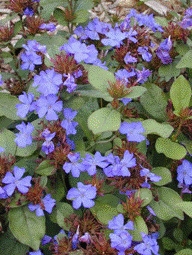
Autumn leadwort, Ceratostigma plumbaginoides, is one of my favorite groundcovers.  Its true blue flowers start blooming in June and continue through October when its leaves turn bright red.

Pennsylvania native ‘Bluebird’ smooth aster, A. laevis ‘Bluebird’, seeds all around my garden in full sun to part shade.  Butterflies and bees love it.  Please click here to find out why most native cultivars are just as friendly to native fauna as the species.

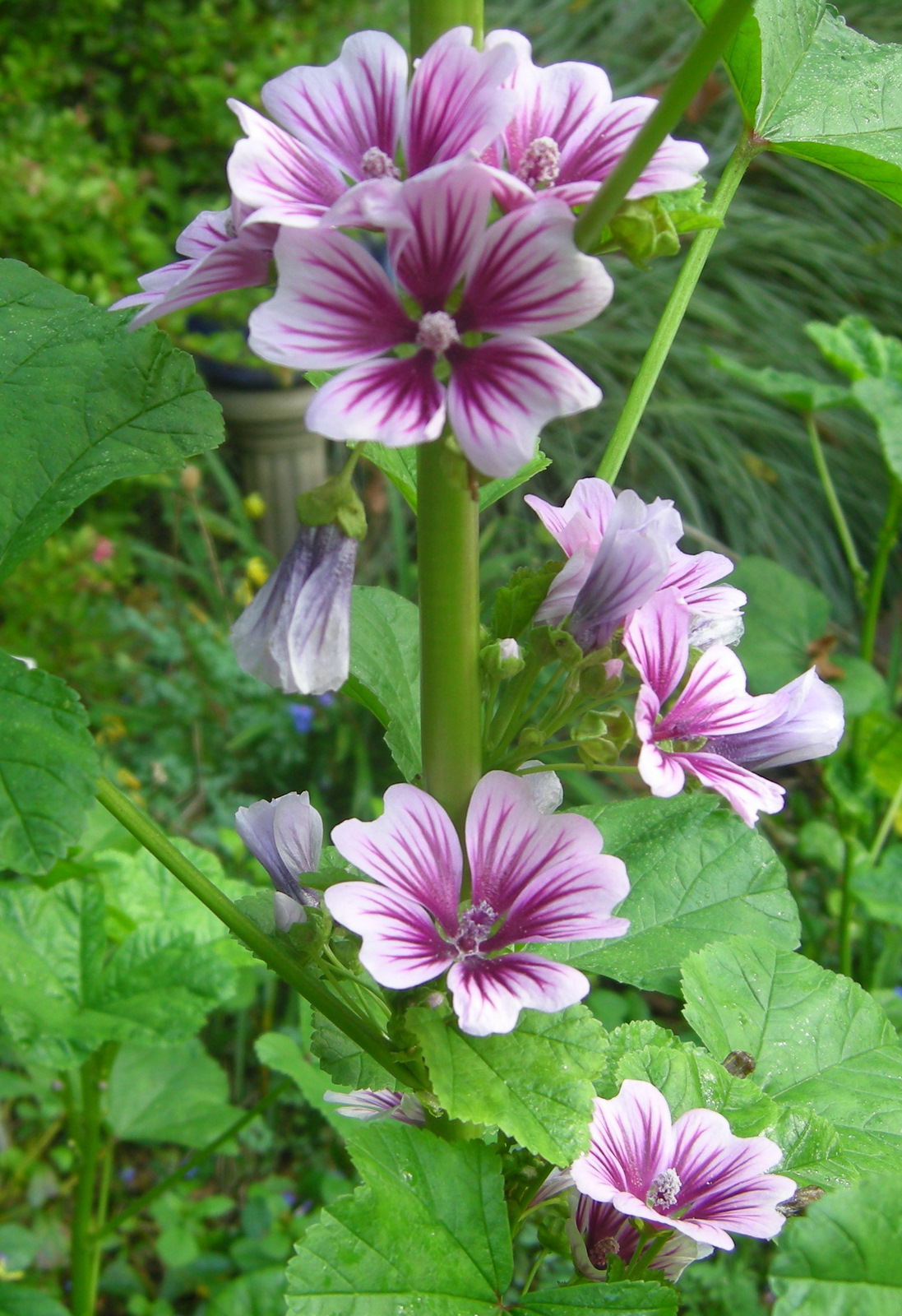
‘Zebrina’ hollyhock mallow, Malva sylvestris ‘Zebrina’, seems to move around my garden at will, but it never fails to steal the show with its 3 to 4′ stalks loaded with showy flowers.  It grows best in full to part sun.

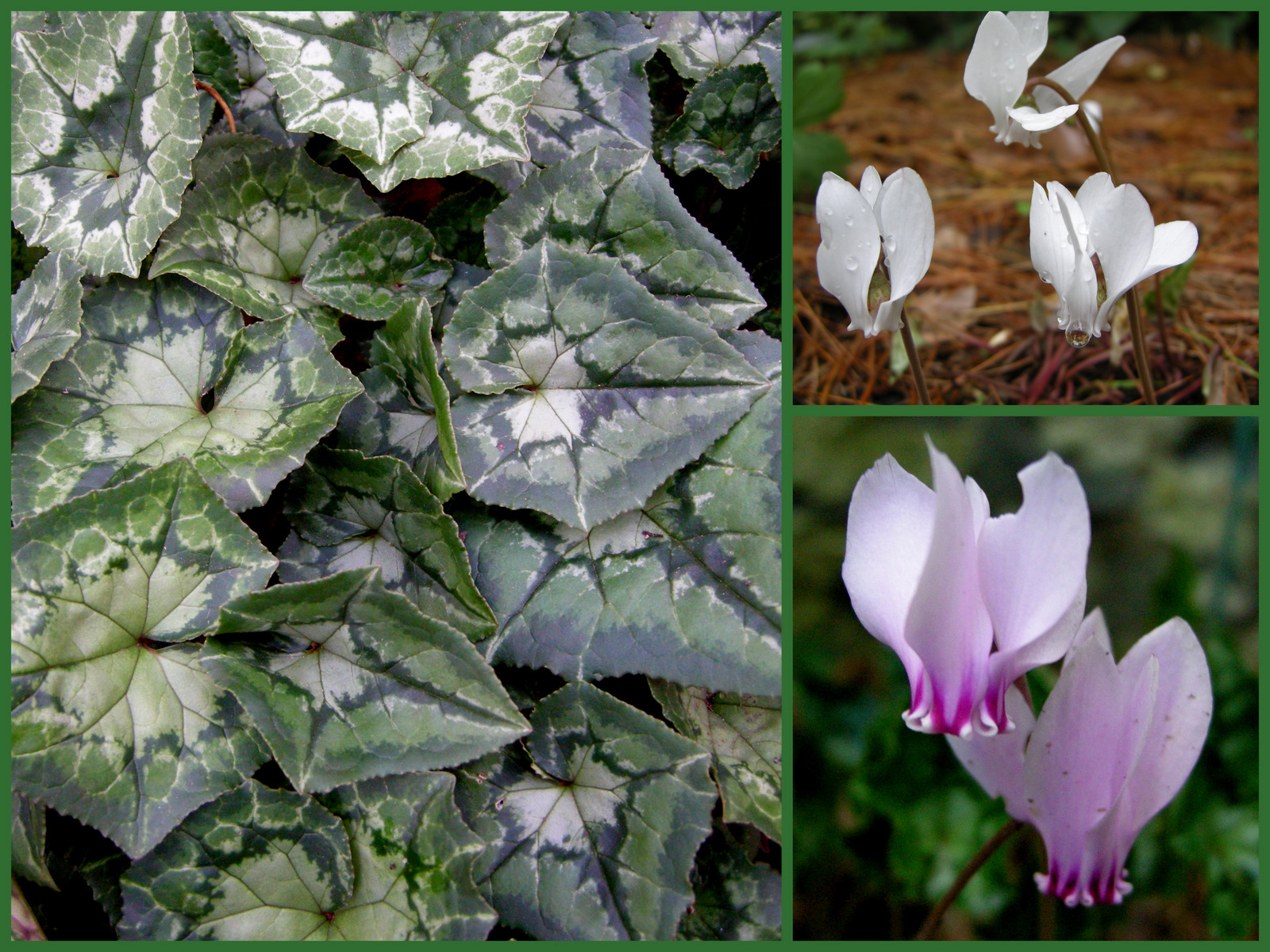
Fall-blooming hardy cyclamen, Cyclamen hederifolium, is one of the plants I would take to my shady “desert island”.  Right now its pink or white flowers are floating all around my shady gardens.  Later its evergreen leaves will emerge from summer dormancy and look like the photo on the left all winter long.

I am always raving about the foliage of the coral bell cultivars derived from our Pennsylvania native Heuchera villosa.  Well this is the plant that started it all, Heuchera villosa ‘Autumn Bride’.  It has very large and attractive fuzzy green leaves and beautiful flowers that bloom right now–this is the only cultivar I would grow for its flowers (the rest I grow for the leaves).

The cultivar ‘Cory’ of Pennsylvania native hardy ageratum, Eupatorium coelestinum, is far superior to the straight species.  It has more abundant and showier flowers, ornamental purple stems, interesting crinkled leaves, and a much better upright habit.  ‘Cory’ is also a good spreader in sun to part shade so give it room.  Pictured above with another of my favorite Pennsylvania natives, wrinkleleaf goldenrod, Solidago rugosa ‘Fireworks’.

Hardy begonias, Begonia grandis, have spread all over my garden in full shade, and I have yet to find a place that I don’t want them.  Because they come up very late in May and really just get going in the fall, I use them to fill in between my hostas on my back hill.  

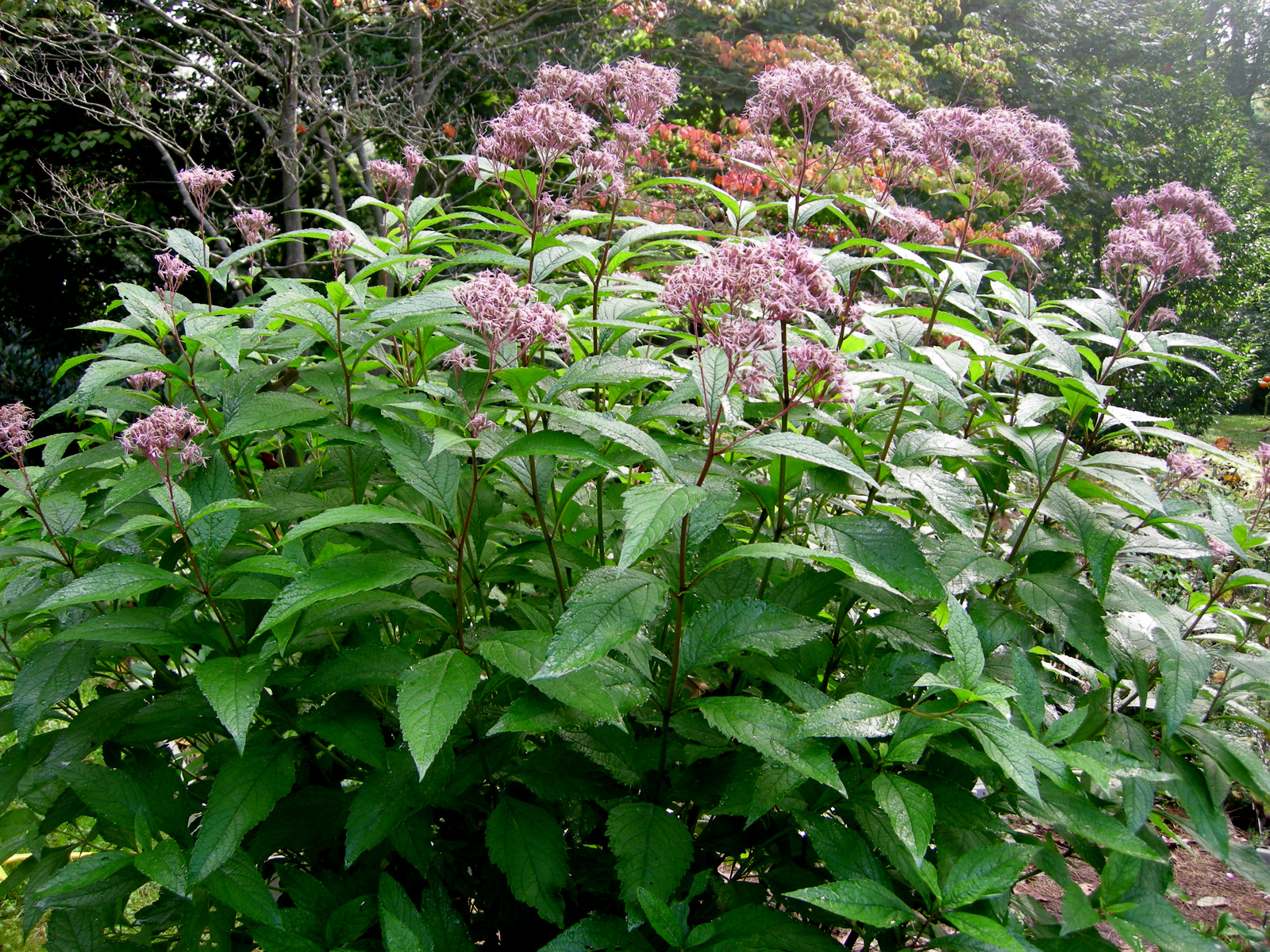
Pennsylvania native Joe Pye weed, Eupatorium dubium, reaches 10′ tall in my garden and flops over in our torrential rains.  The “dwarf” version called ‘Little Joe’ grows to a diminutive 5′ tall and has remained erect through the 30″ of rain we had in August and September to bloom now with its large purple flowers–a magnet for butterflies and bees.

In the spring, a gardener I very much admire brought over this plant, telling me it was a salvia with yellow flowers that grows in full shade and blooms in the fall.  I duly planted it in my shady “yellow garden” and it thrived through heat, drought, and rain with no attention.  It is called woodland sage, Salvia koyamae.

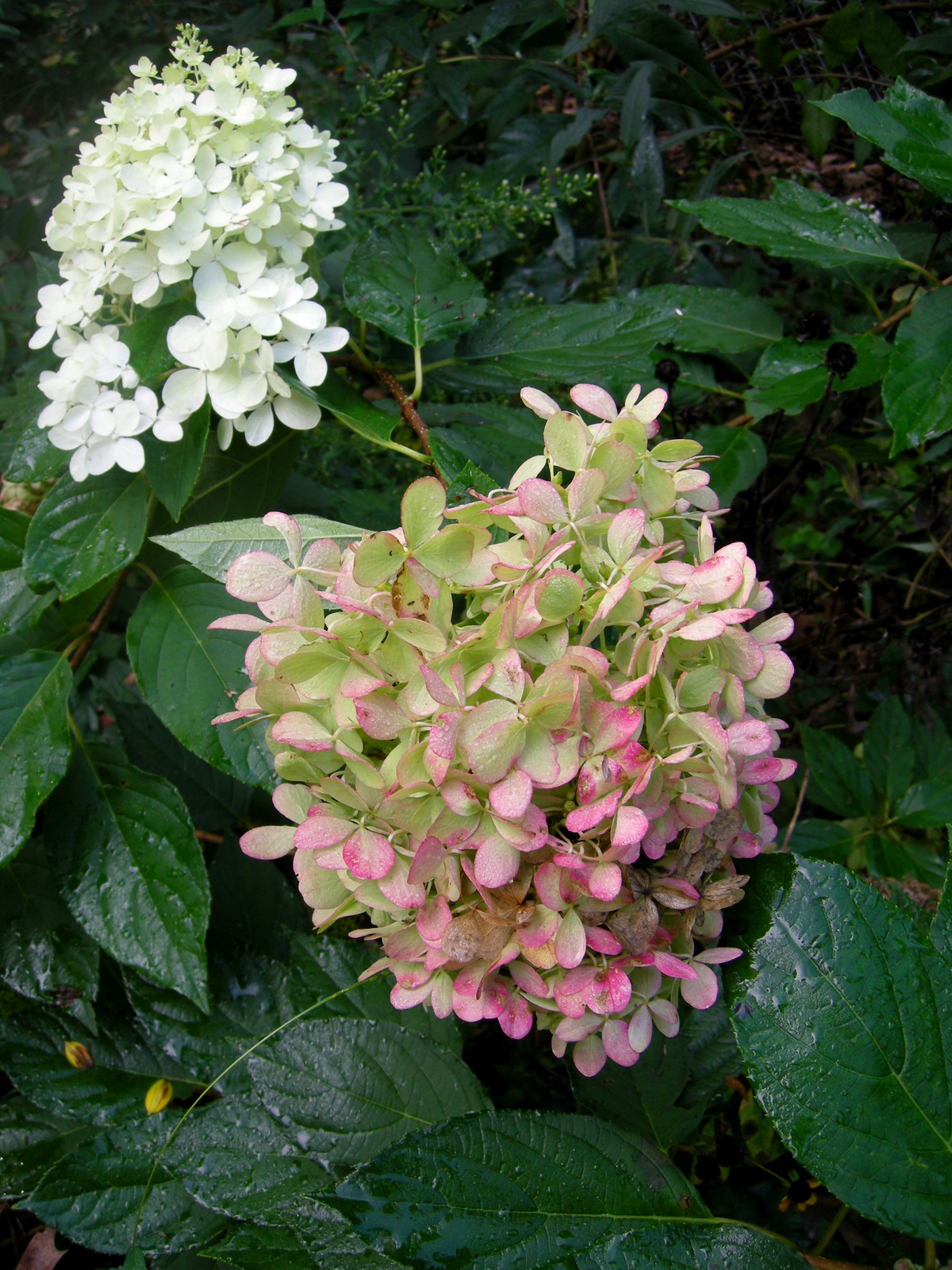
I am just beginning to learn about hydrangeas because until last year there was no point in planting them because of the deer.  One of my first acquisitions after the netting went up was ‘Limelight’, Hydrangea paniculata ‘Limelight’.  The large white flowers aging to pink have been blooming all summer in part shade, and there are still buds coming—very impressive.

If you want a multitude of fall flowers in dry, full shade, you can’t find a better plant than Pennsylvania native blue wood aster, Aster cordifolius.  It fills in all the difficult sites in my woodland and produces a glorious blue haze in the fall.

It is fitting that I should end with my favorite Pennsylvania native perennial for fall, garden phlox, Phlox paniculata.  I love everything about garden phlox: its heavenly fragrance, its long bloom time from early summer through fall, the wealth of colors available, its polite self-sowing, and its attraction to butterflies.  I dream of installing a meadow area and collecting dozens of plants of every phlox cultivar out there!

Of the 17 photos above, 8 picture plants that are native to Pennsylvania and eastern North America.  I believe that planting native plants is crucial to our survival.  Please take the time to read this short essay explaining why.  And Pennsylvania’s native plants really come into their own in the fall eliminating the need for dressing with mums!


Click to enlarge

Carolyn

To read Part 1, A Few Fall Favorites for Foliage and Fruit, click here.  Stay tuned for Part 3, Hostas for Fall.  In the interest of full disclosure, I must confess that sadistic botanists have recently changed the botanical names of many of the native plants that I highlighted to completely unpronounceable and unspellable but “botanically proper” names.  At this point, I refuse to follow.


Notes:
Every word that appears in orange on my blog is a link that you can click for more information.  If you want to return to my blog’s homepage to access the sidebar information (catalogues, previous articles, etc.), just click here.

Woody Plants for Shade Part 3

Posted in evergreen, landscape design, native plants, New Plants, Shade Shrubs, shade vines with tags , , , , , , , , , , , , , , , , , on September 27, 2011 by Carolyn @ Carolyns Shade Gardens

Carolyn’s Shade Gardens is a retail nursery located in Bryn Mawr, PA, specializing in showy, colorful, and unusual plants for shade.  The only plants that we ship are snowdrops within the US.  For catalogues and announcements of local events, please send your full name, mailing address, and cell number to carolyn@carolynsshadegardens.com and indicate whether you are interested in snowdrops, hellebores, and/or hostas.  Click here to get to the home page of our website for catalogues and information about our nursery and to subscribe to our blog.

‘Winter’s Joy’ Fall-blooming Hardy Camellia

My nursery specializes in herbaceous flowering plants for shade.   However, although no shade garden is complete without trees, shrubs, and vines, our local nurseries seem to ignore woody plants for shade.  To fill this gap, I offer my customers shade-loving woodies from a wholesale grower whose quality meets my exacting standards.  As in Woody Plants for Shade Part One and Woody Plants for Shade Part Two, I thought my blog readers who are not customers might be interested in learning about the woody plants that I would recommend they add to their shade gardens.  And doing an article in addition to the customer offering allows me to add more information so customers might be interested also.

This summer was tough on plants.  I lost several shrubs that I planted this spring.  That is why fall is the best time to plant.  The soil temperature is elevated for good root development through December, but new plants don’t have to contend with scorching temperatures, severe drought, or an excess of rain.  The plants that I add in the fall are always the most successful in my garden.

Included in my offering are three evergreen shrubs, five deciduous shrubs, and one vine.  Of the nine plants I have chosen, three are native.  Please read my article My Thanksgiving Oak Forest to see why I think planting native plants is crucial to our environment.  My article New Native Shade Perennials for 2011 explains why I think native cultivars are valuable native plants.  With that introduction, here are the plants I am offering highlighted in green:

The fall-blooming camellia ‘Winter’s Snowman’ shines in the winter sun.

If you have been reading my blog, you know that I love camellias, especially fall-blooming varieties.  There is nothing like going outside on a cold November or December day and being greeted by large showy flowers backed by gorgeous evergreen leaves.  Camellias really light up the shadiest parts of my garden during the time of year when flowers are most appreciated.  For more information on and some beautiful photographs of fall-blooming hardy camellias, see my articles Fall-blooming Camellias Part 1 and Fall-blooming Camellias Part 2.


‘Winter’s Snowman’ blooming in December

In a very shady place on the terrace outside my front door, I have a ‘Winter’s Snowman’ fall-blooming hardy camellia.  At maturity, it will reach six feet.  Its semi-double white flowers glow when displayed against the glossy evergreen leaves in November and December.  It is a vigorous plant with a narrow upright habit.  Although it is fully hardy in our area, I have sheltered it from winter sun and our winter winds, which come from the northwest.


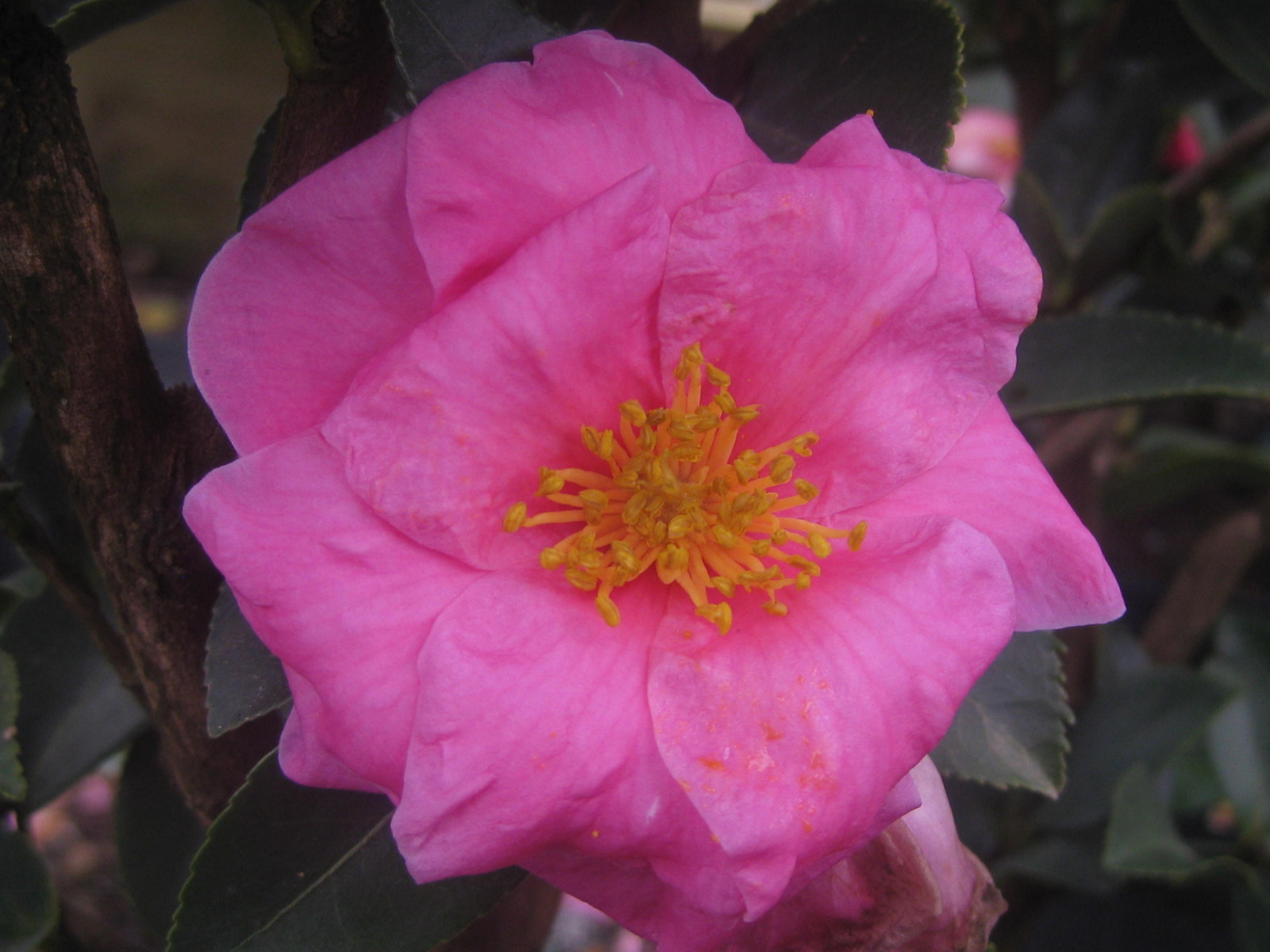
‘Winter’s Joy’ fall-blooming camellia

In a similarly sheltered and shady location outside my back door along the path to my compost “pit”, I have planted another fall-blooming camellia.   ‘Winter’s Joy’ fall-blooming hardy camellia has semi-double, fuchsia-pink flowers elegantly displayed against glossy evergreen leaves in November and December.  It is a vigorous plant with a narrow upright habit, reaching six feet at maturity.  Right now both these fall-blooming camellias are covered with buds.  I can’t wait for the display to begin.

‘Winter’s Joy’ is loaded with buds just waiting to produce its showy flowers, and look at that immaculate foliage.

I really like leatherleaf viburnums.  They are evergreen, deer resistant, grow in full shade, have lovely flowers and foliage, and are big enough to screen unsightly views.  The plants I have in my garden are the straight species Viburnum rhytidophyllum and that’s what I intended to offer to my customers.  However, when I saw ‘Dart’s Duke’ lantanaphyllum viburnum (what a name!), V. x rhytidophyllum ‘Dart’s Duke’, and did some research, I realized it is a superior plant for foliage, flowers, berries, and vigor.   A comparison of the nursery stock confirmed this.

‘Dart’s Duke’ showing its majestic leaves and reblooming to produce some of its very large flowers for fall.

‘Dart’s Duke’ grows to 8’ tall by 8’ wide in full sun to full shade.  It has very large, 6 to 10”, showy white flowers in May and can rebloom in the fall.  The flowers are followed by very nice red fruit.  The beautiful, clean dark green, leathery evergreen foliage is deer resistant and winter tough.  It is a Pennsylvania Horticultural Society Gold Medal Plant for 2012, one of only four plants honored.


‘Early Amethyst’ beautyberry is dispalying its amazing purple berries right now at Carolyn’s Shade Gardens.

‘Early Amethyst’ beautyberry, Callicarpa dichotoma ‘Early Amethyst’,  has attractive pink flowers in spring.  But the real show is in the fall when huge amounts of unbelievably colored purple berries run down the center of the beautifully layered branches.  When the leaves drop, the persistent berries are even more showy though they are attractive to birds.  Beautyberry reaches 4’ tall by 4′ wide in sun to part shade and is deer resistant.  I have grown this plant successfully in part shade for years.  If desired, it can be cut back in spring, but I usually leave mine alone.  Beautyberry is a Pennsylvania Horticultural Society Gold Medal Plant and Missouri Botanical Garden Plant of Merit.

Paper Bush, Edgeworthia chrysantha

Paper bush, Edgeworthia chrysantha, is a rare and unusual shrub that has just been discovered by collectors within the last few years.  However, it has so many great ornamental features that it is sure to become very popular.  Its very fragrant clusters of tubular bright yellow flowers bloom from January to March.  The buds, which form in the fall, are as ornamental as the flowers.  They remind me of the tassels on the corners of Victorian pillows.  Paper bush has an elegant and symmetrical upright, branching habit, growing to 6’ tall in part to full shade with protection from winter winds.  It is an exquisite and rare shrub that is ornamental 365 days of the year in my garden.

The buds of paper bush are ornamental all winter.

The unusual fragrant flowers of paper bush

The flowers of ‘Preziosa’ sawtooth hydrangea start out a lovely pink and mature to a bright maroon.

‘Preziosa’ sawtooth hydrangea, Hydrangea serrata ‘Preziosa’, produces numerous lovely pink, small, mophead-like flowers in June and July, which darken with age to a gorgeous maroon (see link below for photo).  The flowers are reliably pink and don’t turn blue.  The beautiful burgundy fall color of the leaves and stems only adds to the show.  ‘Preziosa’ reaches 4’ tall and wide in part to full shade.  The Hydrangea serrata species is one that thrives in full shade.  Unlike many hydrangeas, ‘Preziosa’ is very tolerant of the cold temperatures in our zone 6.  For a raving review of ‘Preziosa’ and more cultural information (note that the winter protection recommended is for zone 5), click here.

The leaves of ‘Preziosa’ sawtooth hydrangea have already started to turn burgundy.

This photo shows the berries on my ‘Red Sprite’ winterberry holly right now—they get much larger as the season progresses, but the show is already breathtaking.

One of my all time favorite native plants is winterberry holly, Ilex verticillata.  It grows wild all over the island in Maine where my family vacations and is always covered with berries in the fall.  Here in Pennsylvania, my preferred winterberry holly cultivar is Ilex verticillata ‘Red Sprite’.  It produces copious amounts of very large red berries on relatively compact plants that never need pruning.  The birds love the berries too, but they leave enough behind for it to remain extremely showy late into the winter.  ‘Red Sprite’ reaches 5’ tall in sun to part shade and is wet site and salt tolerant, and deer resistant.  All hollies require a male pollinator, in this case ‘Jim Dandy’, for good fruit set.  Winterberry is native to the entire eastern half of North America, including Pennsylvania.


The flowers and foliage of native ‘Cool Splash’ southern bush honeysuckle, Diervilla sessifolia ‘Cool Splash’

‘Cool Splash’ southern bush honeysuckle is a native shrub whose bold green and white variegation really stands out in the shade.  Its honeysuckle-shaped yellow flowers appear in July and August with rebloom in the fall.  ‘Cool Splash’ grows to 4’ tall and wide in sun to part shade.  It is tough, cold hardy, and deer resistant, and integrates well into perennial borders.  This species is native to the southeastern U.S., but a closely related species, D. lonicera, is native to Pennsylvania.  It is one of four plants honored with a gold medal by the Pennsylvania Horticultural Society in 2011.  Nan Ondra at the blog Hayfield has written an excellent profile of this native shrub (with many photos), click here .

In late spring and early summer, ‘John Clayton’ trumpet honeysuckle is covered with these delightful tubular yellow flowers attractive to hummingbirds.

I love vines, and one of my first acquisitions was the native ‘John Clayton’ trumpet honeysuckle, Lonicera sempervirens ‘John Clayton’.  It is my most vigorous trumpet honeysuckle vine, completely covering the lattice under my deck.  Its bright yellow tubular flowers are beloved by  hummingbirds in late spring and early summer and  rebloom through fall, forming attractive red berries.  ‘John Clayton’s’ semi-evergreen, bright green leaves remain attractive through the season.  It reaches 10’ in sun to part shade.  It is deer resistant and very low maintenance.  Trumpet honeysuckle is native to the eastern U.S., including Pennsylvania.

I grow most of these plants in my gardens so I know you can’t go wrong by adding them to yours!  If you are a customer, see Nursery Happenings below for details on how to order these wonderful shade plants.  If not, now you have some plants to ask for at your local independent nursery.

For a great video demonstration of how to plant a shrub put together by my cousin, Jay MacMullan, at the blog Landscape Design and Gardening Resource Guide, click here.

Carolyn

Notes: Every word that appears in orange on my blog is a link that you can click for more information.  If you want to return to my blog’s homepage to access the sidebar information (catalogues, previous articles, etc.), just click here.

July GBBD: The Energizer Bunnies of Summer

Posted in Garden Blogger's Bloom Day, landscape design, native plants, Shade Shrubs with tags , , on July 14, 2011 by Carolyn @ Carolyns Shade Gardens

Carolyn’s Shade Gardens is a retail nursery located in Bryn Mawr, PA, specializing in showy, colorful, and unusual plants for shade.  The only plants that we ship are snowdrops and miniature hostas.  For catalogues and announcements of events, please send your full name, location, and phone number (for back up use only) to carolyn@carolynsshadegardens.com.  Click here to get to the home page of our website for catalogues and information about our nursery and to subscribe to our blog.

‘Westerland’ shrub rose just keeps sending out new sprays of blooms.  EB

Summer is here, and we have reached the middle of the month when I encourage each of you to walk around your garden and assess what you need to add to make this season an exciting time in your landscape.  This time of year I like to focus on the “energizer bunnies” of the garden: plants that bloom or rebloom from late spring through fall. Plants in this category will have “EB” following their caption description.  They give me a reason to stroll in my garden when the weather is not as inviting as spring.  Make sure your garden doesn’t end with the spring rush by adding plants that bloom through summer. 

I love irises, and I think Japanese iris, I. kaempferi, is my favorite.  The colors and the flower shapes are magical.

Make a list and take photographs so that when you are shopping for plants you know what you need and where it should go.  You never know what you might find waiting in your garden like new blooms on my ‘Westerland’ rose (photo at top), which I photographed during my own  inventory.

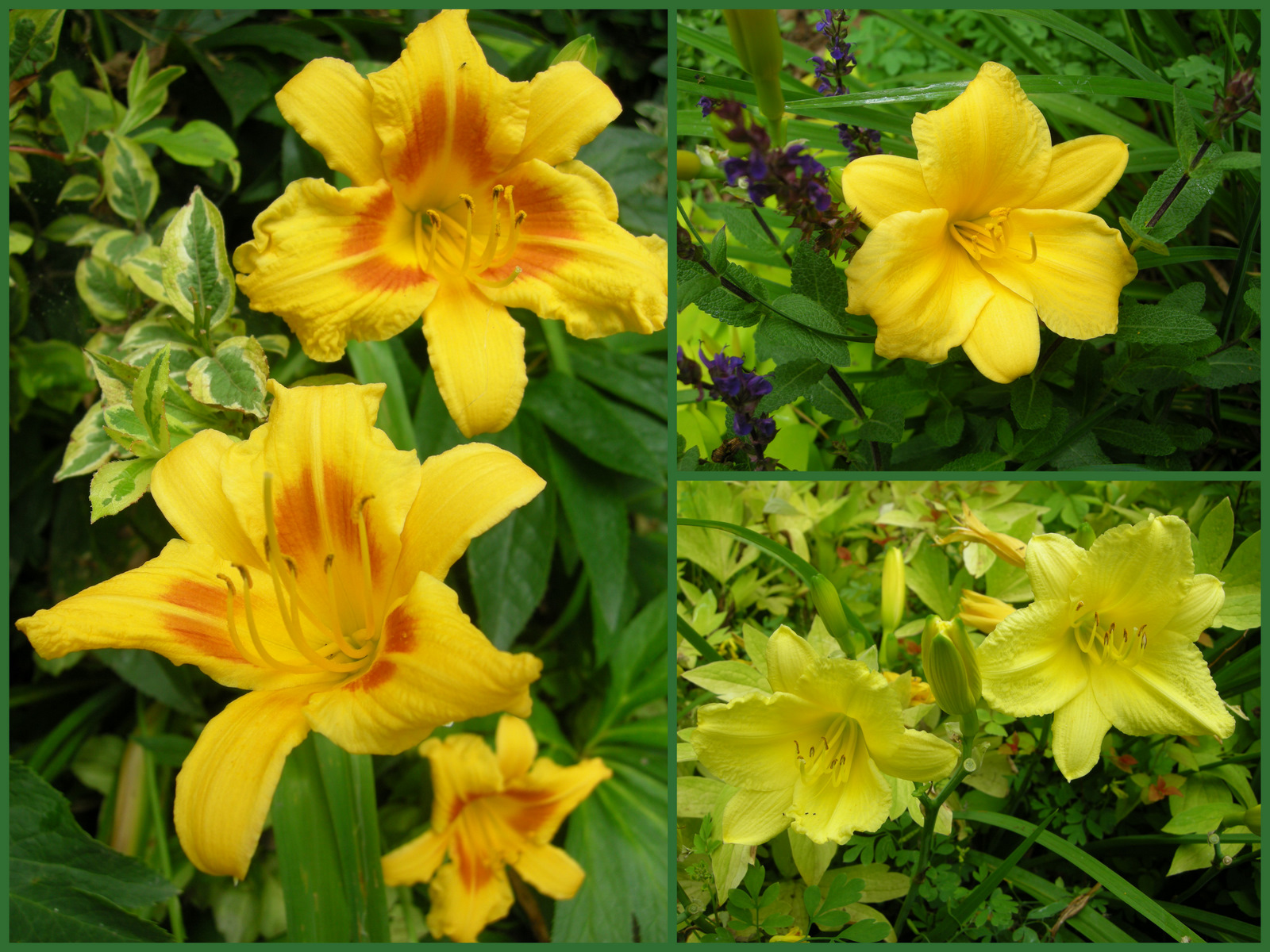
The remontant or reblooming daylilies are some of my “bunnies”.  They start early and rebloom all season.  Clockwise from left: Hemerocallis ‘Black Eyed Stella’, ‘Stella de Oro (d’Oro)’, and ‘Happy Returns’.  EB

July 15 is Garden Blogger’s Bloom Day for July when gardeners around the world show photos of what’s blooming in their gardens (follow the link to see  photographs from other garden bloggers assembled by Carol at May Dreams Gardens).  Here are  some more highlights from my July stroll through Carolyn’s Shade Gardens, starting with woody plants:

I cut back my ‘Purple Robe’ smokebush, Cotinus coggygria ‘Purple Robe’, every year to improve the leaf color so it never blooms, but I think the red beebalm, Monarda didyma, compliments it nicely.

My grove of native bottlebrush buckeye, Aesculus parviflora, is stunning in bloom in full shade.


St. John’s wort is a woody subshrub that I cut back almost to the ground in the spring when I see signs of new growth.  Hypericum calycinum on the left and H. androsaemum ‘Albury Purple’ on the right.

I don’t grow ‘Winterthur’ beautyberry, Callicarpa ‘Winterthur’,  for the flowers, but between the lime green leaves, the pink flowers, and the striking light purple berries in fall, this shrub is a workhorse.  EB


Himalayan leptodermis, L. oblonga, starts blooming in June and doesn’t quit until later in the fall.  Its flowers are small but abundant.  EB

‘Black Knight’, Buddleia davidii ‘Black Knight’, is my favorite butterfly bush cultivar.  It is the first to come into bloom in June and doesn’t stop until at least mid-fall.  EB

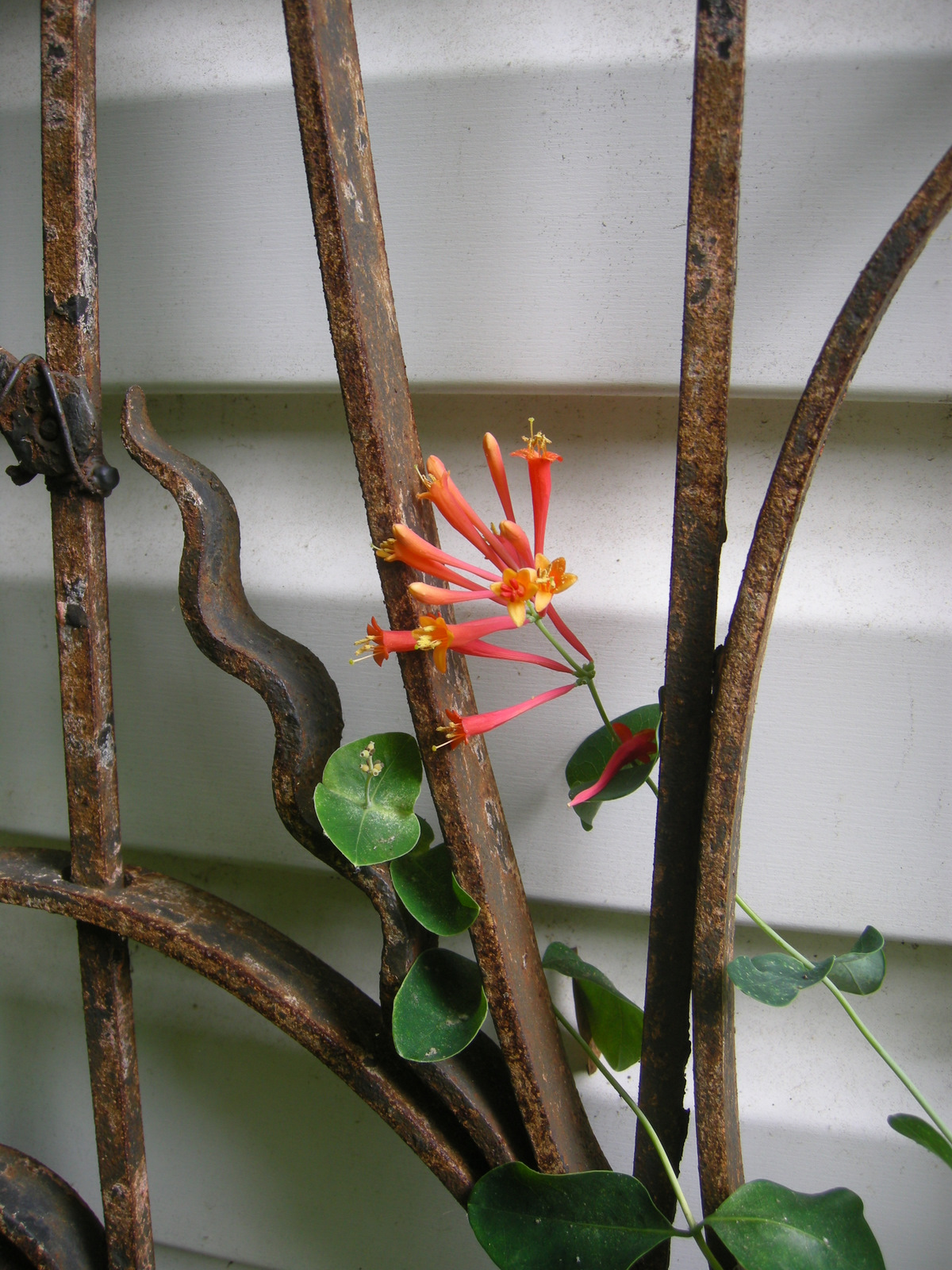
My native honeysuckle vines are still throwing out blooms after a spectacular spring show, here Lonicera sempervirens ‘John Clayton’.  EB

And here native Lonicera sempervirens ‘Crimson Cascade’.  EB

Native oakleaf hydrangea, H. quercifolia, will keep going until winter with its beautiful flowers turning colors and then forming a dried arrangement.  If you don’t have this shrub, it should go to the top of your list!  EB

I am surprised that more gardeners do not grow native flowering raspberry, Rubus odoratus.  It is a gorgeous tropical looking shrub for full shade with brightly colored raspberry flowers.  The native bees love it.

There are so many perennials in bloom that I had to leave a lot out.  I am focusing on the unusual plants and the ones that bloom for a long time:

The deep violet flowers on red stems of ‘Caradonna’ sage, Salvia ‘Caradonna’, continue to rebloom all summer while the yellow corydalis, C. lutea, behind it blooms nonstop from April to December.  EB

This rare and unusual plant, Chinese foxglove, Rehmannia elata, appeared in my rock garden without my help, but I am glad it did.

Butterfly weed, Asclepias tuberosa, with catmint, Nepeta ‘Walker’s Low’

Many hosta have quite beautiful flowers, especially if they are compact and white, here the species Hosta tokudama.

Reportedly there are 8,000 hosta cultivars, but some just stand out in the garden: Hosta ‘Summer Lovin’

The gorgeous corrugated blue leaves, white flowers, and elegant habit of Hosta ‘Blue Angel’ have stood the test of time.

Hosta ‘Great Expectations’ is also a classic with white flowers.

I am infatuated with the mouse ears series of miniature hostas, and one of their wonderful attributes is that their flowers are compact and proportional to their size, here ‘Holy Mouse Ears’.

I have tried so many of these orange coneflowers, Echinacea cultivar,  only to have them die, revert, or display a virus.  This is the only one that survived and, of course, I lost its tag.

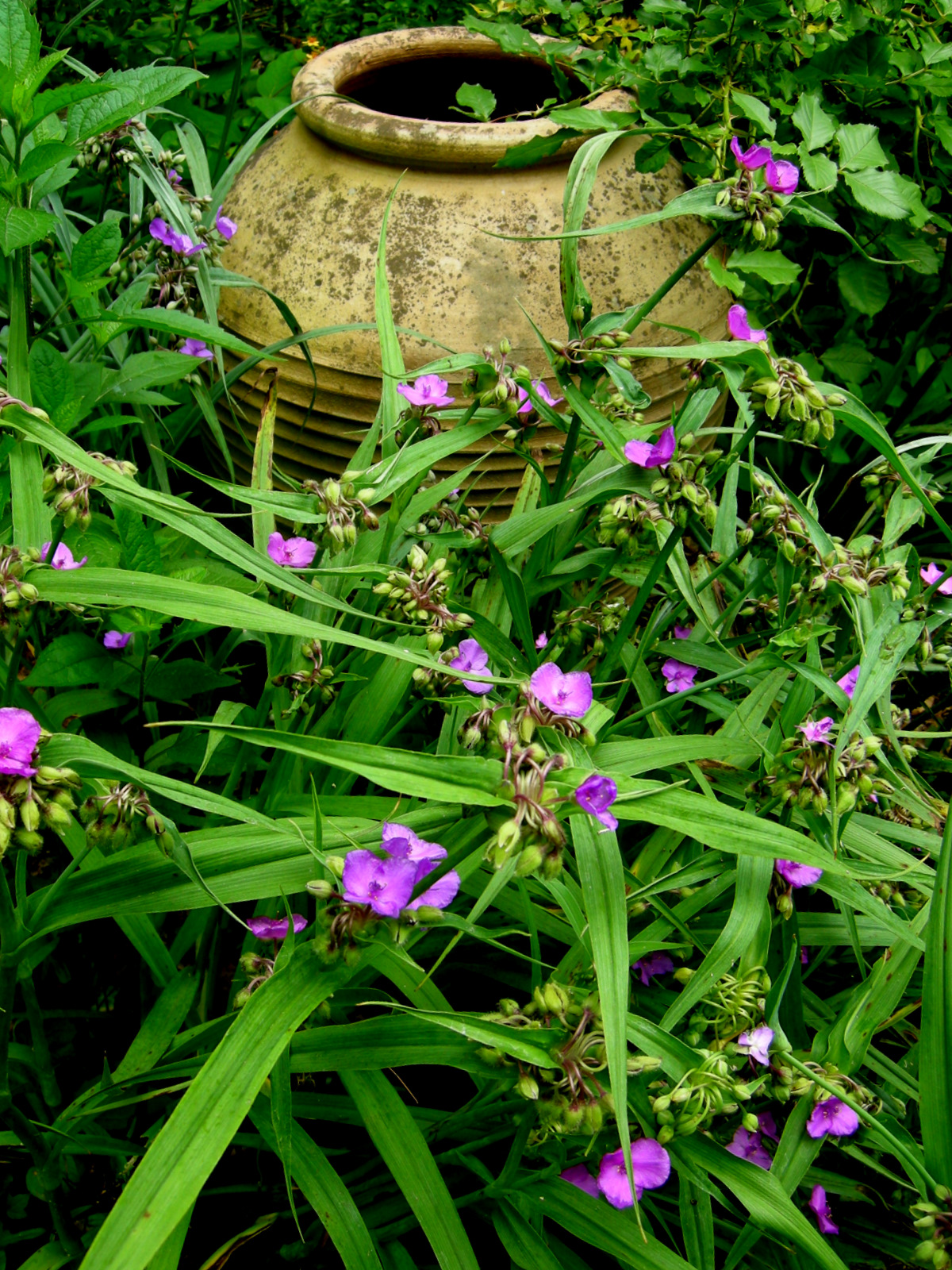
‘Concord Grape’, Tradescantia ‘Concord Grape’, is my favorite cultivar of US native spiderwort.  I cut it to the ground completely after flowering to rejuvenate the plant.

Giant ox eye, Telekia speciosa, is an unusual sunflower-like perennial that reaches 4 to 6 feet tall and 2 to 3 feet wide in the full shade of my London plane trees.

Solitary clematis, C. integrifolia, just keeps blooming and blooming, here with orange million bells, Calibrachoa ‘Aloha Hot Orange’EB

I always read that the groundcover autumn leadwort, Ceratostigma plumbaginoides, blooms in the fall, but in my garden it starts in June and keeps going through fall.  You can’t beat the true blue color all season.  EB

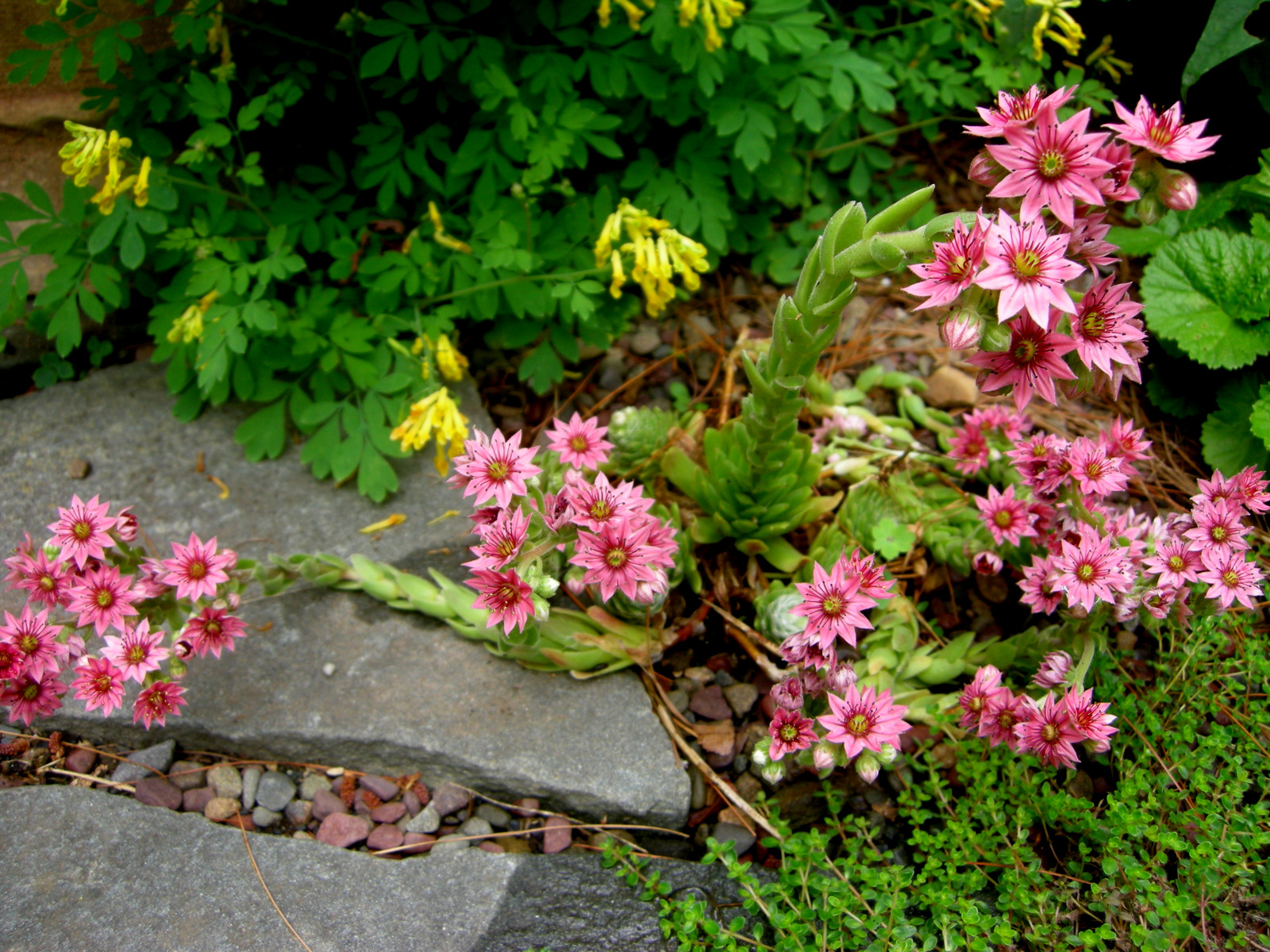
I have a collection of hens and chicks, but I think this is my favorite: Sempervivum arachnoideum ‘Red Cobweb’.  When not in bloom, the chicks are red and covered with cobwebs.

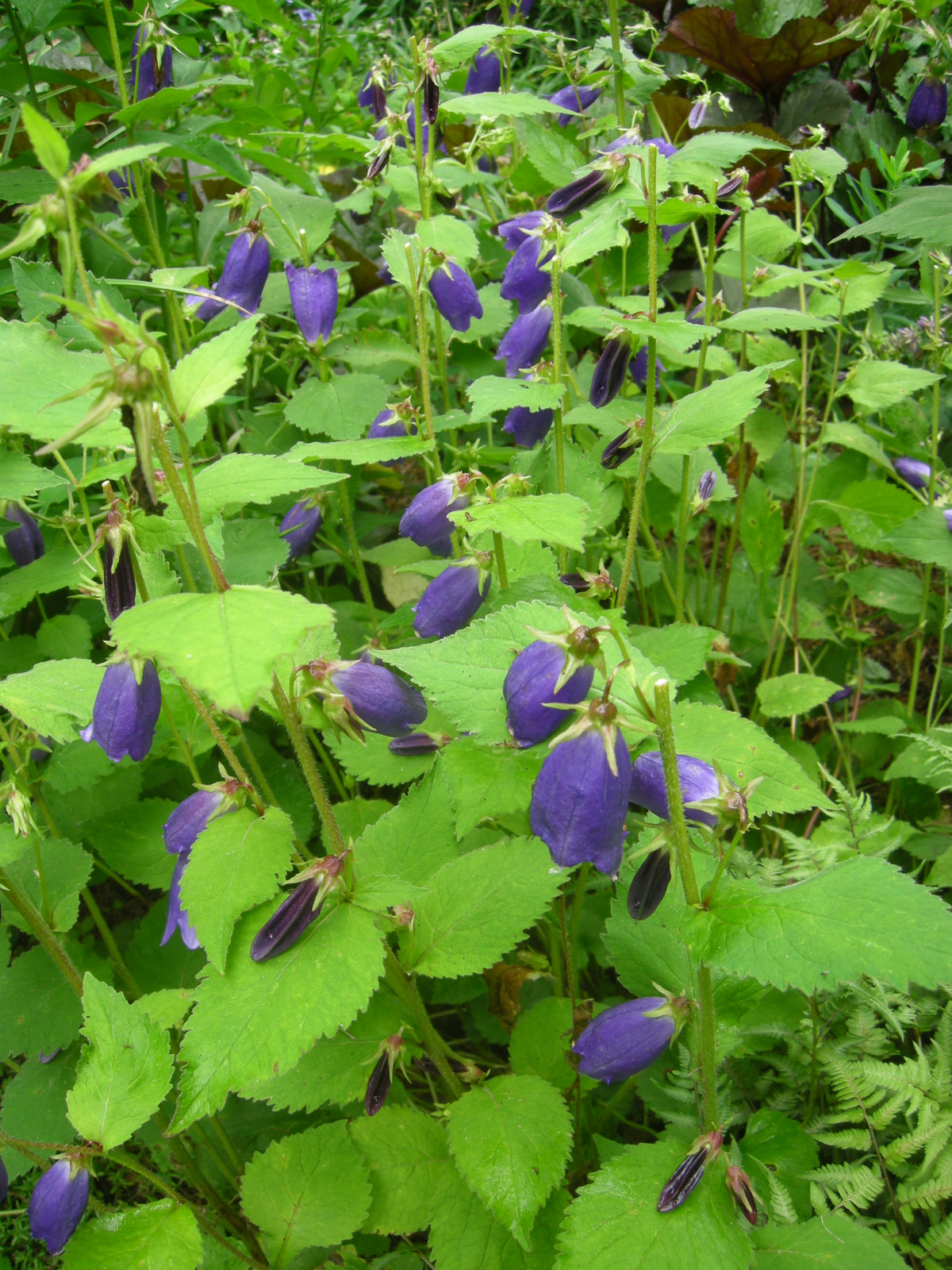
This is the second flush of bloom on ‘Sarastro’ bellflower, Campanula ‘Sarastro’, the first flush has double the flowers.  I have tried several large-flowered bellflowers, and ‘Sarastro’ is the best.  EB

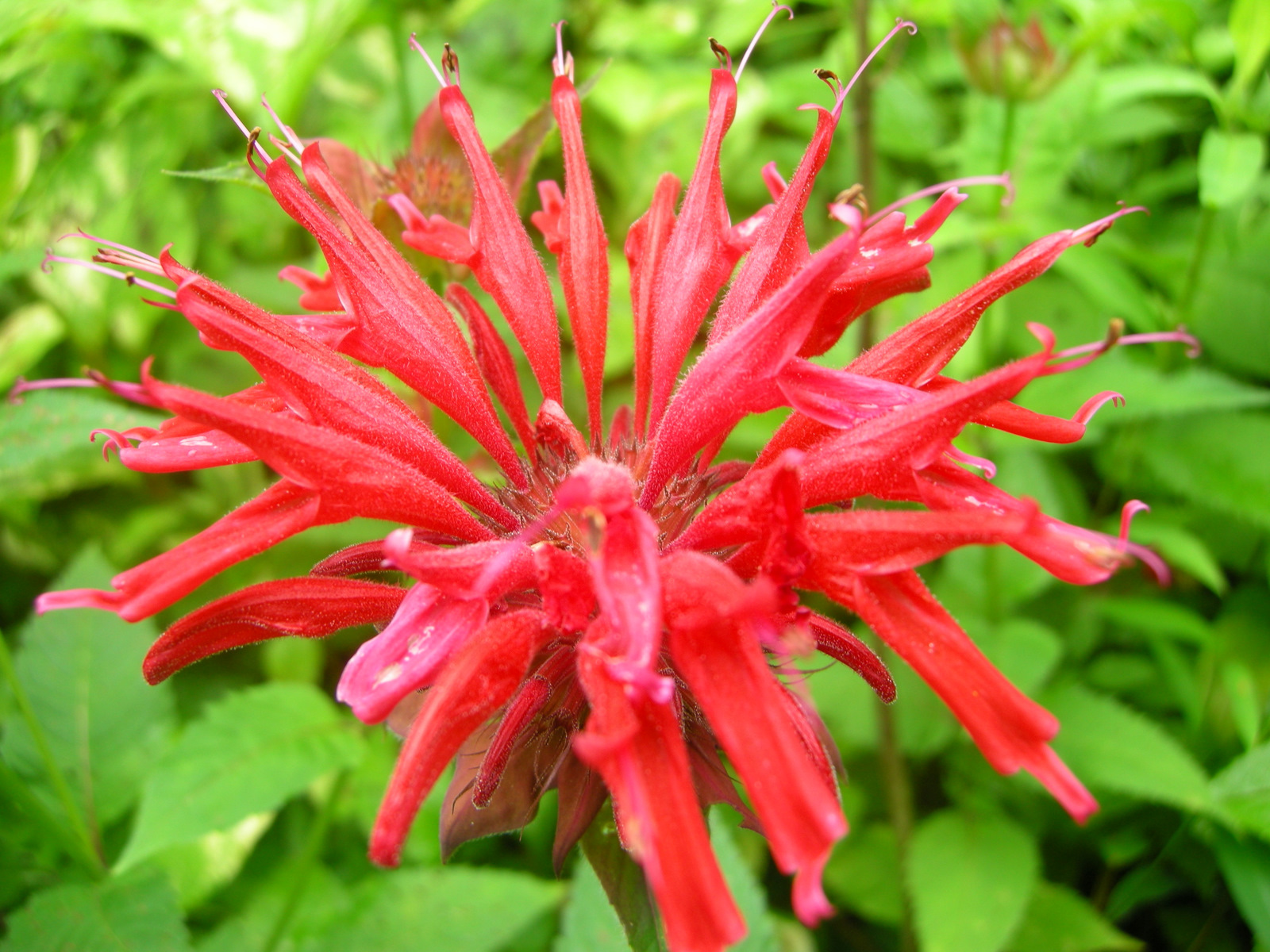
I devote a large space in my meadow (you have to, it spreads) to beebalm, Monarda didyma, the flowers are so spectacular.

I always let some of my onion sets get away from me so they will produce this beautiful flower after all my other alliums are done.

If I had the right growing conditions for red hot pokers, Kniphofia ‘Alcazar’, I would have every cultivar, but sunny, hot, dry, well drained conditions are few and far between at Carolyn’s Shade Gardens.

Spiny bear’s breeches, Acanthus spinosus, just keeps blooming and blooming.  EB

I will leave you with the very unusual and long lasting  ‘Miss Willmott’s Ghost’ sea holly, Eryngium giganteum ‘Miss Willmott’s Ghost’.  Miss Willmott was a 19th century English gardener who secretly sprinkled seeds of this sea holly in gardens she visited leaving behind her “ghost”.  EB

Please let me know in a comment/reply which flowers are “energizer bunnies” in your summer garden.  If you participated in GBBD, please provide a link so my nursery customers can read your post.

Carolyn

I made this collage for a customer email, but I couldn’t resist including it in this article.  The flowers of summer:

Notes: Click on any photo to enlarge.  Every word that appears in orange on my blog is a link that you can click for more information.  If you want to return to my website’s homepage to access the sidebar information (catalogues, previous articles, etc.), just click here.
Nursery Happenings: The nursery is closed until it cools off in the fall around the middle of September.  If you are on my customer email list, look for an email.  If not, sign up by sending an email to carolynsshadegardens@verizon.net with your name and phone number.

June GBBD: Baby It’s Hot Outside

Posted in Garden Blogger's Bloom Day, landscape design, native plants, Shade Shrubs with tags , , on June 14, 2011 by Carolyn @ Carolyns Shade Gardens

Carolyn’s Shade Gardens is a retail nursery located in Bryn Mawr, PA, specializing in showy, colorful, and unusual plants for shade.  The only plants that we ship are snowdrops and miniature hostas.  For catalogues and announcements of events, please send your full name, location, and phone number (for back up use only) to carolyn@carolynsshadegardens.com.  Click here to get to the home page of our website for catalogues and information about our nursery and to subscribe to our blog.

Yes, it really is that color: herbaceous peony ‘America’.

Even though it is not technically summer yet, we have been hit with weather that my twenty-year-old son informed me is more suitable for August.   Six of the last eleven days (as of June 10) have been over 90 degrees, and on June 9 it topped 97 degrees (36 degrees C).  Nevertheless, we have reached the middle of the month when I encourage each of you to walk around your garden and assess what you need to add to make early summer an exciting time in your landscape.  Do you need more flowering trees, shrubs, and vines to give you a reason to stroll in your garden?  Could your garden benefit from more perennials that bloom in June after the spring rush?

Native hybrid false indigo, Baptisia x variicolor ‘Twilite Prairieblues’, provides a cool oasis for the eyes.


Spiny bear’s breeches, Acanthus spinosus

Make a list and take photographs so that when you are shopping for plants you know what you need and where it should go.  It’s beautiful outside now that the temperatures have dropped back into the 70s and low 80s (June 11), and you never know what you might find waiting in your garden like the jaw-droppingingly beautiful red peony (photo at top), which I photographed during my own  inventory.

Clematis ‘Warsaw Nike’ on an antique church gate.

Native hummingbird magnet Indian pink, Spigelia marilandica.

June 15 is Garden Blogger’s Bloom Day for June when gardeners around the world show photos of what’s blooming in their gardens (follow the link to see  photographs from other garden bloggers assembled by Carol at May Dreams Gardens).  Here are  some more highlights from my June stroll through Carolyn’s Shade Gardens:

Sicilian honey lily, Nectaroscordium siculum ssp. bulgaricum, just appeared in my garden one day, but I am glad it did.

Readers really enjoyed my photos of woody plants–trees, shrubs, and vines–so I have been photographing every woody plant that has come into bloom since May 15.  Most have finished blooming now due to the excessively hot temperatures, but I am including them anyway.  Let’s start with the trees.  You know by now that I love magnolias so here are my last three:

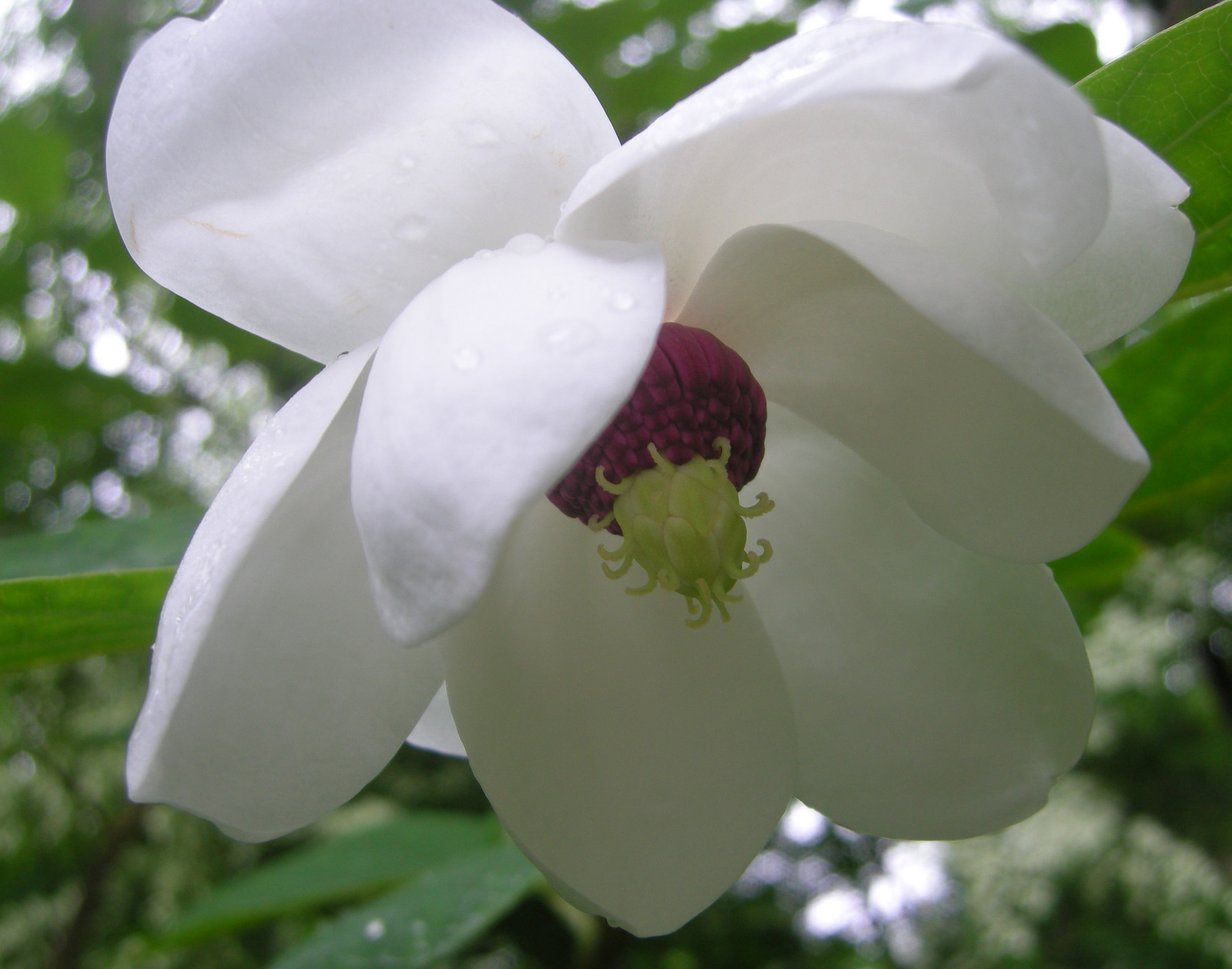
Oyama magnolia, M. sieboldii, was still in bud on May 15, but came into bloom shortly thereafter.  It is a great tree for part shade.

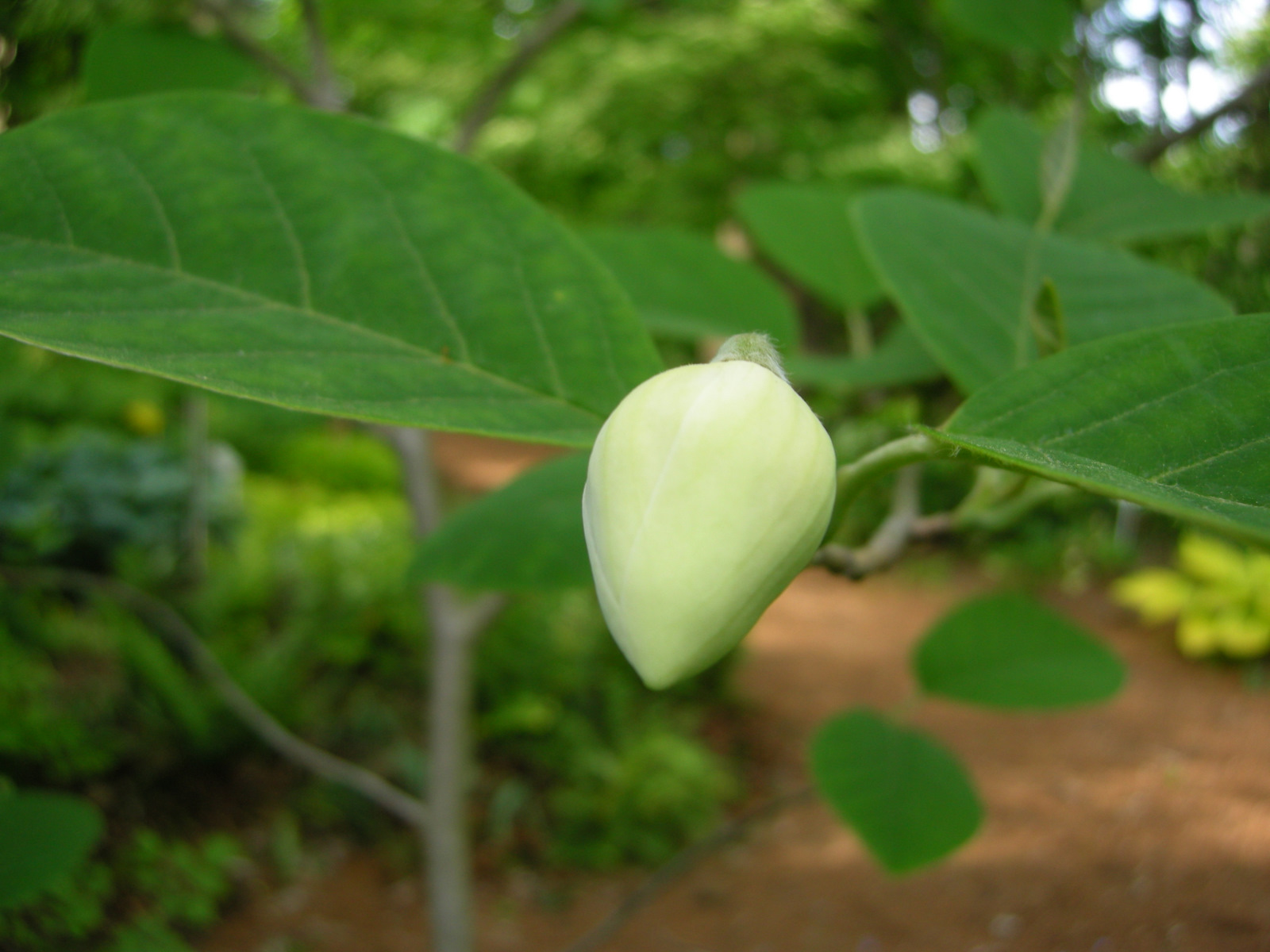
I can’t decide whether I like the bud just before it opens or the flower better.

The gorgeous flowers point down and are best viewed from below.

Native sweetbay magnolia, M. virginiana, also grows in the shade.

The flowers of sweetbay magnolia have the best fragrance of any magnolia I grow.

My native southern magnolia, M. grandiflora, will never compare to specimens growing in the south, but it is still a beautiful evergreen tree suitable for part shade.

Southern magnolia starts blooming in mid-June.

I am also a huge fan of dogwoods and extend their season by growing lots of different kinds:

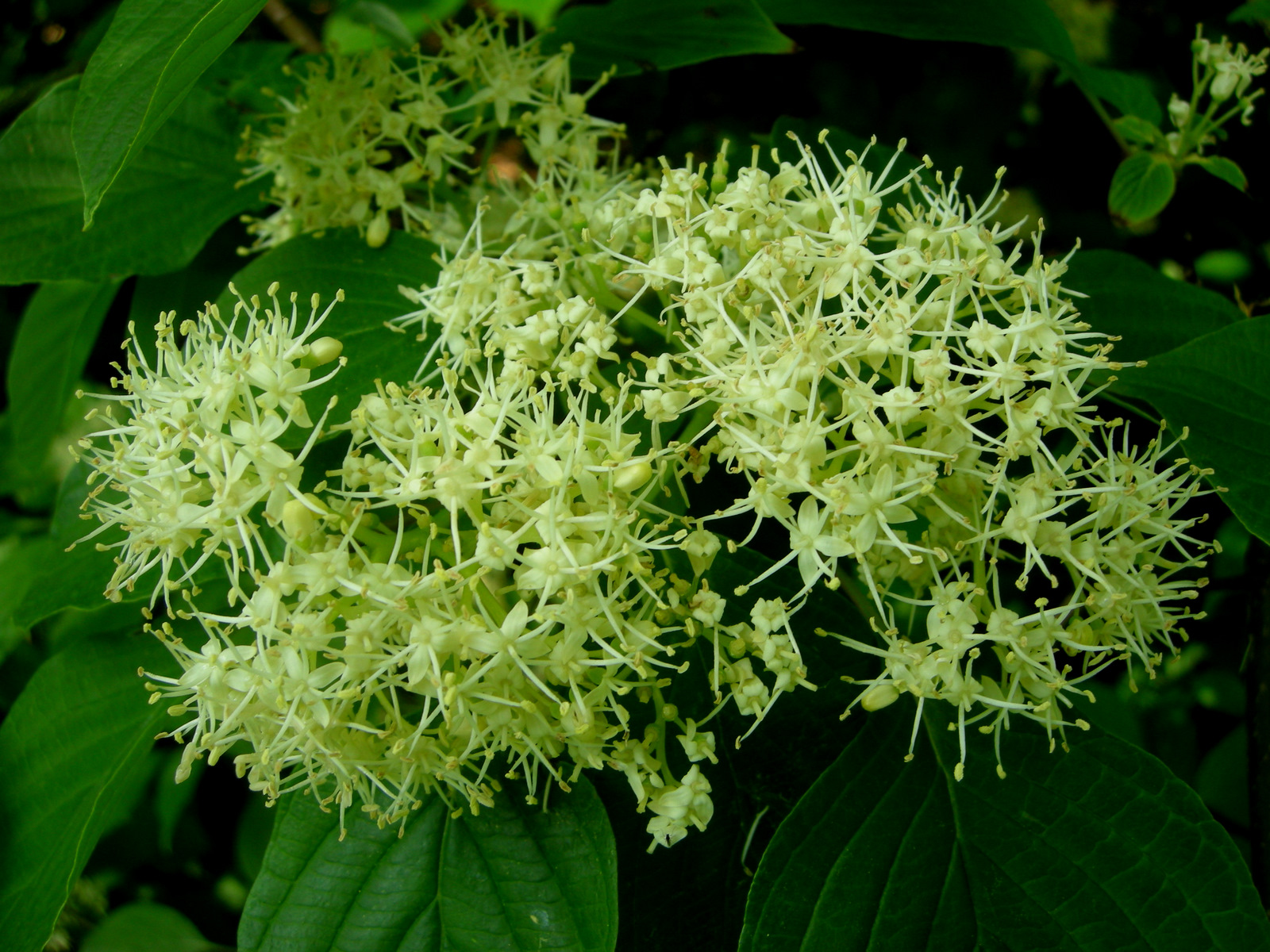
Native pagoda dogwood, Cornus alternifolia, suckers to form a colony.

The flowers of pagoda dogwood produce beautiful pink-stemmed blue berries loved by birds.

The Rutger’s hybrid dogwood, Cornus x ‘Constellation’, is a cross between Kousa dogwood and our native flowering dogwood.

‘Constellation’ flowers between its two parents–great for extending the dogwood season– and is disease resistant.

Kousa dogwood, Cornus kousa, flowers the latest of all my dogwoods.

The flowers of kousa dogwood are followed by very showy cherry-like fruit.

I have a very old golden-chain tree, Laburnum wateri, which I love but really should replace.


June is a great month for shrubs:

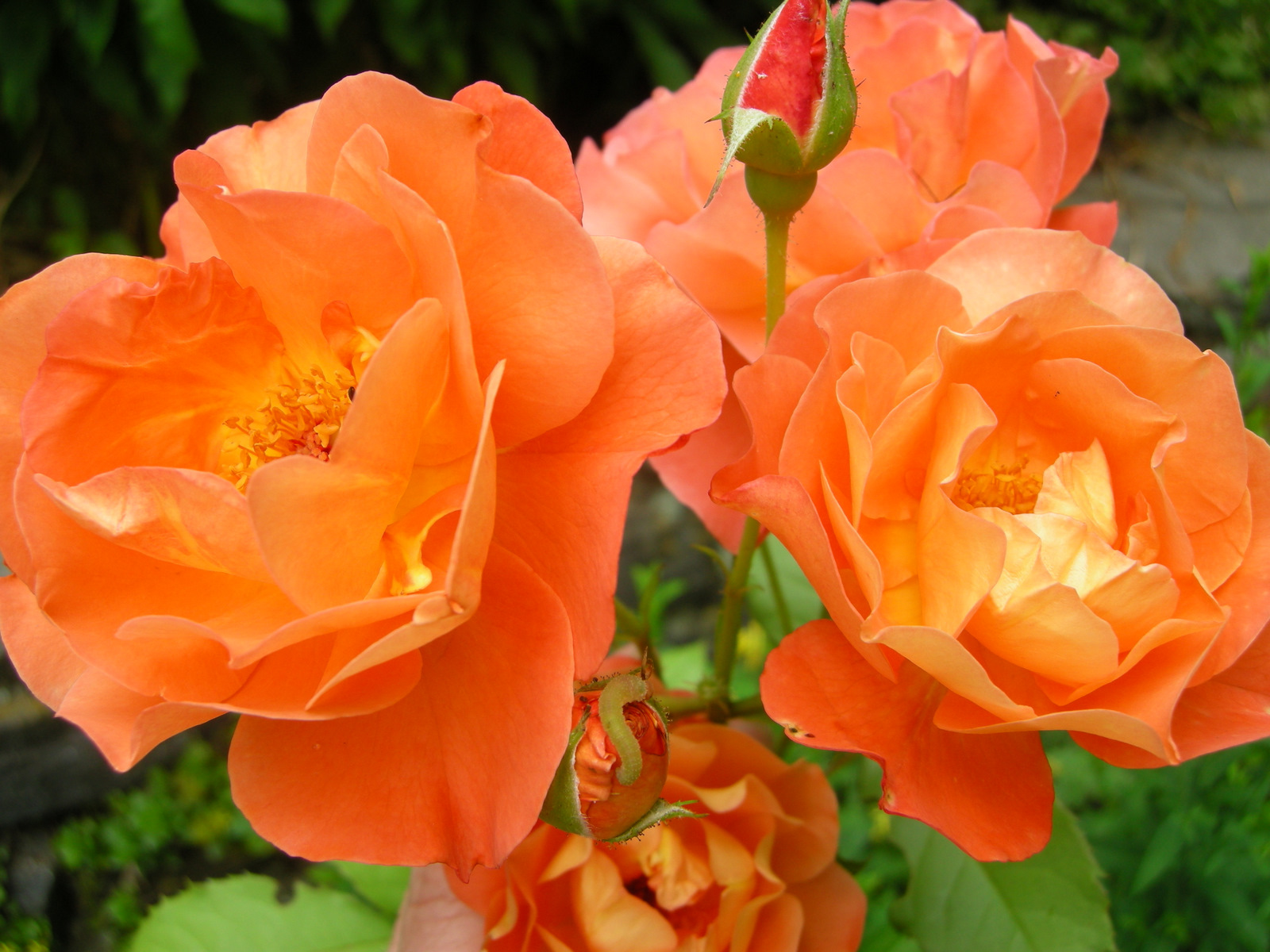
The shrub rose ‘Westerland’ is truly magical.  The deep red buds open to this gorgeous apricot flower, which ages to a peachy pink.

Rugosa roses are completely foolproof, just requiring occasional pruning.  Clockwise from upper left:  Rosa rugosa ‘Polar Ice’, ‘Hansa’, ‘Alba Plena’, ‘Alba’.

I guess Knock Out roses are considered passe in rose circles, but I can’t help thinking I am going to my first prom every time I look at ‘Blushing Knock Out’.

Native oakleaf hydrangea, H. quercifolia, nestled in full shade at the base of my huge black walnut.

Oakleaf hydrangeas are ornamental 365 days a year, but nothing is more spectacular than their gigantic conical flowers.

Peonies remind me of my childhood, and I love their fragrance.  Clockwise from upper left: ‘Coral Fay’, unknown, unknown (dug from a friend’s grandmother’s garden), ‘Raspberry Sundae’.

Clockwise from upper left: ‘Cheddar Cheese’, ‘Sarah Bernhardt’, ‘Angel Cheeks’, ‘Karl Rosenfeld’.

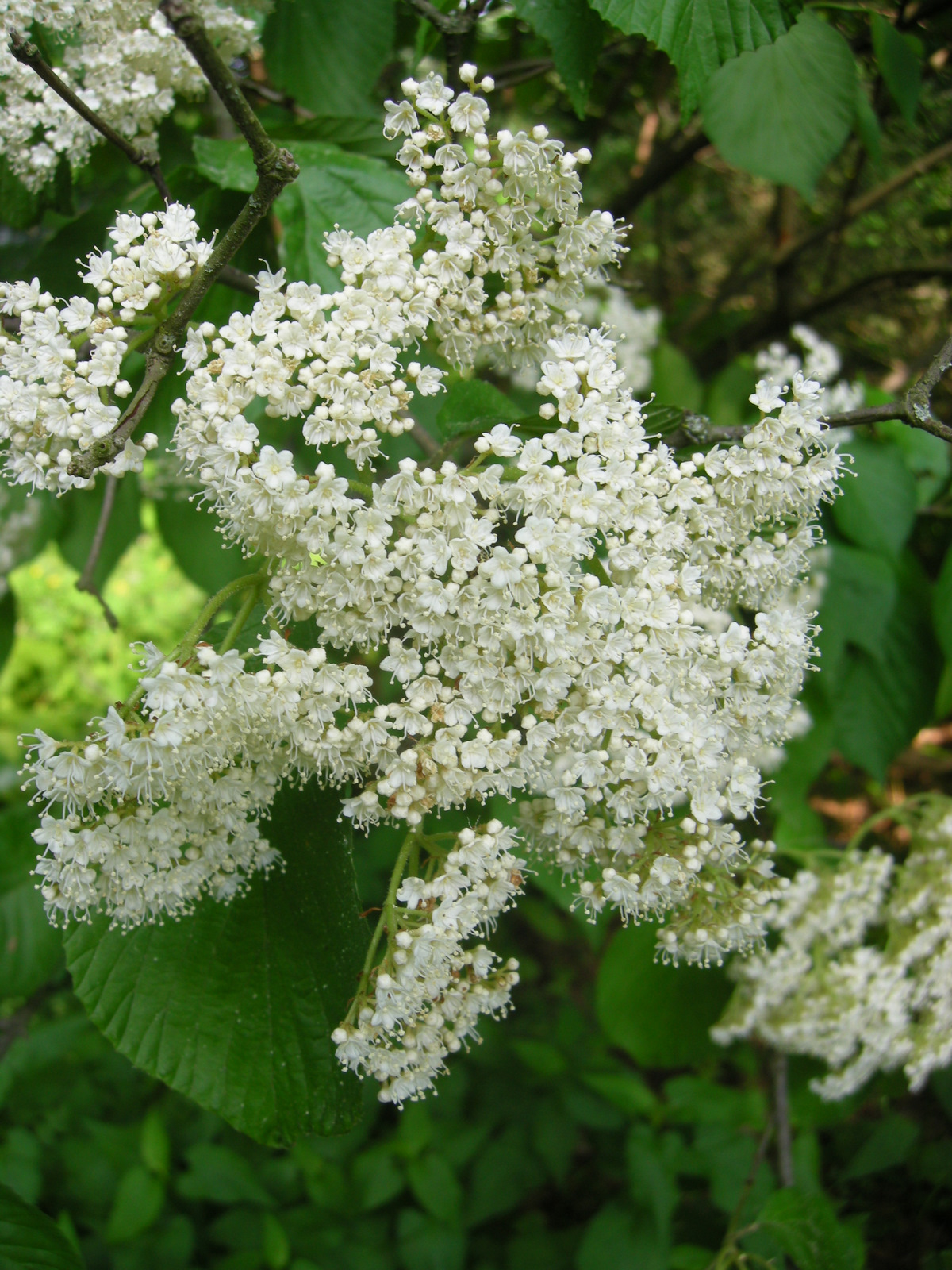
Linden viburnum, V. dilataum

The flowers of my linden viburnum never produce berries.

Redvein enkianthus, E. campanulatus, grows in full shade.

The exotic flowers of redvein enkianthus cover the shrub completely.

Chinese sweetshrub, Sinocalycanthus chinensis, grows in full shade too.

Its flowers are plentiful and gorgeous but not fragrant like our native.

Native hybrid sweetshrub, Calycanthus x ‘Hartlage Wine’, is a cross between the Chinese sweetshrub above and our native.

Its flowers and foliage are more beautiful than its parents, but it has no fragrance.  Still it is one of my top five favorite shrubs.

Old-fashioned weigela, W. florida ‘Wine and Roses’, has deep burgundy leaves.  It flowers later than my other weigela cultivars.

The showy pink flowers of ‘Wine and Roses’.


Vines are a favorite of mine:

Clematis clockwise from upper left: ‘Warsaw Nike’, ‘General Sikorski’, solitary clematis (C. integrifolia, really a perennial not a vine), alpine clematis (C. alpina ‘Stolwijk Gold’).  I grow ‘General Sikorski’ up through my ‘Yellow Bird’ magnolia, and I grow gold-leafed ‘Stolwijk Gold’ up the ‘General Sikorski’–you can never have too many vines.

American wisteria, W. frutescens ‘Amethyst Falls’, flowers after the Asian varieties.

The tightly packed flowers of ‘Amethyst Falls’ American wisteria.

I adopted this vine as a tiny plant at a rock garden society sale.  It turned out to be a rare hardy jasmine,  Jasminum x stepanense.  Two years later it was covered with these fragrant pale pink trumpets–what a deal!

The charming flowers of hardy jasmine vine.

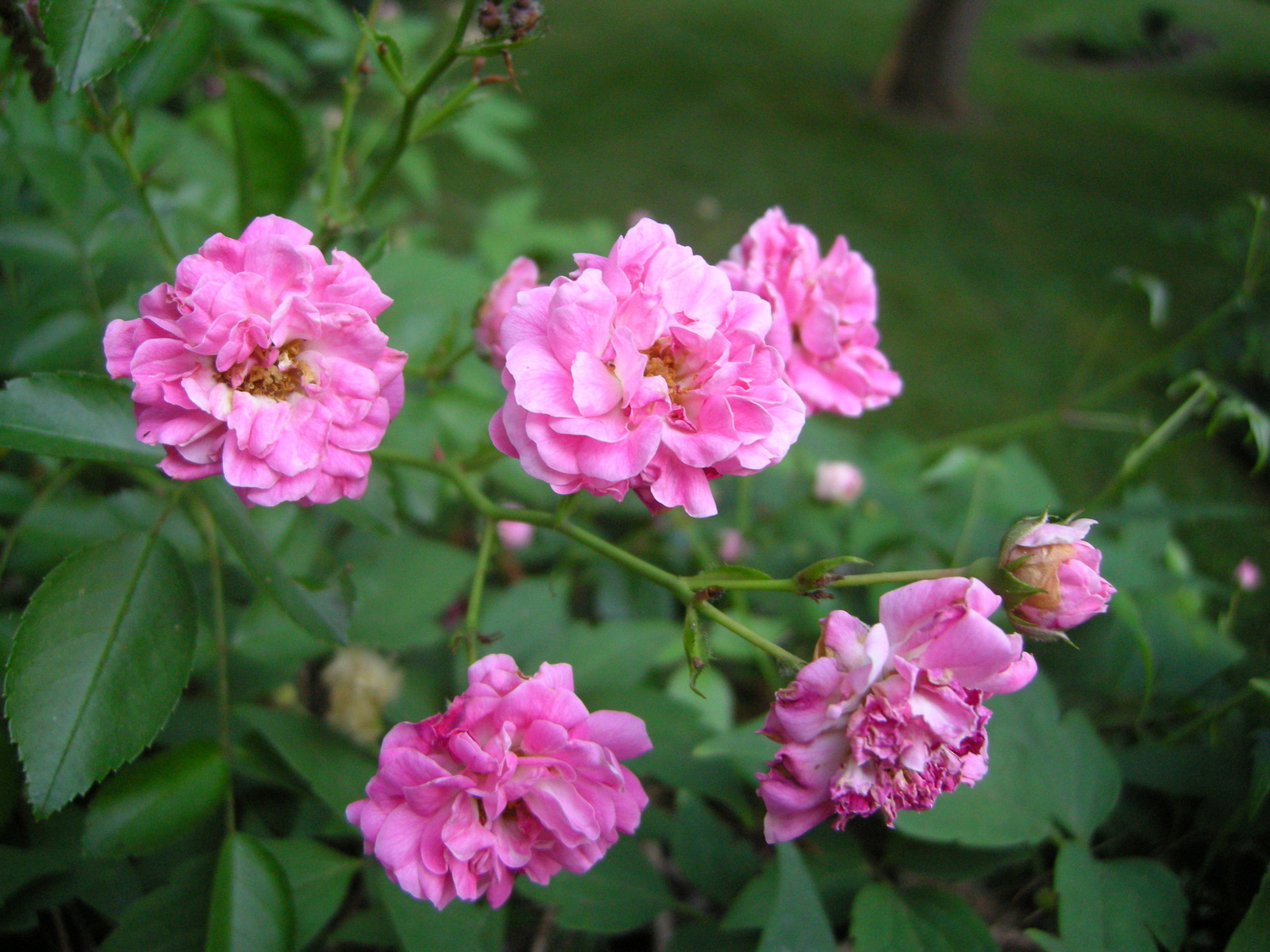
This climbing rose with a multitude of small pink flowers in bloom right now came without a name.  I grow it around and through my anemone clematis, C. montana var. rubens, which flowers earlier.  If anyone knows the name of the rose, please let me know.

A few scenes of the flower beds in June:

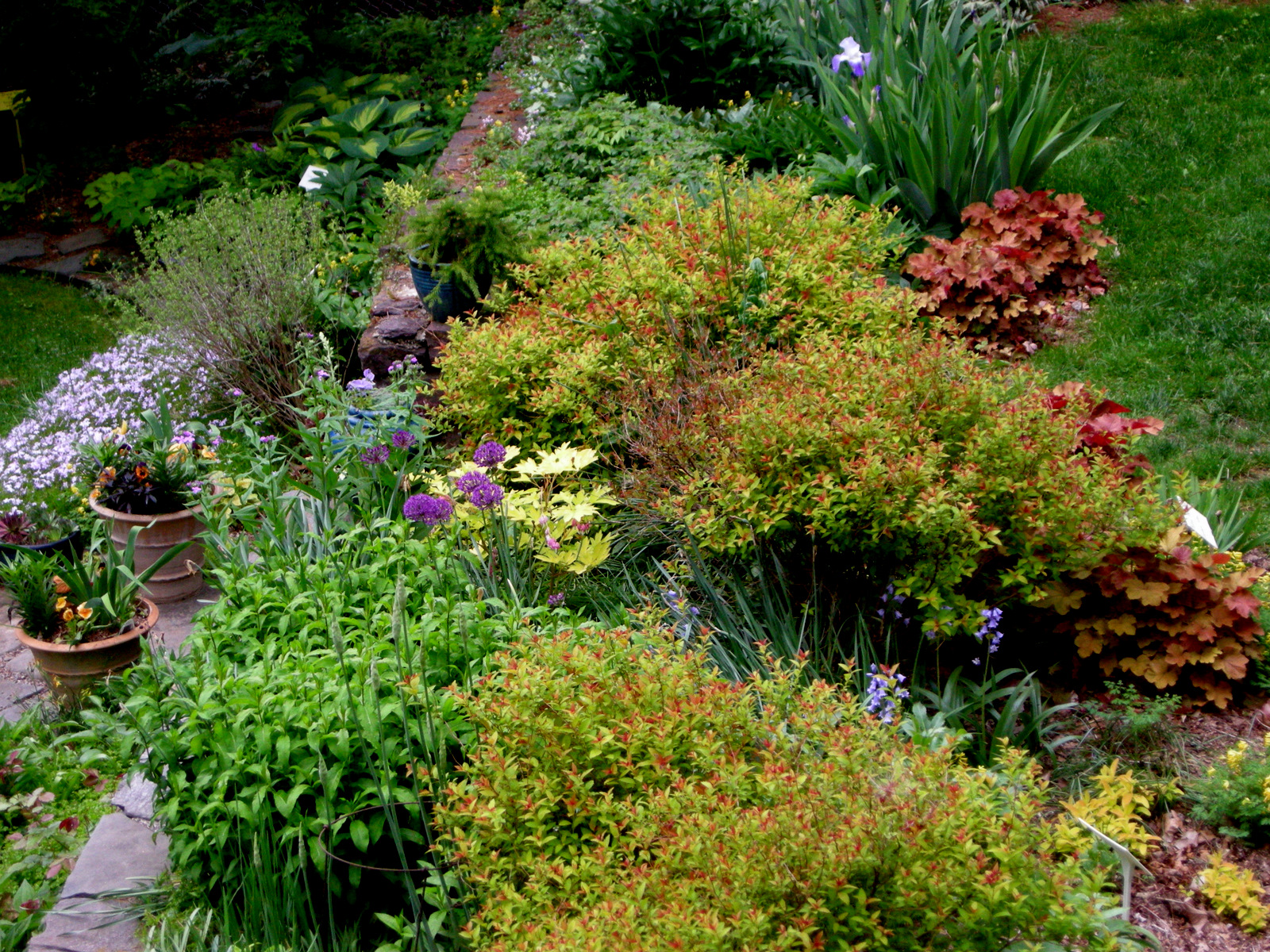
Main sunny perennial border: not a full day but as sunny as it gets at Carolyn’s Shade Gardens.

The shady gold garden under a 120-year -old London plane tree.

Our cat Otto enjoying the wall garden.

Please let me know in a comment/reply what flowers are blooming in your spring garden.  If you participated in GBBD, please provide a link so my nursery customers can read your post.

Carolyn

Notes: Every word that appears in orange on my blog is a link that you can click for more information.  If you want to return to my website’s homepage to access the sidebar information (catalogues, previous articles, etc.), just click here.
Nursery Happenings: The nursery is closed until it cools off in the fall around the middle of September.  If you are on my customer email list, look for an email.  If not, sign up by sending an email to carolynsshadegardens@verizon.net with your name and phone number.

Woody Plants for Shade Part 2

Posted in landscape design, native plants, New Plants, Shade Shrubs with tags , , , , , , , , , , , , , , , , on May 23, 2011 by Carolyn @ Carolyns Shade Gardens

Carolyn’s Shade Gardens is a retail nursery located in Bryn Mawr, PA, specializing in showy, colorful, and unusual plants for shade.  The only plants that we ship are snowdrops and miniature hostas.  For catalogues and announcements of events, please send your full name, location, and phone number (for back up use only) to carolyn@carolynsshadegardens.com.  Click here to get to the home page of our website for catalogues and information about our nursery and to subscribe to our blog.

The very showy flowers of redvein enkianthus, Enkianthus campanulatus ‘Princeton Red Bells’.

My nursery specializes in herbaceous flowering plants for shade.   However, although no shade garden is complete without trees, shrubs, and vines, our local nurseries seem to ignore woody plants for shade.  To fill this gap, I offer shade-loving woodies from a wholesale grower whose quality meets my exacting standards.  To view the catalogue, click here.   As in Woody Plants for Shade Part One, I thought my blog readers who are not customers might be interested in learning about the woody plants that I would recommend they add to their shade gardens.  And doing an article in addition to the catalogue allows me to add more information so customers might be interested also.

Included in my offering are six shrubs and two vines.  Of the eight plants I have chosen, five are native.  Please read my article My Thanksgiving Oak Forest to see why I think planting native plants is crucial to our environment.  My article New Native Shade Perennials for 2011 explains why I think native cultivars are valuable native plants.  With that introduction, here are the plants I am highlighting:

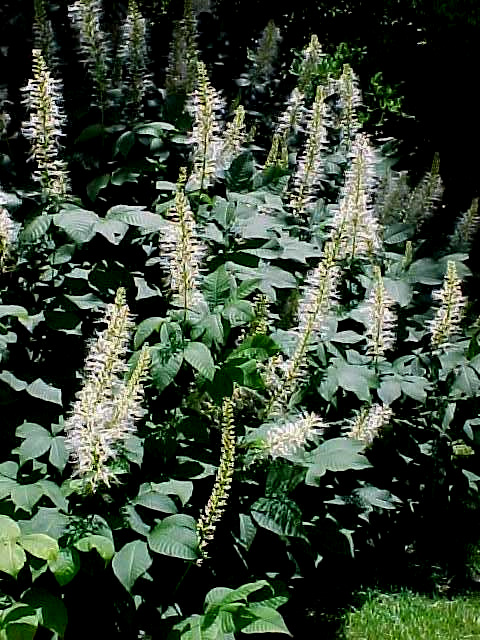
Native bottlebrush buckeye, Aesculus parviflora

Native bottlebrush buckeye is a wonderful shrub for making a majestic stand in full shade.  I grow it deep in my woods, and it performs beautifully.   It grows to 10’ tall in  full sun to full shade in any location and soil type.  It is also deer resistant.  The  creamy white flowers on long upright brush-like panicles in early summer and the bold textured leaves give it a dramatic tropical look.  It has excellent yellow fall color and attracts hummingbirds.

The lovely yellow fall color of bottlebrush buckeye.

Bottlebrush buckeye is native to parts of the eastern US, including Pennsylvania.  It is a Pennsylvania Horticultural Society Gold Medal Plant, click here for details.  It is also a Missouri Botanical Garden Plant of Merit, click here  for details (photos courtesy of the Missouri Botanical Garden Plant Finder).


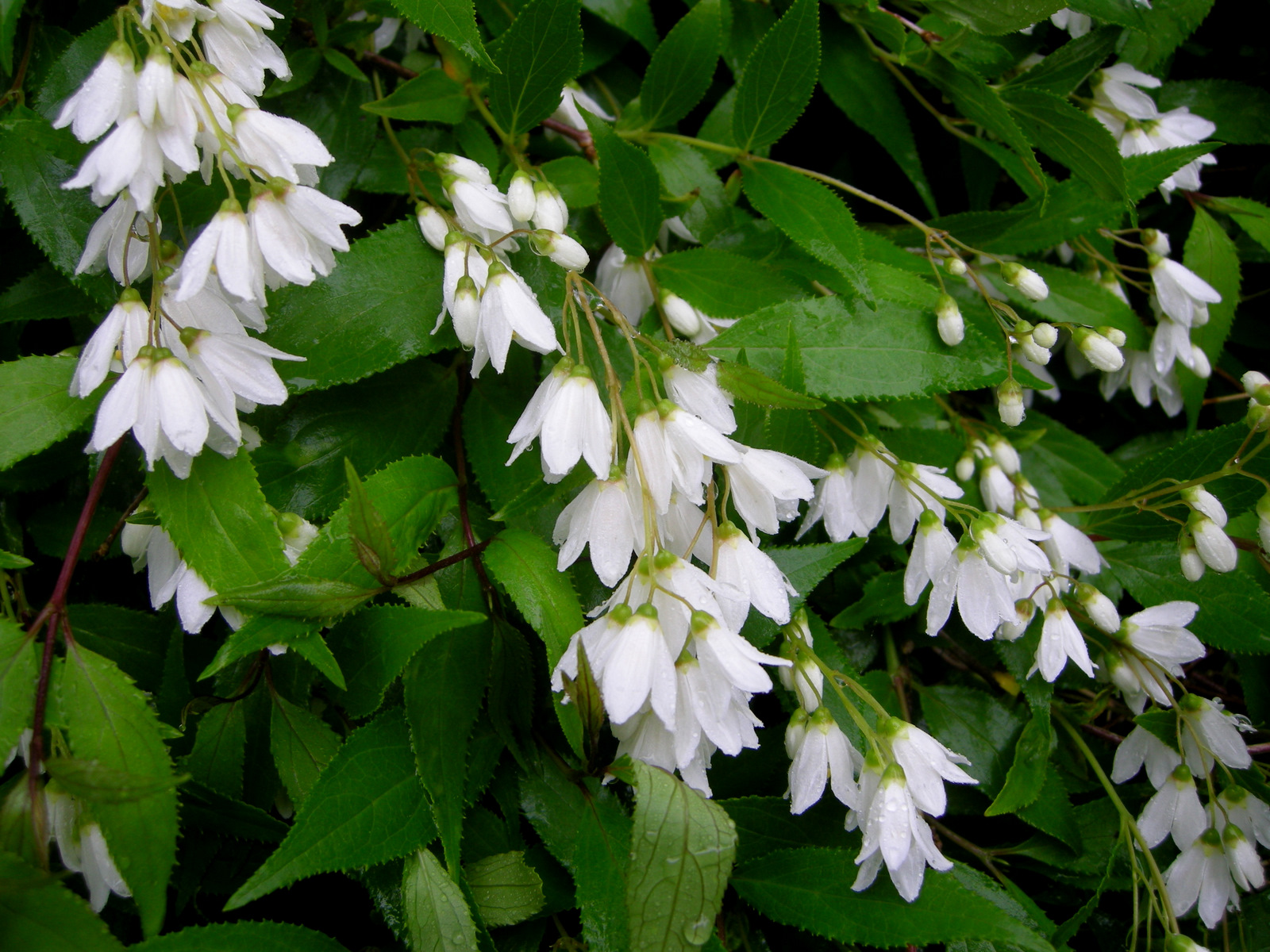
 Dwarf slender deutzia, Deutzia gracilis ‘Nikko’

‘Nikko’ dwarf slender deutzia is another shrub that can grow anywhere from  full sun to full shade and is deer resistant.  In April and May, it is covered with delicate white flowers, and the fine-textured and neat green leaves turn purple in the fall.  This deutzia makes an excellent specimen, growing 2’ tall by 5’ wide, or a superior flowering groundcover for shade.  I grow it in full shade at the base of my winterberry hollies.  It is native to Japan and is a Pennsylvania Horticultural Society Gold Medal Plant, click here for details.

I use ‘Nikko’ dwarf slender deutzia as a groundcover in full shade under winterberry hollies.


Redvein enkianthus, Enkianthus campaulatus ‘Princeton Red Bells’

In May ‘Princeton Red Bells’ redvein enkianthus is covered with a multitude of spectacular deep red, pendant bell-like flowers.  Its elegantly arranged blue-green leaves turn an excellent dark red in the fall.  It has a very unique and graceful habit (see photo of species below) and grows to 8’ tall by 4’ wide in full sun to full shade.  It is deer resistant and likes average to moist soil, although I grow it in my dry woodland.  It is native to Japan.  For more information about the species, click here.

This photo of the straight species of redvein enkianthus growing in my woodland shows its elegant habit and abundance of flowers.  The flowers of ‘Princeton Red Bells’ are much more eye-catching.


The amazing flowers of native smooth hydrangea, Hydrangea arborescens ‘Annabelle’.

Native ‘Annabelle’ smooth hydrangea has won numerous awards for its very showy, huge (up to 1’) snowball flowers, which appear from June into September.  It grows 5’ tall by 5’ wide in part to full shade (full sun is not recommended).  It is supposed to be deer resistant for a hydrangea.  A gentle pruning in late spring produces optimum growth.

‘Annabelle’ produces copious, long lasting flowers.

Smooth hydrangea is native to the eastern U.S., including Pennsylvania.  It is a Pennsylvania Horticultural Society Gold Medal Plant, click here for details.  It is also a Missouri Botanical Garden Plant of Merit, click here for details (photos courtesy of the Missouri Botanical Garden Plant Finder).


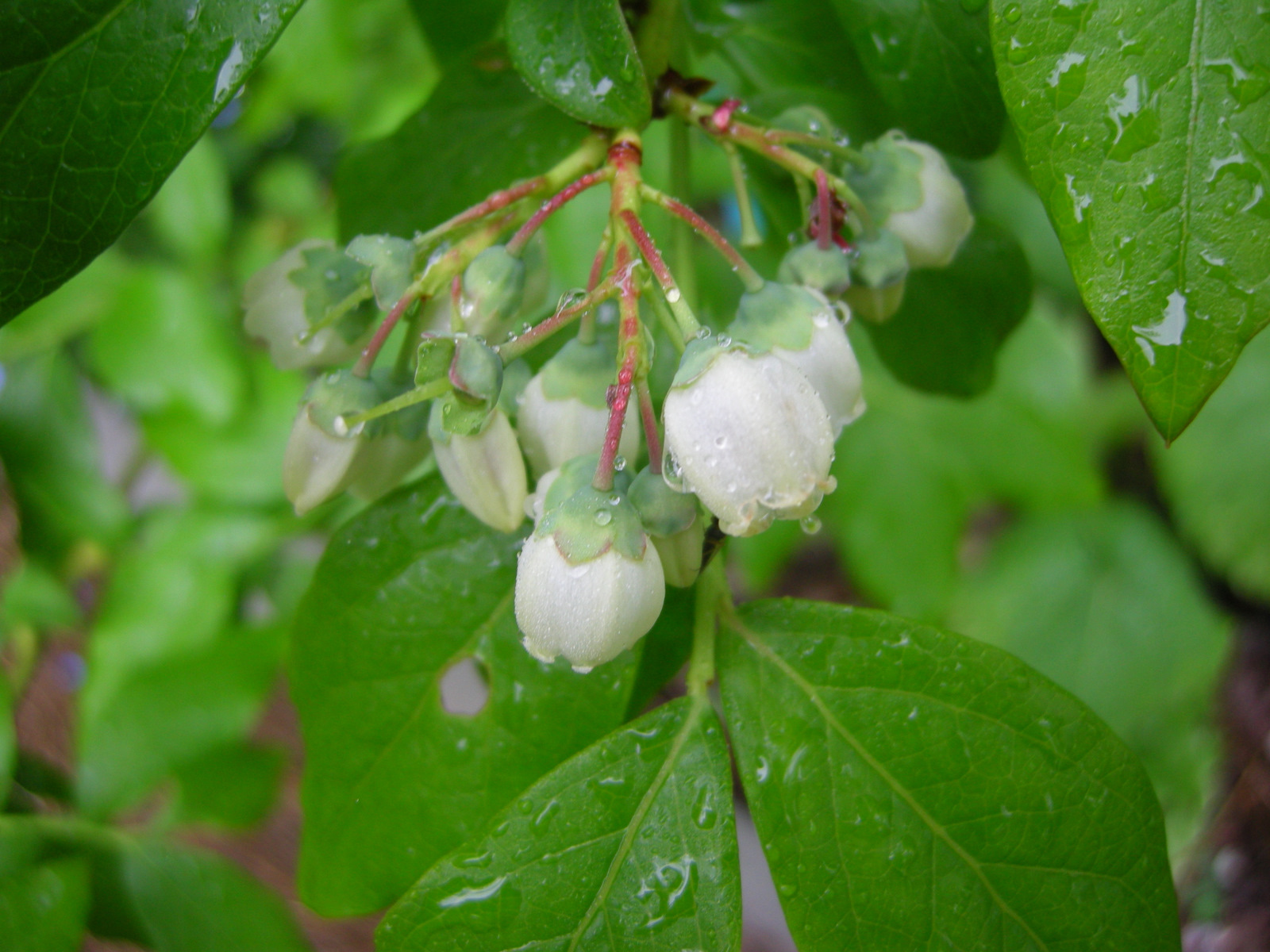
The gorgeous and delicious fruit of native northern highbush blueberry, Vaccinium corymbosum ‘Jersey’.

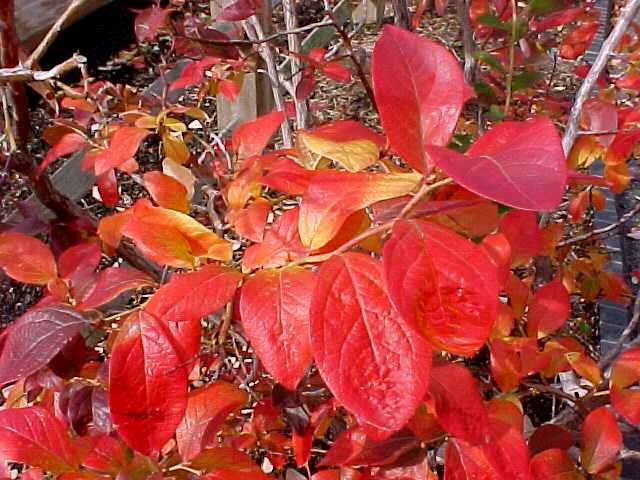
Gardeners might not think of northern highbush blueberry as an ornamental, but it has everything you could want in a shrub.   Its pretty bell-shaped white flowers appear in May and are followed by delicious and beautiful powder blue fruit in summer.  It has excellent scarlet fall color and is native and wet site tolerant.  What more could you ask for?  It grows to 6’ tall in full sun to part shade.

The flowers of northern highbush blueberry

Northern highbush blueberry is native to all of eastern North America, including Pennsylvania.  I am offering two cultivars: ‘Jersey’ is an early midseason producer, and ‘Berkley’ is late midseason.  Planting two different cultivars produces better fruit.  For more information, click here  (photos of berries and fall color courtesy of the Missouri Botanical Garden PlantFinder).

The fall color of northern highbush blueberry.


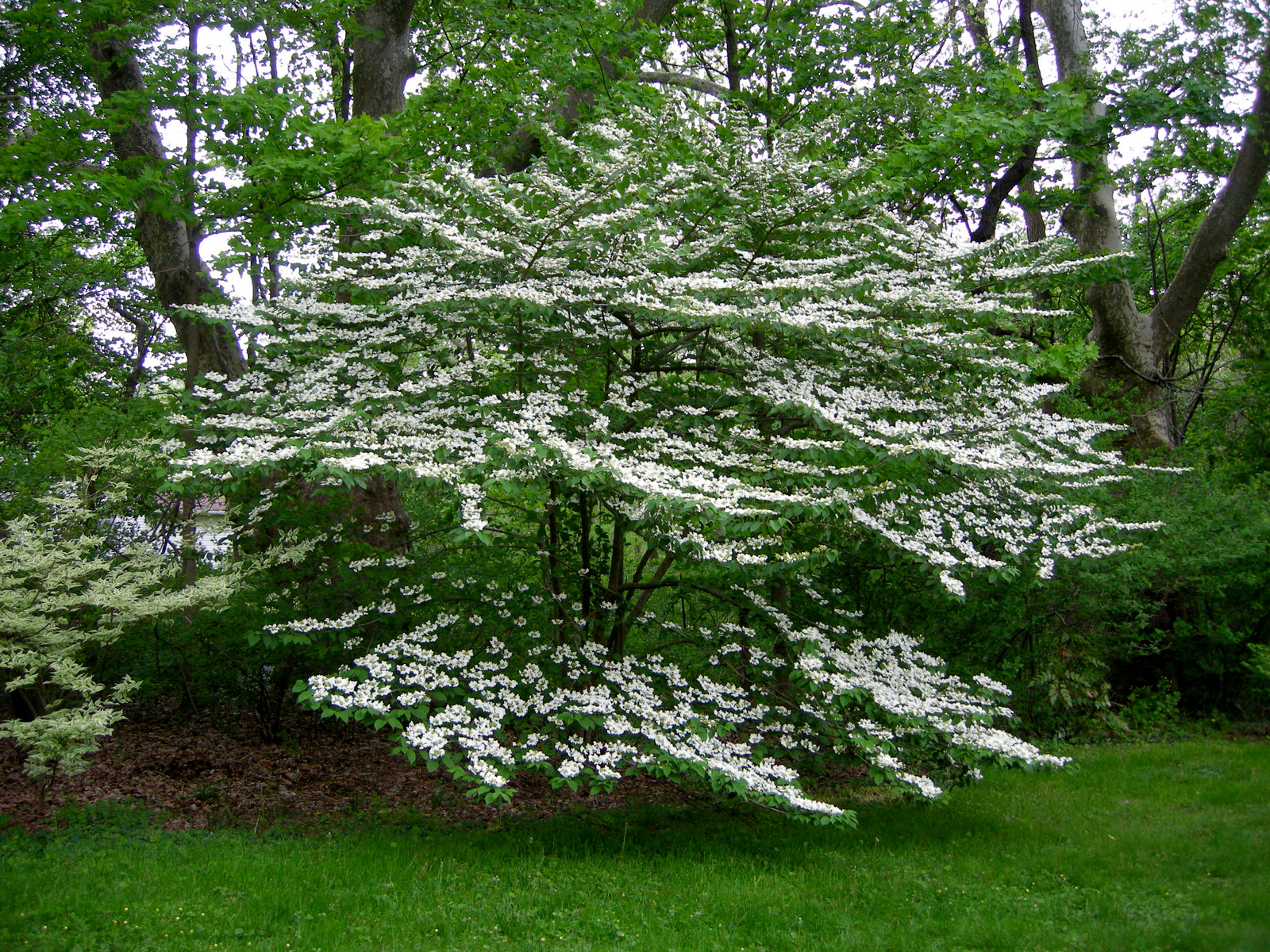
Doublefile viburnum, Viburnum plicatum var. tomentosum

My doublefile viburnum, pictured above, is one of the showiest and most talked about plants in my display gardens.  ‘Mariesii’ is a superior cultivar of doublefile viburnum.  Its large, white lacecap flowers in May and June and elegant, pleated medium green leaves are an unbeatable combination.  It grows quickly up to 12’ tall and 10’ wide in part to full shade and is deer resistant.   It is native to China and Japan.  For more information, click here.

The flowers of doublefile viburnum.


Native trumpet honeysuckle, Lonicera sempervirens ‘Crimson Cascade’

Native ‘Crimson Cascade’ trumpet honeysuckle produces bright coral red tubular flowers that invite hummingbirds from miles around in late spring and reblooms through fall.  Its shiny dark green leaves with red stems remain attractive through the season.  It is native to all of eastern North America, including Pennsylvania.  I grow mine mixed with my wisteria on my front porch and in an even shadier location along my front stairs.

Trumpet honeysuckle climbs my Chinese wisteria and blooms before, during, and after the wisteria is done.


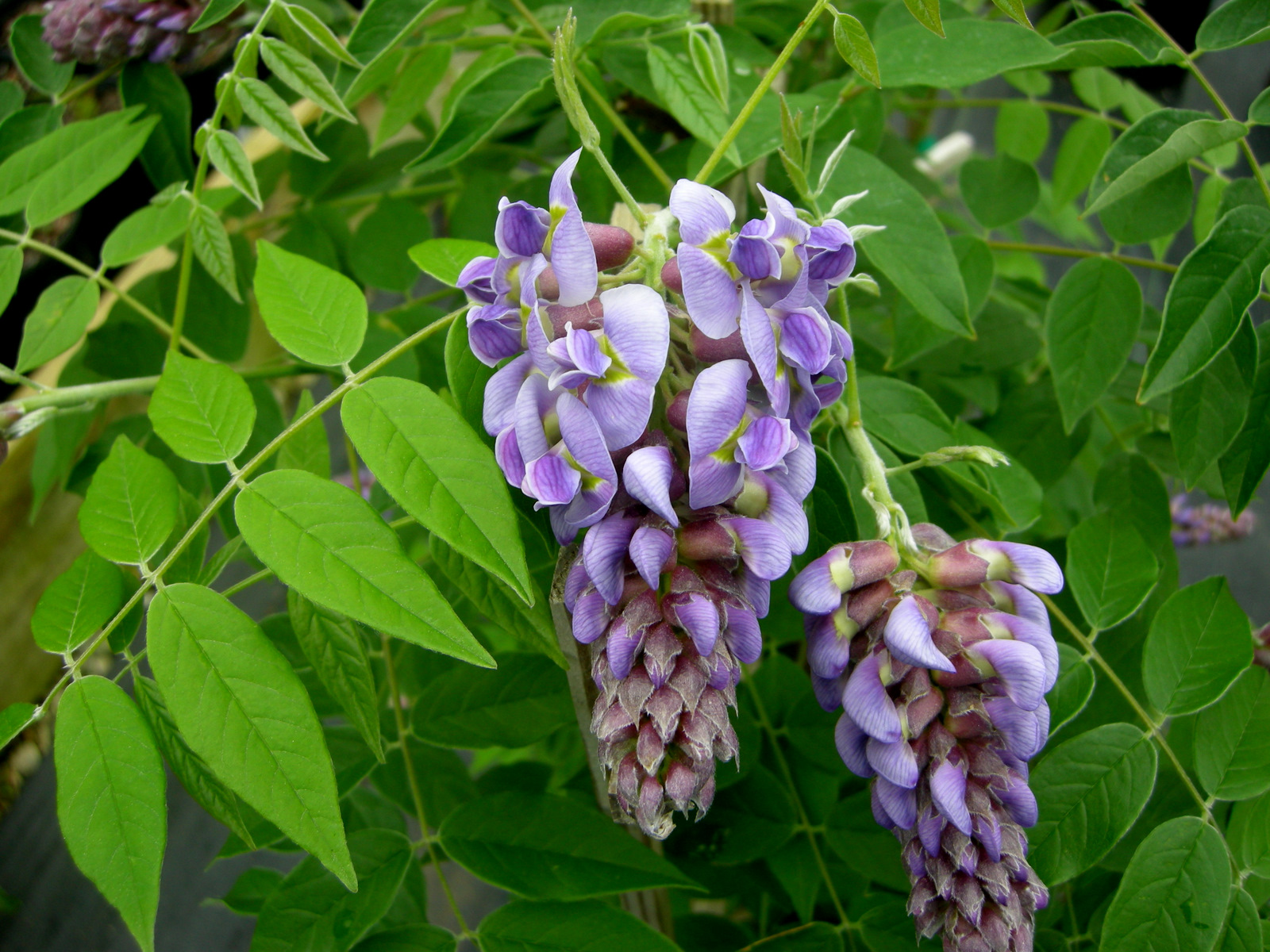
Native American wisteria, Wisteria frutescens ‘Amethyst Falls’

The copious fragrant, lavender-blue flower clusters of  Amethyst Falls’ American wisteria are almost as beautiful in bud as in bloom from June to August.  This wisteria has fine-textured attractive foliage and is less rampant than Asian wisteria.  It grows to 20′ at maturity in full sun to part sun (it is technically not a shade plant).  It is native to the eastern U.S., including Pennsylvania.  ‘Amethyst Falls’ is a Pennsylvania Horticultural Society Gold Medal Plant,  click here for details.

The flowers and foliage of American wisteria.


I grow every one of these shrubs and vines in my gardens so I know you can’t go wrong by adding them to yours!  If you are a customer, you have until May 25 to place an order by clicking here.  If not, now you have some plants to ask for at your local independent nursery.

Carolyn


Notes: Every word that appears in orange on my blog is a link that you can click for more information.  If you want to return to my blog’s homepage to access the sidebar information (catalogues, previous articles, etc.), just click here.

Nursery Happenings: Orders for woody shade plants will be accepted until  noon on Wednesday, May 25.  We will have our traditional open hours over Memorial Day Weekend on Saturday from 9 am to noon and Sunday from noon to 3pm.  You don’t need an appointment, just show up.  But remember you can make an appointment to shop 24/7 by sending me an email at carolynsshadegardens@verizon.net.  There is  still a great selection of hostas, ferns, and hardy geraniums.

May GBBD: An Embarrassment of Riches

Posted in Garden Blogger's Bloom Day, Gardening Gone Wild Photo Contest, landscape design, native plants, Shade Shrubs with tags , , , , , , on May 15, 2011 by Carolyn @ Carolyns Shade Gardens

Carolyn’s Shade Gardens is a retail nursery located in Bryn Mawr, PA, specializing in showy, colorful, and unusual plants for shade.  The only plants that we ship are snowdrops and miniature hostas.  For catalogues and announcements of events, please send your full name, location, and phone number (for back up use only) to carolyn@carolynsshadegardens.com.  Click here to get to the home page of our website for catalogues and information about our nursery and to subscribe to our blog.

English primrose, Primula x polyantha ‘Cherry Pinwheels’, from Garden Vision Epimediums, one of my favorite nurseries.

Spring is with us in all its glory, and we have reached the middle of the month when I encourage each of you to walk around your garden and assess what you need to add to make mid-spring an exciting time in your landscape.  Do you need more flowering trees, shrubs, and vines to give you a reason to stroll in your garden?  Could your garden benefit from more flowers that bloom in May?

Late-blooming European wood anemone, Anemone nemorosa ‘Blue Eyes’: can you see its blue eye peeking out?

Make a list and take photographs so that when you are shopping for plants you know what you need and where it should go.  It’s beautiful outside, and you never know what you might find hiding in your garden like the cheerful English primrose (photo at top), which I discovered during my own  inventory.  Come visit Carolyn’s Shade Gardens to find even more inspiring ideas!

Whipporwill flower, Trillium cuneatum

Today is Garden Blogger’s Bloom Day for May when gardeners around the world show photos of what’s blooming in their gardens (follow the link to see  photographs from other garden bloggers assembled by Carol at May Dreams Gardens).  Here are  some more highlights from my mid-May stroll through Carolyn’s Shade Gardens, but to see it all you will have to visit.

Japanese roof iris, Iris tectorum, in my gold garden.

Readers really enjoyed my photos of trees and shrubs on April’s GBBD so I have been photographing every woody plant that has come into bloom since then.  Some have finished blooming now, but most are in bloom.  Let’s start with the trees:

Saucer magnolia, Magnolia x soulanginana: this magnolia was done blooming in the beginning of May, but magnolias are my favorite tree so I had to include it!

Flower of saucer magnolia


Ornamental crabapple, Malus species: this is my only ornamental crabapple and was here when we moved in so I am not sure of the variety.


Flower of the ornamental crabapple (also done now)


Kwanzan cherry, Prunus serrulata ‘Kwanzan’: also here when we moved in.

Flower of Kwanzan cherry (done flowering)


Native Carolina silverbell, Halesia caroliniana ‘Rosea’: a beautiful small flowering tree with amazing orange-streaked bark.


Native flowering dogwood, Cornus florida ‘Cherokee Brave’

Flower of ‘Cherokee Brave’ flowering dogwood


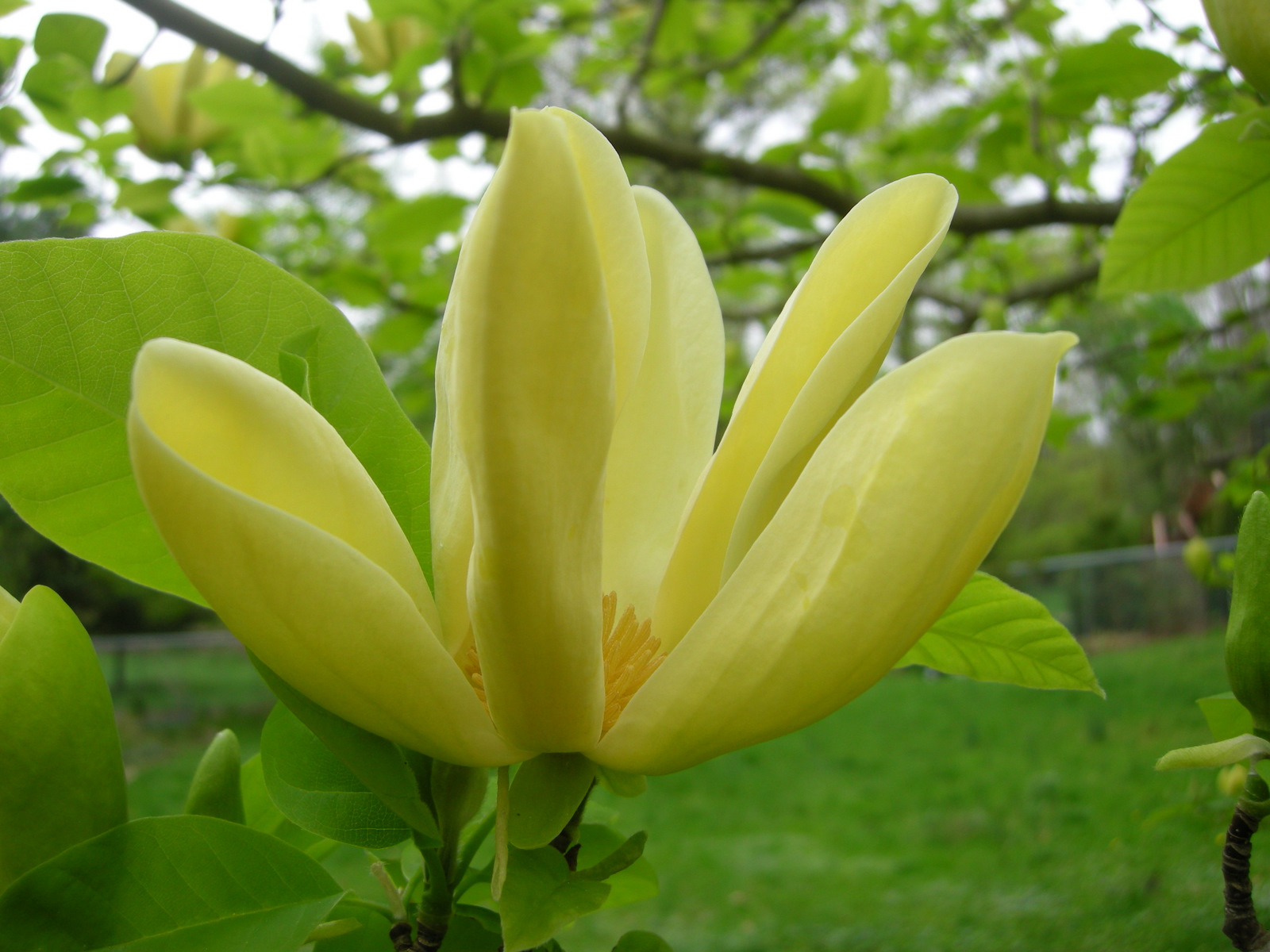
Native cucumber magnolia, Magnolia acuminata ‘Yellow Bird’

Flower of ‘Yellow Bird’ cucumber magnolia


Native green hawthorn, Crataegus viridis ‘Winter King’: I thought it would be fun to see what this tree looks like from inside our house.

Flower of ‘Winter King’ hawthorn: it also has beautiful red berries.


Native pagoda dogwood, Cornus alternifolia ‘Golden Shadows’, with native vine Carolina jessamine, Gelsemium sempervirens ‘Margarita’, and native (to the U.S.) camassia, Camassia leichtlinii ‘Caerulea’.


Wilson’s magnolia, Magnolia wilsonii: a real favorite because it grows and flowers in the shade.  I can’t show you the whole tree because a London plane tree branch fell on it and destroyed its shape.


Oyama magnolia, Magnolia sieboldii, has flowers similar to M. wilsonii but does not tolerate as much shade and blooms later.  Both trees should be planted so that you can view the flowers from below.

I love the buds of both these magnolias: they look like eggs hanging on the tree.


Are you ready for a few shrubs?

This is the biggest doublefile viburnum, Viburnum plicatum var. tomentosum, I have ever seen, and it started as a 3″ sprig.

Flower of doublefile viburnum


Dwarf Korean lilac, Syringa meyeri ‘Palibin’, with ‘Winter King’ hawthorn in the background.

Flower of ‘Palibin’ dwarf Korean lilac


Old-fashioned weigelas, Weigela florida ‘My Monet’ and ‘Variegata’, with Hosta ‘Stained Glass’

Flower of old-fashioned weigela ‘Variegata’


Tree peonies, Paeonia suffruticosa, take more shade than herbaceous peonies.  These plants did not come with names other than the color.


How about some vines?

My husband’s dedication to training this Chinese wisteria, Wisteria sinensis, across our front porch has really paid off.  I have  a native wisteria too, but it isn’t in bloom yet.

We grow the Chinese wisteria entwined with native honeysuckle, Lonicera sempervirens ‘Blanch Sandman’, and they both reach the second story.  This photo is for Tina at In the Garden who also has this combination.


The view out our dining room window of the pink anemone clematis, Clematis montana var.  rubens, growing on the deck railing.  This is a very vigorous and long-blooming clematis that does well in part shade.

The flowers of pink anemone clematis start out pale pink (above) and deepen in color as they age.


A few scenes of the flower beds in mid-May:

The garden surrounding our deck with Spanish bluebells, Scilla campanulata ‘Excelsior’, variegated Solomon’s seal, Polygonatum odoratum ‘Variegatum’, and white old-fashioned bleeding-heart, Dicentra spectabilis ‘Alba’, in bloom.


The view from upstairs of our main perennial border by the front door.


The woodland garden in mid-May with native hybrid sweetshrub, Calycanthus raulstonii ‘Hartlage Wine’ in bloom in the upper left.


This post is dedicated to my husband, Michael, who plants most of the plants and does all the dirty jobs at Carolyn’s Shade Gardens.


Please let me know in a comment/reply what flowers are blooming in your spring garden.  If you participated in GBBD, please provide a link so my nursery customers can read your post.

Carolyn

Notes: Every word that appears in orange on my blog is a link that you can click for more information.  If you want to return to my blog’s homepage to access the sidebar information (catalogues, previous articles, etc.), just click here.
Nursery Happenings: We expect to have our traditional open hours over Memorial Day Weekend, but remember you can make an appointment to shop 24/7 by sending me an email at carolynsshadegardens@verizon.net.  Saturday was one of my best open houses ever (thanks to everyone who came), but there is  still a great selection of hostas, ferns, and hardy geraniums.