Archive for the native plants Category

April GBBD: How to Choose

Posted in bulbs for shade, Garden Blogger's Bloom Day, hellebores, native plants, Shade Perennials, Uncategorized with tags , , , , , , , , , , , on April 14, 2011 by Carolyn @ Carolyns Shade Gardens

Carolyn’s Shade Gardens is a retail nursery located in Bryn Mawr, PA, specializing in showy, colorful, and unusual plants for shade.  The only plants that we ship are snowdrops and miniature hostas.  For catalogues and announcements of events, please send your full name, location, and phone number (for back up use only) to carolyn@carolynsshadegardens.com.  Click here to get to the home page of our website for catalogues and information about our nursery and to subscribe to our blog.

Time is just flying by, and we have reached the middle of the month when I encourage each of you to walk around your garden and assess what you need to add to make early spring an exciting time in your landscape.  Do you need more early flowering trees like magnolias and cherries to give you a reason to stroll in your garden?  Could your garden benefit from flowers that bloom in early April like native spring ephemerals, bulbs, pulmonarias, and hellebores?

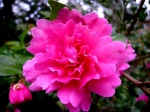
Make a list and take photographs so that when you are shopping this spring you know what you need and where it should go.  It’s beautiful outside, and you never know what you might find hiding in your garden like this ethereal double-flowered hellebore (pictured above), which I discovered during my own  inventory.  Usually I recommend a local garden to visit for inspiration, but I have to say Carolyn’s Shade Gardens is pretty inspiring right now!

Flowering quince, Chaenomeles x superba ‘Texas Scarlet’, with ‘White Lady’ hybrid hellebore

Today is Garden Blogger’s Bloom Day for April when gardeners around the world show photos of what’s blooming in their gardens (follow the link to see  photographs from other garden bloggers assembled by Carol at May Dreams Gardens).  Here are  some more highlights from my mid-April stroll through Carolyn’s Shade Gardens, but to see it all you will have to visit as Jean from Jean’s Garden and Jan from Thanks for Today are doing this Sunday.

My early magnolias are in full bloom.  Magnolias are my favorite flowering trees, and I want to share these early-blooming varieties with you:

Northern Japanese Magnolia, Magnolia kobus ‘Wada’s Memory’, has the most beautiful form of any magnolia.  The branches curve upwards to form an elongated pyramid, which is maintained even on mature plants.

‘Wada’s Memory’ flower

Star magnolia, Magnolia stellata, blooms so early that it often gets damaged by frost, but amazingly the flowers are magnificent this year.

Star magnolia flowers

I have waited over 15 years for my Yulan magnolia, Magnolia denudata, to bloom, but once I saw mature trees at Longwood Gardens, I had to have one!  It was worth the wait.

My ingenious 13-year-old son used a grappling hook to pull a branch down and clip a Yulan magnolia flower for me to photograph.

There are so many beautiful hellebores in bloom that I made collages of my favorite flowers so that this whole post wasn’t dedicated to hellebores:

Clockwise from upper left: seedling double hybrid hellebore, ‘Mrs. Betty Ranicar’, ‘Velvet Lips’ (don’t you love that name?), ‘Painted Bunting’

Clockwise from upper left: seedling petaloid hybrid hellebore, ‘Blue Lady’, Helleborus x nigercors ‘Green Corsican’ (cross between Corsican hellebore and Christmas rose), seedling in ‘Double Melody’ strain

Clockwise from upper left: double from ‘Golden Lotus’ seed strain, ‘Raspberry Mousse’, ‘Goldfinch’, seedling petaloid hybrid hellebore

I could dedicate the whole post to epimediums too so here are more collages:

Clockwise from upper left: ‘Yubae’, Epimedium x rubra, ‘Cherry Tart’, ‘Sweetheart’

Clockwise from upper left: ‘Shrimp Girl’, ‘Orange Queen’, Epimedium x warleyense, ‘Cupreum’

I have a collection of about 15 varieties of European wood anemones, and April is their time to shine.  They are very easy to grow in shaded woodland conditions:

Left to right from upper left: Anemone nemorosa pink form; Anemone x seemanii; ‘Alba Plena’; ‘Leed’s Variety’; ‘Bractiata’; ‘Allenii’; ‘Vestal’; Anemone ranunculoides; ‘Wyatt’s Pink’

European wood anemones spread to form a sizable and eye-catching patch even in dry shade, photo above of the yellow flowers of Anemone ranunculoides.

I want to share so many exciting blooming plants with you that I don’t know how to choose the photographs to include, hence the title of this post.  Here are other plants that made the cut:

Red lungwort, Pulmonaria rubra ‘Redstart’, is a very unusual pulmonaria with green fuzzy leaves.

Winterhazel, Corylopsis species, unfortunately for the first time ever our late freezes damaged most of the flowers.

Obviously not a bloom, but I wanted to show you the early color of native variegated dwarf Jacob’s ladder, Polemonium reptans ‘Stairway to Heaven’.

Native rue anemone, Anemonella thalictroides double pink form

I planted a mixture of daffodils in the middle of my raised beds, and this lovely seedling appeared in the path.

Native cinnamon fern, Osmunda cinnamomea, is gorgeous as it unfurls.

A seedling Helleborus multifidus underplanted with the spring ephemeral  Cardamine quinquefolia.

The many colors of Corydalis solida when allowed to seed.  I am planning an article on this plant in the future.

Who could have planned this combination?  Native coral bells, Heuchera villosa ‘Caramel’, with a seedling glory-of-the-snow, Chionodoxa forbesii.

The new leaves and flowers of Japanese coral bark maple, Acer palmatum ‘Sango-kaku’, are breathtaking in early spring.  For the full story on this four season tree, read my article Coral Bark Maple.

My latest spring-blooming camellia addition, Camellia x ‘April Rose’, a formal double.


For breath-taking beauty in early spring you can’t beat cherry trees:

A very mature Yoshino cherry, Prunus x yedoensis, that came with our property.  I love the fleeting nature of the flowers and look forward to the day every spring when it rains petals in my nursery.  Its orange fall color is spectacular.

My favorite cherry (at least for today), Prunus x incam ‘Okame’, dominates my courtyard garden in early spring.


I will end with a heart full of cherry blossoms because I love early spring!

Please let me know in a comment/reply what flowers are blooming in your early spring garden.  If you participated in GBBD, please provide a link so my nursery customers can read your post.

Carolyn


Notes: Every word that appears in orange on my blog is a link that you can click for more information.  If you want to return to my blog’s homepage to access the sidebar information (catalogues, previous articles, etc.), just click here.

Nursery Happenings: My second open house sale is this Saturday, April 16, from 10 am to 3 pm, featuring early spring-blooming plants for shade.
Supporting Sustainable Living: Part One

Posted in garden essay, green gardening, native plants, organic gardening with tags , , , , , , , , , , , , , , , , , , , , on April 7, 2011 by Carolyn @ Carolyns Shade Gardens

Carolyn’s Shade Gardens is a retail nursery located in Bryn Mawr, PA, specializing in showy, colorful, and unusual plants for shade.  The only plants that we ship are snowdrops and miniature hostas.  For catalogues and announcements of events, please send your full name, location, and phone number (for back up use only) to carolyn@carolynsshadegardens.com.  Click here to get to the home page of our website for catalogues and information about our nursery and to subscribe to our blog.
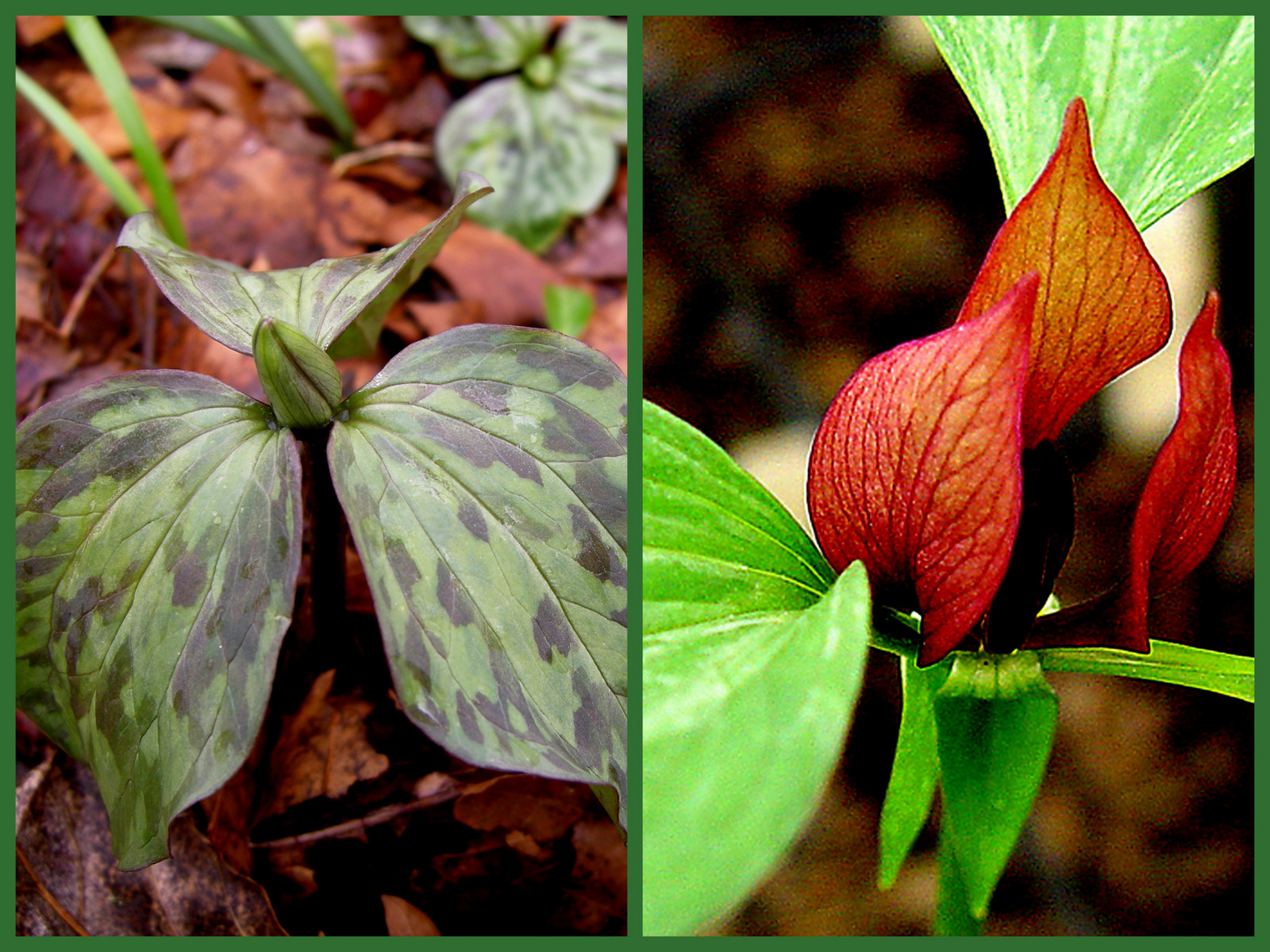
PA native bloody butcher (attractive common name!), Trillium recurvatum, is just forming its buds now and will produce its beautiful flower shortly (photo on right Arrowhead Alpines).

All photos in this article are of plants native to Pennsylvania (PA) available at “Bulb and Native Wildflower Day” on April 9 at my nursery.  Single photos and the left photo in collages show the plants in my garden today.

Jan who writes the garden blog Thanks for Today is doing something wonderful, and  I want all my readers, subscribers, and customers to participate in Jan’s project.  Jan has started the Gardeners’ Sustainable Living Project, which celebrates Earth Day  by encouraging gardeners to get together and share the big and small things that they are doing anywhere in their lives to support sustainable living.  If you read my blog, you know that this is an important topic for me.

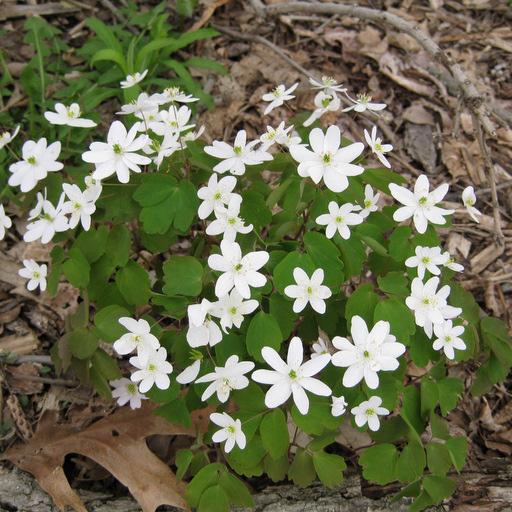
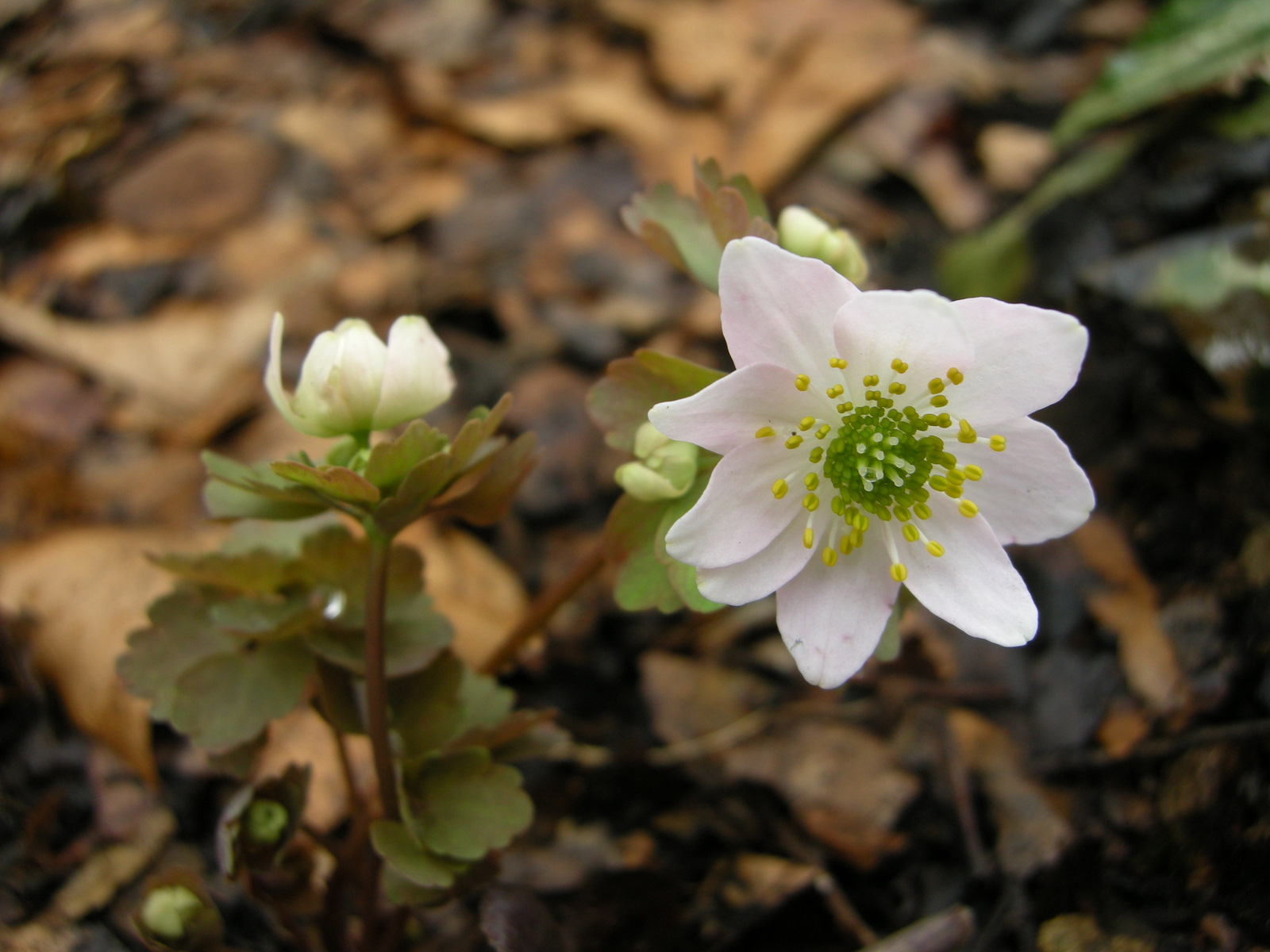
PA native rue-anemone, Anemonella thalictroides, is a dainty woodlander in full bloom right now.

To participate in the project, all you have to do is click on the Gardeners’ Sustainable Living Project link below and leave a comment describing a few of your own sustainable living practices.  If you are a garden blogger, you can write a post about your efforts, but Jan only requires a comment.  If you participate by April 15, you become eligible to receive all kinds of fun prizes.  I got so excited about the project, I decided to contribute a prize of my own: a snowdrop collection.  For prize details, click here.

The buds of PA native Celandine poppy, Stylophorum diphyllum, are just starting to show color, and the flowers will cover the plant for at least six weeks (photo on right Missouri Botanical Garden PlantFinder).

While you are leaving your comment, you can read all the posts written by garden bloggers telling you what they are doing to promote sustainability.  Donna at Gardens Eye View in her article  on “Trust” points out that we have been entrusted with the earth and we should leave it the way we found it.  She tells us about her efforts to do that.  Jean at Jean’s Garden explains how she has “come to understand how my plant choices can affect ecological systems and environmental balance.”

PA native twinleaf, Jeffersonia diphylla, is just pushing out of the ground in my garden (photo on right Missouri Botanical Gardens PlantFinder).

Pam at Pam’s English Cottage Garden was inspired by Barbara Kingsolver’s book Animal, Vegetable, Miracle: A Year of Food Life to “be more mindful of my carbon footprint by eating locally grown foods that are in season, and by supporting local farmers.”  Allan at allanbecker.gardenguru describes a wide range of “respectful grass roots initiatives that influence both consumer behavior and the agendas of local officials” while  promoting sustainability.  You can get a lot of great ideas by reading these thoughtful articles and all the others linked there.

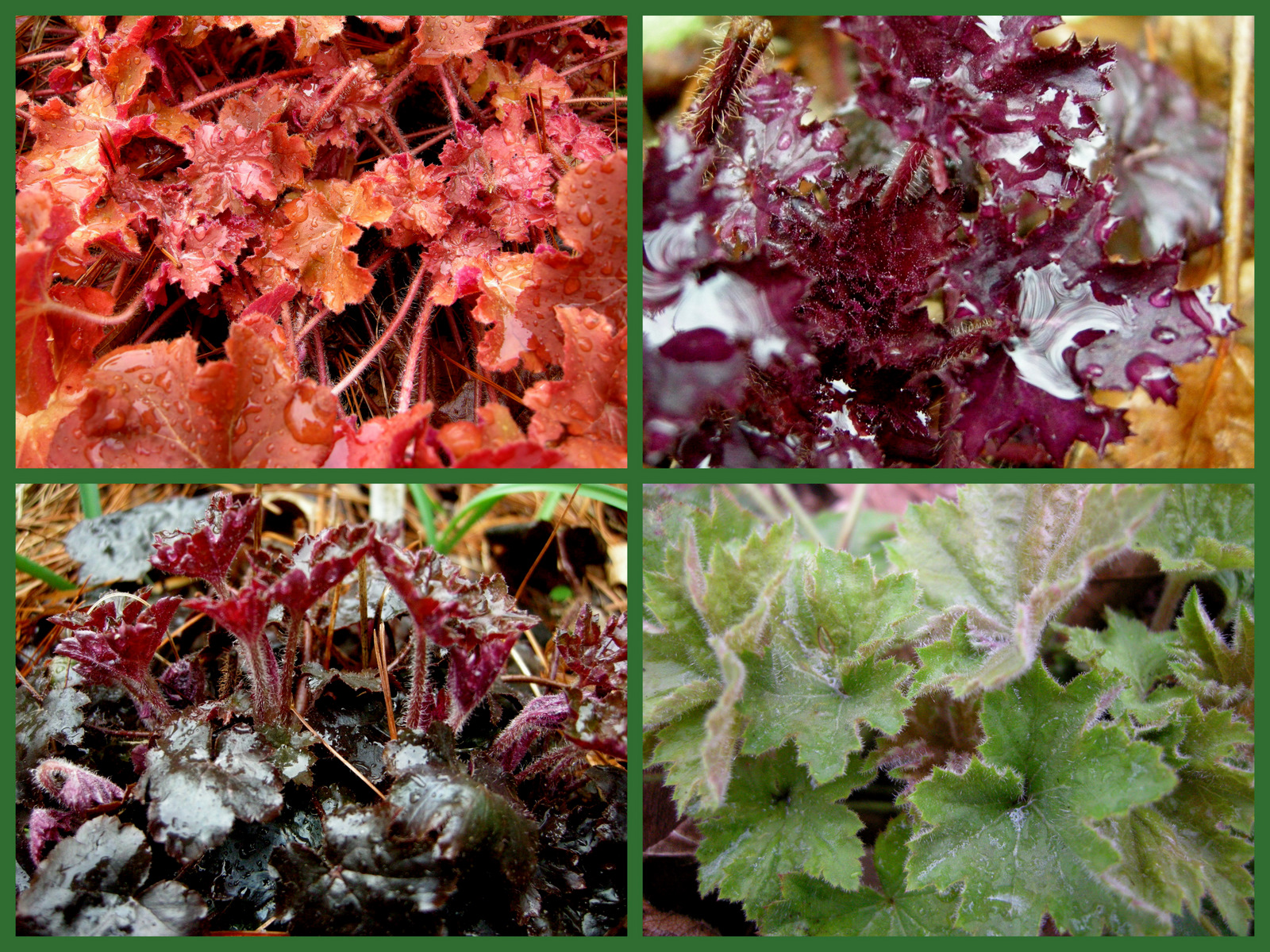
I love the early spring colors of emerging PA native coral-bell leaves.  Clockwise from upper left: Heuchera villosa ‘Caramel’, ‘Frosted Violet’, ‘Autumn Bride’, ‘Blackout’.

So what am I doing to promote sustainability?  For my whole gardening life, I have been organic, not using any herbicides, pesticides, or chemical fertilizers.  I don’t water except to establish new plants and, by following gardening practices like grinding my leaves (seeFall Clean-up and Leaves on the Lawn) and composting, I have restored the soil to its former pristine state.  I have gotten rid of almost an acre of lawn and replaced it with large areas of plants native to Pennsylvania.  In Maine, I founded and continue to run a community based invasive plant removal program whose goal is to eliminate all invasive plants from the small island where we vacation.

PA native Virginia bluebells, Mertensia virginica, is just about to come into full bloom in my garden.

Several years ago, though, I realized that I am uniquely placed to have an even larger impact in this area through my nursery.  As my customers ask me for advice and as I talk to the horticultural groups touring my display gardens, I emphasize sustainable practices and demonstrate how they work in my own gardens.  Instead of being lectured to in a darkened room, these gardeners are seeing  living proof that the sustainable methods I advocate have worked to create beautiful gardens.

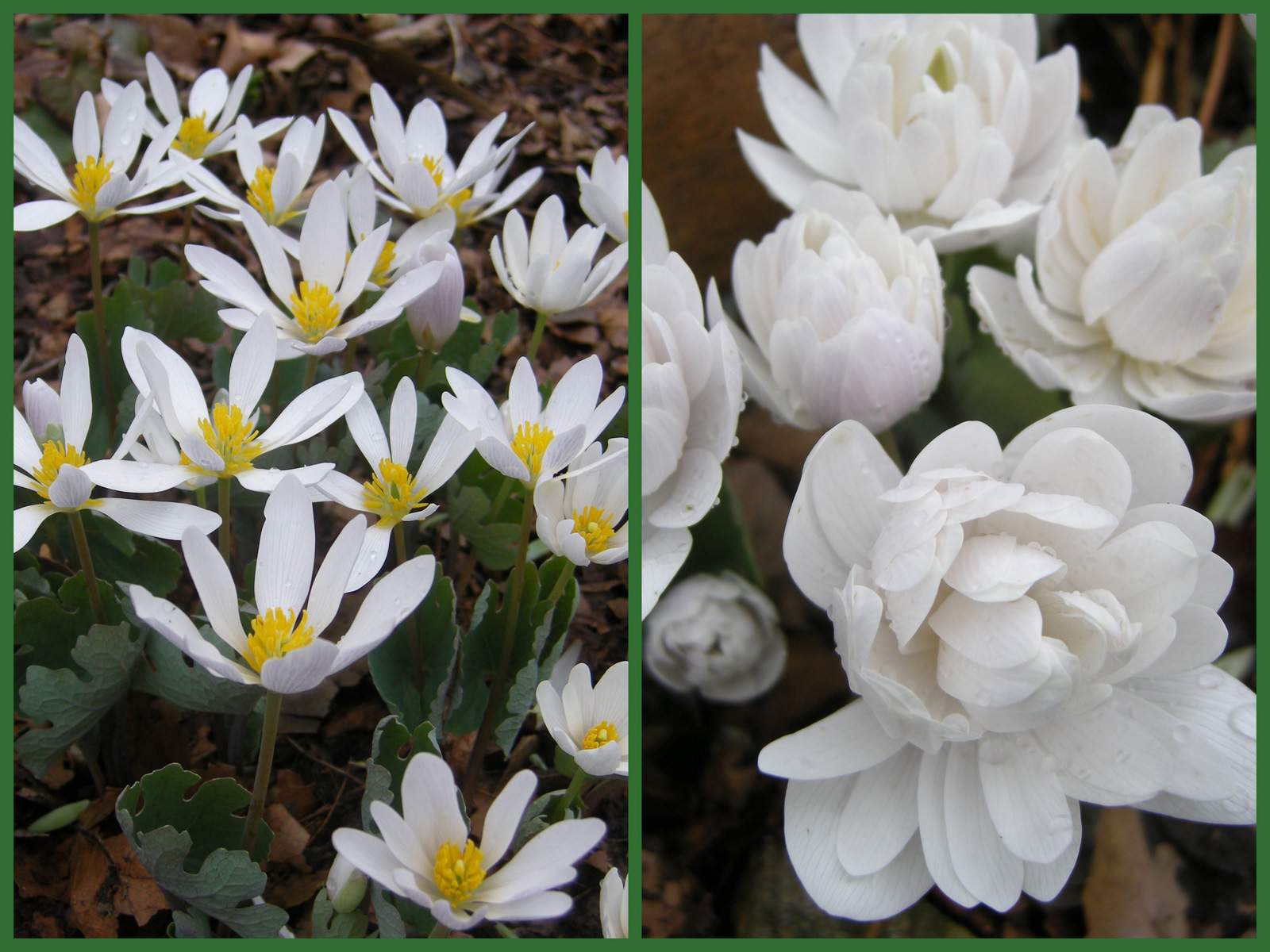
PA native bloodroot, Sanguinaria canadensis, is in full bloom right now.  The rare double form ‘Multiplex’, pictured on the right, is much longer blooming.

Reading Doug Tallamy’s book Bringing Nature Home: How You Can Sustain Wildlife with Native Plants was a turning point for me.  I finally understood why planting native plants is not just a “good thing”, but absolutely crucial to our survival.  I wrote about this in My Thanksgiving Oak Forest,  and I hope you will read my article.  Now I give out a synopsis of the book to the hundreds of customers who attend events at my nursery each year in hopes that they too will be inspired.

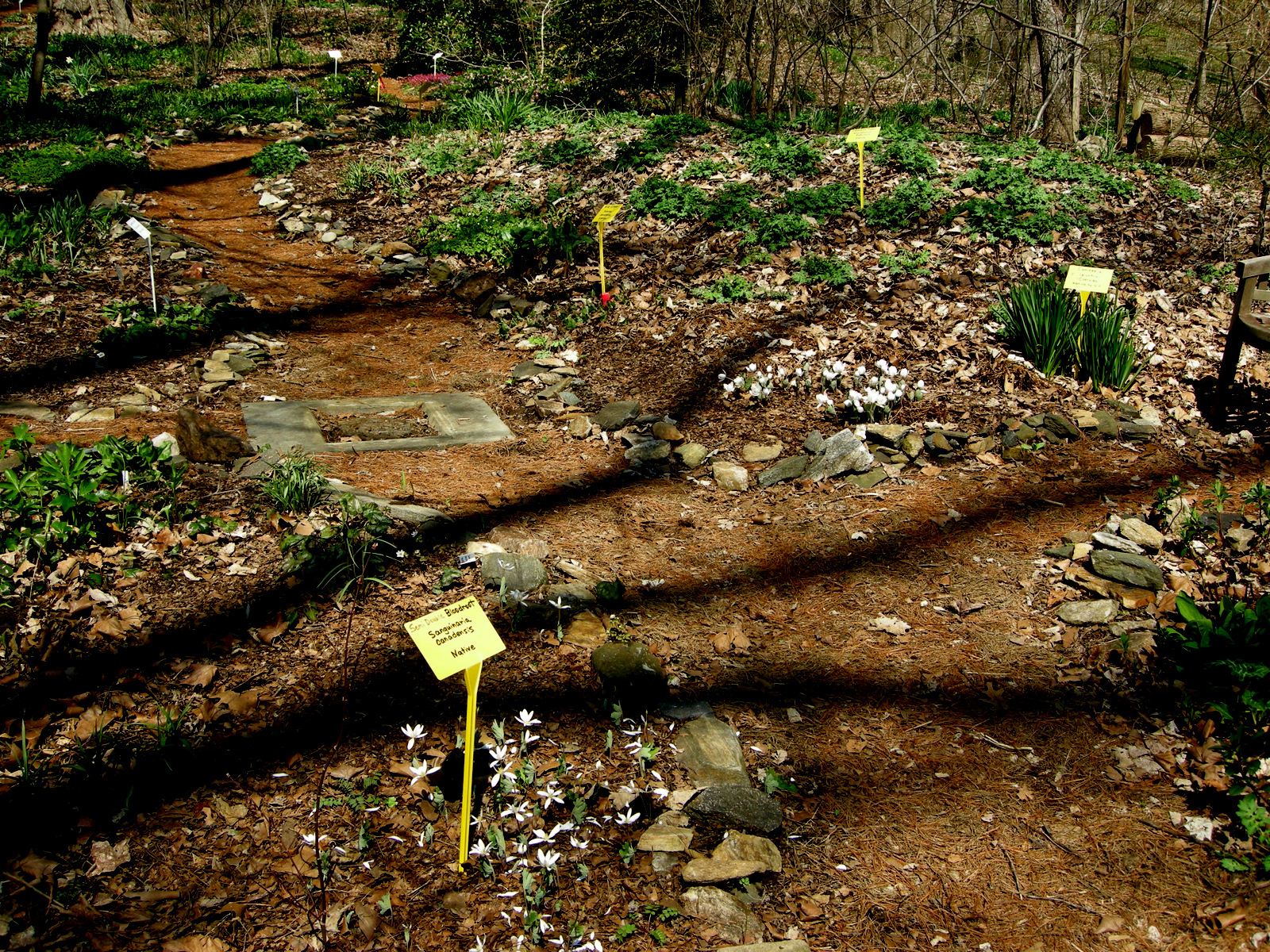
My new yellow signs boldly demonstrate which plants are native in my woodland garden.

As a result of my new understanding, I increased my emphasis on native plants at the nursery.  Native plants appear in green print in my catalogue.  I purchased new signage for the garden and the nursery so natives could have their own special yellow signs (see photo above) while non-natives have white.  I am about to have my sixth annual native wildflower day on April 9 during which customers can shop for a wide assortment of almost 40 native perennials, not including the native ferns that will be offered at my fern sale.

The foliage of PA native dwarf Jacob’s ladder, Polemonium reptans ‘Blue Pearl’, is evergreen, and the plants are covered with buds right now.

My two acres of display gardens demonstrate how desirable non-native plants can be incorporated into the sweeps of native plants that dominate my landscape.  And I have used my blog with its 450 customer-subscribers and 26,000 views since November to promote the planting of natives (see, for example, My Thanksgiving Oak Forest, New Native Shade Perennials for 2011, and Woody Plants for Shade).

The early leaves of PA native wild columbine, Aquilegia canadensis, are a beautiful deep blue-green and are followed by lovely flowers in April and May.

So now, what do I want you to do?  Please go to http://thanksfor2day.blogspot.com/2011/03/gardeners-sustainable-living-2011-win.html and leave a comment describing a few of your own sustainable practices.  I know many of my customers are reading my blog because almost everyone who has visited this year has said “I love your blog”.  Now you can thank me by supporting Jan’s project and mentioning in your comment that you came from Carolyn’s Shade Gardens.

Carolyn

Notes: Every word that appears in orange on my blog is a link that you can click for more information.  If you want to return to my blog’s homepage to access the sidebar information (catalogues, previous articles, etc.), click here.

Nursery Happenings: My next nursery event is Bulb and Native Wildflower Day on Saturday, April 9, from 9 am to 3 pm.  My next open house sale features early spring-blooming shade plants and is Saturday, April 16, from 10 am to 3 pm.  For details and directions, click here.

Woody Plants for Shade Part 1

Posted in evergreen, native plants, Shade Shrubs with tags , , , , , , , , , , , , , on April 1, 2011 by Carolyn @ Carolyns Shade Gardens

Carolyn’s Shade Gardens is a retail nursery located in Bryn Mawr, PA, specializing in showy, colorful, and unusual plants for shade.  The only plants that we ship are snowdrops and miniature hostas.  For catalogues and announcements of events, please send your full name, location, and phone number (for back up use only) to carolyn@carolynsshadegardens.com.  Click here to get to the home page of our website for catalogues and information about our nursery and to subscribe to our blog.

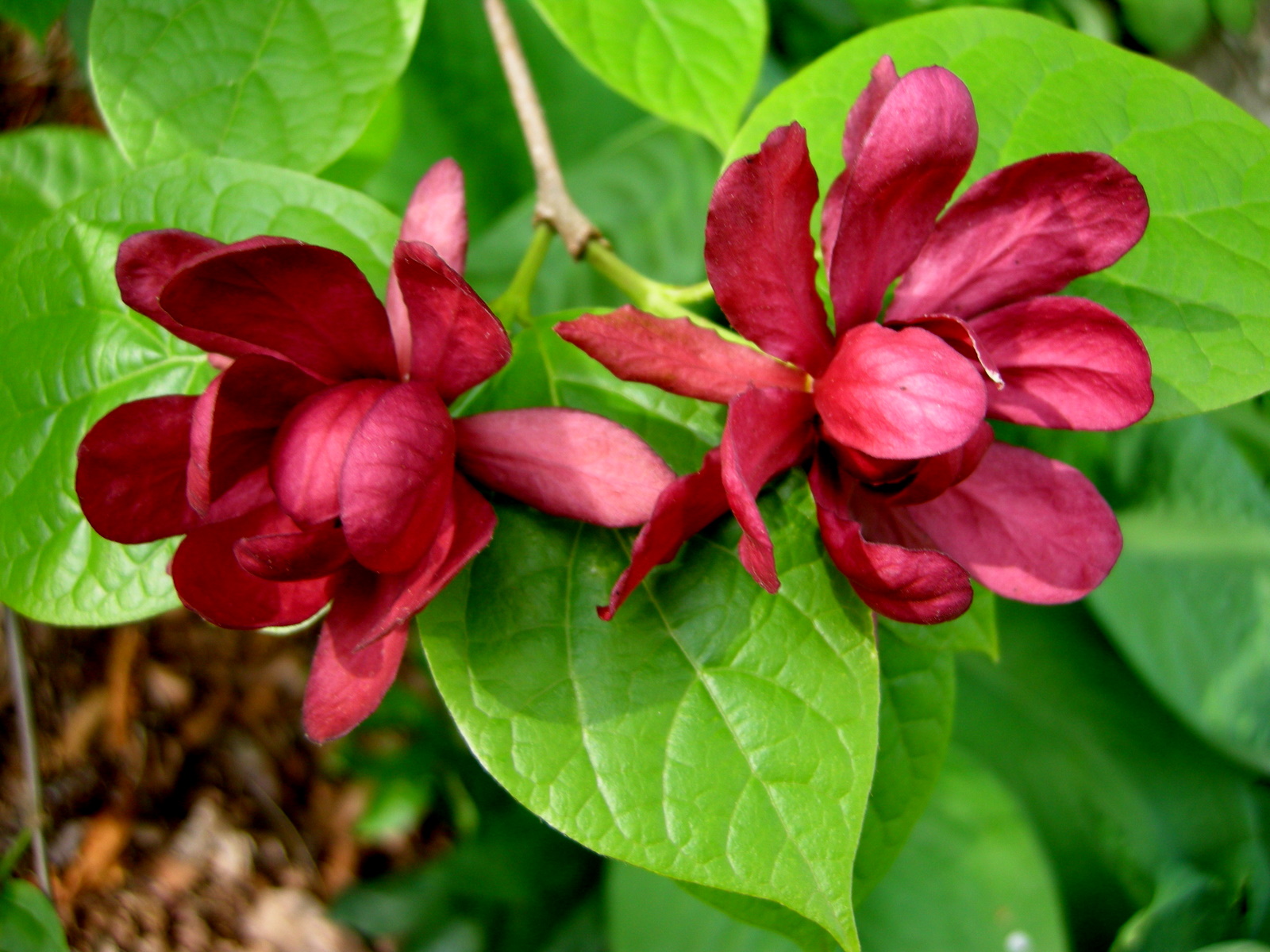
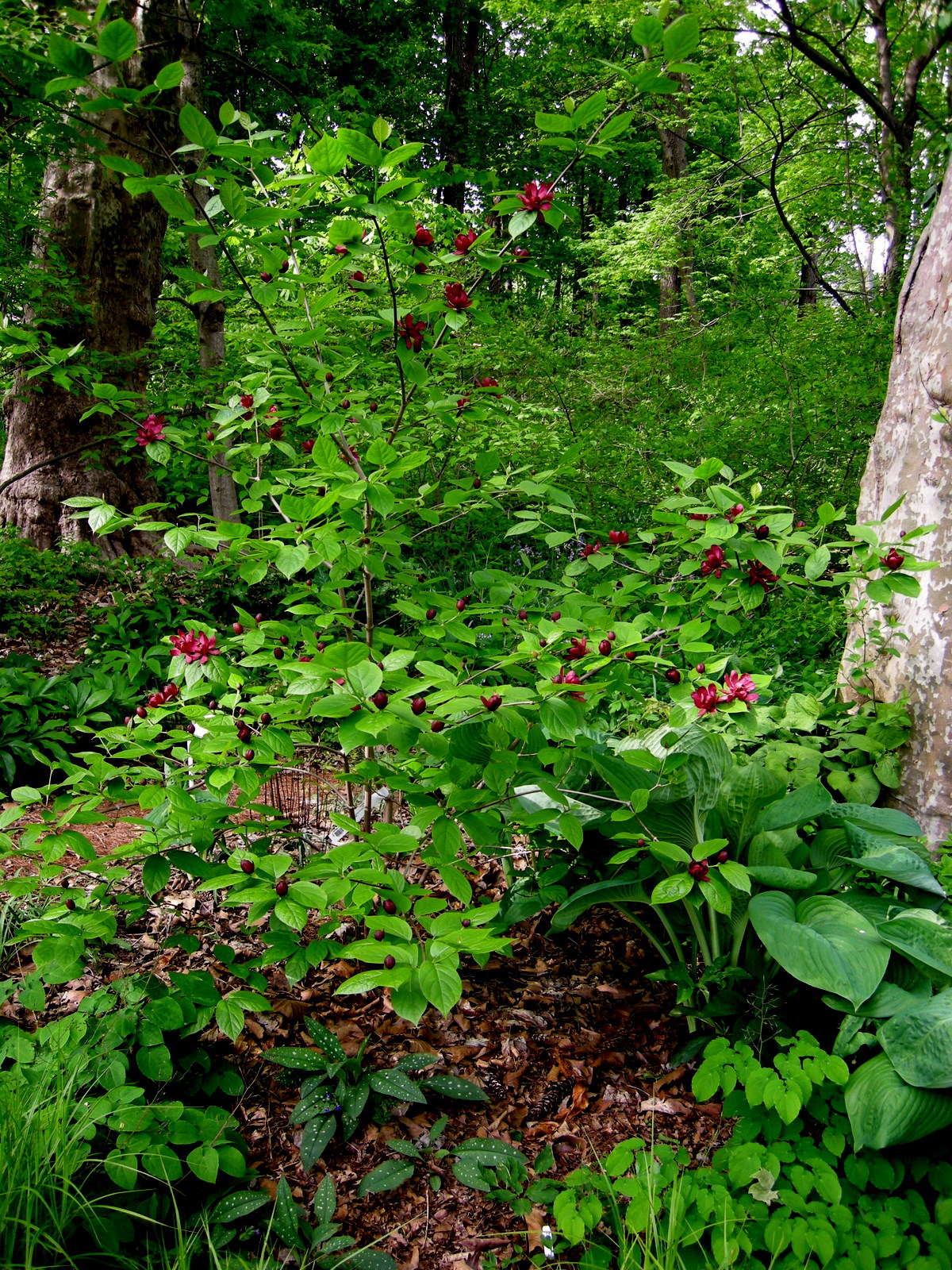
Calycanthus raulstonii ‘Hartlage Wine’ (Native Hybrid Sweetshrub) at Carolyn’s Shade Gardens

For years, my customers have been asking for woody plants for shade—trees, shrubs, and vines—in addition to the perennials I sell.  Last year I found a wholesale woody plant nursery with the quality and selection I needed to be able to offer woody plants at Carolyn’s Shade Gardens.   I put together two offerings in 2010 and have just sent out my first 2011 list.  To view the catalogue, click here.   However, I thought my blog readers who are not customers might be interested in learning about the woody plants that I would recommend they add to their shade gardens.  And doing an article allows me to add more information and explain why I chose the plants I included so customers might be interested also.

Included in my offering are one tree, three camellias, four other shrubs, and one vine.  Of the nine plants I have chosen, five are native.  Please read my article My Thanksgiving Oak Forest to see why I think planting native plants is crucial to our environment.  My article New Native Shade Perennials for 2011 explains why I think native cultivars and hybrids are valuable native plants.

Six of the plants I have chosen are evergreen or semi-evergreen, and four bloom in the off season: fall, winter, or very early spring.   This reflects  my desire to see gardeners expand their gardens’ season beyond spring and summer to become a year round paradise for them to enjoy.  With that introduction, here are the plants I am highlighting:

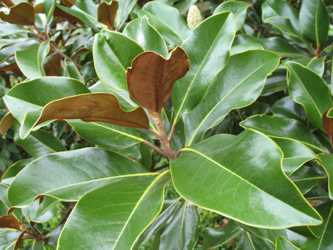
Magnolia grandiflora ‘Bracken’s Brown Beauty’ (Native Southern Magnolia)

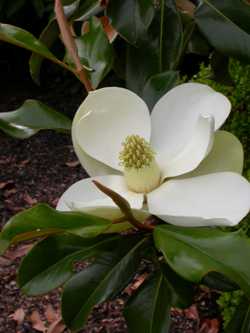
‘Bracken’s Brown Beauty’ is an extremely cold hardy southern magnolia tree perfect for our area (southeastern Pennsylvania, U.S.).  It is said to be even hardier than ‘Edith Bogue’, which I have in my garden and came through our difficult winter in pristine condition.  It grows to 35’ tall at maturity and thrives in sun to partial shade.  The huge fragrant white flowers are beautifully displayed against the glossy dark evergreen leaves in June and July.  The rusty undersides of the leaves are particularly ornamental in this cultivar: I couldn’t take my eyes off it when I saw it on a local garden tour.

The flower of ‘Bracken’s Brown Beauty’ native southern magnolia

Southern magnolia is native from Maryland south.  ‘Bracken’s Brown Beauty’ is a Pennsylvania Horticultural Society Gold Medal Plant, click  here to see why, and a Missouri Botanical Garden Plant of Merit (photos courtesy of the Missouri Botanical Garden PlantFinder), click here for details.

Camellia x ‘April Blush’ (Spring-blooming Hardy Camellia)

I choose three hardy camellias, all with different characteristics, for their off season flowers and evergreen leaves.  Camellia x ‘April Blush’ is a spring-blooming hardy camellia with gorgeous plump buds opening to semi-double blush-pink flowers in April and May.  It has glossy dark evergreen leaves, which come through the winter unscathed.  It is 5’ tall and grows in part to full shade.  This is the cultivar that I have in my garden, and it is fully cold hardy in our area.

‘April Blush’ spring-blooming hardy camellia coming into bloom in my garden

Camellia x ‘Spring’s Promise’ (Spring-blooming Hardy Camellia)

Camellia x ‘Spring’s Promise’ is a very early spring-blooming hardy camellia that also flowers in the fall for two seasons of interest.  Its single coral-red flowers appear in  March and April displayed beautifully by its glossy dark evergreen leaves.  It was in full bloom in Charles Cresson’s garden during our March 3 winter interest seminar, see Winter Interest Seminars for an additional photo, and Charles highly recommends it.  It is 5’ tall, grows in part to full shade, and is fully hardy in our area.

Camellia x ‘Winter’s Snowman’ (Fall-blooming Hardy Camellia)

Camellia x ‘Winter’s Snowman’ is a fall-blooming hardy camellia.  Its semi-double, anemone form white flowers glow when displayed against its glossy evergreen leaves in November and December.  ‘Winter’s Snowman’ is a vigorous plant with a narrow upright habit.  It grows to 6’ tall, in part to full shade and is fully hardy in our area.  This is another of Charles Cresson’s favorites.

‘Winter’s Snowman’ in the Cresson garden last fall

For more information on fall-blooming hardy camellias, click here to read my article Fall-blooming Camellias Part 1, and here to read Fall-blooming Camellias Part 2.


Calycanthus raulstonii ‘Hartlage Wine’ (Native Hybrid Sweetshrub)

I have chosen four other shrubs for their outstanding ornamental qualities.  Calycanthus raulstonii ‘Hartlage Wine’ is a hybrid between our eastern U.S. native and an Asian sweetshrub and was introduced by the J.C. Raulston Arboretum in North Carolina.  It has breathtaking large wine-red flowers (see photos at the top and above) set off beautifully by the smooth bright green leaves with yellow fall color.   I placed this shrub at the entrance to my woodland garden and my customers are entranced by it as am I.   It grows to 8’ tall and 5’ wide in part to full shade.

‘Hartlage Wine’ native hybrid sweetshrub at the entrance to my woodland garden with pulmonaria, epimedium, and blue hosta

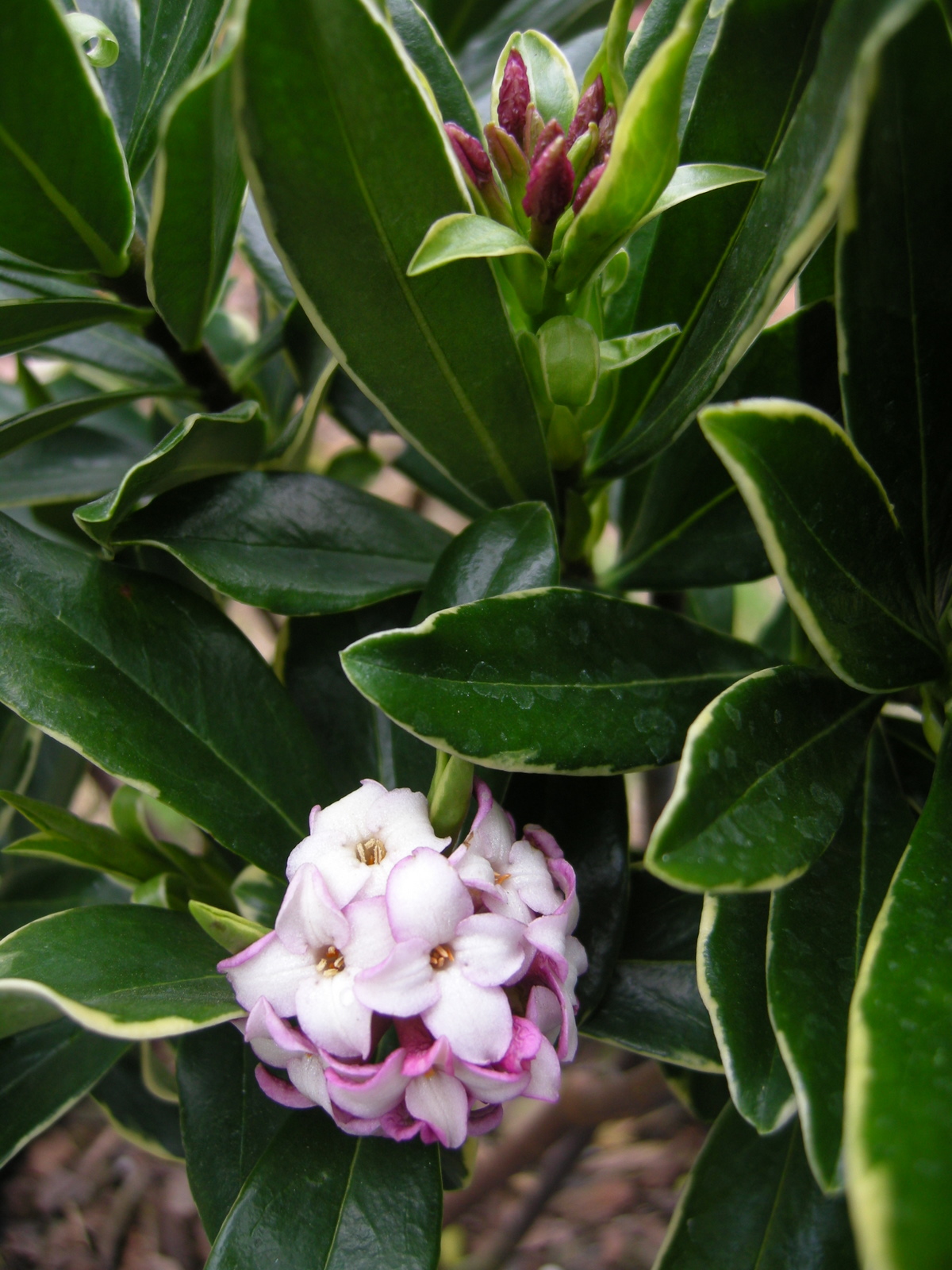
Daphne odora ‘Aureomarginata’ (Variegated Winter Daphne)

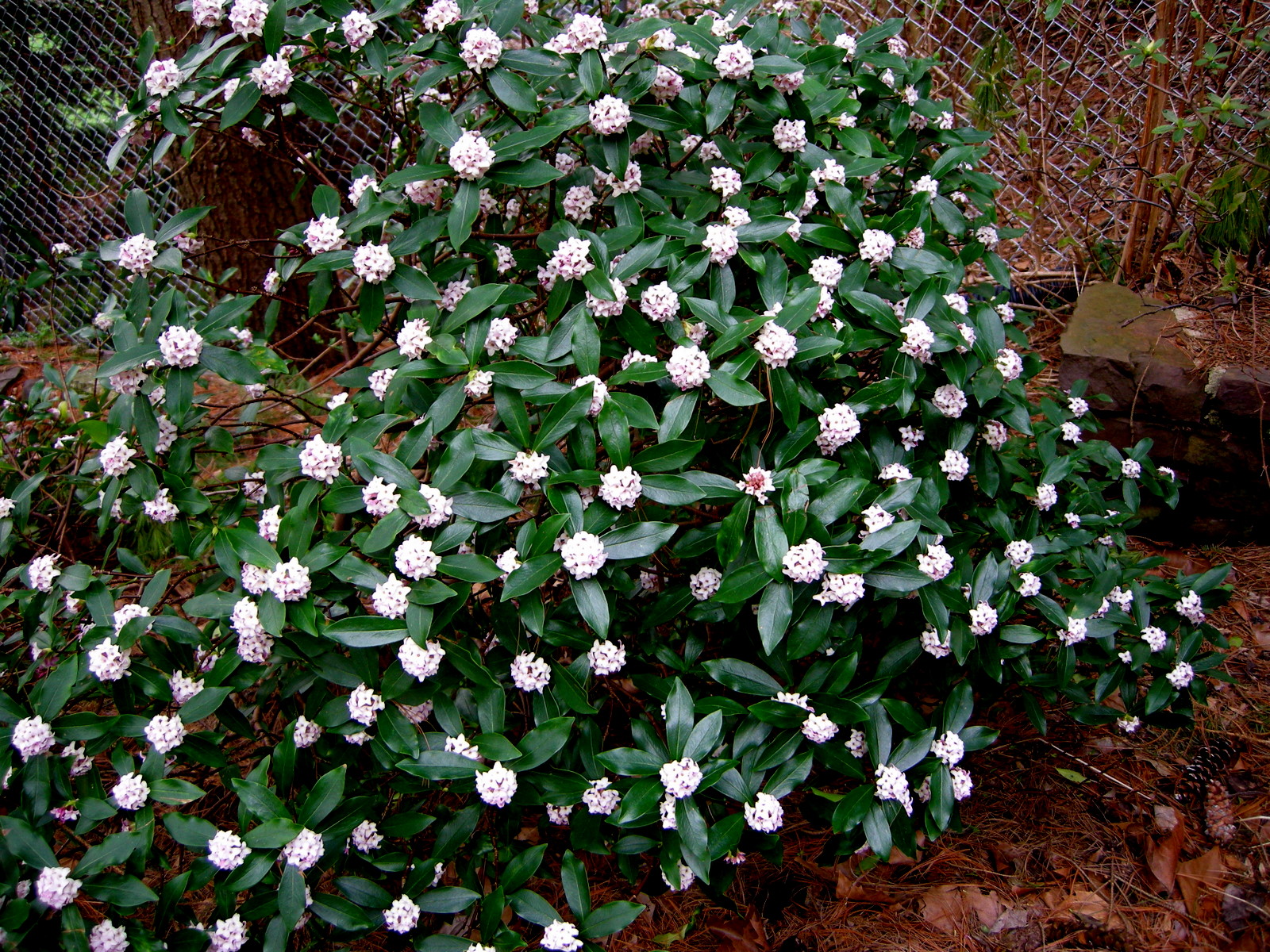
Daphne odora ‘Aureomarginata’, variegated winter daphne, has rose-pink buds opening to extremely fragrant clusters of pale pink flowers in early spring.  Its fine-textured, evergreen leaves are delicately edged in cream.  It grows to 4’ tall and wide in part to full shade.  It should be protected from winter sun and wind by planting it in a sheltered southeastern-facing location.  This is the daphne in my terrace garden that my customers have been asking about for almost 20 years because it perfumes that whole nursery when it blooms!  I am re-planting this year because my very large specimens were killed by falling white pine branches last winter.  Daphnes do not like to be disturbed once planted.

Winter daphne in my garden before the pine branches fell

Fothergilla gardenii (Native Dwarf Fothergilla)

Fothergilla gardenii, native dwarf fothergilla, has fragrant white bottlebrush flowers in April and May.  Its blue-green leaves turn lovely shades of yellow, orange, and red in the fall (see photo below).  It grows to 3’ tall and wide, making it an excellent shrub for small gardens and spaces.  It will grow in any light conditions from full sun to full shade and is wet site tolerant.  It is native to the southeastern US.  Missouri Botanical Garden has chosen dwarf fothergilla as a Plant of Merit (photos courtesy Missouri Botanical Garden PlantFinder), for details click here.

Fall color of native dwarf fothergilla


Hydrangea quercifolia ‘Pee Wee’ (Native Dwarf Oakleaf Hydrangea) photo courtesy of the Missouri Botanical Garden PlantFinder

Hydrangea quercifolia ‘Pee Wee’ produces large, long-lasting, upright pyramids of white flowers in June and July, changing to pink as they age and remaining ornamental into winter.  It is prized for its bold-textured leaves with burgundy-red fall color and cinnamon-colored exfoliating bark.  Walnut tolerant and native to the southeastern US, at 3′ tall it is the perfect native shrub for smaller spaces and smaller gardens.  It grows in any light from full sun to full shade.  If I could have only one shrub for shade, oakleaf hydrangea would be it.

Native dwarf oakleaf hydrangea with native ginger in the woodland at Carolyn’s Shade Gardens

The full size oakleaf hydrangea is a Pennsylvania Horticultural Society Gold Medal Plant, for details click here.

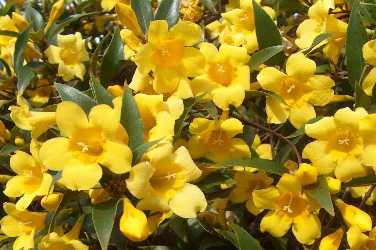
Gelsemium sempervirens ‘Margarita’ (Native Carolina Jessamine) photos above and below courtesy of the Missouri Botanical Garden PlantFinder

Gelsemium sempervirens ‘Margarita’ blooms with copious fragrant, bright yellow, trumpet-shaped flowers in April and May.  The lustrous, dark green leaves are semi-evergreen and provide winter interest.  It is native to the southeastern U.S. and reaches 15’ at maturity in full sun to part shade.  I grow this vine on a lattice trellis along my fence line in part shade and its beauty never fails to provoke comments.  It is a Pennsylvania Horticultural Society Gold Medal Plant, for details click here.

Native Carolina jessamine showing off its abundance of fragrant yellow flowers

I hope I have convinced you that these plants would be excellent additions to your shade garden.  If you are a customer, you have until April 7 to place an order by clicking here.  If not, now you have some plants to ask for at your local independent nursery.

Please leave a comment/reply telling me what other woody plants for shade I might want to offer in the future and describing your experience with them.

Carolyn

Notes: Every word that appears in orange on my blog is a link that you can click for more information.  If you want to return to my blog’s homepage to access the sidebar information (catalogues, previous articles, etc.), click here.

Nursery Happenings: My next nursery event is Bulb and Native Wildflower Day on Saturday, April 9, from 10 am to 2 pm.  My next open house sale features early spring-blooming shade plants and is Saturday, April 16, from 10 am to 3 pm.  For details and directions, click here.

New Native Shade Perennials for 2011

Posted in native plants, New Plants on January 18, 2011 by Carolyn @ Carolyns Shade Gardens

Carolyn’s Shade Gardens is a retail nursery located in Bryn Mawr, PA, specializing in showy, colorful, and unusual plants for shade.  The only plants that we ship are snowdrops and miniature hostas.  For catalogues and announcements of events, please send your full name, location, and phone number (for back up use only) to carolyn@carolynsshadegardens.com.  Click here to get to the home page of our website for catalogues and information about our nursery and to subscribe to our blog.

Sweet Wakerobin, Trillium vaseyi: I saw this trillium last spring in a local garden and fell in love with its large red flowers and huge bright green leaves; native species to just south of PA (photo Arrowhead Alpines).

In my previous article, New Shade Perennials for 2011, I highlighted some of the new non-native plants I will be offering at my nursery this year.  I also described my blog’s two audiences and my philosophy about what plants I grow in my gardens and sell at my nursery.

This article features some of the 17 native plants that are new (or returning) to my Spring 2011 Catalogue.  For a full description of the ornamental and cultural characteristics of these plants, please consult my Spring 2011 Catalogue by clicking here or going to the sidebar of my homepage where it is permanently posted in more manageable chunks.  For an illuminating (I think) discussion of why growing native plants is crucial to our survival, please read my article My Thanksgiving Oak Forest in which I profile Doug Tallamy’s book Bringing Nature Home.


Rue-anemone, Anemonella thalictroides: an elegant wildflower that naturalizes in my dry woodland, I also grow single and double pink forms; native species to PA (photo Arrowhead Alpines)

I am reluctant to enter the “what is a native plant” fray,  but I feel I have to if I am going to use the word native to describe these plants.  For the purposes of my catalogue, I treat all plants indigenous to the US and cultivars of and hybrids between those plants as native, always adding a comment on what part of the US the plant inhabits.  Most of my natives are endemic to Pennsylvania and its immediate environs.  However, many horticulturalists don’t consider cultivars and hybrids of native plants to be native.

To try and address that issue, I went right to the horse’s mouth and asked Doug Tallamy, author of Bringing Nature Home and Chairman of the Entomology and Wildlife Ecology Department at the University of Delaware, where he stood on native cultivars and hybrids.

Prairie Trillium, Trillium recurvatum: native species to PA (Prairie?) and I think the easiest trillium to grow (photo Arrowhead Alpines).

In responding, Tallamy first pointed out that: “We know very little from experimental data [because] comparisons just haven’t been done yet” between the ecological value of native plants and the value of their cultivars and hybrids.  “Insects have adapted to the chemistry of their host plants, so if we don’t change the leaf chemicals too much when making cultivars, most of the insects that use the native parent should be able to continue using the cultivar.”

However, Tallamy cautions: “Most of our cultivars focus on flowers, … and flower energy budgets are very tight.  If we make flower petals larger, that may come at the expense of nectar production…or pollen production. Pollinators will visit the new flower but get no reward.  Double flowers typically have no nectar production at all….  A big down side of cultivars, even if they do support insects, is that they are clones with no genetic variation.”

Large-flowered Bellwort, Uvularia grandiflora:  it is really the full habit of this plant that grabs you in the garden with its many twisting flowers and leaves on upright stems; native species to PA (photo Arrowhead Alpines).

So how do I apply this to my new native plants?  Well, of the 12 plants  featured in this article, six are straight species native to Pennsylvania and its environs (see commentary under photos).  These plants satisfy even the most narrow definition of native.  The fern is a native hybrid that occurs naturally in the wild and should be as good as any straight species.  The same can be said for the yellow columbine, which is a naturally occurring color variation.  The double bloodroot, although double-flowered, was discovered and not created by humans.  None of these are clones; they are all seed strains ensuring genetic diversity and vigor.

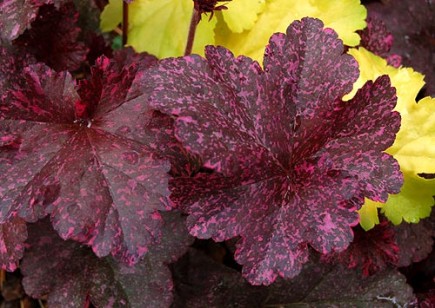
That leaves only the three heucheras described below.  If your goal is to support native insects and through them the whole ecosystem, then purple-leaved heucheras like  ‘Midnight Rose’ are not the plant for you.  Tallamy says, “if [when creating a cultivar] we change a green leaf to a purple leaf, we are loading the leaf with anthocyanins, which are feeding deterrents for insects.”  The same may be true of gold-leafed heucheras like ‘Electra’.  Those two cultivars have also been created through extensive hybridizing of several heuchera species native to the US.  ‘Green Spice’, however,  is a cultivar of a species native to Pennsylvania and probably has leaf chemistry close to its parent and thus beneficial to native insects.

Wild Columbine, Aquilegia canadensis ‘Corbett’: pale yellow and shorter alternative to the bright red species and, like the species, does best in the well-drained but moist soil so difficult to find in my garden; naturally occurring color variation native to PA.

Where do I come out on all this?  I really care about this issue so I try to have the majority of my property planted with straight PA native species friendly to native insects.  I also think any plant with a native background even if it’s a “created” cultivar or hybrid is better than a non-native for supporting  our environment.  But I specialize in  non-native hellebores and snowdrops, and I have hundreds of them in my garden.  Balance in all things, including the garden.

Here are the rest of the new native plants I am excited about:


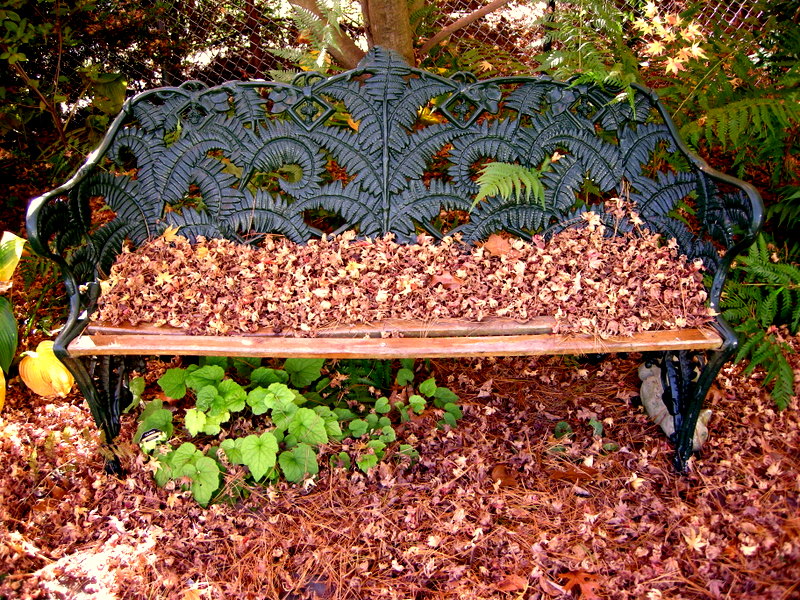
Dixie Wood Fern, Dryopteris x australis: a naturally occurring hybrid native to just south of PA, the fern growing behind and through my bench in the deep, dry shade of a Japanese maple overhung by a white pine is Dixie Wood Fern on 11/11/10—need I say more?

Indian Pink, Spigelia marilandica:  there is no better way to get me going than to write yet one more shade gardening article that starts “Now you may not be able to have showy flowers in the shade, but….” ; native species to PA (photo Arrowhead Alpines)

Double Bloodroot, Sanguinaria canadensis ‘Multiplex’: naturally occurring double flower native to PA, this is my all time favorite flower—I could stare at its perfection for hours—so it has taken me years to get to the point where I felt I had excess to sell!

Bloodroot, Sanguinaria canadensis: so much to love, the way it spears through my leaf mulch, the unusual blue-green leaves, the pure white flowers, and, believe it or not, the short time they last in the garden—it forces me to savor them; species native to PA.

Who can resist the kaleidoscope of colors that heuchera leaves add to the garden and containers?  If only all these beautiful plants thrived equally well in our tough mid-Atlantic conditions, but they don’t.  I only sell the cultivars whose parents are the heat and cold tolerant heucheras native to the eastern US.  Here are three new tough heucheras for 2011:


Coral Bells, Heuchera x ‘Electra’: cultivar parented by two tough species native to PA and one Pacific Northwest species; with leaves and veins like this, who can resist? (photo Terra Nova Nurseries).

Coral Bells, Heuchera americana ‘Green Spice’: straight species cultivar created from our PA native so imminently suited to mid-Atlantic conditions, pumpkin orange fall color (photo Terra Nova Nurseries).

Coral Bells, Heuchera x ‘Midnight Rose’: cultivar parented by two tough species native to PA and one Pacific Northwest species; yes, it really looks like this  and is a wonderful plant for containers, but requires a little more coddling in the ground because the Pacific Northwest species is more dominant in this cultivar (photo Terra Nova Nurseries).

In addition to the above and what was covered in New Shade Perennials for 2011, I have new snowdrops, hellebores, and hostas, which will be covered in future articles on those topics.

Carolyn

Notes: Every word that appears in orange on my blog is a link that you can click for more information.  If you want to return to my blog’s homepage to access the sidebar information (catalogues, previous articles, etc.), just click here.

The view from my desk this morning:


My Thanksgiving Oak Forest

Posted in books, green gardening, native plants with tags , on November 26, 2010 by Carolyn @ Carolyns Shade Gardens

Carolyn’s Shade Gardens is a retail nursery located in Bryn Mawr, PA, specializing in showy, colorful, and unusual plants for shade.  The only plants that we ship are snowdrops within the US.  For catalogues and announcements of local events, please send your full name, mailing address, and cell number to carolyn@carolynsshadegardens.com and indicate whether you are interested in snowdrops, hellebores, and/or hostas.  Click here to get to the home page of our website for catalogues and information about our nursery and to subscribe to our blog.

You are probably wondering why I posted this picture of a red oak seedling that looks like Charlie Brown’s Christmas tree.  It’s because this tree is the beginning of the oak forest that we are planting after reading Doug Tallamy’s book Bringing Nature Home.  In fact, I think we will name this new area of our gardens the Tallamy Copse in honor of the person who is doing the most to alert this country to the silent crisis facing our native plants and animals, and us.

Doug Tallamy, Chair of Entomology and Wildlife Ecology at the University of Delaware, finally made me understand why native plants are crucial to our survival on this planet.  Yes, being a somewhat evolved horticulturalist, I knew native plants were desirable.  But I thought it was just because they were native and better adapted.  And the native plant movement really turned me off with its insistence on exclusively native plantings, not even approving of native cultivars.  But it was Tallamy’s simple and insightful analysis that brought the whole problem into focus.

Tallamy calls our home gardens “the last chance we have for sustaining plants and animals that were once common throughout the US.”  Biodiversity is no longer out there in undeveloped areas of the country, because out there no longer exists.  He gives these sobering statistics about the US:

  • as our population soars, 2 million acres of land are developed every year
  • we have paved 4 million miles of roads
  • we have planted 40 million acres of lawn, a non-native monoculture
  • 3,400 species of alien plants have invaded 100 million acres: this will double in five years
  • 54% of the continental US is cities or suburbs and 41% is agricultural, making 95% of US land unable to support native plants and animals

According to Tallamy, research shows that removing 95% of our land from nature will result in the extinction of 95% of the species that live there.  The result for Pennsylvania right now is dire: 800 plant and animal species listed as rare, threatened, or endangered, and 150 gone for good.  And, in case there were any doubts, biodiversity is what keeps us humans alive by generating oxygen, cleaning water, buffering extreme weather, recycling our garbage, etc.

What to do?  Tallamy identifies the answer as planting native plants to support native insects and allow them to pass biomass up the food chain.  The plants must be native because of their shared evolutionary history with native animals.  Native insects do not eat non-native plants.  For example, Kousa dogwood supports no native insects, while our native dogwood supports 117 species of moths and butterflies alone.

That’s where my red oak grove comes into play.  At a lecture I attended, Tallamy stated that if you were only going to do one thing, then plant an oak.  Native oak trees support 534 species of butterflies and moths.  For Thanksgiving, my husband cleared out an area at the bottom of our property that was filled with Japanese knotweed,  goutweed, lesser celandine, privet, bittersweet, multiflora rose, Norway maples, and burning bush—none of it planted by us—and moved five oak seedlings there.  It is the beginning of a native forest, and the only way I can deal with the enormity of what Tallamy has so eloquently described.  I hope you will join me by planting your own oak.

The statistics above are mostly paraphrased from a September 2007 article written by Tallamy for the Hardy Plant Society: Mid Atlantic Group (a great group of people who love plants—check out their website).  His book Bringing Nature Home is a must read, and his website has great information too.  If you ever get a chance to hear him lecture, take it—he’s excellent.

Carolyn

red oak seedling at Carolyn's Shade Gardens

This collage pictures the five native red oak trees my husband planted plus the mother oak.  December 30, 2010.