Archive for the Shade Gardening Category

2013 Winter Interest Plants

Posted in garden to visit, hellebores, Shade Gardening, snowdrops, winter, winter interest with tags , , , , , , , , , , , , , , , , , , , , , , , , , , , , on March 4, 2013 by Carolyn @ Carolyns Shade Gardens

Carolyn’s Shade Gardens is a retail nursery located in Bryn Mawr, PA, specializing in showy, colorful, and unusual plants for shade.  The only plants that we ship are snowdrops and miniature hostas.  For catalogues and announcements of events, please send your full name, location, and phone number (for back up use only) to carolyn@carolynsshadegardens.com.  Click here to get to the home page of our website for catalogues and information about our nursery and to subscribe to our blog.
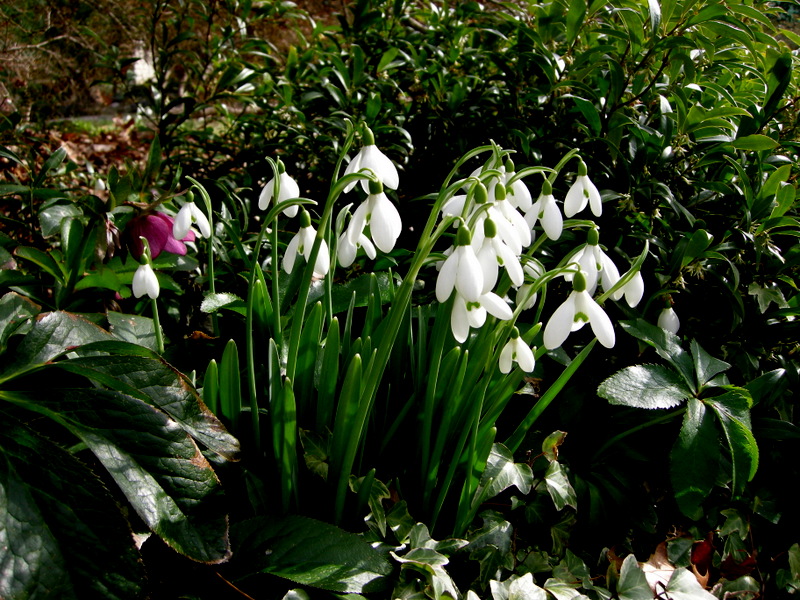
Galanthus 'Brenda Troyle'Galanthus ‘Brenda Troyle’ is one of the most robust and fragrant snowdrops in the Cresson garden.

This may be my last post that focuses on snowdrops, and I am sure some readers will rejoice.  I am aware that many gardeners do not share (or understand) my obsession.  However, I want to show photos from the recent Winter Interest Plants Seminars hosted by Charles Cresson for my nursery customers. 

Before I get to that though, I have to tell you about the snowdrop event this weekend at Winterthur, the fabulous garden in Delaware, US.  On Saturday, March 9, at 11 am, Alan Street, the world famous snowdrop expert from Avon Bulbs in England, is presenting the annual Bank to Bend Lecture on snowdrops.  Carolyn’s Shade Gardens will be one of two nurseries selling snowdrops and other winter interest plants at Winterthur.  I hope to see you there.  Here are the details:


winterthur

Join plantsman and snowdrop expert Alan Street of the renowned nursery Avon Bulbs as he offers insight into these precious flowers, sharing how they have become a worldwide phenomenon and how Avon Bulbs brings them to market. Registration includes tours of the March Bank display and access to specialist nurseries selling snowdrops and other winter interest plants. $20 non-members; $10 members.

Call 800.448.3883 to register or find out more.

Bank to Bend includes free admission to the garden, tours of the March Bank and access to specialist nurseries Black Hog Horticulture and Carolyn’s Shade Garden to purchase rare and unusual bulbs and other winter interest plants.

.

Cresson Winter Interest SeminarCharles Cresson talks about his witch hazels, winter aconite, and snowdrops with some die hard winter interest gardeners.

This is the third year that nationally known horticulturalist Charles Cresson has hosted my customers in his Swarthmore, Pennsylvania, garden to view and discuss winter interest plants.  Every year we see different plants, depending on the weather, but every year the group is just as enthusiastic despite the weather.  This year, February (and all winter really) has been cold and dismal, and the seminar days were no exception, but the attendees were enthusiastic and full of questions for Charles.

Cresson Winter Interest SeminarsCharles demonstrates how he protects important plants with plastic boxes if the weather is going to be unseasonably cold.

Plants are “late” to come out this year because it has been so cold.  The emergence of winter interest plants like perennials and bulbs is dependent more on the soil temperature than on the date.  If the soil warms up early, as it did in 2012 when we had no winter, many plants will bloom early.  This year it has been cold and gray, and many plants have yet to bloom or emerge.  Yet, such is the magic of Charles’s garden that there was a lot to see.  Here are some of the highlights in the order in which we saw them:

Narcissus 'Rijnveld's Early Sensation'After seeing this daffodil for many years blooming in Charles’s garden in February, I finally added it to mine this year.  It is called Narcissus ‘Rijnveld’s Early Sensation’.

.
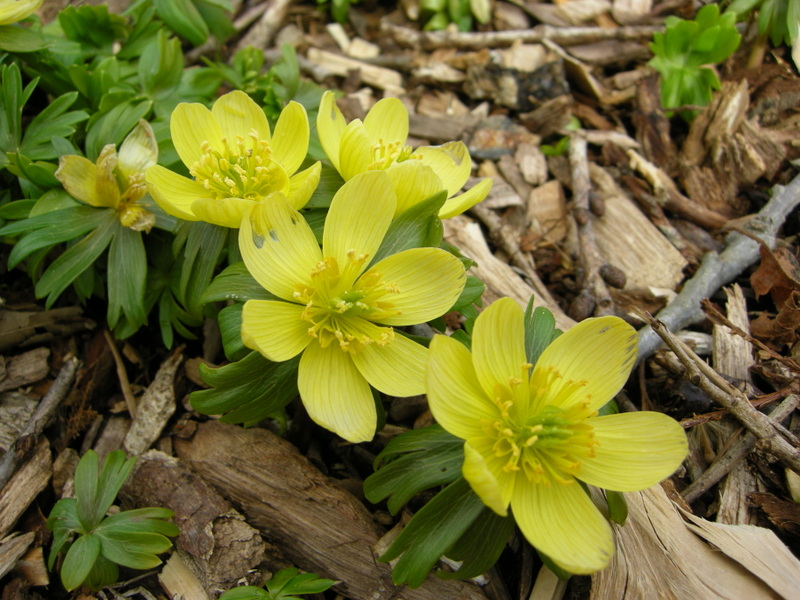
Eratnhis hyemalis (pale yellow form)A rare pale yellow form of winter aconite, Eranthus hyemalis.

.
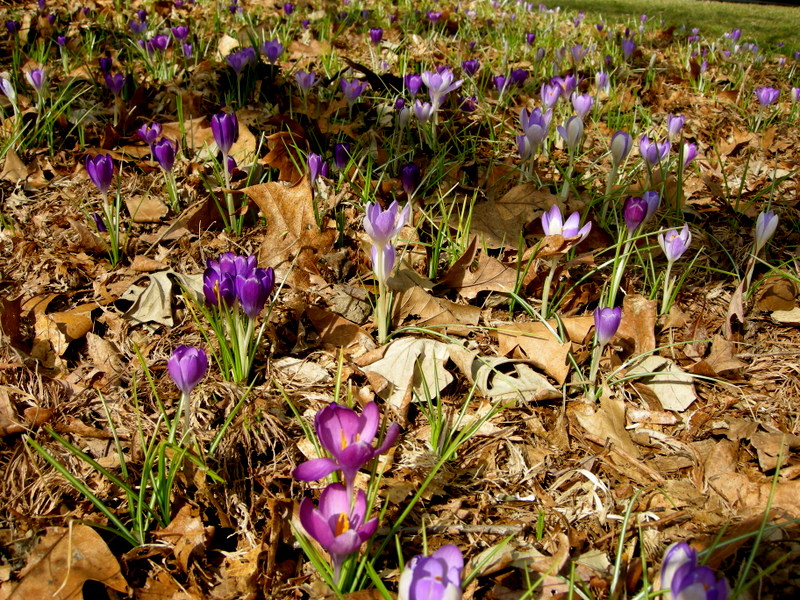
Crocus tommasinianusThe snow crocus, C. tommasinianus, is my favorite crocus because it blooms now with the snowdrops and multiplies rapidly.

.

Crocus tommasinianus 'Ruby Giant'‘Ruby Giant’ snow crocus is a deeper purple.

.

Crocus tommasinianus 'Taplow Ruby'‘Taplow Ruby’ snow crocus

.

Galanthus 'Atkinsii'Galanthus ‘Atkinsii’ is an old-fashioned and reliable snowdrop that should be part of any collection.

.

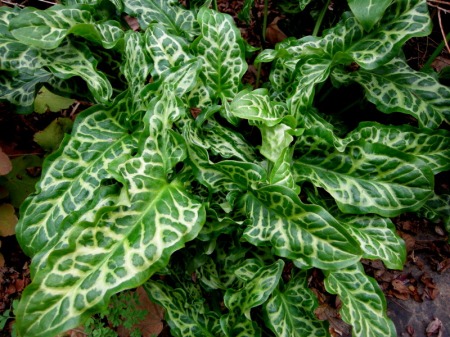
Galanthus 'Atkinsii' & Arum italicum 'Pictum'One of my favorite combinations, ‘Atkinsii’ with Italian arum, A. italicum ‘Pictum’.

.

Helleborus x ballardiae 'Pink Frost' with Cotoneaster salicifolius 'Henryi'The leaves of ‘Pink Frost’ hellebore, H. x ballardiae ‘Pink Frost’, pair beautifully with this rare cotoneaster, C. salicifolius ‘Henryi’.

.

Helleborus foetidus & Helleborus x ballardiae 'Pink Frost'‘Pink Frost’ again with bearsfoot hellebore, H. foetidus, in another winning combination.

.

Helleborus x ericsmithii 'Winter's Song'‘Winter’s Song’ hellebore, H. x ericsmithii ‘Winter’s Song’ is very early blooming so it was fully out on this cold February day.

.

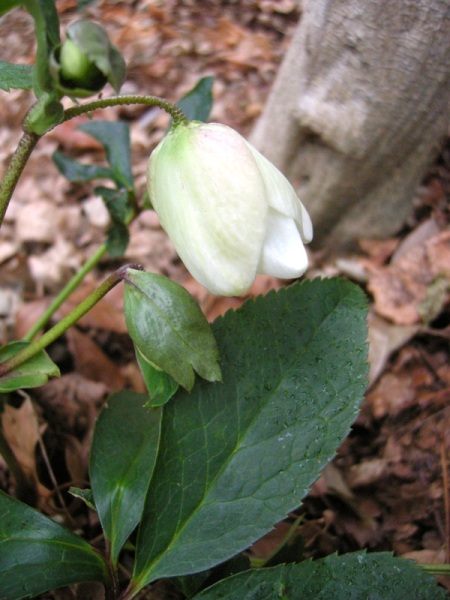
Helleborus x 'Ivory Prince'‘Ivory Prince’ hellebore was just starting to open.

.

Iris unguicularis subsp. cretensisThis subspecies is an especially dark colored version of the winter-blooming Algerian iris, Iris unguicularis subsp. cretensis.

.
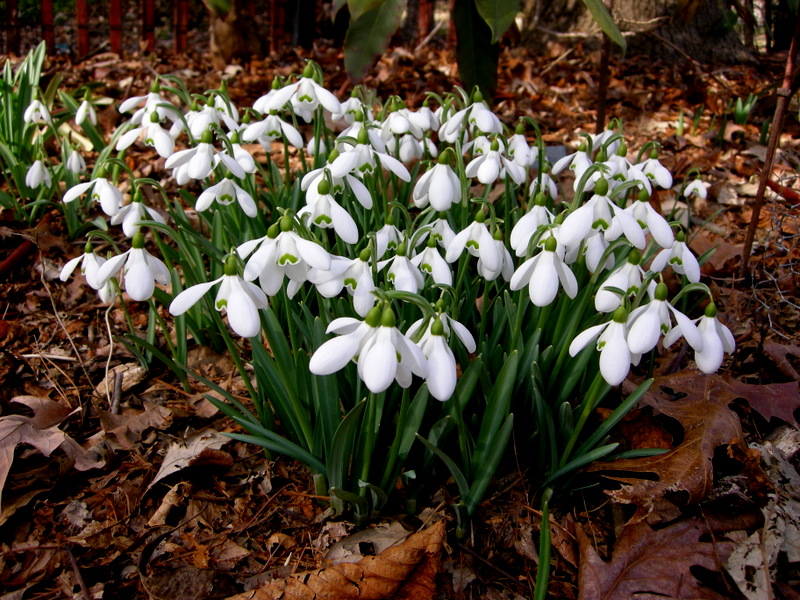
Galanthus 'Mighty Atom'

Galanthus ‘Mighty Atom’ has one of the best presentations of any snowdrop.

.
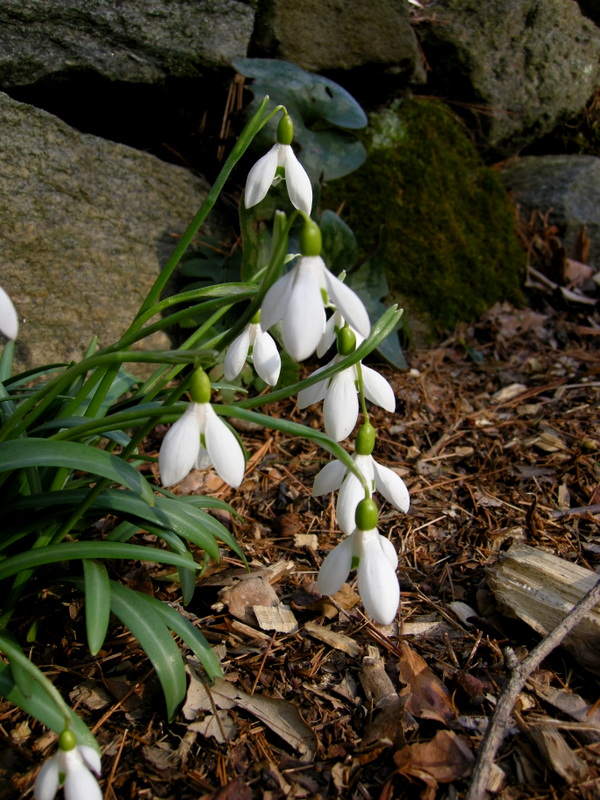
Galanthus rizehensisGalanthus rizehensis is a rare and desirable snowdrop species.

.

Galanthus 'Standing Tall'Charles’s newly introduced snowdrop ‘Standing Tall’ continues to stand up to whatever the weather throws at it.  If you didn’t know better you would think it was a daffodil.

.

Galanthus elwesii 'Standing Tall' Cresson photo-001‘Standing Tall’ in full bloom in early January.

.
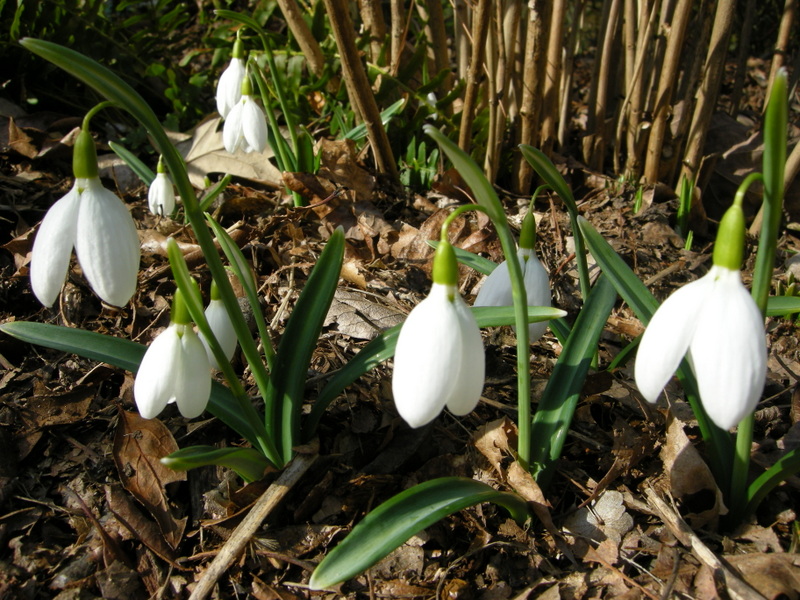
Galanthus 'Beth Chatto' ‘Beth Chatto’

.

Galanthus 'Godfrey Owen'Charles and I both acquired six-petaled ‘Godfrey Owen’ last year but his was not felled by snow and ice.

.

Galanthus 'Godfrey Owen'‘Godfrey Owen’

.

Galanthus 'Godfrey Owen'The inner segments of ‘Godfrey Owen’ are extraordinary too.  This photo represents to me what galanthophiles are all about.

.

I know the participants enjoyed themselves because even after an hour and a half in the cold, they were still asking Charles questions.  I hope my readers have gotten some vicarious enjoyment.

I you would like to see what was featured during the 2011 and 2012 seminars, follow these links:

2011 Winter Interest Plants

2012 Winter Interest Plants

Carolyn

.

Carolyn’s Shade Gardens is a retail nursery located in Bryn Mawr, Pennsylvania, US, zone 6b.  The only plants that we mail order are snowdrops and miniature hostas and only within the US.

If you are within visiting distance and would like to receive catalogues and information about customer events, please send your full name and phone number to carolynsshadegardens@verizon.net.  Subscribing to my blog does not sign you up to receive this information.

Nursery Happenings:  We are now accepting reservations for our very popular Hellebore Seminars .  The Friday session is full but the session on Monday, March 18, at 10:00 am has nine spaces left.  For details, click here.  The 2013 Snowdrop Catalogue is on the sidebar of the website and orders are being accepted now.  To view the catalogue, click here.  The 2013 General Catalogue is available here.

Facebook:  Carolyn’s Shade Gardens has a Facebook Page where I post single photos, garden tips, and other information that doesn’t fit into a blog post.  You can look at my Facebook page here or click the Like button on my right sidebar here.

Notes: Every word that appears in orange on my blog is a link that you can click for more information.  If you want to return to my blog’s homepage to access the sidebar information (catalogues, previous articles, etc.) or to subscribe to my blog, just click here.
December 2012 Garden Bloggers Bloom Day

Posted in bulbs for shade, Camellias, hellebores, Shade Gardening, Shade Shrubs, winter, winter interest with tags , , , , , , , , on December 17, 2012 by Carolyn @ Carolyns Shade Gardens

Carolyn’s Shade Gardens is a retail nursery located in Bryn Mawr, PA, specializing in showy, colorful, and unusual plants for shade.  The only plants that we ship are snowdrops and miniature hostas.  For catalogues and announcements of events, please send your full name, location, and phone number (for back up use only) to carolyn@carolynsshadegardens.com.  Click here to get to the home page of our website for catalogues and information about our nursery and to subscribe to our blog.

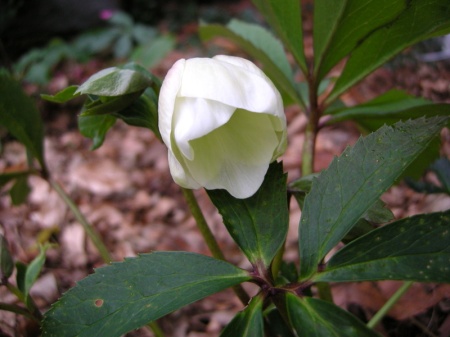
DSCN8663The first of my hybrid hellebores is just about to bloom: Helleborus x ‘Snow White’ (aka ‘Snow Bunting’).

I am two days late for the official Garden Blogger’s Bloom Day.  On the fifteenth of each month garden bloggers from all over the world post photos of what’s blooming in their gardens, and their posts are collected by Carol at May Dreams Gardens.  Nevertheless, I thought it would be fun to see which plants are pretty enough to get me outside in December on a somewhat warm but dreary, rainy day.  I also wanted to add a new twist by allowing myself only one pass through the garden for photos instead of the numerous trips required by a normal post.

Not surprisingly if you read my blog, Italian arum, hellebores, snowdrops, camellias, hardy cyclamen, and coral bells are hogging the show this time of year accompanied by a few others.  Let’s see what we have:

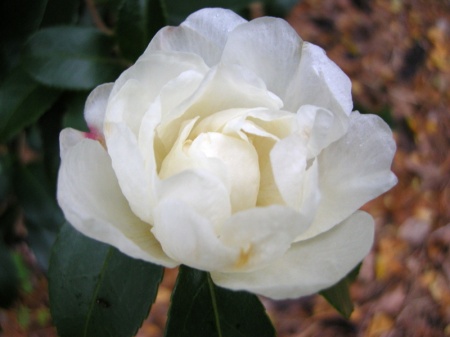
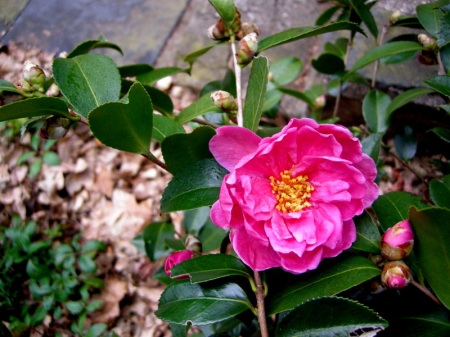
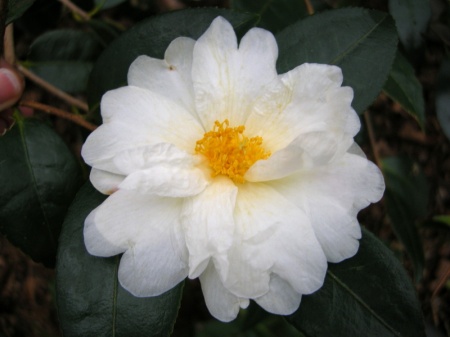
DSCN8642 Fall-blooming camellia ‘Winter’s Snowman’ has been blooming since October and still has buds waiting to open.

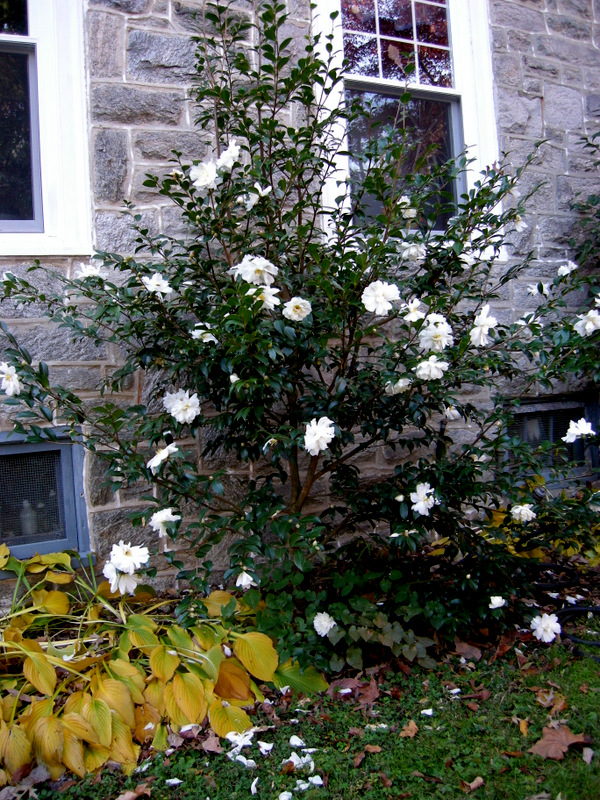
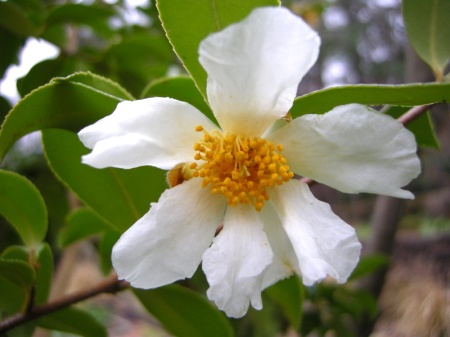
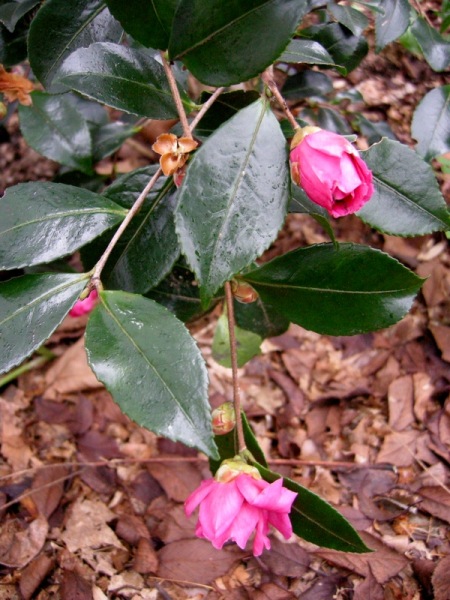
My late fall garden has been immensely improved by the addition of fall-blooming hardy camellias.  All five of mine are blooming now and have plenty of buds left.  For more information on fall-bloomimg camellias, click here.

DSCN8641‘Winter’s Joy’

.

DSCN8650‘Lu Shan Snow’

.

DSCN8656‘Winter’s Darling’

.

DSCN8655‘Elaine Lee’

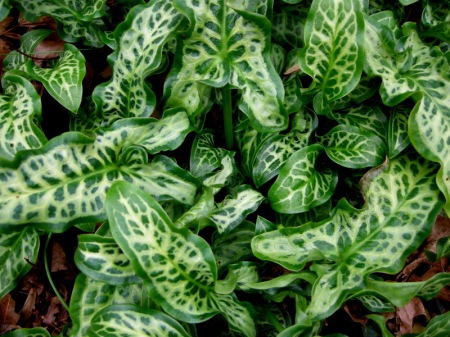
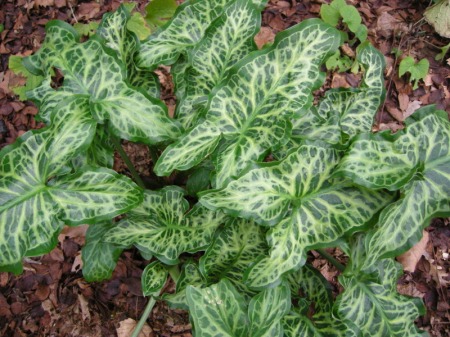
Italian arum is always a highlight this time of year after its fresh foliage emerges from dormancy in early fall:

DSCN8645‘Pictum’ Italian arum

.

DSCN8659dwarf Italian arum ‘Tiny Tot’

.

DSCN8654‘Gold Rush’ Italian arum, my favorite

Hellebores are just about to take over as the stars of the garden for the next few months.  For more information on hellebores, click here and follow the links at the end of the post.  If it wouldn’t violate my parameter for this post, I would run out and photograph bearsfoot hellebore and ‘Praecox’ Christmas rose, which are both almost open.  As it is, I have these two hellebores for you:

DSCN8662Another shot of the first flower on ‘Snow White’.

.

DSCN8643After blooming in October, ‘Josef Lemper’ Christmas rose is at it again and will continue to bloom into spring.

.

My favorite coral bells or heucheras are the cultivars that give me 365 days of colorful foliage, some of which are pictured below.  If I could go back outside, I would add ‘Frosted Violet’ and ‘Bronze Wave’.  I would also include some photographs of pulmonarias, especially ‘Diana Clare’:

DSCN8646‘Caramel’ heuchera continues to change from one beautiful hue to the next through out the winter.

.

DSCN8652Green Spice’ is new to my garden this year and looks like a winner.

.

DSCN8653‘Citronelle’ is a customer favorite for brightening dark corners.

You know I couldn’t resist showing you a few snowdrops:

DSCN8640  ‘Potter’s Prelude’, a fall-bloomimg snowdrop cultivar, is getting to the end of its bloom period which began in mid-November.

.

DSCN8658A clump of early blooming giant snowdrops, Galanthus elwesii, hides in the Japanese holly ferns and hellebores.

Except during the heart of the summer when they are dormant, hardy cyclamen are stars in my garden.  I find their highly variable leaf patterns endlessly fascinating.  For more information on hardy cyclamen, click here.

DSCN8660The last few blooms on fall-blooming hardy cyclamen, C. hederifolium, which began blooming at the end of August.

.

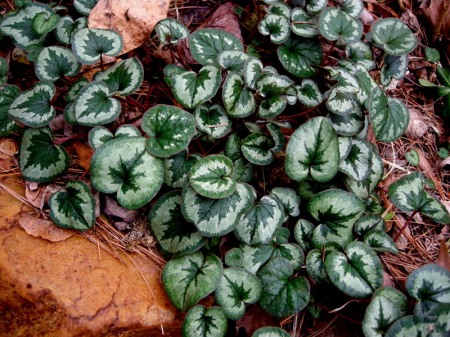
DSCN8661Spring-blooming hardy cyclamen, C. coum, doesn’t need flowers to attract attention.

Here are some more late fall stars that might surprise you:

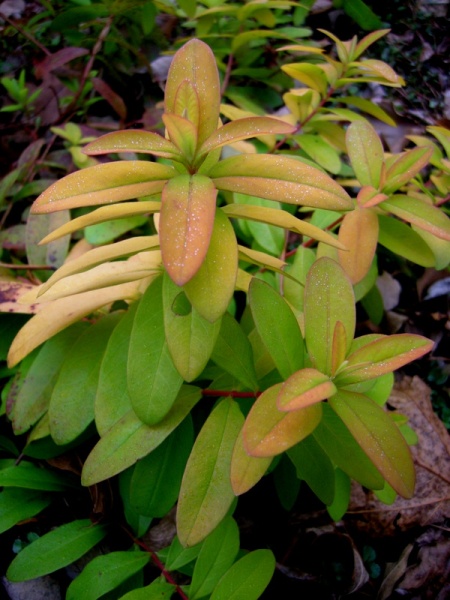
DSCN8639‘Brigadoon’ St. John’s wort always takes on this lovely peach color for the winter.

.

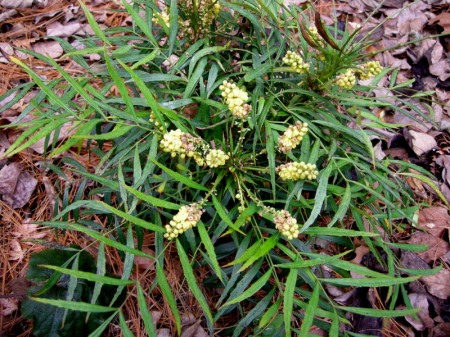
DSCN8644This new mahonia called ‘Soft Caress’ was given to me by the breeders at the Southern Living Plant Collection to trial in my garden.  It is evergreen, blooms now, and is hardy to zone 7.  For more information, click here.  I have high hopes for it because I have since seen it in two other local gardens.

.

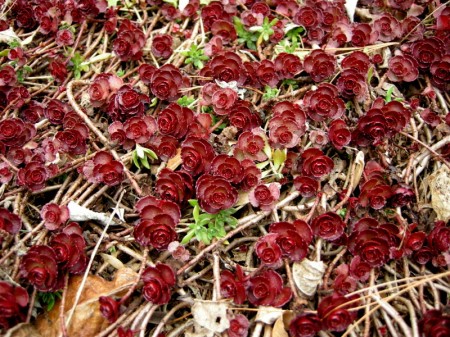
DSCN8648This sedum always turns a lovely burgundy in the fall.  Unfortunately, I don’t know its exact name.

.

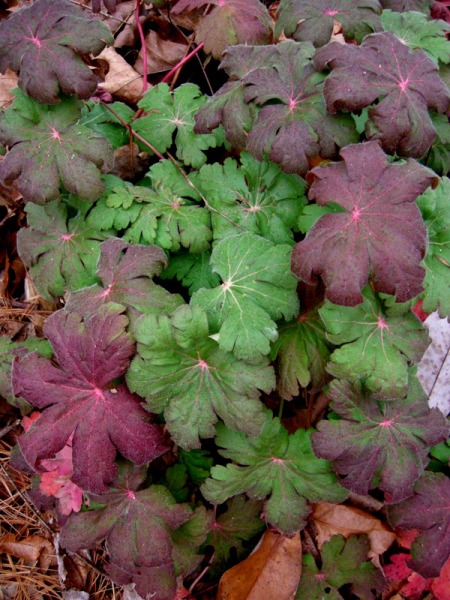
DSCN8651Bigroot geranium, G. macrorrhizum, takes on red and pink tones for the winter.

.

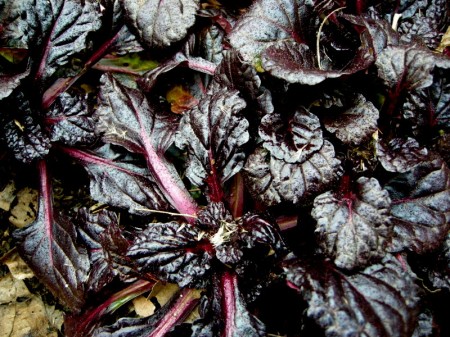
DSCN8649‘Black Scallop’ ajuga has quickly become one of my favorite groundcovers because its dark purple leaves remain shiny and beautiful through the winter.

You may be wondering why I would limit myself to one trip outside for photos for this post.  Every article that you read here takes me at least a full day to compose, including the photography, the research, the writing, and the editing.  I wanted to see if I could cut that back to a few hours and still produce a quality product, and I believe I have been largely successful.  It would only work for a post like this though where no significant supporting research was required. 

Enjoy, Carolyn


Nursery Happenings:  Carolyn’s Shade Gardens is a retail nursery located in Bryn Mawr, PA.  The only plants that we mail order are snowdrops and miniature hostas.  The nursery is closed until spring 2013.  Thanks for a great year.

If you are within visiting distance and would like to receive catalogues and information about customer events, please send your full name and phone number to carolynsshadegardens@verizon.net.  Subscribing to my blog does not sign you up to receive this information.

Facebook:  Carolyn’s Shade Gardens has a Facebook page where I post single photos, garden tips, and other information that doesn’t fit into a blog post.  You can look at my Facebook page here or click the Like button on my right sidebar here.

Notes: Every word that appears in orange on my blog is a link that you can click for more information.  If you want to return to my blog’s homepage to access the sidebar information (catalogues, previous articles, etc.) or to subscribe to my blog, just click here.
 

Fall-blooming Hardy Cyclamen

Posted in bulbs for shade, evergreen, Fall, Fall Color, groundcover, Shade Gardening, Shade Perennials, winter interest with tags , , , , on October 17, 2012 by Carolyn @ Carolyns Shade Gardens

Carolyn’s Shade Gardens is a retail nursery located in Bryn Mawr, PA, specializing in showy, colorful, and unusual plants for shade.  The only plants that we ship are snowdrops and miniature hostas.  For catalogues and announcements of events, please send your full name, location, and phone number (for back up use only) to carolyn@carolynsshadegardens.com.  Click here to get to the home page of our website for catalogues and information about our nursery and to subscribe to our blog.

Fall-blooming hardy cyclamen, C. hederifolium,  used as a groundcover under Hosta ‘Blue Angel’ 11/13/10.

My last post on hardy begonias sparked such interest and comments that I thought I would profile another unusual star performer for fall.  Like the begonia, I learned about hardy cyclamen at a course I took at Longwood Gardens in Kennett Square, PA, this one on bulbs in 1995.   And just like the begonia, I couldn’t believe that there was a plant that looked like my florist cyclamen house plant but grew outside and came back every year.  I talked about hardy cyclamen in my post on More Flowering Wintergreen Groundcovers for Shade, but I want to profile it in more detail here and include more photos.

Fall-blooming hardy cyclamen

There are several species of hardy cyclamen, but the two that are usually available are fall-blooming Cyclamen hederifolium and spring-blooming Cyclamen coum.  I have them both and love them, but if you are just starting out, the fall-blooming variety is much easier to grow.  Cyclamen coum requires the kind of excellent drainage rarely found in mid-Atlantic gardens.  I grow mine most successfully in my rock garden and also less abundantly between tree roots.

Hardy cyclamen begins to bloom in the fall before its leaves re-emerge from summer dormancy.

The life cycle of hardy cyclamen is unusual.  I guess you could say it begins in September when dozens of small pink flowers begin to bloom before the leaves emerge.  Each flower is on a separate 4 ” stem and looks just like a miniature florist cyclamen flower with gorgeous reflexed petals.  The flowers continue to be produced abundantly in succession through out the months of September and October and sometimes for parts of August and November too.  They are said to be fragrant, but I have never noticed a scent.

I would grow hardy cyclamen just for the flowers, but the leaves are spectacular.  They emerge slowly as the flowers are blooming in late September and take several weeks to reach their full size.  “Variable” is an understatement to describe their wonderful shapes, patterns, and colors.  They can be round to lance-shaped, lobed or entire, serrated or smooth edged, dark green to silver.  And the patterns on the leaves are indescribable, I will just have to show you….


Now that you have seen how gorgeous the leaves are, you will be able to truly appreciate another of their wonderful qualities: they stay green and fresh all winter!  The photos above were taken in November but I could just as easily have captured their glory in March.  Instead of going dormant in the winter like most of our plants, hardy cyclamen goes dormant for a few months during the summer.

White hardy cyclamen, C. hederifolium ‘Album’

There is a lovely white cultivar of fall-blooming hardy cyclamen called ‘Album’.  Some of mine have pure white flowers and others have white with a pink blotch.  It is just as hardy as the parent species and seeds around my garden readily.

Hardy cyclamen growing between roots at the base of  tree.

Hardy cyclamen is native to western Turkey, eastern Europe, including Albania, Bulgaria, and the Balkans, and southern Europe, including France, Italy, and Greece.  It is  a woodland plant that requires good drainage and shade.  In fact it thrives on summer drought in dry shade.  Although it likes to grow between tree roots and rocks, I have success with it in any shaded eastern facing, dry location.  As you can see from the photo below, my plants seed prolifically and eventually fill in to make a solid mat of groundcover.

Seedlings emerging in a new location across from an established patch with no help from me.  I have a feeling that ants move the seeds around.

Hardy cyclamen grows from a corm, which reportedly can reach the size of a dinner plate when old.  There are growing points all over the top of the corm.  If you try starting the plant this way, plant the corms with no more than 1″ of soil on top plus a very light mulch of leaf litter.  I have never done this because I have read many times that dried corms do not establish well and are often collected from the wild.  I started all my patches from established potted plants and that is how I sell hardy cyclamen at my nursery.  Look for it in my 2013 Snowdrop Catalogue.

The top of corms (about 2 1/2″ wide) of hardy cyclamen with the leaves starting to emerge.  The corms are spherical when younger.

The bottom of the corms—this side down.

The hardiness zone information for hardy cyclamen is inconsistent.  Some sources say USDA zones 7 to 9.  The Missouri Botanical Garden plant finder lists it for zones 5 to 9, while other sources say it grows successfully in upstate NY in zone 4.  You will just have to try it.  For all my UK readers, hardy cyclamen received an Award of Garden Merit from the Royal Horticultural Society.

Carolyn

P.S.  When I pushed the Publish button, I found out that this is my hundredth post—kind of exciting!!!

Nursery Happenings:  Carolyn’s Shade Gardens is done for the fall.  Thanks for a great year.  See you in spring 2013.

If you are within visiting distance and would like to receive catalogues and information about customer events, please send your full name and phone number to carolynsshadegardens@verizon.net.  Subscribing to my blog does not sign you up to receive this information.

Facebook:  Carolyn’s Shade Gardens has a Facebook page where I post single photos, garden tips, and other information that doesn’t fit into a blog post.  You can look at my Facebook page here or click the Like button on my right sidebar here.

Notes: Every word that appears in orange on my blog is a link that you can click for more information.  If you want to return to my blog’s homepage to access the sidebar information (catalogues, previous articles, etc.) or to subscribe to my blog, just click here.
 

Hardy Begonias for Fall Color

Posted in Fall Color, Shade Gardening, Shade Perennials with tags , , , , on October 8, 2012 by Carolyn @ Carolyns Shade Gardens

Carolyn’s Shade Gardens is a retail nursery located in Bryn Mawr, PA, specializing in showy, colorful, and unusual plants for shade.  The only plants that we ship are snowdrops and miniature hostas.  For catalogues and announcements of events, please send your full name, location, and phone number (for back up use only) to carolyn@carolynsshadegardens.com.  Click here to get to the home page of our website for catalogues and information about our nursery and to subscribe to our blog.

The fall-blooming flowers of hardy begonia, B. grandis.

In 1991, I took a perennial plants course at Longwood Gardens in Kennett Square, PA, and was introduced to many wonderful plants that I have since planted in my garden (hellebores being one of them).  One of the most fascinating was hardy begonia or Begonia grandis.  I just couldn’t believe that there was a plant that looked just like my angel wing begonia house plant but grew outside and came back every year.


I can’t remember where I finally located a plant, but hardy begonias soon found their way to my garden and have been multiplying and spreading ever since.  I have noticed that my nursery customers have the same reaction that I did: what is that plant—is an annual?  So I thought I would introduce it to all my readers and recommend it for inclusion in your gardens.


When I say they are like a begonia house plant, I am not kidding.  They grow from tuberous roots and have fleshy succulent stems.  Their leaves are 3 to 6″ long and shaped like an angel’s wing with green on top and red highlights underneath.

The flowers are pale pink and clustered in loose bunches with deep pink stalks.  They bloom from September into November depending on when we get a frost.  The ovary, which persists when the flowers drop, is bright pink, three-winged, and very attractive.

Self-sown hardy begonias in my compost pit

Hardy begonia is native to China and Japan.  It is an upright plant growing to 2 to 3 feet in part to full shade.  Ideally it likes organic, moist soil, but my experience is that it grows anywhere in the shade.  It spreads all over the place at Carolyn’s Shade Gardens and is easily removed by yanking on the stem.  However, I rarely find it in a place I don’t want it.  It has even formed a very nice stand in my compost pit.  The only trick to growing it is that it comes up very late—mid-May in the mid-Atlantic—so you need to remember where it is.

White hardy begonia, B. grandis ‘Alba’


There is a lovely white cultivar of hardy begonia called ‘Alba’.  It has pure white flowers with pale pink stalks.  It is just as hardy as the parent species and seeds around my garden readily.


Hardy begonia looks great everywhere in my garden.  However, I prize it for growing between all my hostas on my back hill.  When the hostas look ratty, it springs up looking fresh and elegant and blooms its heart out.

White hardy begonia growing between hostas.

Before I start an avalanche of emails asking for this plant, I am sold out for the year at the nursery.  However, I always have it available in the spring so look for it in 2013.

Carolyn

Nursery Happenings:  Carolyn’s Shade Gardens is done for the fall.  Thanks for a great year.  See you in spring 2013.

If you are within visiting distance and would like to receive catalogues and information about customer events, please send your full name and phone number to carolynsshadegardens@verizon.net.  Subscribing to my blog does not sign you up to receive this information.

Facebook:  Carolyn’s Shade Gardens has a Facebook page where I post single photos, garden tips, and other information that doesn’t fit into a blog post.  You can look at my Facebook page here or click the Like button on my right sidebar here.

Notes: Every word that appears in orange on my blog is a link that you can click for more information.  If you want to return to my blog’s homepage to access the sidebar information (catalogues, previous articles, etc.) or to subscribe to my blog, just click here.
 

Woody Plants for Shade Part 6

Posted in Camellias, evergreen, Shade Gardening, Shade Shrubs, winter interest with tags , , , , , , , , , , , , , , , , , , , , on September 28, 2012 by Carolyn @ Carolyns Shade Gardens

Carolyn’s Shade Gardens is a retail nursery located in Bryn Mawr, PA, specializing in showy, colorful, and unusual plants for shade.  The only plants that we ship are snowdrops and miniature hostas.  For catalogues and announcements of events, please send your full name, location, and phone number (for back up use only) to carolyn@carolynsshadegardens.com.  Click here to get to the home page of our website for catalogues and information about our nursery and to subscribe to our blog.

‘Early Amethyst’ beautyberry, Callicarpa dichotoma, is available in the current offer but was profiled in a previous woody plant post so I am not describing it here.  However, it is a favorite for fall interest and I wanted to include a photo.  For a full write up of this plant,  go to Woody Plants for Shade Part 3.

My nursery, Carolyn’s Shade Gardens, specializes in perennials for shade with an emphasis on hellebores, unusual bulbs especially snowdrops, hostas particularly miniature hostas, native plants, and ferns.  However, a satisfying shade garden does not consist of just perennials but includes trees, shrubs, and vines.

‘Winter’s Joy’ fall-blooming hardy camellia is another repeat, see this post for details.  I planted one myself last fall, and I would like to add to my previous write up that this camellia has more buds and flowers than any other camellia in my garden.  In 2011, it produced the beautiful flowers pictured above through out the entire winter.  Right now my plant is poised to do it again with hundreds of buds waiting to open.

Despite the need, woody plants for shade are difficult to find in local nurseries.  To fill this gap for my customers, three times a year, I offer woody plants for pre-order.  The plants chosen for the offer are the result of hours of painstaking selection in the shade houses of wholesale nurseries to find the healthiest, most desirable woodies available.


‘Winter’s Snowman’ fall-blooming hardy camellia is another favorite offered previously, see this post for details.  I have written three articles about fall-blooming hardy camellias in general.  If you are interested in finding out more about them, start here Fall-blooming Hardy Camellias Part 3, and you will find links to the first two installments.

 It is now time for my fall 2012 woody offer.  If you are a customer, you should already have gotten an email with all the details.  Blog readers can look at the catalogue on line by clicking here.  My nursery is on site retail sales only.  The only plants I ship are snowdrops in February and miniature hostas later in the season.  However, I hope out-of-town readers will get some good ideas for woody shade plants to look for at their local independent nursery.

The previous three photos are of another repeat: paper bush, Edgeworthia chrysantha, for details click here.  My plants have thrived through the last two hot and dry summers with pristine tropical looking leaves, gorgeous fall-forming buds, and highly fragrant late winter-blooming flowers.  This is truly a shrub with 365 days of interest.

So much for the preliminaries and repeat offerings, let’s get to the new plants.  There are six: three from my favorite group of shrubs, hydrangeas, and three evergreens for winter interest (the camellias are evergreen too).  Here are the details.

Native oakleaf hydrangea, H. quercifolia

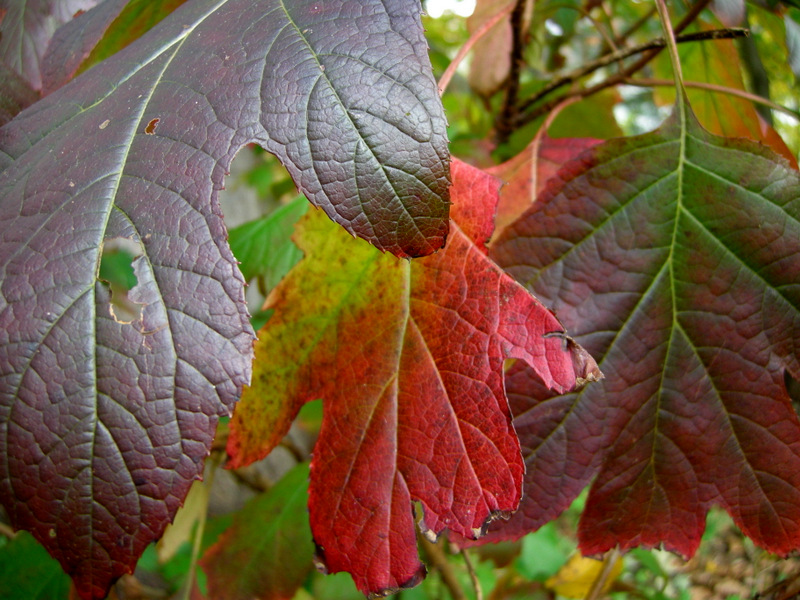
The fall color of oakleaf hydrangea.

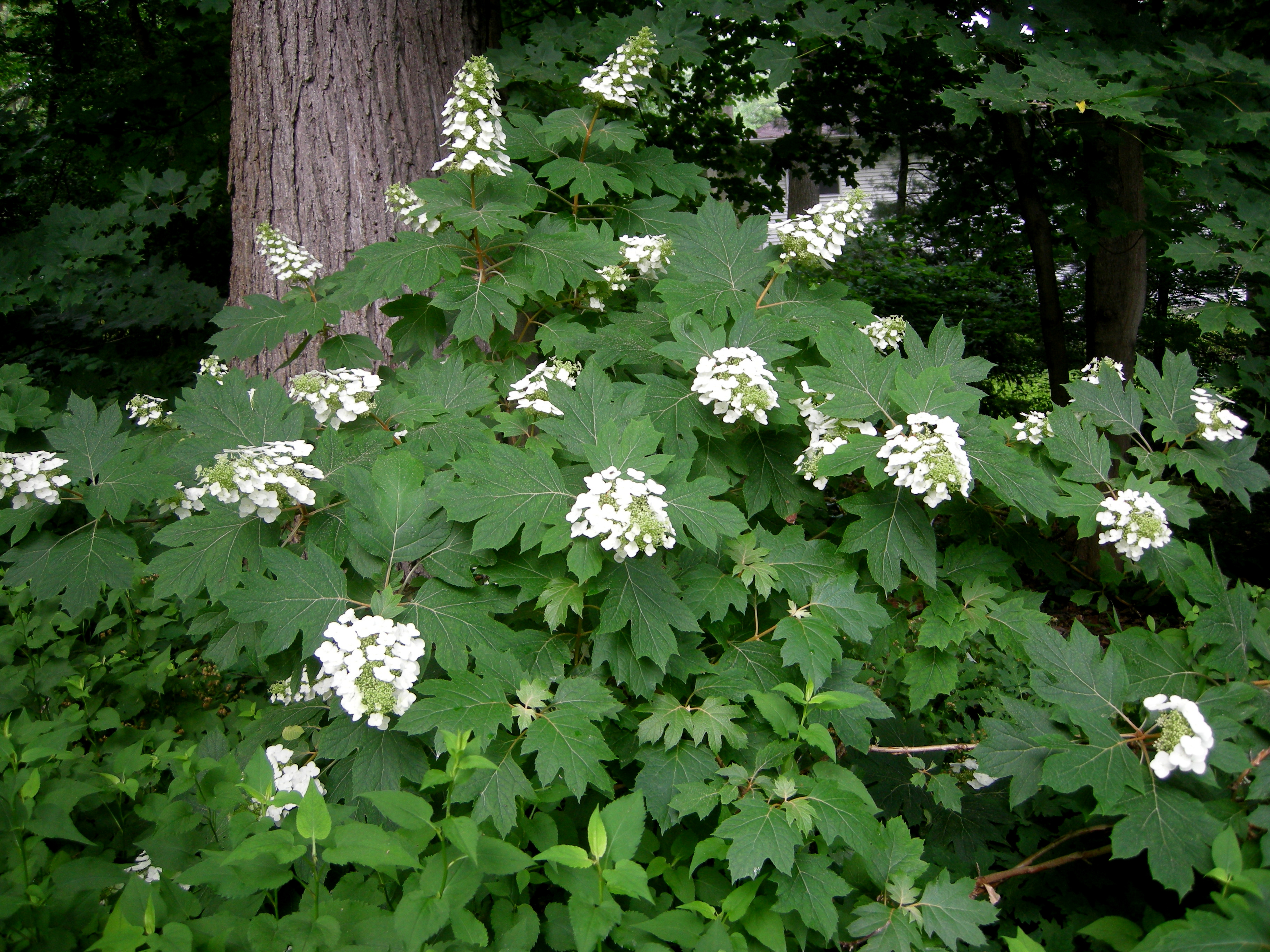
Our native oakleaf hydrangea, H. quercifolia, is the best all round shrub for shade—everyone should have at least one!  Huge, long-lasting, upright pyramids of white flowers bloom from May through July. It has bold-textured leaves with heart-stopping burgundy-red fall color, and cinnamon-colored exfoliating bark—a true four season plant. 

The white flowers of ‘Amethyst’ oakleaf hydrangea age to a striking red that does not fade when dried.  Great for flower arranging.

I am offering ‘Amethyst’ native oakleaf hydrangea, a new cultivar selected because  its initially white flowers turn to a striking red color and stay that way.  It grows to 5 to 6’ tall and 5 to 6’ wide in sun to full shade.  It is hardy in USDA hardiness zones 5 to 9, walnut and drought tolerant, and native to the southeastern US.


‘Blue Bird’ sawtooth hydrangea, H. serrata


‘Blue Bird’ sawtooth hydrangea produces lovely blue lacecap flowers starting in June for an extended period.  Acid soil results in the best blue tint.  I also grow it for its beautiful clean bright green leaves through out the season, which are enhanced by red highlights in the fall.  It is very tolerant of cold temperatures avoiding bud and twig dieback in harder winters.  ‘Blue Bird’ reaches 4′ tall and 4′ wide in part to dappled shade and grows in zones 5 to 9.  Sawtooth hydrangea is native to Korea and Japan.

This photo shows ‘Endless Summer’ bigleaf hydrangea, H. macrophylla, right now.  Yes, it is loaded with fresh flowers and buds and has been blooming since late spring.

‘Endless Summer’ bigleaf hydrangea sports very large pink or blue mophead flowers from late spring through summer and well into fall—it’s in full bloom right now as you can see from the photo above.  It represents a recent breakthrough in hydrangeas because it blooms on old and new wood giving it an extended bloom season.  This also means that if the buds formed on old wood the previous season are frozen over the winter, buds will form on new wood as the season progresses.  ‘Endless Summer’s’ large, medium green leaves provide a pleasing backdrop for the flowers.  It grows in zones 4 to 9 and reaches 4′ tall and 4′ wide in part shade.  It is recommended for full sun only with supplemental watering.  Bigleaf hydrangea is native to Japan.

‘Gold Dust’ Japanese aucuba, A. japonica, is an elegant specimen for deep shade.

A close up of the unusual leaves of ‘Gold Dust’ Japanese aucuba—glorious in winter.

‘Gold Dust’ Japanese aucuba’s very shiny, broadleaf evergreen leaves sprinkled with yellow spots make it one of the most vibrant and colorful plants to thrive in dense shade.  I have grown it successfully for many years in several areas of my garden that receive no direct sunlight.  It is very vigorous, disease free, and easy to grow as long as you don’t plant it in the sun.  ‘Gold Dust’ grows to 6 to 8′ tall and 4 to 6′ wide in part to dense full shade and is hardy in zones 7 to 9.  Aucuba is native to Japan, and the variegated form was introduced to the west in 1783.

The fall flowers of ‘Rose Creek’ glossy abelia, A. x grandiflora.

‘Rose Creek’ is a compact form of glossy abelia, great for smaller spaces and smaller gardens.

‘Rose Creek’ is a dense and compact glossy abelia that covers itself in a multitude of wonderfully fragrant, showy white flowers continuously from May through September.   When the flower petals drop off, the rosy pink sepals (bud enclosures) remain and are very eye-catching.  The beautiful, glossy evergreen foliage has pink highlights and turns purple in the fall, providing excellent winter interest.  The stems are  crimson red.  ‘Rose Creek’ grows to 2 to 3′ tall and 3 to 4′ wide in part shade or full sun and is hardy in zones 5 to 9.  It is deer resistant and attracts butterflies and hummingbirds.  Glossy abelia is a cross between two Chinese abelia species.

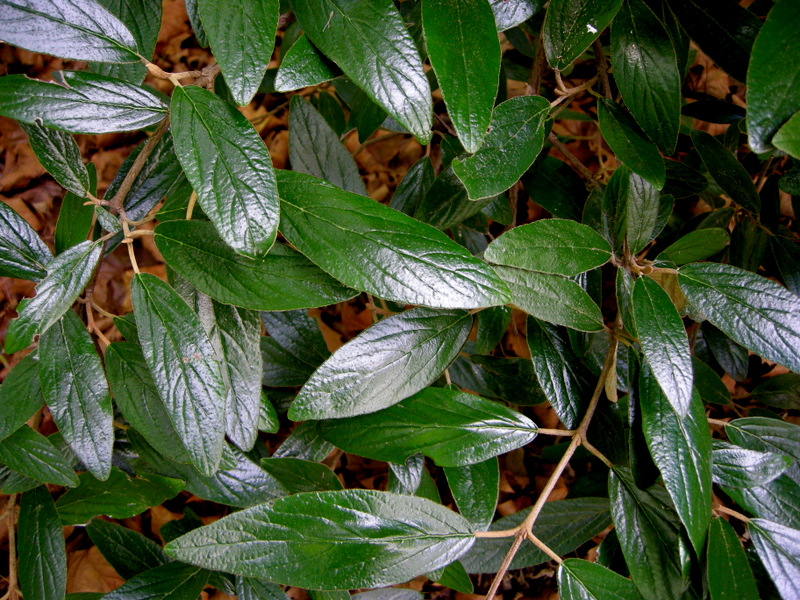
The incredibly shiny leaves of Prague viburnum, V. x pragense, sparkle in the winter.

This photo of the flower of Prague viburnum was kindly lent to me by Monrovia, for their full plant profile, click here.

Prague viburnum’s pink buds open into large, bouquet-like, creamy white flowers in May followed by glossy, persistent black fruit.  Just as ornamental are its very showy, lustrous, dark evergreen leaves.  Prague viburnum reaches 8′ tall and 6′ wide in full sun to part shade and is hardy in zones 5 to 8.  You can grow it in full shade and the leaves will be gorgeous, but it won’t flower very well.  It is fast growing and deer resistant.  It is a cross between leatherleaf and service viburnums, which are both from China.

I hope you have a space in your garden for at least one of these wonderful shrubs for shade.  For more ideas, check out Woody Plants for Shade Parts 1 to 5 using the links provided below:

Part 1,   Part 2,   Part 3,   Part 4,   Part 5

Carolyn

Nursery Happenings:  Shrub orders are due by noon on Wednesday, October 3.  For the catalogue, click here.  We are offering two sessions of a seminar on low maintenance gardening for fall on Wednesday, October 3, and Friday, October 5, from 10 to 11:30 am.  For the details, click here.  Look for a special offer of double hellebores next week.

If you are within visiting distance and would like to receive catalogues and information about customer events, please send your full name and phone number to carolynsshadegardens@verizon.net.  Subscribing to my blog does not sign you up to receive this information.

Facebook:  Carolyn’s Shade Gardens has a Facebook page where I post single photos, garden tips, and other information that doesn’t fit into a blog post.  You can look at my Facebook page here or click the Like button on my right sidebar here.

Notes: Every word that appears in orange on my blog is a link that you can click for more information.  If you want to return to my blog’s homepage to access the sidebar information (catalogues, previous articles, etc.) or to subscribe to my blog, just click here.
 

You Asked for the Long View Part 2

Posted in landscape design, my garden, Shade Gardening with tags , , , , , on June 20, 2012 by Carolyn @ Carolyns Shade Gardens

Carolyn’s Shade Gardens is a retail nursery located in Bryn Mawr, PA, specializing in showy, colorful, and unusual plants for shade.  The only plants that we ship are snowdrops and miniature hostas.  For catalogues and announcements of events, please send your full name, location, and phone number (for back up use only) to carolyn@carolynsshadegardens.com.  Click here to get to the home page of our website for catalogues and information about our nursery and to subscribe to our blog.

Looking down the hill through the gardens on the back side of the house.  The ‘Butterfly’ Japanese maple is like a torch.

This is the sequel to the post You Asked for the Long View Part 1 in which I showed you all the gardens along the front side of the house.  I wrote that post to satisfy all my readers who have been asking to see the big picture of my garden.  I took the photos for both posts using my recently purchased “new iPad”, which has a highly acclaimed camera function.  After experimenting with it, I have concluded that the iPad does take decent photos but a lot of the reason they look so good is because the screen resolution on the new iPad is amazing.  Once I downloaded the photos to my PC, they didn’t look so fabulous.  The new iPad will not be replacing my camera anytime soon.

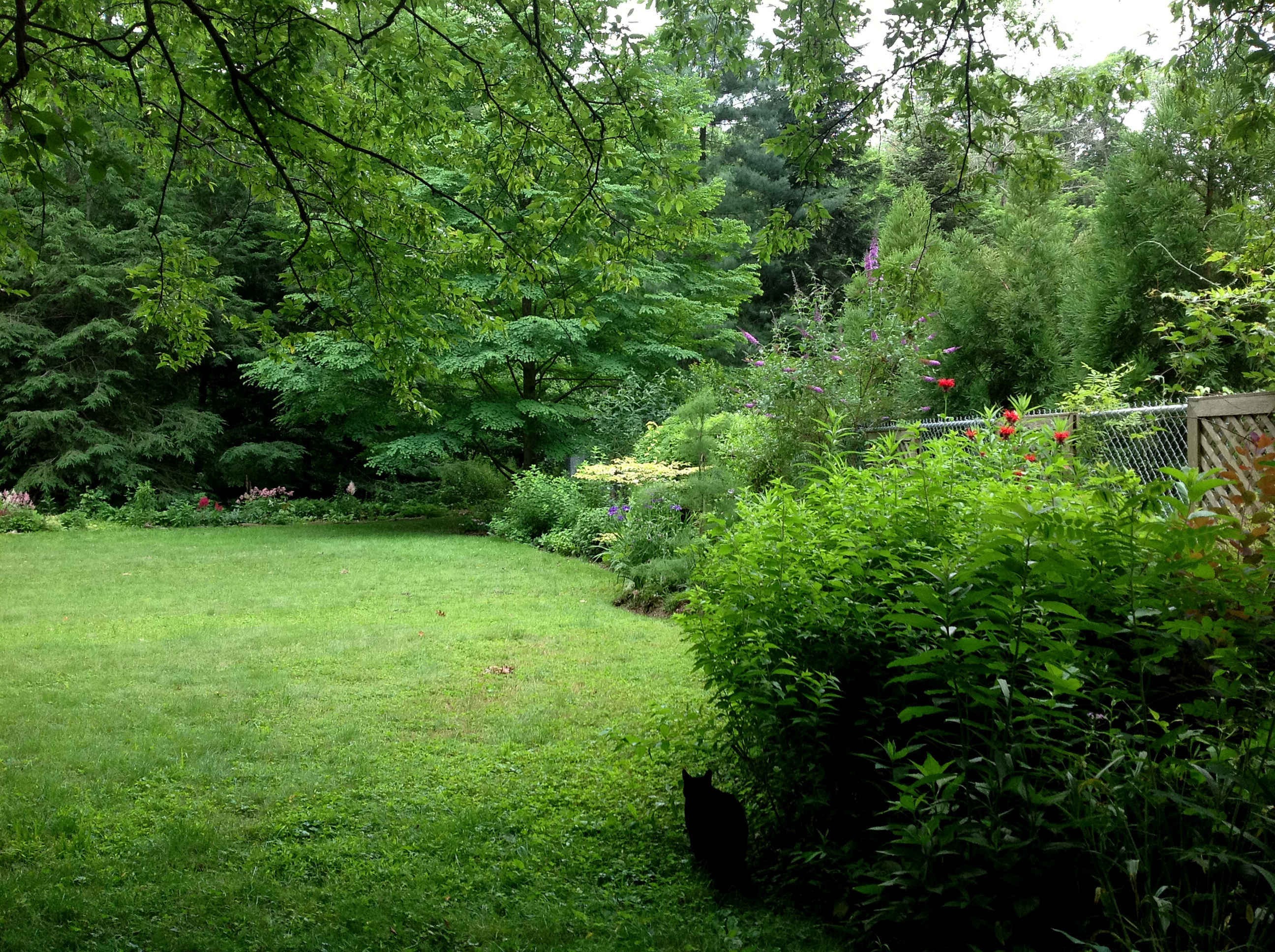
The view from my dry shade garden across the lawn to my production beds.  The gardens on the right were planted in the last two years to hide the neighbor’s hideous chain link fence.

Before we begin the second half of the tour, I want to comment on the odd gardening season.  Because the ground never froze this winter and March was so warm, everything started blooming a month early.  I kept wondering when this was going to catch up with us, and the answer is now.  There is not much blooming in my garden because it all bloomed early and later-flowering plants have gone back to their regular schedule.  If you want to see what the gardens looked like when everything bloomed together, view the amazing photographs in Julie’s Carolyn’s Shade Gardens post on her blog Wife, Mother, Gardener.

The production beds at the bottom of the lawn where I grow plants to sell at my nursery, mostly primroses, pulmonarias, and hellebores.


The tour starts at my dry shade garden where we left off in the last post and continues down the hill to my production beds (see two photos above).  From there, we turn to the left and loop up behind the house.  One route branches off to the right to meander through the woodland garden and the other goes straight up the hill past our deck.  It is hard to explain how it all fits together, but I will do my best.

The production beds are behind us, to the left is the water garden, which stays moist most of the year, and ahead is the back side of the house and the deck.  The lower entrance to the woodland garden is hidden just ahead on the right.

A closer view walking towards the deck.

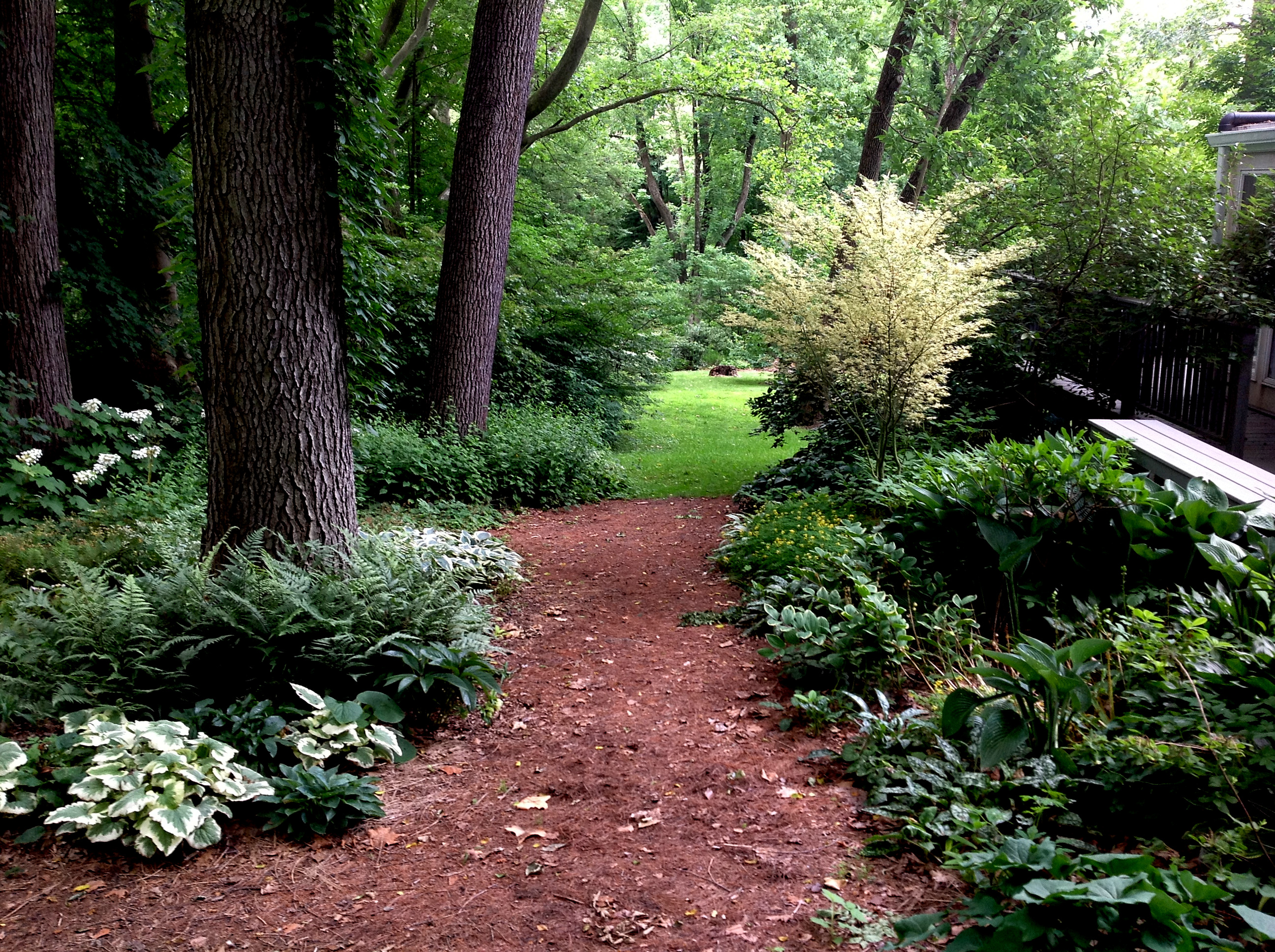
We headed off into the woods.  This is the upper half of the fully shaded woodland garden.  All the paths are covered in white pine needles.

A closer view of the woodland garden: it peaks in early spring but Hosta ‘Sum and Substance’ is making a splash right now.

Still in the woodland but turning the corner to exit out the top entrance.

Standing outside the top entrance and looking back into the woodland.

Looking back from the patio towards the top entrance of the woodland with the yellow and gold garden on the left and the silver and blue garden on the right.

A slight detour to show you the patio.  You can see the yellow and gold garden behind the magnolia.

Looking from the patio towards the stone room where we make compost and store firewood.  Our garage was the carriage house for an estate, and the compost area was the manure pit for the stables .

We have backtracked to walk up the hill by the deck without detouring into the woodland.  The silver and blue garden is on the right and the deck/patio is on the left.

Passing the upper entrance to the woodland.

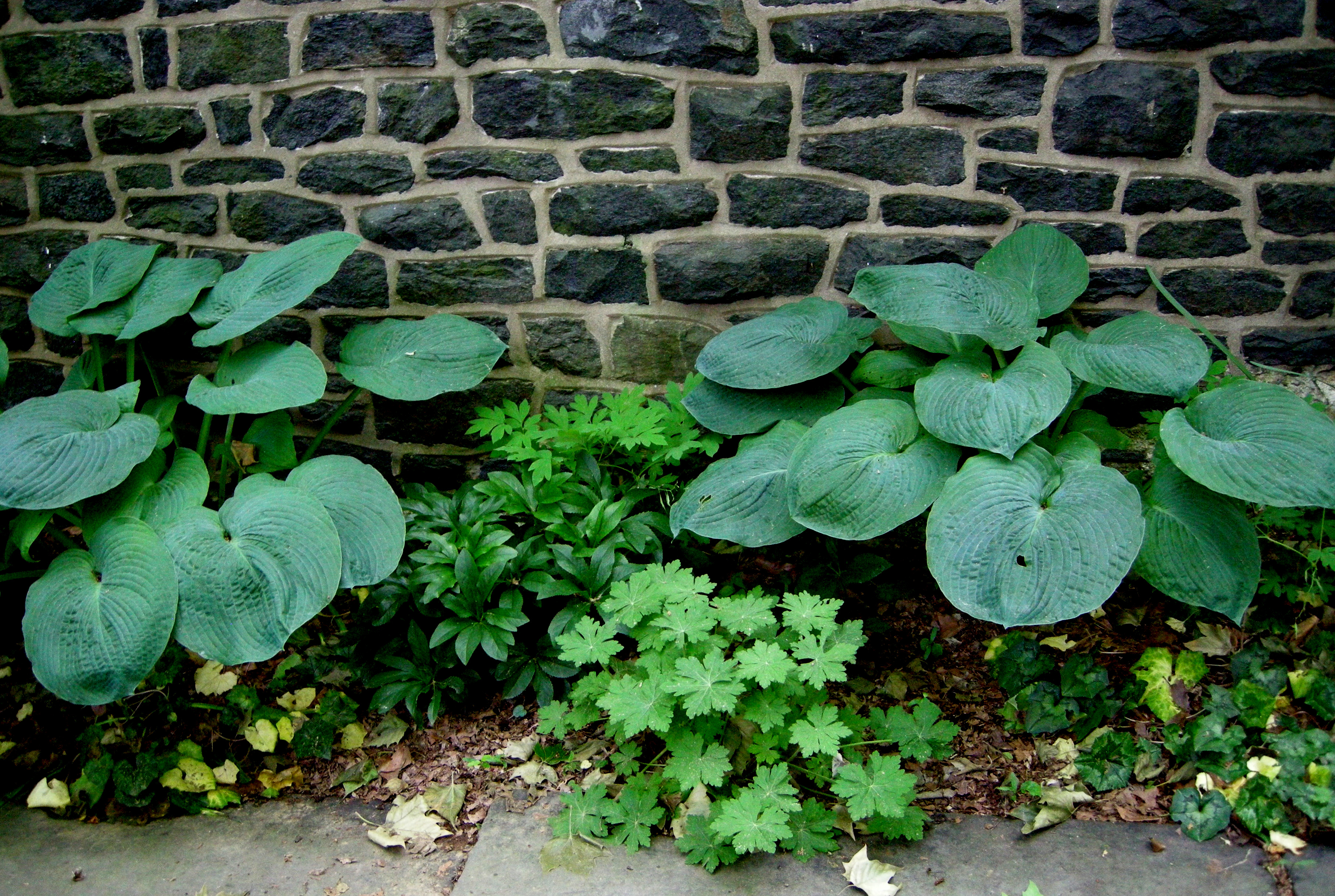
We call this hosta hill because we used hostas to colonize the eroded slope and get rid of the grass.

The upper half of hosta hill.

Passing the miniature hosta rock garden.

Looking down hosta hill from the top.

Turning towards the carriage house at the top of hosta hill.

Heading back out to the driveway where we started in the  first post.

I hope you have enjoyed the “big picture” tour of the gardens on the east side of the house.  Stay tuned for a series of posts on all the wonderful gardens I have visited in the last few months.

Carolyn

Nursery Happenings:  The nursery is closed until the fall.  Thanks for a great spring season!

If you are within visiting distance and would like to receive catalogues and information about customer events, please send your full name and phone number to carolynsshadegardens@verizon.net.  Subscribing to my blog does not sign you up to receive this information.

Facebook:  Carolyn’s Shade Gardens has a Facebook page where I post single photos, garden tips, and other information that doesn’t fit into a blog post.  You can look at my Facebook page here or click the Like button on my right sidebar here.

Notes: Every word that appears in orange on my blog is a link that you can click for more information.  If you want to return to my blog’s homepage to access the sidebar information (catalogues, previous articles, etc.) or to subscribe to my blog, just click here.
Groundcovers, Thinking Outside the Box

Posted in garden to visit, groundcover, How to, landscape design, native plants, Shade Gardening, Shade Perennials, Shade Shrubs with tags , , , , , , , , , , , , , , , , , , , , , , , , , , , , , , , on June 11, 2012 by Carolyn @ Carolyns Shade Gardens

Carolyn’s Shade Gardens is a retail nursery located in Bryn Mawr, PA, specializing in showy, colorful, and unusual plants for shade.  The only plants that we ship are snowdrops and miniature hostas.  For catalogues and announcements of events, please send your full name, location, and phone number (for back up use only) to carolyn@carolynsshadegardens.com.  Click here to get to the home page of our website for catalogues and information about our nursery and to subscribe to our blog.

Part of the Idea Garden at Longwood Gardens

I recently visited Longwood Gardens in Kennett Square, Pennsylvania.  I have no hesitancy in saying that Longwood is one of the premier gardens in the world and should be on everyone’s life list.  However, there is so much there that it is difficult to post about it.  Also, “familiarity breeds contempt.”  I hold two Certificates in Ornamental Horticulture from Longwood and have taken a total of 18 courses to earn them.  Each course involved a minimum of 8 visits to the gardens so you can see that I have spent a lot of time there.  If you are local, these courses are the absolute best plant education available.

Italian Water Garden, viewed while resting in the shade.

Because I have spent so much time at Longwood, I didn’t photograph the usual sights or even visit the fabulous four acre indoor conservatory (with one exception mentioned below).  As a shade gardener I headed straight for Peirce’s Woods, which is seven acres devoted to shady plants native to the eastern U.S. deciduous forest.  I hoped to augment my library of photographs and get some ideas of plants to sell at the nursery and add to my own gardens.  I wasn’t disappointed.

The straight species of smooth hydrangea, H. arborescens, lined the very shady paths by the lake.  I think it is more appropriate to a woodland garden than the cultivated forms like ‘Annabelle’.

Smooth hydrangea has a lovely flower whose size is in keeping with other native woodland plants.

While walking through Peirce’s Woods, I returned to the thoughts I have been having lately about groundcovers.  This time of year, with the weeds running rampant, my customers are more interested in groundcovers.  But it is clear from their questions that they mean plants that form runners to creep and cover the ground.  The classic examples are vinca, ivy, and pachysandra.  However, my definition of groundcover is much broader than this and includes any plant massed to effectively choke out weeds.

Native maidenhair fern, Adiantum pedatum


When you look at the masses of native maidenhair fern above, you are probably thinking that’s all very nice that Longwood uses masses of these fairly pricey, non-creeping plants as groundcover, but I could never afford that quantity of plants.  However, think of the alternative: weeds and the hours if not days it takes to remove them, not to mention how their presence detracts from the look of your garden as well as your satisfaction with it.  Your time is valuable, and you wouldn’t be reading my blog if the look of your garden wasn’t important to you.

Native semi-evergreen coralbells, Heuchera villosa, often sold as the cultivar ‘Autumn Bride’, has gorgeous white flowers in the fall.

Yes, you can use mulch to keep down the weeds.  However, commercial shredded hardwood mulch is not attractive, is generally not produced sustainably, and requires a significant time investment to apply it.  Most importantly, it requires a monetary outlay every year because it must be re-applied every spring.  Perennial plants are initially more expensive to buy and plant but once they are there, you never have to do anything again.  It is kind of like buying a compact fluorescent light bulb versus the bulbs we grew up with.

Here are some more plants that Longwood uses in masses to make effective groundcovers:

Mexican feather grass, Nassella tenuissima


Native evergreen Christmas fern, Polystichum acrostichoides

Native semi-evergreen coralbells, Heuchera villosa purple form.

Shredded umbrella-plant, Syneilesis aconitifolia: I can only dream of achieving this in my garden, and, yes, it is very expensive.

Native hay-scented fern, Dennstaedtia punctiloba, creeps to fill in large areas.

This bellflower, Campanula takesimana, was growing and apparently self-sowing in dense shade on the hillside near the Chimes Tower.

Fall-blooming yellow waxbells, Kirengoshoma palmata, is more like a shrub than a perennial but it dies to the ground ever year.

Native coralbells, Heuchera villosa ‘Caramel’, is my favorite heuchera and retains its lovely color 365 days a year.

Giant butterbur, Petasites japonicus, grows in dense shade and covers a lot of ground.

Lavender mist meadow-rue, Thalictrum rochebrunianum

Native sensitive fern, Onoclea sensibilis, does creep.

Shrubs can be used as groundcover also, two examples from Longwood:

The straight species of oakleaf hydrangea, H. quecifolia, gets quite large and spreading.

Native southern bush honeysuckle, Diervilla sessifolia, suckers to form a colony.

Lastly, I want to show you why I briefly visited the conservatories:  groundcover for walls, the new fern wall at Longwood.  It is worth a visit just to see it:

This is a beautiful hallway containing individual restrooms, and the walls are totally covered in ferns.

Some of the ferns are quite large, and all are healthy and beautiful.

I hope I have convinced you to think outside the box and mass all kinds of unusual plants as groundcovers.  You will have more time to enjoy a better looking garden and save money in the long run.

Carolyn

Nursery Happenings:  This coming weekend we will have our final open hours at the nursery on Saturday, June 16, from 9 am to 2 pm, and Sunday, June 17, from 11 am to 1 pm.  We close on June 17 until September.  Customers on my email list will receive an email with details.

If you are within visiting distance and would like to receive catalogues and information about customer events, please send your full name and phone number to carolynsshadegardens@verizon.net.  Subscribing to my blog does not sign you up to receive this information.

Facebook:  Carolyn’s Shade Gardens has a Facebook page where I post single photos, garden tips, and other information that doesn’t fit into a blog post.  You can look at my Facebook page here or click the Like button on my right sidebar here.

Notes: Every word that appears in orange on my blog is a link that you can click for more information.  If you want to return to my blog’s homepage to access the sidebar information (catalogues, previous articles, etc.) or to subscribe to my blog, just click here.
You Asked for the Long View Part 1

Posted in landscape design, my garden, Shade Gardening with tags , , , , , on June 4, 2012 by Carolyn @ Carolyns Shade Gardens

Carolyn’s Shade Gardens is a retail nursery located in Bryn Mawr, PA, specializing in showy, colorful, and unusual plants for shade.  The only plants that we ship are snowdrops and miniature hostas.  For catalogues and announcements of events, please send your full name, location, and phone number (for back up use only) to carolyn@carolynsshadegardens.com.  Click here to get to the home page of our website for catalogues and information about our nursery and to subscribe to our blog.

The entrance to the gardens from the nursery is down these stone stairs because a lot of the property is on the side of a south-facing hill.

I haven’t posted in a while due to technical difficulties.  I recently bought a “new iPad” and was very excited about using it to compose a post with long shots of my garden.  My current camera is great for macro shots but not very good for landscape photos.  The new iPad reportedly has a very good camera so I thought I would take a lot of long shots to satisfy all my readers who have been asking to see the big picture of my garden.  Unfortunately I have found the WordPress app that is supposed to coordinate the iPad with WordPress to be challenging—at least for this technologically unsavvy blogger.

A view of the bed along the steps from the nursery to the main terrace.

Giving up on the idea of actually posting from the iPad, I downloaded the iPad photos to my PC.  Another touted feature of the new iPad is even higher quality screen resolution.  That means, as I discovered, that the photos look fabulous on my iPad but pretty ordinary on my PC.  But having come this far, I am going ahead with the long view garden tour.  I hope you are all viewing it on an iPad and will think I am an incredible photographer.  For those of you on a “normal” computer, please don’t tell.

On the way down the stairs, we passed by the rock garden terrace and landed on the main terrace by the front door.  You are looking to the left towards the door.

Looking from the front door out towards the same beds.

Looking to the right towards the other end of the main terrace.

A wider view of the right end of the main terrace by the front door.

Looking from the main terrace back up the hill towards the rock garden terrace, which really shines in early spring but still looks nice now.

The view from the main terrace down to the bottom terrace and beyond.

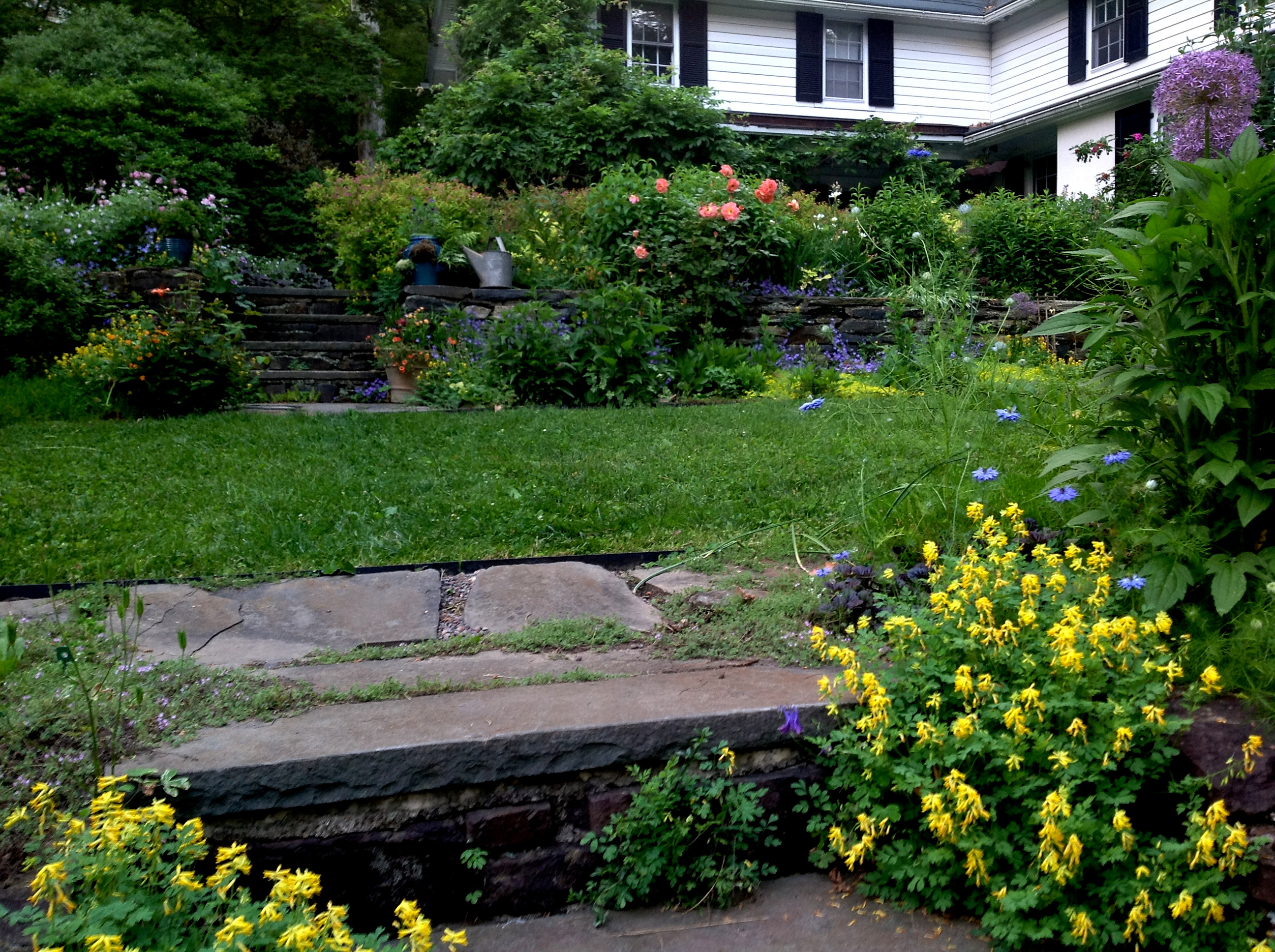
The stairs from the main terrace to the bottom terrace.  Most of the flowers on this level are orange and purple.

The left side of the bottom terrace.

The right side of the bottom terrace.

Another view of the right side of the bottom terrace.

A closer view

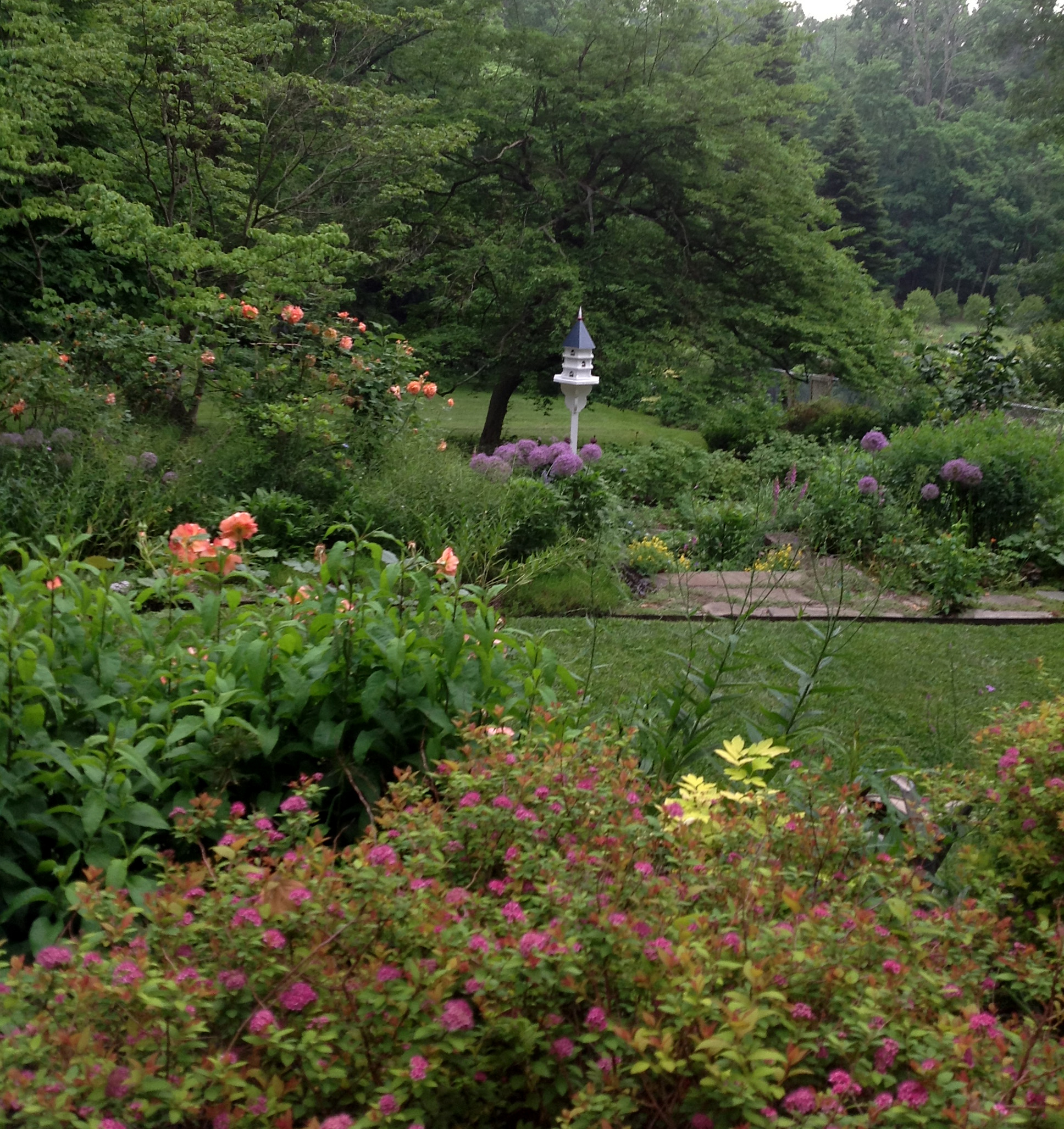
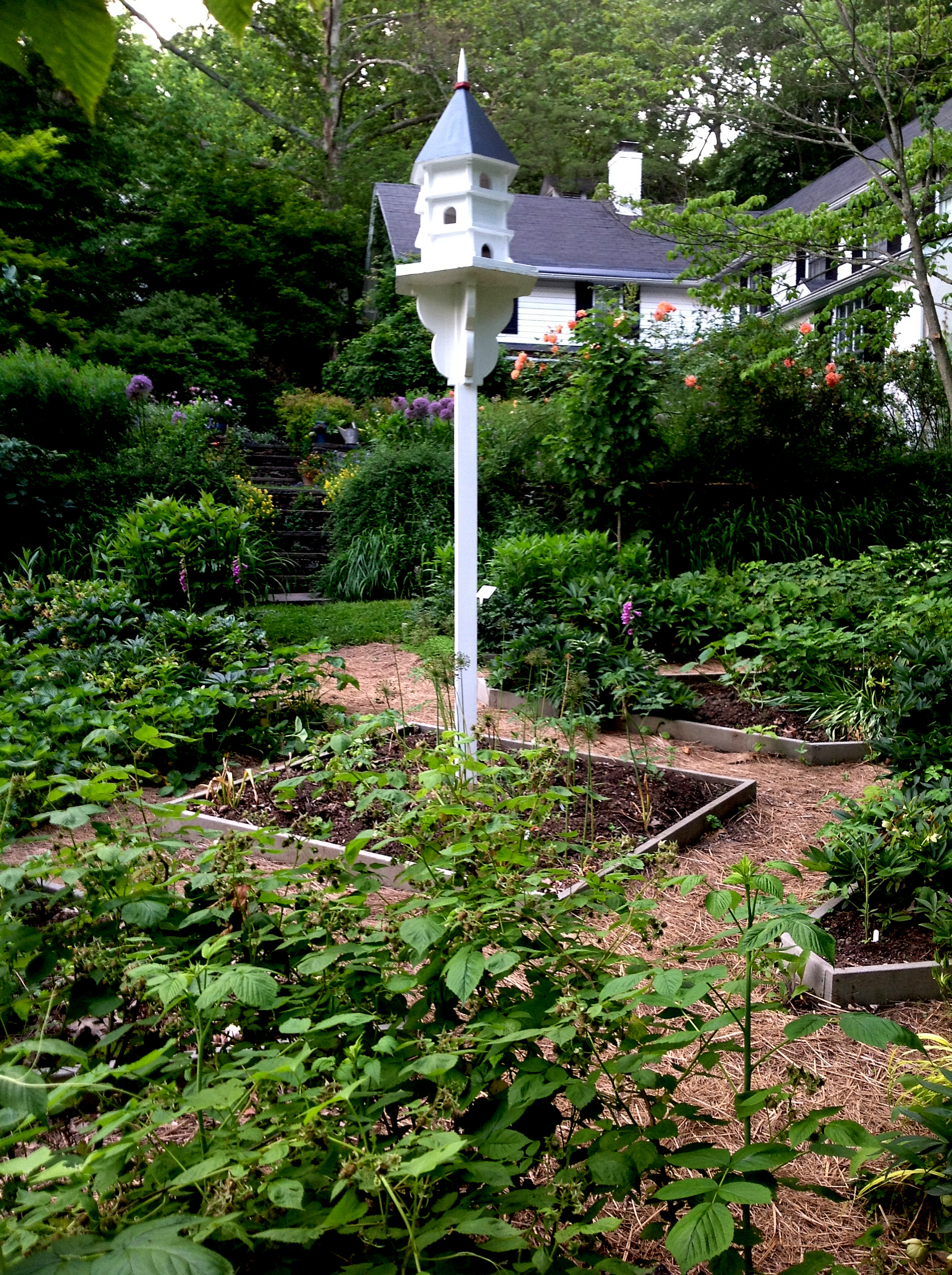
The view from the bottom terrace down to the raised bed area where the birdhouse resides.

The stairs down to the next level.

The raised bed area was built as a vegetable garden but converted to hellebore beds when deer overran our property.  It is currently being reclaimed for fruit and vegetables now that we have a deer fence.

Below the raised beds is what we call the dry shade garden under an American hornbeam.  It is filled with roots and not much rain gets through the leaves.  Beyond this garden is lawn until you get to my production beds where I grow plants to sell at the nursery.

A close up of the dry shade garden.

Looking from the dry shade garden back up the hill.

That’s the tour of the gardens going down the hill on the west side of the house.  It is the sunniest area of my property—the real shade gardens are in the back.  You will have to wait for part two to see those.

Carolyn

Nursery Happenings:  We will be at the Bryn Mawr Farmer’s Market this Saturday, June 9, from 9 am to 1 pm.  The following weekend we will have our final open hours at the nursery.  We close on June 17 until September.  Customers on my email list will receive an email with details.  If you are interested in receiving miniature hostas mail order, click here.

If you are within visiting distance and would like to receive catalogues and information about customer events, please send your full name and phone number to carolynsshadegardens@verizon.net.  Subscribing to my blog does not sign you up to receive this information.

Facebook:  Carolyn’s Shade Gardens has a Facebook page where I post single photos, garden tips, and other information that doesn’t fit into a blog post.  You can look at my Facebook page here or click the Like button on my right sidebar here.

Notes: Every word that appears in orange on my blog is a link that you can click for more information.  If you want to return to my blog’s homepage to access the sidebar information (catalogues, previous articles, etc.) or to subscribe to my blog, just click here.
Large Hostas Get the Spotlight

Posted in hosta, hosta, landscape design, Shade Gardening, Shade Perennials with tags , , , , , , , , , , , , , on May 25, 2012 by Carolyn @ Carolyns Shade Gardens

Carolyn’s Shade Gardens is a retail nursery located in Bryn Mawr, PA, specializing in showy, colorful, and unusual plants for shade.  The only plants that we ship are snowdrops and miniature hostas.  For catalogues and announcements of events, please send your full name, location, and phone number (for back up use only) to carolyn@carolynsshadegardens.com.  Click here to get to the home page of our website for catalogues and information about our nursery and to subscribe to our blog.

.

Hosta 'Blue Angel'Hosta ‘Blue Angel’ used as a shrub.

After writing three posts on miniature and small hostas, I thought large hostas deserved their place in the sun (or shade).  Although I love miniature hostas, large hostas are also dear to my heart and plentiful in my landscape.  I use them both as specimen plants and also for massing with other hostas to fill shady areas.  There are so many hosta cultivars out there, over 8,000,  that I thought I would share some of my favorites with you.  I have included some close ups of their beautiful leaves as well as photos of how I use them in the garden.

My Hosta ‘Liberty’ was planted last year so it has not reached its true size and coloring, but its leaves are still gorgeous.

A full grown ‘Liberty’ in a local garden.

‘Liberty’ with my husband Michael for scale.

I wanted to start with ‘Liberty’ because it was chosen by the American Hosta Grower’s Association as the 2012 Hosta of the Year.  This is a great honor bestowed on only 18 of the over 8,000 hosta cultivars (to see other winners, click here), and I make a point of selling them and growing them in my garden.  ‘Liberty’ is a sport (off shoot) of  ‘Sagae’ with the same vase-shaped habit but much wider creamy yellow margins.  It reaches 2′ tall and 5′ wide with 10″ leaves.


A close up of a leaf of Hosta ‘Striptease’ shows the very unusual “lightening strike” of white running around and through the lime green center.

Three ‘Striptease’ plants make a sizable clump.

‘Striptease’ massed with ‘Blue Angel’ above and H. tokudama ‘Gold Bullion’ and ‘Flavocircinalis’ right.

‘Striptease’ was the Hosta of the Year for 2005.  The white streaks on its leaves really make it stand out—the pattern is rare in the hosta world where many plants look alike.  It is a sport of the old favorite ‘Gold Standard’.  At maturity, it is 20″ high and 4′ wide with 8″ leaves.

leaf of Hosta ‘Paradigm’

Again my ‘Paradigm’ is not mature and does not display its true beauty but when I saw a mature plant I had to have one.

Yes, ‘Paradigm’ is another Hosta of the Year, this time for 2007.  Its leaves are gold-centered and heavily corrugated (textured), a quality I love in the hostas that display it.  Its near white flowers are also quite lovely.  At maturity, it is 2′ high by 4′ wide with almost 12″ leaves.  I can’t wait.


 leaf of Hosta ‘Sagae’

A close up of the vase-shaped (upright) habit of ‘Sagae’

‘Sagae’ planted at the top of a wall to show off its gorgeous habit, with native ‘Forest Pansy’ redbud

I first fell in love with this hosta at Longwood gardens, and it was labeled H. fluctuans ‘Variegata’.  I wrote down the name and searched for it for years before I figured out its name was changed to ‘Sagae’.  Of course, ‘Sagae’ was chosen to be a Hosta of the Year for 2000.  Its upright mounding habit makes it a perfect specimen.  At maturity, it reaches 31″ high by 70″ wide with 13″ leaves.

pollen-covered leaf of Hosta ‘Fried Green Tomatoes’

 mature clump of ‘Fried Green Tomatoes’

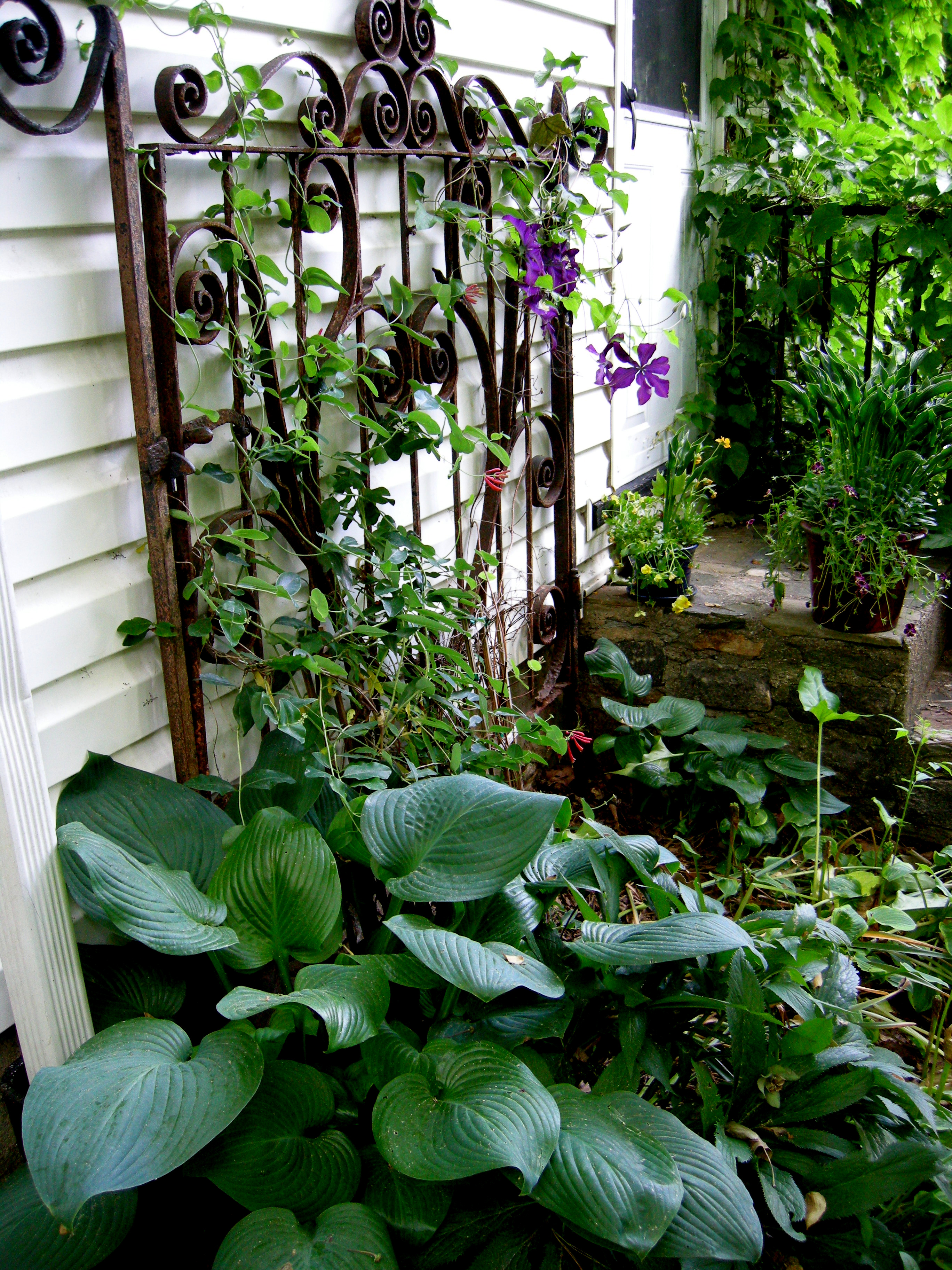
‘Fried Green Tomatoes’ in front of an antique church gate covered with clematis and native honeysuckle.

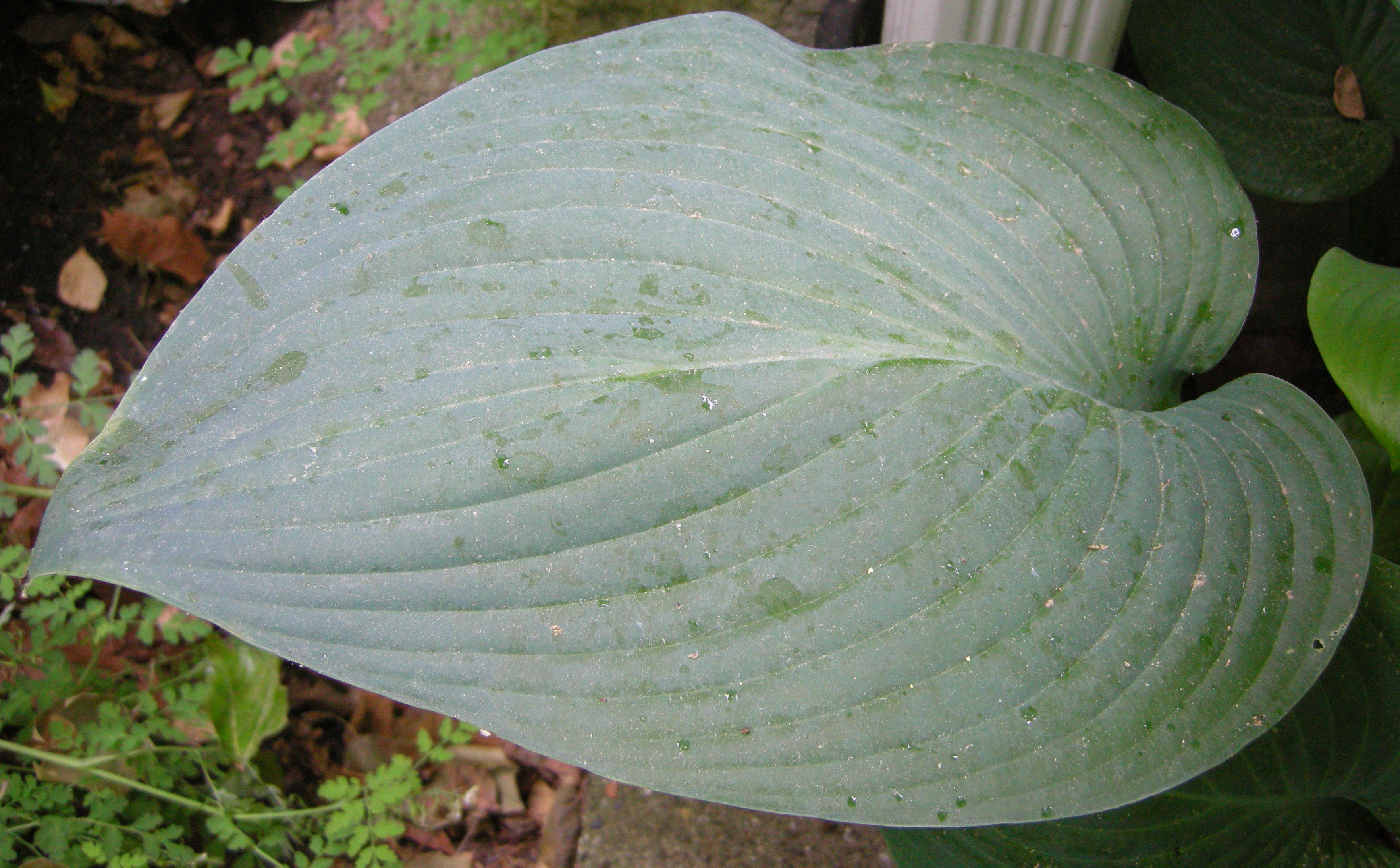
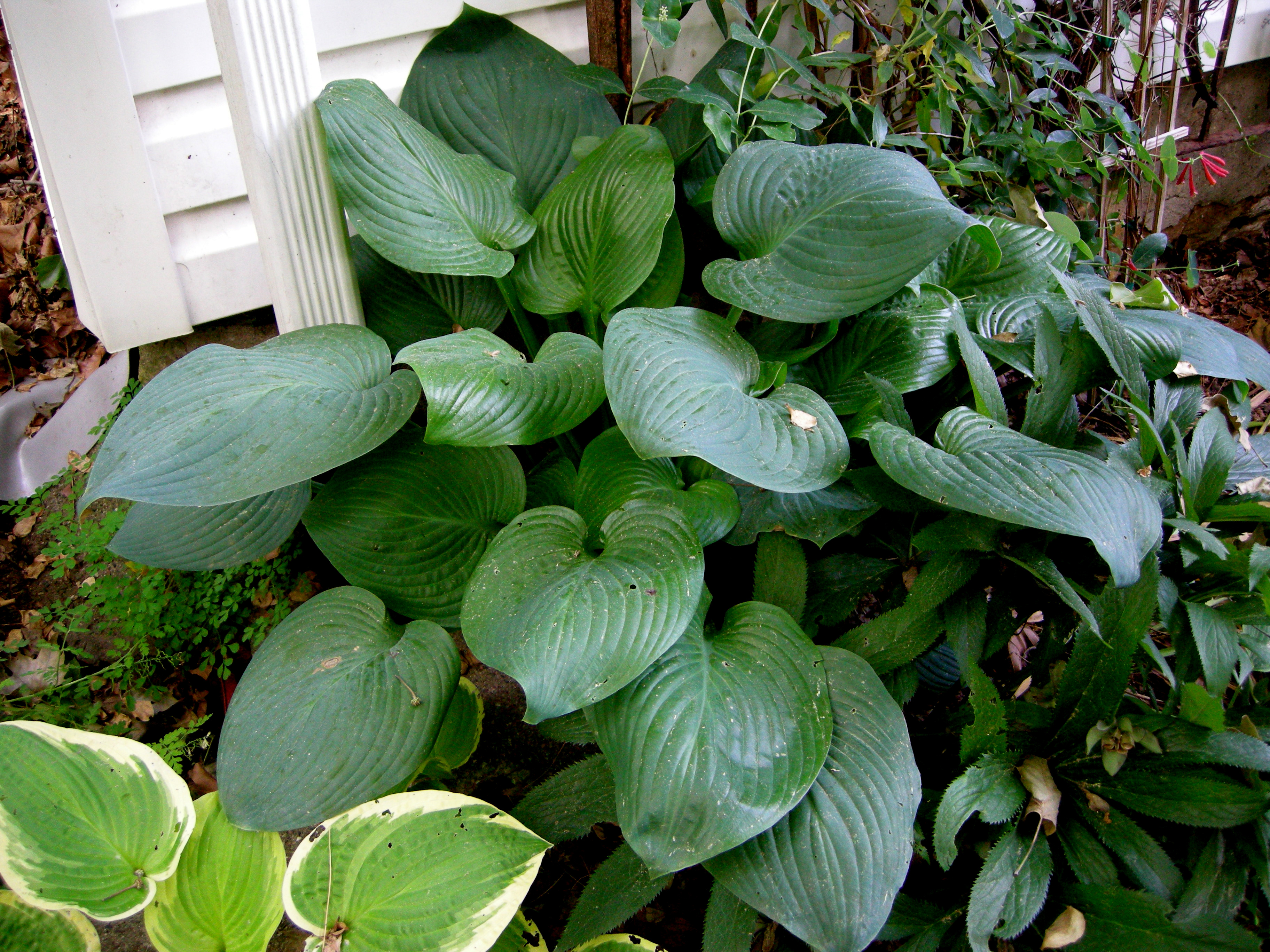
It is hard to explain why I like ‘Fried Green Tomatoes’ so much.  Perhaps it is the substantial blue-green leaves or the neat and even habit or the lovely fragrant flowers or just its clever name.  ‘Fried Green Tomatoes’ is not a hosta of the year, but it is the sport of one, ‘Guacamole’, the 2002 Hosta of the Year, and it is considered an exceptional cultivar.  It reaches 2′ high by 5′ wide with 11″ leaves.

leaf of Hosta ‘Great Expectations’

   ‘Great Expectations’ makes a gorgeous clump.

‘Great Expectations’ in a very shady area under a Japanese maple with ‘Emerald Tiara’ hosta.

Finally, a hosta that is not a hosta of the year (or a relative of one), but, as far as I’m concerned, it should be.  One of my favorites and a bestseller at my nursery, ‘Great Expectations’ forms a large but not overwhelming mound of heavily corrugated, creamy yellow-centered leaves with wide blue-green margins.  Its near white flowers in June and July are beautiful.  A mutation of ‘Elegans’, it reaches 2′ high by 4′ wide at maturity with 12″ leaves.


leaf of Hosta ‘Fragrant Bouquet’


‘Fragrant Bouquet’ makes a nice mound.

‘Fragrant Bouquet’ with yellow waxbells, leopard’s bane, and pulmonaria.

It is not surprising that ‘Fragrant Bouquet’ was the 1998 Hosta of the Year.  It is a very useful hosta in the shady landscape because of its overall light-colored leaves, which are pale chartreuse with creamy yellow edges—it looks great with yellow flowers.  I also love its fragrant blooms and manageable size.  At maturity it is supposed to reach 22″ high by 4′ wide with 10″ leaves but mine are not that big.


 leaf of Hosta ‘Blue Angel’


‘Blue Angel’ used as a specimen shrub with hellebores, hardy geranium, and old-fashioned bleeding-heart (see the photo at the very top too).


 ‘Blue Angel’ massed with ‘Blue Cadet’ and ‘Guacamole’ hostas and ‘Ghost’ fern  (see also the photo with ‘Striptease’).

‘Blue Angel’ is not a hosta of the year, but it would be the absolute top of the list of my choices.  Hostas of the year should be tried and true and the best in their class and that is what ‘Blue Angel’ is.  Do you hear me AHGA?  It is simply the premier large blue hosta in existence, excellent as a specimen and in masses with other hostas.  It is stunning in June and July when topped by its near white flowers and gorgeous throughout the fall with its heavily corrugated, substantial blue leaves.  At maturity, ‘Blue Angel’ reaches 32″ high by 70″ wide with 16″ leaves.


leaf of Hosta ‘First Frost’

‘First Frost’ in my rock garden

I will close with the 2010 Hosta of the Year ‘First Frost’.  When it comes out in the spring, the combination of the very blue leaves with the decidedly yellow and very wide margins is unusual and elegant.  The leaves have thick substance and turn dark green with a cream edge in summer.  ‘First Frost’ is also a “smaller” large hosta and easy to use in the landscape.  It is a sport of the wonderful ‘Halycon’.  At maturity, it reaches 14″ high by 3′ wide with 7″ leaves.

Carolyn

Nursery Happenings:  Our final open house sale of the spring will be a two-day event on Friday, June 1, from 10 am to 4 pm, and Saturday, June 2, from 10 am to 2 pm.  Customers on my email list should have received an email with details.  We are getting more woody plants so if you missed the deadline send me an email with your order.  If you are interested in receiving miniature hostas mail order, click here.

If you are within visiting distance and would like to receive catalogues and information about customer events, please send your full name and phone number to carolynsshadegardens@verizon.net.  Subscribing to my blog does not sign you up to receive this information.

Facebook:  Carolyn’s Shade Gardens has a Facebook page where I post single photos, garden tips, and other information that doesn’t fit into a blog post.  You can look at my Facebook page here or click the Like button on my right sidebar here.

Notes: Every word that appears in orange on my blog is a link that you can click for more information.  If you want to return to my blog’s homepage to access the sidebar information (catalogues, previous articles, etc.) or to subscribe to my blog, just click here.
Woody Plants for Shade Part 5

Posted in Fall Color, landscape design, native plants, Shade Gardening, Shade Shrubs, shade vines, winter interest with tags , , , , , , , , , , , , , , , , , , , , on May 17, 2012 by Carolyn @ Carolyns Shade Gardens

Carolyn’s Shade Gardens is a retail nursery located in Bryn Mawr, PA, specializing in showy, colorful, and unusual plants for shade.  The only plants that we ship are snowdrops and miniature hostas.  For catalogues and announcements of events, please send your full name, location, and phone number (for back up use only) to carolyn@carolynsshadegardens.com.  Click here to get to the home page of our website for catalogues and information about our nursery and to subscribe to our blog.

The bright rose flowers of ‘Wine & Roses’ old-fashioned weigela.

Shade gardens are not composed solely of perennials so two years ago I branched out to offer high quality shrubs, vines, and trees to my customers.  In my second Spring 2012 Woody Plant Offer, details here,  I have focused on plants that are late spring or summer blooming and native to our area.  I thought my blog readers who are not customers might be interested in learning about the plants that I would recommend they add to their shade gardens.  And doing an article allows me to add more information and explain why I chose the plants I included so customers might be interested also.

When it blooms in late spring, our native fringe tree is covered with elegant, fragrant flowers.

Fringe tree is a lovely small flowering tree or a large shrub.

I saw native fringe tree, Chionanthus virginicus, in full bloom in the shady woods of Bartram’s Garden in Philadelphia recently, and it reminded me of how gorgeous this native tree is.   It is loaded with generous amounts of creamy white, fragrant flowers in May and June.  Its medium green leaves turn a good yellow in the fall.  It may produce showy grape-like fruit attractive to birds.  Fringe tree grows to 12 to 20’ tall and 12 to 20’ wide in sun to part shade, although the tree in Bartram’s Garden was in a very shady site.  It is wet site tolerant, hardy to zone 4, and native to the eastern US, including PA.  It is a  Missouri Botanical Garden Plant of Merit (photos courtesy of MOBOT).


 Our native dwarf summersweet is loaded with fragrant white flowers in summer.

I have seen stands of summersweet growing wild in New England, and it is a beautiful sight.  However, the species gets quite large and suckers into colonies so the native dwarf summersweet ‘Hummingbird’Clethra alnifolia ‘Hummingbird’, is better for most home gardens.  It has very fragrant, bottlebrush, white flowers in June and July that attract butterflies.  Its  lustrous bright green leaves turn a clear yellow in the fall.  It has an excellent compact habit and produces more flowers than the species.

Dwarf summersweet’s habit is much more compact and attractive than the species, and it produces more flowers.

Dwarf summersweet grows to 2 to 4’ tall and 3’ wide in sun to full shade.  It is hardy to zone 4, deer resistant, wet site and salt tolerant, and native to the eastern US, including PA.  It is a Pennsylvania Horticultural Society Gold Medal Plant,  click here for details (photos courtesy of the MOBOT Plant Finder, for more information click here).


 ‘Nikko’ dwarf slender deutzia is loaded with white flowers in late spring.

‘Nikko’ lining my rock garden path in full shade.

I have offered ‘Nikko’ dwarf slender deutzia, D. gracilis ‘Nikko’, before, but it is such a useful plant that I couldn’t help including it again.  It is covered with delicate white flowers in April and May.  Its fine-textured and neat green leaves turn an attractive burgundy in the fall.  It is an excellent specimen or flowering groundcover for shade.  I grow it in full shade as a groundcover to edge the path at the base of my winterberry hollies.  ‘Nikko’ grows to 1 to 2’ tall and 2 to 5’ wide in full sun to full shade.  It is hardy to zone 4 and deer resistant.  It is a PHS Gold Medal Plant (for more information click here).


 ‘Invincibelle Spirit’ is a color breakthrough for our native smooth hydrangea.

Native ‘Invincibelle Spirit’ smooth hydrangea, H. arborescens ‘Invincibelle Spirit’, is  a pink-flowered version of the wonderful ‘Annabelle’.  It has very showy large pink snowball flowers that continue to bloom from June into the fall.  ‘Invincibelle Spirit’ grows to 3 to 4’ tall by 3 to 4’ wide in part to full shade.  It is hardy to zone 4, tolerant of a wide range of soil conditions, deer resistant, and native to the eastern US, including PA.  It should be gently pruned in late spring for optimum growth (photo courtesy of the MOBOT Plant Finder, for more information click here).                    

A close up of the large and beautiful flowers and leaves of oakleaf hydrangea.

   Native oakleaf hydrangea in my woodland garden at the base of a black walnut.

The fall color of oakleaf hydrangea.

Our native oakleaf hydrangea, H. quercifolia, is the best all round shrub for shade—everyone should have at least one!  Huge, long-lasting, upright pyramids of white flowers bloom from May through July and change to pink for even longer interest.  It has bold-textured leaves with heart-stopping burgundy-red fall color, and cinnamon-colored exfoliating bark—a true four season plant.  I am offering ‘Alice’ native oakleaf hydrangea, a superior form that has larger flowers, better fall color, and very disease resistant leaves.  It grows to 5 to 8’ tall and 5 to 8’ wide in sun to full shade.  It is hardy to zone 5, walnut and drought tolerant, and native to the southeastern US.  For more information, click here.


The pink mophead flowers of ‘Preziosa’ age to a dark maroon.

‘Preziosa’s’ leaves are gorgeous, here they are starting to turn burgundy in the fall.

‘Preziosa’ sawtooth hydrangea, H. serrata ‘Preziosa’, is now my favorite “fancy” hydrangea for full shade so I am offering it again.  I planted mine in the shade of a white pine under a cherry laurel behind a Japanese maple, and it is thriving and loaded with buds right now.  This wonderful hydrangea produces lovely pink mophead flowers from June to August, which darken with age to a gorgeous maroon.  But I may like the elegant leaves more, especially their beautiful burgundy fall color.   The leaves, deep red stems, flowers, and habit of ‘Preziosa’ are all superior to most other hydrangeas.  ‘Preziosa’ grows to 3 to 4’ tall and 3 to 4’ wide in part to full shade.  It is very tolerant of cold temperatures and hardy to zone 5.  For more information, click here.


 The elegant leaves and flowers of native ‘Blue Muffin’ arrowwood viburnum.

Native ‘Blue Muffin’ arrowwood viburnum, V. dentatum ‘Blue Muffin’,  has lovely flat-topped white flowers in May and June that attract butterflies.  Lots of pea-sized very blue berries appear in late summer and attract birds.  The shiny dark green leaves are beautiful all season and turn attractive shades of orange to burgundy in the fall.  ‘Blue Muffin’ has an excellent and useful narrow, upright habit.  The branches are so straight that the Native Americans used them for arrows. 

‘Blue Muffin’s’ blueberry-like fruit.

‘Blue Muffin’ grows to 5 to 8’ tall and 3 to 4’ wide in sun to part shade.  It is deer resistant and grows in a wide range of soils.  It tolerates salt, drought, and walnuts.  ‘Blue Muffin’ is hardy to zone 3 and native to the eastern US, including PA (fruit photo courtesy of MOBOT, for more information click here).

 The flowers of ‘Wine & Roses’ weigela.

‘Wine & Roses’ old-fashioned weigela, W. florida ‘Wine & Roses’, has copious amounts of eye-catching rose-red flowers in May and June that attract hummingbirds.   The flowers are set off to perfection by the glossy deep burgundy leaves whose color intensifies in the fall.  ‘Wine & Roses’ has an excellent habit—you can prune it immediately after flowering to fit any location.  It grows to 4 to 5’ tall and 4 to 5’ wide in sun to part shade.  Although I recommend some direct sun for better flowers, I have seen weigela blooming in full shade.  It is hardy to zone 4, deer resistant, and tolerant of a wide range of soils.  ‘Wine & Roses’ is a PHS Gold Medal Plant, for details click here.


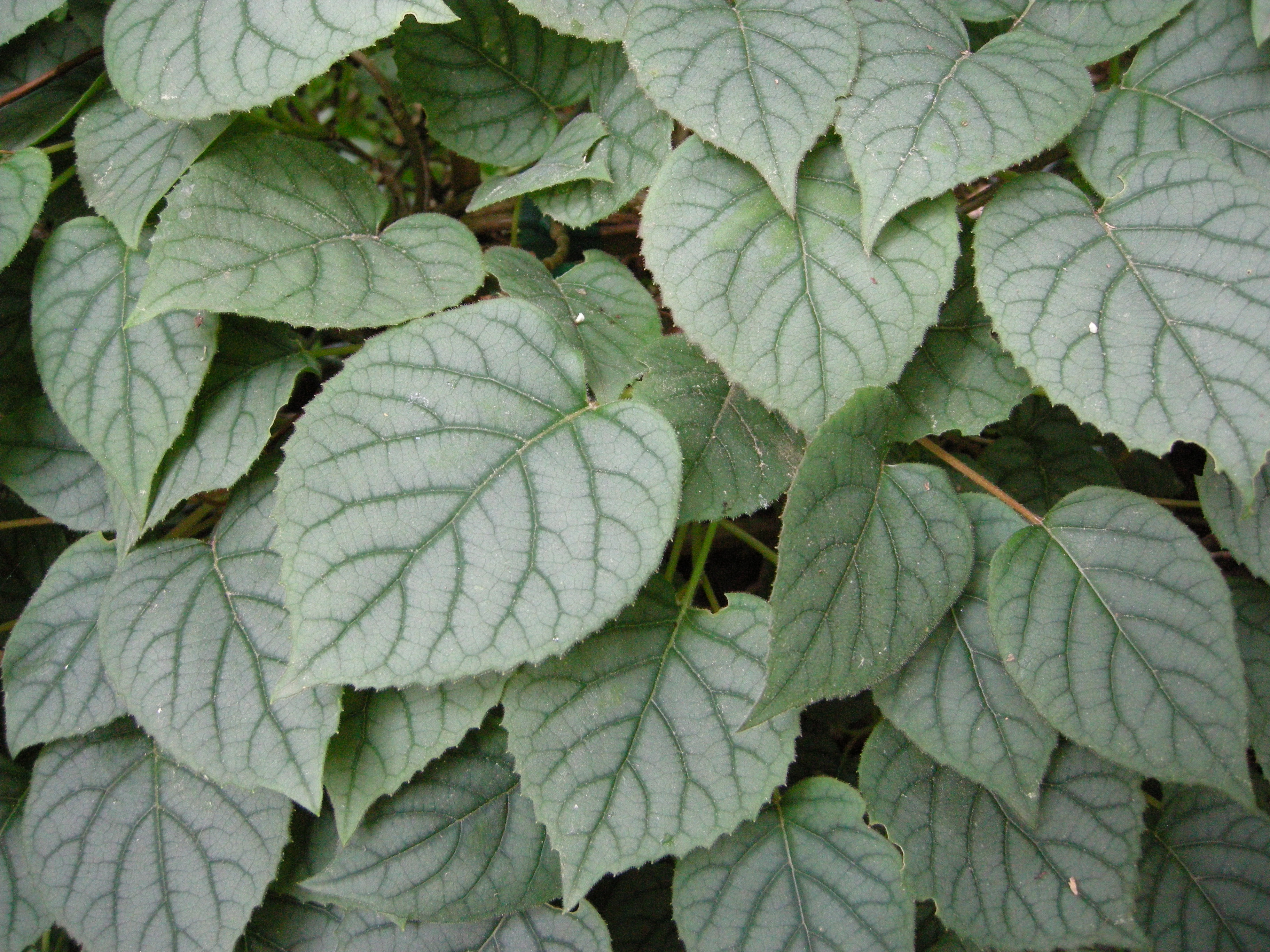
The silver leaves of ‘Moonlight’ Japanese climbing hydrangea.

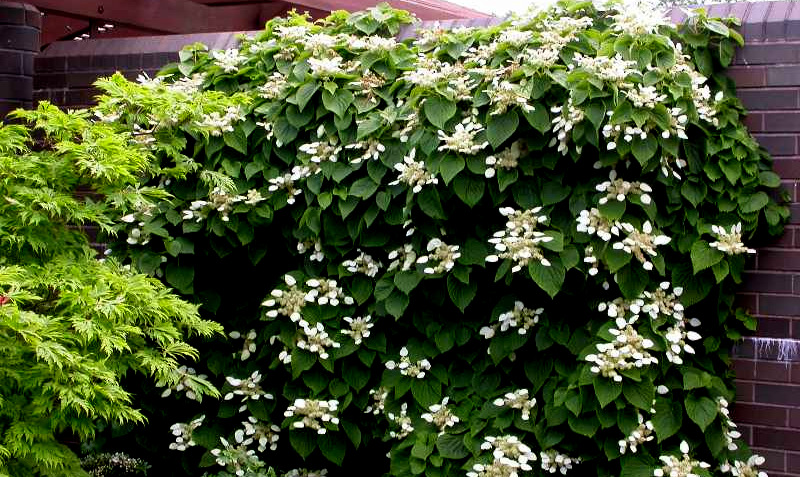
The flowers of Japanese climbing hydrangea—here the straight species.

‘Moonlight’ Japanese hydrangea vine, Schizophragma hydrangeoides ‘Moonlight’, has very showy 8 to 10” wide white lacecap flowers  in midsummer.  But I really grow it for its elegant silver-painted dark green leaves, which turn yellow in the fall.  ‘Moonlight’ is a self-attaching vine that covers the surface it grows on with silvery leaves.  It reaches 20 to 30’ at maturity in part to full shade—mine is in deep shade.  It is a PHS Gold Medal Plant, for details click here (photo of flowers courtesy of the MOBOT Plant Finder click here).

I hope I have inspired you to order some of these wonderful plants in my offer or search them out at your local independent nursery.  To read the previous posts on woody plants for shade, click one, two, three, and four.

Carolyn

Nursery Happenings: Customers can pre-order woody plants through noon on May 22.  Click here for details.  We have added a third session of our seminar, The Secrets of a Low Maintenance Garden, on Sunday, May 20.  Click here for details. If you are interested in receiving miniature hostas mail order, click here.

If you are within visiting distance and would like to receive catalogues and information about customer events, please send your full name and phone number to carolynsshadegardens@verizon.net.  Subscribing to my blog does not sign you up to receive this information.

Facebook:  Carolyn’s Shade Gardens has a Facebook page where I post single photos, garden tips, and other information that doesn’t fit into a blog post.  You can look at my Facebook page here or click the Like button on my right sidebar here.

Notes: Every word that appears in orange on my blog is a link that you can click for more information.  If you want to return to my blog’s homepage to access the sidebar information (catalogues, previous articles, etc.) or to subscribe to my blog, just click here.