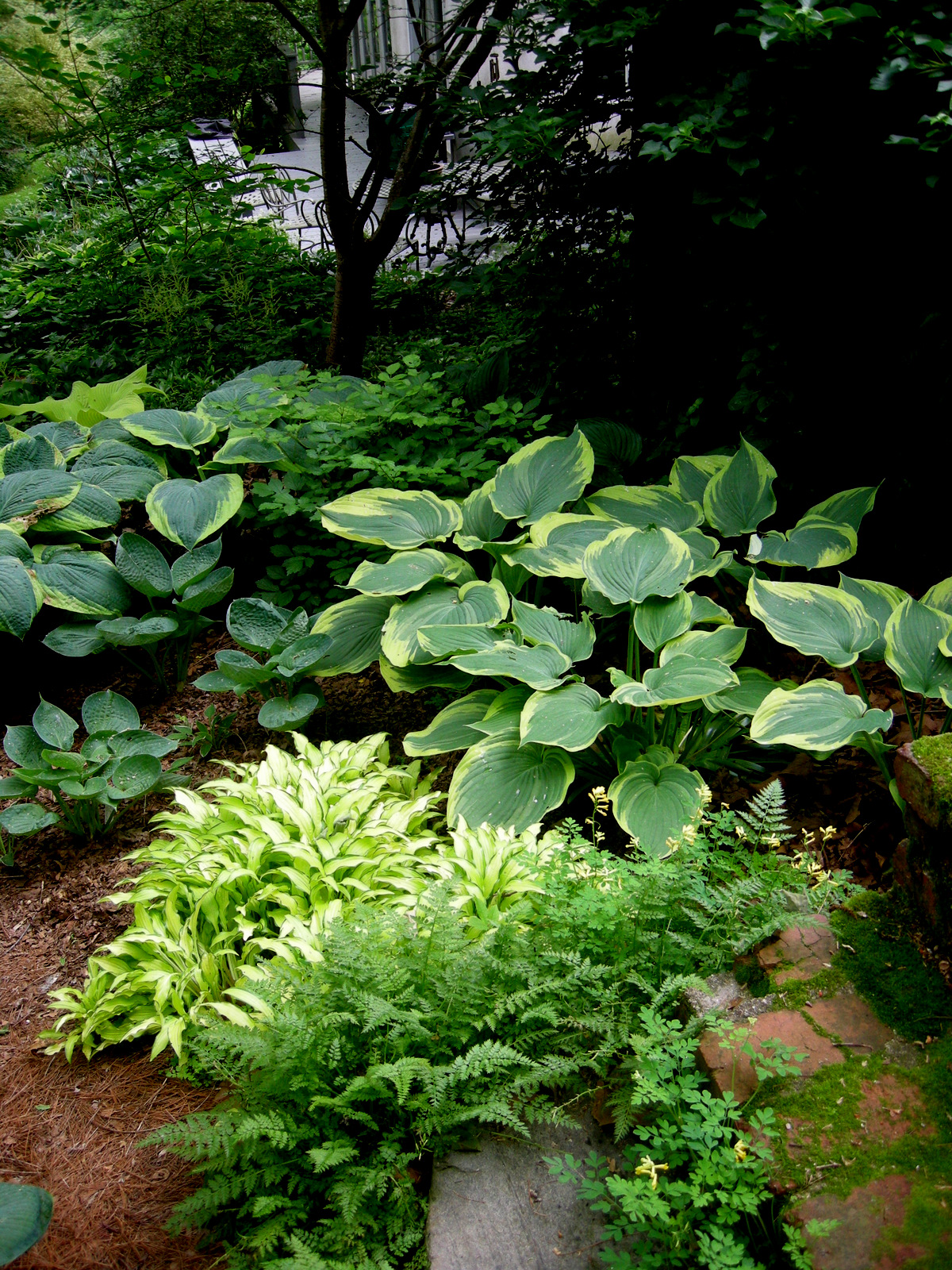
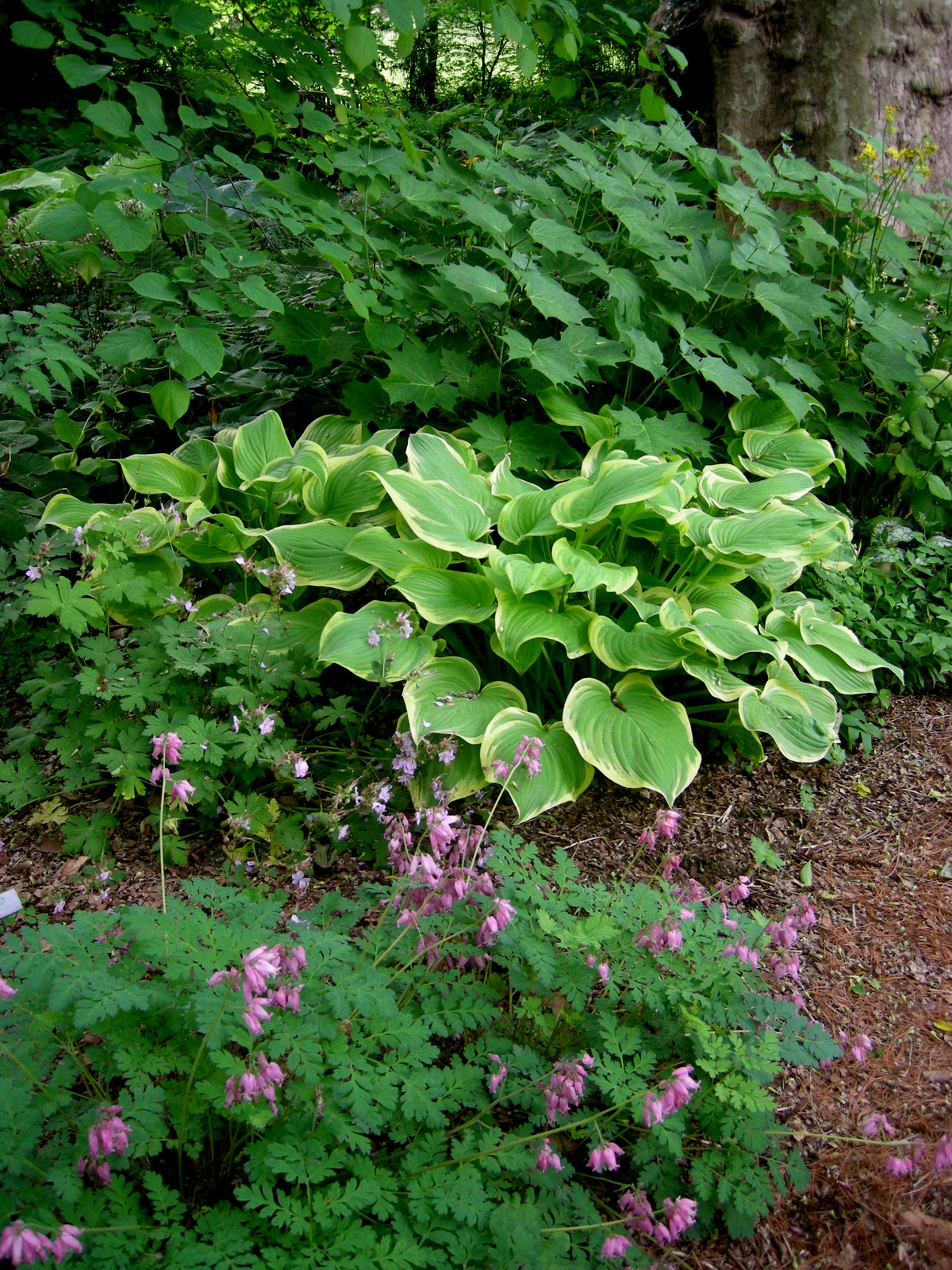
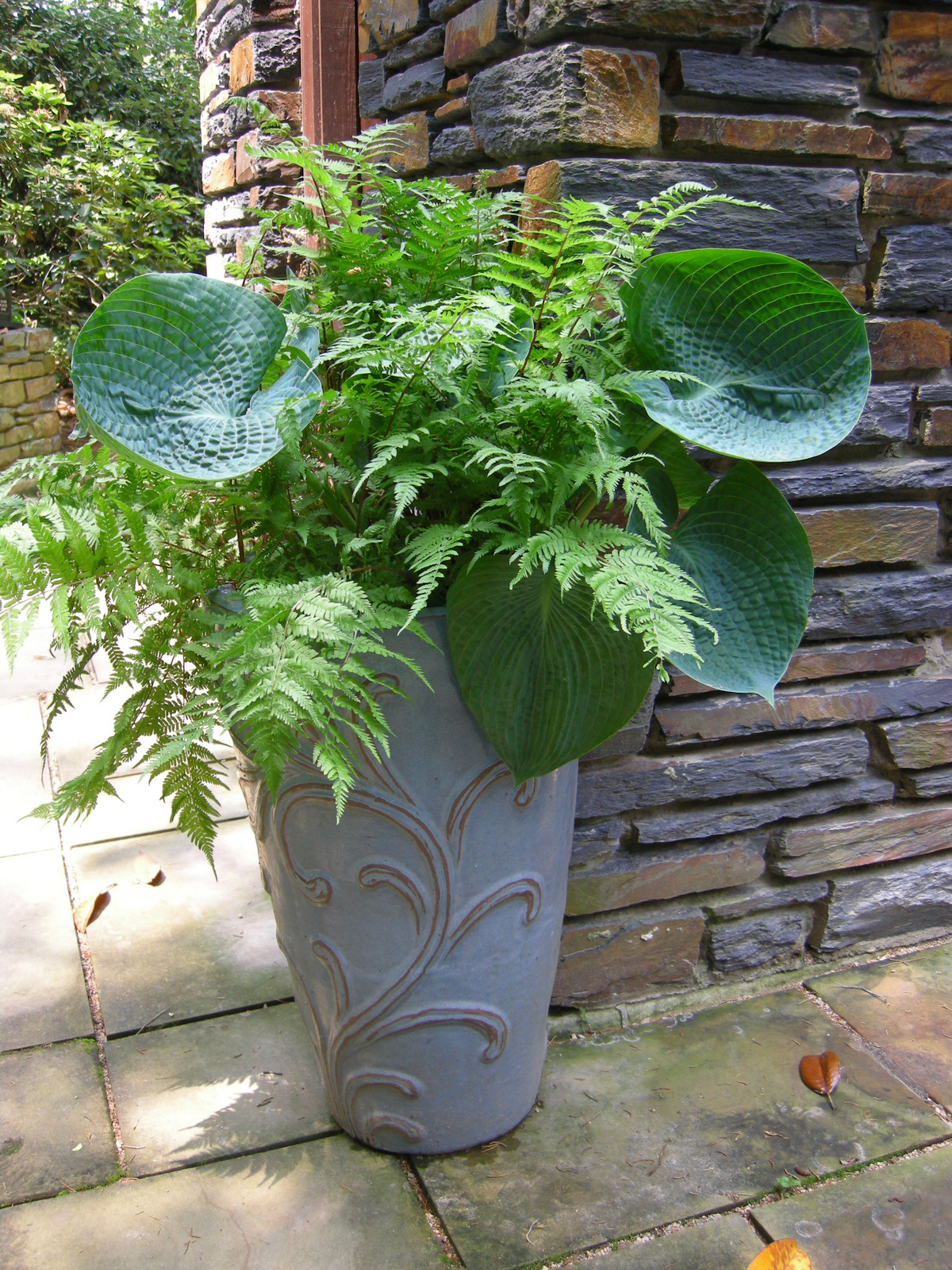
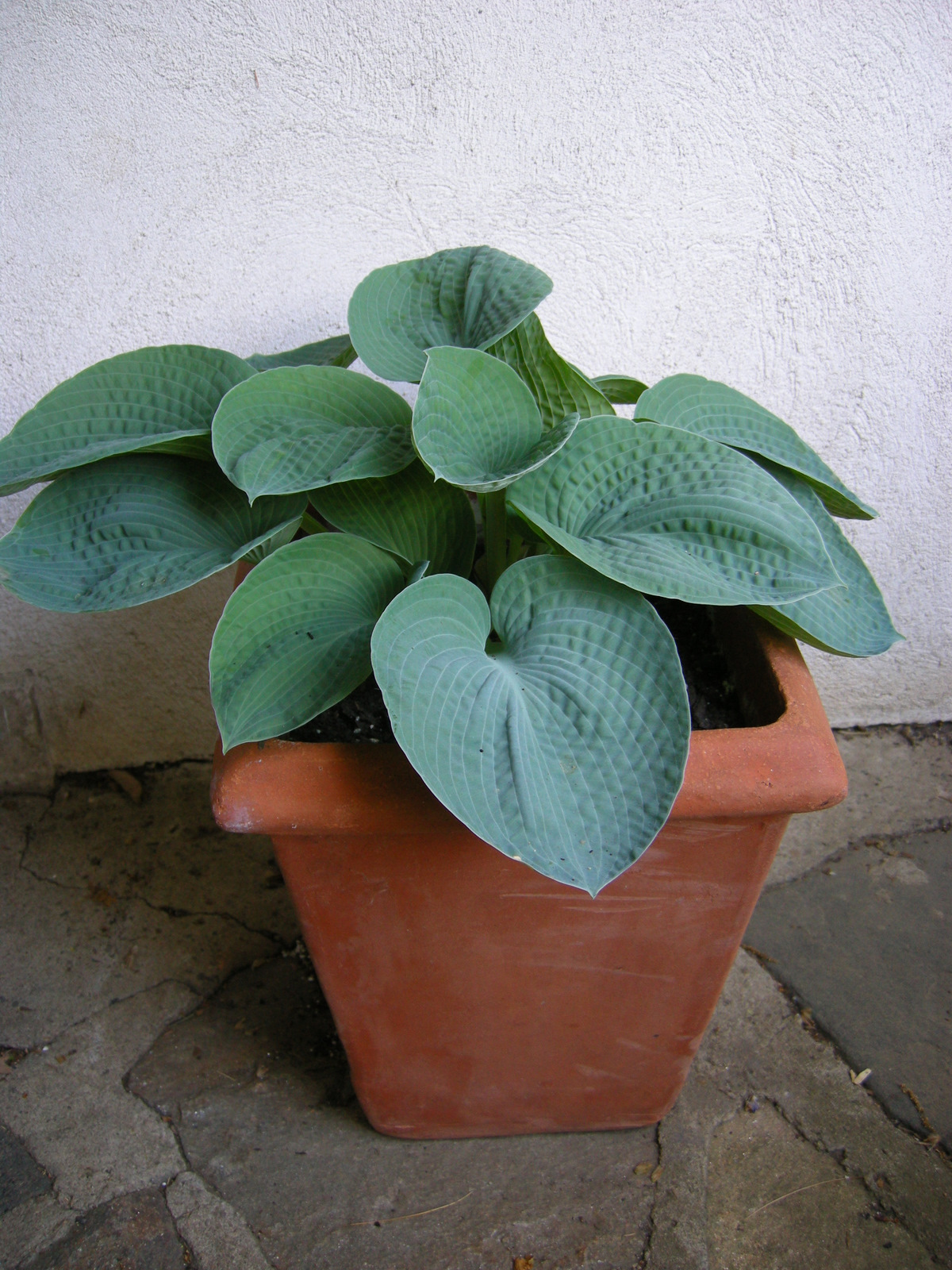
Archive for the Shade Gardening Category

Hosta Containers and Companions

Posted in container gardening, containers for shade, hosta, miniature hosta, Shade Gardening, Shade Perennials with tags , , , , , , , , , , , , , , , , , , , , , , on May 10, 2012 by Carolyn @ Carolyns Shade Gardens

Carolyn’s Shade Gardens is a retail nursery located in Bryn Mawr, PA, specializing in showy, colorful, and unusual plants for shade.  The only plants that we ship are snowdrops and miniature hostas.  For catalogues and announcements of events, please send your full name, location, and phone number (for back up use only) to carolyn@carolynsshadegardens.com.  Click here to get to the home page of our website for catalogues and information about our nursery and to subscribe to our blog.

.

Hosta When finding containers for your hostas you have to think outside the box: “Carolyn’s Gold” hosta in an antique kerosene can.

This is the third post in a three-part series on small hostas.  My nursery specializes in miniature hostas, and I have over 30 varieties available right now, both at the nursery and mail orderIn I LOVE Mice, I raved about the mouse ears series of hostas.  In Beyond Mice, I highlighted some of my favorite non-mouse ears hostas.  My 2011 post Miniature (& Small) Hostas also gives an overview of little hostas and how to use them in the garden.  Now I want to focus on the containers you might use to hold your hostas and the plants that will keep them company.


Probably my favorite medium sized hosta, the straight species Hosta tokudama.

Why would you want to grow hostas in a container?  One reason I do it is to highlight a hosta’s very special ornamental attributes.  I think Hosta tokudama (photo above) is gorgeous so I grow it in a pot outside my front door.  Here are some other hostas that I think merit their own container (read my previous hosta posts for photos of other single hosta containers):


Hosta ‘Little Miss Sunshine’ has bright gold leaves and deep red stems that look like rhubarb.  I placed its pot on a wall by my front walk so I can admire the stems up close.


The elegant hosta ‘Hanky Panky’ grows in an old dogwood stump, also along my front walk.

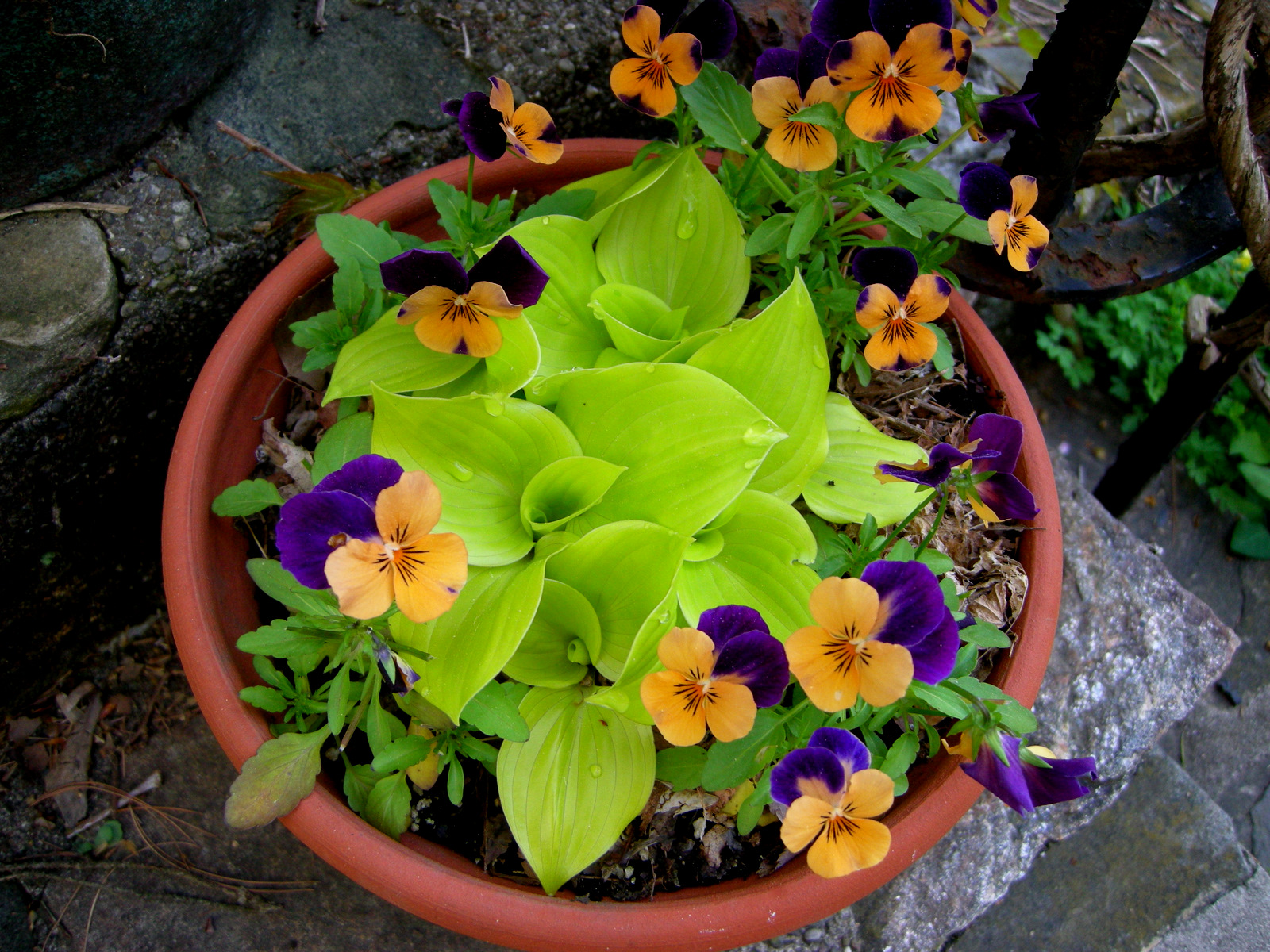
I love the very unusual hosta ‘Praying Hands’ and have it in three different containers, here with violas.


There is no other miniature hosta that looks like ‘Sparkler’ so I gave it its own spot in an antique metal pitcher salvaged from the dump.

Small hostas can get lost when planted in perennial borders unless they are massed.  Growing special miniature hostas in containers brings them up to eye level.  Here are 16 miniatures in my strawberry pot:

It also allows you to pair them with other miniature plants to create a tiny garden.  My previous posts contain many photos of my containers of little hostas.  However, I thought I would show you some of the planters I have recently created to give my customers ideas and to sell at my upcoming hosta open house:


All these containers were purchased inexpensively at flea markets and antique stores or were salvaged from the dump at the bottom of our property.  You probably have a suitable pot, pan, or other hosta garden holder gathering dust in your attic right now.


Hosta gardens waiting at Carolyn’s Shade Gardens for a new home.

Choosing tiny companion plants to go with your miniature hostas is another fun part of growing them in containers or in a rock garden.  Plant collecting urges are satisfied by all the plants that can be crammed into a small area.  In the planters above, I used violas, sedums, hens and chicks, ‘Heartthrob’ violet, ‘Tiny Rubies’ dianthus, and pasque flower (Pulsatilla).  Here are some more combinations:

Hostas ‘Shiny Penny’, ‘Green Eyes’, and ‘Itsy Bitsy Spider’ paired with sedum, hens and chicks, and rosularia in my dish garden.

Mouse ears hostas with dwarf Solomon’s seal, Polygonatum humile, in my stone trough.

Hostas ‘Blue Mouse Ears’ and ‘Blonde Elf’ with miniature lady fern, Athyrium filix-femina ‘Minutissimum’, in the rock garden.

Hostas ‘Little Blue’, ‘Blonde Elf’, and ‘Little Wonder’ with a small epimedium in the rock garden.


Gardening with tiny plants and salvaged containers is so much fun.  I hope you will give it a try.

Carolyn

Nursery Happenings:  If you are interested in receiving miniature hostas mail order, click here.

If you are within visiting distance and would like to receive catalogues and information about customer events, please send your full name and phone number to carolynsshadegardens@verizon.net.  Subscribing to my blog does not sign you up to receive this information.

Facebook:  Carolyn’s Shade Gardens has a Facebook page where I post single photos, garden tips, and other information that doesn’t fit into a blog post.  You can look at my Facebook page here or click the Like button on my right sidebar here.

Notes: Every word that appears in orange on my blog is a link that you can click for more information.  If you want to return to my blog’s homepage to access the sidebar information (catalogues, previous articles, etc.) or to subscribe to my blog, just click here.

Beyond Mice

Posted in container gardening, containers for shade, hosta, miniature hosta, Shade Gardening, Shade Perennials with tags , , , , , , , , , , , , on May 3, 2012 by Carolyn @ Carolyns Shade Gardens

Carolyn’s Shade Gardens is a retail nursery located in Bryn Mawr, PA, specializing in showy, colorful, and unusual plants for shade.  The only plants that we ship are snowdrops and miniature hostas.  For catalogues and announcements of events, please send your full name, location, and phone number (for back up use only) to carolyn@carolynsshadegardens.com.  Click here to get to the home page of our website for catalogues and information about our nursery and to subscribe to our blog.

.

Hosta 'Crumb Cake'I have used this photo of hosta ‘Crumb Cake’ emerging in spring before, but to me it epitomizes the beauty of a miniature hosta in a container.

My nursery specializes in miniature hostas, and I have over 25 varieties available right now, both at the nursery and mail order.  My 2011 post Miniature (& Small) Hostas gives an overview of little hostas and how to use them in the garden.  In my most recent post, I LOVE Mice, I raved about the mouse ears series of hostas.  But there are many desirable miniature hostas “beyond mice” so I thought I would highlight some special favorites.


‘Cracker Crumbs’ is pictured here in my dish garden (full photo below) surrounded by a tiny gray-blue sedum.  It is a miniature hosta 5” tall by 19” wide with leaves 2 1/2” long by 1 1/2” wide.  ‘Cracker Crumbs’ has shiny gold leaves with a bright green wavy margin and pale purple flowers in July.  It quickly forms a dense and rounded mound and makes a great trough or rock garden plant.


‘Itsy Bitsy Spider’ is also pictured in my dish garden (full photo below) with the same sedum and some hens and chickens.  It is a miniature hosta 2 ½” tall by 6” wide with leaves 1 ¾” long by 1 1/4″ wide.  ‘Itsy Bitsy Spider’ has narrow leaves with thick substance and a distinct blue-gray color, and pale lavender flowers in July.  It forms a tight low mound.  This adorable and rare plant is the smallest hosta in my collection.


‘Pixie Vamp’ in my rock garden—what a great name!

‘Pixie Vamp’ is pictured here in a container with violas.  It is a miniature hosta 7” tall by 16” wide with leaves 3 ½” long by 2 ½” wide.  ‘Pixie Vamp’ has bright green heart-shaped leaves bordered by gold in the spring changing to creamy white.  Its gorgeous mahogany colored stems hold purple flowers in July.  It is excellent in containers.


The very unusual hosta ‘Crumb Cake’ in my rock garden.


‘Crumb Cake’ is pictured here fully emerged in the same container featured in the first photo in this post.  It is a miniature hosta 5” high by 14” wide with leaves 3” long by 3” wide.  ‘Crumb Cake’ is a recent introduction with very bright honey-gold leaves, which are round with wavy margins.  It is a very unusual looking hosta forming a flat, dense, brightly colored mound.  It has elegant mahogany-colored leaf and flower stems and lavender flowers in July.  It makes an excellent container plant.


‘Alakazaam’ in my rock garden.


‘Alakazaam’ is pictured here in a container made for me by my son.  It is a miniature hosta 5″ tall by 10″ wide with leaves 6 1/2″ long and 3/4″ wide.  ‘Alakazaam’ has bright green leaves with gold ruffled margins changing to creamy white, and lavender flowers in late summer.  Its unusual spiky habit makes it stand out from the crowd no matter where you place it.


‘Surfer Girl’ is pictured here in my rock garden.  It is a miniature hosta 6” tall by 18” wide with leaves 2” long by 1” wide.  ‘Surfer Girl’ has dark green, sharply pointed, deeply rippled leaves reminiscent of ocean waves, and purple flowers in July.  It creeps to fill in a wide area and is excellent for edging the front of a border.  I use it in containers to contrast with gold-leafed minis.


‘Little Sunspot’ in my rock garden. 

‘Little Sunspot’ is pictured here in my strawberry pot.  It is a small hosta 12″ tall by 12″ wide with leaves 3″ long and 2″ wide.  It has sharply contrasting variegated gold leaves with a wide  dark green margin and purple-striped white flowers in summer.  ‘Little Sunspot’ is great for a rock garden, border, or a container.


‘Twist of Lime’ in my rock garden.

‘Twist of Lime’ is pictured here massed in front of epimediums.  It is a miniature hosta 6” tall by 10” wide with leaves 3” long by 1” wide.  ‘Twist of Lime’ has bright gold leaves with a narrow, dark blue-green wavy margin and many deep violet-striped flowers in July.  It has a beautiful upright habit and is a very fast grower—a favorite of my customers.

‘Praying Hands’ is pictured here in a container with violas and dwarf Solomon’s seal.  It is a small hosta 16″ tall by 30″ wide with leaves 7″ long and 2″ wide.  ‘Praying Hands’ has waxy and prominently ridged dark emerald green leaves with a narrow gold edge.  It is the most unusual hosta on the market with its folded leaves and vertical, twisty habit reminiscent of a pitcher plant.  It thrives in containers with my plant doubling in size each year.  ‘Praying Hands’ received the prestigious Hosta of the Year Award in 2011.

‘Praying Hands’ provides a vertical accent in my dish garden with miniature hostas ‘Shiny Penny’, ‘Itsy Bitsy Spider’, ‘Cracker Crumbs’, and ‘Shining Tot’ and various companion plants.

Miniature hostas are so much fun.  My next post will be on my new miniature hosta rock garden and feature companion plants to use in containers with your little hostas.

Carolyn

Nursery Happenings: If you are interested in receiving miniature hostas mail order, click here.

If you are within visiting distance and would like to receive catalogues and information about customer events, please send your full name and phone number to carolynsshadegardens@verizon.net.  Subscribing to my blog does not sign you up to receive this information.

Facebook:  Carolyn’s Shade Gardens has a Facebook page where I post single photos, garden tips, and other information that doesn’t fit into a blog post.  You can look at my Facebook page here or click the Like button on my right sidebar here.

Notes: Every word that appears in orange on my blog is a link that you can click for more information.  If you want to return to my blog’s homepage to access the sidebar information (catalogues, previous articles, etc.) or to subscribe to my blog, just click here.

I LOVE Mice

Posted in container gardening, containers for shade, hosta, miniature hosta, Shade Gardening, Shade Perennials with tags , , , , , , , , , on April 25, 2012 by Carolyn @ Carolyns Shade Gardens

Carolyn’s Shade Gardens is a retail nursery located in Bryn Mawr, PA, specializing in showy, colorful, and unusual plants for shade.  The only plants that we ship are snowdrops and miniature hostas.  For catalogues and announcements of events, please send your full name, location, and phone number (for back up use only) to carolyn@carolynsshadegardens.com.  Click here to get to the home page of our website for catalogues and information about our nursery and to subscribe to our blog.

.

'Holy Mouse Ears'It is very hard for me to pick a favorite mouse ears hosta, but I think ‘Holy Mouse Ears’ is it.  The colors in the leaves are magical.

My post Miniature (& Small) Hostas is the most popular article I have ever written for my blog.  In that post, I described how, when I discovered miniature hostas, I reached a new level of hosta addiction.  I try not to purchase (five of) every new miniature hosta I can get my hands on, but it’s a struggle.  Luckily my nursery allows me to mask this addiction as “business development”.  Now I specialize in miniature hostas, and mail order them all over the US.


Hosta ‘Blue Mouse Ears’ is the parent of all the miniature hostas in the mouse ears clan.  It is so special that in 2008, the American Hosta Growers Association named it the Hosta of the Year.

The miniature hosta that really took me over the edge was ‘Blue Mouse Ears’.  It was definitely love at first sight.  I fell for the very blue, very round, very rubbery leaves and the perfectly symmetrical habit.  When ‘Blue Mouse Ears’ emerges from the ground, it is in a cluster so tight it looks like a rose.  It reaches about 6″ in height and scoffs at the idea of slugs as do all the mouse ears hostas.  Most days I stop on my garden ramble to touch its thick leaves.  To me they feel like mouse ears, not that I have ever felt one.

‘Blue Mouse Ears’ emerging in the spring.


‘Blue Mouse Ears’ is a descendant of ‘Blue Cadet’, which is a beautiful small blue hosta with very clean leaves and an elegant habit.  Boy was I in trouble though, because ‘Blue Mouse Ears’ was only the beginning.    As is the nature of hostas, ‘Blue Mouse Ears’ has given rise to a whole family of little mice.  All of them are between 5 and 8″ tall and form a clump about 12″ wide.  Technically, some of them get slightly larger than what the “authorities” consider mini.  Their unique characteristics are their very round rubbery leaves and their symmetrical habits.  However, I may be prejudiced by my love of mice, but I think these little gems have some of the best leaf colors of any hostas on the market.

‘Mouse Trap’ is one of the newer mice to hit the market.  Its bright white leaves with a blue-green border are striking.

Naturally I had to have all the mouse ears hostas in my collection, and my quest began.  I now have seven mice and have located a source for two more, ‘Royal Mouse Ears’ and ‘Calico Mouse Ears’, which I will be ordering shortly.  While researching this post, I found a Rutgers University site with the hysterical name of Hosta Garden Mouse Index.  The photos are not very good, but it seems to list all the mouse ears hostas available.  Apparently my quest will last a while longer.

Photos of three of my mice appear above, and here are the remaining four:

I think ‘Mighty Mouse’ has the cutest name in the mouse ears series.


This early spring photo of ‘Frosted Mouse Ears’ does not do it justice.  It matures to a dark green leaf with a wide white margin.


‘Green Mouse Ears’ is the smallest in the family with very shiny, thick bright green leaves.  Don’t you want to touch it?


‘Mouse Tracks’ is my latest acquisition, and I love its tie dye swirls of yellow, green, and blue.  It is a child of ‘Mighty Mouse’ and very rare.

I haven’t mentioned one of the wonderful features of the mouse ears hostas, their flowers.  Instead of having the long, dangly, out-of-proportion flowers that are produced by some miniatures, the mice have short, fat flowers in proportion to their size as illustrated by the photo below.  I grow them for their flowers too, which is something I can’t say about most hostas.

.

‘Holy Mouse Ears’ in bloom

Of course my mice deserved a special place in the garden where touring customers could view them up close and admire their cuteness (is that a word?).  What better place than the trough that my husband gave me for our anniversary.  My mice nest happily there:

‘Green Mouse Ears’ upper left, ‘Blue Mouse Ears’ middle, ‘Mighty Mouse’ middle right, ‘Mouse Trap’ lower left, ‘Frosted Mouse Ears’ lower right.  The companion plants are dwarf Solomon’s seal and miniature lady fern.


The whole mouse ears family.

It is easy to add mice to your garden, and they will bring a smile to your face for the whole season.

Carolyn’s Shade Gardens specializes in miniature hostas.  I have 25 varieties available at my nursery right now.  I am thinking of starting a mail order business for miniatures.  If you would like to mail order some this year and help me test out my plan, click here (US only).

Carolyn

Nursery Happenings:  If you are interested in receiving miniature hostas mail order, click here.

If you are within visiting distance and would like to receive catalogues and information about customer events, please send your full name and phone number to carolynsshadegardens@verizon.net.  Subscribing to my blog does not sign you up to receive this information.

Facebook:  Carolyn’s Shade Gardens has a Facebook page where I post single photos, garden tips, and other information that doesn’t fit into a blog post.  You can look at my Facebook page here or click the Like button on my right sidebar here.

Notes: Every word that appears in orange on my blog is a link that you can click for more information.  If you want to return to my blog’s homepage to access the sidebar information (catalogues, previous articles, etc.) or to subscribe to my blog, just click here.

October GBBD: A Few Fall Favorites for Flowers

Posted in Fall, Fall Color, Garden Blogger's Bloom Day, landscape design, native plants, Shade Gardening, Shade Perennials with tags , , , , , , , , , , , , , , on October 10, 2011 by Carolyn @ Carolyns Shade Gardens

Carolyn’s Shade Gardens is a retail nursery located in Bryn Mawr, PA, specializing in showy, colorful, and unusual plants for shade.  The only plants that we ship are snowdrops within the US.  For catalogues and announcements of local events, please send your full name, mailing address, and cell number to carolyn@carolynsshadegardens.com and indicate whether you are interested in snowdrops, hellebores, and/or hostas.  Click here to get to the home page of our website for catalogues and information about our nursery and to subscribe to our blog.

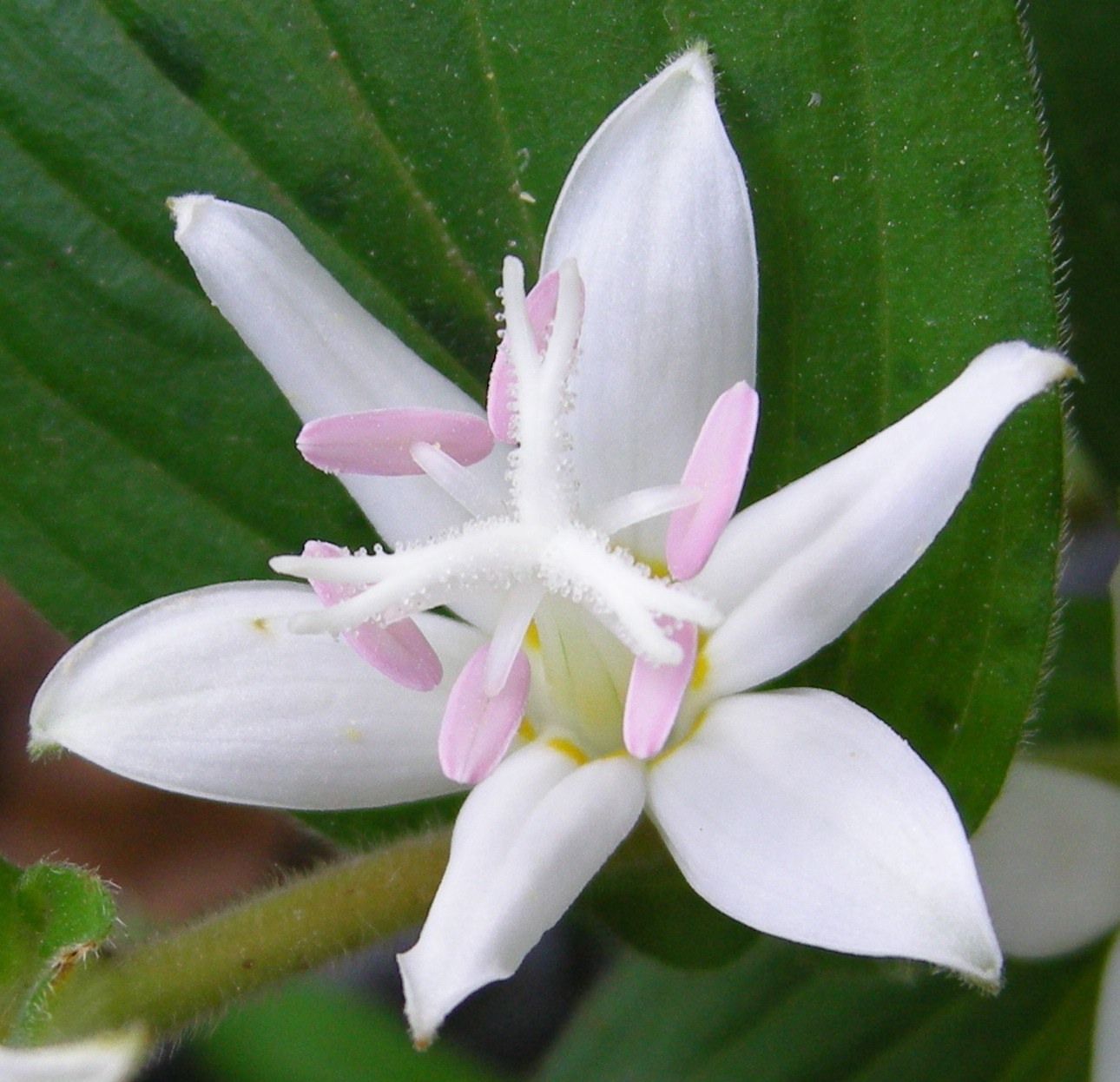
The subtle coloring of ‘White Towers’ toad-lily, Tricyrtis latifolia ‘White Towers’, is magical in the fall.  Every photo was taken at Carolyn’s Shade Gardens this fall.

I am linking this post to Garden Blogger’s Bloom Day for October when gardeners around the world show photos of what’s blooming in their gardens (follow the link to see  photographs from other garden bloggers assembled by Carol at May Dreams Gardens).  I am also linking to Gesine’s Bloom Day at Seepferds Garten.  I am located in Bryn Mawr (outside Philadelphia), Pennsylvania, U.S., and zone 6b.

In my last post, A Few Fall Favorites for Foliage and Fruit,  I explained that, inspired by an article about dressing up your fall garden with mums because everything else is finished, I grabbed my camera and headed outside to prove them wrong.  There was so much going on that I divided the plants into three posts: foliage and fruit, flowers, and hostas for fall.  This is part two highlighting flowers.  So here are some of the flowers dressing up my shady gardens right now:

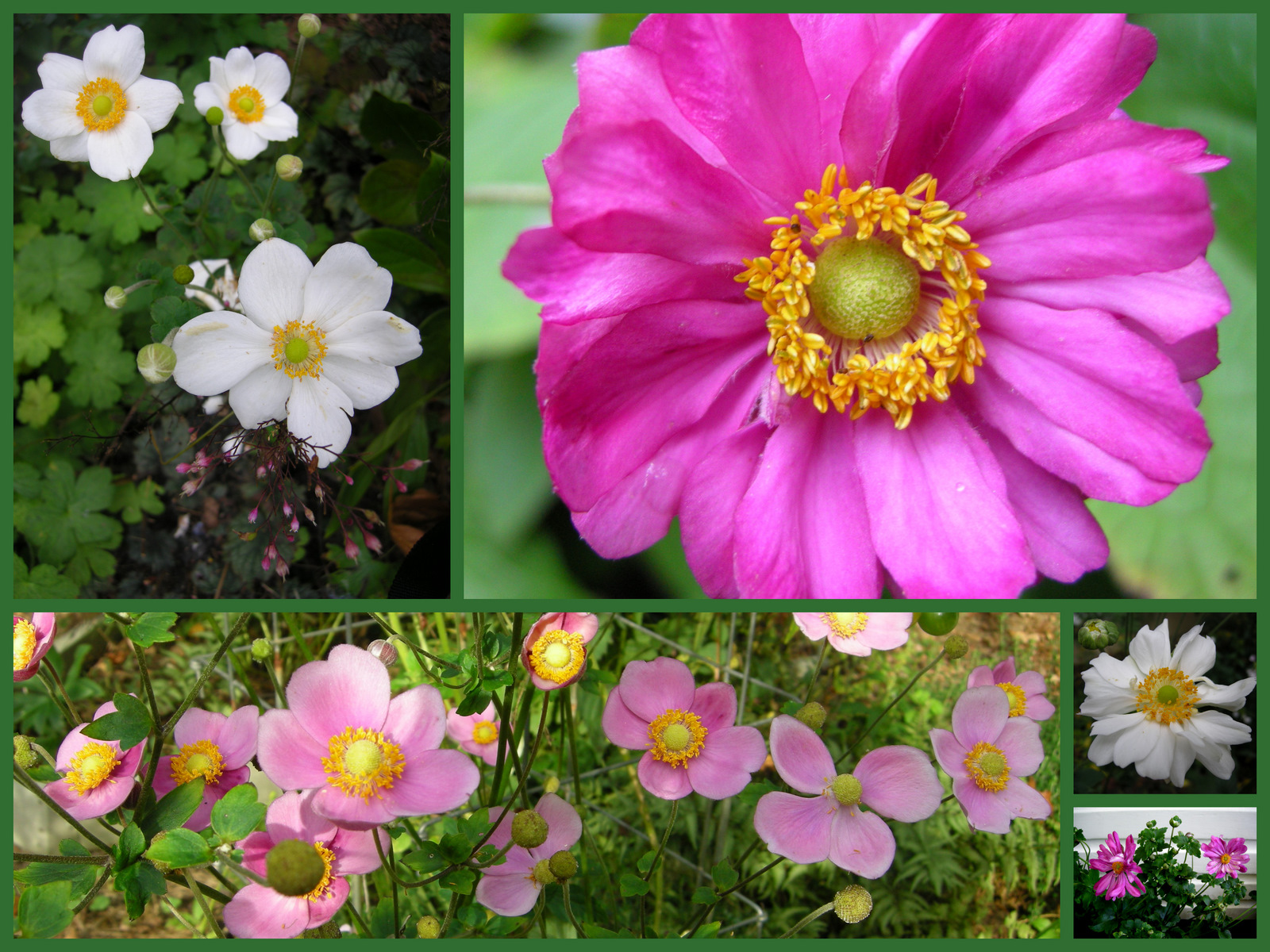
Japanese anemones, Anemone x hybrida, are one of the undisputed stars of my fall garden, growing anywhere from full sun to almost full shade and thriving no matter what the weather.  Clockwise from upper left: ‘Honorine Joubert’, ‘Margarete’, ‘Whirlwind’, ‘Bodnant Burgundy’, ‘September Charm’.

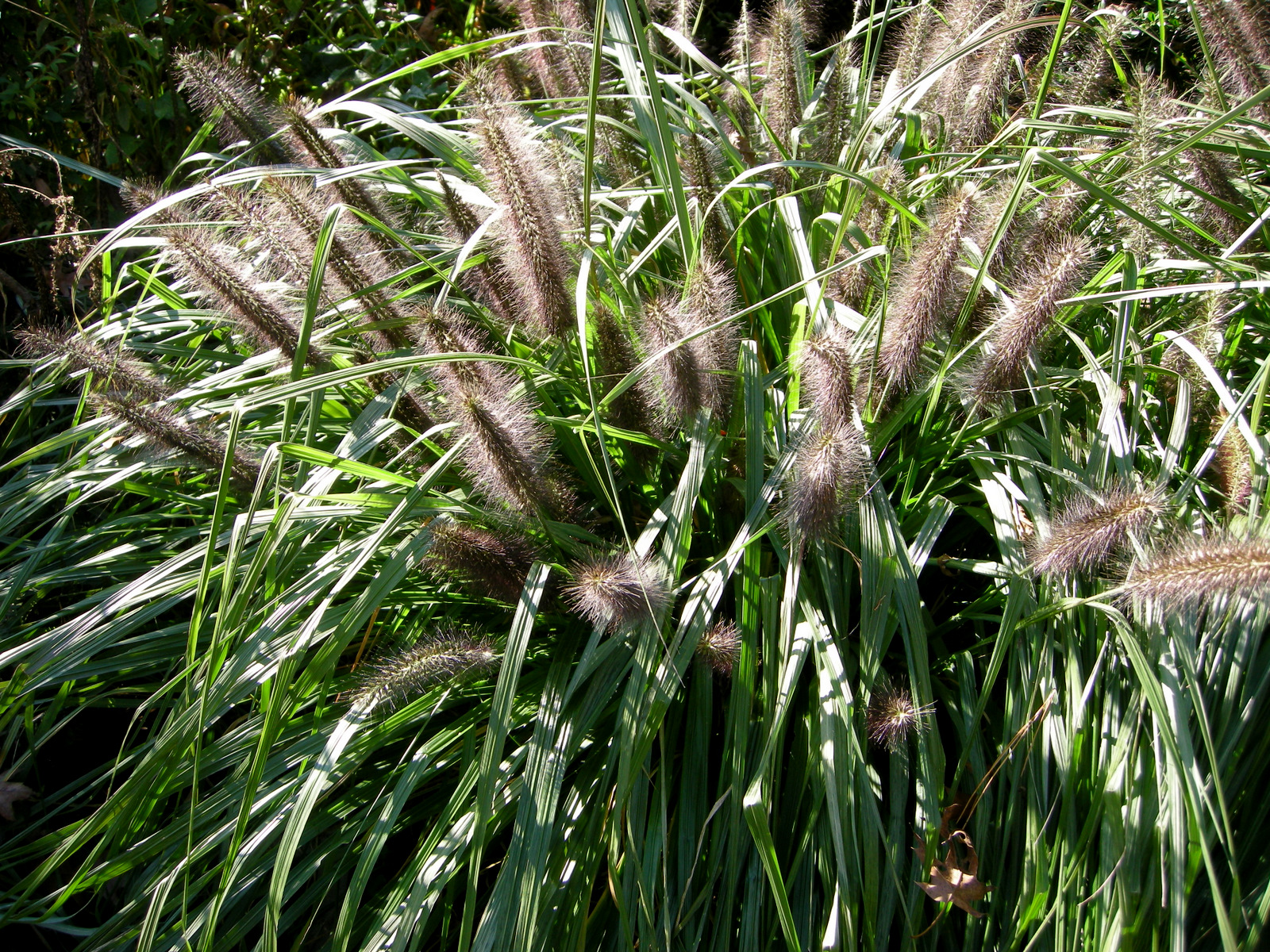
The black plumes of ‘Moudry’ fountain grass, Pennisetum alopecuroides ‘Moudry’, glow in the low-angled fall light.  ‘Moudry’ does well in the shade, flowering later and remaining more compact.

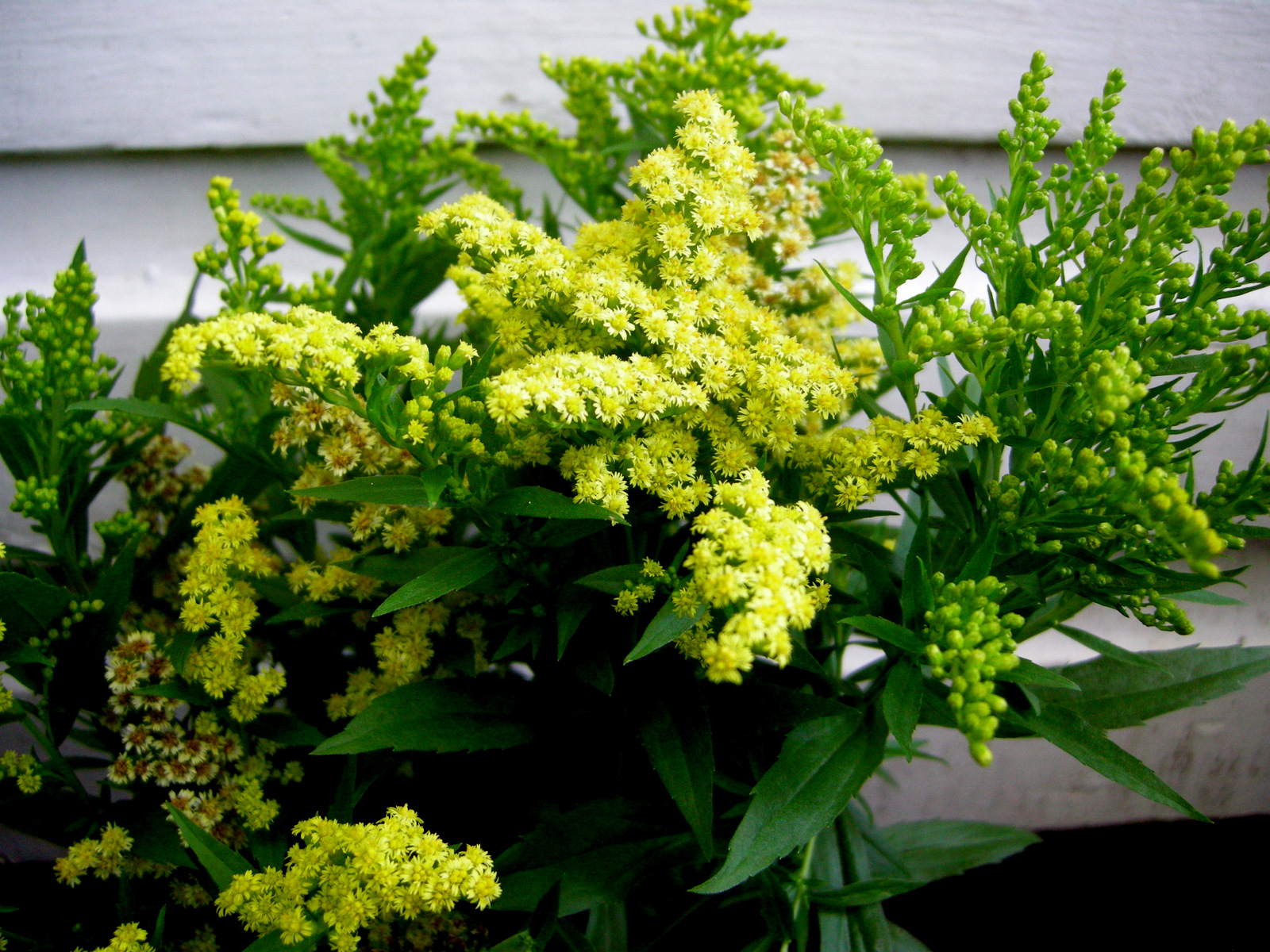
I grow about five different varieties of native golden rod, Solidago,  with my current favorite ‘Little Lemon’, growing only 12 to 18″ high.  Contrary to popular belief, goldenrod does not cause allergies as it is pollinated by insects.  Wind pollinated ragweed, which blooms at the same time, is the culprit.

Toad-lilies, Tricyrtis, bloom throughout the fall in full shade with ‘Sinonome’ just getting started now and continuing into November.  Clockwise from upper left: ‘Sinonome’, ‘White Towers’, ‘Miyazaki’, ‘Empress’.

Another plant that is just warming up is Pennsylvania native northern sea oats, Chasmanthium latifolium.  Its foliage will turn orange later in the fall and then dry to a beautiful khaki for the winter.  Be forewarned, however, when this plant reaches critical mass, it starts spreading, and its wiry roots are very difficult to remove.  Give it room and then triple the space you think you need.

Autumn leadwort, Ceratostigma plumbaginoides, is one of my favorite groundcovers.  Its true blue flowers start blooming in June and continue through October when its leaves turn bright red.

Pennsylvania native ‘Bluebird’ smooth aster, A. laevis ‘Bluebird’, seeds all around my garden in full sun to part shade.  Butterflies and bees love it.  Please click here to find out why most native cultivars are just as friendly to native fauna as the species.

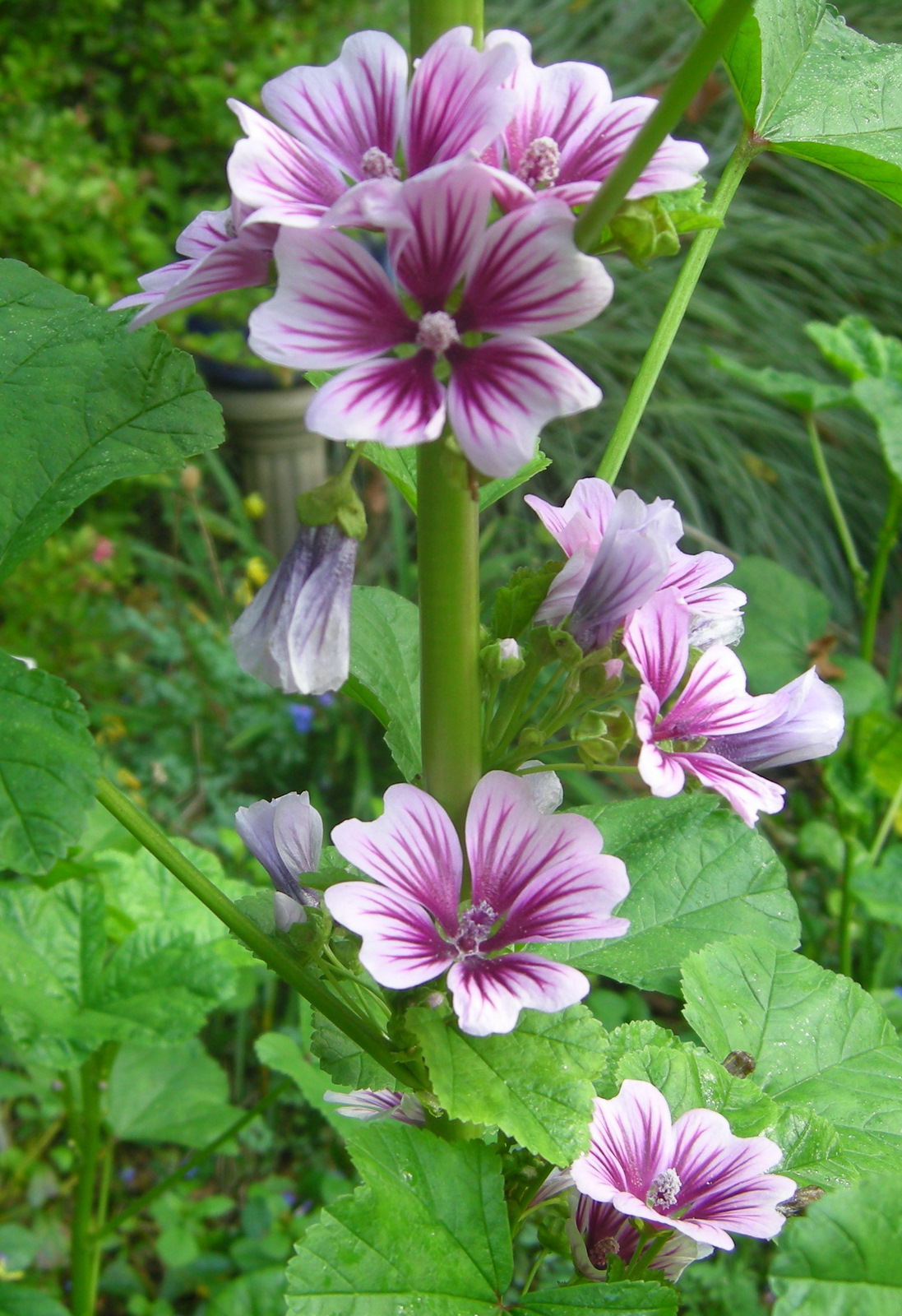
‘Zebrina’ hollyhock mallow, Malva sylvestris ‘Zebrina’, seems to move around my garden at will, but it never fails to steal the show with its 3 to 4′ stalks loaded with showy flowers.  It grows best in full to part sun.

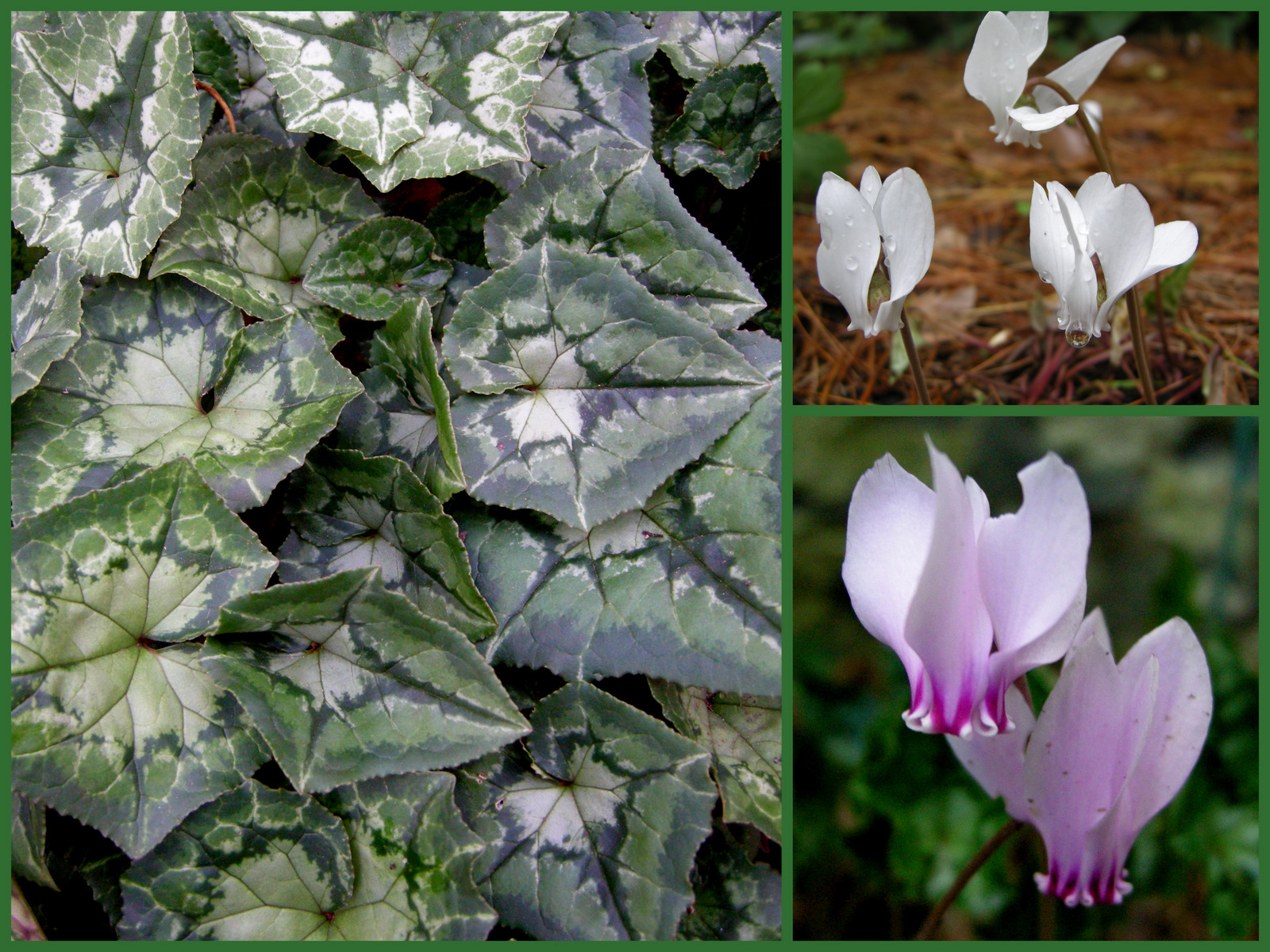
Fall-blooming hardy cyclamen, Cyclamen hederifolium, is one of the plants I would take to my shady “desert island”.  Right now its pink or white flowers are floating all around my shady gardens.  Later its evergreen leaves will emerge from summer dormancy and look like the photo on the left all winter long.

I am always raving about the foliage of the coral bell cultivars derived from our Pennsylvania native Heuchera villosa.  Well this is the plant that started it all, Heuchera villosa ‘Autumn Bride’.  It has very large and attractive fuzzy green leaves and beautiful flowers that bloom right now–this is the only cultivar I would grow for its flowers (the rest I grow for the leaves).

The cultivar ‘Cory’ of Pennsylvania native hardy ageratum, Eupatorium coelestinum, is far superior to the straight species.  It has more abundant and showier flowers, ornamental purple stems, interesting crinkled leaves, and a much better upright habit.  ‘Cory’ is also a good spreader in sun to part shade so give it room.  Pictured above with another of my favorite Pennsylvania natives, wrinkleleaf goldenrod, Solidago rugosa ‘Fireworks’.

Hardy begonias, Begonia grandis, have spread all over my garden in full shade, and I have yet to find a place that I don’t want them.  Because they come up very late in May and really just get going in the fall, I use them to fill in between my hostas on my back hill.  

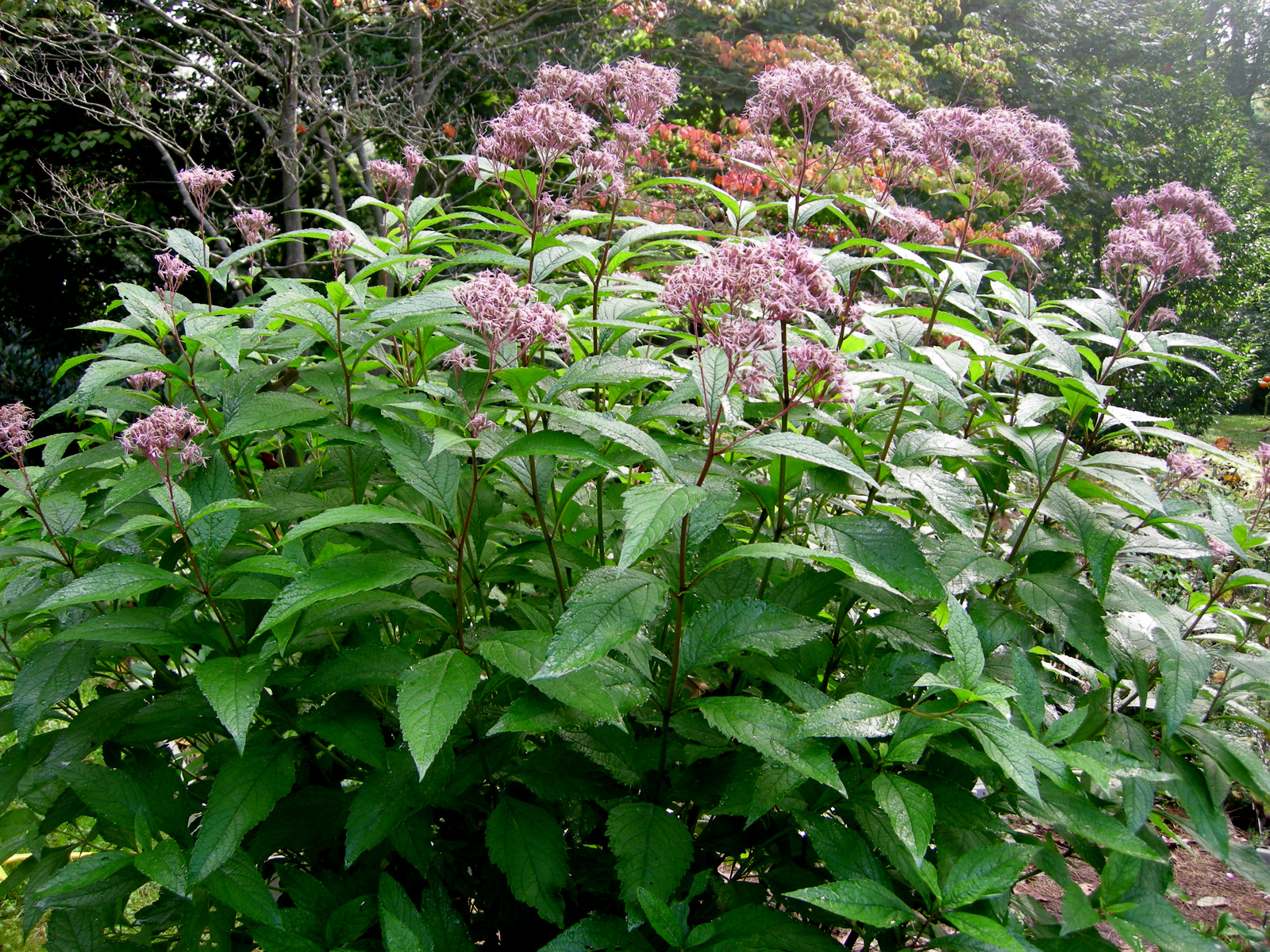
Pennsylvania native Joe Pye weed, Eupatorium dubium, reaches 10′ tall in my garden and flops over in our torrential rains.  The “dwarf” version called ‘Little Joe’ grows to a diminutive 5′ tall and has remained erect through the 30″ of rain we had in August and September to bloom now with its large purple flowers–a magnet for butterflies and bees.

In the spring, a gardener I very much admire brought over this plant, telling me it was a salvia with yellow flowers that grows in full shade and blooms in the fall.  I duly planted it in my shady “yellow garden” and it thrived through heat, drought, and rain with no attention.  It is called woodland sage, Salvia koyamae.

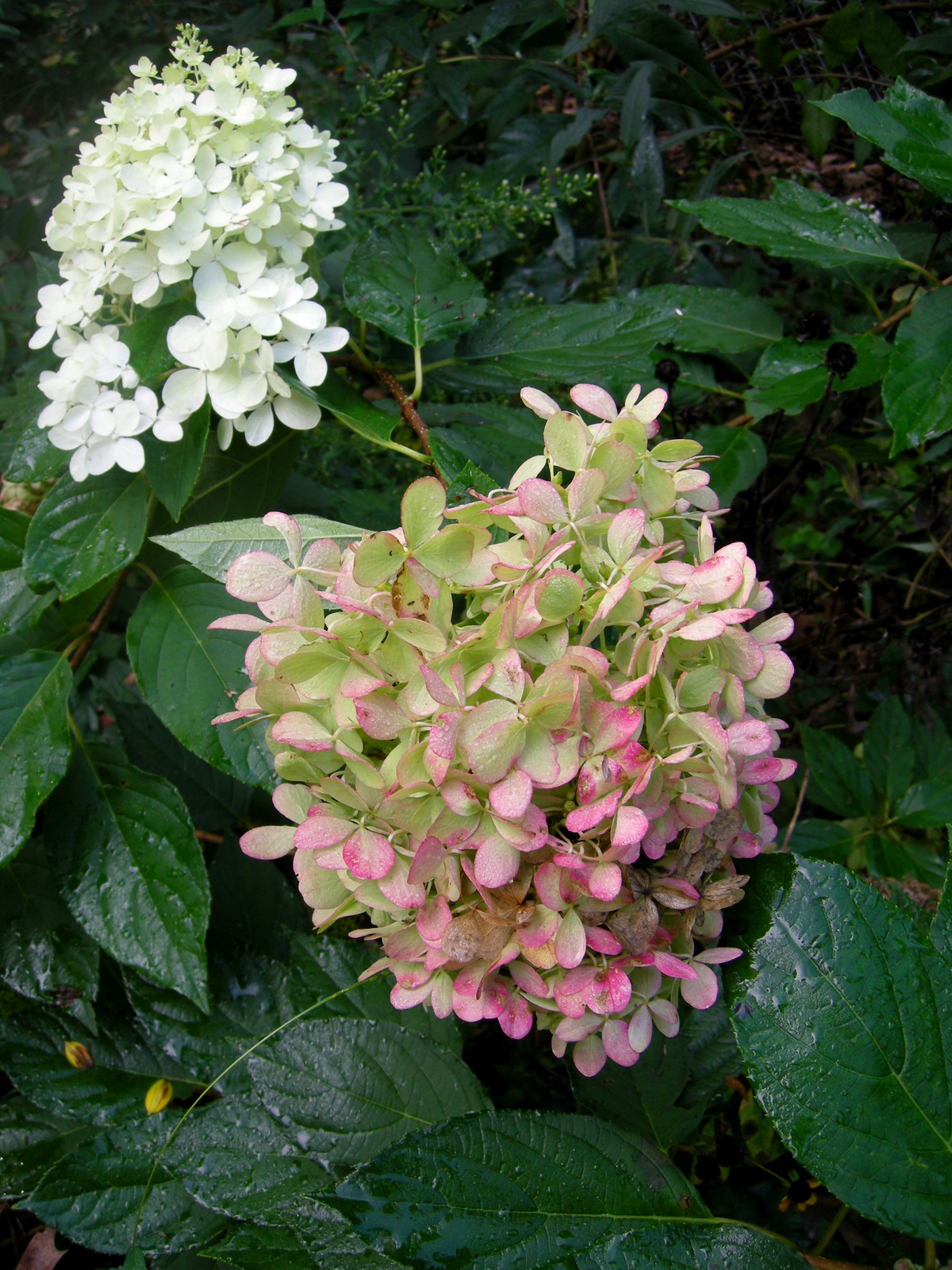
I am just beginning to learn about hydrangeas because until last year there was no point in planting them because of the deer.  One of my first acquisitions after the netting went up was ‘Limelight’, Hydrangea paniculata ‘Limelight’.  The large white flowers aging to pink have been blooming all summer in part shade, and there are still buds coming—very impressive.

If you want a multitude of fall flowers in dry, full shade, you can’t find a better plant than Pennsylvania native blue wood aster, Aster cordifolius.  It fills in all the difficult sites in my woodland and produces a glorious blue haze in the fall.

It is fitting that I should end with my favorite Pennsylvania native perennial for fall, garden phlox, Phlox paniculata.  I love everything about garden phlox: its heavenly fragrance, its long bloom time from early summer through fall, the wealth of colors available, its polite self-sowing, and its attraction to butterflies.  I dream of installing a meadow area and collecting dozens of plants of every phlox cultivar out there!

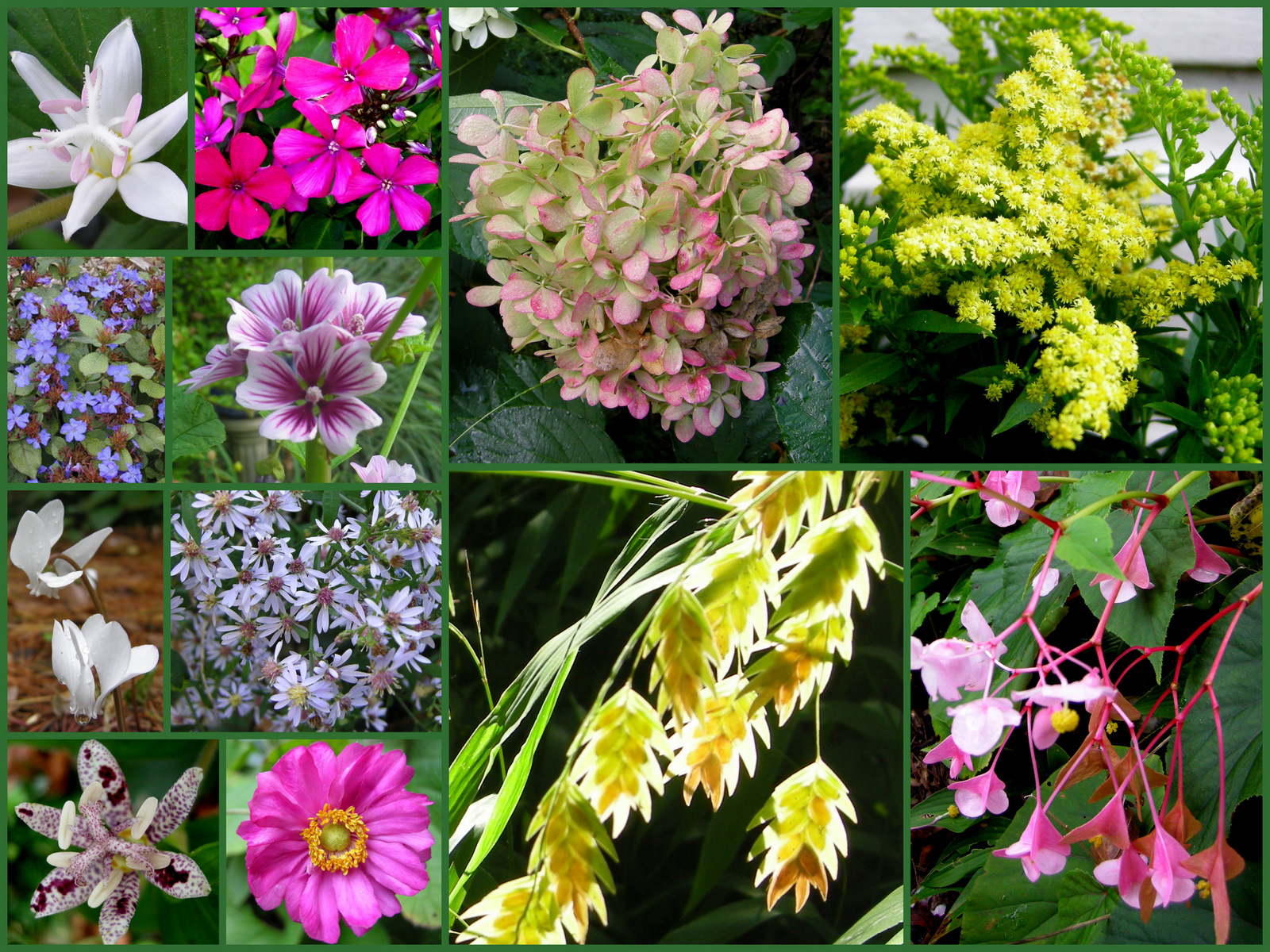
Of the 17 photos above, 8 picture plants that are native to Pennsylvania and eastern North America.  I believe that planting native plants is crucial to our survival.  Please take the time to read this short essay explaining why.  And Pennsylvania’s native plants really come into their own in the fall eliminating the need for dressing with mums!


Click to enlarge

Carolyn

To read Part 1, A Few Fall Favorites for Foliage and Fruit, click here.  Stay tuned for Part 3, Hostas for Fall.  In the interest of full disclosure, I must confess that sadistic botanists have recently changed the botanical names of many of the native plants that I highlighted to completely unpronounceable and unspellable but “botanically proper” names.  At this point, I refuse to follow.


Notes:
Every word that appears in orange on my blog is a link that you can click for more information.  If you want to return to my blog’s homepage to access the sidebar information (catalogues, previous articles, etc.), just click here.

A Few Fall Favorites for Foliage and Fruit

Posted in evergreen, Fall, Fall Color, landscape design, Shade Gardening with tags , , , , , , , , , , , on October 3, 2011 by Carolyn @ Carolyns Shade Gardens

Carolyn’s Shade Gardens is a retail nursery located in Bryn Mawr, PA, specializing in showy, colorful, and unusual plants for shade.  The only plants that we ship are snowdrops within the US.  For catalogues and announcements of local events, please send your full name, mailing address, and cell number to carolyn@carolynsshadegardens.com and indicate whether you are interested in snowdrops, hellebores, and/or hostas.  Click here to get to the home page of our website for catalogues and information about our nursery and to subscribe to our blog.

Italian arum, Arum italicum, goes dormant during the summer and comes up again in September so it is pristine in the fall and through the winter.  All photos were taken at Carolyn’s Shade Gardens this week.

“A Few Fall Favorites for Foliage and Fruit” was inspired by an article in a gardening magazine talking about dressing up your fall garden with mums because everything else is finished and the garden is looking tired.  Reading this sent me rushing for my camera and out the door to prove them wrong (I have a similar response to shade gardening articles that start: “Now you can’t have color in the shade, but….”).  In fact, my indignation has inspired a three-part post, the other two will cover flowers and hostas that look good in fall.  And none of the plants I am highlighting are relying on fall leaf color yet.  So here is some of what is fresh and beautiful in my shady gardens right now:

‘Brigadoon’ St. John’s Wort, Hypericum calycinum ‘Brigadoon’, has gorgeous gold foliage all season.  With the onset of cold weather, it will take on peachy hues.

‘Caramel’ coral bells, Heuchera villosa ‘Caramel’, displays its lovely colors 365 days a year.  The native Heuchera villosa cultivars, including ‘Caramel’, ‘Citronelle’, ‘Bronze Wave’, and ‘Frosted Violet’, are the best coral bells for our area and remain colorful through winter.

‘Aureola’ Japanese forest grass, Hakonechloa macra ‘Aureola’, really comes into its own in the fall when its cascading yellow-variegated foliage shines in full shade.

The foliage palette for shade has been enlarged by the recent introduction of foamy bells, x Heucherella, which is a cross between native foamflower, Tiarella, and native coral bells, Heuchera.  This is ‘Solar Power’.

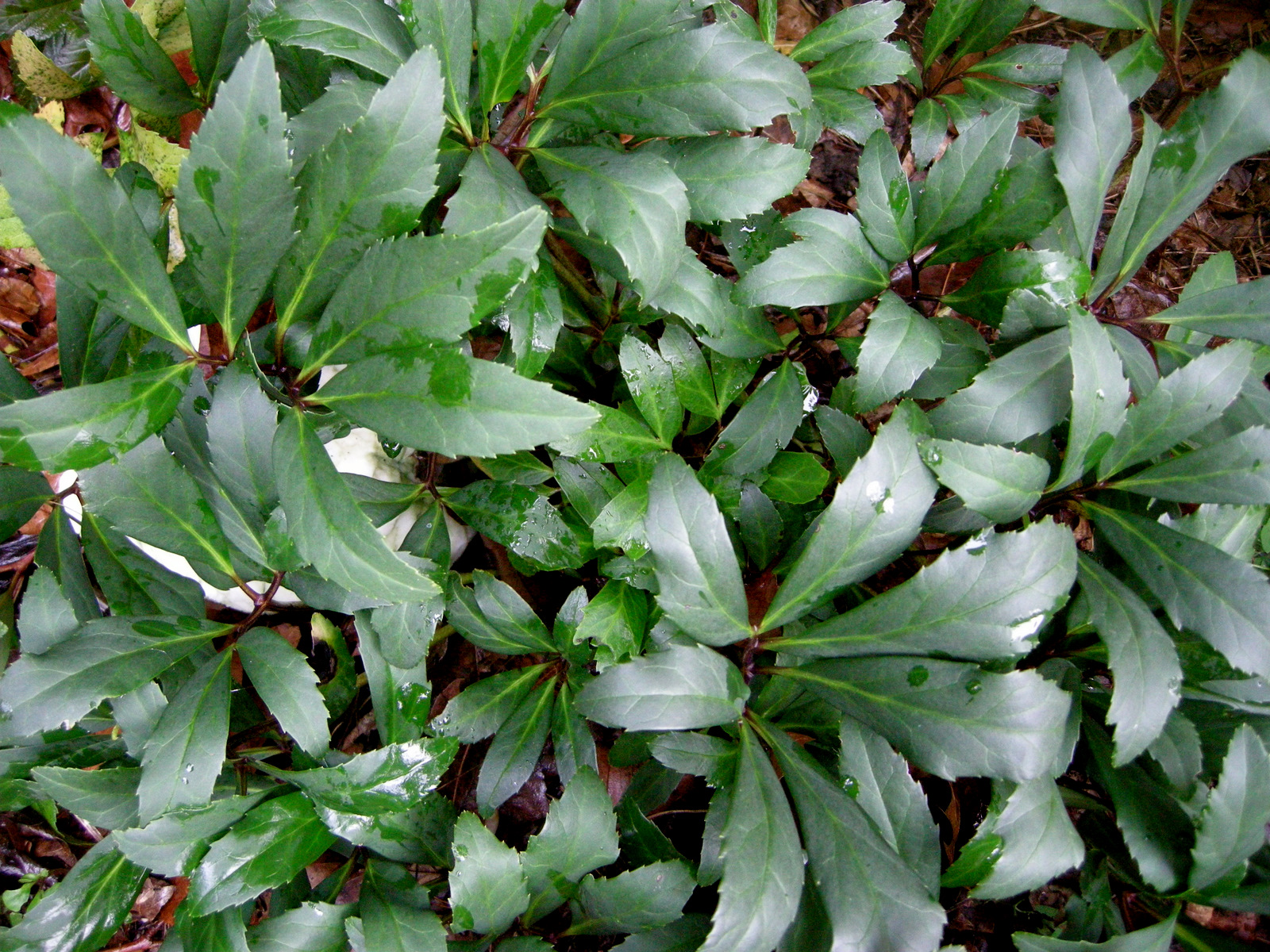
One of the many things I like about hybrid hellebores, Helleborus x hybridus, is that their evergreen leaves stay pristine through whatever summer throws at them.

The evergreen leaves of Christmas rose hellebore, Helleborus niger, are also lovely in the fall.

The leaves of ‘Black Scallop’ ajuga, A. reptans ‘Black Scallop, become darker and darker as fall progresses, ending up a deep mahogany.

‘Diana Clare’ lungwort, Pulmonaria ‘Diana Clare’, is another plant that can take whatever nature dishes out—it shines in full shade.

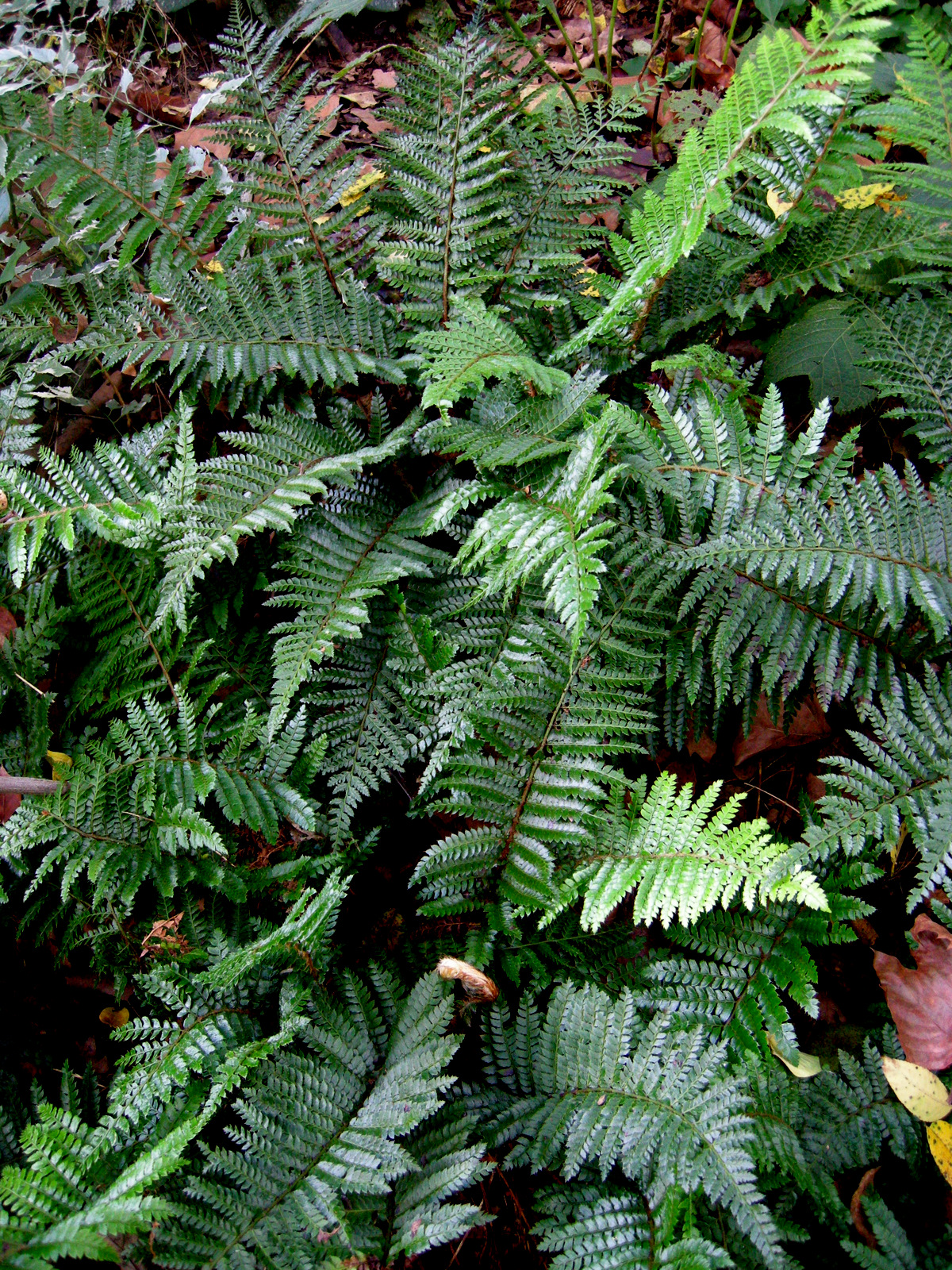
Unlike deciduous ferns that hit the decks in September, evergreen ferns are just getting going, here tassel fern, Polystichum polyblepharum.  To read my article on evergreen ferns for shade, click here.

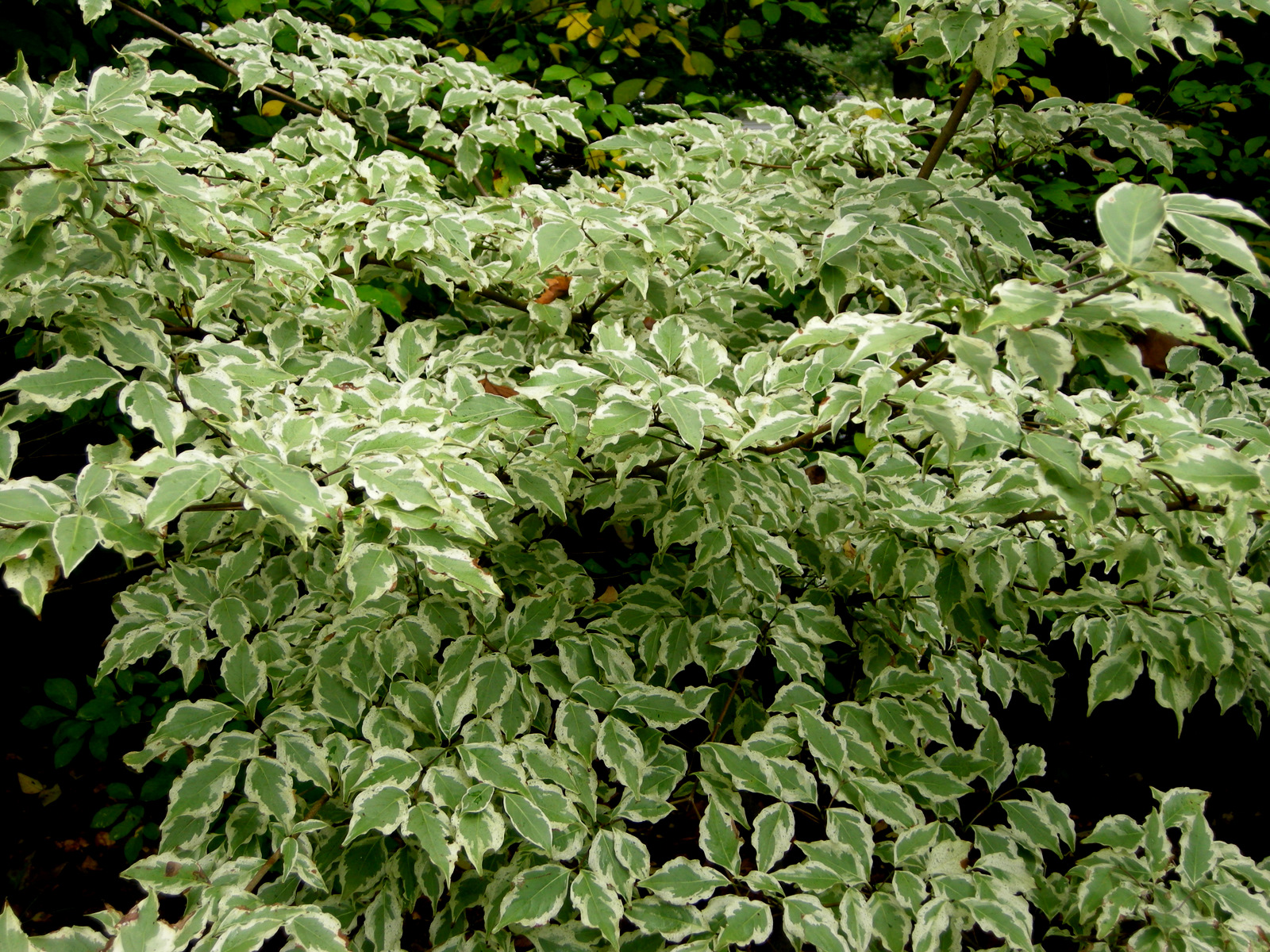
The foliage of ‘Wolf Eyes’ kousa dogwood, Cornus kousa ‘Wolf Eyes’, is beautiful all season, but I especially appreciate it in the fall when other leaves are tattered.


‘Red Sprite’ winterberry holly, Ilex verticillata ‘Red Sprite’, is my favorite of all the native winterberry cultivars because it has a compact habit and produces copious amounts of very large berries.  For more information on this great shrub, click here.

Our native flowering dogwood, Cornus florida, is in full fruit right now.

The striking bright purple berries of ‘Early Amethyst’ beautyberry, Callicarpa dichotoma ‘Early Amethyst’, march evenly down the stems of its beautifully cascading branches.  For more information and a close up photo, click here.

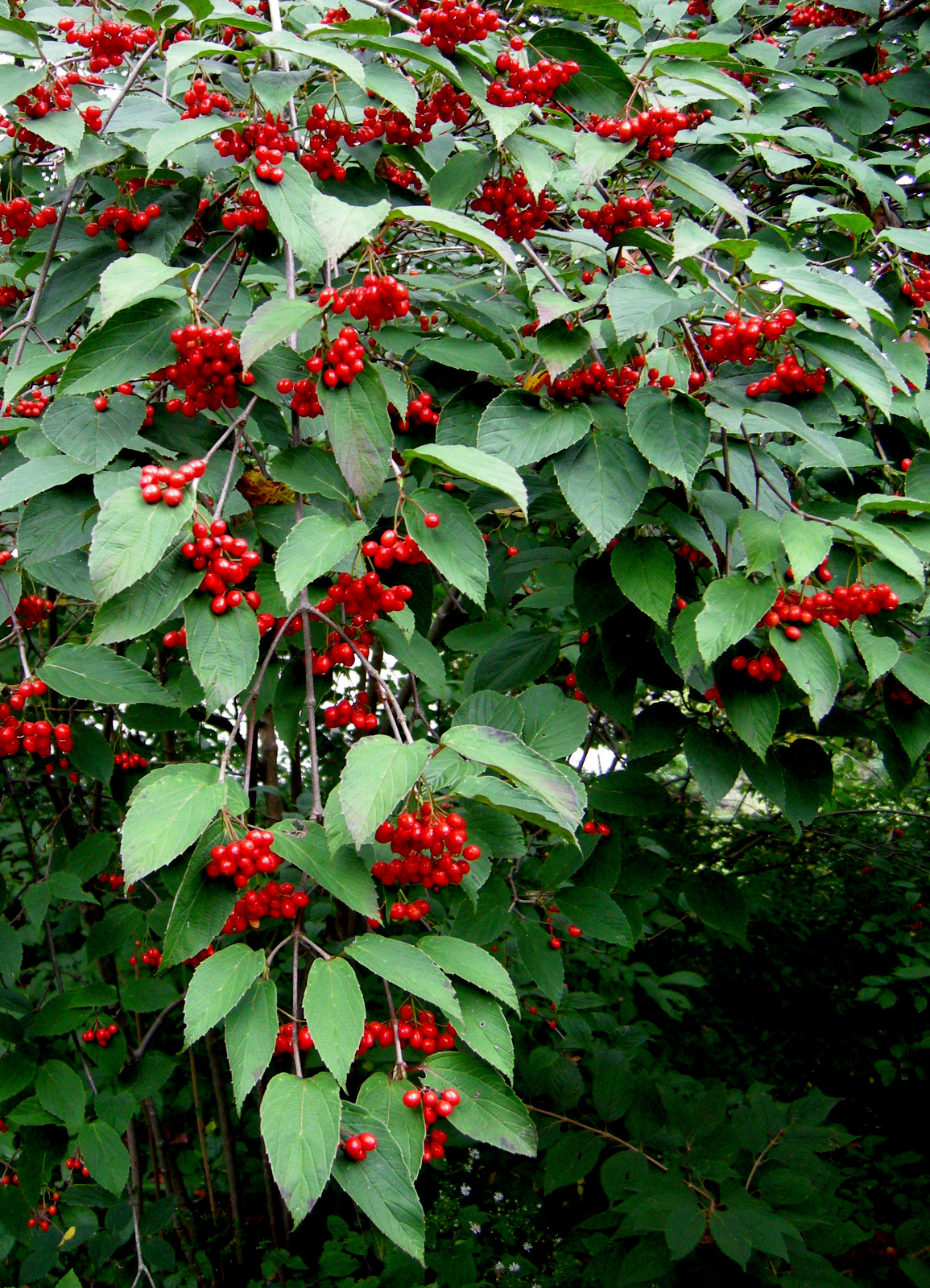
I grow my tea viburnums, Viburnum setigerum, in the shade of massive 150-year-old London plane trees, but it doesn’t stop them from producing their spectacular bunches of shiny red fruit.

The foliage and berries highlighted above, along with many I did not include, make my fall gardens a showplace for my customers and a relaxing retreat for me.  They do not require any dressing up for fall because they are already fully clothed.

Carolyn

Stay tuned for Part 2, A Few Fall Favorites for Flowers, and Part 3, Hostas for Fall.

Notes: Every word that appears in orange on my blog is a link that you can click for more information.  If you want to return to my blog’s homepage to access the sidebar information (catalogues, previous articles, etc.), just click here.

Theme Gardens Part 1: Silver and Blue

Posted in landscape design, Shade Gardening with tags , , , , , on July 24, 2011 by Carolyn @ Carolyns Shade Gardens

Carolyn’s Shade Gardens is a retail nursery located in Bryn Mawr, PA, specializing in showy, colorful, and unusual plants for shade.  The only plants that we ship are snowdrops and miniature hostas.  For catalogues and announcements of events, please send your full name, location, and phone number (for back up use only) to carolyn@carolynsshadegardens.com.  Click here to get to the home page of our website for catalogues and information about our nursery and to subscribe to our blog.

Blue includes purple (most “blue” flowers are purple), here hydrangea relative, perennial Chinese deinanthe, D. caerulea.

I am not a trained landscape designer.  Although I did take two landscape design courses at the Temple University Ambler  School of Horticulture, it didn’t stick.  I still don’t plan my gardens ahead of time but instead operate by gut instinct.  I can hear true garden designers like Allan at allanbecker.gardenguru and Donna at Garden Walk Garden Talk sighing all the way from Montreal and Niagara Falls, respectively.  It helps that I really know plants–their heights, habits, textures, blooms, cultural requirements, etc.–but I still do a lot of shifting around and replacing in my gardens that could probably be avoided by a little advance planning.

‘Jack Frost’ brunnera, B. macrophylla ‘Jack Frost’, is a star performer in my silver and blue garden for its true blue flowers and silvery blue leaves.

One technique that has really helped improve my garden’s design (and avoid all the rearranging) is theme gardens.  I know what you are thinking, here’s where she drags out photos of her “white garden” ala Vita Sackville-West.   Well, I don’t have a strictly white garden, but I do have color theme gardens.  My sunniest area is a chartreuse, orange, and purple garden, my main perennial bed focuses on peach, pink, gold, and purple, near the woodland there is a gold and yellow garden, around the deck is a moon garden  (plants that are ornamental at night, mostly white), and across from the deck is my silver and blue garden, which I want to share with you today.

Silvery fragrant flowers of native ‘Brandywine’ foamflower, Tiarella cordifolia ‘Brandywine’, an excellent groundcover whose shiny green leaves turn red in the fall.

Why limit myself that way?  Because having a theme helps me decide what plants belong in a particular garden and what plants don’t.  It provides a unifying factor.  I find it much easier to achieve a cohesive whole if I know why each plant is there, and color themes force me to consider each addition carefully.  And it must work because those are the gardens I get the most compliments on from customers and garden tours.

A massive native Kentucky coffeetree is the focal point of the garden, which is surrounded by white pine needle paths.  Because the tree is so big, I had to climb up on the roof to get shots of the bed.  This photo shows you all the gardens in the area.

My silver and blue garden surrounds a native Kentucky coffeetree, Gymnocladus dioicus, that may be over 100 years old.  It is approaching 100 feet tall and is 8 feet in circumference.  Luckily it does not have extensive surface roots.  The bed is an oval 12 feet wide and 20 feet long.  It started with leftover plants from one of my fall nursery sales, which happened to be silver and blue.  As part of my quest to eliminate all the grass on my back hill, I planted the leftover plants at the base of the Kentucky coffeetree, and my silver and blue garden was born.  I have been adding to it for about five years, and now it is quite mature.

This photo shows the overall design of the bed.  Despite its simple look, there are actually over 25 plant varieties.

One important caveat before I get to the plants, I rarely plant less than five of any one perennial (even with shrubs, I normally plant three).  My customers are always asking me how to have a garden like mine.  Near the top of the list, somewhere after compost, is quantity.  You need a lot of the same plant to make it show up in your garden.  One does not work, three is barely sufficient, five achieves critical mass, and seven is optimal (obviously this depends somewhat on the size of the plant, the bed, and your garden as a whole).

Northern end of the bed dominated by large patches of ‘Dawson’s White’ and ‘Jack Frost’ brunnera and ghost fern.

Southern end of the bed with Hosta ‘Ginko Craig’ and ‘El Nino’, variegated Japanese kerria, K. japonica ‘Variegata’, and white-flowered bigroot hardy geranium, G. macrorrhizum ‘Album’.

The theme of the bed is silver (also incorporating white) and blue (also including lighter shades of purple).  I find that most flowers labeled blue really are a shade of purple.  The colors are provided by the flowers and, probably more importantly, the foliage.  Again, blue leaves are in reality bluish green.  I included some plants that don’t fit the theme for contrast.  Here are some closeups of the bed and some more photos of the individual plants:

Click any photo to enlarge.  A close up of the north end revealing some of the lesser players.  Between the two types of brunnera, Hosta ‘Blueberry Cobbler’ with very blue leaves and gorgeous blueberry purple stems and native sedge ‘Bunny Blue’, Carex laxiculmus ‘Bunny Blue’.  Around the ‘Dawson’s White’, a lungwort seedling, Pulmonaria sp., with silver spots and deep blue flowers, and double white-flowered hybrid hellebore ‘Double Integrity’, H. x hybridus ‘Double Integrity’.

Looking around the back side of the bed reveals Chinese deinanthe (flower pictured in first photo) behind the kerria; native variegated northern sea oats, Chasmanthium latifolium ‘River Mist’ to the left;  blue-leafed and white-flowered dwarf Solomon’s seal, Polygonatum falcatum ‘Pumilum’ in front;and blue-leafed native white wild bleeding-heart, Dicentra eximia ‘Aurora’, in the foreground.

White and silver variegated foliage really shows up in a shade garden: clockwise from upper left, ‘Dawson’s White’ brunnera, ‘El Nino’ hosta (very blue), ‘River Mist’ northern sea oats, and ‘Ginko Craig’ hosta.

‘Lilafee’ barrenwort, Epimedium grandiflorum ‘Lilafee’, provides gorgeous purple flowers in April (the yellow corydalis is an interloper).

Providing blue tones, clockwise from upper left: ‘Bunny Blue’ sedge, Japanese kerria ‘Variegata’, ‘Bertram Anderson’ lungwort with blue flowers and silver leaves, and dwarf Solomon’s seal ‘Pumilum’.

The blue flowers of brunnera are beautiful for a long time in late spring.

Relief from too much variegation is provided by clockwise from upper left: evergreen tassel fern, Polystichum polyblepharum, evergreen hybrid hellebore, H. x hybridus, Asian jack-in-the-pulpit, Arisaema consanguineum, and native Virginia creeper, Parthenocissus quinquefolia, which climbs the Kentucky coffeetree.

The color scheme is carried across the pine needle path to the garden surrounding the deck.

In placing the plants in the bed, consideration was given to cultural conditions (soil type, i.e. dry, and light availability), height, bloom time, texture, and habit, but the primary factor was silver and blue color.  The result is a garden with almost year round interest and plants that work together to make the whole more lovely than the sum of its parts.

Carolyn

Notes: Click on any photo to enlarge.  Every word that appears in orange on my blog is a link that you can click for more information.  If you want to return to my website’s homepage to access the sidebar information (catalogues, previous articles, etc.), just click here.

Nursery Happenings: The nursery is closed until it cools off in the fall around the middle of September.  If you are on my customer email list, look for an email.  If not, sign up by sending an email to carolynsshadegardens@verizon.net with your name and phone number.

Powered by Compost

Posted in green gardening, How to, organic gardening, Shade Gardening with tags , on June 5, 2011 by Carolyn @ Carolyns Shade Gardens

Carolyn’s Shade Gardens is a retail nursery located in Bryn Mawr, PA, specializing in showy, colorful, and unusual plants for shade.  The only plants that we ship are snowdrops and miniature hostas.  For catalogues and announcements of events, please send your full name, location, and phone number (for back up use only) to carolyn@carolynsshadegardens.com.  Click here to get to the home page of our website for catalogues and information about our nursery and to subscribe to our blog.

Some of my gardens powered by compost.

Compost is king in my garden.  It is the only thing I use: no other soil amendments and no fertilizers.  All the beautiful plants and lush growth are powered by compost.  I am frequently asked where I get my compost and how I use it.  This post will answer those questions and highlight an exciting compost-centered event taking place in my gardens this Sunday.

The soil at the top is from my back slope ruined by erosion caused by misguided lawn attempts and chemicals.  The soil at the bottom is from the undisturbed woods less than 10′ away.

The pre-existing soil at Carolyn’s Shade Gardens is (was) terrible (see top photo above).  I am on the side of a hill where the previous owners had tried to grow grass for years.  The soil was hard and depleted by the use of lawn chemicals and by erosion.  Terraces were constructed down one side of the house and filled with rocky infertile soil.  Construction rubble from additions to the house in the 1950s and 1960s was dumped in what is now my woodland garden.  The soil in the beds on the back side of the house was compacted by their former use as a carriage path.  Finally, the whole property was used as a dump (pre-trash collection) by the estate of which it was formerly a part so the beds are full of glass, old slate from roof replacements, refuse from coal burning furnaces, and miscellaneous trash.  Digging can be quite an adventure!

This is a photo from 1995 showing the debris that came out of one relatively small planting hole at Carolyn’s Shade Gardens.  Click on any photo to enlarge.

Given the deplorable condition of the existing soil, compost is essential.  It reaches my plants in four different ways.  First, whenever I create a new bed in my gardens, I spread 4 to 6 inches of compost on top of the soil and dig it into the bed, removing all the rocks and debris.  I use the rocks to line the paths in my woodland garden.  One visitor asked me where I got my rocks, and, finding out they came from the beds, told me how lucky I was.  I feel about as lucky as the early farmers in New England must have felt when they built all those rock walls around their fields.

The rocks lining the paths in the woodland garden.

Second, even though the beds are prepared with compost, I add compost to the hole every time I plant a plant.  I mix the existing soil half and half with compost.  Third, as explained in Fall Clean-up, I grind all the leaves in the fall and use them to mulch my beds.  This mulch breaks down over the course of the year to make a thick compost layer on top of the existing soil.  Leaves that fall on the lawn are ground up in place and left there to fertilize the grass as described in Leaves on the Lawn. Finally, I don’t clean the leaves out of most of my beds: they are left there to act as mulch and form more compost.

The current state of the depleted back slope.

I use a lot of compost because I also need it to pot all the plants that I grow to sell at my nursery.  Where does it all come from?  We produce a lot of it ourselves in a simple, easy, and nontechnical way.  I get frustrated with the articles written about composting because they make it sound like you need to follow complex procedures and buy expensive equipment to produce compost.  All those procedures and equipment merely speed the process up (and possibly make it neater), but all you need to produce compost is a pile.  It helps if you turn it occasionally, but even that is not necessary if you are willing to wait for it to break down naturally.

The path to our compost pit.

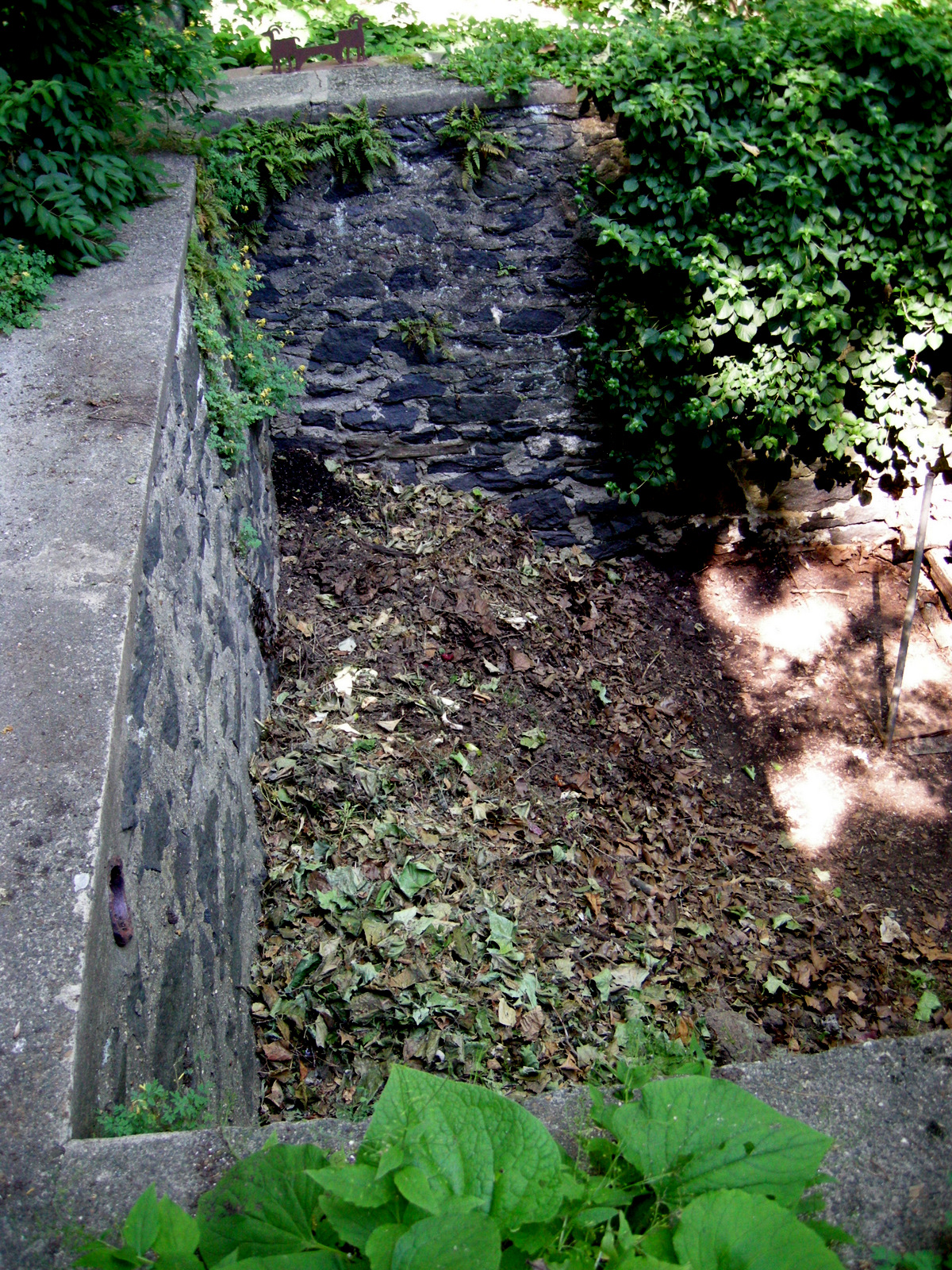
Our “garage” is really the carriage house and the stable for the estate that used to be here.   There is even a metal grain bin on the second floor with chutes and levers to bring the grain to the first floor.  The horses that pulled the carriages produced manure (no surprise there), which was deposited in a manure pit behind the stable.  Back then, they built everything to last so the manure pit is a 12 foot square enclosure surrounded on four sides by 7 foot tall stone walls.

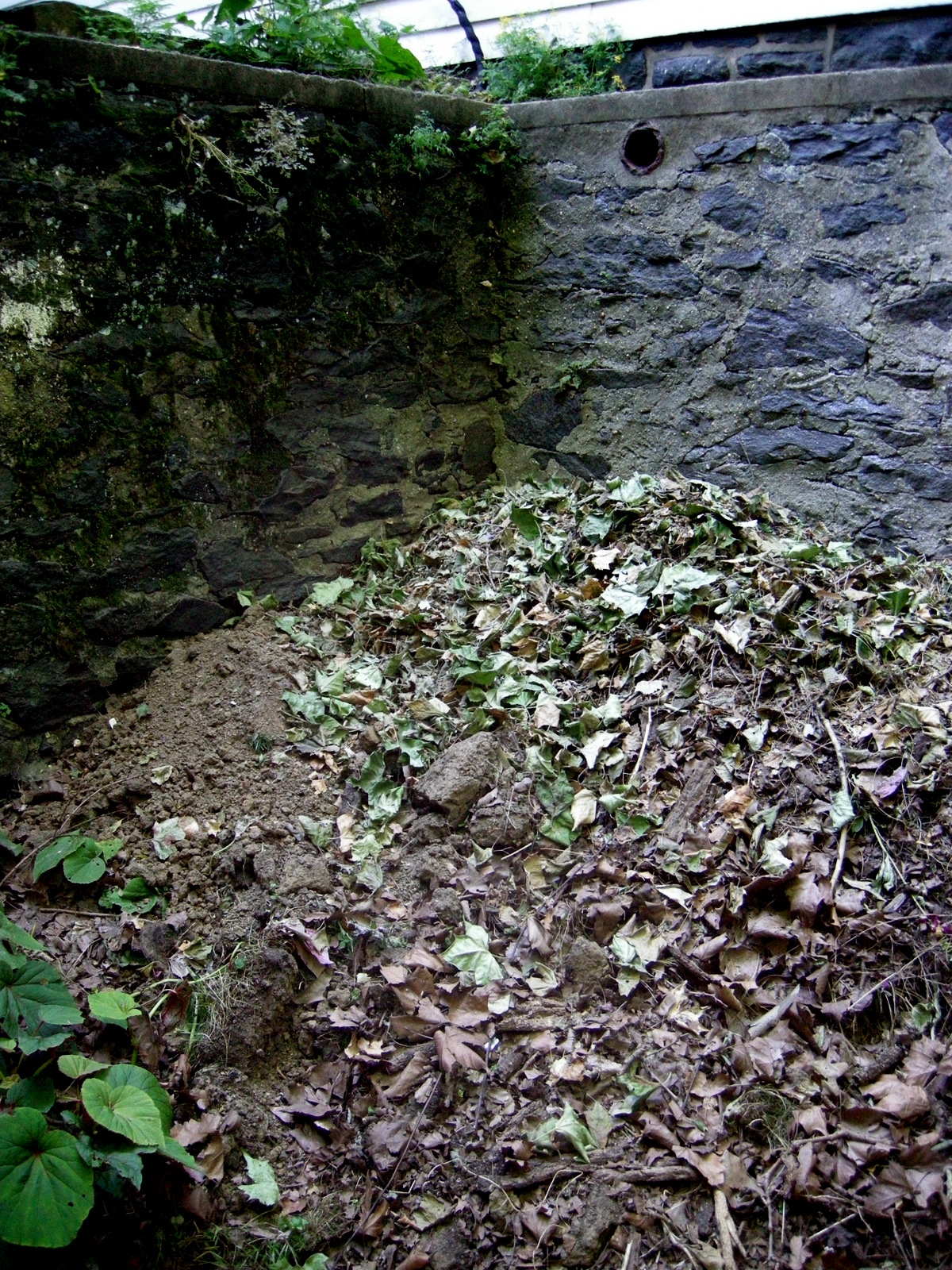
The left side of the compost pit where we are currently throwing kitchen and garden refuse.

We throw all our garden and kitchen refuse into this pit, including leaves, sod, noninvasive weeds, ashes, small sticks, etc.  There is no organized layering process–whenever there’s something to go in, it’s thrown on top of the pile, hopefully, but not always, on the side of the pile currently being built up.  The other side contains the compost being used.  My husband turns the pile thoroughly about three times a year, and that’s it: no complicated procedures or equipment required!

Top view of the manure pit we use for producing compost.  It is “decorated” with self-sown fern-leafed and yellow corydalis and a large climbing hydrangea.

However, despite the size of this operation, it does not produce nearly enough compost for Carolyn’s Shade Gardens.  We are very fortunate that our township produces excellent compost from the leaves that residents put by the side of the road in the fall to be removed.  Personally, I think removing the leaves from your property is crazy, but for selfish reasons I am glad people do it.  We get truckloads of the township’s beautiful compost to supplement our own.

One of the newest beds powered by compost.

As I explained in Supporting Sustainable Living, I am uniquely placed to encourage sustainable gardening practices as I promote and sell native plants at my nursery,  answer my customers’ requests for advice, and give tours of my gardens to horticultural groups.  Sustainable living is very important to me as I described in My Thanksgiving Oak Forest.  So when the Radnor Conservancy, dedicated to promoting open space in my township,  asked me to speak, I thought why not go farther and offer my gardens as a venue for a fund raising and educational event.

Rose and peony beds

The creative people at the Conservancy came up with the theme “Dirt … lots of it!”, an afternoon devoted to educating people about compost on Sunday, June 12, from 3 to 5 pm at Carolyn’s Shade Gardens.  Here is the flyer:

If you come, and I hope you will, you will find various “stations” throughout my gardens staffed by knowledgeable Master Gardeners able to answer any question you have about composting.  They will demonstrate outdoor composting, indoor composting with worms, composting equipment and tools, grinding leaves for mulch, and how to transport township compost easily and cleanly to your home.  You will be able to order discount compost bins, and information on lyme disease and its prevention will be provided.

Main perennial border

As you find out everything you ever wanted to know about composting, you can stroll through my beautiful gardens and shop for plants in my nursery area.  And best of all, delicious refreshments will be provided.  As directed in the flyer above,  if possible, please register  in advance for the event with the Conservancy by calling them at 610-688-8202 or emailing them at radnor.conservancy@comcast.net.  You can also show up without registering.  The event is open to everyone, not just Radnor Township residents.  I hope to see you there.

Carolyn

Just a note to say thanks to John at Macgardens and his wife Beth who visited Carolyn’s Shade Gardens during my open house on Saturday.  Meeting fellow garden bloggers is so fun because they immediately feel like old friends.  If any other garden bloggers are in the area, please stop by.

Notes: Every word that appears in orange on my blog is a link that you can click for more information.  If you want to return to my blog’s homepage to access the sidebar information (catalogues, previous articles, etc.), just click here.

Nursery Happenings: I will have my traditional closing weekend open hours this Saturday, June 11, from 9 am to 3 pm and Sunday, June 12, from 10 am to noon.  You don’t need to make an appointment, and you can park in the driveway.  You can also shop for plants during the Radnor Conservancy  event on Sunday, June 12, from 3 to 5 pm.  But remember you can make an appointment to shop 24/7 by sending me an email at carolynsshadegardens@verizon.net.  There is  still a great selection of hostas, ferns, astilbes, hardy geraniums, and summer and fall blooming shade plants available.

Larger Hostas

Posted in container gardening, hosta, Shade Gardening, Shade Perennials with tags , , , , , , , , , , , , on May 30, 2011 by Carolyn @ Carolyns Shade Gardens

Carolyn’s Shade Gardens is a retail nursery located in Bryn Mawr, PA, specializing in showy, colorful, and unusual plants for shade.  The only plants that we ship are snowdrops and miniature hostas.  For catalogues and announcements of events, please send your full name, location, and phone number (for back up use only) to carolyn@carolynsshadegardens.com.  Click here to get to the home page of our website for catalogues and information about our nursery and to subscribe to our blog.

.

Hosta Teeny-weeny Bikini' at Carolyn's Shade GardensHosta ‘Teeny-weeny Bikini’: I couldn’t resist including one more miniature.

In my recent article Miniature (& Small) Hostas, I explained my evolving relationship with hostas and how my collecting tendencies had led me to miniature hostas for space reasons.  I display these little treasures in special ways in containers, in my rock garden, or as groundcover in order to highlight their small stature.  However, for specimen plants and variety of leaf color, there is nothing like a larger hosta.  They come in an an infinite number of combinations of colors, heights, widths, leaf shapes, flowers, and habits.  There is a medium to large hosta for every garden condition, both as the star of the show and a lovely backdrop for your other perennials and shrubs.  In this article, I want to highlight some of my favorite larger hostas as well as some cultivars that are new to me.

Mature Hosta tokudama ‘Flavocircinalis

Leaf of mature ‘Flavocircinalis’

Before I get to the plants, however, I want to explain something that took me a while to figure out.  Larger leaf hostas do not look like themselves in a nursery pot because they take one to two years to mature and reach their full size and coloration.  Immature plants will have different shaped leaves, usually pointed, and will not display the intricate color patterns that you can expect on the plant in your garden.   Compare the photos of Hosta tokudama ‘Flavocircinalis’ above and below. That is why at Carolyn’s Shade Gardens, I always encourage customers to look at the mature hostas in the display gardens before making their choices.

Immature plant of ‘Flavocircinalis’

Immature leaf of ‘Flavocircinalis’

Here is a taste of some of my favorite and best-selling larger hostas.  You can view well established specimens of these cultivars in my display gardens:

Hosta ‘June’ was the American Hosta Growers Association 2001 Hosta of the Year with good reason and is the most popular hosta with my customers.

The beautiful leaf coloration of ‘June’.

‘First Frost’ is the 2010 Hosta of the Year.

The leaves of ‘First Frost’ emerge with bright yellow leaf margins, which age to cream (in photo above) and set off its very blue center.

‘Great Expectaions’ is my second biggest selling hosta and has one of the most beautiful habits of any large hosta.

The elegant leaf coloration of ‘Great Expectations’.

‘Earth Angel’ is the 2009 Hosta of the Year and is as large and glorious as its parent ‘Blue Angel’ but with a cream margin.

‘Earth Angel’ is the first giant blue hosta with a contrasting border.  The leaves can reach 18″ x 12″ and a specimen can be 5′ wide.

Hosta tokudama is my favorite of all species hostas and ‘Aureonebulosa’ is my favorite cultivar of the many tokudama offspring.

The cupped and heavily puckered texture of  ‘Aureonebulosa’ is typical of the tokudama group.

‘Fragrant Bouquet’ is the 1998 Hosta of the Year and has fragrant flowers.

‘Fragrant Bouquet’s’ light green leaves really stand out in the shade, and it retains its yellow margins all season.

When I visit hosta collections and displays, some plants always stand out.  I look for these plants in the trade to add to my own gardens and offer to my customers.  Here are some of the cultivars I was able to add this year:

‘Touch of Class’ is a close relative of ‘June’ but with a wide blue border enclosing a central gold stripe.  It has an excellent habit and great slug resistance.

‘Liberty’ is the Hosta of the Year for 2012.  You can see both the yellow coloration of its new leaves and the wide cream margins of its older leaves in the photo above.  For a great shot of its coloration, see both the header and wordless Wednesday photo at Pat and Jim’s Gardening Adventure.

‘Paradigm’ is the 2007 Hosta of the Year.  For a much better photo of its leaves and habit, check out these photos of all the Hostas of the Year, by clicking here.  The American Hosta Growers Association has only picked 17 hostas to be Hosta of the Year out of an estimated 6,000 hosta cultivars in the trade so this accolade is quite a meaningful honor.

‘Fragrant Queen’ is a fragrant hosta boasting very substantial rounded leaves with wide white margins.

I have coveted ‘Brother Stefan’ every time I have seen it.  For a much better photo, showing its coloration, texture, and habit, click here.

Just a few ideas for using larger hostas in your garden:

Left to right: ‘Flavocircinalis’, the species H. tokudama, and ‘June’ massed in front of a Japanese holly.

Left to right: ‘Frances Williams’, ‘Abiqua Drinking Gourd’, ‘Kabitan’, and ‘Earth Angel’.

‘Great Expectations’ displayed as a specimen with other hostas, ferns, epimediums, violets, and hardy geraniums.

A specimen ‘Fragrant Bouquet’ with yellow waxbells, hardy gernaium, and ‘Luxuriant’ bleeding-heart.

A simple but elegant container planting at Duke Gardens in Durham, North Carolina.

A rare Hosta tokudama by itself in a container on my front porch.

Colorful foliage is a fun and essential part of the shade garden.  I hope I have introduced you to some new and intriguing larger hostas that you can add to your shade.

Carolyn

For two more articles on hostas, click here:

Miniature (& Small) Hostas

Hostas for Fall

Notes: Every word that appears in orange on my blog is a link that you can click for more information.  If you want to return to my blog’s homepage to access the sidebar information (catalogues, previous articles, etc.) or to subscribe to my blog, just click here

When I want information about hostas, I go to the Hosta Library and My Hosta Database to find photos and comprehensive written descriptions.  I have added both these sites to my sidebar under Plant Information so you will always be able to find them.

Pleasurable Pairings for Spring

Posted in hosta, landscape design, Shade Gardening with tags , , on April 26, 2011 by Carolyn @ Carolyns Shade Gardens

Carolyn’s Shade Gardens is a retail nursery located in Bryn Mawr, PA, specializing in showy, colorful, and unusual plants for shade.  The only plants that we ship are snowdrops and miniature hostas.  For catalogues and announcements of events, please send your full name, location, and phone number (for back up use only) to carolyn@carolynsshadegardens.com.  Click here to get to the home page of our website for catalogues and information about our nursery and to subscribe to our blog.

Annual violas and a hosta I selected called “Carolyn’s Malex II” in a glazed strawberry pot that belonged to my grandfather.  There is a different miniature hosta in each of the 16 pockets, and it stays out all winter with no problems for the pot or the hostas.  Don’t you love the little faces on the violas?

Over the years, through trial and error, I have discovered some fail safe pairings for the spring shade garden.  These plant couples look great together while thriving in the same cultural conditions.  Their flower and leaf colors and textures and their habits compliment each other to make pleasing combinations.  Plus they are all easy to grow, requiring no watering, staking, or general fussing after they are established in good organic soil in part to full shade.

Hostas that come up early in the spring, especially miniature hostas, play nicely with almost every plant and are extremely easy to grow:

This pairing is one of my favorite color combinations in the garden.  Hosta montana ‘Aureomarginata’ comes up much earlier than other large hostas.  Its bright green and yellow leaves serve as the perfect backdrop for the orange and yellow flowers of Epimedium x warleyense.


Almost all my miniature hostas come out in time to join the blooming epimediums.  Here is Epimedium grandiflorum ‘Tama No Gempei’ with Hosta ‘Little Wonder’, but you could choose any epimedium and any miniature hosta for a delightful contrast.


A great full shade combination: Hosta ‘Emerald Tiara’ and Japanese woodland primrose, Primula sieboldii (purple form), thrive under my coral bark maple.  Japanese woodland primrose is a mat-forming primrose for full, dry shade not to be confused with Japanese primrose, Primula japonica, which requires moist conditions.


Annual violas and Hosta ‘Crumb Cake’ in a container that stays out all winter.  Small containers are a great way to display choice miniature hostas.


Another plant whose early spring color goes with just about anything is Spiraea japonica ‘Magic Carpet’.  I think I would take this shrub to a dessert island if I had to choose because its deep peach leaves are so gorgeous (and it has fabulous fall color too):

Dwarf spiraea, Spiraea japonica ‘Magic Carpet, with Italian arum, Arum italicum, and PA (Pennsylvania) native coral bells, Heuchera villosa ‘Caramel’.  This is a year round combo because the arum and coral bells remain ornamental through the winter and the spiraea is a solid three-season plant.


‘Magic Carpet’ contrasts nicely with the color and texture of gold-leafed old-fashioned bleeding heart, Dicentra spectabilis ‘Goldheart’.  At first I didn’t like the idea of gold and pink together but with careful pairing ‘Goldheart’ is magnificent.


You can see some of the gold tones starting to emerge in the new leaves on this ‘Magic Carpet’, which is farther from the house.  It looks great with the dark red sedums in this strawberry jar, which also overwinters outside.


‘Magic Carpet’ even pairs well with spider webs.  Every spring I come out one morning to find all the spiraeas covered with webs.


Here are some more great combinations for early spring:

I think that PA native Celandine poppy, Stylophorum diphyllum, goes with everything in spring, but it looks especially beautiful with PA native Virginia bluebells, Mertensia virginica.


I am always captivated by the color combination of the buds of Burkwood viburnum, V. x burwoodii ‘Mohawk’, and the flowers of old-fashioned bleeding heart, Dicentra spectabilis.  ‘Mohawk’ has fantastic fragrance and spectacular orange-red fall color too.  It is a Pennsylvania Horticultural Society gold medal plant.


The airy bronze foliage and yellow flowers of fern-leafed corydalis, Corydalis cheilanthifolia, perfectly compliment the flower color of this 18th century heirloom primrose, Primula x polyantha ‘Old Brick Reds’.


Pulmonarias (lungwort) go with just about anything too:

The early blue flowers and narrow silver leaves of Pulmonaria ‘Diana Clare’ with the abundant pink flowers and silver-striped leaves of Lamium maculatum ‘Shell Pink’, which blooms from April until November and has evergreen foliage.  Pulmonarias also keep their beautiful leaves well into the winter.


I have collected over 25 varieties of pulmonaria, but then I let them self sow all over my garden with glorious results.  Above is a pink seedling pulmonaria with very rare Helleborus dumetorum subsp. atrorubens, but any red flowered hybrid hellebore would complete the pair.


More seedling pulmonarias paired with a purple strain of Lamium maculatum ‘Shell Pink’.


PA native wild ginger, Asarum canadense, and PA native dwarf Jacob’s ladder, Polemonium reptans, carpet my woodlands in early spring.  Together they produce a subtle and peaceful beauty.


I never thought of cushion spurge, Euphorbia polychroma, as a shade plant but it actually thrives in quite a bit of shade: here with hybrid hellebore, H. x hybridus ‘Metallic Blue Lady’.  I also love the cushion spurge cultivar ‘Bonfire’ with red leaves.


I think this is one of the most beautiful combinations in my early spring garden, and it took me over 50 attempted photographs to capture it on film!  Siberian bugloss, Brunnera macrophylla,  cowslip primrose, Primula veris, and spring starflower, Ipheion uniflorum.


Same as above with Ajuga reptans ‘Metallica’.


I will finish my spring combinations with something for all you sunny gardeners: white stonecrop, Sedum album, with tulip ‘Little Princess’.


I hope I have given you some ideas for creative combinations to add to your spring garden.  Please leave a comment/reply with some favorite pairs from your own garden.

Carolyn

Notes: Every word that appears in orange on my blog is a link that you can click for more information.  If you want to return to my blog’s homepage to access the sidebar information (catalogues, previous articles, etc.), just click here.

Nursery Happenings: My second annual Great Hosta Blowout is going on right now.  For details, click here.  Look for Carolyn’s Shade Gardens at the Bryn Mawr Farmer’s Market on Saturday, May 7, from 9 am to 1 pm .  My next open house sale is Saturday, May 14, from 10 am to 3 pm.

Evergreen Ferns for Shade & Stylish Blogger Award

Posted in evergreen, Shade Gardening, Shade Perennials with tags , , , , , , , , , , on February 24, 2011 by Carolyn @ Carolyns Shade Gardens

Carolyn’s Shade Gardens is a retail nursery located in Bryn Mawr, PA, specializing in showy, colorful, and unusual plants for shade.  The only plants that we ship are snowdrops and miniature hostas.  For catalogues and announcements of events, please send your full name, location, and phone number (for back up use only) to carolyn@carolynsshadegardens.com.  Click here to get to the home page of our website for catalogues and information about our nursery and to subscribe to our blog.

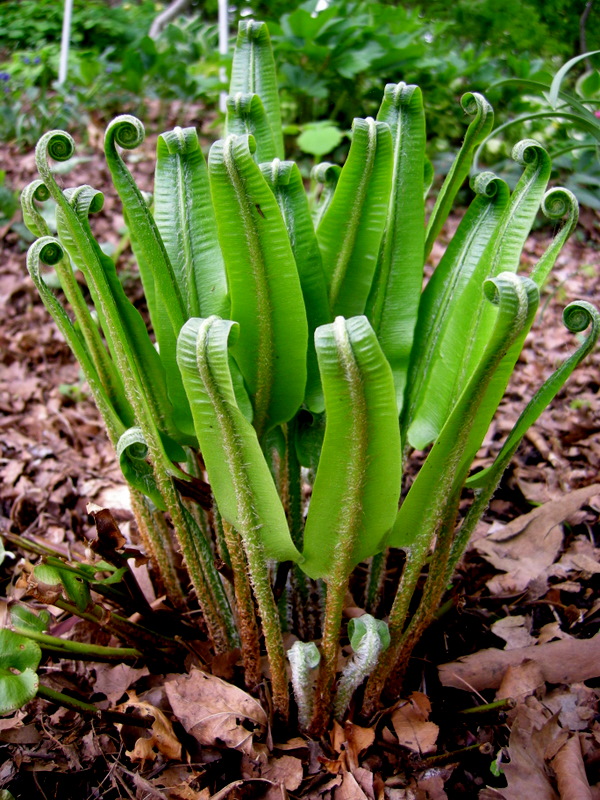
US. native hart’s-tongue fern, Phyllitis scolopendrium, is especially beautiful in my garden in the spring as it unfurls, April 2010

Spring is in the wind here today with unseasonably warm temperatures of almost 70 degrees F (21 C).  The ten day forecast shows more seasonable temperatures with highs in the mid-forties.  Although spring is definitely on the way (it snowed and went down to 10 degrees since I wrote this!), the beauty of snow has been replaced with the grays and browns of late winter, not a look I treasure.  That makes any plants that liven up the gardens very important at this time of year, and evergreen ferns do just that.  Five of my favorites are profiled below.

Hart’s-tongue fern is also very beautiful in the fall, mid-November 2010 with Christmas rose and pulmonaria

Hart’s-tongue fern, Phyllitis scolopendrium (zones 5 to 9), may be my favorite all time fern (today anyway).  It has a very unique look that is absolutely magical when it unfurls in the spring (photo at top), and it maintains its good looks until it disappears under the snow (photo above).  Even now it is quite presentable after our snowy and icy winter with only slight browning.

Although I call it a US native, hart’s tongue fern is actually indigenous to Europe, Asia, and North America, including the mid-Atlantic.  However, according to John Mickel in Ferns for American Gardens, the US variety does poorly in cultivation, and all cultivated material is from the European variety.  It is a clump-forming fern, growing 8 to 16″ tall with shiny, leathery fronds.  It is easy to grow but suffers if over-watered and must be well-drained.  I grow mine in part shade on a slope with plenty of organic matter.  In the wild it is limestone-loving, but I haven’t found this to be necessary in my garden.


Japanese holly fern, Cyrtomium falcatum, makes quite a statement in my mid-November garden

Japanese holly fern, Cyrtomium falcatum (zones 6 to 10), is another favorite of mine.  Individual plants grown as a specimen can be up to 2 feet tall and 3 feet across making quite a bold statement in the garden.  It grows well in the deep shade of my woodland garden where there is more construction rubble than soil as well as on my partly shaded but very open back slope.  Right now it is serving as a backdrop for the giant snowdrops, Galanthus elwesii, that are emerging between its fronds, which have been flattened by snow.

Japanese holly fern is native to Hawaii (do we call it a US native?), southern Africa, and across southern Asia.  Although it is uncommon in the mid-Atlantic, it is quite commonly grown in the southern parts of the US and has naturalized in some areas.  It is clump-forming with an elegant, vase-like habit and 4 to 7″ wide, glossy dark green fronds with toothed pinnae that resemble holly leaves.  It prefers good drainage and organic soil in part to full shade.


U.S. native deer fern, Blechnum spicant, also shines in my mid-November garden

Deer fern, Blechnum spicant (zones 5 to 8), was new to my garden in spring of 2010 so, despite its moist native habitat, it survived  this summer’s record-breaking heat and drought.  The unusual texture provided by its linear segments is a great addition to the border in front of my fall-blooming camellias.  It is in an eastern-facing location with high shade.  Right now, though flattened by the snow and ice, the fronds look almost the same as in the photo above despite our hard winter.

Deer fern is native to moist coniferous forests in the US Pacific Northwest and Europe.  Its two types of fronds are very distinct.  The sterile fronds (pictured above) are 8 to 20″ long, evergreen, and prostrate, while the fountain-like fertile fronds, which emerge in the spring, are 16 to 24″ long,  deciduous, and erect.  It puts on quite a show in the spring.  Deer fern grows in part to full shade in acid soil enriched with organic matter and spreads slowly by short creeping rhizomes.


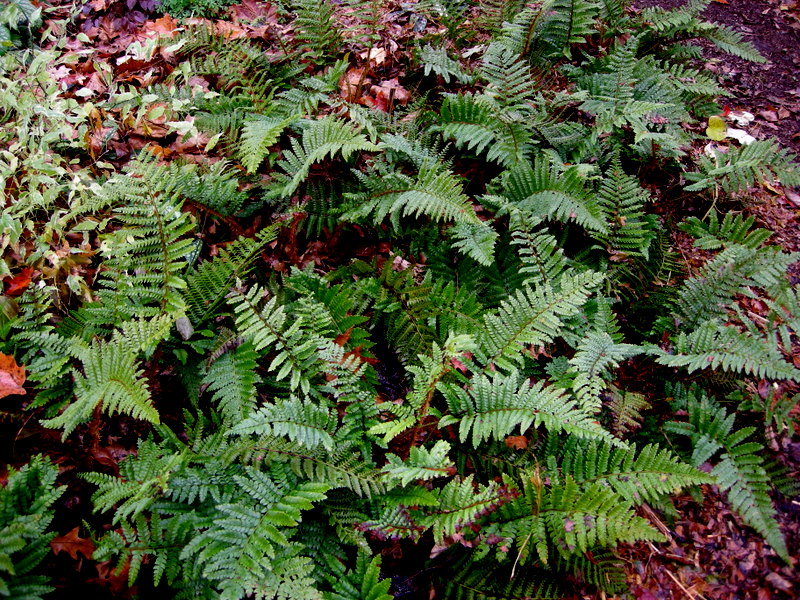
Tassel fern, Polystichum polyblepharum, growing in dry shade at the base of my Kentucky coffee tree in mid-November

Tassel fern, Polystichum polyblepharum (zones 5 to 8), is a very trouble-free, evergreen fern that I have grown for years.  I found that it does not do well in full shade, but thrives in high shade with dappled light.  It is absolutely gorgeous in the spring, when the reddish, hairy new fronds unfurl  (photo below) and still looks spectacular at the end of a hot dry summer (photo above).  Right now it is flat to the ground exposing its fleecy stems even more.

The bristly new fronds of tassel fern unfurl, photo courtesy of the Missouri Botanical Garden PlantFinder

Tassel fern is native to Japan and southern Korea.  According to Mickel, its species name means “many eyelashes” referring to its bristly, pubescent stems, which are really quite eye-catching even when fully emerged.  Its lustrous dark green fronds form an elegant, vase-like crown 2 feet tall and 2 feet wide.  It makes an excellent specimen.  Grow it in part shade in a well-drained, humus-rich site.


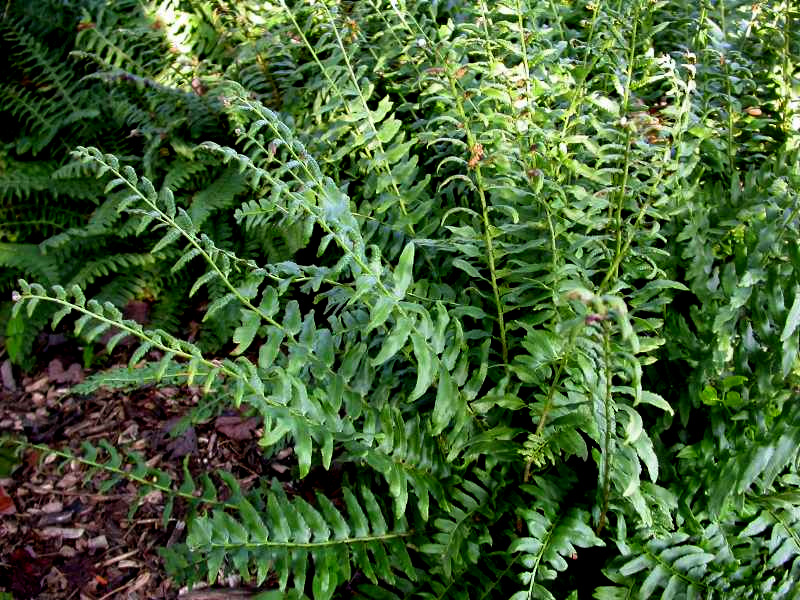
U.S. native Christmas fern, Polystichum acrostichoides, is ornamental 365 days a year in my garden, photo courtesy of the Missouri Botanical Garden PlantFinder

Christmas fern, Polystichum acrostichoides (zones 3 to 9), is without a doubt the best evergreen fern for mid-Atlantic US gardens.  It grows well everywhere in my garden from my deeply shaded woodland to more sunny, rocky slopes.  Right now, although not as upright as the photo above, it is the most presentable evergreen fern after our long, hard winter.

Christmas fern growing an a rocky outcropping in Great Smoky Mountain National Park, Tennessee

Christmas fern is native to the whole eastern half of North America, including all of Pennsylvania.  According to Mickel, its common name arose because it was used by early settlers as Christmas decorations.  The lance-shaped, dark green, leathery fronds provide excellent winter interest.  The two foot tall, fountain-like clumps increase in size over time, forming multiple crowns and making it easy to divide.  Christmas fern is very easy to grow in part shade to full shade and in moist to dry soil and can be used on slopes to prevent erosion.

I hope I have convinced you to go outside and investigate where you can add some evergreen ferns for year round interest.

Please let me know in a comment/reply what evergreen ferns you grow in your garden.

Carolyn


Notes: John Mickel is Curator of Ferns for the New York Botanical Gardens.  His book, Ferns for American Gardens, is an excellent resource discussing over 400 ferns with hundreds of photos.  I have added it to my sidebar under Books so you can always find it.

Every word that appears in orange on my blog is a link that you can click for more information.  If you want to return to my blog’s homepage to access the sidebar information (catalogues, previous articles, etc.), just click here.

Nursery Happenings: I am currently accepting orders for snowdrops, including  mail orders.  For the catalogue and order information, click here.  I am taking reservations for my Hellebore Seminars for the Totally Obsessed.  For the brochure and registration information, click here.  I have three spaces left for the March 6 session of Charles Cresson’s Snowdrops and Other Winter Interest Plants Seminar.  For the brochure and registration information, click here.
I have recently been honored with the Stylish Blogger Award by six different blogs, and I want to thank them for the accolade.  My friends would really laugh to hear the word stylish applied to me as a person, but I am glad I am making up for that with my blog.  I am not following the award rules, but instead letting you know who gave me the award in hopes that you will visit their blogs.  Here are the links and some information to entice you to visit them:

Deb’s Garden: Deb shares her gardening experiences on 3.5 partially wooded acres in Helena, Alabama.

Island Threads: Frances battles the elements on the northern tip of an island off the northwest coast of Scotland.

Orchid de Dangau: Makirimi collects and grows orchids in Malaysia.

Southern Meadows: Karin writes about nature and gardening in northeastern Georgia.

Sweet Bean Gardening: Hanni is developing a cottage garden in Indiana with her two young daughters.

The Suburban Gardener: Lily specializes in lilies and hostas in her shady suburban Chicago, Illinois, garden.