Archive for the Shade Shrubs Category

New York Times Photos

Posted in Camellias, evergreen, Fall, Fall Color, Shade Shrubs, winter, winter interest with tags , , , , , on January 29, 2013 by Carolyn @ Carolyns Shade Gardens

Carolyn’s Shade Gardens is a retail nursery located in Bryn Mawr, PA, specializing in showy, colorful, and unusual plants for shade.  The only plants that we ship are snowdrops and miniature hostas.  For catalogues and announcements of events, please send your full name, location, and phone number (for back up use only) to carolyn@carolynsshadegardens.com.  Click here to get to the home page of our website for catalogues and information about our nursery and to subscribe to our blog.

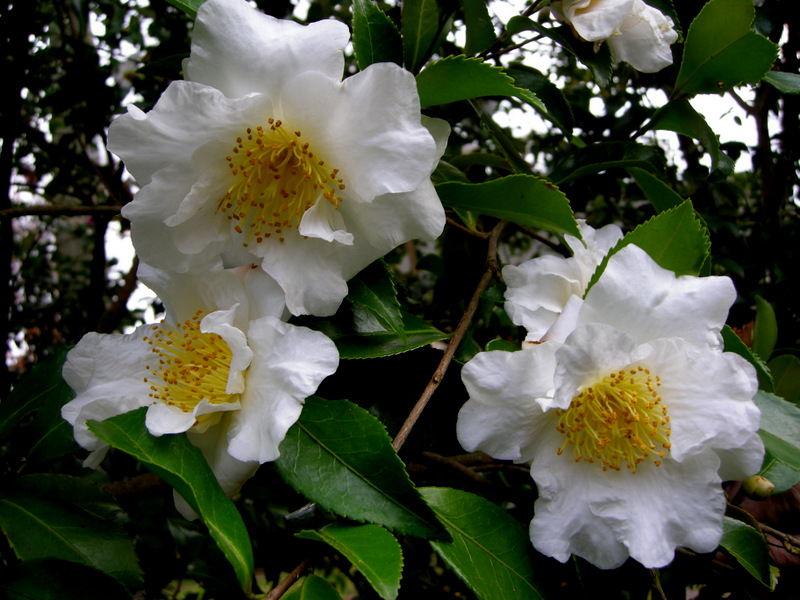
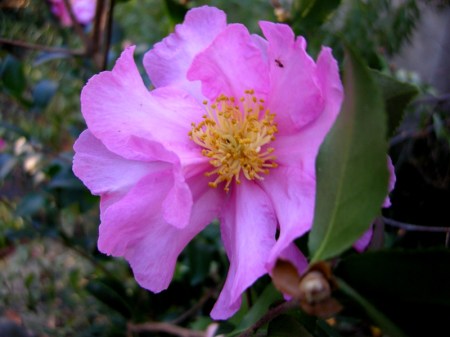
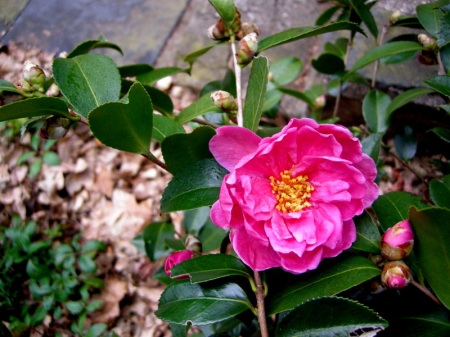
Camellia x 'Autumn Spirit'‘Autumn Spirit’ (fall blooming), the lead photo in the NYT article.

Readers will soon tire of me featuring myself in my posts, especially since the recent snowdrop post did just that.  However, I am bursting with excitement and will explode if I can’t do it one more time.  I was recently hired by the New York Times as a free lance photographer to provide the photos for a camellia article interviewing camellia expert Charles Cresson.  The print article “Camellias Ready for a Cold Snap” appeared on January 17, 2013.  One photo is on the cover of the Home section with the full article on page D4.  If you read the small print you will see my name.  You can find the on line version here.  Be sure and click through the slide show.

Camellia "Wax Lips"Unnamed Korean Camellia japonica seedling (spring blooming)

.
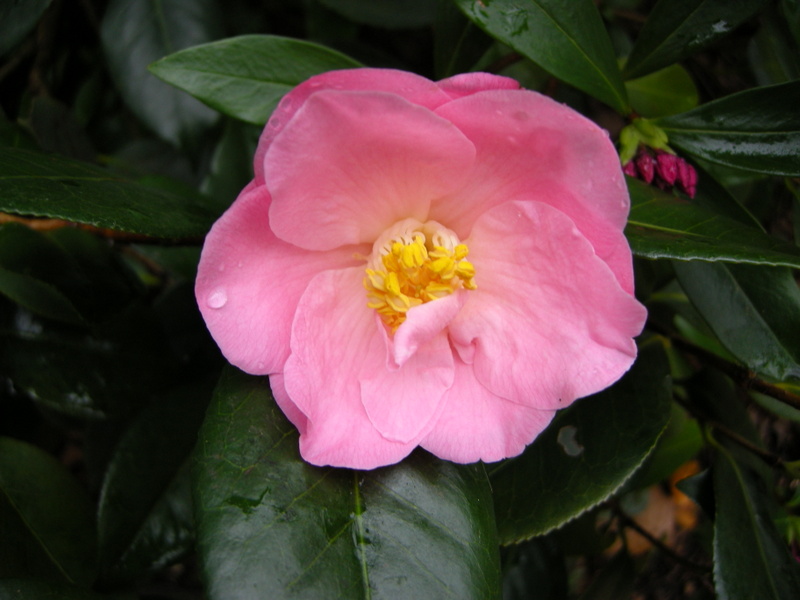
Camellia japonica 'Berenice Boddy' Cresson Garden‘Berenice Boddy’ (spring blooming)

.

While letting you know about the New York Times article, I thought this post would be a good place to list helpful articles on cold hardy camellias for easy reference.  I did this in the snowdrop post, and it has already proved invaluable to me.  I have interspersed the article names and links with some of my favorite camellia photos to keep the attention of those of you who don’t want to read up on camellias.  I am also going to list the camellias covered in each article in case a reader is interested in a particular cultivar.
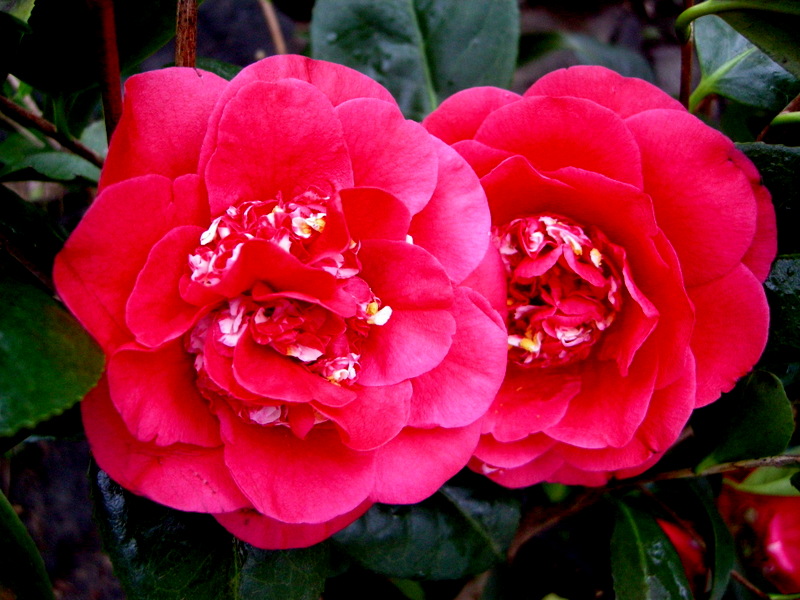
Camellia 'April Tryst'‘April Tryst’ (spring blooming)

.

Camellia x (Ackerman seedling)Unnamed Ackerman Seedling (fall blooming)

December 8, 2010

“Fall-blooming Camellias Part 1”

Camellia oleifera, Elaine Lee, Winter’s Darling

click here to read

Camellia x 'Moon Festival'‘Moon Festival’ (fall blooming), not hardy in zone 6.

.

Camellia x 'Winter's Interlude'‘Winter’s Interlude’ (fall blooming)

December 17, 2010

“Fall-blooming Camellias Part 2”

Snow Flurry, Winter’s Dream, Autumn Spirit, Winter’s Snowman, Winter’s Charm, Scented Snow, Winter’s Beauty

click here to read

Camellia x 'April Rose'‘April Rose’ (spring blooming)

.

Camellia x 'Winter's Snowman'‘Winter’s Snowman’ (fall blooming)

November 10, 2011

“Fall-blooming Camellias Part 3”

Snow Flurry, Winter’s Snowman, Winter’s Star, Winter’s Interlude, Moon Festival, Carolina Moonmist

click here to read

Camellia x 'Elaine Lee'‘Elaine Lee’ (fall blooming)

.

Camellia x 'Pink Icicle'‘Pink Icicle’ (spring blooming)

December 2, 2012

“2012 Fall-blooming Camellias”

Winter’s Joy, Winter’s Snowman, Snow Flurry, Autumn Spirit, Survivor, Long Island Pink, Polar Ice, Ashton’s Ballet, Winter’s Rose, Winter’s Fire

click here to read
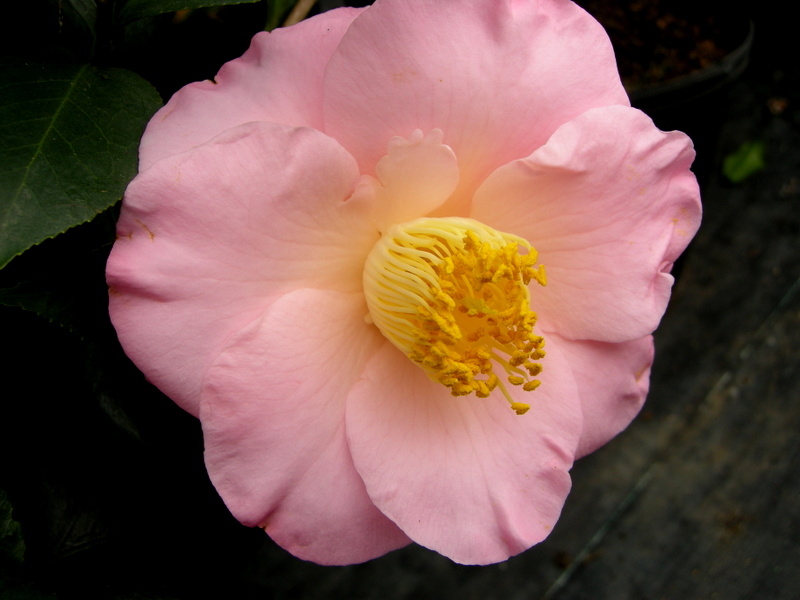
Camellia x 'April Blush'‘April Blush’ (spring blooming)

January 2006

“Camellias for Cold Climates” by William L. Ackerman

details Dr. Ackerman’s cold hardy camellia breeding at the US National Arboretum in Washington, DC, and describes each cultivar’s ornamental attributes and hardiness

click here to read

Camellia x 'Winter's Beauty'‘Winter’s Beauty’ (fall blooming)

January 17, 2013

The New York Times

‘Camellias Ready for a Cold Snap” by Anne Raver

excellent article profiling cold hardy camellias for the mid-Atlantic and discussing many additional cultivars not mentioned in my articles

click here to read


* * * * *

I hope that this post will act as a central reference point where I can collect information on cold hardy camellias for the mid-Atlantic.  I intend to add titles and links as I discover more information about one of my favorite topics.  I can see already that I have neglected spring-blooming camellias in favor of the fall-blooming varieties.

Enjoy, Carolyn

.

Carolyn’s Shade Gardens is a retail nursery located in Bryn Mawr, Pennsylvania, US, zone 6b.  The only plants that we mail order are snowdrops and miniature hostas and only within the US.

If you are within visiting distance and would like to receive catalogues and information about customer events, please send your full name and phone number to carolynsshadegardens@verizon.net.  Subscribing to my blog does not sign you up to receive this information.

Nursery Happenings:  The 2013 Snowdrop Catalogue is on the sidebar of the website and orders are being accepted.  To view the catalogue, click here.  There are a few spaces left in both sessions of Charles Cresson’s 2013 Winter Interest Plants Seminar.  To view the brochure and register, click here.

Facebook:  Carolyn’s Shade Gardens has a Facebook Page where I post single photos, garden tips, and other information that doesn’t fit into a blog post.  You can look at my Facebook page here or click the Like button on my right sidebar here.

Notes: Every word that appears in orange on my blog is a link that you can click for more information.  If you want to return to my blog’s homepage to access the sidebar information (catalogues, previous articles, etc.) or to subscribe to my blog, just click here.
December 2012 Garden Bloggers Bloom Day

Posted in bulbs for shade, Camellias, hellebores, Shade Gardening, Shade Shrubs, winter, winter interest with tags , , , , , , , , on December 17, 2012 by Carolyn @ Carolyns Shade Gardens

Carolyn’s Shade Gardens is a retail nursery located in Bryn Mawr, PA, specializing in showy, colorful, and unusual plants for shade.  The only plants that we ship are snowdrops and miniature hostas.  For catalogues and announcements of events, please send your full name, location, and phone number (for back up use only) to carolyn@carolynsshadegardens.com.  Click here to get to the home page of our website for catalogues and information about our nursery and to subscribe to our blog.

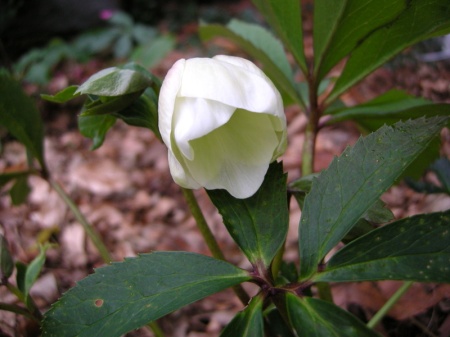
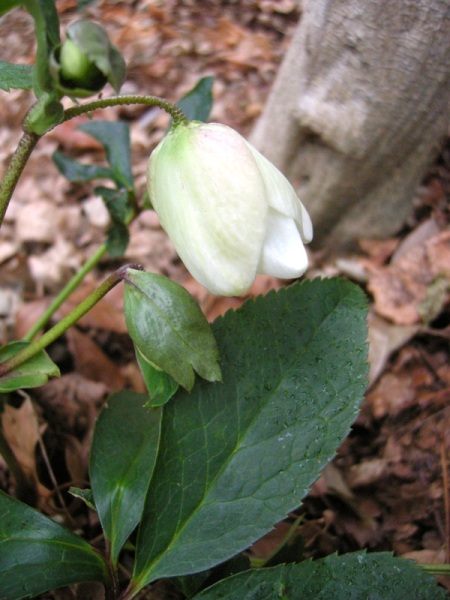
DSCN8663The first of my hybrid hellebores is just about to bloom: Helleborus x ‘Snow White’ (aka ‘Snow Bunting’).

I am two days late for the official Garden Blogger’s Bloom Day.  On the fifteenth of each month garden bloggers from all over the world post photos of what’s blooming in their gardens, and their posts are collected by Carol at May Dreams Gardens.  Nevertheless, I thought it would be fun to see which plants are pretty enough to get me outside in December on a somewhat warm but dreary, rainy day.  I also wanted to add a new twist by allowing myself only one pass through the garden for photos instead of the numerous trips required by a normal post.

Not surprisingly if you read my blog, Italian arum, hellebores, snowdrops, camellias, hardy cyclamen, and coral bells are hogging the show this time of year accompanied by a few others.  Let’s see what we have:

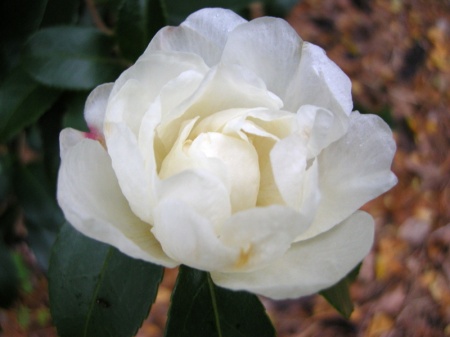
DSCN8642 Fall-blooming camellia ‘Winter’s Snowman’ has been blooming since October and still has buds waiting to open.

My late fall garden has been immensely improved by the addition of fall-blooming hardy camellias.  All five of mine are blooming now and have plenty of buds left.  For more information on fall-bloomimg camellias, click here.

DSCN8641‘Winter’s Joy’

.

DSCN8650‘Lu Shan Snow’

.

DSCN8656‘Winter’s Darling’

.

DSCN8655‘Elaine Lee’

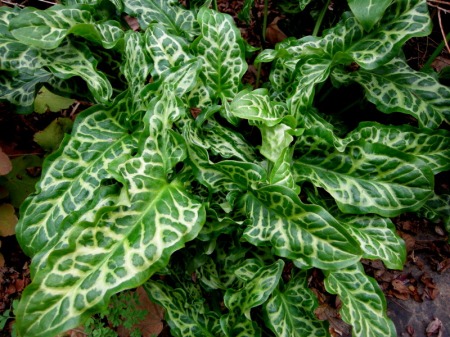
Italian arum is always a highlight this time of year after its fresh foliage emerges from dormancy in early fall:

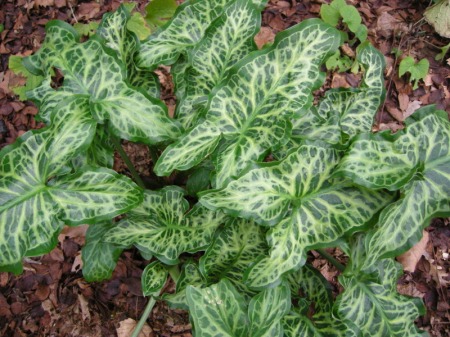
DSCN8645‘Pictum’ Italian arum

.

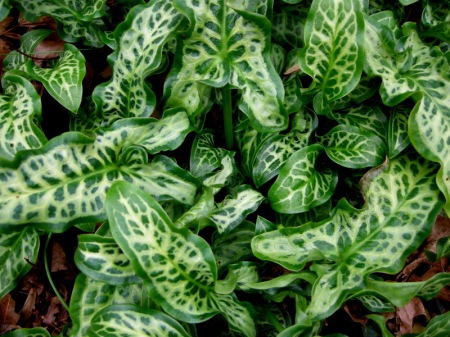
DSCN8659dwarf Italian arum ‘Tiny Tot’

.

DSCN8654‘Gold Rush’ Italian arum, my favorite

Hellebores are just about to take over as the stars of the garden for the next few months.  For more information on hellebores, click here and follow the links at the end of the post.  If it wouldn’t violate my parameter for this post, I would run out and photograph bearsfoot hellebore and ‘Praecox’ Christmas rose, which are both almost open.  As it is, I have these two hellebores for you:

DSCN8662Another shot of the first flower on ‘Snow White’.

.

DSCN8643After blooming in October, ‘Josef Lemper’ Christmas rose is at it again and will continue to bloom into spring.

.

My favorite coral bells or heucheras are the cultivars that give me 365 days of colorful foliage, some of which are pictured below.  If I could go back outside, I would add ‘Frosted Violet’ and ‘Bronze Wave’.  I would also include some photographs of pulmonarias, especially ‘Diana Clare’:

DSCN8646‘Caramel’ heuchera continues to change from one beautiful hue to the next through out the winter.

.

DSCN8652Green Spice’ is new to my garden this year and looks like a winner.

.

DSCN8653‘Citronelle’ is a customer favorite for brightening dark corners.

You know I couldn’t resist showing you a few snowdrops:

DSCN8640  ‘Potter’s Prelude’, a fall-bloomimg snowdrop cultivar, is getting to the end of its bloom period which began in mid-November.

.

DSCN8658A clump of early blooming giant snowdrops, Galanthus elwesii, hides in the Japanese holly ferns and hellebores.

Except during the heart of the summer when they are dormant, hardy cyclamen are stars in my garden.  I find their highly variable leaf patterns endlessly fascinating.  For more information on hardy cyclamen, click here.

DSCN8660The last few blooms on fall-blooming hardy cyclamen, C. hederifolium, which began blooming at the end of August.

.

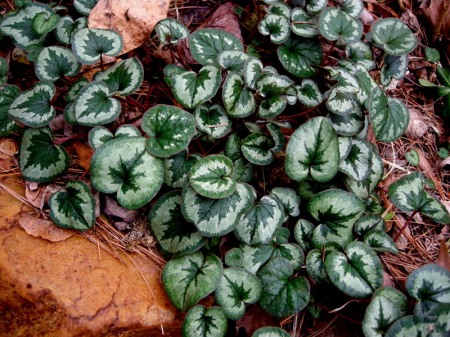
DSCN8661Spring-blooming hardy cyclamen, C. coum, doesn’t need flowers to attract attention.

Here are some more late fall stars that might surprise you:

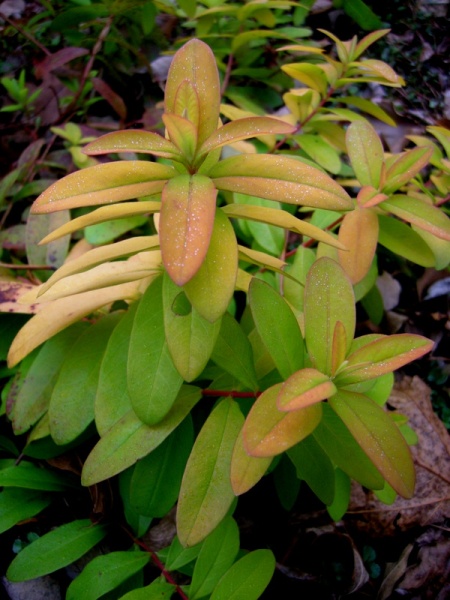
DSCN8639‘Brigadoon’ St. John’s wort always takes on this lovely peach color for the winter.

.

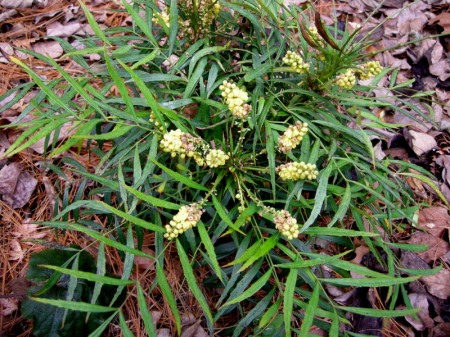
DSCN8644This new mahonia called ‘Soft Caress’ was given to me by the breeders at the Southern Living Plant Collection to trial in my garden.  It is evergreen, blooms now, and is hardy to zone 7.  For more information, click here.  I have high hopes for it because I have since seen it in two other local gardens.

.

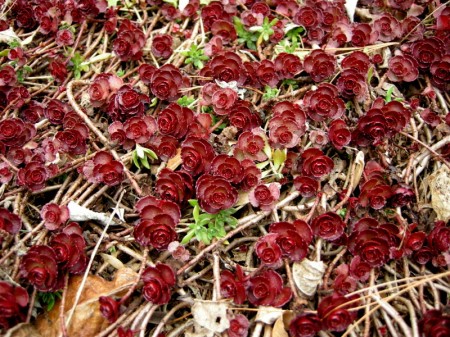
DSCN8648This sedum always turns a lovely burgundy in the fall.  Unfortunately, I don’t know its exact name.

.

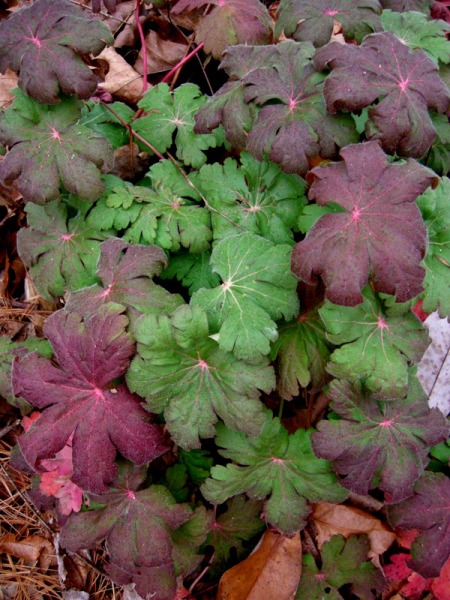
DSCN8651Bigroot geranium, G. macrorrhizum, takes on red and pink tones for the winter.

.

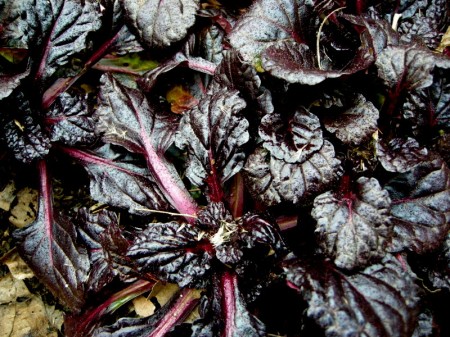
DSCN8649‘Black Scallop’ ajuga has quickly become one of my favorite groundcovers because its dark purple leaves remain shiny and beautiful through the winter.

You may be wondering why I would limit myself to one trip outside for photos for this post.  Every article that you read here takes me at least a full day to compose, including the photography, the research, the writing, and the editing.  I wanted to see if I could cut that back to a few hours and still produce a quality product, and I believe I have been largely successful.  It would only work for a post like this though where no significant supporting research was required. 

Enjoy, Carolyn


Nursery Happenings:  Carolyn’s Shade Gardens is a retail nursery located in Bryn Mawr, PA.  The only plants that we mail order are snowdrops and miniature hostas.  The nursery is closed until spring 2013.  Thanks for a great year.

If you are within visiting distance and would like to receive catalogues and information about customer events, please send your full name and phone number to carolynsshadegardens@verizon.net.  Subscribing to my blog does not sign you up to receive this information.

Facebook:  Carolyn’s Shade Gardens has a Facebook page where I post single photos, garden tips, and other information that doesn’t fit into a blog post.  You can look at my Facebook page here or click the Like button on my right sidebar here.

Notes: Every word that appears in orange on my blog is a link that you can click for more information.  If you want to return to my blog’s homepage to access the sidebar information (catalogues, previous articles, etc.) or to subscribe to my blog, just click here.
 

A Shrub for All Seasons: Edgeworthia

Posted in Fall, Shade Shrubs, winter, winter interest with tags , , , on December 10, 2012 by Carolyn @ Carolyns Shade Gardens

Carolyn’s Shade Gardens is a retail nursery located in Bryn Mawr, PA, specializing in showy, colorful, and unusual plants for shade.  The only plants that we ship are snowdrops and miniature hostas.  For catalogues and announcements of events, please send your full name, location, and phone number (for back up use only) to carolyn@carolynsshadegardens.com.  Click here to get to the home page of our website for catalogues and information about our nursery and to subscribe to our blog.

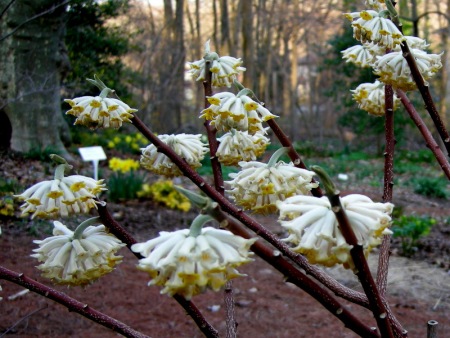
Edgeworthia chrysantha 'Snow Cream' Cresson gardenI love edgeworthia in all its manifestations, but late winter when the buds start to swell has to be my favorite.

Edgeworthia chrysantha also known as paper bush is a collector’s plant.  That means it is rarely seen in public and private gardens and is hard to find at nurseries.  However, I have been able to offer it to my customers in fall 2011 and fall 2012 because my wholesale shrub supplier carries beautiful specimens of it.  I have grown it in my own garden for three years so I decided it was time for a full blown profile of what has become one of my favorite shrubs.

[Note:Carolyn’s Shade Gardens is retail nursery located in Bryn Mawr, PA.  The only plants that we mail order are snowdrops and miniature hostas.]

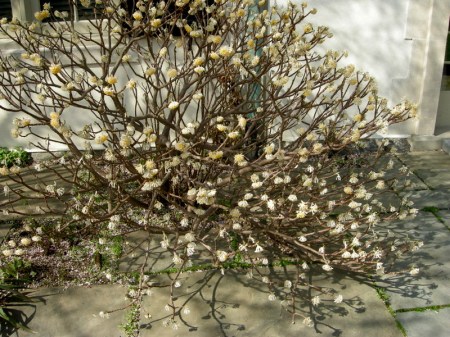
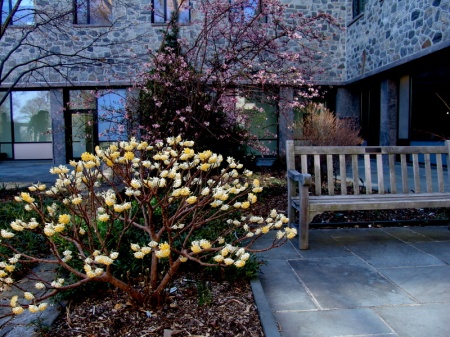
Edgeworthia chrysantha My photos of the whole plant do not do justice to how gorgeous it is, but as I reviewed the on-line literature, I realized that everyone has this problem.  This edgeworthia is pictured in mid-April on the terrace of the main house at Chanticleer gardens in Wayne, Pennsylvania.

Edgeworthia is native to China and was named for Michael Edgeworth (1812 to 1881), a plant collector for the East India Company.  It arrived fairly recently in the US.  My 1990 edition of Michael Dirr’s Manual of Woody Landscape Plants contains no mention of it, and it was not covered in my 1994 Longwood course, Deciduous Flowering Shrubs II.  Although articles state that its common name is paper bush, I have never heard anyone who actually grows it call it anything but edgeworthia.  In China, its bark is used to produce very high quality paper and for various medicinal purposes.  Here it is an unusual and elegant four season ornamental notable for its leaves, buds, flowers, and habit.

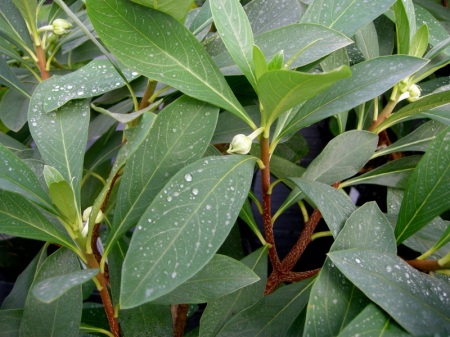
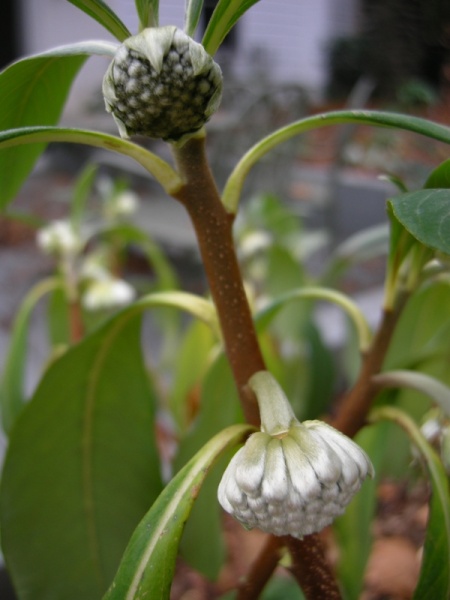
Edgeworthia chrysanthaEdgeworthia’s leaves are large and tropical, and its bark is an unusual reddish-brown.  This photo was taken in September and the highly ornamental buds have formed but have not yet expanded.

Edgeworthia is in the same family as daphne and has even occasionally been called yellow daphne.  It is deciduous and  has large and distinctive leaves.  They are 5 to 6″ long and about 2″ wide, blue-green on the top and silvery green on the bottom.  Although they can turn yellow in fall, you wouldn’t grow edgeworthia for fall color.  The leaves cluster at the tips of the branches giving the shrub a decidedly lush and tropical appearance that really stands out in the garden.  When the leaves drop, they reveal the slender and pliable reddish-brown bark seen above.

Edgeworthia chrysanthaEdgeworthia buds in November as they start to expand.

.

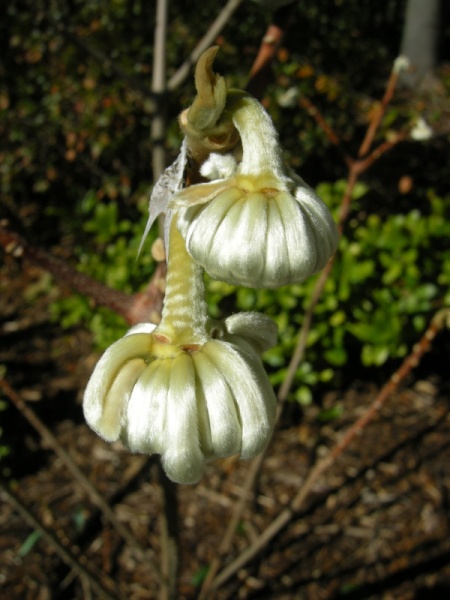
Edgeworthia chrysantha 'Snow Cream' Cresson gardenEdgeworthia buds as they appear through the heart of the winter.

.

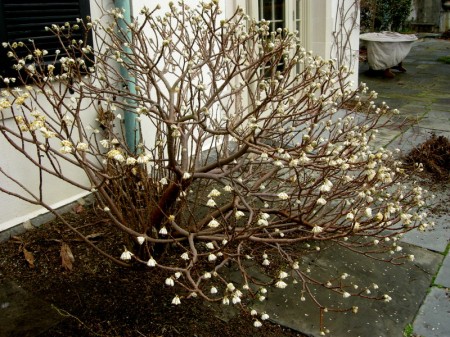
Edgeworthis chrysanthaPlease use your imagination to envision how gorgeous this shrub must be covered with hundreds of the silky silver buds shown in the preceding photo.  This edgeworthia is pictured at the very end of January and is in the Isabelle Cosby Courtyard at the Scott Arboretum at Swarthmore College, Pennsylvania.

My favorite season for edgeworthia is winter when the leaves drop to reveal the buds which form in late summer or early fall depending on where you live.  Each 1″ plus bud resembles an intricately designed tassel on the corner of an elegant Victorian pillow.  The silky hairs glow in the light, and the plant looks like it is covered with hundreds of silver flowers–simply breathtaking.  The falling leaves also reveal edgeworthia’s striking architectural habit.  It is a multi-stemmed shrub that forms an almost perfectly rounded umbrella shape of cinnamon colored branches.

Edgeworthia chrysanthaEdgeworthia’s buds start to open at the beginning of March in our area and as early as January in the south.

.

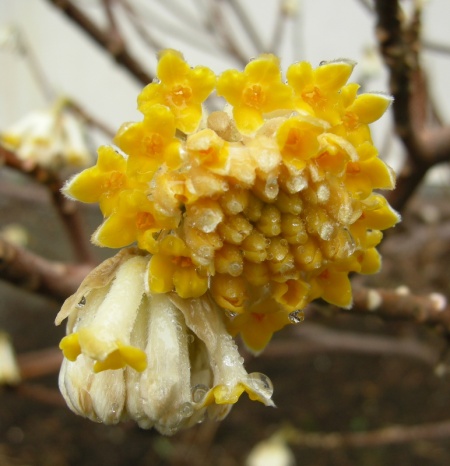
Edgeworthia chrysanthaEdgeworthia’s flowers starting to open.

.

Edgeworthia chrysanthaFully open flowers in my garden in mid-March 2012.  I wish blog posts could include a fragrance button!

Blooming begins in our area in early March and can continue through April.  Each bud expands to reveal 25 to 35 tubular flowers with a silky silver exterior and a bright yellow interior.  That would be ornamental enough but the fragrance is amazing.  I can’t describe it—you will just have to find a specimen and experience it for your self.

Edgeworthia chrysanthaEdgeworthia blooming at the Scott Arboretum (photo taken by Rhoda Maurer and used with the permission of the Scott Arboretum).

I am going to give cultural information for edgeworthia with the caveat that I don’t think the plant has been grown long enough for it to be definitive.  Most sources say that edgeworthia grows in light to partial shade and requires moist, fertile, well-drained organic soil with supplemental water in summer.  I grow mine in an east-facing location with very high shade, but edgeworthias at the Scott Arboretum and Chanticleer are in the sun while Charles Cresson has a relatively old plant in full shade.  My edgeworthias have organic soil but are in a dry location.  This causes the leaves to go limp when it’s hot but doesn’t seem to harm the plants, time will tell.

Zone information is also variable, and the only thing I can guarantee is that specimens have been growing successfully in the Delaware Valley area of Pennsylvania for some time.  If you garden north of here, I suggest you try the plant anyway because we really don’t know how much cold it can take.  Planting in a protected location is often recommended, and all the plants I have seen are in protected spots, but I don’t know if this is necessary.  Mine are more exposed than other local plants so we will see. 

Finally, height and width estimates range all over the place with a consensus probably being 6′ by 6′.  However, the Chanticleer specimen in the sun is much lower and tighter while Charles Cresson’s shady specimen is taller and looser.  One thing is clear though: you won’t regret adding edgeworthia to your garden.

If you are growing edgeworthia, please leave a comment describing your experience with it, especially if you are from an area north of the Delaware Valley.

Carolyn

If you would like more information on edgeworthias, please read my more recent post, Edgworthia Update, and the very helpful reader comments, by clicking here.


Nursery Happenings:  Carolyn’s Shade Gardens is a retail nursery located in Bryn Mawr, PA, specializing in showy, colorful, and unusual plants for shade.  The only plants that we ship are snowdrops and miniature hostas.  For catalogues and announcements of events, please send your full name, location, and phone number (for back up use only) to carolyn@carolynsshadegardens.com.  Click here to get to the home page of our website for catalogues and information about our nursery and to subscribe to our blog.

Facebook:  Carolyn’s Shade Gardens has a Facebook page where I post single photos, garden tips, and other information that doesn’t fit into a blog post.  You can look at my Facebook page here or click the Like button on my right sidebar here.

Notes: Every word that appears in orange on my blog is a link that you can click for more information.  If you want to return to my blog’s homepage to access the sidebar information (catalogues, previous articles, etc.) or to subscribe to my blog, just click here.
 

2012 Fall-blooming Camellias

Posted in Camellias, evergreen, Fall, Fall Color, Shade Shrubs with tags , , , , , , , , , , , , , , on December 2, 2012 by Carolyn @ Carolyns Shade Gardens

Carolyn’s Shade Gardens is a retail nursery located in Bryn Mawr, PA, specializing in showy, colorful, and unusual plants for shade.  The only plants that we ship are snowdrops and miniature hostas.  For catalogues and announcements of events, please send your full name, location, and phone number (for back up use only) to carolyn@carolynsshadegardens.com.  Click here to get to the home page of our website for catalogues and information about our nursery and to subscribe to our blog.

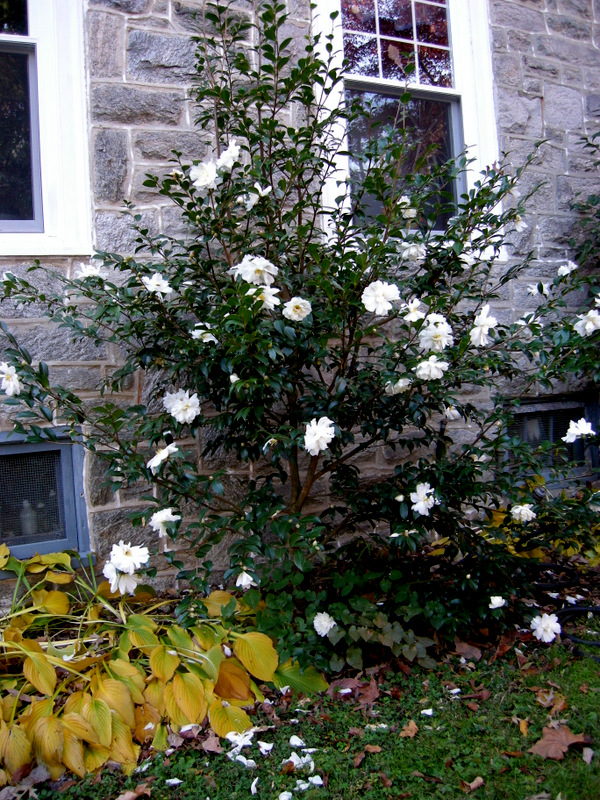
Camellia x 'Winter's Joy'The fall-blooming camellias are flowering in my garden, pictured above is ‘Winter’s Joy’.  I planted this camellia last fall, and it bloomed all through our mild winter.  This year it is once again loaded with buds and began blooming in October.

For the past two falls, I have written posts on fall-blooming camellias, shrubs that have quickly become favorites in my garden.  Who can resist their tough nature, glossy, evergreen leaves, tidy habit, and, best of all, large, elegant flowers from September through December?  To read my posts, click Part One, Part Two, and Part Three.

'Winter's Snowman'‘Winter’s Snowman’ was planted in spring 2011 in dense shade and bloomed sparsely last fall.  This year it is well established and has been covered with flowers since October.

I only have four fall-blooming camellias in my garden: the two pictured above plus ‘Elaine Lee’ and ‘Winter’s Darling’.  My desire to showcase some new varieties on my blog gave me a great excuse to venture forth and visit the camellia collections of two great gardeners, both located in Swarthmore, Pennsylvania.  I spent two glorious afternoons obsessing on camellias with Charles Cresson, whose garden you have visited many times on my blog, and with Keith Robertshaw, a diehard camellia collector and one of my nursery customers.

Camellia x 'Snow Flurry'‘Snow Flurry’, which I have shown you before in the Cresson garden, is having a banner year this year.

The weird weather patterns we have been experiencing have had one good result, camellias are blooming early this year with an abundance of flowers.  I usually find it very difficult to photograph a full camellia shrub.  When I step back far enough to get the whole bush in the photo, the flowers lose their impact even though they look great in person. That was not a problem on my recent trip when cultivars like ‘Snow Flurry’ were bursting with flowers as you can see in the above photo.

Camellia x 'Snow Flurry'‘Snow Flurry’ is the earliest to flower of the cold hardy fall-blooming camellias selected by William Ackerman at the US National Arboretum in Washington, DC.  It is at the top of the list for additions to my garden.

.

Camellia x 'Autumn Spirit'‘Autumn Spirit’ is another cold hardy camellia that blooms early and has produced a plethora of flowers this year.  Early bloomers are desirable because they are guaranteed to bloom even if we have an early winter that freezes the buds on the late bloomers.

.

Camellia x 'Autumn Spirit'‘Autumn Spirit’ was selected by the North Carolina nursery Camellia Forest for its intense color, early bloom, and cold hardiness.

I have featured all four of the camellias shown above in my previous posts.  However, my visits to the Robertshaw and Cresson gardens did yield seven new cold hardy camellias that I haven’t seen before.  If you combine these with the approximately 20 cultivars profiled in my 2010 and 2011 posts, you will have a pretty comprehensive reference library of camellias suitable for the mid-Atlantic area of the US.  Here are the new candidates:

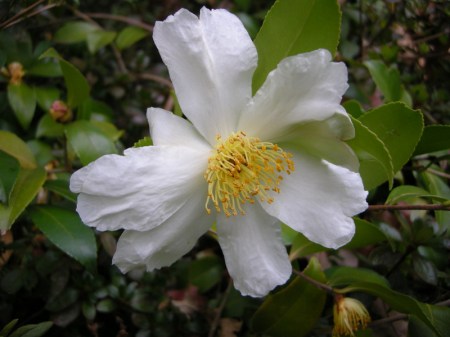
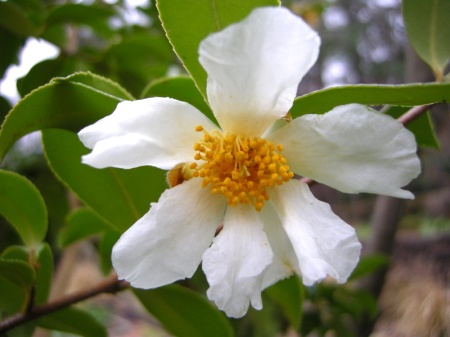
Camellia x 'Survivor'‘Survivor’ is another Camellia Forest introduction producing an abundance of single white flowers in early fall.  If you are in an area north of the mid-Atlantic, you might want to try this very cold hardy camellia which survived -9° F (-22.8° C) in the Camellia Forest Nursery garden.

.

Camellia x 'Long Island Pink'Another camellia in addition to ‘Survivor’ for gardeners who prefer single flowers, ‘Long Island Pink’ is also valued for its large highly polished leaves.  Although it is a cultivar of  C. sasanqua, which is generally considered tender, ‘Long Island Pink’ was selected for cold hardiness from a Long Island, NY, garden.

.

Camellia x 'Polar Ice'‘Polar Ice’ is a cold hardy Ackerman hybrid with anemone form flowers blooming in November and December.

.

Camellia x 'Ashton's Ballet' ‘Ashton’s Ballet’ is an Ackerman hybrid with rose form double flowers blooming in November and December.  It has a compact form and makes a beautiful garden specimen.

.

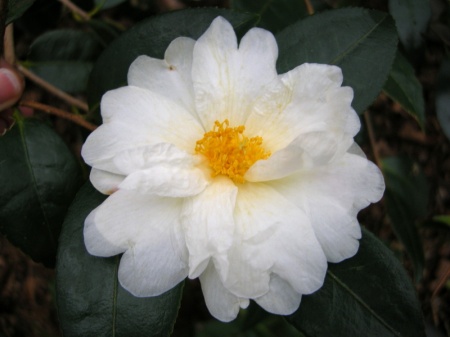
Camellia x (Ackerman seedling)I am cheating by putting this camellia in the post because you can’t buy it.  It was an Ackerman seedling given to Charles Cresson but never introduced to the trade.  The flowers are huge, gorgeous, and pure white.  I think we need to lobby to have it named! 

.

Camellia x 'Winter's Rose'The Ackerman hybrid ‘Winter’s Rose’ is unusual.  It is a semi-dwarf that grows very slowly and densely with small leaves and flowers, making a great patio plant.  If you don’t have much room, this is the camellia for you.

.

Camellia x 'Winter's Rose'‘Winter Rose’ has an abundance of small delicate shell pink flowers from mid-October to early December.  Charles Cresson pointed out that although the plant is exceedingly hardy, the flowers freeze easily.

.

Camellia x 'Winter's Rose' ‘Winter’s Rose’ seems to be the favorite among commenters so I thought I would add another photo.

.

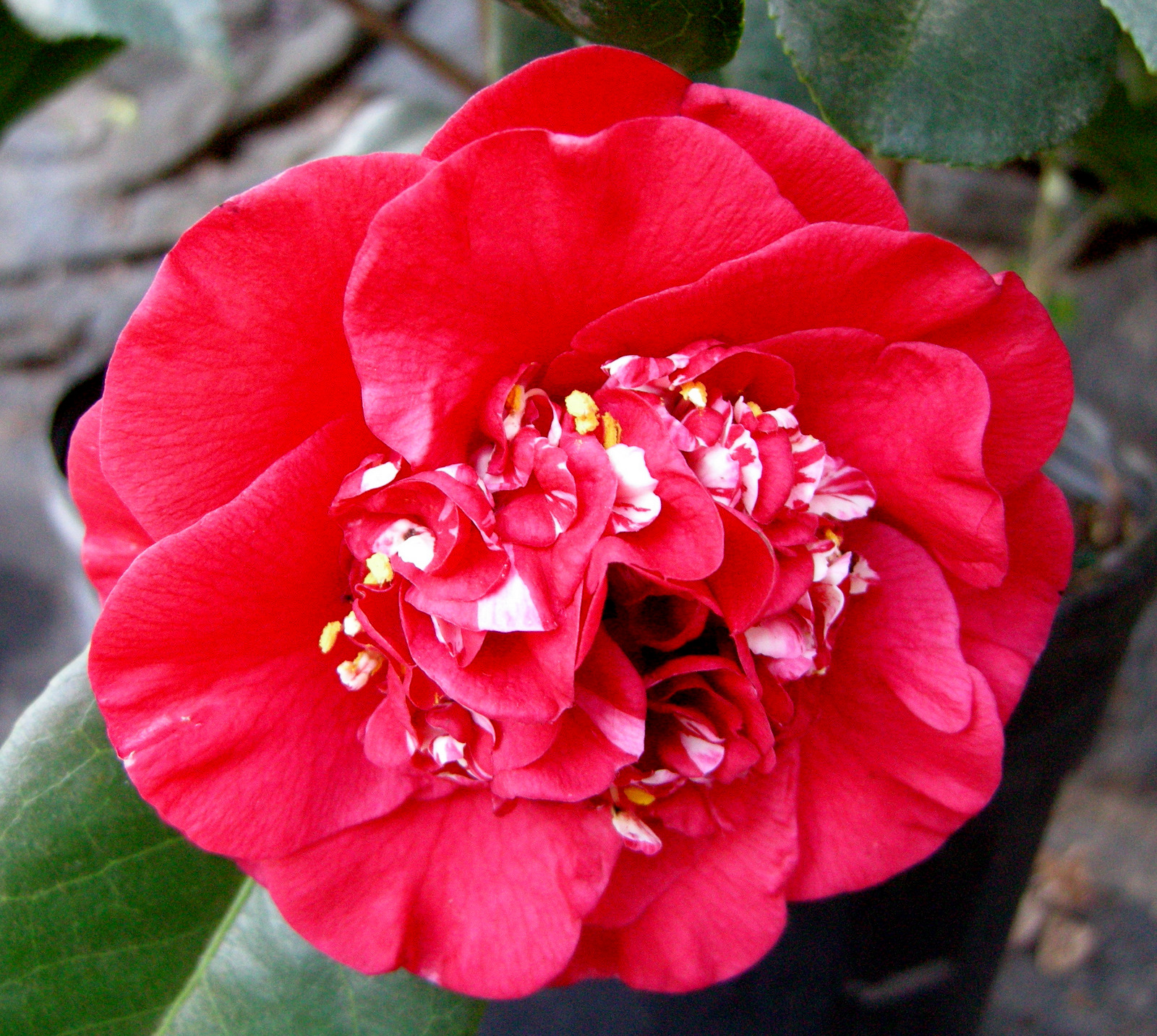
Camellia x 'Winter's Fire'‘Winter’s Fire’ was present in both gardens and is the most intriguing camellia that I saw during my visits.  The flower color is very unusual, a beautiful mix of red, pink, and coral with contrasting white splotches.  While Keith and Charles both stated that the white was caused by a non-harmful virus and both plants displayed this coloring, I could find no mention of this on the internet.

[Thanks to reader Alisa Brown for answering my question about ‘Winter’s Fire’.   Variegation in camellias caused by a virus is not considered part of the official description of the flower.  You can read more about this by clicking here.]


Camellia x 'Winter's Fire'William Ackerman, who selected ‘Winter’s Fire’, characterizes it as having “spreading growth with a weeping habit.”  In the Robertshaw garden, it was growing like a groundcover.  This photo is taken from above.  I would love to try it cascading over a wall.

.

Camellias in Cresson gardenThis is one corner of the Cresson garden showing ‘Snow Flurry’ on the left and the unnamed white Ackerman plant on the top right intermingled with several other large camellias.  Though it may be hard at first to get used to such big gorgeous flowers in November, as you can see they make for a beautiful fall landscape.


My annual fall camellia hunt is over with seven new specimens bagged.  Now I have a year to determine where I will continue my search next fall.  If you know of any local public or private gardens showcasing camellias please let me know.

Carolyn


Nursery Happenings:  Carolyn’s Shade Gardens is done for the fall.  Thanks for a great year.  See you in spring 2013.

If you are within visiting distance and would like to receive catalogues and information about customer events, please send your full name and phone number to carolynsshadegardens@verizon.net.  Subscribing to my blog does not sign you up to receive this information.

Facebook:  Carolyn’s Shade Gardens has a Facebook page where I post single photos, garden tips, and other information that doesn’t fit into a blog post.  You can look at my Facebook page here or click the Like button on my right sidebar here.

Notes: Every word that appears in orange on my blog is a link that you can click for more information.  If you want to return to my blog’s homepage to access the sidebar information (catalogues, previous articles, etc.) or to subscribe to my blog, just click here.
 

Woody Plants for Shade Part 6

Posted in Camellias, evergreen, Shade Gardening, Shade Shrubs, winter interest with tags , , , , , , , , , , , , , , , , , , , , on September 28, 2012 by Carolyn @ Carolyns Shade Gardens

Carolyn’s Shade Gardens is a retail nursery located in Bryn Mawr, PA, specializing in showy, colorful, and unusual plants for shade.  The only plants that we ship are snowdrops and miniature hostas.  For catalogues and announcements of events, please send your full name, location, and phone number (for back up use only) to carolyn@carolynsshadegardens.com.  Click here to get to the home page of our website for catalogues and information about our nursery and to subscribe to our blog.

‘Early Amethyst’ beautyberry, Callicarpa dichotoma, is available in the current offer but was profiled in a previous woody plant post so I am not describing it here.  However, it is a favorite for fall interest and I wanted to include a photo.  For a full write up of this plant,  go to Woody Plants for Shade Part 3.

My nursery, Carolyn’s Shade Gardens, specializes in perennials for shade with an emphasis on hellebores, unusual bulbs especially snowdrops, hostas particularly miniature hostas, native plants, and ferns.  However, a satisfying shade garden does not consist of just perennials but includes trees, shrubs, and vines.

‘Winter’s Joy’ fall-blooming hardy camellia is another repeat, see this post for details.  I planted one myself last fall, and I would like to add to my previous write up that this camellia has more buds and flowers than any other camellia in my garden.  In 2011, it produced the beautiful flowers pictured above through out the entire winter.  Right now my plant is poised to do it again with hundreds of buds waiting to open.

Despite the need, woody plants for shade are difficult to find in local nurseries.  To fill this gap for my customers, three times a year, I offer woody plants for pre-order.  The plants chosen for the offer are the result of hours of painstaking selection in the shade houses of wholesale nurseries to find the healthiest, most desirable woodies available.


‘Winter’s Snowman’ fall-blooming hardy camellia is another favorite offered previously, see this post for details.  I have written three articles about fall-blooming hardy camellias in general.  If you are interested in finding out more about them, start here Fall-blooming Hardy Camellias Part 3, and you will find links to the first two installments.

 It is now time for my fall 2012 woody offer.  If you are a customer, you should already have gotten an email with all the details.  Blog readers can look at the catalogue on line by clicking here.  My nursery is on site retail sales only.  The only plants I ship are snowdrops in February and miniature hostas later in the season.  However, I hope out-of-town readers will get some good ideas for woody shade plants to look for at their local independent nursery.

The previous three photos are of another repeat: paper bush, Edgeworthia chrysantha, for details click here.  My plants have thrived through the last two hot and dry summers with pristine tropical looking leaves, gorgeous fall-forming buds, and highly fragrant late winter-blooming flowers.  This is truly a shrub with 365 days of interest.

So much for the preliminaries and repeat offerings, let’s get to the new plants.  There are six: three from my favorite group of shrubs, hydrangeas, and three evergreens for winter interest (the camellias are evergreen too).  Here are the details.

Native oakleaf hydrangea, H. quercifolia

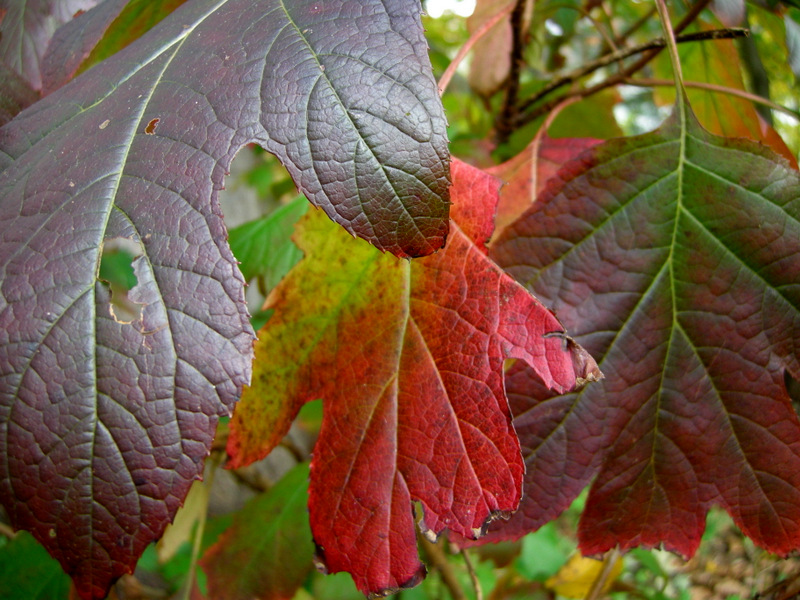
The fall color of oakleaf hydrangea.

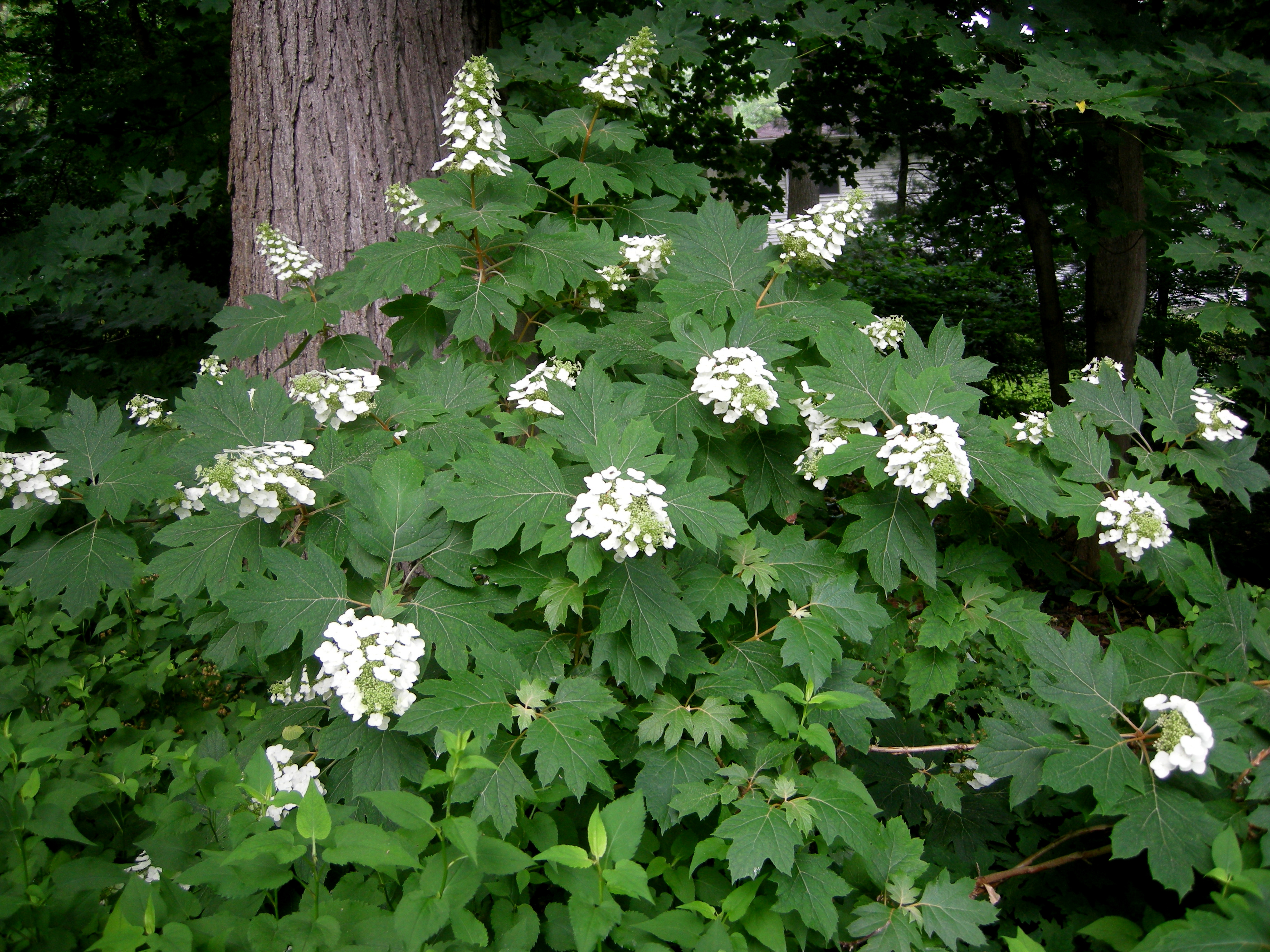
Our native oakleaf hydrangea, H. quercifolia, is the best all round shrub for shade—everyone should have at least one!  Huge, long-lasting, upright pyramids of white flowers bloom from May through July. It has bold-textured leaves with heart-stopping burgundy-red fall color, and cinnamon-colored exfoliating bark—a true four season plant. 

The white flowers of ‘Amethyst’ oakleaf hydrangea age to a striking red that does not fade when dried.  Great for flower arranging.

I am offering ‘Amethyst’ native oakleaf hydrangea, a new cultivar selected because  its initially white flowers turn to a striking red color and stay that way.  It grows to 5 to 6’ tall and 5 to 6’ wide in sun to full shade.  It is hardy in USDA hardiness zones 5 to 9, walnut and drought tolerant, and native to the southeastern US.


‘Blue Bird’ sawtooth hydrangea, H. serrata


‘Blue Bird’ sawtooth hydrangea produces lovely blue lacecap flowers starting in June for an extended period.  Acid soil results in the best blue tint.  I also grow it for its beautiful clean bright green leaves through out the season, which are enhanced by red highlights in the fall.  It is very tolerant of cold temperatures avoiding bud and twig dieback in harder winters.  ‘Blue Bird’ reaches 4′ tall and 4′ wide in part to dappled shade and grows in zones 5 to 9.  Sawtooth hydrangea is native to Korea and Japan.

This photo shows ‘Endless Summer’ bigleaf hydrangea, H. macrophylla, right now.  Yes, it is loaded with fresh flowers and buds and has been blooming since late spring.

‘Endless Summer’ bigleaf hydrangea sports very large pink or blue mophead flowers from late spring through summer and well into fall—it’s in full bloom right now as you can see from the photo above.  It represents a recent breakthrough in hydrangeas because it blooms on old and new wood giving it an extended bloom season.  This also means that if the buds formed on old wood the previous season are frozen over the winter, buds will form on new wood as the season progresses.  ‘Endless Summer’s’ large, medium green leaves provide a pleasing backdrop for the flowers.  It grows in zones 4 to 9 and reaches 4′ tall and 4′ wide in part shade.  It is recommended for full sun only with supplemental watering.  Bigleaf hydrangea is native to Japan.

‘Gold Dust’ Japanese aucuba, A. japonica, is an elegant specimen for deep shade.

A close up of the unusual leaves of ‘Gold Dust’ Japanese aucuba—glorious in winter.

‘Gold Dust’ Japanese aucuba’s very shiny, broadleaf evergreen leaves sprinkled with yellow spots make it one of the most vibrant and colorful plants to thrive in dense shade.  I have grown it successfully for many years in several areas of my garden that receive no direct sunlight.  It is very vigorous, disease free, and easy to grow as long as you don’t plant it in the sun.  ‘Gold Dust’ grows to 6 to 8′ tall and 4 to 6′ wide in part to dense full shade and is hardy in zones 7 to 9.  Aucuba is native to Japan, and the variegated form was introduced to the west in 1783.

The fall flowers of ‘Rose Creek’ glossy abelia, A. x grandiflora.

‘Rose Creek’ is a compact form of glossy abelia, great for smaller spaces and smaller gardens.

‘Rose Creek’ is a dense and compact glossy abelia that covers itself in a multitude of wonderfully fragrant, showy white flowers continuously from May through September.   When the flower petals drop off, the rosy pink sepals (bud enclosures) remain and are very eye-catching.  The beautiful, glossy evergreen foliage has pink highlights and turns purple in the fall, providing excellent winter interest.  The stems are  crimson red.  ‘Rose Creek’ grows to 2 to 3′ tall and 3 to 4′ wide in part shade or full sun and is hardy in zones 5 to 9.  It is deer resistant and attracts butterflies and hummingbirds.  Glossy abelia is a cross between two Chinese abelia species.

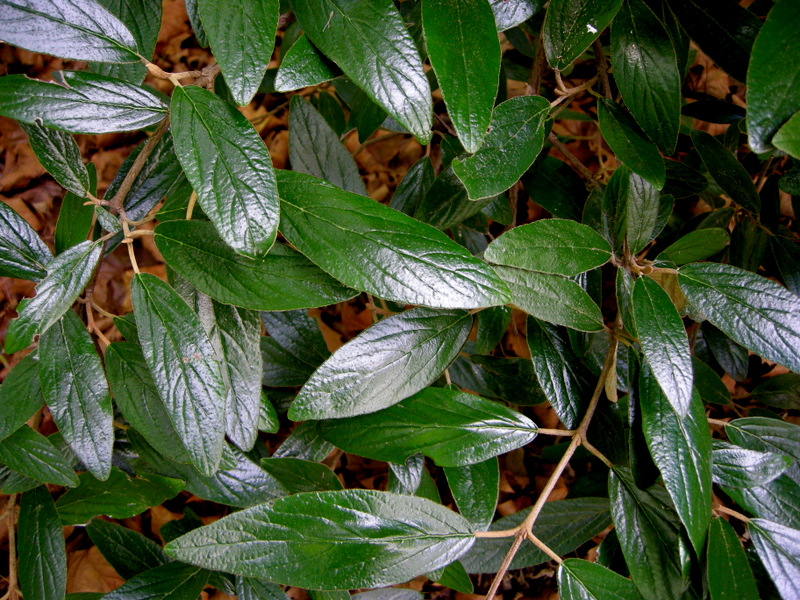
The incredibly shiny leaves of Prague viburnum, V. x pragense, sparkle in the winter.

This photo of the flower of Prague viburnum was kindly lent to me by Monrovia, for their full plant profile, click here.

Prague viburnum’s pink buds open into large, bouquet-like, creamy white flowers in May followed by glossy, persistent black fruit.  Just as ornamental are its very showy, lustrous, dark evergreen leaves.  Prague viburnum reaches 8′ tall and 6′ wide in full sun to part shade and is hardy in zones 5 to 8.  You can grow it in full shade and the leaves will be gorgeous, but it won’t flower very well.  It is fast growing and deer resistant.  It is a cross between leatherleaf and service viburnums, which are both from China.

I hope you have a space in your garden for at least one of these wonderful shrubs for shade.  For more ideas, check out Woody Plants for Shade Parts 1 to 5 using the links provided below:

Part 1,   Part 2,   Part 3,   Part 4,   Part 5

Carolyn

Nursery Happenings:  Shrub orders are due by noon on Wednesday, October 3.  For the catalogue, click here.  We are offering two sessions of a seminar on low maintenance gardening for fall on Wednesday, October 3, and Friday, October 5, from 10 to 11:30 am.  For the details, click here.  Look for a special offer of double hellebores next week.

If you are within visiting distance and would like to receive catalogues and information about customer events, please send your full name and phone number to carolynsshadegardens@verizon.net.  Subscribing to my blog does not sign you up to receive this information.

Facebook:  Carolyn’s Shade Gardens has a Facebook page where I post single photos, garden tips, and other information that doesn’t fit into a blog post.  You can look at my Facebook page here or click the Like button on my right sidebar here.

Notes: Every word that appears in orange on my blog is a link that you can click for more information.  If you want to return to my blog’s homepage to access the sidebar information (catalogues, previous articles, etc.) or to subscribe to my blog, just click here.
 

Landscape Problem Solved

Posted in How to, landscape design, native plants, Shade Shrubs with tags , , , , , on July 25, 2012 by Carolyn @ Carolyns Shade Gardens

Carolyn’s Shade Gardens is a retail nursery located in Bryn Mawr, PA, specializing in showy, colorful, and unusual plants for shade.  The only plants that we ship are snowdrops and miniature hostas.  For catalogues and announcements of events, please send your full name, location, and phone number (for back up use only) to carolyn@carolynsshadegardens.com.  Click here to get to the home page of our website for catalogues and information about our nursery and to subscribe to our blog.

20120724-154006.jpg‘Invincibelle Spirit’ and ‘Incrediball’ smooth hydrangeas massed at the Coastal Maine Botanical Gardens.

Three things came together recently to help me solve a landscaping problem that had bothered me for years. First, I was reading one of my favorite blogs called Conrad Art & Glass Gardens authored by Larry Conrad. In a recent post he talked about his favorite combinations including one achieved by massing white and pink smooth hydrangeas. I have been interested in smooth hydrangea, H. arborescens, because it is very shade tolerant. I also like it because it is a native plant found through out much of the eastern United States, including Pennsylvania. The well known cultivar ‘Annabelle’ with very large white mophead flowers was discovered in the wild in the 1960s. It grows well in Maine and has proven to be quite deer resistant on the island where my family vacations.

20120724-185734.jpgWhite and pink smooth hydrangeas massed in Larry Conrad’s Wisconsin garden.

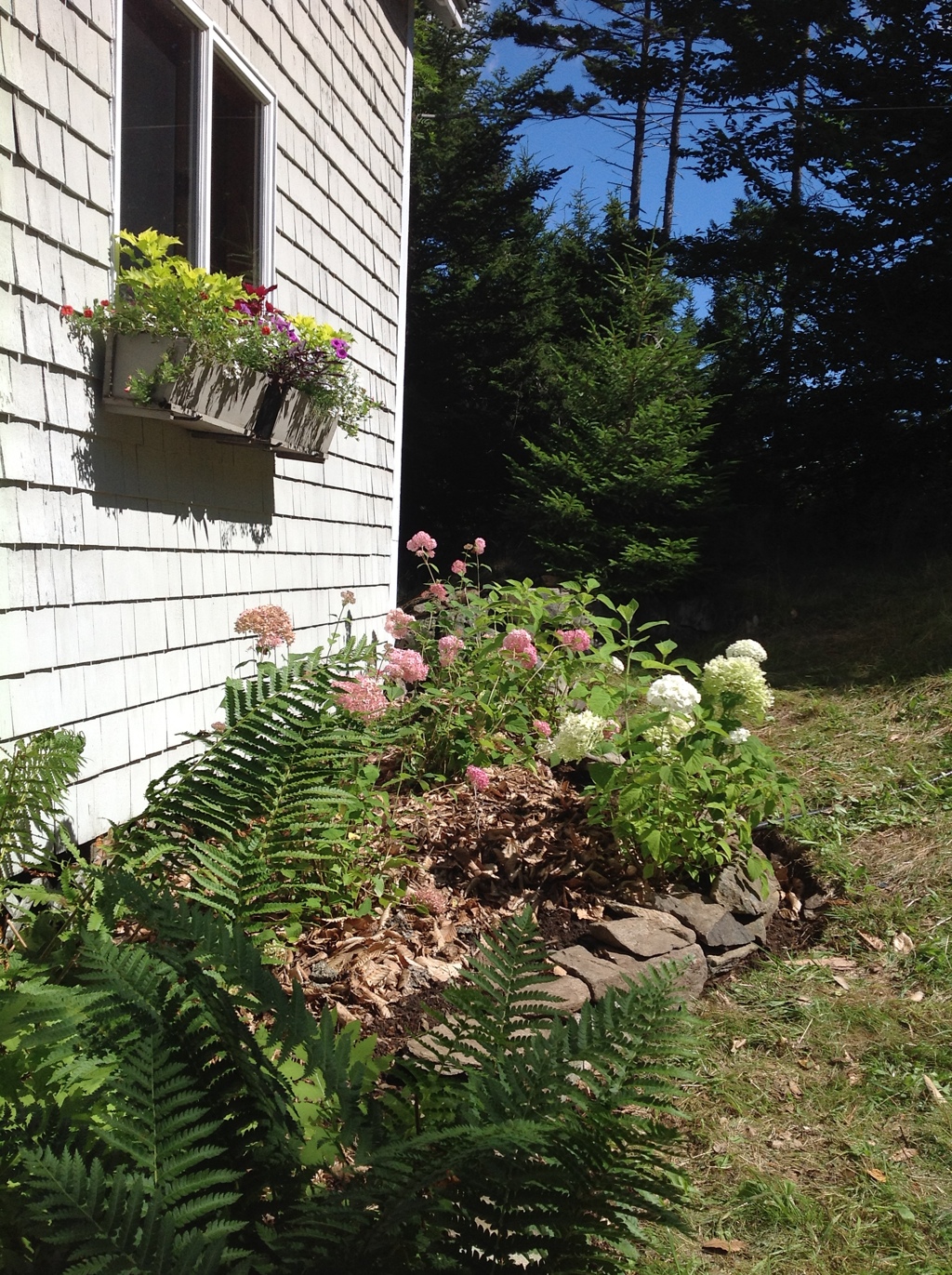
The second thing that brought me to this post was a landscaping dilemma at my family’s house in Maine. There is a perennial garden planted by the previous owners next to the front door. However, no one who uses the house wants to garden there. The native landscape is so beautiful we don’t need any added ornamentals. I had been wondering where to try Larry’s beautiful combination, and this neglected garden seemed the perfect place. I bought three pink and two white smooth hydrangea with the intention of emptying the bed and letting them fill it in.

20120724-195423.jpgSmooth hydrangeas at the entrance to the children’s garden at the Coastal Maine Botanical Gardens.

The third contributor to this post was a visit to the Coastal Maine Botanical Gardens in Boothbay Harbor, Maine. Donna from Garden Walk Garden Talk came to visit me in Maine, and I had to show her this gorgeous garden (among other Maine delights). In the fall of 2010 I wrote about my first visit to CMBG, and I will write a longer post about my recent visit later but right now we are discussing hydrangeas. Imagine my delight when we approached the CMBG children’s garden and found the hydrangea combination I intended to use lining the entrance. My project now had a professional seal of approval, and I couldn’t wait to get home and start digging.

20120725-113605.jpgInvincibelle Spirit’ smooth hydrangea at CMBG

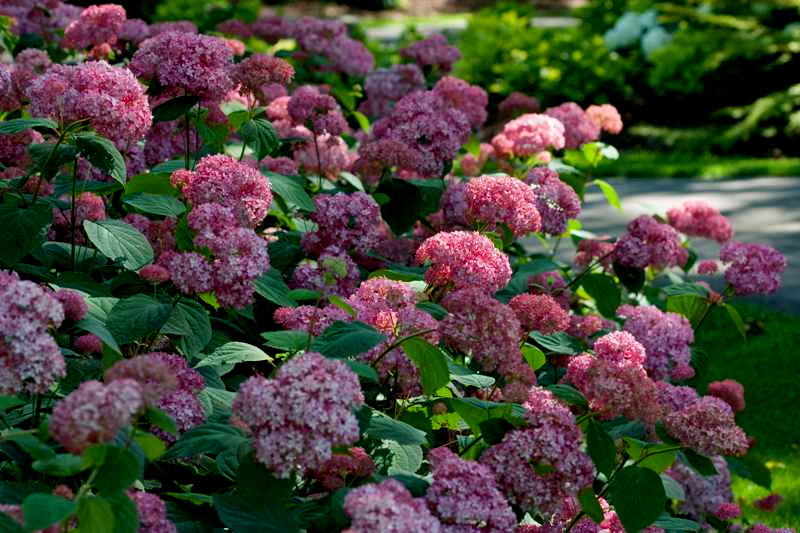
There was a choice of which smooth hydrangea cultivars to use. The biggest determining factor was which plants looked the healthiest at the nursery where I bought them. Although smooth hydrangeas are extremely tough, taking both dry and wet soils, clay, drought, heat, shade, rocky soil, and almost anything else you can throw at them, I have found them difficult to establish if you don’t start with vigorous specimens. There are two pink-flowered cultivars: ‘Bella Anna’ and ‘Invincibelle Spirit’, which has been on the market longer. I have been told that ‘Belle Anna’ is an improvement on ‘Invicibelle Spirtit’, but the plants looked weaker and I don’t think you can improve on the ‘Invincibelle Spirit’ specimens at CMBG in the photo above.

20120725-113851.jpg‘Incrediball’ smooth hydrangea at CMBG

For the white smooth hydrangeas, I had a choice of tried-and-true ‘Annabelle’ and an improved version called ‘Incrediball’, which has even larger, to 12″, globular flowers. Although I wasn’t after larger flowers, I chose ‘Incrediball’ because the flowers are whiter than ‘Annabelle’, which has some lime in it, and because ‘Incrediball’s’ stems have been selected for thickness to avoid flopping when it rains.

20120725-120518.jpg‘Invincibelle Spirit’ and ‘Incrediball’ at CMBG

All the smooth hydrangea cultivars grow to around 3 to 5′ wide and 3 to 5′ tall in zones 3 to 9. They flower from June to September, but the dried flowers heads are quite beautiful through fall. They perform best in part shade, but will grow in full sun with consistent moisture. The straight species grows in full shade. They bloom on new wood so pruning in late winter is recommended to encourage vigorous new stem growth.

20120725-122157.jpg

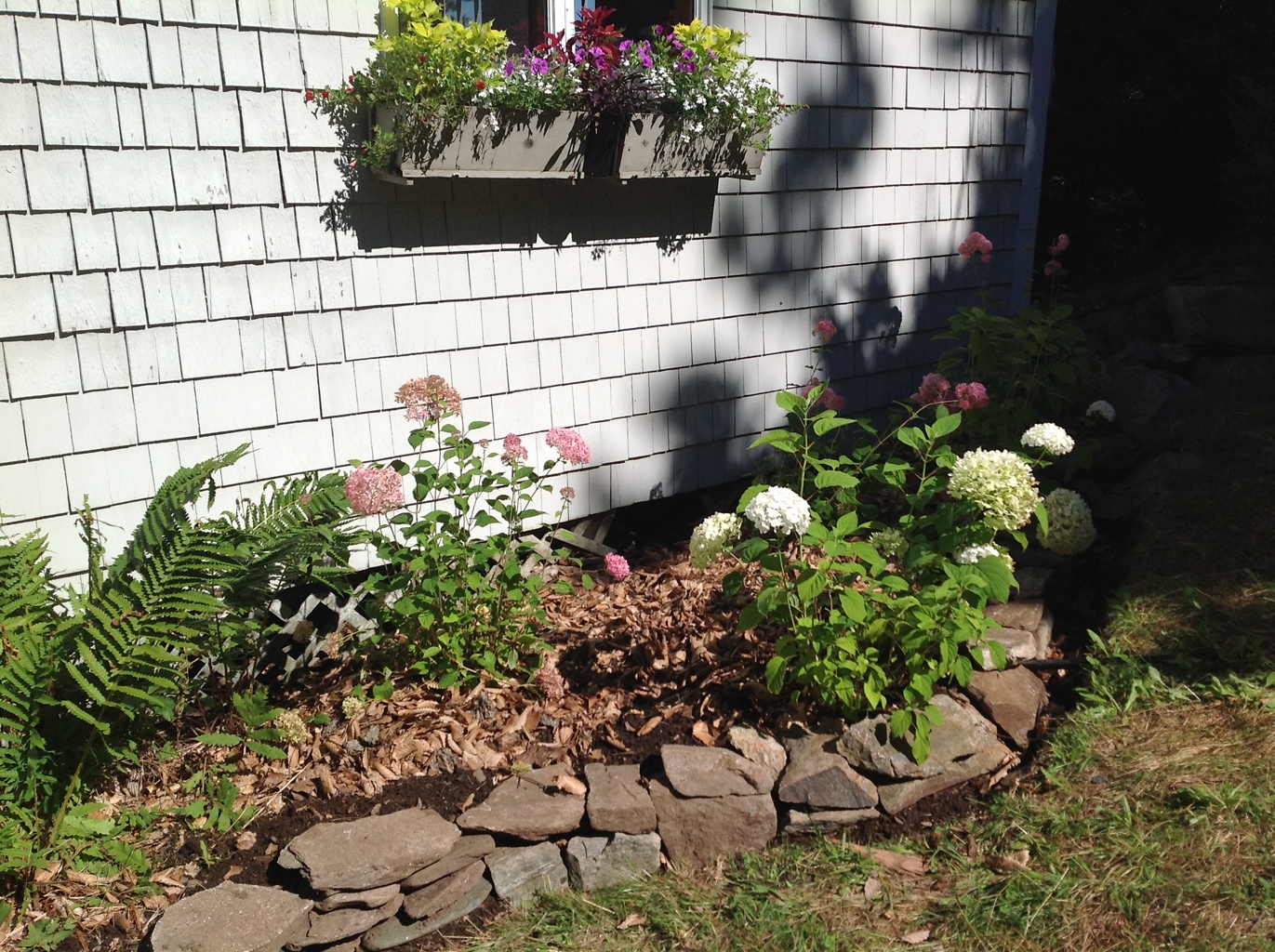
20120725-122305.jpgMy newly planted smooth hydrangeas

As you can see from the two photos above, my new hydrangeas have been planted. I anticipate that they will fill in the whole bed and crowd out weeds. I am still working on the wall but am quite happy with it so far. I hope the trench along the front will allow us to keep the nasty, tenacious grass out of the bed. If I get really ambitious, I am going to fill the trench with mussel shells from the beach.

* * * * *

This post is my second experiment with publishing a post directly from my recently acquired “new” iPad. Although it was a little easier this time and I mastered bold captions and links, I still had to call Donna in Niagara Falls to help me. I also took the final two photos with the iPad, and I think they turned out quite well. I am very impressed with the camera function on the new iPad, but you can’t truly appreciate the incredible resolution unless you have a very good screen on your computer, which I don’t. I think I would recommend an iPad just for looking at photos, that is if you can afford it. We don’t have internet access at the house in Maine so portability was a big factor for me. But the major reason I got it, 3G/4G capability is a huge disappointment, which I will explain at a later date.

Carolyn

Nursery Happenings: The nursery is closed until the fall. Thanks for a great spring season!

If you are within visiting distance and would like to receive catalogues and information about customer events, please send your full name and phone number to carolynsshadegardens@verizon.net. Subscribing to my blog does not sign you up to receive this information.

Facebook: Carolyn’s Shade Gardens has a Facebook page where I post single photos, garden tips, and other information that doesn’t fit into a blog post. You can look at my Facebook page here or click the Like button on my right sidebar here.

Notes: Every word that appears in orange on my blog is a link that you can click for more information. If you want to return to my blog’s homepage to access the sidebar information (catalogues, previous articles, etc.) or to subscribe to my blog, just click here.
Groundcovers, Thinking Outside the Box

Posted in garden to visit, groundcover, How to, landscape design, native plants, Shade Gardening, Shade Perennials, Shade Shrubs with tags , , , , , , , , , , , , , , , , , , , , , , , , , , , , , , , on June 11, 2012 by Carolyn @ Carolyns Shade Gardens

Carolyn’s Shade Gardens is a retail nursery located in Bryn Mawr, PA, specializing in showy, colorful, and unusual plants for shade.  The only plants that we ship are snowdrops and miniature hostas.  For catalogues and announcements of events, please send your full name, location, and phone number (for back up use only) to carolyn@carolynsshadegardens.com.  Click here to get to the home page of our website for catalogues and information about our nursery and to subscribe to our blog.

Part of the Idea Garden at Longwood Gardens

I recently visited Longwood Gardens in Kennett Square, Pennsylvania.  I have no hesitancy in saying that Longwood is one of the premier gardens in the world and should be on everyone’s life list.  However, there is so much there that it is difficult to post about it.  Also, “familiarity breeds contempt.”  I hold two Certificates in Ornamental Horticulture from Longwood and have taken a total of 18 courses to earn them.  Each course involved a minimum of 8 visits to the gardens so you can see that I have spent a lot of time there.  If you are local, these courses are the absolute best plant education available.

Italian Water Garden, viewed while resting in the shade.

Because I have spent so much time at Longwood, I didn’t photograph the usual sights or even visit the fabulous four acre indoor conservatory (with one exception mentioned below).  As a shade gardener I headed straight for Peirce’s Woods, which is seven acres devoted to shady plants native to the eastern U.S. deciduous forest.  I hoped to augment my library of photographs and get some ideas of plants to sell at the nursery and add to my own gardens.  I wasn’t disappointed.

The straight species of smooth hydrangea, H. arborescens, lined the very shady paths by the lake.  I think it is more appropriate to a woodland garden than the cultivated forms like ‘Annabelle’.

Smooth hydrangea has a lovely flower whose size is in keeping with other native woodland plants.

While walking through Peirce’s Woods, I returned to the thoughts I have been having lately about groundcovers.  This time of year, with the weeds running rampant, my customers are more interested in groundcovers.  But it is clear from their questions that they mean plants that form runners to creep and cover the ground.  The classic examples are vinca, ivy, and pachysandra.  However, my definition of groundcover is much broader than this and includes any plant massed to effectively choke out weeds.

Native maidenhair fern, Adiantum pedatum


When you look at the masses of native maidenhair fern above, you are probably thinking that’s all very nice that Longwood uses masses of these fairly pricey, non-creeping plants as groundcover, but I could never afford that quantity of plants.  However, think of the alternative: weeds and the hours if not days it takes to remove them, not to mention how their presence detracts from the look of your garden as well as your satisfaction with it.  Your time is valuable, and you wouldn’t be reading my blog if the look of your garden wasn’t important to you.

Native semi-evergreen coralbells, Heuchera villosa, often sold as the cultivar ‘Autumn Bride’, has gorgeous white flowers in the fall.

Yes, you can use mulch to keep down the weeds.  However, commercial shredded hardwood mulch is not attractive, is generally not produced sustainably, and requires a significant time investment to apply it.  Most importantly, it requires a monetary outlay every year because it must be re-applied every spring.  Perennial plants are initially more expensive to buy and plant but once they are there, you never have to do anything again.  It is kind of like buying a compact fluorescent light bulb versus the bulbs we grew up with.

Here are some more plants that Longwood uses in masses to make effective groundcovers:

Mexican feather grass, Nassella tenuissima


Native evergreen Christmas fern, Polystichum acrostichoides

Native semi-evergreen coralbells, Heuchera villosa purple form.

Shredded umbrella-plant, Syneilesis aconitifolia: I can only dream of achieving this in my garden, and, yes, it is very expensive.

Native hay-scented fern, Dennstaedtia punctiloba, creeps to fill in large areas.

This bellflower, Campanula takesimana, was growing and apparently self-sowing in dense shade on the hillside near the Chimes Tower.

Fall-blooming yellow waxbells, Kirengoshoma palmata, is more like a shrub than a perennial but it dies to the ground ever year.

Native coralbells, Heuchera villosa ‘Caramel’, is my favorite heuchera and retains its lovely color 365 days a year.

Giant butterbur, Petasites japonicus, grows in dense shade and covers a lot of ground.

Lavender mist meadow-rue, Thalictrum rochebrunianum

Native sensitive fern, Onoclea sensibilis, does creep.

Shrubs can be used as groundcover also, two examples from Longwood:

The straight species of oakleaf hydrangea, H. quecifolia, gets quite large and spreading.

Native southern bush honeysuckle, Diervilla sessifolia, suckers to form a colony.

Lastly, I want to show you why I briefly visited the conservatories:  groundcover for walls, the new fern wall at Longwood.  It is worth a visit just to see it:

This is a beautiful hallway containing individual restrooms, and the walls are totally covered in ferns.

Some of the ferns are quite large, and all are healthy and beautiful.

I hope I have convinced you to think outside the box and mass all kinds of unusual plants as groundcovers.  You will have more time to enjoy a better looking garden and save money in the long run.

Carolyn

Nursery Happenings:  This coming weekend we will have our final open hours at the nursery on Saturday, June 16, from 9 am to 2 pm, and Sunday, June 17, from 11 am to 1 pm.  We close on June 17 until September.  Customers on my email list will receive an email with details.

If you are within visiting distance and would like to receive catalogues and information about customer events, please send your full name and phone number to carolynsshadegardens@verizon.net.  Subscribing to my blog does not sign you up to receive this information.

Facebook:  Carolyn’s Shade Gardens has a Facebook page where I post single photos, garden tips, and other information that doesn’t fit into a blog post.  You can look at my Facebook page here or click the Like button on my right sidebar here.

Notes: Every word that appears in orange on my blog is a link that you can click for more information.  If you want to return to my blog’s homepage to access the sidebar information (catalogues, previous articles, etc.) or to subscribe to my blog, just click here.
Woody Plants for Shade Part 5

Posted in Fall Color, landscape design, native plants, Shade Gardening, Shade Shrubs, shade vines, winter interest with tags , , , , , , , , , , , , , , , , , , , , on May 17, 2012 by Carolyn @ Carolyns Shade Gardens

Carolyn’s Shade Gardens is a retail nursery located in Bryn Mawr, PA, specializing in showy, colorful, and unusual plants for shade.  The only plants that we ship are snowdrops and miniature hostas.  For catalogues and announcements of events, please send your full name, location, and phone number (for back up use only) to carolyn@carolynsshadegardens.com.  Click here to get to the home page of our website for catalogues and information about our nursery and to subscribe to our blog.

The bright rose flowers of ‘Wine & Roses’ old-fashioned weigela.

Shade gardens are not composed solely of perennials so two years ago I branched out to offer high quality shrubs, vines, and trees to my customers.  In my second Spring 2012 Woody Plant Offer, details here,  I have focused on plants that are late spring or summer blooming and native to our area.  I thought my blog readers who are not customers might be interested in learning about the plants that I would recommend they add to their shade gardens.  And doing an article allows me to add more information and explain why I chose the plants I included so customers might be interested also.

When it blooms in late spring, our native fringe tree is covered with elegant, fragrant flowers.

Fringe tree is a lovely small flowering tree or a large shrub.

I saw native fringe tree, Chionanthus virginicus, in full bloom in the shady woods of Bartram’s Garden in Philadelphia recently, and it reminded me of how gorgeous this native tree is.   It is loaded with generous amounts of creamy white, fragrant flowers in May and June.  Its medium green leaves turn a good yellow in the fall.  It may produce showy grape-like fruit attractive to birds.  Fringe tree grows to 12 to 20’ tall and 12 to 20’ wide in sun to part shade, although the tree in Bartram’s Garden was in a very shady site.  It is wet site tolerant, hardy to zone 4, and native to the eastern US, including PA.  It is a  Missouri Botanical Garden Plant of Merit (photos courtesy of MOBOT).


 Our native dwarf summersweet is loaded with fragrant white flowers in summer.

I have seen stands of summersweet growing wild in New England, and it is a beautiful sight.  However, the species gets quite large and suckers into colonies so the native dwarf summersweet ‘Hummingbird’Clethra alnifolia ‘Hummingbird’, is better for most home gardens.  It has very fragrant, bottlebrush, white flowers in June and July that attract butterflies.  Its  lustrous bright green leaves turn a clear yellow in the fall.  It has an excellent compact habit and produces more flowers than the species.

Dwarf summersweet’s habit is much more compact and attractive than the species, and it produces more flowers.

Dwarf summersweet grows to 2 to 4’ tall and 3’ wide in sun to full shade.  It is hardy to zone 4, deer resistant, wet site and salt tolerant, and native to the eastern US, including PA.  It is a Pennsylvania Horticultural Society Gold Medal Plant,  click here for details (photos courtesy of the MOBOT Plant Finder, for more information click here).


 ‘Nikko’ dwarf slender deutzia is loaded with white flowers in late spring.

‘Nikko’ lining my rock garden path in full shade.

I have offered ‘Nikko’ dwarf slender deutzia, D. gracilis ‘Nikko’, before, but it is such a useful plant that I couldn’t help including it again.  It is covered with delicate white flowers in April and May.  Its fine-textured and neat green leaves turn an attractive burgundy in the fall.  It is an excellent specimen or flowering groundcover for shade.  I grow it in full shade as a groundcover to edge the path at the base of my winterberry hollies.  ‘Nikko’ grows to 1 to 2’ tall and 2 to 5’ wide in full sun to full shade.  It is hardy to zone 4 and deer resistant.  It is a PHS Gold Medal Plant (for more information click here).


 ‘Invincibelle Spirit’ is a color breakthrough for our native smooth hydrangea.

Native ‘Invincibelle Spirit’ smooth hydrangea, H. arborescens ‘Invincibelle Spirit’, is  a pink-flowered version of the wonderful ‘Annabelle’.  It has very showy large pink snowball flowers that continue to bloom from June into the fall.  ‘Invincibelle Spirit’ grows to 3 to 4’ tall by 3 to 4’ wide in part to full shade.  It is hardy to zone 4, tolerant of a wide range of soil conditions, deer resistant, and native to the eastern US, including PA.  It should be gently pruned in late spring for optimum growth (photo courtesy of the MOBOT Plant Finder, for more information click here).                    

A close up of the large and beautiful flowers and leaves of oakleaf hydrangea.

   Native oakleaf hydrangea in my woodland garden at the base of a black walnut.

The fall color of oakleaf hydrangea.

Our native oakleaf hydrangea, H. quercifolia, is the best all round shrub for shade—everyone should have at least one!  Huge, long-lasting, upright pyramids of white flowers bloom from May through July and change to pink for even longer interest.  It has bold-textured leaves with heart-stopping burgundy-red fall color, and cinnamon-colored exfoliating bark—a true four season plant.  I am offering ‘Alice’ native oakleaf hydrangea, a superior form that has larger flowers, better fall color, and very disease resistant leaves.  It grows to 5 to 8’ tall and 5 to 8’ wide in sun to full shade.  It is hardy to zone 5, walnut and drought tolerant, and native to the southeastern US.  For more information, click here.


The pink mophead flowers of ‘Preziosa’ age to a dark maroon.

‘Preziosa’s’ leaves are gorgeous, here they are starting to turn burgundy in the fall.

‘Preziosa’ sawtooth hydrangea, H. serrata ‘Preziosa’, is now my favorite “fancy” hydrangea for full shade so I am offering it again.  I planted mine in the shade of a white pine under a cherry laurel behind a Japanese maple, and it is thriving and loaded with buds right now.  This wonderful hydrangea produces lovely pink mophead flowers from June to August, which darken with age to a gorgeous maroon.  But I may like the elegant leaves more, especially their beautiful burgundy fall color.   The leaves, deep red stems, flowers, and habit of ‘Preziosa’ are all superior to most other hydrangeas.  ‘Preziosa’ grows to 3 to 4’ tall and 3 to 4’ wide in part to full shade.  It is very tolerant of cold temperatures and hardy to zone 5.  For more information, click here.


 The elegant leaves and flowers of native ‘Blue Muffin’ arrowwood viburnum.

Native ‘Blue Muffin’ arrowwood viburnum, V. dentatum ‘Blue Muffin’,  has lovely flat-topped white flowers in May and June that attract butterflies.  Lots of pea-sized very blue berries appear in late summer and attract birds.  The shiny dark green leaves are beautiful all season and turn attractive shades of orange to burgundy in the fall.  ‘Blue Muffin’ has an excellent and useful narrow, upright habit.  The branches are so straight that the Native Americans used them for arrows. 

‘Blue Muffin’s’ blueberry-like fruit.

‘Blue Muffin’ grows to 5 to 8’ tall and 3 to 4’ wide in sun to part shade.  It is deer resistant and grows in a wide range of soils.  It tolerates salt, drought, and walnuts.  ‘Blue Muffin’ is hardy to zone 3 and native to the eastern US, including PA (fruit photo courtesy of MOBOT, for more information click here).

 The flowers of ‘Wine & Roses’ weigela.

‘Wine & Roses’ old-fashioned weigela, W. florida ‘Wine & Roses’, has copious amounts of eye-catching rose-red flowers in May and June that attract hummingbirds.   The flowers are set off to perfection by the glossy deep burgundy leaves whose color intensifies in the fall.  ‘Wine & Roses’ has an excellent habit—you can prune it immediately after flowering to fit any location.  It grows to 4 to 5’ tall and 4 to 5’ wide in sun to part shade.  Although I recommend some direct sun for better flowers, I have seen weigela blooming in full shade.  It is hardy to zone 4, deer resistant, and tolerant of a wide range of soils.  ‘Wine & Roses’ is a PHS Gold Medal Plant, for details click here.


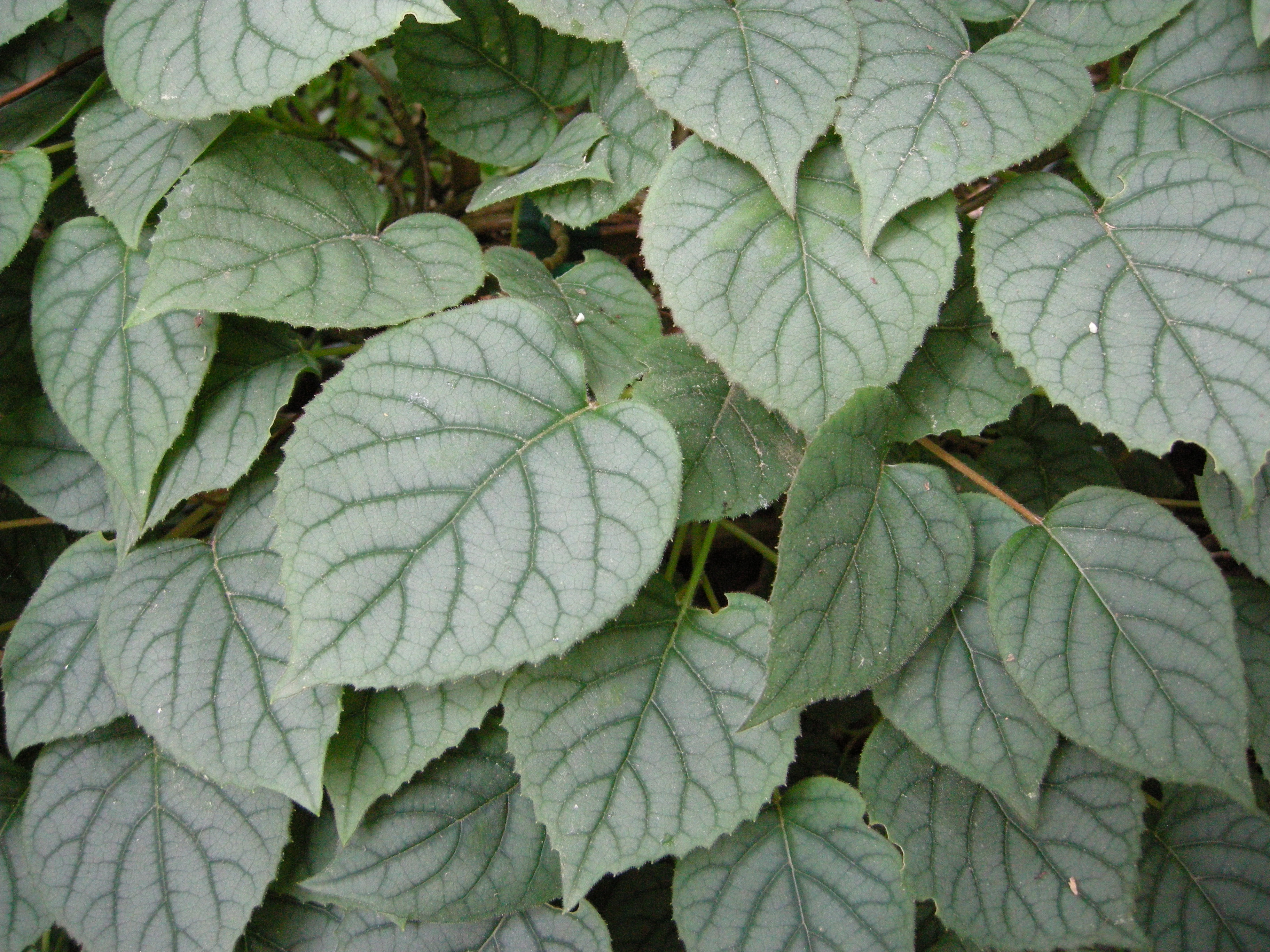
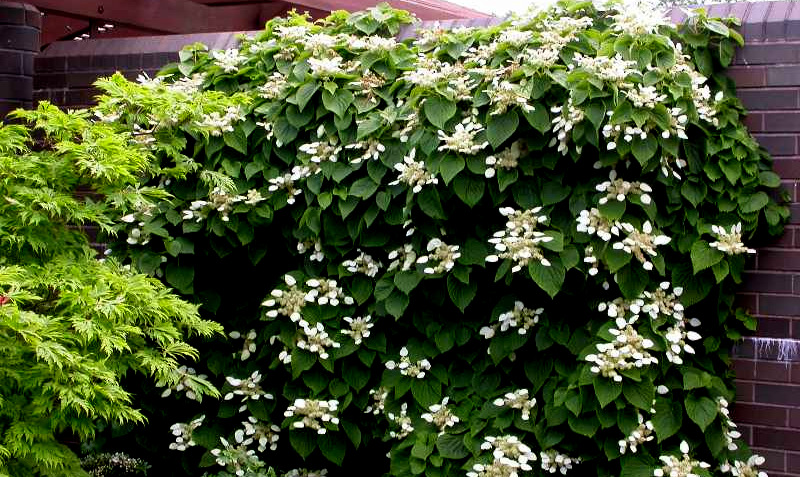
The silver leaves of ‘Moonlight’ Japanese climbing hydrangea.

The flowers of Japanese climbing hydrangea—here the straight species.

‘Moonlight’ Japanese hydrangea vine, Schizophragma hydrangeoides ‘Moonlight’, has very showy 8 to 10” wide white lacecap flowers  in midsummer.  But I really grow it for its elegant silver-painted dark green leaves, which turn yellow in the fall.  ‘Moonlight’ is a self-attaching vine that covers the surface it grows on with silvery leaves.  It reaches 20 to 30’ at maturity in part to full shade—mine is in deep shade.  It is a PHS Gold Medal Plant, for details click here (photo of flowers courtesy of the MOBOT Plant Finder click here).

I hope I have inspired you to order some of these wonderful plants in my offer or search them out at your local independent nursery.  To read the previous posts on woody plants for shade, click one, two, three, and four.

Carolyn

Nursery Happenings: Customers can pre-order woody plants through noon on May 22.  Click here for details.  We have added a third session of our seminar, The Secrets of a Low Maintenance Garden, on Sunday, May 20.  Click here for details. If you are interested in receiving miniature hostas mail order, click here.

If you are within visiting distance and would like to receive catalogues and information about customer events, please send your full name and phone number to carolynsshadegardens@verizon.net.  Subscribing to my blog does not sign you up to receive this information.

Facebook:  Carolyn’s Shade Gardens has a Facebook page where I post single photos, garden tips, and other information that doesn’t fit into a blog post.  You can look at my Facebook page here or click the Like button on my right sidebar here.

Notes: Every word that appears in orange on my blog is a link that you can click for more information.  If you want to return to my blog’s homepage to access the sidebar information (catalogues, previous articles, etc.) or to subscribe to my blog, just click here.
Woody Plants for Shade Part 4

Posted in Camellias, evergreen, flower show, Shade Shrubs, shade vines, winter interest with tags , , , , , , , , , , , , , , , , , , , on March 23, 2012 by Carolyn @ Carolyns Shade Gardens

Carolyn’s Shade Gardens is a retail nursery located in Bryn Mawr, PA, specializing in showy, colorful, and unusual plants for shade.  The only plants that we ship are snowdrops within the US.  For catalogues and announcements of local events, please send your full name, mailing address, and cell number to carolyn@carolynsshadegardens.com and indicate whether you are interested in snowdrops, hellebores, and/or hostas.  Click here to get to the home page of our website for catalogues and information about our nursery and to subscribe to our blog.

Spring-blooming camellia ‘Pink Icicle’

For years, my customers have been asking for woody plants for shade—trees, shrubs, and vines—in addition to the perennials I sell.  I now have a wholesale woody plant nursery with the quality and selection I needed to be able to offer them at Carolyn’s Shade Gardens.   I have just sent out my first 2012 list.  To view the catalogue, click here.   However, I thought my blog readers who are not customers might be interested in learning about the plants that I would recommend they add to their shade gardens.  And doing an article allows me to add more information and explain why I chose the plants I included so customers might be interested also.

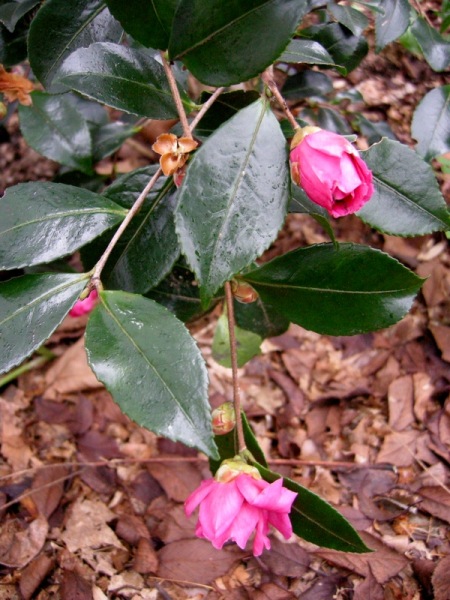
Spring-blooming camellia ‘April Tryst’

The offer focuses on winter- and early spring-blooming plants, evergreens, and fragrance.  Included are three camellias, six other shrubs, and one vine.  Four of the plants I have chosen are evergreen, and seven bloom in the off season: late winter or early spring.   This reflects  my desire to see gardeners expand their gardens’ season beyond spring and summer to become a year round paradise for them to enjoy.  With that introduction, here are the plants I am highlighting:

The buds are just starting to expand on ‘April Snow’ camellia.


I included three hardy camellias for their spectacular early season flowers and elegant evergreen leaves. These camellias, along with many other cultivars, have been bred to be fully cold hardy in the mid-Atlantic U.S, zones 6B and 7A.  Nevertheless all camellias benefit from being sited to shelter them from winter wind, which comes from the northwest.  They also maintain their lustrous dark green leaves in better shape if they are sheltered from winter sun.  For more information on cold hardy camellias for our area, click here.

‘April Snow’ spring-blooming camellia

Camellia x ‘April Snow’ is a spring-blooming hardy camellia with gorgeous plump buds opening to large pure white rose-form double flowers in April and May.  It has large glossy dark evergreen leaves.  It is 5’ tall and 4′ wide, growing in part to full shade.  It is part of the April series of exceptionally hardy camellias developed by Dr. Clifford Parks of North Carolina.


‘April Tryst’

‘April Tryst’ is very similar to ‘April Snow’, reaching 5′ tall and 4′ wide at maturity and sporting lustrous dark evergreen leaves in part to full shade  However, it blooms earlier, in March and April, and has knock-your-socks-off red anemone form flowers.  It is also part of the April series of exceptionally cold hardy camellias.  ‘April Tryst’ was starting to bloom in Charles Cresson’s garden during our recent Winter Interest Seminars, and Charles highly recommends it.

‘Pink Icicle’

Spring-blooming camellia ‘Pink Icicle’ has very large, peony form, shell pink flowers that glow when displayed against the glossy evergreen leaves.  It blooms in March and April in part to full shade.  It has a compact and upright growth habit and was selected by Dr. William Ackerman at the U.S. National Arboretum.

Japanese mahonia, Mahonia japonica

amazingly fragrant flowers of Japanese mahonia

The final evergreen plant is Japanese mahonia, Mahonia japonica.  Aside from being evergreen, this was the most fragrant plant in the Cresson garden during the Winter Interest Seminars, and there was plenty of competition.  In February and March, extremely fragrant yellow flowers on 8” racemes cover Japanese mahonia.  The evergreen leaves are a dark glossy green with a finer texture than other mahonias, and they rarely get damaged in winter. The  glaucous blue fruit in early summer attracts birds.  Japanese mahonia grows to 6′ tall and 3′ wide in moist, well-drained soil.  It is also deer resistant.  For more information, click here.

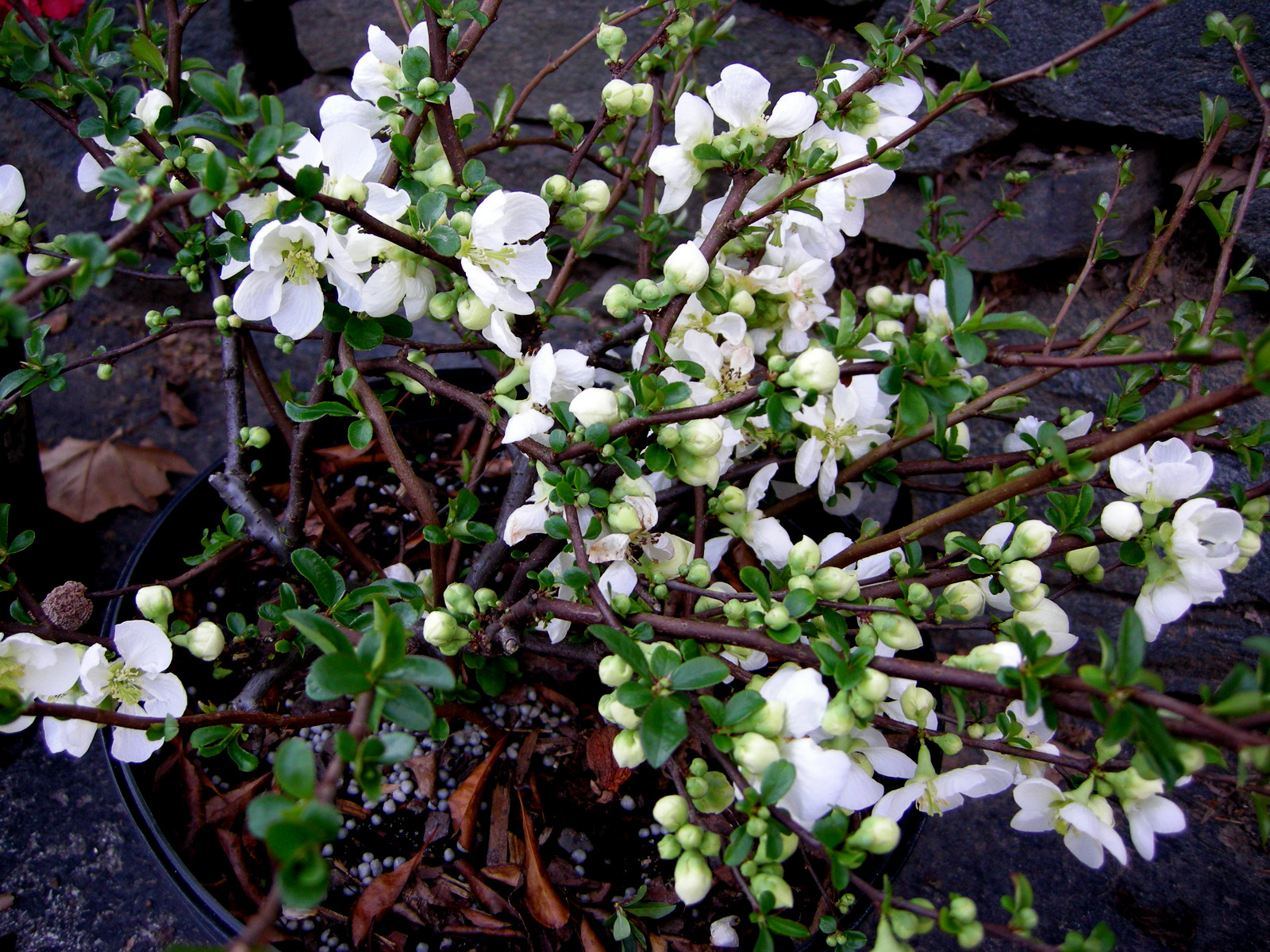
‘Jet Trail’ flowering quince

There are five deciduous shrubs in the offer, including two flowering quinces.  Now I love the early flowers, beautiful colors, and deer resistance of quince, but it is difficult to fit a 10′ plus tall and wide shrub covered with lethal thorns into the garden.  That’s why I was excited when new low and compact quinces that won’t dominate your garden were introduced.  They are not marketed as thornless, but I can’t find any thorns on mine.  As an added benefit, the leaves remain healthy all summer.

‘Texas Scarlet’ flowering quince

‘Jet Trail’ and ‘Texas Scarlet’ flowering quince, Chaenomeles x superba, are identical plants other than their flower color, growing 3’ tall and 3’ wide in sun to part shade.  They produce multitudes of very showy white or coral red flowers in March, which are beautifully displayed by the elegant branching structure.  The  glossy dark green leaves stay ornamental through the season.  The  yellow fruit is wonderfully fragrant.  Both cultivars will grow well in clay soil and drought conditions.  For more information, click here

Spike winter hazel, Corylopsis spicata

Spike winter hazel, Corylopsis spicata, is the elegant shrub with the unusual yellow flowers that everyone admires in my garden in early spring. Dangling panicles of very fragrant, lemon yellow flowers cover this graceful shrub in March and April before the foliage.  The bold-textured leaves emerge burgundy and age to a lovely blue-green.  Winter hazel grows to 8′ tall and 6′ wide in full sun to part shade.  It takes average garden soils and is deer resistant; for more information, click here.


The lovely dusty blue leaves of native ‘Blue Shadow’ fothergilla.


‘Blue Shadow’ has honey-scented bottlebrush flowers.  Photo courtesy of the Missouri Botanical Garden.

fall color of fothergilla

Native ‘Blue Shadow’ fothergilla, Fothergilla x intermedia, has stunning ornamental attributes three seasons a year.  In March and April, it is covered with honey-scented white bottlebrush flowers.  Its gorgeous dusty blue leaves provide an unusual color and texture for the shade garden.  In the fall, the foliage turns lovely shades of yellow, orange, and red.  ‘Blue Shadow’ grows to 4′ tall and 3′ wide in full sun to part shade.  It is native to the southeastern U.S., wet site tolerant, and deer resistant.  For more information, click here.

Snowball flowers of ‘Cayuga’ Koreanspice viburnum

‘Cayuga’ Koreanspice viburnum, Viburnum x ‘Cayuga’, is a cross between a smaller Koreanspice viburnum (V. carlesii) and the fragrant snowball viburnum (V. x carlcephalum) introduced by the U.S. National Arboretum.   It has the best attributes of both.  In April and May, striking pink buds open to abundant, fragrant, large white snowball flowers.  It has a compact habit with dark green leaves that change to orange-red in the fall.  It grows to 6′ tall by 5′ wide in full sun to part shade.  ‘Cayuga’ tolerates a wide range of soils and is deer resistant.  For more information, click here.

Climbing hydrangea, photo courtesy of the Missouri Botanical Garden.

The final plant in the offer is a vine.  Climbing hydrangea, Hydrangea anomala subsp. petiolaris, is really the best vine for shade with 365 days of ornamental value.  Its lustrous, dark green leaves are neat and attractive all season before turning a buttery yellow in the fall.  In June and July, fragrant 8” wide hydrangea-like white flowers layer over the leaves.  The exquisite exfoliating cinnamon bark provides winter interest.  Climbing hydrangea is self-attaching and reaches 30 to 50′ at maturity in part to full shade.  It is a Missouri Botanical Garden Plant of Merit.  For more information, click here.

I grow most of these plants in my gardens so I know you can’t go wrong by adding them to yours!  If you are a customer, see Nursery Happenings below for details on how to order these wonderful shade plants by noon on March 26.  If not, now you have some plants to ask for at your local independent nursery.  If you would like to read about the other woody plants I have recommended for shade, see Part 1, Part 2, and Part 3.

Carolyn

Notes: Every word that appears in orange on my blog is a link that you can click for more information.  If you want to return to my blog’s homepage to access the sidebar information (catalogues, previous articles, etc.) or to subscribe to my blog, just click here.
2012 Winter Interest Plants

Posted in bulbs for shade, Camellias, evergreen, garden to visit, hellebores, landscape design, Shade Perennials, Shade Shrubs, snowdrops, winter, winter interest with tags , , , , , , , , , , , , , , , , , on February 29, 2012 by Carolyn @ Carolyns Shade Gardens

Carolyn’s Shade Gardens is a retail nursery located in Bryn Mawr, PA, specializing in showy, colorful, and unusual plants for shade.  The only plants that we ship are snowdrops within the US.  For catalogues and announcements of local events, please send your full name, mailing address, and cell number to carolyn@carolynsshadegardens.com and indicate whether you are interested in snowdrops, hellebores, and/or hostas.  Click here to get to the home page of our website for catalogues and information about our nursery and to subscribe to our blog.
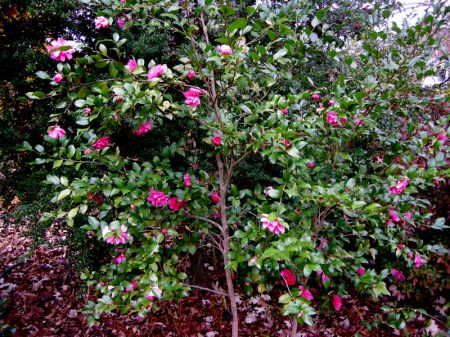
Camellia japonica ‘Berenice Boddy’ in full bloom in February in the Cresson garden.

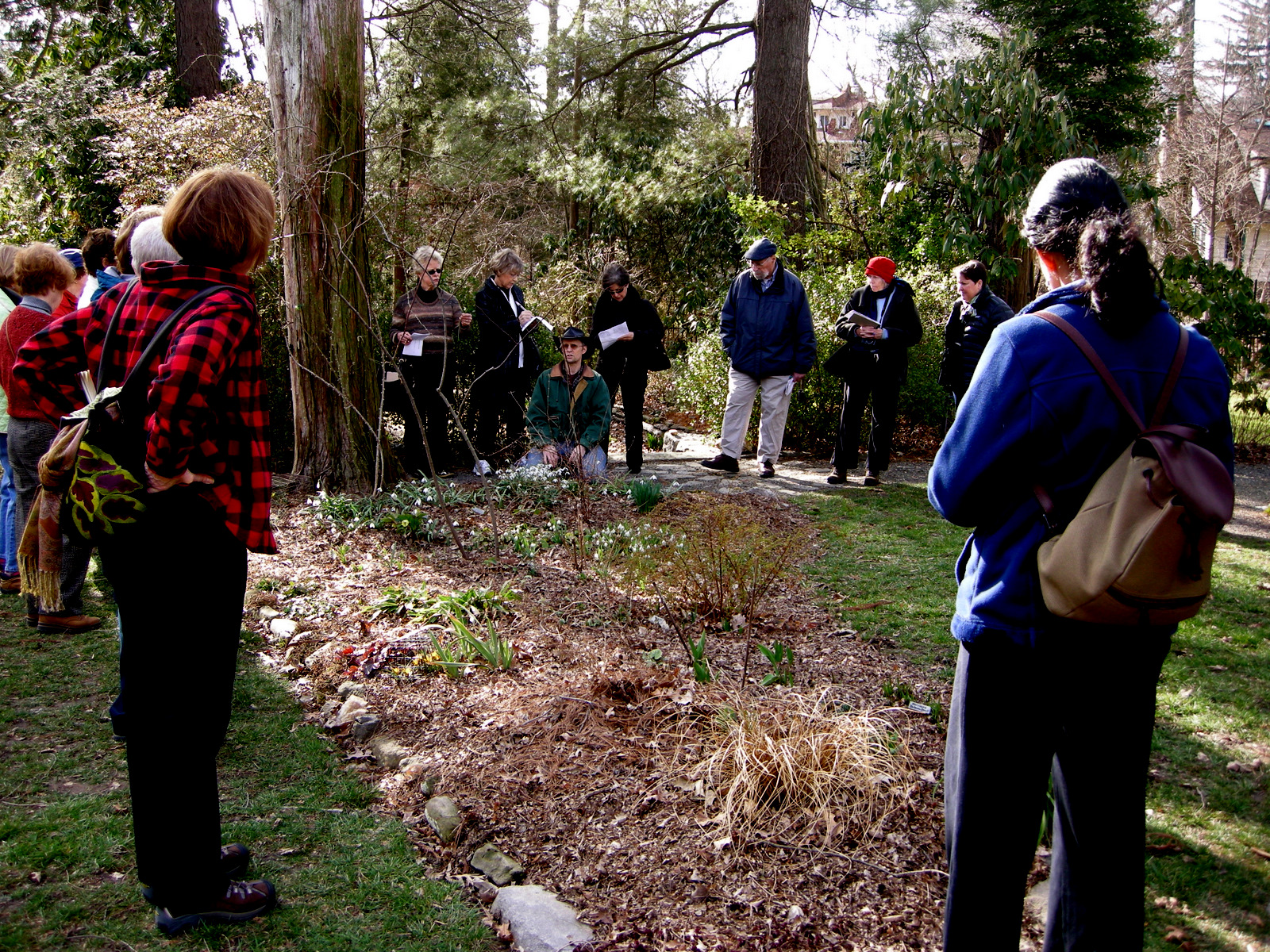
On Friday, February 24, and Monday, February 27, Charles Cresson presented the second annual Winter Interest Plant Seminars for my customers in his beautiful garden located in Swarthmore, Pennsylvania, US.  I did a post on the seminars last year (to read it click here) and thought I had covered the topic.  However, our very warm winter meant that many different plants were in bloom so I want to show you what we saw.


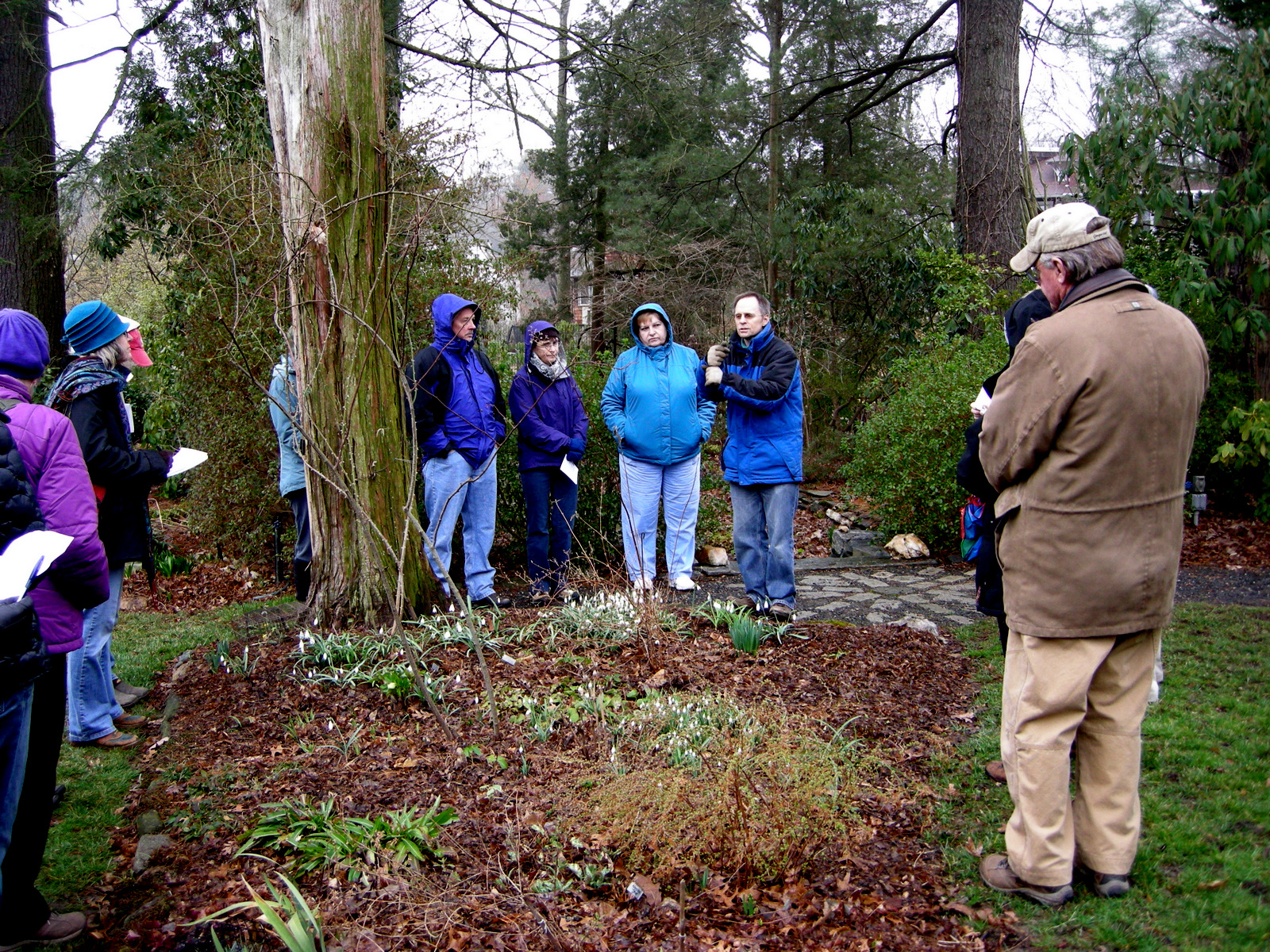
The weather was cold and rainy on Friday, but participants didn’t let it stop them from enjoying Charles’s presentation.

Monday was warm and sunny which allowed more time for dawdling in the garden.  The snowdrops were a big hit.

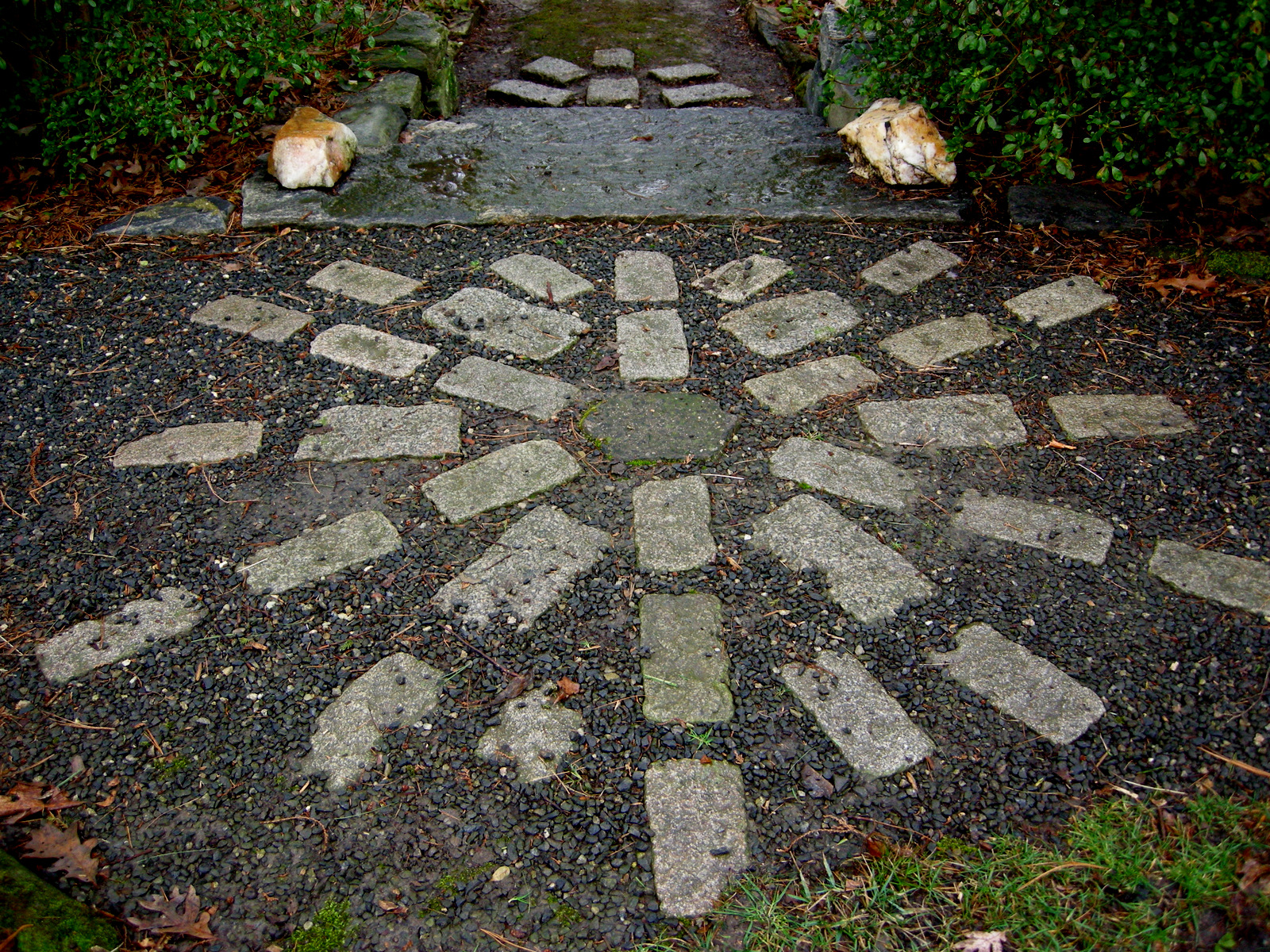
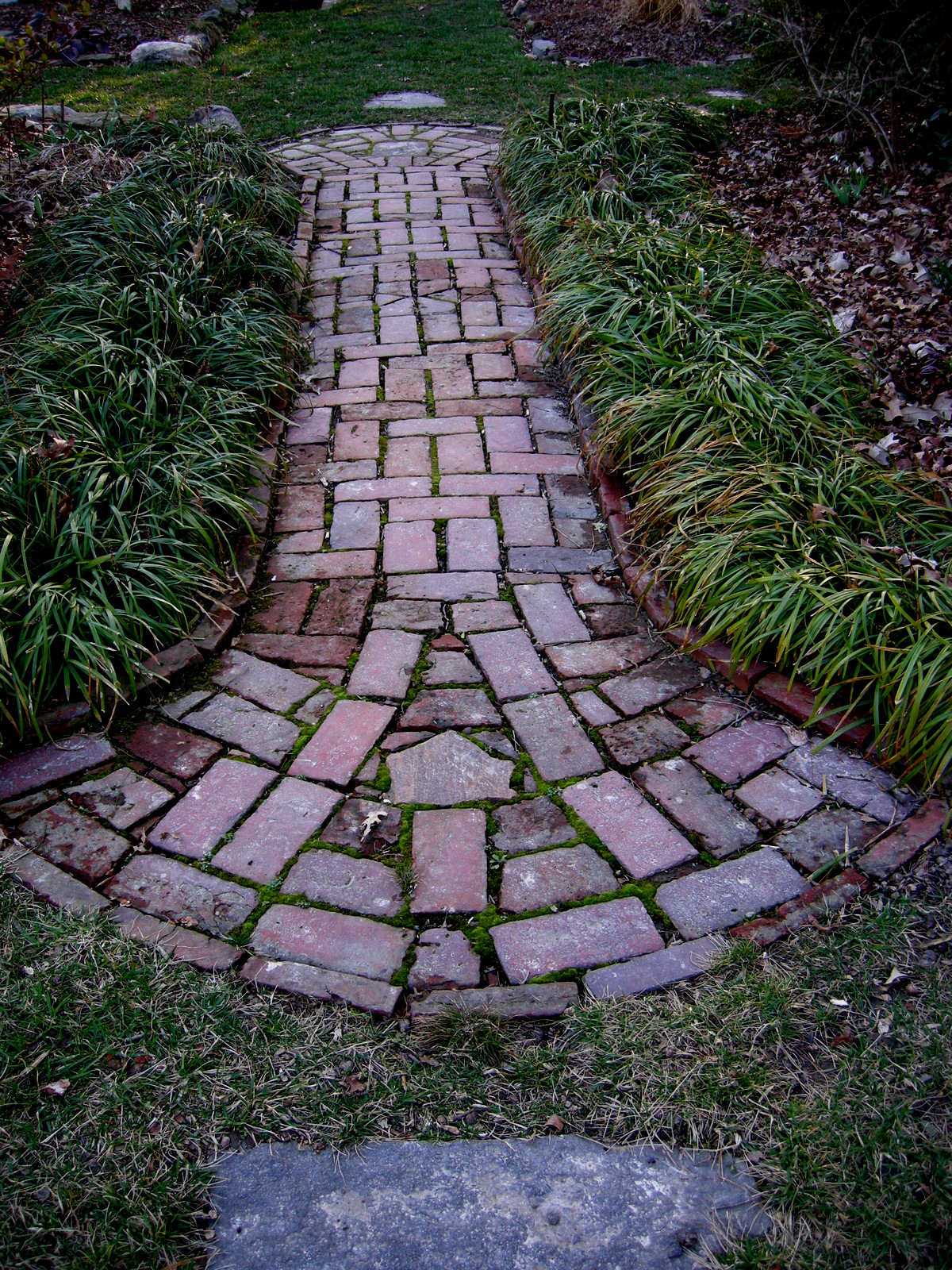
The attention to detail in Charles’s garden is amazing.  I thought I would show you some of the “hardscape” features, many of which Charles built himself:


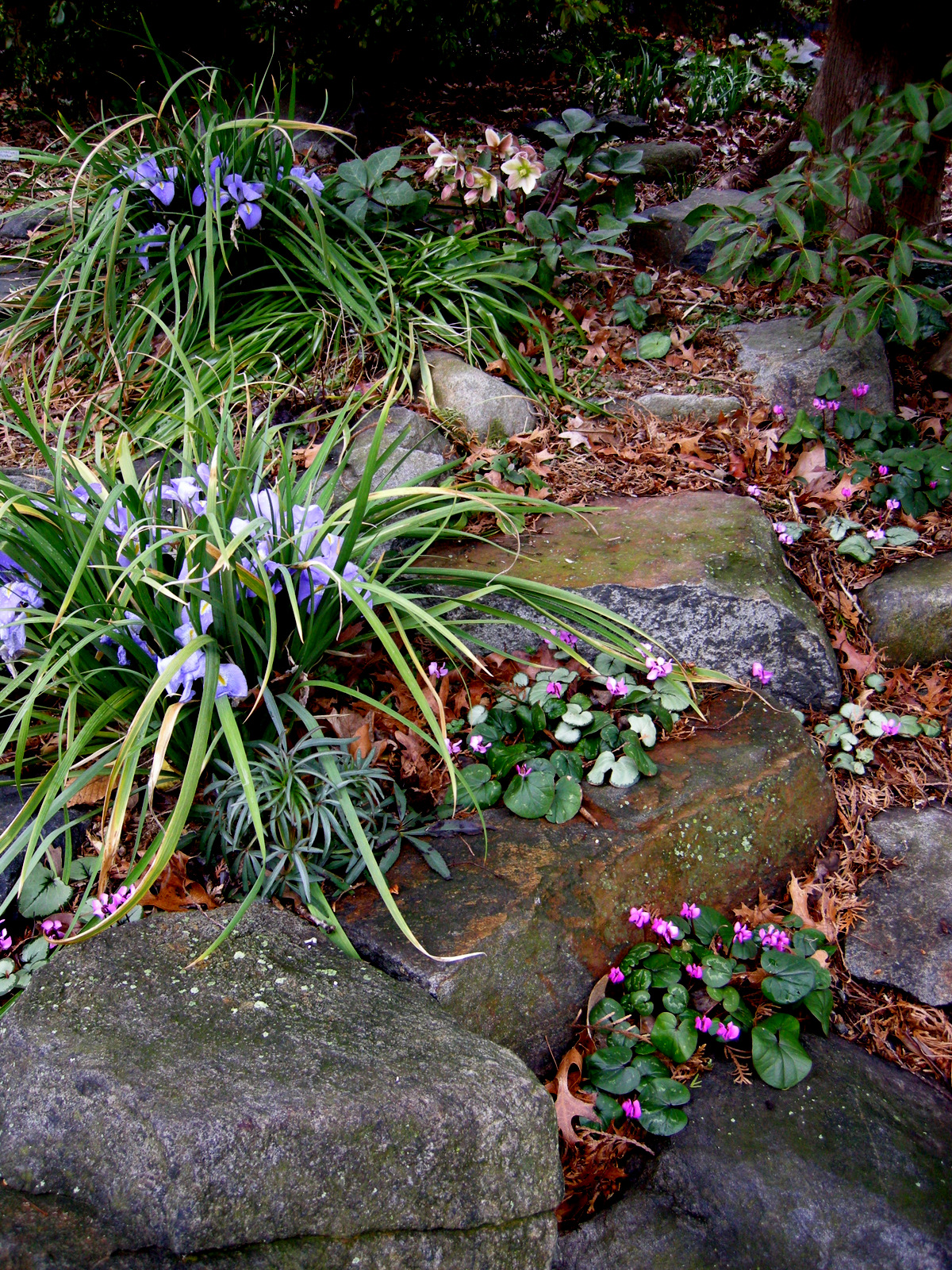
The rock garden with hellebores, Algerian iris, and spring-blooming hardy cyclamen.

Garden shed with the original green roof.

Winter jasmine, Jasminum nudiflorum, photo by seminar participant Lucretia Robbins.

Charles has a spectacular collection of winter-blooming shrubs, many of which are fragrant.  We were all surprised by which one was the most fragrant at that time of year:


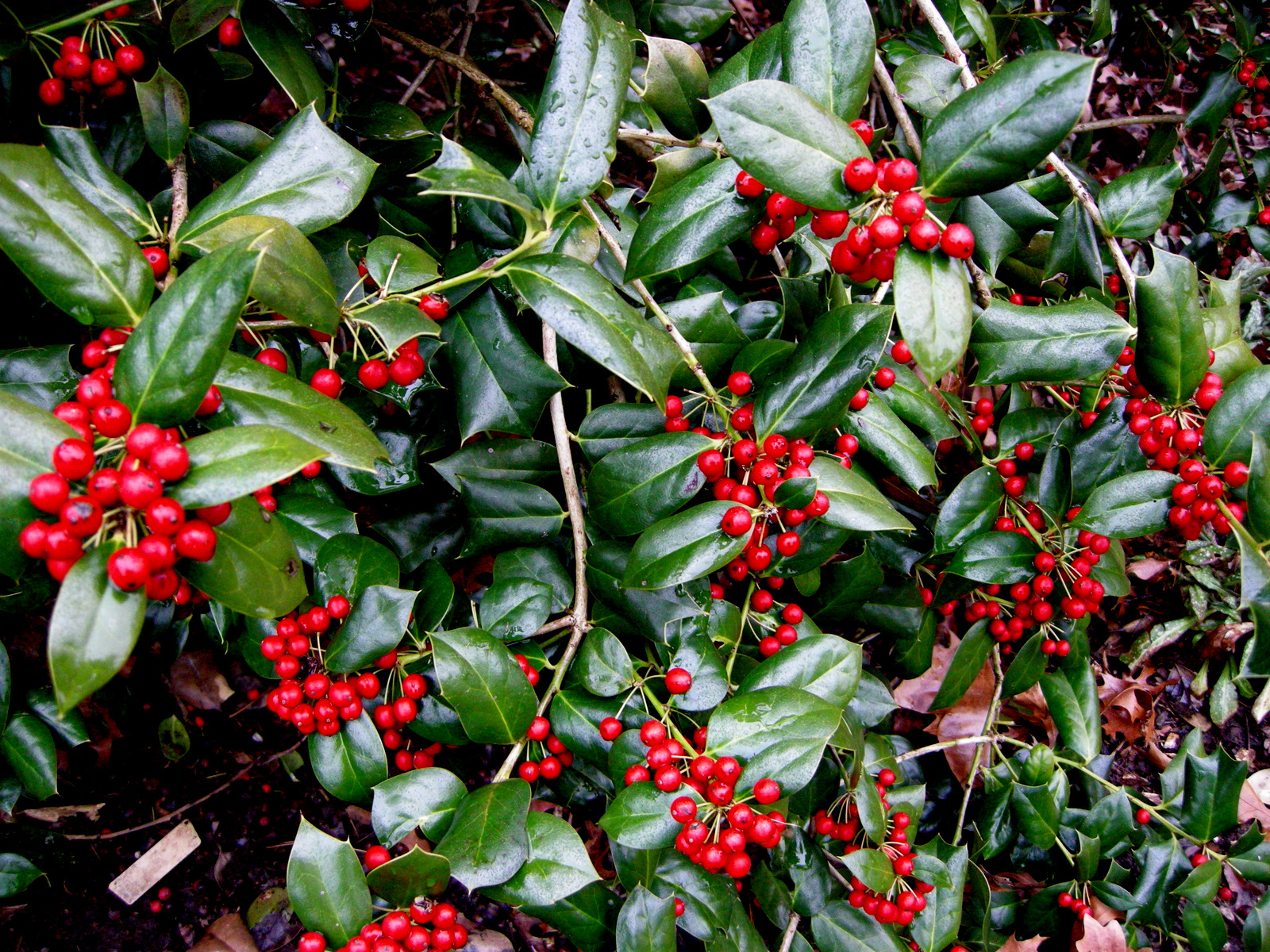
Chinese holly, Ilex cornuta, retains its berries through the winter.


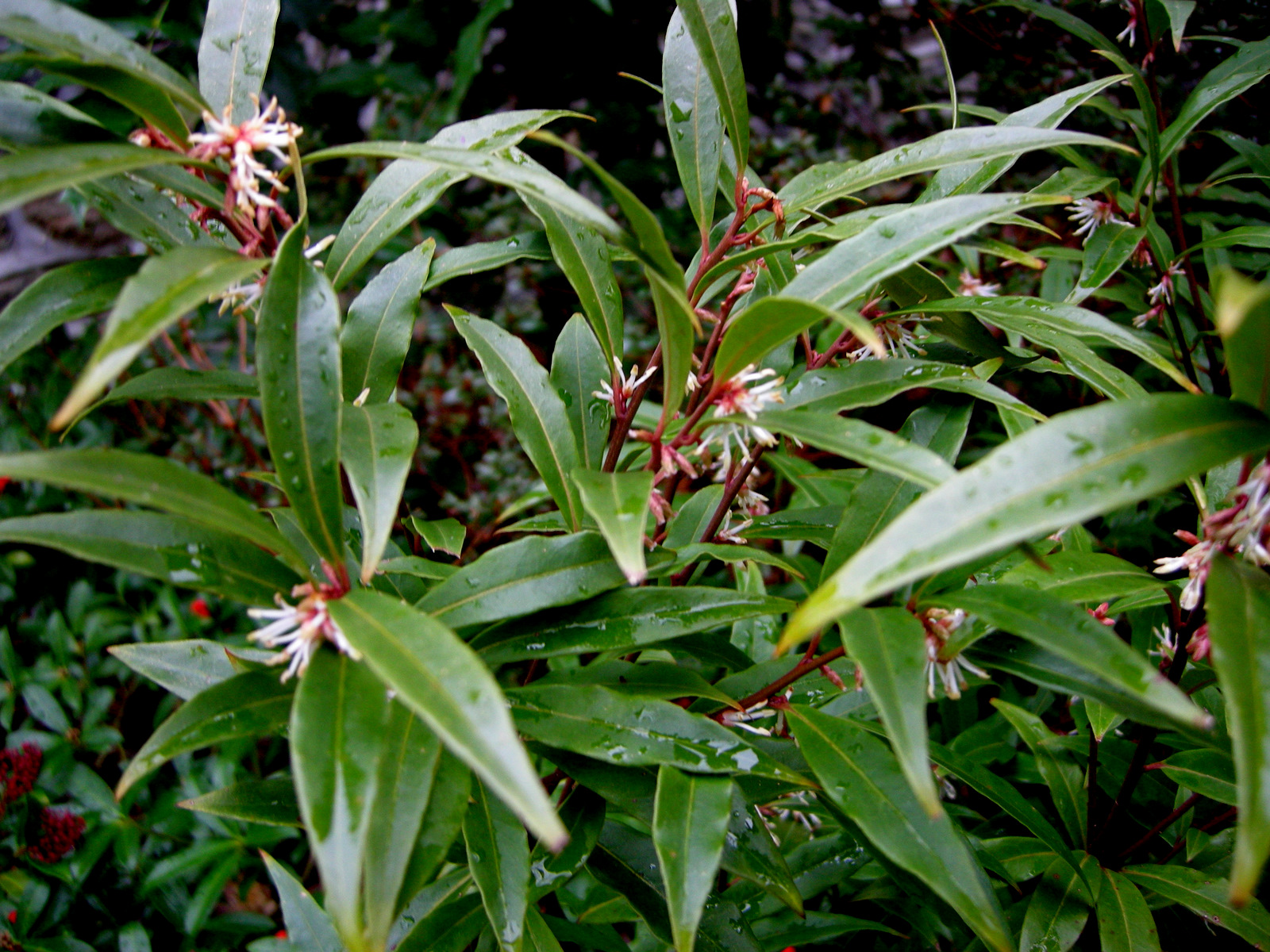
Sweetbox, Sarcococca hookeriana var. digyna ‘Purple Stem’, adds the additional feature of ornamental stems to sweetbox’s many desirable attributes.


Bodnant viburnum, V. bodnantense ‘Dawn’, is very fragrant.


Flower of Bodnant viburnum


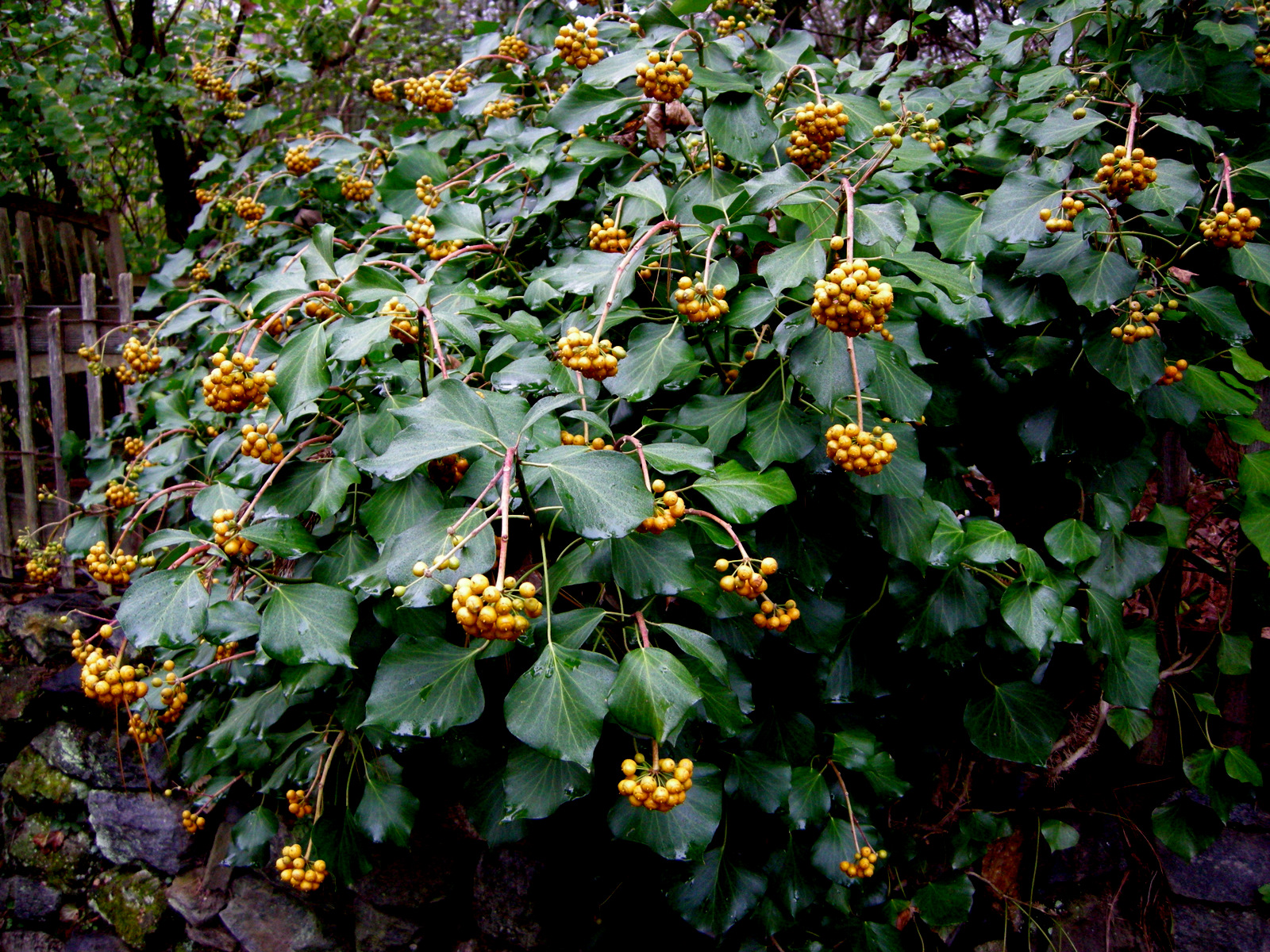
The adult form of English ivy, Hedera helix ‘Poetica Arborea’, produces beautiful berries but is also considered very invasive.


Camellia x ‘April Tryst’ is blooming early.


I like the male flowers of Japanese skimmia, S. japonica, as much as the berries on the female plants.


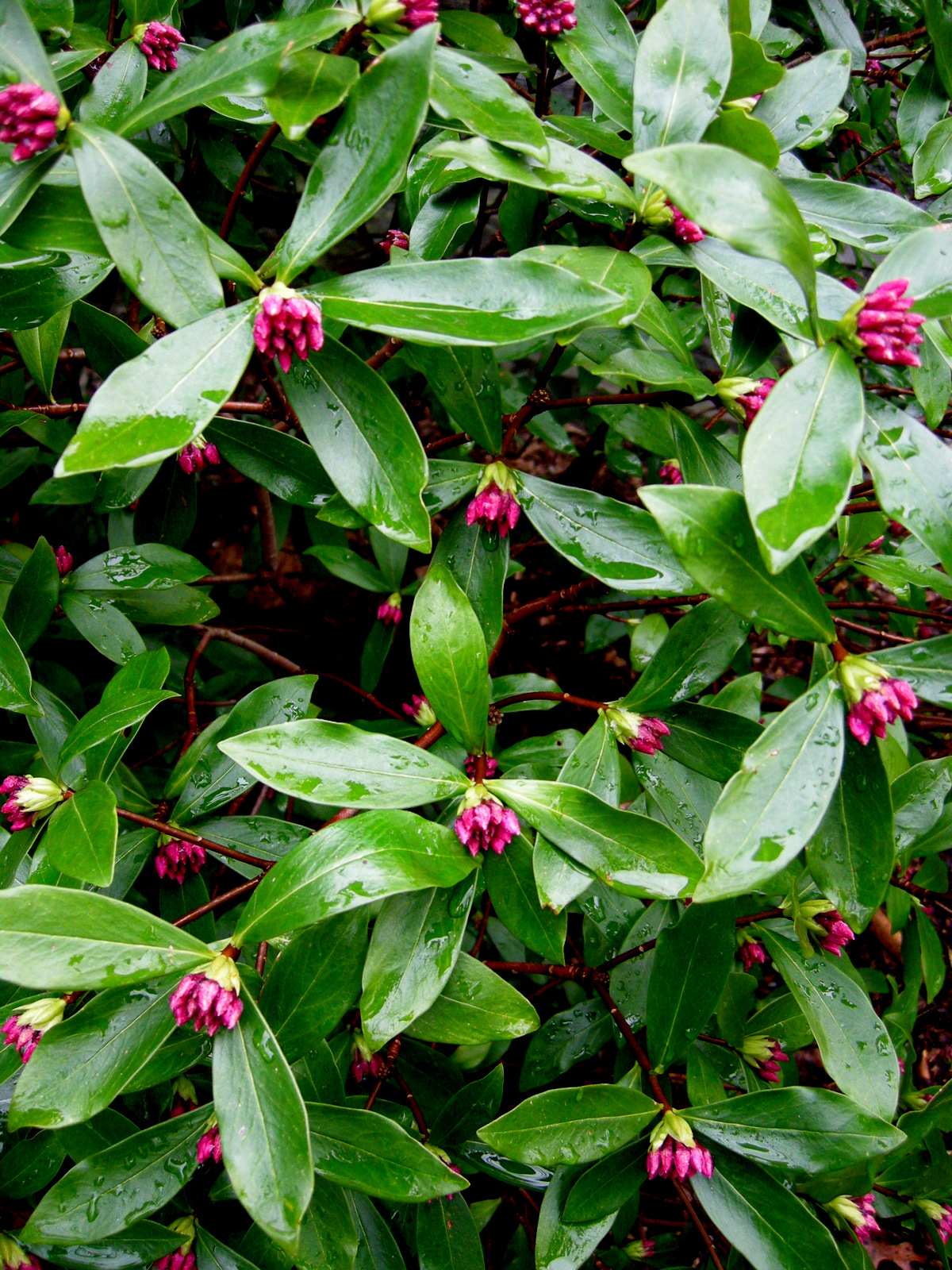
Winter daphne, D. odora, is one of my favorite shrubs because of its wonderful fragrance, excellent habit, evergreen leaves, and lovely flowers.


And the winner is….  Yes, Japanese mahonia, M. japonica, was the most fragrant plant in Charles’s garden even with all the excellent competition above.

Winter-blooming herbaceous perennials were also well represented:

The pink flowers and evergreen leaves of heath, Erica x darleyensis ‘Furzey’.

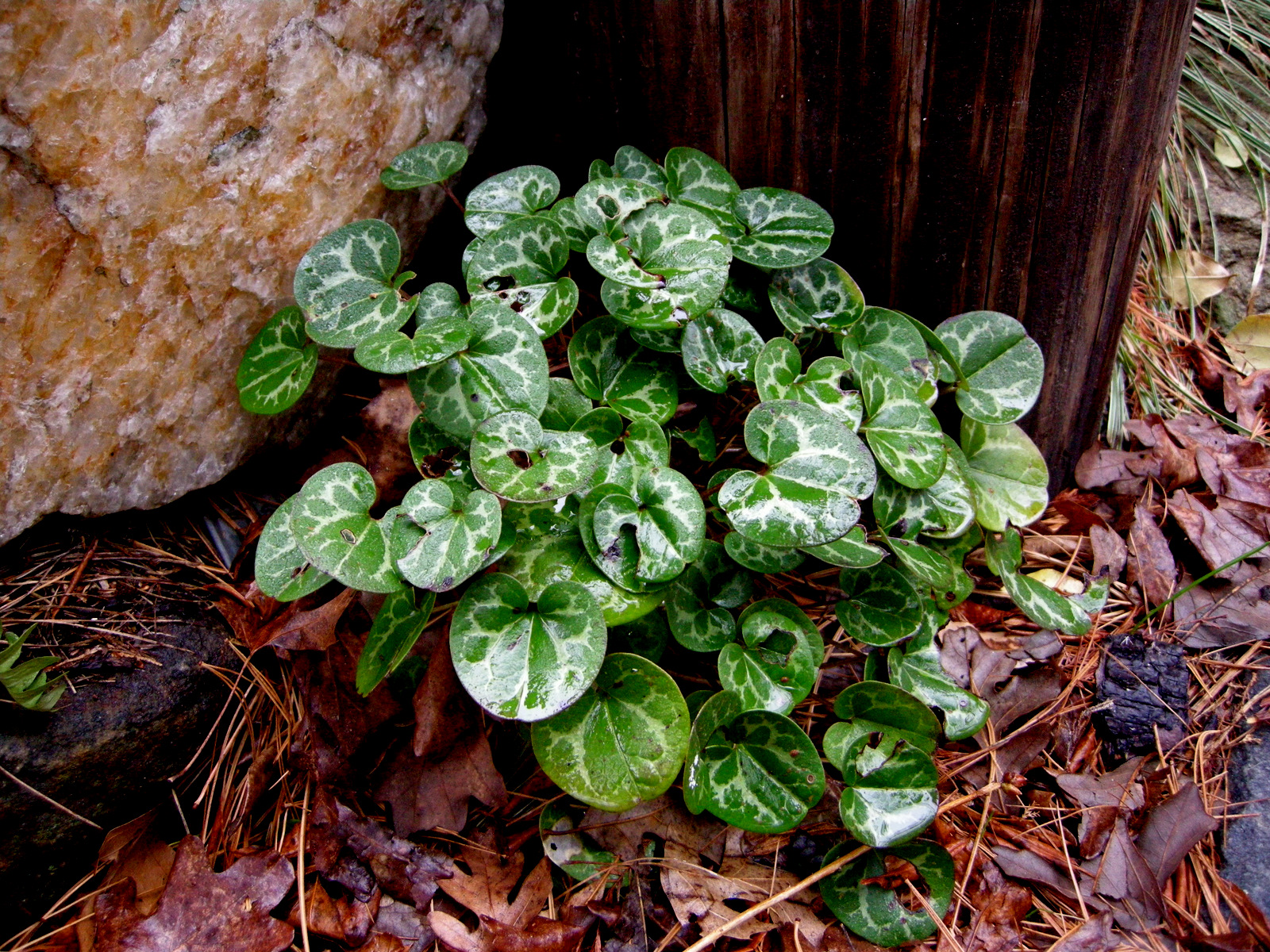
Evergreen heart leaf ginger, Asarum virginicum

Fragrant Algerian iris, I. unguicularis, was a big hit.

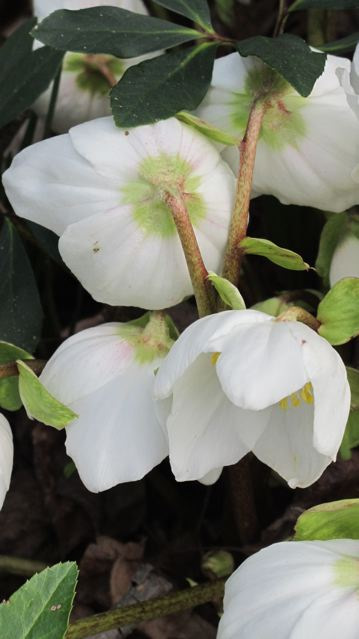
Christmas rose, Helleborus niger, photo Lucretia Robbins

A gorgeous anemone-flowered (ruffle around the center of the flower) hybrid hellebore—my favorite type of hellebore flower.

The most evergreen hellebore of them all, bearsfoot hellebore, H. foetidus.

Helleborus x ericsmithii ‘Winter’s Song’

Hybrid hellebore with the very robust and extremely fragrant snowdrop ‘Brenda Troyle’.

The tour included a wonderful selection of winter-blooming bulbs, including choice snowdrop cultivars.  Here are just a few:

Seeing this large patch of the very fragrant snowdop ‘S. Arnott’ sent participants back to add it to their purchases for the day.

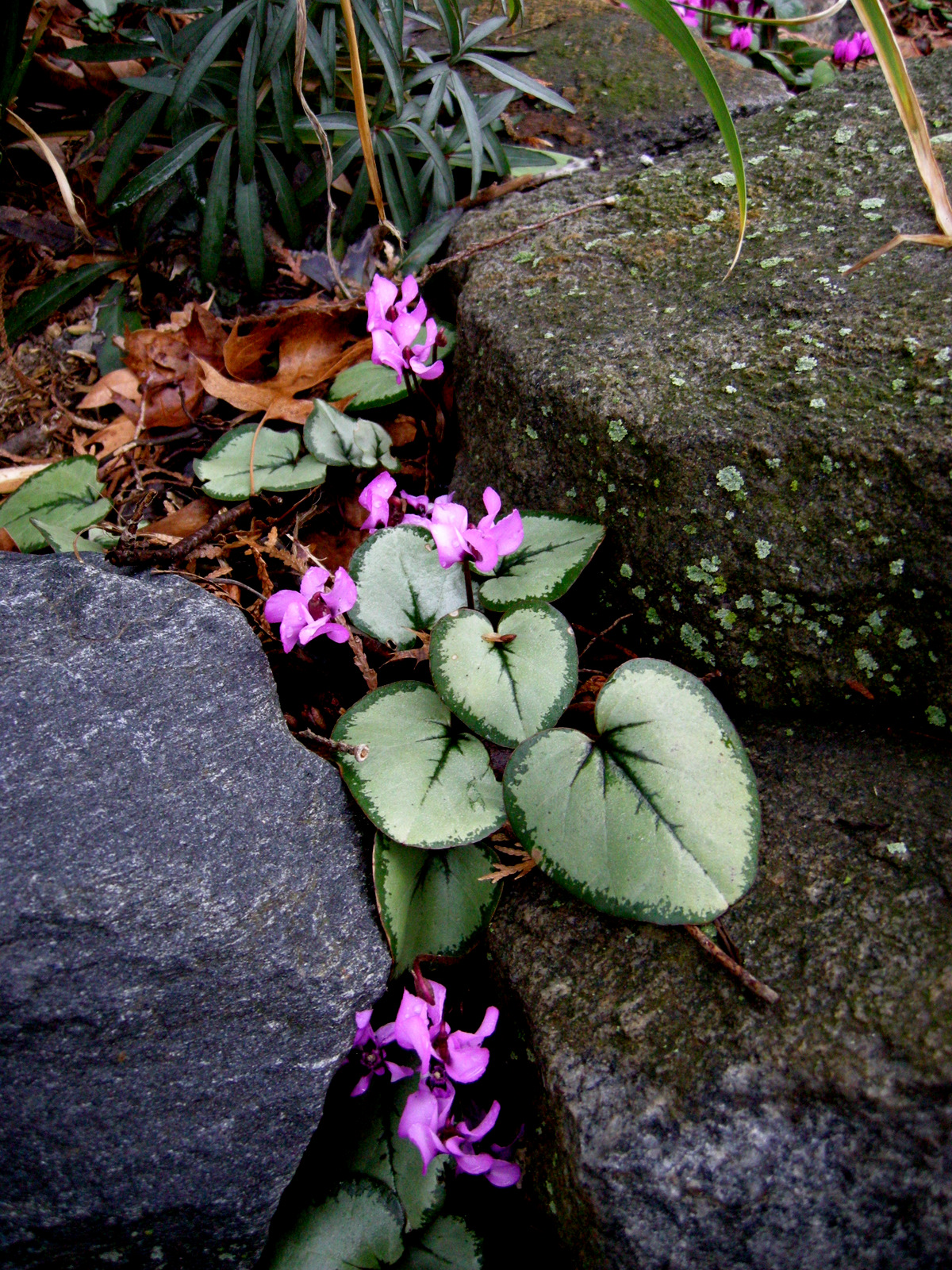
Spring-blooming hardy cyclamen, C. coum

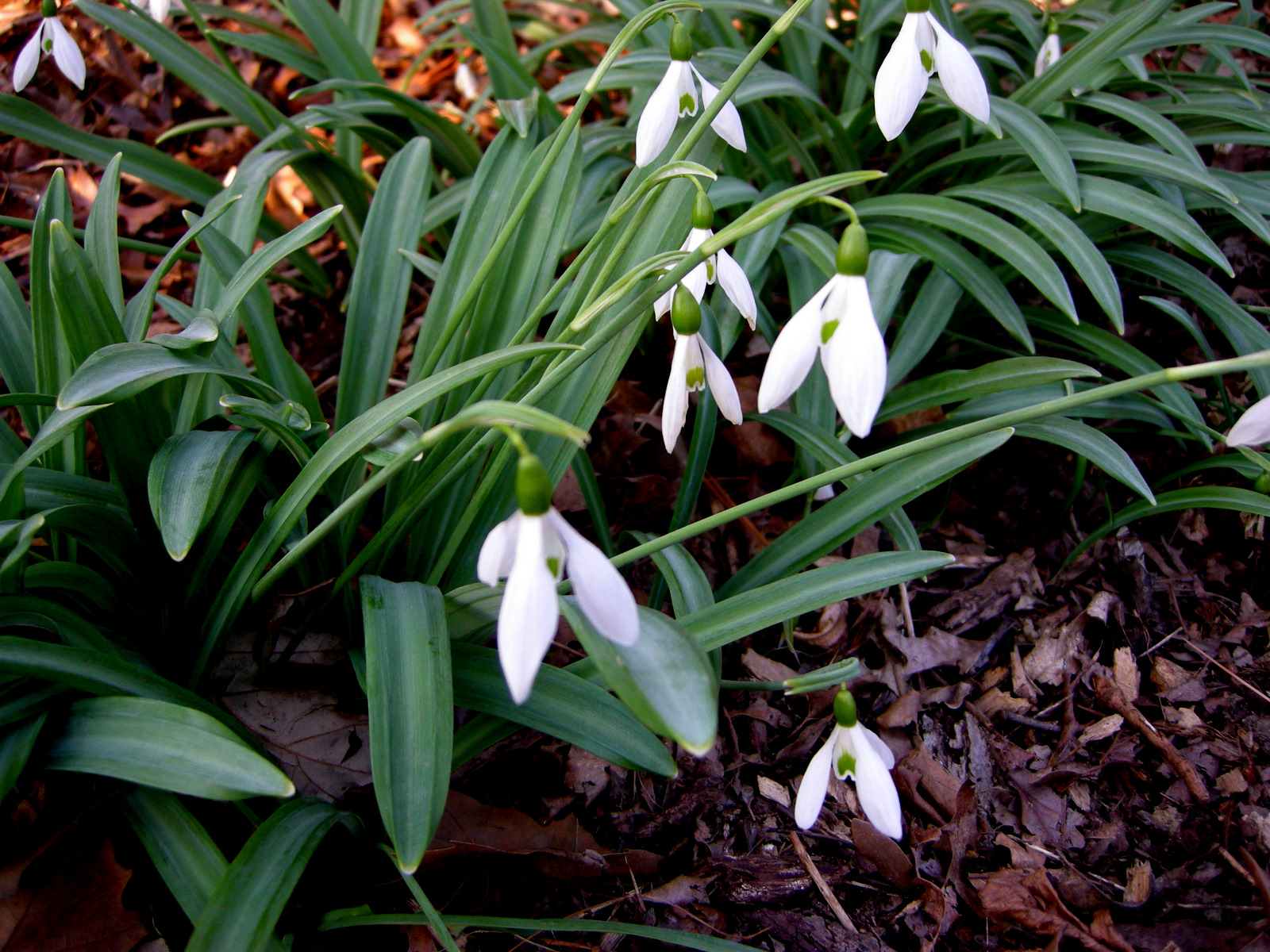
The common snowdrop, Galanthus nivalis, multiplies quickly and looks great when massed.

Evergreen leaves of fall-blooming hardy cyclamen, C. hederifolium

A single bulb of a rare yellow-flowered cultivar of the species snowdrop, G. woronowii, just sold for $1,145 on UK eBay.

A silver-leafed form of spring-blooming hardy cyclamen.

The species snowdrop Galanthus plicatus has been in cultivation since the 16th century and comes from Russia and Turkey.  It has beautiful leaves with a unique folded (explicative) pattern.

For all of you who couldn’t actually attend Charles’s seminars, I hope you have enjoyed your virtual tour.

Carolyn

Notes: Every word that appears in orange on my blog is a link that you can click for more information.  If you want to return to my blog’s homepage to access the sidebar information (catalogues, previous articles, etc.) or to subscribe to my blog, just click here.