Carolyn’s Shade Gardens is a retail nursery located in Bryn Mawr, PA, specializing in showy, colorful, and unusual plants for shade. The only plants that we ship are snowdrops and miniature hostas. For catalogues and announcements of events, please send your full name, location, and phone number (for back up use only) to carolyn@carolynsshadegardens.com. Click here to get to the home page of our website for catalogues and information about our nursery and to subscribe to our blog.
 Japanese flowering apricot, Prunus mume
On March 3, 7, and 13, my customers and I attended seminars on Snowdrops and Other Winter Interest Plants given by Charles Cresson at his garden, Hedgleigh Spring in Swarthmore, Pennsylvania (US). Charles is the instructor for the Longwood Gardens certificate course “Hardy Spring and Fall Bulbs” as well as the author of several gardening books. He is also a frequent lecturer, most recently at the Planting Fields Arboretum on Long Island and Rare Find Nursery in New Jersey for presentations on “Choosing Hardy Camellias for Spring and Fall”.
 Charles Cresson, kneeling to point out plicate leaves on a snowdrop, to seminar attendees.
Charles trained at the Royal Horticultural Society, Wisley, in England and the Kalmthout Arboretum in Belgium, best known for its witch hazel introductions. He has worked at Meadowbrook Farm, Winterthur, Nemours, and Chanticleer. His grandfather built the house at Hedgleigh Spring in 1911 and created the garden over the course of 50 years. Charles has gardened there for more than 40 years.
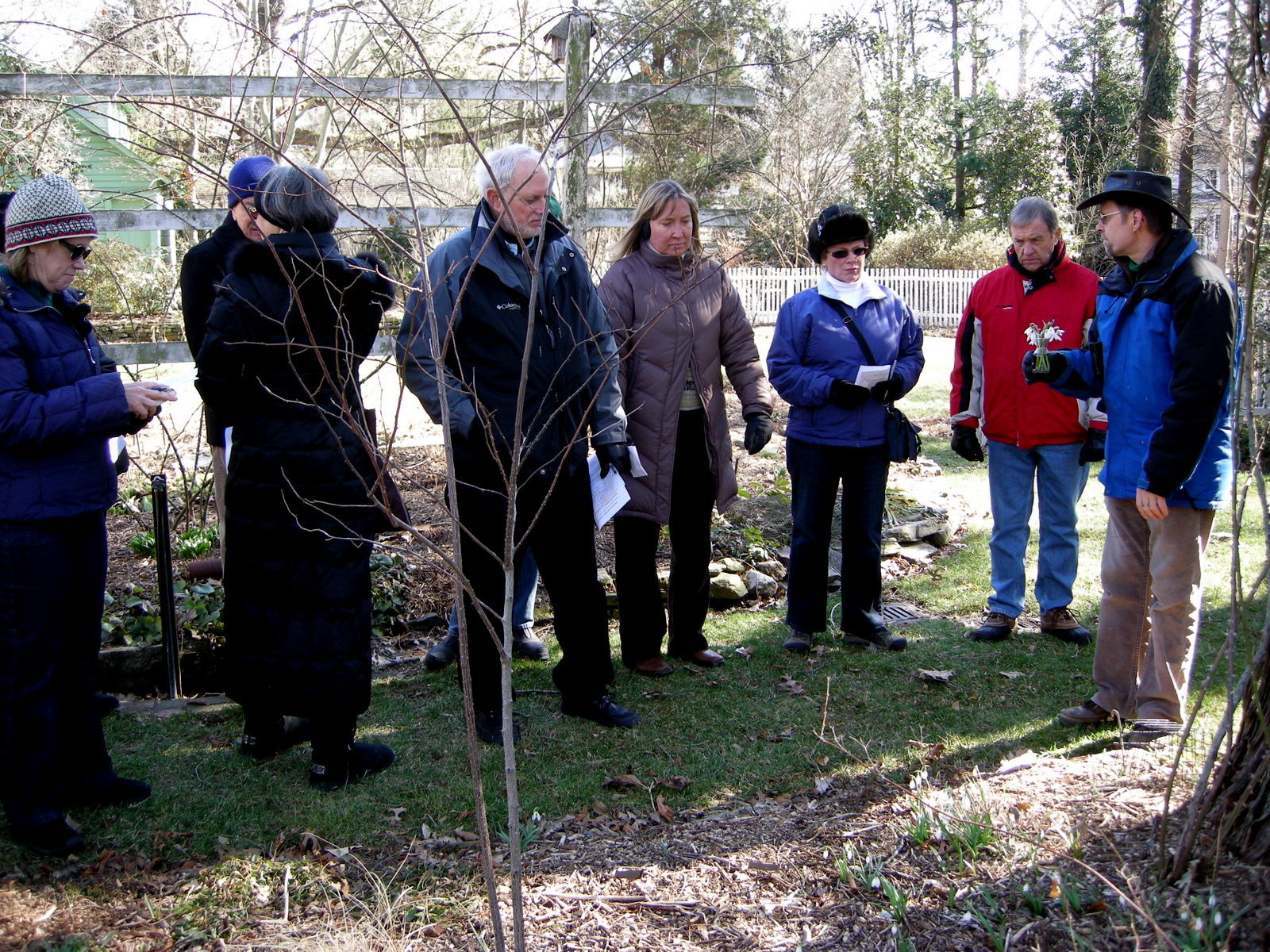 Every time we viewed a new snowdrop, no matter how rare, Charles picked two flowers and passed them around so that we could closely examine the markings and experience the fragrance. He then collected the flowers in a little vase for later comparison.
What a treat Charles’s seminars were. Even though I attended all three sessions, I learned something new each time and came away with a deep admiration for Charles’s encyclopedic knowledge of plants and the depth of his plant collection, not to mention a wish list of plants for my own gardens. I also appreciated how each plant was not just deposited in the garden but was carefully incorporated into the overall design.
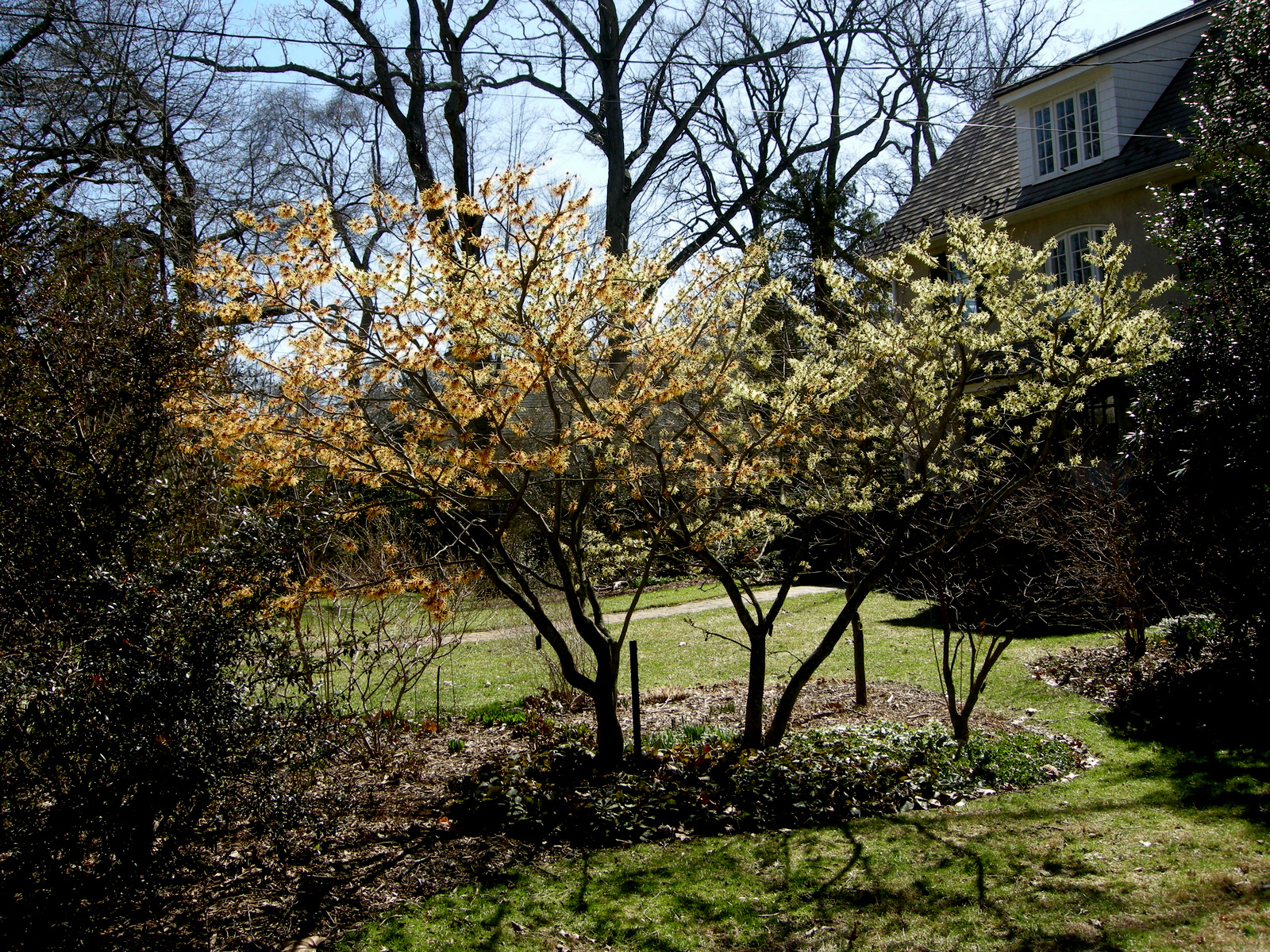 The seminars began in the front garden viewing the hybrid witch hazel cultivars Hamamelis x intermedia ‘Jelena’ (dark orange) and ‘Moonlight’ (pale yellow) underplanted with snowdrops, winter aconite, and various perennials. Charles does not recommend ‘Moonlight’ because it holds its dead leaves.
It would be hard to name another garden with the wealth of unusual plants that Charles has found and nurtured to perfection over the years. That being said I thought my customers who were unable to attend the seminars and my worldwide blog readers might like to see what we saw. I have organized the plants by category below with commentary in the caption where relevant.
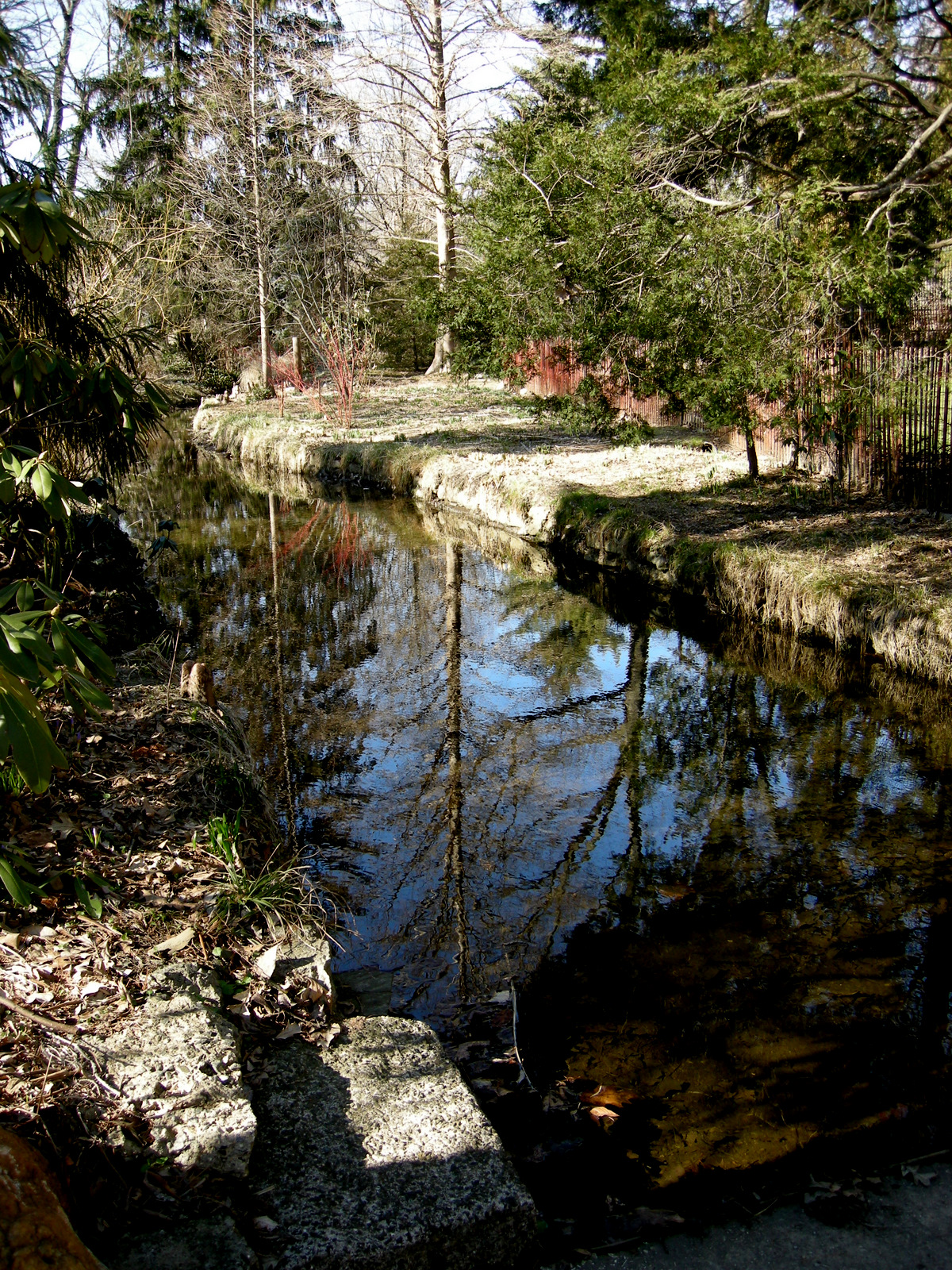 We crossed a stone bridge to view the meadow where snow crocus and common and giant snowdrops were massed to be succeeded by daffodils, camassia, and then summer and fall blooming flowers.
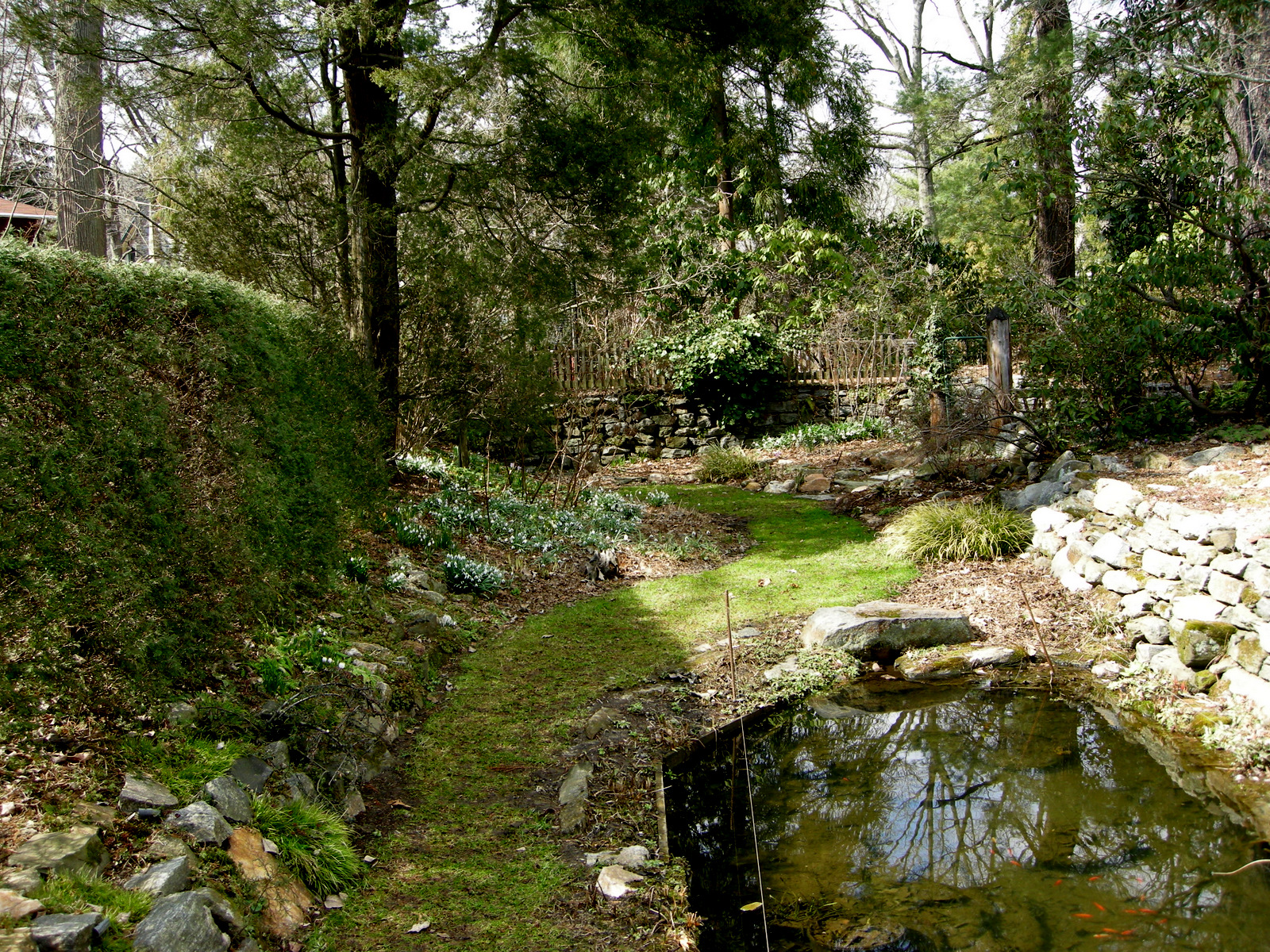 A narrow path skirts the pond, which is surrounded on all sides by rock gardens full of unusual plants.
The Bulbs
We saw so many rare and unusual bulbs that I can only include a sampling here.
 A rare pale yellow form of winter aconite, Eranthis hyemalis
 The exquisite buds of the species crocus C. imperati ‘De Jager’
 Masses of the rodent resistant and very early blooming snow crocus, Crocus tommasinianus ‘Whitewell Purple’, shadowed by a magnificent Japanese maple.
 The very early blooming daffodil Narcissus ‘Rijnveld’s Early Sensation’
 A very good form of winter blooming hardy cyclamen, Cyclamen coum
 The reticulate iris I. histrioides ‘George’
 There were large patches of spring snowflake, Leucojum vernum, throughout the garden.
 The flower of spring snowflake, Leucojum vernum
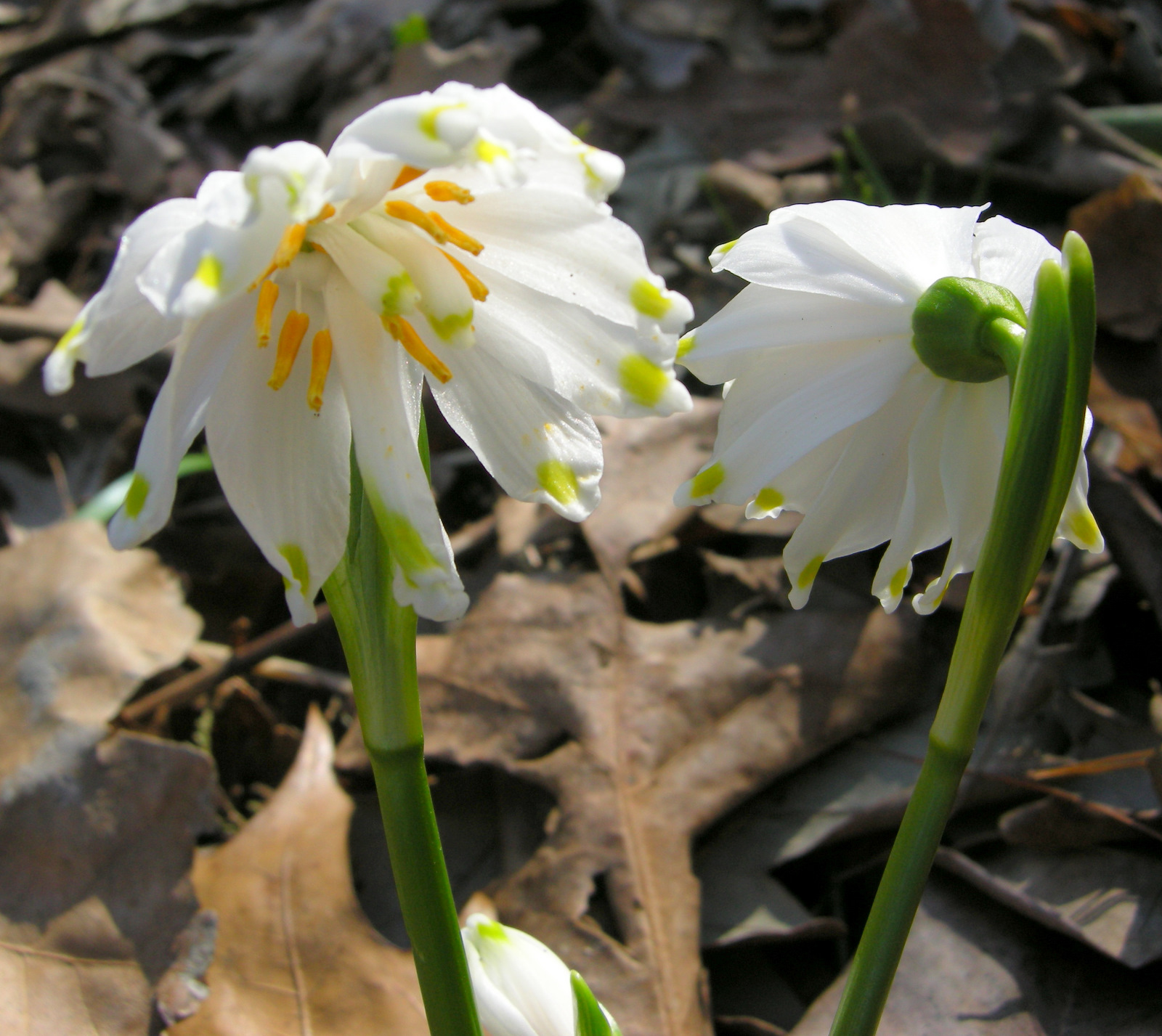 We were privileged to see this semi-double form of spring snowflake, which Charles has named Leucojum vernum ‘Gertrude Wister’ and registered with the Dutch bulb authority.
The Snowdrops
If you read my blog, you know what a galanthophile I am so with supreme effort I have limited myself to just a few of the many snowdrops we saw.
 Clockwise from upper left: G. elwesii var. monostichus, G. ikariae, ‘Jaquenetta’, ‘Straffan’, G. plicatus subsp. byzantinus, ‘Dionysus’
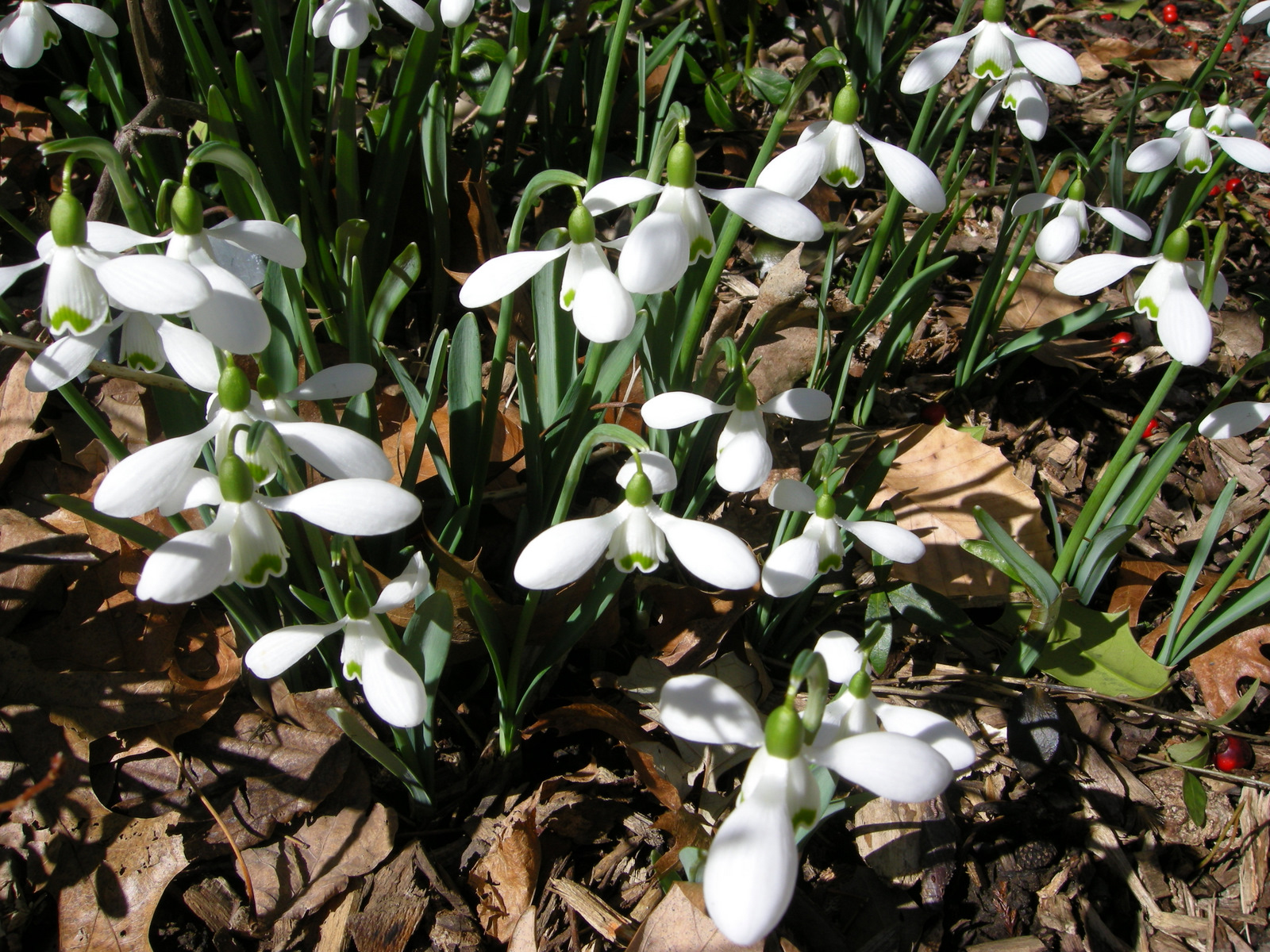 Galanthus ‘Brenda Troyle’, confused in the trade but still quite lovely
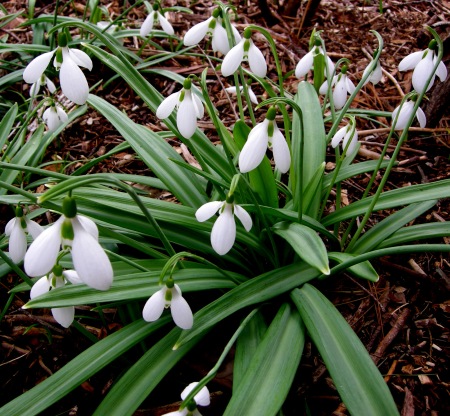 The elegant pleated leaves and plump flowers of Galanthus plicatus subsp. byzantinus
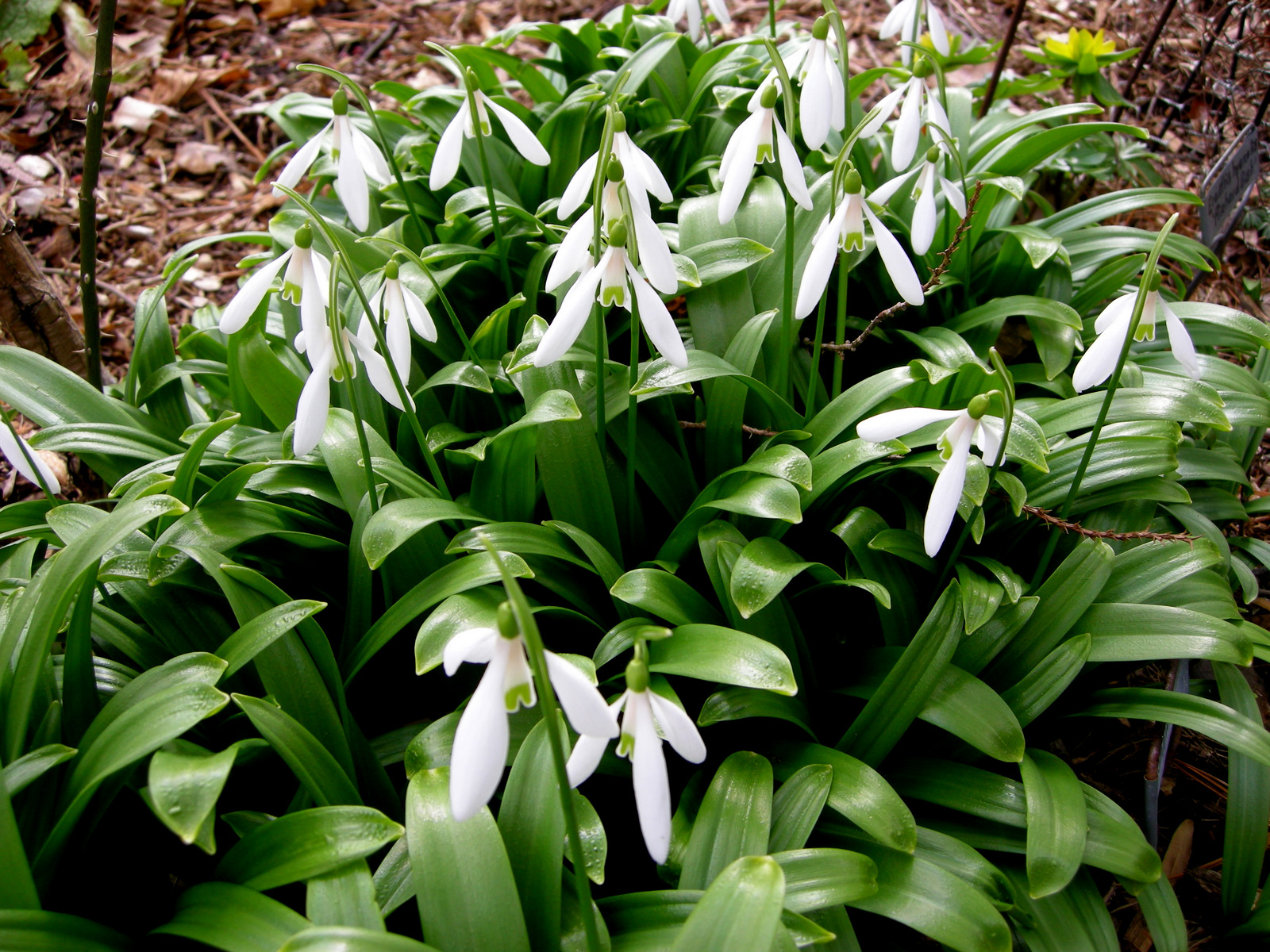 The beautiful shiny green leaves of Galanthus woronowii
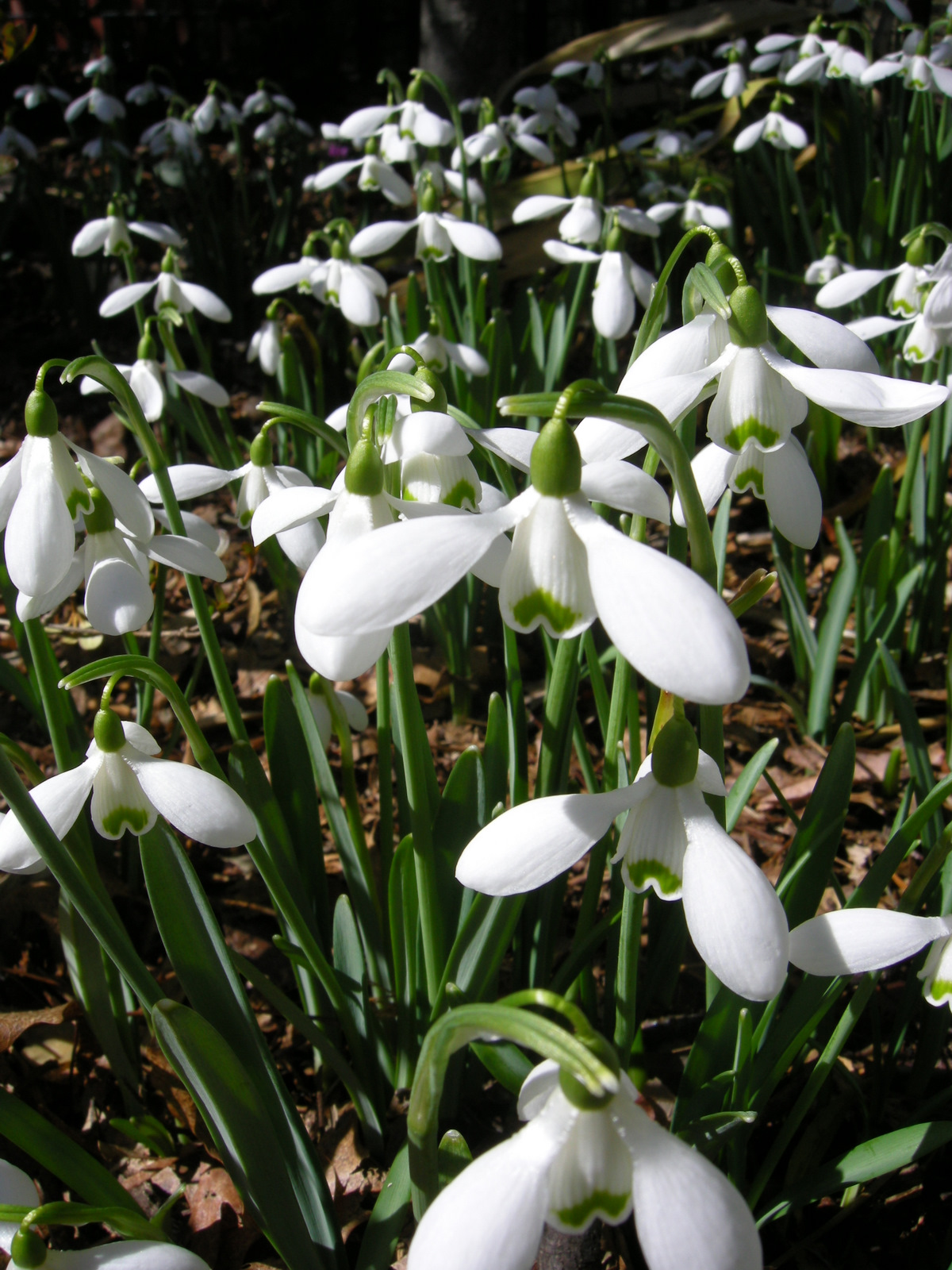 There were drifts of Galanthus ‘S. Arnott’, called the ‘desert island snowdrop’ because it is the one cultivar many galanthophiles would choose if they were limited to one.
The Perennials
 A very rare perennial for shade Amur adonis, A. amurensis ‘Fukuju Kai’
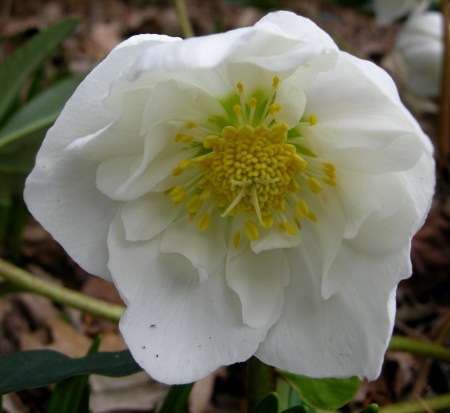 A semi-double form of Christmas rose, Helleborus niger, which I have only seen at Hedgleigh Spring
 The Algerian iris, I. unguicularis, blooming in early March with a beautiful fragrance
The Shrubs
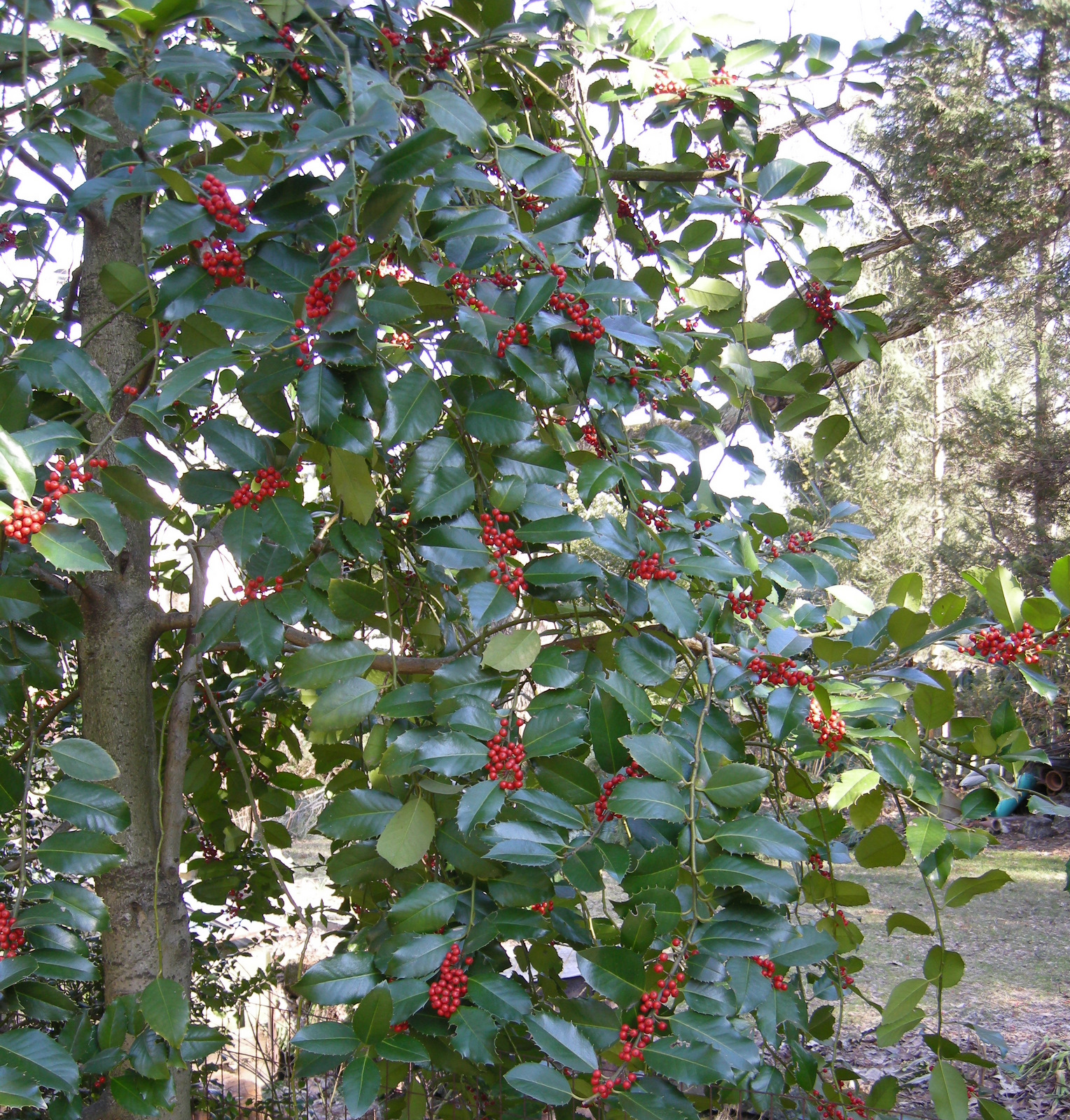 Koehne holly, Ilex x koehneana, looking as fresh and beautiful as it did in the fall
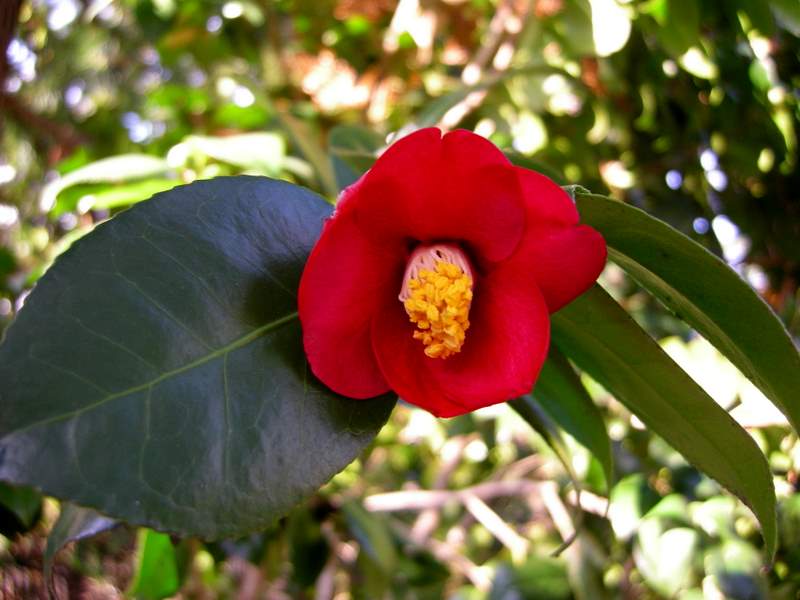
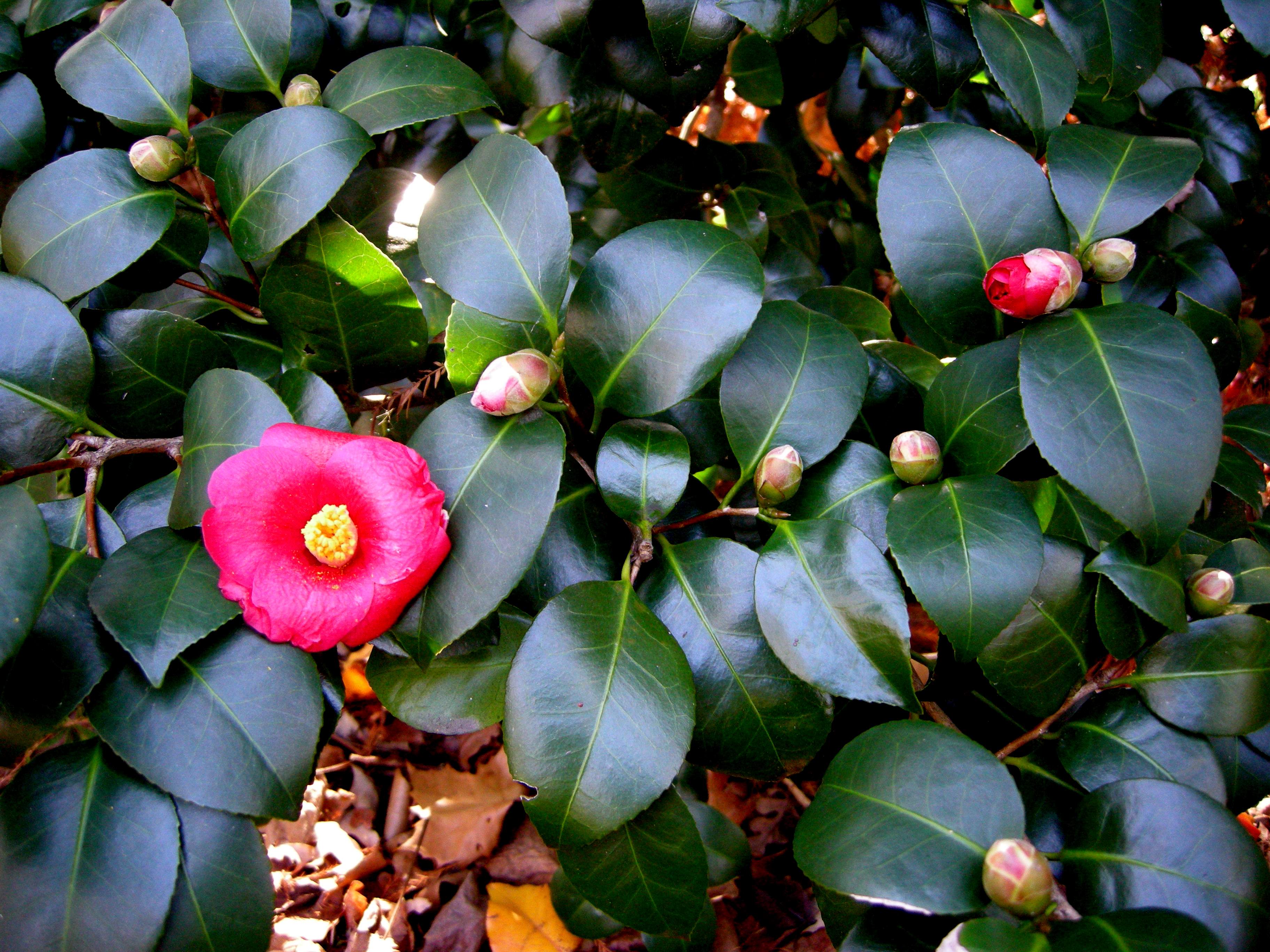
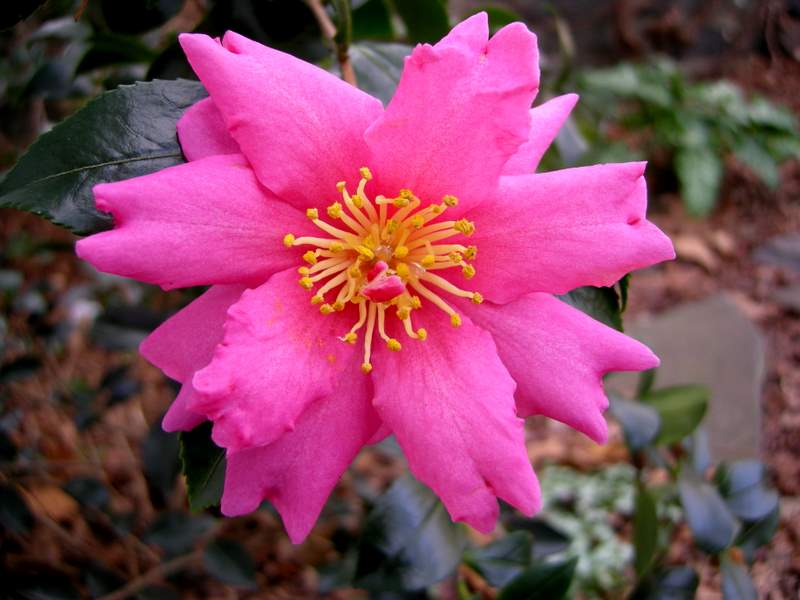
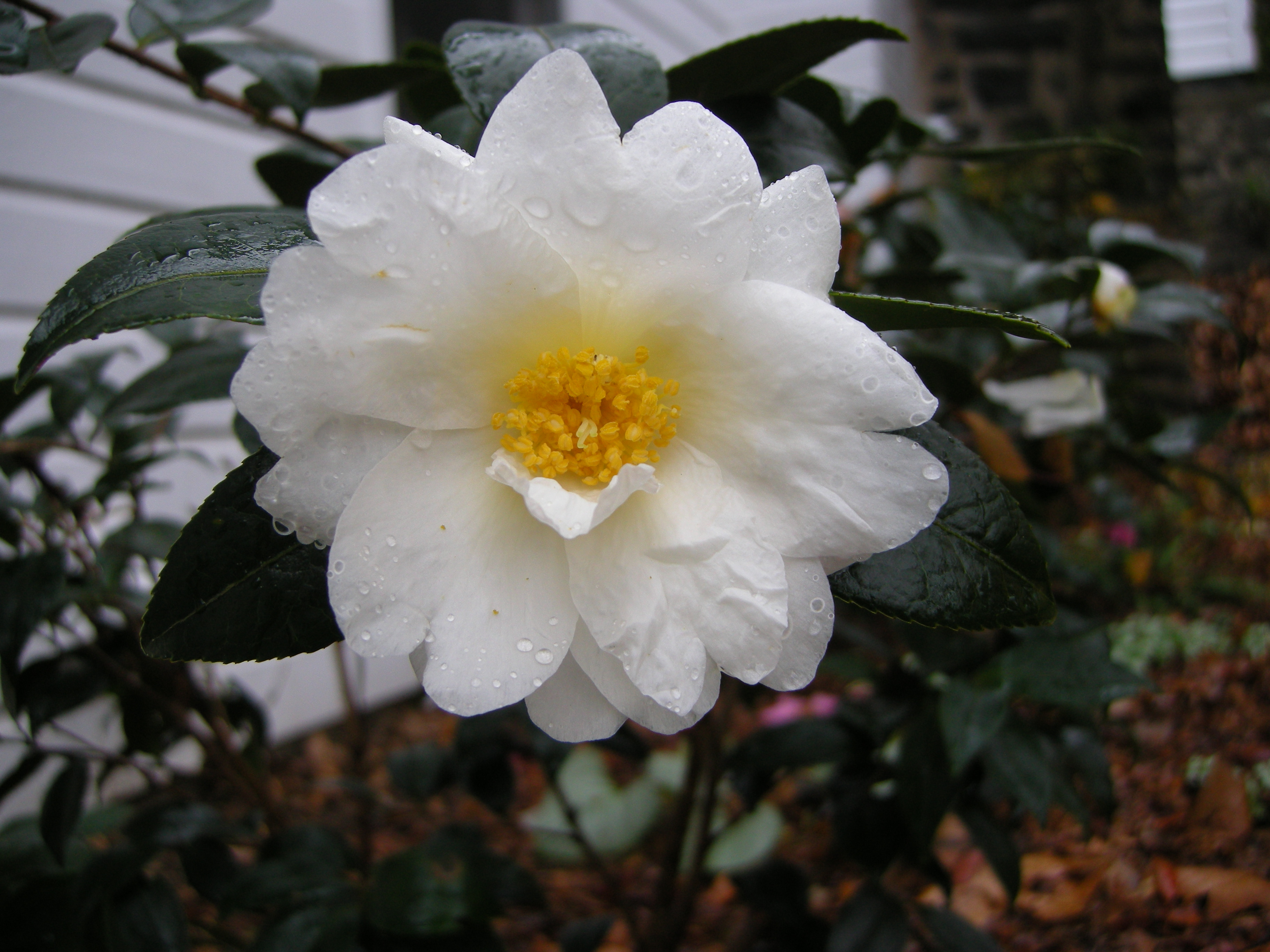
 Camellia japonica ‘Spring’s Promise’ was one of several very early spring-blooming camellias that we saw.
 Grape holly, Mahonia x media ‘Arthur Menzies’
 A highlight for me were the buds on this paperbush, Edgeworthia chrysantha ‘Snow Cream’, which look like the tassels on Victorian cushions
 Hybrid witch hazels, Hamamelis x intermedia ‘Jelena’ and ‘Moonlight’
I hope you have enjoyed your virtual seminar. Please let me know in a comment/reply what your favorite winter interest plant is.
Carolyn
Notes: Every word that appears in orange on my blog is a link that you can click for more information. If you want to return to my blog’s homepage to access the sidebar information (catalogues, previous articles, etc.), just click here.
Nursery Happenings: My first open house sale is Saturday, March 26, from 10 am to 3 pm, featuring hellebores and other winter and early spring blooming plants for shade (checks and cash only). For directions and parking information, click here.