Do You Know Where Your Mulch Comes From?

Posted in green gardening, How to, landscape design, organic gardening, product review, sustainable living with tags , , , , , , on June 9, 2014 by Carolyn @ Carolyns Shade Gardens

Nursery News:  Carolyn’s Shade Gardens is a retail nursery located in Bryn Mawr, PA, specializing in showy, colorful, and unusual plants for shade.  The only plants that we ship are snowdrops and miniature hostas.  For catalogues and announcements of events, please send your full name, location, and phone number (for back up use only) to carolyn@carolynsshadegardens.com.  Click here to get to the home page of our website for catalogues and information about our nursery and to subscribe to our blog.

.

Moriuchi compost 5-25-2014 5-13-29 PMA pile of freshly ground mulch, but what’s in it?

My friend and longtime customer Caroline Moriuchi invited me for a guided tour of her family’s mulch production operation, M&M Mulch in Moorestown, NJ.  I jumped at the chance because I always wondered how mulch was made.  What I learned from my trip plus subsequent research is that if you don’t know what your mulch is made from, you should.

.

Moriuchi compost 5-25-2014 5-07-43 PMAs you can see in this photo, M&M Mulch accepts only wood chips and brush for grinding into their high quality mulch.

M&M Mulch, which is run by Caroline’s son Seiji with the help of his father and brother, has a company policy of using only wood chips from tree services and brush from landscapers for grinding into mulch.  They will not use wooden pallets, scrap lumber, or parts of demolished buildings to produce mulch, although this is common practice in their business.  For this reason, they do not produce red-dyed mulch because it can only be made from processed lumber like pallets.  I am going to show you the Moriuchi’s mulching operation, but first I want to outline some of the dangers from pallets.

.

Moriuchi compost 5-25-2014 5-36-19 PMMulch being ground at M&M Mulch

You should do your own research, but, after reading many articles, I would never use commercially produced mulch without knowing what it was made of.  The best article on the subject is in Natural Life Magazine, to read it click here. 

Basically, a lot of mulch is made from recycled shipping pallets.  If you drive down Interstate 95, you can see the huge pile of pallets waiting to be ground into mulch near Wilmington, DE.  A high percentage of pallets are contaminated with bacteria, including e coli and listeria, from the food transported on them and from improper storage.  They are often made from “engineered wood” which is treated with formaldehyde. 

The pallets themselves are often treated with dangerous chemicals, although this is being phased out.  If they come in from abroad, they are fumigated with toxic fungicides and pesticides, and toxic substances often spill on pallets during transportation.  Wood scraps and demolished buildings pose similar dangers from toxic applications like lead paint and pressure treated wood. 

Now we get to the fun part, how mulch is made:

.

Moriuchi compost 5-25-2014 5-03-23 PMThe mulch production process starts with this very big machine, the grinder.

.

Moriuchi compost 5-25-2014 5-04-43 PMThe grinder is moved around the production yard using this remote control.

.

Moriuchi compost 5-25-2014 5-35-26 PM  A front end loader is a crucial piece of equipment.

.

Moriuchi compost 5-25-2014 5-35-34 PM The loader scoops up the wood chips and brush from the giant piles waiting to be ground.

.

Moriuchi compost 5-25-2014 5-35-54 PMThe raw material is deposited into a hopper on the grinder.

.

Moriuchi compost 5-25-2014 5-06-46 PMConveyor belts inside the grinder feed the grinding teeth.

.

Moriuchi compost 5-25-2014 5-37-13 PMThe grinder produces a giant pile of mulch, but the process isn’t over because most consumers demand that their mulch be dyed.  I am not sure how this process started or why dark black mulch is considered more attractive than natural brown.  I personally think black-dyed mulch is hideous.

.

Moriuchi compost 5-25-2014 5-16-29 PMThe dyeing machine

.

Moriuchi compost 5-25-2014 5-24-42 PMThese paddles mix the ground wood with carbon black to make it black or iron oxide to make it brown.  M&M does not produce red-dyed mulch because it can only be made from pallets.

.

Moriuchi compost 5-25-2014 5-22-27 PMBlack-dyed mulch emerges from the dyeing machine.

.

Moriuchi compost 5-25-2014 5-22-54 PMBlack-dyed mulch on the right, brown-dyed on the left.

.

Moriuchi compost 5-25-2014 5-23-41 PMBrown-dyed mulch on the right, un-dyed mulch in front and on the left.  I think gardeners should question why they need dyed mulch.

.

Thanks so much to the Moriuchis, especially Seiji who answered all my questions, for the fascinating tour.  If you live near Moorestown, New Jersey, you are very lucky to have a safe source of mulch nearby produced by the fourth generation family farmers at M&M Mulch, 400 Hartford Rd, 856-234-2394.  They deliver free to the Moorestown area and for a fee to other parts of New Jersey.  Who knows maybe they can be enticed to cross the river to Pennsylvania!

Carolyn

Nursery Happenings: The 2014 Miniature Hosta Availability for mail order and pick up at the nursery is here.   Your final chance to shop at Carolyn’s Shade Gardens will be during our open hours on Friday, June 13, and Saturday, June 14, from 10 am to 2 pm.  We close on June 15 and reopen around September 15.  You can sign up to receive notification emails by sending your full name and phone number to carolynsshadegardens@verizon.net.

Carolyn’s Shade Gardens is a local retail nursery in Bryn Mawr, Pennsylvania, U.S., zone 7a. The only plants that we mail order are snowdrops and miniature hostas and only within the US.

If you are within visiting distance and would like to receive catalogues and information about customer events, please send your full name and phone number to carolynsshadegardens@verizon.net. Subscribing to my blog does not sign you up to receive this information.

Facebook: Carolyn’s Shade Gardens has a Facebook Page where I post single photos, garden tips, and other information that doesn’t fit into a blog post. You can look at my Facebook page here or click the Like button on my right sidebar here.

Notes: Every word that appears in orange on my blog is a link that you can click for more information. If you want to return to my blog’s homepage to access the sidebar information (catalogues, previous articles, etc.) or to subscribe to my blog, just click here.

New Miniature and Small Hostas for 2014, Part 2

Posted in container gardening, containers for shade, hosta, miniature hosta with tags , , , , , , , , , , , , , , , , on May 26, 2014 by Carolyn @ Carolyns Shade Gardens

Nursery News: Carolyn’s Shade Gardens is a retail nursery located in Bryn Mawr, PA, specializing in showy, colorful, and unusual plants for shade.  The only plants that we ship are snowdrops and miniature hostas.  For catalogues and announcements of events, please send your full name, location, and phone number (for back up use only) to carolyn@carolynsshadegardens.com.  Click here to get to the home page of our website for catalogues and information about our nursery and to subscribe to our blog.

.

Miniature hosta collageClockwise from upper left: flowers of ‘Lemon Frost’, ‘Neutrino’, ‘Chartreuse Wiggles’, ‘Thumbelina’, and ‘Feather Boa’.

My last post called New Miniature and Small Hostas for 2014 highlighted four new additions to our extensive offerings of miniature hostas.  In that post I talked about ‘Alakazaam’, ‘Baby Booties’, ‘Cherish’, and ‘Kiwi Golden Thimble’.  To see the photos and descriptions, click here.  This post will add five more profiles of cute little hostas that you will want to add to your containers and gardens.

.

Hosta 'Fether Boa'‘Feather Boa’ is extremely useful because it grows rapidly to form a dense groundcover of bright gold leaves.  It is 11″ tall by 27″ wide, and its leaves are 3 3/4″ long by 2″ wide.  The narrow gold foliage with very wavy margins is topped by attractive purple flowers in July.

.

Hosta 'Thumbelina'‘Thumbelina’  departs from the usual color scheme to give us a very cute bright green and gold mini with wavy, heart-shaped leaves and a wide yellow margin .  It is 10″ tall by 24″ wide, and its leaves are 4″ long by 3″ wide.  It has medium purple flowers in July and forms a small, dense rounded mound, great specimen!

.

Hosta 'Chartreuse Wiggles'‘Chartreuse Wiggles has glossy, bright gold, very narrow and heavily rippled leaves that really stand out in the garden.  It is 10″ high by 25″ wide, and its leaves are 5 1/2″ long by 1″ wide.  Pale purple flowers appear in August.  It forms a low dense mound, making an excellent specimen, edger, or groundcover.

.

Hosta 'Neutrino'‘Neutrino’  is another mini hosta that really stands out.  The bright green, pointy leaves have a wide white margin that streaks into the center.  It forms a  5″ tall by 16″ wide neat but dense mound.  Its leaves are 2 3/4″ long by 1 3/4″ wide topped by medium purple flowers in July.  It is a tiny plant, a seedling of H. venusta.

.

Hosta 'Lemon Frost' ‘Lemon Frost’  features a very unusual color combination of light chartreuse leaves with a pure white margin.  It is 10″ tall by 24″ wide, and its leaves are 3 1/2″ long by 1 1/2″ wide.  The gorgeous, dark purple striped flowers appear in July (next photo).  It is very fast growing and useful as a variegated ground cover or edging plant.

.

Hosta 'Lemon Frost'The buds of ‘Lemon Frost’ are a desirable dark purple, and the flowers are striped—a hosta I would grow for its flowers!

There may be a third post in this series with a few more new additions.  Meanwhile, if you would like to read more about little hostas, click on any of the following links:

New Miniature and Small Hostas for 2014, Part 1

New Mice for 2014

2013 New Miniature and Small Hostas

Miniature (& Small) Hostas

I LOVE Mice

Beyond Mice

Hostas Containers and Companions

.

Carolyn

Nursery Happenings: The 2015 Miniature Hosta Availability for mail order and pick up at the nursery is here.  You can sign up to receive emails by sending your full name and phone number to carolynsshadegardens@verizon.net.

Carolyn’s Shade Gardens is a local retail nursery in Bryn Mawr, Pennsylvania, U.S., zone 7a. The only plants that we mail order are snowdrops and miniature hostas and only within the US.

If you are within visiting distance and would like to receive catalogues and information about customer events, please send your full name and phone number to carolynsshadegardens@verizon.net. Subscribing to my blog does not sign you up to receive this information.

Facebook: Carolyn’s Shade Gardens has a Facebook Page where I post single photos, garden tips, and other information that doesn’t fit into a blog post. You can look at my Facebook page here or click the Like button on my right sidebar here.

Notes: Every word that appears in orange on my blog is a link that you can click for more information. If you want to return to my blog’s homepage to access the sidebar information (catalogues, previous articles, etc.) or to subscribe to my blog, just click here.
New Miniature and Small Hostas for 2014

Posted in container gardening, containers for shade, hosta, miniature hosta with tags , , , , , , , , , , , , , , , on May 22, 2014 by Carolyn @ Carolyns Shade Gardens

Nursery News:  Carolyn’s Shade Gardens is a retail nursery located in Bryn Mawr, PA, specializing in showy, colorful, and unusual plants for shade.  The only plants that we ship are snowdrops and miniature hostas.  For catalogues and announcements of events, please send your full name, location, and phone number (for back up use only) to carolyn@carolynsshadegardens.com.  Click here to get to the home page of our website for catalogues and information about our nursery and to subscribe to our blog.

.

Miniature Hostas 20141Clockwise from upper left: ‘Lemon Frost’, ‘Alakazaam’, ‘Baby Booties’, ‘Neutrino’, ‘Kiwi Golden Thimble’, ‘Curly Fries’, ‘Thumbelina’, and ‘Cherish’.

My last post called New Mice for 2014 profiled the new additions to the adorable Mouse Ears Series of miniature hostas.  In that post I talked about ‘Sunny Mouse Ears’, ‘Mouse Cheese’, ‘Ruffled Mouse Ears’, and ‘Church Mouse’.  To see the photos and descriptions, click here.  I extolled the virtues of their round, rubbery slug-repelling leaves in beautiful colors, their symmetrical habit, and their lovely proportional flowers.

.

Hosta  'Alakazaam'‘Alakazaam’ planted in the knot hole of a tree.

I have added a lot of new miniature and small hostas that are not mice to my offerings, and I want to profile a few of them here.  But first I would like to answer the question what is a miniature hosta?  The American Hosta Society defines miniature hostas by their leaf size.  The leaf blade area, length x width, can be no greater than 6 square inches.  Clump spread is irrelevant.  Therefore, some of the hostas listed below are not technically “miniature”, but they are all little! 

.

Hosta 'Alakazaam'‘Alakazaam’s’  unusual spiky habit makes it stand out from the crowd no matter where you place it.  It forms a clump 5″ tall by 10″ wide, and its leaves are 6 1/2″ long and 3/4″ wide.  They are bright green with gold ruffled margins changing to creamy white.

.

Hosta 'Baby Booties'‘Baby Booties’  departs from the usual gold and blue color scheme to give us a very cute green and white mini with oval leaves and a wide creamy white margin .  It forms a 5″ tall by 19″ wide compact mound, and its oval leaves are 2 3/4″ long by 1 3/8″ wide.

.

Hosta 'Cherish'‘Cherish’  is an adorable tiny hosta, “child” of the wonderful ‘Baby Bunting’, with heart-shaped creamy yellow leaves and a wide blue margin streaking into the center.  It has pixie-like, tiny flowers that are coming into bloom right now. It is 8″ tall by 12″ wide, and its leaves are 2 1/2 ” long by 1 1/2″ wide.  It needs more sun due to its extensive variegation.

.

Hosta 'Kiwi Golden Thimble'‘Kiwi Golden Thimble’ is my most popular new mini hosta.  Its unusual gold color and narrow, cupped leaves really stand out.  Plus it rapidly produces an adorable mound of golden foliage.  It is 5″ tall by 18″ wide, and its leaves are 2 3/4″ long by 1 1/4″ wide.

.

Look for another post on four more new additions.  If you would like to read more about little hostas, click on any of the following links:

New Mice for 2014

2013 New Miniature and Small Hostas

Miniature (& Small) Hostas

I LOVE Mice

Beyond Mice

Hostas Containers and Companions

.

Carolyn

Nursery Happenings: The 2015 Miniature Hosta Availability for mail order and pick up at the nursery is here.  You can sign up to receive emails by sending your full name and phone number to carolynsshadegardens@verizon.net.

Carolyn’s Shade Gardens is a local retail nursery in Bryn Mawr, Pennsylvania, U.S., zone 7a. The only plants that we mail order are snowdrops and miniature hostas and only within the US.

If you are within visiting distance and would like to receive catalogues and information about customer events, please send your full name and phone number to carolynsshadegardens@verizon.net. Subscribing to my blog does not sign you up to receive this information.

Facebook: Carolyn’s Shade Gardens has a Facebook Page where I post single photos, garden tips, and other information that doesn’t fit into a blog post. You can look at my Facebook page here or click the Like button on my right sidebar here.

Notes: Every word that appears in orange on my blog is a link that you can click for more information. If you want to return to my blog’s homepage to access the sidebar information (catalogues, previous articles, etc.) or to subscribe to my blog, just click here.
New Mice for 2014

Posted in container gardening, containers for shade, hosta, miniature hosta with tags , , , , , , , , , , , , , , , , , on May 5, 2014 by Carolyn @ Carolyns Shade Gardens

Nursery News: Carolyn’s Shade Gardens is a retail nursery located in Bryn Mawr, PA, specializing in showy, colorful, and unusual plants for shade.  The only plants that we ship are snowdrops and miniature hostas.  For catalogues and announcements of events, please send your full name, location, and phone number (for back up use only) to carolyn@carolynsshadegardens.com.  Click here to get to the home page of our website for catalogues and information about our nursery and to subscribe to our blog.

.

Mouse Ears HostasClockwise from upper left: ‘Holy Mouse Ears’, ‘Frosted Mouse Ears’, ‘Blue Mouse Ears’, ‘Green Mouse Ears’, and ‘Mighty Mouse’.

In 2012, I wrote a very popular post called I Love Mice about little hostas in the Mouse Ears Series.  In that post I talked about ‘Holy Mouse Ears’, ‘Frosted Mouse Ears’, ‘Green Mouse Ears’, ‘Mighty Mouse’, and the little hosta that started it all, ‘Blue Mouse Ears’.  I extolled the virtues of their round, rubbery slug-repelling leaves in beautiful colors, their symmetrical habit, and their lovely proportional flowers.  Since then some new mice have arrived on the seen, and I want to introduce them to you.

.

Hosta 'Sunny Mouse Ears'‘Sunny Mouse Ears’ is tiny and adorable in a new color for mouse ears minis.

It was just a matter of time before someone selected a gold-leafed mouse ears hosta, and ‘Sunny Mouse Ears’  is it.  It has tiny, perfectly round leaves 1 3/4″ long by 1 3/4″ wide.  It forms a mound 3″ tall by 10″ wide.  ‘Sunny Mouse Ears’ is the first gold-leafed cultivar in the Mouse Ears series, although there is another described below.  It has the same thick substance that repels slugs and the same enchanting, pixie-like pale purple flowers in July as the rest of the mouse ears clan.

.

Hosta 'Ruffled Mouse Ears'Hosta ‘Ruffled Mouse Ears’ in the foreground contrasts nicely with the rounded shape of most of the other mouse ears hostas, here ‘Blue Mouse Ears’ in the background.

.

Hosta 'Ruffled Mouse Ears'A close up of ‘Ruffled Mouse Ears’

‘Ruffled Mouse Ears’ is another new addition to the group.  It has blue-green leaves 2 3/4″ long by 2 1/2″ wide with highly ruffled margins.  Although it has the same rounded, thick, rubbery, slug resistant leaves as its parent ‘Blue Mouse Ears’, its rippled and frilled margins provide a great contrast to the other mouse ears hostas.  ‘Ruffled Mouse Ears’ forms a mound 6″ high by 14″ wide and has the same desirable flowers.

.

Hosta 'Mouse Cheese'‘Mouse Cheese’ is definitely a clever name for this gold-leafed mouse ears hosta.

‘Mouse Cheese’ is the other new gold-leafed mouse ears hosta available this year.  At 2 3/4″long by 2 1/2″ wide, its leaves are larger and not as round, but they are  bright gold with the same thick texture as the other mice we have come to love.  ‘Mouse Cheese’ forms a slightly larger mound 4″ tall and 12″ wide.  It has very cute pale purple flowers in July and  retains its gold leaf color all season.

.

Hosta 'Church Mouse'The texture of Hosta ‘Church Mouse’ stands out in a mixed planting.  Photo courtesy of Walters Gardens.

‘Church Mouse’, the last of the four new mouse ears hostas, has very blue leaves with unique, highly ruffled margins that make a good contrast with other mouse ears hostas.  It has the same thick substance that repels slugs and adorable, well-proportioned lavender flowers in early summer.  It forms a larger mound 8″ tall by 15″ wide, but has the same neat and symmetrical habit.

.

Hosta 'Church Mouse'A close up of ‘Church Mouse’, photo courtesy of Walters Gardens.

.

If you would like to read more about little hostas, click on any of the following links:

2013 New Miniature and Small Hostas

Miniature (& Small) Hostas

I LOVE Mice

Beyond Mice

Hostas Containers and Companions

.

Carolyn

Nursery Happenings: The 2015 Miniature Hosta Availability for mail order and pick up at the nursery is here.  You can sign up to receive emails by sending your full name and phone number to carolynsshadegardens@verizon.net.

Carolyn’s Shade Gardens is a local retail nursery in Bryn Mawr, Pennsylvania, U.S., zone 7a. The only plants that we mail order are snowdrops and miniature hostas and only within the US.

If you are within visiting distance and would like to receive catalogues and information about customer events, please send your full name and phone number to carolynsshadegardens@verizon.net. Subscribing to my blog does not sign you up to receive this information.

Facebook: Carolyn’s Shade Gardens has a Facebook Page where I post single photos, garden tips, and other information that doesn’t fit into a blog post. You can look at my Facebook page here or click the Like button on my right sidebar here.

Notes: Every word that appears in orange on my blog is a link that you can click for more information. If you want to return to my blog’s homepage to access the sidebar information (catalogues, previous articles, etc.) or to subscribe to my blog, just click here.
Woody Plants for Shade Part 10

Posted in Fall Color, native plants, Shade Shrubs, shade vines, winter interest with tags , , , , , , , , , , , , , , , , , , , , , , , , , , , , on April 21, 2014 by Carolyn @ Carolyns Shade Gardens

Nursery News: Carolyn’s Shade Gardens is a retail nursery located in Bryn Mawr, PA, specializing in showy, colorful, and unusual plants for shade.  The only plants that we ship are snowdrops and miniature hostas.  For catalogues and announcements of events, please send your full name, location, and phone number (for back up use only) to carolyn@carolynsshadegardens.com.  Click here to get to the home page of our website for catalogues and information about our nursery and to subscribe to our blog.

.

Spring Shrub OfferClockwise from upper left: Pink Swamp Azalea, ‘Popcorn’ Snowball Bush, Oakleaf Hydrangea, Coastal Doghobble in winter, Carolina Jessamine, ‘Jet Trail’ Quince.

Because shade gardens are not composed solely of perennials, I offer woody plants—shrubs, trees, and vines—to my customers several times a year.  I want them to have a reliable source for large and healthy specimens, but I also want to make available woody plants for shade that are wonderful but hard-to-find.  I am in the middle of an offer right now, and customers need to let me know if they want to order by Sunday, April 27.  To see the 2014 Spring Shrub Offer, click here.

When I do these offers, I also do a post describing the plants in more detail.  These posts are some of the most popular I have ever written.  In fact, Woody Plants for Shade Part 2 is number four for all time views and Woody Plants for Shade Part 1 is number eight.  If you want to read about all the plants I have recommended, I have included links at the end of this post.  So let’s get to the plants that I am recommending this time, starting with three evergreen shrubs.

.

Buxus microphylla Wintergreen 7-12-10_LSUnfortunately, the only shot I have of ‘Wintergreen’ boxwood shows it in a container, but at least you can see its loose habit and delicate leaves.

‘Wintergreen’ Korean or little leaf boxwood, Buxus microphylla var. koreana,  is a very useful shrub for hedges, edging, achieving a somewhat formal look, and adding evergreen interest to your garden.  At 2 to 4′ tall and 3 to 5′ wide, it doesn’t take up a lot of space.   As an added bonus, ‘Wintergreen’s’ small dark evergreen leaves maintain their green color in the winter unlike most boxwoods, which turn an ugly bronze-yellow.  The loose, rounded habit is easily pruned for use as a hedge.  It grows in part to full shade and is deer and disease resistant.  After this winter it is nice to know that ‘Wintergreen’ is extremely hardy to zone 4.

.
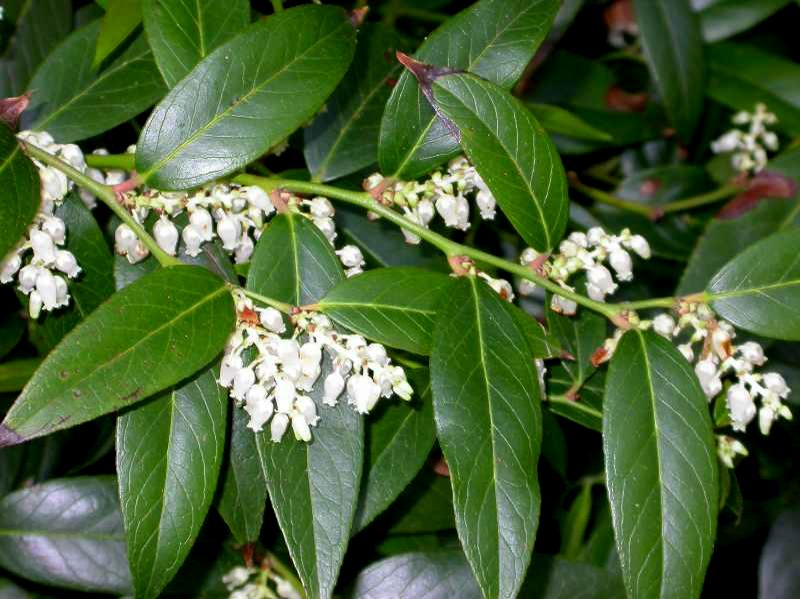
Leucothoe axillaris MOBOTCoastal doghobble’s shiny evergreen leaves display its lovely, fragrant flowers beautifully.  Photo courtesy of the Missouri Botanical Garden Plant Finder.

.

Leucothoe axillaris 11-7-11_LSThe winter foliage of coastal doghobble.

Coastal doghobble, Leucothoe axillaris, is native to the southeastern U.S., starting just south of Pennsylvania.  It has showy, arching clusters of white, fragrant flowers in May.  The glossy evergreen leaves  have excellent burgundy fall color.  Coastal doghobble looks great even after a hard winter unlike the more commonly available doghobble, L. fontanesiana, which always looks ratty to me.  It is deer resistant and grows 2 to 4′ tall and 3 to 5′ wide in part shade.  Evidently it was given the name doghobble by bear hunters because bears could crash through it but dogs would become entangled.

.

Osmanthus heterophyllus Goshiki 10-26-11_LS‘Goshiki’ osmanthus has a beautiful blend of colors in its leaves and a wonderful fragrance.

‘Goshiki’ variegated holly tea olive, Osmanthus heterophyllus, has dramatic, holly-like evergreen leaves that emerge reddish bronze and change to a lovely blend of cream, gold, and green, lighting up dark corners.  Its delicious fragrance perfumes the garden in November when it blooms.  The prickly foliage repels deer.  My osmanthus came through this winter looking spectacular with no browning.  ‘Goshiki’ grows to 6′ tall and 4′ wide in full sun to full shade.  It received the coveted Pennsylvania Horticultural Society Gold Medal Award as an outstanding shrub for our area.

That covers the evergreens, now for the deciduous shrubs:

.
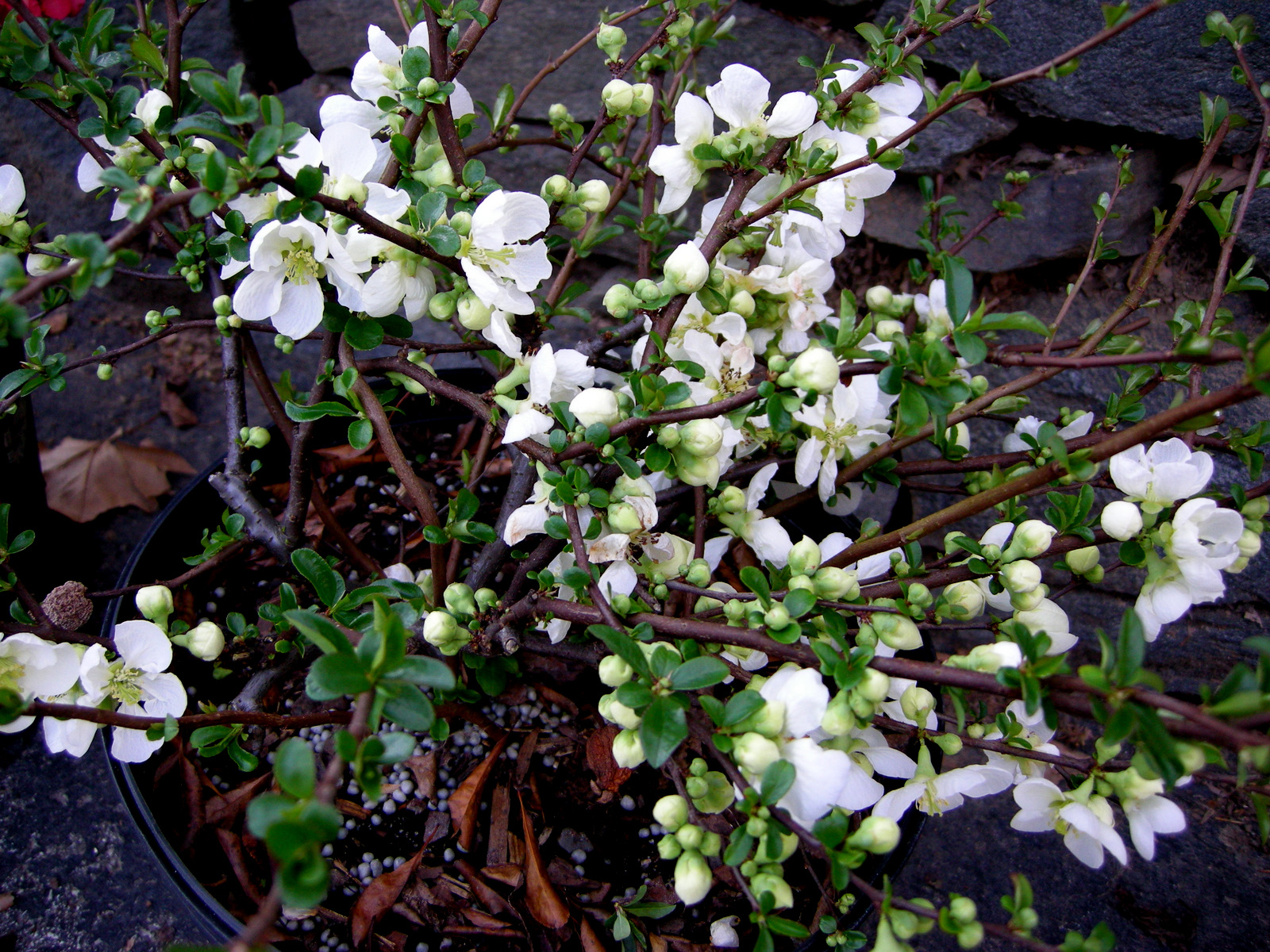
Chaenomeles x superba 'Jet Trail'‘Jet Trail’ quince, Chaenomeles x superba, is loaded with buds and showy, pure white flowers every March (April this year!) and it only grows to 3′ tall and 3′ wide.  I have profiled it before so for all the details, click here.

.

Hydrangea quercifoliaNative ‘Ellen Huff’ oakleaf hydrangea, Hydrangea quercifolia, has all the four season attributes of my favorite shrub—ornamental bark, beautiful fall color, bold-textured leaves, and gorgeous, long-lasting flowers—plus a vigorous habit and great branching structure.  For more details, click here to read my profile of oakleaf hydrangeas.
.

Jasminum nudiflorumA close up of winter jasmine’s lovely yellow flowers.

.
Jasminum nudiflorumI grow winter jasmine trailing over my terrace walls and enjoy its flowers all winter.

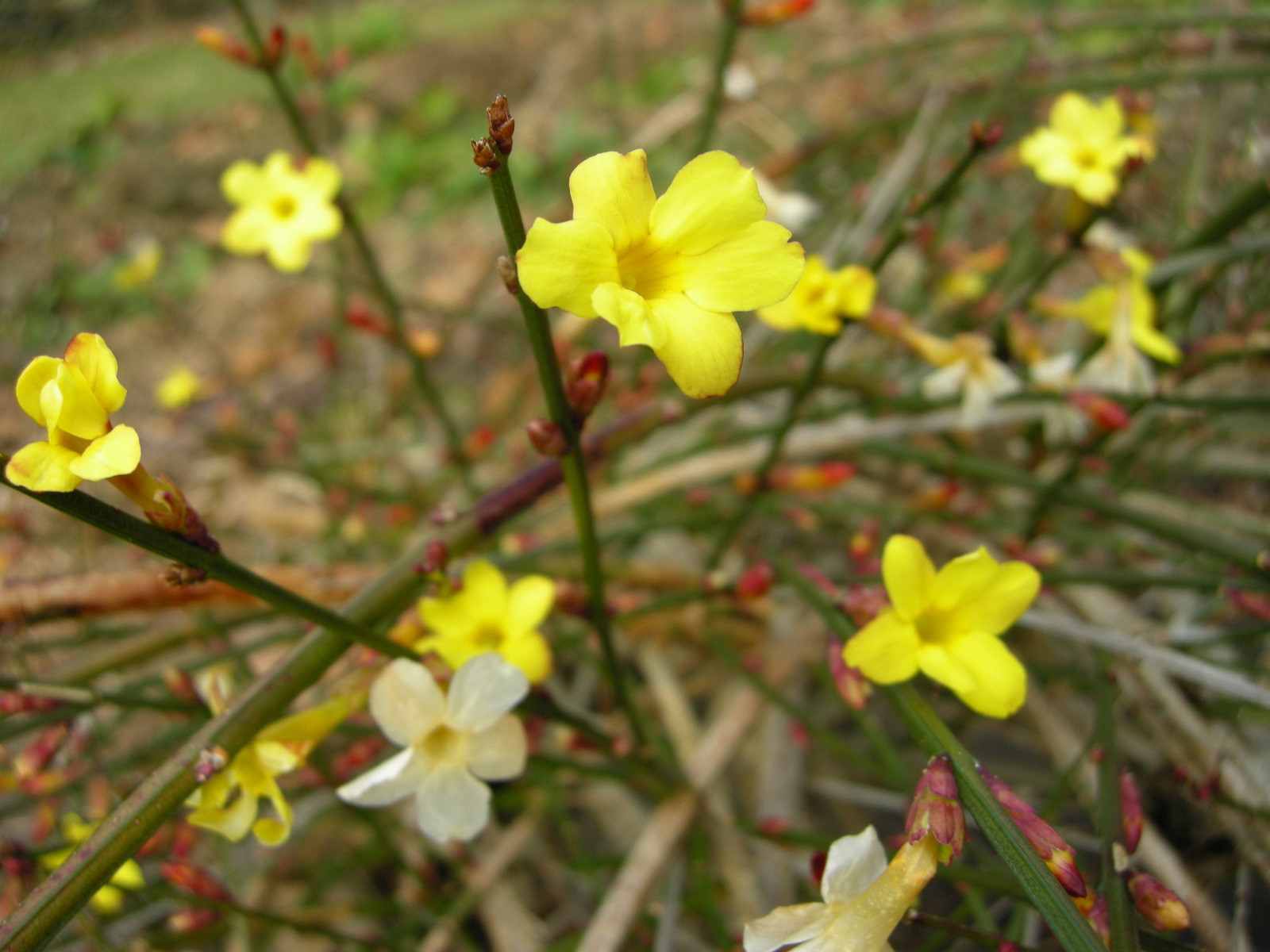
Although Winter jasmine, Jasminum nudiflorum, requires full sun, I am offering it because so many customers have asked for it after seeing my plants trailing off my terraces.  The soft yellow flowers open during warm spells throughout the winter and then prolifically in February and March (April this year) for a very long season.  The graceful, arching stems are dark green providing great winter interest.  The shiny dark green leaves have an unusual delicate texture.  When planted in a flat area, winter jasmine spreads to make an effective ground cover.  It is tough, adaptable, and deer resistant, growing to 3′ tall and 6′ wide in average garden soils.

.
Rhododendron viscosum Betty Cummins 6-6-12_LS (1)Swamp azaleas usually have white flowers, but ‘Betty Cummins’ has lovely deep pink blooms.

‘Betty Cummins’ pink swamp azalea, Rhododendron viscosum, is a rare deep pink flowered form of our native swamp azalea.  Swamp azalea grows wild from Maine to Florida, and this particular form was found in New Jersey.  It blooms in early summer and has a wonderful spicy, clove-like scent.  The deciduous, lustrous deep green leaves turn an attractive orange to maroon in fall.  ‘Betty Cummins’ grows to 6′ tall and 5′ wide in part shade.  It is wet site tolerant and attracts hummingbirds and butterflies.

.

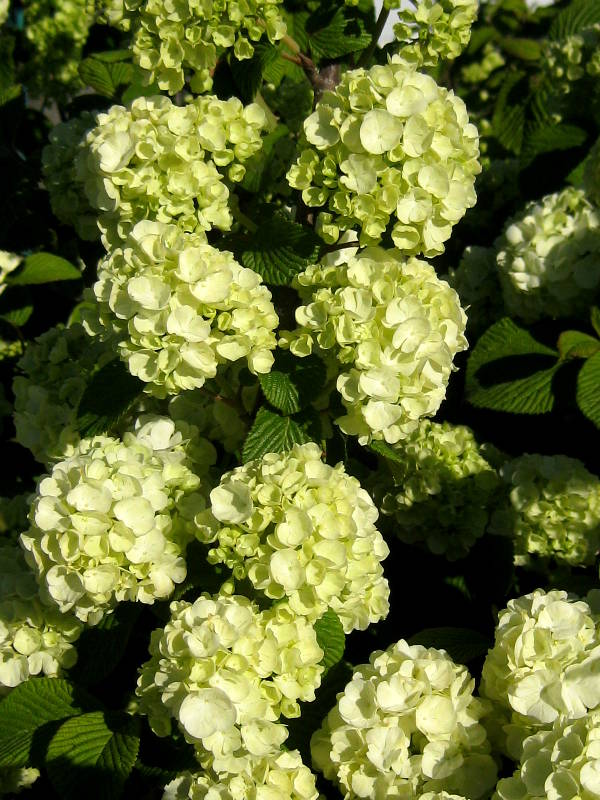
Viburnum plicatum Popcorn 4-6-12_LS (2)‘Popcorn’ Japanese snowball bush is loaded with round white flowers earlier in the season than most other shrubs.

.

Viburnum plicatum Popcorn 4-6-12_LS (5)A close up of ‘Popcorn’s’ flowers: although it looks like an hydrangea, it is actually a viburnum.

‘Popcorn’ Japanese snowball bush, Viburnum plicatum, has 3″ round blooms that open lime green and mature to pure white, putting on a stunning show for a full month in April and May.  The dark leathery green leaves turn burgundy red in fall.  ‘Popcorn’ has a lovely upright, tiered, and compact habit.  It grows to 5 to 8′ tall and 4 to 7′ wide in full sun to part shade, but it tolerates full shade.  It is deer resistant and heat and drought tolerant.

.

Gelsemium sempervirens 'Margarita'‘Margarita’ Carolina jessamine grows on a fence in part shade.  It is native to the southeastern U.S. and has received a Pennsylvania Horticultural Society Gold Medal Award as an outstanding vine for our area.  To see my previous profile, click here.

.
Gelsemium sempervirens 'Margarita'A close up of ‘Margarita’s’ fragrant yellow flowers.

.

Those are the nine woody shade plants that I am currently offering to my customers.  If you want to read about more trees, shrubs, and vines for you shady garden, here are links to all my previous posts:

Woody Plants for Shade Part 1

Woody Plants for Shade Part 2

Woody Plants for Shade Part 3

Woody Plants for Shade Part 4

Woody Plants for Shade Part 5

Woody Plants for Shade Part 6

Woody Plants for Shade Part 7

Woody Plants for Shade Part 8

Woody Plants for Shade Part 9

Carolyn

Nursery Happenings: Our third sale featuring native plants and wildflowers is Saurday, April 26, from 10 am to 3 pm.  Customers on our list will get an email with all the details.  You can sign up to receive emails by sending your full name and phone number to carolynsshadegardens@verizon.net.  The 2014 Spring Shrub Offer is here, and orders must be received by April 27.

Carolyn’s Shade Gardens is a local retail nursery in Bryn Mawr, Pennsylvania, U.S., zone 7a. The only plants that we mail order are snowdrops and miniature hostas and only within the US.

If you are within visiting distance and would like to receive catalogues and information about customer events, please send your full name and phone number to carolynsshadegardens@verizon.net. Subscribing to my blog does not sign you up to receive this information.

Facebook: Carolyn’s Shade Gardens has a Facebook Page where I post single photos, garden tips, and other information that doesn’t fit into a blog post. You can look at my Facebook page here or click the Like button on my right sidebar here.

Notes: Every word that appears in orange on my blog is a link that you can click for more information. If you want to return to my blog’s homepage to access the sidebar information (catalogues, previous articles, etc.) or to subscribe to my blog, just click here.

Letting Go Part 2: Naturalizing Bulbs

Posted in bulbs for shade, How to, landscape design, my garden, Shade Perennials, snowdrops with tags , , , , , , , , , , , , , , , , , , , , , , , , , , , , , , , , on April 10, 2014 by Carolyn @ Carolyns Shade Gardens

Nursery News: Carolyn’s Shade Gardens is a retail nursery located in Bryn Mawr, PA, specializing in showy, colorful, and unusual plants for shade.  The only plants that we ship are snowdrops and miniature hostas.  For catalogues and announcements of events, please send your full name, location, and phone number (for back up use only) to carolyn@carolynsshadegardens.com.  Click here to get to the home page of our website for catalogues and information about our nursery and to subscribe to our blog.

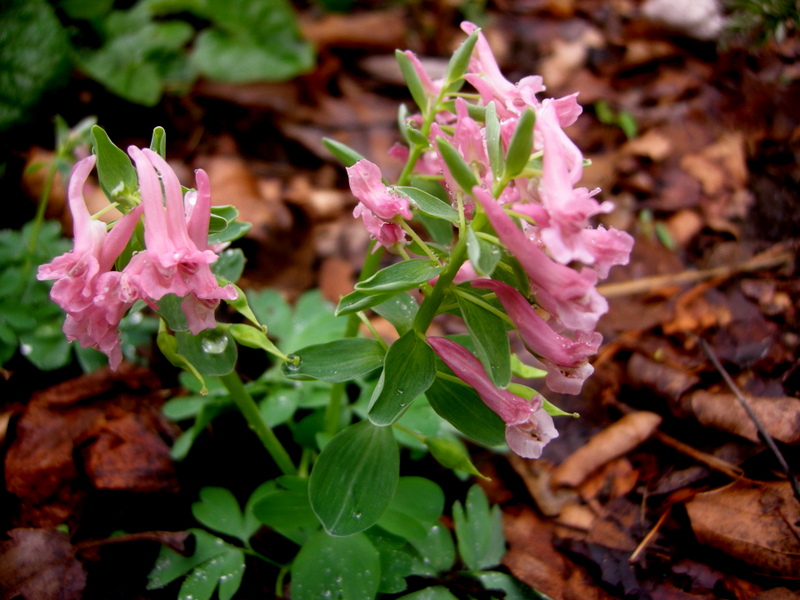
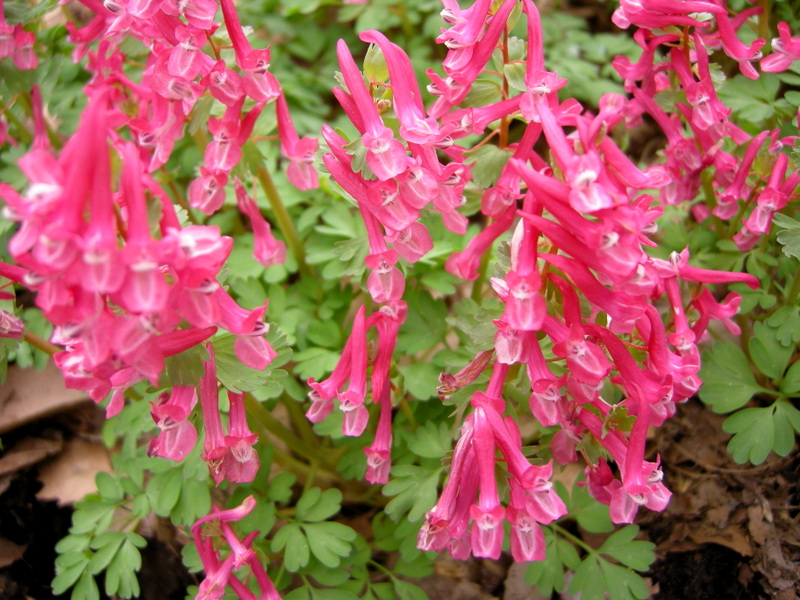
Corydalis solidaWhen I stopped trying to keep all my Corydalis solida separate and let the colors hybridize, this is what I got.

In May of 2011, I wrote a post titled Letting Go Part 1: The Lawn.  It is a well-documented discussion of why gardeners should get rid of their lawns and let what lawn remains go “natural”.  At the time I intended to write another article about letting go of garden beds, but time got away from me.  

 .
Galanthus nivalis, Crocus tommasinianusCommon snowdrops, Galanthus nivalis, and snow crocus, C. tommasinianus, naturalized in Charles Cresson’s meadow—a wonderful combination for late winter.

I was inspired to get back to the topic by reading a gorgeous book on bulbs given to me by one of my customers.  Not to digress, but I have the nicest customers who constantly send me articles, bring homemade food, send beautiful cards and letters sometimes hand drawn (one customer is a professional calligrapher), and write complimentary and encouraging emails.  Thanks to you all.

.

Buried Treasures.

This book was no ordinary gift but a 400 page hardcover book with over 300 color plates.  It is called Buried Treasures and was written by Janis Ruksans.  Ruksans is an internationally famous nurseryman and plant explorer with a mail order nursery specializing in unusual bulbs and located in Latvia.  He has introduced hundreds of bulbs and one of his focuses is Corydalis solida (first photo), which happens to be one of my favorite plants.

.

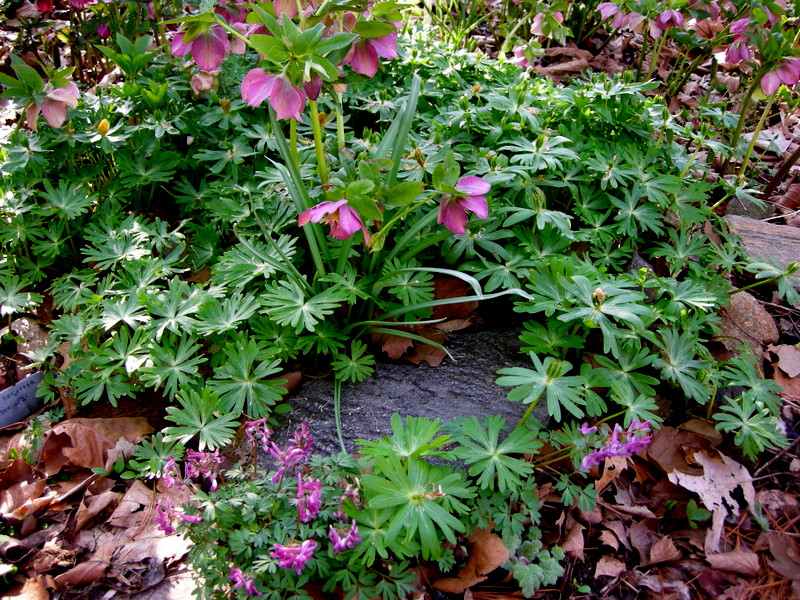
Eranthis hyemalis, Corydalis solidaWinter aconite, Eranthis hyemalis, naturalized with corydalis and hybrid hellebores.

.

Eranthis hyemalisWinter aconite in bloom in February.

As I read his book, I was struck by what he said about naturalizing bulbs:

“There are two different kinds of naturalization.  The first kind occurs when you plant your bulbs so they will look as natural as possible.  The second kind is the real thing, which will happen only if your bulbs start to reproduce by self-sowing.… Some of the most beautiful displays happen in spots where bulbs … have been left to develop naturally.”

As simple as this statement appears, many gardeners have trouble applying this concept to their gardens because it requires letting go.  You are no longer in control of where plants appear and how they combine with each other.  I know because it took me years to embrace it myself.

.

Scilla mischtschenkoana, Dicentra cucullariaTubergen squill, Scilla mischtschenkoana, on the left and Dutchman’s breeches, Dicentra cucullaria, spread randomly at Carolyn’s Shade Gardens.

However, once I let go of deciding where bulbs (and many perennials) could grow, I believe that my garden reached a whole new level of interest and beauty.  Ruksans’s book inspired me to write this post about the bulbs, including tubers, corms, and other bulb allies, that spread well in my garden.  If you feel inclined to let go, here are some of the bulbs that work the best.

.

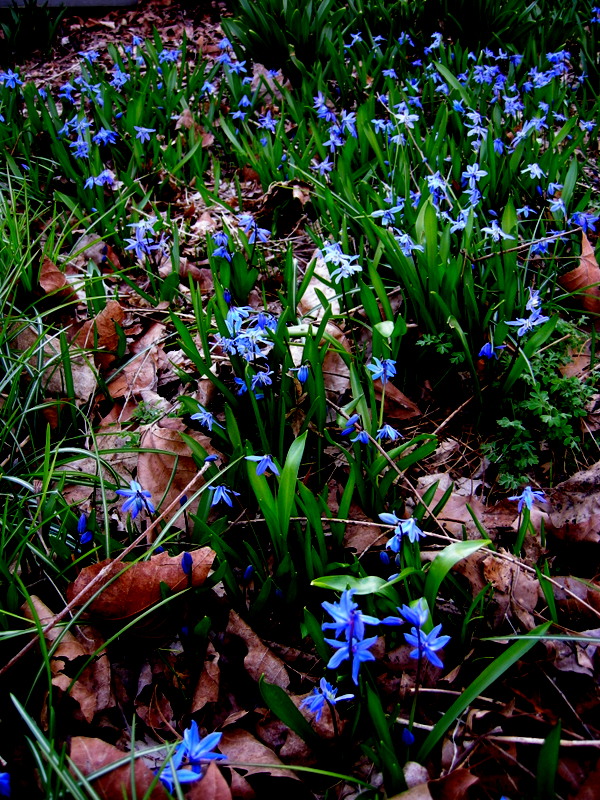
Scilla sibericaSiberian squill, Scilla siberica, provides a splash of early brilliant blue and moves all over the garden, even into the lawn.

.

Puschkinia scilloidesStriped-squill, Puschkinia scilloides, is pale blue and spreads beneath my winterhazel.
.

Puschkinia scilloidesA close up shot better shows off striped-squill’s elegance. 

.

Mertensia virginicaThere are hardly any beds in my garden that do not sport Virginia bluebells, Mertensia virginica, in early spring.  All I planted was the original clump given to me by a good friend many years ago.

.

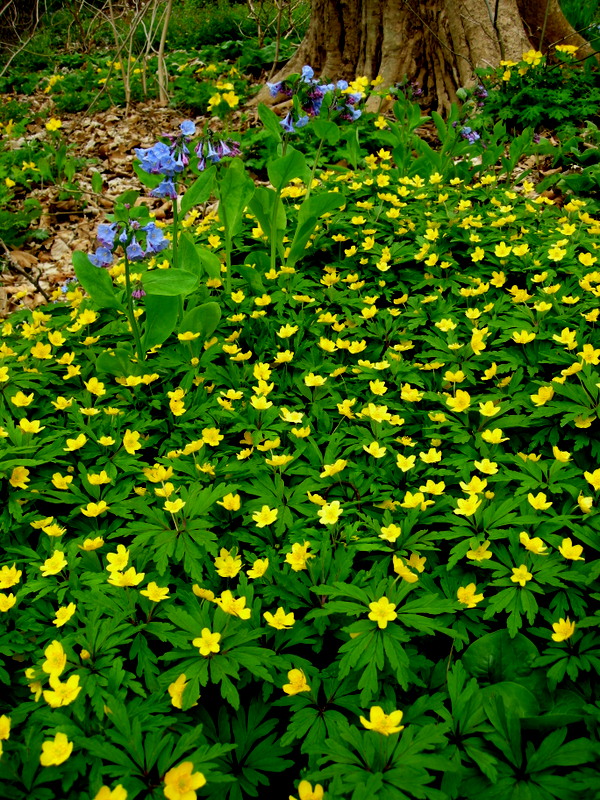
Anemone ranunculoides, Mertensia virginicaWood anemones, including Anemone ranunculoides pictured above with Virginia bluebells, have been allowed to form gigantic patches in my woodland.

.

Anemone nemorosa 'Alba Plena'European wood anemones, A. nemorosa, are a favorite, including ‘Alba Plena’.

.

Anemone ranunculoides, Anemone nemorosa 'Vestal'My woodland with wood anemones and bluebells.

.

Chionodoxa forbesiiGlory-of-the-snow, Chionodoxa forbesii, is everywhere even the formal beds by the front door.  It doesn’t take up any “room” because it goes dormant and perennials can be planted right in it.

.

Chionodoxa forbesii 'Pink Giant'‘Pink Giant’ is the pink cultivar of glory-of-the-snow, and it too plants itself wherever it wants.

The most wonderful result of my new relaxed approach came from Corydalis solida, a plant with no real common name.  It is a bulbous corydalis, which comes up very early in spring and dies back shortly after flowering.  Unlike the colorful herbaceous corydalis that never come back due to our hot summers, this corydalis returns year after year without fuss and even self-sows.  Here are a few of its cultivars:

.

Corydalis solida 'George P. Baker'‘George P. Baker’

.

Corydalis solida subsp. incisaC. solida subsp. incisa

.

Corydalis solida 'Blushing Girl'‘Blushing Girl’ selected by Jans Ruksans.

.

Corydalis solida 'Beth Evans'‘Beth Evans’

All four cultivars are very beautiful in their own right, and at first I kept them separate so they would stay pure.  However, when I let go and nature took its course, the results were amazing.  Now I have a rainbow of corydalis.

.

Corydalis solida seedling 4-3-2011 7-36-54 PMCordalis solida left to its own devices.

Although I have a large garden, this is not a technique limited to big spaces.  Any garden bed full of perennials or any area beneath trees and shrubs is perfect for naturalizing bulbs.  Just give them a free hand after you get them started.

Carolyn

Nursery Happenings: Our third sale is Saurday, April 26, from 10 am to 3 pm.  Customers on our list will get an email with all the details.  You can sign up to receive emails by sending your full name and phone number to carolynsshadegardens@verizon.net.  Coming soon is a shrub offer.  If you have any shrubs you want, please email me at carolynsshadegardens@verizon.net

Carolyn’s Shade Gardens is a local retail nursery in Bryn Mawr, Pennsylvania, U.S., zone 7a. The only plants that we mail order are snowdrops and miniature hostas and only within the US.

If you are within visiting distance and would like to receive catalogues and information about customer events, please send your full name and phone number to carolynsshadegardens@verizon.net. Subscribing to my blog does not sign you up to receive this information.

Facebook: Carolyn’s Shade Gardens has a Facebook Page where I post single photos, garden tips, and other information that doesn’t fit into a blog post. You can look at my Facebook page here or click the Like button on my right sidebar here.

Notes: Every word that appears in orange on my blog is a link that you can click for more information. If you want to return to my blog’s homepage to access the sidebar information (catalogues, previous articles, etc.) or to subscribe to my blog, just click here.

Winter Interest Plants 2014

Posted in bulbs for shade, evergreen, garden to visit, Garden Tour, hellebores, snowdrops, winter, winter interest with tags , , , , , , , , , , , , , , , , , , , , , , , , , , , , , , , on March 31, 2014 by Carolyn @ Carolyns Shade Gardens

Nursery News: Carolyn’s Shade Gardens is a retail nursery located in Bryn Mawr, PA, specializing in showy, colorful, and unusual plants for shade.  The only plants that we ship are snowdrops and miniature hostas.  For catalogues and announcements of events, please send your full name, location, and phone number (for back up use only) to carolyn@carolynsshadegardens.com.  Click here to get to the home page of our website for catalogues and information about our nursery and to subscribe to our blog.

Crocus tommasinianus, Helleborus x hybridusA beautiful winter combination: snow crocus, white hybrid hellebore, and snowdrops in the background.  This was one of the few hellebores that were up and open.

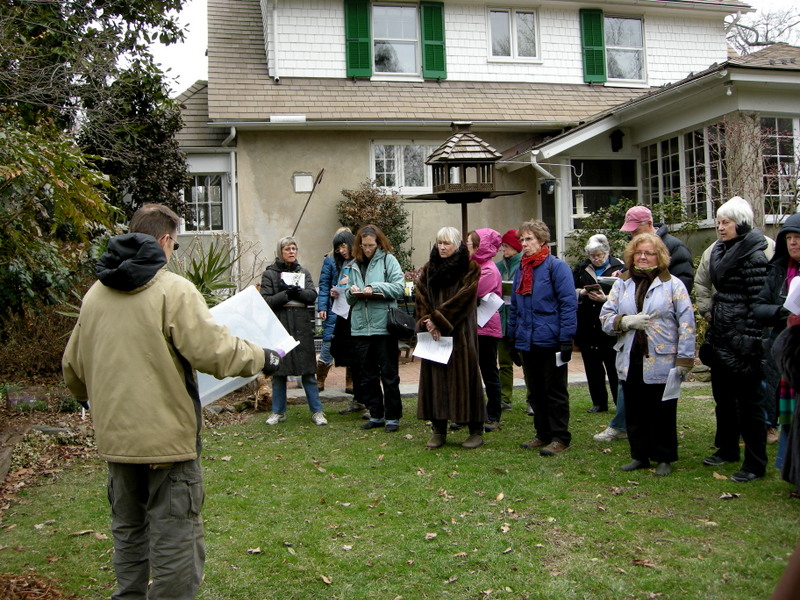
What a winter!  The snow is just melting and the ground is still frozen in places.  Today it is 44 degrees and pouring rain.  I don’t think the weather that we have had in March has reached the average highs for a normal February.  All this has resulted in many problems for Carolyn’s Shade Gardens, and one of them was scheduling Charles Cresson’s 2014 Winter Interest Plant Seminars.  Customers love these seminars during which Charles takes participants around his amazing Swarthmore garden and introduces them to the many plants that thrive in a winter garden.

 .
Cresson winter interest seminarYou can see from the preferred attire of seminar attendees that it was quite cold even on the rescheduled date of March 23.

It became clear that we couldn’t hold the seminars on the “normal” dates of the third week in February as Charles’s garden was under several feet of snow.  The “rain” dates in the first week of March were equally frozen.  We opted for three weeks later, March 23, and 20 of the original 40 participants could actually come that day.  Thanks so much to those 20 people who stuck with us through all the rescheduling.

.

Cresson winter interest seminarCharles gives the group background on his garden, Hedgleigh Spring.  Plants for sale by Carolyn’s Shade Gardens are in the foreground.

Although we probably saw less plants than we have in the previous three years, I think the group appreciated them more than ever before.  Just the thought that spring might actually be coming was refreshing, and Charles’s enthusiasm for his plants was inspiring.  For background on Hedgleigh Spring and Charles Cresson, see Winter Interest Plants 2011.  For scenes from previous years, see Winter Interest Plants 2012 and Winter Interest Plants 2013.

.

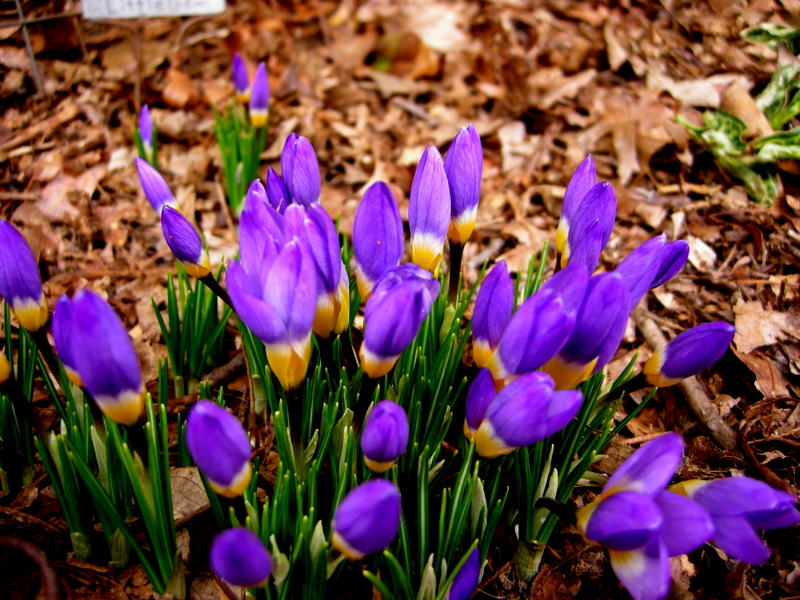
Crocus sieberi 'Tricolor'This technicolor crocus, C. sieberi ‘Tricolor’, caught everyone’s eye.

What follows are photos of some of the plants that we saw in the order we visited them.  I hope that they will help everyone in the mid-Atlantic think spring.

.

Viburnum x bodnantense 'Dawn'‘Dawn’ viburnum, V. x bodnantense,  is still tightly in bud though usually done blooming by now.

.

Viburnum x bodnantense 'Dawn'A close up of the rose-colored buds of ‘Dawn’ viburnum—-the flowers are a lighter pink.
.

Galanthus 'S. Arnott', Narcissus 'Rijnveld's Early Sensation'The old-fashioned snowdrop ‘S. Arnott’ with ‘Rijnveld’s Early Sensation’, a February blooming daffodil. 

.

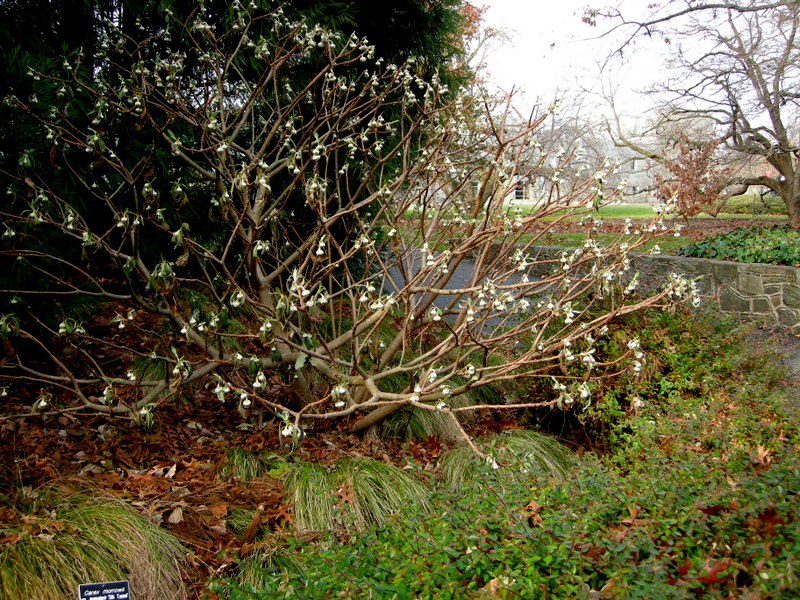
Edgeworthia chrysanthaThe buds of edgeworthia were not damaged by the cold and are just starting to swell while the hardy palm to the left looks great.

.

Iris reticulata 'T.S. Dijt'The reticulate iris ‘J.S. Dijt’ was in full bloom while others were still to come.

.

Skimmia japonicaJapanese skimmia was only slightly damaged by our subzero temperatures.

.

Daphne odoraWinter daphne looked a lot worse than the skimmia but will loose the brown leaves and grow fresh green ones before spring is over.  The buds are fine and still to open.

.

DSCN3899This tiny early daffodil with recurved petals, the species Narcissus cyclamineus, was much admired.

.

Cyclamen coumWinter-blooming hardy cyclamen, C. coum,  was also beautiful.

.

Galanthus 'Ballerina'‘Ballerina’, an elegant double snowdrop—it’s on my wish list.

.

Galanthus 'Ballerina'A close up of ‘Ballerina’

.

DSCN3893Dutch crocus, C. vernus, pushes through old sterbergia leaves.

.

Galanthus 'Bill Bishop'‘Bill Bishop’ snowdrop with its huge flowers and small stature.

.

Eranthis hyemalis doubleDouble winter aconite, Eranthis hyemalis, which Charles grew from seed.

.

Galanthus 'Magnet'A very healthy clump of ‘Magnet’ hybrid snowdrop drooping from the cold.

.

Helleborus nigerChristmas rose, Helleborus niger

.

Galanthus rizehensisThe rare species snowdrop Galanthus rizehensis.

.

Leucojum vernum var. carpathicumThe variety of spring snowflake with yellow markings, Leucojum vernum var. carpathicum.

.

Leucojum vernum var. carpathicumAnother group of Leucojum vernum var. carpathicum.

.

Leucojum vernum 'Gertrude Wister'Very rare semi-double spring snowflake ‘Gertrude Wister’, which originated in Swarthmore.  Ten happy customers ordered one in my snowdrop catalogue.

.

Galanthus nivalis, Crocus tommasinianusCommon snowdrops and snow crocus, the essence of late winter in Charles’s meadow.

.

Trillium underwoodiiThe only sign of spring in the whole garden, longbract wakerobin, Trillium underwoodii, emerging.

The forecast going forward shows no nights below freezing and daytime temperatures in the 50s and even the 60s.  Now I just have to get caught up somehow!  It has been hard to find time to keep up with the blog and to read other blogs so I apologize to my readers and fellow bloggers.

Carolyn

Nursery Happenings: Our second sale is scheduled for the weekend of April 12, but the details are tentative.  Customers on our list should look for an email or you can sign up for emails by sending your full name and phone number to carolynsshadegardens@verizon.net.  Coming up after that is a shrub offer.  If you have any shrubs you want, please email me at carolynsshadegardens@verizon.net

Carolyn’s Shade Gardens is a local retail nursery in Bryn Mawr, Pennsylvania, U.S., zone 7a. The only plants that we mail order are snowdrops and miniature hostas and only within the US.

If you are within visiting distance and would like to receive catalogues and information about customer events, please send your full name and phone number to carolynsshadegardens@verizon.net. Subscribing to my blog does not sign you up to receive this information.

Facebook: Carolyn’s Shade Gardens has a Facebook Page where I post single photos, garden tips, and other information that doesn’t fit into a blog post. You can look at my Facebook page here or click the Like button on my right sidebar here.

Notes: Every word that appears in orange on my blog is a link that you can click for more information. If you want to return to my blog’s homepage to access the sidebar information (catalogues, previous articles, etc.) or to subscribe to my blog, just click here.

Hellebore Leaves

Posted in hellebores, How to, Shade Perennials, winter, winter interest with tags , , , , , , , on March 13, 2014 by Carolyn @ Carolyns Shade Gardens

Nursery News: Carolyn’s Shade Gardens is a retail nursery located in Bryn Mawr, PA, specializing in showy, colorful, and unusual plants for shade.  The only plants that we ship are snowdrops and miniature hostas.  For catalogues and announcements of events, please send your full name, location, and phone number (for back up use only) to carolyn@carolynsshadegardens.com.  Click here to get to the home page of our website for catalogues and information about our nursery and to subscribe to our blog.

.

Helleborus 'Ballerina Ruffles'This beautiful, newly introduced double hellebore called ‘Ballerina Ruffles’ will be available at the hellebore sale on March 29.

One certain sign of spring at Carolyn’s Shade Gardens is when I start getting calls and emails about hellebore leaves.  Since so many of my customers have questions about this, I thought I would write a quick post on the subject.  For a longer post with a detailed explanation of hellebore maintenance as applied to the various types of hellebores you might have in your garden, please read Cutting Back Hellebores.

.

DSCN3715Sweet box (Sarcococca) is a true evergreen shrub and still looks beautiful after our hard winter.

The question I get from my customers this time of year is: “What’s wrong with my hellebores, the leaves look terrible?”  The answer is that although hellebores are often called evergreen, they are actually an herbaceous perennial and lose their foliage every year just like a peony or a coneflower.  Unlike a peony, hellebore leaves last through most of the winter adding ornamental interest to the winter garden.  Hellebore foliage is winter green not evergreen.  Eventually the leaves fade and are replaced with fresh new growth.

.

DSCN3713-001A typical hellebore in my garden right now.

In mild winters, hellebore leaves will still look fresh and green in March.  But in harsh winters like the one we just experienced, hellebore foliage will look like the photo above.  No matter what the leaves look like though, you should cut them off at the base in late winter before the flowers start to emerge.  I usually recommend mid-February but that was impossible this year.  I am cutting them back now as they emerge from the snow.  I want to get the job done before the new flower stems mingle with the old leaf stems.  If that happens it is hard to remove the leaves without unintentionally chopping off flowers.

.

DSCN3710Just trace the leaf back to the base of the plant and cut it off.

.

DSCN3727A close up of the base of the plant with the old leaves and the new buds.

So the answer is there is nothing wrong with your hellebores.  Despite the awful winter and frigid temperatures, they will bloom as beautifully as ever.  They just need a little maintenance.  But before you get chopping, please read the more detailed directions in Cutting Back Hellebores.

.

DSCN3711As soon as the snow melted, snow crocuses burst into bloom, a sure sign of spring.
.

DSCN3723Snowdrops are equally as determined to get blooming and have been covered with honeybees on warmer days.

That is about all that is going on at Carolyn’s Shade Gardens right now.  If you have ordered snowdrops, I am hoping to start shipping as early as next week.  Although it is supposed to go down to 20 degrees tonight, the ten-day forecast predicts warmer weather.  Let’s keep our fingers crossed!

Carolyn

Nursery Happenings: Our first open house sale featuring a huge variety of hellebores is scheduled for Saturday, March 29, from 10 am to 3 pm.  Customers will get an email with details.

Carolyn’s Shade Gardens is a local retail nursery in Bryn Mawr, Pennsylvania, U.S., zone 7a. The only plants that we mail order are snowdrops and miniature hostas and only within the US.

If you are within visiting distance and would like to receive catalogues and information about customer events, please send your full name and phone number to carolynsshadegardens@verizon.net. Subscribing to my blog does not sign you up to receive this information.

Facebook: Carolyn’s Shade Gardens has a Facebook Page where I post single photos, garden tips, and other information that doesn’t fit into a blog post. You can look at my Facebook page here or click the Like button on my right sidebar here.

Notes: Every word that appears in orange on my blog is a link that you can click for more information. If you want to return to my blog’s homepage to access the sidebar information (catalogues, previous articles, etc.) or to subscribe to my blog, just click here.

Snowdrops at Winterthur and Here

Posted in bulbs for shade, garden to visit, snowdrops, winter, winter interest with tags , , , , , , , on February 25, 2014 by Carolyn @ Carolyns Shade Gardens

Nursery News: Carolyn’s Shade Gardens is a retail nursery located in Bryn Mawr, PA, specializing in showy, colorful, and unusual plants for shade.  The only plants that we ship are snowdrops and miniature hostas.  For catalogues and announcements of events, please send your full name, location, and phone number (for back up use only) to carolyn@carolynsshadegardens.com.  Click here to get to the home page of our website for catalogues and information about our nursery and to subscribe to our blog.

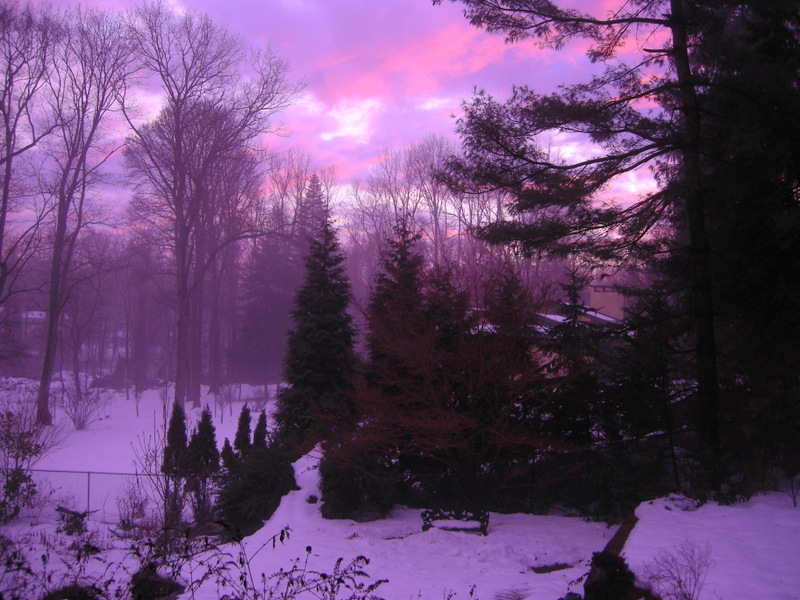
Carolyn's Shade GardensA beautiful sunset over a snowy landscape at Carolyn’s Shade Gardens.

Before I get to current events at Carolyn’s Shade Gardens, I want to encourage you to come to this year’s Bank to Bend lecture at Winterthur on Saturday, March 8.  The featured speaker is Matt Bishop, one of the foremost snowdrop experts in the U.K. and the principal author of Snowdrops: A Monograph of Cultivated Galanthus, commonly referred to as the snowdrop bible.  Carolyn’s Shade Gardens will be selling a nice selection of snowdrops, cyclamen, hellebores, and other spring flowers.  The official details are below.

.

bank to bend 2014

 Celebrate the winter garden at Winterthur at our annual Bank to Bend event! This year’s featured speaker is Matt Bishop, famous snowdrop enthusiast and author of Snowdrops: A Monograph of Cultivated Galanthus. Snowdrops, winter interest plants, and plants propagated from the Winterthur Garden will be on sale. Lecture at 11:00 am; plant sale from 10:00 am-3:30 pm; garden open 10:00 am to dusk, with a special tour of the March Bank beginning at 1:00 pm. $10 per Member, $20 per nonmember. Free for WGLS and Garden Associate Members. Registration includes admission to the garden. To register, call 800.448.3883.

Not a Winterthur Member? Join now!

For more information, visit winterthur.org or call 800.448.3883.
WINTERTHUR MUSEUM, GARDEN & LIBRARY
WINTERTHUR, DE 19735
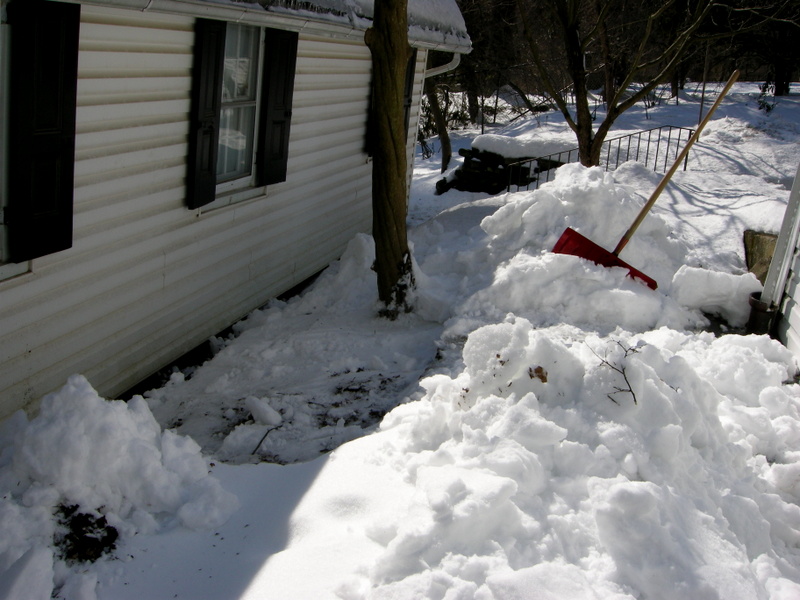
.Carolyn's Shade GardensFor those of you who visit in the spring, this is the front walk right now.

You may be wondering what is going on at Carolyn’s Shade Gardens—-I know I am 🙂.  Last year at this time (and every recent year that I remember), snowdrops, cyclamen, hellebores, and lots of other plants were up and blooming in my garden.  I was almost done potting all the snowdrops for mail order and pick up and had started thinking about hellebores.  This year most of my garden is still under at least a foot of snow.  The snowdrops are frozen into the ground, which is as hard as a rock despite a few recent days in the mid-50s.

.

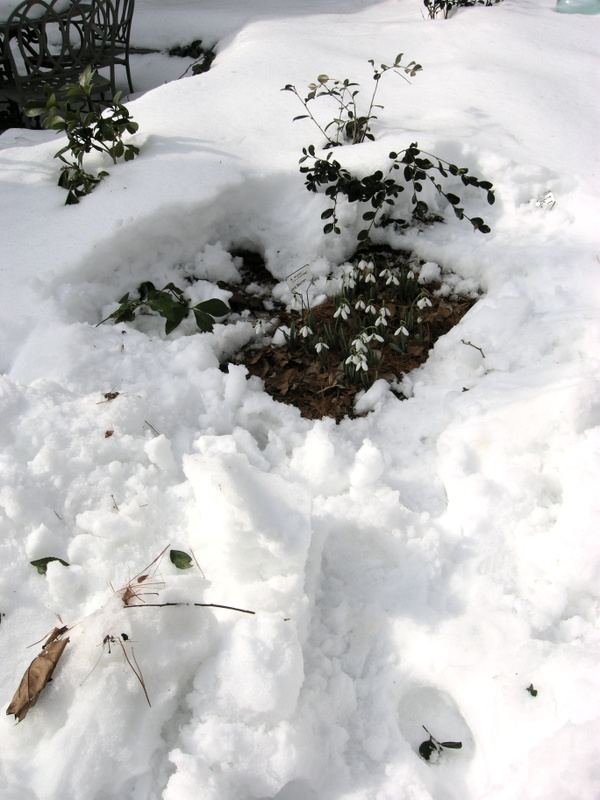
Carolyn's Shade GardensI excavated about three feet of snow off the top of pots of snowdrops.  And here is what I found….

.

Galanthus elwesiiA lone giant snowdrop trying to break through to the surface.

Nevertheless, despite our frigid weather and constant deep snow cover, the minute a patch of snowdrops melts through it springs up and into bloom seemingly overnight.  This never fails to lift my flagging spirits, and I thought you might like to see these brave little snowdrops in action.

.

Galanthus elwesii ex U.S. National ArboretumThis patch of snowdrops started blooming a few days before Christmas.  Because it was so big and beautiful, I covered it with a plastic box before all the snow and ice started (you can see the outline in the photo), and this is what I found when I removed it.

.

Galanthus elwesii ex U.S. National ArboretumThe snowdrops under the box were in perfect shape despite repeated snow and ice and single digit temperatures.

.

Galanthus elwesii ex U.S. National ArboretumHere is a close up of this beautiful snowdrop, which is a selection from a patch at the U.S. National Arboretum with a large flower and lovely green X mark.
.

Galanthus 'Faringdon Double'Another snowdrop that started blooming in December and didn’t seem fazed by the weather even without a cover, the early-flowering ‘Faringdon Double’. 

.

Galanthus 'Faringdon Double'The inside of ‘Faringdon Double’ showing its extra petals.

.

Galanthus 'Kite'‘Kite’ usually starts blooming in mid-January, and when I moved the snow away today, there it was ready to open.

.

Galanthus elwesii 'Standing Tall'Some varieties don’t even need my help like the very robust giant snowdrop ‘Standing Tall’.

That is about all that is going on at Carolyn’s Shade Gardens right now.  If you have ordered snowdrops, I am hoping to start shipping in about two weeks (it was February 25 last year).  Eventually, the snow will melt, the ground will unfreeze, and the plants will “catch up”.  Meanwhile the ten-day forecast predicts highs 15 to 20 degrees lower than our normal average and five nights with lows in the teens, brrrrr.

Carolyn

Nursery Happenings: We will be selling snowdrops and hellebores at Winterthur on March 8, details here.  To register for Charles Cresson’s Winter Interest Plants Seminar click here.  We are now taking orders, for mail order or pick up in March, from the 2014 Snowdrop Catalogue, featuring snowdrops and other winter interest plants like cyclamen and hellebores.  To access the catalogue, please click here.  Please visit my Etsy Shop to purchase beautiful photo note cards suitable for all occasions, including a new set of snowdrop cards, by clicking here.

Carolyn’s Shade Gardens is a local retail nursery in Bryn Mawr, Pennsylvania, U.S., zone 7a. The only plants that we mail order are snowdrops and miniature hostas and only within the US.

If you are within visiting distance and would like to receive catalogues and information about customer events, please send your full name and phone number to carolynsshadegardens@verizon.net. Subscribing to my blog does not sign you up to receive this information.

Facebook: Carolyn’s Shade Gardens has a Facebook Page where I post single photos, garden tips, and other information that doesn’t fit into a blog post. You can look at my Facebook page here or click the Like button on my right sidebar here.

Notes: Every word that appears in orange on my blog is a link that you can click for more information. If you want to return to my blog’s homepage to access the sidebar information (catalogues, previous articles, etc.) or to subscribe to my blog, just click here.

The Scott Arboretum of Swarthmore College

Posted in container gardening, evergreen, garden to visit, winter, winter interest with tags , , , , on February 15, 2014 by Carolyn @ Carolyns Shade Gardens

Nursery News: Carolyn’s Shade Gardens is a retail nursery located in Bryn Mawr, PA, specializing in showy, colorful, and unusual plants for shade.  The only plants that we ship are snowdrops and miniature hostas.  For catalogues and announcements of events, please send your full name, location, and phone number (for back up use only) to carolyn@carolynsshadegardens.com.  Click here to get to the home page of our website for catalogues and information about our nursery and to subscribe to our blog.

Mahonia x media 'Charity'A gorgeous specimen of the mahonia ‘Charity’ in full bloom in front of the Scott Arboretum offices.

Every year since I started this blog I have chosen a mid-Atlantic U.S. garden to profile through the seasons.  In 2011 I covered Chanticleer, in 2012 Longwood Gardens, and in 2013 Winterthur.  You can click on the name of the garden to access the last post in each series.  This year I have selected the Scott Arboretum of Swarthmore College in Swarthmore, Pennsylvania.

.

Scott Arboretum at Swarthmore College 12-1-2013 3-23-03 PMCunningham House, the Scott Arboretum offices and library, is the former college observatory and was named for Swarthmore’s first astronomer, Susan Cunningham.

I have been visiting the Scott Arboretum on a regular basis for over 20 years and have been very impressed with their use of plants through out the Swarthmore campus, which is beautiful in its own right.  Cutting edge is an overused term, but I usually see newly introduced plants at Scott first and always displayed in unique and beautiful settings with excellent labels.  In addition, admission to the arboretum is free, and parking is available next to Cunningham House.

.

Scott Arboretum at Swarthmore College 12-1-2013 2-13-41 PMThe Cunningham House entrance is flanked by ‘Charity’ mahonia.

My first visit to Scott for this series took place at the beginning of December.  The arboretum has always been very good at highlighting winter interest plants, and I wanted to see what would be peaking in the “off season”.  The answer is plenty, and I had a hard time selecting photos to use here.  I am glad that I visited then because ever since my visit we have had ice and snow and freezing temperatures.

.

Scott Arboretum at Swarthmore College 12-1-2013 2-16-04 PMThe courtyard in front of Cunningham House is packed with containers planted for winter interest.

.

Scott Arboretum at Swarthmore College 12-1-2013 2-19-37 PM.

Scott Arboretum at Swarthmore College 12-1-2013 2-16-56 PMAttention to detail is shown with this creative use of pine cones as mulch in another winter container.

.

Scott Arboretum at Swarthmore College 12-1-2013 2-29-27 PMThe back of Cunningham House is as interesting as the front, and the gardens there should not be missed.

.

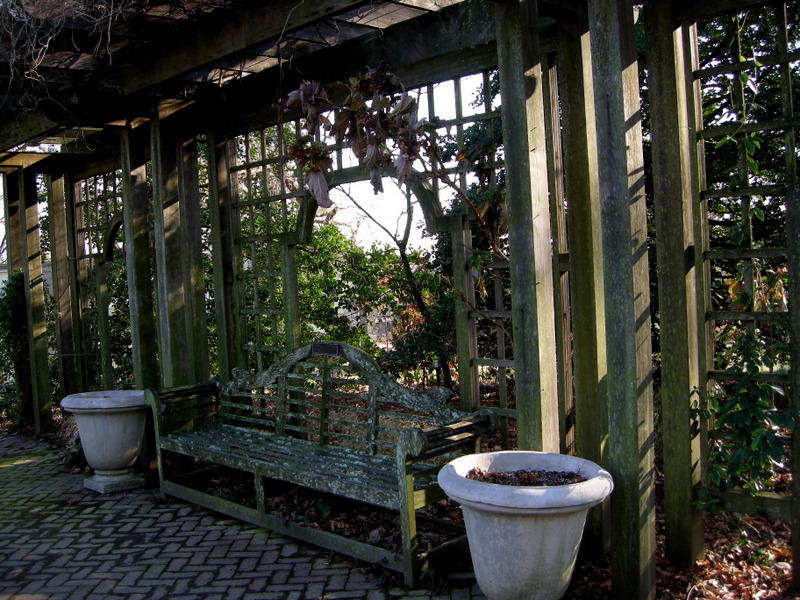
Scott Arboretum at Swarthmore College 12-1-2013 2-30-02 PMA shady pergola behind Cunningham House, much appreciated in summer. 

.

Scott Arboretum at Swarthmore College 12-1-2013 2-27-18 PM.

Scott Arboretum at Swarthmore College 12-1-2013 2-28-32 PMThis close up of the pond shows that it was quite cold that day.

.

Fatsia japonica 'Spider's Web' & Helleborus x hybridusThe evergreen leaves of Fatsia japonica ‘Spider’s Web’ and hybrid hellbores both look great in the winter.

Although the plantings around Cunningham House are lovely, the Scott Arboretum encompasses the whole 425 acre campus of Swarthmore College.  The college was founded in 1864 by Quakers and is one of the oldest coeducational colleges in the U.S.  It is a small and highly ranked liberal arts college with a current enrollment of around 1,500 students.  On future visits, I hope to show the full diversity of the arboretum, but during this visit I stuck to the center of campus.

.

Scott Arboretum at Swarthmore College 12-1-2013 2-34-58 PMA beautiful allée of trees extends gracefully from the center of campus towards the village of Swarthmore below.

.

Parrish HallParrish Hall, named after the first president of the college.

.

Parrish Hall, Swarthmore CollegeAnother view of Parrish Hall.  Every building on campus is surrounded by beautiful plantings.

.

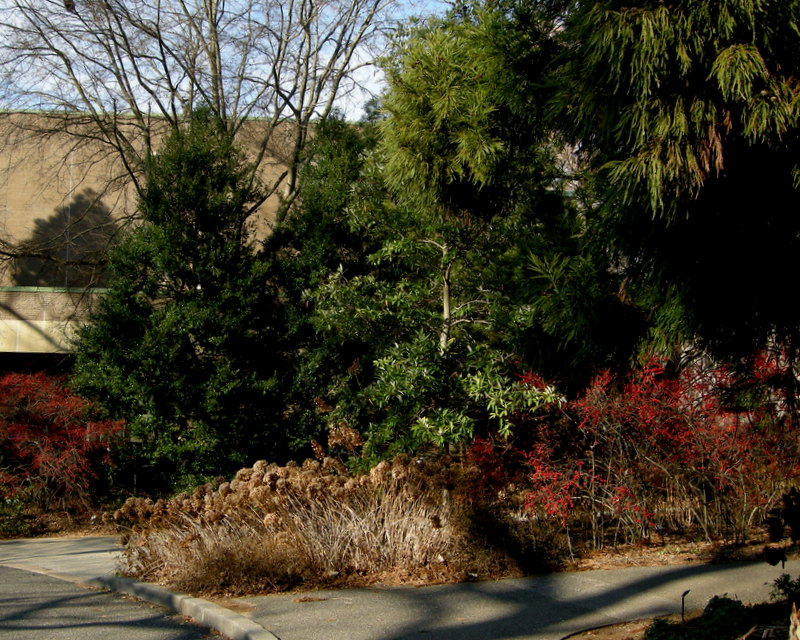
Scott Arboretum at Swarthmore College 12-1-2013 2-38-10 PMA typical scene from the campus where dried hydrangeas, winterberry, and a variety of evergreens enhance the setting.

.

Metasequoia glyptostroboides & Arum italicumAnother allée, this time of dawn redwoods underplanted with Italian arum.

.

Scott Arboretum at Swarthmore College 12-1-2013 2-41-47 PMA close up of this beautiful combination. 

.

Betula nigra 'Heritage'‘Heritage’ river birch

.

Betula nigra 'Dura Heat'A close up of the wonderful bark of another river birch called ‘Dura Heat’.

.

Scott Arboretum at Swarthmore College 12-1-2013 2-57-38 PM Containers planted for winter interest are found through out the campus.

.

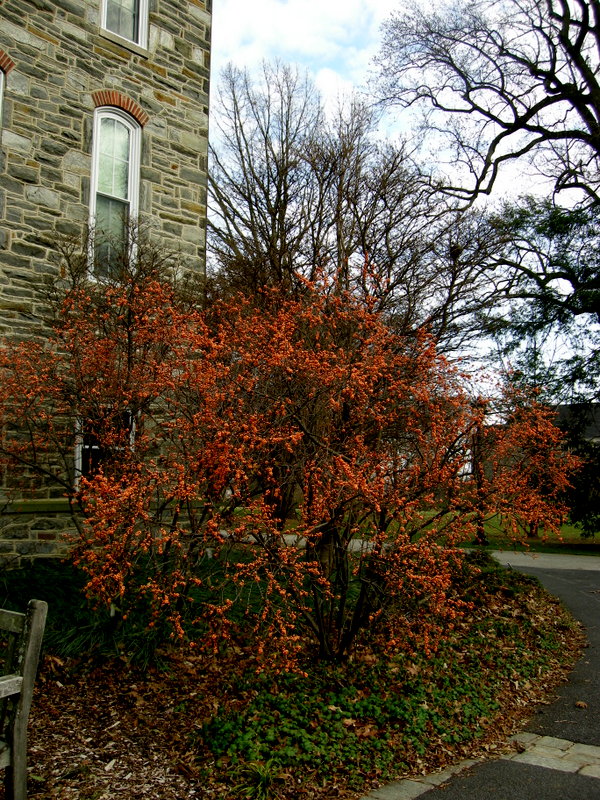
Scott Arboretum at Swarthmore College 12-1-2013 3-07-19 PMAll types of ornamental interest are represented from bark to evergreen leaves to berries, here winterberry holly.

.

Ilex verticillata 'Winter Gold'‘Winter Gold’ winterberry holly

.

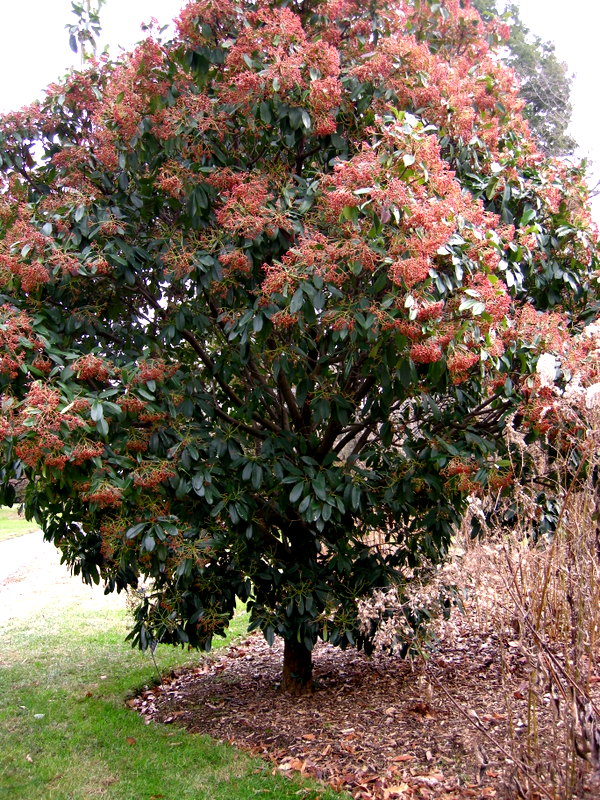
Photinia serrulata, Chinese photiniaChinese photinia, P. serrulata

.

Stewartia pseudocamellia var. koreana, Korean stewartiaKorean stewartia

.

Scott Arboretum at Swarthmore College 12-1-2013 2-51-27 PMThe Scott Arboretum was one of the first public gardens to try the shrub edgeworthia, E. chrysantha, and there are several beautiful specimens on the campus.

.

Scott Arboretum at Swarthmore College 12-1-2013 2-47-32 PMPerennials are not neglected, here a gorgeous yucca.

.

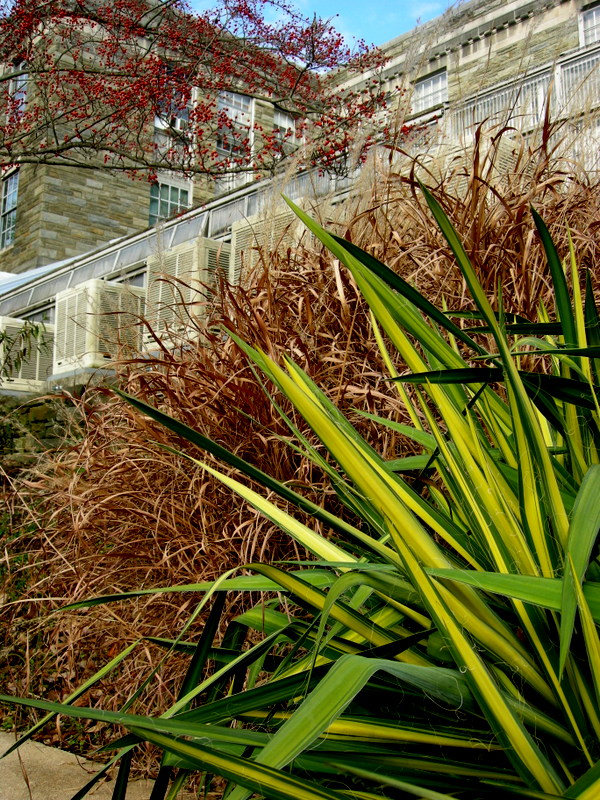
Scott Arboretum at Swarthmore College 12-1-2013 2-48-21 PMA great combination of evergreen gold-leafed yucca and ornamental grasses.

.

Scott Arboretum at Swarthmore College 12-1-2013 2-58-20 PMA great way to use this aggressively spreading, evergreen bamboo.

This is just a small sampling of the winter delights that await you at the Scott Arboretum.  If you are local, I highly encourage you to join the arboretum so you can attend all their horticultural events.  These range from staff led tours of the arboretum during all seasons, an excellent biennial plant sale with very hard-to-find offerings, smaller talks featuring garden travels through out the U.S. and the world, lectures by well known national and international horticulturists, garden tours, classes, and much more.

Carolyn

Nursery Happenings: To register for Charles Cresson’s Winter Interest Plants Seminar click here.  We are now taking orders, for mail order or pick up in late February or March, from the 2014 Snowdrop Catalogue, featuring snowdrops and other winter interest plants like cyclamen and hellebores.  To access the catalogue, please click here.  Please visit my Etsy Shop to purchase beautiful photo note cards suitable for all occasions, including a new set of snowdrop cards, by clicking here.
Carolyn’s Shade Gardens is a local retail nursery in Bryn Mawr, Pennsylvania, U.S., zone 7a. The only plants that we mail order are snowdrops and miniature hostas and only within the US.

If you are within visiting distance and would like to receive catalogues and information about customer events, please send your full name and phone number to carolynsshadegardens@verizon.net. Subscribing to my blog does not sign you up to receive this information.

Facebook: Carolyn’s Shade Gardens has a Facebook Page where I post single photos, garden tips, and other information that doesn’t fit into a blog post. You can look at my Facebook page here or click the Like button on my right sidebar here.

Notes: Every word that appears in orange on my blog is a link that you can click for more information. If you want to return to my blog’s homepage to access the sidebar information (catalogues, previous articles, etc.) or to subscribe to my blog, just click here.