Our current snowdrop catalogue is on line here.
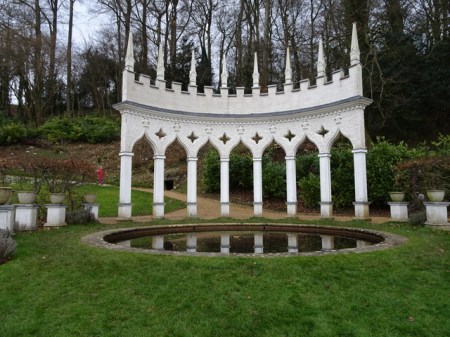 Known as the Exedra, this curving Gothic screen is the most famous of the many follies found at Painswick Rococo Garden.
When we traveled to England last year, we visited Painswick Rococo Garden in Gloucestershire. We went there to see the snowdrops and found tens of thousands of them blooming in one of the most quirky and extravagant gardens I have visited.
Nursery News: Carolyn’s Shade Gardens is a retail nursery located in Bryn Mawr, PA, specializing in showy, colorful, and unusual plants for shade. The only plants that we ship are snowdrops within the US. For catalogues and announcements of local events, please send your full name, mailing address, and cell number to carolyn@carolynsshadegardens.com and indicate whether you are mail order only. Click here to get to the home page of our website for catalogues and information about our nursery and to subscribe to our blog.
.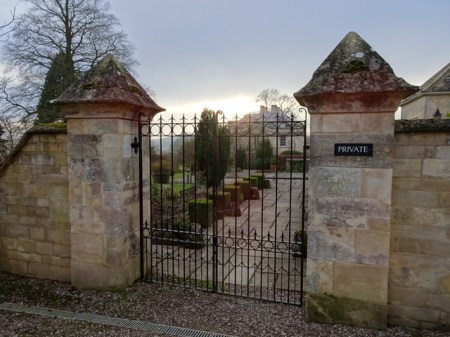 Gate leading to Painswick House, which is next to but not part of the garden.
Rococo is a style of art and architecture that originated in France and Italy in the early 1700s. Rococo gardens were designed as theatrical sets for lavish parties rather than horticultural undertakings. Garden historians describe them as flamboyant, frivolous, and capricious. Rococo gardens were laid out with sweeping vistas, framed views, and serpentine paths designed to lead the visitor to explore extravagant water features, staircases, statuary, and especially follies, costly ornamental buildings in diverse architectural styles with no practical purpose.
. Painswick House
Painswick House was purchased and expanded by the Hyett family in the 1730s. In the 1740s, Benjamin Hyett, the son of the original owner, built the fanciful garden nestled in the hidden valley behind the house. The garden was created to entertain guests in flamboyant outdoor rooms and to intrigue them into exploring extravagant follies.
In 1748, Hyett commissioned a painting of the garden, which was used by Lord and Lady Dickinson, direct Hyett descendants, to restore it beginning in the 1970s. In 1988, the garden was turned over to the Painswick Rococo Garden Trust. It is the only surviving rococo garden currently open to the public.
.
 .
.
 .
.
 .
.
 Painswick House has a beautiful view of this folly, the two story Pigeon House.
. Visitors entering the garden find themselves on a hillside with a sweeping view of the garden in the valley below. Here you see the orchard and kitchen garden. The Exedra is visible on the middle right.
.
 The other half of the view looks towards the bowling green, fish pond, and Snowdrop Grove.
.
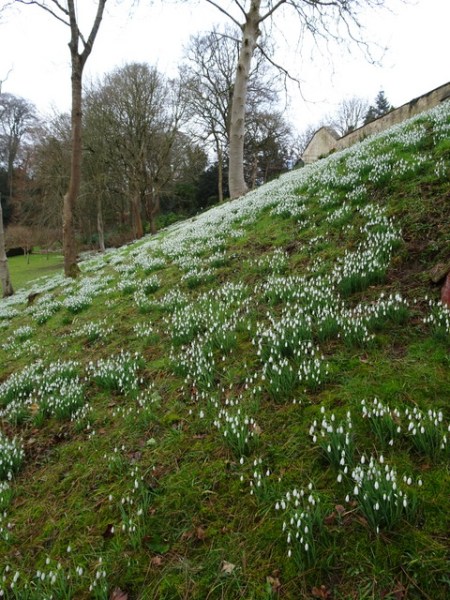 In February, the hillside is packed with the very tall and iconic snowdrop ‘Atkinsii’, which was discovered at Painswick in the 1800s by James Atkins, an estate worker.
.
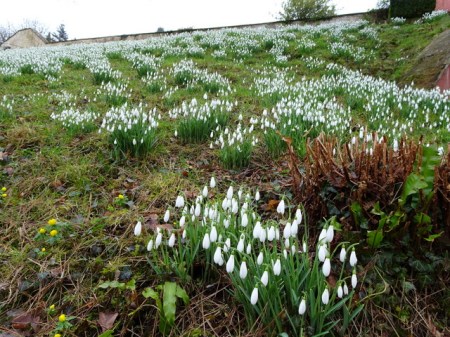 Galanthus ‘Atkinsii’
.
 ‘Atkinsii’ snowdrops and bearsfoot hellebore along the path to another folly, the Eagle House.
.
 Looking across the orchard at the Eagle House, you can see its lower vaulted chambers built into the hillside.
.
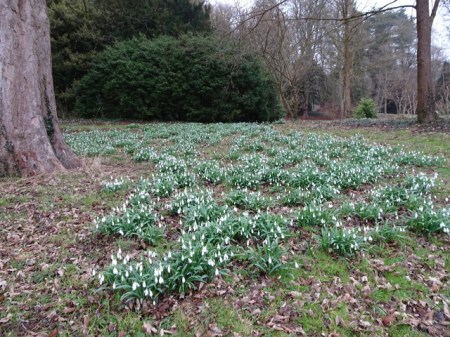
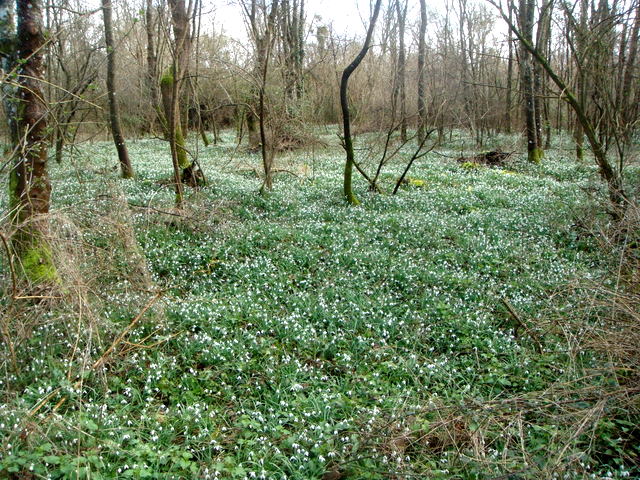
 The Snowdrop Grove is a large woodland area carpeted in white in February.
.

.
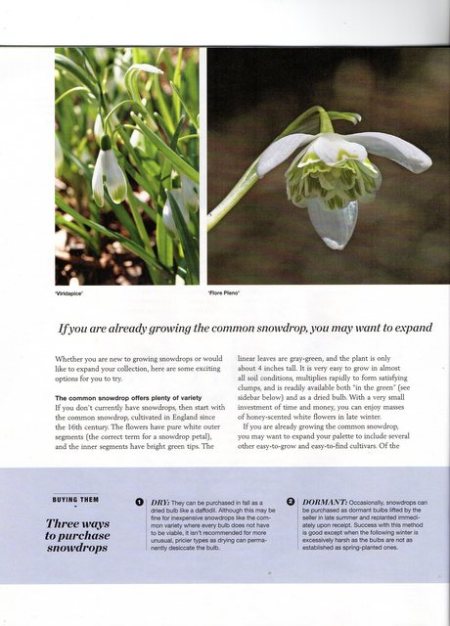
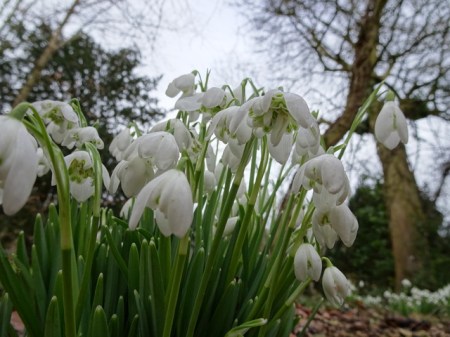 Many of the snowdrops in the woodland are the double common snowdrop ‘Flore Pleno’. I have never seen it growing so beautifully.
.
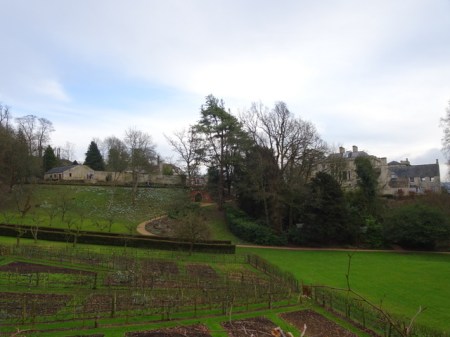 The garden nestles up to Painswick House on the right in the photo.
. The garden features a gigantic maze. For scale, find the visitor inside the maze on the outermost path on the right.
.
 Although the garden is only six acres, views like this one from the maze make it seem much larger.
.
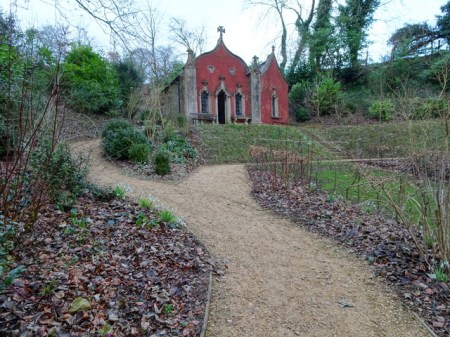 The largest folly known as the Red House.
.
 the orchard
.
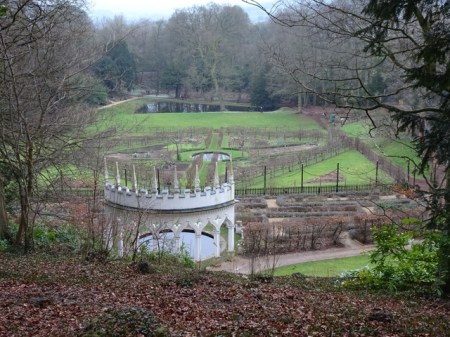 Standing behind the Exedra, you can see its formal garden and beyond that the kitchen garden, bowling green, fish pond, and snowdrop woodland.
Carolyn
.
Note: Every word that appears in orange on my blog is a link that you can click for more information. If you want to return to my blog’s homepage to access the sidebar information (catalogues, previous articles, etc.) or to subscribe to my blog, just click here.

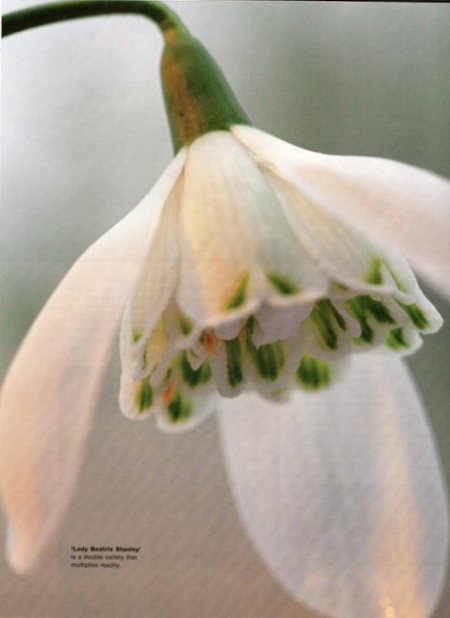


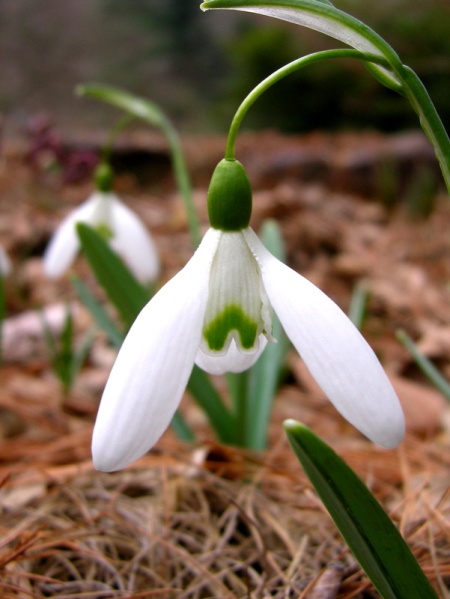


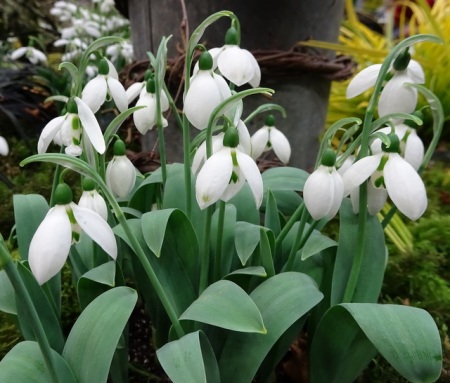

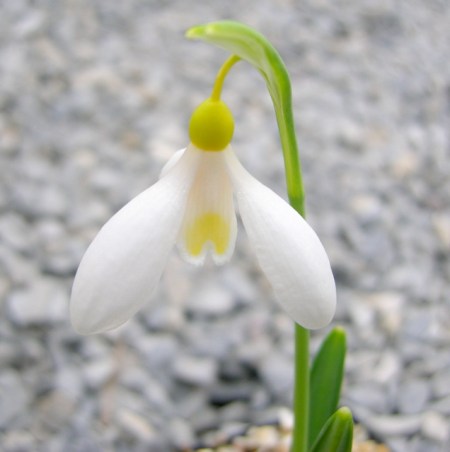
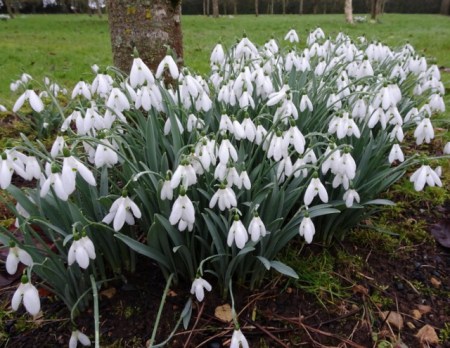
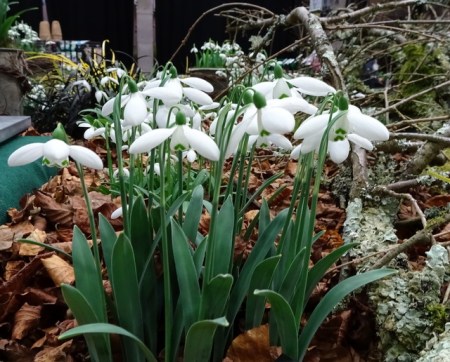


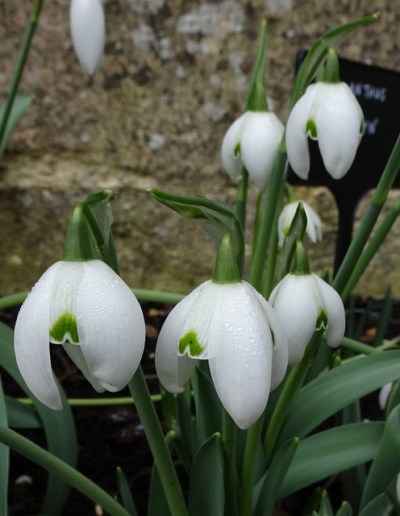


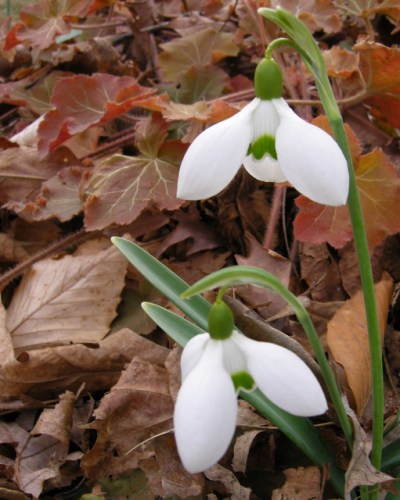













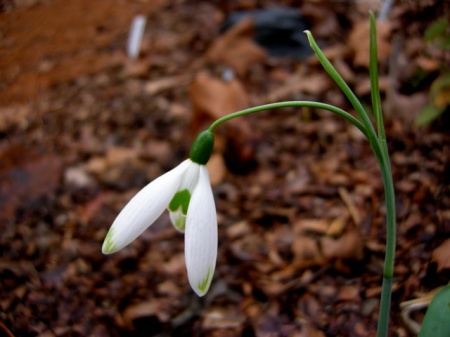

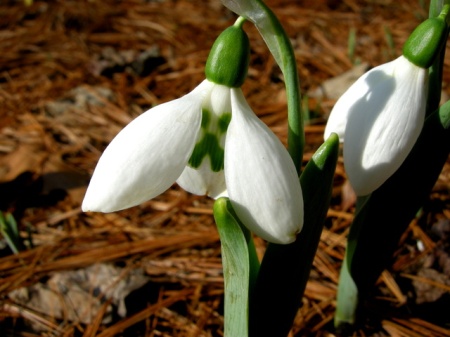
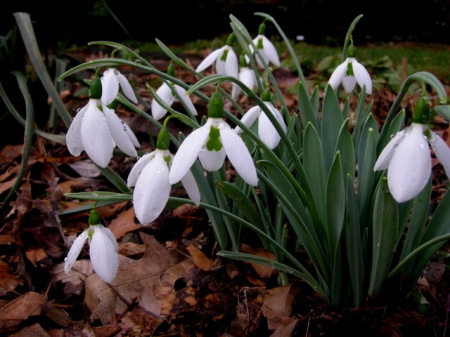


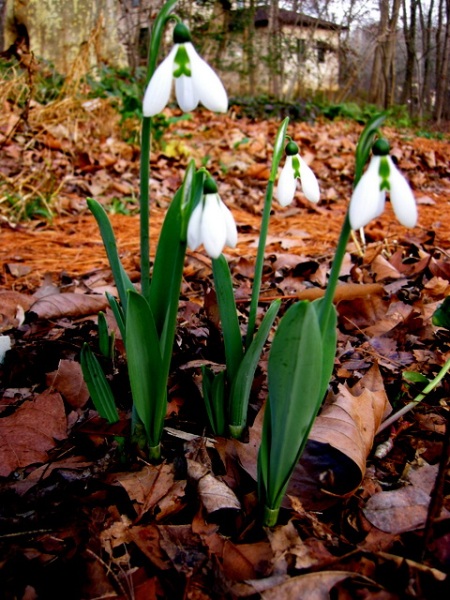
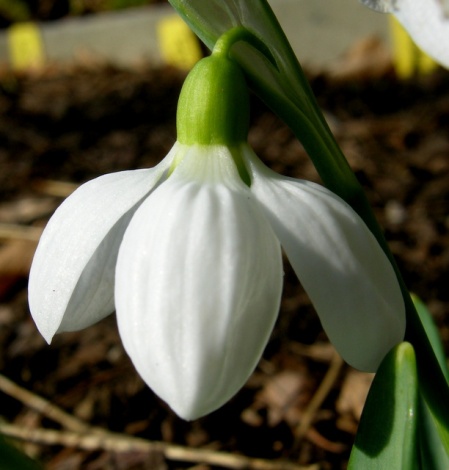

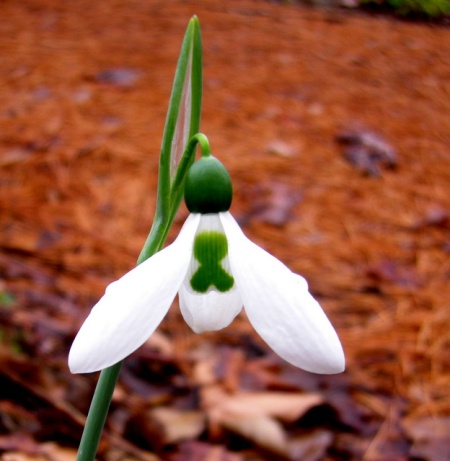


















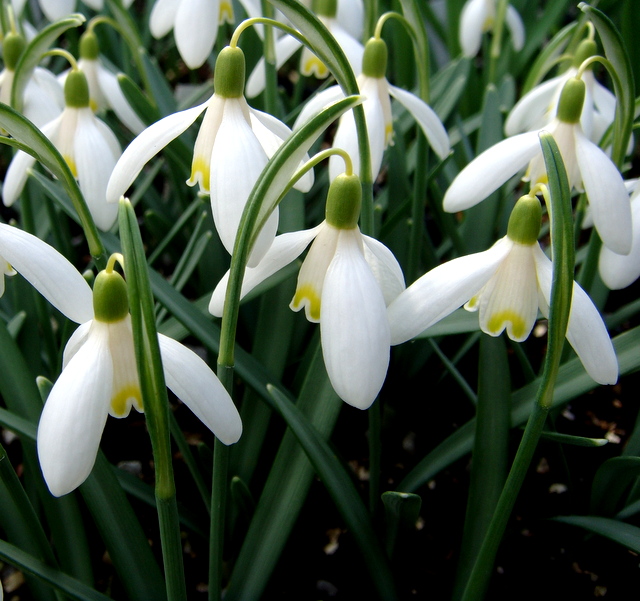

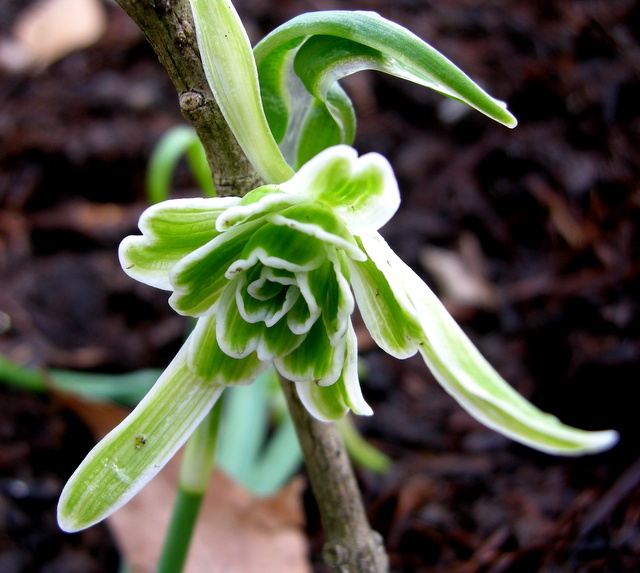


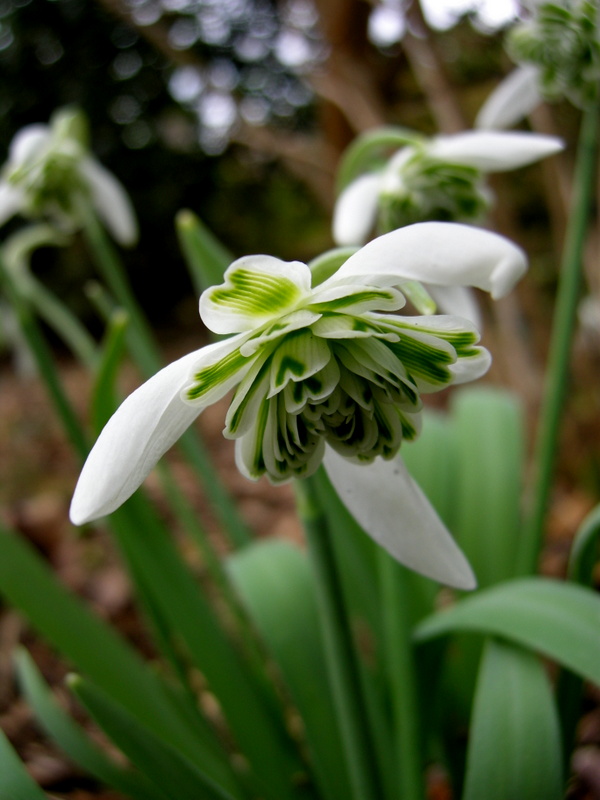



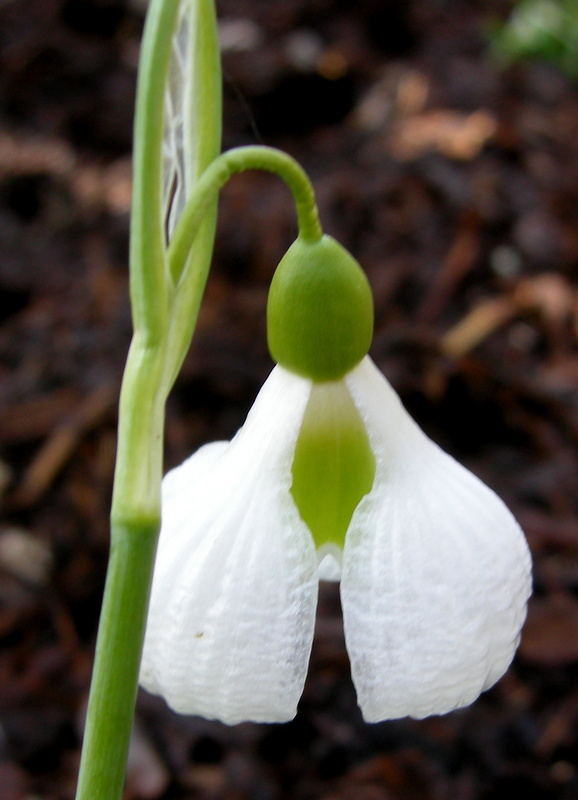
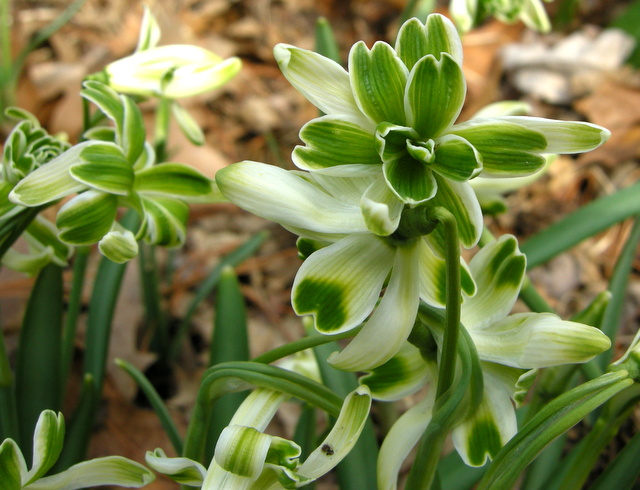
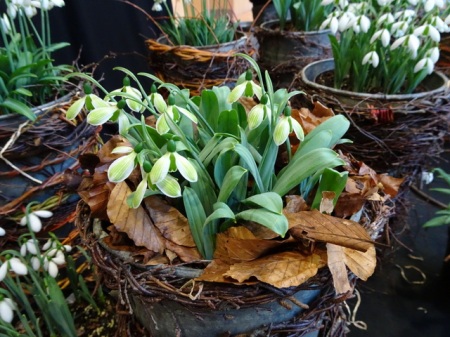 ‘Rosemary Burnham’ is a virescent snowdrop with a solid green inner mark and elegant green stripes completely covering the outer segments.