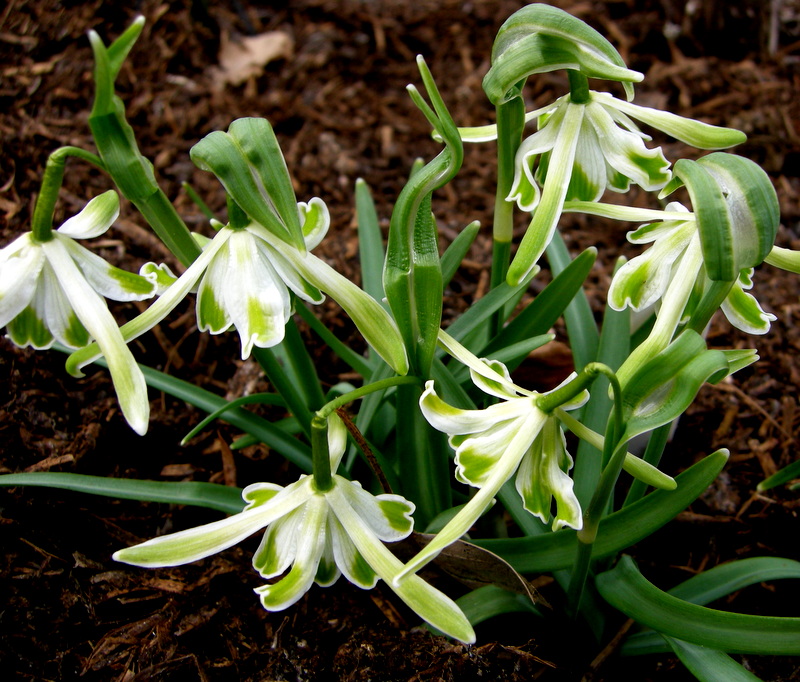
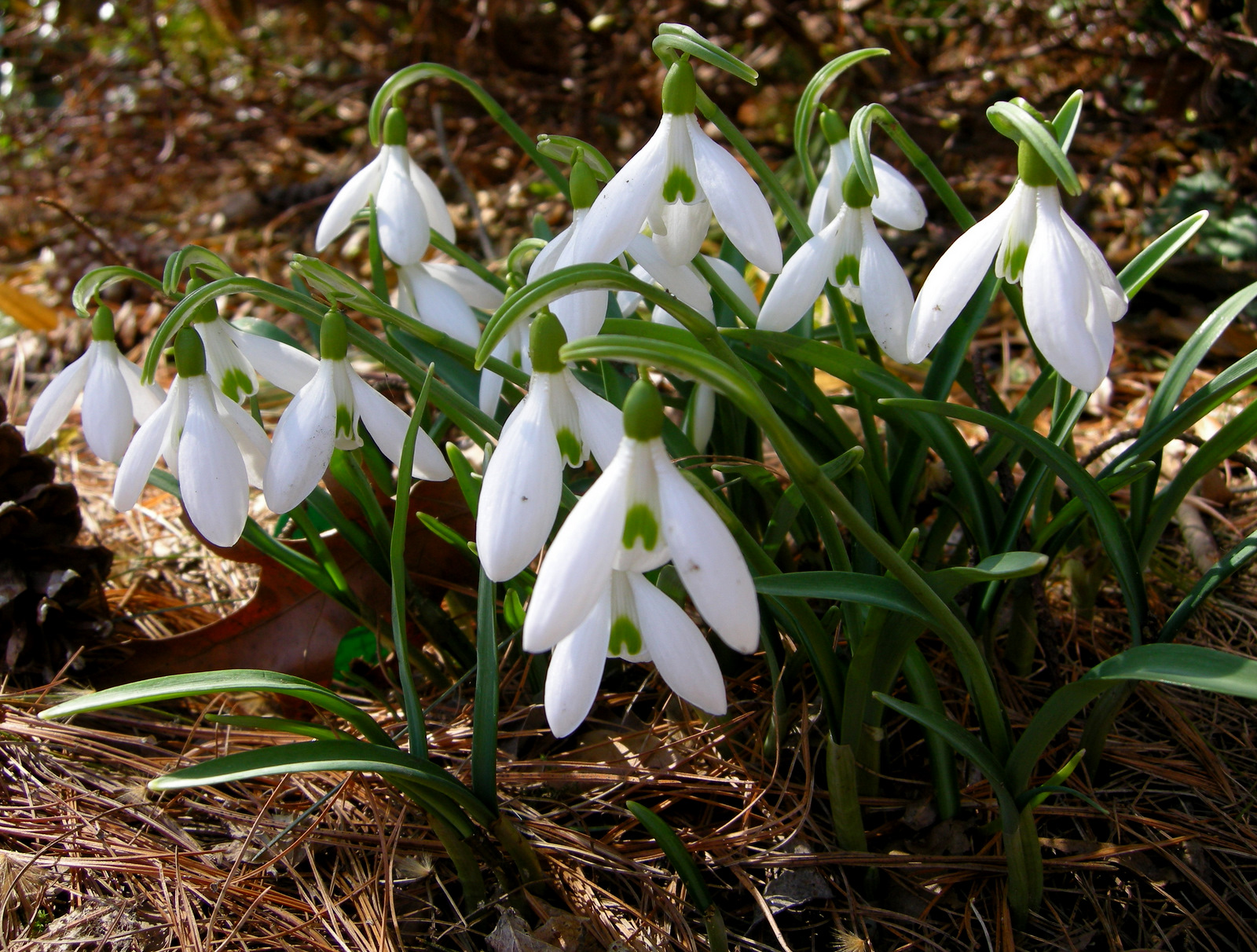
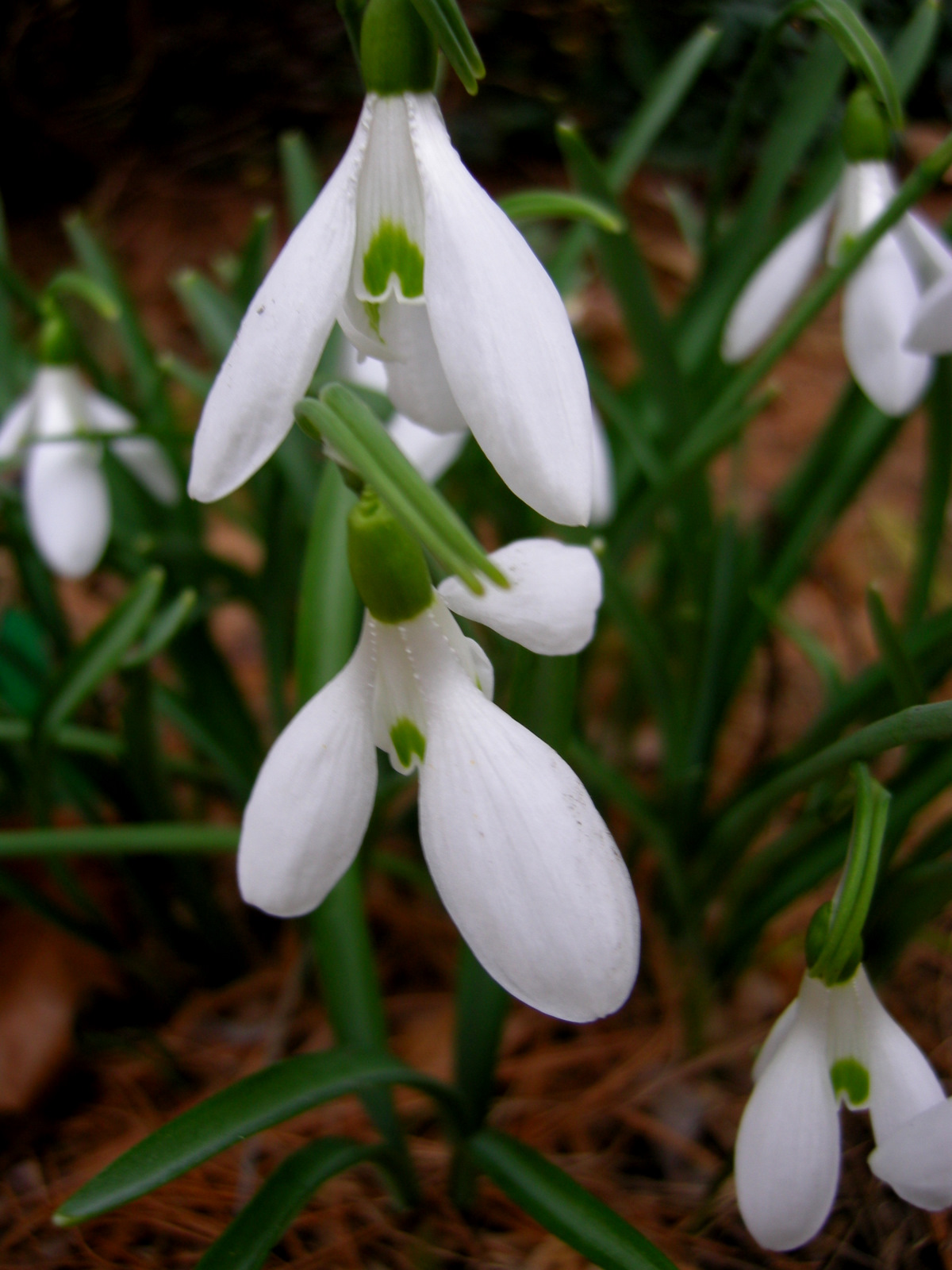
Archive for collecting snowdrops

Top 25 Snowdrops Part Two

Posted in bulbs for shade, Shade Perennials, snowdrops, winter, winter interest with tags , , , , , , , , , , , , , , , , , , on February 4, 2014 by Carolyn @ Carolyns Shade Gardens

Carolyn’s Shade Gardens is a retail nursery located in Bryn Mawr, PA, specializing in showy, colorful, and unusual plants for shade.  The only plants that we ship are snowdrops to the US only.  For catalogues and announcements of local events, please send your full name, mailing address, and cell number to carolyn@carolynsshadegardens.com and indicate whether you are mail order only.  Click here to get to the home page of our website for catalogues and information about our nursery and to subscribe to our blog.

.

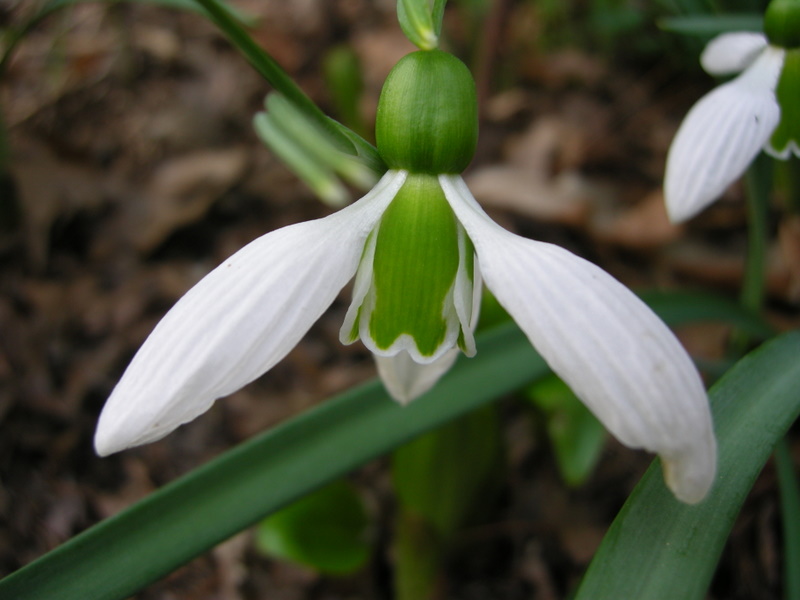
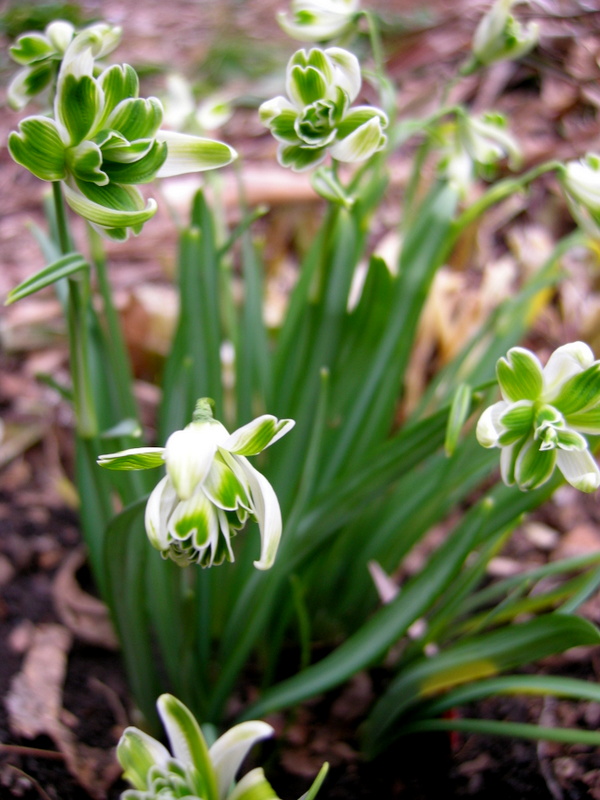
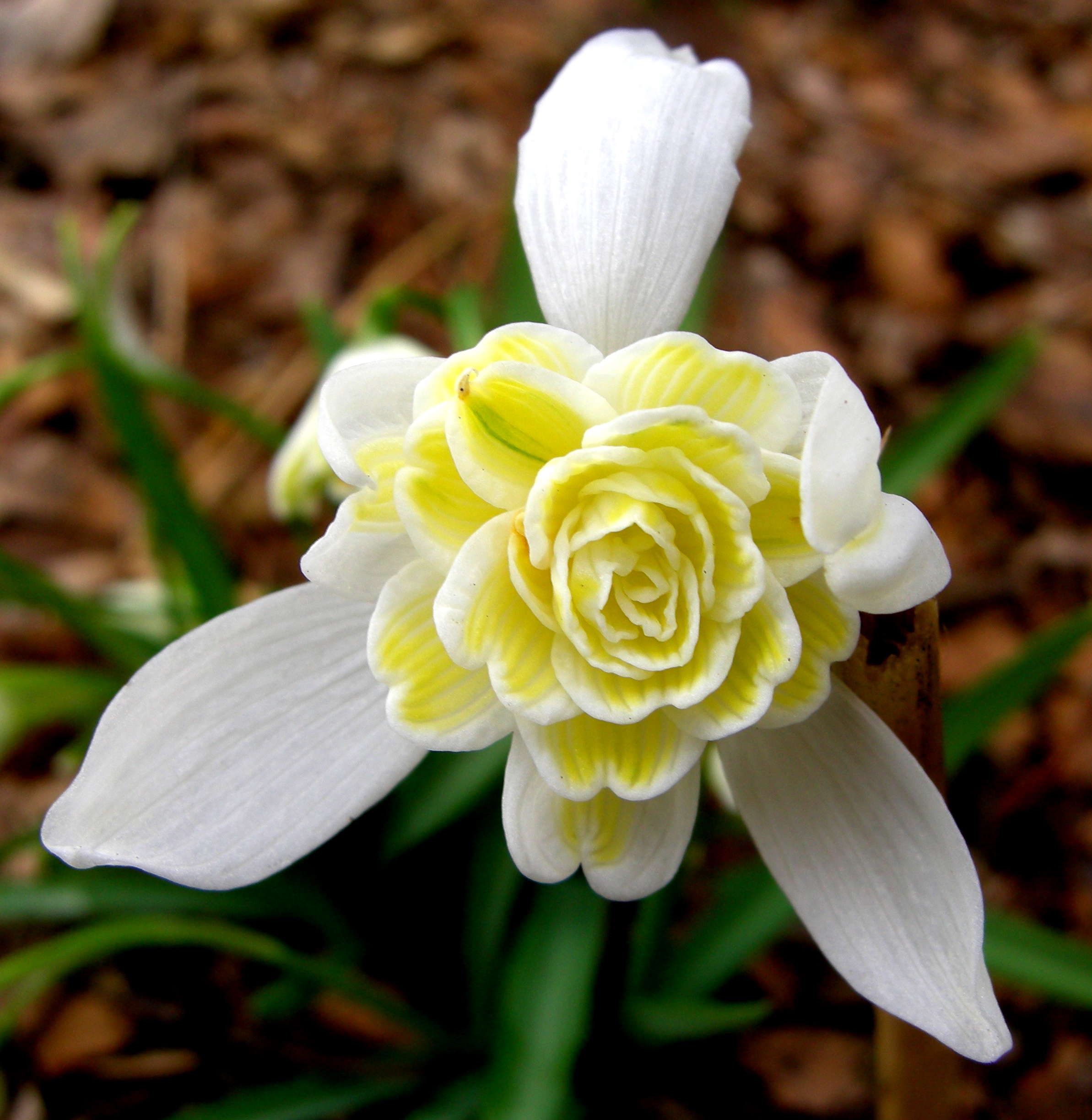
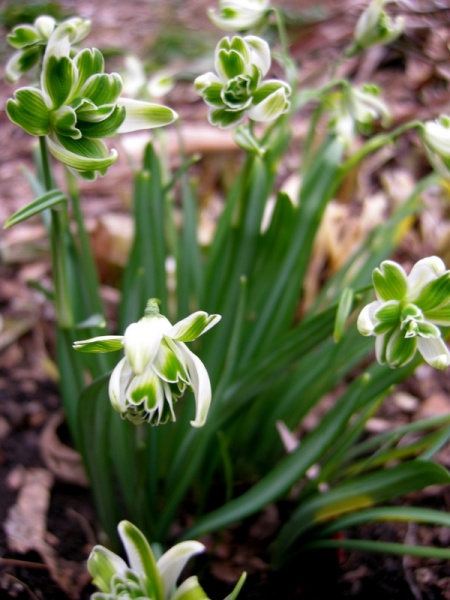
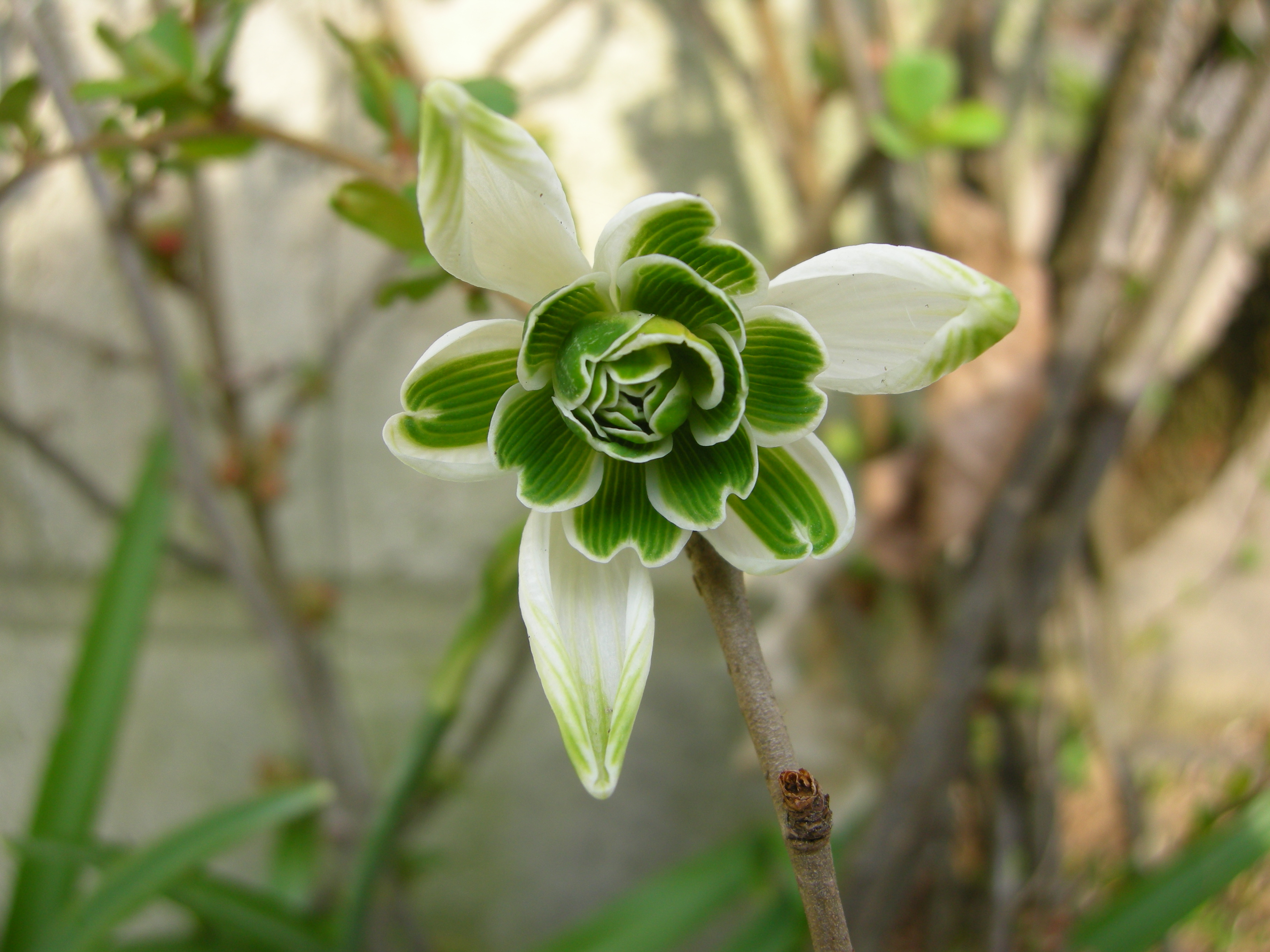
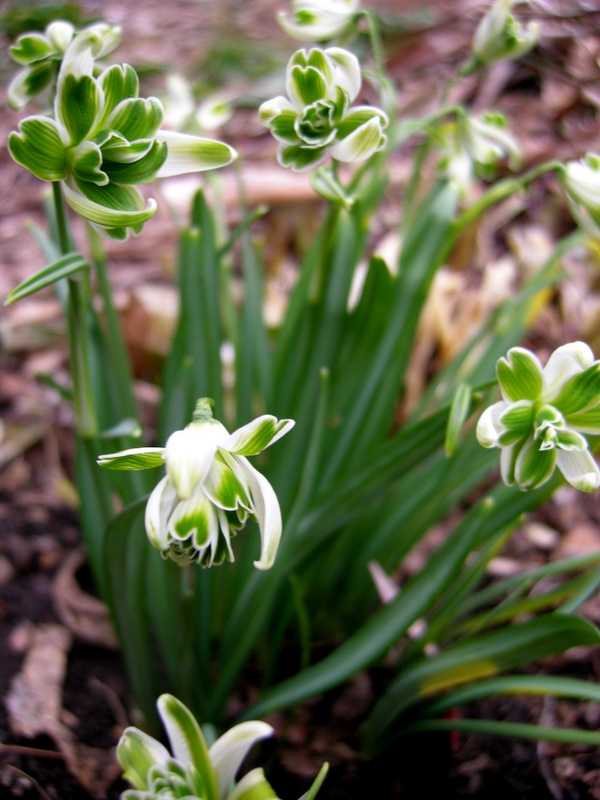
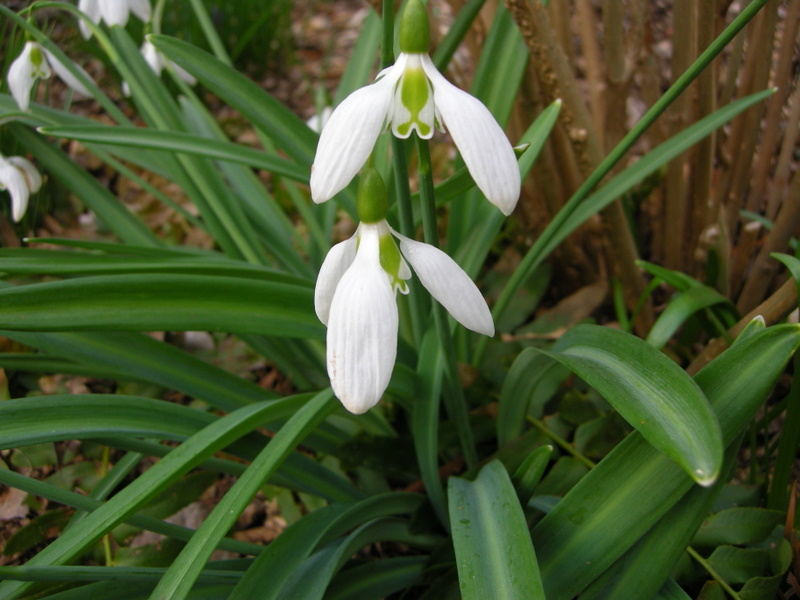
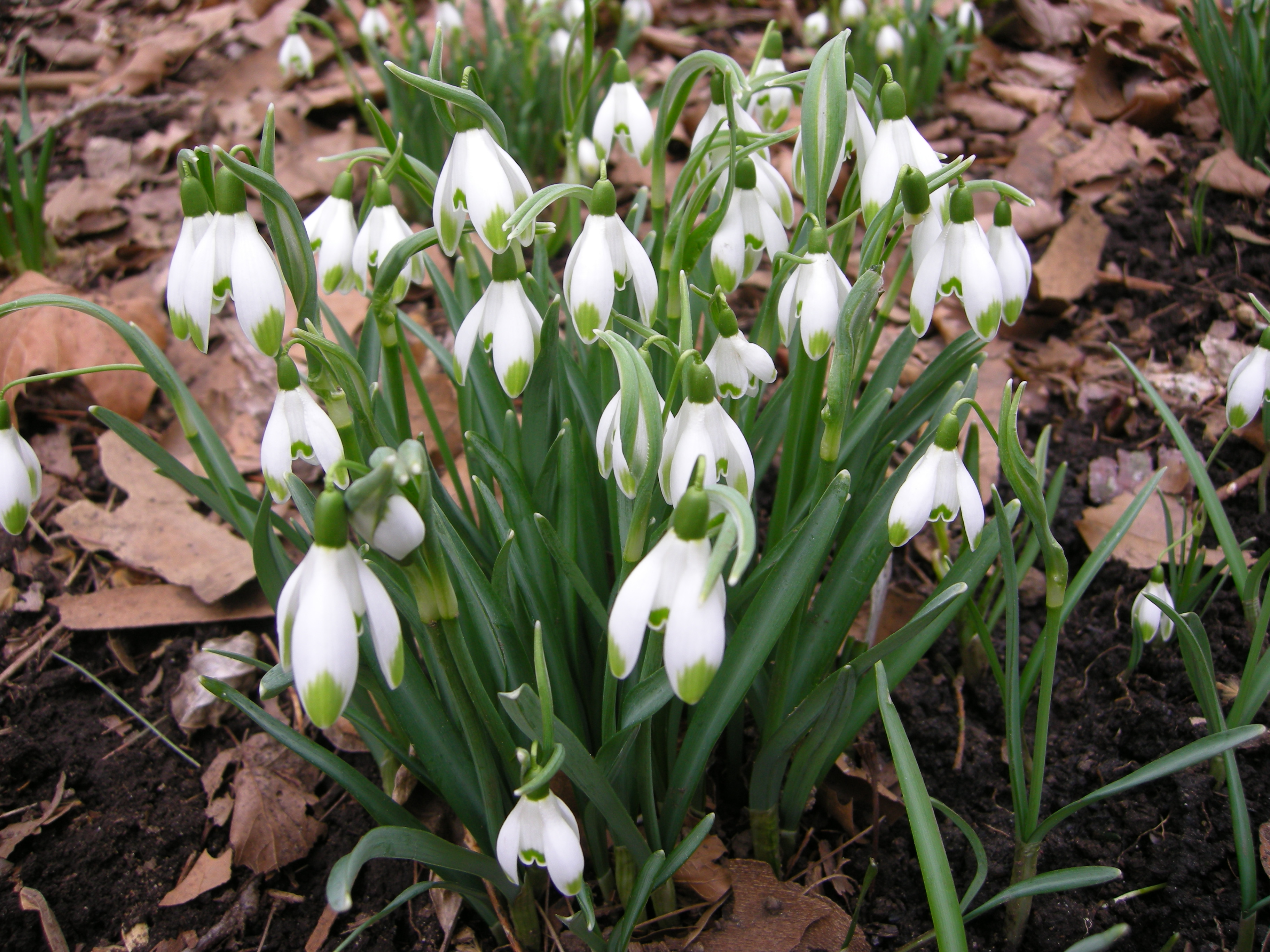
Galanthus 'Walrus' CadwaladerNumber 12: ‘Walrus’, a very striking double common snowdrop (Galanthus nivalis) with narrow green outer segments arching like the tusks of a walrus and very green and regular inner segments forming a rosette, selected in the 1960s.

Our current snowdrop catalogue is on line here.

In Part One of this post, I explained that although the basic ornamental characteristics making up snowdrop plants may seem limited, over 1,000 cultivars (some say as many as 1,500) have been selected.  For gardeners who are just starting to add snowdrops to their collection, the choices can seem daunting.  However, a recent survey conducted by Avon Bulbs, the well-respected British snowdrop nursery, can help with the process.

.

Galanthus nivalis 'Walrus'‘Walrus’ looks very pretty from the top, and it is easy to see the ‘tusks’ that give it its name.

During the 2012 and 2013 snowdrop season, Avon Bulbs asked its customers from all over the European Union to choose their three favorite snowdrops.  Avon then produced a ranking of its customers’ 25 favorite snowdrop plants.   In Part One of this post, which you can read here, I profiled Numbers 13 through 25 and provided a photo or  link to a photo for each plant.  In this post, I will show you the top 12 snowdrops.

Note: When I don’t have my own photo, I have linked to photos provided on the wonderful website Judy’s Snowdrops, which I highly recommend as a source for snowdrop information.

.

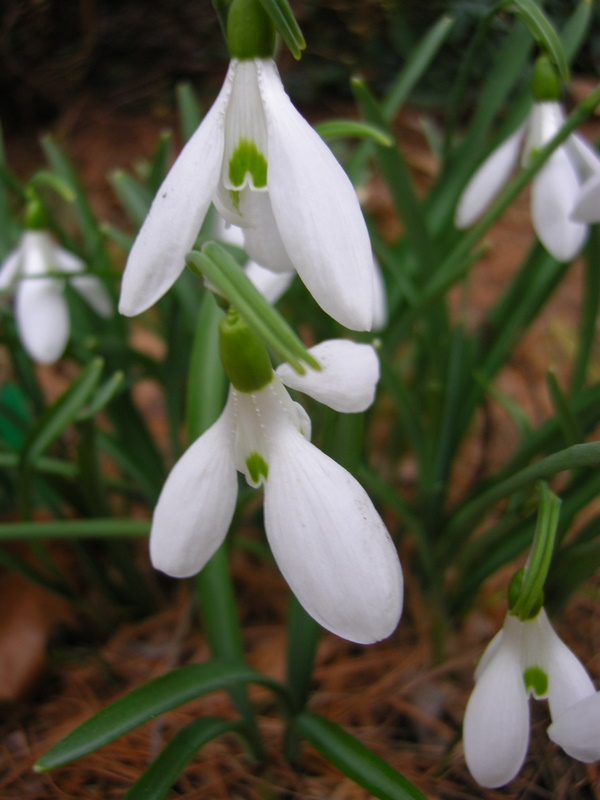
Number 11:  ‘South Hayes’, first seen in 1992 in Primrose Warburg’s garden and probably a seedling of ‘Trym’ (number 3), one of the most sought after snowdrop bulbs for its distinctive pagoda-like shape and very unusual dark green markings.  Available in 2019 CSG catalogue.

.

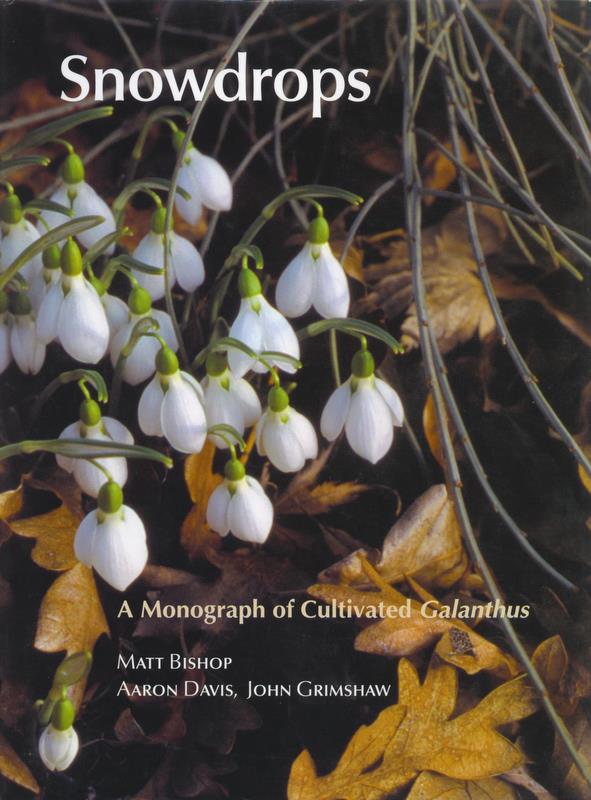
Number 10:  ‘John Gray’, a beautifully marked, full and perfect flower hung on a graceful, long arching pedicel (flower stem), first offered for sale in 1967.   It is interesting to note that the snowdrop “bible”, Snowdrops: A Monograph of Cultivated Galanthus by Matt Bishop et al., first published in 2001, says the following about ‘John Gray’:

There can be no doubt that a survey of galanthophiles’ favourite snowdrops would place ‘John Gray’ in the top ten, a position it would maintain among the current wide range of cultivars despite its age.

.

Galanthus 'Atkinsii'Number 9: ‘Atkinsii’, an early-blooming and quite vigorous hybrid with large, robust flowers sporting a heart-shaped marking on the inner segment, originated in the 1860s.

.

Galanthus 'Atkinsii'A close up of ‘Atkinsii’, which Snowdrops says has “elegant elongated flowers that suggest the drop-pearl earrings of Elizabeth I.”

.

Number 8: ‘Three Ships’, an early flowering Crimean snowdrop (Galanthus plicatus) with lovely rounded, well-proportioned flowers displaying a wonderful puckered texture on the outer segments, found in 1984.

.

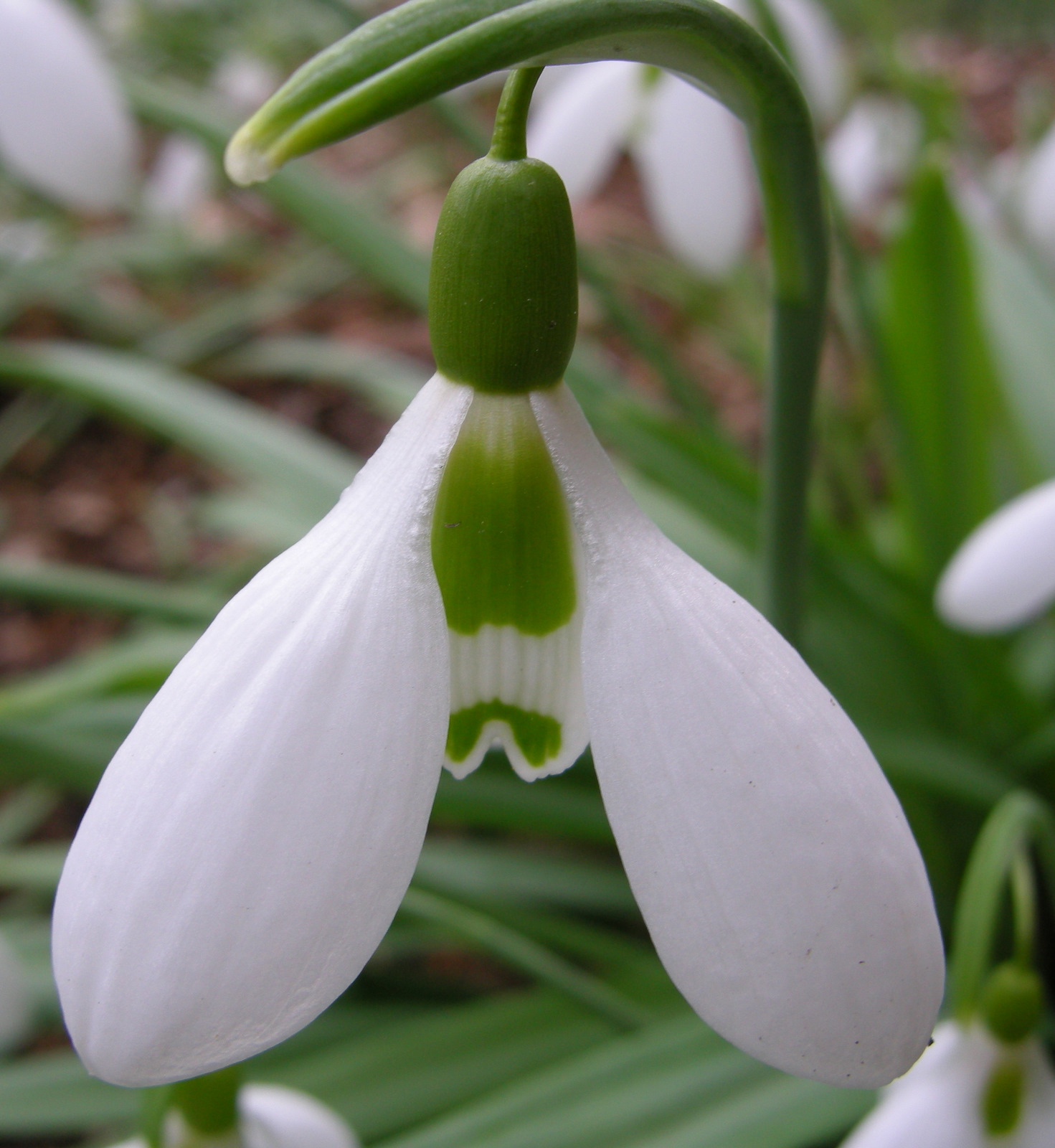
Galanthus 'Augustus' CadwaladerNumber 7:  ‘Augustus’, the plump, well-rounded flowers with great texture are set off perfectly by the lovely pleated leaves of a Crimean snowdrop for an overall great presentation, named prior to 1976. 

.

Galanthus plicatus 'Augustus'A close up of ‘Augustus’ showing its elegant textured petals and large inner mark.

.

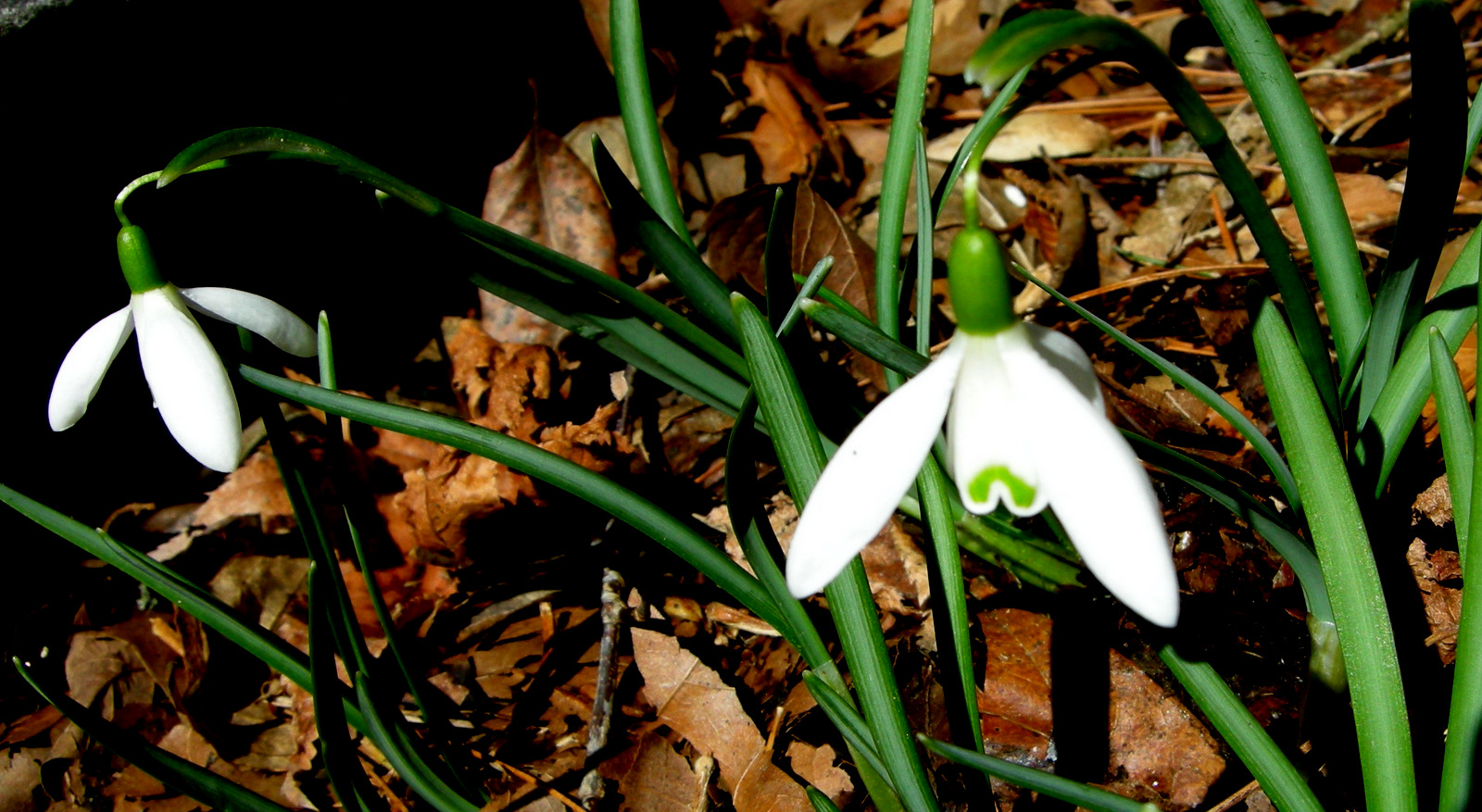
Number 6: ‘Mrs. Macnamara’, an early-flowering giant snowdrop (Galanthus elwesii) combining all the fine characteristics of a classic snowdrop, frequently mentioned as a favorite on garden blogs.

.

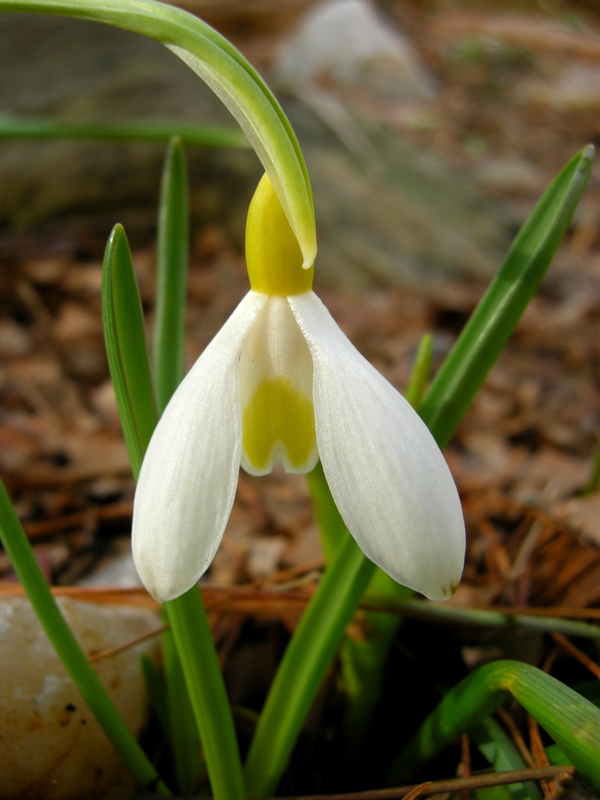
Galanhtus 'Wendy's Gold' 1 entranceNumber 5: ‘Wendy’s Gold’, a Crimean snowdrop (G. plicatus) cultivar with beautiful yellow markings on the ovary and inner segments.  Available in 2019 CSG catalogue.

.

Galanthus plicatus 'Wendy's Gold'Alan Street from Avon Bulbs sent me this photo of a clump of ‘Wendy’s Gold’, saying that mine would look like this some day!

.

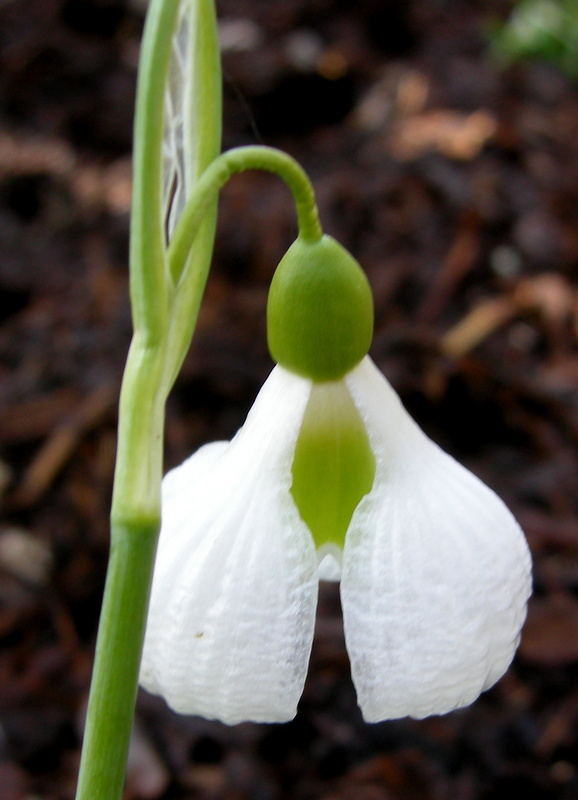
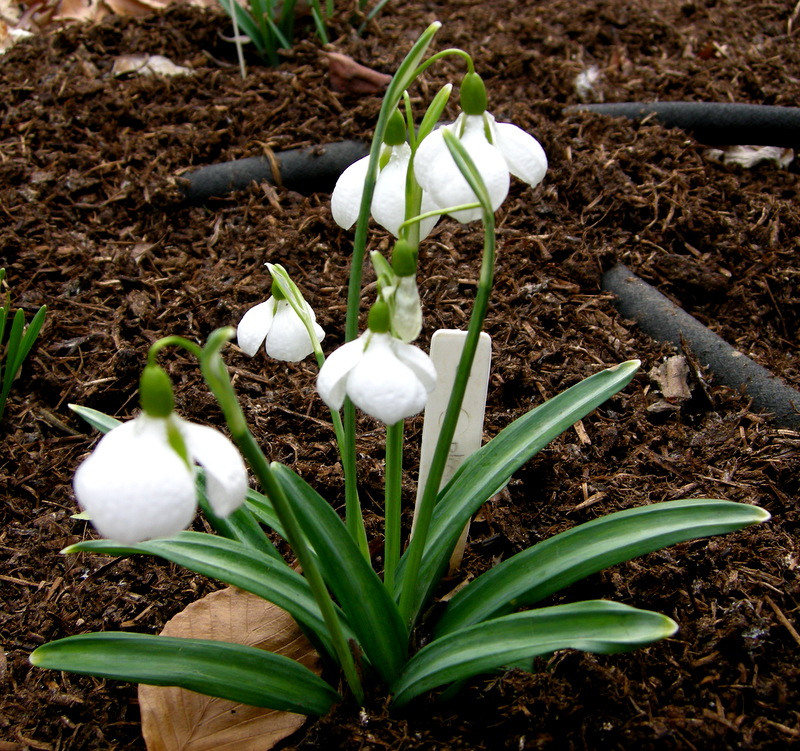
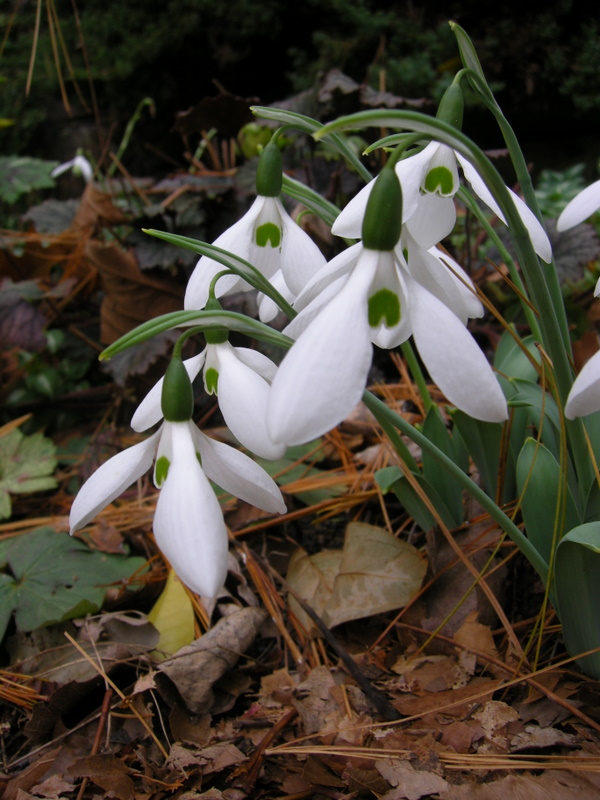
Galanthus 'Diggory' Number 4: ‘Diggory’, a snowdrop I would recognize anywhere for its squared-off pear-shaped flowers, heavily quilted texture, and large green inner mark.  Available in 2019 CSG catalogue.

.

Galanthus plicatus 'Diggory'This clump of ‘Diggory’ shows its unique look and the pleated leaves characteristic of a Crimean snowdrop.

.

Galanthus Trym

Number 3: ‘Trym’, the first snowdrop selected for the combination of its unique pagoda-like shape and large marks on the outer segments, it is obviously still very popular even though other snowdrops like its descendant ‘South Hayes’ now exhibit this form.  Available in 2019 CSG catalogue.

.

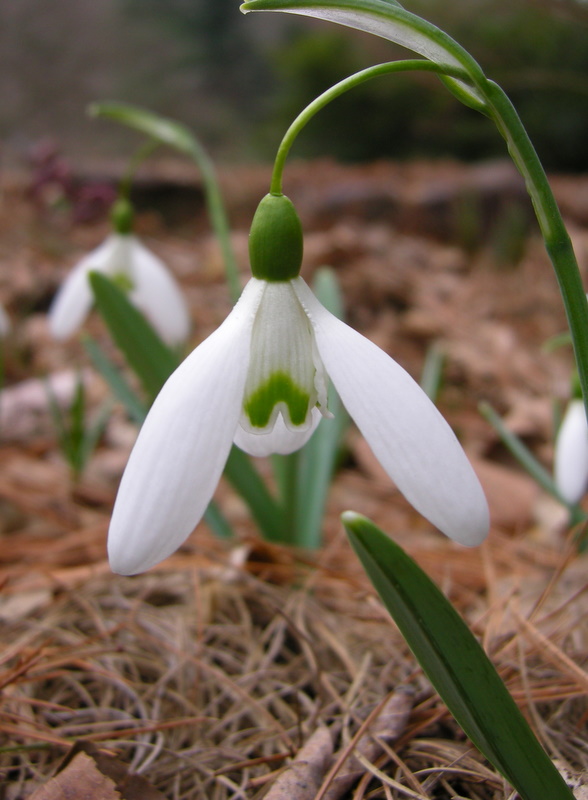
Galanthus 'Magnet'Number 2:  ‘Magnet’, a very vigorous classic snowdrop selected in the 1880s with a long and slender pedicel allowing the flower to sway in the slightest breeze.  Available in 2019 CSG catalogue.

.

Galanthus 'Magnet'A close up of ‘Magnet’ showing its arching pedicel.

.

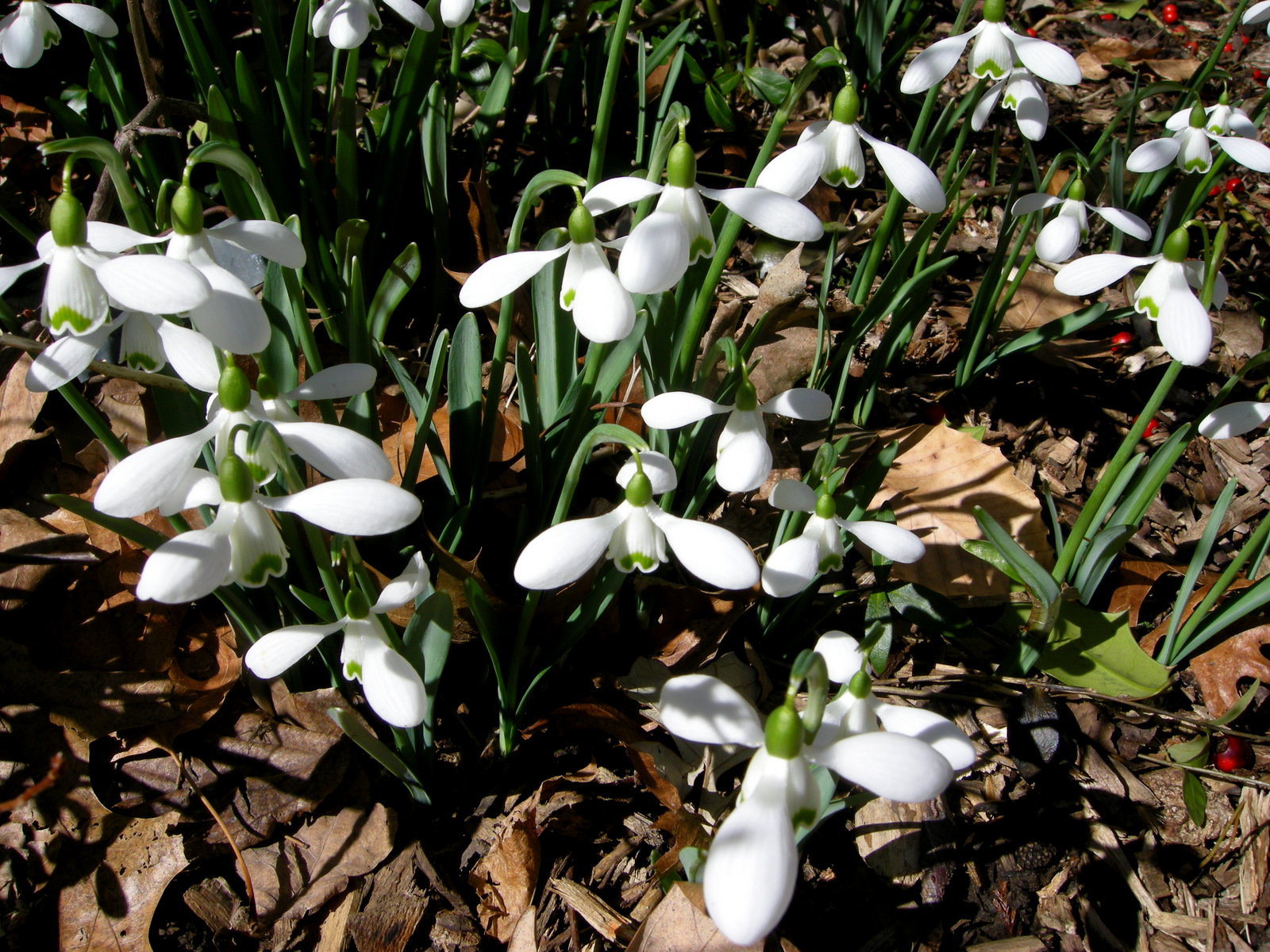
Galanthus 'S. Arnott'Number 1:  ‘S. Arnott’, large rounded, sweetly scented flowers with a heart-shaped green marking on the inner segment.  The book Snowdrops has this to say about ‘S. Arnott’:

In fifty years time it will be interesting to see which of the newer snowdrops described in these pages will still be going strong, having established a reputation as a first-class garden plant with an unquestionable constitution, admired by everyone.  Such is this classic snowdrop.

Available in 2019 CSG catalogue.

.

Galanthus 'S. Arnott'‘S. Arnott’ displays its “unquestionable constitution”.

.

It is interesting to note that six of the twelve top ranked snowdrops are descended from the Crimean snowdrop, G. plicatus.  And seven of the top twelve display what I would call a traditional snowdrop look with nothing “newfangled” about them.  As with numbers 13 through 25, the top twelve ranked snowdrop bulbs show that, in the long run, classic and vigorous garden plants are more highly valued by knowledgeable collectors than the latest hot snowdrop off eBay.  I find this refreshing in a horticultural world that often seems to discount the tried and true in favor of the latest fad.

Carolyn

If you are looking for more information on snowdrops, I highly recommend the Scottish Rock Garden Club forum galanthus thread where galanthophiles from all over the world meet to obsess about snowdrops, click here.

.

Note: Every word that appears in orange on my blog is a link that you can click for more information. If you want to return to my blog’s homepage to access the sidebar information (catalogues, previous articles, etc.) or to subscribe to my blog, just click here.

Top 25 Snowdrops Part One

Posted in bulbs for shade, Shade Perennials, snowdrops, winter, winter interest with tags , , , , , , , , , , , , , , on January 27, 2014 by Carolyn @ Carolyns Shade Gardens

Carolyn’s Shade Gardens is a retail nursery located in Bryn Mawr, PA, specializing in showy, colorful, and unusual plants for shade.  The only plants that we ship are snowdrops to the US only.  For catalogues and announcements of local events, please send your full name, mailing address, and cell number to carolyn@carolynsshadegardens.com and indicate whether you are mail order only.  Click here to get to the home page of our website for catalogues and information about our nursery and to subscribe to our blog.

Galanthus nivalis 'Blewbury Tart'Number 25: ‘Blewbury Tart’, for a profile of this wonderful double snowdrop selected by Alan Street at Avon Bulbs, click here.  Available in 2019 CSG catalogue.

Our current snowdrop catalogue is on line here.

Snowdrops plants generally feature a little white flower with green marks on the inner segments (petals).  Sometimes the marks are yellow or nonexistent or on the outside and inside, sometimes the flower is mostly green, and sometimes the flower is double or spiky or otherwise aberrant.  The leaves can be gray-green or bright green or pleated.  Although that is definitely an oversimplification, from those few characteristics, sharp eyed galanthophiles have selected and named over 1,000 cultivars of snowdrop plants, some say as many as 1,500.

.

Galanthus 'Brenda Troyle' Cresson gardenNumber 24: ‘Brenda Troyle’, a vigorous older variety from the 1930s grown for its cupped outer segments and strong honey fragrance, profiled here.

Many people believe, myself included, that there are way too many named snowdrop cultivars, and a lot of them are virtually indistinguishable.  But ‘it is what it is’ as the saying goes, and collectors just have to deal with the plethora of choices.  However, making choices just became a whole lot easier for me when I discovered that the well-respected British snowdrop nursery Avon Bulbs conducted a survey among its customers to rank their 25 favorite snowdrops.  Alan Street from Avon has graciously allowed me to use the survey.  I want to thank Julian Wormald at the Welsh blog thegardenimpressionists for giving me the idea for this post.

.

Galanthus 'Mrs. Thompson'Number 23:  ‘Mrs. Thompson’, selected in the 1950s, produces desirable mutations often with 5 outer segments.

.

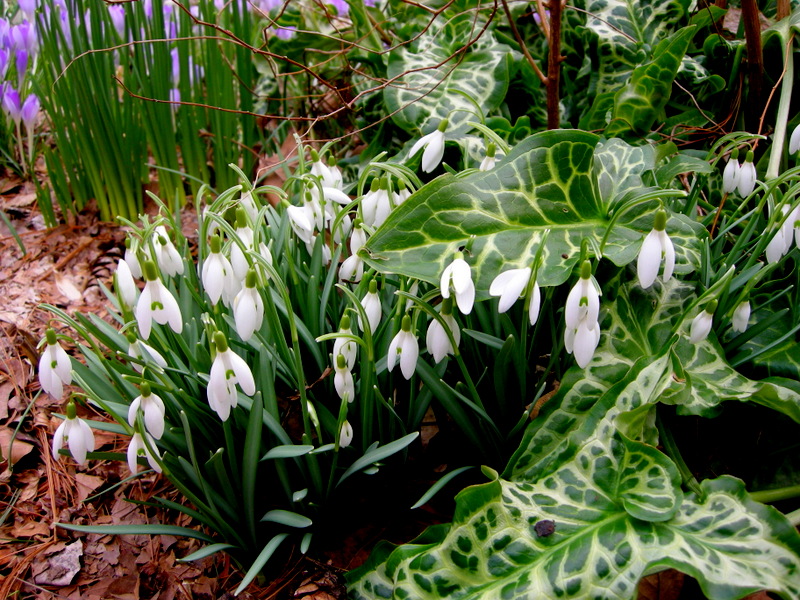
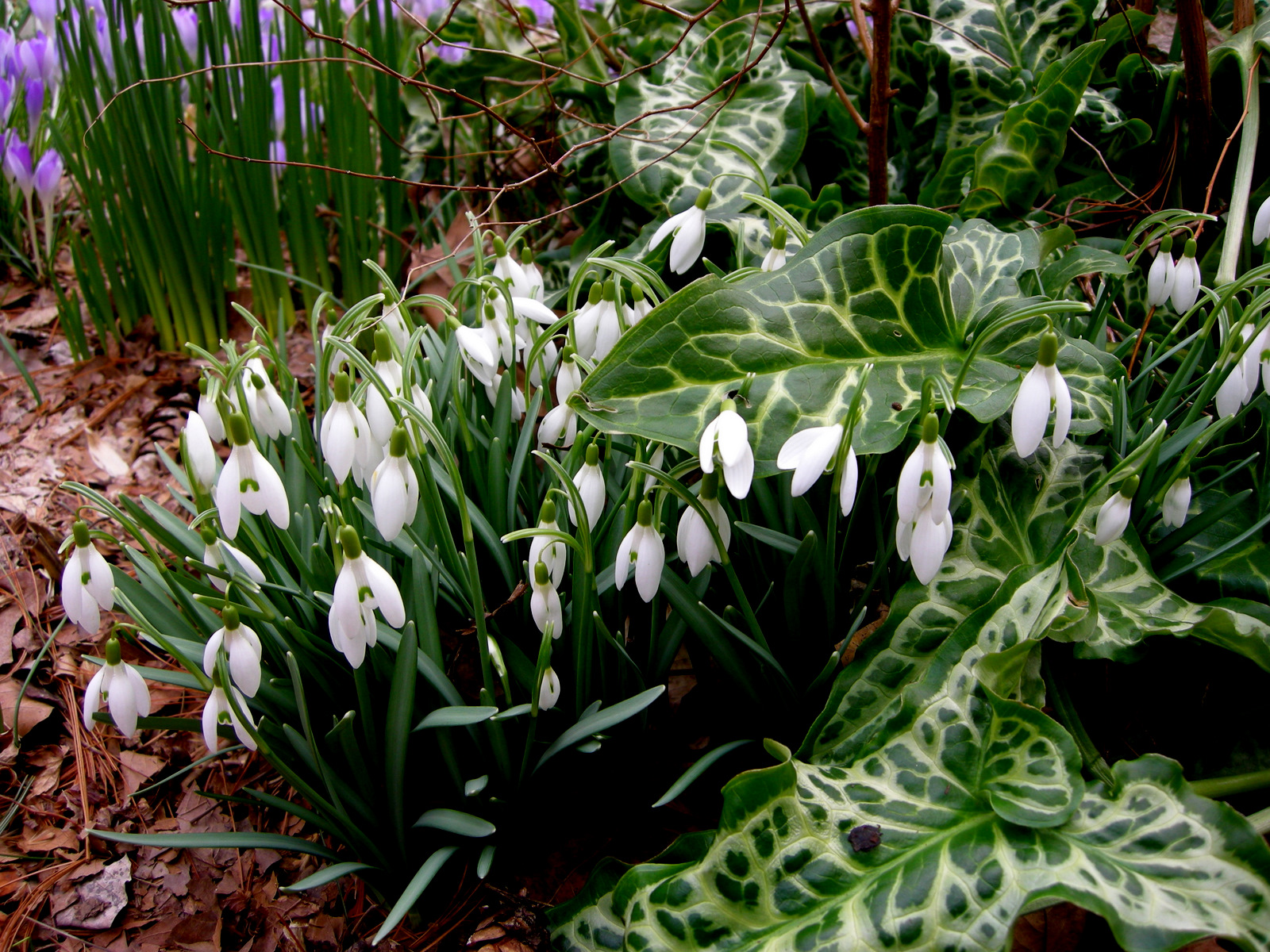
Galanthus nivalis & Arum italicum 'Pictum'Number 22:  Galanthus nivalis, a straight species, the common snowdrop is a great naturalizer, profiled here.  Available in 2019 CSG catalogue.

Snowdrop plants are covered by CITES, the Convention on the International Trade in Endangered Species.  CITES prevents shipment of snowdrop bulbs over international borders without expensive and time-consuming permitting.  CITES has curtailed the availability of a wide range of snowdrop plants in the U.S.  Carolyn’s Shade Gardens is working to increase the choices, and I have added “available CSG” to indicate which plants from the Avon ranking we sell or have sold (although many are sold out).  Unlike U.S. galanthophiles, Avon’s customers throughout the European Union have access to the full range of snowdrop bulbs available, both through purchase from bulb companies and by trading with fellow enthusiasts.

.

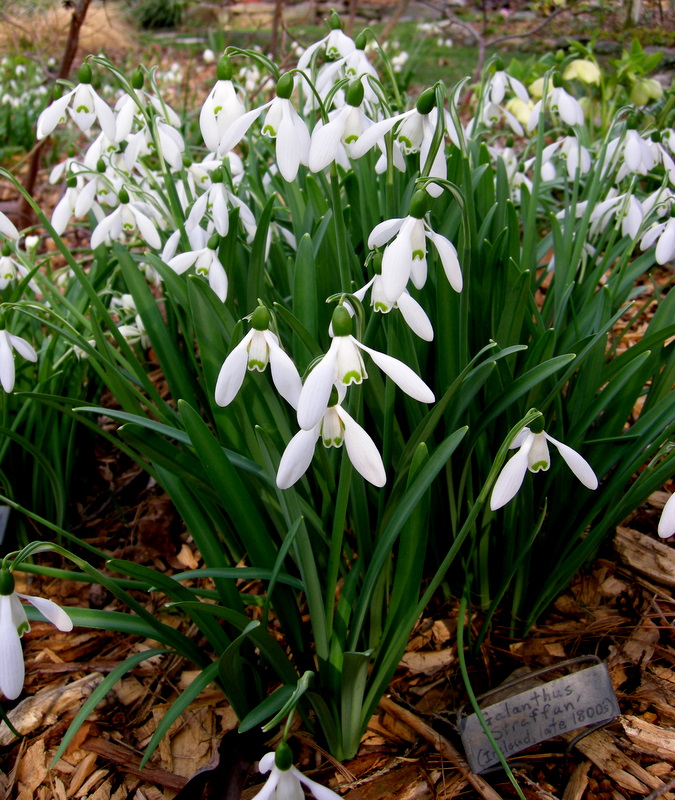
Galanthus 'Straffan' by Jonathan ShawNumber 21: ‘Straffan’, an indestructible Irish snowdrop selected in the late 1800s and the third oldest snowdrop still being sold, photo Jonathan Shaw.

Avon asked all their customers ordering in 2012 and 2013 to pick their top three snowdrops.  From their answers, Avon compiled a weighted ranking of the top 25 choices.  The snowdrop plants that made the list all have beautiful and sometimes unusual flowers.  However, it is clear from the list that Avon’s customers valued vigorous garden plants, no matter how long they have been around, over the newest and most sought after cultivars.  In this post I will profile Numbers 13 through 25, providing a short description and a photo (or a link to a photo on the wonderful website Judy’s Snowdrops).  In the next post, I will cover 1 through 12.

.Galanthus 'Hippolyta' photo Paddy TobinNumber 20: ‘Hippolyta’, a lovely Greatorex double snowdrop selected in the first half of the 20th century.

.

Galanthus 'Anglesey Abbey'Number 19:  ‘Anglesey Abbey’, a highly variable form, sometimes almost pure white with the inner and outer segments the same length (poculiform).

  .

Robin HoodNumber 18: ‘Robin Hood’, first mentioned in 1891, large flowers with an X-shaped mark.  Available in 2019 CSG catalogue.

.

Galanthus gracilisNumber 17: Galanthus gracilis, a species snowdrop with unusual twisted leaves and elegant markings on the flower.

.

Galanthus 'Merlin' in Cresson gardenNumber 16: ‘Merlin’, an old variety from the 1890s with a solid green inner mark.  Available in 2019 CSG catalogue.

.

Galanthus 'Cowhouse Green'Number 15: ‘Cowhouse Green’, lovely virescent (greenish) snowdrop with a pale green wash on the outer segments.

.

Galanthus 'Colossus' plicatusNumber 14: ‘Colossus’, a very early flowering form of the Crimean snowdrop, G. plicatus, with large flowers and beautiful dark green, pleated, glaucous leaves.

.

Galanthus 'Lady Beatrix Stanley'Number 13:  ‘Lady Beatrix Stanley’, an elegant double snowdrop that multiplies quickly, named in the 1980s but distributed since the 1950s.  Available in 2019 CSG catalogue.

Although it is entertaining to read about single snowdrop bulbs selling for almost $1,200 on eBay, it is nice to know that when it comes right down to it, gardeners value the tried and true plants that have withstood the test of time.

Carolyn

.

Note: Every word that appears in orange on my blog is a link that you can click for more information. If you want to return to my blog’s homepage to access the sidebar information (catalogues, previous articles, etc.) or to subscribe to my blog, just click here.

The Sochi Snowdrop

Posted in bulbs for shade, Shade Perennials, snowdrops, winter, winter interest with tags , , , , , , , , , , , , , , , , , , , on January 16, 2014 by Carolyn @ Carolyns Shade Gardens

Carolyn’s Shade Gardens is a retail nursery located in Bryn Mawr, PA, specializing in showy, colorful, and unusual plants for shade.  The only plants that we ship are snowdrops to the US only.  For catalogues and announcements of local events, please send your full name, mailing address, and cell number to carolyn@carolynsshadegardens.com and indicate whether you are mail order only.  Click here to get to the home page of our website for catalogues and information about our nursery and to subscribe to our blog.

Galanthus woronowii Cresson GardenGalanthus woronowii

Our current snowdrop catalogue is on line here.

The over 1,000 types of cultivated snowdrops all originated from just 20 snowdrop species found in the wild and making up the genus Galanthus. This post is the second in a series of posts profiling the important  snowdrop species, which are all great garden plants in their own right. 

In the first post I discussed the common snowdrop, G. nivalis, and you can read that post by clicking here.  I have written a lot of other articles about snowdrops, covering among other topics their ornamental characteristics, fascinating history, the importance of provenance, and profiling many cultivars.  For links to all my previous snowdrop posts, click here.  In this post, I will discuss G. woronowii.

Much of the information in this post comes from Snowdrops: A Monograph of Cultivated Galanthus by Matt Bishop et al. (Griffin Press 2006) which is absolutely indispensable if you are researching or collecting snowdrops.  I have also used documents produced by Kew Gardens and the Tbilisi Botanical Garden in the Country of Georgia.

.

Galanthus woronowii Cresson GardenGalanthus woronowii

Although a few sources have randomly assigned the common names green snowdrop, Russian snowdrop, and Woronow’s snowdrop to G. woronowii, it really has no regularly used common name.  So why am I calling it the Sochi snowdrop?  Because in the early 20th century, Russian botanist A.S. Losina-Losinskaya collected a new species of snowdrop in southern Russia around Sochi on the eastern shore of the Black Sea.  In 1935, he named these snowdrops Galanthus woronowii in honor of Georg Jurii Nikolaewitch Woronow (1874-1931).  Several sources confirm that G. woronowii is still abundant in the mountains and forests above Sochi, the resort town on the Black Sea where Russia is hosting the 2014 Winter Olympics beginning February 7.

.

G. woronowii CressonG. woronwii‘s glossy, bright green leaves sparkle in the rain.

G. woronowii is found in northeastern Turkey, Georgia, and southern Russia mainly around the eastern part of the Black Sea.  For a map of its range, click here for a report by Georgia’s Tbilisi Botanical Garden.  It grows in an extraordinary variety of habitats from deciduous and even evergreen woods to rocky slopes, cliff ledges, and river banks.  It thrives in both shallow rocky soil and deep organic loam in areas with cold winters and abundant precipitation.  According to Kew Gardens, Georgia harvests 15 million G. woronowii bulbs every year for export to the western European horticultural trade.  Kew along with Tbilisi and the CITES* authorities have been monitoring this harvest from wild populations and cultivated sites, click here.

*Convention on International Trade in Endangered Species, which covers snowdrops.

.Galanthus woronowiiG. woronowii flower showing the small mark on the inner segment

G. woronowii is grown for its beautiful, glossy green leaves and lovely white flowers.  It is the only commonly available snowdrop to have bright green leaves as opposed to the blue-gray leaves of the other common species.  The leaves persist longer than other snowdrop foliage and form a lovely but temporary, thick and attractive groundcover.  The flowers, which have a small green mark covering one third or less of the inner segments, are the last snowdrops to bloom in my garden in late March and early April.  I really appreciate the way they extend the end of the snowdrop season. 

..

Galanthus woronowiiThe fold in the center of the leaf is clearly visible in this photo.

The identification of G. woronowii is confused in the horticultural trade where it is often called G. ikariae, a much less common snowdrop from the Aegean Islands of Greece.  However, while G. woronowii has light, glossy green leaves folded in the center and a small green mark on the flower, G. ikariae has dark, matt green leaves and a mark covering more than half the inner segment.  I have been told that all the G. ikariae sold in the U.S. is actually G. woronowii.

  .

Galanthus woronowiiClose up of G. woronowii flower.  I always recognize G. woronowii by the pollen glowing through the top half of the translucent white inner segments, although I don’t know if this is unique.

Unlike the other three more common snowdrop species, G. nivalis, G. elwesii, and G. plicatus, not many cultivated plants have been selected from G. woronowii, possibly because it only became available in large numbers in the 1990s.  Snowdrops lists only ‘Green Flash’ selected for its green marks on its outer as well as its inner segments.  Other sources add ‘Cider with Rosie’, ‘Green Woodpecker’, and ‘Boschhoeve’, all with green marks on their outers. 

Nevertheless, a cultivar of G. woronowii has caused more excitement than any other snowdrop when, on February 16, 2012, one bulb sold for 725 pounds ($1,185) on eBay, surpassing the previous record of around 360 pounds ($508).  G. woronowii ‘Elizabeth Harrison’ appeared as a seedling in a Scottish garden and is named after the owner.  It is considered so special because instead of the usual green ovary (the “cap” to which the petals are attached) and segment marks, ‘Elizabeth Harrison’s’ are an intense yellow, looking beautiful with the bright green leaves.  For the U.K. Telegraph story on ‘Elizabeth Harrison’ and a photo, click here; for today’s story in the Telegraph about another snowdrop, ‘Humpty Dumpty’, reaching 195 pounds, click here

I won’t be adding ‘Elizabeth Harrison’ to my collection anytime soon, but I do treasure the patch of G. woronowii in my garden.

Carolyn

.

Note: Every word that appears in orange on my blog is a link that you can click for more information. If you want to return to my blog’s homepage to access the sidebar information (catalogues, previous articles, etc.) or to subscribe to my blog, just click here.

The Un-Common Snowdrop

Posted in bulbs for shade, Shade Perennials, snowdrops, winter, winter interest with tags , , , , , , , , , , , , , , , , , , , , , , on January 5, 2014 by Carolyn @ Carolyns Shade Gardens

Carolyn’s Shade Gardens is a retail nursery located in Bryn Mawr, PA, specializing in showy, colorful, and unusual plants for shade.  The only plants that we ship are snowdrops to the US only.  For catalogues and announcements of local events, please send your full name, mailing address, and cell number to carolyn@carolynsshadegardens.com and indicate whether you are mail order only.  Click here to get to the home page of our website for catalogues and information about our nursery and to subscribe to our blog.

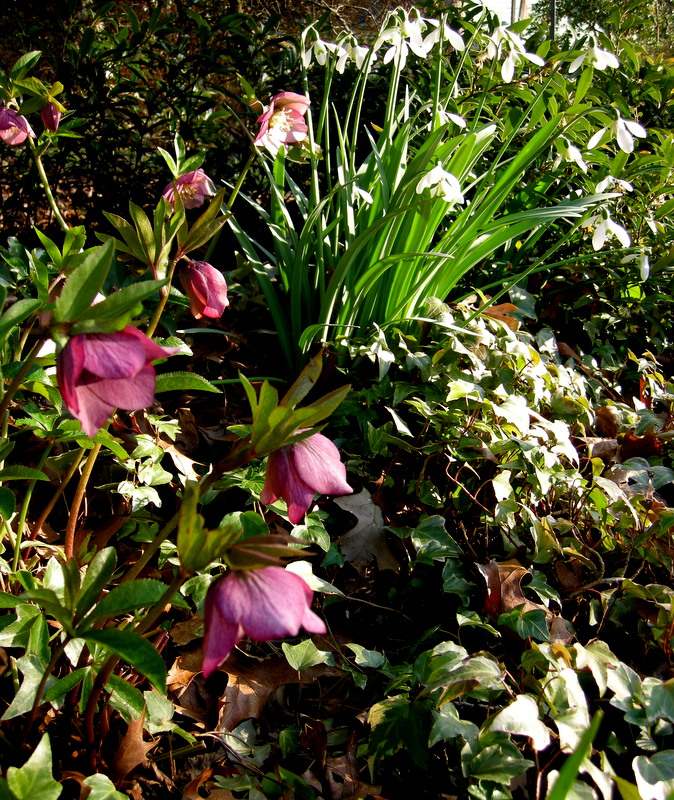
Hybrid hellebore & G. 'Brenda Troyle'All snowdrops are great companions for hellebores.

Our current snowdrop catalogue is on line here.

I have written a lot of articles about snowdrops, covering among other topics their ornamental characteristics, fascinating history, the importance of provenance, and profiling many cultivars.  For links to all my previous snowdrop posts, click here.  I have never, however, talked in detail about any of the snowdrop species from which cultivated snowdrops, now numbering over 1,000, have been selected.  I hope this post will be the first in a series discussing each of the more important snowdrop species.

Much of the information in this post comes from Snowdrops: A Monograph of Cultivated Galanthus by Matt Bishop et al. (Griffin Press 2006) which is absolutely indispensable if you are researching or collecting snowdrops.

.

Galanthus nivalis & Arum italicum 'Pictum'Common snowdrops pair well with snow crocus (just visible in the background) and really bring out the silver patterning on the leaves of Italian arum, which look fresh all winter.

.

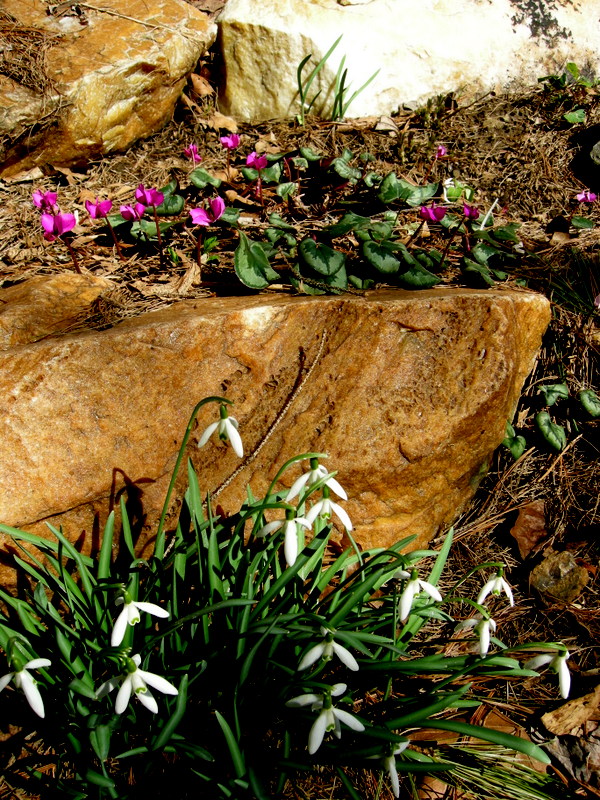
G. nivalis and C. coum 'Rose'Common snowdrops are a wonderful companion for the leaves and flowers of winter-blooming hardy cyclamen.

.

Galanthus nivalis & Heuchera 'Creme Brulee'Common snowdrops look great paired with native coral bells, many of which keep their bright leaf colors all winter.

Brian Capon in his very handy book Botany for Gardeners defines a species as a “group of individuals sharing many characteristics and interbreeding freely.”  Generally these individuals are growing in the wild and have a defined native range.  There are 20 types of snowdrops that meet this definition and constitute the genus Galanthus, but only three of them have given rise to most of the named snowdrops: G. nivalis, G. elwesii, and G. plicatus

Here I want to discuss Galanthus nivalis otherwise known as the common snowdrop although it is by no means common in any sense of the word and would be one of the first snowdrops I would add to my collection if I had to start over.  In fact, it has received a coveted Award of Garden Merit from the Royal Horticultural Society.

.

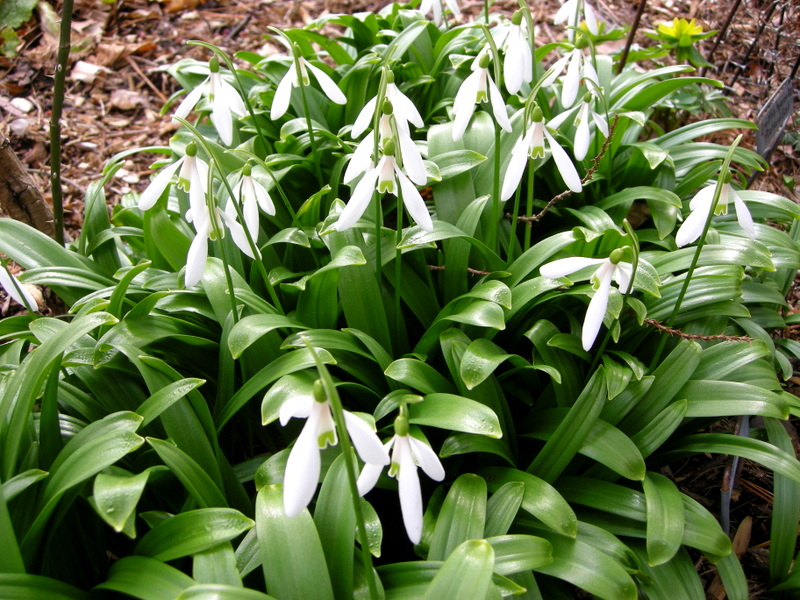
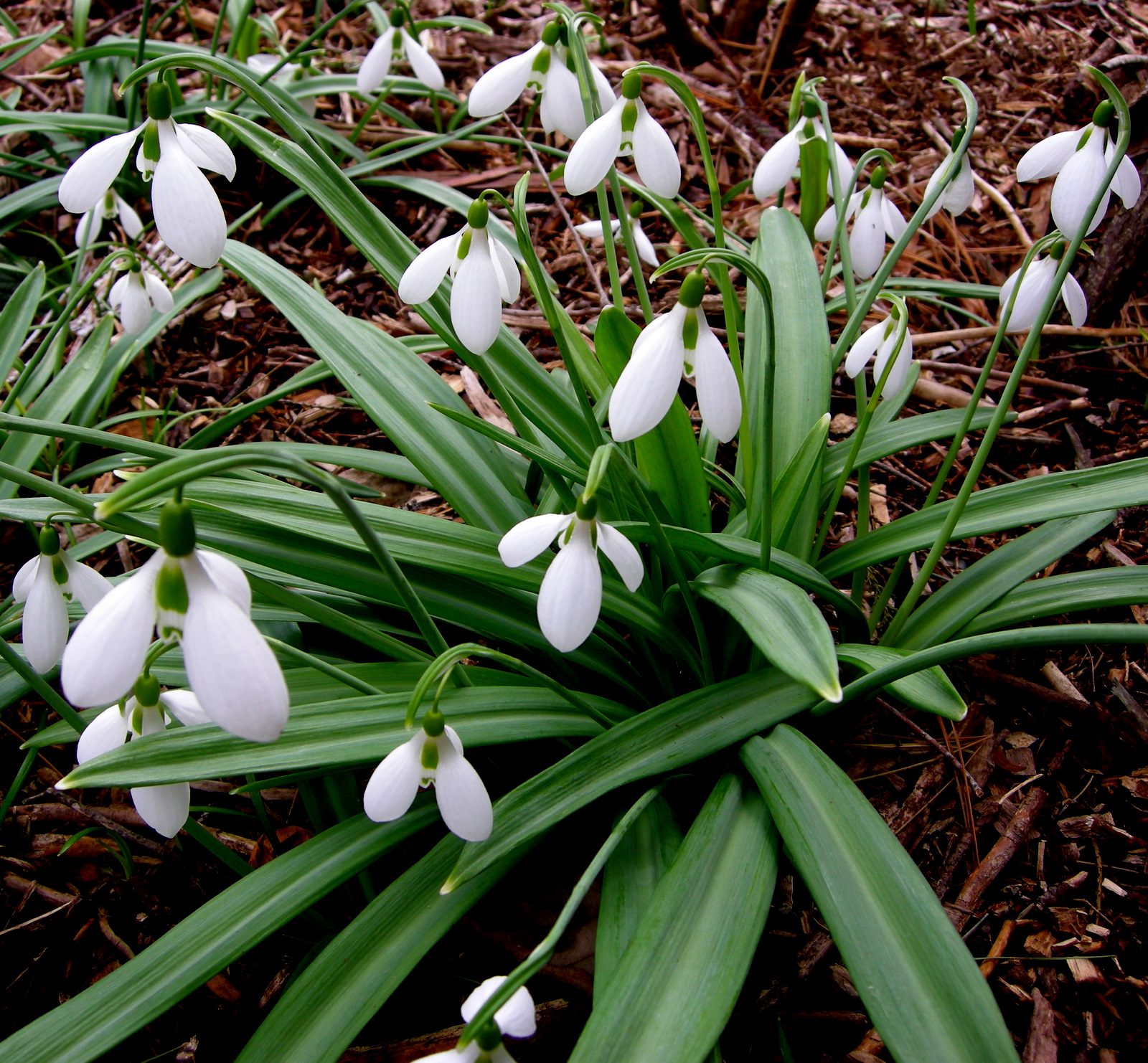
G. nivalis CressonCommon snowdrops naturalize quickly in the mid-Atlantic U.S. generally by producing bulb offsets.

.

The common snowdrop has the largest native range of any snowdrop species and is the species most widely grown by gardeners.  It is native to western, central, and southern Europe from France to the part of Turkey in Europe.  It was first mentioned in print in the 16th century when it was already being grown as an ornamental plant. 

Linnaeus named it Galanthus nivalis in 1753.  According to another fascinating book, Plant Names Explained (Horticulture 2005), gala means milk, -anthus means -flowered, and nivalis means snowy or snow-like.  Common snowdrops fill our gardens here at Carolyn’s Shade Gardens, which is part of an old estate called Wayside dating back to the 1600s (we live in Wayside Cottage which formerly housed the gardener).

.

Galanthus nivalis/Common SnowdropGalanthus nivalis, the common snowdrop

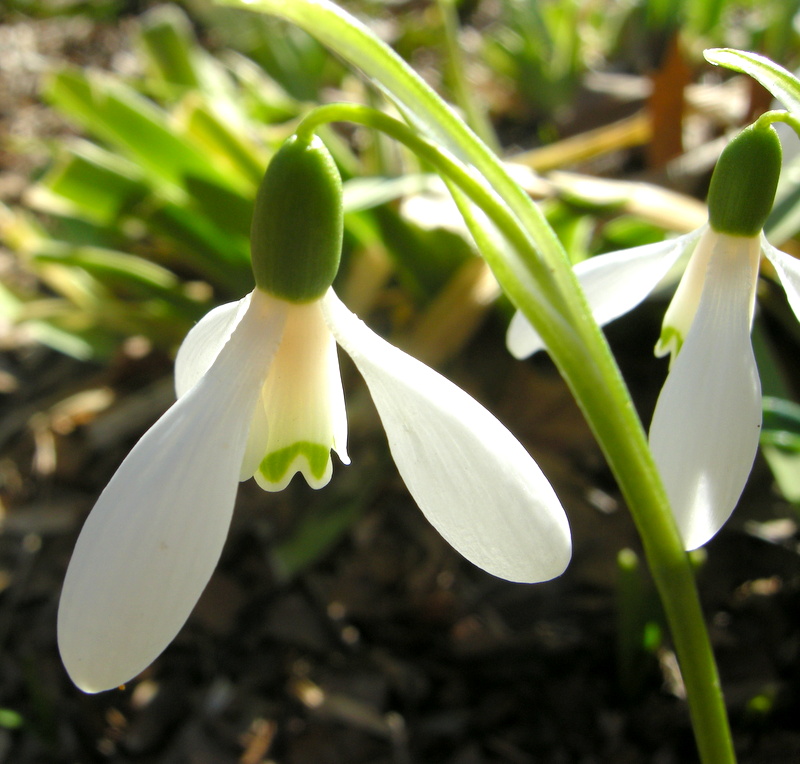
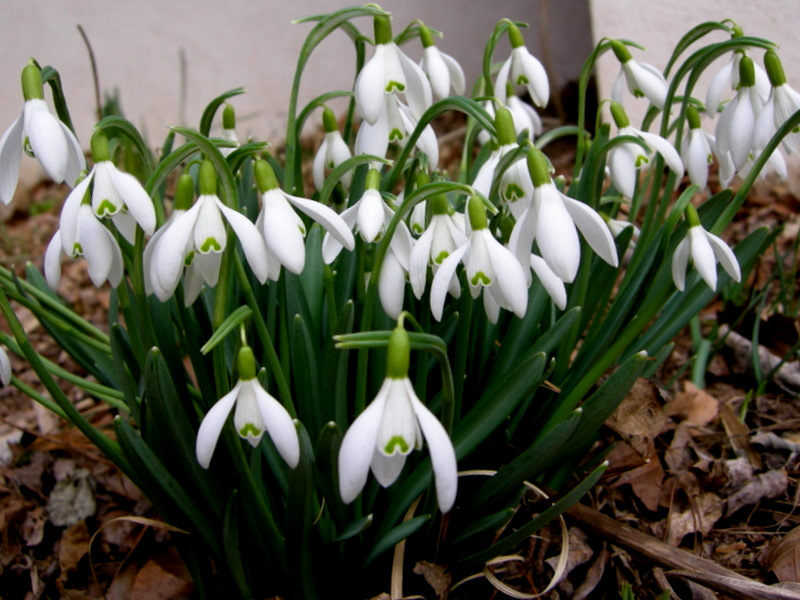
Common snowdrops are generally 4 to 6 inches tall.  The narrow, straplike leaves are green with a glaucous center stripe giving an overall gray-blue appearance.  The flowers have three outer petal-like segments and three smaller inner segments.  They are pure white with a bright green v-shaped mark around the notch (called a sinus) on the apex of the inner segments. 

Common snowdrops flower here in February and March no matter what the weather and prefer moist deciduous woods with deep organic soil.  However, they are not picky about cultural conditions and will naturalize freely in a wide range of garden settings, including the dry woods of Carolyn’s Shade Gardens.  They pair beautifully with native coral bells, snow crocus, Italian arum, hardy cyclamen, and hellebores.

.

Galanthus nivalisA natural mutation at Carolyn’s Shade Gardens, if you look closely these flowers have four outer segments (petals).

Because common snowdrops generally spread through bulb offsets rather than seed, the flowers in colonies are theoretically identical.  However, natural variations occur as you can see from the photo above where the flowers have four outer segments.  Often these mutations are not stable and do not persist as was the case with the flowers pictured.  However, sometimes ornamentally interesting and stable changes occur, and, if they are noticed by a sharp-eyed galanthophile, they enter cultivated gardens and even become a named cultivar available for sale.

  .

G. 'Flore Pleno'A clump of double common snowdrops

.

Galanthus nivalis 'Flore Pleno'double common snowdrop

I want to highlight three cultivars of the common snowdrop to give you an idea of the range available.  The double common snowdrop, Galanthus nivalis ‘Flore Pleno’ (or sometimes G. n. f. pleniflorus ‘Flore Pleno’), is the oldest known snowdrop cultivar, first illustrated in 1703 and described in a prominent gardener’s dictionary in 1731.  Although it is sterile, it spreads vigorously from bulb offsets and is tolerant of a wide range of cultural conditions.  I have been told that in England it is often more abundant than the straight species. 

‘Flore Pleno’ has a lovely flower and has the advantage of being less expensive than the rest of the double snowdrops available so it is great for naturalizing.  It is the parent with G. plicatus of the Greatorex double series of snowdrops to which ‘Dionysus’, ‘Hippolyta’, ‘Ophelia’, and several other double snowdrops belong.  ‘Flore Pleno’ was also given an Award of Garden Merit by the RHS.

.

G. 'Viridapice'the green-tipped snowdrop ‘Viridapice

.

G. 'Viridiapice'‘Viridiapice’

One of my favorite snowdrops is the green-tipped common snowdrop, Galanthus nivalis ‘Viridapice’.  It was originally found near an old farmhouse in northern Holland by a member of the Hoog family, owners of the venerable but now defunct Dutch bulb nursery Van Tubergen.  It is a vigorous and large-flowered snowdrop characterized by a beautiful and strikingly prominent green marking on the apex of the outer segments and a large single mark on the inner segments. 

Unfortunately,  the name ‘Viridapice’ was applied over the years to a number of different green-tipped common snowdrops, some of which are quite inferior.  I acquired my strain from the old Heronswood Nursery in Kingston, Washington, and I am happy to report that it is a superior strain and one of the best naturalizers in my garden.

.

Galanthus nivalis 'Blewbury Tart'the double common snowdrop ‘Blewbury Tart’

.

Galanthus nivalis 'Blewbury Tart'‘Blewbury Tart’

Finally, I want to highlight a newer cultivar of the common snowdrop, because I love it and because it was discovered by the only person I know who is more excited about snowdrops than me, Alan Street of Avon Bulbs in England.  In 1975, Alan noticed ‘Blewbury Tart’ in a churchyard in the village of Blewbury in Oxfordshire, England, where he grew up, and collected it with the permission of  Vicar Hugh Pickles. The famous galanthophile Primrose Warburg helped to name it because she called it Blewbury Muffin when Alan gave it to her, thus inspiring the name ‘Blewbury Tart’.  

I asked Alan if there was a special anecdote that I could relate here.  He told me that when he first exhibited it in 1985, a prominent British journalist said it looked like a “squashed fly on a windscreen”.   Nevertheless Avon offered it for sale in 1992.  It is an unruly double with an outward-facing dark green inner rosette encircled by three narrow outer segments.  It looks like it is having a bad hair day and always makes me smile when I see it.  Alan relates that another prominent British galanthophile, Ruby Baker, considers it a favorite.

*   *   *

Although I don’t expect most gardeners to share my obsession, whenever I write about snowdrops I hope to communicate some of the enthusiasm that snowdrops arouse.  Maybe you will add them to your garden this year!  All four snowdrops profiled are available from Carolyn’s Shade Gardens.

Carolyn

.

Note: Every word that appears in orange on my blog is a link that you can click for more information. If you want to return to my blog’s homepage to access the sidebar information (catalogues, previous articles, etc.) or to subscribe to my blog, just click here.

Snowdrop Articles on Carolyn’s Shade Gardens Blog

Posted in bulbs for shade, snowdrops, winter, winter interest with tags , , , , , , , , , , , , , , , , , , , on January 15, 2013 by Carolyn @ Carolyns Shade Gardens

Carolyn’s Shade Gardens is a retail nursery located in Bryn Mawr, PA, specializing in showy, colorful, and unusual plants for shade.  The only plants that we ship are snowdrops.  For catalogues and announcements of local events, please send your full name, mailing address, and cell number to carolyn@carolynsshadegardens.com and indicate whether you are mail order only.  Click here to get to the home page of our website for catalogues and information about our nursery and to subscribe to our blog.

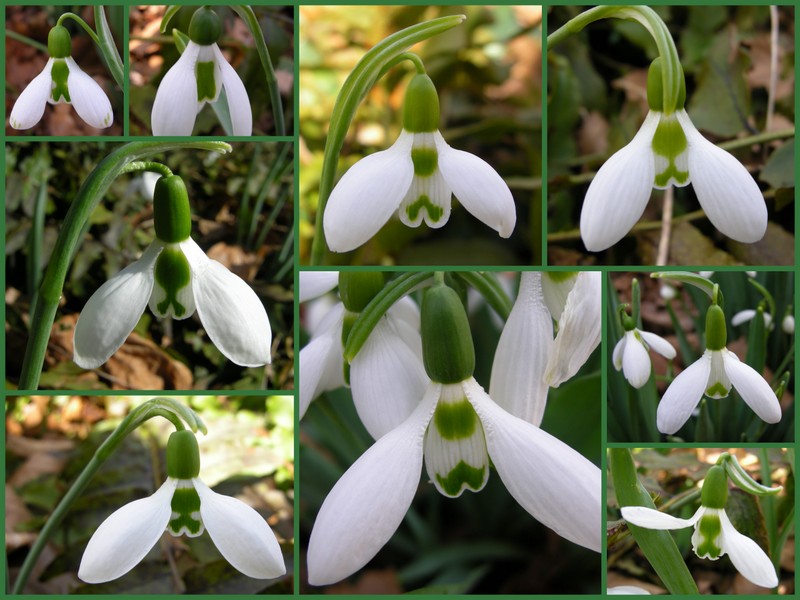
Galanthus elwesiiEvery photo in this collage is of a giant snowdrop, Galanthus elwesii, in my garden.  The differences in the markings are caused by the natural variation in the species.  None of them have been selected and given a cultivar name, although many plants like them have been named, probably too many.  Yet I find this variation fascinating.

Our current snowdrop catalogue is on line here.

To be put on the special snowdrop email list, please send your full name, cell number, and mailing address to carolyn@carolynsshadegardens.com and indicate that you are interested in snowdrops.

In this post you will find links to and descriptions of every post I have written on snowdrops.  The original purpose of this post was to let readers know that The Hardy Plant Society Mid-Atlantic Group honored me by asking me to write an article on snowdrops for their newsletter. It is called “Confessions of a Galanthophile” and is the Feature Article for the January 2013 Newsletter.  You can access the on line version by clicking here.
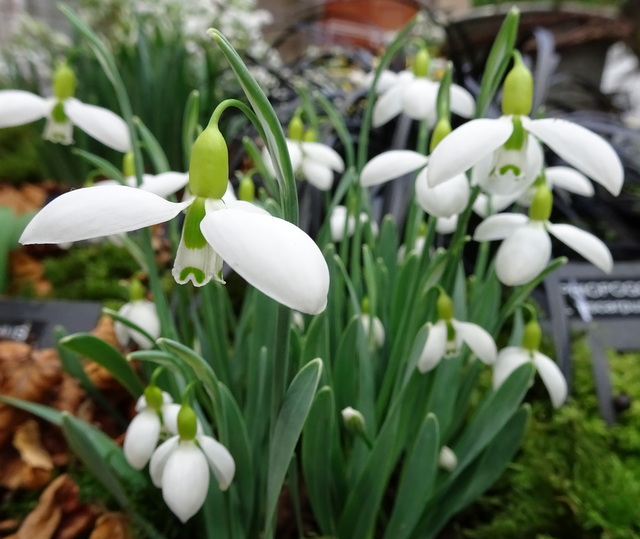
Galanthus gracilis, an elegant species snowdrop.

While letting you know about the Hardy Plant Society article, which makes use of parts of some of my previous blog posts, I thought this post would be a good place to list all the articles that I have written on snowdrops for easy reference.  I have interspersed the article names and links with photos of some of my favorite snowdrops.
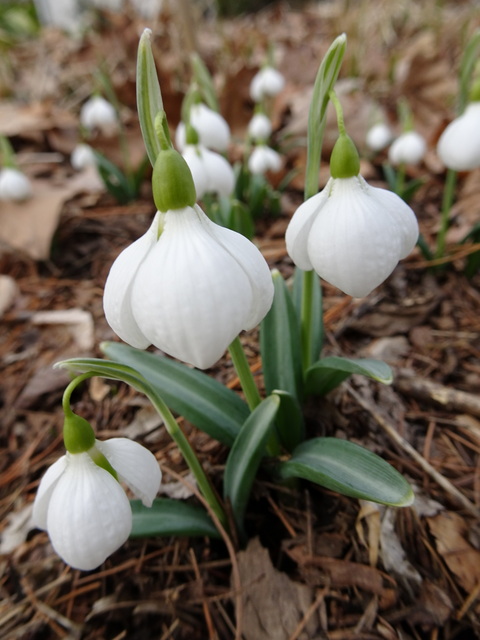
A very unusual and pricey newer snowdrop with squared off outer segments, ‘Diggory’.

November 22, 2010

“Snowdrops or the Confessions of a Galanthophile”

origins of galanthomania, fall-blooming snowdrops

profiles G. reginae-olgae and ‘Potter’s Prelude’

click here to read

Galanthus reginae-olgae, Lamium 'Shell Pink'G. reginae-olgae blooms in the fall with ‘Shell Pink’ lamium.

January 22, 2011

“Snowdrops: Further Confessions of a Galanthophile”

fascinating history of snowdrop cultivars

short profiles of 16 snowdrop cultivars

click here to read

Galanthus rizehensisGalanthus rizehensis, a species snowdrop.

February 9, 2011

“Are Snowdrops Thermogenic?”

discusses plants that produce their own heat

click here to read

Galanthus woronowii Cresson Garden The shiny bright green leaves of the species snowdrop G. woronowii.

January 19, 2012

“New Snowdrops for 2012”

importance of provenance in snowdrop collecting

profiles ‘Brenda Troyle’, ‘Tiny’, ‘Hippolyta’, ‘Dionysus’, and G. plicatus subsp. byzantinus

click here to read
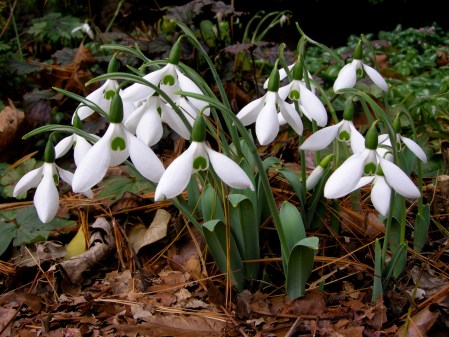
Galanthus 'Potter's Prelude'The lovely American, fall-blooming snowdrop ‘Potter’s Prelude’.

January 7, 2013

‘New Snowdrops for 2013″

where to find information on snowdrops

profiles ‘Wendy’s Gold’, ‘Standing Tall’, ‘Mighty Atom’, and ‘Scharlockii’

click here to read
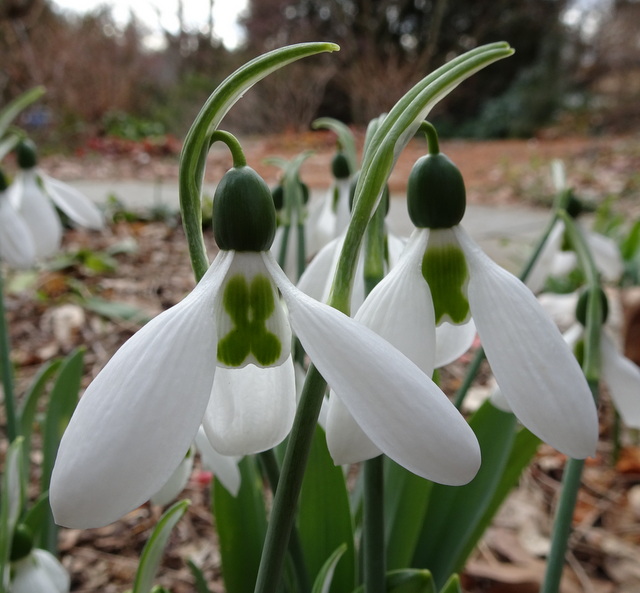
A new American snowdrop introduced by Carolyn’s Shade Gardens, Galanthus elwesii ‘Xmas’

The Hardy Plant Society Mid-Atlantic Group

January 2013 Newsletter

“Confessions of a Galanthophile”

why gardeners collect snowdrops

click here to read

'Straffan' by Jonathan Shaw‘Straffan’, photo by Jonathan Shaw

January 5, 2014

“The Un-Common Snowdrop”

the common snowdrop and its cultivars

profiles G. nivalis, ‘Flore Pleno’, ‘Viridapice’, and ‘Blewbury Tart’

click here to read

My favorite single classic snowdrop, ‘Magnet’.

January 16, 2014

“The Sochi Snowdrop”

G. woronowii and its cultivars

profiles G. woronowii and ‘Elizabeth Harrison’

click here to read

‘Kite’, very early-blooming with extremely long outer segments.

.

Galanthus elwesii 'Kite' twp scapes‘Kite’ can have twin flowers on one flower stalk.

January 27, 2014

“Top 25 Snowdrop Plants Part One”

UK ranking of top 25 all-time favorite snowdrops

profiles and photos of snowdrops ranked 13 to 25

click here to read

‘Godfrey Owen’ has six outer segments.

 February 4, 2014

“Top 25 Snowdrop Plants Part Two”

UK ranking of top 25 all-time favorite snowdrops

profiles and photos of snowdrops ranked 1 to 12

click here to read
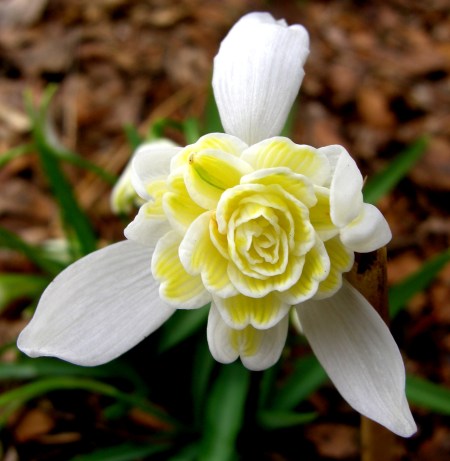
Galanthus nivalis 'Lady Elphinstone' CadwaladerThe gorgeous double yellow snowdrop ‘Lady Elphinstone’

December 2, 2014

“Do All Snowdrops Look Alike?”

shows the many very different types of snowdrops available

  photos of 14 strikingly different cultivars

click here to read

Galanthus 'Viridapice'Although considered ordinary by some, ‘Viridapice’ remains one of my favorite snowdrops.

December 9, 2014

“New Snowdrops for 2015”

  profiles ‘Blonde Inge’, ‘Diggory’, ‘Walrus’, and ‘Wasp’

click here to read

‘Cowhouse Green’ is a lovely part virescent snowdrop.

January 5, 2015

“Companion Plants for Snowdrops”

snowdrops are great alone but look even better with other winter interest plants

  profiles 10 winter-blooming plants to pair with snowdrops

click here to read

‘Walrus’ is ranked number 12 in all-time favorite snowdrops.

January 14, 2015

“New Snowdrop Book”

Kew Gardens A Plant Lover’s Guide to Snowdrops

review with images from the book

click here to read
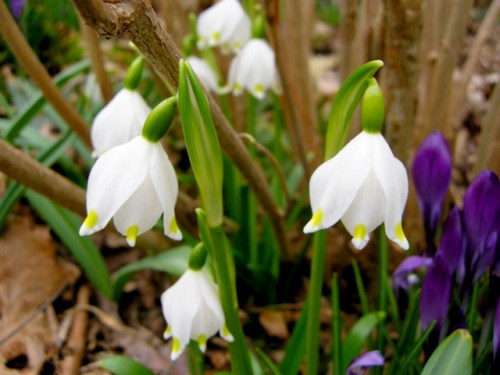
Leucojum vernum var. carpathicumAn unusual form of spring snowflake with yellow markings, Leucojum vernum var. carpathicum.

March 17, 2016

“Snowflakes (Leucojum) Continue the Snowdrop Season”

profiles many unusual forms of snowflakes, a close relative of snowdrops

click here to read

2017-catalogue-collage-11-26-2016-12-14-18-pm-11-26-2016-12-14-18-pmSome of my special snowdrops that I want to keep well marked.

December 6, 2016

“Curating a Plant Collection: Snowdrops or Otherwise”

how to keep track of your growing snowdrop collection

click here to read

The naturally blue lake at Colesborne Park below a hillside of snowdrops.

March 3, 2017

“Drifts of Snowdrops at Colesbourne Park”

photos and descriptions of our February 2017 trip to the famous English snowdrop venues

click here to read

March 15, 2017

“Snowdrops at the Royal Horticultural Society Spring Show”

setting up the Avon Bulbs snowdrop exhibit at the February 2017 show in London

click here to read

‘Fly Fishing’

November 18, 2017

“New Snowdrops for 2018”

profiles of ‘Ailwyn’, ‘Angelique’, ‘Bertram Anderson’, ‘Greenish’, ‘Fly Fishing’, and ‘Colossus’

click here to read

‘South Hayes’

November 28, 2017

“New Snowdrops for 2018 Part Two”

profiles of ‘Jonathan’, ‘Madelaine’, ‘Mrs. Macnamara’, ‘Welshway’, ‘South Hayes’, and ‘Titania’

click here to read
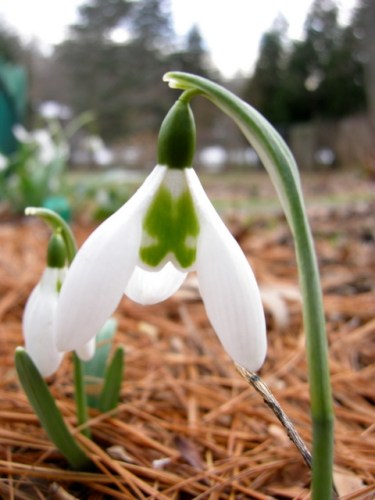
Galanthus 'Lapwing'‘Lapwing’ has a great mark and is a vigorous multiplier.

December 5, 2017

“Fine Gardening Feature Article on Snowdrops”

reprint of my cover article for the February 2016 issue of Fine Gardening

click here to read

Snowdrops and hellebores along the path to a folly at Painswick.

December 29, 2017

“Painswick Rococo Garden”

tour of winter garden and snowdrops at Painswick Rococo Gardens

click here to read
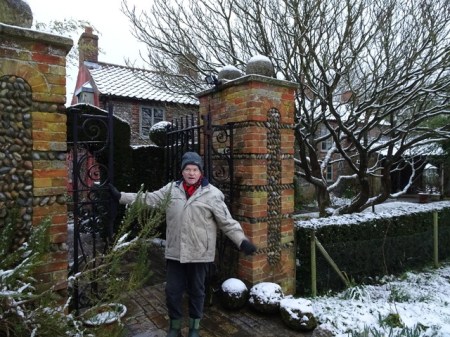
John Morley welcomes us to the gardens at North Green Snowdrops.

January 15, 2018

“North Green Snowdrops”

tour of the snowdrop garden at North Green Snowdrops

click here to read

 The best place to see snowdrops in England is Colesbourne Park in the Cotswolds.

March 7, 2018

“Exceptional Snowdrops and Gardens, England February 2018”

highlights of winter gardens and snowdrops in England

click here to read

Rodmarton Manor has an extensive snowdrop collection in its Arts and Crafts garden.

March 20, 2018

“Rodmarton Manor Garden”

tour of Rodmarton Manor’s winter garden and snowdrop collection

click here to read
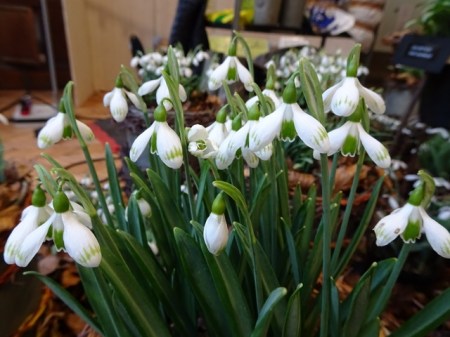
‘Sprite’ is a beautiful and distinct snowdrop selected at Avon Bulbs.

March 25, 2018

“A Day in the Life of an Avon Bulbs Snowdrop”

introduction of new snowdrops at Avon Bulbs in England

click here to read

‘Art Nouveau’ has a unique and elegant look.

November 13, 2018

“New Snowdrops for 2019: Part One”

profiles of ‘Godfrey Owen’, ‘Barnes’, ‘Art Nouveau’, ‘Armine’, ‘Puck’, and ‘Sprite’

click here to read

‘Richard Ayres’ is a large and vigorous double.

November 27, 2018

“New Snowdrops for 2019: Part Two”

profiles of ‘Richard Ayres’, ‘Green Brush’, ‘Faringdon Double’, ‘Merlin’, ‘Trym’, and ‘Starling’

click here to read

‘Three Ships’ is a gorgeous G. plicatus that blooms around Christmas.

December 11, 2018

“Your February 2019 Snowdrop Trip to England”

planning a trip to England during snowdrop season

click here to read
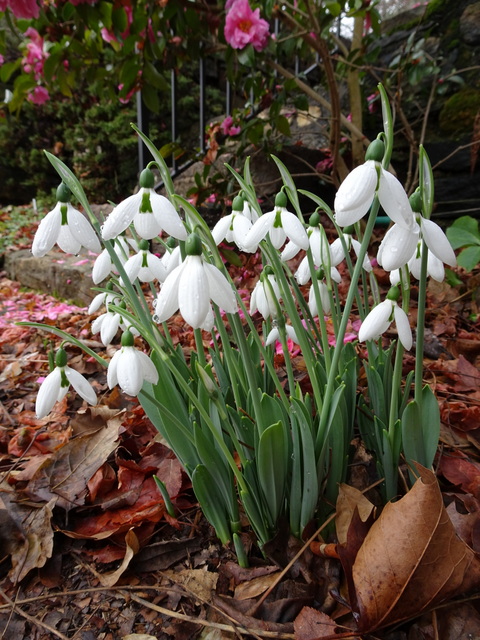
‘Xmas’ was selected, named, and introduced by Carolyn’s Shade Gardens.

October 23, 2019

“Early-Blooming Snowdrops”

profiles G. reginae olgae, ‘Potter’s Prelude’, ‘Barnes’, ‘Standing Tall’, and ‘Xmas’

click here to read

‘S. Arnott’ is the favorite snowdrop of galanthophiles everywhere.

November 2, 2020

“Classic Snowdrops”

profiles ‘Atkinsii’, ‘S. Arnott’, ‘Merlin’, ‘Hill Poe’, and ‘Scharlockii’

click here to read

‘One Drop or Two?’ is a rare twin-flowered snowdrop.

November 14, 2020

“New Snowdrops for 2021”

profiles ‘Beth Chatto’, ‘Bill Clark’, ‘Bagpuize Virginia’, ‘Fieldgate Prelude’, ‘Natalie Garton’, ‘Pom Pom’, and ‘One Drop or Two?’

click here to read

‘Sarah Dumont’ has gorgeous yellow markings.

November 21, 2020

“New Snowdrops for 2021: Part 2”

profiles ‘Sarah Dumont’, G. nivalis subsp. poculiformis, ‘Green Arrow’, ‘Moortown Mighty’, ‘Wonston Double’, and ‘Trympostor’

click here to read

Galanthus EA Bowles‘E.A. Bowles’ looks like a white miniature daffodil.

November 13, 2021

“New Snowdrops for 2022: Part 1”

profiles ‘E.A. Bowles’, ‘The Wizard’, ‘Mrs. Thompson’, ‘Cordelia’, and ‘Phantom’

click here to read

img032New snowdrop reference book

November 17, 2022

“Some Snowdrops: A photographic Ramble by Anne Repnow”

profiles ‘Three Ships’, ‘Standing Tall’, ‘Wasp’, and ‘Godfrey Owen’ and reviews a wonderful new snowdrop book

click here to read

Galanthus Midas‘Midas’ is a color breakthrough for snowdrops.

November 20, 2021

“New Snowdrops for 2022: Part 2”

profiles ‘Midas’, ‘Augustus’, ‘Cowhouse Green’, ‘Desdemona’, ‘Moses Basket’, and ‘Rodmarton Arcturus’

click here to read
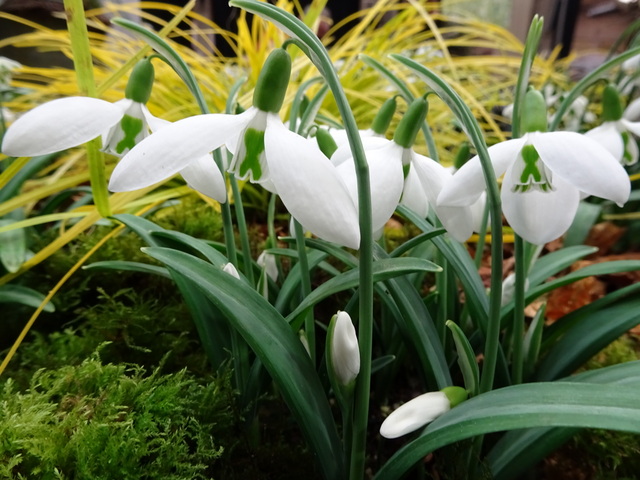
‘Walker Canada’ is big and beautiful.

November 19, 2022

“New Snowdrops for 2023: Part 1”

profiles ‘June Boardman’, G. reginae-olgae, ‘Rodmarton’, ‘Scissors’, and ‘Walker Canada’

click here to read
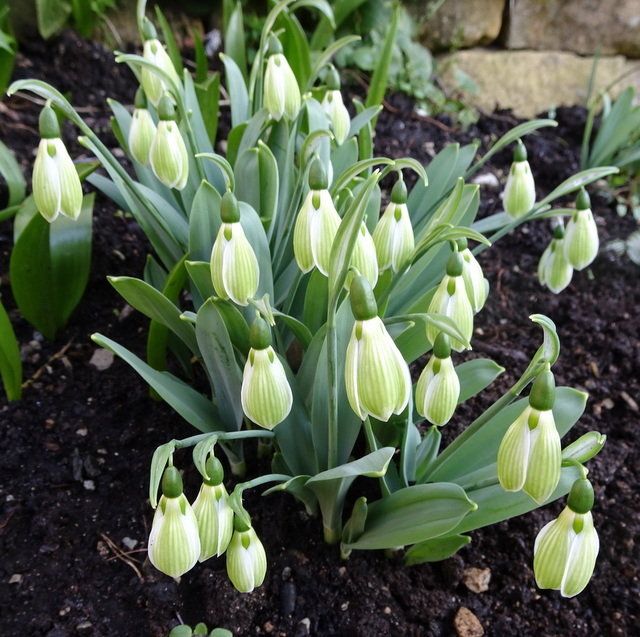
‘Rosemary Burnham’, an elegant virescent snowdrop

November 26, 2023

“New Snowdrops for 2023: Part 2”

profiles ‘Rosemary Burnham’, ‘Cambridge’, ‘Colossus’, ‘Betty Hansell’, and ‘Warwickshire Gemini’

click here to read
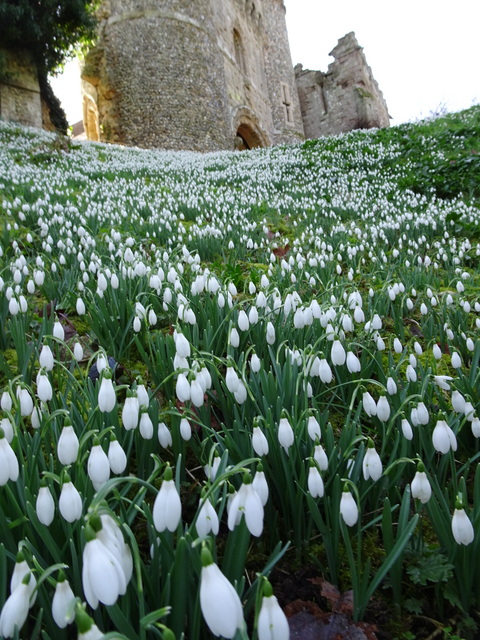
The moat at Benington Lordship Castle

November 11, 2023

“Snowdrops and History at Benington Lordship Gardens”

A 12th century castle near Cambridge, England, with a moat full of snowdrops

click here to read

The walls of Wandlebury Ring enclose tens of thuosands of G. plicatus.

November 19, 2023

“Wandlebury Ring”

An iron age hillfort outside of Cambridge, England, with a naturalized population of G. plicatus

click here to read
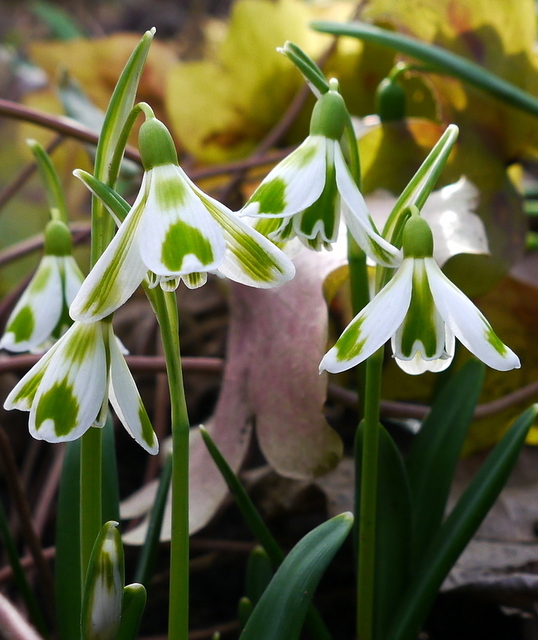
‘Phil Cornish’ may be the most beautiful inverse poculiform snowdrop.

November 26, 2023

“New Snowdrops for 2024: Part 1

profiles ‘Anglesey Candlelight’, ‘Phil Cornish’, ‘Daphne’s Scissors’, ‘Franz Josef’, and ‘George Elwes’

click here to read
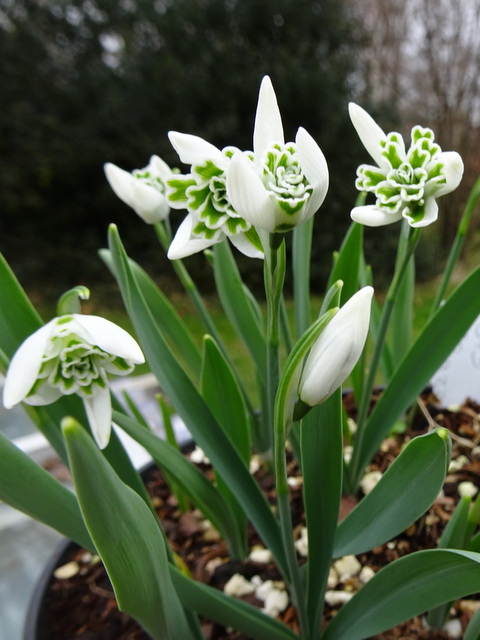
‘Miss Prissy’ is a very full and neat double that faces outward.

November 28, 2023

“New Snowdrops for 2024: Part 2

profiles ‘Miss Prissy’, ‘Excelsis’, ‘Big Bertha’, ‘Washfield Colesbourne’, and ‘Ivy Cottage Corporal’

click here to read
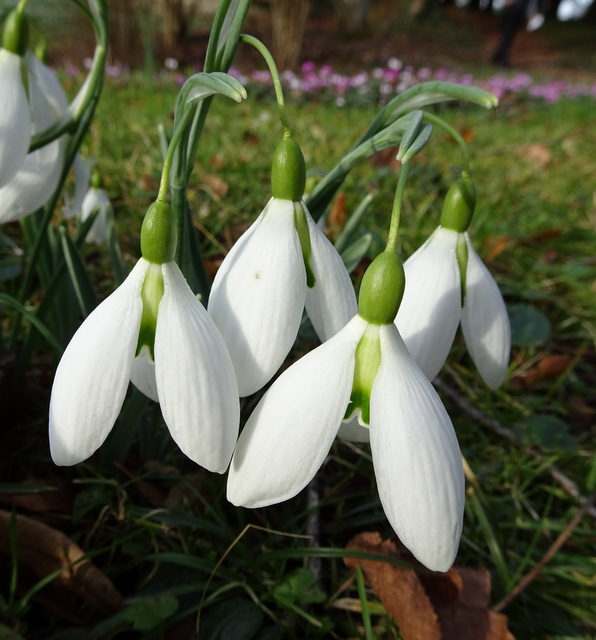
‘John Gray’ is an outstanding member of the “Might Atom” group of snowdrops

December 3, 2023

“New Snowdrops for 2024: Part 3”

profiles ‘Marjorie Brown’, ‘Fenstead End’, Trumpolute’, ‘Big Eyes’, and ‘John Gray’

click here to read
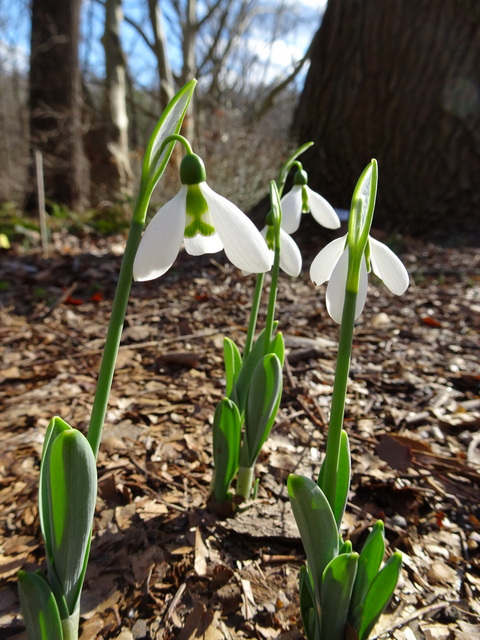
‘Standing Tall’ is an American selection with a distinct habit.

December 20, 2023

“December Blooming Snowdrops”

profiles ‘Potter’s Prelude’, Standing Tall’, ‘Three Ships’, and ‘Xmas’

click here to read

‘Lady Beatrix Stanley’ is elegant and vigorous.

January 2, 2024

“My Favorite Snowdrops” 

profiles ‘Diggory’, ‘Viridapice’, ‘Godfrey Owen’, ‘Madelaine’, ‘Fly Fishing’, ‘Xmas’, ‘Potter’s Prelude’, and ‘Lady Beatrix Stanley’ 

click here to read

‘Spindlestone Surprise’ is a lovely yellow.

March 20, 2024

“Snowdrops: Live Radio Interview”

live interview of Carolyn with a lot of information about snowdrops

click here to listen

A must-have snowdrop reference!

November 17, 2024 

“Some More Snowdrops by Anne Repnow”

profiles ‘Dryad Gold Sovereign’, ‘Jonathan’, and ‘Mrs. Macnamara’ and reviews a wonderful new snowdrop book 

click here to read

‘Joe Spotted’ was my favorite new snowdrop from 2025.

November 20, 2024

“New Snowdrops (& a Leucojum) for 2025: Part One 

profiles ‘Dryad Gold Sovereign’, ‘Herzilien’, ‘Joe Spotted’, ‘Titania’, ‘Ingrid Bauer’, and Leucojum ‘Null Punkte

click here to read

‘Kildare’ is a beautiful Irish snowdrop.

November 24, 2024

“New Snowdrops (& an Eranthis) for 2025: Part Two 

profiles Eranthis ‘Richard Bish’, ‘Dodo Norton’, ‘Kildare’, ‘Bitter Lemons’, and ‘White Swan’

click here to read

The winter color in Cambridge Botanic Garden is amazing.

December 7, 2024

“Cambridge Botanic Garden in Winter”

lots of photos of this extremely colorful winter garden

click here to read

The winter garden is on fire at Anglesey Abbey.

December 14, 2024 

“A Special Tour of Anglesey Abbey”

visit to this renowned snowdrop destination and winter garden 

click here to read

‘Early Bird’ is an early blooming, inverse poculiform, G. woronowii cultivar.

November 12, 2025

“New Snowdrops for 2026: Part One”

profiles ‘Early Bird’, ‘Peter Gatehouse’, ‘Poculi Perfect’, and ‘Selina Cords’

click here to read

‘Treasure Island’ might be the most vigorous yellow

November 16, 2025

“New Snowdrops (& a Leucojum) for 2026: Part Two”

profiles ‘Treasure Island’, ‘Lord Lieutenant’, ‘Elfenkind’, ‘Prestwood White’, and Leucojum carpathicum

click here to read

‘Frank Lebsa’ is a gorgeous fall-blooming snowdrop

December 3, 2025

“New Snowdrops for 2026: Part Three”

discusses the advantages of buying snowdrops in the green

profiles ‘B and B Duncan’, ‘Clare Blakeway-Phillips’, and ‘Frank Lebsa’

click here to read
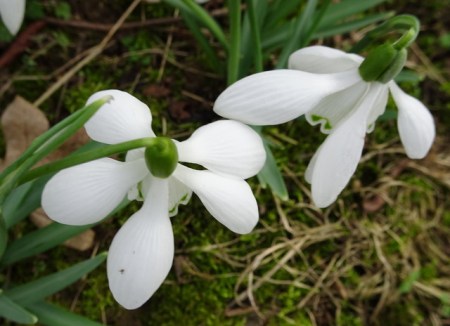
Galanthus Mrs. Thompson‘Mrs. Thompson’s’ erratic flowers are a plus.

2026 Snowdrop Catalogue

Over 35 varieties of snowdrops and snowflakes plus winter aconite for sale mail order in the US

click here to access

Galanthus nivalis 'Blonde Inge'‘Blonde Inge’ is breathtaking in a mass and bulks up quickly.

* * * * *

All the posts as well as the catalogue itself, provide interesting and informative reading on subjects ranging from the origins of galanthomania, the fascinating history of snowdrops, their provenance, how to research them, and even whether they produce their own heat.  I intend to add titles and links through the years as I write more about one of my favorite topics.

Enjoy, Carolyn

.

Note: Every word that appears in orange on my blog is a link that you can click for more information.  If you want to return to my blog’s homepage to access the sidebar information (catalogues, previous articles, etc.) or to subscribe to my blog, just click here.

New Snowdrops for 2012

Posted in New Plants, Shade Perennials, snowdrops, winter, winter interest with tags , , , , , , , , , , , , , , , , , , , , , on January 19, 2012 by Carolyn @ Carolyns Shade Gardens

Carolyn’s Shade Gardens is a retail nursery located in Bryn Mawr, PA, specializing in showy, colorful, and unusual plants for shade.  The only plants that we ship are snowdrops within the US.  For catalogues and announcements of local events, please send your full name, mailing address, and cell number to carolyn@carolynsshadegardens.com and indicate whether you are interested in snowdrops, hellebores, and/or hostas.  Click here to get to the home page of our website for catalogues and information about our nursery and to subscribe to our blog.

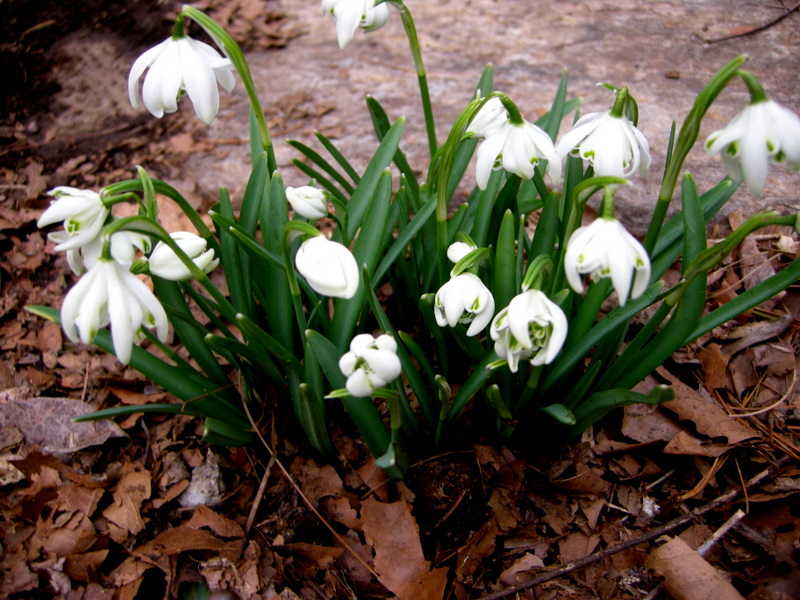
Who said all snowdrops look alike?  Some of my favorites: top row, L to R, ‘Wendy’s Gold’, ‘Blewbury Tart’, ‘Hippolyta’, ‘Flore Pleno’; middle, ‘Jaquenetta’, ‘Merlin’, ‘Lady Elphinstone’, ‘Augustus’; bottom, unknown, ‘Ophelia’, G. plicatus subsp. byzantinus, ‘Lady Beatrix Stanley’.
.

Our current snowdrop catalogue is on line here.

.

This article includes photographs and colorful descriptions of the 5 new snowdrops I am offering for sale in my 2012 Snowdrop CatalogueFor entertaining descriptions of most of the remaining 13 varieties offered in the 2012 catalogue, click here.

The hundreds of snowdrop cultivars out there range from a classic like ‘Atkinsii’ pictured above to…(see next photo)

In Snowdrops or The Confessions of a Galanthophile, I described my transition from someone who grows snowdrops to someone who is obsessed with them.  In Snowdrops: Further Confessions of a Galanthophile, I explained that most snowdrop cultivars can be appreciated as much for their colorful history as for their ornamental characteristics.  That history is contained in Snowdrops: A Monograph of Cultivated Galanthus by Matt Bishop, Aaron Davis, and John Grimshaw (Griffin Press 2006), commonly called the “snowdrop bible”.

Galanthus nivalis 'Blewbury Tart' at Carolyn's Shade Gardens…this crazy, modern double cultivar, ‘Blewbury Tart’, which looks like it’s having a bad hair day (I love it!).

The information in Snowdrops is not only interesting but also crucial to keeping straight all the available snowdrops.  Snowdrops describes over 500 cultivars, and the authors admit that it is now out-of-date, and a second volume is required (for details on Snowdrops 2, click here).  Snowdrops description of the cultivar along with the actual origin of the snowdrop plant in question both contribute to its provenance: the history of its ownership documenting its authenticity.  If a collector is purchasing an expensive plant, provenance is very important.

Snowdrop prices range from the very affordable (but no less desirable) common snowdrop, G. nivalis, pictured above with Italian arum and snow crocus, to…(see next photo)

…the highly collectible (with a price to match) ‘Wendy’s Gold’.

‘Brenda Troyle’, a new snowdrop from Charles Cresson in my 2012 catalogue, is a perfect example of how this works.  True ‘Brenda Troyle’ is a vigorous snowdrop admired for its well-proportioned, rounded flowers with flared and cupped outer petals (segments) and a strong fragrance of honey.  It received an Award of Garden Merit from the Royal Horticultural Society in 1960 for “outstanding excellence for ordinary garden decoration or use.”  Customers who attended Charles Cresson’s snowdrop seminars last year loved it.

Charles Cresson’s authenticated ‘Brenda Troyle’

But Snowdrops explains that ‘Brenda Troyle’ is very mixed up in the trade.  In fact, it is even unclear whether it was named after a character in Sir Walter Scott’s novel The Pirate or a staff member at an Irish nursery.  In cases like this, it is very important that the snowdrop display the desirable characteristics of the cultivar as Cresson’s stock does.  It is equally as important that the original stock was purchased from a reputable source and kept labeled since its purchase.  Charles got his plants from a bulb company started by the venerable Hoog family of Van Tubergen fame and conserves his whole snowdrop collection with the utmost care.

Galanthus ‘Tiny’

‘Tiny’ is a snowdrop that does not suffer from an identity crisis as Snowdrops states that almost every galanthophile in the U.K. grows it.  It is a diminutive form of the common snowdrop, G. nivalis, easily distinguished by its narrow leaves and elfin stature.  It is quite charming in a clump, which develops rapidly with this vigorous cultivar.  It also flowers later, extending the snowdrop season into late spring.

The subspecies byzantinus of G. plicatus is easily distinguished from subspecies plicatus by the two marks on its inner segments.


Unique provenance adds significantly to the desirability of a snowdrop as is the case with the Turkish snowdrop, Galanthus plicatus subsp. byzantinus.  This subspecies has beautiful wide pleated leaves and lovely plump flowers joined in an elegant overall habit.  It comes from a small area in northwestern Turkey, but is uncommon even there.  Subspecies byzantinus is an exceptionally good form of G. plicatus, hard to come by even in the U.K.

The elegant habit of G. plicatus subsp. byzantinus.

But the part of its provenance that is really exciting is that these plants originated from one of the most celebrated and important American snowdrop collections, the gardens at Winterthur.  As Henry Francis du Pont added plants to Winterthur, snowdrops became a focus.  In the 1930s, he purchased the parents of these very bulbs from Barr & Sons, a renowned bulb house that operated in Covent Gardens, London, from 1882 to 1956.  When Charles Cresson worked at Winterthur in the early 1990s, he was given plants of this unique snowdrop, and we are offering the offspring of those plants in the 2012 catalogue.  Now that’s provenance!

The Greatorex double ‘Hippolyta’ (photo by and used with the permission of Paddy Tobin).

The final two new snowdrops were both hybridized in the mid-twentieth century by the legendary but enigmatic snowdrop breeder Heyrick Greatorex and are known as Greatorex doubles.  Snowdrops makes an unflattering reference to a story that he spent World War II in a local pub.  However, further research reveals that, in addition to serving in WWII, he fought in World War I, was wounded at Lagincourt, and received the Victory and British Medals—a very distinguished record indeed.  If you would like to read more about him, click here.

Galanthus 'Hippolyta' photo Paddy Tobin‘Hippolyta’ (photo by and used with the permission of Paddy Tobin)

‘Hippolyta’ is the shortest of the many Greatorex double snowdrops, which Heyrick Greatorex developed by crossing the double common snowdrop, G. nivalis ‘Flore Pleno’, with the species G. plicatus to create large and vigorous plants.  He named them after characters in Shakespeare’s plays, Hippolyta appearing in A Midsummer Night’s Dream.  Although some of the Greatorex doubles are confused, ‘Hippolyta’ consistently produces neatly doubled, rounded flowers, combining a tightly compact inner rosette with cupped and flaring outer petals (segments)—a charming arrangement.  It received an Award of Garden Merit from the Royal Horticultural Society in 1970.


The Greatorex double ‘Dionysus’

The final member of the five new snowdrops in my 2012 Snowdrop Catalogue is ‘Dionysus’, also a member of the acclaimed series of double snowdrops developed by Heyrick Greatorex (although not a Shakespeare character).  ‘Dionysus’ is one of the taller and earlier flowering doubles in this series.  It has fewer inner segments  than other Greatorex doubles, and  they feature a large, deep green, inverted heart-shaped mark.  Evidently Heyrick Greatorex described ‘Dionysus’ as one of the best of his doubles for cultivation in the open garden.  Charles got his bulbs from the well known Oregon bulb authority Jane McGary.

Obviously, I find everything about snowdrops fascinating and hope I have communicated some of my infatuation to you.  If you are in the U.S. and want to order from the catalogue, just follow the directions for mail order.

Carolyn

Notes: Every word that appears in orange on my blog is a link that you can click for more information.  If you want to return to my blog’s homepage to access the sidebar information (catalogues, previous articles, etc.) or to subscribe to my blog, just click here.

Snowdrops: Further Confessions of a Galanthophile

Posted in bulbs for shade, New Plants, snowdrops with tags , , , , , , , , , , , , , , , , , , , , , , , , , , on January 22, 2011 by Carolyn @ Carolyns Shade Gardens

Carolyn’s Shade Gardens is a retail nursery located in Bryn Mawr, PA, specializing in showy, colorful, and unusual plants for shade.  The only plants that we ship are snowdrops to the US only.  For catalogues and announcements of local events, please send your full name, mailing address, and cell number to carolyn@carolynsshadegardens.com and indicate whether you are mail order only.  Click here to get to the home page of our website for catalogues and information about our nursery and to subscribe to our blog.

Galanthus ‘Atkinsii’ described in Snowdrops as having “elegant elongated flowers that suggest the drop-pearl earrings of Elizabeth I,”  I can’t improve on that

.

Our current snowdrop catalogue is on line here.

.

This article includes photographs and colorful descriptions of the 15 snowdrops I am offering for sale in my 2011 Snowdrop Catalogue.


In my garden, I have many forms of Galanthus elwesii, which was named for Henry John Elwes (1846-1922), described as a “true energetic Victorian” combing the world for big game, fine trees, insects, birds, and snowdrops


In my article Snowdrops or the Confessions of a Galanthophile, I revealed that I am obsessed with snowdrops.  I described my evolution from a gardener growing a few distinct varieties to a galanthophile collecting every cultivated snowdrop I could get my hands on.  I explained that I could now see the often subtle differences between flowers that others might unknowingly (shall we say ignorantly) dismiss as ridiculous.  To understand how far I have gone down this road, know that I recently found myself describing a snowdrop as having “a bold inner marking with a basal blotch narrowly joined to an apical round-armed V.”  There is no turning back.


Galanthus nivalis ‘Flore Pleno’, probably the oldest snowdrop cultivar  in existence with records as early as 1703


But I didn’t talk about one of the things I find most fascinating about snowdrops.  They are the only plant that I would purchase as much for their colorful history as for their ornamental characteristics.  And how do I find out about their captivating  lineage: I consult Snowdrops: A Monograph of Cultivated Galanthus by Matt Bishop, Aaron Davis, and John Grimshaw (Griffin Press 2006).  This book, always referred to as the snowdrop bible, has all the information anyone could want about the 500 “commonly” cultivated snowdrops.


The Greatorex Double, Galanthus ‘Ophelia’

After reading Snowdrops, who would not want Galanthus ‘Ophelia’, a beautiful double snowdrop, when it was originated by Heyrick Greatorex of Brundall, Norfolk, England, a man who lived “an unconventional lifestyle” in a wooden garden shed that might have been a railway carriage?  Or a snowdrop like Galanthus ‘Magnet’ that has reached its centenary [a word not used commonly in the US so I had to look it up] and was probably named for “the old-fashioned child’s game in which magnets are attached to miniature fishing rods for the purpose of picking up painted metal fish, the point being to win the game by catching the most?”  I played that game.


Galanthus ‘Magnet’, can you can see the miniature fishing rod?

Galanthus ‘Straffan’, Baron Clarina of Ireland’s souvenir of the Crimean War

Who can resist the indestructible Galanthus ‘Straffan’, the third oldest snowdrop cultivar still in existence, discovered in the later 1800s by the head gardener for Straffan House in County Kildare, Ireland, in a clump of G. plicatus brought back from the Crimean War by the owner, the fourth Baron Clarina?  Or October-flowering Galanthus reginae-olgae, named in 1876 in honor of Queen Olga of Greece, the grandmother of  the current Duke of Edinburgh?  [In the US, we would say grandmother of Prince Philip, Queen Elizabeth’s husband.]


The October-flowering Galanthus reginae-olgae, named for Prince Philip’s grandmother, photo Charles Cresson

Galanthus nivalis/Common SnowdropGalanthus nivalis, the common snowdrop, has a 500-year lineage to brag about


Even the plain old common snowdrop, Galanthus nivalis, an imminently garden-worthy plant, has been cultivated as an ornamental in England since the 16th century.  There are written records.  The species snowdrop, Galanthus woronowii, was collected on the eastern shores of the Black Sea and named by a Russian botanist for Russian plant collector Georg Jurii Nikolaewitch Woronow (1874-1931).

The shiny green leaves of Galanthus woronowii named for plant collector Georg Jurii Nikolaewitch Woronow, photo Charles Cresson


Galanthus ‘Blewbury Tart’ found by Alan Street in Blewbury, Oxfordshire, England

Even more modern snowdrops have name-dropping heritages.  Snowdrops tells us that when noted horticulturist Alan Street of the well known English bulb house, Avon Bulbs, and the discoverer of Galanthus ‘Blewbury Tart’, gave three bulbs instead of one to quirky English gardener, Primrose Warburg (1920-1996), she “characteristically complained” and called it ‘Blewbury Muffin’.  This is the same Primrose Warburg who we are told cautioned visitors navigating her treacherous garden slope to be careful, not because they might hurt themselves, but because the snowdrops were irreplaceable. Galanthus ‘Beth Chatto’ was, of course, discovered in the gardens of the internationally famous gardener and writer, Beth Chatto, OBE [Order of the British Empire].


Galanthus ‘Beth Chatto’ from the internationally famous Beth Chatto Gardens


Snowdrops describes Galanthus ‘S. Arnott’ as the “classic snowdrop….a first-class garden plant with an unquestionable constitution, admired by everyone,” photo Charles Cresson

Other cultivars have discussions of their origins so complicated as to rival the US Tax Code, something I am familiar with from my former career. Galanthus ‘S. Arnott’ is in danger of losing its name to ‘Arnott’s Seedling’, the name under which it was given the Royal Horticultural Society’s Award of Garden Merit, but a name deemed unsuitable because E.A. Bowles, “one of the most revered plantsman of all times,” later called it ‘S. Arnott’.  The  International Cultivar Registration Society in the Netherlands has been so advised. Galanthus nivalis ‘Viridapice’ has evidently had many imitators since it was discovered prior to 1922 near an old farmhouse in northern Holland, and confusion is rampant.


Galanthus nivalis ‘Viridapice’, hopefully not an impostor

Please do not think I am in any way making fun of this book.  I love it, and I wish all plant genera had books this information-packed and well written dedicated to them.  I list Snowdrops on my Blotanical profile as the garden book I am currently reading because I am always reading it.  Rumor has it that a new edition is in the works (for an update from John Grimshaw, click here), and I will buy it.  If you like snowdrops, you should own it too.

Well, based on the tales found in the snowdrop bible, what cultivars are in my future?  I am intrigued by ‘Lady Beatrix Stanley’, a vigorous double, whose namesake (1877-1944) struggled to create an English garden in India when her husband was Governor of Madras.  I have my eye on ‘Merlin’ with its solid green blotch, whose stock was maintained by Amy Doncaster (1894-1995), “a greatly admired, no-nonsense plantswoman” who collected my favorite plants, snowdrops, hellebores and epimediums, in her woodland garden.  Finally, I would like to grow ‘Primrose Warburg’, a rare yellow snowdrop, because I think I might be just like her when I grow up.

Galanthus ‘Merlin’ whose stock was maintained by no-nonsense plantswoman Amy Doncaster


Carolyn

Notes: Every word that appears in orange on my blog is a link that you can click for more information.  If you want to return to my blog’s homepage to access the sidebar information (catalogues, previous articles, etc.), click here.

The view from my office this morning:

Snowdrops or the Confessions of a Galanthophile

Posted in bulbs for shade, Fall Color, Shade Gardening, snowdrops with tags , , , , , , , , , , , , , , , , , on November 22, 2010 by Carolyn @ Carolyns Shade Gardens

Carolyn’s Shade Gardens is a retail nursery located in Bryn Mawr, PA, specializing in showy, colorful, and unusual plants for shade.  The only plants that we ship are snowdrops within the US.  For catalogues and announcements of local events, please send your full name, mailing address, and cell number to carolyn@carolynsshadegardens.com and indicate whether you are interested in snowdrops, hellebores, and/or hostas.  Click here to get to the home page of our website for catalogues and information about our nursery and to subscribe to our blog.

Common Snowdrop at Carolyn's Shade GardensCommon Snowdrop, Galanthus nivalis

Our current snowdrop catalogue is on line here, and we are currently taking orders.

I have always loved snowdrops. I loved them so much that I set my seasonal clock by them.  When they bloomed, it was spring no matter what the calendar said. When we purchased our property in 1983, it came with thousands of common snowdrops, Galanthus nivalis. Many of my original snowdrops are on an open south-facing hill and often start to bloom at the beginning of February.  That’s when spring began for me.  When they bloomed, I would put on my warmest set of work clothes, head out to the garden, and leave the winter doldrums behind.

'Viridi-apice' snowdrops at Carolyn's Shade GardensGreen-tipped Snowdrop, Galanthus nivalis ‘Viridi-apice’

That was before I became a galanthophile, a British word describing gardeners obsessed with snowdrops.  In my pre-galanthophile days, I thought (and I shudder to put this in writing) that once you had the double ‘Flore Pleno’, and the giant G.  elwesii, and the green-tipped ‘Viridi-apice’, and the glossy green-leafed G. woronowii, you pretty much had the snowdrop field covered.  The rest all looked the same, didn’t they?  What were all those collectors getting so excited about?

But one day, I realized the error of my ways and was seized by the galanthophile obsession to collect every snowdrop cultivar I could get my hands on.  Actually, it didn’t really happen in a day—more like years.  It started with reading the snowdrop sections in the (old) Heronswood catalogues.  Dan Hinkley was a master at plant descriptions, and I ordered a few new cultivars each year.  However, my fate as a galanthophile was sealed when I visited the garden of  famous regional plantsman Charles Cresson during snowdrop season.  Charles can make you see and appreciate the finest distinctions in plants, and he is so generous with his treasures.

Galanthus nivalis 'Blewbury Tart' at Carolyn's Shade GardensGalanthus ‘Blewbury Tart’

Now I had the wild up-facing double ‘Blewbury Tart’, and ‘Magnet’ with the fishing line stem, and the drop-pearl earring shaped ‘Atkinsii’, and  the classic ‘S. Arnott’, and the rabbit-eared ‘Sharlockii’, and …. they all looked different to me.  I only have 25 varieties though, hardly qualifying me to join the International Galanthophile Society if there is one.  Luckily (or unluckily) unusual snowdrops are rarely offered for sale in the U.S. saving me from creating a system to keep track of hundreds of snowdrop cultivars in my garden.  The British snowdrop “bible”, Snowdrops: A Monograph of Cultivated Galanthus by Matt Bishop, et al., describes 500 cultivars and is sadly out-of-date number-wise.

snowdrop 'Magnet' at Carolyn's Shade GardensGalanthus ‘Magnet’

But why am I talking about snowdrops in fall?  Because two of the unusual varieties I have been able to collect bloom in fall.  This wreaked havoc with my “start of spring” clock, which I had to reset to recognize the wonderful fragrance of sweet box as the beginning of spring.  But this inconvenience has been more than outweighed by allowing me to start my snowdrop season in early October with the blooming of Galanthus reginae-olgae.

October blooming Galanthus reginae-olgae, photo Charles Cresson

Galanthus reginae-olgae, a species snowdrop which has no handy common name, starts blooming in my garden in early to mid-October and continues for about four weeks.  It looks very much like the common snowdrop, G. nivalis, with a single green spot on its inner petals.  Its most significant identifying feature is its bloom time as it is the first species to flower in the garden.   It is not particularly robust in my garden, but I love it in October.

fall-blooming snowdrop 'Potter's Prelude' at Carolyn's Shade GardensNovember blooming Galanthus ‘Potter’s Prelude’

Just as G. reginae-olgae is winding down, the first blooms of Galanthus elwesii var. monostichus ‘Potter’s Prelude’ are opening in early November.  It continues to flower, sometimes into January, when the straight species, G. elwesii, takes over.  ‘Potter’s Prelude’ is a free-flowering and vigorous snowdrop in my garden with wide recurving blue-green leaves.  It has large blossoms equal in size to the best cultivars of the giant snowdrop, G. elwesii.

fall-blooming snowdrop 'Potter's Prelude' at Carolyn's Shade GardensNovember blooming Galanthus ‘Potter’s Prelude’

‘Potter’s Prelude’ was selected by Jack Potter, former curator of the Scott Arboretum, and named and registered by Charles Cresson.  Charles has generously allowed me to include ‘Potter’s Prelude’ for sale in my February snowdrop catalogue and given me enough plants to enjoy good-sized clumps in late fall in my own garden.

Carolyn