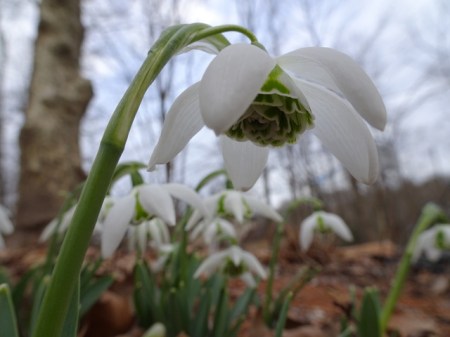
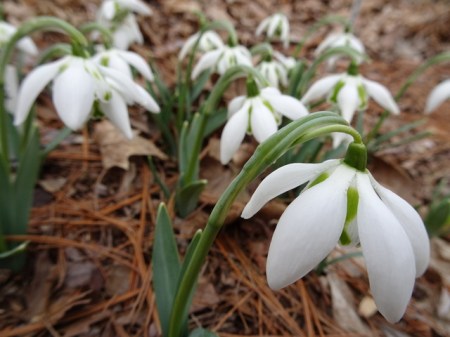
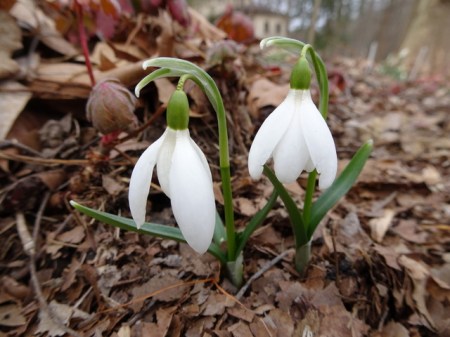
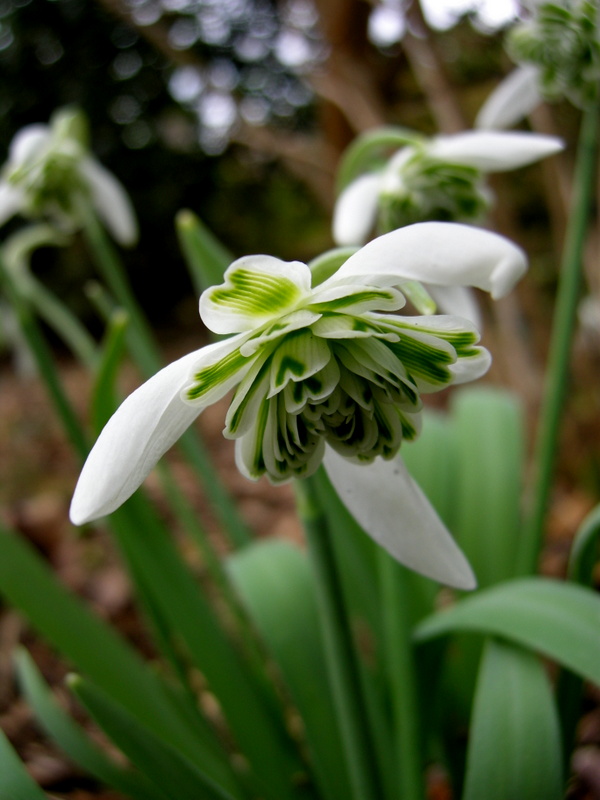
Archive for galanthus anglesey abbey

A Special Tour of Anglesey Abbey

Posted in bulbs for shade, snowdrops, winter, winter garden, winter interest with tags , , , , , , , , , , , , , , , , , , on December 14, 2024 by Carolyn @ Carolyns Shade Gardens


The house at Anglesey Abbey was originally built in 1600 on the ruins of a priory dissolved by Henry VIII in 1536.  Photo David Boughey

To access our current snowdrop catalogue, click here.  There are still a lot of great snowdrops left.

In February of 2023, Michael and I visited the magnificent winter gardens at Anglesey Abbey in Lode, England, about five miles outside of Cambridge.  We came at the invitation of the wonderful David Boughey, National Trust Service Assistant, who arranged a private tour of Anglesey’s snowdrop collection for us.  David is also a professional photographer and supplied many of the photographs for this post.  Thank you, David!

.

Nursery News:  Carolyn’s Shade Gardens at Whitehall Farm is a retail nursery in Norristown, PA, U.S., zone 6b/7a. If you are interested in shopping here, send us an email with your full name, mailing address, and cell number to carolyn@carolynsshadegardens.com and indicate if you are interested in shopping at the nursery and/or snowdrops (mail order only). Current catalogues, hours/contact information , and directions are under Pages on the right sidebar. The only plants we ship are snowdrops to US customers. Click here to get to the home page of our website for catalogues and information about our nursery and to subscribe to our blog.

.
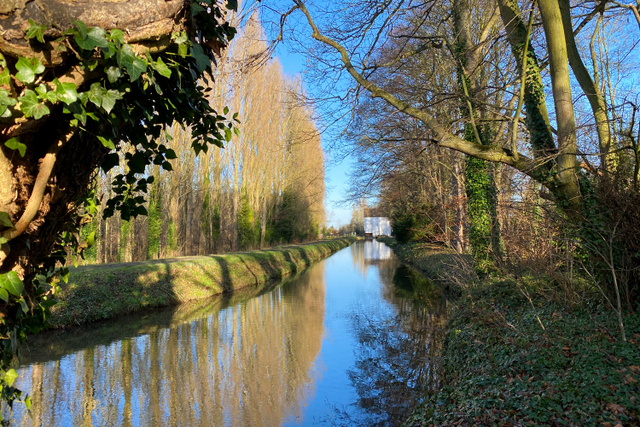
The Anglesey Abbey grounds include Lode Mill, a completely functional corn mill, originally purchased and restored by Lord Fairhaven in 1934 but probably in existence prior to 1086.  Photo David Boughey

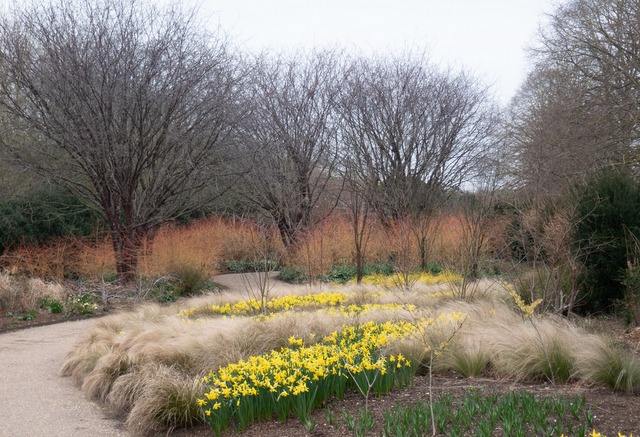
Our tour was conducted by very knowledgeable Senior Gardener David Jordan, who guided us through the winter gardens and the Specialist Collection of Snowdrops.  Anglesey Abbey has over 500 varieties of snowdrops so it is a great place for galanthophiles.  But before I get to the snowdrops, I want to show you the stunning winter gardens.  The following photos were taken by David Boughey.

..

.

.

.

.

.

Now for the snowdrops……

.

Anglesey Abbey has had to limit access to the snowdrop collection after a series of snowdrop thefts so the Specialist Collection is only accessible with advance booking of a guided tour.  The tours take place in January and February and sell out quickly.  The 2025 tour schedule was not available at the time of this post, but click here to check for updates.

.
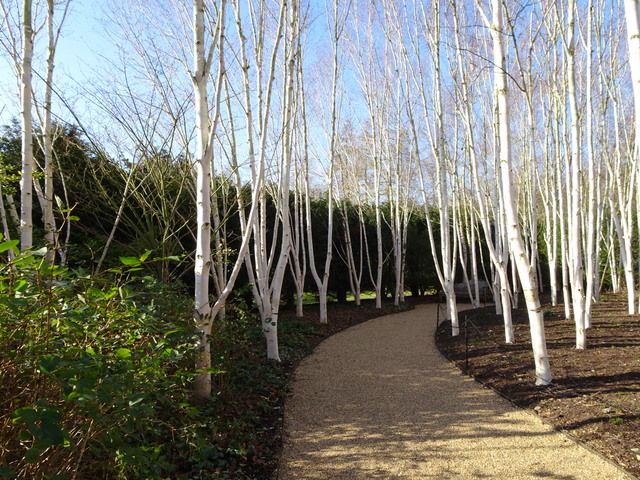
We passed this sculptural birch grove on the way to the snowdrops.

.

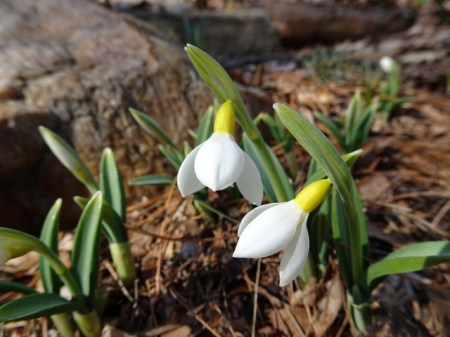
There were also many naturalized snowdrops in the woods and gardens outside the special collection.

The snowdrop collection featured so many amazing and notable cultivars that it would be impossible to do it justice—you just have to visit.  In the meantime, I will show nine snowdrops that were discovered and selected at Anglesey Abbey:

.
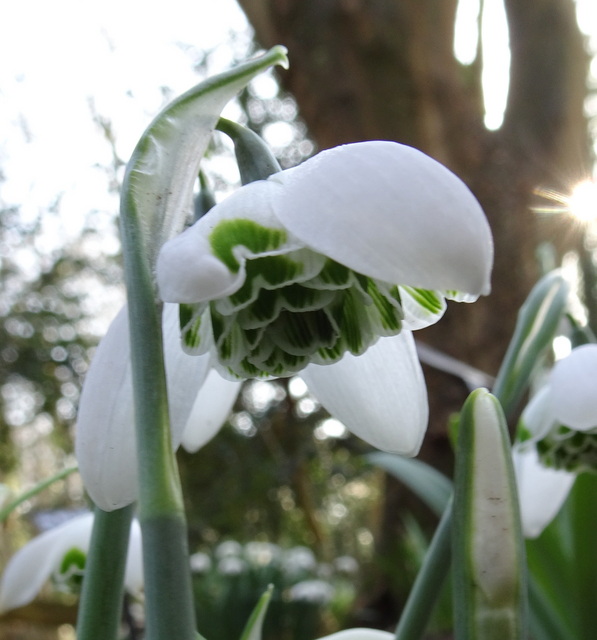
‘Ailwyn’, a RHS Award of Garden Merit-winning snowdrop discovered by the famous Richard Nutt in 1994 and named for Lord Fairhaven, the owner of Anglesey Abbey who donated it to the National Trust in 1966.

.
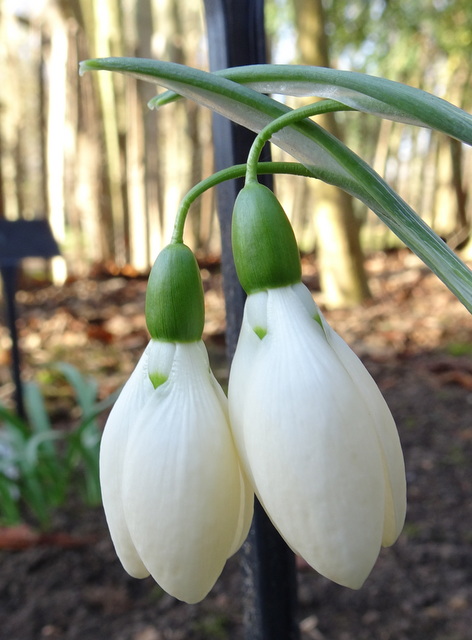
‘Anglesey Orange Tip’ was discovered at Anglesey Abbey by our guide Senior Gardener David Jordan.  Its buds are a lovely apricot color, which fades to a glow on the tips when the flowers open.

.
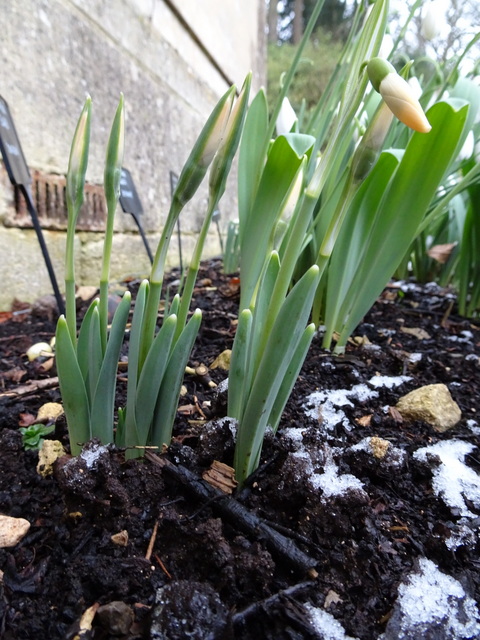
‘Anglesey Orange Tip’ in bud at Colesbourne Park.

.

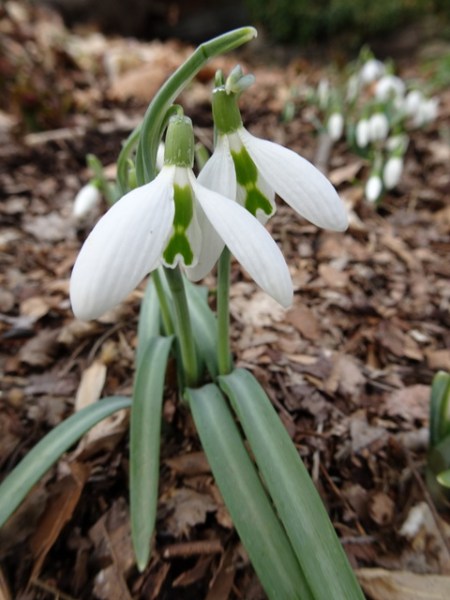
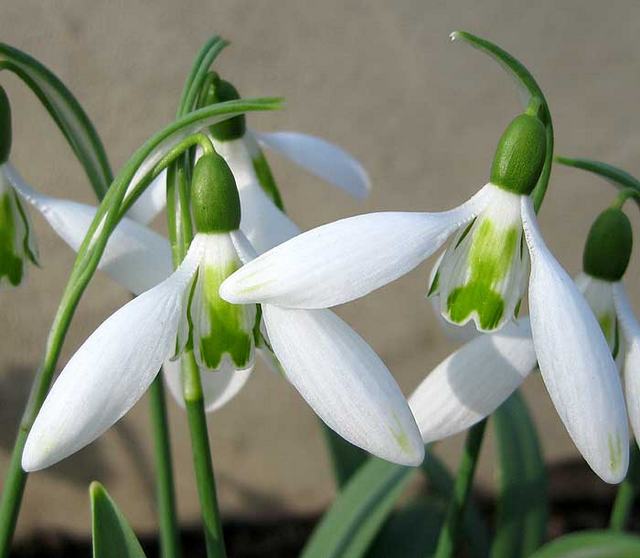
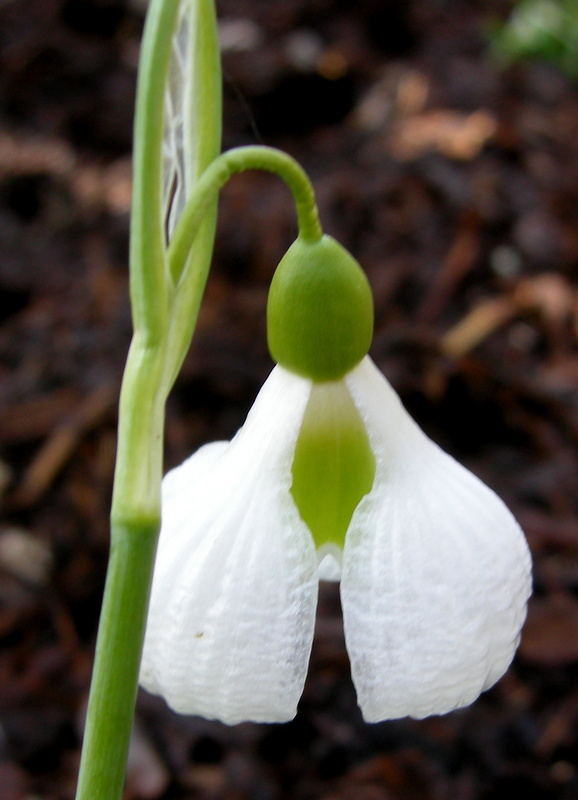
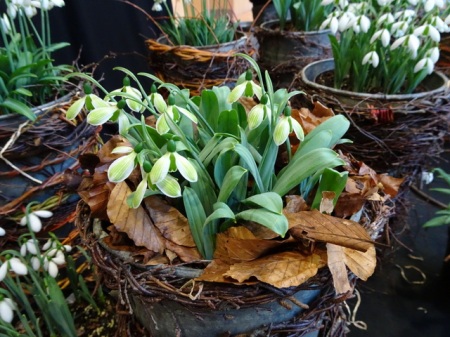
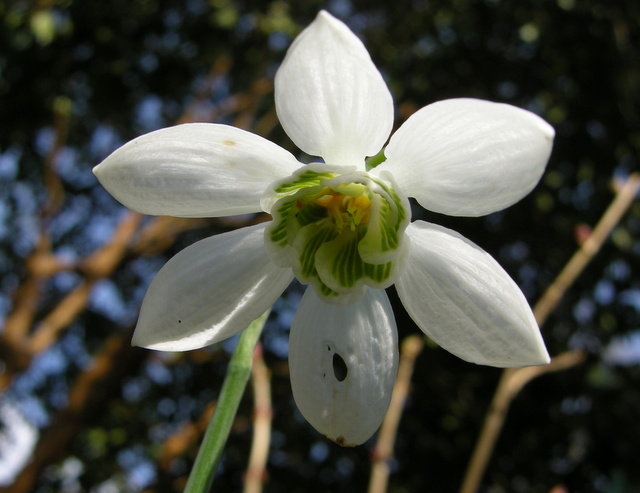
‘Anglesey Abbey’, though variable, is, at its best, a pure white poculiform snowdrop with glossy green leaves found by famous horticulturist Graham Thomas in the abbey gardens.

.

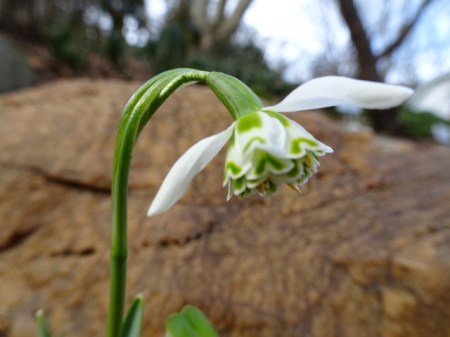
The beautiful double ‘Lady Fairhaven’ appeared at the abbey in 1998 and is considered very similar to ‘Ailwyn’.

.

‘Anglesey Candlelight’ was discovered by Senior Gardener David Jordan around 2014 and given its name due to the orange glow on the inner segments.

.


‘Huttlestone’ was discovered in the abbey gardens in 1992 by Joe Sharman, the owner of Monksilver Nursery.  It is named for the first Lord Fairhaven.  Look at those leaves!

.

‘Anglesey Cloudgazer’ was found in the abbey gardens by now retired Head Gardener Richard Todd and named by Michael and Ann Broadhurst at Rainbow Farm Snowdrops for a stargazing structure at the abbey designed by Todd.

.
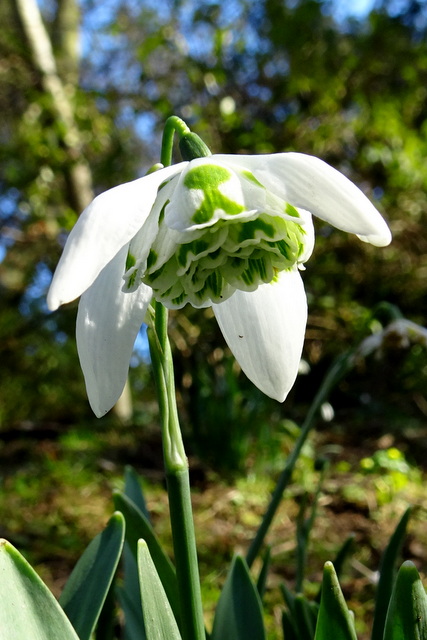
The beautiful and vigorous ‘Richard Ayres’ was found at Anglesey Abbey in 1987 by famous galanthophile Richard Nutt and named for a former Head Gardener.

.
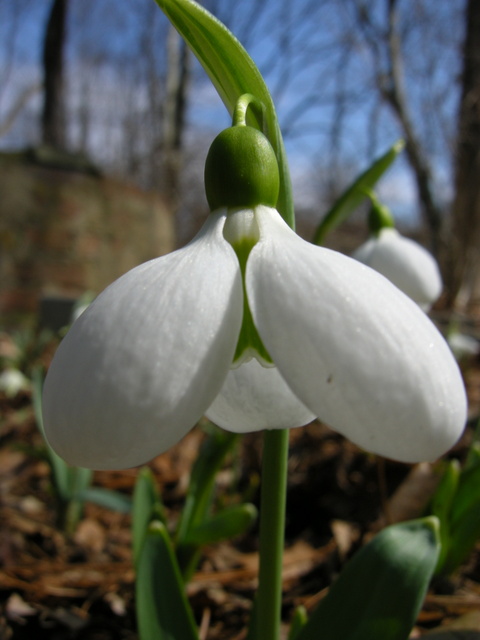
As recounted by then Head Gardener Richard Ayres, ‘Melanie Broughton’ was discovered at Anglesey Abbey during the 1998 Galanthus Gala and later named for Lord Fairhaven’s youngest daughter.  It is still available in our 2025 Snowdrop Catalogue.

.

Blogs are a lot more fun for everyone, especially the writer, when readers leave comments.  If you are reading this post in the WordPress email (white background), just reply to the email to comment.  If you are reading the post on my blog (black background, recommended for better viewing), scroll down to the end of the page to the box where it says “Leave a Reply” and start typing—-it’s easy!

Carolyn

.

Note: Every word that appears in orange on my blog is a link that you can click for more information. If you want to return to my blog’s homepage to access the sidebar information (catalogues, previous articles, etc.) or to subscribe to my blog, just click here.

The 2019 Snowdrop Season Part One

Posted in bulbs for shade, my garden, snowdrops, winter, winter interest with tags , , , , , , , , , , , , , , , , , , , , , , , , on February 20, 2019 by Carolyn @ Carolyns Shade Gardens

‘Lady Beatrix Stanley’ extends her wings.  It has taken me eight years to produce a photo that captures the elegance of this snowdrop.

The heart of the snowdrop season is upon us, and there is nothing I like better than roaming around our garden photographing my collection.  Taking photos forces you to view each snowdrop close up and really focus on the differences that make each one so special.  My snowdrop photographs are frequently praised, and people always ask what camera I use.  But what makes my photos great is not fancy equipment, but knowing the plants intimately and capturing their unique beauty.  One photo here can be preceded by years of attempts to get on film what I know is there.  Here are some of my other recent captures:

Nursery News:  Carolyn’s Shade Gardens is a retail nursery located in Bryn Mawr, PA, specializing in showy, colorful, and unusual plants for shade.  The only plants that we ship are snowdrops and miniature hostas.  For catalogues and announcements of events, please send your full name, location, and cell number (for back up use only) to carolyn@carolynsshadegardens.com.  Click here to get to the home page of our website for catalogues and information about our nursery and to subscribe to our blog.


I took this photo of ‘South Hayes’ at the 2017 Royal Horticultural Society February Spring Show at Vincent Square in London.  It was part of the Avon Bulbs display, which Michael and I helped to set up.  I am very honored that John Morley of North Green Snowdrops in Beccles, England, thought the photo was so good that he used it on the cover of his 2019 Catalogue.  You can view his catalogue here.  When I was profiled in Naomi Slade’s book The Plant Lover’s Guide to Snowdrops, I chose ‘South Hayes’ as my utopia snowdrop.  I highly recommend Naomi’s book for gardeners who want to expand their knowledge of snowdrops beyond the basic forms.  It is available on Amazon here.

.

‘Xmas’ was named at Carolyn’s Shade Gardens for its vigor, bloom time around Christmas, and prominent X mark.  I have over 60 photos of this snowdrop saved on my computer (and those are the ones I saved!) and think this is one of the best.  Snowdrops look wonderful on sunny days with blue sky in the background, but it is very difficult to photograph their best angle then without casting shadows, capturing glare, or having something distracting in the background.

.

Another recent shot of ‘Xmas’.  I was thrilled that ‘Xmas’ was included in the newly published second edition of Freda Cox’s book A Gardener’s Guide to Snowdrops and listed as one of only five notable snowdrops selected in the US.  I highly recommend Freda’s book, which is the most up-to-date encyclopedic snowdrop reference work with profiles and beautiful drawings of over 2,000 snowdrops.  It is available on Amazon here.

.

Yellow snowdrops like ‘Wendy’s Gold are all the rage and rightly so, but it is difficult to capture them looking yellow.  They require sunshine, which has been in short supply this winter, to bring out their yellow color and, in the shade, they look olive.

.

The simple beauty of ‘Robin Hood’ is enhanced for me by the history of the cultivar.  One of the primary reasons that I am obsessed with snowdrops is that almost every cultivar has a story attached.  ‘Robin Hood’ was selected in the later 1800s by James Allen of Shepton Mallet in England, who also selected the iconic cultivars ‘Magnet’ and ‘Galatea’.  The newly published book The Galanthophiles by Jane Kilpatrick and Jennifer Harmer devotes an entire chapter to Allen whom they call the greatest of all galanthophiles.  This wonderful book is available on Amazon here.

.

‘Welshway’ is a petite beauty and treasured all-the-more by me for the memories it evokes.  The British snowdrop world is a small and welcoming place.  When Michael and I traveled to England in February 2017 and 2018, we were invited into the homes and gardens of people whom we had never met due to the longstanding English tradition of garden hospitality.  We visited the garden of Hugh and Hilary Purkess called Welshway Cottage for a wonderful tour and delicious tea and cake.  ‘Welshway’ came from the Purkess’s garden.

.

‘Trymming’ was selected in 2007 by my friend the internationally famous snowdrop expert Alan Street at Avon Bulbs in England.  This photo captures ‘Trymming’s’ bold and bright green splashed outer segments and its ability to produce two scapes when well grown.  I had to move it a few times to get it to do that!

.

Although I welcome them, snowdrop seedlings are rare in my garden.  However, this big beauty recently appeared right in the middle of a large patch of ‘Straffan’.

.

‘Standing Tall’ is another notable American snowdrop profiled in the Cox book.  It was selected in 2013 by my friend and snowdrop mentor Charles Cresson after 25 years of evaluation—he just wanted to be sure it was worth naming!!!  ‘Standing Tall’ blooms in mid-December and grows to be one of the tallest snowdrops in my garden.

.

Galanthus rizehensis is a relatively unknown species snowdrop with a small and perky stature and very dark green leaves.  It will be in our 2020 catalogue.

.

This photo sent to me by my customer Tim Calkins really captures the petite beauty of Galanthus rizehensis, which he purchased from Carolyn’s Shade Gardens.

.

‘Richard Ayres’ is one of my favorite snowdrops due to its vigor, exquisite beauty, and early bloom time.  To capture the beauty of double snowdrops, you must photograph them at an angle that includes the outside and inside at the same time.  This involves some very awkward camera positions and body contortions.  After many years and dozens of attempts, I am happy with this photo.

.

‘Richard Ayres’ also looks lovely photographed from the top.

.

The charms of ‘Lapwing’ also proved hard to get onto film until now, but that doesn’t mean I will not keep trying to do even better.

.

Another favorite snowdrop, the stately ‘Kite’, featuring extra long and elegant outer segments.

.

‘Kite’ is also known for producing two flowers on the same scape.  You can see this in the photo above where two flowers are attached by their pedicels (stems) to the same spathe.  They come out wrinkled from being crushed in together but usually straighten out.

.

‘Anglesey Abbey’ is a unique snowdrop with bright green leaves instead of the usual blue-gray.  Although it is described as being almost poculiform and almost pure white, mine is pretty close if not perfect.  Poculiform means that the inner segments have been replaced by three additional outer segments of equal  length.

.

The plump, upside down hot air balloon shape of ‘Diggory’ is recognizable anywhere but difficult to capture in a photo.  I am very happy with this one as it’s the fattest I have ever seen it.

If you have snowdrops or other winter-blooming plants, I encourage you to visit them regularly with your camera and expand your enjoyment of your garden into the winter months.

Carolyn

Nursery Happenings: You can sign up to receive catalogues and emails about nursery events by sending your full name, location, and cell number (for back up contact use only) to carolyn@carolynsshadegardens.com.  Subscribing to my blog does not sign you up to receive this information.  Please indicate if you will be shopping at the nursery or are mail order only.

Carolyn’s Shade Gardens is a local retail nursery in Bryn Mawr, Pennsylvania, U.S., zone 6b/7a. The only plants that we mail order are snowdrops and miniature hostas and only within the US.

Facebook: Carolyn’s Shade Gardens has a Facebook Page where I post single photos, garden tips, and other information that doesn’t fit into a blog post. You can look at my Facebook page here or click the Like button on my right sidebar here.

Notes: Every word that appears in orange on my blog is a link that you can click for more information. If you want to return to my blog’s homepage to access the sidebar information (catalogues, previous articles, etc.) or to subscribe to my blog, just click here.

Do All Snowdrops Look Alike?

Posted in bulbs for shade, Shade Perennials, snowdrops, winter, winter interest with tags , , , , , , , , , , , , , , , , , , , , , , , , , , on December 2, 2014 by Carolyn @ Carolyns Shade Gardens

Galanthus 'Wasp'‘Wasp’ certainly has all the elements of a typical snowdrop, but its long petals and unusual markings make it look just like the flying insect when the wind blows.

Our current snowdrop catalogue is on line here.

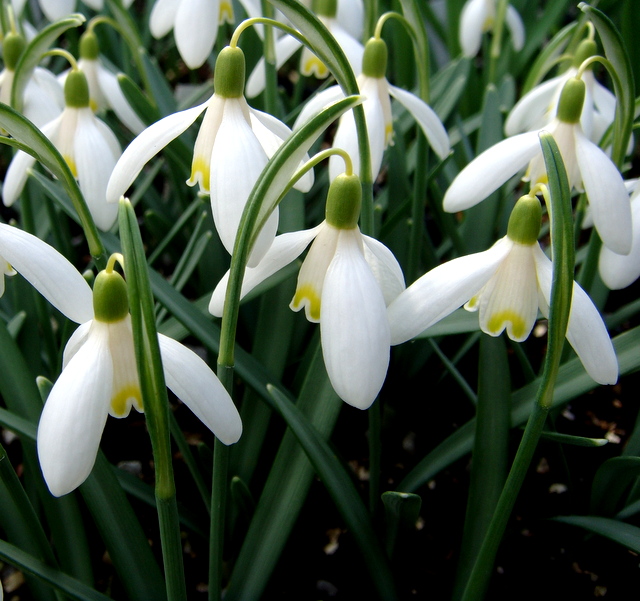
People often try to tell me that all snowdrops look alike: white with three longer outer petals and three shorter inner petals with a green mark.  They should know better.  I would never admit that as I am a galanthophile who revels in observing the smallest differences.  I can go on at length about bloom time, leaf color and shape, and the intricacies of the inner mark, but I won’t.  Here I want to show you snowdrops that even the skeptical will recognize as different.

Nursery News:  Carolyn’s Shade Gardens is a retail nursery located in Bryn Mawr, PA, specializing in showy, colorful, and unusual plants for shade.  The only plants that we ship are snowdrops to the US only.  For catalogues and announcements of local events, please send your full name, mailing address, and cell number to carolyn@carolynsshadegardens.com and indicate whether you are mail order only.  Click here to get to the home page of our website for catalogues and information about our nursery and to subscribe to our blog.

.

Galanthus 'Ballerina'The elegant and graceful double snowdrop ‘Ballerina’ certainly stands out from the pack.

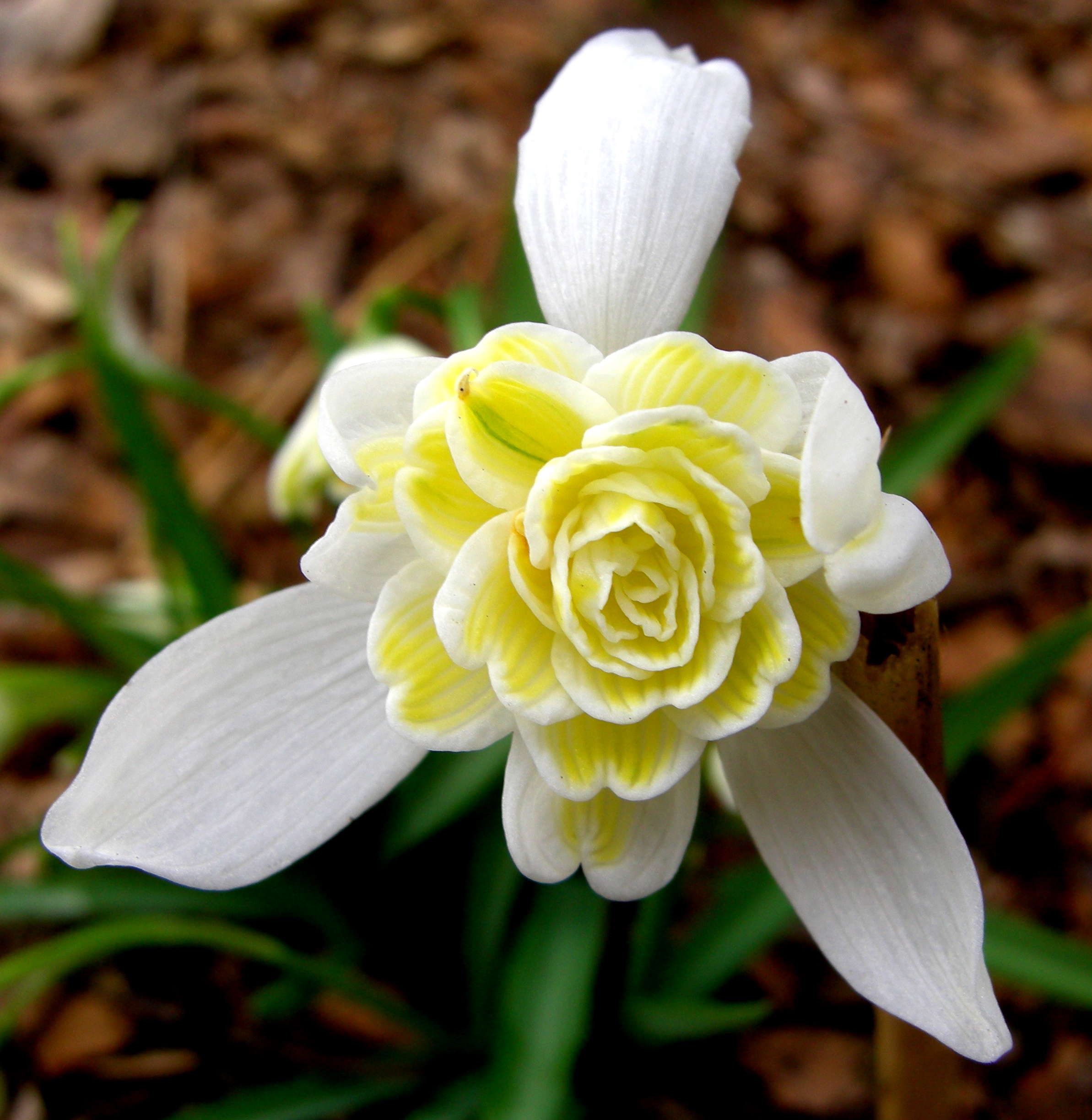
Most gardeners are all about the flowers, and it is the blooms that I will focus on here.  The flower variations just within the three inner segments (petals)-three outer segments-single green inner mark theme are amazing, and I will show you a few of those like ‘Wasp’ above.  But then there are yellow snowdrops, regular doubles like ‘Ballerina’ above, virescent (green) snowdrops, crazy doubles, flowers with extra petals, all white snowdrops, the variety is endless.  There is even ‘The Alburgh Claw’.  Let’s start the show.

Galanthus 'Melanie Broughton'Although still single-flowered and green and white, ‘Melanie Broughton’ has a very large solid green inner mark and bright white, puffy and quilted outer segments.

.

Galanthus elwesii 'Daphne's Scissors'‘Daphne’s Scissors’ has a very unusual inner mark shaped like scissors.  Thanks to Mark Smyth at the Galanthus Gallery for supplying this excellent photo.

.

Galanthus 'Viridapice'‘Viridapice’ has green markings on the outside of the flower.

.

Galanthus 'Diggory' ‘Diggory’ is the only snowdrop flower with pear-shaped, squared off outer segments.

.

Galanthus 'Rosemary Burnham'‘Rosemary Burnham’ is a virescent snowdrop with a solid green inner mark and elegant green stripes completely covering the outer segments.
.

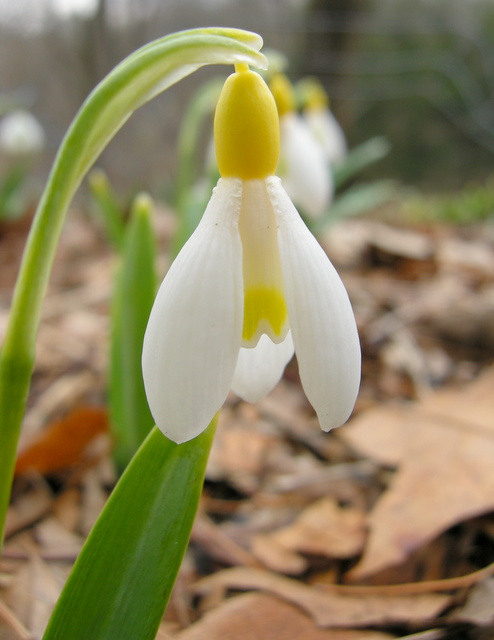
Galanthus 'Spindlestone Surprise'‘Spindlestone Surprise’ is one of a growing number of snowdrops that have a yellow mark and a yellow ovary (the cap on top of the flower).  Others include ‘Wendy’s Gold’ and ‘Primrose Warburg’.

.

Galanthus nivalis 'Blonde Inge'‘Blonde Inge’ is one of the few galanthus that combine a yellow mark with a green ovary.

.

Galanthus nivalis 'Lady Elphinstone' Cadwalader‘Lady Elphinstone’ is the only double yellow.

.

Galanthus elewesii 'Godfrey Owen'‘Godfrey Owen’ doubles the number of inner and outer petals to six each and holds its flowers open in a beautiful whorl.

.

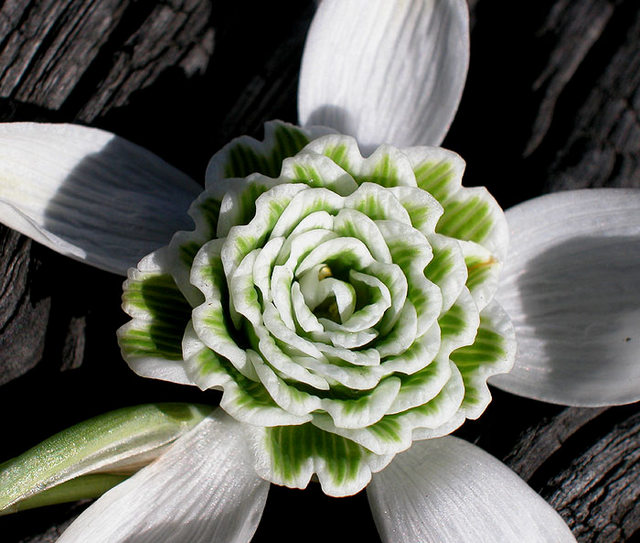
Galanthus 'Hill Poe'‘Hill Poe’ is a late blooming double with lots of white inside.

.

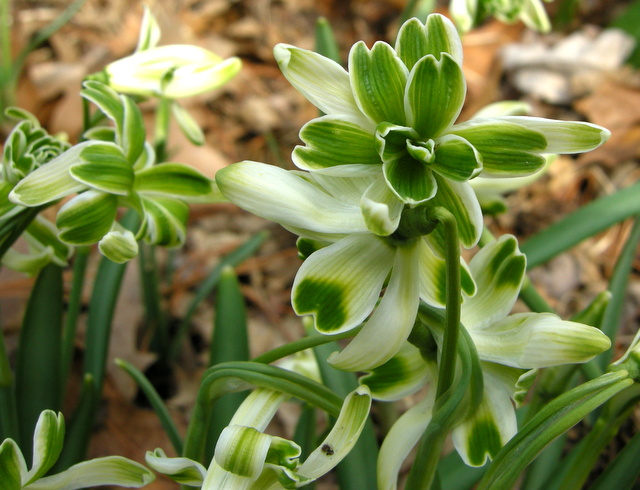
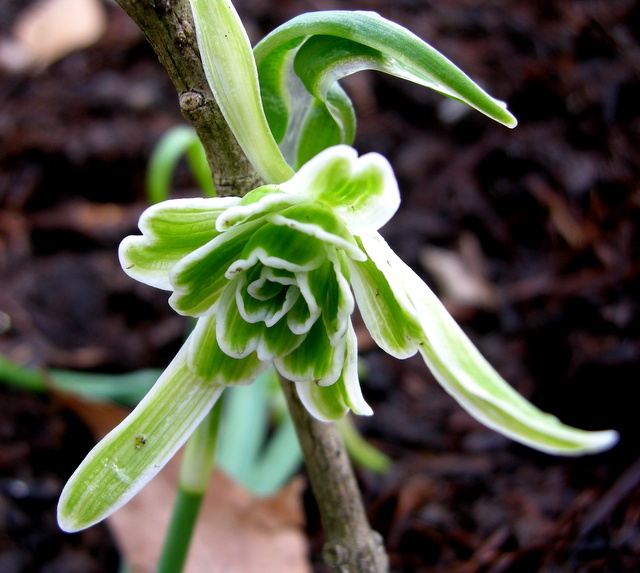
Galanthus nivalis 'Blewbury Tart'‘Blewbury Tart’ is a vigorous double snowdrop with outward-facing, mostly green flowers.

.

Galanthus nivalis 'Anglesey Abbey'‘Anglesey Abbey’ can be solid white and poculiform, meaning that its inner segments are replaced by outer segments.

.

Galanthus 'Walrus' Cadwalader‘Walrus’ has mostly green inner segments and long green outer “tusks”.

.

And you were wondering about ‘The Alburgh Claw’, well click here for a photo of one of the weirdest snowdrop forms, the spikey double.

Carolyn

Note: Every word that appears in orange on my blog is a link that you can click for more information. If you want to return to my blog’s homepage to access the sidebar information (catalogues, previous articles, etc.) or to subscribe to my blog, just click here.