Archive for Galanthus ‘Potter’s Prelude’

My Favorite Snowdrops

Posted in bulbs for shade, snowdrops, winter, winter garden, winter interest with tags , , , , , , , , , , , , , , , , , , , , on January 2, 2024 by Carolyn @ Carolyns Shade Gardens

‘Trumps’: has it all—vigorous, unique, beautiful; selected at the nursery of the wonderful John Morley, more here.

For our current Snowdrop Catalogue, click hereIf you want to be notified about the next snowdrop catalogue, please send your full name, mailing address, and cell number to carolyn@carolynsshadegardens.com, and specify snowdrops.

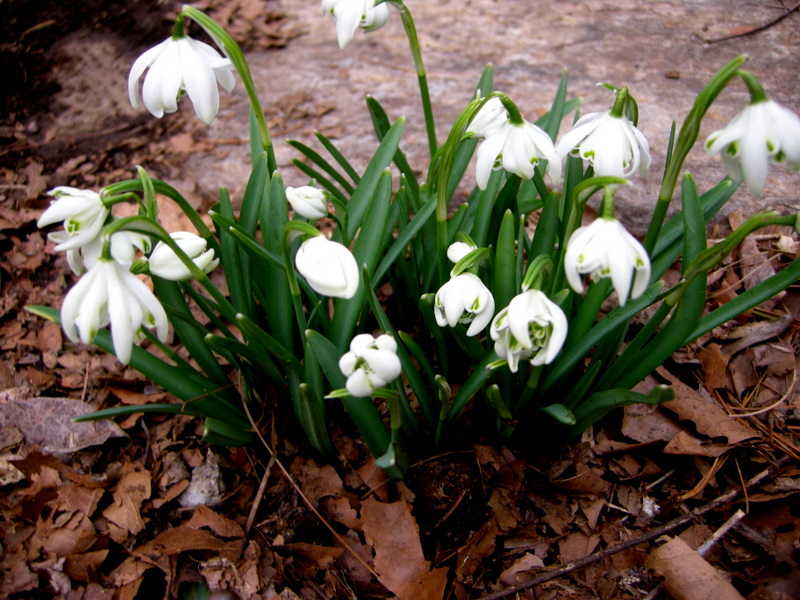
I have considered writing this post many times, but always felt that picking my favorite snowdrop is like choosing your favorite child.  I always tell my three sons that I don’t have a favorite—I love them all equally but for different reasons.  However among my snowdrops, I do have favorites, and I know the reasons, which I will share with you along with photos of some of my most-liked Galanthus.

Nursery News:  Carolyn’s Shade Gardens is a retail nursery located in Bryn Mawr, PA, specializing in showy, colorful, and unusual plants for shade.  The only plants that we ship are snowdrops within the US.  For catalogues and announcements of local events, please send your full name, mailing address, and cell number to carolyn@carolynsshadegardens.com and indicate whether you are interested in snowdrops.  Click here to get to the home page of our website for catalogues and information about our nursery and to subscribe to our blog.

.

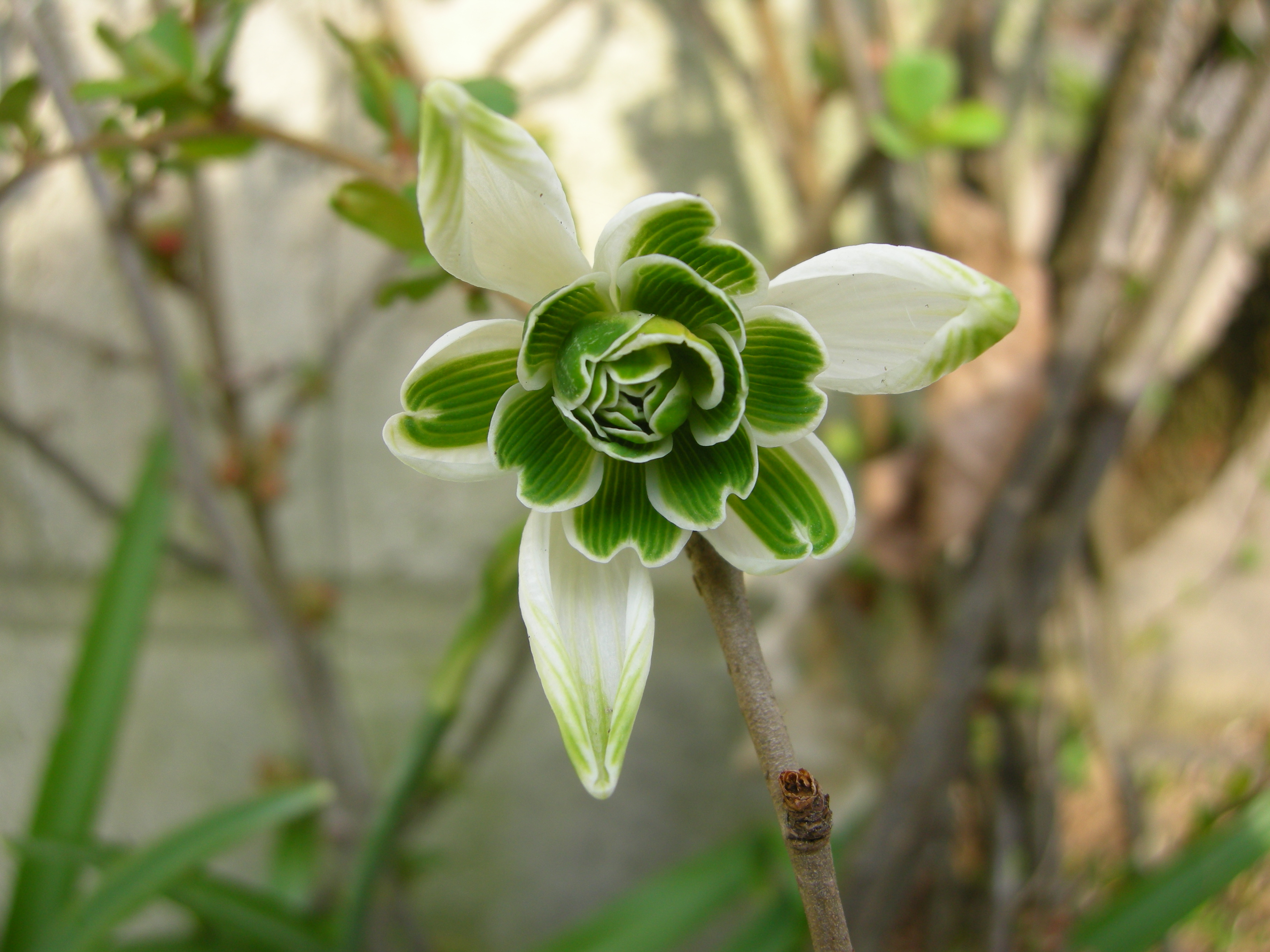
Diggory’:  totally unique flower; beautiful pleated leaves with a stripe; multiplies well.

I have a modest collection of snowdrops by English standards and even compared to many of the larger American collections.  This is intentional—although I have an extensive wish list in my head, I want to build my collection slowly and knowledgeably.  This allows time to care for the existing collection, including dividing, fertilizing, mulching, relocating, disease prevention, record keeping, and labeling, etc.    My current project is to have each snowdrop in two locations in my garden: an heir and a spare so-to-speak.

. ‘Viridapice’:  tall and elegant with beautiful green markings; vigorous and easy.
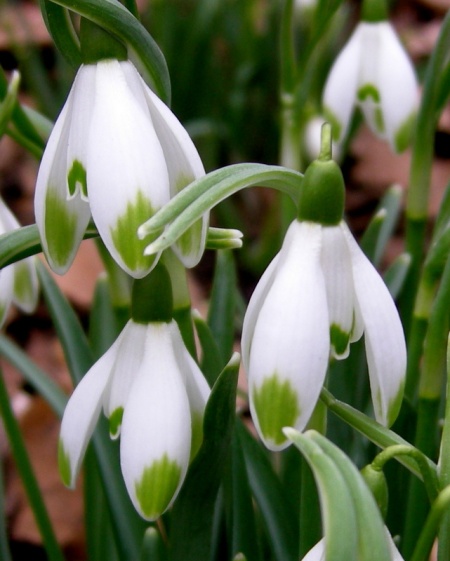
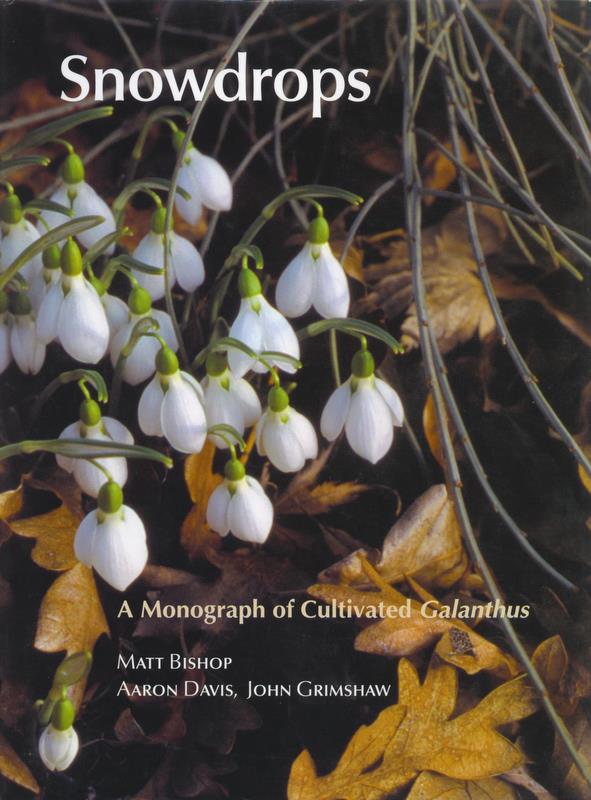
When Snowdrops: A Monograph of Cultivated Galanthus by Bishop, Davis, and Grimshaw was reprinted in 2006, it covered around 500 named snowdrop cultivars.  It was possible, if you could locate them, to have all these snowdrops in your garden.  When the second edition of A Gardener’s Guide to Snowdrops by Freda Cox was published in 2019, it described 2,400 named cultivars.  Freda Cox’s companion volume More Snowdrops, issued in May 2023, profiles over 700 additional cultivars.  It is not possible, nor do I think it is advisable, to collect all the existing snowdrops.  A collector must be discriminating.  To help you with your choices, I have come up with six reasons why I prize a snowdrop over many other contenders.

.

‘Godfrey Owen’: absolutely unique and beautiful from above and below; vigorous and early-blooming; selected by famous galanthophile Margaret Owen and named for her husband.

First, the flower must be beautiful and/or interesting.  Among other characteristics I consider is the flower shape and size.  I am partial to large, rounded flowers with spoon shaped outer segments.  Although I generally prefer single flowers, in peonies for example, I also like double snowdrops—although many galanthophiles look down on them—because they bloom longer and, for me, are more often purely beautiful.  The texture of the outer segments varies, and I am drawn to thick texture, which means the flower lasts longer, and I favor a pleated look.  The color and placement of the marks is very important.  I am partial to yellow snowdrops, dark emerald green marks, two-tone inner marks, and marks on the outer segments, especially virescent (green-shaded) outers.

.‘Madelaine’: the best and most vigorous yellow in my garden—there are many yellows but a lot do not multiply well; selected by the famous Joe Sharman at Monksilver Nursery.
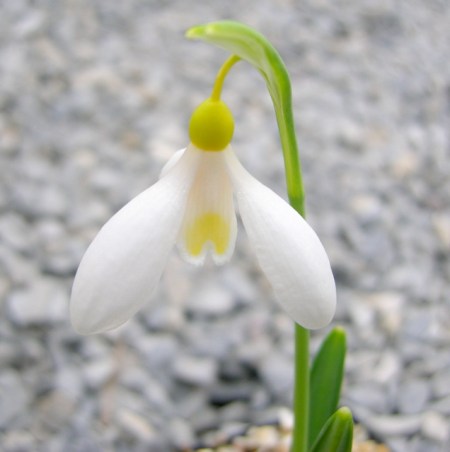
Second, every snowdrop on my favorites list must be easy to grow and must multiply vigorously in my garden wherever I decide to place it.  I do not treasure a snowdrop that doesn’t grow well for me no matter how much it thrives in other people’s gardens.  And there will be no coddling of a picky snowdrop no matter how beautiful or rare.  I will, however, move a snowdrop to a new location if it is doing OK but not thriving, if I have time….

.‘Fly Fishing’: the name chosen by my sadly missed friend Alan Street is perfect; would recognize it anywhere; very vigorous.

Third, I must be able to recognize a favorite snowdrop without looking at the label, not only in my garden but in larger collections.  This is a tall order in a field of over 3,100 named cultivars, many of which have very little to set them apart.  However, through a combination of flower shape and markings, leaves, habit, and bloom time, all my favorites stand out.

.‘Xmas’: large, elegant, upright flowers with gracefully curved spathes and wide blue leaves; early bloomer; selected at the US Botanic Garden and named by Carolyn’s Shade Gardens.

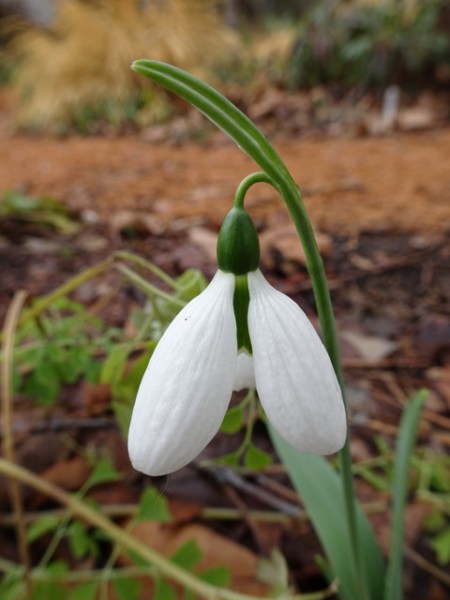
Fourth, the habit and individual parts of a snowdrop can add greatly to its desirability.  I am partial to tall and upright snowdrops with large flowers held well above the leaves.  My favorite leaves are wide and generally blue, which is characteristic of Galanthus elwesii, but I also love the elegantly pleated foliage of Galanthus plicatus, especially if there is a pronounced white stripe. Ovaries (the little cap above the flower) with pleasing and compatible shapes, spathes (the bud covering) that arch elegantly over the flower, and pedicels (the flower stem) that hold the flower just so can add to a snowdrop’s allure.

.
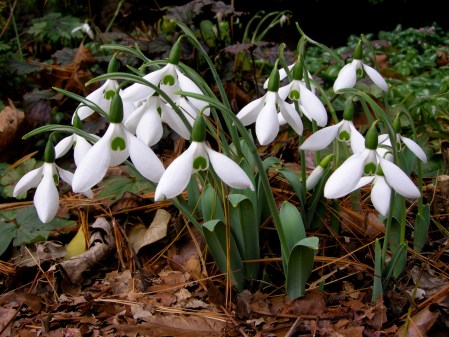
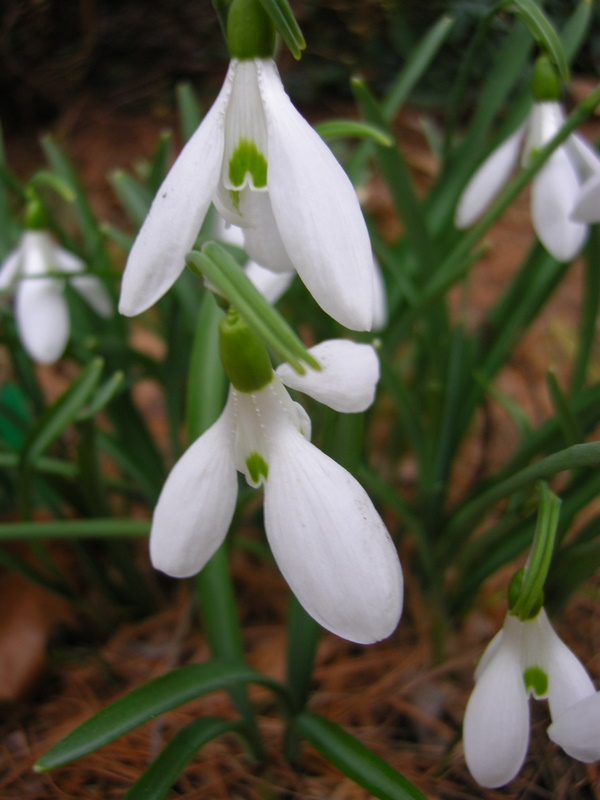
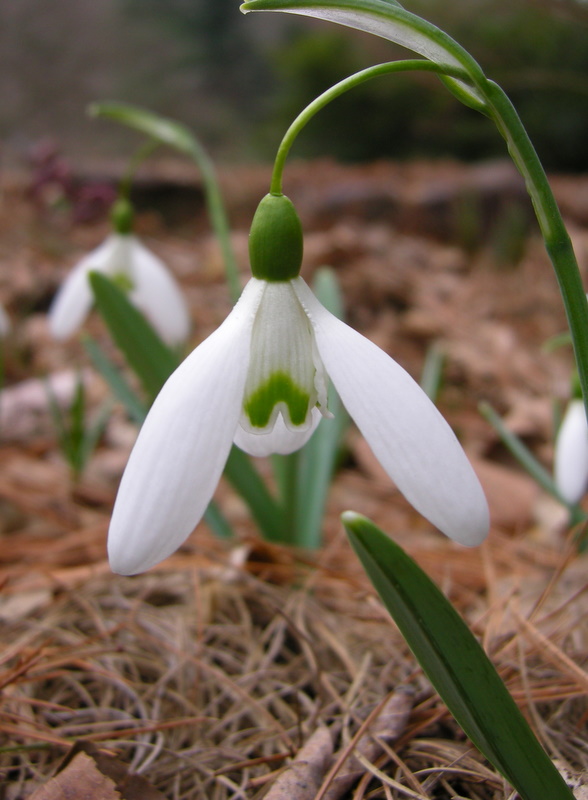
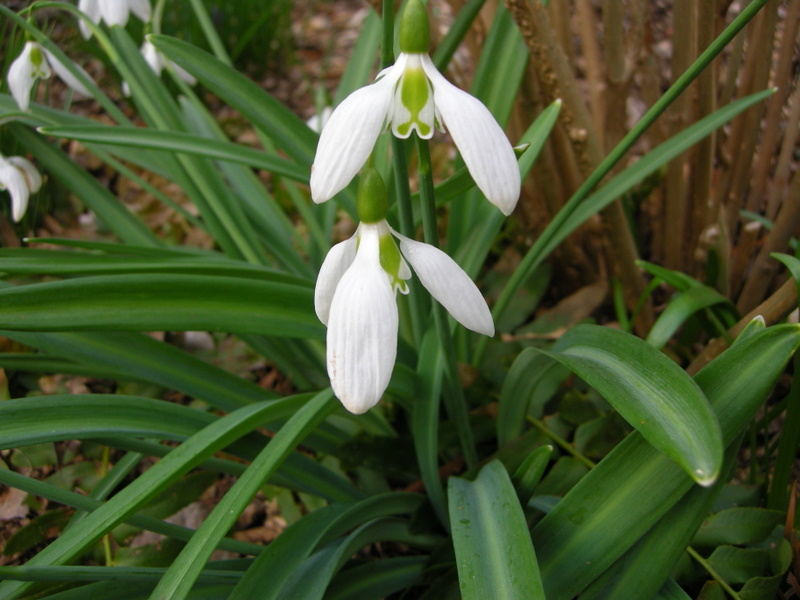
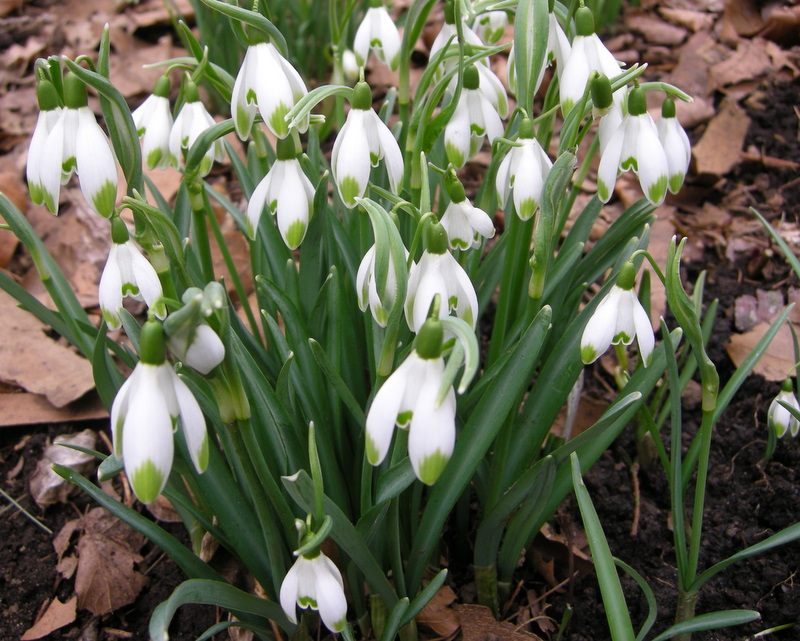
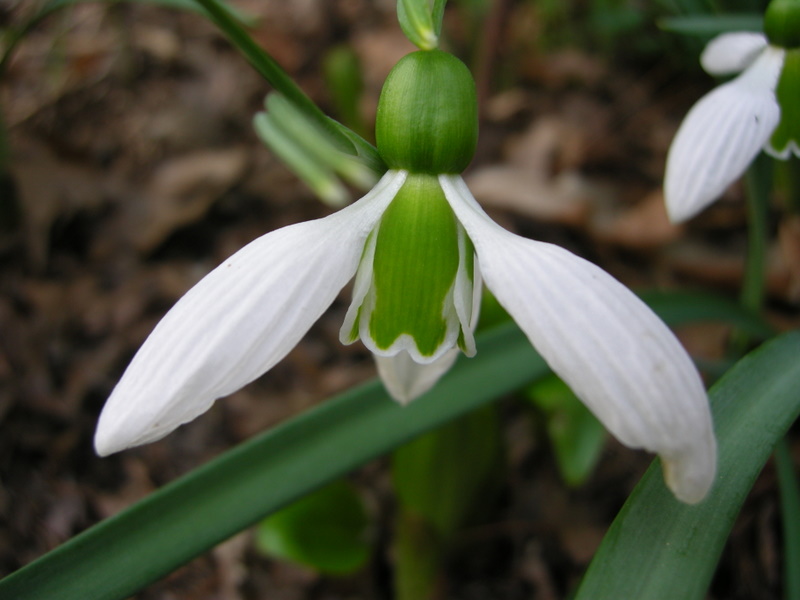
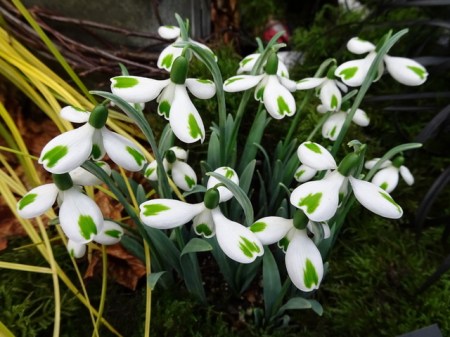
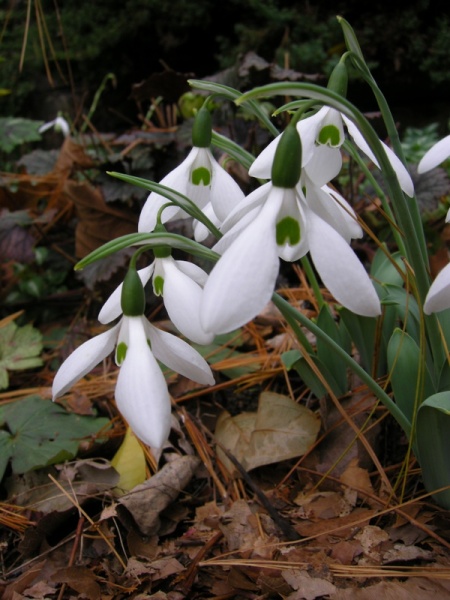
‘Potter’s Prelude’: large and elegant flowers; best November-blooming snowdrop in my garden; named by my dear friend Charles Cresson.

Fifth, I lean toward snowdrops that bloom early, especially in November and December.  As I describe more fully in my post December Blooming Snowdrops, click here to read, this is the time of year when I can most appreciate flowers of all kinds and not many snowdrops bloom then so the ones that do stand out.  I would consider this a purely personal consideration, but it is a preference shared by the majority of my customers so I have to think it is widespread.

.

‘Lady Beatrix Stanley’:  beautiful; no other double has the two elegant dots on the inner segments; multiplies rapidly; grown by Lady Beatrix Stanley (1877-1944) at Sibbertoft Manor.

Finally, I love snowdrops with history behind them: who selected them, where, why?  Unlike most other plants, we can often answer these questions about snowdrops and our relation to the plant is the richer for this added dimension.  That is why I always provide snowdrop history in my catalogue and in blog post profiles of new snowdrops.

.

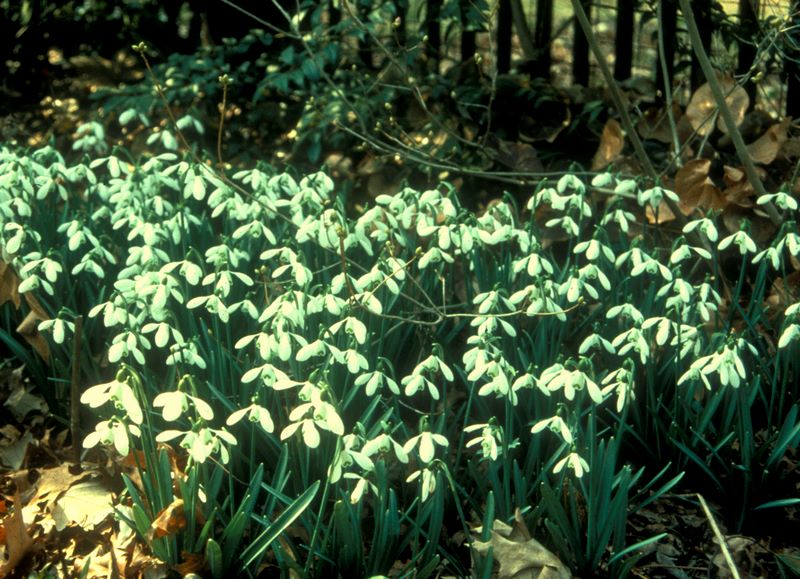
The snowdrops pictured above were chosen from the favorites in my collection because they illustrate the points I am making and meet most if not all of my criteria.  However, I grow many more snowdrops that qualify as favorites and could have been included here.  And I grow others that don’t make the grade, usually due to their slow growth, but which I still treasure.

.

Blogs are a lot more fun for everyone, especially the writer, when readers leave comments.  Scroll down to the end of the page to the box where it says “Leave a Reply” and start typing—-it’s easy!

Carolyn

.

Note: Every word that appears in orange on my blog is a link that you can click for more information. If you want to return to my blog’s homepage to access the sidebar information (catalogues, previous articles, etc.) or to subscribe to my blog, just click here.

December Blooming Snowdrops

Posted in bulbs for shade, snowdrops, winter, winter garden, winter interest with tags , , , , , , , , , , , , , , , , on December 20, 2023 by Carolyn @ Carolyns Shade Gardens

Galanthus bursanus, the newest snowdrop species, blooms earliest in my collection

For our current Snowdrop Catalogue, click hereIf you want to be notified about the next snowdrop catalogue, please send your full name, mailing address, and cell number to carolyn@carolynsshadegardens.com, and specify snowdrops.

I really appreciate the appearance of the earliest blooming snowdrops in my garden: Galanthus bursanus and Galanthus reginae-olgae and their cultivars, at the beginning of October.  They remind me that the much treasured snowdrop season is starting and will continue through March.  However, there are so many other plants performing then with flowers, berries, fall color, and seeds, not to mention all the work we need to do to get our garden ready for winter that I only notice the October snowdrops in passing.  Likewise, although I love all my snowdrops that begin flowering in January, which is the early main season for snowdrops, there are so many of them. 

It is the snowdrops that reach their peak in December that I most treasure.  I realized that I have never done a post featuring those snowdrops so here I will talk about my four favorites plus a peak at a potential newcomer.

Nursery News:  Carolyn’s Shade Gardens is a retail nursery located in Bryn Mawr, PA, specializing in showy, colorful, and unusual plants for shade.  The only plants that we ship are snowdrops within the US.  For catalogues and announcements of local events, please send your full name, mailing address, and cell number to carolyn@carolynsshadegardens.com and indicate whether you are interested in snowdrops.  Click here to get to the home page of our website for catalogues and information about our nursery and to subscribe to our blog.

.

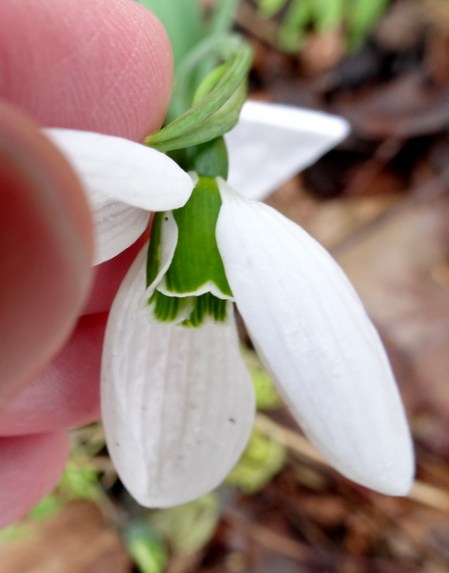
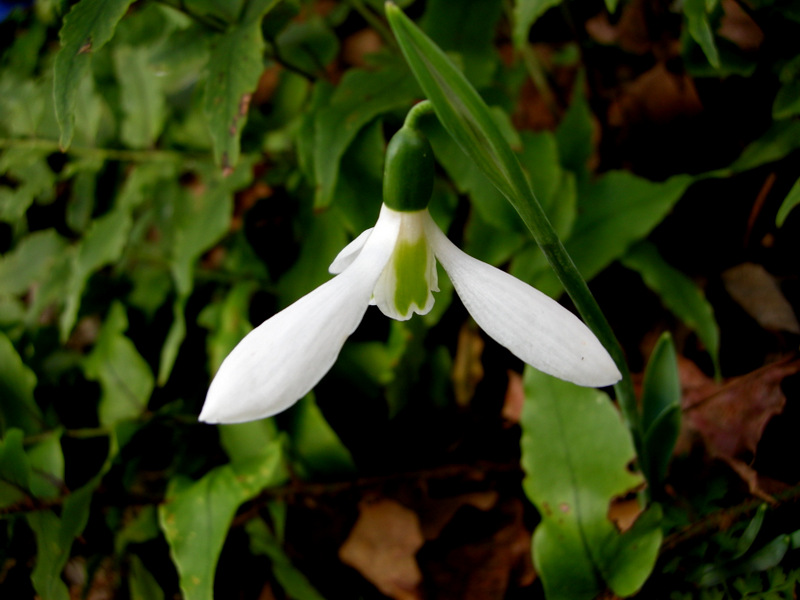
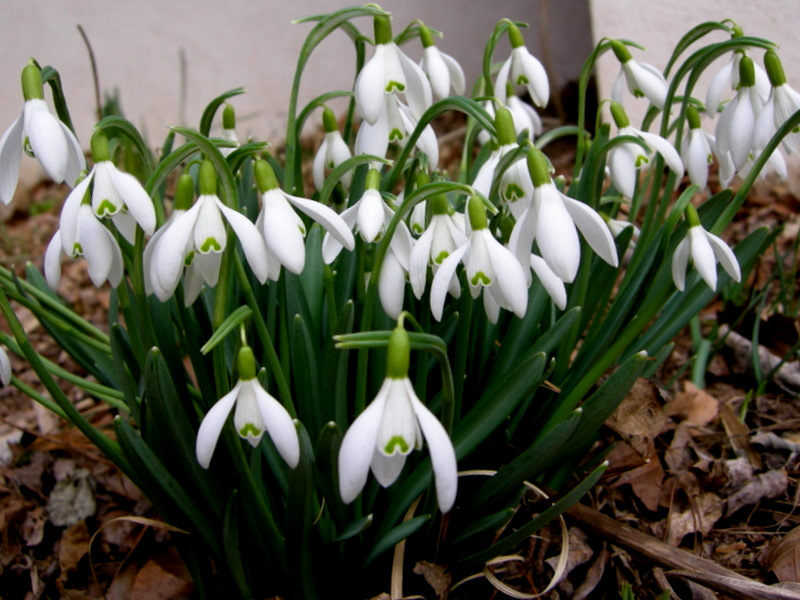
fall-blooming snowdrop 'Potter's Prelude' at Carolyn's Shade Gardens‘Potter’s Prelude’ is an elegant snowdrop with a bold mark.

‘Potter’s Prelude’, a cultivar of Galanthus elwesii var. monostictus, is a rare American snowdrop selected in the 1960s by Jack Potter, the former Curator of the Scott Arboretum in Swarthmore, Pennsylvania.  It was registered in 2004 by noted regional horticulturist Charles Cresson and introduced in 2010 by Carolyn’s Shade Gardens.

.

This clump of ‘Potter’s Prelude’ is ready for dividing.

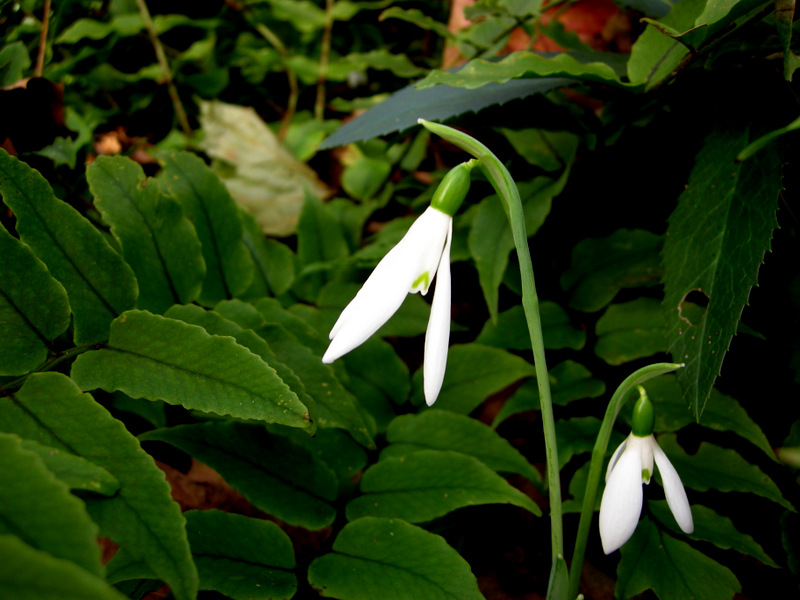
‘Potter’s Prelude’ is a free-flowering and vigorous snowdrop with wide, recurving, very blue leaves.  Its flowers are large and elegantly formed with a bold dark green mark.  They begin blooming in mid-November and continue into January with December being their peak.  Be aware that some snowdrops sold under this name are inferior seedlings.  International snowdrop expert Alan Street told me that the flowers shown in the top photo, which he much admired, are far superior to the form circulating in England.  ‘Potter’s Prelude’ is featured 0n page 77 of Anne Repnow’s book Some Snowdrops, an excellent reference guide.

.

‘Standing Tall’

‘Standing Tall’ is an American Galanthus elwesii cultivar selected and named by Charles Cresson.  It was introduced for sale for the first time by Carolyn’s Shade Gardens in 2013.  Although it can reach 12″ tall, it was primarily named for its very upright habit and unmistakable, commanding presence in the garden.  Its name also reflects its ability to flop down when its cold like all snowdrops do and stand back up perfectly straight as if nothing has happened.  My unofficial observations also indicate that it remains upright at much lower temperatures than other snowdrops.

.

‘Standing Tall’ in the Cresson garden.

‘Standing Tall is at its peak right now, although my main patch was divided last year and does not look as full as most years.  However, like all the snowdrops featured in this post, it is very vigorous and will quickly fill back in and look like Charles Cresson’s patch above.  It starts blooming between the the last week of November and the first week of December and continues through January.  It is featured on Page 83 of Anne Repnow’s excellent book Some Snowdrops.

.. ‘Three Ships’ has the very full outer segments sometimes associated with G. plicatus.

‘Three Ships’ is a cultivar of Galanthus plicatus selected in England by the famous John Morley of North Green Snowdrops in Suffolk in 1984.  He named it for the Christmas carol “I Saw Three Ships”.

.

‘Three Ships’ multiplies well in my garden.

‘Three Ships’ is quite striking in the garden and cannot be confused with any other snowdrop. It has an ethereal glow that is whiter than white and large, bowl-like and deeply puckered outer segments with a wide and attractive green mark on the inner segments.  It blooms reliably about a week after ‘Standing Tall’ in mid-December, although I find that this is location specific.  One of my three patches bloomed on November 26 this year, while the other two followed the regular pattern.

.

‘Xmas’ has large and elegant flowers with gracefully curved spathes.

‘Xmas’ was selected many years ago by a gardener at the US National Botanic Garden from a patch of normal Galanthus elwesii growing in the parking lot and passed through many hands to me.  Carolyn’s Shade Gardens first introduced it for sale as ‘Xmas’ in 2016.

.

‘Xmas’ is at least twice the height of ‘Three Ships’, which blooms at the same time.  It is shown here with the flowers of fall-blooming camellia ‘Winter’s Joy’.

‘Xmas’ has very large and beautiful flowers with long, bowl-shaped outer segments and a distinct X mark on the inner segments.  In the Delaware Valley, it usually comes into flower in mid-December at the same time as ‘Three Ships’ and is fully out around the holidays when there is often a lull in snowdrop activity.  It also goes on blooming for about a month after ‘Three Ships’ as its flowers are particularly durable and long lasting.   When my dear friend Alan Street saw this photo he was impressed with the height and fullness of the flowers.  Unfortunately, he never saw ‘Xmas’ in person as it makes quite an impression when you see it in the garden.

. A new December-blooming Galanthus elwesii under consideration.

I have been observing this snowdrop, which appeared in my oldest patch of straight species Galanthus elwesii.  It blooms in late November/early December and has lovely, full flowers with a solid green inner mark from apex to base.  It will take more years of observation and building up stock before I decide if it merits a name.  Meanwhile, I would be grateful if any reader would let me know if they have seen a similar snowdrop blooming in early December.

.

The inner segments are entirely green.

.

The snowdrops profiled here are some of my favorites.  I have lined my front walk with large clumps so I can enjoy them every day this time of year, and all four appear in more than the two standard locations in my garden (one for display and one for back up).  In fact, ‘Xmas’ is in six locations, ‘Potter’s Prelude’ is in five, while the others are in three.

.

Blogs are a lot more fun for everyone, especially the writer, when readers leave comments.  Scroll down to the end of the page to the box where it says “Leave a Reply” and start typing—-it’s easy!

Carolyn

.

Note: Every word that appears in orange on my blog is a link that you can click for more information. If you want to return to my blog’s homepage to access the sidebar information (catalogues, previous articles, etc.) or to subscribe to my blog, just click here.

Early-Blooming Snowdrops

Posted in bulbs for shade, snowdrops, winter interest with tags , , , , , , , , , , , , , , , , , , , , on October 23, 2019 by Carolyn @ Carolyns Shade Gardens

The species snowdrop Galanthus reginae-olgae blooming in our garden in October with ‘Shell Pink’ lamium.

Our current snowdrop catalogue is on line here.

Around this time every year, I start to get emails from customers and blog readers asking which early-blooming snowdrops will be available for purchase in our catalogue.  When you see the photo above, you can understand why gardeners who appreciate snowdrops are trying to extend their season into early fall.   Early snowdrops are beautiful in their own right but especially appreciated when not surrounded by the many other snowdrop cultivars that flower in the heart of the snowdrop season.  And  this beautiful clump of fresh white flowers is in full bloom when everything around it is going by for the year.

Highlighted in this post are five, early-blooming snowdrops that will be available in the 2020 catalogue.  Keep in mind that exact bloom time is affected by how quickly the soil cools off in the fall and the amount of moisture available to the bulbs—warmer and drier falls seem to equate with later-blooming.

Nursery News:  Carolyn’s Shade Gardens is a retail nursery located in Bryn Mawr, PA, specializing in showy, colorful, and unusual plants for shade.  The only plants that we ship are snowdrops within the US.  For catalogues and announcements of local events, please send your full name, mailing address, and cell number to carolyn@carolynsshadegardens.com and indicate whether you are interested in snowdrops.  Click here to get to the home page of our website for catalogues and information about our nursery and to subscribe to our blog.

.

Galanthus reginae-olgae looks a lot like the common snowdrop, G. nivalis, but it blooms reliably by mid-October in our garden, and it has a more rigidly upright habit.

.

G. reginae-olgae also lasts a long time—here it is looking a little worse for wear on December 3.

.

The G. reginae-olgae that we sell comes from bulb expert Charles Cresson who selected it as a form that thrives in our climate as opposed to the other forms of this species he has trialed.  I too have tried G. reginae-olgae from other sources without success.

.

Galanthus elwesii ‘Potter’s Prelude’ begins to bloom in mid-November in our garden and can often last into January.  It is a rare American snowdrop selected in Swarthmore, Pennsylvania, in the 1960s.

.

fall-blooming snowdrop 'Potter's Prelude' at Carolyn's Shade Gardens‘Potter’s Prelude’s’ flowers are big and beautiful.

.

‘Potter’s Prelude’ is a great companion plant for fall-blooming camellias—here with the petals of ‘Winter’s Joy’.

.

‘Potter’s Prelude’ has beautiful foliage.  The leaves of early-blooming snowdrops come out with or immediately after the flowers, which means that, if we have a hard winter, they can look somewhat battered when it is snowdrop shipping time in late February or early March.

.

Galanthus elwesii ‘Barnes’ is a November-blooming snowdrop so highly regarded in England that it has earned the coveted Award of Garden Merit from the Royal Horticultural Society, one of only 28 snowdrops to do so.

.

‘Barnes’ in our garden

.

‘Barnes’ also remains ornamental for a long period of time.  It still looks great here at the very end of December.

.

Galanthus elwesii ‘Standing Tall’ is a very large and beautiful December-blooming snowdrop selected by bulb expert Charles Cresson in Swarthmore, Pennsylvania, after many years of evaluation.

.

The big flowers have beautiful dark green markings.

.

It is a bold plant that can hold its own among evergreen groundcovers like the Chinese wild ginger in the photo.

.

Galanthus elwesii ‘Xmas’, a December-blooming snowdrop, originated at the United States Botanic Garden in Washington, DC.  I introduced it and named it ‘Xmas’ because it blooms around Christmas and has a distinct X on its inner segments.

.

‘Xmas’ is quite vigorous in my mid-Atlantic garden.

.

Each plant quickly produces two or three flowers.

.

‘Xmas’ is gorgeous on a sunny December day.

.

When you look through our catalogue in December, think about adding some of these beautiful, early snowdrops.

Carolyn

.

Note: Every word that appears in orange on my blog is a link that you can click for more information. If you want to return to my blog’s homepage to access the sidebar information (catalogues, previous articles, etc.) or to subscribe to my blog, just click here.

Late Fall Interest at Carolyn’s Shade Gardens

Posted in Camellias, Fall, Fall Color, How to, landscape design, my garden, snowdrops, winter, winter interest with tags , , , , , , , , , , , , , , , , , , , , on December 9, 2015 by Carolyn @ Carolyns Shade Gardens

Magnolia virginianaThe sunrise lights up the heavy frost outlining the semi-evergreen leaves of native sweetbay magnolia.

At Carolyn’s Shade Gardens in southeastern Pennsylvania, US, colorful fall foliage is mostly gone and deciduous trees and shrubs are no longer the focus of garden interest.  We must rely on other plants to take over where fall color left off and help us satisfy our goal of providing ornamental interest 365 days a year.  At this point, every plant still thriving assumes greater value in the garden, and we look to the understory to draw us outside for a stroll.  Here are some of my favorites for December:

Nursery News: Carolyn’s Shade Gardens is a retail nursery located in Bryn Mawr, PA, specializing in showy, colorful, and unusual plants for shade.  The only plants that we ship are snowdrops and miniature hostas.  For catalogues and announcements of events, please send your full name, location, and phone number (for back up use only) to carolyn@carolynsshadegardens.com.  Click here to get to the home page of our website for catalogues and information about our nursery and to subscribe to our blog.

.

Ilex verticillata 'Red Sprite'The berries of native winterberry hollies stand out in the landscape after their leaves have dropped.  In my garden, robins strip the berries fairly early in the season, but I have noticed that in most locations they persist well into the winter.

.

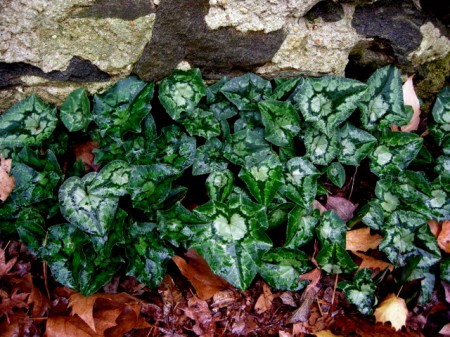
Cyclamen hederifoliumFall-blooming hardy cyclamen is done blooming, but the leaves are gorgeous all winter.  If you look closely, they all have a different pattern like a snowflake.  Although I plant them where I want them, they move and thrive in sites of their own choosing.  Here they were planted at the front of the bed and moved to the back directly at the base of a stone wall, one of their favorite sites.

.

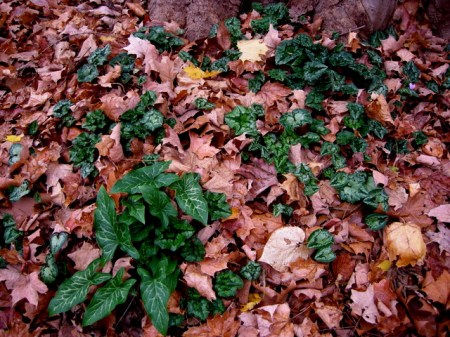
Here ants moved the cyclamen seeds about 30 to 40 feet up hill all around the base of a gigantic London plane tree where they have filled in and thrived.  This is not an area of the garden that I visit often so you can imagine my surprise when I found this display.  An Italian arum made the trek too.

.

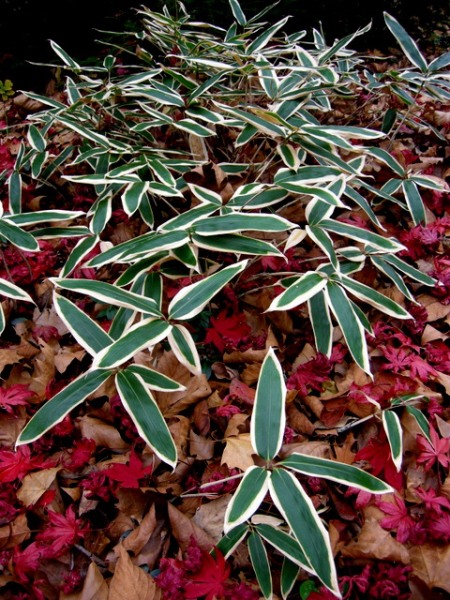
Sasa veitchiiKuma bamboo grass, Sasa veitchii, has plain green leaves during the season but acquires this elegant white edge for the winter.  I planted my sasa over 10 years ago, and this is the first time that it has spread to a decent patch.  Generally it is considered quite aggressive.

.

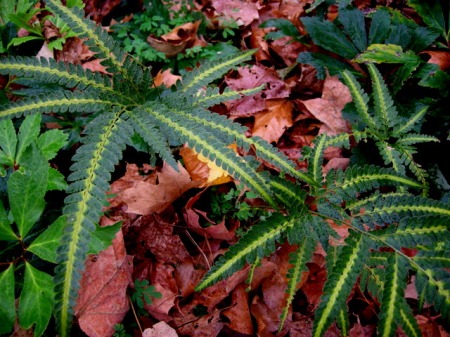
Arachniodes simplicior 'Variegata'Variegated East Indian holly fern, Arachnoides simplicior ‘Variegata’, is a beautiful evergreen fern.  Before you go looking for it though, I think it is borderline hardy here and it doesn’t thrive.

.

Galanthus 'Potter's Prelude' elwesiiFall-blooming snowdrops like ‘Potter’s Prelude’ pictured here are a highlight of the fall season starting around October 15 and continuing until early main season snowdrops take over in January.

.

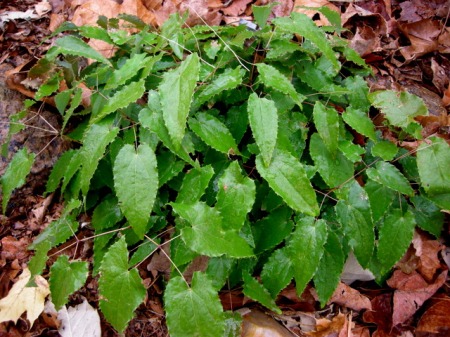
Epimedium stellulatum "Long Leaf Form"This photo could show any number of my evergreen epimediums, but this is E. stellulatum “Long Leaf Form”.  They all have very interesting and attractive leaves which persist until spring when I cut them back.

.

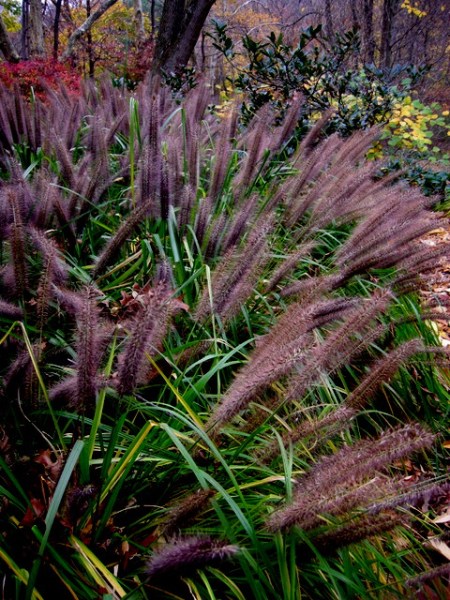
Pennisetum 'Moudry'Black fountain grass, Pennisetum ‘Moudry’, remains my favorite grass.  After a few hard frosts, it turns a lovely tan.  It does move around quite a bit but has never gone anywhere that I didn’t want it in 20 years.  It is downright invasive for others though, so beware.

.

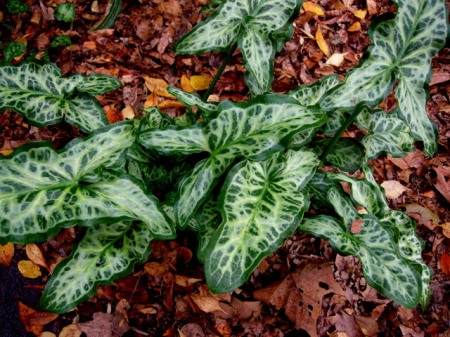
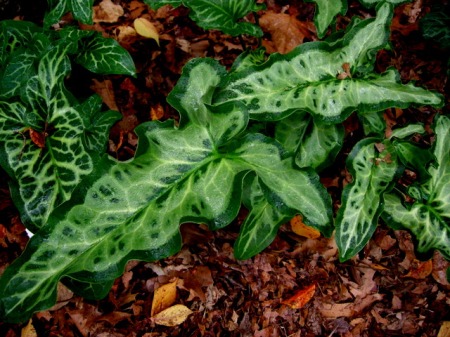
Arum italicum 'Gold Rush'Italian arum stays fresh and beautiful all winter—it goes dormant in the summer instead.  This cultivar is ‘Gold Rush’.

.

Arum itlaicum selected seedlingAnother Italian arum with much more white on the leaves—for comparison a typical arum leaf is on the left of the photo.  It is possible to get a variety of leaf forms from specialized nurseries.

.

Chionanthus retusus 'China Snow'Chinese fringe trees, Chionanthus retusus, produce lovely dark blue berries in the fall which persist after the leaves drop.  This plant is the superior form ‘China Snow’.

.

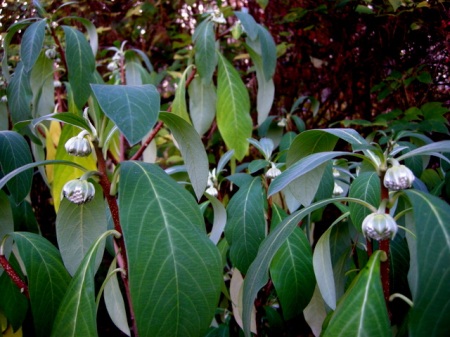
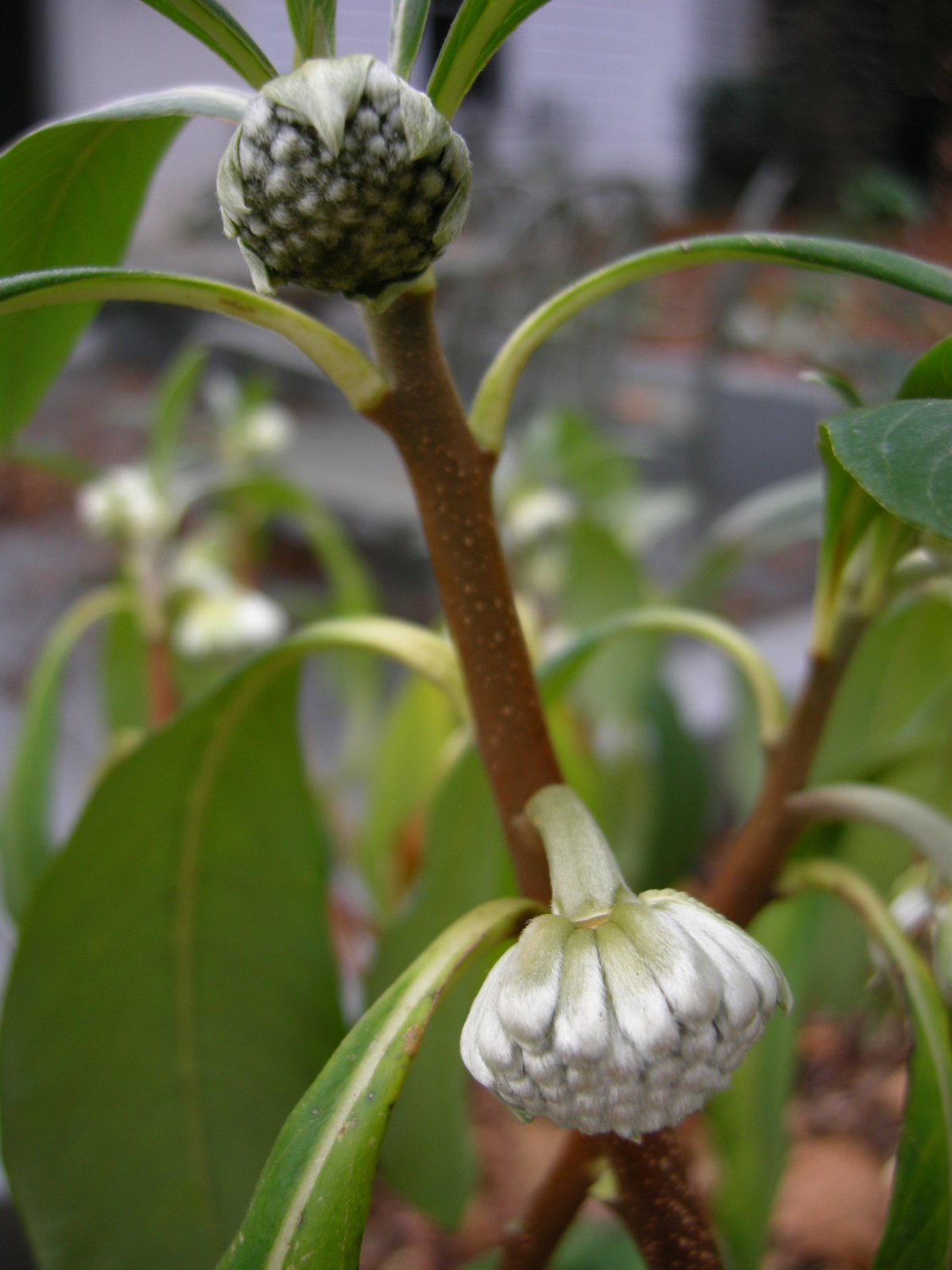
Edgeworthia chrysanthaEdgeworthia is beautiful all year round but especially during late fall and winter when the large silver buds start to swell.  The leaves turn bright yellow and drop, leaving the bare branches covered with delicate silver ornaments.

.

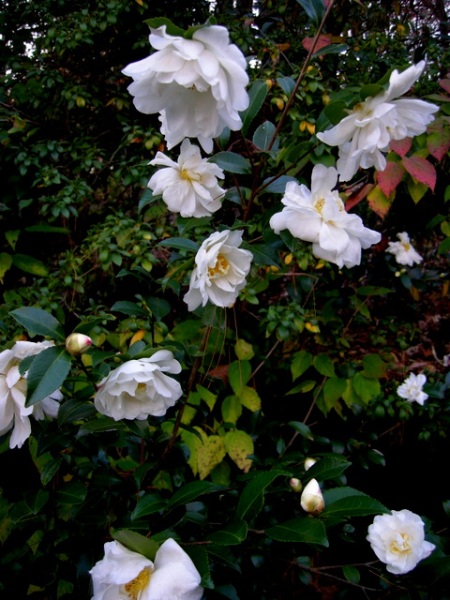
Camelia x 'Winter's Snowman'‘Winter’s Snowman’ camellia blooms in November and December with large, semi-double white flowers.

.

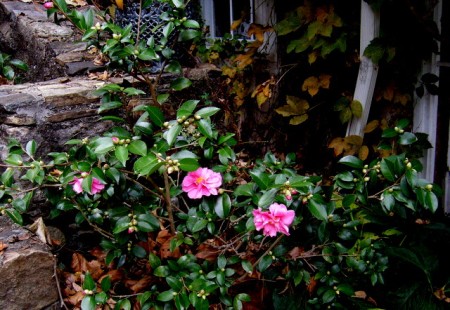
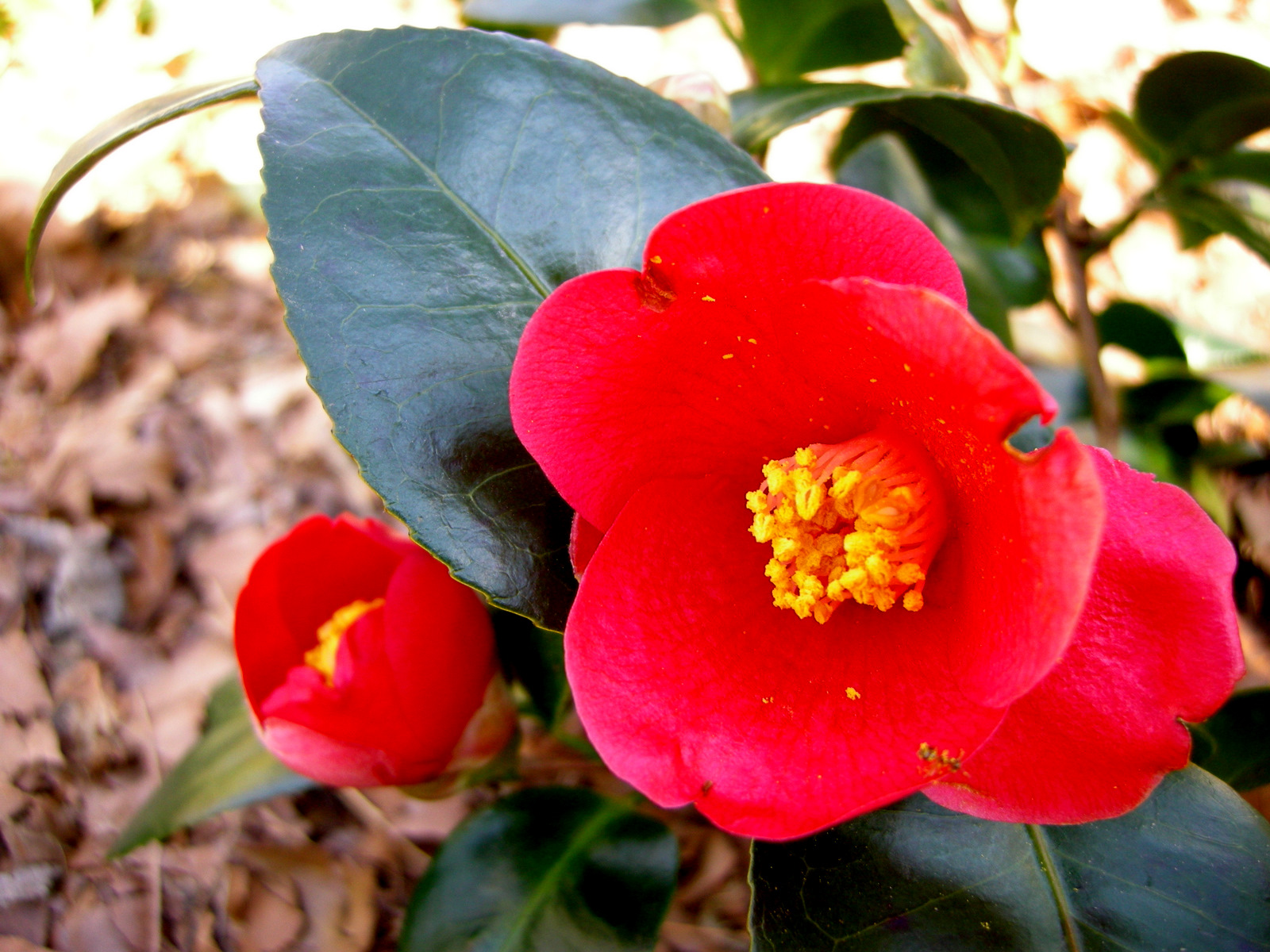
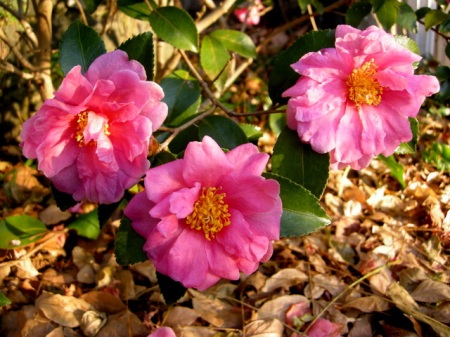
Camellia x 'Winter's Joy'-001‘Winter’s Joy’ camellia

.

Camellia x 'Winter's Joy'-003‘Winter’s Joy’ produces hundreds of buds.  When a hard frost turns the open flowers brown, new buds open and flowers cover the plant again as soon as it gets warmer.  Although this is usually the case, it didn’t happen during the last two winters when the buds froze early.

.

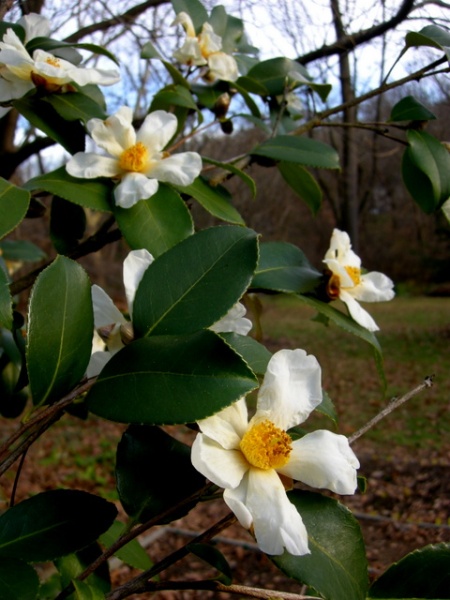
Camellia oleifera 'Lu Shan Snow'The tea camellia ‘Lu Shan Snow’, C. oleifera, is particularly cold tolerant and has thrived in my garden for almost 20 years.  Camellias planted from 2013 on have been very hard to establish in the garden due to our unseasonably cold temperatures during the 2013-2014 and 2014-2015 winters.  The camellias that I planted prior to 2013 have all thrived.

.

Carolyn

Nursery Happenings: You can sign up to receive catalogues and emails about nursery events by sending your full name and phone number to carolynsshadegardens@verizon.net.  Subscribing to my blog does not sign you up to receive this information.

Carolyn’s Shade Gardens is a local retail nursery in Bryn Mawr, Pennsylvania, U.S., zone 6b/7a. The only plants that we mail order are snowdrops and miniature hostas and only within the US.

Facebook: Carolyn’s Shade Gardens has a Facebook Page where I post single photos, garden tips, and other information that doesn’t fit into a blog post. You can look at my Facebook page here or click the Like button on my right sidebar here.

Notes: Every word that appears in orange on my blog is a link that you can click for more information. If you want to return to my blog’s homepage to access the sidebar information (catalogues, previous articles, etc.) or to subscribe to my blog, just click here.

New Snowdrops for 2013

Posted in New Plants, Shade Perennials, snowdrops, winter, winter interest with tags , , , , , , , , , , , , , , , , , , , , , , , , on January 7, 2013 by Carolyn @ Carolyns Shade Gardens

Carolyn’s Shade Gardens is a retail nursery located in Bryn Mawr, PA, specializing in showy, colorful, and unusual plants for shade.  The only plants that we ship are snowdrops to the US only.  For catalogues and announcements of local events, please send your full name, mailing address, and cell number to carolyn@carolynsshadegardens.com and indicate whether you are mail order only.  Click here to get to the home page of our website for catalogues and information about our nursery and to subscribe to our blog.

Snowdrops O through Z-001Some of the snowdrops available from Carolyn’s Shade Gardens in 2013.

.

Our current snowdrop catalogue is on line here.

.

This post includes photographs and colorful descriptions of the 4 new snowdrops I am offering for sale in my 2013 Snowdrop Catalogue.  There were three more new cultivars offered, but they sold out within two days of the catalogue being posted on my website.  For entertaining descriptions of most of the remaining 13 varieties offered, click here.

Galanthus 'Hippolyta' photo Paddy TobinThe Greatorex double snowdrop ‘Hippolyta’ was new in 2012.  For background on the Greatorex doubles, a discussion of snowdrop provenance,  and information about ‘Hippolyta’, click here.  Photo by Paddy Tobin.  We are also offering the early flowering Greatorex double ‘Ophelia’.

In Snowdrops or The Confessions of a Galanthophile, I described my transition from someone who grows snowdrops to someone who is obsessed with them.  In Snowdrops: Further Confessions of a Galanthophile, I explained that most snowdrop cultivars can be appreciated as much for their colorful history as for their ornamental characteristics.  That history is contained in Snowdrops: A Monograph of Cultivated Galanthus by Matt Bishop, Aaron Davis, and John Grimshaw (Griffin Press 2006), commonly called the “snowdrop bible”.

Galanthus 'Potter's Prelude'Potter’s Prelude’ is a vigorous and beautiful snowdrop that blooms in the fall.  This year it started in mid-November and still has some fresh flowers today (1/6/13).  For more information on fall-blooming snowdrops, click here.

Whenever I obtain a new snowdrop or offer one in my catalogue, I always research it thoroughly both for fun and to make sure that what I am offering is the genuine article.  The first place that I go is to the “snowdrop bible” to review the detailed description and history of the species or cultivar in question.  This year I was also able to consult a new snowdrop book, Snowdrops by Gunter Waldorf (Frances Lincoln Limited 2012).  What it lacks in detail, it makes up for with 300 photographs accompanied by short descriptions highlighting the salient characteristics of the snowdrops profiled.  It also contains no nonsense advice about growing and collecting snowdrops.

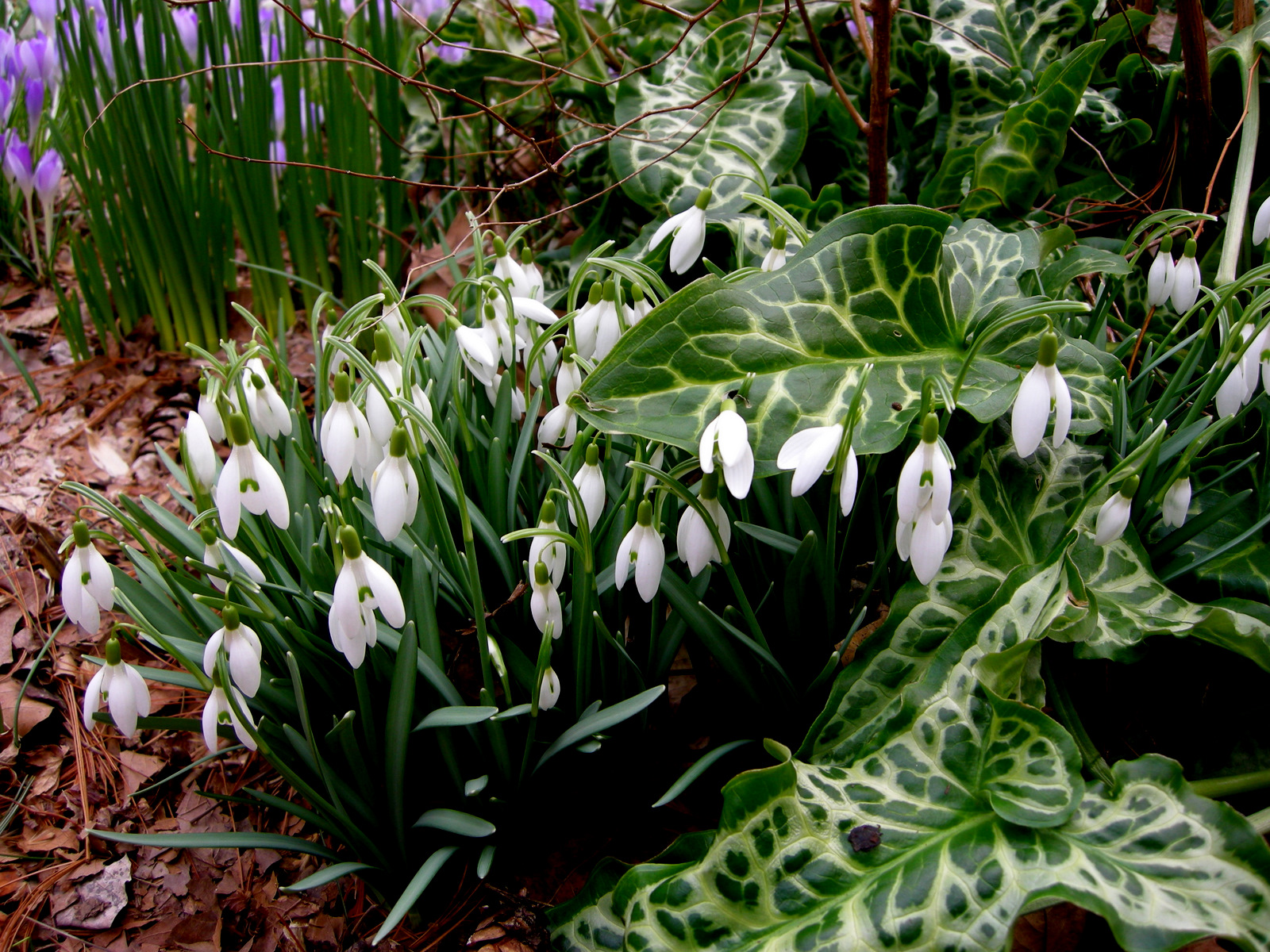
Although the common snowdrop, G. nivalis, pictured above with Italian arum and snow crocus, is the most prevalent snowdrop in gardens, it is by no means common in the ordinary sense of the word.  In fact, it is the best choice for gardeners who want to naturalize snowdrops in masses.

After hitting the books, I search the internet and read everything that has been written about the new snowdrop.  The available material is mostly the catalogues of all the big UK snowdrop sellers like Avon Bulbs, Harveys Garden Plants, and Monksilver Nursery, among others, but sometimes I come across fun historical or informational articles.  I also consult the Scottish Rock Garden Club Forum Galanthus thread where galanthophiles from all over the world meet to obsess.  After that, I look at photo galleries of snowdrops, particularly the Galanthus Gallery  and the new snowdrop photos on the Dryad Nursery website.

Galanthus elwesiiThe giant snowdrop, G. elwesii, is also a vigorous spreader.  This is the species massed at Winterthur.

Finally, as much as possible, I research the provenance of the snowdrop I am adding to my catalogue or collection.  Provenance is the history of a snowdrop’s ownership, documenting the authenticity of the actual bulbs being sold.  It is important that snowdrops come from a reputable source and be carefully tracked by subsequent owners.  With over 500, and some say 1,000, snowdrop cultivars circulating among collectors, it is easy to make mistakes.  For more information on provenance, click here.  With that background, on to the new snowdrops.

Galanthus plicatus 'Wendy's Gold' The very rare yellow snowdrop ‘Wendy’s Gold’.

I am thrilled to offer a yellow snowdrop for the first time, and not just any yellow, but ‘Wendy’s Gold’, the cream of the crop. Not only is this snowdrop much sought after even in England, but it easily refutes the oft made claim that all snowdrops look alike.  It was discovered in 1974 by Bill Clark, the Warden of the UK National Trust property Wandlebury Ring near Cambridge.  Ten years later, with some prodding, he realized how rare it was and decided to name it after his wife Wendy.  All the bulbs except three were then sold to a Dutch bulb company where they subsequently died,  Luckily, the remaining bulbs proved robust, and we have ‘Wendy’s Gold’ today.

Galanthus 'Wendy's Gold'


‘Wendy’s Gold’ is a superb and vigorous snowdrop with a yellow ovary (the “cap” above the petal-like segments) and a large and vivid yellow mark on the inner segments.  Its G. plicatus parentage gives it beautiful wide pleated leaves with folded margins, serving as a gorgeous backdrop for the striking flowers.

.

Galanthus elwesii 'Standing Tall' Cresson photo-001‘Standing Tall’ is a very impressive snowdrop.

In 1988, regional horticulturist Charles Cresson began evaluating a G. elwesii snowdrop known until this year as 88-1.  Over the years of testing it in various conditions in his garden, he discovered that 88-1 is a remarkable snowdrop.  Its 12″ height, about as tall as snowdrops get, and very upright habit give it a commanding presence in the garden.  However, as it turns out, 88-1 doesn’t have much competition from other snowdrops because it starts blooming right before Christmas and continues through the month of January, a time period when few other snowdrops bloom.

Galanthus elwesii 'Standing Tall' Cresson photo-005A close up of ‘Standing Tall’s’ flower.

Luckily, I was able to convince Charles that 25 years was long enough to evaluate a snowdrop, and he should introduce this absolutely outstanding new selection.  Charles decided to name it ‘Standing Tall’ to reflect its height, very upright habit, and ability to stand up to whatever the season brings, lying down in very cold weather and popping right back up as if nothing had happened.  Charles is in the process of registering it with the KAVB, the international registration authority for bulb cultivars in the Netherlands.  In the meantime, Carolyn’s Shade Gardens is thrilled to be chosen to introduce it for sale.

.

Galanthus 'Mighty Atom' Cresson GardenThe large and elegant flowers of ‘Mighty Atom’.

‘Mighty Atom’ is a beautiful snowdrop with very large, rounded, bright white flowers—the biggest flowers in the catalogue—with a bold, deep green mark on the inner segments.  Its habit is short, compact, and even making an exceptional overall presentation.  I have admired it for years and urged Charles to offer it, but he was reluctant due to its somewhat confused history. 

British snowdrop legend EB Anderson inherited the original ‘Mighty Atom’ from John Gray in 1952 and subsequently named it.  However, in later years, Snowdrops states that Anderson distributed a group of distinct but excellent clones, now known as the ‘Mighty Atom’ complex, under this name.  Charles’s stock came from plantsman Don Hackenberry who can trace its lineage directly back to EB Anderson, although it is not an offset of what is believed to be Gray’s “original” clone.  This member of the ‘Mighty Atom’ complex has proven to be reliable, vigorous, and trouble-free.

.

Galanthus nivalis 'Scharlockii' Cresson‘Scharlockii’ is characterized by the “rabbit ear’s” formed by its spathe (flower covering).

The final member of the four new snowdrops in my 2013 Snowdrop Catalogue is ‘Scharlockii’, a cultivar of the common snowdrop, G. nivalisIt is a charming and distinctive snowdrop with boldly marked green tips on its outer segments but most notable for the rabbit ears (see photo) formed when its spathe splits into two prominently upright, leaf-like halves.  It was discovered in 1818 by Herr Julius Scharlock of Grandenz, Germany, and named in 1868.  Charles got his stock from Winterthur, known for its amazing snowdrop display, when he worked there in the early 1990s.

.

Obviously, I find everything about snowdrops fascinating and hope I have communicated some of my infatuation to you.  If you are in the U.S. and want to order from the catalogue, just follow the directions for mail order.

Carolyn

Note: Every word that appears in orange on my blog is a link that you can click for more information.  If you want to return to my blog’s homepage to access the sidebar information (catalogues, previous articles, etc.) or to subscribe to my blog, just click here.


November GBBD: What’s Peaking Now

Posted in evergreen, Fall, Fall Color, hellebores, snowdrops with tags , , , , , , , , , , , , , , , , , , , , on November 15, 2012 by Carolyn @ Carolyns Shade Gardens

Carolyn’s Shade Gardens is a retail nursery located in Bryn Mawr, PA, specializing in showy, colorful, and unusual plants for shade.  The only plants that we ship are snowdrops and miniature hostas.  For catalogues and announcements of events, please send your full name, location, and phone number (for back up use only) to carolyn@carolynsshadegardens.com.  Click here to get to the home page of our website for catalogues and information about our nursery and to subscribe to our blog.

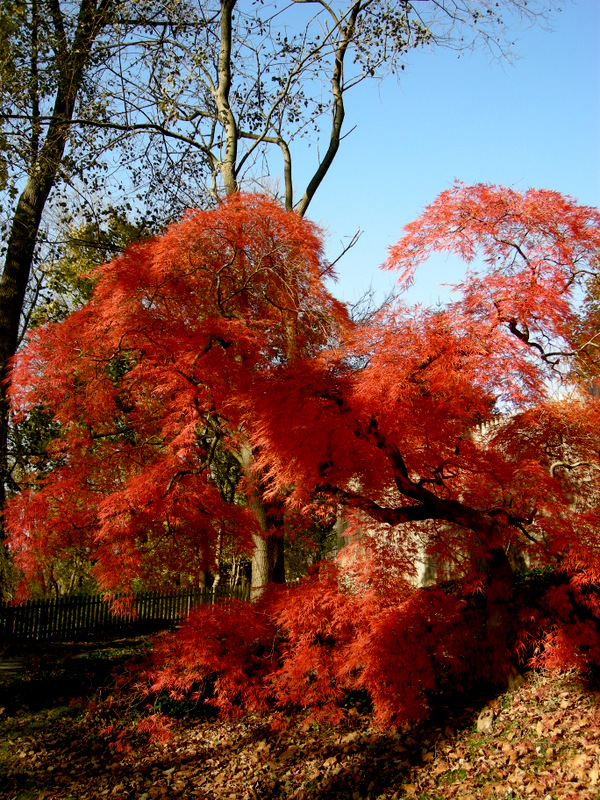
This Japanese maple, Acer palmatum, of unknown origin broke off in the ice and snow in January 2011.  For a photo of it then, click here.  It has recovered beautifully with an even more interesting habit.

I have said before that no matter how much I try to enjoy it, November is not my favorite month.  As I wander around, all I see are plants dying back, work to be done, and time running out.  Last year wasn’t too bad because we had a long warm fall with beautiful weather and plenty going on through the middle of November.  I even called my Garden Bloggers Bloom Day post “Prime Time” (click here to see the show).  This year most gardeners in the mid-Atlantic US agree that fall colors on many plants have been muted and gardens have gone by early.  Even September and October contained few of the clear, crisp, and sunny days we look forward to, and then along came Sandy.

A seedling Japanese maple along my front walk.

Despite the bad fall, there are plants in my garden right now that make a stroll outside worthwhile.  What is it about them that so attracts me?  It is that these plants are reaching their ornamental height right now.  They are not just re-blooming or showing a few flowers on a plant that really peaked earlier like asters or phlox, and they are not producing lovely fall color on a woody that I grow just as much for its flowers like hydrangea or viburnum.  November is the month when they reach the top.

The Japanese maples that seeded around this London plane tree produce a variety of fall colors from yellow to orange to red.

In this post I re-introduce you to some of the plants that show their best side in November and December.  I have written about many of them before, and I will provide links to those posts.  However, I wanted to gather these plants together here to provide a complete reference of fall stars to use during your spring shopping  trips.

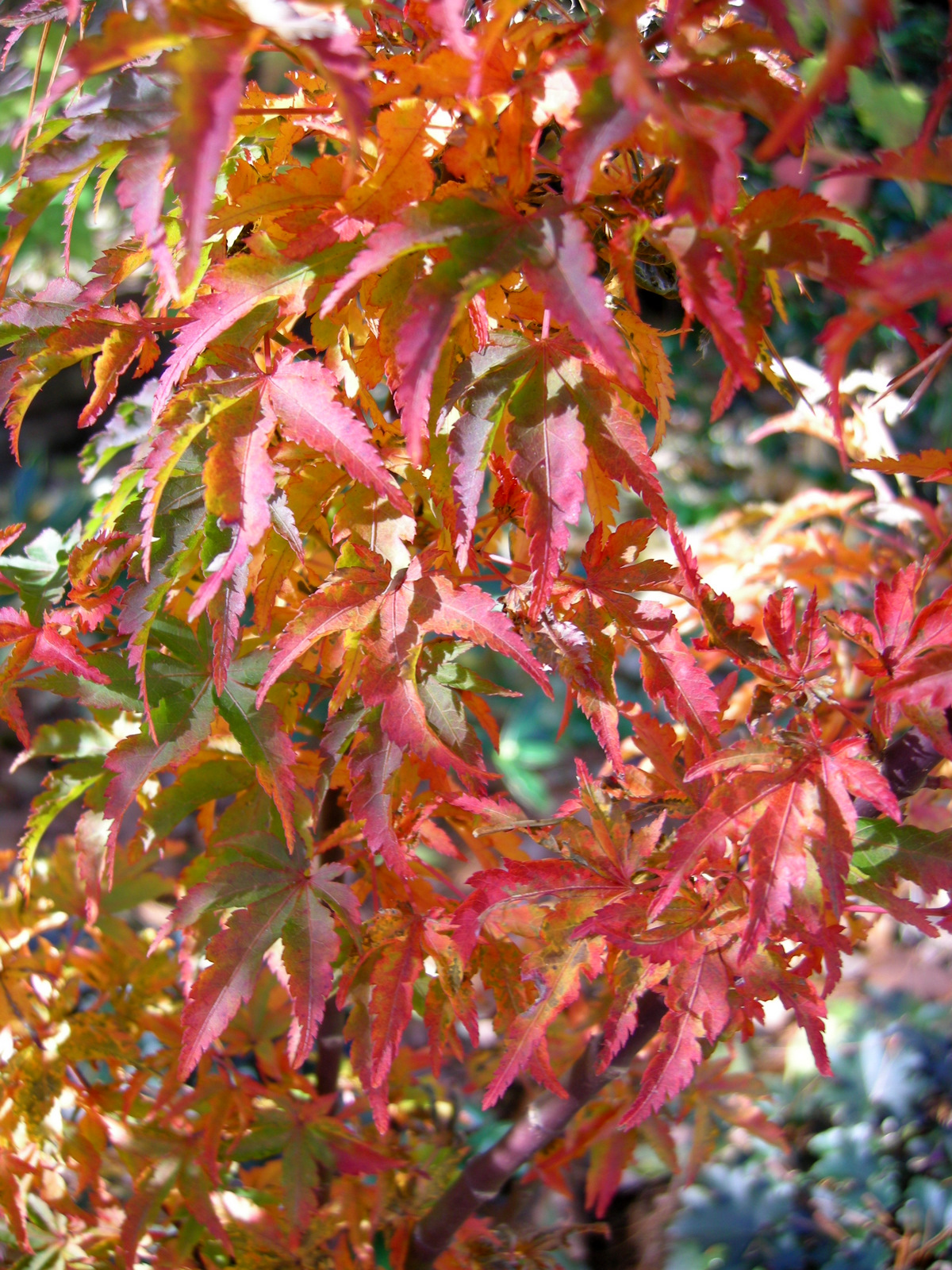
‘Shishigashira’ is a gorgeous Japanese maple that just starts to turn in mid-November.  It will eventually become a solid orangey red.

When all the other trees have shown their colors and lost their leaves, Japanese maples are just starting to turn.  Every time I go outside I grab my camera to take one more shot of their eye-catching color.  I think it is their prime ornamental characteristic, especially because of its timing, even though I also appreciate their fine branching structure, delicate leaves, and variety of habits.

Fall-blooming hardy cyclamen, C. hederifolium.

The white and pink flowers of hardy cyclamen.

Fall-blooming hardy cyclamen is dormant in the summer and re-emerges in the fall.  To get all the details, click here to read my recent post on this unusual but easy to grow plant.  For the purposes of this post, what makes it so desirable is that November is its peak when its leaves are fully emerged and provide a stunning backdrop for the flowers.

The basic Italian arum, A. italicum, sometimes called ‘Pictum’.


‘Gold Dust’ Italian arum has much more distinct markings with gold veins.


The leaves of ‘Tiny Tot’ Italian arum are about one-third the size (or less) of the species and very finely marked.


Italian arum’s life cycle is very similar to hardy cyclamen: it goes dormant in the summer and comes up fresh and beautiful to peak in the fall and through the winter.  It makes a great groundcover, and you can read more about it by clicking here.


Giant snowdrop, Galanthus elwesii.

A giant snowdrop with unusually long outer segments (petals).

‘Potter’s Prelude’ giant snowdrop, G. elwesii var. monostichus, is just starting to open in mid-November.

I couldn’t write a post this time of year without mentioning fall-blooming snowdrops.  Although we think of snowdrops as blooming in March, there are several species that bloom in the fall, including G. reginae-olgae, which blooms in October and is done now.  Also the giant snowdrop, whose flowers are quite variable, blooms for a long period from November to February so I have included some photos above.  But the king of fall is ‘Potter’s Prelude’, a very robust and vigorous snowdrop that blooms reliably in November.  For more information, click here to read my post on fall-blooming snowdrops.

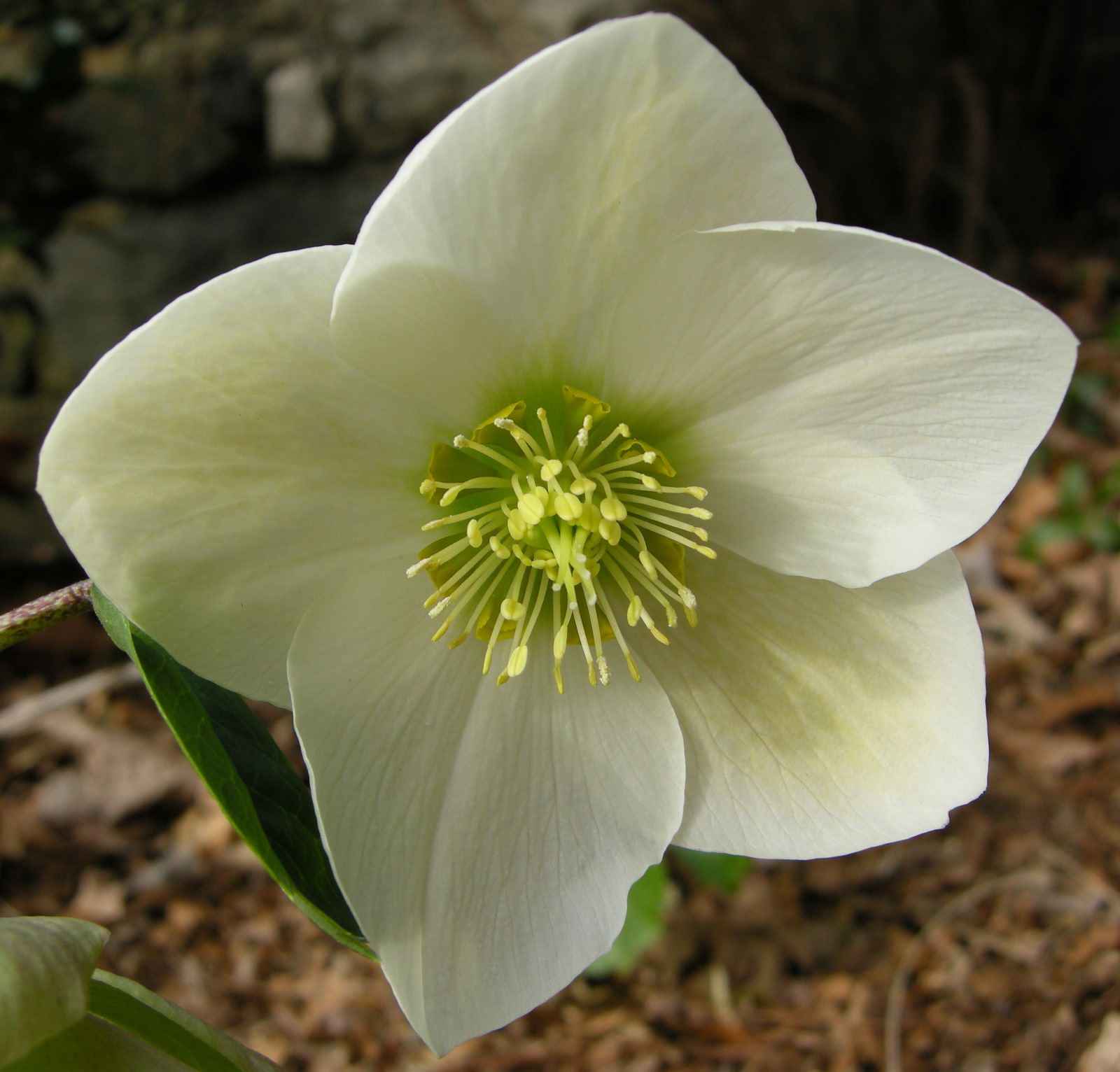
Christmas rose ‘Josef Lemper’, Helleborus niger

This photo was taken today—as you can see ‘Josef’ Lemper’s’ October flowers have gone by, but a whole new crop of buds are preparing for November.


The Christmas rose ‘Jacob’ begins a month later that ‘Josef Lemper’.  Its buds are just beginning to reach up beyond the leaves.

‘Josef Lemper’ and ‘Jacob’ Christmas roses are also stars in my November garden, producing pure white 3 to 4″ wide flowers set off by smooth evergreen leaves.  Fall is their season, and they produce copious amounts of flowers to cheer up dreary November days.  For more information on fall-blooming hellebores, click here.

Fall-blooming camellia ‘Winter’s Joy’ produces its first two flowers but look at all the buds to come.

The last photo is a teaser because of course fall-blooming camellias play a huge part in my November garden.  As with the other plants profiled, they are not just hanging on into November but instead come into their own then.  Look for an upcoming post featuring my camellias and my recent visit to the garden of a customer who also loves camellias.

All these plants (except the single flower of ‘Josef Lemper’ Christmas rose) are pictured blooming in my garden right now so I am linking to Garden Blogger’s Bloom Day (“GBBD”) hosted by May Dreams Gardens where gardeners from all over the world publish photos of what’s blooming in their gardens.

Carolyn


Nursery Happenings:  Carolyn’s Shade Gardens is done for the fall.  Thanks for a great year.  See you in spring 2013.

If you are within visiting distance and would like to receive catalogues and information about customer events, please send your full name and phone number to carolynsshadegardens@verizon.net.  Subscribing to my blog does not sign you up to receive this information.

Facebook:  Carolyn’s Shade Gardens has a Facebook page where I post single photos, garden tips, and other information that doesn’t fit into a blog post.  You can look at my Facebook page here or click the Like button on my right sidebar here.

Notes: Every word that appears in orange on my blog is a link that you can click for more information.  If you want to return to my blog’s homepage to access the sidebar information (catalogues, previous articles, etc.) or to subscribe to my blog, just click here.


January GBBD: Hellebores on Parade

Posted in Camellias, evergreen, Garden Blogger's Bloom Day, garden to visit, hellebores, Shade Perennials, Shade Shrubs, snowdrops, winter, winter interest with tags , , , , , , , , , , , , , , , , , on January 11, 2012 by Carolyn @ Carolyns Shade Gardens

Carolyn’s Shade Gardens is a retail nursery located in Bryn Mawr, PA, specializing in showy, colorful, and unusual plants for shade.  The only plants that we ship are snowdrops within the US.  For catalogues and announcements of local events, please send your full name, mailing address, and cell number to carolyn@carolynsshadegardens.com and indicate whether you are interested in snowdrops, hellebores, and/or hostas.  Click here to get to the home page of our website for catalogues and information about our nursery and to subscribe to our blog.

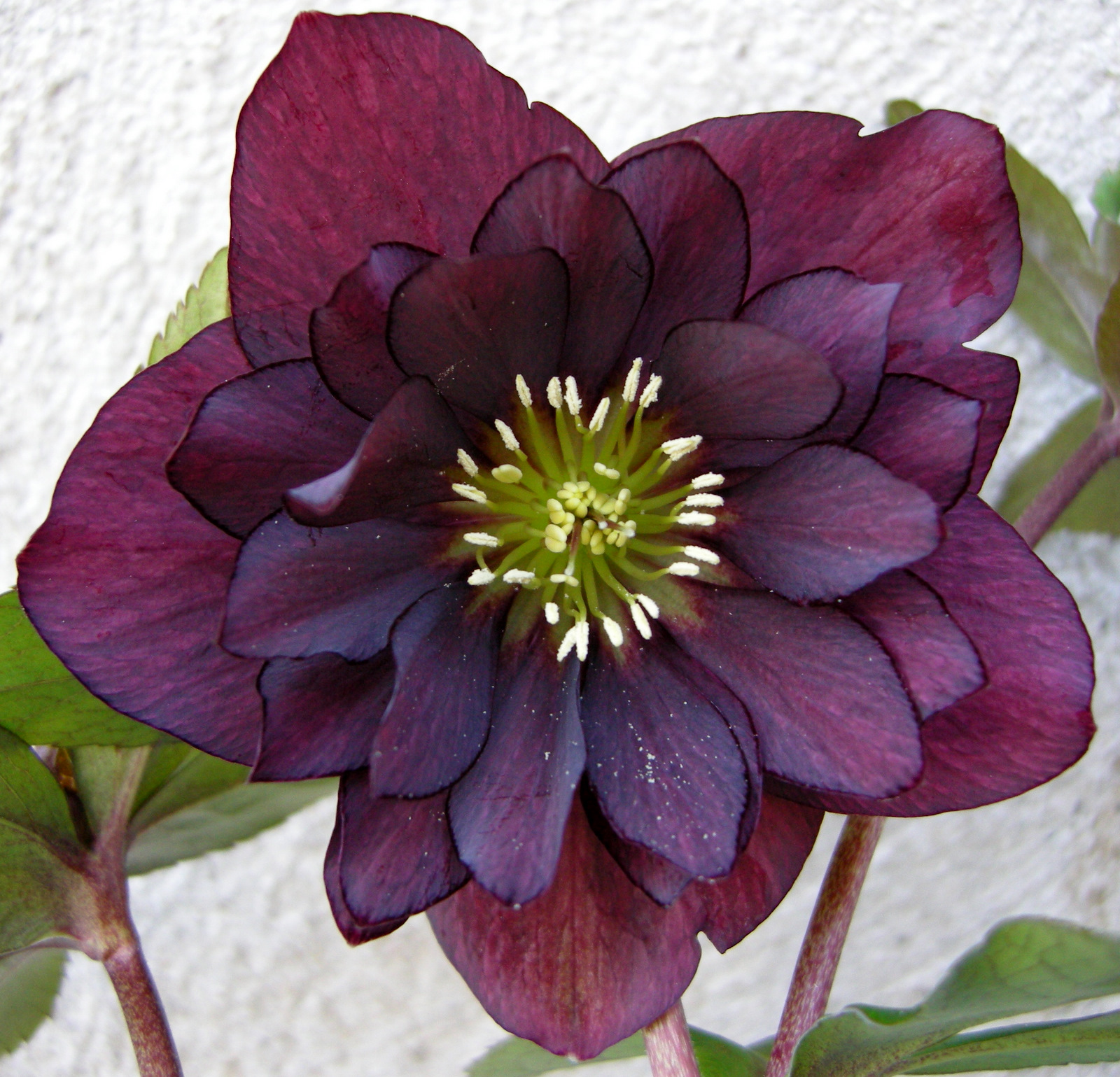
I have had this gorgeous double purple hellebore in my garden for several years but it has never bloomed this early.  Photo 1/7/12

It is the middle of the month and time to participate in Garden Blogger’s Bloom Day hosted by May Dreams Gardens (link available on December 15) where gardeners from all over the world publish photos of what’s blooming in their gardens.  I participate because it is fun and educational for me to identify what plants make my gardens shine at different times of the year.  This month I hope that my nursery customers and blog readers will get some ideas for plants to add to their own gardens to extend their season through winter.

My garden is located in Bryn Mawr (outside Philadelphia), Pennsylvania, U.S., in zone 6B.


‘Mrs. Betty Ranicar’ is usually one of my first hybrid hellebores to bloom but this is early even for her.

Last January, the whole garden was under snow, and I didn’t even participate in GBBD.  This year couldn’t be more different with 7 days in the 50s (10C) and 6 days at 60 degrees (16C) or above since December 15.  Frankly, I find it extremely worrisome, but it means that I didn’t have to go searching for plants peaking between December 15 and January 15.  There are a few other plants worth featuring, but my hellebores are all blooming early so I call this post Hellebores on Parade.  For the benefit of my customers, I will note which hellebores will be for sale at Carolyn’s Shade Gardens (CSG) this spring.


‘Pink Tea Cup’ has the best pink color of any hybrid hellebore and was the first to come into bloom this season ( for sale at CSG this spring).  Photo 1/9/12


‘Jacob’ Christmas rose just keeps going and going with new white flowers appearing and mixing with the older pink flowers for a gorgeous effect, see below (for sale at CSG).  Photo 12/31/11


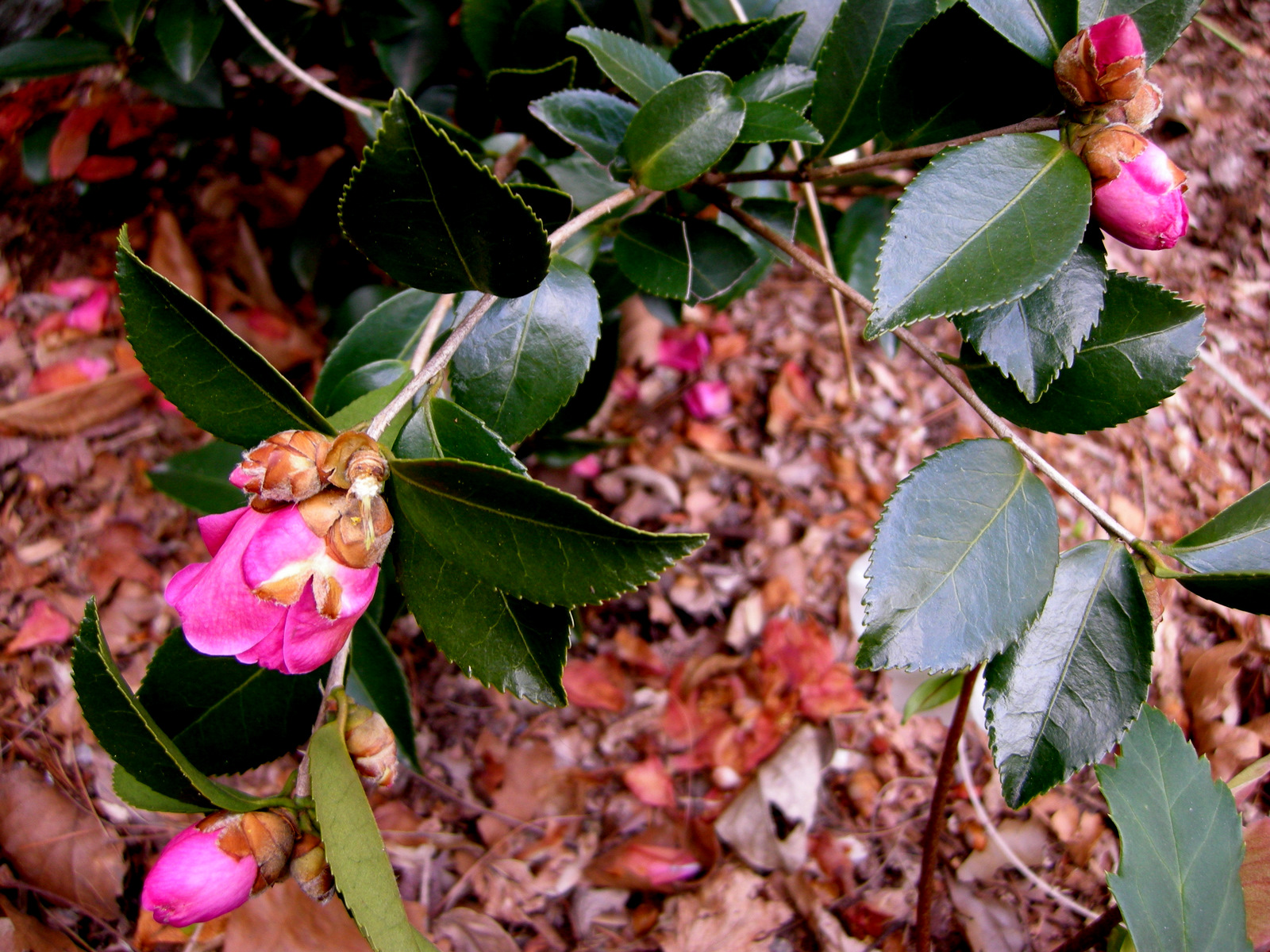
‘Jacob’ Christmas rose with Camellia x ‘Winter’s Joy’.  Photo 1/2/12

Flowers are emerging on the hellebore species cross ‘HGC Pink Frost’ (for sale at CSG).  Notice the dark red to burgundy highlights on the leaves and stems and the amazing color of the buds.  As noted in Cutting Back Hellebores, I leave the foliage on to make a nice backdrop for the flowers.  Photo 12/31/11


‘Praecox’ Christmas rose is also blooming at least a month earlier than usual.  Photo 12/31/11


The hellebore species cross ‘HGC Winter’s Song’ is now fully in bloom.  Photo 1/10/12

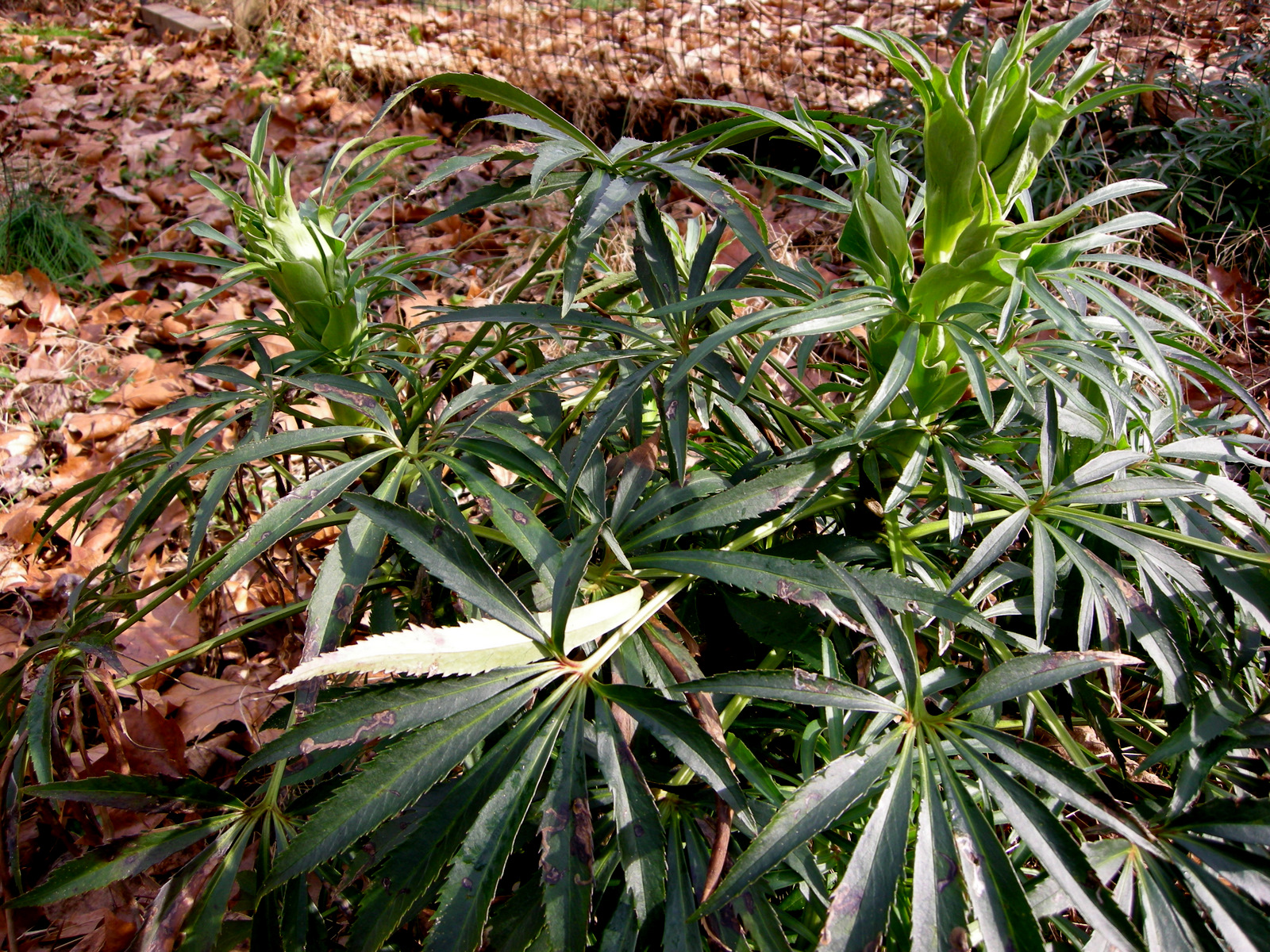
The rare species Helleborus dumetorum (no common name) continues to bloom (for sale at CSG).  It is deciduous so all the “leaves” in the photo are actually flower bracts.  The leaves will come up later.  Photo 12/31/11

This beautiful, pure white, outward-facing hellebore called ‘Snow White’ (aka ‘Snow Bunting’) is an extremely rare cross between hybrid hellebore and Christmas rose—something that was thought to be impossible (for sale at CSG).  Photo 1/9/12


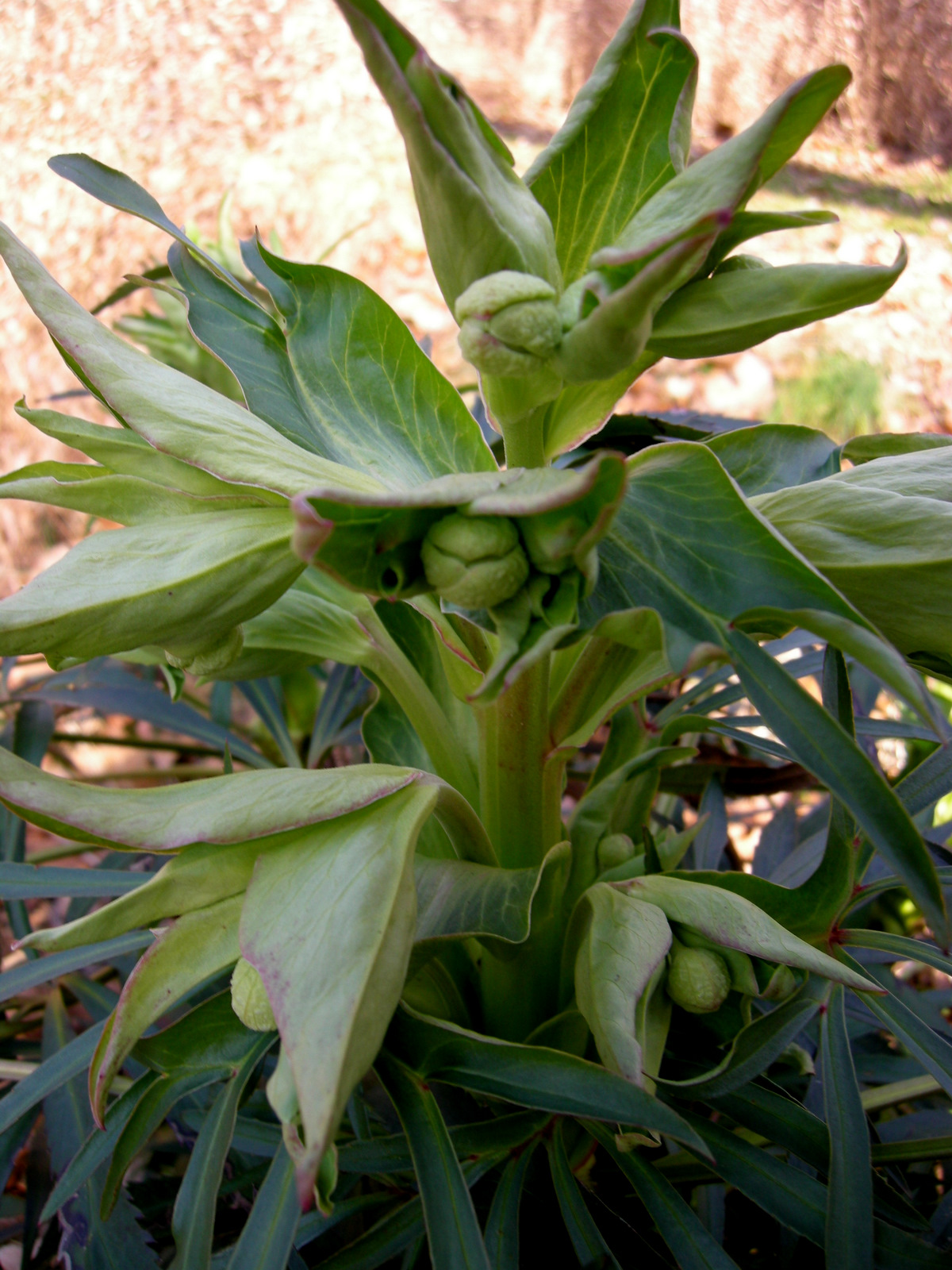
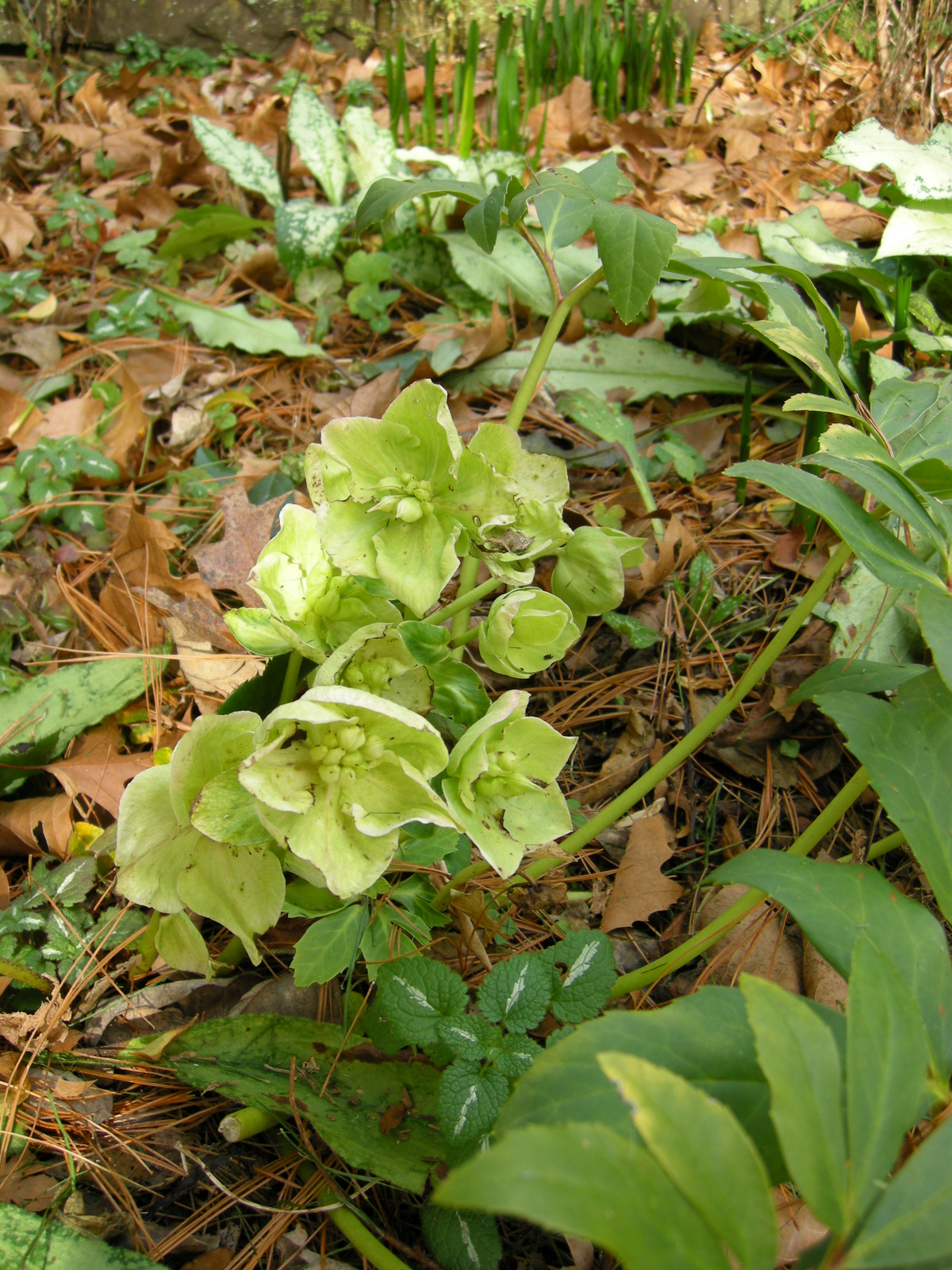
The lighter chartreuse buds of bearsfoot hellebore, H. foetidus, are becoming more prominent and will remain ornamental through May (for sale at CSG).  Photo 1/10/12


Helleborus x "Double Purple"Another look at the hybrid hellebore “Double Purple” (for sale at CSG).  Photo 1/7/12

My new favorite this year, hellebore species cross ‘HGC Cinnamon Snow’ (for sale at CSG).  I like it so much that I decided to put it in a basket by my front door.  Photo 1/9/12

There are some other plants looking great in my garden besides hellebores.  Most of the fall-blooming camellias still have viable buds but no flowers open to show you.  They will continue to bloom if the weather cooperates.  Here are the non-hellebore stars:

My un-named Korean Camellia japonica, which blooms in the spring and fall, continues to produce flowers.  Photo 1/9/12

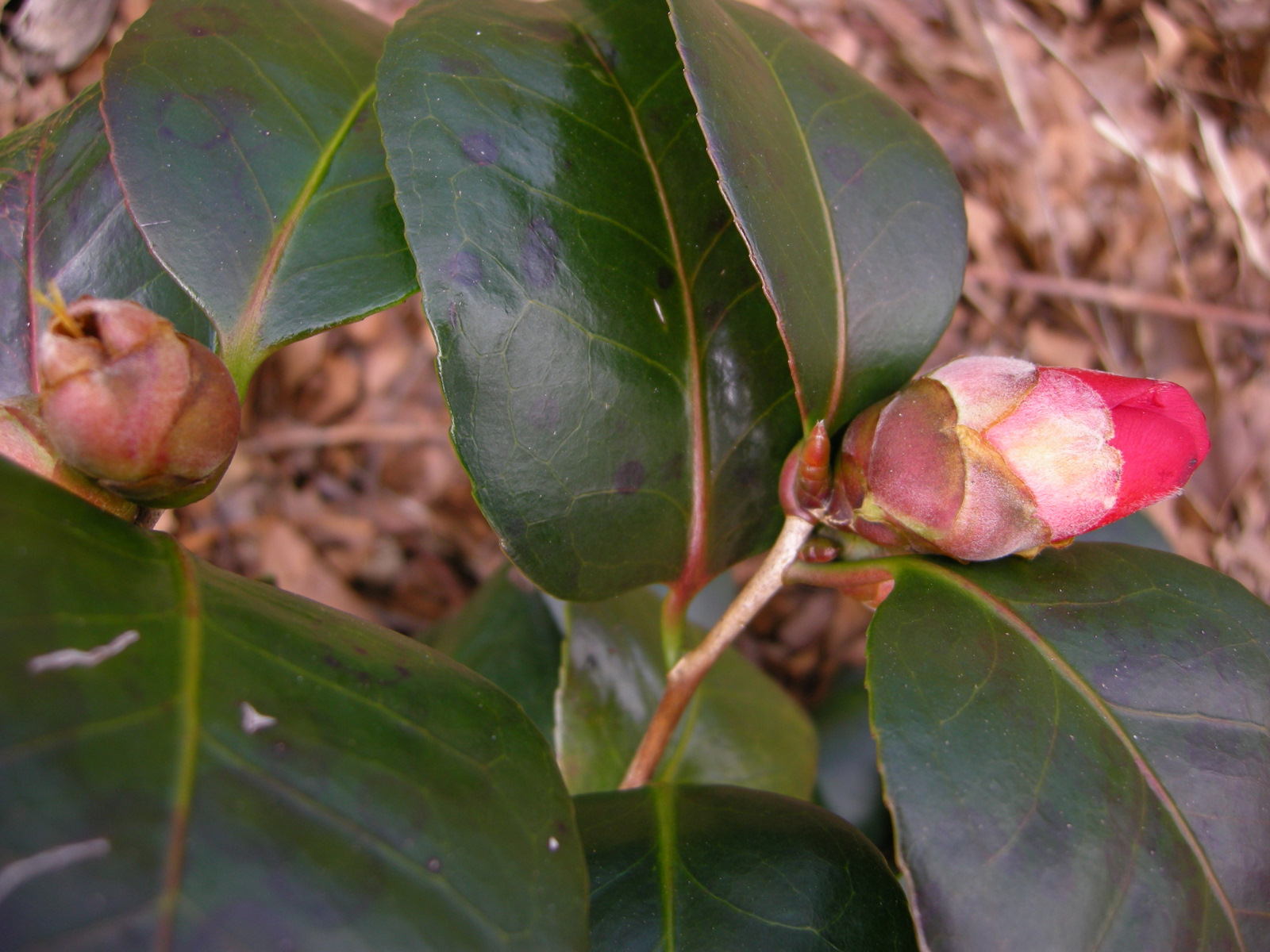
Camellia x ‘Elaine Lee’ also has buds, and look at those shiny leaves.  Photo 1/10/12

Camellia x ‘Winter’s Joy’ has been flowering since October and is still covered with buds but none are open right now.

The buds on my variegated winter daphne, D. odora ‘Aureomarginata’, are coloring up early.  It is the sole survivor of five shrubs I put in this spring.  Although I gave them excellent drainage, they just couldn’t tolerate all the rain we had in August and September.  One by one they wilted from too much water and died, while this one remained healthy.  Photo 1/9/12

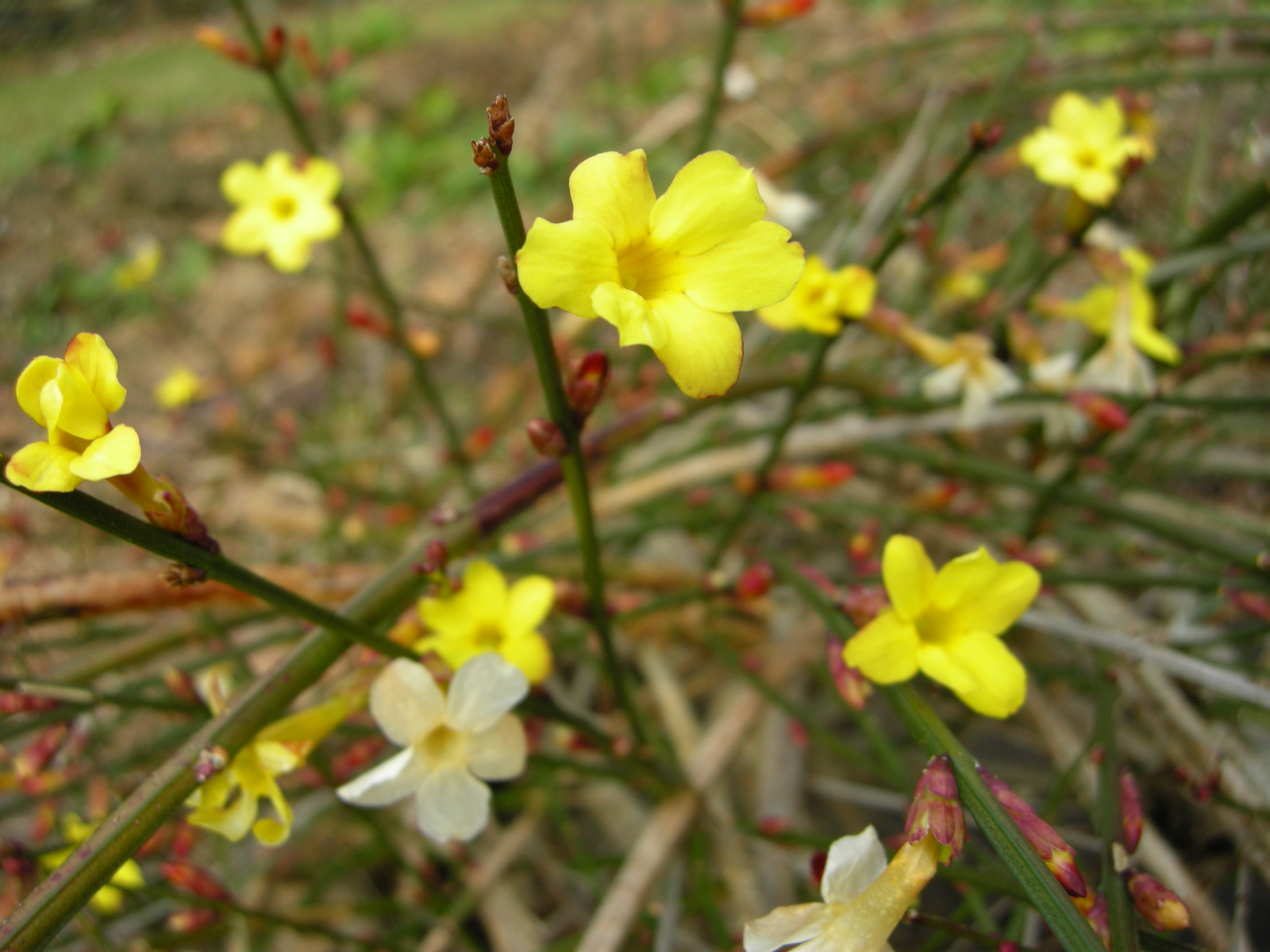
If we have cold weather, winter jasmine, Jasminum nudiflorum, blooms in February, but right now it is opening flowers continuously.  Photo 1/10/12

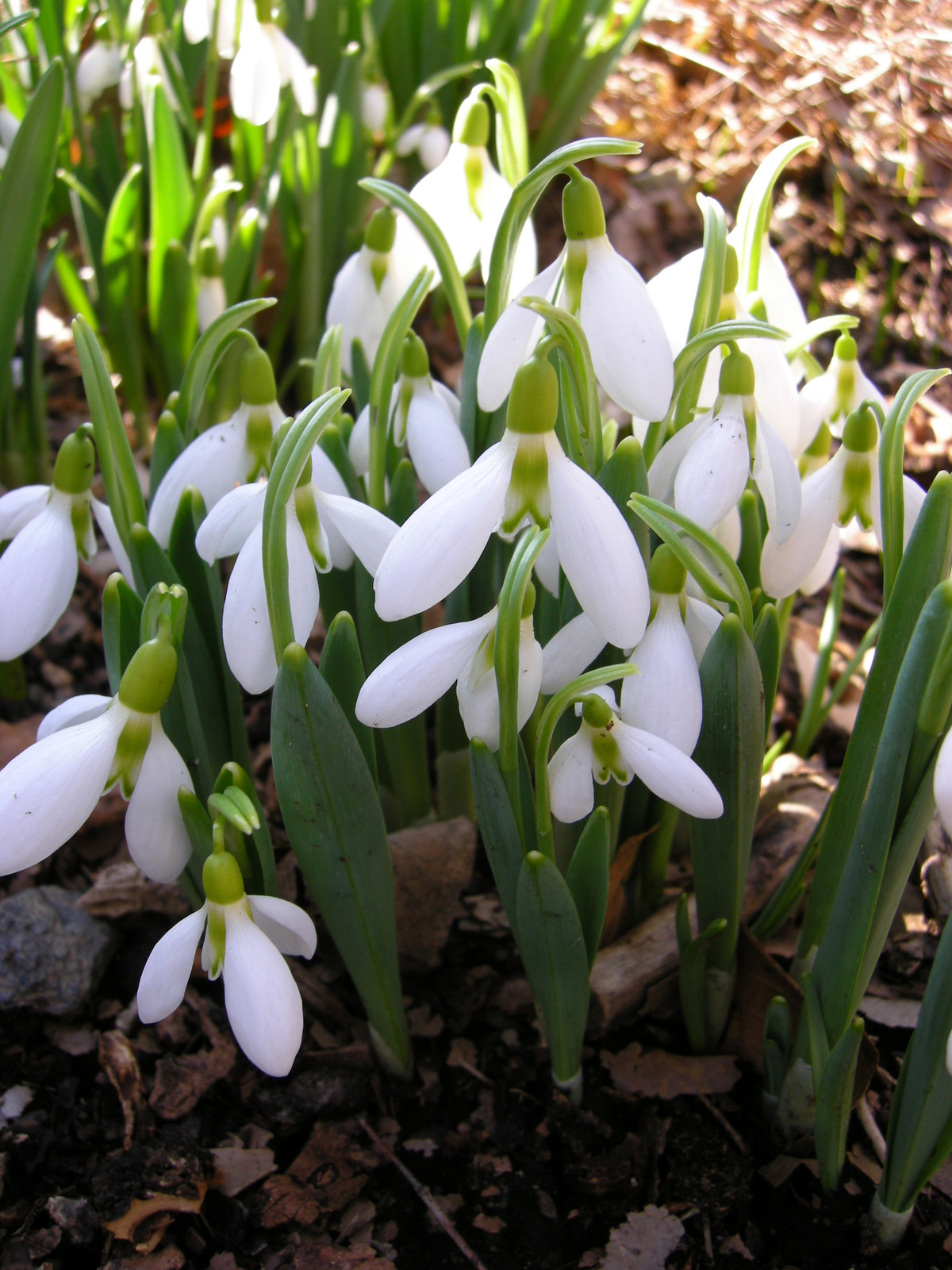
Galanthus elwesiiThe only snowdrop in bloom right now is the giant snowdrop, Galanthus elwesii (for sale at CSG).  Photo 1/9/12

My fall-flowering snowdrop ‘Potter’s Prelude’ has finished blooming, but I wanted to show you its beautiful leaves (for sale at CSG).  Photo 1/1/12

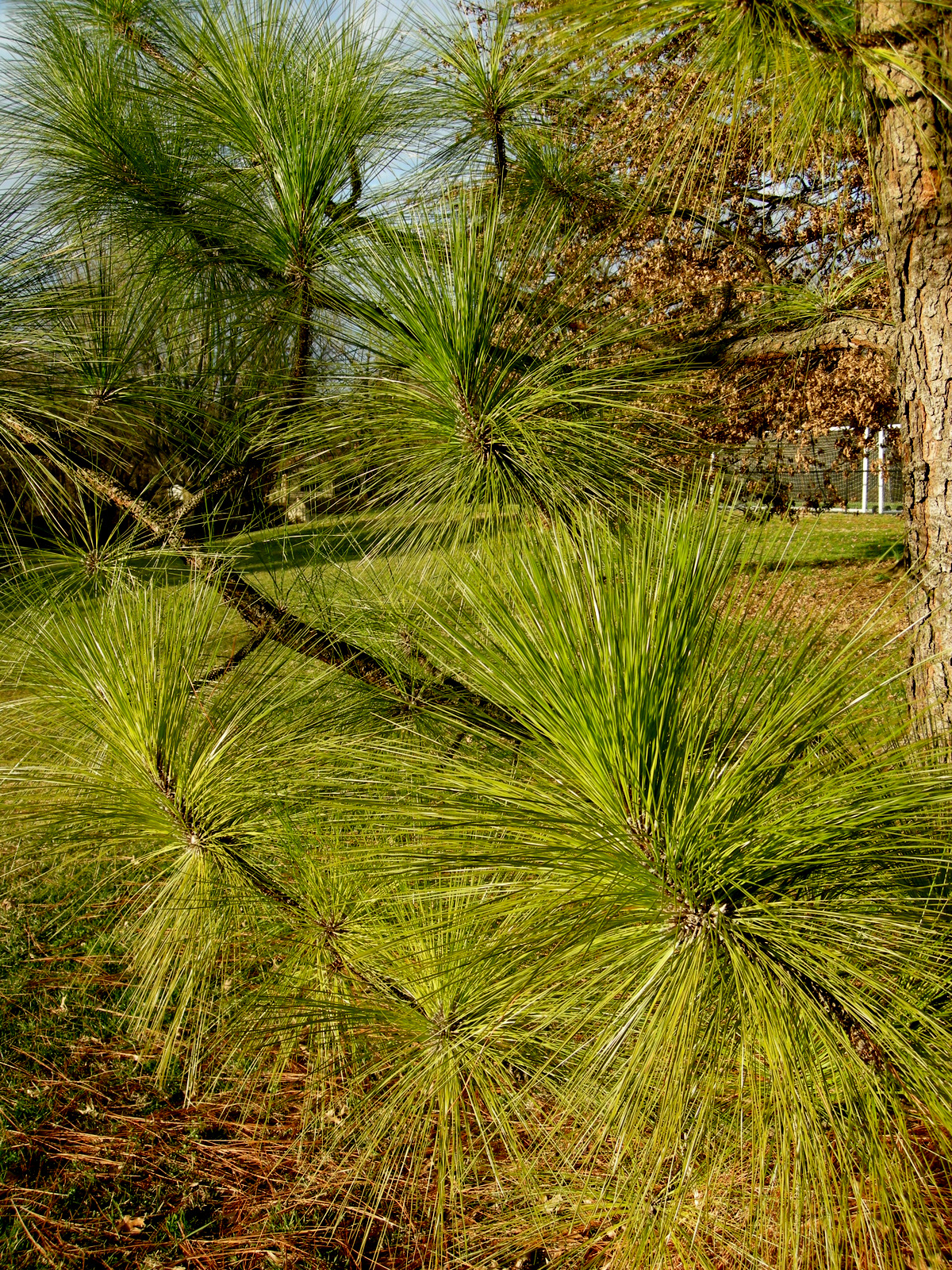
On New Year’s Day, my husband and I went walking in the Pinetum at the Haverford College Arboretum, a wonderful local treasure.  We saw two unusual conifers with great texture that I wanted to share:


Longleaf pine, Pinus palustris, is native from Virginia to Texas but is not usually found around here.


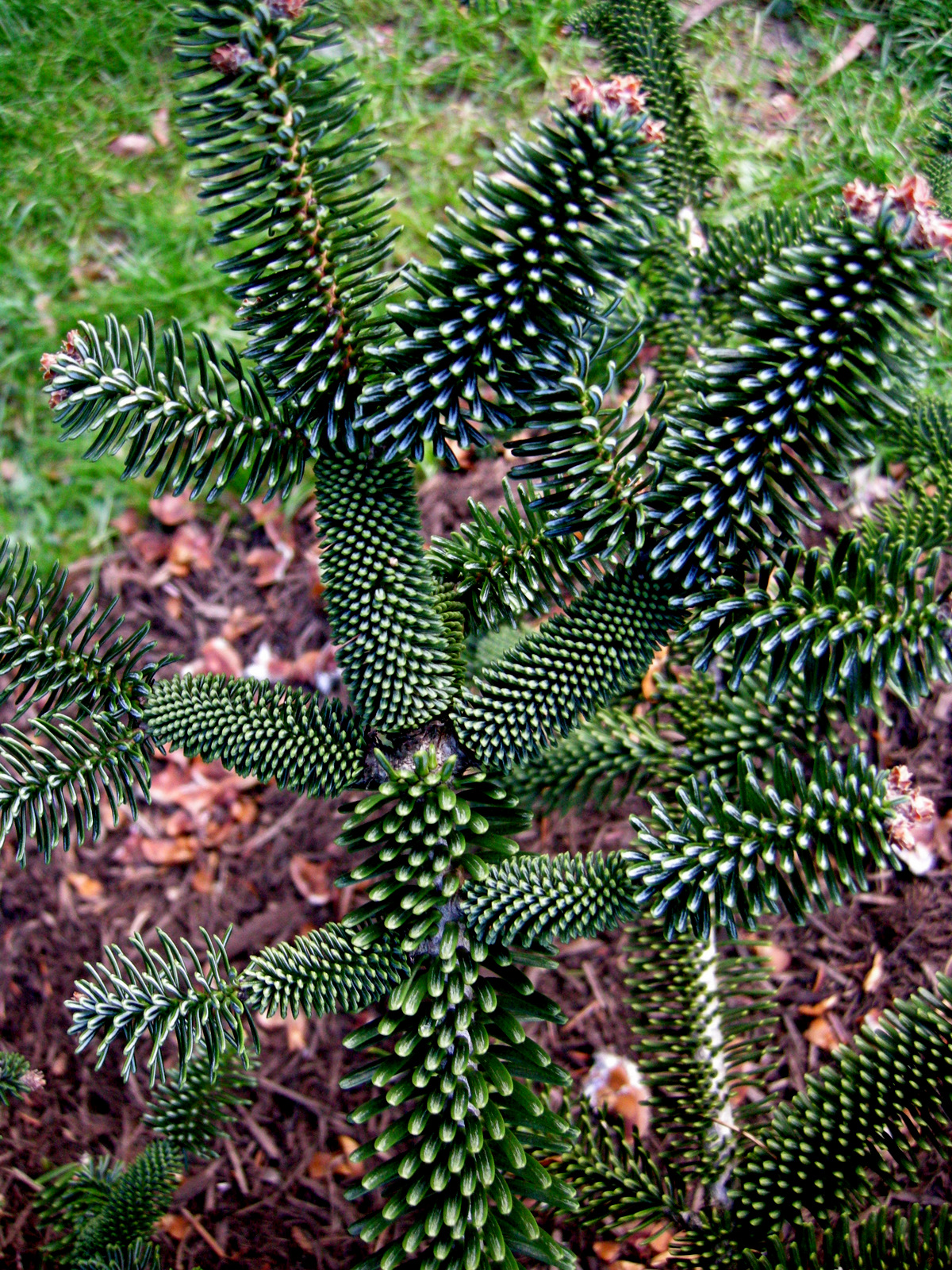
I love firs, and the texture of this Algerian fir, Abies numidica, really stood out.

I dedicate this post to Bob Stewart, my friend and horticulturalist extraordinaire, who died on December 16, 2011.  Bob and his wife Brigitta started the amazing nursery Arrowhead Alpines in Fowlersville, MI.  If you haven’t visited their site, you should by clicking here.  Bob will be greatly missed.

Carolyn

Notes: Every word that appears in orange on my blog is a link that you can click for more information.  If you want to return to my blog’s homepage to access the sidebar information (catalogues, previous articles, etc.) or to subscribe to my blog, just click here.

December GBBD: Past Prime

Posted in Camellias, Fall Color, Garden Blogger's Bloom Day, hellebores, Shade Perennials, Shade Shrubs, snowdrops, winter interest with tags , , , , , , , , , , , on December 13, 2011 by Carolyn @ Carolyns Shade Gardens

Carolyn’s Shade Gardens is a retail nursery located in Bryn Mawr, PA, specializing in showy, colorful, and unusual plants for shade.  The only plants that we ship are snowdrops within the US.  For catalogues and announcements of local events, please send your full name, mailing address, and cell number to carolyn@carolynsshadegardens.com and indicate whether you are interested in snowdrops, hellebores, and/or hostas.  Click here to get to the home page of our website for catalogues and information about our nursery and to subscribe to our blog.

Every year I make a Christmas wreath using all natural materials from my property.

It is the middle of the month and time to participate in Garden Blogger’s Bloom Day hosted by May Dreams Gardens where gardeners from all over the world publish photos of what’s blooming in their gardens.  I participate because it is fun and educational for me to identify what plants make my gardens shine at different times of the year.  I also hope that my customers will get some ideas for plants to add to their own gardens to extend their season well into late fall.

My garden is located in Bryn Mawr (outside Philadelphia), Pennsylvania, U.S., in zone 6B.


I used berries from this native winterberry holly, Ilex verticillata ‘Red Sprite’, to make the wreath.  On December 7, the robins came and cleaned off all the berries.

Last month was still prime time in my gardens, but now with hard frosts and generally colder weather, my gardens are past their prime.  The show goes on though with the focus shifted from the garden as a whole to individual plants peaking between November 15 and December 15 (I do not take all my photos on December 15).  This means that they bloom now (or are still blooming), have ornamental fruit, or feature exceptional foliage or fall color during this period.

Let’s start with flowers:

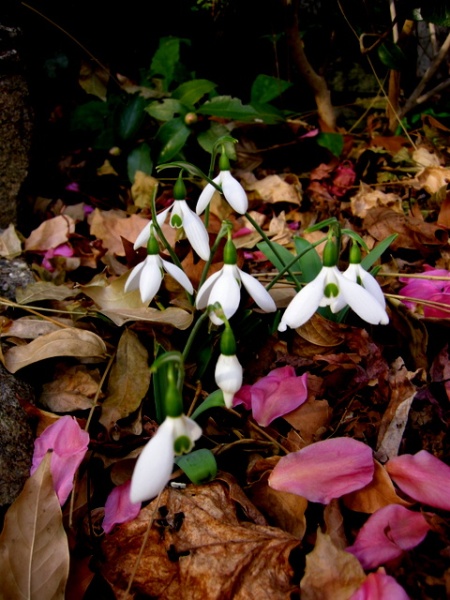
The large and vigorous fall-blooming snowdrop ‘Potter’s Prelude’ is in full bloom through this entire period.  Mine is surrounded by the marbled purple foliage of ‘Frosted Violet’ coralbells, Heuchera villosa ‘Frosted Violet’.  For more on fall-blooming snowdrops, click here.

Over the years, I have planted hundreds of giant snowdrops, Galanthus elwesii, and in the process have acquired plants that bloom in the fall instead of January when this species normally blooms.

I am always raving about the long bloom time of  ‘Shell Pink’ lamium so I thought you might like to see a photo of it in full bloom in December.  For more on lamium as a wintergreen groundcover, click here.

The buds on my paperbush, Edgeworthia chrysantha, have gotten large enough to show their beautiful silvery color and will remain ornamental until they start to open in March.

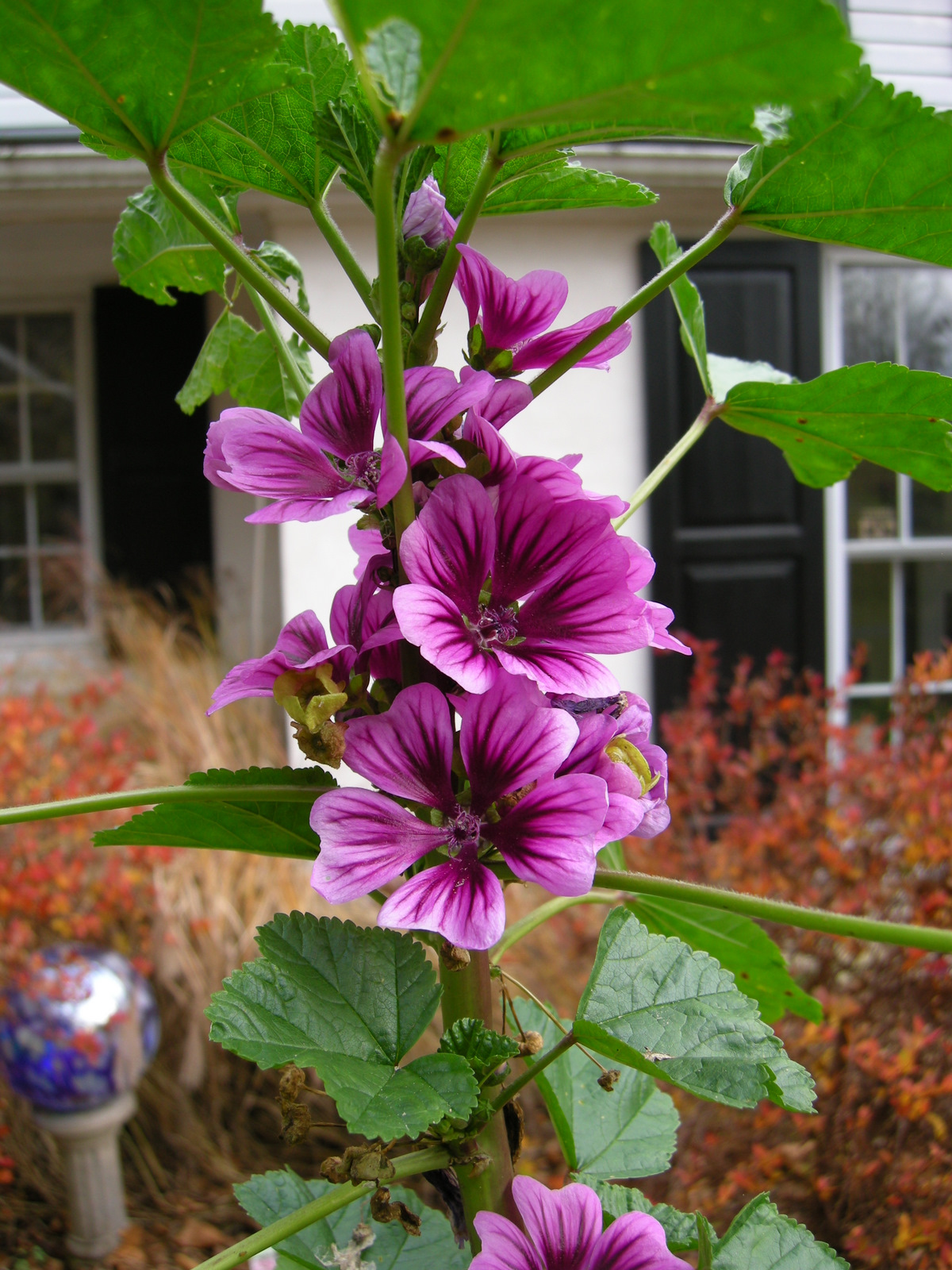
‘Zebrina’ hollyhock mallow, Malva sylvestris ‘Zebrina’, does not seem to be bothered by hard frosts.

Hellebores are one of the primary contributors to flowers during the winter months:

The spent flower heads of ‘Josef Lemper’ Christmas rose, Helleborus niger ‘Josef Lemper’, which has been blooming since early October, seem more ornamental when everything else has gone by.  Buds are forming at the base for the next wave of bloom.

Since November 15, another Helleborus dumetorum (no common name) has put out fresh foliage and covered itself in flowers.

The lighter chartreuse buds are forming on bearsfoot hellebore, H. foetidus, which will remain ornamental through May.

‘Jacob’ Christmas rose, Helleborus niger ‘Jacob’, is covered with buds just starting to open.

This photo might not look very exciting, but I am thrilled to see buds on my rare double Christmas rose, Helleborus niger ‘Double Fantasy’.  In all my years of collecting hellebores, I have only seen a double Christmas rose once in a garden.  Now I will be offering blooming plants to my customers in my 2012 snowdrop catalogue.

This is what ‘Double Fantasy’ will look like when it’s open.

My fall-blooming camellias are a mainstay of my garden right now.  The first three pictured below are Ackerman hybrids, which I profiled in Fall-Blooming Camellias Part 1:

This is the last flower on Camellia x ‘Winter’s Darling’.

Camellia x ‘Elaine Lee’ still has a few buds left .

Camellia x ‘Winter’s Joy’ has been flowering since October and is still covered with buds.

Fall-blooming Camellia oleifera is no longer covered with flowers but still continues to produce blooms when the weather warms up.

I was very lucky to receive as a gift this fully hardy, red-flowered Camellia japonica from Korea.  It has not yet been introduced for sale.  For more information on and photos of camellias, including this one, click here and here.

If you are just in it for flowers, then you can stop here because the last few plants rely on leaves to make their contribution.  However, foliage is very important for filling out the late fall garden, and I wanted to give you a few ideas:

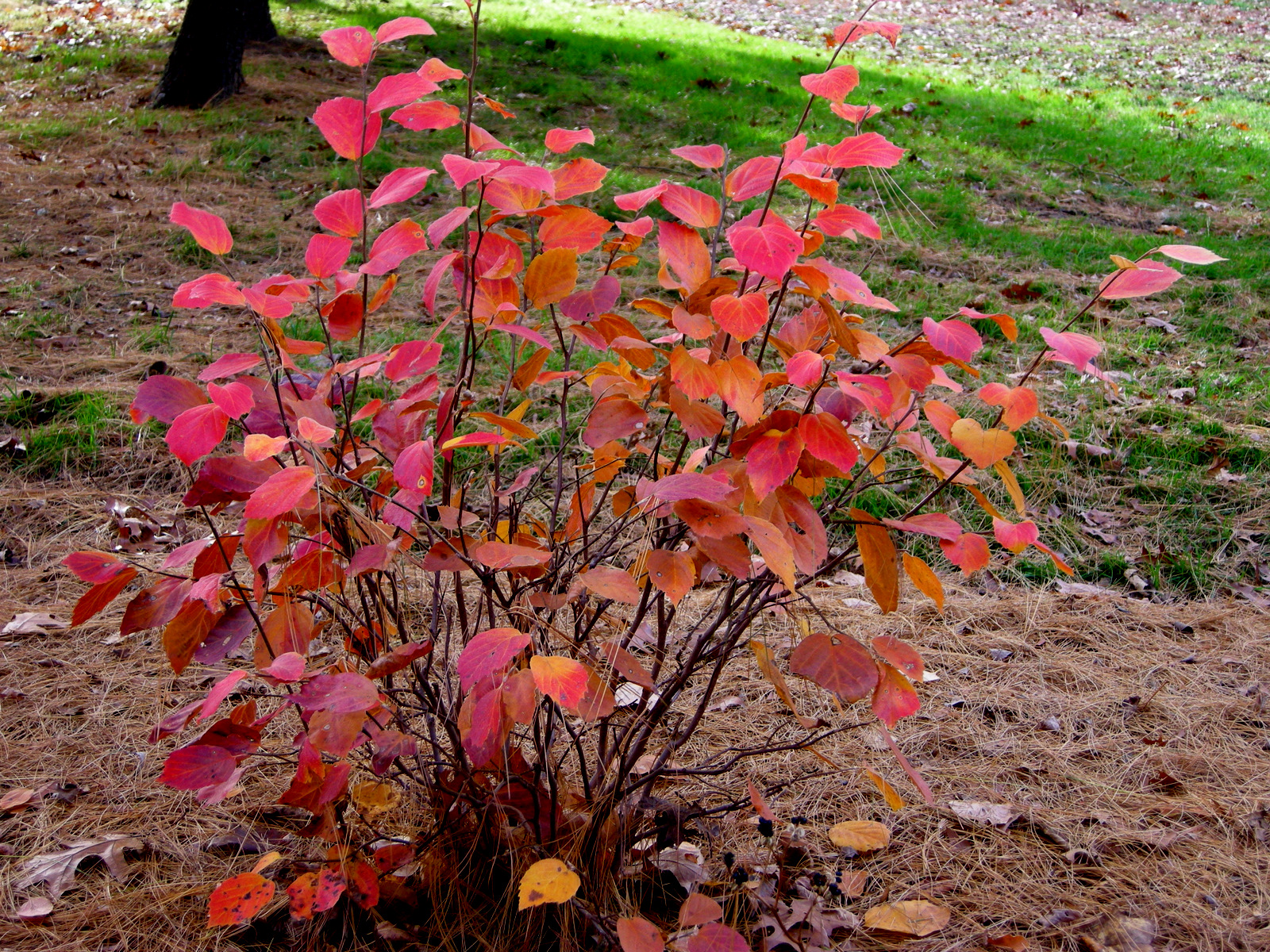
Although they have dropped now, dwarf fothergilla, F. gardenii, holds its gorgeous fall leaves way beyond November 15.  For more information on this outstanding native shrub, click here.

Another woody with late fall color is ‘Shishigashira’ Japanese maple, Acer palmatum ‘Shishigashira’.

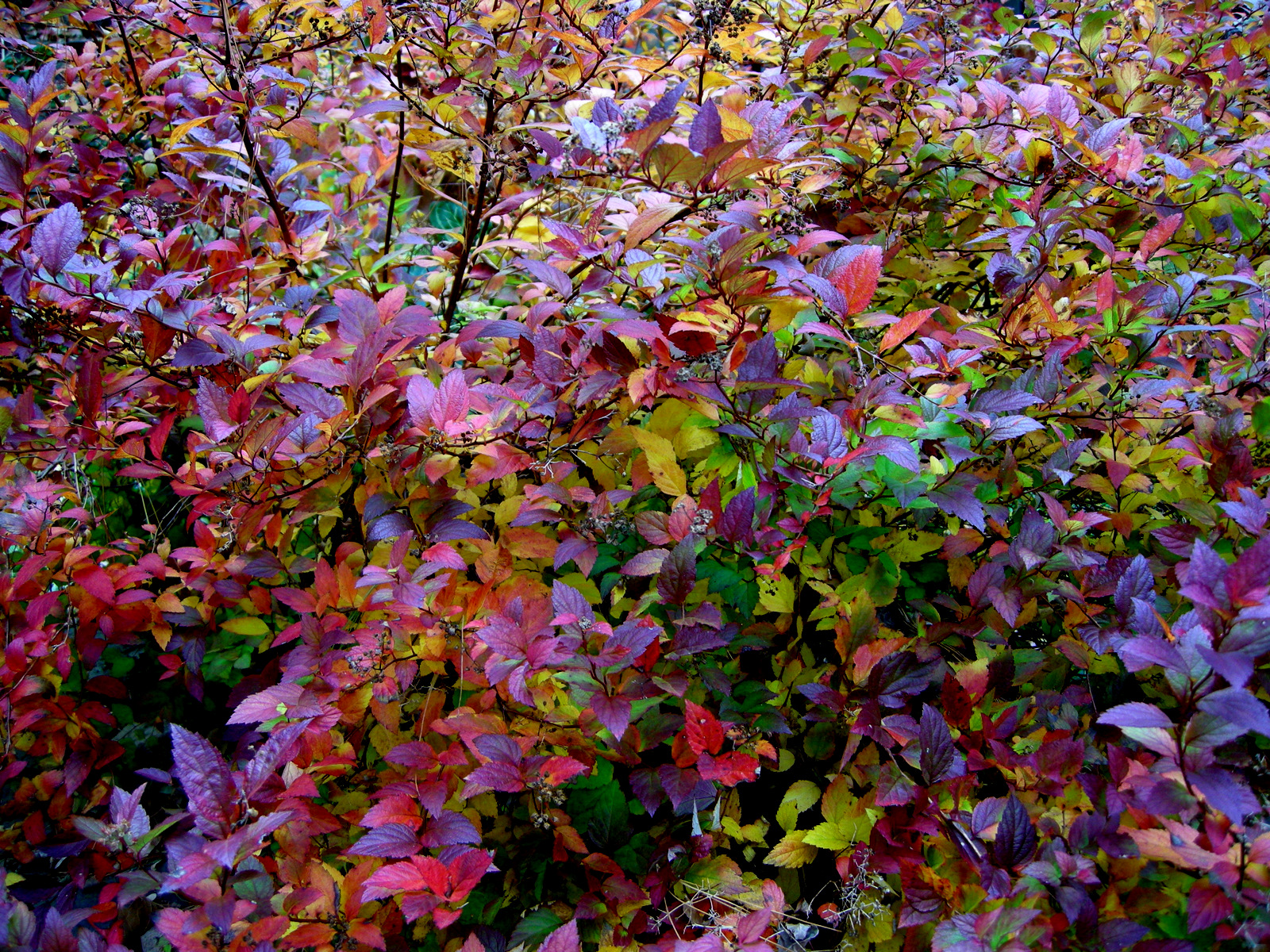
‘Magic Carpet’ spiraea, S. japonica ‘Magic Carpet’, is still displaying some of its gorgeous fall color right now.

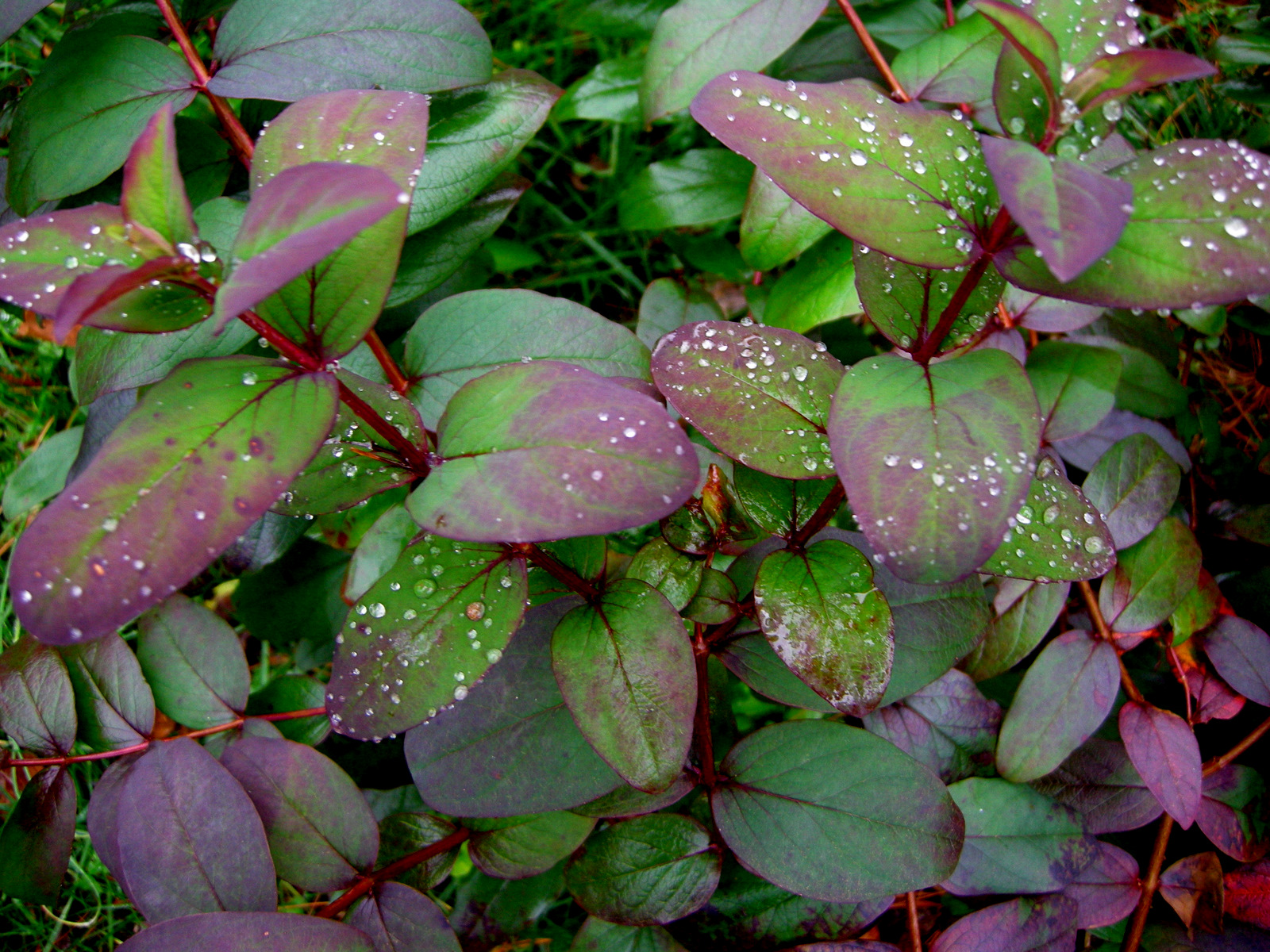
‘Albury Purple’ St. John’s wort, Hypericum androsaemum ‘Albury Purple’, remains fully clothed in plum-colored foliage.

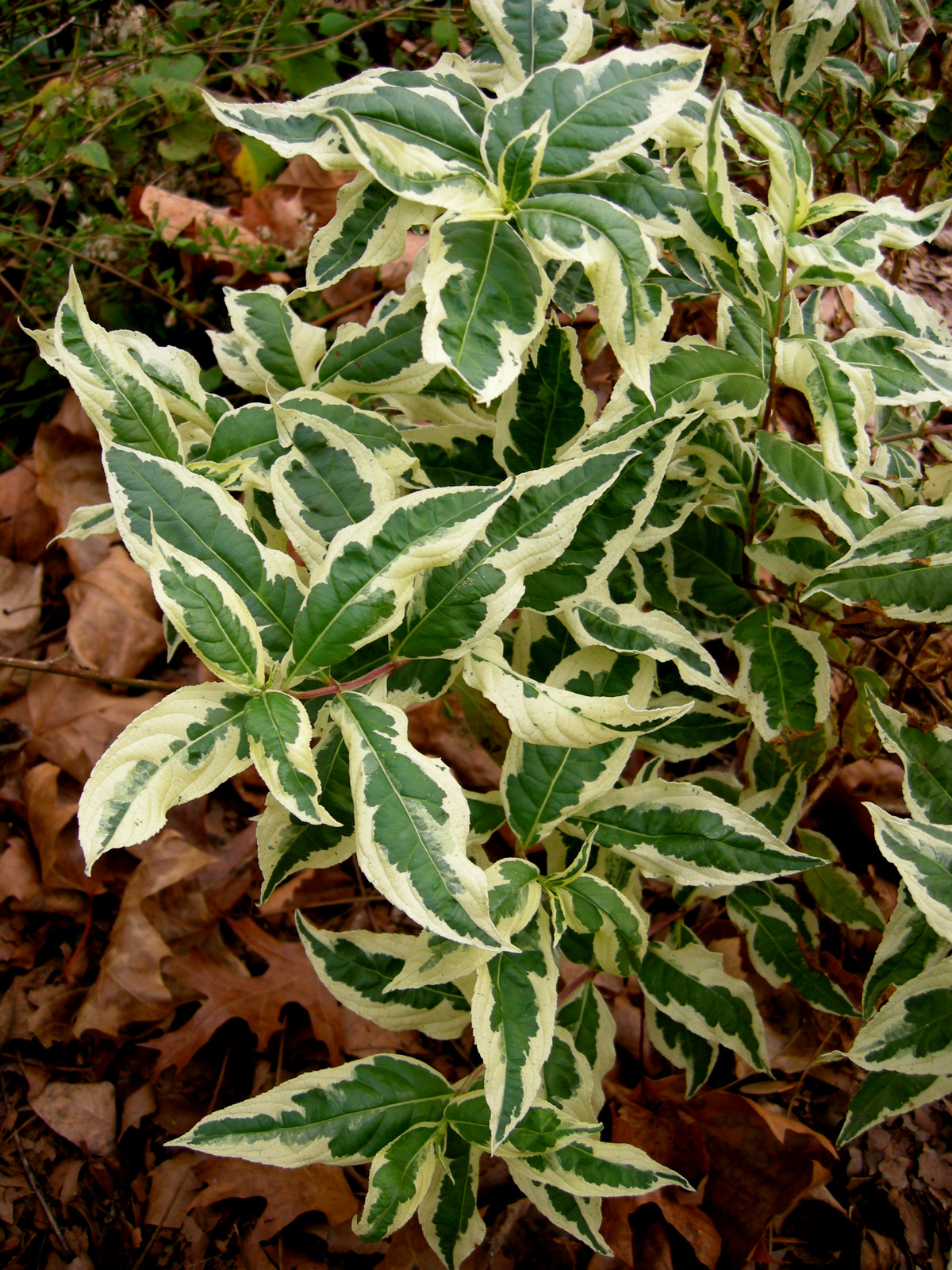
This is the first year that I have grown ‘Cool Splash’ southern bush honeysuckle, Lonicera sessifolia ‘Cool Splash’, but I am amazed to find that it looks like this right now.  For more information on this great native shrub, click here.

I have over 20 kinds of pulmonaria or lungwort in my garden providing me with beautiful flowers from February to April, but I appreciate them almost as much for their pristine foliage through early winter.

‘Diana Clare’ lungwort, Pulmonaria ‘Diana Clare’

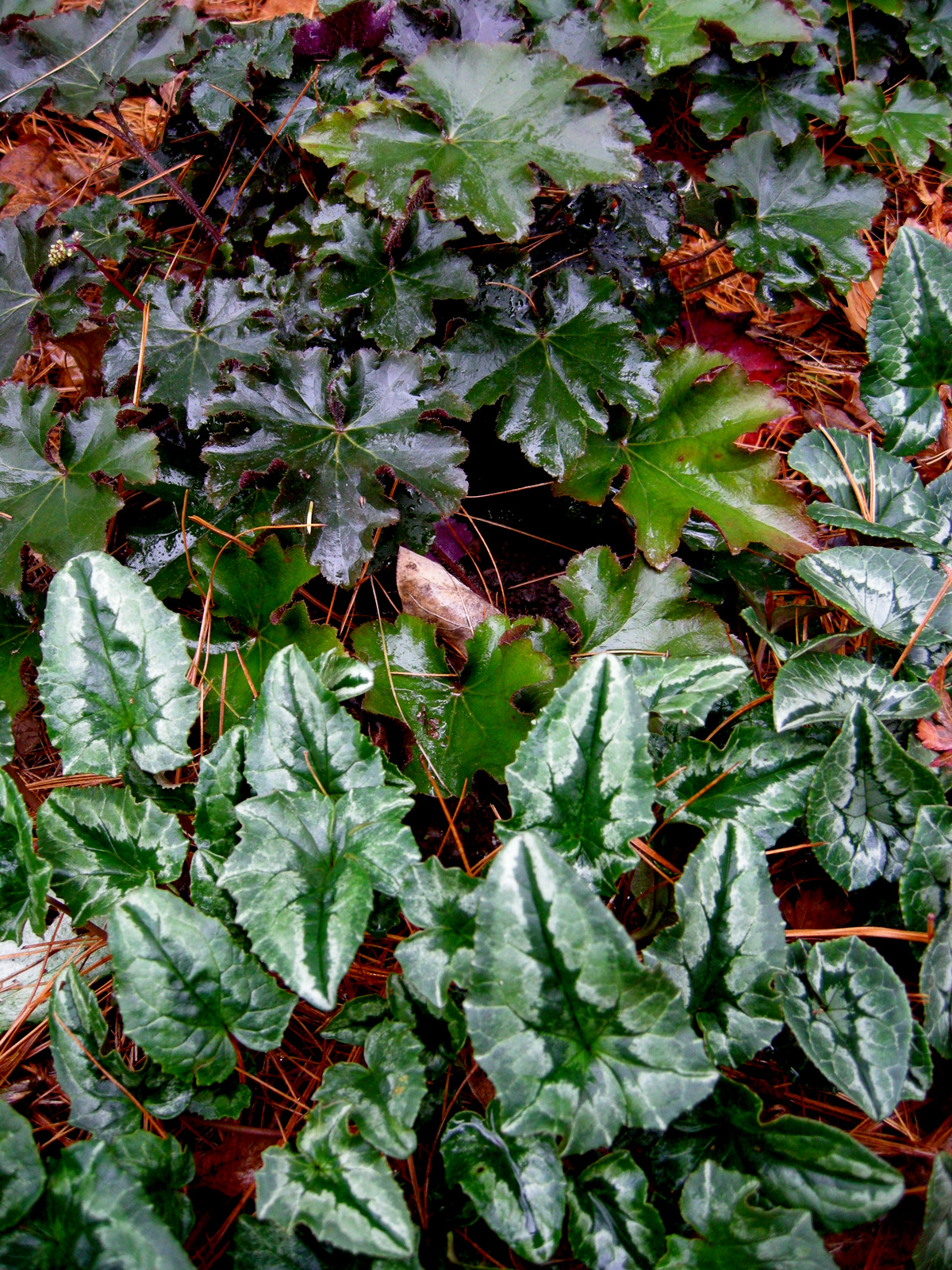
Both native ‘Bronze Wave’ coralbells, Heuchera villosa ‘Bronze Wave’, and fall-blooming hardy cyclamen, C. herifolium, will look like this all winter.

My post, More Flowering Wintergreen Ground Covers of Shade, included several photos of Italian arum cultivars, which are great winter interest plants.  I won’t repeat those plants here but show you a seedling that appeared among my arum.  The leaves are more pointy and narrow than the species and the markings go beyond veining to cover the leaf.

Enjoy the last few days of fall,  Carolyn

Notes: Every word that appears in orange on my blog is a link that you can click for more information.  If you want to return to my blog’s homepage to access the sidebar information (catalogues, previous articles, etc.) or to subscribe to my blog, just click here.
Snowdrops: Further Confessions of a Galanthophile

Posted in bulbs for shade, New Plants, snowdrops with tags , , , , , , , , , , , , , , , , , , , , , , , , , , on January 22, 2011 by Carolyn @ Carolyns Shade Gardens

Carolyn’s Shade Gardens is a retail nursery located in Bryn Mawr, PA, specializing in showy, colorful, and unusual plants for shade.  The only plants that we ship are snowdrops to the US only.  For catalogues and announcements of local events, please send your full name, mailing address, and cell number to carolyn@carolynsshadegardens.com and indicate whether you are mail order only.  Click here to get to the home page of our website for catalogues and information about our nursery and to subscribe to our blog.

Galanthus ‘Atkinsii’ described in Snowdrops as having “elegant elongated flowers that suggest the drop-pearl earrings of Elizabeth I,”  I can’t improve on that

.

Our current snowdrop catalogue is on line here.

.

This article includes photographs and colorful descriptions of the 15 snowdrops I am offering for sale in my 2011 Snowdrop Catalogue.


In my garden, I have many forms of Galanthus elwesii, which was named for Henry John Elwes (1846-1922), described as a “true energetic Victorian” combing the world for big game, fine trees, insects, birds, and snowdrops


In my article Snowdrops or the Confessions of a Galanthophile, I revealed that I am obsessed with snowdrops.  I described my evolution from a gardener growing a few distinct varieties to a galanthophile collecting every cultivated snowdrop I could get my hands on.  I explained that I could now see the often subtle differences between flowers that others might unknowingly (shall we say ignorantly) dismiss as ridiculous.  To understand how far I have gone down this road, know that I recently found myself describing a snowdrop as having “a bold inner marking with a basal blotch narrowly joined to an apical round-armed V.”  There is no turning back.


Galanthus nivalis ‘Flore Pleno’, probably the oldest snowdrop cultivar  in existence with records as early as 1703


But I didn’t talk about one of the things I find most fascinating about snowdrops.  They are the only plant that I would purchase as much for their colorful history as for their ornamental characteristics.  And how do I find out about their captivating  lineage: I consult Snowdrops: A Monograph of Cultivated Galanthus by Matt Bishop, Aaron Davis, and John Grimshaw (Griffin Press 2006).  This book, always referred to as the snowdrop bible, has all the information anyone could want about the 500 “commonly” cultivated snowdrops.


The Greatorex Double, Galanthus ‘Ophelia’

After reading Snowdrops, who would not want Galanthus ‘Ophelia’, a beautiful double snowdrop, when it was originated by Heyrick Greatorex of Brundall, Norfolk, England, a man who lived “an unconventional lifestyle” in a wooden garden shed that might have been a railway carriage?  Or a snowdrop like Galanthus ‘Magnet’ that has reached its centenary [a word not used commonly in the US so I had to look it up] and was probably named for “the old-fashioned child’s game in which magnets are attached to miniature fishing rods for the purpose of picking up painted metal fish, the point being to win the game by catching the most?”  I played that game.


Galanthus ‘Magnet’, can you can see the miniature fishing rod?

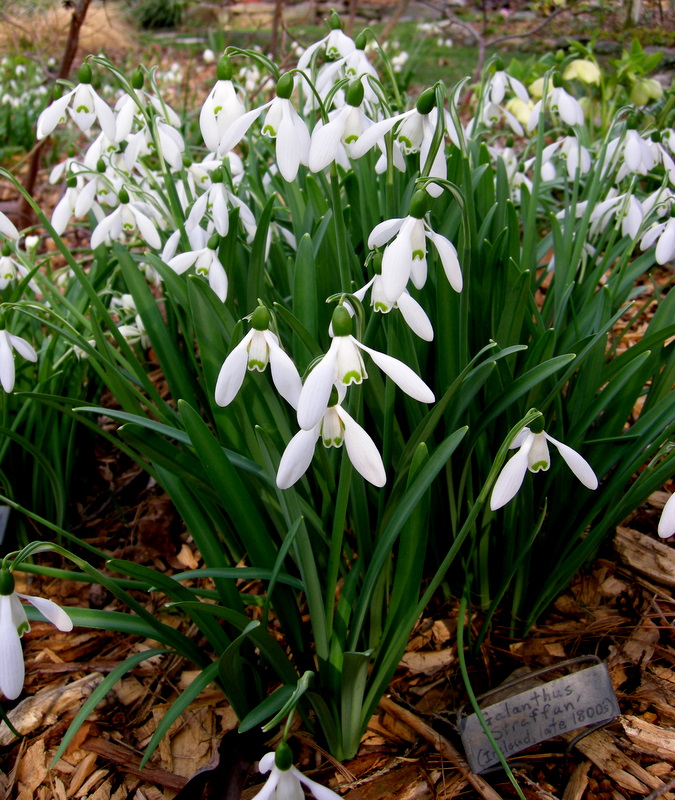
Galanthus ‘Straffan’, Baron Clarina of Ireland’s souvenir of the Crimean War

Who can resist the indestructible Galanthus ‘Straffan’, the third oldest snowdrop cultivar still in existence, discovered in the later 1800s by the head gardener for Straffan House in County Kildare, Ireland, in a clump of G. plicatus brought back from the Crimean War by the owner, the fourth Baron Clarina?  Or October-flowering Galanthus reginae-olgae, named in 1876 in honor of Queen Olga of Greece, the grandmother of  the current Duke of Edinburgh?  [In the US, we would say grandmother of Prince Philip, Queen Elizabeth’s husband.]


The October-flowering Galanthus reginae-olgae, named for Prince Philip’s grandmother, photo Charles Cresson

Galanthus nivalis/Common SnowdropGalanthus nivalis, the common snowdrop, has a 500-year lineage to brag about


Even the plain old common snowdrop, Galanthus nivalis, an imminently garden-worthy plant, has been cultivated as an ornamental in England since the 16th century.  There are written records.  The species snowdrop, Galanthus woronowii, was collected on the eastern shores of the Black Sea and named by a Russian botanist for Russian plant collector Georg Jurii Nikolaewitch Woronow (1874-1931).

The shiny green leaves of Galanthus woronowii named for plant collector Georg Jurii Nikolaewitch Woronow, photo Charles Cresson


Galanthus ‘Blewbury Tart’ found by Alan Street in Blewbury, Oxfordshire, England

Even more modern snowdrops have name-dropping heritages.  Snowdrops tells us that when noted horticulturist Alan Street of the well known English bulb house, Avon Bulbs, and the discoverer of Galanthus ‘Blewbury Tart’, gave three bulbs instead of one to quirky English gardener, Primrose Warburg (1920-1996), she “characteristically complained” and called it ‘Blewbury Muffin’.  This is the same Primrose Warburg who we are told cautioned visitors navigating her treacherous garden slope to be careful, not because they might hurt themselves, but because the snowdrops were irreplaceable. Galanthus ‘Beth Chatto’ was, of course, discovered in the gardens of the internationally famous gardener and writer, Beth Chatto, OBE [Order of the British Empire].


Galanthus ‘Beth Chatto’ from the internationally famous Beth Chatto Gardens


Snowdrops describes Galanthus ‘S. Arnott’ as the “classic snowdrop….a first-class garden plant with an unquestionable constitution, admired by everyone,” photo Charles Cresson

Other cultivars have discussions of their origins so complicated as to rival the US Tax Code, something I am familiar with from my former career. Galanthus ‘S. Arnott’ is in danger of losing its name to ‘Arnott’s Seedling’, the name under which it was given the Royal Horticultural Society’s Award of Garden Merit, but a name deemed unsuitable because E.A. Bowles, “one of the most revered plantsman of all times,” later called it ‘S. Arnott’.  The  International Cultivar Registration Society in the Netherlands has been so advised. Galanthus nivalis ‘Viridapice’ has evidently had many imitators since it was discovered prior to 1922 near an old farmhouse in northern Holland, and confusion is rampant.


Galanthus nivalis ‘Viridapice’, hopefully not an impostor

Please do not think I am in any way making fun of this book.  I love it, and I wish all plant genera had books this information-packed and well written dedicated to them.  I list Snowdrops on my Blotanical profile as the garden book I am currently reading because I am always reading it.  Rumor has it that a new edition is in the works (for an update from John Grimshaw, click here), and I will buy it.  If you like snowdrops, you should own it too.

Well, based on the tales found in the snowdrop bible, what cultivars are in my future?  I am intrigued by ‘Lady Beatrix Stanley’, a vigorous double, whose namesake (1877-1944) struggled to create an English garden in India when her husband was Governor of Madras.  I have my eye on ‘Merlin’ with its solid green blotch, whose stock was maintained by Amy Doncaster (1894-1995), “a greatly admired, no-nonsense plantswoman” who collected my favorite plants, snowdrops, hellebores and epimediums, in her woodland garden.  Finally, I would like to grow ‘Primrose Warburg’, a rare yellow snowdrop, because I think I might be just like her when I grow up.

Galanthus ‘Merlin’ whose stock was maintained by no-nonsense plantswoman Amy Doncaster


Carolyn

Notes: Every word that appears in orange on my blog is a link that you can click for more information.  If you want to return to my blog’s homepage to access the sidebar information (catalogues, previous articles, etc.), click here.
The view from my office this morning:

Keeping the Shade Garden Going in Late Fall

Posted in Fall, Fall Color, landscape design with tags , , , , , , , on December 1, 2010 by Carolyn @ Carolyns Shade Gardens

Carolyn’s Shade Gardens is a retail nursery located in Bryn Mawr, PA, specializing in showy, colorful, and unusual plants for shade.  The only plants that we ship are snowdrops and miniature hostas.  For catalogues and announcements of events, please send your full name, location, and phone number (for back up use only) to carolyn@carolynsshadegardens.com.  Click here to get to the home page of our website for catalogues and information about our nursery and to subscribe to our blog.
main terrace at Carolyn's Shade Gardens in late fall

Articles on landscape design advocate creating beds that flower through out the gardening season.  This is a lofty goal, and one that is not always worth achieving.  Beds that are designed to accomplish it often look spotty and unfocused because there is no theory behind the design besides bloom time, and the bed never truly peaks.  My woodland gardens, which contain mostly spring ephemerals and are done by June, provide immense satisfaction to me and are thoroughly enjoyed by my customers, even though their ornamental season is limited.  Most of my other gardens also have their season of splendor and then step aside to let other areas shine.
On the other hand, it is important to me that I have at least one prominent garden that is ornamentally interesting all year.  And I realize that most gardeners don’t have the space that I have to indulge in the luxury of letting a garden go by in June.  So, the question is, how do you keep a garden going in late fall before the winter-blooming plants get started?  What plants can you use to create the sense of a garden still growing: a feeling of plant combinations not individual plants?
I want to tell you about the area where I have done this most successfully: the shady end of the terrace outside my front door.  Through silver, purple, pink, and dark green groundcovers, leaves, and flowers, this terrace still has the feeling of a garden in its prime right now in early December.

'Shell Pink' lamium at Carolyn's Shade Gardens‘Shell Pink’ Lamium in early December

I think the most important element of a late season border is a flowering evergreen groundcover.  In this bed, I use ‘Shell Pink’ lamium (photo above) because it blooms from April to December (at some times more prolifically than others) and remains evergreen all year.  I have also planted the fall-blooming hardy cyclamen, Cyclamen hederifolium (photo below).  Its pink flowers appear from September into November.  Although dormant for a short time in summer, once its leaves come back in late August, it maintains a fresh pristine appearance through the following June.  It spreads to form a very attractive groundcover and is not picky about the site like the spring-blooming cyclamen.

fall-blooming cyclamen at Carolyn's Shade GardensFall-blooming Hardy Cyclamen

'Diana Clare' pulmonaria at Carolyn's Shade Gardens‘Diana Clare’ Pulmonaria

Foliage is important this time of year.  I chose pulmonarias to fill a big space because their leaves remain ornamental almost until new leaves appear in February.  The solid silver foliage of  ‘Diana Clare’ (photo above) is one of my favorites in my pulmonaria collection.  Equally as important are the dark evergreen leaves of several hellebores: Christmas roses, hybrid hellebores, the H. x ericsmithii cultivars ‘Silvermoon’ and ‘Ivory Prince’ with their silver marbling, and the golden-veined leaves of H. x nigercors ‘Green Corsican’.  Finally, I treasure the almost year round interest of the new cultivars of our native coralbell, Heuchera villosa.  Here I used ‘Frosted Violet’ (photo below), which is deep burgundy-purple with lighter highlights.

'Frosted Violet' native coralbells at Carolyn's Shade GardensNative Coralbell ‘Frosted Violet’

Christmas Rose 'Jacob' at Carolyn's Shade GardensFall-blooming Christmas rose ‘Jacob’

For the final element of flowers, in addition to the pink blooms of the lamium, I added the fall-blooming Christmas roses, Helleborus niger ‘Jacob’ (photo above) and ‘Josef Lemper’.  ‘Jacob’, the shorter and more compact of the two, is sending up buds now.  ‘Josef’ will begin flowering in a few weeks.  Both cultivars continue to produce new blossoms into May.  I have also added lots of the fall-blooming snowdrop ‘Potter’s Prelude’ (photo below).  This exceedingly robust snowdrop will produce its lovely white flowers for the next month.

fall-blooming snowdrop 'Potter's Prelude' at Carolyn's Shade GardensFall-blooming Snowdrop ‘Potter’s Prelude’

Main terrace at Carolyn's Shade GardensTerrace in late November

So that’s it: groundcover, foliage, and flowers through mid-January when the winter-blooming perennials and bulbs take over.  Not the abundance of late spring, but certainly ornamental.

Carolyn

Notes:  All photos in this post were taken at Carolyn’s Shade Gardens in late November. Flowering evergreen shrubs are an important part of any late fall garden.  For all of you who have been to Carolyn’s Shade Gardens, you may wonder why I didn’t mention the semi-circle of large fragrant daphnes (Daphne odora) that lined this bed.  Unfortunately, they were killed last winter by falling white pine branches.  I hope to replace them.

fragrant daphne odora at Carolyn's Shade GardensFragrant Daphne, gone but not forgotten!