Archive for snowdrops

Snowdrop Articles on Carolyn’s Shade Gardens Blog

Posted in bulbs for shade, snowdrops, winter, winter interest with tags , , , , , , , , , , , , , , , , , , , on January 15, 2013 by Carolyn @ Carolyns Shade Gardens

Carolyn’s Shade Gardens is a retail nursery located in Bryn Mawr, PA, specializing in showy, colorful, and unusual plants for shade.  The only plants that we ship are snowdrops.  For catalogues and announcements of local events, please send your full name, mailing address, and cell number to carolyn@carolynsshadegardens.com and indicate whether you are mail order only.  Click here to get to the home page of our website for catalogues and information about our nursery and to subscribe to our blog.
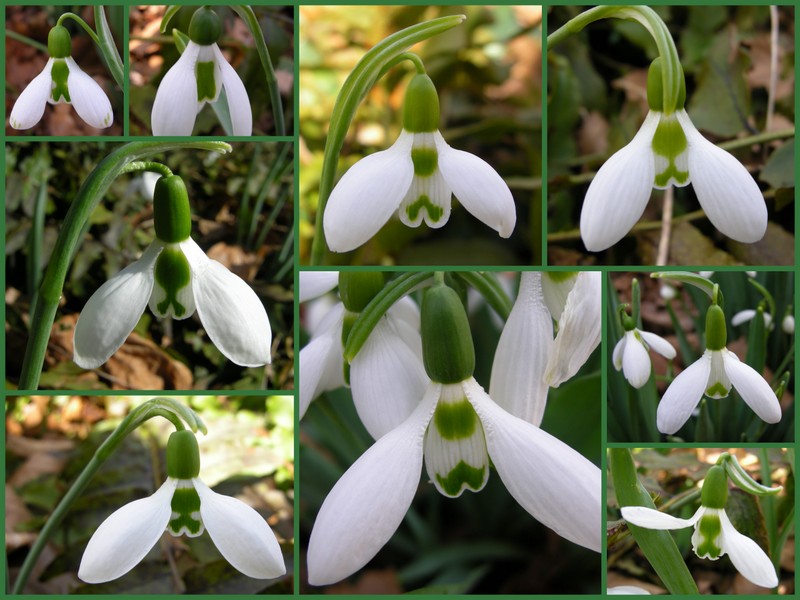
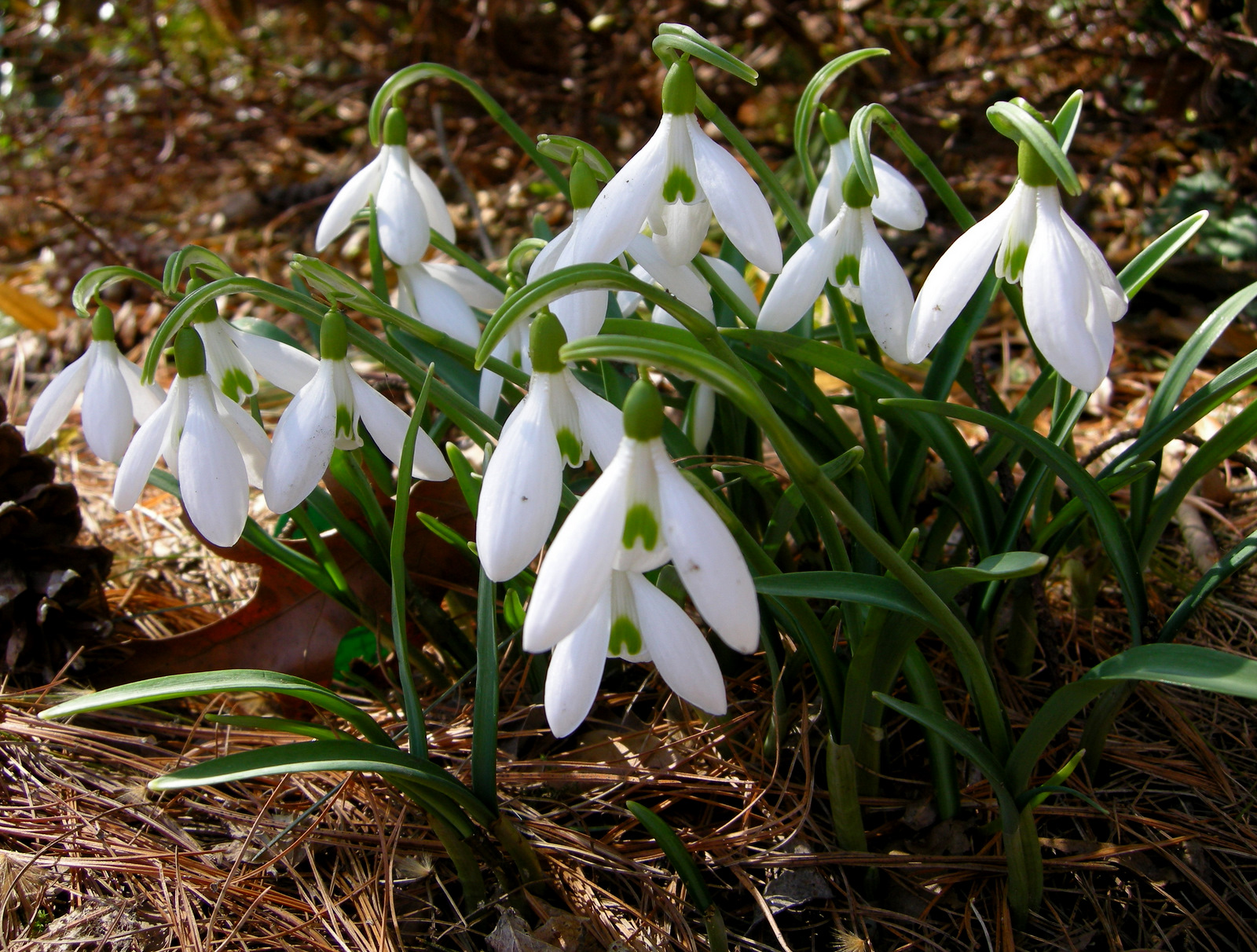
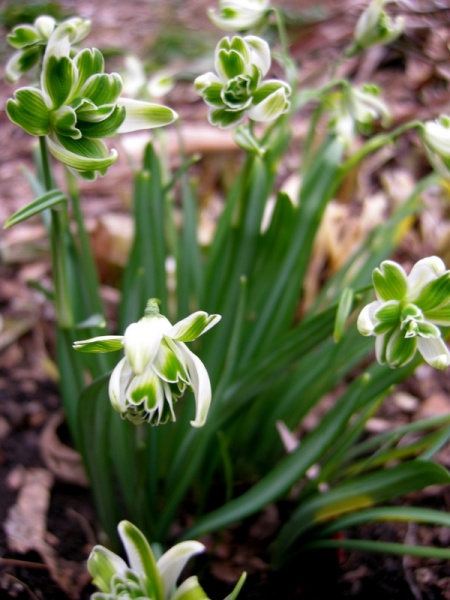
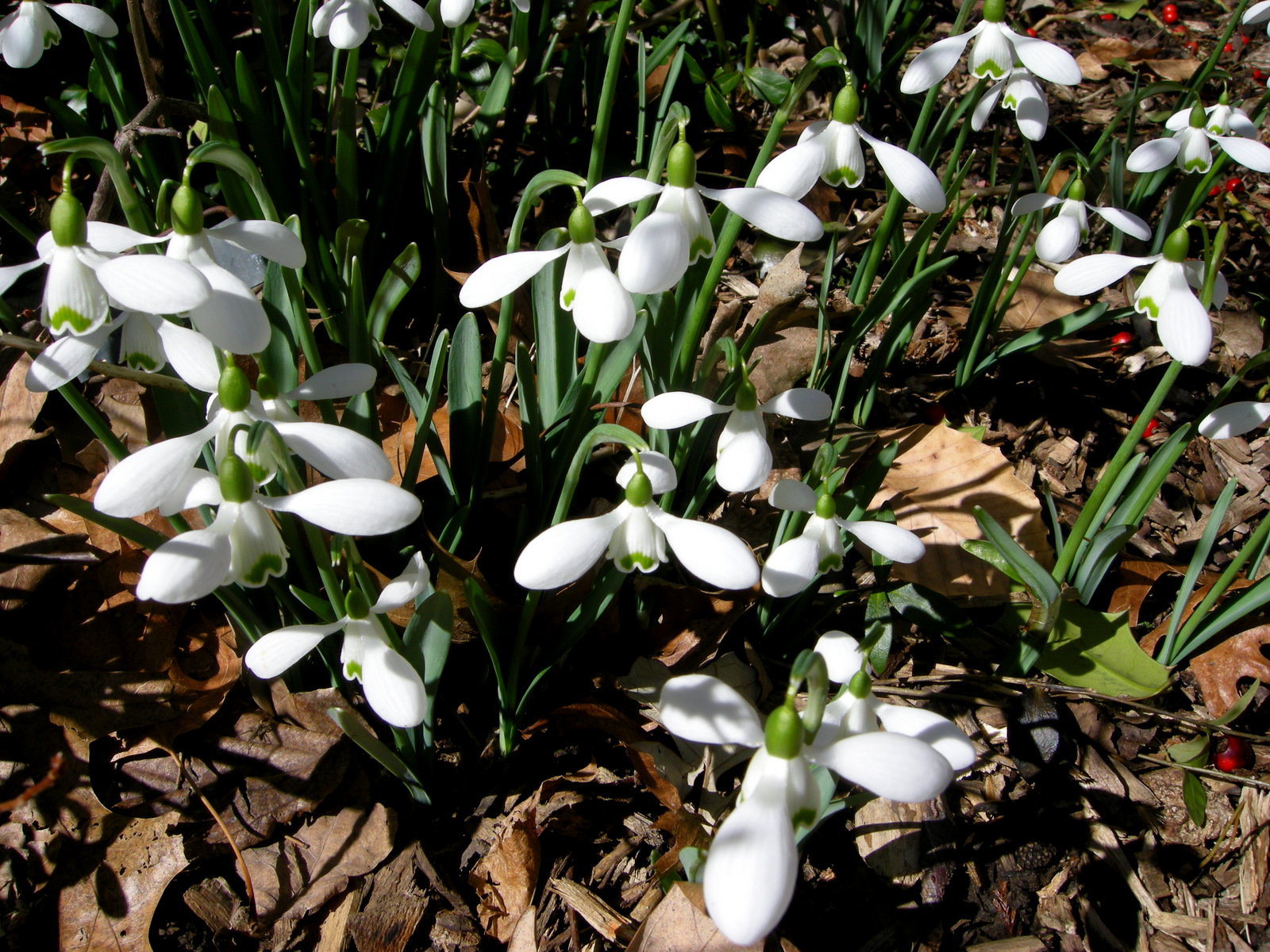
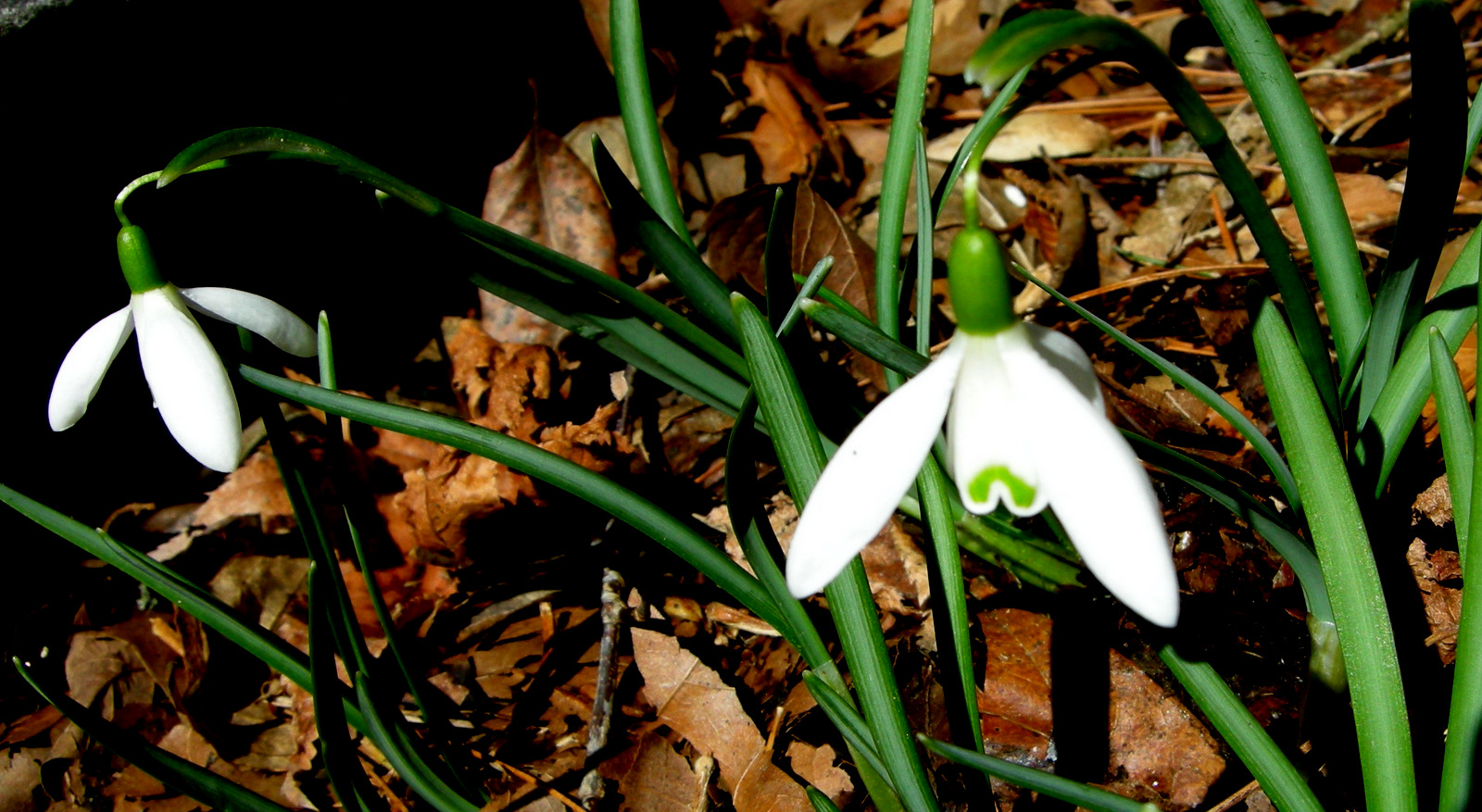
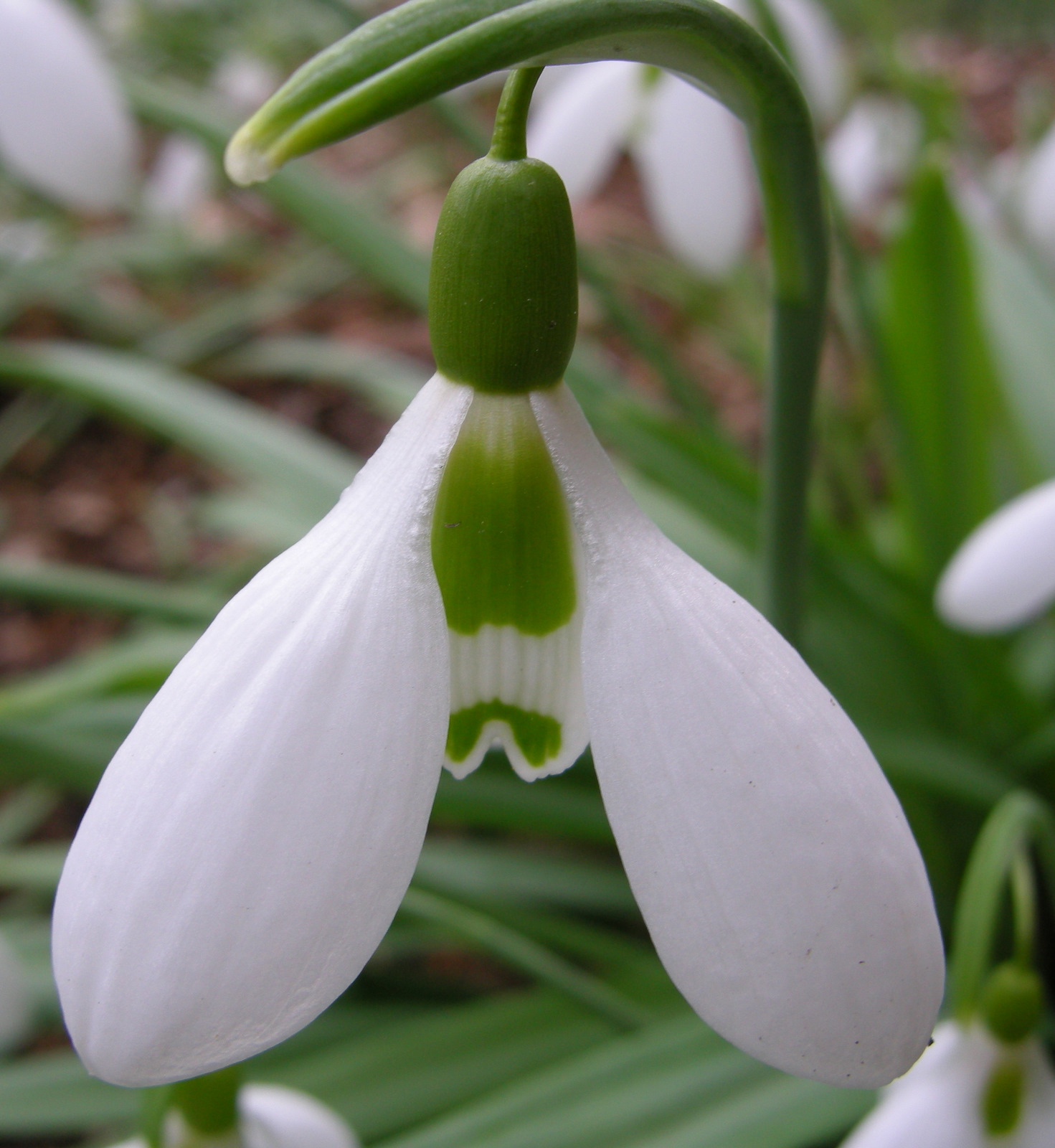
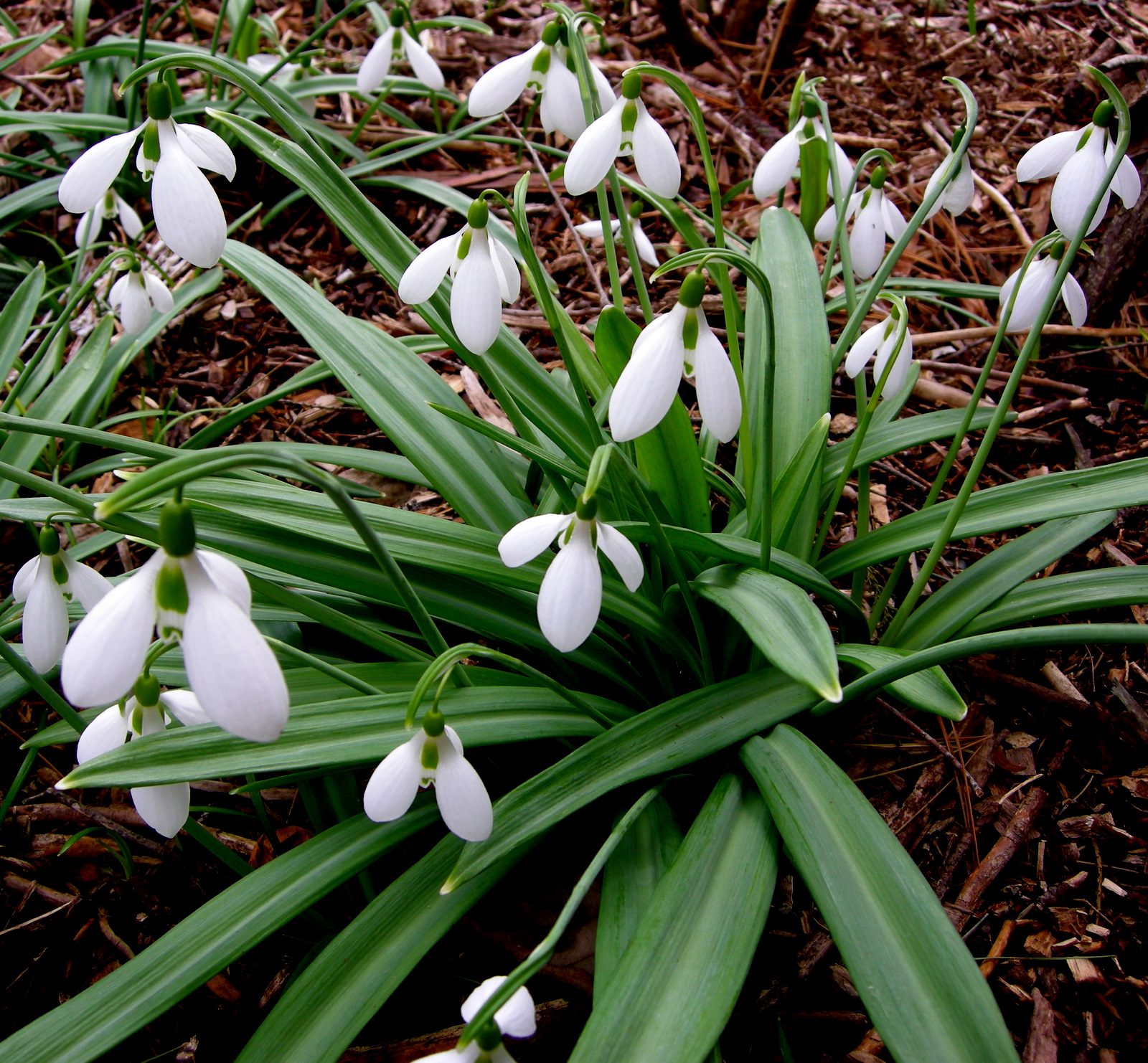
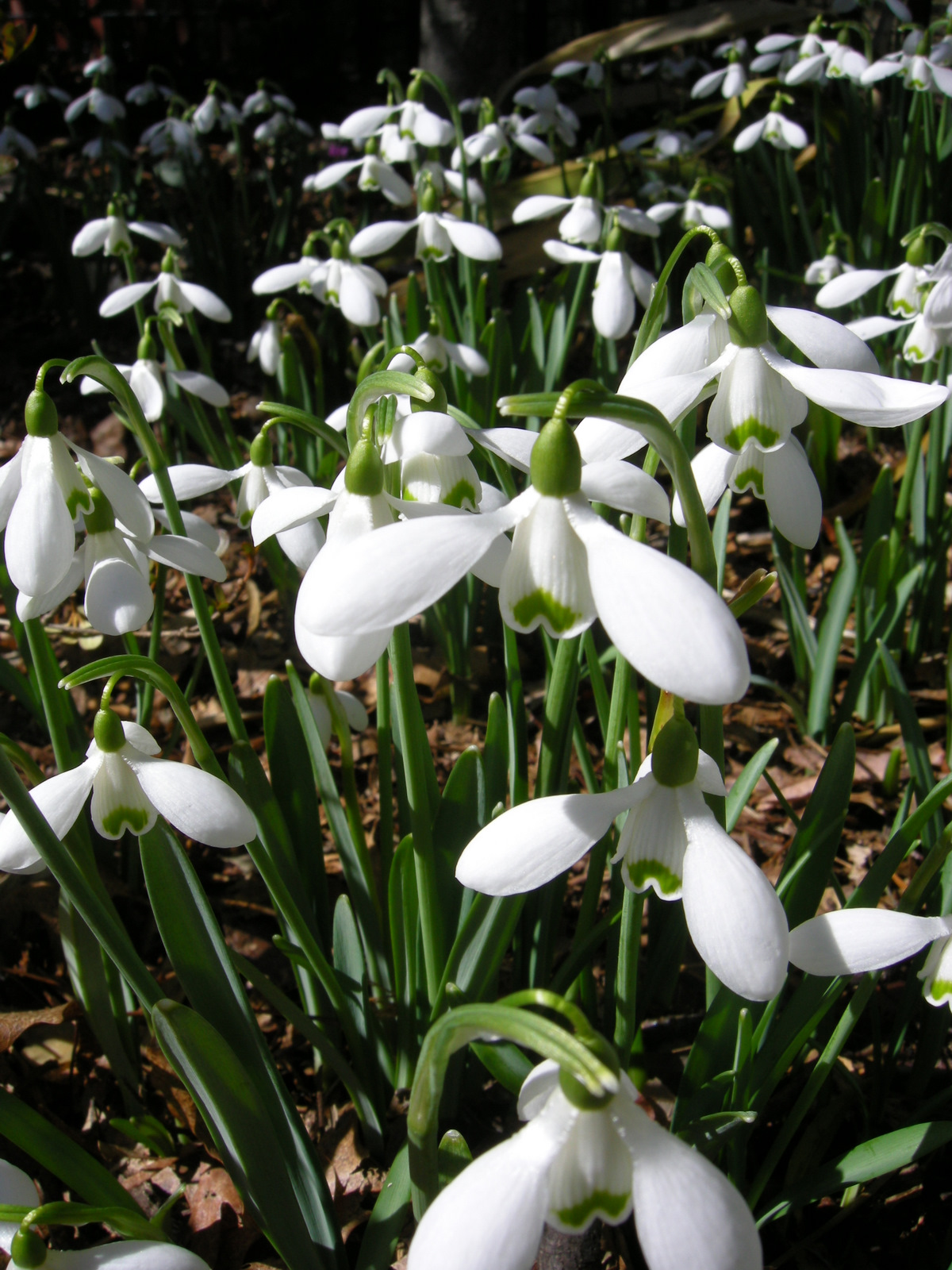
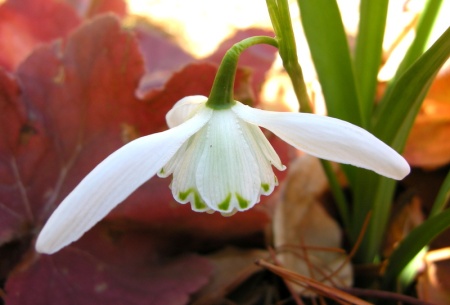
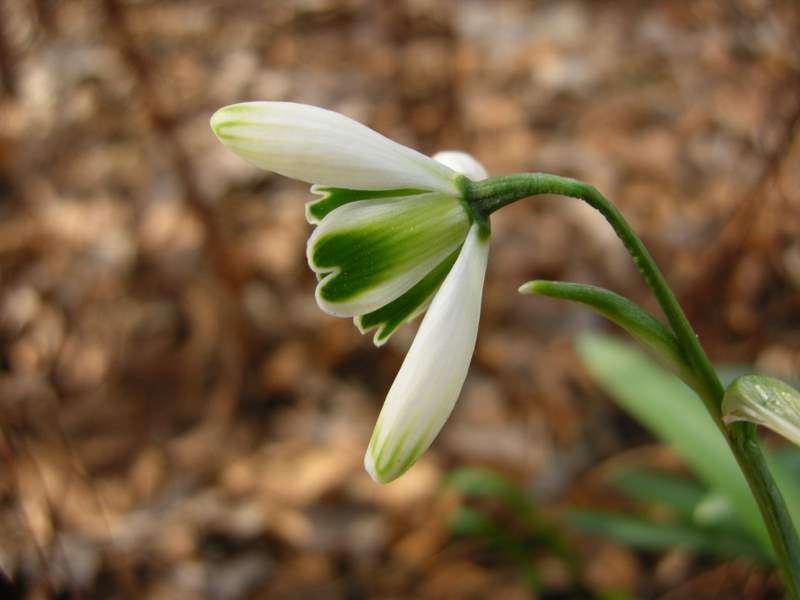
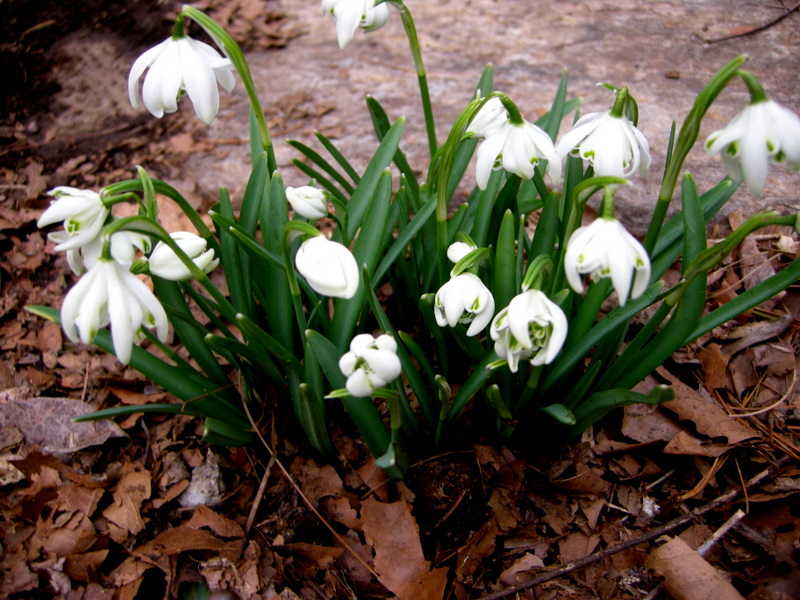
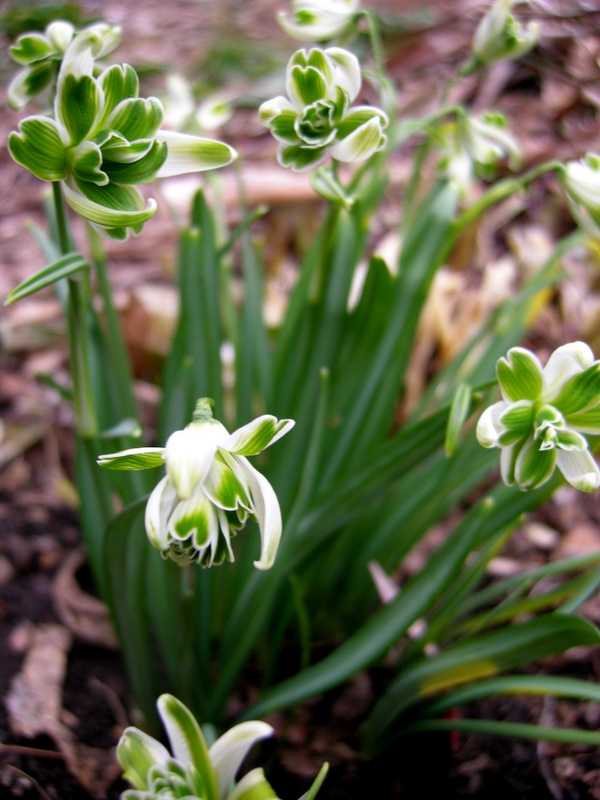
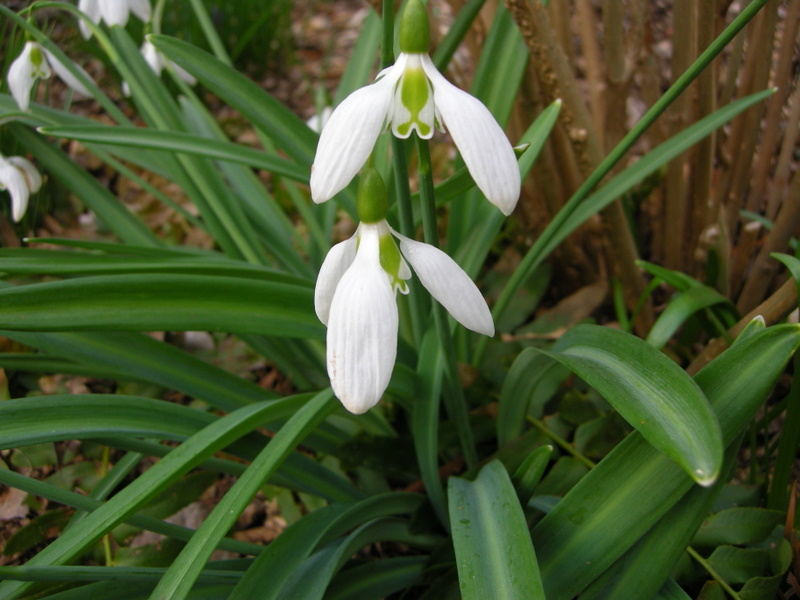
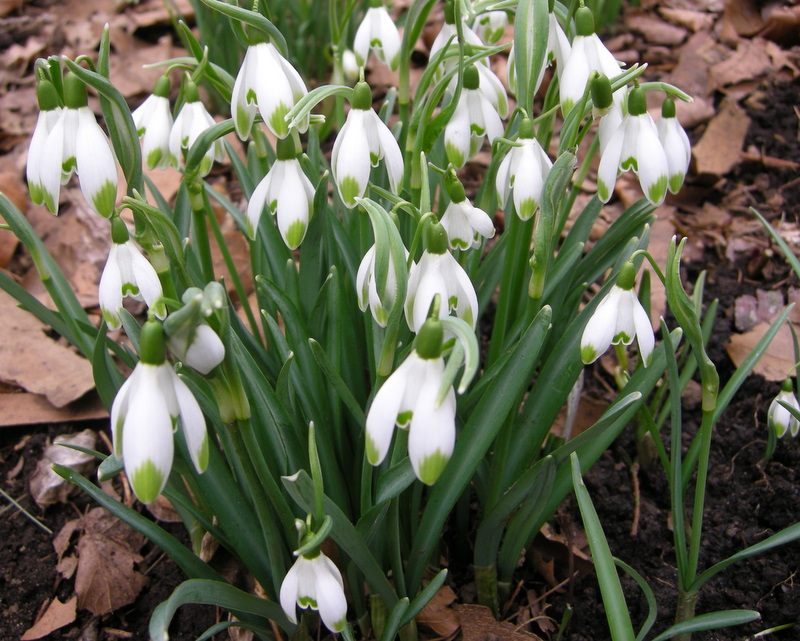
Galanthus elwesiiEvery photo in this collage is of a giant snowdrop, Galanthus elwesii, in my garden.  The differences in the markings are caused by the natural variation in the species.  None of them have been selected and given a cultivar name, although many plants like them have been named, probably too many.  Yet I find this variation fascinating.

Our current snowdrop catalogue is on line here.

To be put on the special snowdrop email list, please send your full name, cell number, and mailing address to carolyn@carolynsshadegardens.com and indicate that you are interested in snowdrops.

In this post you will find links to and descriptions of every post I have written on snowdrops.  The original purpose of this post was to let readers know that The Hardy Plant Society Mid-Atlantic Group honored me by asking me to write an article on snowdrops for their newsletter. It is called “Confessions of a Galanthophile” and is the Feature Article for the January 2013 Newsletter.  You can access the on line version by clicking here.
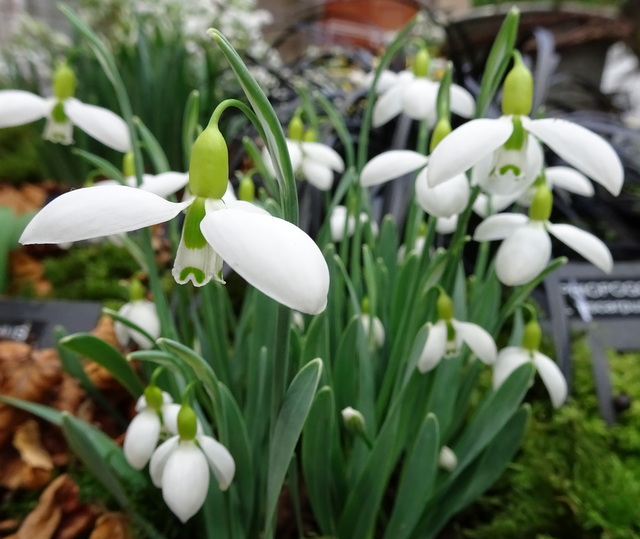
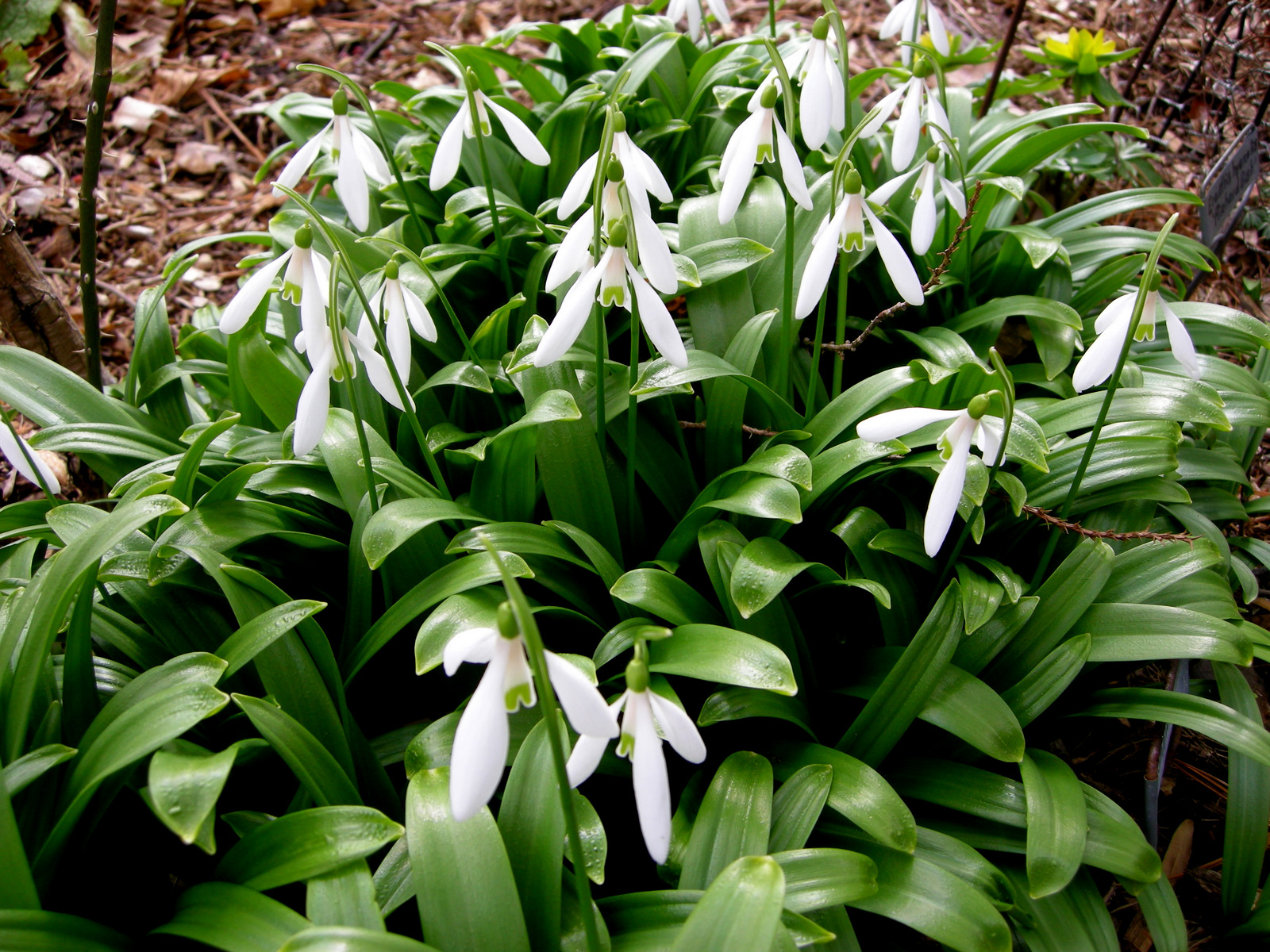
Galanthus gracilis, an elegant species snowdrop.

While letting you know about the Hardy Plant Society article, which makes use of parts of some of my previous blog posts, I thought this post would be a good place to list all the articles that I have written on snowdrops for easy reference.  I have interspersed the article names and links with photos of some of my favorite snowdrops.
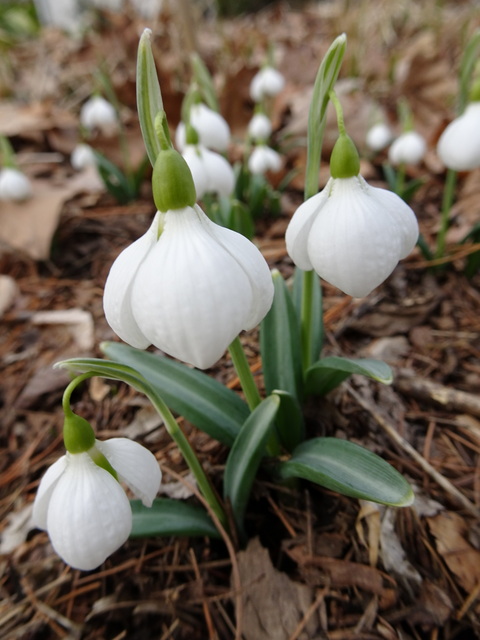
A very unusual and pricey newer snowdrop with squared off outer segments, ‘Diggory’.

November 22, 2010

“Snowdrops or the Confessions of a Galanthophile”

origins of galanthomania, fall-blooming snowdrops

profiles G. reginae-olgae and ‘Potter’s Prelude’

click here to read

Galanthus reginae-olgae, Lamium 'Shell Pink'G. reginae-olgae blooms in the fall with ‘Shell Pink’ lamium.

January 22, 2011

“Snowdrops: Further Confessions of a Galanthophile”

fascinating history of snowdrop cultivars

short profiles of 16 snowdrop cultivars

click here to read

Galanthus rizehensisGalanthus rizehensis, a species snowdrop.

February 9, 2011

“Are Snowdrops Thermogenic?”

discusses plants that produce their own heat

click here to read

Galanthus woronowii Cresson Garden The shiny bright green leaves of the species snowdrop G. woronowii.

January 19, 2012

“New Snowdrops for 2012”

importance of provenance in snowdrop collecting

profiles ‘Brenda Troyle’, ‘Tiny’, ‘Hippolyta’, ‘Dionysus’, and G. plicatus subsp. byzantinus

click here to read

Galanthus 'Potter's Prelude'The lovely American, fall-blooming snowdrop ‘Potter’s Prelude’.

January 7, 2013

‘New Snowdrops for 2013″

where to find information on snowdrops

profiles ‘Wendy’s Gold’, ‘Standing Tall’, ‘Mighty Atom’, and ‘Scharlockii’

click here to read
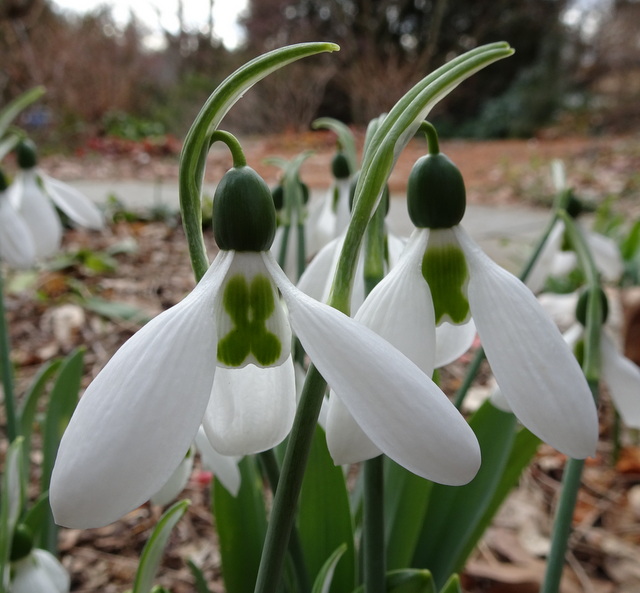
A new American snowdrop introduced by Carolyn’s Shade Gardens, Galanthus elwesii ‘Xmas’

The Hardy Plant Society Mid-Atlantic Group

January 2013 Newsletter

“Confessions of a Galanthophile”

why gardeners collect snowdrops

click here to read

'Straffan' by Jonathan Shaw‘Straffan’, photo by Jonathan Shaw

January 5, 2014

“The Un-Common Snowdrop”

the common snowdrop and its cultivars

profiles G. nivalis, ‘Flore Pleno’, ‘Viridapice’, and ‘Blewbury Tart’

click here to read

My favorite single classic snowdrop, ‘Magnet’.

January 16, 2014

“The Sochi Snowdrop”

G. woronowii and its cultivars

profiles G. woronowii and ‘Elizabeth Harrison’

click here to read

‘Kite’, very early-blooming with extremely long outer segments.

.

Galanthus elwesii 'Kite' twp scapes‘Kite’ can have twin flowers on one flower stalk.

January 27, 2014

“Top 25 Snowdrop Plants Part One”

UK ranking of top 25 all-time favorite snowdrops

profiles and photos of snowdrops ranked 13 to 25

click here to read

‘Godfrey Owen’ has six outer segments.

 February 4, 2014

“Top 25 Snowdrop Plants Part Two”

UK ranking of top 25 all-time favorite snowdrops

profiles and photos of snowdrops ranked 1 to 12

click here to read
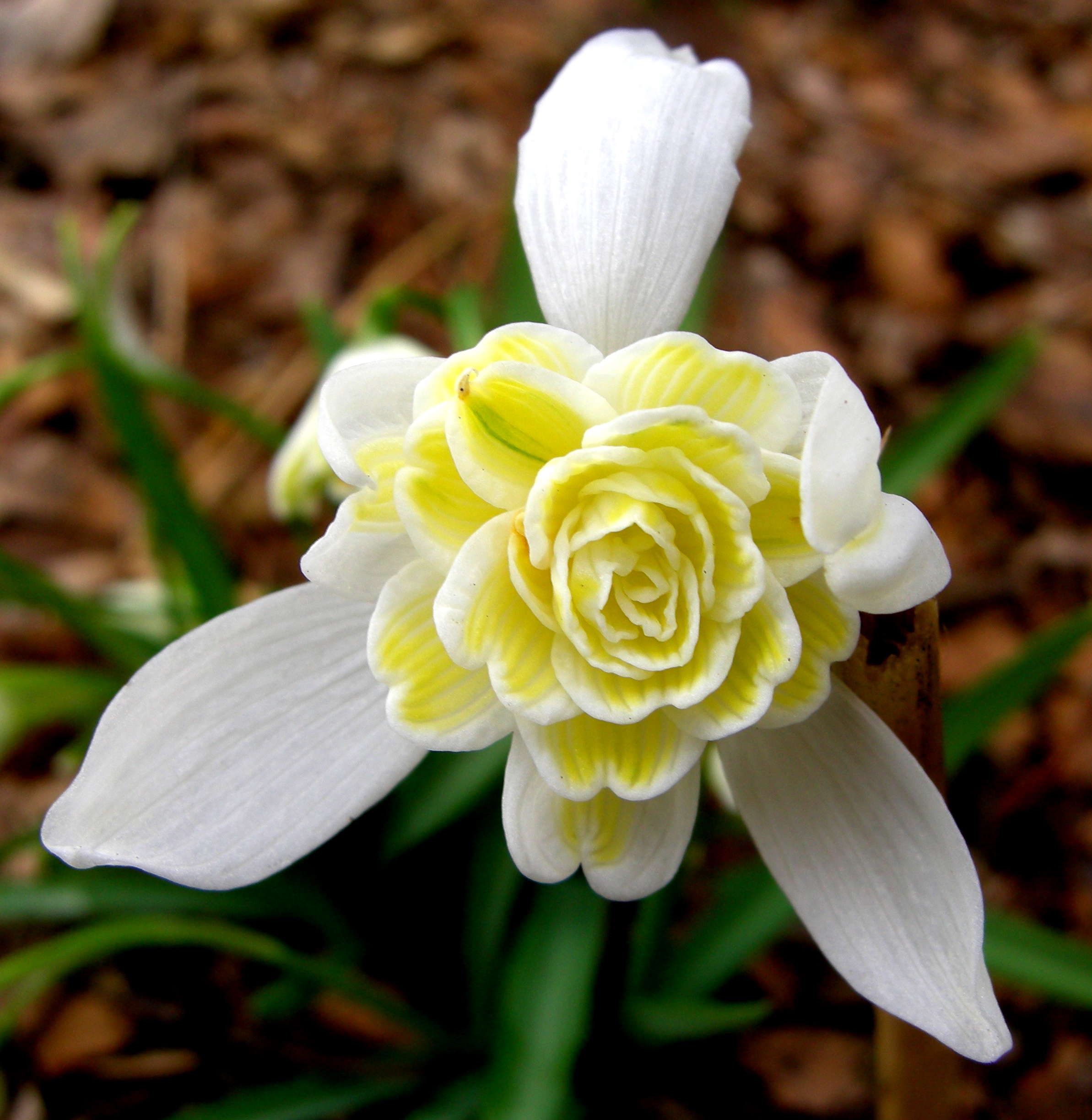
Galanthus nivalis 'Lady Elphinstone' CadwaladerThe gorgeous double yellow snowdrop ‘Lady Elphinstone’

December 2, 2014

“Do All Snowdrops Look Alike?”

shows the many very different types of snowdrops available

  photos of 14 strikingly different cultivars

click here to read

Galanthus 'Viridapice'Although considered ordinary by some, ‘Viridapice’ remains one of my favorite snowdrops.

December 9, 2014

“New Snowdrops for 2015”

  profiles ‘Blonde Inge’, ‘Diggory’, ‘Walrus’, and ‘Wasp’

click here to read

‘Cowhouse Green’ is a lovely part virescent snowdrop.

January 5, 2015

“Companion Plants for Snowdrops”

snowdrops are great alone but look even better with other winter interest plants

  profiles 10 winter-blooming plants to pair with snowdrops

click here to read

‘Walrus’ is ranked number 12 in all-time favorite snowdrops.

January 14, 2015

“New Snowdrop Book”

Kew Gardens A Plant Lover’s Guide to Snowdrops

review with images from the book

click here to read
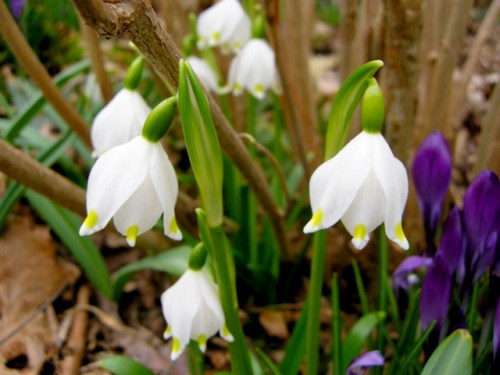
Leucojum vernum var. carpathicumAn unusual form of spring snowflake with yellow markings, Leucojum vernum var. carpathicum.

March 17, 2016

“Snowflakes (Leucojum) Continue the Snowdrop Season”

profiles many unusual forms of snowflakes, a close relative of snowdrops

click here to read

2017-catalogue-collage-11-26-2016-12-14-18-pm-11-26-2016-12-14-18-pmSome of my special snowdrops that I want to keep well marked.

December 6, 2016

“Curating a Plant Collection: Snowdrops or Otherwise”

how to keep track of your growing snowdrop collection

click here to read

The naturally blue lake at Colesborne Park below a hillside of snowdrops.

March 3, 2017

“Drifts of Snowdrops at Colesbourne Park”

photos and descriptions of our February 2017 trip to the famous English snowdrop venues

click here to read

March 15, 2017

“Snowdrops at the Royal Horticultural Society Spring Show”

setting up the Avon Bulbs snowdrop exhibit at the February 2017 show in London

click here to read

‘Fly Fishing’

November 18, 2017

“New Snowdrops for 2018”

profiles of ‘Ailwyn’, ‘Angelique’, ‘Bertram Anderson’, ‘Greenish’, ‘Fly Fishing’, and ‘Colossus’

click here to read

‘South Hayes’

November 28, 2017

“New Snowdrops for 2018 Part Two”

profiles of ‘Jonathan’, ‘Madelaine’, ‘Mrs. Macnamara’, ‘Welshway’, ‘South Hayes’, and ‘Titania’

click here to read
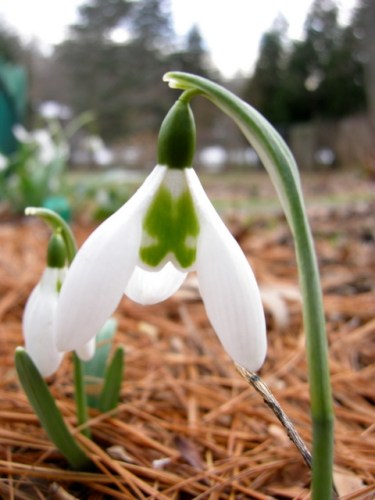
Galanthus 'Lapwing'‘Lapwing’ has a great mark and is a vigorous multiplier.

December 5, 2017

“Fine Gardening Feature Article on Snowdrops”

reprint of my cover article for the February 2016 issue of Fine Gardening

click here to read

Snowdrops and hellebores along the path to a folly at Painswick.

December 29, 2017

“Painswick Rococo Garden”

tour of winter garden and snowdrops at Painswick Rococo Gardens

click here to read
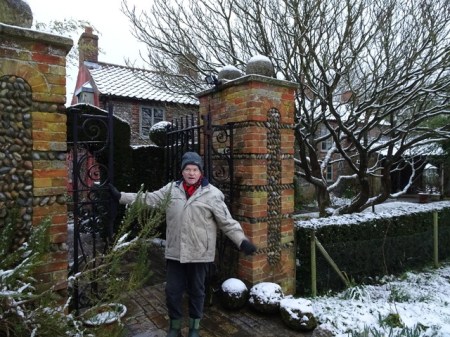
John Morley welcomes us to the gardens at North Green Snowdrops.

January 15, 2018

“North Green Snowdrops”

tour of the snowdrop garden at North Green Snowdrops

click here to read

 The best place to see snowdrops in England is Colesbourne Park in the Cotswolds.

March 7, 2018

“Exceptional Snowdrops and Gardens, England February 2018”

highlights of winter gardens and snowdrops in England

click here to read

Rodmarton Manor has an extensive snowdrop collection in its Arts and Crafts garden.

March 20, 2018

“Rodmarton Manor Garden”

tour of Rodmarton Manor’s winter garden and snowdrop collection

click here to read
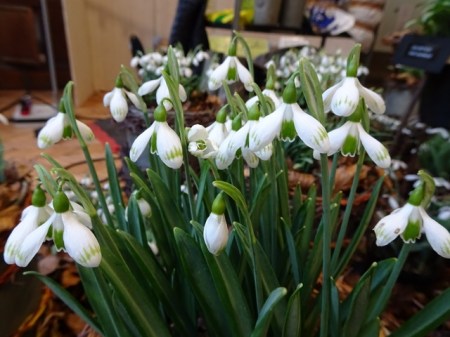
‘Sprite’ is a beautiful and distinct snowdrop selected at Avon Bulbs.

March 25, 2018

“A Day in the Life of an Avon Bulbs Snowdrop”

introduction of new snowdrops at Avon Bulbs in England

click here to read

‘Art Nouveau’ has a unique and elegant look.

November 13, 2018

“New Snowdrops for 2019: Part One”

profiles of ‘Godfrey Owen’, ‘Barnes’, ‘Art Nouveau’, ‘Armine’, ‘Puck’, and ‘Sprite’

click here to read

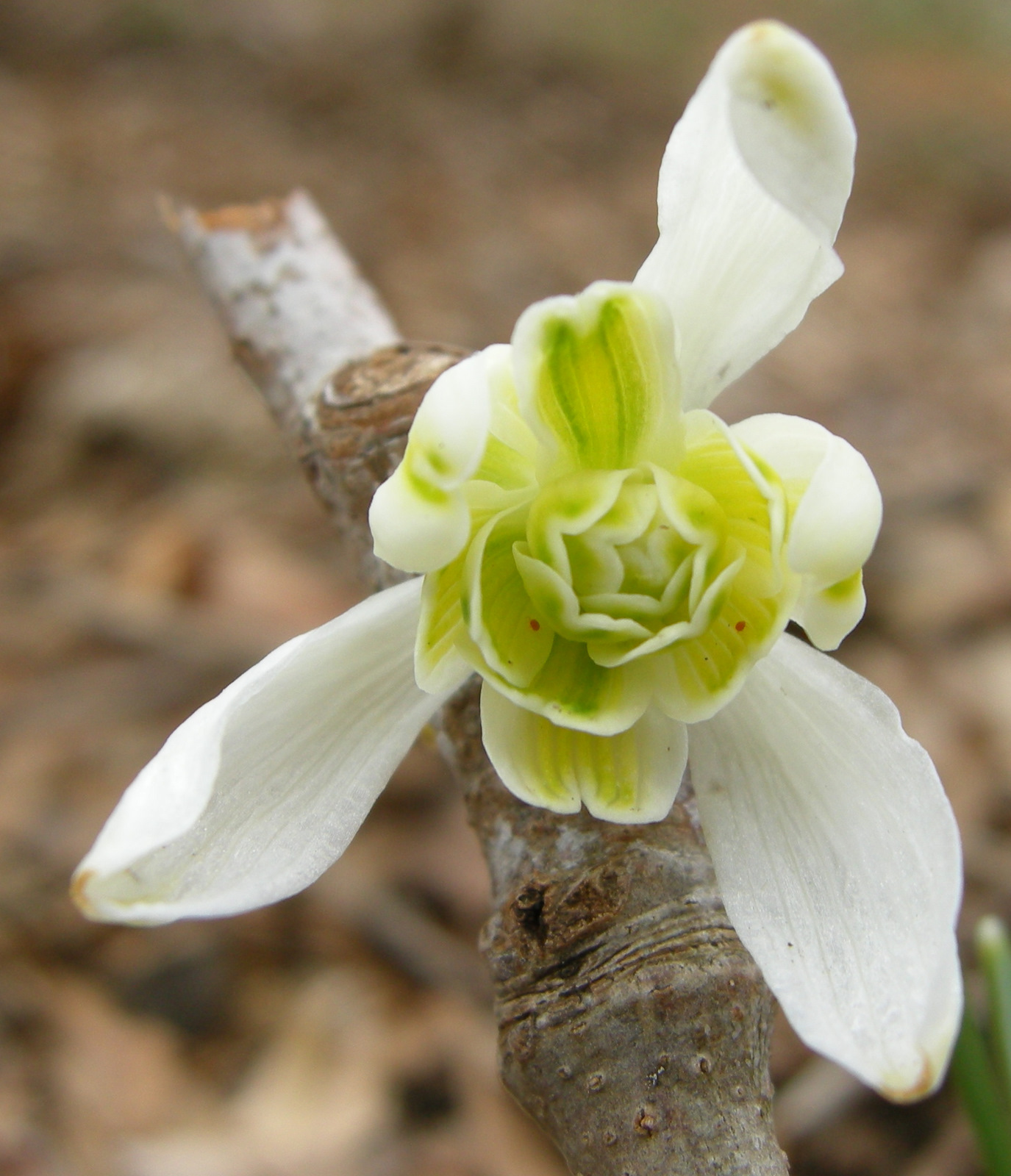
‘Richard Ayres’ is a large and vigorous double.

November 27, 2018

“New Snowdrops for 2019: Part Two”

profiles of ‘Richard Ayres’, ‘Green Brush’, ‘Faringdon Double’, ‘Merlin’, ‘Trym’, and ‘Starling’

click here to read

‘Three Ships’ is a gorgeous G. plicatus that blooms around Christmas.

December 11, 2018

“Your February 2019 Snowdrop Trip to England”

planning a trip to England during snowdrop season

click here to read
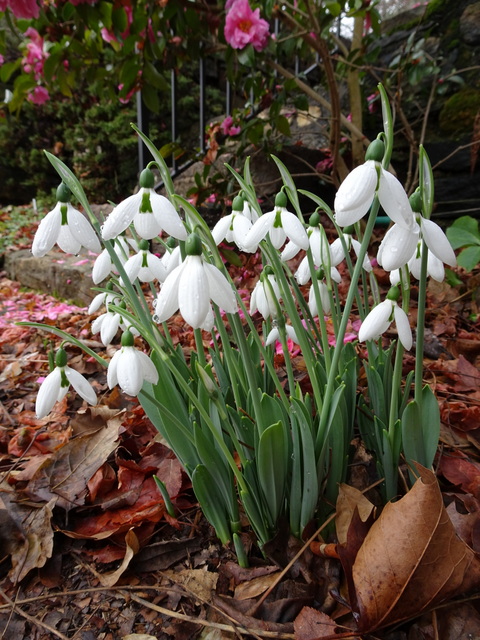
‘Xmas’ was selected, named, and introduced by Carolyn’s Shade Gardens.

October 23, 2019

“Early-Blooming Snowdrops”

profiles G. reginae olgae, ‘Potter’s Prelude’, ‘Barnes’, ‘Standing Tall’, and ‘Xmas’

click here to read

‘S. Arnott’ is the favorite snowdrop of galanthophiles everywhere.

November 2, 2020

“Classic Snowdrops”

profiles ‘Atkinsii’, ‘S. Arnott’, ‘Merlin’, ‘Hill Poe’, and ‘Scharlockii’

click here to read

‘One Drop or Two?’ is a rare twin-flowered snowdrop.

November 14, 2020

“New Snowdrops for 2021”

profiles ‘Beth Chatto’, ‘Bill Clark’, ‘Bagpuize Virginia’, ‘Fieldgate Prelude’, ‘Natalie Garton’, ‘Pom Pom’, and ‘One Drop or Two?’

click here to read

‘Sarah Dumont’ has gorgeous yellow markings.

November 21, 2020

“New Snowdrops for 2021: Part 2”

profiles ‘Sarah Dumont’, G. nivalis subsp. poculiformis, ‘Green Arrow’, ‘Moortown Mighty’, ‘Wonston Double’, and ‘Trympostor’

click here to read

Galanthus EA Bowles‘E.A. Bowles’ looks like a white miniature daffodil.

November 13, 2021

“New Snowdrops for 2022: Part 1”

profiles ‘E.A. Bowles’, ‘The Wizard’, ‘Mrs. Thompson’, ‘Cordelia’, and ‘Phantom’

click here to read

img032New snowdrop reference book

November 17, 2022

“Some Snowdrops: A photographic Ramble by Anne Repnow”

profiles ‘Three Ships’, ‘Standing Tall’, ‘Wasp’, and ‘Godfrey Owen’ and reviews a wonderful new snowdrop book

click here to read

Galanthus Midas‘Midas’ is a color breakthrough for snowdrops.

November 20, 2021

“New Snowdrops for 2022: Part 2”

profiles ‘Midas’, ‘Augustus’, ‘Cowhouse Green’, ‘Desdemona’, ‘Moses Basket’, and ‘Rodmarton Arcturus’

click here to read
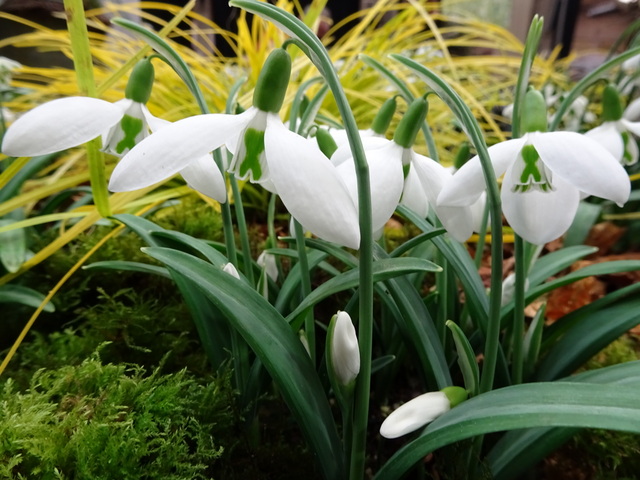
‘Walker Canada’ is big and beautiful.

November 19, 2022

“New Snowdrops for 2023: Part 1”

profiles ‘June Boardman’, G. reginae-olgae, ‘Rodmarton’, ‘Scissors’, and ‘Walker Canada’

click here to read
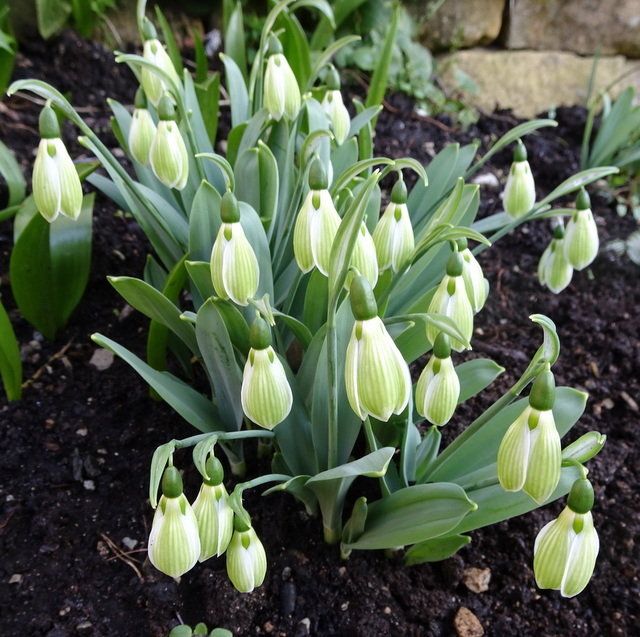
‘Rosemary Burnham’, an elegant virescent snowdrop

November 26, 2023

“New Snowdrops for 2023: Part 2”

profiles ‘Rosemary Burnham’, ‘Cambridge’, ‘Colossus’, ‘Betty Hansell’, and ‘Warwickshire Gemini’

click here to read
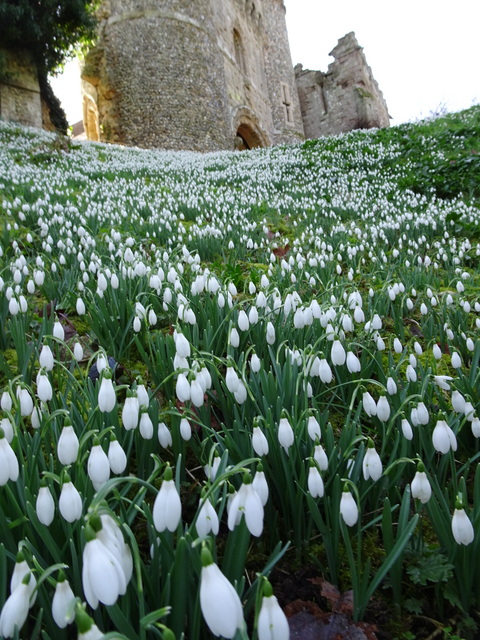
The moat at Benington Lordship Castle

November 11, 2023

“Snowdrops and History at Benington Lordship Gardens”

A 12th century castle near Cambridge, England, with a moat full of snowdrops

click here to read

The walls of Wandlebury Ring enclose tens of thuosands of G. plicatus.

November 19, 2023

“Wandlebury Ring”

An iron age hillfort outside of Cambridge, England, with a naturalized population of G. plicatus

click here to read
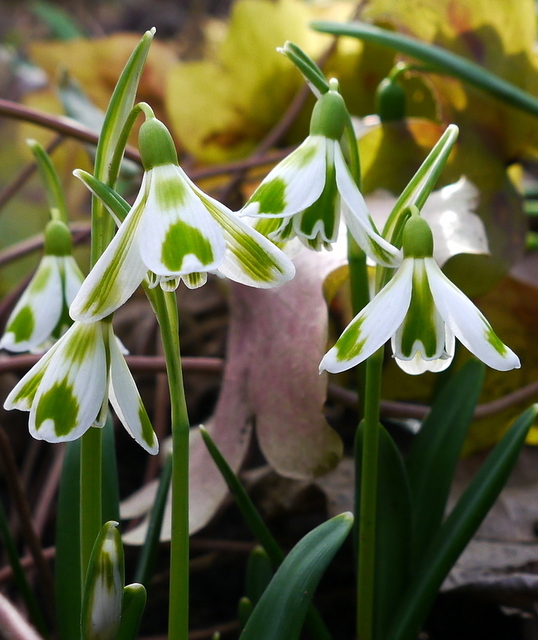
‘Phil Cornish’ may be the most beautiful inverse poculiform snowdrop.

November 26, 2023

“New Snowdrops for 2024: Part 1

profiles ‘Anglesey Candlelight’, ‘Phil Cornish’, ‘Daphne’s Scissors’, ‘Franz Josef’, and ‘George Elwes’

click here to read
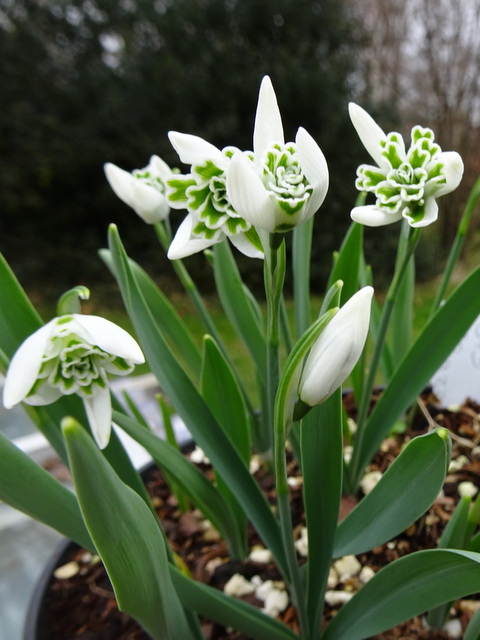
‘Miss Prissy’ is a very full and neat double that faces outward.

November 28, 2023

“New Snowdrops for 2024: Part 2

profiles ‘Miss Prissy’, ‘Excelsis’, ‘Big Bertha’, ‘Washfield Colesbourne’, and ‘Ivy Cottage Corporal’

click here to read
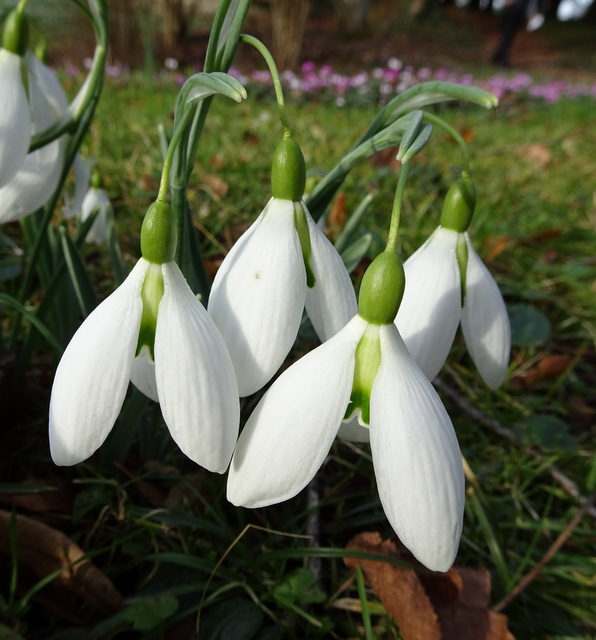
‘John Gray’ is an outstanding member of the “Might Atom” group of snowdrops

December 3, 2023

“New Snowdrops for 2024: Part 3”

profiles ‘Marjorie Brown’, ‘Fenstead End’, Trumpolute’, ‘Big Eyes’, and ‘John Gray’

click here to read
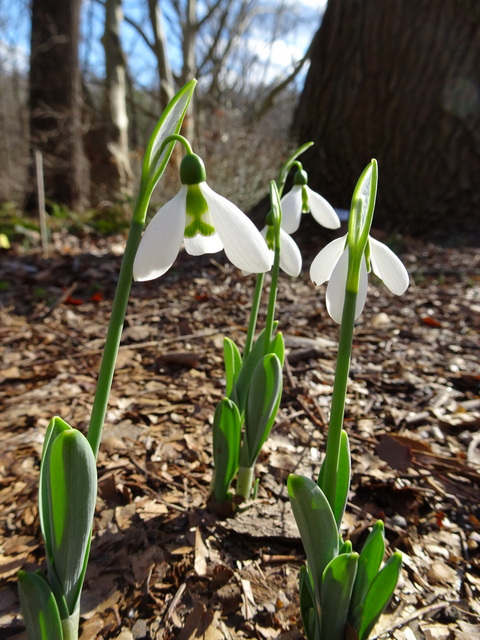
‘Standing Tall’ is an American selection with a distinct habit.

December 20, 2023

“December Blooming Snowdrops”

profiles ‘Potter’s Prelude’, Standing Tall’, ‘Three Ships’, and ‘Xmas’

click here to read

‘Lady Beatrix Stanley’ is elegant and vigorous.

January 2, 2024

“My Favorite Snowdrops” 

profiles ‘Diggory’, ‘Viridapice’, ‘Godfrey Owen’, ‘Madelaine’, ‘Fly Fishing’, ‘Xmas’, ‘Potter’s Prelude’, and ‘Lady Beatrix Stanley’ 

click here to read

‘Spindlestone Surprise’ is a lovely yellow.

March 20, 2024

“Snowdrops: Live Radio Interview”

live interview of Carolyn with a lot of information about snowdrops

click here to listen

A must-have snowdrop reference!

November 17, 2024 

“Some More Snowdrops by Anne Repnow”

profiles ‘Dryad Gold Sovereign’, ‘Jonathan’, and ‘Mrs. Macnamara’ and reviews a wonderful new snowdrop book 

click here to read

‘Joe Spotted’ was my favorite new snowdrop from 2025.

November 20, 2024

“New Snowdrops (& a Leucojum) for 2025: Part One 

profiles ‘Dryad Gold Sovereign’, ‘Herzilien’, ‘Joe Spotted’, ‘Titania’, ‘Ingrid Bauer’, and Leucojum ‘Null Punkte

click here to read

‘Kildare’ is a beautiful Irish snowdrop.

November 24, 2024

“New Snowdrops (& an Eranthis) for 2025: Part Two 

profiles Eranthis ‘Richard Bish’, ‘Dodo Norton’, ‘Kildare’, ‘Bitter Lemons’, and ‘White Swan’

click here to read

The winter color in Cambridge Botanic Garden is amazing.

December 7, 2024

“Cambridge Botanic Garden in Winter”

lots of photos of this extremely colorful winter garden

click here to read

The winter garden is on fire at Anglesey Abbey.

December 14, 2024 

“A Special Tour of Anglesey Abbey”

visit to this renowned snowdrop destination and winter garden 

click here to read

‘Early Bird’ is an early blooming, inverse poculiform, G. woronowii cultivar.

November 12, 2025

“New Snowdrops for 2026: Part One”

profiles ‘Early Bird’, ‘Peter Gatehouse’, ‘Poculi Perfect’, and ‘Selina Cords’

click here to read

‘Treasure Island’ might be the most vigorous yellow

November 16, 2025

“New Snowdrops (& a Leucojum) for 2026: Part Two”

profiles ‘Treasure Island’, ‘Lord Lieutenant’, ‘Elfenkind’, ‘Prestwood White’, and Leucojum carpathicum

click here to read

‘Frank Lebsa’ is a gorgeous fall-blooming snowdrop

December 3, 2025

“New Snowdrops for 2026: Part Three”

discusses the advantages of buying snowdrops in the green

profiles ‘B and B Duncan’, ‘Clare Blakeway-Phillips’, and ‘Frank Lebsa’

click here to read
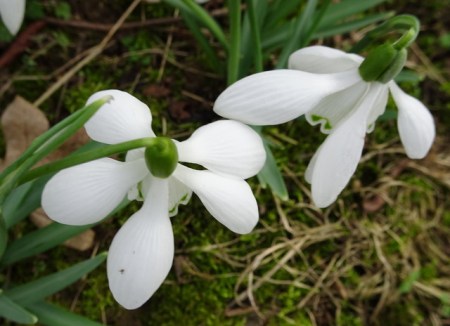
Galanthus Mrs. Thompson‘Mrs. Thompson’s’ erratic flowers are a plus.

2026 Snowdrop Catalogue

Over 35 varieties of snowdrops and snowflakes plus winter aconite for sale mail order in the US

click here to access
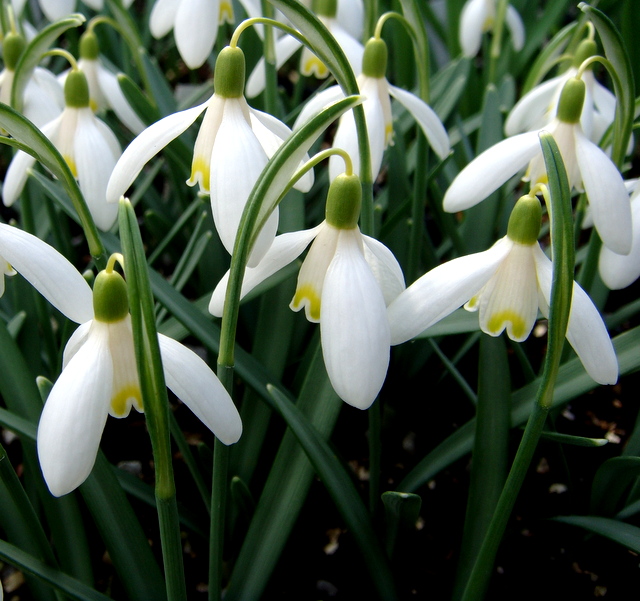
Galanthus nivalis 'Blonde Inge'‘Blonde Inge’ is breathtaking in a mass and bulks up quickly.

* * * * *

All the posts as well as the catalogue itself, provide interesting and informative reading on subjects ranging from the origins of galanthomania, the fascinating history of snowdrops, their provenance, how to research them, and even whether they produce their own heat.  I intend to add titles and links through the years as I write more about one of my favorite topics.

Enjoy, Carolyn

.

Note: Every word that appears in orange on my blog is a link that you can click for more information.  If you want to return to my blog’s homepage to access the sidebar information (catalogues, previous articles, etc.) or to subscribe to my blog, just click here.

New Snowdrops for 2013

Posted in New Plants, Shade Perennials, snowdrops, winter, winter interest with tags , , , , , , , , , , , , , , , , , , , , , , , , on January 7, 2013 by Carolyn @ Carolyns Shade Gardens

Carolyn’s Shade Gardens is a retail nursery located in Bryn Mawr, PA, specializing in showy, colorful, and unusual plants for shade.  The only plants that we ship are snowdrops to the US only.  For catalogues and announcements of local events, please send your full name, mailing address, and cell number to carolyn@carolynsshadegardens.com and indicate whether you are mail order only.  Click here to get to the home page of our website for catalogues and information about our nursery and to subscribe to our blog.

Snowdrops O through Z-001Some of the snowdrops available from Carolyn’s Shade Gardens in 2013.

.

Our current snowdrop catalogue is on line here.

.

This post includes photographs and colorful descriptions of the 4 new snowdrops I am offering for sale in my 2013 Snowdrop Catalogue.  There were three more new cultivars offered, but they sold out within two days of the catalogue being posted on my website.  For entertaining descriptions of most of the remaining 13 varieties offered, click here.

Galanthus 'Hippolyta' photo Paddy TobinThe Greatorex double snowdrop ‘Hippolyta’ was new in 2012.  For background on the Greatorex doubles, a discussion of snowdrop provenance,  and information about ‘Hippolyta’, click here.  Photo by Paddy Tobin.  We are also offering the early flowering Greatorex double ‘Ophelia’.

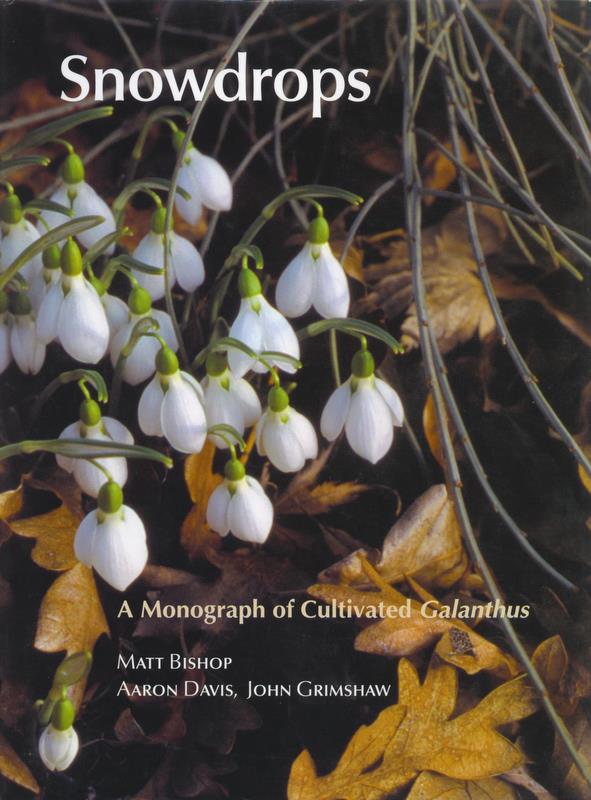
In Snowdrops or The Confessions of a Galanthophile, I described my transition from someone who grows snowdrops to someone who is obsessed with them.  In Snowdrops: Further Confessions of a Galanthophile, I explained that most snowdrop cultivars can be appreciated as much for their colorful history as for their ornamental characteristics.  That history is contained in Snowdrops: A Monograph of Cultivated Galanthus by Matt Bishop, Aaron Davis, and John Grimshaw (Griffin Press 2006), commonly called the “snowdrop bible”.

Galanthus 'Potter's Prelude'Potter’s Prelude’ is a vigorous and beautiful snowdrop that blooms in the fall.  This year it started in mid-November and still has some fresh flowers today (1/6/13).  For more information on fall-blooming snowdrops, click here.

Whenever I obtain a new snowdrop or offer one in my catalogue, I always research it thoroughly both for fun and to make sure that what I am offering is the genuine article.  The first place that I go is to the “snowdrop bible” to review the detailed description and history of the species or cultivar in question.  This year I was also able to consult a new snowdrop book, Snowdrops by Gunter Waldorf (Frances Lincoln Limited 2012).  What it lacks in detail, it makes up for with 300 photographs accompanied by short descriptions highlighting the salient characteristics of the snowdrops profiled.  It also contains no nonsense advice about growing and collecting snowdrops.

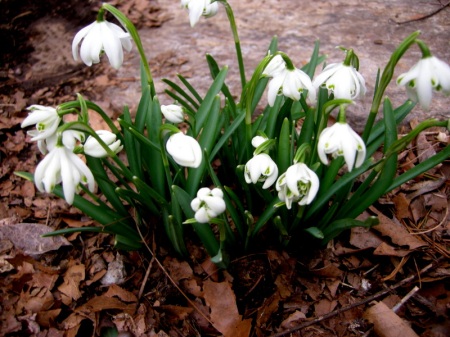
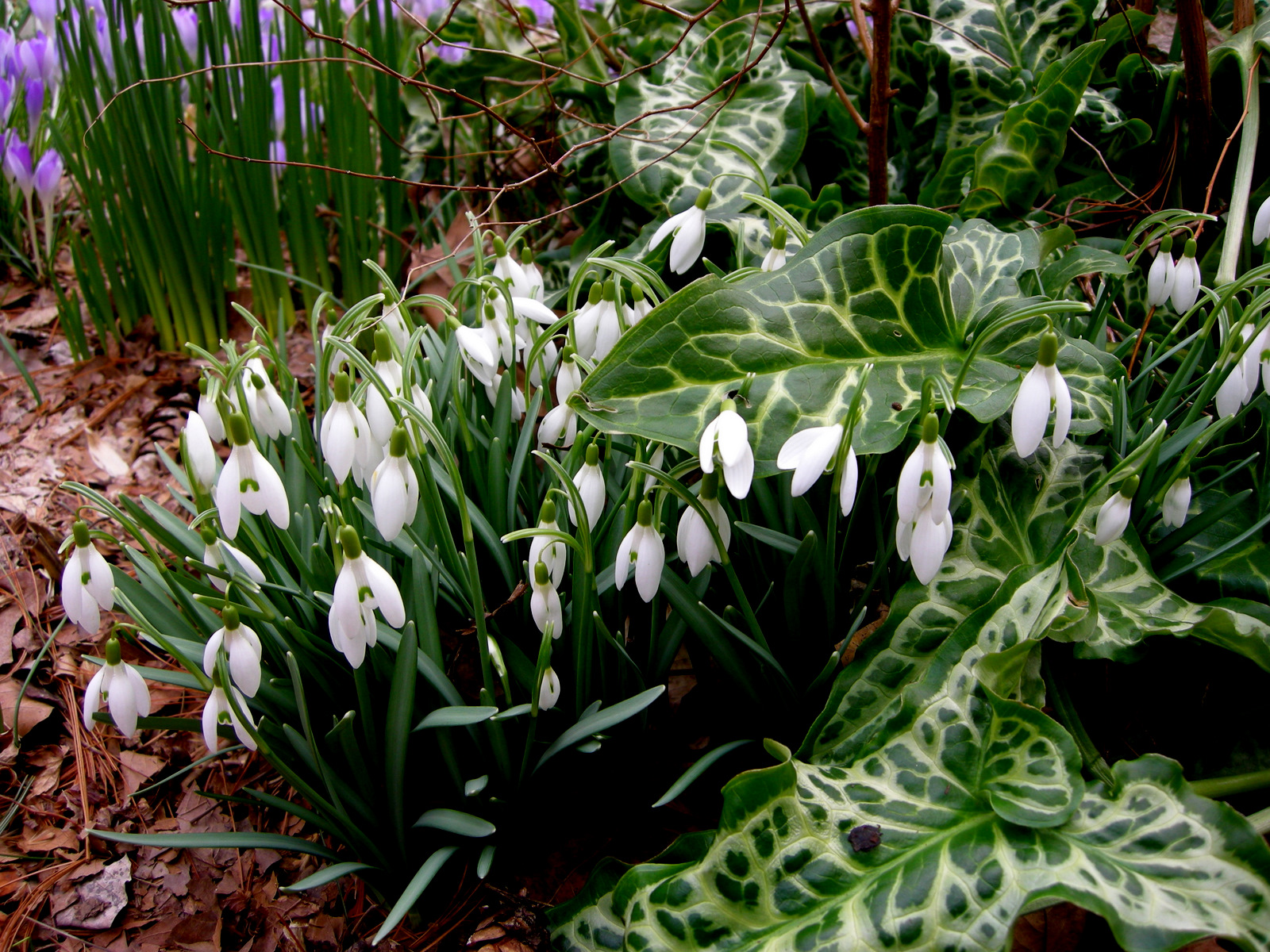
Although the common snowdrop, G. nivalis, pictured above with Italian arum and snow crocus, is the most prevalent snowdrop in gardens, it is by no means common in the ordinary sense of the word.  In fact, it is the best choice for gardeners who want to naturalize snowdrops in masses.

After hitting the books, I search the internet and read everything that has been written about the new snowdrop.  The available material is mostly the catalogues of all the big UK snowdrop sellers like Avon Bulbs, Harveys Garden Plants, and Monksilver Nursery, among others, but sometimes I come across fun historical or informational articles.  I also consult the Scottish Rock Garden Club Forum Galanthus thread where galanthophiles from all over the world meet to obsess.  After that, I look at photo galleries of snowdrops, particularly the Galanthus Gallery  and the new snowdrop photos on the Dryad Nursery website.

Galanthus elwesiiThe giant snowdrop, G. elwesii, is also a vigorous spreader.  This is the species massed at Winterthur.

Finally, as much as possible, I research the provenance of the snowdrop I am adding to my catalogue or collection.  Provenance is the history of a snowdrop’s ownership, documenting the authenticity of the actual bulbs being sold.  It is important that snowdrops come from a reputable source and be carefully tracked by subsequent owners.  With over 500, and some say 1,000, snowdrop cultivars circulating among collectors, it is easy to make mistakes.  For more information on provenance, click here.  With that background, on to the new snowdrops.

Galanthus plicatus 'Wendy's Gold' The very rare yellow snowdrop ‘Wendy’s Gold’.

I am thrilled to offer a yellow snowdrop for the first time, and not just any yellow, but ‘Wendy’s Gold’, the cream of the crop. Not only is this snowdrop much sought after even in England, but it easily refutes the oft made claim that all snowdrops look alike.  It was discovered in 1974 by Bill Clark, the Warden of the UK National Trust property Wandlebury Ring near Cambridge.  Ten years later, with some prodding, he realized how rare it was and decided to name it after his wife Wendy.  All the bulbs except three were then sold to a Dutch bulb company where they subsequently died,  Luckily, the remaining bulbs proved robust, and we have ‘Wendy’s Gold’ today.

Galanthus 'Wendy's Gold'


‘Wendy’s Gold’ is a superb and vigorous snowdrop with a yellow ovary (the “cap” above the petal-like segments) and a large and vivid yellow mark on the inner segments.  Its G. plicatus parentage gives it beautiful wide pleated leaves with folded margins, serving as a gorgeous backdrop for the striking flowers.

.

Galanthus elwesii 'Standing Tall' Cresson photo-001‘Standing Tall’ is a very impressive snowdrop.

In 1988, regional horticulturist Charles Cresson began evaluating a G. elwesii snowdrop known until this year as 88-1.  Over the years of testing it in various conditions in his garden, he discovered that 88-1 is a remarkable snowdrop.  Its 12″ height, about as tall as snowdrops get, and very upright habit give it a commanding presence in the garden.  However, as it turns out, 88-1 doesn’t have much competition from other snowdrops because it starts blooming right before Christmas and continues through the month of January, a time period when few other snowdrops bloom.

Galanthus elwesii 'Standing Tall' Cresson photo-005A close up of ‘Standing Tall’s’ flower.

Luckily, I was able to convince Charles that 25 years was long enough to evaluate a snowdrop, and he should introduce this absolutely outstanding new selection.  Charles decided to name it ‘Standing Tall’ to reflect its height, very upright habit, and ability to stand up to whatever the season brings, lying down in very cold weather and popping right back up as if nothing had happened.  Charles is in the process of registering it with the KAVB, the international registration authority for bulb cultivars in the Netherlands.  In the meantime, Carolyn’s Shade Gardens is thrilled to be chosen to introduce it for sale.

.

Galanthus 'Mighty Atom' Cresson GardenThe large and elegant flowers of ‘Mighty Atom’.

‘Mighty Atom’ is a beautiful snowdrop with very large, rounded, bright white flowers—the biggest flowers in the catalogue—with a bold, deep green mark on the inner segments.  Its habit is short, compact, and even making an exceptional overall presentation.  I have admired it for years and urged Charles to offer it, but he was reluctant due to its somewhat confused history. 

British snowdrop legend EB Anderson inherited the original ‘Mighty Atom’ from John Gray in 1952 and subsequently named it.  However, in later years, Snowdrops states that Anderson distributed a group of distinct but excellent clones, now known as the ‘Mighty Atom’ complex, under this name.  Charles’s stock came from plantsman Don Hackenberry who can trace its lineage directly back to EB Anderson, although it is not an offset of what is believed to be Gray’s “original” clone.  This member of the ‘Mighty Atom’ complex has proven to be reliable, vigorous, and trouble-free.

.

Galanthus nivalis 'Scharlockii' Cresson‘Scharlockii’ is characterized by the “rabbit ear’s” formed by its spathe (flower covering).

The final member of the four new snowdrops in my 2013 Snowdrop Catalogue is ‘Scharlockii’, a cultivar of the common snowdrop, G. nivalisIt is a charming and distinctive snowdrop with boldly marked green tips on its outer segments but most notable for the rabbit ears (see photo) formed when its spathe splits into two prominently upright, leaf-like halves.  It was discovered in 1818 by Herr Julius Scharlock of Grandenz, Germany, and named in 1868.  Charles got his stock from Winterthur, known for its amazing snowdrop display, when he worked there in the early 1990s.

.

Obviously, I find everything about snowdrops fascinating and hope I have communicated some of my infatuation to you.  If you are in the U.S. and want to order from the catalogue, just follow the directions for mail order.

Carolyn

Note: Every word that appears in orange on my blog is a link that you can click for more information.  If you want to return to my blog’s homepage to access the sidebar information (catalogues, previous articles, etc.) or to subscribe to my blog, just click here.


New Snowdrops for 2012

Posted in New Plants, Shade Perennials, snowdrops, winter, winter interest with tags , , , , , , , , , , , , , , , , , , , , , on January 19, 2012 by Carolyn @ Carolyns Shade Gardens

Carolyn’s Shade Gardens is a retail nursery located in Bryn Mawr, PA, specializing in showy, colorful, and unusual plants for shade.  The only plants that we ship are snowdrops within the US.  For catalogues and announcements of local events, please send your full name, mailing address, and cell number to carolyn@carolynsshadegardens.com and indicate whether you are interested in snowdrops, hellebores, and/or hostas.  Click here to get to the home page of our website for catalogues and information about our nursery and to subscribe to our blog.

Who said all snowdrops look alike?  Some of my favorites: top row, L to R, ‘Wendy’s Gold’, ‘Blewbury Tart’, ‘Hippolyta’, ‘Flore Pleno’; middle, ‘Jaquenetta’, ‘Merlin’, ‘Lady Elphinstone’, ‘Augustus’; bottom, unknown, ‘Ophelia’, G. plicatus subsp. byzantinus, ‘Lady Beatrix Stanley’.

.

Our current snowdrop catalogue is on line here.

.

This article includes photographs and colorful descriptions of the 5 new snowdrops I am offering for sale in my 2012 Snowdrop CatalogueFor entertaining descriptions of most of the remaining 13 varieties offered in the 2012 catalogue, click here.

The hundreds of snowdrop cultivars out there range from a classic like ‘Atkinsii’ pictured above to…(see next photo)

In Snowdrops or The Confessions of a Galanthophile, I described my transition from someone who grows snowdrops to someone who is obsessed with them.  In Snowdrops: Further Confessions of a Galanthophile, I explained that most snowdrop cultivars can be appreciated as much for their colorful history as for their ornamental characteristics.  That history is contained in Snowdrops: A Monograph of Cultivated Galanthus by Matt Bishop, Aaron Davis, and John Grimshaw (Griffin Press 2006), commonly called the “snowdrop bible”.

Galanthus nivalis 'Blewbury Tart' at Carolyn's Shade Gardens…this crazy, modern double cultivar, ‘Blewbury Tart’, which looks like it’s having a bad hair day (I love it!).

The information in Snowdrops is not only interesting but also crucial to keeping straight all the available snowdrops.  Snowdrops describes over 500 cultivars, and the authors admit that it is now out-of-date, and a second volume is required (for details on Snowdrops 2, click here).  Snowdrops description of the cultivar along with the actual origin of the snowdrop plant in question both contribute to its provenance: the history of its ownership documenting its authenticity.  If a collector is purchasing an expensive plant, provenance is very important.

Snowdrop prices range from the very affordable (but no less desirable) common snowdrop, G. nivalis, pictured above with Italian arum and snow crocus, to…(see next photo)

…the highly collectible (with a price to match) ‘Wendy’s Gold’.

‘Brenda Troyle’, a new snowdrop from Charles Cresson in my 2012 catalogue, is a perfect example of how this works.  True ‘Brenda Troyle’ is a vigorous snowdrop admired for its well-proportioned, rounded flowers with flared and cupped outer petals (segments) and a strong fragrance of honey.  It received an Award of Garden Merit from the Royal Horticultural Society in 1960 for “outstanding excellence for ordinary garden decoration or use.”  Customers who attended Charles Cresson’s snowdrop seminars last year loved it.

Charles Cresson’s authenticated ‘Brenda Troyle’

But Snowdrops explains that ‘Brenda Troyle’ is very mixed up in the trade.  In fact, it is even unclear whether it was named after a character in Sir Walter Scott’s novel The Pirate or a staff member at an Irish nursery.  In cases like this, it is very important that the snowdrop display the desirable characteristics of the cultivar as Cresson’s stock does.  It is equally as important that the original stock was purchased from a reputable source and kept labeled since its purchase.  Charles got his plants from a bulb company started by the venerable Hoog family of Van Tubergen fame and conserves his whole snowdrop collection with the utmost care.

Galanthus ‘Tiny’

‘Tiny’ is a snowdrop that does not suffer from an identity crisis as Snowdrops states that almost every galanthophile in the U.K. grows it.  It is a diminutive form of the common snowdrop, G. nivalis, easily distinguished by its narrow leaves and elfin stature.  It is quite charming in a clump, which develops rapidly with this vigorous cultivar.  It also flowers later, extending the snowdrop season into late spring.

The subspecies byzantinus of G. plicatus is easily distinguished from subspecies plicatus by the two marks on its inner segments.


Unique provenance adds significantly to the desirability of a snowdrop as is the case with the Turkish snowdrop, Galanthus plicatus subsp. byzantinus.  This subspecies has beautiful wide pleated leaves and lovely plump flowers joined in an elegant overall habit.  It comes from a small area in northwestern Turkey, but is uncommon even there.  Subspecies byzantinus is an exceptionally good form of G. plicatus, hard to come by even in the U.K.

The elegant habit of G. plicatus subsp. byzantinus.

But the part of its provenance that is really exciting is that these plants originated from one of the most celebrated and important American snowdrop collections, the gardens at Winterthur.  As Henry Francis du Pont added plants to Winterthur, snowdrops became a focus.  In the 1930s, he purchased the parents of these very bulbs from Barr & Sons, a renowned bulb house that operated in Covent Gardens, London, from 1882 to 1956.  When Charles Cresson worked at Winterthur in the early 1990s, he was given plants of this unique snowdrop, and we are offering the offspring of those plants in the 2012 catalogue.  Now that’s provenance!

The Greatorex double ‘Hippolyta’ (photo by and used with the permission of Paddy Tobin).

The final two new snowdrops were both hybridized in the mid-twentieth century by the legendary but enigmatic snowdrop breeder Heyrick Greatorex and are known as Greatorex doubles.  Snowdrops makes an unflattering reference to a story that he spent World War II in a local pub.  However, further research reveals that, in addition to serving in WWII, he fought in World War I, was wounded at Lagincourt, and received the Victory and British Medals—a very distinguished record indeed.  If you would like to read more about him, click here.

Galanthus 'Hippolyta' photo Paddy Tobin‘Hippolyta’ (photo by and used with the permission of Paddy Tobin)

‘Hippolyta’ is the shortest of the many Greatorex double snowdrops, which Heyrick Greatorex developed by crossing the double common snowdrop, G. nivalis ‘Flore Pleno’, with the species G. plicatus to create large and vigorous plants.  He named them after characters in Shakespeare’s plays, Hippolyta appearing in A Midsummer Night’s Dream.  Although some of the Greatorex doubles are confused, ‘Hippolyta’ consistently produces neatly doubled, rounded flowers, combining a tightly compact inner rosette with cupped and flaring outer petals (segments)—a charming arrangement.  It received an Award of Garden Merit from the Royal Horticultural Society in 1970.


The Greatorex double ‘Dionysus’

The final member of the five new snowdrops in my 2012 Snowdrop Catalogue is ‘Dionysus’, also a member of the acclaimed series of double snowdrops developed by Heyrick Greatorex (although not a Shakespeare character).  ‘Dionysus’ is one of the taller and earlier flowering doubles in this series.  It has fewer inner segments  than other Greatorex doubles, and  they feature a large, deep green, inverted heart-shaped mark.  Evidently Heyrick Greatorex described ‘Dionysus’ as one of the best of his doubles for cultivation in the open garden.  Charles got his bulbs from the well known Oregon bulb authority Jane McGary.

Obviously, I find everything about snowdrops fascinating and hope I have communicated some of my infatuation to you.  If you are in the U.S. and want to order from the catalogue, just follow the directions for mail order.

Carolyn

Notes: Every word that appears in orange on my blog is a link that you can click for more information.  If you want to return to my blog’s homepage to access the sidebar information (catalogues, previous articles, etc.) or to subscribe to my blog, just click here.
2011 Winter Interest Plants

Posted in bulbs for shade, garden to visit, landscape design, Shade Shrubs, snowdrops, winter interest with tags , , , , , , , , , , , , on March 20, 2011 by Carolyn @ Carolyns Shade Gardens

Carolyn’s Shade Gardens is a retail nursery located in Bryn Mawr, PA, specializing in showy, colorful, and unusual plants for shade.  The only plants that we ship are snowdrops and miniature hostas.  For catalogues and announcements of events, please send your full name, location, and phone number (for back up use only) to carolyn@carolynsshadegardens.com.  Click here to get to the home page of our website for catalogues and information about our nursery and to subscribe to our blog.

Japanese flowering apricot, Prunus mume

On March 3, 7, and 13, my customers and I attended seminars on Snowdrops and Other Winter Interest Plants given by Charles Cresson at his garden, Hedgleigh Spring in Swarthmore, Pennsylvania (US).  Charles is the instructor for the Longwood Gardens certificate course “Hardy Spring and Fall Bulbs” as well as the author of several gardening books.  He is also a frequent lecturer, most recently at the Planting Fields Arboretum on Long Island and Rare Find Nursery in New Jersey for presentations on “Choosing Hardy Camellias for Spring and Fall”.

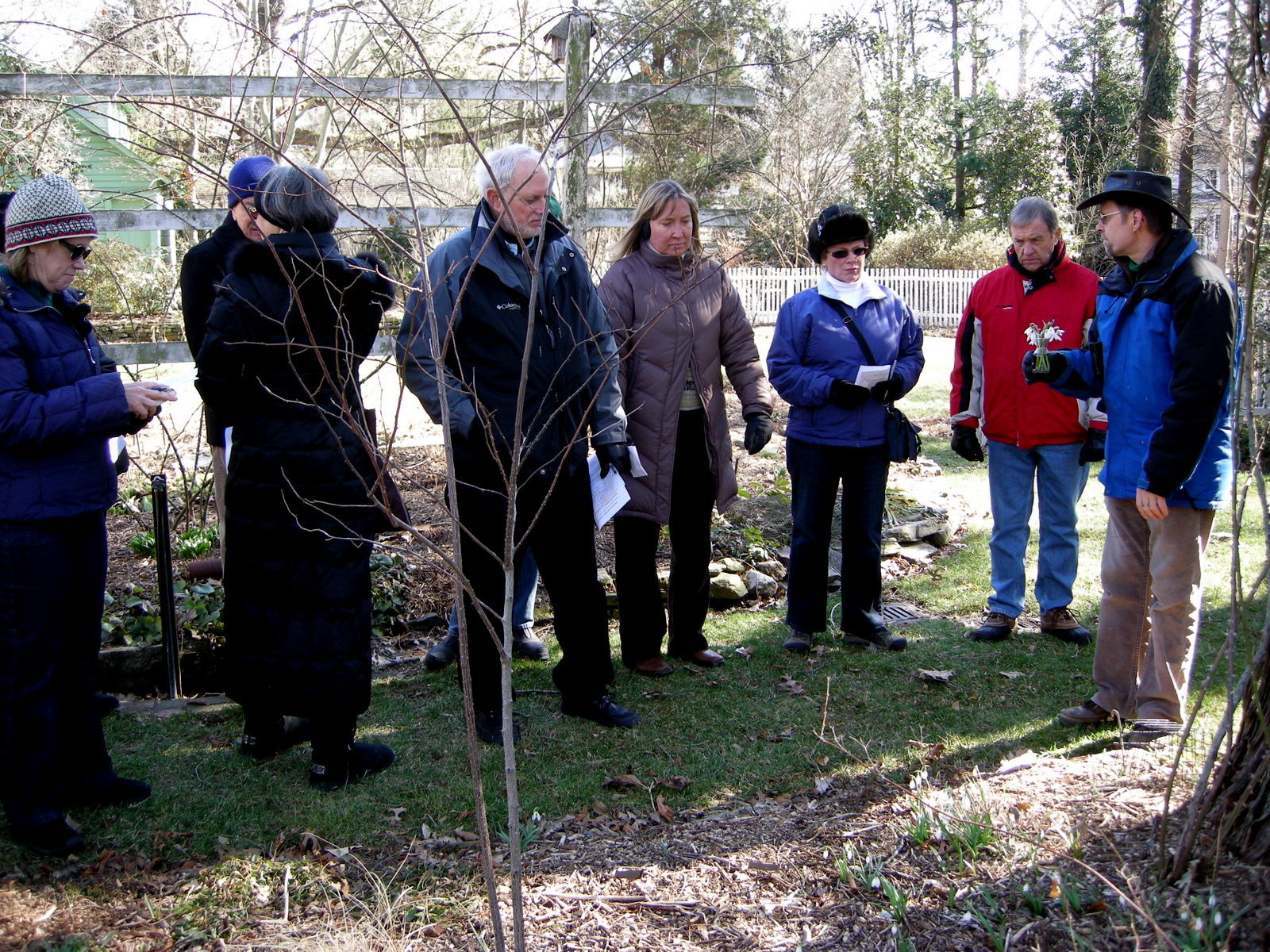
Charles Cresson, kneeling to point out plicate leaves on a snowdrop, to seminar attendees.

Charles trained at the Royal Horticultural Society, Wisley, in England and the Kalmthout Arboretum in Belgium, best known for its witch hazel introductions.    He has worked at Meadowbrook Farm, Winterthur, Nemours, and Chanticleer.  His grandfather built the house at Hedgleigh Spring in 1911 and created the garden over the course of 50 years.  Charles has gardened there for  more than 40 years.

Every time we viewed a new snowdrop, no matter how rare, Charles picked two flowers and passed them around so that we could closely examine the markings and experience the fragrance.  He then collected the flowers in a little vase for later comparison.

What a treat Charles’s seminars were.  Even though I attended all three sessions, I learned something new each time and came away with a deep admiration for Charles’s encyclopedic knowledge of plants and the depth of his plant collection, not to mention a wish list of plants for my own gardens.  I also appreciated how each plant was not just deposited in the garden but was carefully incorporated into the overall design.

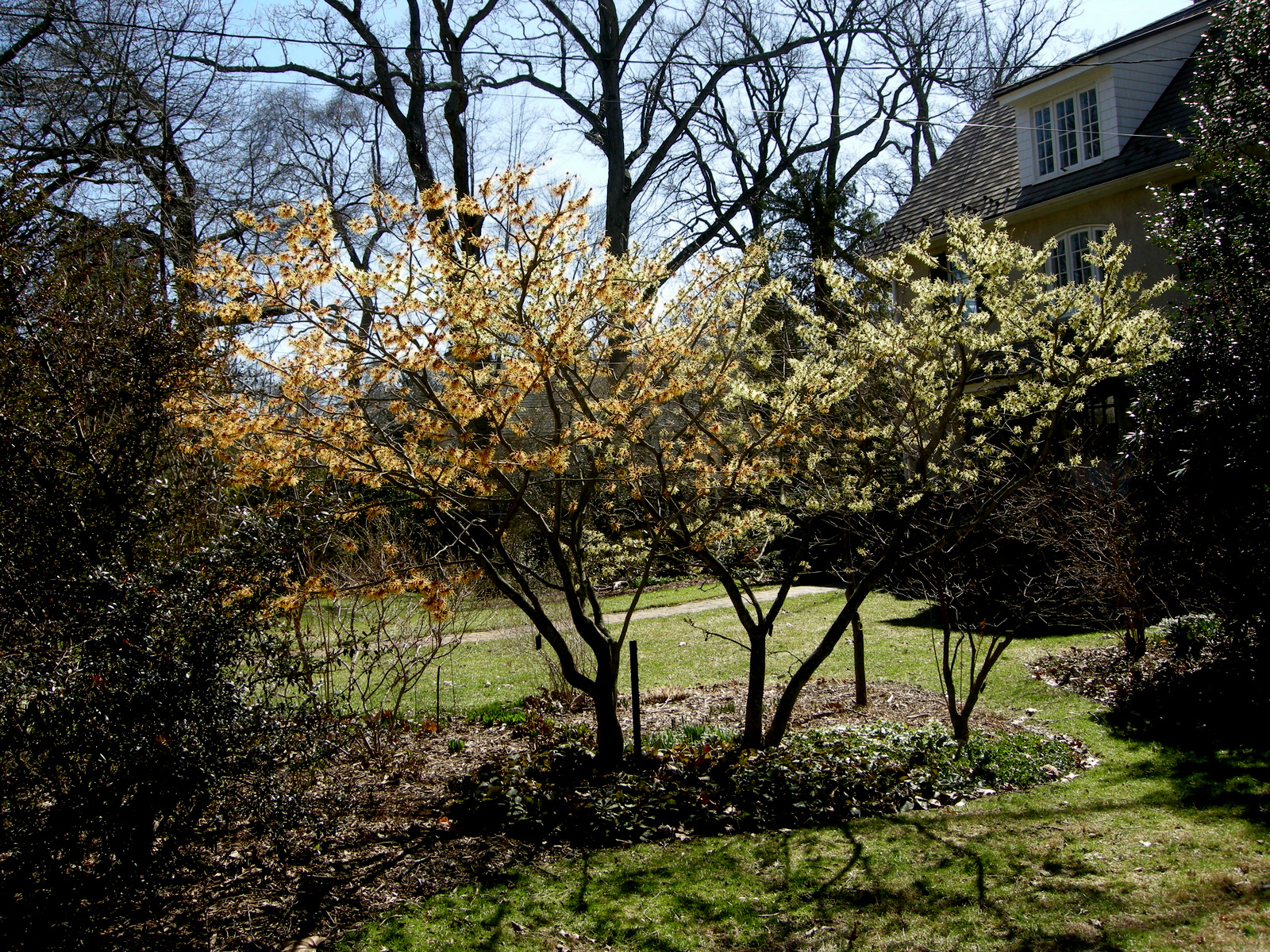
The seminars began in the front garden viewing the hybrid witch hazel cultivars Hamamelis x intermedia ‘Jelena’ (dark orange) and ‘Moonlight’ (pale yellow) underplanted with snowdrops, winter aconite, and various perennials. Charles does not recommend ‘Moonlight’ because it holds its dead leaves.

It would be hard to name another garden with the wealth of unusual plants that Charles has found and nurtured to perfection over the years.  That being said I thought my customers who were unable to attend the seminars and my worldwide blog readers might like to see what we saw.  I have organized the plants by category below with commentary in the caption where relevant.

We crossed a stone bridge to view the meadow where snow crocus and common and giant snowdrops were massed to be succeeded by daffodils, camassia, and then summer and fall blooming flowers.

A narrow path skirts the pond, which is surrounded on all sides by rock gardens full of unusual plants.

The Bulbs

We saw so many rare and unusual bulbs that I can only include a sampling here.

A rare pale yellow form of winter aconite, Eranthis hyemalis

The exquisite buds of the species crocus C. imperati ‘De Jager’

Masses of the rodent resistant and very early blooming snow crocus, Crocus tommasinianus ‘Whitewell Purple’, shadowed by a magnificent Japanese maple.

The very early blooming daffodil Narcissus ‘Rijnveld’s Early Sensation’

A very good form of winter blooming hardy cyclamen, Cyclamen coum

The reticulate iris I. histrioides ‘George’

There were large patches of spring snowflake, Leucojum vernum, throughout the garden.

The flower of spring snowflake, Leucojum vernum

We were privileged to see this semi-double form of spring snowflake,  which Charles has named  Leucojum vernum ‘Gertrude Wister’ and registered with the Dutch bulb authority.

The Snowdrops

If you read my blog, you know what a galanthophile I am so with supreme effort I have limited myself to just a few of the many snowdrops we saw.

Clockwise from upper left: G. elwesii var. monostichus, G. ikariae, ‘Jaquenetta’, ‘Straffan’, G. plicatus subsp. byzantinus, ‘Dionysus’

Galanthus ‘Brenda Troyle’, confused in the trade but still quite lovely

Galanthus plicatus subsp. byzantinus Cresson GardenThe elegant pleated leaves and plump flowers of Galanthus plicatus subsp. byzantinus

The beautiful shiny green leaves of Galanthus woronowii

There were drifts of Galanthus ‘S. Arnott’, called the ‘desert island snowdrop’ because it is the one cultivar many galanthophiles would choose if they were limited to one.

The Perennials

A very rare perennial for shade Amur adonis, A. amurensis ‘Fukuju Kai’

Helleborus niger double form Cresson gardenA semi-double form of Christmas rose, Helleborus niger, which I have only seen at Hedgleigh Spring

The Algerian iris, I. unguicularis, blooming in early March with a beautiful fragrance

The Shrubs

Koehne holly, Ilex x koehneana, looking as fresh and beautiful as it did in the fall

Camellia japonica ‘Spring’s Promise’ was one of several very early spring-blooming camellias that we saw.

Grape holly, Mahonia x media ‘Arthur Menzies’

A highlight for me were the buds on this paperbush, Edgeworthia chrysantha ‘Snow Cream’, which look like the tassels on Victorian cushions

Hybrid witch hazels, Hamamelis x intermedia ‘Jelena’ and ‘Moonlight’

I hope you have enjoyed your virtual seminar.  Please let me know in a comment/reply what your favorite winter interest plant is.

Carolyn

Notes: Every word that appears in orange on my blog is a link that you can click for more information.  If you want to return to my blog’s homepage to access the sidebar information (catalogues, previous articles, etc.), just click here.

Nursery Happenings: My first open house sale is Saturday, March 26, from 10 am to 3 pm, featuring hellebores and other winter and early spring blooming plants for shade (checks and cash only).  For directions and parking information, click here.

March GBBD: The Philadelphia International Flower Show

Posted in Garden Blogger's Bloom Day, hellebores, snowdrops, winter, winter interest with tags , , , , , , , , , , , , , , , , , , , , , , , , on March 14, 2011 by Carolyn @ Carolyns Shade Gardens

Carolyn’s Shade Gardens is a retail nursery located in Bryn Mawr, PA, specializing in showy, colorful, and unusual plants for shade.  The only plants that we ship are snowdrops and miniature hostas.  For catalogues and announcements of events, please send your full name, location, and phone number (for back up use only) to carolyn@carolynsshadegardens.com.  Click here to get to the home page of our website for catalogues and information about our nursery and to subscribe to our blog.

It is time to walk around your garden again and assess what you need to add to make the beginning of spring an exciting time in your landscape.  Do you need more early-blooming hellebores, to give you a reason to go outside?  Could your garden benefit from flowers that bloom in early March like hardy cyclamen, snow crocus, or snowdrops to relieve the gray?

Make a list and take photographs so that when you are shopping this spring you know what you need and where it should go.  I know it’s still pretty cold outside, but you never know what you might find to end the winter doldrums like the beautiful double-flowered hellebore (pictured above), which I discovered during my own  inventory.  More photos of my blooming plants are included at the end.

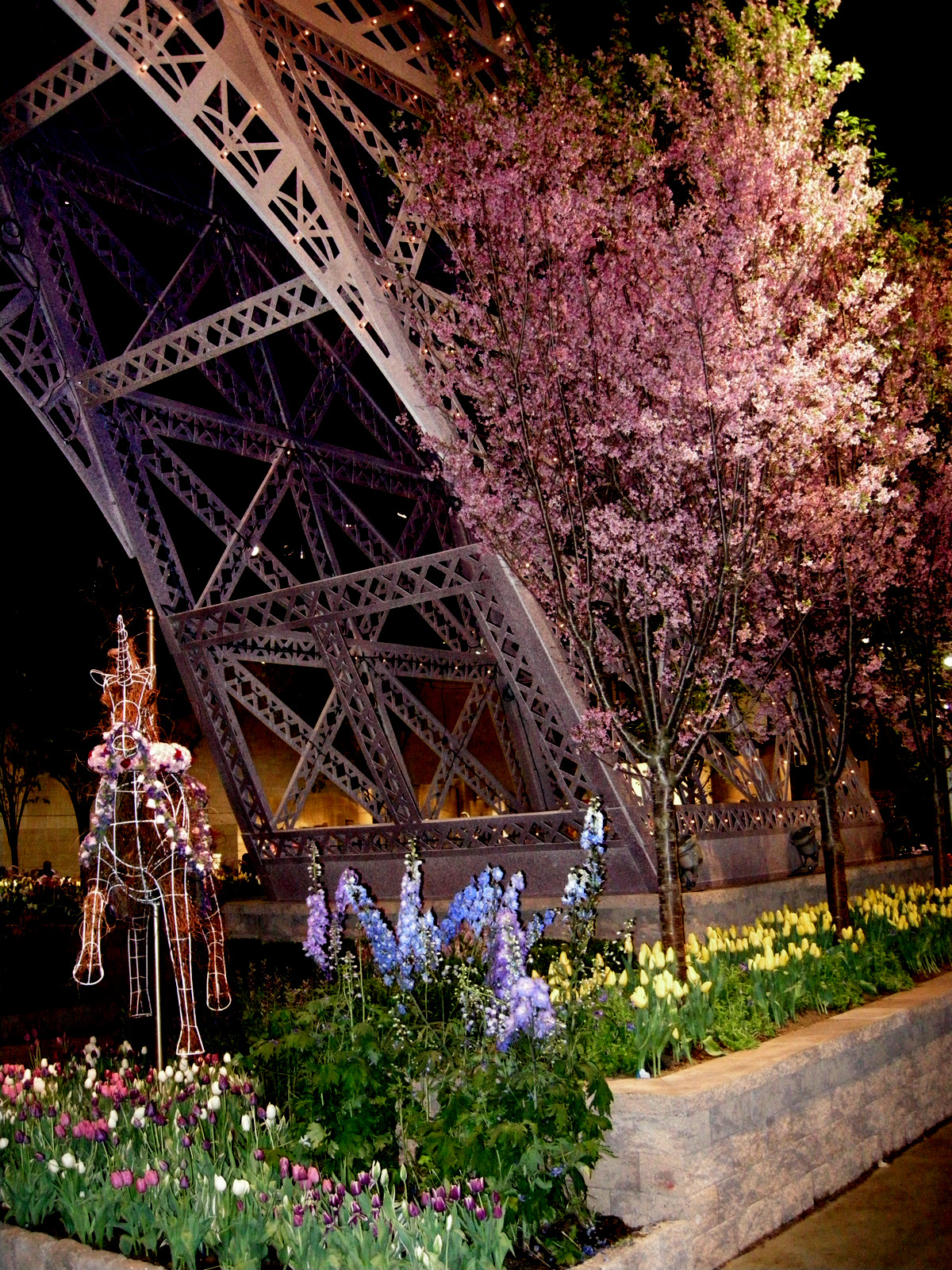
As you entered the 2011 Philadelphia International Flower Show, you walked under a very large replica of the lower half of the Eiffel Tower

If you need ideas, there is no better place to go in the mid-Atlantic this time of year than the 2011 Philadelphia International Flower Show.  It is the largest indoor flower show in the world.  This year’s theme was “Springtime in Paris”, and the designers went all out.  I sent photos of some of the weirder stuff to Cheri at Along Life’s Highway The Yard Art Game, and you can see them by clicking here.  But I found the following displays and entries inspirational for my own garden:

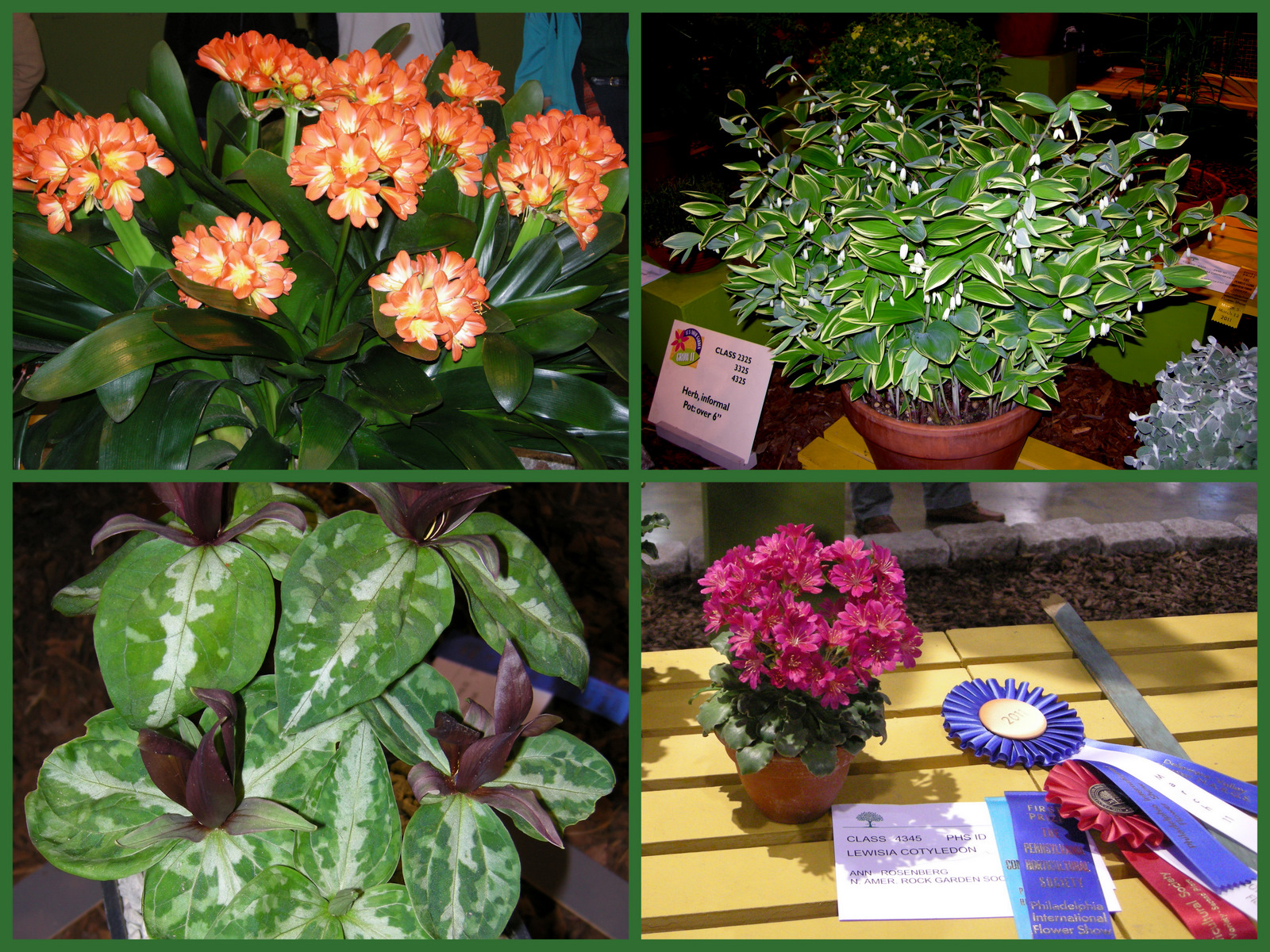
There is nothing more beautiful than an individual well grown plant

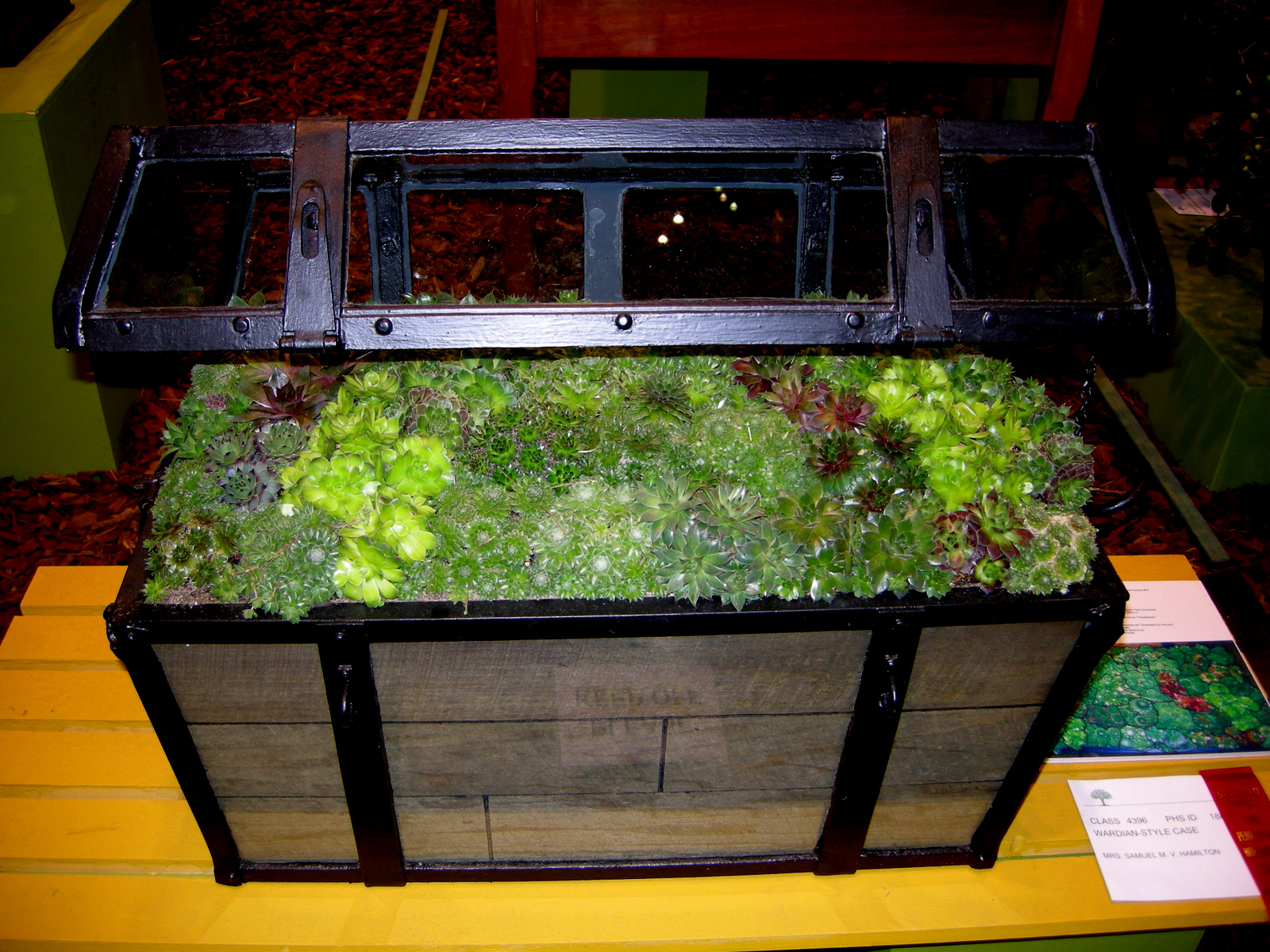
A new idea for my sedum displays, which are fantastic in containers

Inspiration to upgrade my troughs

I need an elegant metal gate for my walled compost area

Simple can be very beautiful

Today is Garden Blogger’s Bloom Day for March when gardeners around the world show photos of what’s blooming in their gardens (follow the link to see  photographs from other garden bloggers assembled by Carol at May Dreams Gardens).  Here are  some more highlights from my mid-March stroll through Carolyn’s Shade Gardens:

Eranthis hyemalisWinter aconite, Eranthis hyemalis

Scilla mischtschenkoanaVery early-blooming Tubergen squill, Scilla mischtschenkoana

My original snow crocus, Crocus tommasinianus, which is rodent resistant, has multiplied into thousands of plants

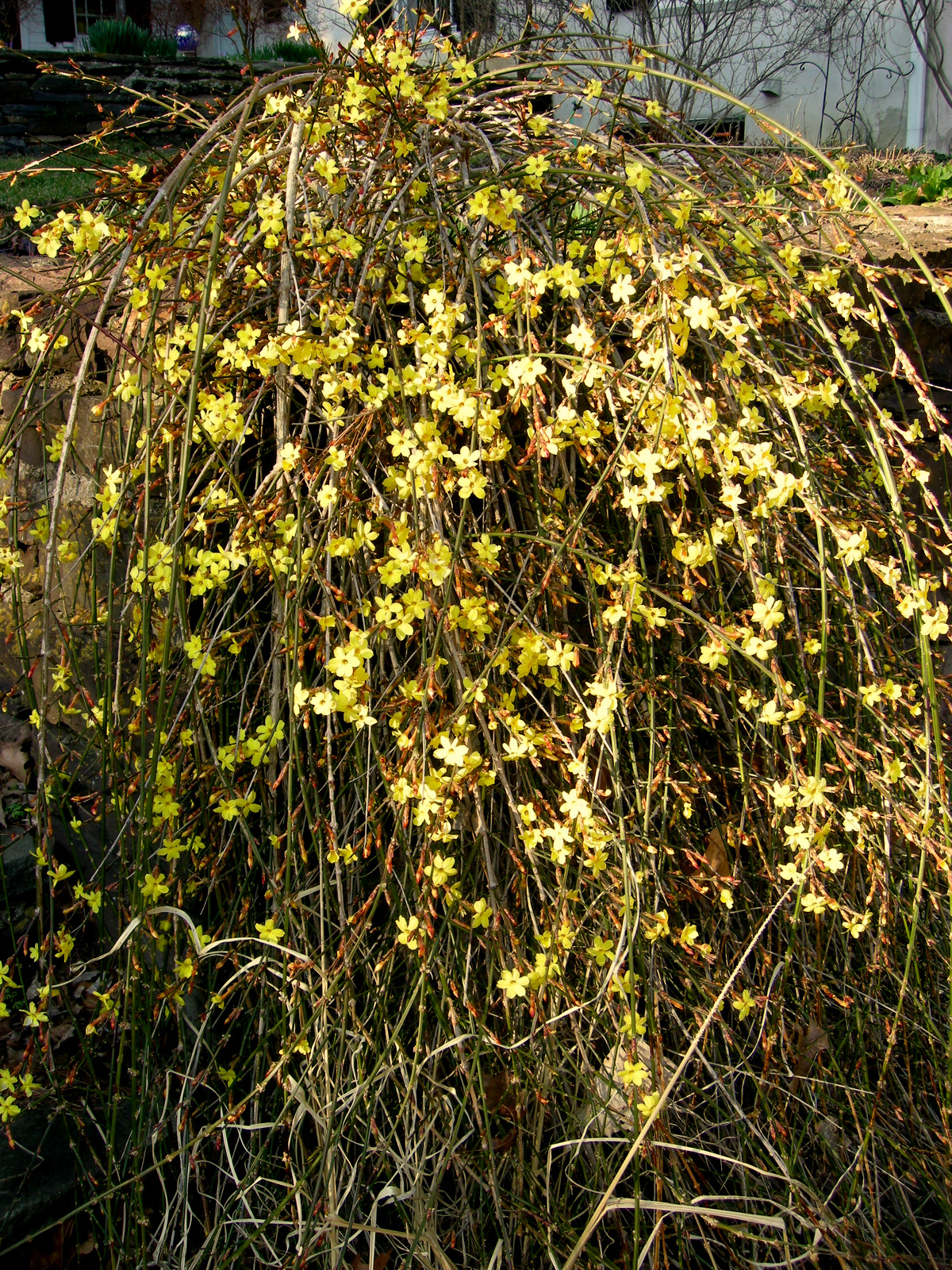
Winter jasmine, Jasminum nudiflorum, has no scent but makes up for it by blooming so early

Winter-blooming hardy cyclamen, Cyclamen coum ‘Rose’

I want to include hundreds of hellebore photos but am limiting myself to some really special plants:

The rare species Helleborus purpurascens

The flower of Helleborus purpurascens

Another even rarer species Helleborus viridis: inspired by Laura at PatioPatch, I am dedicating this flower to the people of Japan because green is the color for hope

A cross between Corsican hellebore and Christmas rose, Helleborus x nigercors ‘Honeyhill Joy’

A very beautiful anemone-centered hybrid hellebore where the nectaries have become petal-like (petaloid)

Another petaloid hybrid hellebore

‘Blue Lady’ hybrid hellebore

Hybrid hellebore with picotee markings (darker edges, veins, and nectaries)

A very good yellow hybrid hellebore with maroon nectaries

Some of the thousands of common snowdrops, Galanthus nivalis, which have multiplied on my property since the 1800s:

Common snowdrop with Italian arum, Arum italicum ‘Pictum’

Common snowdrop with Heuchera ‘Creme Brulee’ displaying its winter color

Some of my very special snowdrop cultivars:

Galanthus 'Ophelia'Double-flowered Galanthus ‘Ophelia’

The unusual species with pleated leaves, Galanthus plicatus subsp. byzantinus

Galanthus 'Lady Beatrix Stanley'Galanthus ‘Lady Beatrix Stanley’

Galanthus nivalis 'Blewbury Tart' at Carolyn's Shade GardensThe crazy upward facing double, Galanthus nivalis ‘Blewbury Tart’

Galanthus 'Flore Pleno' at Carolyn's Shade GardensThe double-flowered common snowdrop, Galanthus nivalis ‘Flore Pleno’

The only yellow-flowered double, Galanthus nivalis ‘Lady Elphinstone’

A beautiful yellow snowdrop, Galanthus plicatus ‘Wendy’s Gold’

Please let me know in a comment/reply what flowers are blooming in your early spring garden.  If you participated in GBBD, please provide a link so my nursery customers can read your post.

Carolyn


Notes: Every word that appears in orange on my blog is a link that you can click for more information.  If you want to return to my blog’s homepage to access the sidebar information (catalogues, previous articles, etc.), just click here.

Nursery Happenings: I have five spaces left for my March 19 Hellebore Seminar (March 18 is sold out).  For the brochure and registration information, click here.  My first open house sale is Saturday, March 26, from 10 am to 3 pm, featuring hellebores and other winter-blooming plants.
Are Snowdrops Thermogenic?

Posted in bulbs for shade, snowdrops, winter with tags , , , , , , , , , , , on February 9, 2011 by Carolyn @ Carolyns Shade Gardens

Carolyn’s Shade Gardens is a retail nursery located in Bryn Mawr, PA, specializing in showy, colorful, and unusual plants for shade.  The only plants that we ship are snowdrops to the US only.  For catalogues and announcements of local events, please send your full name, mailing address, and cell number to carolyn@carolynsshadegardens.com and indicate whether you are mail order only.  Click here to get to the home page of our website for catalogues and information about our nursery and to subscribe to our blog.

Galanthus ‘Dionysus’, a Greatorex double

.

Our current snowdrop catalogue is on line here.

.

Snowdrops are some of the earliest blooming flowers in my garden, often popping up through the snow, hence their name.  We all love them for that, but how do they do it?  I have been told several times that they are thermogenic, that is,  that they produce their own heat, and decided to do some scientific research to find out (it can’t all be about pretty photos).

Common snowdrop, Galanthus nivalis, and “spring-blooming” hardy cyclamen ‘Rose’, Cyclamen coum ‘Rose’, in my rock garden

Over 200 years ago, French biologist, Jean-Baptiste de Lamarck, noticed that some flowers produce their own heat.  Since then, scientists have confirmed that some plants can, in fact, generate their own heat, a process known as thermogenesis, previously thought to be limited to mammals, birds, and some flying insects.  These plants are “warm-blooded”.

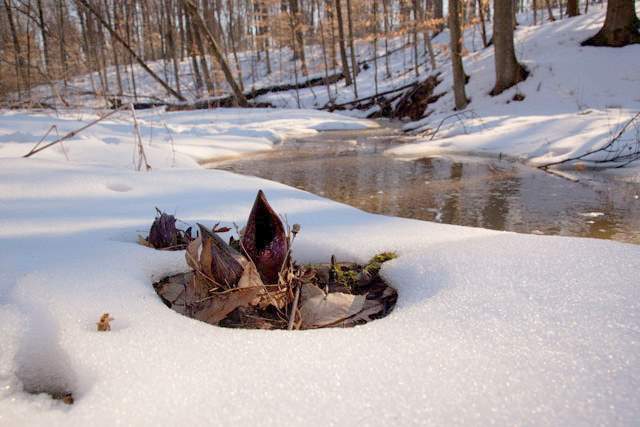
Holes in the snow produced by eastern skunk cabbage, Symplocarpus foetidus, performing thermogenesis, photo Robert Klips

The poster child for thermogenesis is the eastern skunk cabbage, Symplocarpus foetidus, which is native to most of eastern North America.  Its flower, pictured below (courtesy of Robert Klips, Ohioense: Bob’s Brain on Botany, March 8, 2010), heats up to melt the snow producing little circles all over the woods in late winter.  It does this primarily to generate and disperse its floral scent to attract pollinators.  In this case, the scent is rotten meat and the pollinators are flies and beetles.  Secondarily, it rewards the insects by providing them with energy directly as heat rather than indirectly as nectar and pollen.

Eastern skunk cabbage blooming through the snow, photo Robert Klips

This is no small feat.  Skunk cabbage flowers can heat up to 59 degrees F (15 degrees C) when the ambient temperature is 5 degrees F (-15 degrees C).  They can also thermoregulate, adjust their temperature, to maintain a constant setting as the ambient temperature changes.  If the outside temperature gets too low, they will switch off their heat entirely until things warm up.  They also switch off the heat once they have been pollinated.

Eastern skunk cabbage peeking out of its snow cave, photo Robert Klips

To perform thermogenesis, skunk cabbage uses as much metabolic energy as a small rodent or a hummingbird and employs a unique respiratory process, which is more similar to animal metabolism than plant metabolism though biochemical rather than nervous system based.   The exact nature of this process is unknown.  For those of you with a scientific bent, I have included a graph below taken from  a scholarly treatise on the subject, Temperature Regulation by Thermogenic Flowers (Plant Physiology Online, Sept. 2006).

Graph of oxygen consumption and heat production by skunk cabbage in various ambient temperatures

But, now that you understand thermogenesis, back to the question at hand: are snowdrops thermogenic?  The short answer is I don’t know.  Various sources say that they are, but the statements seem to be based on hearsay.  I could find no scientific studies backing them up.  I posted the question on the Pacific Bulb Society forum, the Scottish Rock Garden Club forum, and to friends at Longwood Gardens, and no one could confirm that snowdrops are thermogenic.  So I present my own “scientific study” of the process.

February 21, 2010, at Carolyn’s Shade Gardens, three tiny islands are appearing in the snow

As you know from my previous post, The Joys and Sorrows of Snow, we had record snowfall during the winter of 2009-2010.  By February, my whole garden was covered by a deep, thick, hard layer of snow.  Looking out on the landscape in the photo above, there was absolutely no melting going on except in three small areas.  What is happening in those little circles?  Let’s look closer:

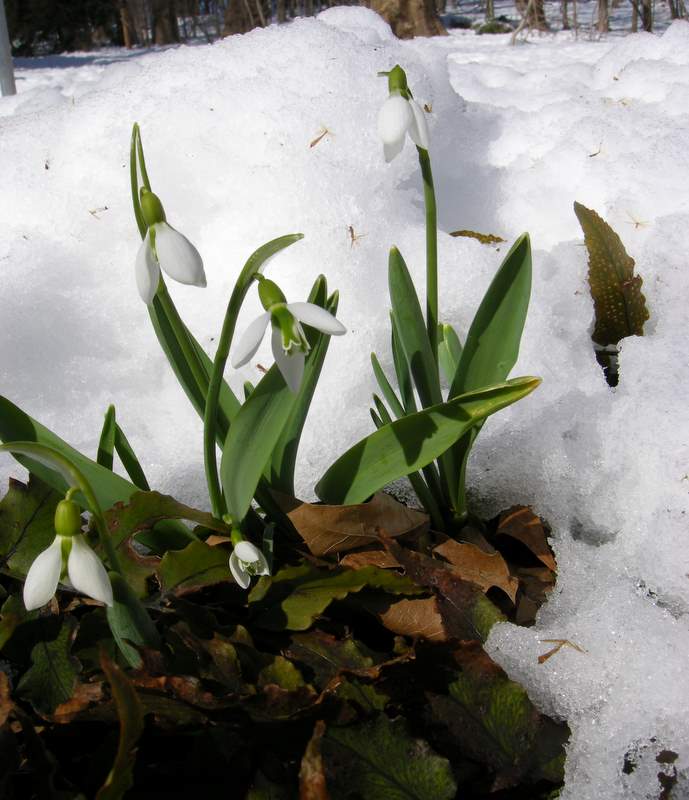
Giant snowdrop, Galanthus elwesii, melting through the snow


And even closer:

Giant snowdrop blooming in February after melting through the snow pack

My observations prove nothing scientific, but they do indicate that something is going on.  And I like to think that one of my favorite plants, snowdrops, which inspire such intense interest in many gardeners, also produce their own internal excitement.

For my previous articles on snowdrops, click here and here.


Please let me know in a comment/reply if you have any knowledge or personal experience with snowdrops being thermogenic.

Carolyn


Notes: Every word that appears in orange on my blog is a link that you can click for more information.  If you want to return to my blog’s homepage to access the sidebar information (catalogues, previous articles, etc.), click here.


Snowdrops: Further Confessions of a Galanthophile

Posted in bulbs for shade, New Plants, snowdrops with tags , , , , , , , , , , , , , , , , , , , , , , , , , , on January 22, 2011 by Carolyn @ Carolyns Shade Gardens

Carolyn’s Shade Gardens is a retail nursery located in Bryn Mawr, PA, specializing in showy, colorful, and unusual plants for shade.  The only plants that we ship are snowdrops to the US only.  For catalogues and announcements of local events, please send your full name, mailing address, and cell number to carolyn@carolynsshadegardens.com and indicate whether you are mail order only.  Click here to get to the home page of our website for catalogues and information about our nursery and to subscribe to our blog.

Galanthus ‘Atkinsii’ described in Snowdrops as having “elegant elongated flowers that suggest the drop-pearl earrings of Elizabeth I,”  I can’t improve on that

.

Our current snowdrop catalogue is on line here.

.

This article includes photographs and colorful descriptions of the 15 snowdrops I am offering for sale in my 2011 Snowdrop Catalogue.


In my garden, I have many forms of Galanthus elwesii, which was named for Henry John Elwes (1846-1922), described as a “true energetic Victorian” combing the world for big game, fine trees, insects, birds, and snowdrops


In my article Snowdrops or the Confessions of a Galanthophile, I revealed that I am obsessed with snowdrops.  I described my evolution from a gardener growing a few distinct varieties to a galanthophile collecting every cultivated snowdrop I could get my hands on.  I explained that I could now see the often subtle differences between flowers that others might unknowingly (shall we say ignorantly) dismiss as ridiculous.  To understand how far I have gone down this road, know that I recently found myself describing a snowdrop as having “a bold inner marking with a basal blotch narrowly joined to an apical round-armed V.”  There is no turning back.


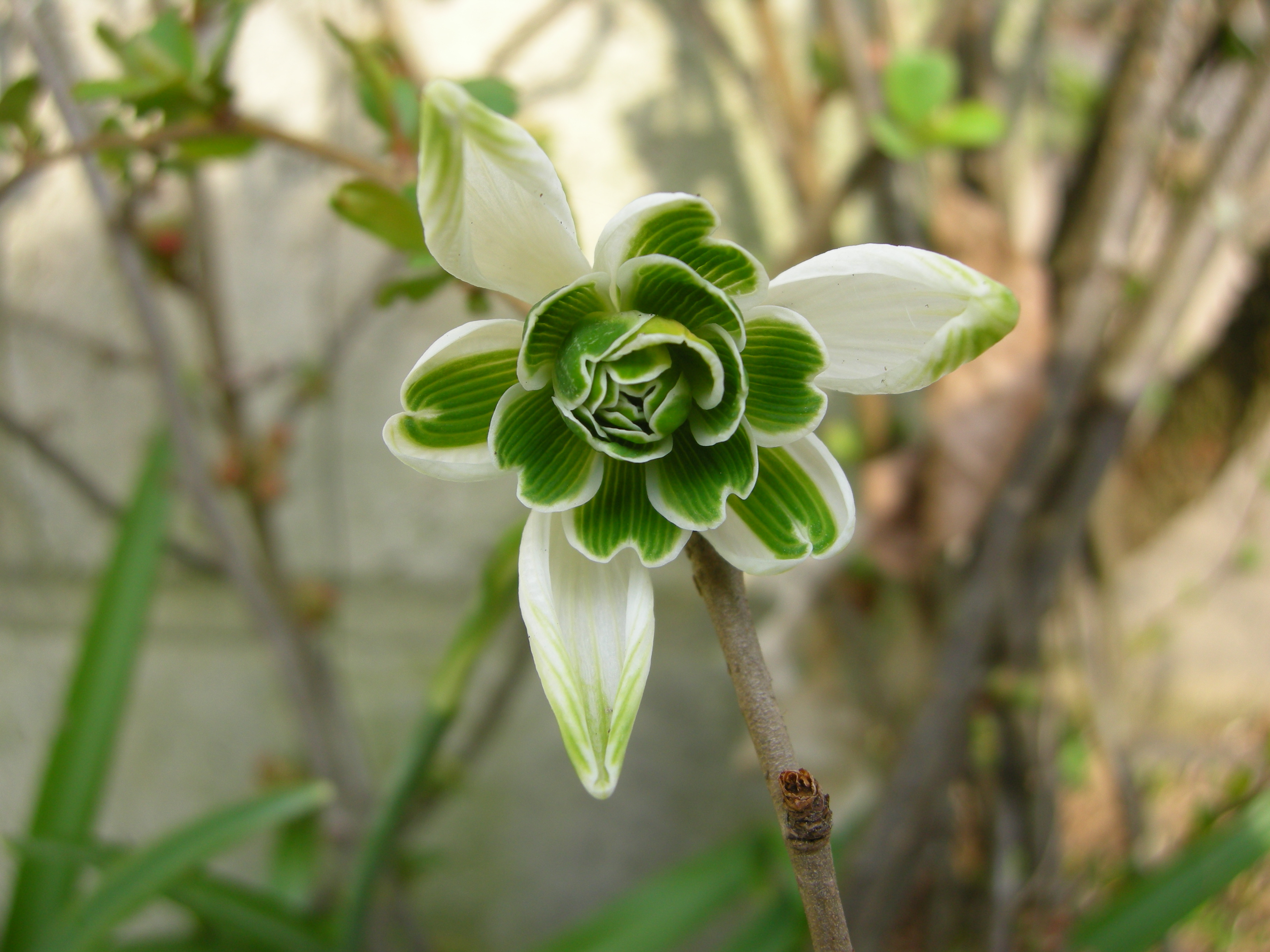
Galanthus nivalis ‘Flore Pleno’, probably the oldest snowdrop cultivar  in existence with records as early as 1703


But I didn’t talk about one of the things I find most fascinating about snowdrops.  They are the only plant that I would purchase as much for their colorful history as for their ornamental characteristics.  And how do I find out about their captivating  lineage: I consult Snowdrops: A Monograph of Cultivated Galanthus by Matt Bishop, Aaron Davis, and John Grimshaw (Griffin Press 2006).  This book, always referred to as the snowdrop bible, has all the information anyone could want about the 500 “commonly” cultivated snowdrops.


The Greatorex Double, Galanthus ‘Ophelia’

After reading Snowdrops, who would not want Galanthus ‘Ophelia’, a beautiful double snowdrop, when it was originated by Heyrick Greatorex of Brundall, Norfolk, England, a man who lived “an unconventional lifestyle” in a wooden garden shed that might have been a railway carriage?  Or a snowdrop like Galanthus ‘Magnet’ that has reached its centenary [a word not used commonly in the US so I had to look it up] and was probably named for “the old-fashioned child’s game in which magnets are attached to miniature fishing rods for the purpose of picking up painted metal fish, the point being to win the game by catching the most?”  I played that game.


Galanthus ‘Magnet’, can you can see the miniature fishing rod?

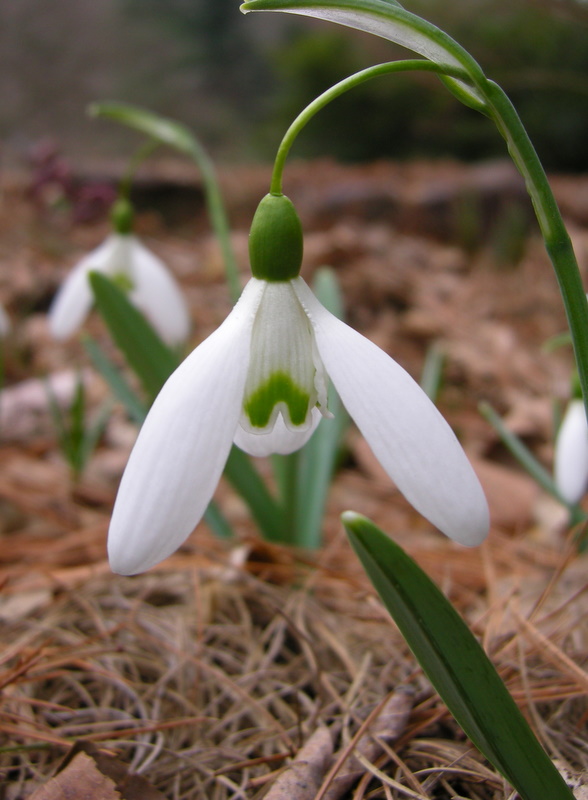
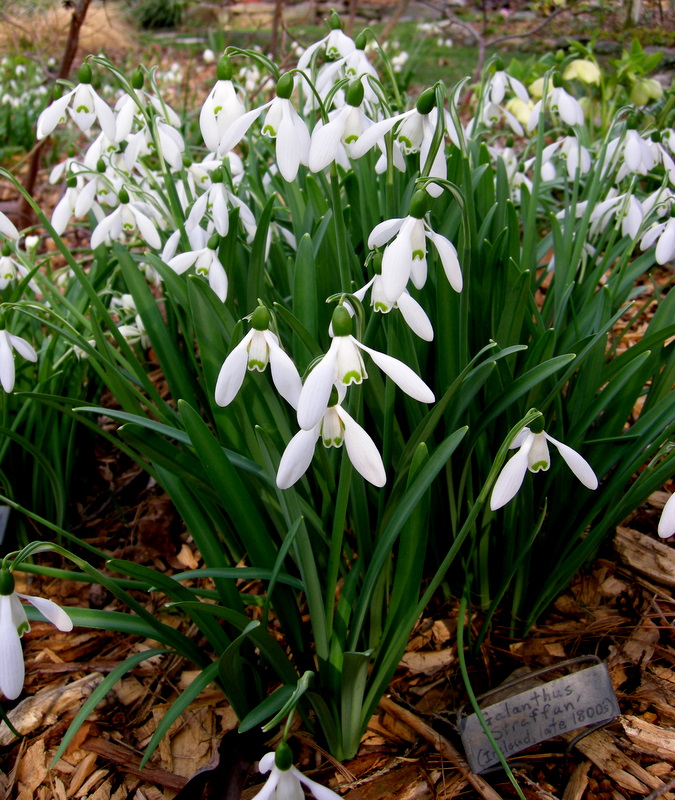
Galanthus ‘Straffan’, Baron Clarina of Ireland’s souvenir of the Crimean War

Who can resist the indestructible Galanthus ‘Straffan’, the third oldest snowdrop cultivar still in existence, discovered in the later 1800s by the head gardener for Straffan House in County Kildare, Ireland, in a clump of G. plicatus brought back from the Crimean War by the owner, the fourth Baron Clarina?  Or October-flowering Galanthus reginae-olgae, named in 1876 in honor of Queen Olga of Greece, the grandmother of  the current Duke of Edinburgh?  [In the US, we would say grandmother of Prince Philip, Queen Elizabeth’s husband.]


The October-flowering Galanthus reginae-olgae, named for Prince Philip’s grandmother, photo Charles Cresson

Galanthus nivalis/Common SnowdropGalanthus nivalis, the common snowdrop, has a 500-year lineage to brag about


Even the plain old common snowdrop, Galanthus nivalis, an imminently garden-worthy plant, has been cultivated as an ornamental in England since the 16th century.  There are written records.  The species snowdrop, Galanthus woronowii, was collected on the eastern shores of the Black Sea and named by a Russian botanist for Russian plant collector Georg Jurii Nikolaewitch Woronow (1874-1931).

The shiny green leaves of Galanthus woronowii named for plant collector Georg Jurii Nikolaewitch Woronow, photo Charles Cresson


Galanthus ‘Blewbury Tart’ found by Alan Street in Blewbury, Oxfordshire, England

Even more modern snowdrops have name-dropping heritages.  Snowdrops tells us that when noted horticulturist Alan Street of the well known English bulb house, Avon Bulbs, and the discoverer of Galanthus ‘Blewbury Tart’, gave three bulbs instead of one to quirky English gardener, Primrose Warburg (1920-1996), she “characteristically complained” and called it ‘Blewbury Muffin’.  This is the same Primrose Warburg who we are told cautioned visitors navigating her treacherous garden slope to be careful, not because they might hurt themselves, but because the snowdrops were irreplaceable. Galanthus ‘Beth Chatto’ was, of course, discovered in the gardens of the internationally famous gardener and writer, Beth Chatto, OBE [Order of the British Empire].


Galanthus ‘Beth Chatto’ from the internationally famous Beth Chatto Gardens


Snowdrops describes Galanthus ‘S. Arnott’ as the “classic snowdrop….a first-class garden plant with an unquestionable constitution, admired by everyone,” photo Charles Cresson

Other cultivars have discussions of their origins so complicated as to rival the US Tax Code, something I am familiar with from my former career. Galanthus ‘S. Arnott’ is in danger of losing its name to ‘Arnott’s Seedling’, the name under which it was given the Royal Horticultural Society’s Award of Garden Merit, but a name deemed unsuitable because E.A. Bowles, “one of the most revered plantsman of all times,” later called it ‘S. Arnott’.  The  International Cultivar Registration Society in the Netherlands has been so advised. Galanthus nivalis ‘Viridapice’ has evidently had many imitators since it was discovered prior to 1922 near an old farmhouse in northern Holland, and confusion is rampant.


Galanthus nivalis ‘Viridapice’, hopefully not an impostor

Please do not think I am in any way making fun of this book.  I love it, and I wish all plant genera had books this information-packed and well written dedicated to them.  I list Snowdrops on my Blotanical profile as the garden book I am currently reading because I am always reading it.  Rumor has it that a new edition is in the works (for an update from John Grimshaw, click here), and I will buy it.  If you like snowdrops, you should own it too.

Well, based on the tales found in the snowdrop bible, what cultivars are in my future?  I am intrigued by ‘Lady Beatrix Stanley’, a vigorous double, whose namesake (1877-1944) struggled to create an English garden in India when her husband was Governor of Madras.  I have my eye on ‘Merlin’ with its solid green blotch, whose stock was maintained by Amy Doncaster (1894-1995), “a greatly admired, no-nonsense plantswoman” who collected my favorite plants, snowdrops, hellebores and epimediums, in her woodland garden.  Finally, I would like to grow ‘Primrose Warburg’, a rare yellow snowdrop, because I think I might be just like her when I grow up.

Galanthus ‘Merlin’ whose stock was maintained by no-nonsense plantswoman Amy Doncaster


Carolyn

Notes: Every word that appears in orange on my blog is a link that you can click for more information.  If you want to return to my blog’s homepage to access the sidebar information (catalogues, previous articles, etc.), click here.

The view from my office this morning: