Archive for 2011

Friends, Food, Flowers, and Fun

Posted in garden to visit with tags , , , , on December 28, 2011 by Carolyn @ Carolyns Shade Gardens

Carolyn’s Shade Gardens is a retail nursery located in Bryn Mawr, PA, specializing in showy, colorful, and unusual plants for shade.  The only plants that we ship are snowdrops within the US.  For catalogues and announcements of local events, please send your full name, mailing address, and cell number to carolyn@carolynsshadegardens.com and indicate whether you are interested in snowdrops, hellebores, and/or hostas.  Click here to get to the home page of our website for catalogues and information about our nursery and to subscribe to our blog.

‘Heavenly Blue’ morning glory (in the garden at Pineland Farms), a plant Jean has often featured on her blog.

In considering several subjects for a holiday week post, I decided that there couldn’t be anything more appropriate than describing a summer day spent with a new friend visiting gardens, eating, and shopping for plants—sounds like heaven, doesn’t it?  You may recall that in April, Jean Potuchek from the blog Jean’s Garden (and Jan from Thanks for Today) visited my nursery and gardens and toured Chanticleer with me.  When I was in Maine in early July, Jean invited me to visit her, and this post describes our day.
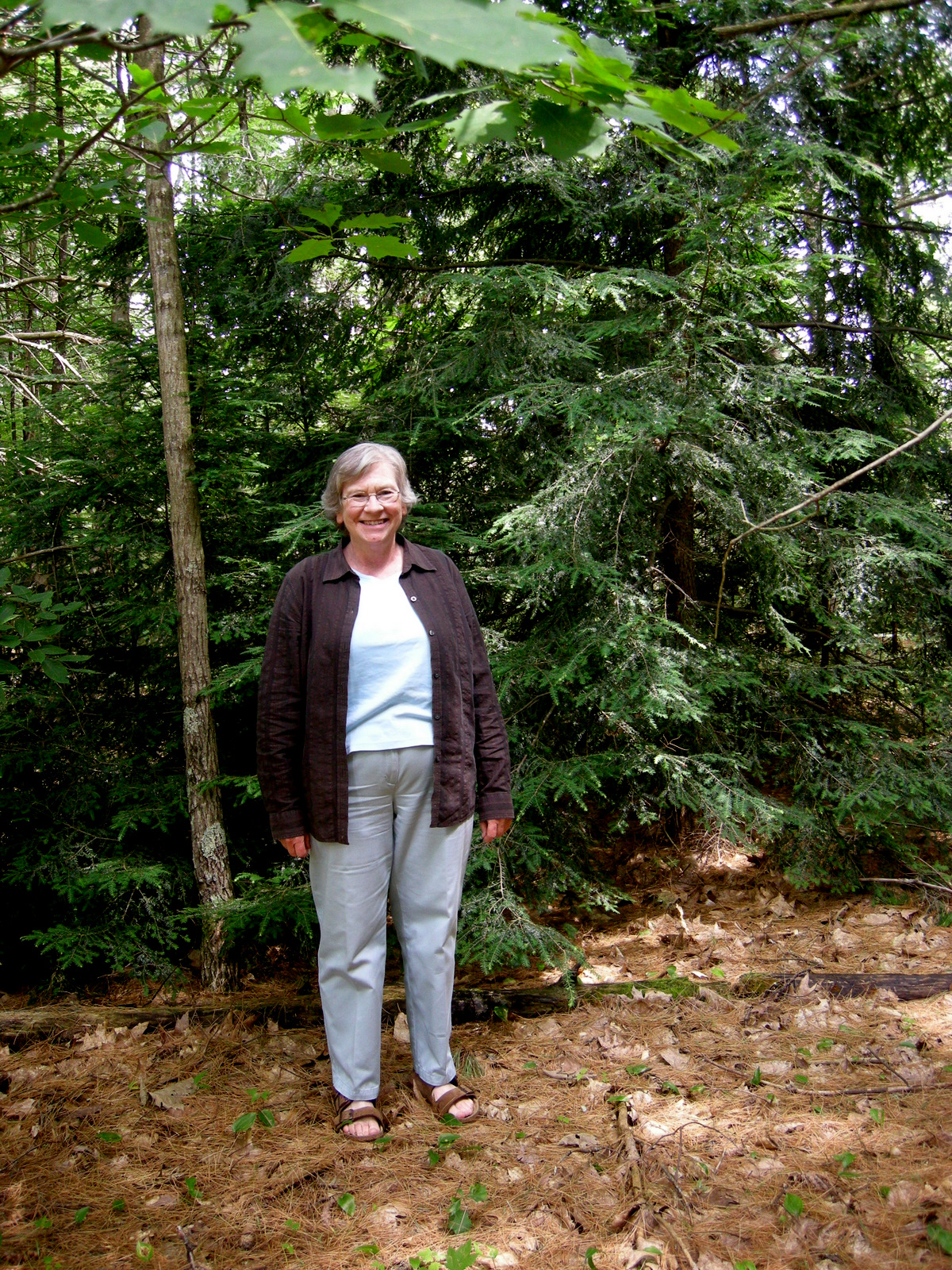

Jean standing in the future site of her Serenity Garden, often discussed on her blog and now a reality.

Before I get to photos of our day, I want to recount a little side story that illustrates how our minds can go down weird paths (at least mine can).  In a total role reversal, my children always give me  a concerned look when I refer to any garden blogger as a friend, saying: “You can’t be friends with someone you haven’t met in person.”  And I ask you, what would you say to your driving age daughter if she said to you: “Mom, I’ve met this really nice person on the internet,  and she has invited me to visit her at her home in remote rural Maine.” 

As I was driving to Jean’s house, I thought of this as the road twisted and turned deeper and deeper into the countryside, went from asphalt to gravel to dirt, and finally ended in about the most remote dead end I could think of with no neighbors in sight.  No one knew I had gone there, and no one would know whether I returned home because all my family had left Maine for Pennsylvania that week.
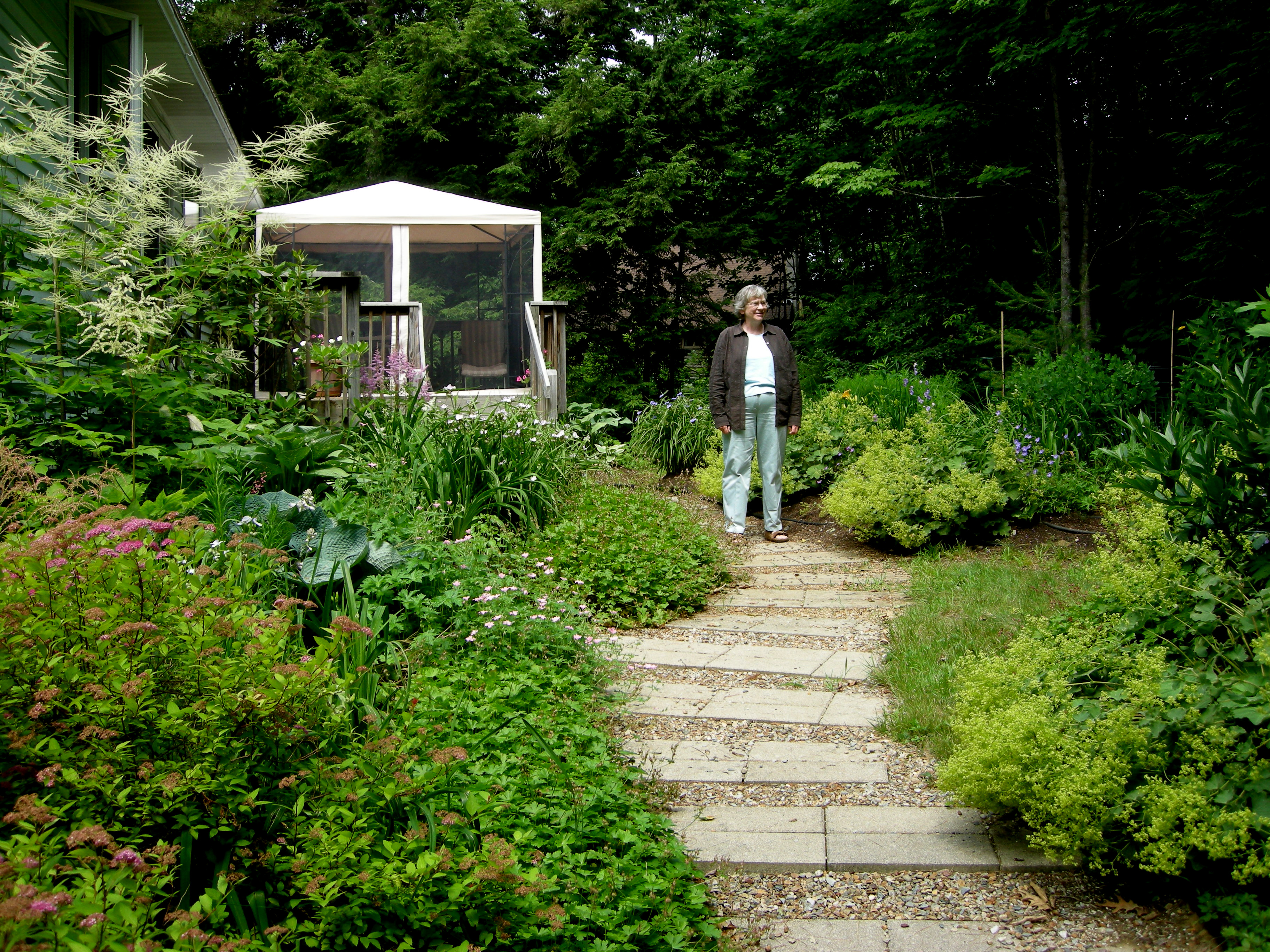
Jean in her beautiful and remote garden in East Poland, Maine.

Of course, I had met Jean before, but that was in a public place, and she could have been softening me up, right?  My worst fears were confirmed when, shortly after I arrived, she offered me poisoned strawberries from her lawn (well, they could have been) and invited me inside her home.  You will be relieved to know that all my fears proved groundless.  The garden blogging world is such a unique community, and I consider many garden bloggers friends, I just don’t say it aloud in front of my children.
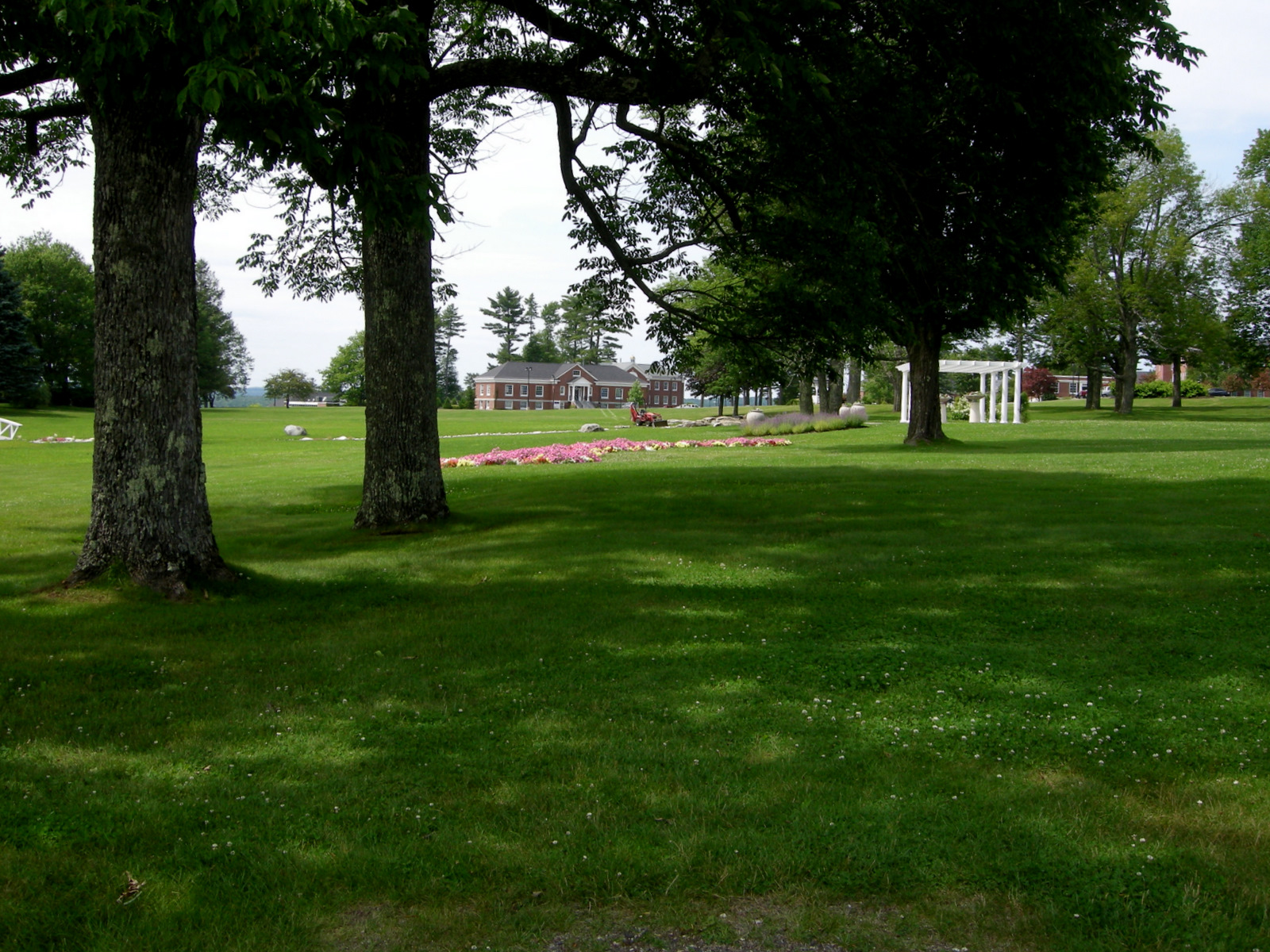
The Pineland Farms business campus, which includes the market and cafe, is well designed and maintained.  I wish I had been able to get better photos, but the day was very bright and sunny.

The only good shot I got of Jean’s lovely garden appears above, but it was so fun to see all the plants I had been reading about on her blog.  After the tour, we drove to Pineland Farms in New Gloucester, Maine.  The 5,000 acre Pineland Farms property encompasses a working farm, artisan dairy, hydroponic greenhouses, business campus, equestrian facility, farm market, cafe, recreational facilities, including hiking, biking, and skiing, and even guest houses.  For more on Pineland Farms, read Jean’s post.  After eating a delicious lunch made from the farm’s own products at the cafe and purchasing vegetables and farm made cheese at the market, we headed to the ornamental garden for a look around.

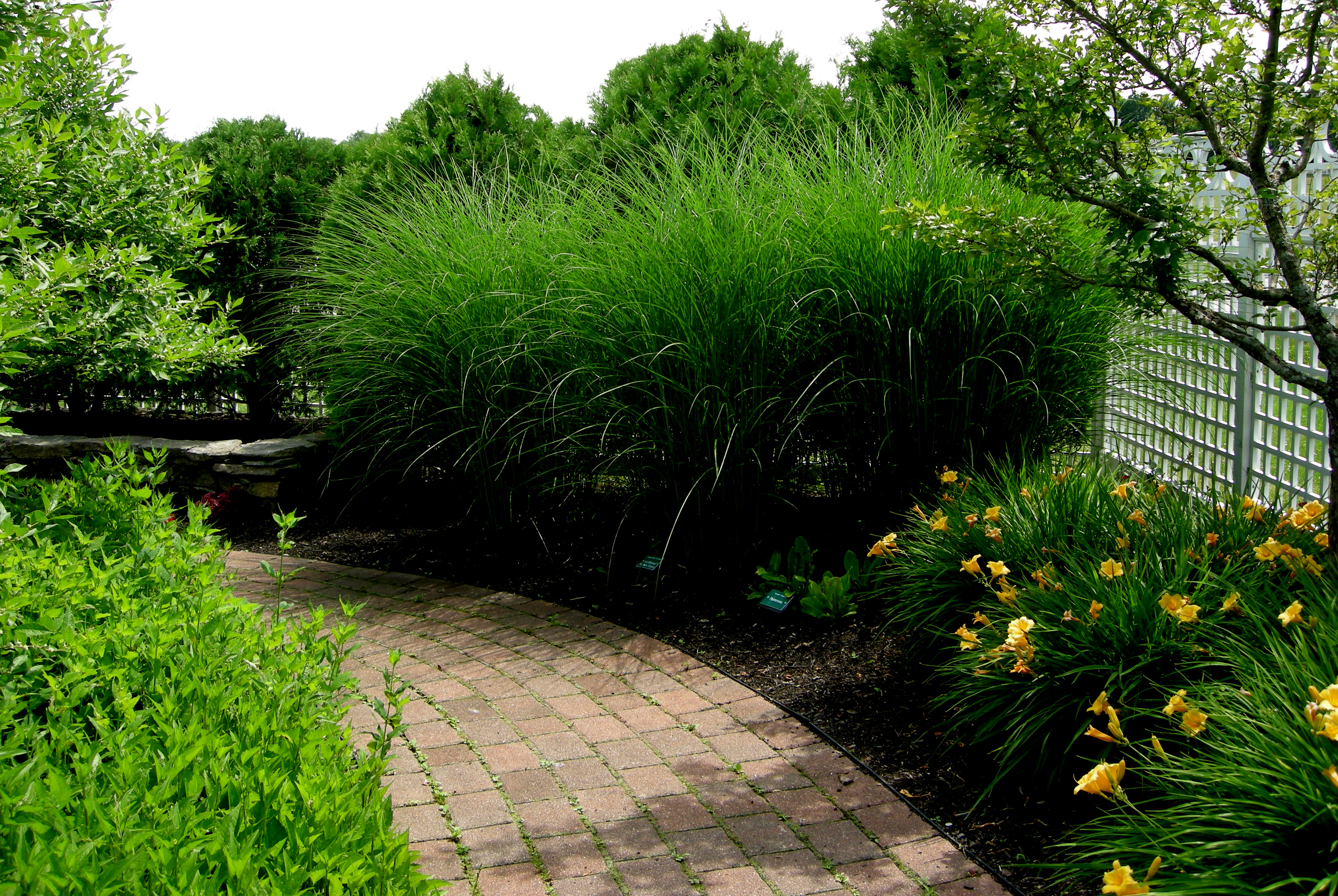
Views of the exterior enclosure of the Garden at Pineland Farms.  It feels like you are walking into a secret garden.

I was very charmed by what we found.  The garden encompasses one acre with 1/4 mile of paved paths.  It is mostly filled with perennials interspersed with trees and shrubs, but there is also an extensive vegetable garden.  Although the layout is formal and the maintenance is meticulous, it has a very accessible feel—like anything you saw there could be attempted successfully at home.  And I saw many plant combinations and design ideas there that I would love to try in my own gardens.

The formal brick paths, which are very easy to navigate, wind themselves around the exterior of the garden (top two photos) and across the center (bottom photo).  Although the site is flat, the curved paths and carefully places trees and shrubs create garden rooms and a sense of discovery.

The side paths are gravel and include some shade gardens.

A key element that holds this garden together is the repetition of large groupings of a limited palette of perennials appropriate to the season.  In early July, it was meadowsweet, Japanese iris, astilbe, and daylilies, among others.  These groupings unite all the small gardens and the large selection of perennials displayed.  If you scroll back through the photos above, I hope you can see what I mean.  Here are photos of some of these key plants:

Double meadowsweet, Filipendula ulmaria ‘Flore Pleno’
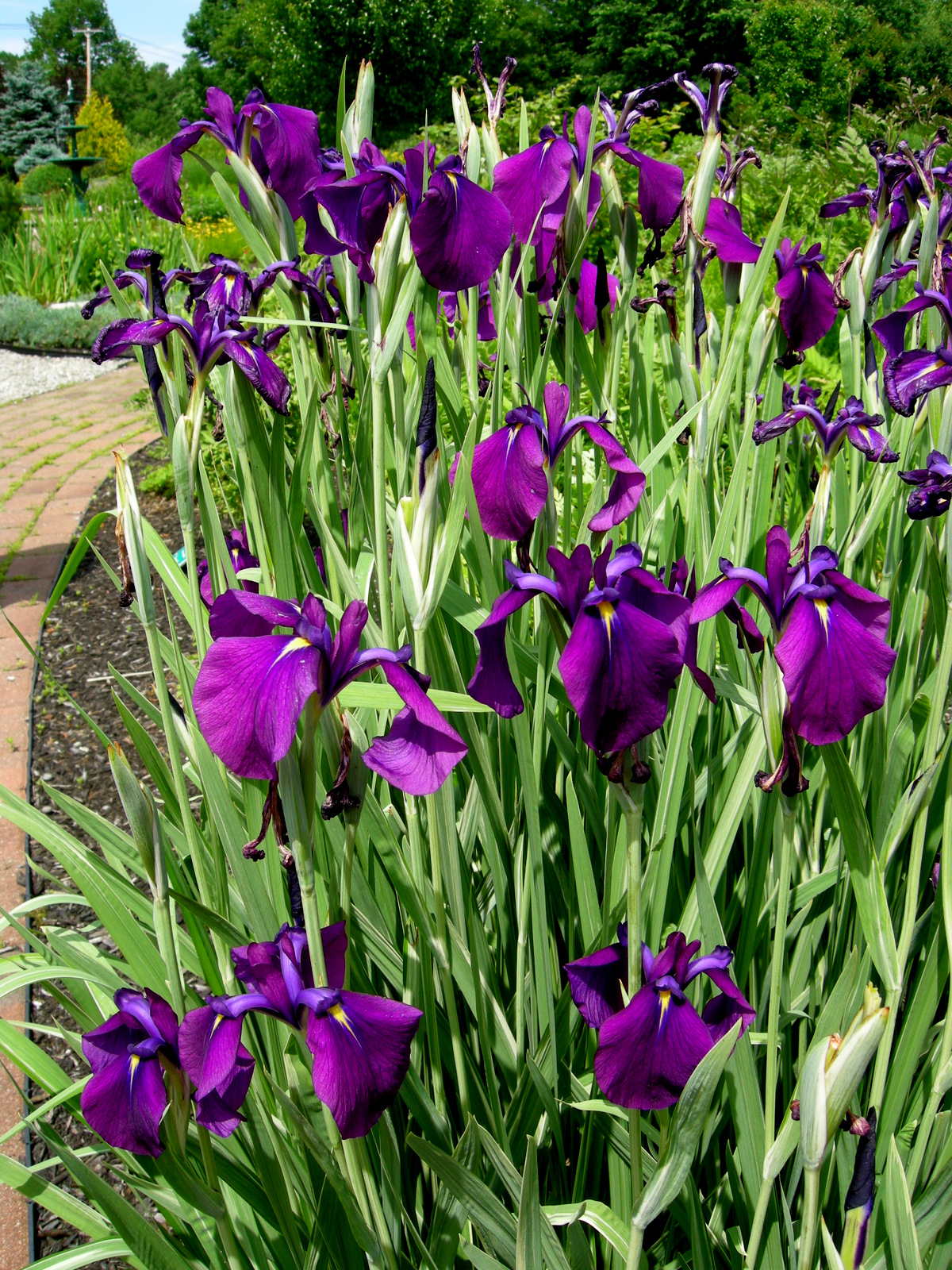
Japanese iris, Iris ensata ‘Shakkyo’
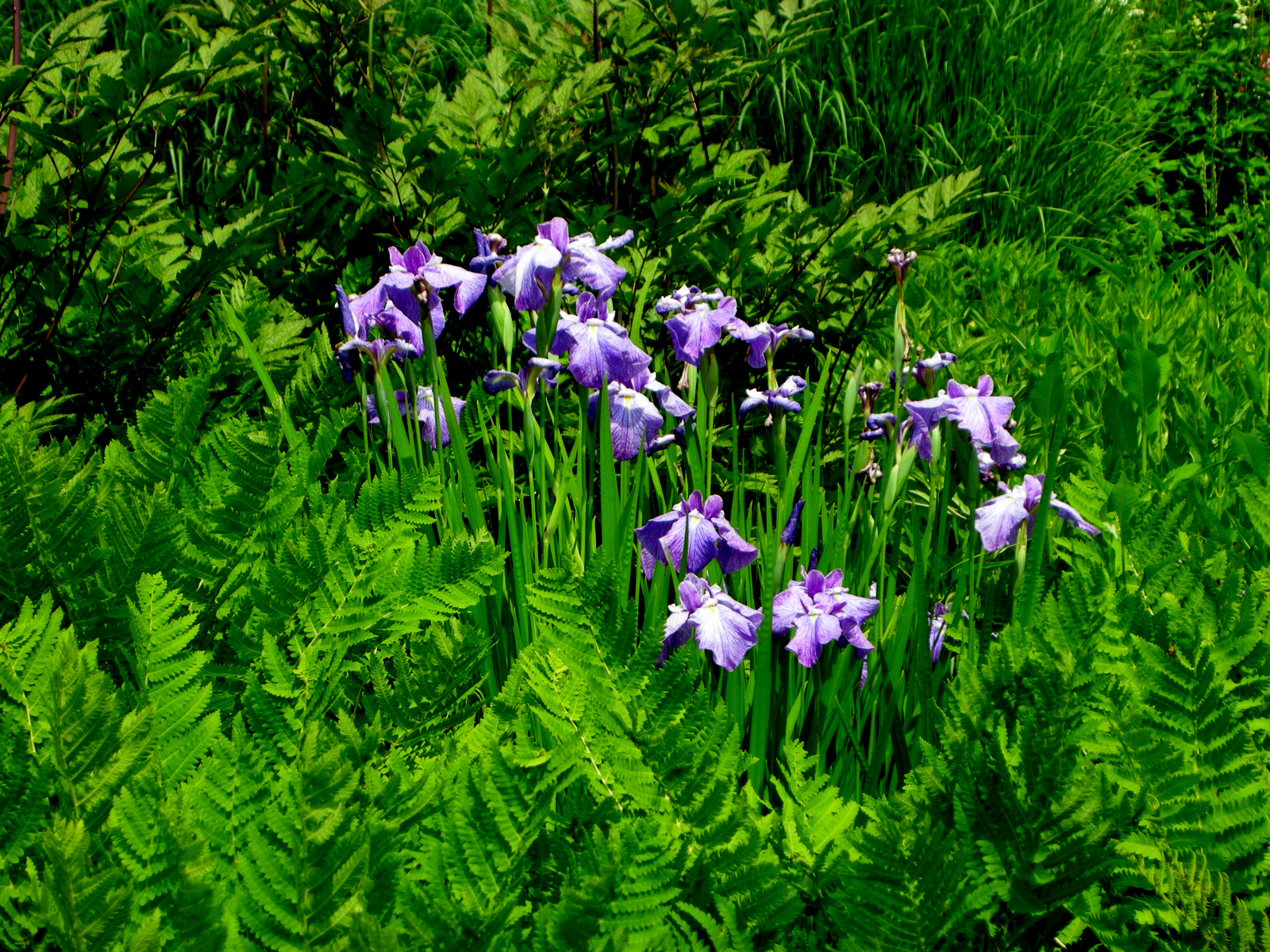
Japanese iris and ferns

The large plantings of dwarf Chinese astilbe, Astilbe chinensis ‘Pumila’, looked gorgeous with the brick paths.

Daylilies, I think Hemerocallis ‘Stella de Oro’.

In addition to the ornamental gardens, there is a very pretty herb garden and an extensive vegetable garden:
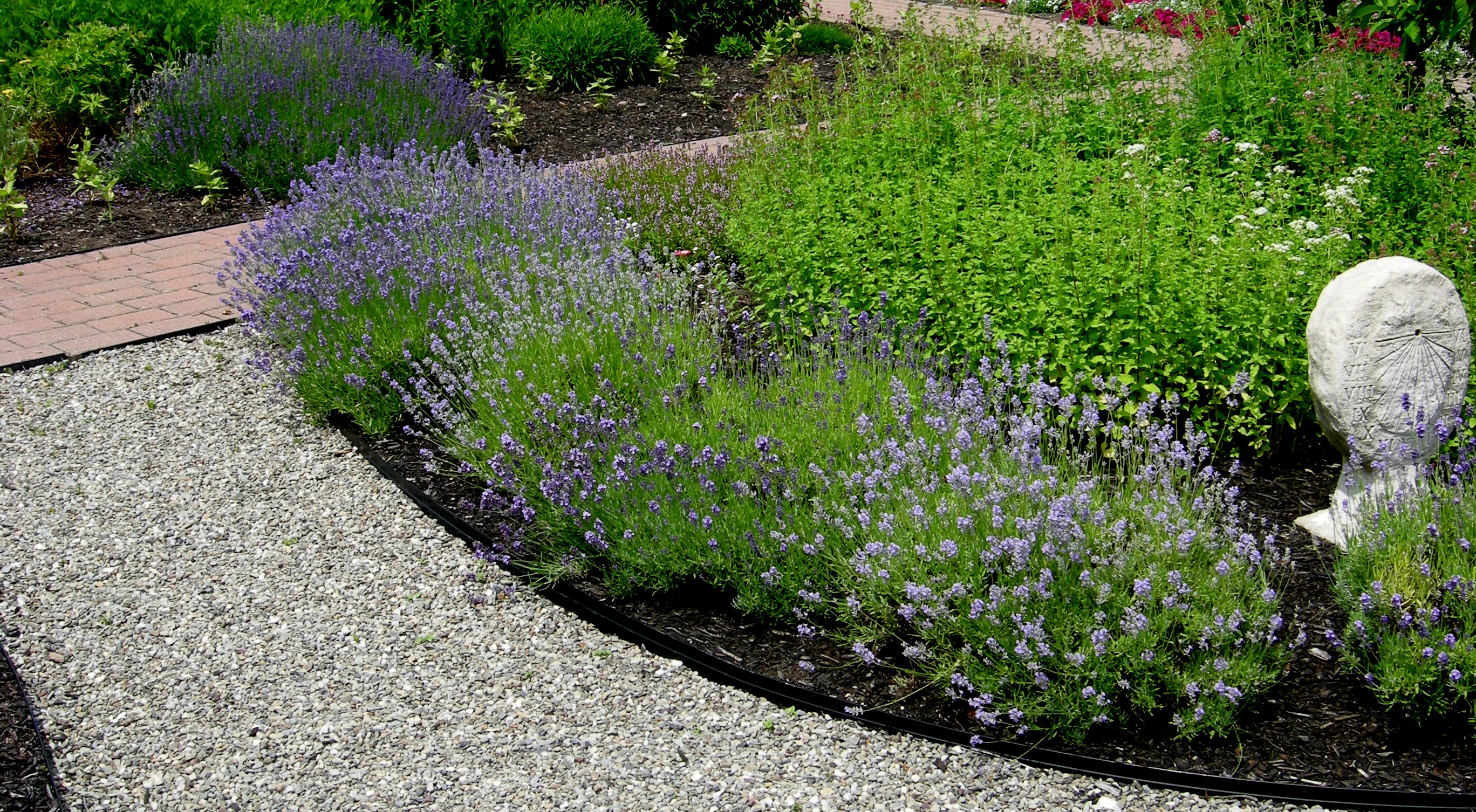
Various lavenders in the herb garden.

Produce from the vegetable garden is sold in the market.

As we left the formal garden, we had a panoramic view of the Pineland Farms dairy operation.  The bucolic beauty is typical of this part of rural Maine.

Plainview Farm plant nursery in North Yarmouth, Maine

After looking at all those gorgeous plants, it was time to buy some.  Jean took me to one of her favorite nurseries, Plainview Farm in North Yarmouth, Maine.  Not only do they have a great selection of enticing perennials, but they also have extensive display gardens.  Well worth the visit if you are in the area.  I’ll end the post with photos of two plants that intrigued me:

Yes, I am a sucker for Japanese iris: Iris ensata ‘Temple Bells’
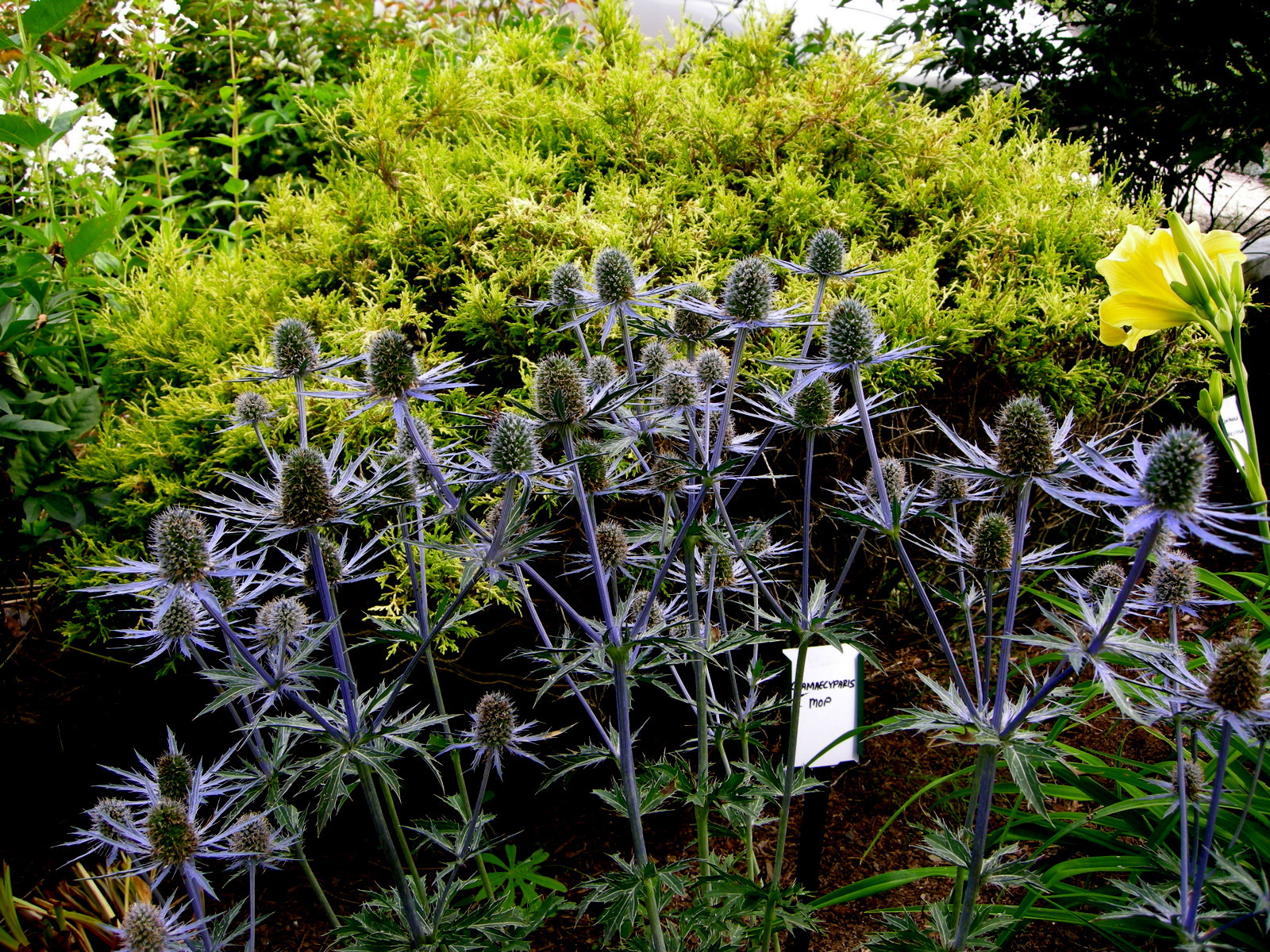
I have never seen a sea holly this blue: Eryngium ‘Big Blue’.


Happy New Year to my nursery customers, my blog readers,  Jean, and garden bloggers everywhere,  Carolyn

Notes: Every word that appears in orange on my blog is a link that you can click for more information.  If you want to return to my blog’s homepage to access the sidebar information (catalogues, previous articles, etc.) or to subscribe to my blog, just click here.

Havahart® This Holiday Season

Posted in How to, organic gardening, product review, sustainable living with tags , , , , , on December 21, 2011 by Carolyn @ Carolyns Shade Gardens

Carolyn’s Shade Gardens is a retail nursery located in Bryn Mawr, PA, specializing in showy, colorful, and unusual plants for shade.  The only plants that we ship are snowdrops within the US.  For catalogues and announcements of local events, please send your full name, mailing address, and cell number to carolyn@carolynsshadegardens.com and indicate whether you are interested in snowdrops, hellebores, and/or hostas.  Click here to get to the home page of our website for catalogues and information about our nursery and to subscribe to our blog.

The woodchuck we caught was a lot cuter than I expected.  He looked and acted like he was trying out for a part in Wind in the Willows.

Last spring Havahart®, the manufacturer of live animal traps, contacted me regarding a potential product review.  Their representative expressed an interest in having a review appear on my blog because I advocate gardening  organically.  He thought my customers would be interested in their humane traps and other products.  Havahart® would send me any of their products for free, and I could try it out and say anything I wanted about it.


Never one to go half way, my husband baited the trap with a whole cabbage.

We had previously used small Havahart® traps to catch and release chipmunks, which were tearing down our 10 foot stone walls with their tunnels.  We were very pleased with the results, but our current cat has the chipmunk problem well under control.  Now we were being plagued by a woodchuck (AKA groundhog)—the most persistent animal pest I know.  For the review, we chose the Havahart® One-Door Groundhog & Raccoon Trap.

The trap is set with the door open and the cabbage behind the trigger pad.

Our current woodchuck was living under our deck so we placed the trap near his entrance and exit hole.  The trap door is held open by a trigger rod attached to a trigger pad and snaps shut when the woodchuck presses the tilted trigger pad on his way to the bait.  We didn’t have to wait long—two days later a sad little face greeted me when I checked the trap.  I expected a vicious varmint, and what I got was Beatrix Potter’s Mrs. Tiggy-Winkle.  You will notice that he ate the whole cabbage.

Success occurred immediately.

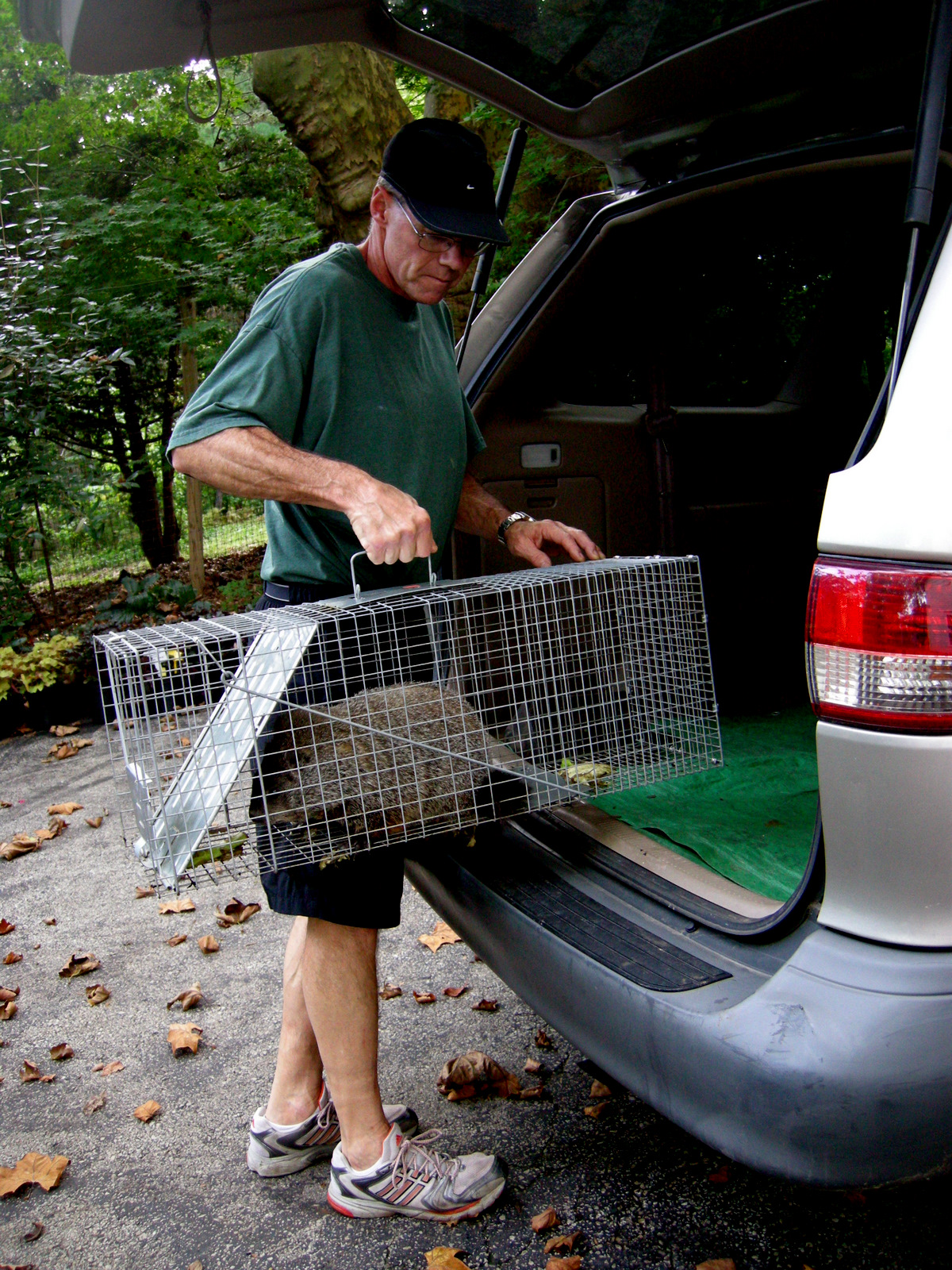
I felt so sorry for the little guy that we decided an immediate transport and release was necessary.  It was easy to carry the cage to our van and place it on a tarp in the back.  The woodchuck remained passive during this ordeal.

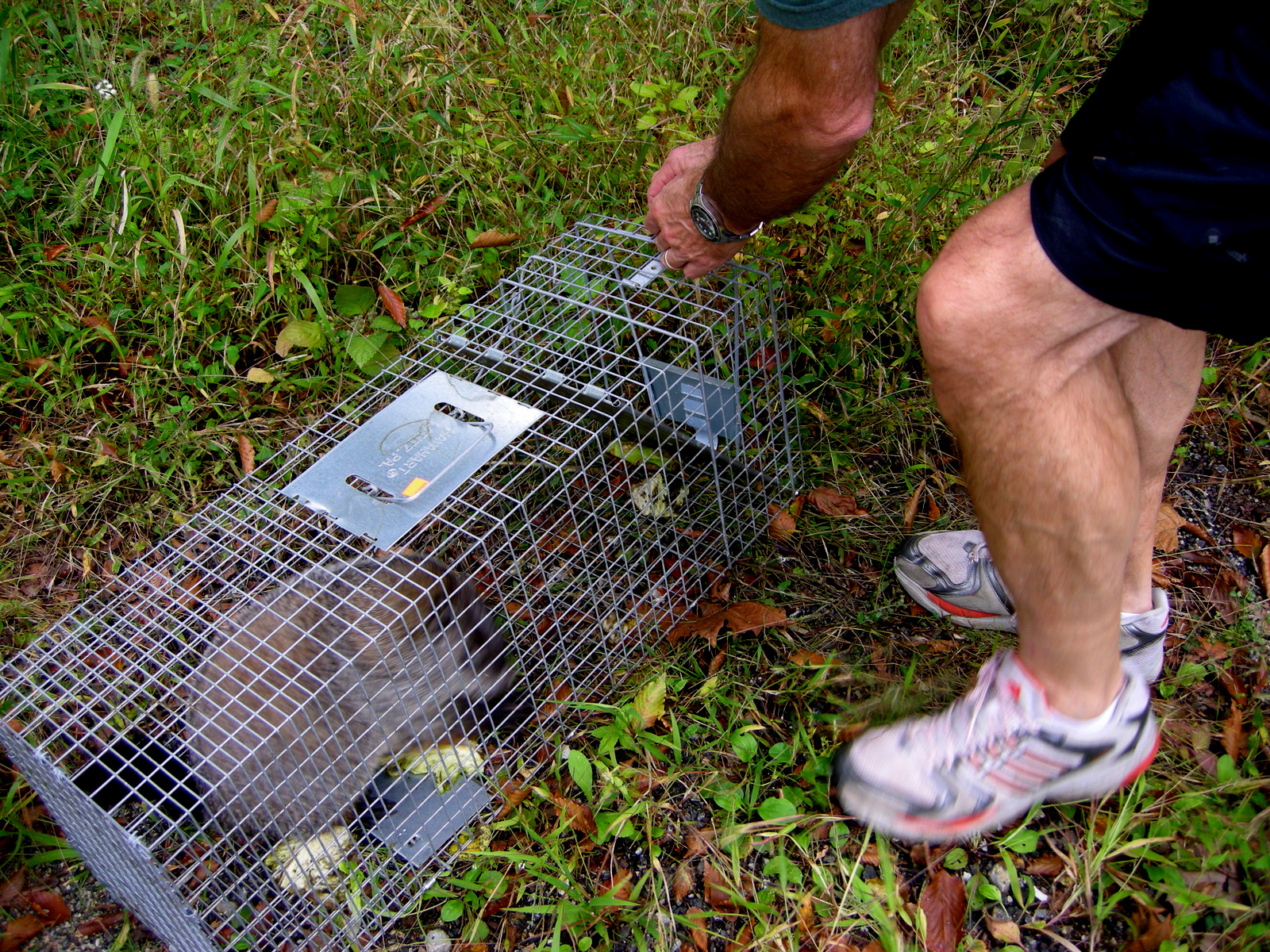
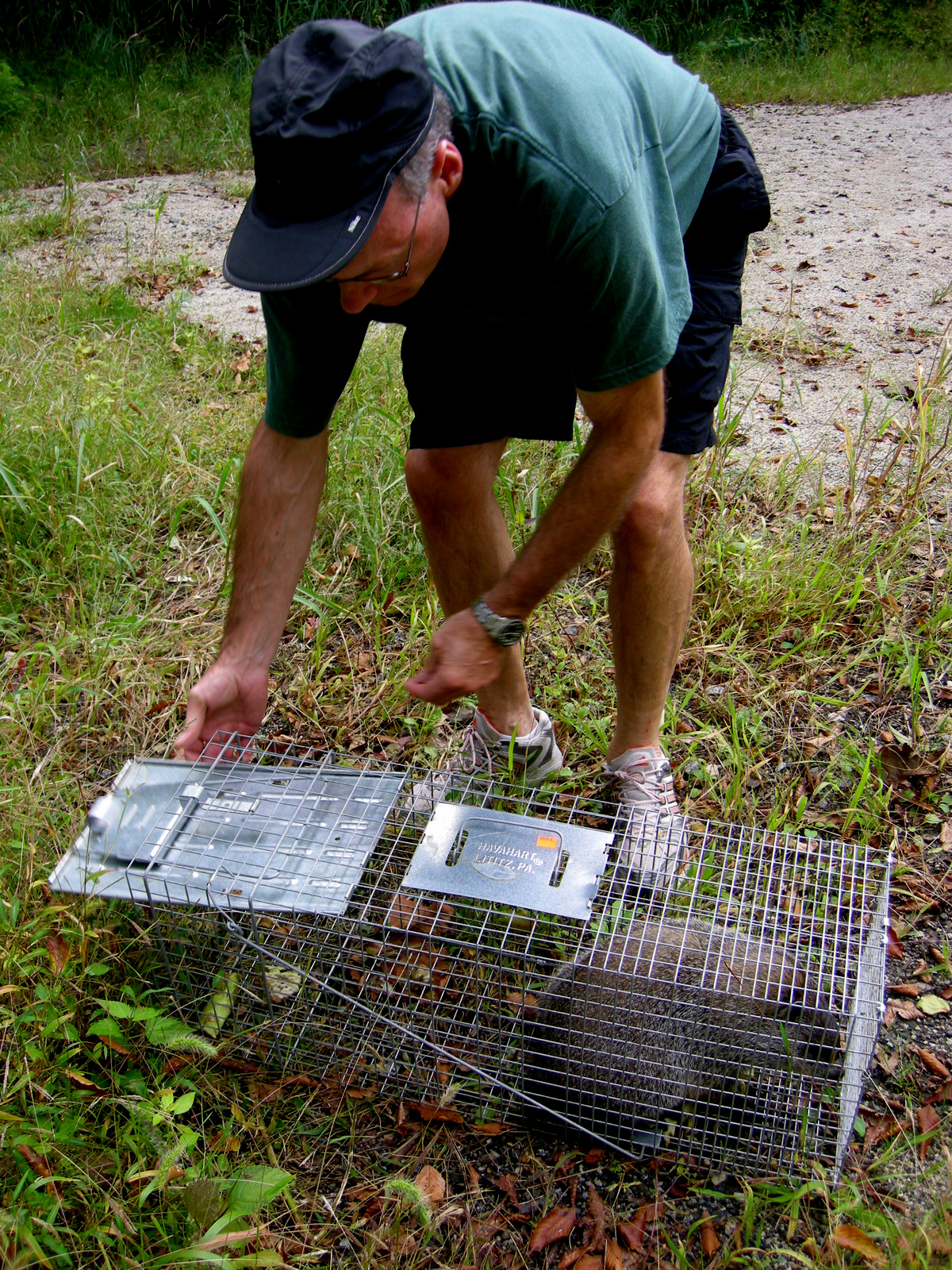
As recommended by Havahart®, we drove to “an isolated location five to ten miles away,” insuring that the woodchuck would not return to our property.  We stopped the car, unloaded the trap, and prepared to release our little friend—that was when the fun began.  The fat little woodchuck sat firmly on the trigger pad preventing the door from being released into the open position.  Even when my husband manually opened the door and held it open, the woodchuck would not leave the trap.

While my husband holds the trap open, the woodchuck resolutely faces the back of the cage refusing to vacate his new found home.  Thanks to my customer, Ben Hayward, for pointing out that my husband should not have had his fingers near the cage opening without wearing protective gloves.  See my reply to Ben’s comment about why the gloves didn’t make the trip.

I wish I had a video of what happened next because it would be hysterical.  Without warning me, my husband picked up the whole trap, tipped it perpendicular to the ground, and shook the woodchuck out right at my feet.  If only I could say that I stood my ground like a brave photographer, risking an angry woodchuck to get THE photo.  But instead I turned and ran for the car as fast as I could, convinced that the woodchuck would climb the nearest upright object, which was me.  I regained my senses just in time to get this photo of the little woodchuck fleeing for the hinterlands.

Overall I think Havahart® traps are very useful for humanely removing unwanted animals from your property.  And upon reading the manual to write this article, it does recommend inserting a stick through the cage to prop the door open.  That would have solved the problem with our unusually passive and docile woodchuck who seemed happy to live in the trap indefinitely as long as we fed him cabbage.  However, I do not think I would want to get my hands that close to the cage (see photos above) with a more aggressive animal inside it.

Happy Holidays,  Carolyn

Notes: Every word that appears in orange on my blog is a link that you can click for more information.  If you want to return to my blog’s homepage to access the sidebar information (catalogues, previous articles, etc.) or to subscribe to my blog, just click here.

December GBBD: Past Prime

Posted in Camellias, Fall Color, Garden Blogger's Bloom Day, hellebores, Shade Perennials, Shade Shrubs, snowdrops, winter interest with tags , , , , , , , , , , , on December 13, 2011 by Carolyn @ Carolyns Shade Gardens

Carolyn’s Shade Gardens is a retail nursery located in Bryn Mawr, PA, specializing in showy, colorful, and unusual plants for shade.  The only plants that we ship are snowdrops within the US.  For catalogues and announcements of local events, please send your full name, mailing address, and cell number to carolyn@carolynsshadegardens.com and indicate whether you are interested in snowdrops, hellebores, and/or hostas.  Click here to get to the home page of our website for catalogues and information about our nursery and to subscribe to our blog.

Every year I make a Christmas wreath using all natural materials from my property.

It is the middle of the month and time to participate in Garden Blogger’s Bloom Day hosted by May Dreams Gardens where gardeners from all over the world publish photos of what’s blooming in their gardens.  I participate because it is fun and educational for me to identify what plants make my gardens shine at different times of the year.  I also hope that my customers will get some ideas for plants to add to their own gardens to extend their season well into late fall.

My garden is located in Bryn Mawr (outside Philadelphia), Pennsylvania, U.S., in zone 6B.


I used berries from this native winterberry holly, Ilex verticillata ‘Red Sprite’, to make the wreath.  On December 7, the robins came and cleaned off all the berries.

Last month was still prime time in my gardens, but now with hard frosts and generally colder weather, my gardens are past their prime.  The show goes on though with the focus shifted from the garden as a whole to individual plants peaking between November 15 and December 15 (I do not take all my photos on December 15).  This means that they bloom now (or are still blooming), have ornamental fruit, or feature exceptional foliage or fall color during this period.

Let’s start with flowers:

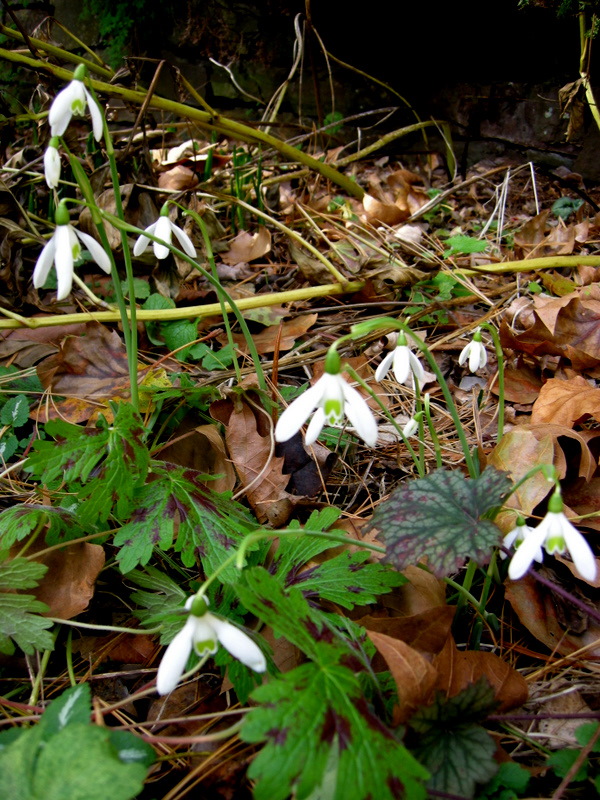
The large and vigorous fall-blooming snowdrop ‘Potter’s Prelude’ is in full bloom through this entire period.  Mine is surrounded by the marbled purple foliage of ‘Frosted Violet’ coralbells, Heuchera villosa ‘Frosted Violet’.  For more on fall-blooming snowdrops, click here.

Over the years, I have planted hundreds of giant snowdrops, Galanthus elwesii, and in the process have acquired plants that bloom in the fall instead of January when this species normally blooms.

I am always raving about the long bloom time of  ‘Shell Pink’ lamium so I thought you might like to see a photo of it in full bloom in December.  For more on lamium as a wintergreen groundcover, click here.

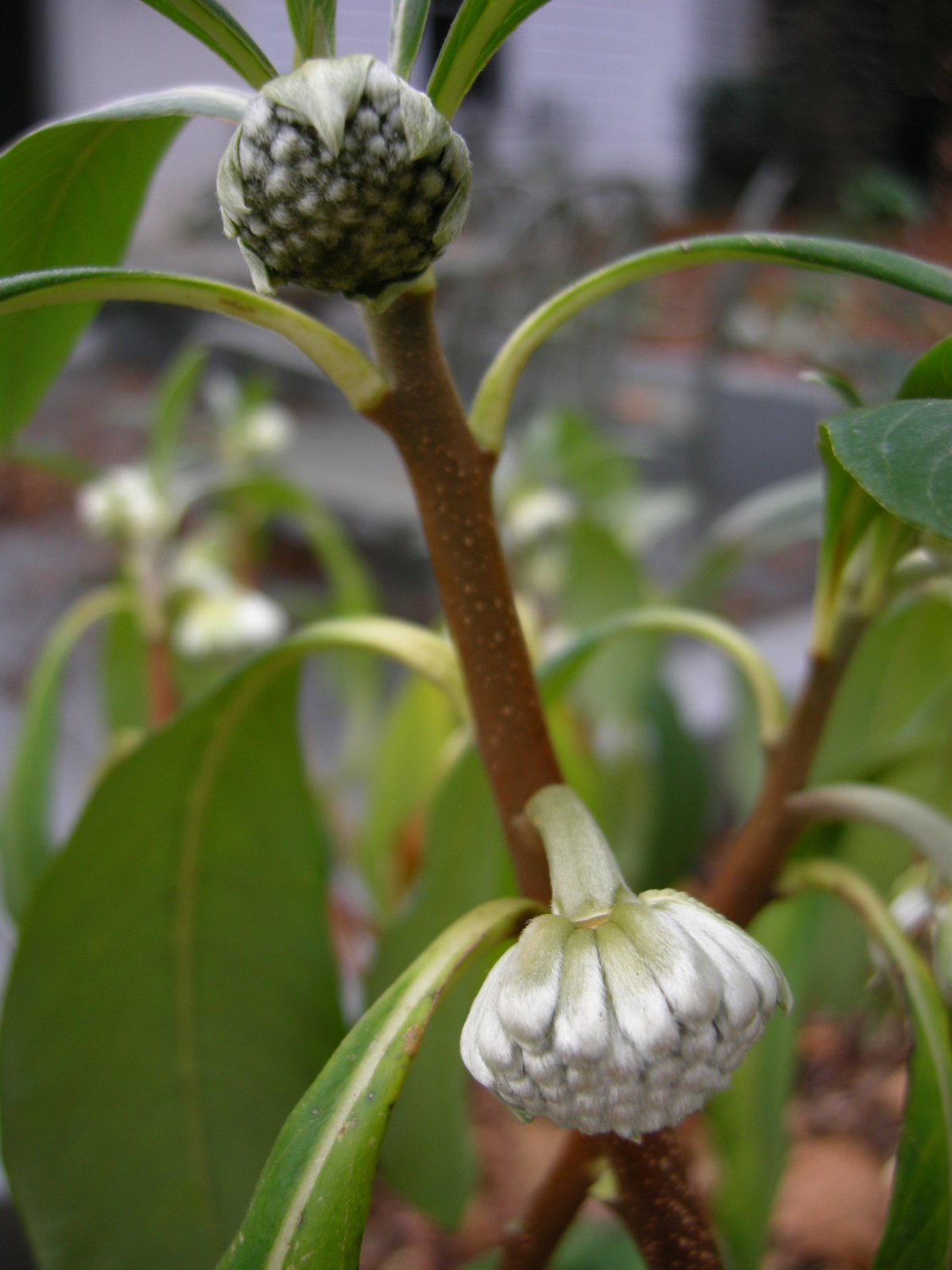
The buds on my paperbush, Edgeworthia chrysantha, have gotten large enough to show their beautiful silvery color and will remain ornamental until they start to open in March.

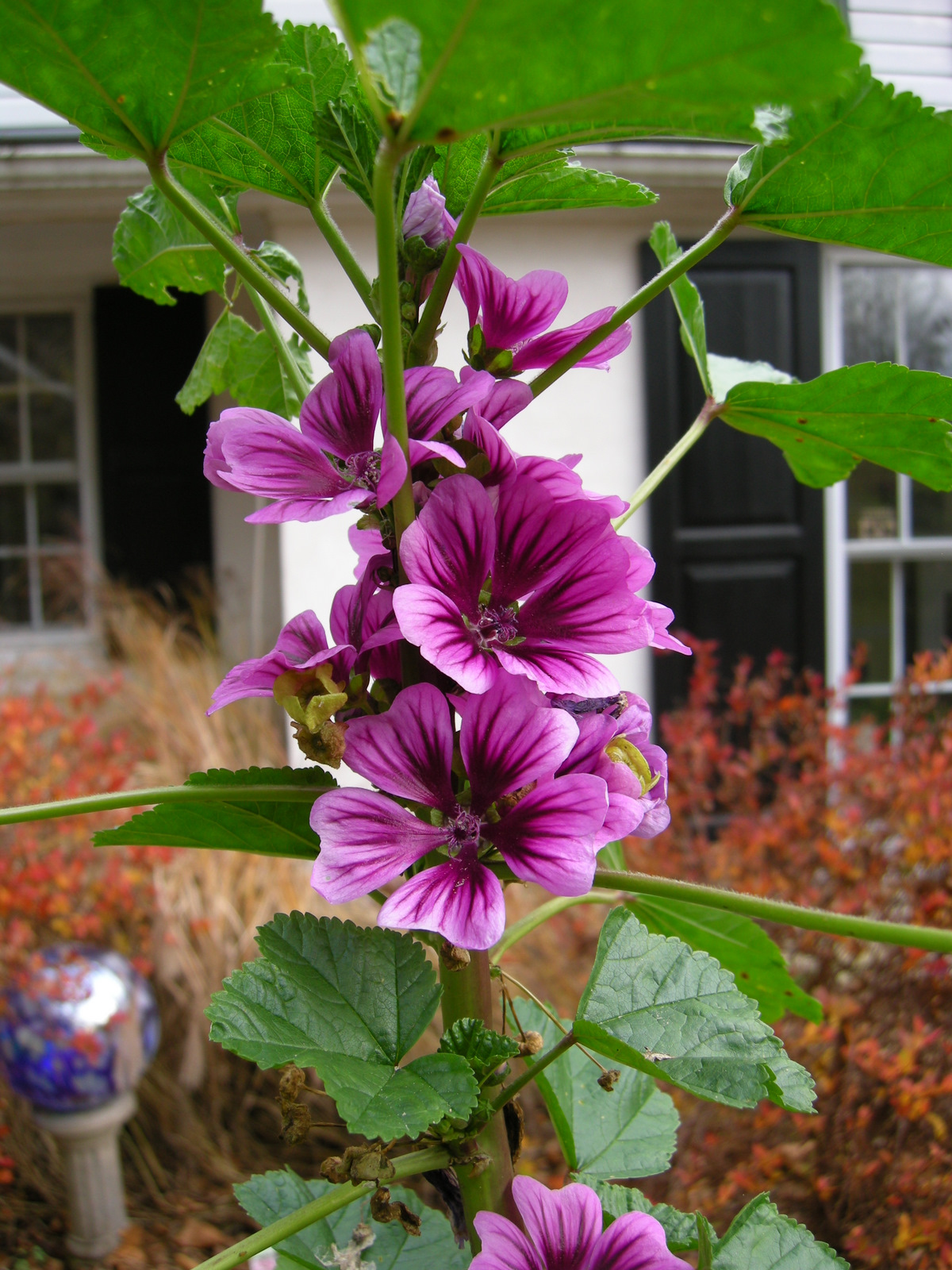
‘Zebrina’ hollyhock mallow, Malva sylvestris ‘Zebrina’, does not seem to be bothered by hard frosts.

Hellebores are one of the primary contributors to flowers during the winter months:

The spent flower heads of ‘Josef Lemper’ Christmas rose, Helleborus niger ‘Josef Lemper’, which has been blooming since early October, seem more ornamental when everything else has gone by.  Buds are forming at the base for the next wave of bloom.

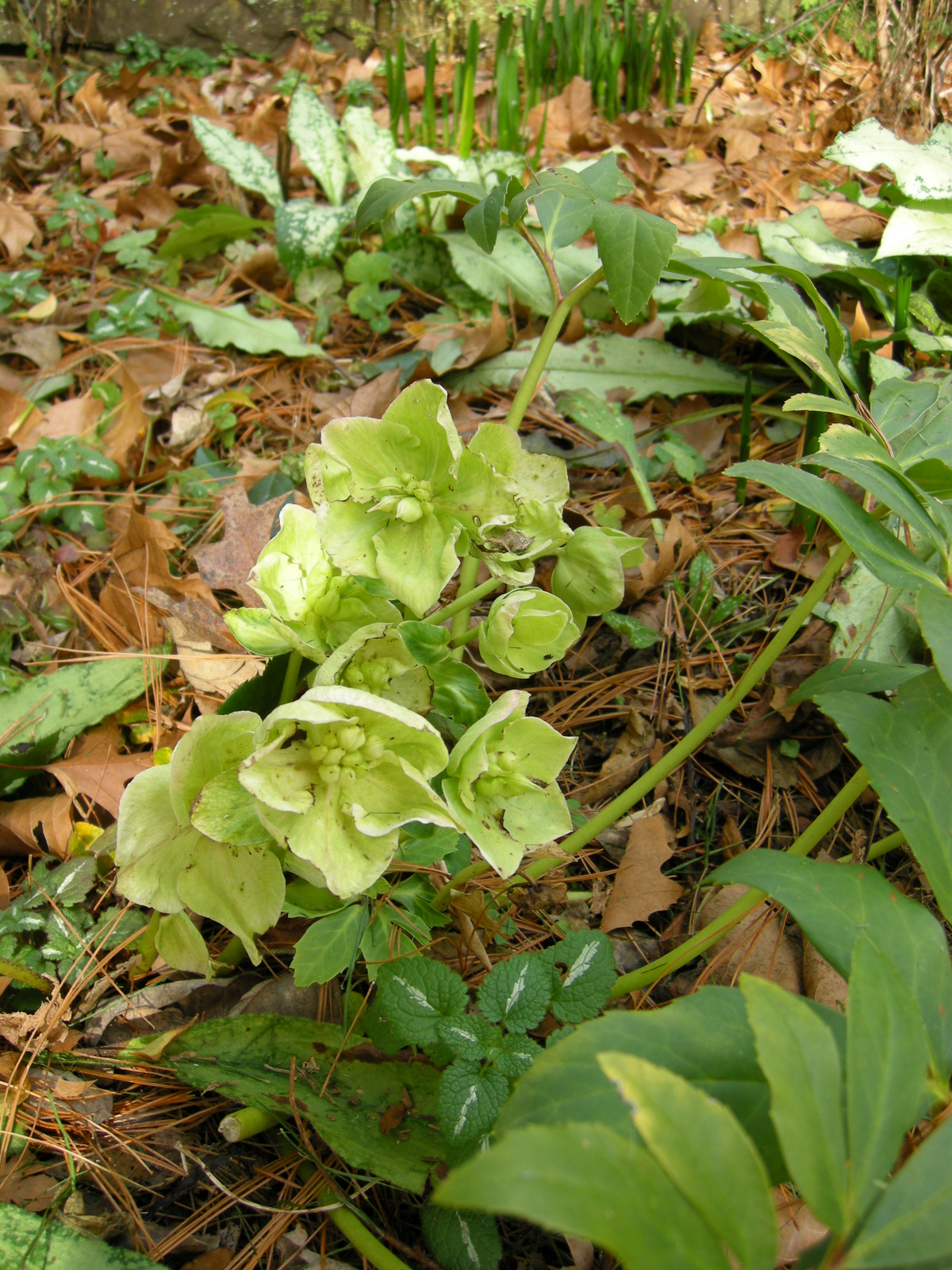
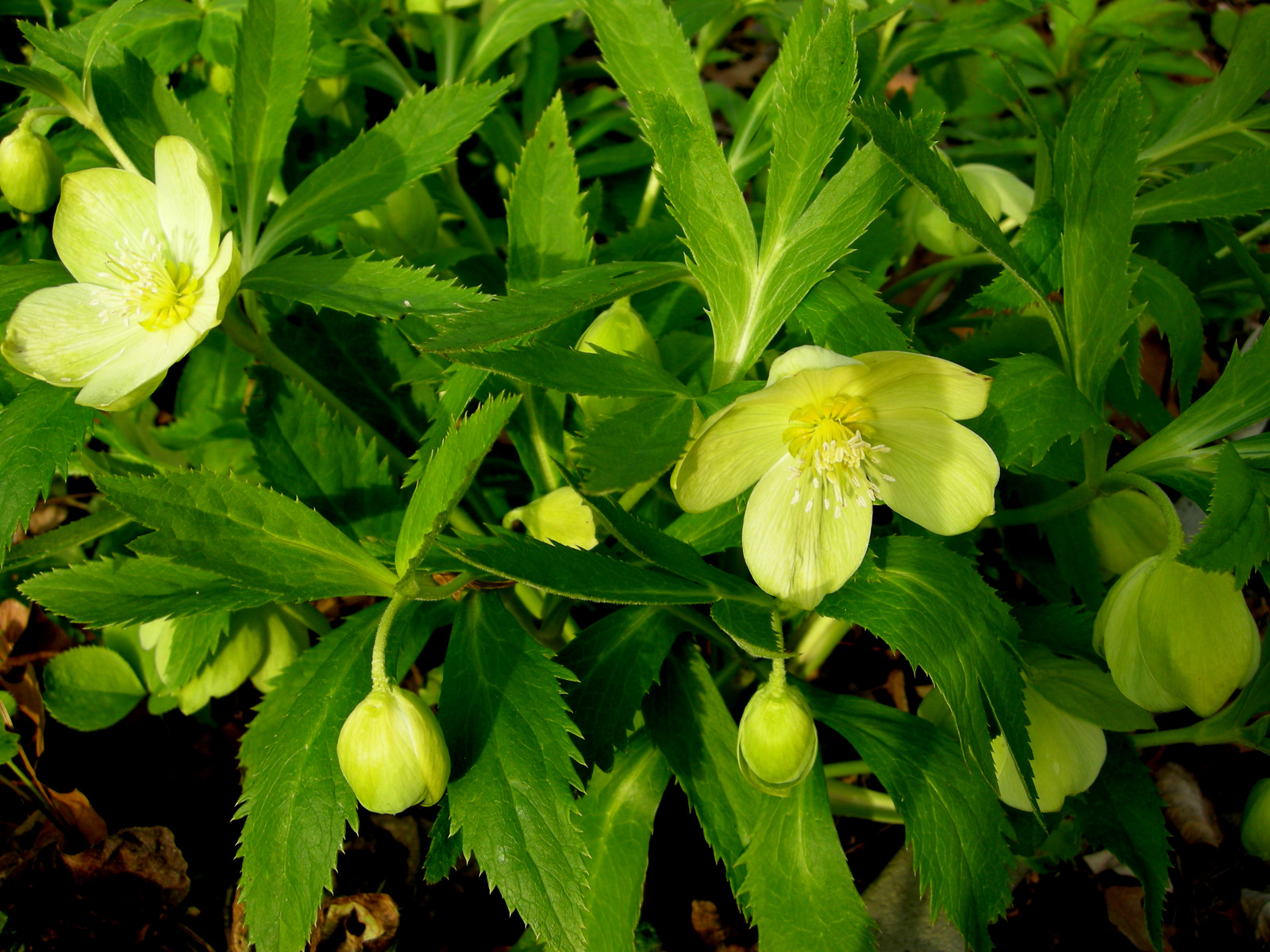
Since November 15, another Helleborus dumetorum (no common name) has put out fresh foliage and covered itself in flowers.

The lighter chartreuse buds are forming on bearsfoot hellebore, H. foetidus, which will remain ornamental through May.

‘Jacob’ Christmas rose, Helleborus niger ‘Jacob’, is covered with buds just starting to open.

This photo might not look very exciting, but I am thrilled to see buds on my rare double Christmas rose, Helleborus niger ‘Double Fantasy’.  In all my years of collecting hellebores, I have only seen a double Christmas rose once in a garden.  Now I will be offering blooming plants to my customers in my 2012 snowdrop catalogue.

This is what ‘Double Fantasy’ will look like when it’s open.

My fall-blooming camellias are a mainstay of my garden right now.  The first three pictured below are Ackerman hybrids, which I profiled in Fall-Blooming Camellias Part 1:

This is the last flower on Camellia x ‘Winter’s Darling’.

Camellia x ‘Elaine Lee’ still has a few buds left .

Camellia x ‘Winter’s Joy’ has been flowering since October and is still covered with buds.

Fall-blooming Camellia oleifera is no longer covered with flowers but still continues to produce blooms when the weather warms up.

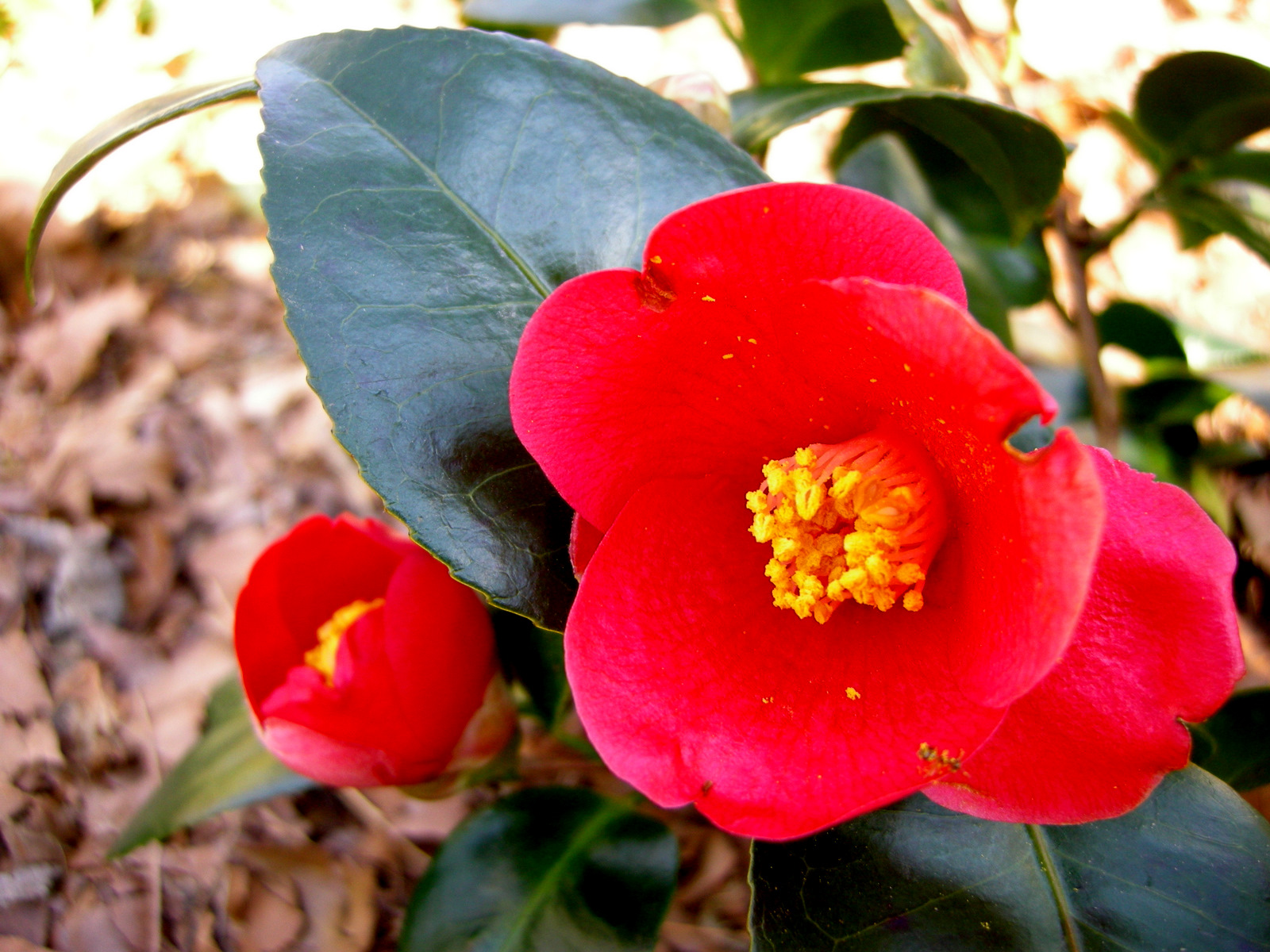
I was very lucky to receive as a gift this fully hardy, red-flowered Camellia japonica from Korea.  It has not yet been introduced for sale.  For more information on and photos of camellias, including this one, click here and here.

If you are just in it for flowers, then you can stop here because the last few plants rely on leaves to make their contribution.  However, foliage is very important for filling out the late fall garden, and I wanted to give you a few ideas:

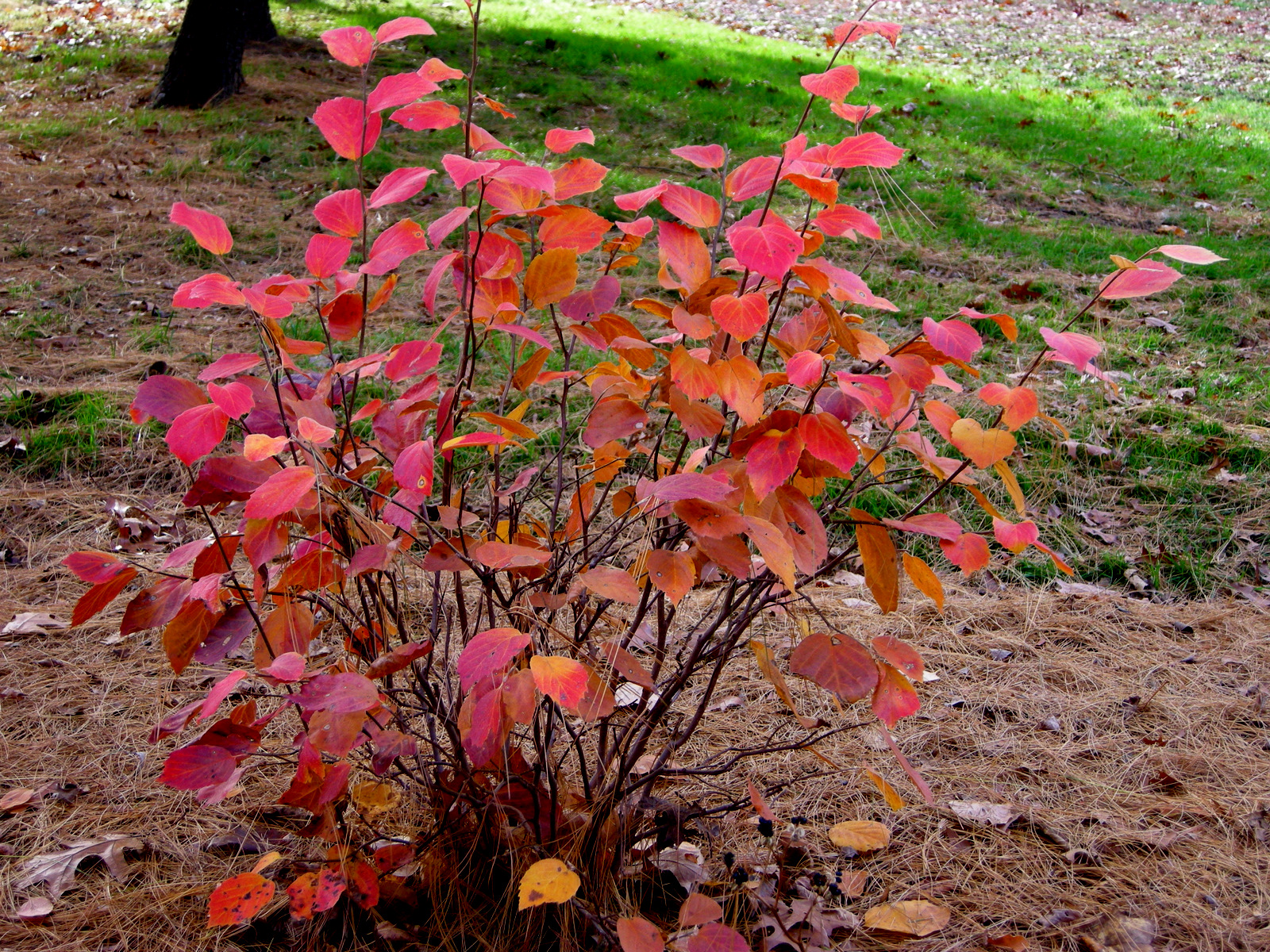
Although they have dropped now, dwarf fothergilla, F. gardenii, holds its gorgeous fall leaves way beyond November 15.  For more information on this outstanding native shrub, click here.

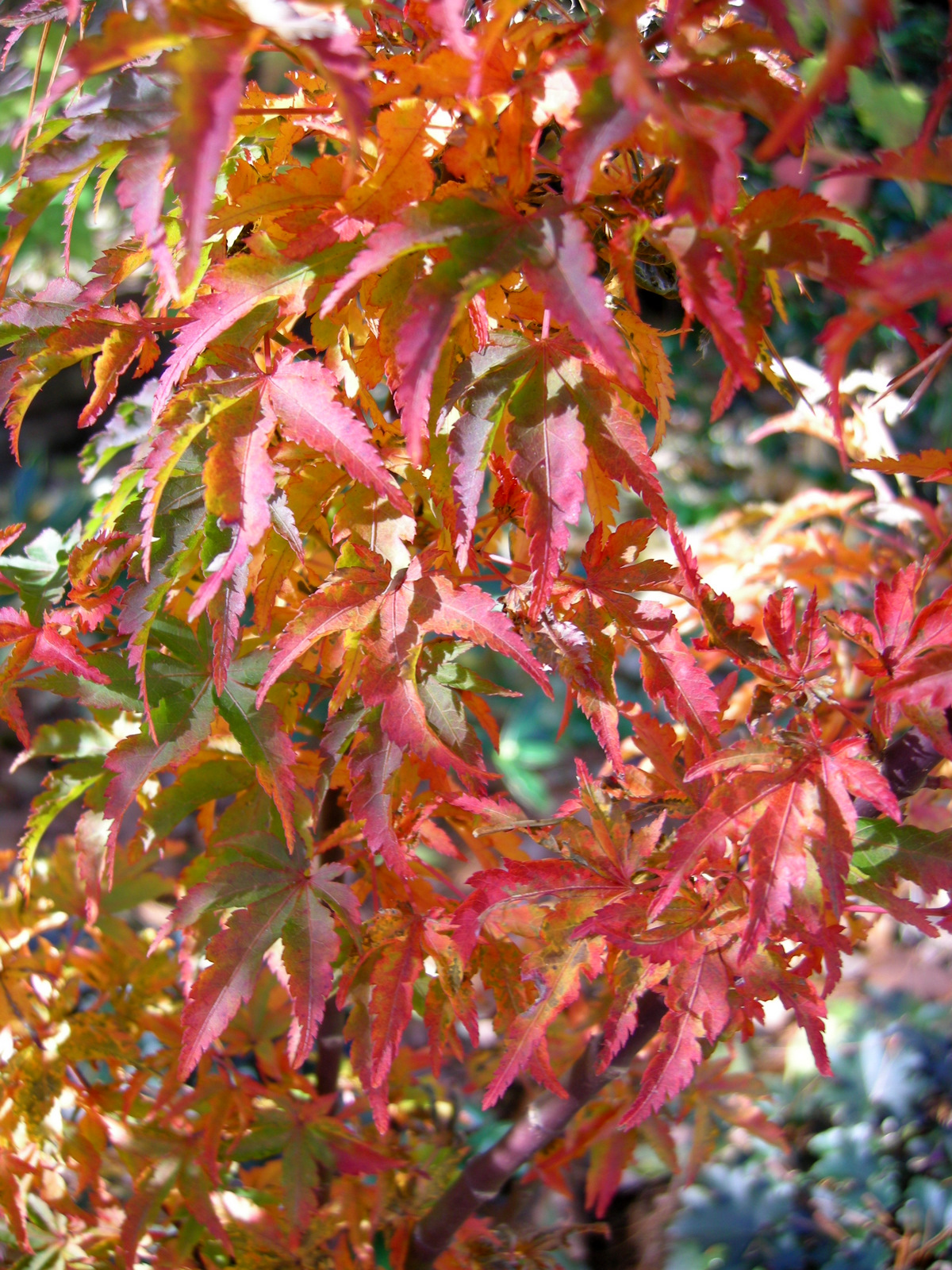
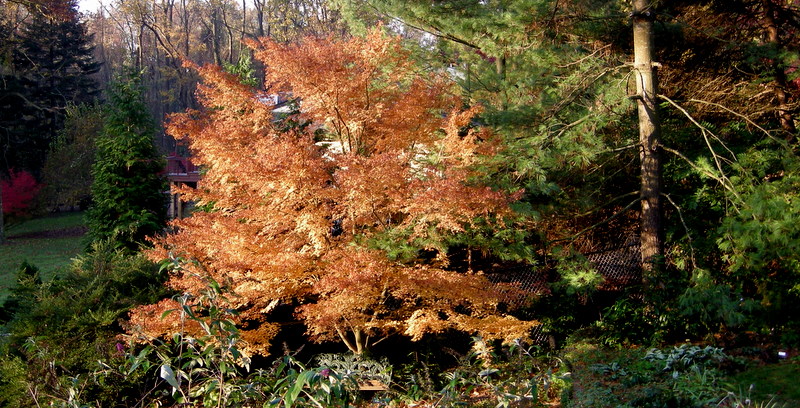
Another woody with late fall color is ‘Shishigashira’ Japanese maple, Acer palmatum ‘Shishigashira’.

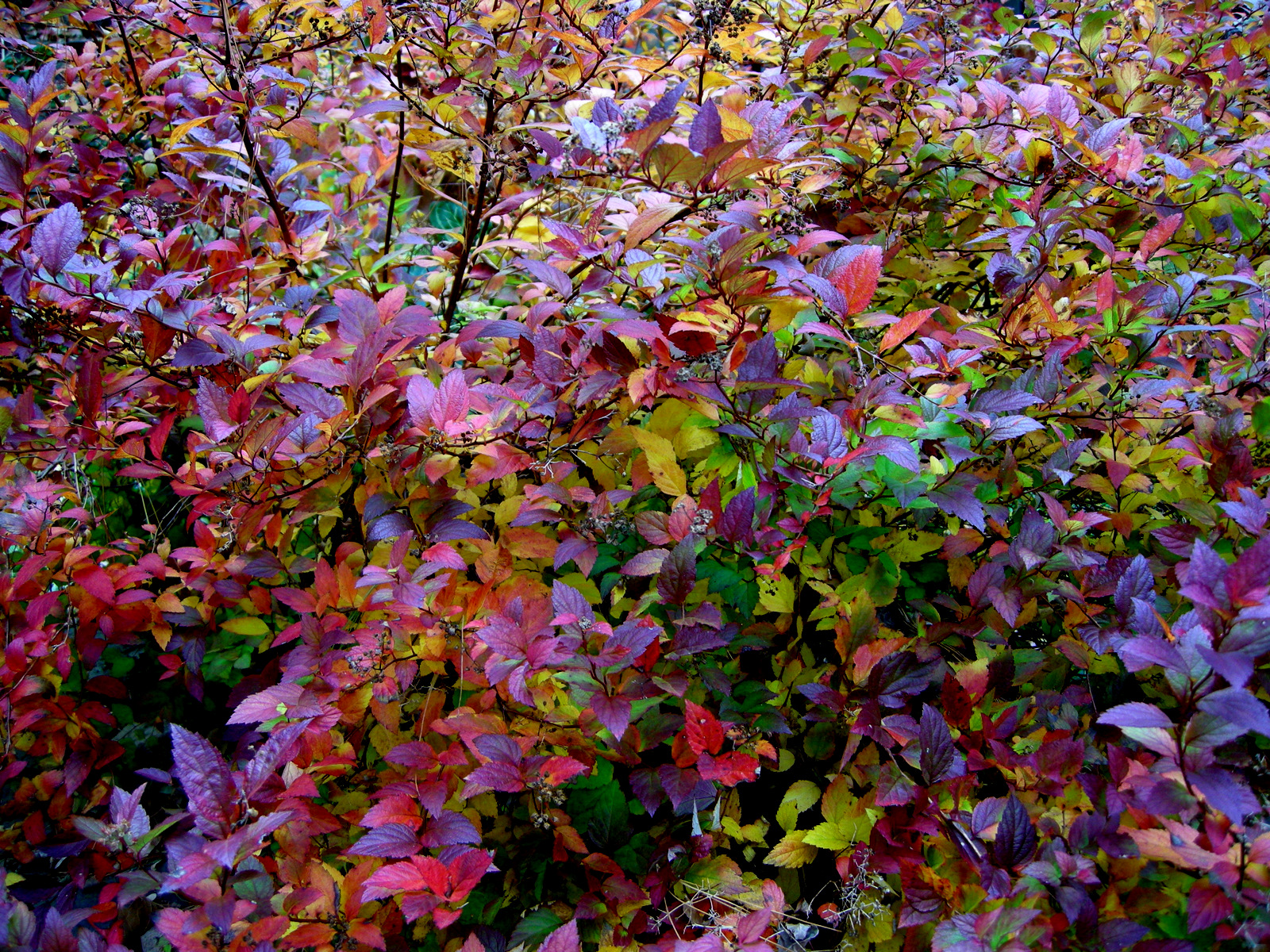
‘Magic Carpet’ spiraea, S. japonica ‘Magic Carpet’, is still displaying some of its gorgeous fall color right now.

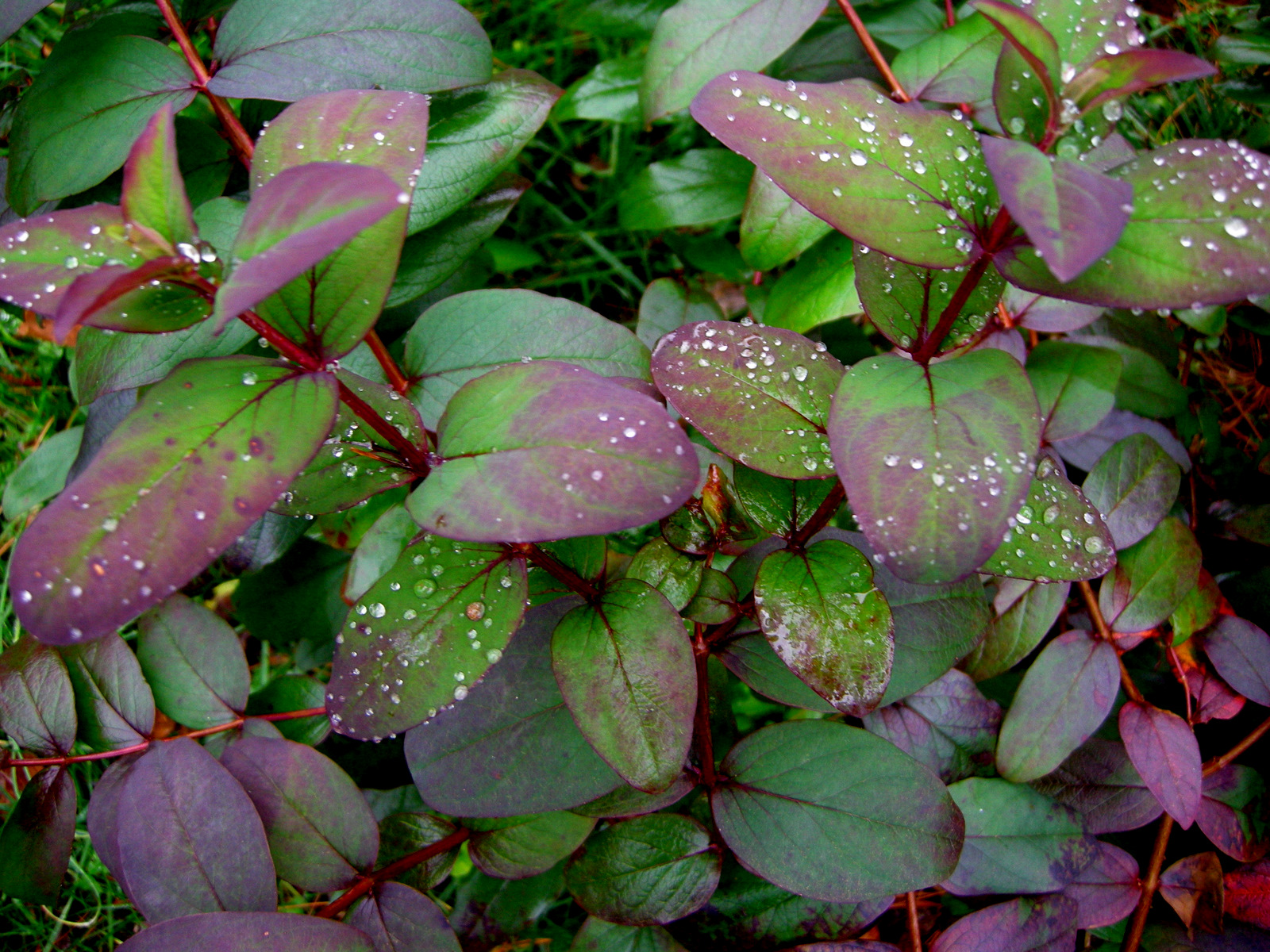
‘Albury Purple’ St. John’s wort, Hypericum androsaemum ‘Albury Purple’, remains fully clothed in plum-colored foliage.

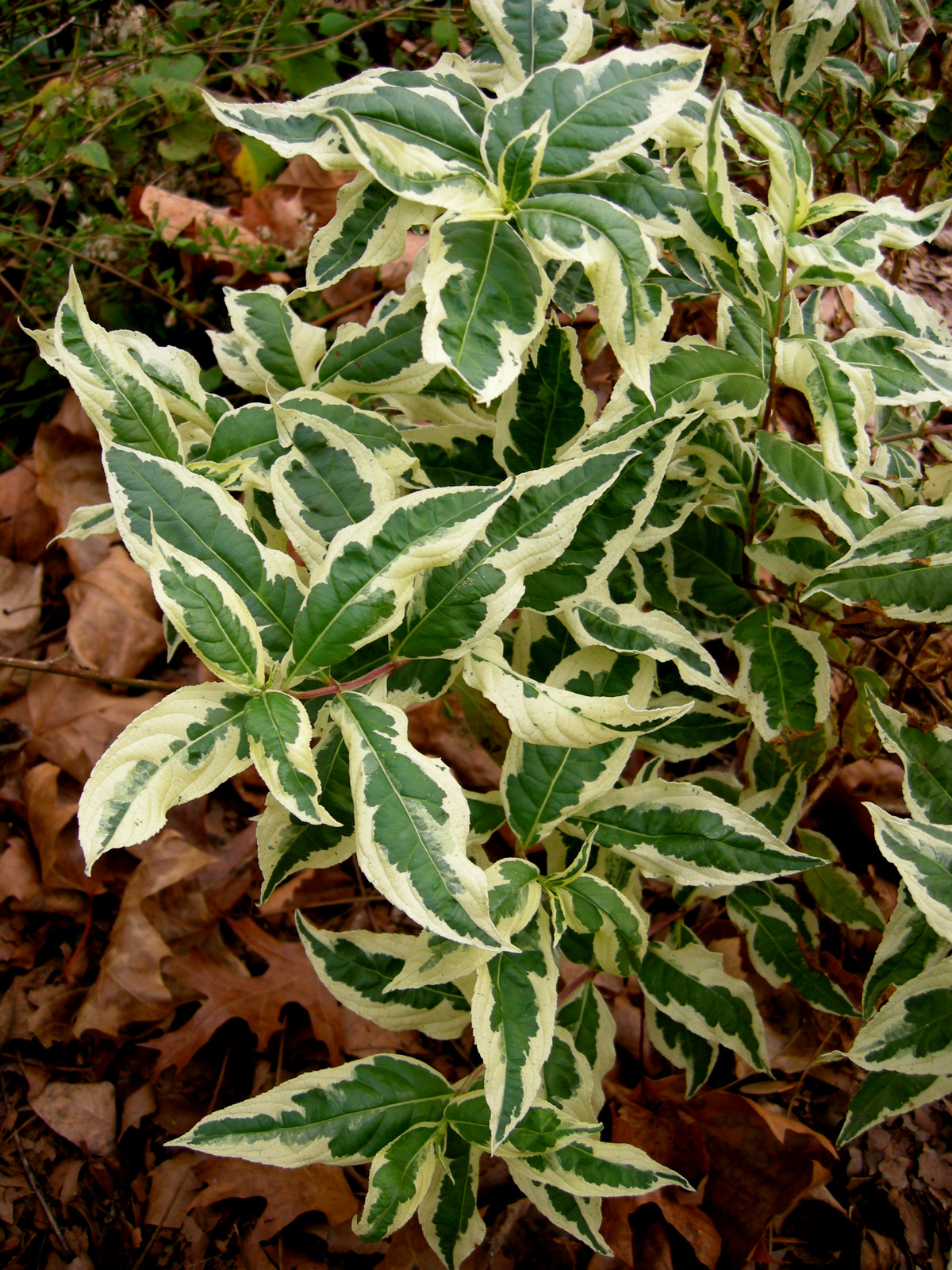
This is the first year that I have grown ‘Cool Splash’ southern bush honeysuckle, Lonicera sessifolia ‘Cool Splash’, but I am amazed to find that it looks like this right now.  For more information on this great native shrub, click here.

I have over 20 kinds of pulmonaria or lungwort in my garden providing me with beautiful flowers from February to April, but I appreciate them almost as much for their pristine foliage through early winter.

‘Diana Clare’ lungwort, Pulmonaria ‘Diana Clare’

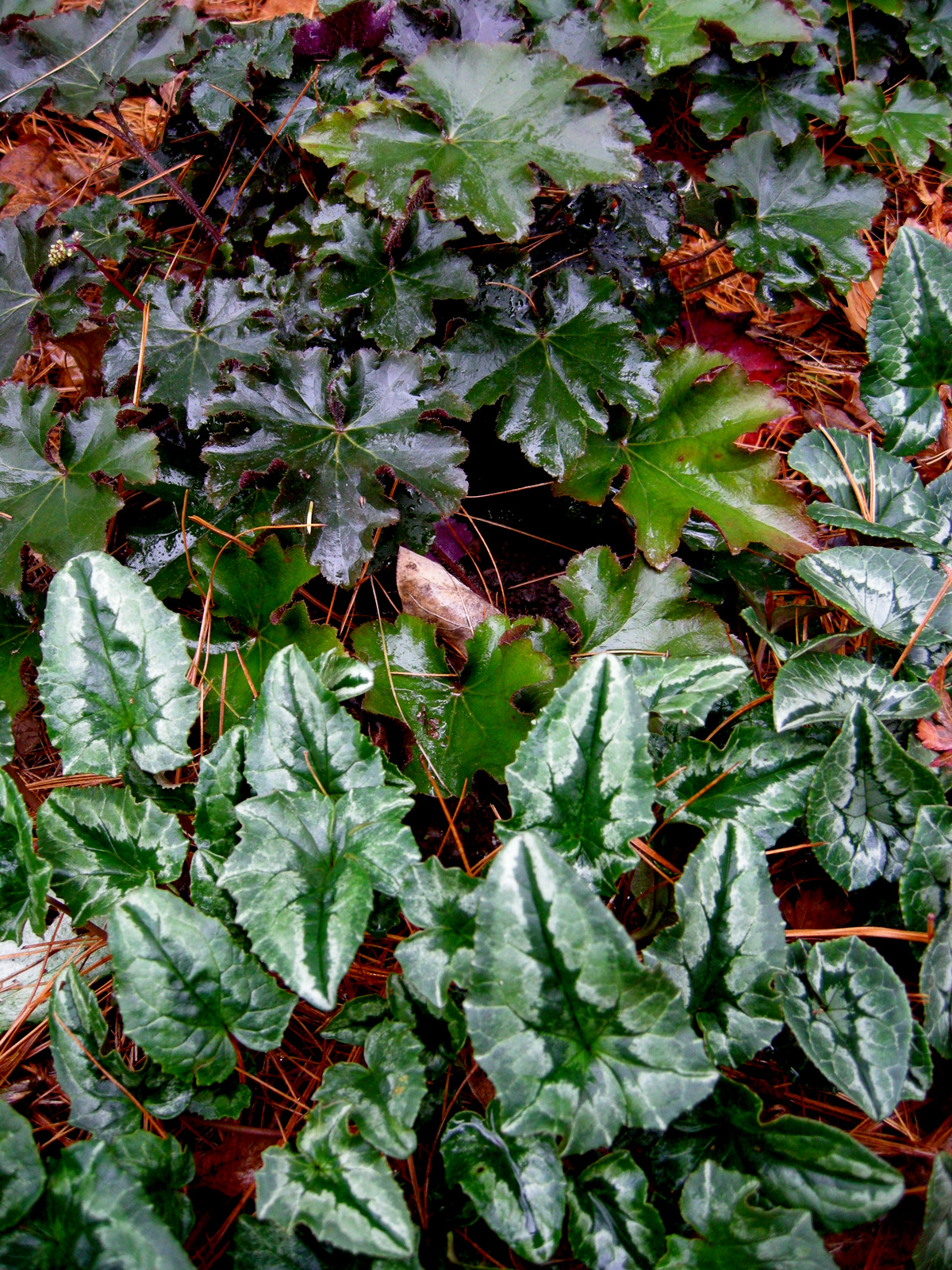
Both native ‘Bronze Wave’ coralbells, Heuchera villosa ‘Bronze Wave’, and fall-blooming hardy cyclamen, C. herifolium, will look like this all winter.

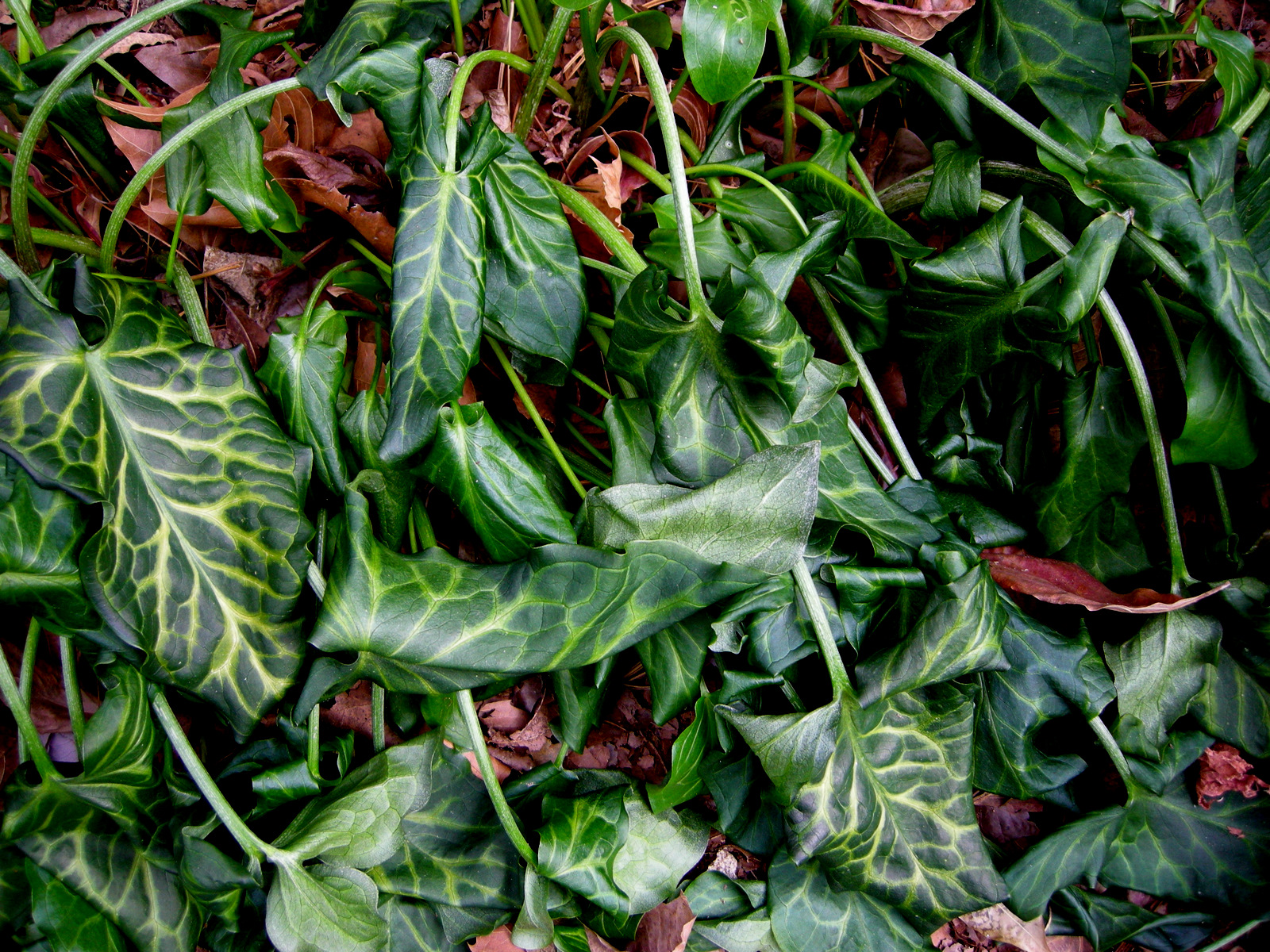
My post, More Flowering Wintergreen Ground Covers of Shade, included several photos of Italian arum cultivars, which are great winter interest plants.  I won’t repeat those plants here but show you a seedling that appeared among my arum.  The leaves are more pointy and narrow than the species and the markings go beyond veining to cover the leaf.

Enjoy the last few days of fall,  Carolyn

Notes: Every word that appears in orange on my blog is a link that you can click for more information.  If you want to return to my blog’s homepage to access the sidebar information (catalogues, previous articles, etc.) or to subscribe to my blog, just click here.

Carolyn’s Shade Gardens 2012 Calendar

Posted in calendar with tags , , on December 4, 2011 by Carolyn @ Carolyns Shade Gardens

Carolyn’s Shade Gardens is a retail nursery located in Bryn Mawr, PA, specializing in showy, colorful, and unusual plants for shade.  The only plants that we ship are snowdrops within the US.  For catalogues and announcements of local events, please send your full name, mailing address, and cell number to carolyn@carolynsshadegardens.com and indicate whether you are interested in snowdrops, hellebores, and/or hostas.  Click here to get to the home page of our website for catalogues and information about our nursery and to subscribe to our blog.

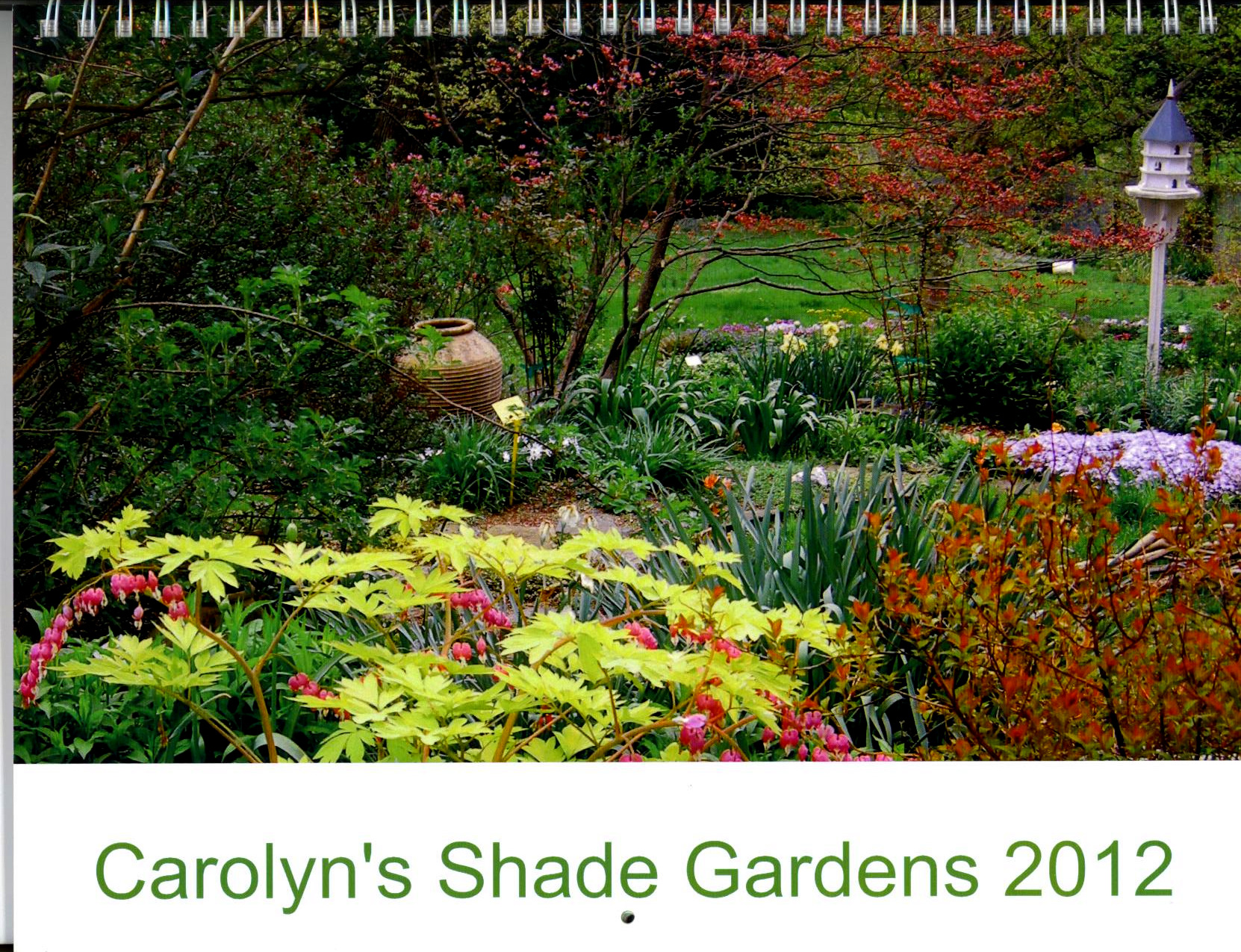
Calendar Cover

Carolyn’s Shade Gardens 2012 Calendar $21.95

11” x 17”, ships in 3 to 5 business days, available worldwide

To read reviews and to order, click here.

20% off through 2/5/12 with code SHADOWHOG

Just in time for the holidays, I have created the first ever Carolyn’s Shade Gardens Calendar.  Using all my own photographs, each month is illustrated with a single photo or a collage that is seasonally appropriate.  All your favorites are there: snowdrops, hellebores, primroses, hostas, native plants, and much more.  Many of the photos have appeared on my blog and received numerous compliments.  Now they are gathered together in a beautifully printed calendar. 

February

Having seen self-published calendars before, I was stunned by the excellent quality of the printing.  The printer uses high quality, heavy stock, semi-gloss paper.  The photos are so clear that they look better in print than on my computer.  I scanned the cover and the February and October collages for this post to give you an idea of what to expect, but I don’t want to ruin the surprise of turning each page.  I am forever indebted to Clare at Curbstone Valley Farm for recommending the publisher and helping me through the process.

October

I hope you will want to order the calendar for yourself, but it would also make a great holiday gift for friends and family, hostess present, or gift for that someone who has everything.  Please send a link to this post to anyone who might be interested in an easy holiday present.  Let me know what you think of the calendar when you receive it or better yet write a review on the calendar site.  Your feedback is always important to me.

This is a print-to-order calendar so you must place your order directly with the publisher by clicking here.

For aesthetic reasons, I didn’t put captions in, but here is a list for everyone who has asked for them:

Cover: Carolyn’s Shade Gardens main terrace
January: snowdrops ‘Potter’s Prelude’ (Galanthus elwesii var. monstictus ‘Potter’s Prelude’)
February: un-named hybrid hellebores (Helleborus x hybridus)
March: checkered-lily (Fritillaria meleagris); white checkered lily (F. m. ‘Alba’); fumewort (Corydalis solida)
April: glory-of-the-snow (Chionodoxa forbesii) with ‘Caramel’ coralbells (Heuchera x villosa ‘Carmel’) left; ‘Little Princess’ tulip with white stonecrop (Sedum album) right
May: cinnamon fern (Osmunda cinnamomea) left; Virginia bluebells (Mertensia virginica) and Celandine poppy (Stylophorum diphyllum) right
June: primrose ‘Cherry Pinwheels’ (Primula x polyantha ‘Cherry Pinwheels’)
July: ‘Teeny-weeny Bikini’ hosta left, ‘Holy Mouse Ears’ hosta top, Hosta tokudama species bottom
August: stone chair at Chanticleer with climbing hydrangea (H. anomala subsp. petiolaris)
September: ‘Early Amethyst’ beautyberry (Callicarpa dichotoma ‘Early Amethyst)
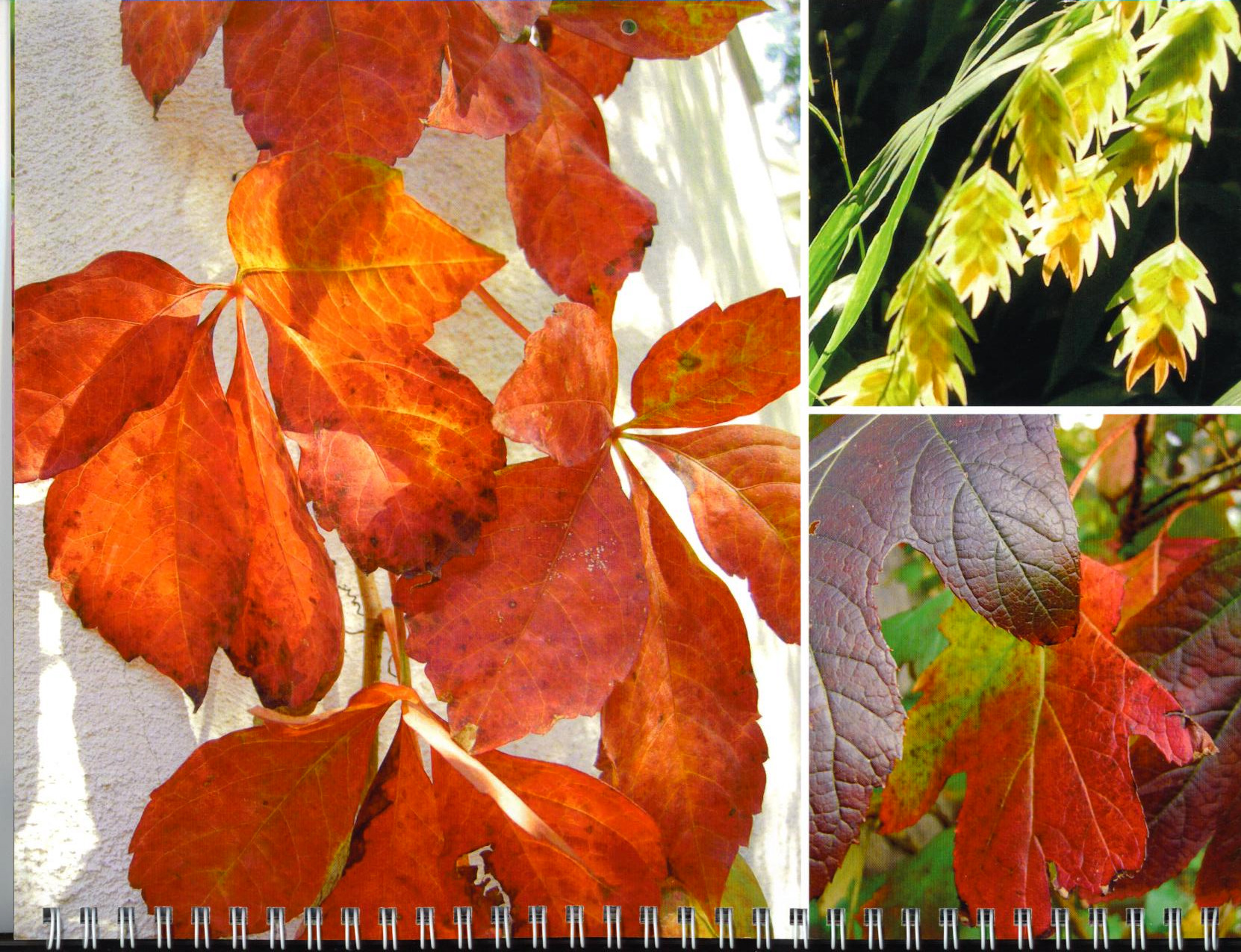
October: Virginia creeper (Parthenocissus quenquefolia) left, northern sea oats (Chasmanthium latifolium) top, oakleaf hydrangea (H. quercifolia) bottom
November: ‘Blue Angel’ hosta with fall-blooming hardy cyclamen (C. hederifolium)
December: tea viburnum (V. setigerum) bottom, my gargoyle mascot left, Carolyn’s Shade Gardens carriage house top

Thanks, Carolyn

Notes: Every word that appears in orange on my blog is a link that you can click for more information.  If you want to return to my blog’s homepage to access the sidebar information (catalogues, previous articles, etc.) or to subscribe to my blog, just click here.

Chanticleer Part 3: Through the Seasons

Posted in Fall, garden to visit with tags , , , on November 29, 2011 by Carolyn @ Carolyns Shade Gardens

Carolyn’s Shade Gardens is a retail nursery located in Bryn Mawr, PA, specializing in showy, colorful, and unusual plants for shade.  The only plants that we ship are snowdrops within the US.  For catalogues and announcements of local events, please send your full name, mailing address, and cell number to carolyn@carolynsshadegardens.com and indicate whether you are interested in snowdrops, hellebores, and/or hostas.  Click here to get to the home page of our website for catalogues and information about our nursery and to subscribe to our blog.

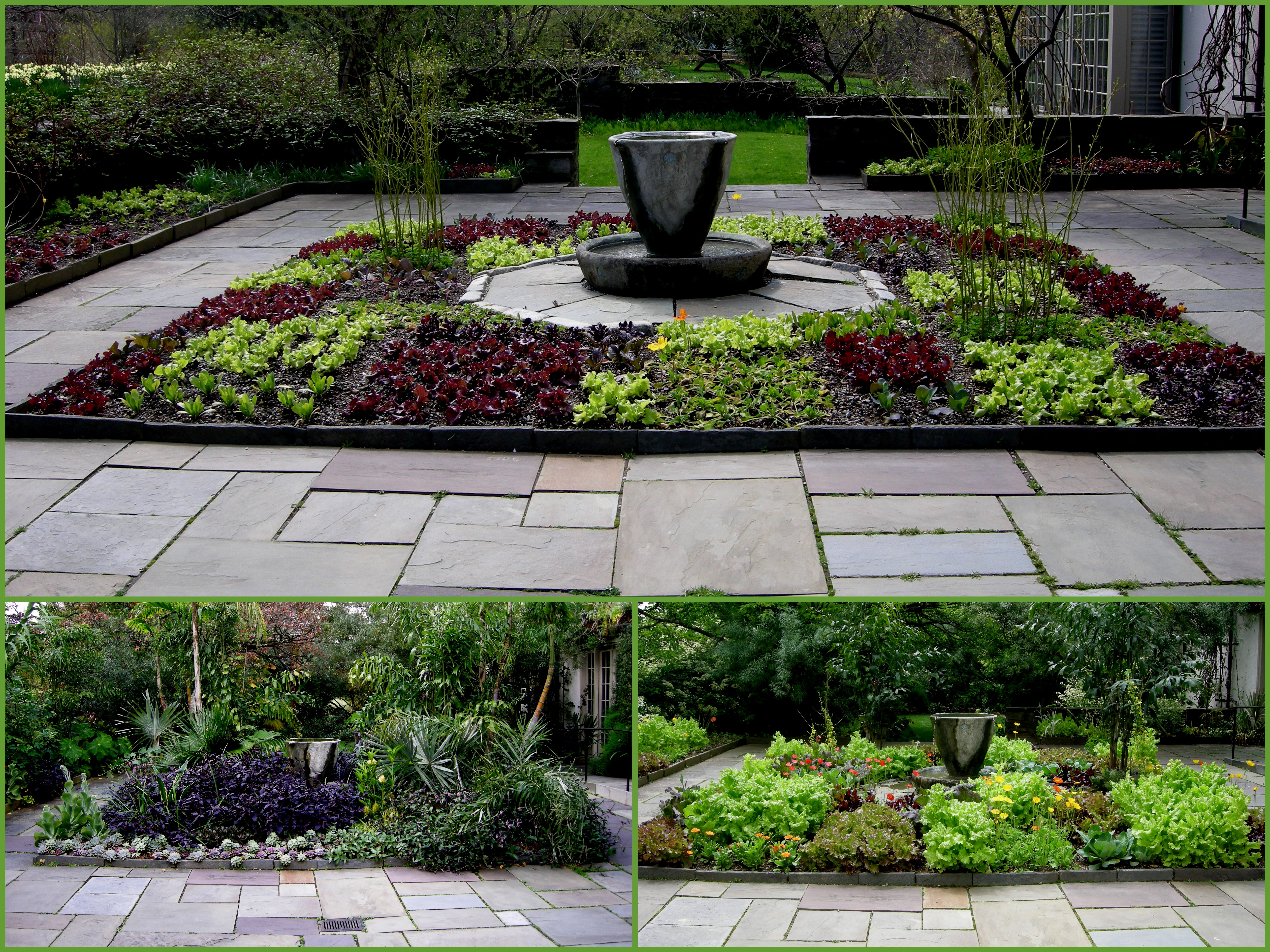
Close up of the teacup fountain in fall.

Chanticleer is a unique public garden in Wayne, Pennsylvania, U.S., which I have profiled in two previous articles.  The first, Chanticleer Part 1: A Pleasure Garden, gave an overview of this one-of-a-kind horticultural destination.  The second, Chanticleer Part 2: Garden Seating, focused on the huge variety of thoughtful seating areas in the Chanticleer gardens.  This post will show some of Chanticleer’s gardens as they evolve through the seasons, highlight some additional “hardscape” features, and focus on the attention to detail in one tiny garden that peaks in the fall.

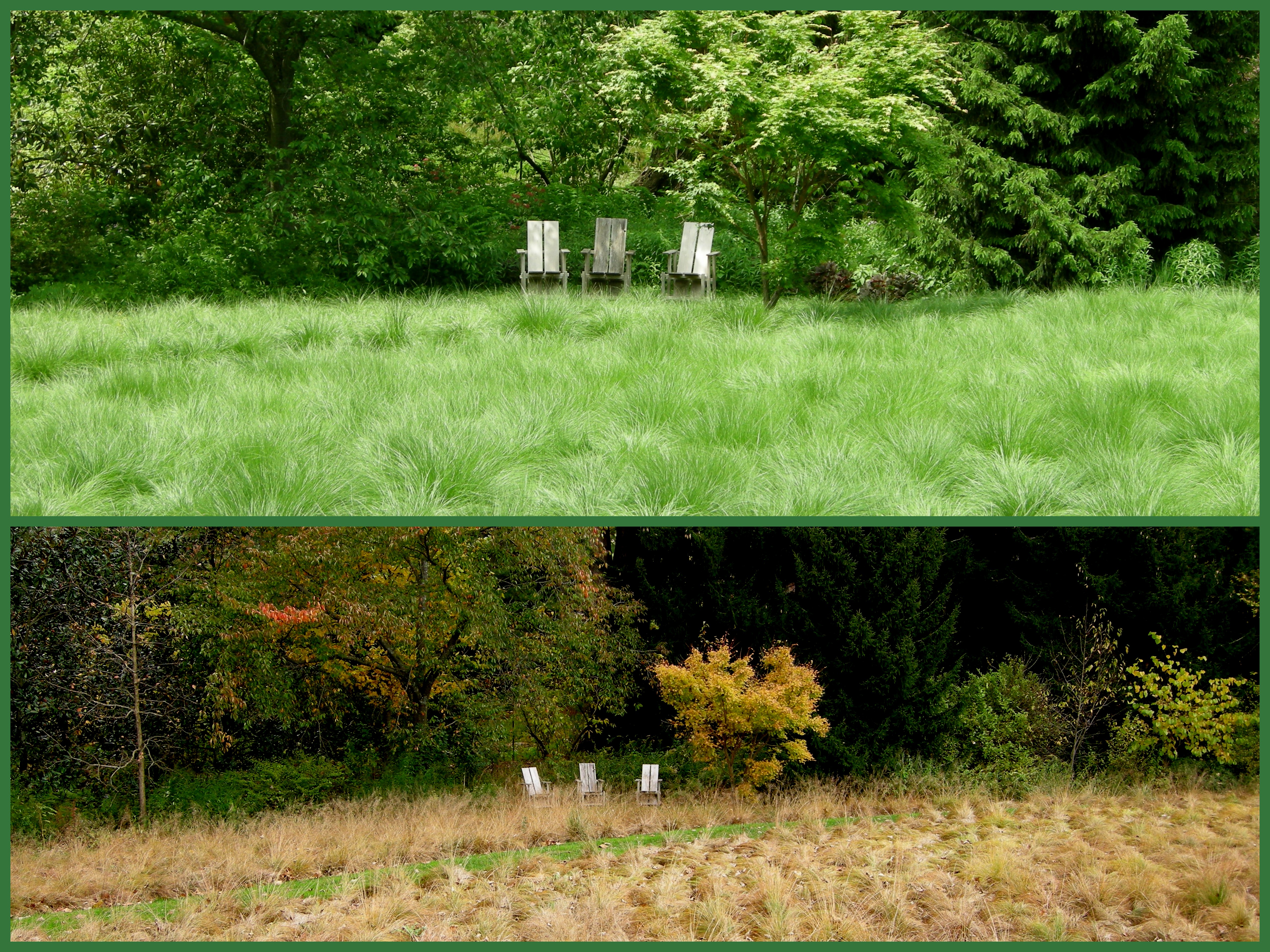
The Teacup Garden through the seasons: clockwise from top, spring, summer, fall.  I highly encourage you to click on any photo to enlarge it for more detail especially the collages.

I hope that my first two posts have inspired you to visit Chanticleer.  However, if you live in the area, it is well worth visiting several times a year.  As you can see from the photos of the Teacup Garden above, the changes in some of Chanticleer’s gardens are very dramatic.  And even the less dramatic evolution of other areas makes each visit feel unique.  Here are a few more gardens from spring through fall:

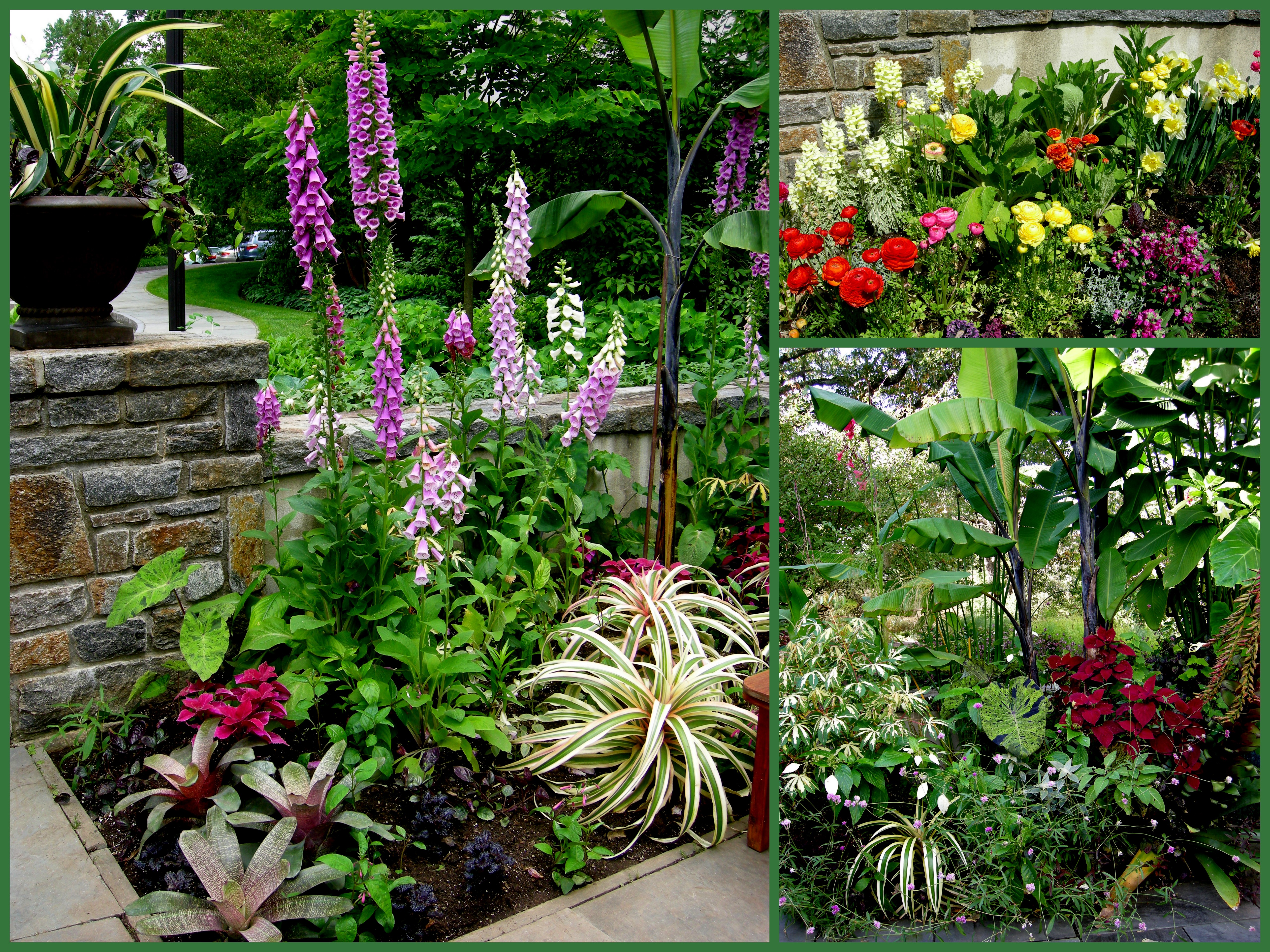
Entrance courtyard: clockwise from left, summer, spring, fall.  The lavish and very colorful plantings in this area, where visitors check in, often have a tropical theme.

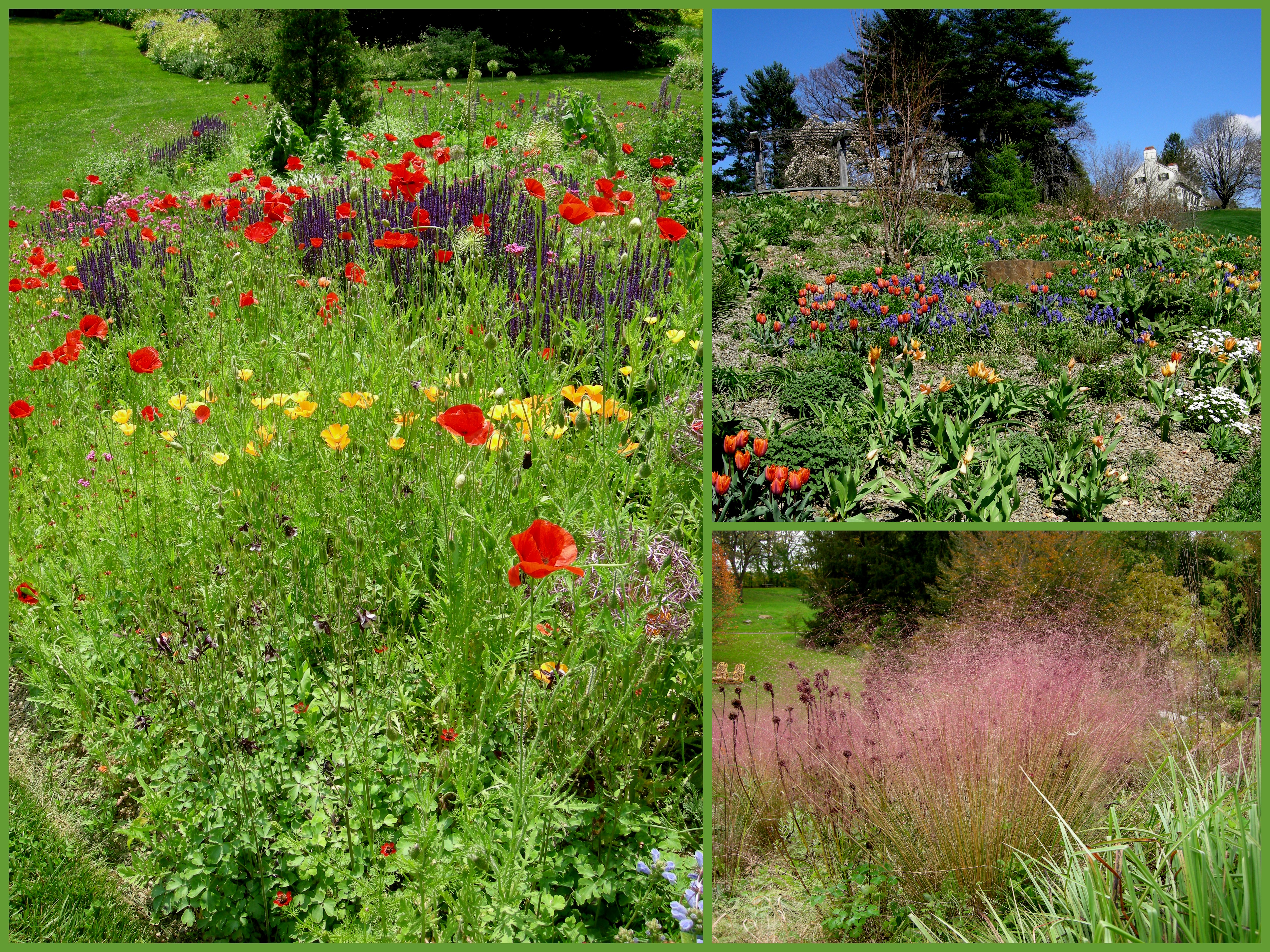
The gardens above the pond and below the ruin: clockwise from left, summer, spring, fall.

View of the Serpentine Garden from the gravel gardens below the ruin: clockwise from top, fall, summer, spring.  Although the changes are more subtle, they are no less beautiful.

Another more subtle change in the area below the ruin and above the Stream Garden: top summer, bottom fall.  A change in the seasons gives a whole different feel.

One of the many unique features of Chanticleer is the ingenious use of “hardscape” or architectural elements throughout the garden.  These elements are as important to my visits to the garden as the plants themselves.  They provide a dimension of experience not available in any other garden I have visited.  I have highlighted some of the hardscape in each of my posts, but here are additional examples:

The elegant gate at the entrance to the Teacup Garden.

Stone acorns in the Ruin Garden: Chanticleer has many beautiful stone sculptures, including the stone chair in my garden seating post, which has taken Pinterest, the online pinboard site, by storm.

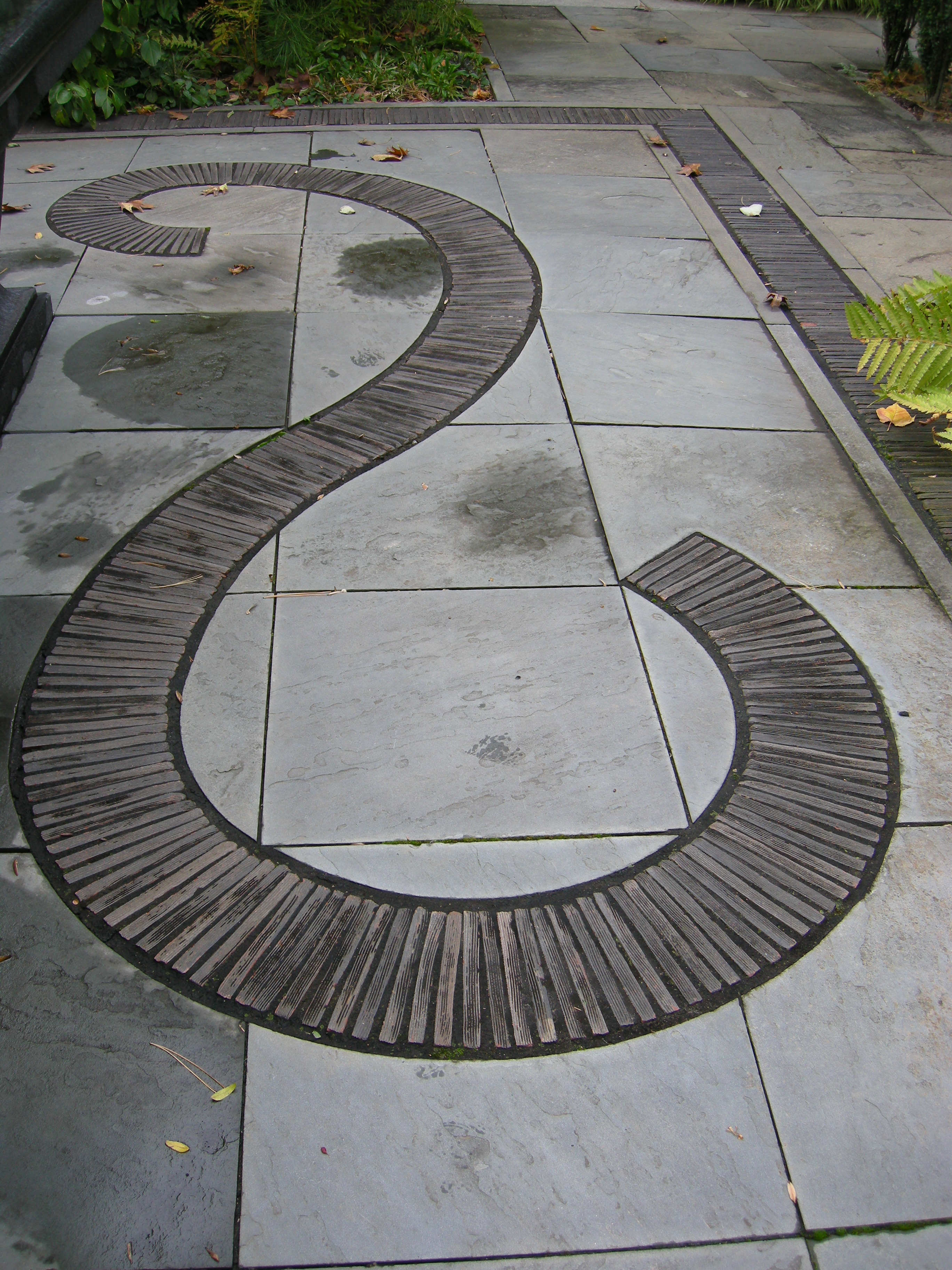
Pattern in the floor of the Ruin Garden: at Chanticleer, it pays to look where you are walking because art is incorporated into the paths.  I have been inspired by my visits to add design elements to  my own woodland paths.

Lovely bridge with carved wooden railing below the Pond Garden.

Elegant bridge marking the entrance to the Asian Woods.

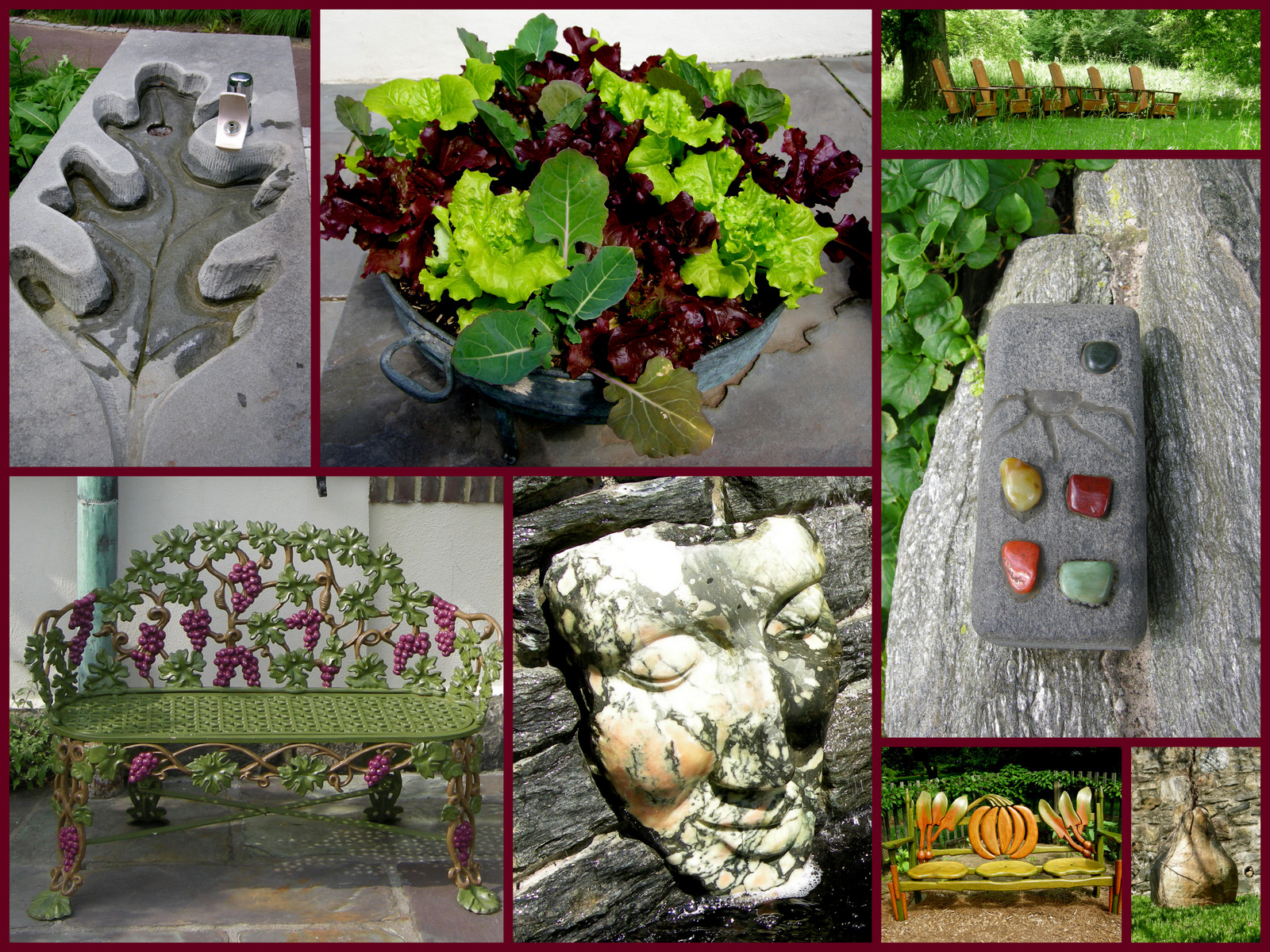
This creepy fountain of sunken marble faces is in a secluded alcove of the Ruin Garden—I love it!

I thought you might like to see close up photos of all the sunken marble faces in the Ruin Garden fountain.

My latest visit to Chanticleer was on October 21, shortly before the garden closed for the season at the beginning of November.  I was captivated by a small garden between the Teacup Garden and the back gate.  So much work had been put into the plantings and the seating arrangement to ornament the very short period when Chanticleer is open in the fall.  The eggplant-colored chairs perfectly echo the October-blooming and -fruiting beautyberries, toad-lilies, and other flowers behind them—now that’s attention to detail and that’s what Chanticleer is all about.

To finish out this series, I will need to visit Chanticleer in winter.  Because they don’t reopen until April 1, I hope to get special permission to visit off season.  Wish me luck!

Carolyn

Notes: Every word that appears in orange on my blog is a link that you can click for more information.  If you want to return to my blog’s homepage to access the sidebar information (catalogues, previous articles, etc.) or to subscribe to my blog, just click here.
In Which I Decide To Be Thankful

Posted in garden essay, green gardening, native plants, Uncategorized with tags , , on November 22, 2011 by Carolyn @ Carolyns Shade Gardens

Carolyn’s Shade Gardens is a retail nursery located in Bryn Mawr, PA, specializing in showy, colorful, and unusual plants for shade.  The only plants that we ship are snowdrops within the US.  For catalogues and announcements of local events, please send your full name, mailing address, and cell number to carolyn@carolynsshadegardens.com and indicate whether you are interested in snowdrops, hellebores, and/or hostas.  Click here to get to the home page of our website for catalogues and information about our nursery and to subscribe to our blog.

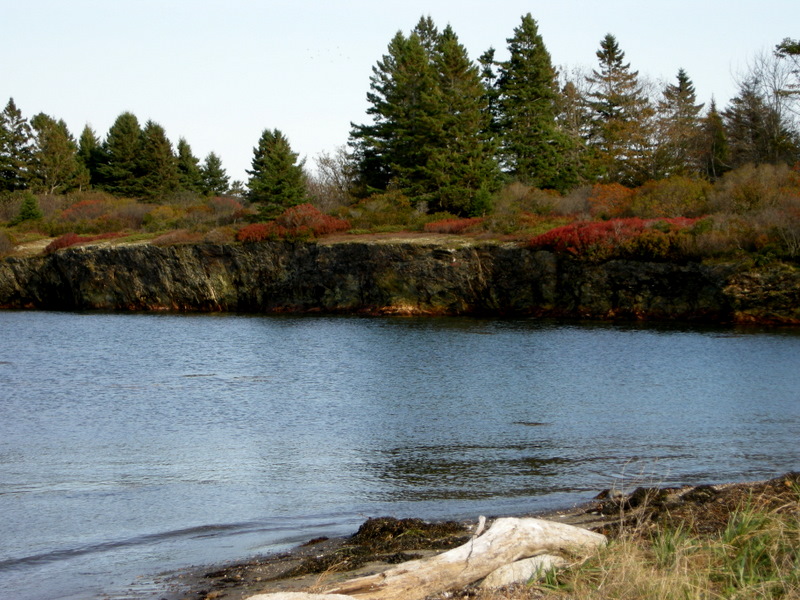
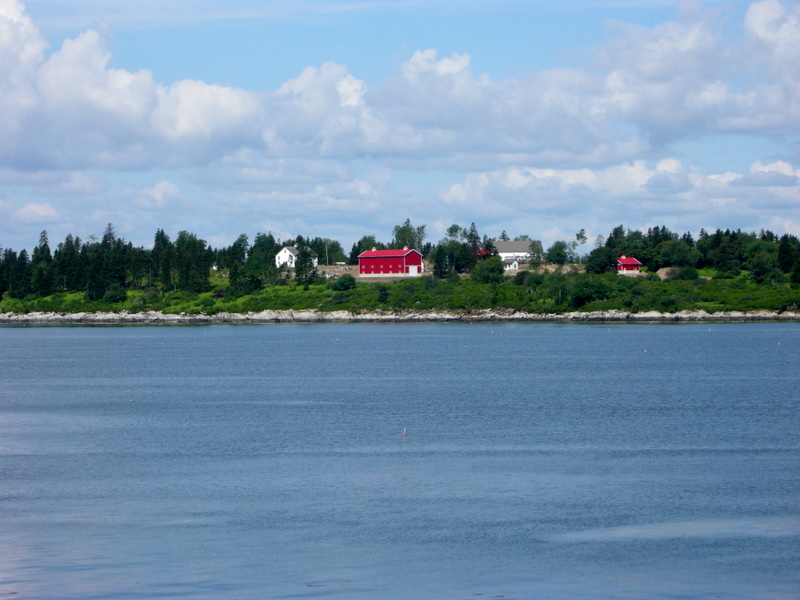
All photos in this post were taken in and around Cliff Island, Maine, U.S., in summer or fall.  Click on any photo to enlarge.

This is my 2011 Thanksgiving essay.  Last year in My Thanksgiving Oak Forest, I described why my husband and I decided to transplant native red oak seedlings to a waste area filled with invasive plants.  If you haven’t had a chance to read it, I hope you will click here because I think it is my most important post. This year’s essay is a glass-half-empty, glass-half-full kind of story, which ends with me deciding to be thankful, always a good result at any time of year.

Frequent readers of this blog will know that I spend a lot of time on a small island seven miles off the coast of Maine called Cliff Island.  The island is a very special place for many reasons.  Physically, it is achingly beautiful, surrounded by rocky shores and ocean and with acres of woods, marshes, and beaches created by nature and for the most part preserved that way, although it is all private land. 

Our family has no vehicle so I walk three to four miles every day often to get places but predominantly for pleasure.  And while I walk I think.  In the midst of all this beauty I am often sad.  Aside from public land, few places remain in the eastern U.S. like Cliff Island where the ecology is not rapidly changing for the worse.

Surrounded by a close to pristine landscape, I mourn for what southeastern Pennsylvania, where I live, must have been like and how it has been changed beyond recognition and probably beyond redemption.  As Heather from Restoring the Landscape with Native Plants says: “Although many of our woodland landscapes have been invaded with invasive species and altered by humans, diminished representations of the former plant community still exist and provide us with a window of what the woodland used to be [emphasis added].”

I think about how most people don’t know, and many of them don’t care, what a real native landscape looks and feels like.  How will we preserve the precious areas that remain if people have no context within which to appreciate them?  Jill on Landscape Lover’s Blog describes a noted French landscape architect as pointing out that “most people prefer highly-managed places – pleasurable gardens and efficient landscapes – over raw nature, which is increasingly perceived as distant, unpleasant, almost repellent, with its insects, bacteria, and disorder [emphasis added].”  Is that true?  I am afraid so.

Even Cliff Island is under attack with invasive non-native plants making their way out from the mainland and displacing the island’s delicate native ecology.  We currently have a full scale battle going on with Japanese knotweed, purple loosestrife, oriental bittersweet, multiflora rose, Japanese barberry, burning bush euonymus, and Norway maple.  These plants have only started multiplying invasively on Cliff Island in the last 20 years or so and yet the rate of increase is exponential.

On better days, when my half-full attitude takes over, I am deliriously thankful that I get to spend time on Cliff Island.  I stare at the landscape trying to burn it into my memory for viewing during the rest of the year.  I find it so beautiful that it seems unreal, like a movie set.  I never get tired of it.  No designed garden can compare with what nature has created.

I am also eternally thankful that I am able to appreciate this natural beauty.  That I don’t prefer highly managed landscapes and that I love being outside.  I am grateful that my training enables me to understand how the plant communities on the island work and to appreciate the ornamental characteristics of the native plants.

I am thankful that Cliff Island’s balance has not been destroyed.  In Pennsylvania, any unplanted area is soon filled with invasives.  On the island, the regenerative power of the native plants remains in tact.  An area of abandoned lawn will quickly be re-colonized by blueberries, goldenrod, bayberry, asters, and other natives.

I am also thankful that, four years ago, I was able to launch a non-native invasive plant removal program on Cliff Island.  Volunteers from the community are working hard to remove invasives before they become established like they are on the mainland.  I am happy to report that the program is a huge success.  If you would like to know more about the program, please feel free to email me at carolynsshadegardens@verizon.net.  Nothing would make me happier than to help others preserve their native landscape.

Readers of my 2010 Thanksgiving post will be pleased to know that we are continuing what will now be our Thanksgiving tradition and have planted three more native red oaks at the bottom of our property.

Happy Thanksgiving, Carolyn

Notes: Every word that appears in orange on my blog is a link that you can click for more information.  If you want to return to my blog’s homepage to access the sidebar information (catalogues, previous articles, etc.) or to subscribe to my blog, just click here.
November GBBD: Prime Time

Posted in Camellias, Fall Color, Garden Blogger's Bloom Day, Shade Perennials, Shade Shrubs with tags , , , , , , , , , , on November 15, 2011 by Carolyn @ Carolyns Shade Gardens

Carolyn’s Shade Gardens is a retail nursery located in Bryn Mawr, PA, specializing in showy, colorful, and unusual plants for shade.  The only plants that we ship are snowdrops within the US.  For catalogues and announcements of local events, please send your full name, mailing address, and cell number to carolyn@carolynsshadegardens.com and indicate whether you are interested in snowdrops, hellebores, and/or hostas.  Click here to get to the home page of our website for catalogues and information about our nursery and to subscribe to our blog.

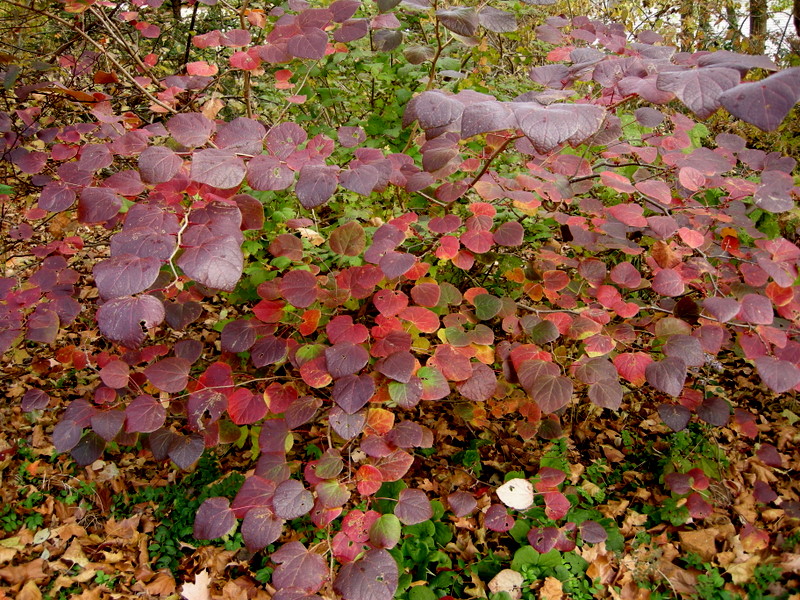
I think Disanthus cercidifolius (no common name) has the best fall color of any plant in my garden.  It is also in full bloom right now (photo below).

It is the middle of the month and time to participate in Garden Blogger’s Bloom Day hosted by May Dreams Gardens where gardeners from all over the world publish photos of what’s blooming in their gardens.  I participate because it is fun and educational for me to identify what plants make my gardens shine at different times of the year.  I also hope that my customers will get some ideas for plants to add to their own gardens to extend their season well into fall.  I am also joining my friend Donna’s Word for Wednesday theme of texture and pattern at her blog Garden Walk Garden Talk.

My garden is located in Bryn Mawr (outside Philadelphia), Pennsylvania, U.S., in zone 6B.


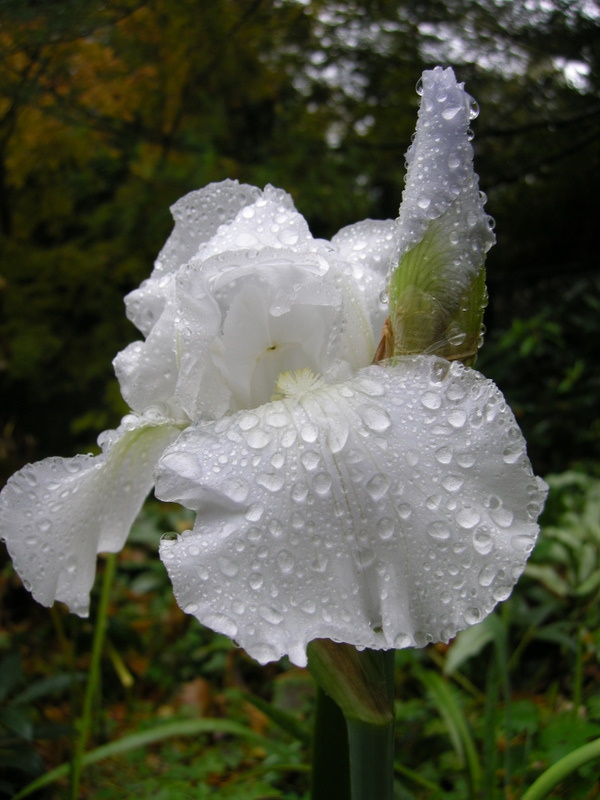
The re-blooming tall bearded iris ‘Clarence’ is a star performer in my fall garden.  It got knocked over by our unseasonable snow storm so it doesn’t look like this now, but it continues to bloom.

In colder months there is a tendency to include GBBD photos of anything with a flower, and I may do that in January.  But fall is still prime time in my gardens (no hard frost yet) so I am showing here only plants that are at their peak between October 15 and November 15 (I do not take all my photos on November 15).  This means that they bloom now (or are still blooming), have ornamental fruit, or feature exceptional fall color during this period.  For more ornamental ideas for fall, see A Few Fall Favorites for Flowers and A Few Fall Favorites for Foliage and Fruit.

Let’s start with perennials:

Fall-blooming hardy cyclamen, C. hederifolium, continues to flower through November.

Yes, the snowdrop season has started with Galanthus reginae-olgae, which has been blooming since mid-October.  Fall-blooming ‘Potter’s Prelude’ has just produced its first flowers as has the giant snowdrop, G. elwesii, but they will be featured next month .

When I was touring Chanticleer this spring one of the gardeners gave me a clump of this very late-blooming monkshood, Aconitum sp.  I am not sure what species it is, but I am loving it’s dark violet-blue flowers.

‘Immortality’ is another re-blooming tall bearded iris that puts on a fall show.  I appreciate these flowers much more now when most other showy blooms are gone.

‘Zebrina’ hollyhock mallow, Malva sylvestris ‘Zebrina’, shows up in the most unlikely places in my garden, here my terrace stairs, and produces generous quantities of blooms through fall.

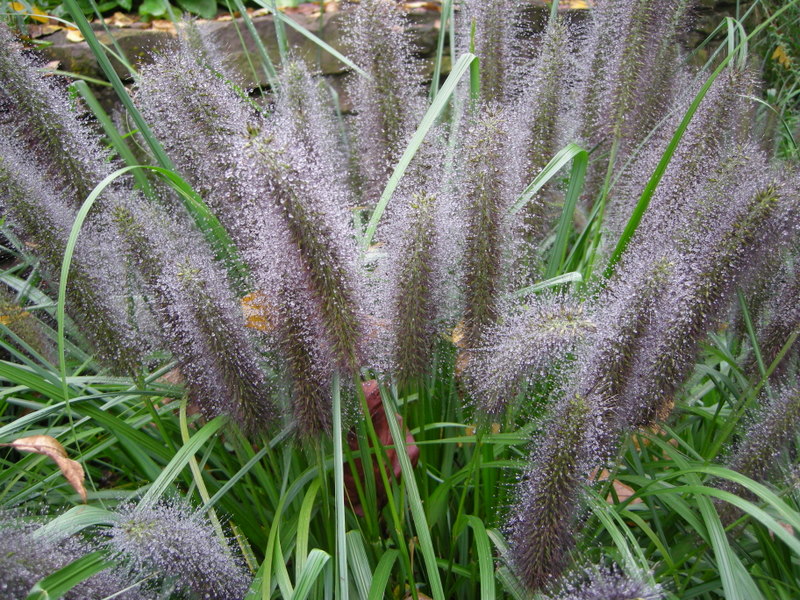
Gorgeous ‘Moudry’ black fountain grass, Pennisetum alopecuroides ‘Moudry’, is one of the most asked about perennials in my fall garden and is well behaved here, but it can spread aggressively in some sites.

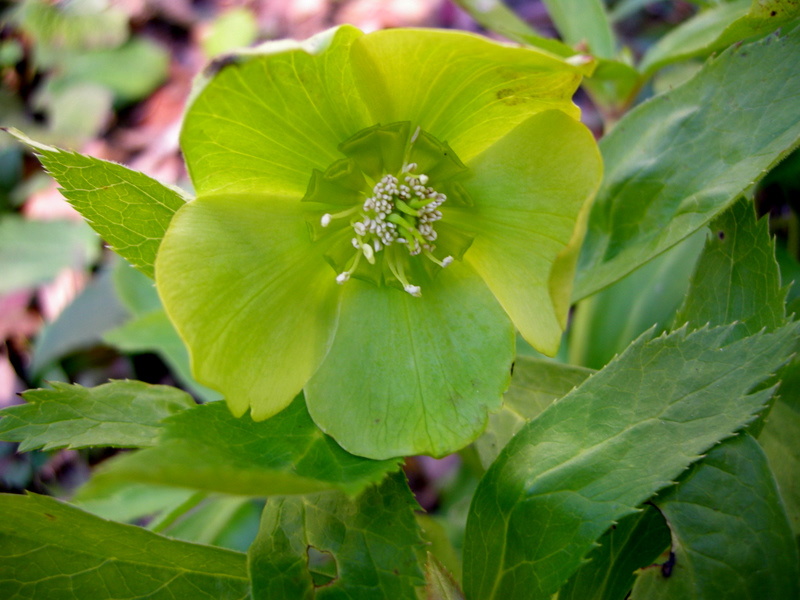
Hellebore season has started too with this little gem that was sold to me as Helleborus dumetorum (no common name), probably mislabeled.  Christmas rose ‘Josef Lemper’ has been blooming for quite a while but has no fresh flowers now.  I will include it next month.

Here are some trees and shrubs that I would grow for their ornamental contribution to the fall garden from flowers or berries:

The award winning hydrangea ‘Limelight’, H. paniculata ‘Limelight’, continues to produce fresh flowers late into fall.

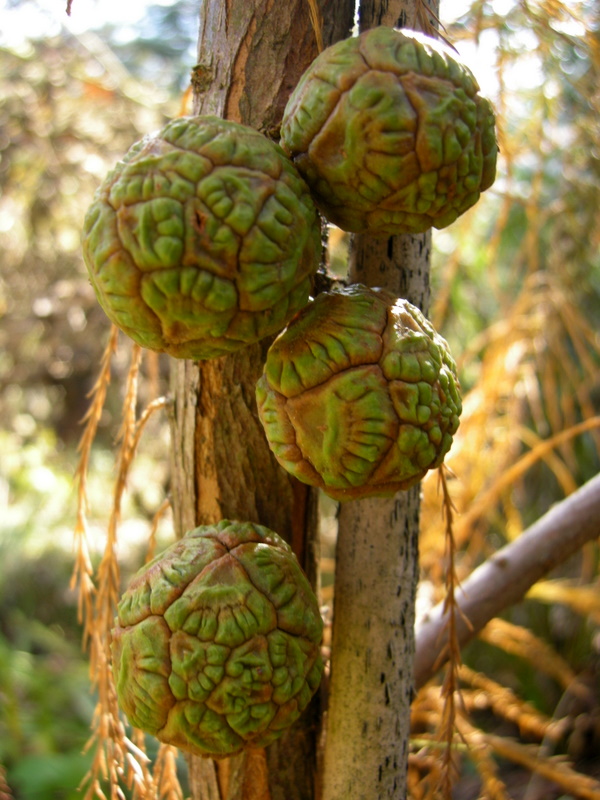
Pond cypress, Taxodium ascendens, is ornamental almost all the time, but I would grow it even if all it did was produce these gorgeous cones.

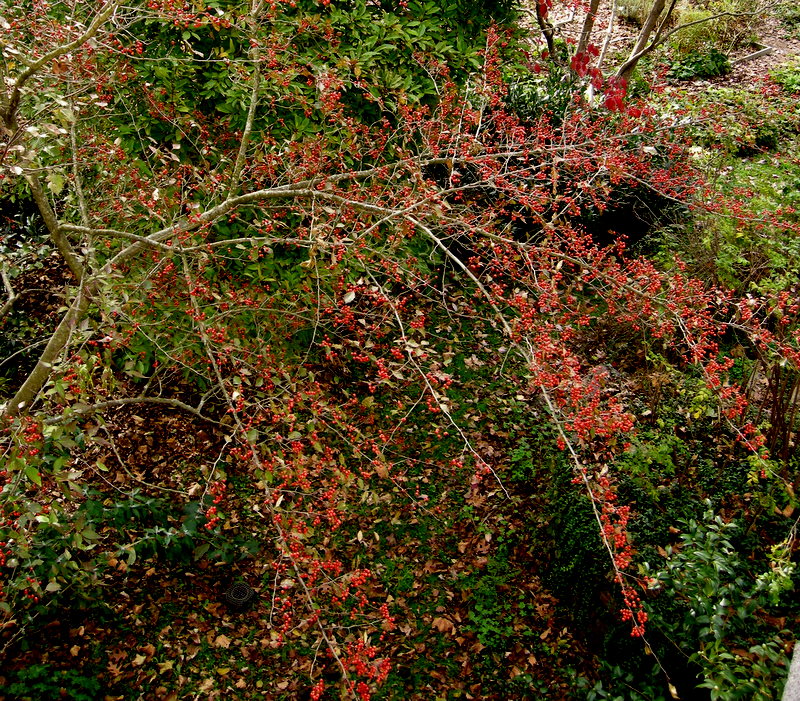
Native green hawthorn ‘Winter King’, Crataegus viridis ‘Winter King’, has produced a bumper crop of berries this year, which the robins are just starting to enjoy.

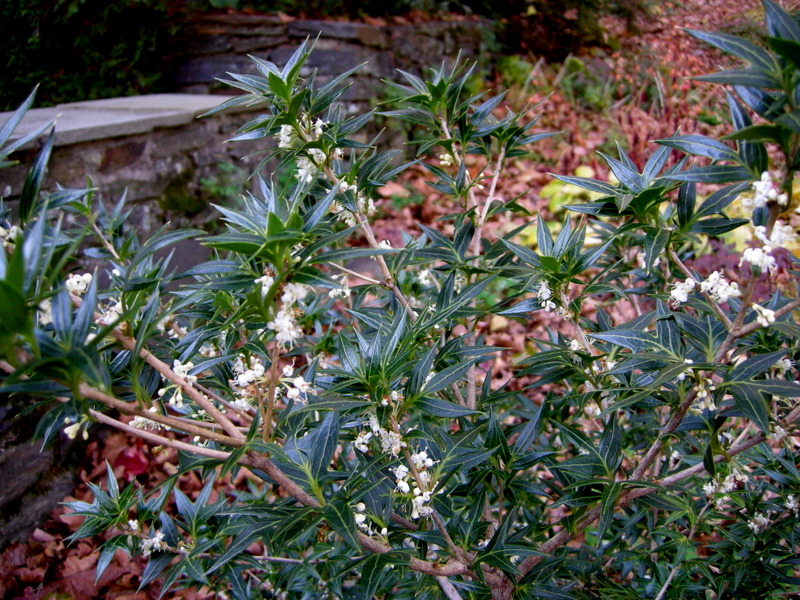
The flowers on my evergreen ‘Sasaba’ holly osmanthus, O. heterophyllus ‘Sasaba’, are small but they make up for their size with their heavenly fragrance which perfumes the whole garden.

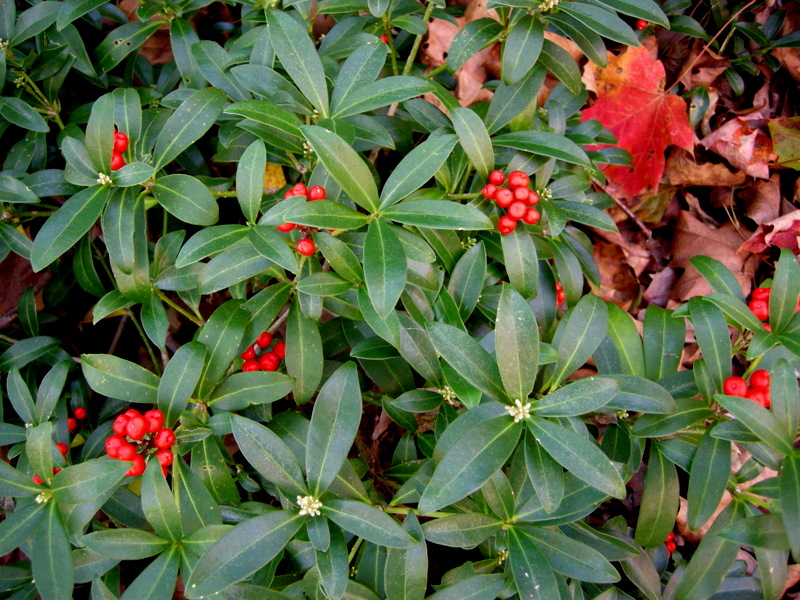
The berries of evergreen Japanese skimmia, S. japonica, persist well into spring.

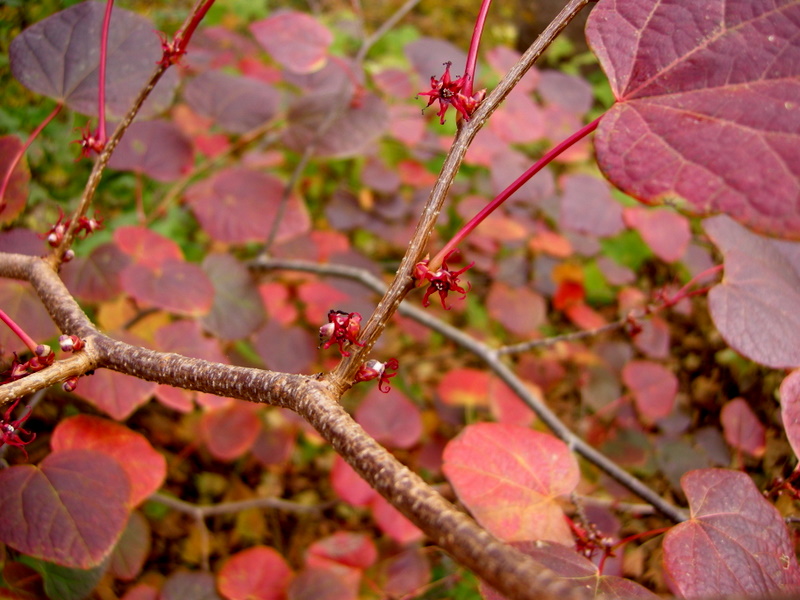
Disanthus cercidifolius is in full bloom right now.

The scarlet flowers are interesting and beautiful, but you have to get quite close to see them.

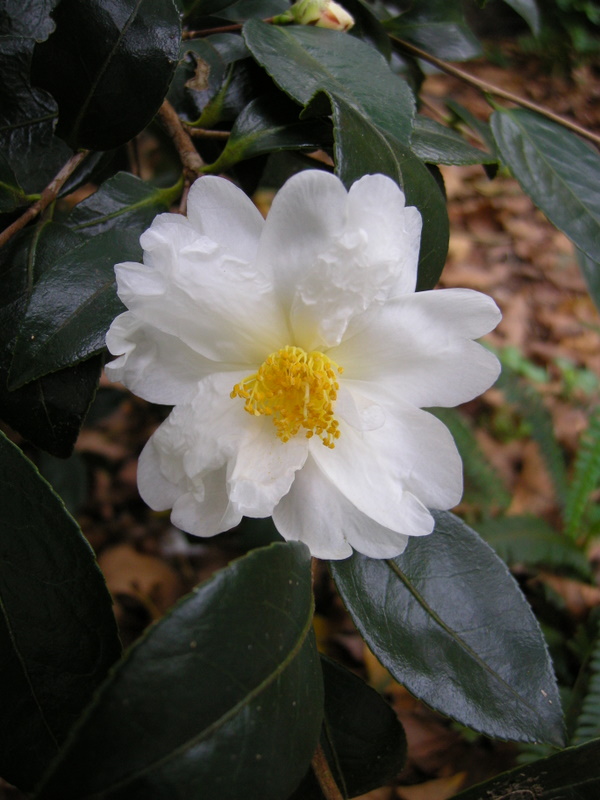
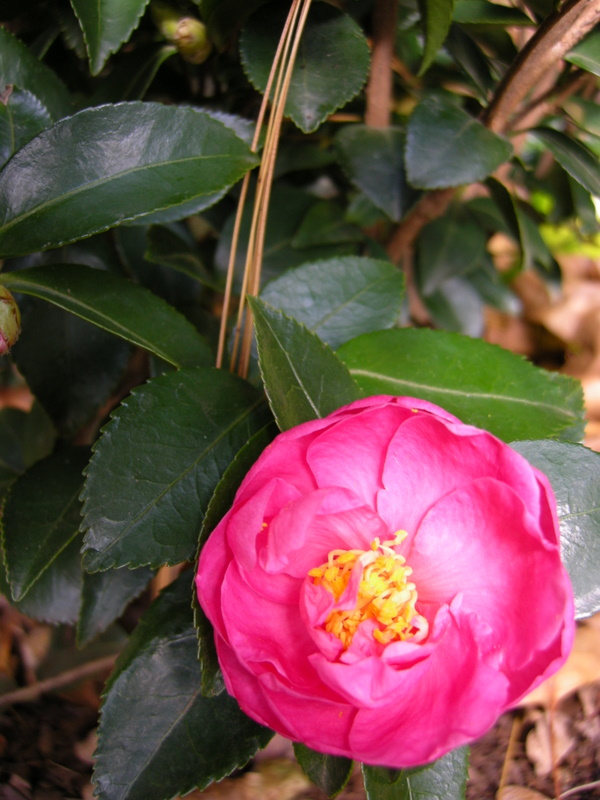
All my fall-blooming camellias are covered with flowers.  The first four pictured below are Ackerman hybrids, which are hardy in zone 6 see Fall-Blooming Camellias Part 1, and the final plant is one of their parents:

Camellia x ‘Elaine Lee’

Camellia x ‘Winter’s Joy’

Camellia x ‘Winter’s Snowman’

Camellia x ‘Winter’s Darling’

Fall-blooming Camellia oleifera was introduced to the U.S. from China in 1948.  In 1980, Dr. Ackerman at the U.S. National Arboretum noticed that it alone survived the U.S. mid-Atlantic’s cold winters and began crossing it with non-hardy fall-blooming species to produce what are now known as the Ackerman hybrids.  My camellia in the photo above is a seedling from the original C. oleifera ‘Lu Shan Snow’ at the National Arboretum.

There are dozens of plants that are vying to be included on GBBD because of their beautiful fall color.  However, I have decided to showcase only the seven that I think are exceptional, including disanthus pictured above and at the very beginning of the post:

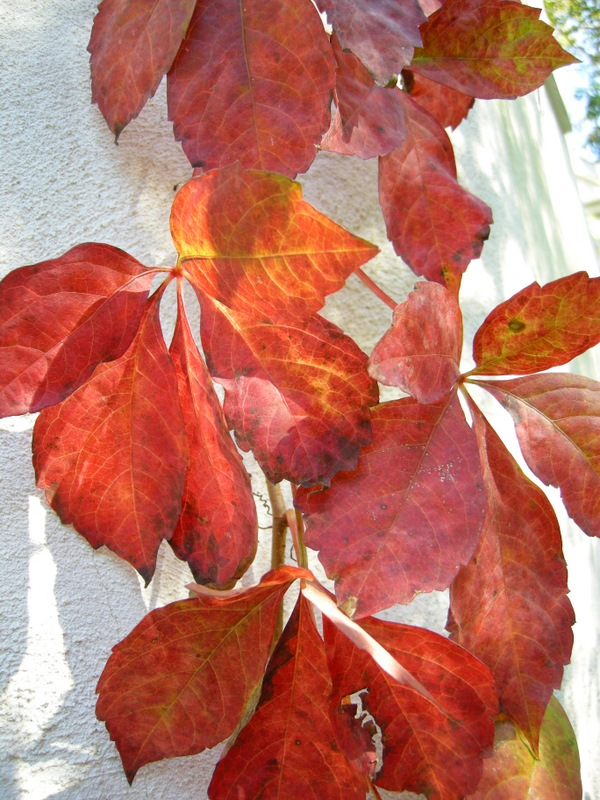
Our Pennsylvania native vine Virginia creeper, Parthenocissus quinquefolia, is underused in gardens especially when you consider its fall look.

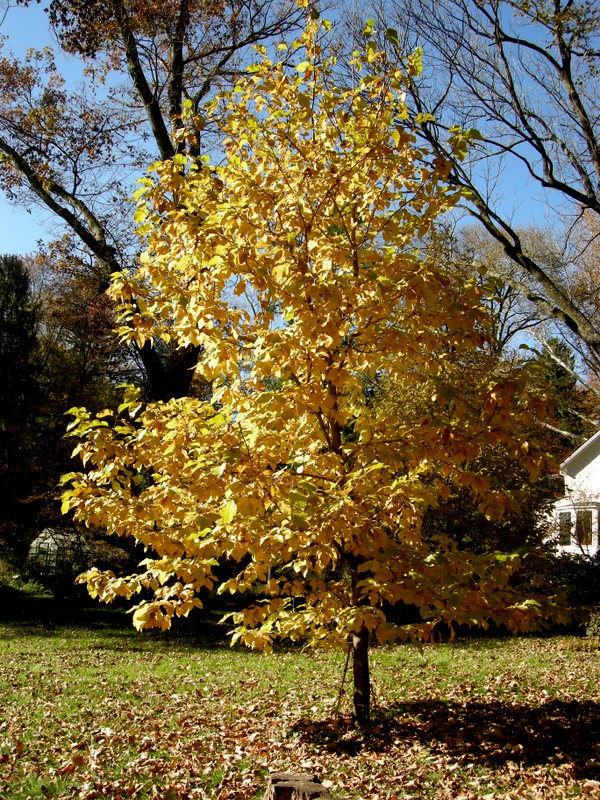
Many magnolias, including star magnolia, turn a lovely yellow in the fall, but native hybrid Magnolia x ‘Yellow Bird’ (named for its yellow flowers) is the most beautiful.

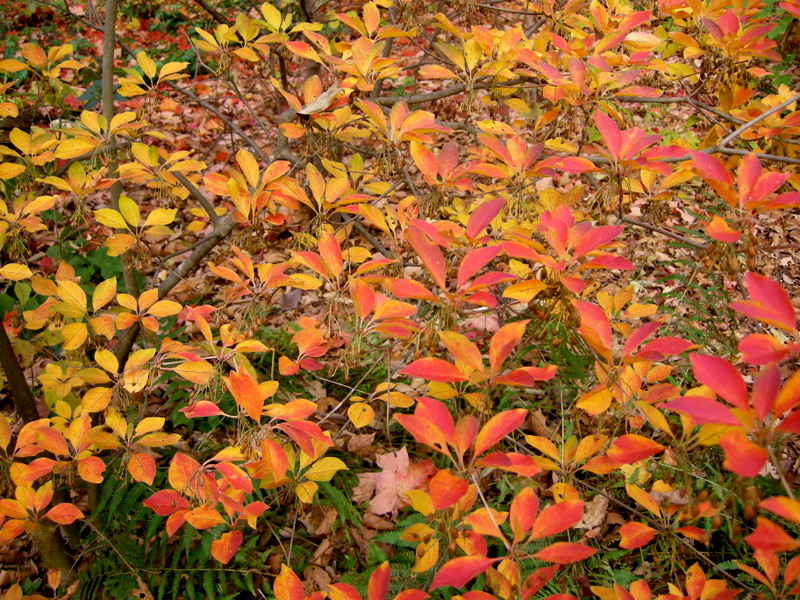
Redvein enkianthus, E. campanulatus

Pennsylvania native oakleaf hydrangea, H. quercifolia, is ornamental 365 days a year, but it definitely reaches one of its peaks in the fall.

Another woody with 365 days of interest, coral bark maple, Acer palmatum ‘Sango-kaku’, has stunning and long-lasting fall color.  For more information on this lovely tree, read Coral Bark Maple.

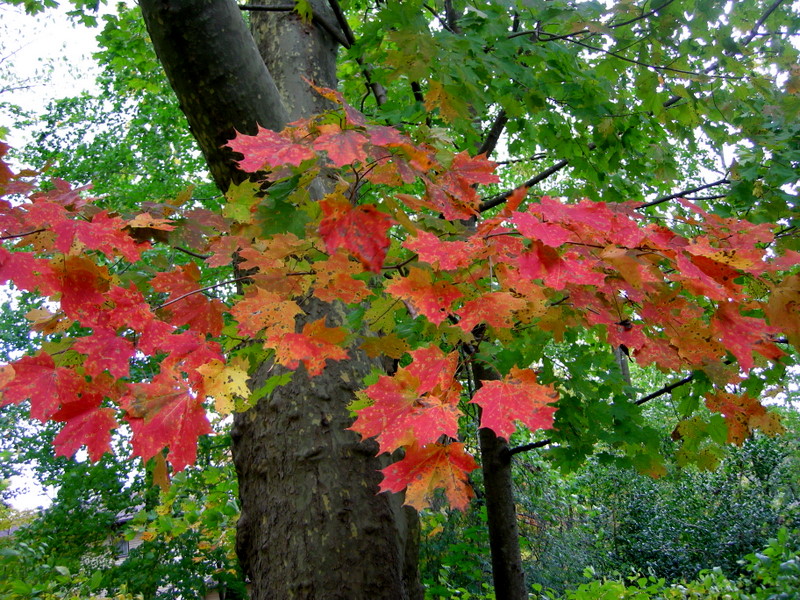
Pennsylvania native sugar maple, Acer saccharum, has gorgeous orange fall color.  Pictured above is a sugar maple tree in my garden that turns red instead of orange.  Sadly, when the iconic Princeton Nursery closed its doors, they had been evaluating it for seven years for possible introduction.

Enjoy your fall,  Carolyn

Notes: Every word that appears in orange on my blog is a link that you can click for more information.  If you want to return to my blog’s homepage to access the sidebar information (catalogues, previous articles, etc.) or to subscribe to my blog, just click here

Fall-blooming Camellias Part 3

Posted in Camellias, evergreen, Fall Color, Shade Shrubs with tags , , , , , , , , on November 10, 2011 by Carolyn @ Carolyns Shade Gardens

Carolyn’s Shade Gardens is a retail nursery located in Bryn Mawr, PA, specializing in showy, colorful, and unusual plants for shade.  The only plants that we ship are snowdrops within the US.  For catalogues and announcements of local events, please send your full name, mailing address, and cell number to carolyn@carolynsshadegardens.com and indicate whether you are interested in snowdrops, hellebores, and/or hostas.  Click here to get to the home page of our website for catalogues and information about our nursery and to subscribe to our blog.

Unnamed camellia developed by William Ackerman who has hybridized many wonderful fall-blooming camellias for the U.S. National Arboretum.  For an article about his camellia introductions, click here.

Last December I wrote two popular articles about fall-blooming camellias.  Fall-blooming Camellias Part 1 explains that these camellias are fully hardy and easy to grow in the mid-Atlantic U.S. and shows photos of my plants.  It also has links to more information.  Part 2 covered my visit to the gardens of camellia expert Charles Cresson in Swarthmore, Pennsylvania, whose camellia collection includes over 60 specimens.  This week I visited Charles’s gardens again, about a month earlier than last time, to view and photograph more camellias (I am an addict now).  In this article, I want to share that visit with you.  On Garden Blogger’s Bloom Day, I will show photos of my own plants in bloom.


Camellia x ‘Snow Flurry’ is one of the earliest flowering fall-bloomers of the Ackerman hybrids with an arching habit and anemone to peony form flowers.

During my time in Charles’s garden, I revisited some of my favorite camellias pictured in my post last December, including ‘Snow Flurry’ above and the cranberry-flowered camellia and ‘Winter’s Snowman’ pictured below.

Cranberry-flowered camellia (not introduced for sale): fall-blooming camellias are loaded with buds right now and will continue to bloom over the next two months, depending on the weather.  Even if the open flowers are frozen during a cold spell, the remaining buds will open when the weather warms.

A close up of the cranberry-flowered camellia pictured above (not introduced)

The large, semi-double flowers of the Ackerman hybrid Camellia x ‘Winter’s Snowman’ really stand out in November and December.  ‘Winter’s Snowman’ has an upright, narrow habit.

Camellia x ‘Winter’s Snowman’:  If you look at my post from last December, you will see that ‘Winter’s Snowman’ can have both the semi-double flower pictured there and the anemone form flower above.  Both  are gorgeous.

Because I visited earlier in the season this year, I was able to photograph seven additional camellias:

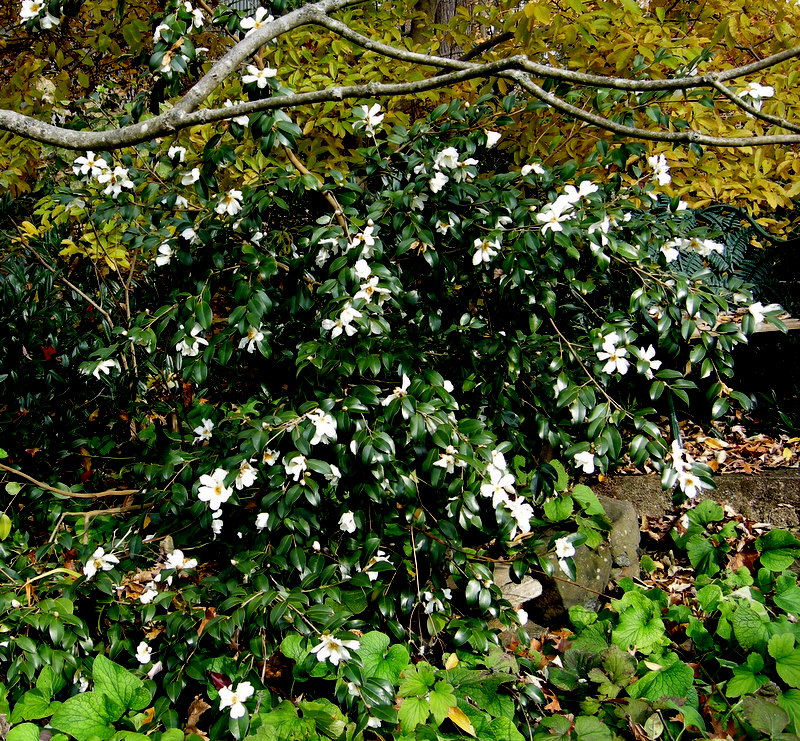
Camellia x ‘Winter’s Star’ is an October and November blooming Ackerman hybrid with single flowers and an upright form.

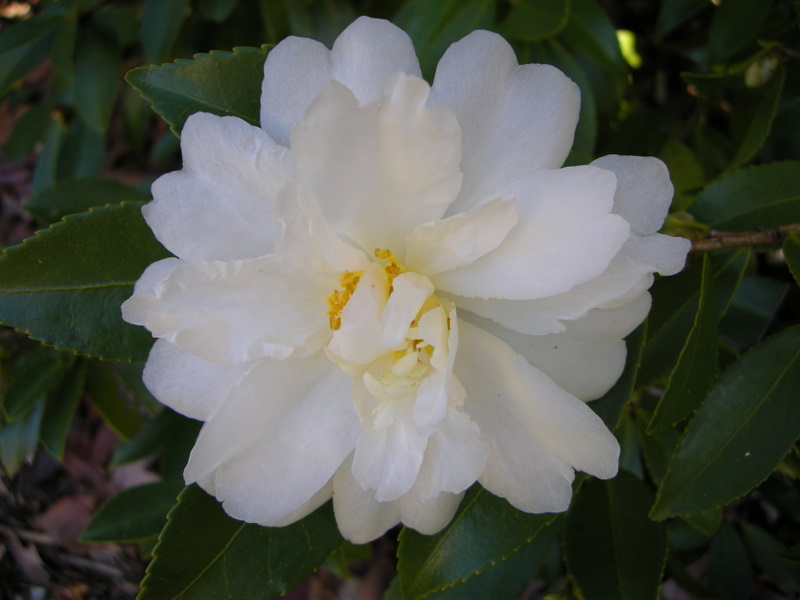
This is a lovely semi-double white camellia hybridized by Charles but not introduced for sale or named.

Camellia x ‘Winter’s Interlude’ is a November and December blooming Ackerman hybrid with anemone form flowers and an upright spreading habit.

This camellia, which Charles grew from cuttings given to him by North Carolina State University, is very beautiful, but has not been introduced for sale.

A close up of the lovely pale pink flower on the North Carolina State camellia pictured above.

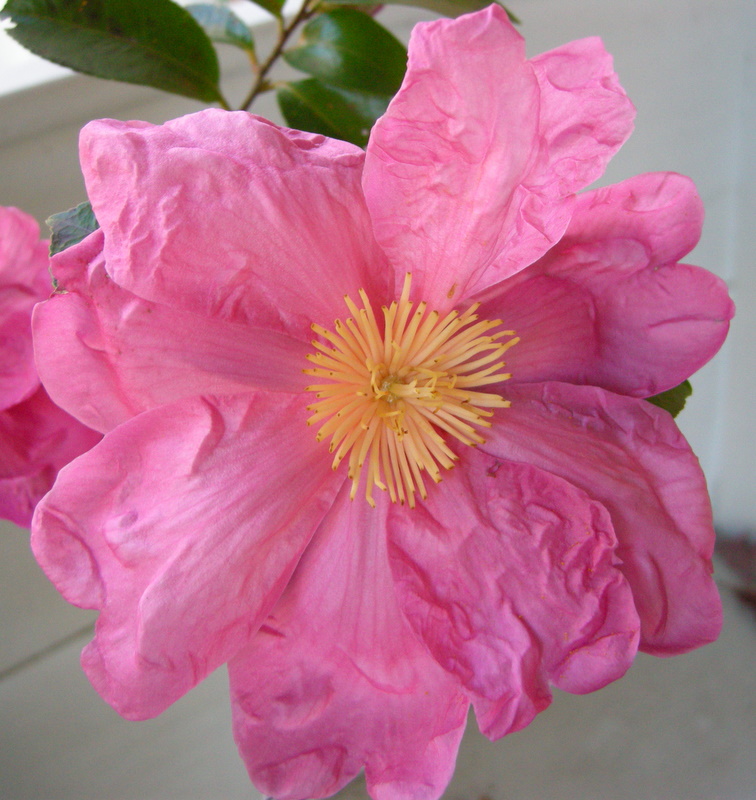
Camellia x ‘Moon Festival’ has unusually large flowers with a crepe paper texture, but is hardy only to zone 7.

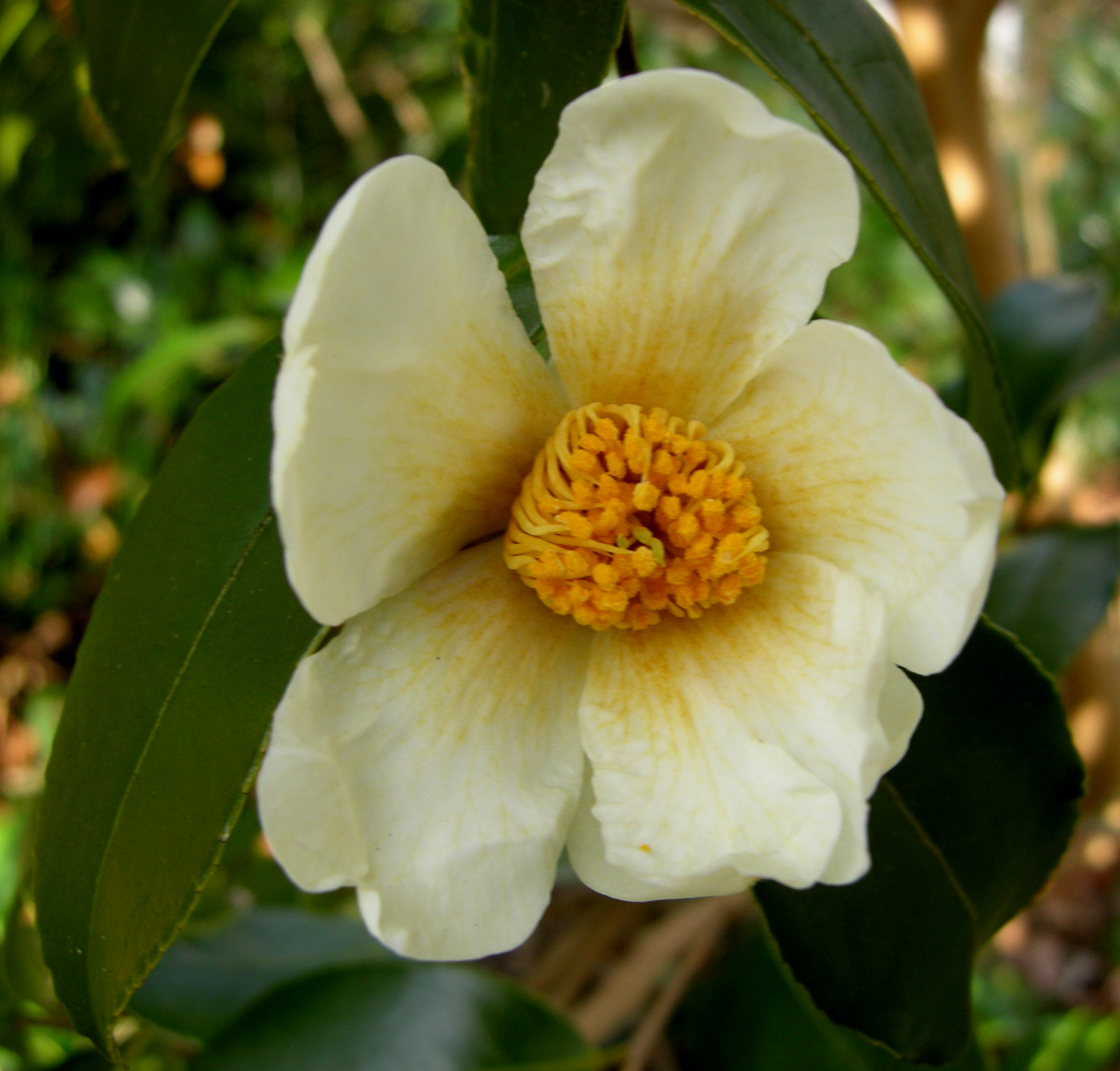
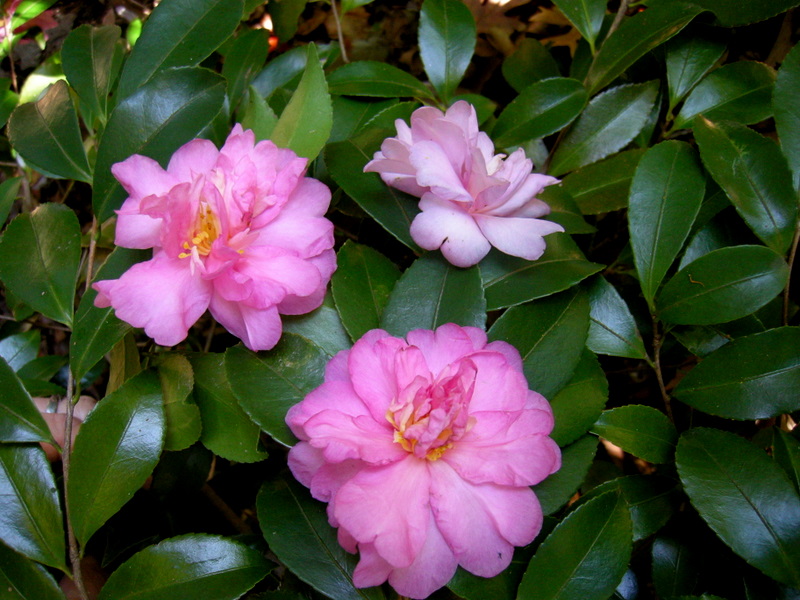
Charles and I both love this unnamed Ackerman hybrid pictured above and at the top of the post.  We were thinking of potential names like “Winter’s Halo” or “Inner Glow”.  Do you think it should be introduced?

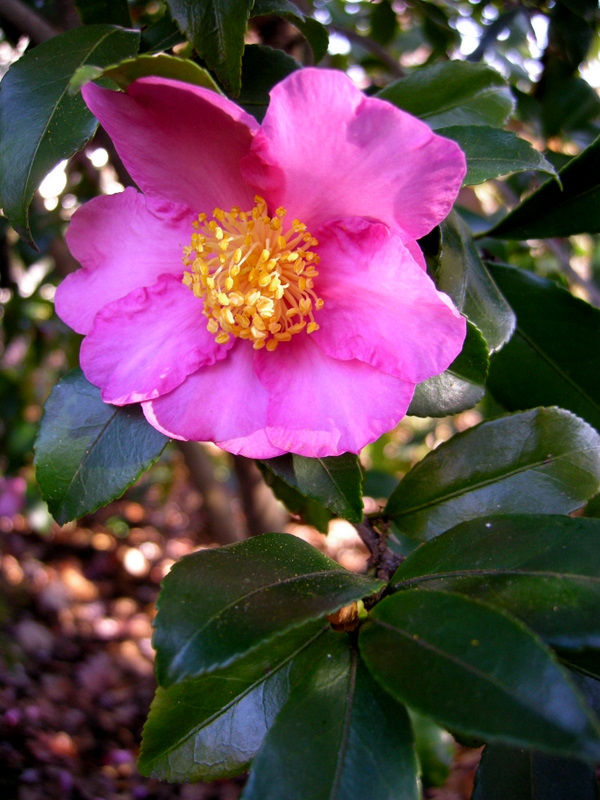
Camellia x ‘Carolina Moonmist’ was developed by the J.C. Raulston Arboretum of NCSU with single pink flowers.

Camellia x ‘Carolina Moonmist’: Charles feels that this camellia is too late-blooming for our area because many of the buds won’t open before it is too cold.  ‘Winter’s Star’ is a much better alternative.

I tried to remain focused on camellias for the whole visit, but the garden is so beautiful that some other plants snuck in, and I have to share them:

Fall-blooming hardy cyclamen seedling, C. hederifolium, growing at the base of a massive tree trunk.

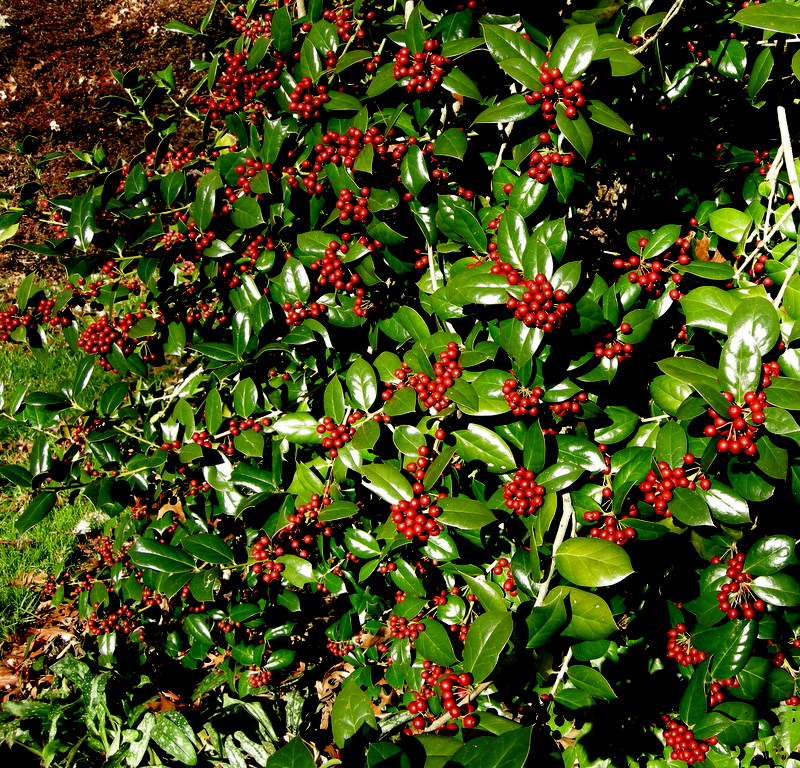
Chinese holly, Ilex cornuta

Japanese maple, Acer palmatum ‘Ornatum’

The fall color of star magnolia, M. stellata.

The fall color of bald cypress, Taxodium distichum.

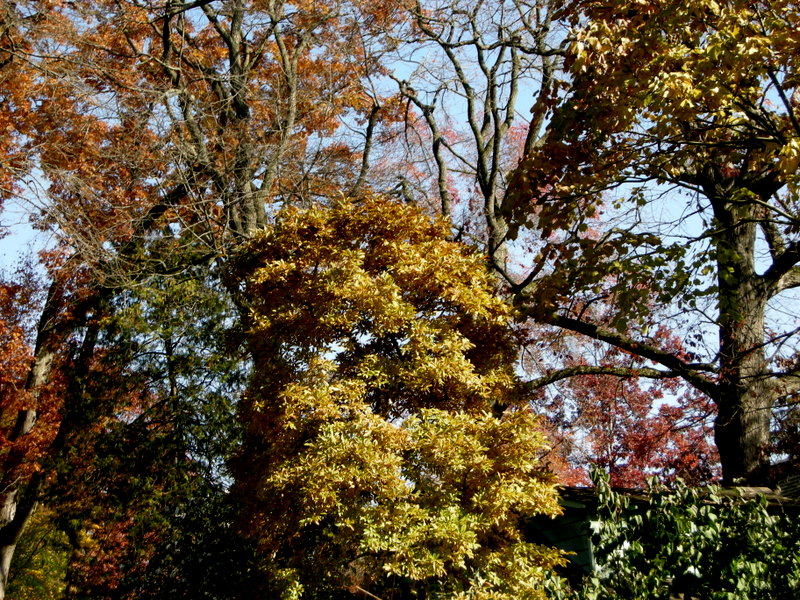
We are so lucky in this part of the world to have such massive trees with gorgeous fall color.

Enjoy,  Carolyn

Notes: Every word that appears in orange on my blog is a link that you can click for more information.  If you want to return to my blog’s homepage to access the sidebar information (catalogues, previous articles, etc.) or to subscribe to my blog, just click here.

Happy Birthday Carolyn’s Shade Gardens

Posted in Uncategorized with tags on November 3, 2011 by Carolyn @ Carolyns Shade Gardens

Carolyn’s Shade Gardens is a retail nursery located in Bryn Mawr, PA, specializing in showy, colorful, and unusual plants for shade.  The only plants that we ship are snowdrops within the US.  For catalogues and announcements of local events, please send your full name, mailing address, and cell number to carolyn@carolynsshadegardens.com and indicate whether you are interested in snowdrops, hellebores, and/or hostas.  Click here to get to the home page of our website for catalogues and information about our nursery and to subscribe to our blog.

This photo of my display gardens illustrated my first post.

Carolyn’s Shade Gardens’ first article appeared on November 3, 2010, so my blog is one year old today.  When you are one year old, you don’t want to celebrate an anniversary—that’s for adults—you want to celebrate a birthday.  So this is my blog’s first birthday party during which I am going to immodestly and unashamedly (like a one-year-old) celebrate all that my blog has accomplished in the last year, illustrated with some of my favorite collages (click on any collage to enlarge).  You are all invited to celebrate along with me.

Spring flowers at Carolyn’s Shade Gardens

To say that my blog has exceeded my expectations would be an understatement.  Almost every customer who has visited my nursery this year has told me how much they enjoy it.  In addition, in my first year I have had over 81,000 views, and 660 readers are permanent subscribers. 

Epimediums

However, about a week before I started it, I didn’t really know what a blog was or what it could do.  I just knew that I was frustrated because I couldn’t easily communicate to my plant nursery customers all the interesting things that I have learned about shade gardening over the almost 20 years I have been in business (and the 35 years I have been gardening).  I was thinking about a website, but then I realized that a blog is the best of both worlds, an interactive website where I can place basic information that doesn’t change, but also write articles and show photographs of everything that intrigues me about shade gardening.

Primroses at Carolyn’s Shade Gardens

I have published 58 articles in the last year, and when I looked back, I realized that most of them fall into six categories: plant profiles, design, “how to”, places to visit, musings, and sustainability.  As part of the celebration, I want to recap my favorites (I will talk about your favorites later).  To view the actual article, click on the orange link.

Christmas roses, Helleborus niger

If you have been reading this blog and my plant profiles, you know that I love plants and that I am addicted to certain plant groups (genera) about which I won’t shut up.  I am very proud of my six part series on hellebores because, although there is still more to be said about hellebores, a reader will have a very good background on these beautiful, winter-blooming, deer resistant plants after reading my articles. 

I have written a lot about hellebores.

I am also an admitted galanthophile (snowdrop addict) so I enjoyed confessing my love for snowdrops in three parts.  I share a love of hostas with my customers, and it’s fun writing about them, especially the miniaturesCamellias, wintergreen ground covers, and woody plants for shade have also been hot topics.  Finally, I have really enjoyed my Garden Bloggers Bloom Day posts on the fifteenth of the month, highlighting shade plants blooming in my garden.


A galanthophile’s favorite thing

Design articles included Pleasurable Pairings for Spring with some great plant combinations and New Year’s Resolution to Edit the Garden where I urged readers to edit their lives and their gardens.  How to divide hybrid hellebores allowed me to show off an article I wrote for Horticulture magazine and Shade Gardening in Fall: Leaves on the Lawn contains valuable time-saving advice.  Did you know that you can mow up to 18″ of leaves right on your lawn and leave them there? 

Chanticleer, A Pleasure Garden, in Wayne, PA

I have had a lot of fun visiting gardens, nurseries, and horticultural events and writing about my experiences.  The last year included trips to Coastal Maine Botanical Gardens, the Philadelphia International Flower ShowChanticleer, Duke Gardens, and Juniper Level Botanic Gardens, among others. 

Philadelphia International Flower Show

I think I have the most fun writing articles that contain my “musings”.  In I Dream in Latin and Snowdrops: Further Confessions of a Galanthophile, I hope (and thought) I was amusing while discussing some of the intricacies of the plant world.   Readers were intrigued by my unresolved inquiry into whether snowdrops are thermogenic.  My essay on The Joys and Sorrows of Snow struck a chord (and is particularly apropos right now!).  Finally, I was so happy that I was able to communicate my delight in meeting Walter Young of Young’s Perennials in Freeport, Maine. 

Summer flowers at Carolyn’s Shade Gardens

The most important topic covered on my blog, and the one closest to my heart, is sustainability and how all gardeners, including me, can help the environment.  In My Thanksgiving Oak Forest, I described how Doug Tallamy in his book Bringing Nature Home helped me finally understand how important native plants are to our survival.  Part One and Part Two of an article on supporting sustainable living talked about my own efforts in this area.  Powered by Compost, Letting Go: The Lawn, and Fall Clean-up describe some concrete steps everyone can take.


A few of my favorite miniature hostas

Well now you know some of my favorites, but which articles are your favorites?  My blog host, WordPress, has wonderful statistics showing the most viewed posts and the most commented posts.  Views come from three places: my subscribers and customers, other garden bloggers, and Goggle searches, which is probably my biggest source.  My most viewed post by far is Miniature (& Small) Hostas.  The rest of the top five are Evergreen Ferns for Shade, 2011 Snowdrop Catalogue (this is a permanent page not a post), New Shade Perennials for 2011, and New Native Shade Perennials for 2011

European wood anemone, A. nemorosa

Another way of measuring popularity is the number of comments on a post.  However, because most of my comments come from other garden bloggers, most commented usually, but not always, shows which posts they liked the best.  Six out of my top ten most commented posts were written for Garden Bloggers Bloom Day with the most commented being May GBBD: An Embarrassment of Riches.  On GBBD, garden bloggers from all over the world post photos of what’s blooming in their gardens on the blog May Dreams Gardens—it’s a lot of fun.  Setting aside GBBD, articles that many different viewers felt compelled to comment on covered getting rid of your lawn, whether snowdrops are thermogenic, An Ode To Seed Strain Hellebores, miniature hostas, and snow

Green is beautiful.

Which brings me to a completely untintended consequence of my blog—I now communicate on a regular basis with bloggers from all over the U.S. and the world.  I read blogs and get comments from India to Scotland, Australia to Russia, and Jordan to Argentina.  You can click here and run your cursor over the map to see all the locations (my personal favorite is Ascension Island).  Garden bloggers are a really fun group, and I treasure my interactions with them.

Fall flowers at Carolyn’s Shade Gardens

I have three important goals for next year.  First, I would like to improve my photography, particularly my landscape shots.  I will probably need a new camera.  Second, I would like to update the layout of my blog, which terrifies me because I don’t like technology.  Finally, I would like to encourage more comments and questions from my nursery customers.  Just scroll down to the box marked “Leave a Reply” and type something in.  If you are enjoying my blog, you can thank me by using this resource.

Enjoy,  Carolyn

Notes: Every word that appears in orange on my blog is a link that you can click for more information.  If you want to return to my blog’s homepage to access the sidebar information (catalogues, previous articles, etc.) or to subscribe to my blog, just click here.
More Flowering Wintergreen Ground Covers for Shade

Posted in evergreen, Fall, groundcover, Shade Perennials, winter interest with tags , , , , , , , , , , , , on October 27, 2011 by Carolyn @ Carolyns Shade Gardens

Carolyn’s Shade Gardens is a retail nursery located in Bryn Mawr, PA, specializing in showy, colorful, and unusual plants for shade.  The only plants that we ship are snowdrops within the US.  For catalogues and announcements of local events, please send your full name, mailing address, and cell number to carolyn@carolynsshadegardens.com and indicate whether you are interested in snowdrops, hellebores, and/or hostas.  Click here to get to the home page of our website for catalogues and information about our nursery and to subscribe to our blog.

‘Album’ fall blooming hardy cyclamen, C. hederifolium ‘Album’, has white flowers, shown here blooming before the leaves on September 28, 2011, and spreads to form a ground cover that stays green through the winter.

In my article Flowering Wintergreen Ground Covers for Shade, I explained that I treasure evergreen ground covers that are presentable through winter because, here in the mid-Atlantic (US), we go through long periods of winter weather that are just plain cold without the compensation or covering of snow when any patch of green is prized.  Ground covers, especially those that maintain a presence through winter, make a garden look mature and cut down on the labor of weeding and the expense of mulch. Yes, you can plant the evergreen  triumvirate of vinca, ivy, and pachysandra.  But I want more: beautiful flowers and foliage too.  Just like the four in my original article, all four of the shady ground covers described below have prominent places at Carolyn’s Shade Gardens.

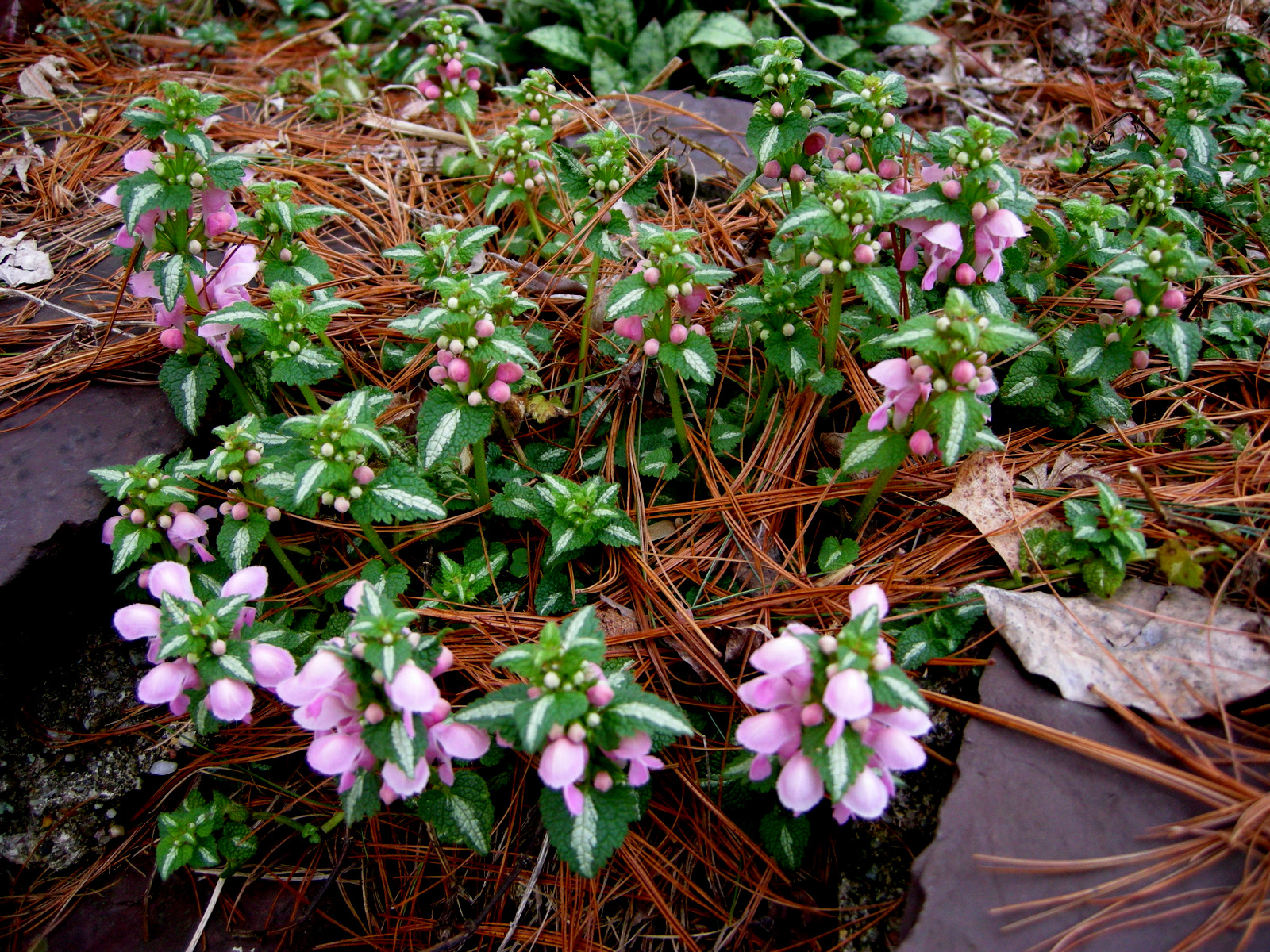
‘Shell Pink’ spotted dead nettle (I prefer to call it lamium), Lamium maculatum ‘Shell Pink’, still blooming at the end of November 2010.

Lamium ‘Shell Pink’ is a versatile wintergreen ground cover with gorgeous flowers from April to November.  It is the only lamium cultivar that blooms this long–all the others have a season of bloom in the spring.  I grow mine under the shade of a white pine (photo above and below) and also in a sunny area in front of my peonies.  ‘Shell Pink’s’ leaves stay neat and tidy all winter.

The first flush of blooms on ‘Shell Pink’ lamium in early April 2011.

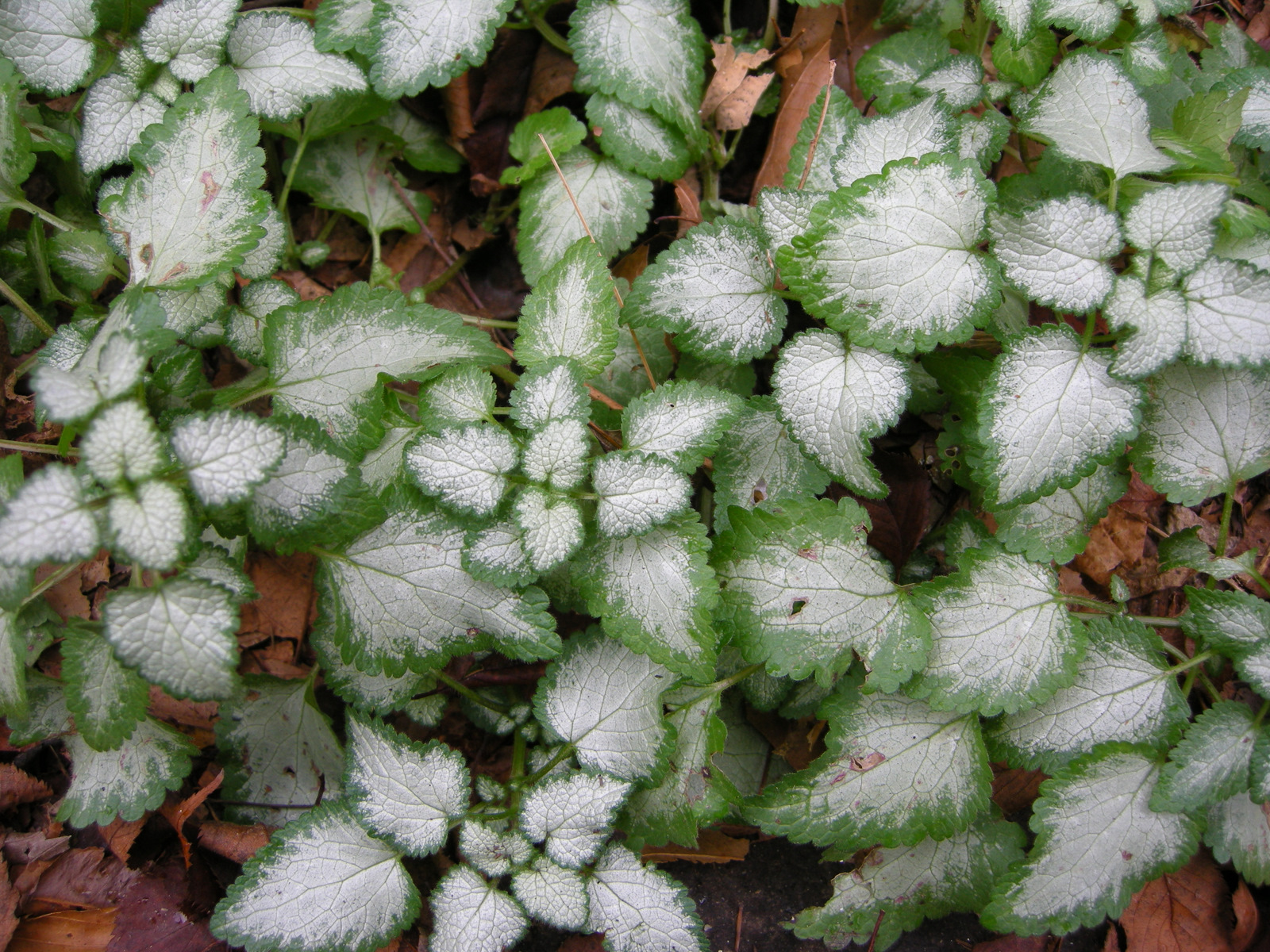
Lamium maculatum is native to Europe and temperate Asia.  It quickly creeps to form 4 to 8″ tall patches of wintergreen leaves even in open full shade in zones 3 to 8.  It doesn’t seem to care if the soil is moist or dry but likes to be well-drained.  On ‘Shell Pink’, the first flush of flower buds emerges in early April to be followed by successive waves of blooms into November.  It fills in around surrounding plants without overwhelming them.  My deer have never touched it.  Lamium also makes a great container plant and overwinters outside in pots.  The only other cultivar I recommend is ‘Purple Dragon’ with bright purple flowers and solid silver leaves (photo below).

Although ‘Purple Dragon’ lamium only blooms in the spring, it’s silver leaves are quite ornamental in their own right.  Photo December 2010.

In anticipation of comments telling me that lamium is “invasive”, let me say three things.  First, it is a ground cover so it is supposed to spread and cover large areas.  A plant isn’t invasive because it spreads too much—the gardener has just planted it in the wrong place.  To me, it’s invasive if you can’t remove it when you want to either because you can never get it all (goutweed, lesser celandine) or it seeds so prolifically that you can’t remove all the seedlings (garlic mustard).  Second, the straight species, Lamium maculatum, may be invasive so don’t plant it.  Third, many times when gardeners say this they are talking about yellow archangel, Lamiastrum galeobdolon, a plant with yellow flowers and silver leaves that is invasive.  Lamiums don’t have yellow flowers.  Thanks for listening!

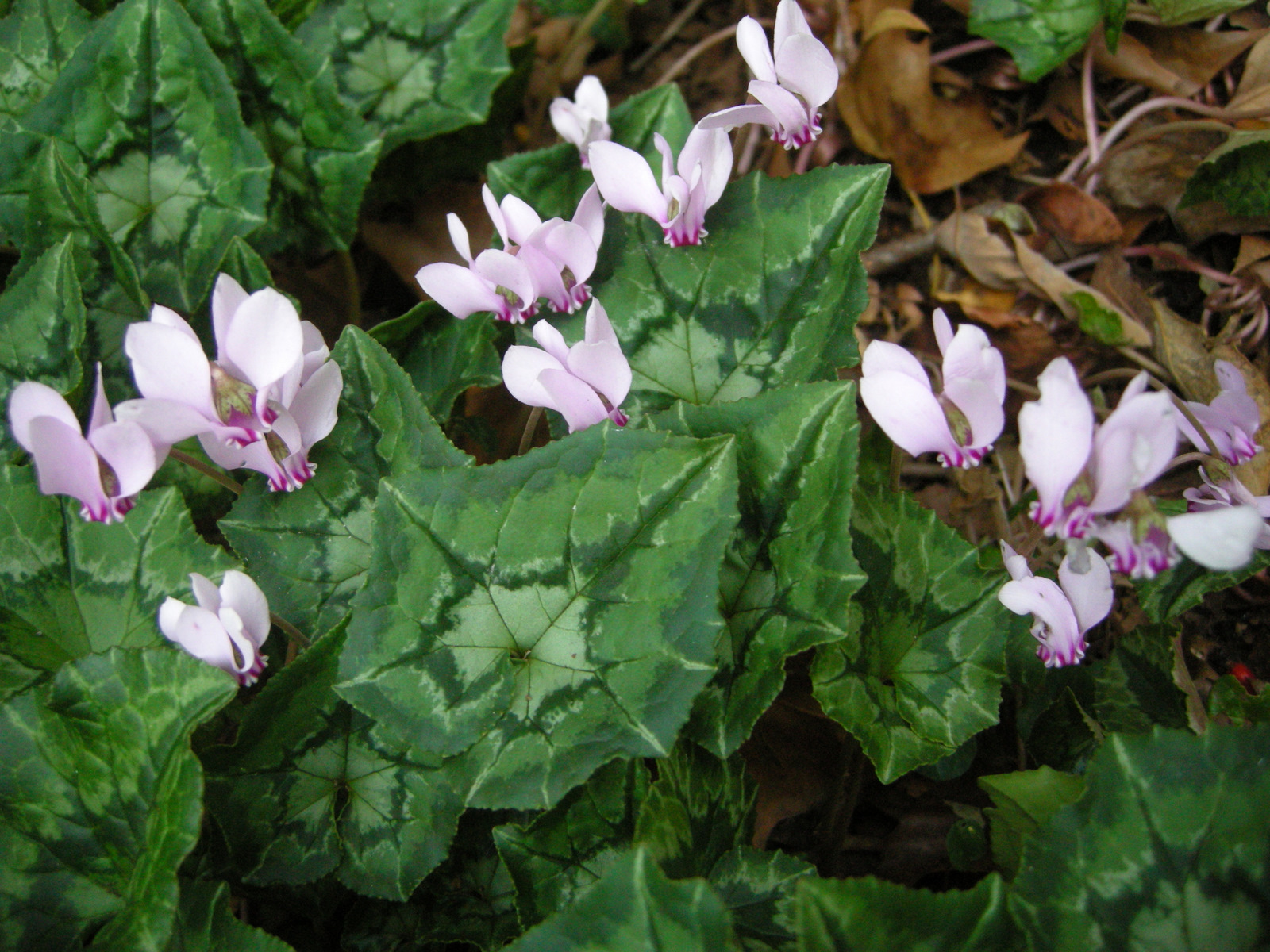
Fall-blooming hardy cyclamen, C. hederifolium, in full bloom in late October 2010.

Although spring-blooming hardy cyclamen, C. coum, is finicky and hard to grow, fall-blooming hardy cyclamen will thrive in most shady locations as long as it is well-drained.  The flowers start to bloom in September and October before the leaves break dormancy.  Then its gorgeous, intricately patterned wintergreen leaves emerge and remain pristine all winter until they go dormant in early summer.  Mine happily naturalize in east-facing shady locations.

Cyclamen hederifoliumImagine large patches of this fall-blooming hardy cyclamen foliage all through winter–absolutely stunning!  Photo in late November 2010.

Hardy cyclamen is native to wooded areas and rocky hillsides of southern Europe and Turkey.  It forms 4 to 6″ tall mats of leaves, which remain highly ornamental through winter in zones 5 to 9.  It is very tolerant of soil conditions as long as it is well-drained and, once established,  grows well in full dry shade.  My deer leave it alone.


‘Pictum’ Italian arum, Arum italicum ‘Pictum’, used as a ground cover around hellebores and hostas along my front walk so I can admire it all winter.  Photo October 20, 2011.


This is what happens to Italian arum during really cold weather.  No matter how many times I have witnessed it, I am always amazed when it stands back up and looks as if nothing has happened.  Photo December 2010.

I have featured Italian arum photos on my blog many times but that’s because I think it is such a great plant.  The leaves emerge in September and remain immaculate through the winter.  If the weather is really cold, it wilts to the ground (see photo above), only to perk up again as soon as temperatures recover.  I have it planted by my front walk so I can enjoy its spotless, highly ornamental leaves all winter.  I also use it to cover areas where I cut back ratty hostas in the fall (see my article Hostas for Fall).  In May and June, it blooms with a pale green hood-like spathe covering a yellow spadix like our native jack-in-the-pulpit.  Bright orange berries appear in summer.  Several wonderful cultivars are available, including ‘Gold Rush’, which emerges in the spring with golden venation, and ‘Tiny Tot’, a miniature.

‘Gold Rush’ Italian arum in November 2010.  Italian arum cultivars have superior markings.

Arum italicum 'Tiny Tot'/'Tiny Tot' Italian Arum‘Tiny Tot’ Italian arum in February of 2009.

Italian arum is native to Europe.  It grows 12 to 18″ tall in zones 6 to 9.  It thrives in any soil in almost full sun to full shade and is tolerant of drought.  Deer do not bother it.  In the 20 years that I have been growing it, it has spread politely to other areas of my garden, but occasionally I have heard that it can become an aggressive spreader.  Lyn from The Amateur Weeder reports that it is invasive in Australia.  Please consult local experts to see if there is a problem where you garden.


‘Sulphureum’ epimedium, E. x versicolor ‘Sulphureum’, used as a ground cover in front of hardy begonia, B. grandis.  Photo October 20, 2011.

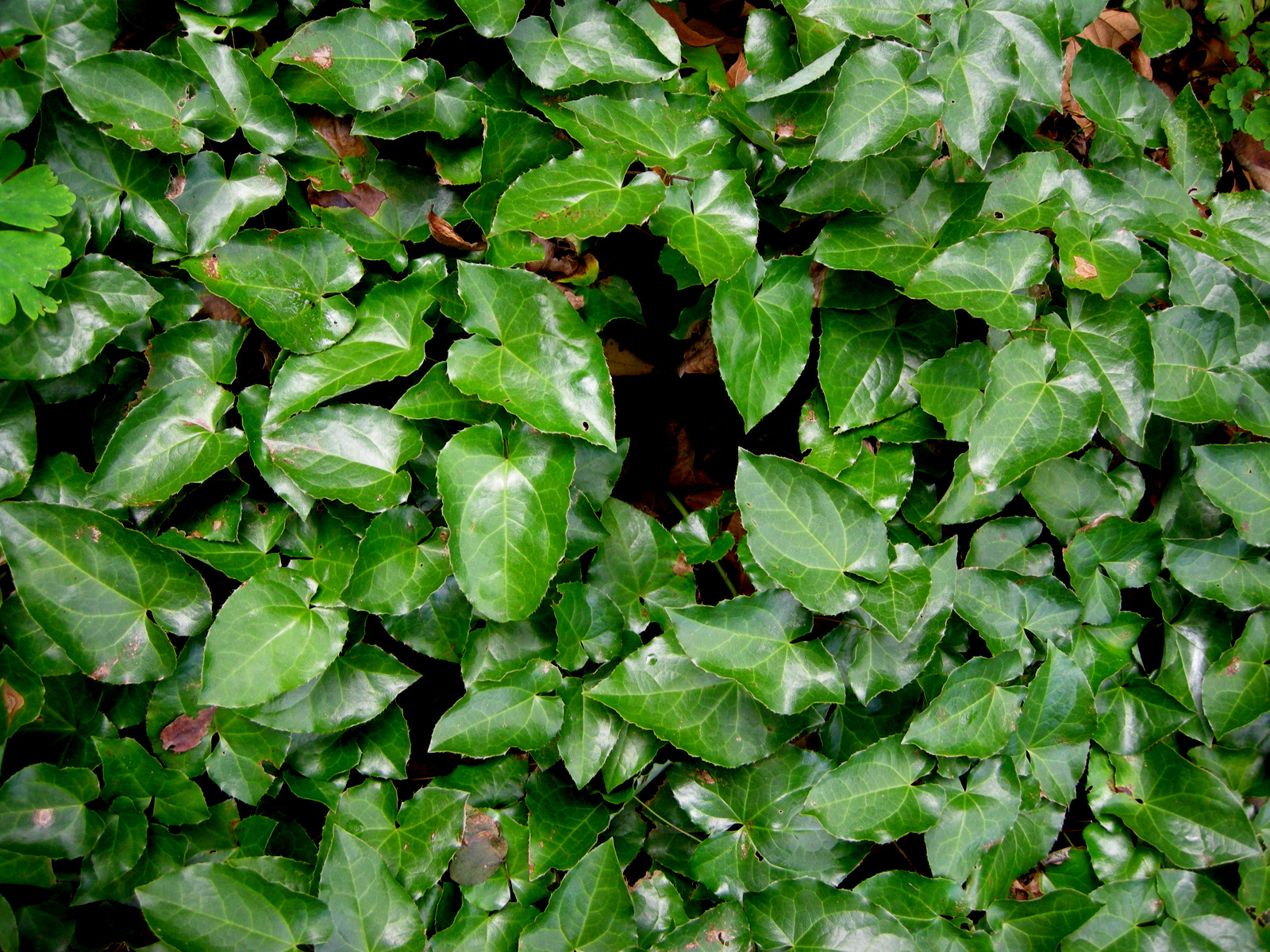
I love epimediums.  In fact, I love them so much that they are one of the few plants I allow myself to collect with 30 varieties in my garden.  Their small but copious spring flowers are beautiful and unusual coming in white, pink, yellow, orange, red,  purple, and bicolors.  I also prize their leaves which are often shiny and wing-shaped, sporting spiky edges or colored splotches or lovely venation.  Many epimediums are deciduous and clump-forming.  In this article, I want to profile a few that have wintergreen leaves and spread to make a ground cover.

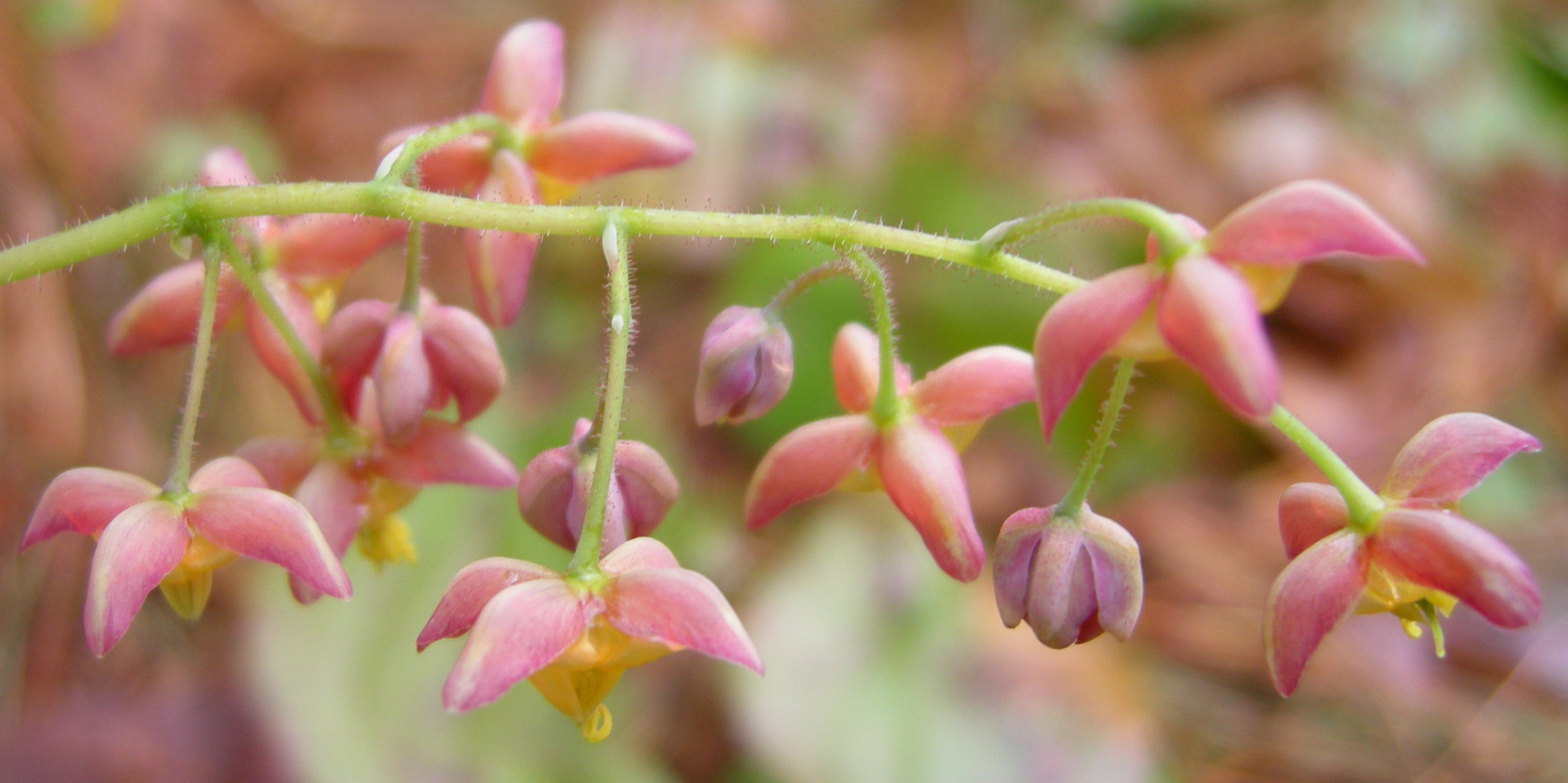
The fastest growing epimedium by far is ‘Sulphureum’.  It spreads at a medium rate to form a large patch (see photo above).  Its two-tone yellow flowers  look like miniature daffodils in early April.

E. x rubrum is the second fastest spreader.  It’s leaves are similar to ‘Sulphureum’.  If you can find the cultivar ‘Sweetheart’, pictured above, it has gorgeous flowers.  I sell a good selection of epimediums at my nursery, but I get my unusual epimediums from the Massachusetts nursery, Garden Vision Epimediums (email epimediums@earthlink.net).  They have hundreds of varieties.

‘Frohnleiten’ epimedium, E. x perralchicum ‘Frohnleiten’, is also a fairly quick spreader .  It has gorgeous shiny leaves with an intricate vein pattern and produces bright, sulfur yellow flowers in the spring.

‘Shrimp Girl’ epimedium, E. alpinum ‘Shrimp Girl’, is also a good spreader in my garden, here used as a ground cover in front of ferns and hostas.

The lovely two-tone flowers of ‘Shrimp Girl’ in spring.


I am including ‘Kaguyahime’ epimedium even though it spreads fairly slowly so that you can see how beautiful and unusual the leaves of wintergreen epimediums can be.

Epimediums are native to Europe, Asia, and North Africa.  They reach 6 to 12″ tall, depending on the cultivar, and flower in April.  They grow in part to full shade and can take dry soil once established.  Their creeping roots are impenetrable to weeds.  I cut back all the remaining old foliage in March once I see the new flowers and leaves starting to emerge.  When choosing an epimedium for ground cover, select spreading varieties that have evergreen or semi-evergreen leaves.


Next spring when you are looking for ground covers, I hope you will consider one of the four described above.  In the meantime, leave a comment with the name of your favorite wintergreen ground cover for shade.  In my first article, I profiled golden groundsel, creeping phlox, dwarf sweetbox, and hybrid hellebores as ground covers.  If you want to read about them, click here.
Carolyn

Notes: Every word that appears in orange on my blog is a link that you can click for more information.  If you want to return to my blog’s homepage to access the sidebar information (catalogues, previous articles, etc.) or to subscribe to my blog, just click here