Archive for the garden to visit Category

Groundcovers, Thinking Outside the Box

Posted in garden to visit, groundcover, How to, landscape design, native plants, Shade Gardening, Shade Perennials, Shade Shrubs with tags , , , , , , , , , , , , , , , , , , , , , , , , , , , , , , , on June 11, 2012 by Carolyn @ Carolyns Shade Gardens

Carolyn’s Shade Gardens is a retail nursery located in Bryn Mawr, PA, specializing in showy, colorful, and unusual plants for shade.  The only plants that we ship are snowdrops and miniature hostas.  For catalogues and announcements of events, please send your full name, location, and phone number (for back up use only) to carolyn@carolynsshadegardens.com.  Click here to get to the home page of our website for catalogues and information about our nursery and to subscribe to our blog.

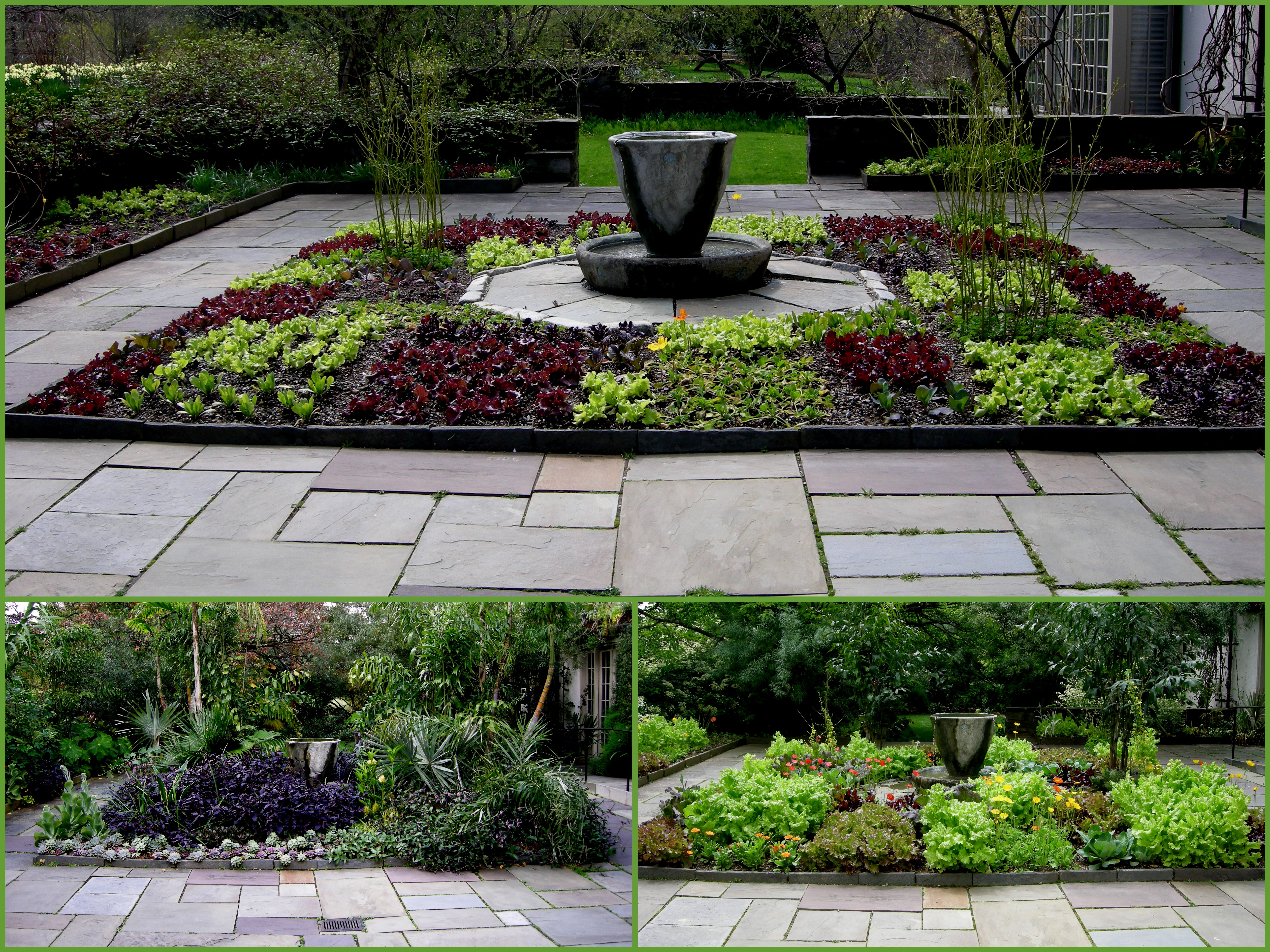
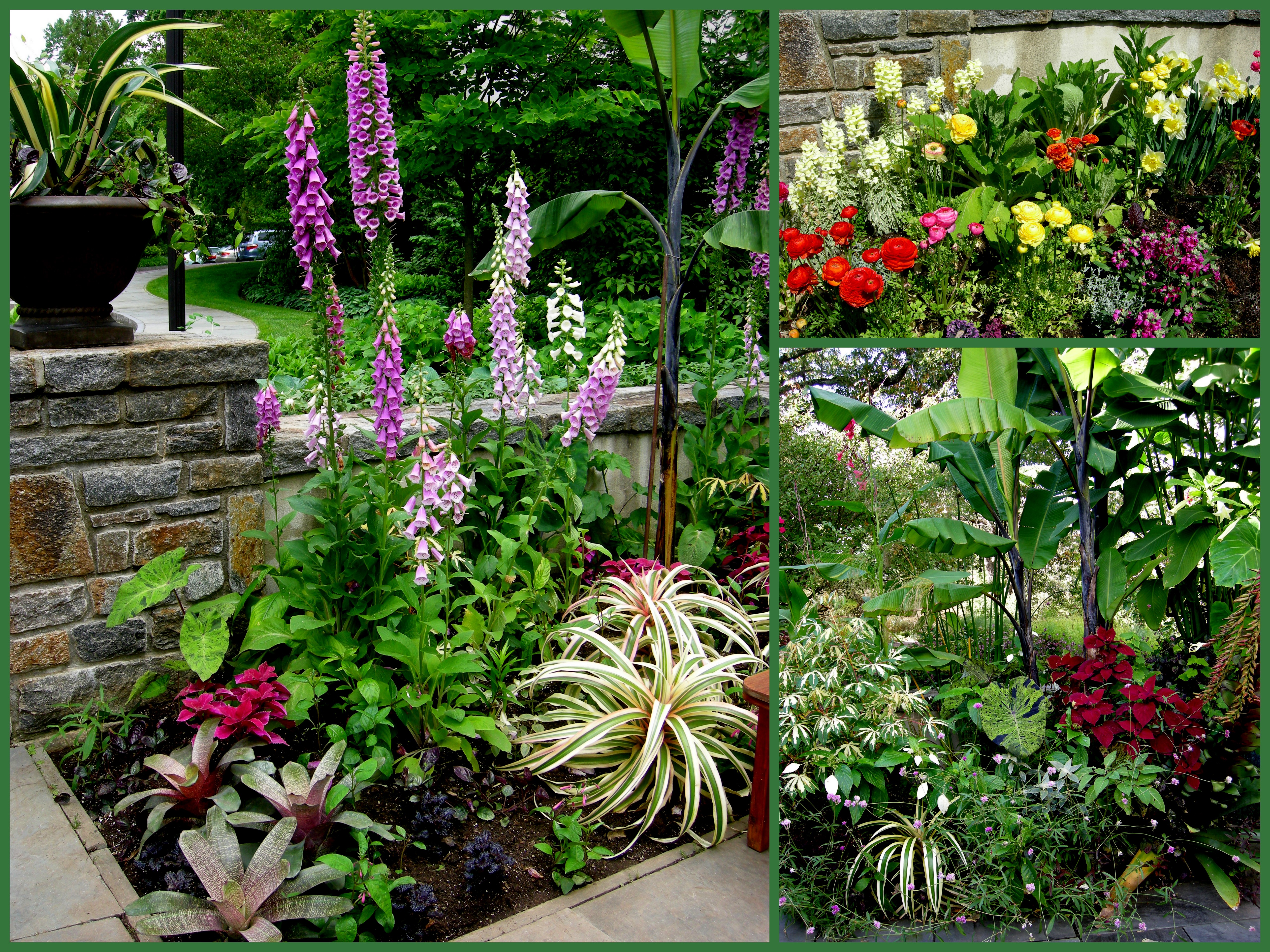
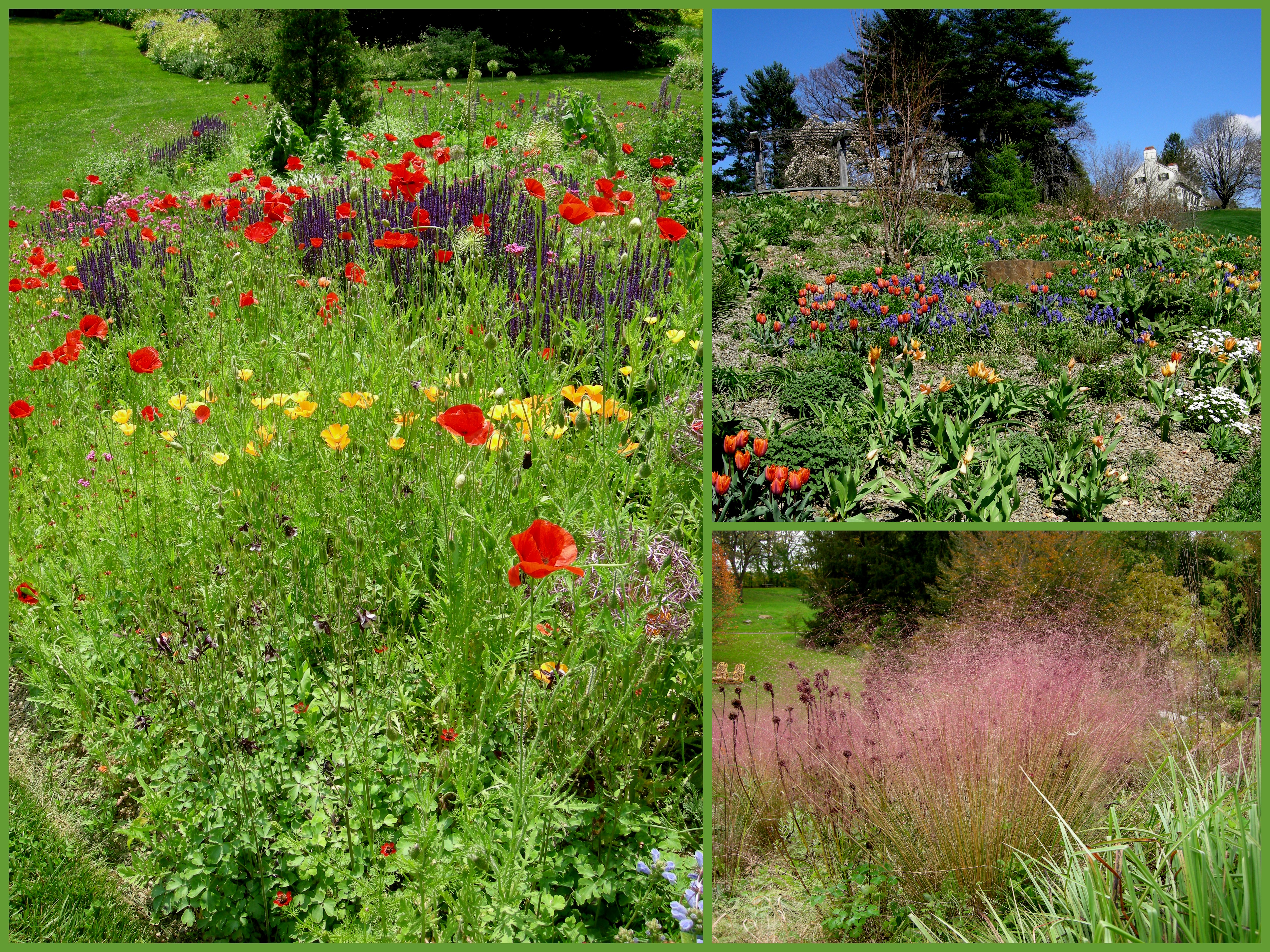
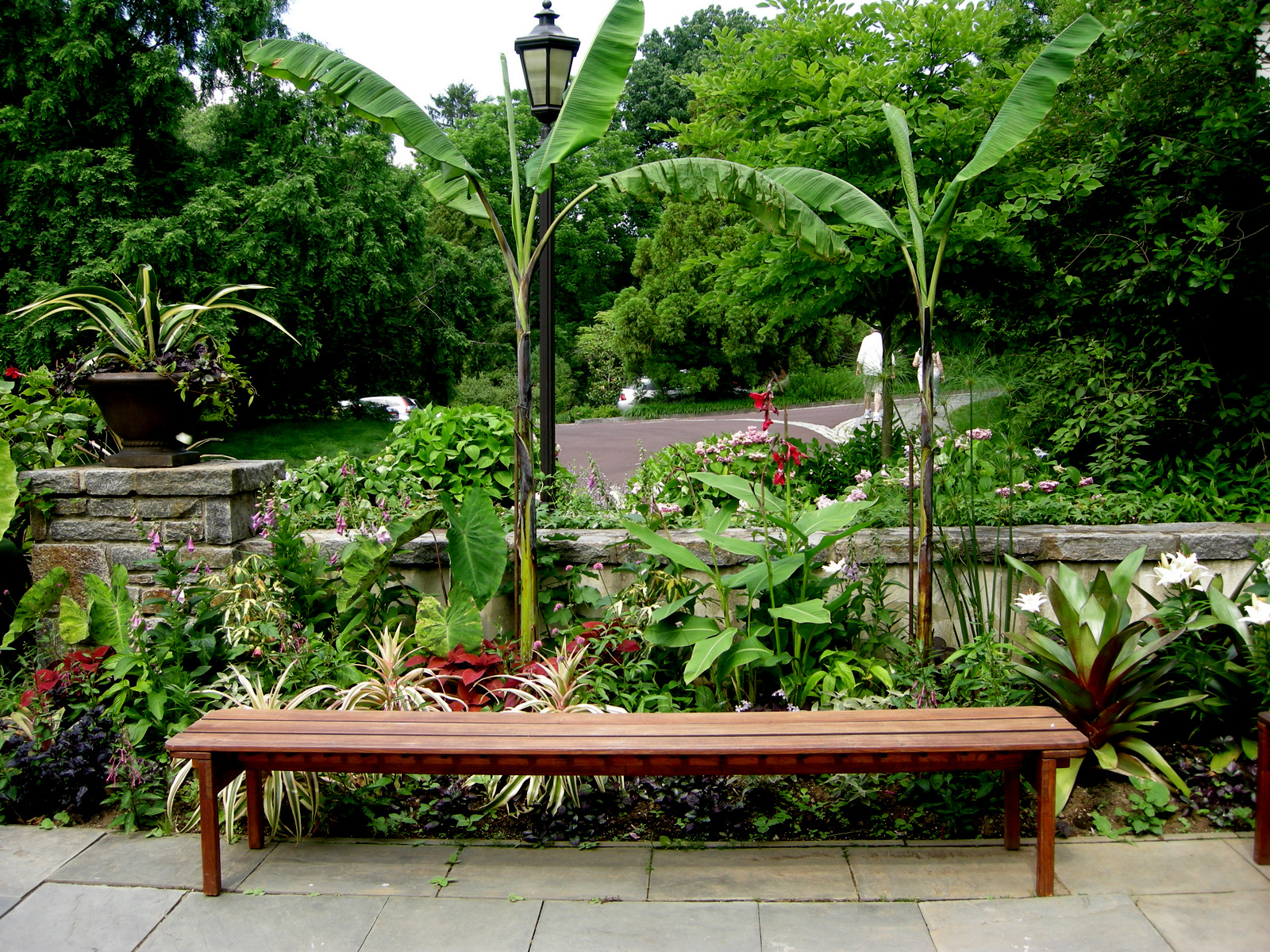
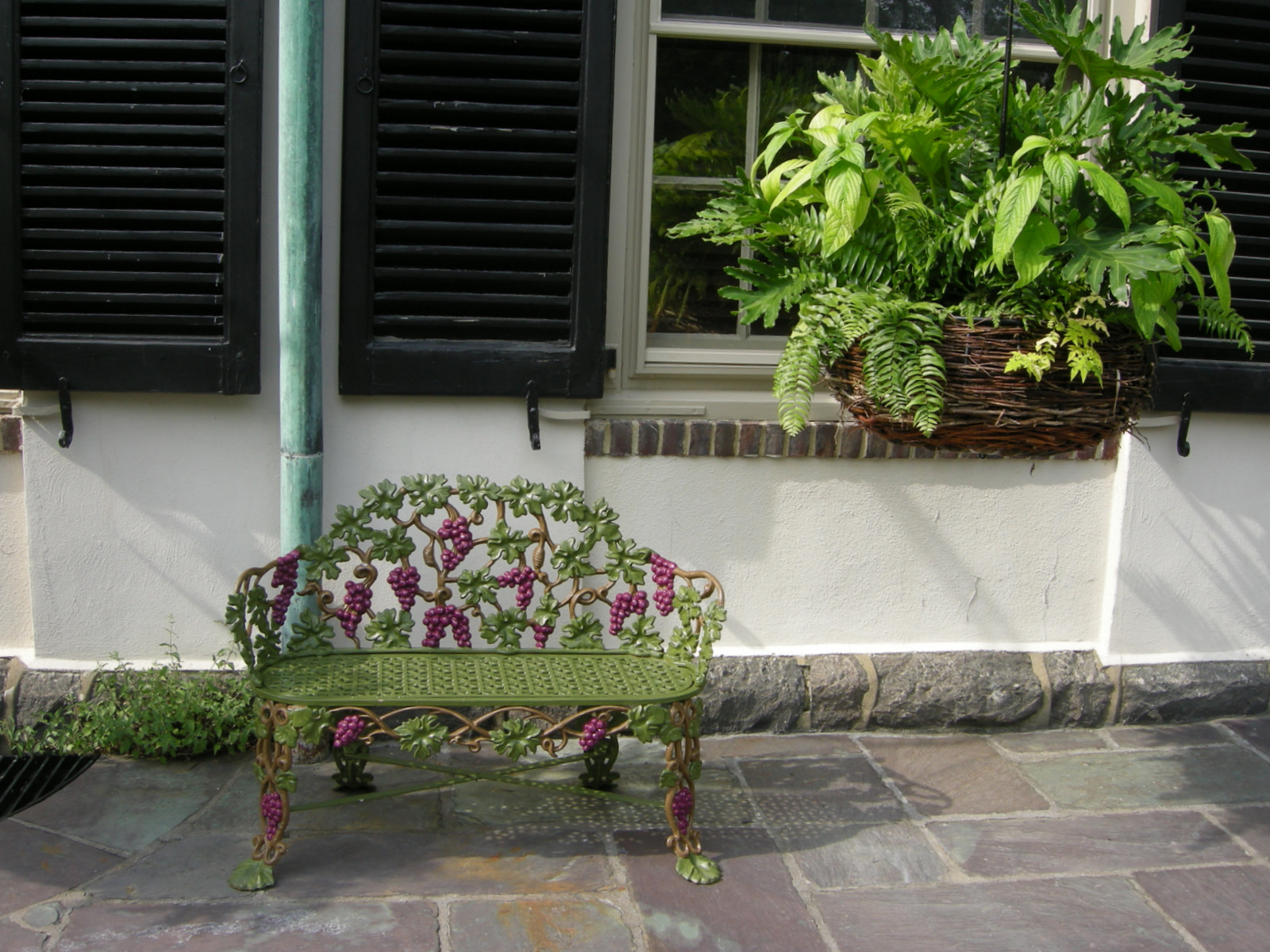
Part of the Idea Garden at Longwood Gardens

I recently visited Longwood Gardens in Kennett Square, Pennsylvania.  I have no hesitancy in saying that Longwood is one of the premier gardens in the world and should be on everyone’s life list.  However, there is so much there that it is difficult to post about it.  Also, “familiarity breeds contempt.”  I hold two Certificates in Ornamental Horticulture from Longwood and have taken a total of 18 courses to earn them.  Each course involved a minimum of 8 visits to the gardens so you can see that I have spent a lot of time there.  If you are local, these courses are the absolute best plant education available.

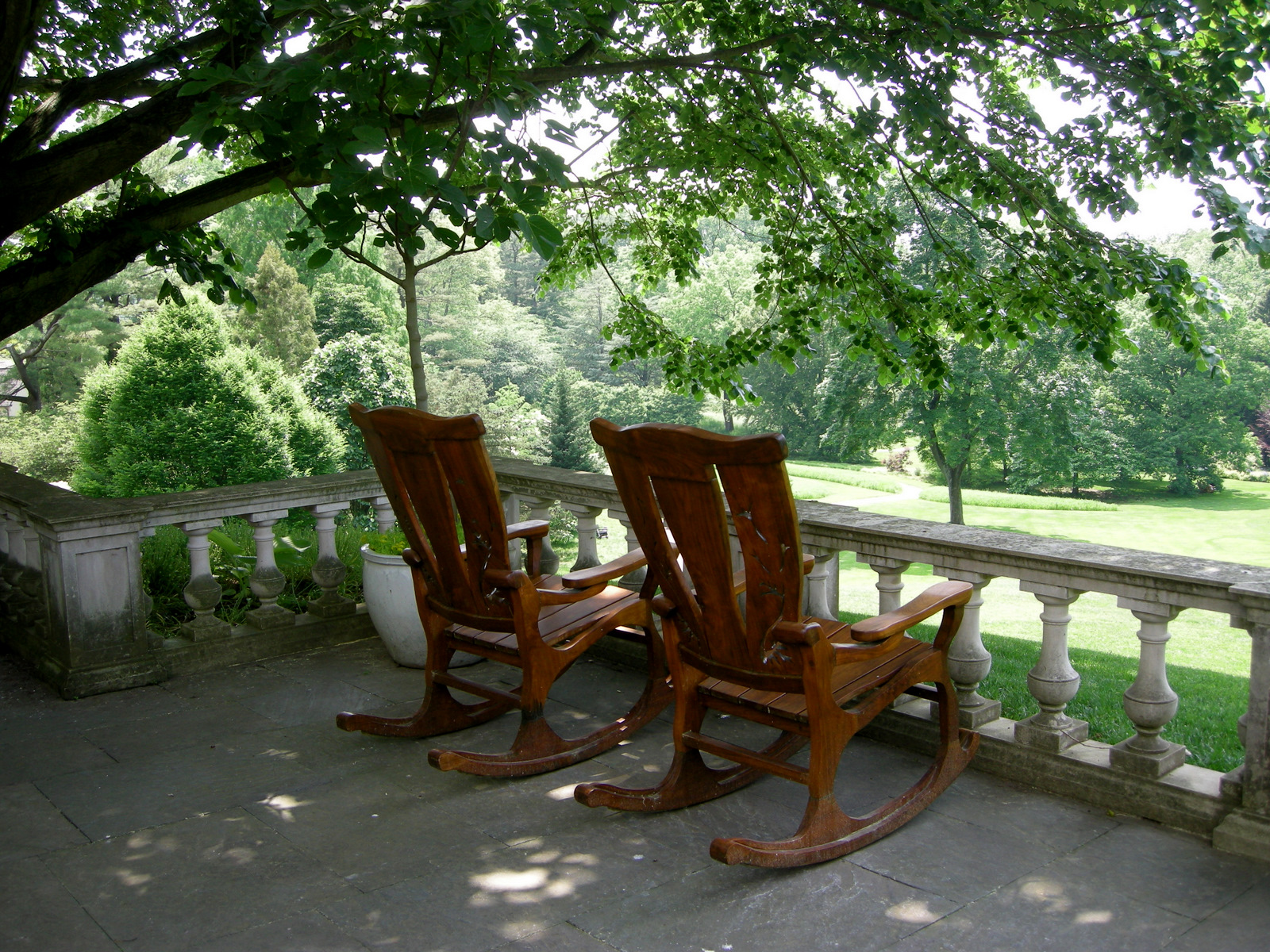
Italian Water Garden, viewed while resting in the shade.

Because I have spent so much time at Longwood, I didn’t photograph the usual sights or even visit the fabulous four acre indoor conservatory (with one exception mentioned below).  As a shade gardener I headed straight for Peirce’s Woods, which is seven acres devoted to shady plants native to the eastern U.S. deciduous forest.  I hoped to augment my library of photographs and get some ideas of plants to sell at the nursery and add to my own gardens.  I wasn’t disappointed.

The straight species of smooth hydrangea, H. arborescens, lined the very shady paths by the lake.  I think it is more appropriate to a woodland garden than the cultivated forms like ‘Annabelle’.

Smooth hydrangea has a lovely flower whose size is in keeping with other native woodland plants.

While walking through Peirce’s Woods, I returned to the thoughts I have been having lately about groundcovers.  This time of year, with the weeds running rampant, my customers are more interested in groundcovers.  But it is clear from their questions that they mean plants that form runners to creep and cover the ground.  The classic examples are vinca, ivy, and pachysandra.  However, my definition of groundcover is much broader than this and includes any plant massed to effectively choke out weeds.

Native maidenhair fern, Adiantum pedatum


When you look at the masses of native maidenhair fern above, you are probably thinking that’s all very nice that Longwood uses masses of these fairly pricey, non-creeping plants as groundcover, but I could never afford that quantity of plants.  However, think of the alternative: weeds and the hours if not days it takes to remove them, not to mention how their presence detracts from the look of your garden as well as your satisfaction with it.  Your time is valuable, and you wouldn’t be reading my blog if the look of your garden wasn’t important to you.

Native semi-evergreen coralbells, Heuchera villosa, often sold as the cultivar ‘Autumn Bride’, has gorgeous white flowers in the fall.

Yes, you can use mulch to keep down the weeds.  However, commercial shredded hardwood mulch is not attractive, is generally not produced sustainably, and requires a significant time investment to apply it.  Most importantly, it requires a monetary outlay every year because it must be re-applied every spring.  Perennial plants are initially more expensive to buy and plant but once they are there, you never have to do anything again.  It is kind of like buying a compact fluorescent light bulb versus the bulbs we grew up with.

Here are some more plants that Longwood uses in masses to make effective groundcovers:

Mexican feather grass, Nassella tenuissima


Native evergreen Christmas fern, Polystichum acrostichoides

Native semi-evergreen coralbells, Heuchera villosa purple form.

Shredded umbrella-plant, Syneilesis aconitifolia: I can only dream of achieving this in my garden, and, yes, it is very expensive.

Native hay-scented fern, Dennstaedtia punctiloba, creeps to fill in large areas.

This bellflower, Campanula takesimana, was growing and apparently self-sowing in dense shade on the hillside near the Chimes Tower.

Fall-blooming yellow waxbells, Kirengoshoma palmata, is more like a shrub than a perennial but it dies to the ground ever year.

Native coralbells, Heuchera villosa ‘Caramel’, is my favorite heuchera and retains its lovely color 365 days a year.

Giant butterbur, Petasites japonicus, grows in dense shade and covers a lot of ground.

Lavender mist meadow-rue, Thalictrum rochebrunianum

Native sensitive fern, Onoclea sensibilis, does creep.

Shrubs can be used as groundcover also, two examples from Longwood:

The straight species of oakleaf hydrangea, H. quecifolia, gets quite large and spreading.

Native southern bush honeysuckle, Diervilla sessifolia, suckers to form a colony.

Lastly, I want to show you why I briefly visited the conservatories:  groundcover for walls, the new fern wall at Longwood.  It is worth a visit just to see it:

This is a beautiful hallway containing individual restrooms, and the walls are totally covered in ferns.

Some of the ferns are quite large, and all are healthy and beautiful.

I hope I have convinced you to think outside the box and mass all kinds of unusual plants as groundcovers.  You will have more time to enjoy a better looking garden and save money in the long run.

Carolyn

Nursery Happenings:  This coming weekend we will have our final open hours at the nursery on Saturday, June 16, from 9 am to 2 pm, and Sunday, June 17, from 11 am to 1 pm.  We close on June 17 until September.  Customers on my email list will receive an email with details.

If you are within visiting distance and would like to receive catalogues and information about customer events, please send your full name and phone number to carolynsshadegardens@verizon.net.  Subscribing to my blog does not sign you up to receive this information.

Facebook:  Carolyn’s Shade Gardens has a Facebook page where I post single photos, garden tips, and other information that doesn’t fit into a blog post.  You can look at my Facebook page here or click the Like button on my right sidebar here.

Notes: Every word that appears in orange on my blog is a link that you can click for more information.  If you want to return to my blog’s homepage to access the sidebar information (catalogues, previous articles, etc.) or to subscribe to my blog, just click here.

2012 Winter Interest Plants

Posted in bulbs for shade, Camellias, evergreen, garden to visit, hellebores, landscape design, Shade Perennials, Shade Shrubs, snowdrops, winter, winter interest with tags , , , , , , , , , , , , , , , , , on February 29, 2012 by Carolyn @ Carolyns Shade Gardens

Carolyn’s Shade Gardens is a retail nursery located in Bryn Mawr, PA, specializing in showy, colorful, and unusual plants for shade.  The only plants that we ship are snowdrops within the US.  For catalogues and announcements of local events, please send your full name, mailing address, and cell number to carolyn@carolynsshadegardens.com and indicate whether you are interested in snowdrops, hellebores, and/or hostas.  Click here to get to the home page of our website for catalogues and information about our nursery and to subscribe to our blog.

Camellia japonica ‘Berenice Boddy’ in full bloom in February in the Cresson garden.

On Friday, February 24, and Monday, February 27, Charles Cresson presented the second annual Winter Interest Plant Seminars for my customers in his beautiful garden located in Swarthmore, Pennsylvania, US.  I did a post on the seminars last year (to read it click here) and thought I had covered the topic.  However, our very warm winter meant that many different plants were in bloom so I want to show you what we saw.


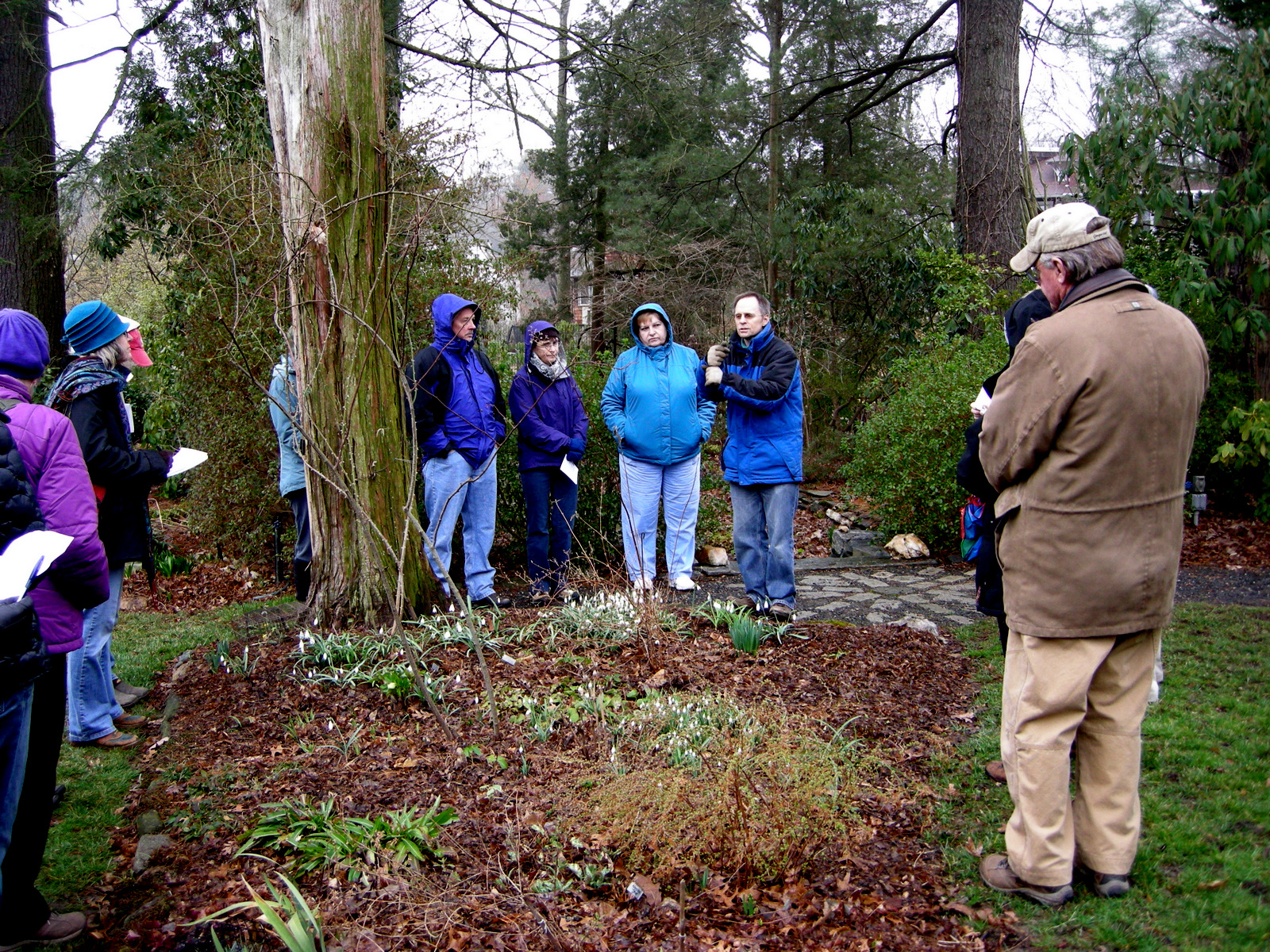
The weather was cold and rainy on Friday, but participants didn’t let it stop them from enjoying Charles’s presentation.

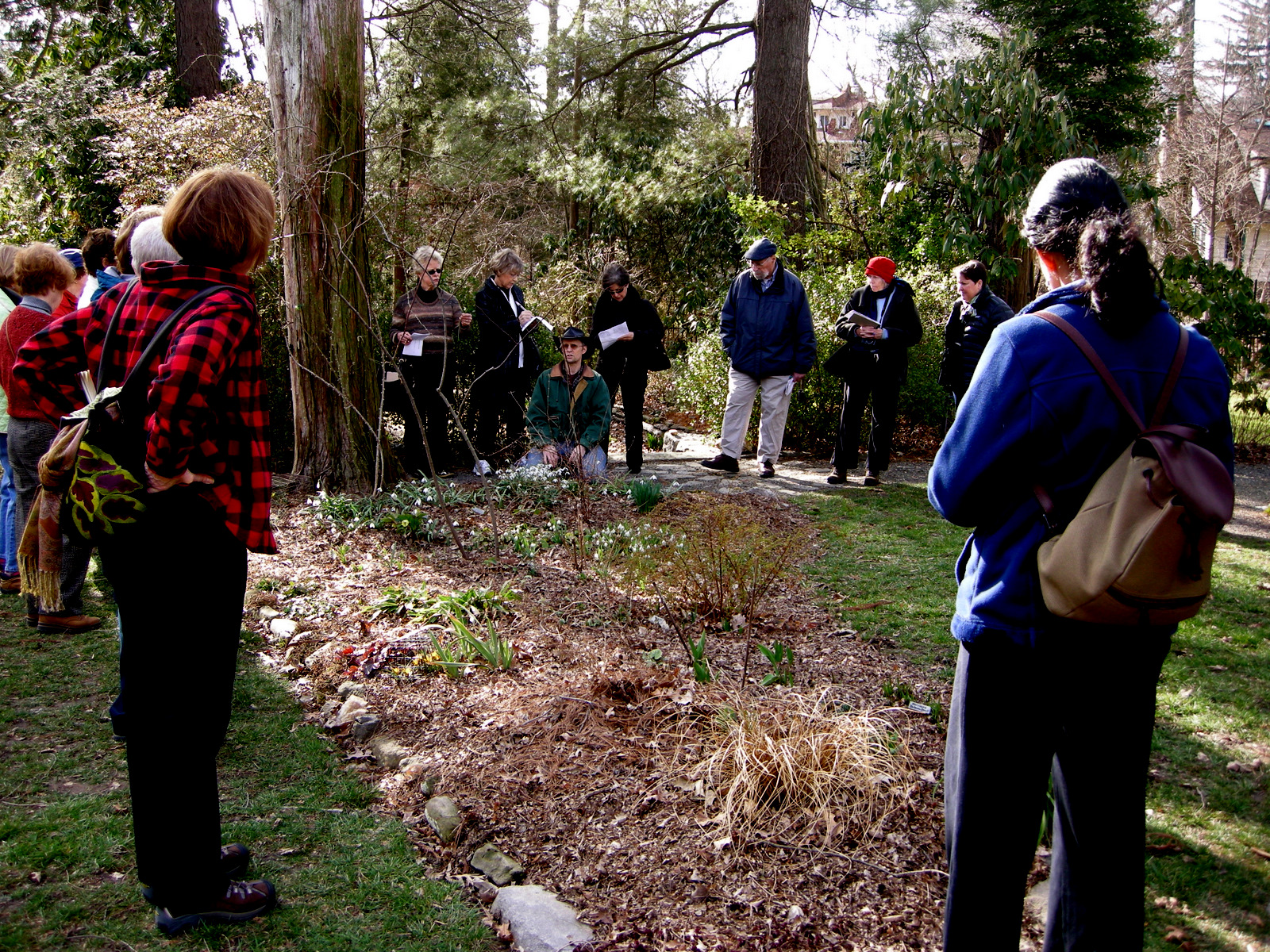
Monday was warm and sunny which allowed more time for dawdling in the garden.  The snowdrops were a big hit.

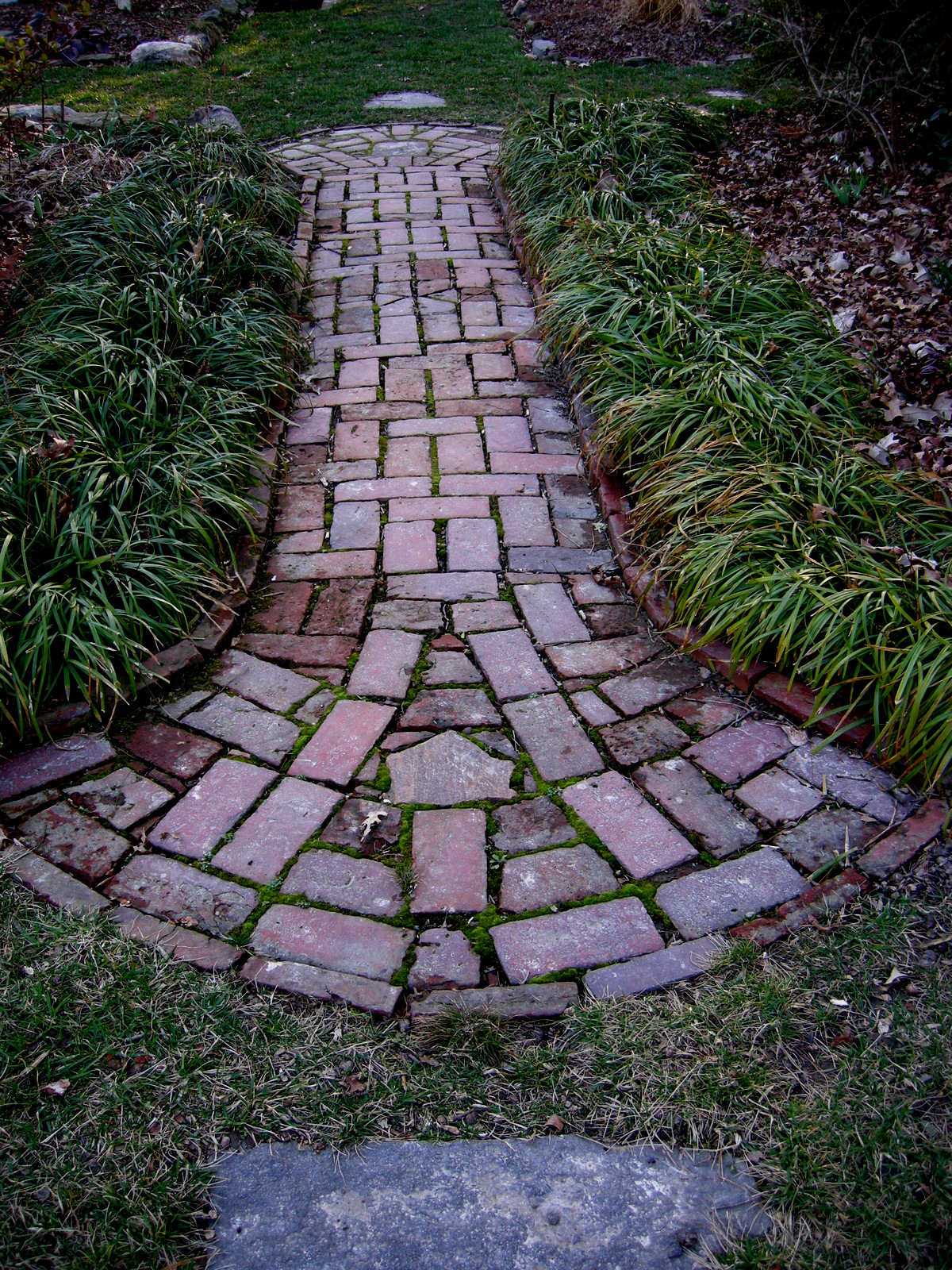
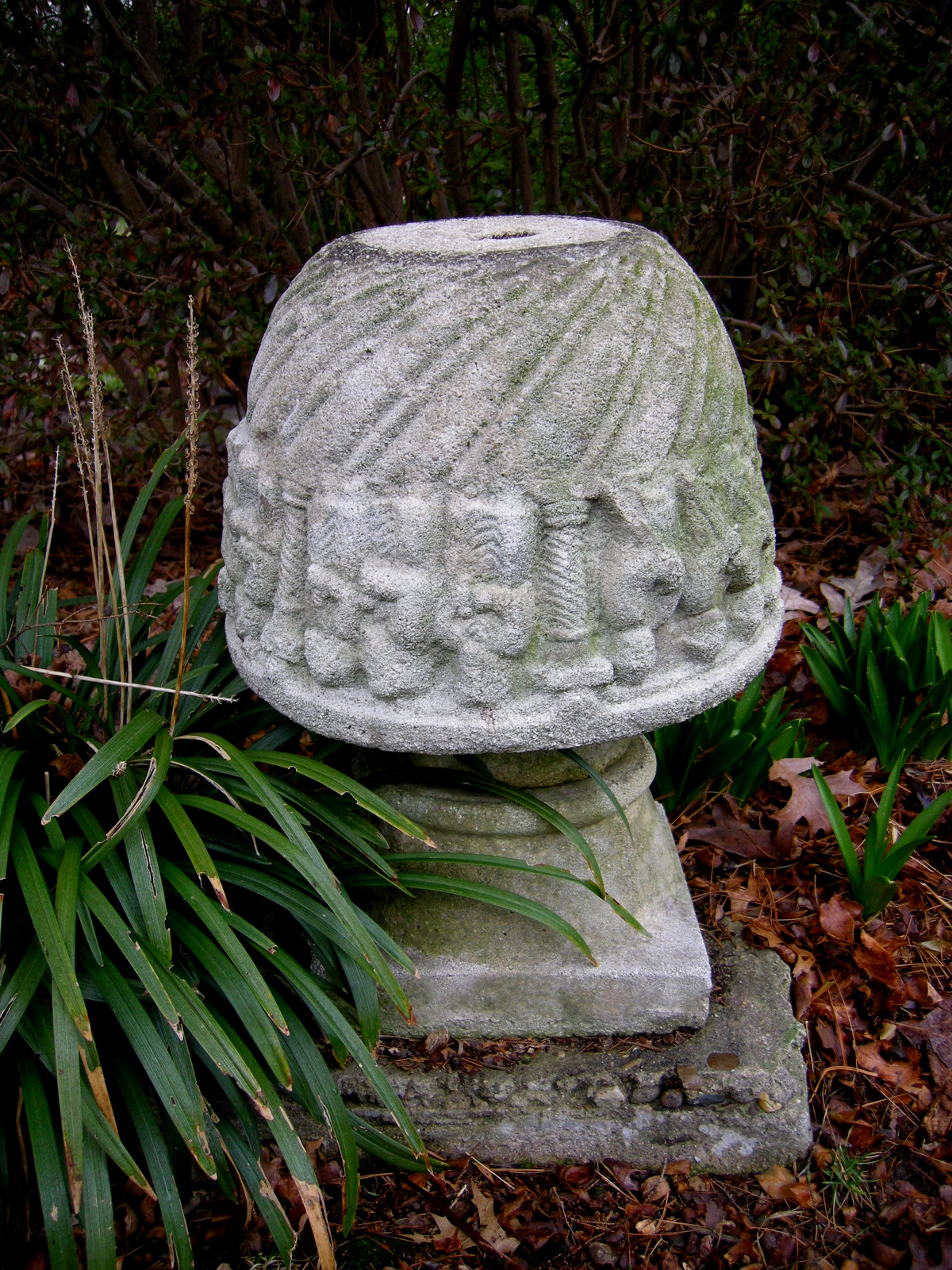
The attention to detail in Charles’s garden is amazing.  I thought I would show you some of the “hardscape” features, many of which Charles built himself:


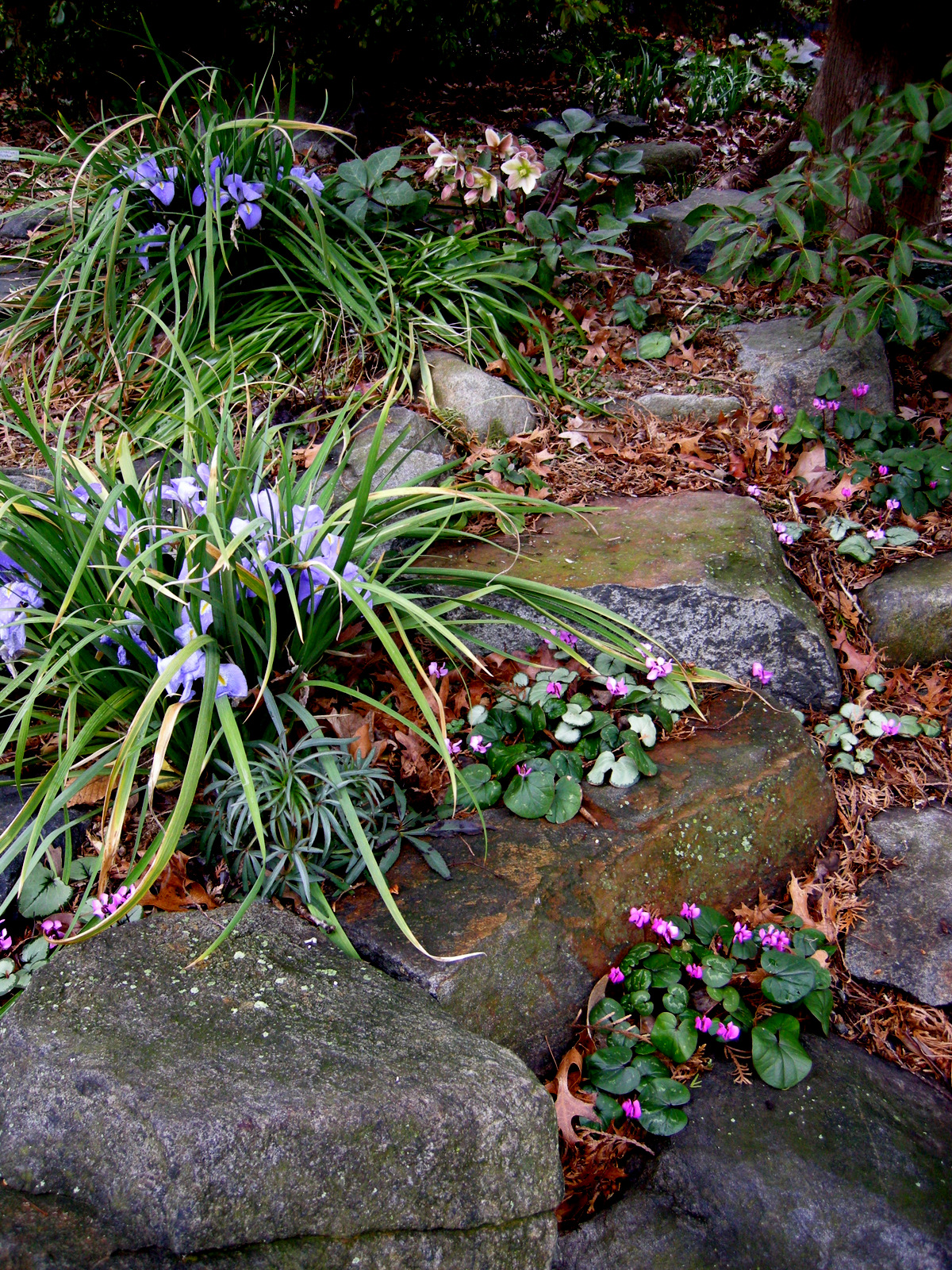
The rock garden with hellebores, Algerian iris, and spring-blooming hardy cyclamen.

Garden shed with the original green roof.

Winter jasmine, Jasminum nudiflorum, photo by seminar participant Lucretia Robbins.

Charles has a spectacular collection of winter-blooming shrubs, many of which are fragrant.  We were all surprised by which one was the most fragrant at that time of year:


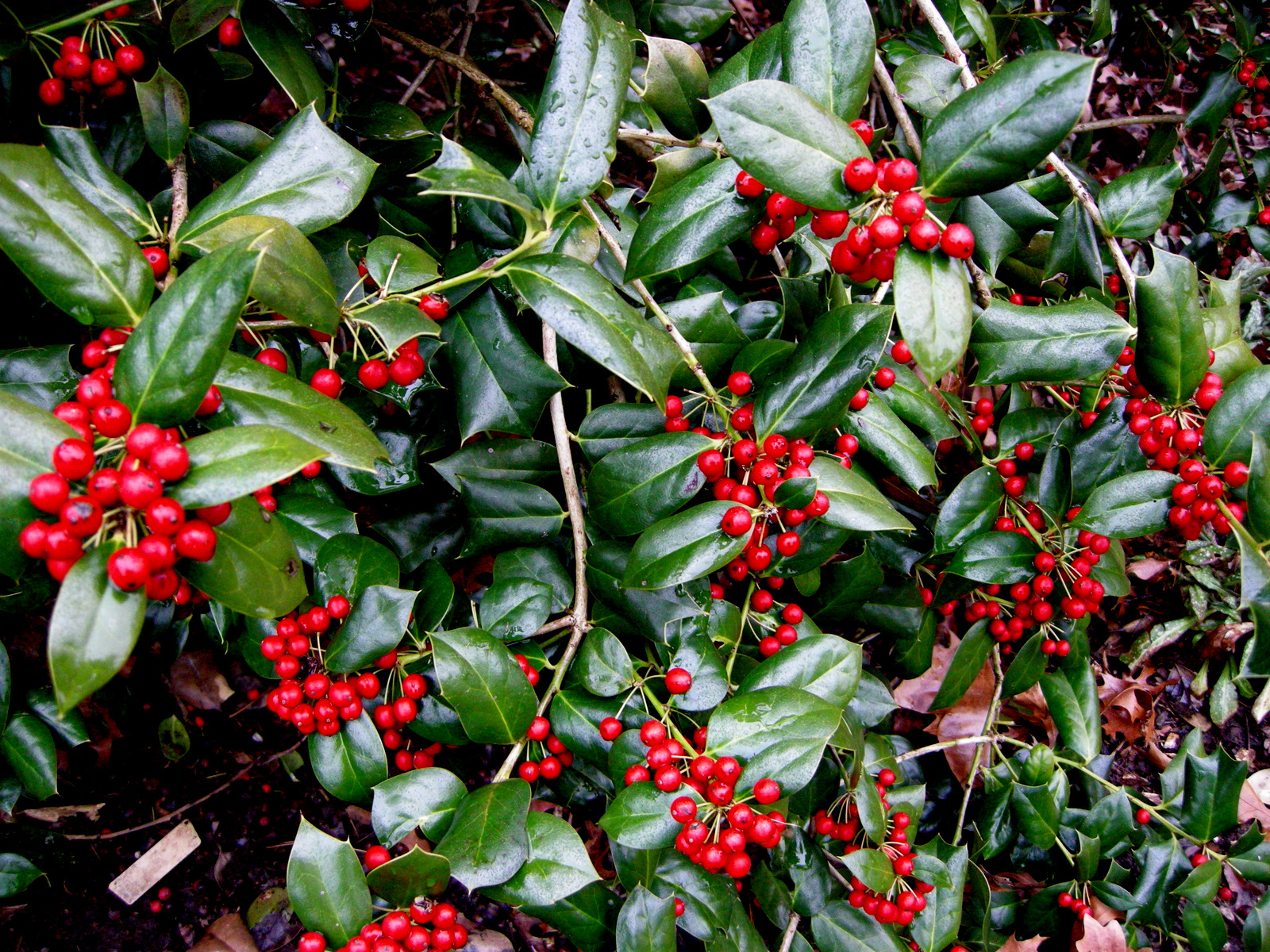
Chinese holly, Ilex cornuta, retains its berries through the winter.


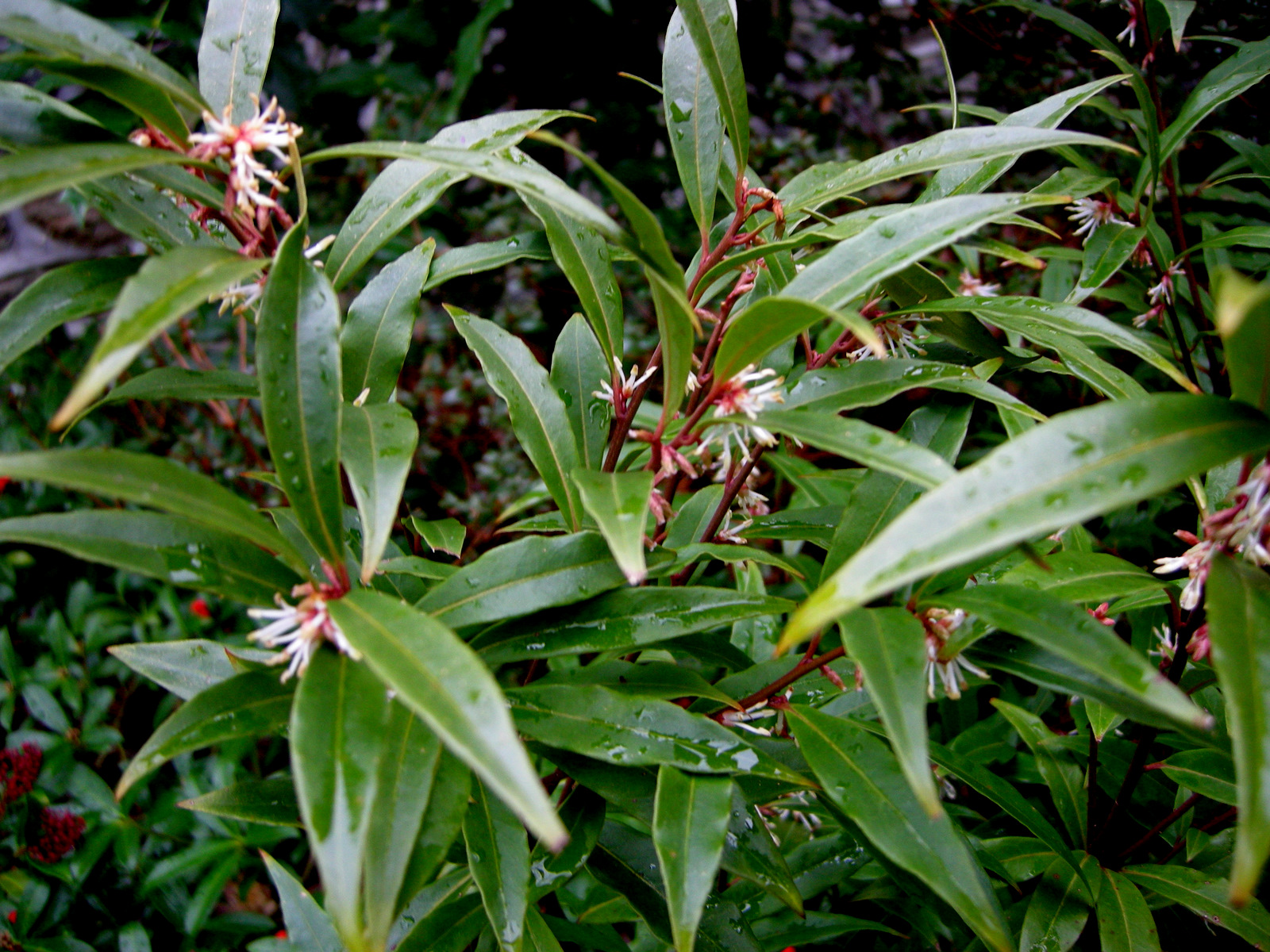
Sweetbox, Sarcococca hookeriana var. digyna ‘Purple Stem’, adds the additional feature of ornamental stems to sweetbox’s many desirable attributes.


Bodnant viburnum, V. bodnantense ‘Dawn’, is very fragrant.


Flower of Bodnant viburnum


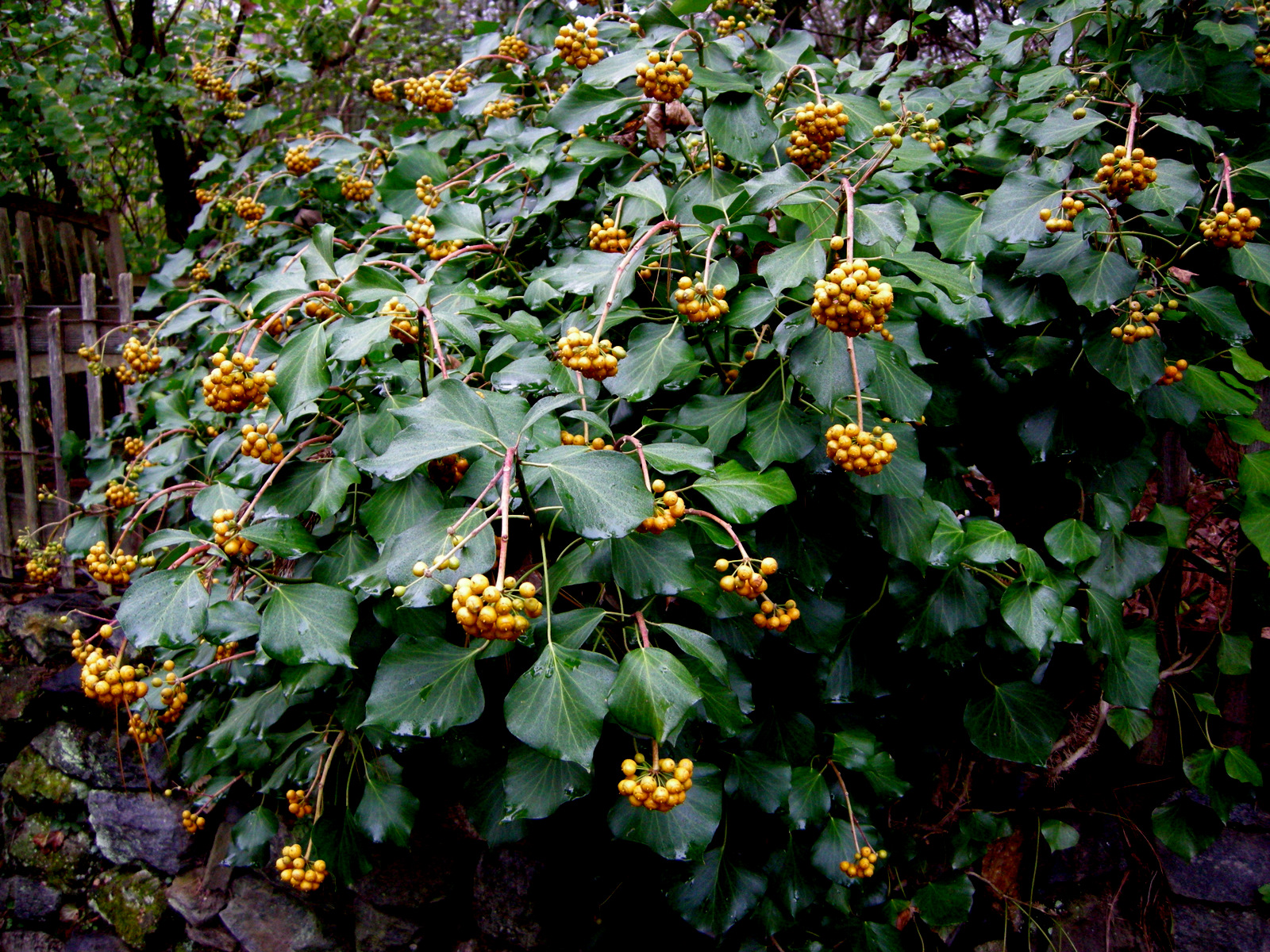
The adult form of English ivy, Hedera helix ‘Poetica Arborea’, produces beautiful berries but is also considered very invasive.


Camellia x ‘April Tryst’ is blooming early.


I like the male flowers of Japanese skimmia, S. japonica, as much as the berries on the female plants.


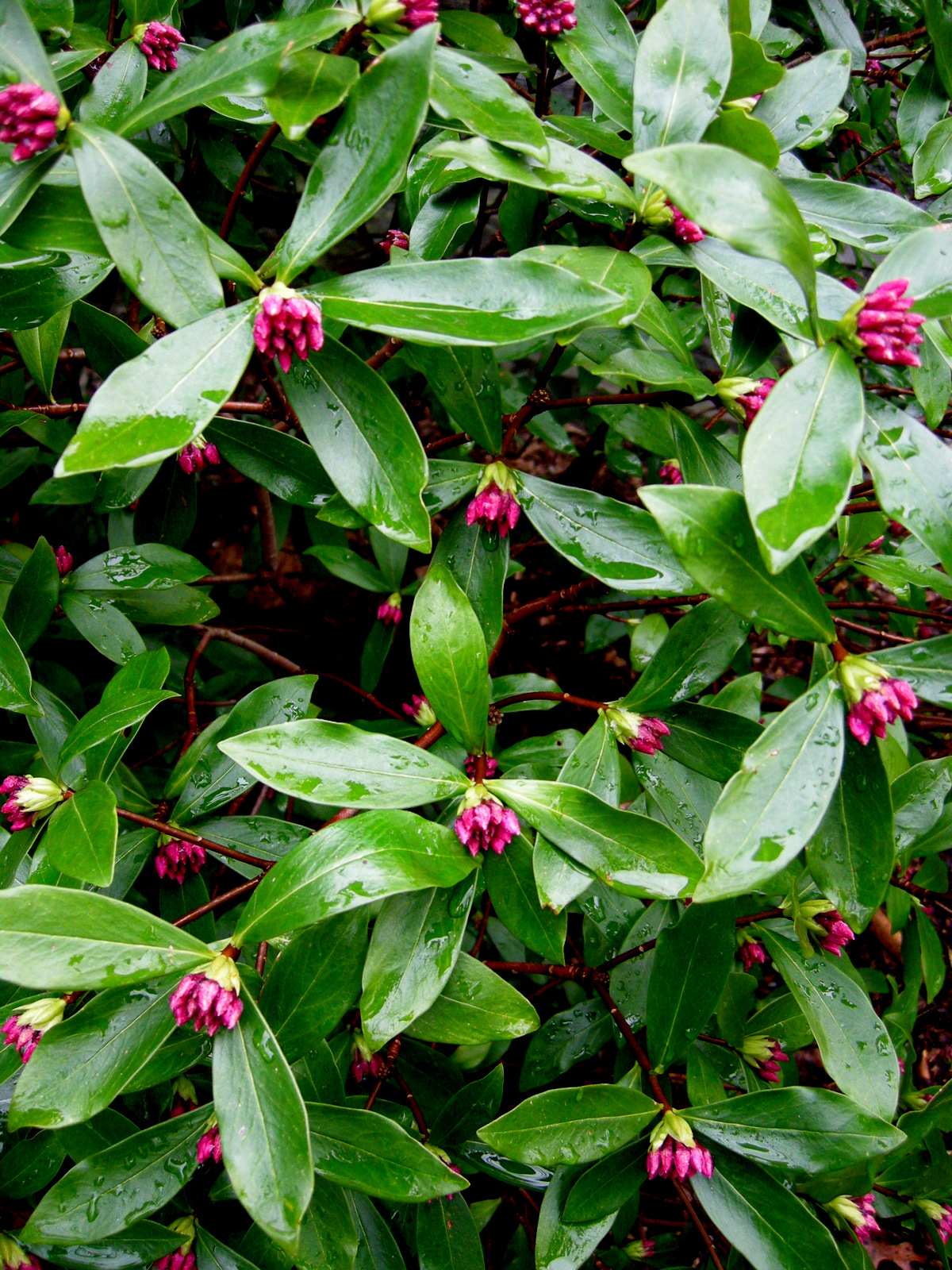
Winter daphne, D. odora, is one of my favorite shrubs because of its wonderful fragrance, excellent habit, evergreen leaves, and lovely flowers.


And the winner is….  Yes, Japanese mahonia, M. japonica, was the most fragrant plant in Charles’s garden even with all the excellent competition above.

Winter-blooming herbaceous perennials were also well represented:

The pink flowers and evergreen leaves of heath, Erica x darleyensis ‘Furzey’.

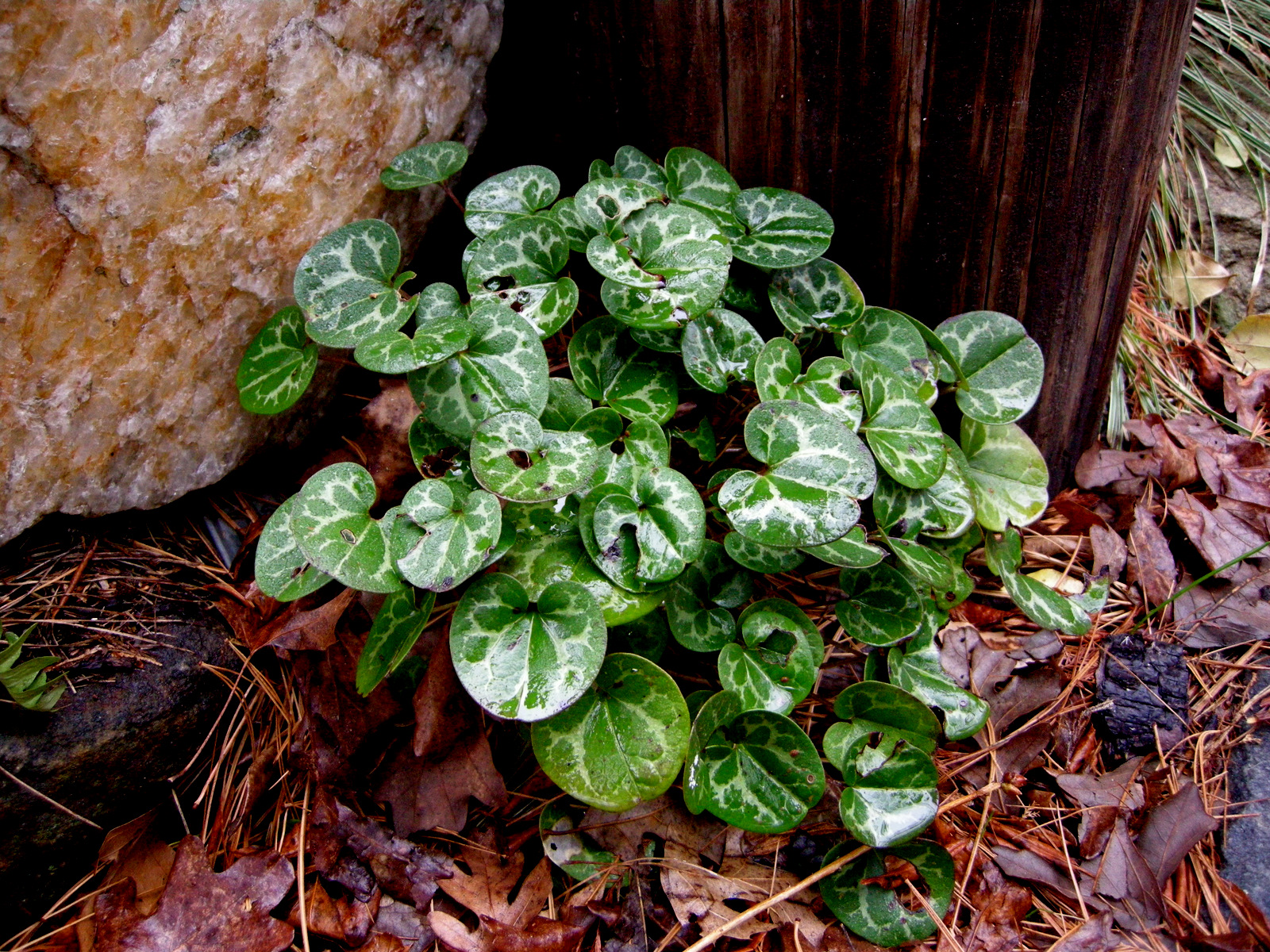
Evergreen heart leaf ginger, Asarum virginicum

Fragrant Algerian iris, I. unguicularis, was a big hit.

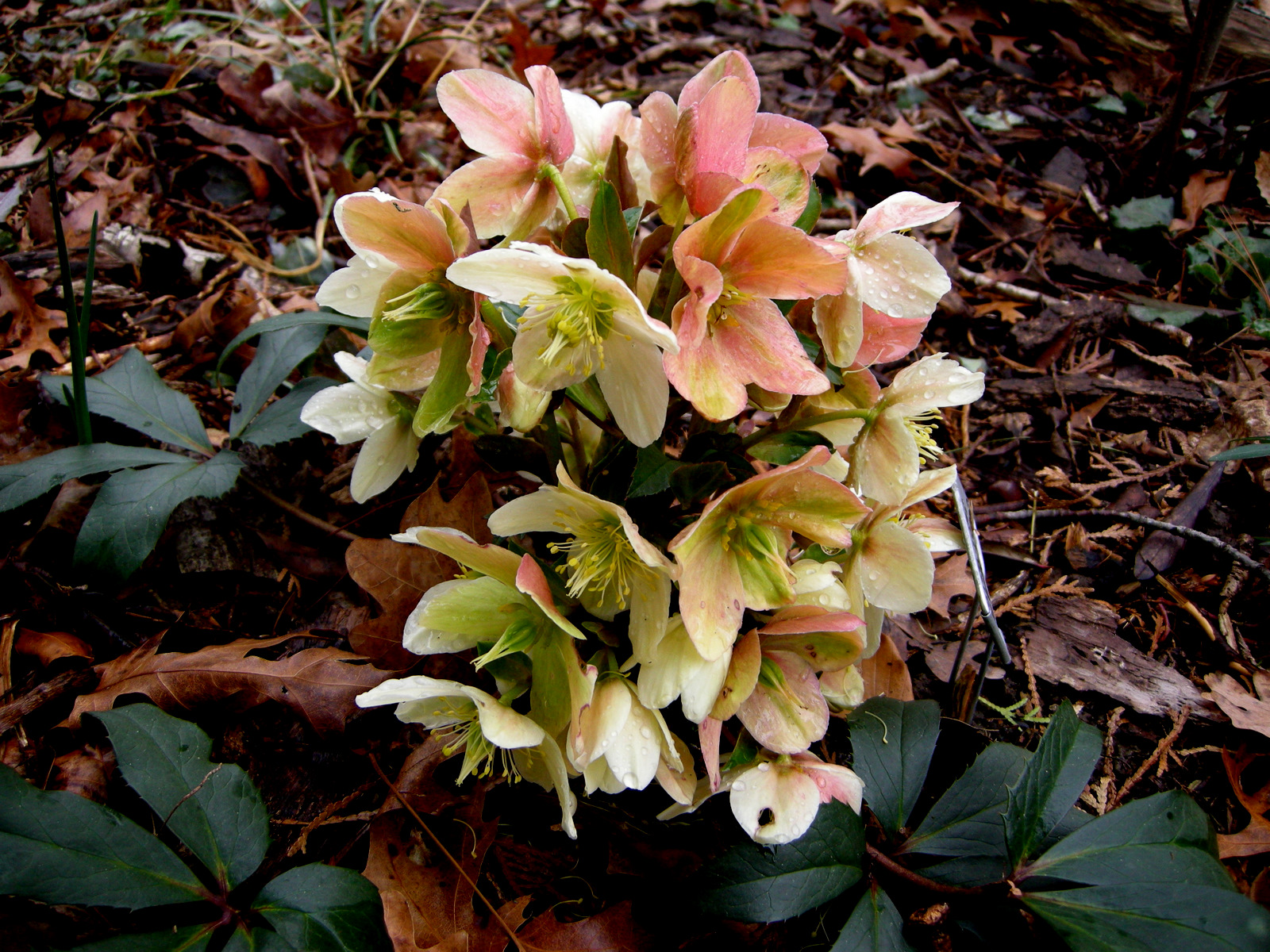
Christmas rose, Helleborus niger, photo Lucretia Robbins

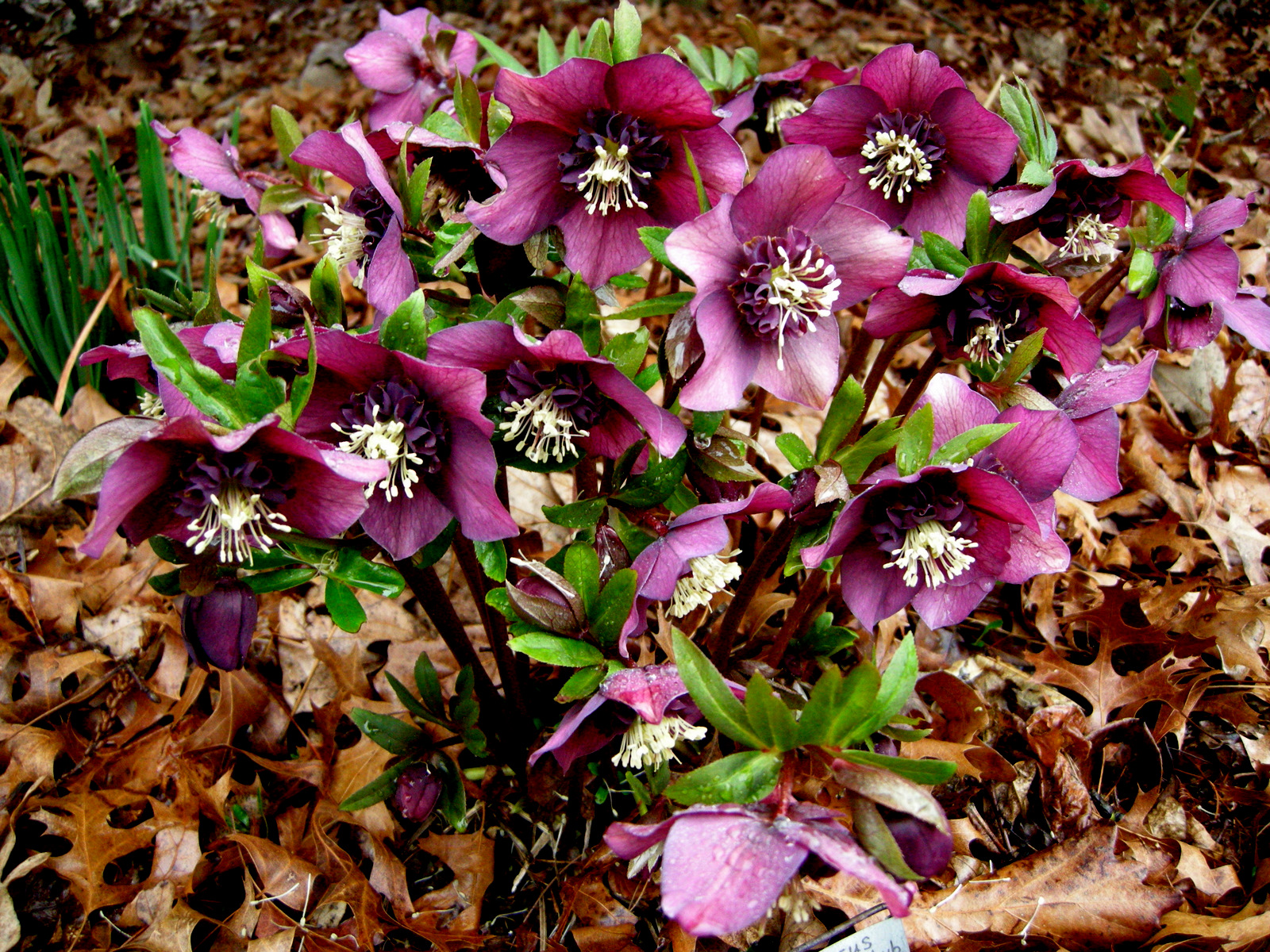
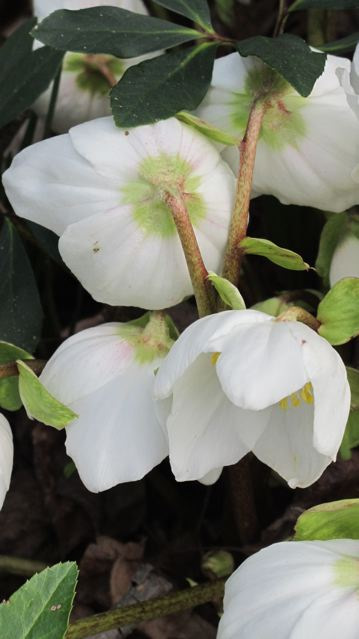
A gorgeous anemone-flowered (ruffle around the center of the flower) hybrid hellebore—my favorite type of hellebore flower.

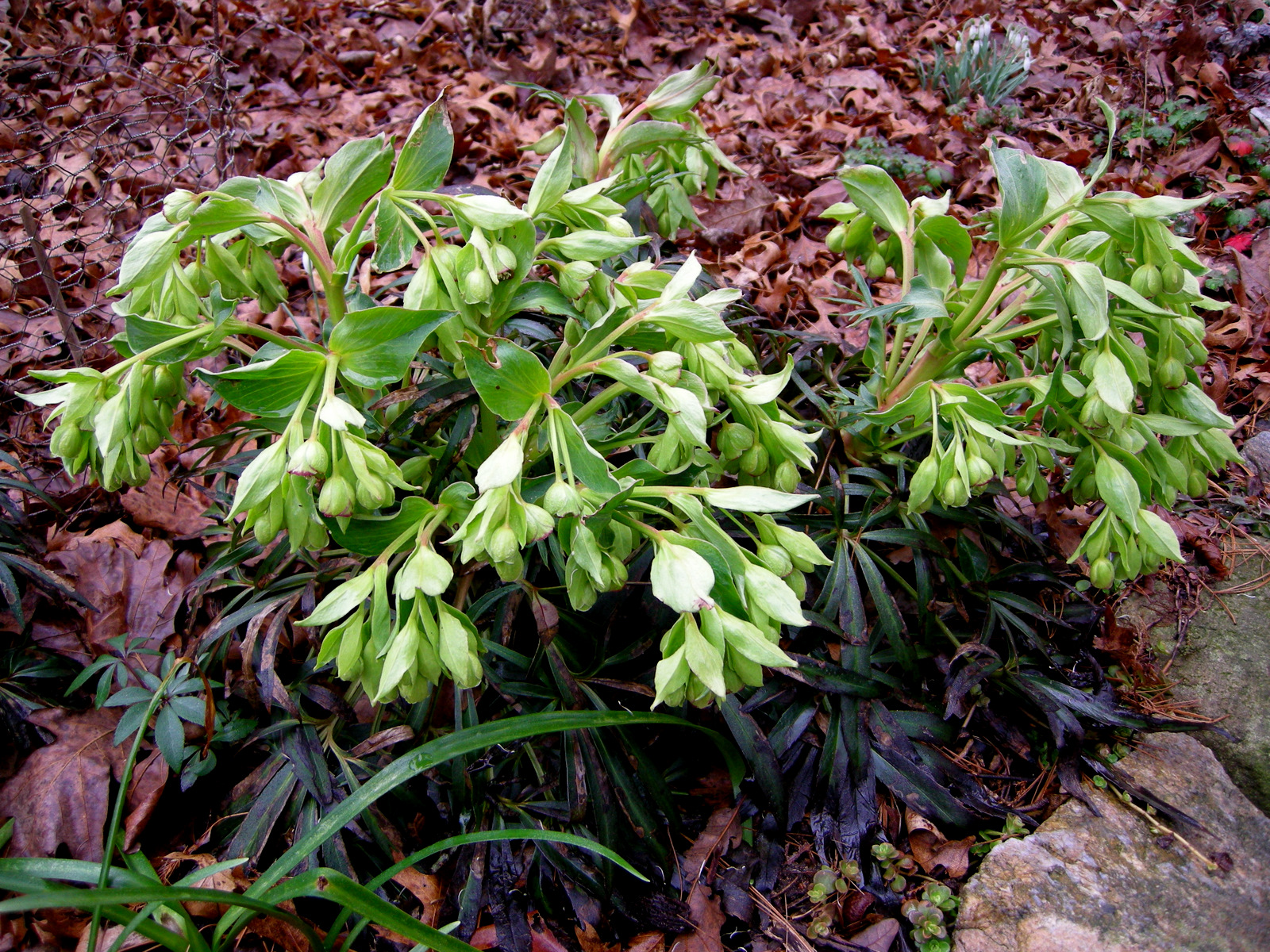
The most evergreen hellebore of them all, bearsfoot hellebore, H. foetidus.

Helleborus x ericsmithii ‘Winter’s Song’

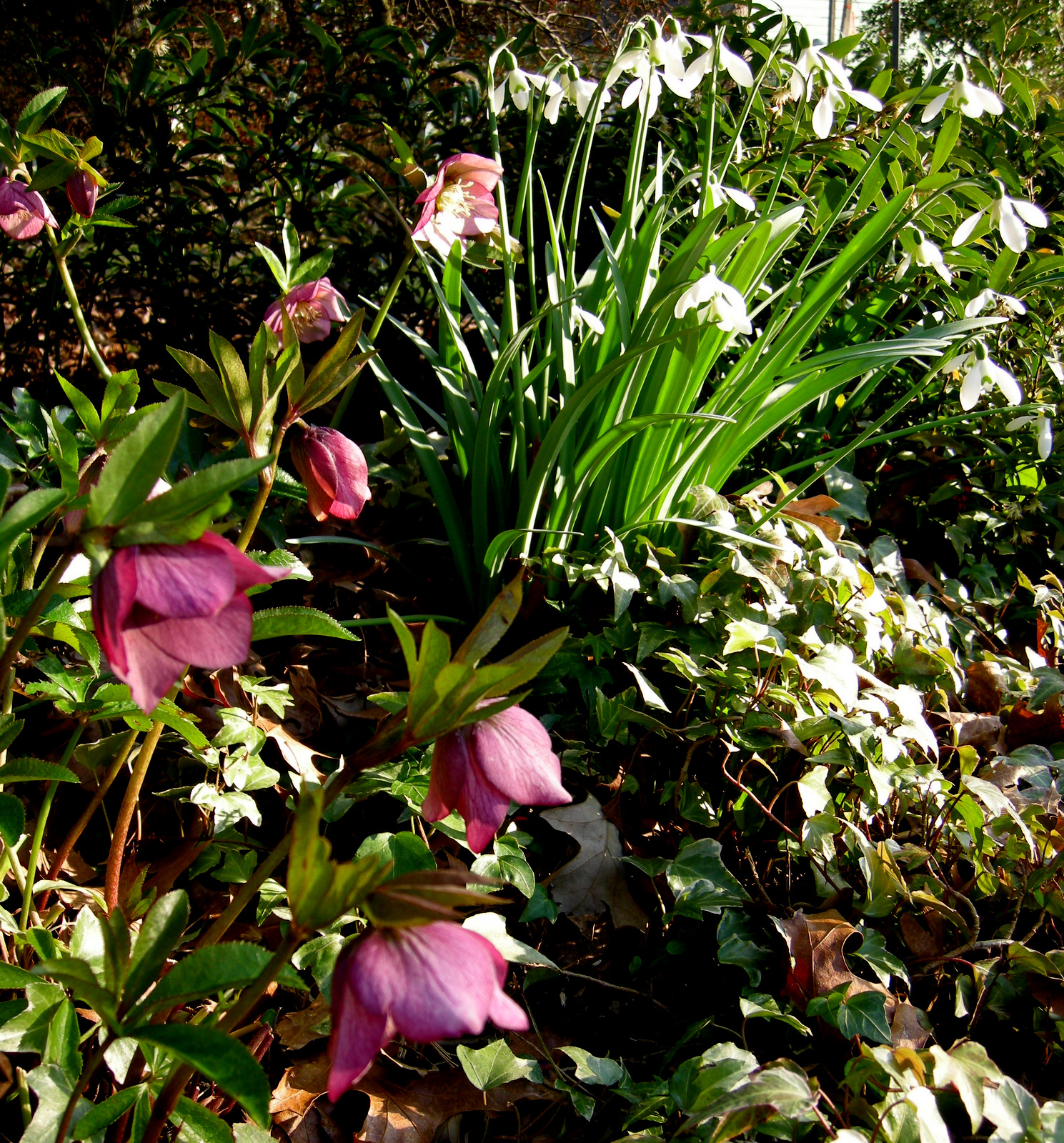
Hybrid hellebore with the very robust and extremely fragrant snowdrop ‘Brenda Troyle’.

The tour included a wonderful selection of winter-blooming bulbs, including choice snowdrop cultivars.  Here are just a few:

Seeing this large patch of the very fragrant snowdop ‘S. Arnott’ sent participants back to add it to their purchases for the day.

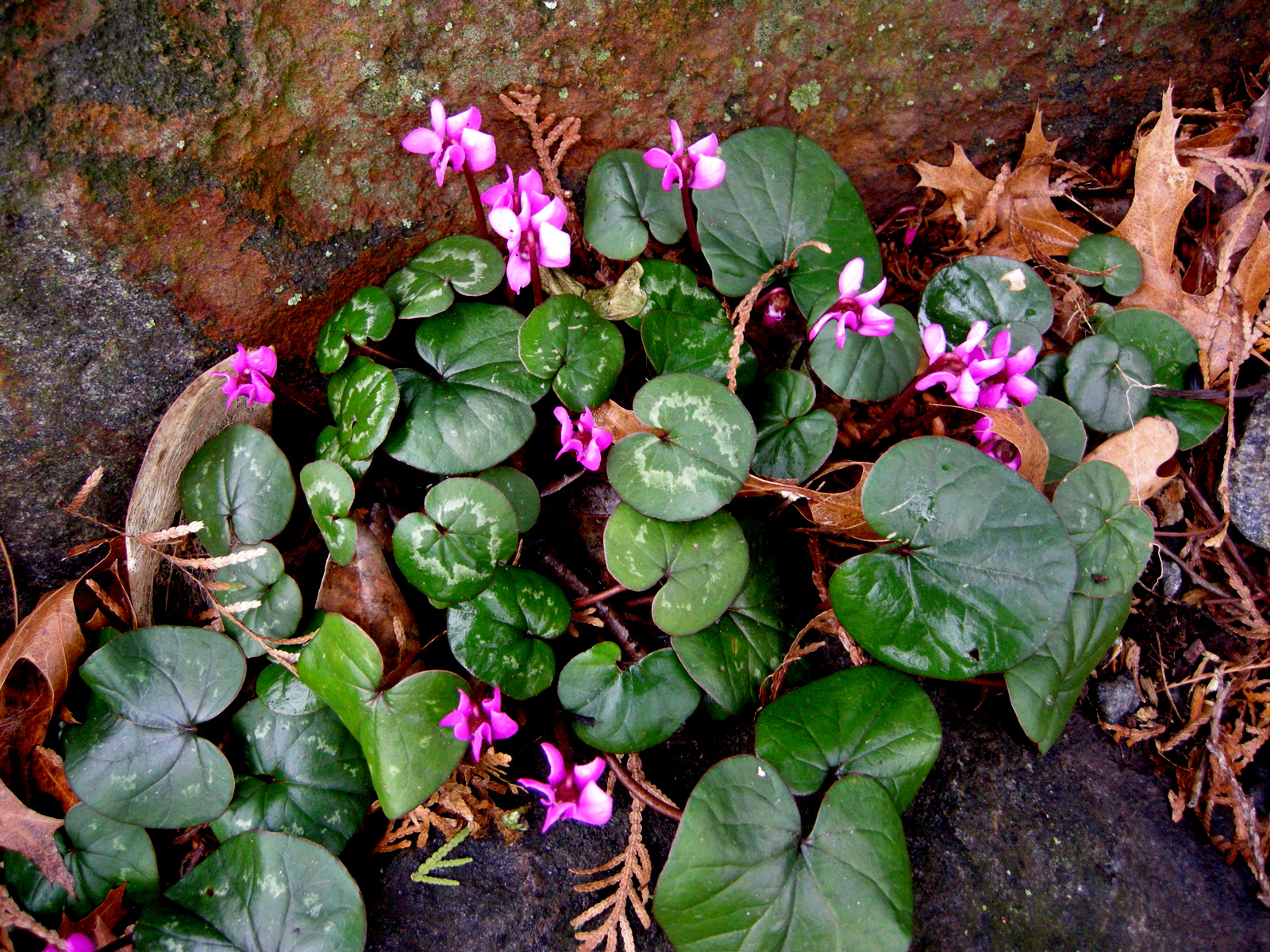
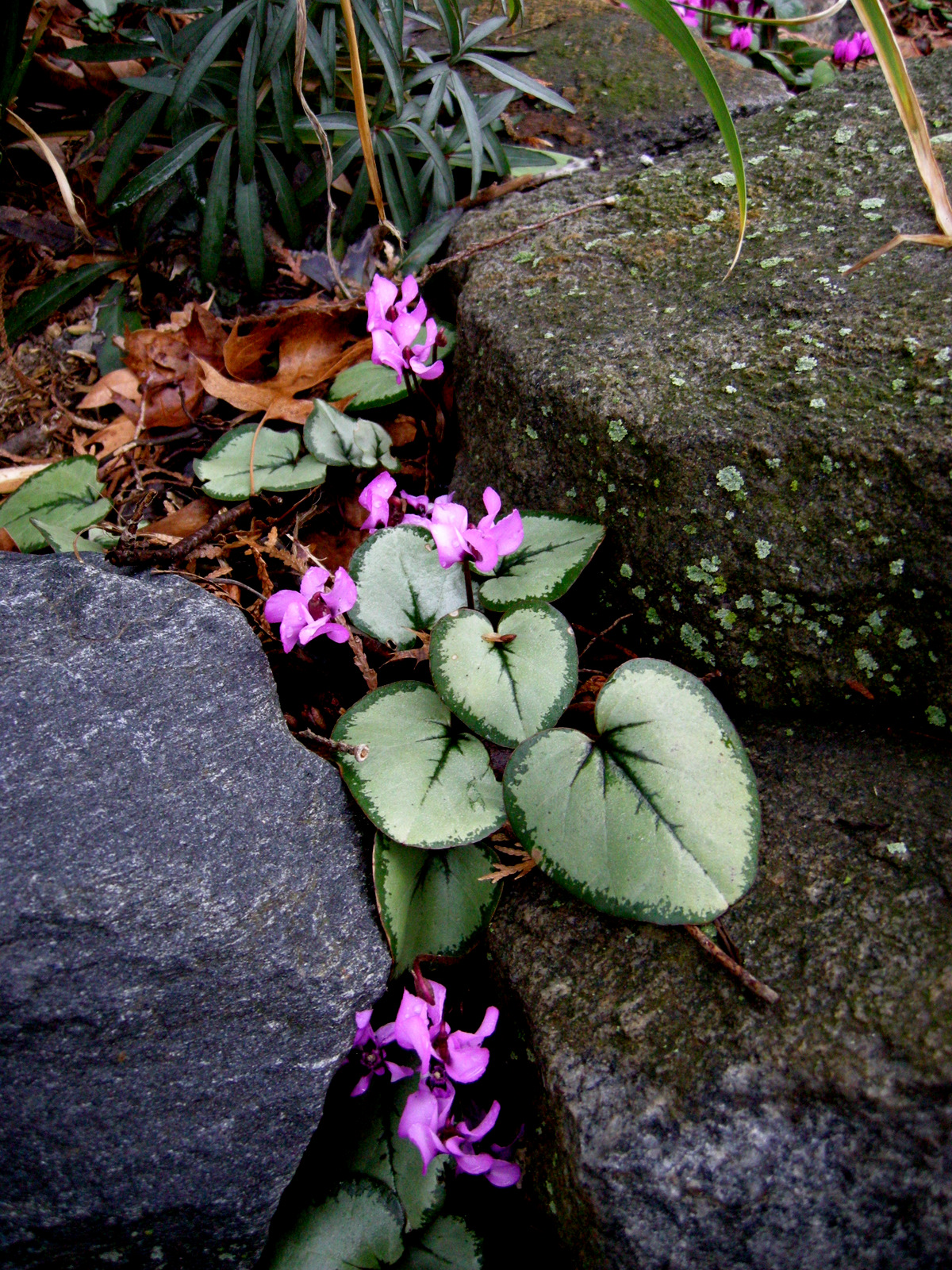
Spring-blooming hardy cyclamen, C. coum

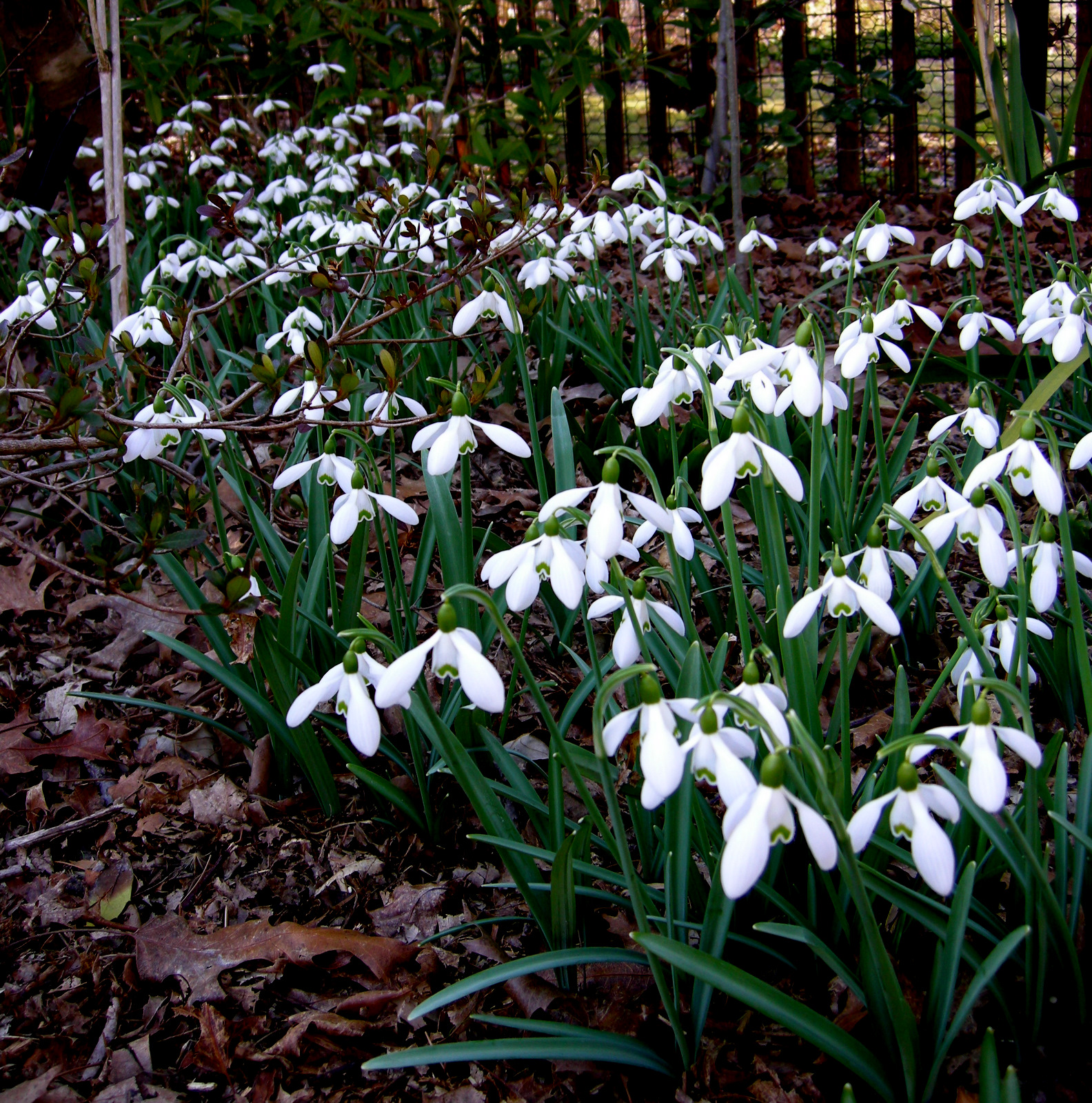
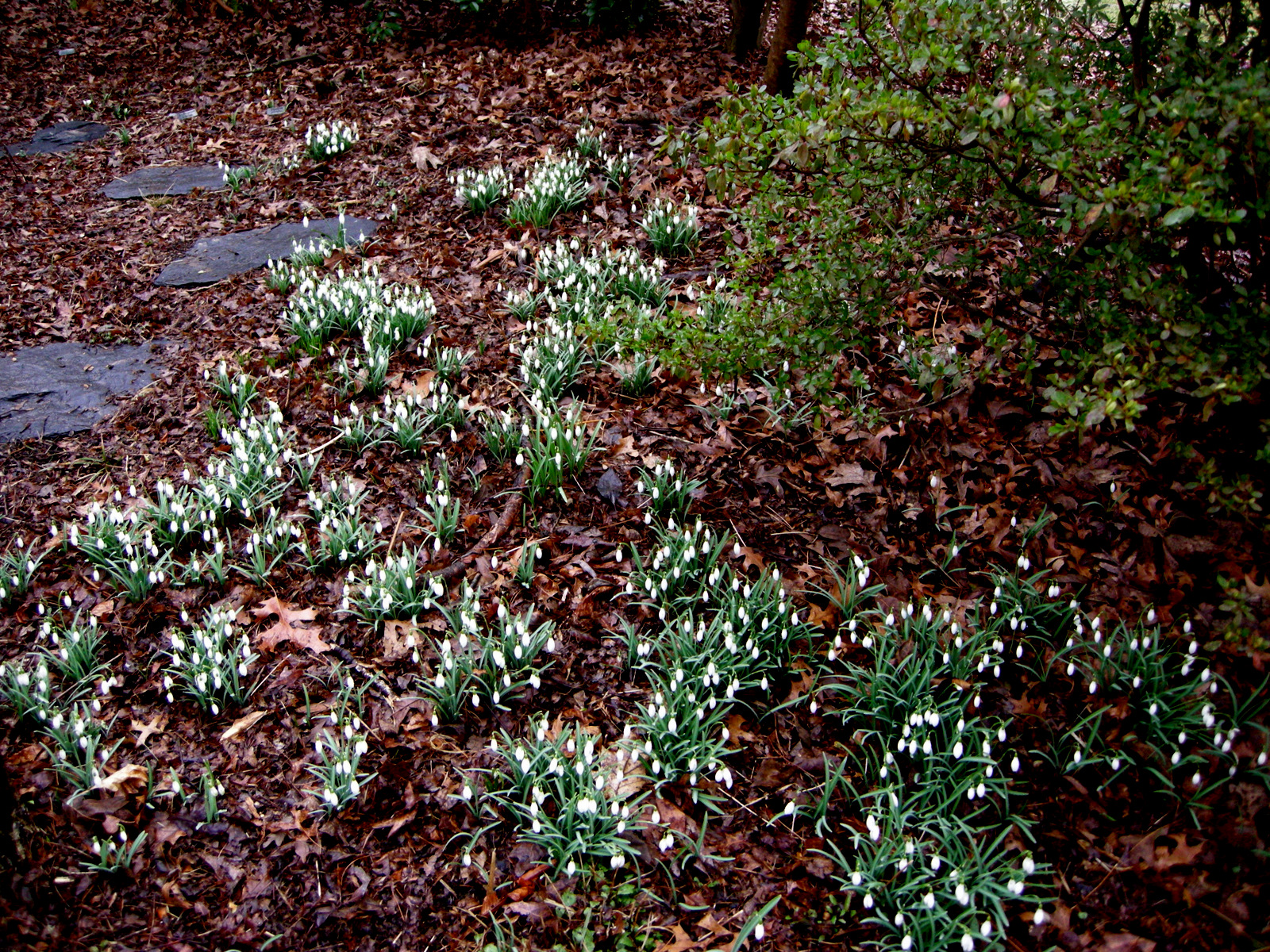
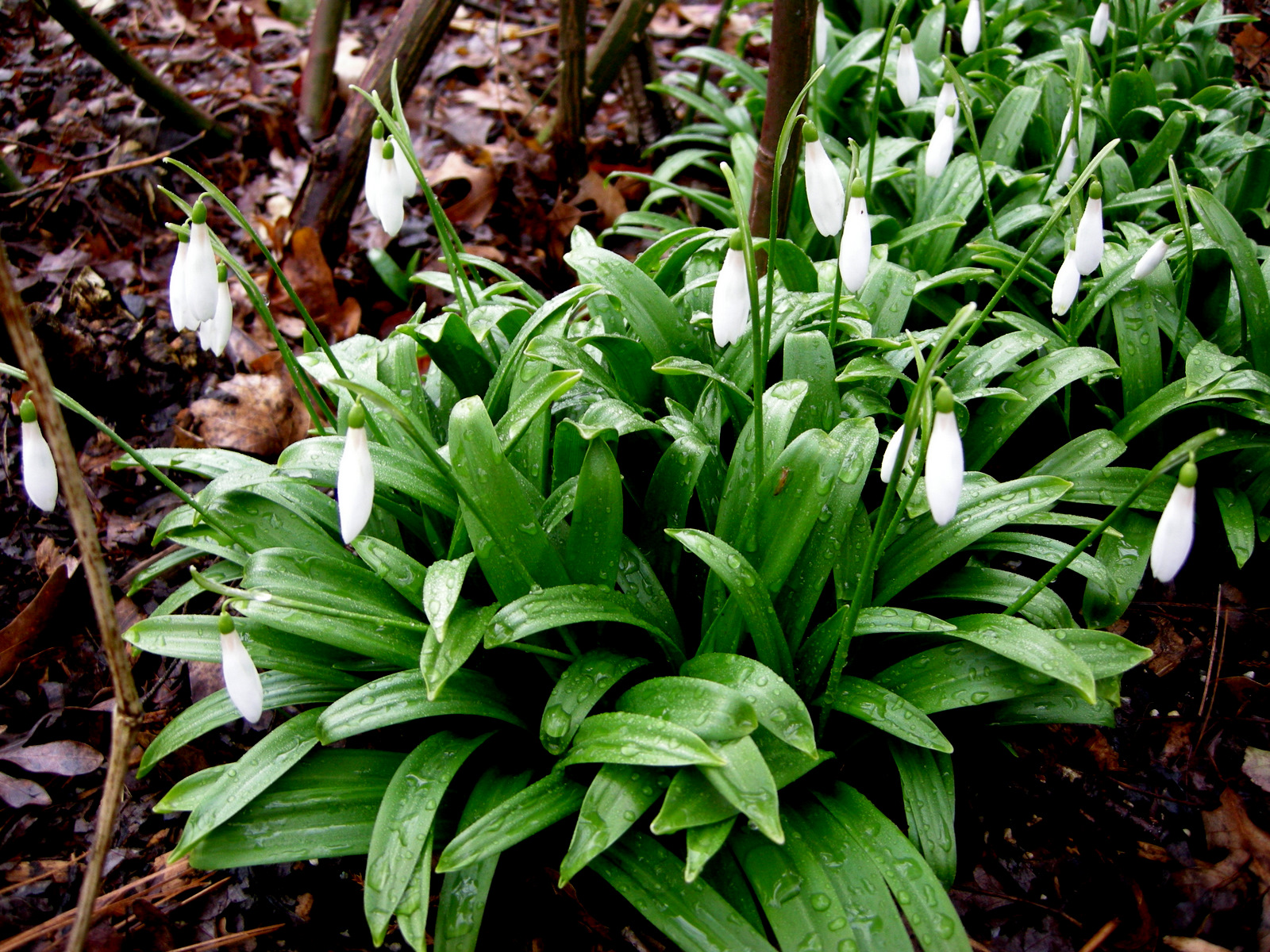
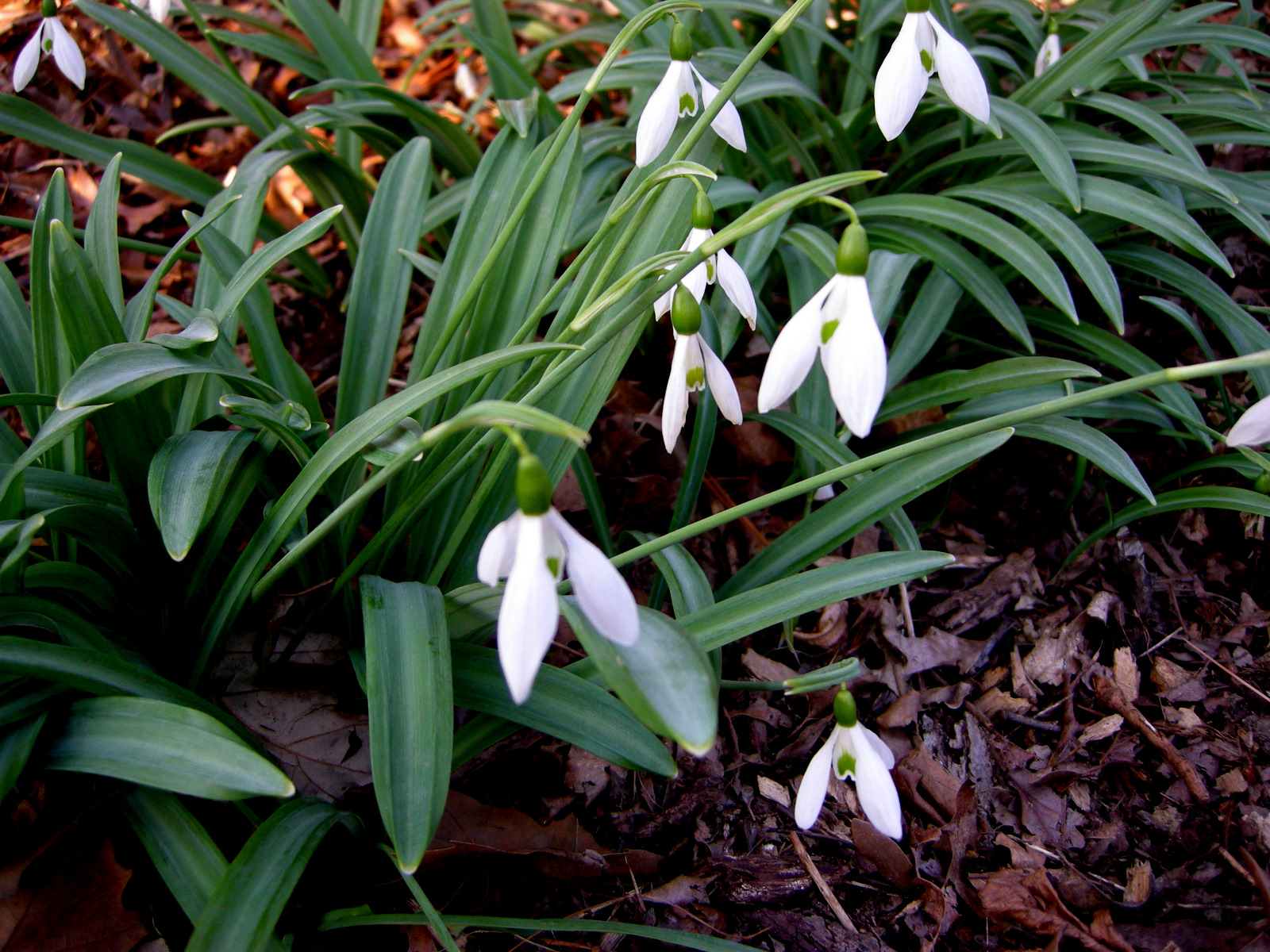
The common snowdrop, Galanthus nivalis, multiplies quickly and looks great when massed.

Evergreen leaves of fall-blooming hardy cyclamen, C. hederifolium

A single bulb of a rare yellow-flowered cultivar of the species snowdrop, G. woronowii, just sold for $1,145 on UK eBay.

A silver-leafed form of spring-blooming hardy cyclamen.

The species snowdrop Galanthus plicatus has been in cultivation since the 16th century and comes from Russia and Turkey.  It has beautiful leaves with a unique folded (explicative) pattern.

For all of you who couldn’t actually attend Charles’s seminars, I hope you have enjoyed your virtual tour.

Carolyn

Notes: Every word that appears in orange on my blog is a link that you can click for more information.  If you want to return to my blog’s homepage to access the sidebar information (catalogues, previous articles, etc.) or to subscribe to my blog, just click here.
A Wonder of Nature

Posted in bulbs for shade, garden to visit, Shade Perennials, winter, winter interest with tags , , , on February 21, 2012 by Carolyn @ Carolyns Shade Gardens

Carolyn’s Shade Gardens is a retail nursery located in Bryn Mawr, PA, specializing in showy, colorful, and unusual plants for shade.  The only plants that we ship are snowdrops within the US.  For catalogues and announcements of local events, please send your full name, mailing address, and cell number to carolyn@carolynsshadegardens.com and indicate whether you are interested in snowdrops, hellebores, and/or hostas.  Click here to get to the home page of our website for catalogues and information about our nursery and to subscribe to our blog.

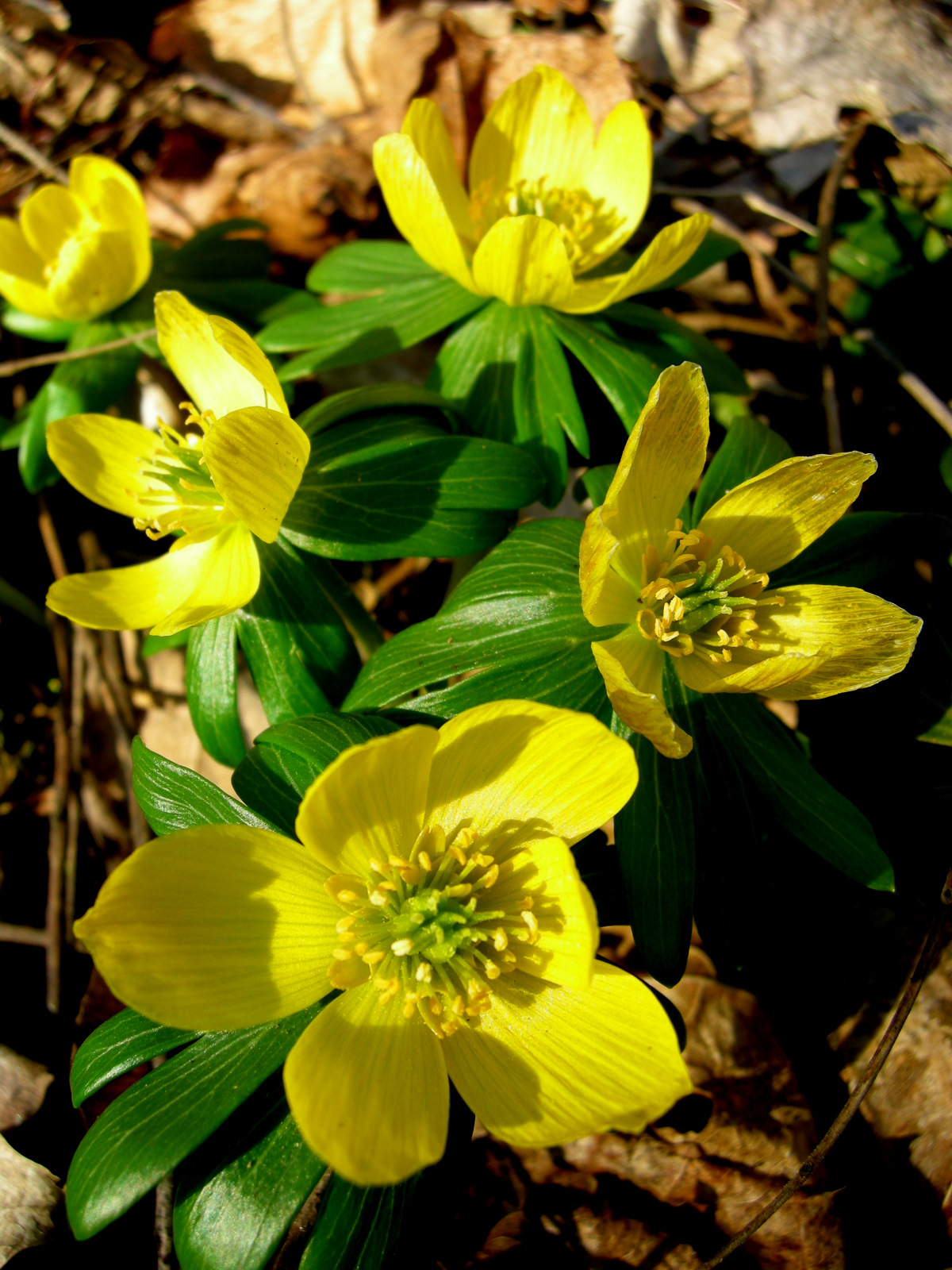
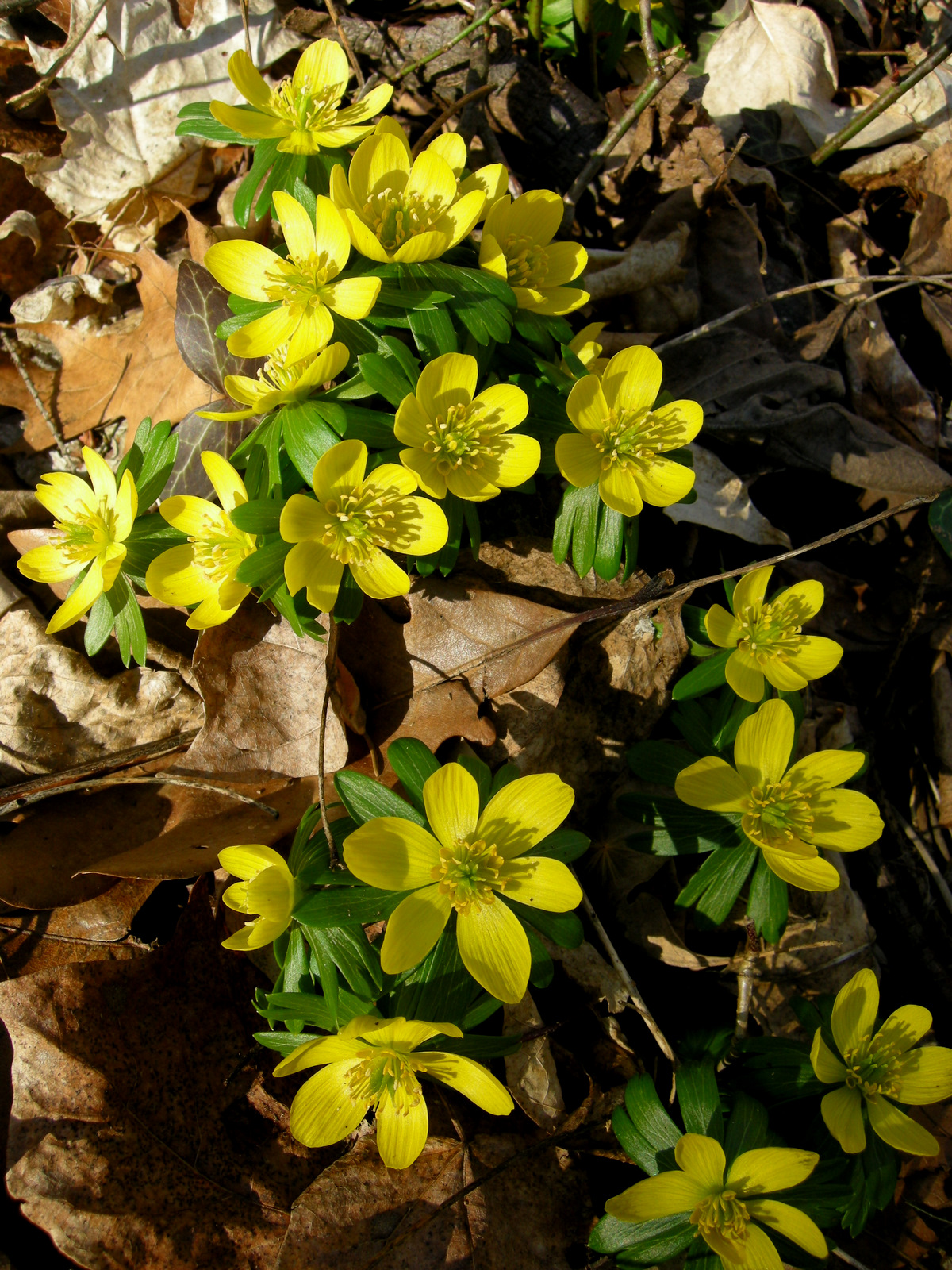
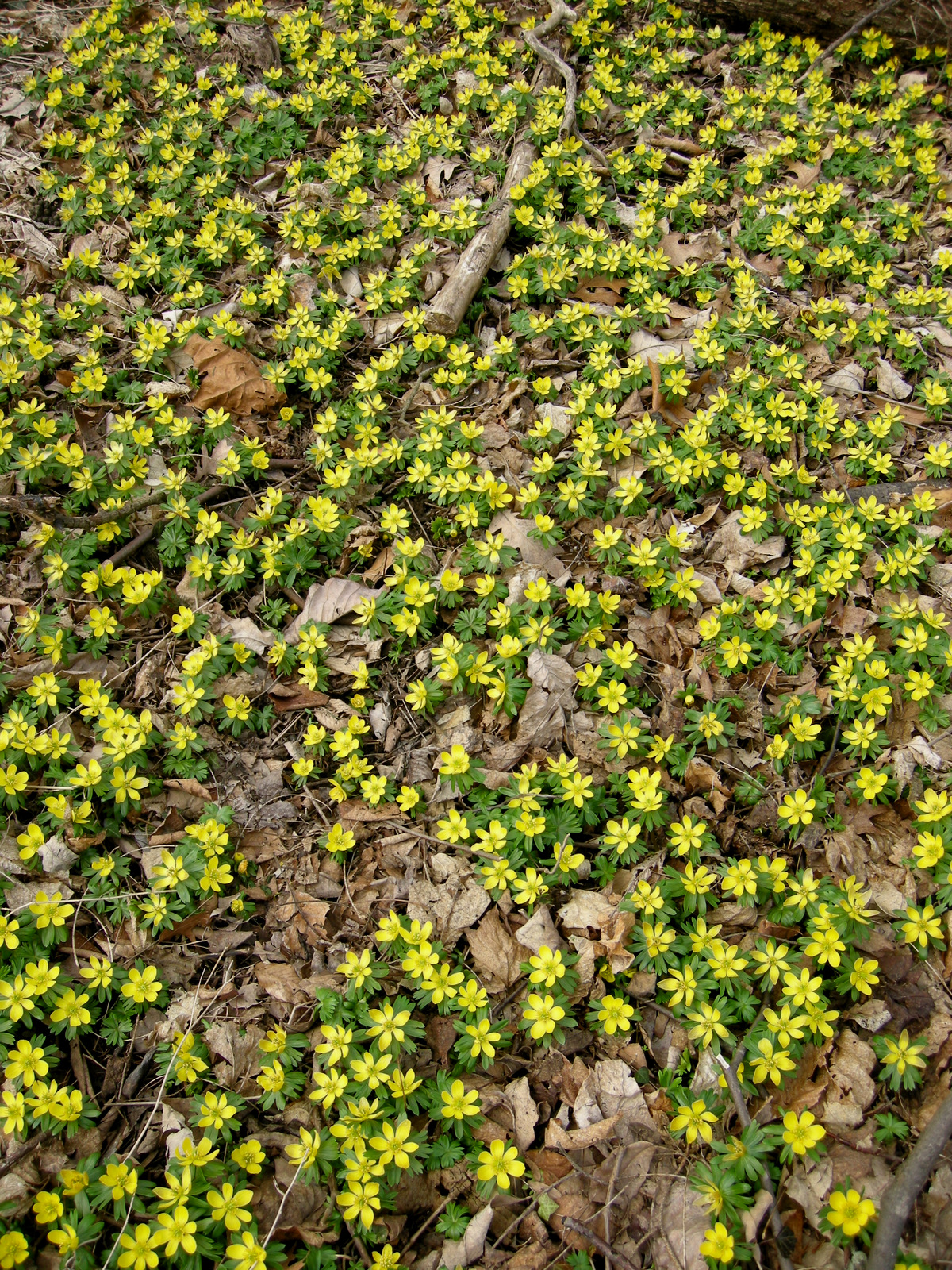
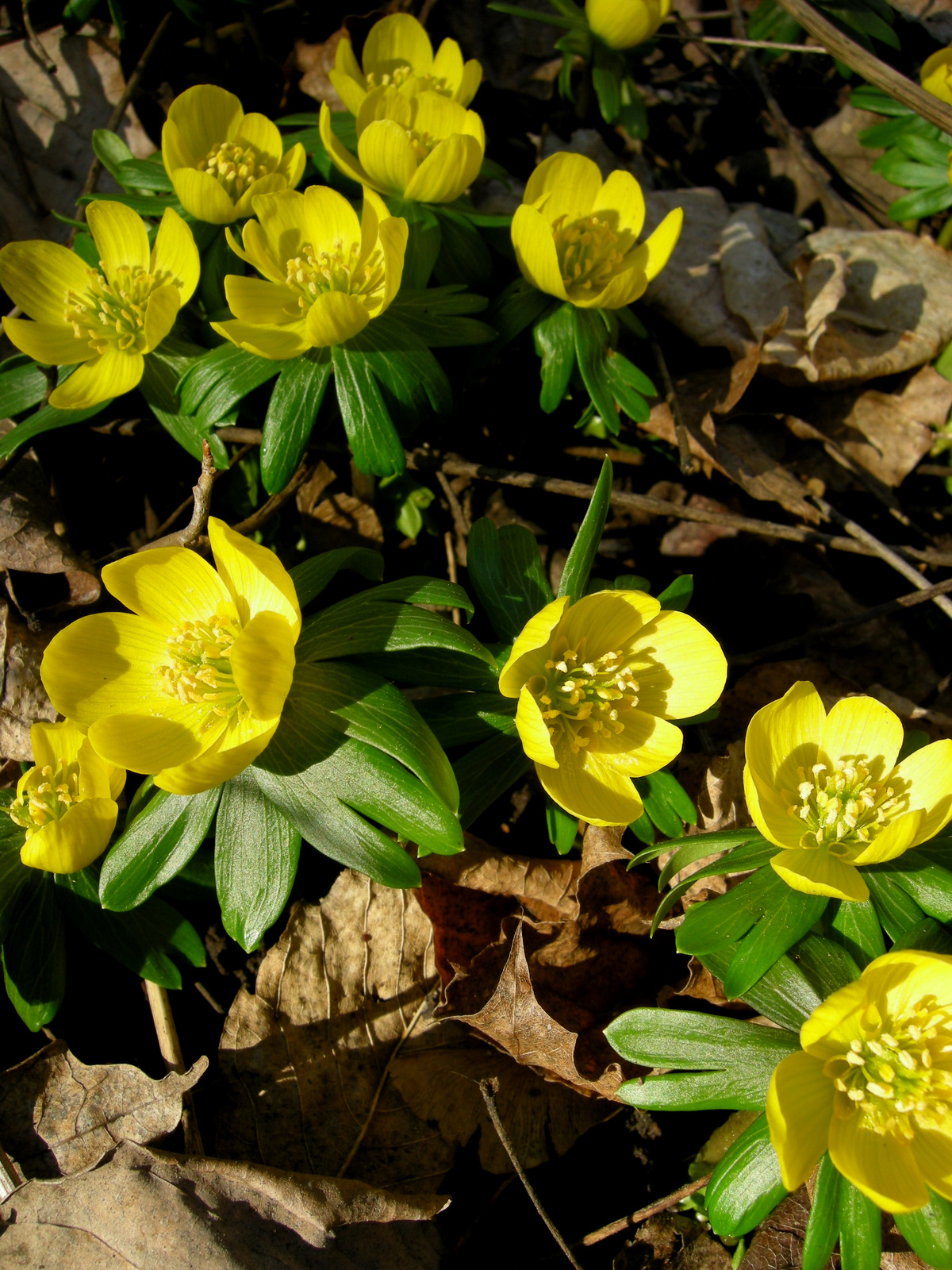
Winter aconite, Eranthis hyemalis

One of the first plants to bloom in my garden is winter aconite.  It usually starts blooming in February and continues into March.  I treasure its cheery yellow flowers with their shiny green collars because they brighten what can otherwise be a cold and dreary time of year.


When my original winter aconite plants got this big, I was thrilled.

Winter aconite is in the buttercup family and is native to Europe.  It is about four inches tall and prefers woodland soil in deciduous shade.  It wants to be cool in the summer but not too dry, and it will not tolerate wet soil.  It grows in zones 3 to 7.  Winter aconite is a bulb (technically a tuberous rhizome) and goes dormant when the weather gets hotter.  Some sources state that it is poisonous to humans, but there have been no reported incidents.  It is deer resistant and black walnut tolerant.


When the patch started to fill in like this one I was ecstatic.

You can order winter aconite as a dried bulb.  It is recommended that the bulbs be soaked overnight to increase success.  Despite soaking, I never got more than one or two bulbs to grow into plants.  I tried several times.  Then a friend of mine gave me some growing plants (thanks Julie!), and my little patch of winter aconite began in earnest.


After several years, my patch looked like this.

Winter aconite naturalizes well once you get the initial plants going.  The best way to spread it is to collect the seeds and sprinkle them where you want them.  If you don’t collect the seeds, they tend to germinate around the base of the mother plant.  My winter aconite has been so successful that, after ten years,  I was able to sell growing plants in my snowdrop catalogue (although next year I need to give the patch a “rest”). 


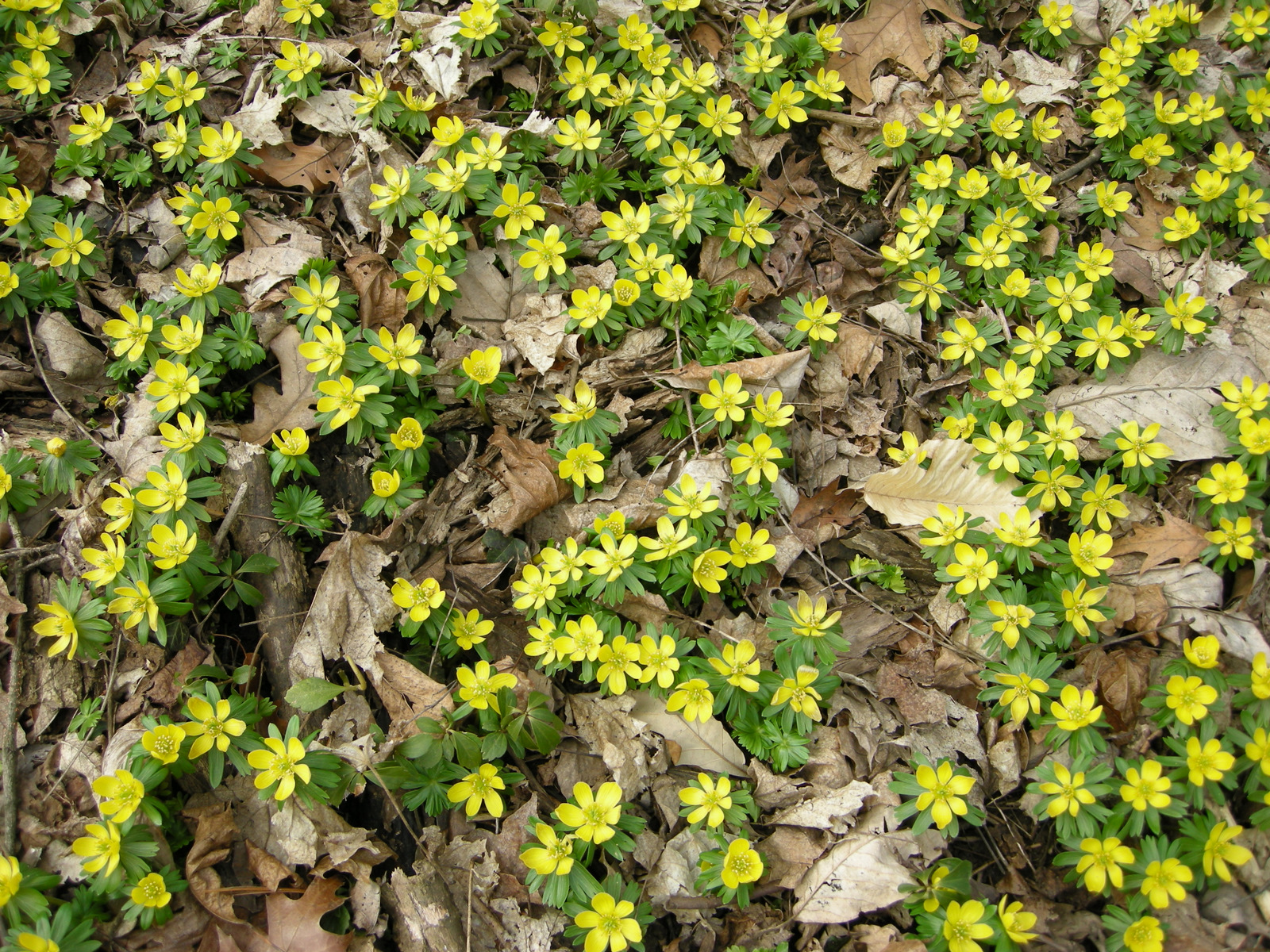
Winter aconite covers this much ground in my woodland.

Now we get to the “wonder of nature” part.  Right down the street from my plant nursery is a public park owned by Radnor Township (Pennsylvania, US) called Ithan Valley Park.  The property was originally an old Main Line estate.  During the early 1900s, it was owned by the botanist John Evans, and he maintained an arboretum of exotic plants there.  Evidently his collection was amazing, but today few of the original plants remain.


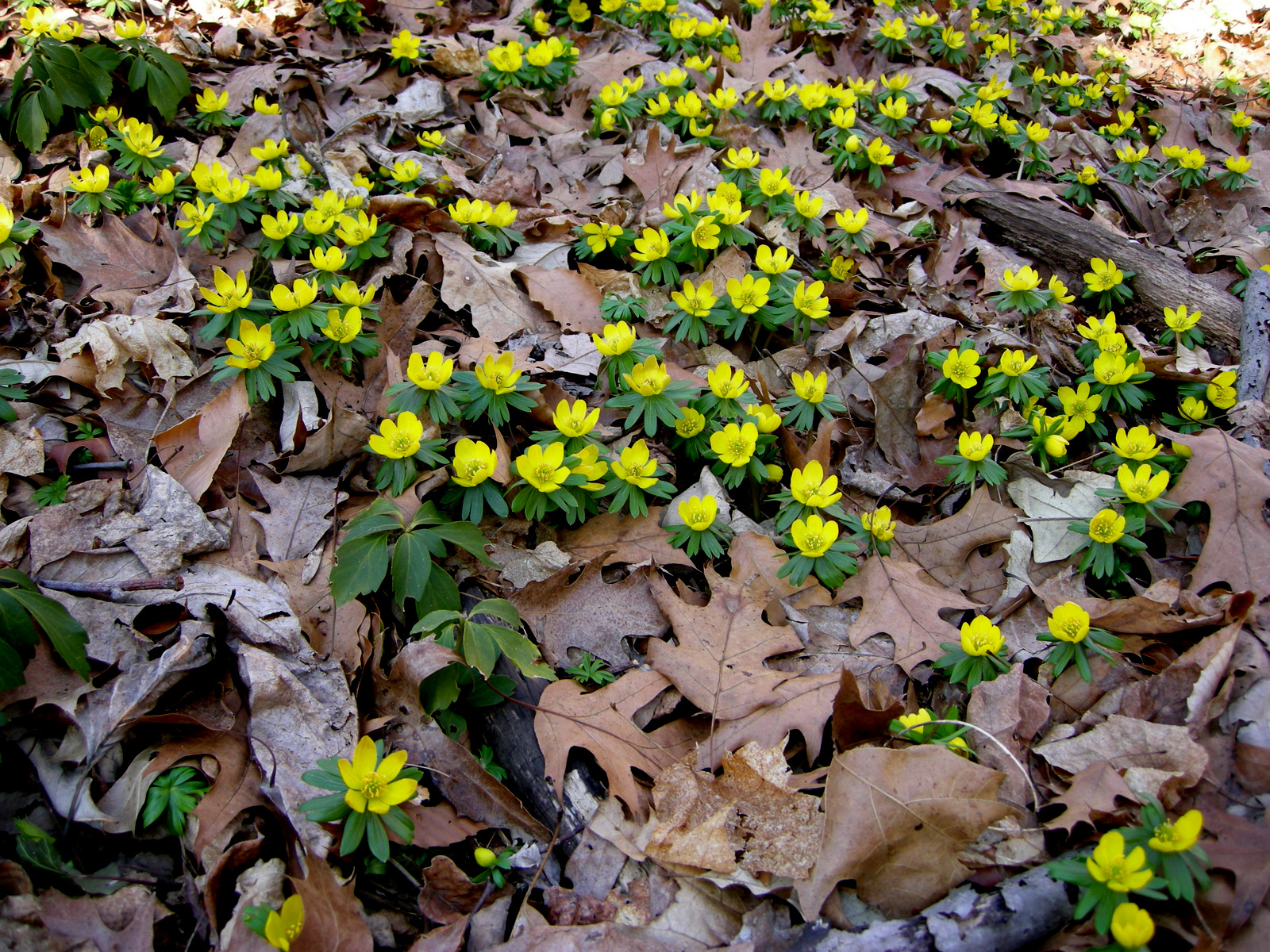
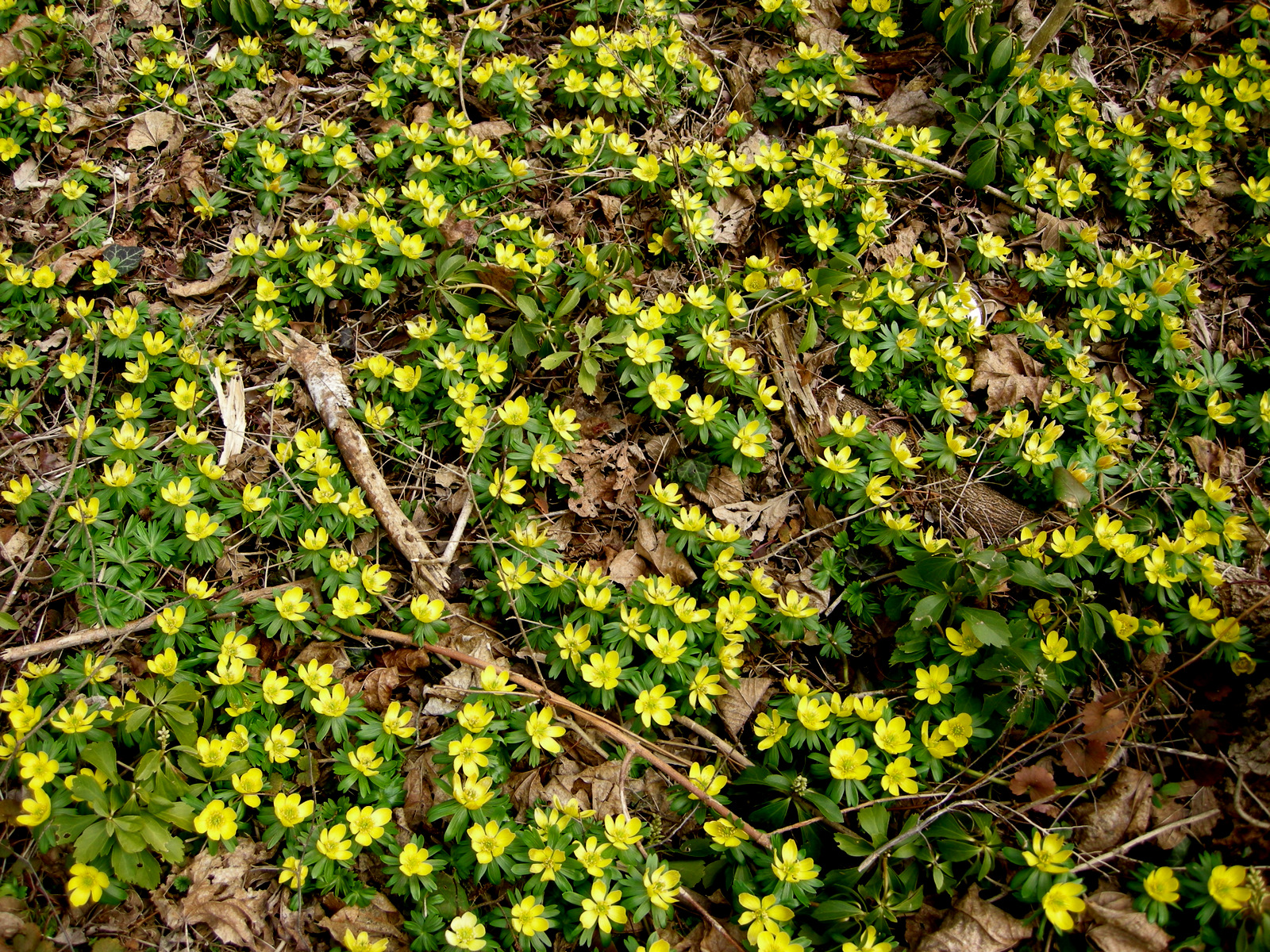
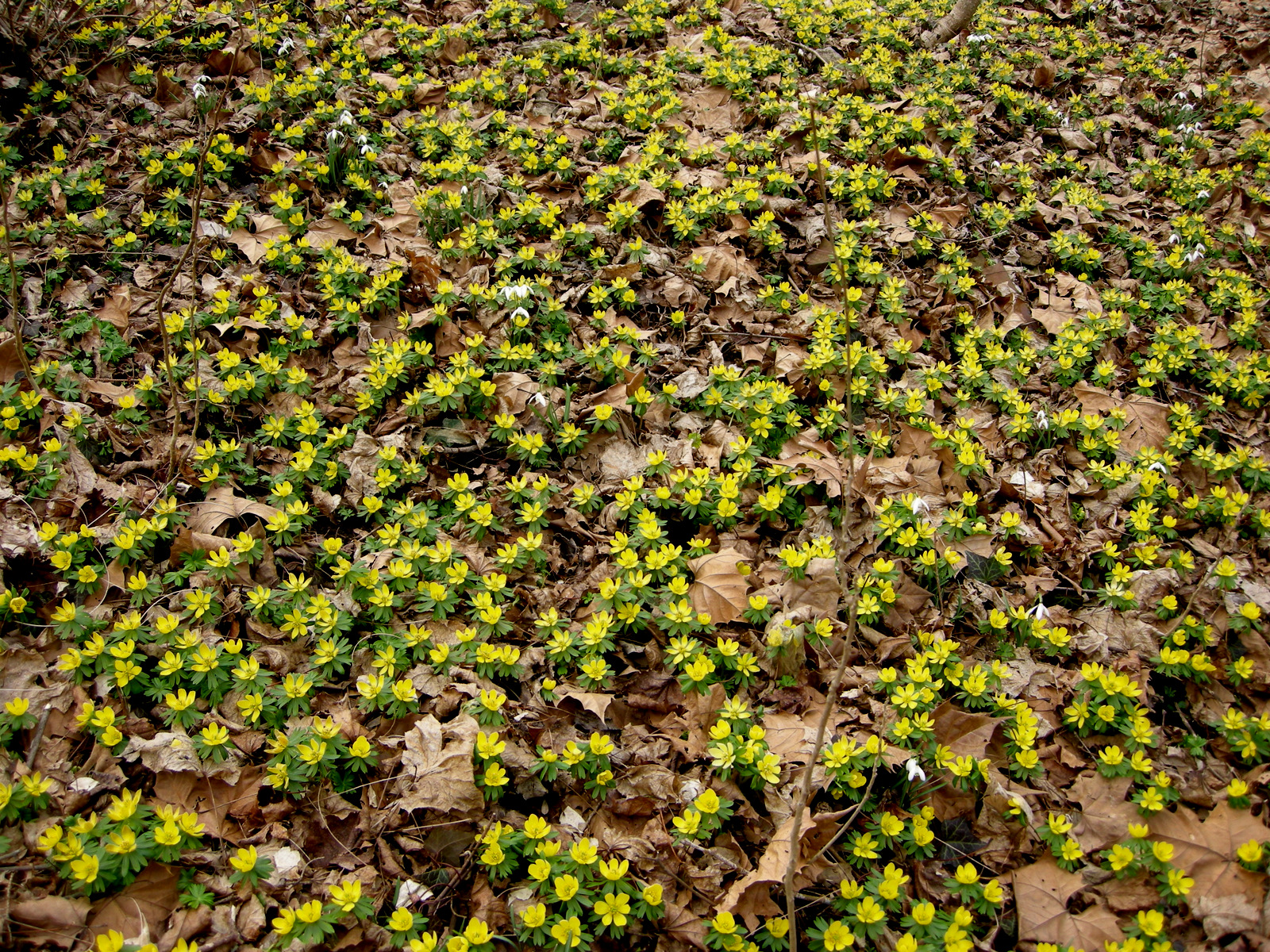
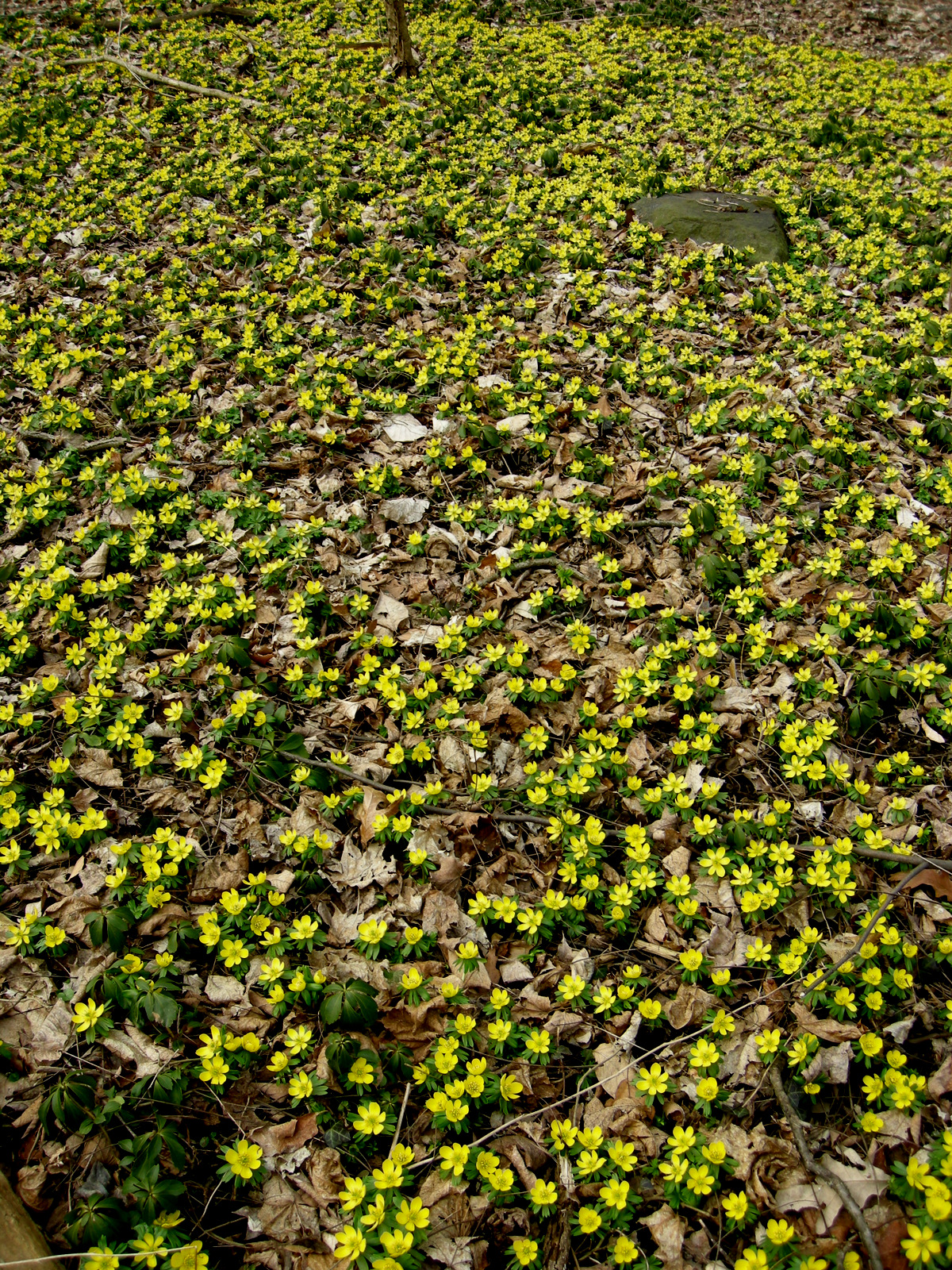
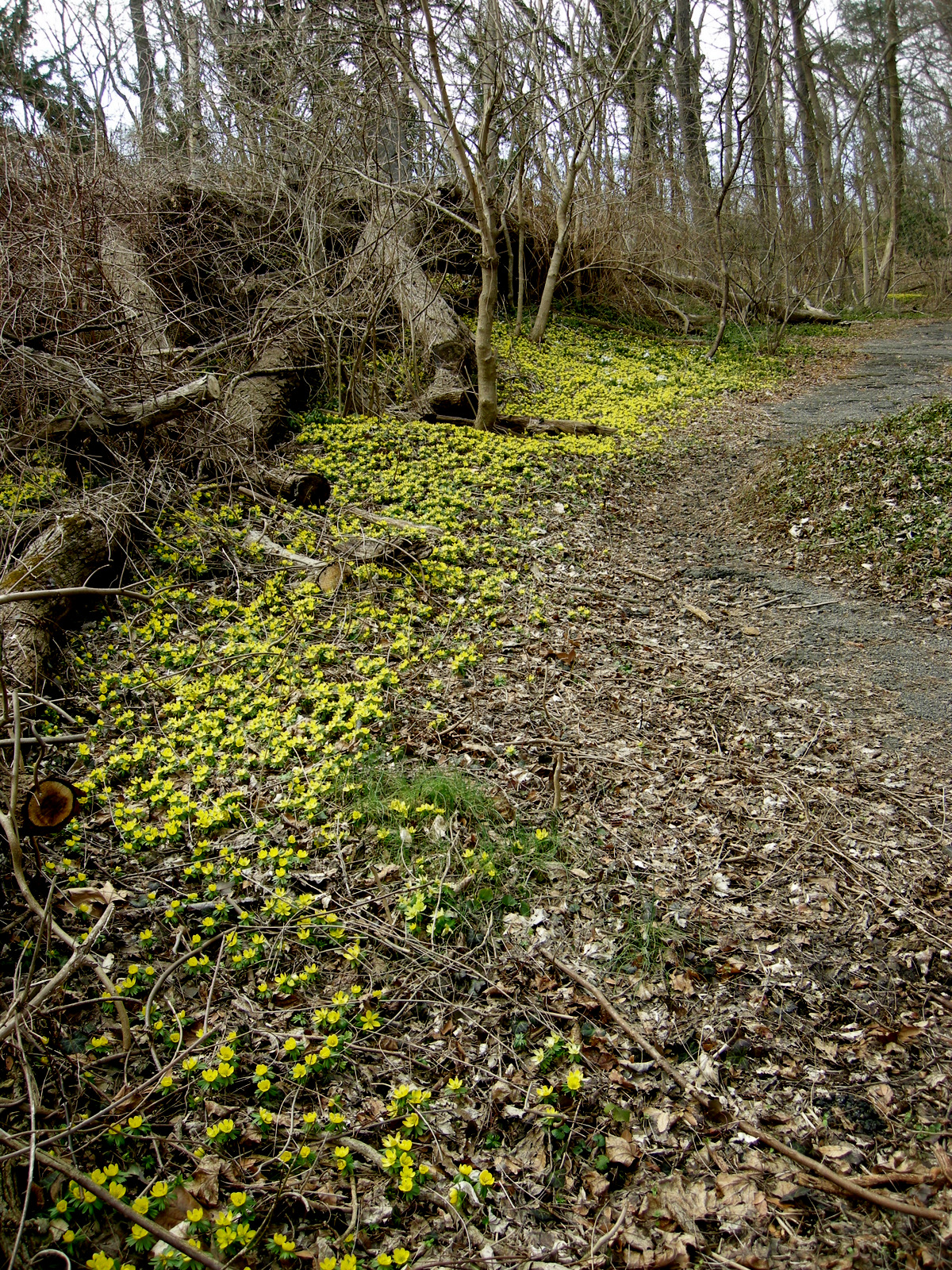
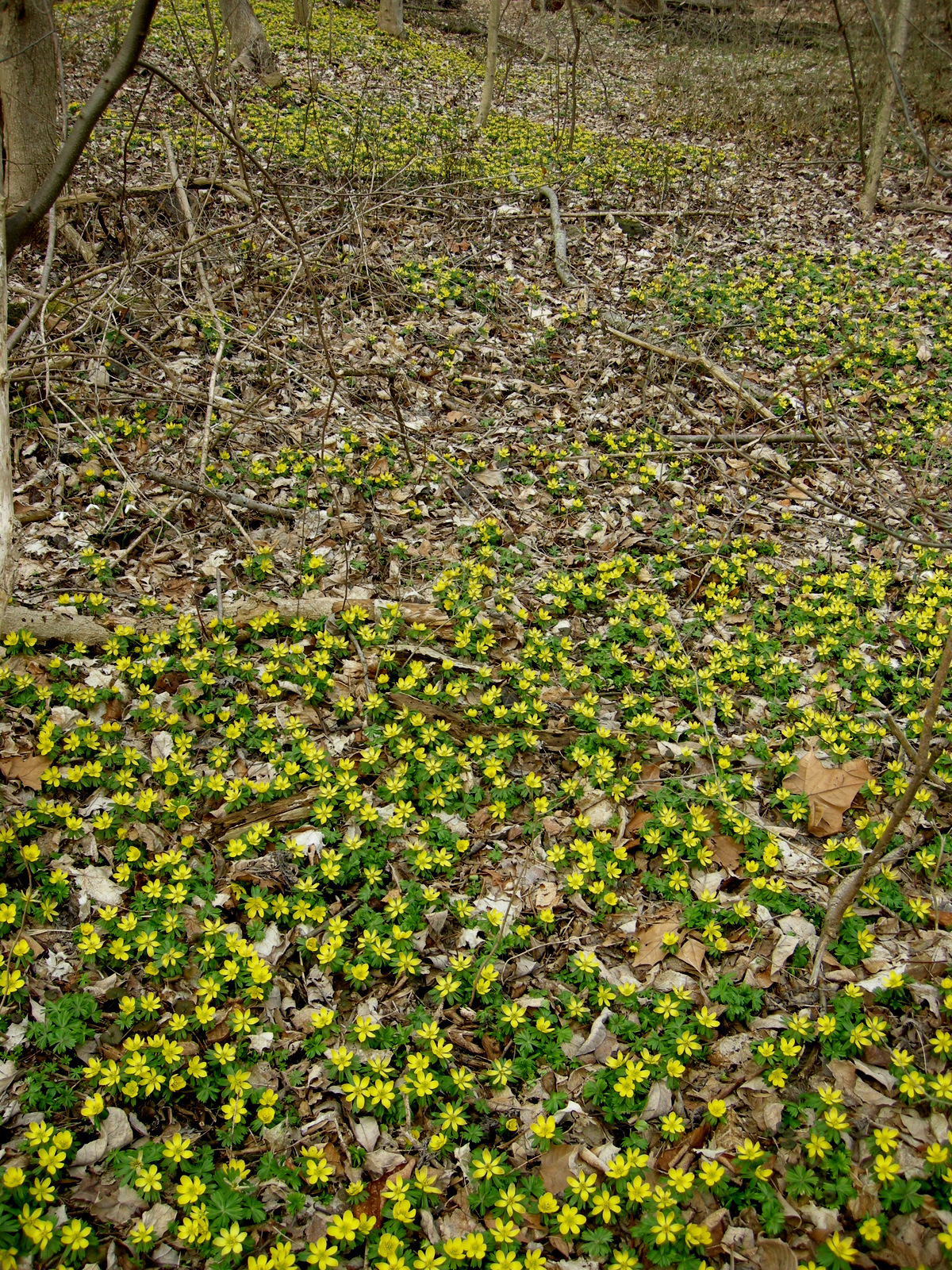
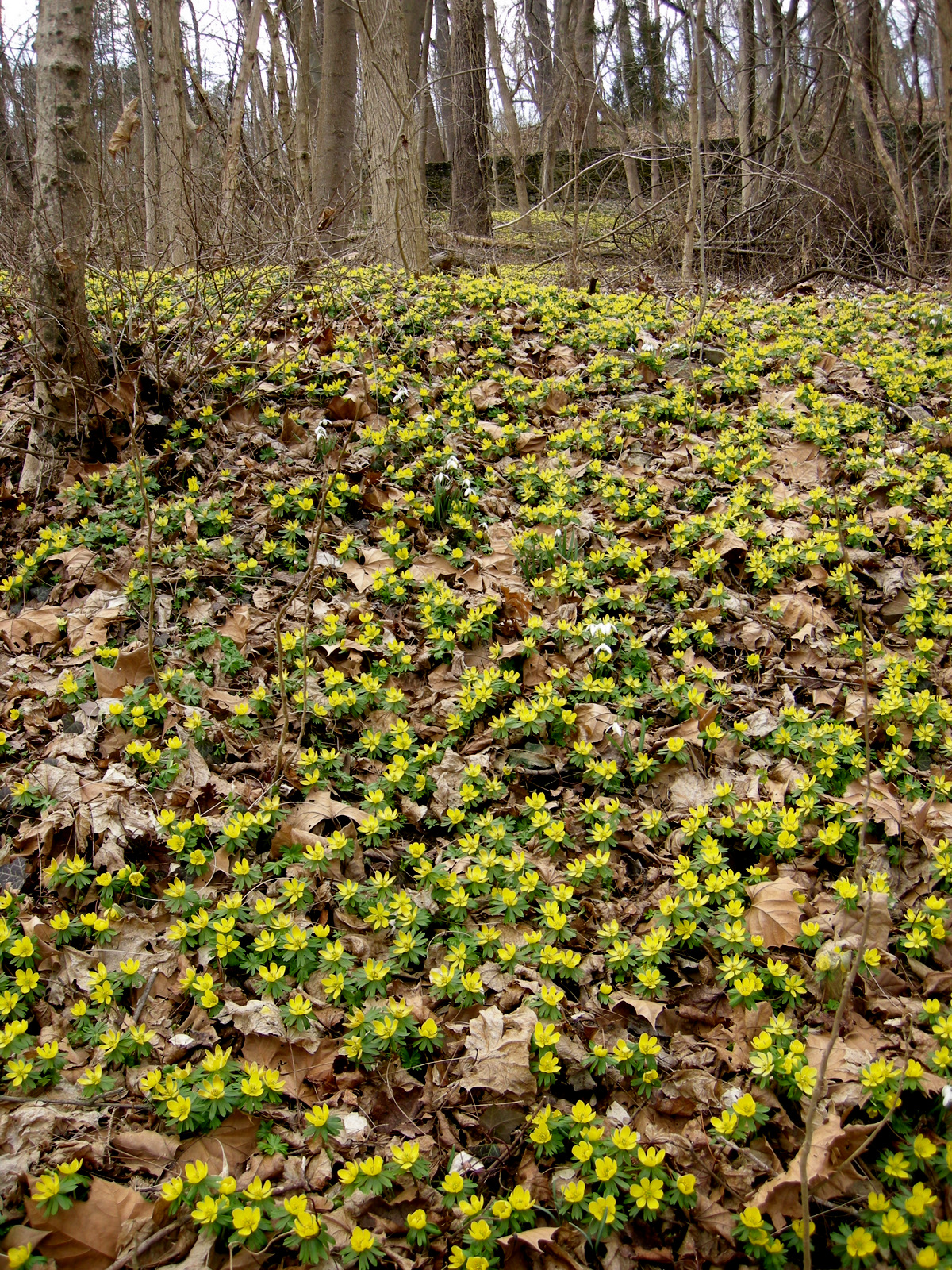
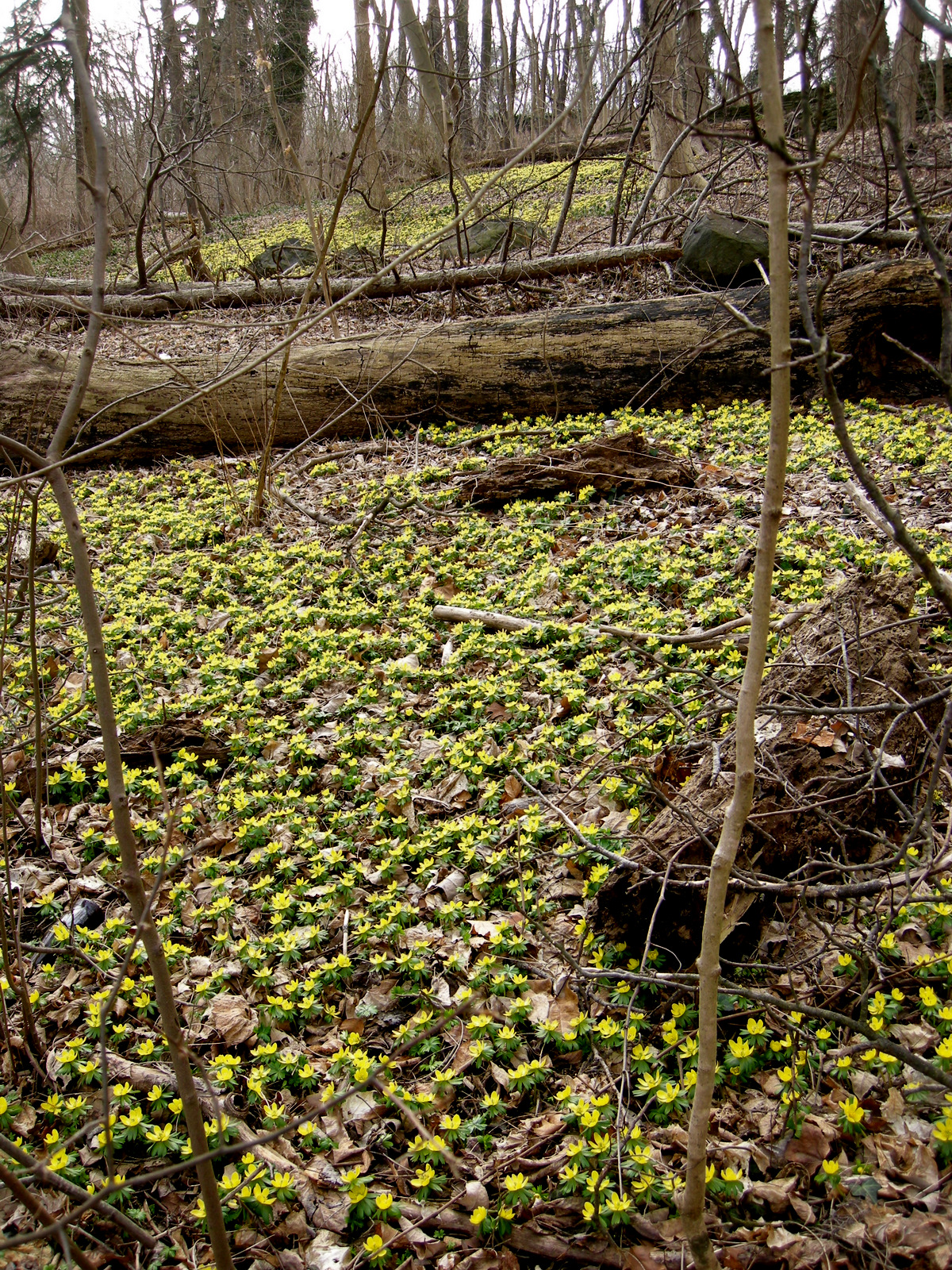
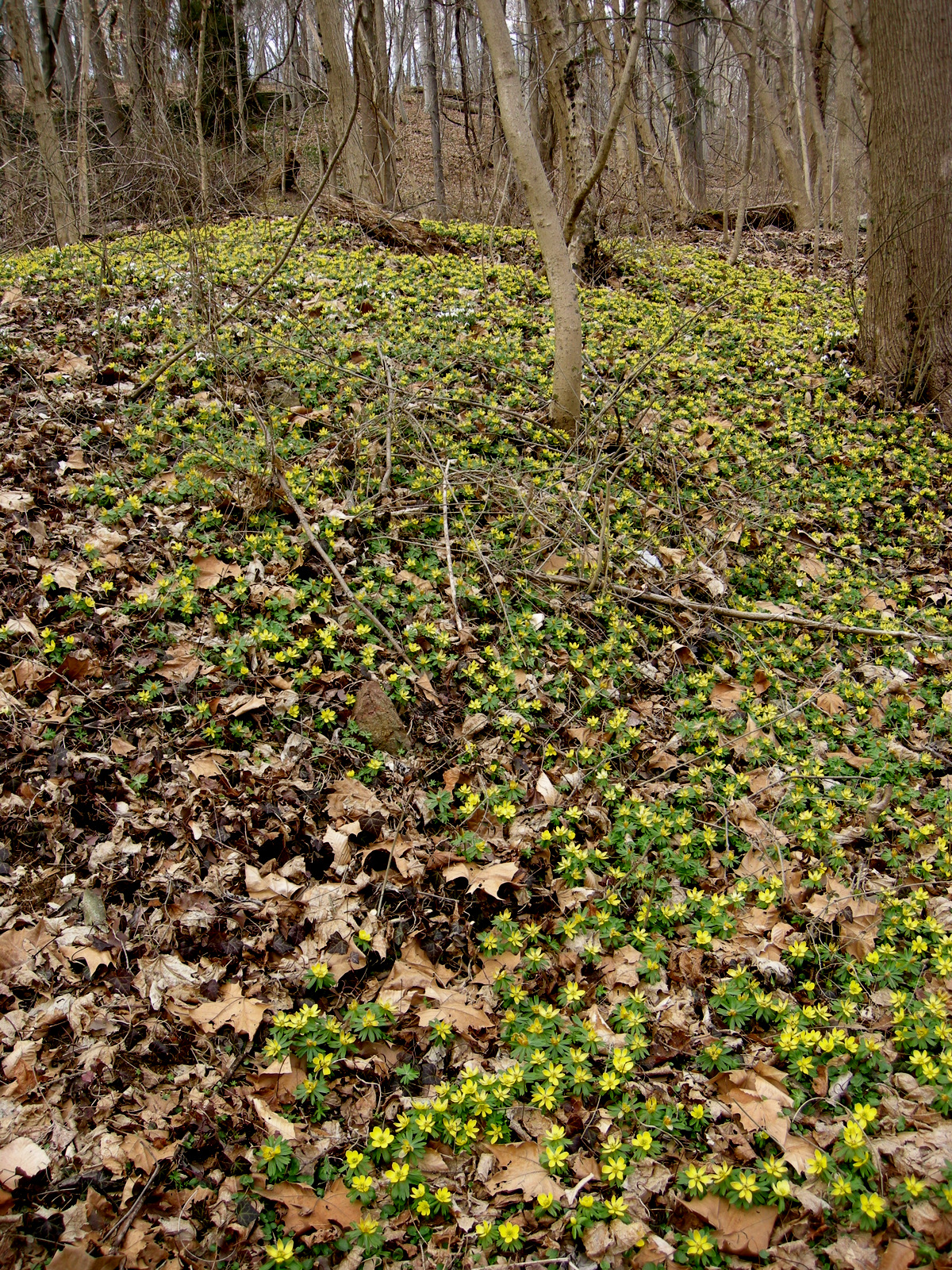
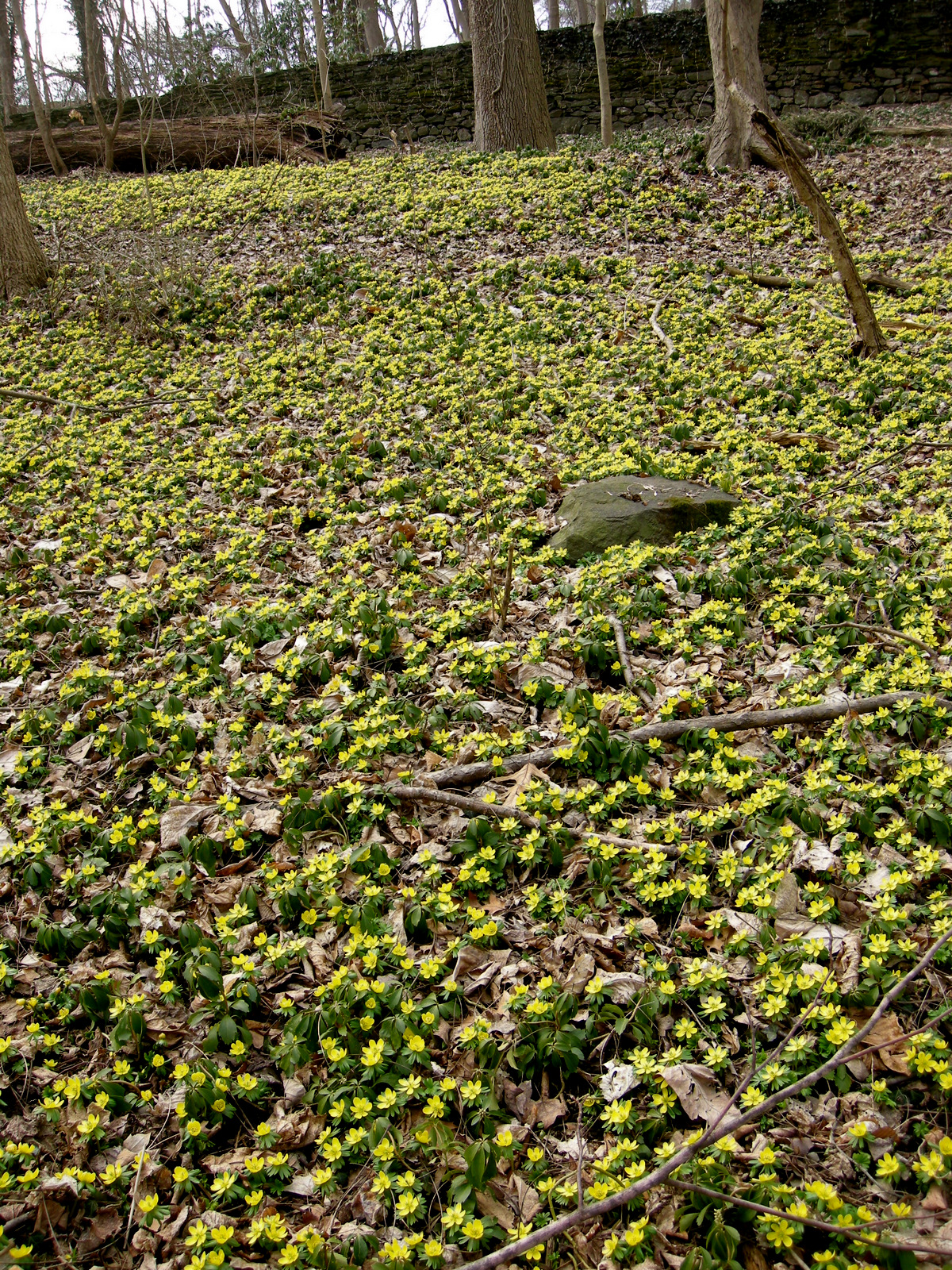
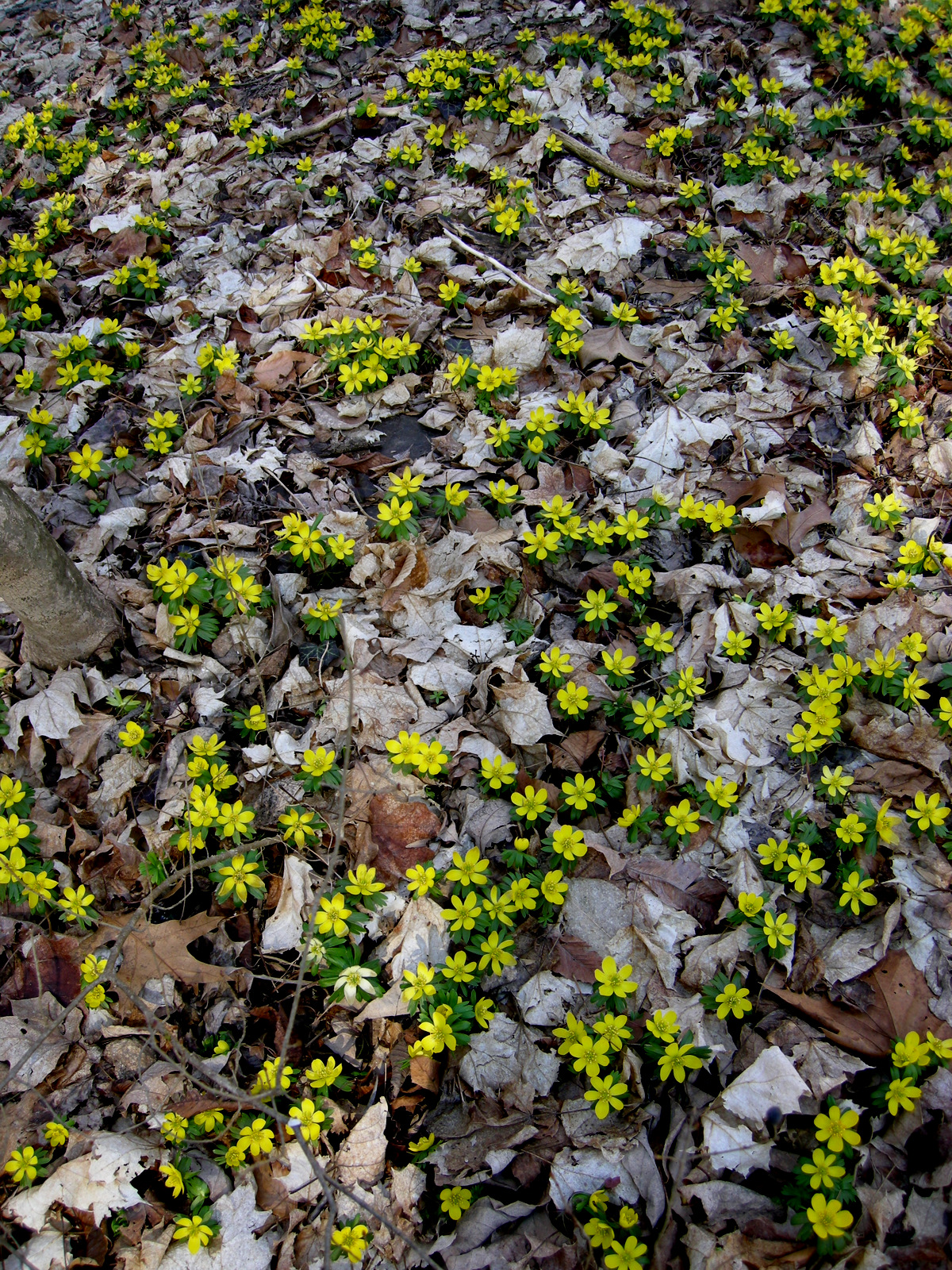
Winter aconite in Ithan Valley Park

At some point John Evans planted winter aconite on his property.  The conditions there proved to be ideal with the cool, moist woodland soil and deciduous shade that winter aconite loves.  Today Ithan Valley Park is covered with sheets of winter aconite every February and March.  There is so much yellow that I think it must be visible from outer space.  It truly is a wonder of nature that I want to share with you.


The winter aconite in the park grows thickly.


Trail entrance, Ithan Valley Park


The stone wall of the old estate is in the background.


To truly appreciate the spectacle, you need to visit in person (I apologize to my non-local readers).  Ithan Valley Park is located at 642 South Ithan Avenue, Bryn Mawr, PA  19010, at the intersection of South Ithan and South Roberts Roads.  Time is of the essence because the winter aconite will only be blooming for a few more days.

I am linking this post to the Winter Walk-off 2012, which is a challenge by Les at A Tidewater Garden to share what can be seen within walking (or biking) distance of your home.  Every photo in this post was taken at Ithan Valley Park, 8/10 of a mile from my house.

Carolyn

Notes: Every word that appears in orange on my blog is a link that you can click for more information.  If you want to return to my blog’s homepage to access the sidebar information (catalogues, previous articles, etc.) or to subscribe to my blog, just click here.
Chanticleer in Winter: Texture

Posted in garden to visit, landscape design, winter, winter interest with tags , , , on January 28, 2012 by Carolyn @ Carolyns Shade Gardens

Carolyn’s Shade Gardens is a retail nursery located in Bryn Mawr, PA, specializing in showy, colorful, and unusual plants for shade.  The only plants that we ship are snowdrops within the US.  For catalogues and announcements of local events, please send your full name, mailing address, and cell number to carolyn@carolynsshadegardens.com and indicate whether you are interested in snowdrops, hellebores, and/or hostas.  Click here to get to the home page of our website for catalogues and information about our nursery and to subscribe to our blog.

Chanticleer’s Teacup Garden in May

Chanticleer is a unique public garden in Wayne, Pennsylvania, U.S., which I have profiled in three previous articles.  The first, Chanticleer Part 1: A Pleasure Garden, gave an overview of this one-of-a-kind horticultural destination.  The second, Chanticleer Part 2: Garden Seating, focused on the huge variety of thoughtful seating areas in the Chanticleer gardens.  The third, Chanticleer Part 3:  Through the Seasons, showed the gardens as they evolve through spring, summer, and fall.


The Teacup Garden in January

To complete my series on Chanticleer through the year, I received special permission to visit the garden during the winter months when it is closed to the public.  As you can see from the photo above, all the “toys” are put away and most of the flowers and foliage are gone.  But the minute I stepped into the garden, the word TEXTURE appeared before me as if it was outlined in neon lights.  I have never had such an exciting visit to this garden because I saw it in a whole new way, and I hope I can communicate that to you.

I always admire the elegant mature trees when I visit, but without their leaves or any flower gardens to distract me, they really stood out.

Texture was also provided by smaller plants, but not the way I expected:


Hardscape, always a huge part of Chanticleer’s elegance and beauty, really dominated my visit:


The attention to detail in the paths, always a hightlight for me, was easier to see and appreciate:

I decided not to add captions to the photos in this post, but if you want more information just run your cursor over the photo.  The location of the Lady in the Lake is secret so you will have to find her for yourself.

I want to thank Bill Thomas, Chanticleer’s Director, for making this visit possible, Fran DiMarco, Administrative Assistant, for arranging it, and Joseph Henderson, Horticulturalist, for providing some needed conversation in the sun so I didn’t freeze to death.  I have been promised a visit in the snow, and I might take them up on it if we ever get any of the white stuff.

Carolyn

Notes: Every word that appears in orange on my blog is a link that you can click for more information.  If you want to return to my blog’s homepage to access the sidebar information (catalogues, previous articles, etc.) or to subscribe to my blog, just click here.
January GBBD: Hellebores on Parade

Posted in Camellias, evergreen, Garden Blogger's Bloom Day, garden to visit, hellebores, Shade Perennials, Shade Shrubs, snowdrops, winter, winter interest with tags , , , , , , , , , , , , , , , , , on January 11, 2012 by Carolyn @ Carolyns Shade Gardens

Carolyn’s Shade Gardens is a retail nursery located in Bryn Mawr, PA, specializing in showy, colorful, and unusual plants for shade.  The only plants that we ship are snowdrops within the US.  For catalogues and announcements of local events, please send your full name, mailing address, and cell number to carolyn@carolynsshadegardens.com and indicate whether you are interested in snowdrops, hellebores, and/or hostas.  Click here to get to the home page of our website for catalogues and information about our nursery and to subscribe to our blog.

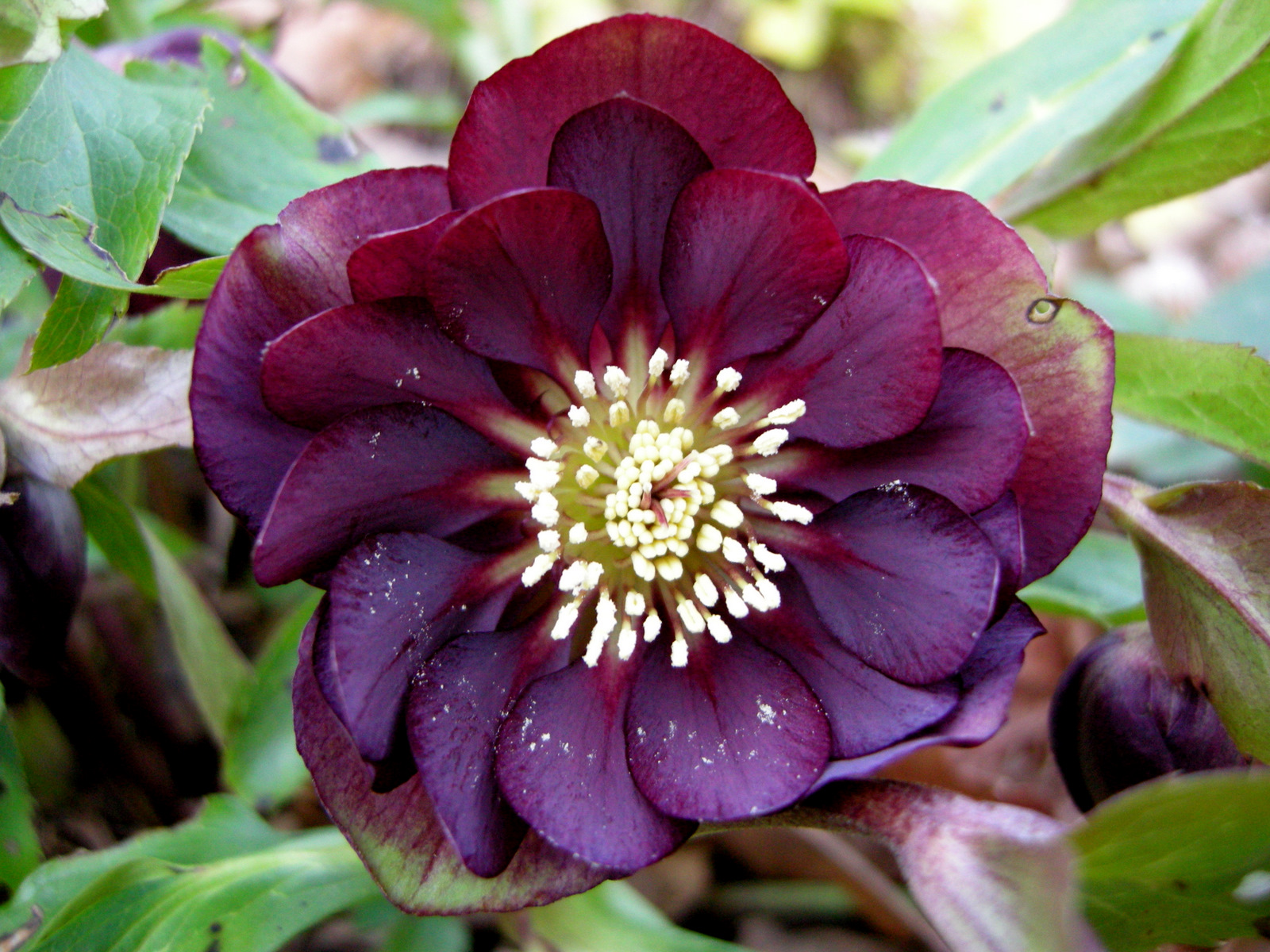
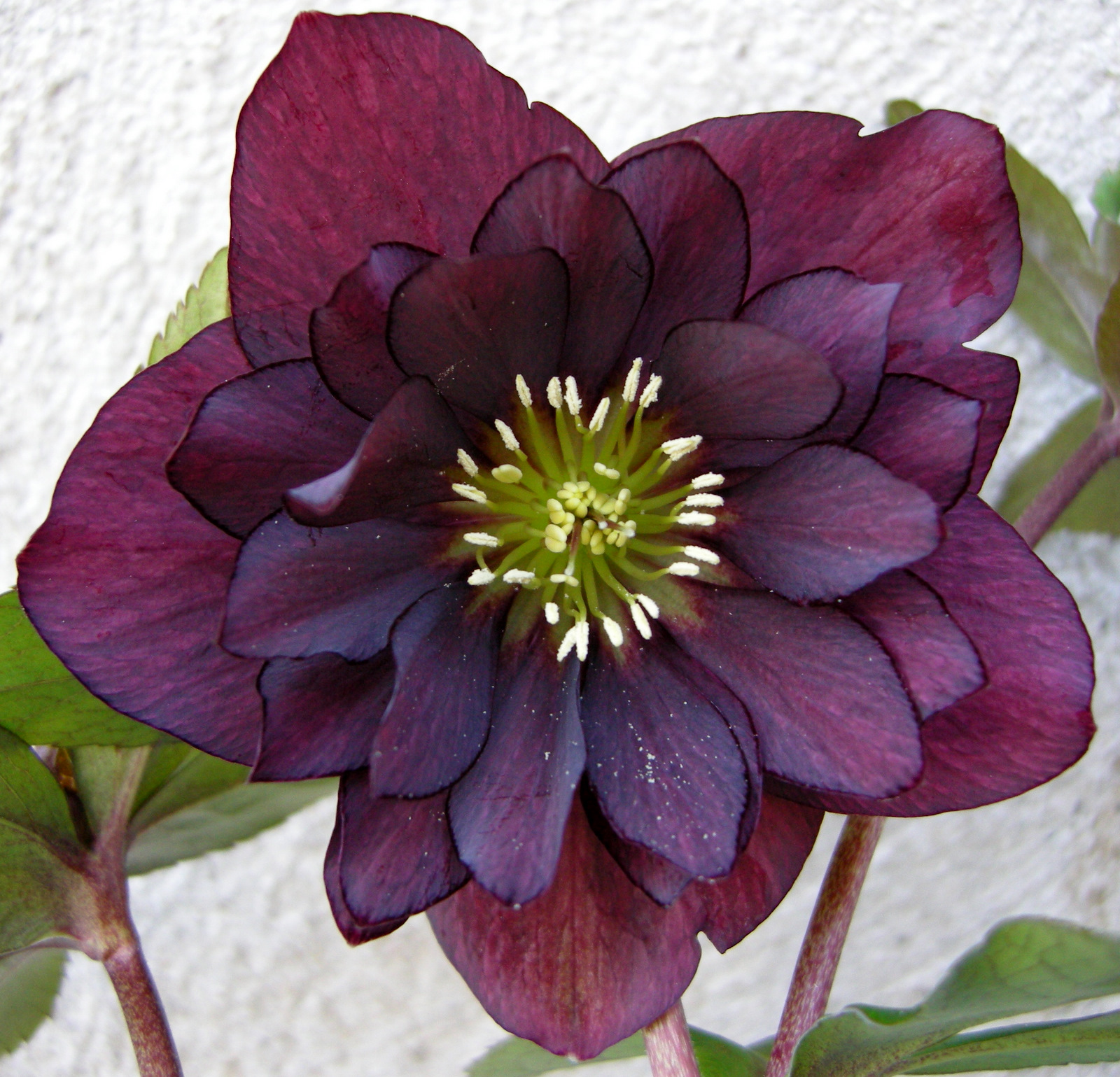
I have had this gorgeous double purple hellebore in my garden for several years but it has never bloomed this early.  Photo 1/7/12

It is the middle of the month and time to participate in Garden Blogger’s Bloom Day hosted by May Dreams Gardens (link available on December 15) where gardeners from all over the world publish photos of what’s blooming in their gardens.  I participate because it is fun and educational for me to identify what plants make my gardens shine at different times of the year.  This month I hope that my nursery customers and blog readers will get some ideas for plants to add to their own gardens to extend their season through winter.

My garden is located in Bryn Mawr (outside Philadelphia), Pennsylvania, U.S., in zone 6B.


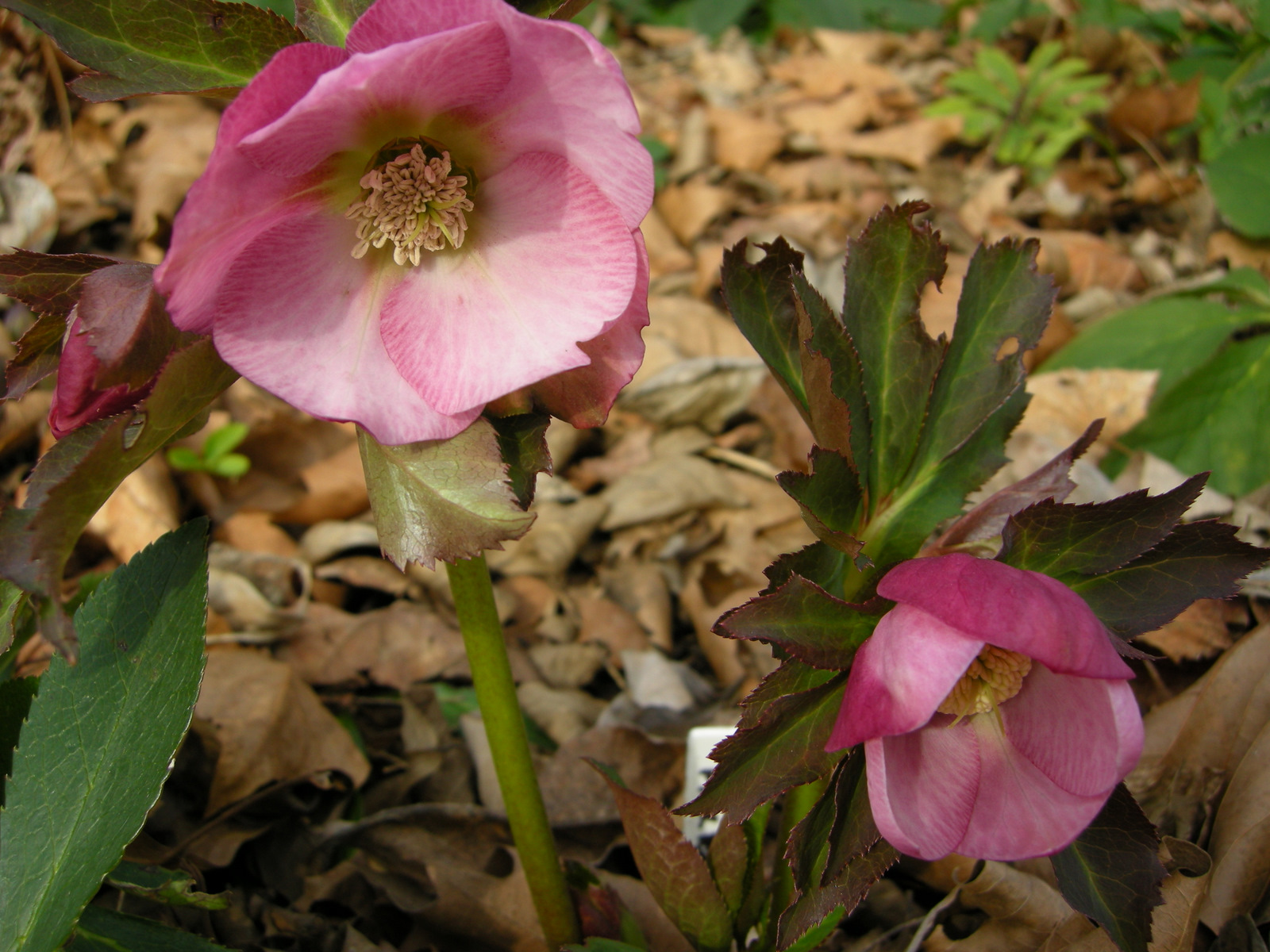
‘Mrs. Betty Ranicar’ is usually one of my first hybrid hellebores to bloom but this is early even for her.

Last January, the whole garden was under snow, and I didn’t even participate in GBBD.  This year couldn’t be more different with 7 days in the 50s (10C) and 6 days at 60 degrees (16C) or above since December 15.  Frankly, I find it extremely worrisome, but it means that I didn’t have to go searching for plants peaking between December 15 and January 15.  There are a few other plants worth featuring, but my hellebores are all blooming early so I call this post Hellebores on Parade.  For the benefit of my customers, I will note which hellebores will be for sale at Carolyn’s Shade Gardens (CSG) this spring.


‘Pink Tea Cup’ has the best pink color of any hybrid hellebore and was the first to come into bloom this season ( for sale at CSG this spring).  Photo 1/9/12


‘Jacob’ Christmas rose just keeps going and going with new white flowers appearing and mixing with the older pink flowers for a gorgeous effect, see below (for sale at CSG).  Photo 12/31/11


‘Jacob’ Christmas rose with Camellia x ‘Winter’s Joy’.  Photo 1/2/12

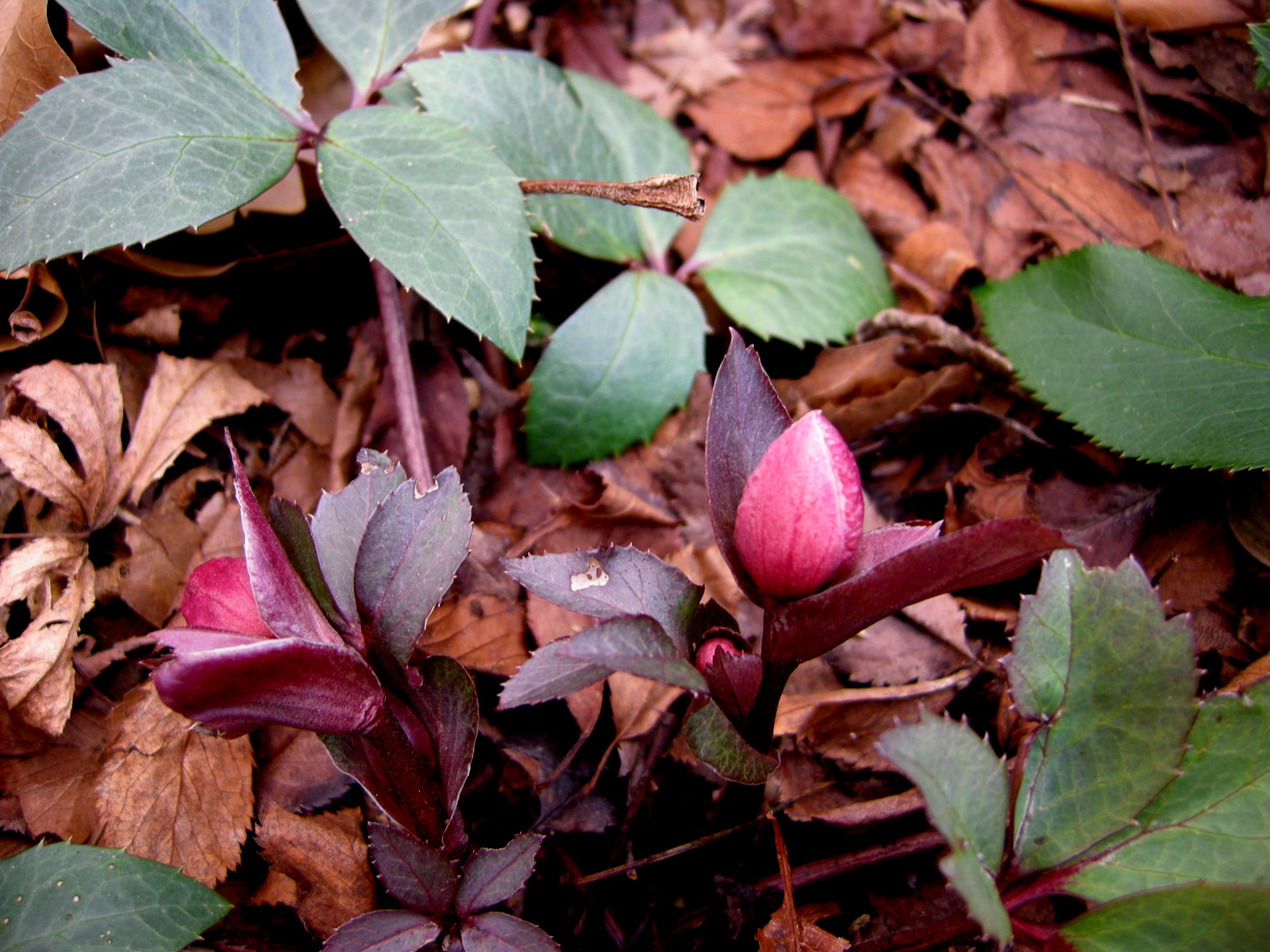
Flowers are emerging on the hellebore species cross ‘HGC Pink Frost’ (for sale at CSG).  Notice the dark red to burgundy highlights on the leaves and stems and the amazing color of the buds.  As noted in Cutting Back Hellebores, I leave the foliage on to make a nice backdrop for the flowers.  Photo 12/31/11


‘Praecox’ Christmas rose is also blooming at least a month earlier than usual.  Photo 12/31/11


The hellebore species cross ‘HGC Winter’s Song’ is now fully in bloom.  Photo 1/10/12

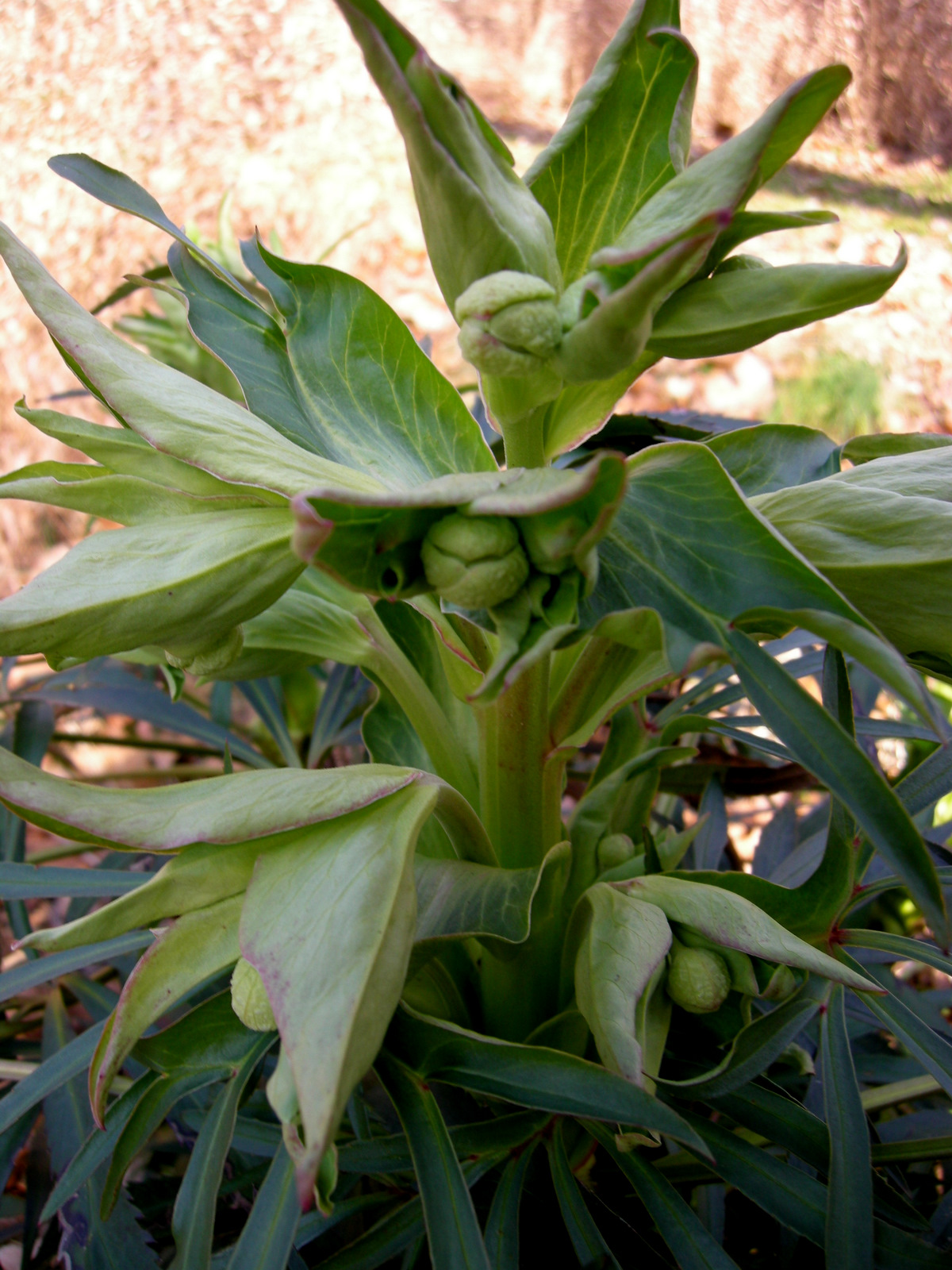
The rare species Helleborus dumetorum (no common name) continues to bloom (for sale at CSG).  It is deciduous so all the “leaves” in the photo are actually flower bracts.  The leaves will come up later.  Photo 12/31/11

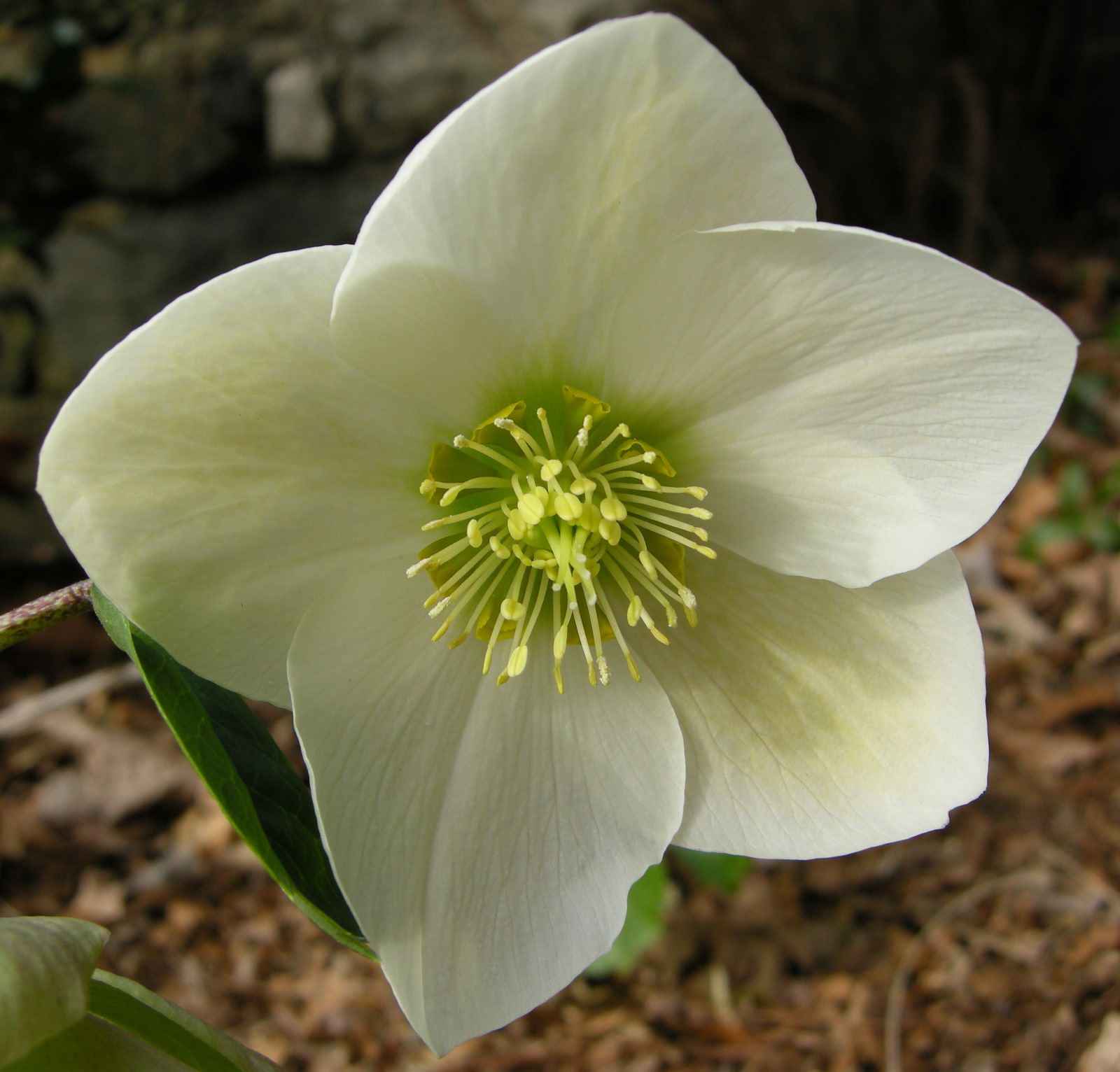
This beautiful, pure white, outward-facing hellebore called ‘Snow White’ (aka ‘Snow Bunting’) is an extremely rare cross between hybrid hellebore and Christmas rose—something that was thought to be impossible (for sale at CSG).  Photo 1/9/12


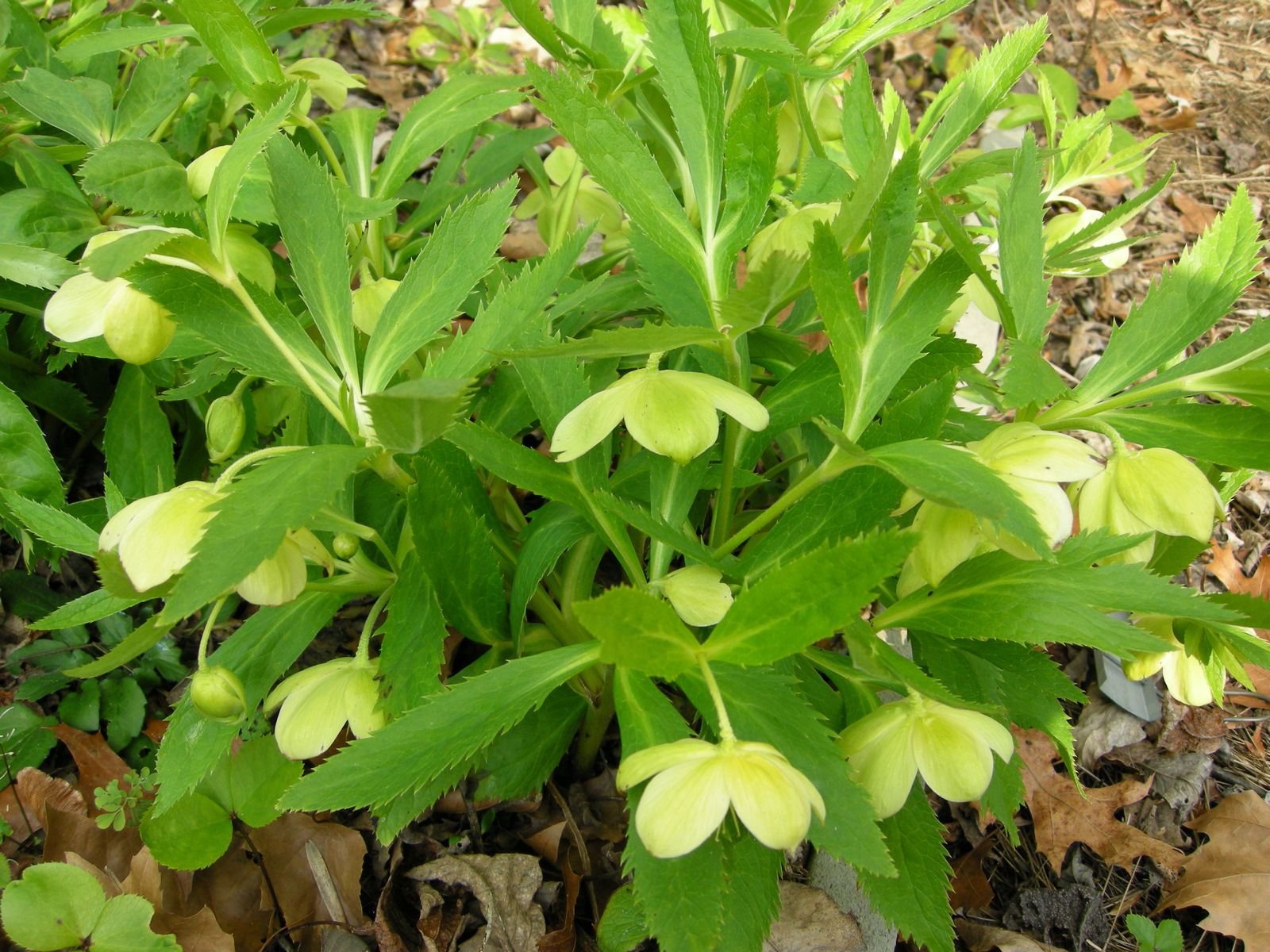
The lighter chartreuse buds of bearsfoot hellebore, H. foetidus, are becoming more prominent and will remain ornamental through May (for sale at CSG).  Photo 1/10/12


Helleborus x "Double Purple"Another look at the hybrid hellebore “Double Purple” (for sale at CSG).  Photo 1/7/12

My new favorite this year, hellebore species cross ‘HGC Cinnamon Snow’ (for sale at CSG).  I like it so much that I decided to put it in a basket by my front door.  Photo 1/9/12

There are some other plants looking great in my garden besides hellebores.  Most of the fall-blooming camellias still have viable buds but no flowers open to show you.  They will continue to bloom if the weather cooperates.  Here are the non-hellebore stars:

My un-named Korean Camellia japonica, which blooms in the spring and fall, continues to produce flowers.  Photo 1/9/12

Camellia x ‘Elaine Lee’ also has buds, and look at those shiny leaves.  Photo 1/10/12

Camellia x ‘Winter’s Joy’ has been flowering since October and is still covered with buds but none are open right now.

The buds on my variegated winter daphne, D. odora ‘Aureomarginata’, are coloring up early.  It is the sole survivor of five shrubs I put in this spring.  Although I gave them excellent drainage, they just couldn’t tolerate all the rain we had in August and September.  One by one they wilted from too much water and died, while this one remained healthy.  Photo 1/9/12

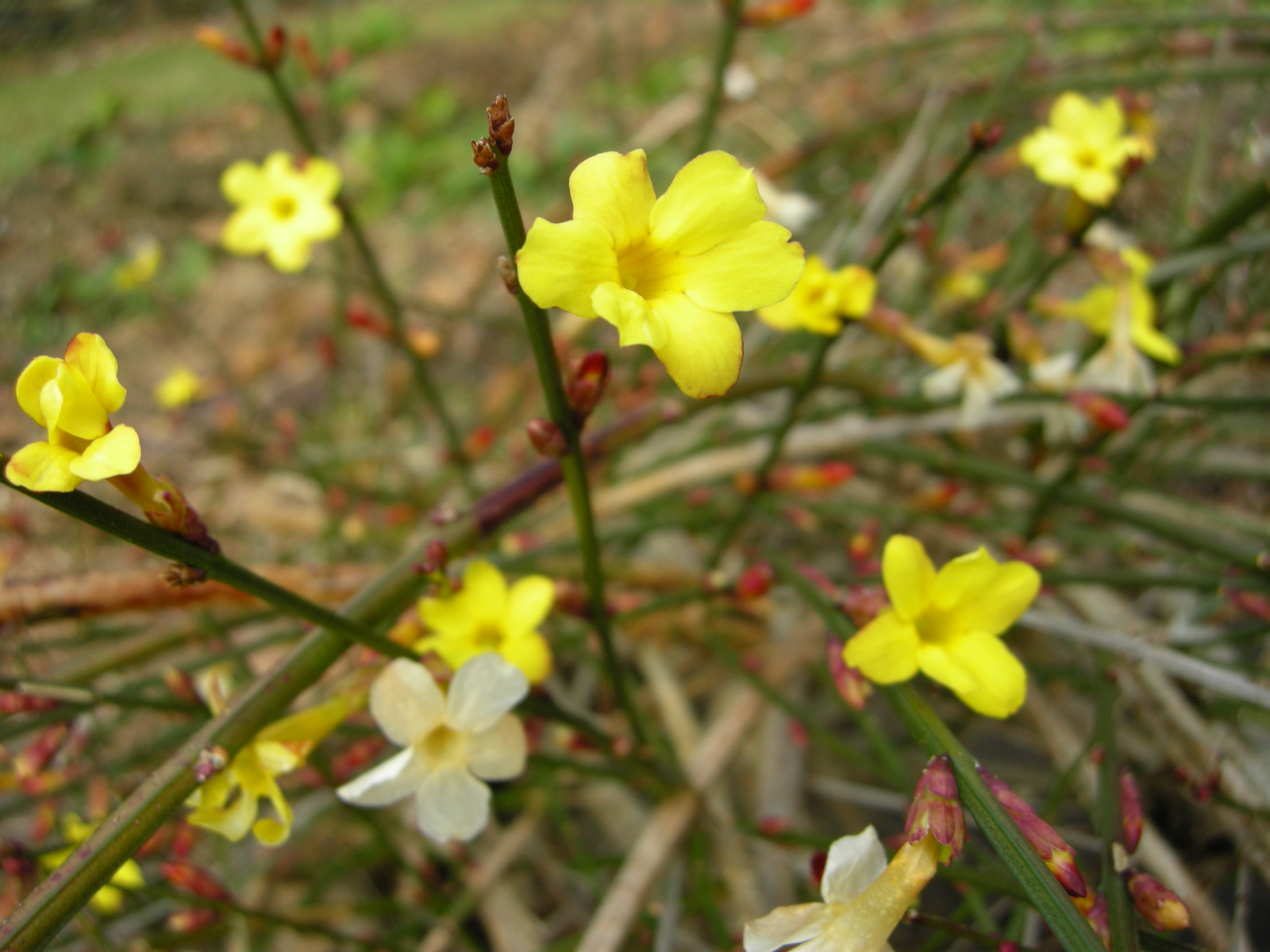
If we have cold weather, winter jasmine, Jasminum nudiflorum, blooms in February, but right now it is opening flowers continuously.  Photo 1/10/12

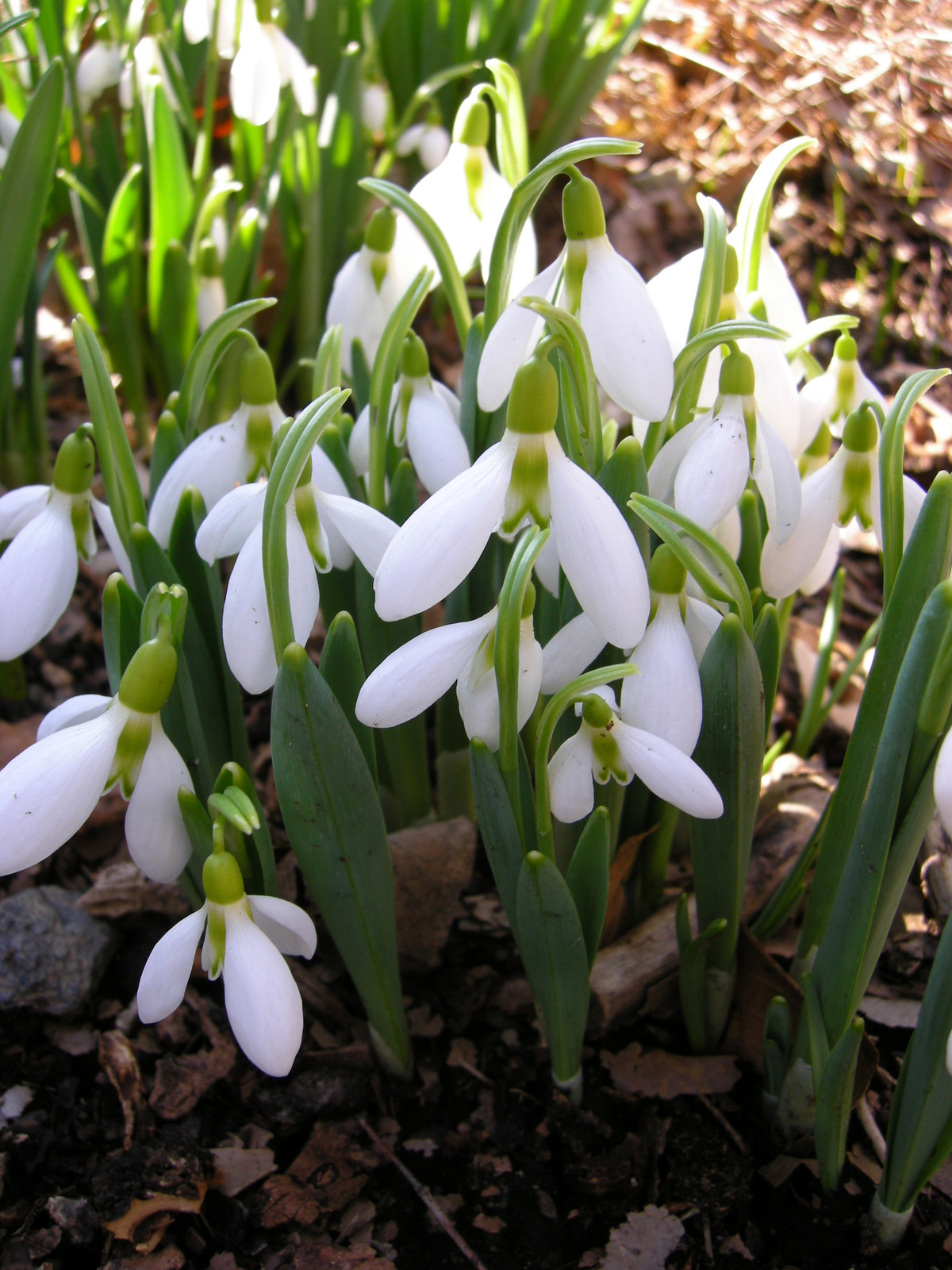
Galanthus elwesiiThe only snowdrop in bloom right now is the giant snowdrop, Galanthus elwesii (for sale at CSG).  Photo 1/9/12

My fall-flowering snowdrop ‘Potter’s Prelude’ has finished blooming, but I wanted to show you its beautiful leaves (for sale at CSG).  Photo 1/1/12

On New Year’s Day, my husband and I went walking in the Pinetum at the Haverford College Arboretum, a wonderful local treasure.  We saw two unusual conifers with great texture that I wanted to share:


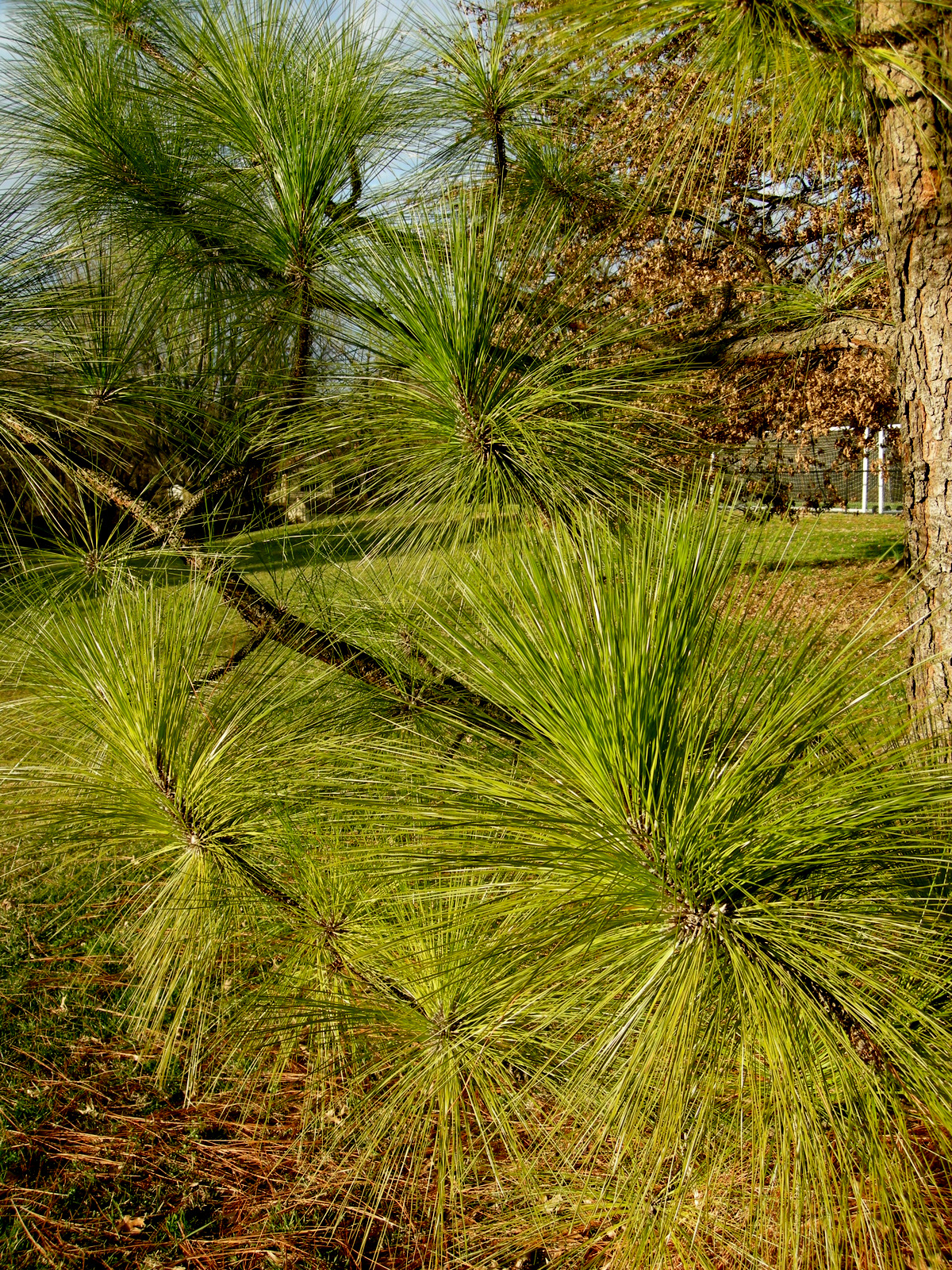
Longleaf pine, Pinus palustris, is native from Virginia to Texas but is not usually found around here.


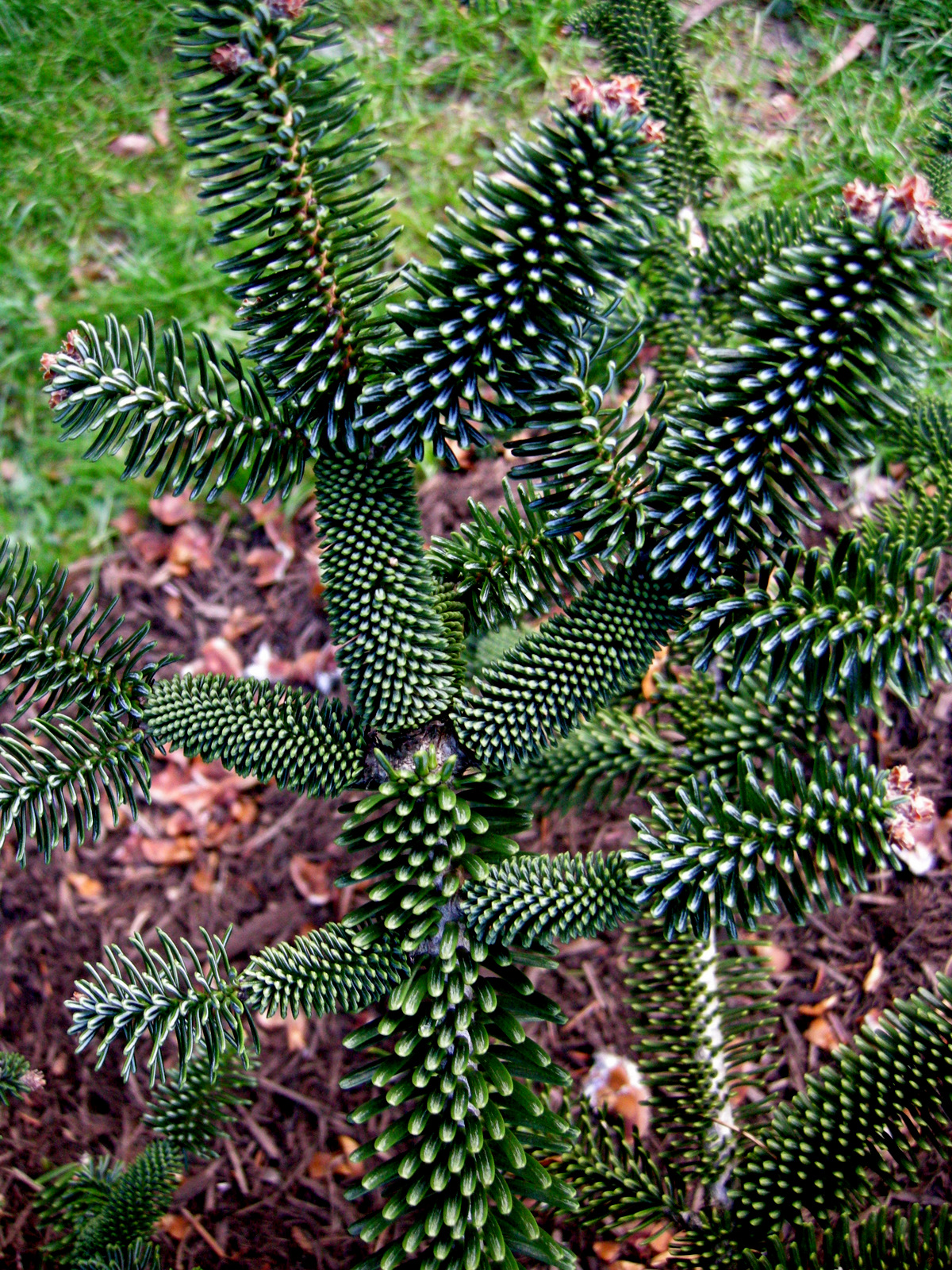
I love firs, and the texture of this Algerian fir, Abies numidica, really stood out.

I dedicate this post to Bob Stewart, my friend and horticulturalist extraordinaire, who died on December 16, 2011.  Bob and his wife Brigitta started the amazing nursery Arrowhead Alpines in Fowlersville, MI.  If you haven’t visited their site, you should by clicking here.  Bob will be greatly missed.

Carolyn

Notes: Every word that appears in orange on my blog is a link that you can click for more information.  If you want to return to my blog’s homepage to access the sidebar information (catalogues, previous articles, etc.) or to subscribe to my blog, just click here.

Friends, Food, Flowers, and Fun

Posted in garden to visit with tags , , , , on December 28, 2011 by Carolyn @ Carolyns Shade Gardens

Carolyn’s Shade Gardens is a retail nursery located in Bryn Mawr, PA, specializing in showy, colorful, and unusual plants for shade.  The only plants that we ship are snowdrops within the US.  For catalogues and announcements of local events, please send your full name, mailing address, and cell number to carolyn@carolynsshadegardens.com and indicate whether you are interested in snowdrops, hellebores, and/or hostas.  Click here to get to the home page of our website for catalogues and information about our nursery and to subscribe to our blog.

‘Heavenly Blue’ morning glory (in the garden at Pineland Farms), a plant Jean has often featured on her blog.

In considering several subjects for a holiday week post, I decided that there couldn’t be anything more appropriate than describing a summer day spent with a new friend visiting gardens, eating, and shopping for plants—sounds like heaven, doesn’t it?  You may recall that in April, Jean Potuchek from the blog Jean’s Garden (and Jan from Thanks for Today) visited my nursery and gardens and toured Chanticleer with me.  When I was in Maine in early July, Jean invited me to visit her, and this post describes our day.


Jean standing in the future site of her Serenity Garden, often discussed on her blog and now a reality.

Before I get to photos of our day, I want to recount a little side story that illustrates how our minds can go down weird paths (at least mine can).  In a total role reversal, my children always give me  a concerned look when I refer to any garden blogger as a friend, saying: “You can’t be friends with someone you haven’t met in person.”  And I ask you, what would you say to your driving age daughter if she said to you: “Mom, I’ve met this really nice person on the internet,  and she has invited me to visit her at her home in remote rural Maine.” 

As I was driving to Jean’s house, I thought of this as the road twisted and turned deeper and deeper into the countryside, went from asphalt to gravel to dirt, and finally ended in about the most remote dead end I could think of with no neighbors in sight.  No one knew I had gone there, and no one would know whether I returned home because all my family had left Maine for Pennsylvania that week.

Jean in her beautiful and remote garden in East Poland, Maine.

Of course, I had met Jean before, but that was in a public place, and she could have been softening me up, right?  My worst fears were confirmed when, shortly after I arrived, she offered me poisoned strawberries from her lawn (well, they could have been) and invited me inside her home.  You will be relieved to know that all my fears proved groundless.  The garden blogging world is such a unique community, and I consider many garden bloggers friends, I just don’t say it aloud in front of my children.

The Pineland Farms business campus, which includes the market and cafe, is well designed and maintained.  I wish I had been able to get better photos, but the day was very bright and sunny.

The only good shot I got of Jean’s lovely garden appears above, but it was so fun to see all the plants I had been reading about on her blog.  After the tour, we drove to Pineland Farms in New Gloucester, Maine.  The 5,000 acre Pineland Farms property encompasses a working farm, artisan dairy, hydroponic greenhouses, business campus, equestrian facility, farm market, cafe, recreational facilities, including hiking, biking, and skiing, and even guest houses.  For more on Pineland Farms, read Jean’s post.  After eating a delicious lunch made from the farm’s own products at the cafe and purchasing vegetables and farm made cheese at the market, we headed to the ornamental garden for a look around.

Views of the exterior enclosure of the Garden at Pineland Farms.  It feels like you are walking into a secret garden.

I was very charmed by what we found.  The garden encompasses one acre with 1/4 mile of paved paths.  It is mostly filled with perennials interspersed with trees and shrubs, but there is also an extensive vegetable garden.  Although the layout is formal and the maintenance is meticulous, it has a very accessible feel—like anything you saw there could be attempted successfully at home.  And I saw many plant combinations and design ideas there that I would love to try in my own gardens.

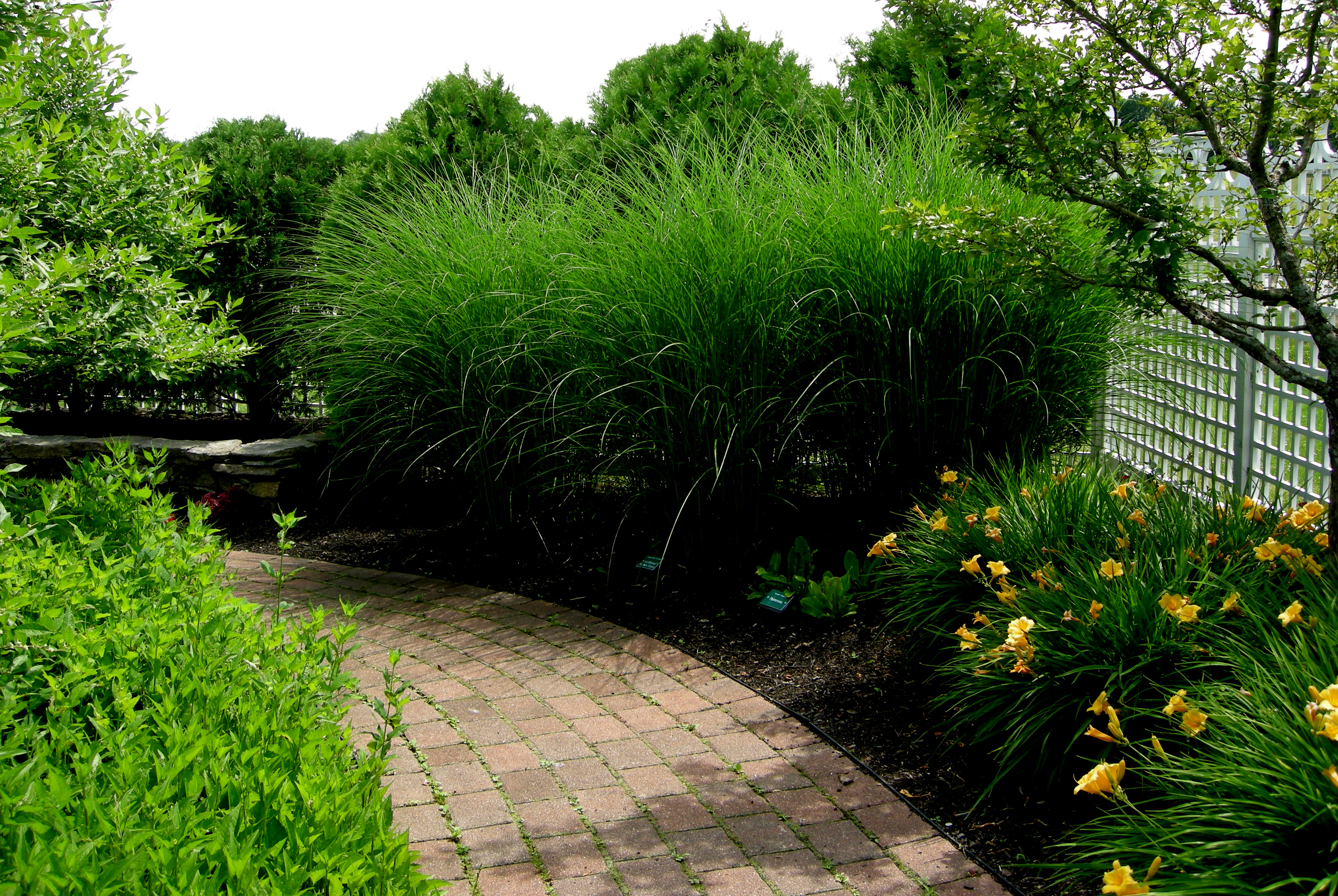
The formal brick paths, which are very easy to navigate, wind themselves around the exterior of the garden (top two photos) and across the center (bottom photo).  Although the site is flat, the curved paths and carefully places trees and shrubs create garden rooms and a sense of discovery.

The side paths are gravel and include some shade gardens.

A key element that holds this garden together is the repetition of large groupings of a limited palette of perennials appropriate to the season.  In early July, it was meadowsweet, Japanese iris, astilbe, and daylilies, among others.  These groupings unite all the small gardens and the large selection of perennials displayed.  If you scroll back through the photos above, I hope you can see what I mean.  Here are photos of some of these key plants:

Double meadowsweet, Filipendula ulmaria ‘Flore Pleno’

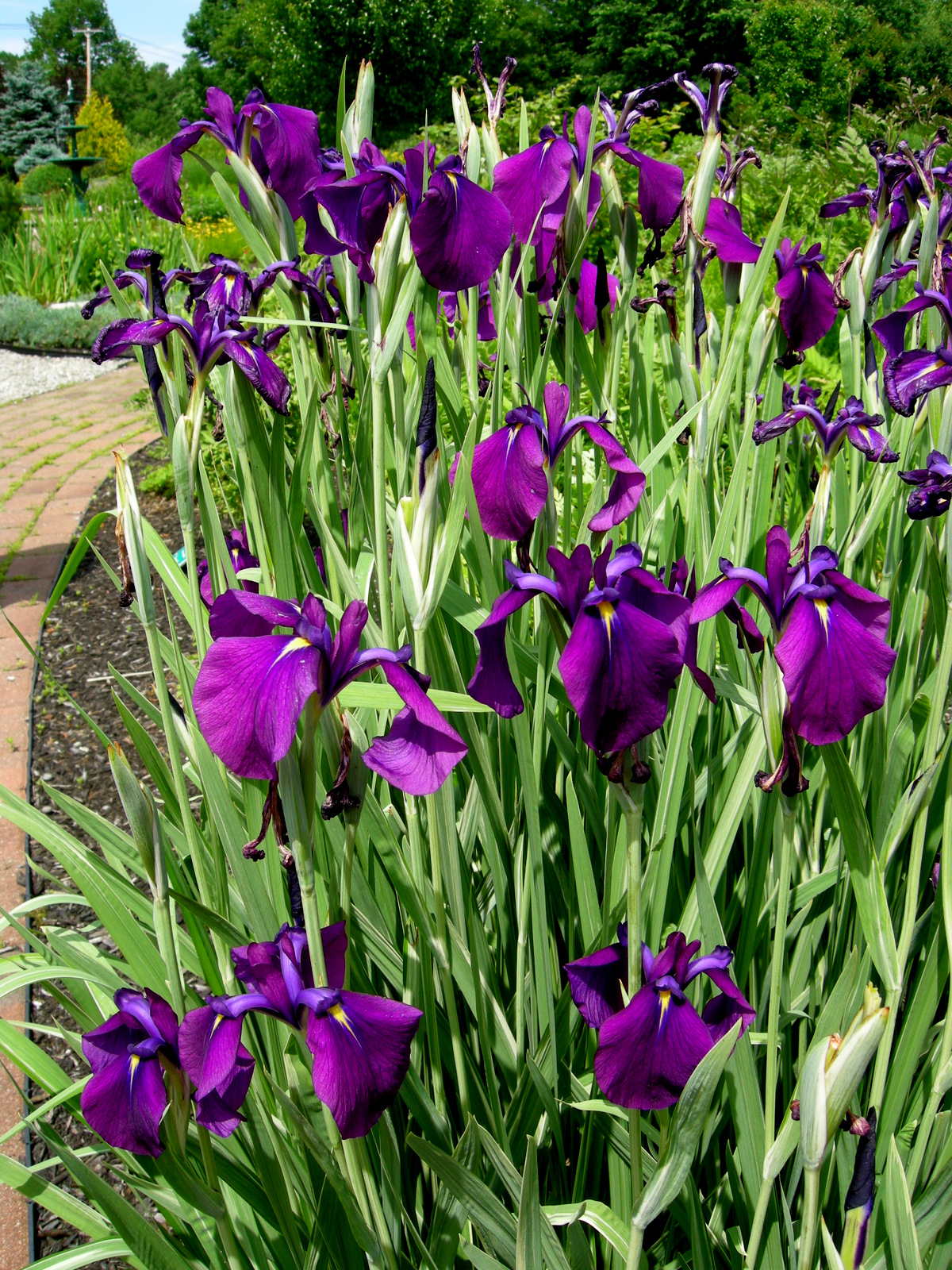
Japanese iris, Iris ensata ‘Shakkyo’

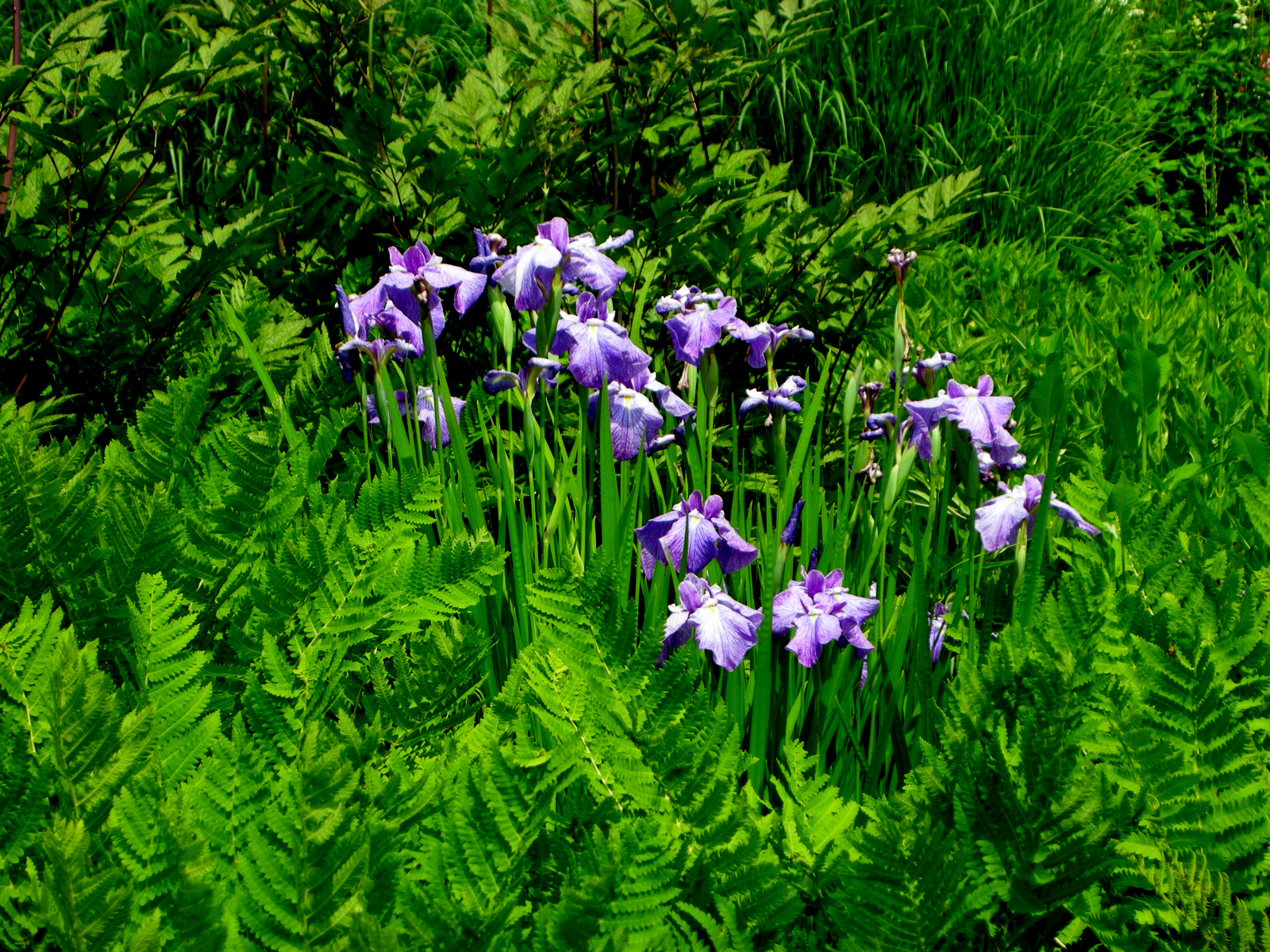
Japanese iris and ferns

The large plantings of dwarf Chinese astilbe, Astilbe chinensis ‘Pumila’, looked gorgeous with the brick paths.

Daylilies, I think Hemerocallis ‘Stella de Oro’.

In addition to the ornamental gardens, there is a very pretty herb garden and an extensive vegetable garden:

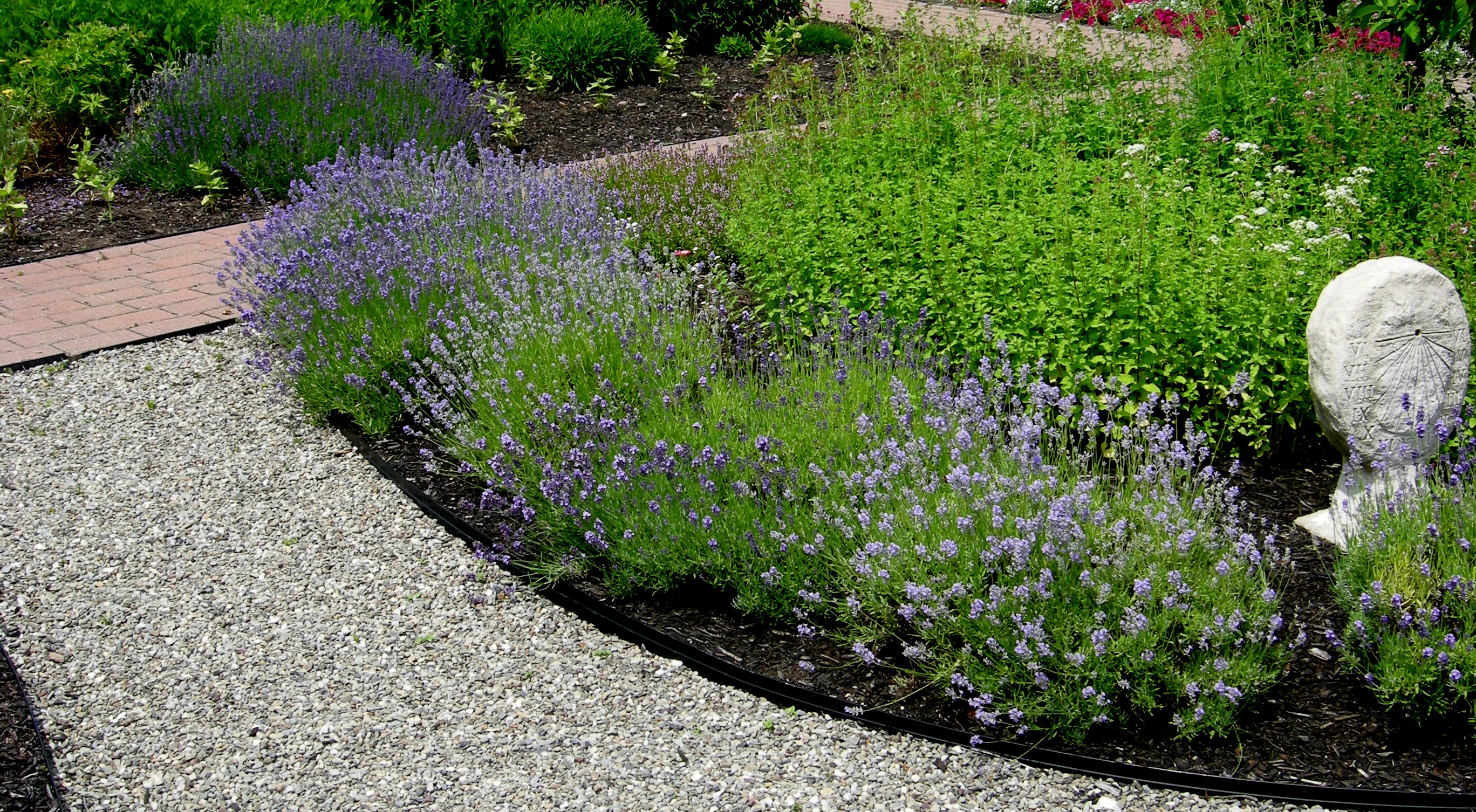
Various lavenders in the herb garden.

Produce from the vegetable garden is sold in the market.

As we left the formal garden, we had a panoramic view of the Pineland Farms dairy operation.  The bucolic beauty is typical of this part of rural Maine.

Plainview Farm plant nursery in North Yarmouth, Maine

After looking at all those gorgeous plants, it was time to buy some.  Jean took me to one of her favorite nurseries, Plainview Farm in North Yarmouth, Maine.  Not only do they have a great selection of enticing perennials, but they also have extensive display gardens.  Well worth the visit if you are in the area.  I’ll end the post with photos of two plants that intrigued me:

Yes, I am a sucker for Japanese iris: Iris ensata ‘Temple Bells’

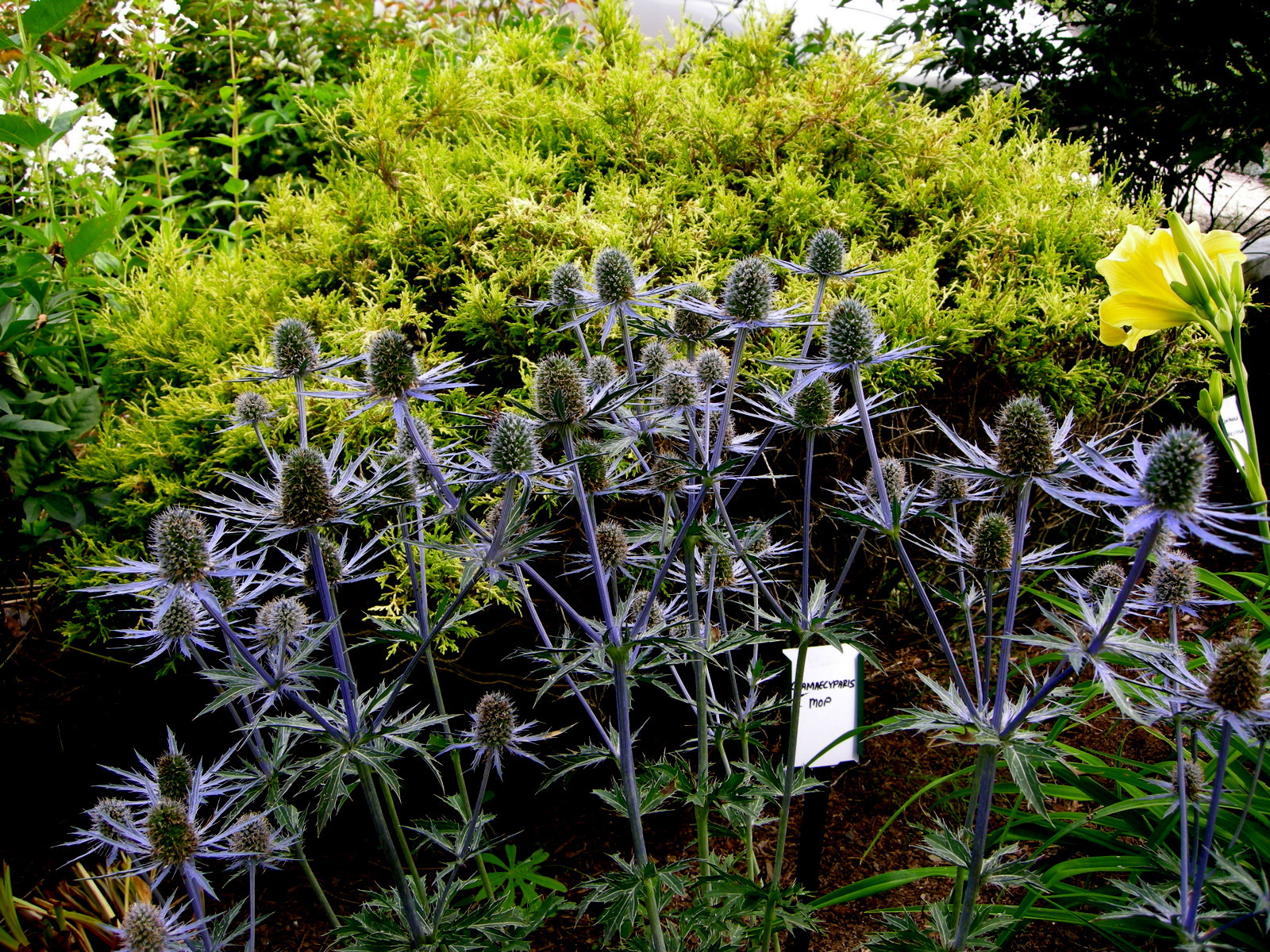
I have never seen a sea holly this blue: Eryngium ‘Big Blue’.


Happy New Year to my nursery customers, my blog readers,  Jean, and garden bloggers everywhere,  Carolyn

Notes: Every word that appears in orange on my blog is a link that you can click for more information.  If you want to return to my blog’s homepage to access the sidebar information (catalogues, previous articles, etc.) or to subscribe to my blog, just click here.
Chanticleer Part 3: Through the Seasons

Posted in Fall, garden to visit with tags , , , on November 29, 2011 by Carolyn @ Carolyns Shade Gardens

Carolyn’s Shade Gardens is a retail nursery located in Bryn Mawr, PA, specializing in showy, colorful, and unusual plants for shade.  The only plants that we ship are snowdrops within the US.  For catalogues and announcements of local events, please send your full name, mailing address, and cell number to carolyn@carolynsshadegardens.com and indicate whether you are interested in snowdrops, hellebores, and/or hostas.  Click here to get to the home page of our website for catalogues and information about our nursery and to subscribe to our blog.

Close up of the teacup fountain in fall.

Chanticleer is a unique public garden in Wayne, Pennsylvania, U.S., which I have profiled in two previous articles.  The first, Chanticleer Part 1: A Pleasure Garden, gave an overview of this one-of-a-kind horticultural destination.  The second, Chanticleer Part 2: Garden Seating, focused on the huge variety of thoughtful seating areas in the Chanticleer gardens.  This post will show some of Chanticleer’s gardens as they evolve through the seasons, highlight some additional “hardscape” features, and focus on the attention to detail in one tiny garden that peaks in the fall.

The Teacup Garden through the seasons: clockwise from top, spring, summer, fall.  I highly encourage you to click on any photo to enlarge it for more detail especially the collages.

I hope that my first two posts have inspired you to visit Chanticleer.  However, if you live in the area, it is well worth visiting several times a year.  As you can see from the photos of the Teacup Garden above, the changes in some of Chanticleer’s gardens are very dramatic.  And even the less dramatic evolution of other areas makes each visit feel unique.  Here are a few more gardens from spring through fall:

Entrance courtyard: clockwise from left, summer, spring, fall.  The lavish and very colorful plantings in this area, where visitors check in, often have a tropical theme.

The gardens above the pond and below the ruin: clockwise from left, summer, spring, fall.

View of the Serpentine Garden from the gravel gardens below the ruin: clockwise from top, fall, summer, spring.  Although the changes are more subtle, they are no less beautiful.

Another more subtle change in the area below the ruin and above the Stream Garden: top summer, bottom fall.  A change in the seasons gives a whole different feel.

One of the many unique features of Chanticleer is the ingenious use of “hardscape” or architectural elements throughout the garden.  These elements are as important to my visits to the garden as the plants themselves.  They provide a dimension of experience not available in any other garden I have visited.  I have highlighted some of the hardscape in each of my posts, but here are additional examples:

The elegant gate at the entrance to the Teacup Garden.

Stone acorns in the Ruin Garden: Chanticleer has many beautiful stone sculptures, including the stone chair in my garden seating post, which has taken Pinterest, the online pinboard site, by storm.

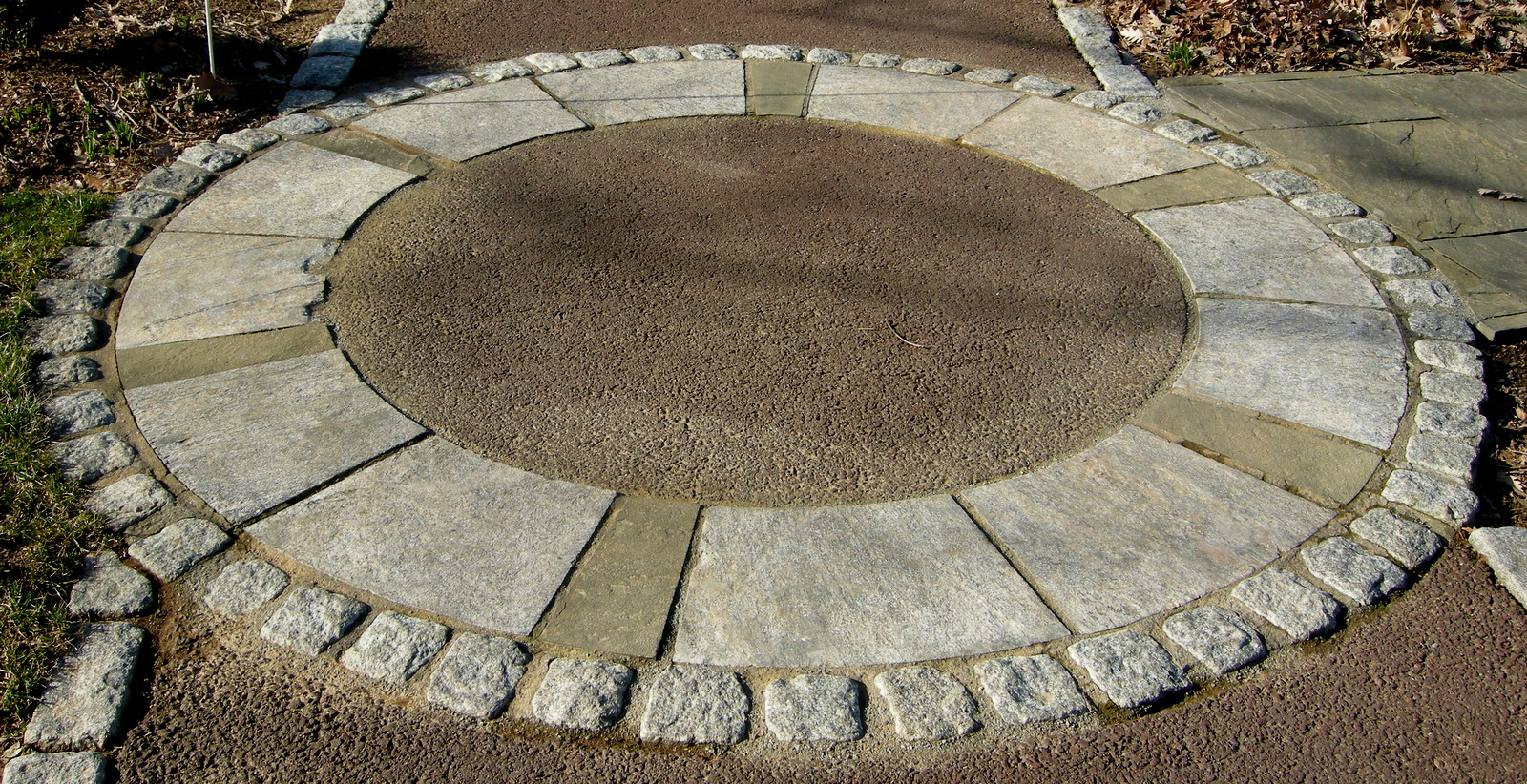
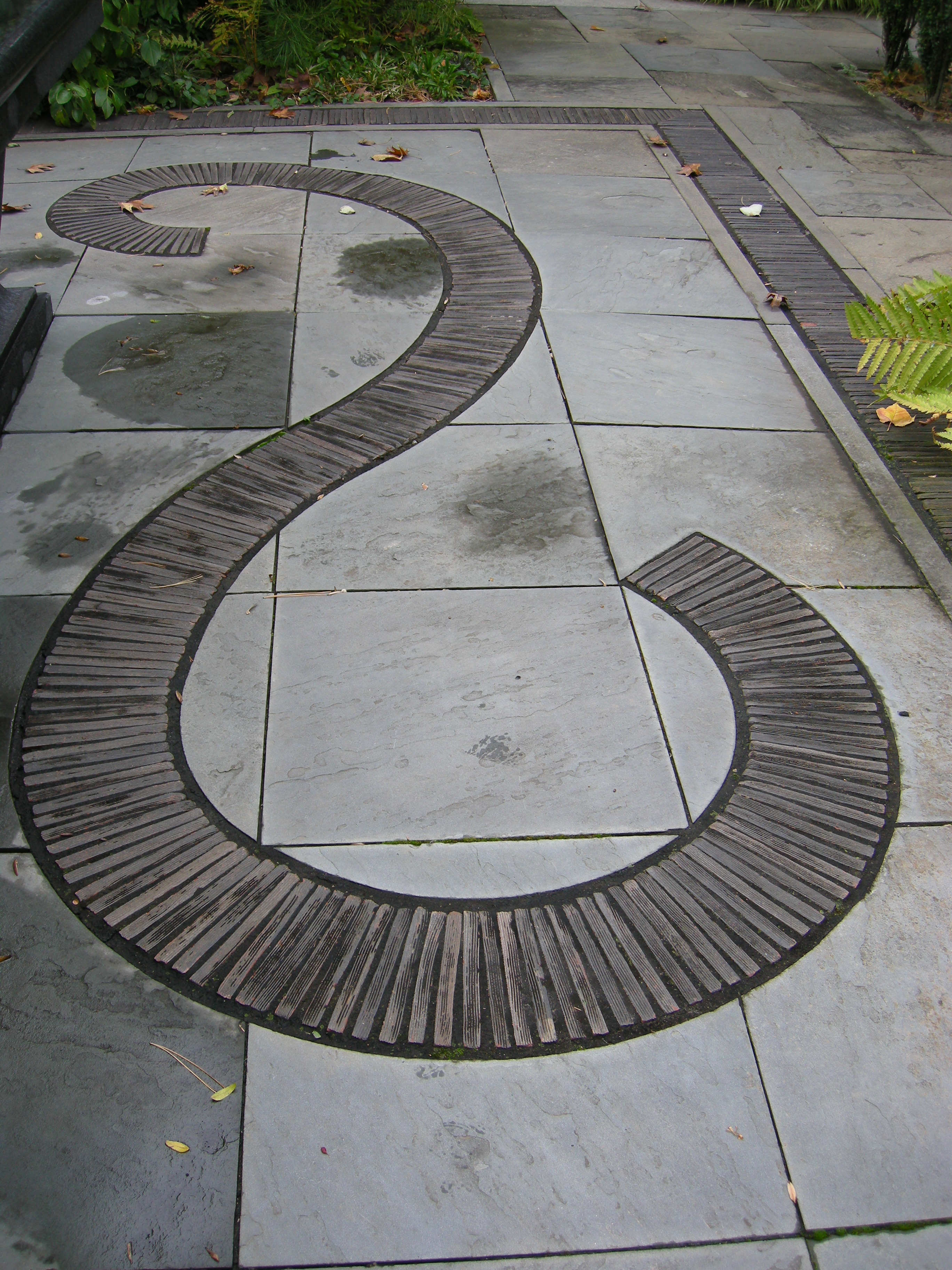
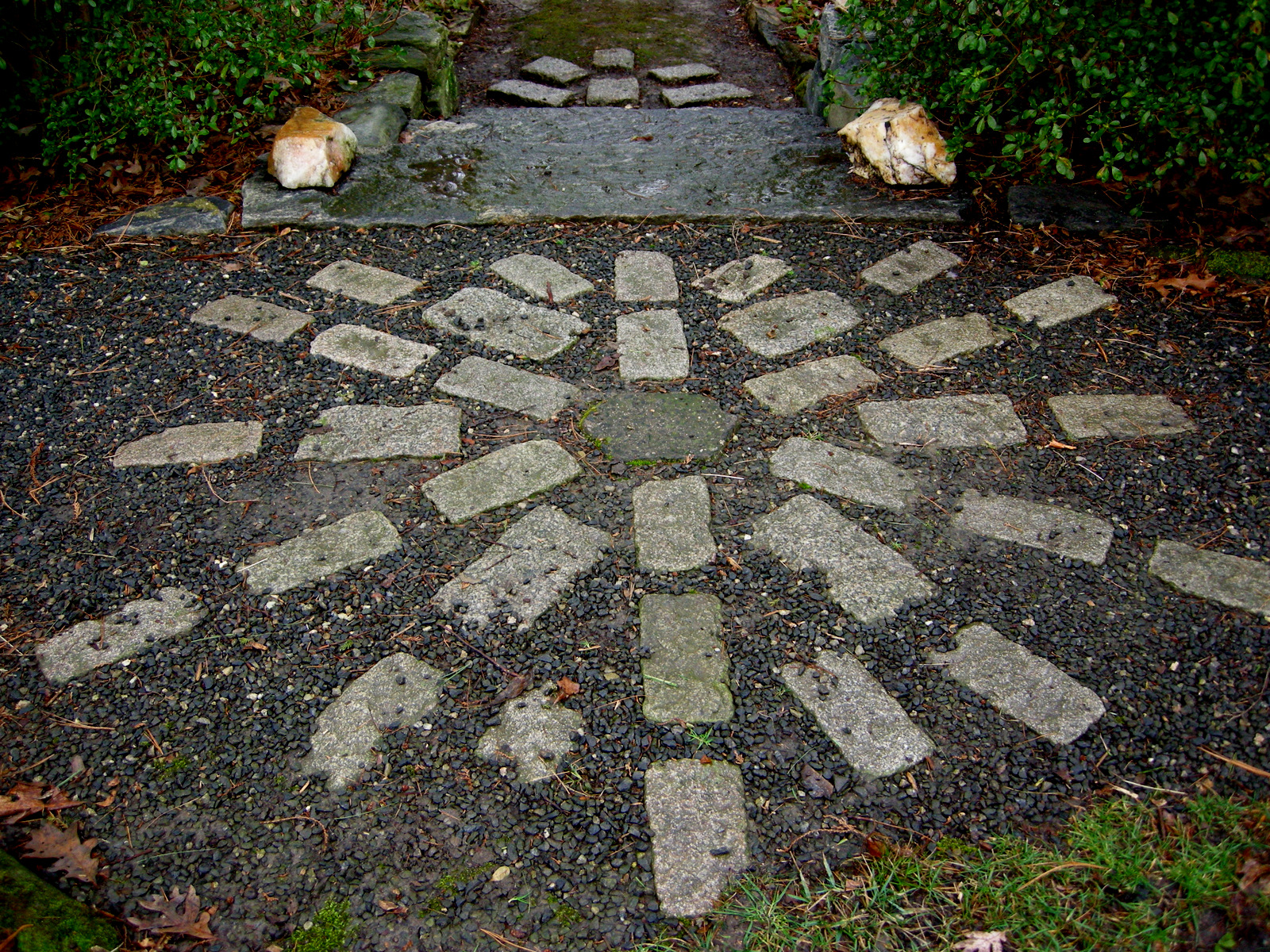
Pattern in the floor of the Ruin Garden: at Chanticleer, it pays to look where you are walking because art is incorporated into the paths.  I have been inspired by my visits to add design elements to  my own woodland paths.

Lovely bridge with carved wooden railing below the Pond Garden.

Elegant bridge marking the entrance to the Asian Woods.

This creepy fountain of sunken marble faces is in a secluded alcove of the Ruin Garden—I love it!

I thought you might like to see close up photos of all the sunken marble faces in the Ruin Garden fountain.

My latest visit to Chanticleer was on October 21, shortly before the garden closed for the season at the beginning of November.  I was captivated by a small garden between the Teacup Garden and the back gate.  So much work had been put into the plantings and the seating arrangement to ornament the very short period when Chanticleer is open in the fall.  The eggplant-colored chairs perfectly echo the October-blooming and -fruiting beautyberries, toad-lilies, and other flowers behind them—now that’s attention to detail and that’s what Chanticleer is all about.

To finish out this series, I will need to visit Chanticleer in winter.  Because they don’t reopen until April 1, I hope to get special permission to visit off season.  Wish me luck!

Carolyn

Notes: Every word that appears in orange on my blog is a link that you can click for more information.  If you want to return to my blog’s homepage to access the sidebar information (catalogues, previous articles, etc.) or to subscribe to my blog, just click here.
Forever Young

Posted in garden essay, garden to visit with tags , , , on September 21, 2011 by Carolyn @ Carolyns Shade Gardens

Carolyn’s Shade Gardens is a retail nursery located in Bryn Mawr, PA, specializing in showy, colorful, and unusual plants for shade.  The only plants that we ship are snowdrops within the US.  For catalogues and announcements of local events, please send your full name, mailing address, and cell number to carolyn@carolynsshadegardens.com and indicate whether you are interested in snowdrops, hellebores, and/or hostas.  Click here to get to the home page of our website for catalogues and information about our nursery and to subscribe to our blog.

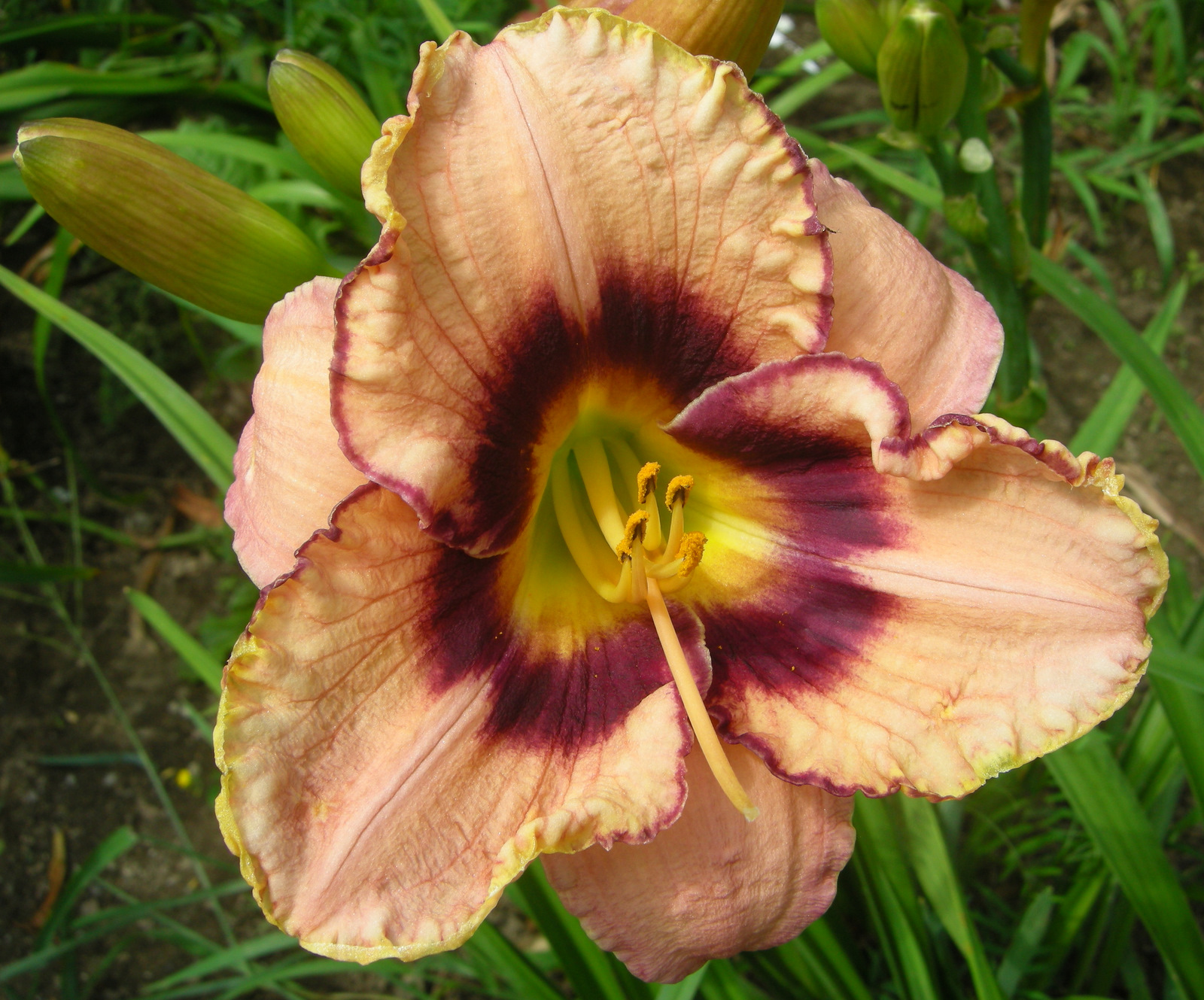
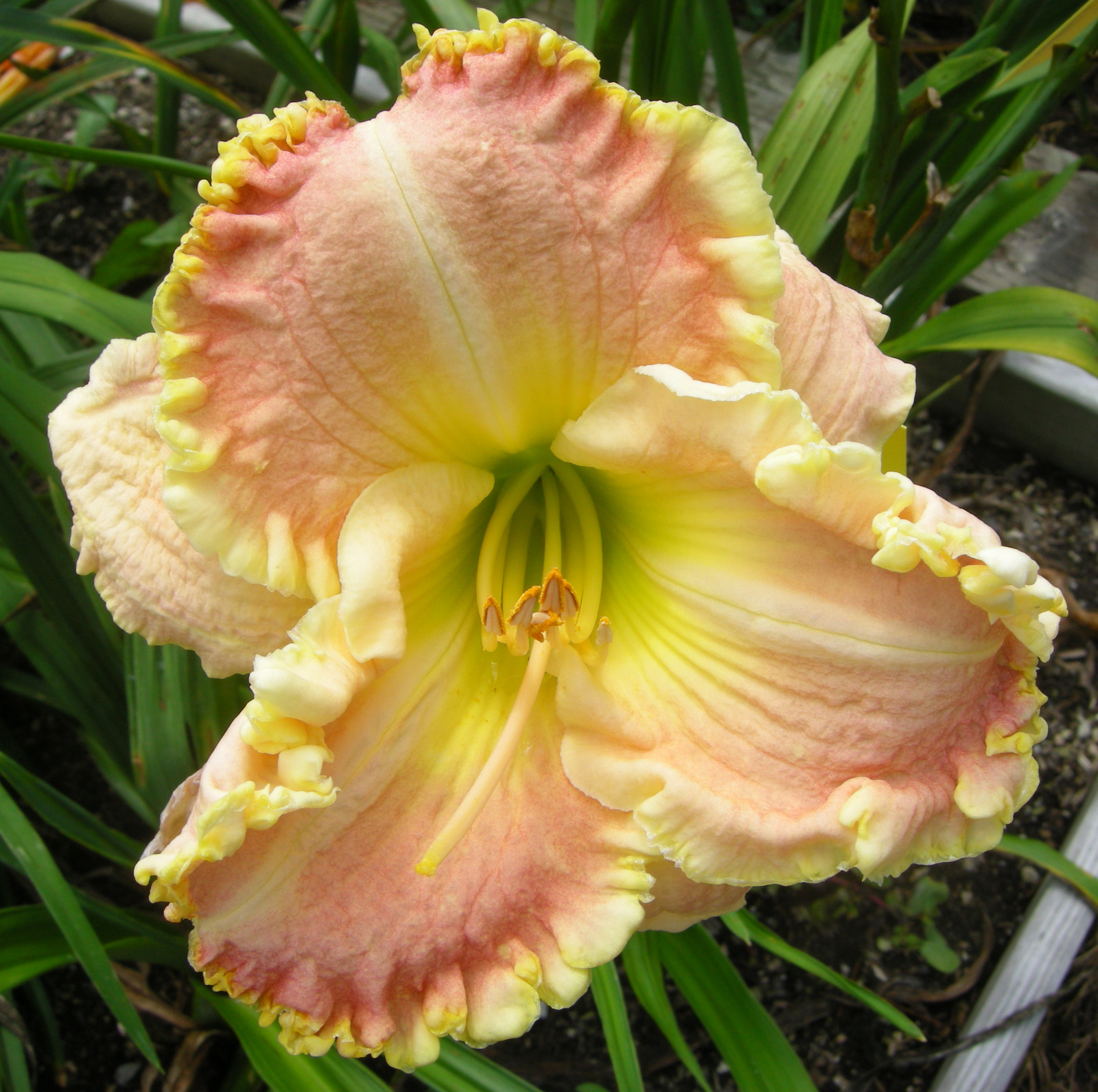
Daylily at Young’s Perennials

In terms of plants, this article is about daylilies, which is hardly timely because they won’t be blooming again for almost a year.  However, it’s also about being adventurous, finding a passion, meeting a kindred spirit, living a full life, and growing old gracefully.  Wow that’s a lot to cover.

During one of my wrong turns, I ended up at this beautiful farm.

It all started with the invasive plant removal program that I run on a tiny island seven miles off the coast of Maine.  Of course we remove invasive plants, but I also try to educate islanders about the joys of native plants.  To this end, I have designed and installed three exclusively native plant gardens to show off some wonderful plants that aren’t already growing on the island. 

As I headed to a familiar mainland nursery to search for suitable native plants, I saw a blue sign saying Young’s Perennials with an arrow pointing away from where I was going.   On a whim and feeling adventurous, I decided to follow the signs, which led me farther and farther into the country until I thought I was surely lost.  Finally I reached the penultimate sign, which led me into a small subdivision, up a long driveway, and into a magical spot.

The nursery benches display potted plants for sale and are surrounded by acres of  growing beds.

Here was Young’s Perennials, a 60 acre farm so far into the town of Yarmouth, Maine, where I saw the first sign, that it’s actually in Freeport.  And greeting me was the nursery’s owner and now sole employee, Walter Young.  I told Walter what I was after, and he promptly pointed to all the nursery stock he had left and said take whatever you want for free.  At his urging, I took plants for my projects and also for the island library and historical society gardens.  He was very generous.  But more than that, as we talked, I discovered that I had found a kindred spirit in this unlikely location–a fellow plantaholic.

The fields are so quiet and peaceful.

Walter is addicted to daylilies.  Now don’t tell him this, but daylilies are not one of my favorite flowers even though I like them.  What I do love though is talking with a fellow gardener who is passionate about his work no matter what the topic.  Especially if the gardener has lived as full and varied a life as Walter.  During the course of our hours of discussion (I was there twice), Walter told me a lot about daylilies but also about his many jobs, careers, hobbies, and other pursuits.

Walter grew up and attended a two-room schoolhouse on the northern coast of Maine.  He was the school janitor and lobstered on the side.  After serving four years in the Coast Guard during the Korean War, he graduated from business college and worked as a public accountant.  He taught business college, trained bird dogs, served as school board chairperson and assistant fire chief, and coached Little League, among other pursuits.  Walter and his wife, Peggy, raised six children, leasing the 60 acre farm next door so they could produce all their own food.  They also started the nursery, which in its heyday employed four people in addition to the Youngs and drew gardeners, especially daylily lovers, from all over New England.

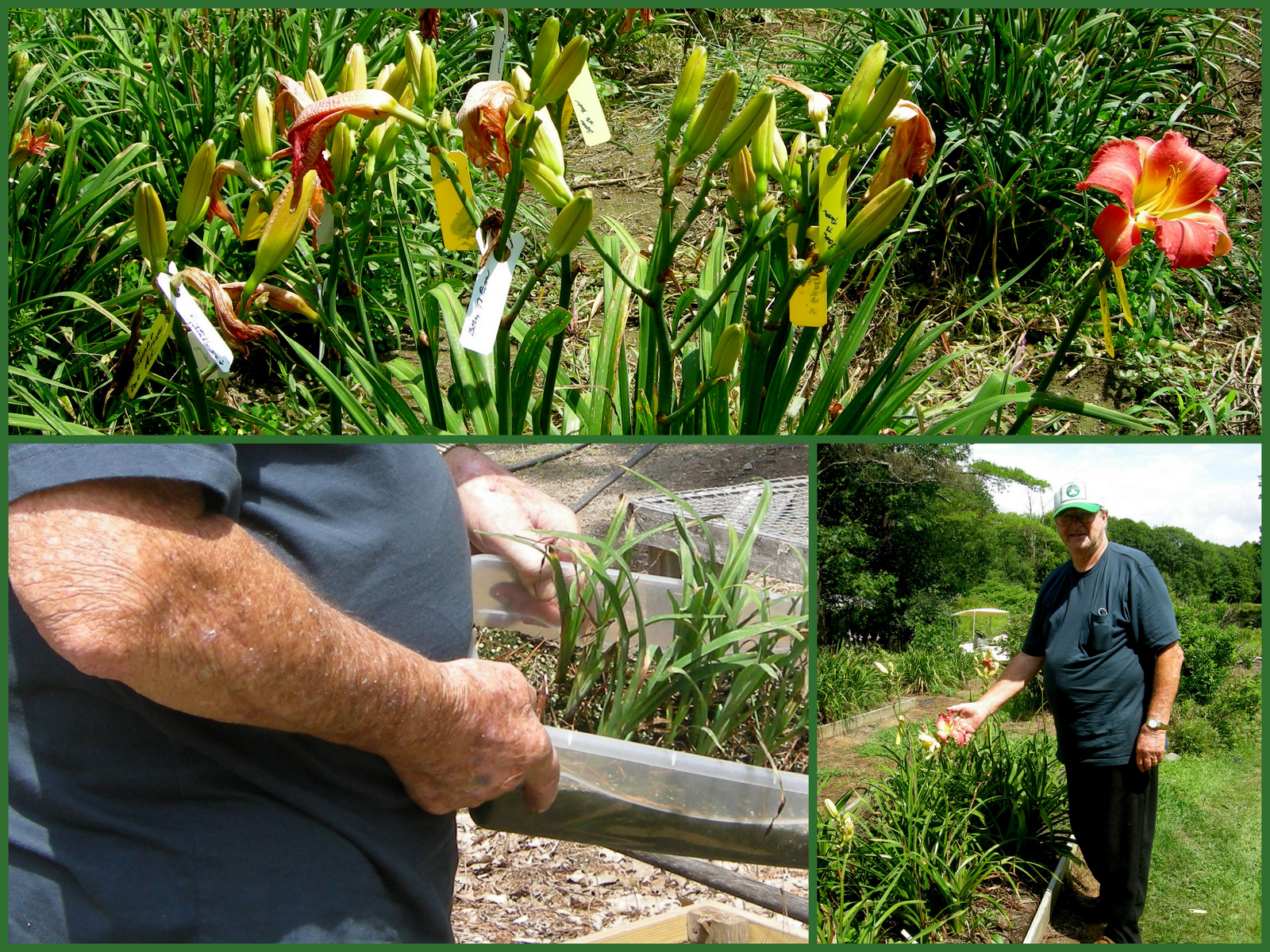
Walter’s passion for daylilies began in 1982 when he visited a Vermont breeder and came home with a hundred cultivars.  He went on to buy seeds and plants from specialists all over the U.S.  Eventually he began making his own daylily crosses to produce plants with more buds and a later bloom time in a kaleidoscope of colors and forms.  As I walked around the nursery, I saw plants covered with plastic tags indicating which plant was the source for the pollen that Walter painstakingly applies by hand.  He collects the seeds, up to 14 per bud, and grows them on until they flower in one to three years.

Counter clockwise from top: daylily buds carefully marked with pollination information; plants resulting from seeds from one bud; Walter Young with one of his creations.

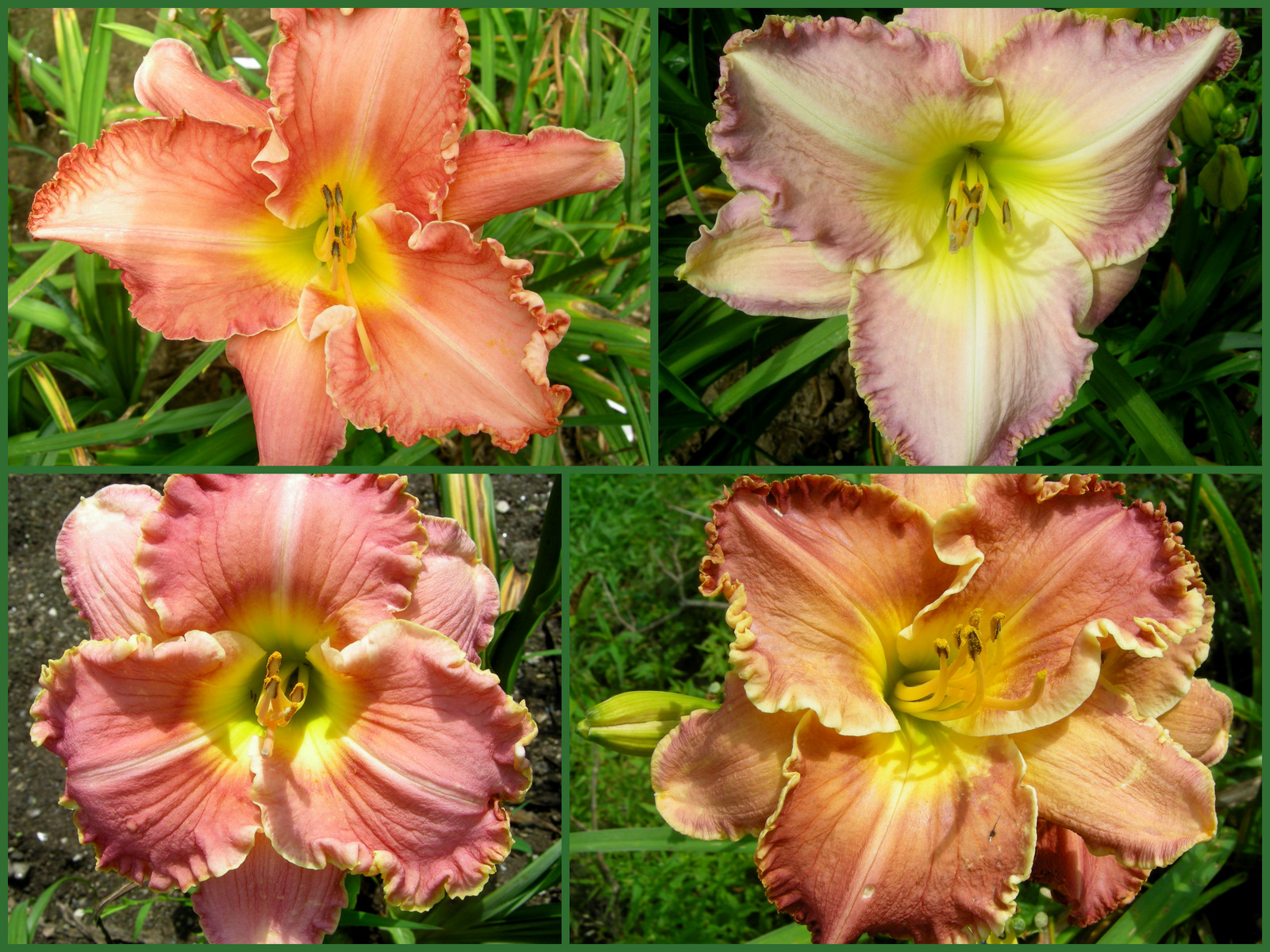
Every flower produced by this well-documented process is different.  And as far as I could tell, every flower is gorgeous.  I gave up asking for the name of each bloom I photographed because the answer was always the same: “It’s one of mine.  It doesn’t have a name.”  In 2010, Walter decided to scale back the nursery, but in 2011 he still purchased 103 new registered daylilies to trial and planted seeds from his crosses.  And growing on the property are over 50,000 daylily plants.  You have to see it to believe it.

Left, the 103 new plants purchased for trial in 2011.  Right, older plants in the fields.  I was there at the end of the season so most daylilies had finished blooming.

At the end of my visit, I said to Walter: “You don’t register your crosses, you don’t do mail order, you have limited hours at your nursery, so you do all this work….”  “That’s right,” he interjected, “I do all this work just for me.”  Just for the sheer joy of it.  Walter is 77 years old.

Walter Young’s daylilies are available at Young’s Perennials, 1 Young’s Lane, Freeport, Maine, 207-865-3533, from July 1 through August 15, depending on the weather.  It’s well worth the trip for many reasons!

Here are some more of the daylilies you will find there:

Carolyn

Notes: Every word that appears in orange on my blog is a link that you can click for more information.  If you want to return to my blog’s homepage to access the sidebar information (catalogues, previous articles, etc.), click here.


Chanticleer Part 2: Garden Seating

Posted in garden to visit, landscape design with tags , on August 8, 2011 by Carolyn @ Carolyns Shade Gardens

Carolyn’s Shade Gardens is a retail nursery located in Bryn Mawr, PA, specializing in showy, colorful, and unusual plants for shade.  The only plants that we ship are snowdrops and miniature hostas.  For catalogues and announcements of events, please send your full name, location, and phone number (for back up use only) to carolyn@carolynsshadegardens.com.  Click here to get to the home page of our website for catalogues and information about our nursery and to subscribe to our blog.

.

Chanticleer, near ruinA grouping of chairs in the Chanticleer garden.

Chanticleer is a very unique and intimate place in Wayne, Pennsylvania, U.S., that calls itself “A Pleasure Garden”.  In my April article of that title, I explained why that moniker perfectly describes Chanticleer.   It is a garden designed by individuals who are both artists and plantspeople.   Every plant in the garden is  placed there not only for its pleasing horticultural attributes, but also as an object in the overall design for color and pattern and to provoke a feeling or reaction in the onlooker.  Although this is a serious garden, whimsy and the element of surprise are important considerations.  And the attention to detail is amazing.

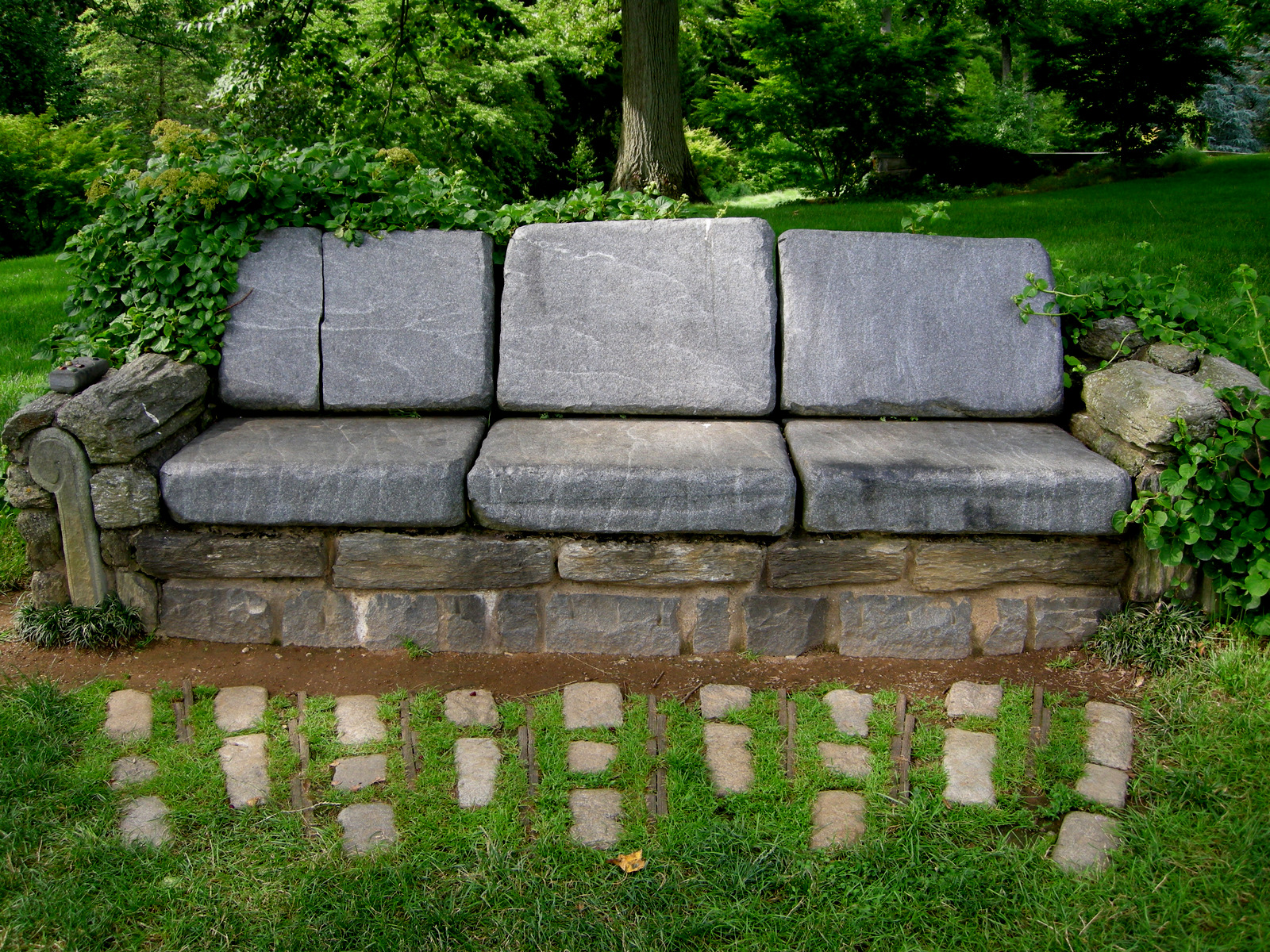
A stone armchair evocative of the Flintstones near the Ruin Garden.

Matching sofa

Stone remote

When I revisited Chanticleer recently, I realized that I could help readers understand just how unique this garden is by focusing on one element: garden seating.  In fact, no other aspect of the garden demonstrates more clearly the complex thought process that must go into each of Chanticleer’s design decisions.  Garden seating is not just for sitting, in fact, it may be primarily for viewing.  It is used to evoke feelings in the viewer, of coolness in the heat, of enclosure in open spaces, of grandeur, of restfulness, of mirth, of tradition.  It draws the eye, completes a vignette, moves you through the garden, or slows you down.  It is integrated in the landscape in a way I have never seen anywhere else.

The seating on the porch of the Chanticleer House is very traditional.  It feels as if the Rosengarten family is just around the corner.

Chanticleer has inspired me over the years to add more thoughtful resting places to my own garden and to think of every element of the garden as important, not just the plants.  I hope you too will take away some good ideas as we walk around Chanticleer together trying out the seating (and the water fountains because I love them too!).

The plantings around this bench in the entrance garden change through the year.  When I visited, they were tropical.

A sliding bench in the shade of an elaborate arbor in the Tennis Court Garden.

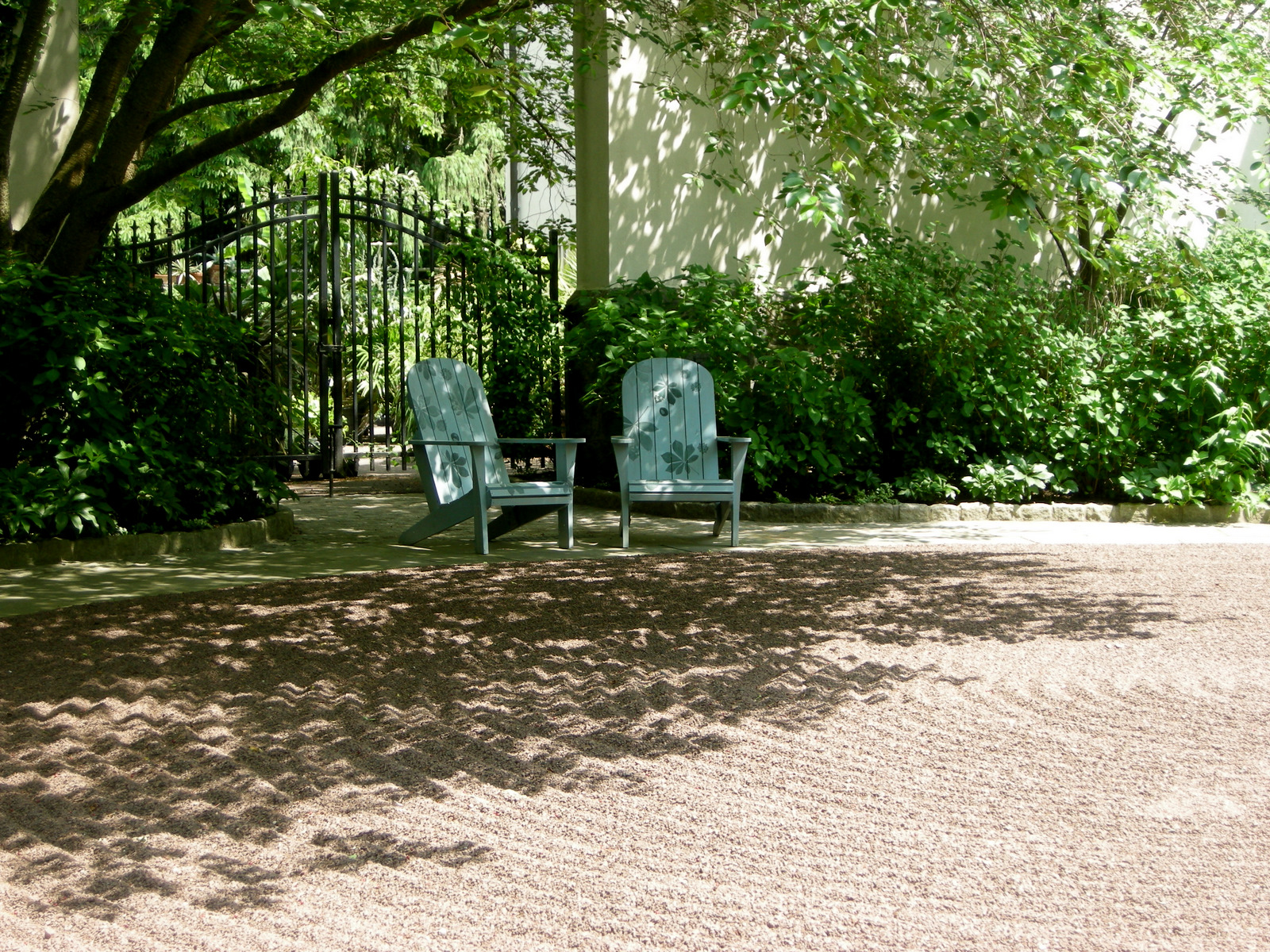
The seating at Chanticleer is often colorful.

It can even match the flowers.

Whimsical bench in the Vegetable Garden.

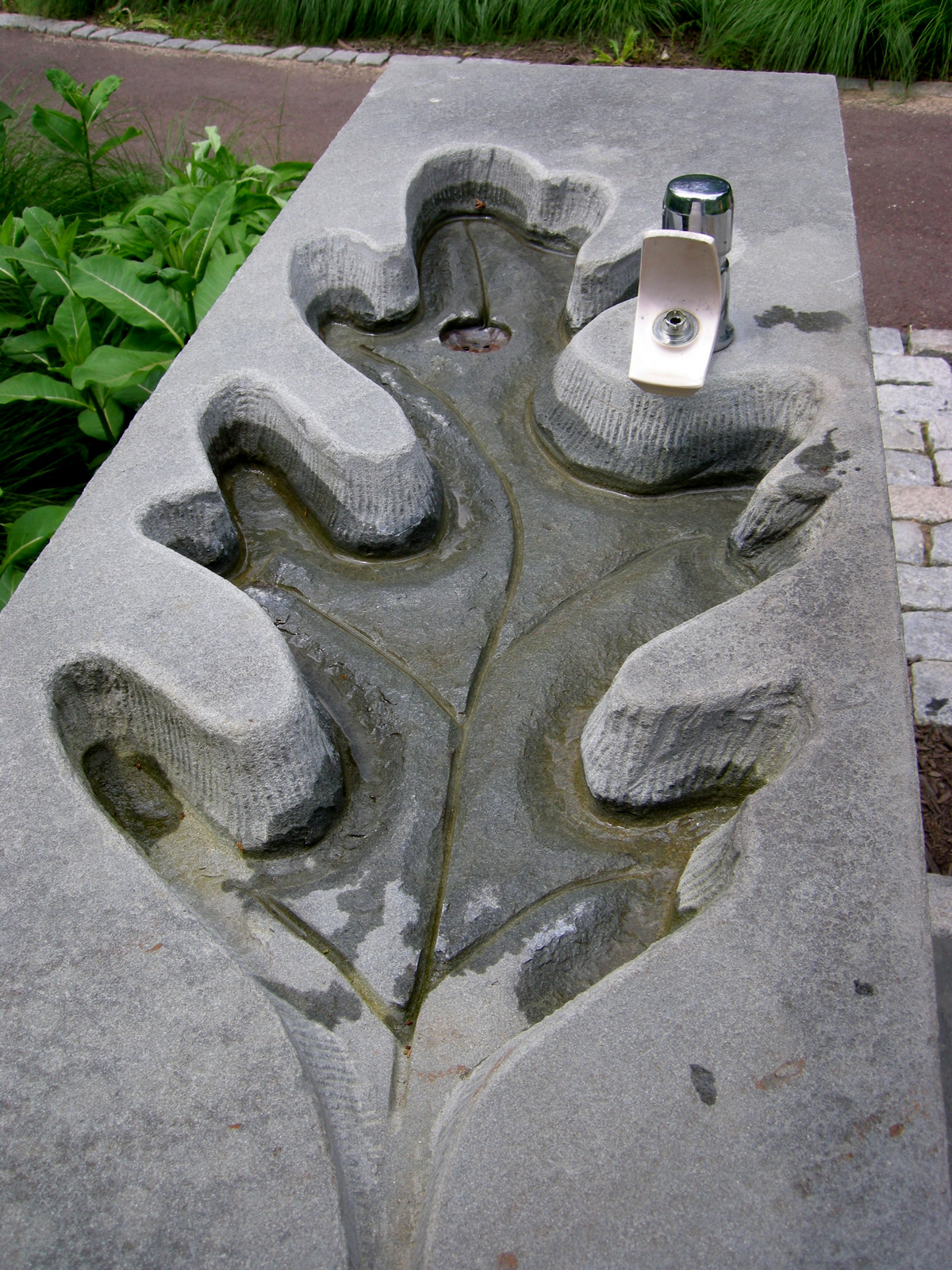
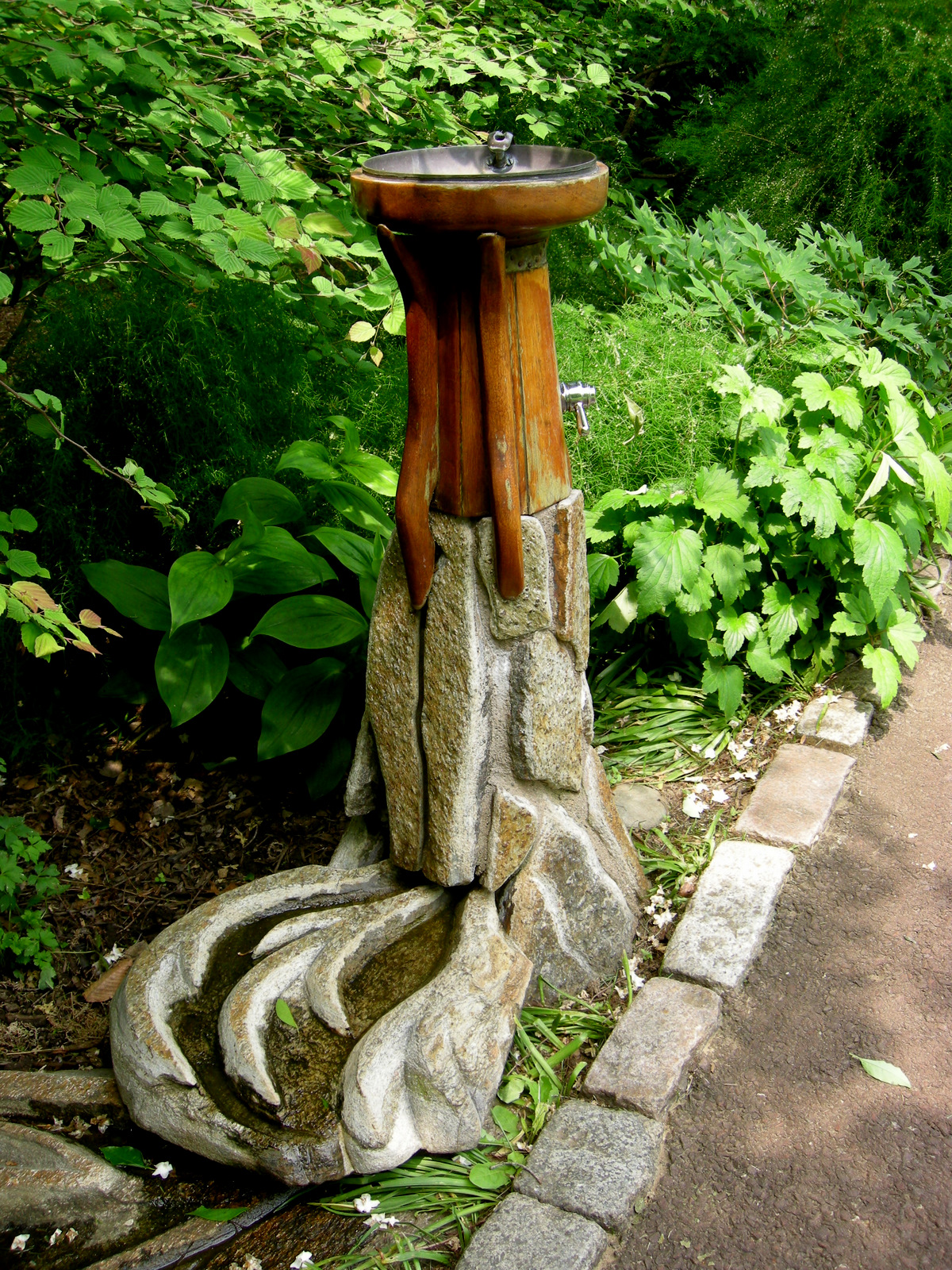
Water fountain on the path to the Ruin Garden, far right.

Detail of water fountain, incorporating the oak leaf theme of the Ruin Garden.

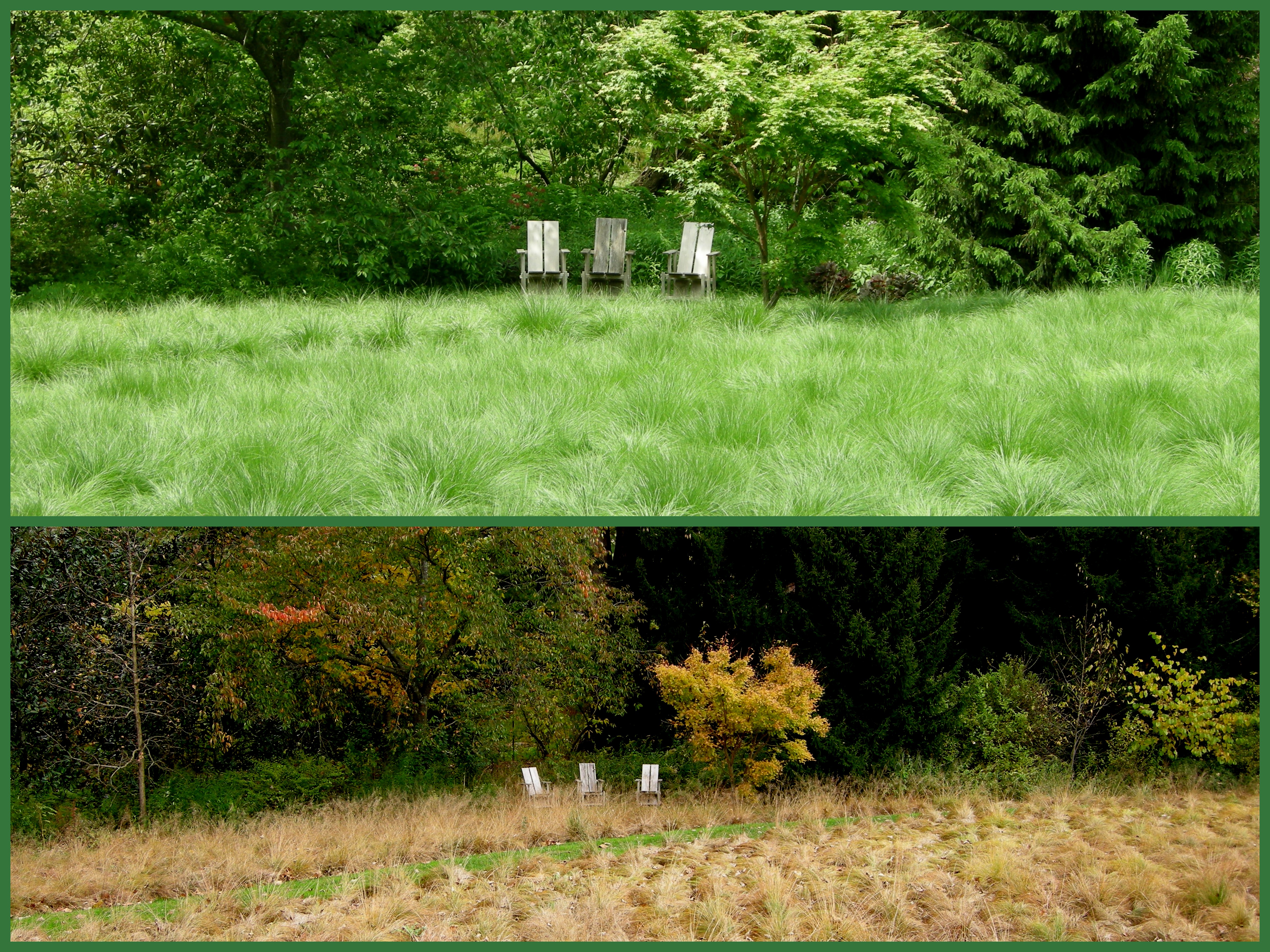
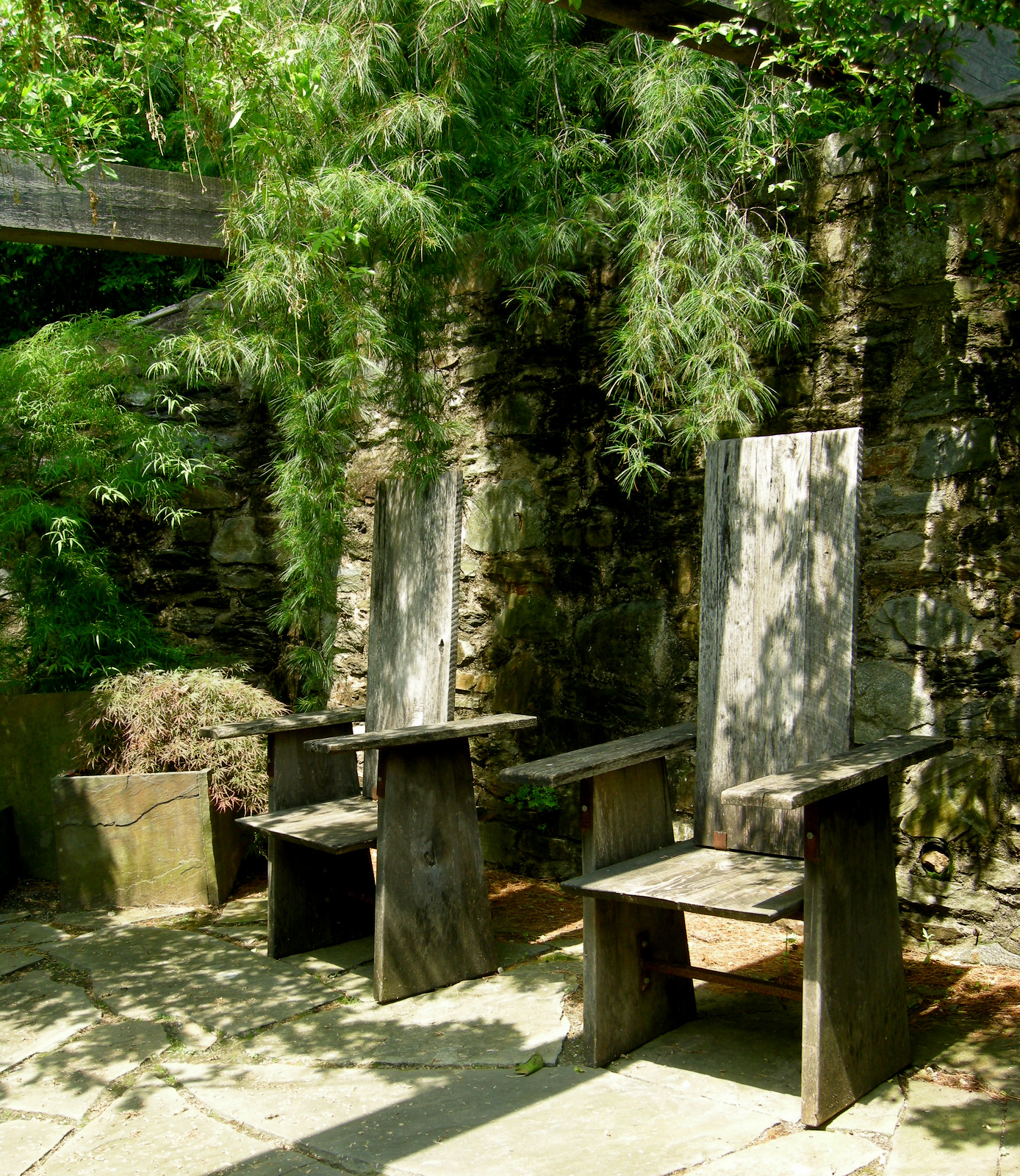
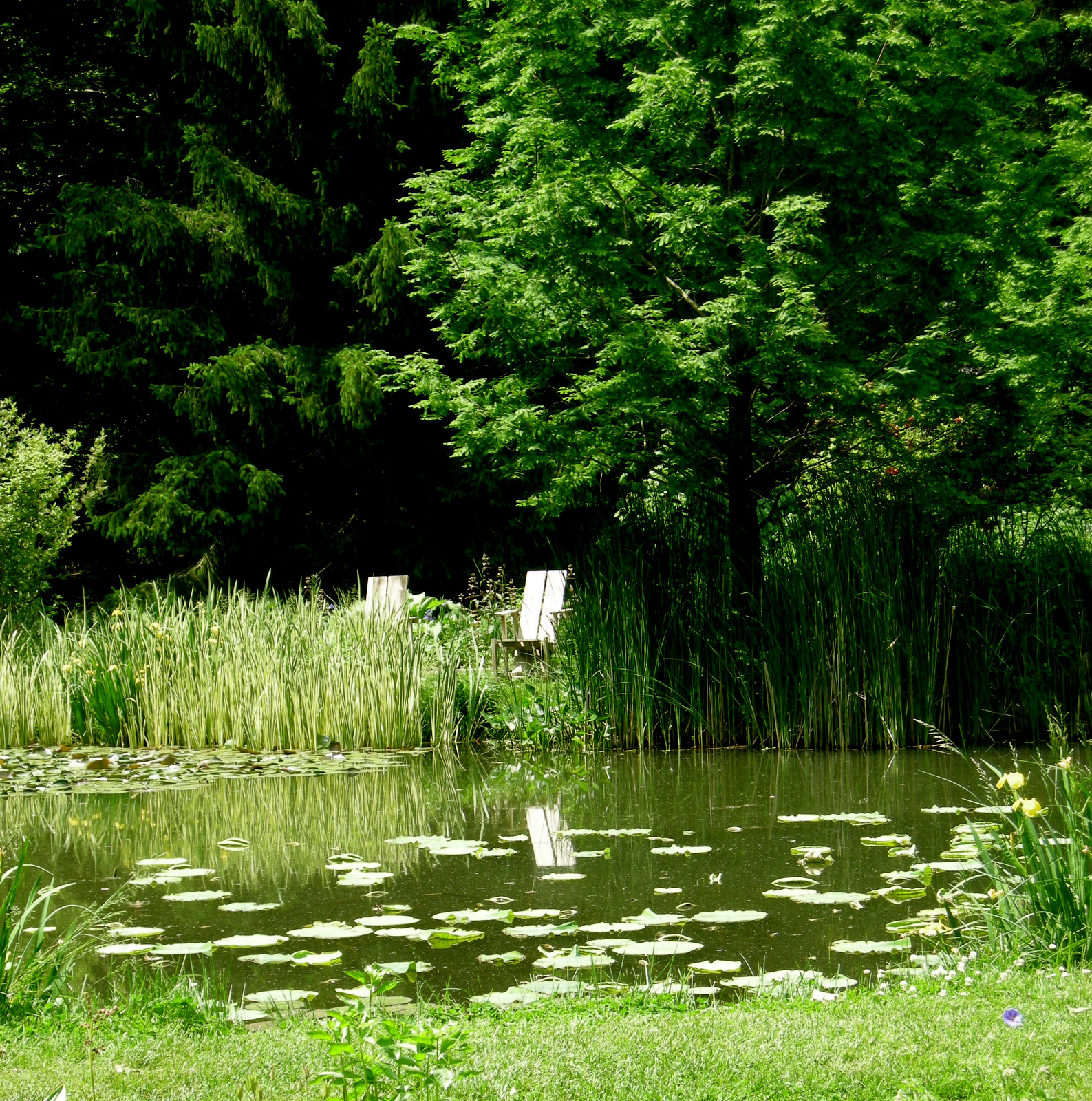
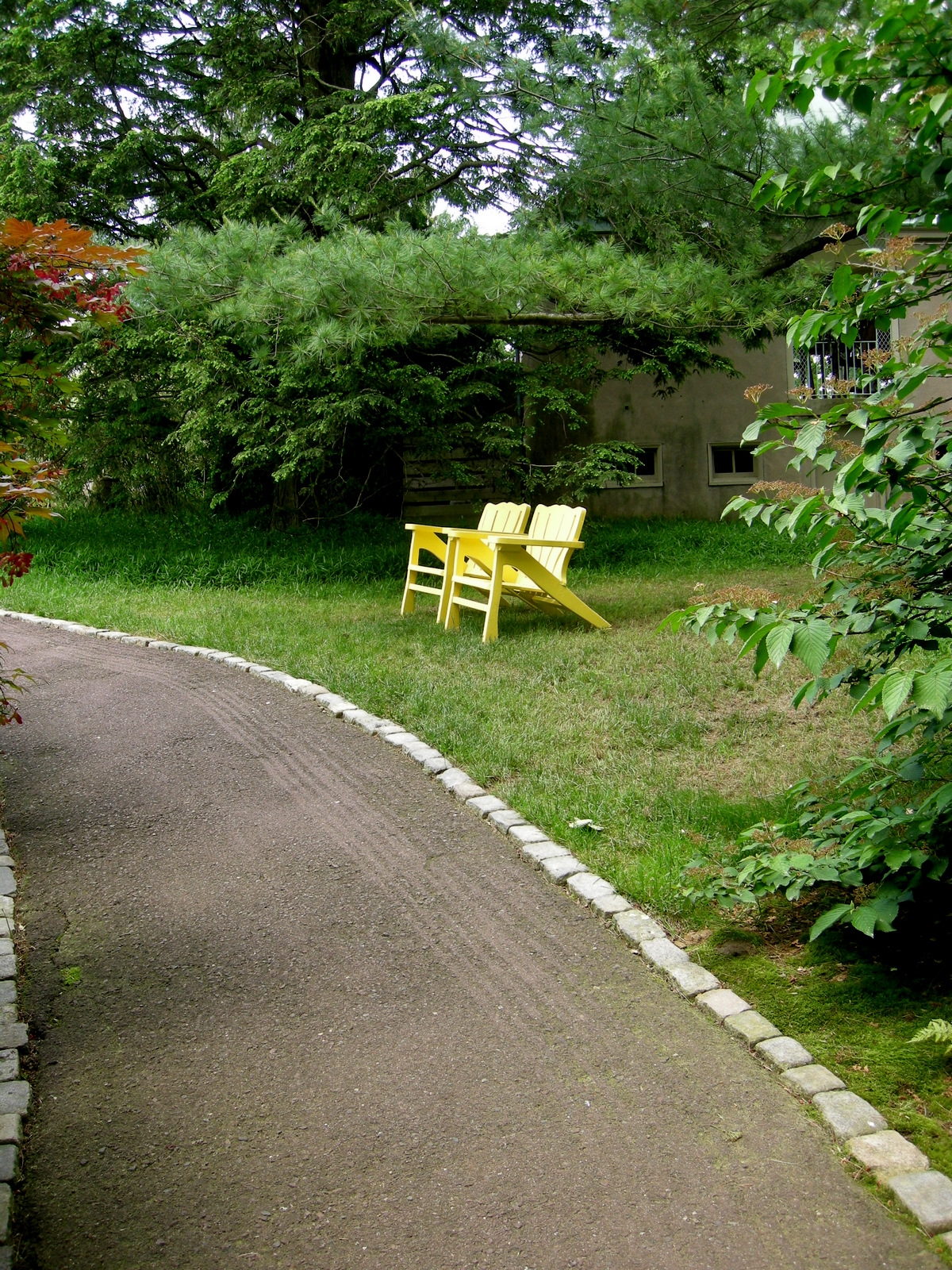
I feel cooler just looking at these chairs across a sea of shimmering grass below the Ruin Garden.

This secluded bench in Minder Woods is a work of art.

Overlooking the Pond Garden is a large flagstone terrace covered by an arbor sheltering shady seating–very popular on Friday evenings in summer when Chanticleer is open late for picnics.

Pond Garden

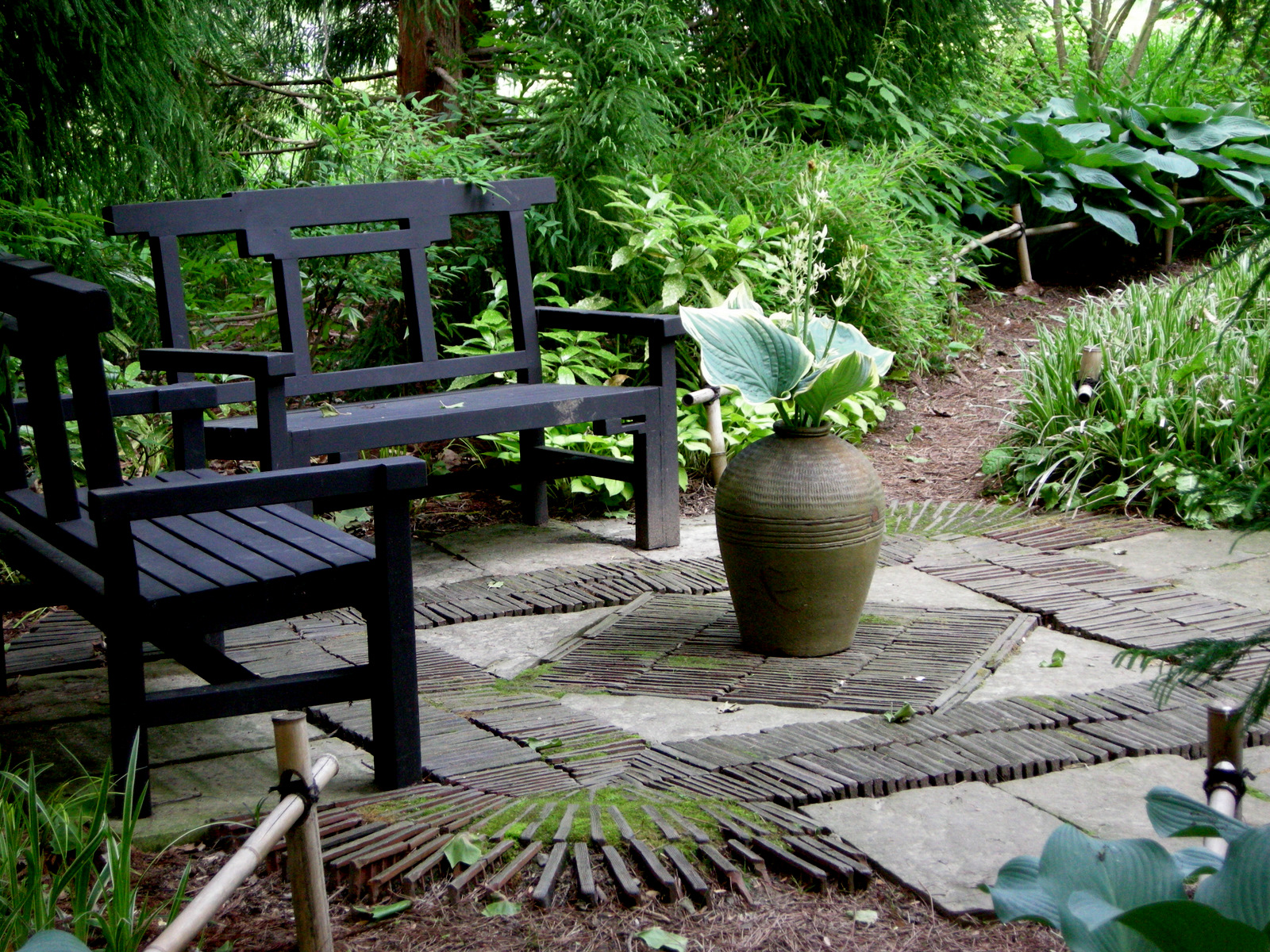
A side path in the Asian woods brings you to this seating area–there is always an elegant arrangement in the vase.

Behind this area, also in the Asian Woods, is a bamboo forest, and the chairs incorporate the motif.  The stone flower sunk in the path inspired me to place similar features at the junctures of my woodland paths.

Simple benches on the porch of the restroom in the Asian woods.

My children loved to watch the water snake out of the stone trough attached to this water fountain near the Asian Woods.

A totally different feeling is evoked by these more traditional porch chairs along the paved path up to the Chanticleer House, almost like a grandstand from which to view the action instead of retreat from it.

This photograph and the following five are all of different kinds of seating around the Chanticleer House.

The view from the rocking chairs–so peaceful.

Traditional wicker chairs near the Teacup Garden reflect the tropical feel.

Water fountain in the Teacup Garden.

Bench in secluded alcove near the Teacup Garden.

Bench in entrance area to Teacup Garden.

If you are thinking of incorporating seating into your garden, Chanticleer is the place to visit for ideas.  From simple to elaborate, from traditional to whimsical, Chanticleer has it all.

Carolyn

Notes: Every word that appears in orange on my blog is a link that you can click for more information.  If you want to return to my website’s homepage to access the sidebar information (catalogues, previous articles, etc.), just click here.
Nursery Happenings: The nursery is closed until it cools off in the fall around the middle of September.  If you are on my customer email list, look for an email.  If not, sign up by sending an email to carolynsshadegardens@verizon.net with your name and phone number.

The Weird and the Wonderful

Posted in garden to visit, Shade Perennials with tags , , , , on July 5, 2011 by Carolyn @ Carolyns Shade Gardens

Nursery News:  Carolyn’s Shade Gardens is a retail nursery located in Bryn Mawr, PA, specializing in showy, colorful, and unusual plants for shade.  The only plants that we ship are snowdrops within the US.  For catalogues and announcements of local events, please send your full name, mailing address, and cell number to carolyn@carolynsshadegardens.com and indicate whether you are interested in snowdrops, hellebores, and/or hostas.  Click here to get to the home page of our website for catalogues and information about our nursery and to subscribe to our blog.

.

The flowers of Farges’s cobra lily (Asian jack-in-the-pulpit), Arisaema fargesii, are spectacular.

Our recent trip to North Carolina for my son’s college graduation (see North Carolina and Duke Gardens) included a visit to Plant Delights Nursery just south of Raleigh.  Plant Delights is a mail order nursery started in 1988 and specializing in new and rare perennials, including many shade plants like jack-in-the-pulpits, wild ginger, mayapples, and toad-lilies.  The sales area is quite large and well laid out and, of course, purchases were made.  But the real reason I visited was to spend time in what Plant Delights calls the Juniper Level Botanic Gardens, a five acre display garden featuring the weird and wonderful plants they sell plus additional plants that are being trialed.

Golden variegated bush ivy, x Fatshedera lizei ‘Annemieke’, which I have never seen before, evidently resulted from a cross between a houseplant and ivy (not hardy in zone 6 unfortunately).

Michael and I spent over two hours in the shade section of the gardens (we never made it to the sunny side) admiring and photographing all the amazing plants displayed there.  I have to thank Michael who was by my side the whole time viewing (with suitable comments) every plant I pointed out and patiently recording the botanical name of every plant I photographed.  He even pointed out some of his own and never said don’t you think we should be going.  That’s dedication.
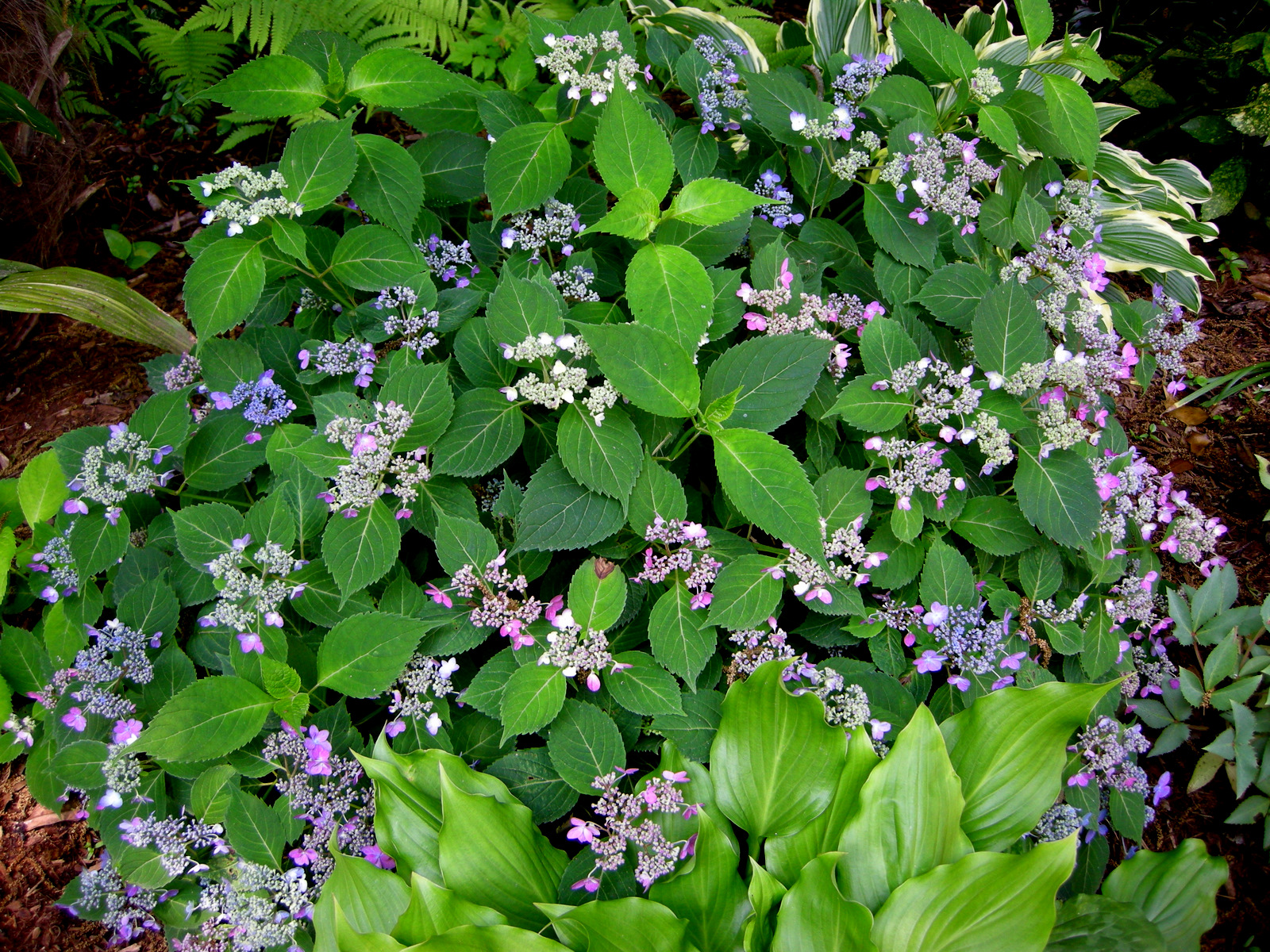
This lacecap hydrangea, H. serrata ‘Burgundy Edge’, was growing literally in the dark.

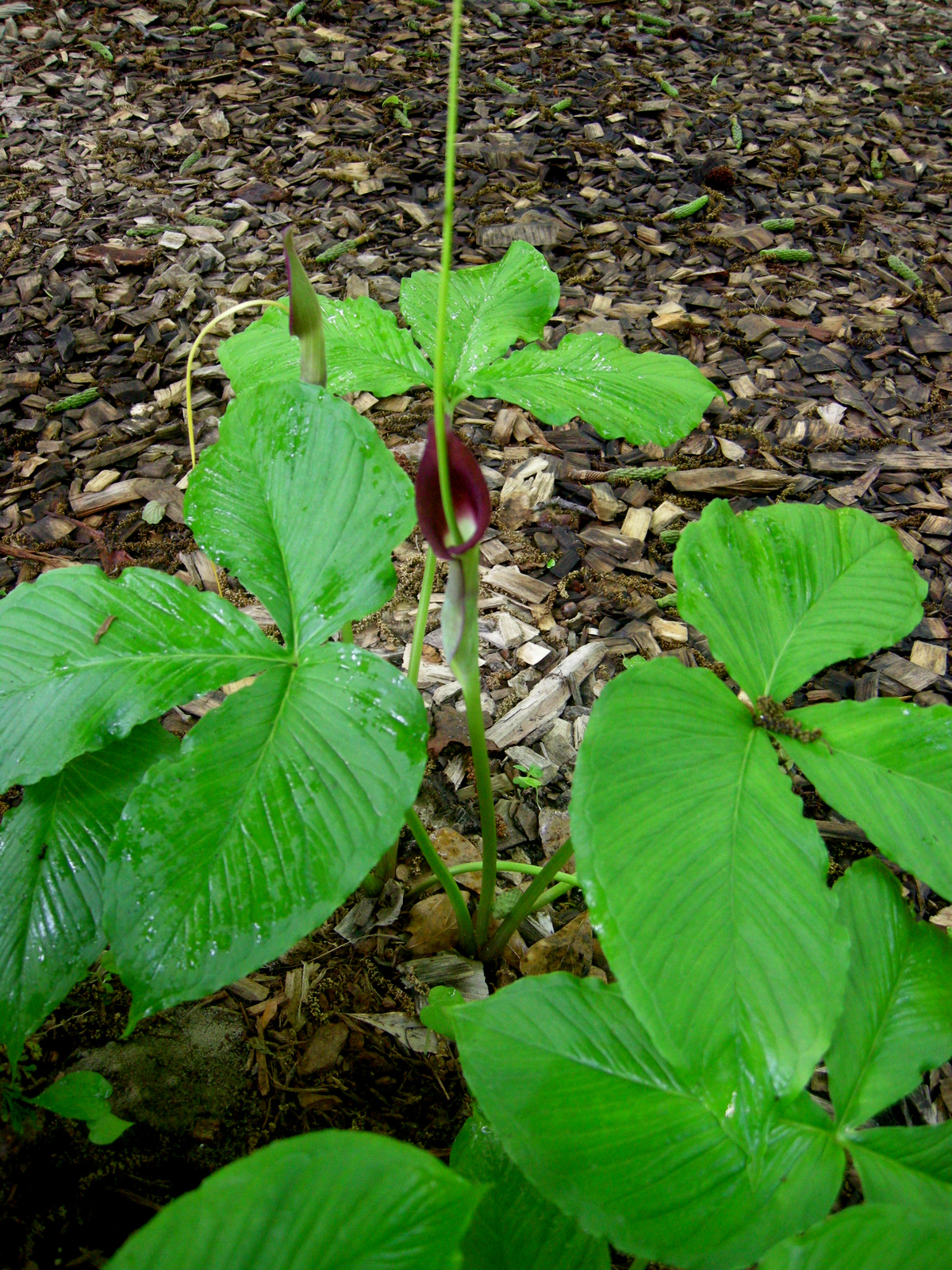
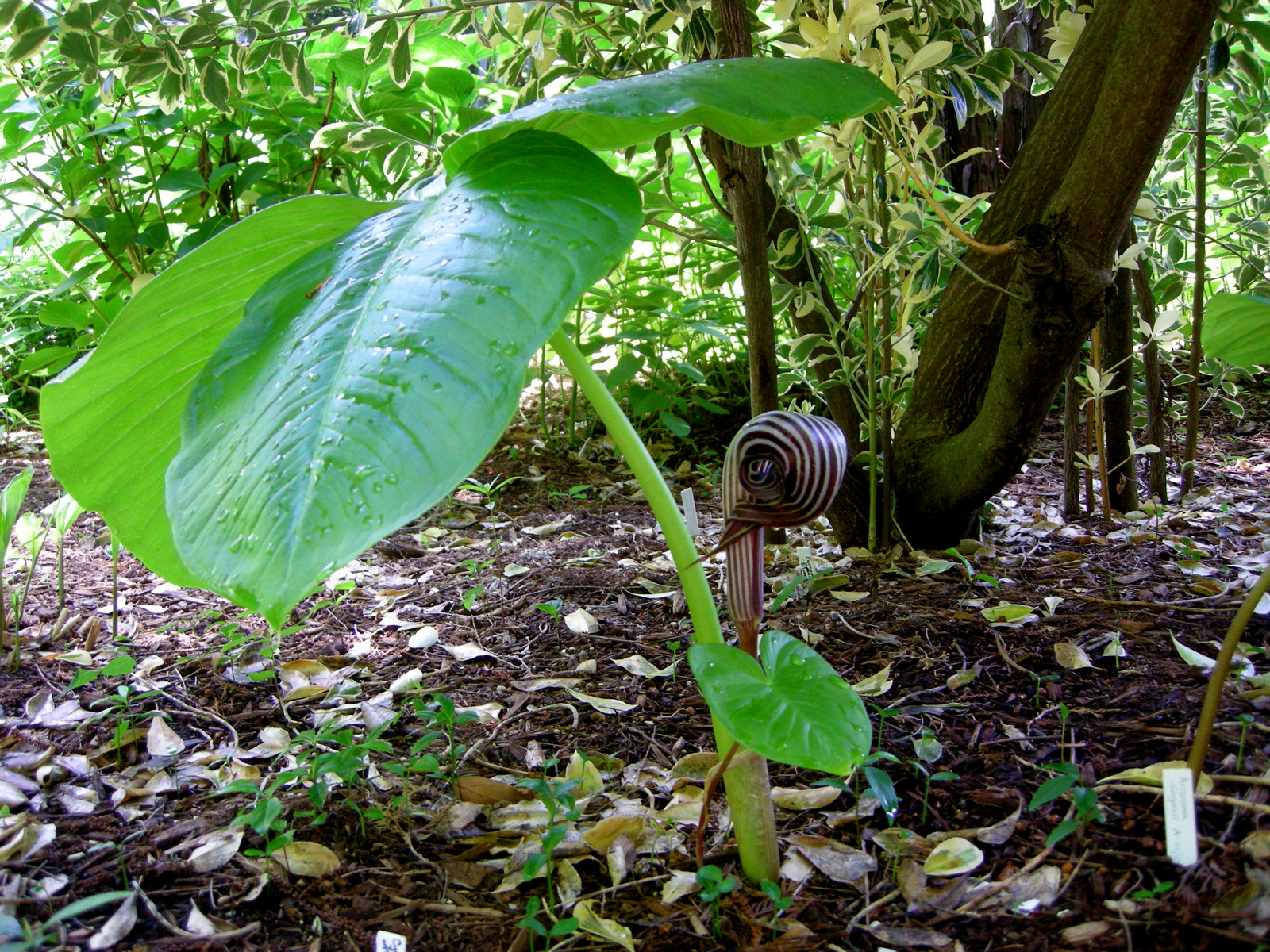
I love jack-in-the-pulpits, both native and Asian, and Plant Delights must have the best collection in the U.S.  Here are some of my favorites:

I didn’t realize that there were variegated forms of our native jack-in-the-pulpit, Arisaema triphyllum, but I saw two at Plant Delights: ‘Black Jack’ above and a white variegated cultivar called ‘Starburst’.

Taiwan cobra lily, Arisaema taiwanense

Jack-in-the-pulpit cross, Arisaema formosanum x consanguineum

Pinellia tripartita ‘Atropurpurea’

.

Arisaema thunbergii

Arisaema thunbergii ‘Wakayama’

Farges’s cobra lily, Arisaema fargesii, a close up of the flower appears at the beginning of the article.
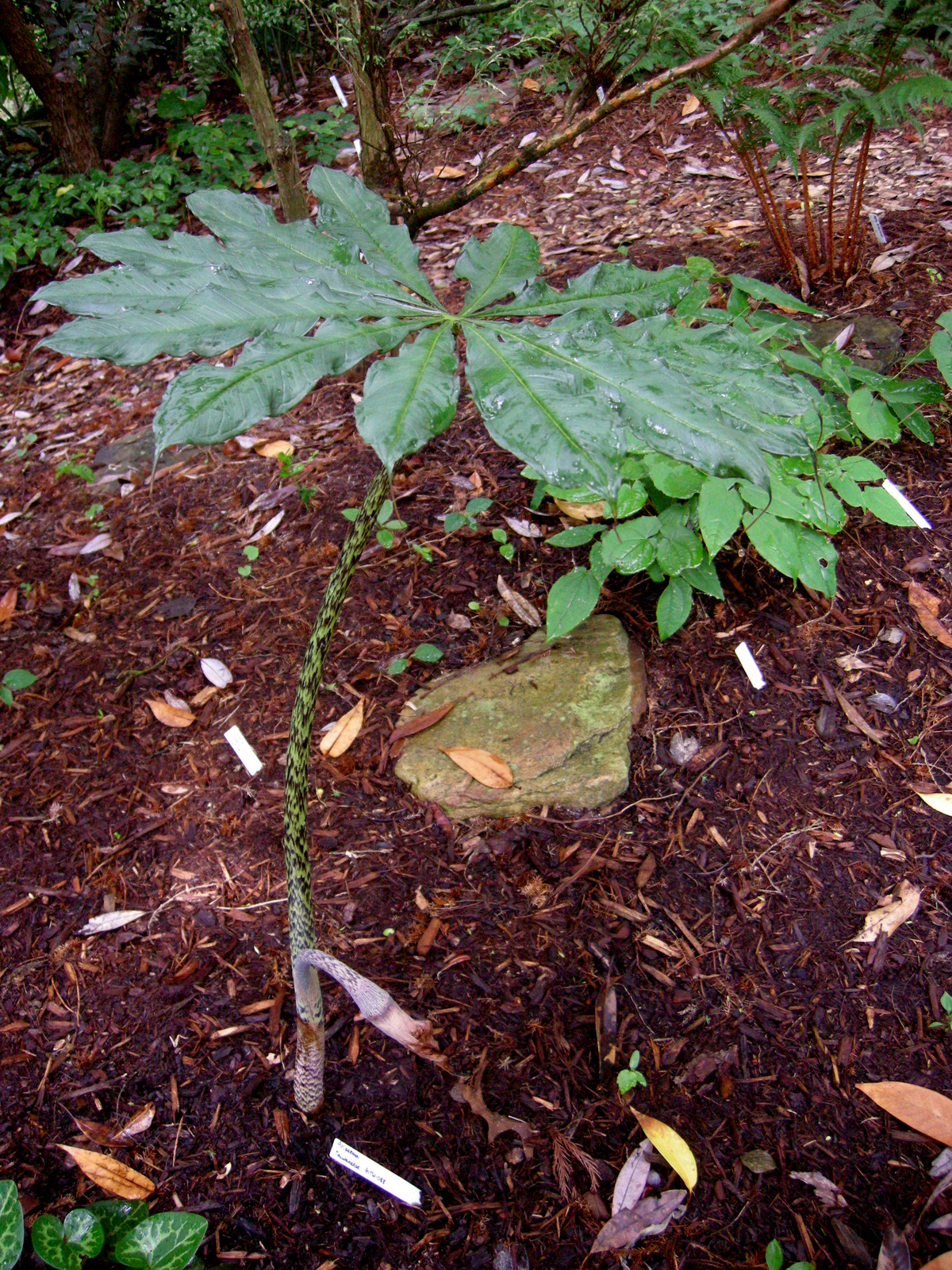
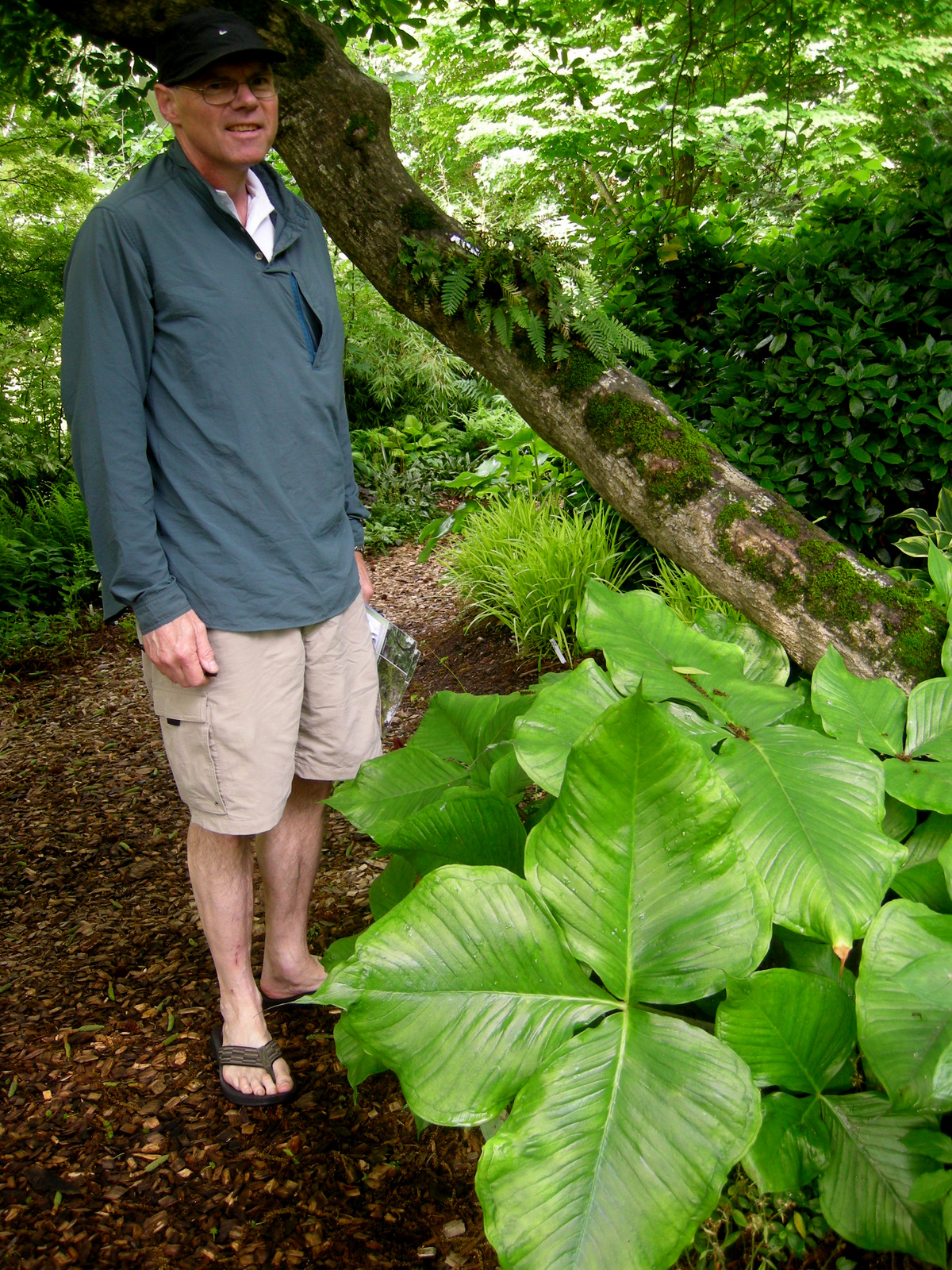
The leaves of Japanese cobra lily, Arisaema ringens, are immense.
Here is Michael standing next to Arisaema ringens for scale.
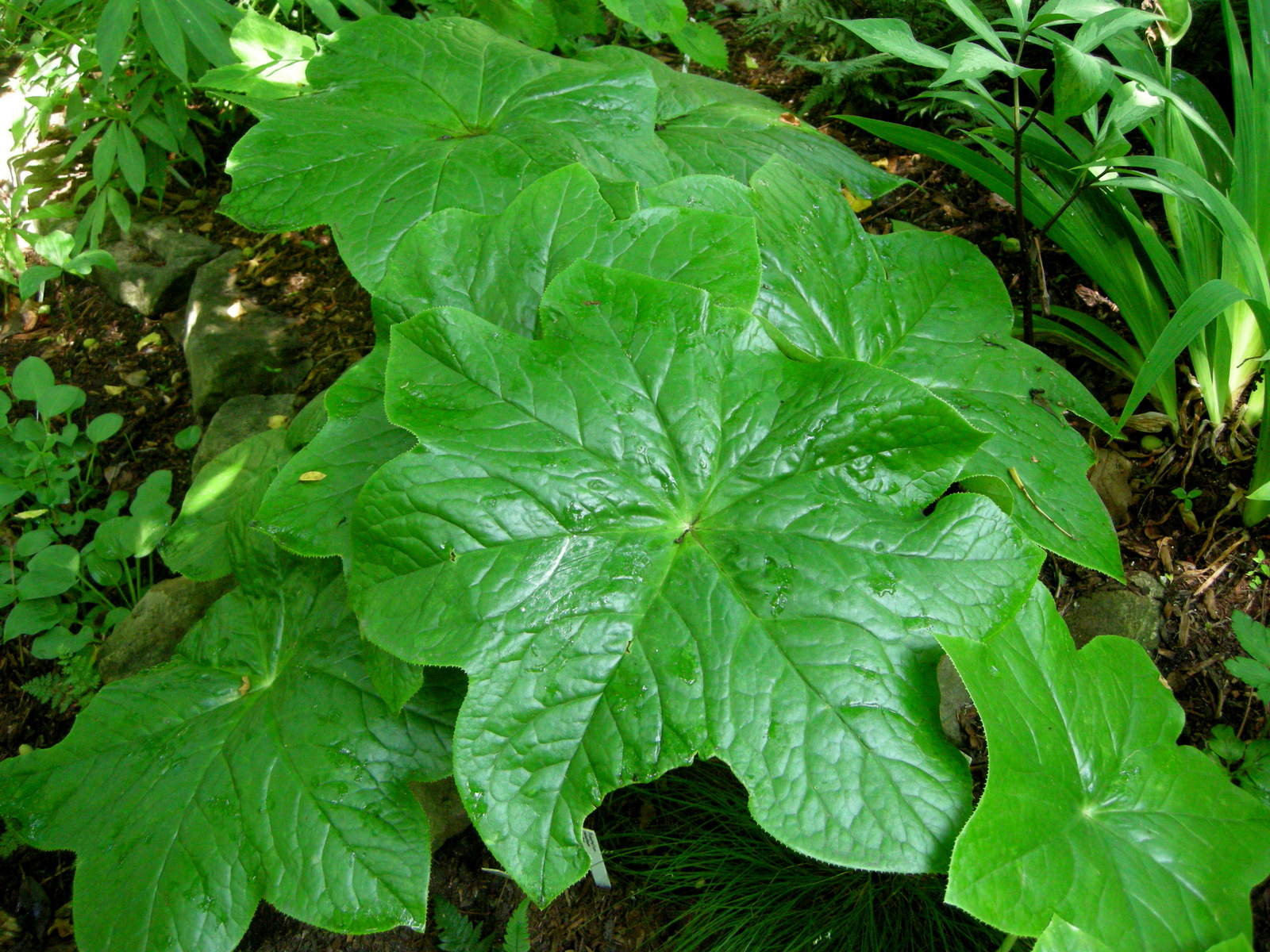
I can’t imagine that Plant Delights’ collection of another of my favorites, mayapples, Podophyllum sp., can be surpassed:

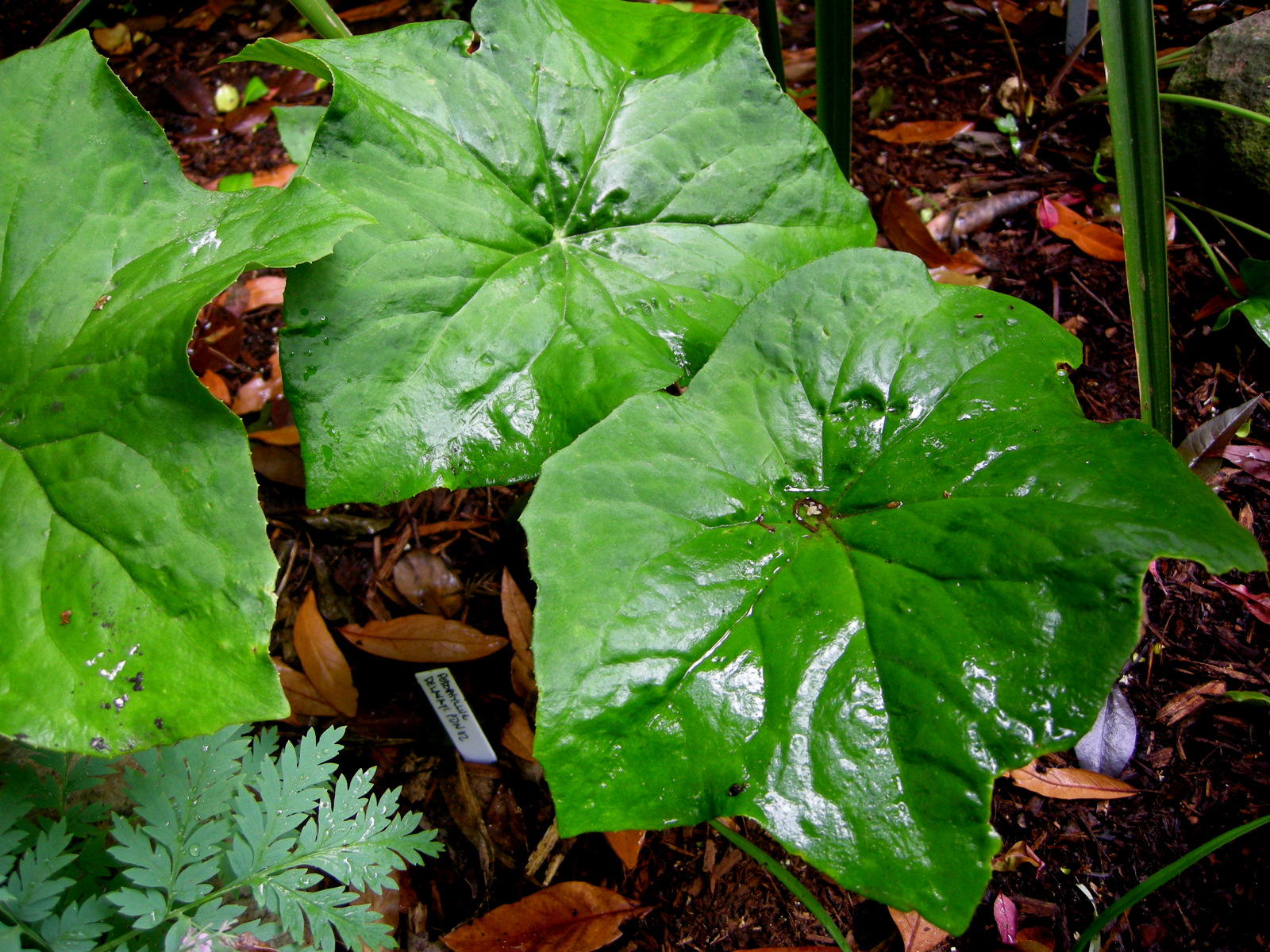
Chinese mayapple, Podophyllum delavayi

Chinese mayapple, Podophyllum versipelle

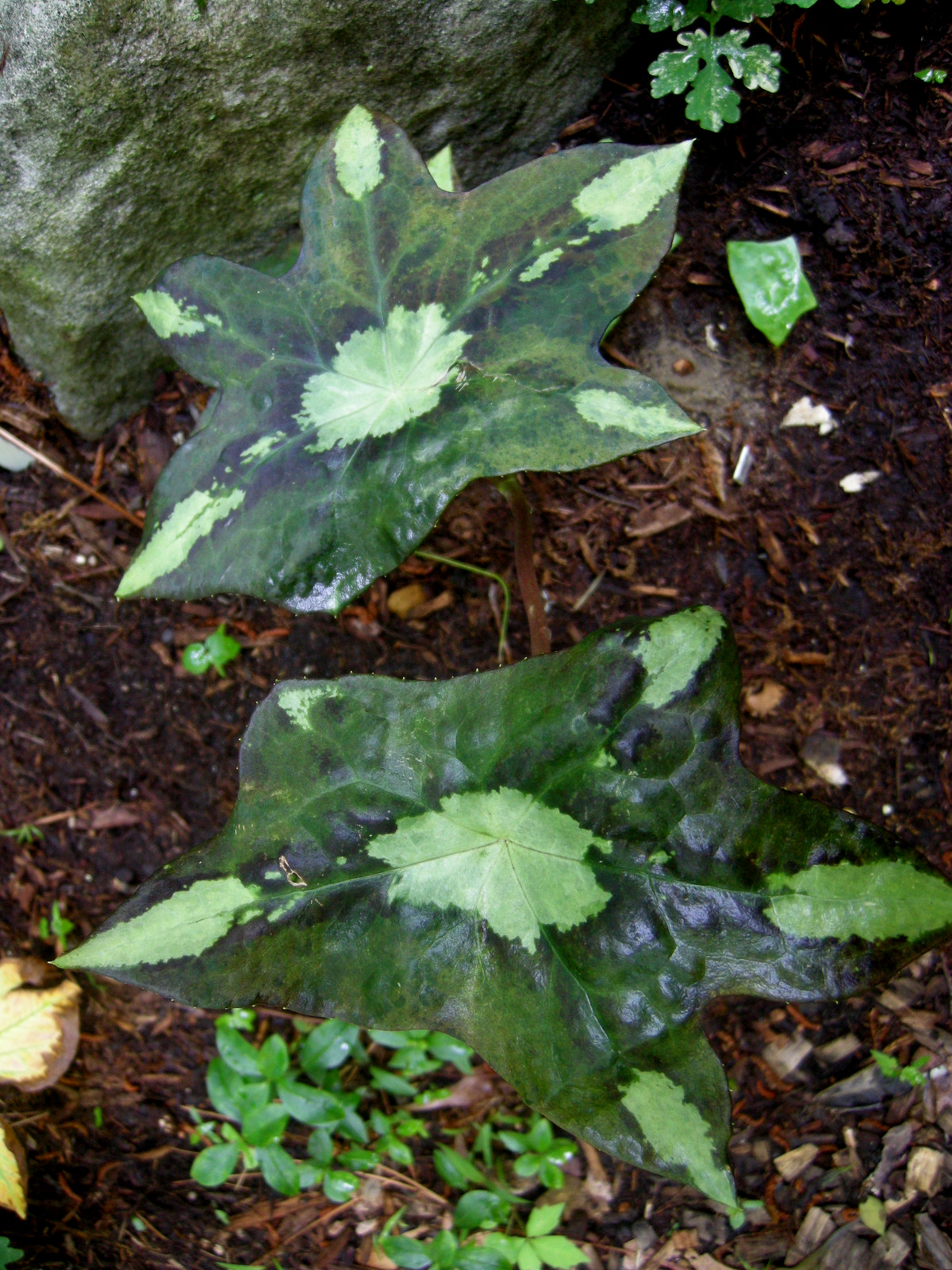
I had never seen the flowers of Podophyllum ‘Spotty Dotty’.

Chinese mayapple, Podophyllum pleianthum

Chinese mayapple, Podophyllum difforme, looks like it should be growing on Mars.

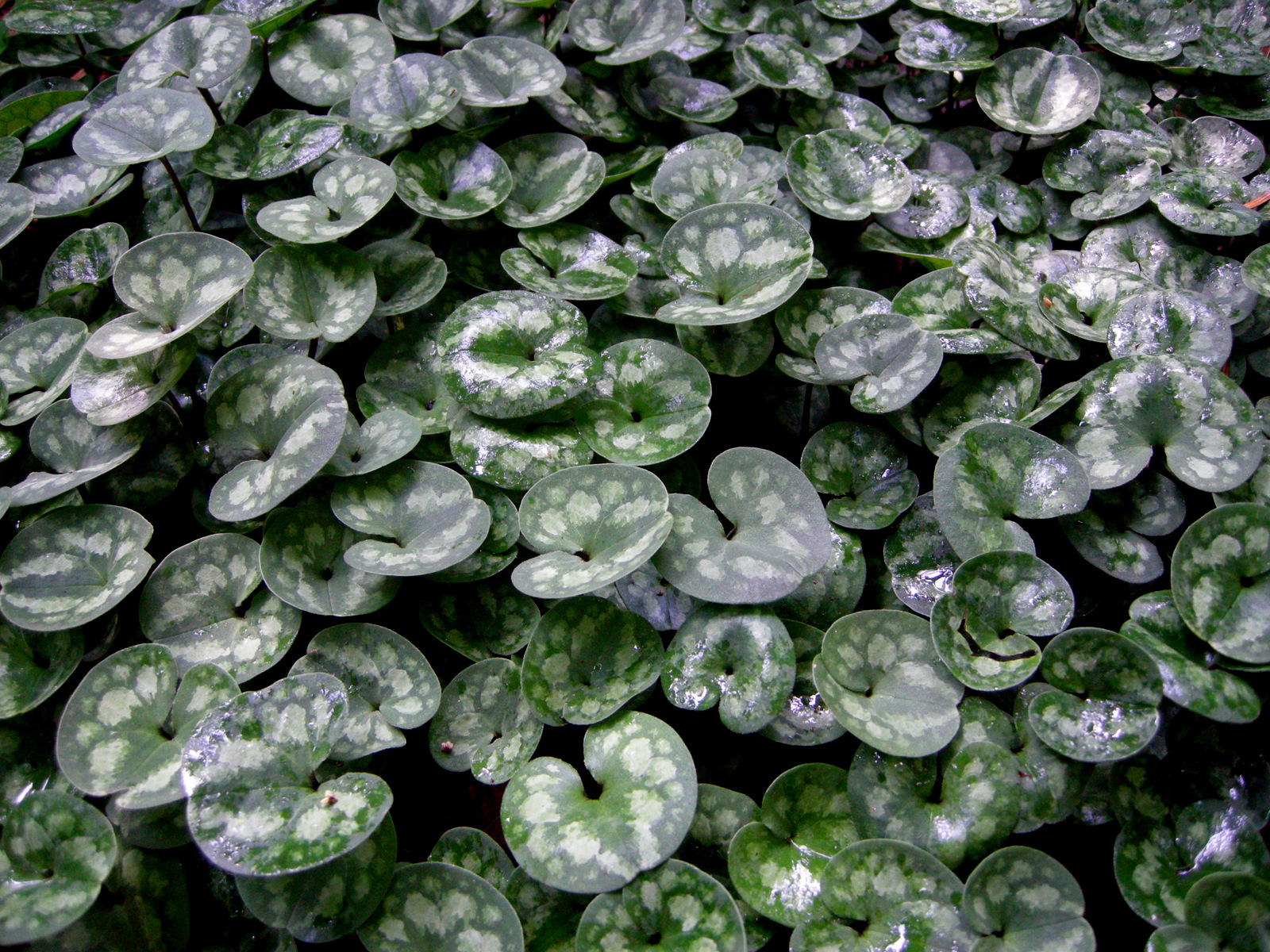
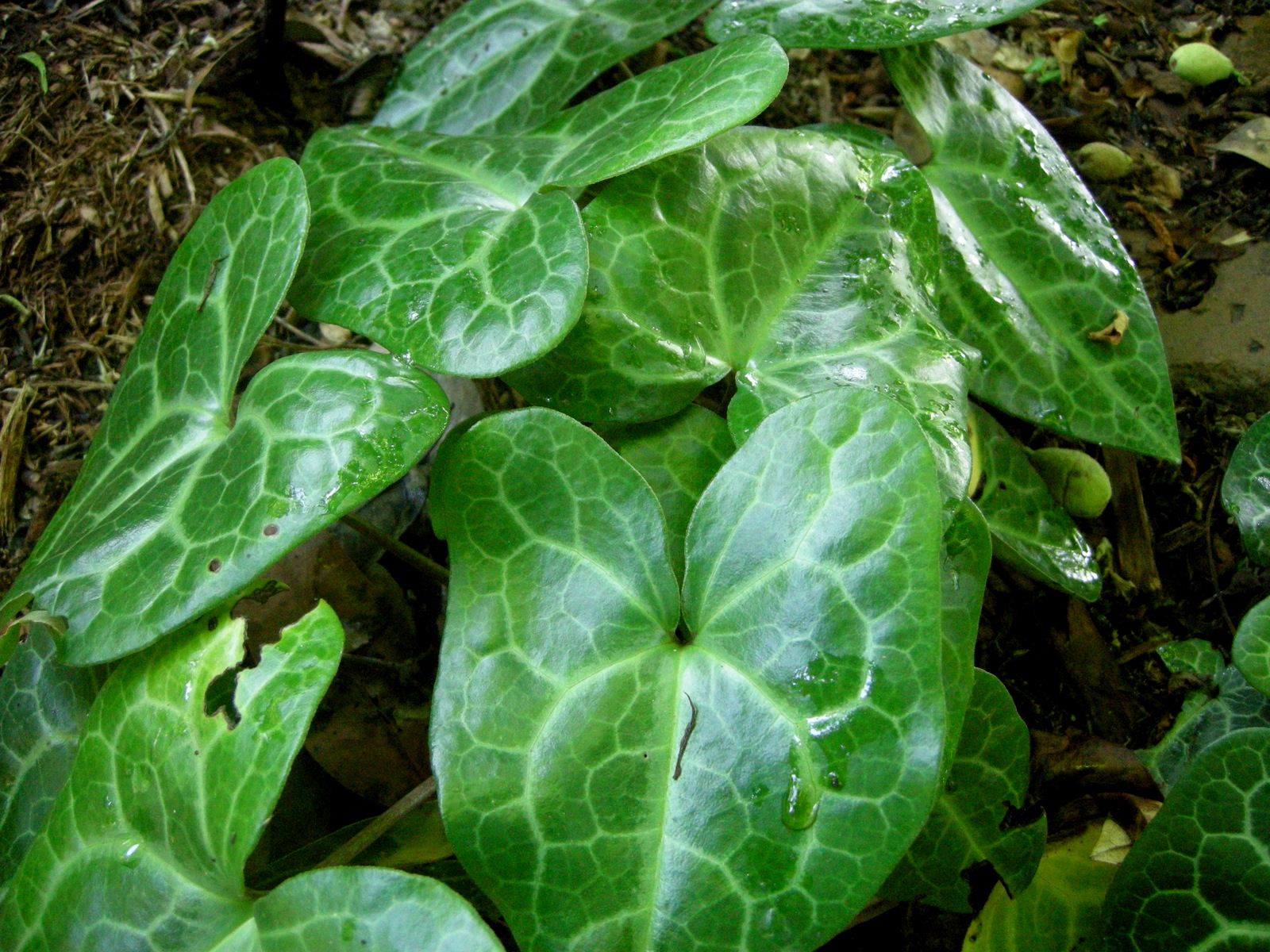
Plant Delights also has a comprehensive collection of wild gingers:

I wish my ‘Galaxy’ wild ginger, Asarum takaoi ‘Galaxy’, would grow like this.

Asarum takaoi ‘Sekkyo’

Asarum kumageanum

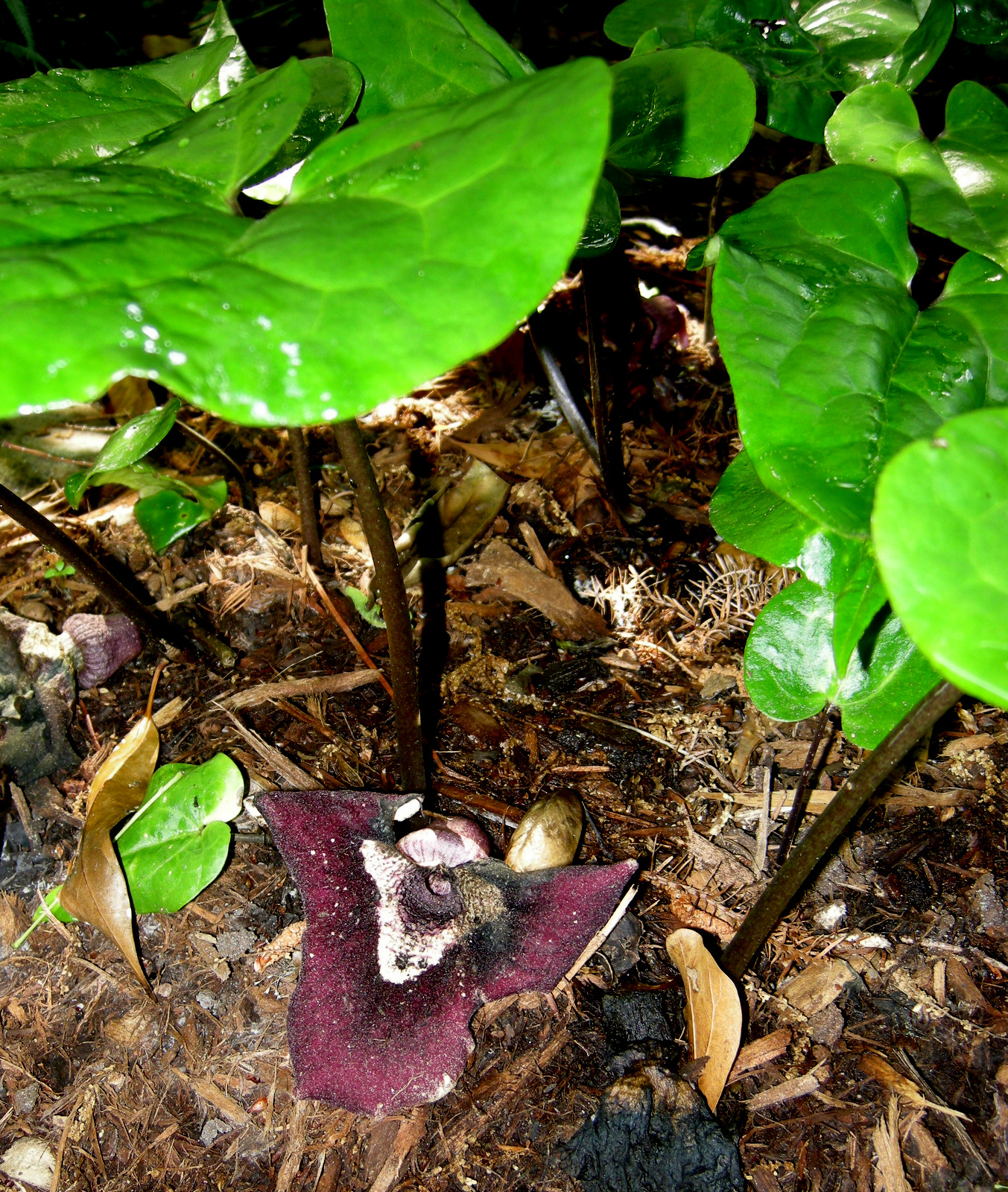
The flower of Asarum nobilissimum

Asarum maximum ‘Shell Shocked’

I found a number of other weird and wonderful shade plants that I would like to add to my gardens:

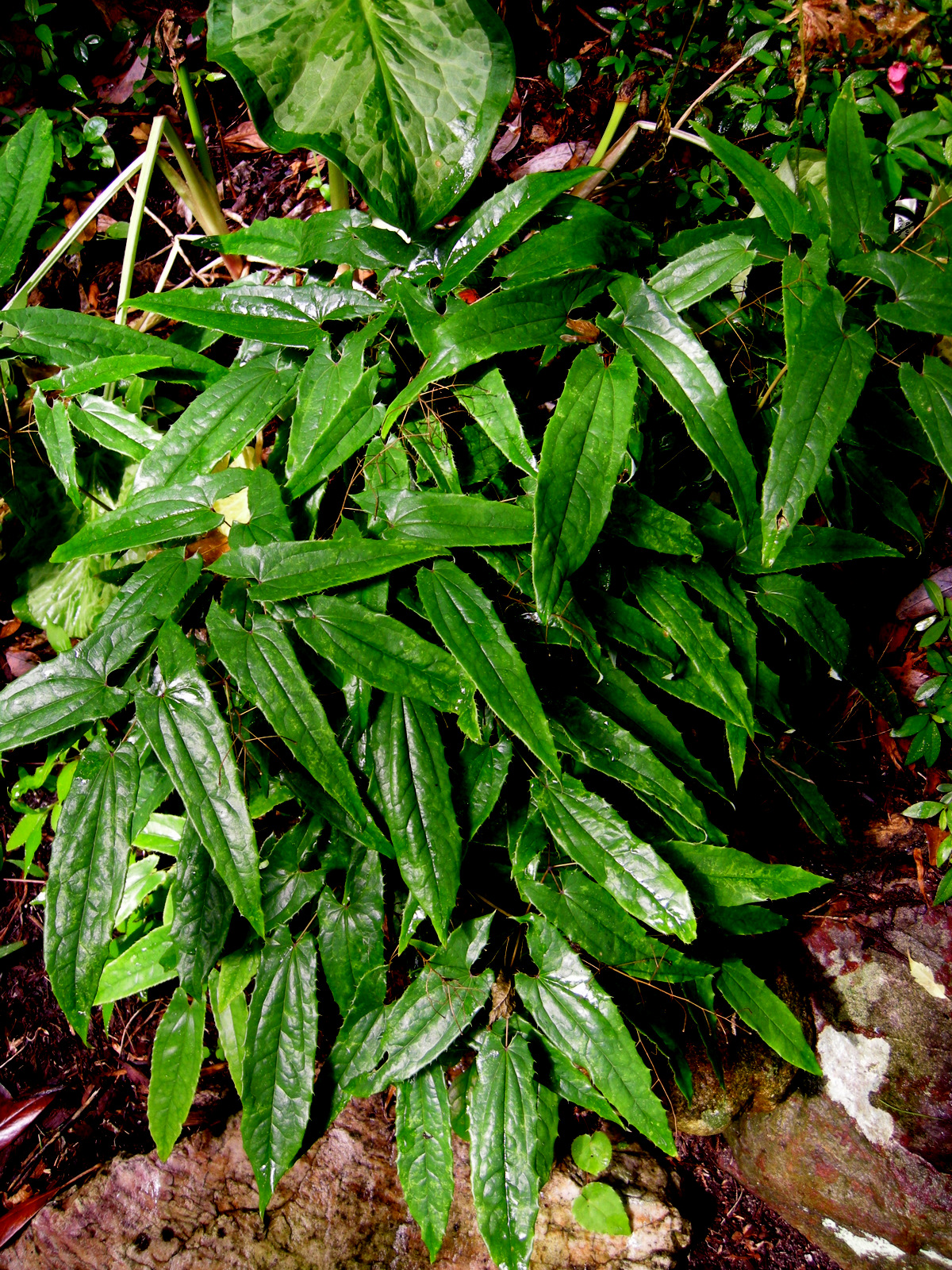
Barrenwort, Epimedium fargesii

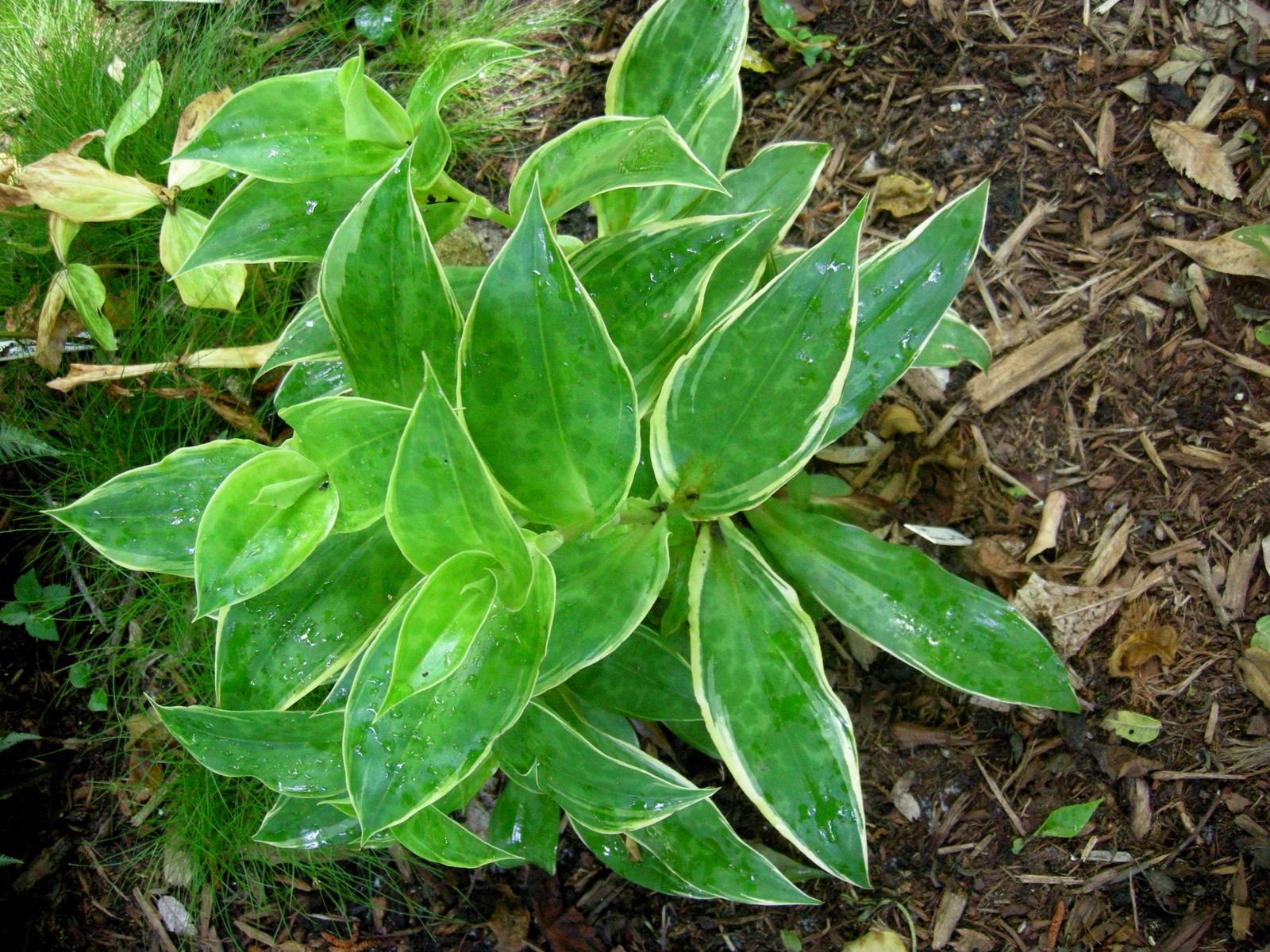
Toad-lily, Tricyrtis ‘Lunar Eclipse’

Very rare Paris species labeled “Wavy Leaf”

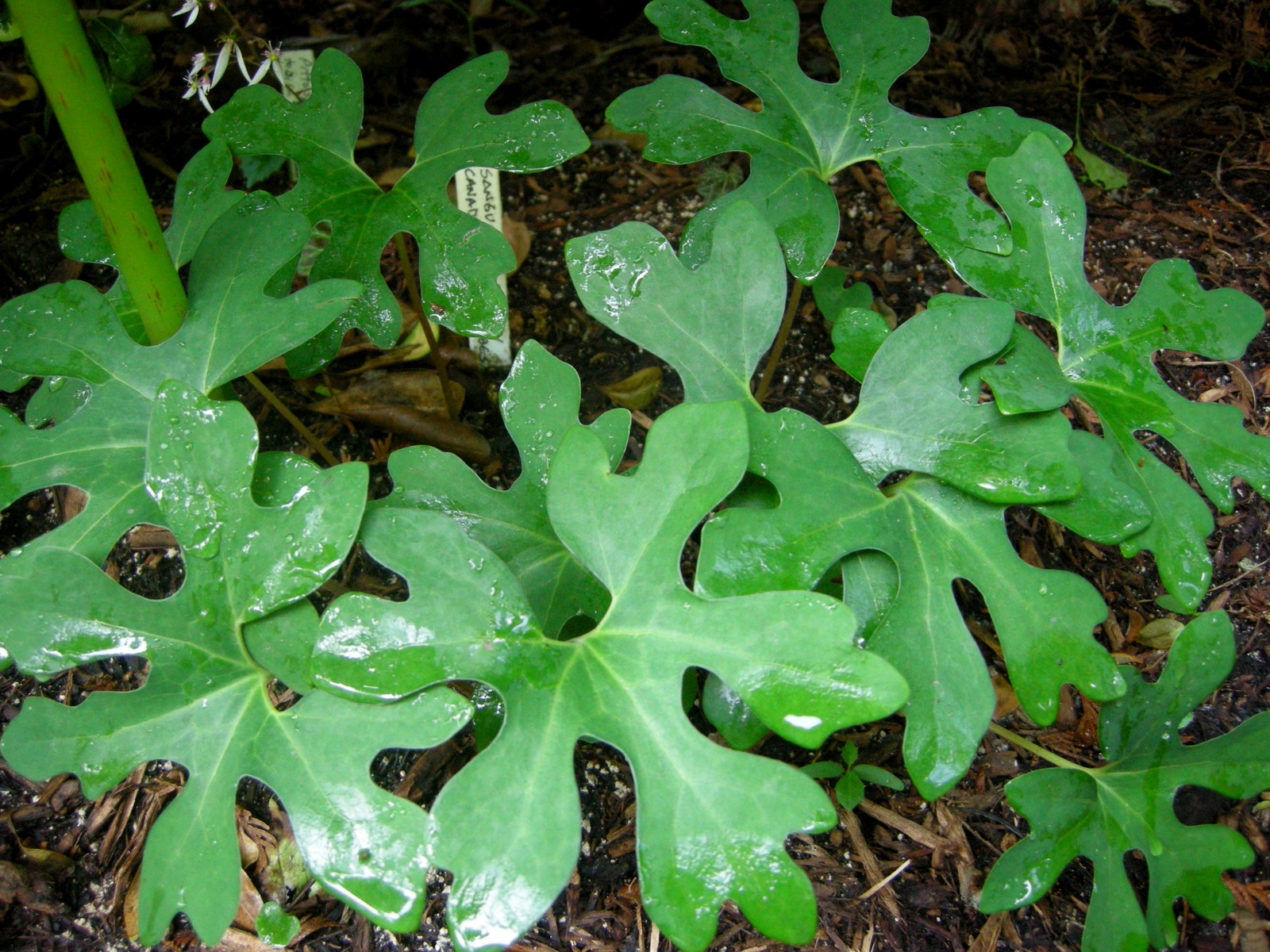
Native bloodroot, Sanguinaria canadensis “Deep Lobes”

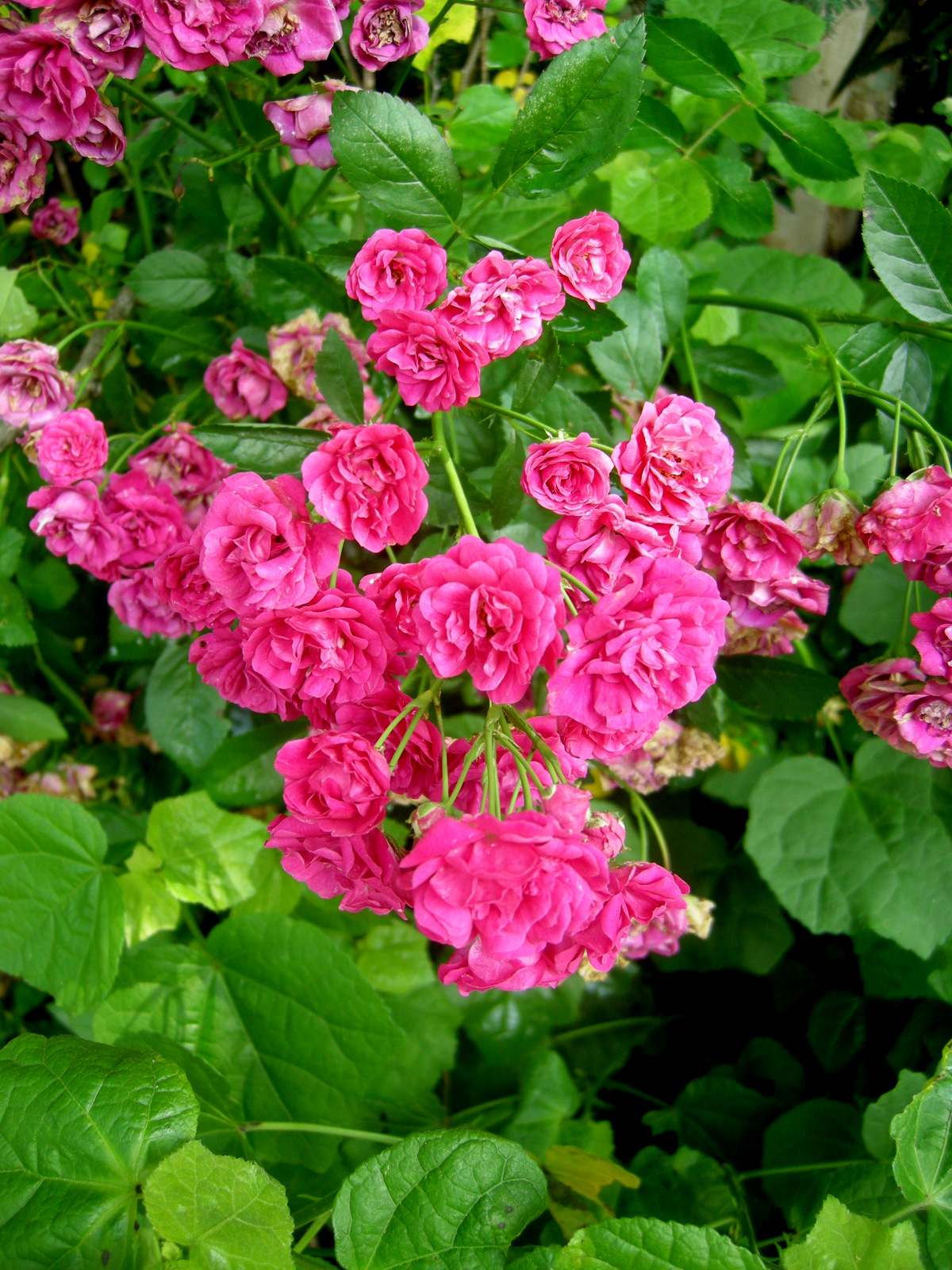
Rosa ‘Verdun’ was covered with flowers in full shade.

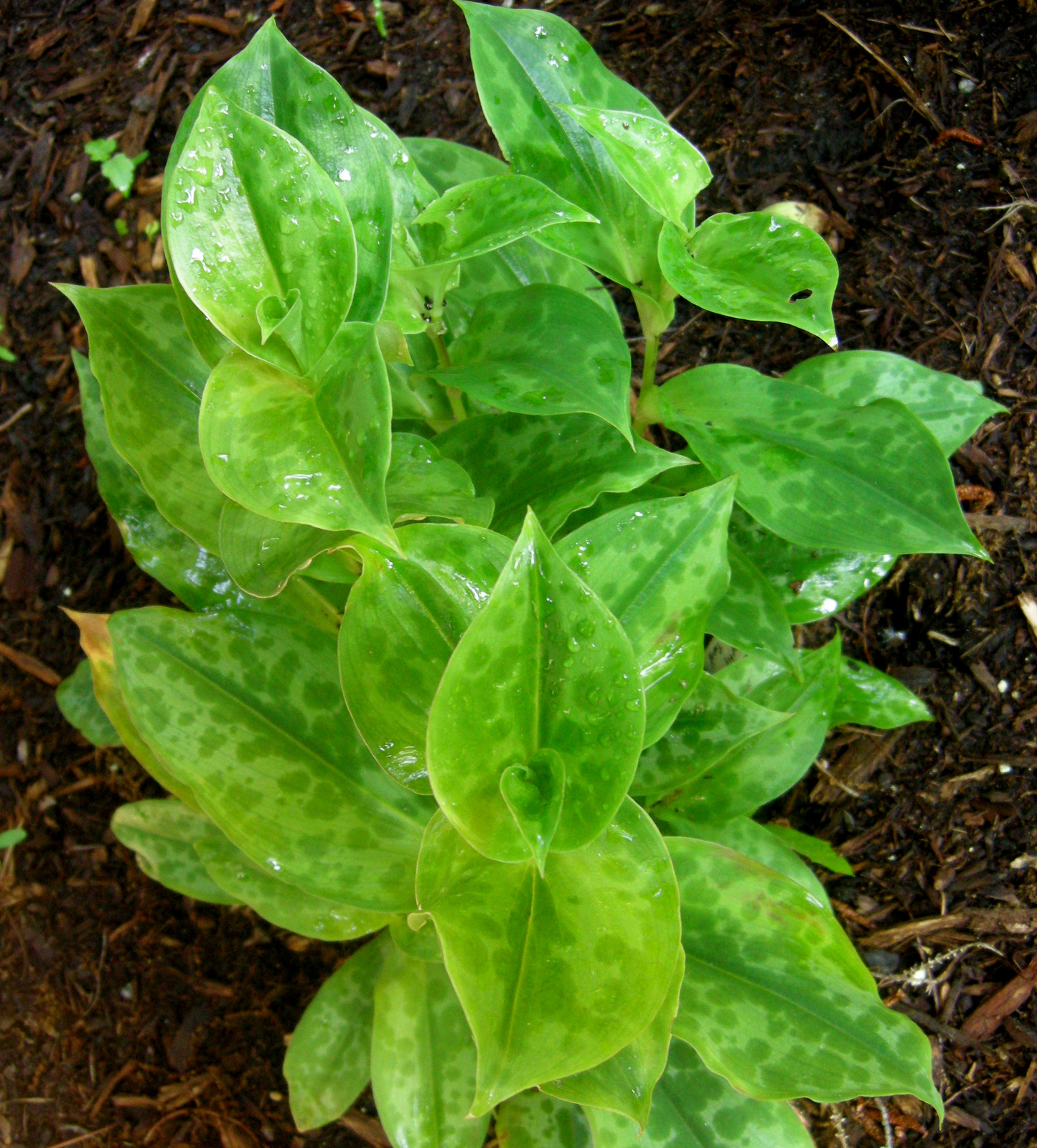
Toad-lily, Tricyrtis ‘Lemon Twist’

I was finally able to purchase a shredded umbrella plant, Syneilesis aconitifolia, which I have been coveting for years!

If you are in the area, I highly recommend that you visit the Juniper Level Botanic Gardens.  Plant Delights is open eight weekends a year for garden visits.  Their website lists the dates.  If you can’t visit then, you can always make an appointment.

Carolyn

Notes: Click on any photo to enlarge.  Every word that appears in orange on my blog is a link that you can click for more information.  If you want to return to my blog’s homepage to access the sidebar information (catalogues, previous articles, etc.), just click here.