Archive for the garden to visit Category

North Carolina and Duke Gardens

Posted in garden to visit with tags , , on June 28, 2011 by Carolyn @ Carolyns Shade Gardens

Carolyn’s Shade Gardens is a retail nursery located in Bryn Mawr, PA, specializing in showy, colorful, and unusual plants for shade.  The only plants that we ship are snowdrops and miniature hostas.  For catalogues and announcements of events, please send your full name, location, and phone number (for back up use only) to carolyn@carolynsshadegardens.com.  Click here to get to the home page of our website for catalogues and information about our nursery and to subscribe to our blog.
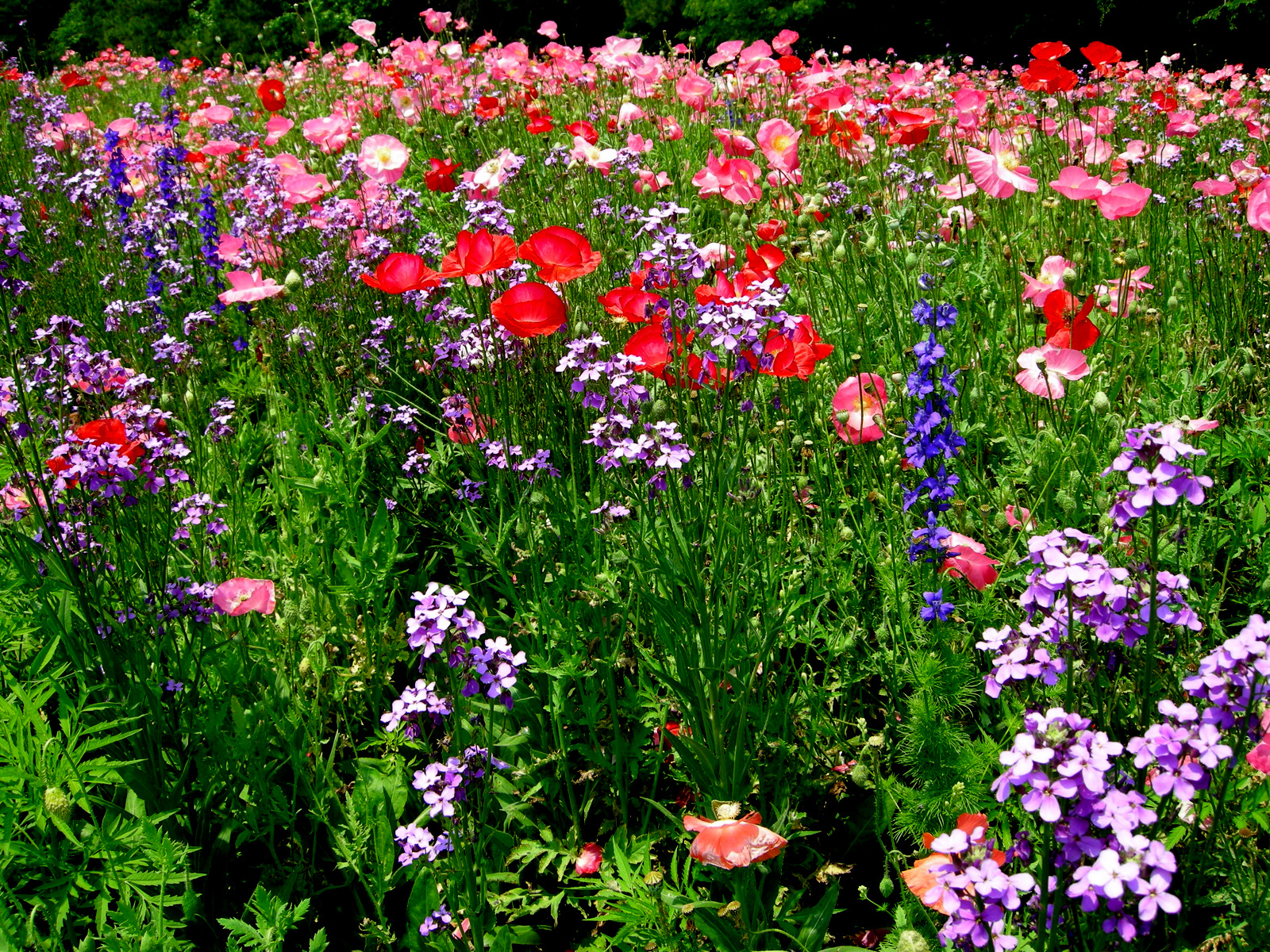
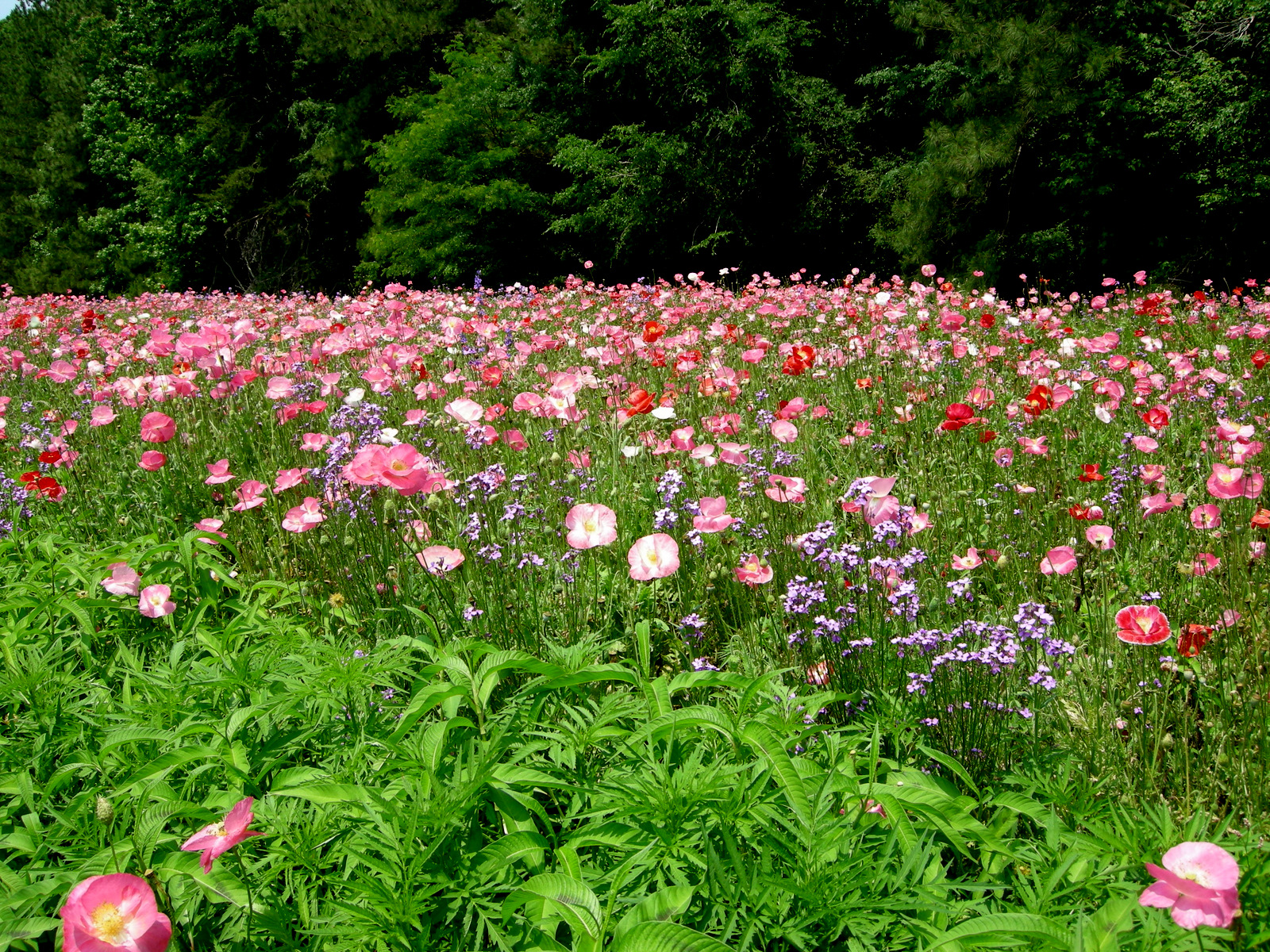
The interstate plantings of the North Carolina Highway Department are so beautiful that they could cause traffic accidents from the gawking of speeding gardeners.

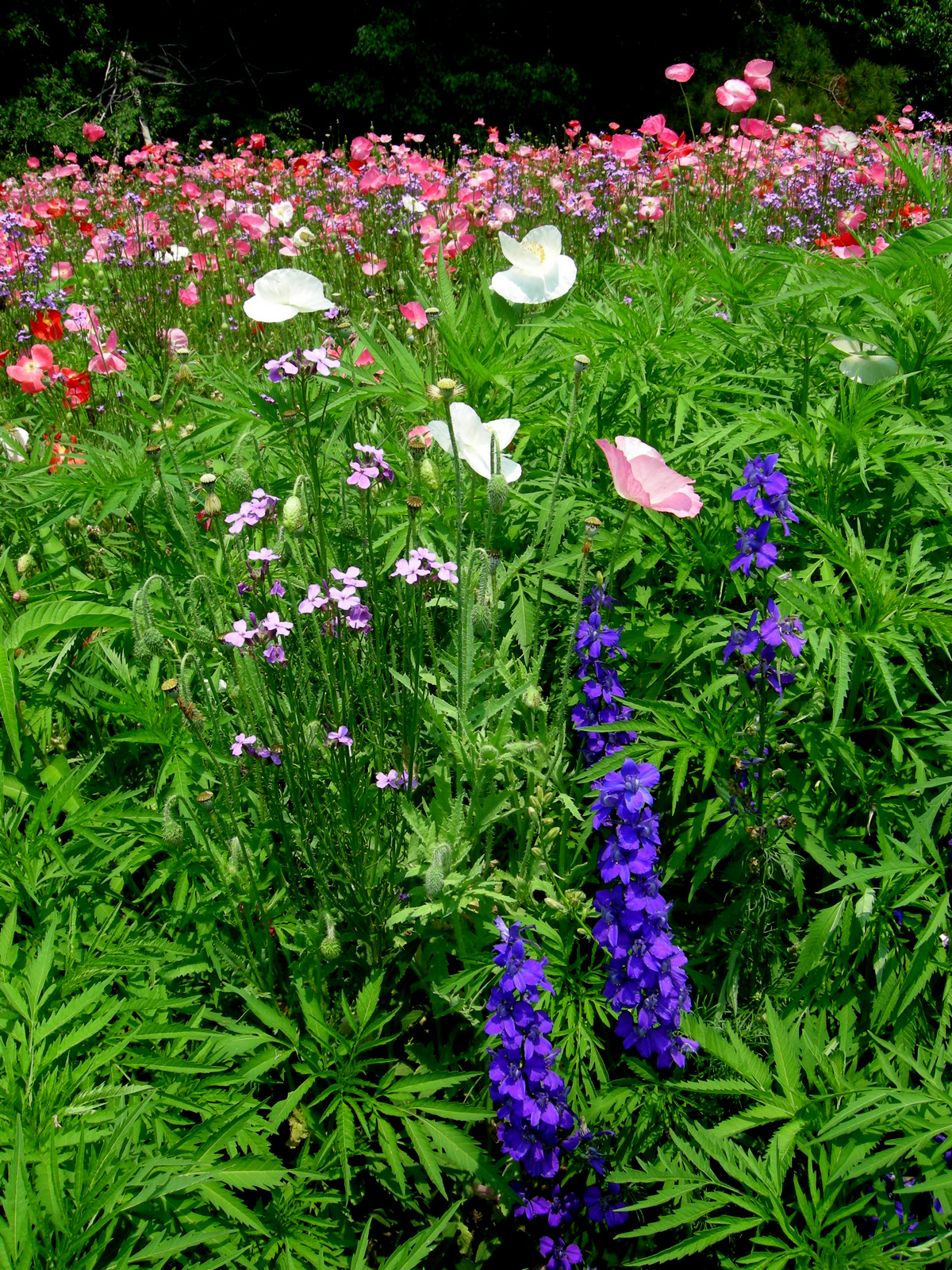
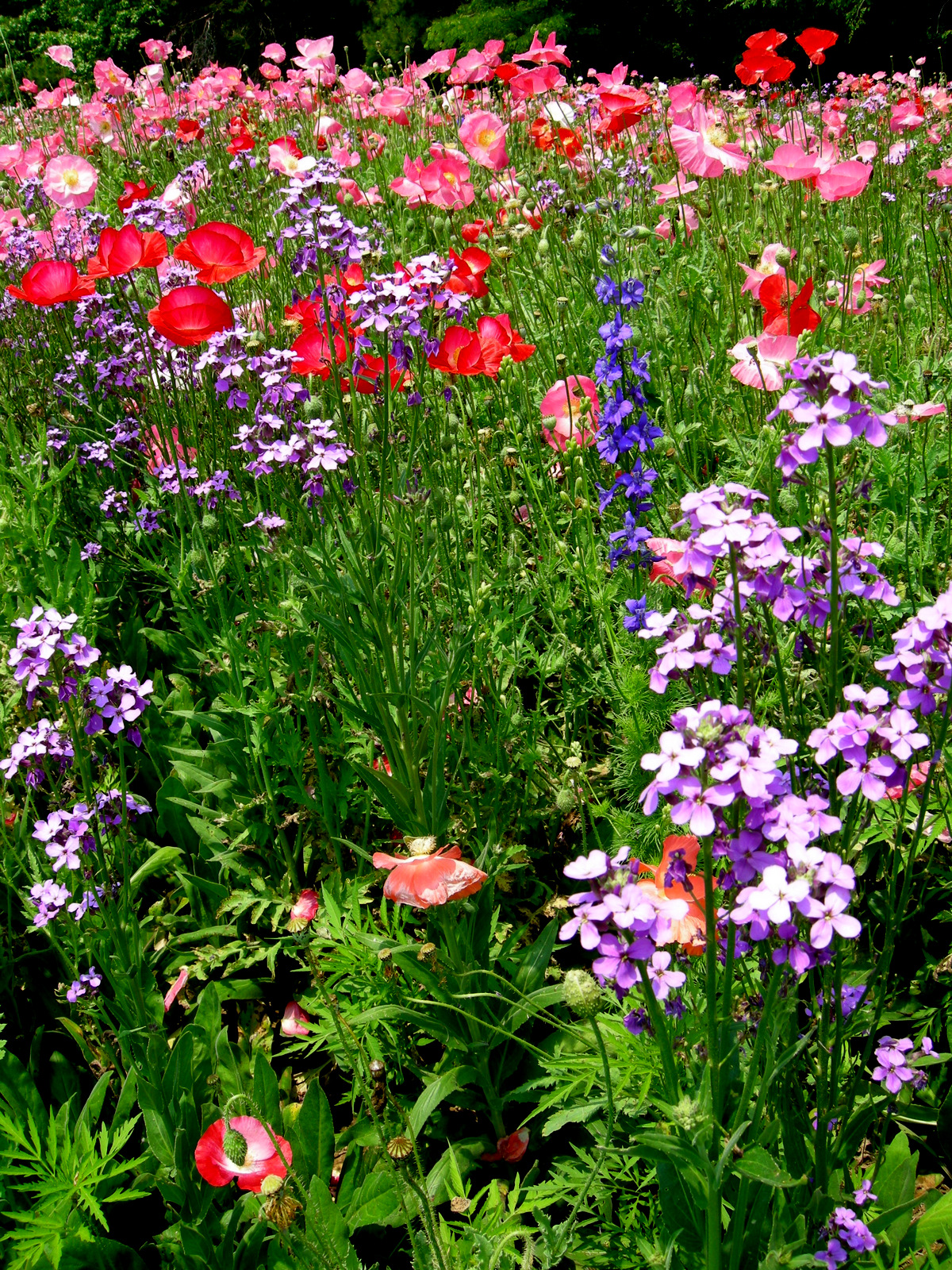
My oldest son just graduated from Elon University, in Elon, North Carolina.  My husband and I decided to make the graduation trip a mini-vacation so we spent four nights in Elon with two days dedicated to plants (of course).  Traveling to gardens around North Carolina is a pleasure due to the amazing roadside plantings installed by the highway department.  Instead of vast expanses of boring grass like we have in Pennsylvania, North Carolinians are treated to colorful displays of poppies, dame’s rocket, and larkspur.  Of course, it was an interstate so getting to the side to photograph the flowers was a hair-raising experience.  However, we made it:
One of our garden visiting days was spent at the Sarah P. Duke Gardens in Durham, North Carolina.  Duke Gardens is situated on 55 acres adjacent to Duke University’s West Campus and the Duke University Medical School.  The gardens opened in 1939, and today are comprised of four main areas: the historic terraced gardens, the native plant garden, the Asiatic Arboretum, and the Doris Duke Center for information and education.  We toured all four areas and found fascinating plants and enchanting sights everywhere we turned.

The first area, the Doris Duke Center and Gardens, encompasses the visitors’ center with educational facilities, a gift shop, and formal areas for events.  There was a wedding going on when we were there in the lovely gardens out back so we didn’t explore this part of the garden as much as we might have.

Behind the Doris Duke Center is a shady spring woodland garden.

Next to the woodland is a very interesting multi-level bog garden.

The second area, known as the Historic Gardens, is accessed down an impressive walk bordered by an allee of trees.  This area is the oldest and most formal part of the gardens with Italianate terraces full of annuals and perennials, a wisteria-covered pergola, a fish pool, a rock garden, and much more.  We ate lunch in the small shaded courtyard of the charming Terrace Cafe.

Formal entrance walk to the Historic Gardens.

The entrance walk leads to the rose garden.

The South Lawn area was filled with picnickers and surrounded by majestic southern magnolias, M. grandiflora, in full bloom.  As a northerner, I was captivated by the size and beauty of these trees, which were everywhere in NC.

The flower buds of southern magnolias are huge.

The flowers are breathtaking.

The rock garden area in the Historic Gardens.

The Iris Walk and Bridge.

I love these textures and colors.


The Terrace Cafe is in an elegant stone building surrounded by lovely shade gardens.  Out back is a  stone courtyard with outdoor seating.

The third area of Duke Gardens, and my favorite, is the H.L. Blomquist Garden, featuring over 900 species of regional natives.  The plants are very well-labeled and displayed, making it an excellent resource for gardeners interested in adding natives to their landscape.  The shady paths meander through lovely stands of  trees and shrubs underplanted with shade-loving groundcovers.

The gatehouse at the entrance of the H.L. Blomquist Garden.

Path on the hillside above the Blomquist Pavilion.

There were many mature loblolly pines, Pinus taeda.

The bark of loblolly pines is gorgeous.

This is the biggest oakleaf hydrangea, H. quercifolia, I have ever seen.

I was especially taken with this shady groundcover known as beetleweed, Galax urceolata.

I also wish this wild ginger or heartleaf, Hexastylis lewisii, would grow as a groundcover in my garden.

Duke Gardens is huge and by the time we got to the fourth area, the W.L. Culberson Asiatic Arboretum, we were pretty hot and tired so not many photos were taken.  There are over 1.300 Asian species and cultivars in this collection.

A great blue heron looks for fish in the Asiatic Arboretum’s large pond with the red Ayamebashi or Iris Bridge in the background.

The shrub collection in the Asiatic Arboretum is extensive with many I had never seen before, including this large spider azalea, Rhododenron macrosepalum.

I was captivated by the orange flowers and evergreen-looking leaves on this pomegranate, Punica granatum ‘Madame Lagrelle’ (thanks for the ID help) .

I wanted to include a close up of the flowers for my good friend Donna at Garden Walk Garden Talk.  I think she may want to plant this shrub next to her orange iris!

I hope you have enjoyed your virtual tour of the Sarah P. Duke Gardens.  If you are ever in North Carolina, it is definitely worth a real visit.  I have added a link to my sidebar under Places to Visit so you will always be able to find it.

Carolyn


Notes: Click on any photo to enlarge.  Every word that appears in orange on my blog is a link that you can click for more information.  If you want to return to my blog’s homepage to access the sidebar information (catalogues, previous articles, etc.), just click here.


Nursery Happenings:  The nursery is closed until it cools off in the fall around the middle of September.  If you are on my customer email list, look for an email.  If not, sign up by sending an email to carolynsshadegardens@verizon.net with your name and phone number.

Chanticleer Part 1: A Pleasure Garden

Posted in garden to visit, landscape design with tags on April 20, 2011 by Carolyn @ Carolyns Shade Gardens

Nursery News:  Carolyn’s Shade Gardens is a retail nursery located in Bryn Mawr, PA, specializing in showy, colorful, and unusual plants for shade.  The only plants that we ship are snowdrops within the US.  For catalogues and announcements of local events, please send your full name, mailing address, and cell number to carolyn@carolynsshadegardens.com and indicate whether you are interested in snowdrops, hellebores, and/or hostas.  Click here to get to the home page of our website for catalogues and information about our nursery and to subscribe to our blog.

Asian mayapple, Podophyllum ‘Spotty Dotty’

I recently visited the gardens at Chanticleer in Wayne, Pennsylvania, U.S., with garden bloggers from out of town.  In March, I went with Jill from Landscape Lover’s Blog, and on Sunday, I returned with Jean from Jean’s Garden and Jan from Thanks for Today.  Although I visit Chanticleer frequently, looking at the gardens through their eyes gave me a renewed appreciation for just how magical and amazing it is.

March color at Chanticleer, clockwise from upper left: paperbush, Edgeworthia chrysantha; Iris species; Sedum ‘Angelina’; spring-blooming hardy cyclamen, Cyclamen coum

Chanticleer calls itself “A Pleasure Garden” and that title perfectly reflects the unique feeling the garden conveys.  Although it is open to the public, it has an intimacy found only in a garden designed by individuals who are both artists and plantspeople.   Plants are used for their pleasing horticultural attributes, but also as objects in design for color and pattern.  Serious garden elements abound, but whimsy and the element of surprise are just as important.  I have been going to Chanticleer since it opened to the public in 1993, and I have never left without numerous ideas for my own gardens.

More March color at Chanticleer, clockwise from upper left: Iris species; Amur adonis, Adonis amurensis; twin-leaf squill, Scilla biflolia; Kuma bamboo grass, Sasa veitchii

Chanticleer was the country estate of pharmaceutical magnate Adolph Rosengarten and his wife Christine.  The Rosengartens built the original house in 1913 and hired landscape architect Thomas Sears to design the terraces surrounding it.  Additional homes were built for their children in the 1930s.  Adoph’s son left the 35 acre property to the public in 1990, and it opened to visitors in 1993.

March view from the Gravel Garden towards the Serpentine Garden showing the willows being trained and woven to resemble ancient olive trees.

The same view as above in April showing the beds that will be filled with a single annual plant to achieve the serpentine pattern visible from several vantage points in the garden.

Although Chanticleer has many amazing features, the primary attraction for me, and something I find unique to this garden, is the incredible attention to detail both in the big picture (see two photos above) and also in the smallest elements (see top photo).  Although you read this about gardens all the time, Chanticleer takes the concept to heights never approached by any public garden I have ever visited.  To give you a sense of the thoughtfulness displayed throughout the garden, I have decided to organize my photos starting with landscape shots and ending with individual plants, from macro to micro.  In doing this, I hope to convey a feeling for what Chanticleer has to offer.

The long views and big picture landscape design at Chanticleer are gorgeous:

The Gravel Garden contains plants that like hot, dry, Mediterranean conditions, and they are allowed to self-seed to give it a natural unkempt look to link it to the adjoining Ruin Garden.

At this time of year, you can see the “bones” of the Pond Garden, which will shortly be obscured by flowers.

Looking back up the hill from the pond area towards the Ruin and Gravel Gardens.

Back terrace of the Chanticleer house

View from the front terrace of the house to Minder Woods.

Individual gardens are equally as enchanting:

The entrance courtyard garden is filled with colorful annuals and bulbs.

The Teacup Garden is always changing.  Right now it is planted with edible plants, including the different lettuces above used to make blocks of color.

The Gravel Garden extends out to the hill below the ruin and is filled with unusual bulbs.

Spring flowers in the Pond Garden

The gravel in the front courtyard of the Chanticleer house is raked daily to produce a circular pattern, this time of year overlayed with falling cherry blossoms.

The containers at Chanticleer are spectacular:

Entrance courtyard

Teacup Garden

Plantings in the railings leading to the Tennis Court Garden

Some containers display a single plant to perfection, Asian mayapple, Podophyllum ‘Spotty Dotty’.

The artistic elements are very unique, from hardscape to furniture to sculptures:

Marble heads immersed in water in the Ruin Garden

Minimalist containers in the Teacup Garden

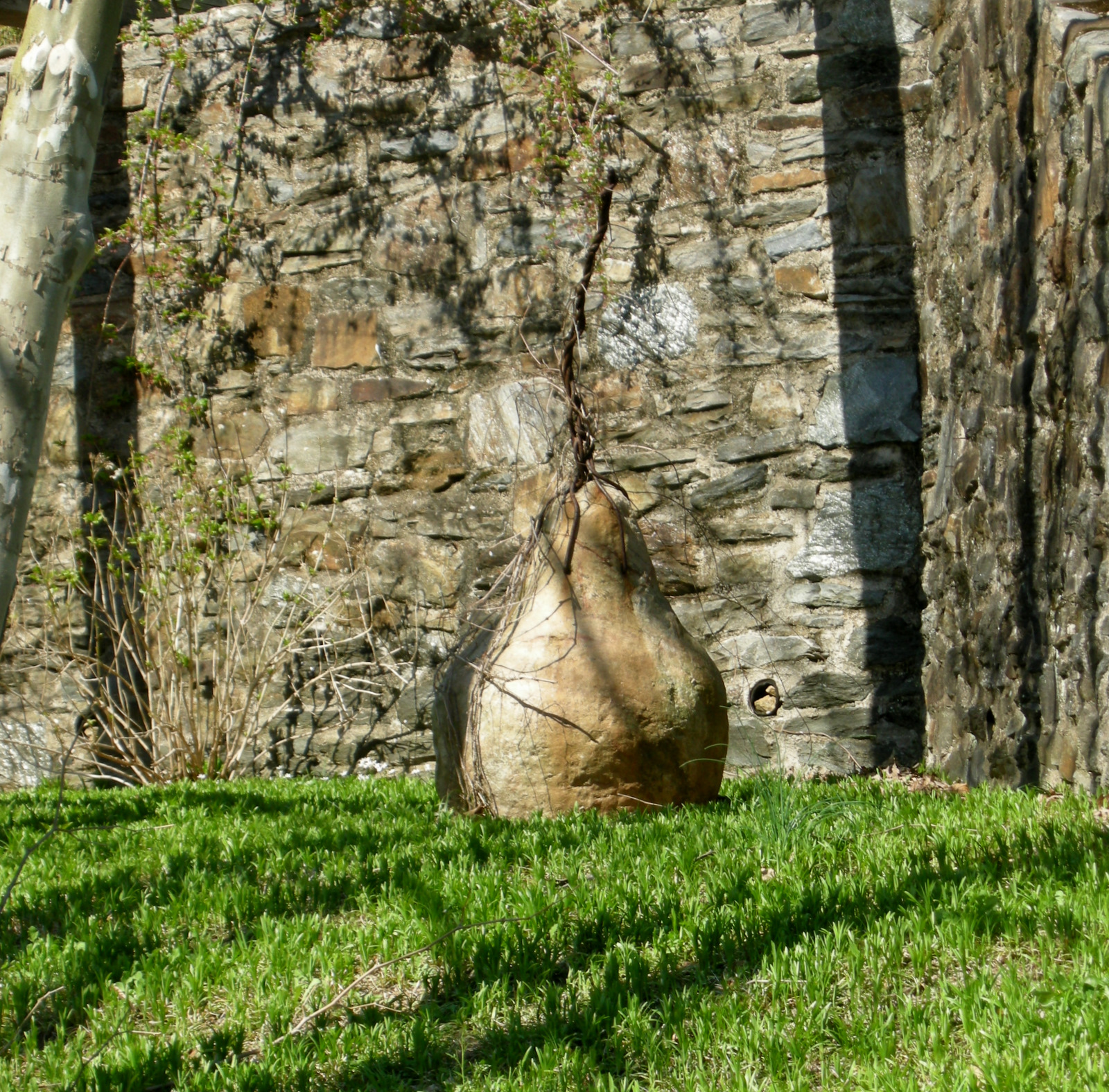
Stone pear in the Pond Garden

Each individual plant is grown and displayed to perfection:

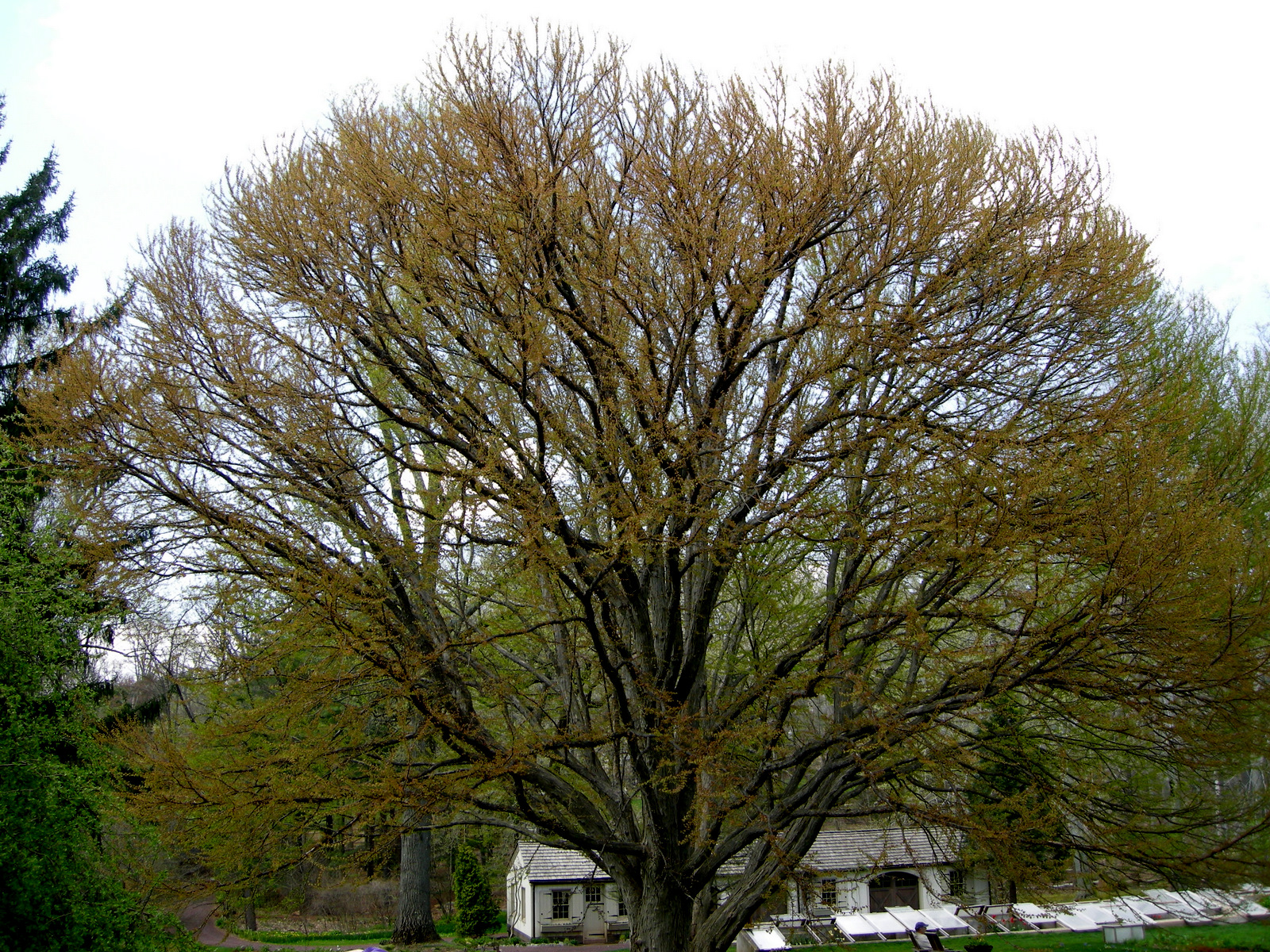
Katsura tree, Cercidiphyllum japonicum, in the Cut Flower Garden

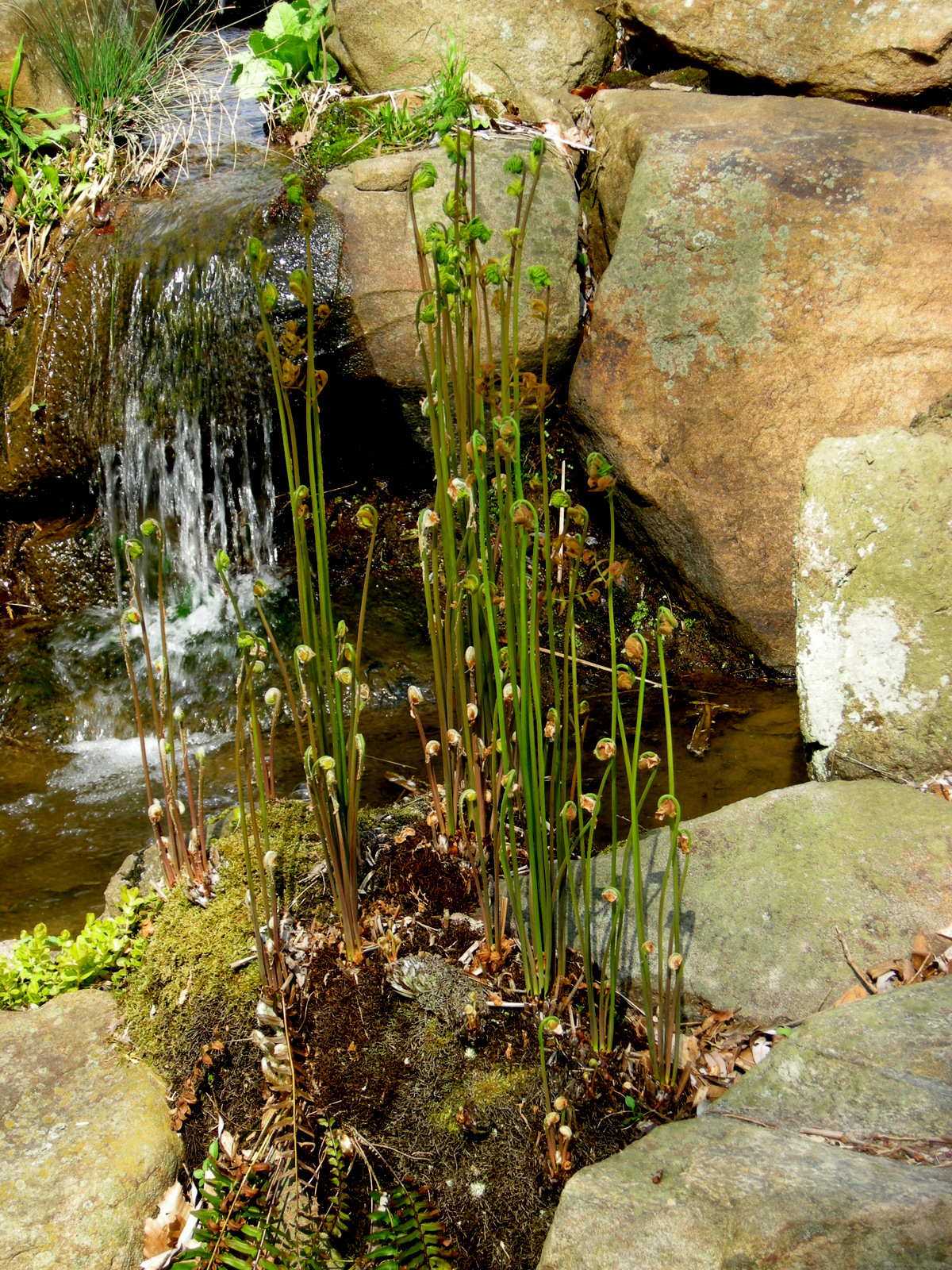
Royal fern, Osmunda regalis, in the Pond Garden

Chanticleer is one of the few gardens I visit where I find shade perennials that I can’t ID.  Jean and Jan stumped me with this one: Chloranthus japonicus (no common name) in the Asian Woods

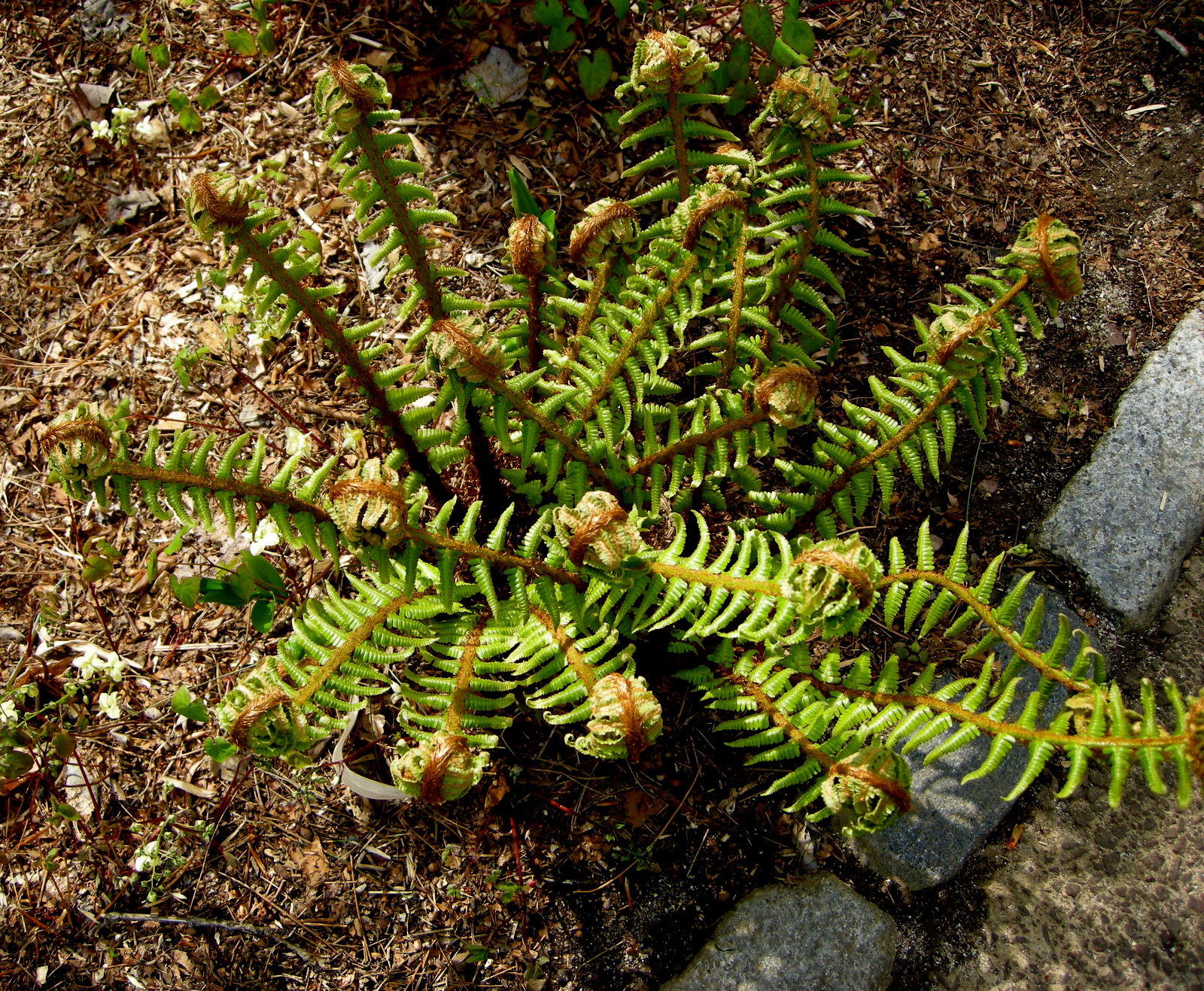
Another plant that stumped me: thick stemmed wood fern, Dryopteris crassirhizoma, in the Asian Woods.  Thanks to Lisa Roper, section gardener for the Asian Woods, for the ID.

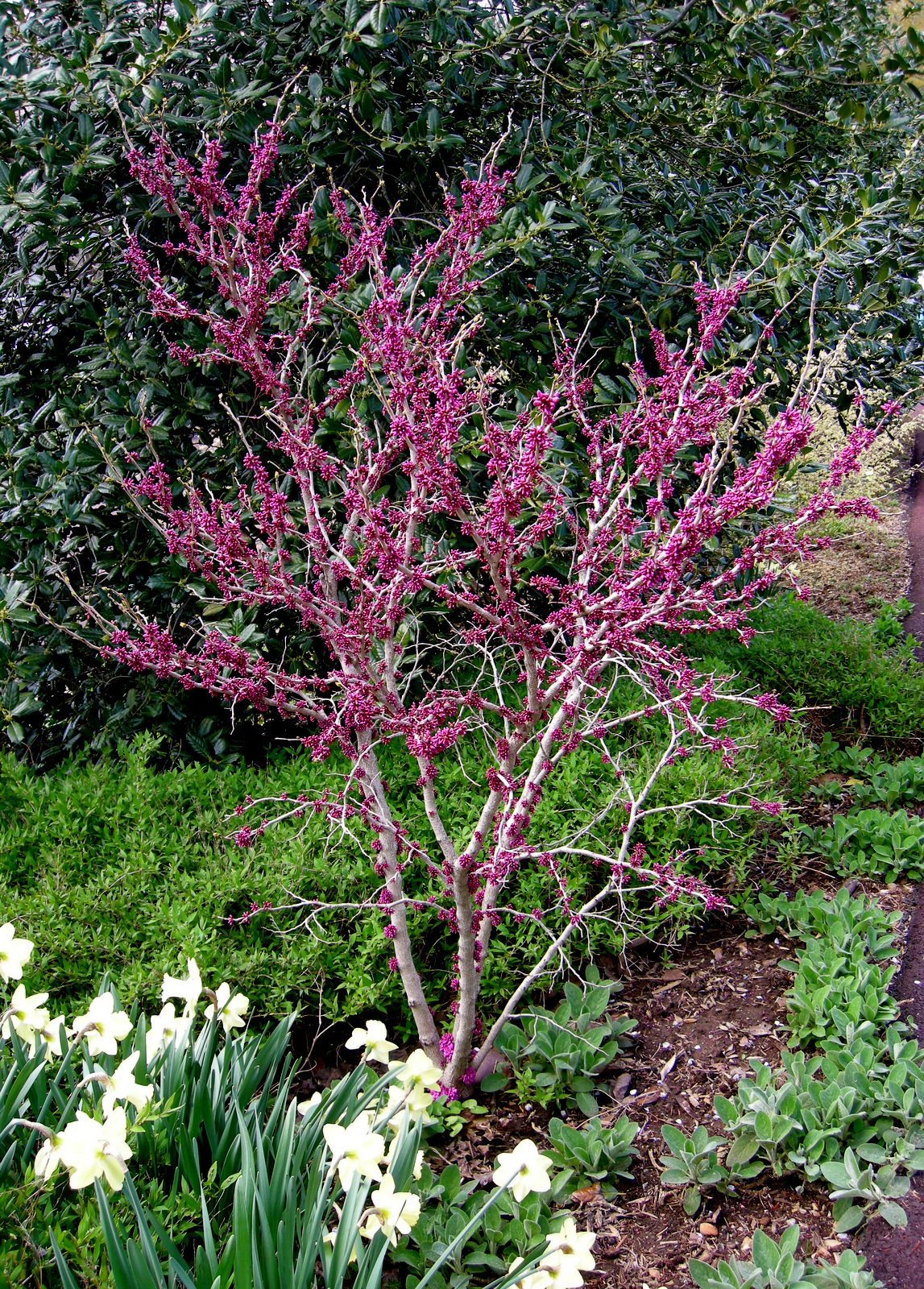
Chinese redbud, Cercis chinensis, along the walk from the parking lot

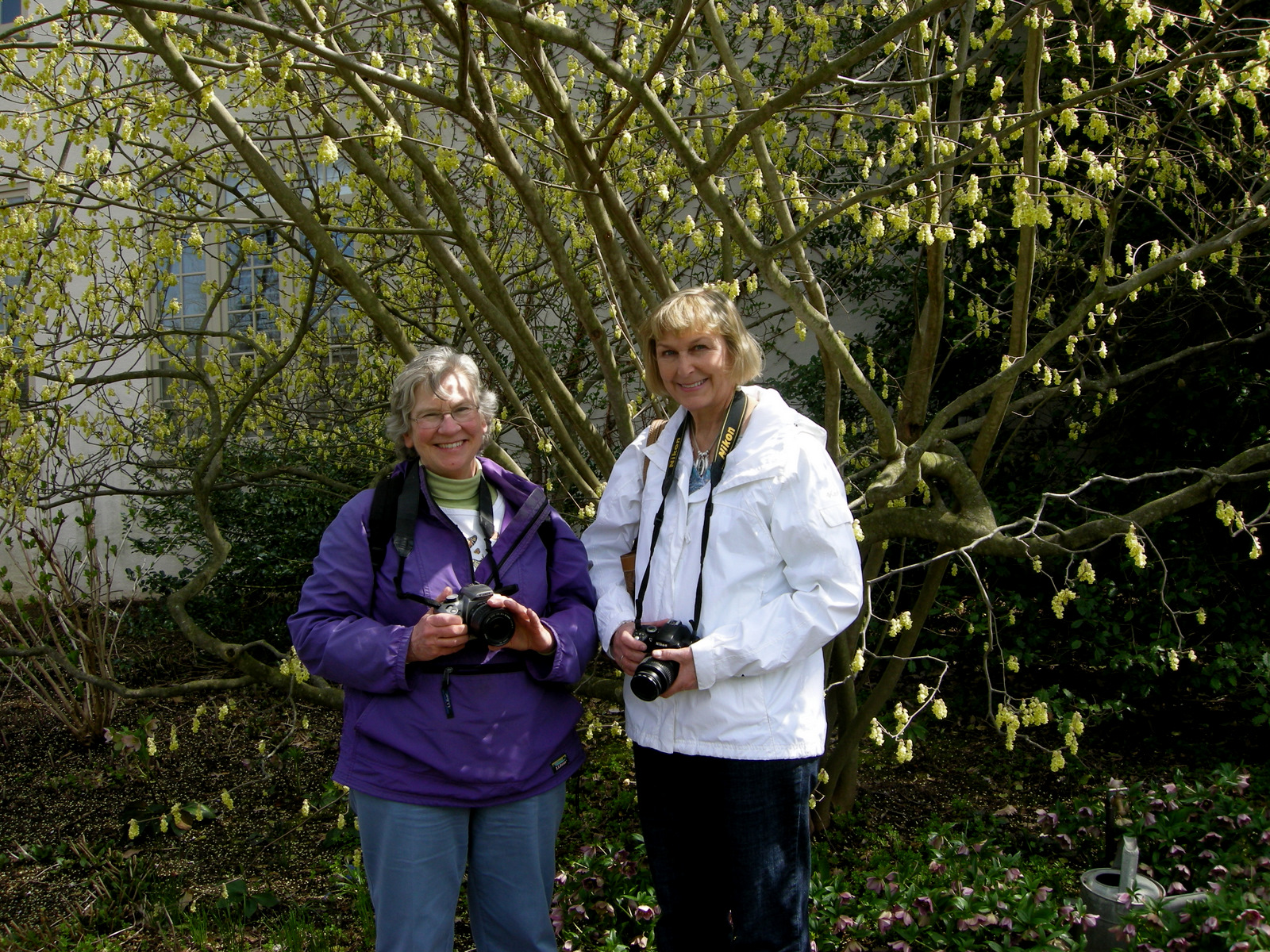
I have tried to give you a sense of how unique this garden is.  I hope to return to Chanticleer monthly and write articles every other month featuring its gardens as they progress through the seasons.  For now I leave you with a photo of my two new friends:

Jean (on the left) and Jan under a winterhazel, Corylopsis, with cameras in hand, of course.

Goodbye for now, Chanticleer, it was indeed a pleasure!

Carolyn

Notes: Every word that appears in orange on my blog is a link that you can click for more information.  If you want to return to my blog’s homepage to access the sidebar information (catalogues, previous articles, etc.), just click here.  I have added Chanticleer to my sidebar under Places to Visit so you will always know where to find it.


2011 Winter Interest Plants

Posted in bulbs for shade, garden to visit, landscape design, Shade Shrubs, snowdrops, winter interest with tags , , , , , , , , , , , , on March 20, 2011 by Carolyn @ Carolyns Shade Gardens

Carolyn’s Shade Gardens is a retail nursery located in Bryn Mawr, PA, specializing in showy, colorful, and unusual plants for shade.  The only plants that we ship are snowdrops and miniature hostas.  For catalogues and announcements of events, please send your full name, location, and phone number (for back up use only) to carolyn@carolynsshadegardens.com.  Click here to get to the home page of our website for catalogues and information about our nursery and to subscribe to our blog.

Japanese flowering apricot, Prunus mume

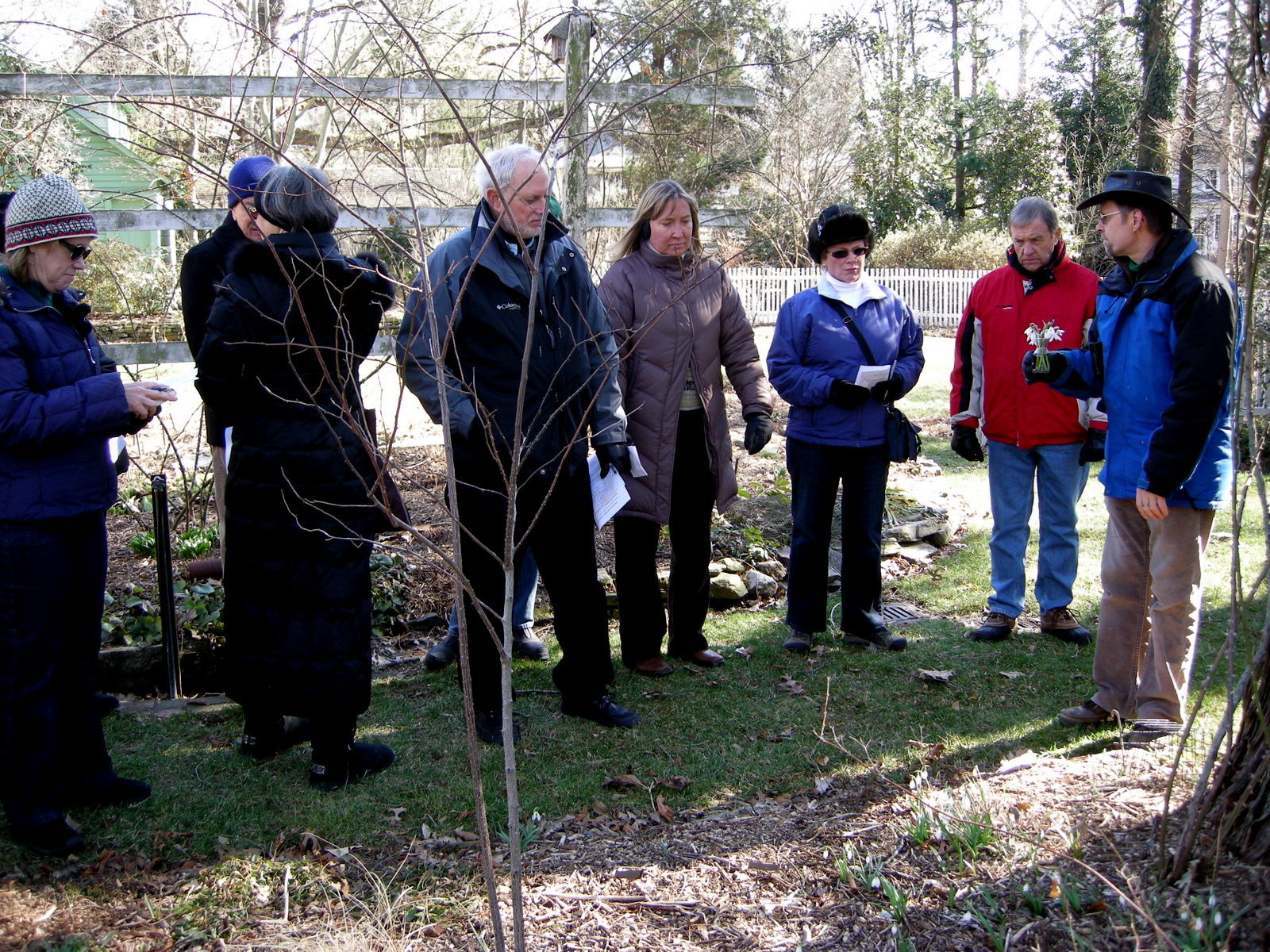
On March 3, 7, and 13, my customers and I attended seminars on Snowdrops and Other Winter Interest Plants given by Charles Cresson at his garden, Hedgleigh Spring in Swarthmore, Pennsylvania (US).  Charles is the instructor for the Longwood Gardens certificate course “Hardy Spring and Fall Bulbs” as well as the author of several gardening books.  He is also a frequent lecturer, most recently at the Planting Fields Arboretum on Long Island and Rare Find Nursery in New Jersey for presentations on “Choosing Hardy Camellias for Spring and Fall”.

Charles Cresson, kneeling to point out plicate leaves on a snowdrop, to seminar attendees.

Charles trained at the Royal Horticultural Society, Wisley, in England and the Kalmthout Arboretum in Belgium, best known for its witch hazel introductions.    He has worked at Meadowbrook Farm, Winterthur, Nemours, and Chanticleer.  His grandfather built the house at Hedgleigh Spring in 1911 and created the garden over the course of 50 years.  Charles has gardened there for  more than 40 years.

Every time we viewed a new snowdrop, no matter how rare, Charles picked two flowers and passed them around so that we could closely examine the markings and experience the fragrance.  He then collected the flowers in a little vase for later comparison.

What a treat Charles’s seminars were.  Even though I attended all three sessions, I learned something new each time and came away with a deep admiration for Charles’s encyclopedic knowledge of plants and the depth of his plant collection, not to mention a wish list of plants for my own gardens.  I also appreciated how each plant was not just deposited in the garden but was carefully incorporated into the overall design.

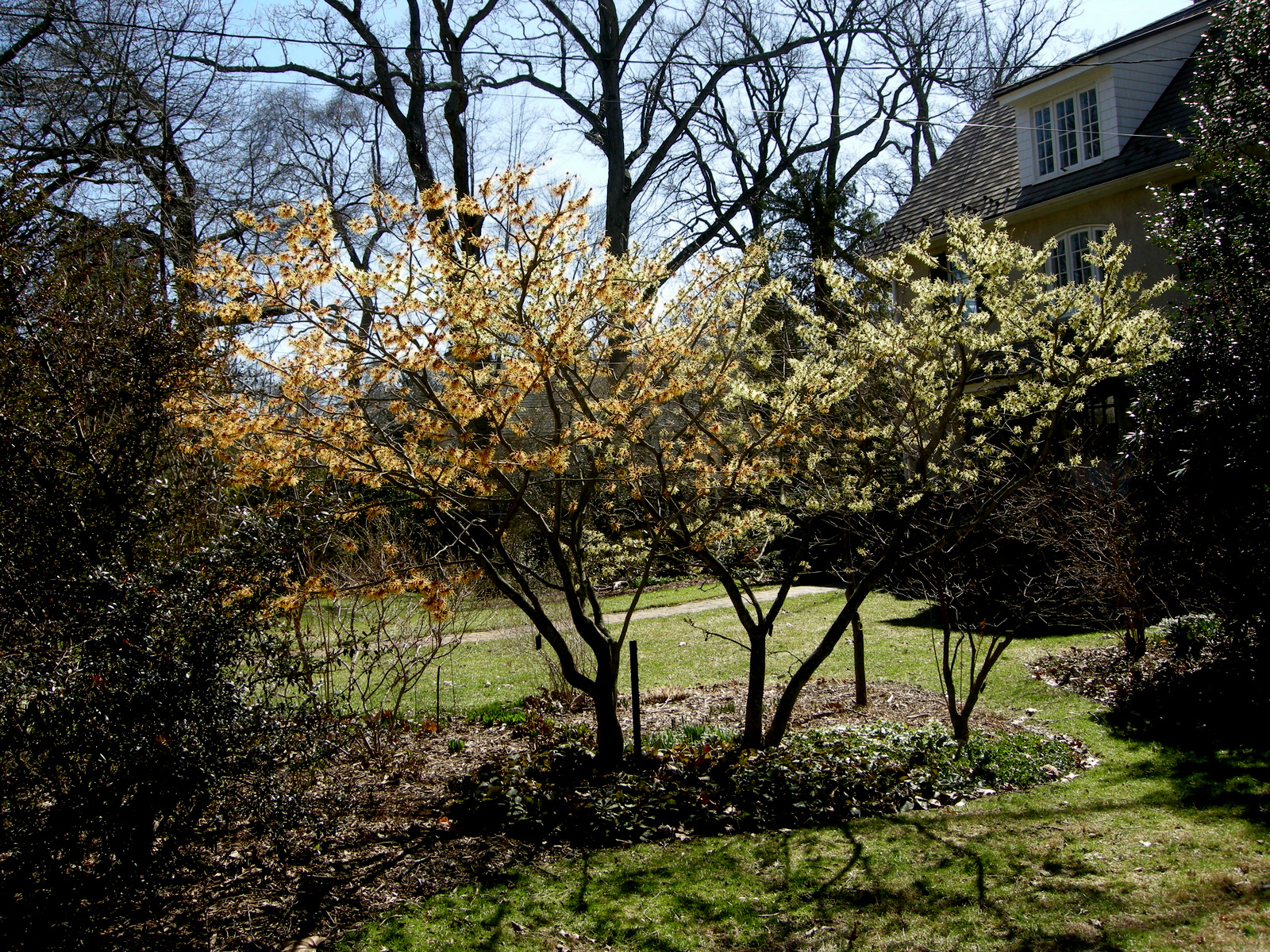
The seminars began in the front garden viewing the hybrid witch hazel cultivars Hamamelis x intermedia ‘Jelena’ (dark orange) and ‘Moonlight’ (pale yellow) underplanted with snowdrops, winter aconite, and various perennials. Charles does not recommend ‘Moonlight’ because it holds its dead leaves.

It would be hard to name another garden with the wealth of unusual plants that Charles has found and nurtured to perfection over the years.  That being said I thought my customers who were unable to attend the seminars and my worldwide blog readers might like to see what we saw.  I have organized the plants by category below with commentary in the caption where relevant.

We crossed a stone bridge to view the meadow where snow crocus and common and giant snowdrops were massed to be succeeded by daffodils, camassia, and then summer and fall blooming flowers.

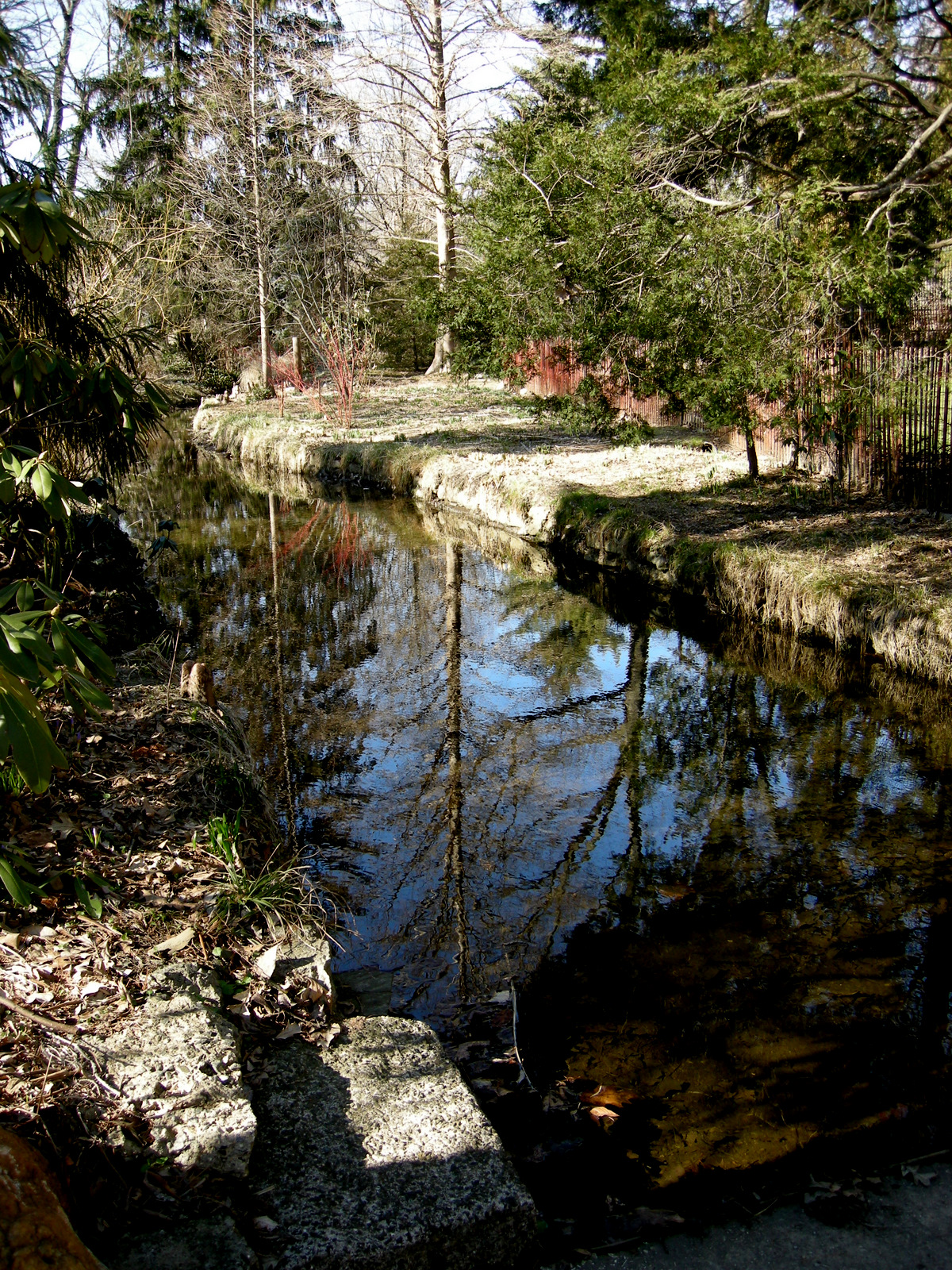
A narrow path skirts the pond, which is surrounded on all sides by rock gardens full of unusual plants.

The Bulbs

We saw so many rare and unusual bulbs that I can only include a sampling here.

A rare pale yellow form of winter aconite, Eranthis hyemalis

The exquisite buds of the species crocus C. imperati ‘De Jager’

Masses of the rodent resistant and very early blooming snow crocus, Crocus tommasinianus ‘Whitewell Purple’, shadowed by a magnificent Japanese maple.

The very early blooming daffodil Narcissus ‘Rijnveld’s Early Sensation’

A very good form of winter blooming hardy cyclamen, Cyclamen coum

The reticulate iris I. histrioides ‘George’

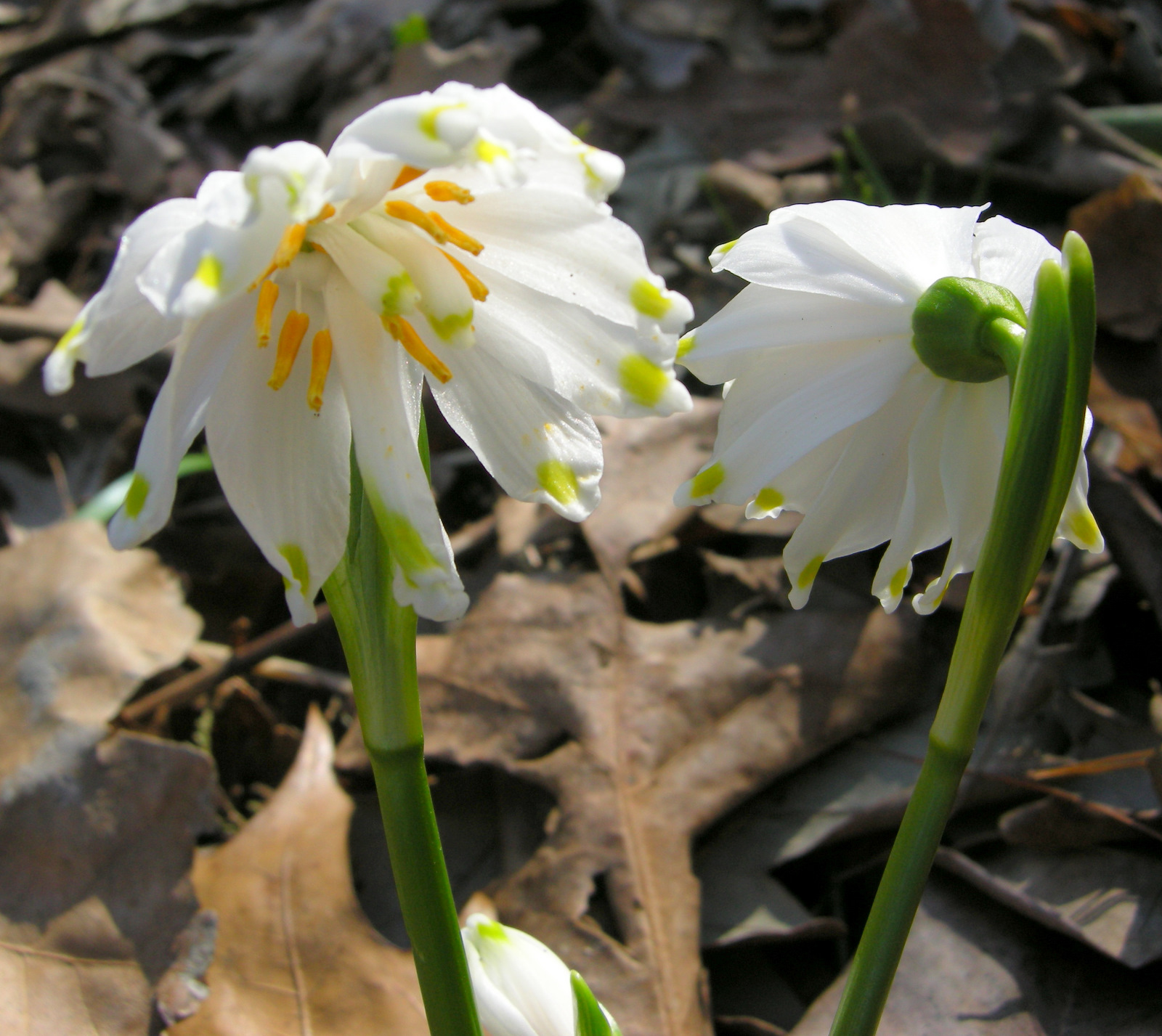
There were large patches of spring snowflake, Leucojum vernum, throughout the garden.

The flower of spring snowflake, Leucojum vernum

We were privileged to see this semi-double form of spring snowflake,  which Charles has named  Leucojum vernum ‘Gertrude Wister’ and registered with the Dutch bulb authority.

The Snowdrops

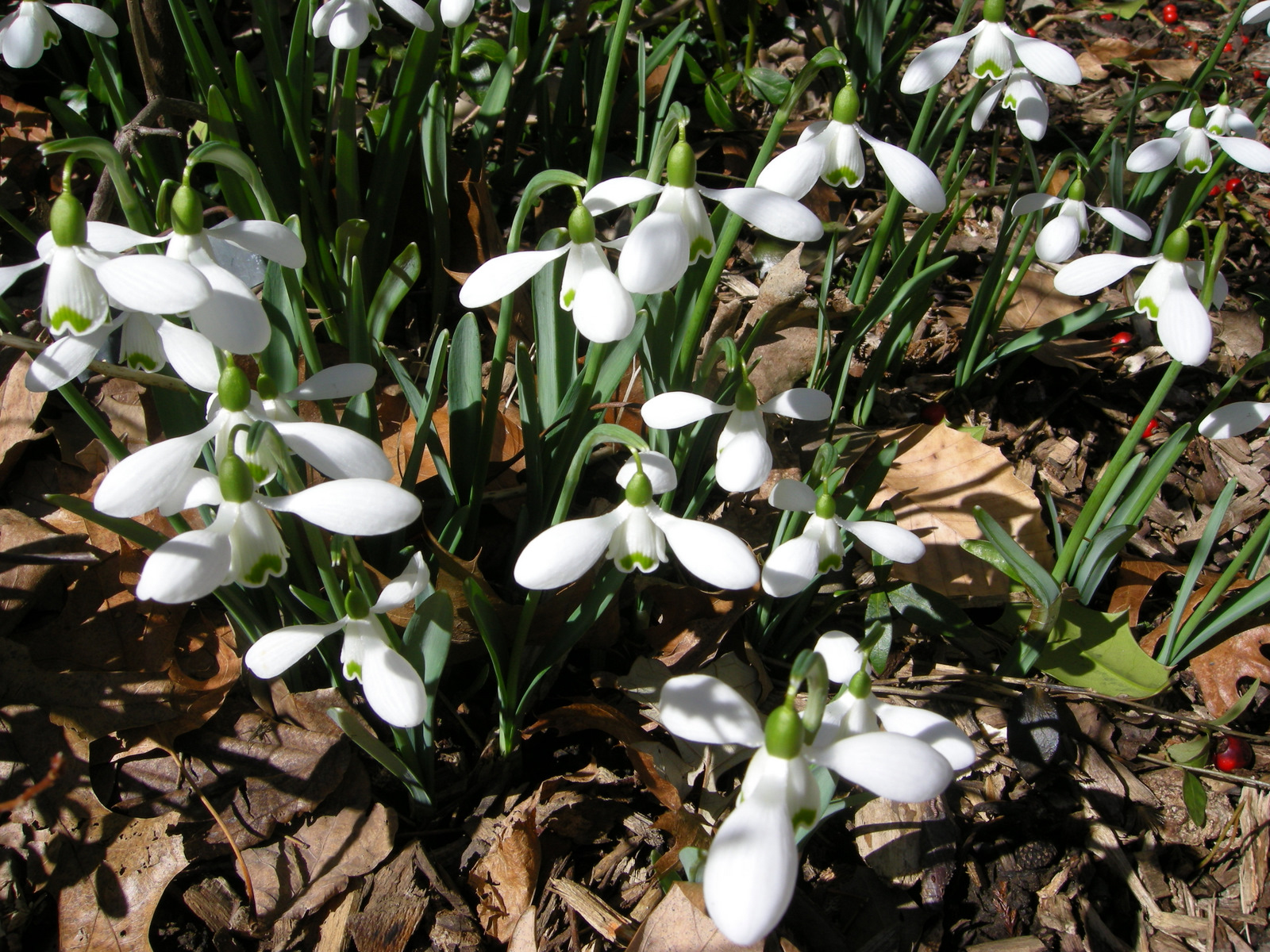
If you read my blog, you know what a galanthophile I am so with supreme effort I have limited myself to just a few of the many snowdrops we saw.

Clockwise from upper left: G. elwesii var. monostichus, G. ikariae, ‘Jaquenetta’, ‘Straffan’, G. plicatus subsp. byzantinus, ‘Dionysus’

Galanthus ‘Brenda Troyle’, confused in the trade but still quite lovely

Galanthus plicatus subsp. byzantinus Cresson GardenThe elegant pleated leaves and plump flowers of Galanthus plicatus subsp. byzantinus

The beautiful shiny green leaves of Galanthus woronowii

There were drifts of Galanthus ‘S. Arnott’, called the ‘desert island snowdrop’ because it is the one cultivar many galanthophiles would choose if they were limited to one.

The Perennials

A very rare perennial for shade Amur adonis, A. amurensis ‘Fukuju Kai’

Helleborus niger double form Cresson gardenA semi-double form of Christmas rose, Helleborus niger, which I have only seen at Hedgleigh Spring

The Algerian iris, I. unguicularis, blooming in early March with a beautiful fragrance

The Shrubs

Koehne holly, Ilex x koehneana, looking as fresh and beautiful as it did in the fall

Camellia japonica ‘Spring’s Promise’ was one of several very early spring-blooming camellias that we saw.

Grape holly, Mahonia x media ‘Arthur Menzies’

A highlight for me were the buds on this paperbush, Edgeworthia chrysantha ‘Snow Cream’, which look like the tassels on Victorian cushions

Hybrid witch hazels, Hamamelis x intermedia ‘Jelena’ and ‘Moonlight’

I hope you have enjoyed your virtual seminar.  Please let me know in a comment/reply what your favorite winter interest plant is.

Carolyn

Notes: Every word that appears in orange on my blog is a link that you can click for more information.  If you want to return to my blog’s homepage to access the sidebar information (catalogues, previous articles, etc.), just click here.

Nursery Happenings: My first open house sale is Saturday, March 26, from 10 am to 3 pm, featuring hellebores and other winter and early spring blooming plants for shade (checks and cash only).  For directions and parking information, click here.

Coastal Maine Botanical Gardens

Posted in garden to visit with tags on February 18, 2011 by Carolyn @ Carolyns Shade Gardens

Carolyn’s Shade Gardens is a retail nursery located in Bryn Mawr, PA, specializing in showy, colorful, and unusual plants for shade.  The only plants that we ship are snowdrops and miniature hostas.  For catalogues and announcements of events, please send your full name, location, and phone number (for back up use only) to carolyn@carolynsshadegardens.com.  Click here to get to the home page of our website for catalogues and information about our nursery and to subscribe to our blog.

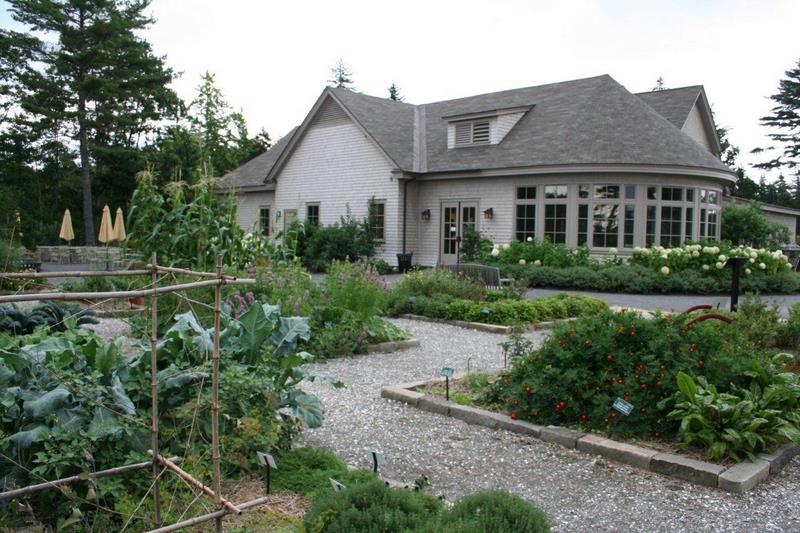
Visitor Center, photo Barbara Freeman, Coastal Maine Botanical Gardens

As the grays and browns of late winter replace the snow, it is uplifting to look back on the amazing botanical garden I visited in September.  I was in Maine for my birthday and, if that wasn’t present enough, my husband and son took me garden visiting to Coastal Maine Botanical Gardens in Boothbay, Maine, US.  Even though I come from the mid-Atlantic, home to many of the best public gardens in the US, and have visited gardens all over the world, I was wowed by this new but impeccably executed garden by the sea.
Children’s Garden, photo William Cullina, Coastal Maine Botanical Gardens

Coastal Maine Botanical Gardens opened officially in June of 2007 after 16 years of meticulous planning by an incredibly dedicated group of Maine residents and the talented experts they hired.  After searching since 1991, this intrepid group purchased 128 acres of pristine land with 3800 feet of tidal shore frontage in 1996, using their own homes as collateral.  An additional gift in 2005 brought the total to 248 acres and almost a mile of shoreline, saving it all from development.

Planting began in 2001 and the impressive Maine cottage style visitor center (photo at top) opened in 2007.  This summer saw the opening of the magical children’s garden (photo above) themed to highlight children’s literature with a Maine connection.

Kitchen Garden, photo Barbara Freeman, Coastal Maine Botanical Gardens

Walking around the designed portions of the gardens was such a pleasure because both the overall design of each area and also the attention to individual details is exceptional.  The light and airy cafe opens onto an elegant kitchen garden (photo above) planted with herbs, vegetables, edible flowers, berries, and an orchard of hardy heirloom apple and pear trees.  Creative and beautiful stonework graces every area of the 15 acres of ornamental gardens (see photos below).

Rose and Perennial Garden, photo William Cullina, Coastal Maine Botanical Gardens

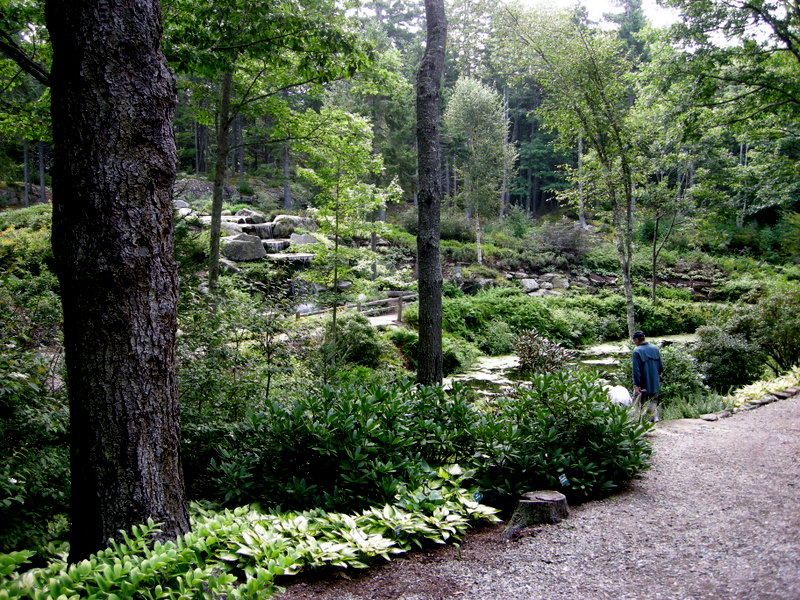
Each area of the landscape from the cottage style rose garden (photo above) to the more naturalistic rhododendron garden (photo below) was a treat for the eyes.  And each individual plant within these gardens was impeccably grown (collage below).

Obviously I focused on shade plants!

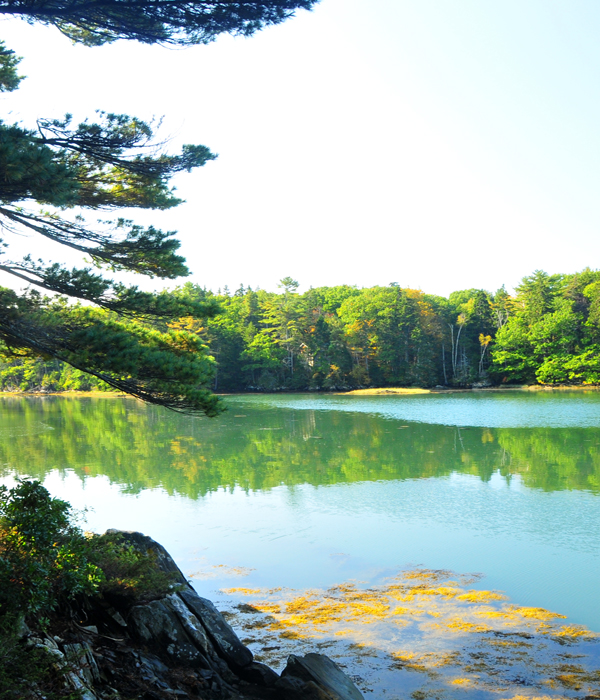
If that description isn’t effusive enough, what I treasured the most was my walk along the miles of trails showcasing the untouched waterfront and woodlands that are quintessentially Maine.  The views of the tidal inlet are spectacular (photo of cove below).  The pristine woodlands are something rarely found in the rest of the continental US (photo of trail below).

Huckleberry Cove, photo William Cullina, Coastal Maine Botanical Gardens

Huckleberry Cove Trail, photo William Cullina, Coastal Maine Botanical Gardens

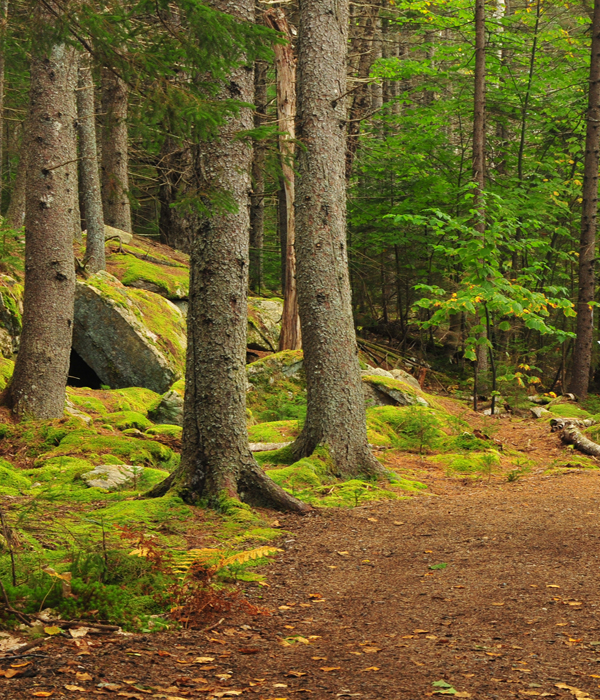
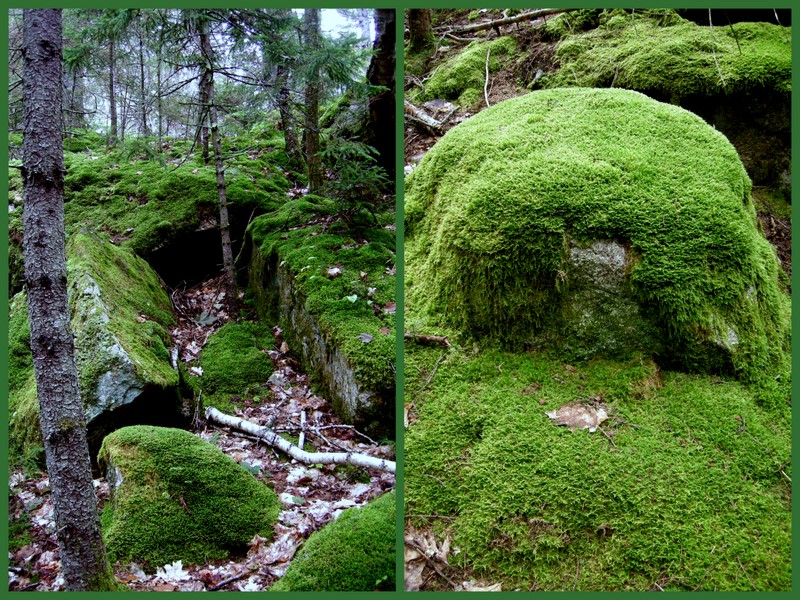
It is hard to imagine if you haven’t seen it, but every inch of the trails, woodlands, and especially the rocks is covered with moss (photo below).  As you look closer, you realize that every rock holds a garden of its own more beautiful than any human, no matter how talented, could create (see collage below).  I would visit Coastal Maine Botanical Gardens just to see the magnificence of nature untouched.

What Coastal Maine Botanical Gardens has accomplished in the short period of time it has been in existence is nothing short of remarkable.  A beautifully designed and executed ornamental garden set like a jewel in a spectacular natural setting: it doesn’t get much better than that.

Carolyn


Notes: If you want to know more about Coastal Maine Botanical Gardens and see more beautiful photos, click here.  I have also added Coastal Maine Botanical Gardens to my sidebar under Places to Visit so you will always be able to find it.   International visitors to the US should consider adding the State of Maine to your itinerary—one of the most beautiful places on earth.

Every word that appears in orange on my blog is a link that you can click for more information.  If you want to return to my blog’s homepage to access the sidebar information (catalogues, previous articles, etc.), just click here.

Nursery Happenings: I am currently accepting orders for snowdrops, including  mail orders.  For the catalogue and order information, click here.  I am taking reservations for my Hellebore Seminars for the Totally Obsessed.  For the brochure and registration information, click here.  I have four spaces left for Charles Cresson’s Snowdrops and Other Winter Interest Plants Seminar.  For the brochure and registration information, click here.

February GBBD: Add to Your Spring Shopping List

Posted in Garden Blogger's Bloom Day, garden to visit, hellebores, snowdrops, winter, winter interest with tags , , , , , , , , , , on February 14, 2011 by Carolyn @ Carolyns Shade Gardens

Carolyn’s Shade Gardens is a retail nursery located in Bryn Mawr, PA, specializing in showy, colorful, and unusual plants for shade.  The only plants that we ship are snowdrops and miniature hostas.  For catalogues and announcements of events, please send your full name, location, and phone number (for back up use only) to carolyn@carolynsshadegardens.com.  Click here to get to the home page of our website for catalogues and information about our nursery and to subscribe to our blog.

“Spring-blooming” hardy cyclamen, Cyclamen coum, sends out its first bud

It is time to walk around your garden again and assess what you need to add to make the end of winter an exciting time in your landscape.  Do you need more early-blooming hellebores to give you a reason to go outside?  Could your garden benefit from flowers that bloom in January and February like hardy cyclamen, snow crocus, or snowdrops to relieve the gray?  Make a list and take photographs so that when you are shopping this spring you know what you need and where it should go.  I know it’s icy outside, but you never know what you might find to end the winter doldrums like the hardy cyclamen (pictured above), which I discovered during my own chilly inventory.

Snowdrops and winter aconite on Winterthur’s March Bank, photo courtesy of Winterthur

If you need ideas, visit local arboretums and gardens.  I always find a trip to Winterthur, an elegant and intimate public garden in Delaware, highly inspirational and informative.  Starting March 1 when Winterthur opens for spring, the area of the gardens known as the March Bank erupts into bloom with tens of thousands of snowdrops, adonis, winter aconite, snow crocus, early scillas, glory-of-the-snow, spring snowflake, and early daffodils.

Snowdrops and winter aconite on Winterthur’s March Bank in early March, photo courtesy of Winterthur

Later in March, glory-of-the-snow, Chionodoxa, takes over, photo courtesy of Winterthur

Today is Garden Blogger’s Bloom Day for February when gardeners around the world show photos of what’s blooming in their gardens (follow the link to see  photographs from other garden bloggers assembled by Carol at May Dreams Gardens).  Here are a few more highlights from my mid-February stroll through Carolyn’s Shade Gardens:

Very early-blooming double white hellebore, Helleborus x hybridus ‘Mrs. Betty Ranicar’

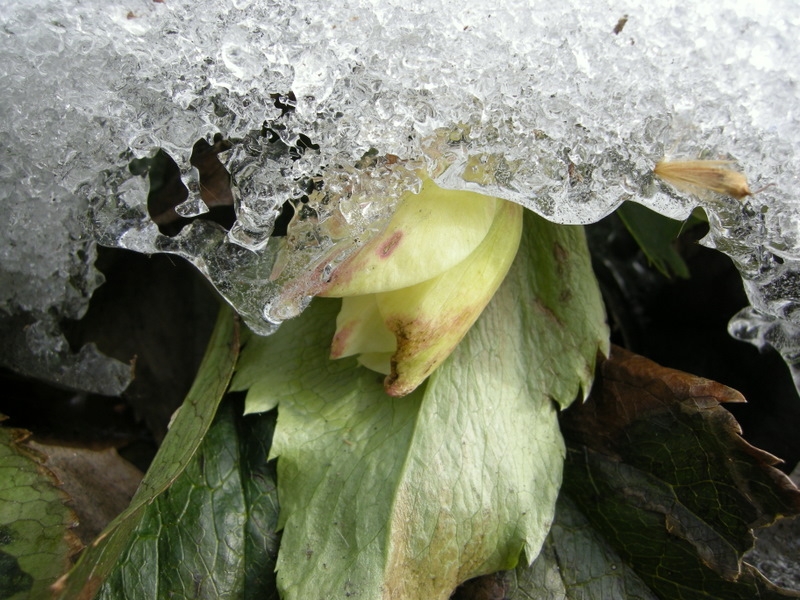
Bearsfoot hellebore, Helleborus foetidus, was waiting under the ice

Sweetbox, Sarcococca hookeriena var. humilis, prepares to perfume the garden

‘Jacob’ Christmas rose, Helleborus niger ‘Jacob’, began blooming in October and has waited patiently under the snow and ice for a chance to show its flowers again

The lowly Japanese pachysandra, P. terminalis, forms its flowers the previous season adding winter interest to its evergreen leaves

The flower buds of hybrid hellebores, Helleborus x hybridus, wait for the hard-packed snow to melt, in warmer years they would be in bloom now

Some hybrid hellebores are farther along than others

Giant snowdrop, Galanthus elwesii, was the first flower through the snow in 2011 (see Are Snowdrops Thermogenic?) and was also blooming in December

With our near record-breaking snowfall accompanied by generous doses of ice (see The Joys and Sorrows of Snow), I wasn’t planning on participating in February’s Garden Blogger’s Bloom Day.  But when I grabbed my camera and walked around, there was much to be seen.   In addition to the flowers, there was more than enough views of the destruction of the winter by nature and otherwise.

Remnants of the white pine and coral bark maple branches lost this winter

The signs marking my epimedium collection after the ravages of my three snowboarding teenage sons.

Please let me know in a comment/reply what flowers are blooming in your winter garden.  If you participated in GBBD, please provide a link so my nursery customers can read your post.

Carolyn


Notes: Every word that appears in orange on my blog is a link that you can click for more information.  If you want to return to my blog’s homepage to access the sidebar information (catalogues, previous articles, etc.), just click here.

Nursery Happenings: I am currently accepting orders for snowdrops, including  mail orders.  For the catalogue and order information, click here.  I am also taking reservations for Charles Cresson’s Snowdrops and Other Winter Interest Plants Seminar.  For the brochure and registration information, click here.