Archive for the landscape design Category

Hosta Containers and Companions

Posted in container gardening, containers for shade, hosta, miniature hosta, Shade Gardening, Shade Perennials with tags , , , , , , , , , , , , , , , , , , , , , , on May 10, 2012 by Carolyn @ Carolyns Shade Gardens

Carolyn’s Shade Gardens is a retail nursery located in Bryn Mawr, PA, specializing in showy, colorful, and unusual plants for shade.  The only plants that we ship are snowdrops and miniature hostas.  For catalogues and announcements of events, please send your full name, location, and phone number (for back up use only) to carolyn@carolynsshadegardens.com.  Click here to get to the home page of our website for catalogues and information about our nursery and to subscribe to our blog.

.

Hosta When finding containers for your hostas you have to think outside the box: “Carolyn’s Gold” hosta in an antique kerosene can.

This is the third post in a three-part series on small hostas.  My nursery specializes in miniature hostas, and I have over 30 varieties available right now, both at the nursery and mail orderIn I LOVE Mice, I raved about the mouse ears series of hostas.  In Beyond Mice, I highlighted some of my favorite non-mouse ears hostas.  My 2011 post Miniature (& Small) Hostas also gives an overview of little hostas and how to use them in the garden.  Now I want to focus on the containers you might use to hold your hostas and the plants that will keep them company.


Probably my favorite medium sized hosta, the straight species Hosta tokudama.

Why would you want to grow hostas in a container?  One reason I do it is to highlight a hosta’s very special ornamental attributes.  I think Hosta tokudama (photo above) is gorgeous so I grow it in a pot outside my front door.  Here are some other hostas that I think merit their own container (read my previous hosta posts for photos of other single hosta containers):


Hosta ‘Little Miss Sunshine’ has bright gold leaves and deep red stems that look like rhubarb.  I placed its pot on a wall by my front walk so I can admire the stems up close.


The elegant hosta ‘Hanky Panky’ grows in an old dogwood stump, also along my front walk.

I love the very unusual hosta ‘Praying Hands’ and have it in three different containers, here with violas.


There is no other miniature hosta that looks like ‘Sparkler’ so I gave it its own spot in an antique metal pitcher salvaged from the dump.

Small hostas can get lost when planted in perennial borders unless they are massed.  Growing special miniature hostas in containers brings them up to eye level.  Here are 16 miniatures in my strawberry pot:

It also allows you to pair them with other miniature plants to create a tiny garden.  My previous posts contain many photos of my containers of little hostas.  However, I thought I would show you some of the planters I have recently created to give my customers ideas and to sell at my upcoming hosta open house:


All these containers were purchased inexpensively at flea markets and antique stores or were salvaged from the dump at the bottom of our property.  You probably have a suitable pot, pan, or other hosta garden holder gathering dust in your attic right now.


Hosta gardens waiting at Carolyn’s Shade Gardens for a new home.

Choosing tiny companion plants to go with your miniature hostas is another fun part of growing them in containers or in a rock garden.  Plant collecting urges are satisfied by all the plants that can be crammed into a small area.  In the planters above, I used violas, sedums, hens and chicks, ‘Heartthrob’ violet, ‘Tiny Rubies’ dianthus, and pasque flower (Pulsatilla).  Here are some more combinations:

Hostas ‘Shiny Penny’, ‘Green Eyes’, and ‘Itsy Bitsy Spider’ paired with sedum, hens and chicks, and rosularia in my dish garden.

Mouse ears hostas with dwarf Solomon’s seal, Polygonatum humile, in my stone trough.

Hostas ‘Blue Mouse Ears’ and ‘Blonde Elf’ with miniature lady fern, Athyrium filix-femina ‘Minutissimum’, in the rock garden.

Hostas ‘Little Blue’, ‘Blonde Elf’, and ‘Little Wonder’ with a small epimedium in the rock garden.


Gardening with tiny plants and salvaged containers is so much fun.  I hope you will give it a try.

Carolyn

Nursery Happenings:  If you are interested in receiving miniature hostas mail order, click here.

If you are within visiting distance and would like to receive catalogues and information about customer events, please send your full name and phone number to carolynsshadegardens@verizon.net.  Subscribing to my blog does not sign you up to receive this information.

Facebook:  Carolyn’s Shade Gardens has a Facebook page where I post single photos, garden tips, and other information that doesn’t fit into a blog post.  You can look at my Facebook page here or click the Like button on my right sidebar here.

Notes: Every word that appears in orange on my blog is a link that you can click for more information.  If you want to return to my blog’s homepage to access the sidebar information (catalogues, previous articles, etc.) or to subscribe to my blog, just click here.

Beyond Mice

Posted in container gardening, containers for shade, hosta, miniature hosta, Shade Gardening, Shade Perennials with tags , , , , , , , , , , , , on May 3, 2012 by Carolyn @ Carolyns Shade Gardens

Carolyn’s Shade Gardens is a retail nursery located in Bryn Mawr, PA, specializing in showy, colorful, and unusual plants for shade.  The only plants that we ship are snowdrops and miniature hostas.  For catalogues and announcements of events, please send your full name, location, and phone number (for back up use only) to carolyn@carolynsshadegardens.com.  Click here to get to the home page of our website for catalogues and information about our nursery and to subscribe to our blog.

.

Hosta 'Crumb Cake'I have used this photo of hosta ‘Crumb Cake’ emerging in spring before, but to me it epitomizes the beauty of a miniature hosta in a container.

My nursery specializes in miniature hostas, and I have over 25 varieties available right now, both at the nursery and mail order.  My 2011 post Miniature (& Small) Hostas gives an overview of little hostas and how to use them in the garden.  In my most recent post, I LOVE Mice, I raved about the mouse ears series of hostas.  But there are many desirable miniature hostas “beyond mice” so I thought I would highlight some special favorites.


‘Cracker Crumbs’ is pictured here in my dish garden (full photo below) surrounded by a tiny gray-blue sedum.  It is a miniature hosta 5” tall by 19” wide with leaves 2 1/2” long by 1 1/2” wide.  ‘Cracker Crumbs’ has shiny gold leaves with a bright green wavy margin and pale purple flowers in July.  It quickly forms a dense and rounded mound and makes a great trough or rock garden plant.


‘Itsy Bitsy Spider’ is also pictured in my dish garden (full photo below) with the same sedum and some hens and chickens.  It is a miniature hosta 2 ½” tall by 6” wide with leaves 1 ¾” long by 1 1/4″ wide.  ‘Itsy Bitsy Spider’ has narrow leaves with thick substance and a distinct blue-gray color, and pale lavender flowers in July.  It forms a tight low mound.  This adorable and rare plant is the smallest hosta in my collection.


‘Pixie Vamp’ in my rock garden—what a great name!

‘Pixie Vamp’ is pictured here in a container with violas.  It is a miniature hosta 7” tall by 16” wide with leaves 3 ½” long by 2 ½” wide.  ‘Pixie Vamp’ has bright green heart-shaped leaves bordered by gold in the spring changing to creamy white.  Its gorgeous mahogany colored stems hold purple flowers in July.  It is excellent in containers.


The very unusual hosta ‘Crumb Cake’ in my rock garden.


‘Crumb Cake’ is pictured here fully emerged in the same container featured in the first photo in this post.  It is a miniature hosta 5” high by 14” wide with leaves 3” long by 3” wide.  ‘Crumb Cake’ is a recent introduction with very bright honey-gold leaves, which are round with wavy margins.  It is a very unusual looking hosta forming a flat, dense, brightly colored mound.  It has elegant mahogany-colored leaf and flower stems and lavender flowers in July.  It makes an excellent container plant.


‘Alakazaam’ in my rock garden.


‘Alakazaam’ is pictured here in a container made for me by my son.  It is a miniature hosta 5″ tall by 10″ wide with leaves 6 1/2″ long and 3/4″ wide.  ‘Alakazaam’ has bright green leaves with gold ruffled margins changing to creamy white, and lavender flowers in late summer.  Its unusual spiky habit makes it stand out from the crowd no matter where you place it.


‘Surfer Girl’ is pictured here in my rock garden.  It is a miniature hosta 6” tall by 18” wide with leaves 2” long by 1” wide.  ‘Surfer Girl’ has dark green, sharply pointed, deeply rippled leaves reminiscent of ocean waves, and purple flowers in July.  It creeps to fill in a wide area and is excellent for edging the front of a border.  I use it in containers to contrast with gold-leafed minis.


‘Little Sunspot’ in my rock garden. 

‘Little Sunspot’ is pictured here in my strawberry pot.  It is a small hosta 12″ tall by 12″ wide with leaves 3″ long and 2″ wide.  It has sharply contrasting variegated gold leaves with a wide  dark green margin and purple-striped white flowers in summer.  ‘Little Sunspot’ is great for a rock garden, border, or a container.


‘Twist of Lime’ in my rock garden.

‘Twist of Lime’ is pictured here massed in front of epimediums.  It is a miniature hosta 6” tall by 10” wide with leaves 3” long by 1” wide.  ‘Twist of Lime’ has bright gold leaves with a narrow, dark blue-green wavy margin and many deep violet-striped flowers in July.  It has a beautiful upright habit and is a very fast grower—a favorite of my customers.

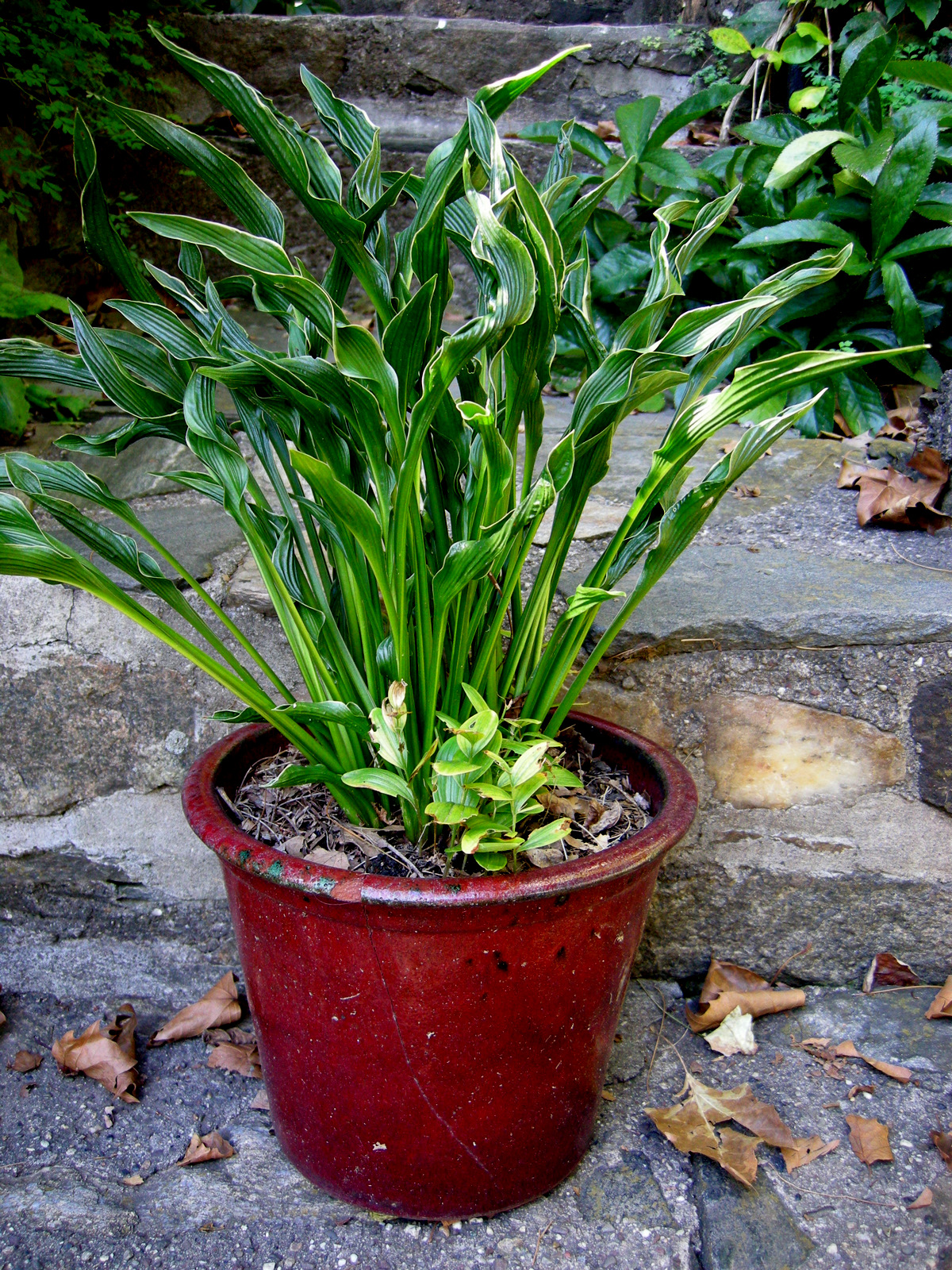
‘Praying Hands’ is pictured here in a container with violas and dwarf Solomon’s seal.  It is a small hosta 16″ tall by 30″ wide with leaves 7″ long and 2″ wide.  ‘Praying Hands’ has waxy and prominently ridged dark emerald green leaves with a narrow gold edge.  It is the most unusual hosta on the market with its folded leaves and vertical, twisty habit reminiscent of a pitcher plant.  It thrives in containers with my plant doubling in size each year.  ‘Praying Hands’ received the prestigious Hosta of the Year Award in 2011.

‘Praying Hands’ provides a vertical accent in my dish garden with miniature hostas ‘Shiny Penny’, ‘Itsy Bitsy Spider’, ‘Cracker Crumbs’, and ‘Shining Tot’ and various companion plants.

Miniature hostas are so much fun.  My next post will be on my new miniature hosta rock garden and feature companion plants to use in containers with your little hostas.

Carolyn

Nursery Happenings: If you are interested in receiving miniature hostas mail order, click here.

If you are within visiting distance and would like to receive catalogues and information about customer events, please send your full name and phone number to carolynsshadegardens@verizon.net.  Subscribing to my blog does not sign you up to receive this information.

Facebook:  Carolyn’s Shade Gardens has a Facebook page where I post single photos, garden tips, and other information that doesn’t fit into a blog post.  You can look at my Facebook page here or click the Like button on my right sidebar here.

Notes: Every word that appears in orange on my blog is a link that you can click for more information.  If you want to return to my blog’s homepage to access the sidebar information (catalogues, previous articles, etc.) or to subscribe to my blog, just click here.

I LOVE Mice

Posted in container gardening, containers for shade, hosta, miniature hosta, Shade Gardening, Shade Perennials with tags , , , , , , , , , on April 25, 2012 by Carolyn @ Carolyns Shade Gardens

Carolyn’s Shade Gardens is a retail nursery located in Bryn Mawr, PA, specializing in showy, colorful, and unusual plants for shade.  The only plants that we ship are snowdrops and miniature hostas.  For catalogues and announcements of events, please send your full name, location, and phone number (for back up use only) to carolyn@carolynsshadegardens.com.  Click here to get to the home page of our website for catalogues and information about our nursery and to subscribe to our blog.

.

'Holy Mouse Ears'It is very hard for me to pick a favorite mouse ears hosta, but I think ‘Holy Mouse Ears’ is it.  The colors in the leaves are magical.

My post Miniature (& Small) Hostas is the most popular article I have ever written for my blog.  In that post, I described how, when I discovered miniature hostas, I reached a new level of hosta addiction.  I try not to purchase (five of) every new miniature hosta I can get my hands on, but it’s a struggle.  Luckily my nursery allows me to mask this addiction as “business development”.  Now I specialize in miniature hostas, and mail order them all over the US.


Hosta ‘Blue Mouse Ears’ is the parent of all the miniature hostas in the mouse ears clan.  It is so special that in 2008, the American Hosta Growers Association named it the Hosta of the Year.

The miniature hosta that really took me over the edge was ‘Blue Mouse Ears’.  It was definitely love at first sight.  I fell for the very blue, very round, very rubbery leaves and the perfectly symmetrical habit.  When ‘Blue Mouse Ears’ emerges from the ground, it is in a cluster so tight it looks like a rose.  It reaches about 6″ in height and scoffs at the idea of slugs as do all the mouse ears hostas.  Most days I stop on my garden ramble to touch its thick leaves.  To me they feel like mouse ears, not that I have ever felt one.

‘Blue Mouse Ears’ emerging in the spring.


‘Blue Mouse Ears’ is a descendant of ‘Blue Cadet’, which is a beautiful small blue hosta with very clean leaves and an elegant habit.  Boy was I in trouble though, because ‘Blue Mouse Ears’ was only the beginning.    As is the nature of hostas, ‘Blue Mouse Ears’ has given rise to a whole family of little mice.  All of them are between 5 and 8″ tall and form a clump about 12″ wide.  Technically, some of them get slightly larger than what the “authorities” consider mini.  Their unique characteristics are their very round rubbery leaves and their symmetrical habits.  However, I may be prejudiced by my love of mice, but I think these little gems have some of the best leaf colors of any hostas on the market.

‘Mouse Trap’ is one of the newer mice to hit the market.  Its bright white leaves with a blue-green border are striking.

Naturally I had to have all the mouse ears hostas in my collection, and my quest began.  I now have seven mice and have located a source for two more, ‘Royal Mouse Ears’ and ‘Calico Mouse Ears’, which I will be ordering shortly.  While researching this post, I found a Rutgers University site with the hysterical name of Hosta Garden Mouse Index.  The photos are not very good, but it seems to list all the mouse ears hostas available.  Apparently my quest will last a while longer.

Photos of three of my mice appear above, and here are the remaining four:

I think ‘Mighty Mouse’ has the cutest name in the mouse ears series.


This early spring photo of ‘Frosted Mouse Ears’ does not do it justice.  It matures to a dark green leaf with a wide white margin.


‘Green Mouse Ears’ is the smallest in the family with very shiny, thick bright green leaves.  Don’t you want to touch it?


‘Mouse Tracks’ is my latest acquisition, and I love its tie dye swirls of yellow, green, and blue.  It is a child of ‘Mighty Mouse’ and very rare.

I haven’t mentioned one of the wonderful features of the mouse ears hostas, their flowers.  Instead of having the long, dangly, out-of-proportion flowers that are produced by some miniatures, the mice have short, fat flowers in proportion to their size as illustrated by the photo below.  I grow them for their flowers too, which is something I can’t say about most hostas.

.

‘Holy Mouse Ears’ in bloom

Of course my mice deserved a special place in the garden where touring customers could view them up close and admire their cuteness (is that a word?).  What better place than the trough that my husband gave me for our anniversary.  My mice nest happily there:

‘Green Mouse Ears’ upper left, ‘Blue Mouse Ears’ middle, ‘Mighty Mouse’ middle right, ‘Mouse Trap’ lower left, ‘Frosted Mouse Ears’ lower right.  The companion plants are dwarf Solomon’s seal and miniature lady fern.


The whole mouse ears family.

It is easy to add mice to your garden, and they will bring a smile to your face for the whole season.

Carolyn’s Shade Gardens specializes in miniature hostas.  I have 25 varieties available at my nursery right now.  I am thinking of starting a mail order business for miniatures.  If you would like to mail order some this year and help me test out my plan, click here (US only).

Carolyn

Nursery Happenings:  If you are interested in receiving miniature hostas mail order, click here.

If you are within visiting distance and would like to receive catalogues and information about customer events, please send your full name and phone number to carolynsshadegardens@verizon.net.  Subscribing to my blog does not sign you up to receive this information.

Facebook:  Carolyn’s Shade Gardens has a Facebook page where I post single photos, garden tips, and other information that doesn’t fit into a blog post.  You can look at my Facebook page here or click the Like button on my right sidebar here.

Notes: Every word that appears in orange on my blog is a link that you can click for more information.  If you want to return to my blog’s homepage to access the sidebar information (catalogues, previous articles, etc.) or to subscribe to my blog, just click here.

Specimen Natives for Your Woodland

Posted in bulbs for shade, green gardening, groundcover, landscape design, native plants, Shade Perennials with tags , , , , , , , , , , , , , , , , , , , , , , , , , , , , , , , on April 18, 2012 by Carolyn @ Carolyns Shade Gardens

Carolyn’s Shade Gardens is a retail nursery located in Bryn Mawr, PA, specializing in showy, colorful, and unusual plants for shade.  The only plants that we ship are snowdrops and miniature hostas.  For catalogues and announcements of events, please send your full name, location, and phone number (for back up use only) to carolyn@carolynsshadegardens.com.  Click here to get to the home page of our website for catalogues and information about our nursery and to subscribe to our blog.

Who says our native mayapple, Podophyllum peltatum, is not as ornamental as the Asian versions?

This is the last in a three-part series of posts dealing with native plants for mid-Atlantic U.S. gardens.  In the first, Your Native Woodland, I explained how easy it is to create your own native woodland garden by choosing plants that spread aggressively.  In the second, Native Phlox for Your Garden, I profiled some of the wonderful members of the genus Phlox, all native to eastern North America and Pennsylvania in particular.  Here I am going to suggest some superstar native plants to place between the spreaders recommended in the first post.


Double bloodroot, Sanguinaria canadensis ‘Multiplex’, just might be my all time favorite flower, and it thrives in my woodland.

Let’s face it: none of us avid gardeners (and collectors) are going to be happy limiting ourselves to the seven spreading  plants that I recommended in my previous post for colonizing a woodland.  Although the gardening books seem to think we have moist, loamy soil in our woods, we don’t (where do these people garden anyway?).  So what other plants can stand up to the root-filled, dry, rocky, clay soil prevalent in the woods of the mid-Atlantic?  You will be happy to know there are many, and the plants shown below just scratch the surface.  I have personally tested each one, and killed many others, so I know they work.

White trillium, T. grandiflorum, is one of the many native trilliums that thrive in my woodland.


Sweet Betsy, Trillium cuneatum, also does well as do prairie trillium, T. recurvatum, and yellow trillium, T. luteum.  Although I usually do not water my woodland, I find that trilliums benefit from watering in drought conditions.


Dogtooth violet, Erythronium ‘Pagoda’, is a hybrid of two North American species.  ‘Pagoda’ seeds around my woodland, and this is one of its seedlings.


The single-flowered bloodroot, Sanguinaria canadensis, is quite lovely too.  Both it and ‘Multiplex’, pictured above, have spread into large patches.


Large-flowered bellwort, Uvularia grandiflora, has very unusual yellow flowers.  Shown here with British Columbia wild-ginger, Asarum caudatum, native to the U.S. west coast.


My woodland wouldn’t be complete without mayapples with their beautifully patterned, umbrella-like leaves, incredibly fragrant flowers, and “apples” in May.  However, they do spread quite quickly and are better used as one of the colonizing plants in my first post—give them room.


Every woodland needs lots of ferns!  Pictured here is cinnamon fern, Osmunda cinnamomea, but I also have Christmas, royal, and ostrich ferns in my woods, among others.  In the flood plain down by my creek, ostrich fern has successfully out competed my nemesis, the incredibly invasive, non-native Japanese knotweed.  In drier woods, ostrich fern’s spreading tendencies are kept in check.


Yellow violet, Viola pubescens, spreads almost as well in my woods as the white violet recommended in my woodland post, and you can’t beat the crayon yellow flowers.


Dutchman’s breeches, Dicentra cucullaria, never fails to bring out the child in me with its little pairs of pants swinging in the breeze.


Large camas, Camassis leichtlinii ‘Caerulea’, is native to western North America not the mid-Atlantic, but it does so well in my woodland that I have included it here.  The large clumps of tall blue flowers line the back of the beds.

Foamflower, Tiarella cordifolia, is a star of my woodland garden with its wonderful fragrance, interesting leaves, and red fall color.  There are many cultivars available, and I recommend choosing a spreading form: cultivars in the “River Series” are particularly vigorous.

One of the loveliest native flowers in my woods is rue-anemone, Anemonella thalictroides (photo used with the permission of Arrowhead Alpines).  It looks so dainty, but it is tough as nails and seeds around freely.

There are many forms of rue-anemone, but my favorite is this luminescent single pink.

You can’t go wrong when you add any of these wonderful native plants to your woodland.  They are ‘tried and true’ in mine!

Carolyn

Commenters have asked for photos showing ” sweeping vistas” of my woods.  It is impossible to take this kind of photo in my woodland and capture the effect of the masses of plants because of the trees.  My woods are filled with 10 to 12′ diameter trees—no panoramic views are possible.  The best I could do was go up on the roof and shoot down, but individual plants are not visible, and I am not happy with the result:

Nursery Happenings: The third annual Great Hosta Blowout where you can order beautiful hostas for a bargain basement price is going on now until April 25.  To see the catalogue, click here.  My third Open House Sale, featuring hostas, ferns, and hardy geraniums, will take place on Saturday, May 12, from 10 am to 3 pm

If you are within visiting distance and would like to receive catalogues and information about customer events, please send your full name and phone number to carolynsshadegardens@verizon.net.  Subscribing to my blog does not sign you up to receive this information.

Facebook:  Carolyn’s Shade Gardens has a Facebook page where I post single photos, garden tips, and other information that doesn’t fit into a blog post.  You can look at my Facebook page here or click the Like button on my right sidebar here.

Notes: Every word that appears in orange on my blog is a link that you can click for more information.  If you want to return to my blog’s homepage to access the sidebar information (catalogues, previous articles, etc.) or to subscribe to my blog, just click here.

April GBBD: Native Phlox for Your Garden

Posted in Garden Blogger's Bloom Day, green gardening, groundcover, landscape design, native plants, Shade Perennials with tags , , , , , , , , , , , , on April 10, 2012 by Carolyn @ Carolyns Shade Gardens

Carolyn’s Shade Gardens is a retail nursery located in Bryn Mawr, PA, specializing in showy, colorful, and unusual plants for shade.  The only plants that we ship are snowdrops and miniature hostas.  For catalogues and announcements of events, please send your full name, location, and phone number (for back up use only) to carolyn@carolynsshadegardens.com.  Click here to get to the home page of our website for catalogues and information about our nursery and to subscribe to our blog.

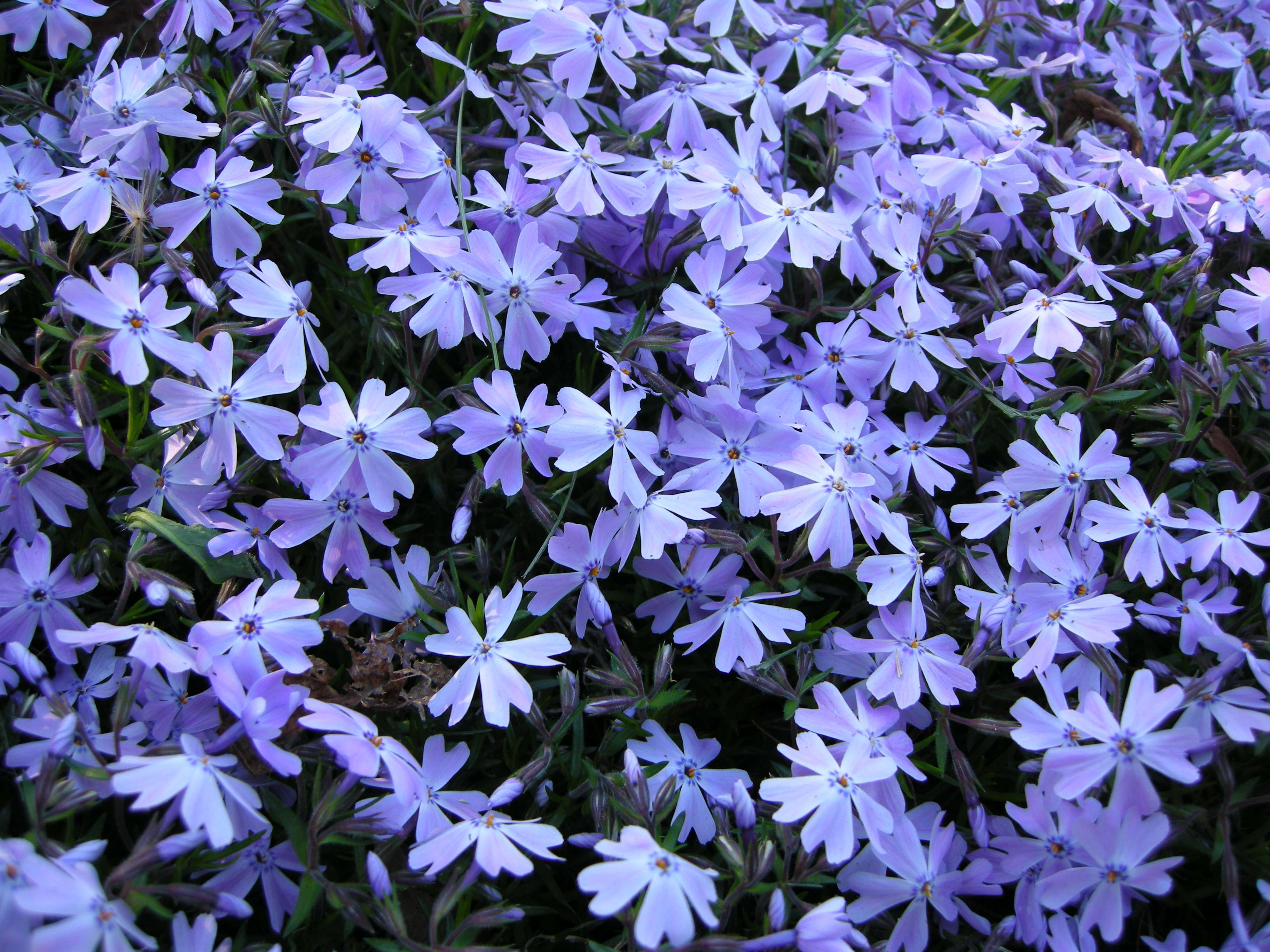
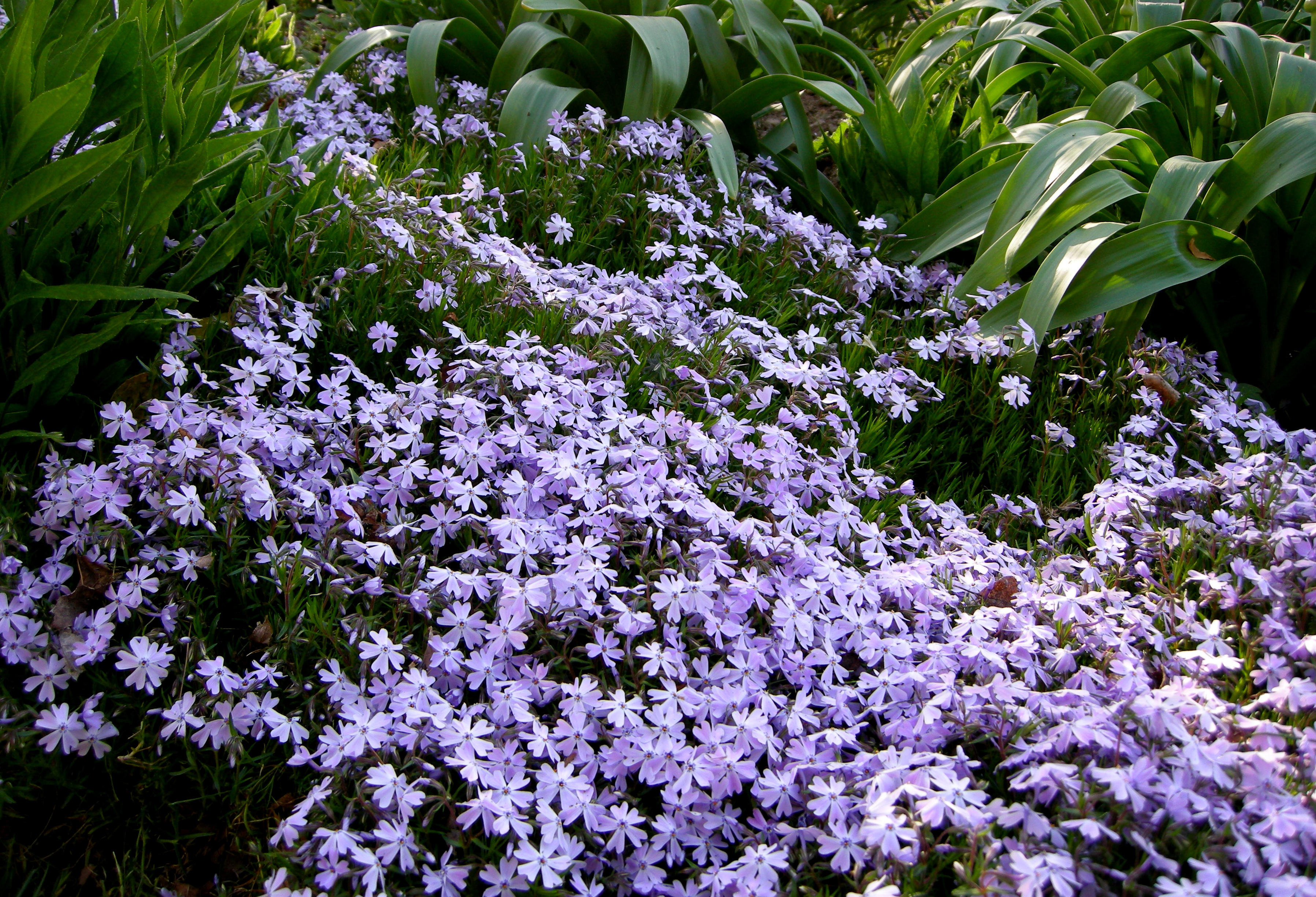
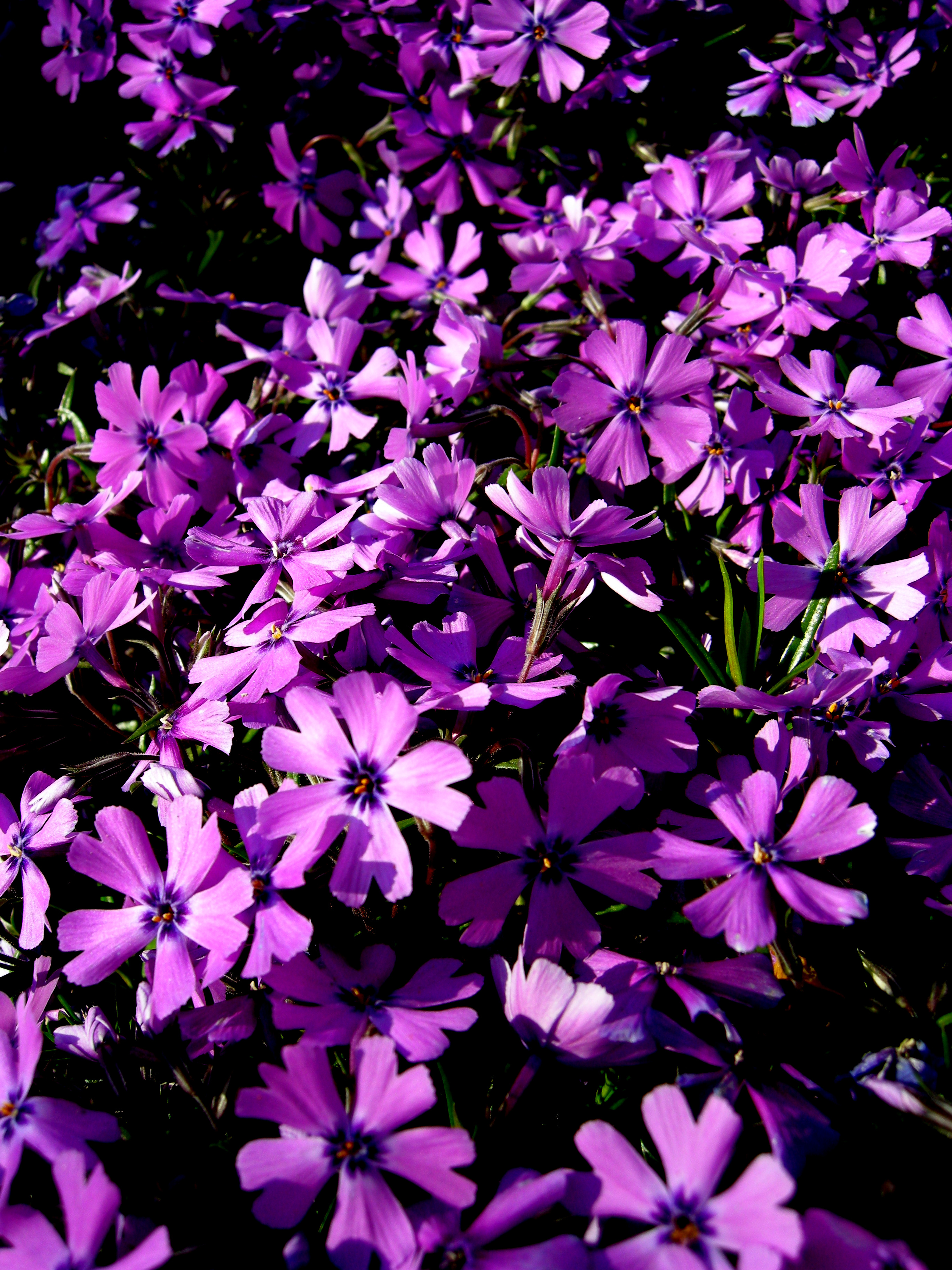
‘Emerald Blue’ moss phlox in my garden

In my last post, Your Native Woodland, I explained how to create your own native woodland garden.  Here I am going to profile some of the wonderful members of the genus Phlox, all native to eastern North America and Pennsylvania in particular.

All the plants except smooth and garden phlox are pictured blooming in my garden right now so I am linking to Garden Blogger’s Bloom Day (“GBBD”) hosted by May Dreams Gardens (link available on April 15) where gardeners from all over the world publish photos of what’s blooming in their gardens.

‘Sherwood Purple’ creeping phlox in my woodland

Phlox are very satisfying native plants to add to all areas of your garden.  They are easy to grow and spread rapidly but not aggressively.  All species that I am profiling are fragrant, some amazingly so, and attract butterflies and hummingbirds.  They are also disease-free except garden phlox, which gets powdery mildew.  And, most importantly, they have copious amounts of gorgeous flowers in purple, blue, pink, and white.  Did I mention that they are native to Pennsylvania and all of eastern North America?!?  What more could you want.

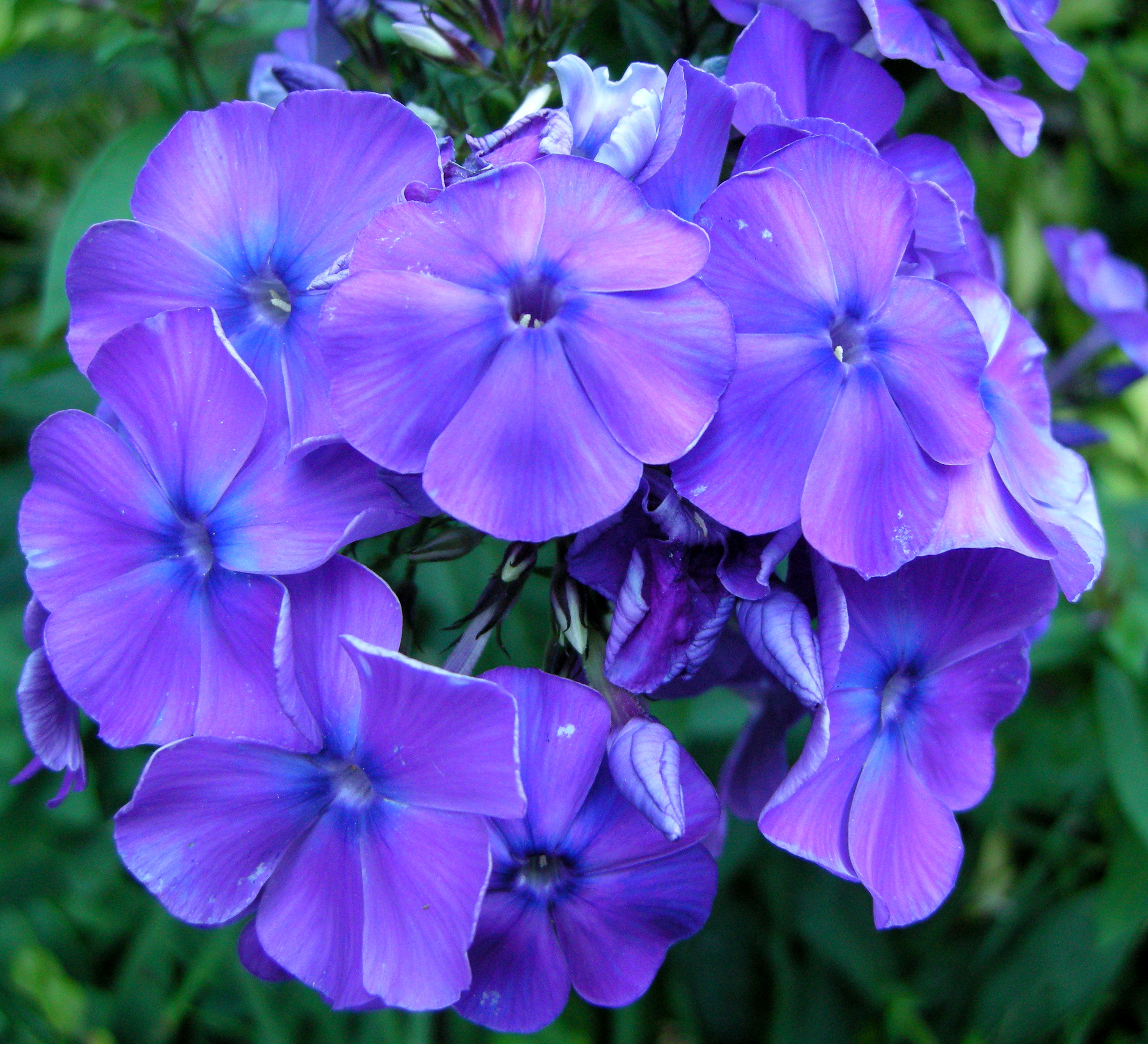
Wild sweet William ‘Blue Moon’, Phlox divaricata


Wild sweet William is the most fragrant of the phlox described here.  Its heavenly scent perfumes the whole garden when it is in bloom from April to June.  It is 8 to 10″ tall and spreading with semi-wintergreen leaves.  Although I have seen it growing in the wild in full shade, I have better success with it in sun to part shade.  Cut it back after flowering to maintain an attractive habit.  My favorite cultivars are ‘Blue Moon’ (photo above), ‘May Breeze’ with steely white flowers, and ‘Blue Elf’, a compact form.

‘Morris Berd’ smooth phlox, Phlox glabberima

Smooth phlox is a taller clump-forming plant, although the clumps expand rapidly when it is happy.  It is 18 to 24″ tall and grows in full sun to part shade in average to moist soil.  Flowers appear from late spring to early summer, a time when not much else is blooming.  The only smooth phlox I have ever seen for sale is ‘Morris Berd’ (photo above).  Its velvety pink flowers with silver highlights are breathtaking.


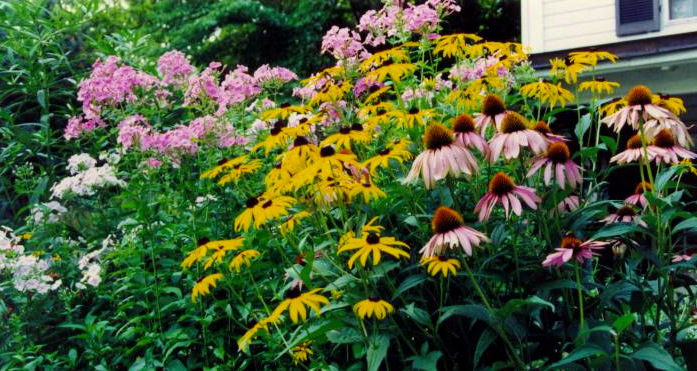
Garden phlox, P. paniculata, left with purple coneflower and ‘Goldsturm’ rudbeckia in my front border in 1993.

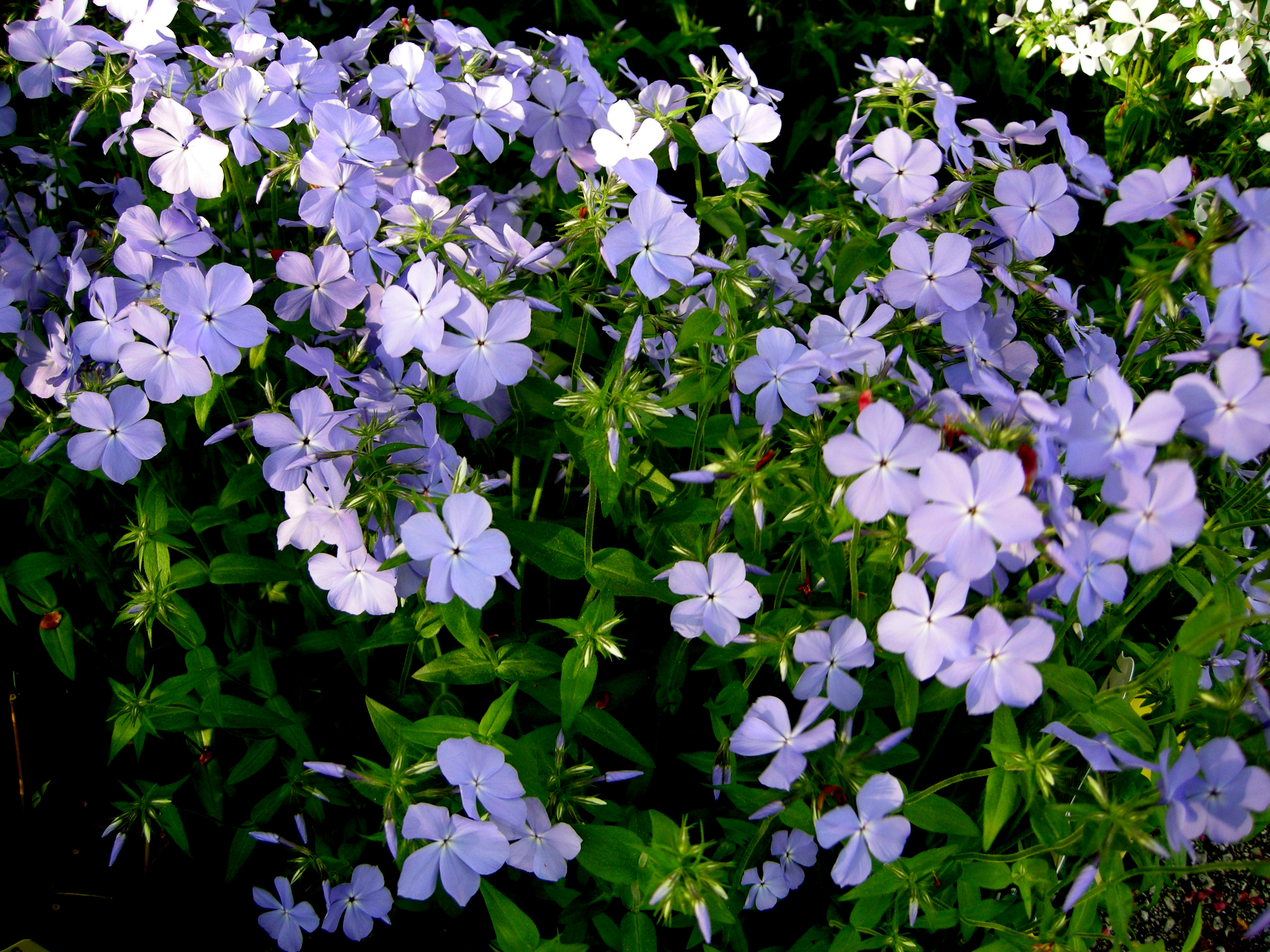
I dream of the day that I can plant a field of every cultivar of garden phlox on the market.  The fragrance of the flowers, second only to wild sweet William, the long bloom period, and the colors available make this a very desirable plant.  It grows anywhere in full sun to a good bit of shade (but not full shade).  It reaches 2 to 4′, and I have cultivars blooming from June to October.  My favorites are very early-blooming ‘Blue Paradise’ (photo below), compact ‘Pixie Miracle Grace’, pure white ‘David’, and ‘David’s Lavender’ with huge flower heads.  Unfortunately, I have failed to photograph these plants in past years, but I hope to remedy that this summer.

‘Blue Paradise’ garden phlox

I get questions all the time about powdery mildew on phlox.  The only phlox that gets powdery mildew in my garden is garden phlox.  The best way to avoid this is to buy mildew resistant varieties but in bad years even these cultivars get mildew.  You can also prevent mildew organically by spraying the leaves with a baking soda and oil formula before mildew strikes.  However, my approach is to ignore it because it doesn’t hurt the plants, it just looks ugly some years.  Focus on the flowers instead and plant plants in front of the phlox that hide the leaves.  Your garden does not have to look perfect.


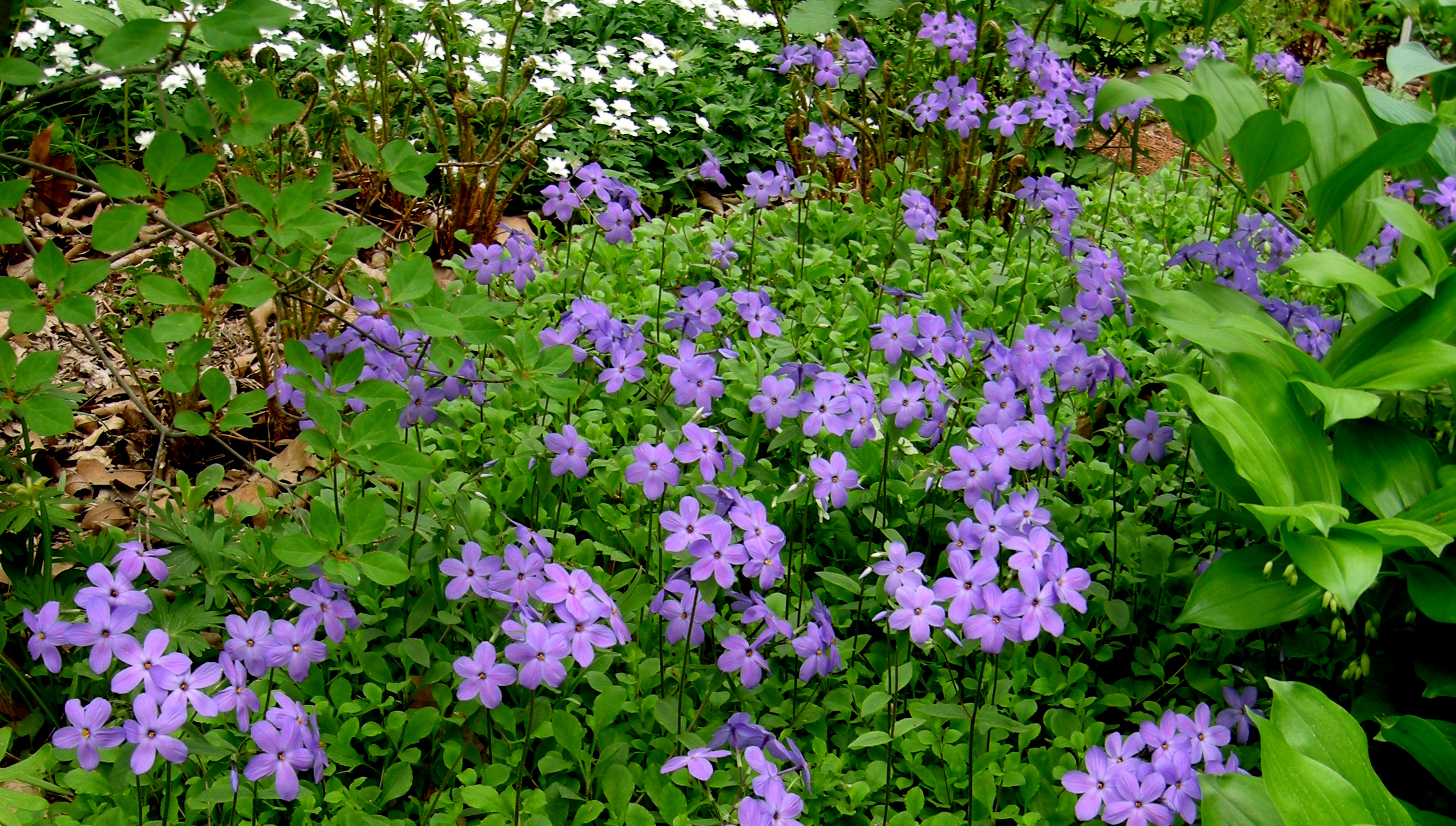
Creeping phlox ‘Blue Ridge’, P. stolonifera, in my woodland.

If I had to pick one phlox that is my favorite, it would be creeping phlox (not to be confused with P. subulata whose correct common name is moss phlox not creeping phlox).  It has beautiful and plentiful fragrant flowers attractive to butterflies like all the native phlox here.  But in addition, it grows in full, dry shade and makes an excellent 3 to 6″ mat-like groundcover that remains green through winter.  It flowers from March to May.  My favorite cultivars are ‘Sherwood Purple’ (photo at the beginning), which is the most vigorous, ‘Blue Ridge’ (photo above), ‘Home Fires’ (photo below), and ‘Pink Ridge’, which is a slightly different pink and blooms later than ‘Home Fires’.

.

‘Home Fires’ creeping phlox


‘Emerald Blue’ moss phlox, P. subulata, in my garden


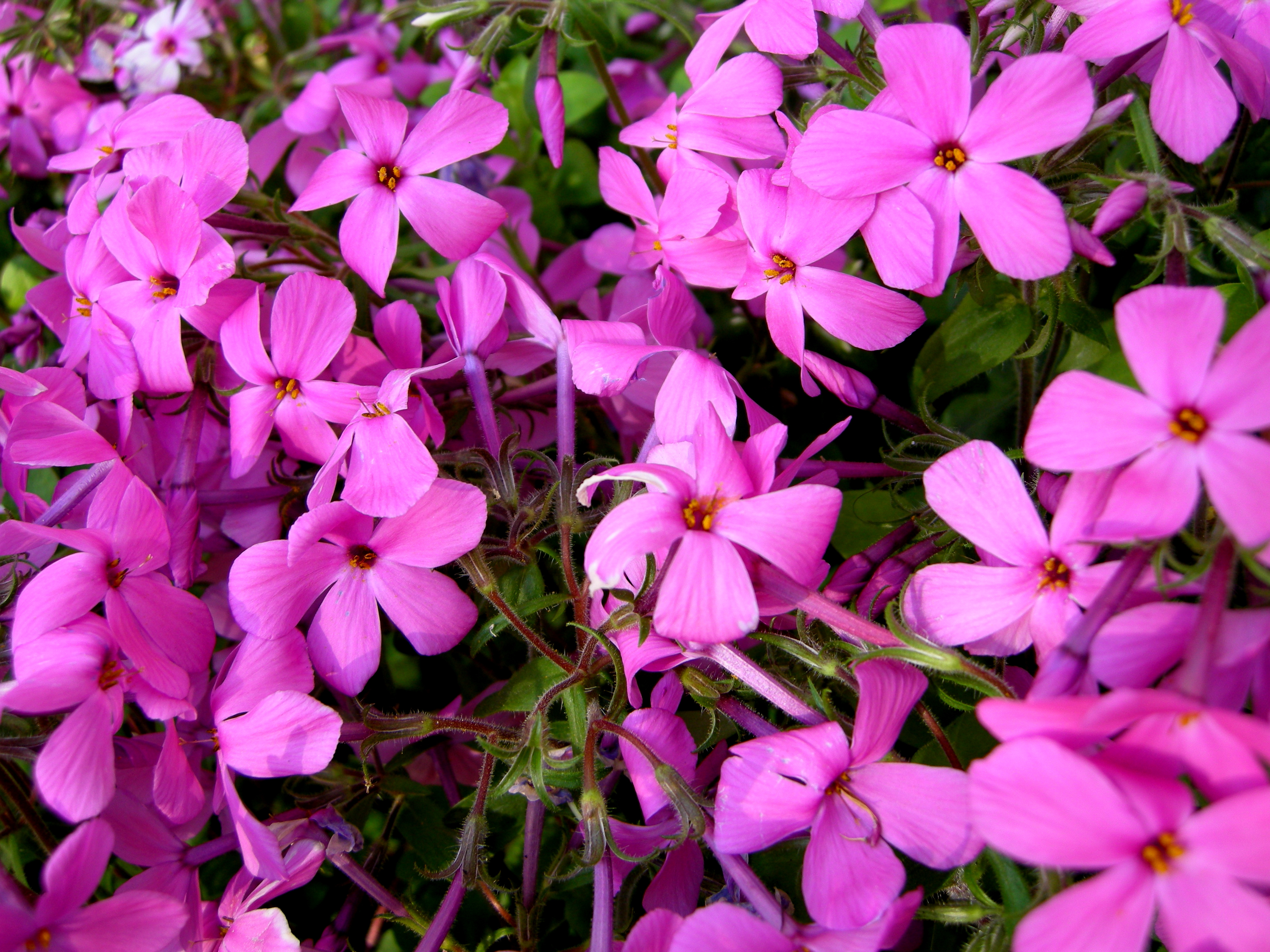
For abundance of flowers, you can’t beat moss phlox: you can’t even see the leaves when it is in bloom in April and May.  It grows in full sun to part shade and forms a wintergreen mat that solidly blocks out weeds.  The needle-like leaves provide an attractive texture year round.  A great plant for dry sites with thin soil because it has a shallow root system and likes to be well-drained.  An annual shearing is recommended although I don’t do this.

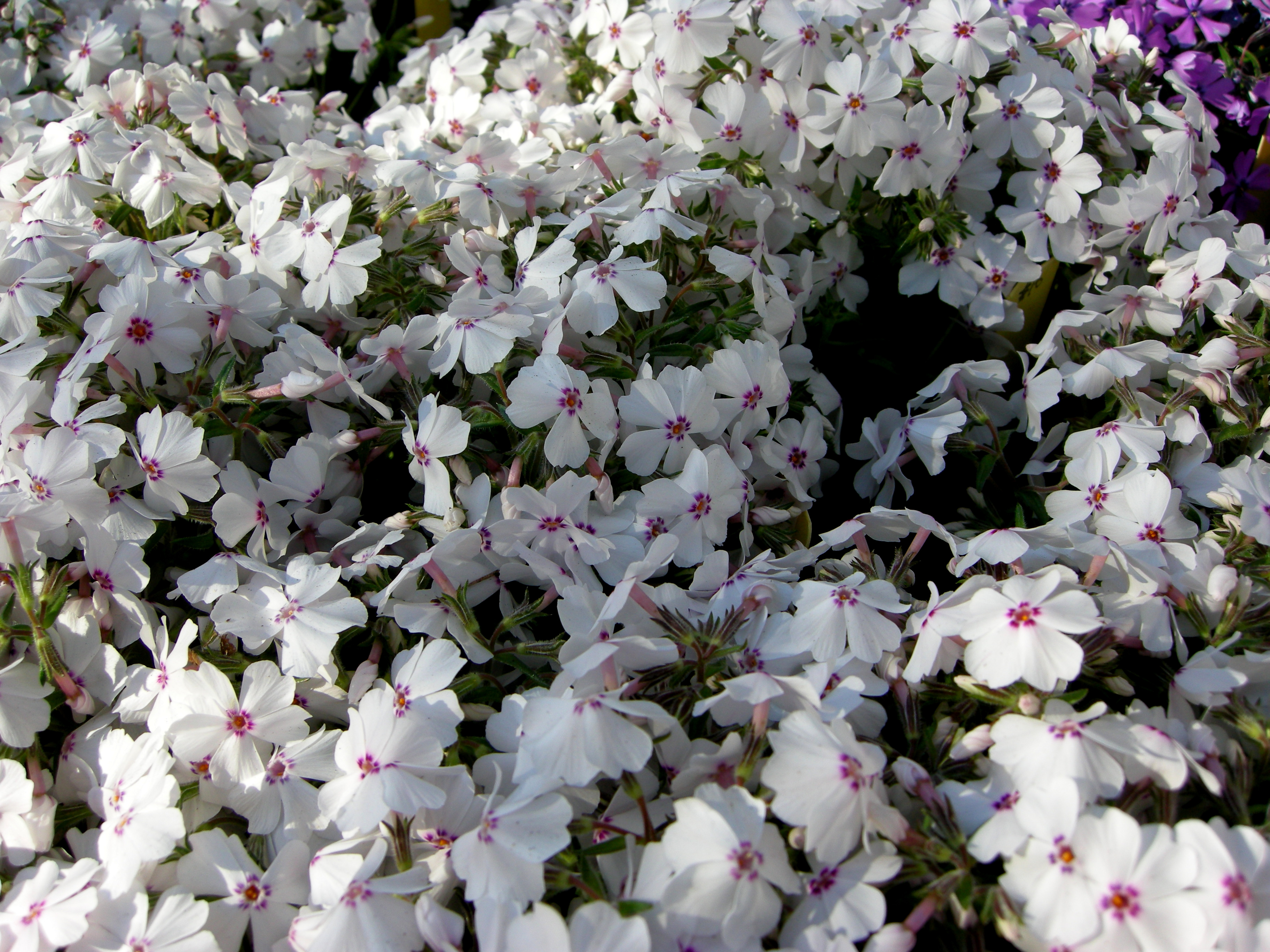
‘Amazing Grace’ moss phlox

A lot of breeding has been done with moss phlox to produce a plethora of beautiful flower colors.  They are all good plants, and I don’t have a favorite, but I like ‘Emerald Blue’ (photo at beginning and above), pink ‘Fort Hill’, white with a red eye ‘Amazing Grace’ (photo above), and ‘Purple Beauty’ (photo below).

‘Purple Beauty’ moss phlox

You can’t go wrong when you add any of these wonderful native phlox to your garden.  Enjoy the flowers!

Carolyn

Nursery Happenings: My second Open House Sale, featuring spring-blooming plants for shade, will take place on Saturday, April 14, from 10 am to 3 pm.  Look for an email listing the plants available if you are on my customer email list.

If you are within visiting distance and would like to receive catalogues and information about customer events, please send your full name and phone number to carolynsshadegardens@verizon.net.  Subscribing to my blog does not sign you up to receive this information.

Facebook:  Carolyn’s Shade Gardens has a Facebook page where I post single photos, garden tips, and other information that doesn’t fit into a blog post.  You can look at my Facebook page here or click the Like button on my right sidebar here.

Notes: Every word that appears in orange on my blog is a link that you can click for more information.  If you want to return to my blog’s homepage to access the sidebar information (catalogues, previous articles, etc.) or to subscribe to my blog, just click here.

Your Native Woodland: If You Build It They Will Come

Posted in Fall Color, groundcover, landscape design, native plants with tags , , , , , , , , , , , , , , , , , , , , , , on April 2, 2012 by Carolyn @ Carolyns Shade Gardens

Carolyn’s Shade Gardens is a retail nursery located in Bryn Mawr, PA, specializing in showy, colorful, and unusual plants for shade.  The only plants that we ship are snowdrops within the US.  For catalogues and announcements of local events, please send your full name, mailing address, and cell number to carolyn@carolynsshadegardens.com and indicate whether you are interested in snowdrops, hellebores, and/or hostas.  Click here to get to the home page of our website for catalogues and information about our nursery and to subscribe to our blog.

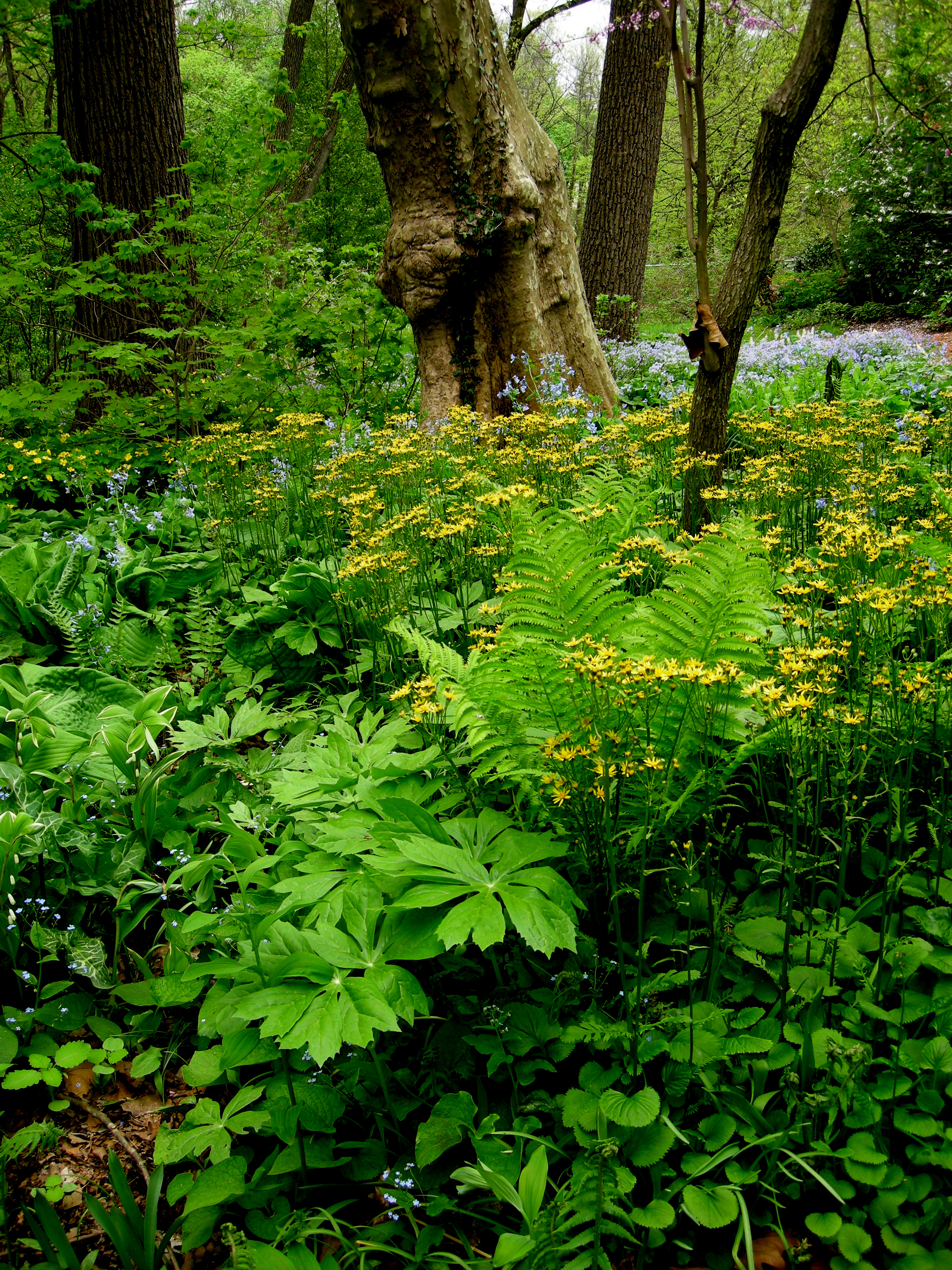
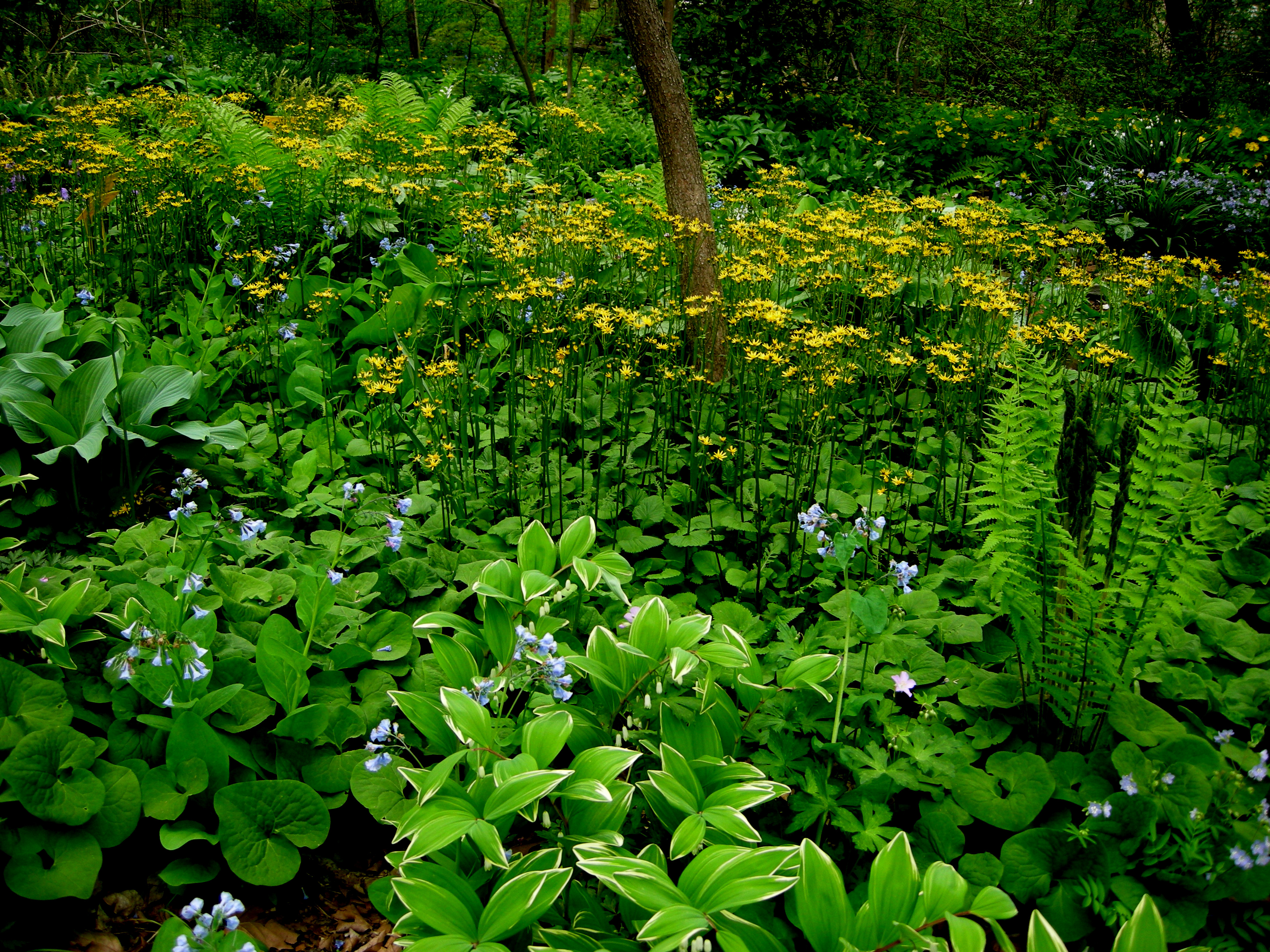
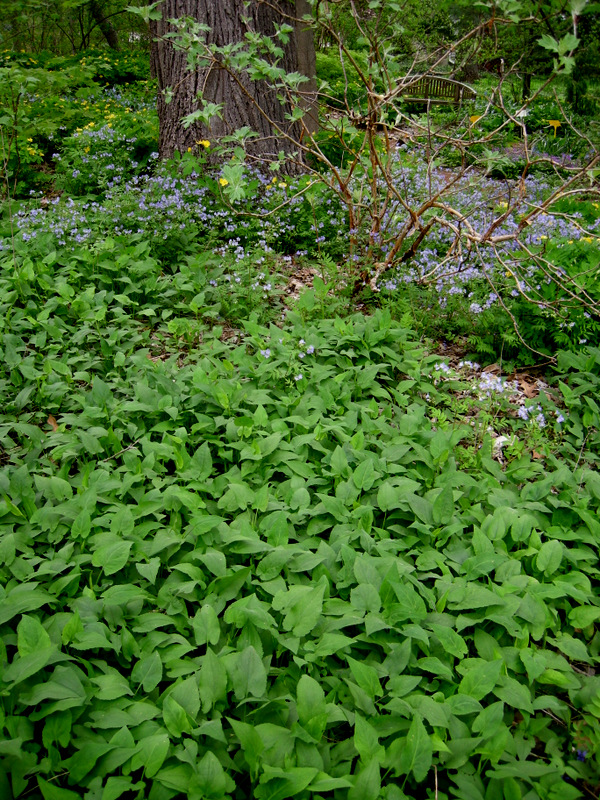
Virginia bluebells and Celandine poppy in my woodland

Well you might have to plant a few first.  What am I talking about?  How to create your very own woodland filled with native plants.  I have written before about how important native plants are to our survival.  To read about it, click here.  Now I am going to tell you how to create a shade garden in which mid-Atlantic native plants thrive and multiply with abandon.

Note: There is a Part 2 with more suggestions, click here.

my native woods

It is really quite simple.  All you do is take one woodland area, mix with generous amounts of compost, add the appropriate native plants, and wait a few years.  The key is knowing which plants to use.


I started with the worst possible soil in the worst possible conditions.  Not only were the beds composed of the hard baked clay and rocks prevalent in our area, but they were filled with roots from 100-year-old London plane and—hold onto your hats—black walnut trees.  Add to that, years of trash, including roofing slate and coal furnace shovelings, dumped in the woods before municipal collection came along and construction debris from the 1960s.


Nature does not dot the landscape with precious collectibles but  “designs” with large sweeps of single types of plants, and that is what I have done in my woods  To create a woodland like mine, all you do is plant at least five but preferably seven and ideally nine of the plants profiled below in beds amended with generous amounts of compost, mulch heavily with ground leaves, and stand back and wait.  Really….that’s what you do….it works.


I wanted to recommend six plants, but when it came down to slimming the competition, I had to go with nine: seven spring-blooming and two fall-blooming.  All are native to the mid-Atlantic and Pennsylvania and all seed freely in a woodland setting once they get going.  And the winners are:

Virginia bluebells, Mertensia virginica: porcelain blue flowers top blue-green leaves in March and April, goes dormant when hot.  All my plants came from one plant given to me by a friend.


Celandine poppy, Stylophorum diphyllum: lovely filigreed leaves are covered with large bright yellow flowers in April and May.  Again, all my plants came from one plant given to me by a friend.

Dwarf Jacob’s ladder, Polemonium reptans: wintergreen fern-like leaves are followed in April and May by copious blue bell-shaped flowers replaced by ornamental chartreuse seedpods.

.

White violets, Viola striata: white flowers in April and May.  All my plants came from one clump dug from my woods.


Blue creeping phlox, Phlox stolonifera ‘Blue Ridge’: wintergreen mat of foliage is topped with blue flowers in April and May.


Creeping phlox, Phlox stolonifera ‘Sherwood Purple’: creeping phlox comes in blue, purple, white, and pink.  The purple is the most vigorous.


Native ginger, Asarum canadense: the reddish purple flowers appear below the leaves.


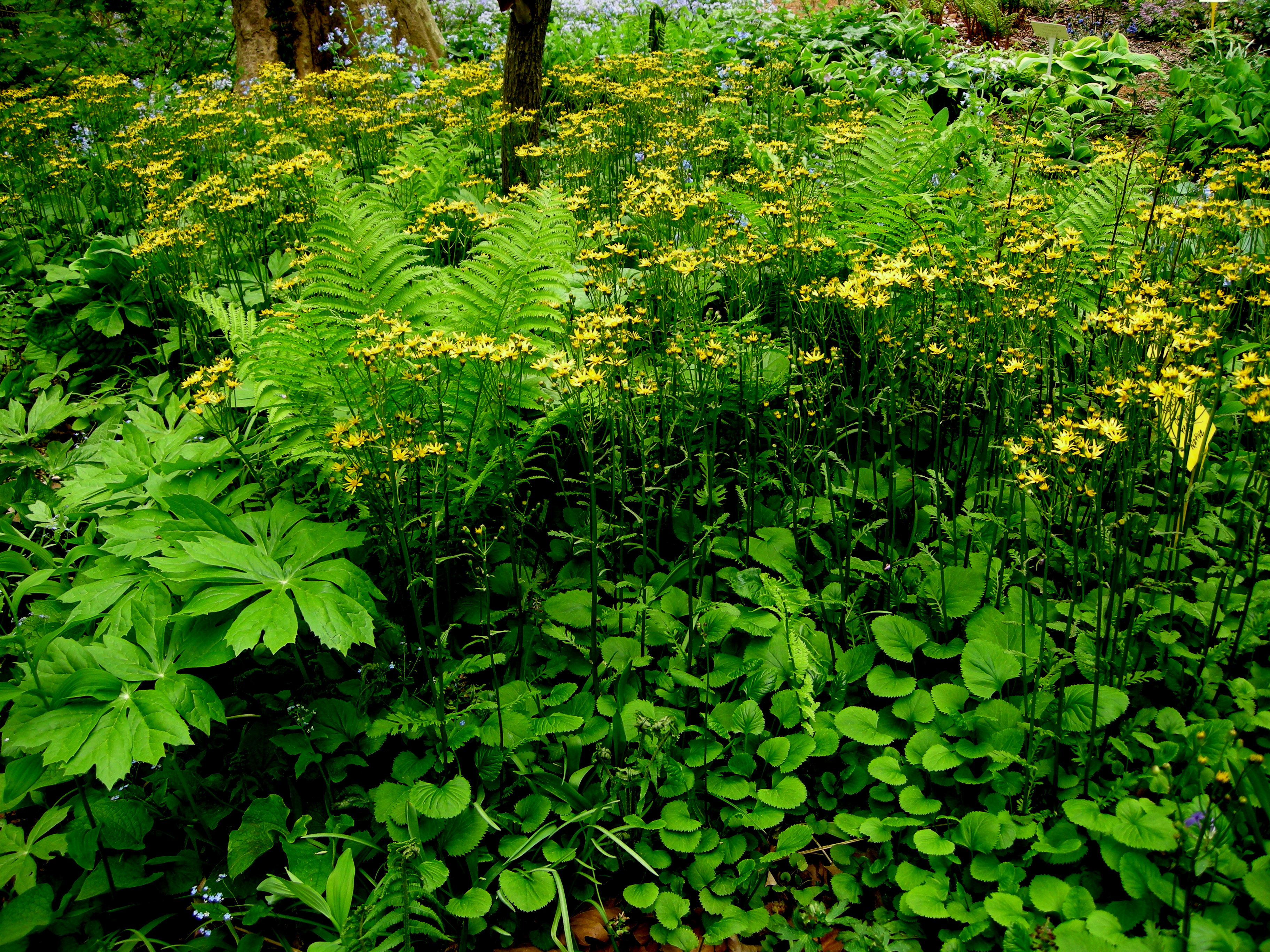
Golden groundsel, Senecio aureus: the wintergreen leaves are topped by attractive purple buds in March followed by fragrant yellow flowers in April and May.  This vigorous spreader is a great native substitute for vinca, pachysandra, and ivy.

Blue wood aster, Aster cordifolius: the leaves of blue wood aster completely cover the ground in the spring.


Blue wood aster is covered with flowers in October and November.

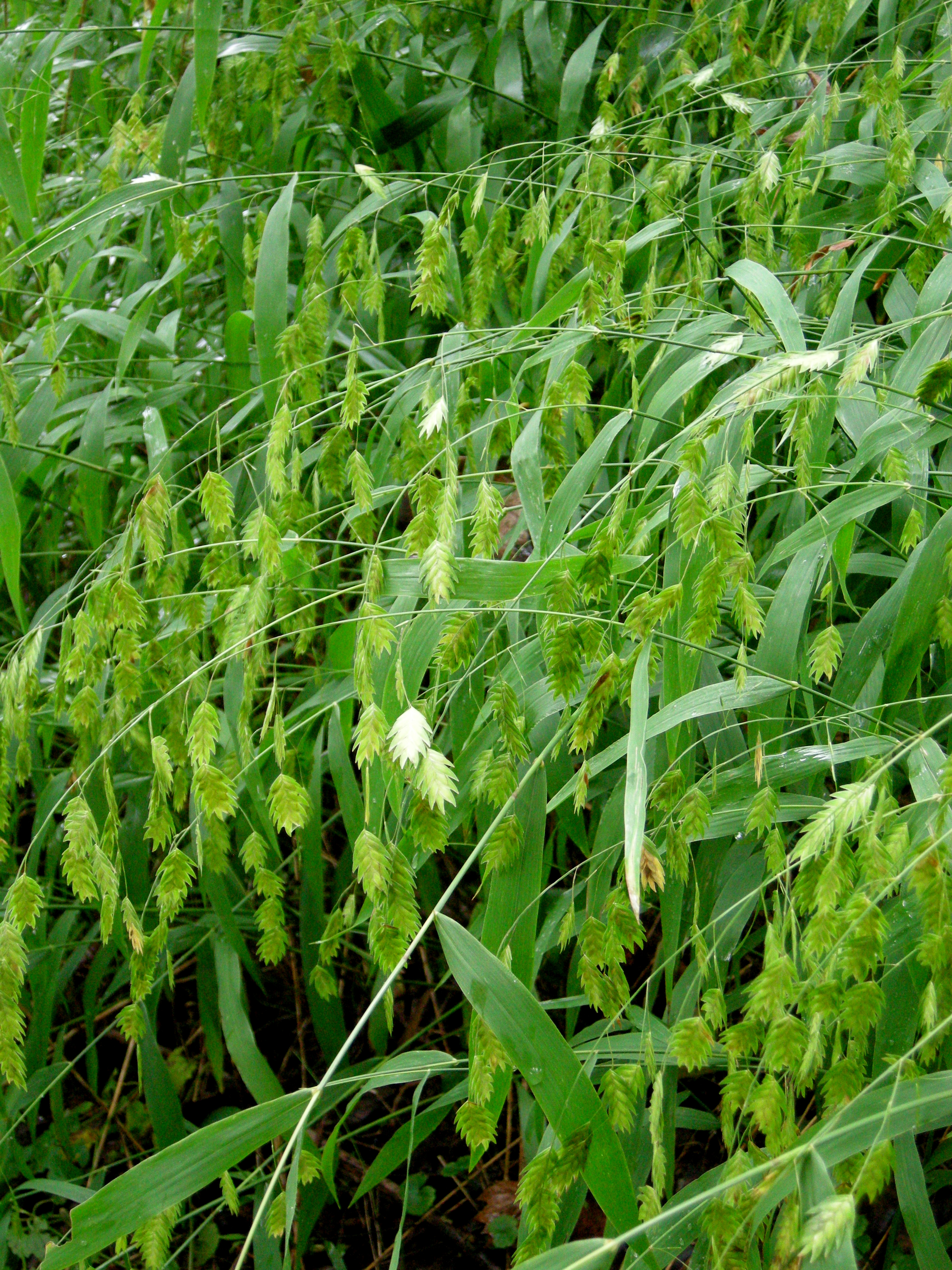
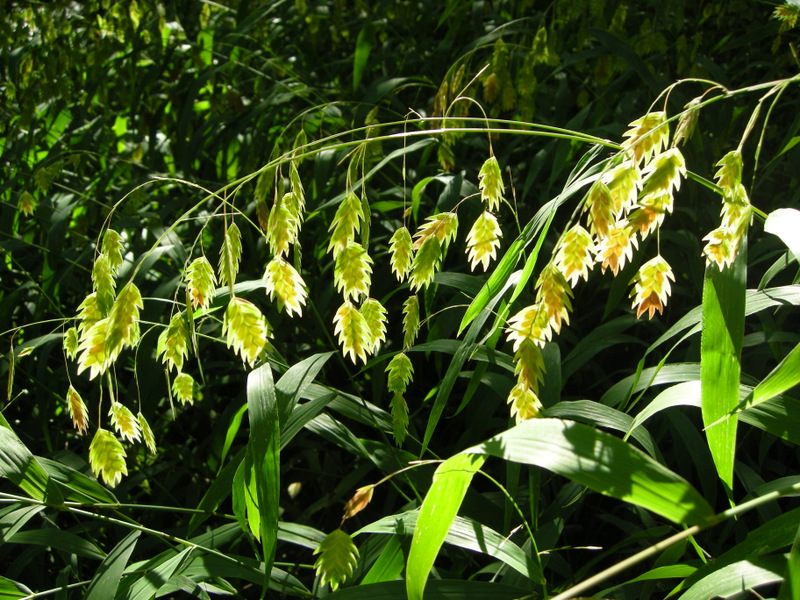
Northern sea oats, Chasmanthium latifolium: pendulous oat-like flowers grace this native shade grass in October and November.  The foliage ages to a lovely khaki color that remains ornamental through winter.

The flowers of northern sea oats in the slanted light of fall.


As the spreading, woodland plants profiled above establish themselves, you can add pockets of other special natives like trilliums, jack-in-the-pulpits, mayapples, bloodroot, and ferns.  The result is magical.

Carolyn

Notes: Every word that appears in orange on my blog is a link that you can click for more information.  If you want to return to my blog’s homepage to access the sidebar information (catalogues, previous articles, etc.) or to subscribe to my blog, just click here.

2012 Winter Interest Plants

Posted in bulbs for shade, Camellias, evergreen, garden to visit, hellebores, landscape design, Shade Perennials, Shade Shrubs, snowdrops, winter, winter interest with tags , , , , , , , , , , , , , , , , , on February 29, 2012 by Carolyn @ Carolyns Shade Gardens

Carolyn’s Shade Gardens is a retail nursery located in Bryn Mawr, PA, specializing in showy, colorful, and unusual plants for shade.  The only plants that we ship are snowdrops within the US.  For catalogues and announcements of local events, please send your full name, mailing address, and cell number to carolyn@carolynsshadegardens.com and indicate whether you are interested in snowdrops, hellebores, and/or hostas.  Click here to get to the home page of our website for catalogues and information about our nursery and to subscribe to our blog.

Camellia japonica ‘Berenice Boddy’ in full bloom in February in the Cresson garden.

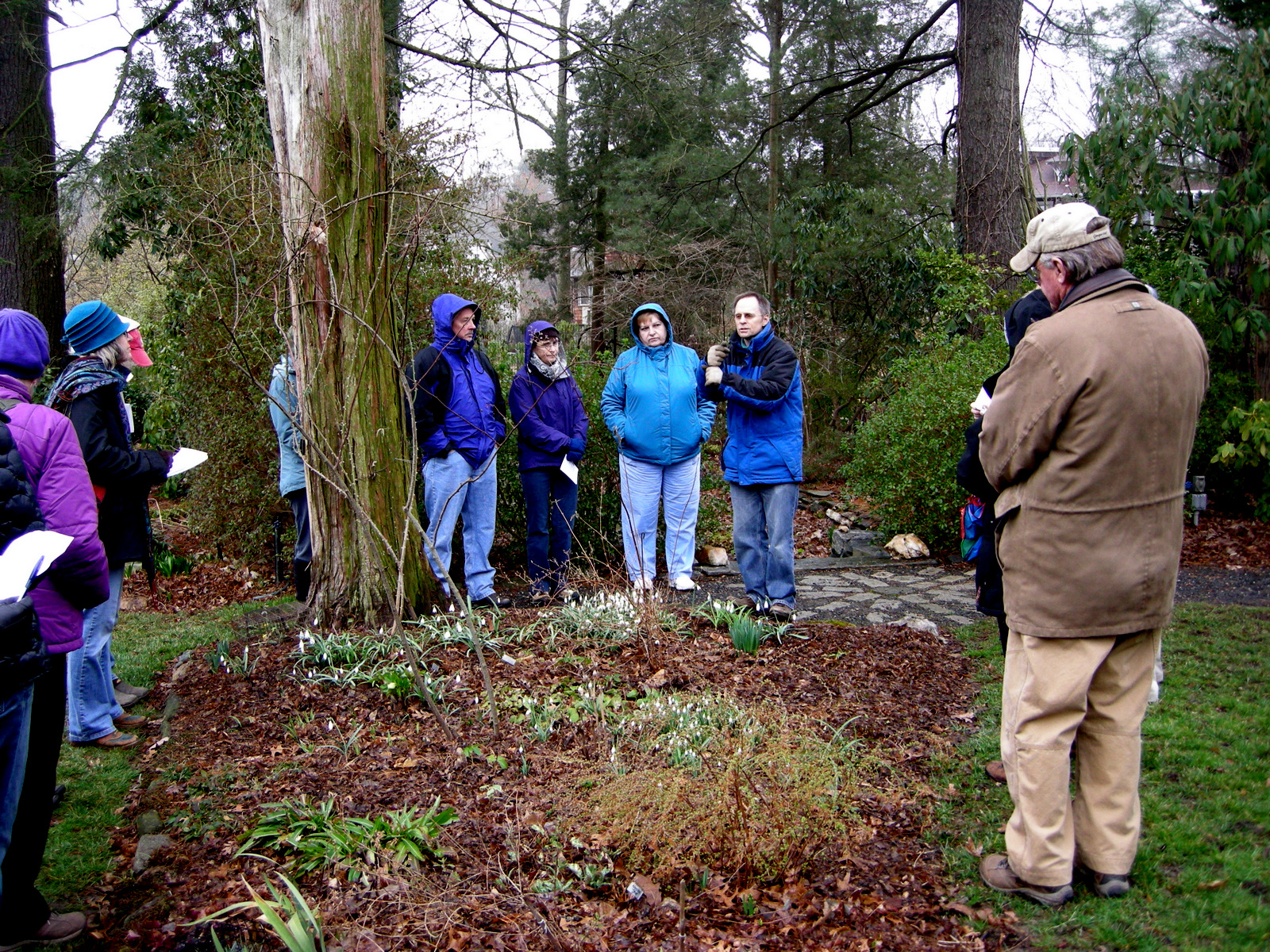
On Friday, February 24, and Monday, February 27, Charles Cresson presented the second annual Winter Interest Plant Seminars for my customers in his beautiful garden located in Swarthmore, Pennsylvania, US.  I did a post on the seminars last year (to read it click here) and thought I had covered the topic.  However, our very warm winter meant that many different plants were in bloom so I want to show you what we saw.


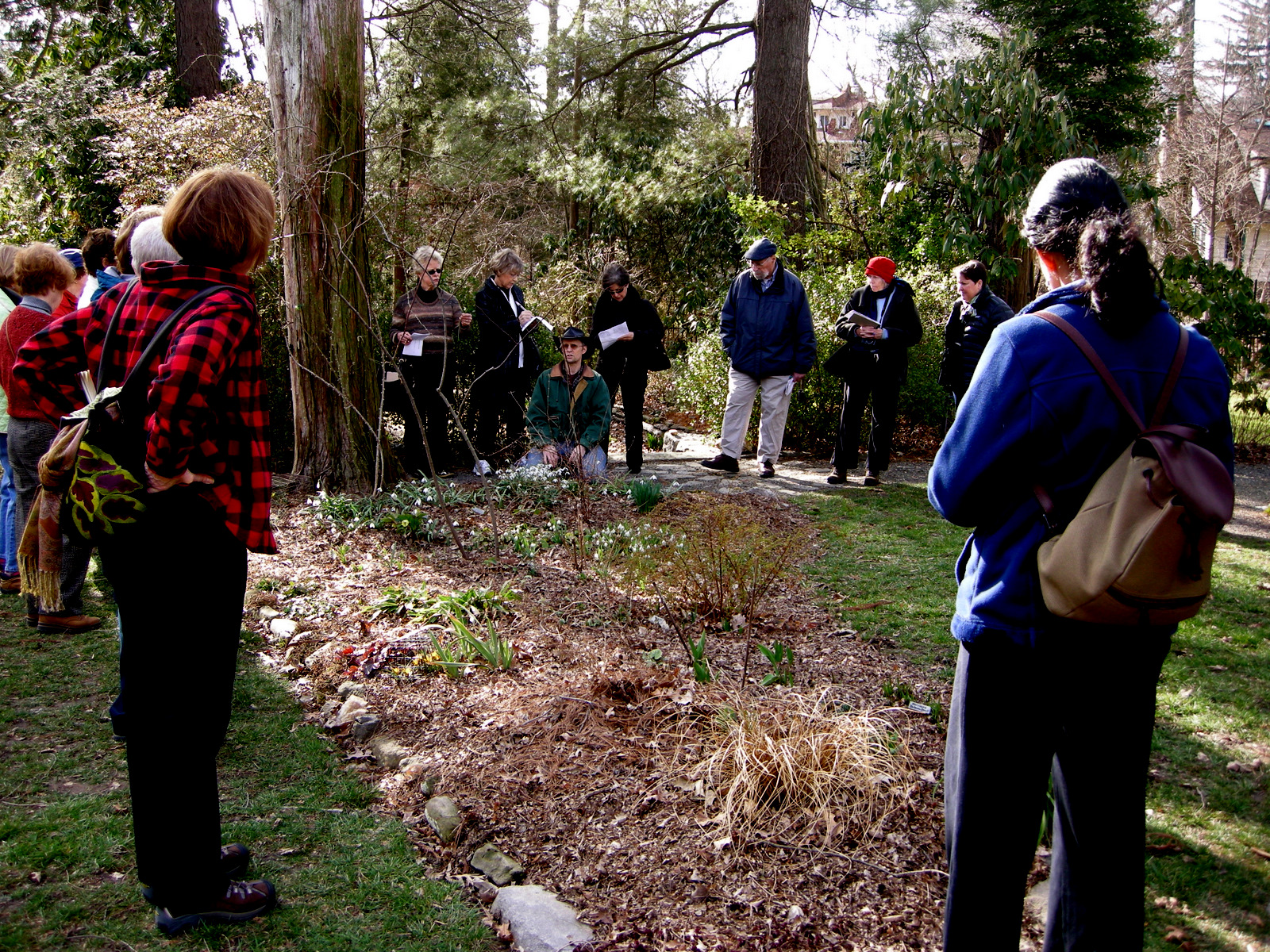
The weather was cold and rainy on Friday, but participants didn’t let it stop them from enjoying Charles’s presentation.

Monday was warm and sunny which allowed more time for dawdling in the garden.  The snowdrops were a big hit.

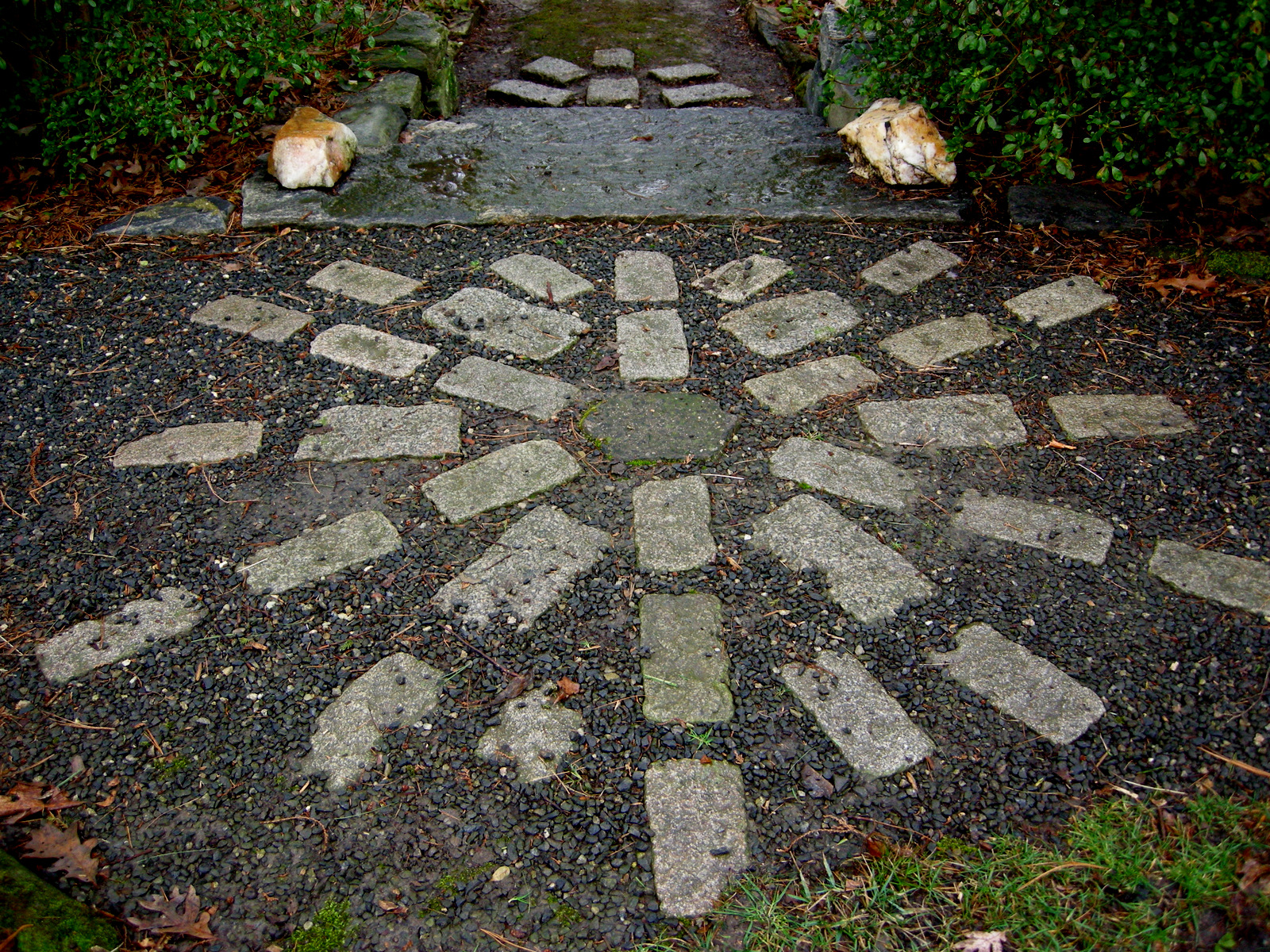
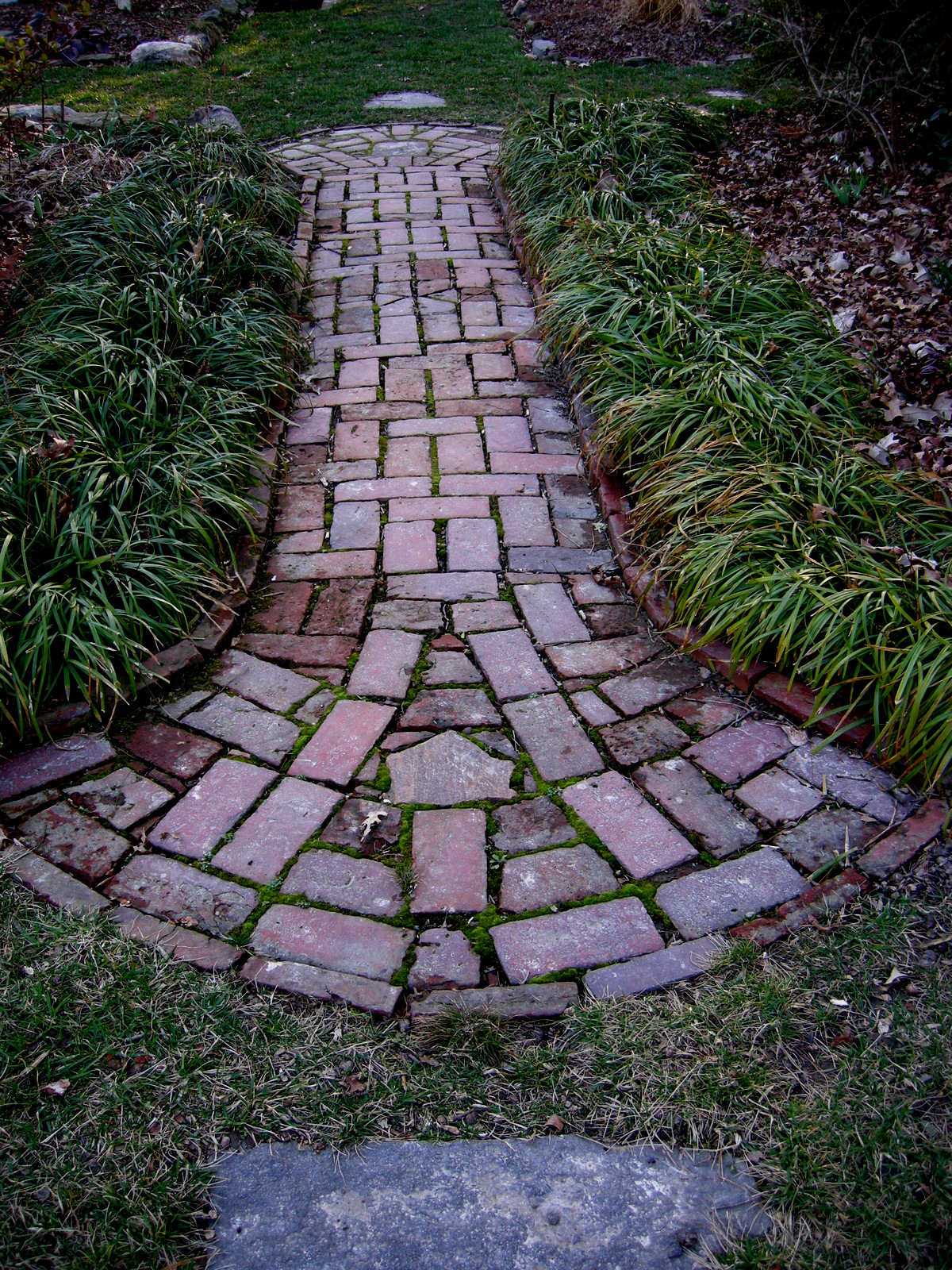
The attention to detail in Charles’s garden is amazing.  I thought I would show you some of the “hardscape” features, many of which Charles built himself:


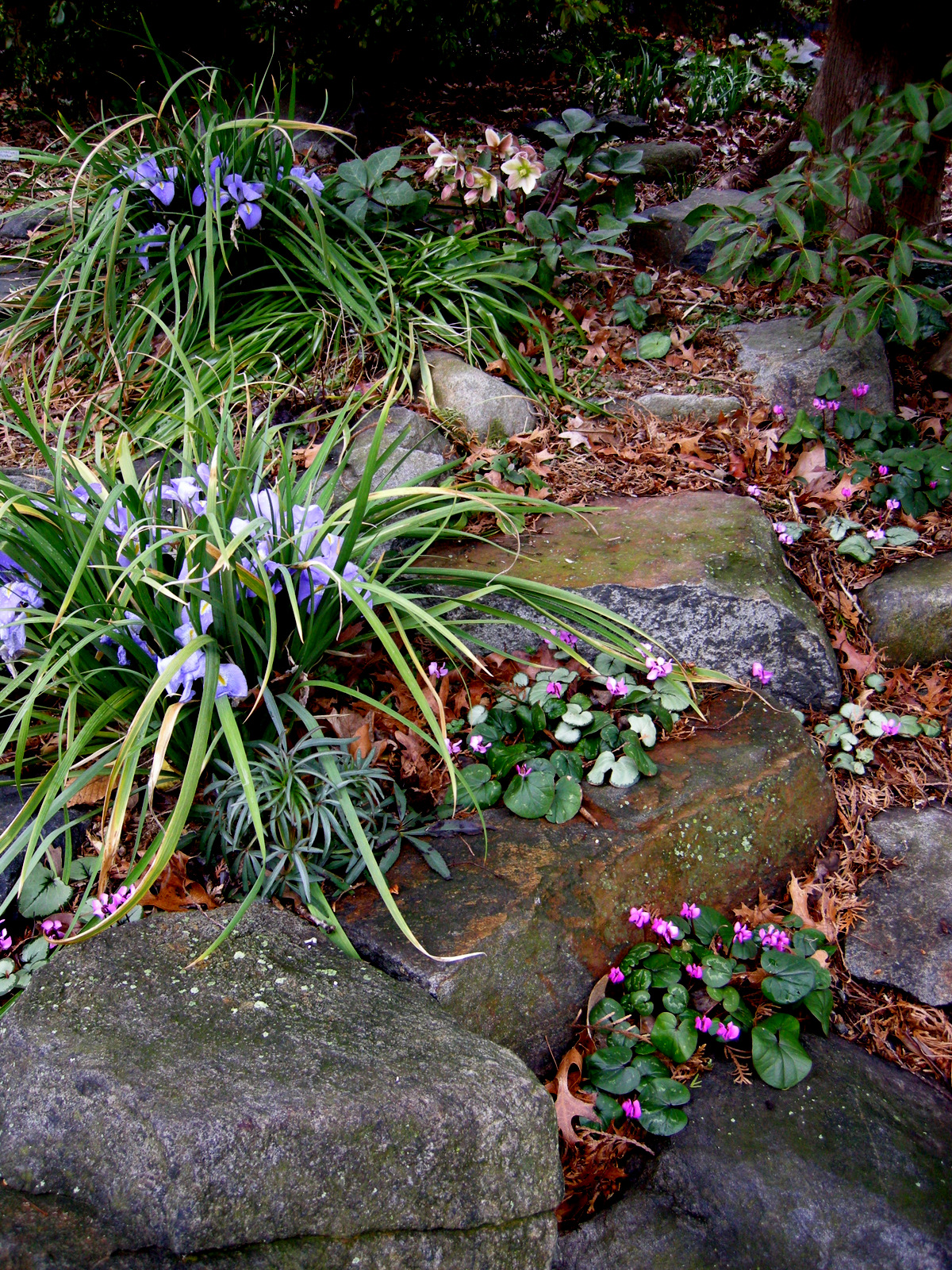
The rock garden with hellebores, Algerian iris, and spring-blooming hardy cyclamen.

Garden shed with the original green roof.

Winter jasmine, Jasminum nudiflorum, photo by seminar participant Lucretia Robbins.

Charles has a spectacular collection of winter-blooming shrubs, many of which are fragrant.  We were all surprised by which one was the most fragrant at that time of year:


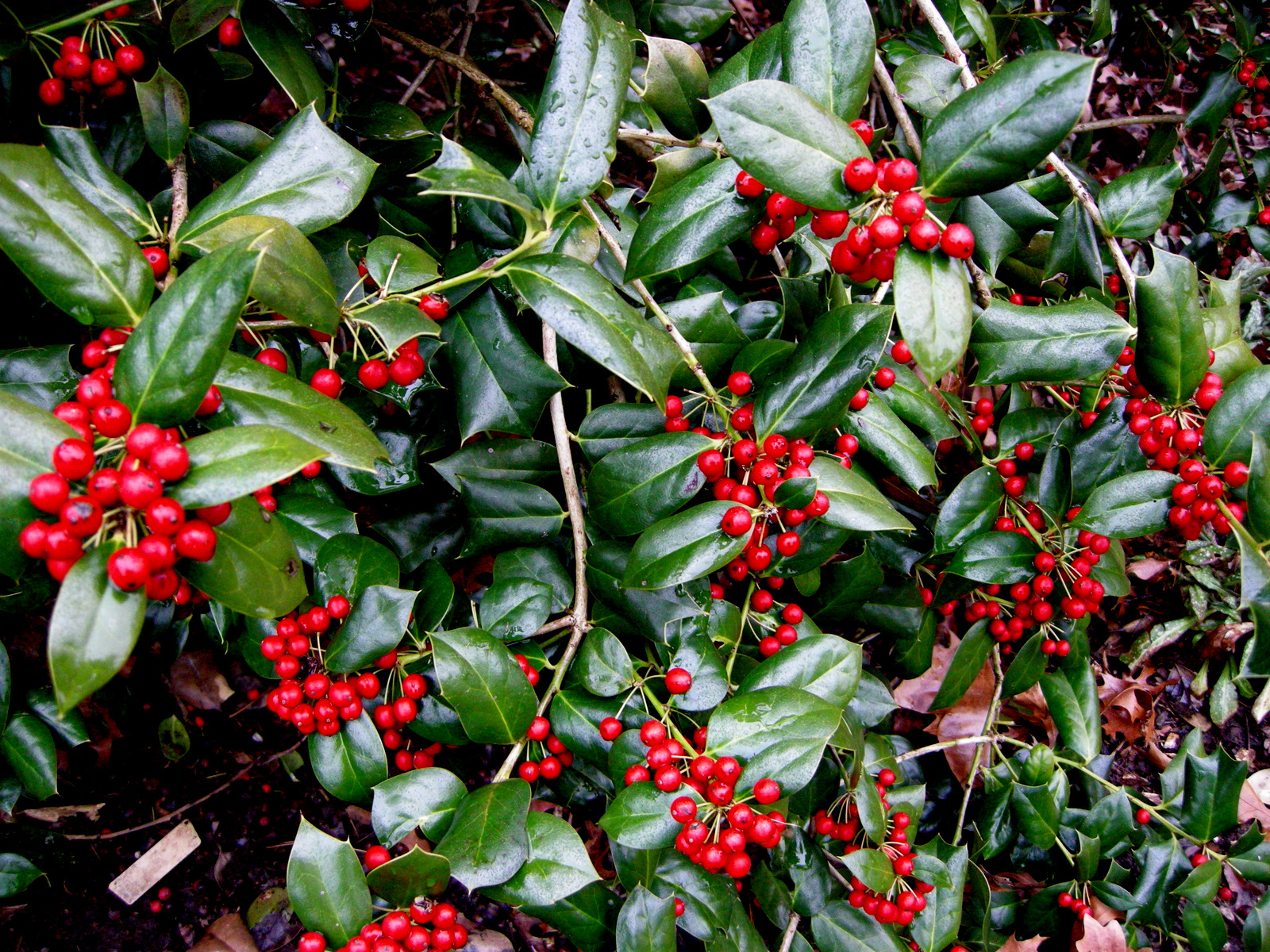
Chinese holly, Ilex cornuta, retains its berries through the winter.


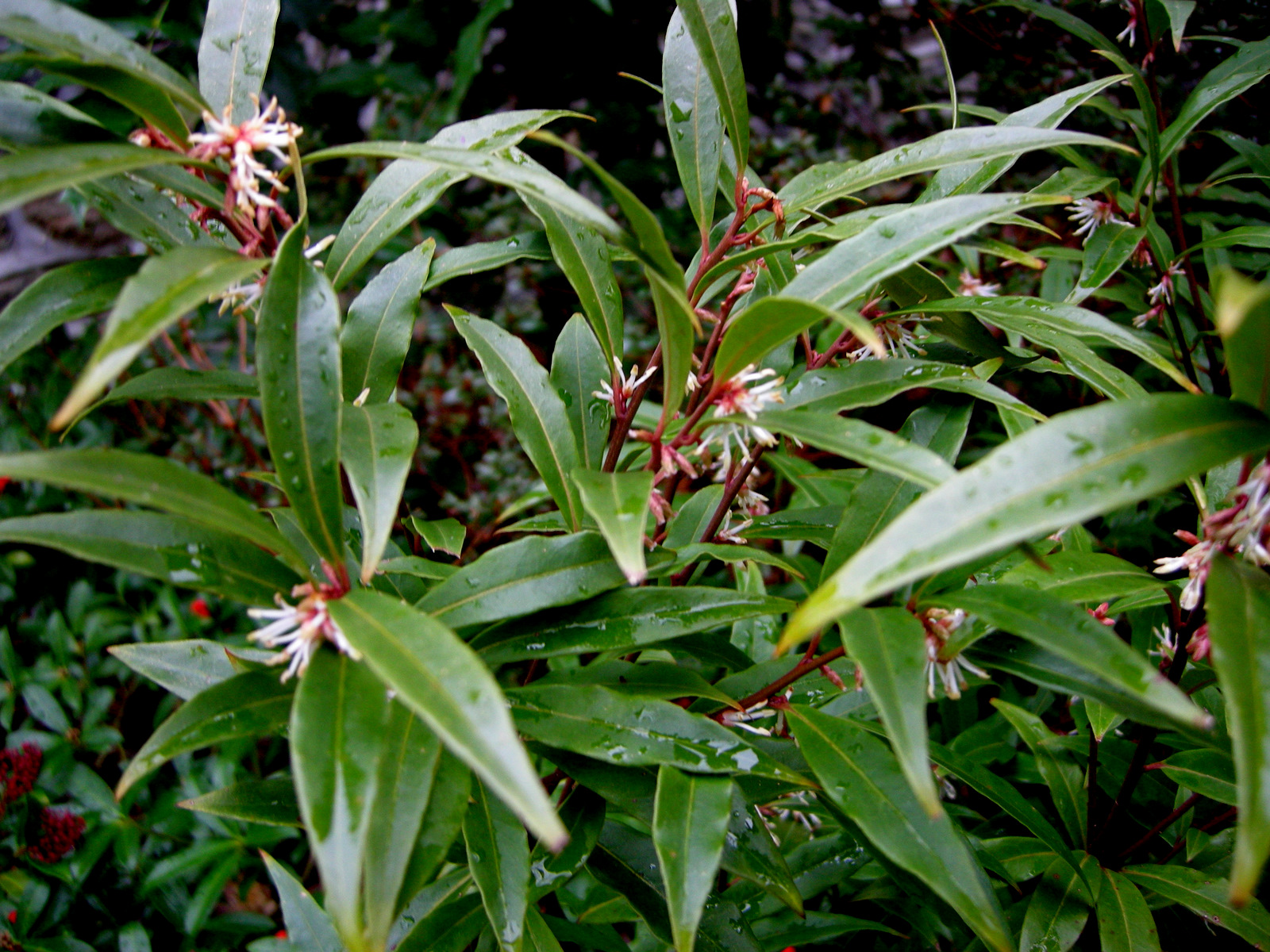
Sweetbox, Sarcococca hookeriana var. digyna ‘Purple Stem’, adds the additional feature of ornamental stems to sweetbox’s many desirable attributes.


Bodnant viburnum, V. bodnantense ‘Dawn’, is very fragrant.


Flower of Bodnant viburnum


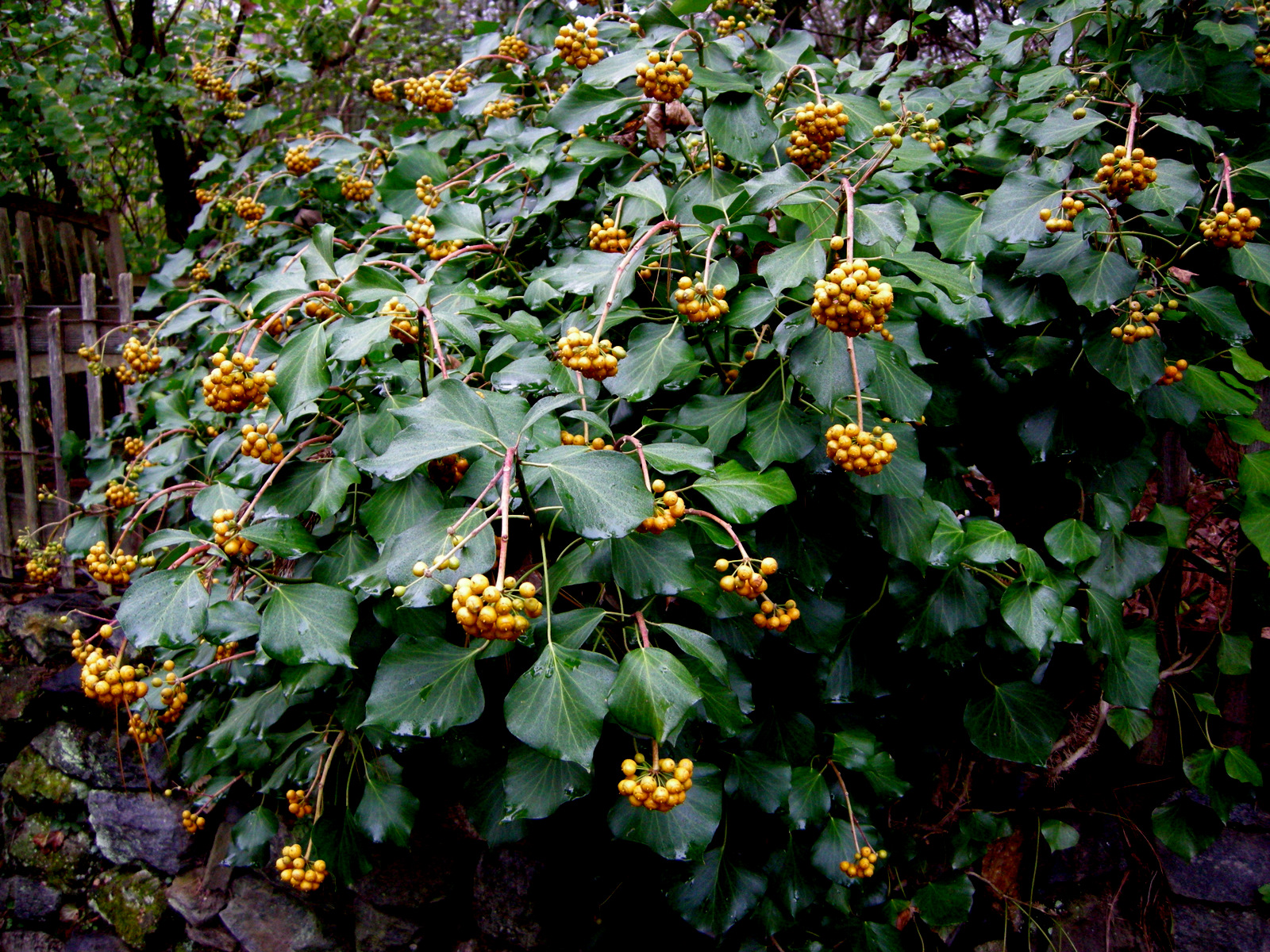
The adult form of English ivy, Hedera helix ‘Poetica Arborea’, produces beautiful berries but is also considered very invasive.


Camellia x ‘April Tryst’ is blooming early.


I like the male flowers of Japanese skimmia, S. japonica, as much as the berries on the female plants.


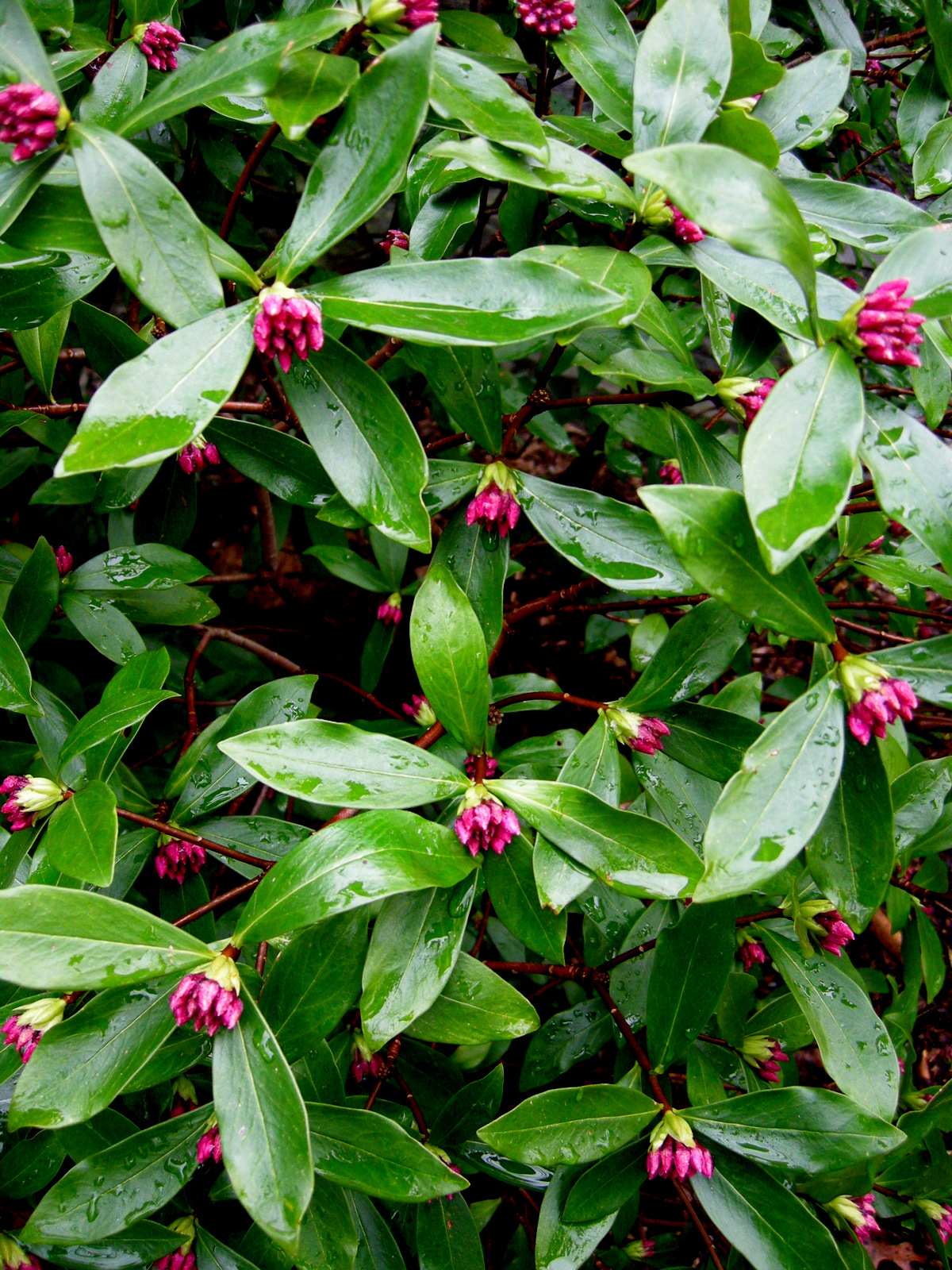
Winter daphne, D. odora, is one of my favorite shrubs because of its wonderful fragrance, excellent habit, evergreen leaves, and lovely flowers.


And the winner is….  Yes, Japanese mahonia, M. japonica, was the most fragrant plant in Charles’s garden even with all the excellent competition above.

Winter-blooming herbaceous perennials were also well represented:

The pink flowers and evergreen leaves of heath, Erica x darleyensis ‘Furzey’.

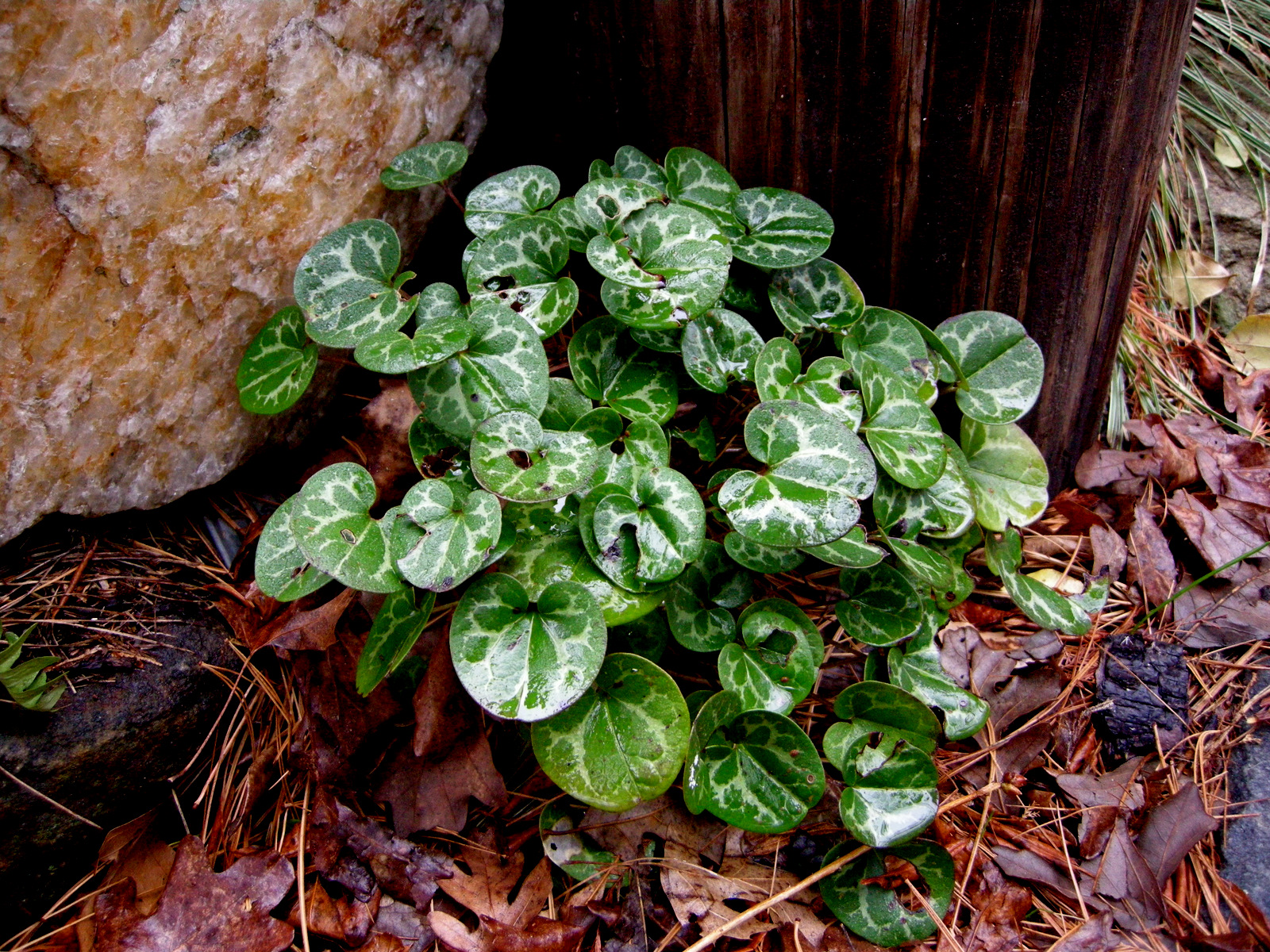
Evergreen heart leaf ginger, Asarum virginicum

Fragrant Algerian iris, I. unguicularis, was a big hit.

Christmas rose, Helleborus niger, photo Lucretia Robbins

A gorgeous anemone-flowered (ruffle around the center of the flower) hybrid hellebore—my favorite type of hellebore flower.

The most evergreen hellebore of them all, bearsfoot hellebore, H. foetidus.

Helleborus x ericsmithii ‘Winter’s Song’

Hybrid hellebore with the very robust and extremely fragrant snowdrop ‘Brenda Troyle’.

The tour included a wonderful selection of winter-blooming bulbs, including choice snowdrop cultivars.  Here are just a few:

Seeing this large patch of the very fragrant snowdop ‘S. Arnott’ sent participants back to add it to their purchases for the day.

Spring-blooming hardy cyclamen, C. coum

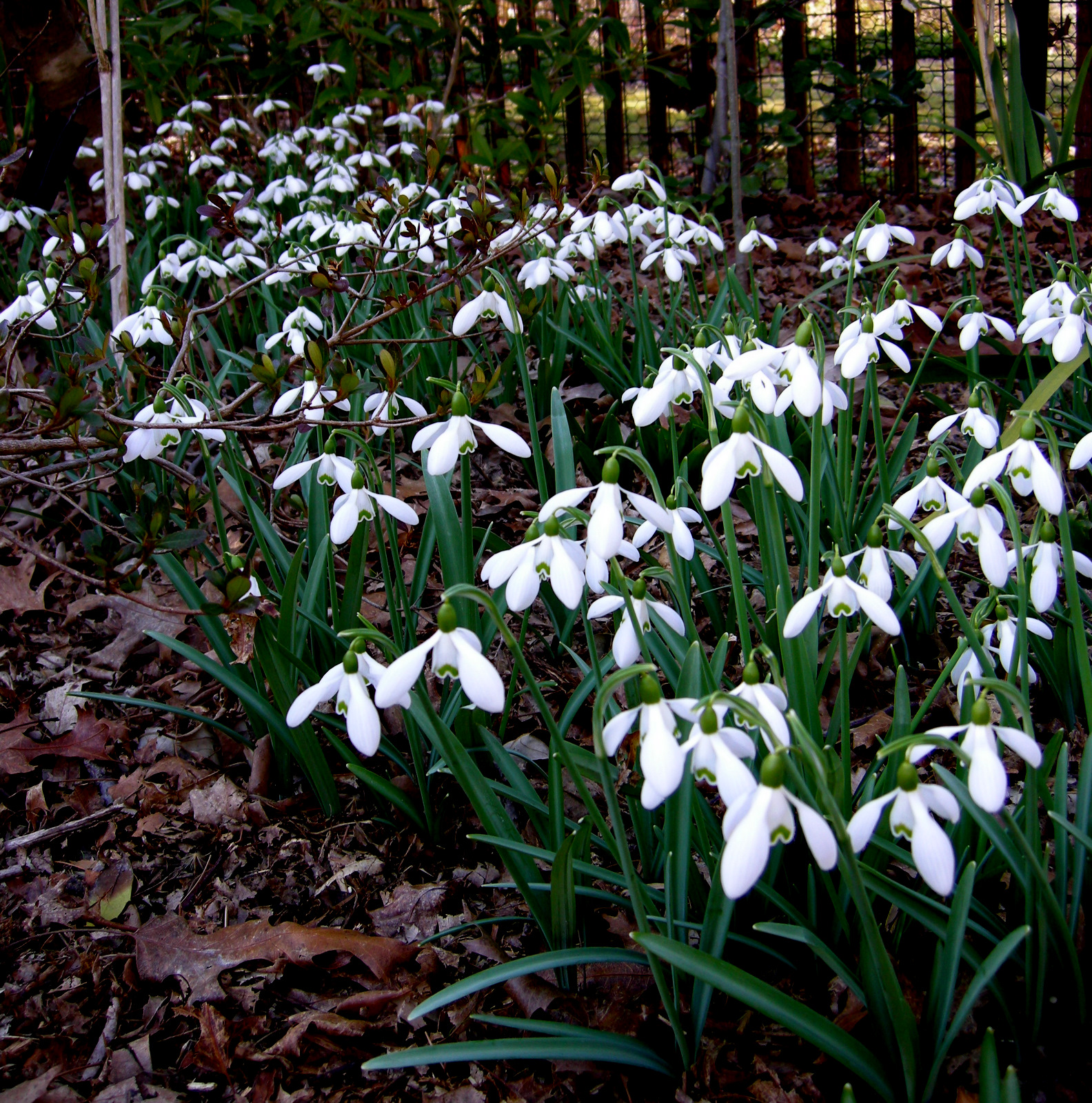
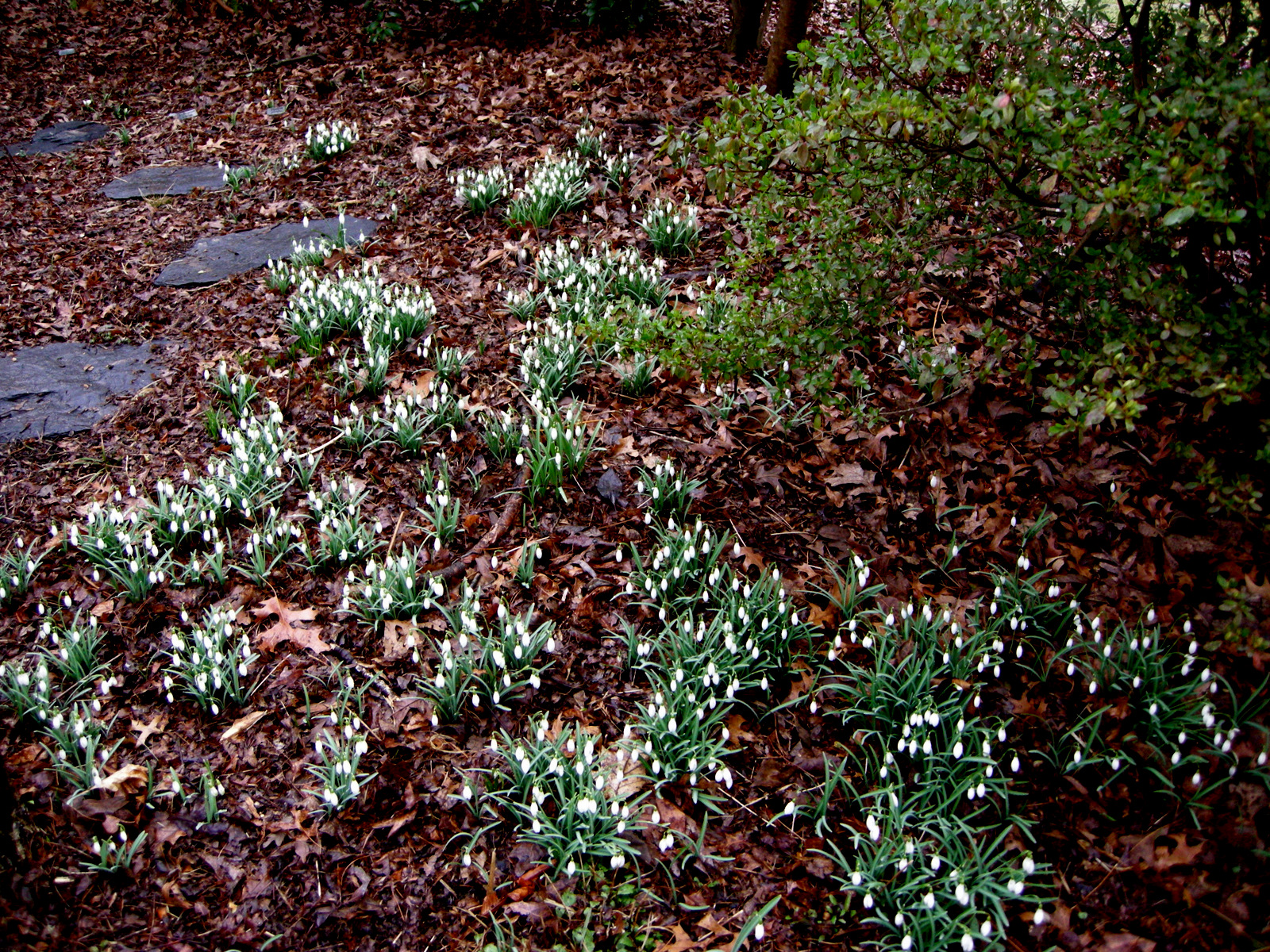
The common snowdrop, Galanthus nivalis, multiplies quickly and looks great when massed.

Evergreen leaves of fall-blooming hardy cyclamen, C. hederifolium

A single bulb of a rare yellow-flowered cultivar of the species snowdrop, G. woronowii, just sold for $1,145 on UK eBay.

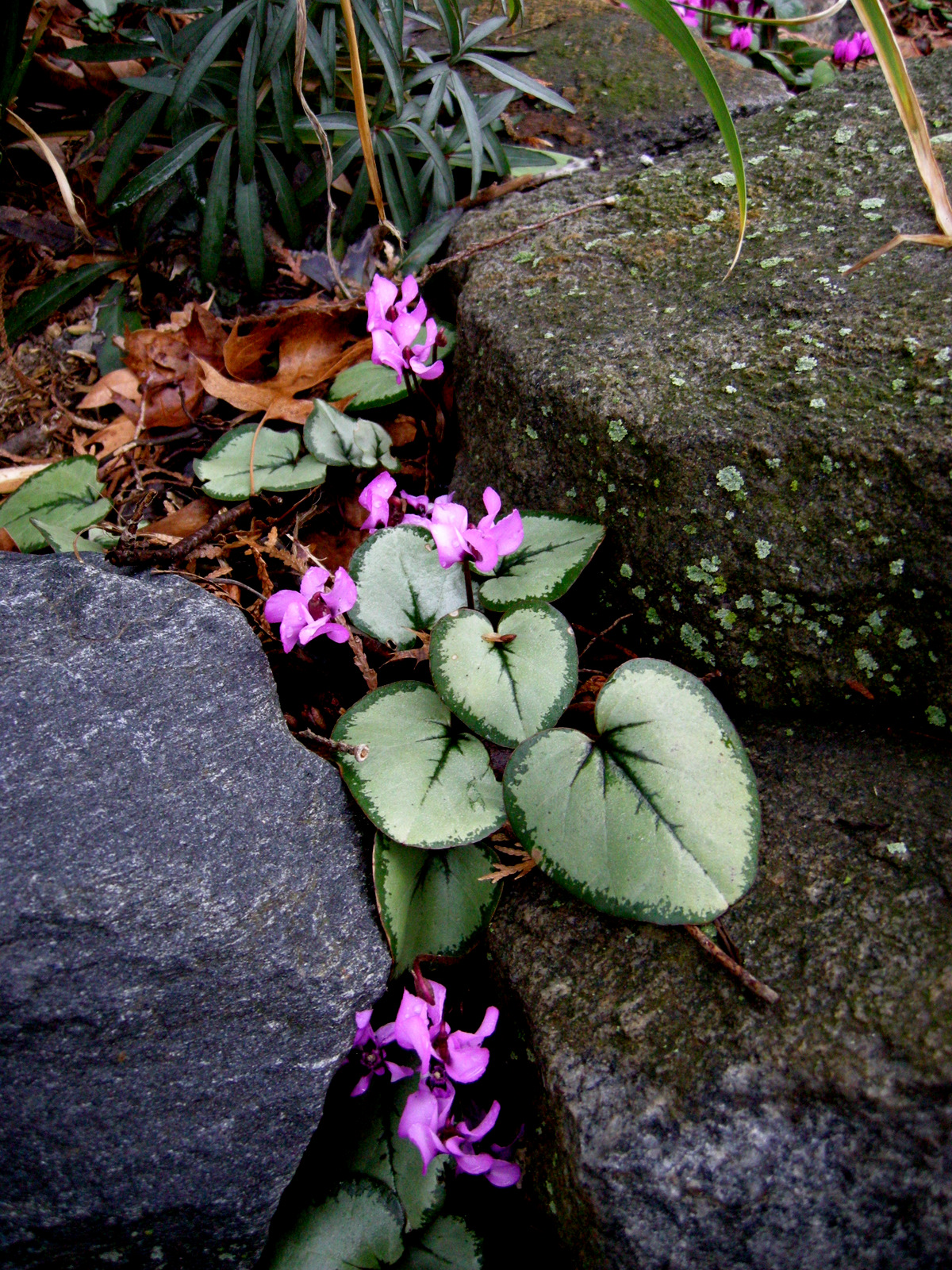
A silver-leafed form of spring-blooming hardy cyclamen.

The species snowdrop Galanthus plicatus has been in cultivation since the 16th century and comes from Russia and Turkey.  It has beautiful leaves with a unique folded (explicative) pattern.

For all of you who couldn’t actually attend Charles’s seminars, I hope you have enjoyed your virtual tour.

Carolyn

Notes: Every word that appears in orange on my blog is a link that you can click for more information.  If you want to return to my blog’s homepage to access the sidebar information (catalogues, previous articles, etc.) or to subscribe to my blog, just click here.

Chanticleer in Winter: Texture

Posted in garden to visit, landscape design, winter, winter interest with tags , , , on January 28, 2012 by Carolyn @ Carolyns Shade Gardens

Carolyn’s Shade Gardens is a retail nursery located in Bryn Mawr, PA, specializing in showy, colorful, and unusual plants for shade.  The only plants that we ship are snowdrops within the US.  For catalogues and announcements of local events, please send your full name, mailing address, and cell number to carolyn@carolynsshadegardens.com and indicate whether you are interested in snowdrops, hellebores, and/or hostas.  Click here to get to the home page of our website for catalogues and information about our nursery and to subscribe to our blog.

Chanticleer’s Teacup Garden in May

Chanticleer is a unique public garden in Wayne, Pennsylvania, U.S., which I have profiled in three previous articles.  The first, Chanticleer Part 1: A Pleasure Garden, gave an overview of this one-of-a-kind horticultural destination.  The second, Chanticleer Part 2: Garden Seating, focused on the huge variety of thoughtful seating areas in the Chanticleer gardens.  The third, Chanticleer Part 3:  Through the Seasons, showed the gardens as they evolve through spring, summer, and fall.


The Teacup Garden in January

To complete my series on Chanticleer through the year, I received special permission to visit the garden during the winter months when it is closed to the public.  As you can see from the photo above, all the “toys” are put away and most of the flowers and foliage are gone.  But the minute I stepped into the garden, the word TEXTURE appeared before me as if it was outlined in neon lights.  I have never had such an exciting visit to this garden because I saw it in a whole new way, and I hope I can communicate that to you.

I always admire the elegant mature trees when I visit, but without their leaves or any flower gardens to distract me, they really stood out.

Texture was also provided by smaller plants, but not the way I expected:


Hardscape, always a huge part of Chanticleer’s elegance and beauty, really dominated my visit:


The attention to detail in the paths, always a hightlight for me, was easier to see and appreciate:

I decided not to add captions to the photos in this post, but if you want more information just run your cursor over the photo.  The location of the Lady in the Lake is secret so you will have to find her for yourself.

I want to thank Bill Thomas, Chanticleer’s Director, for making this visit possible, Fran DiMarco, Administrative Assistant, for arranging it, and Joseph Henderson, Horticulturalist, for providing some needed conversation in the sun so I didn’t freeze to death.  I have been promised a visit in the snow, and I might take them up on it if we ever get any of the white stuff.

Carolyn

Notes: Every word that appears in orange on my blog is a link that you can click for more information.  If you want to return to my blog’s homepage to access the sidebar information (catalogues, previous articles, etc.) or to subscribe to my blog, just click here.

Hostas for Fall

Posted in Fall, Fall Color, hosta, landscape design with tags , , , , , , , on October 17, 2011 by Carolyn @ Carolyns Shade Gardens

Carolyn’s Shade Gardens is a retail nursery located in Bryn Mawr, PA, specializing in showy, colorful, and unusual plants for shade.  The only plants that we ship are snowdrops within the US.  For catalogues and announcements of local events, please send your full name, mailing address, and cell number to carolyn@carolynsshadegardens.com and indicate whether you are interested in snowdrops, hellebores, and/or hostas.  Click here to get to the home page of our website for catalogues and information about our nursery and to subscribe to our blog.

.

Hosta 'Remember Me'Hosta ‘Remember Me’ looks absolutely spectacular in the fall when its colors deepen and its pristine leaves shine.  All photos were taken at Carolyn’s Shade Gardens this fall.  Click any photo to enlarge.

In my last two articles, A Few Fall Favorites for Foliage and Fruit and A Few Fall Favorites for Flowers, I explained that, inspired by an article about dressing up your fall garden with mums because everything else is finished, I grabbed my camera and headed outside to prove them wrong.  There was so much going on that I divided the plants into three posts: foliage and fruit, flowers, and hostas.  This is part three highlighting hostas.

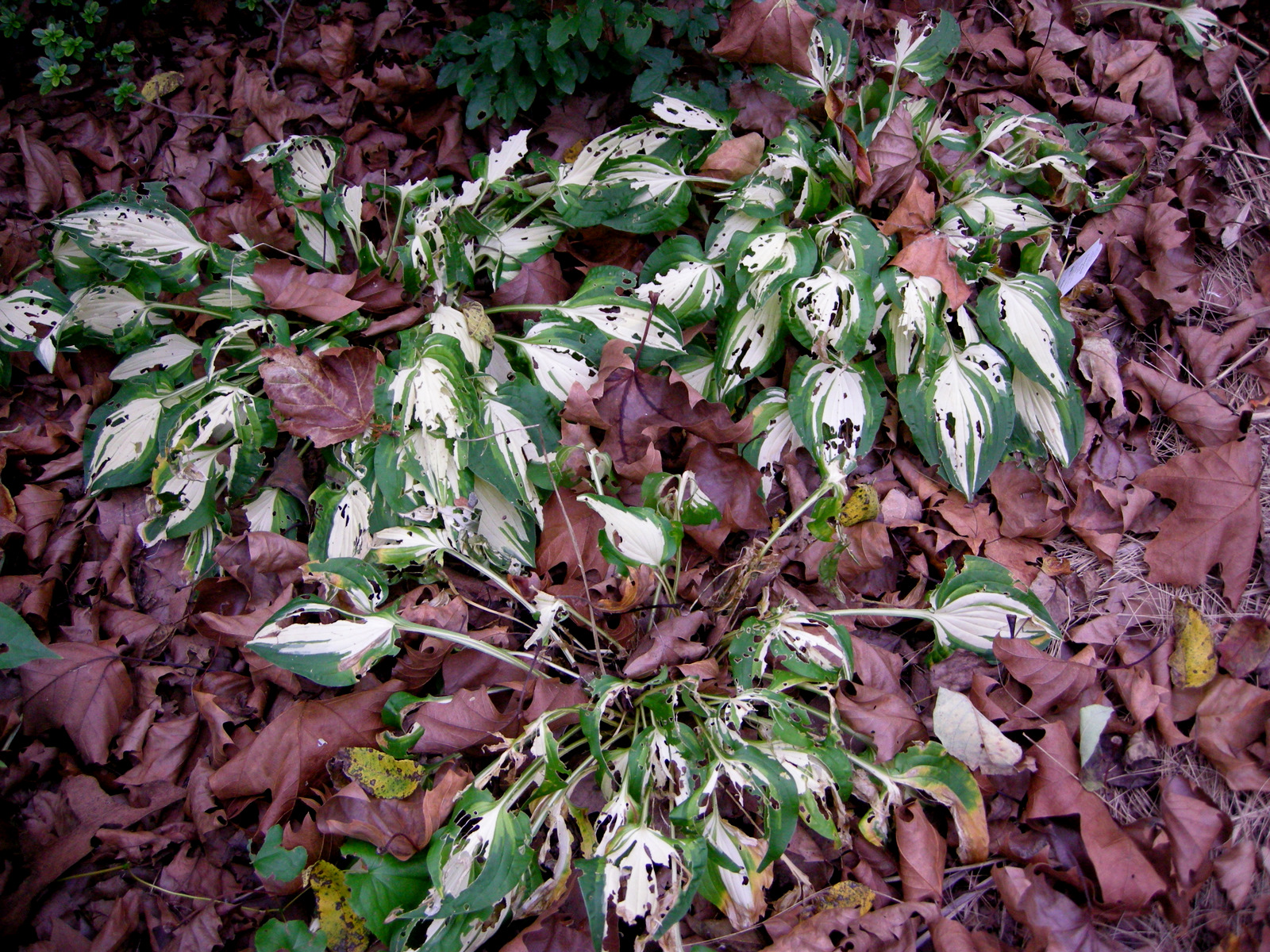
When you choose a hosta for your garden, I am guessing you are not going for this look in fall.

One reason I started what I like to call my free, on line, shade gardening magazine (AKA blog) was to force myself to document my gardening knowledge in photographs and print.  This article is a perfect example.  Every fall I walk around my gardens saying: “I really should photograph the hostas that still look good in the fall,” but I never do it.  This information is very important when choosing hostas especially if you have a small garden and can’t afford to allocate space to a plant that provides no ornamental value for one third of the season like the specimens in the photo above.  So, for the record, here are some of the hostas dressing up my shady gardens right now:

I don’t expect my hostas to look perfect in the fall, although some do.  Even though ‘Frances Williams’ is slightly tattered, its bold colors and stately habit make it a winner in my fall garden.

There is another very important point I would like to make about hostas.  New is not the equivalent of better or even good.  Gardeners will often remark about a hosta like ‘Frances Williams’, which was first registered in 1986, that it is an old hosta with the implication that we should have all moved on by now.  If I had to, I would gladly trade in many of my newer hostas for a plant as unique in habit, leaf shape, and color as ‘Frances Williams’ (even with its tendency to brown slightly at the edges).  The breeders have yet to come up with a new hosta this beautiful and tough.


Like all blue-leaved hostas, Hosta ‘Blue Umbrellas’ turns greener in the fall, but who cares when it looks like this?

Thanks to my commenter Louise Thompson for mentioning slug resistance.  One of the primary reasons that these hostas look so good in the fall is that they are resistant to slugs.  Most of them tend to have thicker leaves that just hold up better to whatever nature throws at them.  Please read my reply to Louise for information about controlling slugs.  I don’t do anything to control slugs except plant resistant hostas. 

Talk about perfect, Hosta ‘Paradise Joyce’.

Hosta ‘El Nino’ in my silver and blue garden.  If you want to see what it looks like in June, click here.

Hosta ‘Stained Glass’, which was the Hosta of the Year for 2006, just glows in the fall.  One way to choose really good hostas is to select cultivars chosen as hosta of the year by the American Hosta Growers Association.  There are over 6,000 (some say 10,000) hosta cultivars out there, and only 17 have received this honor.  I grow 13 of the winners, and they certainly deserved to be chosen.  To see all the winners, click here.

Another “old” hosta, ‘Blue Angel’ was registered in 1986 and, in my opinion, is the best large blue cultivar–outstanding habit, leaves, and white flowers.  It is the parent of ‘Earth Angel’, the 2009 Hosta of the Year.

The long-lasting gold leaves of Hosta ‘Sum and Substance’, the 2004 Hosta of the Year, can reach 2 feet across while the clump can exceed 6 feet in width.

Hosta ‘June’ was the 2001 Hosta of the Year and is the favorite hosta of my nursery customers.  ‘Remember Me’ in the top photo is one of its “children”.

Hosta ‘Halcyon’ registered in 1988, is a beautiful medium-sized blue hosta (aging to green in the fall), but it is also important as the parent of ‘June’, ‘El Nino’, and ‘Paradise Joyce’, among other wonderful cultivars.

Most gold-leaved hostas turn green in the fall, but not ‘Jimmy Crack Corn’.

Hosta ‘Praying Hands’, the 2011 Hosta of the Year, will stay outside in this ceramic container all winter.  I find that ‘Praying Hands’ multiplies much faster in a container than in the ground.


Hosta ‘Paul’s Glory’, the 1999 Hosta of the Year, also looks best in the fall when its bright colors light up the shade.

Hosta ‘Inniswood’ is a 1993 gold-leafed introduction that puts many newer cultivars to shame.

There are many more medium and large hostas that I could have featured as ornamental in the fall including my favorite, Hosta tokudama and all its cultivars.  For more information on larger hostas and how to use them, click here.

Now for some fall stars among the miniatures, my current hosta passion.  For more information on miniature hostas and how to incorporate them into your garden, click here.

If you have read my article on Miniature Hostas, you know I am a sucker for the Mouse Ears series, here Hosta ‘Mighty Mouse’.

Hosta ‘Blue Mouse Ears’ is the 2008 Hosta of the Year.

Hosta ‘Little Sunspot’ is growing in one of the 16 pouches in my strawberry jar.  One look at this collection will show you that all miniatures are not created equal in terms of their fall appearance.

All my hosta containers, including this pot of Hosta ‘Pixie Vamp’, will stay out all winter.

Like all plants, hostas should be chosen to provide ornamental value from the time they come up in the spring until frost.  You can choose any of the hostas above for your garden and be confident of a long season of interest.

Carolyn

This is the third article I have written on hostas.  The first two are:

Miniature (& Small) Hostas

Larger Hostas

Notes: Every word that appears in orange on my blog is a link that you can click for more information.  If you want to return to my blog’s homepage to access the sidebar information (catalogues, previous articles, etc.) or to subscribe to my blog, just click here.

October GBBD: A Few Fall Favorites for Flowers

Posted in Fall, Fall Color, Garden Blogger's Bloom Day, landscape design, native plants, Shade Gardening, Shade Perennials with tags , , , , , , , , , , , , , , on October 10, 2011 by Carolyn @ Carolyns Shade Gardens

Carolyn’s Shade Gardens is a retail nursery located in Bryn Mawr, PA, specializing in showy, colorful, and unusual plants for shade.  The only plants that we ship are snowdrops within the US.  For catalogues and announcements of local events, please send your full name, mailing address, and cell number to carolyn@carolynsshadegardens.com and indicate whether you are interested in snowdrops, hellebores, and/or hostas.  Click here to get to the home page of our website for catalogues and information about our nursery and to subscribe to our blog.

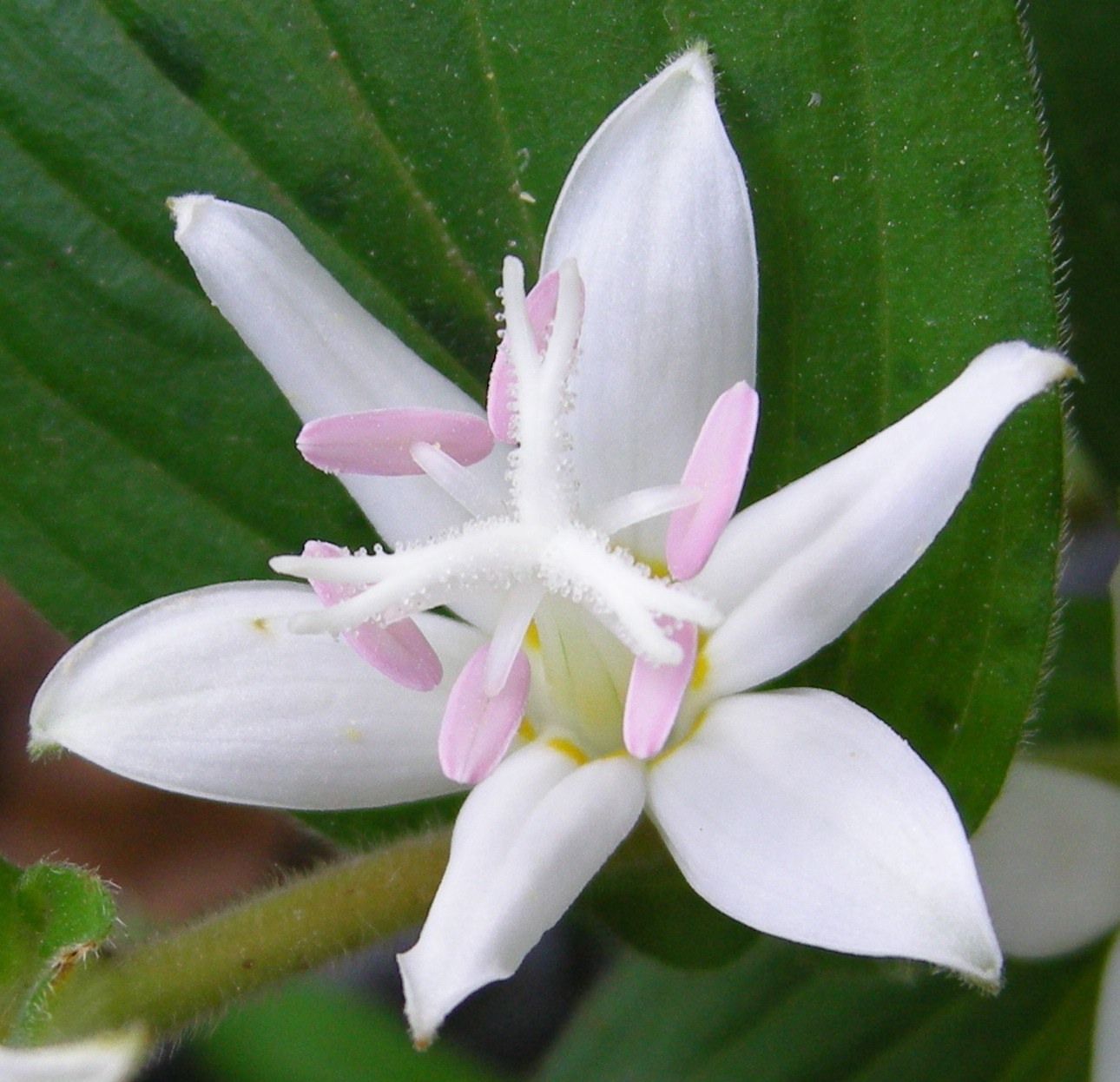
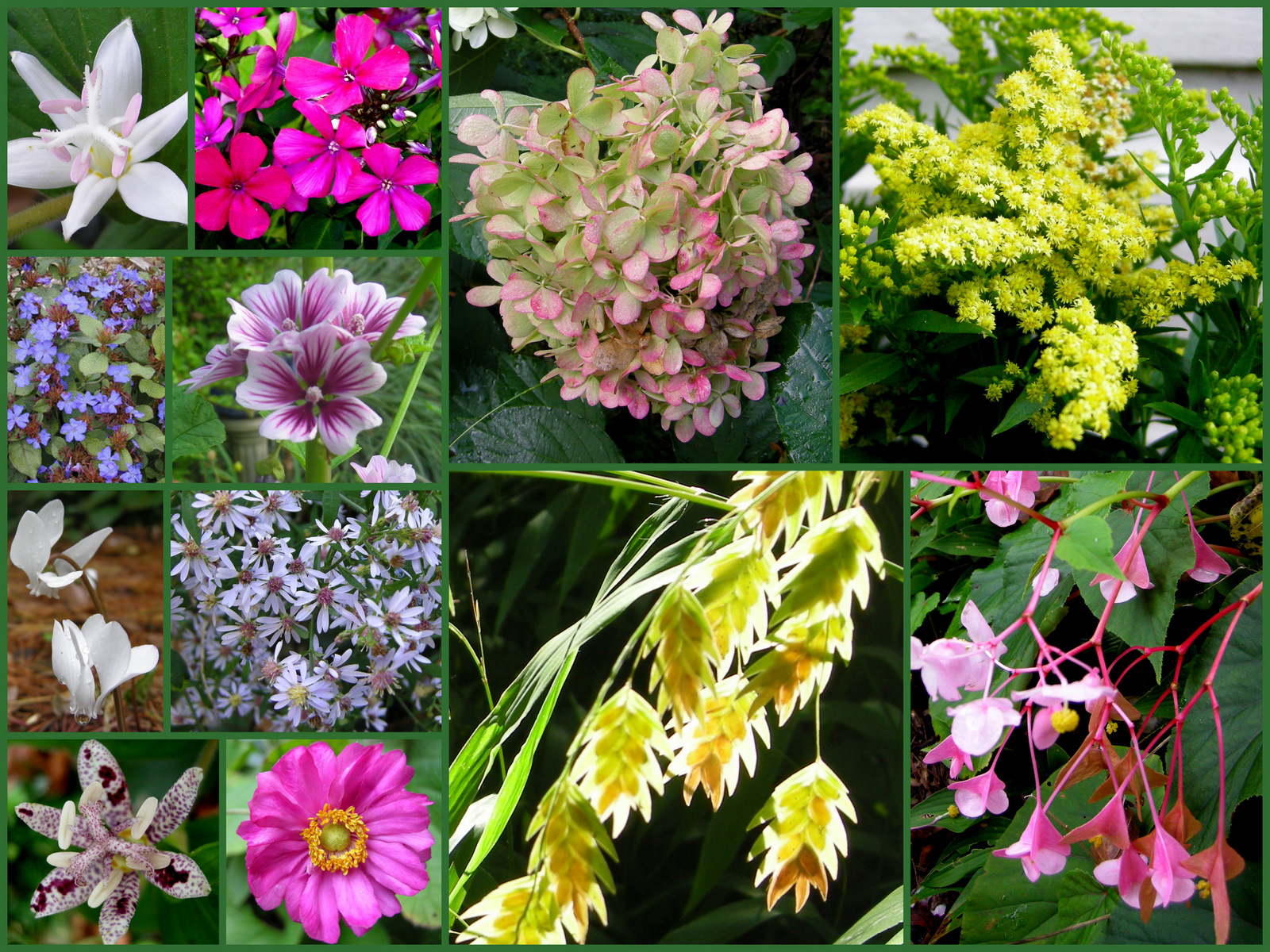
The subtle coloring of ‘White Towers’ toad-lily, Tricyrtis latifolia ‘White Towers’, is magical in the fall.  Every photo was taken at Carolyn’s Shade Gardens this fall.

I am linking this post to Garden Blogger’s Bloom Day for October when gardeners around the world show photos of what’s blooming in their gardens (follow the link to see  photographs from other garden bloggers assembled by Carol at May Dreams Gardens).  I am also linking to Gesine’s Bloom Day at Seepferds Garten.  I am located in Bryn Mawr (outside Philadelphia), Pennsylvania, U.S., and zone 6b.

In my last post, A Few Fall Favorites for Foliage and Fruit,  I explained that, inspired by an article about dressing up your fall garden with mums because everything else is finished, I grabbed my camera and headed outside to prove them wrong.  There was so much going on that I divided the plants into three posts: foliage and fruit, flowers, and hostas for fall.  This is part two highlighting flowers.  So here are some of the flowers dressing up my shady gardens right now:

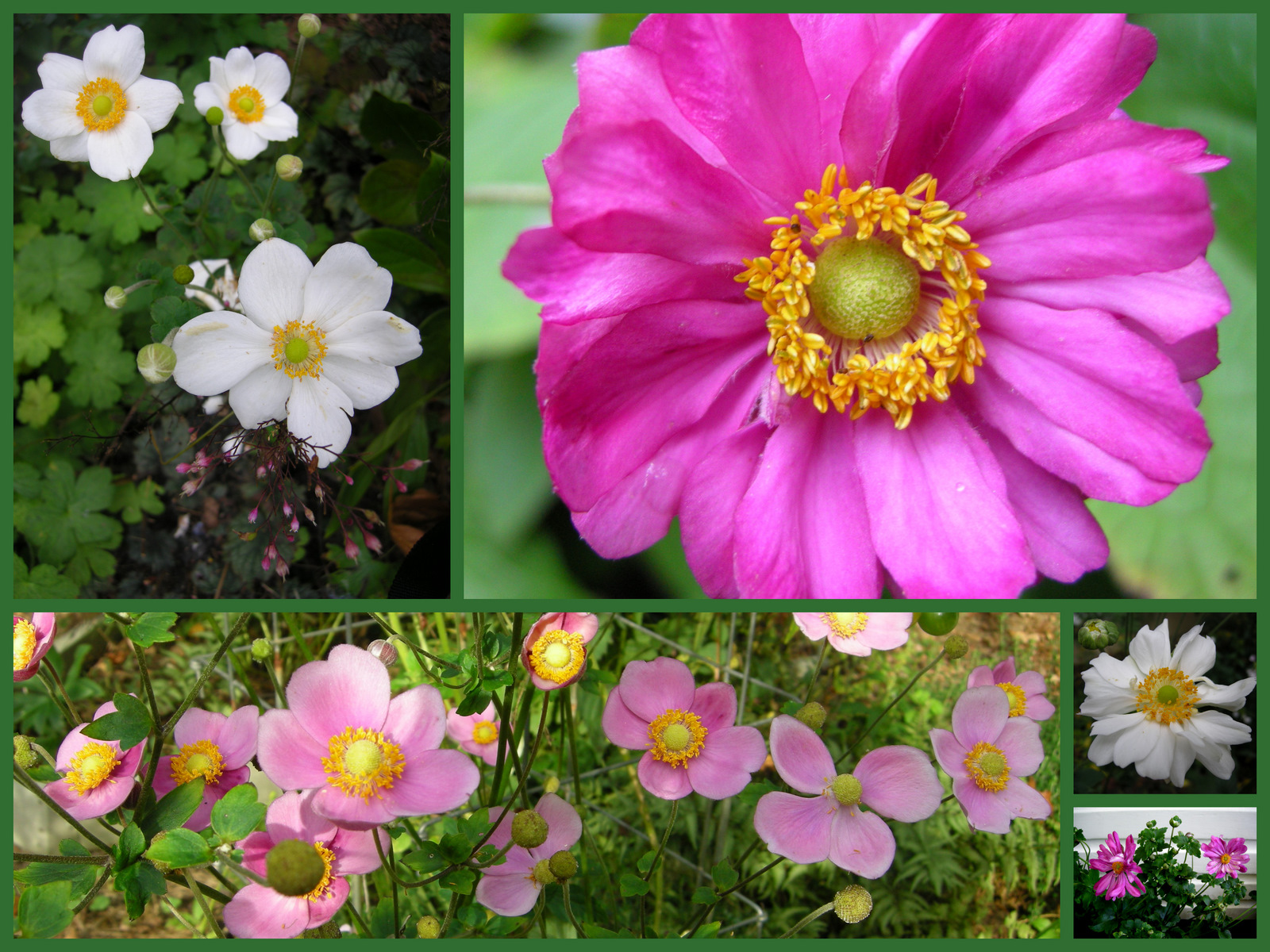
Japanese anemones, Anemone x hybrida, are one of the undisputed stars of my fall garden, growing anywhere from full sun to almost full shade and thriving no matter what the weather.  Clockwise from upper left: ‘Honorine Joubert’, ‘Margarete’, ‘Whirlwind’, ‘Bodnant Burgundy’, ‘September Charm’.

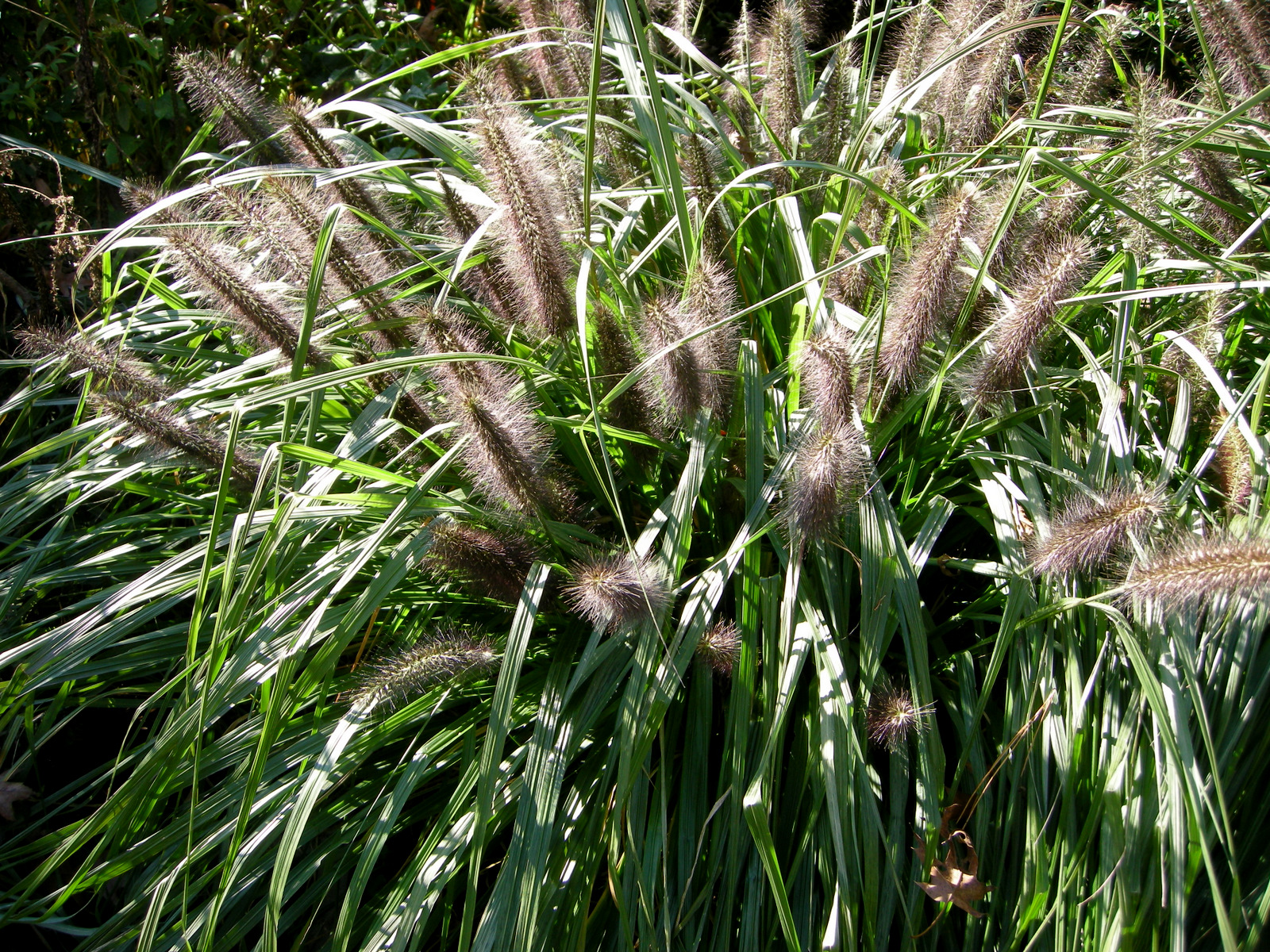
The black plumes of ‘Moudry’ fountain grass, Pennisetum alopecuroides ‘Moudry’, glow in the low-angled fall light.  ‘Moudry’ does well in the shade, flowering later and remaining more compact.

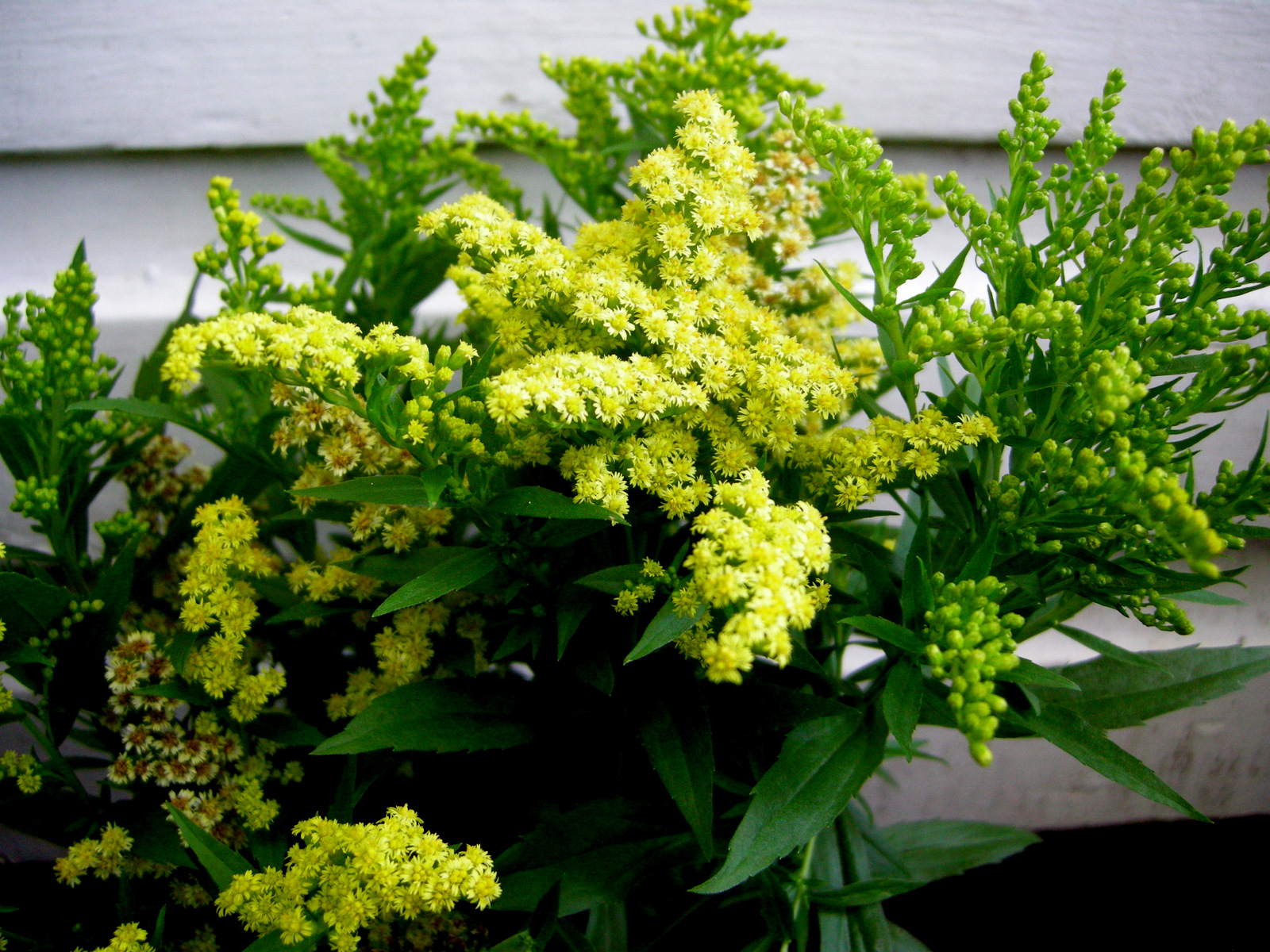
I grow about five different varieties of native golden rod, Solidago,  with my current favorite ‘Little Lemon’, growing only 12 to 18″ high.  Contrary to popular belief, goldenrod does not cause allergies as it is pollinated by insects.  Wind pollinated ragweed, which blooms at the same time, is the culprit.

Toad-lilies, Tricyrtis, bloom throughout the fall in full shade with ‘Sinonome’ just getting started now and continuing into November.  Clockwise from upper left: ‘Sinonome’, ‘White Towers’, ‘Miyazaki’, ‘Empress’.

Another plant that is just warming up is Pennsylvania native northern sea oats, Chasmanthium latifolium.  Its foliage will turn orange later in the fall and then dry to a beautiful khaki for the winter.  Be forewarned, however, when this plant reaches critical mass, it starts spreading, and its wiry roots are very difficult to remove.  Give it room and then triple the space you think you need.

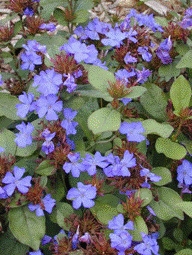
Autumn leadwort, Ceratostigma plumbaginoides, is one of my favorite groundcovers.  Its true blue flowers start blooming in June and continue through October when its leaves turn bright red.

Pennsylvania native ‘Bluebird’ smooth aster, A. laevis ‘Bluebird’, seeds all around my garden in full sun to part shade.  Butterflies and bees love it.  Please click here to find out why most native cultivars are just as friendly to native fauna as the species.

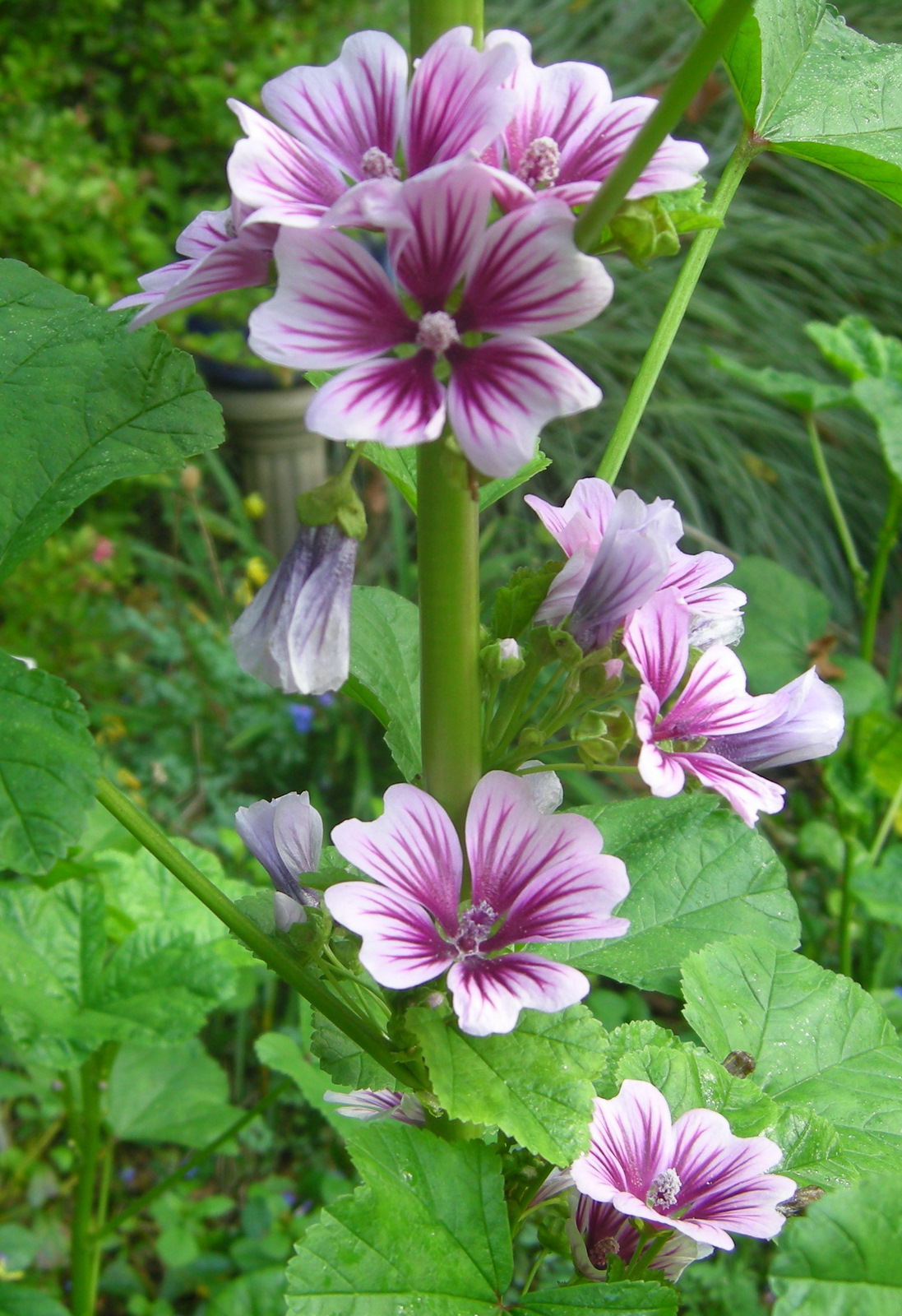
‘Zebrina’ hollyhock mallow, Malva sylvestris ‘Zebrina’, seems to move around my garden at will, but it never fails to steal the show with its 3 to 4′ stalks loaded with showy flowers.  It grows best in full to part sun.

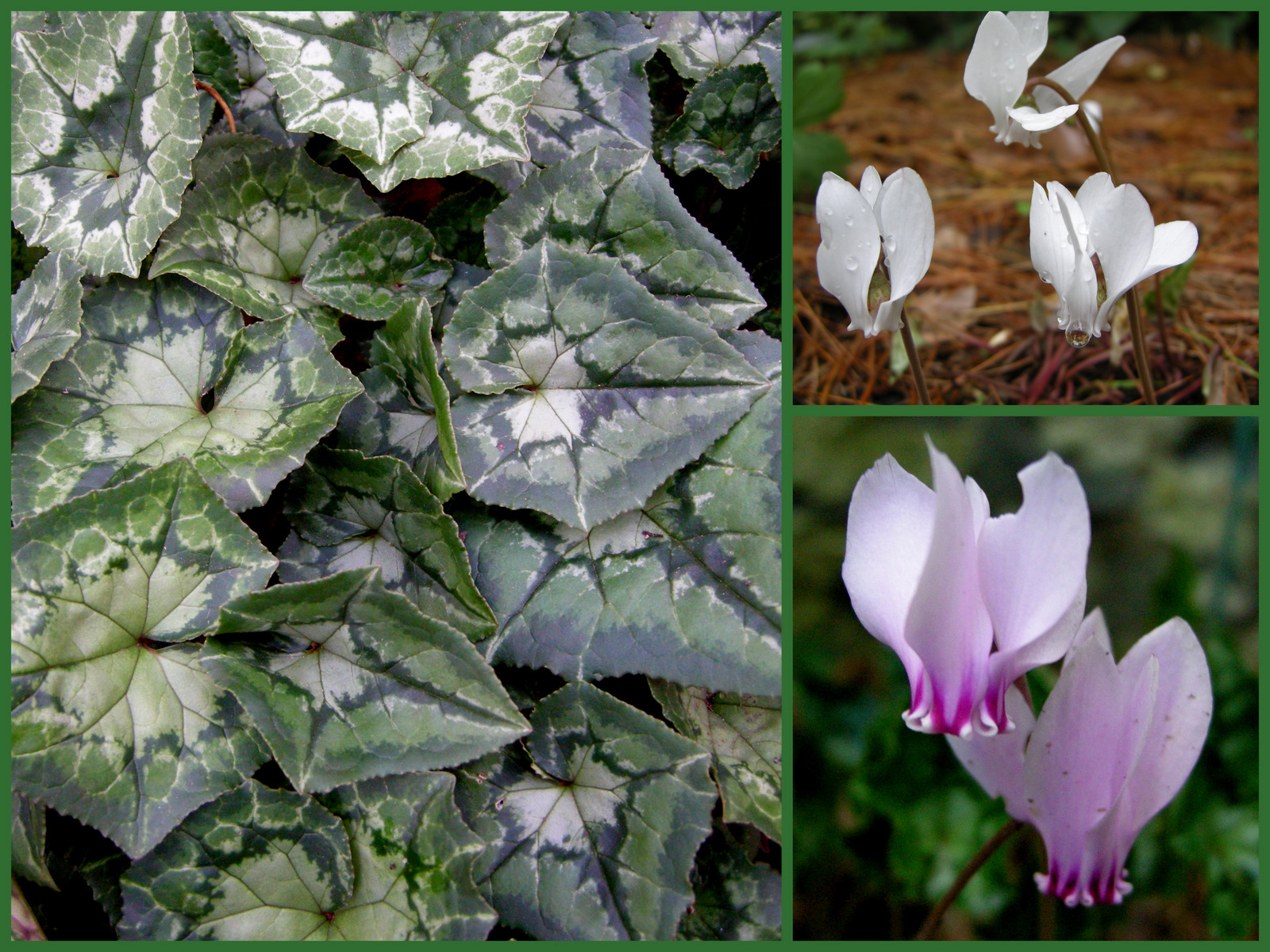
Fall-blooming hardy cyclamen, Cyclamen hederifolium, is one of the plants I would take to my shady “desert island”.  Right now its pink or white flowers are floating all around my shady gardens.  Later its evergreen leaves will emerge from summer dormancy and look like the photo on the left all winter long.

I am always raving about the foliage of the coral bell cultivars derived from our Pennsylvania native Heuchera villosa.  Well this is the plant that started it all, Heuchera villosa ‘Autumn Bride’.  It has very large and attractive fuzzy green leaves and beautiful flowers that bloom right now–this is the only cultivar I would grow for its flowers (the rest I grow for the leaves).

The cultivar ‘Cory’ of Pennsylvania native hardy ageratum, Eupatorium coelestinum, is far superior to the straight species.  It has more abundant and showier flowers, ornamental purple stems, interesting crinkled leaves, and a much better upright habit.  ‘Cory’ is also a good spreader in sun to part shade so give it room.  Pictured above with another of my favorite Pennsylvania natives, wrinkleleaf goldenrod, Solidago rugosa ‘Fireworks’.

Hardy begonias, Begonia grandis, have spread all over my garden in full shade, and I have yet to find a place that I don’t want them.  Because they come up very late in May and really just get going in the fall, I use them to fill in between my hostas on my back hill.  

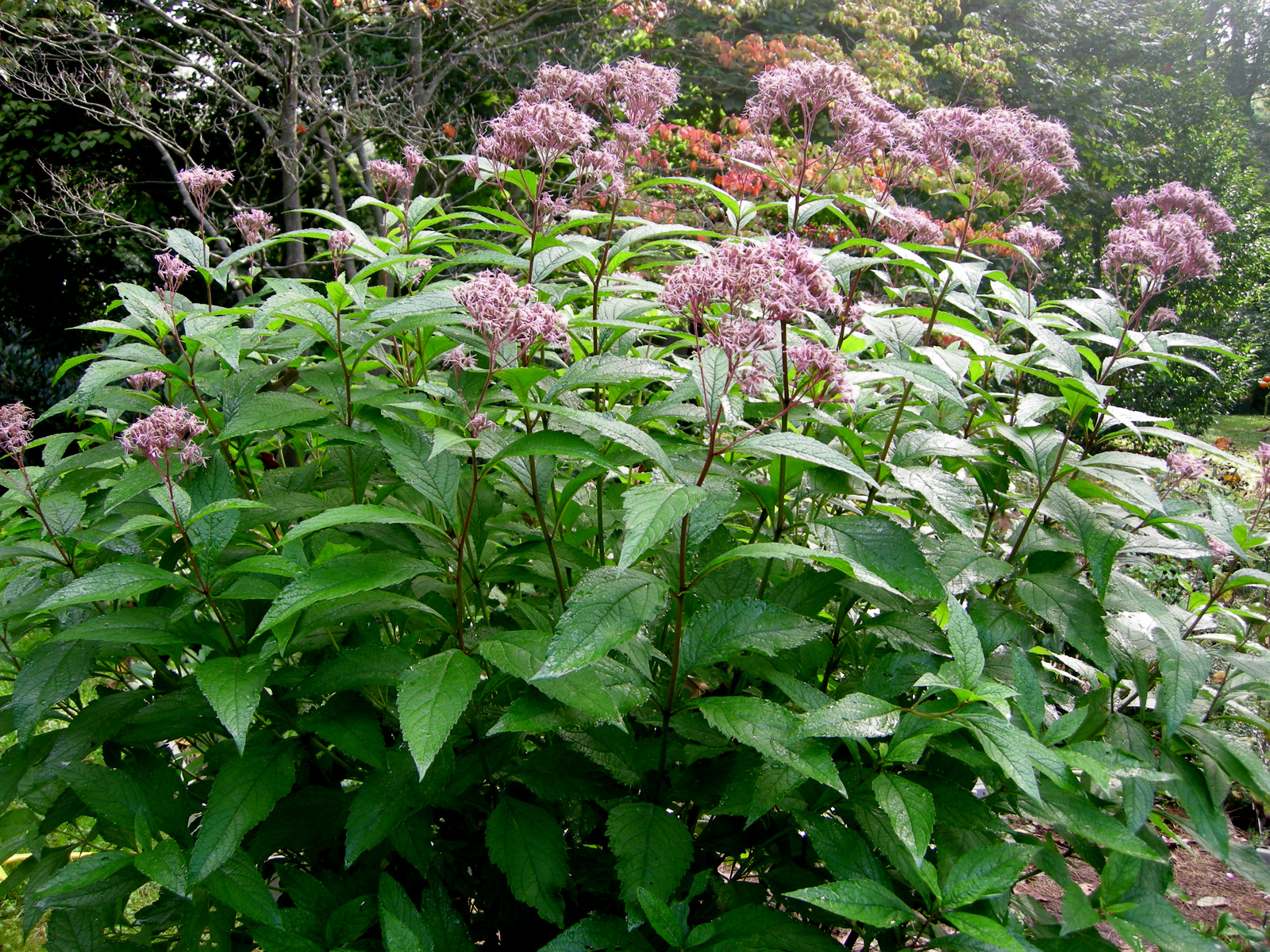
Pennsylvania native Joe Pye weed, Eupatorium dubium, reaches 10′ tall in my garden and flops over in our torrential rains.  The “dwarf” version called ‘Little Joe’ grows to a diminutive 5′ tall and has remained erect through the 30″ of rain we had in August and September to bloom now with its large purple flowers–a magnet for butterflies and bees.

In the spring, a gardener I very much admire brought over this plant, telling me it was a salvia with yellow flowers that grows in full shade and blooms in the fall.  I duly planted it in my shady “yellow garden” and it thrived through heat, drought, and rain with no attention.  It is called woodland sage, Salvia koyamae.

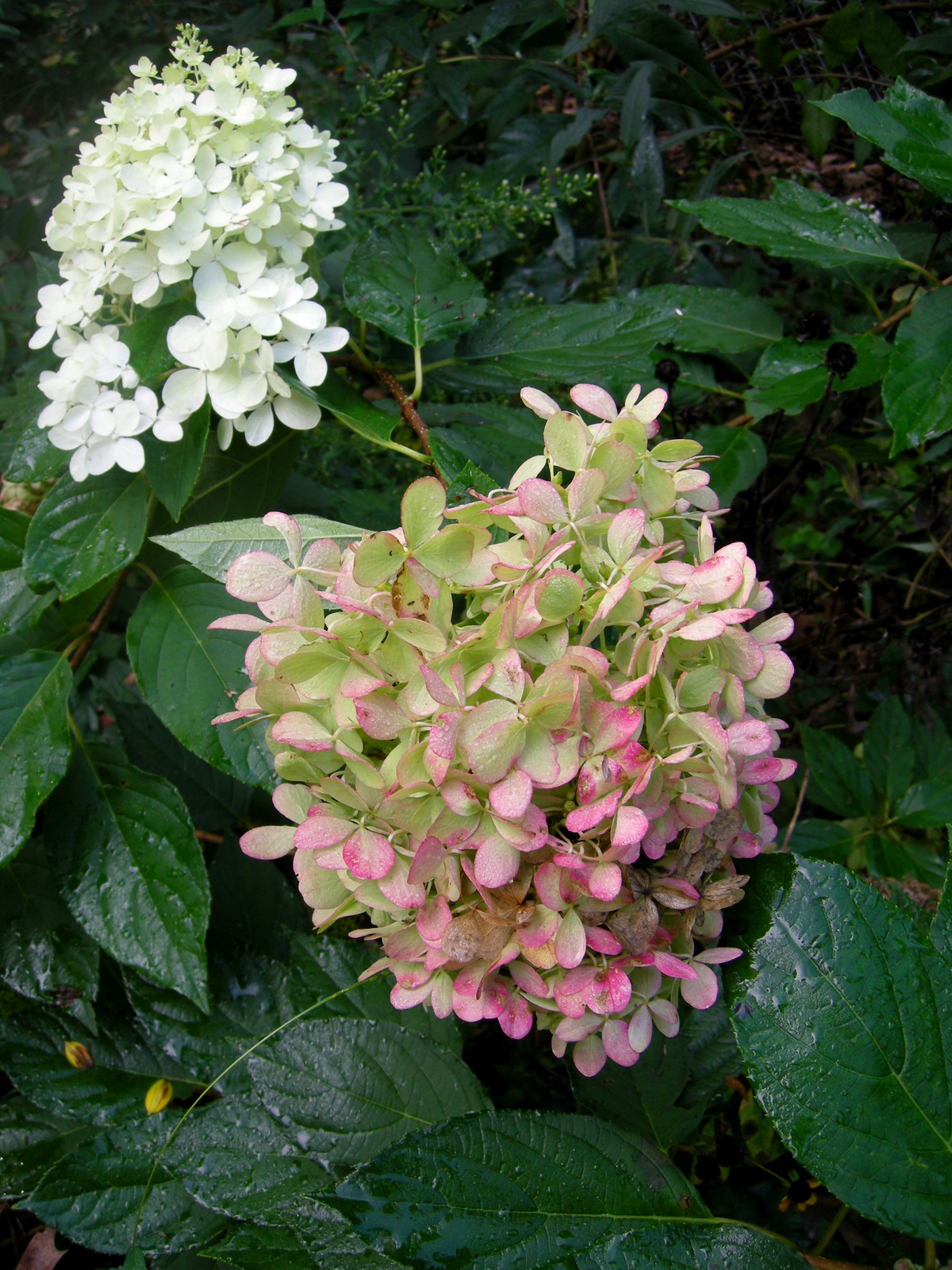
I am just beginning to learn about hydrangeas because until last year there was no point in planting them because of the deer.  One of my first acquisitions after the netting went up was ‘Limelight’, Hydrangea paniculata ‘Limelight’.  The large white flowers aging to pink have been blooming all summer in part shade, and there are still buds coming—very impressive.

If you want a multitude of fall flowers in dry, full shade, you can’t find a better plant than Pennsylvania native blue wood aster, Aster cordifolius.  It fills in all the difficult sites in my woodland and produces a glorious blue haze in the fall.

It is fitting that I should end with my favorite Pennsylvania native perennial for fall, garden phlox, Phlox paniculata.  I love everything about garden phlox: its heavenly fragrance, its long bloom time from early summer through fall, the wealth of colors available, its polite self-sowing, and its attraction to butterflies.  I dream of installing a meadow area and collecting dozens of plants of every phlox cultivar out there!

Of the 17 photos above, 8 picture plants that are native to Pennsylvania and eastern North America.  I believe that planting native plants is crucial to our survival.  Please take the time to read this short essay explaining why.  And Pennsylvania’s native plants really come into their own in the fall eliminating the need for dressing with mums!


Click to enlarge

Carolyn

To read Part 1, A Few Fall Favorites for Foliage and Fruit, click here.  Stay tuned for Part 3, Hostas for Fall.  In the interest of full disclosure, I must confess that sadistic botanists have recently changed the botanical names of many of the native plants that I highlighted to completely unpronounceable and unspellable but “botanically proper” names.  At this point, I refuse to follow.

Notes:
Every word that appears in orange on my blog is a link that you can click for more information.  If you want to return to my blog’s homepage to access the sidebar information (catalogues, previous articles, etc.), just click here.