Your Most Precious Garden Resource

Posted in Fall, Fall Color, green gardening, How to, organic gardening, sustainable living with tags , , , , on October 25, 2012 by Carolyn @ Carolyns Shade Gardens

Carolyn’s Shade Gardens is a retail nursery located in Bryn Mawr, PA, specializing in showy, colorful, and unusual plants for shade.  The only plants that we ship are snowdrops and miniature hostas.  For catalogues and announcements of events, please send your full name, location, and phone number (for back up use only) to carolyn@carolynsshadegardens.com.  Click here to get to the home page of our website for catalogues and information about our nursery and to subscribe to our blog.

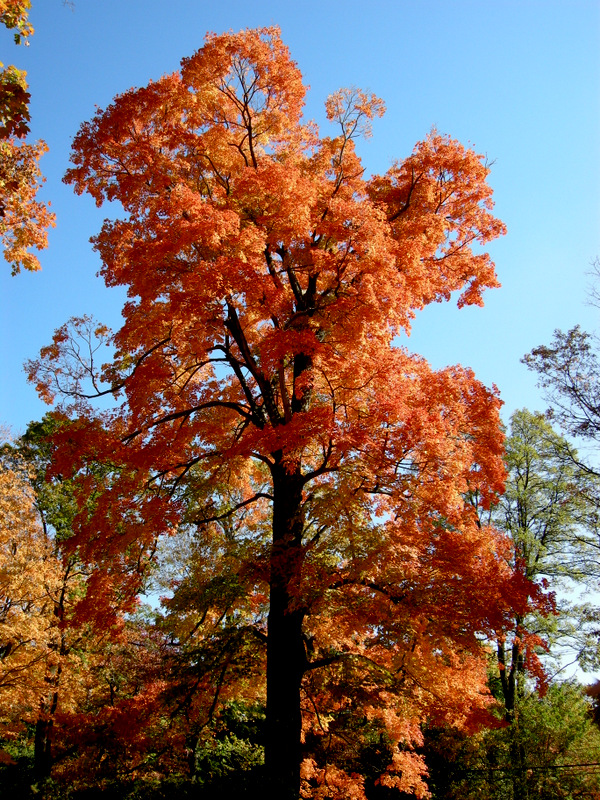
Yes, the sky is really this blue and the trees are really this red during fall in the northeastern US.

Fall in Pennsylvania (mid-Atlantic US) is a big picture time of year.  For a good two months, everywhere you go there are gorgeous vistas like the one above as the leaves change color before dropping.  The show is long-lasting because the leaves turn at different times, starting in my garden with the American hornbeam’s golden yellow hue, progressing through the bright red tones of maples and native dogwoods, and ending with the burgundy and orange of hydrangeas and viburnums.

The soil is deep and very fertile in my area, allowing trees to grow to gigantic size.  And after the color show, the leaves fall and create what I consider my most precious garden resource.  Those leaves are what nature supplies for free to protect and improve the soil year after year.  That is why it is so disturbing to see many area residents collecting their leaves and putting them by the side of the road to be removed by their municipality.


Here at Carolyn’s Shade Gardens we use every leaf that falls to improve our soil either by leaving them in the beds or by grinding them and using them as mulch.  A detailed description of our methods can be found in Shade Gardening in Fall: Fall Clean-up.  In addition, up to 18″ of leaves can be ground up and left on the lawn with beneficial results as described in Shade Gardening in Fall: Leaves on the Lawn.  There is a video by the Scott Lawn Care Company in the second post to show to your doubting spouse.

In early October, about 35 Carolyn’s Shade Gardens customers attended two Low Maintenance Gardening Seminars given by my husband Michael during which he demonstrated how to grind leaves for mulch.  For the benefit of my far flung readers  and in the hope of converting more gardeners to this practice, I thought I would show you step-by-step photographs of the process.  Michael is the reluctant star of the do-it-yourself guide below.

Step One:  Gather the leaves from an area where they can’t be left to decompose on their own.  Michael is removing leaves from the pine needle paths on our back hill using a tarp.  All leaves in the beds will remain in place as mulch and eventually compost.
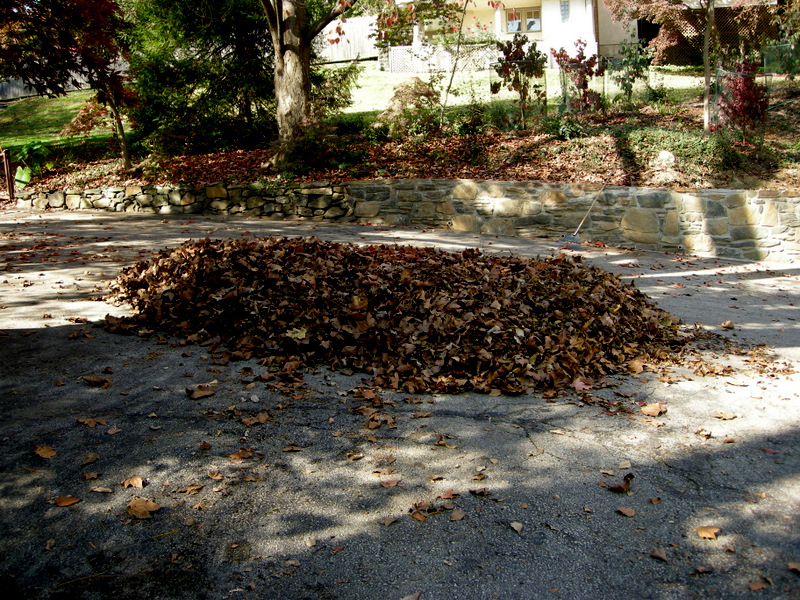
Step Two:  Take the leaves to a level area like your lawn or driveway.  Our driveway is closest to the back hill so Michael took the leaves there for grinding.

As you can see in the photo, we use a standard lawnmower to grind our leaves.  We recommend wearing steel-toed footwear, ear protection (see photo below), and, if appropriate, eye protection when using a lawnmower.


Step Three:  Grind the leaves to the required consistency.  Michael usually goes over them twice, but you can make them as fine or as coarse as you want.
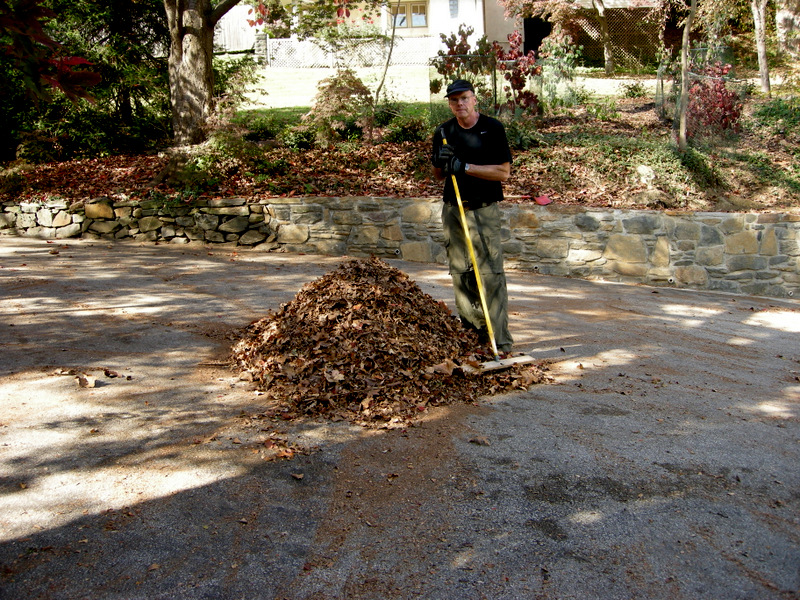

A large amount of leaves becomes a manageable pile after grinding.


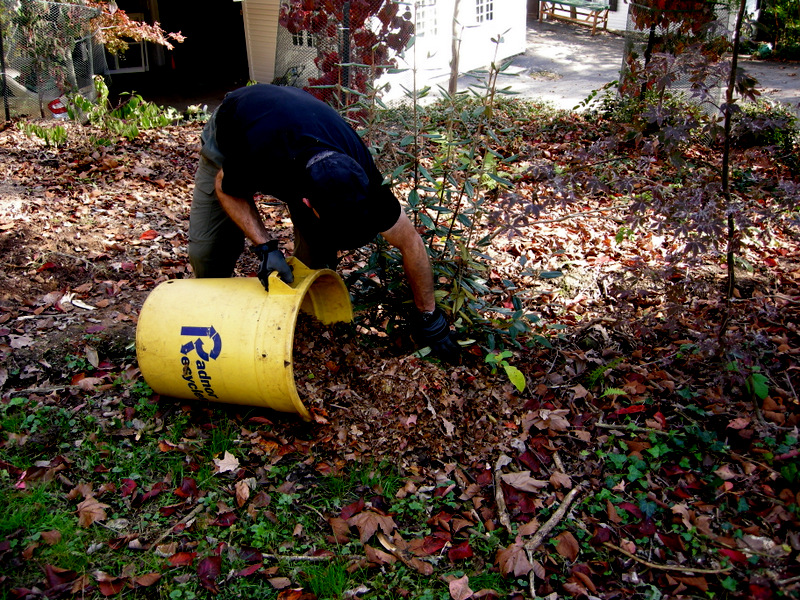
Step Four:  Gather your free mulch into a container for easy transportation and application.  Michael is using a township recycling barrel.


Step Five:  Spread the mulch in your garden.  Here Michael uses it around the base of newly planted viburnums.

I hope I have made this process look as easy as it really is.  Once you try it and see the beneficial results for your soil, you too will be a convert.

Carolyn


Nursery Happenings:  Carolyn’s Shade Gardens is done for the fall.  Thanks for a great year.  See you in spring 2013.

If you are within visiting distance and would like to receive catalogues and information about customer events, please send your full name and phone number to carolynsshadegardens@verizon.net.  Subscribing to my blog does not sign you up to receive this information.

Facebook:  Carolyn’s Shade Gardens has a Facebook page where I post single photos, garden tips, and other information that doesn’t fit into a blog post.  You can look at my Facebook page here or click the Like button on my right sidebar here.

Notes: Every word that appears in orange on my blog is a link that you can click for more information.  If you want to return to my blog’s homepage to access the sidebar information (catalogues, previous articles, etc.) or to subscribe to my blog, just click here.
 

Fall-blooming Hardy Cyclamen

Posted in bulbs for shade, evergreen, Fall, Fall Color, groundcover, Shade Gardening, Shade Perennials, winter interest with tags , , , , on October 17, 2012 by Carolyn @ Carolyns Shade Gardens

Carolyn’s Shade Gardens is a retail nursery located in Bryn Mawr, PA, specializing in showy, colorful, and unusual plants for shade.  The only plants that we ship are snowdrops and miniature hostas.  For catalogues and announcements of events, please send your full name, location, and phone number (for back up use only) to carolyn@carolynsshadegardens.com.  Click here to get to the home page of our website for catalogues and information about our nursery and to subscribe to our blog.

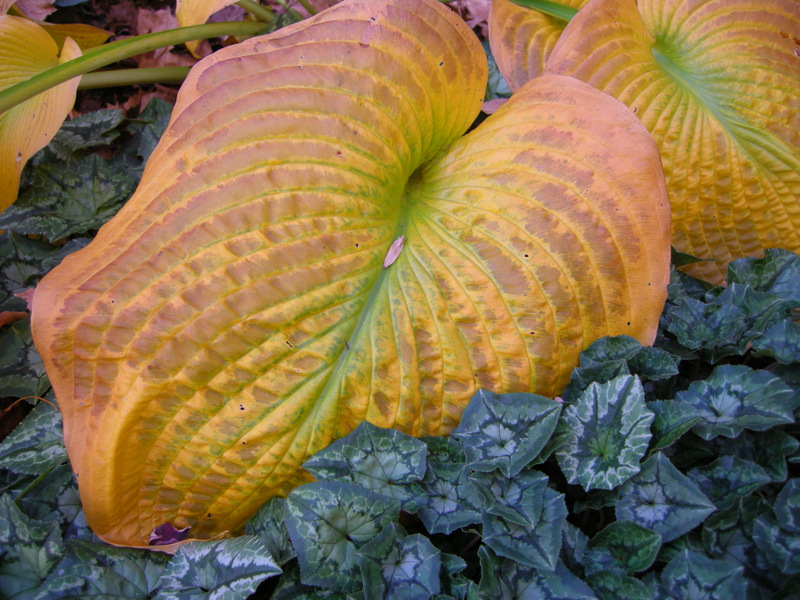
Fall-blooming hardy cyclamen, C. hederifolium,  used as a groundcover under Hosta ‘Blue Angel’ 11/13/10.

My last post on hardy begonias sparked such interest and comments that I thought I would profile another unusual star performer for fall.  Like the begonia, I learned about hardy cyclamen at a course I took at Longwood Gardens in Kennett Square, PA, this one on bulbs in 1995.   And just like the begonia, I couldn’t believe that there was a plant that looked like my florist cyclamen house plant but grew outside and came back every year.  I talked about hardy cyclamen in my post on More Flowering Wintergreen Groundcovers for Shade, but I want to profile it in more detail here and include more photos.

Fall-blooming hardy cyclamen

There are several species of hardy cyclamen, but the two that are usually available are fall-blooming Cyclamen hederifolium and spring-blooming Cyclamen coum.  I have them both and love them, but if you are just starting out, the fall-blooming variety is much easier to grow.  Cyclamen coum requires the kind of excellent drainage rarely found in mid-Atlantic gardens.  I grow mine most successfully in my rock garden and also less abundantly between tree roots.

Hardy cyclamen begins to bloom in the fall before its leaves re-emerge from summer dormancy.

The life cycle of hardy cyclamen is unusual.  I guess you could say it begins in September when dozens of small pink flowers begin to bloom before the leaves emerge.  Each flower is on a separate 4 ” stem and looks just like a miniature florist cyclamen flower with gorgeous reflexed petals.  The flowers continue to be produced abundantly in succession through out the months of September and October and sometimes for parts of August and November too.  They are said to be fragrant, but I have never noticed a scent.

I would grow hardy cyclamen just for the flowers, but the leaves are spectacular.  They emerge slowly as the flowers are blooming in late September and take several weeks to reach their full size.  “Variable” is an understatement to describe their wonderful shapes, patterns, and colors.  They can be round to lance-shaped, lobed or entire, serrated or smooth edged, dark green to silver.  And the patterns on the leaves are indescribable, I will just have to show you….


Now that you have seen how gorgeous the leaves are, you will be able to truly appreciate another of their wonderful qualities: they stay green and fresh all winter!  The photos above were taken in November but I could just as easily have captured their glory in March.  Instead of going dormant in the winter like most of our plants, hardy cyclamen goes dormant for a few months during the summer.

White hardy cyclamen, C. hederifolium ‘Album’

There is a lovely white cultivar of fall-blooming hardy cyclamen called ‘Album’.  Some of mine have pure white flowers and others have white with a pink blotch.  It is just as hardy as the parent species and seeds around my garden readily.

Hardy cyclamen growing between roots at the base of  tree.

Hardy cyclamen is native to western Turkey, eastern Europe, including Albania, Bulgaria, and the Balkans, and southern Europe, including France, Italy, and Greece.  It is  a woodland plant that requires good drainage and shade.  In fact it thrives on summer drought in dry shade.  Although it likes to grow between tree roots and rocks, I have success with it in any shaded eastern facing, dry location.  As you can see from the photo below, my plants seed prolifically and eventually fill in to make a solid mat of groundcover.

Seedlings emerging in a new location across from an established patch with no help from me.  I have a feeling that ants move the seeds around.

Hardy cyclamen grows from a corm, which reportedly can reach the size of a dinner plate when old.  There are growing points all over the top of the corm.  If you try starting the plant this way, plant the corms with no more than 1″ of soil on top plus a very light mulch of leaf litter.  I have never done this because I have read many times that dried corms do not establish well and are often collected from the wild.  I started all my patches from established potted plants and that is how I sell hardy cyclamen at my nursery.  Look for it in my 2013 Snowdrop Catalogue.

The top of corms (about 2 1/2″ wide) of hardy cyclamen with the leaves starting to emerge.  The corms are spherical when younger.

The bottom of the corms—this side down.

The hardiness zone information for hardy cyclamen is inconsistent.  Some sources say USDA zones 7 to 9.  The Missouri Botanical Garden plant finder lists it for zones 5 to 9, while other sources say it grows successfully in upstate NY in zone 4.  You will just have to try it.  For all my UK readers, hardy cyclamen received an Award of Garden Merit from the Royal Horticultural Society.

Carolyn

P.S.  When I pushed the Publish button, I found out that this is my hundredth post—kind of exciting!!!

Nursery Happenings:  Carolyn’s Shade Gardens is done for the fall.  Thanks for a great year.  See you in spring 2013.

If you are within visiting distance and would like to receive catalogues and information about customer events, please send your full name and phone number to carolynsshadegardens@verizon.net.  Subscribing to my blog does not sign you up to receive this information.

Facebook:  Carolyn’s Shade Gardens has a Facebook page where I post single photos, garden tips, and other information that doesn’t fit into a blog post.  You can look at my Facebook page here or click the Like button on my right sidebar here.

Notes: Every word that appears in orange on my blog is a link that you can click for more information.  If you want to return to my blog’s homepage to access the sidebar information (catalogues, previous articles, etc.) or to subscribe to my blog, just click here.


Hardy Begonias for Fall Color

Posted in Fall Color, Shade Gardening, Shade Perennials with tags , , , , on October 8, 2012 by Carolyn @ Carolyns Shade Gardens

Carolyn’s Shade Gardens is a retail nursery located in Bryn Mawr, PA, specializing in showy, colorful, and unusual plants for shade.  The only plants that we ship are snowdrops and miniature hostas.  For catalogues and announcements of events, please send your full name, location, and phone number (for back up use only) to carolyn@carolynsshadegardens.com.  Click here to get to the home page of our website for catalogues and information about our nursery and to subscribe to our blog.

The fall-blooming flowers of hardy begonia, B. grandis.

In 1991, I took a perennial plants course at Longwood Gardens in Kennett Square, PA, and was introduced to many wonderful plants that I have since planted in my garden (hellebores being one of them).  One of the most fascinating was hardy begonia or Begonia grandis.  I just couldn’t believe that there was a plant that looked just like my angel wing begonia house plant but grew outside and came back every year.


I can’t remember where I finally located a plant, but hardy begonias soon found their way to my garden and have been multiplying and spreading ever since.  I have noticed that my nursery customers have the same reaction that I did: what is that plant—is an annual?  So I thought I would introduce it to all my readers and recommend it for inclusion in your gardens.


When I say they are like a begonia house plant, I am not kidding.  They grow from tuberous roots and have fleshy succulent stems.  Their leaves are 3 to 6″ long and shaped like an angel’s wing with green on top and red highlights underneath.

The flowers are pale pink and clustered in loose bunches with deep pink stalks.  They bloom from September into November depending on when we get a frost.  The ovary, which persists when the flowers drop, is bright pink, three-winged, and very attractive.

Self-sown hardy begonias in my compost pit

Hardy begonia is native to China and Japan.  It is an upright plant growing to 2 to 3 feet in part to full shade.  Ideally it likes organic, moist soil, but my experience is that it grows anywhere in the shade.  It spreads all over the place at Carolyn’s Shade Gardens and is easily removed by yanking on the stem.  However, I rarely find it in a place I don’t want it.  It has even formed a very nice stand in my compost pit.  The only trick to growing it is that it comes up very late—mid-May in the mid-Atlantic—so you need to remember where it is.

White hardy begonia, B. grandis ‘Alba’


There is a lovely white cultivar of hardy begonia called ‘Alba’.  It has pure white flowers with pale pink stalks.  It is just as hardy as the parent species and seeds around my garden readily.


Hardy begonia looks great everywhere in my garden.  However, I prize it for growing between all my hostas on my back hill.  When the hostas look ratty, it springs up looking fresh and elegant and blooms its heart out.

White hardy begonia growing between hostas.

Before I start an avalanche of emails asking for this plant, I am sold out for the year at the nursery.  However, I always have it available in the spring so look for it in 2013.

Carolyn

Nursery Happenings:  Carolyn’s Shade Gardens is done for the fall.  Thanks for a great year.  See you in spring 2013.

If you are within visiting distance and would like to receive catalogues and information about customer events, please send your full name and phone number to carolynsshadegardens@verizon.net.  Subscribing to my blog does not sign you up to receive this information.

Facebook:  Carolyn’s Shade Gardens has a Facebook page where I post single photos, garden tips, and other information that doesn’t fit into a blog post.  You can look at my Facebook page here or click the Like button on my right sidebar here.

Notes: Every word that appears in orange on my blog is a link that you can click for more information.  If you want to return to my blog’s homepage to access the sidebar information (catalogues, previous articles, etc.) or to subscribe to my blog, just click here.


Woody Plants for Shade Part 6

Posted in Camellias, evergreen, Shade Gardening, Shade Shrubs, winter interest with tags , , , , , , , , , , , , , , , , , , , , on September 28, 2012 by Carolyn @ Carolyns Shade Gardens

Carolyn’s Shade Gardens is a retail nursery located in Bryn Mawr, PA, specializing in showy, colorful, and unusual plants for shade.  The only plants that we ship are snowdrops and miniature hostas.  For catalogues and announcements of events, please send your full name, location, and phone number (for back up use only) to carolyn@carolynsshadegardens.com.  Click here to get to the home page of our website for catalogues and information about our nursery and to subscribe to our blog.

‘Early Amethyst’ beautyberry, Callicarpa dichotoma, is available in the current offer but was profiled in a previous woody plant post so I am not describing it here.  However, it is a favorite for fall interest and I wanted to include a photo.  For a full write up of this plant,  go to Woody Plants for Shade Part 3.

My nursery, Carolyn’s Shade Gardens, specializes in perennials for shade with an emphasis on hellebores, unusual bulbs especially snowdrops, hostas particularly miniature hostas, native plants, and ferns.  However, a satisfying shade garden does not consist of just perennials but includes trees, shrubs, and vines.

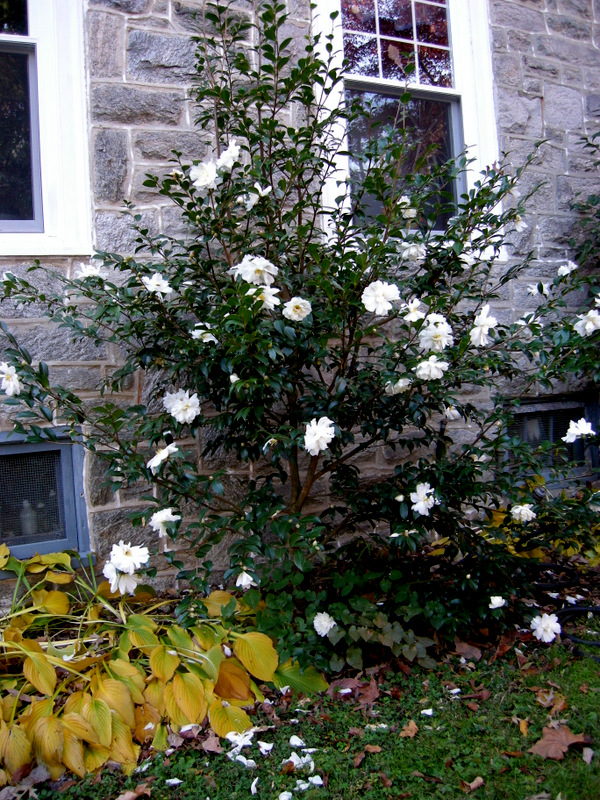
‘Winter’s Joy’ fall-blooming hardy camellia is another repeat, see this post for details.  I planted one myself last fall, and I would like to add to my previous write up that this camellia has more buds and flowers than any other camellia in my garden.  In 2011, it produced the beautiful flowers pictured above through out the entire winter.  Right now my plant is poised to do it again with hundreds of buds waiting to open.

Despite the need, woody plants for shade are difficult to find in local nurseries.  To fill this gap for my customers, three times a year, I offer woody plants for pre-order.  The plants chosen for the offer are the result of hours of painstaking selection in the shade houses of wholesale nurseries to find the healthiest, most desirable woodies available.


‘Winter’s Snowman’ fall-blooming hardy camellia is another favorite offered previously, see this post for details.  I have written three articles about fall-blooming hardy camellias in general.  If you are interested in finding out more about them, start here Fall-blooming Hardy Camellias Part 3, and you will find links to the first two installments.

 It is now time for my fall 2012 woody offer.  If you are a customer, you should already have gotten an email with all the details.  Blog readers can look at the catalogue on line by clicking here.  My nursery is on site retail sales only.  The only plants I ship are snowdrops in February and miniature hostas later in the season.  However, I hope out-of-town readers will get some good ideas for woody shade plants to look for at their local independent nursery.

The previous three photos are of another repeat: paper bush, Edgeworthia chrysantha, for details click here.  My plants have thrived through the last two hot and dry summers with pristine tropical looking leaves, gorgeous fall-forming buds, and highly fragrant late winter-blooming flowers.  This is truly a shrub with 365 days of interest.

So much for the preliminaries and repeat offerings, let’s get to the new plants.  There are six: three from my favorite group of shrubs, hydrangeas, and three evergreens for winter interest (the camellias are evergreen too).  Here are the details.

Native oakleaf hydrangea, H. quercifolia

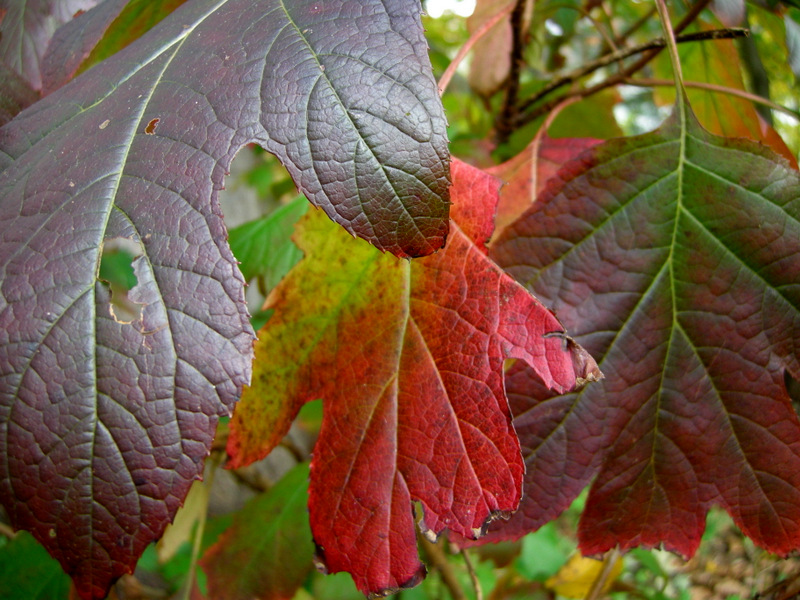
The fall color of oakleaf hydrangea.

Our native oakleaf hydrangea, H. quercifolia, is the best all round shrub for shade—everyone should have at least one!  Huge, long-lasting, upright pyramids of white flowers bloom from May through July. It has bold-textured leaves with heart-stopping burgundy-red fall color, and cinnamon-colored exfoliating bark—a true four season plant. 

The white flowers of ‘Amethyst’ oakleaf hydrangea age to a striking red that does not fade when dried.  Great for flower arranging.

I am offering ‘Amethyst’ native oakleaf hydrangea, a new cultivar selected because  its initially white flowers turn to a striking red color and stay that way.  It grows to 5 to 6’ tall and 5 to 6’ wide in sun to full shade.  It is hardy in USDA hardiness zones 5 to 9, walnut and drought tolerant, and native to the southeastern US.


‘Blue Bird’ sawtooth hydrangea, H. serrata


‘Blue Bird’ sawtooth hydrangea produces lovely blue lacecap flowers starting in June for an extended period.  Acid soil results in the best blue tint.  I also grow it for its beautiful clean bright green leaves through out the season, which are enhanced by red highlights in the fall.  It is very tolerant of cold temperatures avoiding bud and twig dieback in harder winters.  ‘Blue Bird’ reaches 4′ tall and 4′ wide in part to dappled shade and grows in zones 5 to 9.  Sawtooth hydrangea is native to Korea and Japan.

This photo shows ‘Endless Summer’ bigleaf hydrangea, H. macrophylla, right now.  Yes, it is loaded with fresh flowers and buds and has been blooming since late spring.

‘Endless Summer’ bigleaf hydrangea sports very large pink or blue mophead flowers from late spring through summer and well into fall—it’s in full bloom right now as you can see from the photo above.  It represents a recent breakthrough in hydrangeas because it blooms on old and new wood giving it an extended bloom season.  This also means that if the buds formed on old wood the previous season are frozen over the winter, buds will form on new wood as the season progresses.  ‘Endless Summer’s’ large, medium green leaves provide a pleasing backdrop for the flowers.  It grows in zones 4 to 9 and reaches 4′ tall and 4′ wide in part shade.  It is recommended for full sun only with supplemental watering.  Bigleaf hydrangea is native to Japan.

‘Gold Dust’ Japanese aucuba, A. japonica, is an elegant specimen for deep shade.

A close up of the unusual leaves of ‘Gold Dust’ Japanese aucuba—glorious in winter.

‘Gold Dust’ Japanese aucuba’s very shiny, broadleaf evergreen leaves sprinkled with yellow spots make it one of the most vibrant and colorful plants to thrive in dense shade.  I have grown it successfully for many years in several areas of my garden that receive no direct sunlight.  It is very vigorous, disease free, and easy to grow as long as you don’t plant it in the sun.  ‘Gold Dust’ grows to 6 to 8′ tall and 4 to 6′ wide in part to dense full shade and is hardy in zones 7 to 9.  Aucuba is native to Japan, and the variegated form was introduced to the west in 1783.

The fall flowers of ‘Rose Creek’ glossy abelia, A. x grandiflora.

‘Rose Creek’ is a compact form of glossy abelia, great for smaller spaces and smaller gardens.

‘Rose Creek’ is a dense and compact glossy abelia that covers itself in a multitude of wonderfully fragrant, showy white flowers continuously from May through September.   When the flower petals drop off, the rosy pink sepals (bud enclosures) remain and are very eye-catching.  The beautiful, glossy evergreen foliage has pink highlights and turns purple in the fall, providing excellent winter interest.  The stems are  crimson red.  ‘Rose Creek’ grows to 2 to 3′ tall and 3 to 4′ wide in part shade or full sun and is hardy in zones 5 to 9.  It is deer resistant and attracts butterflies and hummingbirds.  Glossy abelia is a cross between two Chinese abelia species.

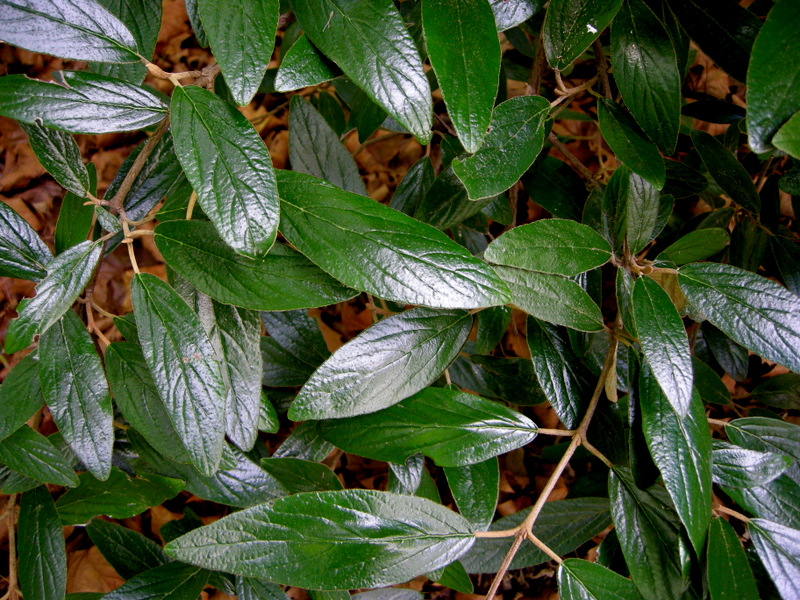
The incredibly shiny leaves of Prague viburnum, V. x pragense, sparkle in the winter.

This photo of the flower of Prague viburnum was kindly lent to me by Monrovia, for their full plant profile, click here.

Prague viburnum’s pink buds open into large, bouquet-like, creamy white flowers in May followed by glossy, persistent black fruit.  Just as ornamental are its very showy, lustrous, dark evergreen leaves.  Prague viburnum reaches 8′ tall and 6′ wide in full sun to part shade and is hardy in zones 5 to 8.  You can grow it in full shade and the leaves will be gorgeous, but it won’t flower very well.  It is fast growing and deer resistant.  It is a cross between leatherleaf and service viburnums, which are both from China.

I hope you have a space in your garden for at least one of these wonderful shrubs for shade.  For more ideas, check out Woody Plants for Shade Parts 1 to 5 using the links provided below:

Part 1,   Part 2,   Part 3,   Part 4,   Part 5

Carolyn

Nursery Happenings:  Shrub orders are due by noon on Wednesday, October 3.  For the catalogue, click here.  We are offering two sessions of a seminar on low maintenance gardening for fall on Wednesday, October 3, and Friday, October 5, from 10 to 11:30 am.  For the details, click here.  Look for a special offer of double hellebores next week.

If you are within visiting distance and would like to receive catalogues and information about customer events, please send your full name and phone number to carolynsshadegardens@verizon.net.  Subscribing to my blog does not sign you up to receive this information.

Facebook:  Carolyn’s Shade Gardens has a Facebook page where I post single photos, garden tips, and other information that doesn’t fit into a blog post.  You can look at my Facebook page here or click the Like button on my right sidebar here.

Notes: Every word that appears in orange on my blog is a link that you can click for more information.  If you want to return to my blog’s homepage to access the sidebar information (catalogues, previous articles, etc.) or to subscribe to my blog, just click here.


What’s New at Carolyn’s Shade Gardens

Posted in Uncategorized with tags , , , , , on September 14, 2012 by Carolyn @ Carolyns Shade Gardens

Carolyn’s Shade Gardens is a retail nursery located in Bryn Mawr, PA, specializing in showy, colorful, and unusual plants for shade.  The only plants that we ship are snowdrops and miniature hostas.  For catalogues and announcements of events, please send your full name, location, and phone number (for back up use only) to carolyn@carolynsshadegardens.com.  Click here to get to the home page of our website for catalogues and information about our nursery and to subscribe to our blog.

American sycamore, Platinus occidentalis (all photos courtesy of our wonderful tenant Cynthia)

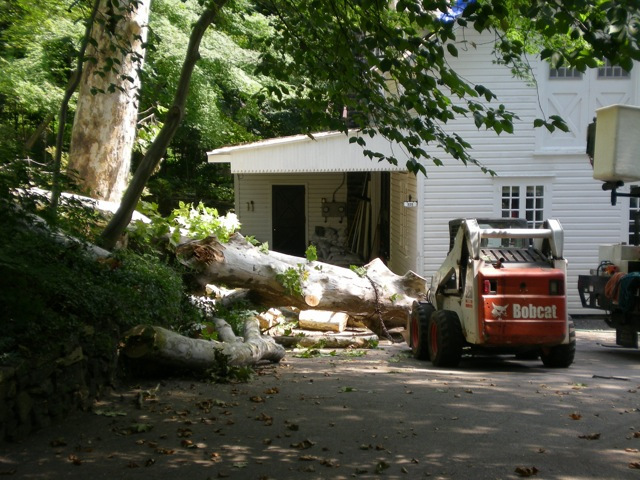
You may have noticed that Carolyn’s Shade Gardens, the blog and the plant nursery, has been unusually quiet lately.  That’s because we have been in shock.  In August, a freak storm snapped the top off of our gigantic, over 100-year-old American sycamore and sent it crashing down on our historic carriage house.  Those of you who have been here know that the carriage house is my place of business.  There is also an apartment upstairs, and my garage, where the cashier’s table normally sits at open houses, is attached to the side.

The sycamore on top of the carriage house

Four branches the size of normal trees came crashing through the roof into the two bedrooms, a storage area, and the garage while the trunk fell on the roof itself.  Thankfully no one was hurt,  and our tenant wasn’t home.


The tree cut up and removed from the roof.

We are also very thankful to Chris Lepping of Lepping Landscape & Tree Service in Collegeville, PA.  The tree fell on Sunday evening at 6 pm, and on Monday morning at 8:00 am Chris was in our driveway with a bucket truck to assess the situation. He and his crew were able to remove the tree with no further damage.  Chris said it was the most dangerous tree removal he has done in over 20 years of business.

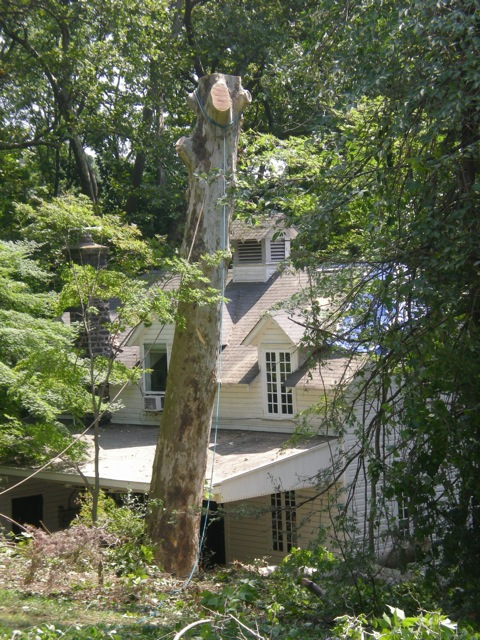
The part of the tree that was left standing towered over the carriage house.

We are also very happy that we opted for a relatively expensive Chubb Insurance “masterpiece” homeowners policy.  A Chubb remediation team was there on Sunday night at 11:30 pm  to keep the torrential rains from flooding the building.  Chubb has worked closely with us to expedite repairs and has not questioned the expenses being incurred to fix the extensive damage.


Sadly, the tree had to come down.  It was my favorite tree on the whole property, which has some pretty amazing trees, and the only American sycamore.  All the other “sycamores” are London planetrees.


Finally, we are very thankful that my brother, Nick Walker, is a contractor with the capability to fix all the damage to our historic carriage house.  His business, Cottage Industries in Wayne, PA, specializes in renovating old homes like ours and has won the Historic Preservation Award from the Radnor (PA) Historical Society.  Nick and his crew are working hard to get Carolyn’s Shade Gardens back in business.

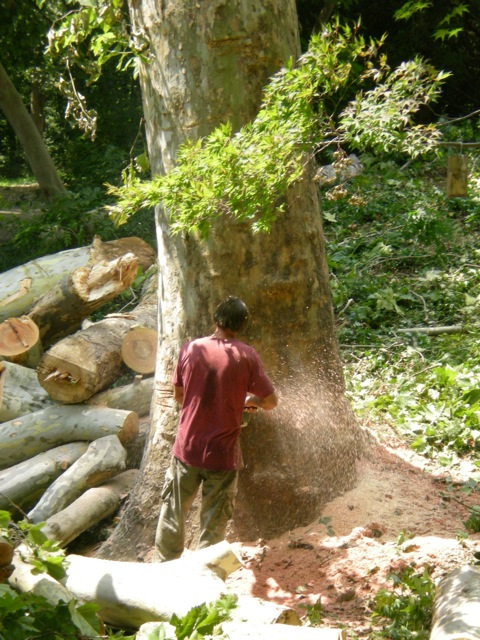
The trunk diameter was almost five feet.  We grow them big in the mid-Atlantic!


So what does all this mean to Carolyn’s Shade Gardens?  We are slightly behind in starting our fall season but still have a full month of events planned.  The first fall open house is this Saturday, September 22, from 10 am to 3 pm.  We intend to do a shrub offer in late September or early October.  As we have in the previous two years, we will also be offering for preorder gorgeous Winter Jewels double hellebores (for photos click here) potted earlier this summer and waiting to find a home in your garden.  To receive details of all these events you must be on my customer email list  (see below).  Now if I can just get the dumpsters out of my sales area!!!!


I hope to see you this fall,

Carolyn

Nursery Happenings:  The first fall open house is this Saturday, September 22, from 10 am to 3 pm.  Customers on my customer email list should have received plant lists and photos already.

If you are within visiting distance and would like to receive catalogues and information about customer events, please send your full name and phone number to carolynsshadegardens@verizon.net.  Subscribing to my blog does not sign you up to receive this information.

Facebook:  Carolyn’s Shade Gardens has a Facebook page where I post single photos, garden tips, and other information that doesn’t fit into a blog post.  You can look at my Facebook page here or click the Like button on my right sidebar here.

Notes: Every word that appears in orange on my blog is a link that you can click for more information.  If you want to return to my blog’s homepage to access the sidebar information (catalogues, previous articles, etc.) or to subscribe to my blog, just click here.


Colorful Annuals for Shade Part Two

Posted in Uncategorized with tags , , , , , , on August 31, 2012 by Carolyn @ Carolyns Shade Gardens

Carolyn’s Shade Gardens is a retail nursery located in Bryn Mawr, PA, specializing in showy, colorful, and unusual plants for shade.  The only plants that we ship are snowdrops and miniature hostas.  For catalogues and announcements of events, please send your full name, location, and phone number (for back up use only) to carolyn@carolynsshadegardens.com.  Click here to get to the home page of our website for catalogues and information about our nursery and to subscribe to our blog.

20120831-093700.jpg

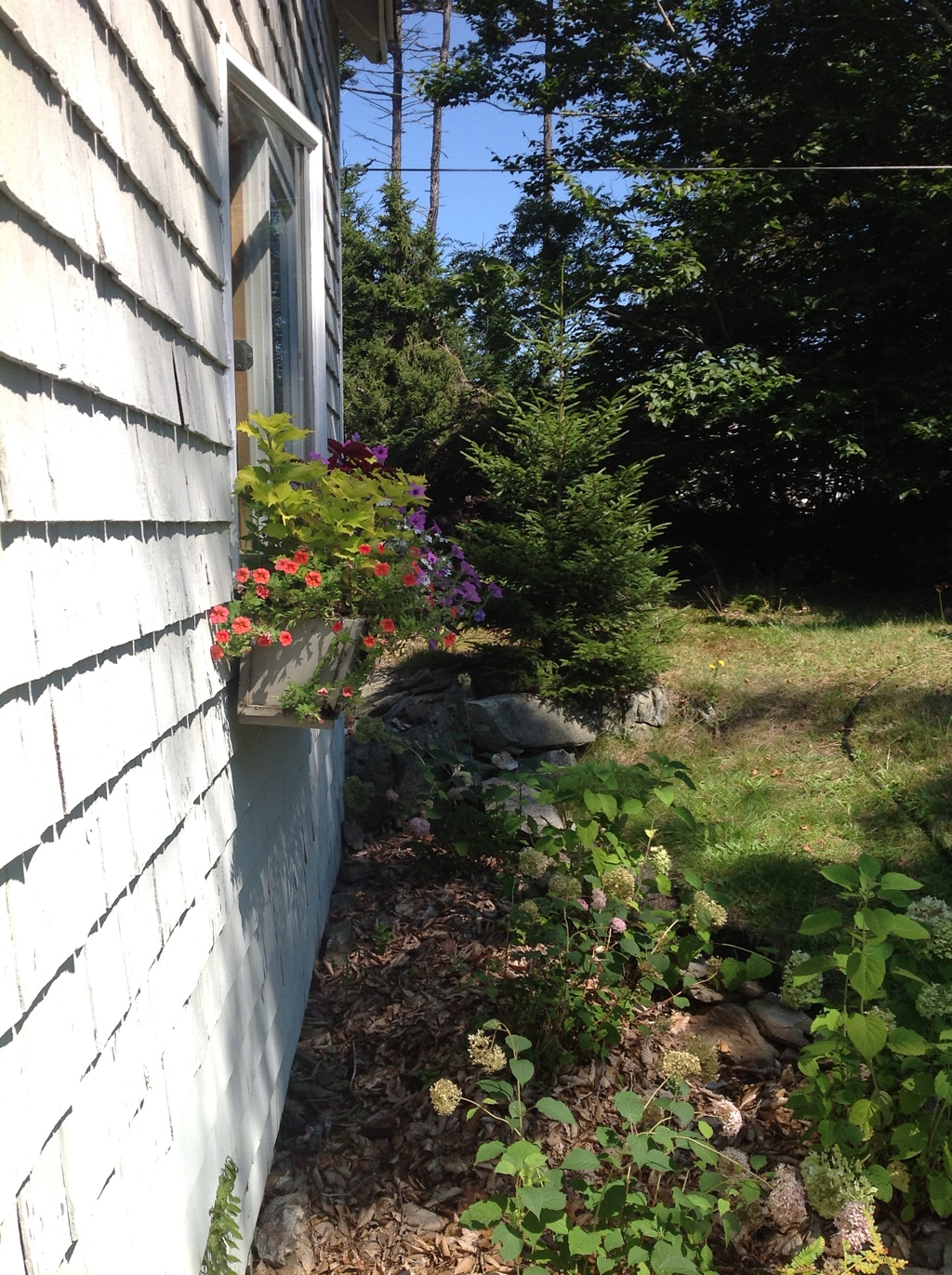
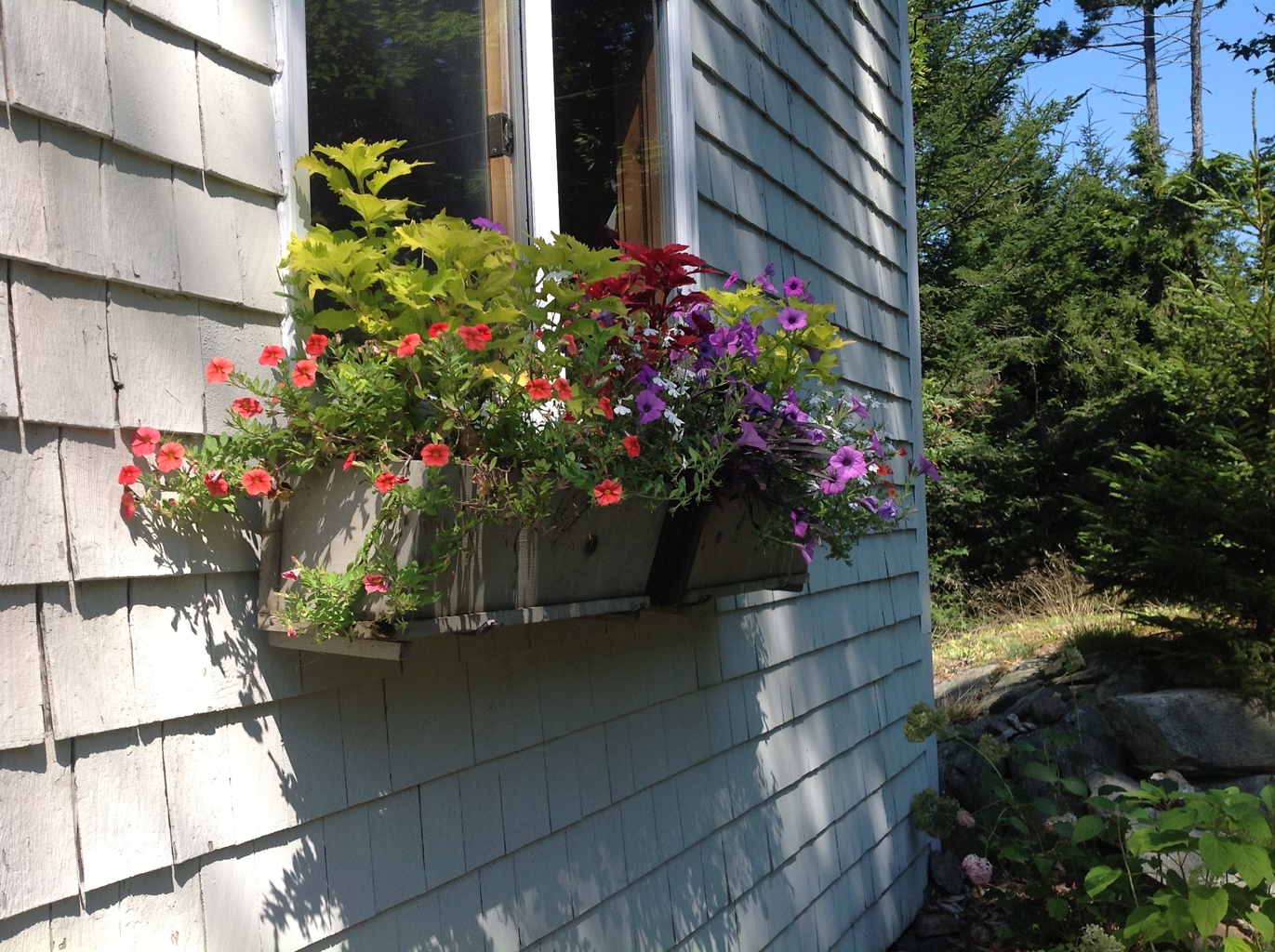
This colorful window box faces east and receives a lot of morning light.

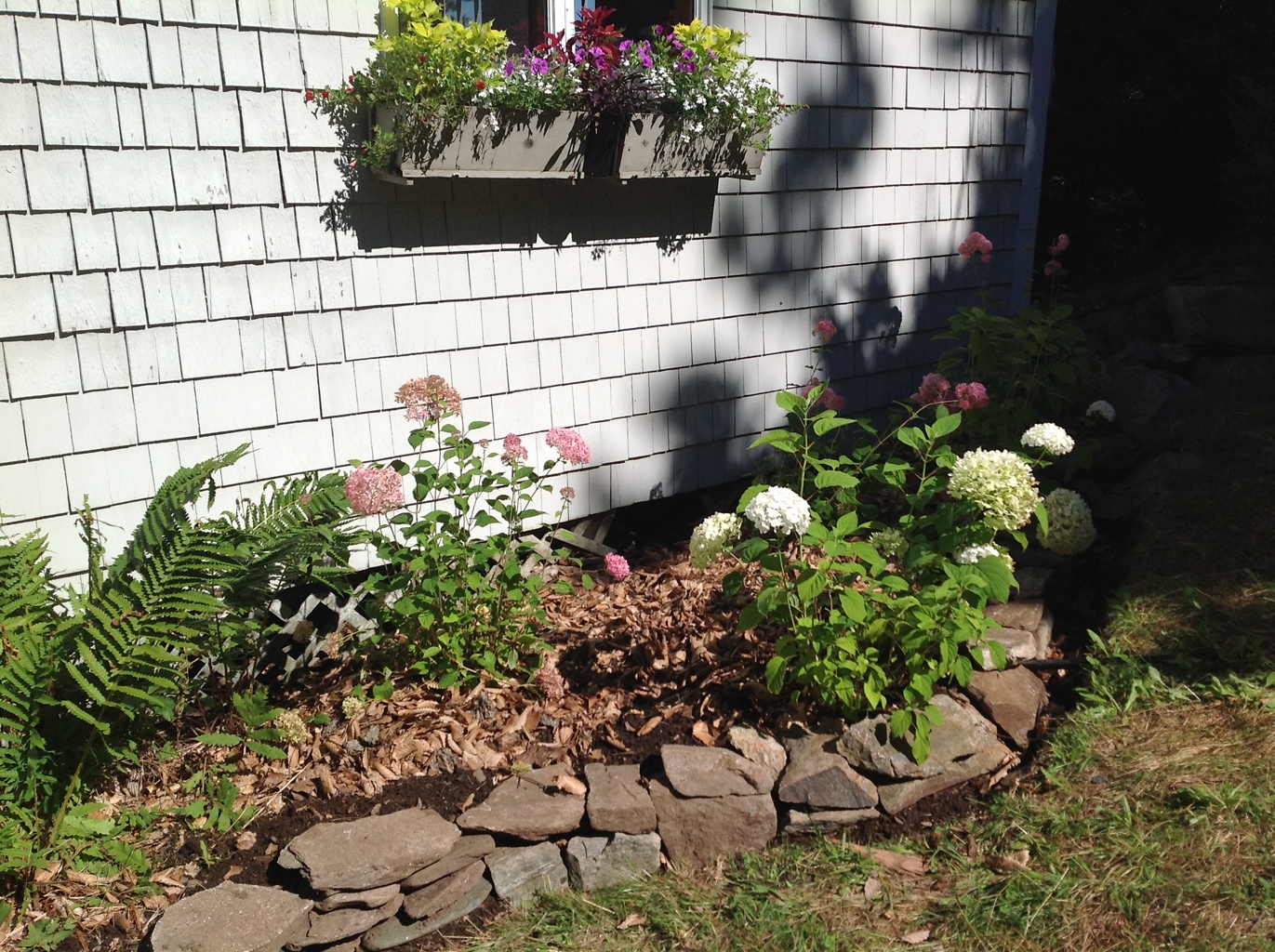
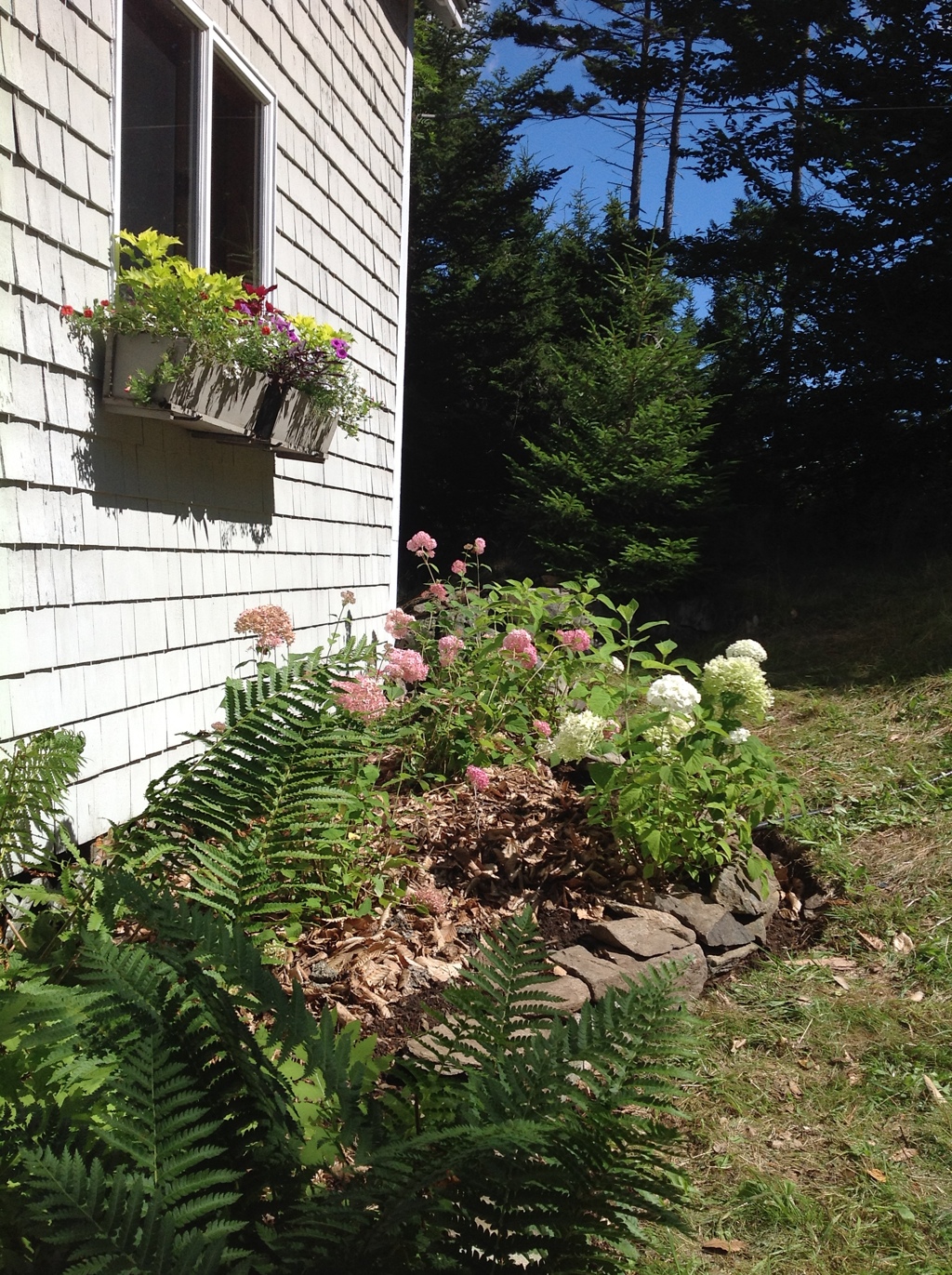
Last August I wrote a post about the annual containers at my family’s home in Maine (click on the link to read it). It turned out to be one of my most popular posts so I thought I would show you the 2012 containers. As I have mentioned before, this is the only gardening that I do around the house because I want to keep the beautiful native plant habitat in tact. I recently removed the existing perennial garden and replaced it with native hydrangeas (click here to read about that project).

20120831-110239.jpg

20120831-110321.jpg

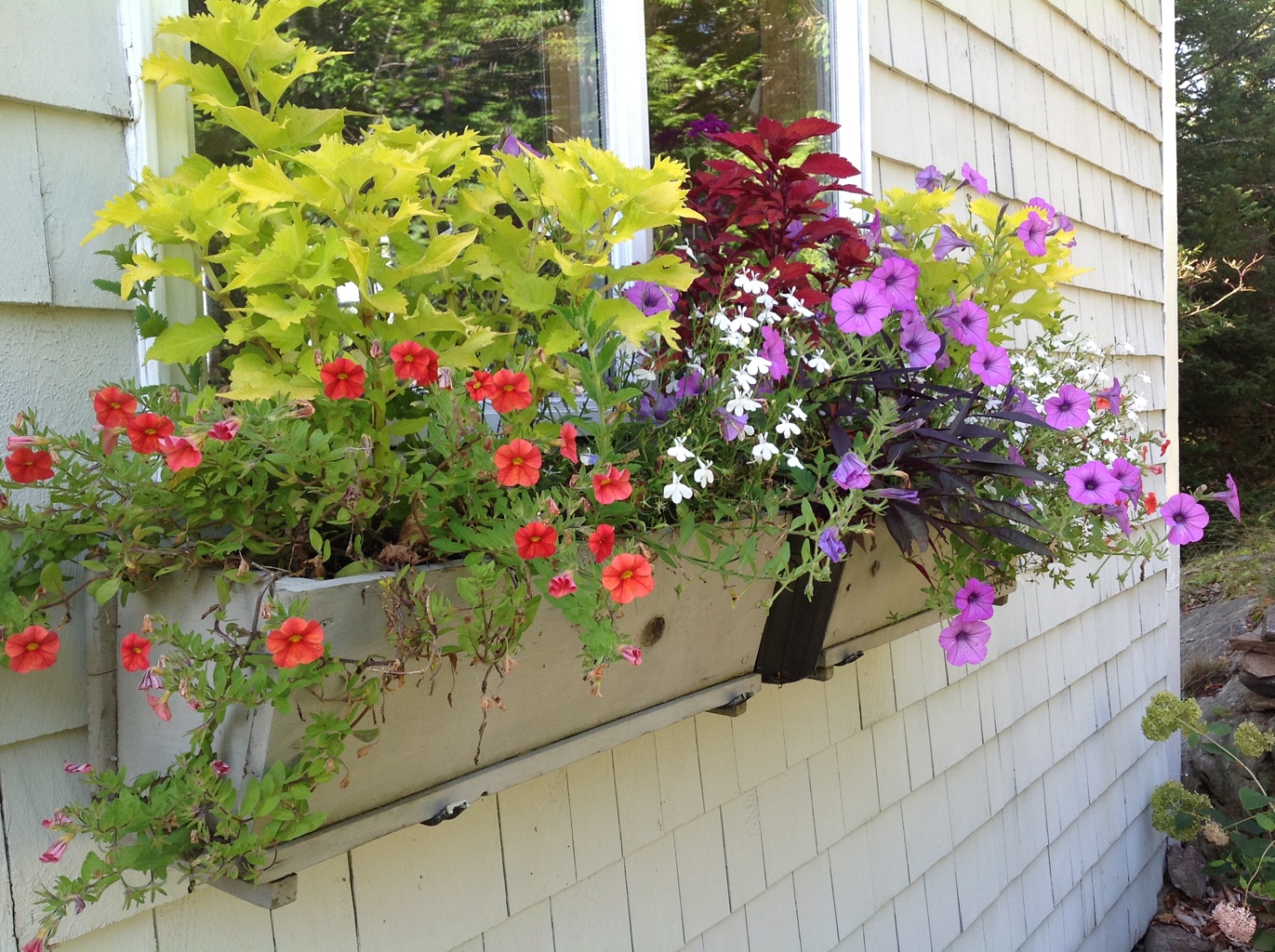
The containers consist of a set of window boxes and a large terra cotta pot by the front door. As you can see in the first of the two photos above, the window boxes are over the new hydrangea bed on the front or street side of the house. The location faces east and receives morning sun—it is not full shade. The second photo shows that the window boxes are directly below what is my kitchen window, which means that the plants have to be lower, no more than 12 to 18 inches. In container parlance that means fillers and spillers but no tall thrillers. The plants are viewed even more from inside so they have to look good from both sides.

20120831-111436.jpg

20120831-111515.jpg

I like the crammed look for containers so mine always have lots of plants in them. Spilling out the sides of the two boxes are ‘Callie Orange’ million bells while white annual lobelia and ‘Midnight Lace’ sweet potato vine cascade out the middle. The fillers, which I also find thrilling, are the lime green coleus ‘Wasabi’ and the purple coleus ‘Spitfire’, two shorter varieties. Filling in between the coleus and the spillers are a medium purple petunia and a very dark purple verbena. Although the verbena is not visible in the photo because it was taking a break, it so beautiful that it is worth putting up with its intermittent bloom.

20120831-112854.jpg

20120831-112926.jpg

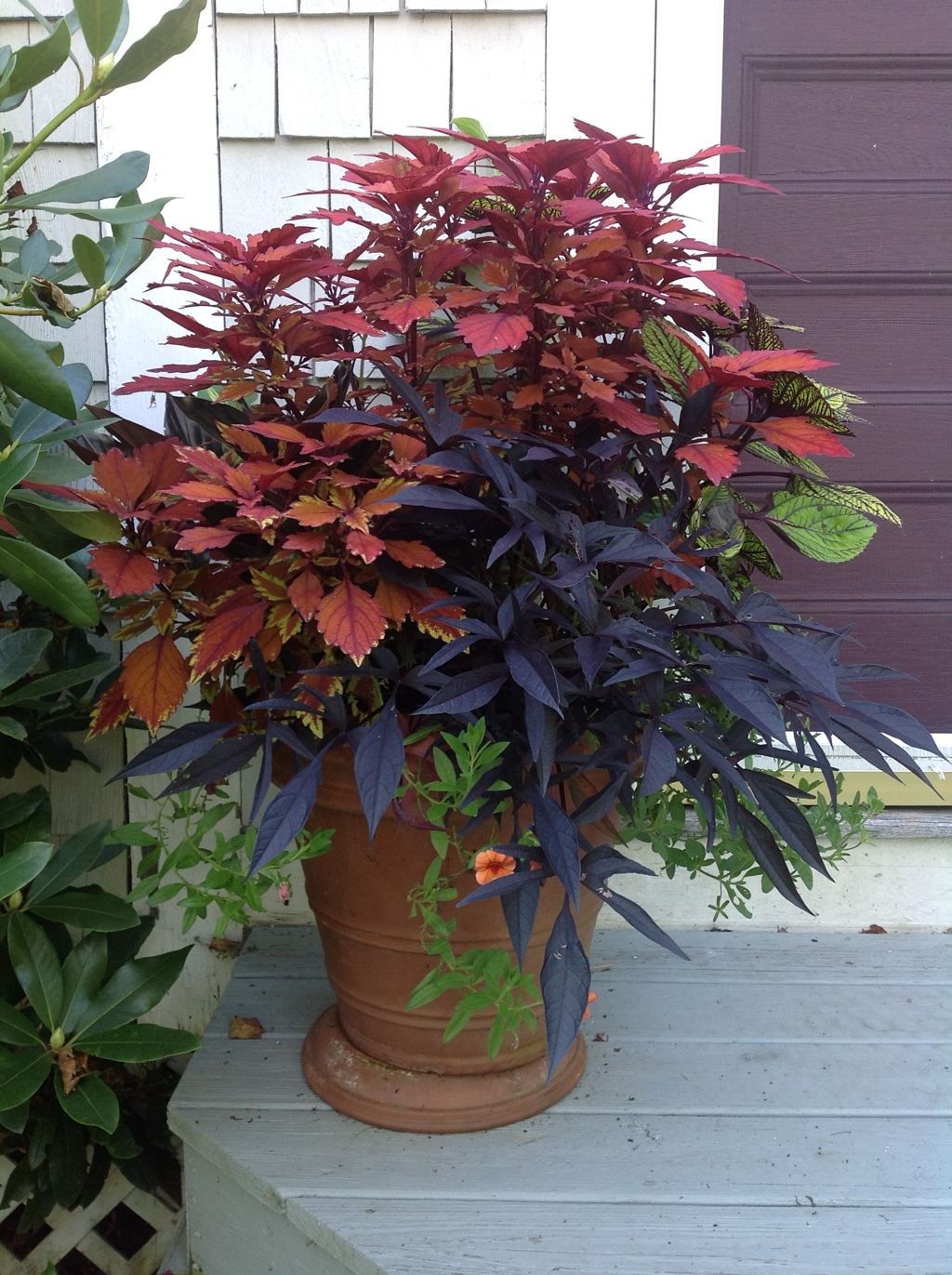
The above two photos are of the large container by the front door also facing east and getting morning sun, although a little less because of the rhododendron. I usually use a color scheme in this container to compliment the eggplant-colored front door, and my go to plant for height is often purple fountain grass (see last year). This year I decided to use variegated shell ginger, Alpinia zerumbet ‘Variegata’, which I got as a member dividend from the Scott Arboretum. It has two foot long, feather like, yellow-streaked leaves and reaches six to eight feet. Unfortunately, though very healthy, it refused to grow higher than a foot and is plugging along happily behind the coleus. So no tall thriller here either!

20120831-114140.jpg

20120831-114216.jpgA close up of my new favorite coleus, the lovely and cleverly named ‘Fishnet Stockings’.

20120831-114722.jpgThis beautiful coleus called ‘Sedona’ does have the gorgeous orange red color of the Sedona area, but the iPad camera refused to capture it no matter what time of day, light conditions, or angle I chose.

I try to have the window boxes and the large pot echo each other so I use some of the same or similar plants. This larger container has a frilly underskirt of ‘Callie Orange’ million bells with a froth of ‘Midnight Lace’ sweet potato vine above it. I could choose taller coleus for this container so I used the intriguing ‘Fishnet Stockings’ and the colorful ‘Sedona’.

Perhaps I have given you some ideas for your own container plantings in 2013. I am sure some of these plants would work in shadier sites, but I am hesitant to recommend a plant for a condition in which I have not tried it.

Carolyn

Nursery Happenings: The nursery is closed until the fall and should be opening soon. If you are on my customer list, look for an email. Thanks for a great spring season!

If you are within visiting distance and would like to receive catalogues and information about customer events, please send your full name and phone number to carolynsshadegardens@verizon.net. Subscribing to my blog does not sign you up to receive this information.

Facebook: Carolyn’s Shade Gardens has a Facebook page where I post single photos, garden tips, and other information that doesn’t fit into a blog post. You can look at my Facebook page here or click the Like button on my right sidebar here.

Notes: Every word that appears in orange on my blog is a link that you can click for more information. If you want to return to my blog’s homepage to access the sidebar information (catalogues, previous articles, etc.) or to subscribe to my blog, just click here.

The Maine Coast

Posted in Uncategorized with tags , , on August 23, 2012 by Carolyn @ Carolyns Shade Gardens

Carolyn’s Shade Gardens is a retail nursery located in Bryn Mawr, PA, specializing in showy, colorful, and unusual plants for shade.  The only plants that we ship are snowdrops and miniature hostas.  For catalogues and announcements of events, please send your full name, location, and phone number (for back up use only) to carolyn@carolynsshadegardens.com.  Click here to get to the home page of our website for catalogues and information about our nursery and to subscribe to our blog.

20120823-104128.jpg

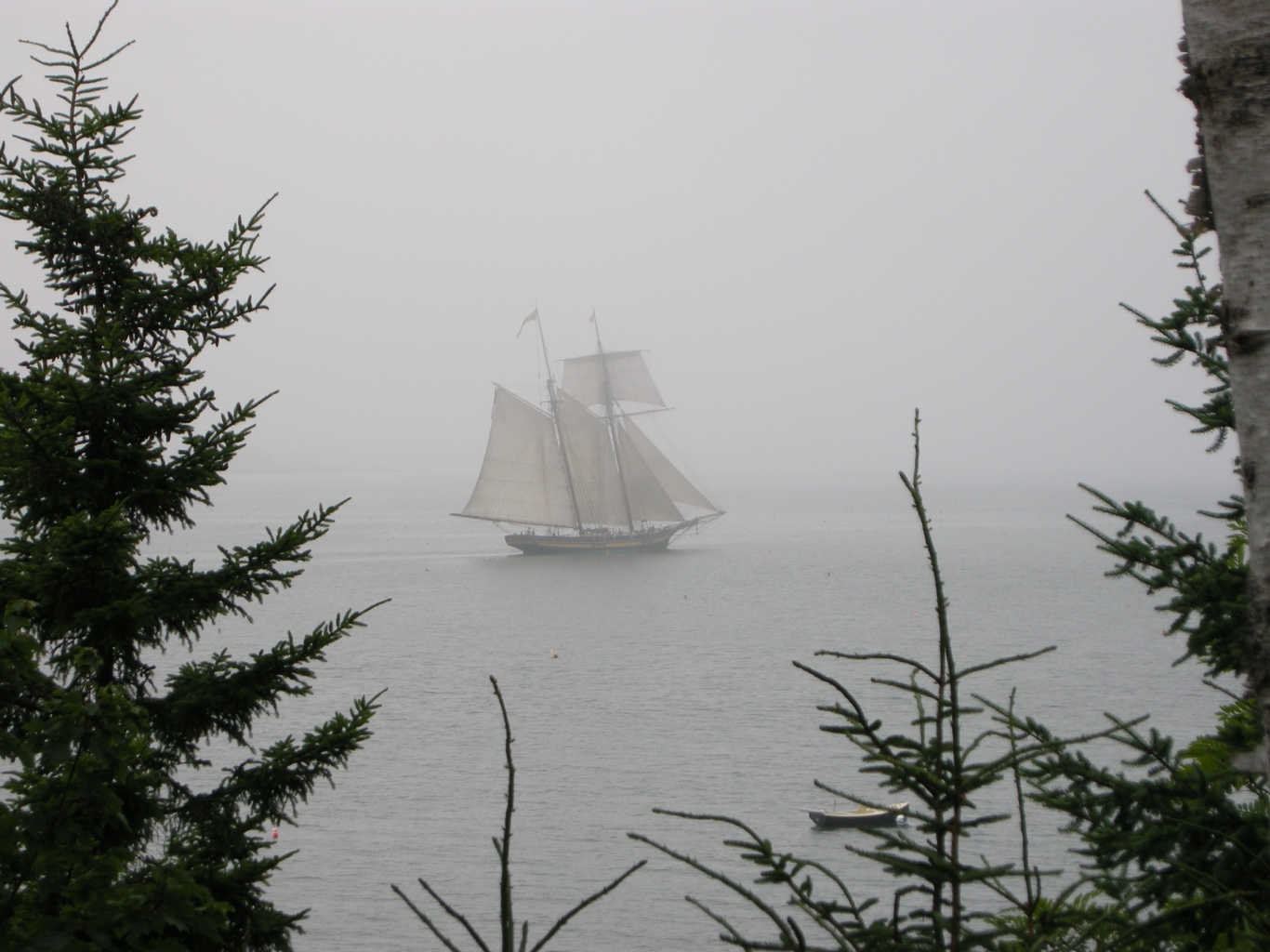
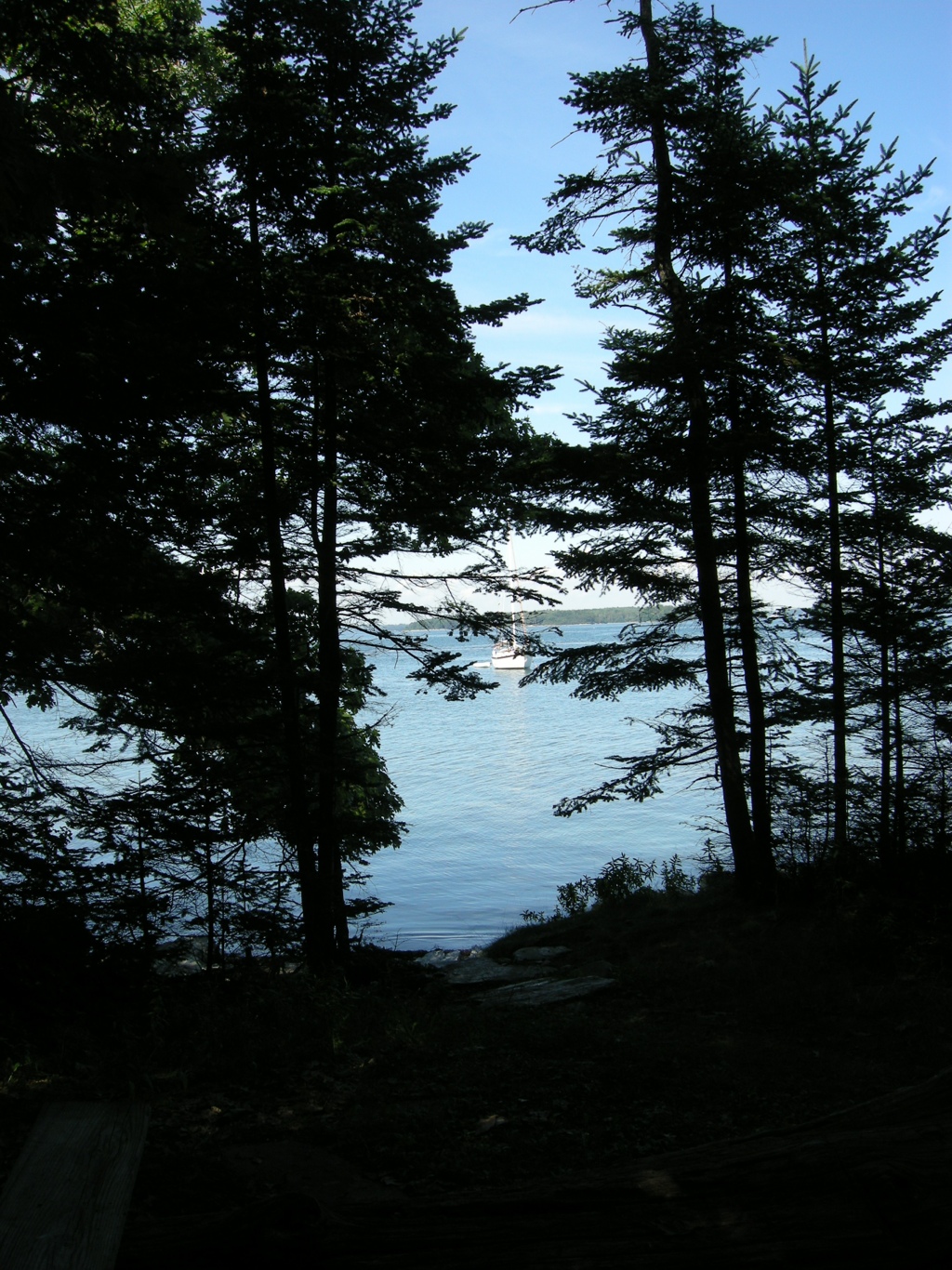
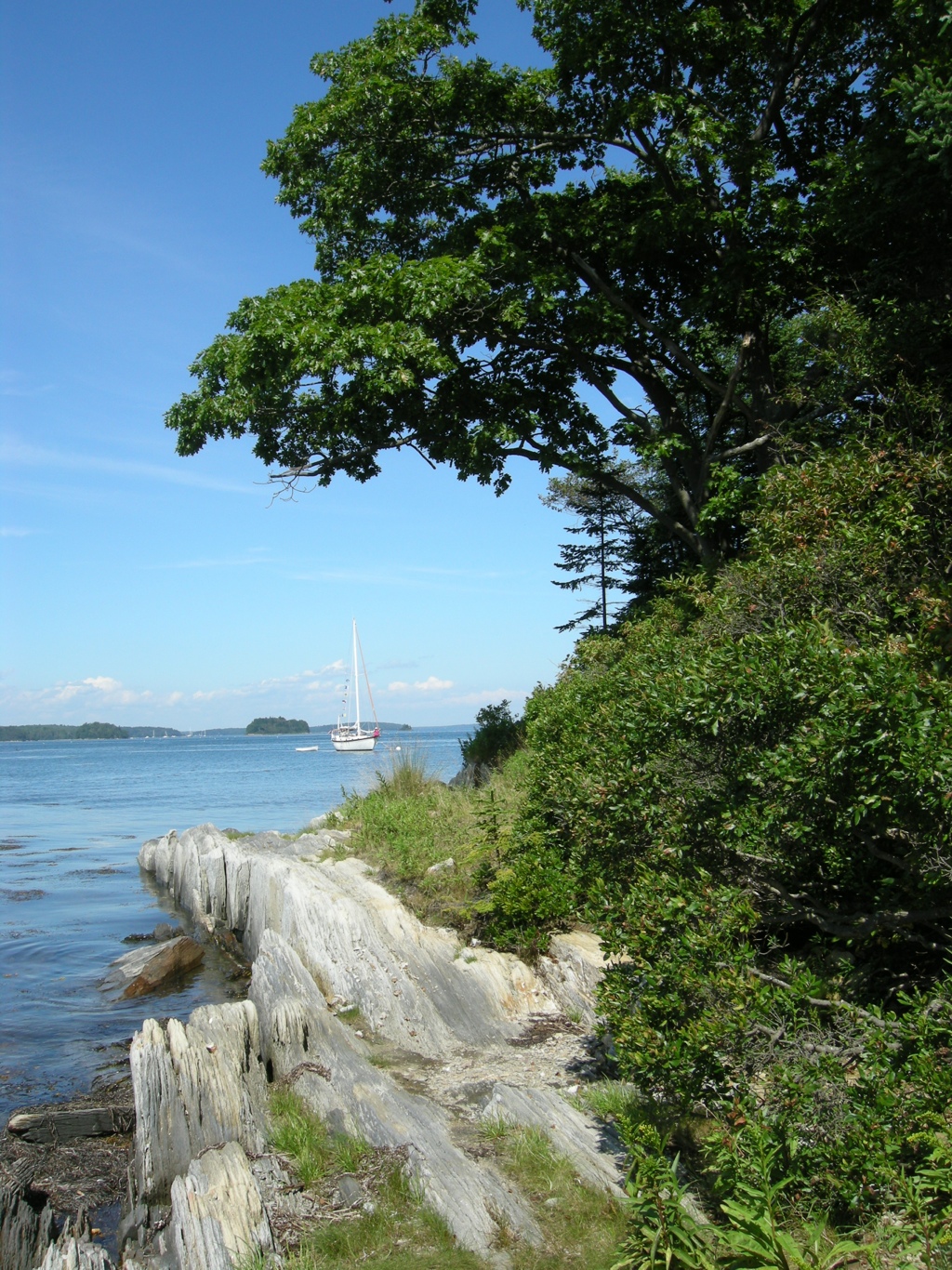
Gorgeous yachts and sailboats cruise around Casco Bay, Maine, all the time.

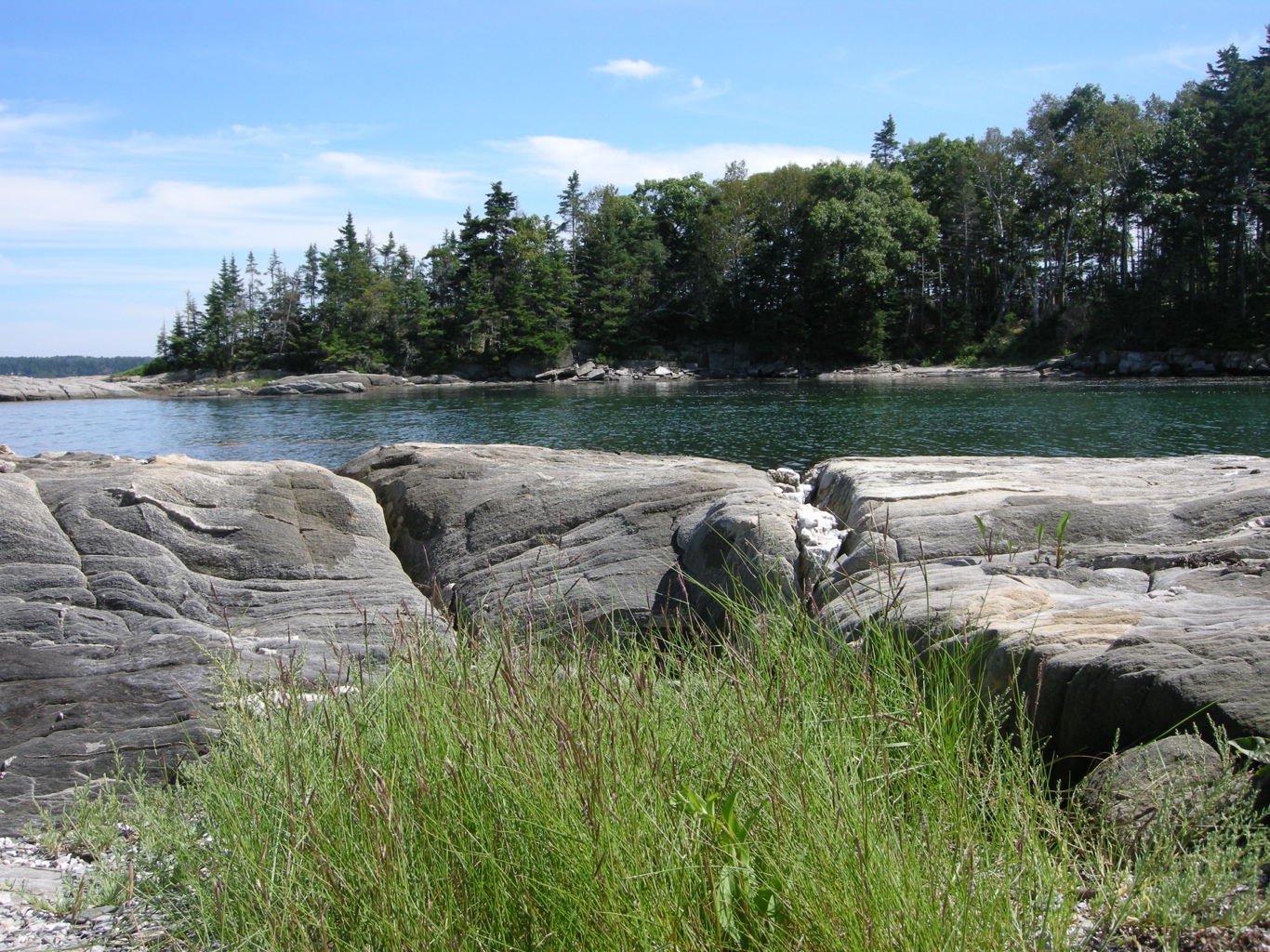
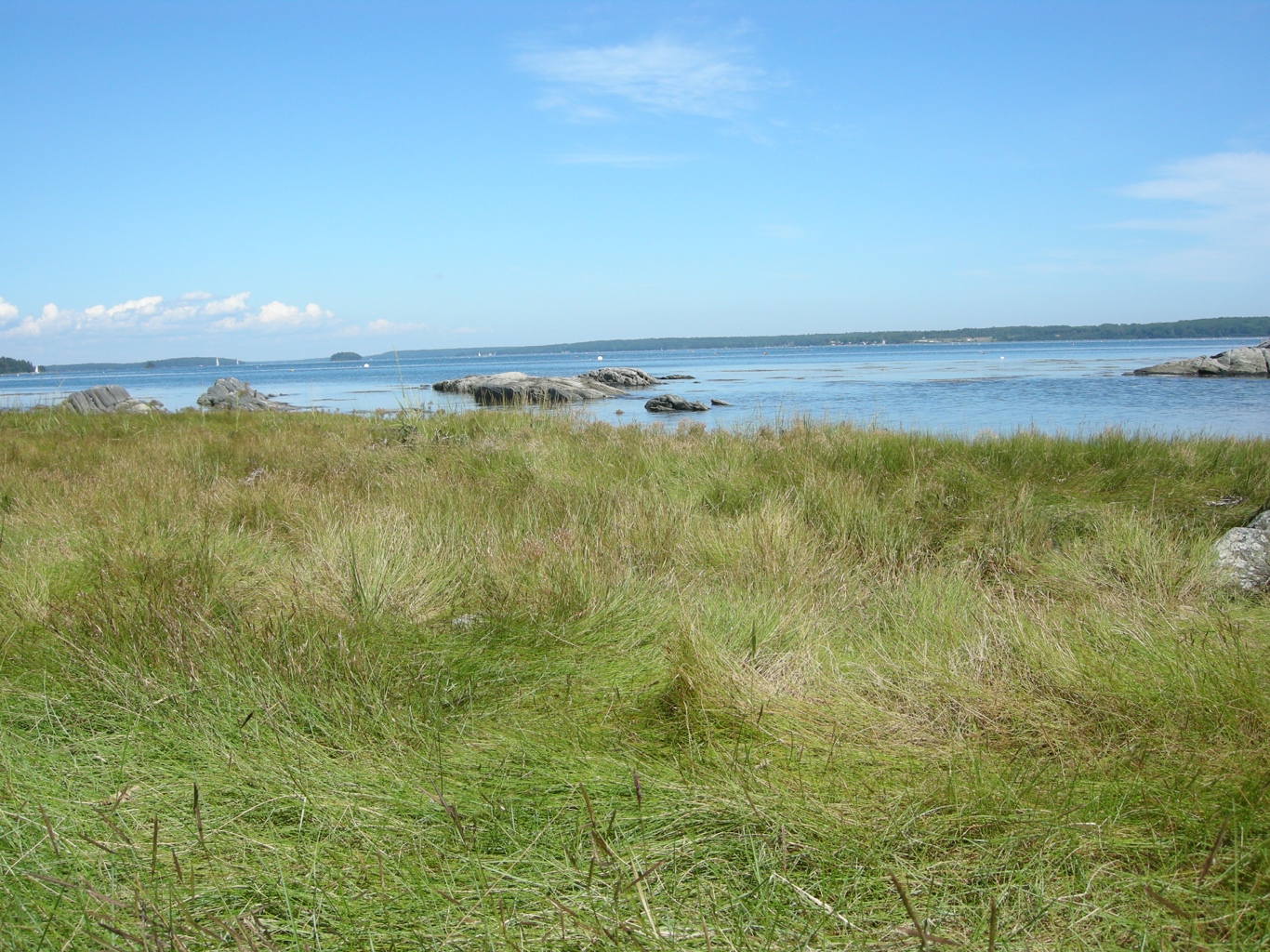
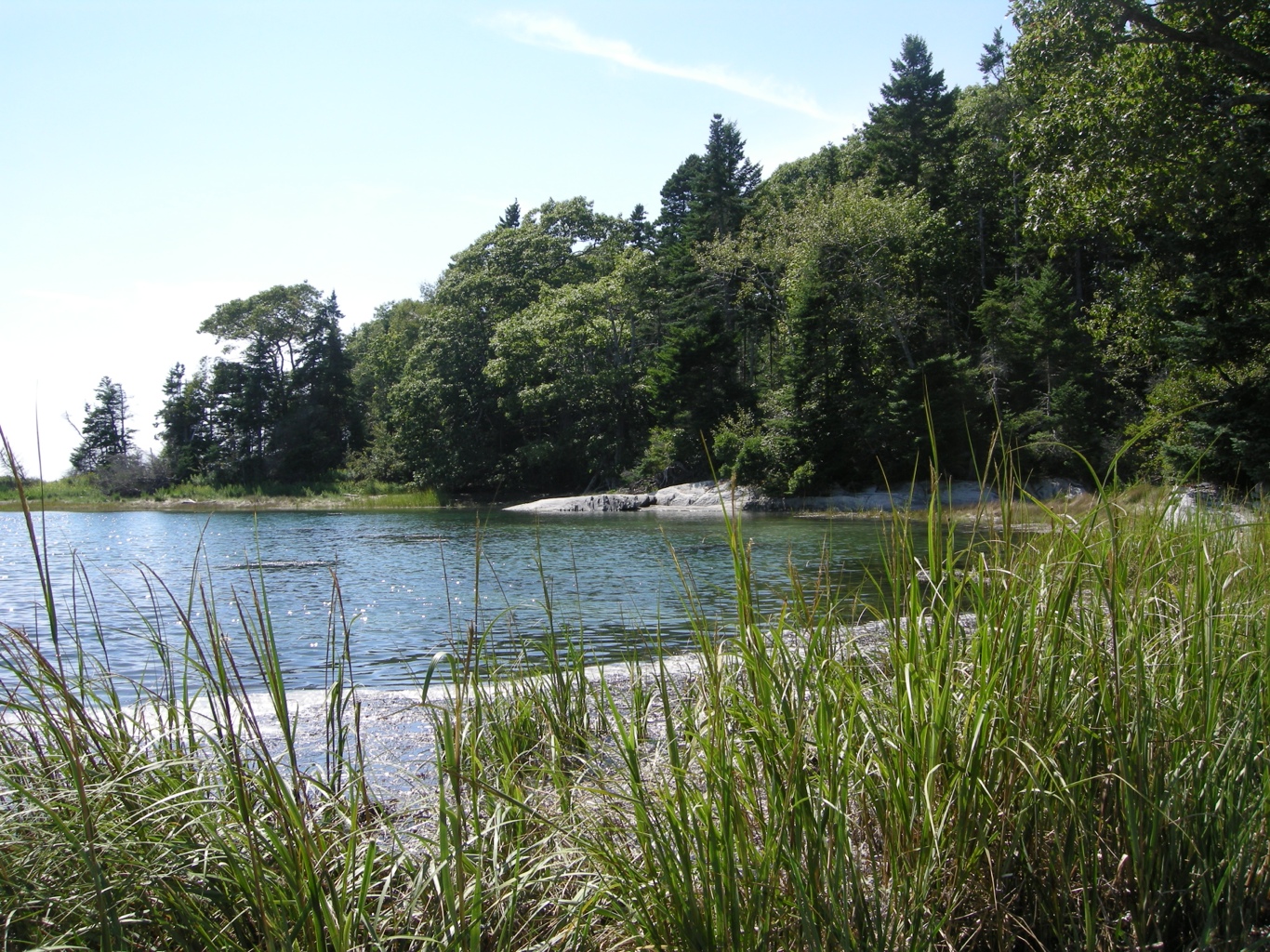
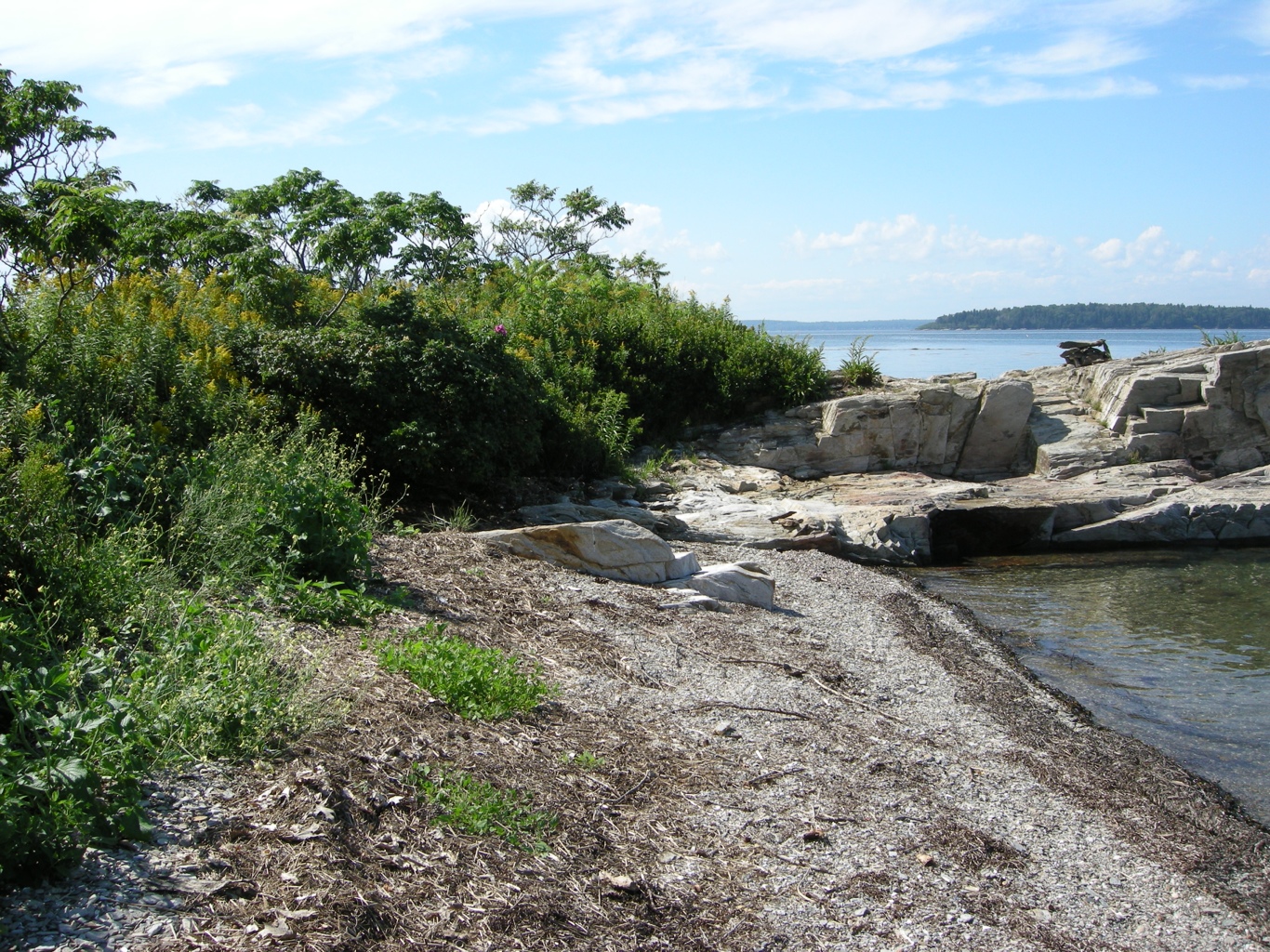
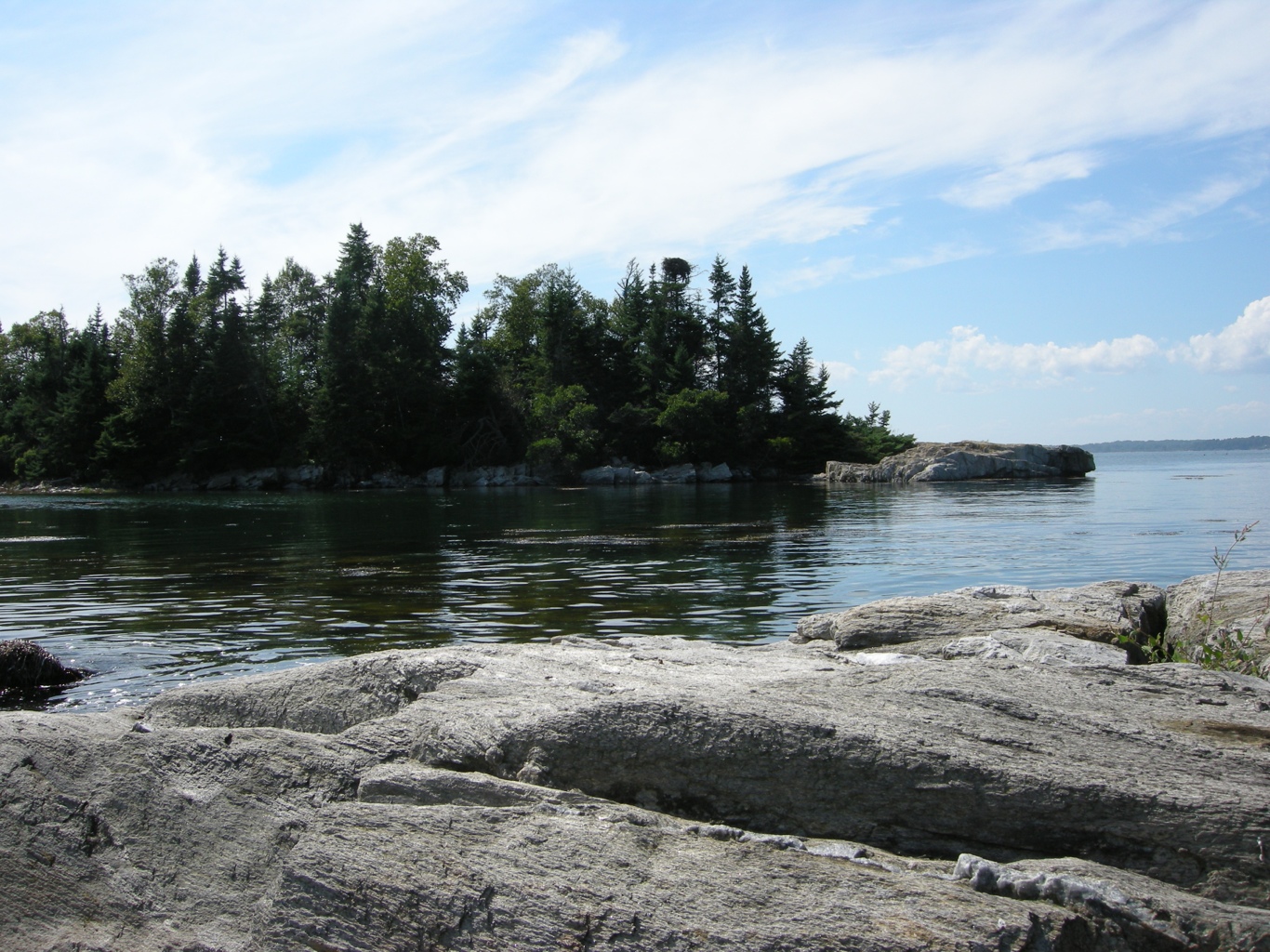
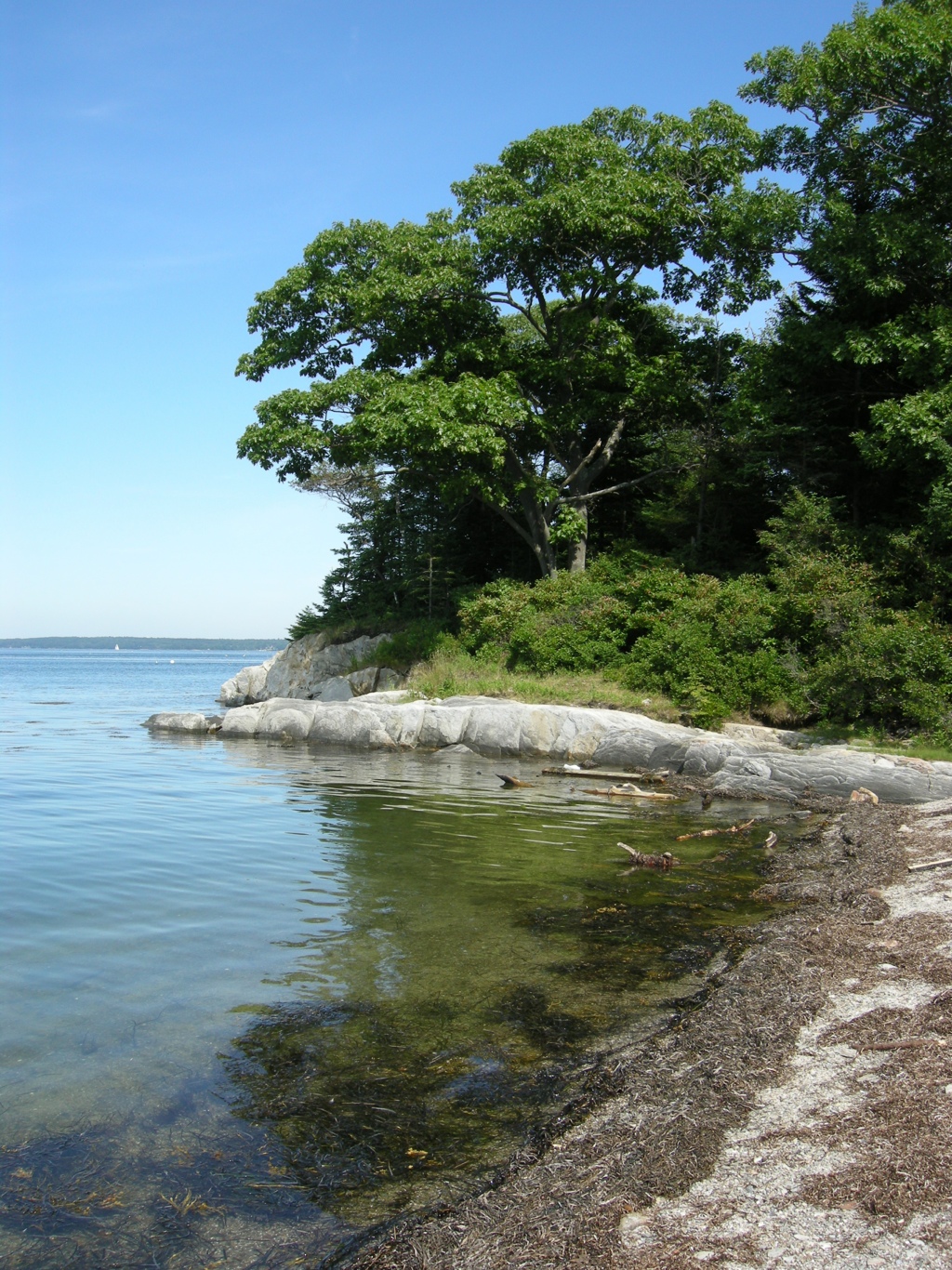
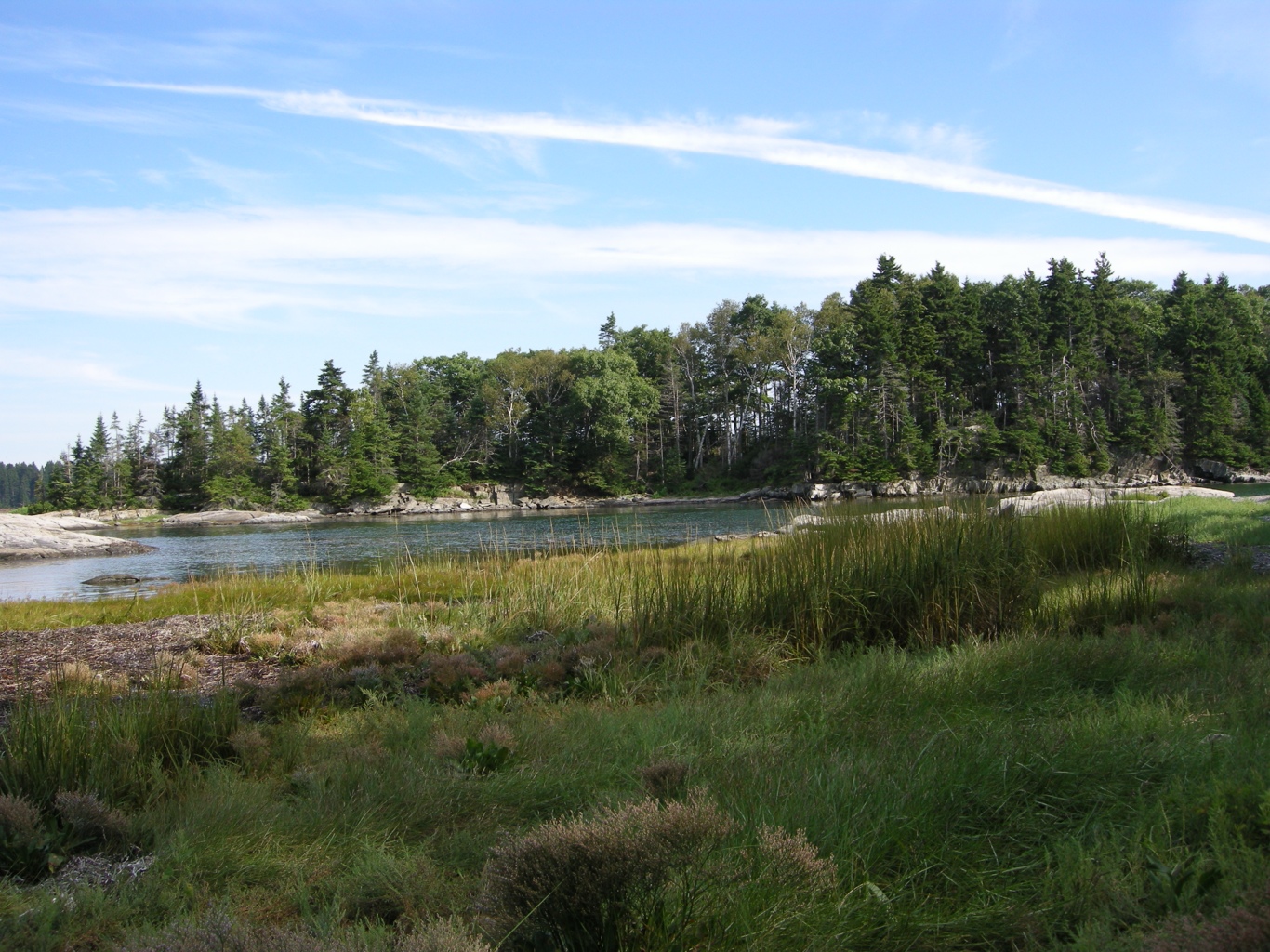
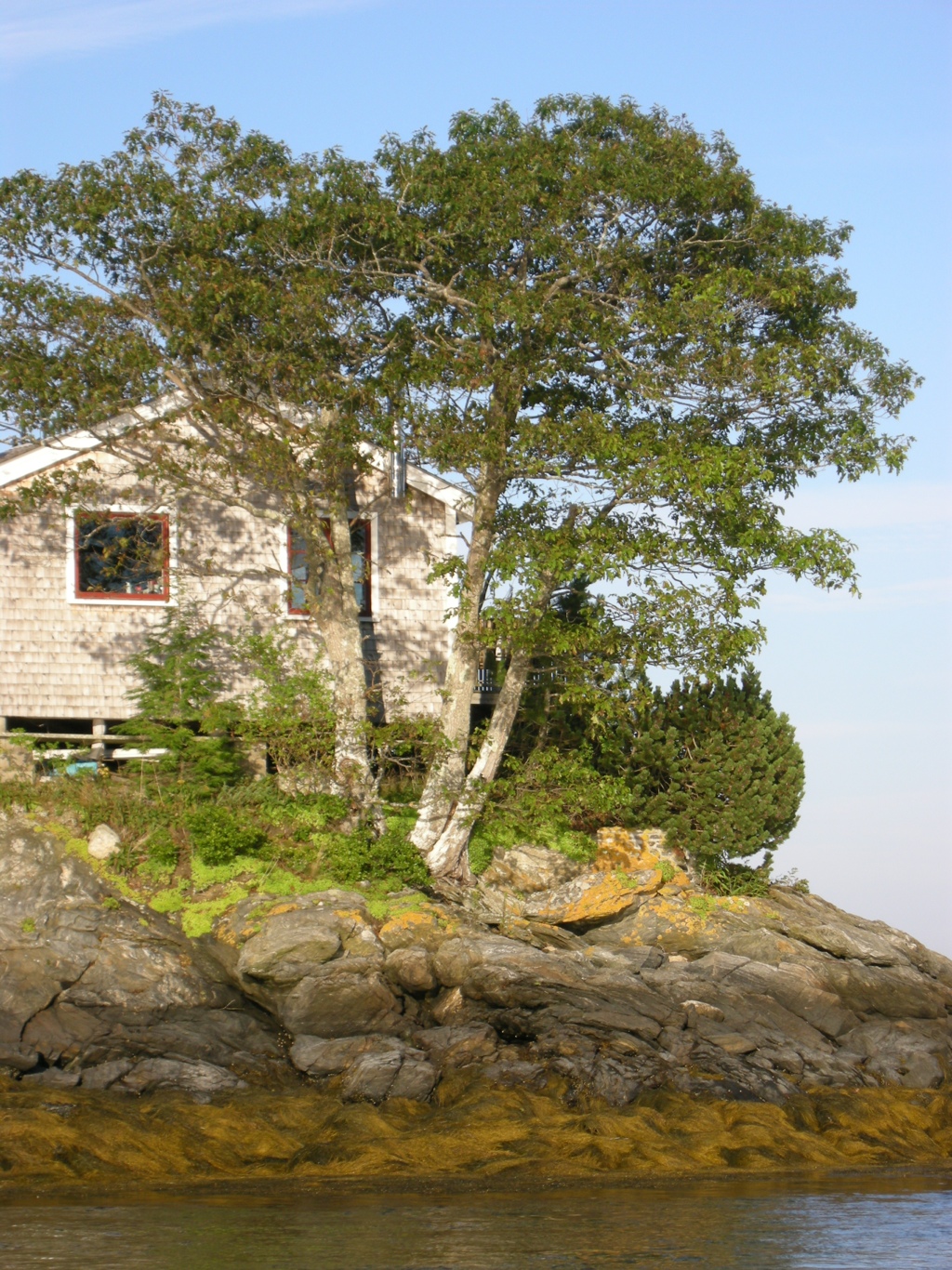
My blog posts generally contain a lot of substantive content supported by photos. I thought I would take a break from that approach with this post to show my many readers from all over the world and from other parts of the US photos of the Maine coast. Maine is a state located in the continental US in the far upper northeastern corner in a region called New England. It is one of the least populated and least developed US states. All the photos I am going to show you were taken in Casco Bay, which is located in the southern part of Maine right off Portland, the most populous city. Almost anywhere in Casco Bay or along the coast could produce photos like these, but most of these photos were taken on one small island.

20120823-104534.jpg

As we sail off on our exploration of the Maine Coast, keep in mind that the plants you see are almost all native. Unlike most parts of the US, the native landscape is relatively undisturbed in Maine. That is why, at my family’s home in Maine, I garden almost exclusively in containers. The native landscape is more beautiful than anything that I could create.

20120823-104916.jpg

20120823-105138.jpg

20120823-110355.jpg

20120823-113908.jpg

20120823-113941.jpg

20120823-114017.jpg

20120823-114048.jpg

20120823-114118.jpg

20120823-114152.jpg

20120823-114227.jpg

20120823-114302.jpg

20120823-114348.jpg

20120823-114427.jpg

20120823-114505.jpg

20120823-114543.jpg

20120823-114626.jpg

20120823-114701.jpg

20120823-114821.jpg

20120823-114853.jpg

We end with the obligatory sunset, beautiful and different every day. I hope you have enjoyed your tour and will consider visiting Maine someday.

Carolyn

Nursery Happenings: The nursery is closed until the fall. Thanks for a great spring season!

If you are within visiting distance and would like to receive catalogues and information about customer events, please send your full name and phone number to carolynsshadegardens@verizon.net. Subscribing to my blog does not sign you up to receive this information.

Facebook: Carolyn’s Shade Gardens has a Facebook page where I post single photos, garden tips, and other information that doesn’t fit into a blog post. You can look at my Facebook page here or click the Like button on my right sidebar here.

Notes: Every word that appears in orange on my blog is a link that you can click for more information. If you want to return to my blog’s homepage to access the sidebar information (catalogues, previous articles, etc.) or to subscribe to my blog, just click here.

Natural Rock Garden Seating

Posted in garden to visit, How to, landscape design with tags , , on August 9, 2012 by Carolyn @ Carolyns Shade Gardens

Carolyn’s Shade Gardens is a retail nursery located in Bryn Mawr, PA, specializing in showy, colorful, and unusual plants for shade.  The only plants that we ship are snowdrops and miniature hostas.  For catalogues and announcements of events, please send your full name, location, and phone number (for back up use only) to carolyn@carolynsshadegardens.com.  Click here to get to the home page of our website for catalogues and information about our nursery and to subscribe to our blog.

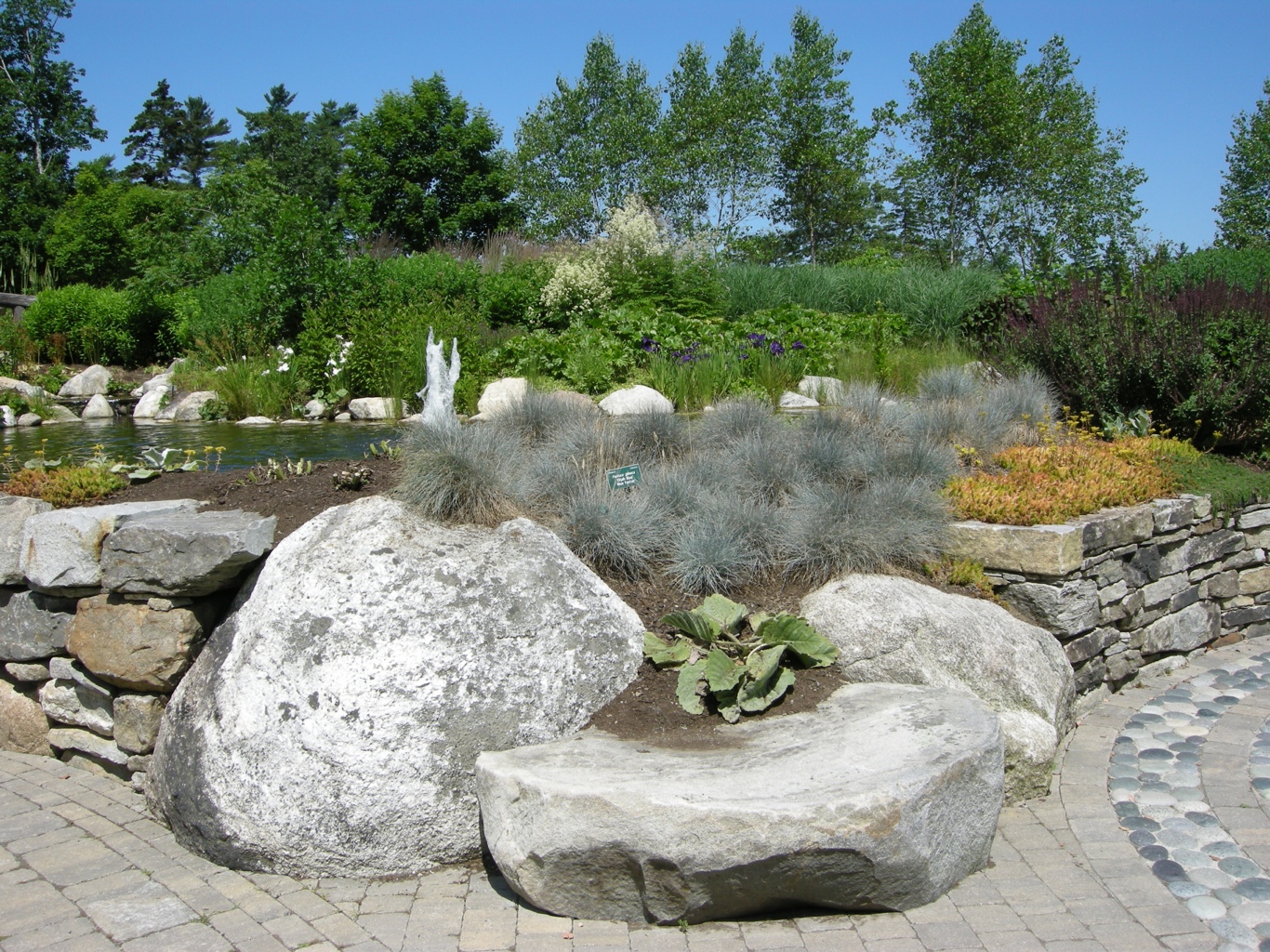
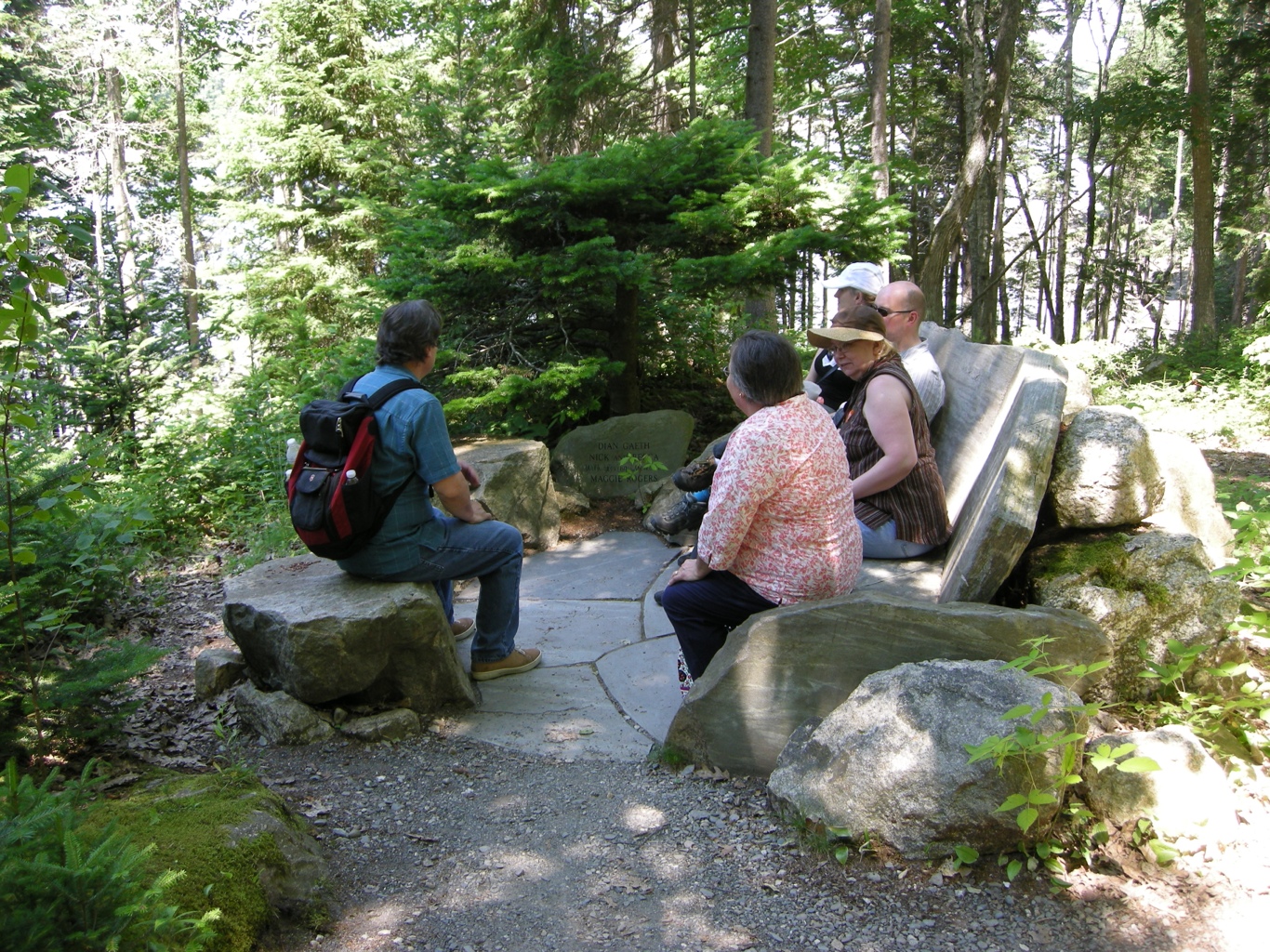
20120805-144035.jpgNatural rock seating in the Rose and Perennial Garden at the Coastal Maine Botanical Gardens.

As I mentioned in my previous post on hydrangeas, I visited the Coastal Maine Botanical Gardens (CMBG) in July with Donna from Garden Walk Garden Talk. This wasn’t my first visit, and if you want to read my original post click here. This visit was more focused because I came with a mission. I am designing an island in a public road and was looking for ideas for natural rock seating.

20120805-150252.jpg
CMBG Lerner Garden of the Five Senses

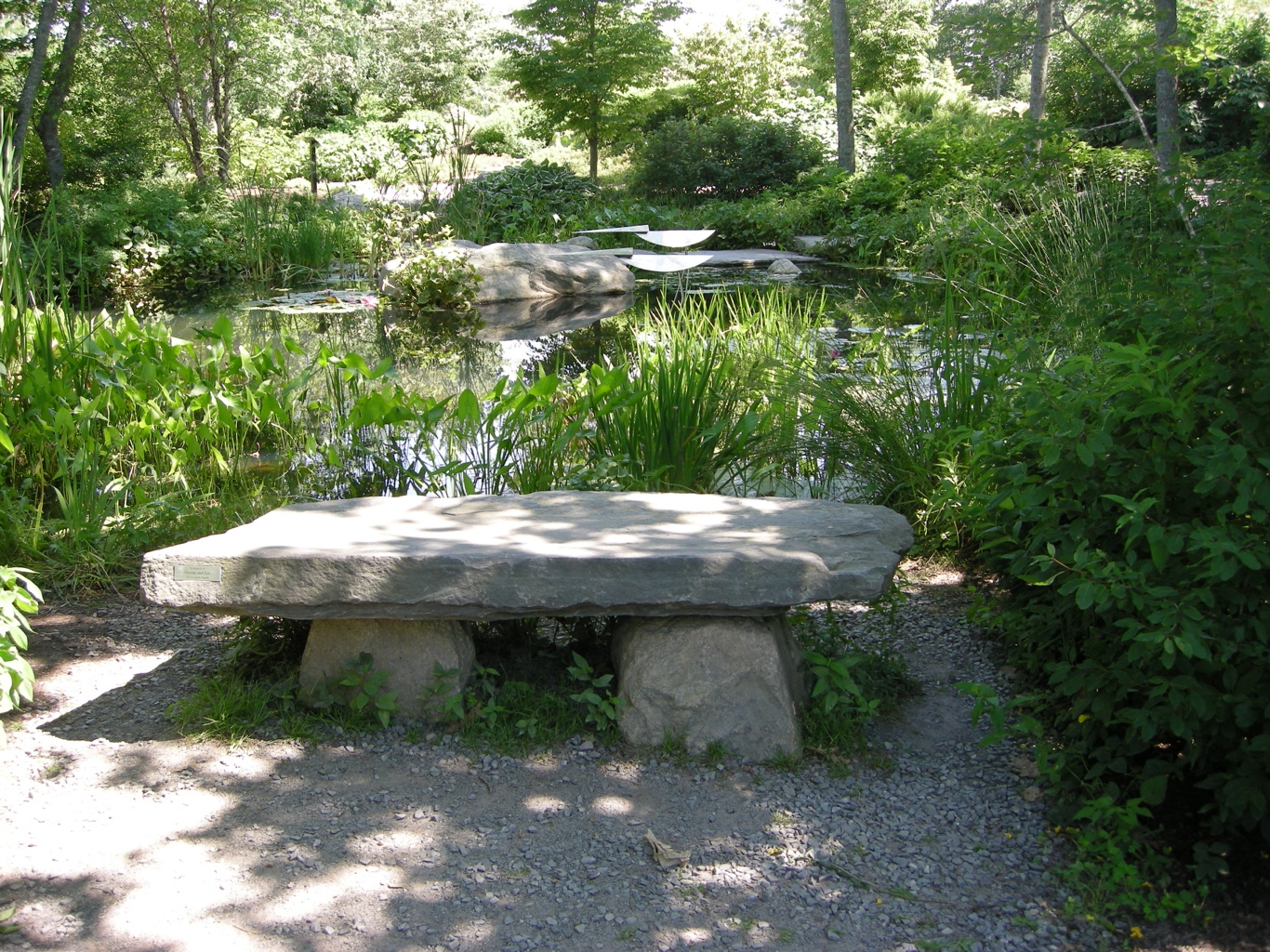
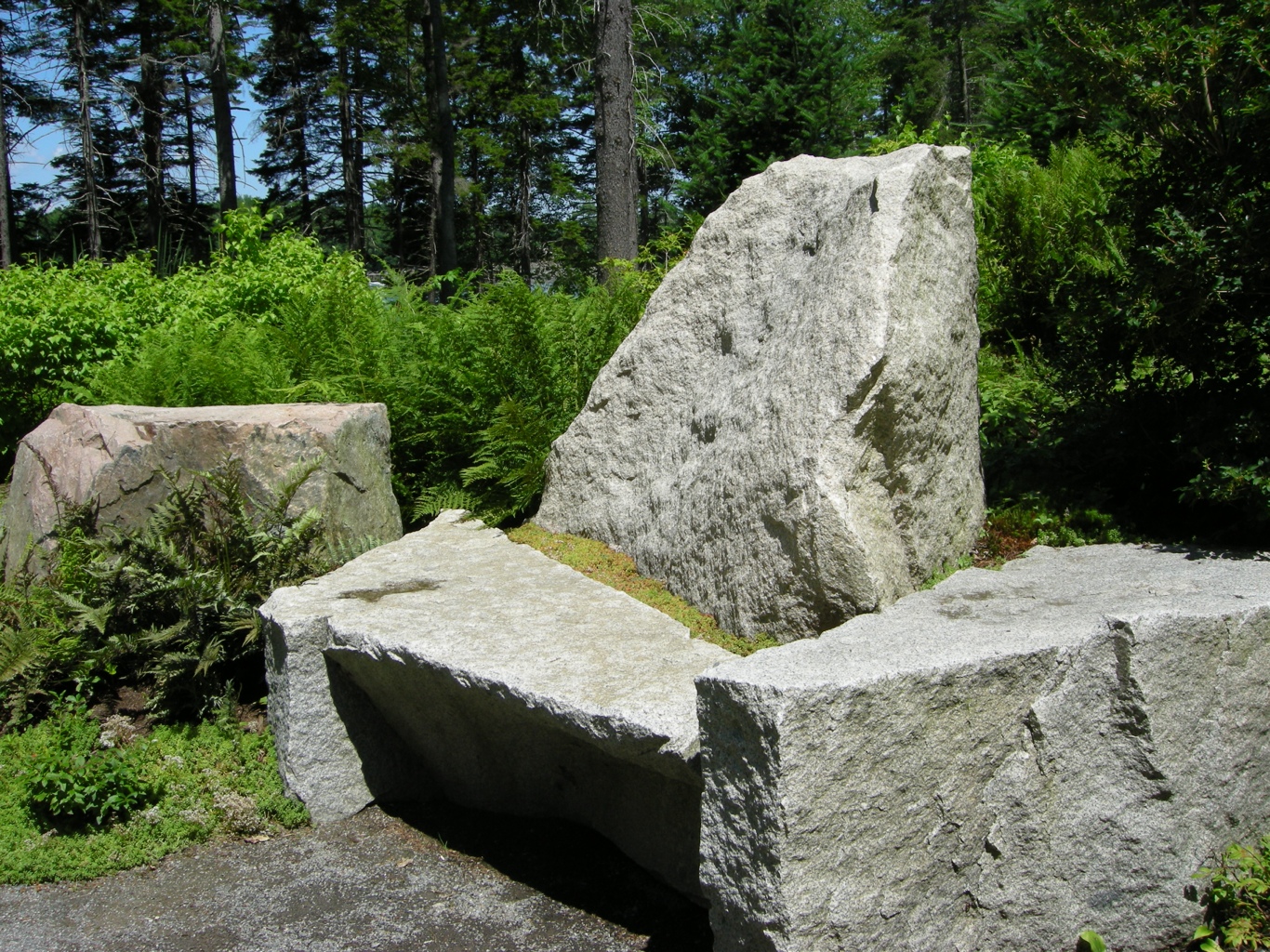
If you are looking for ways to incorporate boulders and rocks into your garden, there is no better place to get design ideas than CMBG. The whole garden is full of gorgeous stones, most of them from Maine quarries and some found on the site. Finding stones on site is easy when you are on the Maine coast—the ground has more rocks than soil. But to create such unusual and well integrated garden seating takes talent. I want to share my photographs with you in case you are looking to create natural seating in your own garden.

20120808-144213.jpg

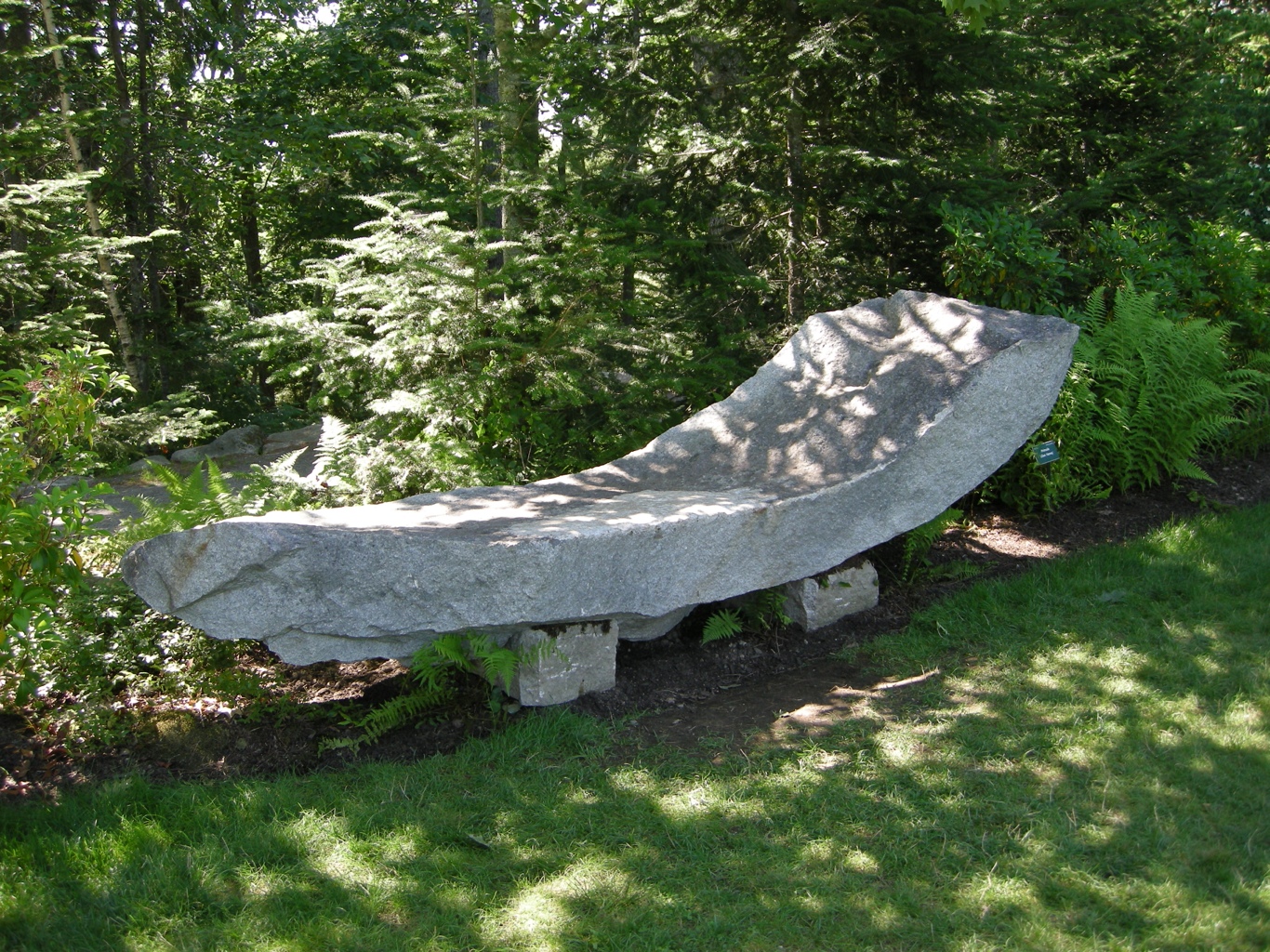
Seating in both public and private gardens should be sited in a way that directs visitors to an important view or encourages them to enjoy a new perspective while they sit. When choosing rock, I am partial to rounded boulders, fully integrated into the landscape to the point where you almost can’t see them. However, this approach would not be appropriate in a public botanical garden where you want tired visitors to be able to easily locate a resting spot. The following photos were all taken at the CMBG and show a variety of ways to use rock as garden seating:

20120808-145304.jpg

20120808-145417.jpg

20120808-145517.jpg

20120808-145621.jpg

20120808-145741.jpg

20120808-145939.jpg

20120808-150040.jpg

20120808-150159.jpg

20120808-150327.jpgThis simple bench provides an overlook of the Slater Forest Pond, which was full of frogs and dragonflies.

20120808-150522.jpgThis is a full couch and chairs positioned along the beautiful Shoreland Trail.

All the seating shown above is quite beautiful and appropriate to the site, but I wanted to save some of my favorite designs for last:

20120808-150914.jpgThis single boulder is so well integrated into its site both by the other rocks and the sedum growing around it.

20120808-151144.jpgAgain a boulder that looks like the designers built the other hardscape around it in the Lerner Garden of the Five Senses.

20120808-151422.jpg

20120808-151541.jpg

20120808-151700.jpgWhat a wonderful place to sit and enjoy the water view along the Shoreland Trail.

20120808-152207.jpg

20120808-152328.jpgThe rocks look like they could have just fallen into place to create this obviously comfortable “couch” in the Giles Rhododendron Garden.

20120808-152633.jpgA natural chaise lounge near the Cleaver Event Lawn and Garden.

I came away from my visit to the Coastal Maine Botanical Gardens with some great ideas for my road design project and with renewed respect for this wonderful Maine garden treasure.

Carolyn

Nursery Happenings: The nursery is closed until the fall. Thanks for a great spring season!

If you are within visiting distance and would like to receive catalogues and information about customer events, please send your full name and phone number to carolynsshadegardens@verizon.net. Subscribing to my blog does not sign you up to receive this information.

Facebook: Carolyn’s Shade Gardens has a Facebook page where I post single photos, garden tips, and other information that doesn’t fit into a blog post. You can look at my Facebook page here or click the Like button on my right sidebar here.

Notes: Every word that appears in orange on my blog is a link that you can click for more information. If you want to return to my blog’s homepage to access the sidebar information (catalogues, previous articles, etc.) or to subscribe to my blog, just click here.

Landscape Problem Solved

Posted in How to, landscape design, native plants, Shade Shrubs with tags , , , , , on July 25, 2012 by Carolyn @ Carolyns Shade Gardens

Carolyn’s Shade Gardens is a retail nursery located in Bryn Mawr, PA, specializing in showy, colorful, and unusual plants for shade.  The only plants that we ship are snowdrops and miniature hostas.  For catalogues and announcements of events, please send your full name, location, and phone number (for back up use only) to carolyn@carolynsshadegardens.com.  Click here to get to the home page of our website for catalogues and information about our nursery and to subscribe to our blog.

20120724-154006.jpg‘Invincibelle Spirit’ and ‘Incrediball’ smooth hydrangeas massed at the Coastal Maine Botanical Gardens.

Three things came together recently to help me solve a landscaping problem that had bothered me for years. First, I was reading one of my favorite blogs called Conrad Art & Glass Gardens authored by Larry Conrad. In a recent post he talked about his favorite combinations including one achieved by massing white and pink smooth hydrangeas. I have been interested in smooth hydrangea, H. arborescens, because it is very shade tolerant. I also like it because it is a native plant found through out much of the eastern United States, including Pennsylvania. The well known cultivar ‘Annabelle’ with very large white mophead flowers was discovered in the wild in the 1960s. It grows well in Maine and has proven to be quite deer resistant on the island where my family vacations.

20120724-185734.jpgWhite and pink smooth hydrangeas massed in Larry Conrad’s Wisconsin garden.

The second thing that brought me to this post was a landscaping dilemma at my family’s house in Maine. There is a perennial garden planted by the previous owners next to the front door. However, no one who uses the house wants to garden there. The native landscape is so beautiful we don’t need any added ornamentals. I had been wondering where to try Larry’s beautiful combination, and this neglected garden seemed the perfect place. I bought three pink and two white smooth hydrangea with the intention of emptying the bed and letting them fill it in.

20120724-195423.jpgSmooth hydrangeas at the entrance to the children’s garden at the Coastal Maine Botanical Gardens.

The third contributor to this post was a visit to the Coastal Maine Botanical Gardens in Boothbay Harbor, Maine. Donna from Garden Walk Garden Talk came to visit me in Maine, and I had to show her this gorgeous garden (among other Maine delights). In the fall of 2010 I wrote about my first visit to CMBG, and I will write a longer post about my recent visit later but right now we are discussing hydrangeas. Imagine my delight when we approached the CMBG children’s garden and found the hydrangea combination I intended to use lining the entrance. My project now had a professional seal of approval, and I couldn’t wait to get home and start digging.

20120725-113605.jpgInvincibelle Spirit’ smooth hydrangea at CMBG

There was a choice of which smooth hydrangea cultivars to use. The biggest determining factor was which plants looked the healthiest at the nursery where I bought them. Although smooth hydrangeas are extremely tough, taking both dry and wet soils, clay, drought, heat, shade, rocky soil, and almost anything else you can throw at them, I have found them difficult to establish if you don’t start with vigorous specimens. There are two pink-flowered cultivars: ‘Bella Anna’ and ‘Invincibelle Spirit’, which has been on the market longer. I have been told that ‘Belle Anna’ is an improvement on ‘Invicibelle Spirtit’, but the plants looked weaker and I don’t think you can improve on the ‘Invincibelle Spirit’ specimens at CMBG in the photo above.

20120725-113851.jpg‘Incrediball’ smooth hydrangea at CMBG

For the white smooth hydrangeas, I had a choice of tried-and-true ‘Annabelle’ and an improved version called ‘Incrediball’, which has even larger, to 12″, globular flowers. Although I wasn’t after larger flowers, I chose ‘Incrediball’ because the flowers are whiter than ‘Annabelle’, which has some lime in it, and because ‘Incrediball’s’ stems have been selected for thickness to avoid flopping when it rains.

20120725-120518.jpg‘Invincibelle Spirit’ and ‘Incrediball’ at CMBG

All the smooth hydrangea cultivars grow to around 3 to 5′ wide and 3 to 5′ tall in zones 3 to 9. They flower from June to September, but the dried flowers heads are quite beautiful through fall. They perform best in part shade, but will grow in full sun with consistent moisture. The straight species grows in full shade. They bloom on new wood so pruning in late winter is recommended to encourage vigorous new stem growth.

20120725-122157.jpg

20120725-122305.jpgMy newly planted smooth hydrangeas

As you can see from the two photos above, my new hydrangeas have been planted. I anticipate that they will fill in the whole bed and crowd out weeds. I am still working on the wall but am quite happy with it so far. I hope the trench along the front will allow us to keep the nasty, tenacious grass out of the bed. If I get really ambitious, I am going to fill the trench with mussel shells from the beach.

* * * * *

This post is my second experiment with publishing a post directly from my recently acquired “new” iPad. Although it was a little easier this time and I mastered bold captions and links, I still had to call Donna in Niagara Falls to help me. I also took the final two photos with the iPad, and I think they turned out quite well. I am very impressed with the camera function on the new iPad, but you can’t truly appreciate the incredible resolution unless you have a very good screen on your computer, which I don’t. I think I would recommend an iPad just for looking at photos, that is if you can afford it. We don’t have internet access at the house in Maine so portability was a big factor for me. But the major reason I got it, 3G/4G capability is a huge disappointment, which I will explain at a later date.

Carolyn

Nursery Happenings: The nursery is closed until the fall. Thanks for a great spring season!

If you are within visiting distance and would like to receive catalogues and information about customer events, please send your full name and phone number to carolynsshadegardens@verizon.net. Subscribing to my blog does not sign you up to receive this information.

Facebook: Carolyn’s Shade Gardens has a Facebook page where I post single photos, garden tips, and other information that doesn’t fit into a blog post. You can look at my Facebook page here or click the Like button on my right sidebar here.

Notes: Every word that appears in orange on my blog is a link that you can click for more information. If you want to return to my blog’s homepage to access the sidebar information (catalogues, previous articles, etc.) or to subscribe to my blog, just click here.

Row Your Way to Color with Annuals

Posted in annuals, container gardening with tags , , , , , , , , on July 14, 2012 by Carolyn @ Carolyns Shade Gardens

Carolyn’s Shade Gardens is a retail nursery located in Bryn Mawr, PA, specializing in showy, colorful, and unusual plants for shade.  The only plants that we ship are snowdrops and miniature hostas.  For catalogues and announcements of events, please send your full name, location, and phone number (for back up use only) to carolyn@carolynsshadegardens.com.  Click here to get to the home page of our website for catalogues and information about our nursery and to subscribe to our blog.

20120713-164710.jpg

When considering containers for colorful annuals, you have an ocean of choices. Sure elegantly glazed ceramic bowls or terra cotta pots straight from Crete are wonderful, but the palette available is much, much wider as the photo shows. Any vessel that will hold soil and provide adequate drainage is fair game. Although I am not fond of used bathroom fixtures, I have been known to grab other people’s trash off the side of the road. Two of my favorites for use at my family’s house in Maine are discarded granite ware clam steamers and old wooden lobster traps.

20120713-165533.jpg

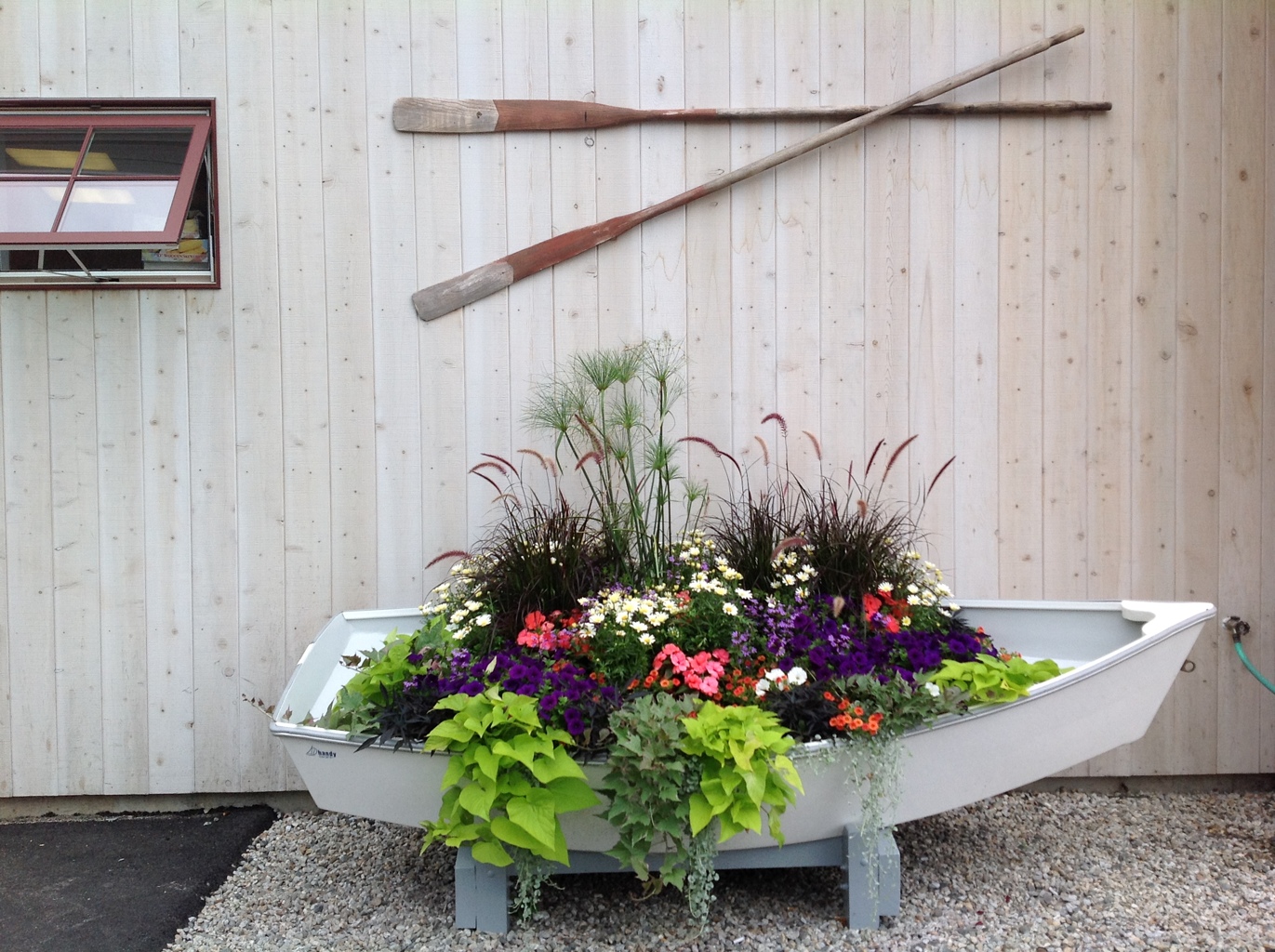
I found this very creative planting in a dinghy at Handy Boat Marina in Falmouth Foreside, Maine. Everything about it shows careful thought by a skilled designer: the plant selection, the container, the plant arrangement, and the setting. The window color is carefully incorporated, and the wall color, oars, and gravel all add to the charm.

20120713-170328.jpg

20120713-170422.jpg

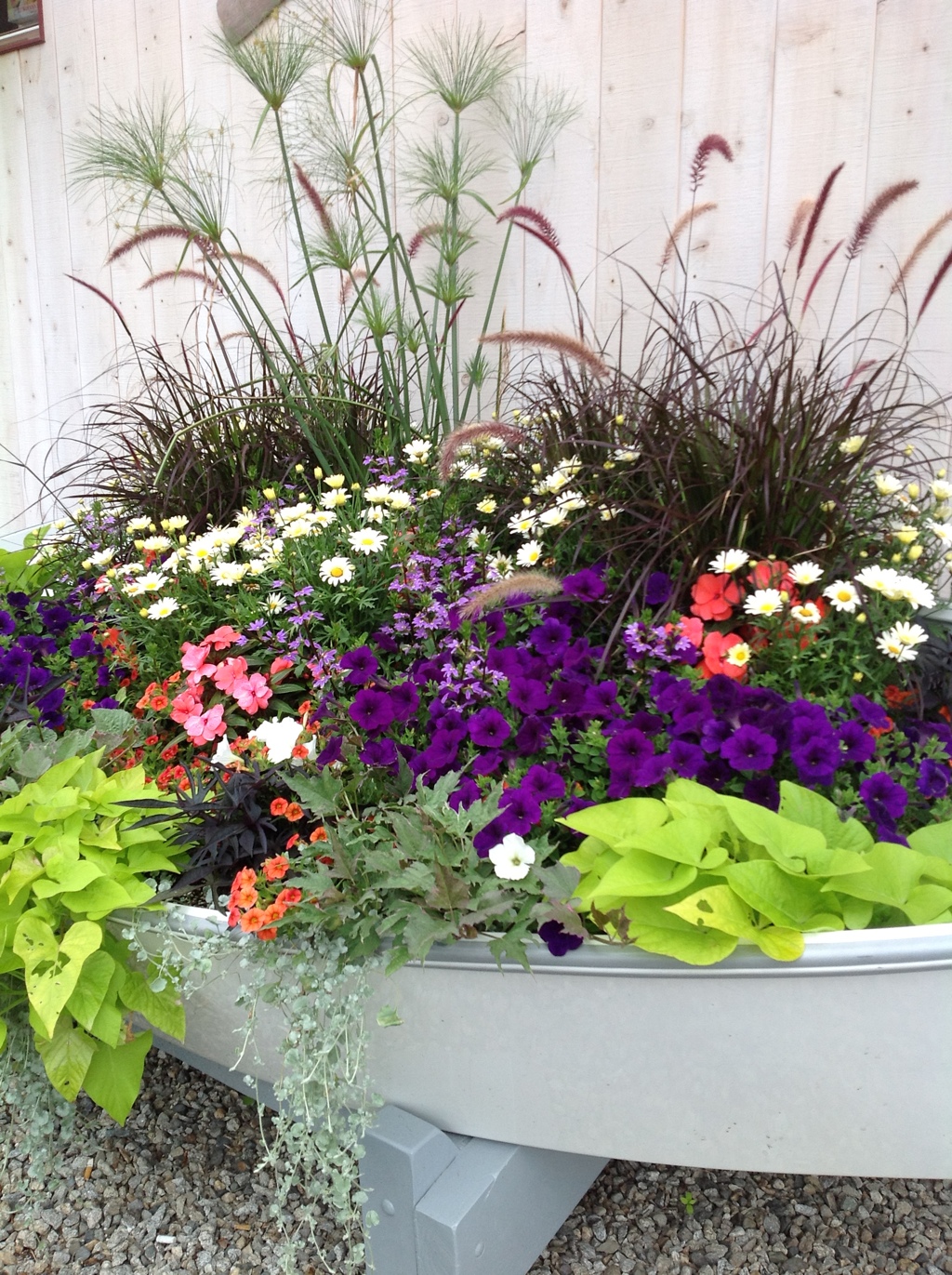
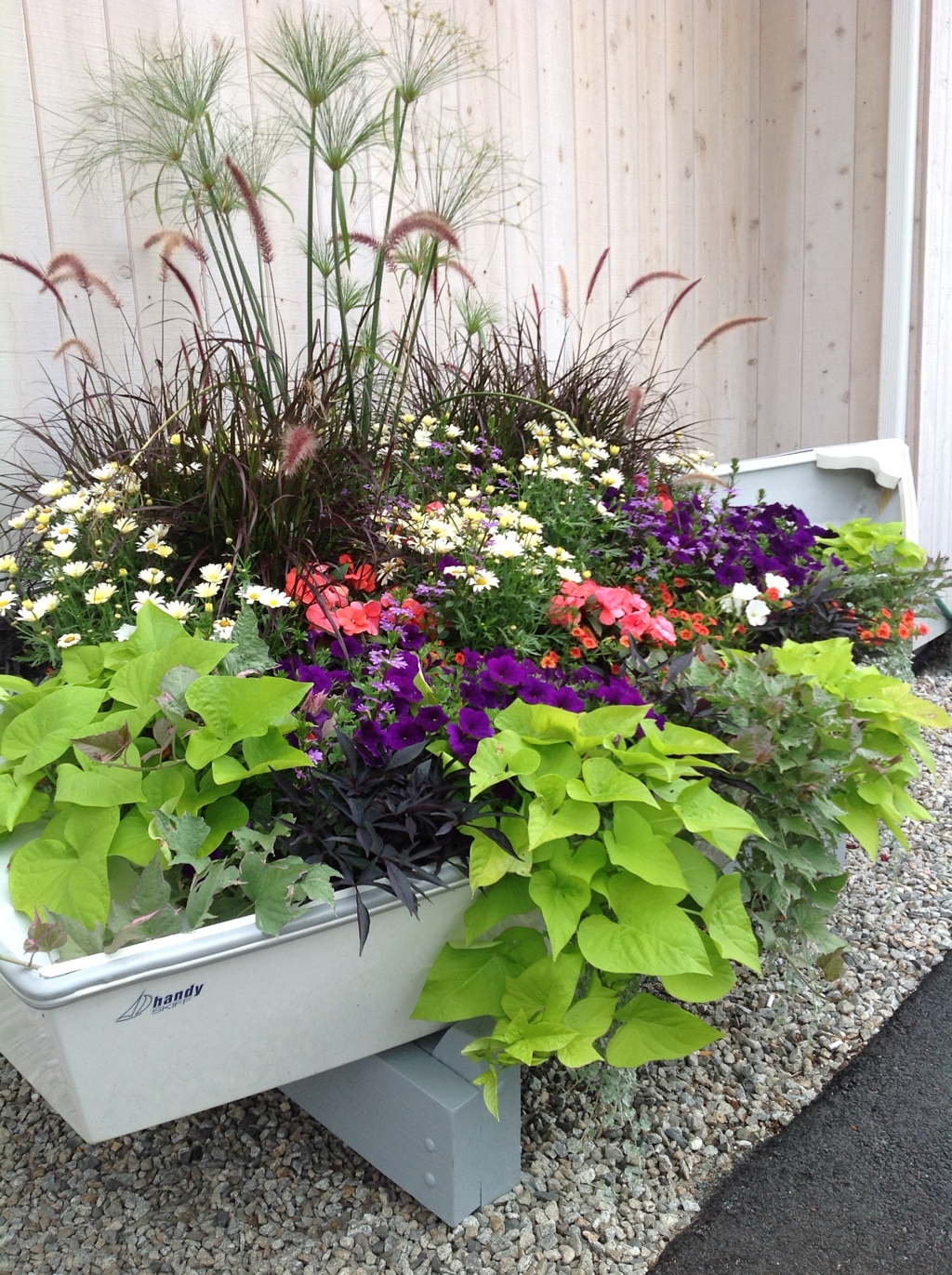
One design trick that really makes this planting work is cramming a lot of annuals into the available space. The season for annuals in the northeast is short, especially in Maine. You don’t want to waste time looking at a half-filled container while the planting “fills in”. Spending the extra money on additional annuals to make the container ornamental from the start is worth it. Or better yet, grow your own from seed.

20120713-170855.jpg

The designer has also used the classic “spillers, fillers, and thrillers” method of filling containers. Spilling out the front are purple, chartreuse, and tricolor sweet potato vines and silvery licorice plant. Filling out the body of the boat are orange million bells, purple and white petunias, annual begonias, angelonia, and white daisies. In the back are purple fountain grass and papyrus.

You can get great ideas by keeping your eyes open for creative containers whenever you are out cruising around. You may not have a spare dinghy available, but I am sure there is something suitable in your attic.

* * * * *

This post is another experiment with my recently acquired “new” iPad, this time attempting to post on my blog directly from the iPad. I discovered that you can’t upload photos to a post using the WordPress site like you would when using a computer. The only way to do it is to download the WordPress app and use it to post from the iPad. However, so far, I have found that this app is not very user friendly. Since there are supposedly six new blogs being started every five minutes, I suggest that WordPress and Apple get on the ball to make blogging easier from an iPad. In the meantime, I won’t know what this post will look like until I hit the publish button.

Carolyn

Nursery Happenings: The nursery is closed until the fall. Thanks for a great spring season!

If you are within visiting distance and would like to receive catalogues and information about customer events, please send your full name and phone number to carolynsshadegardens@verizon.net. Subscribing to my blog does not sign you up to receive this information.

Facebook: Carolyn’s Shade Gardens has a Facebook page where I post single photos, garden tips, and other information that doesn’t fit into a blog post. You can look at my Facebook page here or click the Like button on my right sidebar here.

Notes: Every word that appears in orange on my blog is a link that you can click for more information. If you want to return to my blog’s homepage to access the sidebar information (catalogues, previous articles, etc.) or to subscribe to my blog, just click here.