Specimen Natives for Your Woodland

Posted in bulbs for shade, green gardening, groundcover, landscape design, native plants, Shade Perennials with tags , , , , , , , , , , , , , , , , , , , , , , , , , , , , , , , on April 18, 2012 by Carolyn @ Carolyns Shade Gardens

Carolyn’s Shade Gardens is a retail nursery located in Bryn Mawr, PA, specializing in showy, colorful, and unusual plants for shade.  The only plants that we ship are snowdrops and miniature hostas.  For catalogues and announcements of events, please send your full name, location, and phone number (for back up use only) to carolyn@carolynsshadegardens.com.  Click here to get to the home page of our website for catalogues and information about our nursery and to subscribe to our blog.

Who says our native mayapple, Podophyllum peltatum, is not as ornamental as the Asian versions?

This is the last in a three-part series of posts dealing with native plants for mid-Atlantic U.S. gardens.  In the first, Your Native Woodland, I explained how easy it is to create your own native woodland garden by choosing plants that spread aggressively.  In the second, Native Phlox for Your Garden, I profiled some of the wonderful members of the genus Phlox, all native to eastern North America and Pennsylvania in particular.  Here I am going to suggest some superstar native plants to place between the spreaders recommended in the first post.


Double bloodroot, Sanguinaria canadensis ‘Multiplex’, just might be my all time favorite flower, and it thrives in my woodland.

Let’s face it: none of us avid gardeners (and collectors) are going to be happy limiting ourselves to the seven spreading  plants that I recommended in my previous post for colonizing a woodland.  Although the gardening books seem to think we have moist, loamy soil in our woods, we don’t (where do these people garden anyway?).  So what other plants can stand up to the root-filled, dry, rocky, clay soil prevalent in the woods of the mid-Atlantic?  You will be happy to know there are many, and the plants shown below just scratch the surface.  I have personally tested each one, and killed many others, so I know they work.

White trillium, T. grandiflorum, is one of the many native trilliums that thrive in my woodland.


Sweet Betsy, Trillium cuneatum, also does well as do prairie trillium, T. recurvatum, and yellow trillium, T. luteum.  Although I usually do not water my woodland, I find that trilliums benefit from watering in drought conditions.


Dogtooth violet, Erythronium ‘Pagoda’, is a hybrid of two North American species.  ‘Pagoda’ seeds around my woodland, and this is one of its seedlings.


The single-flowered bloodroot, Sanguinaria canadensis, is quite lovely too.  Both it and ‘Multiplex’, pictured above, have spread into large patches.


Large-flowered bellwort, Uvularia grandiflora, has very unusual yellow flowers.  Shown here with British Columbia wild-ginger, Asarum caudatum, native to the U.S. west coast.


My woodland wouldn’t be complete without mayapples with their beautifully patterned, umbrella-like leaves, incredibly fragrant flowers, and “apples” in May.  However, they do spread quite quickly and are better used as one of the colonizing plants in my first post—give them room.


Every woodland needs lots of ferns!  Pictured here is cinnamon fern, Osmunda cinnamomea, but I also have Christmas, royal, and ostrich ferns in my woods, among others.  In the flood plain down by my creek, ostrich fern has successfully out competed my nemesis, the incredibly invasive, non-native Japanese knotweed.  In drier woods, ostrich fern’s spreading tendencies are kept in check.


Yellow violet, Viola pubescens, spreads almost as well in my woods as the white violet recommended in my woodland post, and you can’t beat the crayon yellow flowers.


Dutchman’s breeches, Dicentra cucullaria, never fails to bring out the child in me with its little pairs of pants swinging in the breeze.


Large camas, Camassis leichtlinii ‘Caerulea’, is native to western North America not the mid-Atlantic, but it does so well in my woodland that I have included it here.  The large clumps of tall blue flowers line the back of the beds.

Foamflower, Tiarella cordifolia, is a star of my woodland garden with its wonderful fragrance, interesting leaves, and red fall color.  There are many cultivars available, and I recommend choosing a spreading form: cultivars in the “River Series” are particularly vigorous.

One of the loveliest native flowers in my woods is rue-anemone, Anemonella thalictroides (photo used with the permission of Arrowhead Alpines).  It looks so dainty, but it is tough as nails and seeds around freely.

There are many forms of rue-anemone, but my favorite is this luminescent single pink.

You can’t go wrong when you add any of these wonderful native plants to your woodland.  They are ‘tried and true’ in mine!

Carolyn

Commenters have asked for photos showing ” sweeping vistas” of my woods.  It is impossible to take this kind of photo in my woodland and capture the effect of the masses of plants because of the trees.  My woods are filled with 10 to 12′ diameter trees—no panoramic views are possible.  The best I could do was go up on the roof and shoot down, but individual plants are not visible, and I am not happy with the result:

Nursery Happenings: The third annual Great Hosta Blowout where you can order beautiful hostas for a bargain basement price is going on now until April 25.  To see the catalogue, click here.  My third Open House Sale, featuring hostas, ferns, and hardy geraniums, will take place on Saturday, May 12, from 10 am to 3 pm

If you are within visiting distance and would like to receive catalogues and information about customer events, please send your full name and phone number to carolynsshadegardens@verizon.net.  Subscribing to my blog does not sign you up to receive this information.

Facebook:  Carolyn’s Shade Gardens has a Facebook page where I post single photos, garden tips, and other information that doesn’t fit into a blog post.  You can look at my Facebook page here or click the Like button on my right sidebar here.

Notes: Every word that appears in orange on my blog is a link that you can click for more information.  If you want to return to my blog’s homepage to access the sidebar information (catalogues, previous articles, etc.) or to subscribe to my blog, just click here.
April GBBD: Native Phlox for Your Garden

Posted in Garden Blogger's Bloom Day, green gardening, groundcover, landscape design, native plants, Shade Perennials with tags , , , , , , , , , , , , on April 10, 2012 by Carolyn @ Carolyns Shade Gardens

Carolyn’s Shade Gardens is a retail nursery located in Bryn Mawr, PA, specializing in showy, colorful, and unusual plants for shade.  The only plants that we ship are snowdrops and miniature hostas.  For catalogues and announcements of events, please send your full name, location, and phone number (for back up use only) to carolyn@carolynsshadegardens.com.  Click here to get to the home page of our website for catalogues and information about our nursery and to subscribe to our blog.

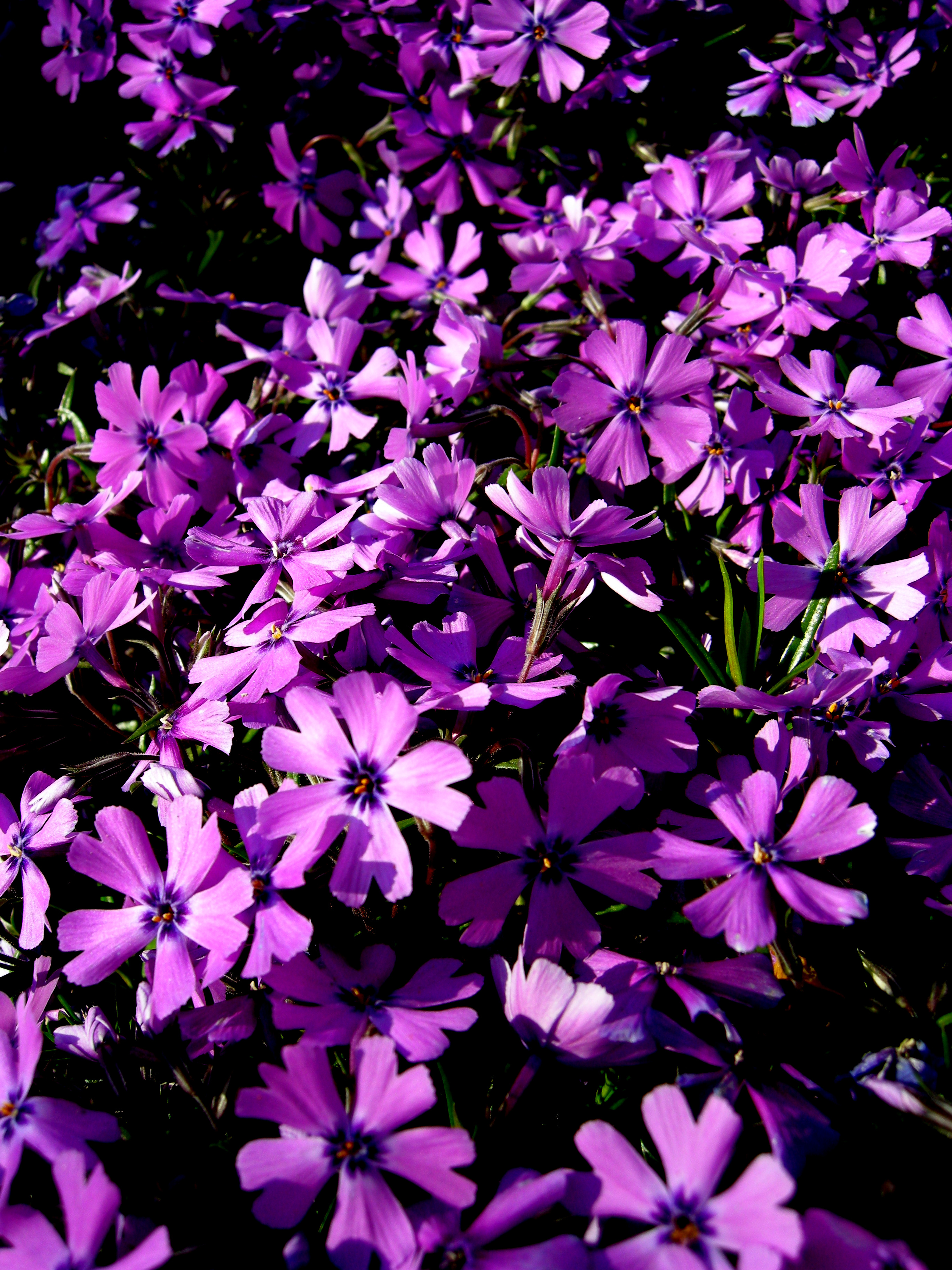
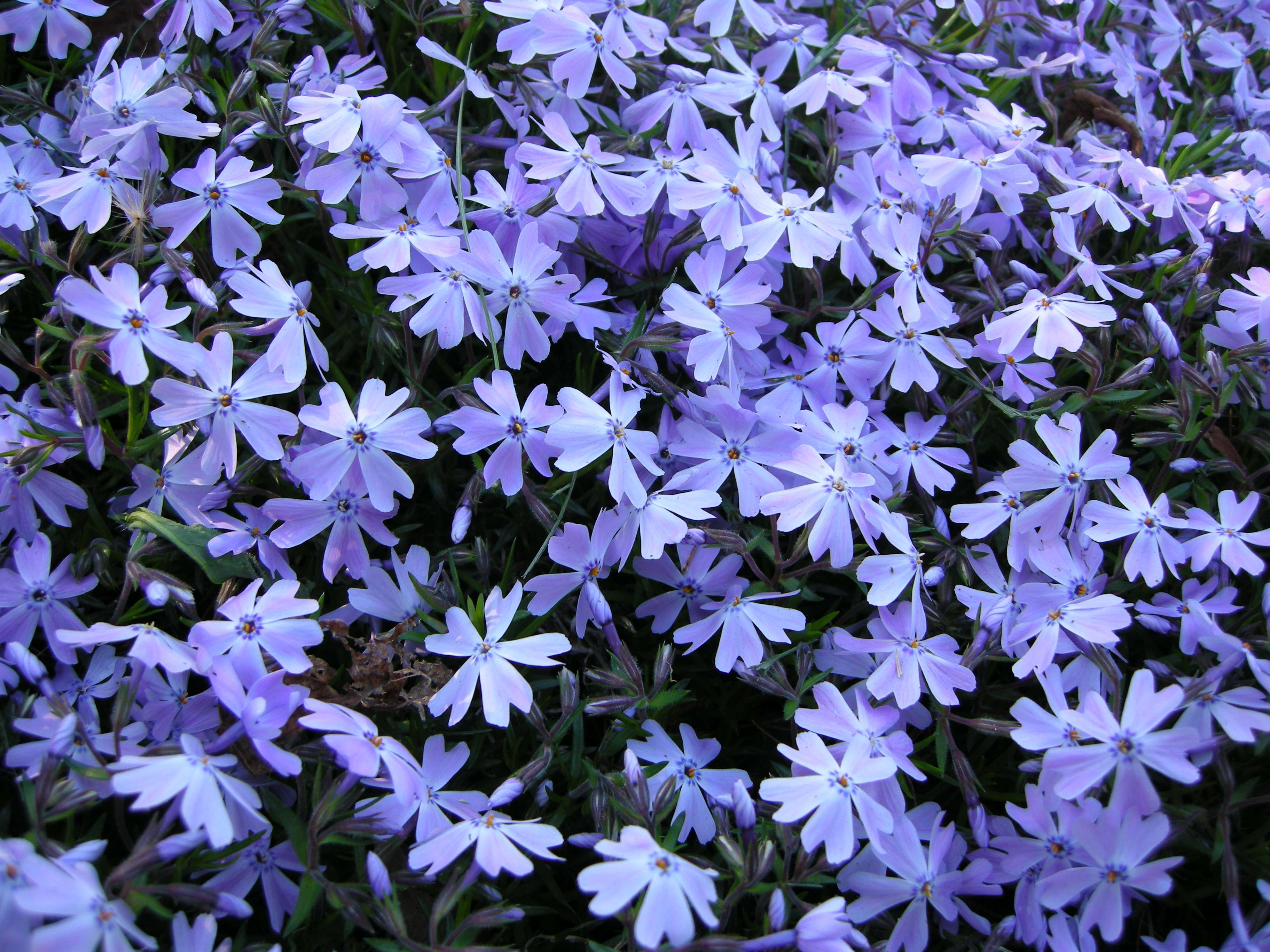
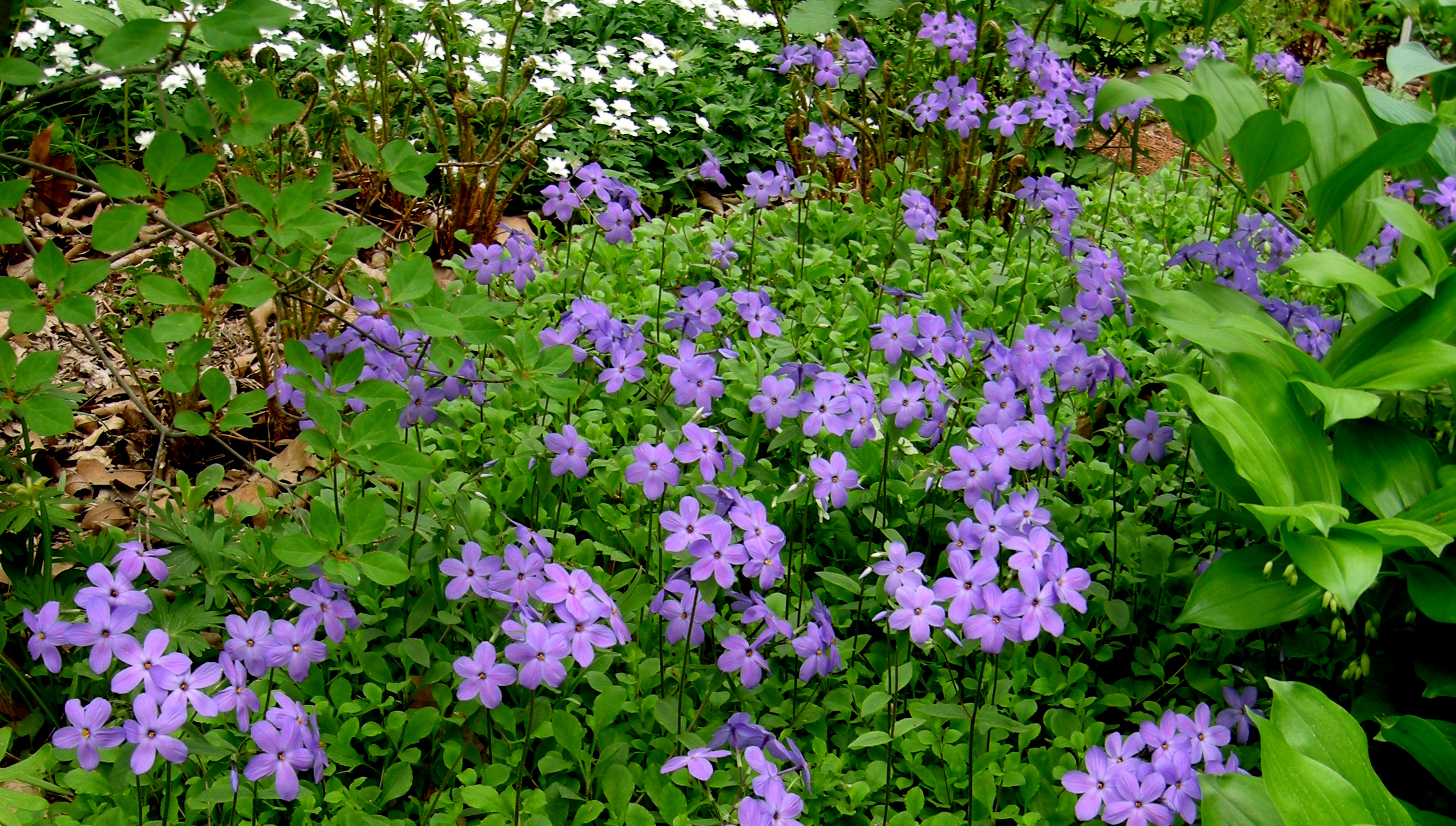
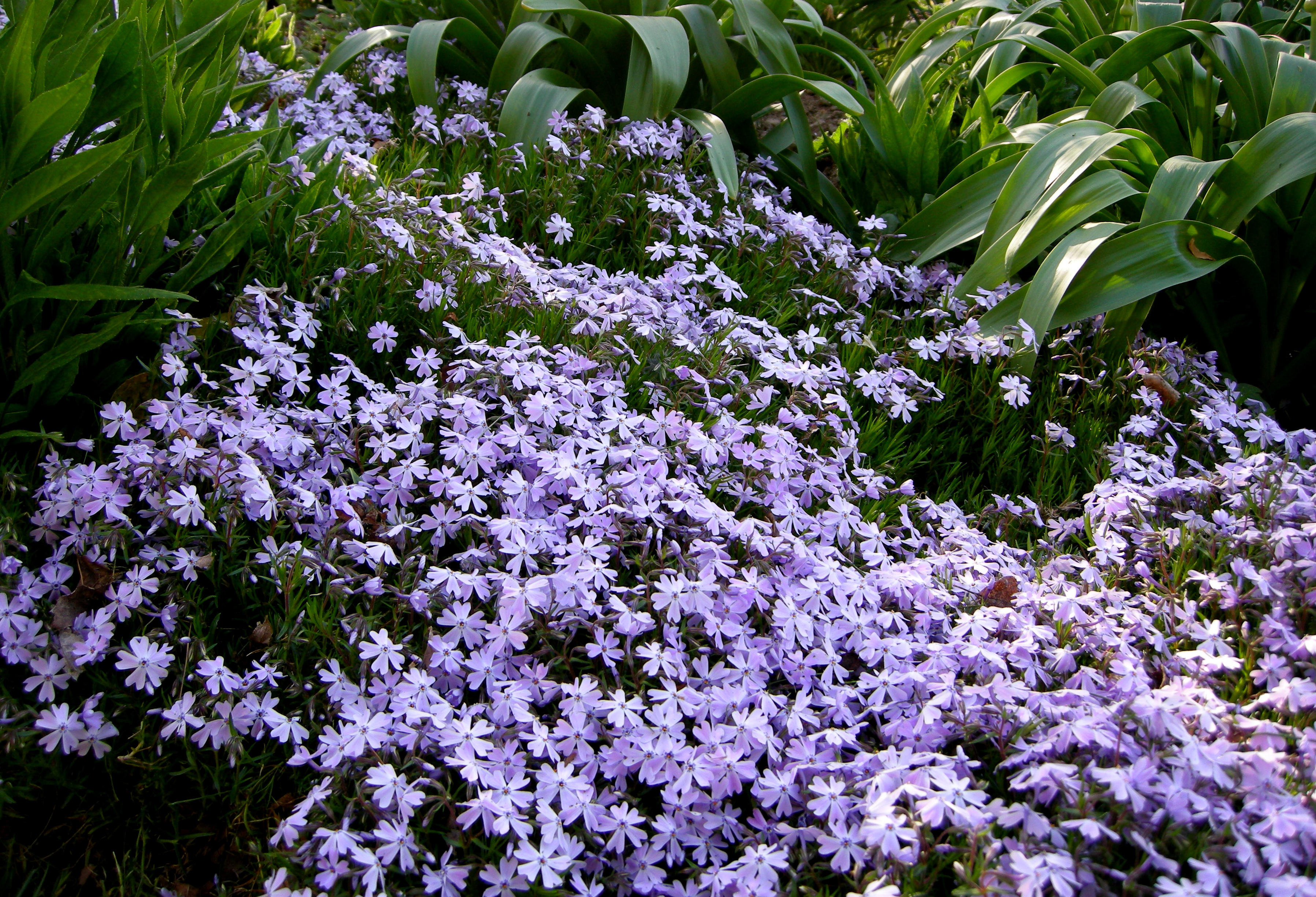
‘Emerald Blue’ moss phlox in my garden

In my last post, Your Native Woodland, I explained how to create your own native woodland garden.  Here I am going to profile some of the wonderful members of the genus Phlox, all native to eastern North America and Pennsylvania in particular.

All the plants except smooth and garden phlox are pictured blooming in my garden right now so I am linking to Garden Blogger’s Bloom Day (“GBBD”) hosted by May Dreams Gardens (link available on April 15) where gardeners from all over the world publish photos of what’s blooming in their gardens.

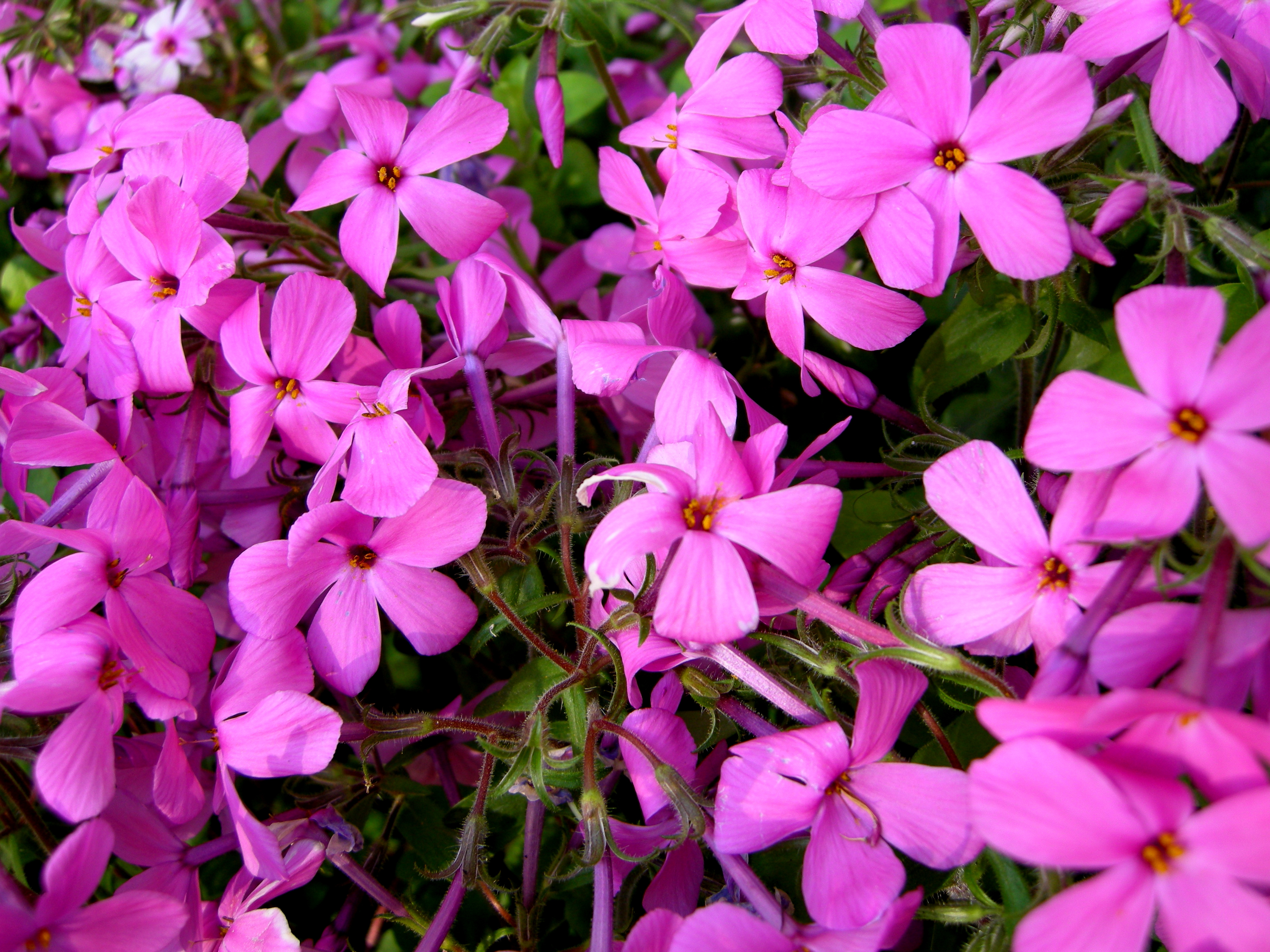
‘Sherwood Purple’ creeping phlox in my woodland

Phlox are very satisfying native plants to add to all areas of your garden.  They are easy to grow and spread rapidly but not aggressively.  All species that I am profiling are fragrant, some amazingly so, and attract butterflies and hummingbirds.  They are also disease-free except garden phlox, which gets powdery mildew.  And, most importantly, they have copious amounts of gorgeous flowers in purple, blue, pink, and white.  Did I mention that they are native to Pennsylvania and all of eastern North America?!?  What more could you want.

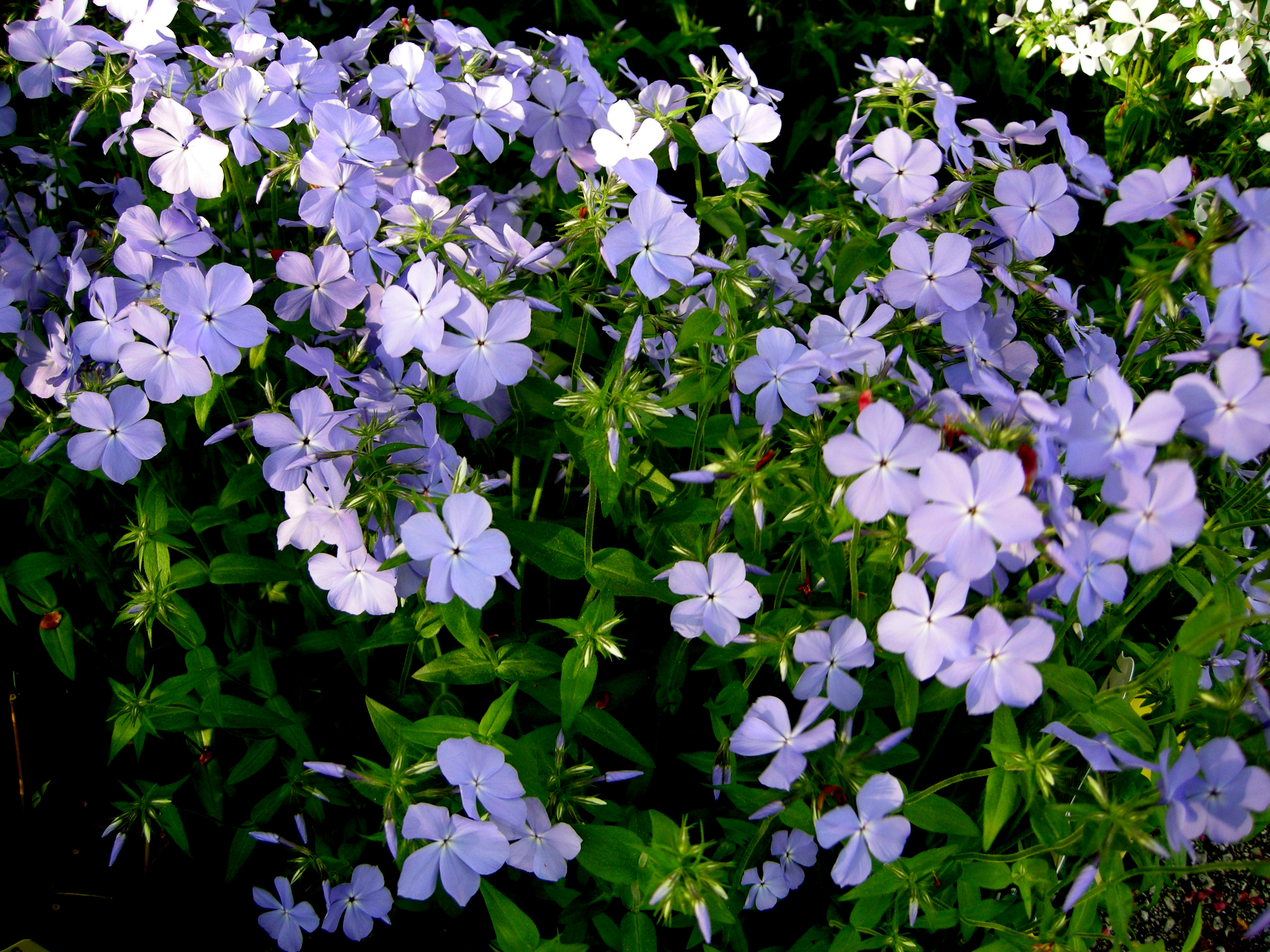
Wild sweet William ‘Blue Moon’, Phlox divaricata


Wild sweet William is the most fragrant of the phlox described here.  Its heavenly scent perfumes the whole garden when it is in bloom from April to June.  It is 8 to 10″ tall and spreading with semi-wintergreen leaves.  Although I have seen it growing in the wild in full shade, I have better success with it in sun to part shade.  Cut it back after flowering to maintain an attractive habit.  My favorite cultivars are ‘Blue Moon’ (photo above), ‘May Breeze’ with steely white flowers, and ‘Blue Elf’, a compact form.

‘Morris Berd’ smooth phlox, Phlox glabberima

Smooth phlox is a taller clump-forming plant, although the clumps expand rapidly when it is happy.  It is 18 to 24″ tall and grows in full sun to part shade in average to moist soil.  Flowers appear from late spring to early summer, a time when not much else is blooming.  The only smooth phlox I have ever seen for sale is ‘Morris Berd’ (photo above).  Its velvety pink flowers with silver highlights are breathtaking.


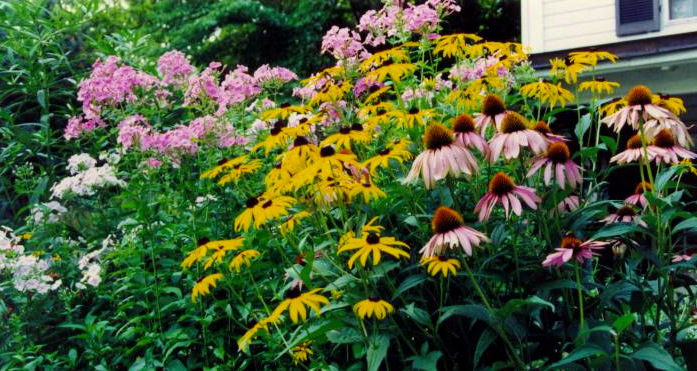
Garden phlox, P. paniculata, left with purple coneflower and ‘Goldsturm’ rudbeckia in my front border in 1993.

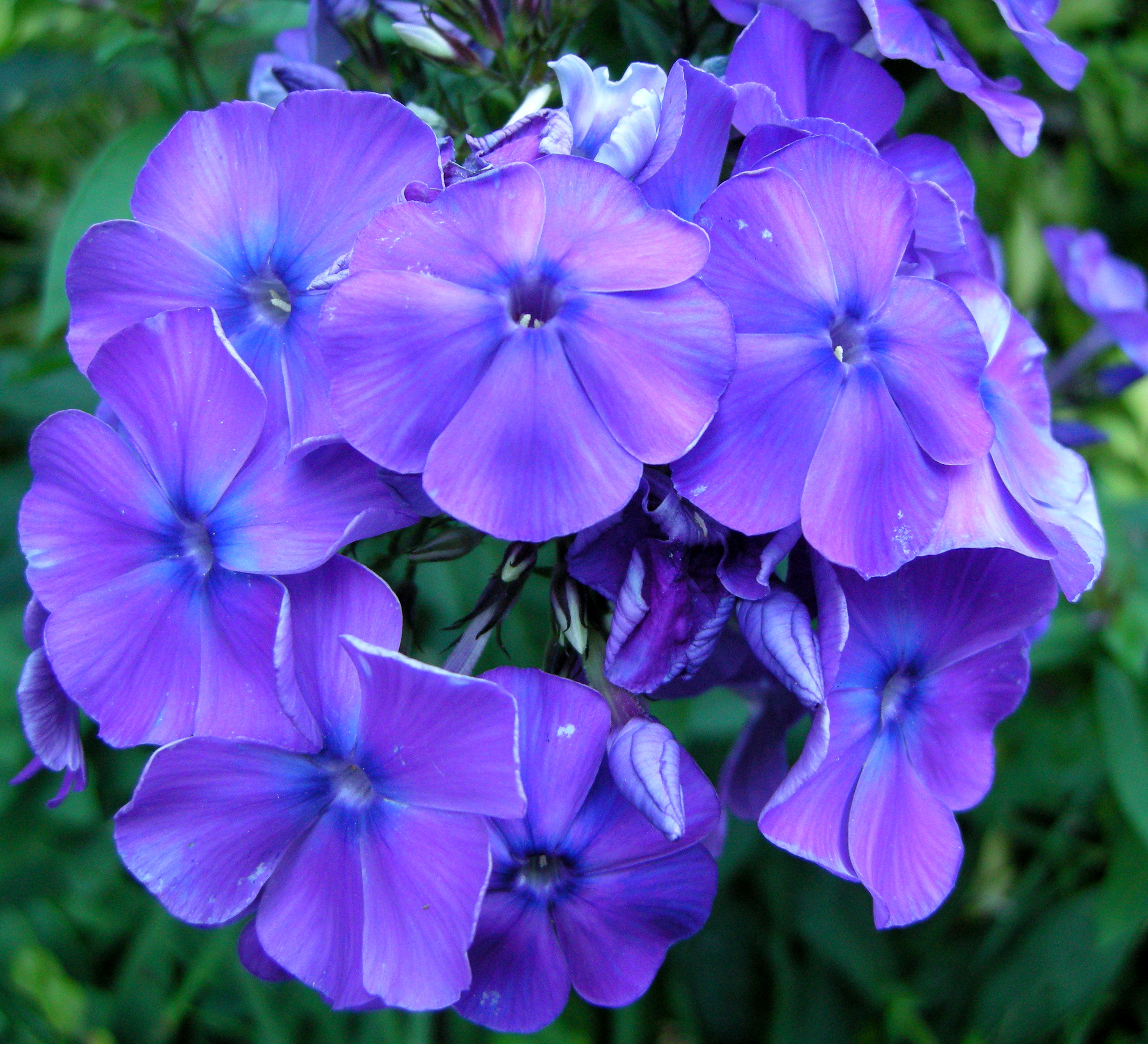
I dream of the day that I can plant a field of every cultivar of garden phlox on the market.  The fragrance of the flowers, second only to wild sweet William, the long bloom period, and the colors available make this a very desirable plant.  It grows anywhere in full sun to a good bit of shade (but not full shade).  It reaches 2 to 4′, and I have cultivars blooming from June to October.  My favorites are very early-blooming ‘Blue Paradise’ (photo below), compact ‘Pixie Miracle Grace’, pure white ‘David’, and ‘David’s Lavender’ with huge flower heads.  Unfortunately, I have failed to photograph these plants in past years, but I hope to remedy that this summer.

‘Blue Paradise’ garden phlox

I get questions all the time about powdery mildew on phlox.  The only phlox that gets powdery mildew in my garden is garden phlox.  The best way to avoid this is to buy mildew resistant varieties but in bad years even these cultivars get mildew.  You can also prevent mildew organically by spraying the leaves with a baking soda and oil formula before mildew strikes.  However, my approach is to ignore it because it doesn’t hurt the plants, it just looks ugly some years.  Focus on the flowers instead and plant plants in front of the phlox that hide the leaves.  Your garden does not have to look perfect.


Creeping phlox ‘Blue Ridge’, P. stolonifera, in my woodland.

If I had to pick one phlox that is my favorite, it would be creeping phlox (not to be confused with P. subulata whose correct common name is moss phlox not creeping phlox).  It has beautiful and plentiful fragrant flowers attractive to butterflies like all the native phlox here.  But in addition, it grows in full, dry shade and makes an excellent 3 to 6″ mat-like groundcover that remains green through winter.  It flowers from March to May.  My favorite cultivars are ‘Sherwood Purple’ (photo at the beginning), which is the most vigorous, ‘Blue Ridge’ (photo above), ‘Home Fires’ (photo below), and ‘Pink Ridge’, which is a slightly different pink and blooms later than ‘Home Fires’.

.

‘Home Fires’ creeping phlox


‘Emerald Blue’ moss phlox, P. subulata, in my garden


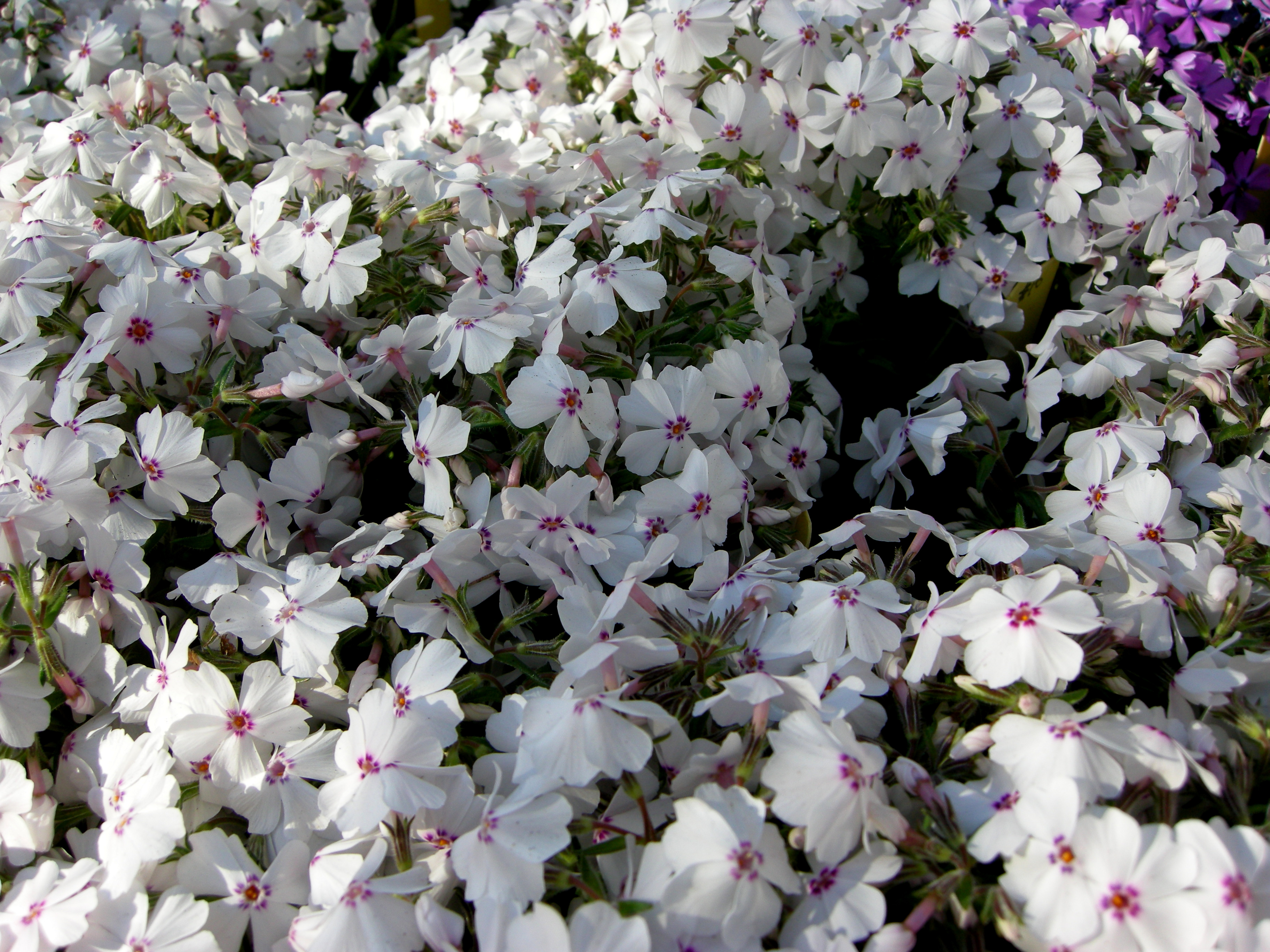
For abundance of flowers, you can’t beat moss phlox: you can’t even see the leaves when it is in bloom in April and May.  It grows in full sun to part shade and forms a wintergreen mat that solidly blocks out weeds.  The needle-like leaves provide an attractive texture year round.  A great plant for dry sites with thin soil because it has a shallow root system and likes to be well-drained.  An annual shearing is recommended although I don’t do this.

‘Amazing Grace’ moss phlox

A lot of breeding has been done with moss phlox to produce a plethora of beautiful flower colors.  They are all good plants, and I don’t have a favorite, but I like ‘Emerald Blue’ (photo at beginning and above), pink ‘Fort Hill’, white with a red eye ‘Amazing Grace’ (photo above), and ‘Purple Beauty’ (photo below).

‘Purple Beauty’ moss phlox

You can’t go wrong when you add any of these wonderful native phlox to your garden.  Enjoy the flowers!

Carolyn

Nursery Happenings: My second Open House Sale, featuring spring-blooming plants for shade, will take place on Saturday, April 14, from 10 am to 3 pm.  Look for an email listing the plants available if you are on my customer email list.

If you are within visiting distance and would like to receive catalogues and information about customer events, please send your full name and phone number to carolynsshadegardens@verizon.net.  Subscribing to my blog does not sign you up to receive this information.

Facebook:  Carolyn’s Shade Gardens has a Facebook page where I post single photos, garden tips, and other information that doesn’t fit into a blog post.  You can look at my Facebook page here or click the Like button on my right sidebar here.

Notes: Every word that appears in orange on my blog is a link that you can click for more information.  If you want to return to my blog’s homepage to access the sidebar information (catalogues, previous articles, etc.) or to subscribe to my blog, just click here.
Your Native Woodland: If You Build It They Will Come

Posted in Fall Color, groundcover, landscape design, native plants with tags , , , , , , , , , , , , , , , , , , , , , , on April 2, 2012 by Carolyn @ Carolyns Shade Gardens

Carolyn’s Shade Gardens is a retail nursery located in Bryn Mawr, PA, specializing in showy, colorful, and unusual plants for shade.  The only plants that we ship are snowdrops within the US.  For catalogues and announcements of local events, please send your full name, mailing address, and cell number to carolyn@carolynsshadegardens.com and indicate whether you are interested in snowdrops, hellebores, and/or hostas.  Click here to get to the home page of our website for catalogues and information about our nursery and to subscribe to our blog.

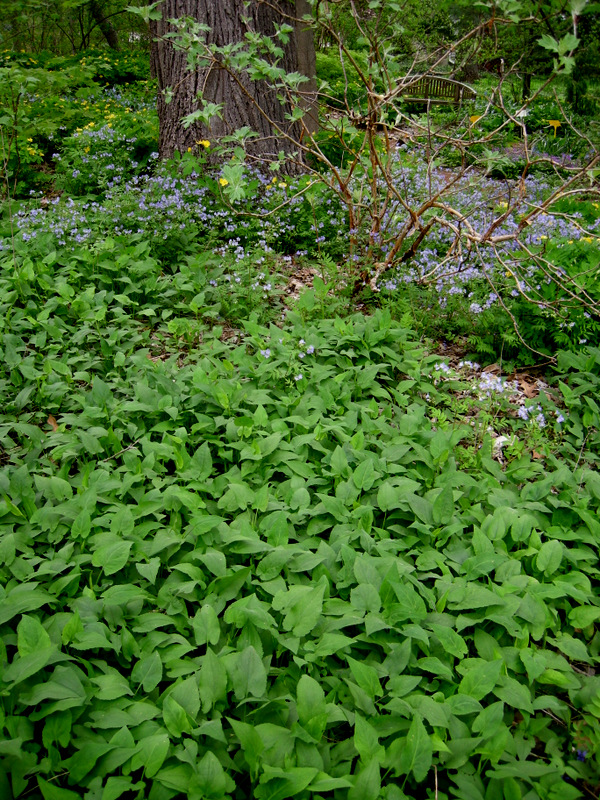
Virginia bluebells and Celandine poppy in my woodland

Well you might have to plant a few first.  What am I talking about?  How to create your very own woodland filled with native plants.  I have written before about how important native plants are to our survival.  To read about it, click here.  Now I am going to tell you how to create a shade garden in which mid-Atlantic native plants thrive and multiply with abandon.

Note: There is a Part 2 with more suggestions, click here.

my native woods

It is really quite simple.  All you do is take one woodland area, mix with generous amounts of compost, add the appropriate native plants, and wait a few years.  The key is knowing which plants to use.


I started with the worst possible soil in the worst possible conditions.  Not only were the beds composed of the hard baked clay and rocks prevalent in our area, but they were filled with roots from 100-year-old London plane and—hold onto your hats—black walnut trees.  Add to that, years of trash, including roofing slate and coal furnace shovelings, dumped in the woods before municipal collection came along and construction debris from the 1960s.


Nature does not dot the landscape with precious collectibles but  “designs” with large sweeps of single types of plants, and that is what I have done in my woods  To create a woodland like mine, all you do is plant at least five but preferably seven and ideally nine of the plants profiled below in beds amended with generous amounts of compost, mulch heavily with ground leaves, and stand back and wait.  Really….that’s what you do….it works.


I wanted to recommend six plants, but when it came down to slimming the competition, I had to go with nine: seven spring-blooming and two fall-blooming.  All are native to the mid-Atlantic and Pennsylvania and all seed freely in a woodland setting once they get going.  And the winners are:

Virginia bluebells, Mertensia virginica: porcelain blue flowers top blue-green leaves in March and April, goes dormant when hot.  All my plants came from one plant given to me by a friend.


Celandine poppy, Stylophorum diphyllum: lovely filigreed leaves are covered with large bright yellow flowers in April and May.  Again, all my plants came from one plant given to me by a friend.

Dwarf Jacob’s ladder, Polemonium reptans: wintergreen fern-like leaves are followed in April and May by copious blue bell-shaped flowers replaced by ornamental chartreuse seedpods.

.

White violets, Viola striata: white flowers in April and May.  All my plants came from one clump dug from my woods.


Blue creeping phlox, Phlox stolonifera ‘Blue Ridge’: wintergreen mat of foliage is topped with blue flowers in April and May.


Creeping phlox, Phlox stolonifera ‘Sherwood Purple’: creeping phlox comes in blue, purple, white, and pink.  The purple is the most vigorous.


Native ginger, Asarum canadense: the reddish purple flowers appear below the leaves.


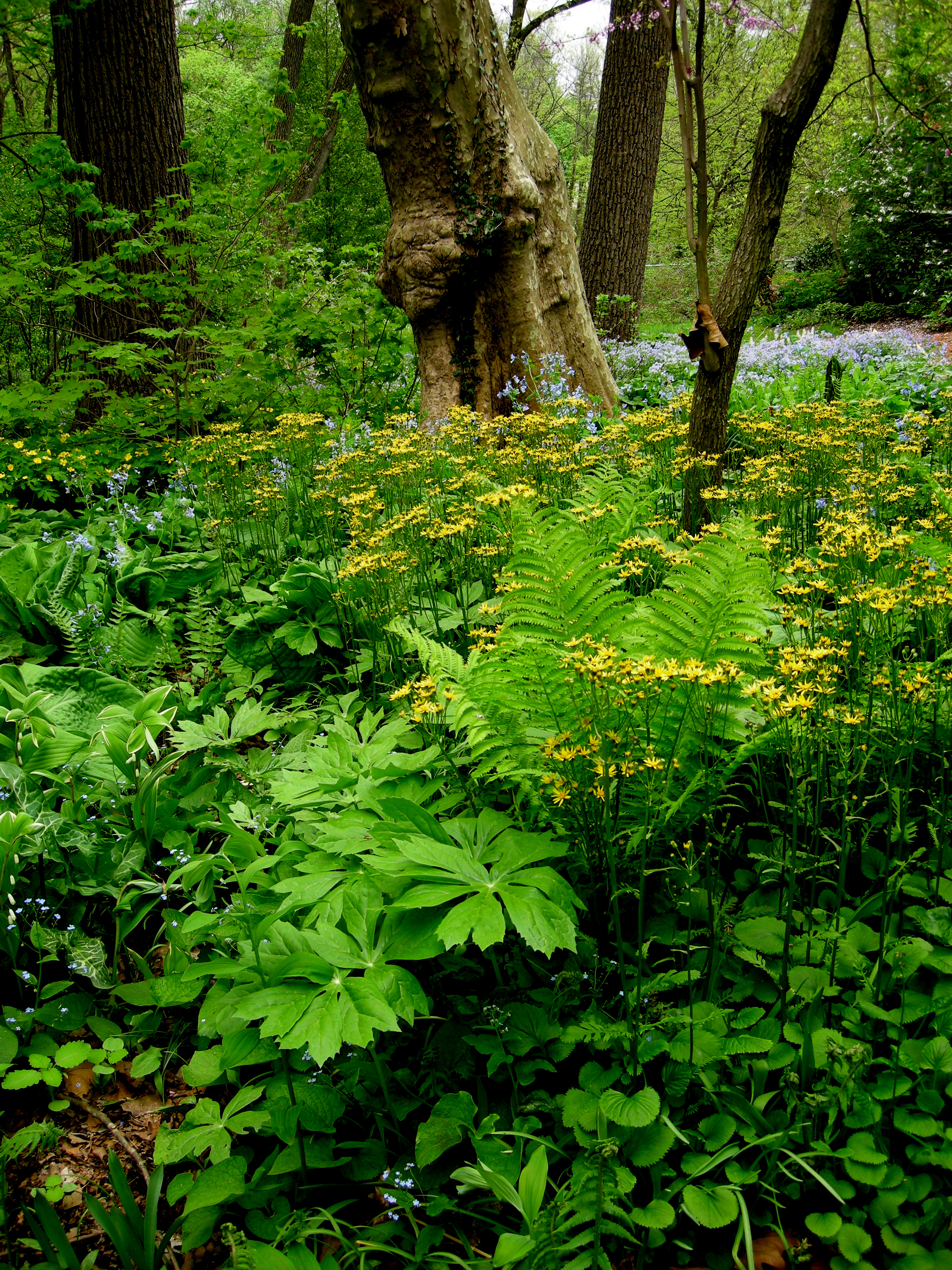
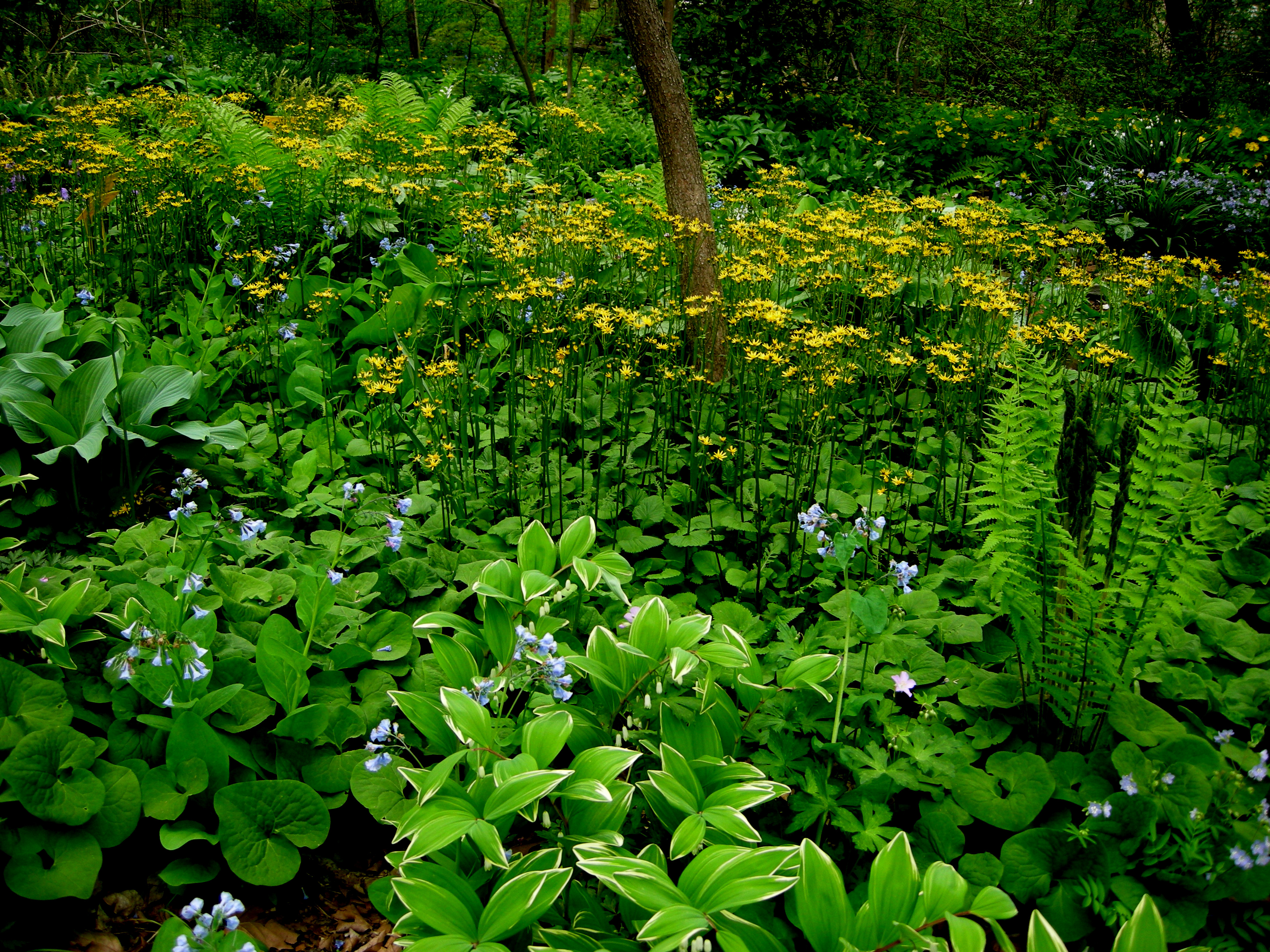
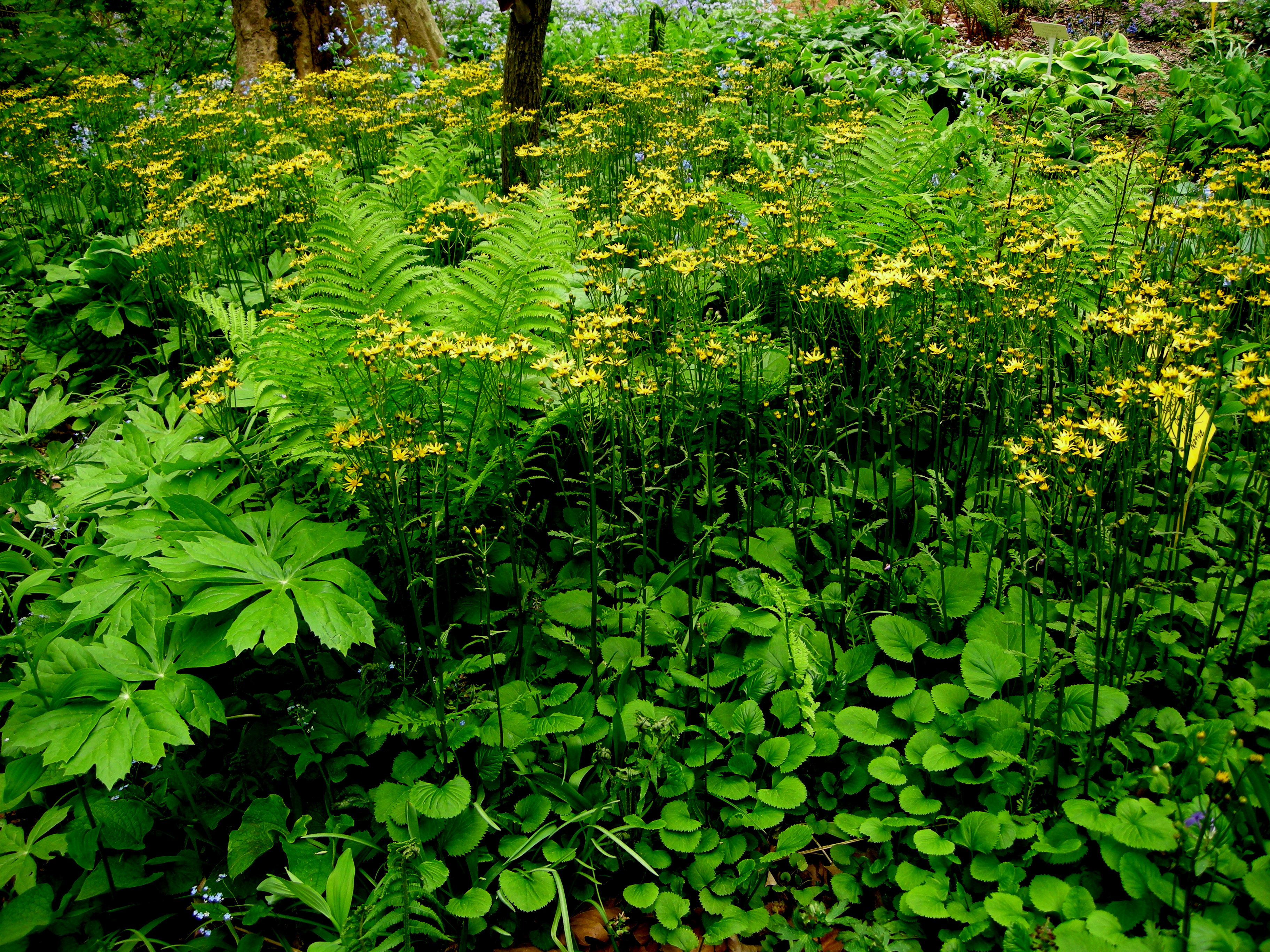
Golden groundsel, Senecio aureus: the wintergreen leaves are topped by attractive purple buds in March followed by fragrant yellow flowers in April and May.  This vigorous spreader is a great native substitute for vinca, pachysandra, and ivy.

Blue wood aster, Aster cordifolius: the leaves of blue wood aster completely cover the ground in the spring.


Blue wood aster is covered with flowers in October and November.

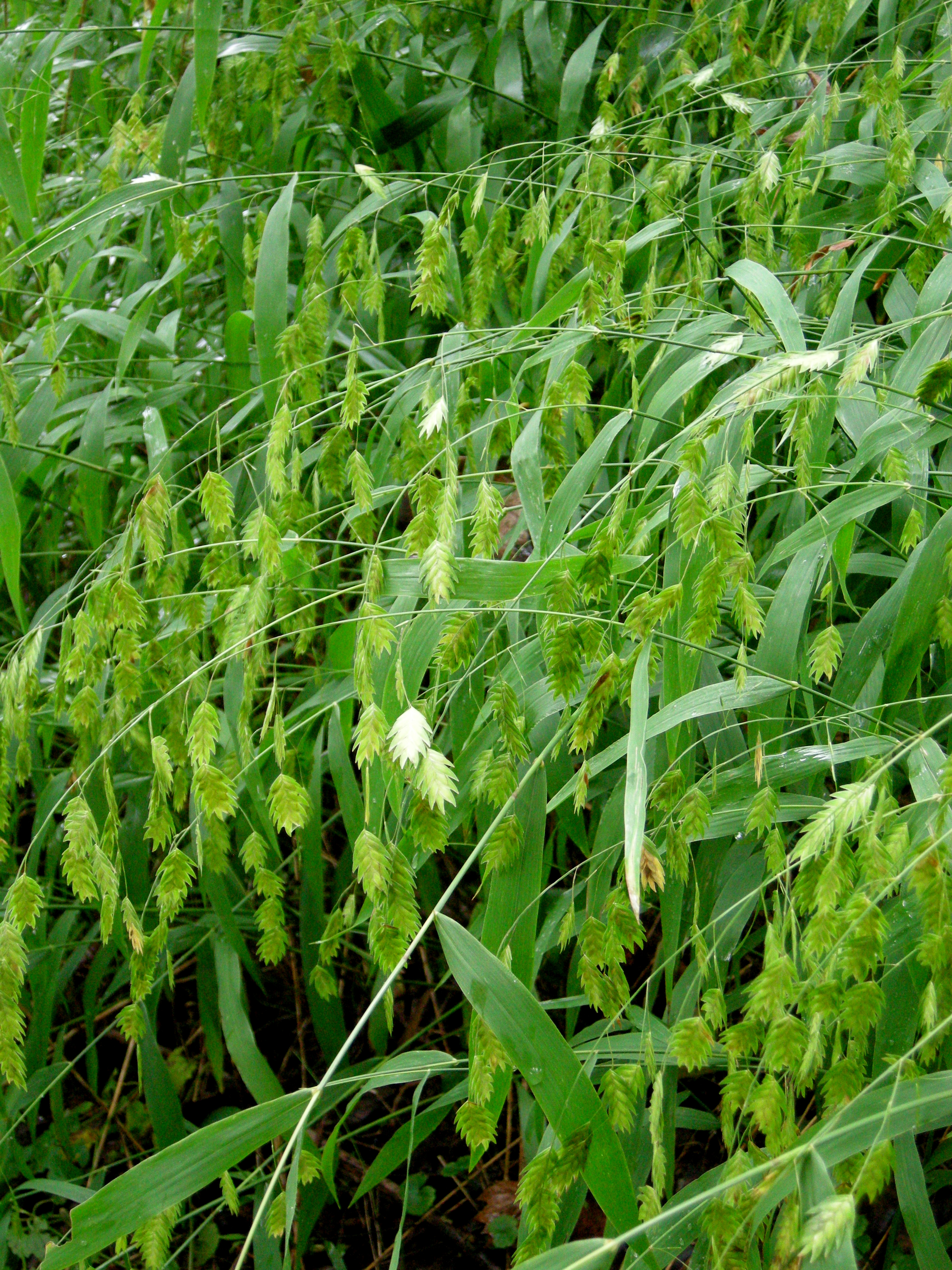
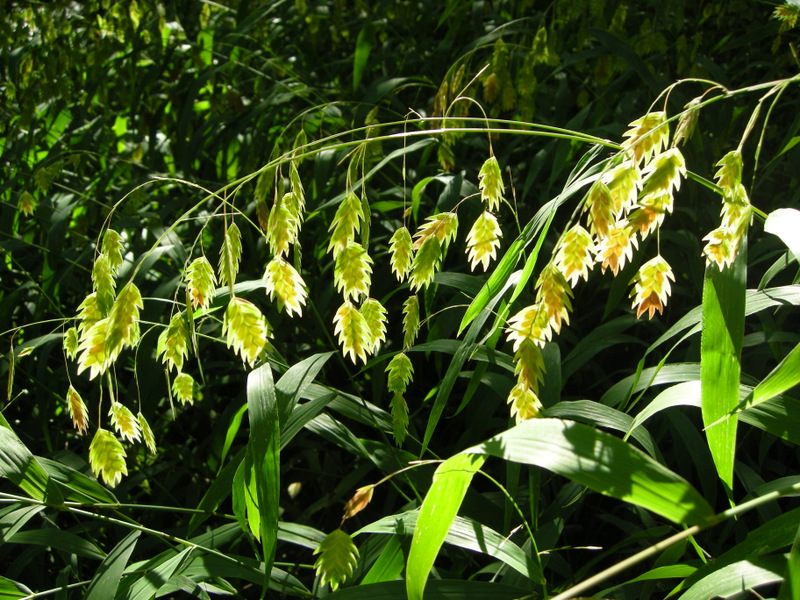
Northern sea oats, Chasmanthium latifolium: pendulous oat-like flowers grace this native shade grass in October and November.  The foliage ages to a lovely khaki color that remains ornamental through winter.

The flowers of northern sea oats in the slanted light of fall.


As the spreading, woodland plants profiled above establish themselves, you can add pockets of other special natives like trilliums, jack-in-the-pulpits, mayapples, bloodroot, and ferns.  The result is magical.

Carolyn

Notes: Every word that appears in orange on my blog is a link that you can click for more information.  If you want to return to my blog’s homepage to access the sidebar information (catalogues, previous articles, etc.) or to subscribe to my blog, just click here.

Woody Plants for Shade Part 4

Posted in Camellias, evergreen, flower show, Shade Shrubs, shade vines, winter interest with tags , , , , , , , , , , , , , , , , , , , on March 23, 2012 by Carolyn @ Carolyns Shade Gardens

Carolyn’s Shade Gardens is a retail nursery located in Bryn Mawr, PA, specializing in showy, colorful, and unusual plants for shade.  The only plants that we ship are snowdrops within the US.  For catalogues and announcements of local events, please send your full name, mailing address, and cell number to carolyn@carolynsshadegardens.com and indicate whether you are interested in snowdrops, hellebores, and/or hostas.  Click here to get to the home page of our website for catalogues and information about our nursery and to subscribe to our blog.

Spring-blooming camellia ‘Pink Icicle’

For years, my customers have been asking for woody plants for shade—trees, shrubs, and vines—in addition to the perennials I sell.  I now have a wholesale woody plant nursery with the quality and selection I needed to be able to offer them at Carolyn’s Shade Gardens.   I have just sent out my first 2012 list.  To view the catalogue, click here.   However, I thought my blog readers who are not customers might be interested in learning about the plants that I would recommend they add to their shade gardens.  And doing an article allows me to add more information and explain why I chose the plants I included so customers might be interested also.

Spring-blooming camellia ‘April Tryst’

The offer focuses on winter- and early spring-blooming plants, evergreens, and fragrance.  Included are three camellias, six other shrubs, and one vine.  Four of the plants I have chosen are evergreen, and seven bloom in the off season: late winter or early spring.   This reflects  my desire to see gardeners expand their gardens’ season beyond spring and summer to become a year round paradise for them to enjoy.  With that introduction, here are the plants I am highlighting:

The buds are just starting to expand on ‘April Snow’ camellia.


I included three hardy camellias for their spectacular early season flowers and elegant evergreen leaves. These camellias, along with many other cultivars, have been bred to be fully cold hardy in the mid-Atlantic U.S, zones 6B and 7A.  Nevertheless all camellias benefit from being sited to shelter them from winter wind, which comes from the northwest.  They also maintain their lustrous dark green leaves in better shape if they are sheltered from winter sun.  For more information on cold hardy camellias for our area, click here.

‘April Snow’ spring-blooming camellia

Camellia x ‘April Snow’ is a spring-blooming hardy camellia with gorgeous plump buds opening to large pure white rose-form double flowers in April and May.  It has large glossy dark evergreen leaves.  It is 5’ tall and 4′ wide, growing in part to full shade.  It is part of the April series of exceptionally hardy camellias developed by Dr. Clifford Parks of North Carolina.


‘April Tryst’

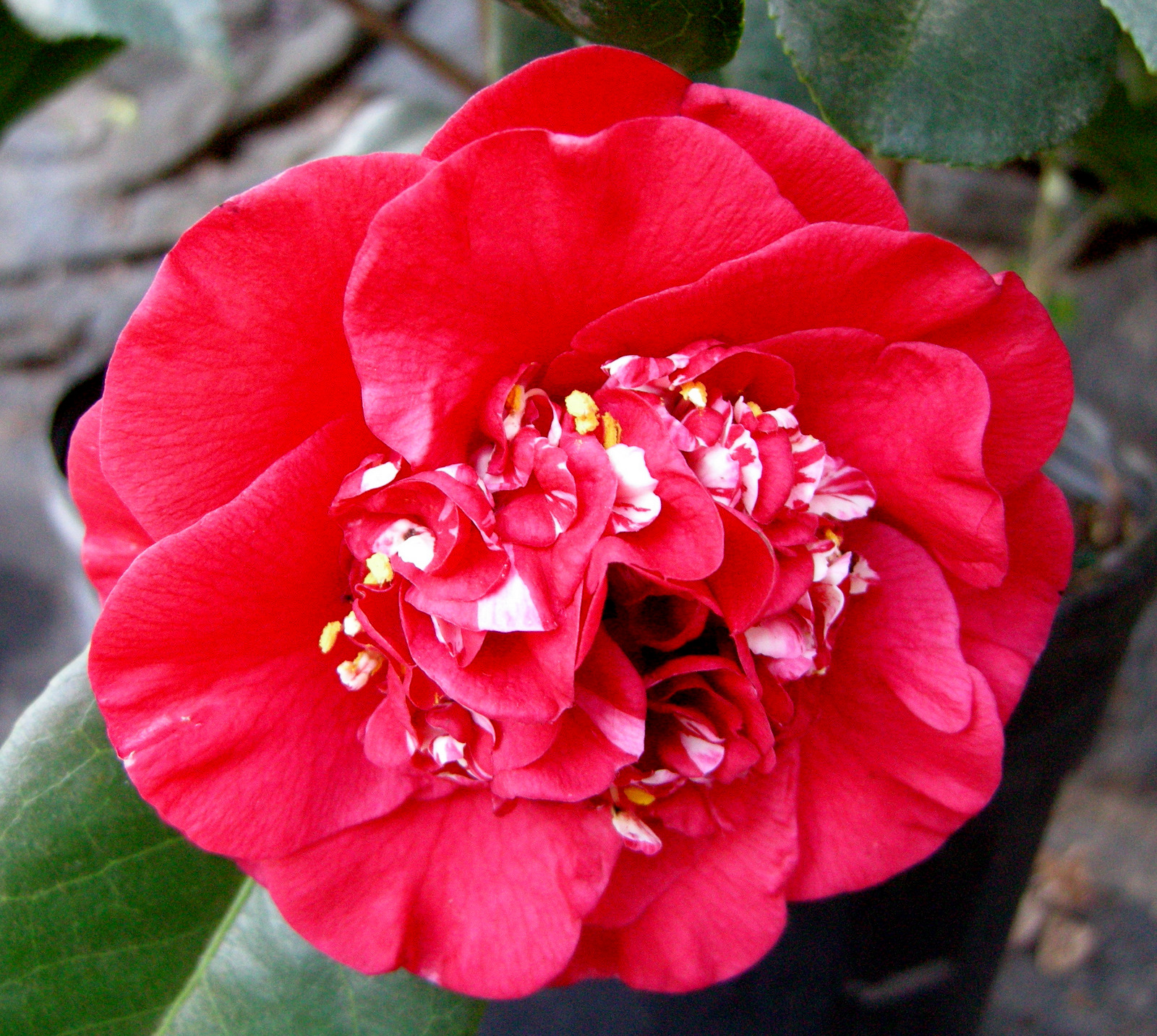
‘April Tryst’ is very similar to ‘April Snow’, reaching 5′ tall and 4′ wide at maturity and sporting lustrous dark evergreen leaves in part to full shade  However, it blooms earlier, in March and April, and has knock-your-socks-off red anemone form flowers.  It is also part of the April series of exceptionally cold hardy camellias.  ‘April Tryst’ was starting to bloom in Charles Cresson’s garden during our recent Winter Interest Seminars, and Charles highly recommends it.

‘Pink Icicle’

Spring-blooming camellia ‘Pink Icicle’ has very large, peony form, shell pink flowers that glow when displayed against the glossy evergreen leaves.  It blooms in March and April in part to full shade.  It has a compact and upright growth habit and was selected by Dr. William Ackerman at the U.S. National Arboretum.

Japanese mahonia, Mahonia japonica

amazingly fragrant flowers of Japanese mahonia

The final evergreen plant is Japanese mahonia, Mahonia japonica.  Aside from being evergreen, this was the most fragrant plant in the Cresson garden during the Winter Interest Seminars, and there was plenty of competition.  In February and March, extremely fragrant yellow flowers on 8” racemes cover Japanese mahonia.  The evergreen leaves are a dark glossy green with a finer texture than other mahonias, and they rarely get damaged in winter. The  glaucous blue fruit in early summer attracts birds.  Japanese mahonia grows to 6′ tall and 3′ wide in moist, well-drained soil.  It is also deer resistant.  For more information, click here.

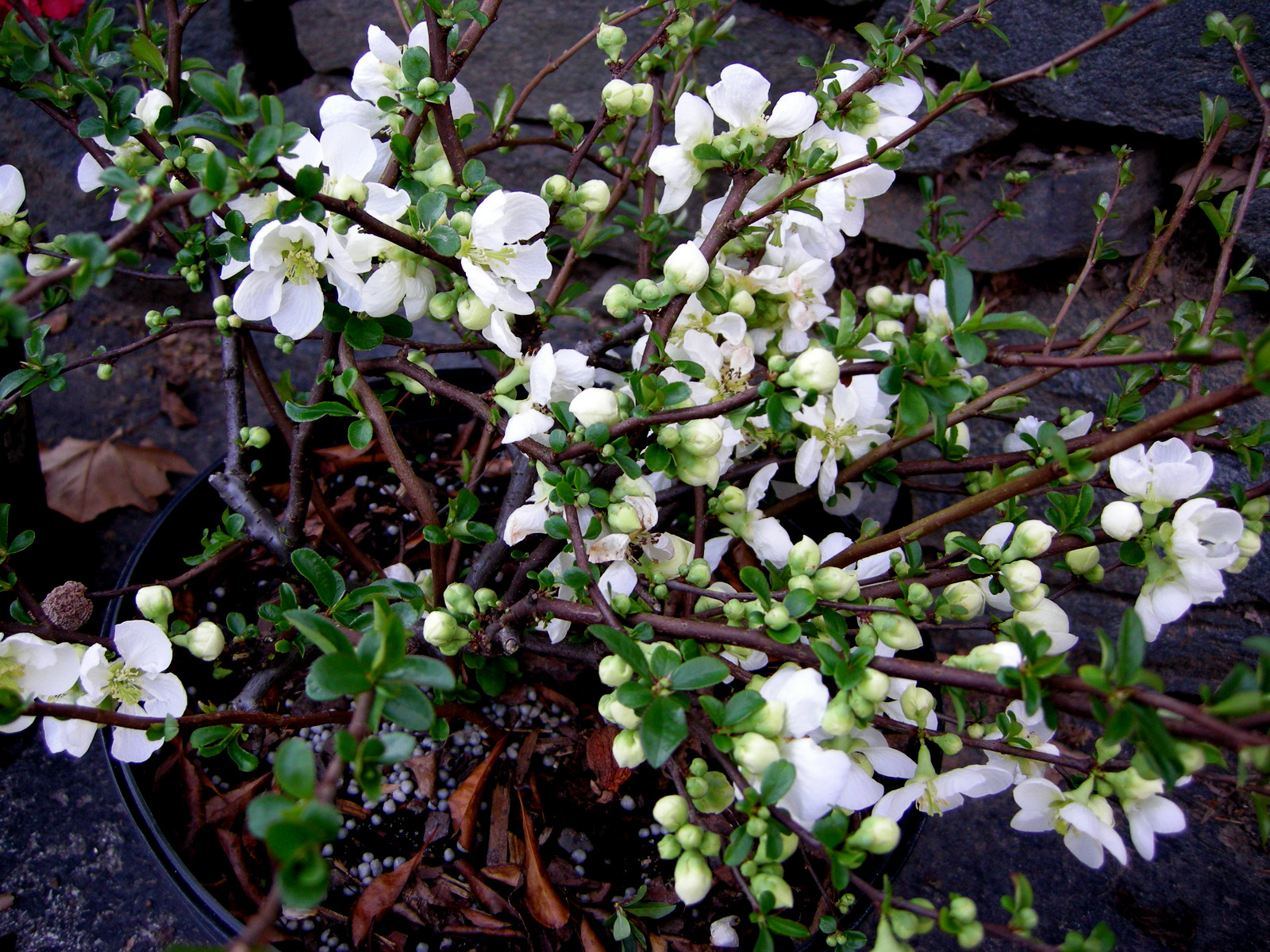
‘Jet Trail’ flowering quince

There are five deciduous shrubs in the offer, including two flowering quinces.  Now I love the early flowers, beautiful colors, and deer resistance of quince, but it is difficult to fit a 10′ plus tall and wide shrub covered with lethal thorns into the garden.  That’s why I was excited when new low and compact quinces that won’t dominate your garden were introduced.  They are not marketed as thornless, but I can’t find any thorns on mine.  As an added benefit, the leaves remain healthy all summer.

‘Texas Scarlet’ flowering quince

‘Jet Trail’ and ‘Texas Scarlet’ flowering quince, Chaenomeles x superba, are identical plants other than their flower color, growing 3’ tall and 3’ wide in sun to part shade.  They produce multitudes of very showy white or coral red flowers in March, which are beautifully displayed by the elegant branching structure.  The  glossy dark green leaves stay ornamental through the season.  The  yellow fruit is wonderfully fragrant.  Both cultivars will grow well in clay soil and drought conditions.  For more information, click here

Spike winter hazel, Corylopsis spicata

Spike winter hazel, Corylopsis spicata, is the elegant shrub with the unusual yellow flowers that everyone admires in my garden in early spring. Dangling panicles of very fragrant, lemon yellow flowers cover this graceful shrub in March and April before the foliage.  The bold-textured leaves emerge burgundy and age to a lovely blue-green.  Winter hazel grows to 8′ tall and 6′ wide in full sun to part shade.  It takes average garden soils and is deer resistant; for more information, click here.


The lovely dusty blue leaves of native ‘Blue Shadow’ fothergilla.


‘Blue Shadow’ has honey-scented bottlebrush flowers.  Photo courtesy of the Missouri Botanical Garden.

fall color of fothergilla

Native ‘Blue Shadow’ fothergilla, Fothergilla x intermedia, has stunning ornamental attributes three seasons a year.  In March and April, it is covered with honey-scented white bottlebrush flowers.  Its gorgeous dusty blue leaves provide an unusual color and texture for the shade garden.  In the fall, the foliage turns lovely shades of yellow, orange, and red.  ‘Blue Shadow’ grows to 4′ tall and 3′ wide in full sun to part shade.  It is native to the southeastern U.S., wet site tolerant, and deer resistant.  For more information, click here.

Snowball flowers of ‘Cayuga’ Koreanspice viburnum

‘Cayuga’ Koreanspice viburnum, Viburnum x ‘Cayuga’, is a cross between a smaller Koreanspice viburnum (V. carlesii) and the fragrant snowball viburnum (V. x carlcephalum) introduced by the U.S. National Arboretum.   It has the best attributes of both.  In April and May, striking pink buds open to abundant, fragrant, large white snowball flowers.  It has a compact habit with dark green leaves that change to orange-red in the fall.  It grows to 6′ tall by 5′ wide in full sun to part shade.  ‘Cayuga’ tolerates a wide range of soils and is deer resistant.  For more information, click here.

Climbing hydrangea, photo courtesy of the Missouri Botanical Garden.

The final plant in the offer is a vine.  Climbing hydrangea, Hydrangea anomala subsp. petiolaris, is really the best vine for shade with 365 days of ornamental value.  Its lustrous, dark green leaves are neat and attractive all season before turning a buttery yellow in the fall.  In June and July, fragrant 8” wide hydrangea-like white flowers layer over the leaves.  The exquisite exfoliating cinnamon bark provides winter interest.  Climbing hydrangea is self-attaching and reaches 30 to 50′ at maturity in part to full shade.  It is a Missouri Botanical Garden Plant of Merit.  For more information, click here.

I grow most of these plants in my gardens so I know you can’t go wrong by adding them to yours!  If you are a customer, see Nursery Happenings below for details on how to order these wonderful shade plants by noon on March 26.  If not, now you have some plants to ask for at your local independent nursery.  If you would like to read about the other woody plants I have recommended for shade, see Part 1, Part 2, and Part 3.

Carolyn

Notes: Every word that appears in orange on my blog is a link that you can click for more information.  If you want to return to my blog’s homepage to access the sidebar information (catalogues, previous articles, etc.) or to subscribe to my blog, just click here.
The 2012 Philadelphia Flower Show

Posted in flower show with tags , , , on March 16, 2012 by Carolyn @ Carolyns Shade Gardens

Carolyn’s Shade Gardens is a retail nursery located in Bryn Mawr, PA, specializing in showy, colorful, and unusual plants for shade.  The only plants that we ship are snowdrops within the US.  For catalogues and announcements of local events, please send your full name, mailing address, and cell number to carolyn@carolynsshadegardens.com and indicate whether you are interested in snowdrops, hellebores, and/or hostas.  Click here to get to the home page of our website for catalogues and information about our nursery and to subscribe to our blog.


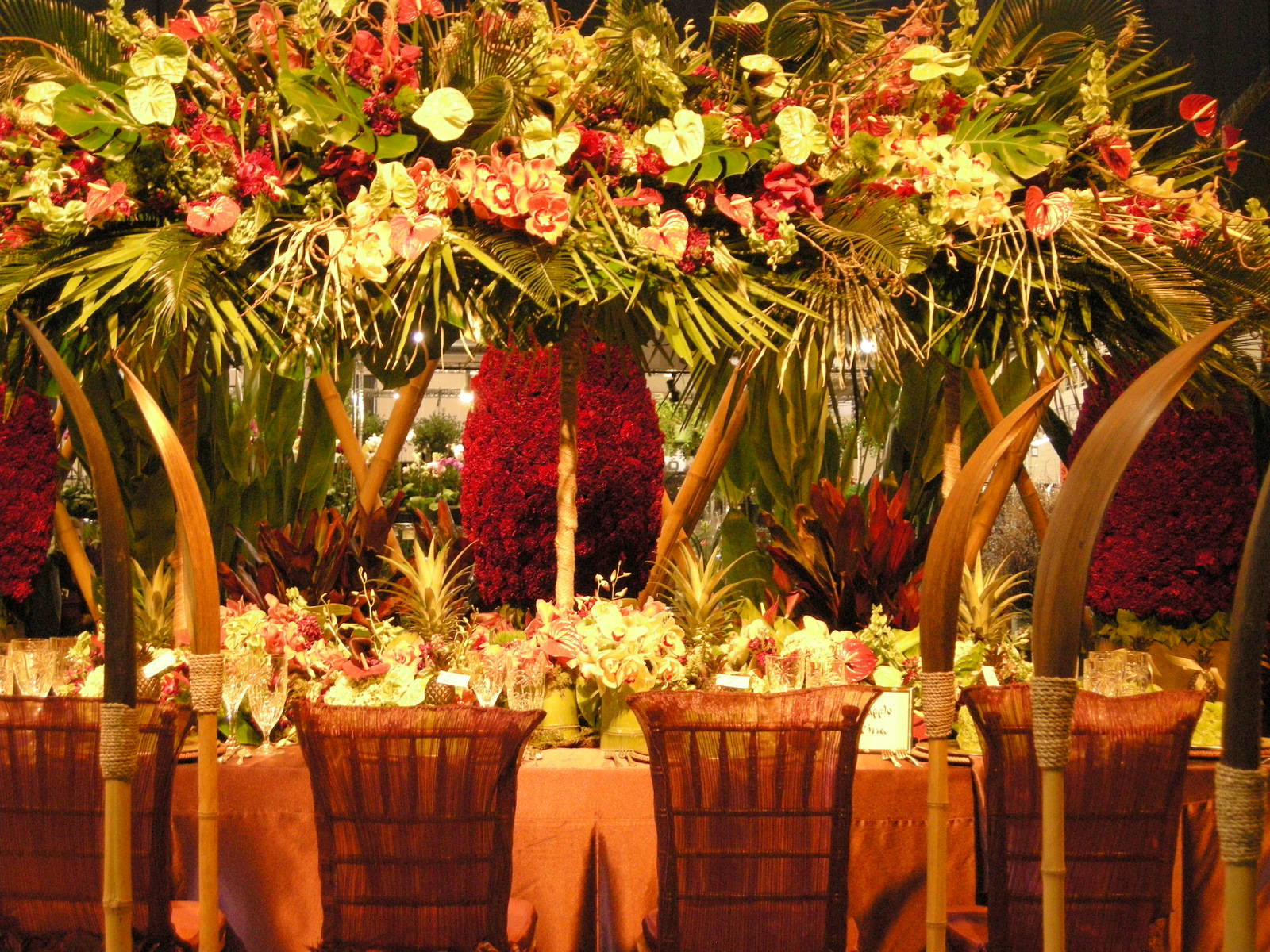
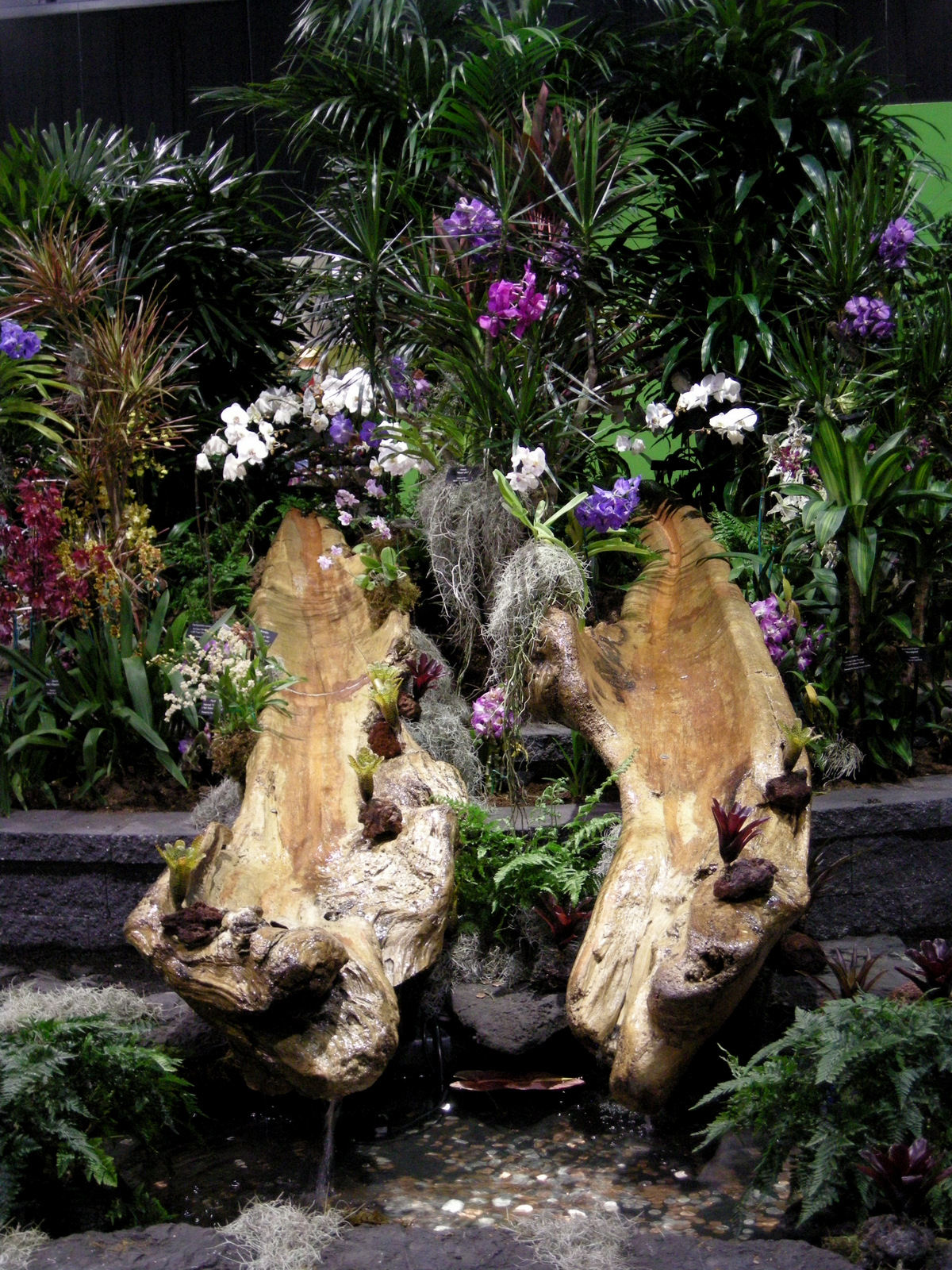
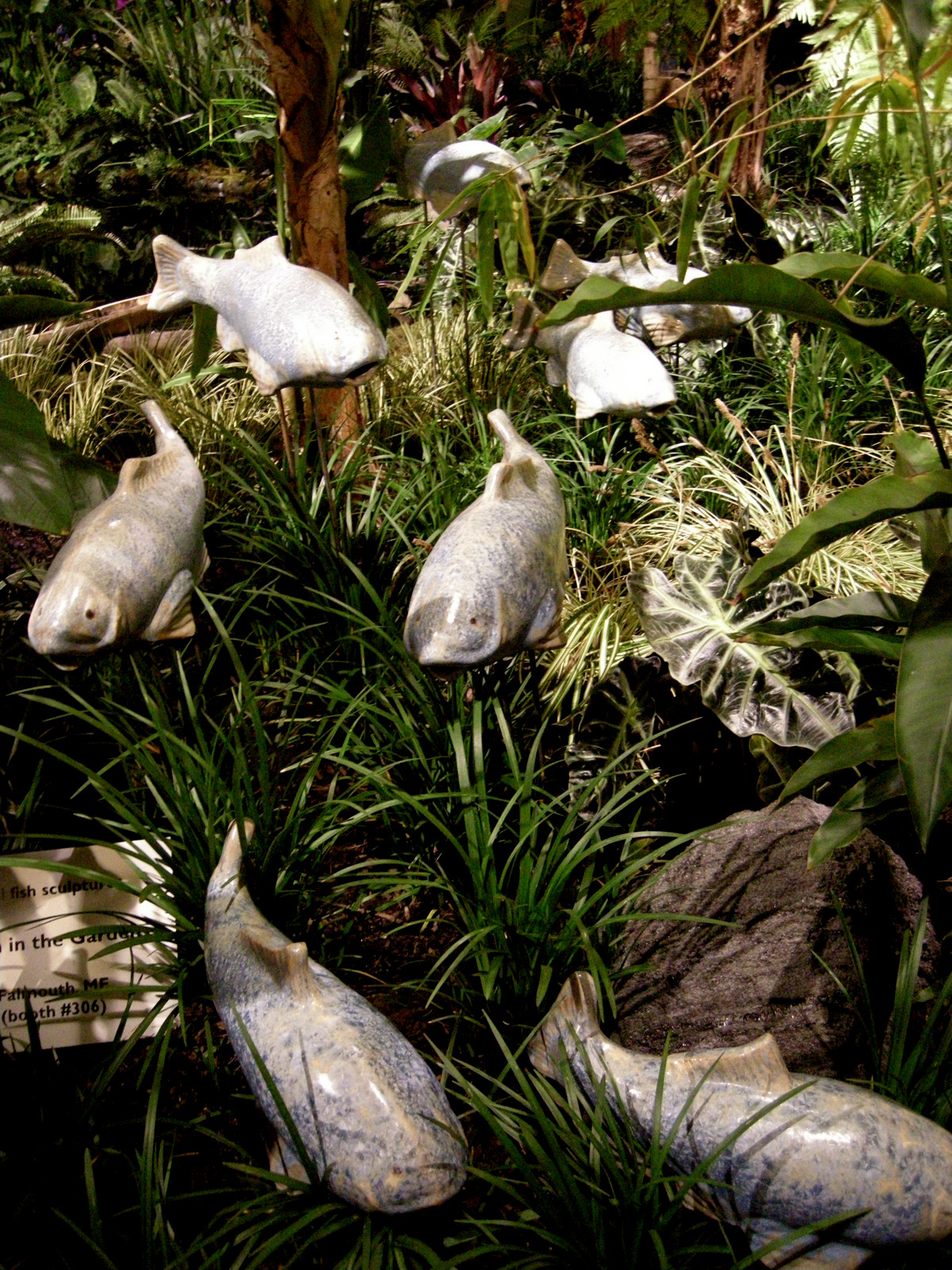
The 2012 Philadelphia International Flower Show took place last week.  It is the world’s largest indoor flower show and can be a bit intimidating.  My husband and I  find that Friday night is a less crowded time to go especially if you want to photograph the exhibits.  This year’s theme was Hawaii, which was a great choice for me because I attend for the “show” aspects and not to get ideas for my garden.

One of the most interesting parts was the entrance where visitors walked underneath a realistic sounding wave made of screens projected with changing sea life and striped with white flowers evocative of Hawaii.  Created by Valley Forge Flowers of Wayne, PA, it was a full immersion experience as if you were inside the wave:


View of the wave from outside.

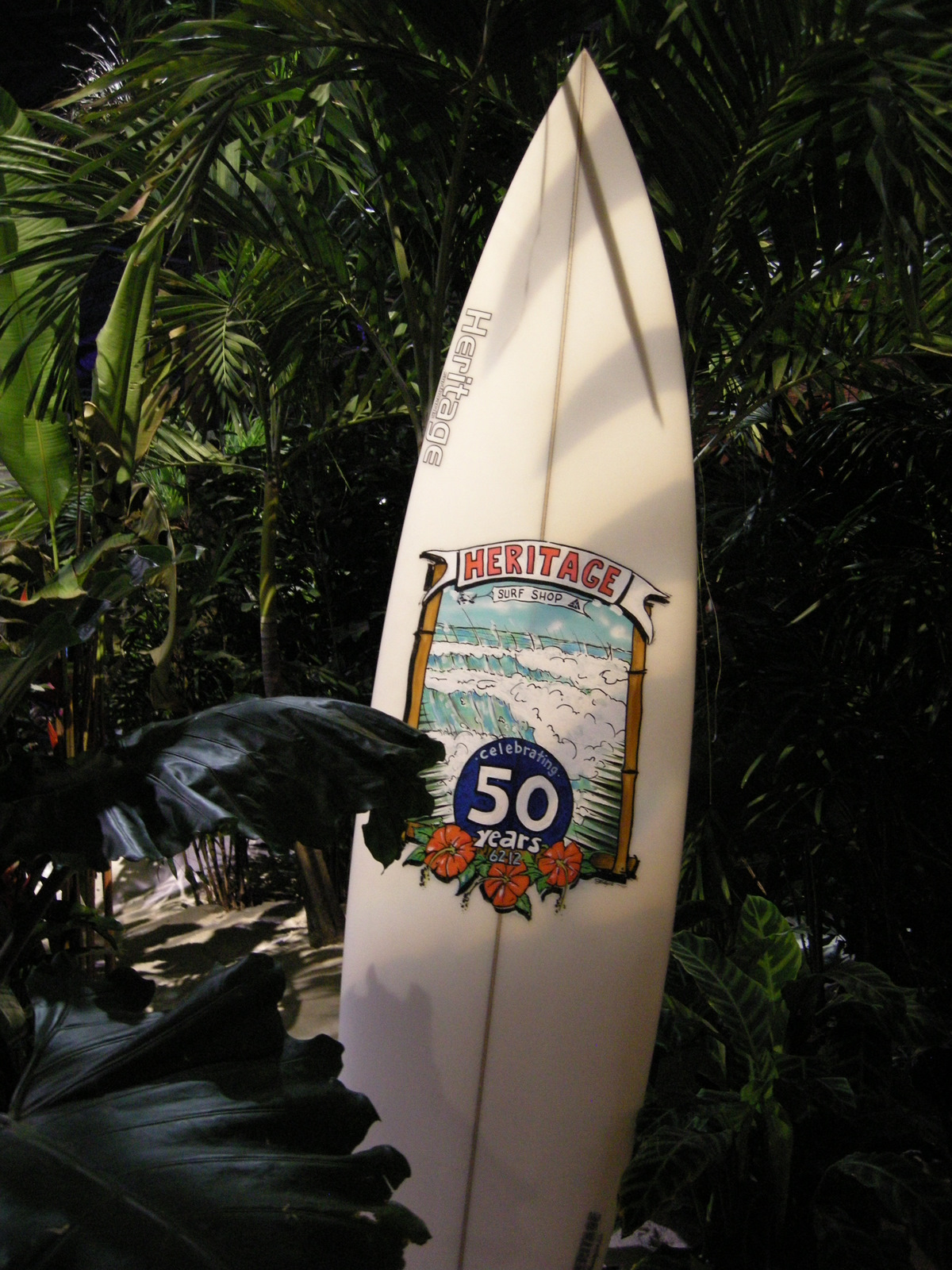
There were many scenes of Hawaii (or at least what us easterners think Hawaii looks like), and surf boards were very popular:


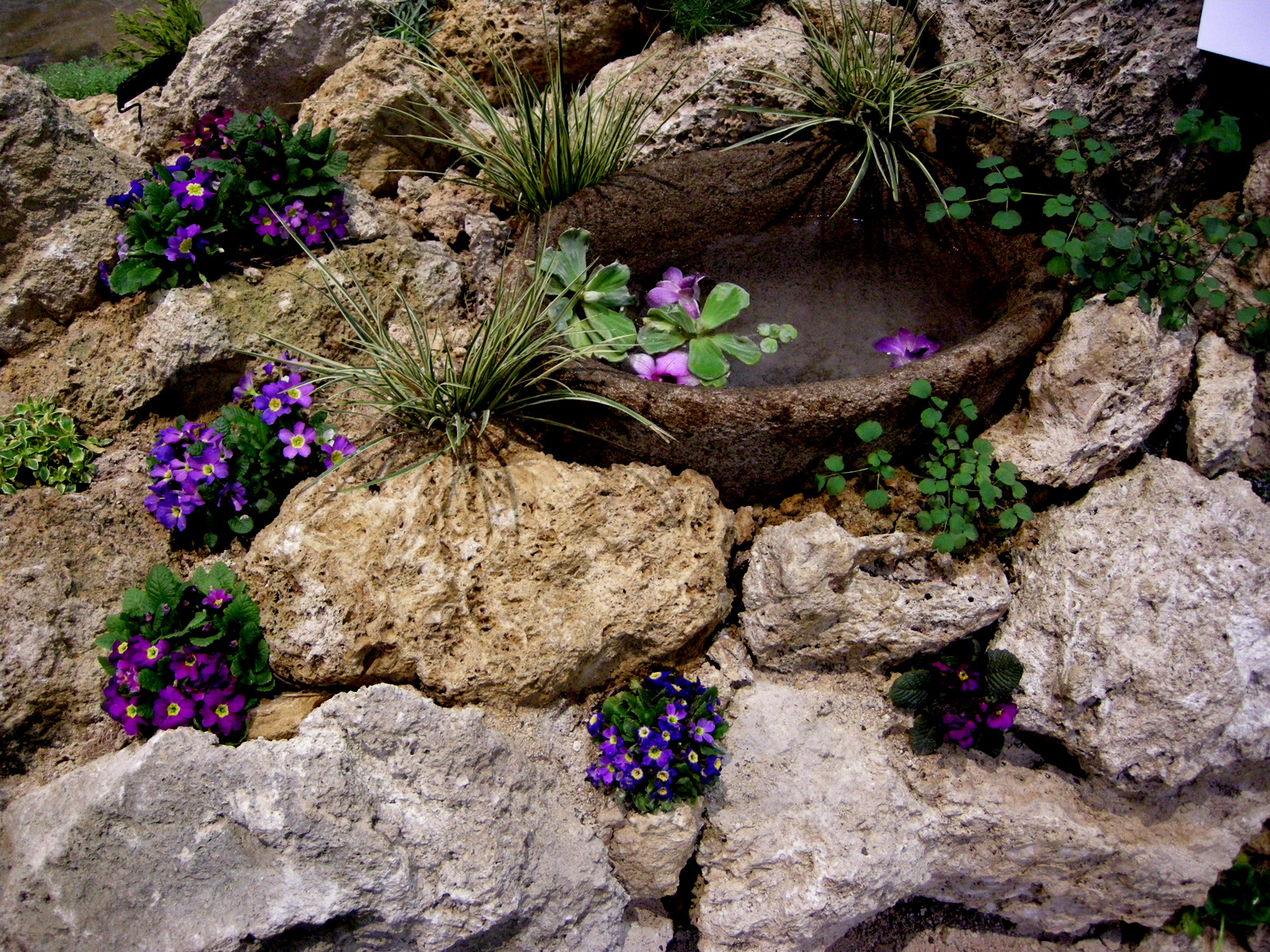
My husband and I volunteer to staff the exhibit of the Delaware Valley Chapter of the North American Rock Garden Society.  I am not a rock gardener but this organization is worth joining for its lectures and plant sales alone.  Their exhibit was very well received and included a tufa outcropping and hypertufa troughs:

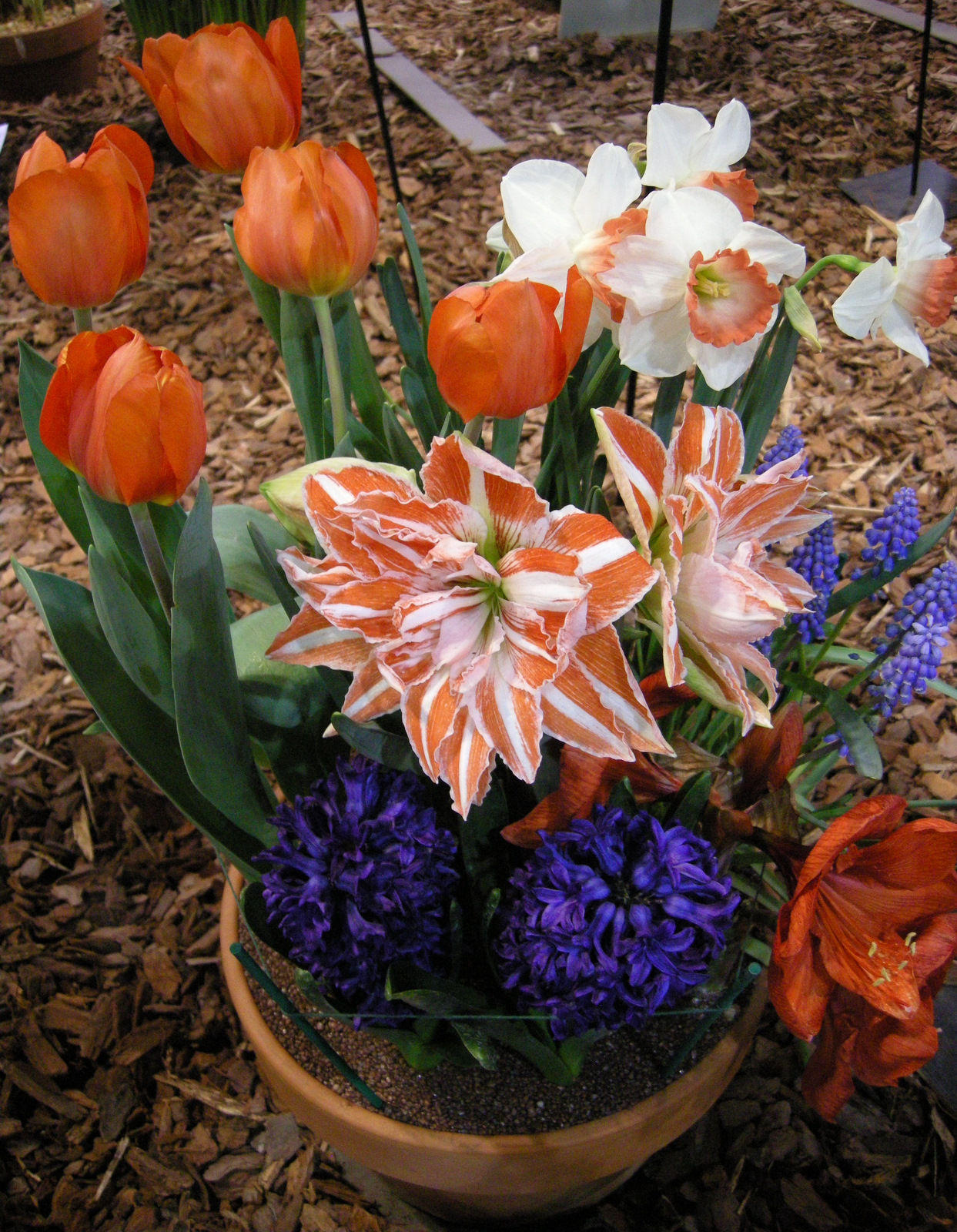
My absolute favorite part of the show is the competitive classes where regional gardeners enter their well grown plants to receive ribbons.  This area, known as the hort court, takes up half the area of the show.  Here are the bulb classes:


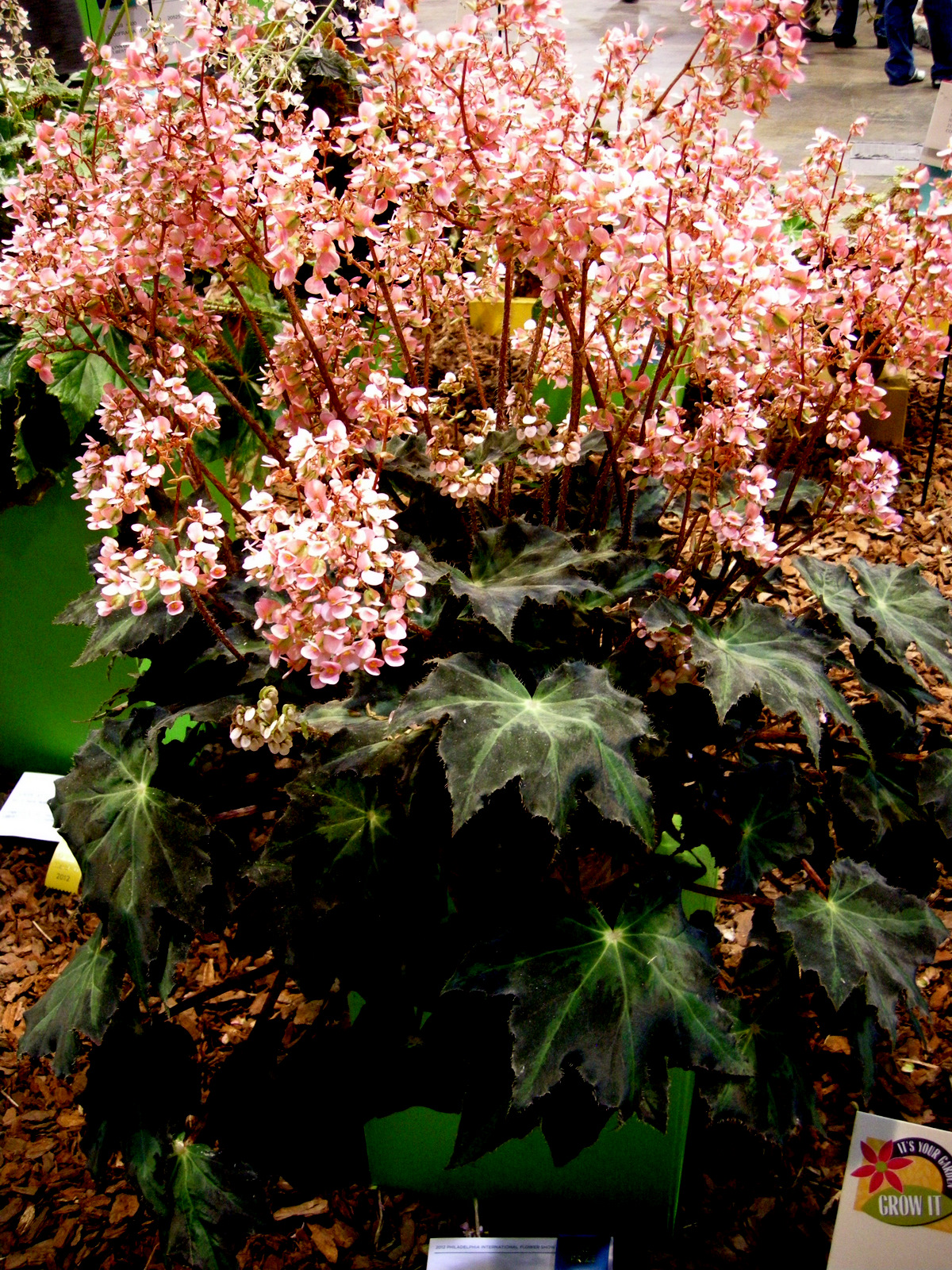
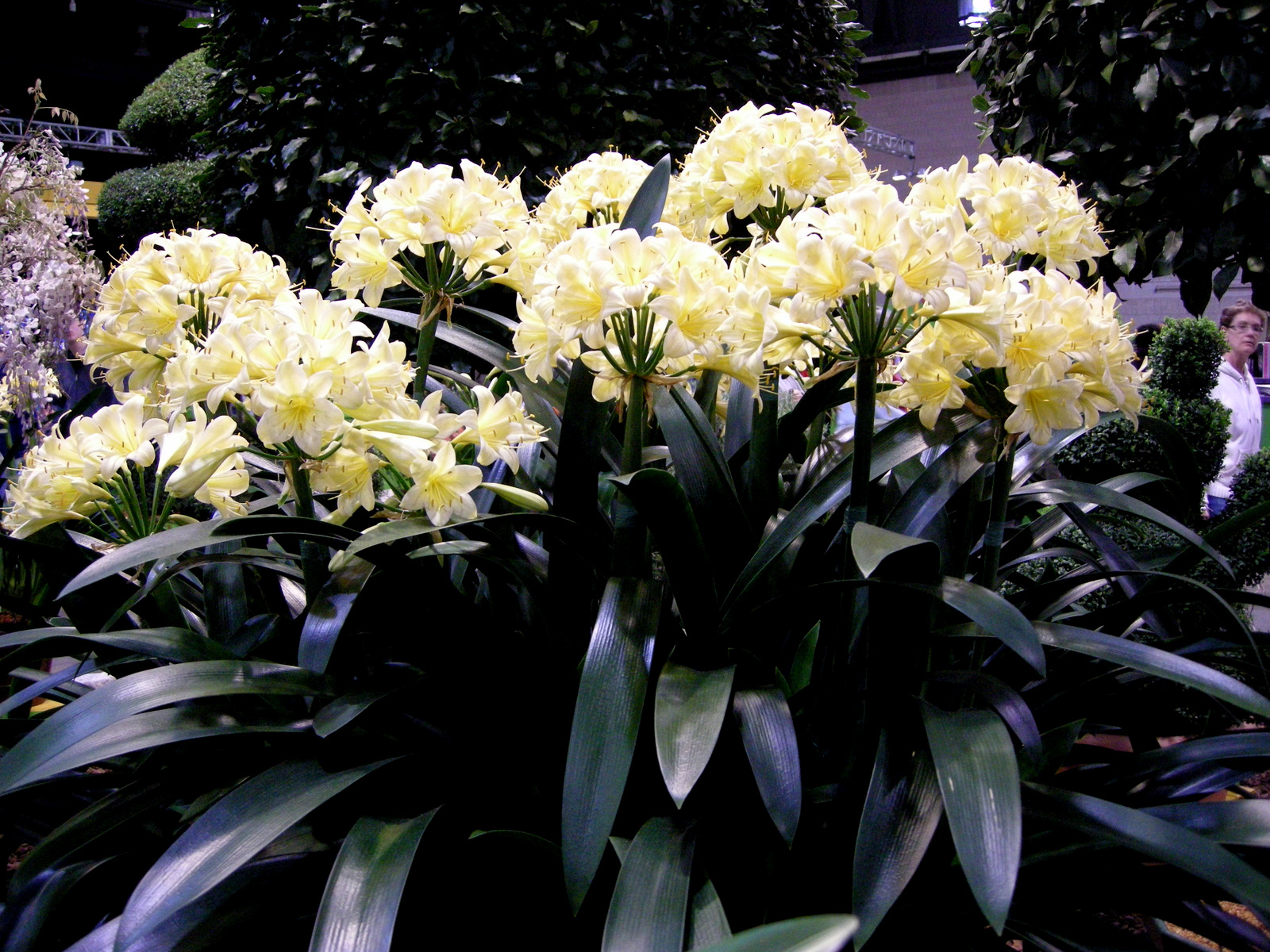
The competitive classes are filled with well grown individual plants.  Some of them come to the flower show year after year, but I never tire of seeing them:


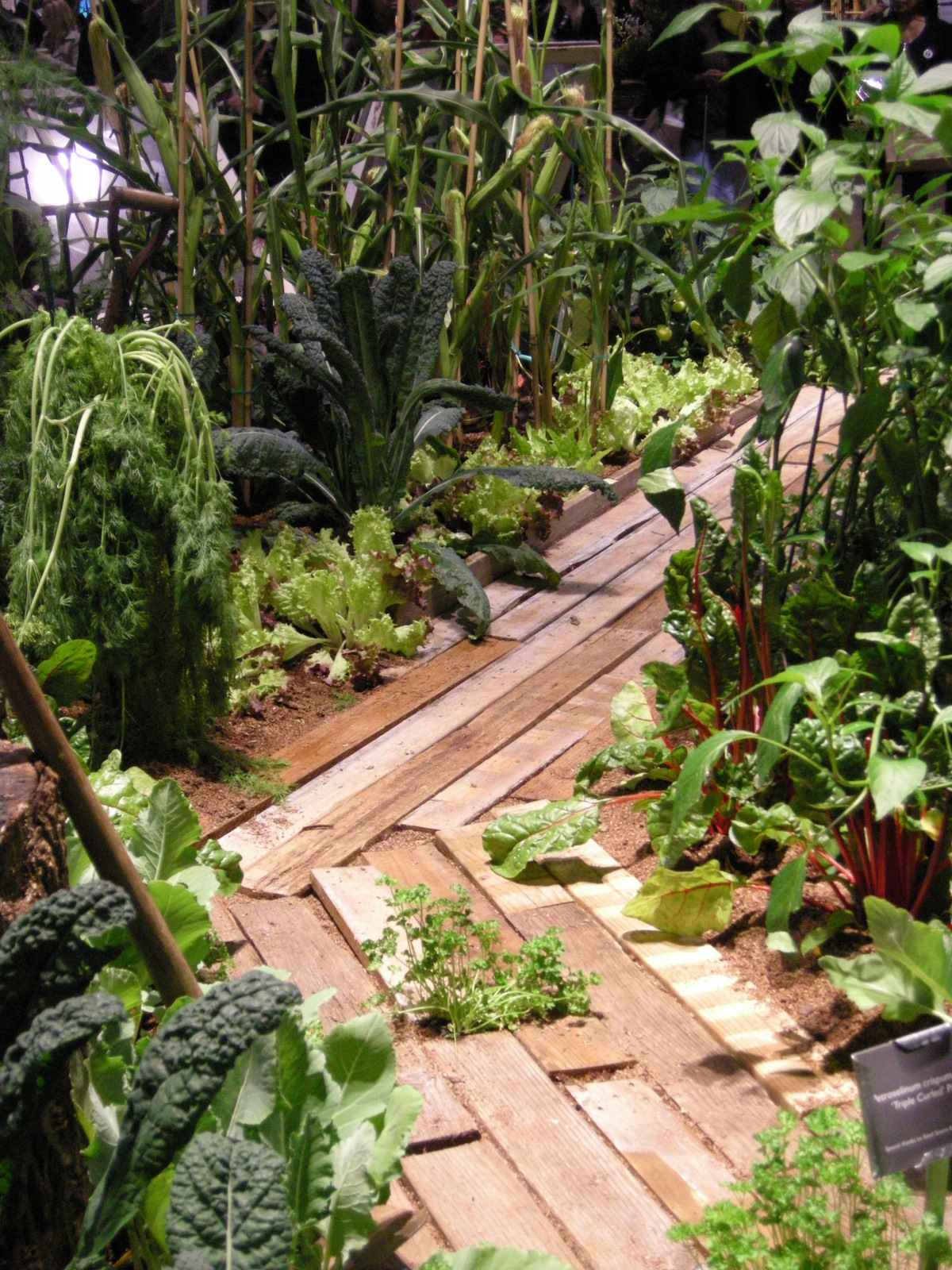
My favorite exhibit was put on by the Pennsylvania Horticulture Society and featured the use of edible plants in an ornamental landscape.  Fruits and vegetables are just as beautiful as any other plants, and this exhibit showed some very innovative uses such as a 10 foot wall of lettuce, a large pergola covered with cherry tomatoes, and a wooden walkway through healthy, gorgeous edible plants:


I really enjoyed the flower show this year, and, if you couldn’t visit in person, I hope you enjoyed your virtual tour.

Carolyn

Notes: Every word that appears in orange on my blog is a link that you can click for more information.  If you want to return to my blog’s homepage to access the sidebar information (catalogues, previous articles, etc.) or to subscribe to my blog, just click here.
Species Hellebores for 2012

Posted in evergreen, hellebores, Shade Perennials, winter interest with tags , , , , , , , , , , , , on March 8, 2012 by Carolyn @ Carolyns Shade Gardens

Carolyn’s Shade Gardens is a retail nursery located in Bryn Mawr, PA, specializing in showy, colorful, and unusual plants for shade.  The only plants that we ship are snowdrops within the US.  For catalogues and announcements of local events, please send your full name, mailing address, and cell number to carolyn@carolynsshadegardens.com and indicate whether you are interested in snowdrops, hellebores, and/or hostas.  Click here to get to the home page of our website for catalogues and information about our nursery and to subscribe to our blog.

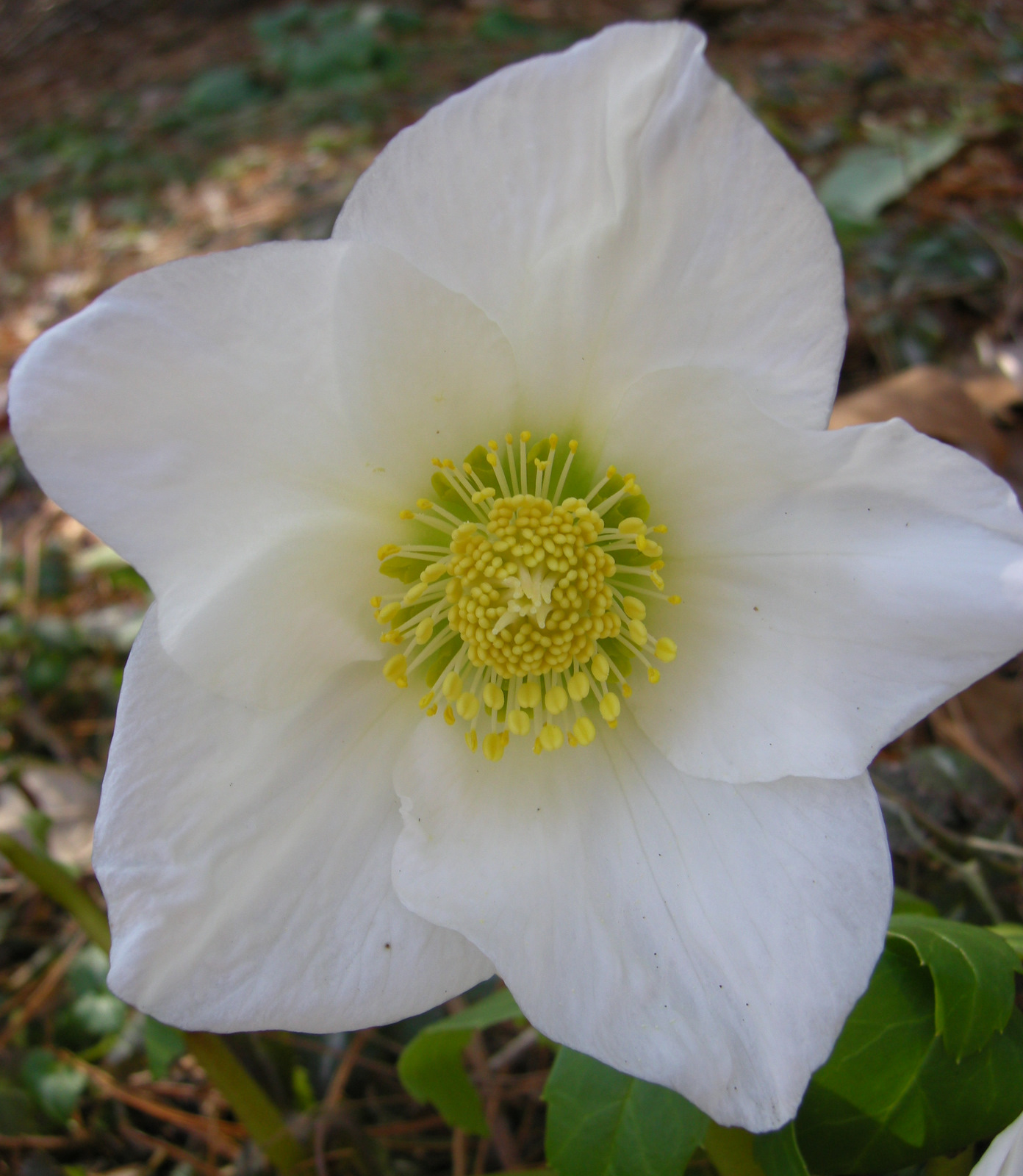
‘Josef Lemper’ Christmas rose, Helleborus niger, has very large flowers and blooms from November into May depending on the weather.

In my post New Hellebores for 2012, I profiled all the exciting new hybrid hellebores that I am offering this spring.  If you haven’t read it, there are some gorgeous photos.  Now I want to show you the species hellebores that are available at my nursery this year.  In a third post, I will describe what I call the “species crosses” that you can add to your garden this spring.


The Christmas rose ‘Jacob’ is loaded with flowers from November through late spring.

In The Sex Lives of Hellebores, I described the difference between hybrid hellebores, the subject of my February 2012 new hellebore post, and the roughly 15 types of species hellebores.  I sell most of the species by special order, but here I want to profile the five that I will be featuring this year.  My favorite is Christmas rose, Helleborus niger.  Despite its name, I used to have to wait until March to view its lovely pure white flowers.  With the introduction of the cultivars ‘Josef Lemper’ and ‘Jacob’, which reliably start blooming in November, you can now have Christmas roses blooming for Christmas.


Christmas rose flowers age to a lovely pink: ‘Jacob’ with fall-blooming camellia ‘Winter’s Joy’.


Christmas roses have many desirable attributes which I described at length in Christmas Rose: The Perfect Hellebore.  Their outward facing, pure white flowers are framed by lovely blue-green leaves that stay ornamental through winter.  They are deer resistant like hybrid hellebores but are smaller and have a more refined look than the hybrids.  For more information on ‘Jacob’ and ‘Josef Lemper’, see
Hellebores for Fall.

Double Christmas rose, Helleborus niger ‘Double Fantasy’

I am very excited to be able to offer ‘Double Fantasy’, a fully double Christmas rose developed through tissue culture by a nursery in Japan.  Before it was introduced in 2011, I had only seen one double (in Charles Cresson’s garden), and double Christmas roses were not available for sale.  Its flowers are magical.


Fragrant hellebore, Helleborus odorus

The next three species, H. odorus, H. purpurascens, and H. viridis, were all profiled in depth in The Sex Lives of Hellebores because they are all parents of the hybrid hellebores.  However, they are gardenworthy in their own right and have attributes the hybrids don’t have.  I am a big fan of green flowers, and fragrant hellebore, H. odorus, has striking yellow-green flowers with a delicious scent that is pervading my garden right now.  It looks especially nice when grown with dark purple hybrids.


flower of fragrant hellebore

Fragrant hellebore (right) with ‘Blue Lady’ hybrid hellebore


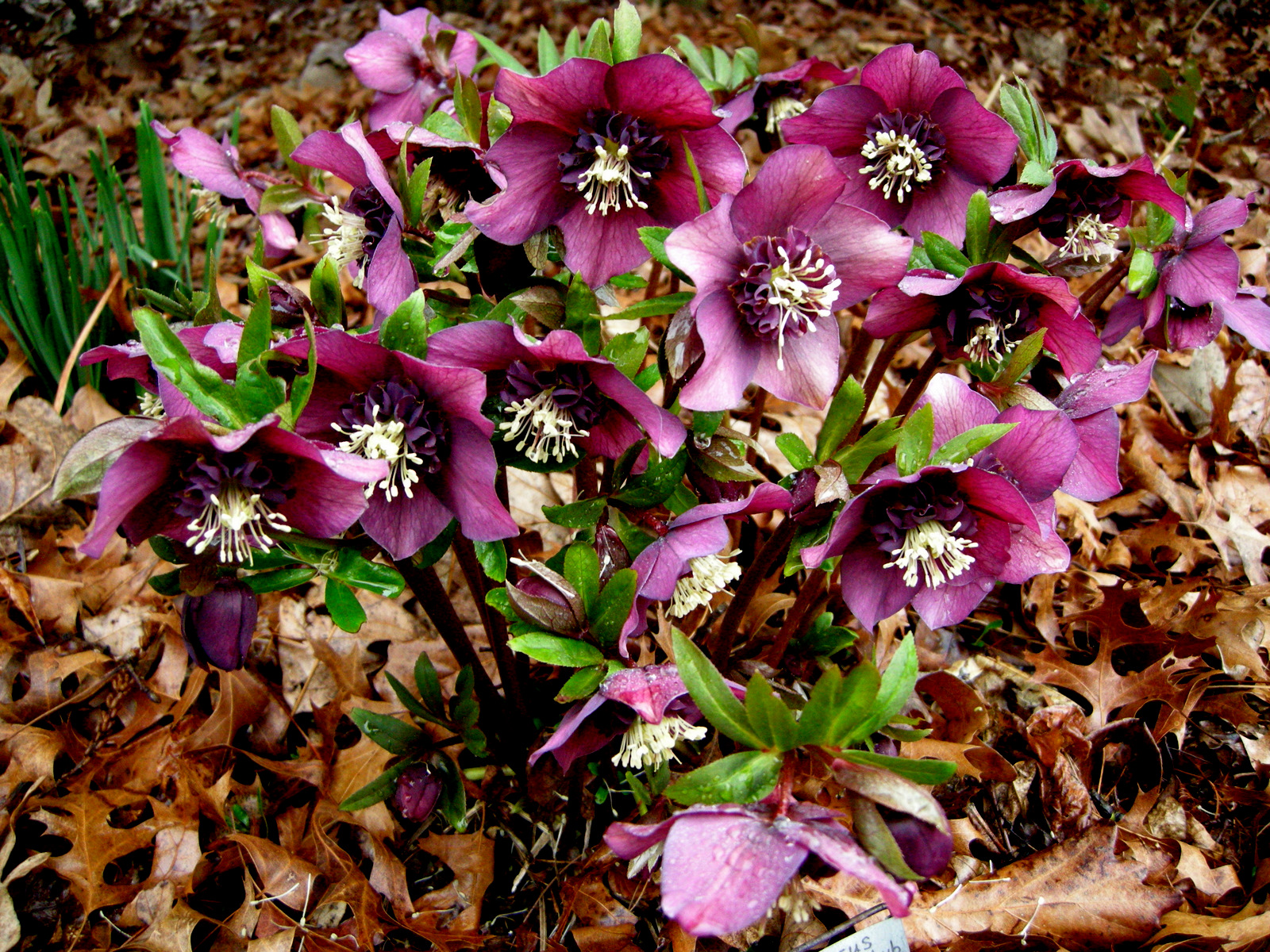
flower of Helleborus purpurascens

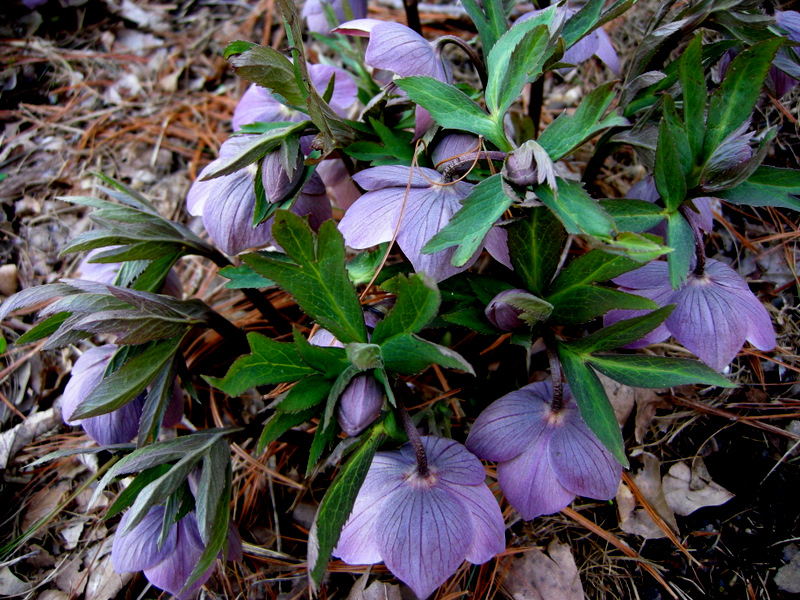
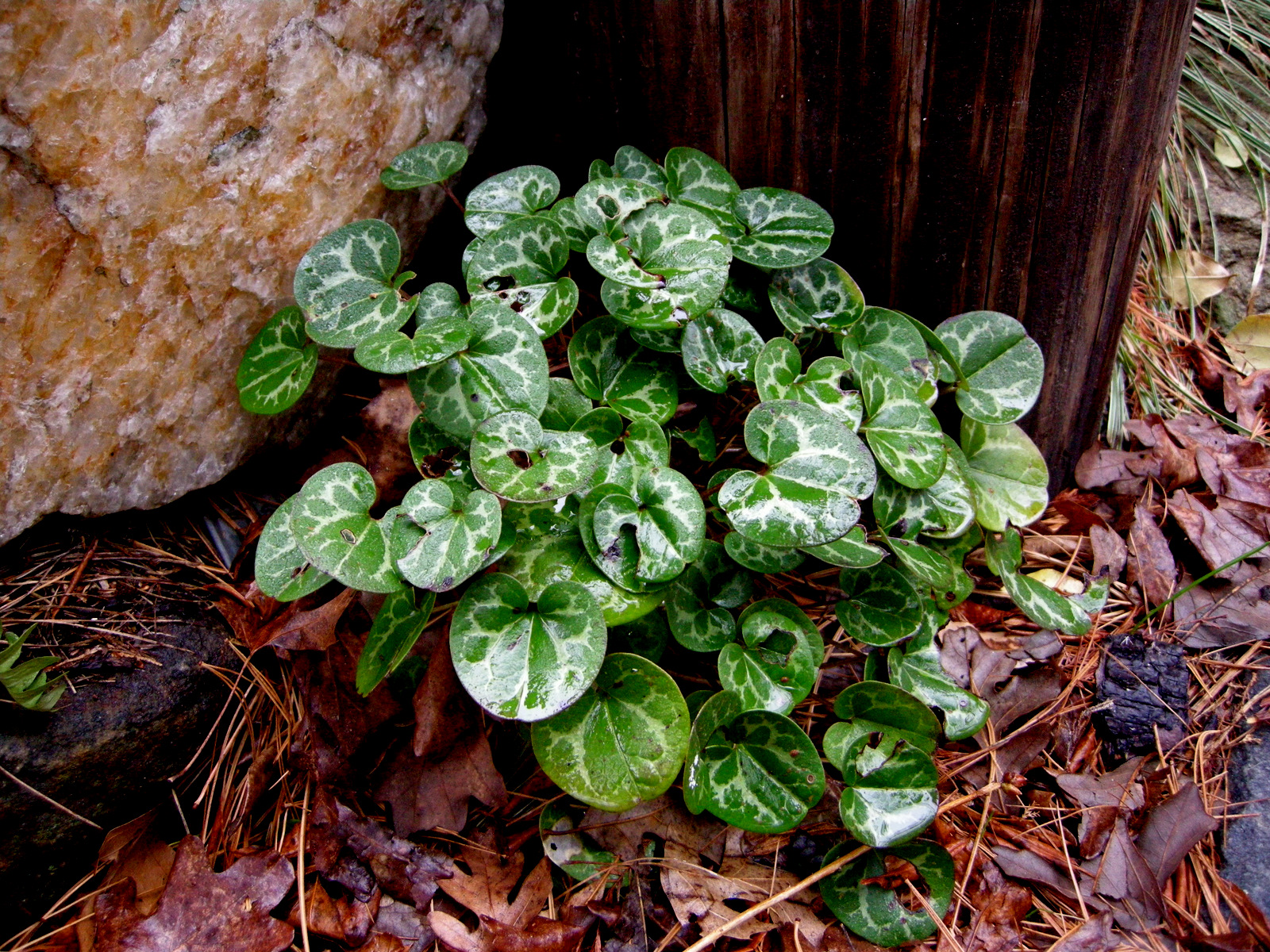
Helleborus purpurascens, which has no handy common name, is another one of my favorites.  The colors mixed in its flowers, blue-green and a silvery, smoky purple, have not been duplicated in any of the hybrid flowers.  I would also grow it just for its circular, filigreed leaves:


Helleborus purpurascens


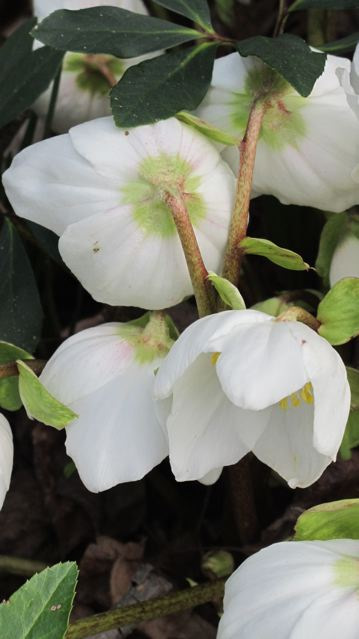
outside of H. purpurascens flower

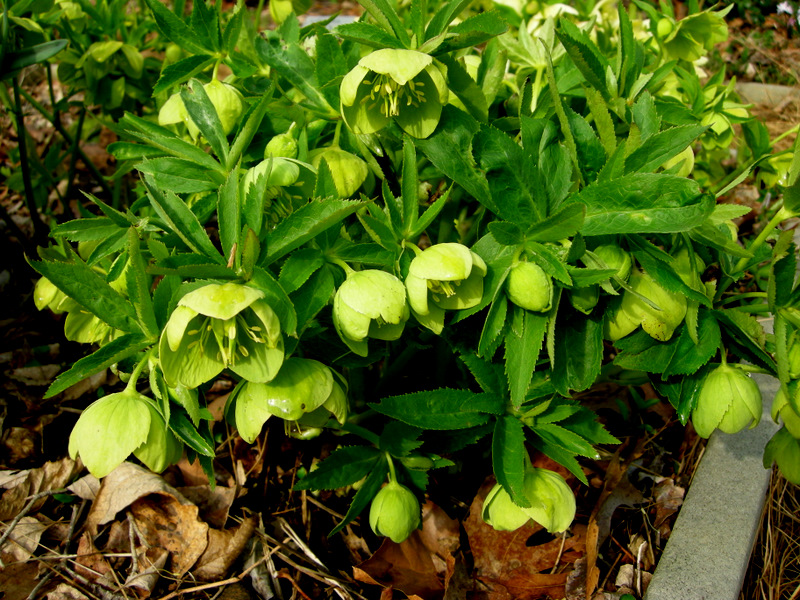
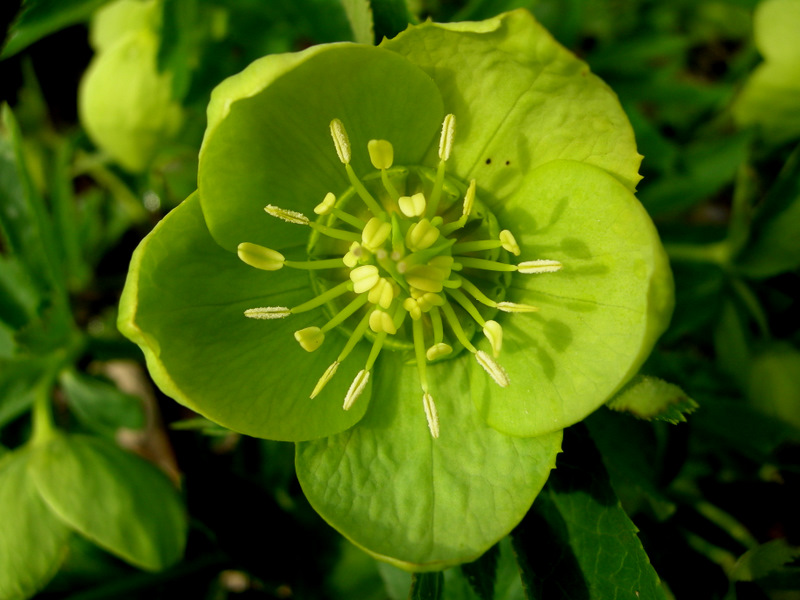
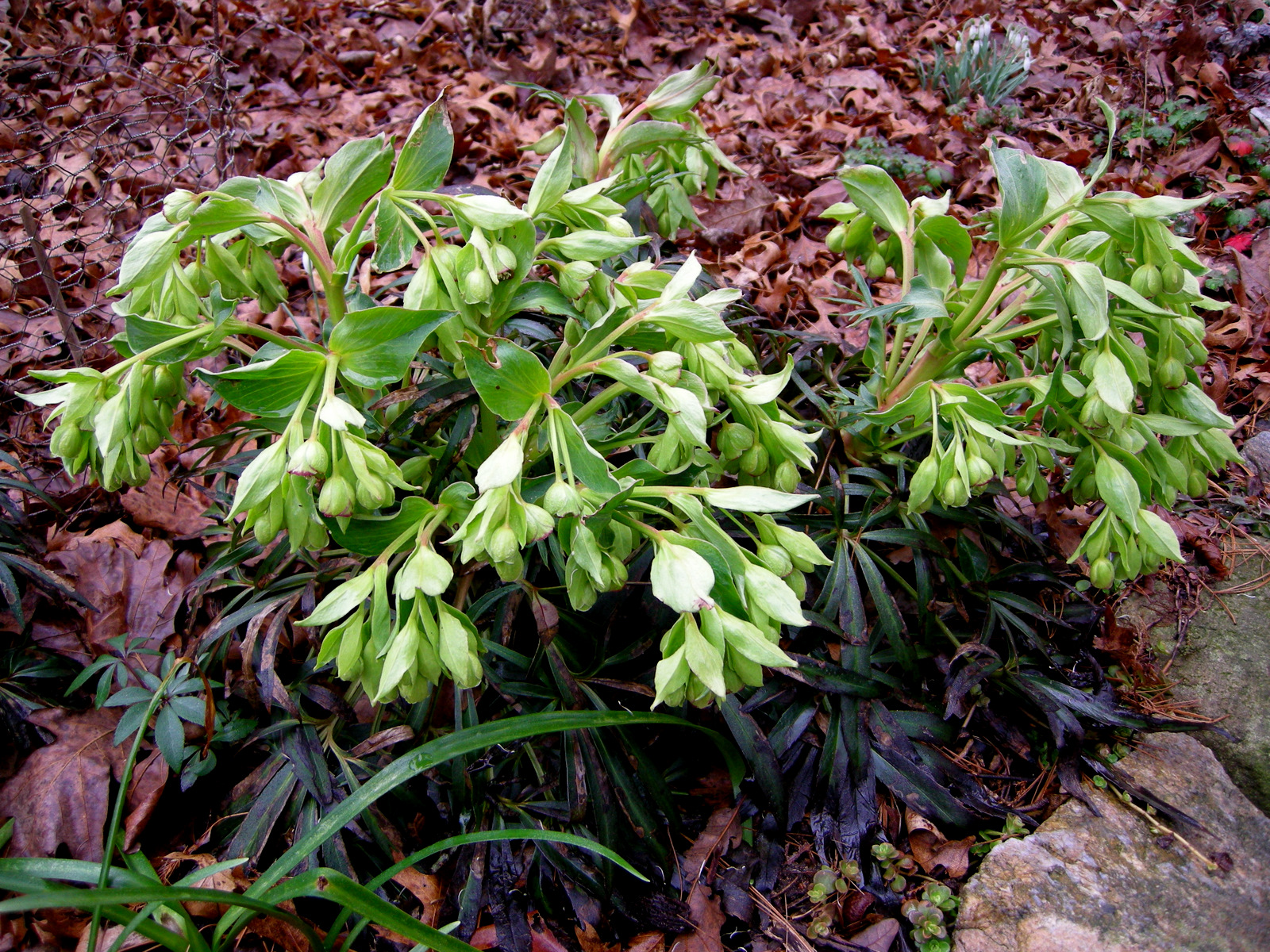
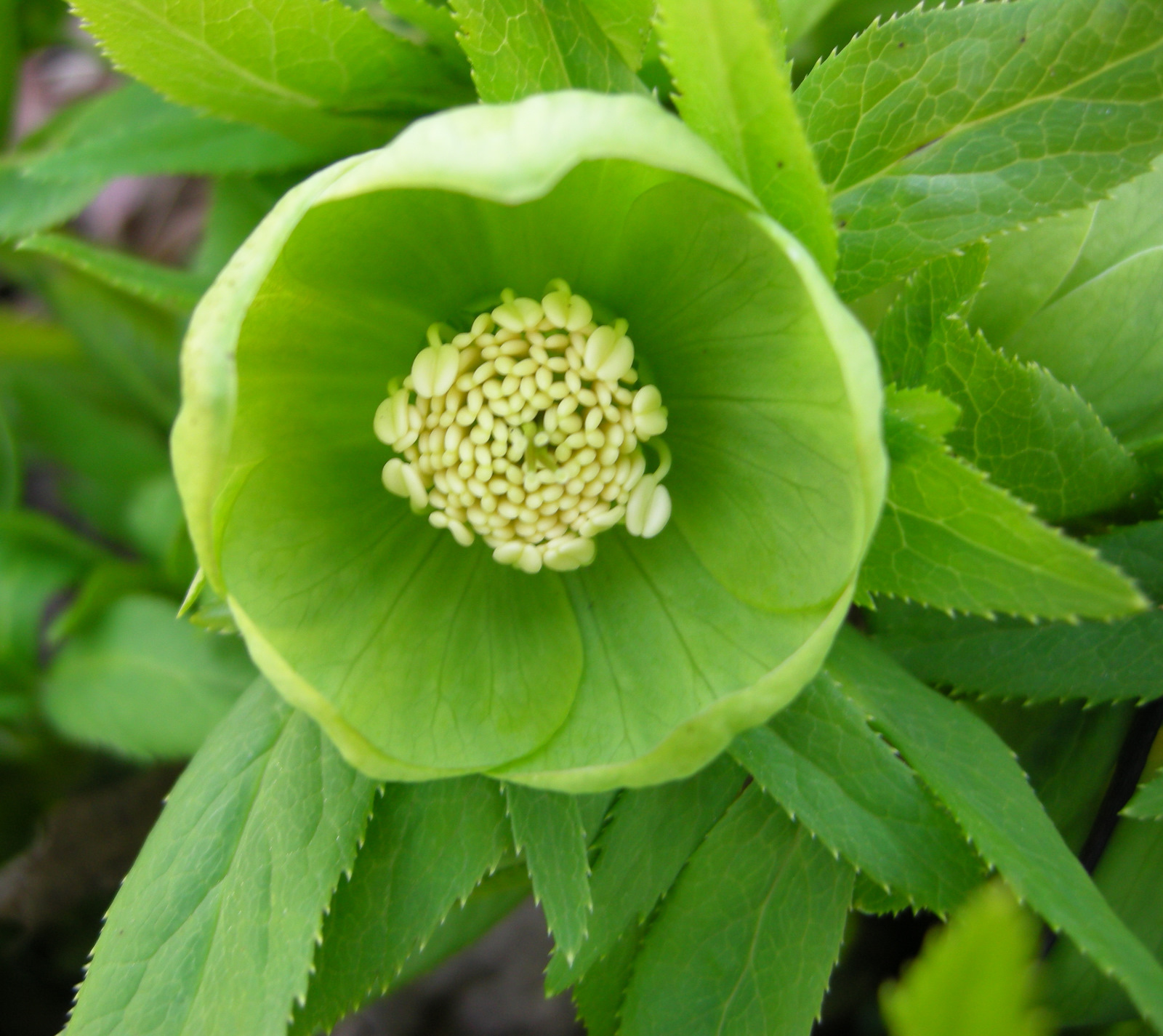
Green hellebore, H. viridis, has the purest green flowers of almost any plant I grow.  It is also shorter and more compact than the hybrid hellebores and the other species.  It too looks great with dark purple to black flowers, but my favorite combination features green hellebore with a drift of the true blue flowers of brunnera—heaven:


Green hellebore, H. viridis

flower of green hellebore

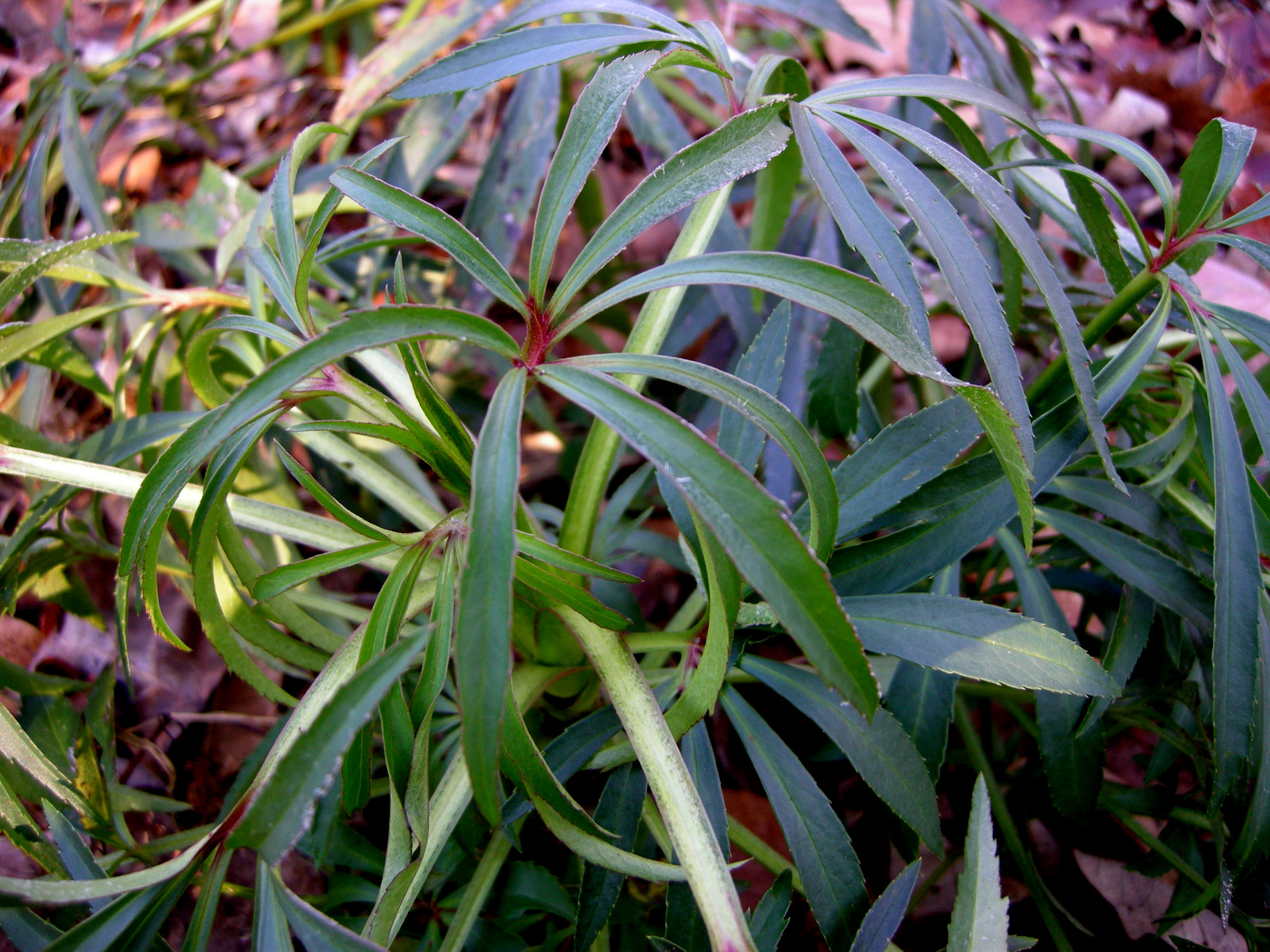
The final species that I will be offering this spring is bearsfoot hellebore, H. foetidus.  I profiled this plant in detail in Hellebores for Fall.  Bearsfoot has the most ornamental leaves of any hellebore, and they are truly wintergreen coming through ice and snow looking pristine.  Bearsfoot forms its lovely chartreuse buds in the fall.  The flowers open in winter and remain ornamental until it gets hot.  It is also taller than other hellebores, reaching two feet or more and giving it the stature of a small shrub:


Bearsfoot hellebore, H. foetidus


unusual, evergreen leaves of bearsfoot hellebore

When I started this post, I thought I would be able to fit the seven species above plus the five “species crosses” I will also be selling this spring.  You know me though: I get excited about hellebores.  By the time I included all the photos I wanted, the post was long enough.  Look for a third post with some exciting crosses, all with Christmas rose as a parent.

Carolyn

Notes: Every word that appears in orange on my blog is a link that you can click for more information.  If you want to return to my blog’s homepage to access the sidebar information (catalogues, previous articles, etc.) or to subscribe to my blog, just click here.

2012 Winter Interest Plants

Posted in bulbs for shade, Camellias, evergreen, garden to visit, hellebores, landscape design, Shade Perennials, Shade Shrubs, snowdrops, winter, winter interest with tags , , , , , , , , , , , , , , , , , on February 29, 2012 by Carolyn @ Carolyns Shade Gardens

Carolyn’s Shade Gardens is a retail nursery located in Bryn Mawr, PA, specializing in showy, colorful, and unusual plants for shade.  The only plants that we ship are snowdrops within the US.  For catalogues and announcements of local events, please send your full name, mailing address, and cell number to carolyn@carolynsshadegardens.com and indicate whether you are interested in snowdrops, hellebores, and/or hostas.  Click here to get to the home page of our website for catalogues and information about our nursery and to subscribe to our blog.

Camellia japonica ‘Berenice Boddy’ in full bloom in February in the Cresson garden.

On Friday, February 24, and Monday, February 27, Charles Cresson presented the second annual Winter Interest Plant Seminars for my customers in his beautiful garden located in Swarthmore, Pennsylvania, US.  I did a post on the seminars last year (to read it click here) and thought I had covered the topic.  However, our very warm winter meant that many different plants were in bloom so I want to show you what we saw.


The weather was cold and rainy on Friday, but participants didn’t let it stop them from enjoying Charles’s presentation.

Monday was warm and sunny which allowed more time for dawdling in the garden.  The snowdrops were a big hit.

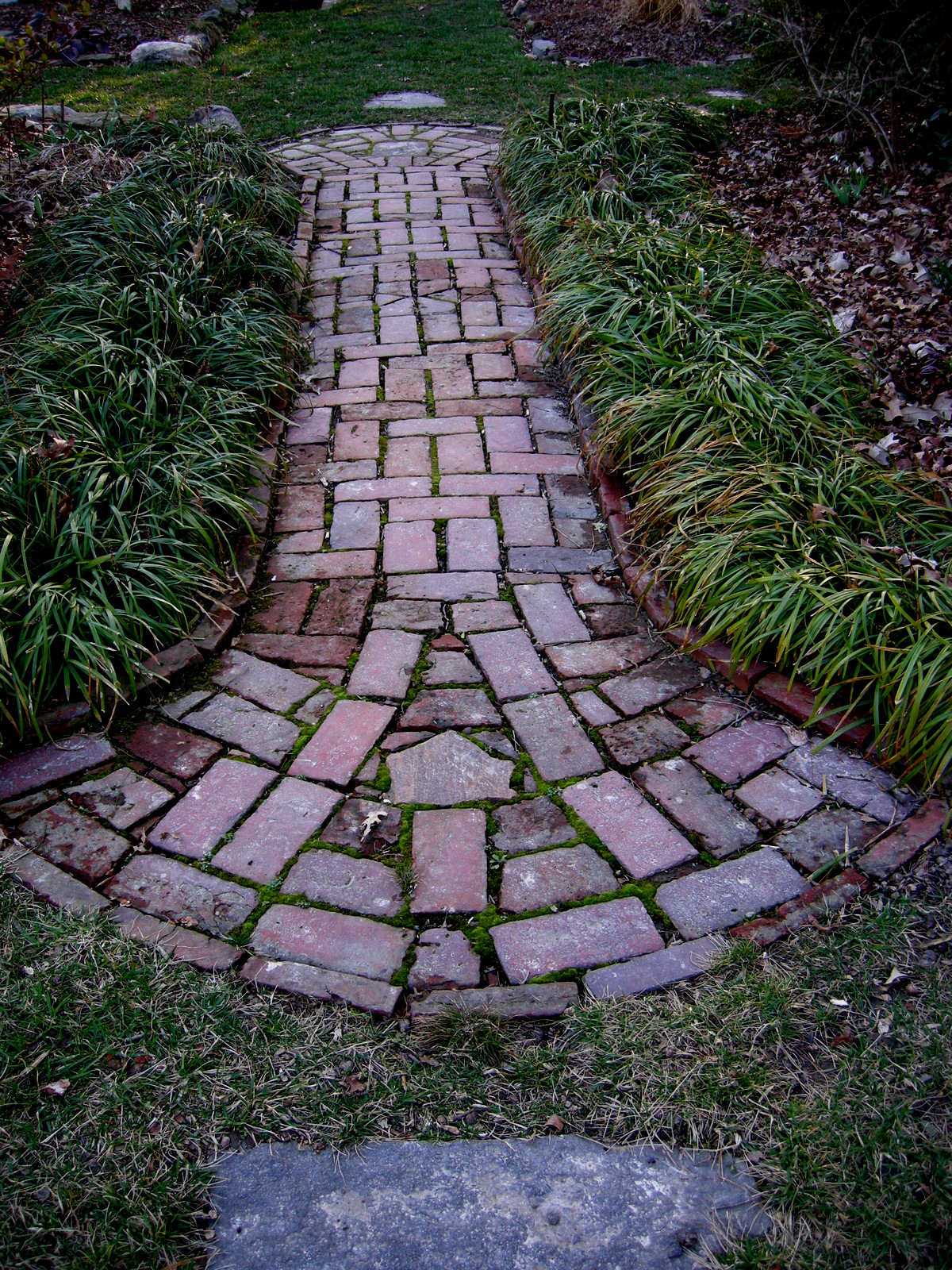
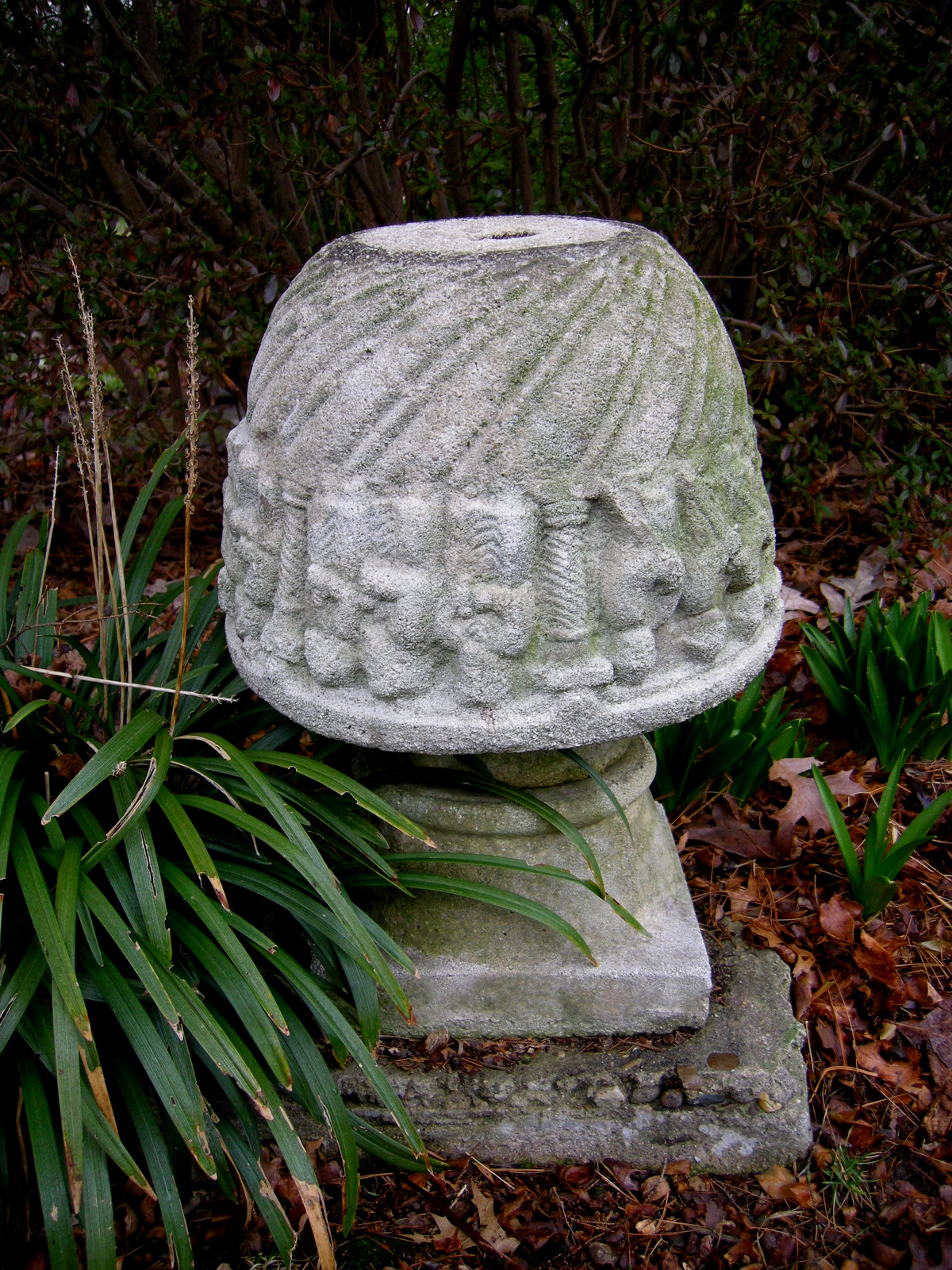
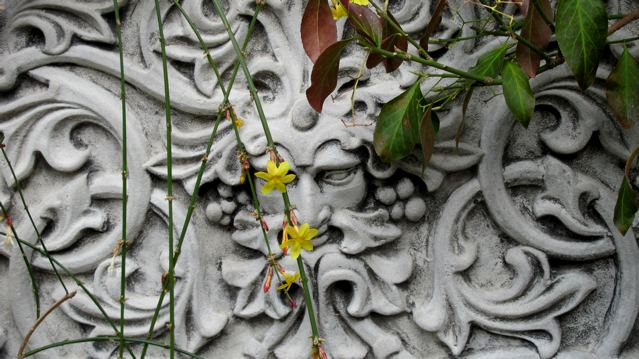
The attention to detail in Charles’s garden is amazing.  I thought I would show you some of the “hardscape” features, many of which Charles built himself:


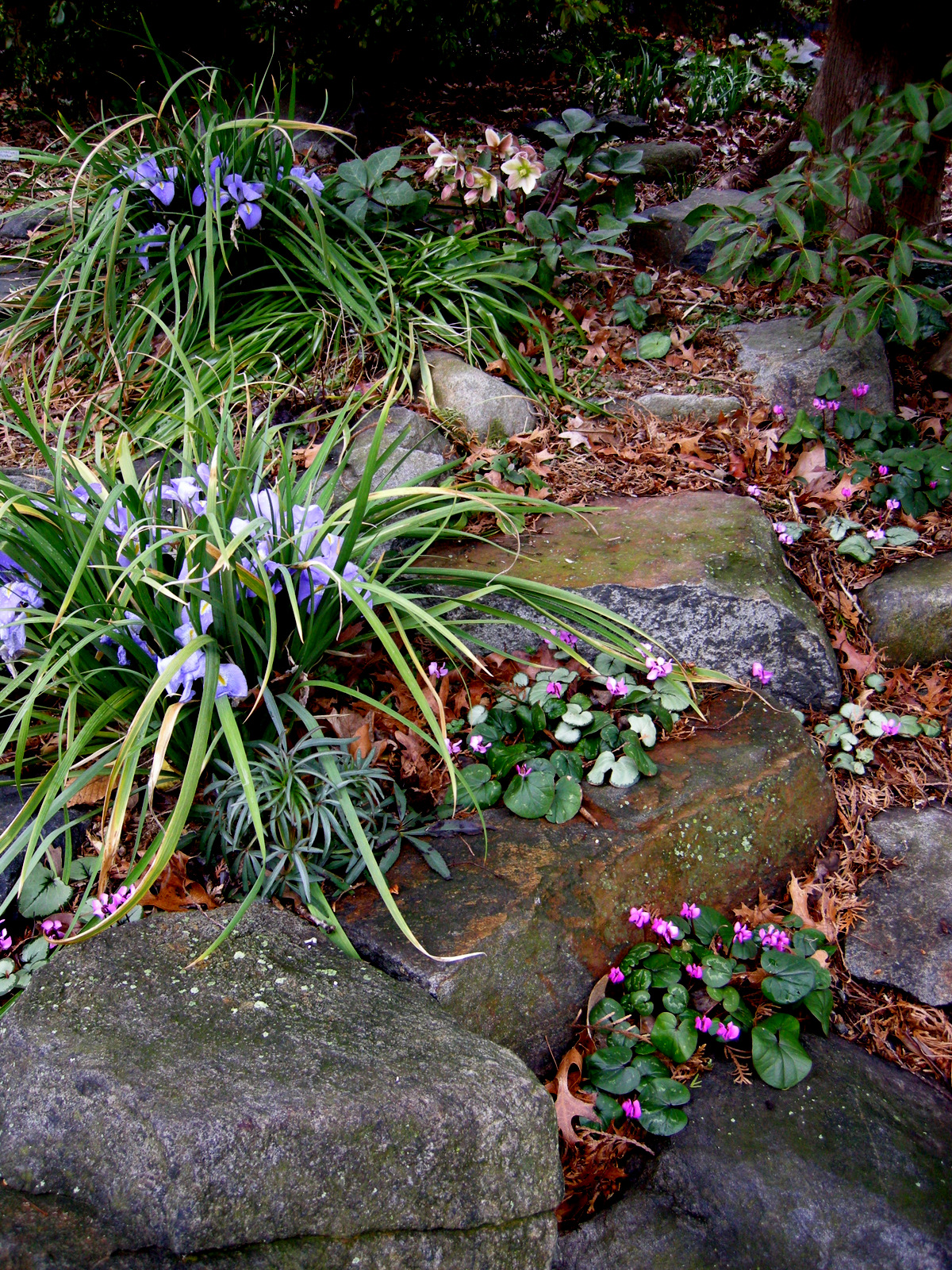
The rock garden with hellebores, Algerian iris, and spring-blooming hardy cyclamen.

Garden shed with the original green roof.

Winter jasmine, Jasminum nudiflorum, photo by seminar participant Lucretia Robbins.

Charles has a spectacular collection of winter-blooming shrubs, many of which are fragrant.  We were all surprised by which one was the most fragrant at that time of year:


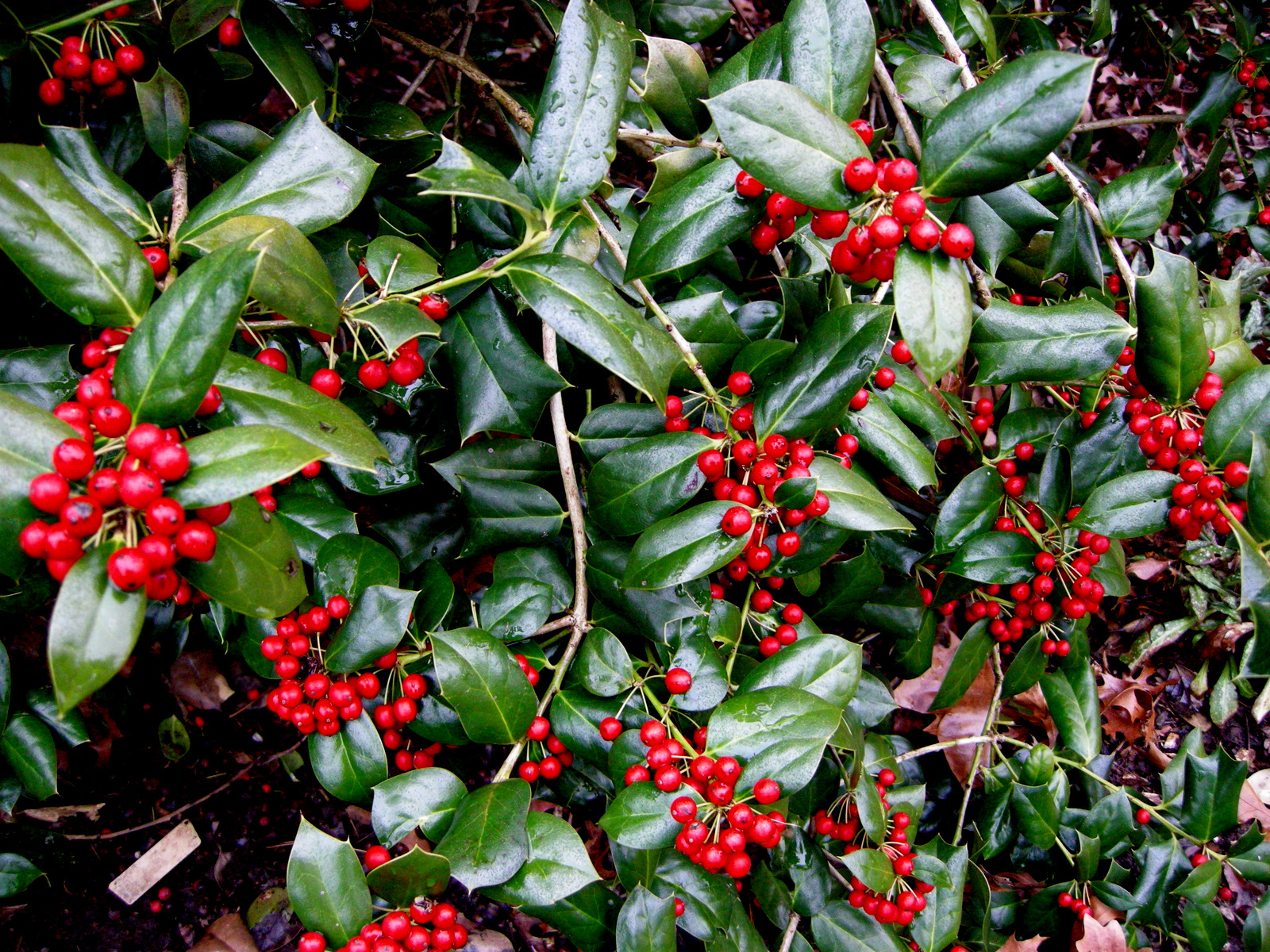
Chinese holly, Ilex cornuta, retains its berries through the winter.


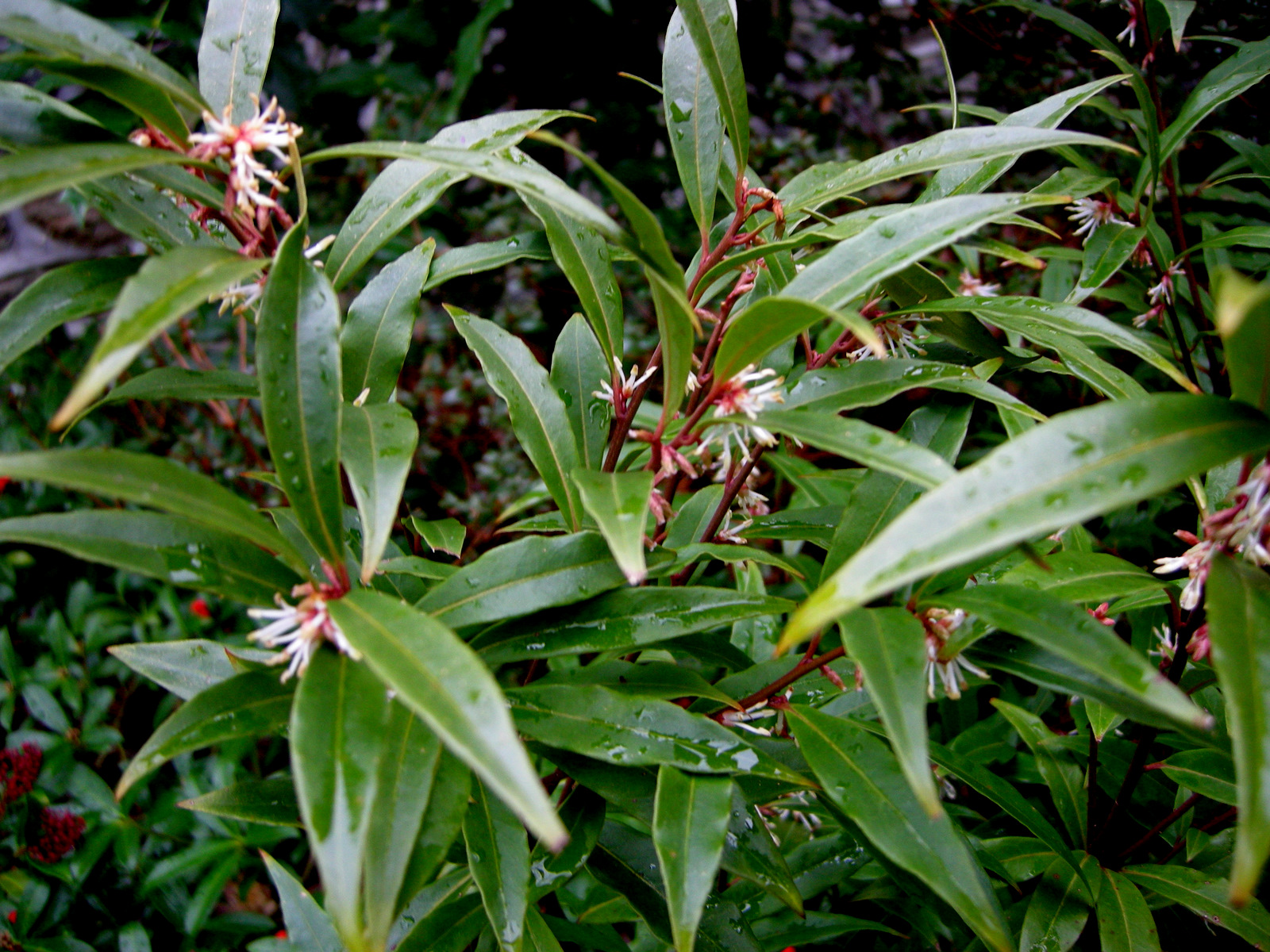
Sweetbox, Sarcococca hookeriana var. digyna ‘Purple Stem’, adds the additional feature of ornamental stems to sweetbox’s many desirable attributes.


Bodnant viburnum, V. bodnantense ‘Dawn’, is very fragrant.


Flower of Bodnant viburnum


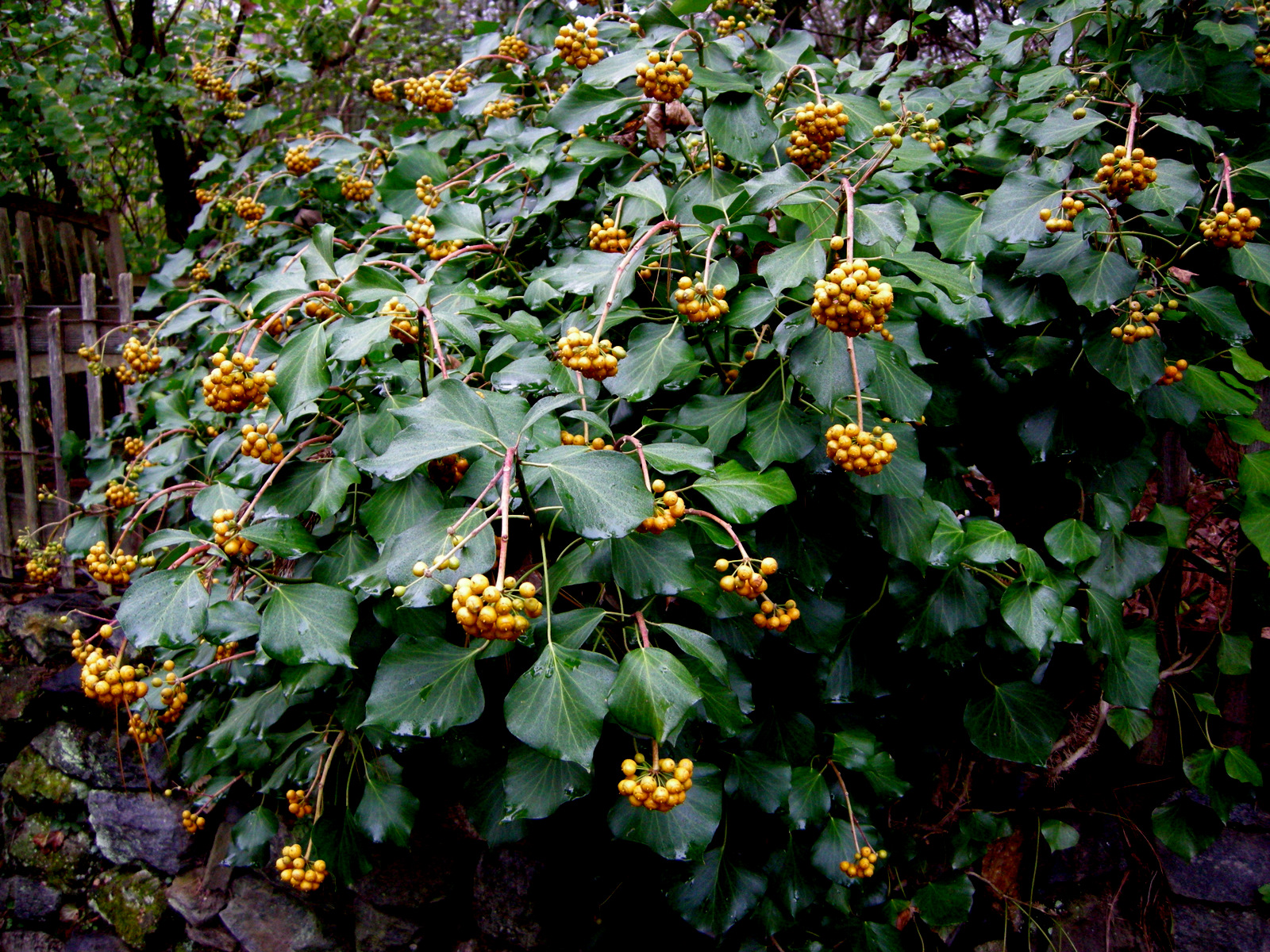
The adult form of English ivy, Hedera helix ‘Poetica Arborea’, produces beautiful berries but is also considered very invasive.


Camellia x ‘April Tryst’ is blooming early.


I like the male flowers of Japanese skimmia, S. japonica, as much as the berries on the female plants.


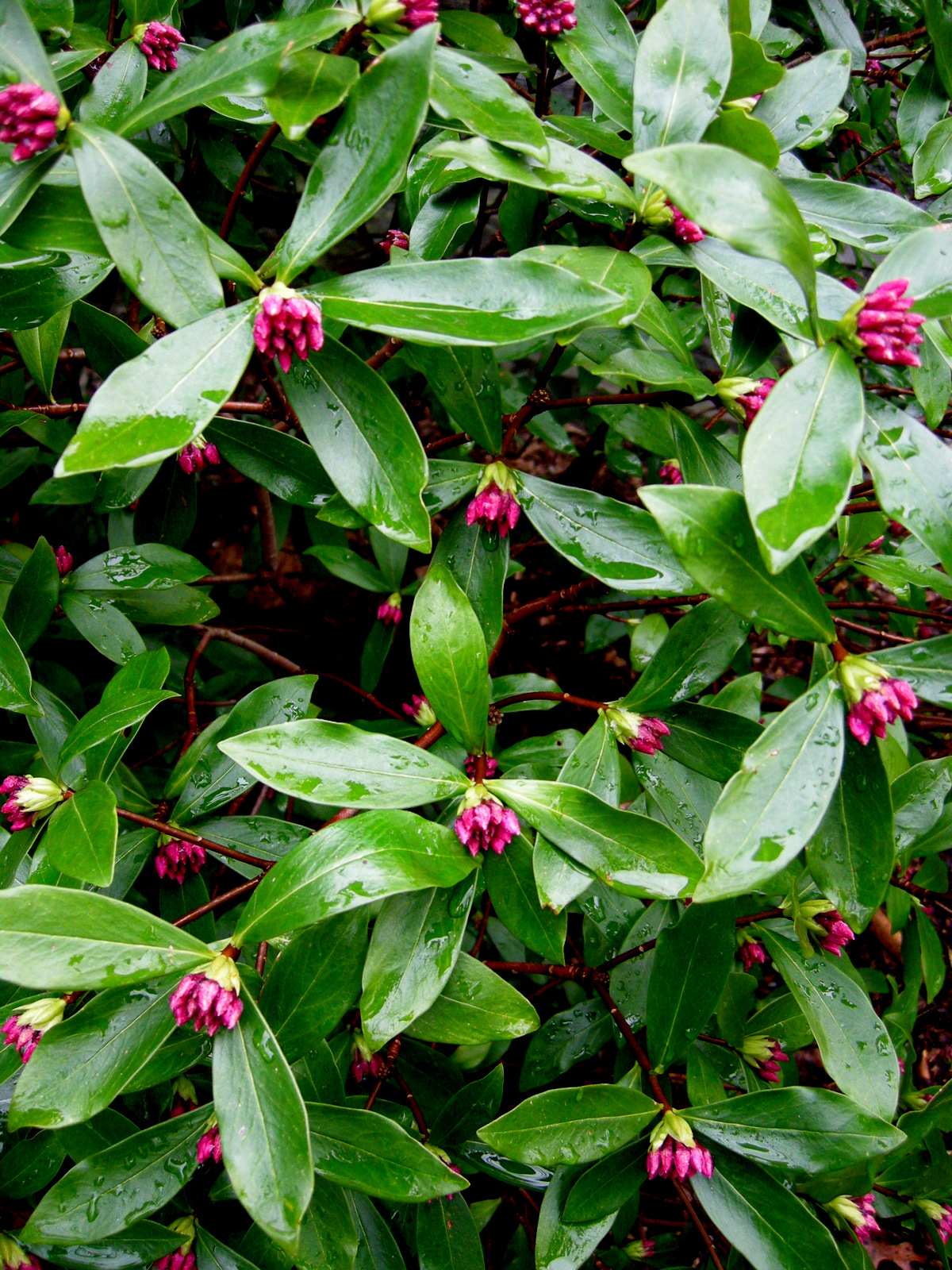
Winter daphne, D. odora, is one of my favorite shrubs because of its wonderful fragrance, excellent habit, evergreen leaves, and lovely flowers.


And the winner is….  Yes, Japanese mahonia, M. japonica, was the most fragrant plant in Charles’s garden even with all the excellent competition above.

Winter-blooming herbaceous perennials were also well represented:

The pink flowers and evergreen leaves of heath, Erica x darleyensis ‘Furzey’.

Evergreen heart leaf ginger, Asarum virginicum

Fragrant Algerian iris, I. unguicularis, was a big hit.

Christmas rose, Helleborus niger, photo Lucretia Robbins

A gorgeous anemone-flowered (ruffle around the center of the flower) hybrid hellebore—my favorite type of hellebore flower.

The most evergreen hellebore of them all, bearsfoot hellebore, H. foetidus.

Helleborus x ericsmithii ‘Winter’s Song’

Hybrid hellebore with the very robust and extremely fragrant snowdrop ‘Brenda Troyle’.

The tour included a wonderful selection of winter-blooming bulbs, including choice snowdrop cultivars.  Here are just a few:

Seeing this large patch of the very fragrant snowdop ‘S. Arnott’ sent participants back to add it to their purchases for the day.

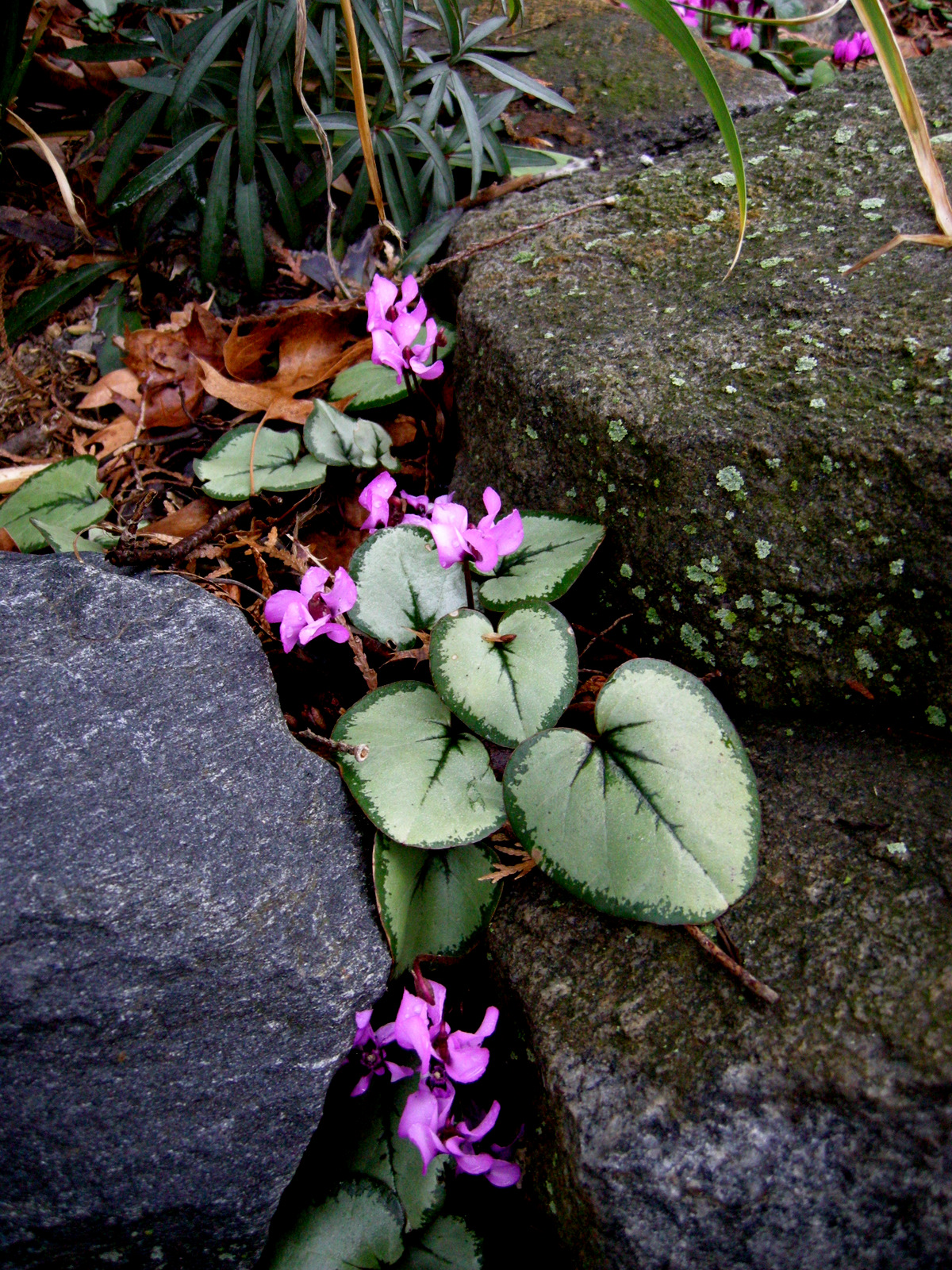
Spring-blooming hardy cyclamen, C. coum

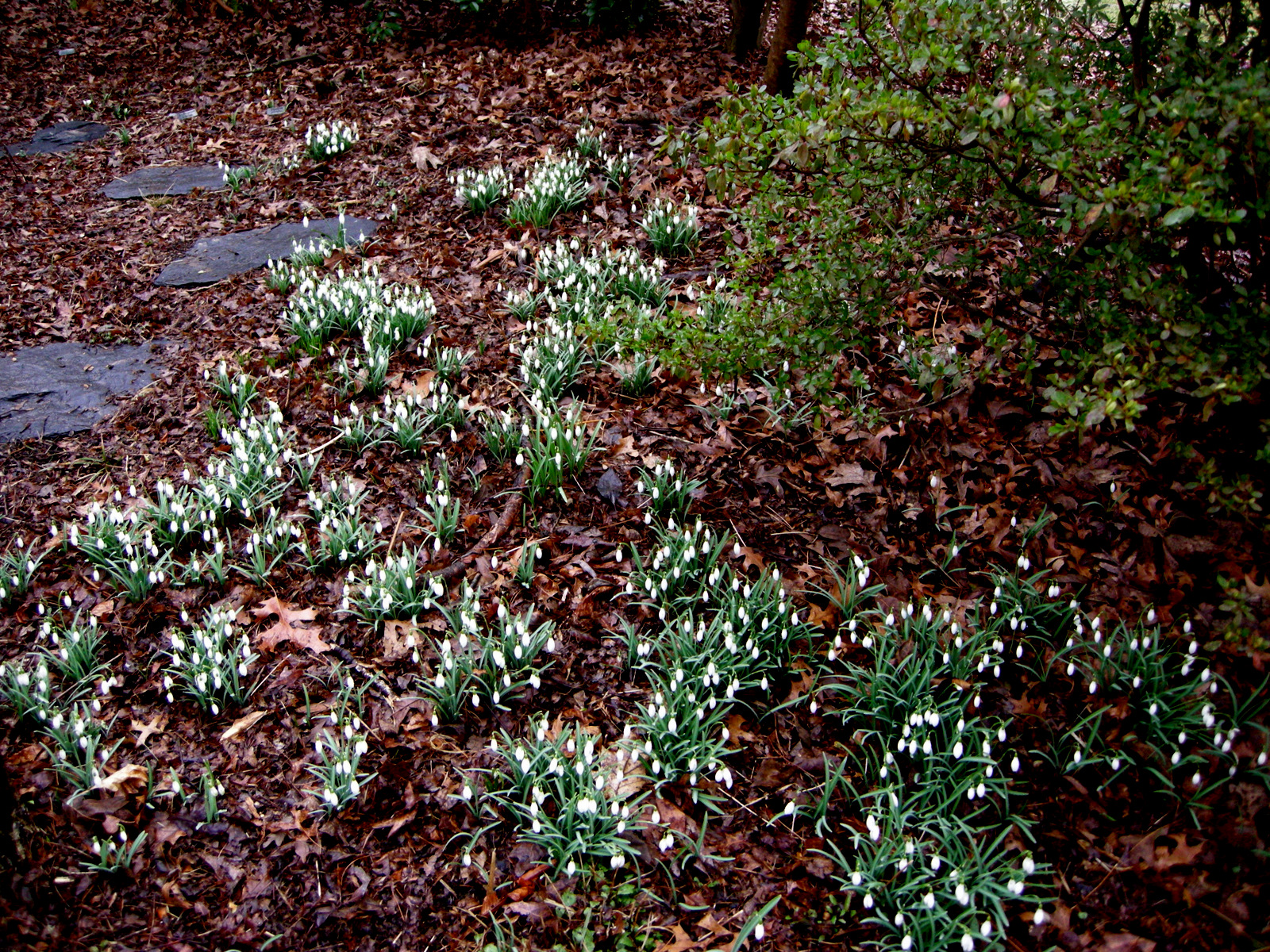
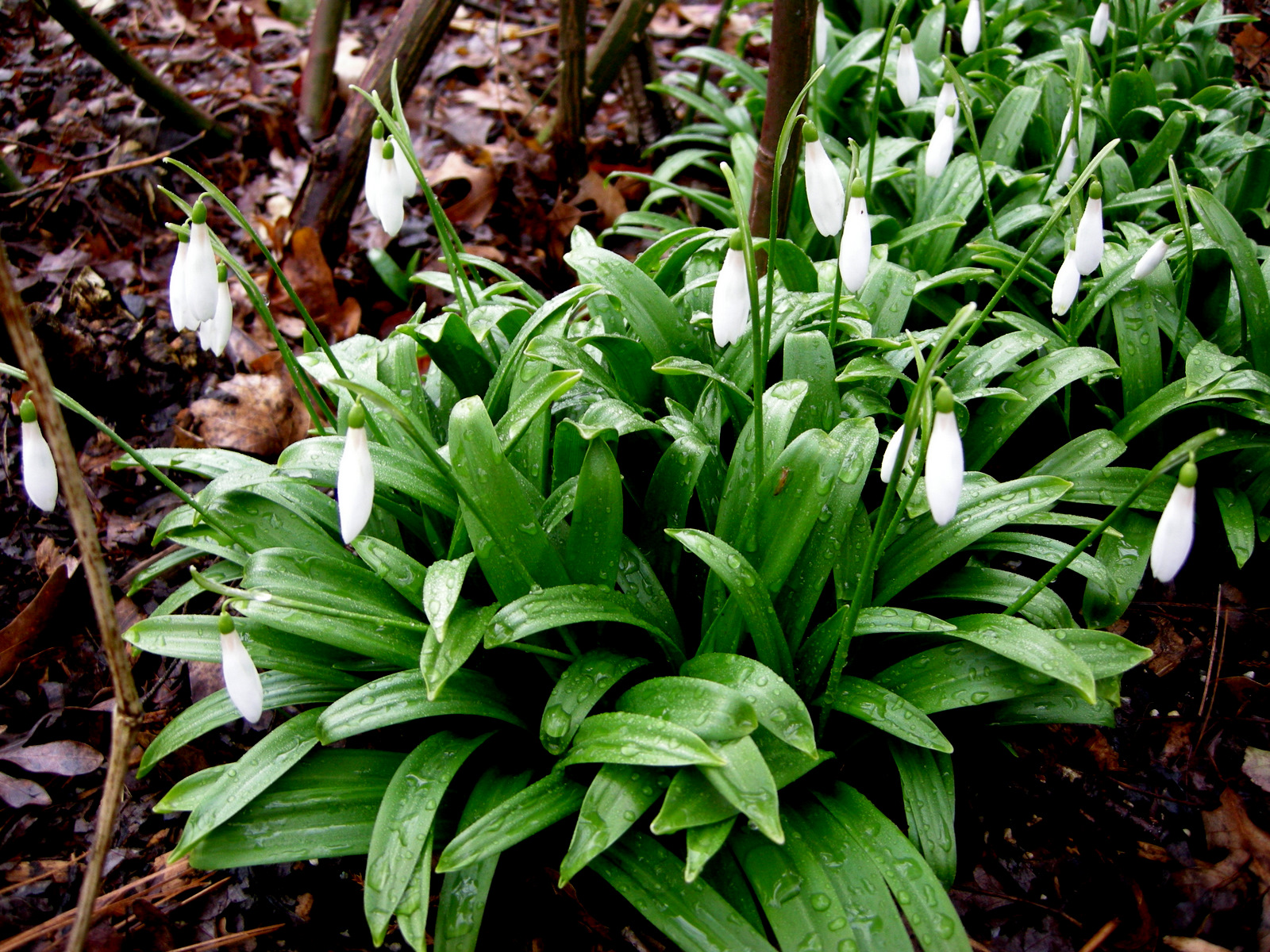
The common snowdrop, Galanthus nivalis, multiplies quickly and looks great when massed.

Evergreen leaves of fall-blooming hardy cyclamen, C. hederifolium

A single bulb of a rare yellow-flowered cultivar of the species snowdrop, G. woronowii, just sold for $1,145 on UK eBay.

A silver-leafed form of spring-blooming hardy cyclamen.

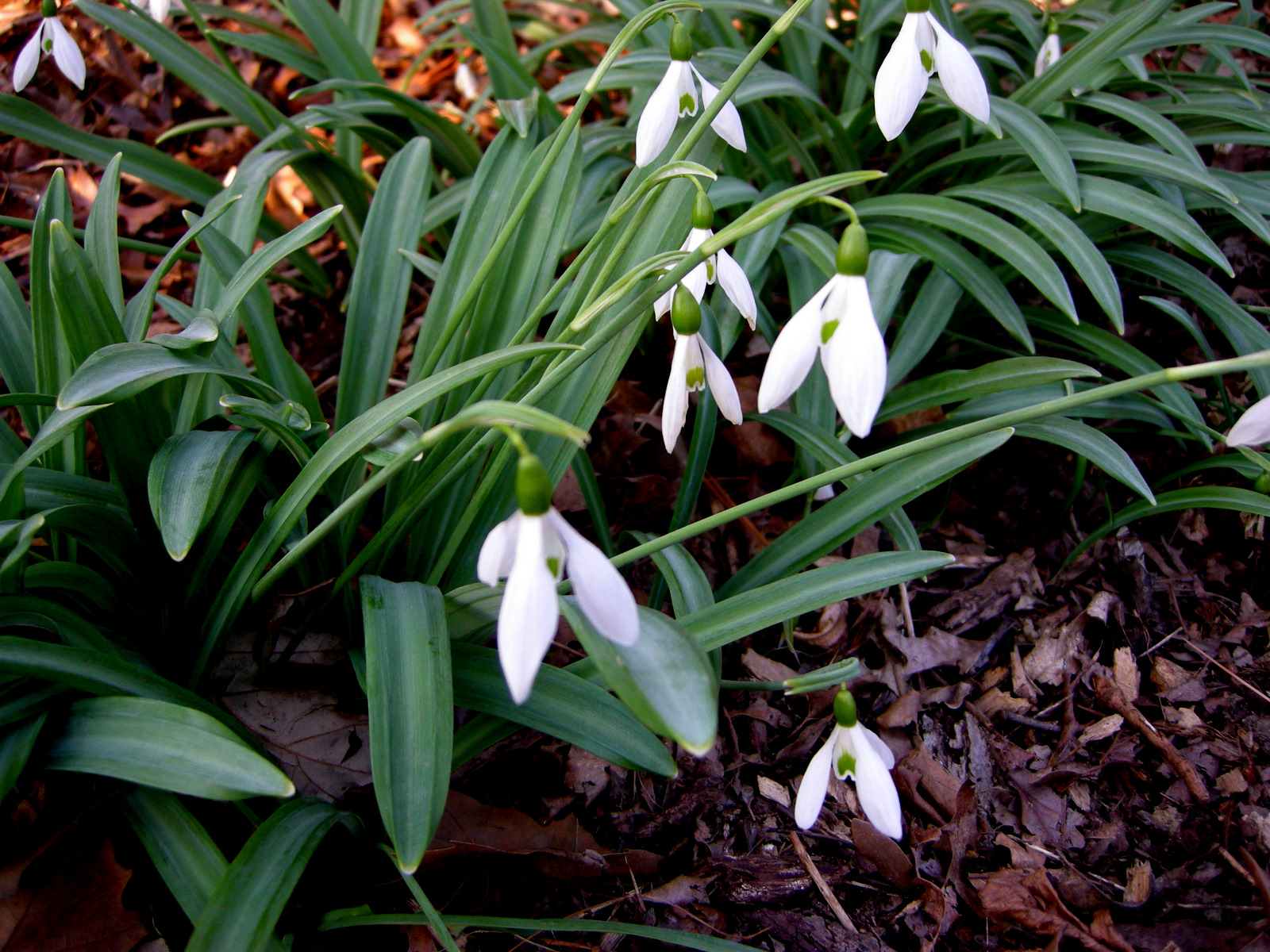
The species snowdrop Galanthus plicatus has been in cultivation since the 16th century and comes from Russia and Turkey.  It has beautiful leaves with a unique folded (explicative) pattern.

For all of you who couldn’t actually attend Charles’s seminars, I hope you have enjoyed your virtual tour.

Carolyn

Notes: Every word that appears in orange on my blog is a link that you can click for more information.  If you want to return to my blog’s homepage to access the sidebar information (catalogues, previous articles, etc.) or to subscribe to my blog, just click here.
A Wonder of Nature

Posted in bulbs for shade, garden to visit, Shade Perennials, winter, winter interest with tags , , , on February 21, 2012 by Carolyn @ Carolyns Shade Gardens

Carolyn’s Shade Gardens is a retail nursery located in Bryn Mawr, PA, specializing in showy, colorful, and unusual plants for shade.  The only plants that we ship are snowdrops within the US.  For catalogues and announcements of local events, please send your full name, mailing address, and cell number to carolyn@carolynsshadegardens.com and indicate whether you are interested in snowdrops, hellebores, and/or hostas.  Click here to get to the home page of our website for catalogues and information about our nursery and to subscribe to our blog.

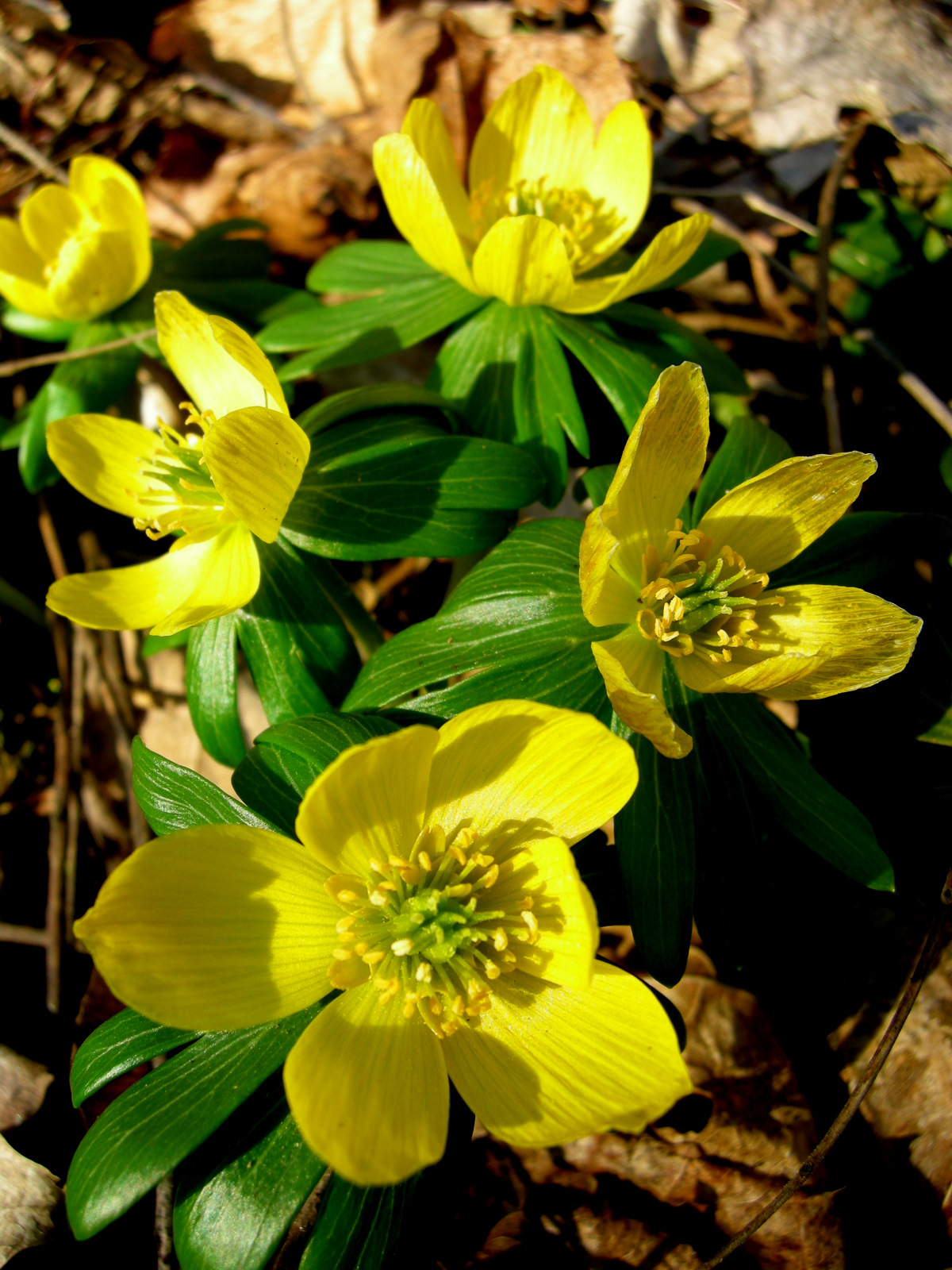
Winter aconite, Eranthis hyemalis

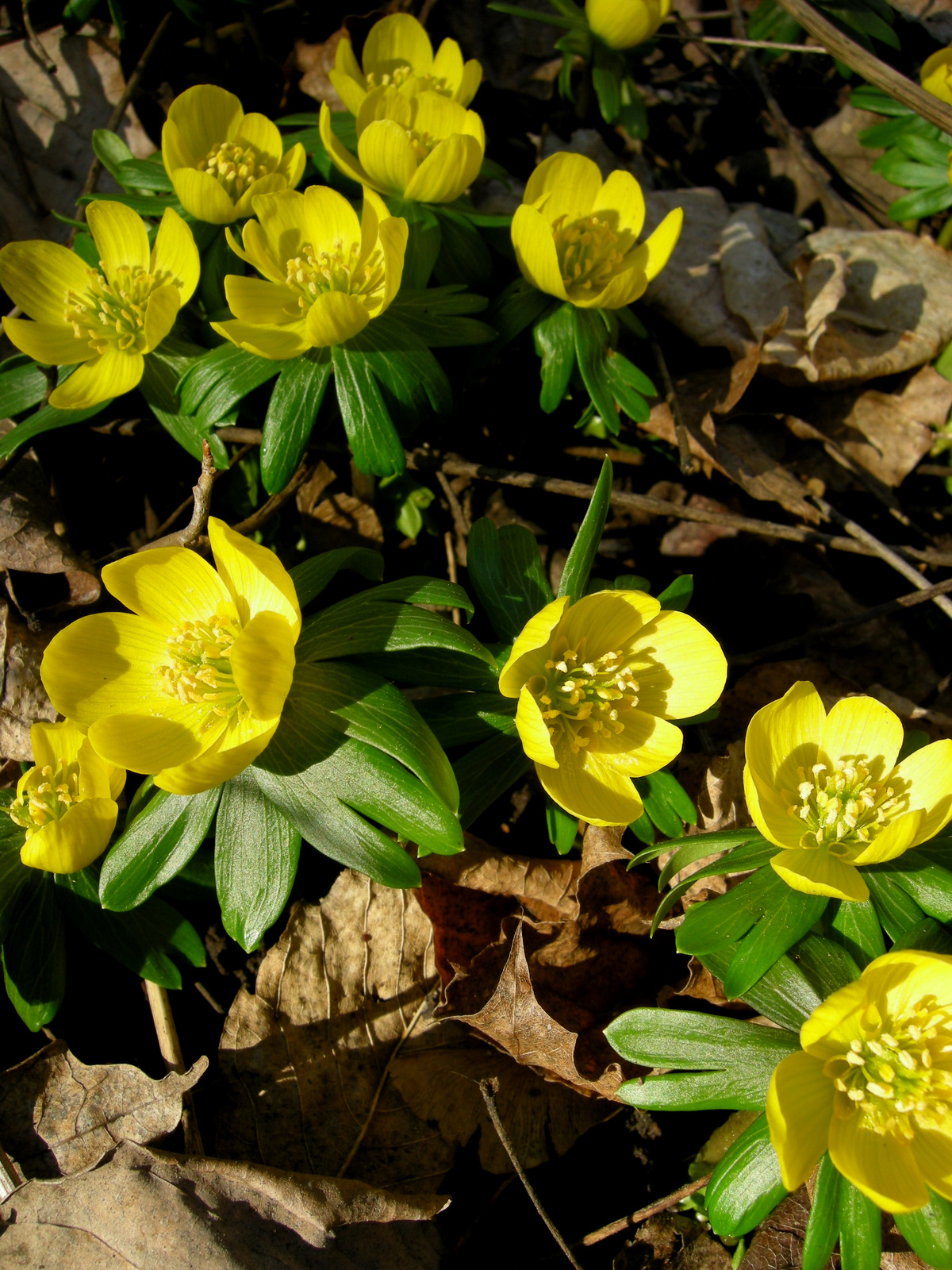
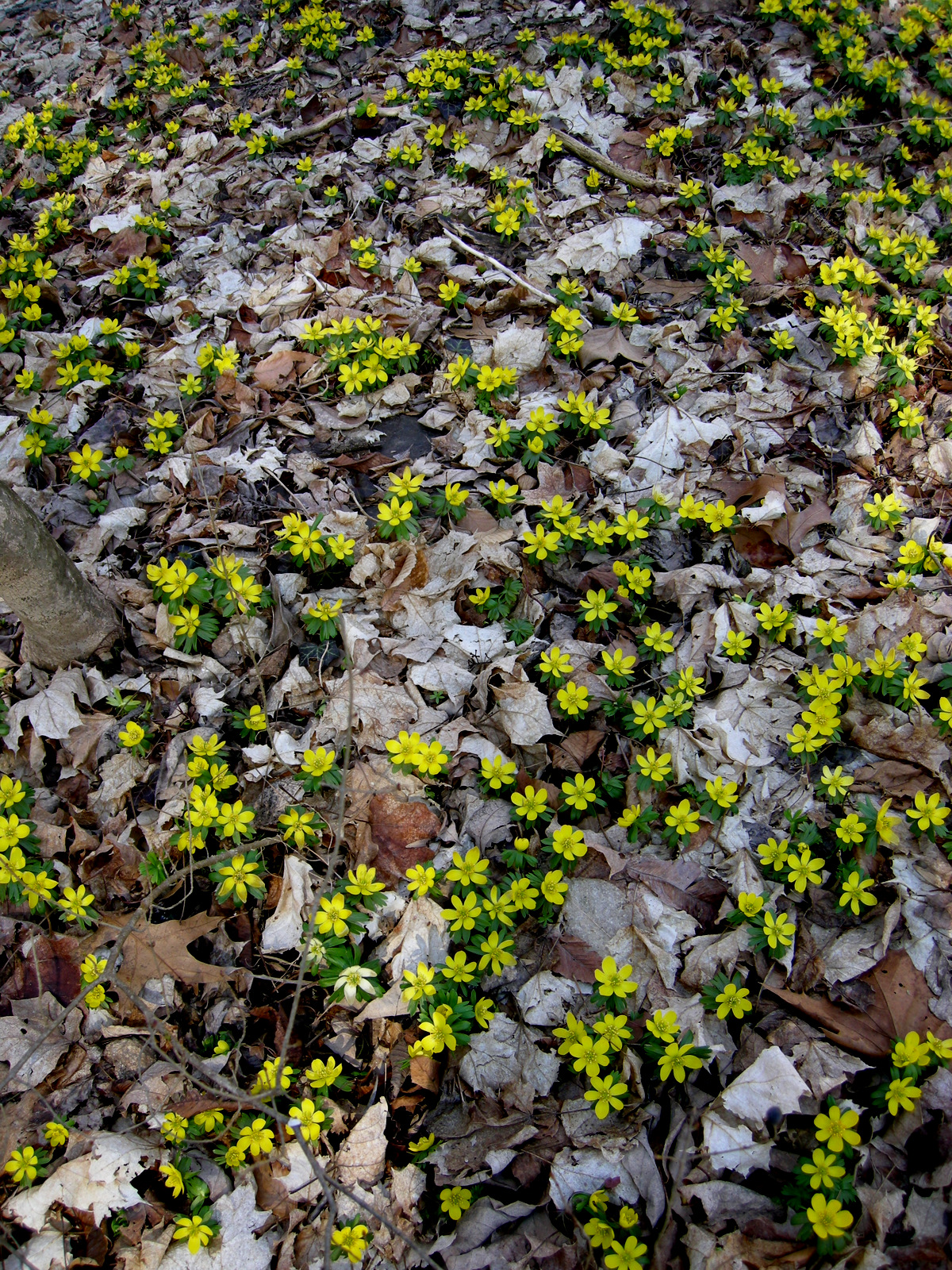
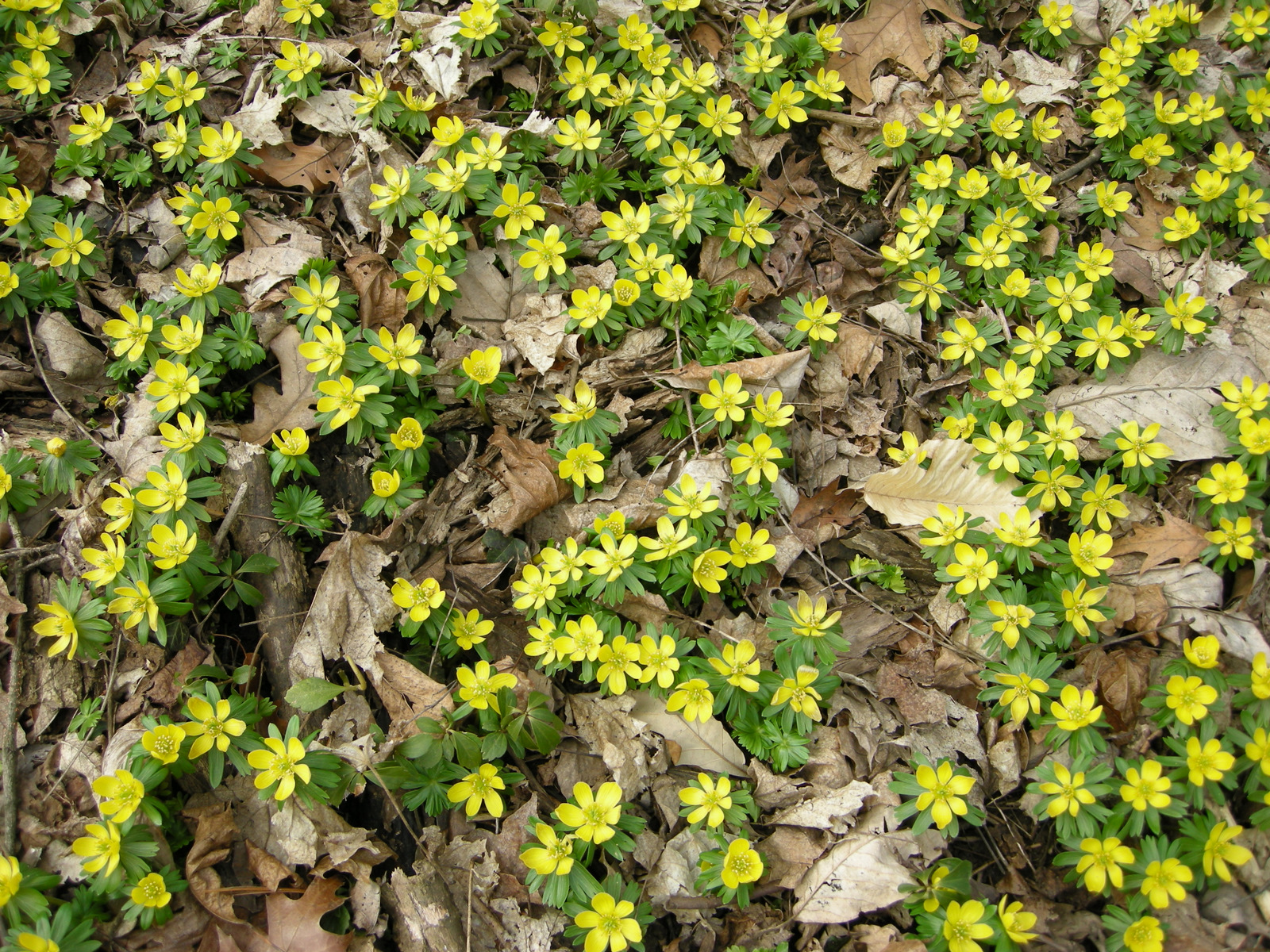
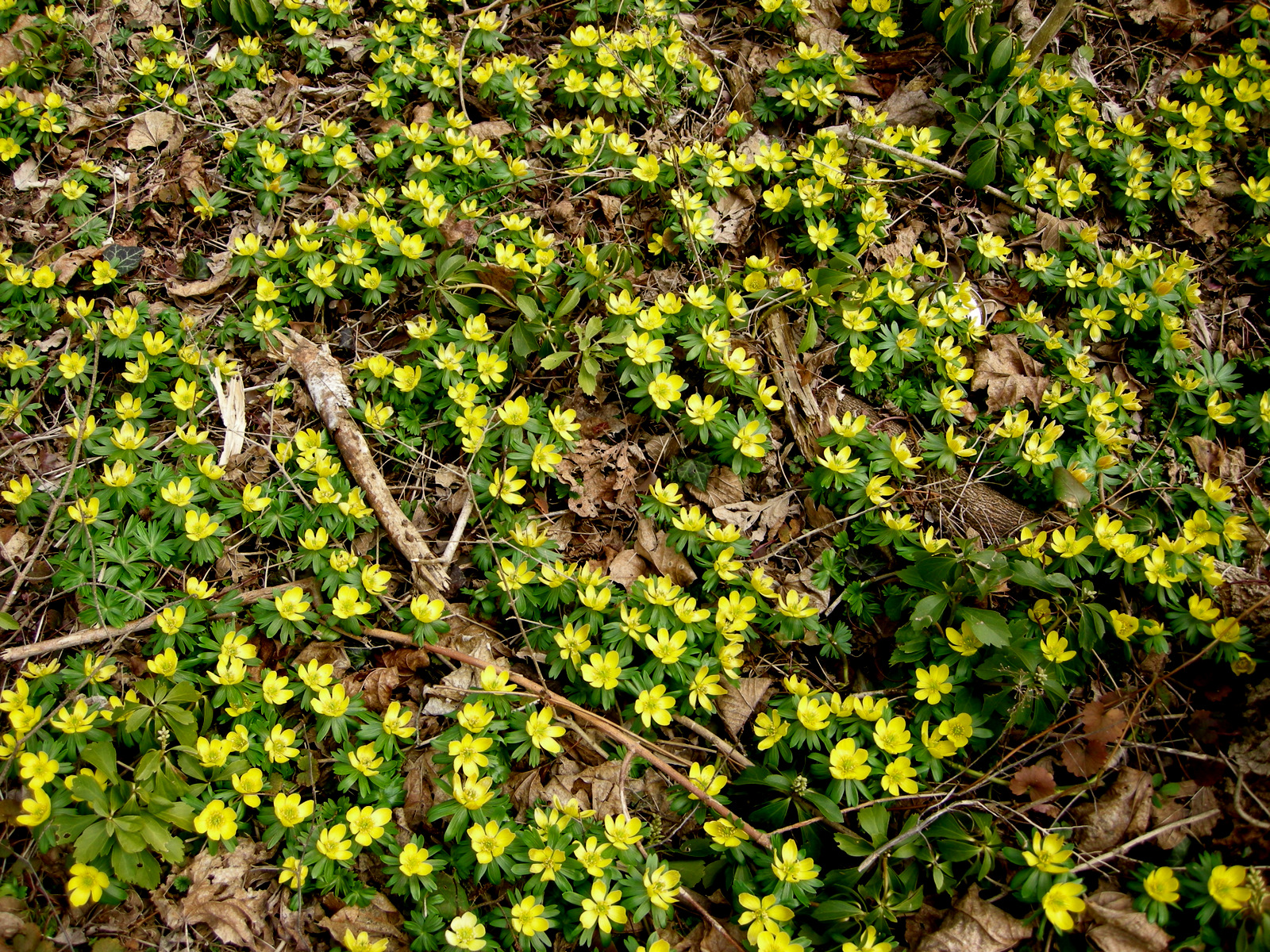
One of the first plants to bloom in my garden is winter aconite.  It usually starts blooming in February and continues into March.  I treasure its cheery yellow flowers with their shiny green collars because they brighten what can otherwise be a cold and dreary time of year.


When my original winter aconite plants got this big, I was thrilled.

Winter aconite is in the buttercup family and is native to Europe.  It is about four inches tall and prefers woodland soil in deciduous shade.  It wants to be cool in the summer but not too dry, and it will not tolerate wet soil.  It grows in zones 3 to 7.  Winter aconite is a bulb (technically a tuberous rhizome) and goes dormant when the weather gets hotter.  Some sources state that it is poisonous to humans, but there have been no reported incidents.  It is deer resistant and black walnut tolerant.


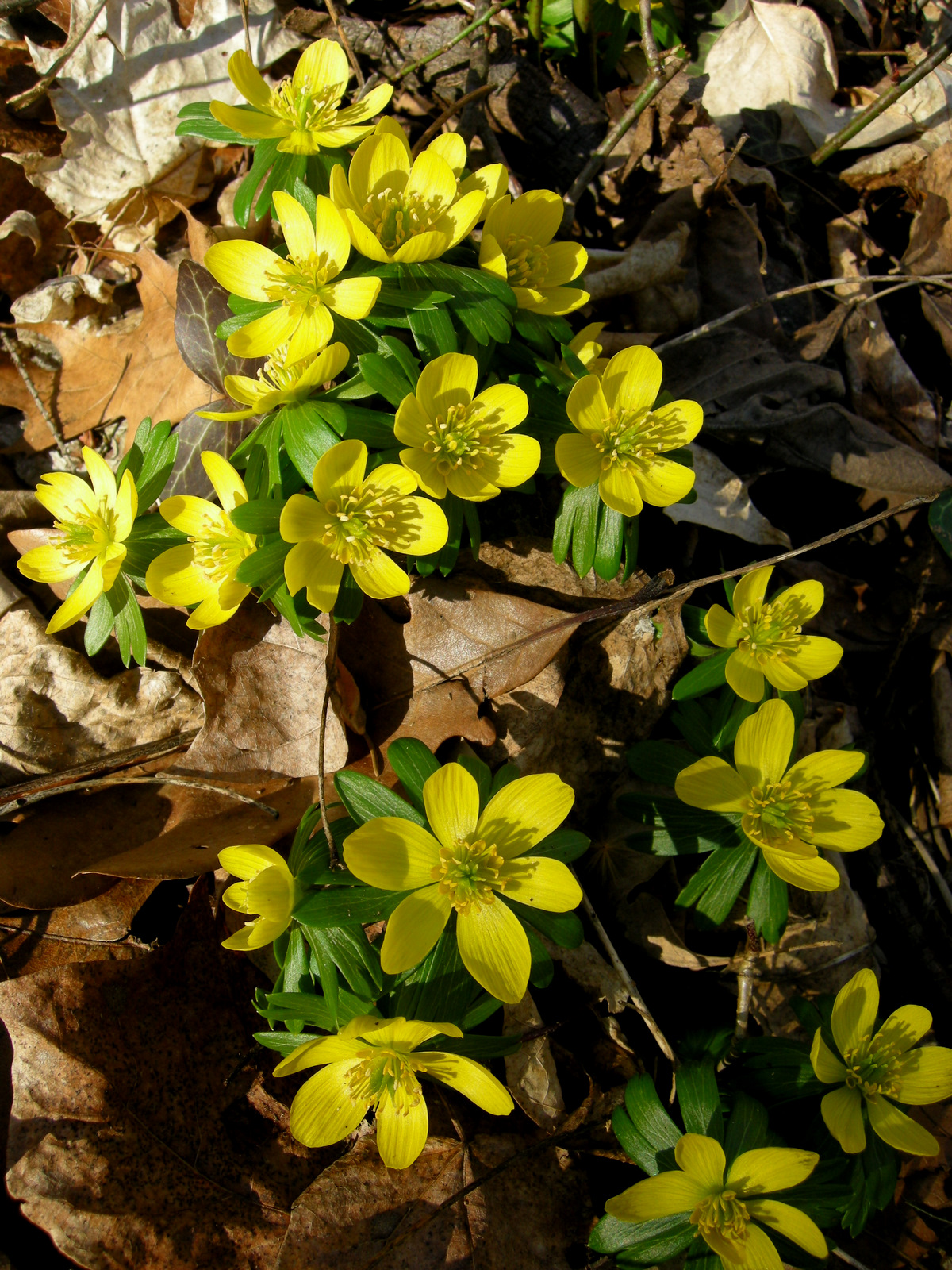
When the patch started to fill in like this one I was ecstatic.

You can order winter aconite as a dried bulb.  It is recommended that the bulbs be soaked overnight to increase success.  Despite soaking, I never got more than one or two bulbs to grow into plants.  I tried several times.  Then a friend of mine gave me some growing plants (thanks Julie!), and my little patch of winter aconite began in earnest.


After several years, my patch looked like this.

Winter aconite naturalizes well once you get the initial plants going.  The best way to spread it is to collect the seeds and sprinkle them where you want them.  If you don’t collect the seeds, they tend to germinate around the base of the mother plant.  My winter aconite has been so successful that, after ten years,  I was able to sell growing plants in my snowdrop catalogue (although next year I need to give the patch a “rest”). 


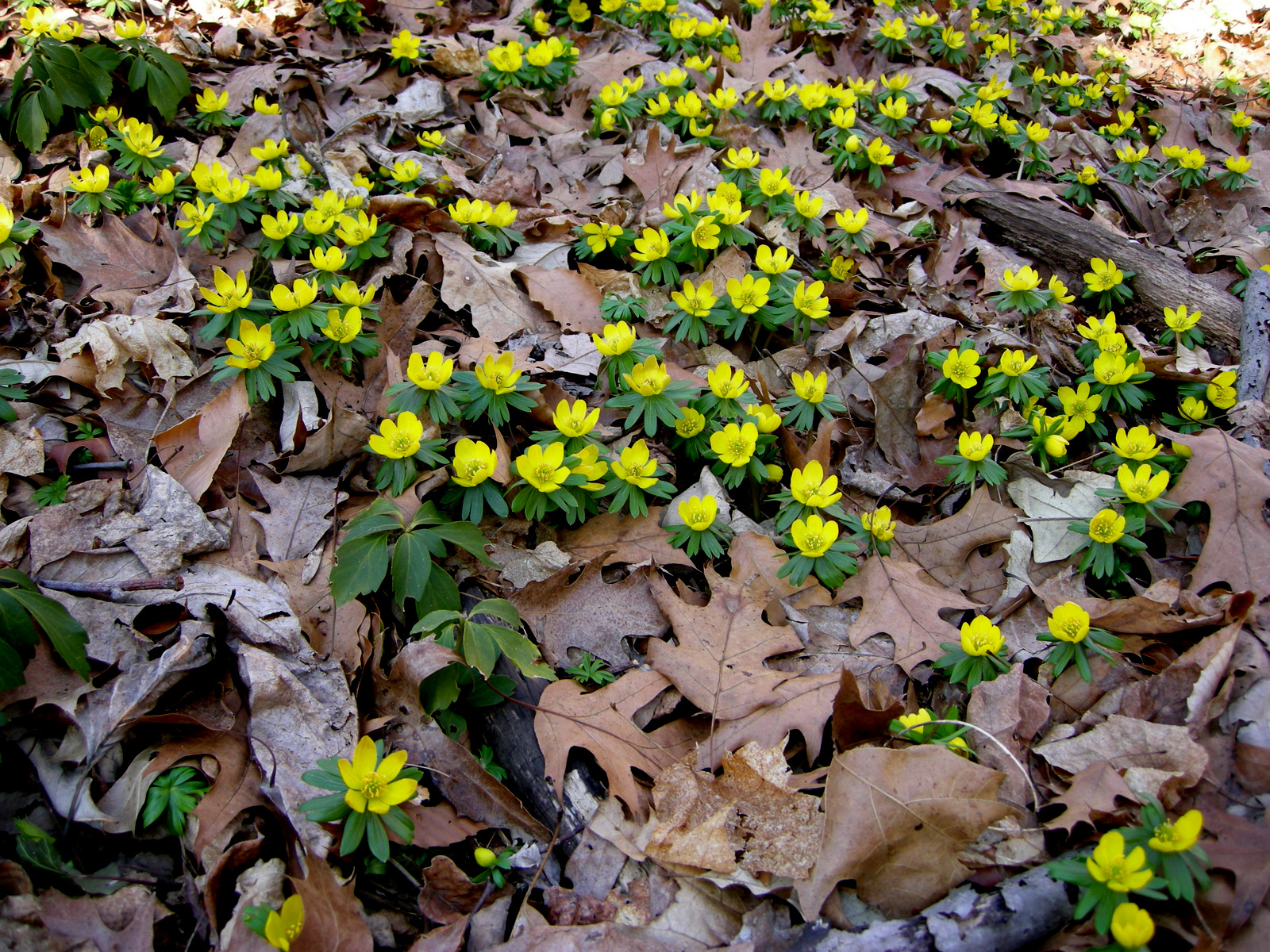
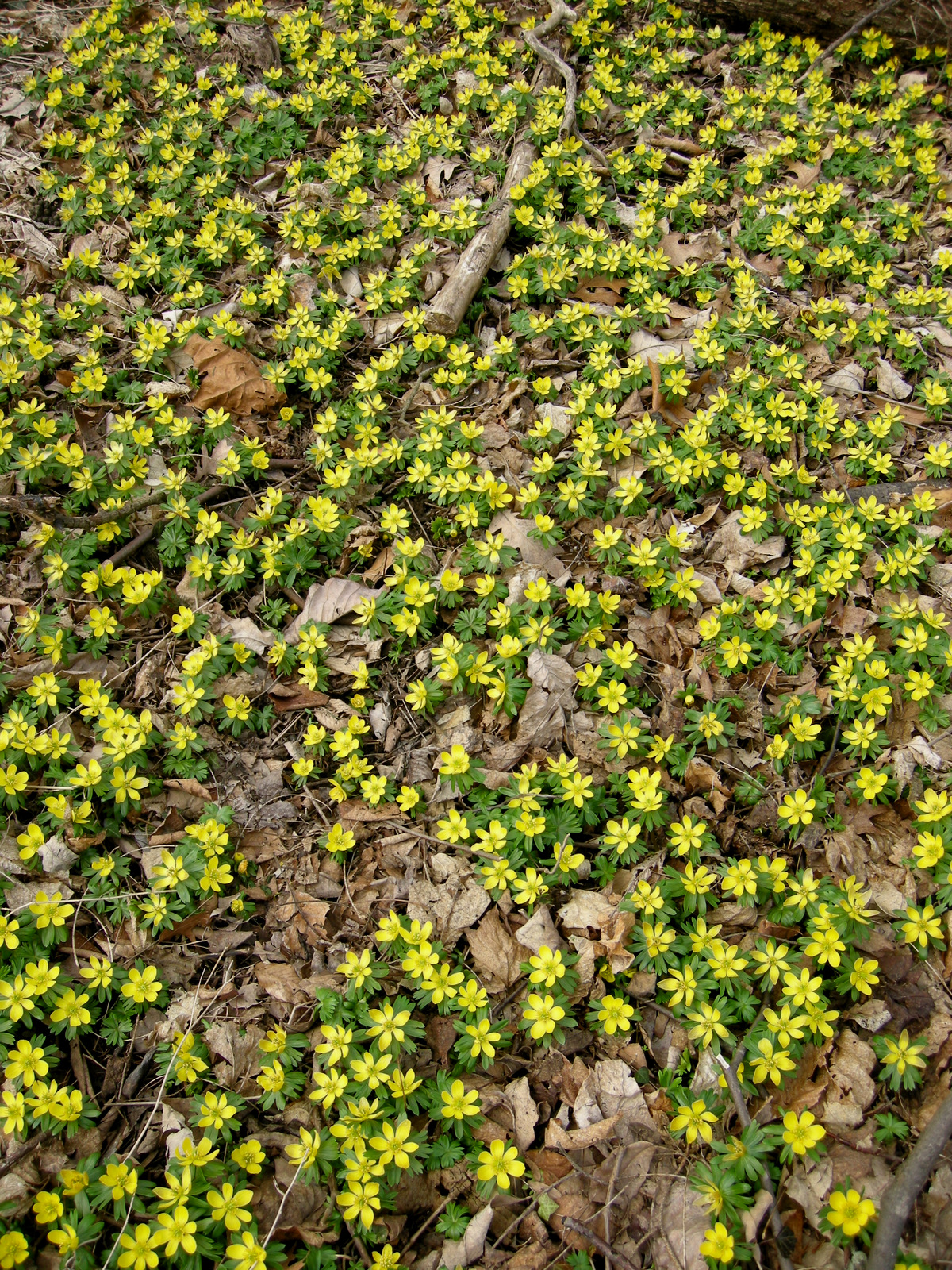
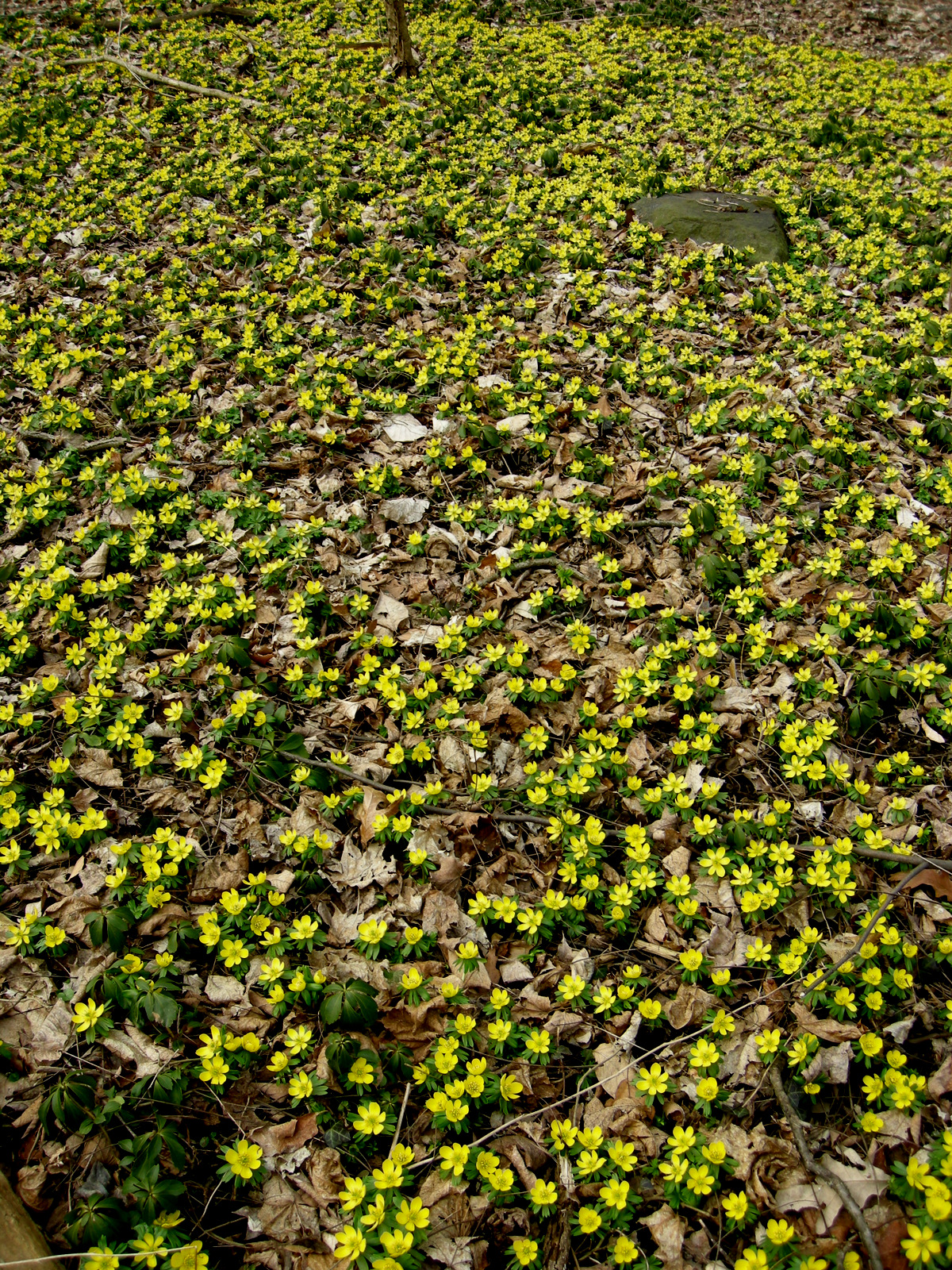
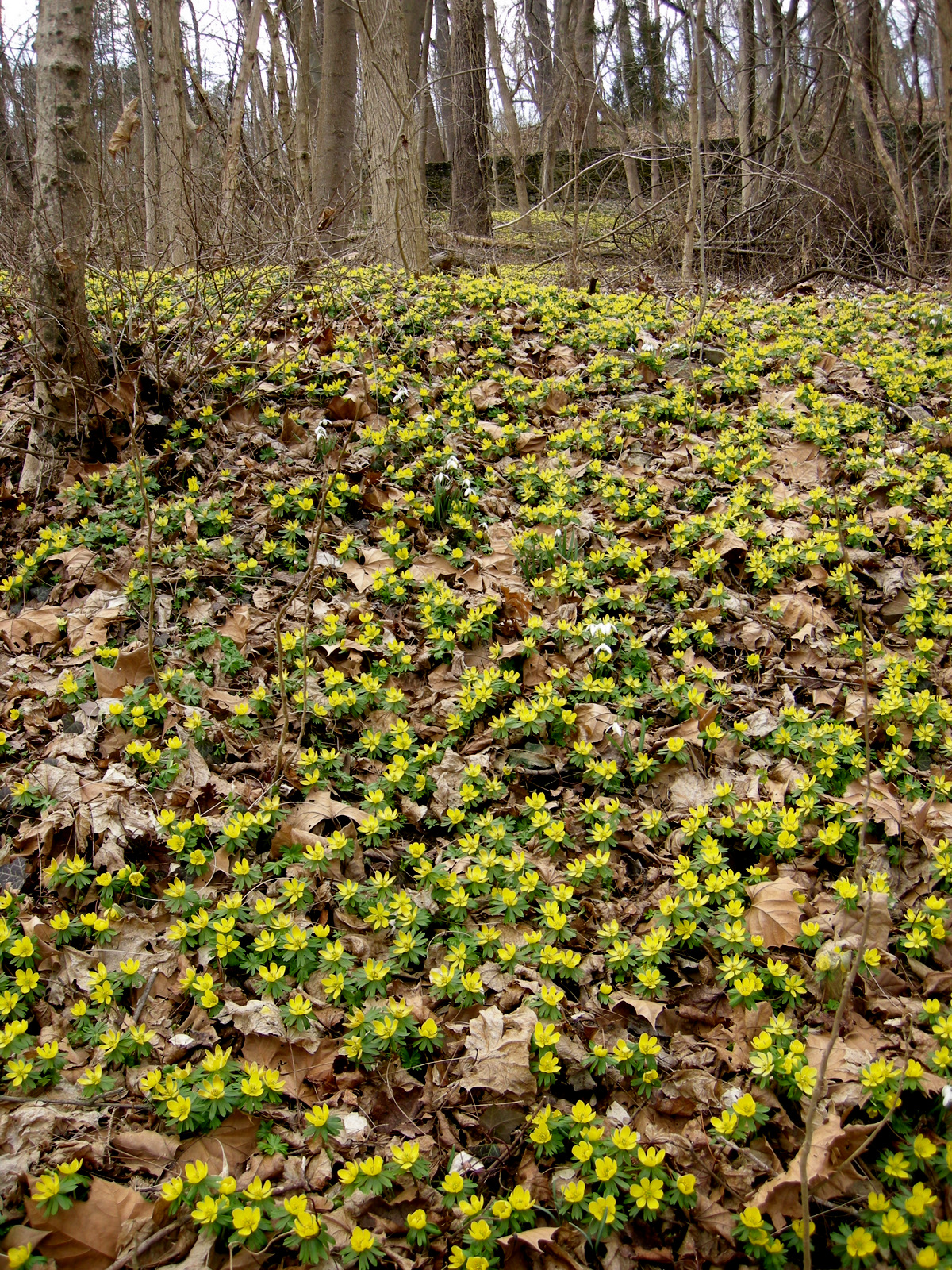
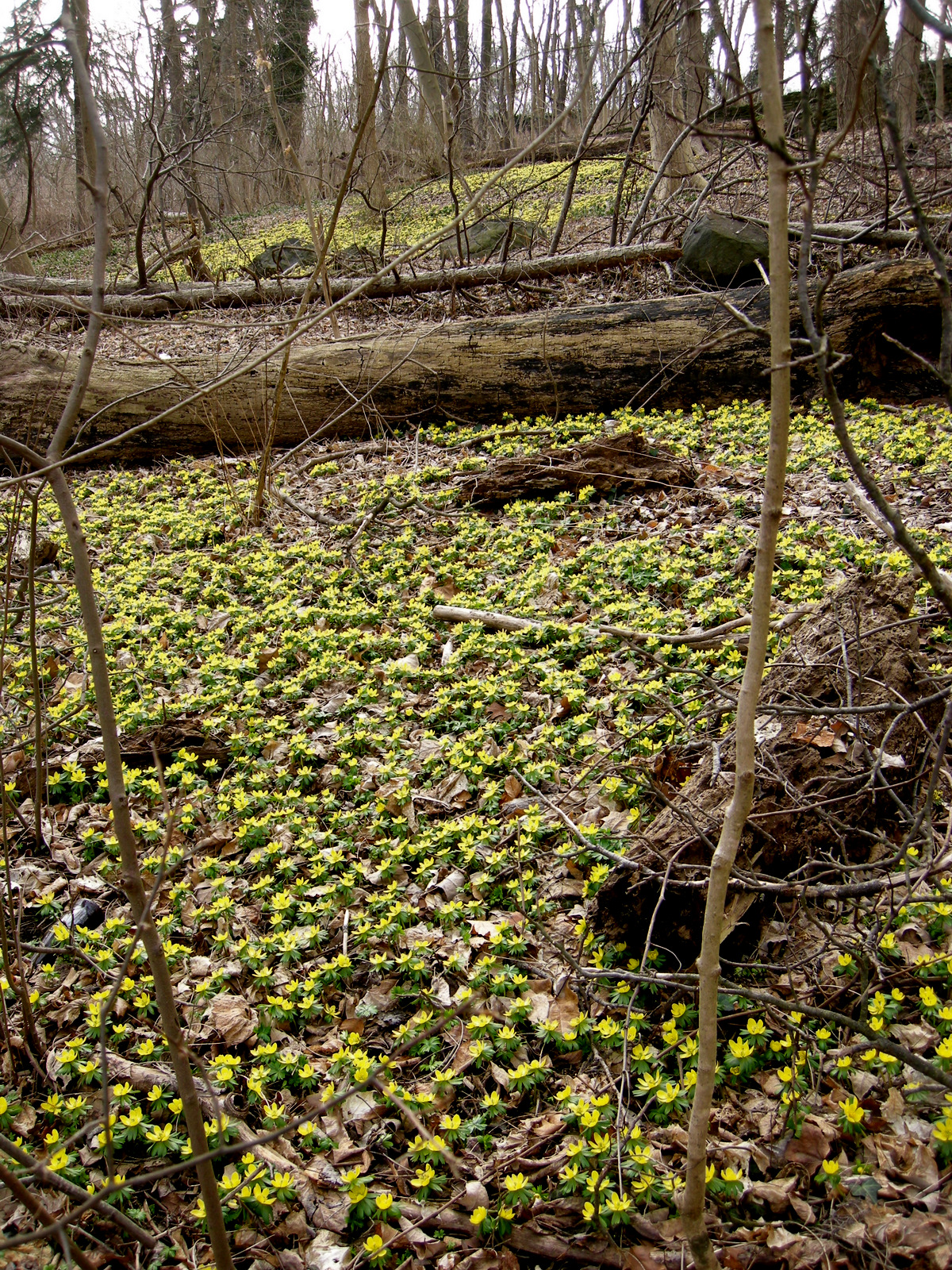
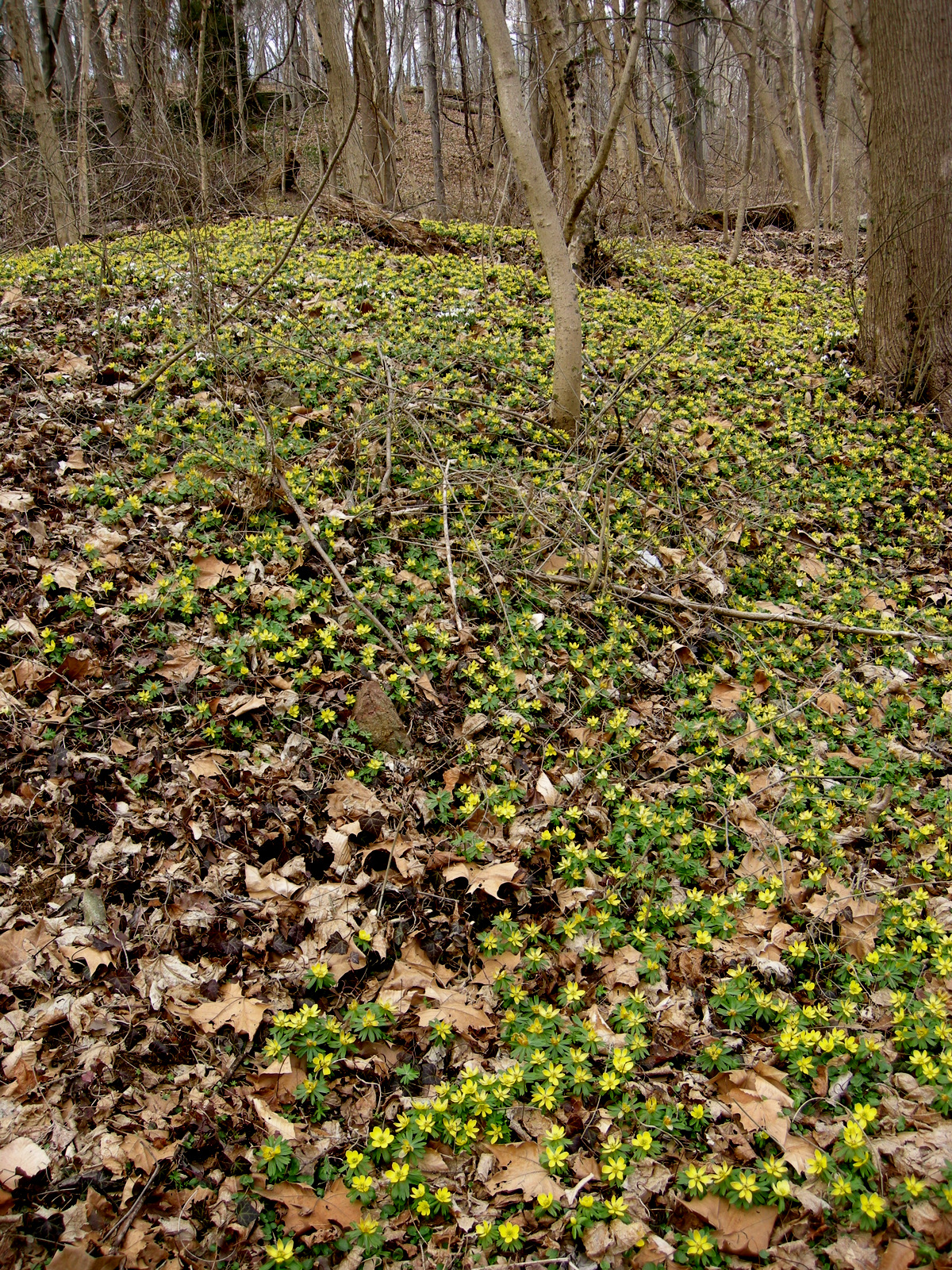
Winter aconite covers this much ground in my woodland.

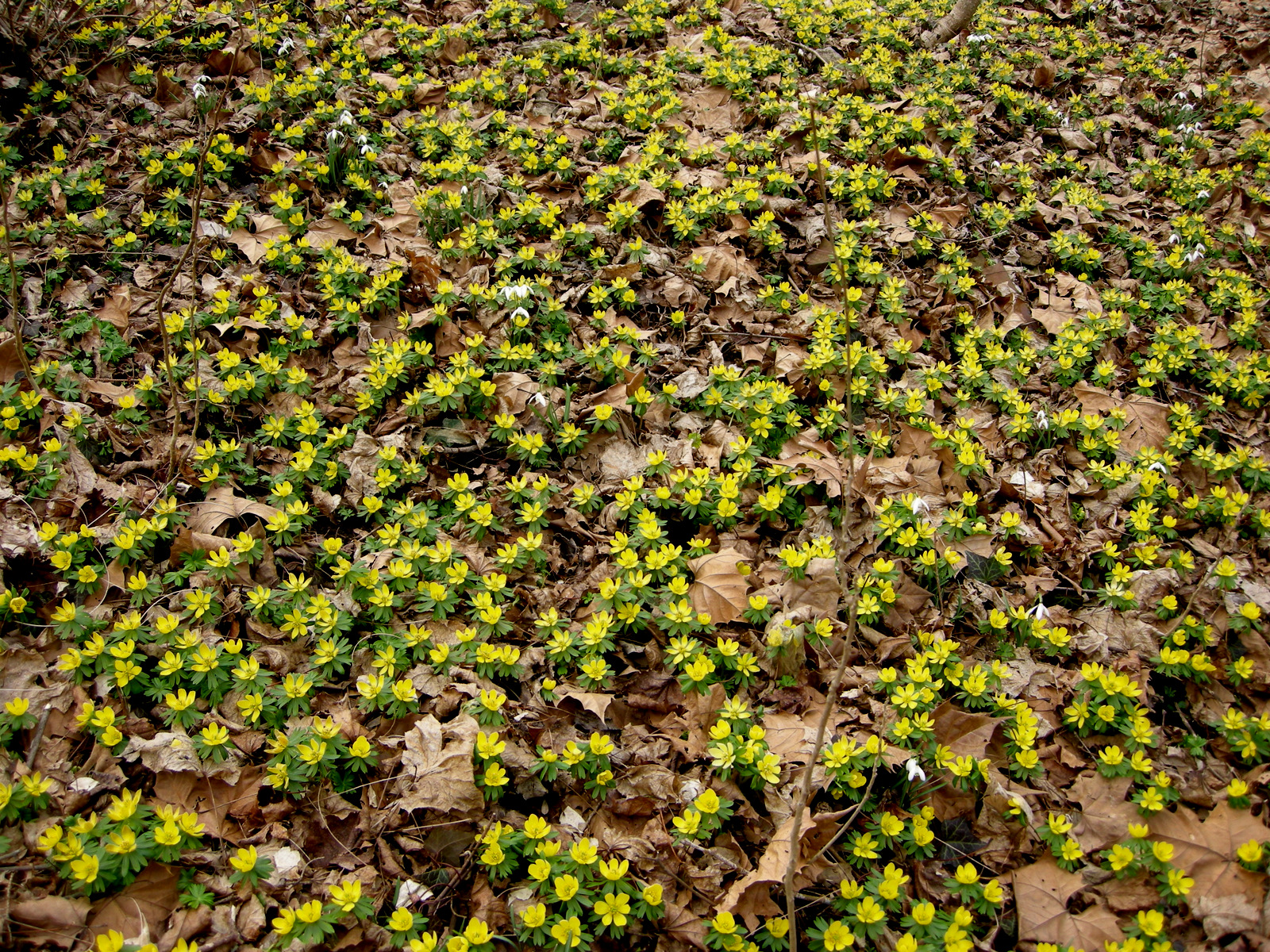
Now we get to the “wonder of nature” part.  Right down the street from my plant nursery is a public park owned by Radnor Township (Pennsylvania, US) called Ithan Valley Park.  The property was originally an old Main Line estate.  During the early 1900s, it was owned by the botanist John Evans, and he maintained an arboretum of exotic plants there.  Evidently his collection was amazing, but today few of the original plants remain.


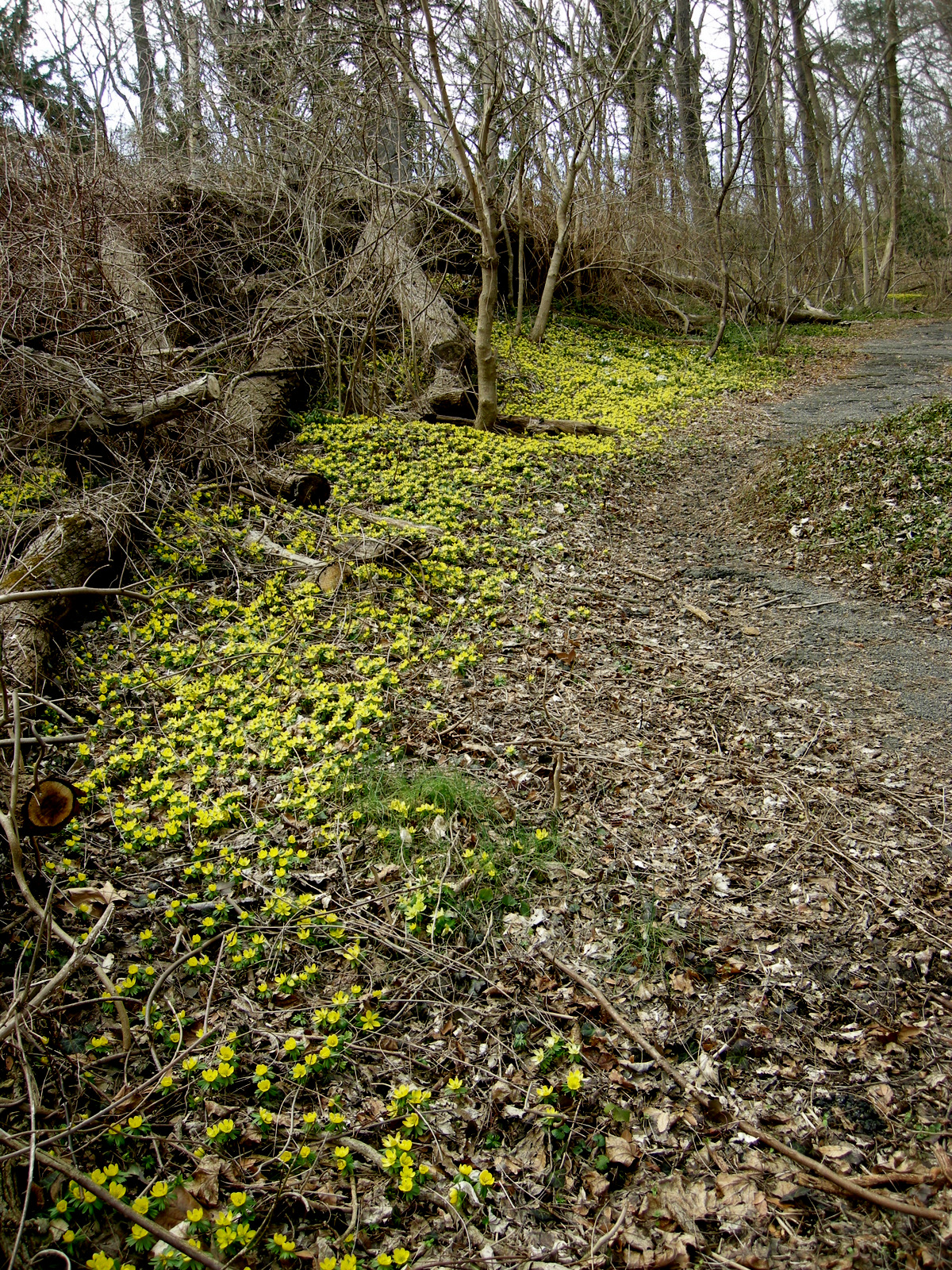
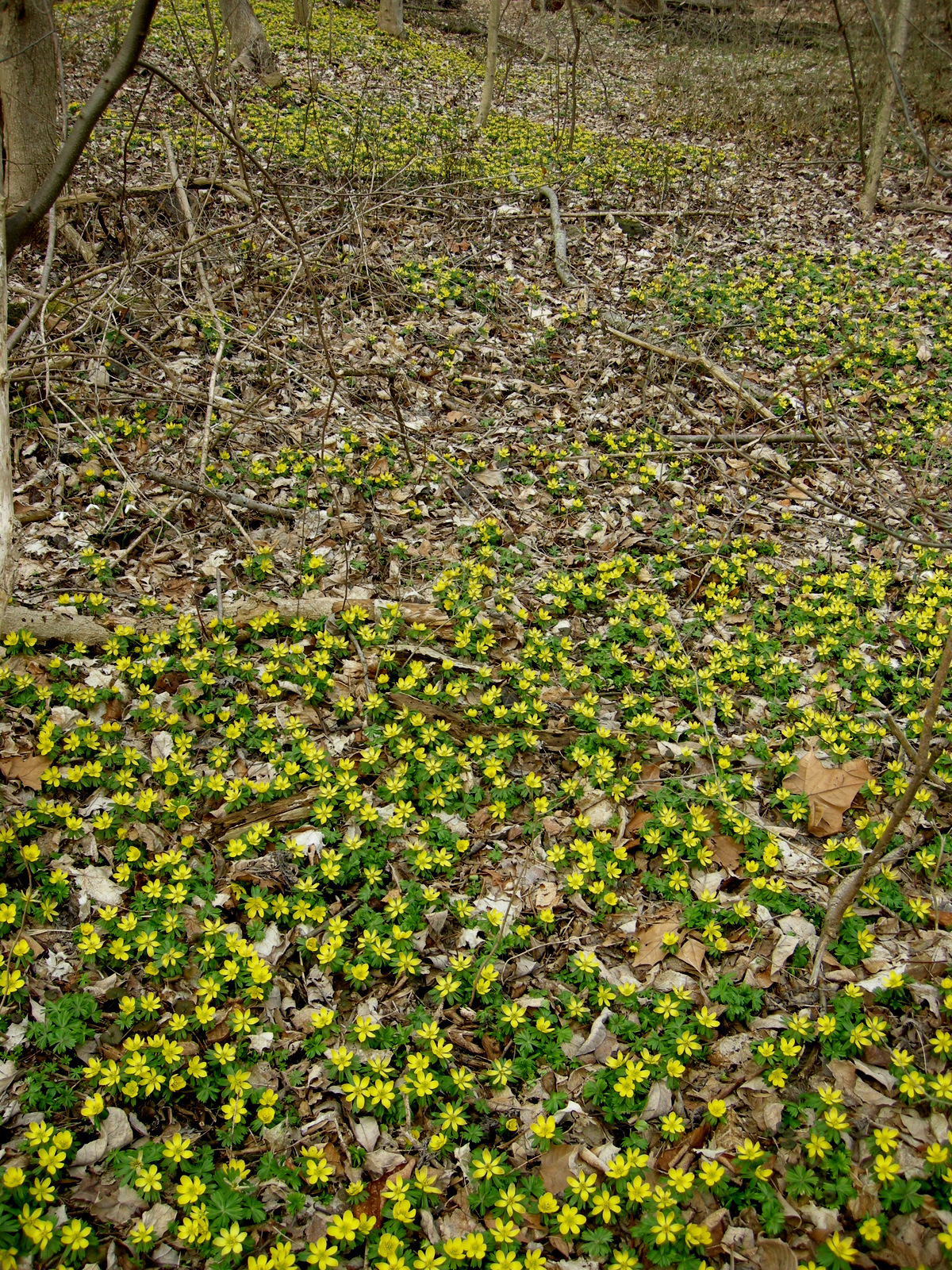
Winter aconite in Ithan Valley Park

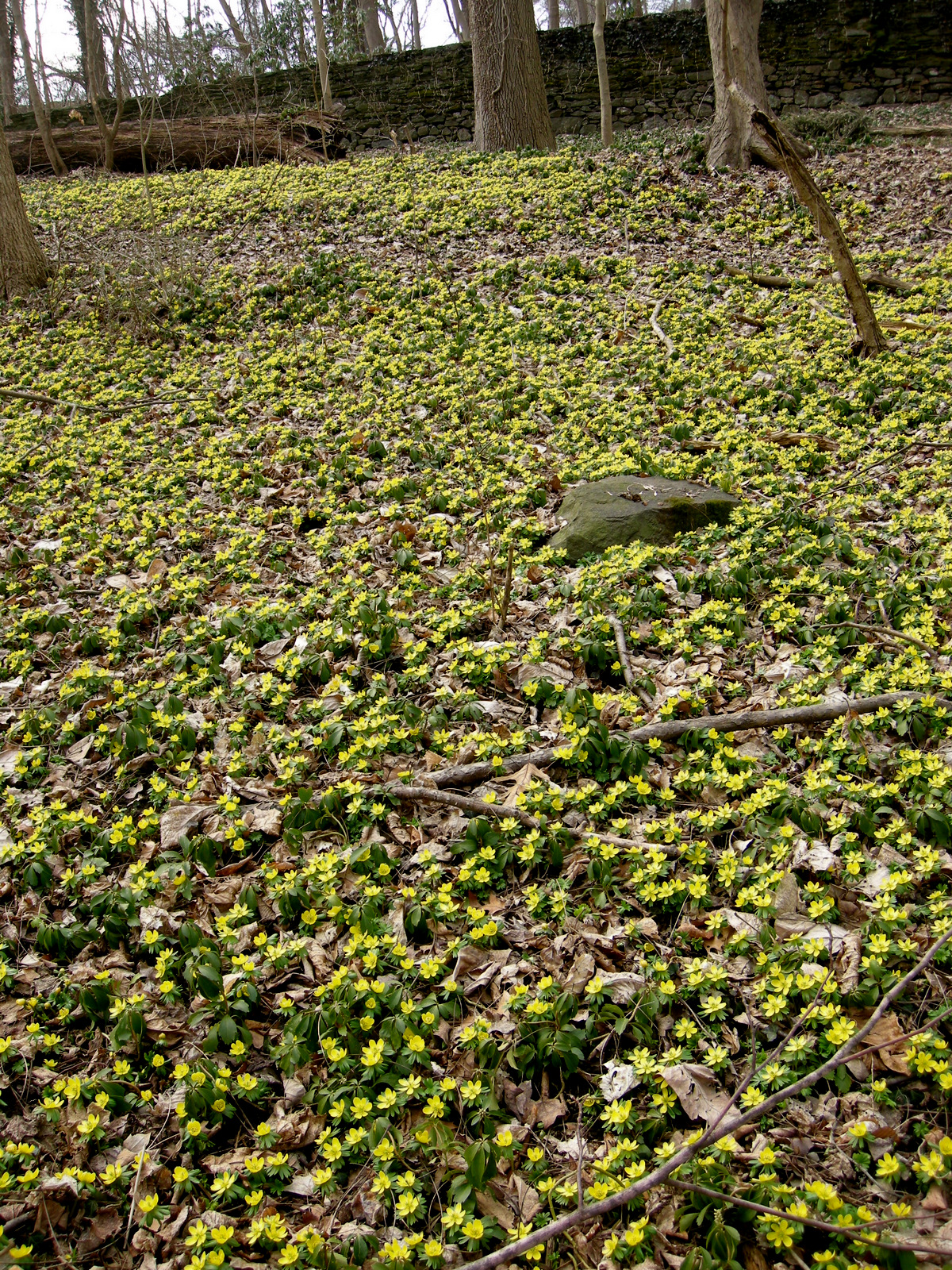
At some point John Evans planted winter aconite on his property.  The conditions there proved to be ideal with the cool, moist woodland soil and deciduous shade that winter aconite loves.  Today Ithan Valley Park is covered with sheets of winter aconite every February and March.  There is so much yellow that I think it must be visible from outer space.  It truly is a wonder of nature that I want to share with you.


The winter aconite in the park grows thickly.


Trail entrance, Ithan Valley Park


The stone wall of the old estate is in the background.


To truly appreciate the spectacle, you need to visit in person (I apologize to my non-local readers).  Ithan Valley Park is located at 642 South Ithan Avenue, Bryn Mawr, PA  19010, at the intersection of South Ithan and South Roberts Roads.  Time is of the essence because the winter aconite will only be blooming for a few more days.

I am linking this post to the Winter Walk-off 2012, which is a challenge by Les at A Tidewater Garden to share what can be seen within walking (or biking) distance of your home.  Every photo in this post was taken at Ithan Valley Park, 8/10 of a mile from my house.

Carolyn

Notes: Every word that appears in orange on my blog is a link that you can click for more information.  If you want to return to my blog’s homepage to access the sidebar information (catalogues, previous articles, etc.) or to subscribe to my blog, just click here.
February GBBD: New Hellebores for 2012

Posted in evergreen, Garden Blogger's Bloom Day, hellebores, Shade Perennials, winter, winter interest with tags , , , , , , , , , , , , , , , on February 12, 2012 by Carolyn @ Carolyns Shade Gardens

Carolyn’s Shade Gardens is a retail nursery located in Bryn Mawr, PA, specializing in showy, colorful, and unusual plants for shade.  The only plants that we ship are snowdrops within the US.  For catalogues and announcements of local events, please send your full name, mailing address, and cell number to carolyn@carolynsshadegardens.com and indicate whether you are interested in snowdrops, hellebores, and/or hostas.  Click here to get to the home page of our website for catalogues and information about our nursery and to subscribe to our blog.

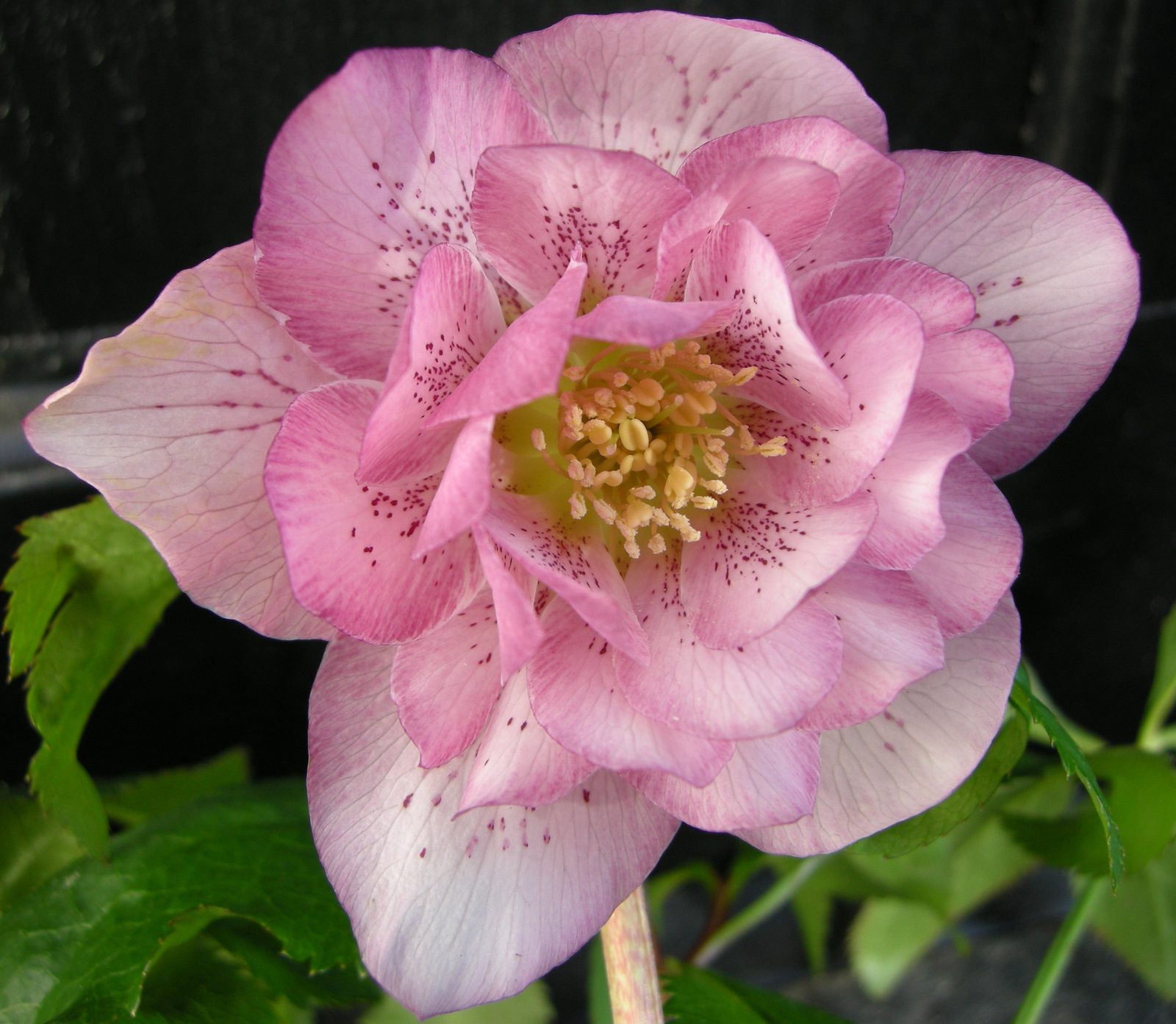
‘Phoebe’ is a beautiful double hellebore selected by Dan Hinkley formerly of Heronswood Nursery in Kingston, WA, as were most of the hellebores pictured here.  They are all superior forms.

It is the middle of the month and time to participate in Garden Blogger’s Bloom Day (“GBBD”) hosted by May Dreams Gardens (link available on February 15) where gardeners from all over the world publish photos of what’s blooming in their gardens.  I participate because it is fun and educational for me to identify what plants make my gardens shine at different times of the year.  This month I hope that my nursery customers and blog readers will get excited about adding colorful hellebores to their own shade gardens to extend the garden season through winter.

My garden is located in Bryn Mawr (outside Philadelphia), Pennsylvania, U.S., in zone 7A (old 6B).


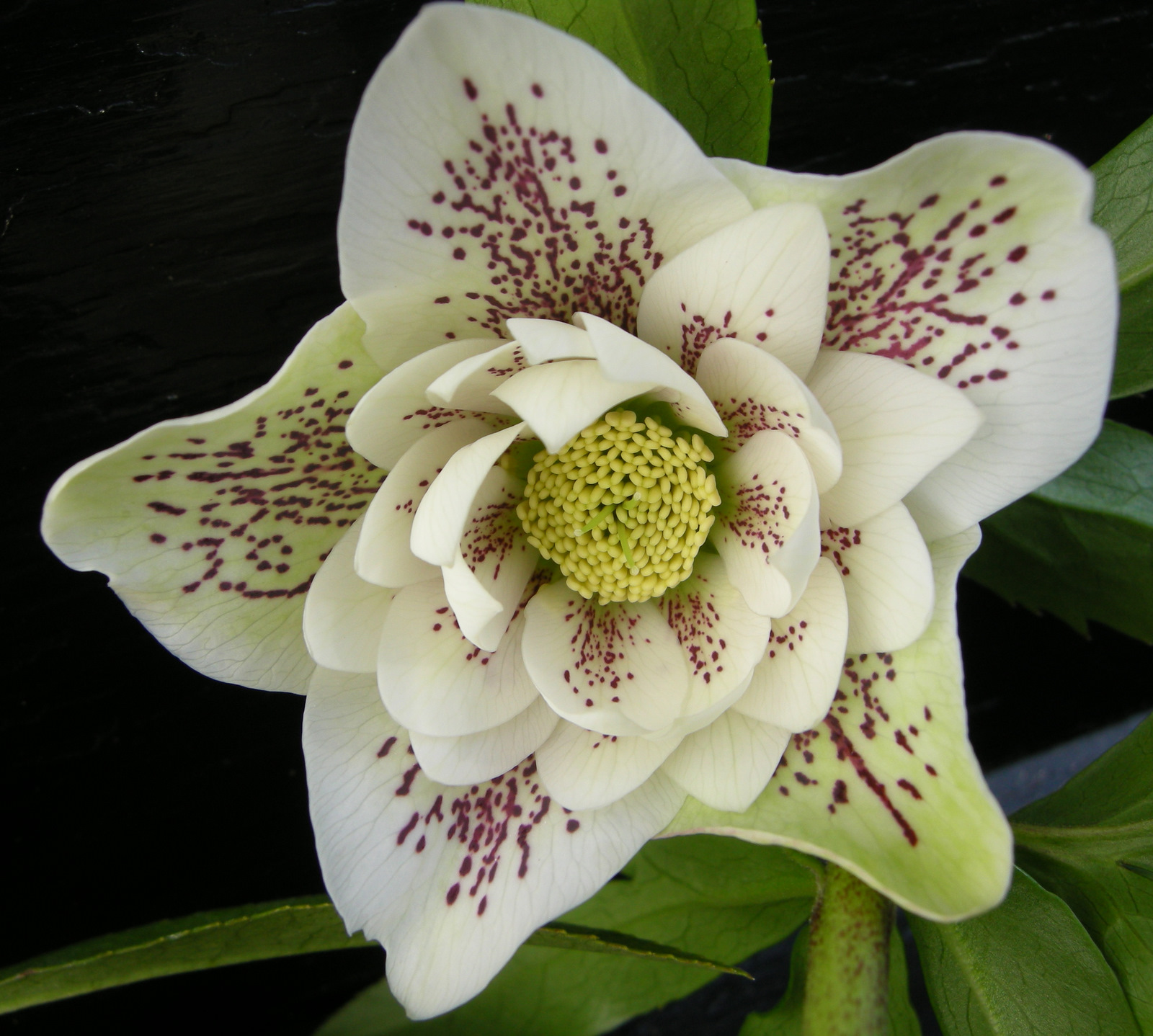
I grow the double ‘Elegance White’ for its distinct reddish purple spots and its symmetrical pointed leaves.

Because of the mild weather, I am overwhelmed with work at my nursery and behind on blogging.  So I am combining my GBBD post with a post on all the gorgeous new hybrid hellebores I will be offering this spring at my snowdrop and hellebore seminars and at my Hellebore Extravaganza on March 24.  They are coming into bloom right now so they definitely qualify for GBBD.  I will save the new species hellebores for a later post.

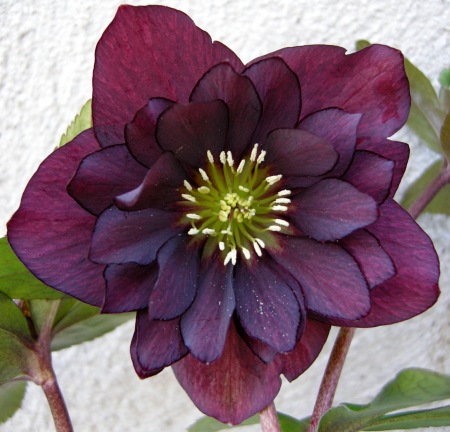
I decided to start with the doubles because, although I generally prefer single flowers, I love double hellebores.  Their flowers last for months.  In addition to the two above, I offer:


Hybrid hellebore “Double Rose”


Helleborus x "Double Purple"Hybrid hellebore “Double Purple”

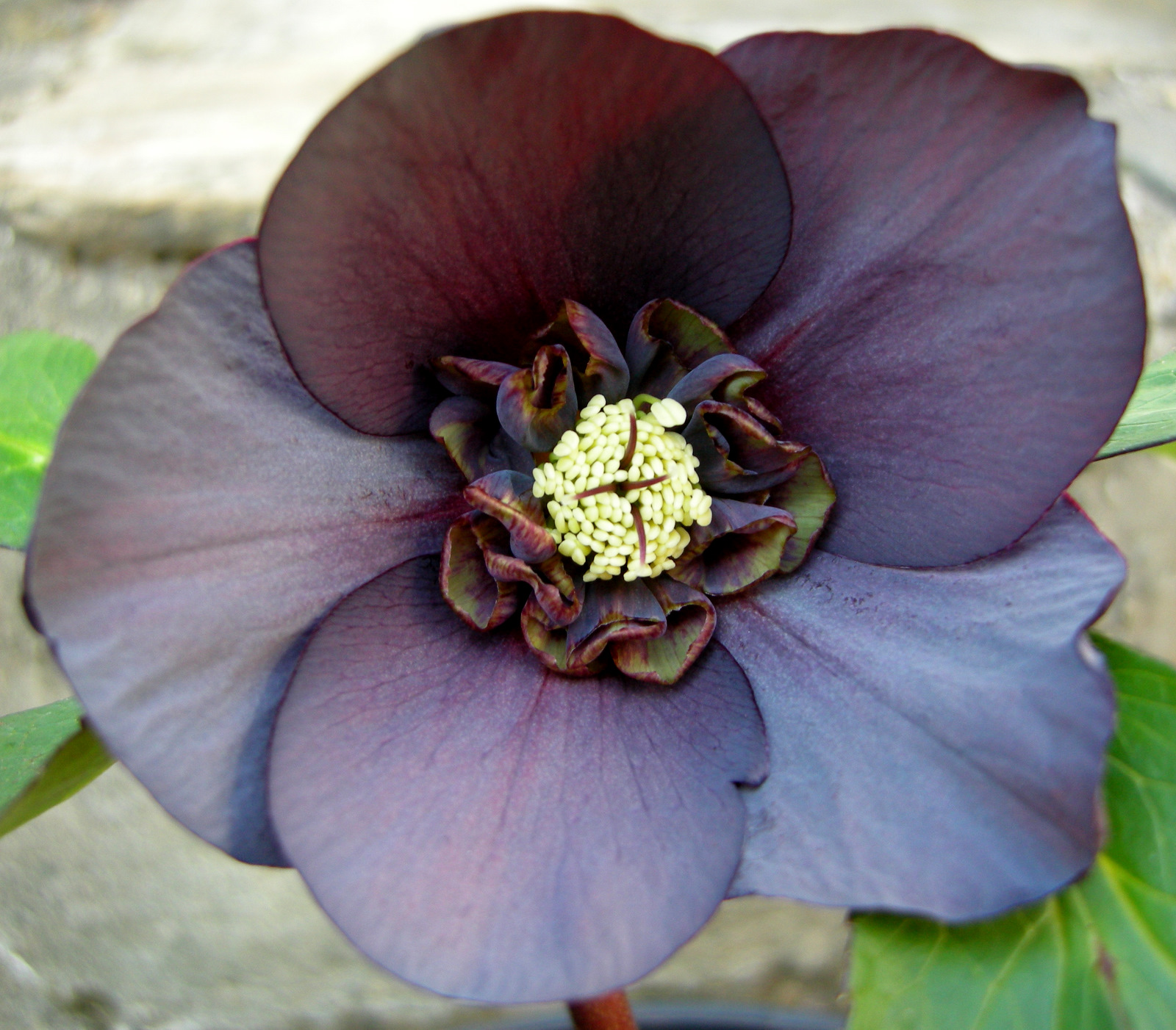
My absolute favorite type of hybrid hellebore is known as anemone-flowered.  In this form, the nectaries around the center of the flower create a ruffle of mini petals matching the color of the flower.  I collect anemone-flowered hellebores (those of you who bought my calendar can see one in the February collage) but have never found them for sale.  I am thrilled to be able to offer one this spring:


The ruffle in the middle of this anemone-flowered hellebore picks up the beautiful colors of the larger petals (actually sepals).  Slate is also a very desirable hellebore color, and ‘Slate Anemone’ is similar to ‘Starling’, another Hinkley-selected hellebore.

I am also excited about the nine new single hybrid hellebores that Carolyn’s Shade Gardens will carry this spring representing every color of the rainbow.  I don’t know if I can pick a favorite:


‘Gold Finch’ has rounded petals of buttery yellow spotted with red flecks.


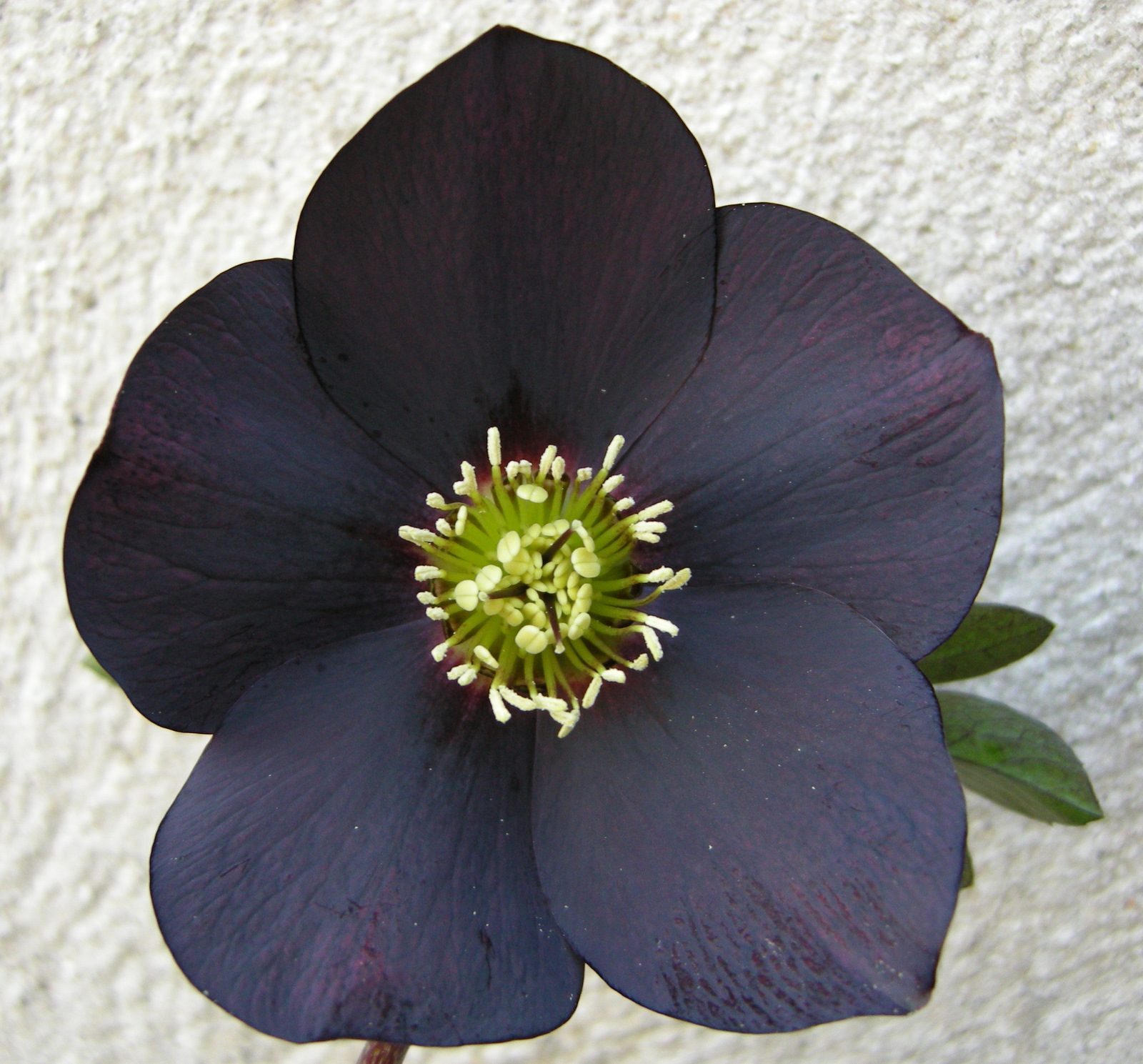
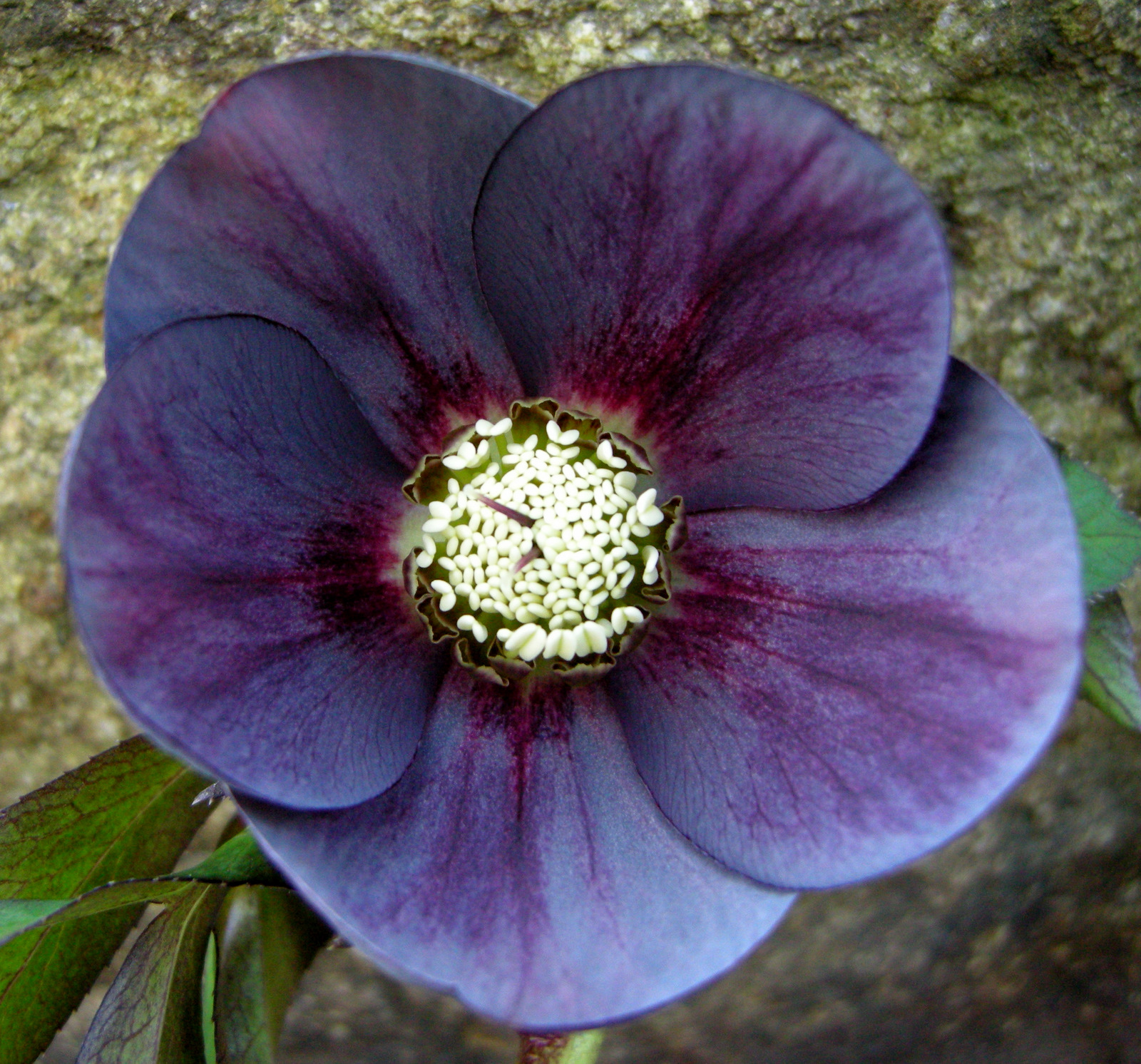
‘Black’ has striking near black flowers with a perfect rounded shape.


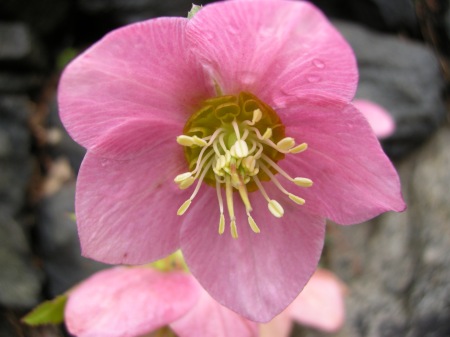
Helleborus x 'Pink Tea Cup'‘Pink Tea Cup’ is early-blooming with soft blush pink flowers reminiscent of cherry blossoms.

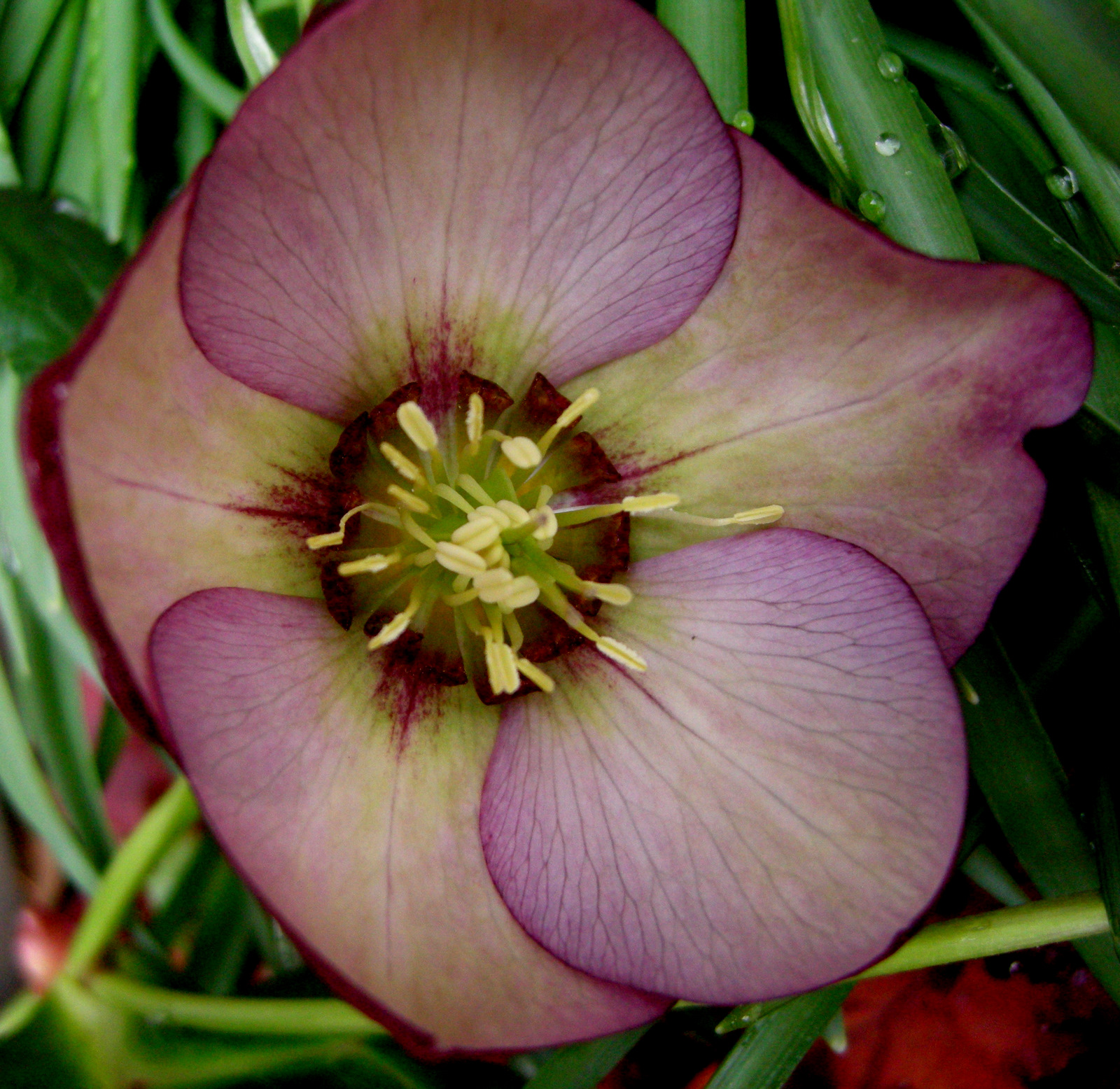
‘Raspberry Mousse’ has two-tone pale rose flowers with creamy white veins, and dark rose edges and reverse (the back of the flower).

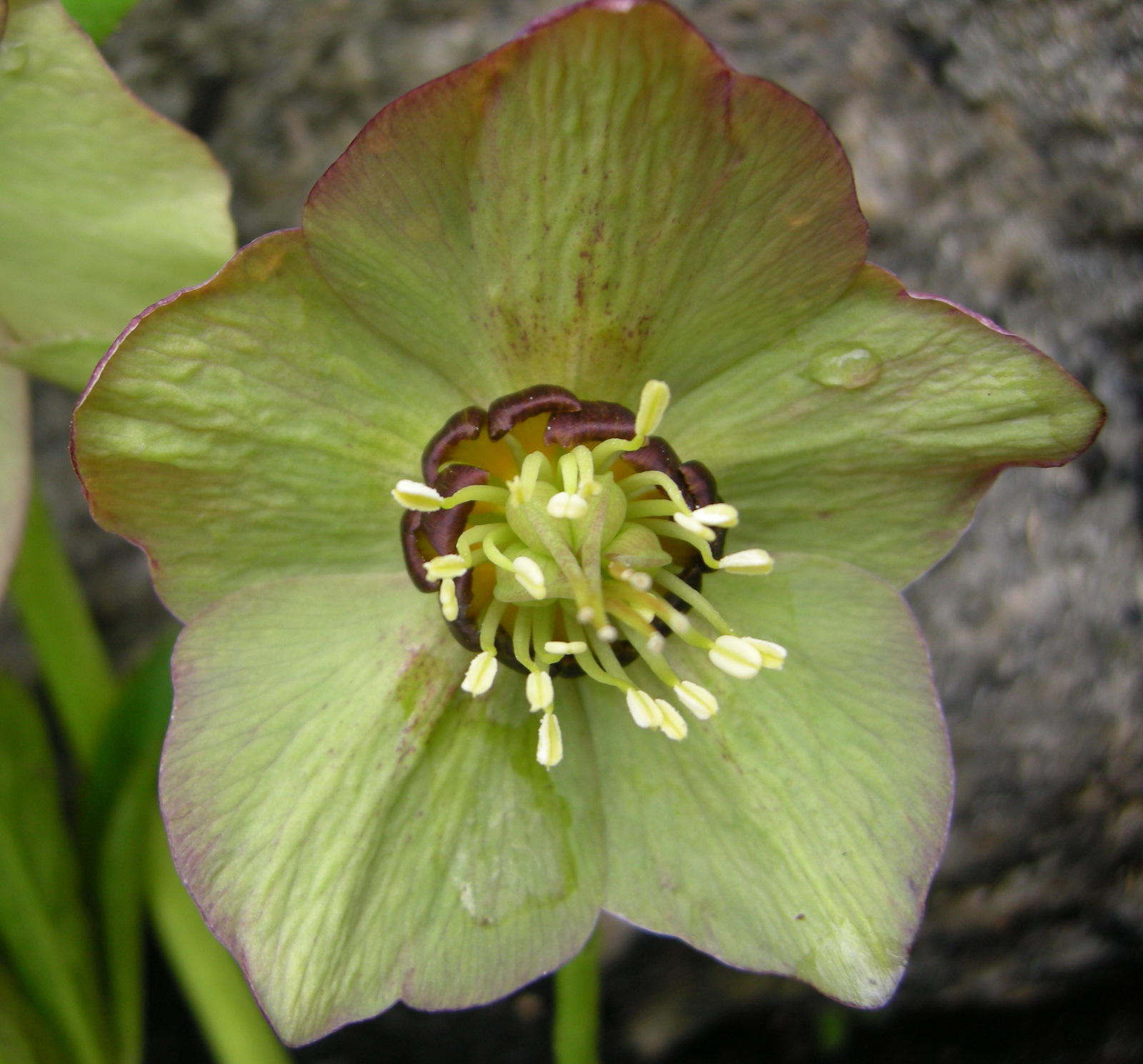
‘Phoenix’ has apple green flowers edged in burgundy and with a burgundy center.


Slate gray petals with a metallic sheen and burgundy highlights in the center and veins make ‘Slate’ very desirable.


‘Painted Bunting’ has white flowers with a bold burgundy red central star, radiating red veins, and red picotee edges.


‘Velvet Lips’ has bright wine-red flowers with a soft creamy-yellow center and a shiny darker reverse.  I would buy this beautiful hellebore for the name alone.

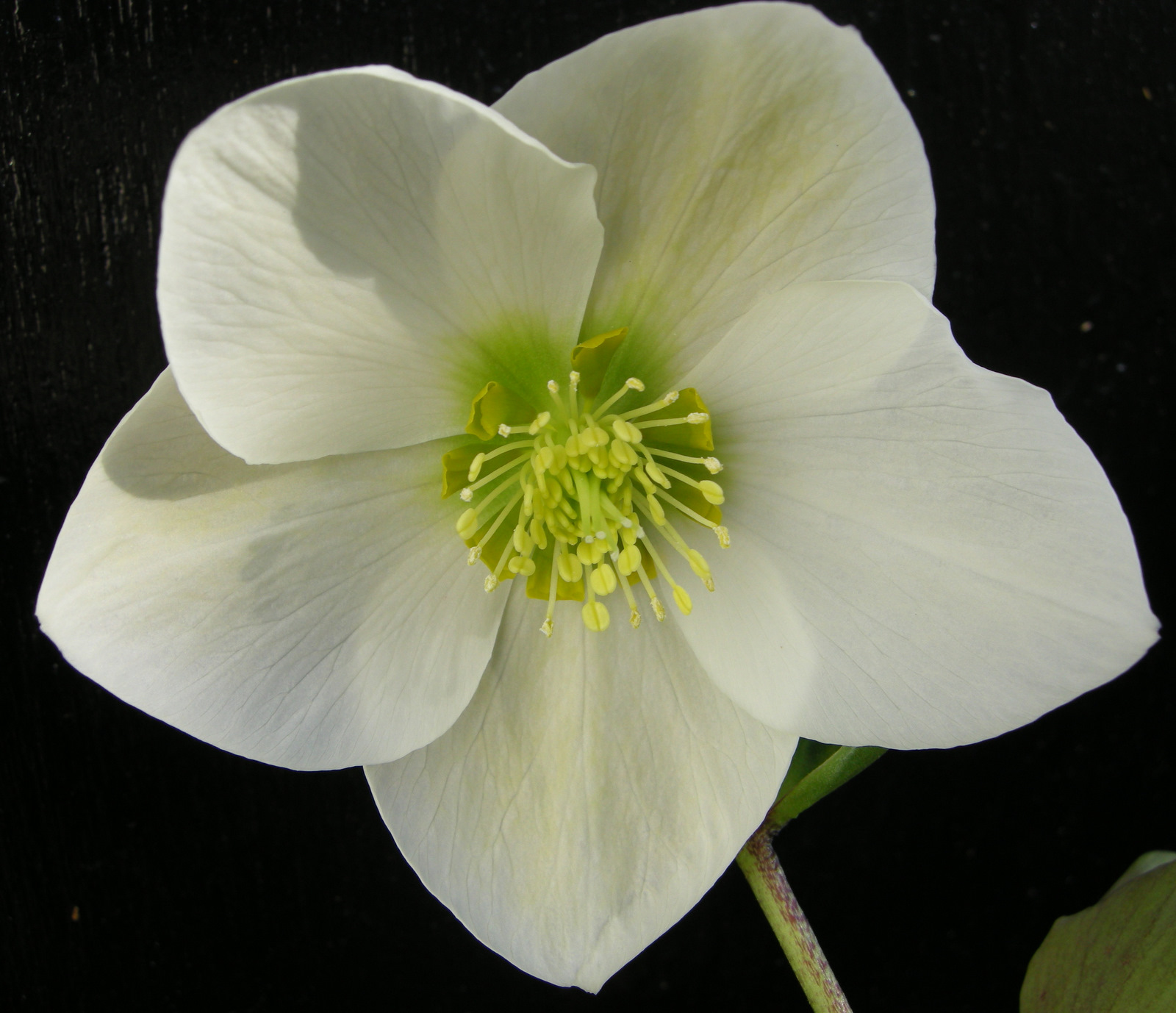
The Yokoyama nursery in Japan has achieved the first ever cross between Christmas rose and hybrid hellebores to produce ‘Snow White’, this gorgeous early-blooming pure white hellebore with large, flat, outward-facing flowers; easy to grow like all the hybrids but easy to see the flowers too!

I tested all these hellebores in Spring 2011 by planting them in my garden.  This year I am being rewarded with big healthy plants loaded with flowers.  Stop by and see for yourself after I open on March 15.

Carolyn

Notes: Every word that appears in orange on my blog is a link that you can click for more information.  If you want to return to my blog’s homepage to access the sidebar information (catalogues, previous articles, etc.) or to subscribe to my blog, just click here.
Carolyn’s Shade Gardens Goes International

Posted in bulbs for shade, snowdrops, winter, winter interest with tags , , , , , , , , , , , , on February 3, 2012 by Carolyn @ Carolyns Shade Gardens

Carolyn’s Shade Gardens is a retail nursery located in Bryn Mawr, PA, specializing in showy, colorful, and unusual plants for shade.  The only plants that we ship are snowdrops within the US.  For catalogues and announcements of local events, please send your full name, mailing address, and cell number to carolyn@carolynsshadegardens.com and indicate whether you are interested in snowdrops, hellebores, and/or hostas.  Click here to get to the home page of our website for catalogues and information about our nursery and to subscribe to our blog.

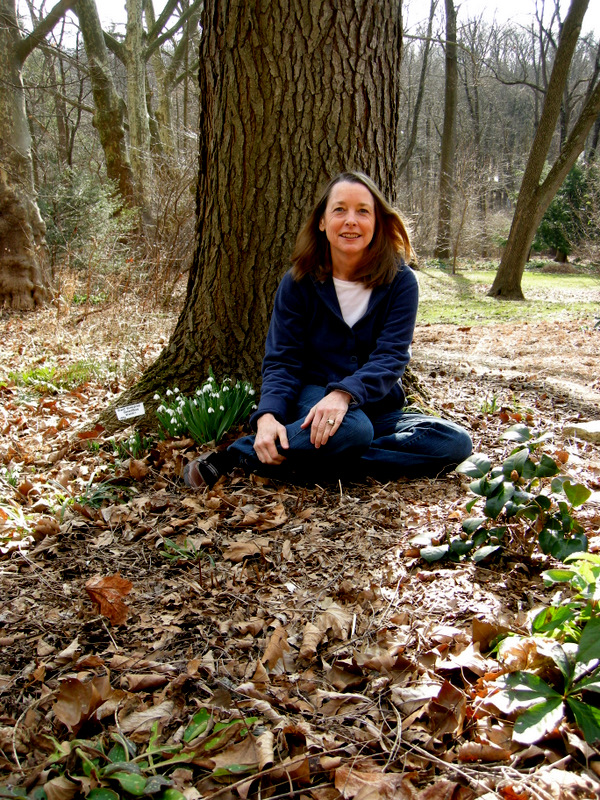
The BBC News Magazine was hours away from publication when they emailed to request a photo of me with snowdrops.  My husband and I had a quick photo shoot and this is what we came up with.

We interrupt the regularly scheduled flow of posts on this blog with breaking news.  The owner of Carolyn’s Shade Gardens is prominently featured in the BBC News Magazine lead article for February 2 entitled “Snowdrop Fanciers and Their Mania”. 

All kidding aside, I couldn’t be more thrilled.  I am in the company of Matt Bishop and John Grimshaw, two of the authors of the “snowdrop bible” Snowdrops: A Monograph of Cultivated Galanthus, and Chris Ireland-Jones, the owner of the famous English snowdrop nursery Avon Bulbs.  You know what a snowdrop fanatic I am so this is the ultimate compliment.  To read the article (I am in the second half), click here.
Second Annual Snowdrops & Other Winter Interest Plant Seminars

Charles Cresson pointing out some of his very unusual snowdrop cultivars to last year’s seminar attendees.

I am very excited that winter interest plant expert and gardener extraordinaire Charles Cresson has agreed once again to give seminars on Snowdrops and Other Winter Interest Plants just for my customers.  The seminars will be limited to 20 people each and will take place in his amazing Swarthmore garden, Hedgleigh Spring.  The brochure telling you the details and how to sign up is here.  If you are a local gardener and interested in attending, I encourage you to email immediately because I expect these seminars to sell out.  For a complete description of the 2011 seminars with many photos, click here.


Since this post is about all things snowdrop, I thought I would show you the first snowdrops to bloom in my garden in 2012:

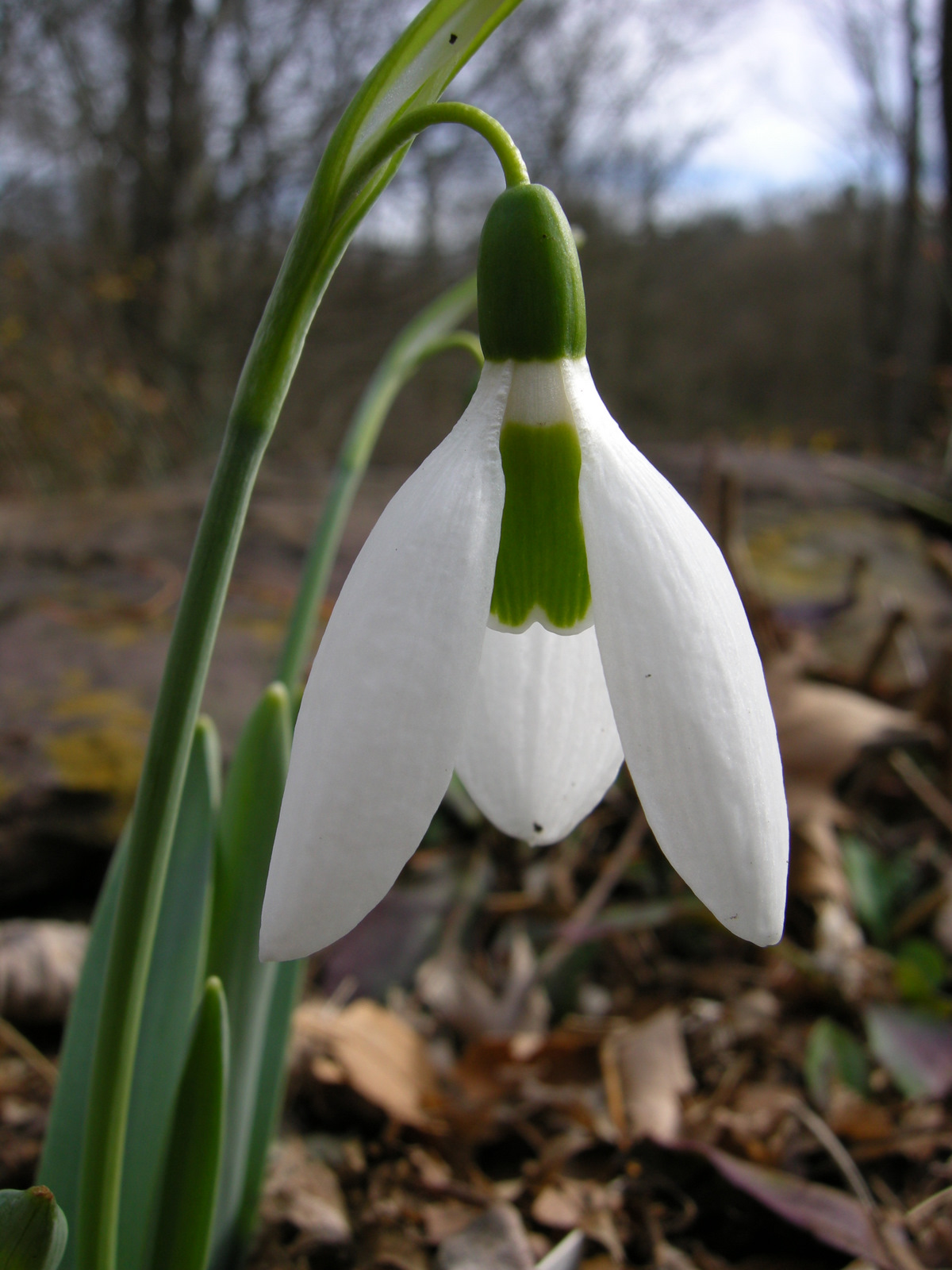
The very first snowdrop cultivar to open in my garden in 2012: ‘Kite’.  Notice the very long outer segments (petals).


Second to open was Galanthus plicatus ‘Augustus’ with its striking puffy rounded and quilted outer segments.

‘Magnet’ is open and swaying in the breeze on its unusually long and thin flower stems (pedicels).

The double common snowdrop ‘Flore Pleno’ is blooming even though it is usually one of the last snowdrops to open in the middle to end of March.

The aristocratic snowdrop ‘Atkinsii’, said to resemble the pearl drop earrings of Elizabeth I, is also flowering.

The common snowdrop, G. nivalis, is blooming a few weeks early.  I shot this picture to document the date they opened and had a funny feeling that something wasn’t right.  When I uploaded the photos to the computer I realized the plants in the front have four outer segments instead of three—very interesting.

The giant snowdrop, G. elwesii, has been flowering on and off since November, but this patch just opened this week.

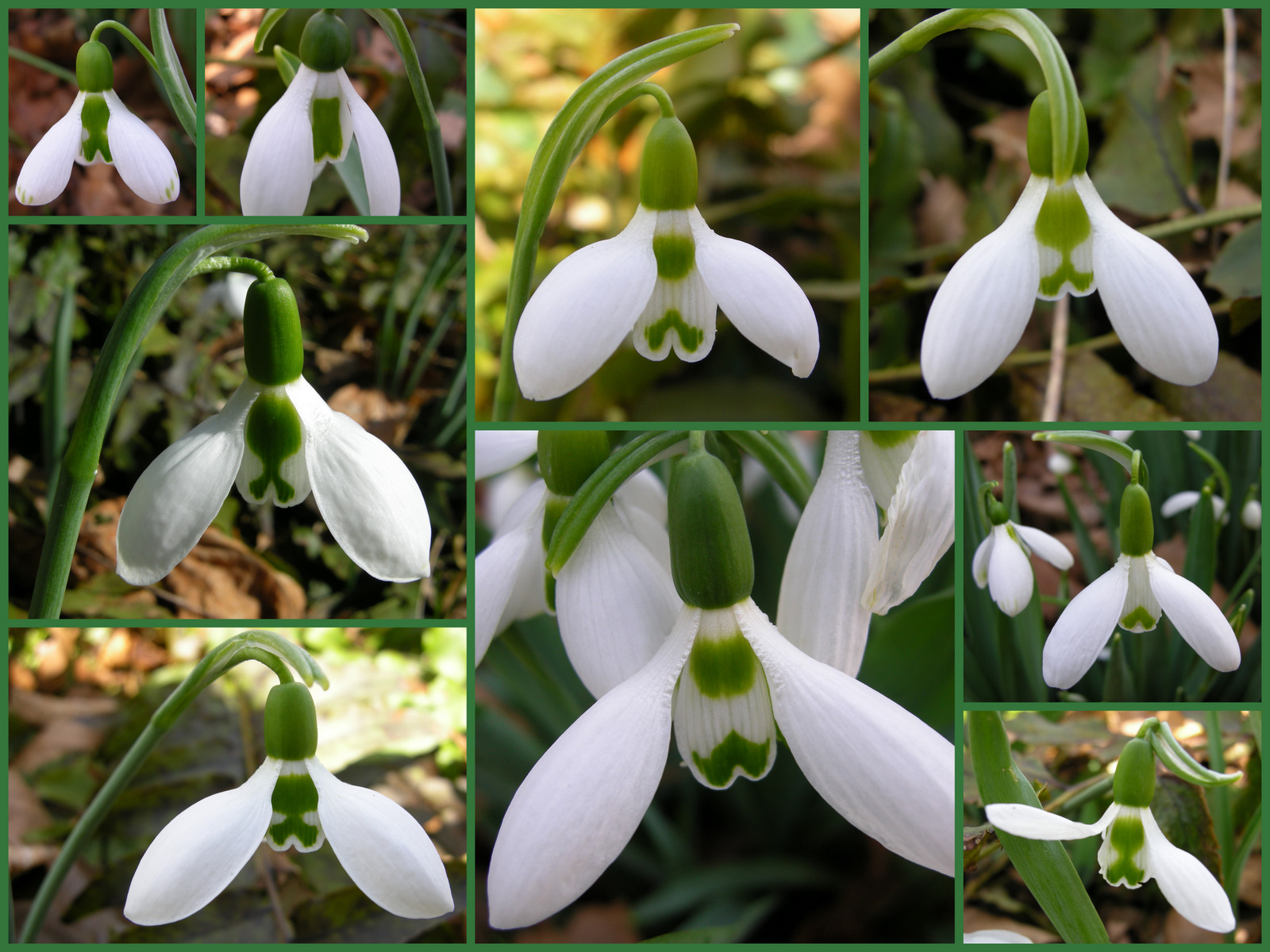
I avidly read the Galanthus threads on the Scottish Rock Garden Club forum where galanthophiles from all over the world meet to obsess about snowdrops.  I highly recommend this forum if you are interested in snowdrops and want to learn more.  The forumists are some of the most knowledgeable galanthophiles around but very welcoming and eager to share their passion.  Several of them commented on the varied markings on the giant snowdrops pictured above which got me outside with my camera to record the marks.  Here is what I found:
Every flower in this collage is the same species, G. elwesii, and yet the green marks on the inner segments are all different, from the small single green mark on the middle  right flower to the mark that looks like a mustache and eyes in the middle of the bottom row.  Although I realize this will not excite most gardeners, at least everyone can see the amazing variety.  And variety is the spice of life.


I have recently been honored with the Versatile Blogger Award by four different blogs, and I want to thank them for the accolade.  I try to make my blog posts varied and yes versatile (able or meant to be used in many different ways), and I am glad that my efforts are appreciated.  I am not following the award rules, but instead letting you know who gave me the award in hopes that you will visit their blogs.  Here are the links and some information to entice you to visit them:

Graphicality–UK:  Helene is a very accomplished author.  You might want to check out her recent post on the book she published with her lovely photos of Kew Gardens.  Her current post talks about US grey squirrels invading Britain.

Green Place:  Sheila is in Chapel Hill, NC, and reflects on spirituality, nature and gardening.  She and I also share a love of Maine islands.

The Amateur Weeder:  For a very different perspective, Lyn gardens in Australia and her blog produces “seedlings from the mind of an inconstant gardener.”  I particularly liked her recent post called Designed by Nature.
Women and the Garden:  Patty writes about “the history of the garden and the various roles women played in that history,” and it is  all absolutely fascinating.  She doesn’t post often, but when she does you don’t want to miss it.  Her latest post is on Pomona, the roman goddess of fruiting trees and orchards.
Carolyn

Notes: Every word that appears in orange on my blog is a link that you can click for more information.  If you want to return to my blog’s homepage to access the sidebar information (catalogues, previous articles, etc.) or to subscribe to my blog, just click here.