Woody Plants for Shade Part 1

Posted in evergreen, native plants, Shade Shrubs with tags , , , , , , , , , , , , , on April 1, 2011 by Carolyn @ Carolyns Shade Gardens

Carolyn’s Shade Gardens is a retail nursery located in Bryn Mawr, PA, specializing in showy, colorful, and unusual plants for shade.  The only plants that we ship are snowdrops and miniature hostas.  For catalogues and announcements of events, please send your full name, location, and phone number (for back up use only) to carolyn@carolynsshadegardens.com.  Click here to get to the home page of our website for catalogues and information about our nursery and to subscribe to our blog.
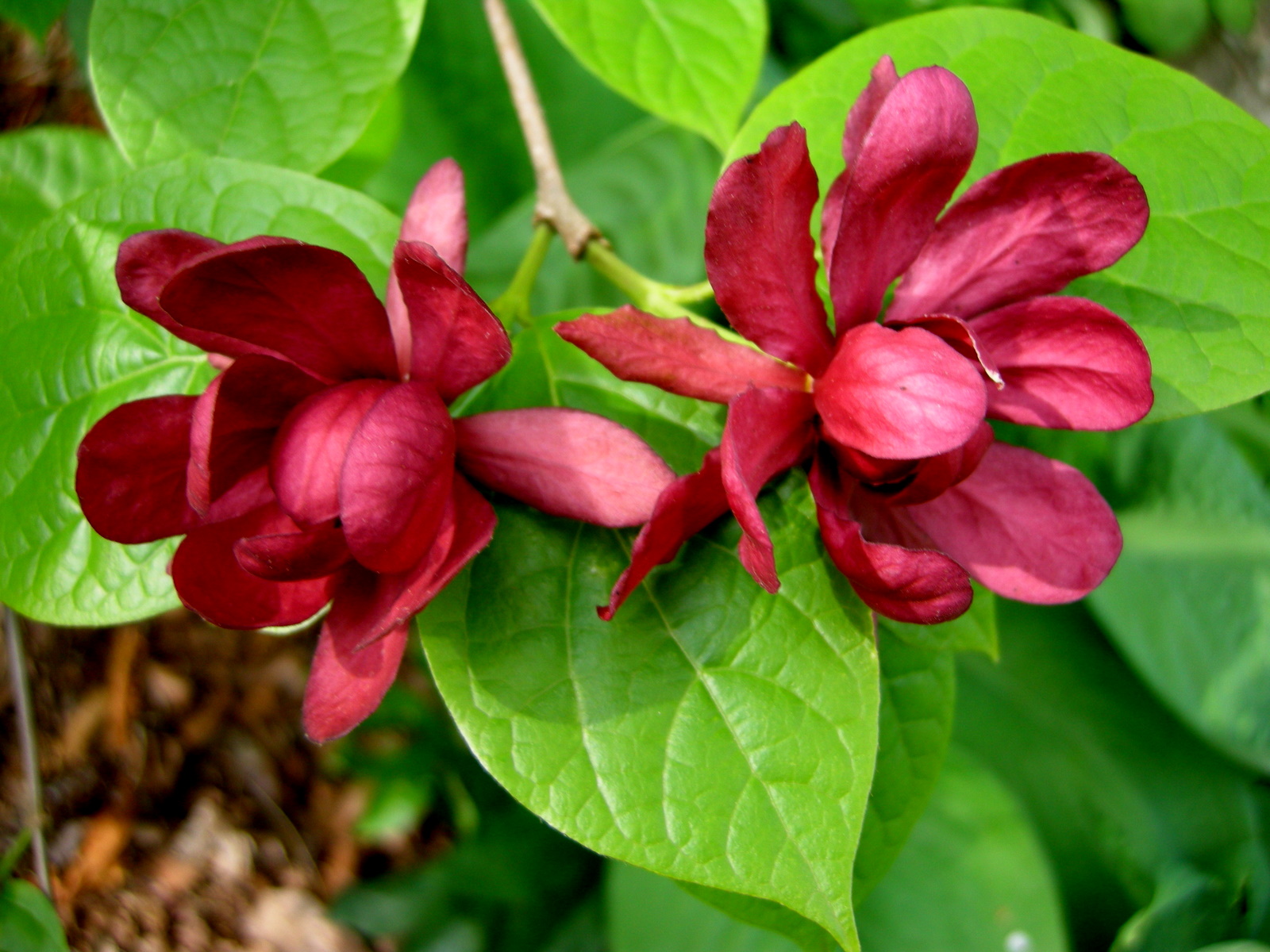
Calycanthus raulstonii ‘Hartlage Wine’ (Native Hybrid Sweetshrub) at Carolyn’s Shade Gardens

For years, my customers have been asking for woody plants for shade—trees, shrubs, and vines—in addition to the perennials I sell.  Last year I found a wholesale woody plant nursery with the quality and selection I needed to be able to offer woody plants at Carolyn’s Shade Gardens.   I put together two offerings in 2010 and have just sent out my first 2011 list.  To view the catalogue, click here.   However, I thought my blog readers who are not customers might be interested in learning about the woody plants that I would recommend they add to their shade gardens.  And doing an article allows me to add more information and explain why I chose the plants I included so customers might be interested also.

Included in my offering are one tree, three camellias, four other shrubs, and one vine.  Of the nine plants I have chosen, five are native.  Please read my article My Thanksgiving Oak Forest to see why I think planting native plants is crucial to our environment.  My article New Native Shade Perennials for 2011 explains why I think native cultivars and hybrids are valuable native plants.

Six of the plants I have chosen are evergreen or semi-evergreen, and four bloom in the off season: fall, winter, or very early spring.   This reflects  my desire to see gardeners expand their gardens’ season beyond spring and summer to become a year round paradise for them to enjoy.  With that introduction, here are the plants I am highlighting:
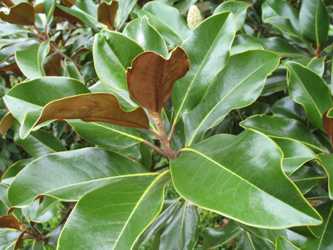
Magnolia grandiflora ‘Bracken’s Brown Beauty’ (Native Southern Magnolia)

‘Bracken’s Brown Beauty’ is an extremely cold hardy southern magnolia tree perfect for our area (southeastern Pennsylvania, U.S.).  It is said to be even hardier than ‘Edith Bogue’, which I have in my garden and came through our difficult winter in pristine condition.  It grows to 35’ tall at maturity and thrives in sun to partial shade.  The huge fragrant white flowers are beautifully displayed against the glossy dark evergreen leaves in June and July.  The rusty undersides of the leaves are particularly ornamental in this cultivar: I couldn’t take my eyes off it when I saw it on a local garden tour.
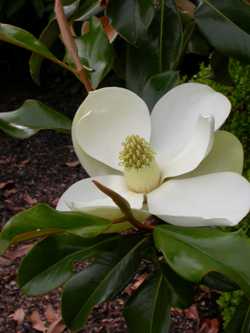
The flower of ‘Bracken’s Brown Beauty’ native southern magnolia

Southern magnolia is native from Maryland south.  ‘Bracken’s Brown Beauty’ is a Pennsylvania Horticultural Society Gold Medal Plant, click  here to see why, and a Missouri Botanical Garden Plant of Merit (photos courtesy of the Missouri Botanical Garden PlantFinder), click here for details.

Camellia x ‘April Blush’ (Spring-blooming Hardy Camellia)

I choose three hardy camellias, all with different characteristics, for their off season flowers and evergreen leaves.  Camellia x ‘April Blush’ is a spring-blooming hardy camellia with gorgeous plump buds opening to semi-double blush-pink flowers in April and May.  It has glossy dark evergreen leaves, which come through the winter unscathed.  It is 5’ tall and grows in part to full shade.  This is the cultivar that I have in my garden, and it is fully cold hardy in our area.

‘April Blush’ spring-blooming hardy camellia coming into bloom in my garden

Camellia x ‘Spring’s Promise’ (Spring-blooming Hardy Camellia)

Camellia x ‘Spring’s Promise’ is a very early spring-blooming hardy camellia that also flowers in the fall for two seasons of interest.  Its single coral-red flowers appear in  March and April displayed beautifully by its glossy dark evergreen leaves.  It was in full bloom in Charles Cresson’s garden during our March 3 winter interest seminar, see Winter Interest Seminars for an additional photo, and Charles highly recommends it.  It is 5’ tall, grows in part to full shade, and is fully hardy in our area.

Camellia x ‘Winter’s Snowman’ (Fall-blooming Hardy Camellia)

Camellia x ‘Winter’s Snowman’ is a fall-blooming hardy camellia.  Its semi-double, anemone form white flowers glow when displayed against its glossy evergreen leaves in November and December.  ‘Winter’s Snowman’ is a vigorous plant with a narrow upright habit.  It grows to 6’ tall, in part to full shade and is fully hardy in our area.  This is another of Charles Cresson’s favorites.

‘Winter’s Snowman’ in the Cresson garden last fall

For more information on fall-blooming hardy camellias, click here to read my article Fall-blooming Camellias Part 1, and here to read Fall-blooming Camellias Part 2.


Calycanthus raulstonii ‘Hartlage Wine’ (Native Hybrid Sweetshrub)

I have chosen four other shrubs for their outstanding ornamental qualities.  Calycanthus raulstonii ‘Hartlage Wine’ is a hybrid between our eastern U.S. native and an Asian sweetshrub and was introduced by the J.C. Raulston Arboretum in North Carolina.  It has breathtaking large wine-red flowers (see photos at the top and above) set off beautifully by the smooth bright green leaves with yellow fall color.   I placed this shrub at the entrance to my woodland garden and my customers are entranced by it as am I.   It grows to 8’ tall and 5’ wide in part to full shade.
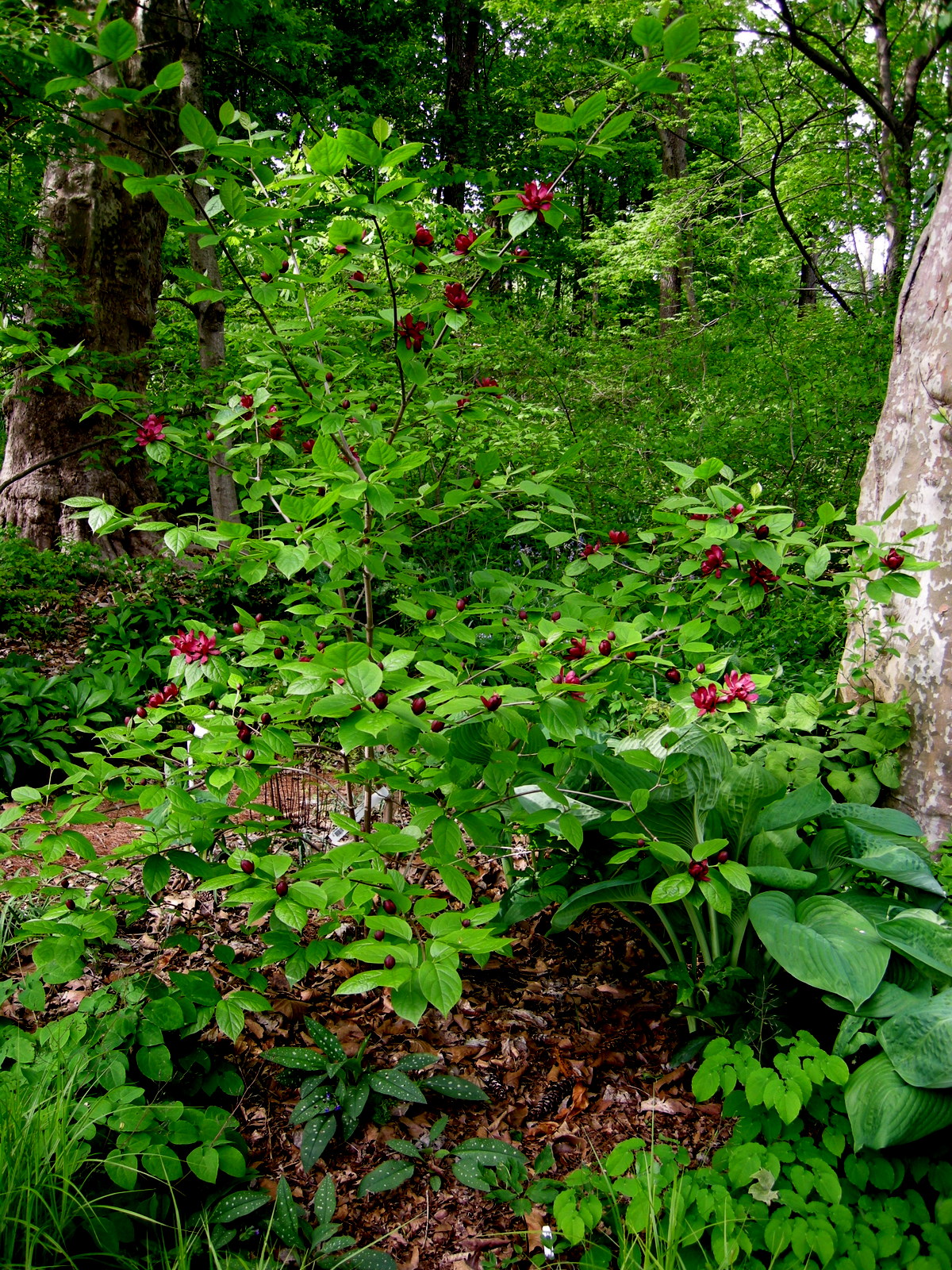
‘Hartlage Wine’ native hybrid sweetshrub at the entrance to my woodland garden with pulmonaria, epimedium, and blue hosta
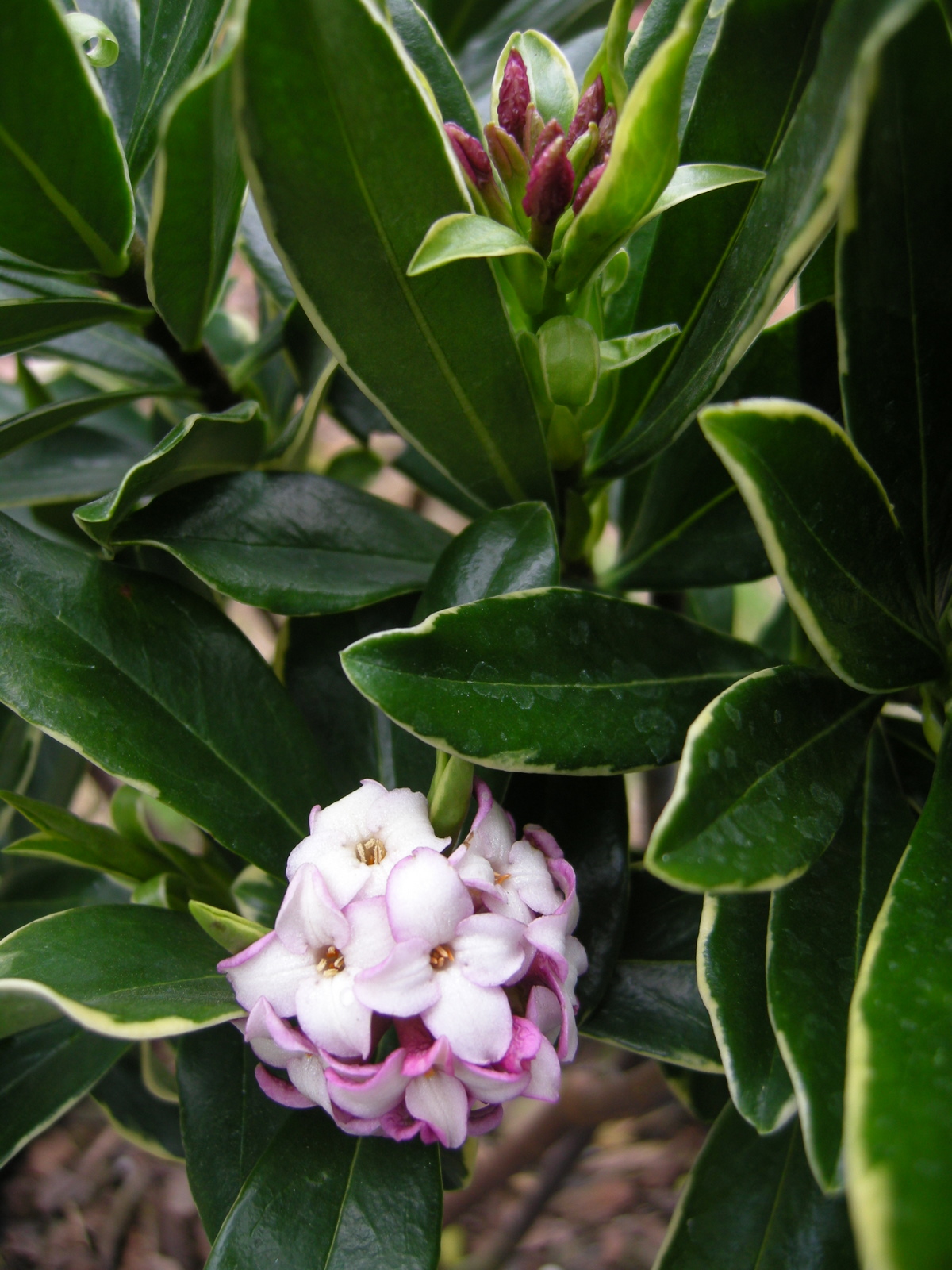
Daphne odora ‘Aureomarginata’ (Variegated Winter Daphne)

Daphne odora ‘Aureomarginata’, variegated winter daphne, has rose-pink buds opening to extremely fragrant clusters of pale pink flowers in early spring.  Its fine-textured, evergreen leaves are delicately edged in cream.  It grows to 4’ tall and wide in part to full shade.  It should be protected from winter sun and wind by planting it in a sheltered southeastern-facing location.  This is the daphne in my terrace garden that my customers have been asking about for almost 20 years because it perfumes that whole nursery when it blooms!  I am re-planting this year because my very large specimens were killed by falling white pine branches last winter.  Daphnes do not like to be disturbed once planted.
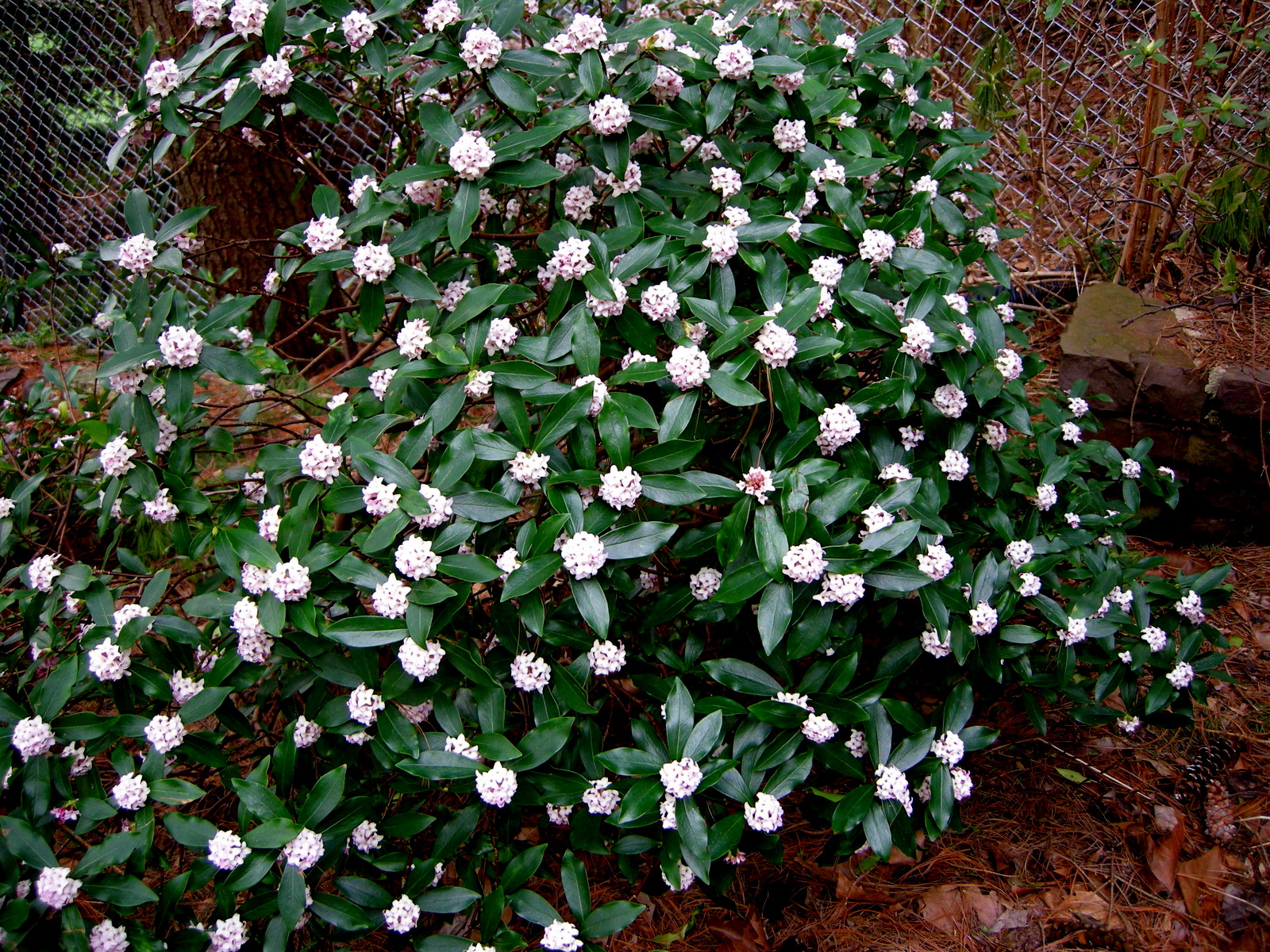
Winter daphne in my garden before the pine branches fell

Fothergilla gardenii (Native Dwarf Fothergilla)

Fothergilla gardenii, native dwarf fothergilla, has fragrant white bottlebrush flowers in April and May.  Its blue-green leaves turn lovely shades of yellow, orange, and red in the fall (see photo below).  It grows to 3’ tall and wide, making it an excellent shrub for small gardens and spaces.  It will grow in any light conditions from full sun to full shade and is wet site tolerant.  It is native to the southeastern US.  Missouri Botanical Garden has chosen dwarf fothergilla as a Plant of Merit (photos courtesy Missouri Botanical Garden PlantFinder), for details click here.

Fall color of native dwarf fothergilla


Hydrangea quercifolia ‘Pee Wee’ (Native Dwarf Oakleaf Hydrangea) photo courtesy of the Missouri Botanical Garden PlantFinder

Hydrangea quercifolia ‘Pee Wee’ produces large, long-lasting, upright pyramids of white flowers in June and July, changing to pink as they age and remaining ornamental into winter.  It is prized for its bold-textured leaves with burgundy-red fall color and cinnamon-colored exfoliating bark.  Walnut tolerant and native to the southeastern US, at 3′ tall it is the perfect native shrub for smaller spaces and smaller gardens.  It grows in any light from full sun to full shade.  If I could have only one shrub for shade, oakleaf hydrangea would be it.

Native dwarf oakleaf hydrangea with native ginger in the woodland at Carolyn’s Shade Gardens

The full size oakleaf hydrangea is a Pennsylvania Horticultural Society Gold Medal Plant, for details click here.
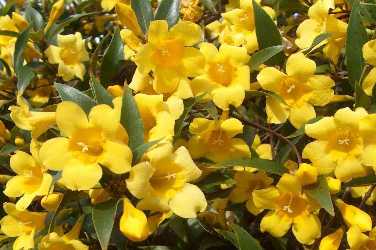
Gelsemium sempervirens ‘Margarita’ (Native Carolina Jessamine) photos above and below courtesy of the Missouri Botanical Garden PlantFinder

Gelsemium sempervirens ‘Margarita’ blooms with copious fragrant, bright yellow, trumpet-shaped flowers in April and May.  The lustrous, dark green leaves are semi-evergreen and provide winter interest.  It is native to the southeastern U.S. and reaches 15’ at maturity in full sun to part shade.  I grow this vine on a lattice trellis along my fence line in part shade and its beauty never fails to provoke comments.  It is a Pennsylvania Horticultural Society Gold Medal Plant, for details click here.

Native Carolina jessamine showing off its abundance of fragrant yellow flowers

I hope I have convinced you that these plants would be excellent additions to your shade garden.  If you are a customer, you have until April 7 to place an order by clicking here.  If not, now you have some plants to ask for at your local independent nursery.

Please leave a comment/reply telling me what other woody plants for shade I might want to offer in the future and describing your experience with them.

Carolyn

Notes: Every word that appears in orange on my blog is a link that you can click for more information.  If you want to return to my blog’s homepage to access the sidebar information (catalogues, previous articles, etc.), click here.

Nursery Happenings: My next nursery event is Bulb and Native Wildflower Day on Saturday, April 9, from 10 am to 2 pm.  My next open house sale features early spring-blooming shade plants and is Saturday, April 16, from 10 am to 3 pm.  For details and directions, click here.
The Sex Lives of Hellebores

Posted in hellebores, winter interest with tags , , , , , , , , , , , , , on March 26, 2011 by Carolyn @ Carolyns Shade Gardens

Carolyn’s Shade Gardens is a retail nursery located in Bryn Mawr, PA, specializing in showy, colorful, and unusual plants for shade.  The only plants that we ship are snowdrops and miniature hostas.  For catalogues and announcements of events, please send your full name, location, and phone number (for back up use only) to carolyn@carolynsshadegardens.com.  Click here to get to the home page of our website for catalogues and information about our nursery and to subscribe to our blog.

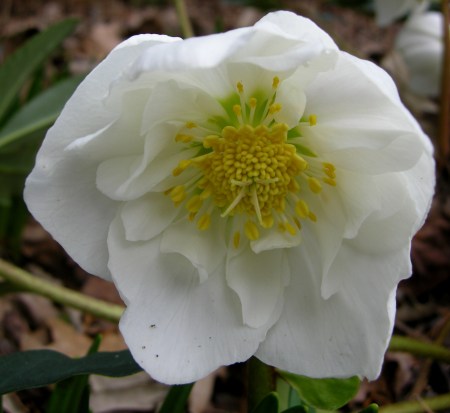
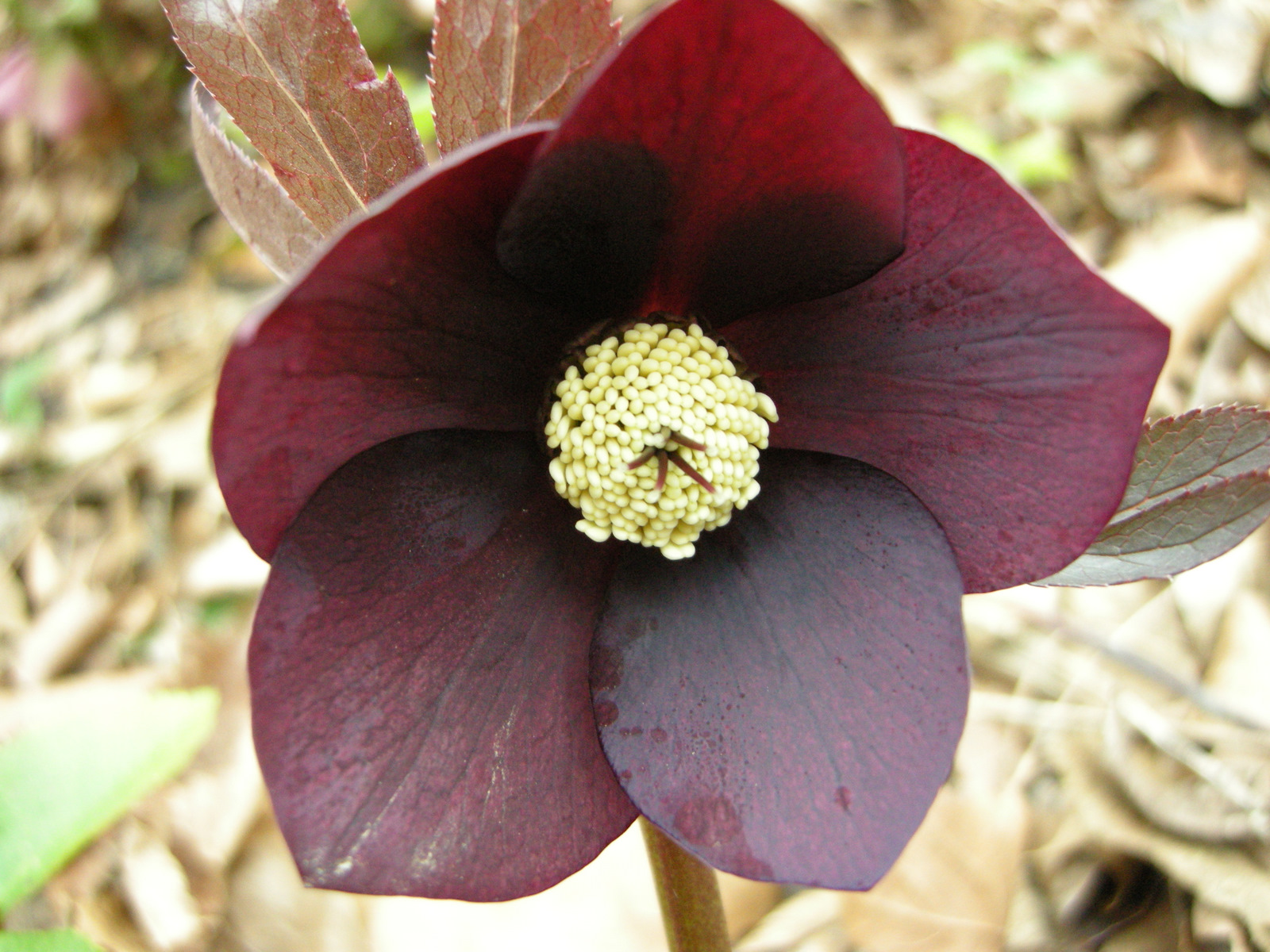
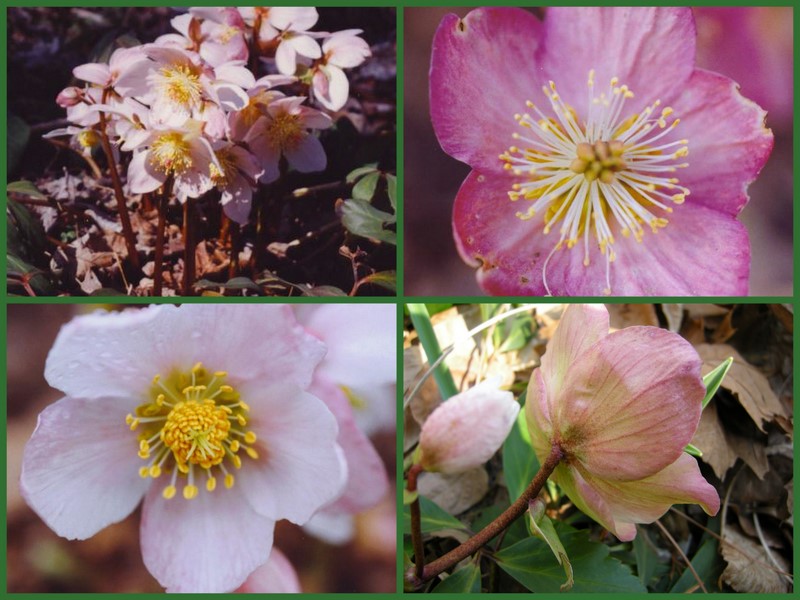
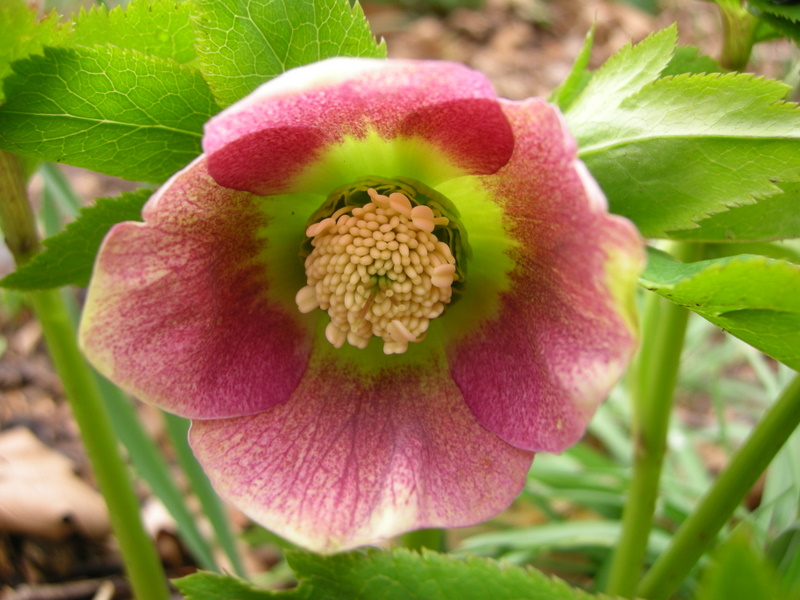
The green halo in this beautiful hybrid hellebore flower probably results from the influence of H. torquatus, which is characterized by a pale collar around the center of the flower.

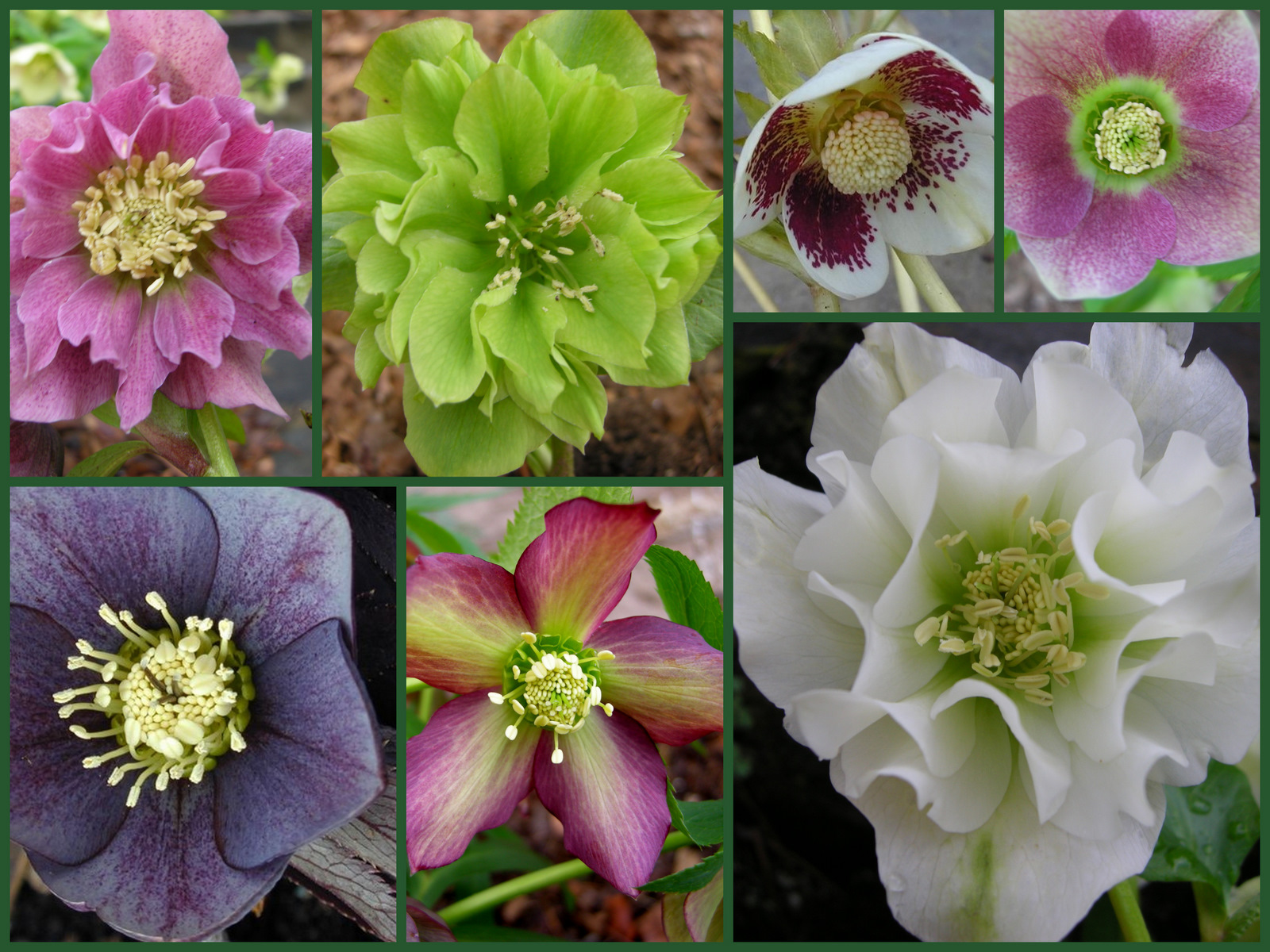
Hybrid hellebores, Helleborus x hybridus (the Royal Horticultural Society approved name, previously called Lenten rose or Orientalis hybrids), are the most commonly available hellebores with the large, showy, nodding flowers in an amazing range of colors (click here and here to see photos).  In my article An Ode to Seed Strain Hellebores, I explained my fascination with and love of the diversity found in hybrid hellebores .

I described how, unless tissue cultured, you can’t be sure what a hybrid hellebore  flower will look like unless it is in bloom.  But I pointed out that to me that is the magic of hybrid hellebores: each plant is a unique individual, with the potential for inheriting genetic material from any of the 9 species hellebores that could be its parents.  In this article, I want to explain exactly where hybrid hellebores come from and introduce you to their parents.  If you want to skip the technical discussion, photos of the parent species are at the end of the article.  I won’t be insulted.

The leaves of ‘Metallic Blue Lady’ hybrid hellebore come out a deep glossy purple showing the influence of H. atrorubens, which can have the same attribute.

The genus Helleborus contains between 12 and 21 species, depending on who is counting, but I usually stick with the 15 described by Brian Mathew, Royal Botanic Gardens, Kew, in his authoritative work Hellebores (Alpine Garden Society 1989).  Six of these species are not relevant to our discussion here.  The other nine species are the parents of hybrid hellebores.  They are H. atrorubens, H. cyclophyllus, H. dumetorum, H. mulitifidus, H. odorus, H. orientalis, H. purpurascens, H. torquatus, and H. viridis.

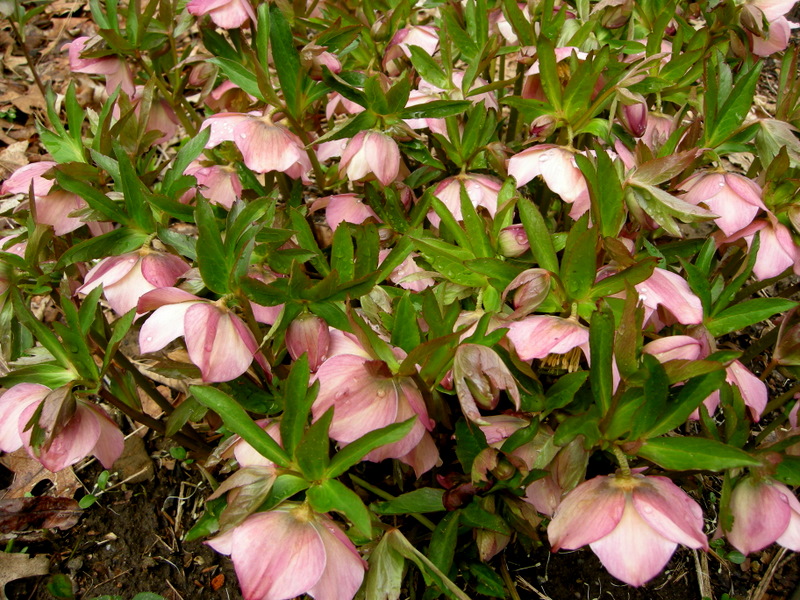
These nine hellebore species have crossed and re-crossed naturally and through human intervention by hellebore breeders  over hundreds of years to produce hybrid hellebores.  That is why hybrid hellebores are so variable: they can have the characteristics of any of these nine species in their background in infinite combinations.  And it is impossible to be sure which species a particular hybrid hellebore has in its genetic makeup, although flower and leaf characteristics can often lead one to speculate that a particular parent might be predominant (see two photos above).

The species themselves are also incredibly variable in the wild, often freely crossing  with each other,  making them difficult to identify.  For a discussion of just how variable, read Chapter 3 in Hellebores: A Comprehensive Guide by J. Tyler and C. Burrell (Timber Press 2006).

This very beautiful but clearly hybrid hellebore was sold to me as H. purpurascens.

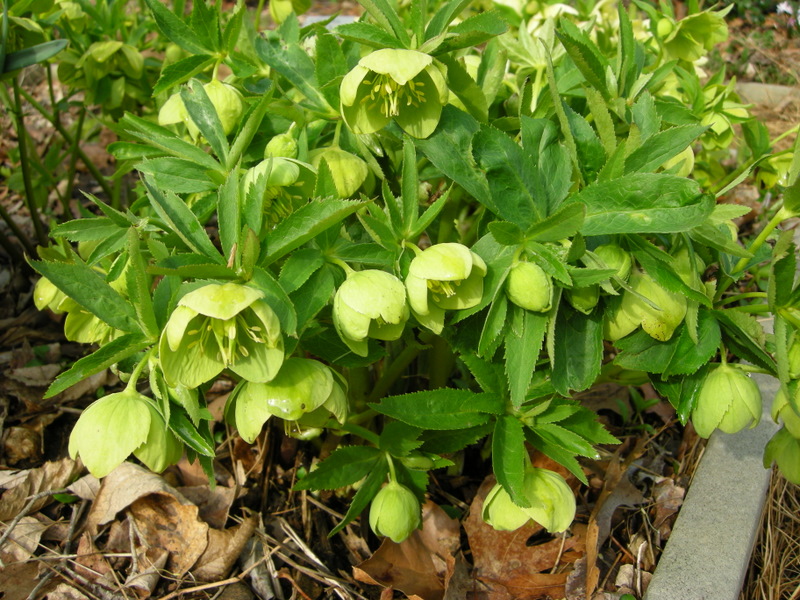
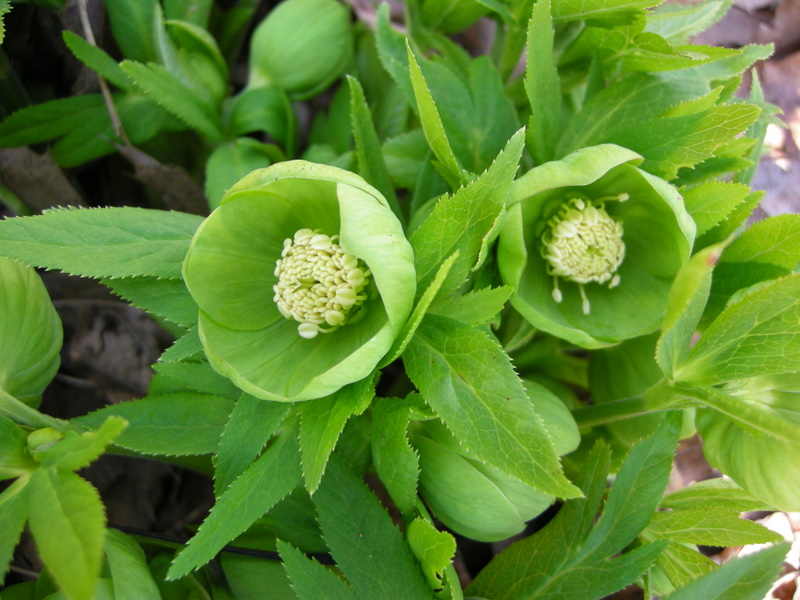
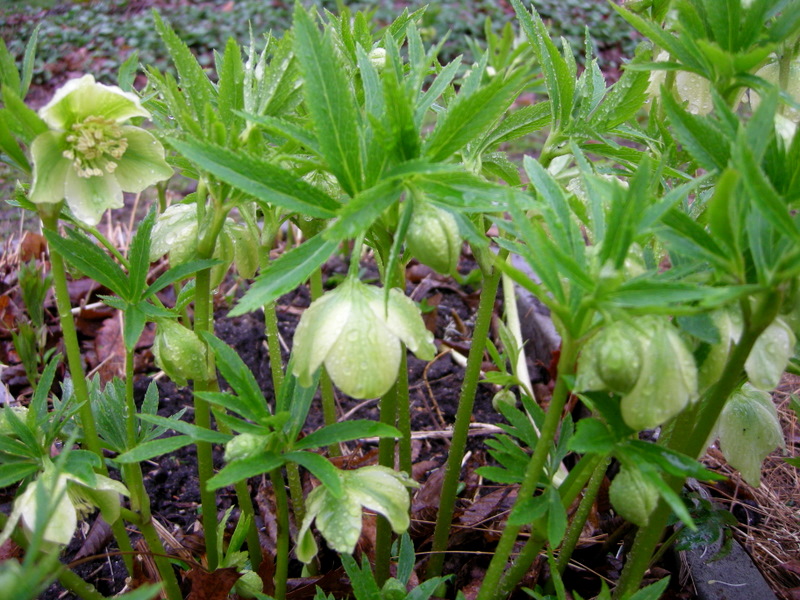
I was a hellebore fanatic long before I became a galanthophile (see my article Snowdrops: Further Confessions of a Galanthophile), and over the years I have collected, grown, and, in some cases, sold to my customers all 15 species, which are all very beautiful in their own right.  In addition, I have attempted to acquire them from as many different sources as possible in order to get plants that I consider the most true to type.   Many of my plants were grown from seeds collected in the wild by Will McLewin of Phedar Nursery in the U.K. You would be amazed at what I have been sold as species hellebores (see photos above and below).

These four plants were all sold to me as H. atrorubens.

So over the years, through trial and error, I have developed what I jokingly call the “U.S. National Species Hellebore Collection”, and I present them to you.  But please remember that I have never actually seen these plants in the wild.

Helleborus cyclophyllus

Helleborus cyclophyllus is native to the open dry hillsides and woods of Greece,  Albania, the former Yugoslavia, and Bulgaria.  Its name means with leaves in a circle.  It is quite fragrant and not ornamentally distinct from H. odorus,  fragrant hellebore.  All the chartreuse-flowered species hellebores look gorgeous in combination with red- and purple-flowered hybrids.

Helleborus atrorubens

Helleborus atrorubens is native to dry hillsides and woodland margins of the former Yugoslavia.  Its name means dark red, and it gives purple and red colors to hybrid hellebores.  It can also contribute the desirable attribute of leaves that emerge  dark purple.

Helleborus dumetorum

Helleborus dumetorum is native to the mountainous woods and thickets of Austria, Romania, the former Yugoslavia, and Hungary.  Its name means of thickets and hedgerows.  At 8 to 12″ (all the others are 12 to 20″), it is the smallest hellebore species and looks like a miniature.  Its multiple skinny leaflets give it a feathery appearance.

Helleborus purpurascens

Helleborus purpurascens is native to light woodlands and meadows throughout eastern Europe.  Its name means purplish, and it usually doesn’t exceed 12″ tall.  It is my favorite of the species both for its gorgeous and unusual flowers and its circular, filigreed leaves.  It must be more stable in the wild because every plant I have acquired looks similar to the photos above.

Helleborus odorus (Fragrant Hellebore)

Helleborus odorus is native to woodland margins and thickets of Hungary, Romania, and the former Yugoslavia.  Its name means fragrant, and it is one of the more commonly grown species.  On warm days, H. odorus and H. cyclophyllus perfume my whole species hellebore area.  I have never noticed that this trait was passed on to any hybrid flower.  As noted above, it is not ornamentally distinct from H. cyclophyllus.

Helleborus torquatus

Helleborus torquatus is native to light deciduous woods and clay soil of the  former Yugoslavia.  Its name means with a collar, referring to the pale ring around the neck of the flower, which you can see in the photo above.   Its leaves have 15 to 25 long tapering segments giving the whole plant a unique spidery look.   It produces double flowers in the wild and also contributes purple and blue color and metallic highlights to the hybrids.  It is the rarest of the species in this article, and I have only been able to acquire it from one source.

Helleborus viridis (Green Hellebore)

Helleborus viridis is unusual culturally and geographically because it is native to the moist deciduous woods and meadows and clay soil of western Europe and the U.K.  Most of these species hellebores require well-drained soil and are native to eastern Europe.  Its name means green, and its flowers are certainly the best green of the species.  I find them quite beautiful.

Helleborus orientalis (Lenten Rose)

There are three subspecies of Helleborus orientalis, the Lenten rose.  The photos above are of  a plant sold to me as H. orientalis subsp. abchasicus.  However, because of the green carpels and spotted flowers, I am inclined to think it is subsp. guttatus. The seed came from well known hellebore expert Will McLewin.  It is native to open fields as well as scrub and woodlands of the Caucasus Mountains where Europe meets Asia, which explains its name meaning of the Orient. Most hybrid hellebores are derived at least in part from H. orientalis, which is why they were originally called Orientalis hybrids.

Helleborus multifidus

Helleborus multifidus is native to the deciduous woods and open scrubland of Italy, the former Yugoslavia, and Albania.  Its name means much divided, referring to its beautiful frilly leaves.  I grow three of its four subspecies, which I treasure for their foliage, and two are pictured below.

Helleborus multifidus subsp. bocconei is a variant from central and southern Italy and Sicily named for a Sicilian botanist.  It is said to be a better garden plant than the other subspecies and certainly makes a gorgeous lacy statement in my gardens.

Helleborus multifidus subsp. hercegovinus is native to Bosnia and Herzegovina.  It is definitely harder to grow but well worth the effort for its extraordinary leaves, which can be divided into 100 leaflets.

I hope you have enjoyed my photo gallery with short descriptions for each of the nine hybrid hellebore parents.  I have spared you many details that interest me as a collector.  I felt that this was enough to take in in one article.  I should probably also mention that none of the photos above picture the true leaves of the plants, which come out after the flowers.  What you are seeing above are the bracts, which are part of the flower stem and often reflect the leaf characteristics.  If readers are truly interested, I could photograph the leaves, which in many cases are extraordinary, for a later article.

I would really appreciate reader feedback on your experiences with these species, and I would especially like to know if you think any of them are mislabeled and why.

Caroly

This is part of a series of articles on hellebores, one of the specialties of my nursery.  Here are links to the other articles:

Part One        Hellebores for Fall

Part Two       An Ode to Seed Strain Hellebores

Part Three   Christmas Rose: The Perfect Hellebore

Part Four      Dividing Hybrid Hellebores

Part Five       The Sex Lives of Hellebores

Part Six          Double Hellebores

Part Seven   Cutting Back Hellebores

Notes: Every word that appears in orange on my blog is a link that you can click for more information.  If you want to return to my blog’s homepage to access the sidebar information (catalogues, previous articles, etc.), click here.

Nursery Happenings: I sell several of the species hellebores pictured above so if you are interested send me an email (no mail order).  My next nursery event is Bulb and Native Wildflower Day on April 9 from 10 am to 2 pm.

Thanks from Tara:

In my post I Need Your Help, I asked you to send cards to Tara, the five-year-old daughter of Kartik whom I profiled inNew Year’s Resolution to Edit the Garden. Tara had recently been diagnosed with leukemia.  As a result of your generosity, Tara received cards from all over the world and has sent you one in return.


2011 Winter Interest Plants

Posted in bulbs for shade, garden to visit, landscape design, Shade Shrubs, snowdrops, winter interest with tags , , , , , , , , , , , , on March 20, 2011 by Carolyn @ Carolyns Shade Gardens

Carolyn’s Shade Gardens is a retail nursery located in Bryn Mawr, PA, specializing in showy, colorful, and unusual plants for shade.  The only plants that we ship are snowdrops and miniature hostas.  For catalogues and announcements of events, please send your full name, location, and phone number (for back up use only) to carolyn@carolynsshadegardens.com.  Click here to get to the home page of our website for catalogues and information about our nursery and to subscribe to our blog.

Japanese flowering apricot, Prunus mume

On March 3, 7, and 13, my customers and I attended seminars on Snowdrops and Other Winter Interest Plants given by Charles Cresson at his garden, Hedgleigh Spring in Swarthmore, Pennsylvania (US).  Charles is the instructor for the Longwood Gardens certificate course “Hardy Spring and Fall Bulbs” as well as the author of several gardening books.  He is also a frequent lecturer, most recently at the Planting Fields Arboretum on Long Island and Rare Find Nursery in New Jersey for presentations on “Choosing Hardy Camellias for Spring and Fall”.

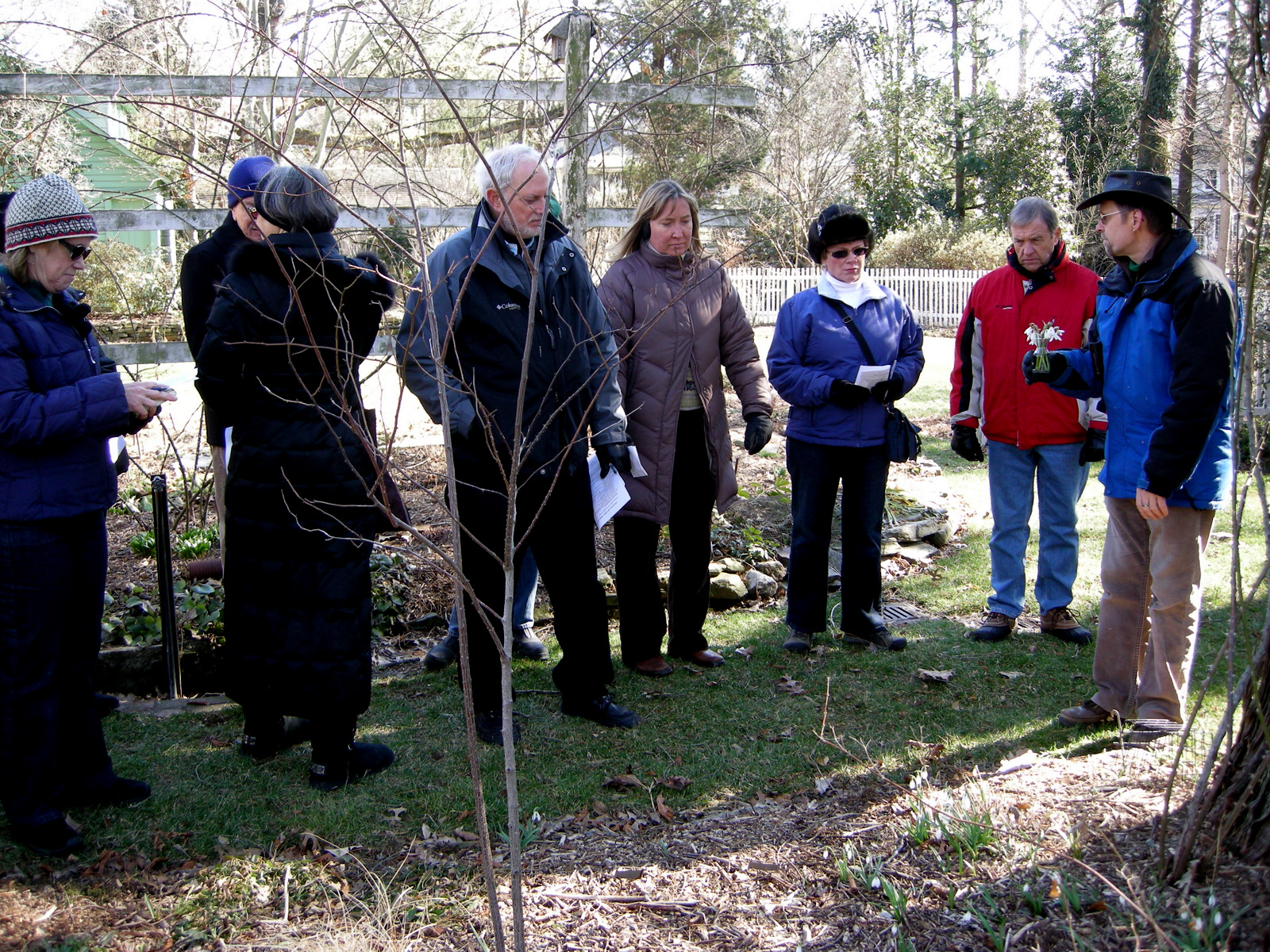
Charles Cresson, kneeling to point out plicate leaves on a snowdrop, to seminar attendees.

Charles trained at the Royal Horticultural Society, Wisley, in England and the Kalmthout Arboretum in Belgium, best known for its witch hazel introductions.    He has worked at Meadowbrook Farm, Winterthur, Nemours, and Chanticleer.  His grandfather built the house at Hedgleigh Spring in 1911 and created the garden over the course of 50 years.  Charles has gardened there for  more than 40 years.

Every time we viewed a new snowdrop, no matter how rare, Charles picked two flowers and passed them around so that we could closely examine the markings and experience the fragrance.  He then collected the flowers in a little vase for later comparison.

What a treat Charles’s seminars were.  Even though I attended all three sessions, I learned something new each time and came away with a deep admiration for Charles’s encyclopedic knowledge of plants and the depth of his plant collection, not to mention a wish list of plants for my own gardens.  I also appreciated how each plant was not just deposited in the garden but was carefully incorporated into the overall design.

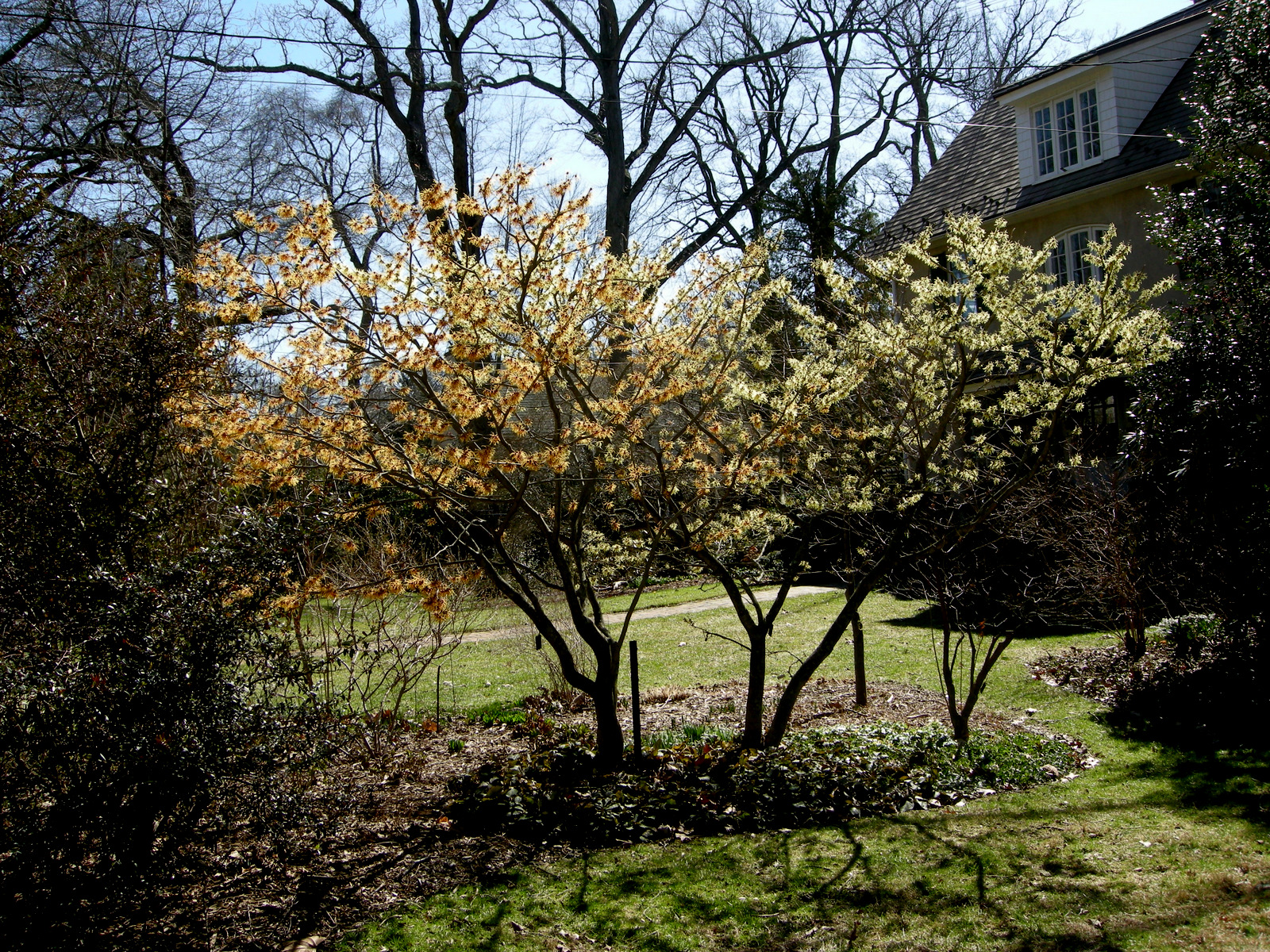
The seminars began in the front garden viewing the hybrid witch hazel cultivars Hamamelis x intermedia ‘Jelena’ (dark orange) and ‘Moonlight’ (pale yellow) underplanted with snowdrops, winter aconite, and various perennials. Charles does not recommend ‘Moonlight’ because it holds its dead leaves.

It would be hard to name another garden with the wealth of unusual plants that Charles has found and nurtured to perfection over the years.  That being said I thought my customers who were unable to attend the seminars and my worldwide blog readers might like to see what we saw.  I have organized the plants by category below with commentary in the caption where relevant.

We crossed a stone bridge to view the meadow where snow crocus and common and giant snowdrops were massed to be succeeded by daffodils, camassia, and then summer and fall blooming flowers.

A narrow path skirts the pond, which is surrounded on all sides by rock gardens full of unusual plants.

The Bulbs

We saw so many rare and unusual bulbs that I can only include a sampling here.

A rare pale yellow form of winter aconite, Eranthis hyemalis

The exquisite buds of the species crocus C. imperati ‘De Jager’

Masses of the rodent resistant and very early blooming snow crocus, Crocus tommasinianus ‘Whitewell Purple’, shadowed by a magnificent Japanese maple.

The very early blooming daffodil Narcissus ‘Rijnveld’s Early Sensation’

A very good form of winter blooming hardy cyclamen, Cyclamen coum

The reticulate iris I. histrioides ‘George’

There were large patches of spring snowflake, Leucojum vernum, throughout the garden.

The flower of spring snowflake, Leucojum vernum

We were privileged to see this semi-double form of spring snowflake,  which Charles has named  Leucojum vernum ‘Gertrude Wister’ and registered with the Dutch bulb authority.

The Snowdrops

If you read my blog, you know what a galanthophile I am so with supreme effort I have limited myself to just a few of the many snowdrops we saw.

Clockwise from upper left: G. elwesii var. monostichus, G. ikariae, ‘Jaquenetta’, ‘Straffan’, G. plicatus subsp. byzantinus, ‘Dionysus’

Galanthus ‘Brenda Troyle’, confused in the trade but still quite lovely

Galanthus plicatus subsp. byzantinus Cresson GardenThe elegant pleated leaves and plump flowers of Galanthus plicatus subsp. byzantinus

The beautiful shiny green leaves of Galanthus woronowii

There were drifts of Galanthus ‘S. Arnott’, called the ‘desert island snowdrop’ because it is the one cultivar many galanthophiles would choose if they were limited to one.

The Perennials

A very rare perennial for shade Amur adonis, A. amurensis ‘Fukuju Kai’

Helleborus niger double form Cresson gardenA semi-double form of Christmas rose, Helleborus niger, which I have only seen at Hedgleigh Spring

The Algerian iris, I. unguicularis, blooming in early March with a beautiful fragrance

The Shrubs

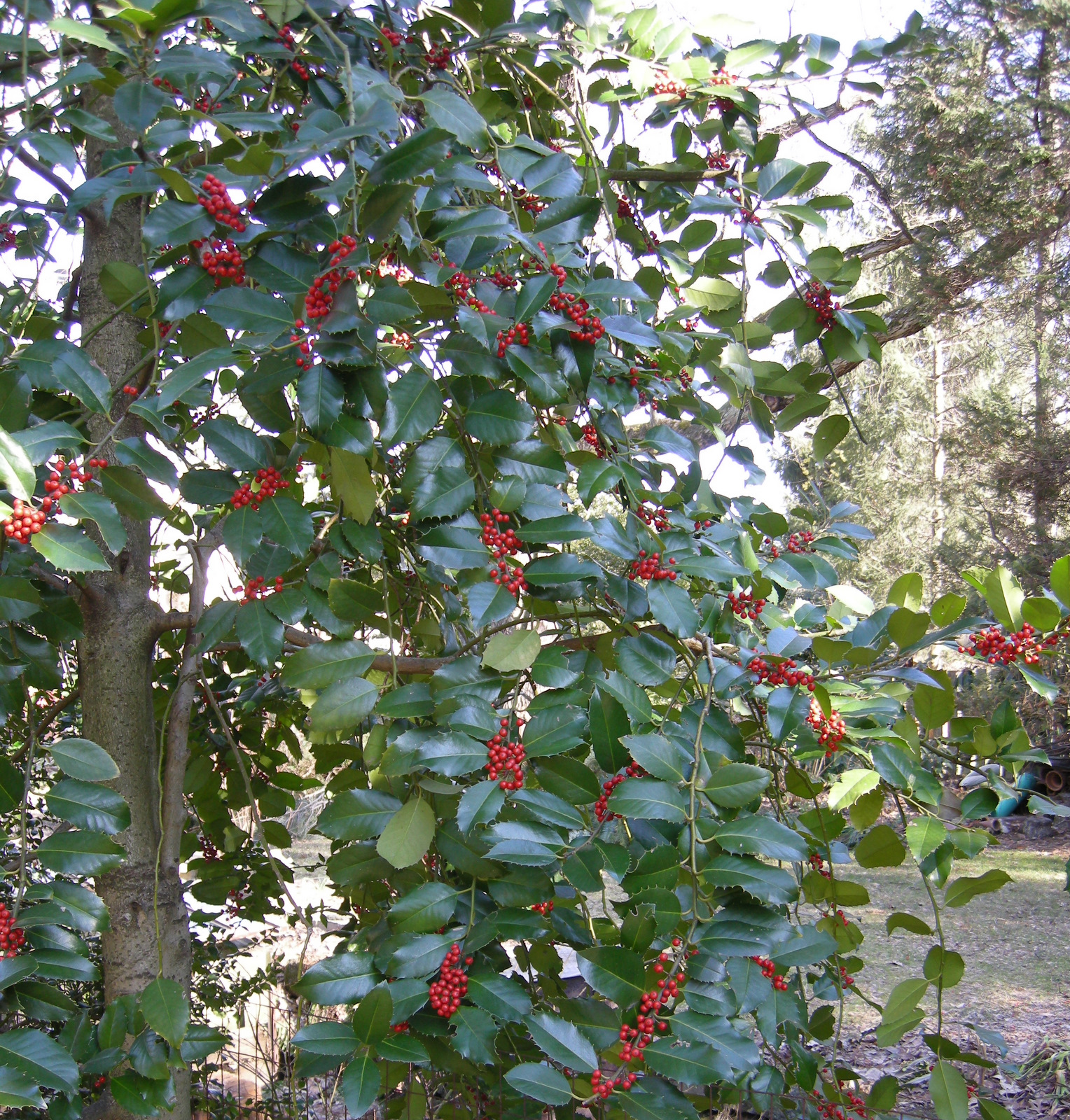
Koehne holly, Ilex x koehneana, looking as fresh and beautiful as it did in the fall

Camellia japonica ‘Spring’s Promise’ was one of several very early spring-blooming camellias that we saw.

Grape holly, Mahonia x media ‘Arthur Menzies’

A highlight for me were the buds on this paperbush, Edgeworthia chrysantha ‘Snow Cream’, which look like the tassels on Victorian cushions

Hybrid witch hazels, Hamamelis x intermedia ‘Jelena’ and ‘Moonlight’

I hope you have enjoyed your virtual seminar.  Please let me know in a comment/reply what your favorite winter interest plant is.

Carolyn

Notes: Every word that appears in orange on my blog is a link that you can click for more information.  If you want to return to my blog’s homepage to access the sidebar information (catalogues, previous articles, etc.), just click here.

Nursery Happenings: My first open house sale is Saturday, March 26, from 10 am to 3 pm, featuring hellebores and other winter and early spring blooming plants for shade (checks and cash only).  For directions and parking information, click here.

March GBBD: The Philadelphia International Flower Show

Posted in Garden Blogger's Bloom Day, hellebores, snowdrops, winter, winter interest with tags , , , , , , , , , , , , , , , , , , , , , , , , on March 14, 2011 by Carolyn @ Carolyns Shade Gardens

Carolyn’s Shade Gardens is a retail nursery located in Bryn Mawr, PA, specializing in showy, colorful, and unusual plants for shade.  The only plants that we ship are snowdrops and miniature hostas.  For catalogues and announcements of events, please send your full name, location, and phone number (for back up use only) to carolyn@carolynsshadegardens.com.  Click here to get to the home page of our website for catalogues and information about our nursery and to subscribe to our blog.

It is time to walk around your garden again and assess what you need to add to make the beginning of spring an exciting time in your landscape.  Do you need more early-blooming hellebores, to give you a reason to go outside?  Could your garden benefit from flowers that bloom in early March like hardy cyclamen, snow crocus, or snowdrops to relieve the gray?

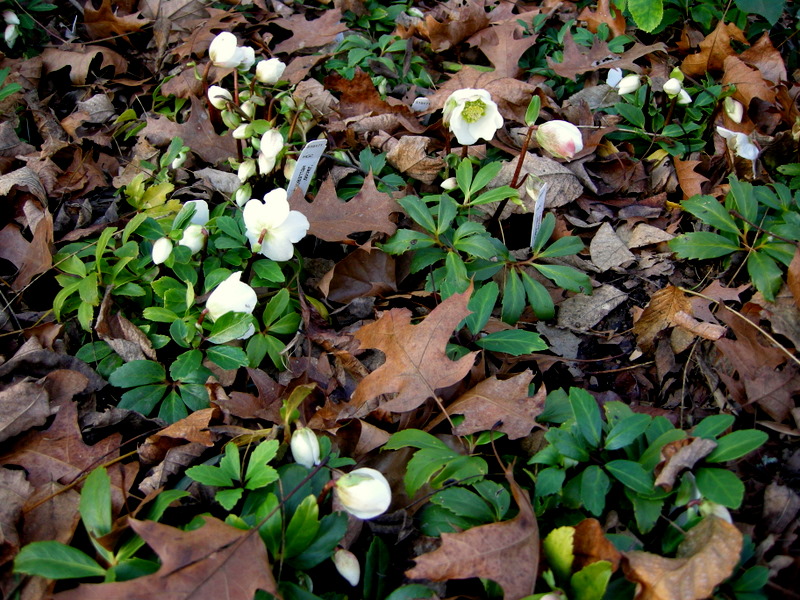
Make a list and take photographs so that when you are shopping this spring you know what you need and where it should go.  I know it’s still pretty cold outside, but you never know what you might find to end the winter doldrums like the beautiful double-flowered hellebore (pictured above), which I discovered during my own  inventory.  More photos of my blooming plants are included at the end.

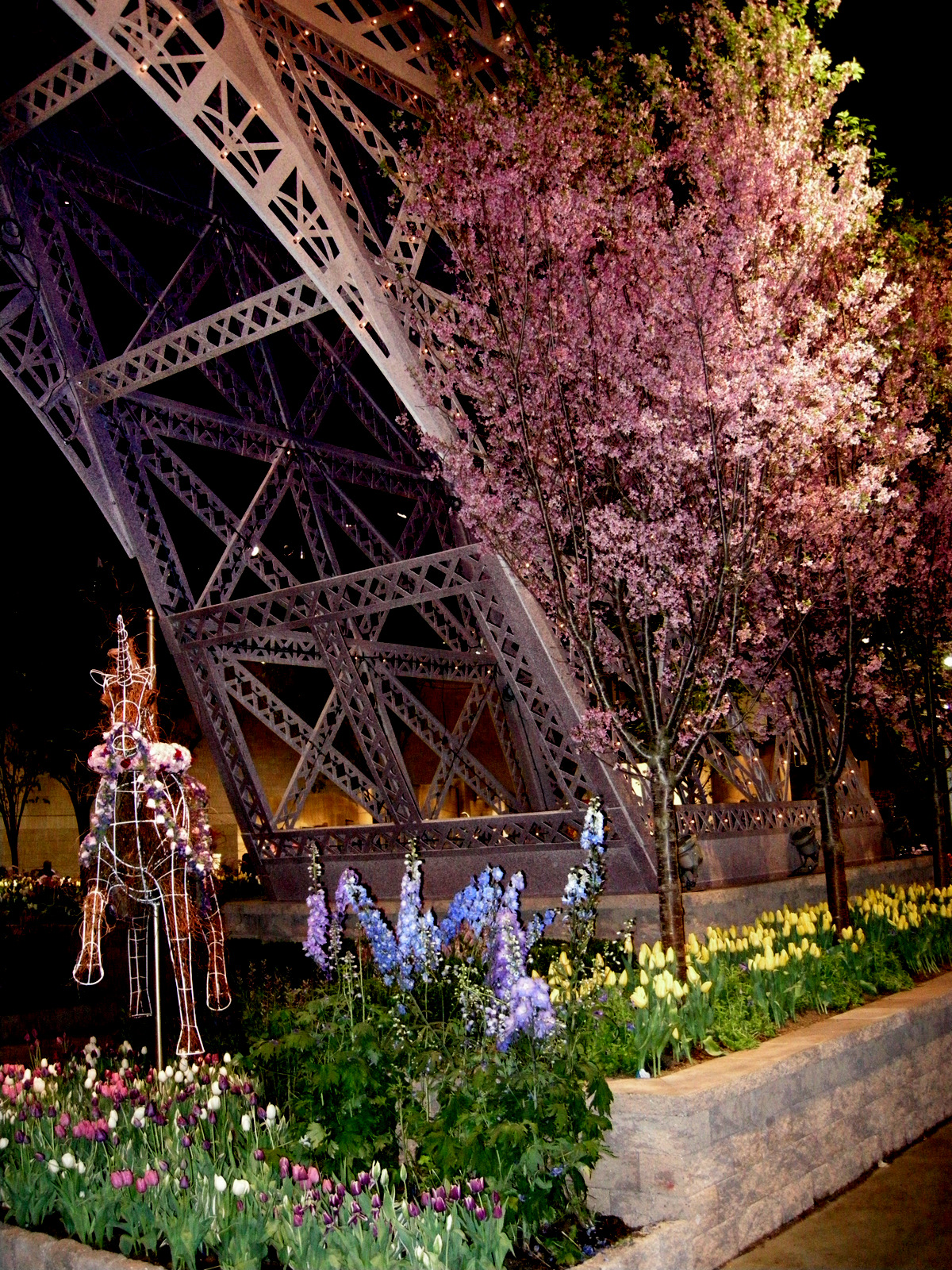
As you entered the 2011 Philadelphia International Flower Show, you walked under a very large replica of the lower half of the Eiffel Tower

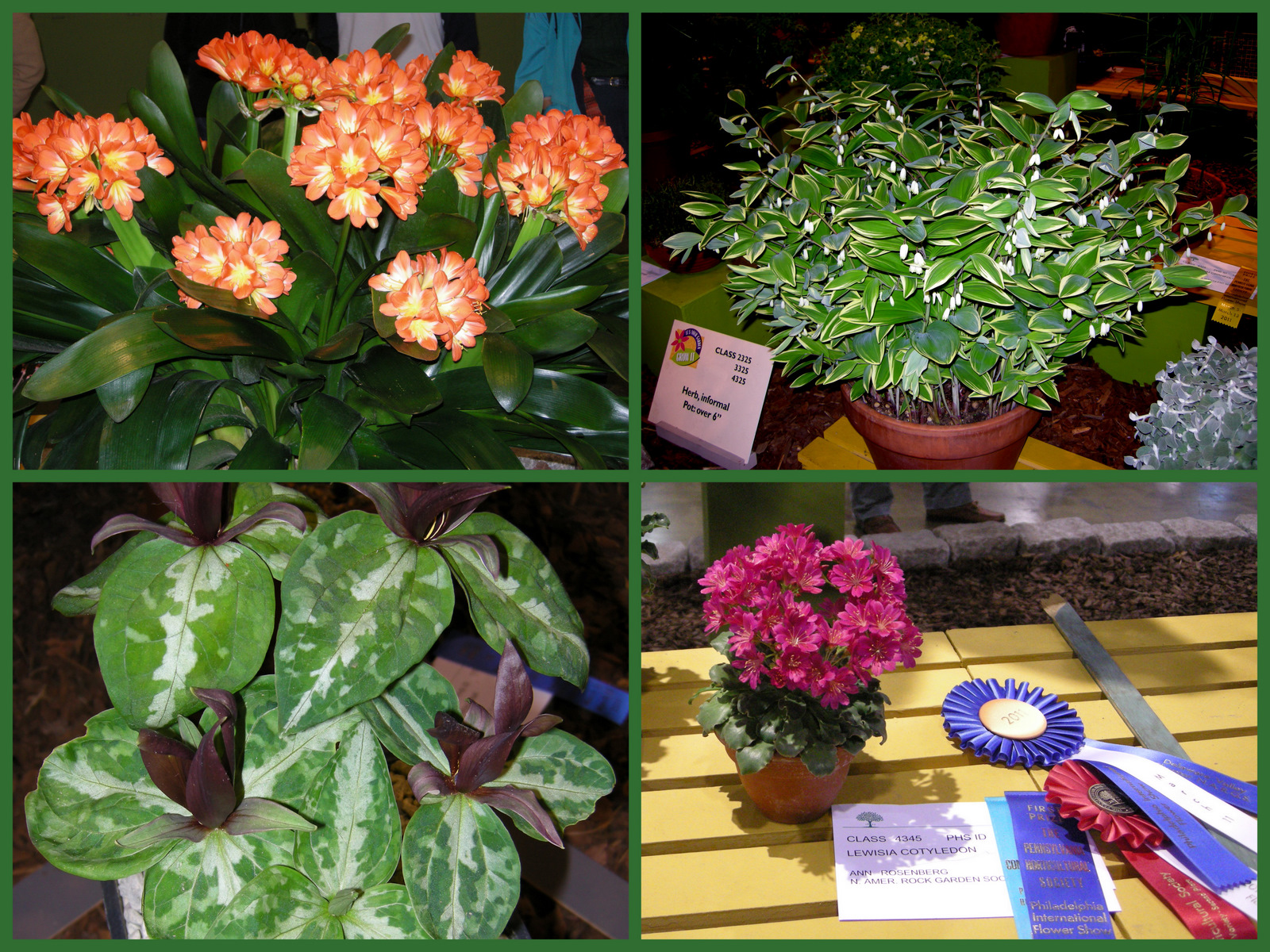
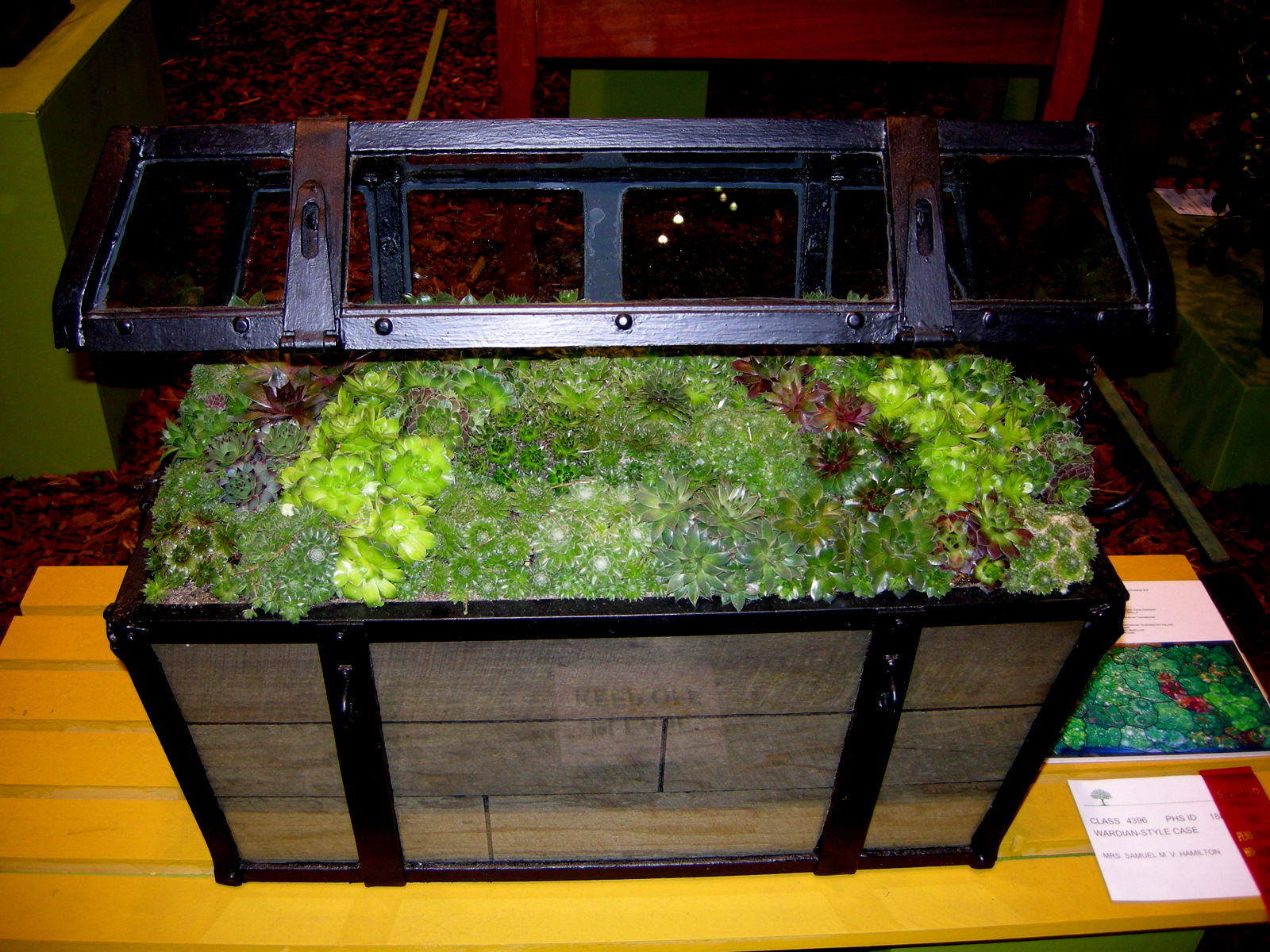
If you need ideas, there is no better place to go in the mid-Atlantic this time of year than the 2011 Philadelphia International Flower Show.  It is the largest indoor flower show in the world.  This year’s theme was “Springtime in Paris”, and the designers went all out.  I sent photos of some of the weirder stuff to Cheri at Along Life’s Highway The Yard Art Game, and you can see them by clicking here.  But I found the following displays and entries inspirational for my own garden:

There is nothing more beautiful than an individual well grown plant

A new idea for my sedum displays, which are fantastic in containers

Inspiration to upgrade my troughs

I need an elegant metal gate for my walled compost area

Simple can be very beautiful

Today is Garden Blogger’s Bloom Day for March when gardeners around the world show photos of what’s blooming in their gardens (follow the link to see  photographs from other garden bloggers assembled by Carol at May Dreams Gardens).  Here are  some more highlights from my mid-March stroll through Carolyn’s Shade Gardens:

Eranthis hyemalisWinter aconite, Eranthis hyemalis

Scilla mischtschenkoanaVery early-blooming Tubergen squill, Scilla mischtschenkoana

My original snow crocus, Crocus tommasinianus, which is rodent resistant, has multiplied into thousands of plants

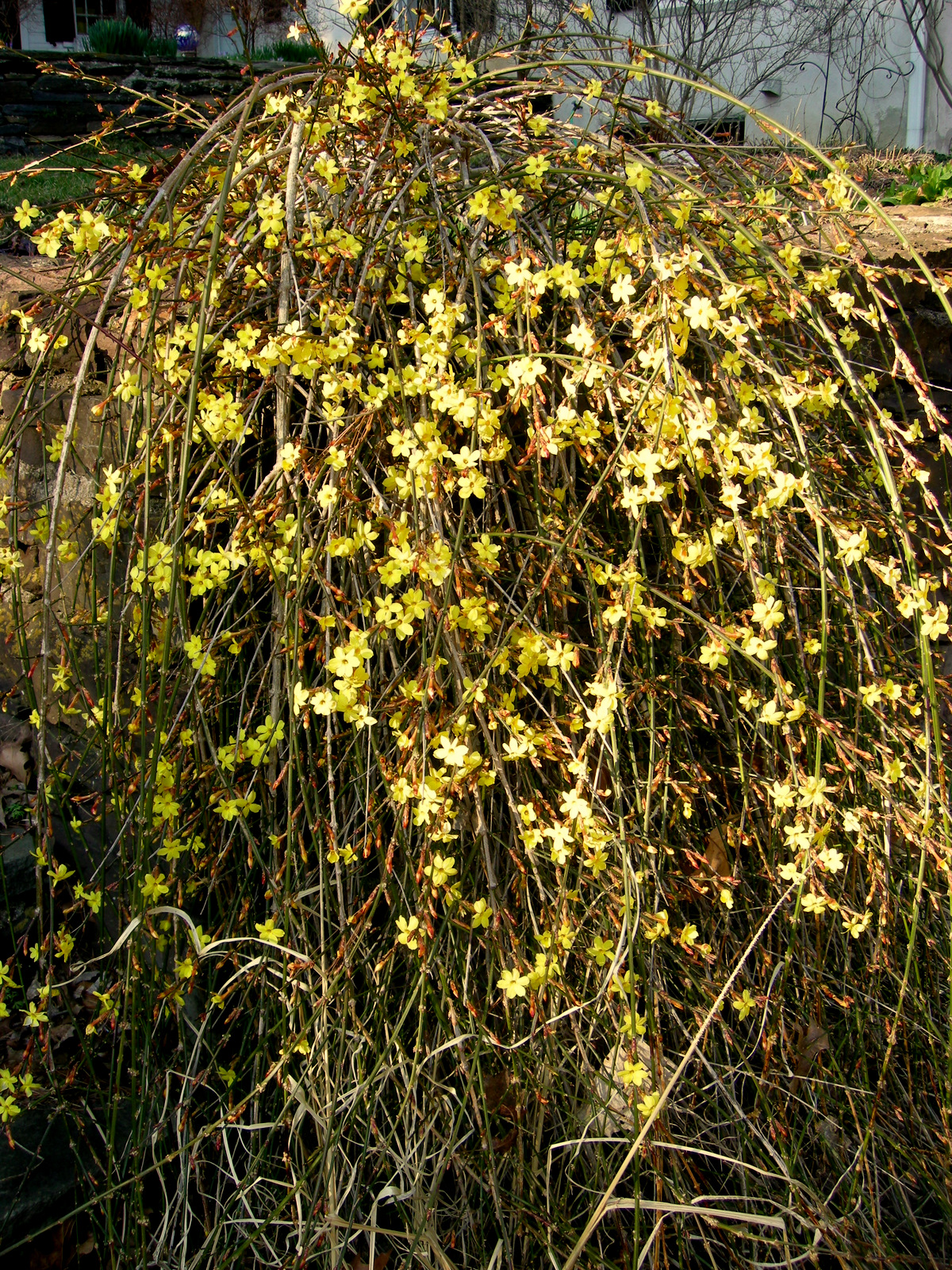
Winter jasmine, Jasminum nudiflorum, has no scent but makes up for it by blooming so early

Winter-blooming hardy cyclamen, Cyclamen coum ‘Rose’

I want to include hundreds of hellebore photos but am limiting myself to some really special plants:

The rare species Helleborus purpurascens

The flower of Helleborus purpurascens

Another even rarer species Helleborus viridis: inspired by Laura at PatioPatch, I am dedicating this flower to the people of Japan because green is the color for hope

A cross between Corsican hellebore and Christmas rose, Helleborus x nigercors ‘Honeyhill Joy’

A very beautiful anemone-centered hybrid hellebore where the nectaries have become petal-like (petaloid)

Another petaloid hybrid hellebore

‘Blue Lady’ hybrid hellebore

Hybrid hellebore with picotee markings (darker edges, veins, and nectaries)

A very good yellow hybrid hellebore with maroon nectaries

Some of the thousands of common snowdrops, Galanthus nivalis, which have multiplied on my property since the 1800s:

Common snowdrop with Italian arum, Arum italicum ‘Pictum’

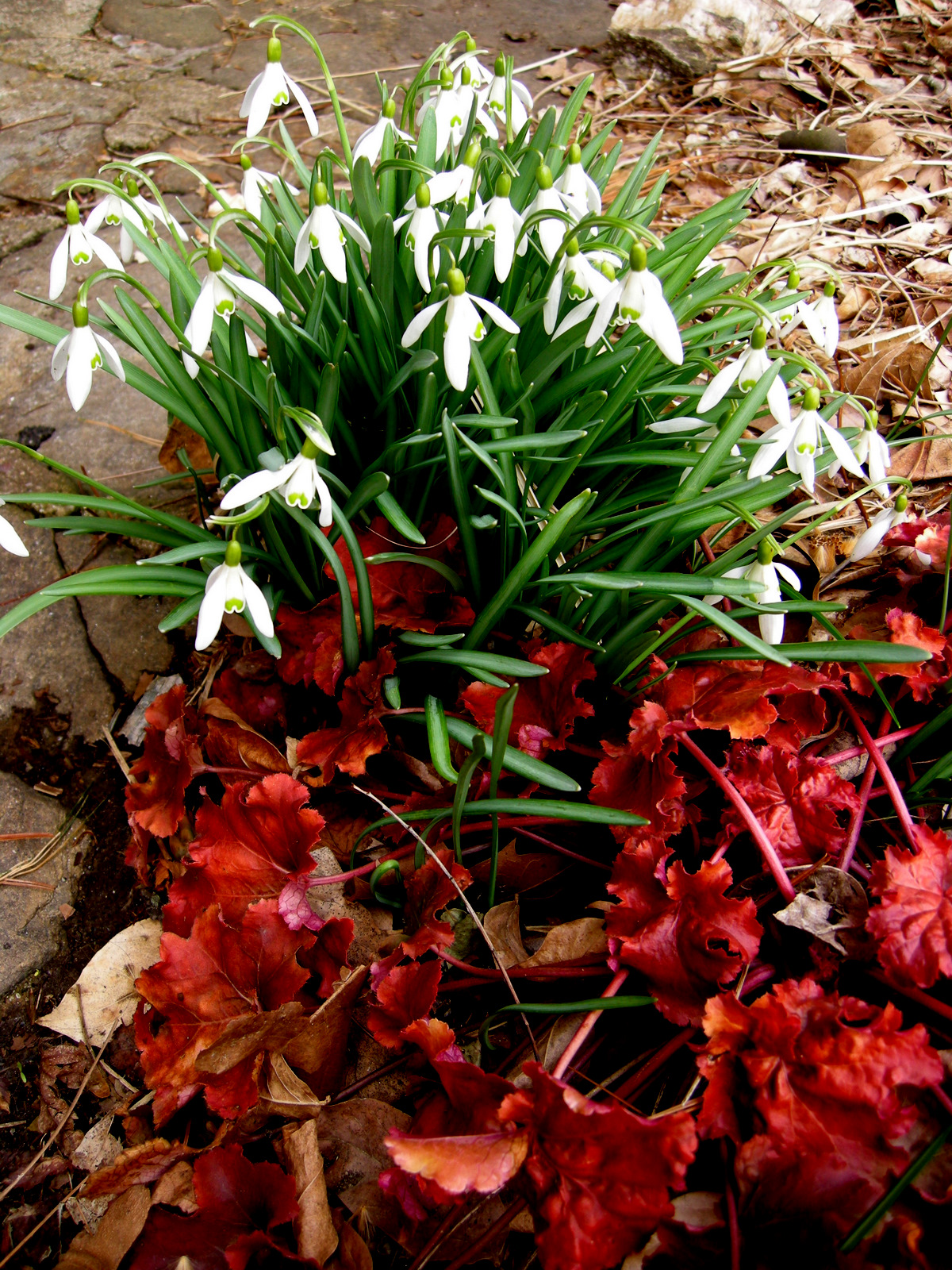
Common snowdrop with Heuchera ‘Creme Brulee’ displaying its winter color

Some of my very special snowdrop cultivars:

Galanthus 'Ophelia'Double-flowered Galanthus ‘Ophelia’

The unusual species with pleated leaves, Galanthus plicatus subsp. byzantinus

Galanthus 'Lady Beatrix Stanley'Galanthus ‘Lady Beatrix Stanley’

Galanthus nivalis 'Blewbury Tart' at Carolyn's Shade GardensThe crazy upward facing double, Galanthus nivalis ‘Blewbury Tart’

Galanthus 'Flore Pleno' at Carolyn's Shade GardensThe double-flowered common snowdrop, Galanthus nivalis ‘Flore Pleno’

The only yellow-flowered double, Galanthus nivalis ‘Lady Elphinstone’

A beautiful yellow snowdrop, Galanthus plicatus ‘Wendy’s Gold’

Please let me know in a comment/reply what flowers are blooming in your early spring garden.  If you participated in GBBD, please provide a link so my nursery customers can read your post.

Carolyn


Notes: Every word that appears in orange on my blog is a link that you can click for more information.  If you want to return to my blog’s homepage to access the sidebar information (catalogues, previous articles, etc.), just click here.

Nursery Happenings: I have five spaces left for my March 19 Hellebore Seminar (March 18 is sold out).  For the brochure and registration information, click here.  My first open house sale is Saturday, March 26, from 10 am to 3 pm, featuring hellebores and other winter-blooming plants.

Dividing Hybrid Hellebores

Posted in hellebores, How to, Shade Perennials with tags , , on March 8, 2011 by Carolyn @ Carolyns Shade Gardens

Carolyn’s Shade Gardens is a retail nursery located in Bryn Mawr, PA, specializing in showy, colorful, and unusual plants for shade.  The only plants that we ship are snowdrops and miniature hostas.  For catalogues and announcements of events, please send your full name, location, and phone number (for back up use only) to carolyn@carolynsshadegardens.com.  Click here to get to the home page of our website for catalogues and information about our nursery and to subscribe to our blog.

Spring Planting Issue 2006, Horticulture Magazine

Back when I was writing for gardening magazines, I authored an article for Horticulture on dividing hybrid hellebores.  I suggested the topic because so many gardeners think hybrid hellebores are difficult to grow and wouldn’t think of dividing them.  Nothing could be further from the truth: they are easy to grow and propagate by division.

Horticulture photo shoot in my woodland

Hybrid hellebores are an ideal plant with their large flowers, which are ornamental in the mid-Atlantic from February (and sometimes earlier) to May, substantial wintergreen leaves, and resistance to deer.  For photographs of the full range of their colors, please read my article An Ode to Seed Strain Hellebores by clicking here.

Horticulture photo shoot at my potting bench

Reproduced below is my step-by-step guide to dividing a hybrid hellebore.  You probably can’t read the fine print so I will narrate the high points to go with the photos.

Hybrid hellebores are expensive relative to other perennials because it takes three to five years for them to bloom.  An economical way to increase your supply is to divide your own desirable plants.  The method outlined below can also be applied to all species hellebores except Majorcan hellebore (Helleborus lividus), Corsican hellebore (H. argutifolius), and bearsfoot hellebore (H. foetidus).  However, the most beautiful hybrid hellebore specimens in my garden are my large clumps that have never been divided.  They are four feet across and have hundreds of flowers.  I only divide a hellebore if  it is so special that I can’t replicate it without division.

For your first experience with dividing a hellebore, select a plant with between five and ten flowers, older plants are too woody.  I always divide my hellebores as they are coming into bloom because each flower represents a potential division.  Insert your spade in a circle all the way around the plant and pry it out of the ground as shown in the photos for steps 1 and 2.  Shake it to remove excess soil and then wash away the remaining soil to reveal the extensive root system as shown in step 3.

Before you attempt any cuts, please make sure you have a heavy duty knife that is very sharp, preferably with serrations on some portion of the blade.  Hellebores have very extensive, woody root systems and dividing them with an inadequate tool can be dangerous.  Make your cuts where you see natural divisions in the root system as shown in the photo for step 4, including some roots, woody rhizome, and flower stems in each division.  For your first attempt, separate your plant into no more than three divisions.

Plant your new divisions in full shade to almost full sun.  Dig the hole as shown in the photo for step 5 and mix the existing soil with an equal amount of compost before replanting.  Firmly tamp down the soil, water well, and mulch with ground leaves.  Although you should water until frost for the first season, hybrid hellebores require no supplemental water once established even in droughts.  I never water or fertilize my hellebores, but I do apply ground leaves yearly.

These  are some of the hybrid hellebores that I think are so special that I would consider dividing them

This is the method I use to divide almost all plants, not just hellebores.  I often read in gardening books that you should cut off a portion of the plant while it’s still in the ground and wonder if the writer has ever tried that method.  Only by digging the whole plant up can you avoid injury to the plant by viewing the unique way each individual plant needs to be divided.

Since writing this, I discovered that none other than the famous Gertrude Jekyll and I agree on this point.  In 1898, in Wood and Garden, she wrote: “I never divide things by brutally chopping them across with the spade….The only safe way [to divide a Christmas rose] is to wash the clumps well out and look carefully for the points of attachment, and cut them either with knife or chisel….”

Please let me know in a comment/reply about your experiences with dividing hybrid hellebores.

Carolyn

This is part of a series of articles on hellebores, one of the specialties of my nursery.  Here are links to the other articles:

Part One        Hellebores for Fall

Part Two       An Ode to Seed Strain Hellebores

Part Three   Christmas Rose: The Perfect Hellebore

Part Four      Dividing Hybrid Hellebores

Part Five       The Sex Lives of Hellebores

Part Six          Double Hellebores

Part Seven   Cutting Back Hellebores

Notes: Every word that appears in orange on my blog is a link that you can click for more information.  If you want to return to my blog’s homepage to access the sidebar information (catalogues, previous articles, etc.), just click here.

Nursery Happenings: I am currently accepting orders for snowdrops, including  mail orders.  For the catalogue and order information, click here.  I am taking reservations for my March 18 & 19 Hellebore Seminars.  For the brochure and registration information, click here.  The March 6 session of Charles Cresson’s Snowdrops and Other Winter Interest Plants Seminar has been rescheduled for March 13 and has a few spaces left.  For the brochure and registration information, click here.

Christmas Rose: The Perfect Hellebore

Posted in hellebores, Shade Perennials, winter interest with tags , , , , , on March 2, 2011 by Carolyn @ Carolyns Shade Gardens

Carolyn’s Shade Gardens is a retail nursery located in Bryn Mawr, PA, specializing in showy, colorful, and unusual plants for shade.  The only plants that we ship are snowdrops and miniature hostas.  For catalogues and announcements of events, please send your full name, location, and phone number (for back up use only) to carolyn@carolynsshadegardens.com.  Click here to get to the home page of our website for catalogues and information about our nursery and to subscribe to our blog.

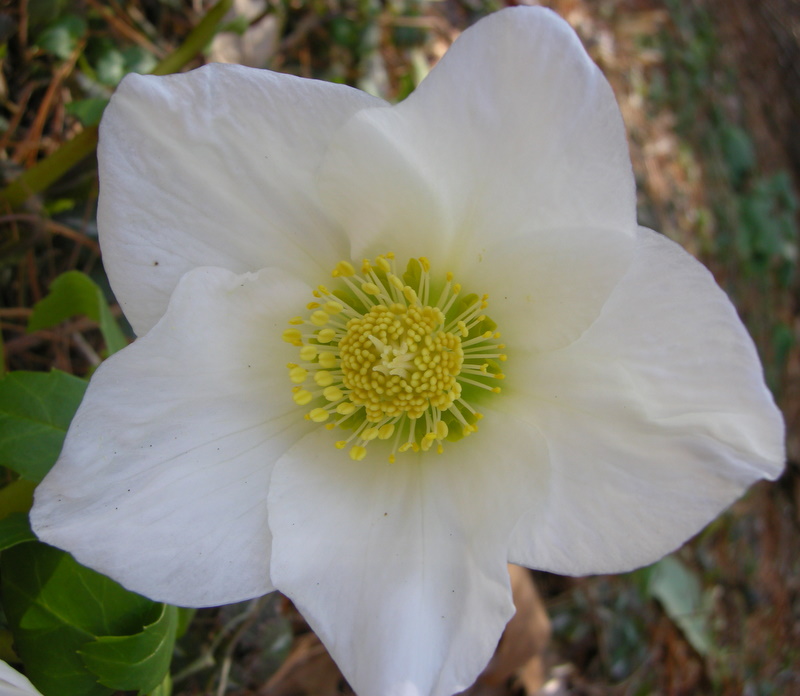
The pure white, outward-facing flower of Christmas rose, Helleborus niger

In the rush to seek out the newest and rarest hellebores on the market,  I am afraid that gardeners are neglecting to explore fully the wonderful qualities of the Christmas rose, Helleborus niger.  Christmas rose is a  species hellebore no garden should be without.  In addition, recently introduced cultivars have made this species a must have for gardeners seeking fall and winter interest.

The smooth, blue-green leaves of Christmas rose are pristine and beautiful and often have red stems

Christmas roses have been in cultivation for hundreds of years and are a very distinctive species hellebore with little variation in the wild.  They are native to woodlands and open areas of the central and eastern Alps in Switzerland, Germany, Austria, Slovenia, Croatia, and northern Italy.  They are about 9 to 12″ in height with a very woody root system.  The smooth, leathery dark blue-green leaves are deeply divided into 7 to 9 leaflets with irregular teeth around the tip.  If covered with snow, the leaves will stay pristine through the winter.

The buds of Christmas rose are quite ornamental

Christmas rose exhibiting its desirable characteristic of outward-facing flowers

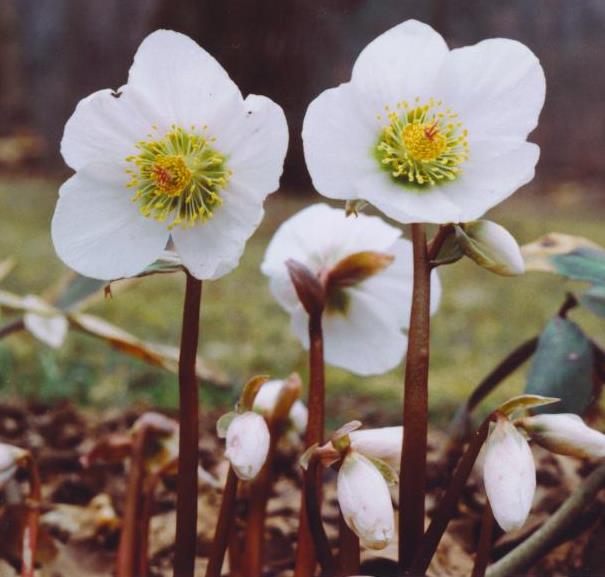
Christmas roses have pure white flowers on upright fleshy stems.  The full, rounded blossoms are outward-facing and open flat with a width of 2 to 5″ and a bloom time starting anywhere from November to March, depending on the cultivar.  The flowers often age to shades of pink to red.  They make a very good cut flower.

Established Christmas roses produce an abundance of flowers

The flowers on Christmas roses often age to pink

Christmas roses prefer a well-drained site rich in organic matter.  High or dappled shade is best, and they seem to prefer the edge of beds.  Although they don’t like to be moved, they are easy to divide because their leaves and flowers are on separate stems.  Once they are established, all they need is a yearly mulch of ground leaves.  Christmas roses are usually found in areas with alkaline soil and several sources recommend applying lime, but I have never found this necessary.

The 3 1/2″ wide flowers of ‘Praecox’ Christmas rose in mid-February in my garden

There are several cultivars of Christmas rose that have enhanced the ornamental qualities of this already desirable hellebore.  The straight species blooms in the mid-Atlantic area of the U.S. in early March, after the hybrid hellebores, Helleborus x hybridus.  The Christmas rose cultivar ‘Praecox’ moves the start of bloom time up from March to mid to late January.  ‘Praecox’ also produces an abundance of flowers at a young age unlike the straight species, which can take a while to establish itself.

‘Jacob’ Christmas rose coming into bloom in my garden in November–its flowers are 3″ wide

Two more recent introductions from the Helleborus Gold Collection in Germany have moved the start of Christmas rose’s bloom time to November and extended it to May. ‘HGC Jacob’ begins blooming in my garden in mid-November, while ‘HGC Josef Lemper’ begins around December 1.  Both cultivars continue blooming into May.  For detailed descriptions of ‘Jacob’ and ‘Josef Lemper’, read my article Hellebores for Fall by clicking here.

The 4″ wide flowers of ‘Josef Lemper’ blooming through the snow in my garden in February

Although rarely for sale, I treasure my ‘Potter’s Wheel’ Christmas rose, a cultivar with huge flat, 5″ wide symmetrical flowers.  Although most ‘Potter’s Wheel’ is not true to type because it is seed grown, I acquired mine from Arrowhead Alpines, which vegetatively propagates their plants from the original ‘Potter’s Wheel’ in England.

The huge 5″ wide flowers of authentic ‘Potter’s Wheel’ Christmas rose

I hope that you will consider Christmas rose the next time you add to your hellebore collection.

Please let me know in a comment/reply about your own experiences with growing Christmas roses.

Carolyn

This is part of a series of articles on hellebores, one of the specialties of my nursery.  Here are links to the other articles:

Part One        Hellebores for Fall

Part Two       An Ode to Seed Strain Hellebores

Part Three   Christmas Rose: The Perfect Hellebore

Part Four      Dividing Hybrid Hellebores

Part Five       The Sex Lives of Hellebores

Part Six          Double Hellebores

Part Seven   Cutting Back Hellebores

Notes: Every word that appears in orange on my blog is a link that you can click for more information.  If you want to return to my blog’s homepage to access the sidebar information (catalogues, previous articles, etc.), just click here.

Nursery Happenings: I am currently accepting orders for snowdrops, including  mail orders.  For the catalogue and order information, click here.  I am taking reservations for my March 18 & 19 Hellebore Seminars.  For the brochure and registration information, click here.  I have a few spaces left for Charles Cresson’s Snowdrops and Other Winter Interest Plants Seminars.  For the brochure and registration information, click here.

Evergreen Ferns for Shade & Stylish Blogger Award

Posted in evergreen, Shade Gardening, Shade Perennials with tags , , , , , , , , , , on February 24, 2011 by Carolyn @ Carolyns Shade Gardens

Carolyn’s Shade Gardens is a retail nursery located in Bryn Mawr, PA, specializing in showy, colorful, and unusual plants for shade.  The only plants that we ship are snowdrops and miniature hostas.  For catalogues and announcements of events, please send your full name, location, and phone number (for back up use only) to carolyn@carolynsshadegardens.com.  Click here to get to the home page of our website for catalogues and information about our nursery and to subscribe to our blog.

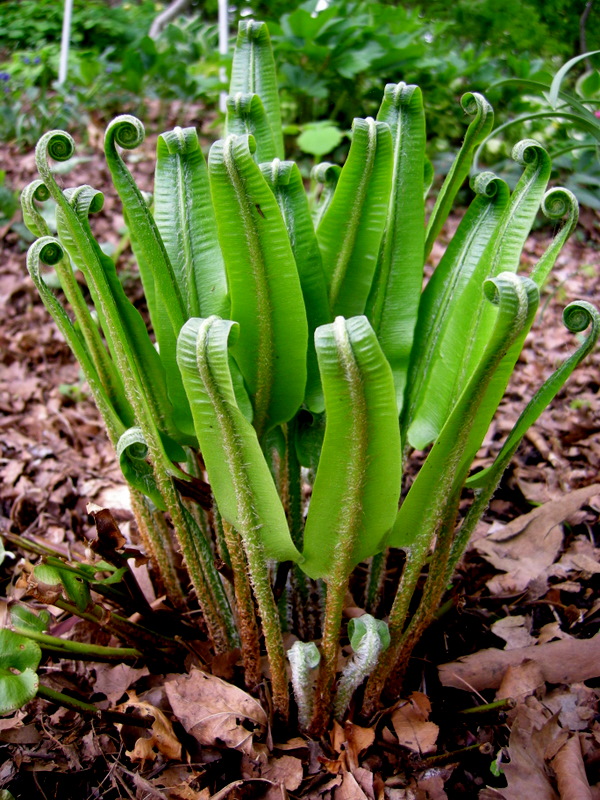
US. native hart’s-tongue fern, Phyllitis scolopendrium, is especially beautiful in my garden in the spring as it unfurls, April 2010

Spring is in the wind here today with unseasonably warm temperatures of almost 70 degrees F (21 C).  The ten day forecast shows more seasonable temperatures with highs in the mid-forties.  Although spring is definitely on the way (it snowed and went down to 10 degrees since I wrote this!), the beauty of snow has been replaced with the grays and browns of late winter, not a look I treasure.  That makes any plants that liven up the gardens very important at this time of year, and evergreen ferns do just that.  Five of my favorites are profiled below.

Hart’s-tongue fern is also very beautiful in the fall, mid-November 2010 with Christmas rose and pulmonaria

Hart’s-tongue fern, Phyllitis scolopendrium (zones 5 to 9), may be my favorite all time fern (today anyway).  It has a very unique look that is absolutely magical when it unfurls in the spring (photo at top), and it maintains its good looks until it disappears under the snow (photo above).  Even now it is quite presentable after our snowy and icy winter with only slight browning.

Although I call it a US native, hart’s tongue fern is actually indigenous to Europe, Asia, and North America, including the mid-Atlantic.  However, according to John Mickel in Ferns for American Gardens, the US variety does poorly in cultivation, and all cultivated material is from the European variety.  It is a clump-forming fern, growing 8 to 16″ tall with shiny, leathery fronds.  It is easy to grow but suffers if over-watered and must be well-drained.  I grow mine in part shade on a slope with plenty of organic matter.  In the wild it is limestone-loving, but I haven’t found this to be necessary in my garden.


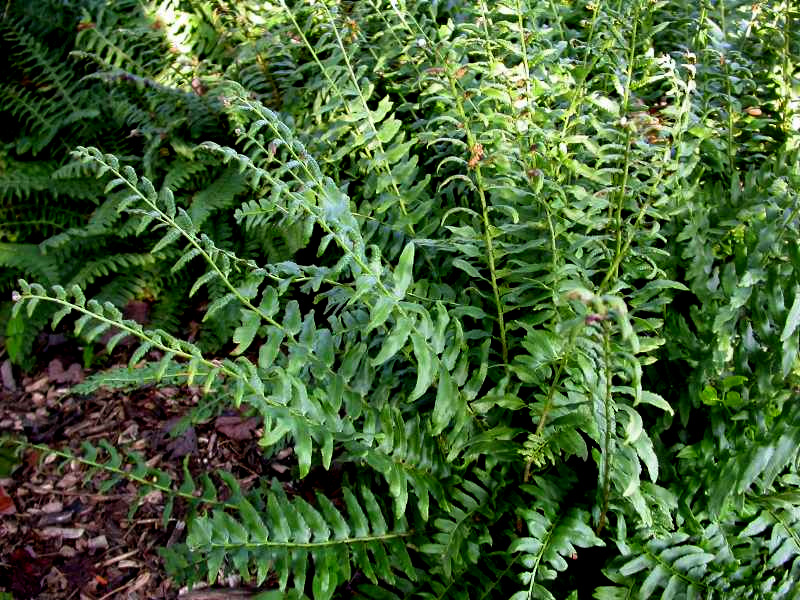
Japanese holly fern, Cyrtomium falcatum, makes quite a statement in my mid-November garden

Japanese holly fern, Cyrtomium falcatum (zones 6 to 10), is another favorite of mine.  Individual plants grown as a specimen can be up to 2 feet tall and 3 feet across making quite a bold statement in the garden.  It grows well in the deep shade of my woodland garden where there is more construction rubble than soil as well as on my partly shaded but very open back slope.  Right now it is serving as a backdrop for the giant snowdrops, Galanthus elwesii, that are emerging between its fronds, which have been flattened by snow.

Japanese holly fern is native to Hawaii (do we call it a US native?), southern Africa, and across southern Asia.  Although it is uncommon in the mid-Atlantic, it is quite commonly grown in the southern parts of the US and has naturalized in some areas.  It is clump-forming with an elegant, vase-like habit and 4 to 7″ wide, glossy dark green fronds with toothed pinnae that resemble holly leaves.  It prefers good drainage and organic soil in part to full shade.


U.S. native deer fern, Blechnum spicant, also shines in my mid-November garden

Deer fern, Blechnum spicant (zones 5 to 8), was new to my garden in spring of 2010 so, despite its moist native habitat, it survived  this summer’s record-breaking heat and drought.  The unusual texture provided by its linear segments is a great addition to the border in front of my fall-blooming camellias.  It is in an eastern-facing location with high shade.  Right now, though flattened by the snow and ice, the fronds look almost the same as in the photo above despite our hard winter.

Deer fern is native to moist coniferous forests in the US Pacific Northwest and Europe.  Its two types of fronds are very distinct.  The sterile fronds (pictured above) are 8 to 20″ long, evergreen, and prostrate, while the fountain-like fertile fronds, which emerge in the spring, are 16 to 24″ long,  deciduous, and erect.  It puts on quite a show in the spring.  Deer fern grows in part to full shade in acid soil enriched with organic matter and spreads slowly by short creeping rhizomes.


Tassel fern, Polystichum polyblepharum, growing in dry shade at the base of my Kentucky coffee tree in mid-November

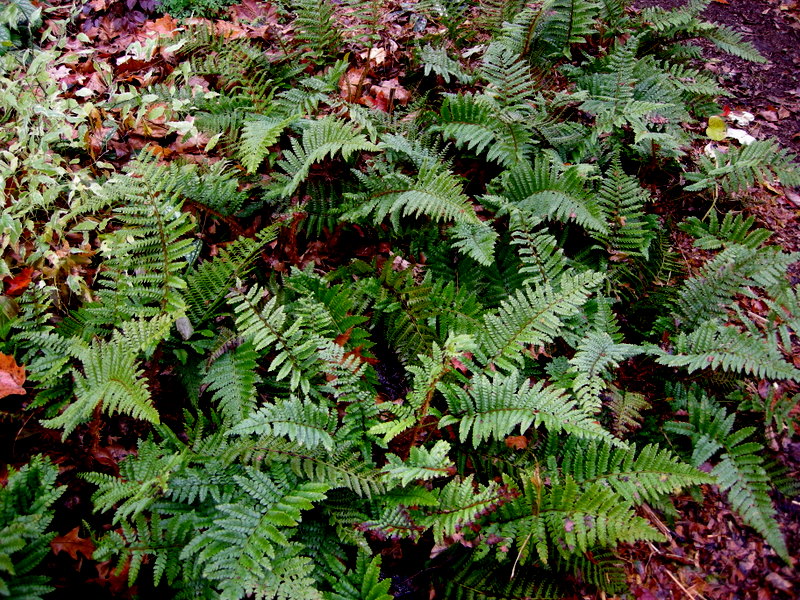
Tassel fern, Polystichum polyblepharum (zones 5 to 8), is a very trouble-free, evergreen fern that I have grown for years.  I found that it does not do well in full shade, but thrives in high shade with dappled light.  It is absolutely gorgeous in the spring, when the reddish, hairy new fronds unfurl  (photo below) and still looks spectacular at the end of a hot dry summer (photo above).  Right now it is flat to the ground exposing its fleecy stems even more.

The bristly new fronds of tassel fern unfurl, photo courtesy of the Missouri Botanical Garden PlantFinder

Tassel fern is native to Japan and southern Korea.  According to Mickel, its species name means “many eyelashes” referring to its bristly, pubescent stems, which are really quite eye-catching even when fully emerged.  Its lustrous dark green fronds form an elegant, vase-like crown 2 feet tall and 2 feet wide.  It makes an excellent specimen.  Grow it in part shade in a well-drained, humus-rich site.


U.S. native Christmas fern, Polystichum acrostichoides, is ornamental 365 days a year in my garden, photo courtesy of the Missouri Botanical Garden PlantFinder

Christmas fern, Polystichum acrostichoides (zones 3 to 9), is without a doubt the best evergreen fern for mid-Atlantic US gardens.  It grows well everywhere in my garden from my deeply shaded woodland to more sunny, rocky slopes.  Right now, although not as upright as the photo above, it is the most presentable evergreen fern after our long, hard winter.

Christmas fern growing an a rocky outcropping in Great Smoky Mountain National Park, Tennessee

Christmas fern is native to the whole eastern half of North America, including all of Pennsylvania.  According to Mickel, its common name arose because it was used by early settlers as Christmas decorations.  The lance-shaped, dark green, leathery fronds provide excellent winter interest.  The two foot tall, fountain-like clumps increase in size over time, forming multiple crowns and making it easy to divide.  Christmas fern is very easy to grow in part shade to full shade and in moist to dry soil and can be used on slopes to prevent erosion.

I hope I have convinced you to go outside and investigate where you can add some evergreen ferns for year round interest.

Please let me know in a comment/reply what evergreen ferns you grow in your garden.

Carolyn


Notes: John Mickel is Curator of Ferns for the New York Botanical Gardens.  His book, Ferns for American Gardens, is an excellent resource discussing over 400 ferns with hundreds of photos.  I have added it to my sidebar under Books so you can always find it.

Every word that appears in orange on my blog is a link that you can click for more information.  If you want to return to my blog’s homepage to access the sidebar information (catalogues, previous articles, etc.), just click here.

Nursery Happenings: I am currently accepting orders for snowdrops, including  mail orders.  For the catalogue and order information, click here.  I am taking reservations for my Hellebore Seminars for the Totally Obsessed.  For the brochure and registration information, click here.  I have three spaces left for the March 6 session of Charles Cresson’s Snowdrops and Other Winter Interest Plants Seminar.  For the brochure and registration information, click here.

I have recently been honored with the Stylish Blogger Award by six different blogs, and I want to thank them for the accolade.  My friends would really laugh to hear the word stylish applied to me as a person, but I am glad I am making up for that with my blog.  I am not following the award rules, but instead letting you know who gave me the award in hopes that you will visit their blogs.  Here are the links and some information to entice you to visit them:

Deb’s Garden: Deb shares her gardening experiences on 3.5 partially wooded acres in Helena, Alabama.

Island Threads: Frances battles the elements on the northern tip of an island off the northwest coast of Scotland.

Orchid de Dangau: Makirimi collects and grows orchids in Malaysia.

Southern Meadows: Karin writes about nature and gardening in northeastern Georgia.

Sweet Bean Gardening: Hanni is developing a cottage garden in Indiana with her two young daughters.

The Suburban Gardener: Lily specializes in lilies and hostas in her shady suburban Chicago, Illinois, garden.


Coastal Maine Botanical Gardens

Posted in garden to visit with tags on February 18, 2011 by Carolyn @ Carolyns Shade Gardens

Carolyn’s Shade Gardens is a retail nursery located in Bryn Mawr, PA, specializing in showy, colorful, and unusual plants for shade.  The only plants that we ship are snowdrops and miniature hostas.  For catalogues and announcements of events, please send your full name, location, and phone number (for back up use only) to carolyn@carolynsshadegardens.com.  Click here to get to the home page of our website for catalogues and information about our nursery and to subscribe to our blog.

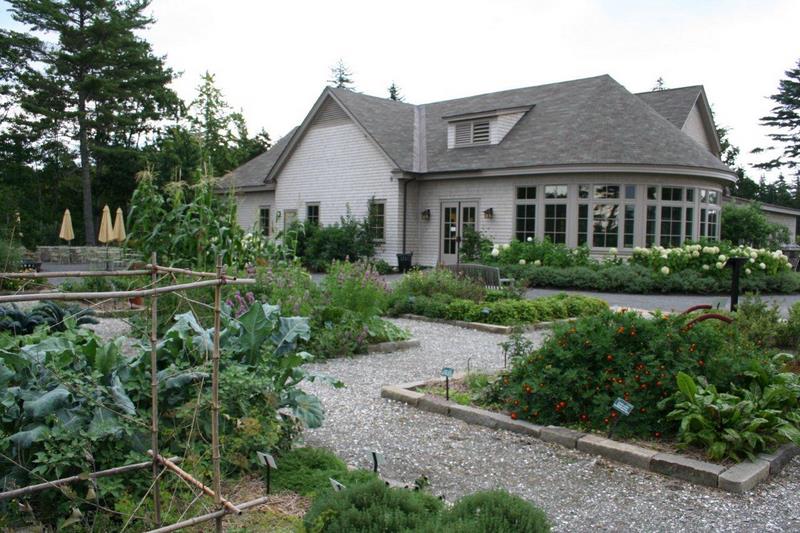
Visitor Center, photo Barbara Freeman, Coastal Maine Botanical Gardens

As the grays and browns of late winter replace the snow, it is uplifting to look back on the amazing botanical garden I visited in September.  I was in Maine for my birthday and, if that wasn’t present enough, my husband and son took me garden visiting to Coastal Maine Botanical Gardens in Boothbay, Maine, US.  Even though I come from the mid-Atlantic, home to many of the best public gardens in the US, and have visited gardens all over the world, I was wowed by this new but impeccably executed garden by the sea.

Children’s Garden, photo William Cullina, Coastal Maine Botanical Gardens

Coastal Maine Botanical Gardens opened officially in June of 2007 after 16 years of meticulous planning by an incredibly dedicated group of Maine residents and the talented experts they hired.  After searching since 1991, this intrepid group purchased 128 acres of pristine land with 3800 feet of tidal shore frontage in 1996, using their own homes as collateral.  An additional gift in 2005 brought the total to 248 acres and almost a mile of shoreline, saving it all from development.

Planting began in 2001 and the impressive Maine cottage style visitor center (photo at top) opened in 2007.  This summer saw the opening of the magical children’s garden (photo above) themed to highlight children’s literature with a Maine connection.

Kitchen Garden, photo Barbara Freeman, Coastal Maine Botanical Gardens

Walking around the designed portions of the gardens was such a pleasure because both the overall design of each area and also the attention to individual details is exceptional.  The light and airy cafe opens onto an elegant kitchen garden (photo above) planted with herbs, vegetables, edible flowers, berries, and an orchard of hardy heirloom apple and pear trees.  Creative and beautiful stonework graces every area of the 15 acres of ornamental gardens (see photos below).

Rose and Perennial Garden, photo William Cullina, Coastal Maine Botanical Gardens

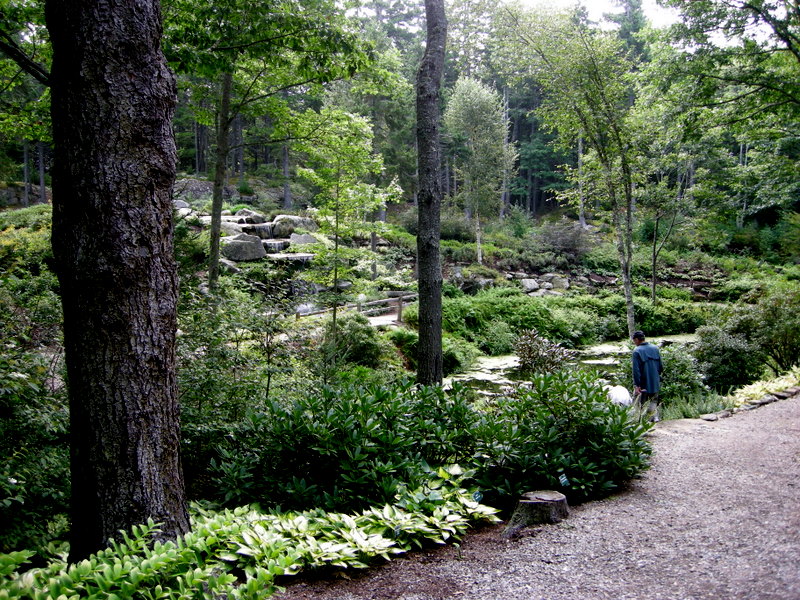
Each area of the landscape from the cottage style rose garden (photo above) to the more naturalistic rhododendron garden (photo below) was a treat for the eyes.  And each individual plant within these gardens was impeccably grown (collage below).

Obviously I focused on shade plants!

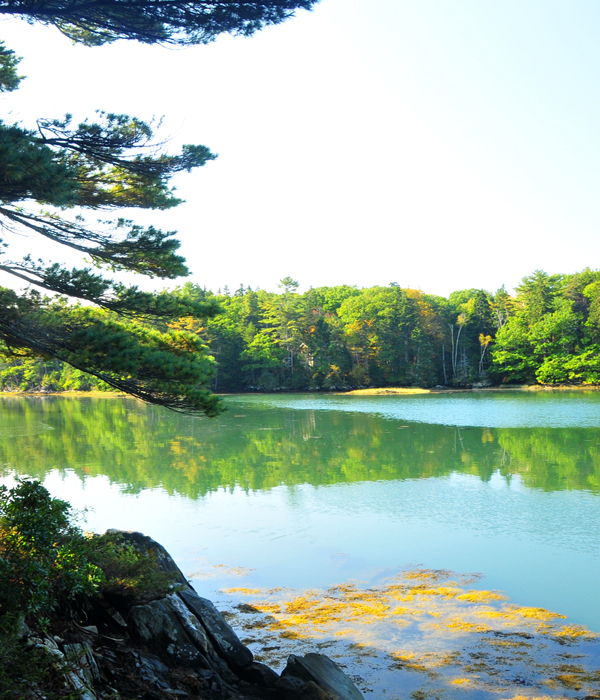
If that description isn’t effusive enough, what I treasured the most was my walk along the miles of trails showcasing the untouched waterfront and woodlands that are quintessentially Maine.  The views of the tidal inlet are spectacular (photo of cove below).  The pristine woodlands are something rarely found in the rest of the continental US (photo of trail below).

Huckleberry Cove, photo William Cullina, Coastal Maine Botanical Gardens

Huckleberry Cove Trail, photo William Cullina, Coastal Maine Botanical Gardens

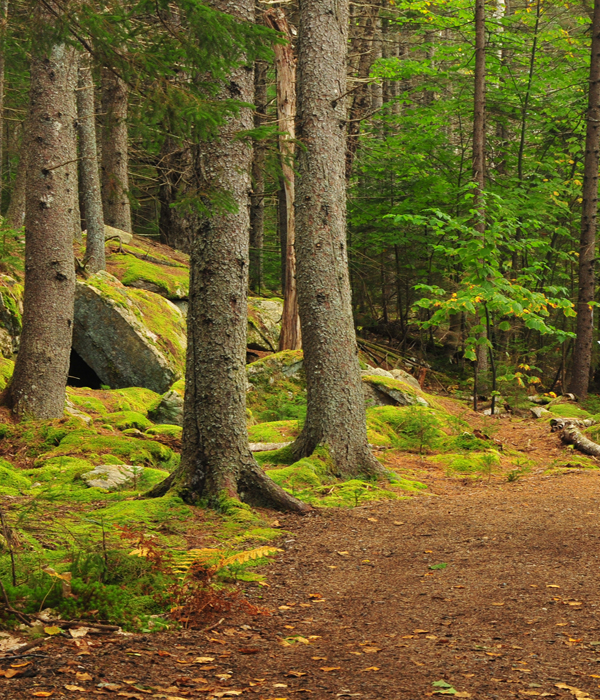
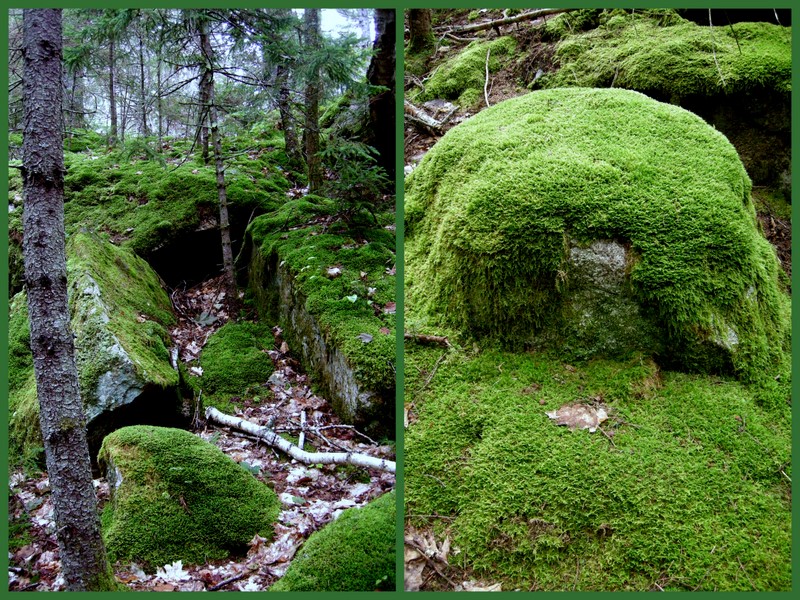
It is hard to imagine if you haven’t seen it, but every inch of the trails, woodlands, and especially the rocks is covered with moss (photo below).  As you look closer, you realize that every rock holds a garden of its own more beautiful than any human, no matter how talented, could create (see collage below).  I would visit Coastal Maine Botanical Gardens just to see the magnificence of nature untouched.

What Coastal Maine Botanical Gardens has accomplished in the short period of time it has been in existence is nothing short of remarkable.  A beautifully designed and executed ornamental garden set like a jewel in a spectacular natural setting: it doesn’t get much better than that.

Carolyn


Notes: If you want to know more about Coastal Maine Botanical Gardens and see more beautiful photos, click here.  I have also added Coastal Maine Botanical Gardens to my sidebar under Places to Visit so you will always be able to find it.   International visitors to the US should consider adding the State of Maine to your itinerary—one of the most beautiful places on earth.

Every word that appears in orange on my blog is a link that you can click for more information.  If you want to return to my blog’s homepage to access the sidebar information (catalogues, previous articles, etc.), just click here.

Nursery Happenings: I am currently accepting orders for snowdrops, including  mail orders.  For the catalogue and order information, click here.  I am taking reservations for my Hellebore Seminars for the Totally Obsessed.  For the brochure and registration information, click here.  I have four spaces left for Charles Cresson’s Snowdrops and Other Winter Interest Plants Seminar.  For the brochure and registration information, click here.

February GBBD: Add to Your Spring Shopping List

Posted in Garden Blogger's Bloom Day, garden to visit, hellebores, snowdrops, winter, winter interest with tags , , , , , , , , , , on February 14, 2011 by Carolyn @ Carolyns Shade Gardens

Carolyn’s Shade Gardens is a retail nursery located in Bryn Mawr, PA, specializing in showy, colorful, and unusual plants for shade.  The only plants that we ship are snowdrops and miniature hostas.  For catalogues and announcements of events, please send your full name, location, and phone number (for back up use only) to carolyn@carolynsshadegardens.com.  Click here to get to the home page of our website for catalogues and information about our nursery and to subscribe to our blog.

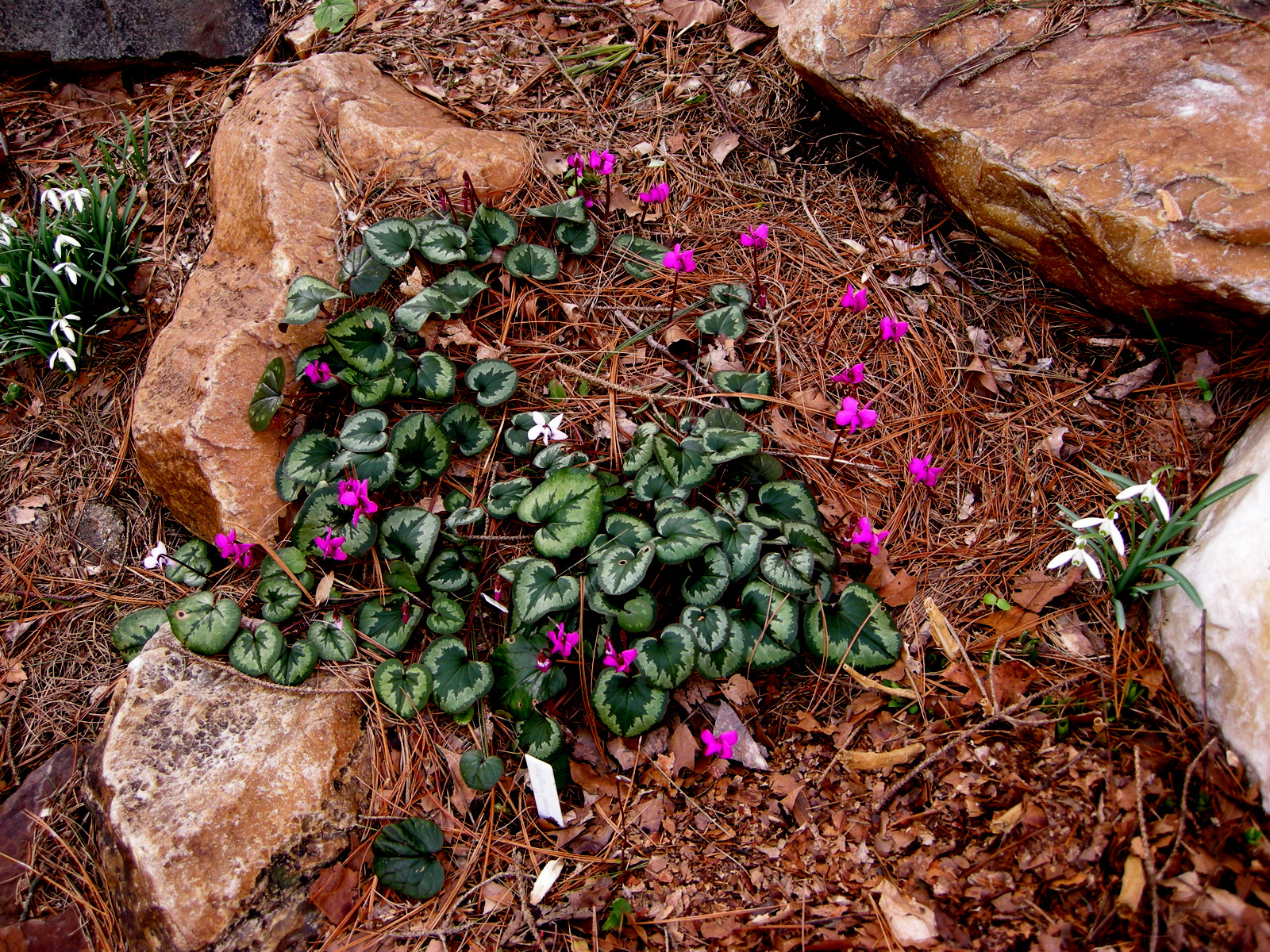
“Spring-blooming” hardy cyclamen, Cyclamen coum, sends out its first bud

It is time to walk around your garden again and assess what you need to add to make the end of winter an exciting time in your landscape.  Do you need more early-blooming hellebores to give you a reason to go outside?  Could your garden benefit from flowers that bloom in January and February like hardy cyclamen, snow crocus, or snowdrops to relieve the gray?  Make a list and take photographs so that when you are shopping this spring you know what you need and where it should go.  I know it’s icy outside, but you never know what you might find to end the winter doldrums like the hardy cyclamen (pictured above), which I discovered during my own chilly inventory.

Snowdrops and winter aconite on Winterthur’s March Bank, photo courtesy of Winterthur

If you need ideas, visit local arboretums and gardens.  I always find a trip to Winterthur, an elegant and intimate public garden in Delaware, highly inspirational and informative.  Starting March 1 when Winterthur opens for spring, the area of the gardens known as the March Bank erupts into bloom with tens of thousands of snowdrops, adonis, winter aconite, snow crocus, early scillas, glory-of-the-snow, spring snowflake, and early daffodils.

Snowdrops and winter aconite on Winterthur’s March Bank in early March, photo courtesy of Winterthur

Later in March, glory-of-the-snow, Chionodoxa, takes over, photo courtesy of Winterthur

Today is Garden Blogger’s Bloom Day for February when gardeners around the world show photos of what’s blooming in their gardens (follow the link to see  photographs from other garden bloggers assembled by Carol at May Dreams Gardens).  Here are a few more highlights from my mid-February stroll through Carolyn’s Shade Gardens:

Very early-blooming double white hellebore, Helleborus x hybridus ‘Mrs. Betty Ranicar’

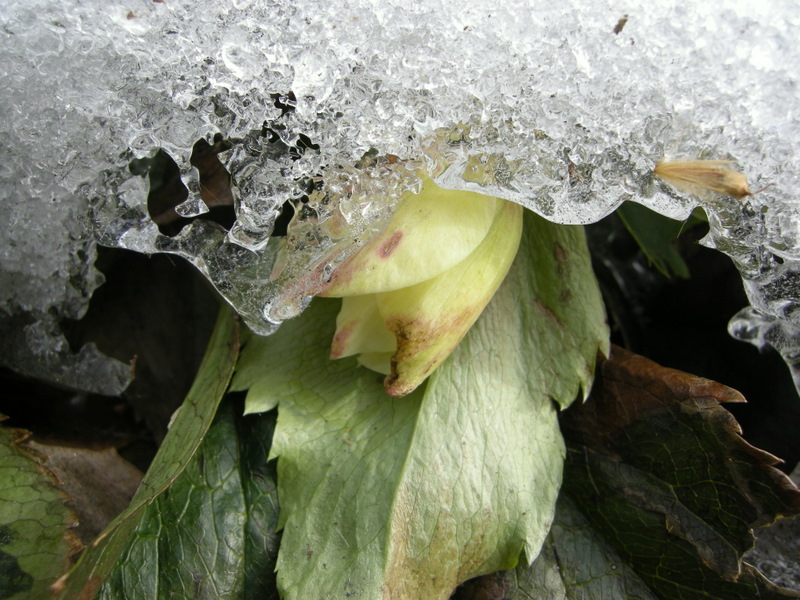
Bearsfoot hellebore, Helleborus foetidus, was waiting under the ice

Sweetbox, Sarcococca hookeriena var. humilis, prepares to perfume the garden

‘Jacob’ Christmas rose, Helleborus niger ‘Jacob’, began blooming in October and has waited patiently under the snow and ice for a chance to show its flowers again

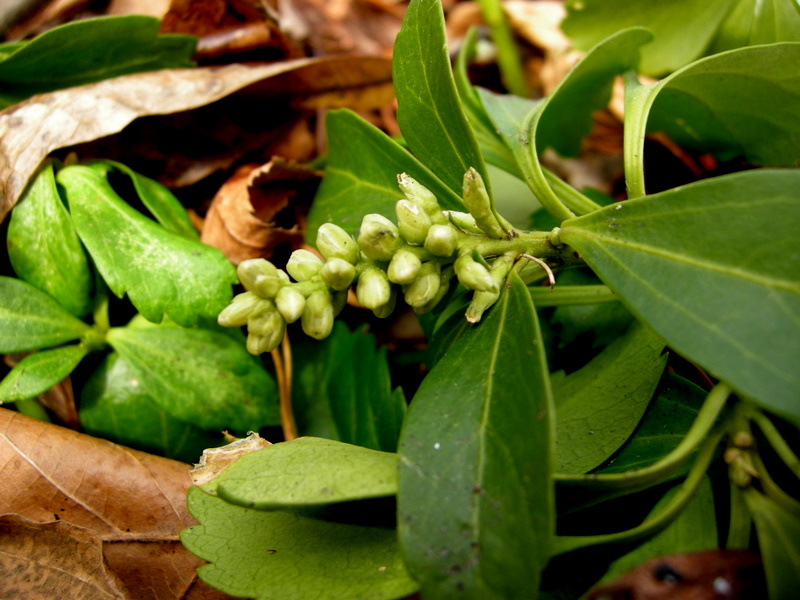
The lowly Japanese pachysandra, P. terminalis, forms its flowers the previous season adding winter interest to its evergreen leaves

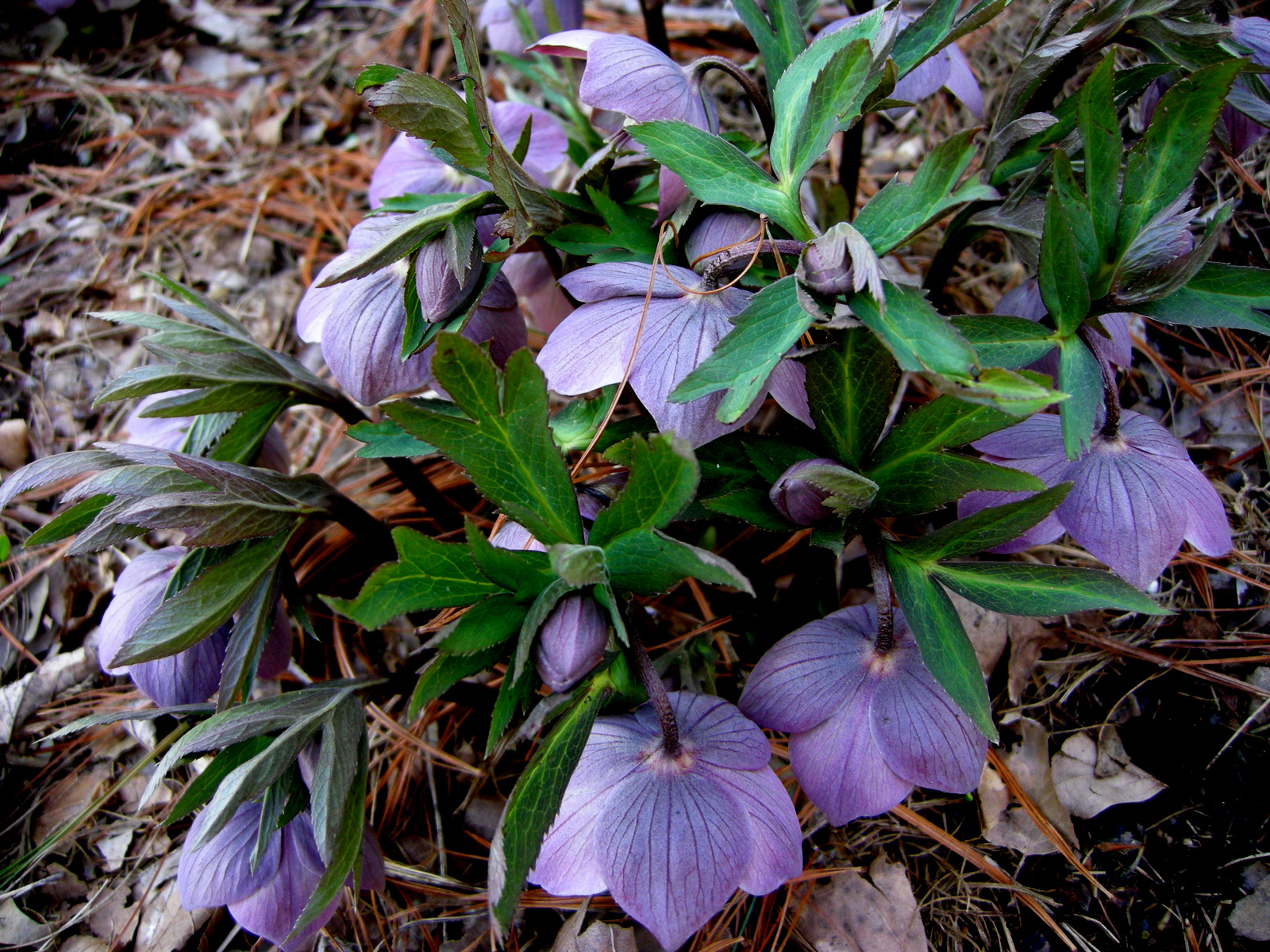
The flower buds of hybrid hellebores, Helleborus x hybridus, wait for the hard-packed snow to melt, in warmer years they would be in bloom now

Some hybrid hellebores are farther along than others

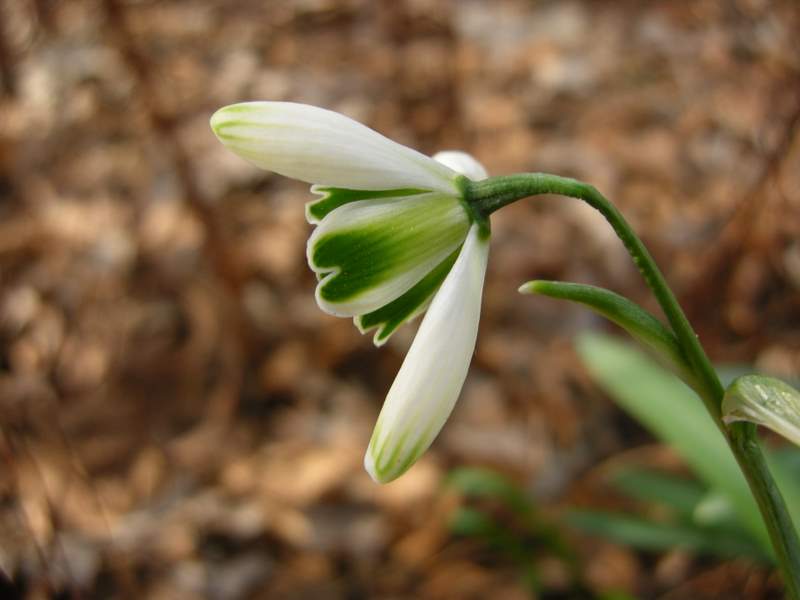
Giant snowdrop, Galanthus elwesii, was the first flower through the snow in 2011 (see Are Snowdrops Thermogenic?) and was also blooming in December

With our near record-breaking snowfall accompanied by generous doses of ice (see The Joys and Sorrows of Snow), I wasn’t planning on participating in February’s Garden Blogger’s Bloom Day.  But when I grabbed my camera and walked around, there was much to be seen.   In addition to the flowers, there was more than enough views of the destruction of the winter by nature and otherwise.

Remnants of the white pine and coral bark maple branches lost this winter

The signs marking my epimedium collection after the ravages of my three snowboarding teenage sons.

Please let me know in a comment/reply what flowers are blooming in your winter garden.  If you participated in GBBD, please provide a link so my nursery customers can read your post.

Carolyn


Notes: Every word that appears in orange on my blog is a link that you can click for more information.  If you want to return to my blog’s homepage to access the sidebar information (catalogues, previous articles, etc.), just click here.
Nursery Happenings: I am currently accepting orders for snowdrops, including  mail orders.  For the catalogue and order information, click here.  I am also taking reservations for Charles Cresson’s Snowdrops and Other Winter Interest Plants Seminar.  For the brochure and registration information, click here.
Are Snowdrops Thermogenic?

Posted in bulbs for shade, snowdrops, winter with tags , , , , , , , , , , , on February 9, 2011 by Carolyn @ Carolyns Shade Gardens

Carolyn’s Shade Gardens is a retail nursery located in Bryn Mawr, PA, specializing in showy, colorful, and unusual plants for shade.  The only plants that we ship are snowdrops to the US only.  For catalogues and announcements of local events, please send your full name, mailing address, and cell number to carolyn@carolynsshadegardens.com and indicate whether you are mail order only.  Click here to get to the home page of our website for catalogues and information about our nursery and to subscribe to our blog.

Galanthus ‘Dionysus’, a Greatorex double

.

Our current snowdrop catalogue is on line here.

.

Snowdrops are some of the earliest blooming flowers in my garden, often popping up through the snow, hence their name.  We all love them for that, but how do they do it?  I have been told several times that they are thermogenic, that is,  that they produce their own heat, and decided to do some scientific research to find out (it can’t all be about pretty photos).

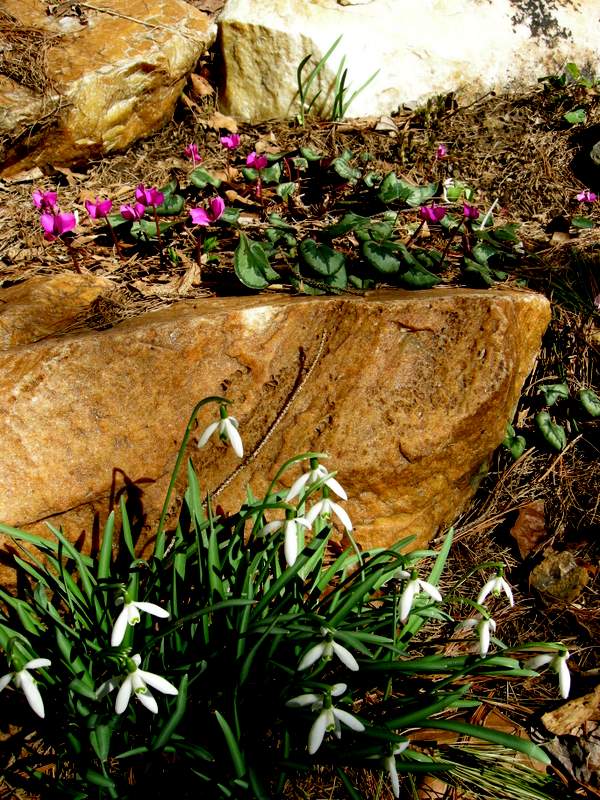
Common snowdrop, Galanthus nivalis, and “spring-blooming” hardy cyclamen ‘Rose’, Cyclamen coum ‘Rose’, in my rock garden

Over 200 years ago, French biologist, Jean-Baptiste de Lamarck, noticed that some flowers produce their own heat.  Since then, scientists have confirmed that some plants can, in fact, generate their own heat, a process known as thermogenesis, previously thought to be limited to mammals, birds, and some flying insects.  These plants are “warm-blooded”.

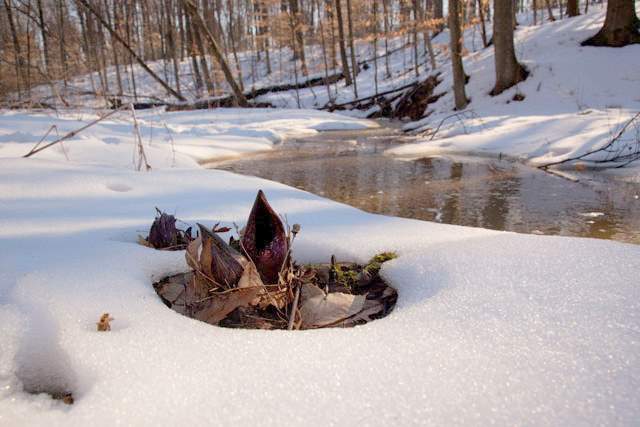
Holes in the snow produced by eastern skunk cabbage, Symplocarpus foetidus, performing thermogenesis, photo Robert Klips

The poster child for thermogenesis is the eastern skunk cabbage, Symplocarpus foetidus, which is native to most of eastern North America.  Its flower, pictured below (courtesy of Robert Klips, Ohioense: Bob’s Brain on Botany, March 8, 2010), heats up to melt the snow producing little circles all over the woods in late winter.  It does this primarily to generate and disperse its floral scent to attract pollinators.  In this case, the scent is rotten meat and the pollinators are flies and beetles.  Secondarily, it rewards the insects by providing them with energy directly as heat rather than indirectly as nectar and pollen.

Eastern skunk cabbage blooming through the snow, photo Robert Klips

This is no small feat.  Skunk cabbage flowers can heat up to 59 degrees F (15 degrees C) when the ambient temperature is 5 degrees F (-15 degrees C).  They can also thermoregulate, adjust their temperature, to maintain a constant setting as the ambient temperature changes.  If the outside temperature gets too low, they will switch off their heat entirely until things warm up.  They also switch off the heat once they have been pollinated.

Eastern skunk cabbage peeking out of its snow cave, photo Robert Klips

To perform thermogenesis, skunk cabbage uses as much metabolic energy as a small rodent or a hummingbird and employs a unique respiratory process, which is more similar to animal metabolism than plant metabolism though biochemical rather than nervous system based.   The exact nature of this process is unknown.  For those of you with a scientific bent, I have included a graph below taken from  a scholarly treatise on the subject, Temperature Regulation by Thermogenic Flowers (Plant Physiology Online, Sept. 2006).

Graph of oxygen consumption and heat production by skunk cabbage in various ambient temperatures

But, now that you understand thermogenesis, back to the question at hand: are snowdrops thermogenic?  The short answer is I don’t know.  Various sources say that they are, but the statements seem to be based on hearsay.  I could find no scientific studies backing them up.  I posted the question on the Pacific Bulb Society forum, the Scottish Rock Garden Club forum, and to friends at Longwood Gardens, and no one could confirm that snowdrops are thermogenic.  So I present my own “scientific study” of the process.

February 21, 2010, at Carolyn’s Shade Gardens, three tiny islands are appearing in the snow

As you know from my previous post, The Joys and Sorrows of Snow, we had record snowfall during the winter of 2009-2010.  By February, my whole garden was covered by a deep, thick, hard layer of snow.  Looking out on the landscape in the photo above, there was absolutely no melting going on except in three small areas.  What is happening in those little circles?  Let’s look closer:

Giant snowdrop, Galanthus elwesii, melting through the snow


And even closer:

Giant snowdrop blooming in February after melting through the snow pack

My observations prove nothing scientific, but they do indicate that something is going on.  And I like to think that one of my favorite plants, snowdrops, which inspire such intense interest in many gardeners, also produce their own internal excitement.

For my previous articles on snowdrops, click here and here.


Please let me know in a comment/reply if you have any knowledge or personal experience with snowdrops being thermogenic.

Carolyn


Notes: Every word that appears in orange on my blog is a link that you can click for more information.  If you want to return to my blog’s homepage to access the sidebar information (catalogues, previous articles, etc.), click here.