Archive for 2011

Hostas for Fall

Posted in Fall, Fall Color, hosta, landscape design with tags , , , , , , , on October 17, 2011 by Carolyn @ Carolyns Shade Gardens

Carolyn’s Shade Gardens is a retail nursery located in Bryn Mawr, PA, specializing in showy, colorful, and unusual plants for shade.  The only plants that we ship are snowdrops within the US.  For catalogues and announcements of local events, please send your full name, mailing address, and cell number to carolyn@carolynsshadegardens.com and indicate whether you are interested in snowdrops, hellebores, and/or hostas.  Click here to get to the home page of our website for catalogues and information about our nursery and to subscribe to our blog.

.
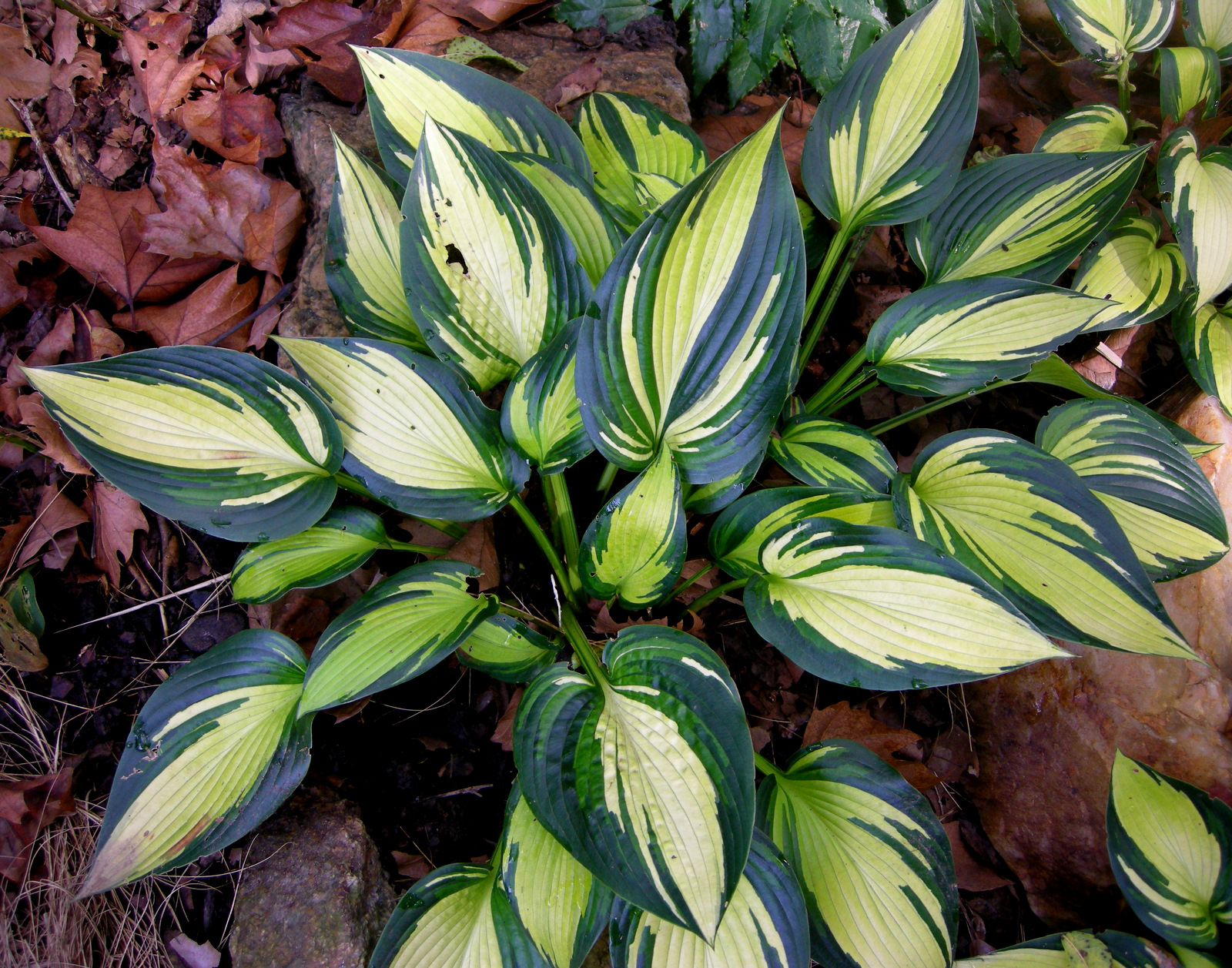
Hosta 'Remember Me'Hosta ‘Remember Me’ looks absolutely spectacular in the fall when its colors deepen and its pristine leaves shine.  All photos were taken at Carolyn’s Shade Gardens this fall.  Click any photo to enlarge.

In my last two articles, A Few Fall Favorites for Foliage and Fruit and A Few Fall Favorites for Flowers, I explained that, inspired by an article about dressing up your fall garden with mums because everything else is finished, I grabbed my camera and headed outside to prove them wrong.  There was so much going on that I divided the plants into three posts: foliage and fruit, flowers, and hostas.  This is part three highlighting hostas.
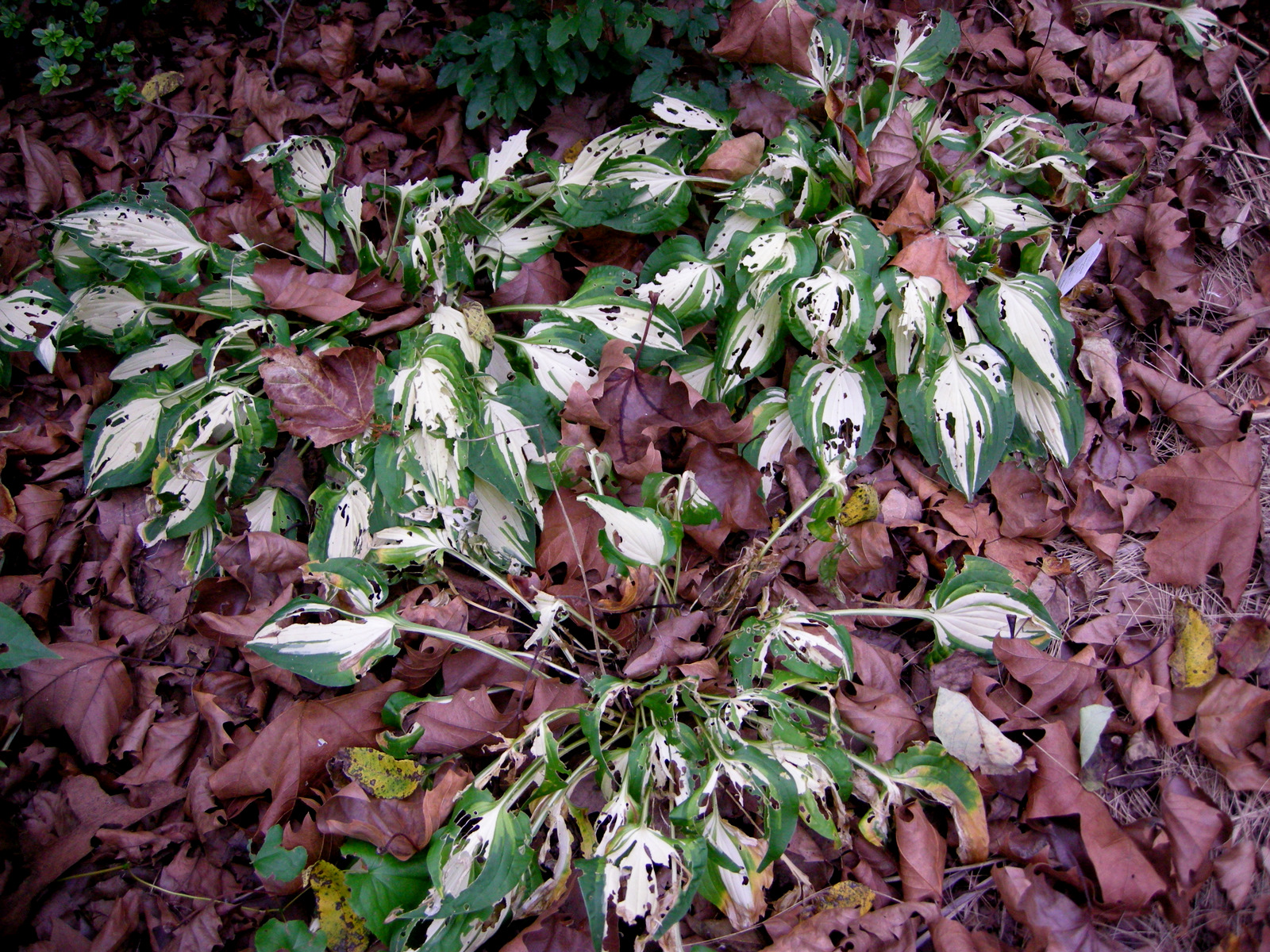
When you choose a hosta for your garden, I am guessing you are not going for this look in fall.

One reason I started what I like to call my free, on line, shade gardening magazine (AKA blog) was to force myself to document my gardening knowledge in photographs and print.  This article is a perfect example.  Every fall I walk around my gardens saying: “I really should photograph the hostas that still look good in the fall,” but I never do it.  This information is very important when choosing hostas especially if you have a small garden and can’t afford to allocate space to a plant that provides no ornamental value for one third of the season like the specimens in the photo above.  So, for the record, here are some of the hostas dressing up my shady gardens right now:

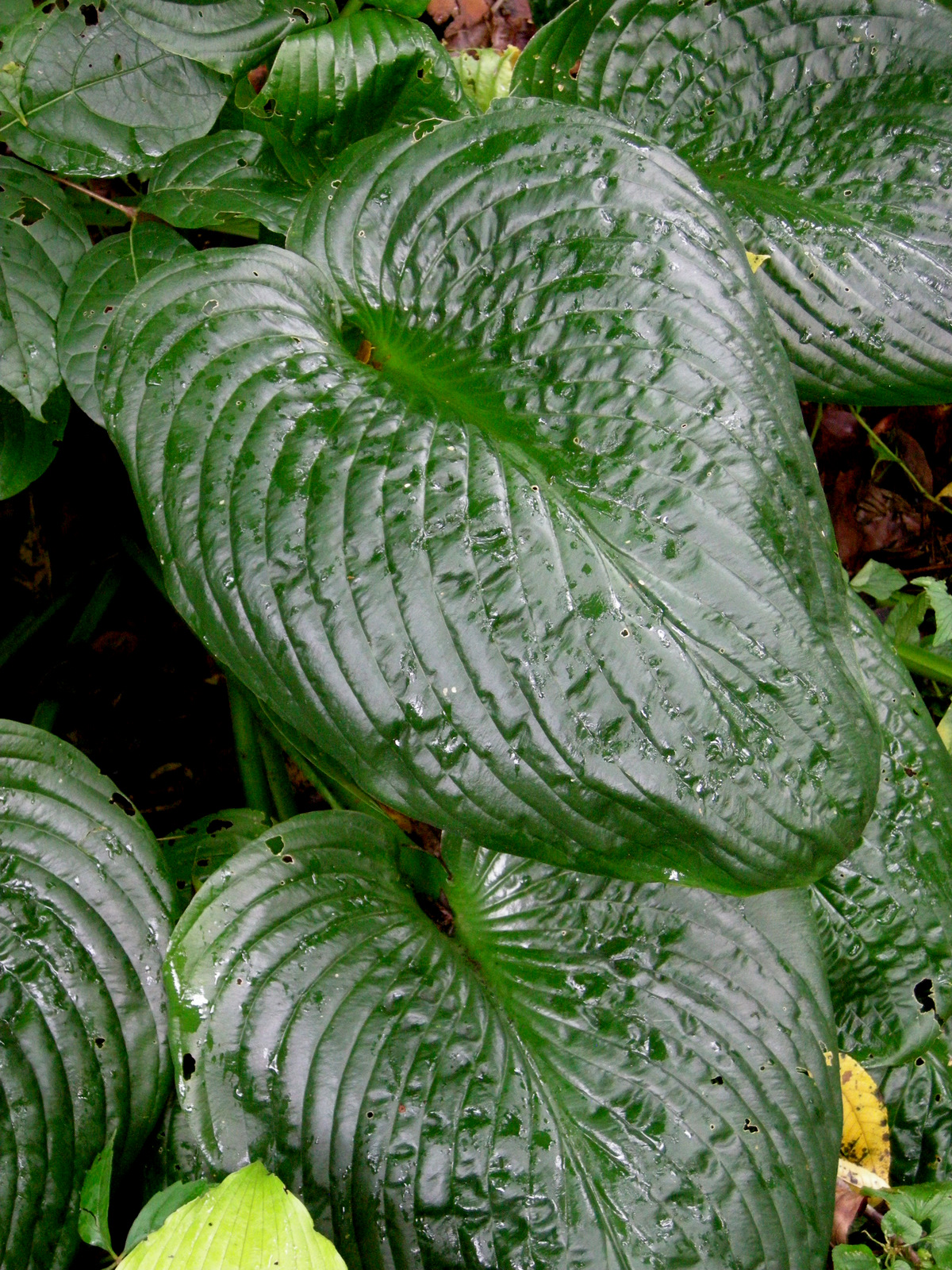
I don’t expect my hostas to look perfect in the fall, although some do.  Even though ‘Frances Williams’ is slightly tattered, its bold colors and stately habit make it a winner in my fall garden.

There is another very important point I would like to make about hostas.  New is not the equivalent of better or even good.  Gardeners will often remark about a hosta like ‘Frances Williams’, which was first registered in 1986, that it is an old hosta with the implication that we should have all moved on by now.  If I had to, I would gladly trade in many of my newer hostas for a plant as unique in habit, leaf shape, and color as ‘Frances Williams’ (even with its tendency to brown slightly at the edges).  The breeders have yet to come up with a new hosta this beautiful and tough.

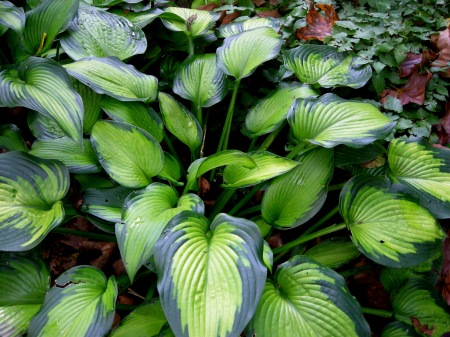
Like all blue-leaved hostas, Hosta ‘Blue Umbrellas’ turns greener in the fall, but who cares when it looks like this?

Thanks to my commenter Louise Thompson for mentioning slug resistance.  One of the primary reasons that these hostas look so good in the fall is that they are resistant to slugs.  Most of them tend to have thicker leaves that just hold up better to whatever nature throws at them.  Please read my reply to Louise for information about controlling slugs.  I don’t do anything to control slugs except plant resistant hostas. 
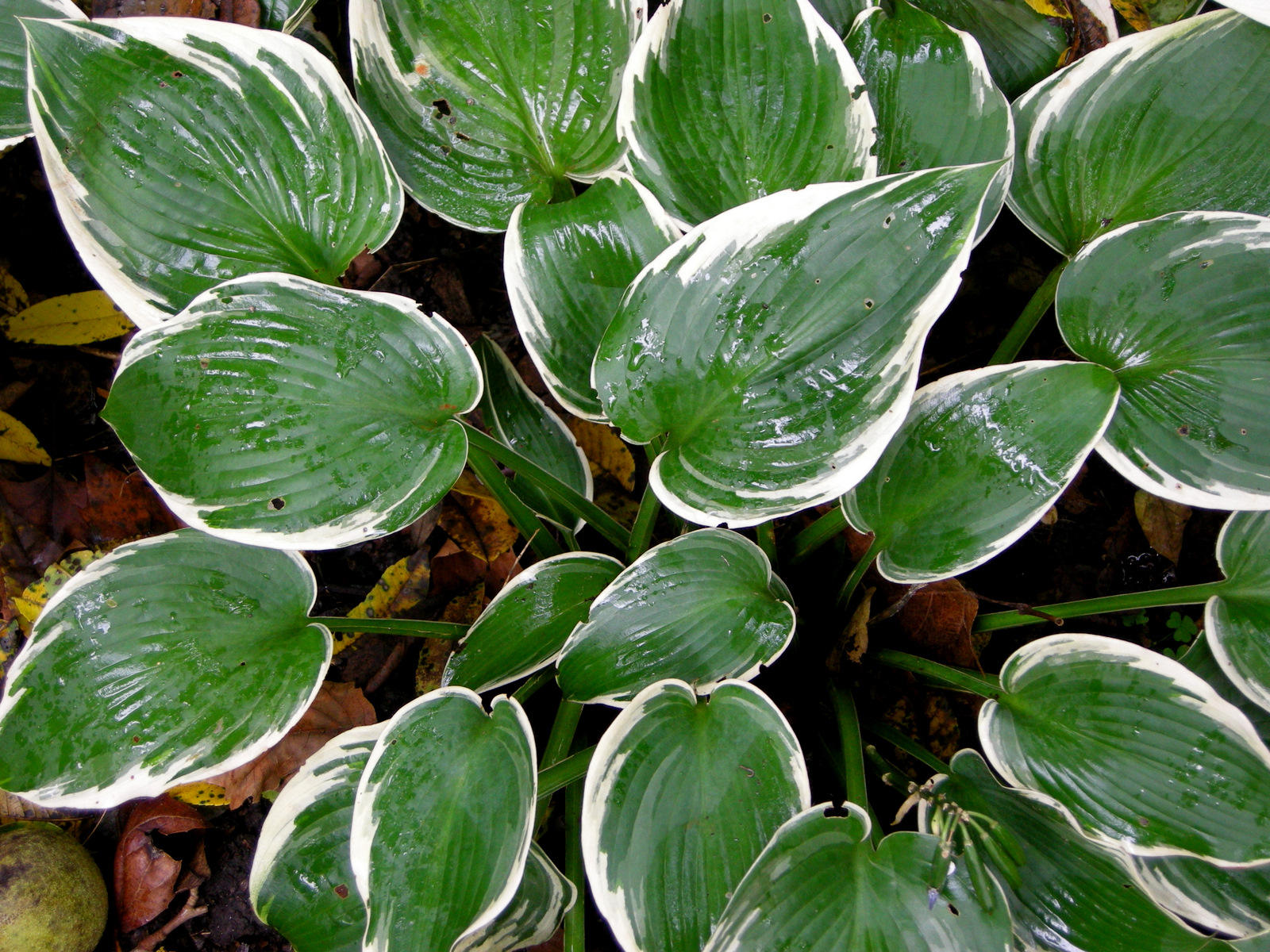
Talk about perfect, Hosta ‘Paradise Joyce’.
Hosta ‘El Nino’ in my silver and blue garden.  If you want to see what it looks like in June, click here.

Hosta ‘Stained Glass’, which was the Hosta of the Year for 2006, just glows in the fall.  One way to choose really good hostas is to select cultivars chosen as hosta of the year by the American Hosta Growers Association.  There are over 6,000 (some say 10,000) hosta cultivars out there, and only 17 have received this honor.  I grow 13 of the winners, and they certainly deserved to be chosen.  To see all the winners, click here.
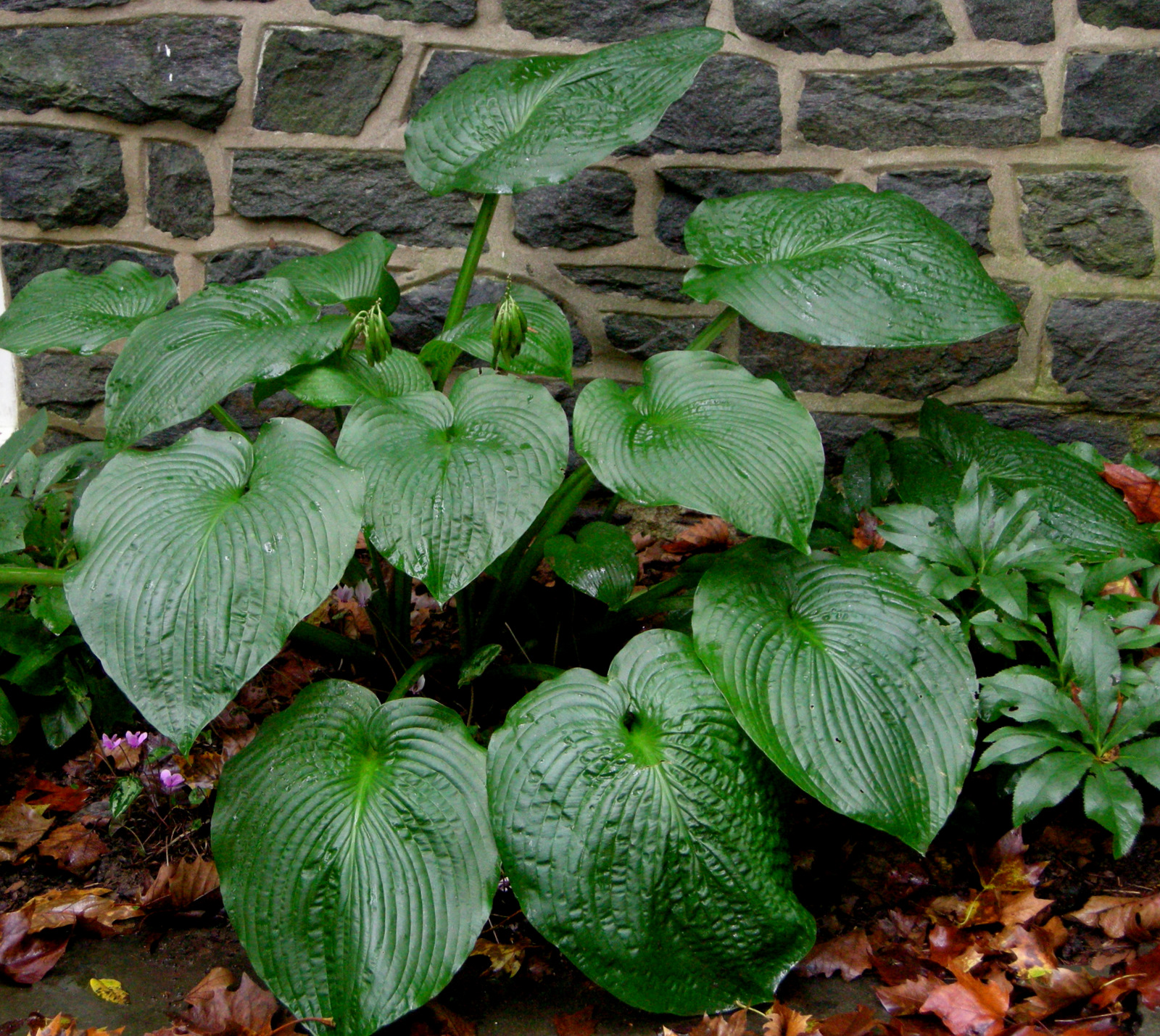
Another “old” hosta, ‘Blue Angel’ was registered in 1986 and, in my opinion, is the best large blue cultivar–outstanding habit, leaves, and white flowers.  It is the parent of ‘Earth Angel’, the 2009 Hosta of the Year.
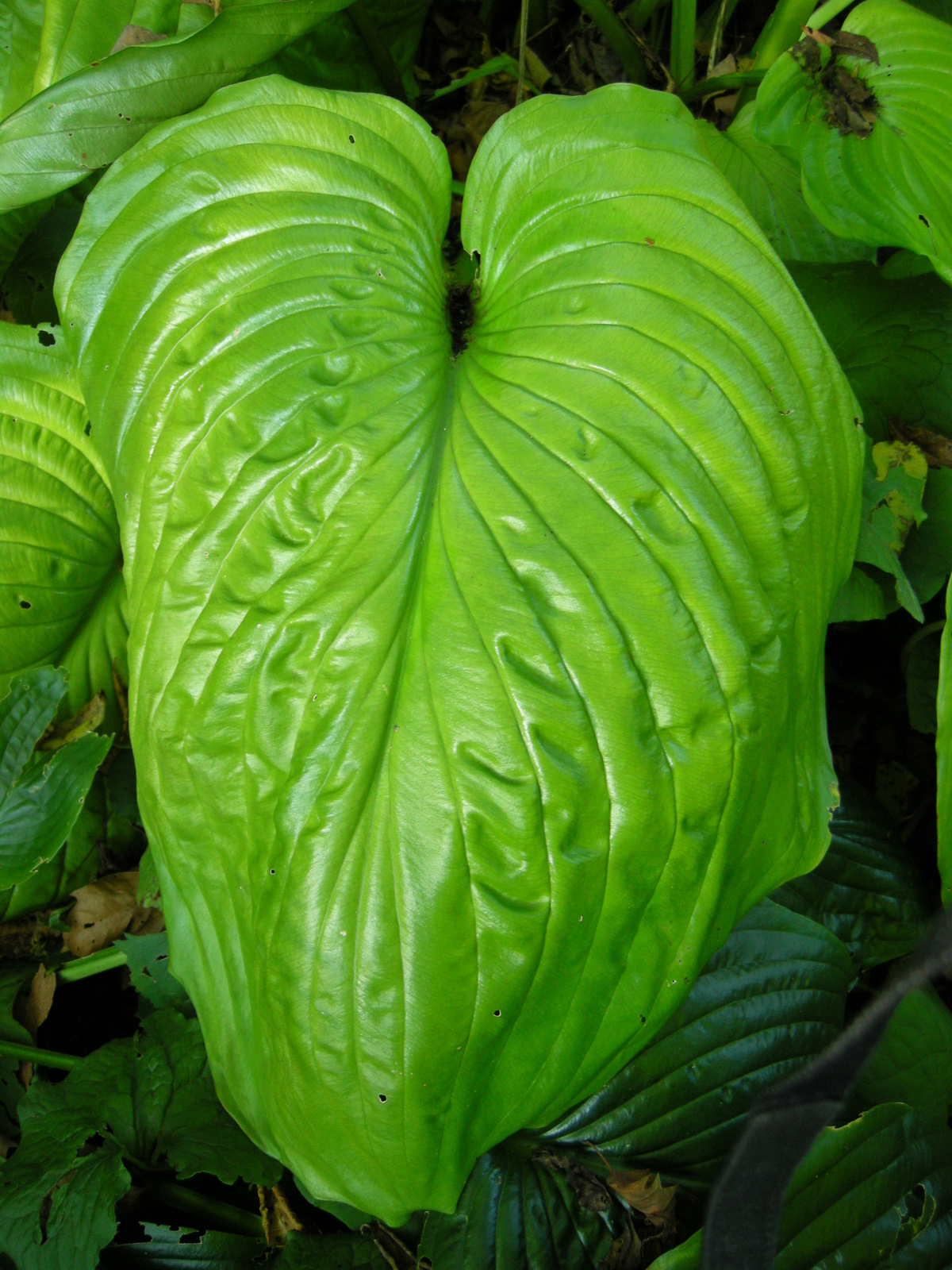
The long-lasting gold leaves of Hosta ‘Sum and Substance’, the 2004 Hosta of the Year, can reach 2 feet across while the clump can exceed 6 feet in width.
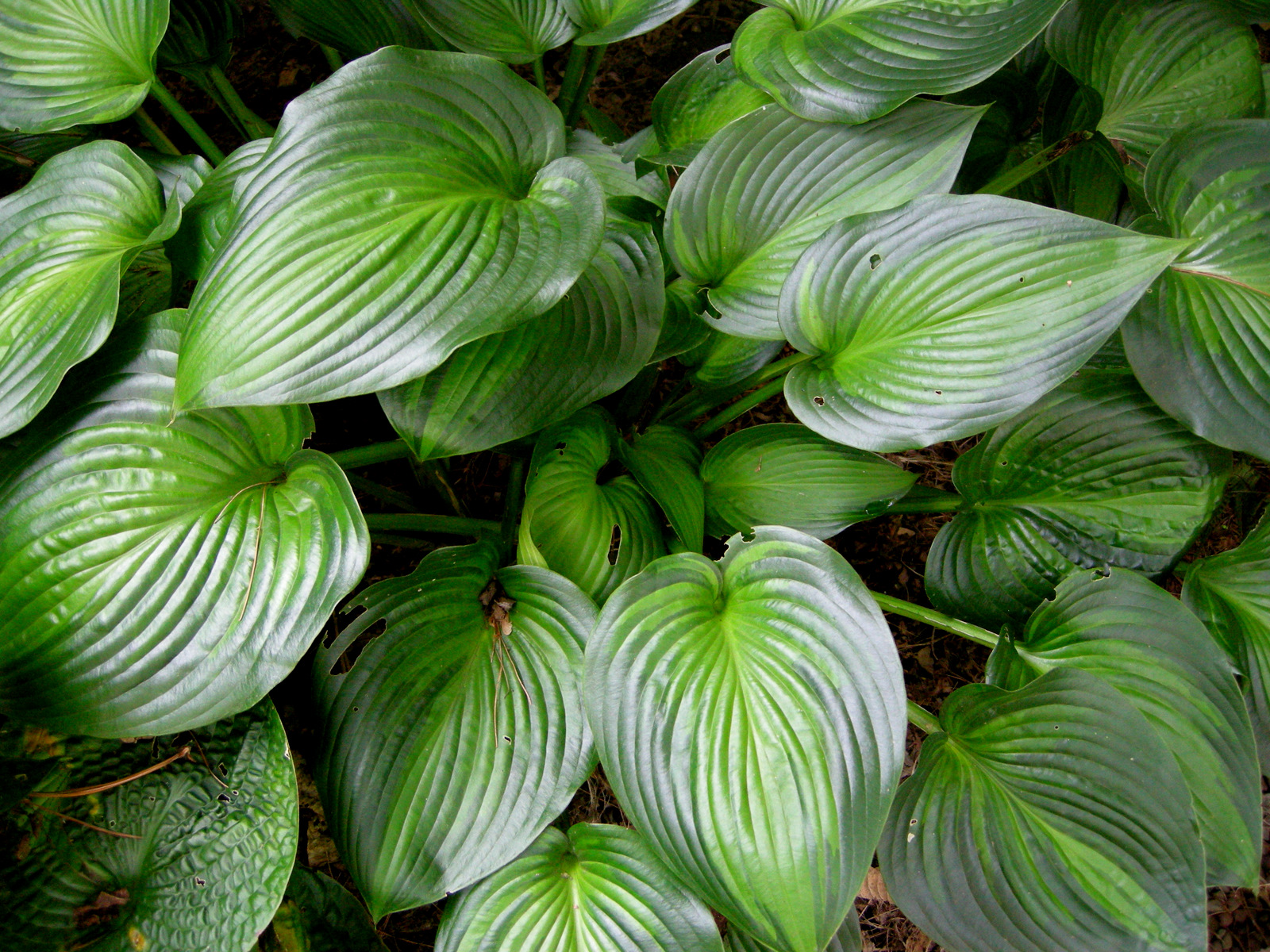
Hosta ‘June’ was the 2001 Hosta of the Year and is the favorite hosta of my nursery customers.  ‘Remember Me’ in the top photo is one of its “children”.
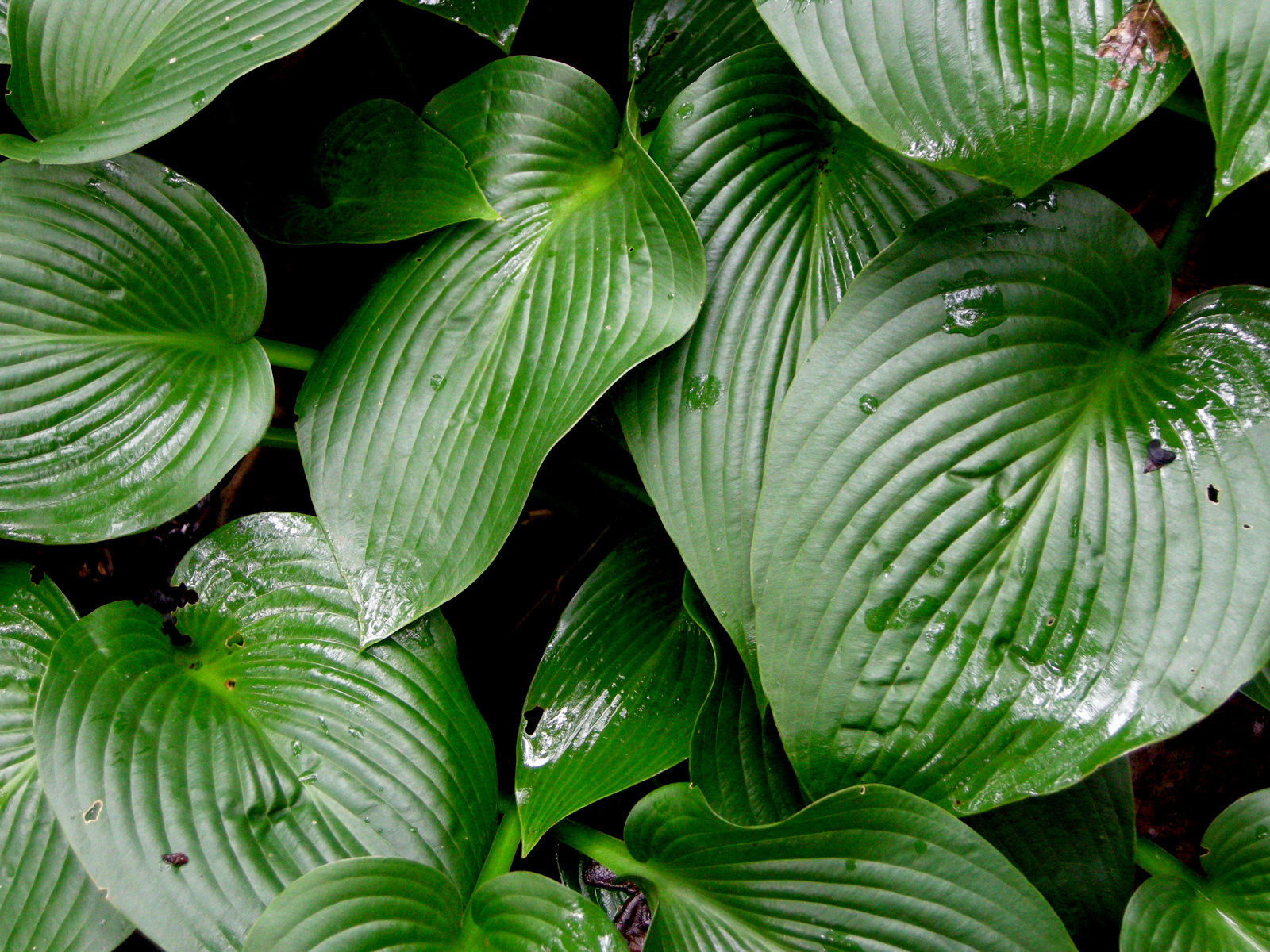
Hosta ‘Halcyon’ registered in 1988, is a beautiful medium-sized blue hosta (aging to green in the fall), but it is also important as the parent of ‘June’, ‘El Nino’, and ‘Paradise Joyce’, among other wonderful cultivars.
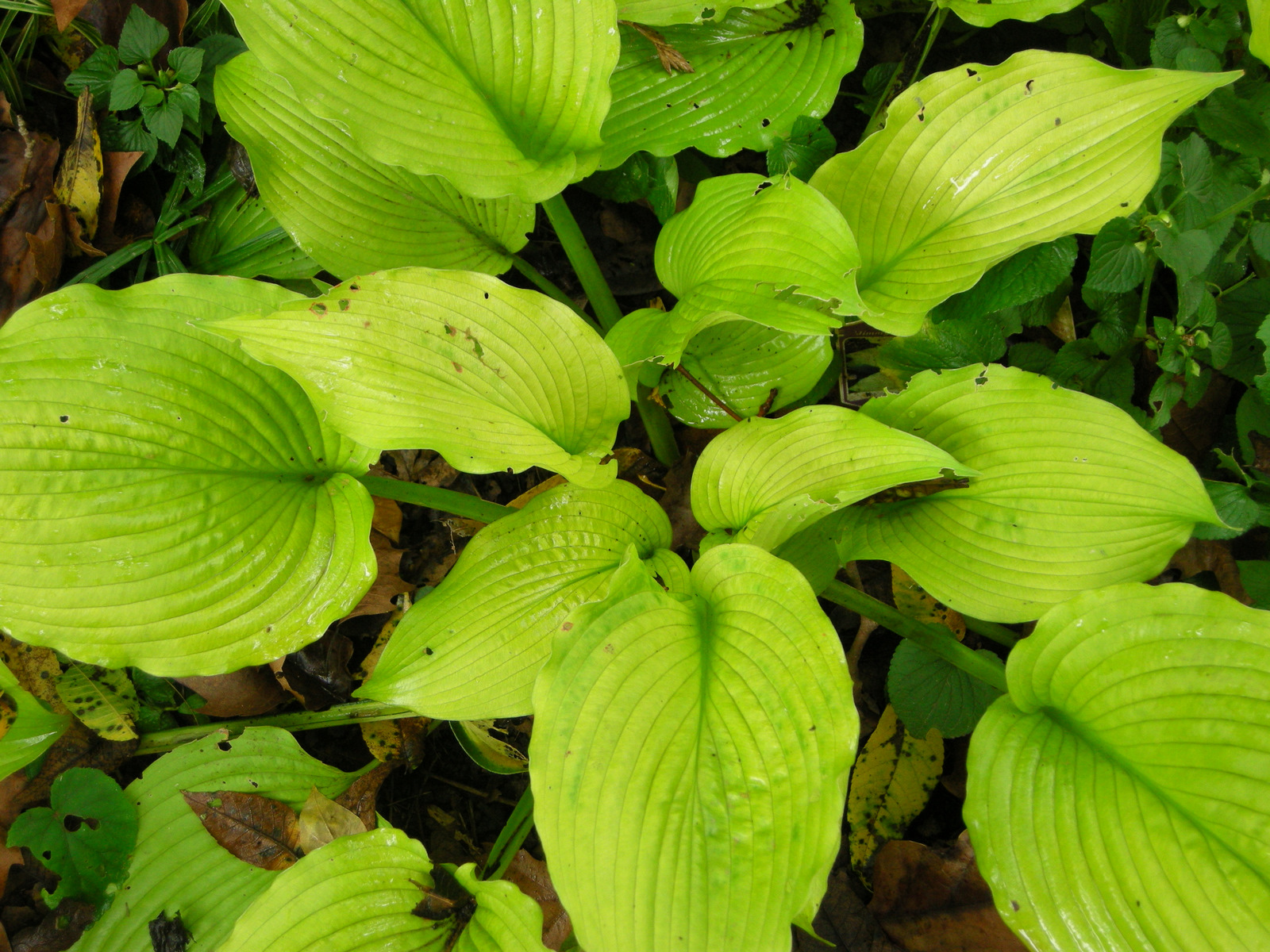
Most gold-leaved hostas turn green in the fall, but not ‘Jimmy Crack Corn’.
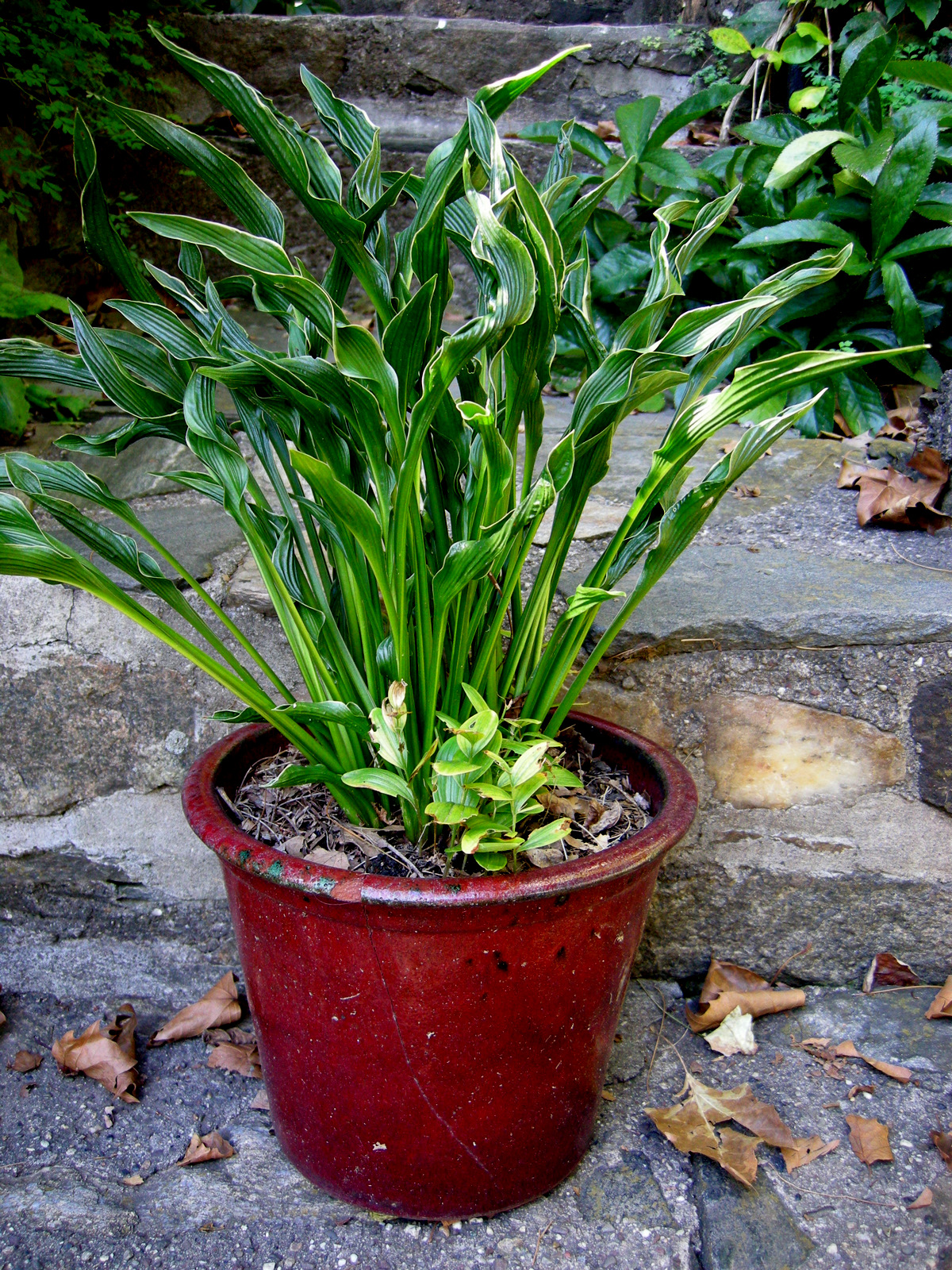
Hosta ‘Praying Hands’, the 2011 Hosta of the Year, will stay outside in this ceramic container all winter.  I find that ‘Praying Hands’ multiplies much faster in a container than in the ground.


Hosta ‘Paul’s Glory’, the 1999 Hosta of the Year, also looks best in the fall when its bright colors light up the shade.
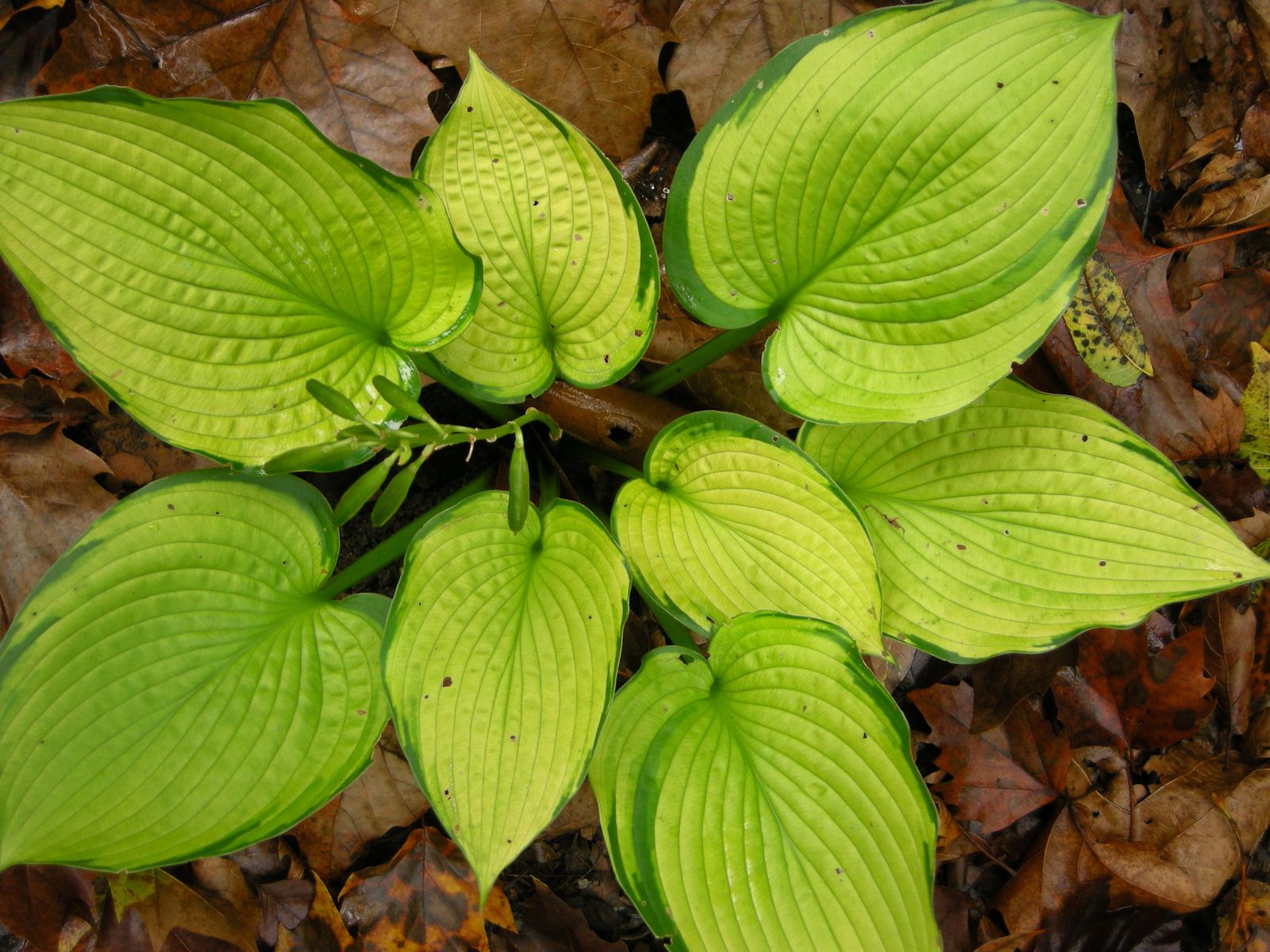
Hosta ‘Inniswood’ is a 1993 gold-leafed introduction that puts many newer cultivars to shame.

There are many more medium and large hostas that I could have featured as ornamental in the fall including my favorite, Hosta tokudama and all its cultivars.  For more information on larger hostas and how to use them, click here.

Now for some fall stars among the miniatures, my current hosta passion.  For more information on miniature hostas and how to incorporate them into your garden, click here.

If you have read my article on Miniature Hostas, you know I am a sucker for the Mouse Ears series, here Hosta ‘Mighty Mouse’.

Hosta ‘Blue Mouse Ears’ is the 2008 Hosta of the Year.
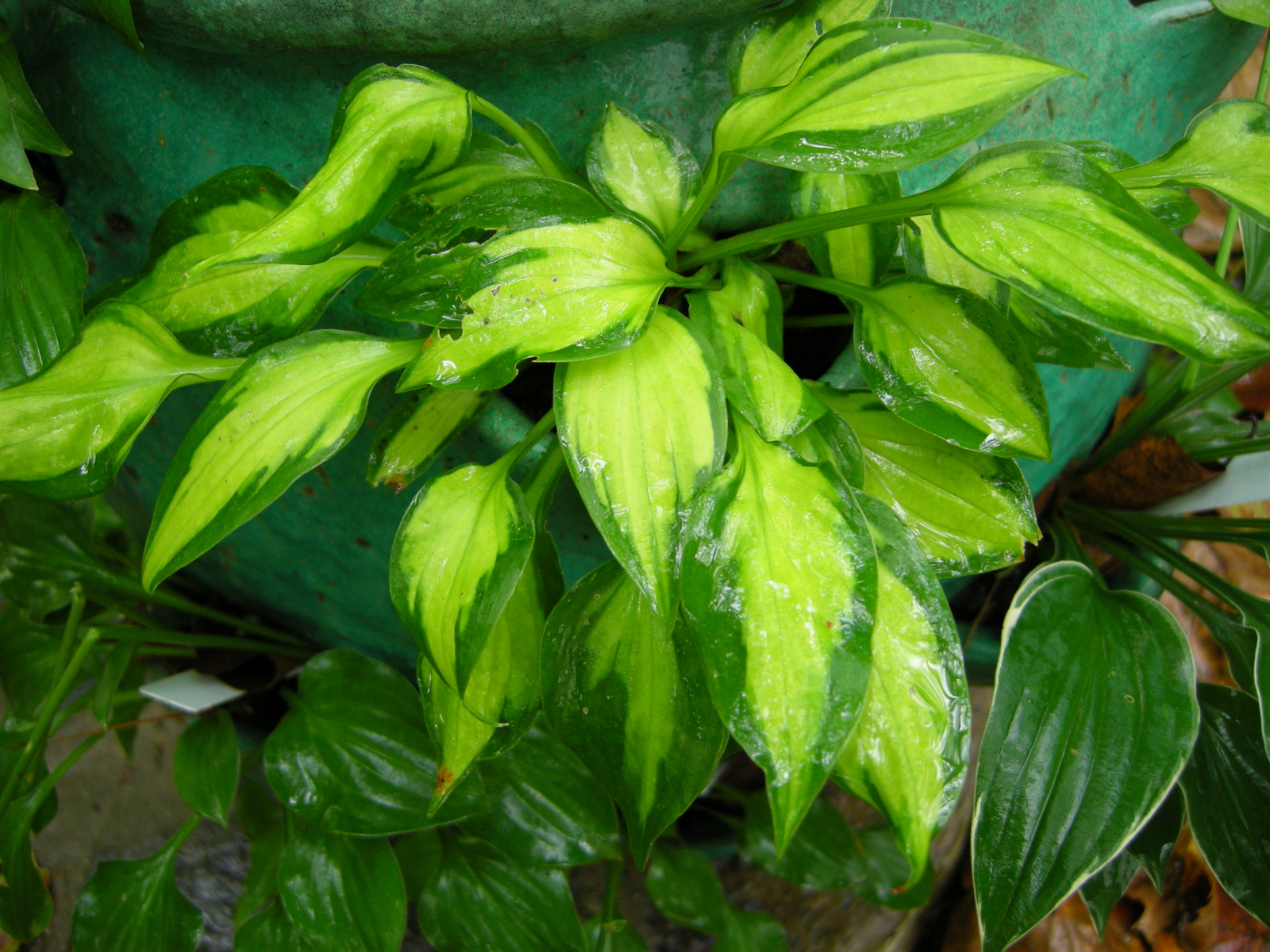
Hosta ‘Little Sunspot’ is growing in one of the 16 pouches in my strawberry jar.  One look at this collection will show you that all miniatures are not created equal in terms of their fall appearance.
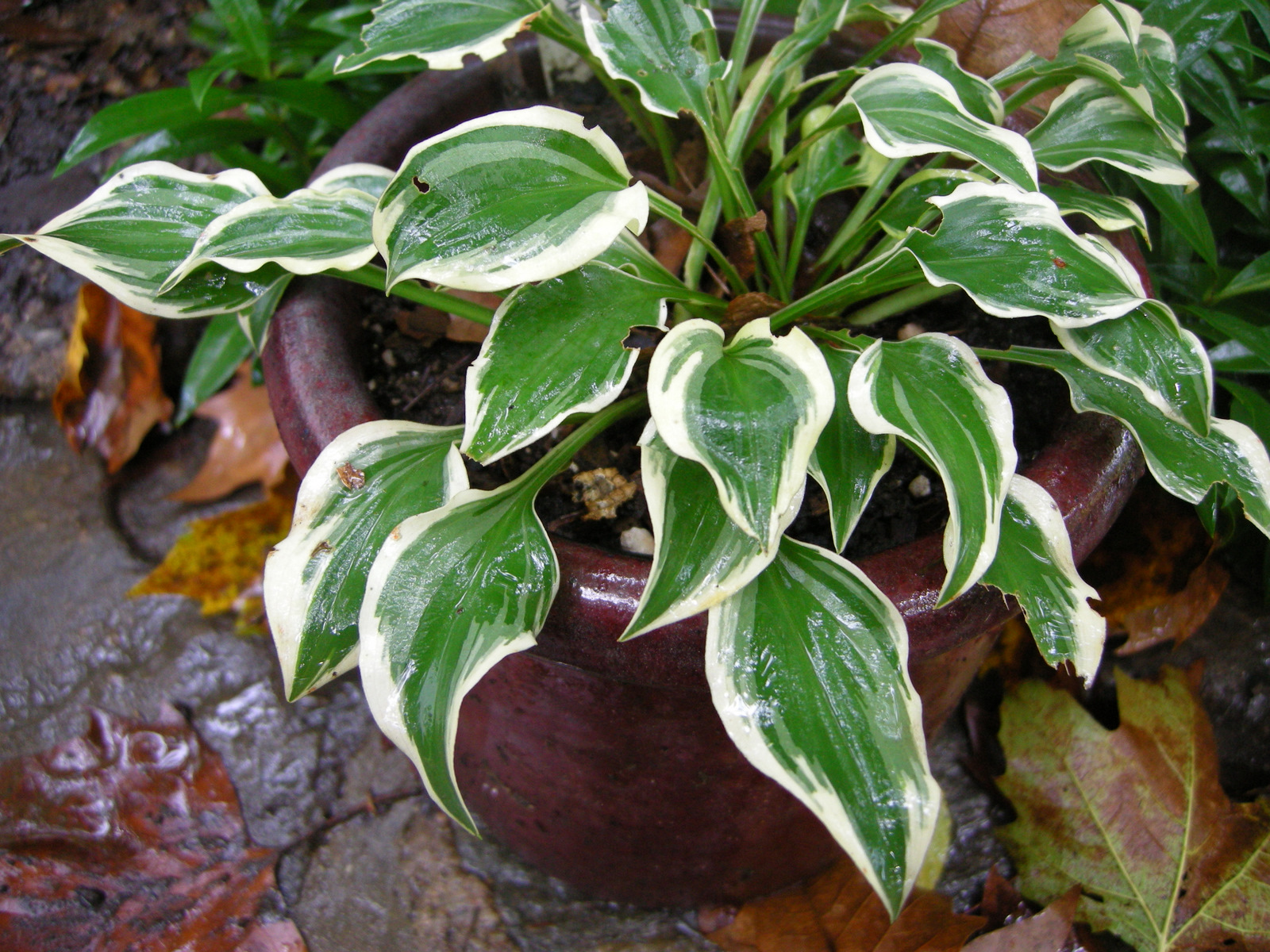
All my hosta containers, including this pot of Hosta ‘Pixie Vamp’, will stay out all winter.

Like all plants, hostas should be chosen to provide ornamental value from the time they come up in the spring until frost.  You can choose any of the hostas above for your garden and be confident of a long season of interest.

Carolyn

This is the third article I have written on hostas.  The first two are:

Miniature (& Small) Hostas

Larger Hostas

Notes: Every word that appears in orange on my blog is a link that you can click for more information.  If you want to return to my blog’s homepage to access the sidebar information (catalogues, previous articles, etc.) or to subscribe to my blog, just click here.
October GBBD: A Few Fall Favorites for Flowers

Posted in Fall, Fall Color, Garden Blogger's Bloom Day, landscape design, native plants, Shade Gardening, Shade Perennials with tags , , , , , , , , , , , , , , on October 10, 2011 by Carolyn @ Carolyns Shade Gardens

Carolyn’s Shade Gardens is a retail nursery located in Bryn Mawr, PA, specializing in showy, colorful, and unusual plants for shade.  The only plants that we ship are snowdrops within the US.  For catalogues and announcements of local events, please send your full name, mailing address, and cell number to carolyn@carolynsshadegardens.com and indicate whether you are interested in snowdrops, hellebores, and/or hostas.  Click here to get to the home page of our website for catalogues and information about our nursery and to subscribe to our blog.

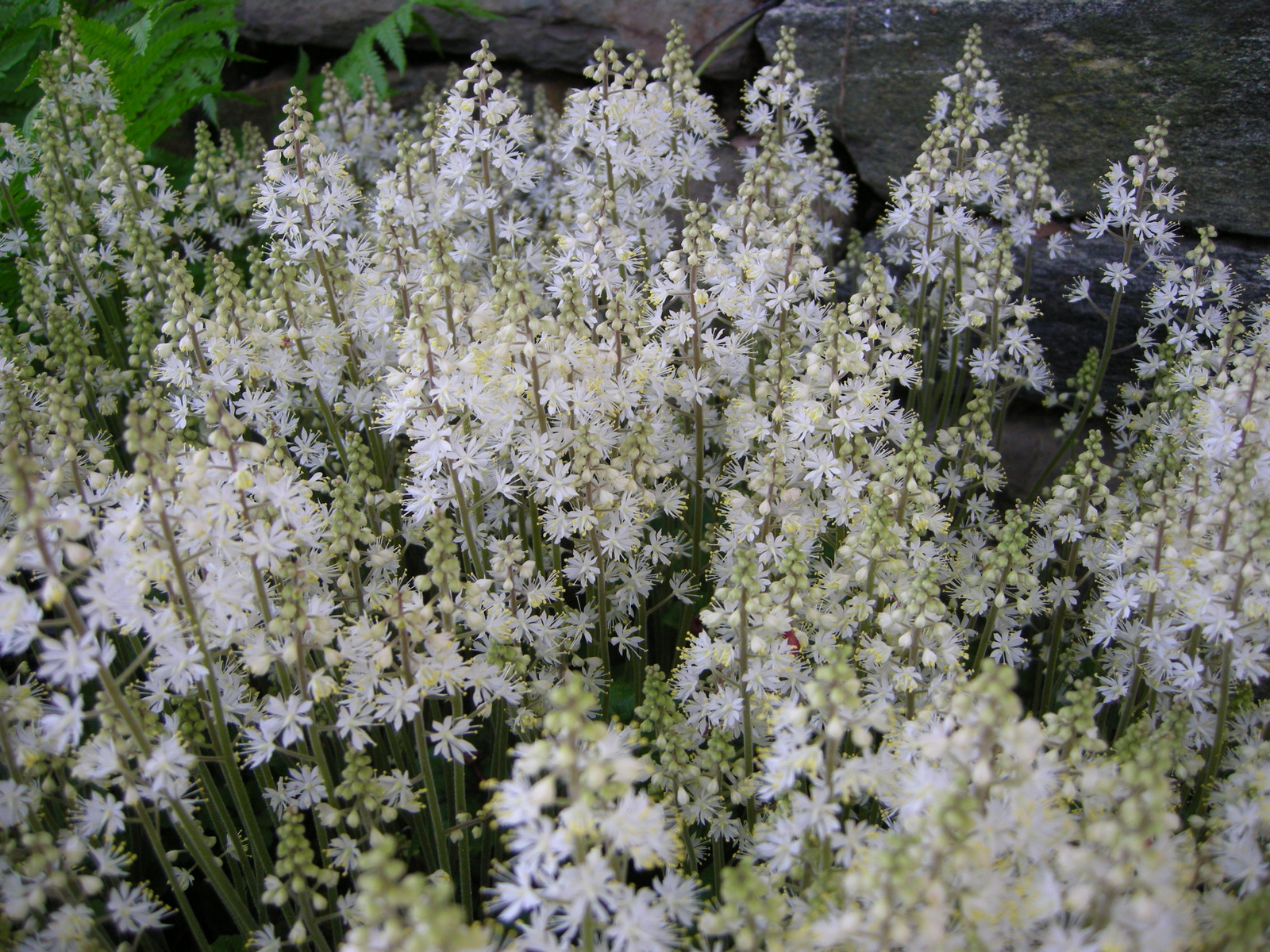
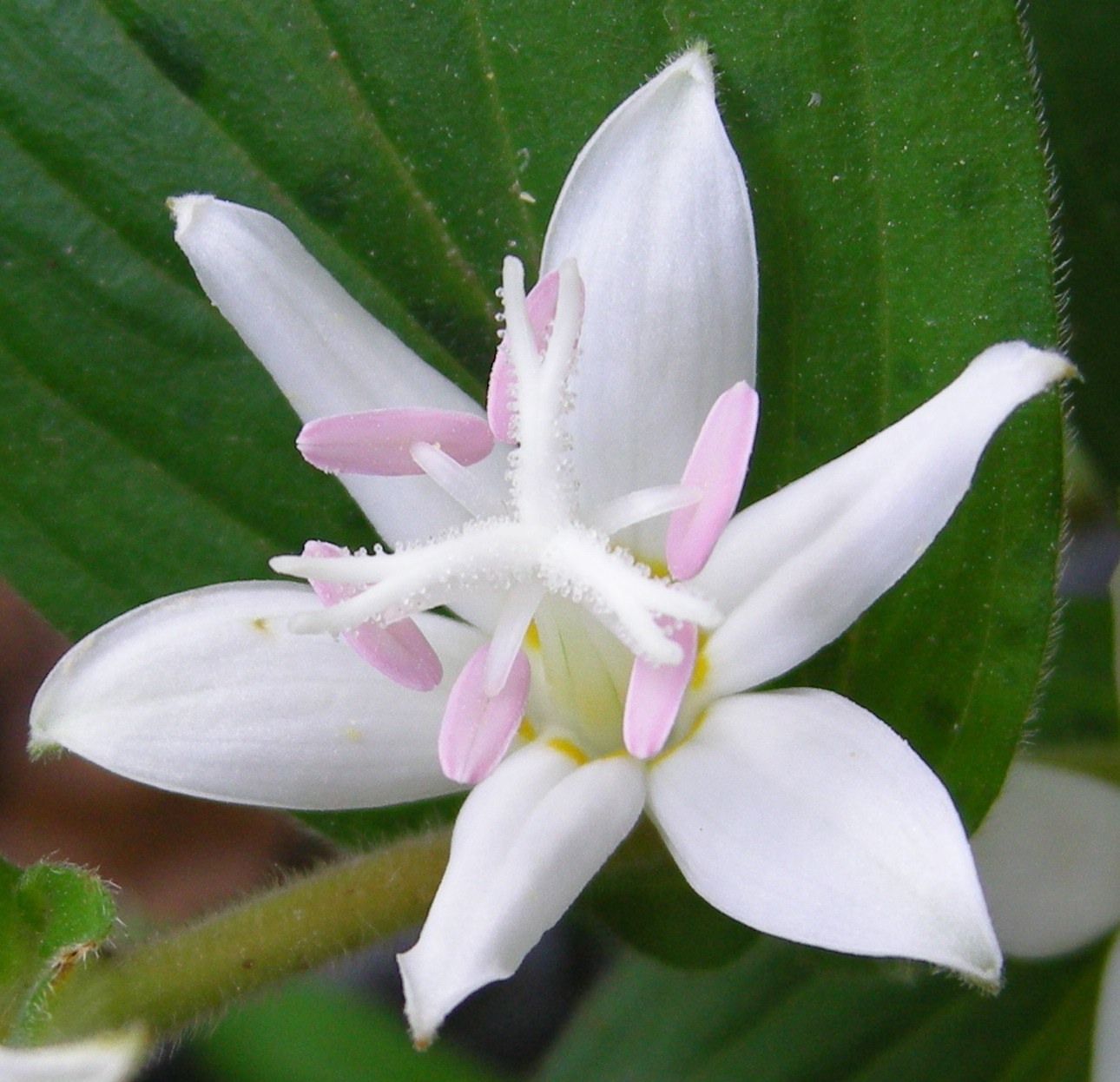
The subtle coloring of ‘White Towers’ toad-lily, Tricyrtis latifolia ‘White Towers’, is magical in the fall.  Every photo was taken at Carolyn’s Shade Gardens this fall.

I am linking this post to Garden Blogger’s Bloom Day for October when gardeners around the world show photos of what’s blooming in their gardens (follow the link to see  photographs from other garden bloggers assembled by Carol at May Dreams Gardens).  I am also linking to Gesine’s Bloom Day at Seepferds Garten.  I am located in Bryn Mawr (outside Philadelphia), Pennsylvania, U.S., and zone 6b.

In my last post, A Few Fall Favorites for Foliage and Fruit,  I explained that, inspired by an article about dressing up your fall garden with mums because everything else is finished, I grabbed my camera and headed outside to prove them wrong.  There was so much going on that I divided the plants into three posts: foliage and fruit, flowers, and hostas for fall.  This is part two highlighting flowers.  So here are some of the flowers dressing up my shady gardens right now:

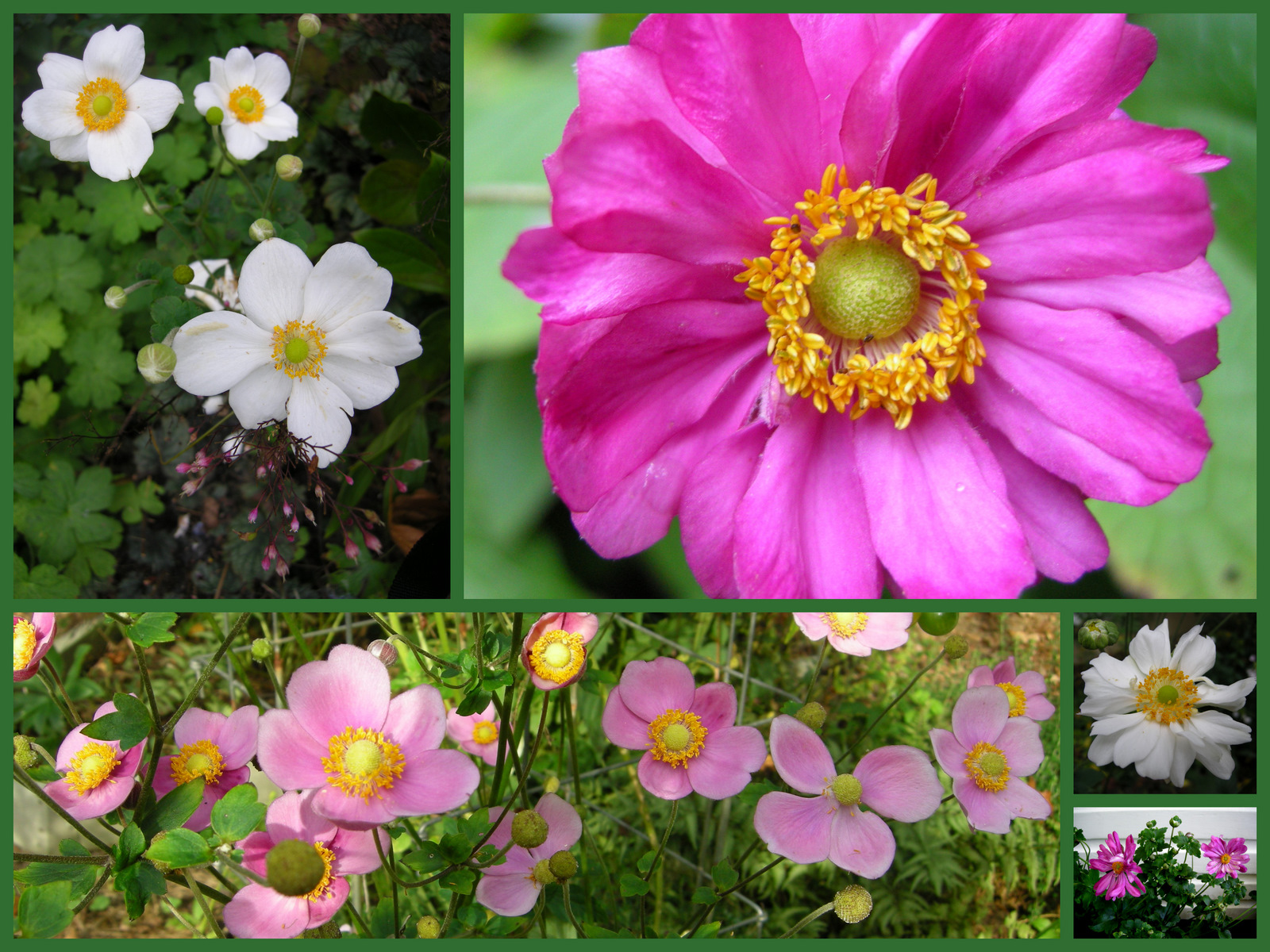
Japanese anemones, Anemone x hybrida, are one of the undisputed stars of my fall garden, growing anywhere from full sun to almost full shade and thriving no matter what the weather.  Clockwise from upper left: ‘Honorine Joubert’, ‘Margarete’, ‘Whirlwind’, ‘Bodnant Burgundy’, ‘September Charm’.

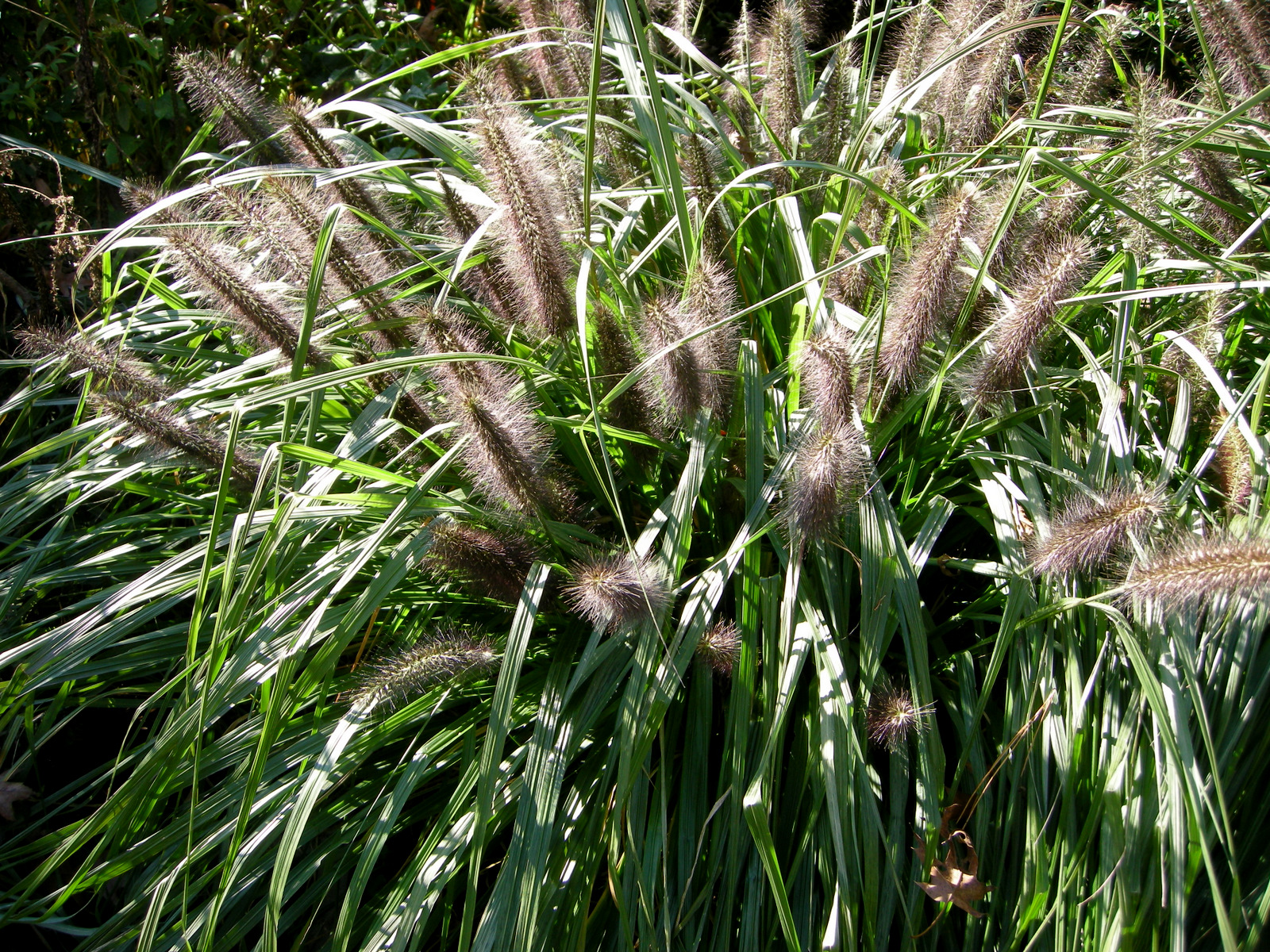
The black plumes of ‘Moudry’ fountain grass, Pennisetum alopecuroides ‘Moudry’, glow in the low-angled fall light.  ‘Moudry’ does well in the shade, flowering later and remaining more compact.

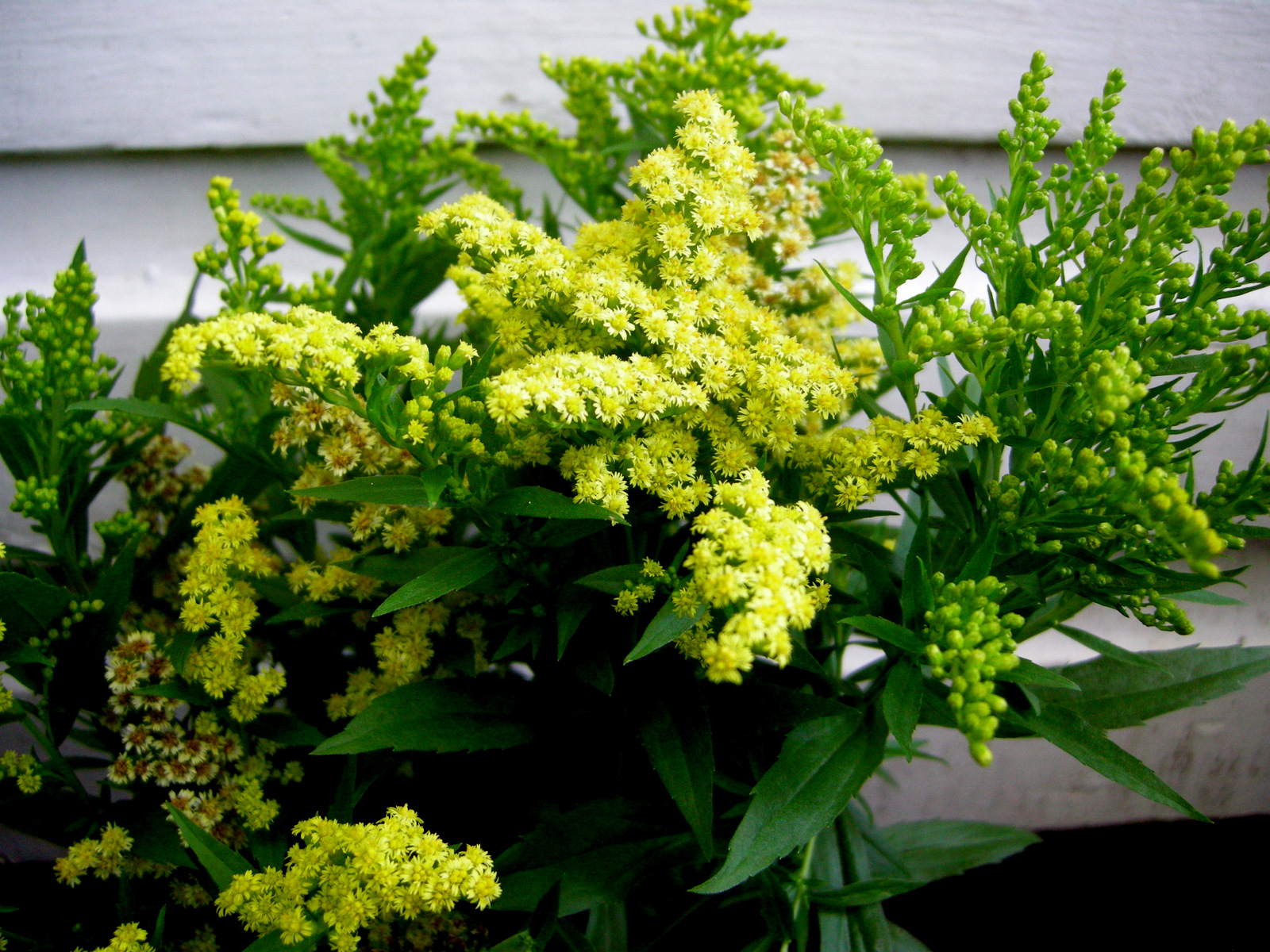
I grow about five different varieties of native golden rod, Solidago,  with my current favorite ‘Little Lemon’, growing only 12 to 18″ high.  Contrary to popular belief, goldenrod does not cause allergies as it is pollinated by insects.  Wind pollinated ragweed, which blooms at the same time, is the culprit.

Toad-lilies, Tricyrtis, bloom throughout the fall in full shade with ‘Sinonome’ just getting started now and continuing into November.  Clockwise from upper left: ‘Sinonome’, ‘White Towers’, ‘Miyazaki’, ‘Empress’.

Another plant that is just warming up is Pennsylvania native northern sea oats, Chasmanthium latifolium.  Its foliage will turn orange later in the fall and then dry to a beautiful khaki for the winter.  Be forewarned, however, when this plant reaches critical mass, it starts spreading, and its wiry roots are very difficult to remove.  Give it room and then triple the space you think you need.

Autumn leadwort, Ceratostigma plumbaginoides, is one of my favorite groundcovers.  Its true blue flowers start blooming in June and continue through October when its leaves turn bright red.

Pennsylvania native ‘Bluebird’ smooth aster, A. laevis ‘Bluebird’, seeds all around my garden in full sun to part shade.  Butterflies and bees love it.  Please click here to find out why most native cultivars are just as friendly to native fauna as the species.

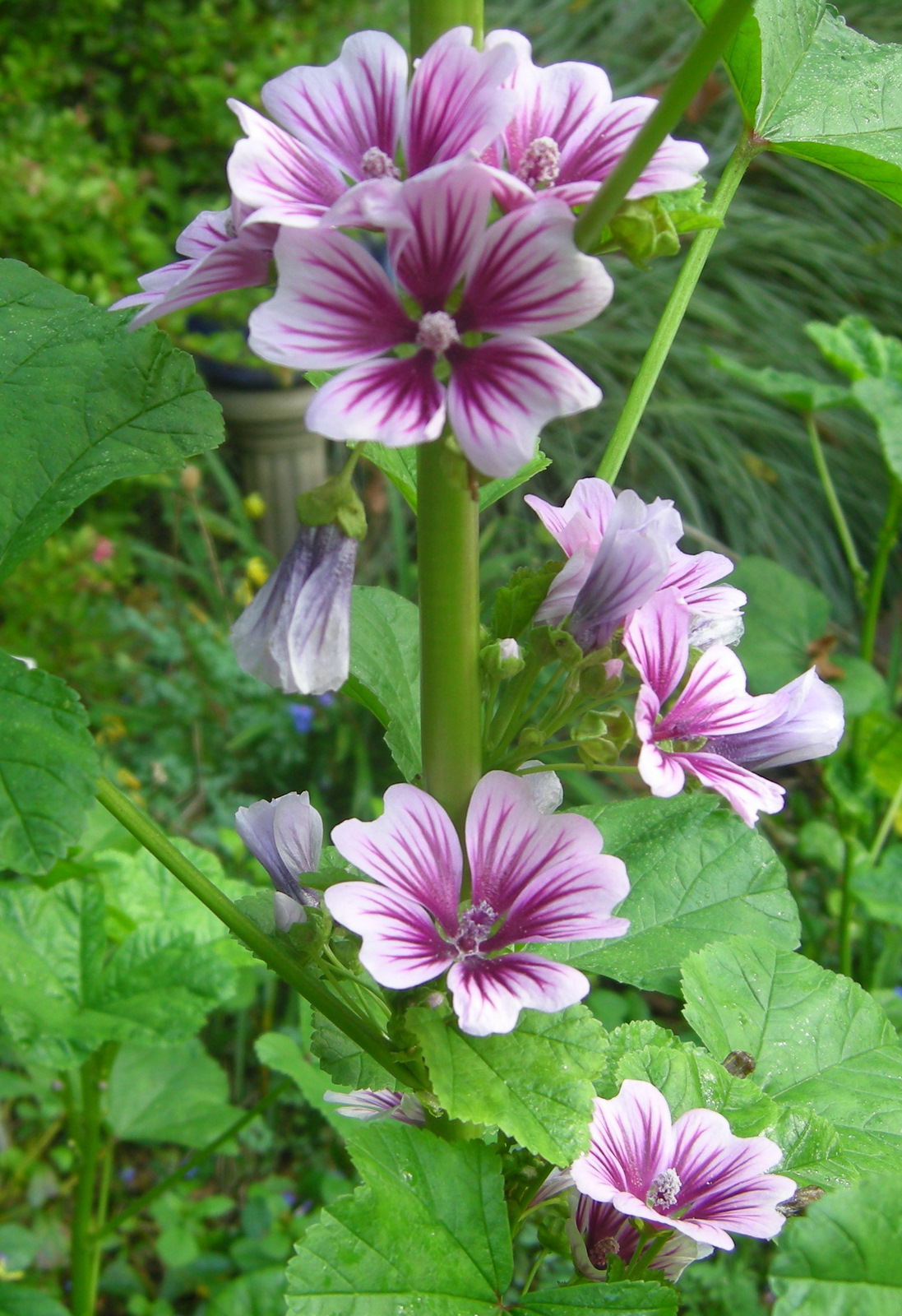
‘Zebrina’ hollyhock mallow, Malva sylvestris ‘Zebrina’, seems to move around my garden at will, but it never fails to steal the show with its 3 to 4′ stalks loaded with showy flowers.  It grows best in full to part sun.

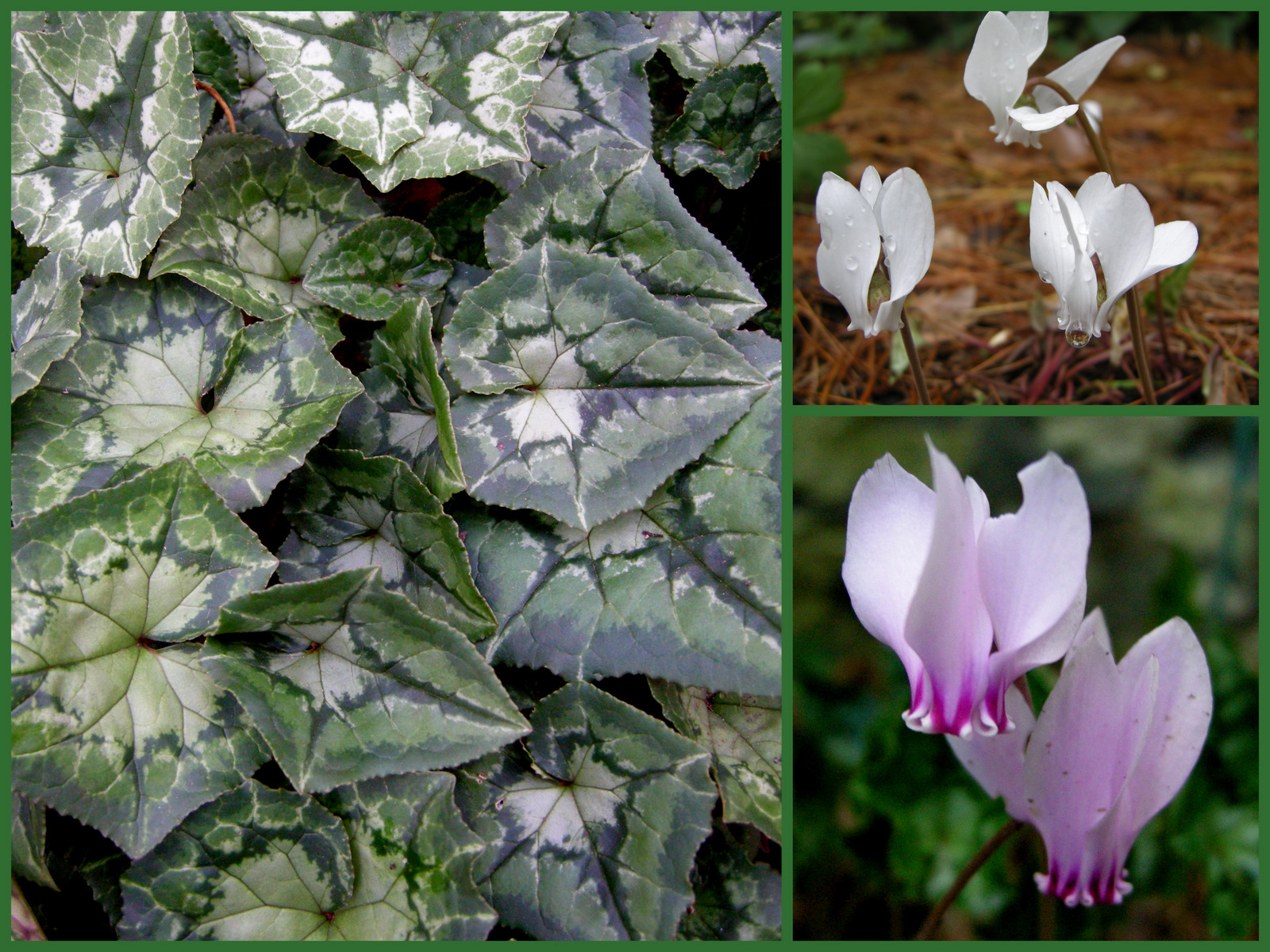
Fall-blooming hardy cyclamen, Cyclamen hederifolium, is one of the plants I would take to my shady “desert island”.  Right now its pink or white flowers are floating all around my shady gardens.  Later its evergreen leaves will emerge from summer dormancy and look like the photo on the left all winter long.

I am always raving about the foliage of the coral bell cultivars derived from our Pennsylvania native Heuchera villosa.  Well this is the plant that started it all, Heuchera villosa ‘Autumn Bride’.  It has very large and attractive fuzzy green leaves and beautiful flowers that bloom right now–this is the only cultivar I would grow for its flowers (the rest I grow for the leaves).

The cultivar ‘Cory’ of Pennsylvania native hardy ageratum, Eupatorium coelestinum, is far superior to the straight species.  It has more abundant and showier flowers, ornamental purple stems, interesting crinkled leaves, and a much better upright habit.  ‘Cory’ is also a good spreader in sun to part shade so give it room.  Pictured above with another of my favorite Pennsylvania natives, wrinkleleaf goldenrod, Solidago rugosa ‘Fireworks’.

Hardy begonias, Begonia grandis, have spread all over my garden in full shade, and I have yet to find a place that I don’t want them.  Because they come up very late in May and really just get going in the fall, I use them to fill in between my hostas on my back hill.  

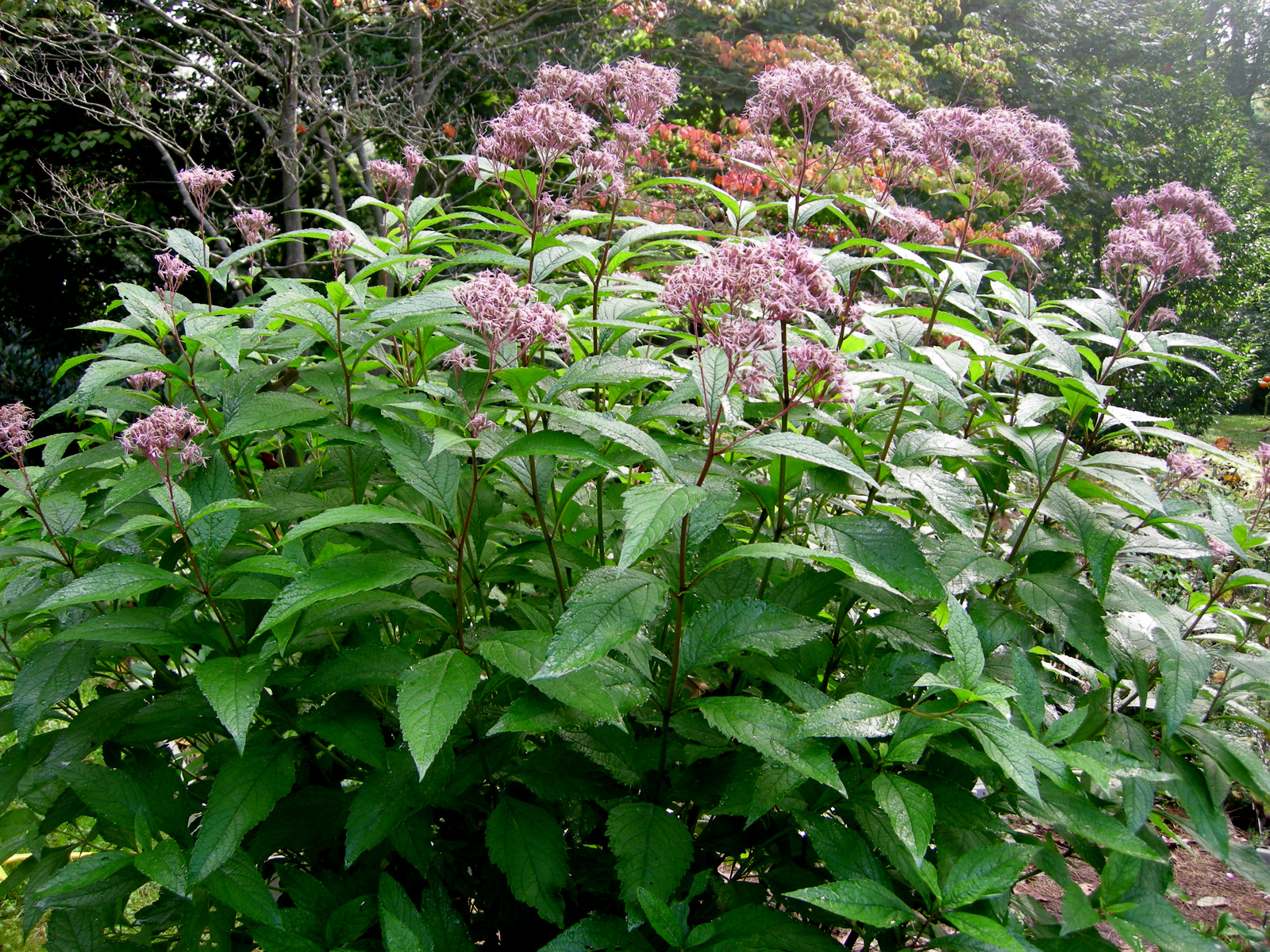
Pennsylvania native Joe Pye weed, Eupatorium dubium, reaches 10′ tall in my garden and flops over in our torrential rains.  The “dwarf” version called ‘Little Joe’ grows to a diminutive 5′ tall and has remained erect through the 30″ of rain we had in August and September to bloom now with its large purple flowers–a magnet for butterflies and bees.

In the spring, a gardener I very much admire brought over this plant, telling me it was a salvia with yellow flowers that grows in full shade and blooms in the fall.  I duly planted it in my shady “yellow garden” and it thrived through heat, drought, and rain with no attention.  It is called woodland sage, Salvia koyamae.

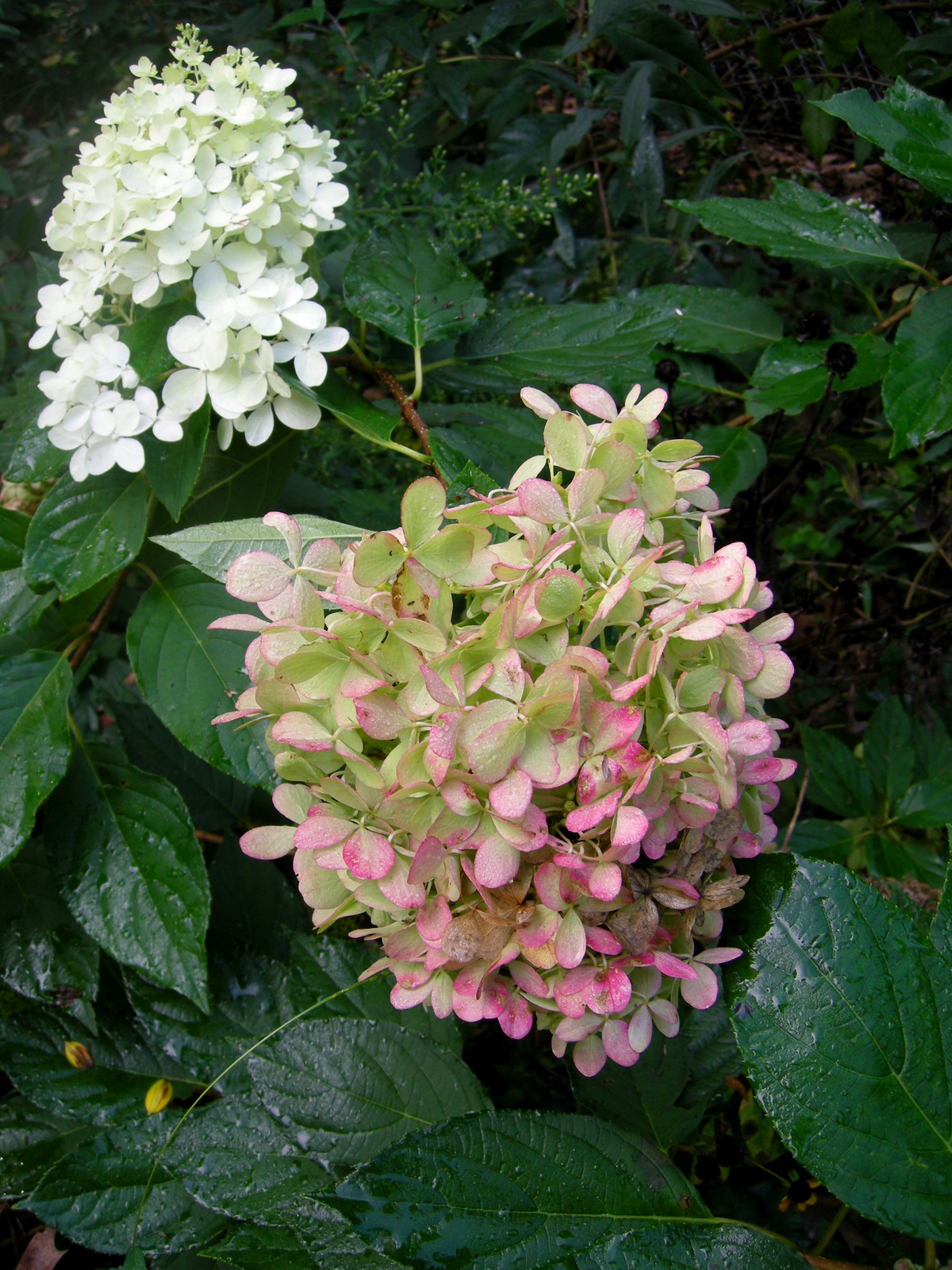
I am just beginning to learn about hydrangeas because until last year there was no point in planting them because of the deer.  One of my first acquisitions after the netting went up was ‘Limelight’, Hydrangea paniculata ‘Limelight’.  The large white flowers aging to pink have been blooming all summer in part shade, and there are still buds coming—very impressive.

If you want a multitude of fall flowers in dry, full shade, you can’t find a better plant than Pennsylvania native blue wood aster, Aster cordifolius.  It fills in all the difficult sites in my woodland and produces a glorious blue haze in the fall.

It is fitting that I should end with my favorite Pennsylvania native perennial for fall, garden phlox, Phlox paniculata.  I love everything about garden phlox: its heavenly fragrance, its long bloom time from early summer through fall, the wealth of colors available, its polite self-sowing, and its attraction to butterflies.  I dream of installing a meadow area and collecting dozens of plants of every phlox cultivar out there!

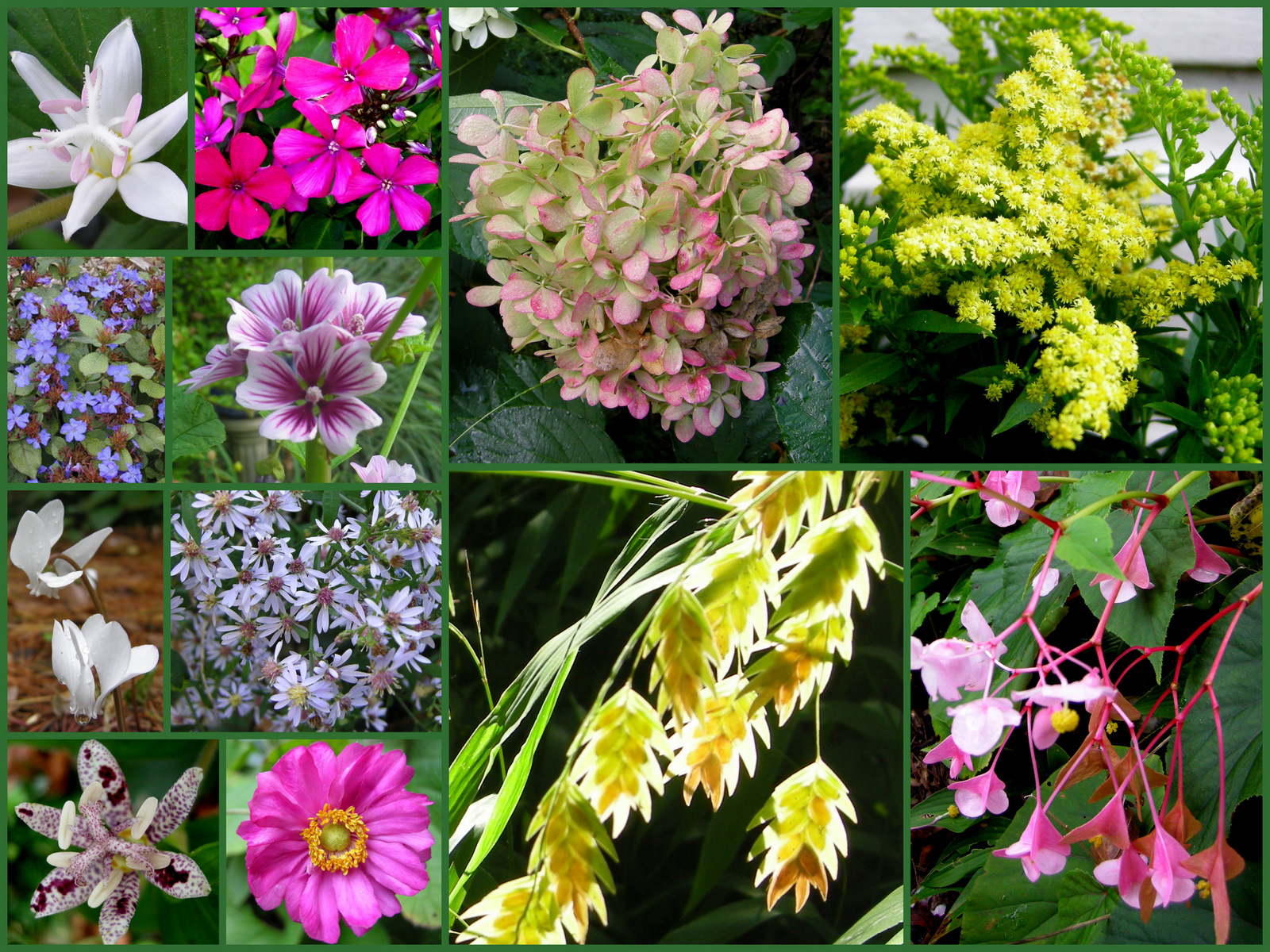
Of the 17 photos above, 8 picture plants that are native to Pennsylvania and eastern North America.  I believe that planting native plants is crucial to our survival.  Please take the time to read this short essay explaining why.  And Pennsylvania’s native plants really come into their own in the fall eliminating the need for dressing with mums!


Click to enlarge

Carolyn

To read Part 1, A Few Fall Favorites for Foliage and Fruit, click here.  Stay tuned for Part 3, Hostas for Fall.  In the interest of full disclosure, I must confess that sadistic botanists have recently changed the botanical names of many of the native plants that I highlighted to completely unpronounceable and unspellable but “botanically proper” names.  At this point, I refuse to follow.


Notes:
Every word that appears in orange on my blog is a link that you can click for more information.  If you want to return to my blog’s homepage to access the sidebar information (catalogues, previous articles, etc.), just click here.

A Few Fall Favorites for Foliage and Fruit

Posted in evergreen, Fall, Fall Color, landscape design, Shade Gardening with tags , , , , , , , , , , , on October 3, 2011 by Carolyn @ Carolyns Shade Gardens

Carolyn’s Shade Gardens is a retail nursery located in Bryn Mawr, PA, specializing in showy, colorful, and unusual plants for shade.  The only plants that we ship are snowdrops within the US.  For catalogues and announcements of local events, please send your full name, mailing address, and cell number to carolyn@carolynsshadegardens.com and indicate whether you are interested in snowdrops, hellebores, and/or hostas.  Click here to get to the home page of our website for catalogues and information about our nursery and to subscribe to our blog.

Italian arum, Arum italicum, goes dormant during the summer and comes up again in September so it is pristine in the fall and through the winter.  All photos were taken at Carolyn’s Shade Gardens this week.

“A Few Fall Favorites for Foliage and Fruit” was inspired by an article in a gardening magazine talking about dressing up your fall garden with mums because everything else is finished and the garden is looking tired.  Reading this sent me rushing for my camera and out the door to prove them wrong (I have a similar response to shade gardening articles that start: “Now you can’t have color in the shade, but….”).  In fact, my indignation has inspired a three-part post, the other two will cover flowers and hostas that look good in fall.  And none of the plants I am highlighting are relying on fall leaf color yet.  So here is some of what is fresh and beautiful in my shady gardens right now:

‘Brigadoon’ St. John’s Wort, Hypericum calycinum ‘Brigadoon’, has gorgeous gold foliage all season.  With the onset of cold weather, it will take on peachy hues.

‘Caramel’ coral bells, Heuchera villosa ‘Caramel’, displays its lovely colors 365 days a year.  The native Heuchera villosa cultivars, including ‘Caramel’, ‘Citronelle’, ‘Bronze Wave’, and ‘Frosted Violet’, are the best coral bells for our area and remain colorful through winter.

‘Aureola’ Japanese forest grass, Hakonechloa macra ‘Aureola’, really comes into its own in the fall when its cascading yellow-variegated foliage shines in full shade.

The foliage palette for shade has been enlarged by the recent introduction of foamy bells, x Heucherella, which is a cross between native foamflower, Tiarella, and native coral bells, Heuchera.  This is ‘Solar Power’.

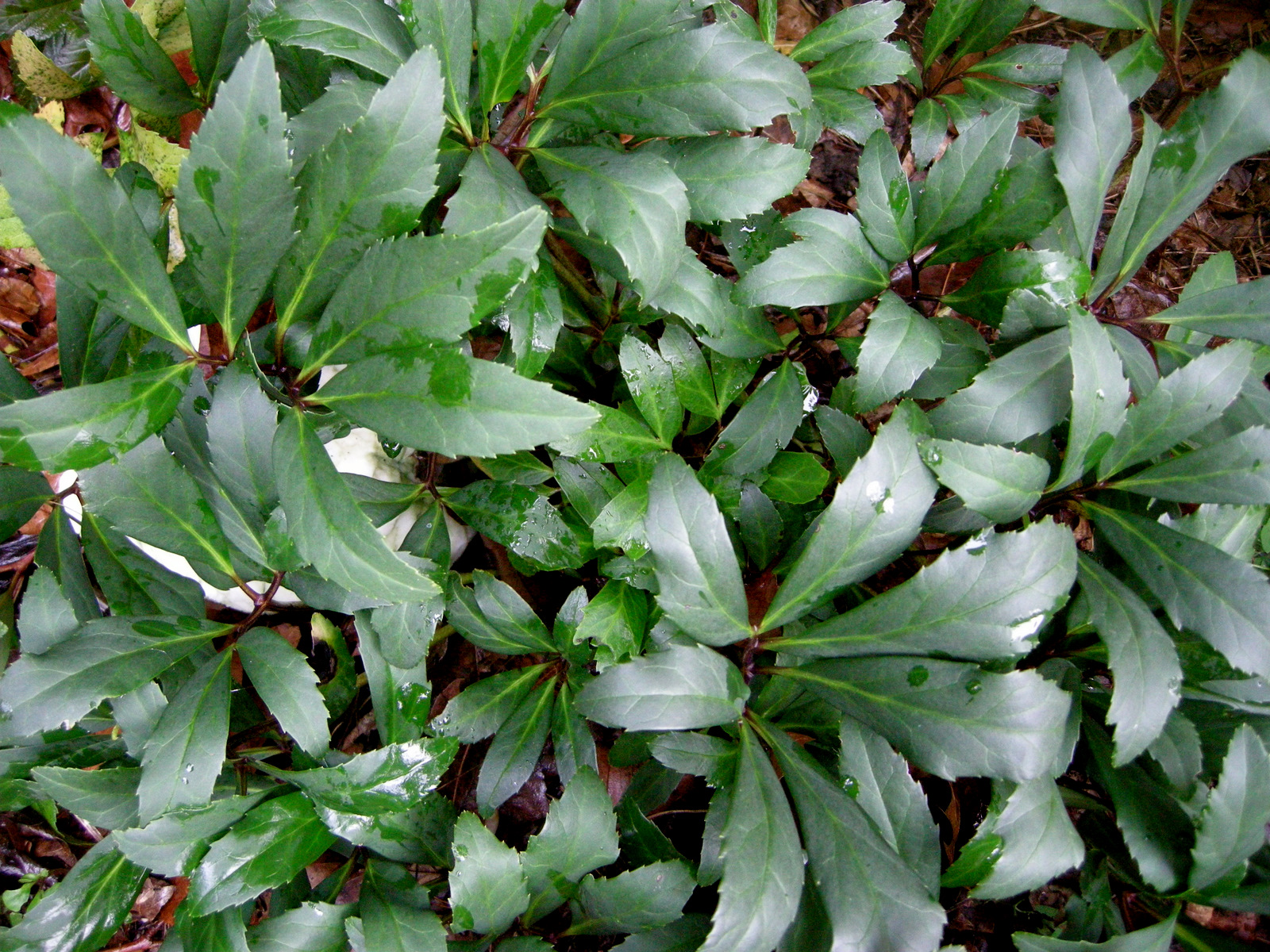
One of the many things I like about hybrid hellebores, Helleborus x hybridus, is that their evergreen leaves stay pristine through whatever summer throws at them.

The evergreen leaves of Christmas rose hellebore, Helleborus niger, are also lovely in the fall.

The leaves of ‘Black Scallop’ ajuga, A. reptans ‘Black Scallop, become darker and darker as fall progresses, ending up a deep mahogany.

‘Diana Clare’ lungwort, Pulmonaria ‘Diana Clare’, is another plant that can take whatever nature dishes out—it shines in full shade.

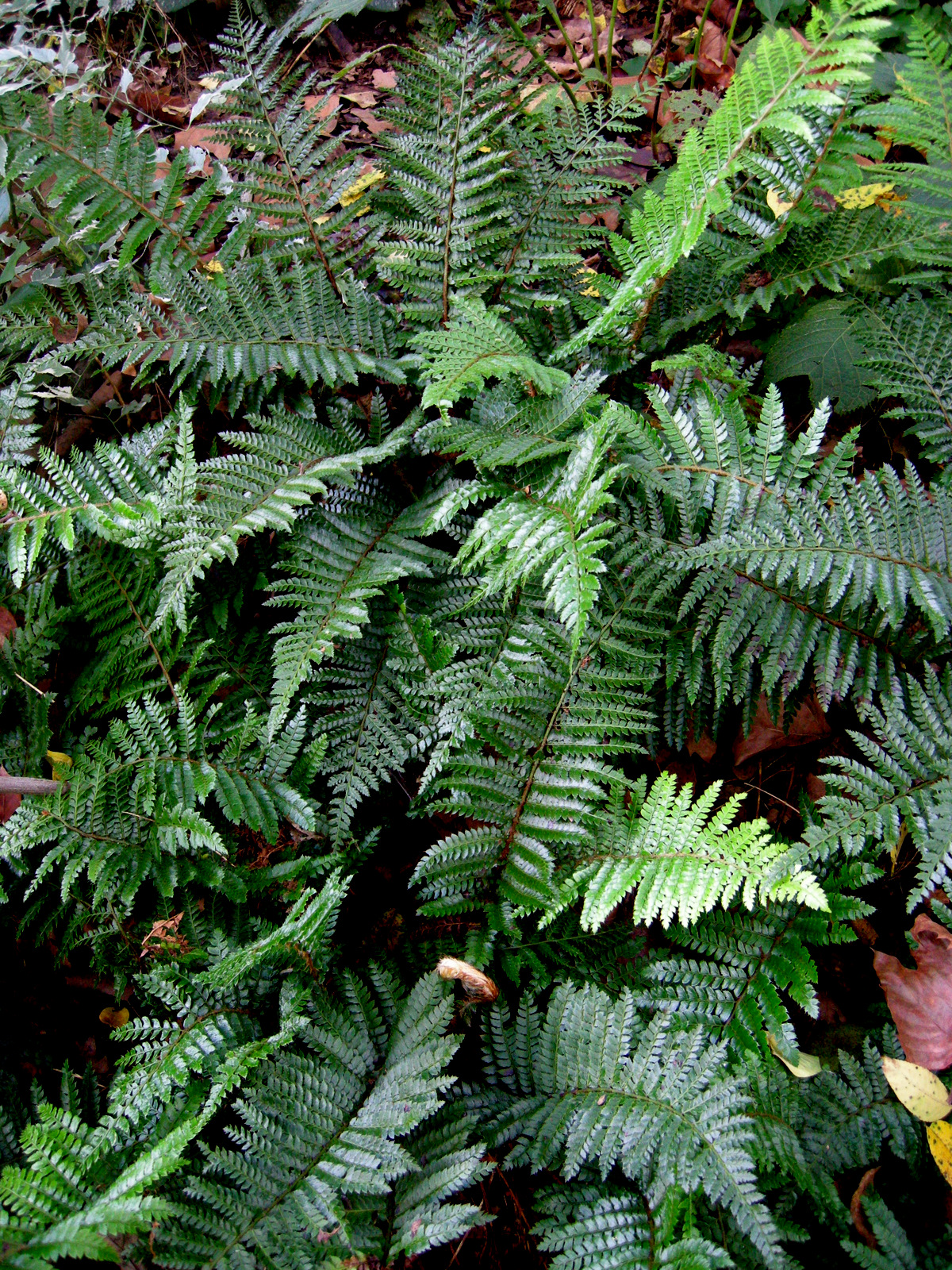
Unlike deciduous ferns that hit the decks in September, evergreen ferns are just getting going, here tassel fern, Polystichum polyblepharum.  To read my article on evergreen ferns for shade, click here.

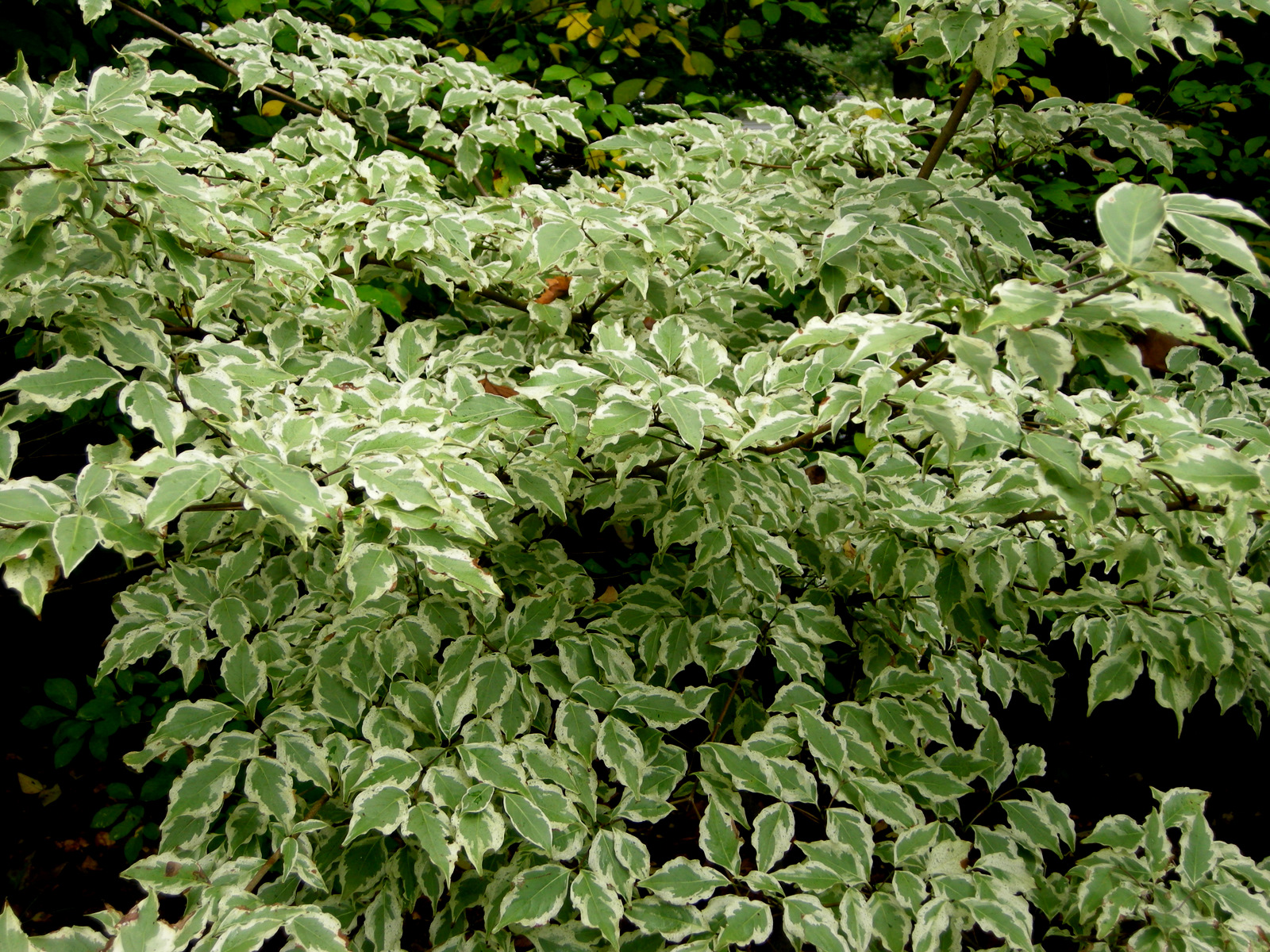
The foliage of ‘Wolf Eyes’ kousa dogwood, Cornus kousa ‘Wolf Eyes’, is beautiful all season, but I especially appreciate it in the fall when other leaves are tattered.


‘Red Sprite’ winterberry holly, Ilex verticillata ‘Red Sprite’, is my favorite of all the native winterberry cultivars because it has a compact habit and produces copious amounts of very large berries.  For more information on this great shrub, click here.

Our native flowering dogwood, Cornus florida, is in full fruit right now.

The striking bright purple berries of ‘Early Amethyst’ beautyberry, Callicarpa dichotoma ‘Early Amethyst’, march evenly down the stems of its beautifully cascading branches.  For more information and a close up photo, click here.

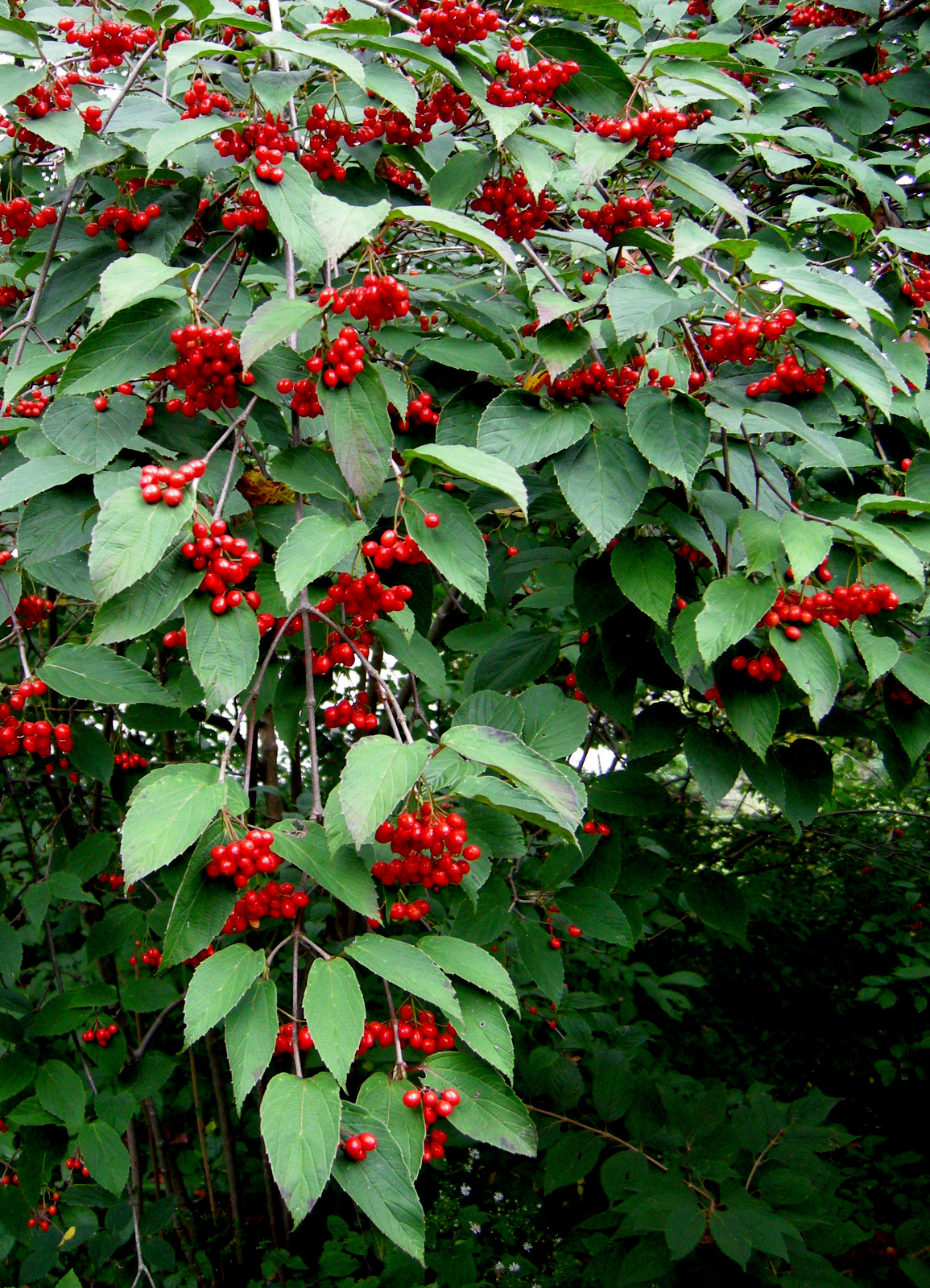
I grow my tea viburnums, Viburnum setigerum, in the shade of massive 150-year-old London plane trees, but it doesn’t stop them from producing their spectacular bunches of shiny red fruit.

The foliage and berries highlighted above, along with many I did not include, make my fall gardens a showplace for my customers and a relaxing retreat for me.  They do not require any dressing up for fall because they are already fully clothed.

Carolyn

Stay tuned for Part 2, A Few Fall Favorites for Flowers, and Part 3, Hostas for Fall.

Notes: Every word that appears in orange on my blog is a link that you can click for more information.  If you want to return to my blog’s homepage to access the sidebar information (catalogues, previous articles, etc.), just click here.

Woody Plants for Shade Part 3

Posted in evergreen, landscape design, native plants, New Plants, Shade Shrubs, shade vines with tags , , , , , , , , , , , , , , , , , on September 27, 2011 by Carolyn @ Carolyns Shade Gardens

Carolyn’s Shade Gardens is a retail nursery located in Bryn Mawr, PA, specializing in showy, colorful, and unusual plants for shade.  The only plants that we ship are snowdrops within the US.  For catalogues and announcements of local events, please send your full name, mailing address, and cell number to carolyn@carolynsshadegardens.com and indicate whether you are interested in snowdrops, hellebores, and/or hostas.  Click here to get to the home page of our website for catalogues and information about our nursery and to subscribe to our blog.

‘Winter’s Joy’ Fall-blooming Hardy Camellia

My nursery specializes in herbaceous flowering plants for shade.   However, although no shade garden is complete without trees, shrubs, and vines, our local nurseries seem to ignore woody plants for shade.  To fill this gap, I offer my customers shade-loving woodies from a wholesale grower whose quality meets my exacting standards.  As in Woody Plants for Shade Part One and Woody Plants for Shade Part Two, I thought my blog readers who are not customers might be interested in learning about the woody plants that I would recommend they add to their shade gardens.  And doing an article in addition to the customer offering allows me to add more information so customers might be interested also.

This summer was tough on plants.  I lost several shrubs that I planted this spring.  That is why fall is the best time to plant.  The soil temperature is elevated for good root development through December, but new plants don’t have to contend with scorching temperatures, severe drought, or an excess of rain.  The plants that I add in the fall are always the most successful in my garden.

Included in my offering are three evergreen shrubs, five deciduous shrubs, and one vine.  Of the nine plants I have chosen, three are native.  Please read my article My Thanksgiving Oak Forest to see why I think planting native plants is crucial to our environment.  My article New Native Shade Perennials for 2011 explains why I think native cultivars are valuable native plants.  With that introduction, here are the plants I am offering highlighted in green:

The fall-blooming camellia ‘Winter’s Snowman’ shines in the winter sun.

If you have been reading my blog, you know that I love camellias, especially fall-blooming varieties.  There is nothing like going outside on a cold November or December day and being greeted by large showy flowers backed by gorgeous evergreen leaves.  Camellias really light up the shadiest parts of my garden during the time of year when flowers are most appreciated.  For more information on and some beautiful photographs of fall-blooming hardy camellias, see my articles Fall-blooming Camellias Part 1 and Fall-blooming Camellias Part 2.


‘Winter’s Snowman’ blooming in December

In a very shady place on the terrace outside my front door, I have a ‘Winter’s Snowman’ fall-blooming hardy camellia.  At maturity, it will reach six feet.  Its semi-double white flowers glow when displayed against the glossy evergreen leaves in November and December.  It is a vigorous plant with a narrow upright habit.  Although it is fully hardy in our area, I have sheltered it from winter sun and our winter winds, which come from the northwest.


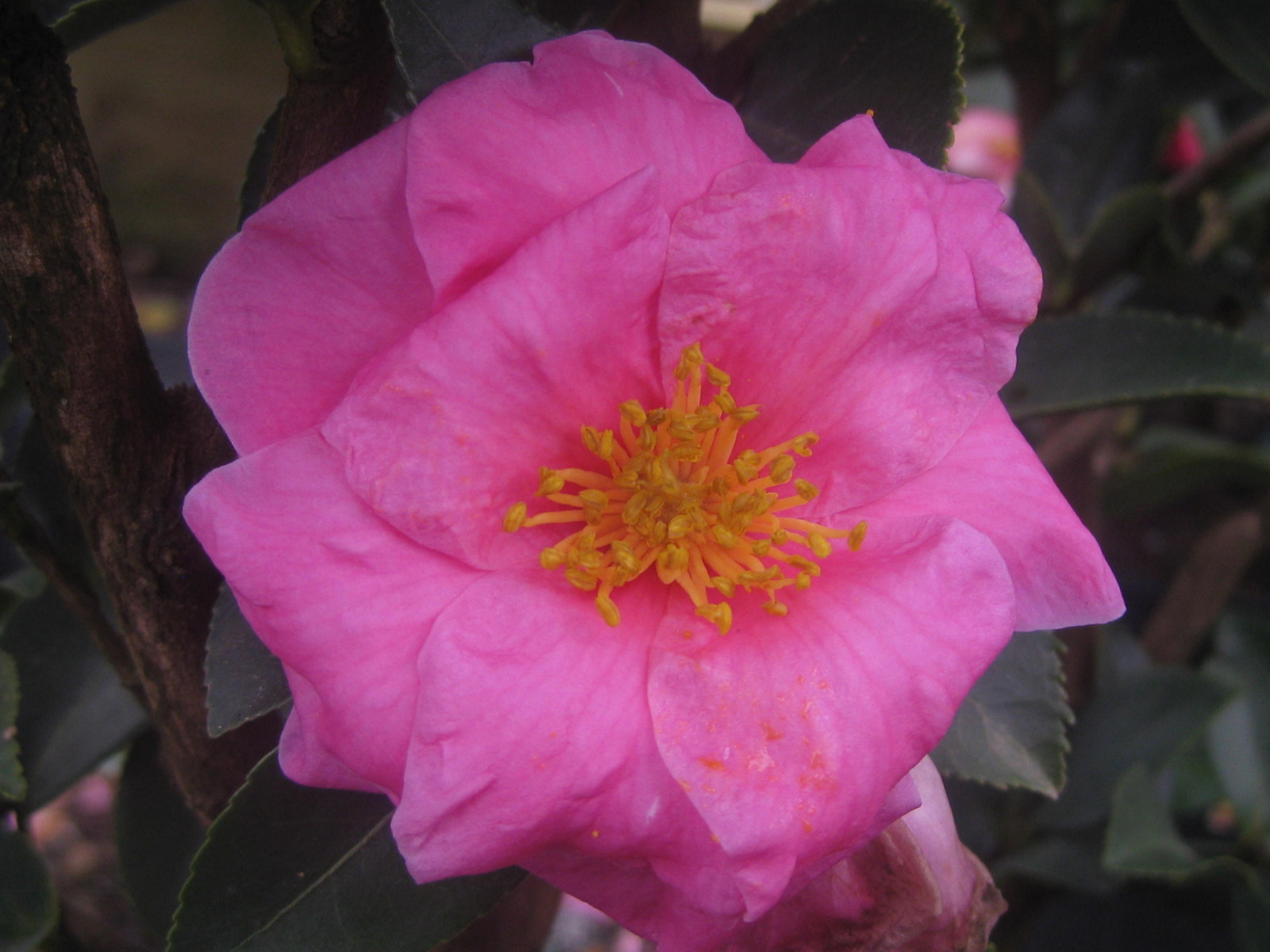
‘Winter’s Joy’ fall-blooming camellia

In a similarly sheltered and shady location outside my back door along the path to my compost “pit”, I have planted another fall-blooming camellia.   ‘Winter’s Joy’ fall-blooming hardy camellia has semi-double, fuchsia-pink flowers elegantly displayed against glossy evergreen leaves in November and December.  It is a vigorous plant with a narrow upright habit, reaching six feet at maturity.  Right now both these fall-blooming camellias are covered with buds.  I can’t wait for the display to begin.

‘Winter’s Joy’ is loaded with buds just waiting to produce its showy flowers, and look at that immaculate foliage.

I really like leatherleaf viburnums.  They are evergreen, deer resistant, grow in full shade, have lovely flowers and foliage, and are big enough to screen unsightly views.  The plants I have in my garden are the straight species Viburnum rhytidophyllum and that’s what I intended to offer to my customers.  However, when I saw ‘Dart’s Duke’ lantanaphyllum viburnum (what a name!), V. x rhytidophyllum ‘Dart’s Duke’, and did some research, I realized it is a superior plant for foliage, flowers, berries, and vigor.   A comparison of the nursery stock confirmed this.

‘Dart’s Duke’ showing its majestic leaves and reblooming to produce some of its very large flowers for fall.

‘Dart’s Duke’ grows to 8’ tall by 8’ wide in full sun to full shade.  It has very large, 6 to 10”, showy white flowers in May and can rebloom in the fall.  The flowers are followed by very nice red fruit.  The beautiful, clean dark green, leathery evergreen foliage is deer resistant and winter tough.  It is a Pennsylvania Horticultural Society Gold Medal Plant for 2012, one of only four plants honored.


‘Early Amethyst’ beautyberry is dispalying its amazing purple berries right now at Carolyn’s Shade Gardens.

‘Early Amethyst’ beautyberry, Callicarpa dichotoma ‘Early Amethyst’,  has attractive pink flowers in spring.  But the real show is in the fall when huge amounts of unbelievably colored purple berries run down the center of the beautifully layered branches.  When the leaves drop, the persistent berries are even more showy though they are attractive to birds.  Beautyberry reaches 4’ tall by 4′ wide in sun to part shade and is deer resistant.  I have grown this plant successfully in part shade for years.  If desired, it can be cut back in spring, but I usually leave mine alone.  Beautyberry is a Pennsylvania Horticultural Society Gold Medal Plant and Missouri Botanical Garden Plant of Merit.

Paper Bush, Edgeworthia chrysantha

Paper bush, Edgeworthia chrysantha, is a rare and unusual shrub that has just been discovered by collectors within the last few years.  However, it has so many great ornamental features that it is sure to become very popular.  Its very fragrant clusters of tubular bright yellow flowers bloom from January to March.  The buds, which form in the fall, are as ornamental as the flowers.  They remind me of the tassels on the corners of Victorian pillows.  Paper bush has an elegant and symmetrical upright, branching habit, growing to 6’ tall in part to full shade with protection from winter winds.  It is an exquisite and rare shrub that is ornamental 365 days of the year in my garden.

The buds of paper bush are ornamental all winter.

The unusual fragrant flowers of paper bush

The flowers of ‘Preziosa’ sawtooth hydrangea start out a lovely pink and mature to a bright maroon.

‘Preziosa’ sawtooth hydrangea, Hydrangea serrata ‘Preziosa’, produces numerous lovely pink, small, mophead-like flowers in June and July, which darken with age to a gorgeous maroon (see link below for photo).  The flowers are reliably pink and don’t turn blue.  The beautiful burgundy fall color of the leaves and stems only adds to the show.  ‘Preziosa’ reaches 4’ tall and wide in part to full shade.  The Hydrangea serrata species is one that thrives in full shade.  Unlike many hydrangeas, ‘Preziosa’ is very tolerant of the cold temperatures in our zone 6.  For a raving review of ‘Preziosa’ and more cultural information (note that the winter protection recommended is for zone 5), click here.

The leaves of ‘Preziosa’ sawtooth hydrangea have already started to turn burgundy.

This photo shows the berries on my ‘Red Sprite’ winterberry holly right now—they get much larger as the season progresses, but the show is already breathtaking.

One of my all time favorite native plants is winterberry holly, Ilex verticillata.  It grows wild all over the island in Maine where my family vacations and is always covered with berries in the fall.  Here in Pennsylvania, my preferred winterberry holly cultivar is Ilex verticillata ‘Red Sprite’.  It produces copious amounts of very large red berries on relatively compact plants that never need pruning.  The birds love the berries too, but they leave enough behind for it to remain extremely showy late into the winter.  ‘Red Sprite’ reaches 5’ tall in sun to part shade and is wet site and salt tolerant, and deer resistant.  All hollies require a male pollinator, in this case ‘Jim Dandy’, for good fruit set.  Winterberry is native to the entire eastern half of North America, including Pennsylvania.


The flowers and foliage of native ‘Cool Splash’ southern bush honeysuckle, Diervilla sessifolia ‘Cool Splash’

‘Cool Splash’ southern bush honeysuckle is a native shrub whose bold green and white variegation really stands out in the shade.  Its honeysuckle-shaped yellow flowers appear in July and August with rebloom in the fall.  ‘Cool Splash’ grows to 4’ tall and wide in sun to part shade.  It is tough, cold hardy, and deer resistant, and integrates well into perennial borders.  This species is native to the southeastern U.S., but a closely related species, D. lonicera, is native to Pennsylvania.  It is one of four plants honored with a gold medal by the Pennsylvania Horticultural Society in 2011.  Nan Ondra at the blog Hayfield has written an excellent profile of this native shrub (with many photos), click here .

In late spring and early summer, ‘John Clayton’ trumpet honeysuckle is covered with these delightful tubular yellow flowers attractive to hummingbirds.

I love vines, and one of my first acquisitions was the native ‘John Clayton’ trumpet honeysuckle, Lonicera sempervirens ‘John Clayton’.  It is my most vigorous trumpet honeysuckle vine, completely covering the lattice under my deck.  Its bright yellow tubular flowers are beloved by  hummingbirds in late spring and early summer and  rebloom through fall, forming attractive red berries.  ‘John Clayton’s’ semi-evergreen, bright green leaves remain attractive through the season.  It reaches 10’ in sun to part shade.  It is deer resistant and very low maintenance.  Trumpet honeysuckle is native to the eastern U.S., including Pennsylvania.

I grow most of these plants in my gardens so I know you can’t go wrong by adding them to yours!  If you are a customer, see Nursery Happenings below for details on how to order these wonderful shade plants.  If not, now you have some plants to ask for at your local independent nursery.

For a great video demonstration of how to plant a shrub put together by my cousin, Jay MacMullan, at the blog Landscape Design and Gardening Resource Guide, click here.

Carolyn

Notes: Every word that appears in orange on my blog is a link that you can click for more information.  If you want to return to my blog’s homepage to access the sidebar information (catalogues, previous articles, etc.), just click here.

Forever Young

Posted in garden essay, garden to visit with tags , , , on September 21, 2011 by Carolyn @ Carolyns Shade Gardens

Carolyn’s Shade Gardens is a retail nursery located in Bryn Mawr, PA, specializing in showy, colorful, and unusual plants for shade.  The only plants that we ship are snowdrops within the US.  For catalogues and announcements of local events, please send your full name, mailing address, and cell number to carolyn@carolynsshadegardens.com and indicate whether you are interested in snowdrops, hellebores, and/or hostas.  Click here to get to the home page of our website for catalogues and information about our nursery and to subscribe to our blog.

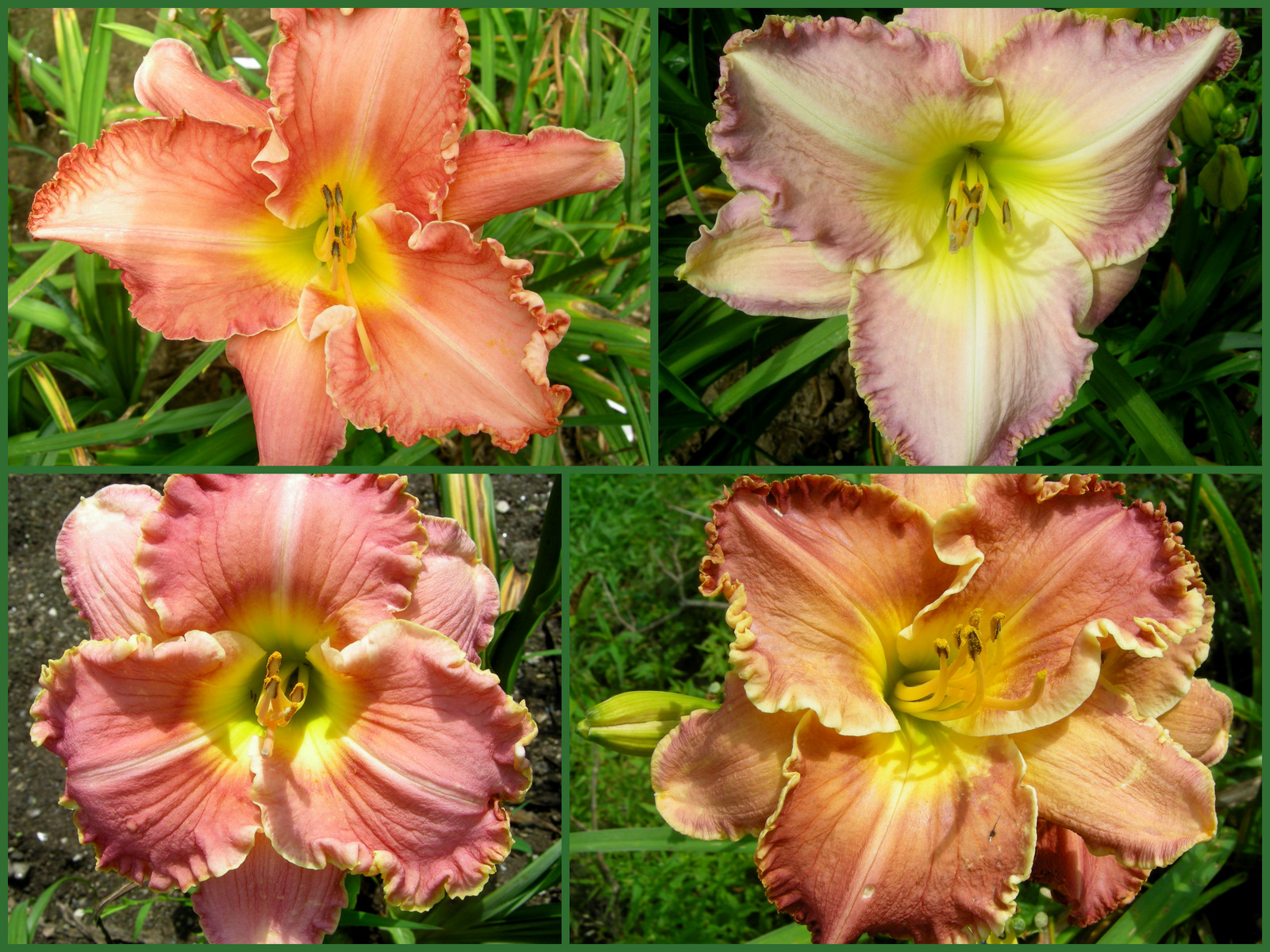
Daylily at Young’s Perennials

In terms of plants, this article is about daylilies, which is hardly timely because they won’t be blooming again for almost a year.  However, it’s also about being adventurous, finding a passion, meeting a kindred spirit, living a full life, and growing old gracefully.  Wow that’s a lot to cover.

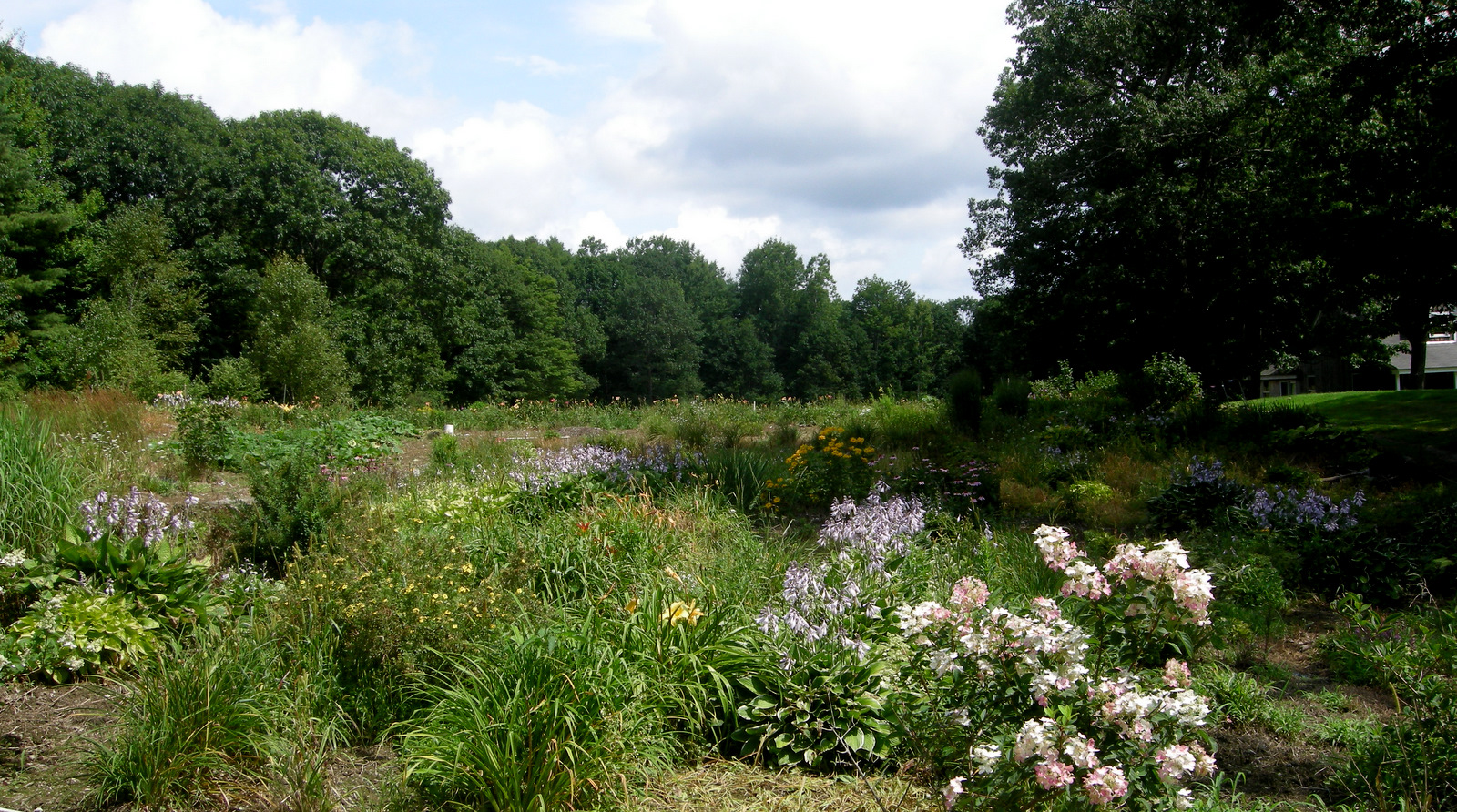
During one of my wrong turns, I ended up at this beautiful farm.

It all started with the invasive plant removal program that I run on a tiny island seven miles off the coast of Maine.  Of course we remove invasive plants, but I also try to educate islanders about the joys of native plants.  To this end, I have designed and installed three exclusively native plant gardens to show off some wonderful plants that aren’t already growing on the island. 

As I headed to a familiar mainland nursery to search for suitable native plants, I saw a blue sign saying Young’s Perennials with an arrow pointing away from where I was going.   On a whim and feeling adventurous, I decided to follow the signs, which led me farther and farther into the country until I thought I was surely lost.  Finally I reached the penultimate sign, which led me into a small subdivision, up a long driveway, and into a magical spot.

The nursery benches display potted plants for sale and are surrounded by acres of  growing beds.

Here was Young’s Perennials, a 60 acre farm so far into the town of Yarmouth, Maine, where I saw the first sign, that it’s actually in Freeport.  And greeting me was the nursery’s owner and now sole employee, Walter Young.  I told Walter what I was after, and he promptly pointed to all the nursery stock he had left and said take whatever you want for free.  At his urging, I took plants for my projects and also for the island library and historical society gardens.  He was very generous.  But more than that, as we talked, I discovered that I had found a kindred spirit in this unlikely location–a fellow plantaholic.

The fields are so quiet and peaceful.

Walter is addicted to daylilies.  Now don’t tell him this, but daylilies are not one of my favorite flowers even though I like them.  What I do love though is talking with a fellow gardener who is passionate about his work no matter what the topic.  Especially if the gardener has lived as full and varied a life as Walter.  During the course of our hours of discussion (I was there twice), Walter told me a lot about daylilies but also about his many jobs, careers, hobbies, and other pursuits.

Walter grew up and attended a two-room schoolhouse on the northern coast of Maine.  He was the school janitor and lobstered on the side.  After serving four years in the Coast Guard during the Korean War, he graduated from business college and worked as a public accountant.  He taught business college, trained bird dogs, served as school board chairperson and assistant fire chief, and coached Little League, among other pursuits.  Walter and his wife, Peggy, raised six children, leasing the 60 acre farm next door so they could produce all their own food.  They also started the nursery, which in its heyday employed four people in addition to the Youngs and drew gardeners, especially daylily lovers, from all over New England.

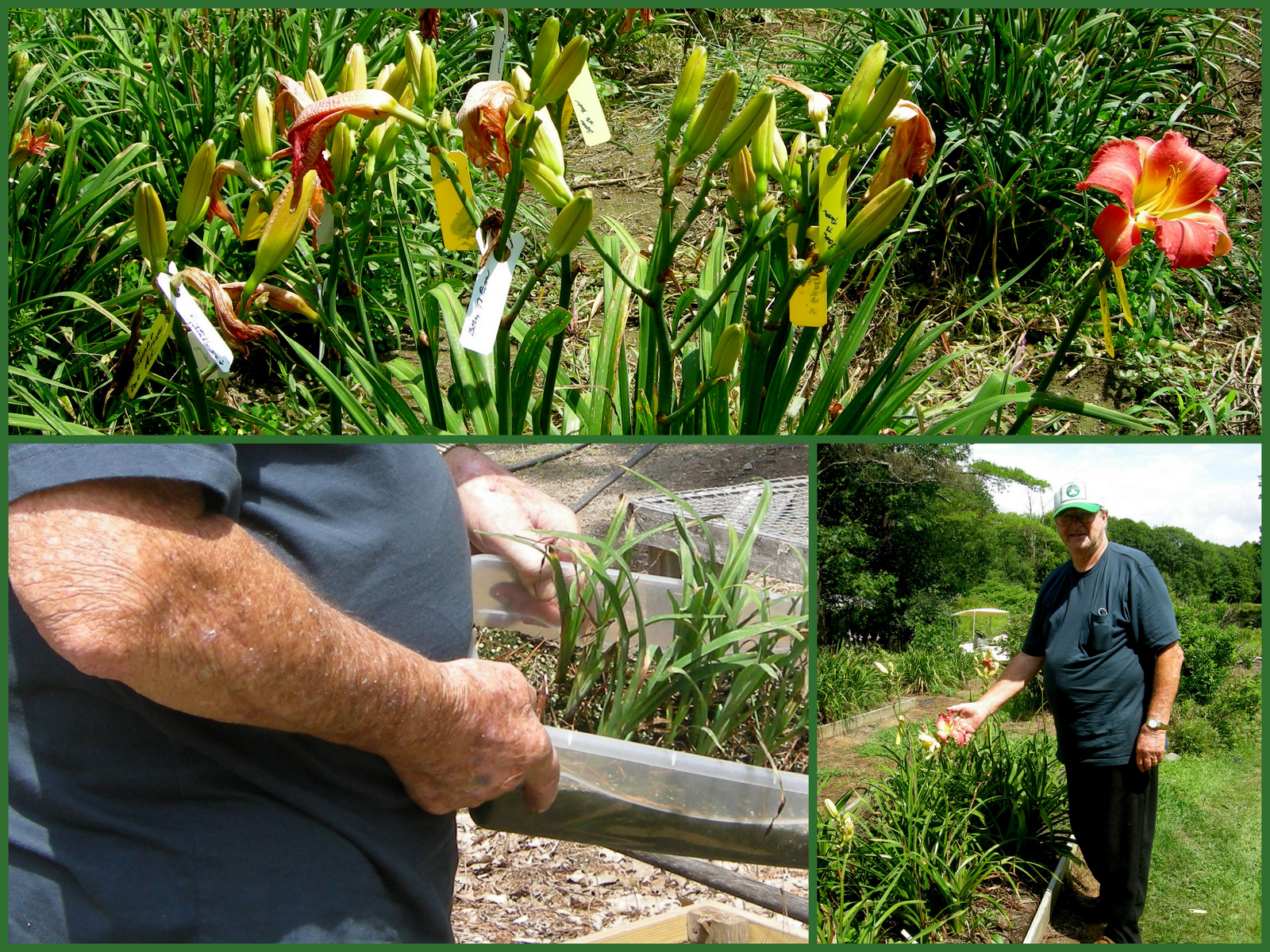
Walter’s passion for daylilies began in 1982 when he visited a Vermont breeder and came home with a hundred cultivars.  He went on to buy seeds and plants from specialists all over the U.S.  Eventually he began making his own daylily crosses to produce plants with more buds and a later bloom time in a kaleidoscope of colors and forms.  As I walked around the nursery, I saw plants covered with plastic tags indicating which plant was the source for the pollen that Walter painstakingly applies by hand.  He collects the seeds, up to 14 per bud, and grows them on until they flower in one to three years.

Counter clockwise from top: daylily buds carefully marked with pollination information; plants resulting from seeds from one bud; Walter Young with one of his creations.

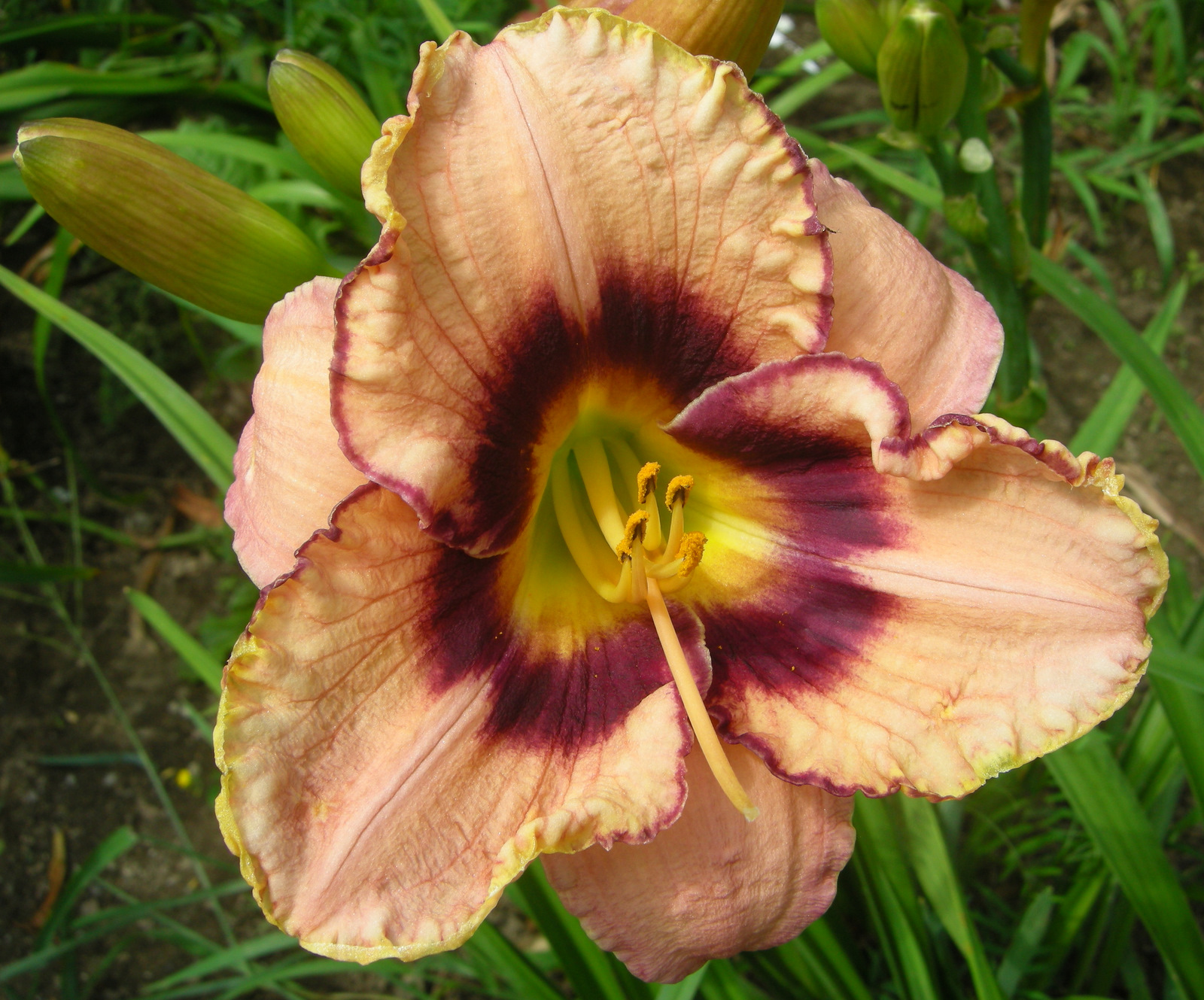
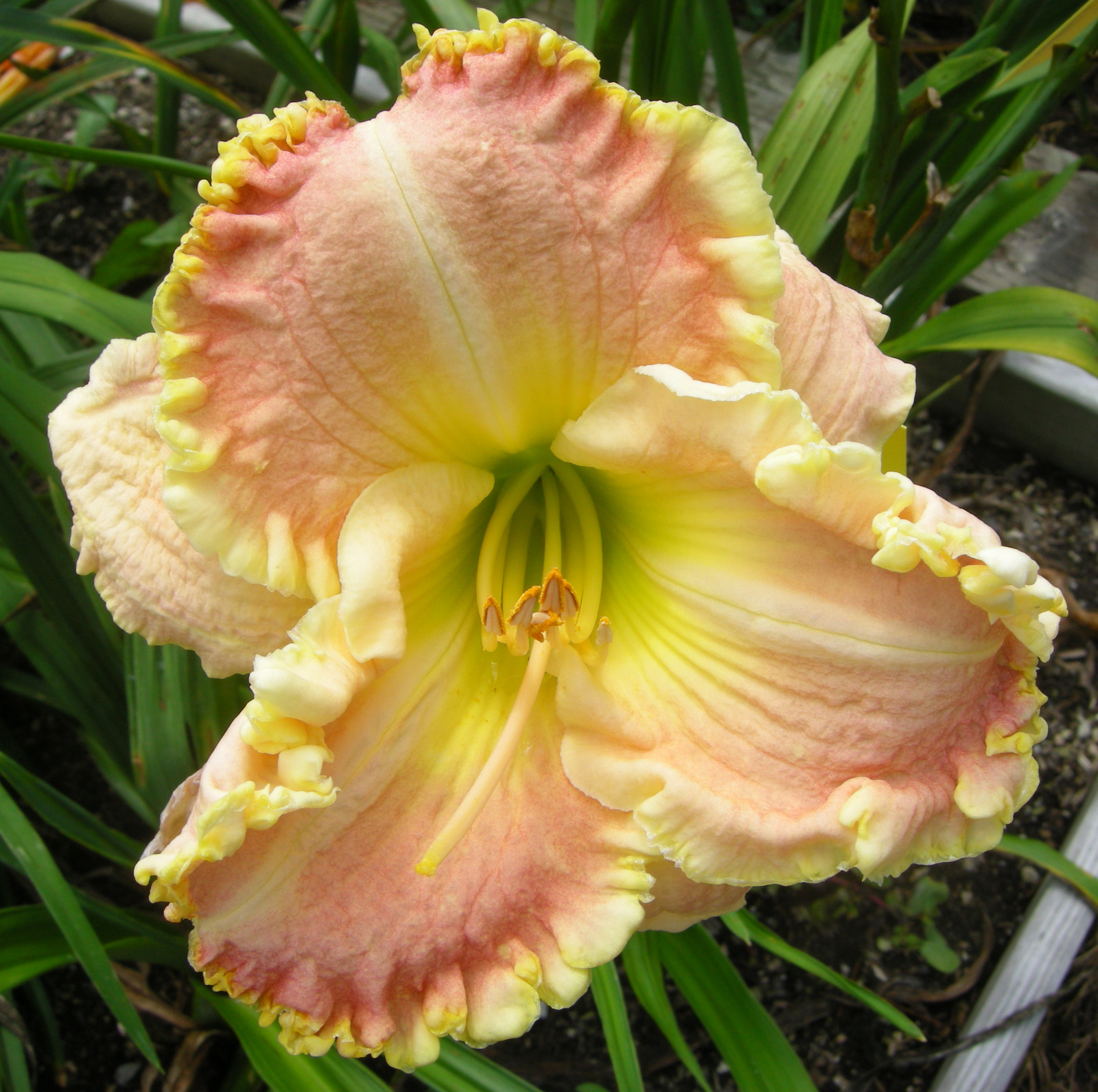
Every flower produced by this well-documented process is different.  And as far as I could tell, every flower is gorgeous.  I gave up asking for the name of each bloom I photographed because the answer was always the same: “It’s one of mine.  It doesn’t have a name.”  In 2010, Walter decided to scale back the nursery, but in 2011 he still purchased 103 new registered daylilies to trial and planted seeds from his crosses.  And growing on the property are over 50,000 daylily plants.  You have to see it to believe it.

Left, the 103 new plants purchased for trial in 2011.  Right, older plants in the fields.  I was there at the end of the season so most daylilies had finished blooming.

At the end of my visit, I said to Walter: “You don’t register your crosses, you don’t do mail order, you have limited hours at your nursery, so you do all this work….”  “That’s right,” he interjected, “I do all this work just for me.”  Just for the sheer joy of it.  Walter is 77 years old.

Walter Young’s daylilies are available at Young’s Perennials, 1 Young’s Lane, Freeport, Maine, 207-865-3533, from July 1 through August 15, depending on the weather.  It’s well worth the trip for many reasons!

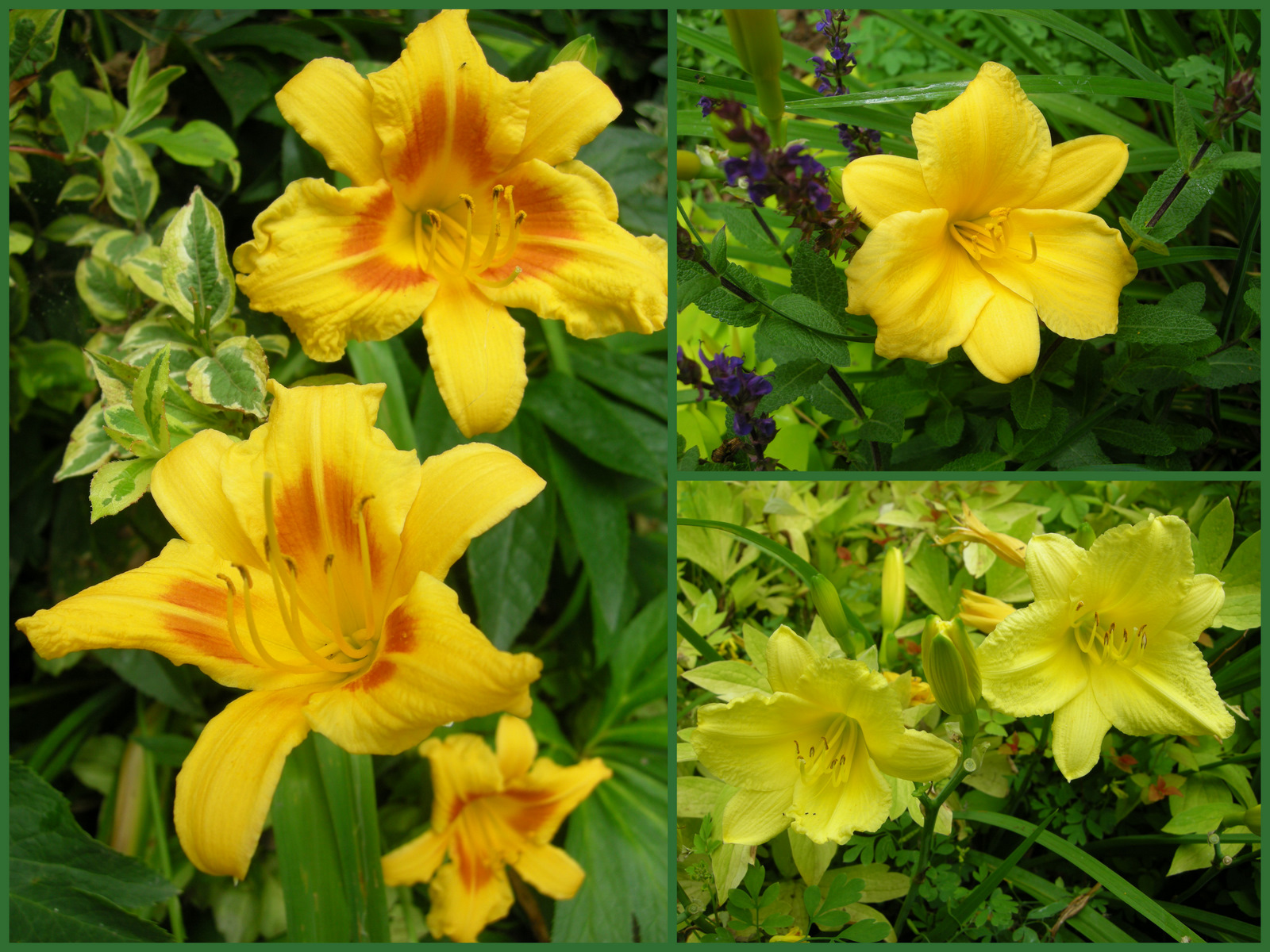
Here are some more of the daylilies you will find there:

Carolyn

Notes: Every word that appears in orange on my blog is a link that you can click for more information.  If you want to return to my blog’s homepage to access the sidebar information (catalogues, previous articles, etc.), click here.


Hellebores Part 6: Double Hellebores

Posted in hellebores, winter interest with tags , , , , , , , on September 11, 2011 by Carolyn @ Carolyns Shade Gardens

Carolyn’s Shade Gardens is a retail nursery located in Bryn Mawr, PA, specializing in showy, colorful, and unusual plants for shade.  The only plants that we ship are snowdrops within the US.  For catalogues and announcements of local events, please send your full name, mailing address, and cell number to carolyn@carolynsshadegardens.com and indicate whether you are interested in snowdrops, hellebores, and/or hostas.  Click here to get to the home page of our website for catalogues and information about our nursery and to subscribe to our blog.

Helleborus Winter Jewels™ ‘Peppermint Ice’ in my garden.

Hybrid hellebores are the most commonly available hellebores with the large, showy, nodding flowers in an amazing range of colors (click here and here to see photos).  In my article An Ode to Seed Strain Hellebores, I explained my fascination with the diversity found in hybrid helleboresI also love them because their leaves are evergreen, deer don’t eat them, and they are easy to grow in sun or shade.  They bloom from February often into May with dozens of very large colorful flowers.  My biggest clump produces over a hundred blooms per season.

Helleborus Winter Jewels™ ‘Golden Lotus’ in my garden.

But right now I am especially fond of them because they look pristine through extreme heat, extended drought, torrential rains, and brutal winters–the weather conditions we have experienced in the mid-Atlantic U.S. for the last couple of years.  You have to love a plant that wasn’t watered during the record-breaking heat and drought of the summer of 2010 and thrived.  That’s what mine did. 

Helleborus Winter Jewels™ ‘Sparkling Diamond’

My nursery customers are very interested in double-flowered hellebores, and although I usually prefer single flowers, I love double hellebores too.  They are so graceful and showy that  they really stand out in my gardens, eliciting questions and comments every time I give a tour.

Helleborus Winter Jewels™ ‘Onyx Odyssey’

However, until recently, I was reluctant to sell double hellebores unless they were in bloom.  I didn’t want my customers spending a lot of money on these expensive plants, and double hellebores are pricey, only to find they were singles a year or two later when they bloomed.  I myself fell victim to this when I “grew on” a flat of 72 supposedly double hellebores only to find that, when they bloomed three years later, 6 of them were actually double and the rest were single.

Helleborus Winter Jewels™ ‘Harlequin Gem’

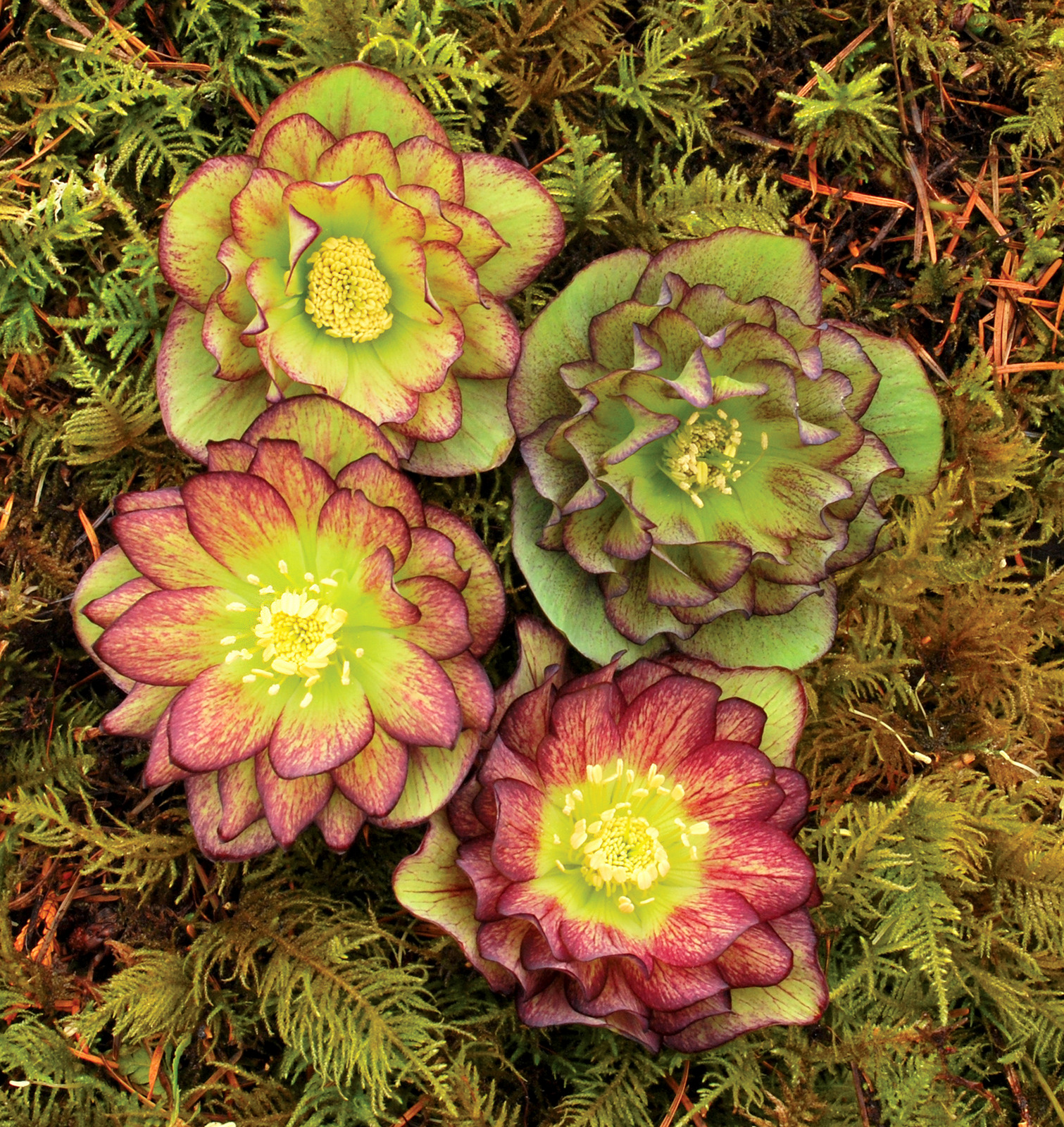
One way to avoid this is by purchasing a double hellebore that is propagated by tissue culture.  However, as I explained in my previous post, then you have the same cookie cutter hellebore that everyone else has.  I prefer seed strain hellebores developed by a knowledgeable breeder to produce reliably double flowers within a defined color range.  This is what Marietta O’Byrne at Northwest Garden Nursery in Eugene, OR, has accomplished with her Winter Jewels™ strain of double hellebores.  Winter Jewels™ hellebores produce beautifully formed double flowers in the color range promised but with the exciting diversity of a seed strain, making each gorgeous bloom slightly different.

Helleborus Winter Jewels™ ‘Jade Tiger’: this photo shows the variation of flowers for ‘Jade Tiger’, which is green with varying highlights.

I grow ‘Onyx Odyssey’, ‘Peppermint Ice’, and ‘Golden Lotus’ in my gardens and have been very pleased with their flowers.  I was also pleasantly surprised when they bloomed at a very young age on tiny plants added to my garden last fall.  For more information about and photos of Winter Jewels™ hellebores, visit the Terra Nova Nursery website and view their entry on each cultivar.  Unless indicated, the photos in this post are courtesy of Terra Nova Nursery.

Helleborus Winter Jewels™ ‘Peppermint Ice’ in my garden.

If you are a local customer of my nursery, see Nursery Happenings below for details about purchasing double hellebores.

Carolyn

This is part of a series of articles on hellebores, one of the specialties of my nursery.  Here are links to the other articles:

Part One        Hellebores for Fall

Part Two       An Ode to Seed Strain Hellebores

Part Three   Christmas Rose: The Perfect Hellebore

Part Four      Dividing Hybrid Hellebores

Part Five       The Sex Lives of Hellebores

Part Six          Double Hellebores

Part Seven   Cutting Back Hellebores

Notes: Every word that appears in orange on my blog is a link that you can click for more information.  If you want to return to my blog’s homepage to access the sidebar information (catalogues, previous articles, etc.), click here.

Colorful Annuals for Shade

Posted in containers for shade, shade annuals with tags , on August 24, 2011 by Carolyn @ Carolyns Shade Gardens

Carolyn’s Shade Gardens is a retail nursery located in Bryn Mawr, PA, specializing in showy, colorful, and unusual plants for shade.  The only plants that we ship are snowdrops within the US.  For catalogues and announcements of local events, please send your full name, mailing address, and cell number to carolyn@carolynsshadegardens.com and indicate whether you are interested in snowdrops, hellebores, and/or hostas.  Click here to get to the home page of our website for catalogues and information about our nursery and to subscribe to our blog.

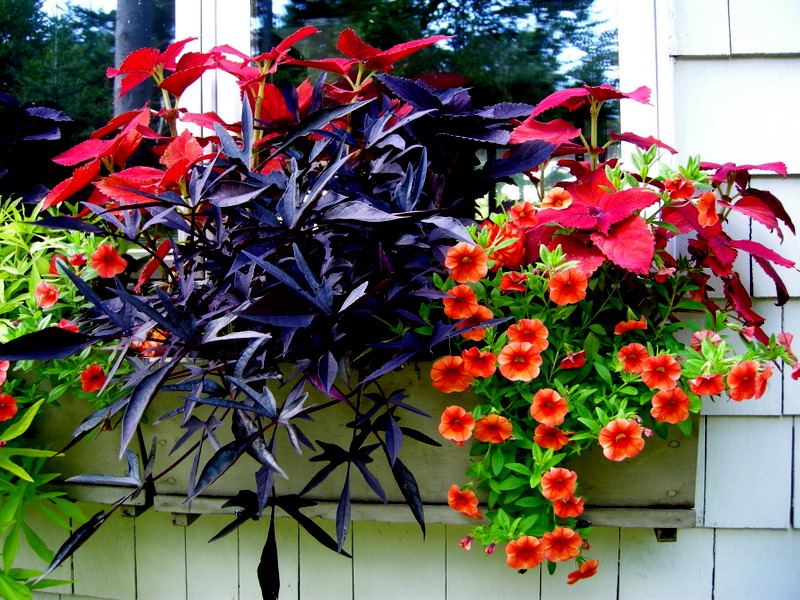
Colorful container for part shade

Every year I  design the window boxes and main container at my family’s camp  in Maine.  Someday I want to write an article on all the combinations I have used, but right  now this summer’s offering is all I can handle.  I really enjoy the process of putting together the plantings because, at Carolyn’s Shade Gardens, I don’t get the chance to work with annuals (although I also use perennials in the containers).  The process of designing containers is like creating a temporary work of art.  Cramming all the colors, textures, habits, and heights into one pot to be viewed just for the season is fun.

The container and the window boxes are by the front door, which faces the path coming down from the road.  It is a part shade site, but it gets a lot of morning sun, making almost any plant suitable.  I have used plants that take full to part sun and also plants that require part to full shade, and all have thrived.   Over the years, my plant choices have become taller and more dramatic, with 2011 being my most colorful design yet.  The house is stained driftwood gray, and the only color limitation is the front door, which is eggplant colored.

Just in case you want to use some of these plants in your own containers, here are the details.  In the pot above, height, interesting texture, and color is provided by the annual red fountain grass, Pennisetum setaceum ‘Rubrum’.  I  use this grass a lot in containers because it is very reliable and only gets better as the season progresses.  The middle of the containers is filled with purple ‘Dark Star’ and orangey pink ‘Sedona’ coleus, both reliable workhorses. The star of the mid level is a new plant to me, perennial golden aralia, A. cordata ‘Sun King’.  It grows in part to full shade and matures at 3′ by 3′.  Lower down is the tuberous begonia ‘Nonstop Apricot’ and spilling out the front are purple-leafed sweet potato vine ‘Midnight Lace’ and orange million bells ‘Aloha Orange’.

The window boxes are a few feet away from the front door so I use many of the same plants and colors.  However, my choices are limited to lower growing plants because I  don’t want to block the kitchen windows.  I  also like to choose plants, like the coleus, that look beautiful from the back when viewed from inside the house.  In addition to the purple sweet potato vine, million bells, coleus, and begonia found in the pot, I  have added the chartreuse sweet potato vine ‘Emerald Lace’.

We enjoy this planting from inside and out.

Carolyn

Notes: Every word that appears in orange on my blog is a link that you can click for more information.  If you want to return to my website’s homepage to access the sidebar information (catalogues, previous articles, etc.), just click here.

Chanticleer Part 2: Garden Seating

Posted in garden to visit, landscape design with tags , on August 8, 2011 by Carolyn @ Carolyns Shade Gardens

Carolyn’s Shade Gardens is a retail nursery located in Bryn Mawr, PA, specializing in showy, colorful, and unusual plants for shade.  The only plants that we ship are snowdrops and miniature hostas.  For catalogues and announcements of events, please send your full name, location, and phone number (for back up use only) to carolyn@carolynsshadegardens.com.  Click here to get to the home page of our website for catalogues and information about our nursery and to subscribe to our blog.

.

Chanticleer, near ruinA grouping of chairs in the Chanticleer garden.

Chanticleer is a very unique and intimate place in Wayne, Pennsylvania, U.S., that calls itself “A Pleasure Garden”.  In my April article of that title, I explained why that moniker perfectly describes Chanticleer.   It is a garden designed by individuals who are both artists and plantspeople.   Every plant in the garden is  placed there not only for its pleasing horticultural attributes, but also as an object in the overall design for color and pattern and to provoke a feeling or reaction in the onlooker.  Although this is a serious garden, whimsy and the element of surprise are important considerations.  And the attention to detail is amazing.

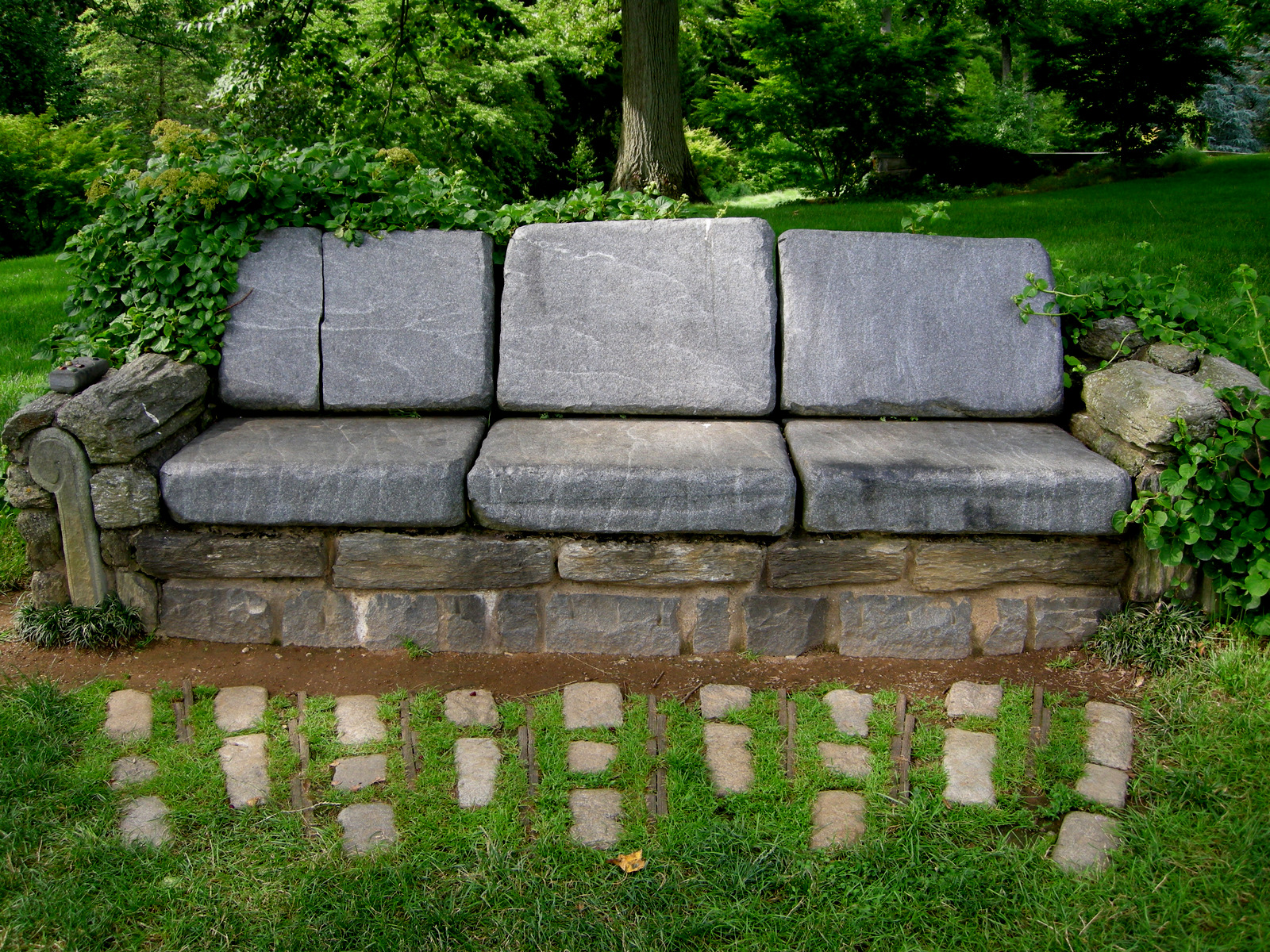
A stone armchair evocative of the Flintstones near the Ruin Garden.

Matching sofa

Stone remote

When I revisited Chanticleer recently, I realized that I could help readers understand just how unique this garden is by focusing on one element: garden seating.  In fact, no other aspect of the garden demonstrates more clearly the complex thought process that must go into each of Chanticleer’s design decisions.  Garden seating is not just for sitting, in fact, it may be primarily for viewing.  It is used to evoke feelings in the viewer, of coolness in the heat, of enclosure in open spaces, of grandeur, of restfulness, of mirth, of tradition.  It draws the eye, completes a vignette, moves you through the garden, or slows you down.  It is integrated in the landscape in a way I have never seen anywhere else.

The seating on the porch of the Chanticleer House is very traditional.  It feels as if the Rosengarten family is just around the corner.

Chanticleer has inspired me over the years to add more thoughtful resting places to my own garden and to think of every element of the garden as important, not just the plants.  I hope you too will take away some good ideas as we walk around Chanticleer together trying out the seating (and the water fountains because I love them too!).

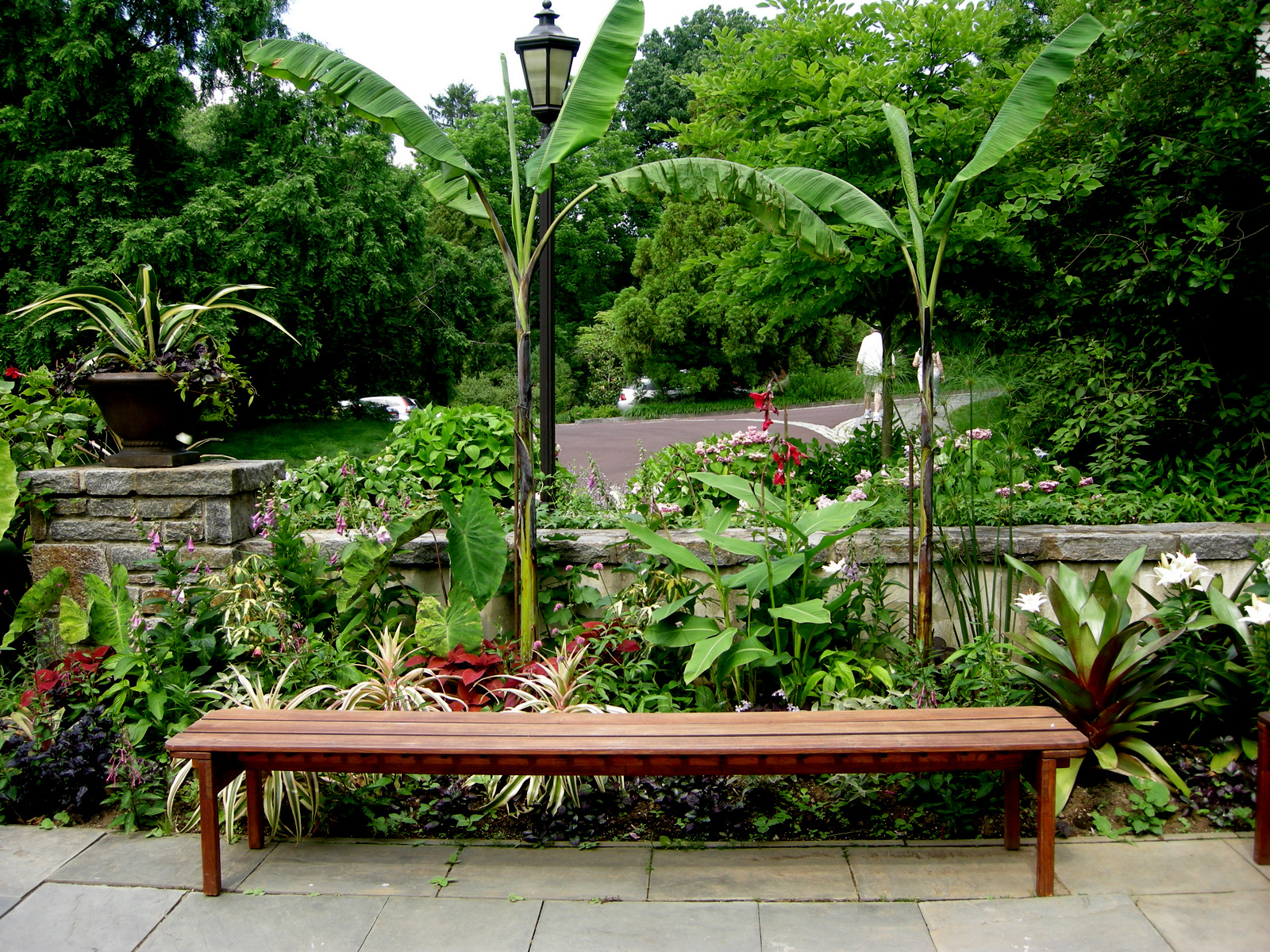
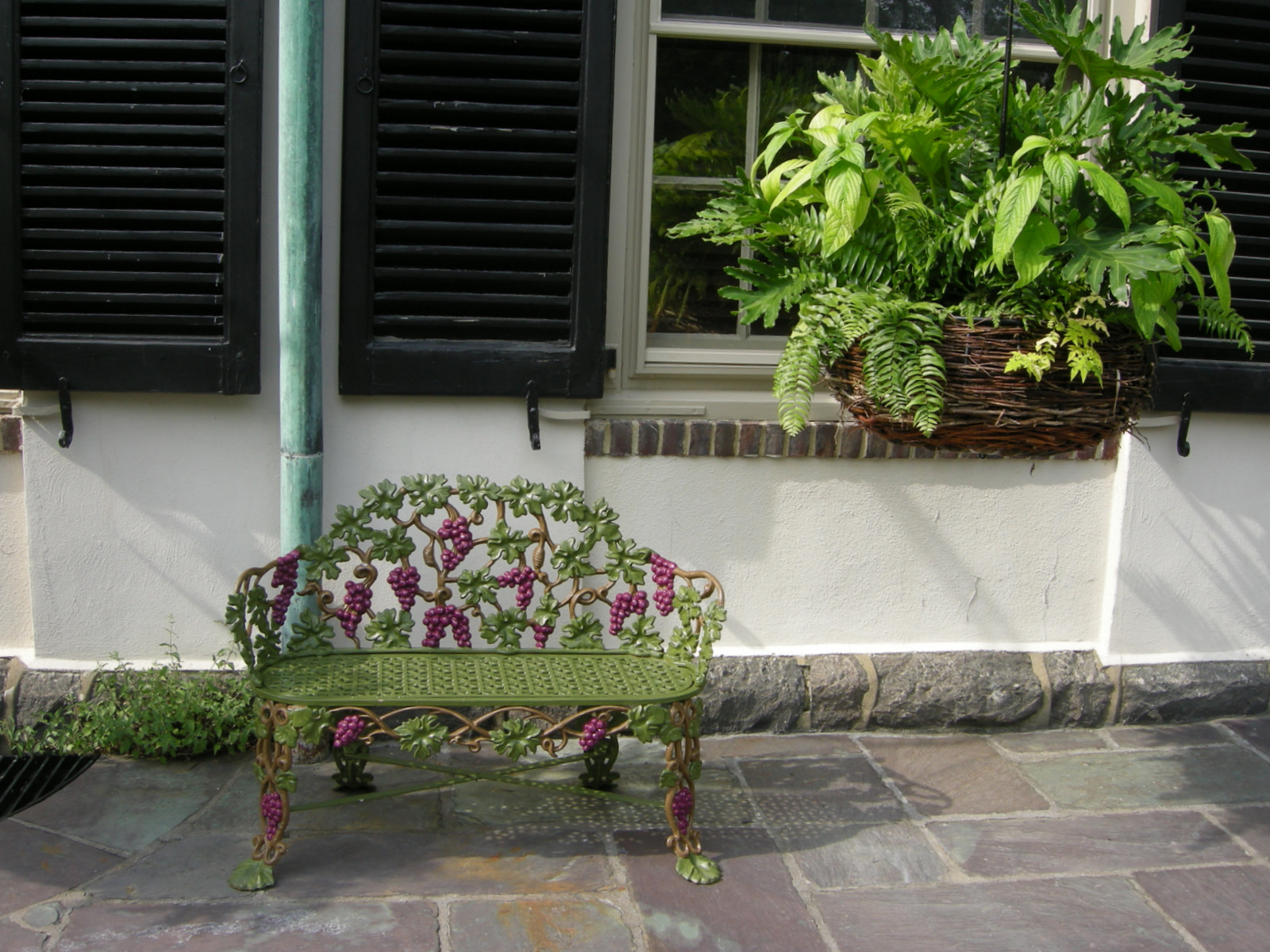
The plantings around this bench in the entrance garden change through the year.  When I visited, they were tropical.

A sliding bench in the shade of an elaborate arbor in the Tennis Court Garden.

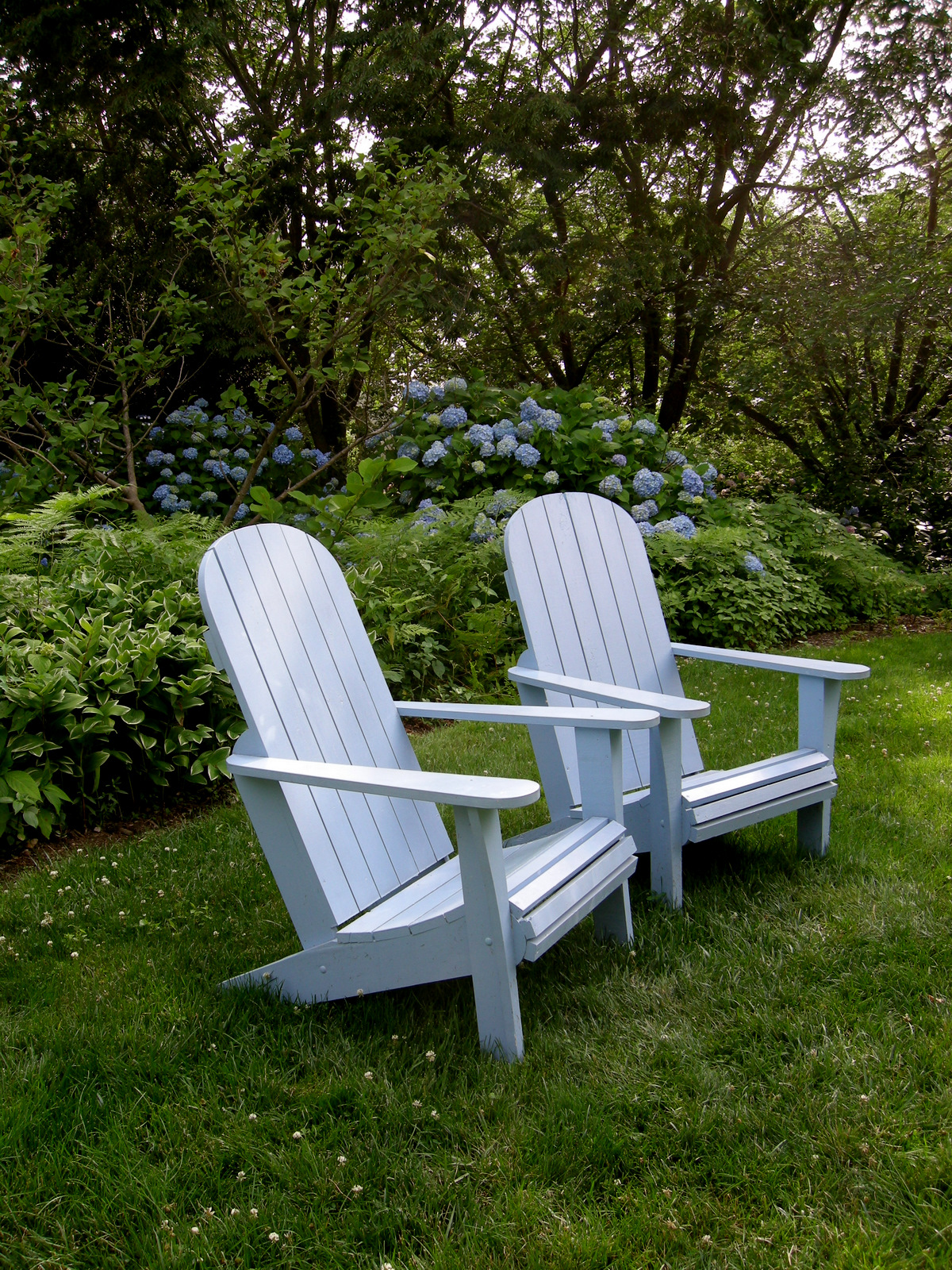
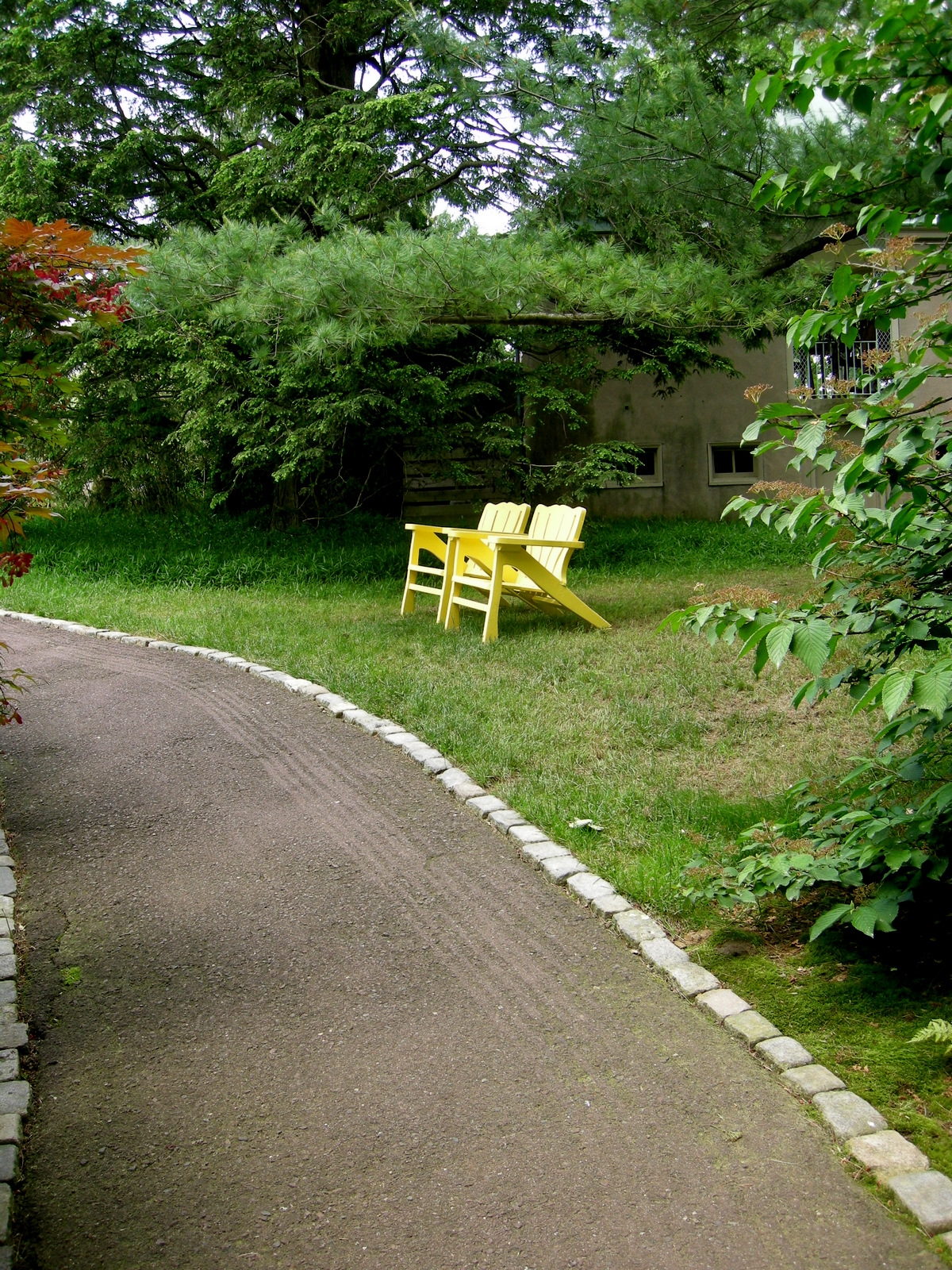
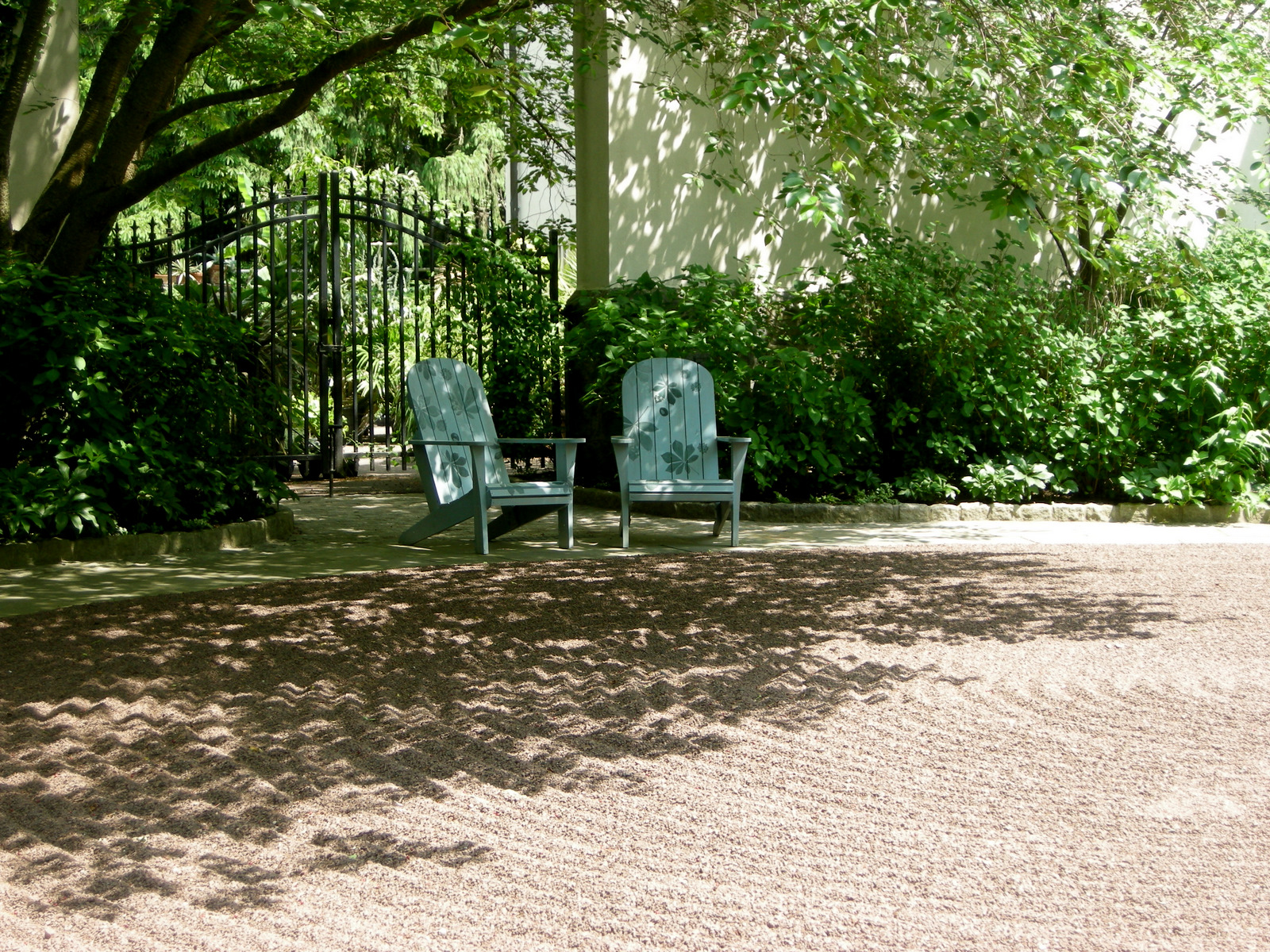
The seating at Chanticleer is often colorful.

It can even match the flowers.

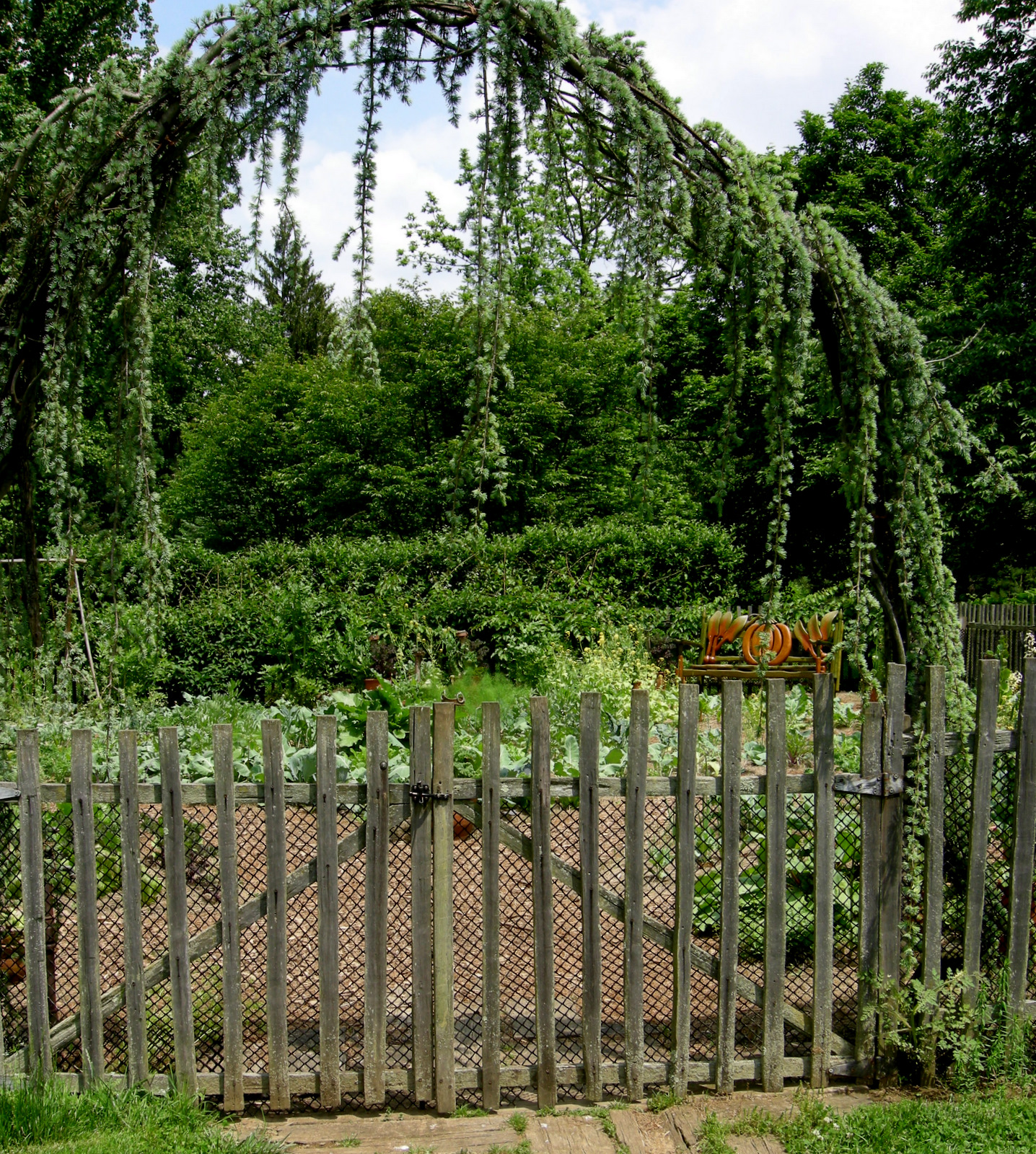
Whimsical bench in the Vegetable Garden.

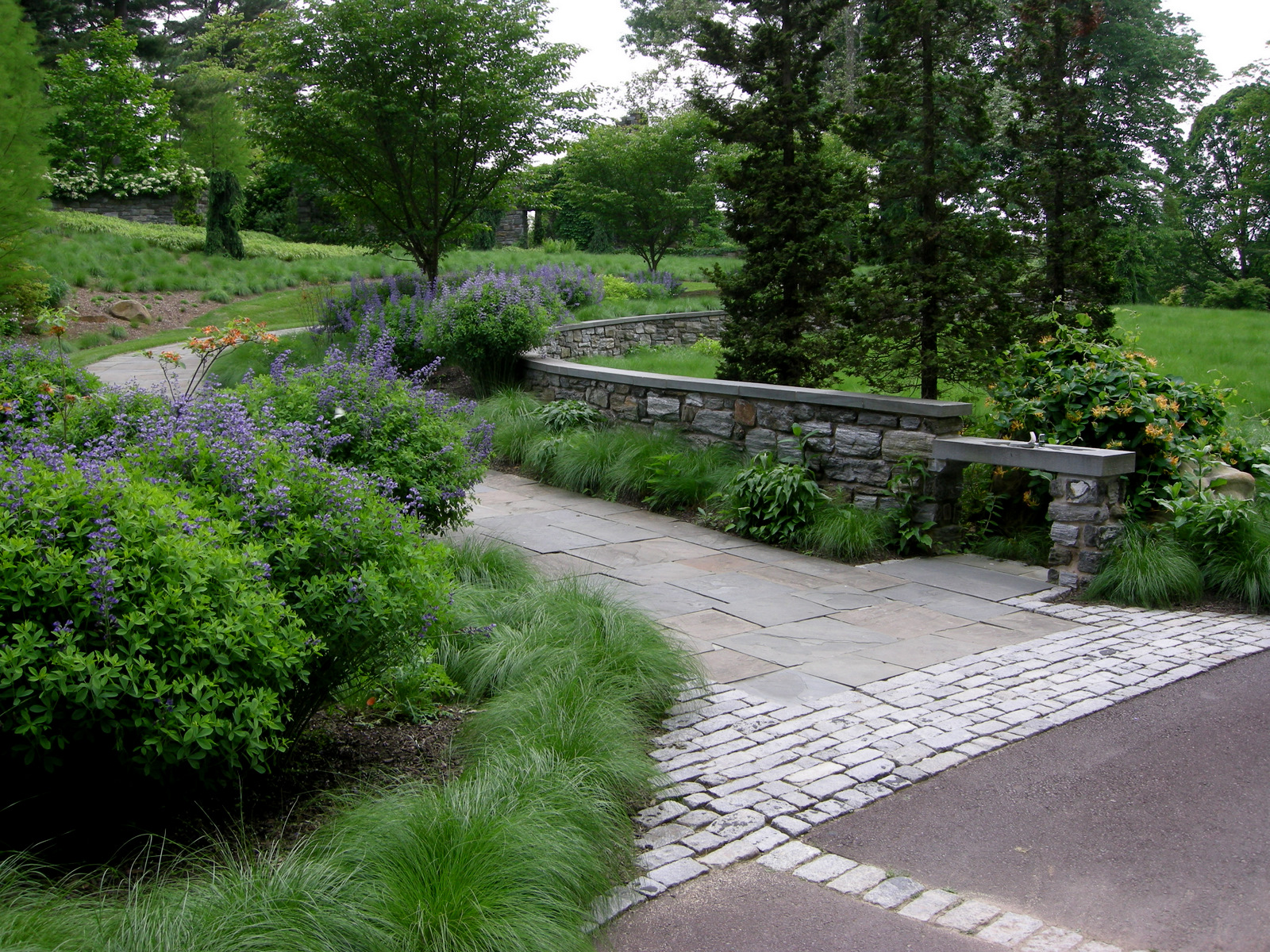
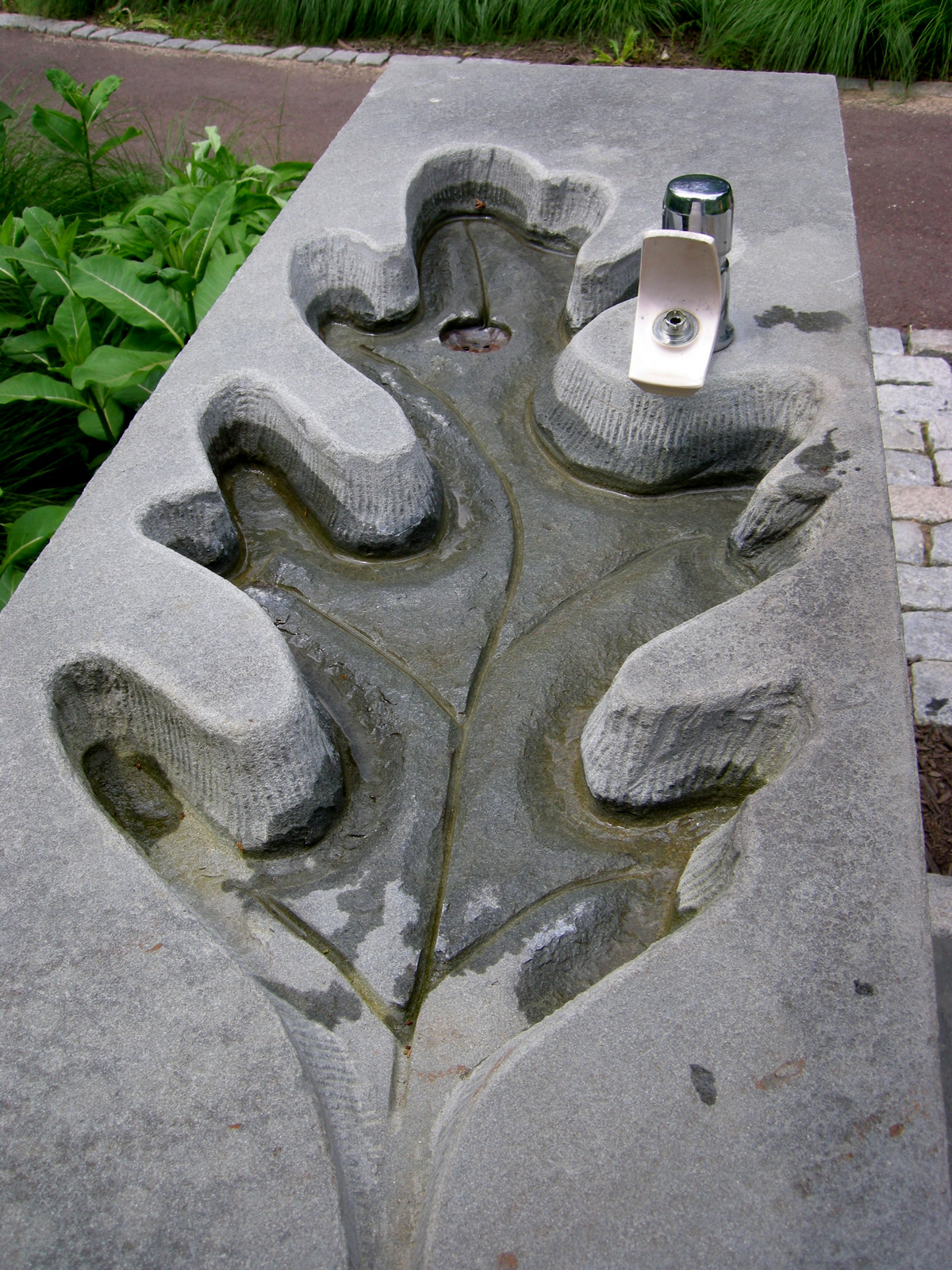
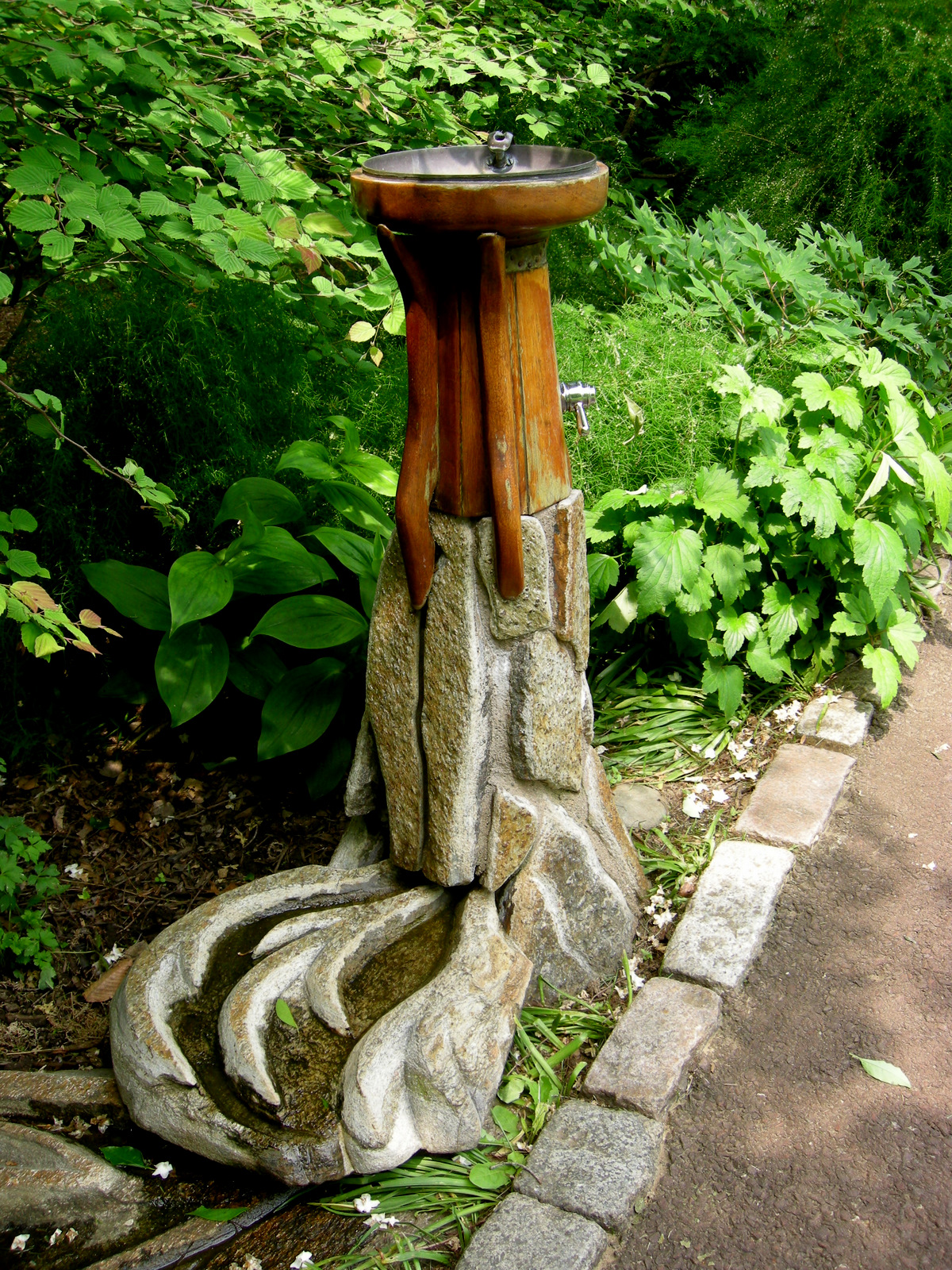
Water fountain on the path to the Ruin Garden, far right.

Detail of water fountain, incorporating the oak leaf theme of the Ruin Garden.

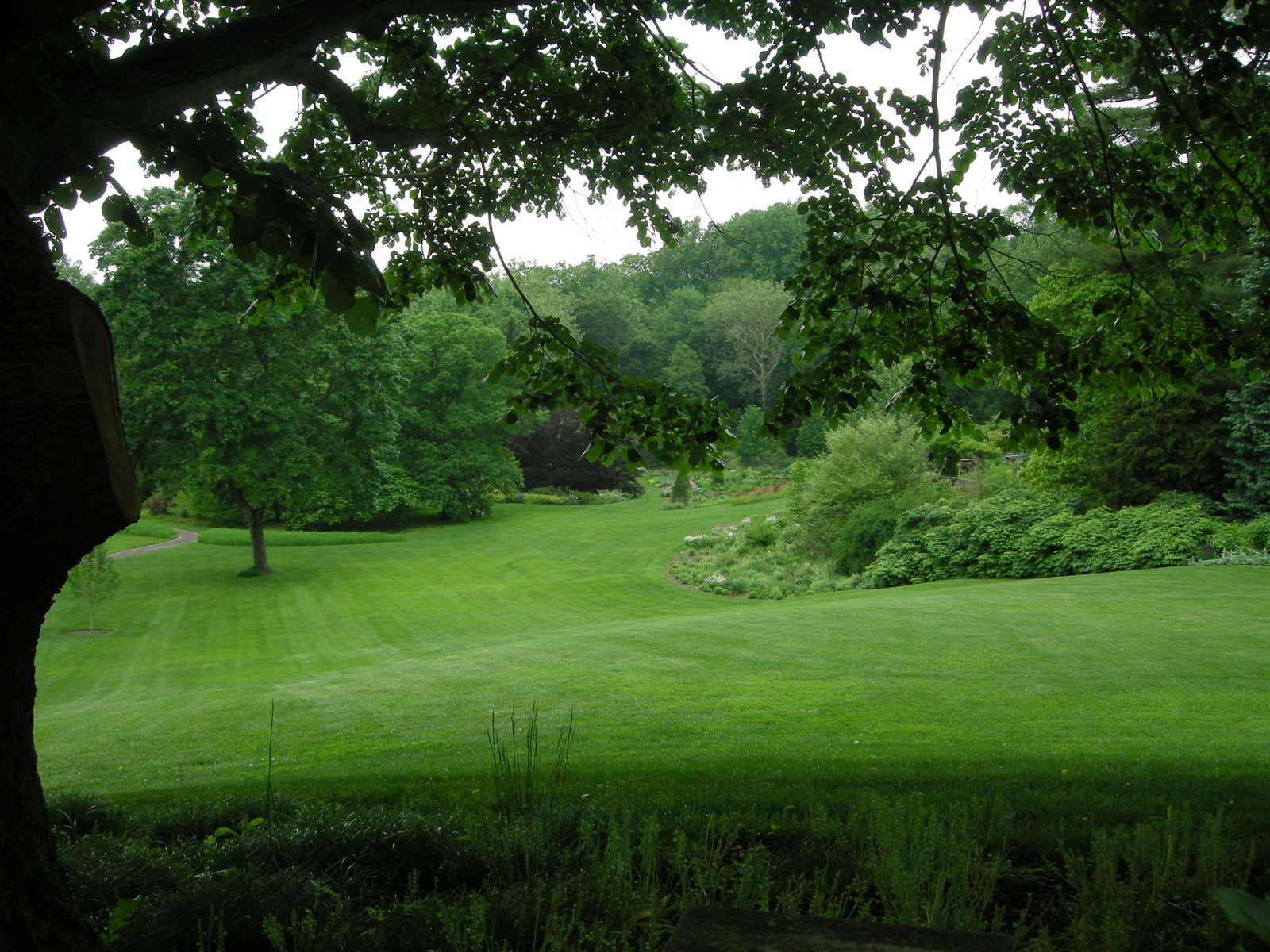
I feel cooler just looking at these chairs across a sea of shimmering grass below the Ruin Garden.

This secluded bench in Minder Woods is a work of art.

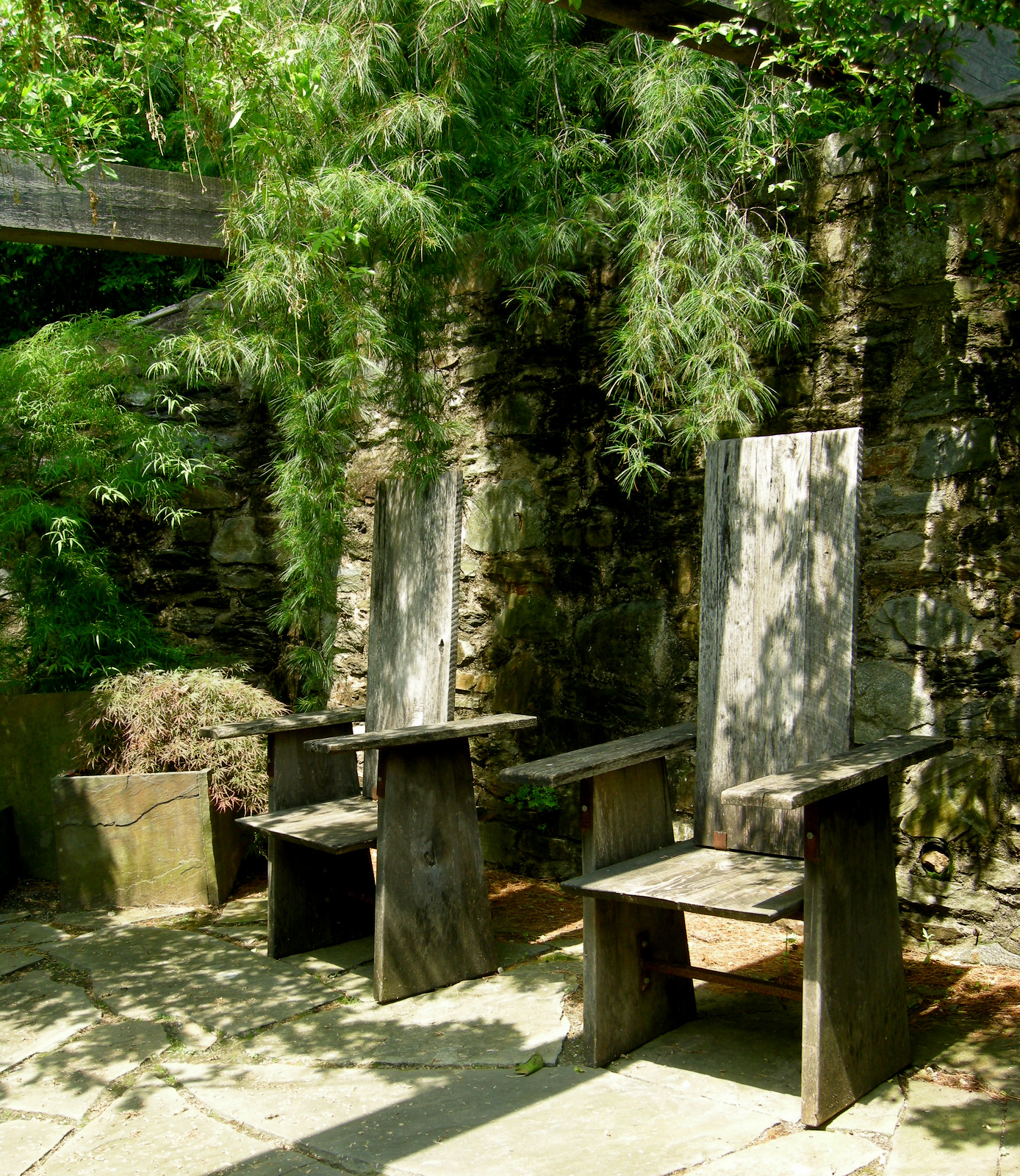
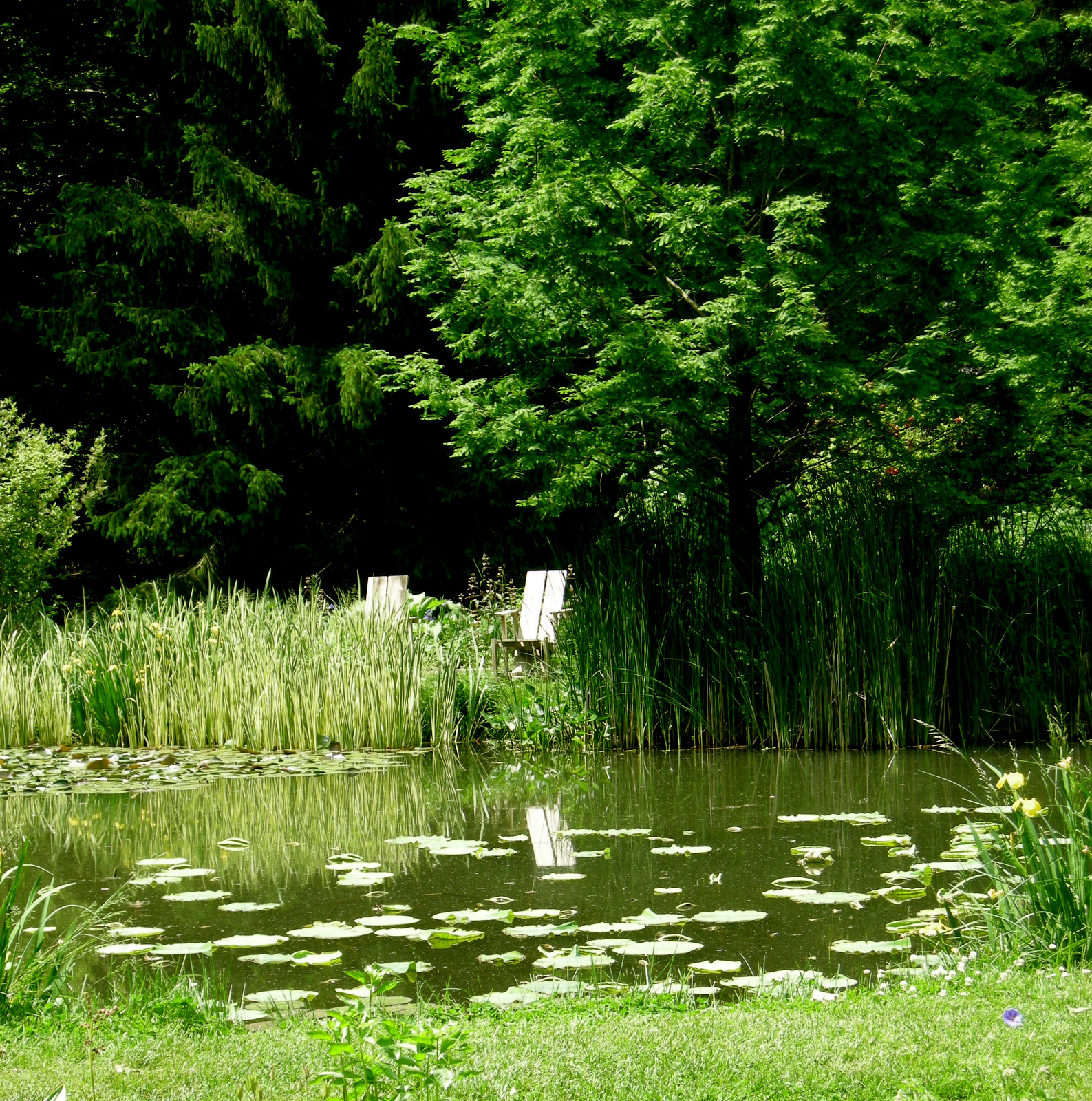
Overlooking the Pond Garden is a large flagstone terrace covered by an arbor sheltering shady seating–very popular on Friday evenings in summer when Chanticleer is open late for picnics.

Pond Garden

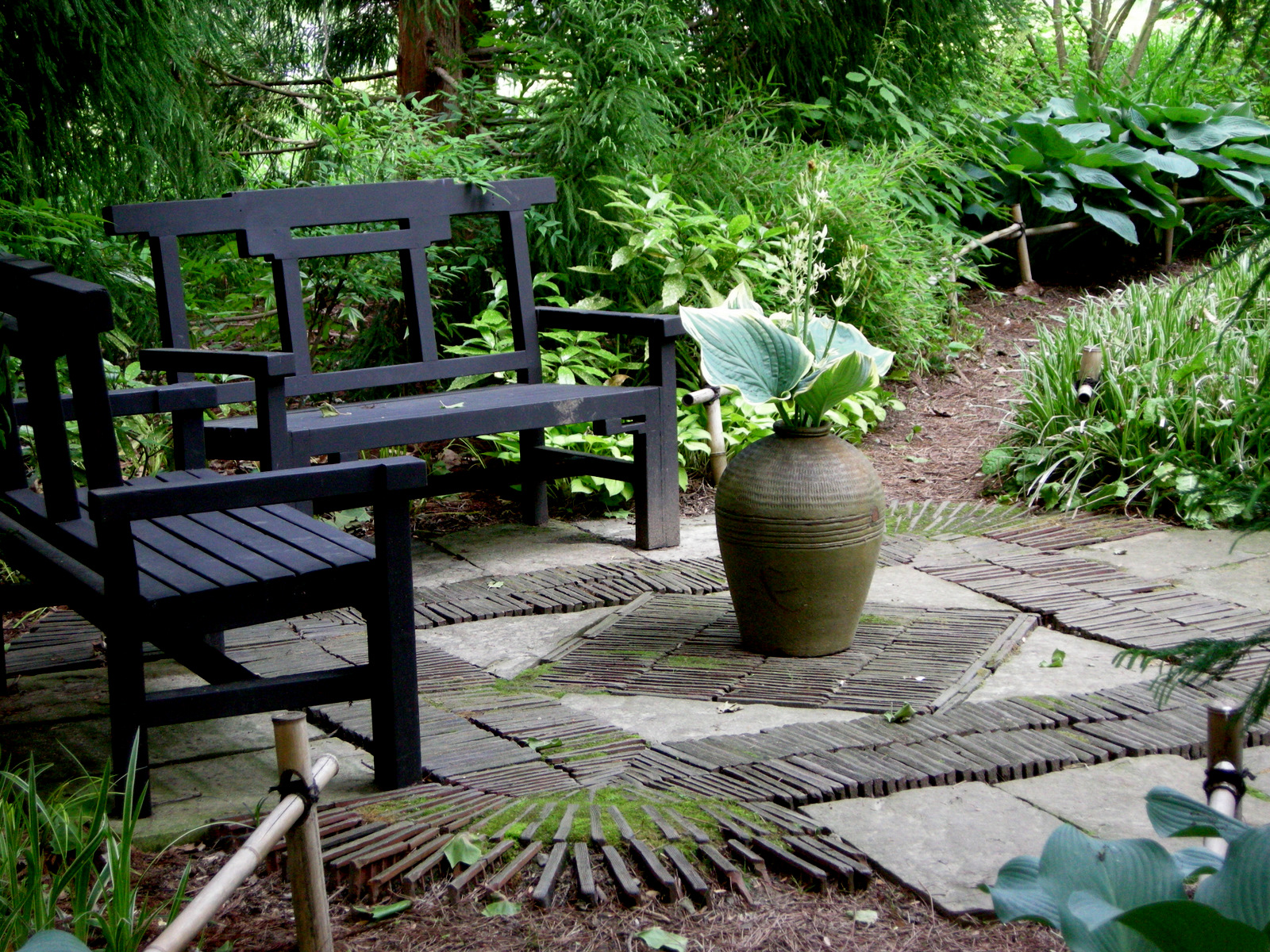
A side path in the Asian woods brings you to this seating area–there is always an elegant arrangement in the vase.

Behind this area, also in the Asian Woods, is a bamboo forest, and the chairs incorporate the motif.  The stone flower sunk in the path inspired me to place similar features at the junctures of my woodland paths.

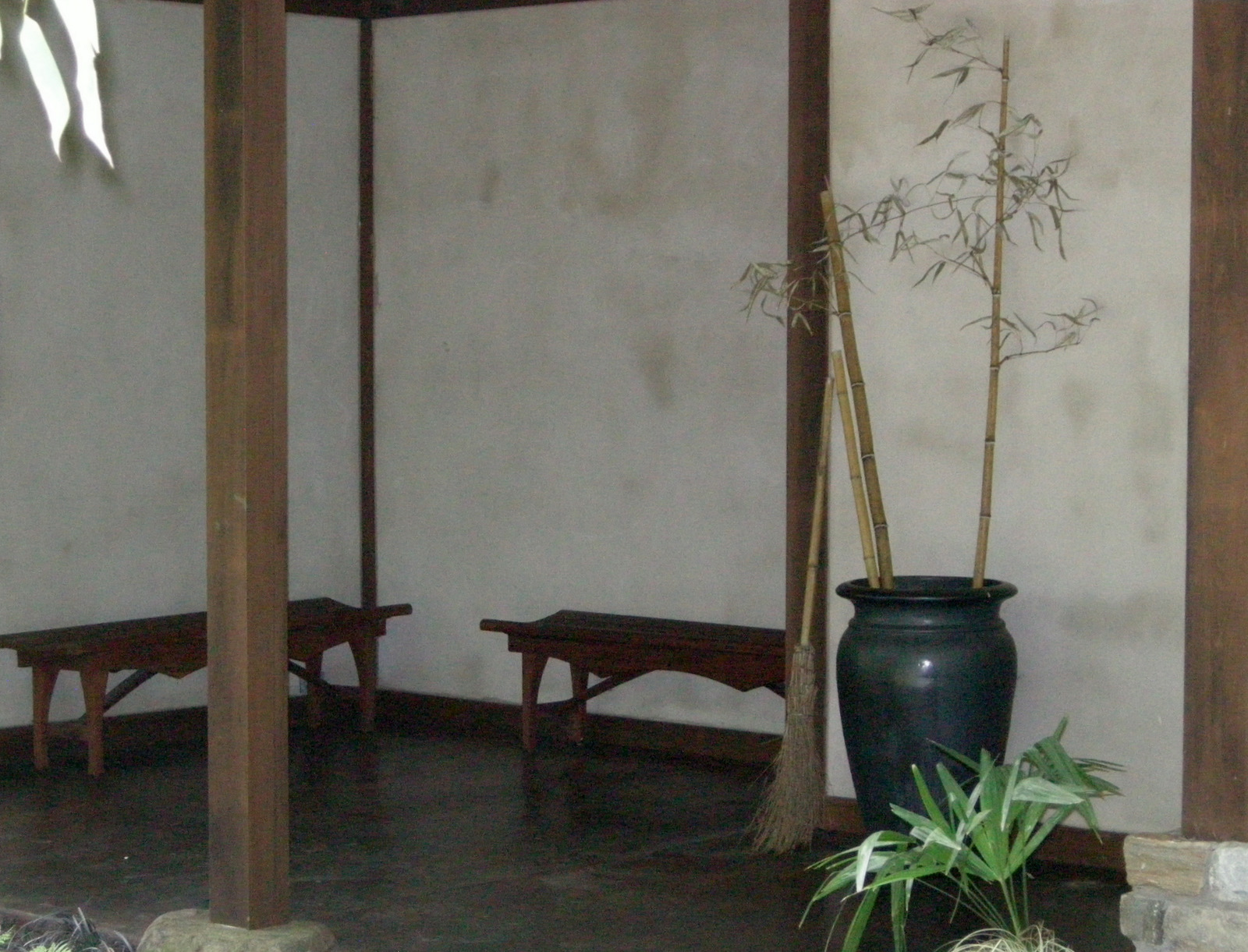
Simple benches on the porch of the restroom in the Asian woods.

My children loved to watch the water snake out of the stone trough attached to this water fountain near the Asian Woods.

A totally different feeling is evoked by these more traditional porch chairs along the paved path up to the Chanticleer House, almost like a grandstand from which to view the action instead of retreat from it.

This photograph and the following five are all of different kinds of seating around the Chanticleer House.

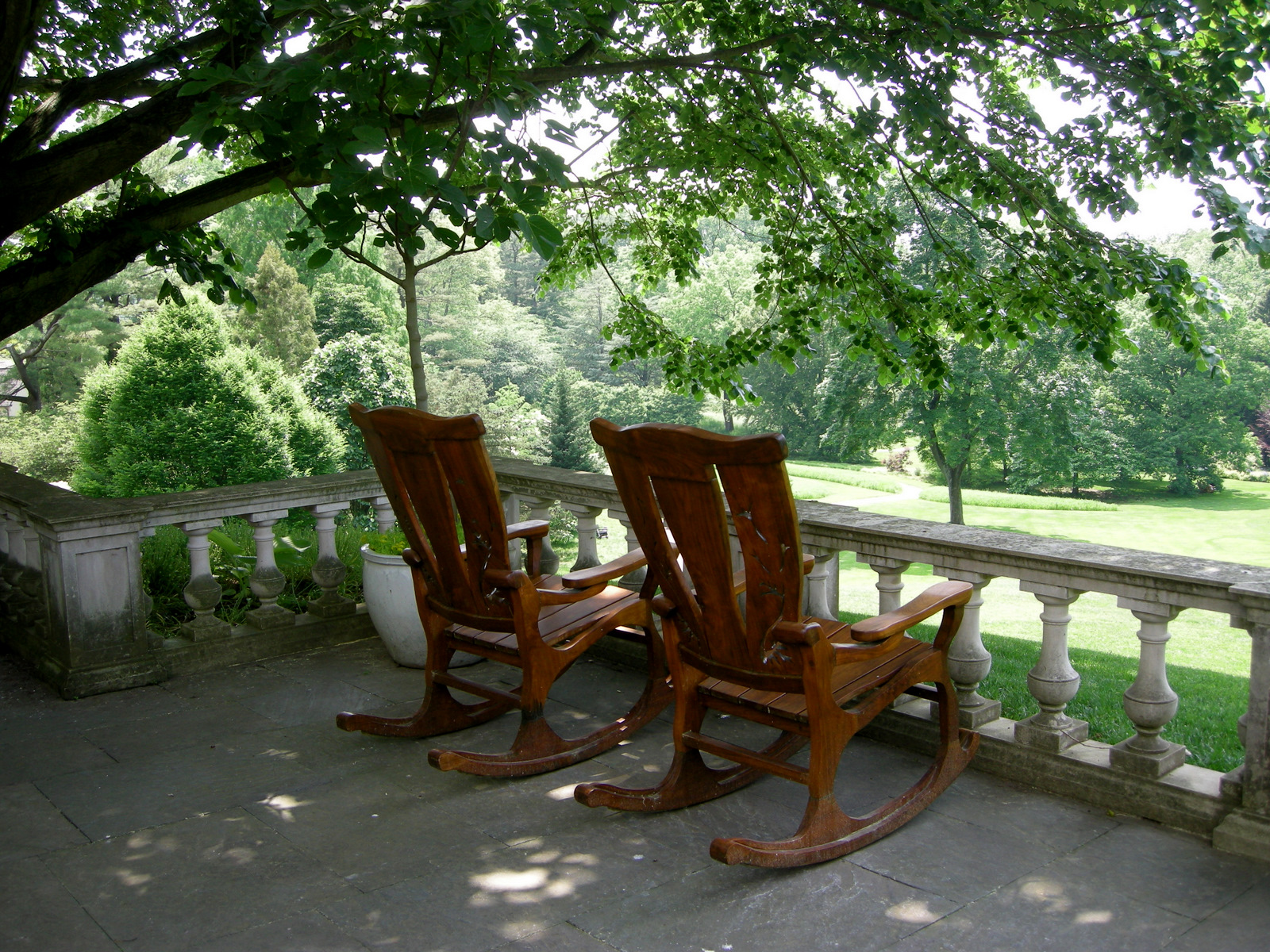
The view from the rocking chairs–so peaceful.

Traditional wicker chairs near the Teacup Garden reflect the tropical feel.

Water fountain in the Teacup Garden.

Bench in secluded alcove near the Teacup Garden.

Bench in entrance area to Teacup Garden.

If you are thinking of incorporating seating into your garden, Chanticleer is the place to visit for ideas.  From simple to elaborate, from traditional to whimsical, Chanticleer has it all.

Carolyn

Notes: Every word that appears in orange on my blog is a link that you can click for more information.  If you want to return to my website’s homepage to access the sidebar information (catalogues, previous articles, etc.), just click here.
Nursery Happenings: The nursery is closed until it cools off in the fall around the middle of September.  If you are on my customer email list, look for an email.  If not, sign up by sending an email to carolynsshadegardens@verizon.net with your name and phone number.

Theme Gardens Part 1: Silver and Blue

Posted in landscape design, Shade Gardening with tags , , , , , on July 24, 2011 by Carolyn @ Carolyns Shade Gardens

Carolyn’s Shade Gardens is a retail nursery located in Bryn Mawr, PA, specializing in showy, colorful, and unusual plants for shade.  The only plants that we ship are snowdrops and miniature hostas.  For catalogues and announcements of events, please send your full name, location, and phone number (for back up use only) to carolyn@carolynsshadegardens.com.  Click here to get to the home page of our website for catalogues and information about our nursery and to subscribe to our blog.

Blue includes purple (most “blue” flowers are purple), here hydrangea relative, perennial Chinese deinanthe, D. caerulea.

I am not a trained landscape designer.  Although I did take two landscape design courses at the Temple University Ambler  School of Horticulture, it didn’t stick.  I still don’t plan my gardens ahead of time but instead operate by gut instinct.  I can hear true garden designers like Allan at allanbecker.gardenguru and Donna at Garden Walk Garden Talk sighing all the way from Montreal and Niagara Falls, respectively.  It helps that I really know plants–their heights, habits, textures, blooms, cultural requirements, etc.–but I still do a lot of shifting around and replacing in my gardens that could probably be avoided by a little advance planning.

‘Jack Frost’ brunnera, B. macrophylla ‘Jack Frost’, is a star performer in my silver and blue garden for its true blue flowers and silvery blue leaves.

One technique that has really helped improve my garden’s design (and avoid all the rearranging) is theme gardens.  I know what you are thinking, here’s where she drags out photos of her “white garden” ala Vita Sackville-West.   Well, I don’t have a strictly white garden, but I do have color theme gardens.  My sunniest area is a chartreuse, orange, and purple garden, my main perennial bed focuses on peach, pink, gold, and purple, near the woodland there is a gold and yellow garden, around the deck is a moon garden  (plants that are ornamental at night, mostly white), and across from the deck is my silver and blue garden, which I want to share with you today.

Silvery fragrant flowers of native ‘Brandywine’ foamflower, Tiarella cordifolia ‘Brandywine’, an excellent groundcover whose shiny green leaves turn red in the fall.

Why limit myself that way?  Because having a theme helps me decide what plants belong in a particular garden and what plants don’t.  It provides a unifying factor.  I find it much easier to achieve a cohesive whole if I know why each plant is there, and color themes force me to consider each addition carefully.  And it must work because those are the gardens I get the most compliments on from customers and garden tours.

A massive native Kentucky coffeetree is the focal point of the garden, which is surrounded by white pine needle paths.  Because the tree is so big, I had to climb up on the roof to get shots of the bed.  This photo shows you all the gardens in the area.

My silver and blue garden surrounds a native Kentucky coffeetree, Gymnocladus dioicus, that may be over 100 years old.  It is approaching 100 feet tall and is 8 feet in circumference.  Luckily it does not have extensive surface roots.  The bed is an oval 12 feet wide and 20 feet long.  It started with leftover plants from one of my fall nursery sales, which happened to be silver and blue.  As part of my quest to eliminate all the grass on my back hill, I planted the leftover plants at the base of the Kentucky coffeetree, and my silver and blue garden was born.  I have been adding to it for about five years, and now it is quite mature.

This photo shows the overall design of the bed.  Despite its simple look, there are actually over 25 plant varieties.

One important caveat before I get to the plants, I rarely plant less than five of any one perennial (even with shrubs, I normally plant three).  My customers are always asking me how to have a garden like mine.  Near the top of the list, somewhere after compost, is quantity.  You need a lot of the same plant to make it show up in your garden.  One does not work, three is barely sufficient, five achieves critical mass, and seven is optimal (obviously this depends somewhat on the size of the plant, the bed, and your garden as a whole).

Northern end of the bed dominated by large patches of ‘Dawson’s White’ and ‘Jack Frost’ brunnera and ghost fern.

Southern end of the bed with Hosta ‘Ginko Craig’ and ‘El Nino’, variegated Japanese kerria, K. japonica ‘Variegata’, and white-flowered bigroot hardy geranium, G. macrorrhizum ‘Album’.

The theme of the bed is silver (also incorporating white) and blue (also including lighter shades of purple).  I find that most flowers labeled blue really are a shade of purple.  The colors are provided by the flowers and, probably more importantly, the foliage.  Again, blue leaves are in reality bluish green.  I included some plants that don’t fit the theme for contrast.  Here are some closeups of the bed and some more photos of the individual plants:

Click any photo to enlarge.  A close up of the north end revealing some of the lesser players.  Between the two types of brunnera, Hosta ‘Blueberry Cobbler’ with very blue leaves and gorgeous blueberry purple stems and native sedge ‘Bunny Blue’, Carex laxiculmus ‘Bunny Blue’.  Around the ‘Dawson’s White’, a lungwort seedling, Pulmonaria sp., with silver spots and deep blue flowers, and double white-flowered hybrid hellebore ‘Double Integrity’, H. x hybridus ‘Double Integrity’.

Looking around the back side of the bed reveals Chinese deinanthe (flower pictured in first photo) behind the kerria; native variegated northern sea oats, Chasmanthium latifolium ‘River Mist’ to the left;  blue-leafed and white-flowered dwarf Solomon’s seal, Polygonatum falcatum ‘Pumilum’ in front;and blue-leafed native white wild bleeding-heart, Dicentra eximia ‘Aurora’, in the foreground.

White and silver variegated foliage really shows up in a shade garden: clockwise from upper left, ‘Dawson’s White’ brunnera, ‘El Nino’ hosta (very blue), ‘River Mist’ northern sea oats, and ‘Ginko Craig’ hosta.

‘Lilafee’ barrenwort, Epimedium grandiflorum ‘Lilafee’, provides gorgeous purple flowers in April (the yellow corydalis is an interloper).

Providing blue tones, clockwise from upper left: ‘Bunny Blue’ sedge, Japanese kerria ‘Variegata’, ‘Bertram Anderson’ lungwort with blue flowers and silver leaves, and dwarf Solomon’s seal ‘Pumilum’.

The blue flowers of brunnera are beautiful for a long time in late spring.

Relief from too much variegation is provided by clockwise from upper left: evergreen tassel fern, Polystichum polyblepharum, evergreen hybrid hellebore, H. x hybridus, Asian jack-in-the-pulpit, Arisaema consanguineum, and native Virginia creeper, Parthenocissus quinquefolia, which climbs the Kentucky coffeetree.

The color scheme is carried across the pine needle path to the garden surrounding the deck.

In placing the plants in the bed, consideration was given to cultural conditions (soil type, i.e. dry, and light availability), height, bloom time, texture, and habit, but the primary factor was silver and blue color.  The result is a garden with almost year round interest and plants that work together to make the whole more lovely than the sum of its parts.

Carolyn

Notes: Click on any photo to enlarge.  Every word that appears in orange on my blog is a link that you can click for more information.  If you want to return to my website’s homepage to access the sidebar information (catalogues, previous articles, etc.), just click here.

Nursery Happenings: The nursery is closed until it cools off in the fall around the middle of September.  If you are on my customer email list, look for an email.  If not, sign up by sending an email to carolynsshadegardens@verizon.net with your name and phone number.

July GBBD: The Energizer Bunnies of Summer

Posted in Garden Blogger's Bloom Day, landscape design, native plants, Shade Shrubs with tags , , on July 14, 2011 by Carolyn @ Carolyns Shade Gardens

Carolyn’s Shade Gardens is a retail nursery located in Bryn Mawr, PA, specializing in showy, colorful, and unusual plants for shade.  The only plants that we ship are snowdrops and miniature hostas.  For catalogues and announcements of events, please send your full name, location, and phone number (for back up use only) to carolyn@carolynsshadegardens.com.  Click here to get to the home page of our website for catalogues and information about our nursery and to subscribe to our blog.

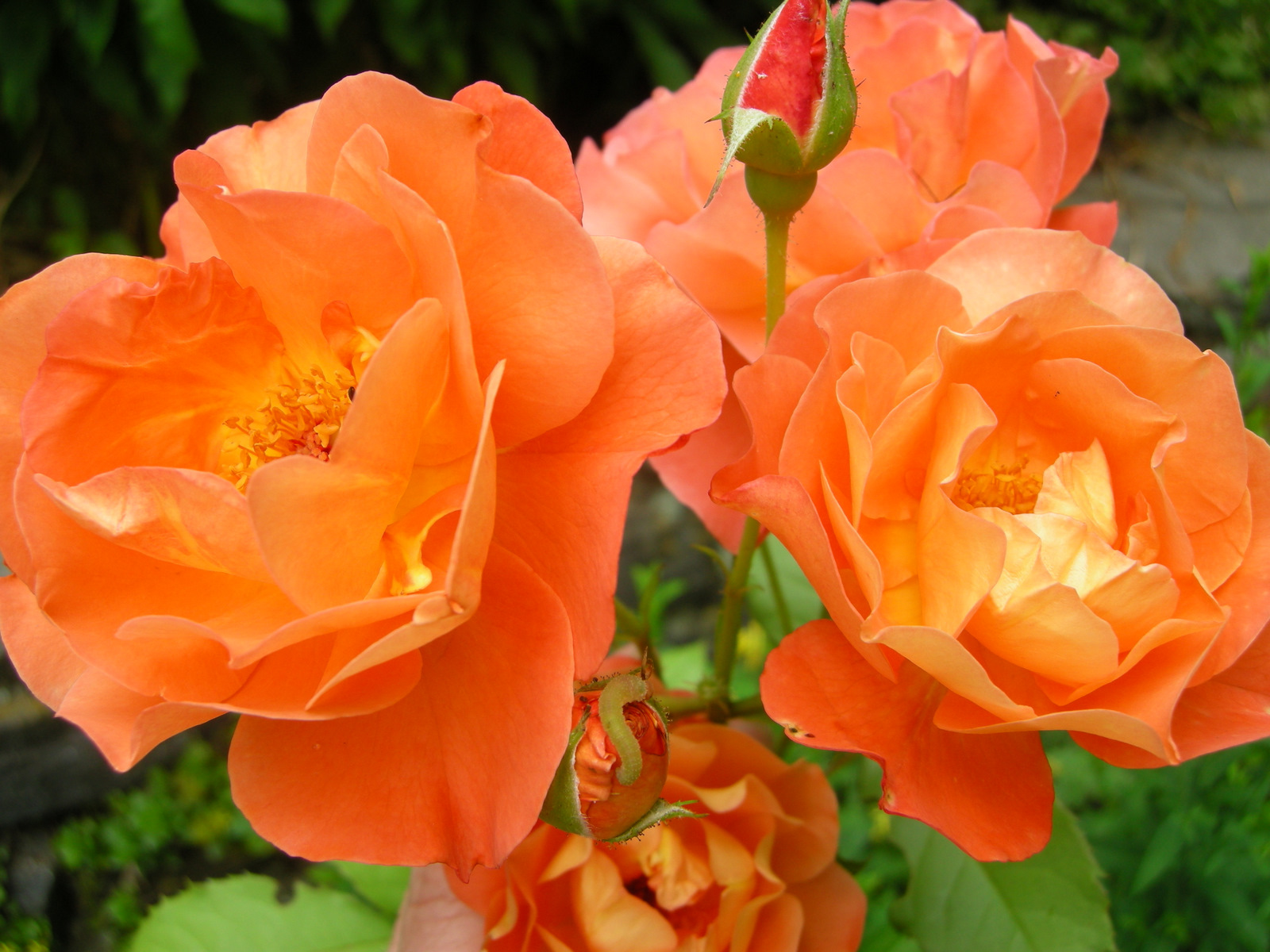
‘Westerland’ shrub rose just keeps sending out new sprays of blooms.  EB

Summer is here, and we have reached the middle of the month when I encourage each of you to walk around your garden and assess what you need to add to make this season an exciting time in your landscape.  This time of year I like to focus on the “energizer bunnies” of the garden: plants that bloom or rebloom from late spring through fall. Plants in this category will have “EB” following their caption description.  They give me a reason to stroll in my garden when the weather is not as inviting as spring.  Make sure your garden doesn’t end with the spring rush by adding plants that bloom through summer. 

I love irises, and I think Japanese iris, I. kaempferi, is my favorite.  The colors and the flower shapes are magical.

Make a list and take photographs so that when you are shopping for plants you know what you need and where it should go.  You never know what you might find waiting in your garden like new blooms on my ‘Westerland’ rose (photo at top), which I photographed during my own  inventory.

The remontant or reblooming daylilies are some of my “bunnies”.  They start early and rebloom all season.  Clockwise from left: Hemerocallis ‘Black Eyed Stella’, ‘Stella de Oro (d’Oro)’, and ‘Happy Returns’.  EB

July 15 is Garden Blogger’s Bloom Day for July when gardeners around the world show photos of what’s blooming in their gardens (follow the link to see  photographs from other garden bloggers assembled by Carol at May Dreams Gardens).  Here are  some more highlights from my July stroll through Carolyn’s Shade Gardens, starting with woody plants:

I cut back my ‘Purple Robe’ smokebush, Cotinus coggygria ‘Purple Robe’, every year to improve the leaf color so it never blooms, but I think the red beebalm, Monarda didyma, compliments it nicely.

My grove of native bottlebrush buckeye, Aesculus parviflora, is stunning in bloom in full shade.


St. John’s wort is a woody subshrub that I cut back almost to the ground in the spring when I see signs of new growth.  Hypericum calycinum on the left and H. androsaemum ‘Albury Purple’ on the right.

I don’t grow ‘Winterthur’ beautyberry, Callicarpa ‘Winterthur’,  for the flowers, but between the lime green leaves, the pink flowers, and the striking light purple berries in fall, this shrub is a workhorse.  EB


Himalayan leptodermis, L. oblonga, starts blooming in June and doesn’t quit until later in the fall.  Its flowers are small but abundant.  EB

‘Black Knight’, Buddleia davidii ‘Black Knight’, is my favorite butterfly bush cultivar.  It is the first to come into bloom in June and doesn’t stop until at least mid-fall.  EB

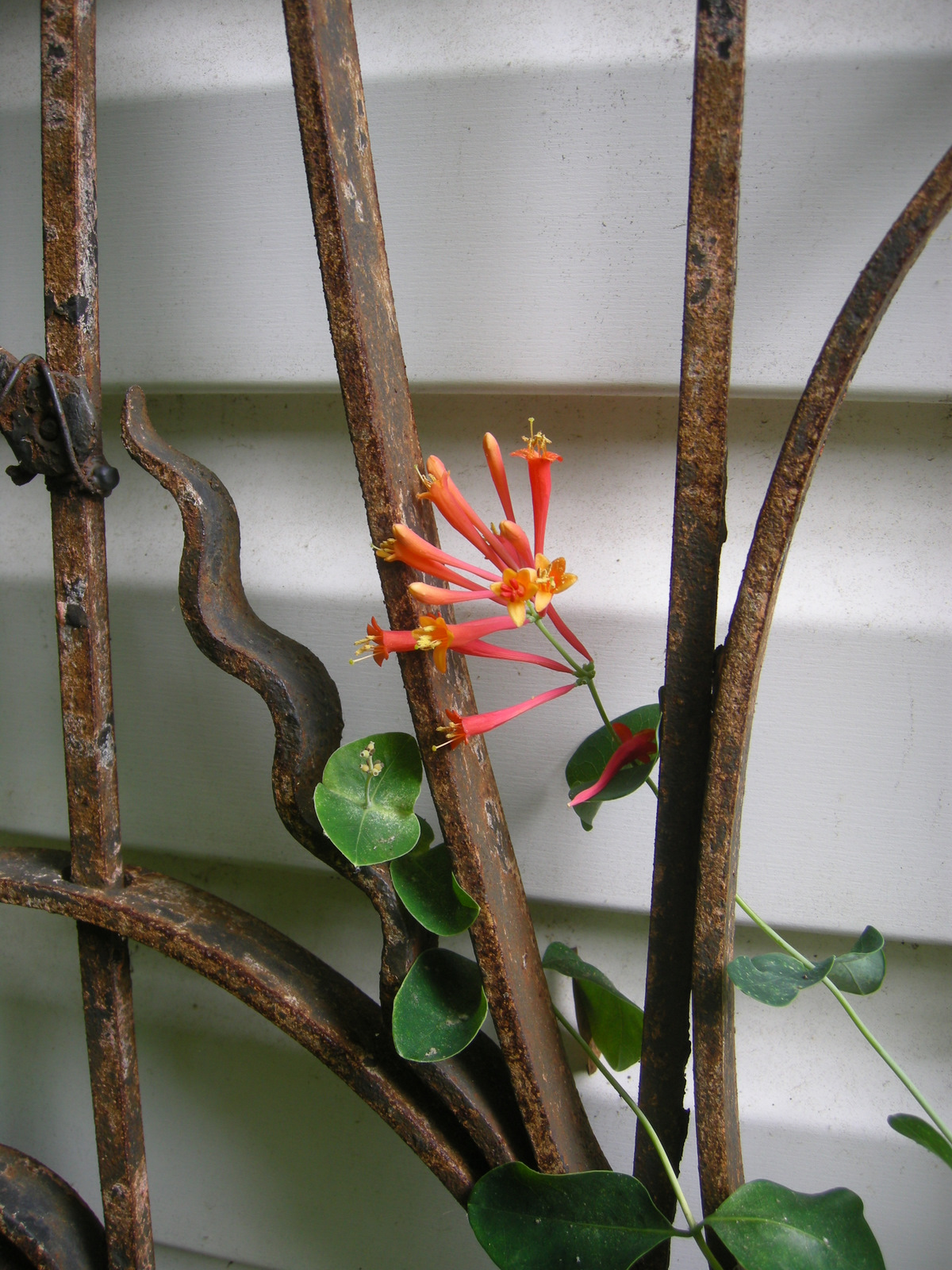
My native honeysuckle vines are still throwing out blooms after a spectacular spring show, here Lonicera sempervirens ‘John Clayton’.  EB

And here native Lonicera sempervirens ‘Crimson Cascade’.  EB

Native oakleaf hydrangea, H. quercifolia, will keep going until winter with its beautiful flowers turning colors and then forming a dried arrangement.  If you don’t have this shrub, it should go to the top of your list!  EB

I am surprised that more gardeners do not grow native flowering raspberry, Rubus odoratus.  It is a gorgeous tropical looking shrub for full shade with brightly colored raspberry flowers.  The native bees love it.

There are so many perennials in bloom that I had to leave a lot out.  I am focusing on the unusual plants and the ones that bloom for a long time:

The deep violet flowers on red stems of ‘Caradonna’ sage, Salvia ‘Caradonna’, continue to rebloom all summer while the yellow corydalis, C. lutea, behind it blooms nonstop from April to December.  EB

This rare and unusual plant, Chinese foxglove, Rehmannia elata, appeared in my rock garden without my help, but I am glad it did.

Butterfly weed, Asclepias tuberosa, with catmint, Nepeta ‘Walker’s Low’

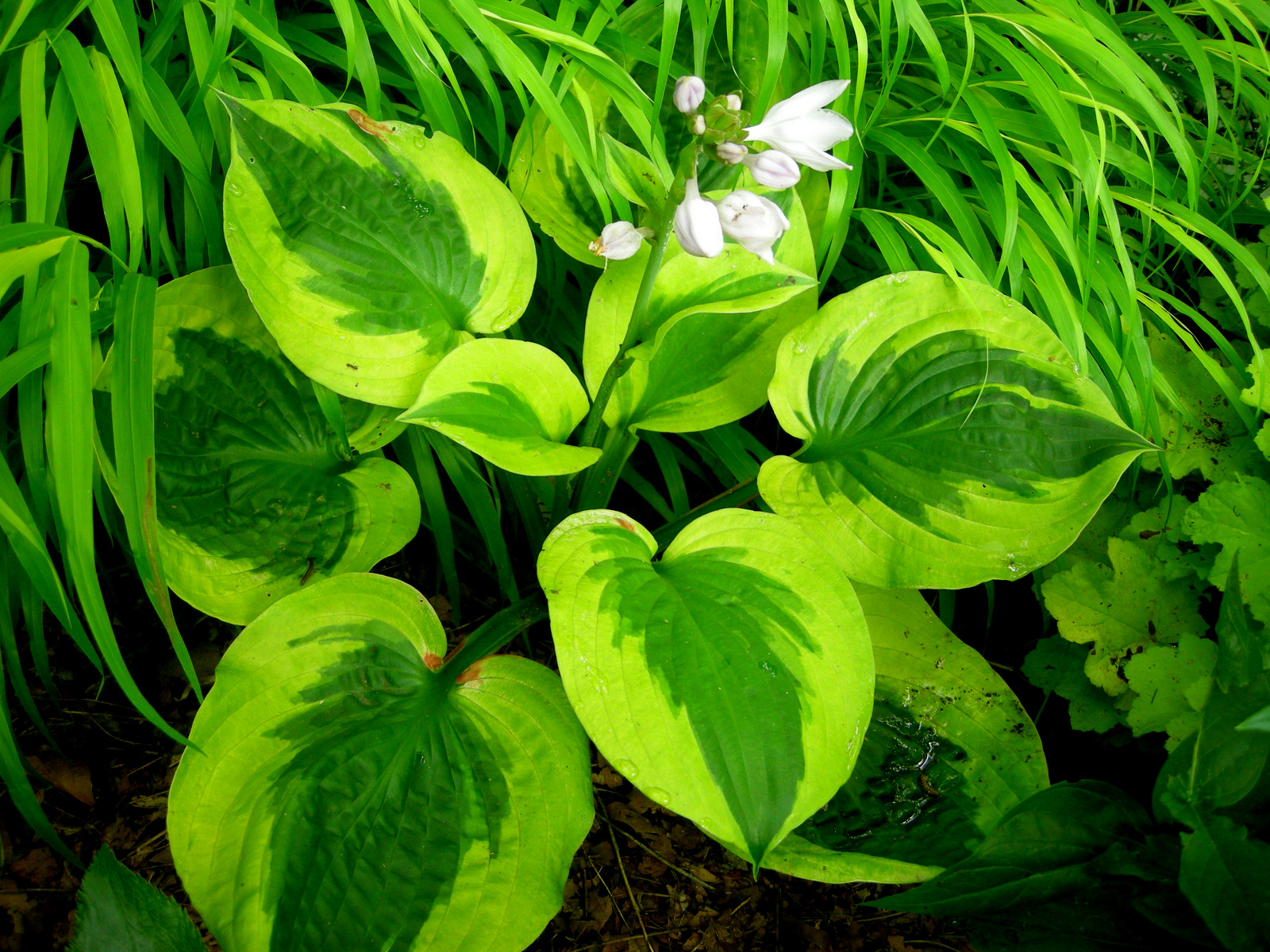
Many hosta have quite beautiful flowers, especially if they are compact and white, here the species Hosta tokudama.

Reportedly there are 8,000 hosta cultivars, but some just stand out in the garden: Hosta ‘Summer Lovin’

The gorgeous corrugated blue leaves, white flowers, and elegant habit of Hosta ‘Blue Angel’ have stood the test of time.

Hosta ‘Great Expectations’ is also a classic with white flowers.

I am infatuated with the mouse ears series of miniature hostas, and one of their wonderful attributes is that their flowers are compact and proportional to their size, here ‘Holy Mouse Ears’.

I have tried so many of these orange coneflowers, Echinacea cultivar,  only to have them die, revert, or display a virus.  This is the only one that survived and, of course, I lost its tag.

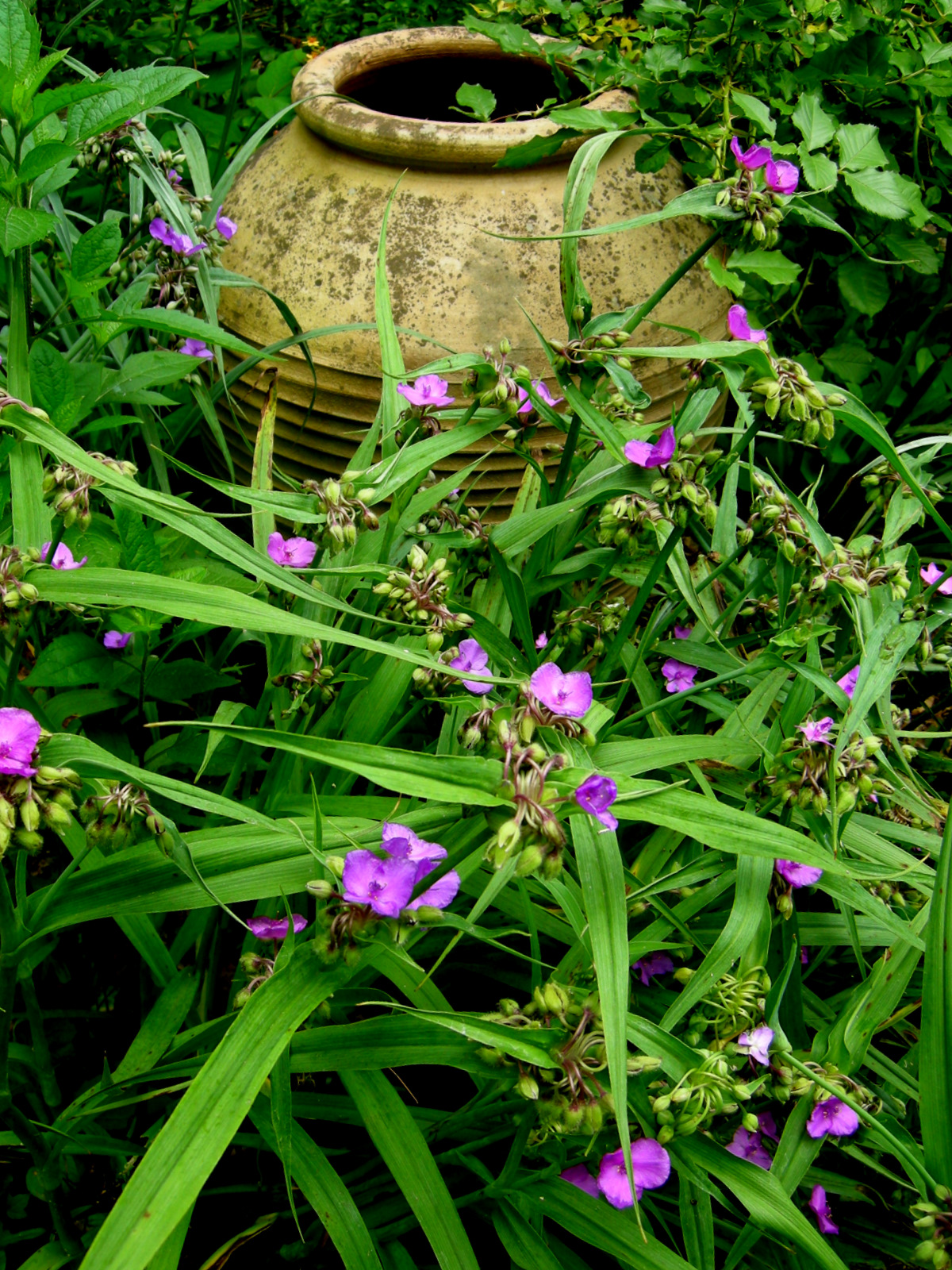
‘Concord Grape’, Tradescantia ‘Concord Grape’, is my favorite cultivar of US native spiderwort.  I cut it to the ground completely after flowering to rejuvenate the plant.

Giant ox eye, Telekia speciosa, is an unusual sunflower-like perennial that reaches 4 to 6 feet tall and 2 to 3 feet wide in the full shade of my London plane trees.

Solitary clematis, C. integrifolia, just keeps blooming and blooming, here with orange million bells, Calibrachoa ‘Aloha Hot Orange’EB

I always read that the groundcover autumn leadwort, Ceratostigma plumbaginoides, blooms in the fall, but in my garden it starts in June and keeps going through fall.  You can’t beat the true blue color all season.  EB

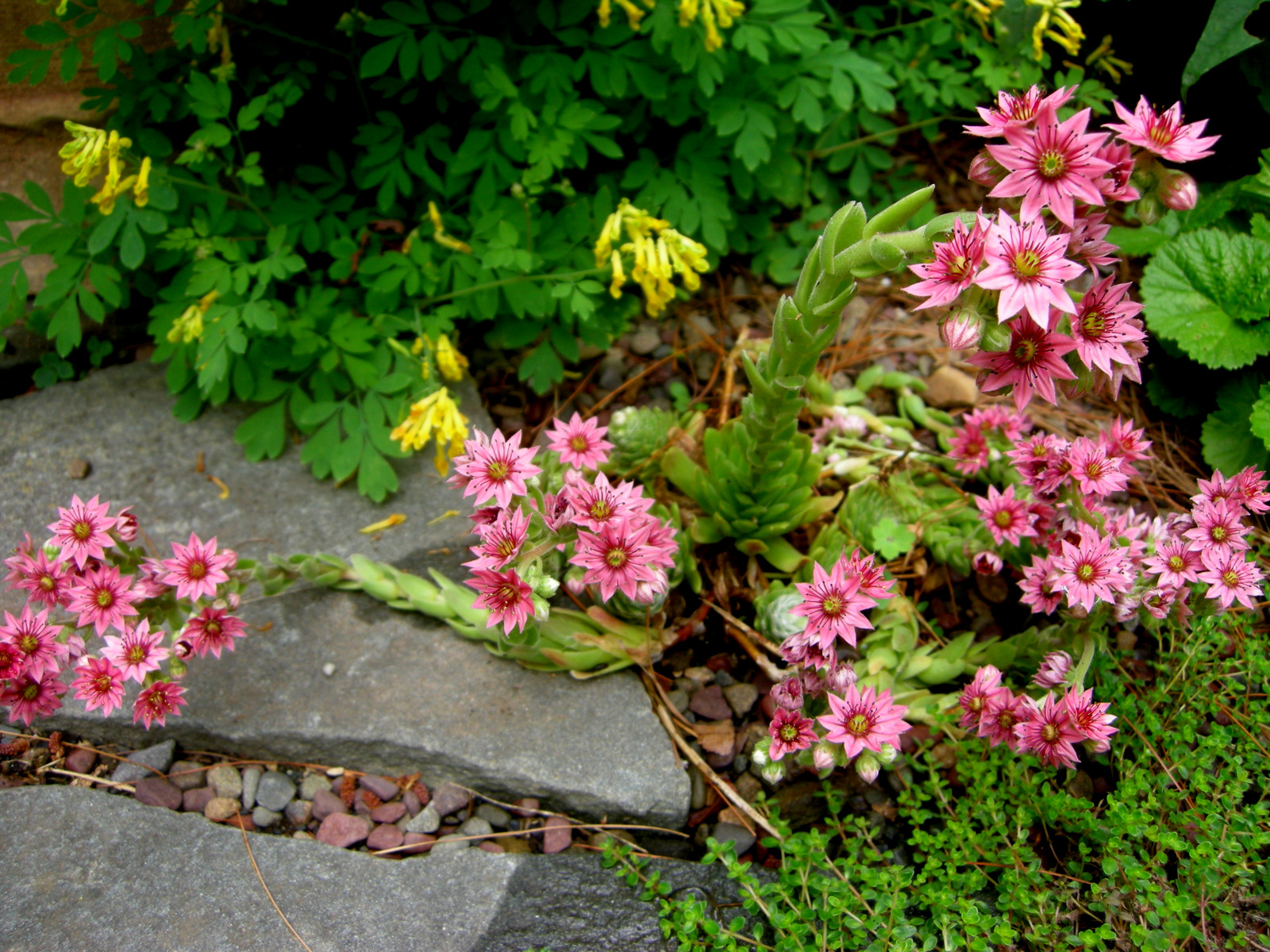
I have a collection of hens and chicks, but I think this is my favorite: Sempervivum arachnoideum ‘Red Cobweb’.  When not in bloom, the chicks are red and covered with cobwebs.

This is the second flush of bloom on ‘Sarastro’ bellflower, Campanula ‘Sarastro’, the first flush has double the flowers.  I have tried several large-flowered bellflowers, and ‘Sarastro’ is the best.  EB

I devote a large space in my meadow (you have to, it spreads) to beebalm, Monarda didyma, the flowers are so spectacular.

I always let some of my onion sets get away from me so they will produce this beautiful flower after all my other alliums are done.

If I had the right growing conditions for red hot pokers, Kniphofia ‘Alcazar’, I would have every cultivar, but sunny, hot, dry, well drained conditions are few and far between at Carolyn’s Shade Gardens.

Spiny bear’s breeches, Acanthus spinosus, just keeps blooming and blooming.  EB

I will leave you with the very unusual and long lasting  ‘Miss Willmott’s Ghost’ sea holly, Eryngium giganteum ‘Miss Willmott’s Ghost’.  Miss Willmott was a 19th century English gardener who secretly sprinkled seeds of this sea holly in gardens she visited leaving behind her “ghost”.  EB

Please let me know in a comment/reply which flowers are “energizer bunnies” in your summer garden.  If you participated in GBBD, please provide a link so my nursery customers can read your post.

Carolyn

I made this collage for a customer email, but I couldn’t resist including it in this article.  The flowers of summer:

Notes: Click on any photo to enlarge.  Every word that appears in orange on my blog is a link that you can click for more information.  If you want to return to my website’s homepage to access the sidebar information (catalogues, previous articles, etc.), just click here.

Nursery Happenings: The nursery is closed until it cools off in the fall around the middle of September.  If you are on my customer email list, look for an email.  If not, sign up by sending an email to carolynsshadegardens@verizon.net with your name and phone number.